






Buyer Resources





- 1969 Ford Mustang Shelby GT350H
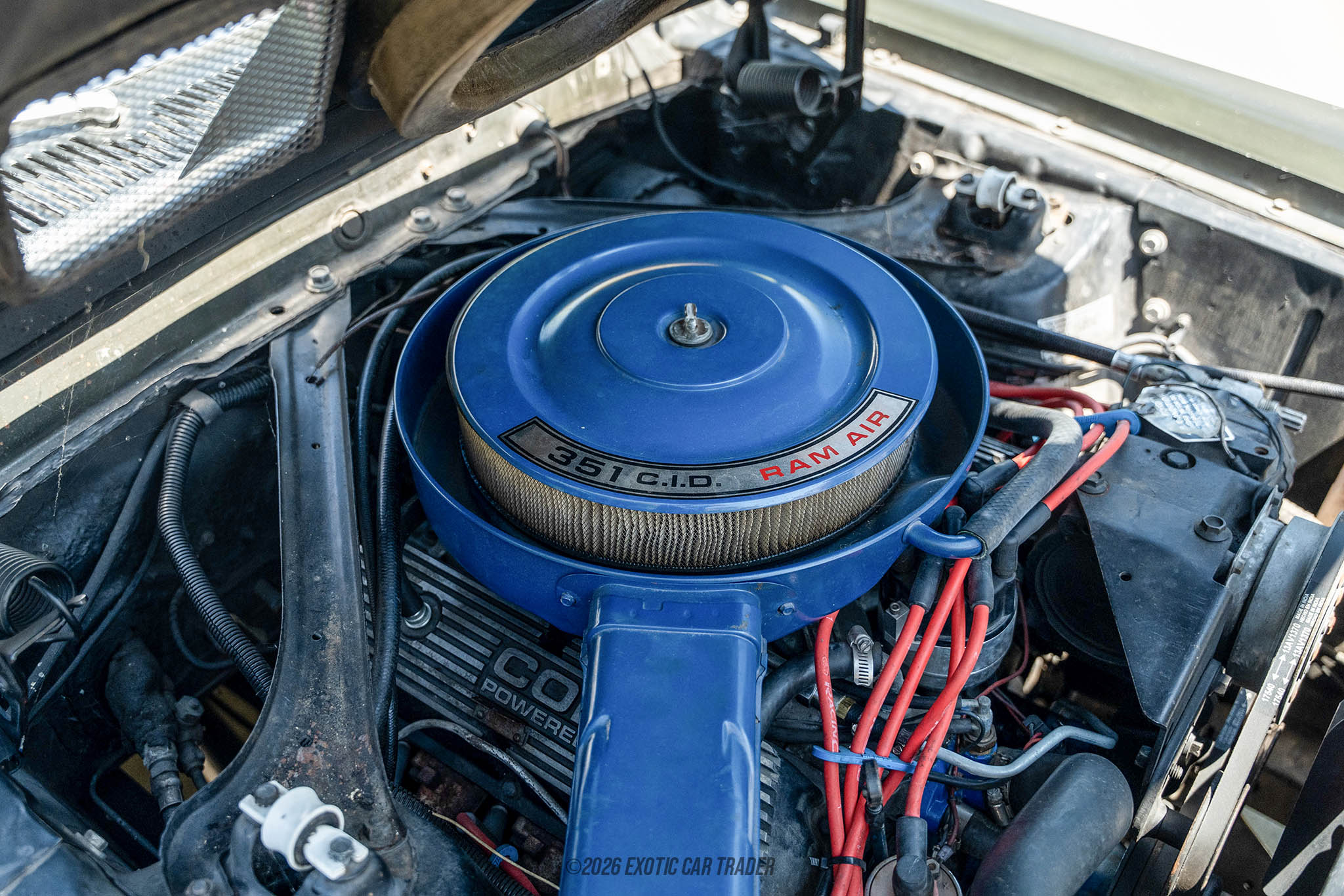
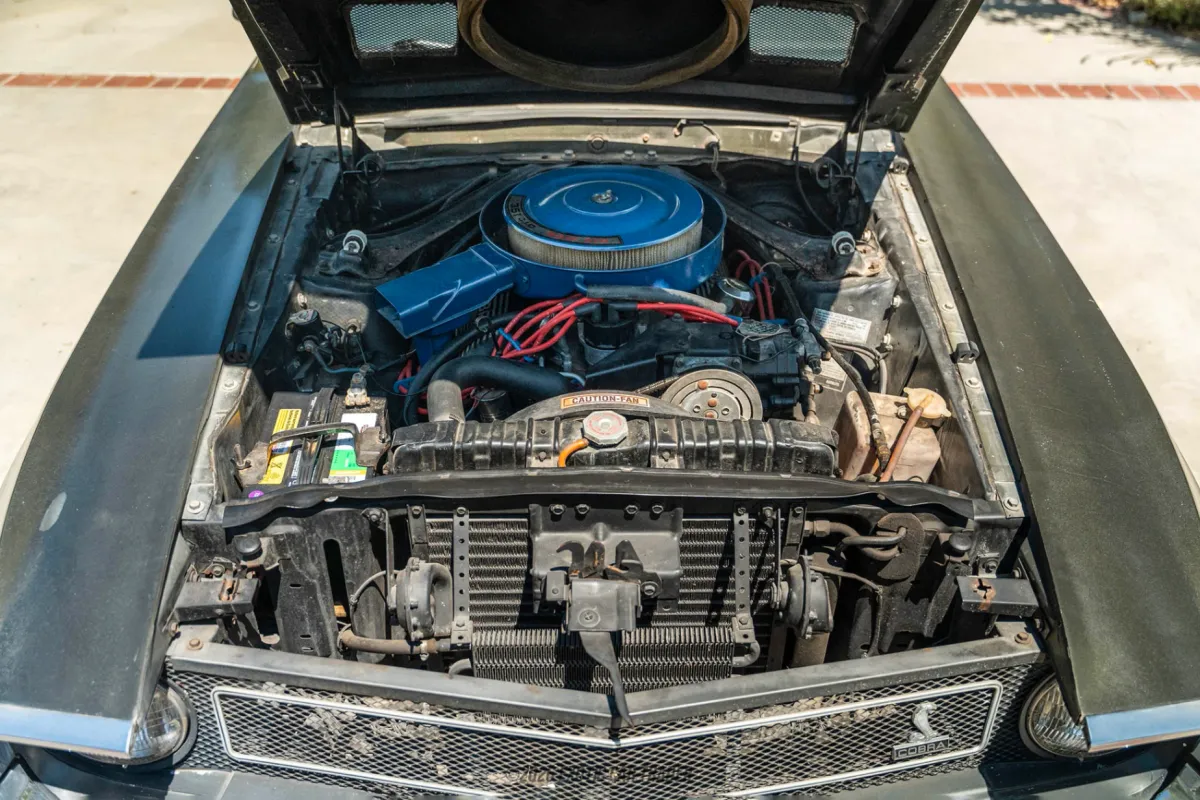
- 351ci Windsor V8
- 4-Barrel Carburetor
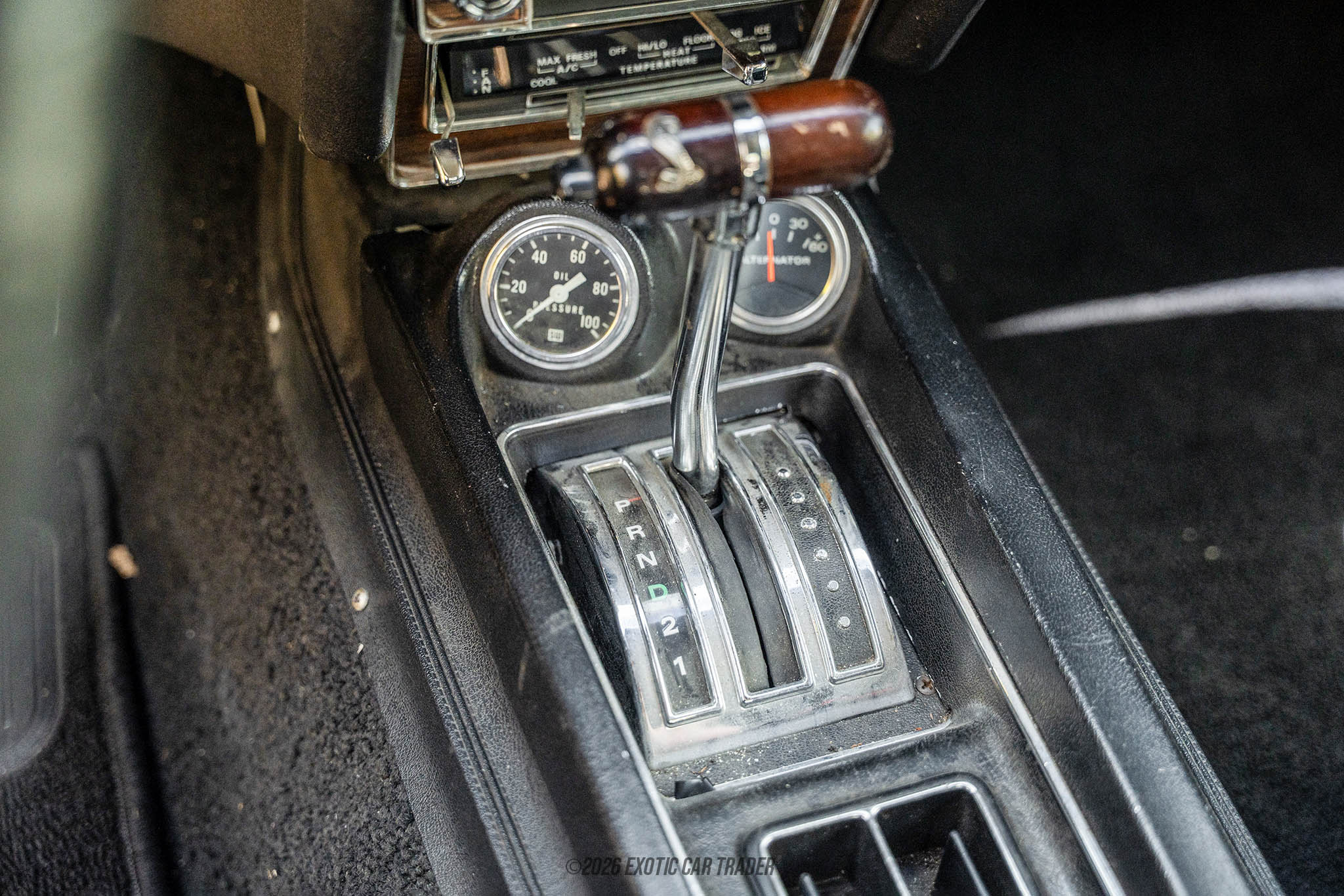
- SelectShift Cruise-O-Matic 3-Speed Automatic
- RWD
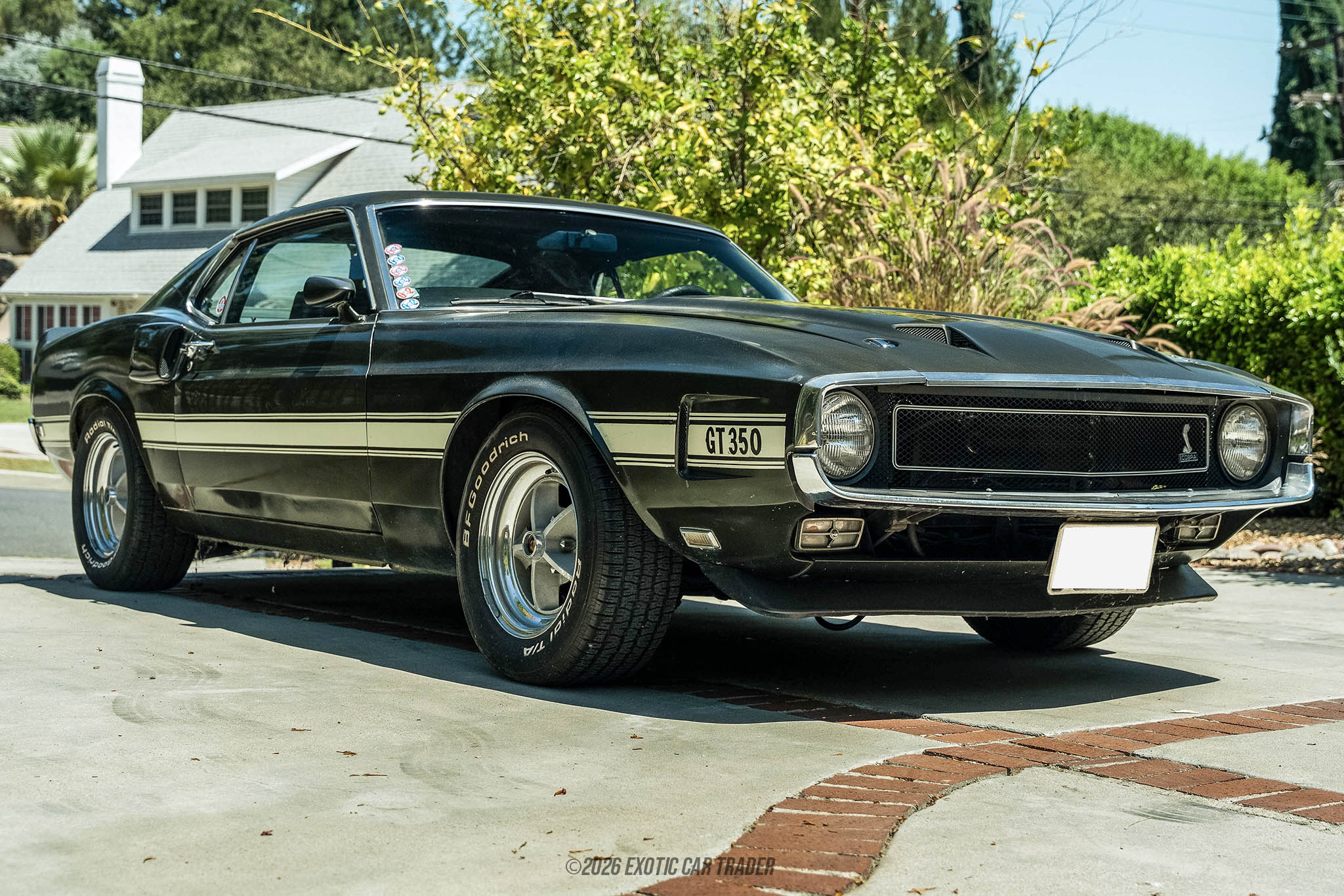
- Black Jade Exterior
- Black Interior
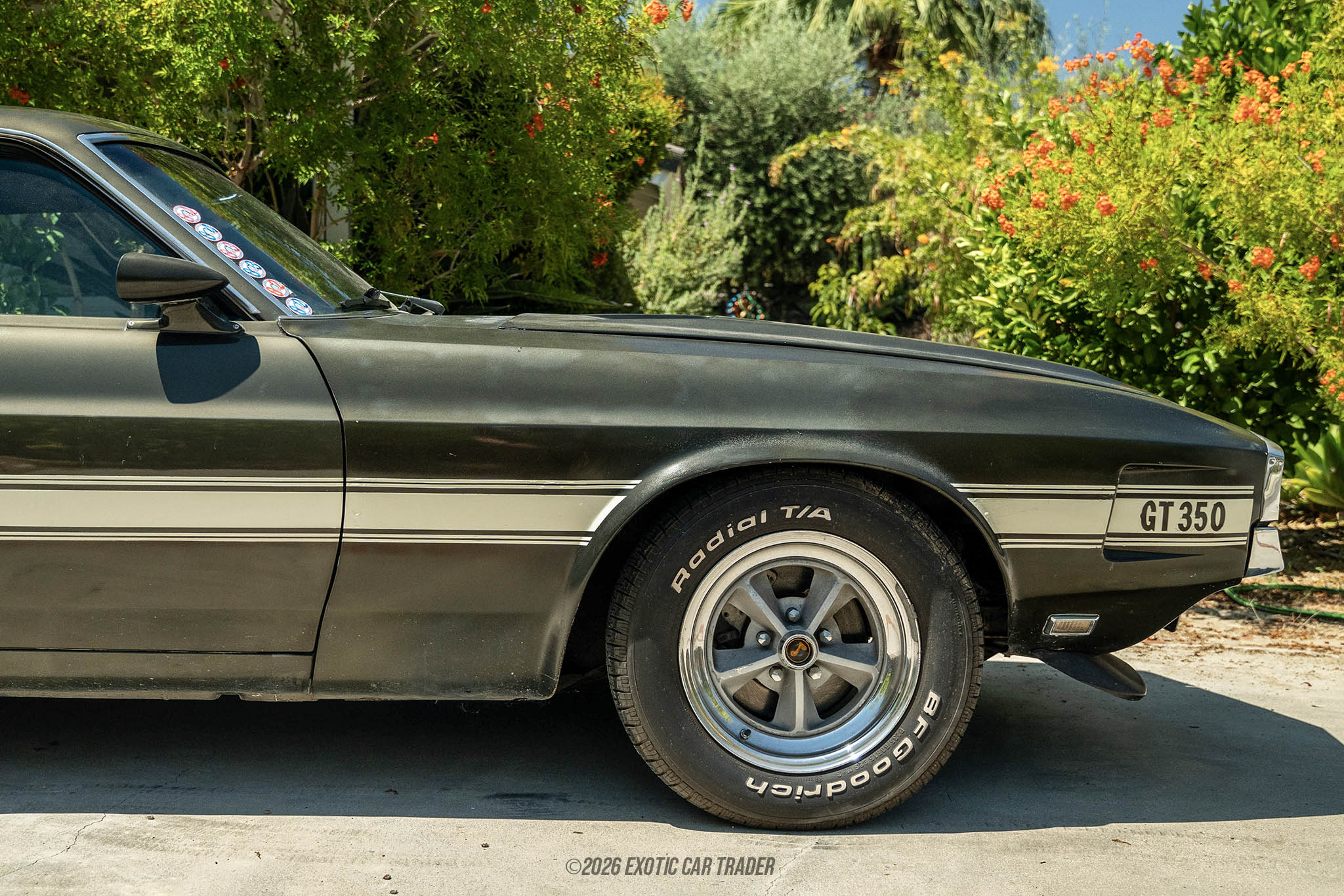
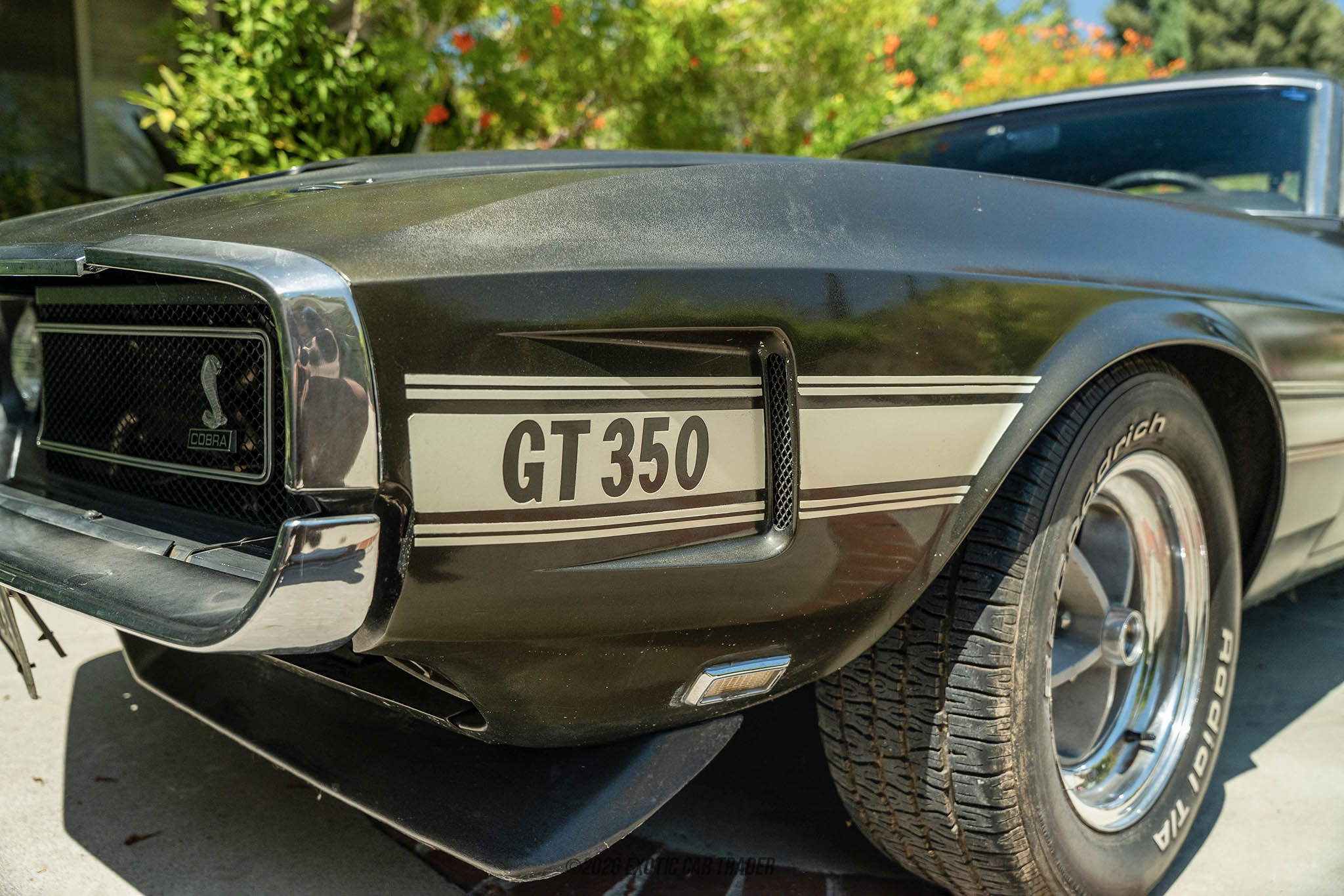
- Shelby GT350 Side Stripes
- Factory Shelby Automotive Conversion
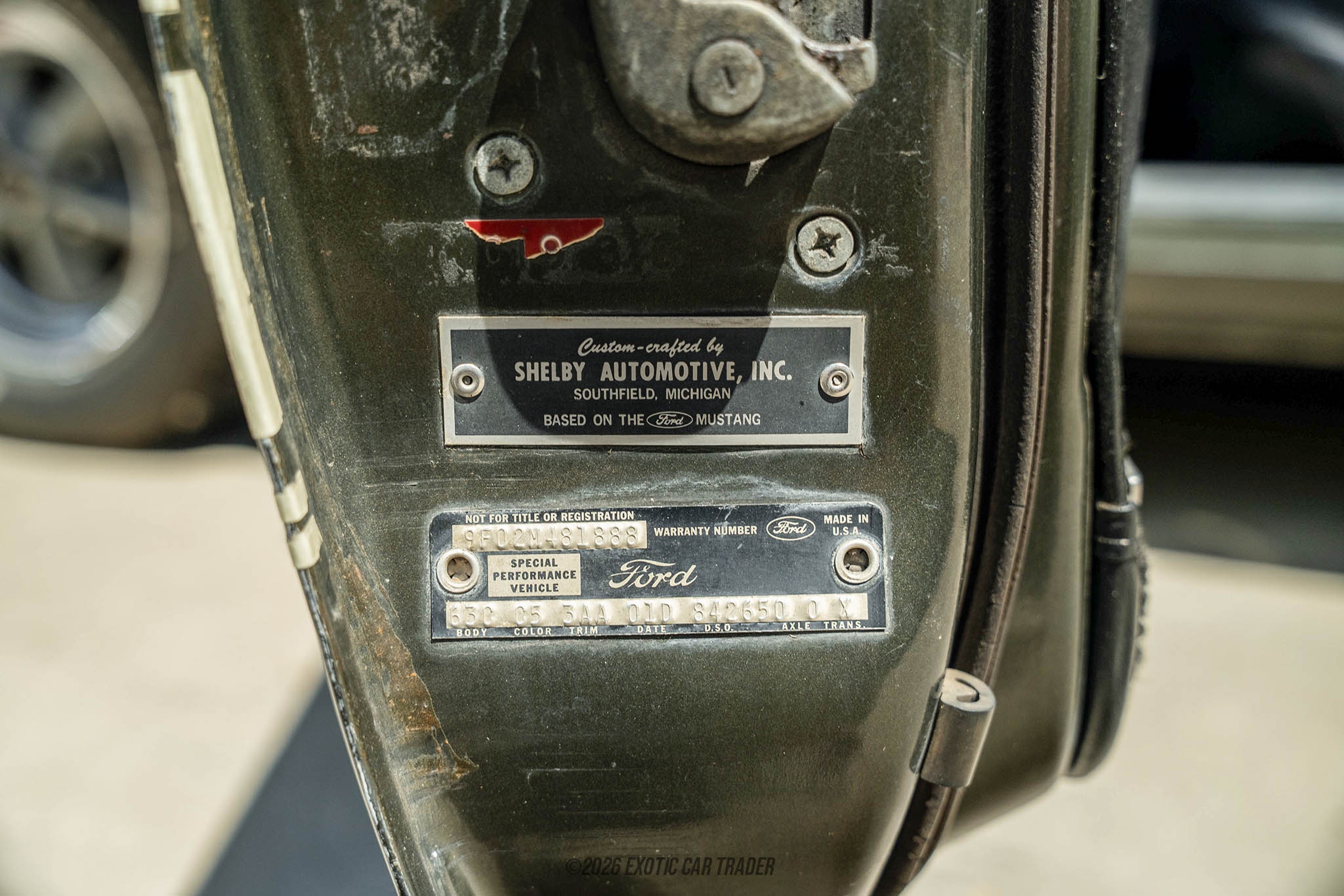
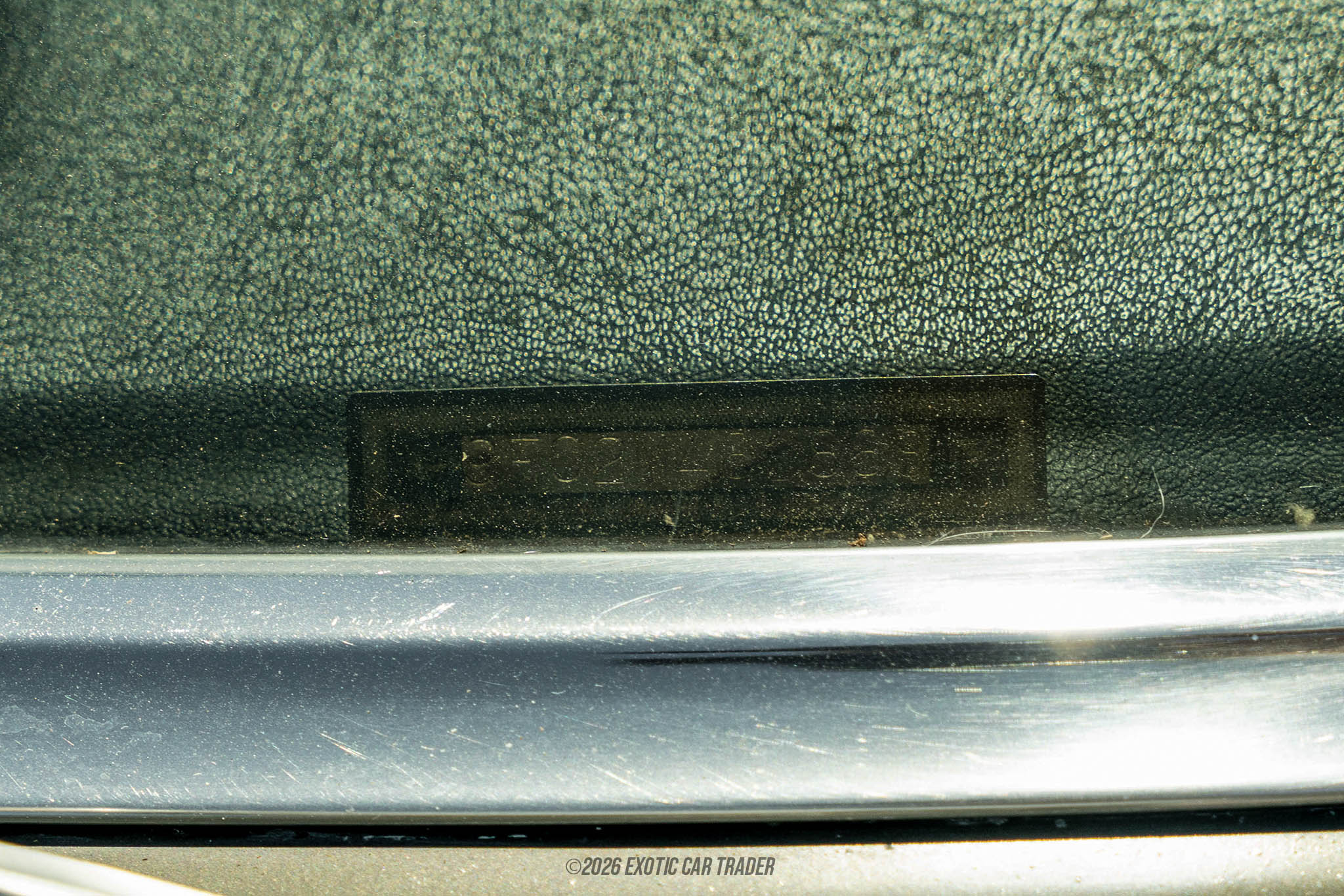
- Shelby Automotive Identification Plate
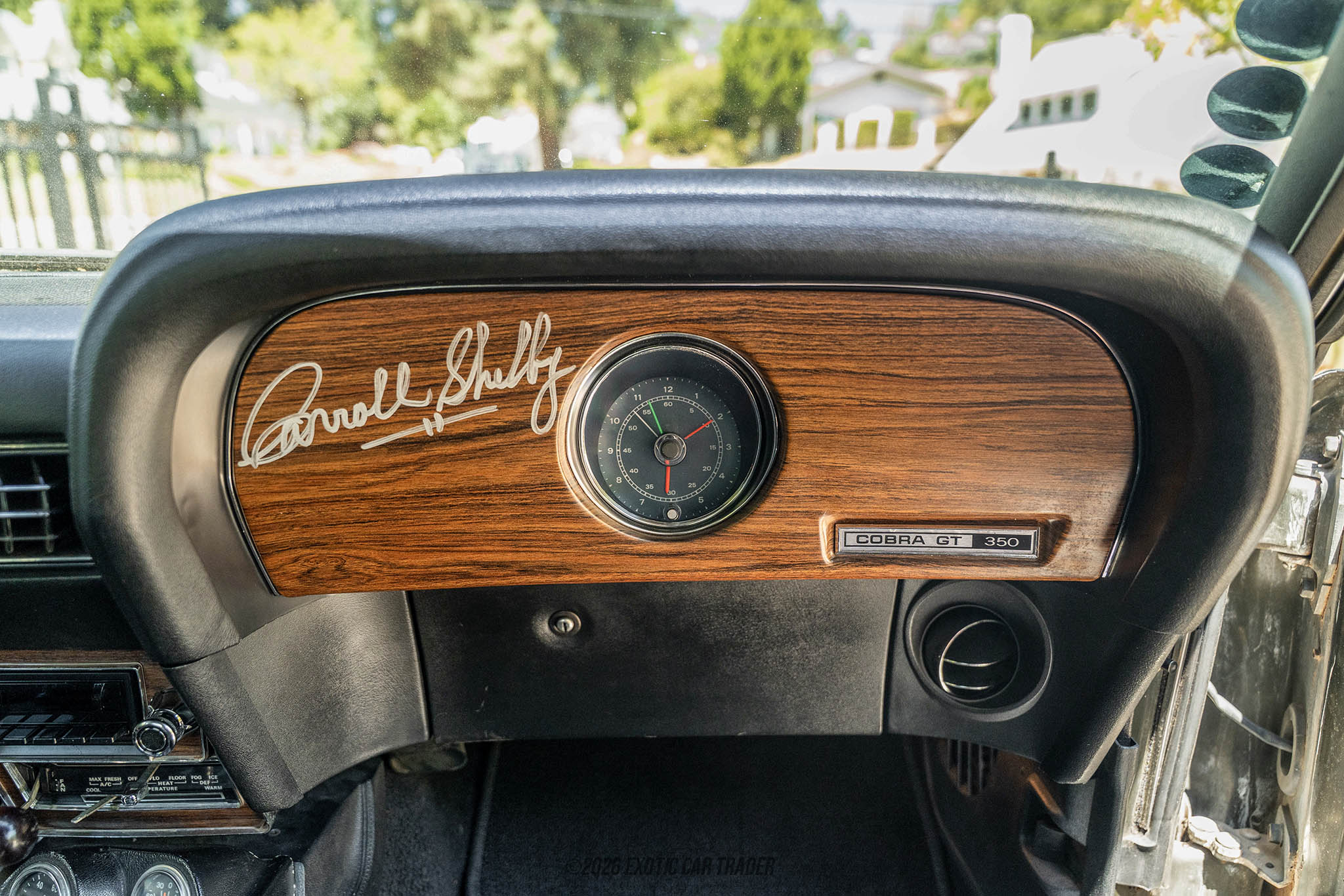
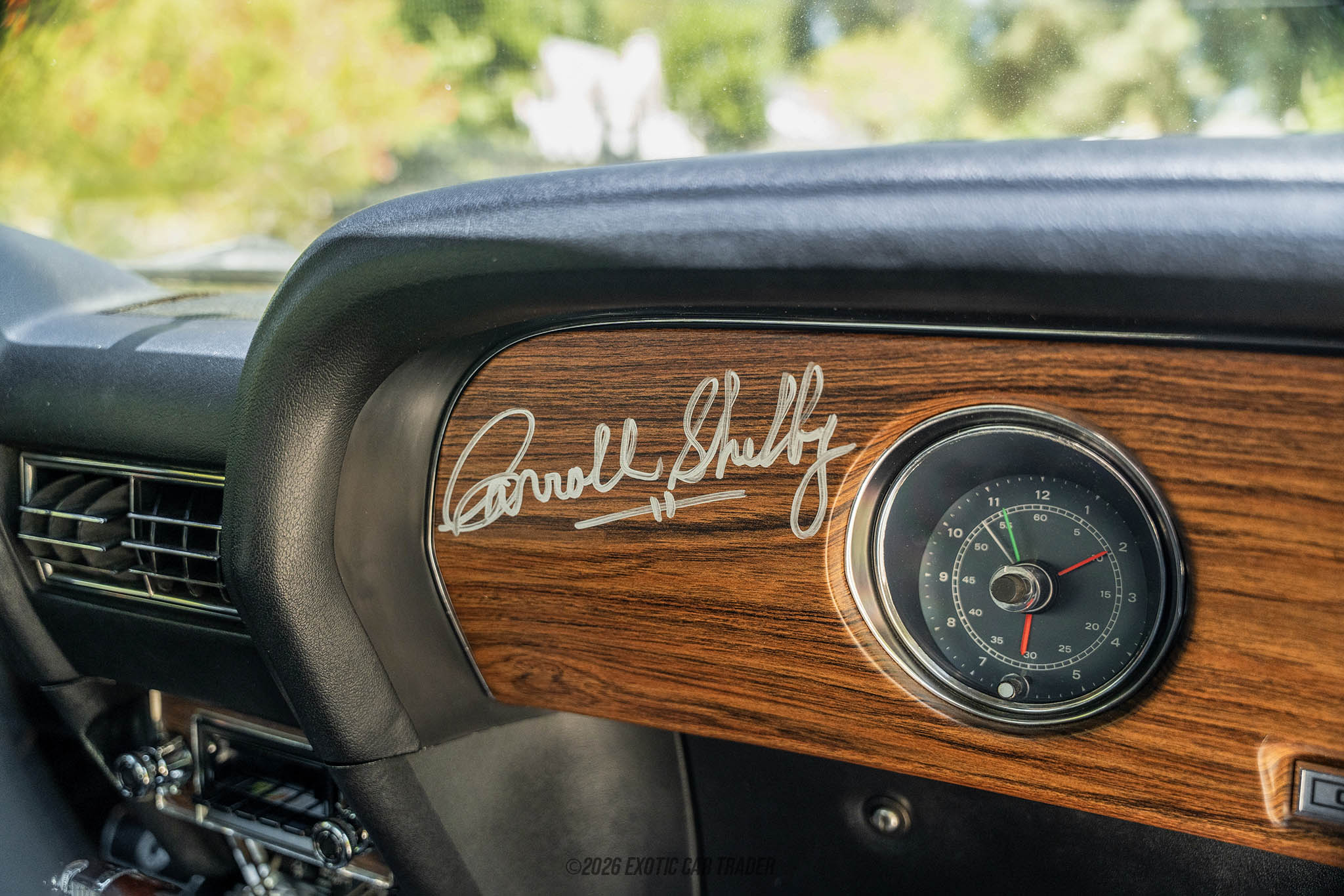
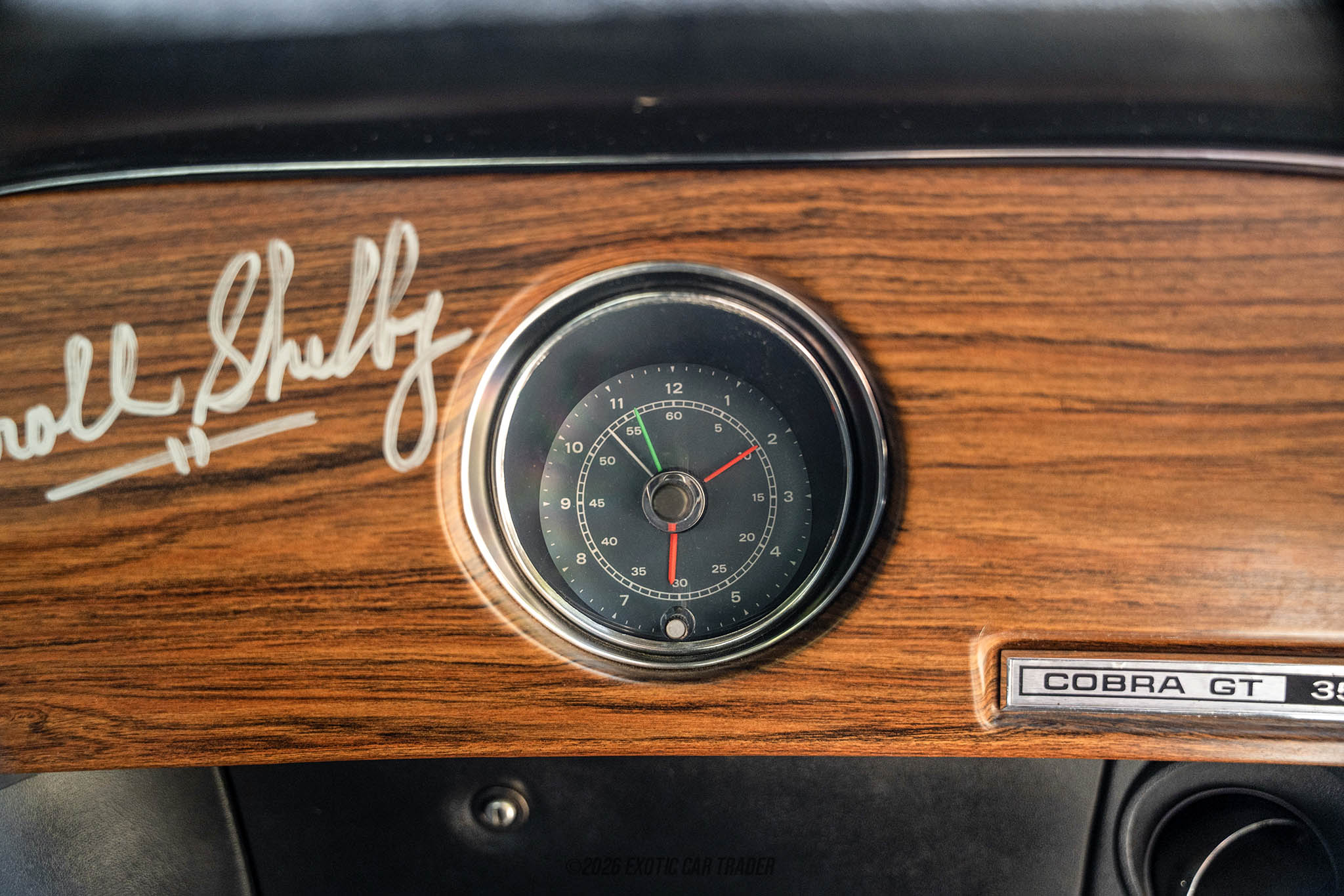
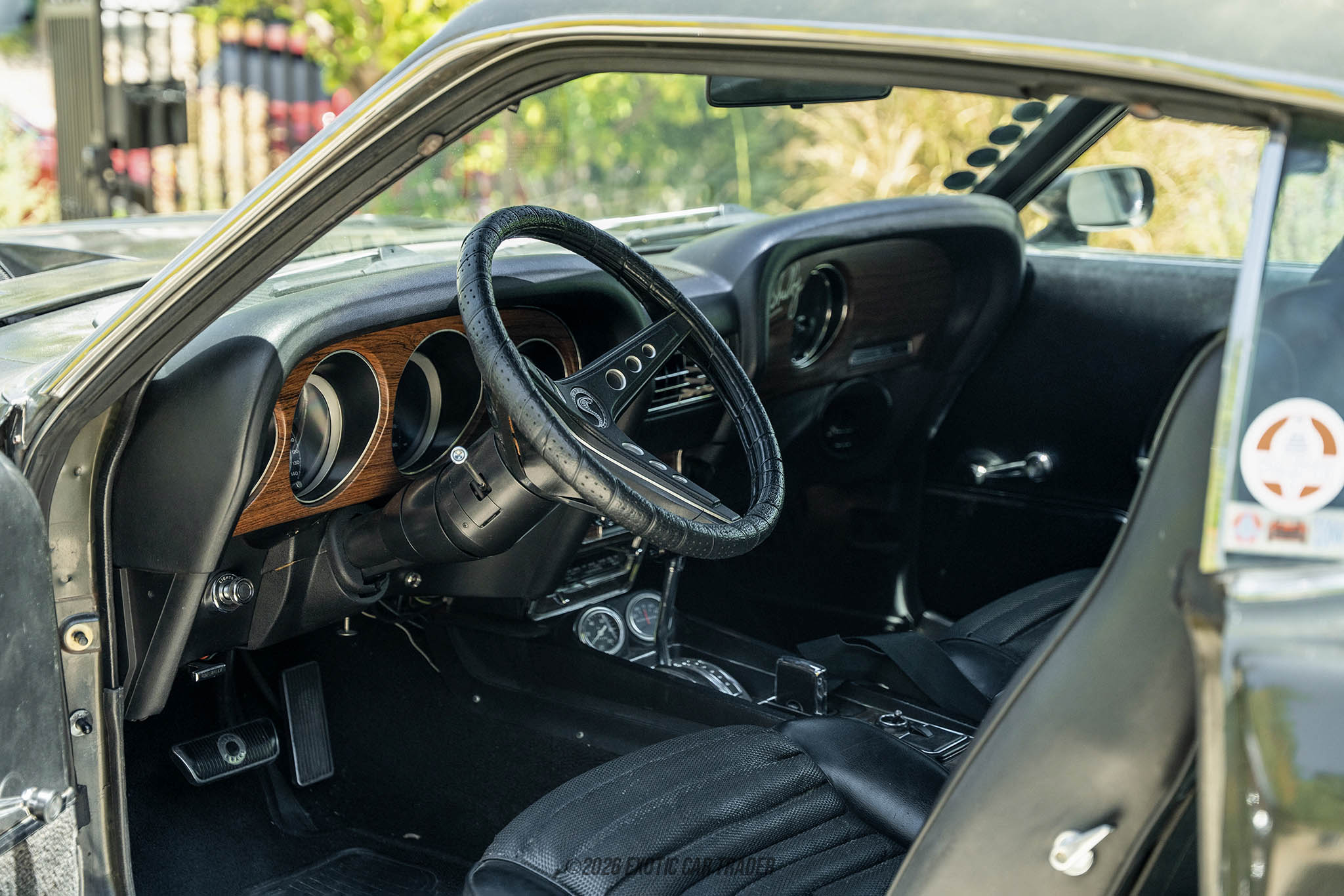
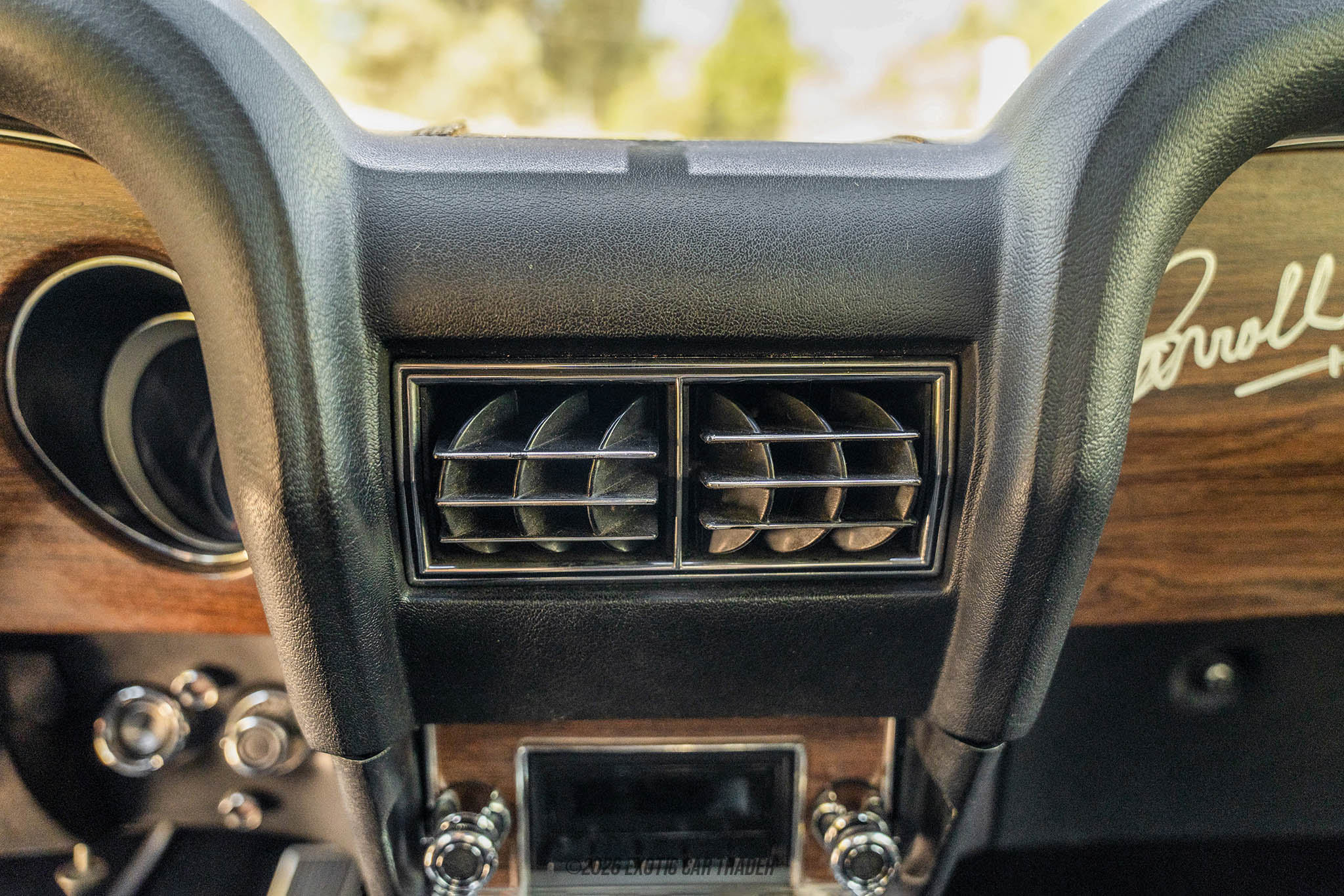
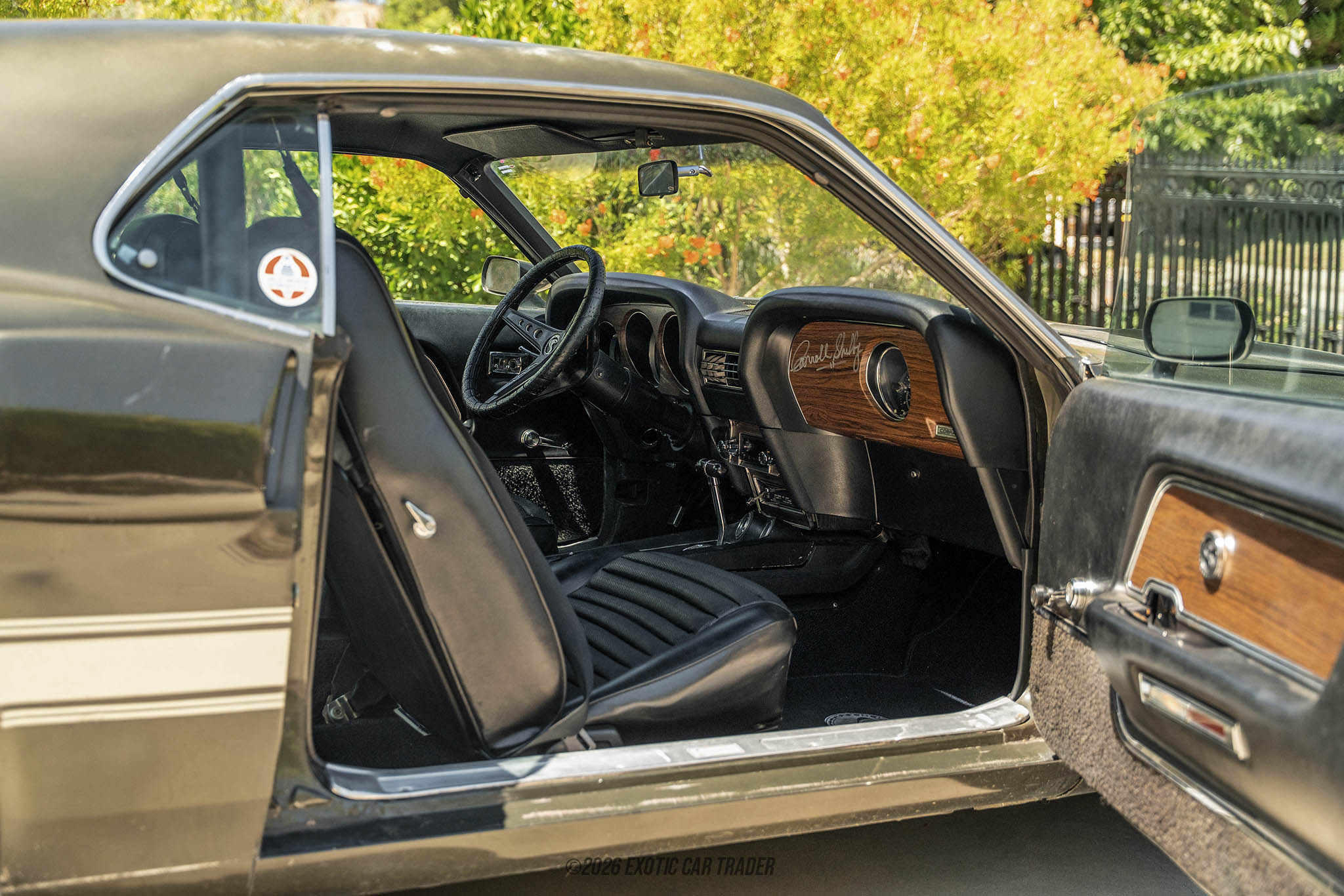
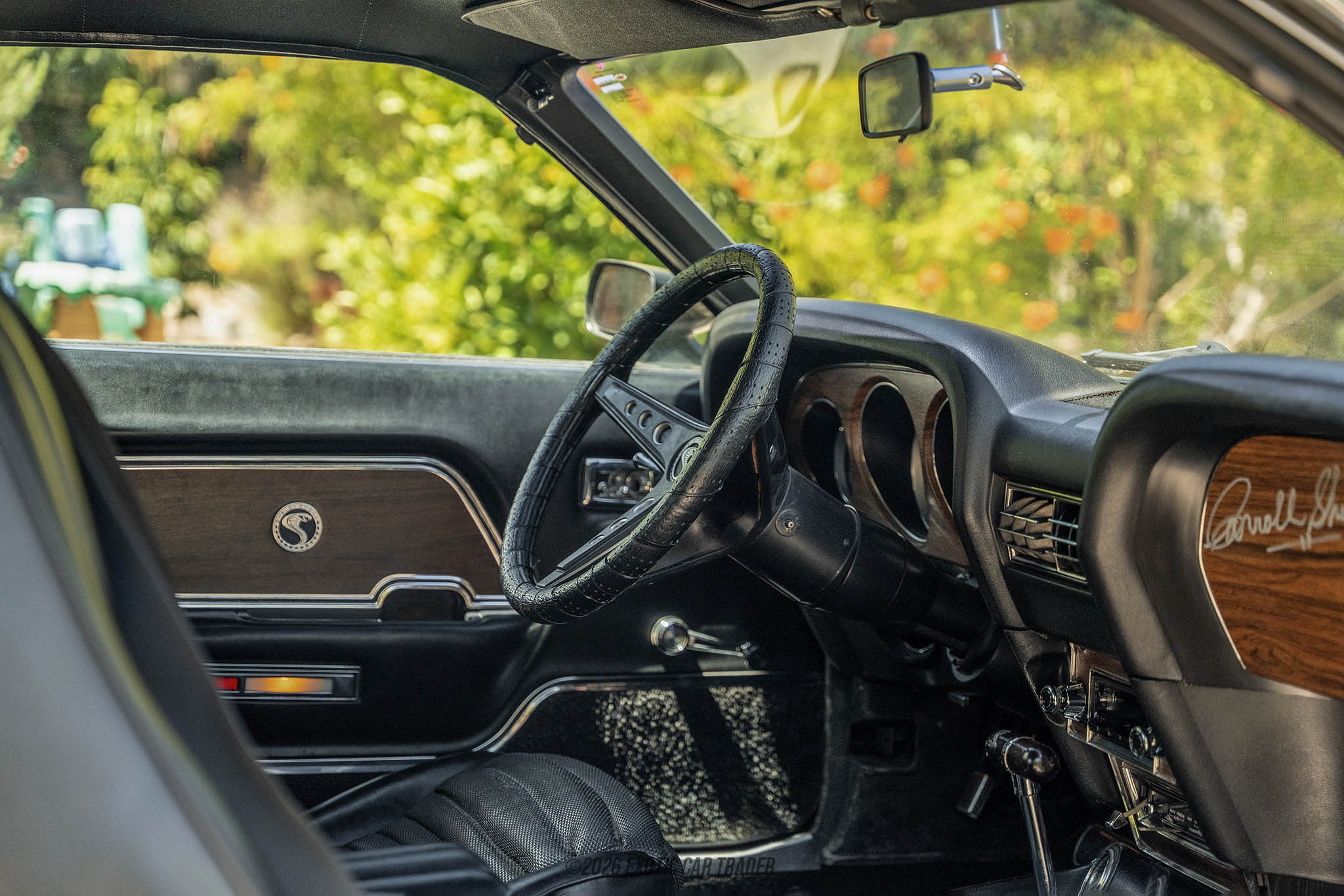
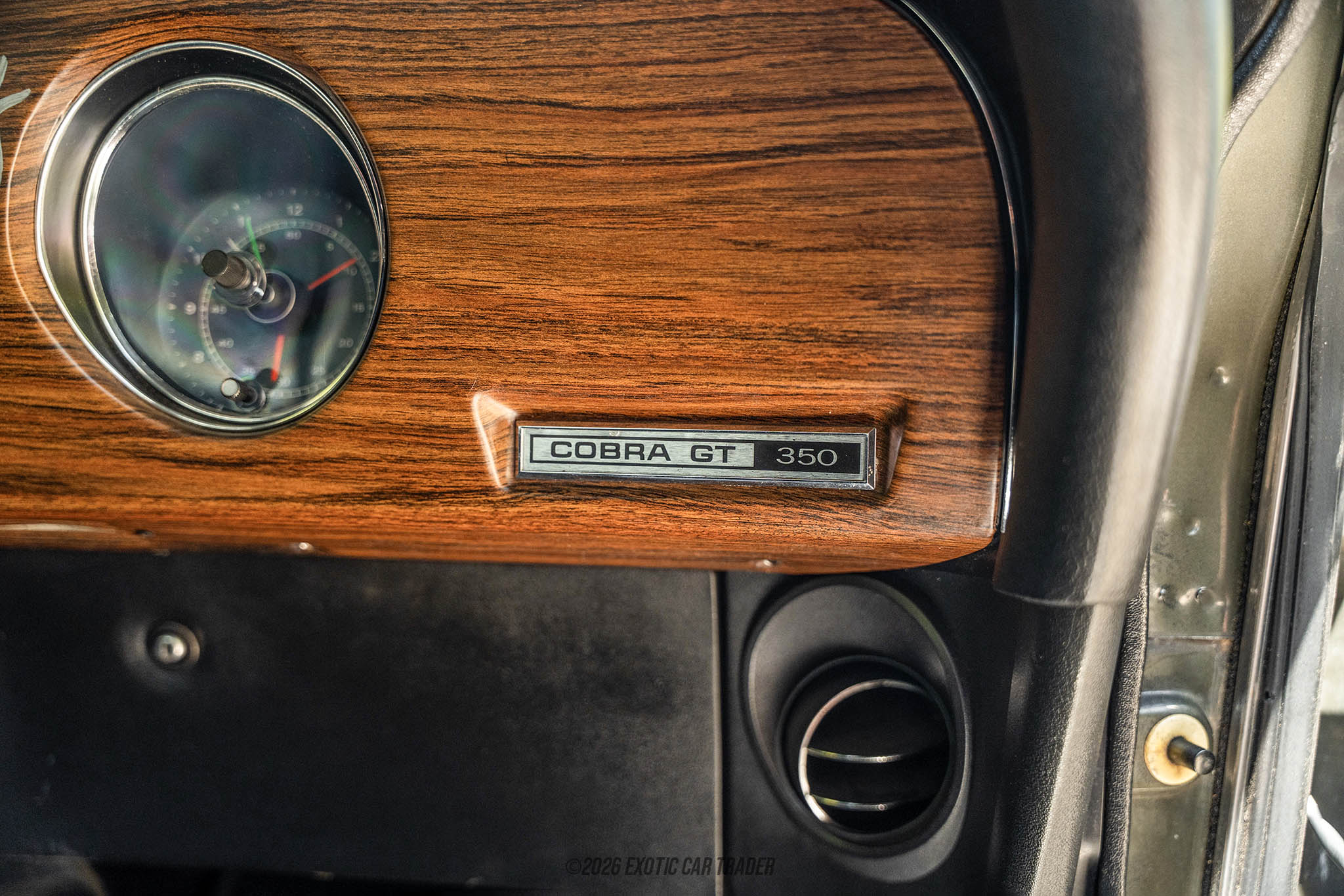
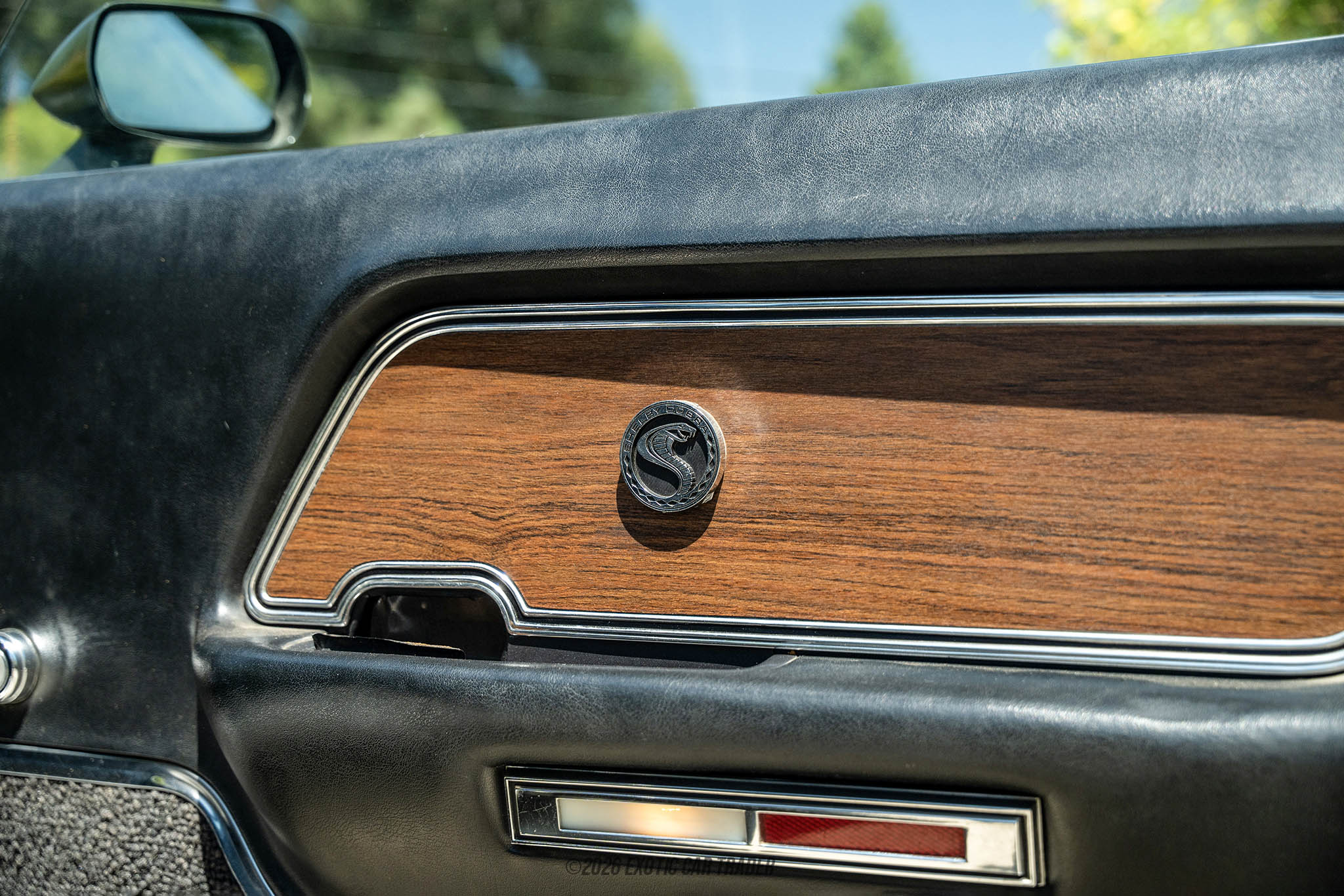
- Carroll Shelby Signature On Dash
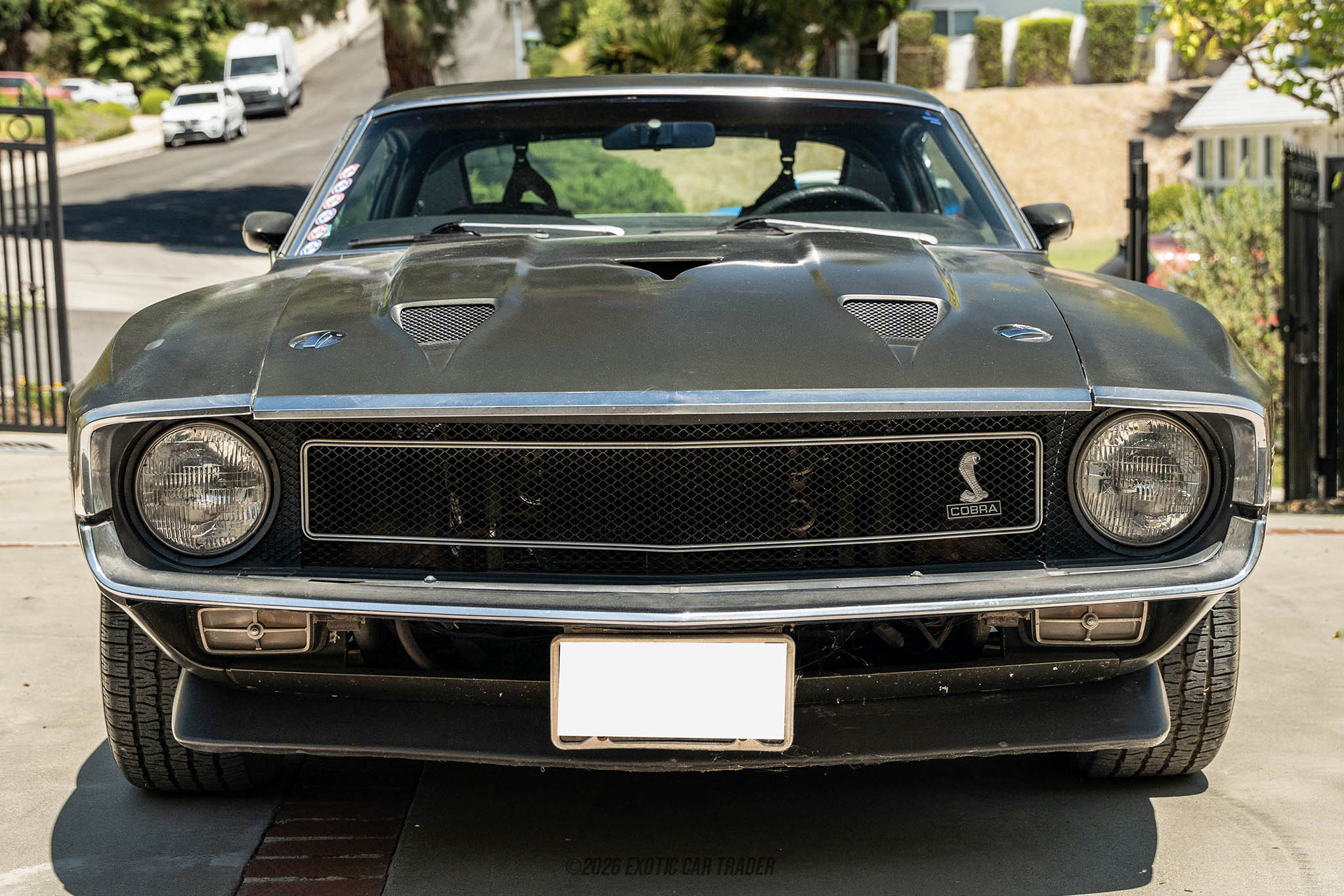
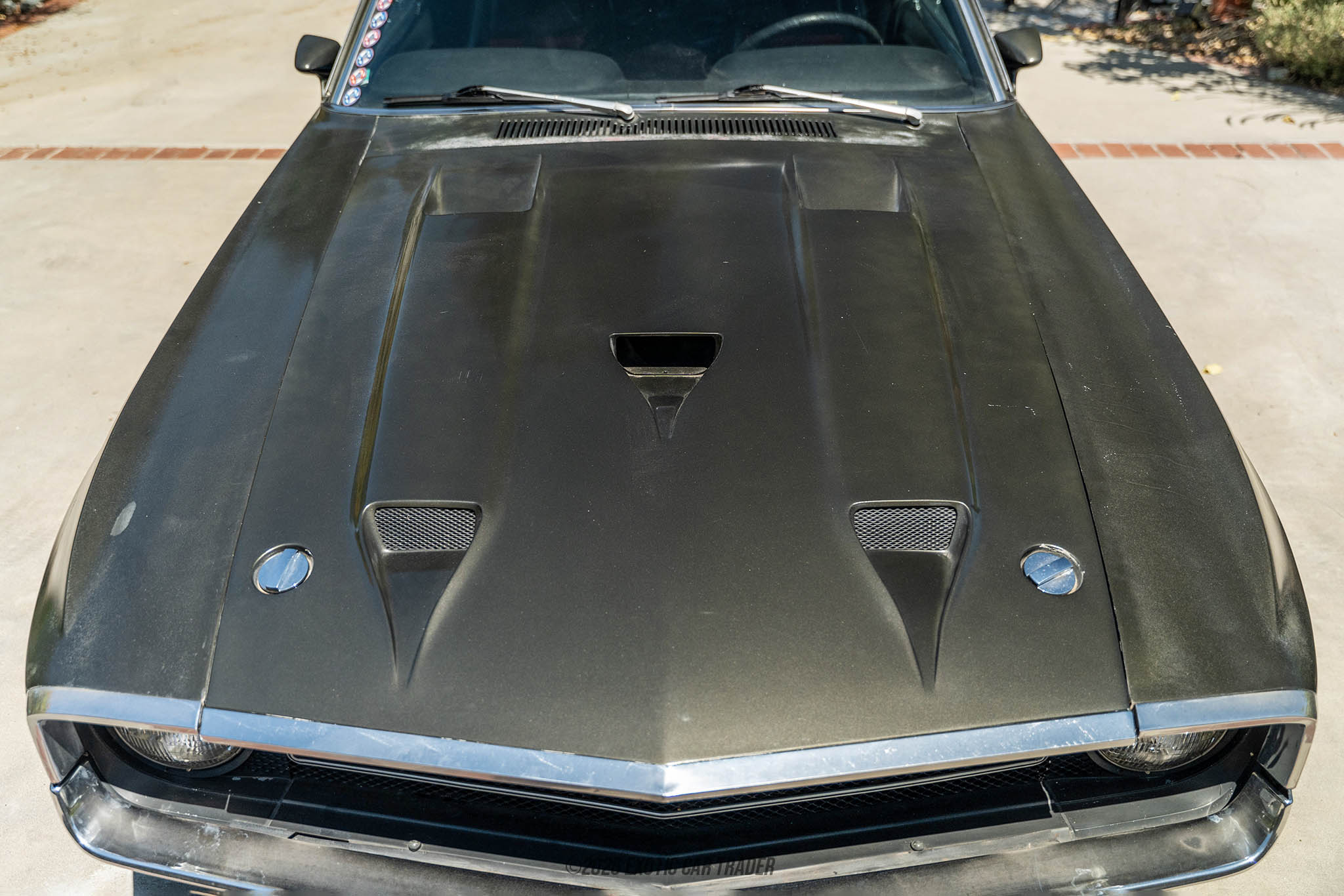
- Fiberglass Hood w/ Functional Twin Hood Scoops
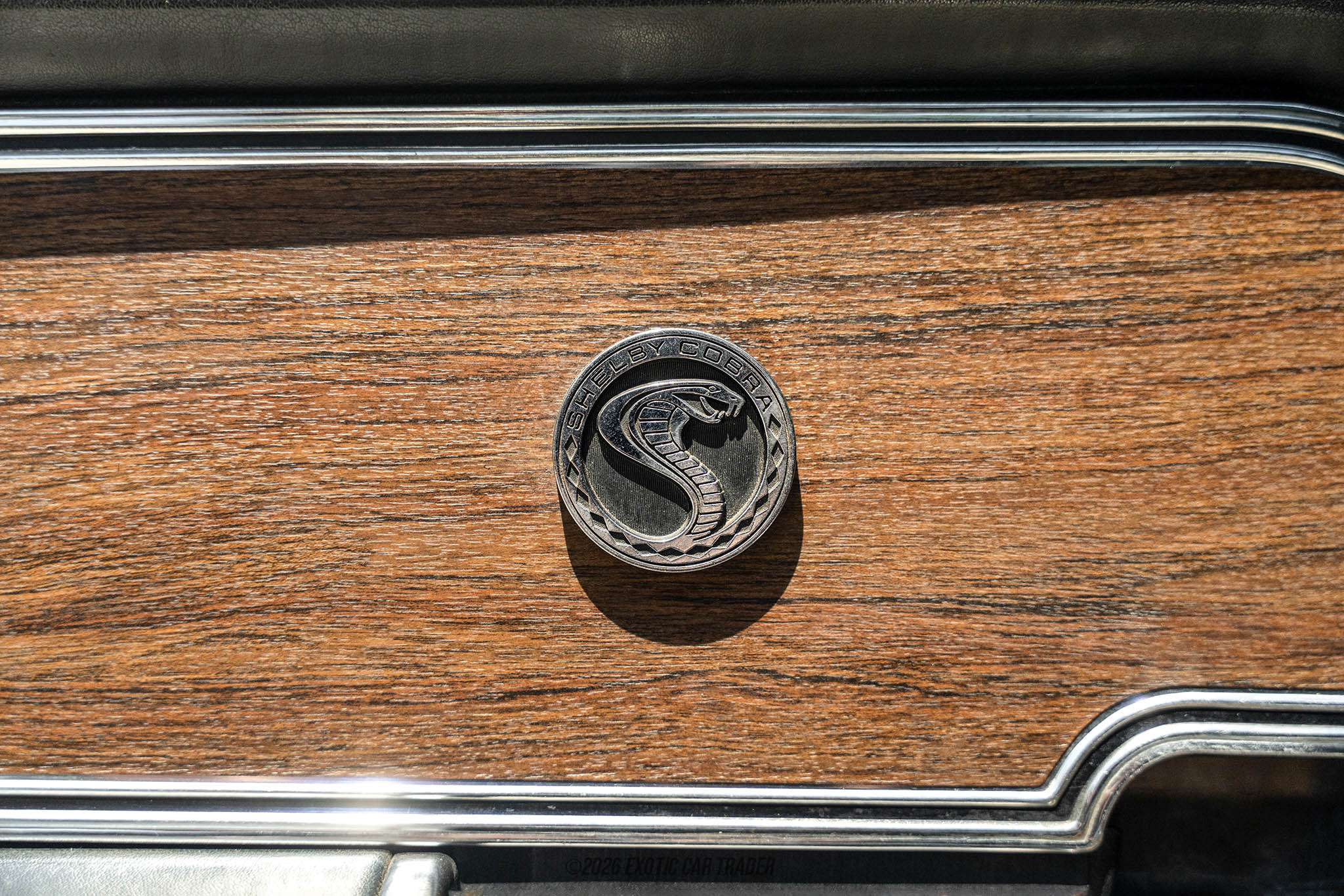
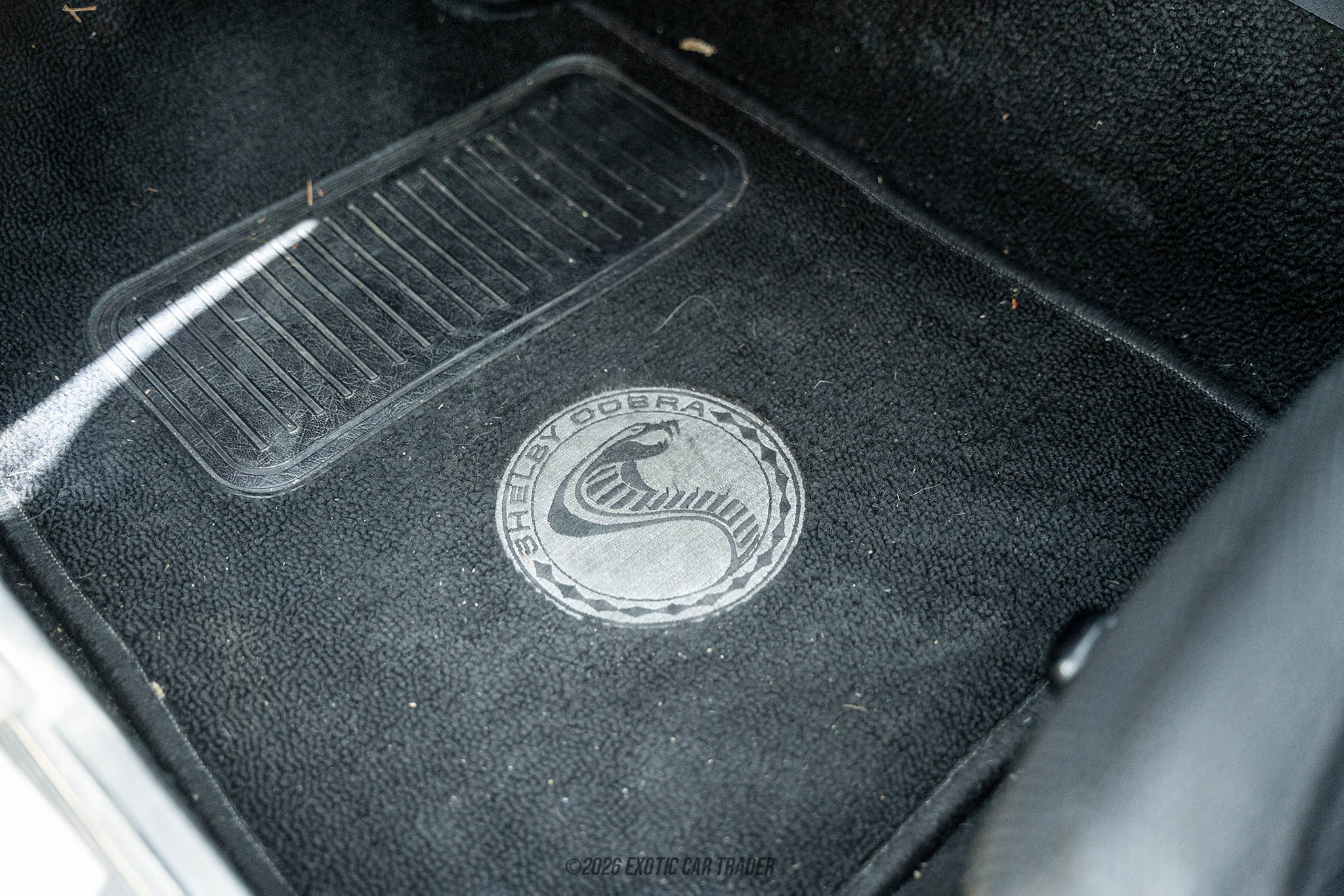
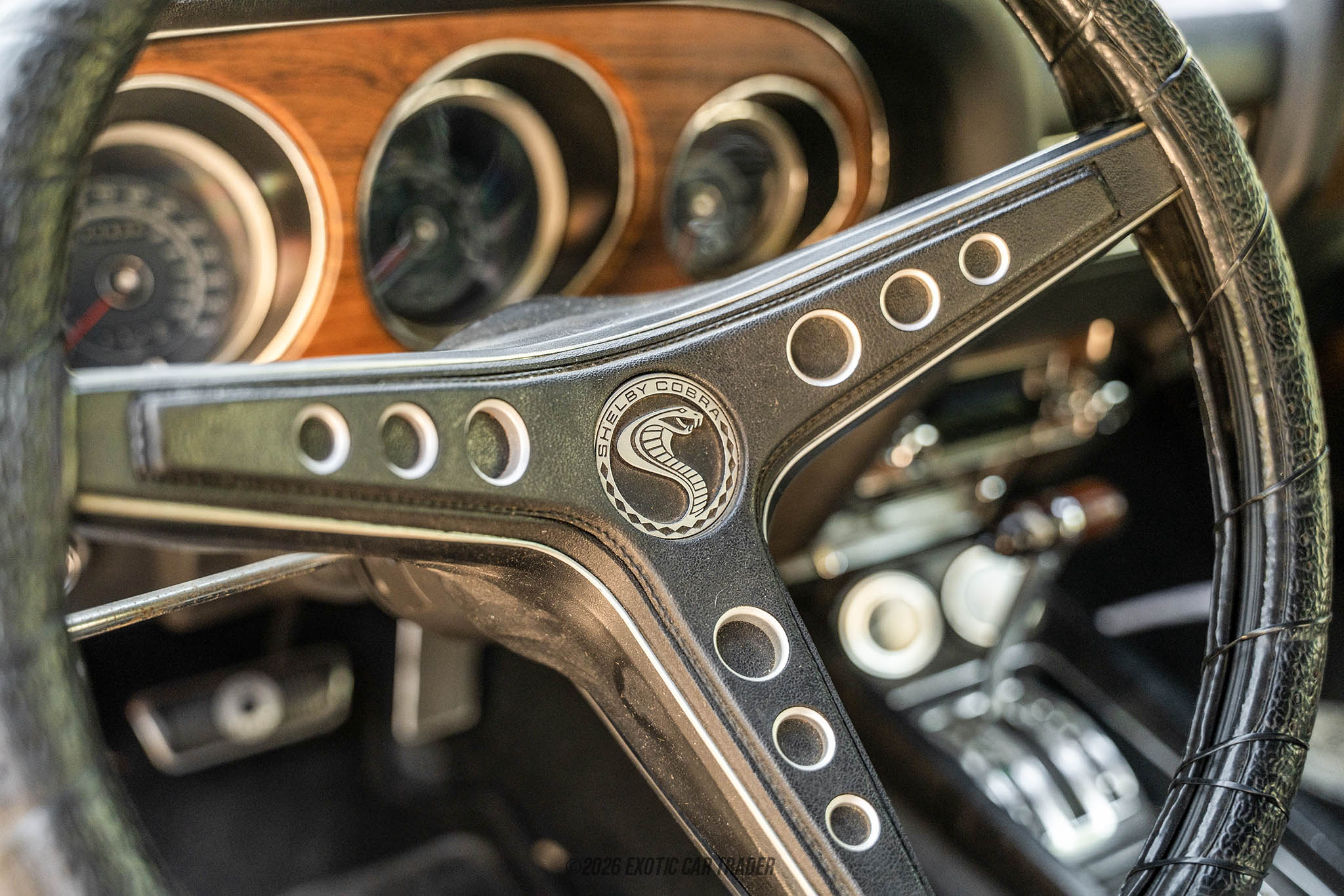
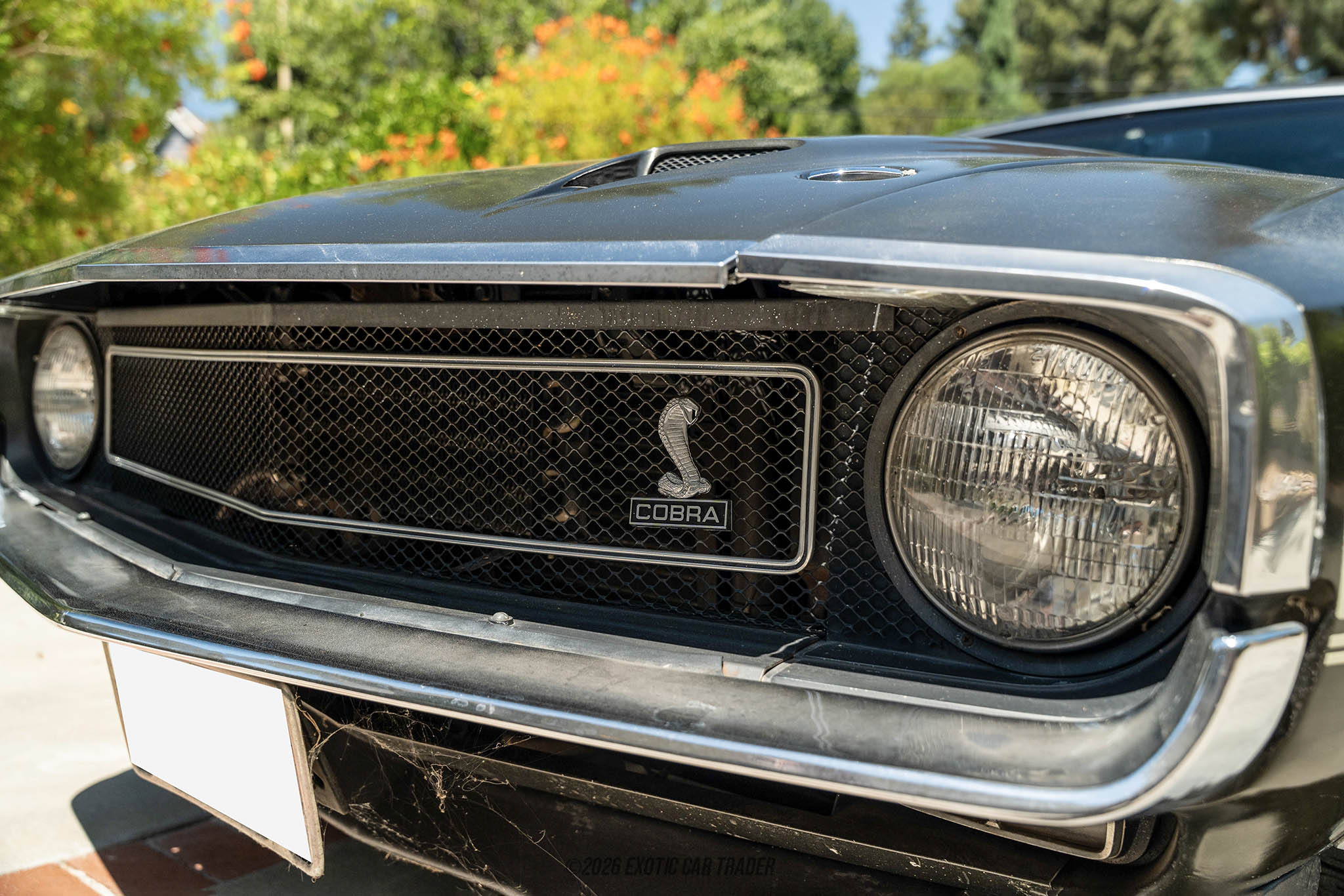
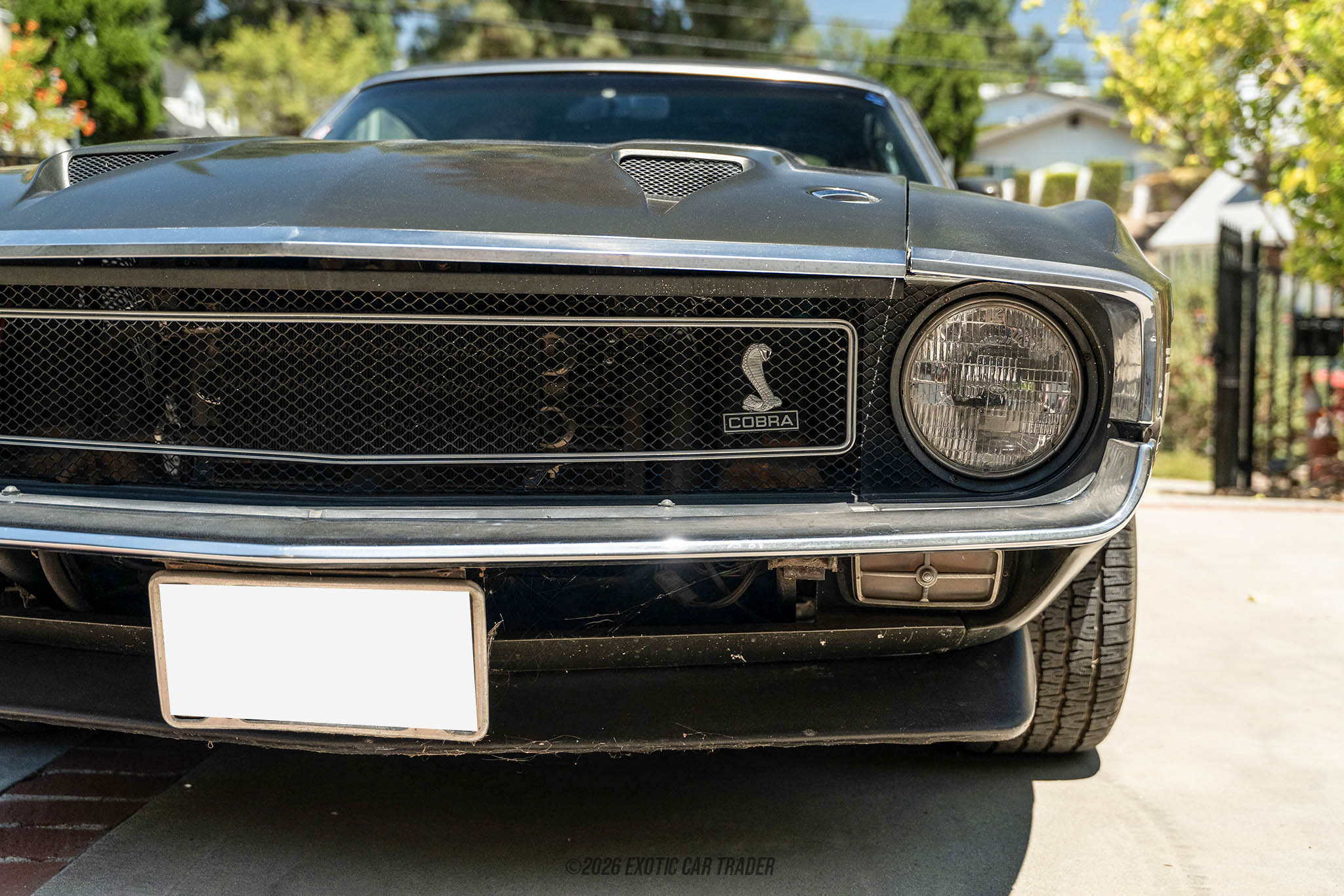
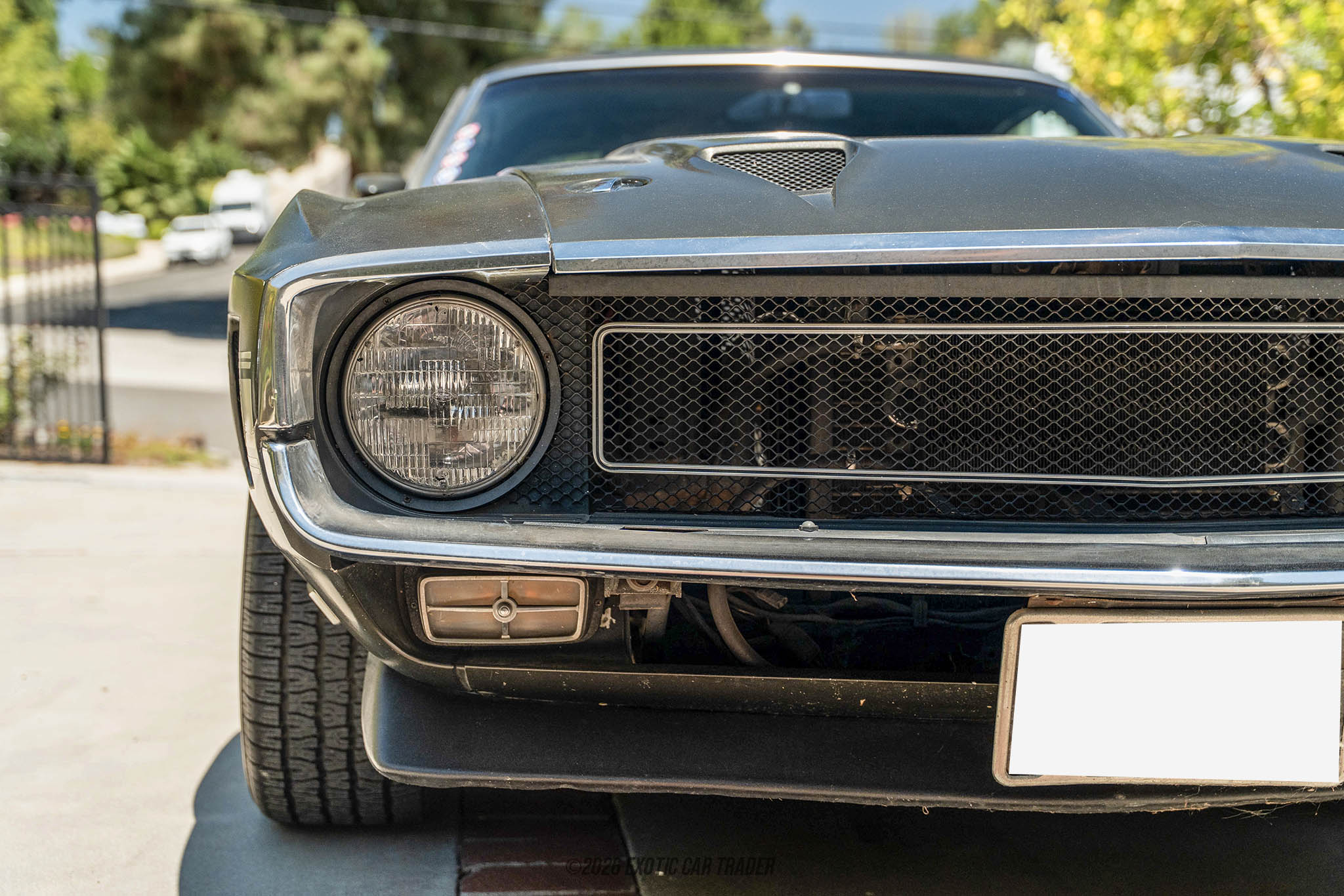
- Shelby Front Grille w/ Cobra Emblem
- Shelby-Specific Front Fascia & Lower Spoiler
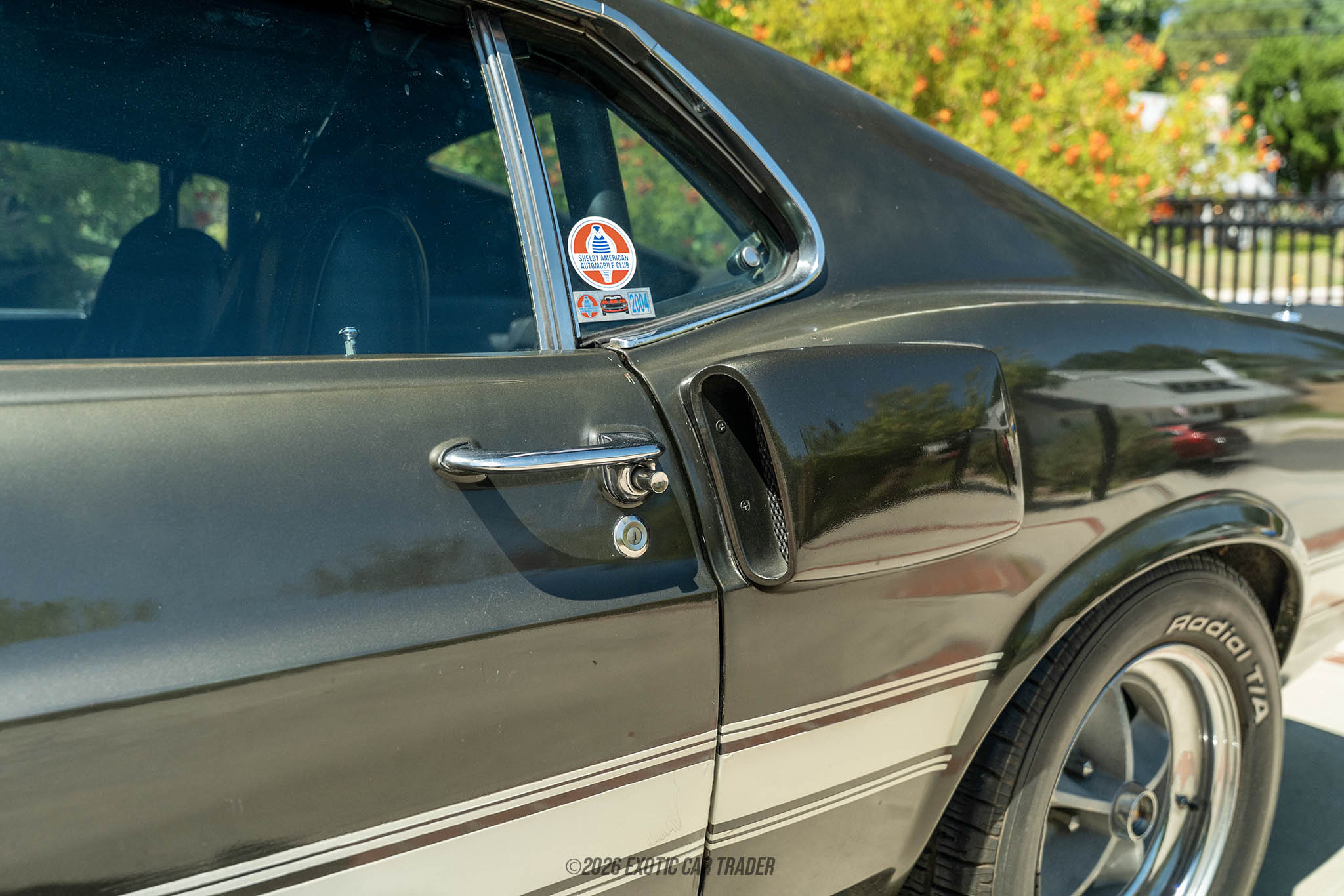
- Shelby Side Scoops
- Front Driving Lights
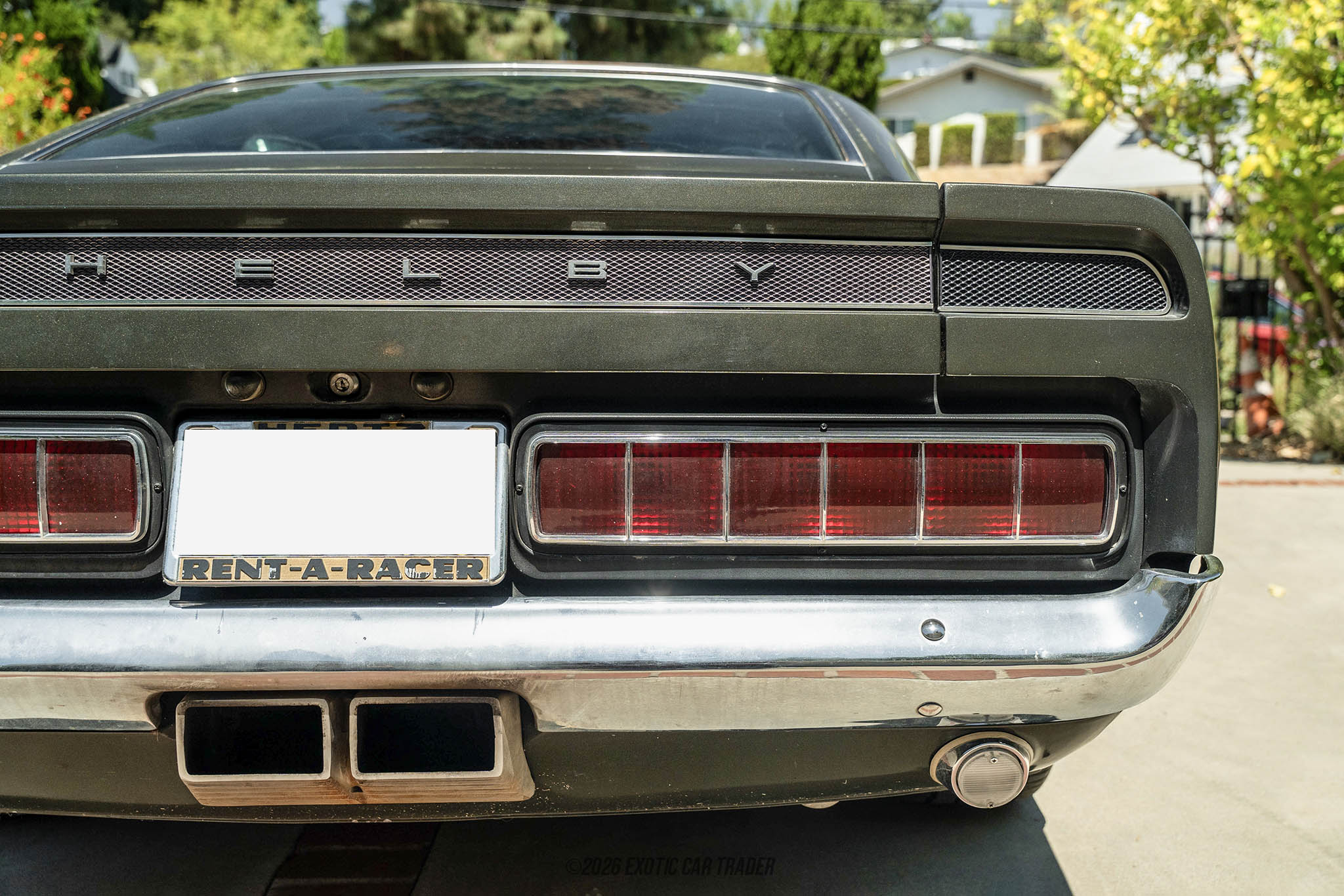
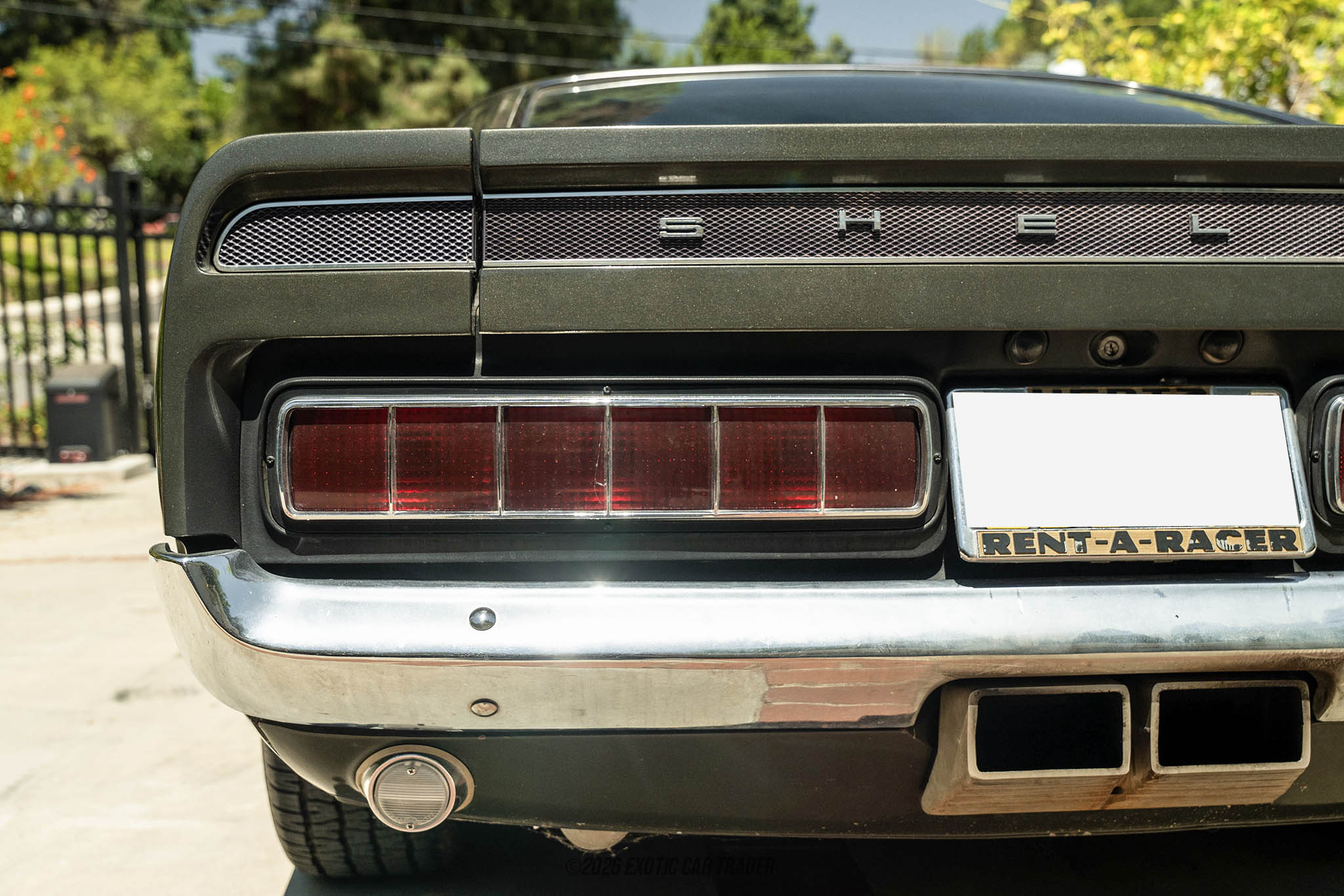
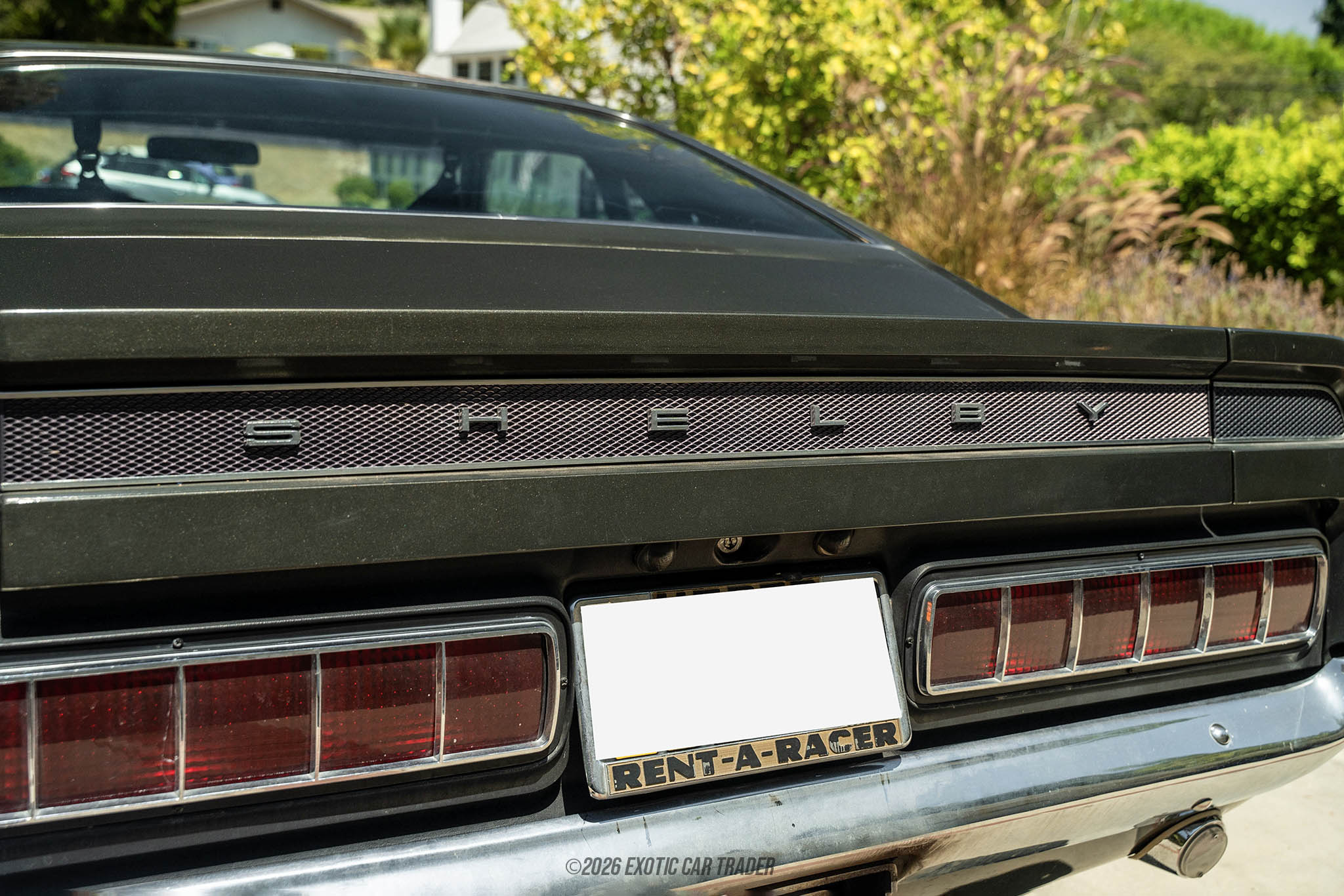
- Rear Decklid Spoiler
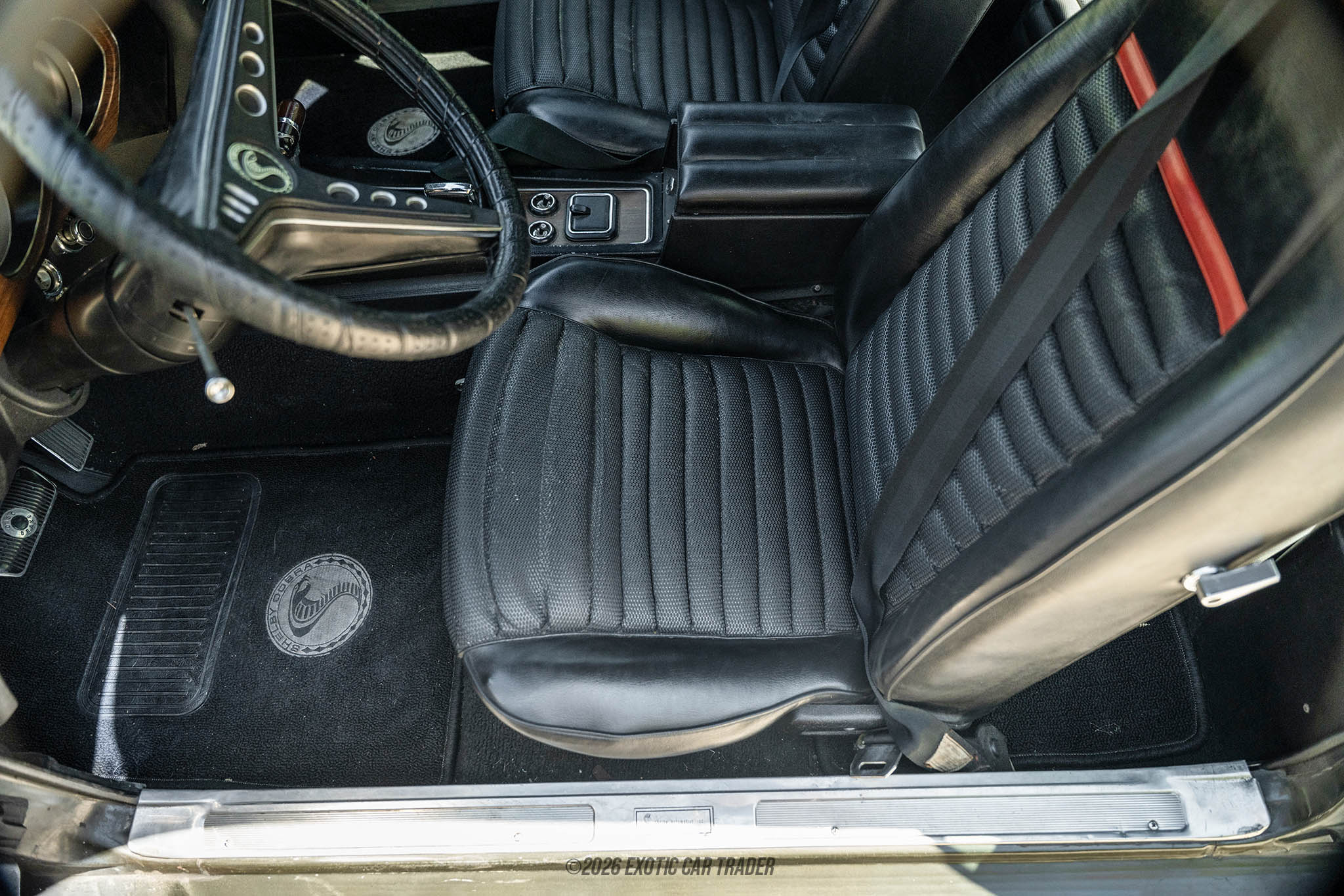
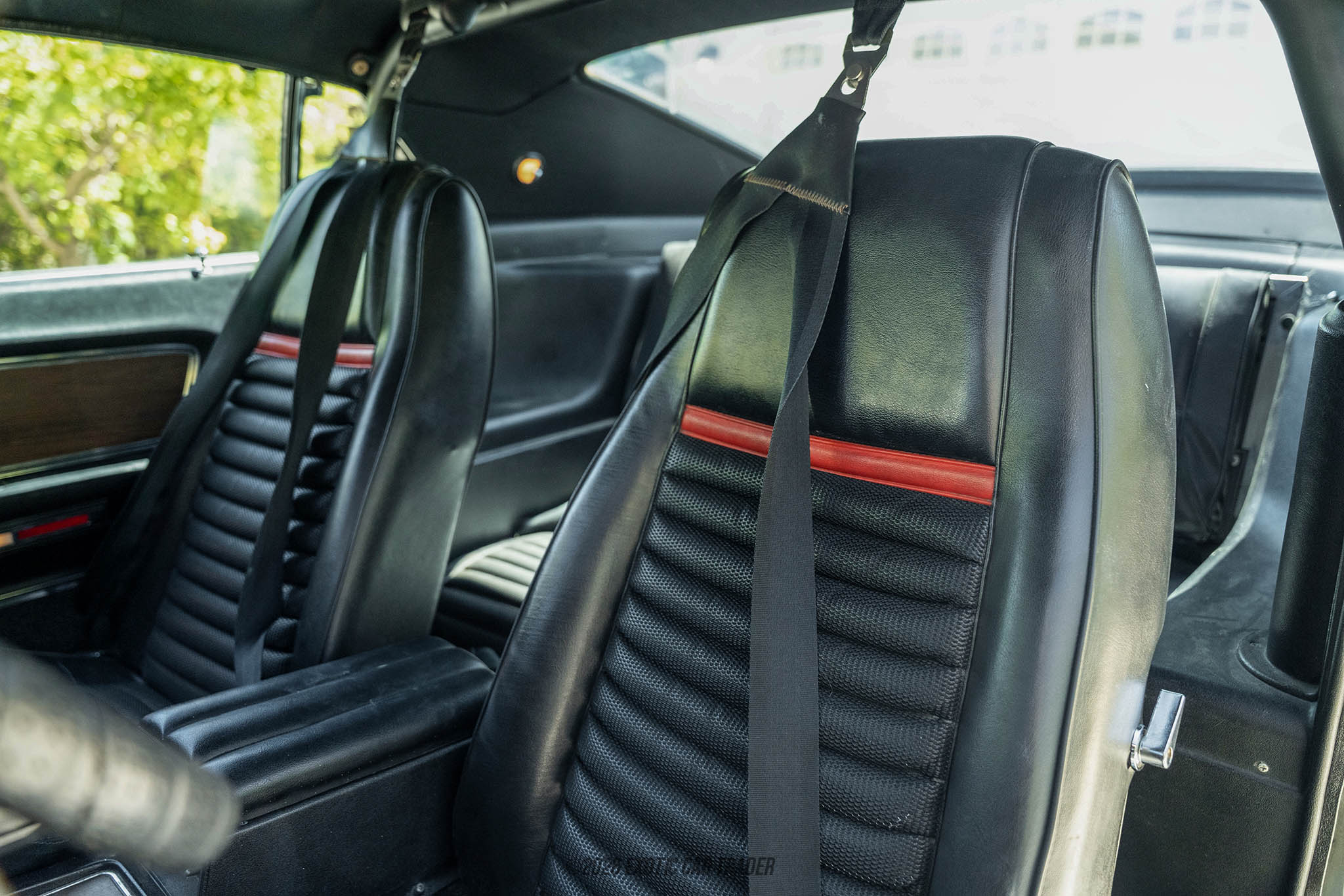
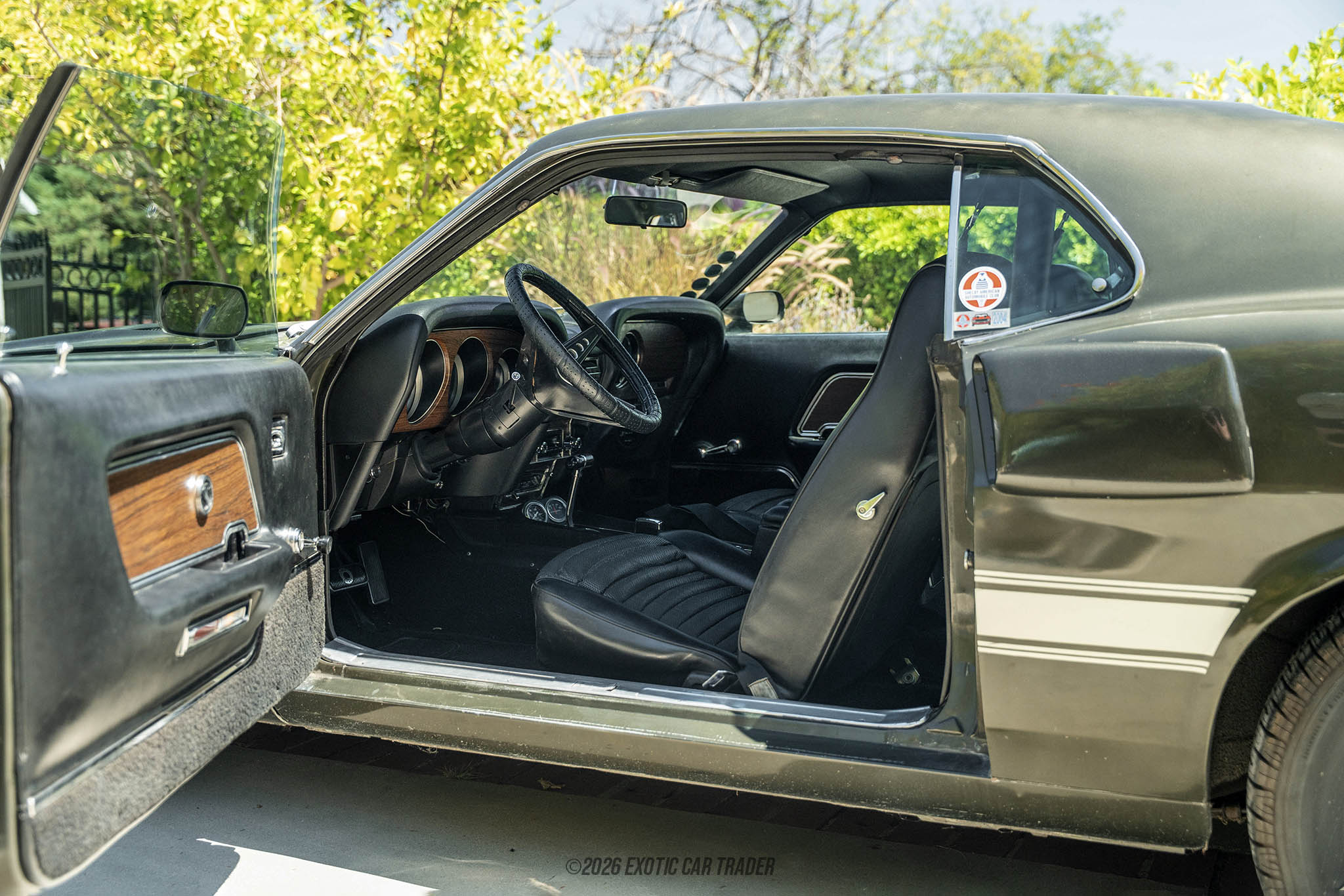
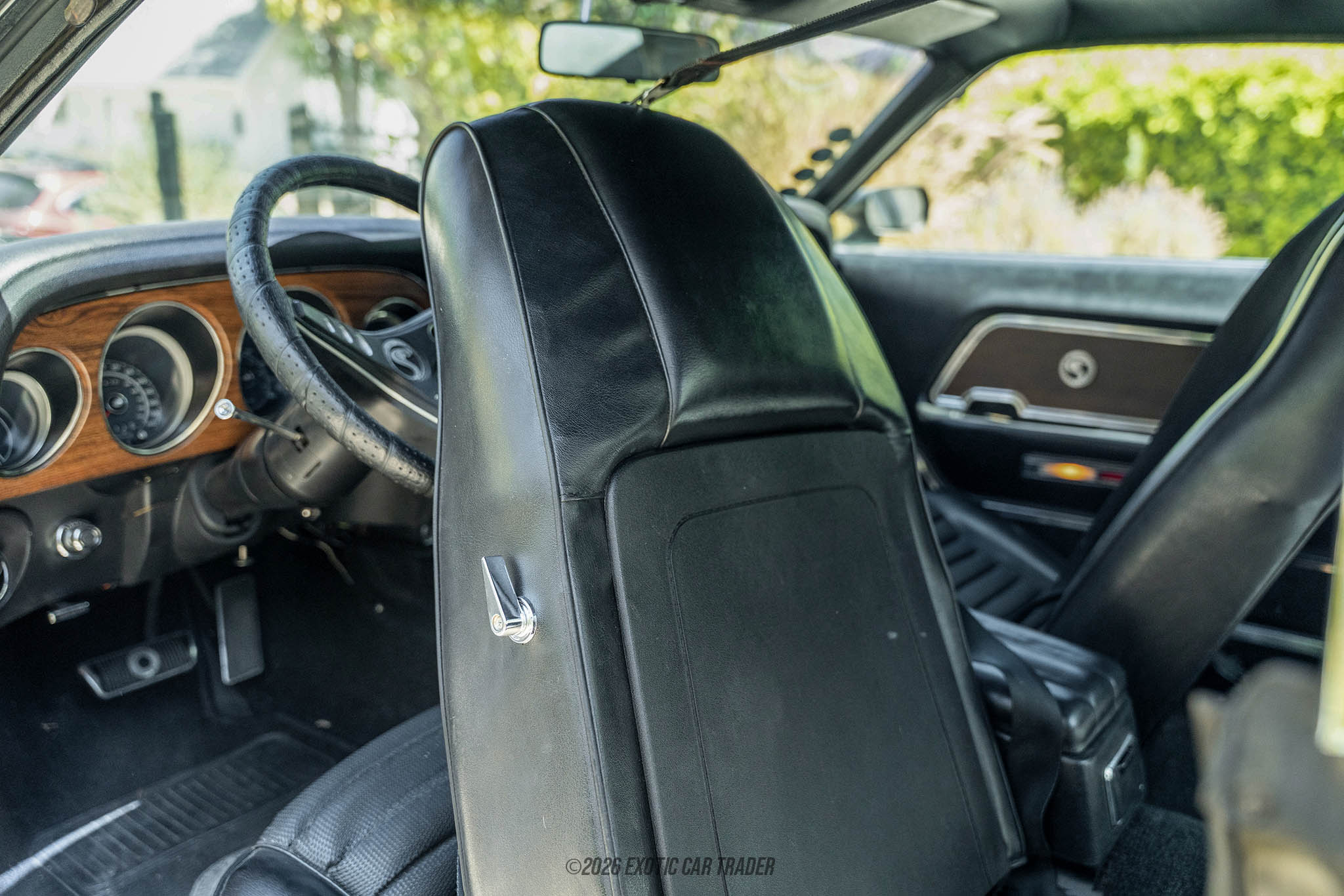
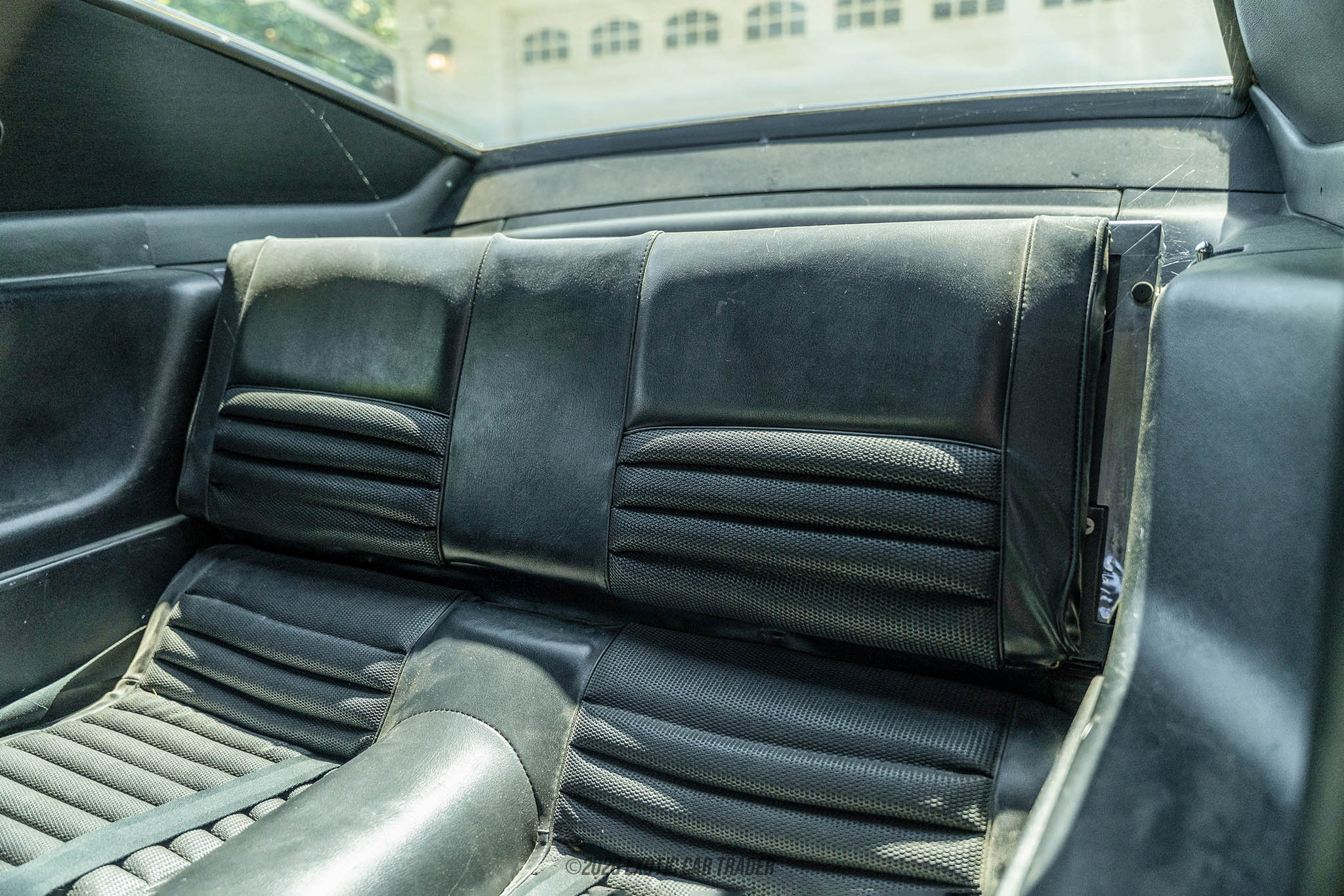
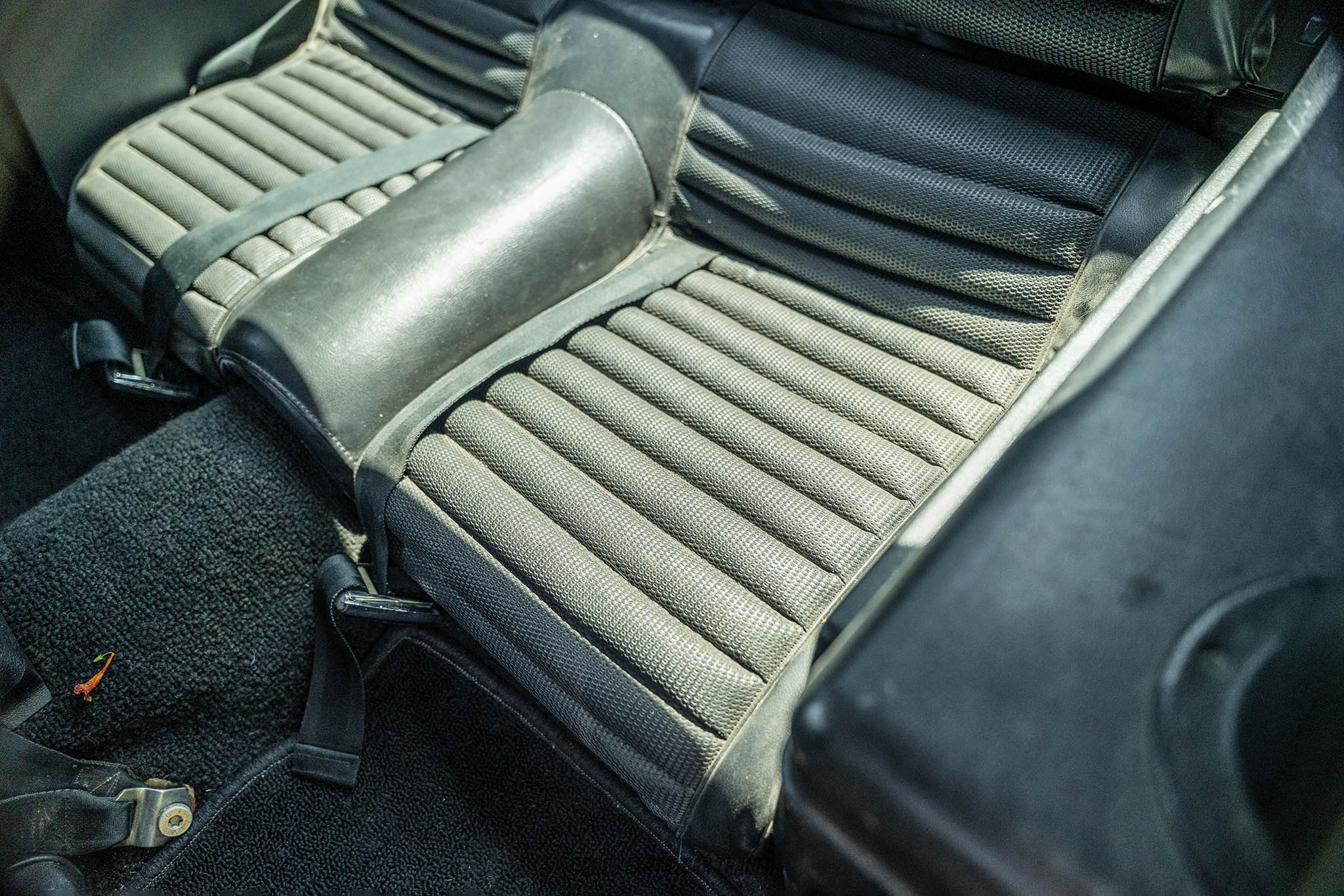
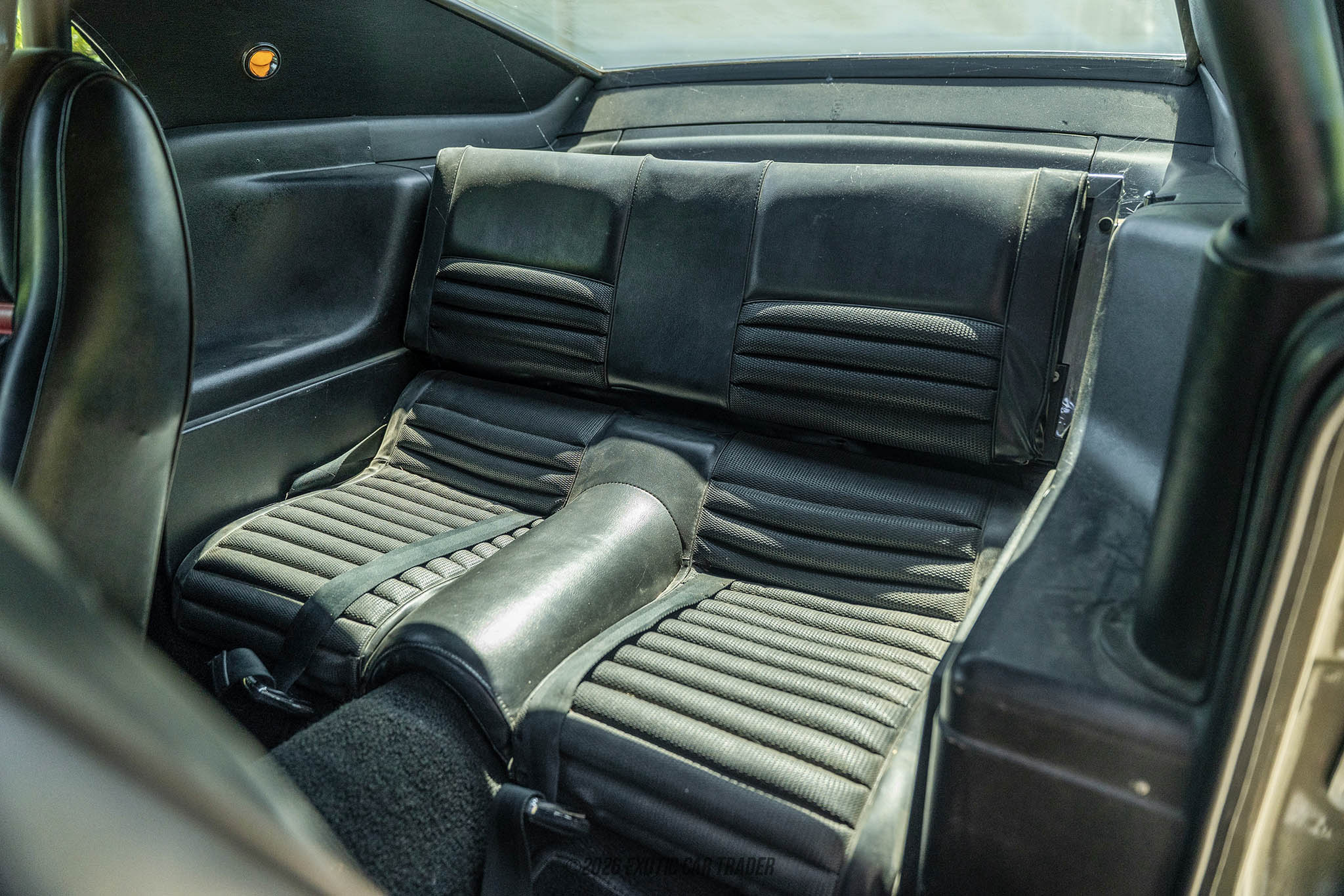
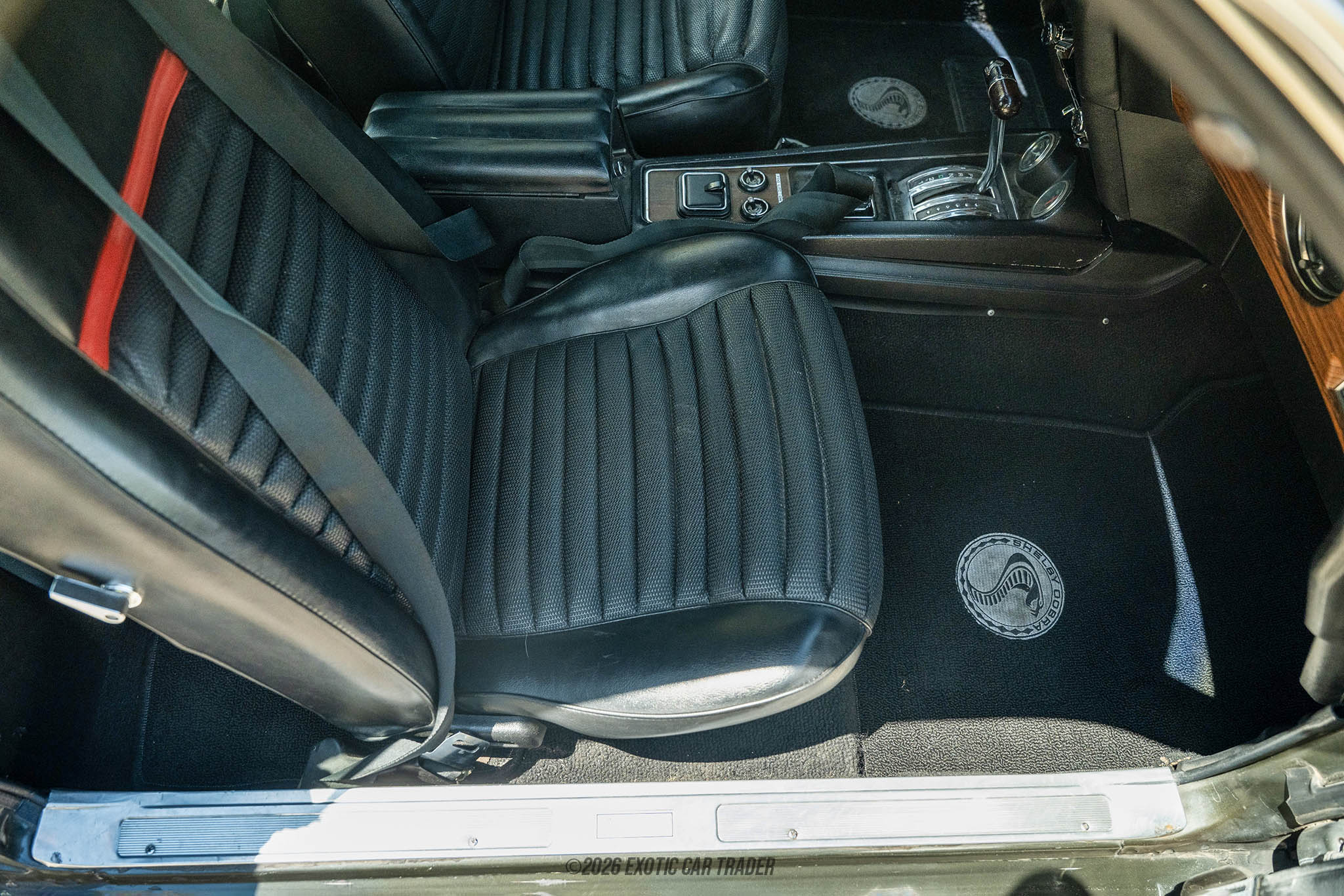
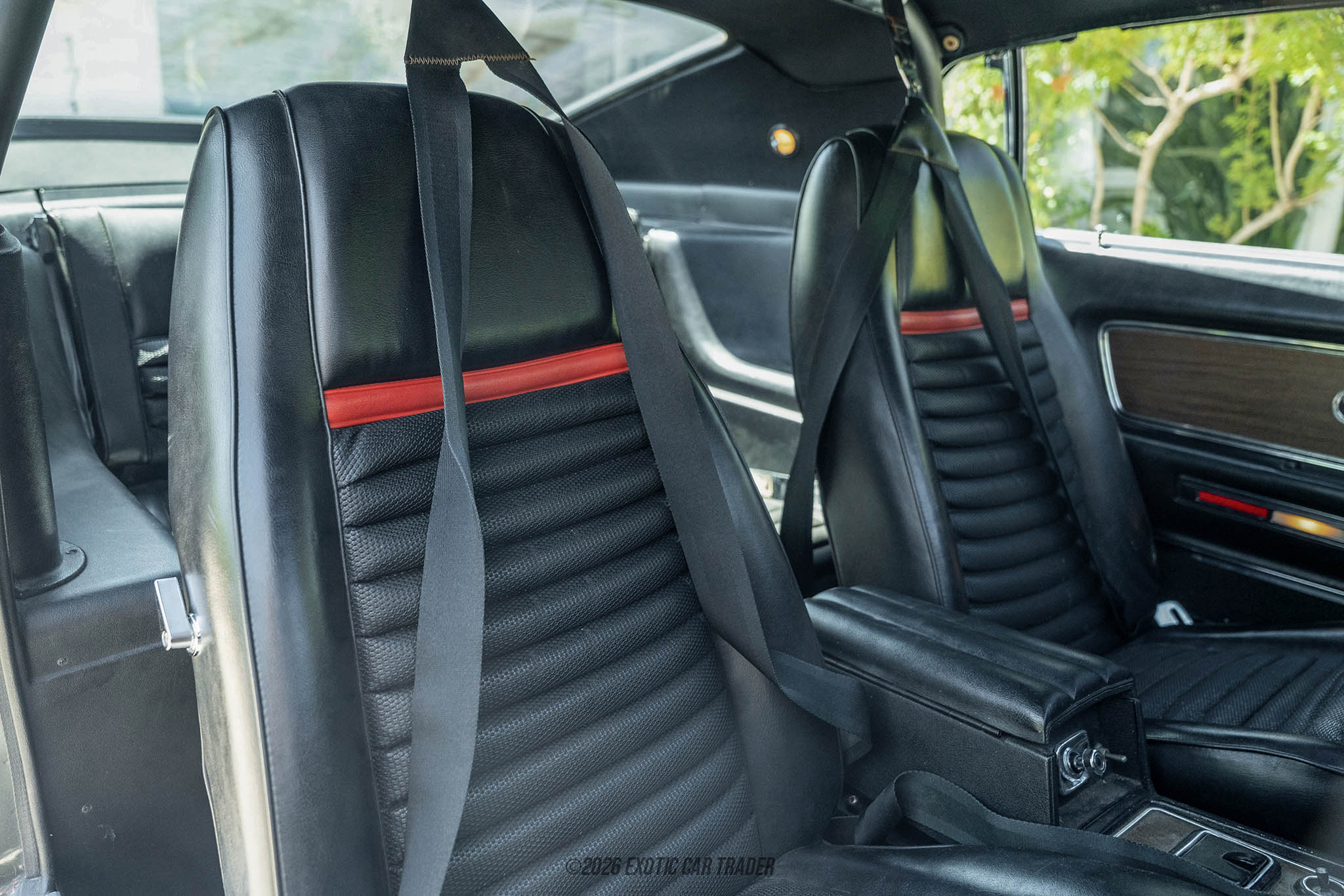
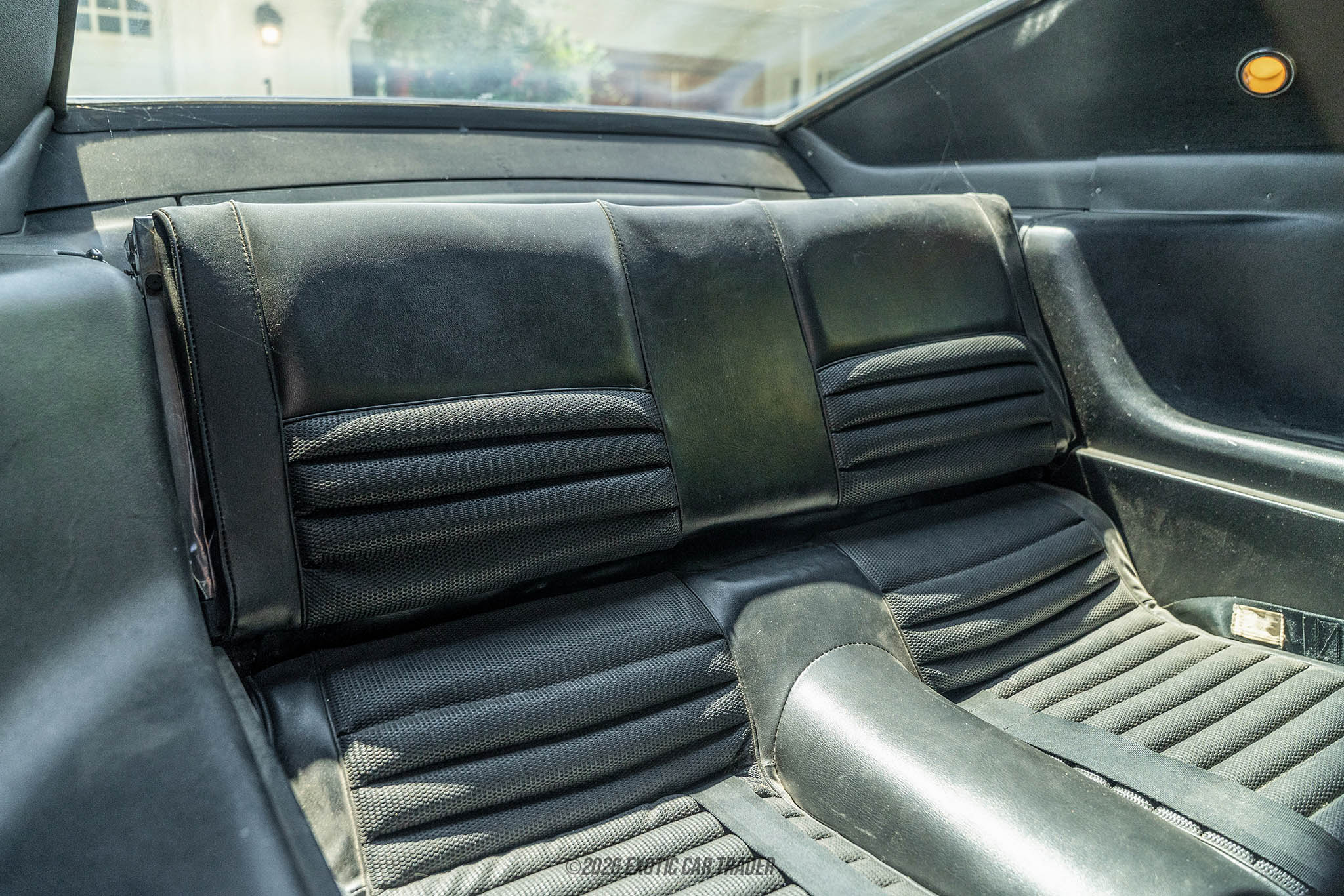
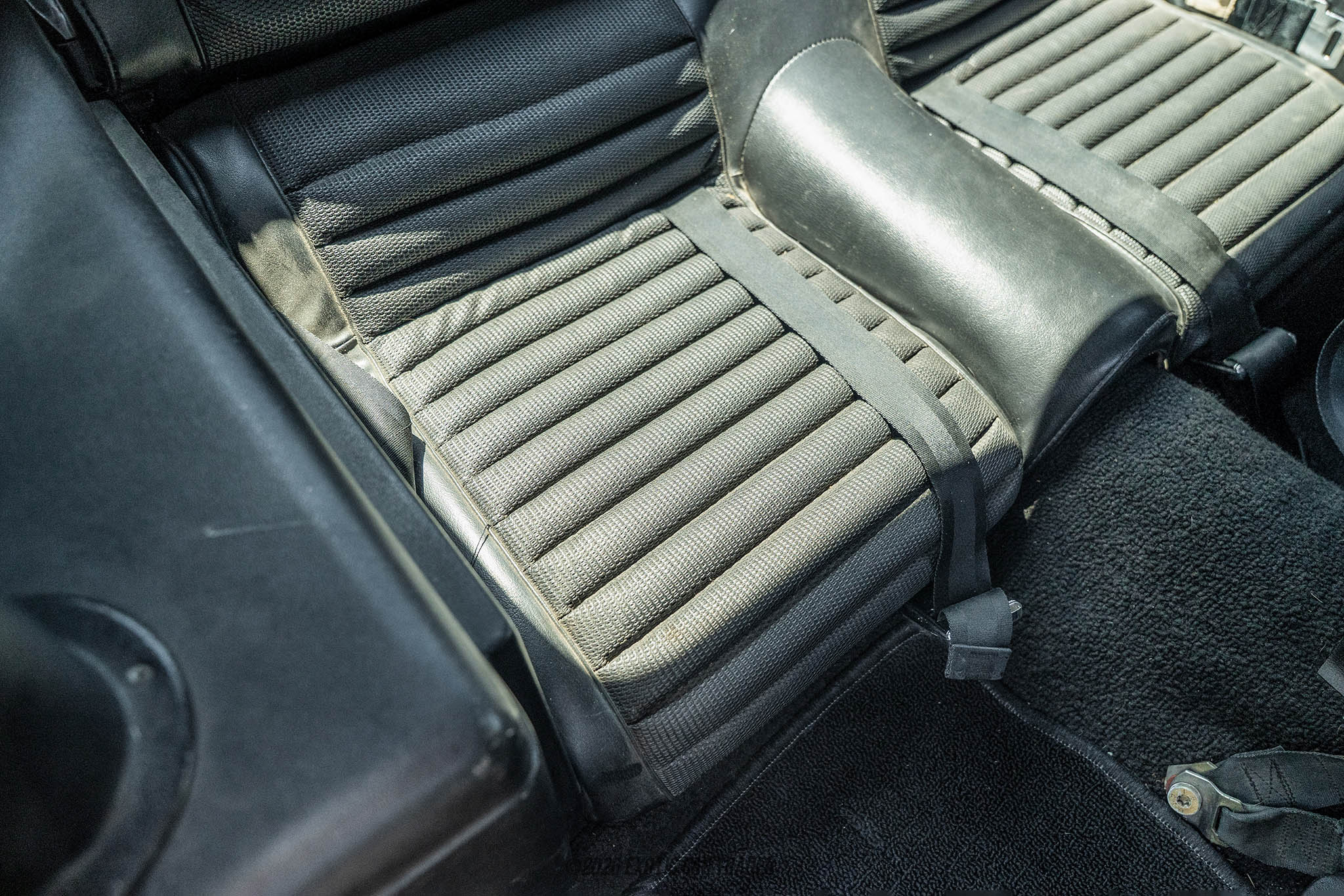
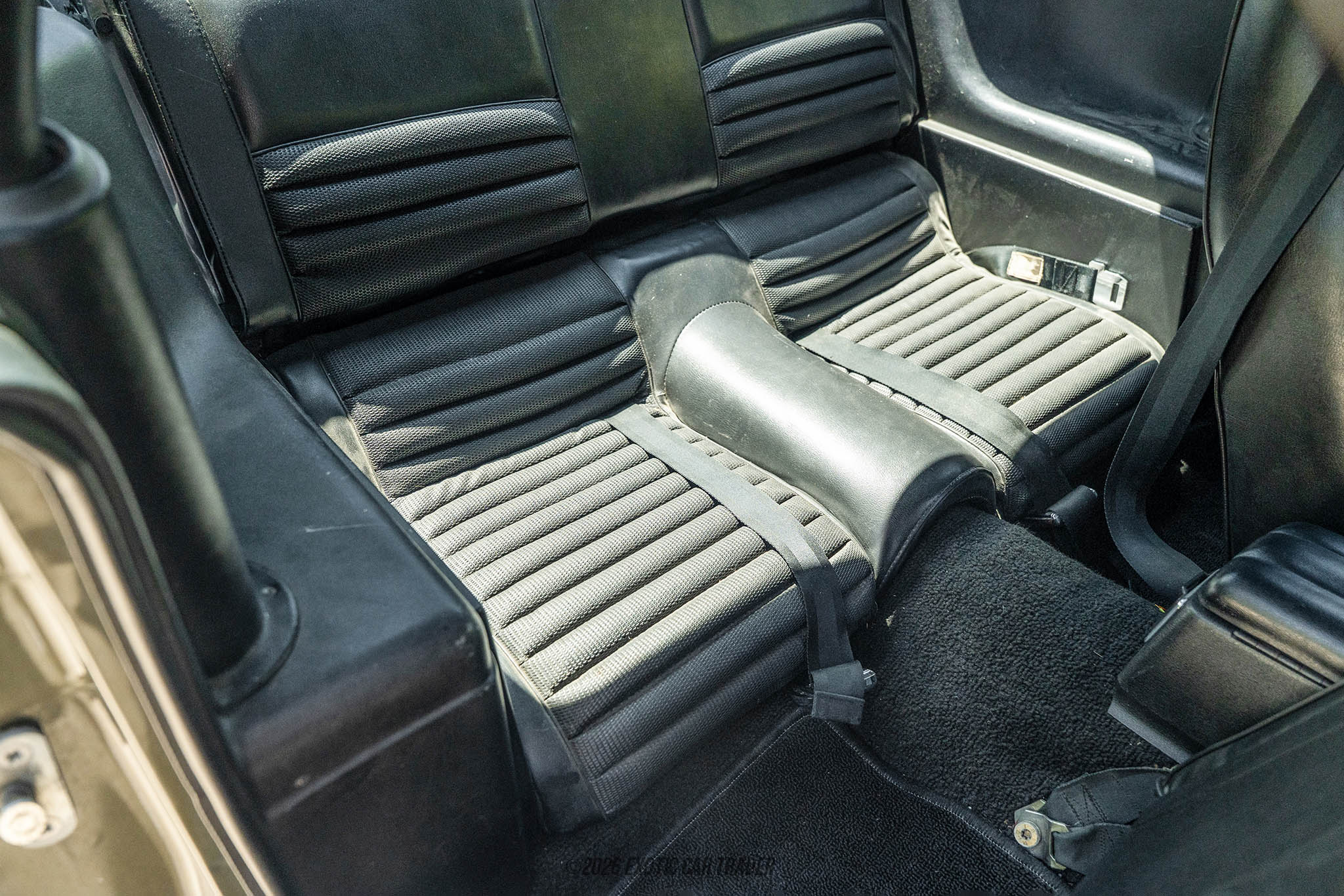
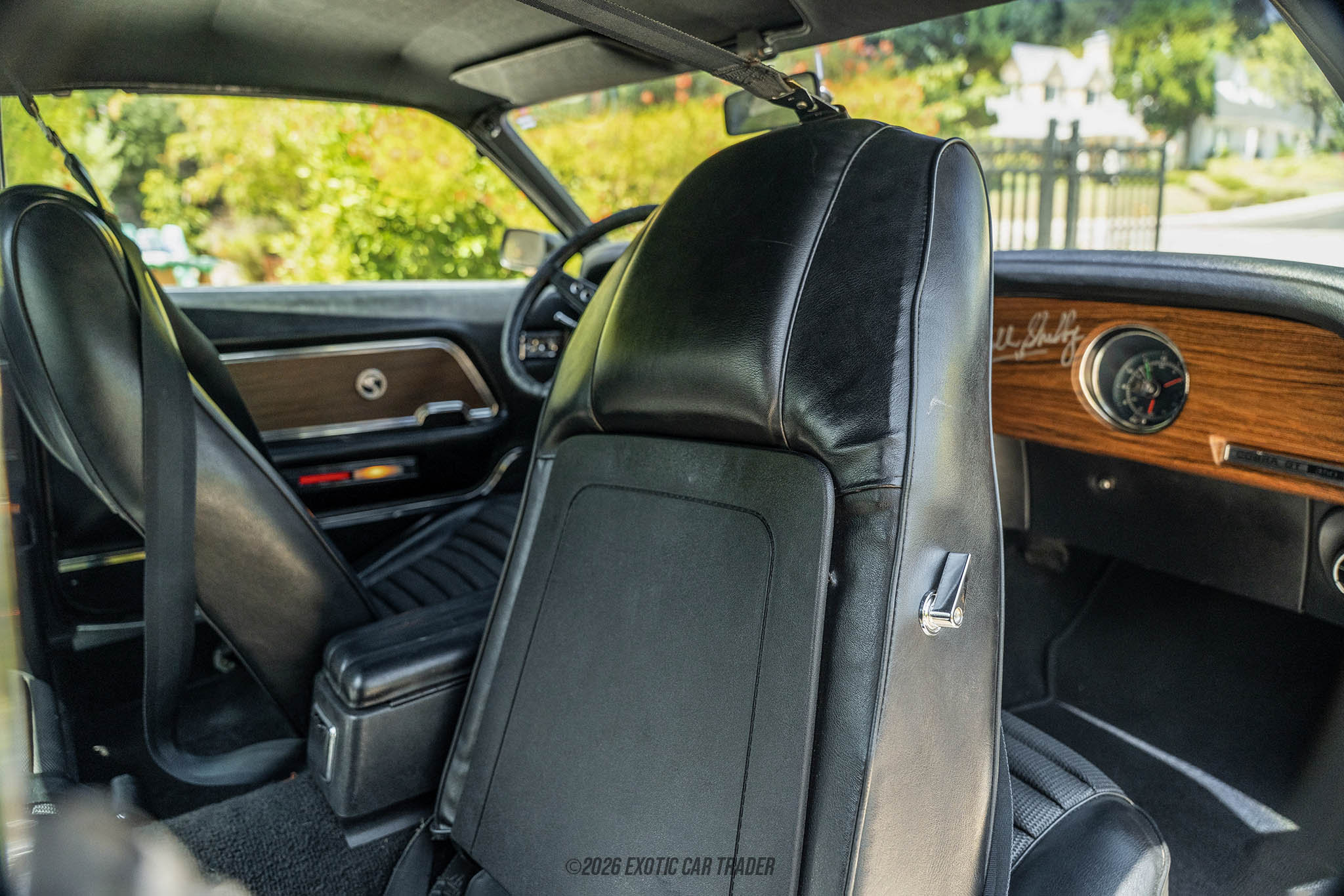
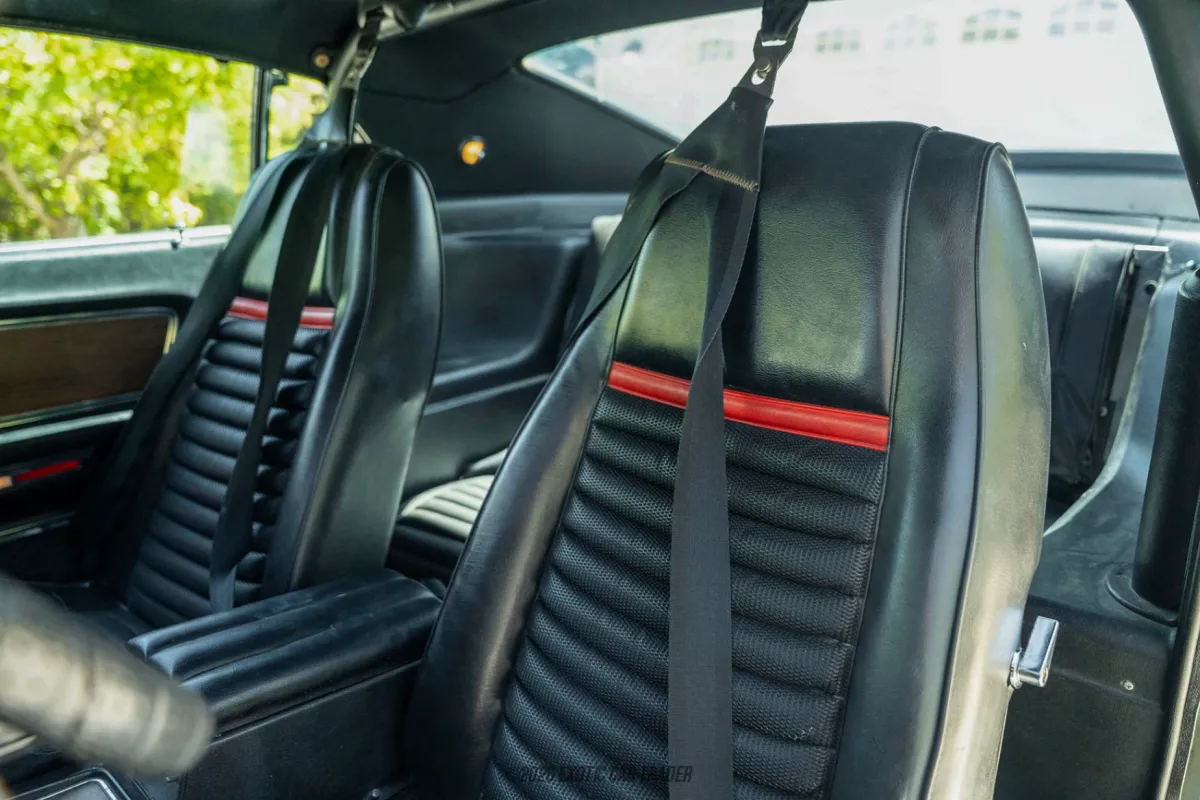
- Black Vinyl High-Back Bucket Seats
- Red Accent Seat Trim
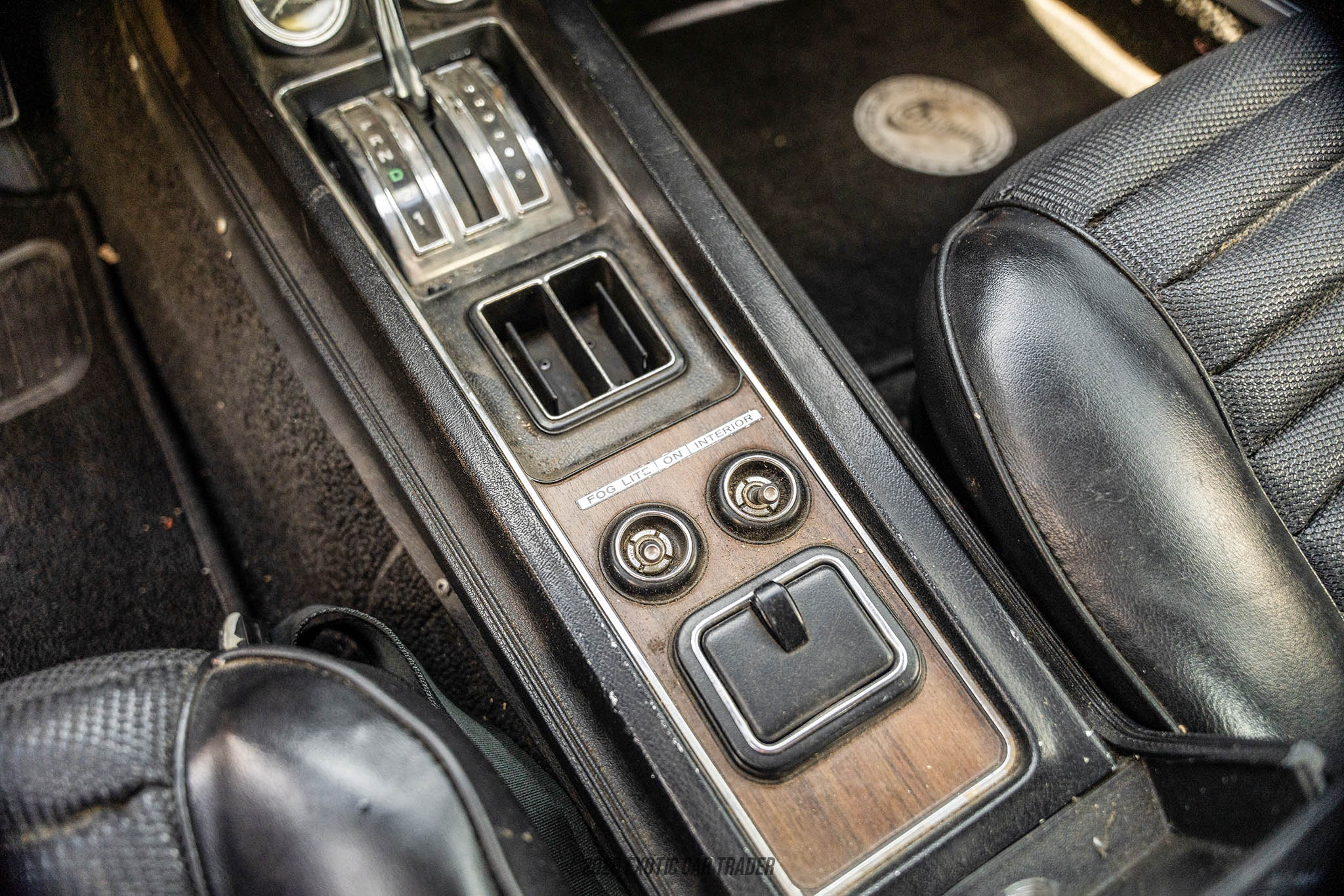
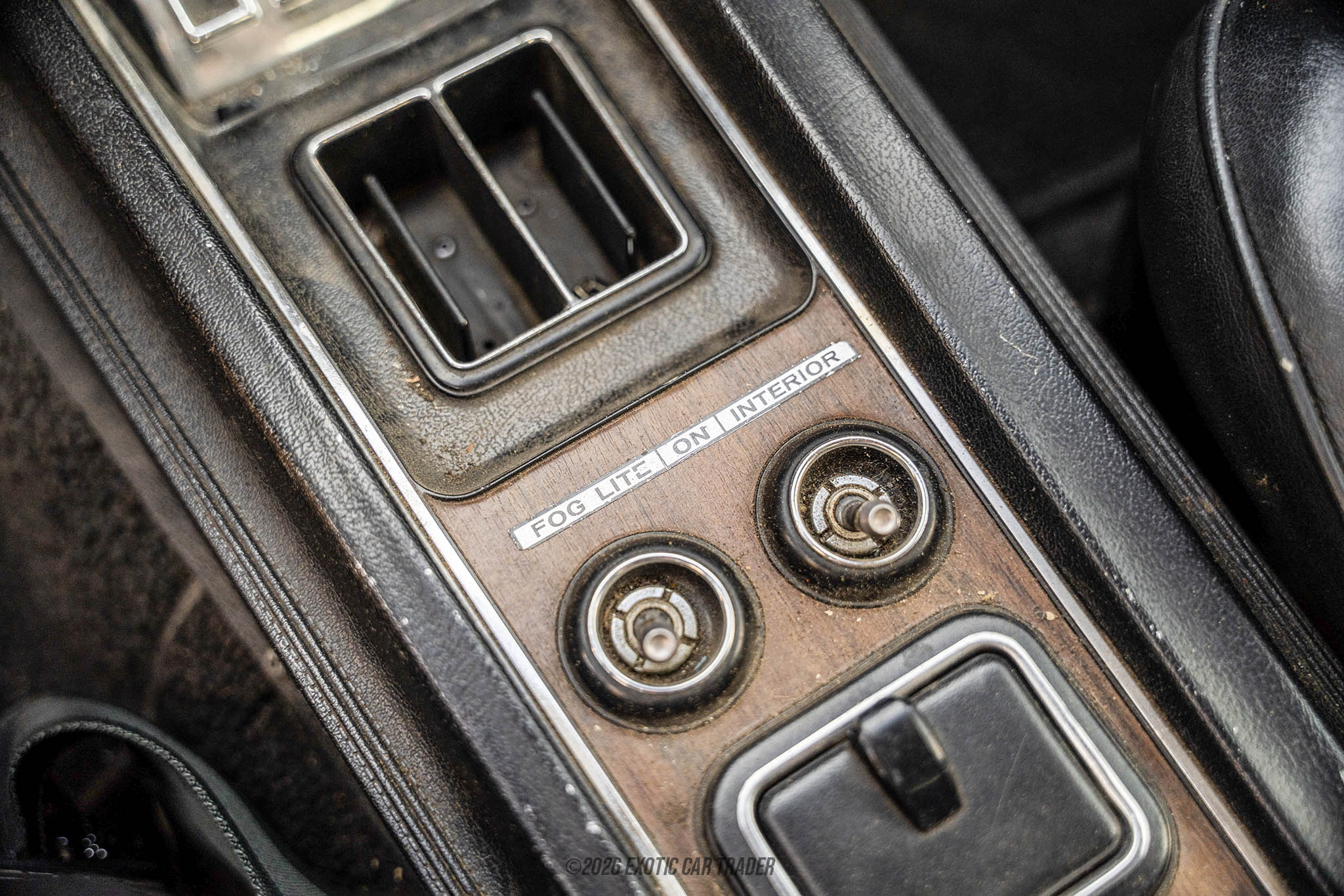
- Center Console
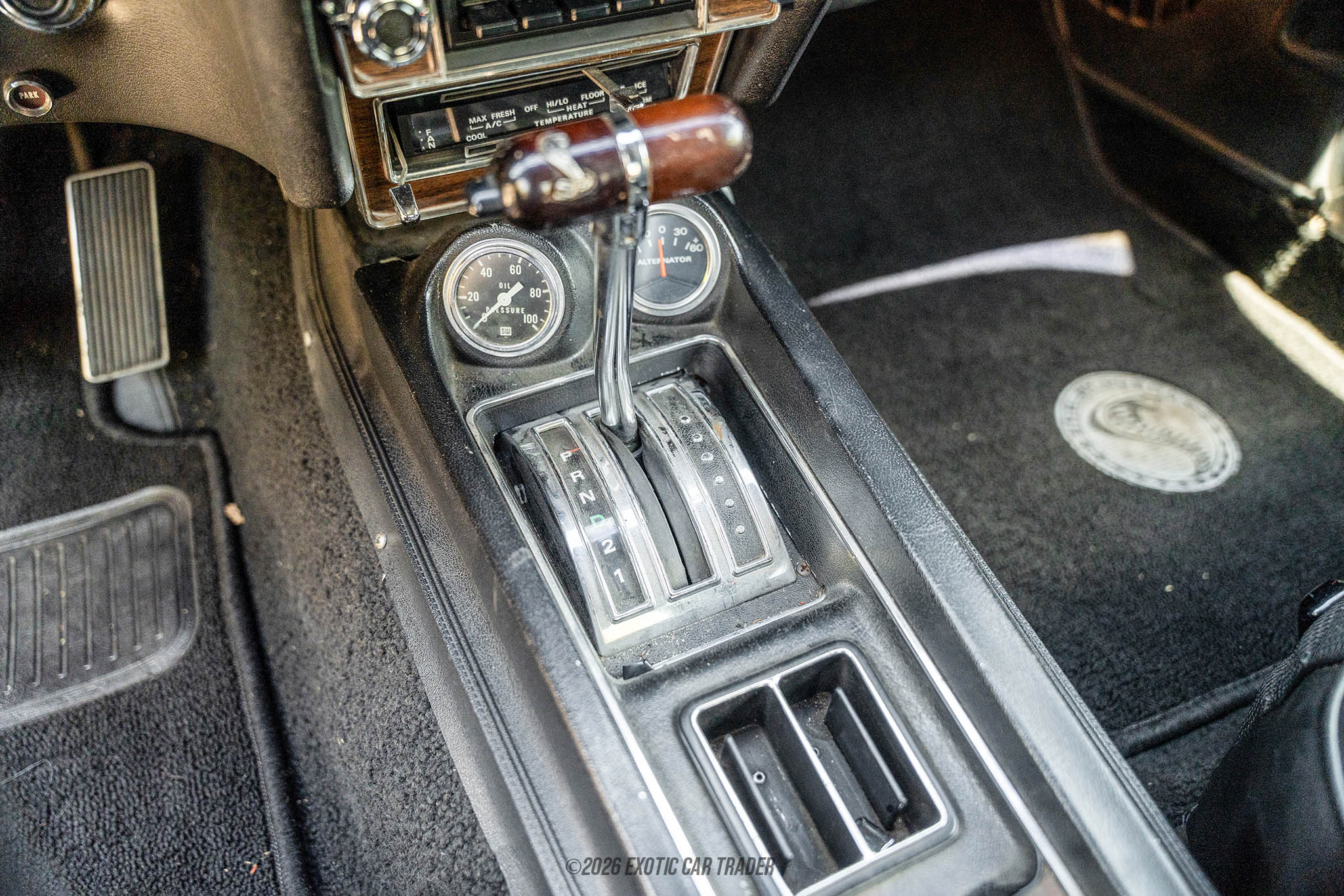
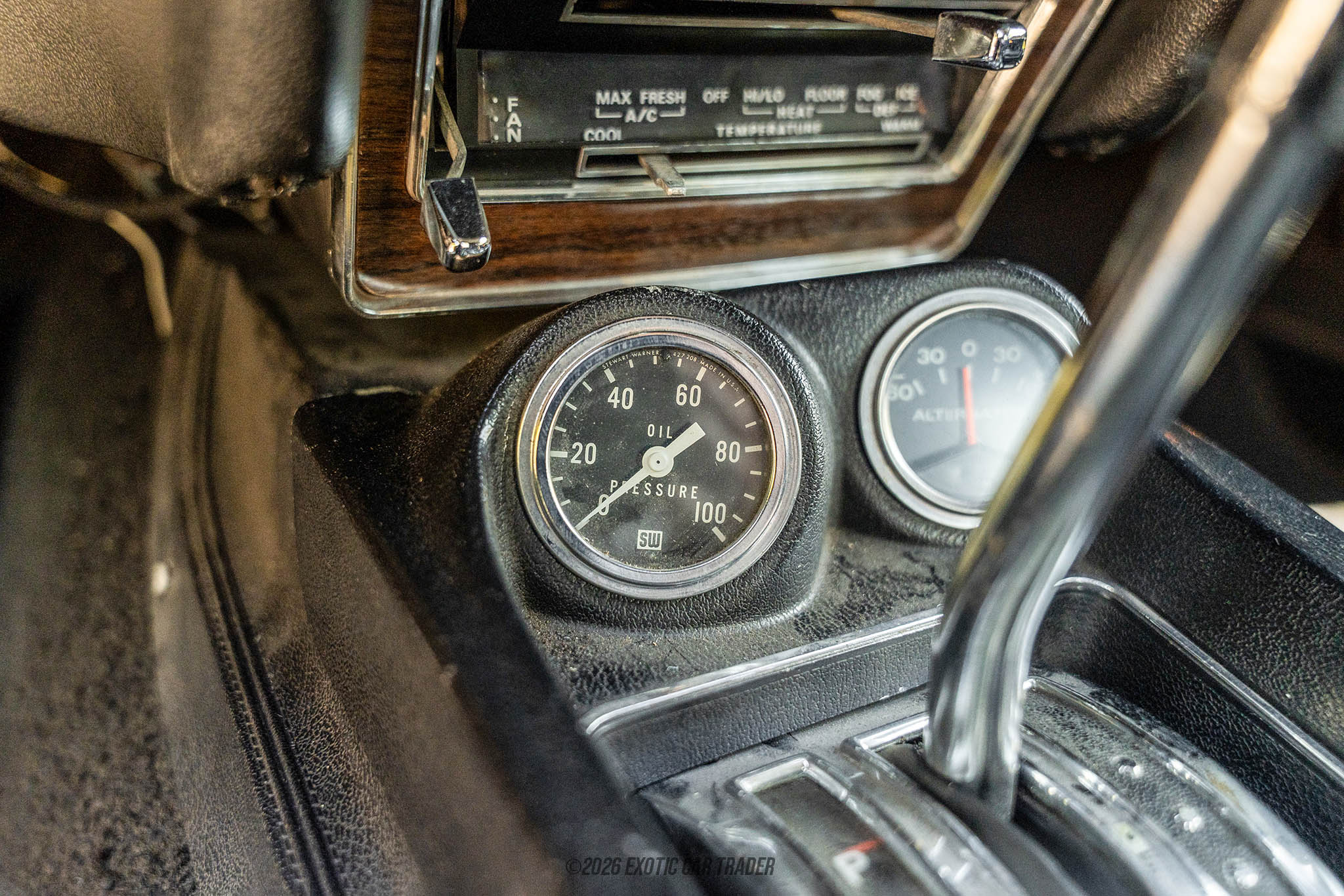
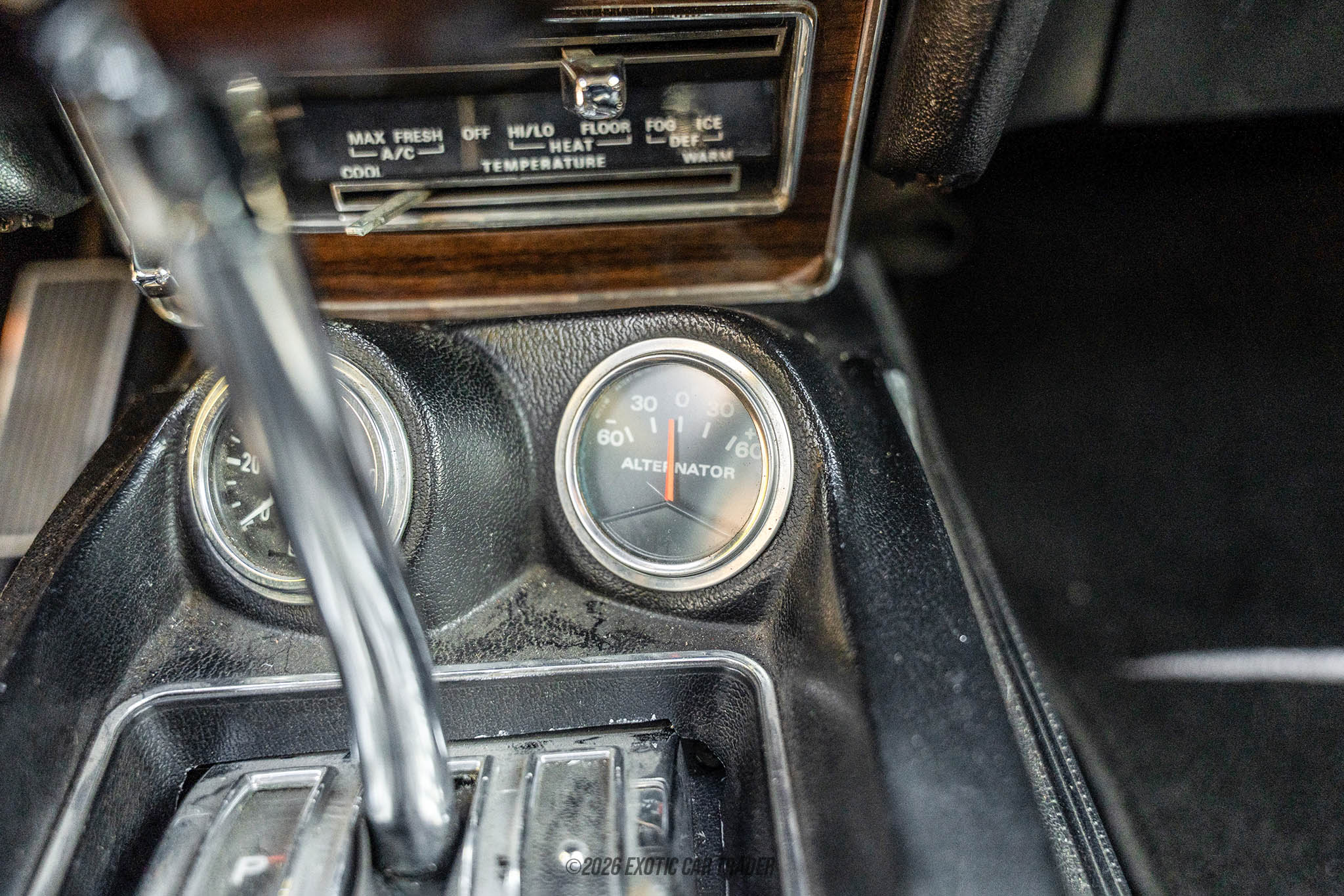
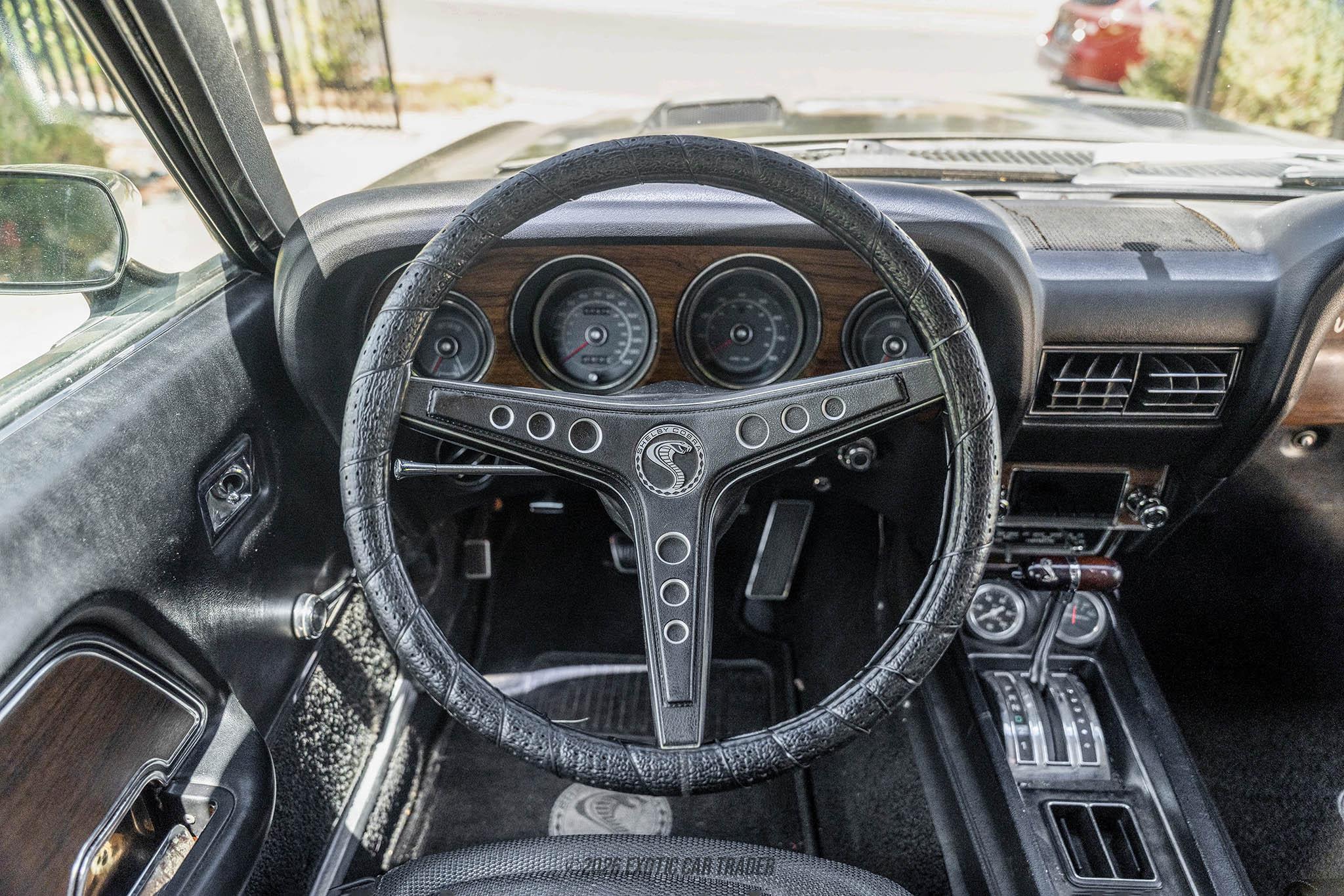
- Console-Mounted Auxiliary Gauges
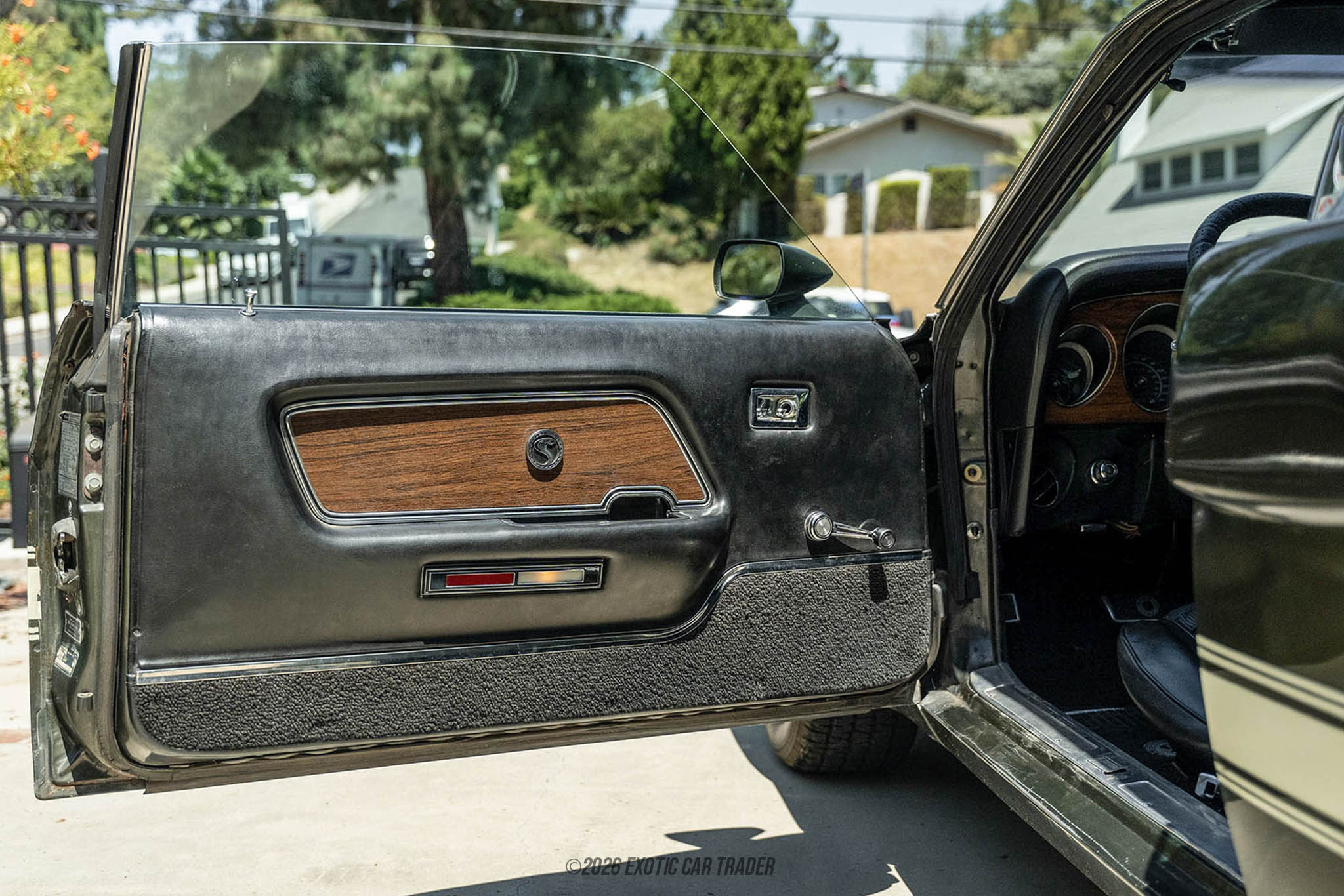
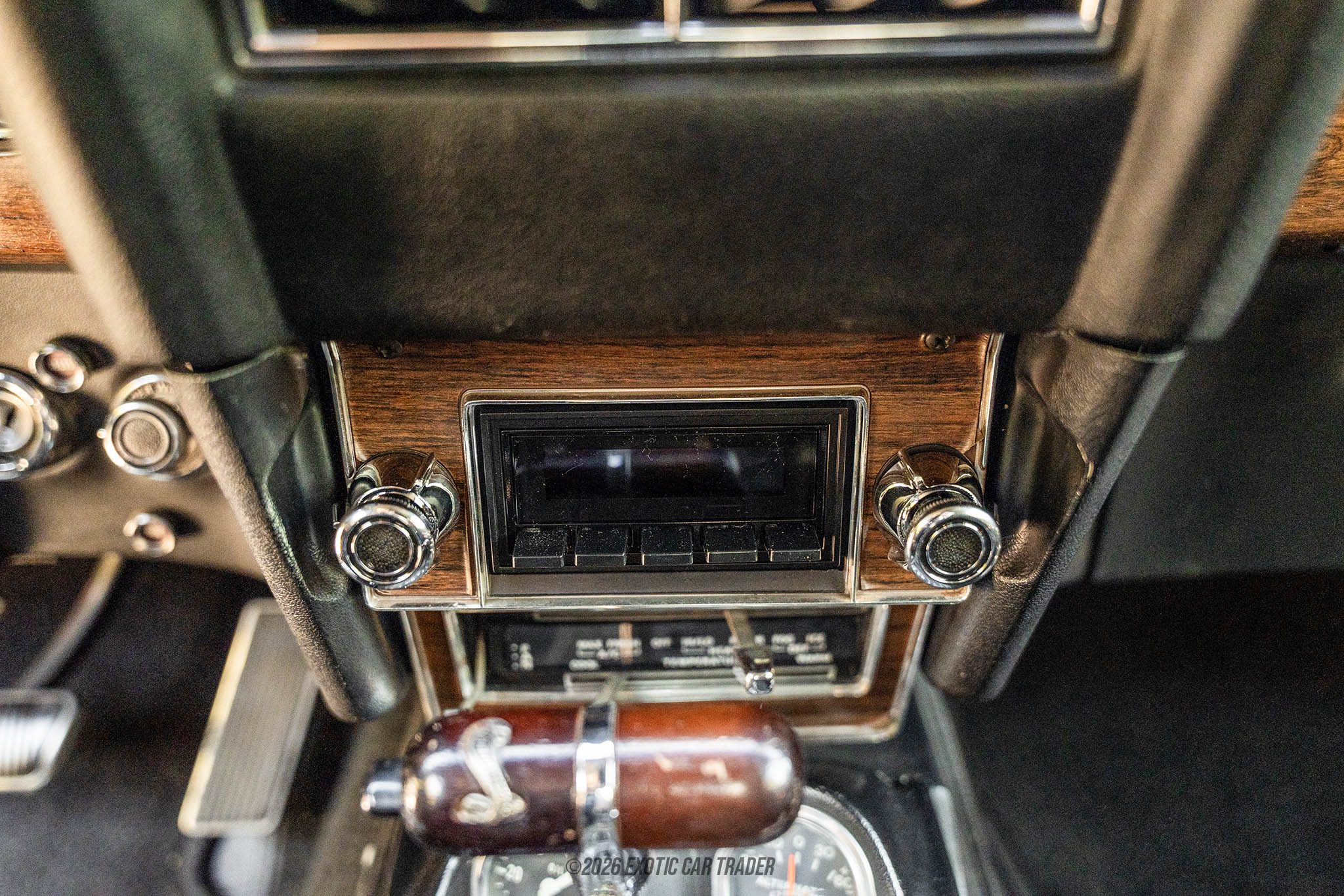
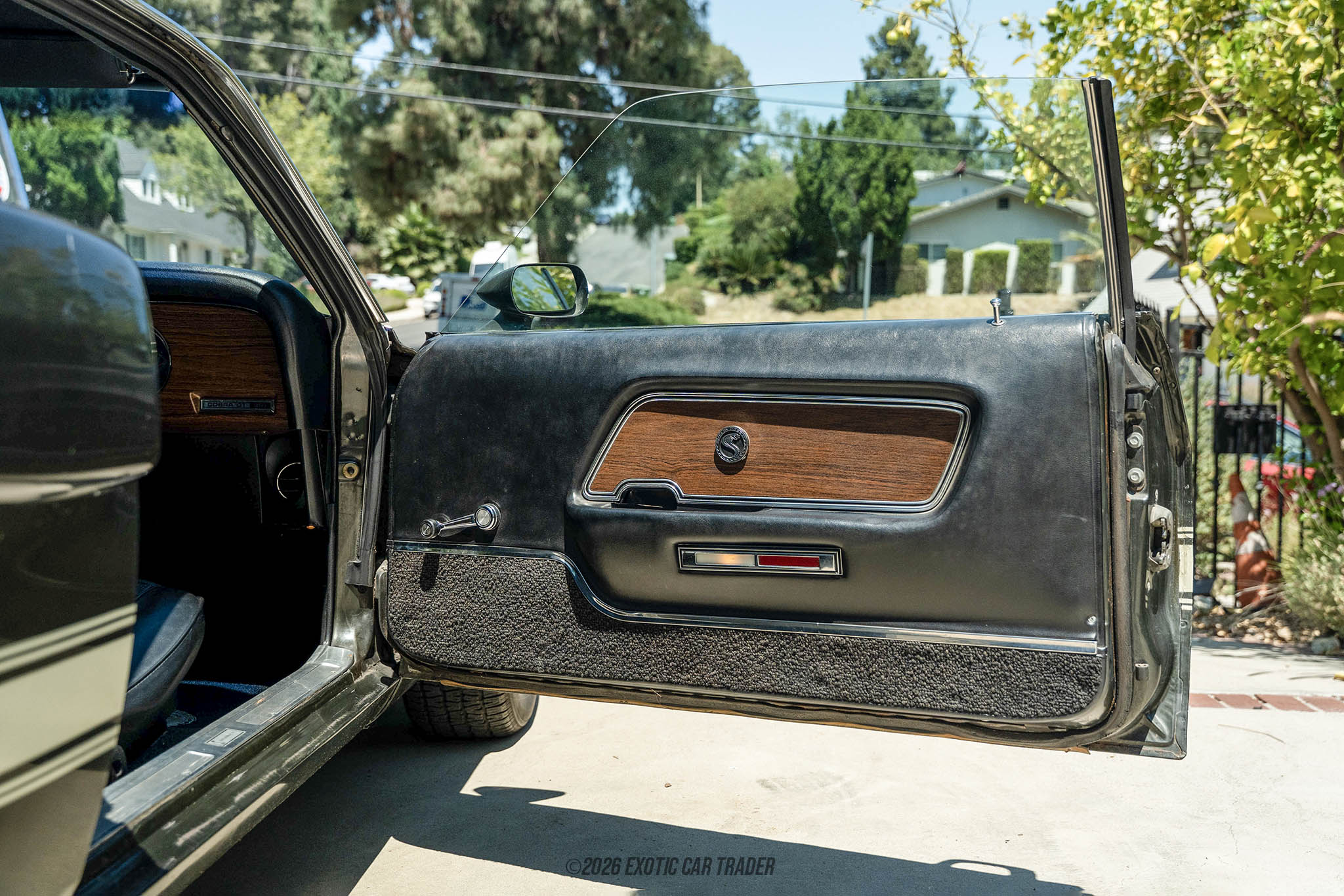
- Woodgrain Interior Trim
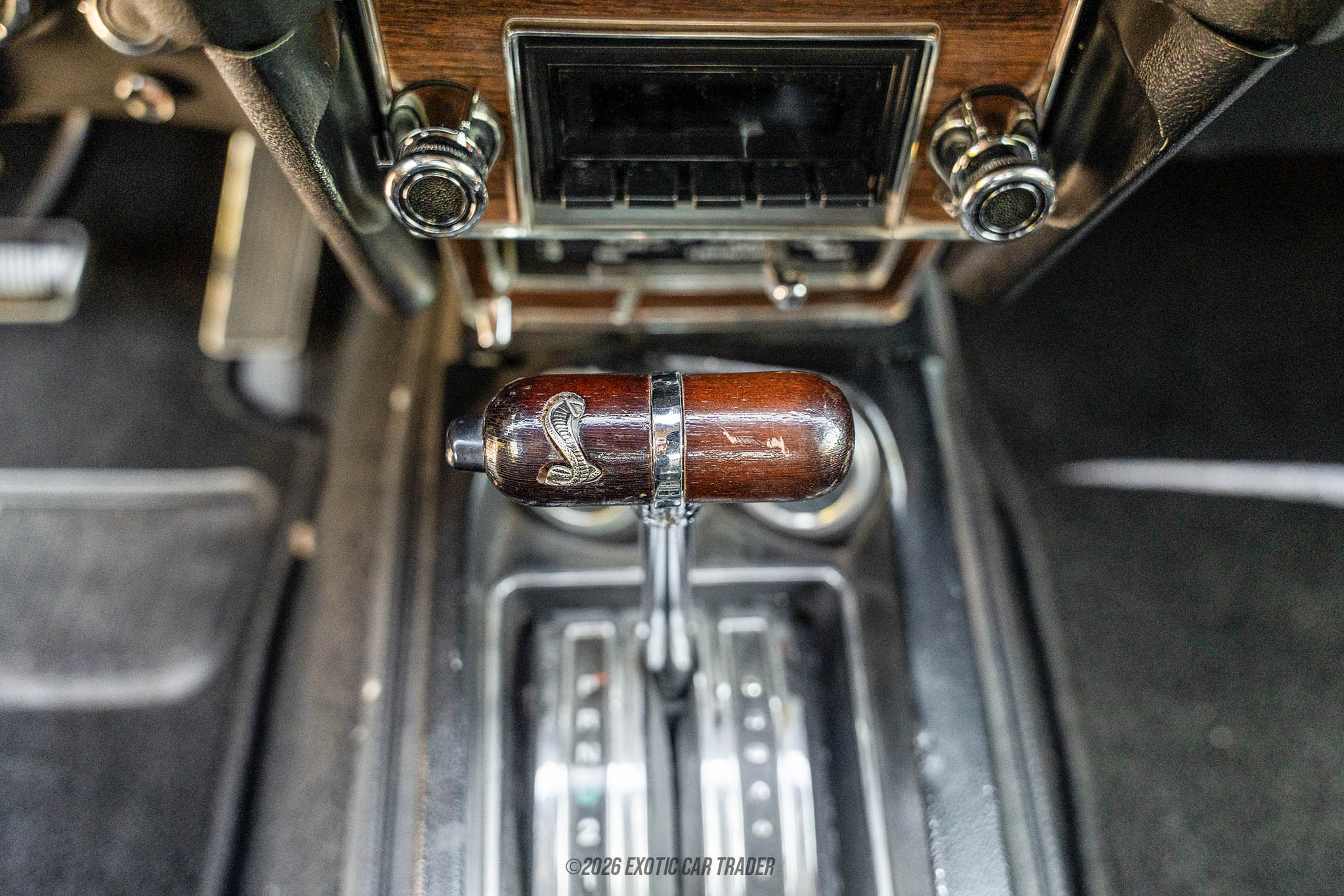
- Woodgrain Automatic Shift Knob
- Factory-Style Roll Bar w/ Shoulder Harnesses
- Power Steering
- Power-Assisted Front Disc Brakes & Rear Drum Brakes
- Air Conditioning
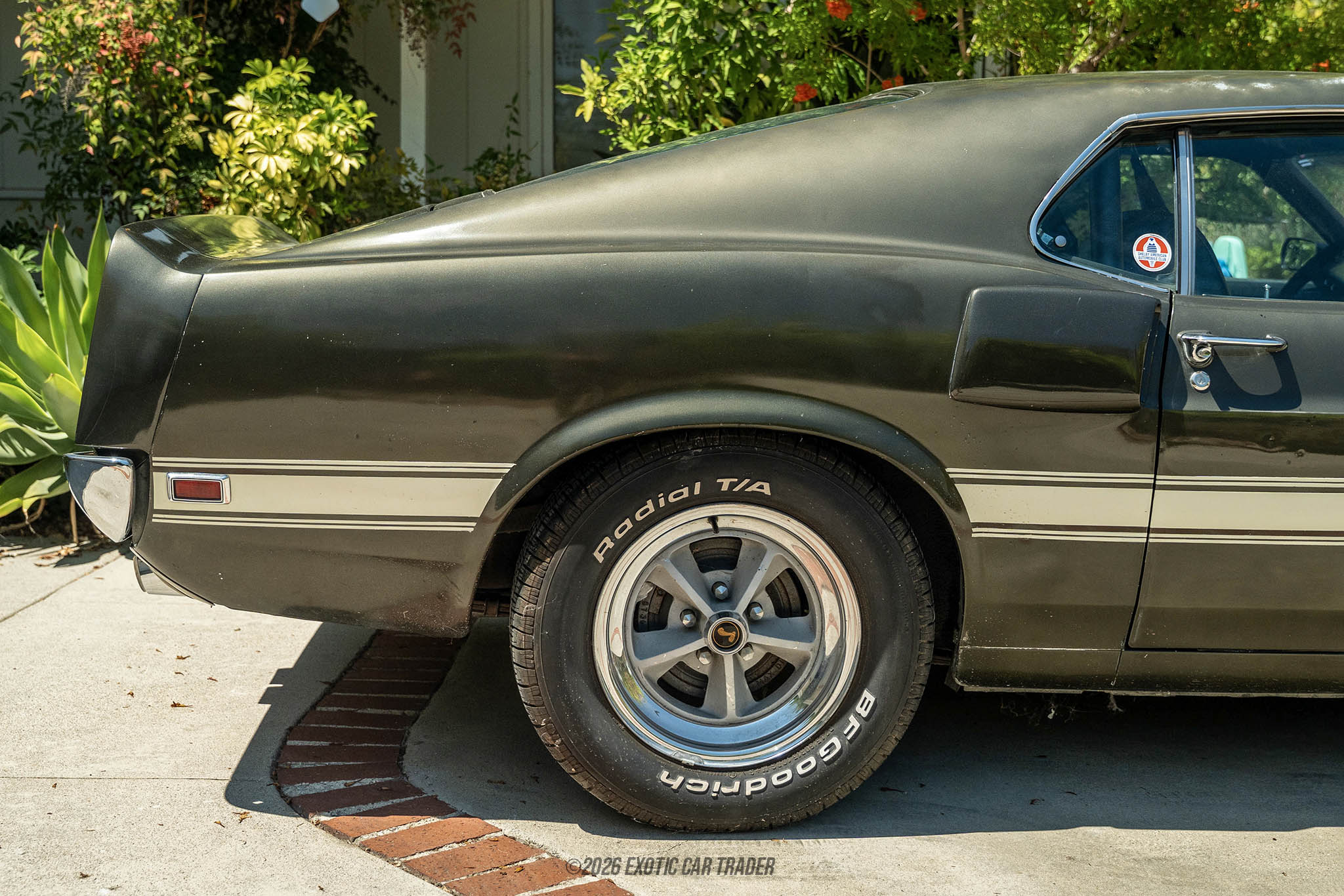
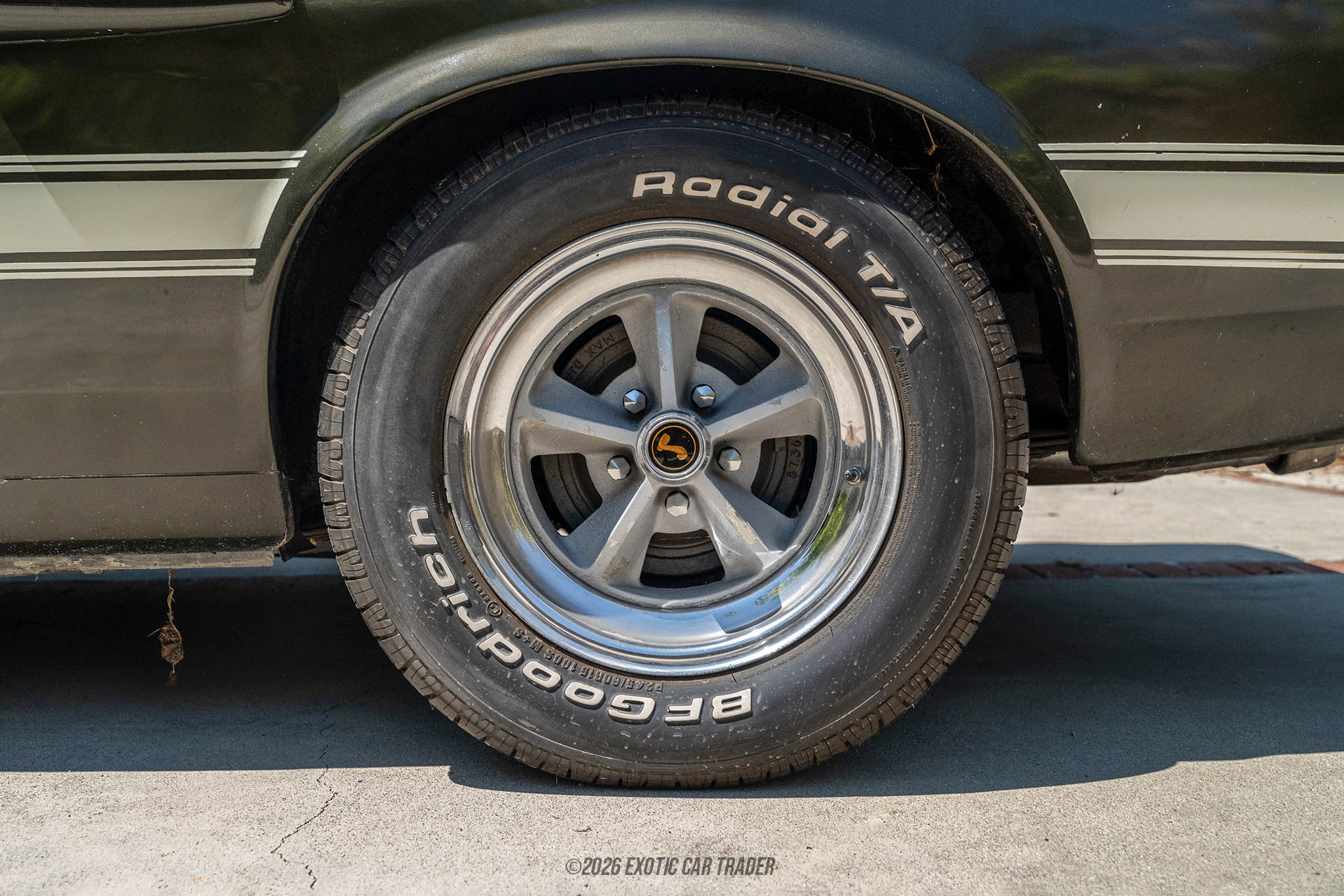
- Chrome 5-Spoke Wheels
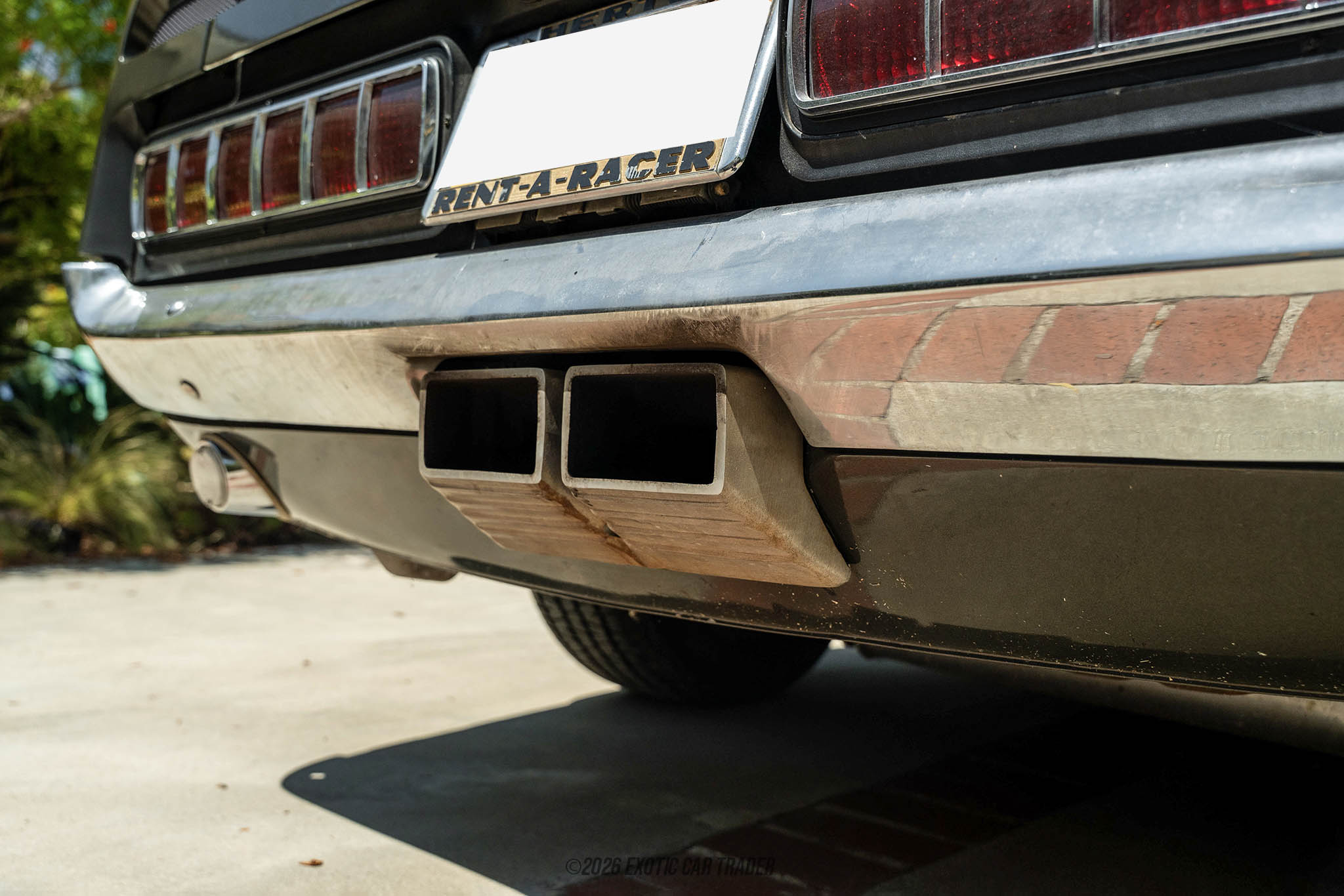
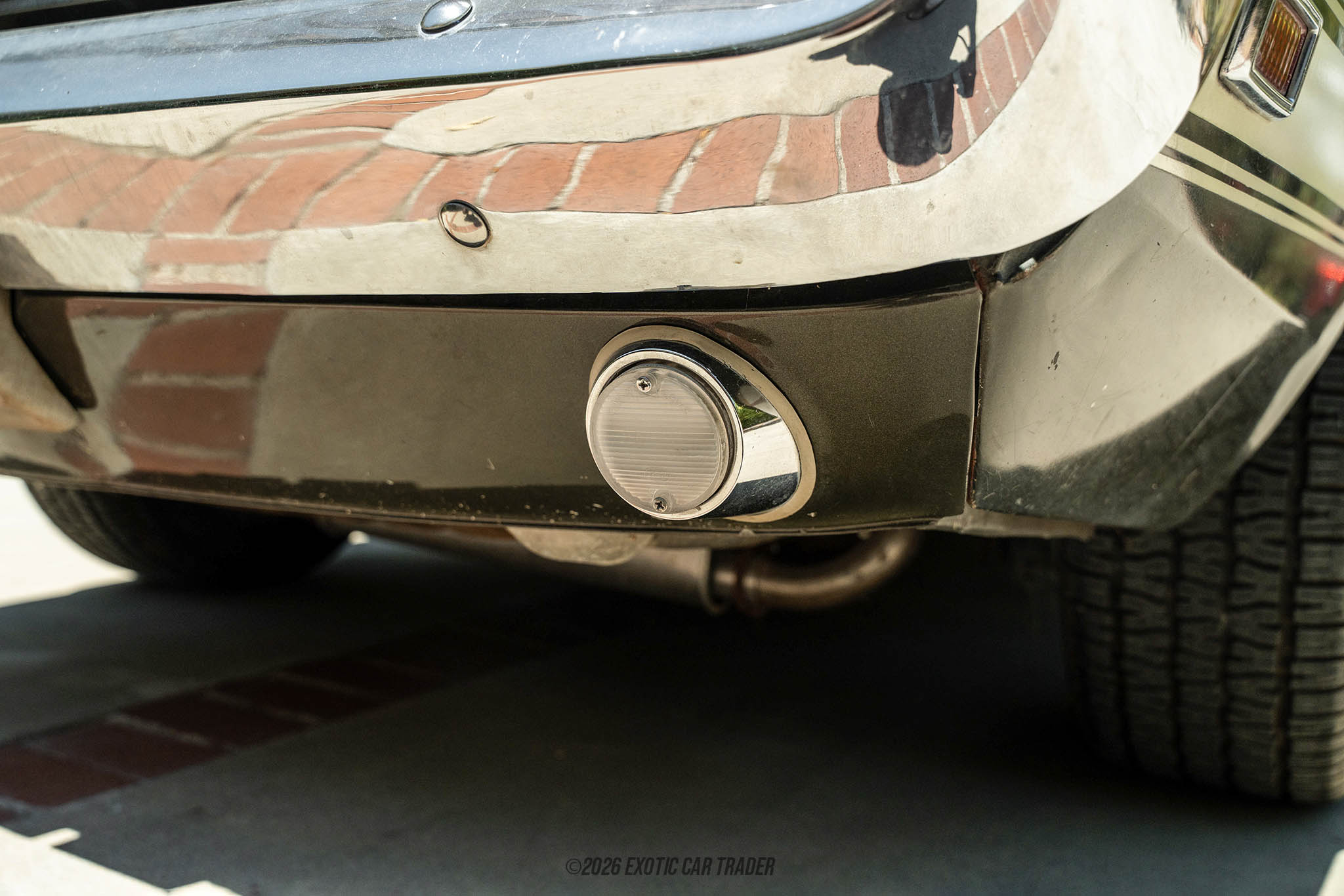
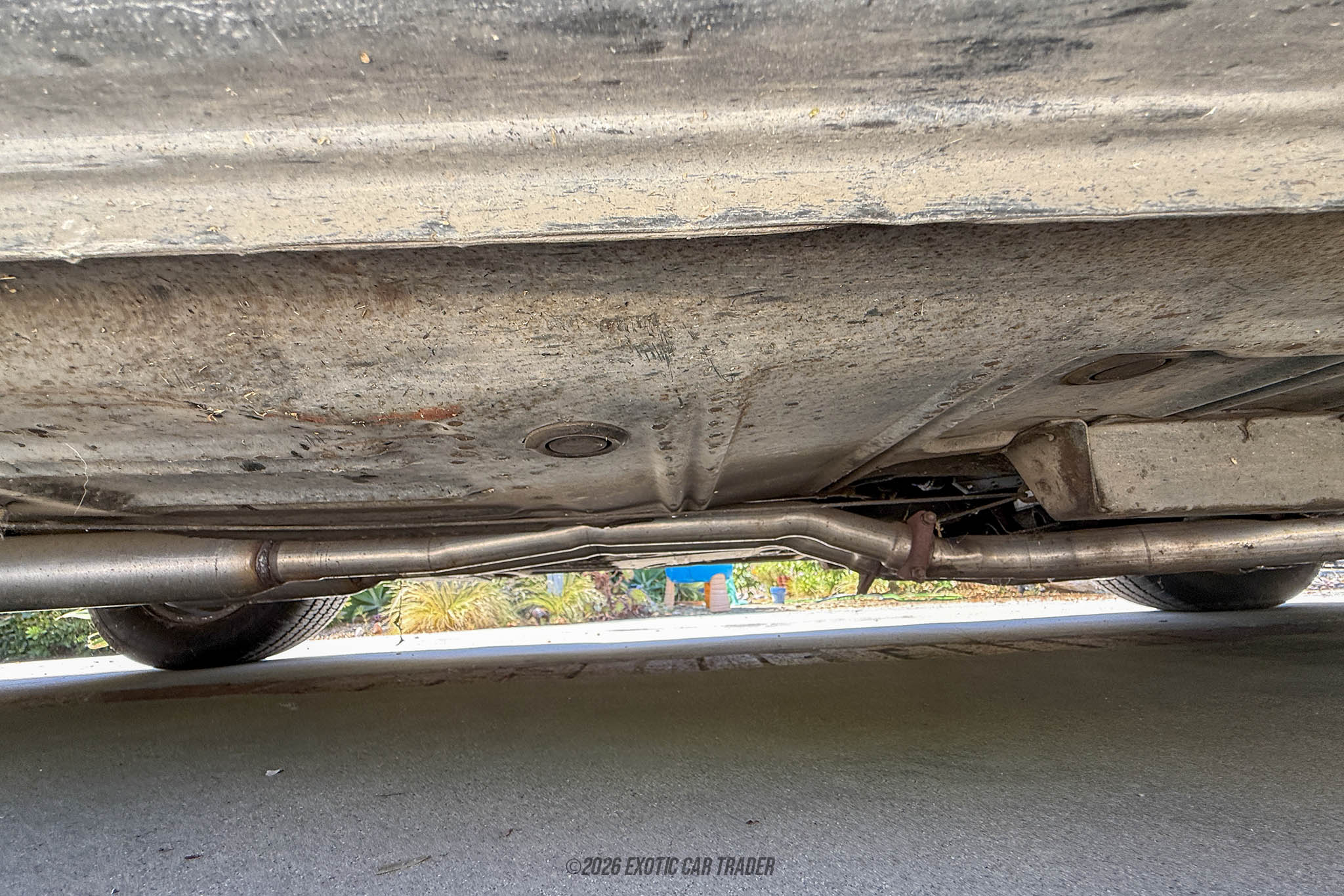
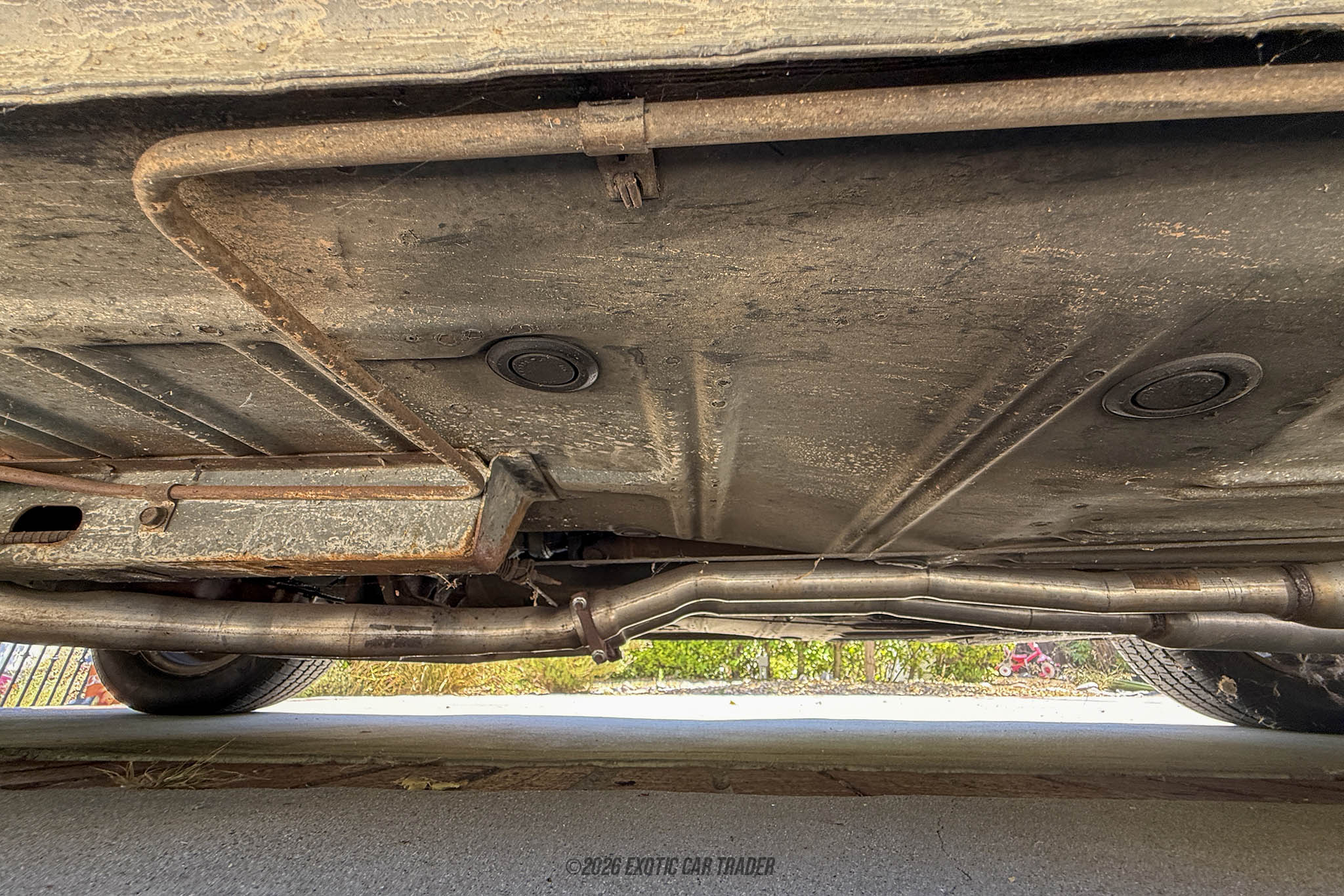
- Dual Exhaust System
- Ford 9" Rear Axle
- 3.25:1 Rear Axle Ratio
- Traction-Lok Limited-Slip Differential
- Current Owner Reports "1 of 14 Hurst Rent-A-Racer"


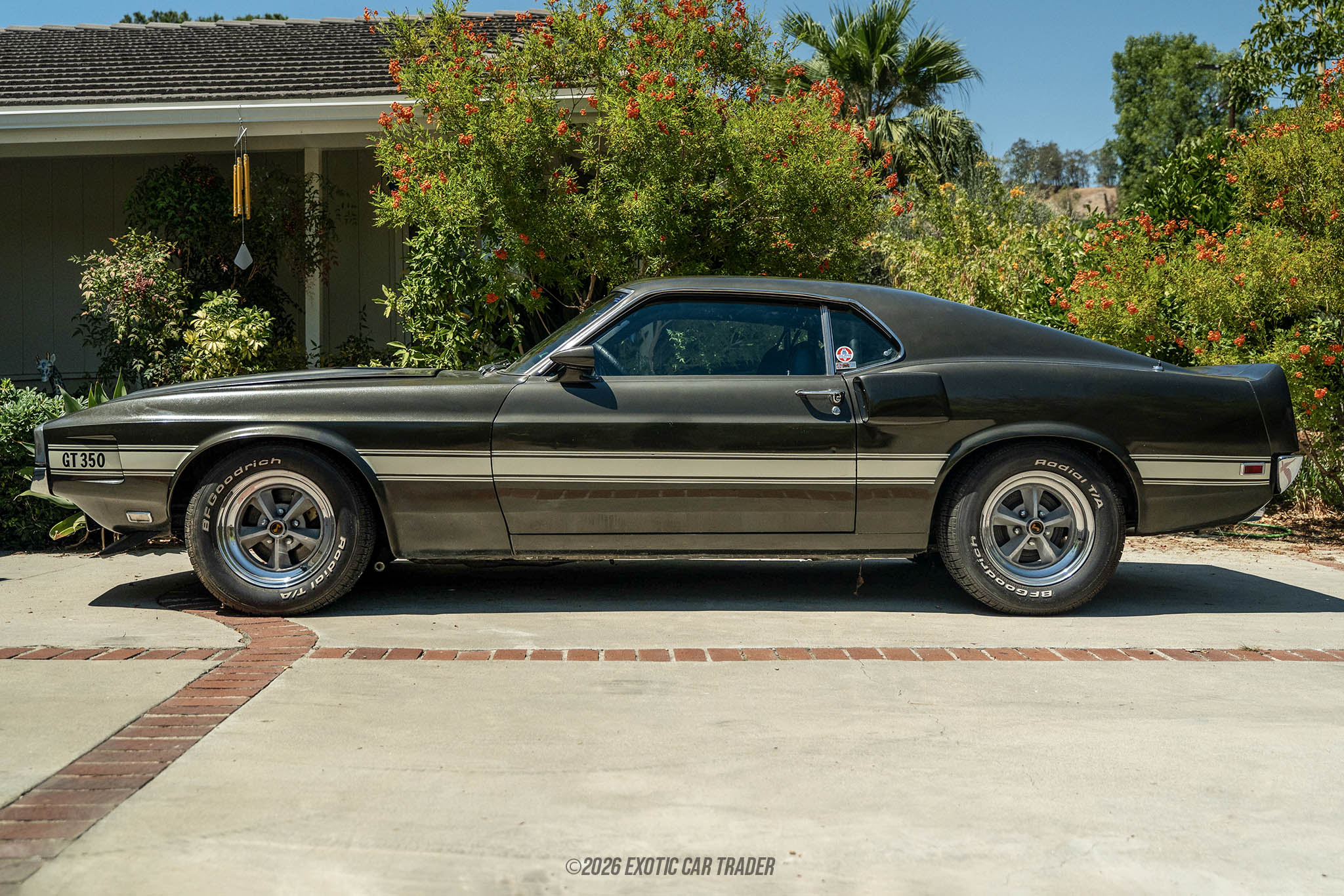
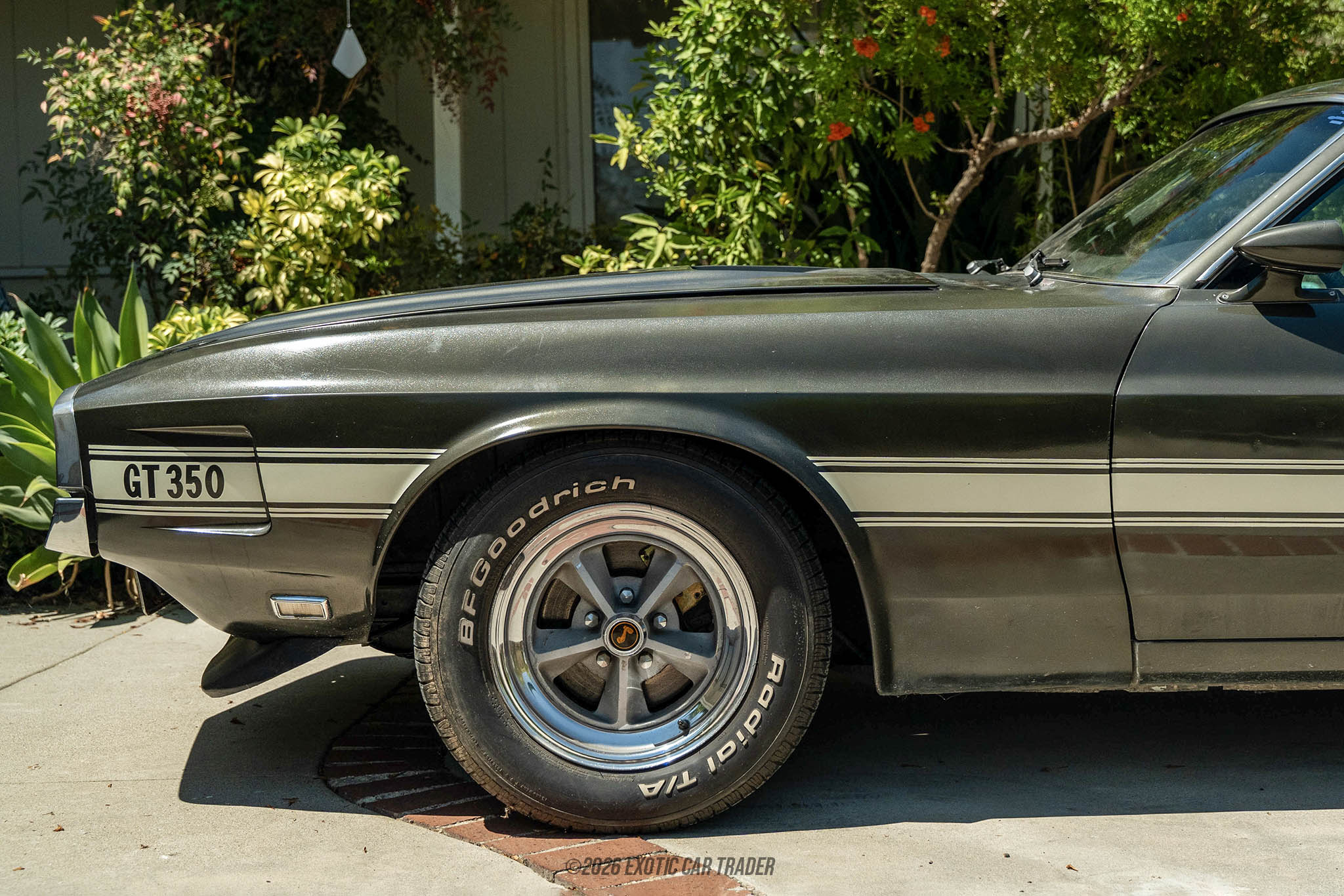
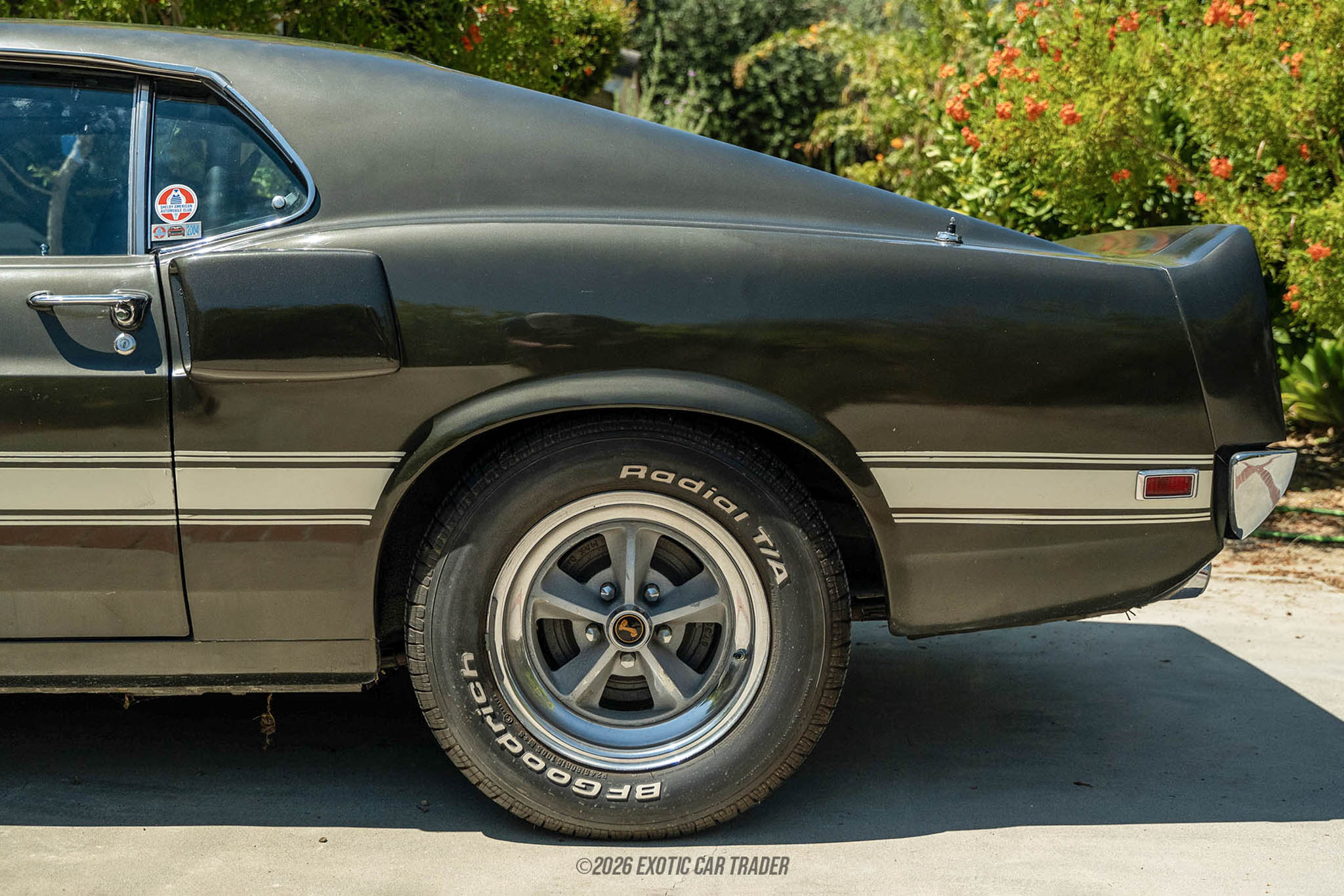
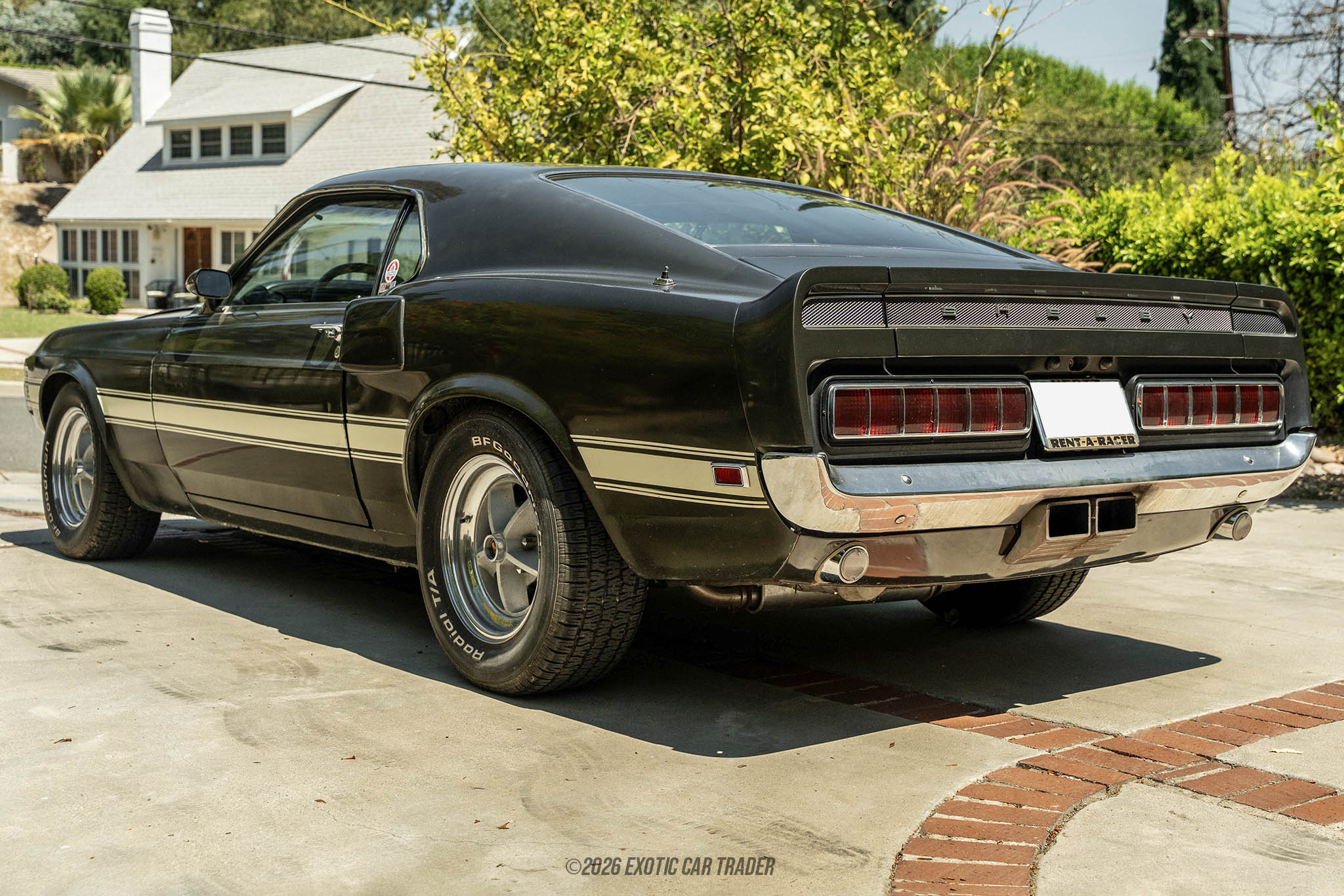
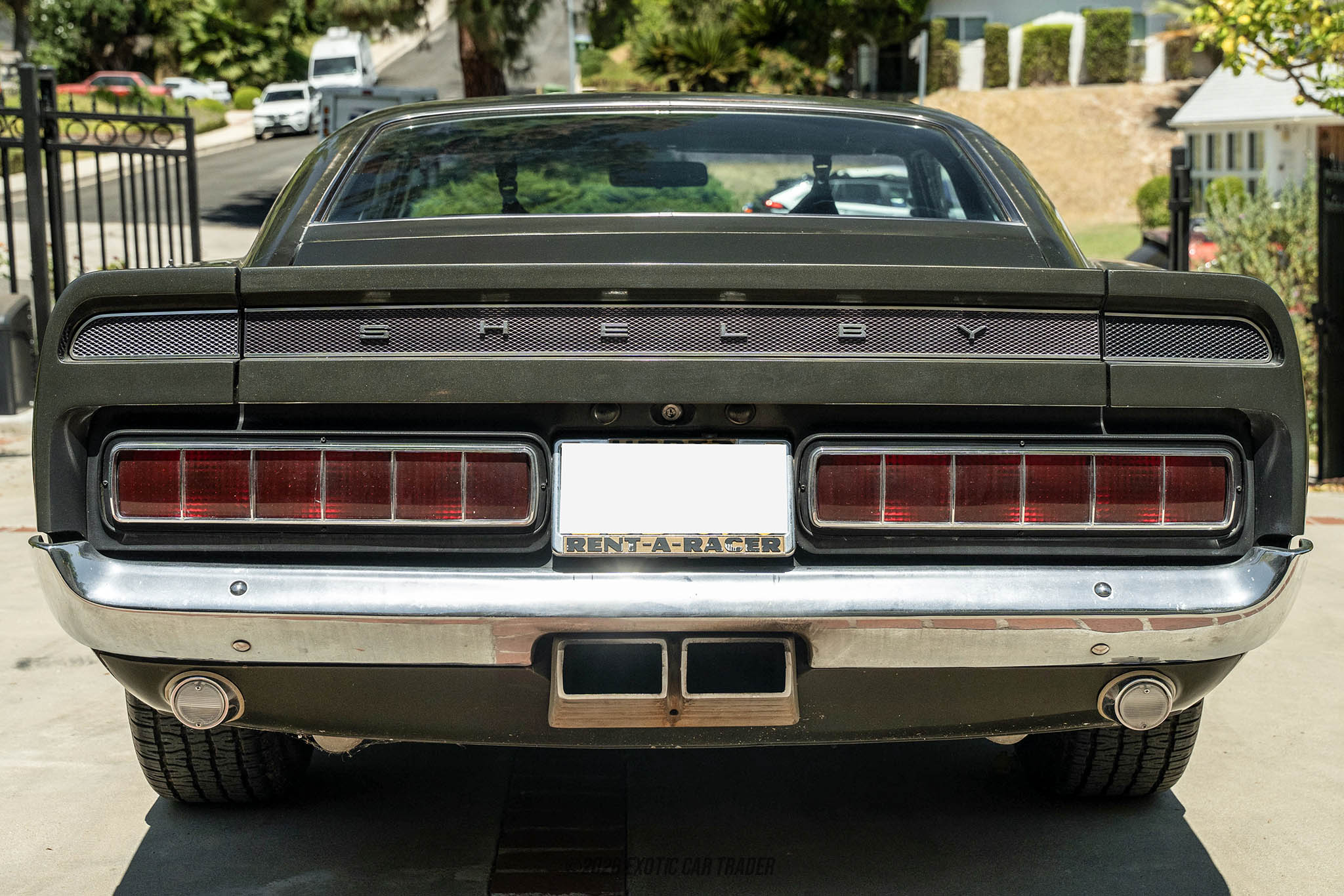
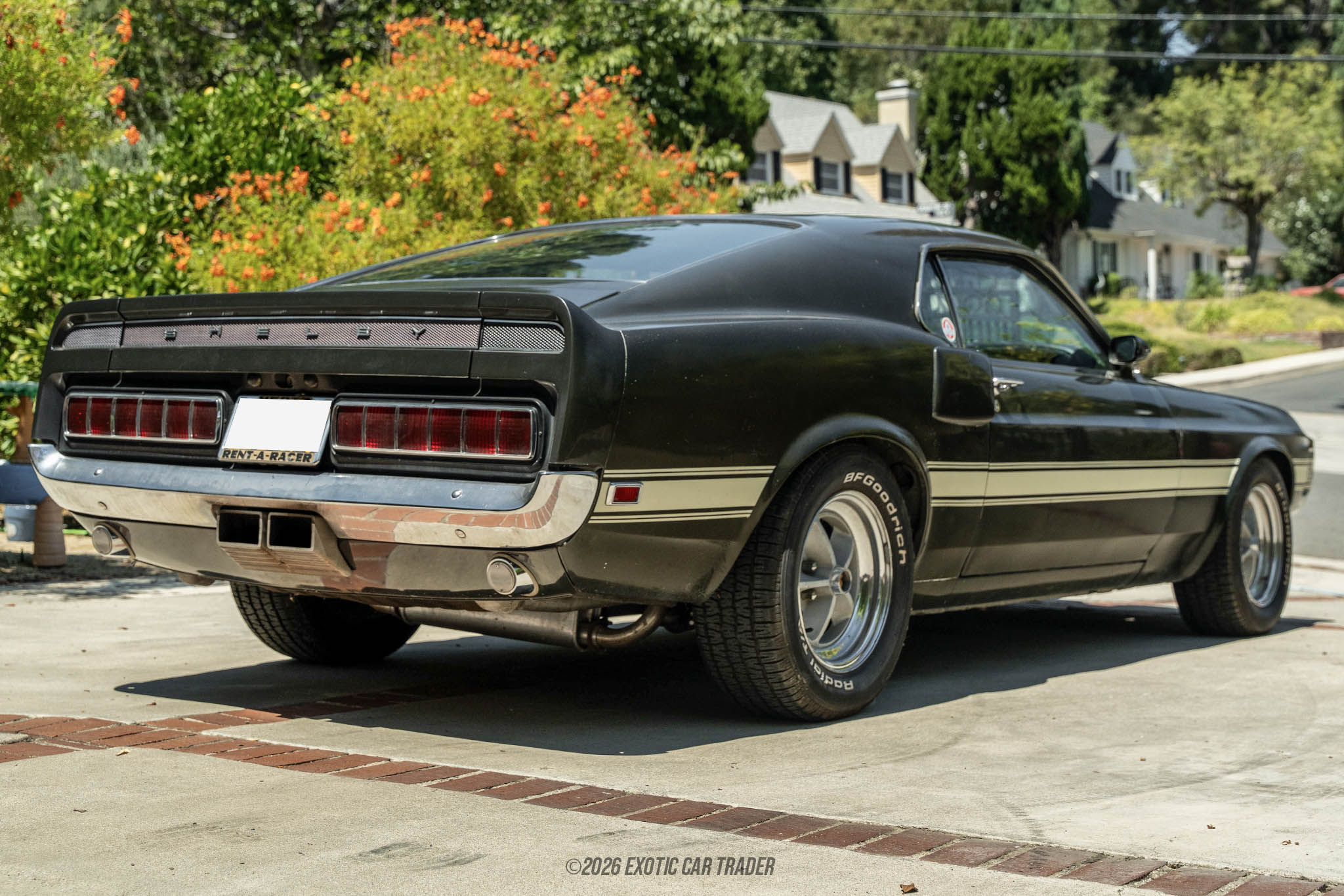
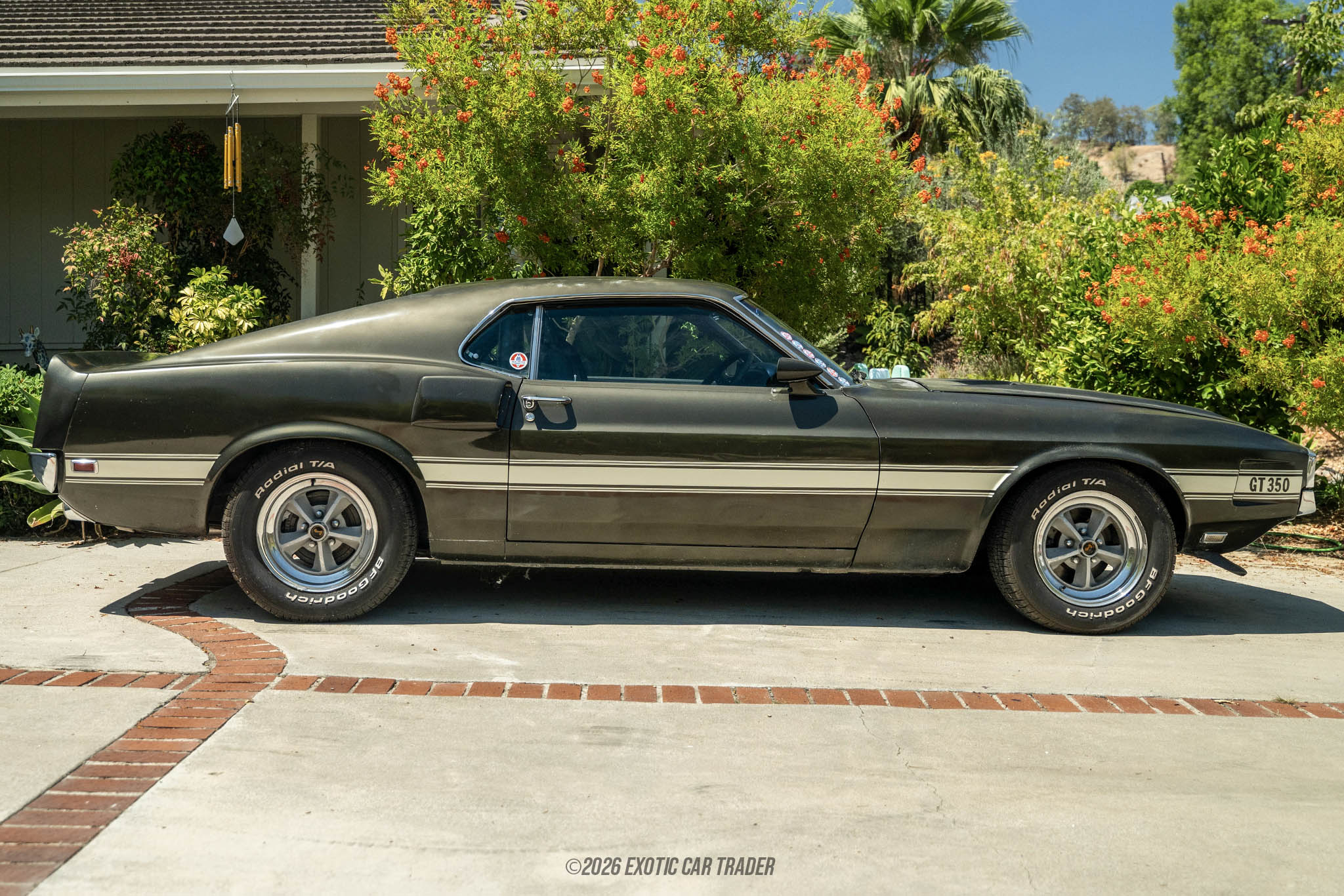
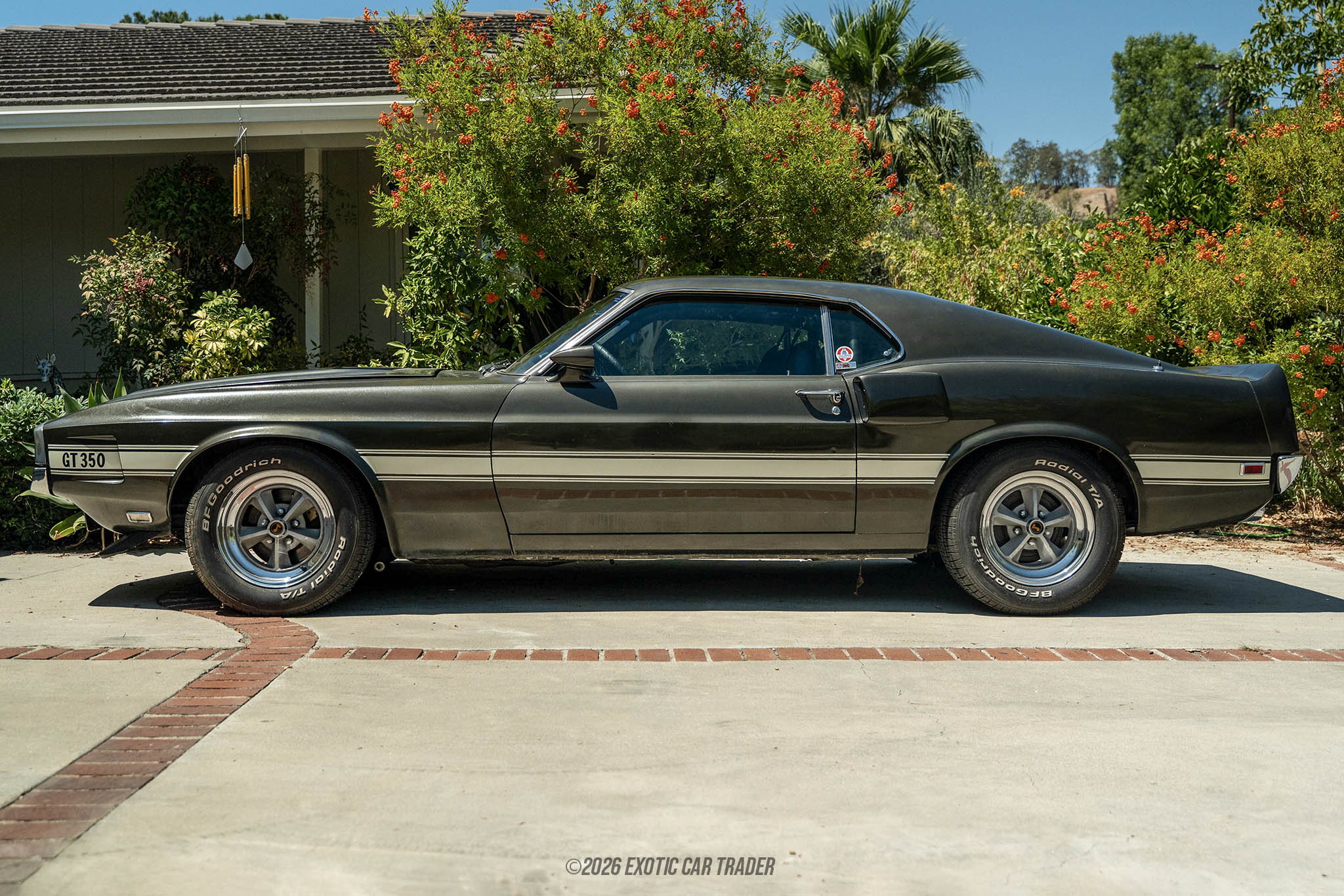
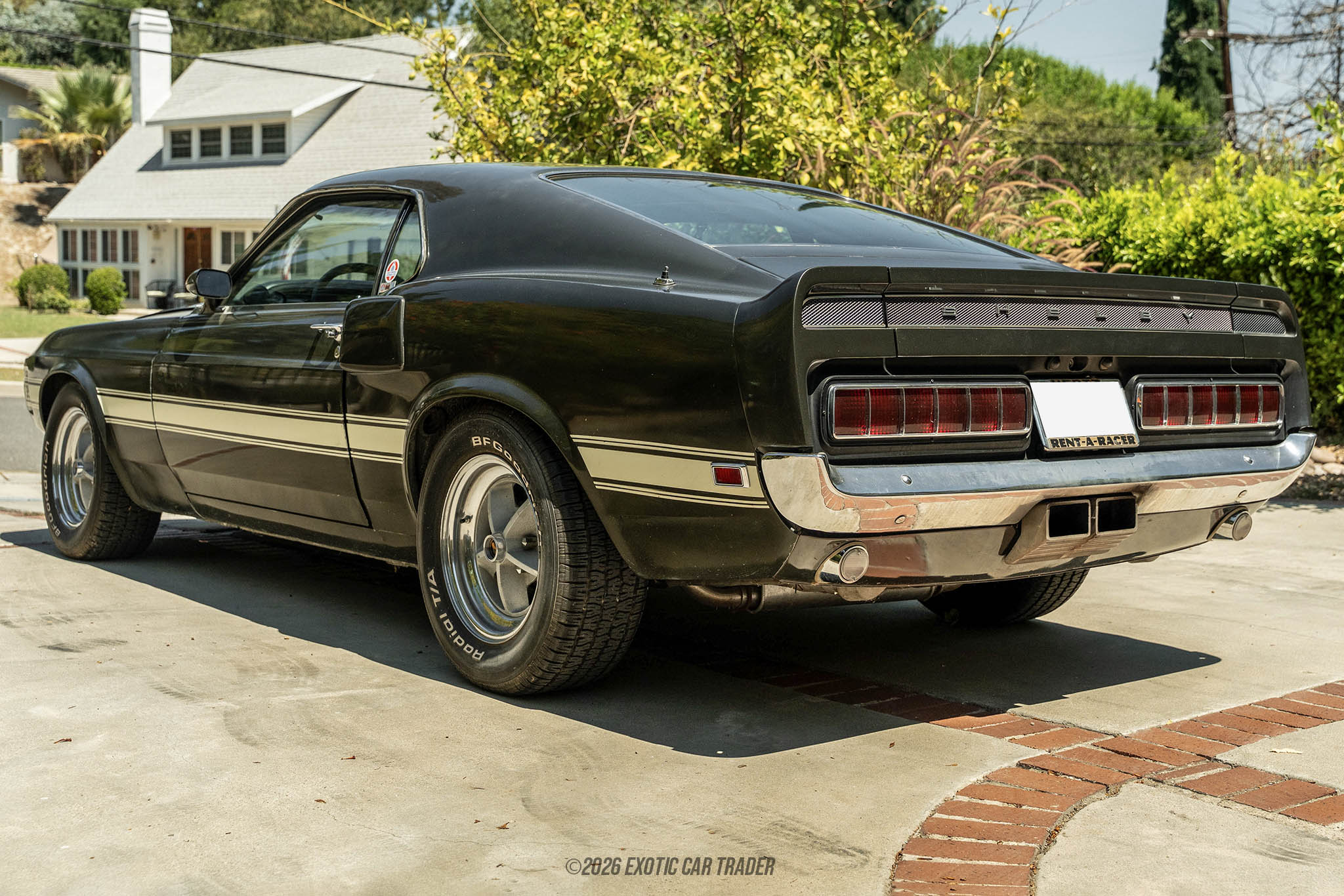
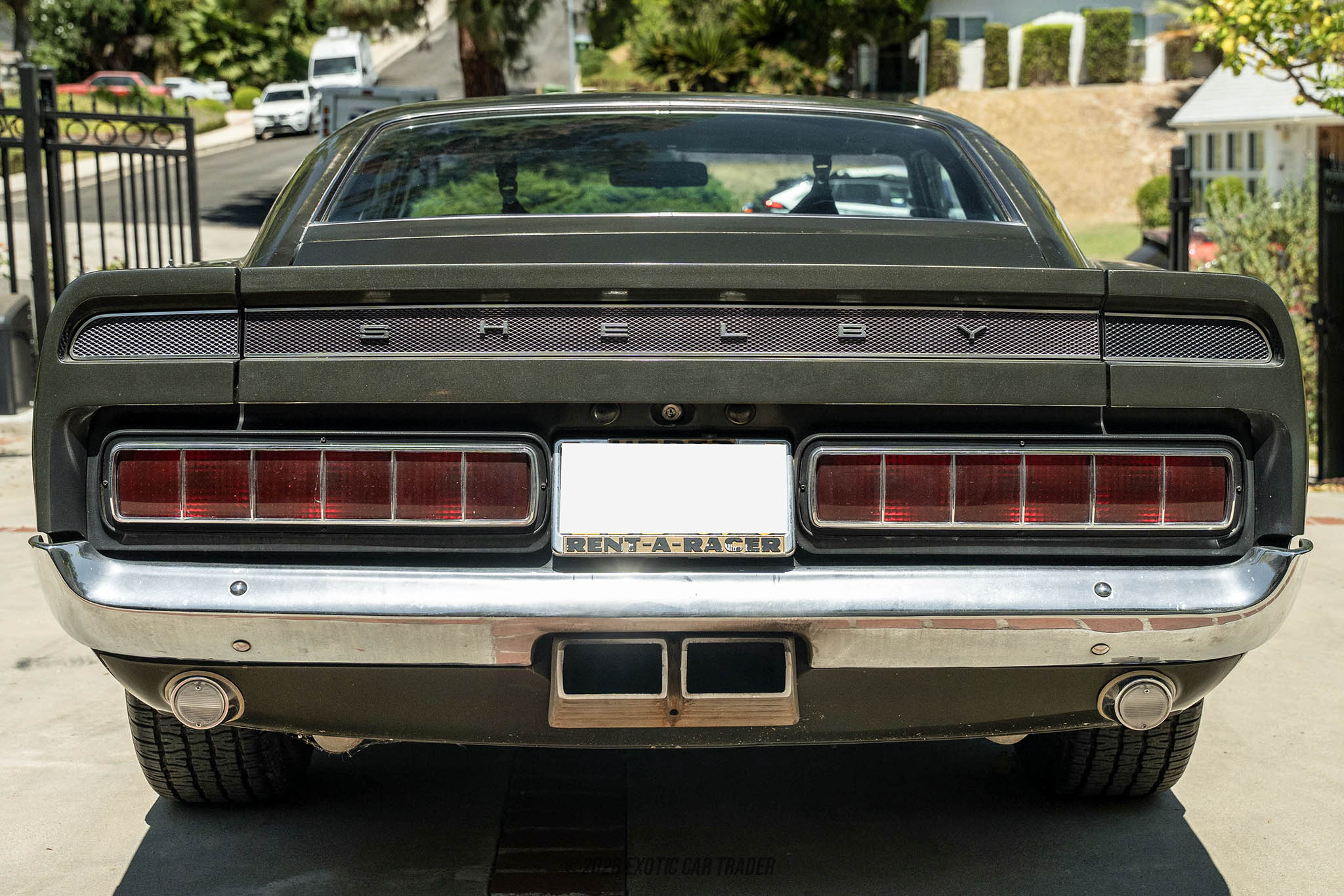
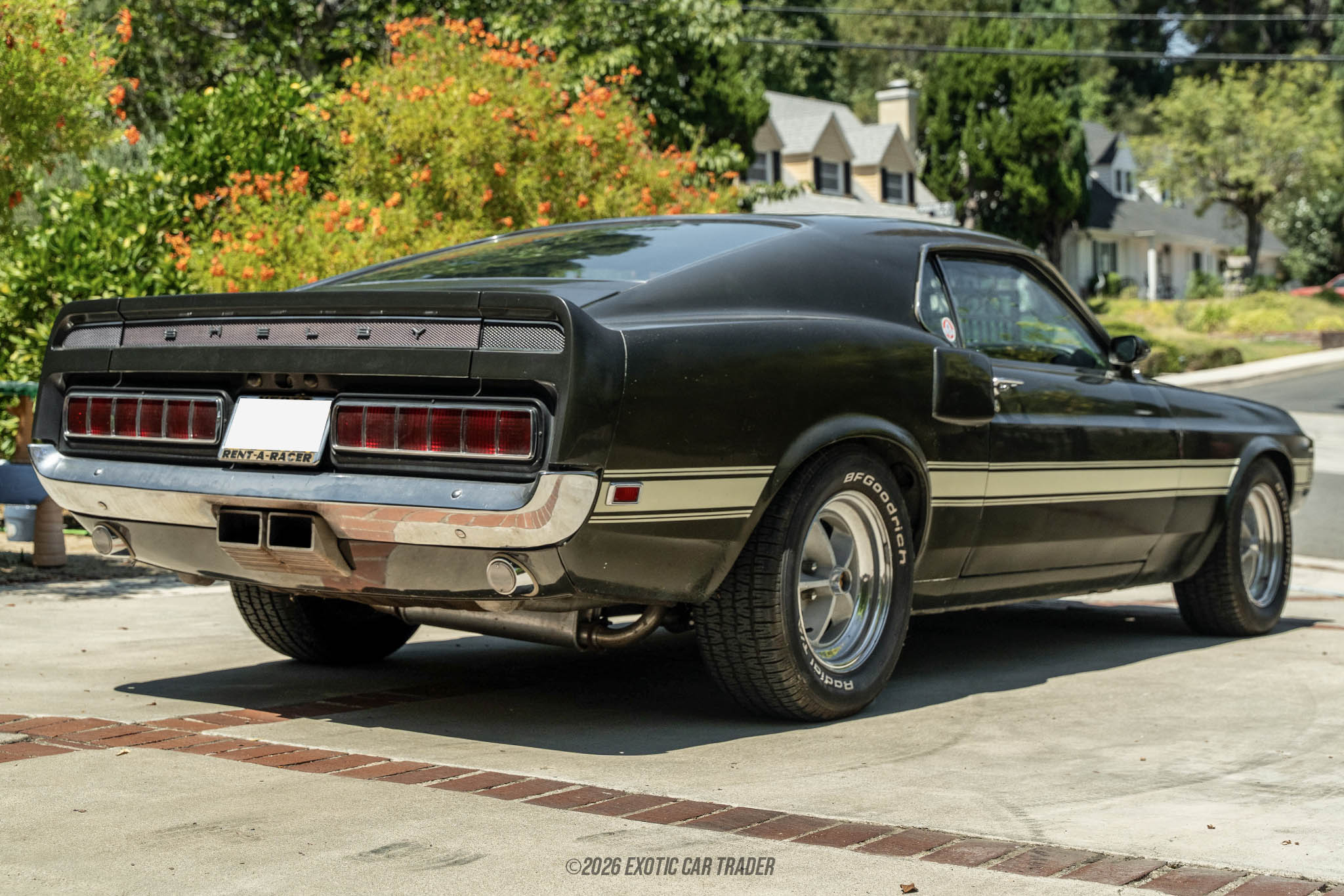
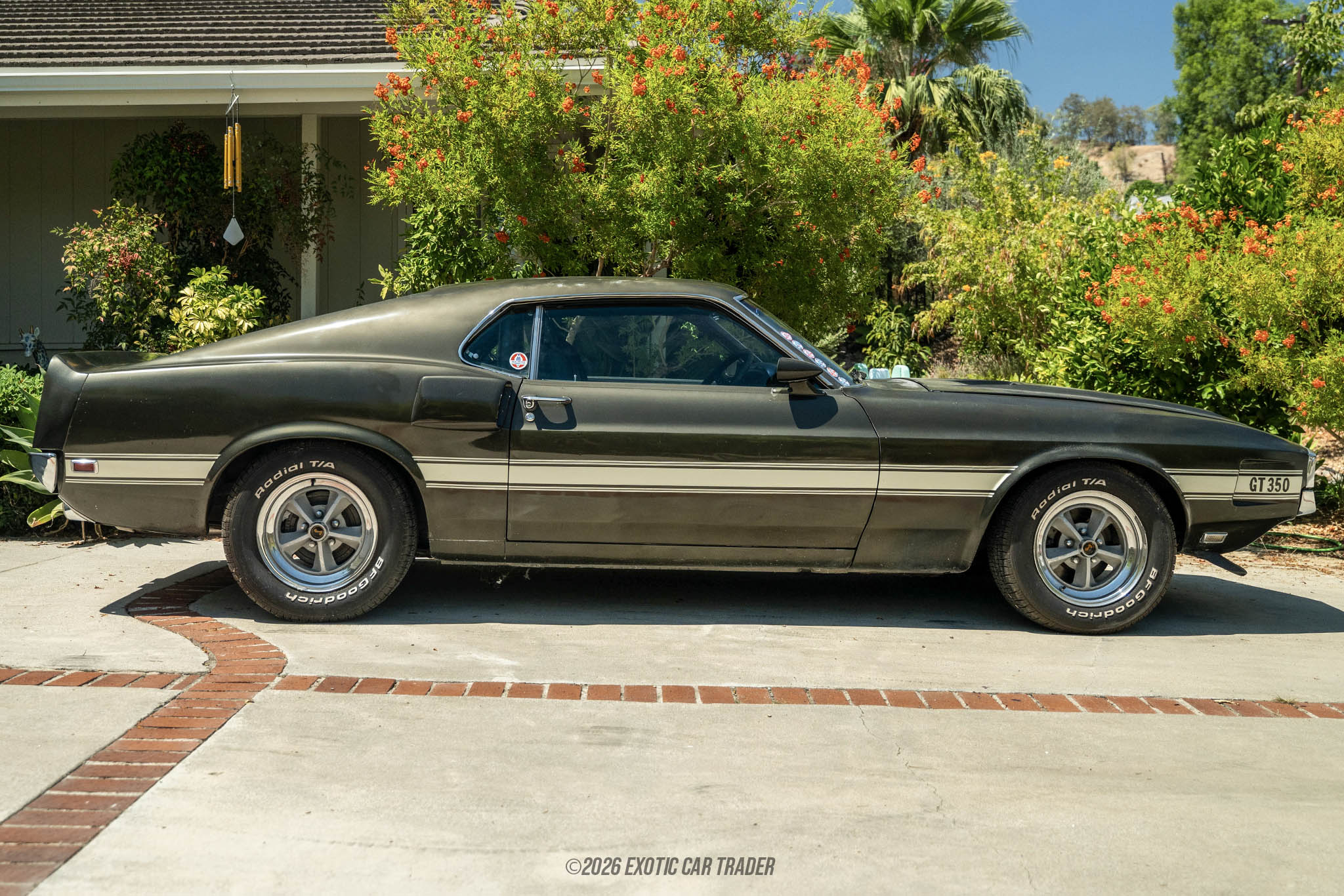
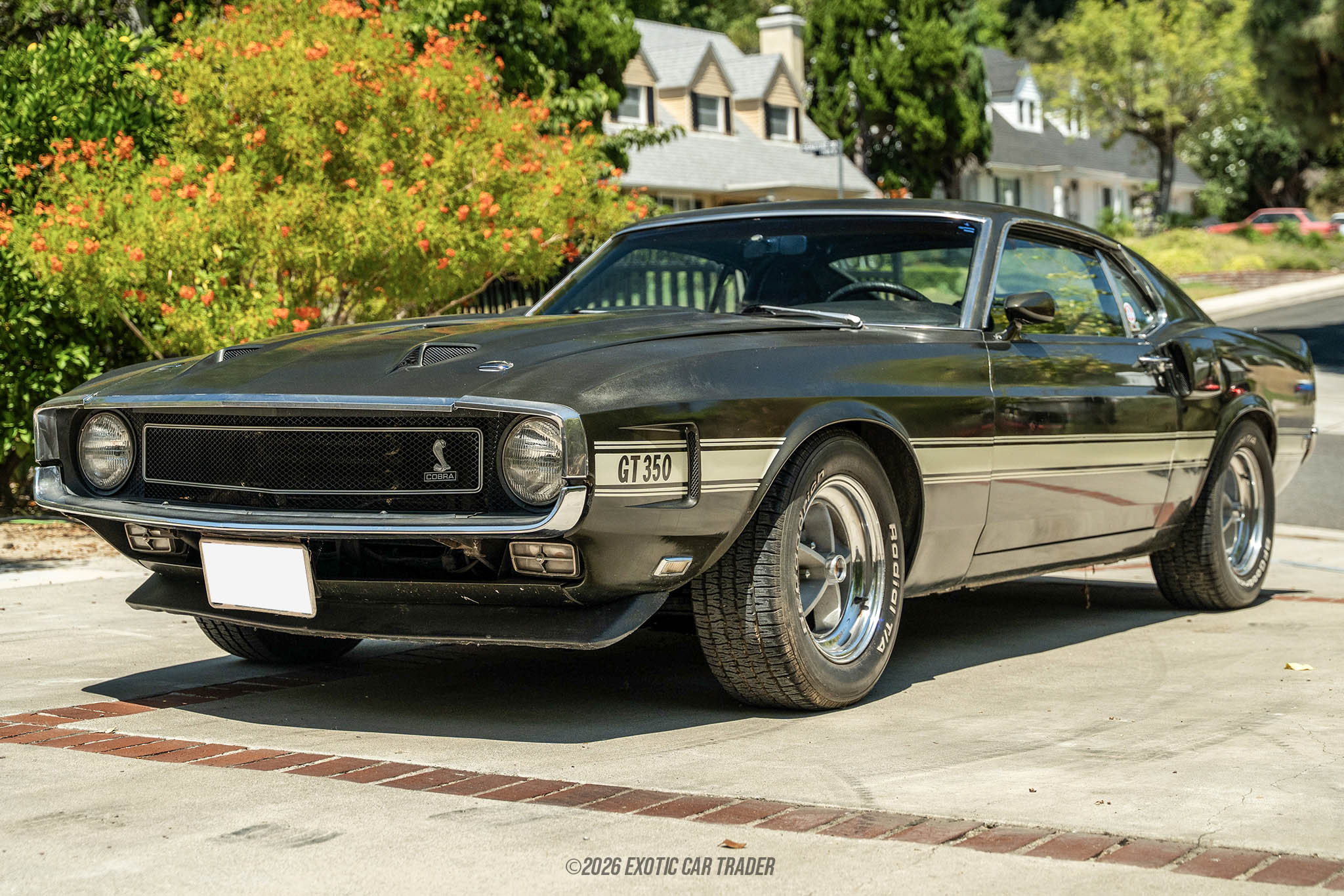
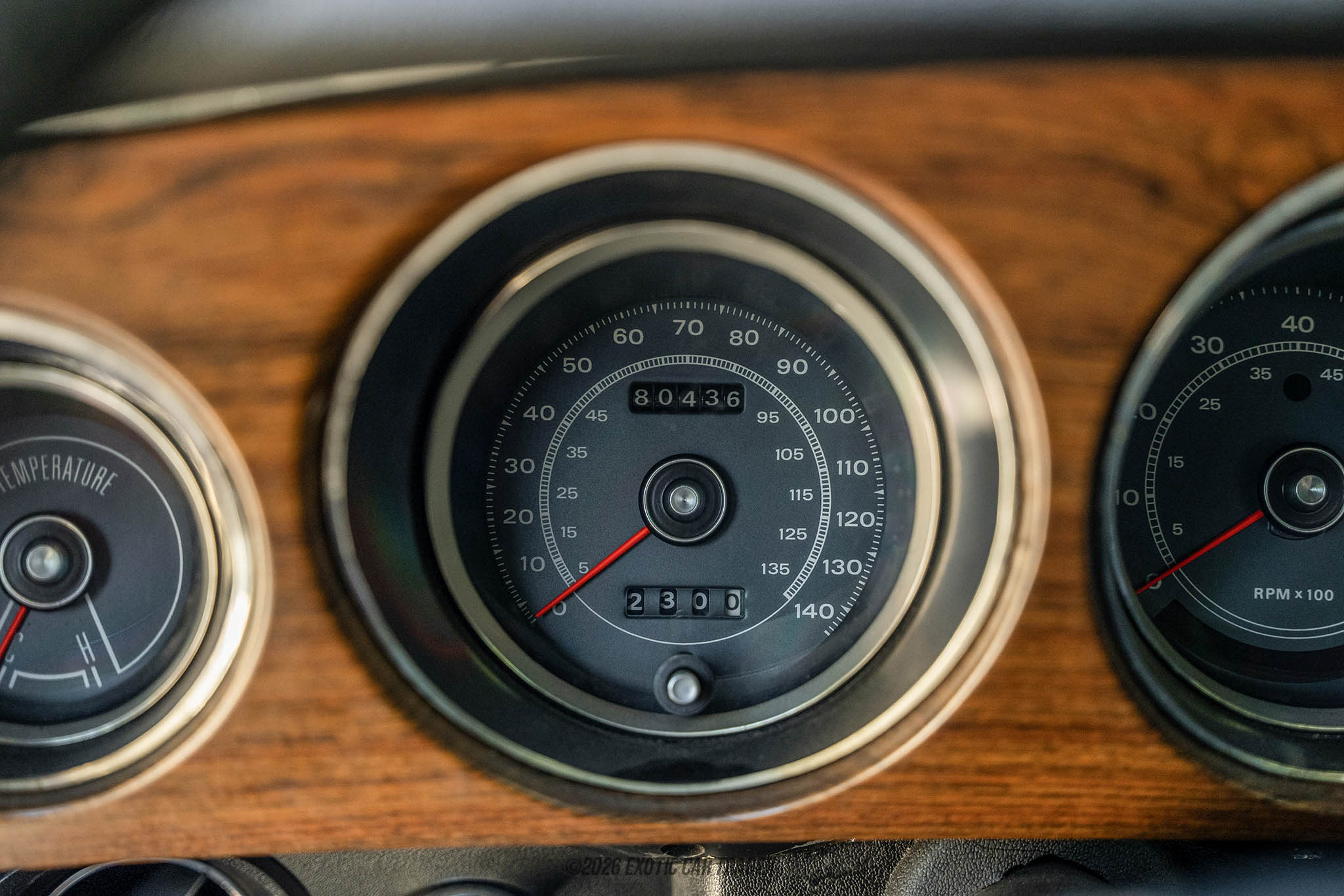
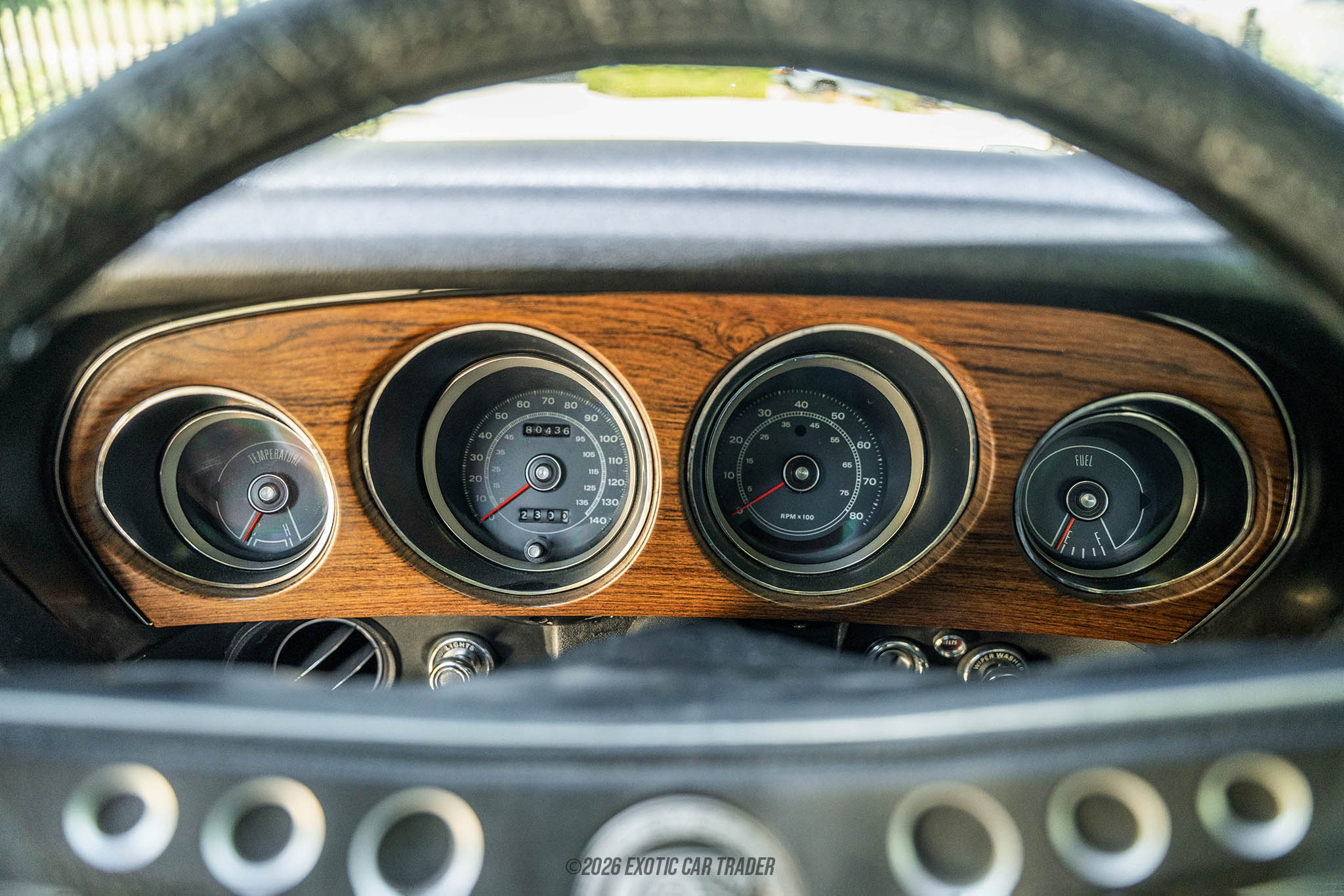
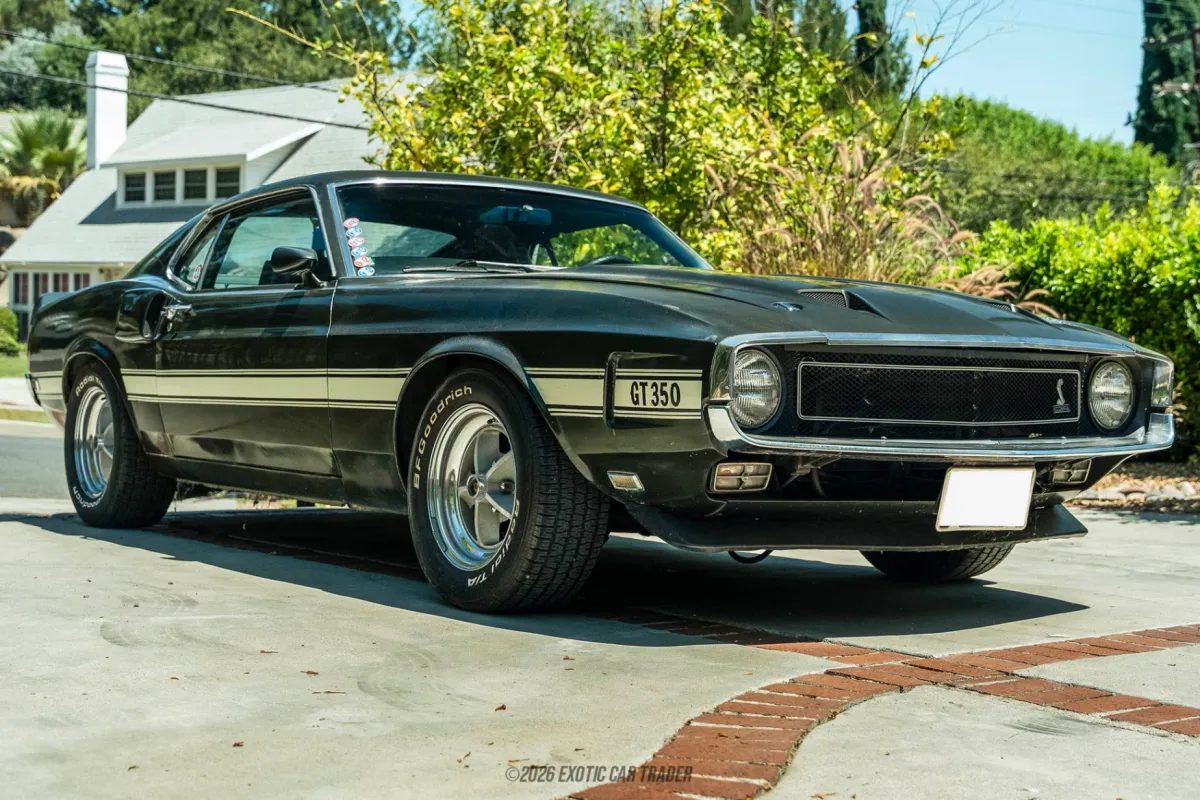
By 1969, the Shelby GT350 had evolved from the raw, competition-minded Mustang of the mid-1960s into something broader in character: still unmistakably performance-focused, but now with the presence and comfort of a true high-speed grand tourer. This 1969 Ford Mustang Shelby GT350 shows approximately 80,436 miles and wears Black Jade over a Black interior with red seat accents, a combination that suits the car’s more mature personality especially well. Its Shelby identity is everywhere, from the functional twin-scoop fiberglass hood and Cobra-branded grille to the side scoops, GT350 graphics, rear decklid spoiler, Shelby Automotive identification plate, and Carroll Shelby signature across the passenger-side dash. Underneath, the 351ci Windsor V8, SelectShift Cruise-O-Matic automatic, and 3.25:1 Traction-Lok rear axle give it the kind of effortless V8 pace expected from a late-1960s Shelby, while power steering, power-assisted front disc brakes, and air conditioning make this example as much a road-going GT as it is a muscle car. It is a fitting snapshot of the moment when Shelby Mustangs became less about stripped-down competition and more about combining speed, style, and long-distance usability.
Exterior and Interior
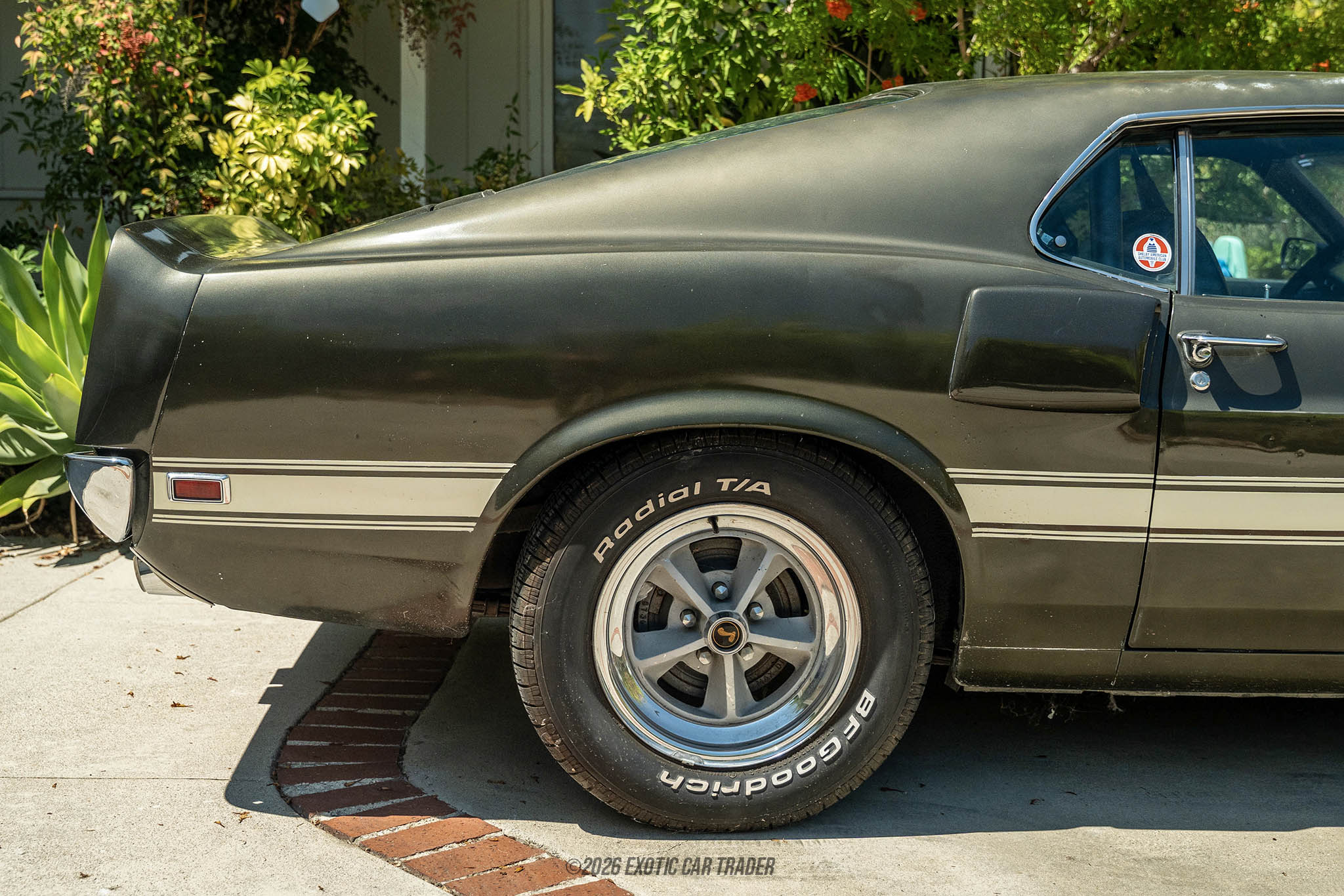
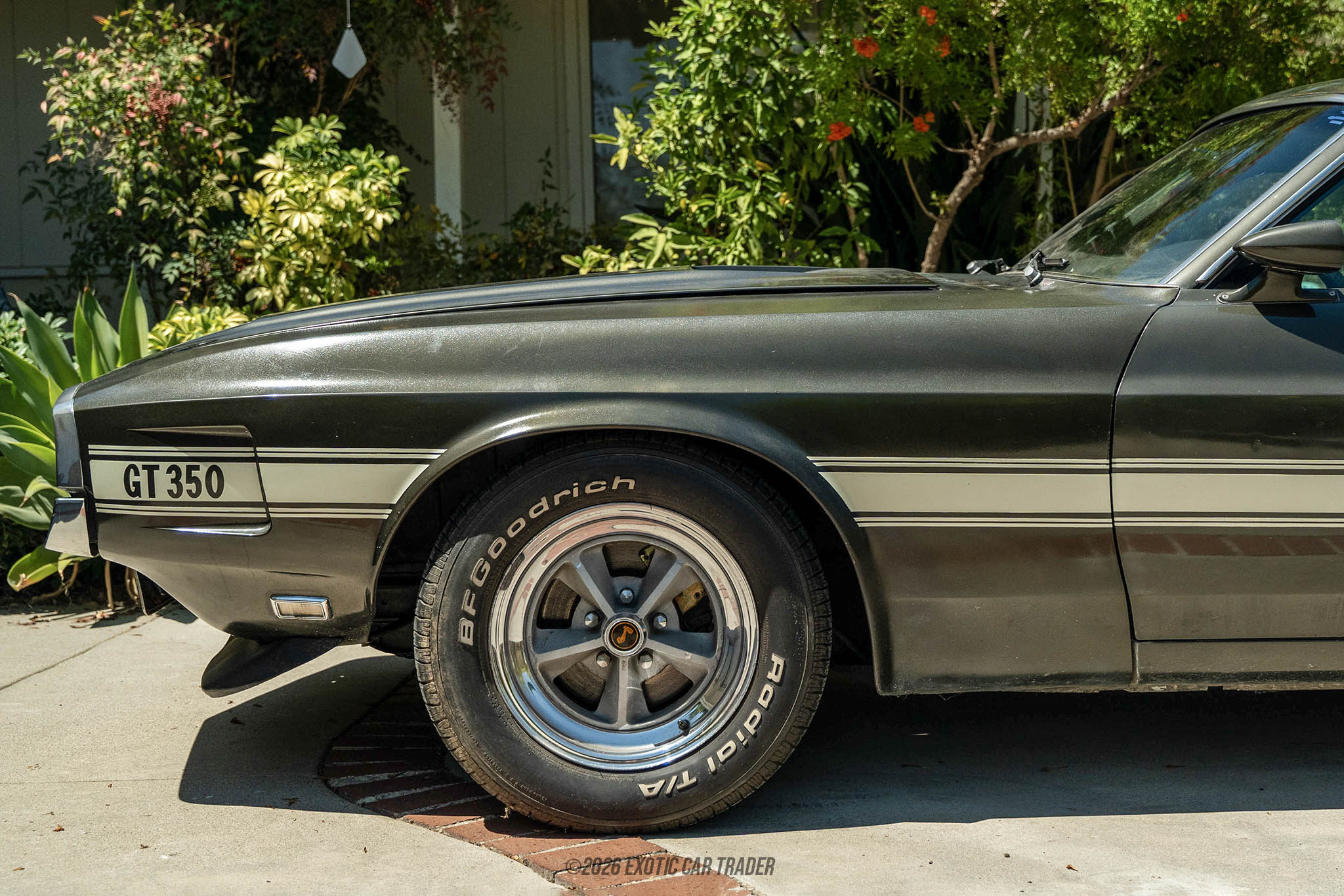
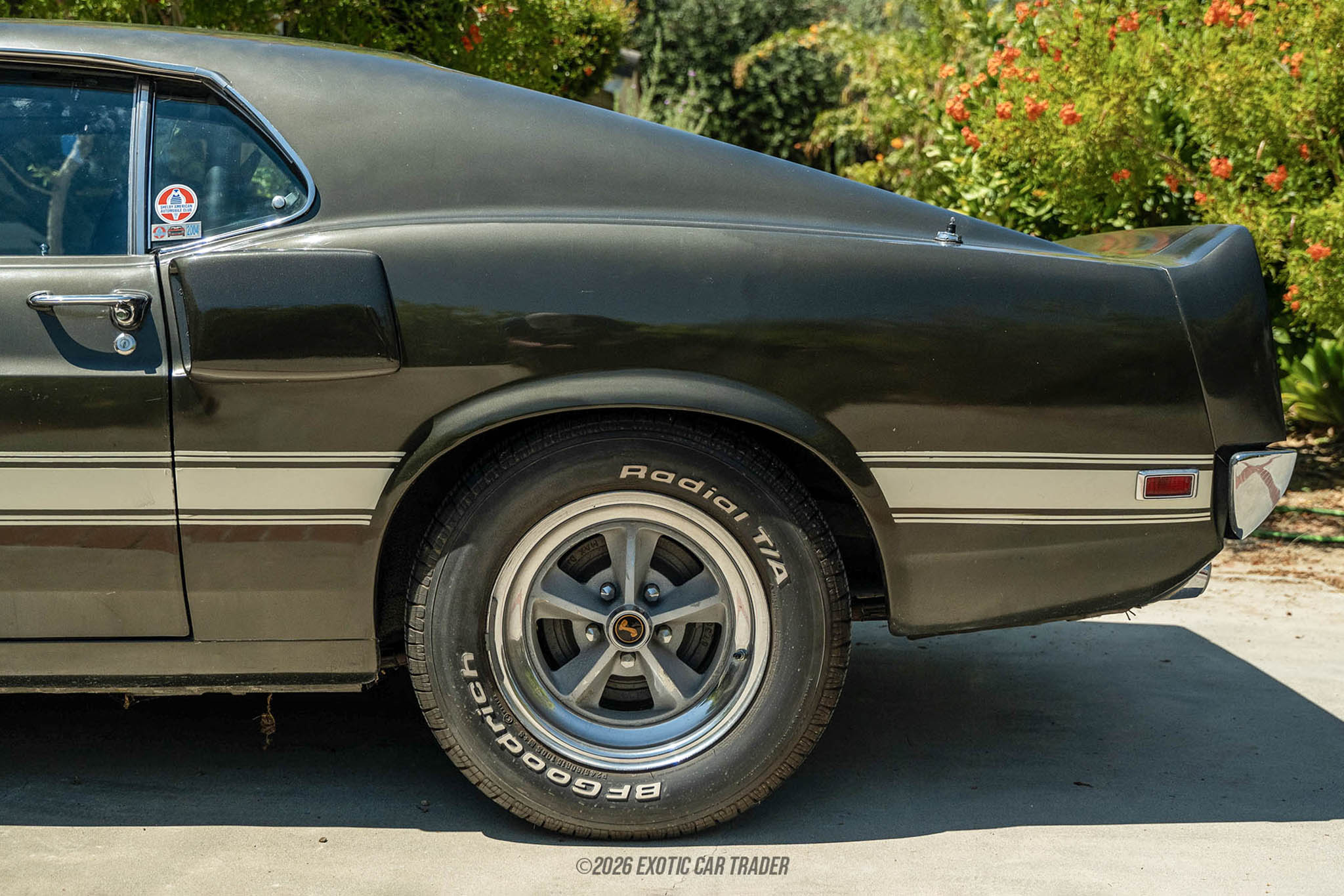
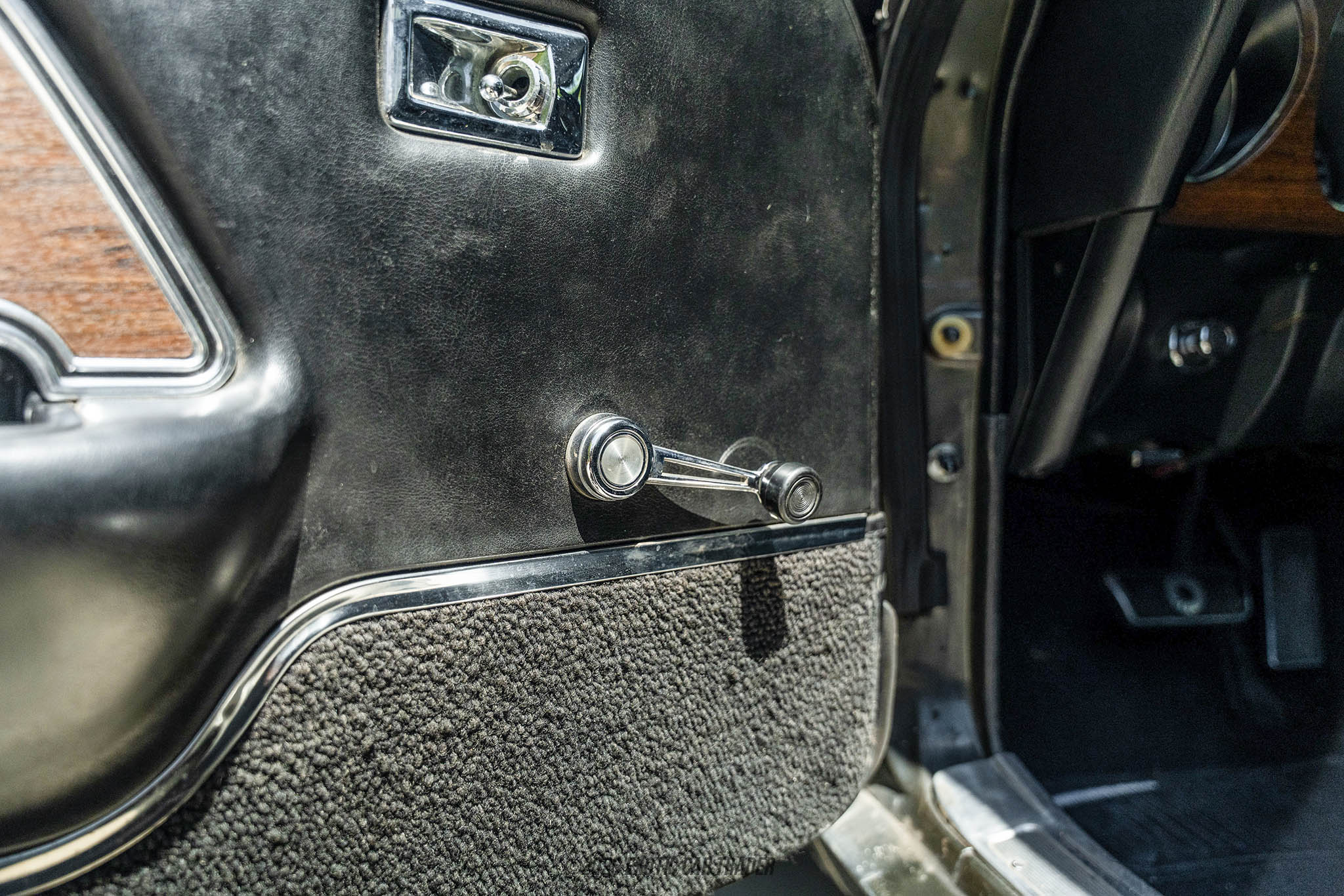
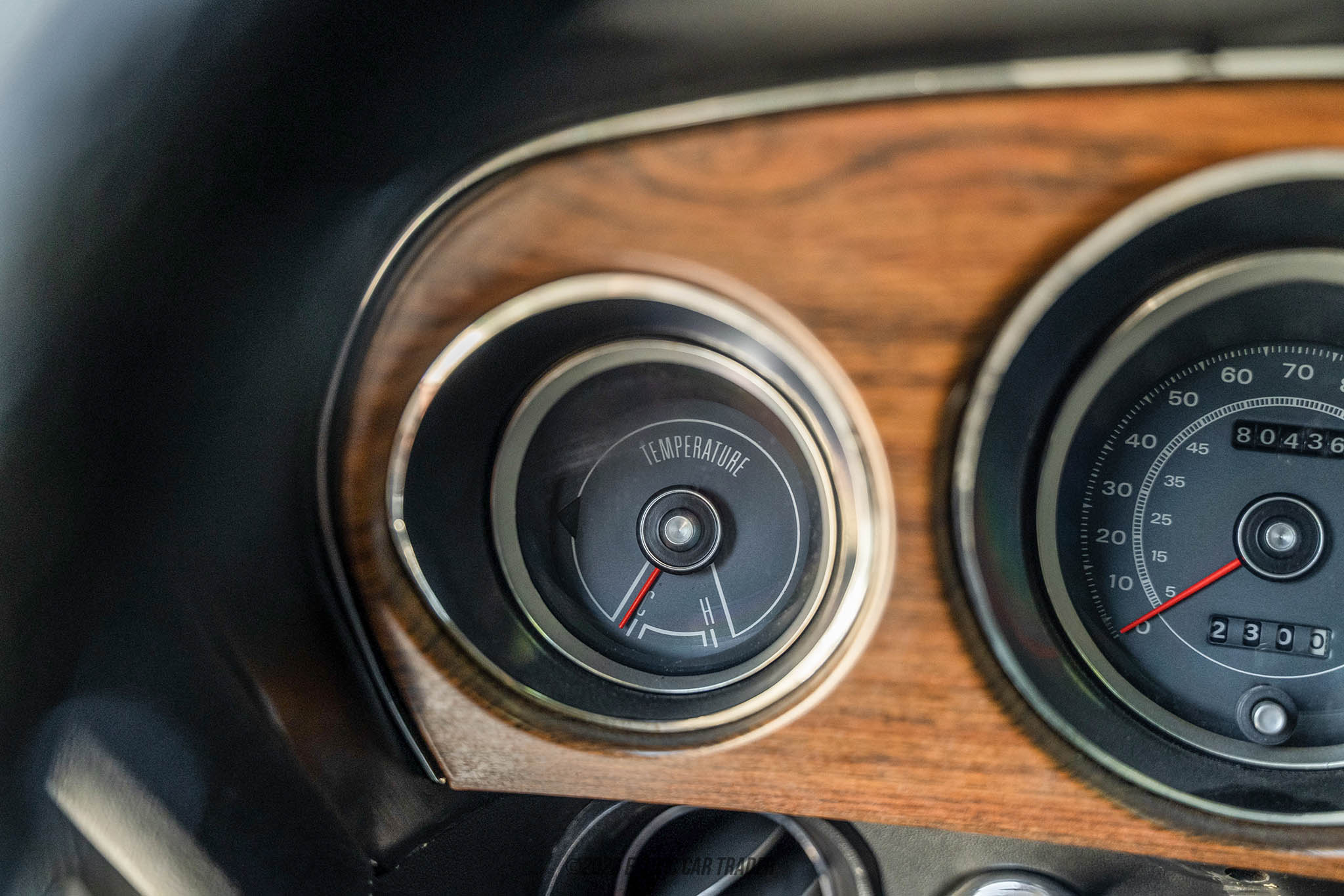
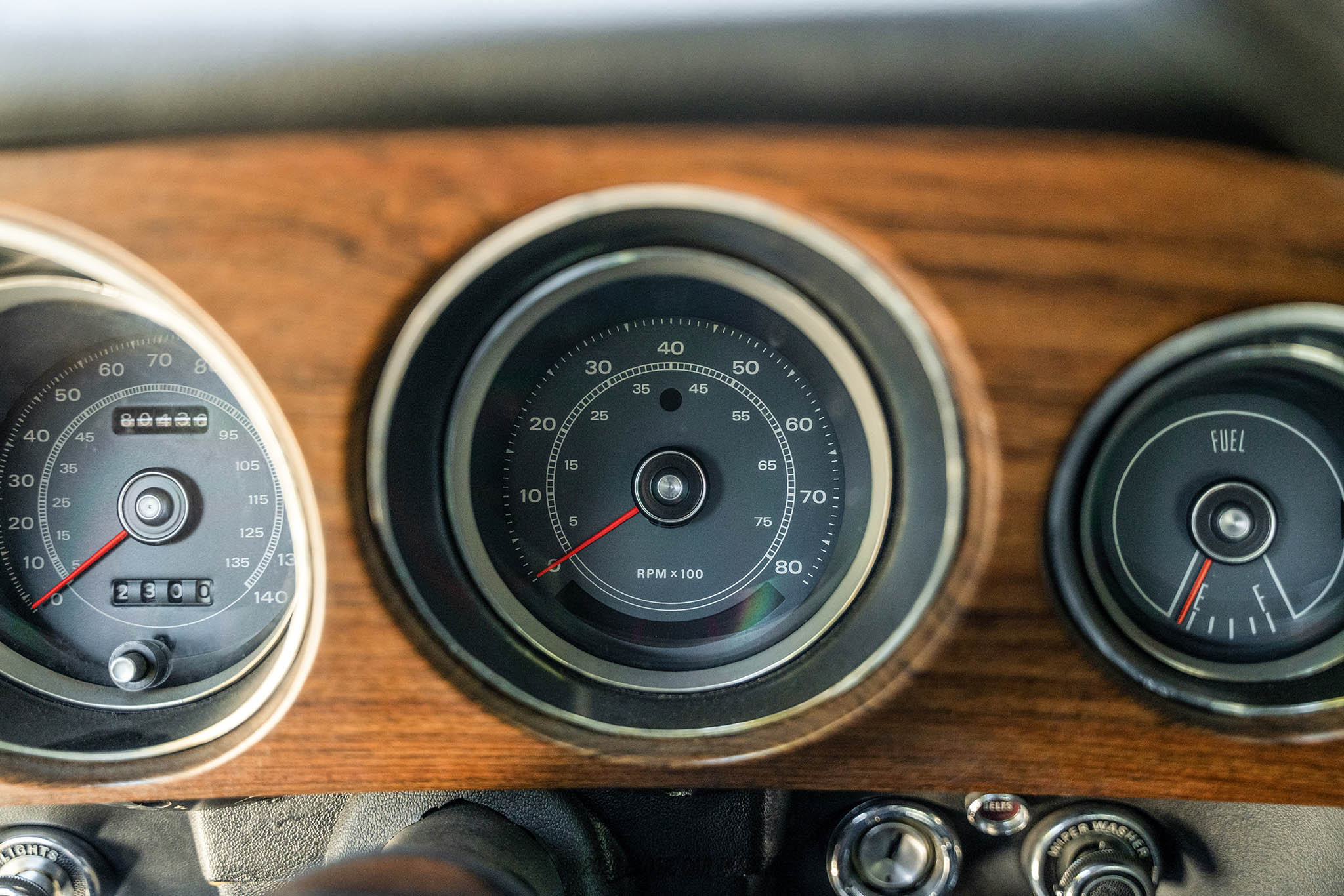
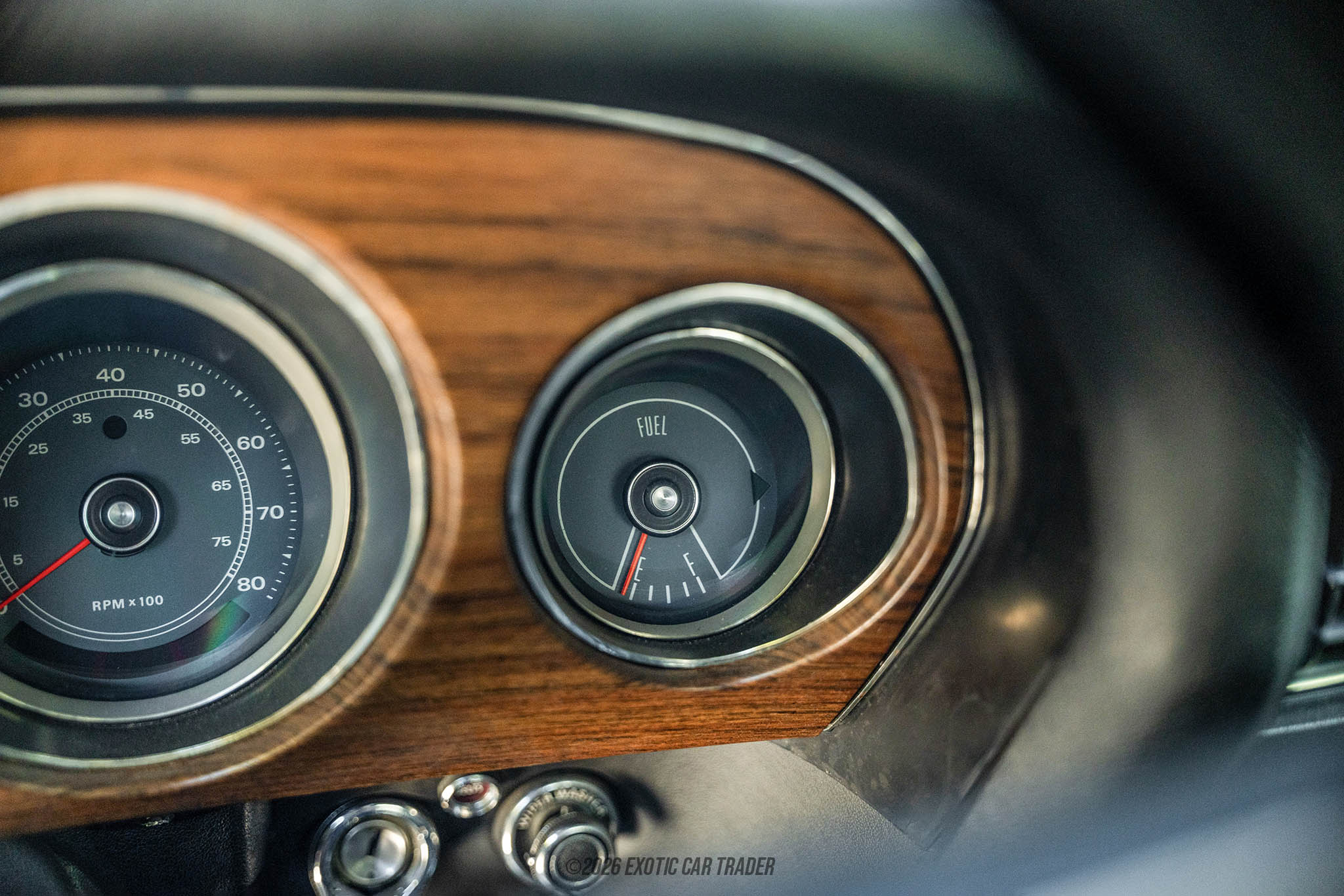
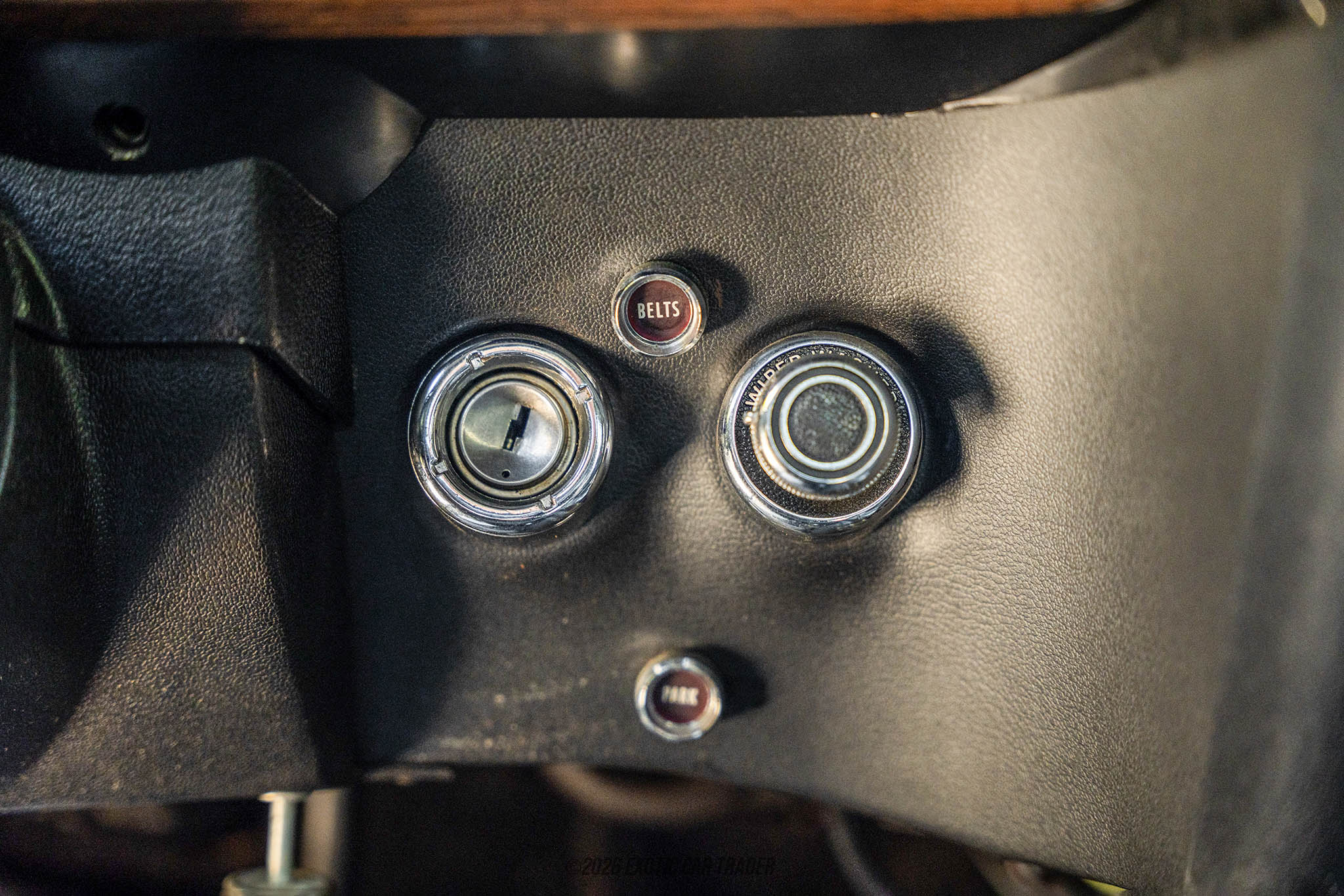
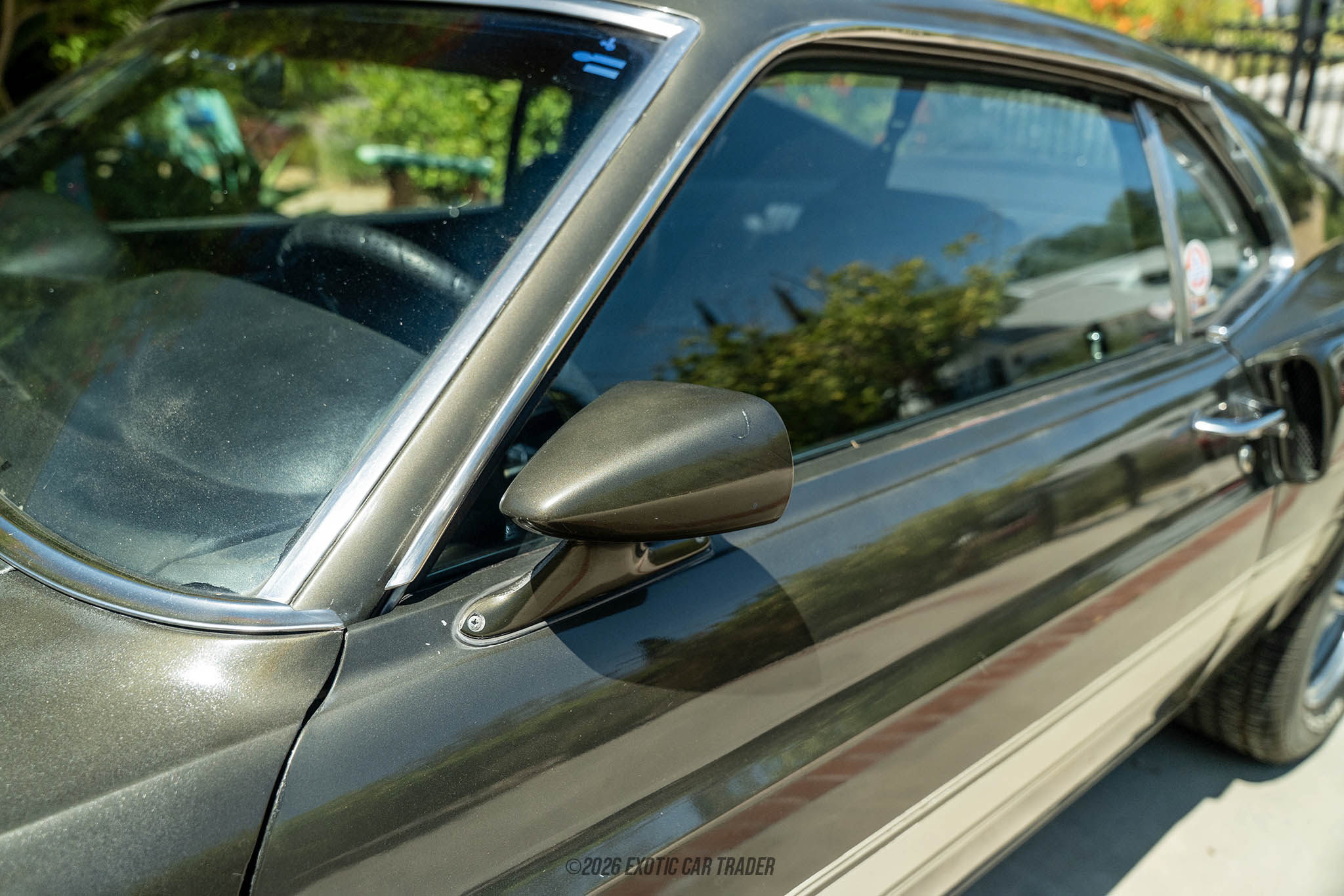
The exterior of this 1969 Ford Mustang Shelby GT350 is finished in Black Jade and carries the muscular bodywork that sets the late Shelby Mustangs apart from standard fastbacks. The fiberglass hood incorporates functional twin scoops, while the Shelby-specific front fascia, Cobra grille emblem, driving lights, side scoops, GT350 graphics, and rear decklid spoiler give the car an unmistakable Shelby presence. Chrome 5-spoke wheels add a period-correct finishing touch, while the overall presentation balances aggressive detailing with the more refined character of the 1969 redesign. The interior of this 1969 Shelby GT350 is finished in Black and features high-back bucket seats with red accent trim, woodgrain detailing, a center console, auxiliary gauges, and a woodgrain automatic shift knob. A factory-style roll bar with shoulder harnesses reinforces the car’s performance identity, while air conditioning adds useful comfort. One of the most distinctive cabin details is the Carroll Shelby signature on the passenger-side woodgrain dash panel, complementing the Shelby Automotive identification plate visible in the door jamb and adding another layer of period character to the car.
Engine
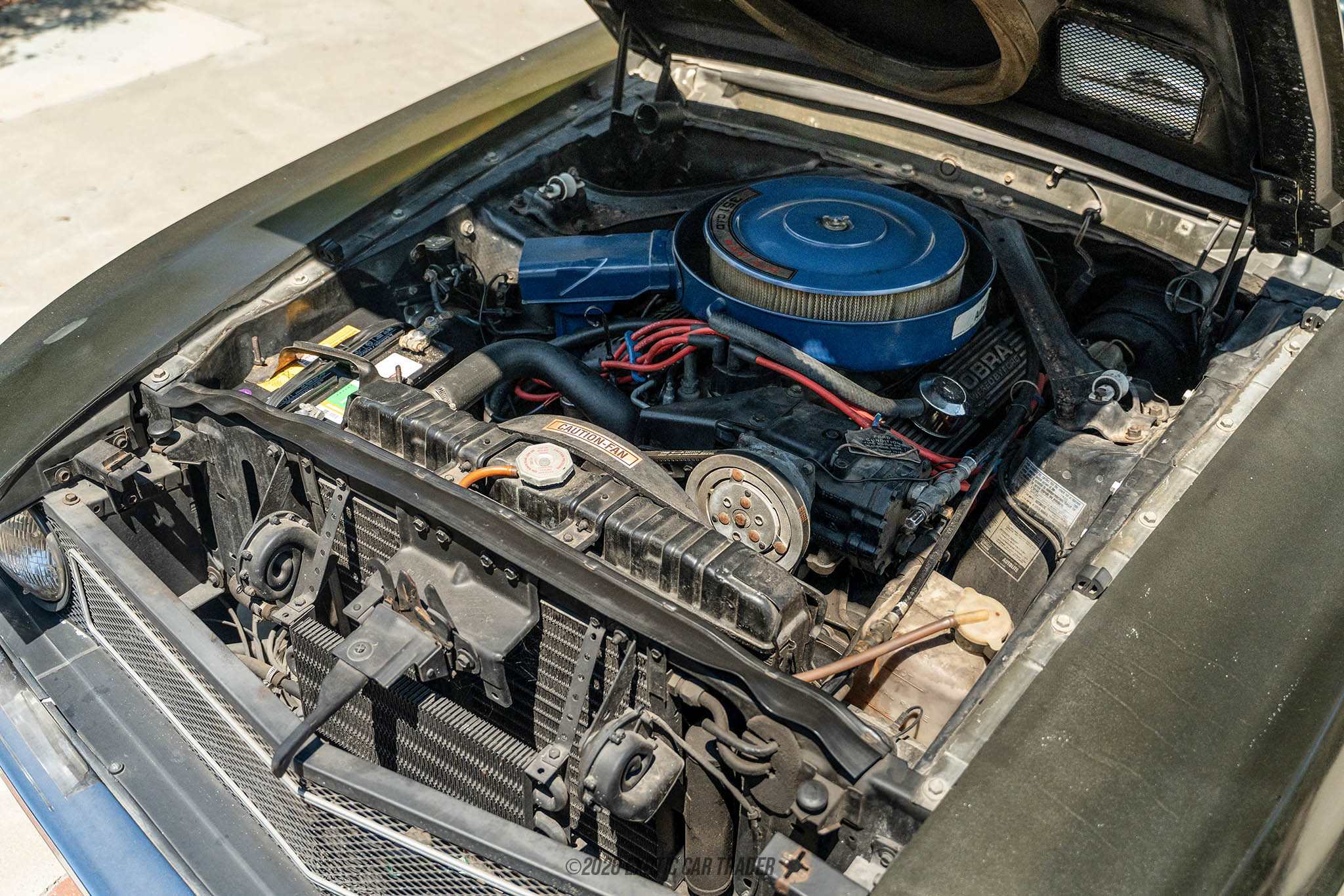
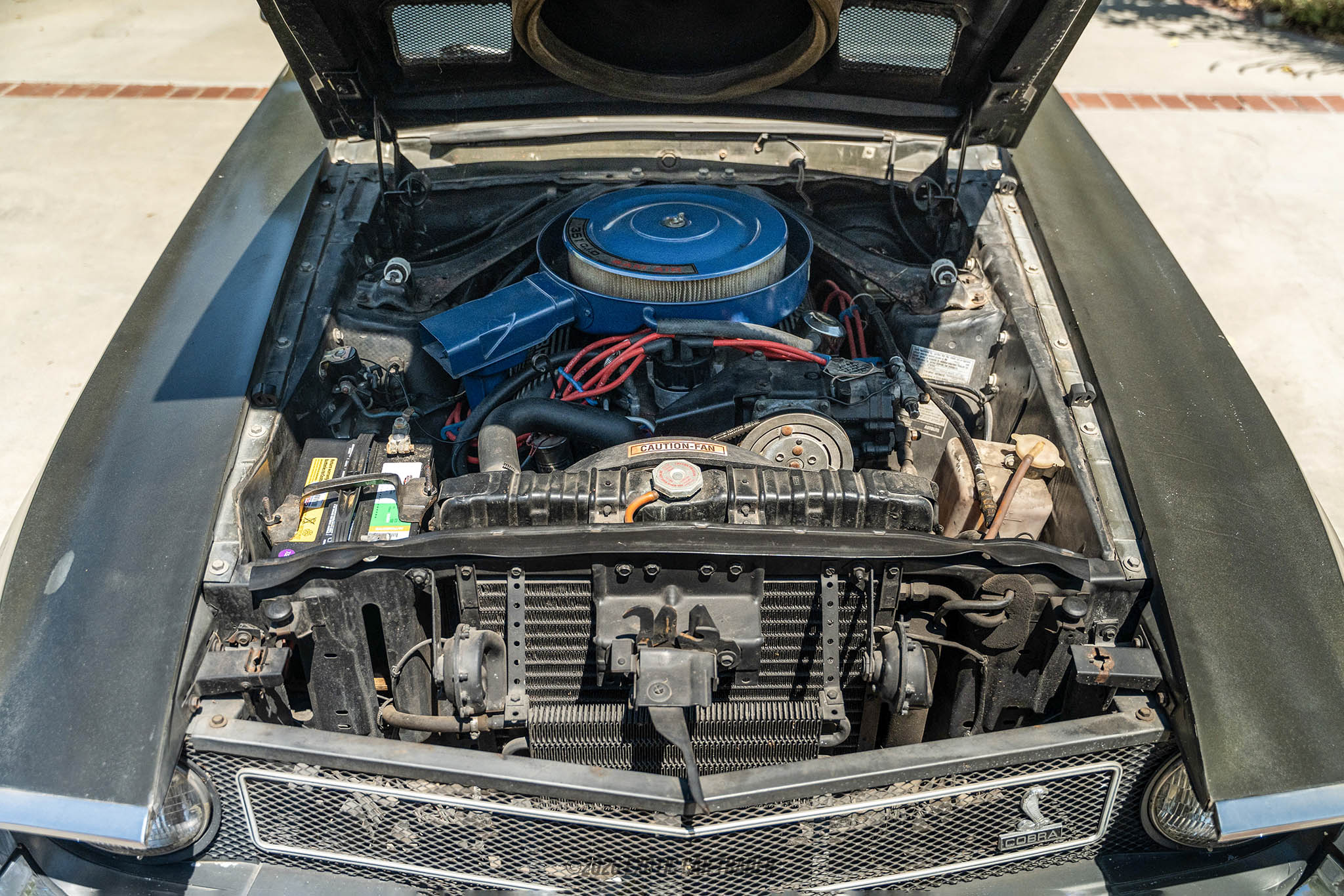
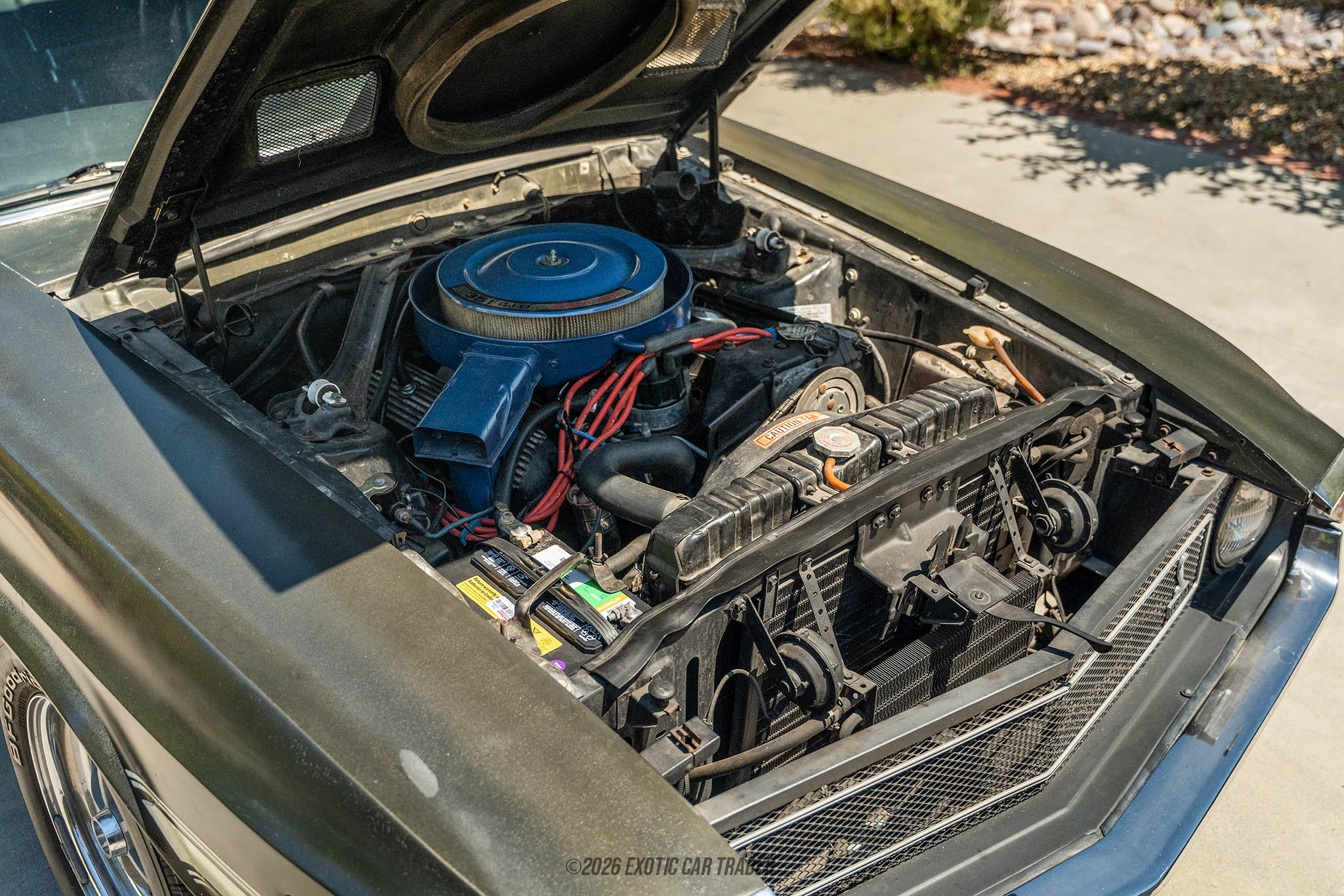
Powering this 1969 Ford Mustang Shelby GT350 is a 351ci Windsor V8 breathing through a 4-barrel carburetor and paired with a SelectShift Cruise-O-Matic 3-speed automatic transmission. Power is sent to the rear wheels through a Ford 9-inch rear axle with a 3.25:1 ratio and Traction-Lok limited-slip differential, giving the car a traditional muscle-car drivetrain with strong cruising manners. Power steering and power-assisted front disc brakes with rear drums make the GT350 easier to manage on the road, while the dual exhaust system provides the soundtrack expected from a Shelby-badged V8 Mustang. The result is a drivetrain that suits the later GT350’s dual role as both a serious performance car and a more comfortable high-speed grand tourer.

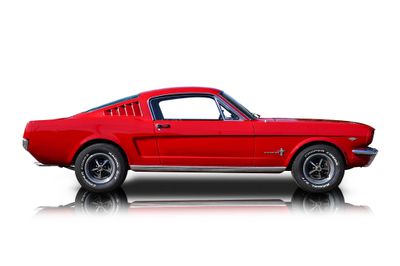

The 1965 Ford Mustang Fastback helped establish the Mustang as an American performance icon, introducing the sleek 2+2 roofline that would become one of the most recognizable designs in pony car history. This 1965 Ford Mustang Fastback, showing 14,118 miles, is finished in its factory-specified Rangoon Red over a Black vinyl interior. Powered by a 289ci V8 equipped with a four-barrel carburetor and paired with a Cruise-O-Matic three-speed automatic transmission, this Mustang delivers the classic small-block Ford driving experience. Additional highlights include aftermarket wheels wrapped in Cooper Cobra Radial G/T tires, rear quarter window louvers, a center console, and a JVC audio head unit. With its desirable fastback body style, traditional V8 power, and unmistakable first-generation Mustang character, this example offers an appealing combination of vintage styling and American muscle car heritage.
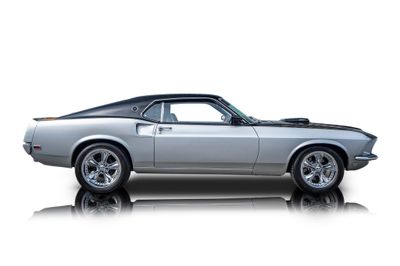
The 1969 Ford Mustang Fastback remains one of the most celebrated designs of the original American muscle car era, with its aggressive SportsRoof styling and unmistakable performance heritage. This 1969 Ford Mustang Fastback Restomod, showing just 431 miles, combines classic muscle car character with an extensive selection of modern performance upgrades. Finished in a custom Black and Silver two-tone exterior over a Black leather interior, this example is powered by a 390ci V8 built by PK Machine, featuring Holley Sniper electronic fuel injection and a TCI StreetFighter C6 automatic transmission with a shift kit and electronic overdrive. Additional highlights include TCI front coilover suspension, rack and pinion steering, Wilwood front disc brakes, and Foose alloy wheels wrapped in Michelin tires. With its big-block Ford power, upgraded drivetrain, and distinctive custom styling, this Fastback delivers an exciting interpretation of a legendary American muscle car.
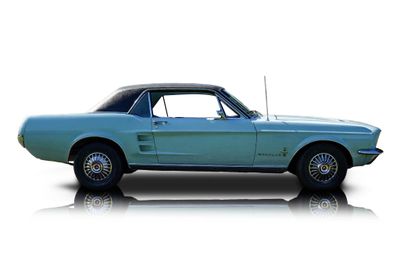
Few American cars have achieved the cultural significance of the first-generation Ford Mustang. Introduced in 1964, the Mustang helped establish an entirely new segment of affordable, stylish performance cars, quickly becoming one of Ford's greatest success stories. By 1967, the Mustang had undergone its first major redesign, gaining a wider stance, more muscular bodywork, and improved proportions while retaining the unmistakable styling that made the original an icon. This 1967 Ford Mustang Hardtop captures that defining era of American motoring, presented in the distinctive Frost Turquoise exterior complemented by an Aqua/Turquoise interior and contrasting Black vinyl roof. Under the hood sits Ford's legendary 289ci V8, paired with a C4 3-speed automatic transmission. Showing approximately 87,048 miles, this classic Mustang also features air conditioning, chrome engine accents, aftermarket wheels, and its original spare tire and jack kit. For enthusiasts seeking an authentic piece of Mustang heritage, this Hardtop offers a timeless combination of classic styling, V8 character, and everyday cruising appeal.
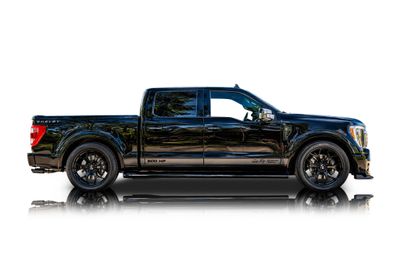
The 2023 Ford F-150 Shelby Centennial Edition Super Snake celebrates 100 years of Carroll Shelby with an extraordinary combination of American V8 power, exclusive styling, and performance-focused engineering. Developed by Shelby American, this limited-edition Super Snake elevates Ford's legendary F-150 platform with an 800-horsepower supercharged V8, lowered performance suspension, and distinctive Centennial Edition appointments. This 2023 Ford F-150 Lariat Shelby Centennial Edition Super Snake, showing just 6,168 miles, is finished in Agate Black Metallic over a Black leather interior. Featuring Shelby's 800 HP supercharger, Ridetech lowered suspension, 22-inch Shelby wheels, and a Shelby-tuned Borla exhaust, this example also includes exclusive Centennial Edition badging, carbon fiber accents, and signature interior appointments. With an original MSRP of $138,900, this limited-edition Shelby combines collectible anniversary significance with exceptional street-truck performance.
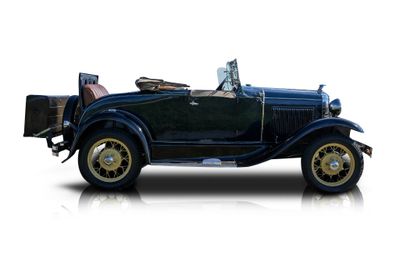
The 1930 Ford Model A Deluxe Roadster captures the charm of America's early motoring era, combining distinctive prewar styling with the open-air freedom that made Ford's roadsters so desirable. Introduced as the successor to the legendary Model T, the Model A brought improved performance, updated engineering, and a more refined driving experience. This 1930 Ford Model A Deluxe Roadster, showing 16,708 miles, is finished in Dark Blue with a Tan convertible soft top and Brown interior. Powered by a 201ci four-cylinder engine paired with a three-speed manual transmission, this example features gold wire-spoke wheels, a rear rumble seat, and a rear-mounted luggage trunk. With its classic proportions, traditional four-cylinder powertrain, and charming period details, this Model A offers an authentic glimpse into the early days of American open-top motoring.
The 1965 Ford Mustang Fastback helped establish the Mustang as an American performance icon, introducing the sleek 2+2 roofline that would become one of the most recognizable designs in pony car history. This 1965 Ford Mustang Fastback, showing 14,118 miles, is finished in its factory-specified Rangoon Red over a Black vinyl interior. Powered by a 289ci V8 equipped with a four-barrel carburetor and paired with a Cruise-O-Matic three-speed automatic transmission, this Mustang delivers the classic small-block Ford driving experience. Additional highlights include aftermarket wheels wrapped in Cooper Cobra Radial G/T tires, rear quarter window louvers, a center console, and a JVC audio head unit. With its desirable fastback body style, traditional V8 power, and unmistakable first-generation Mustang character, this example offers an appealing combination of vintage styling and American muscle car heritage.
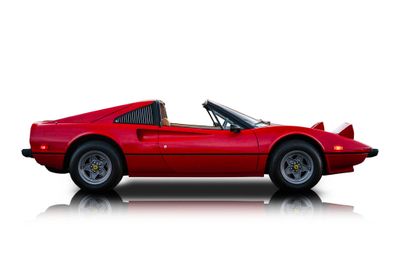
The 1978 Ferrari 308 GTS represents one of the most celebrated eras of Italian sports car design, combining Pininfarina's timeless styling with Ferrari's legendary mid-engine V8 engineering. Introduced in 1977 as the open-roof counterpart to the 308 GTB, the GTS quickly became an icon of the Ferrari lineup, celebrated for its distinctive silhouette, removable targa roof, and engaging driving characteristics. This 1978 Ferrari 308 GTS, showing 31,387 miles, is finished in classic Rosso Corsa over a Cuoio interior, a quintessential Ferrari color combination. Powered by a naturally aspirated 2.9L V8 with four Weber carburetors and paired with a gated five-speed manual transmission, this example delivers the unmistakable character of a vintage Ferrari. With its desirable early carbureted configuration, timeless Italian craftsmanship, and documented mechanical servicing, this 308 GTS offers an appealing opportunity to experience one of Ferrari's most recognizable sports cars. An NMVTIS report indicates a junk/salvage record dated October 16, 2019, with the vehicle's disposition listed as "Scrap."
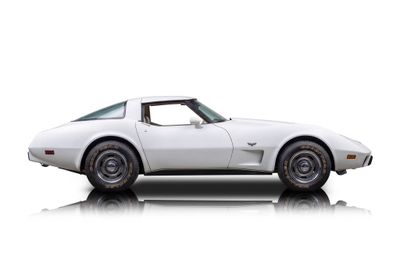
The 1979 Chevrolet Corvette Stingray represents an iconic chapter in American sports car history, combining unmistakable styling with classic small-block V8 performance. With its sculpted fiberglass body, long hood, removable T-tops, and driver-focused cockpit, the third-generation Corvette remains one of Chevrolet's most recognizable designs. This 1979 Chevrolet Corvette Stingray L82 Coupe, showing 51,976 miles, is finished in Classic White over a Light Doeskin interior. Equipped with the desirable L82 high-performance 350ci V8 engine and a three-speed automatic transmission, this example offers traditional Corvette performance alongside the comfort of power steering, power brakes, and air conditioning. Its factory-style presentation and distinctive late-1970s styling make it an appealing choice for enthusiasts of America's legendary sports car.
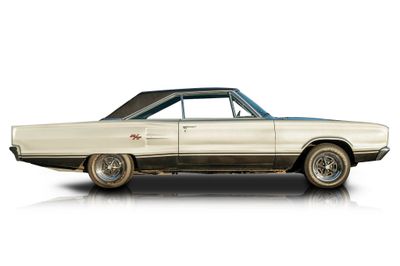
The 1967 Dodge Coronet 500 captures the bold styling and big-block performance that defined Chrysler's B-body muscle cars during the 1960s. With its long, squared-off proportions and unmistakable Mopar character, the Coronet has remained a favorite among enthusiasts seeking classic American V8 power. This 1967 Dodge Coronet 500, showing 4,414 miles, features a Silver exterior with contrasting Black accents, a Black vinyl roof, and a Black vinyl interior. Under the hood sits a 454ci V8 paired with a three-speed automatic transmission, bringing substantial displacement to this classic Dodge. Additional highlights include aftermarket chrome wheels, BFGoodrich Radial T/A tires, a center console, and performance-oriented engine upgrades. With its aggressive appearance, custom mechanical configuration, and classic Mopar styling, this Coronet delivers plenty of old-school muscle car appeal.

Terms of Service
Be Kind and Courteous
We're here to create a platform to better the automotive industry through communication and transparency. Please treat everyone with respect. Healthy debates are natural, but kindness is required.
No Hate Speech
Make sure everyone feels safe. Hate speech of any kind is strictly prohibited. Degrading comments about things like race, religion, culture, sexual orientation, etc. will not be tolerated.
No Promotions or Spam
Give more than you take. Self-promotion, spam, or links of any kind are not allowed.
