




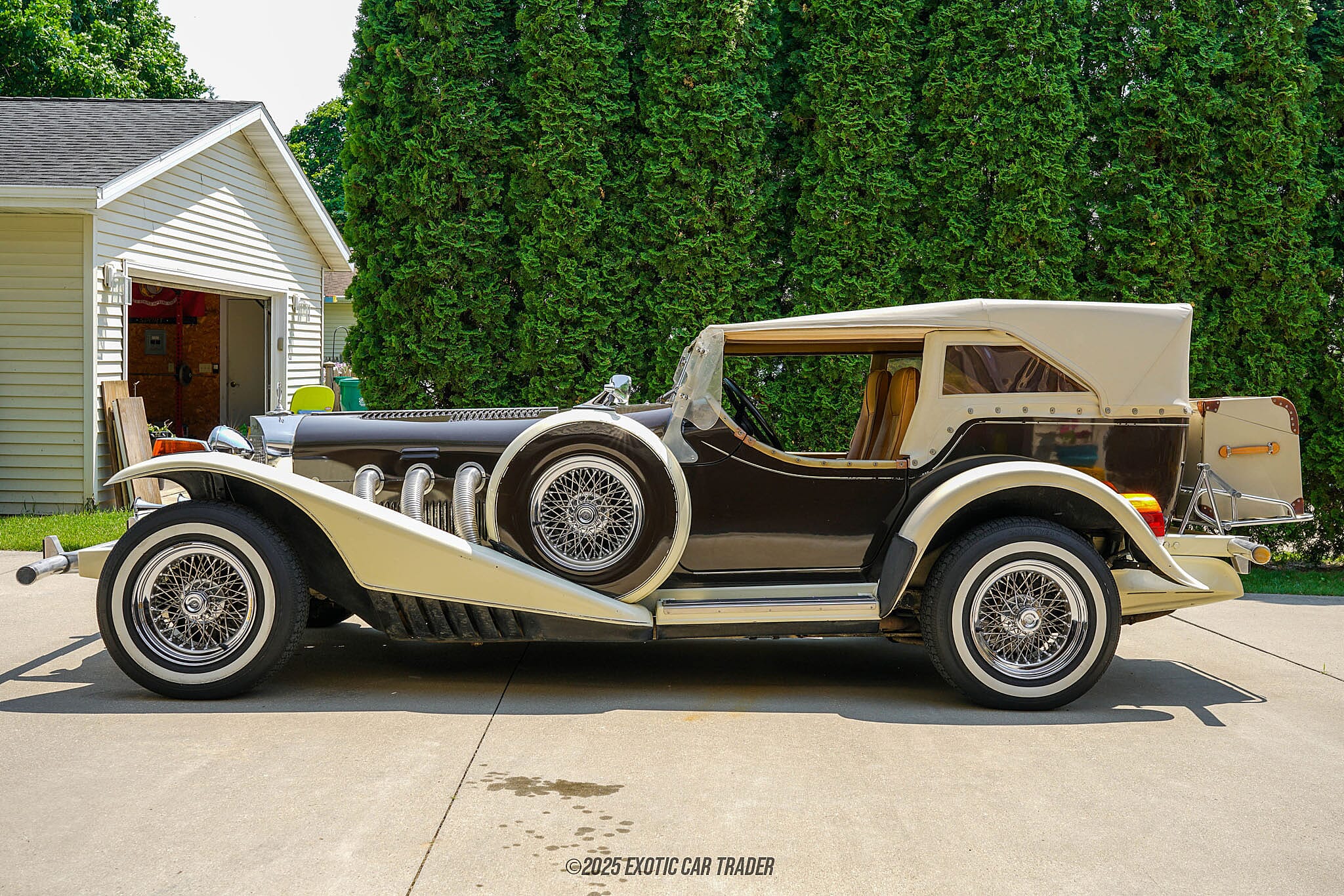

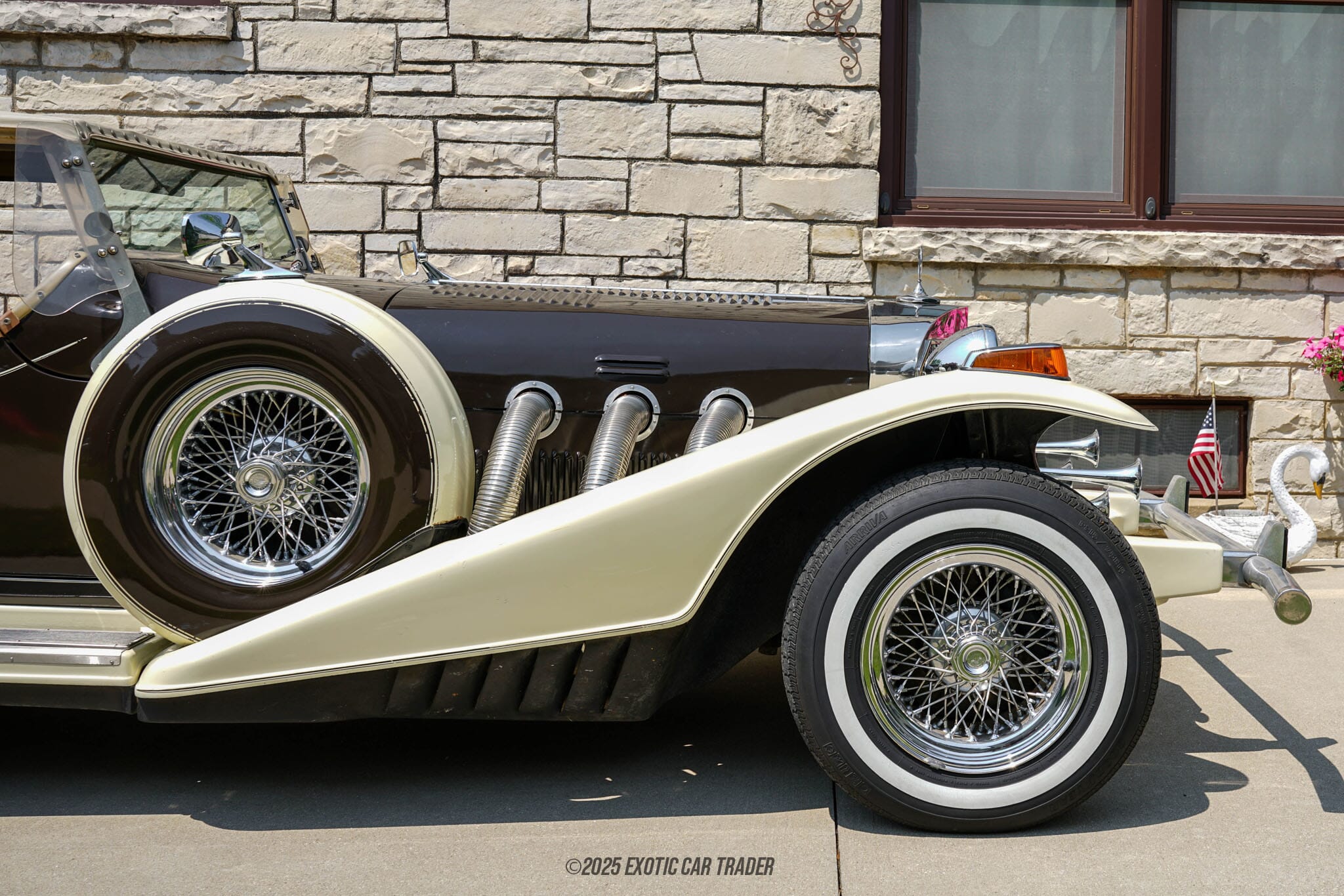
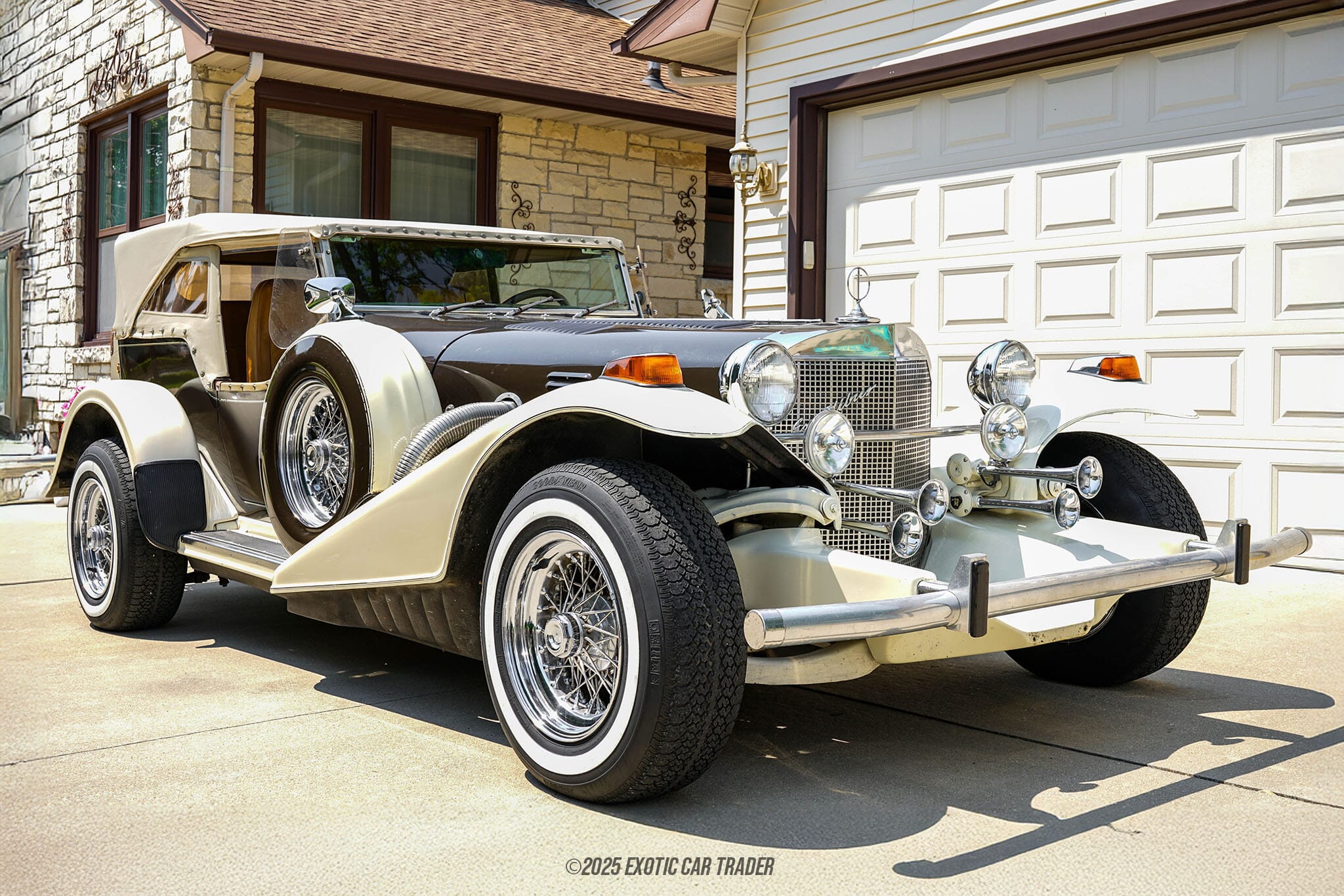
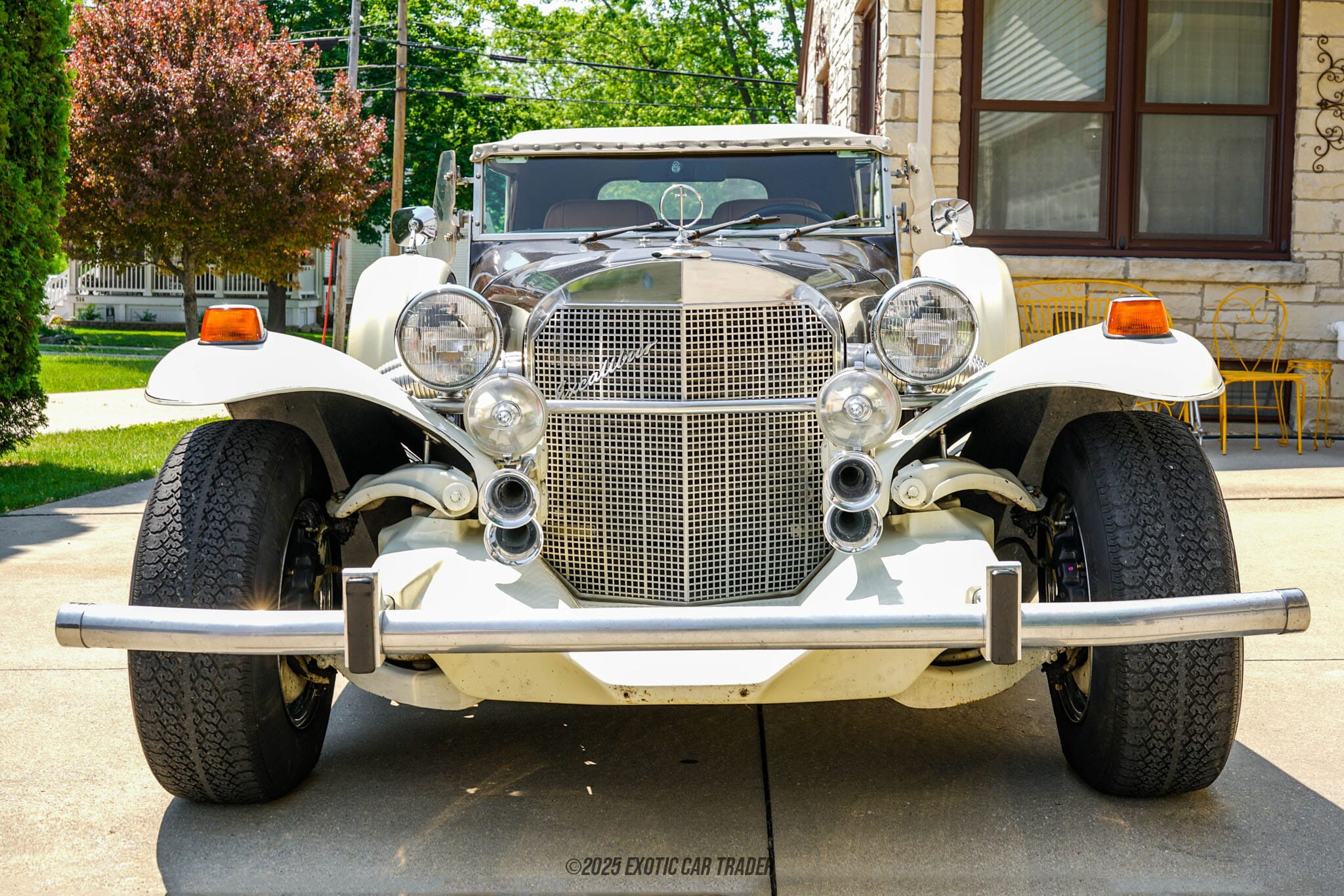
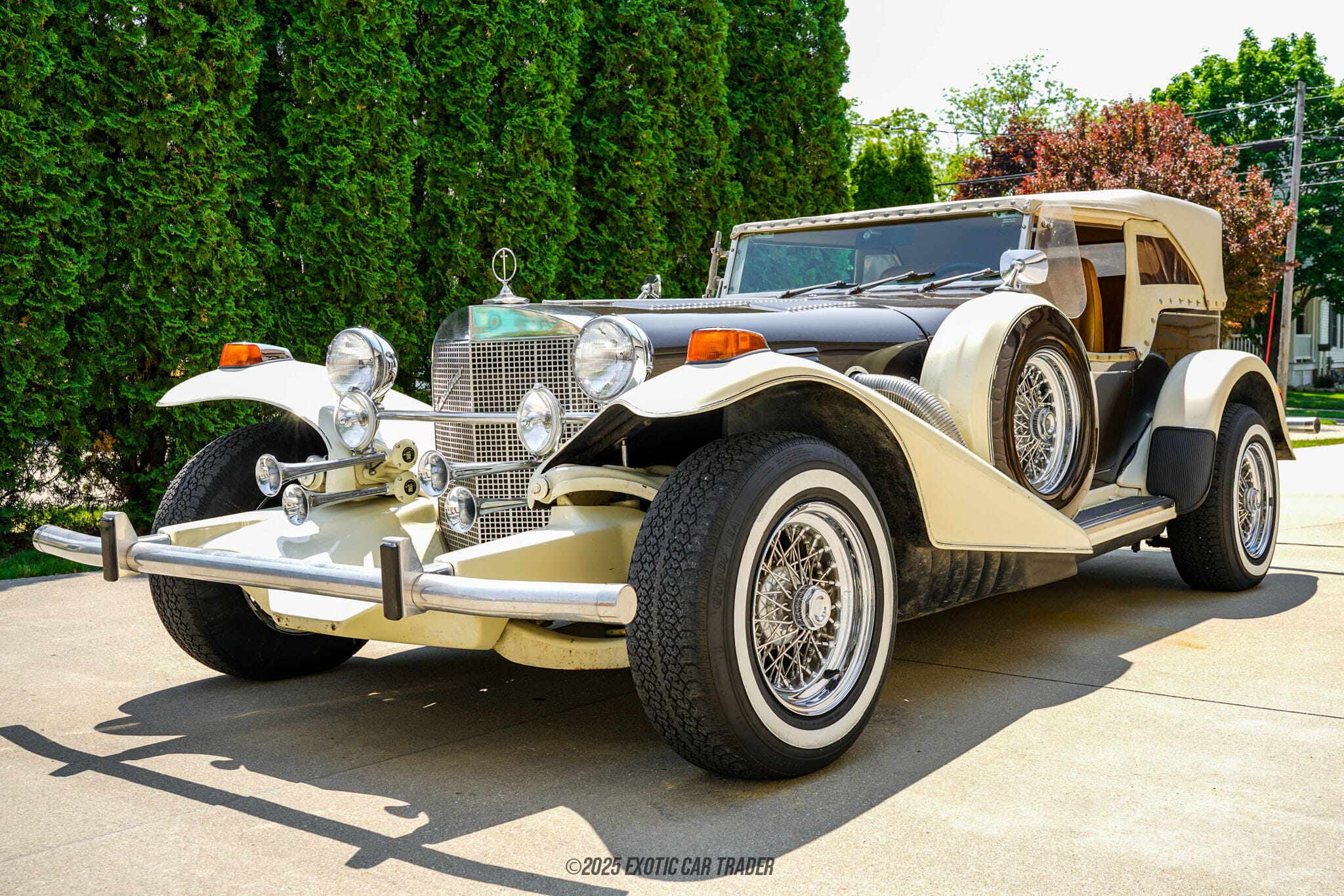
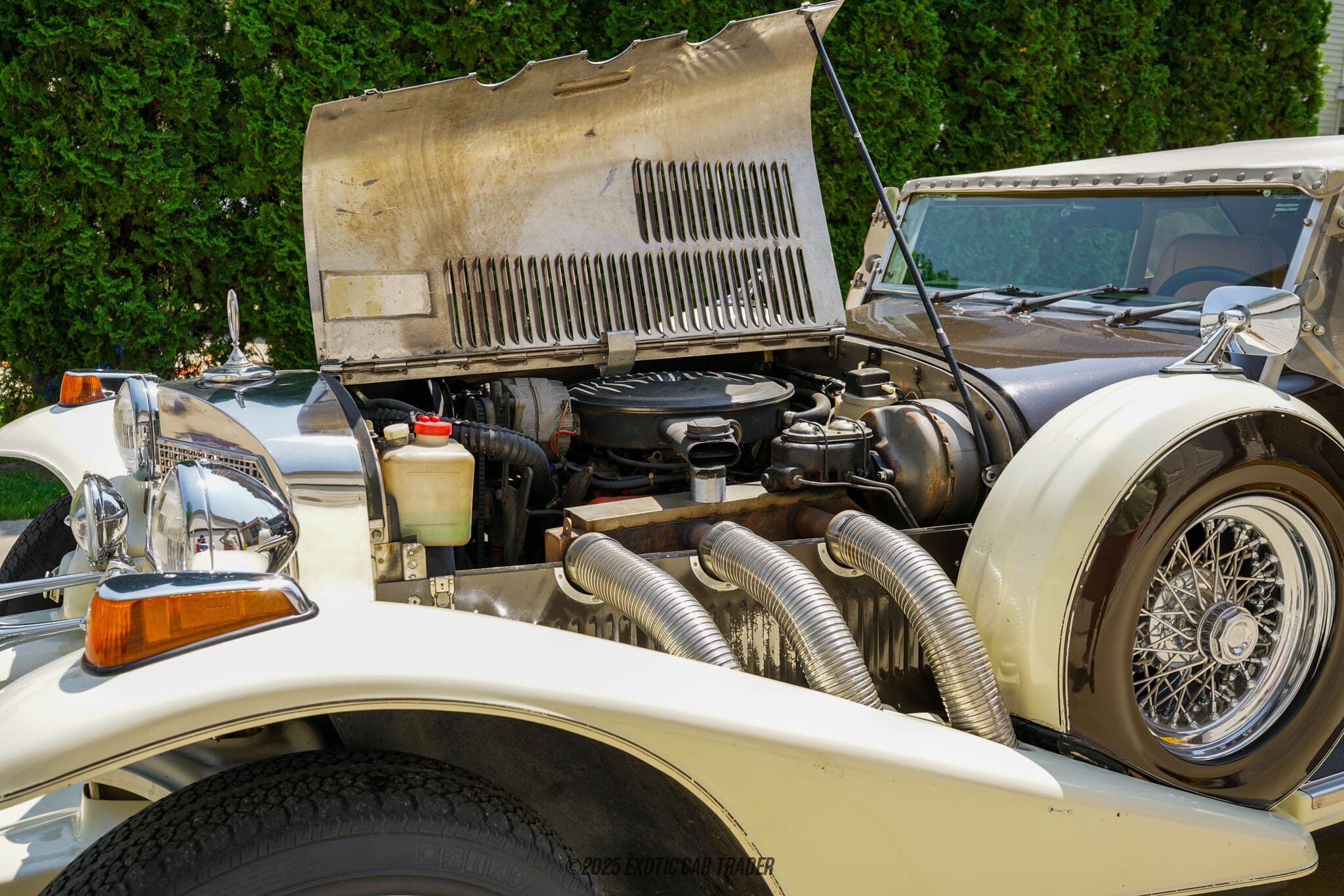
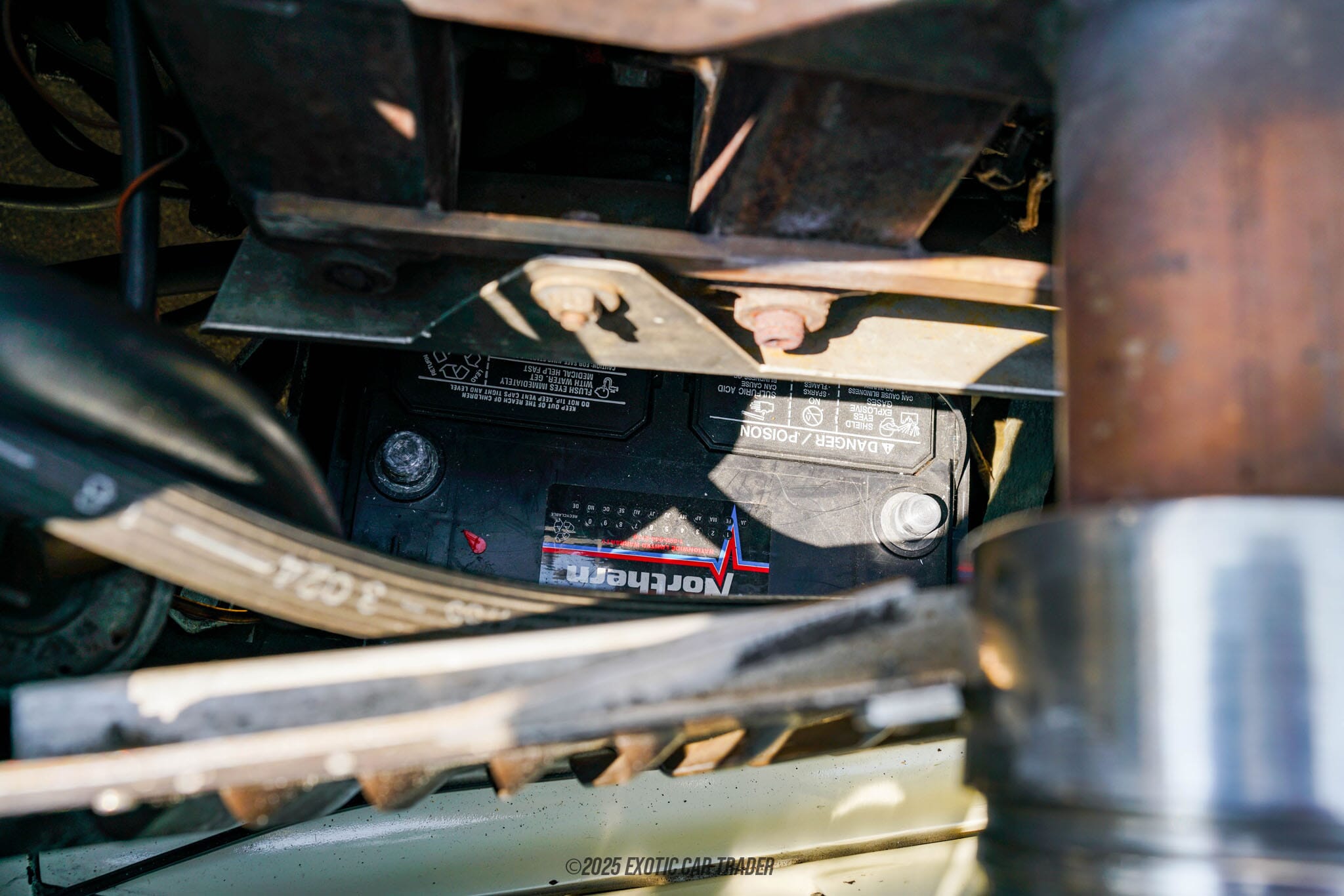
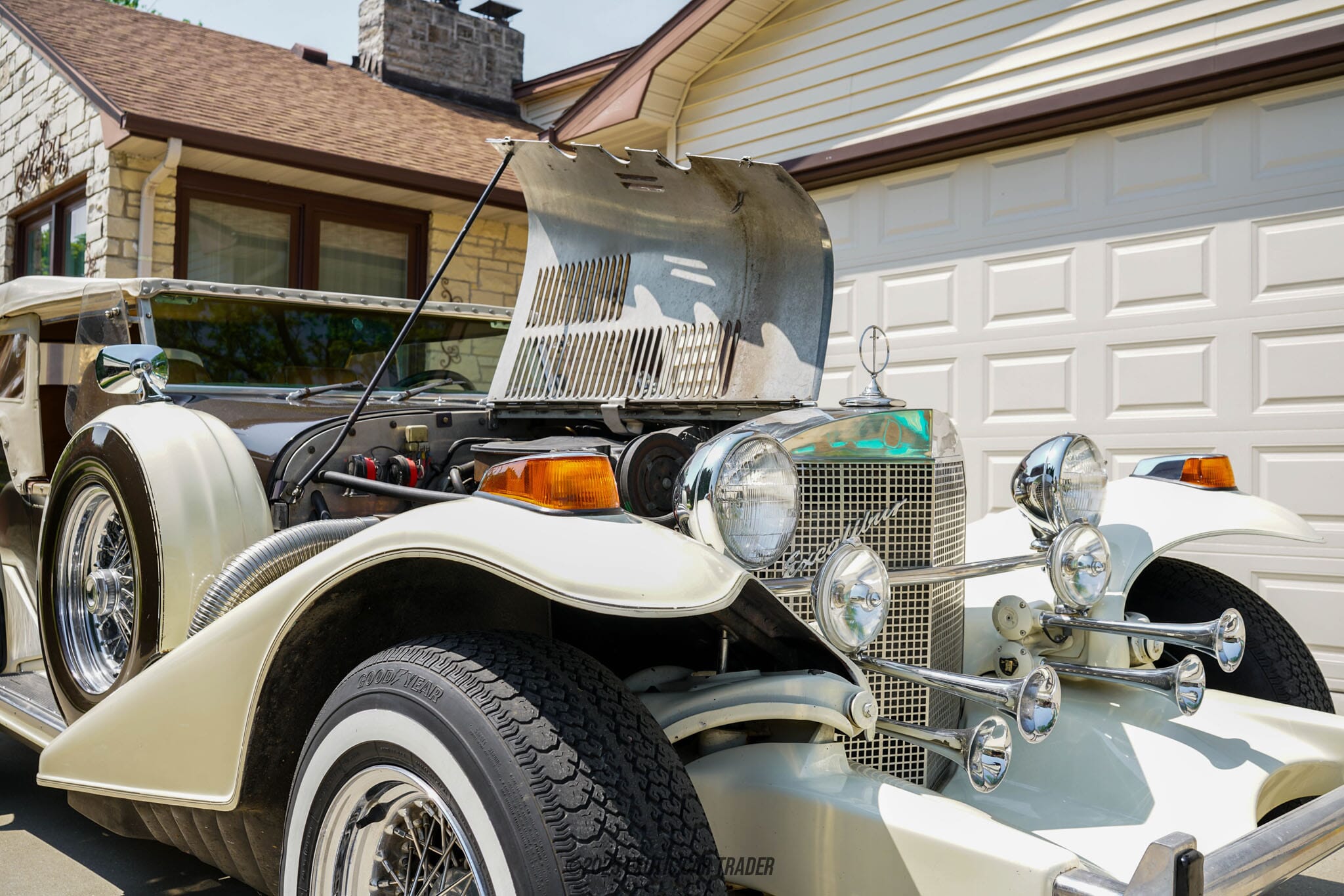
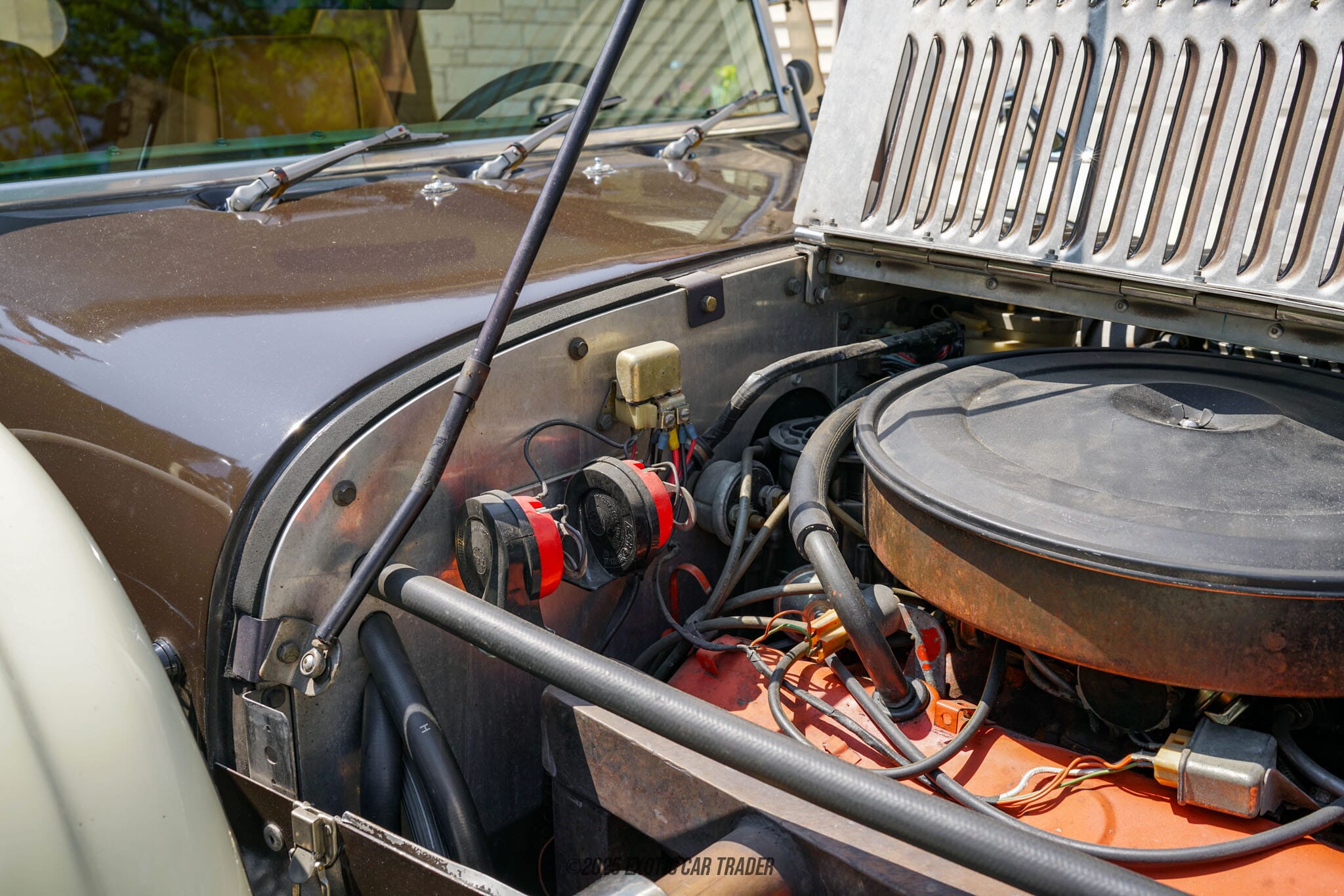
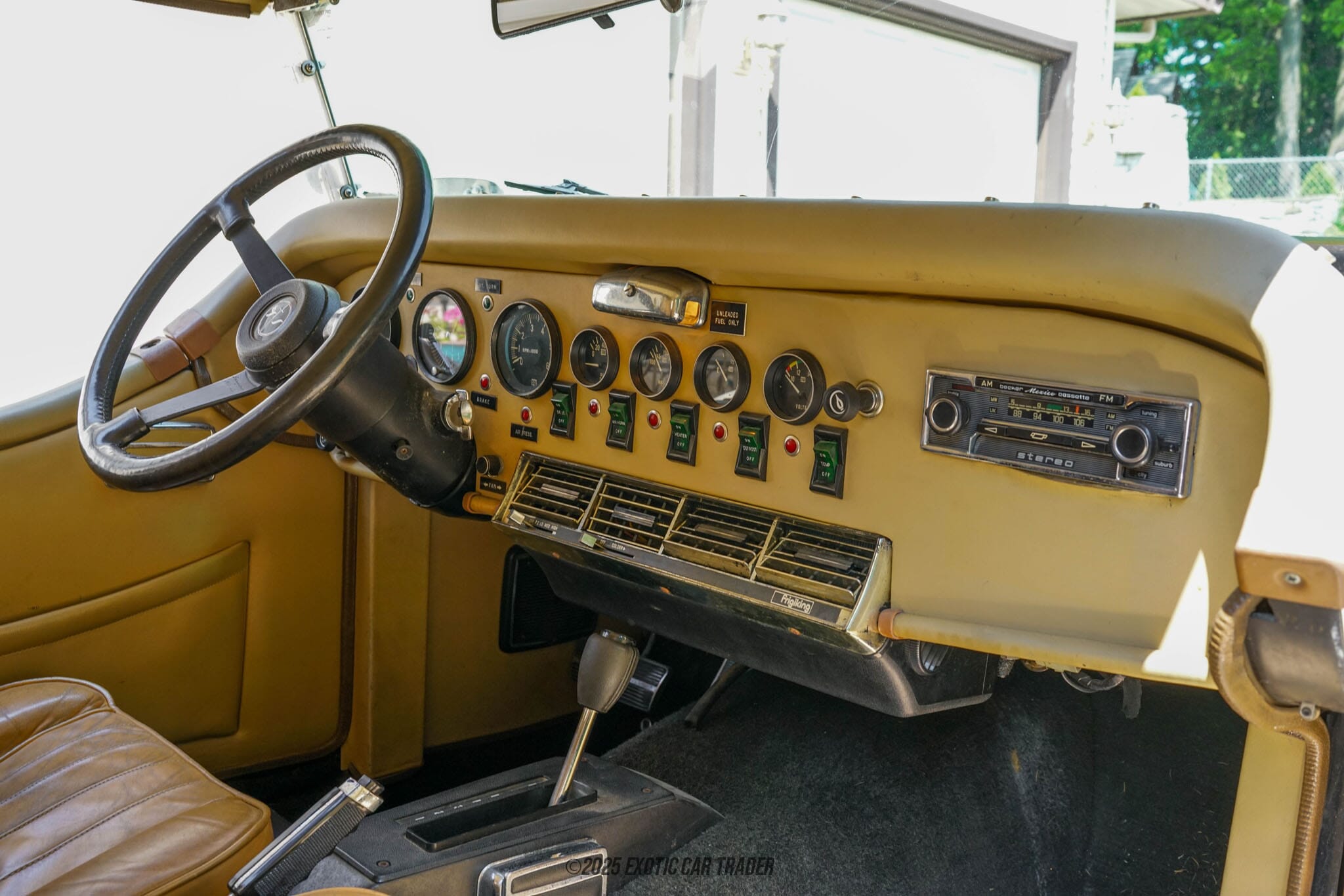
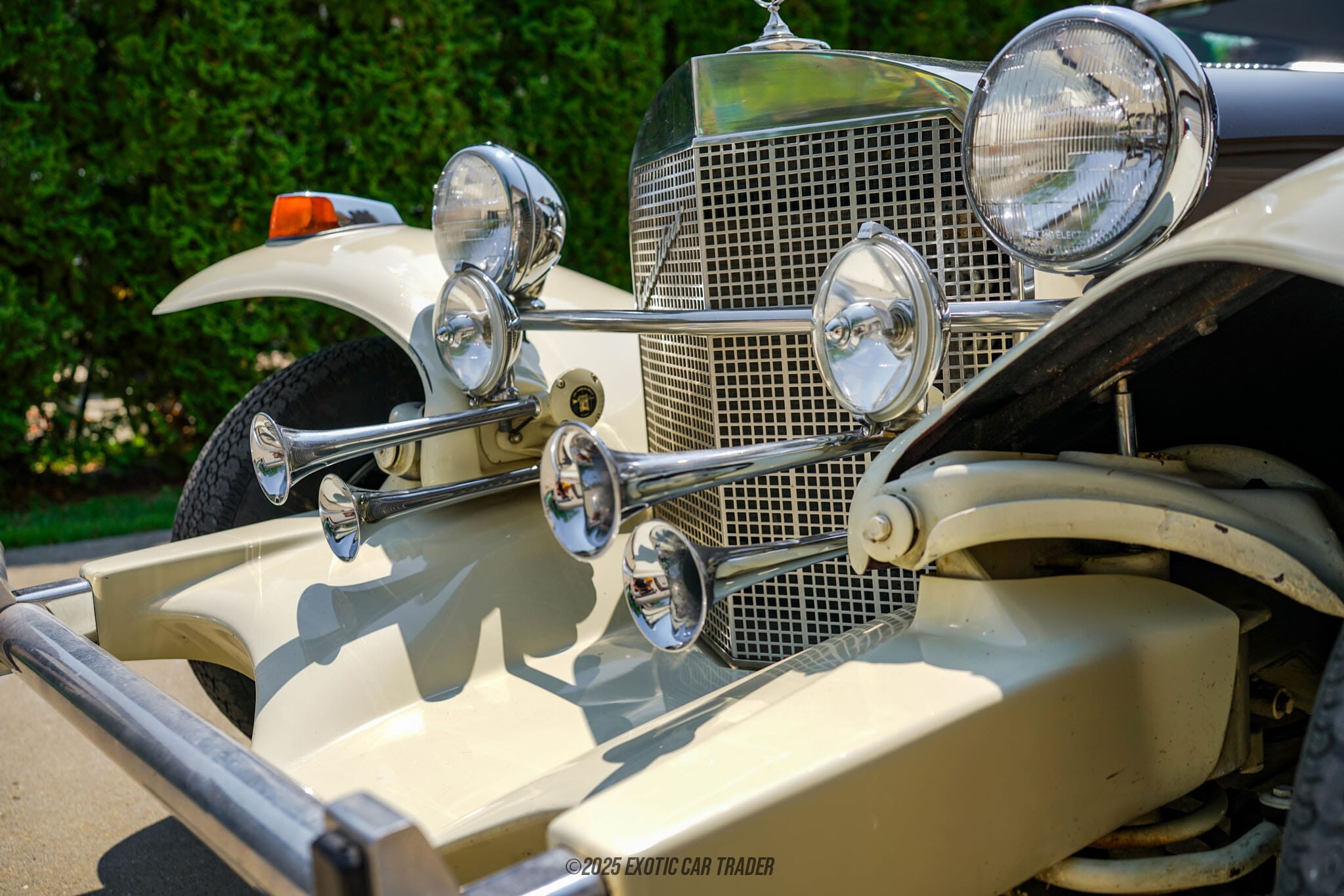
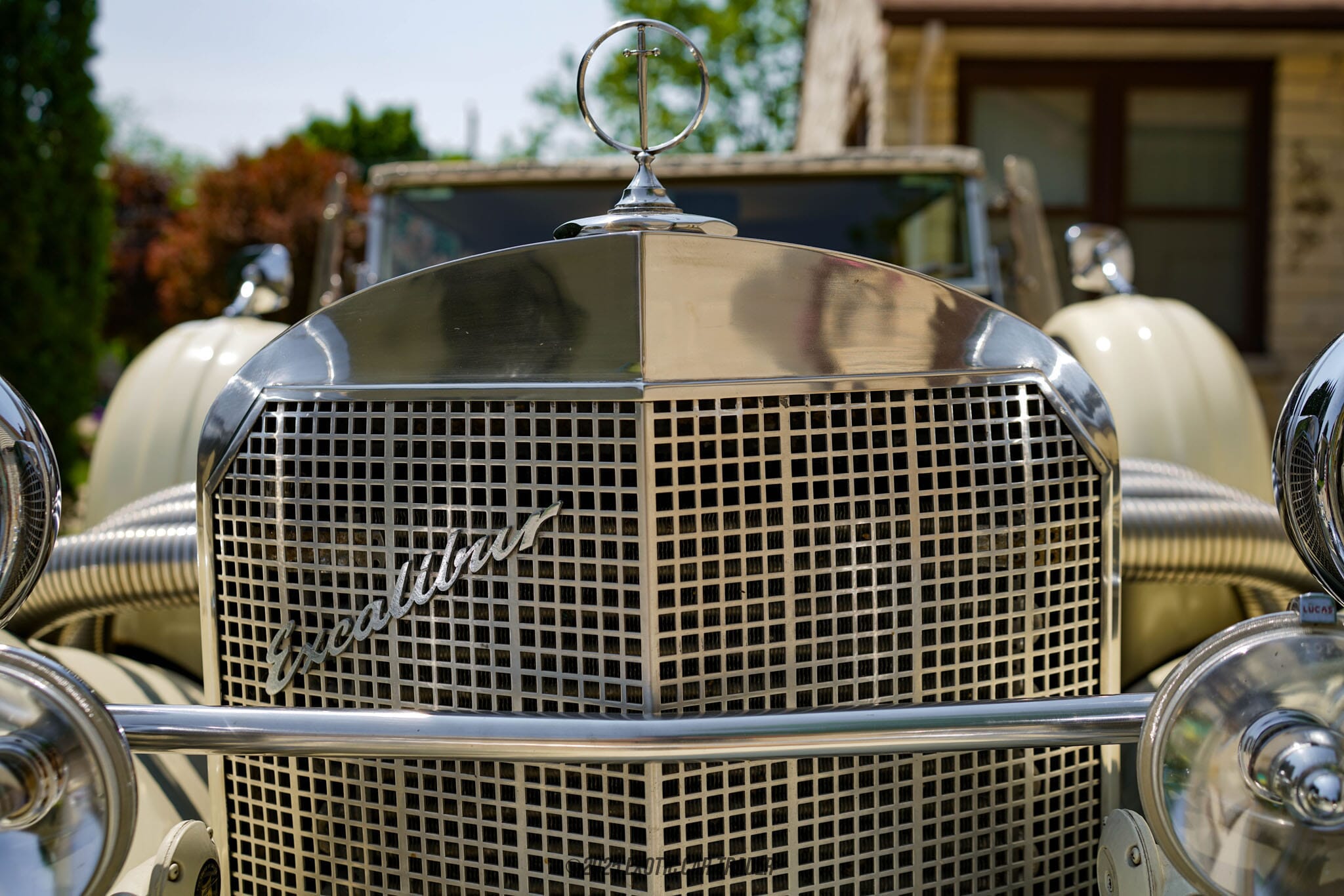
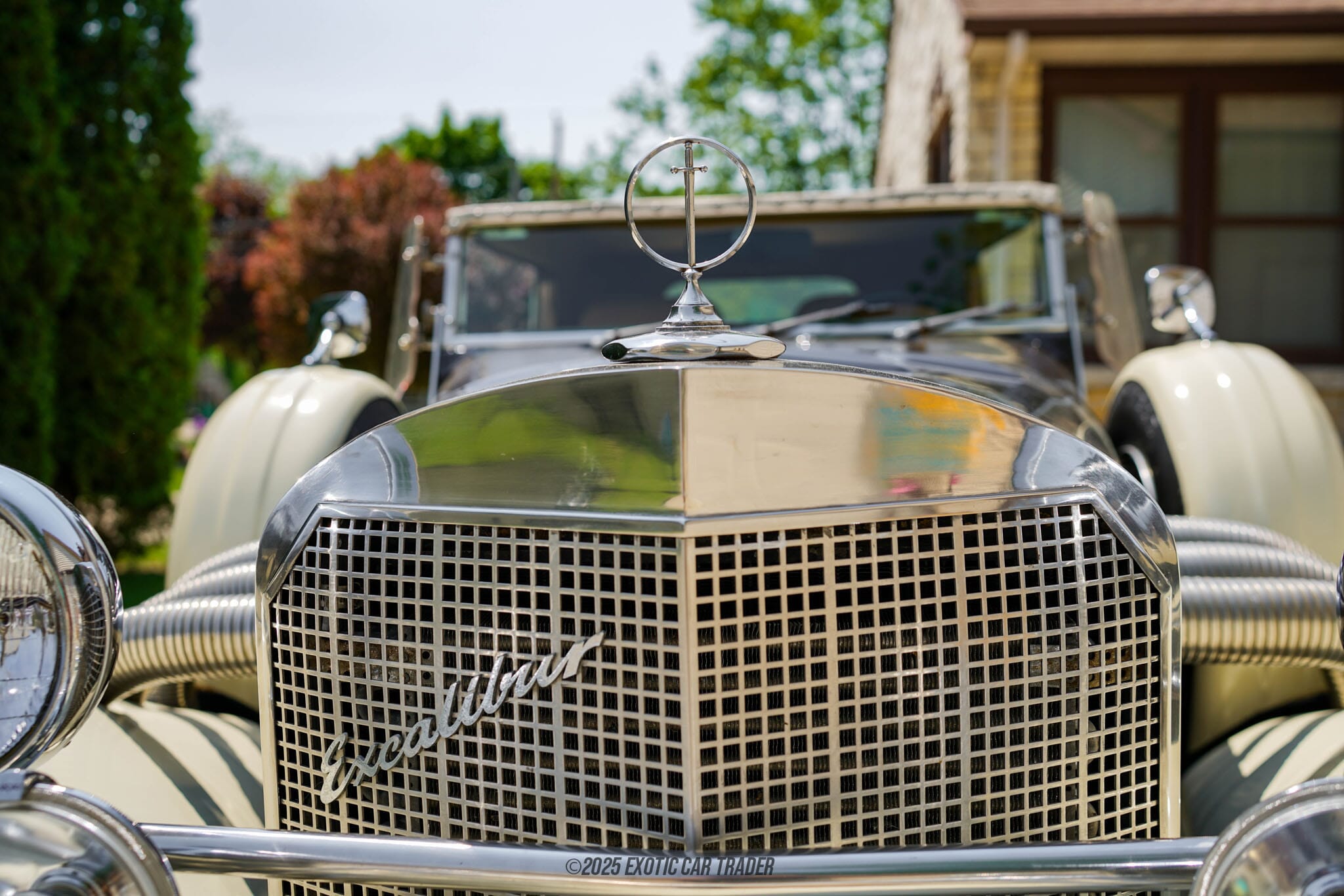
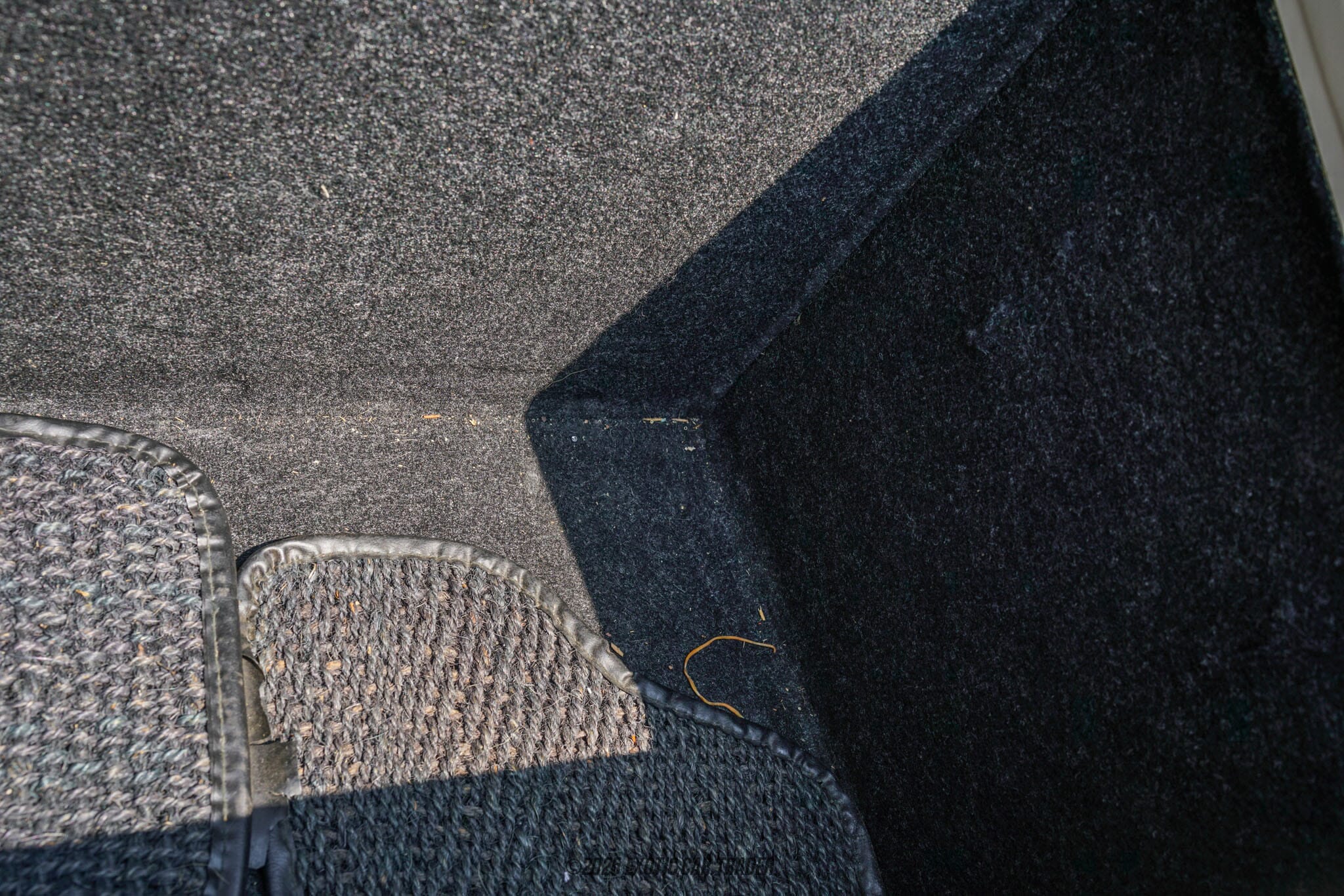
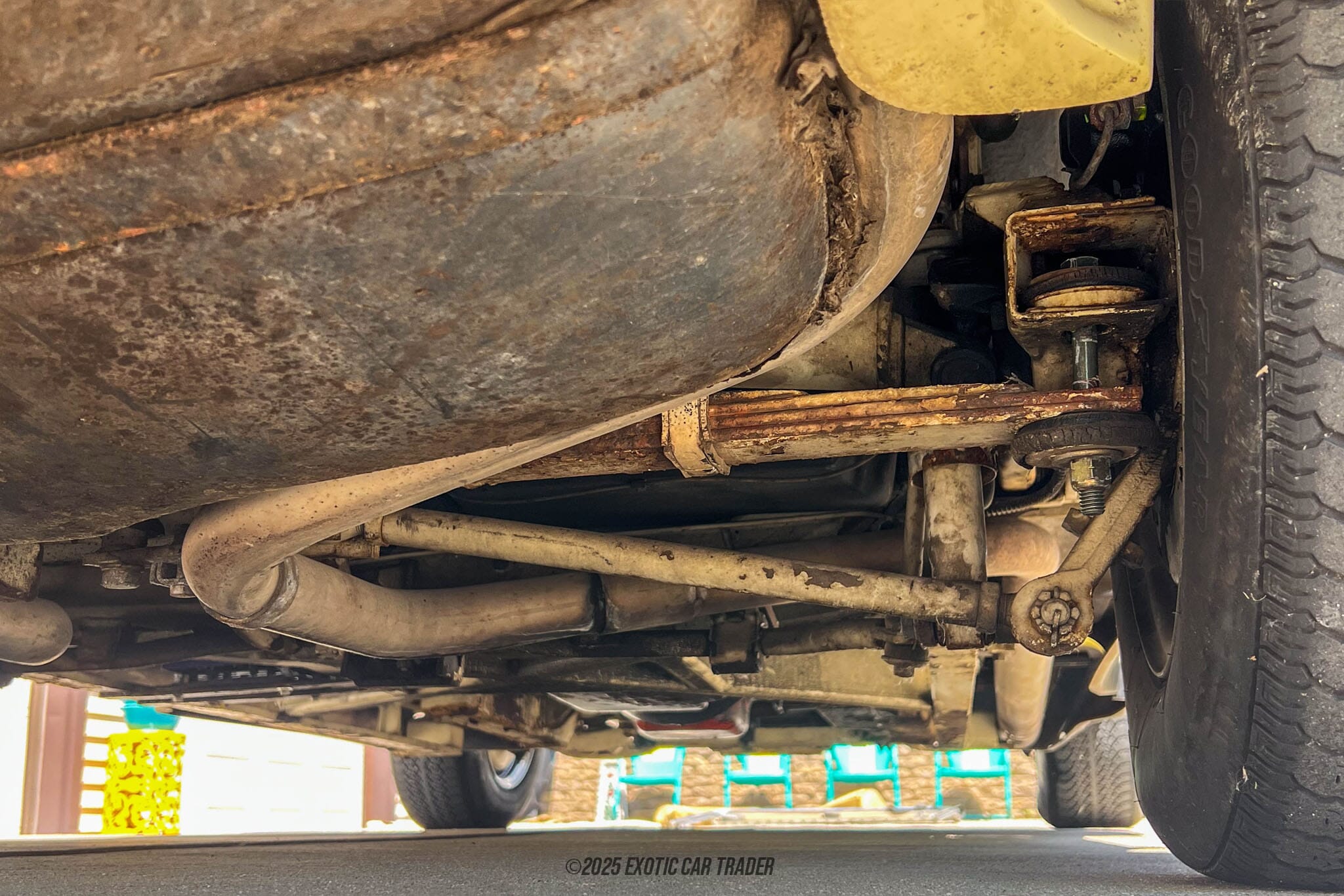
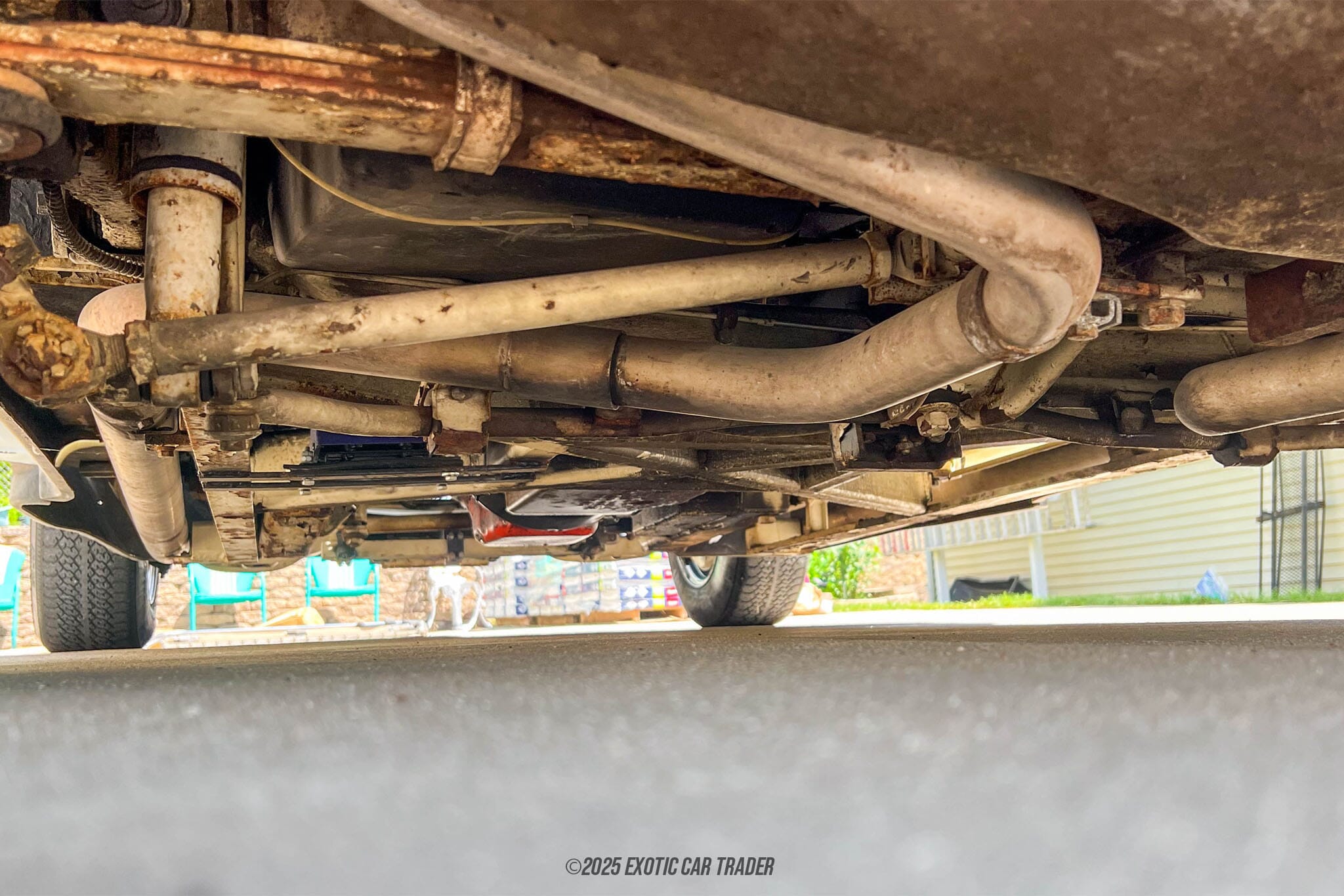
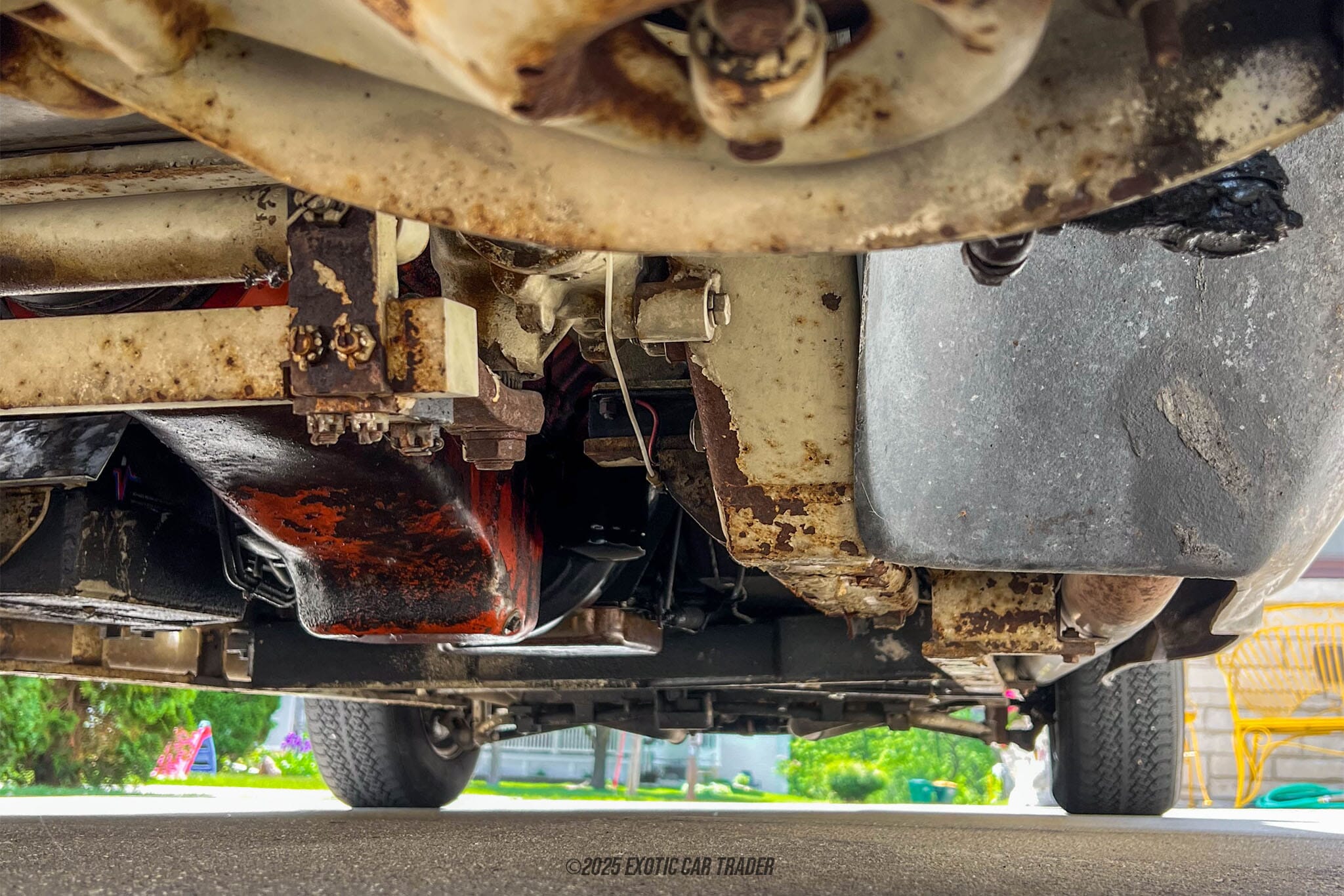
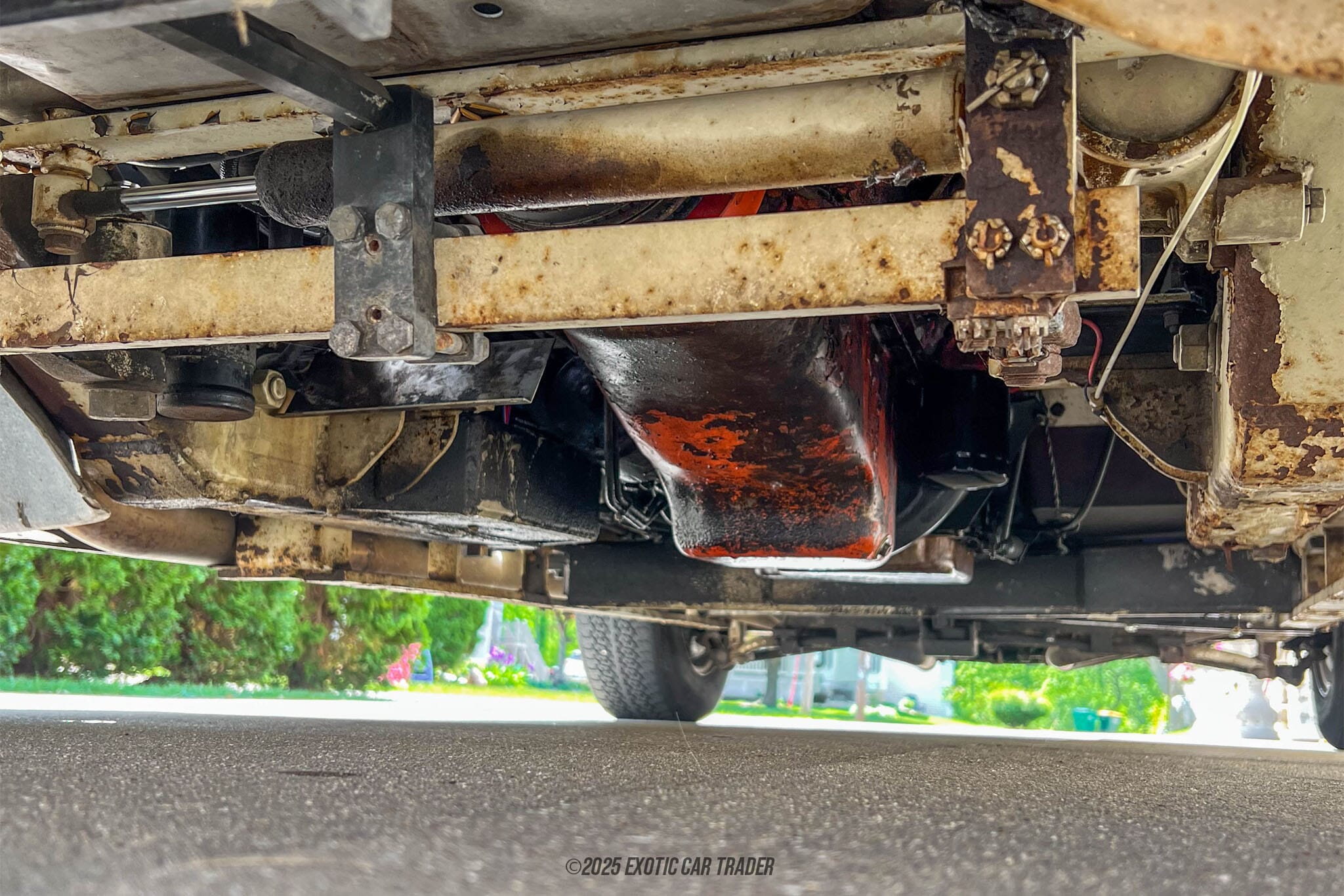
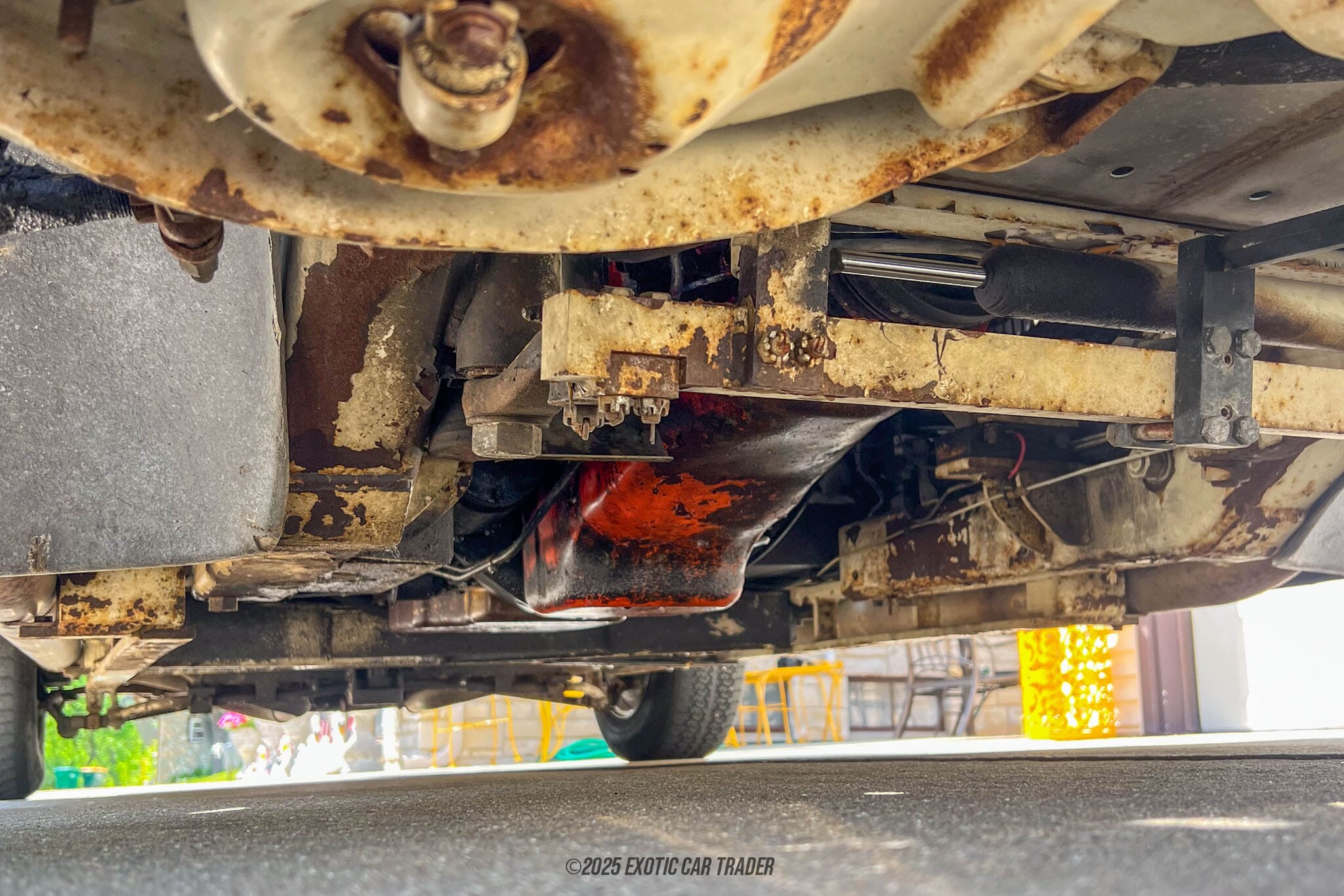
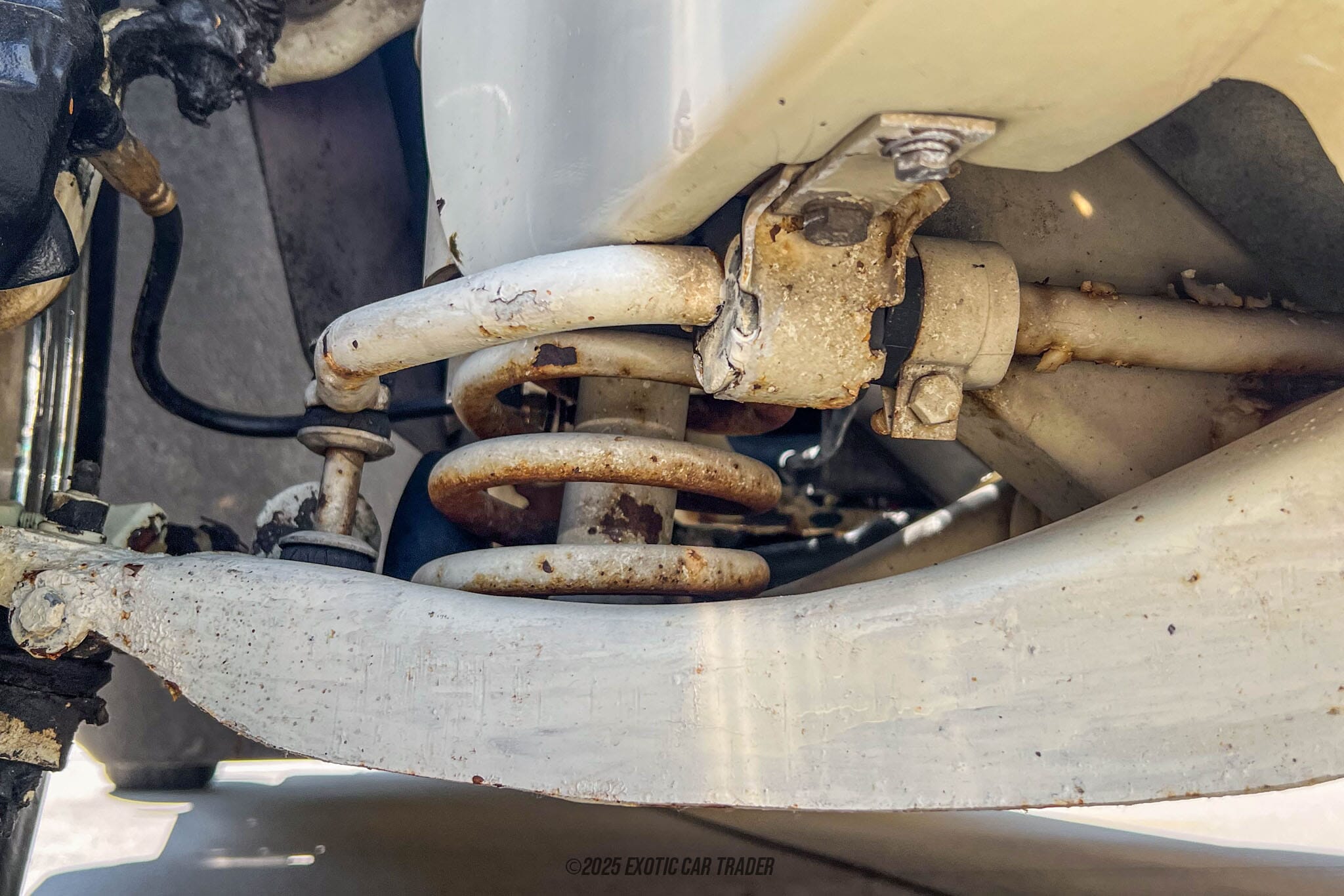


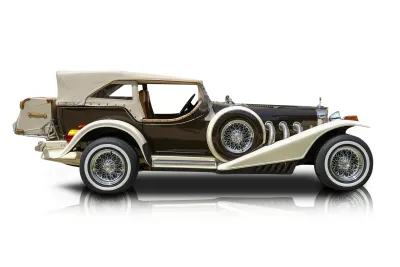
- 1975 Excalibur Series III Phaeton
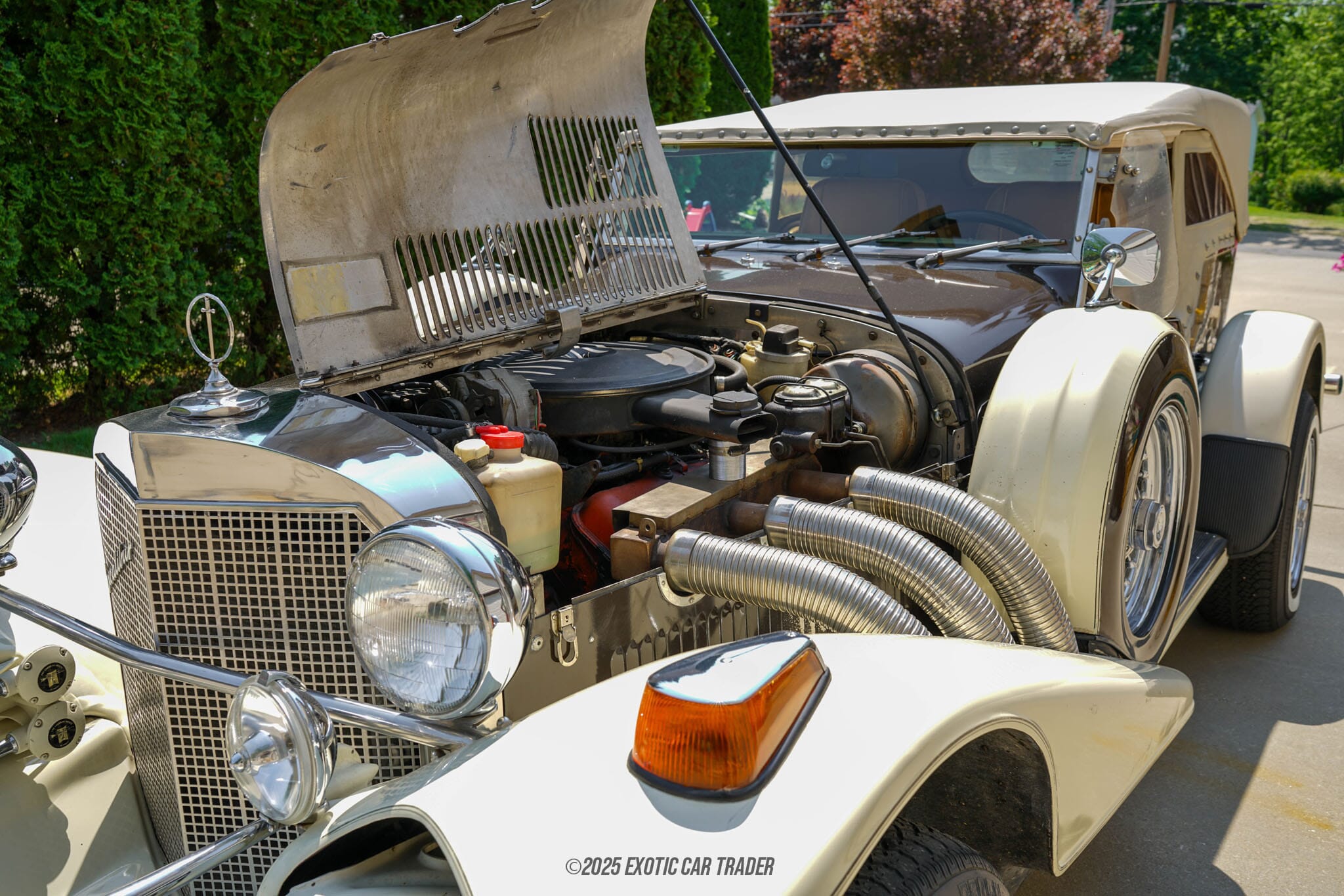
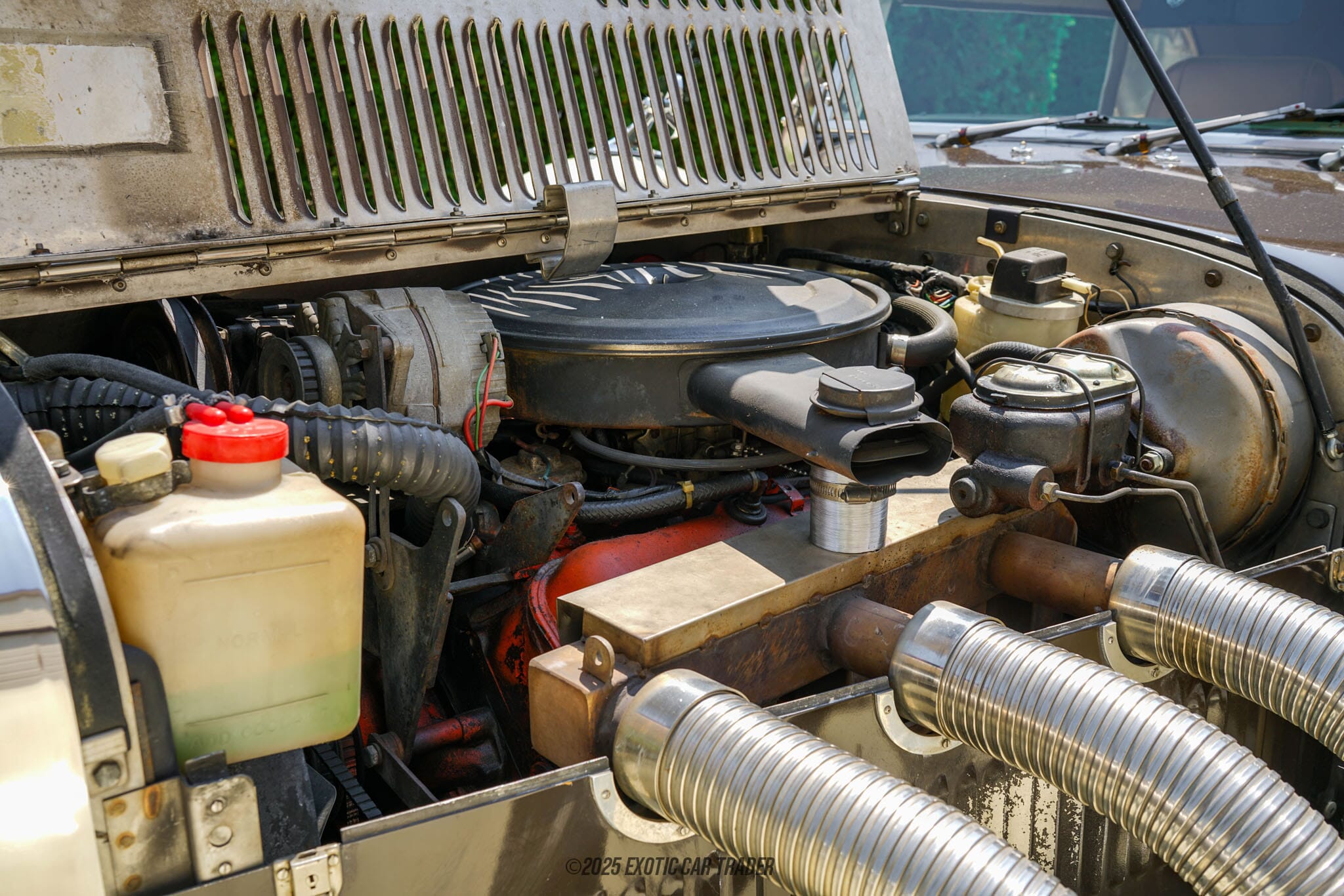
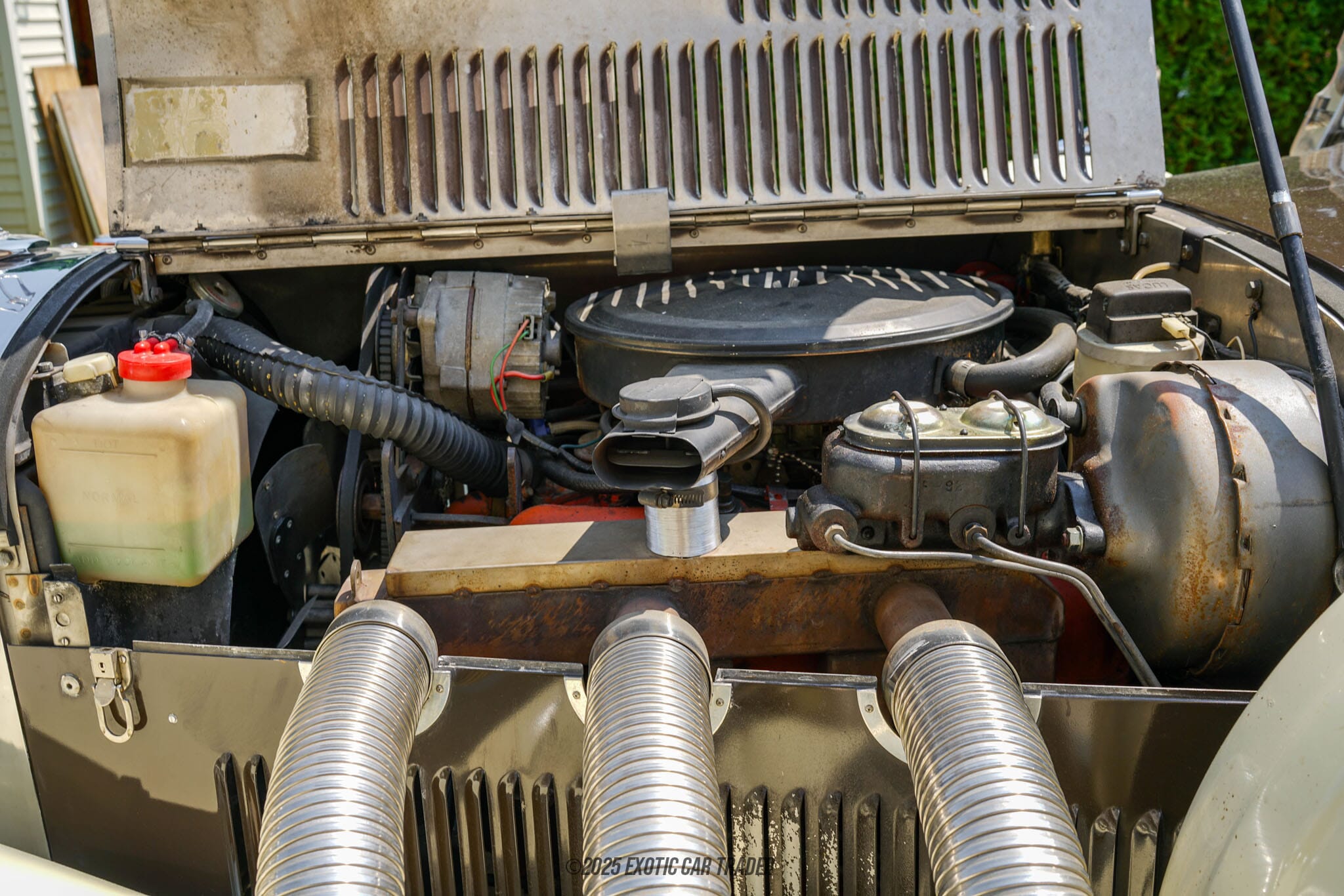
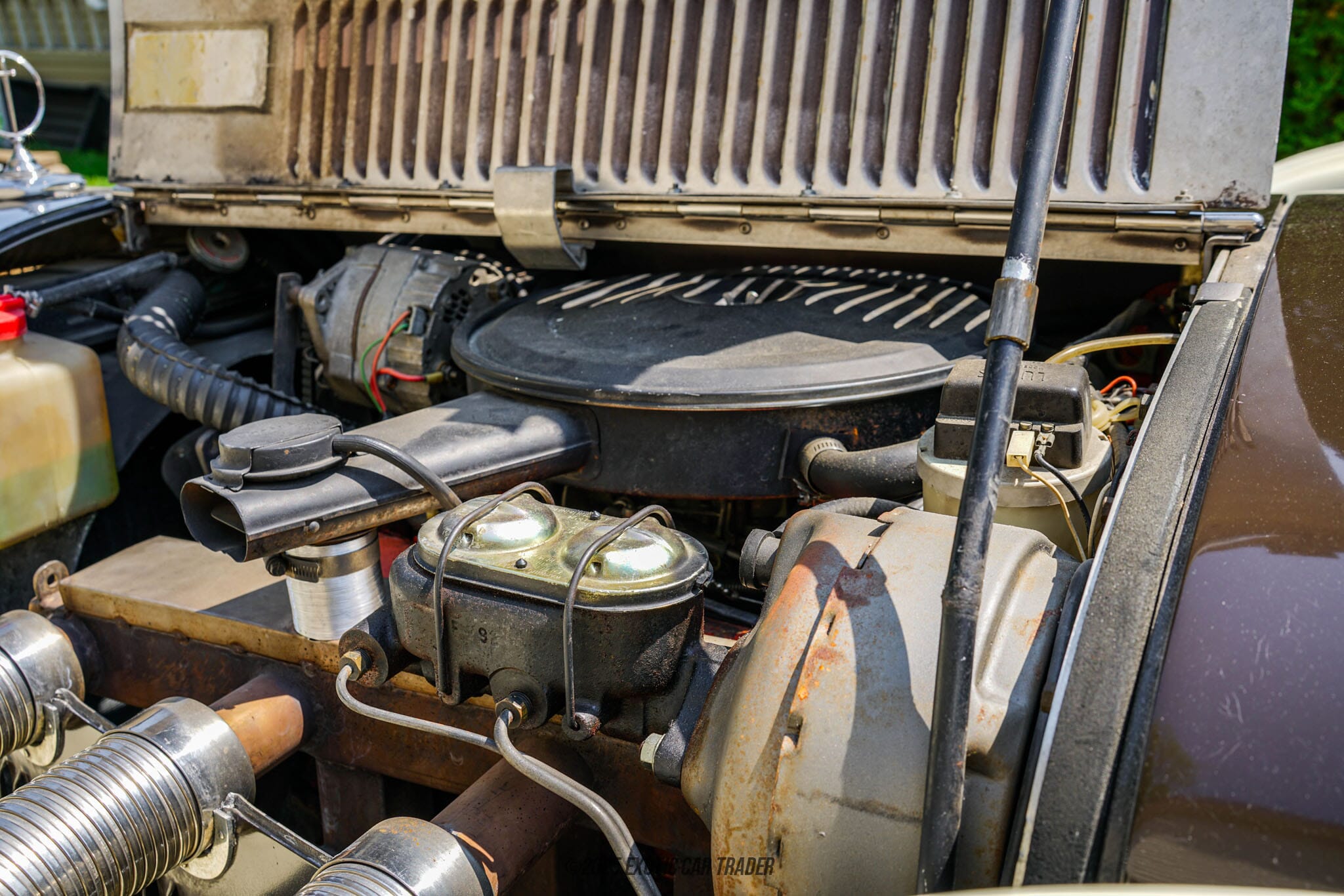
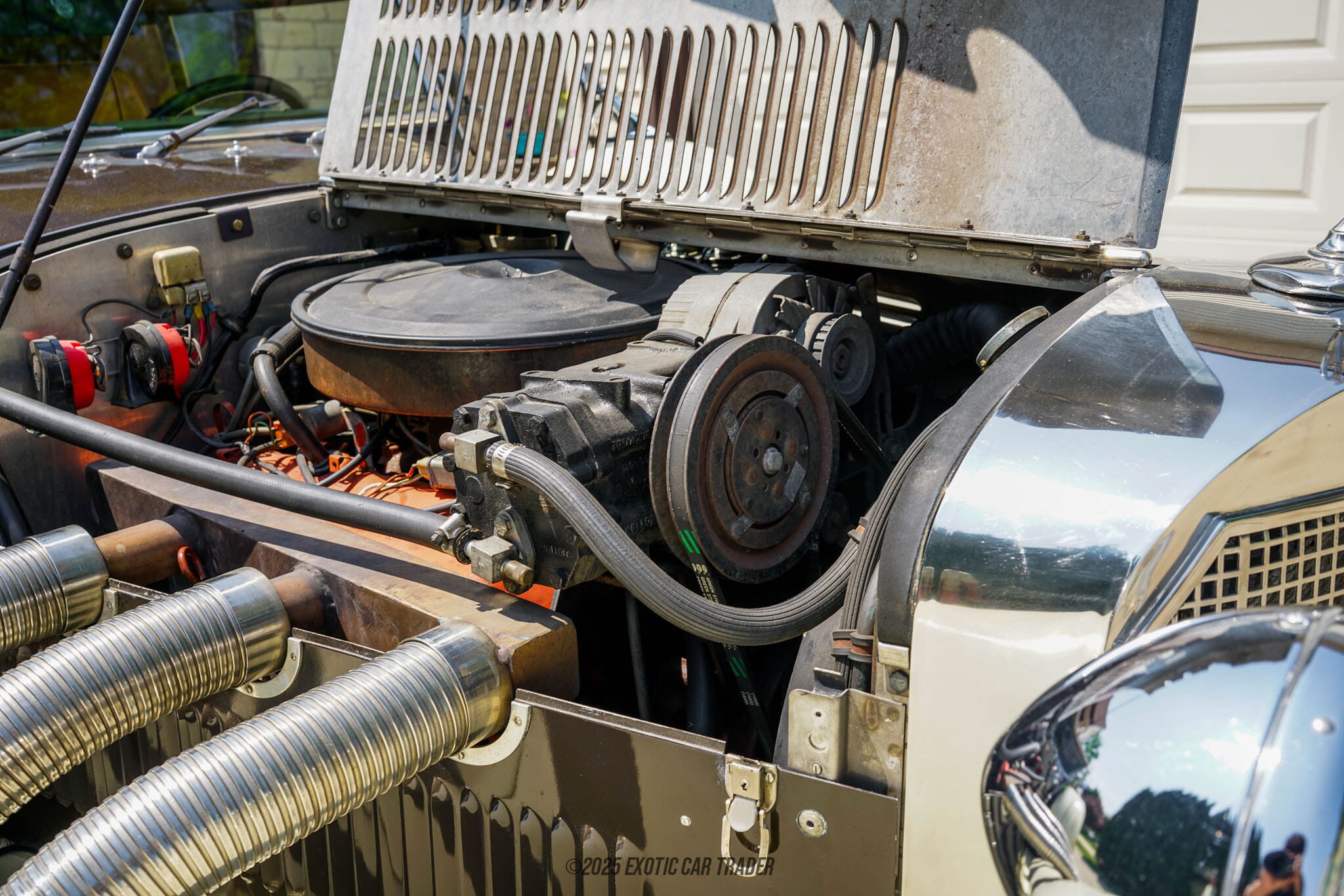
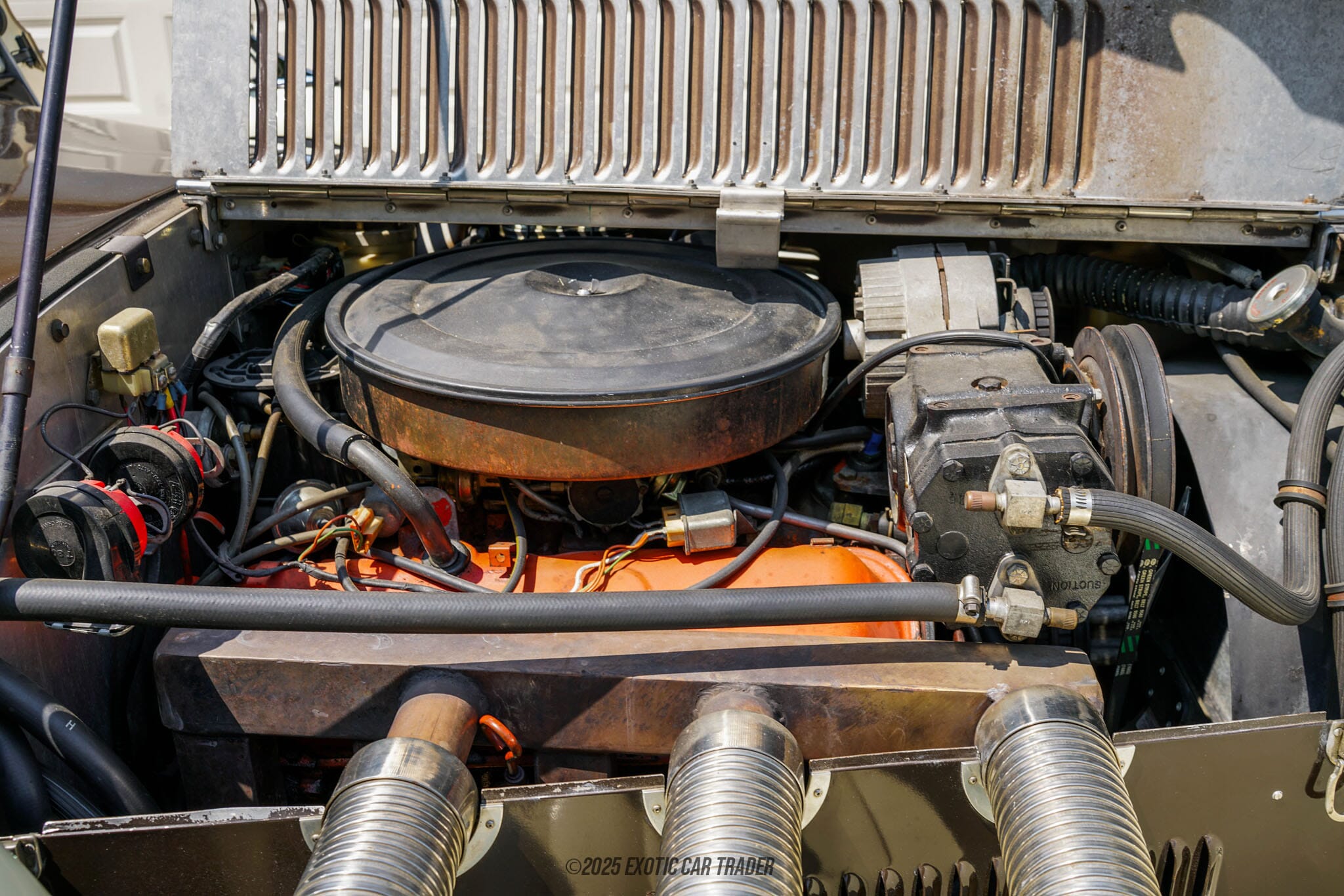
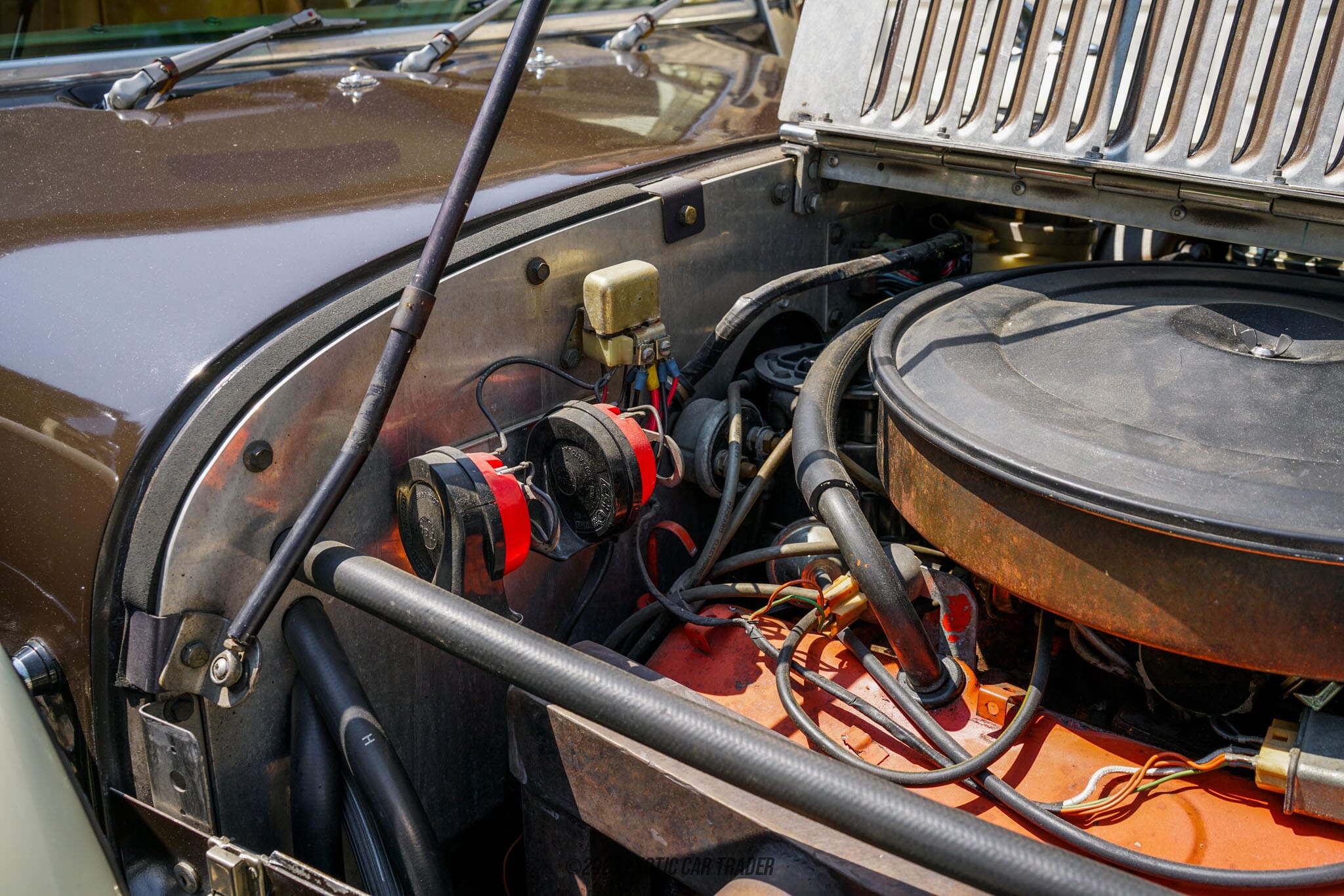
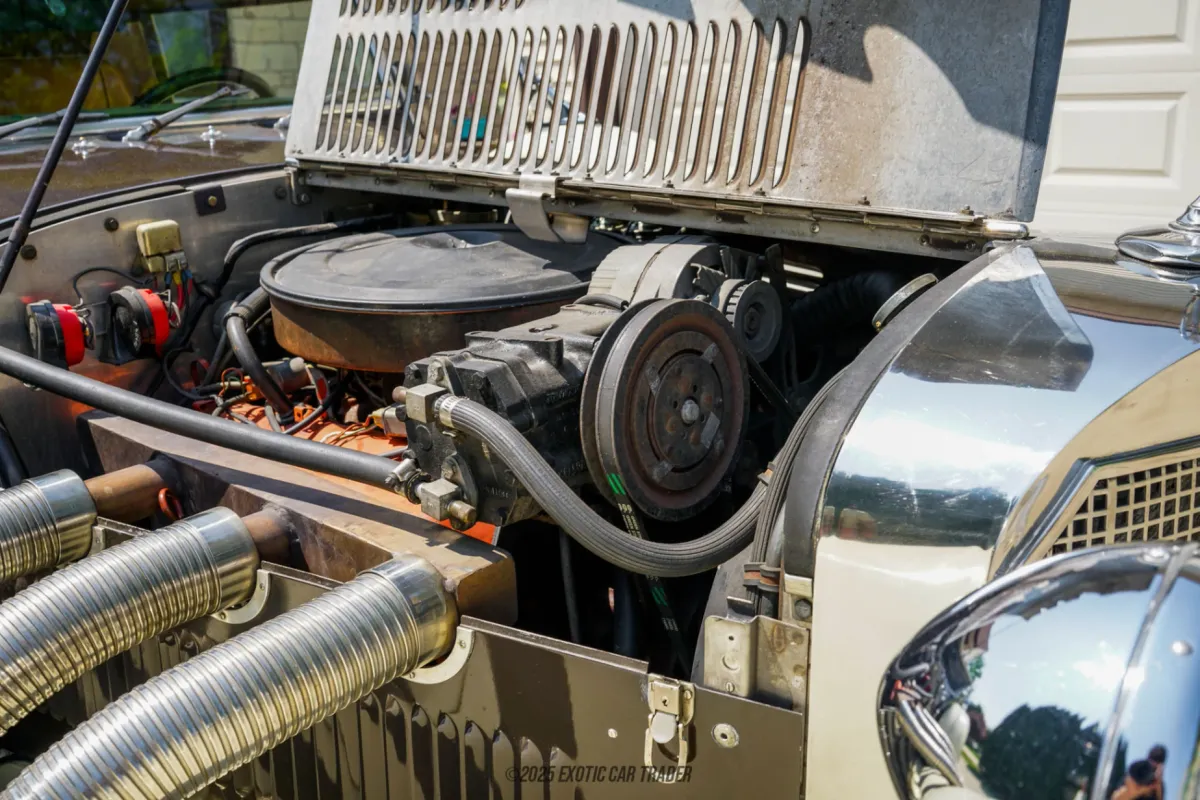
- 454ci V8
- 4-Barrel Rochester Quadrajet Carburetor
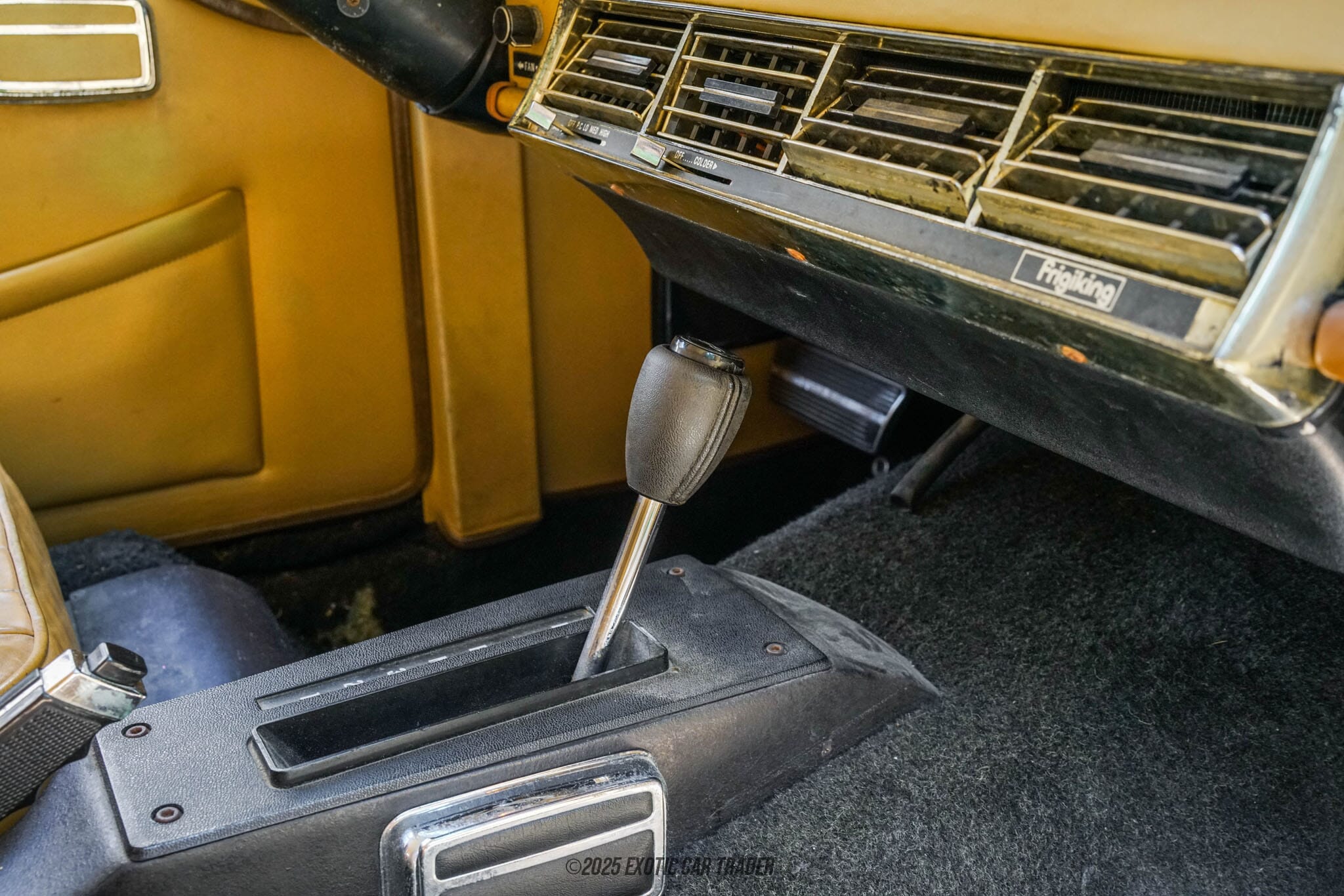
- 3-Speed Automatic
- RWD
- Ivory Classic Exterior
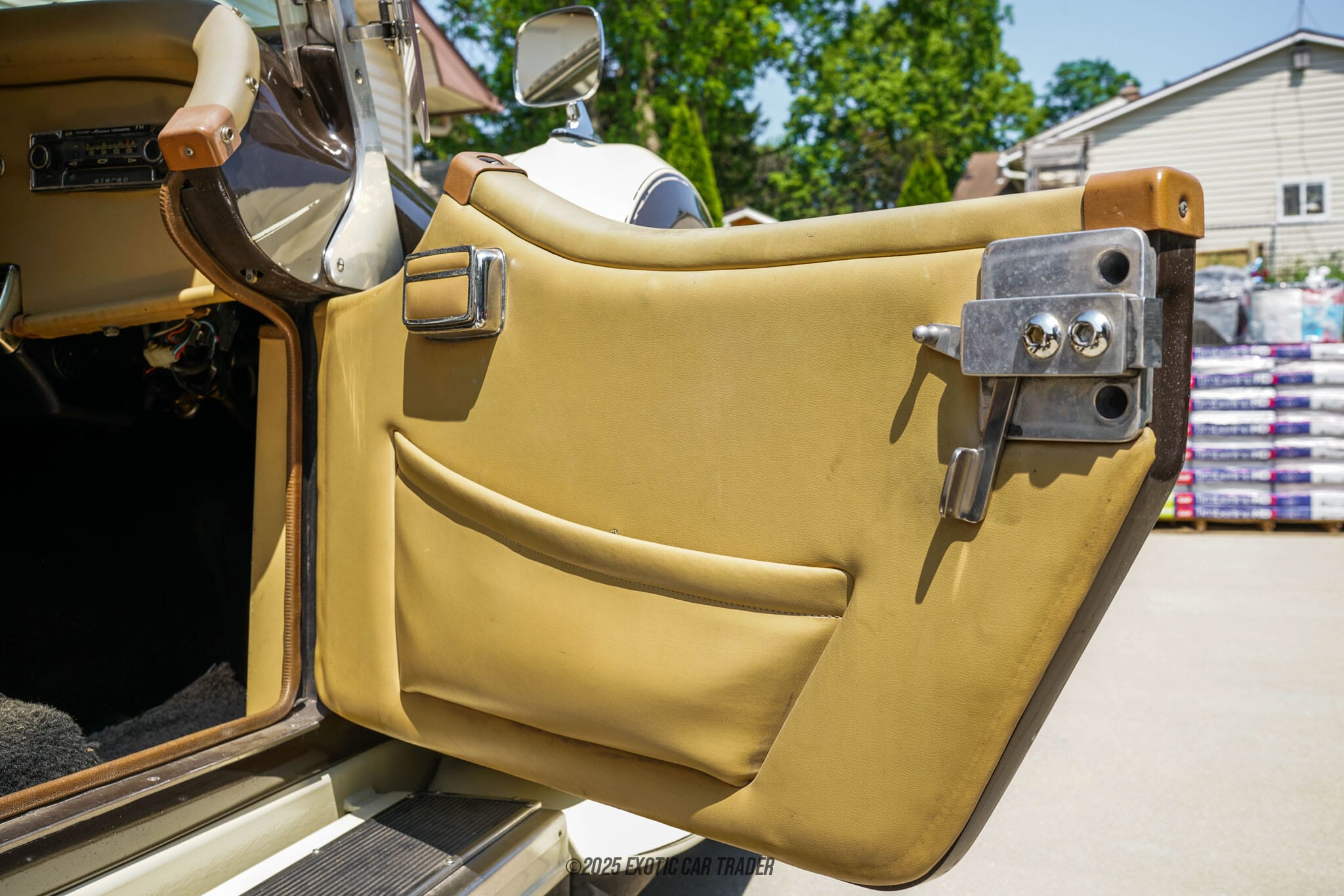
- Tan Interior
- Front Power-Assisted Disc Brakes
- Rear Drum Brakes
- Fiberglass Body w/ Aluminum Panels
- Real Wood Dashboard
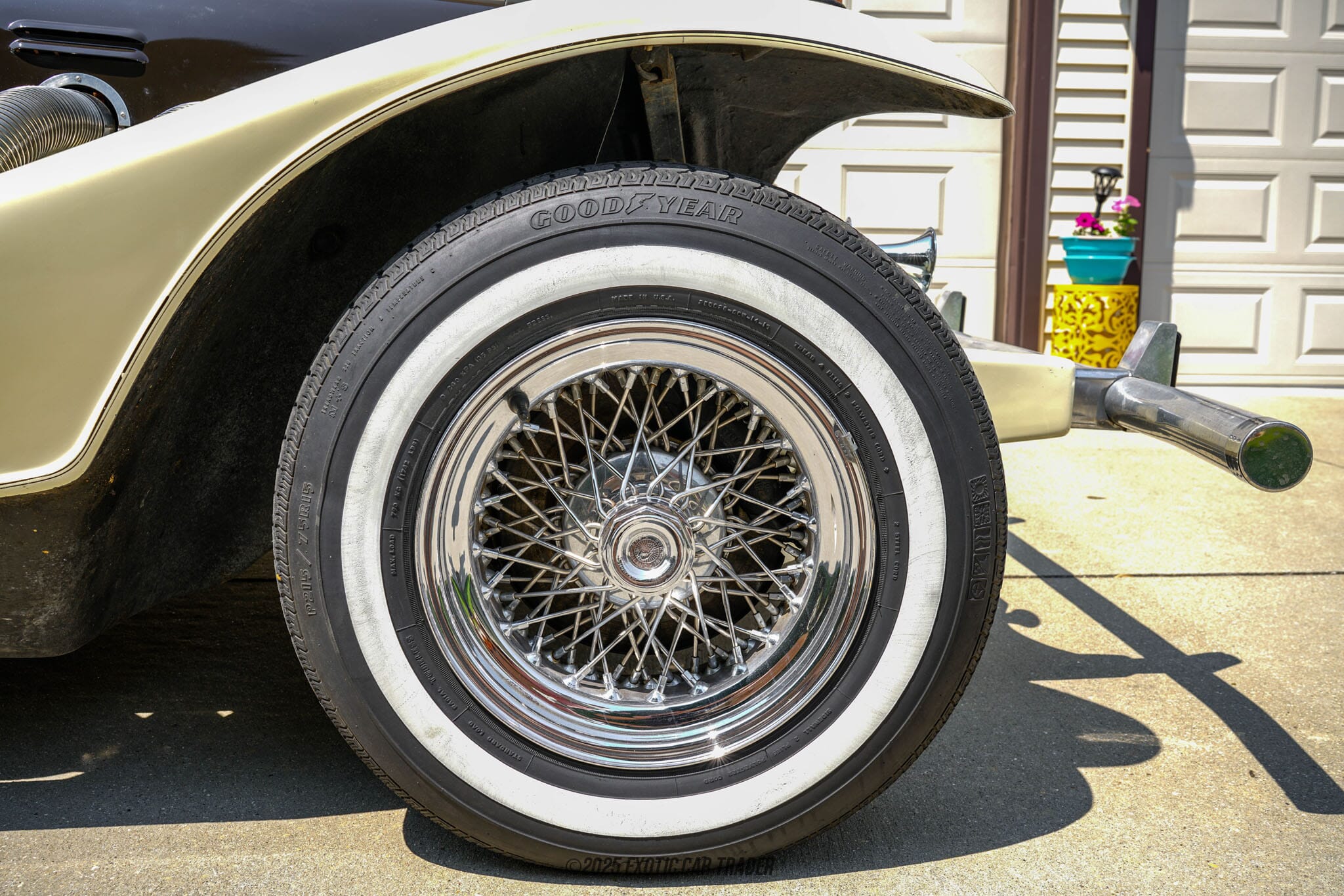
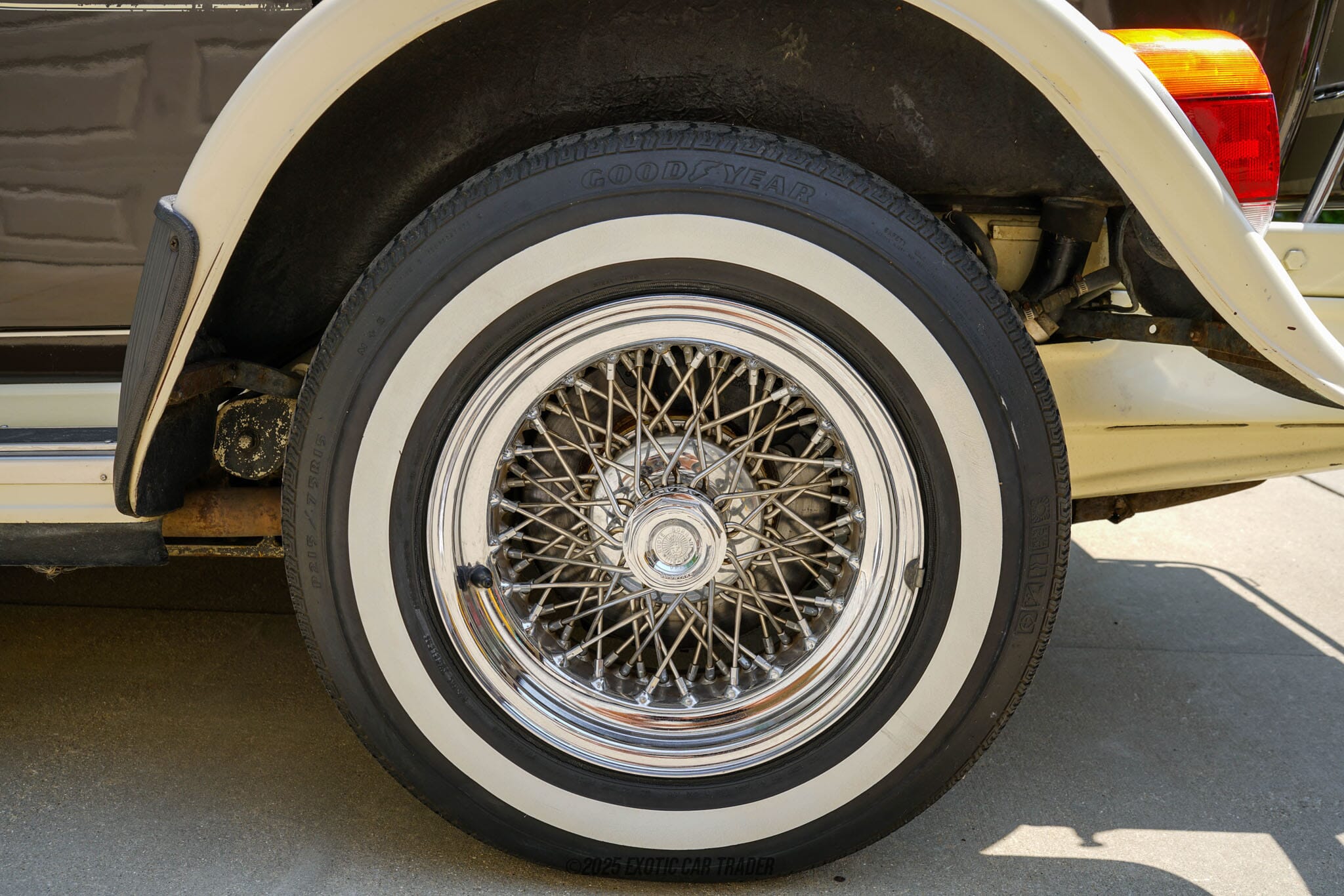
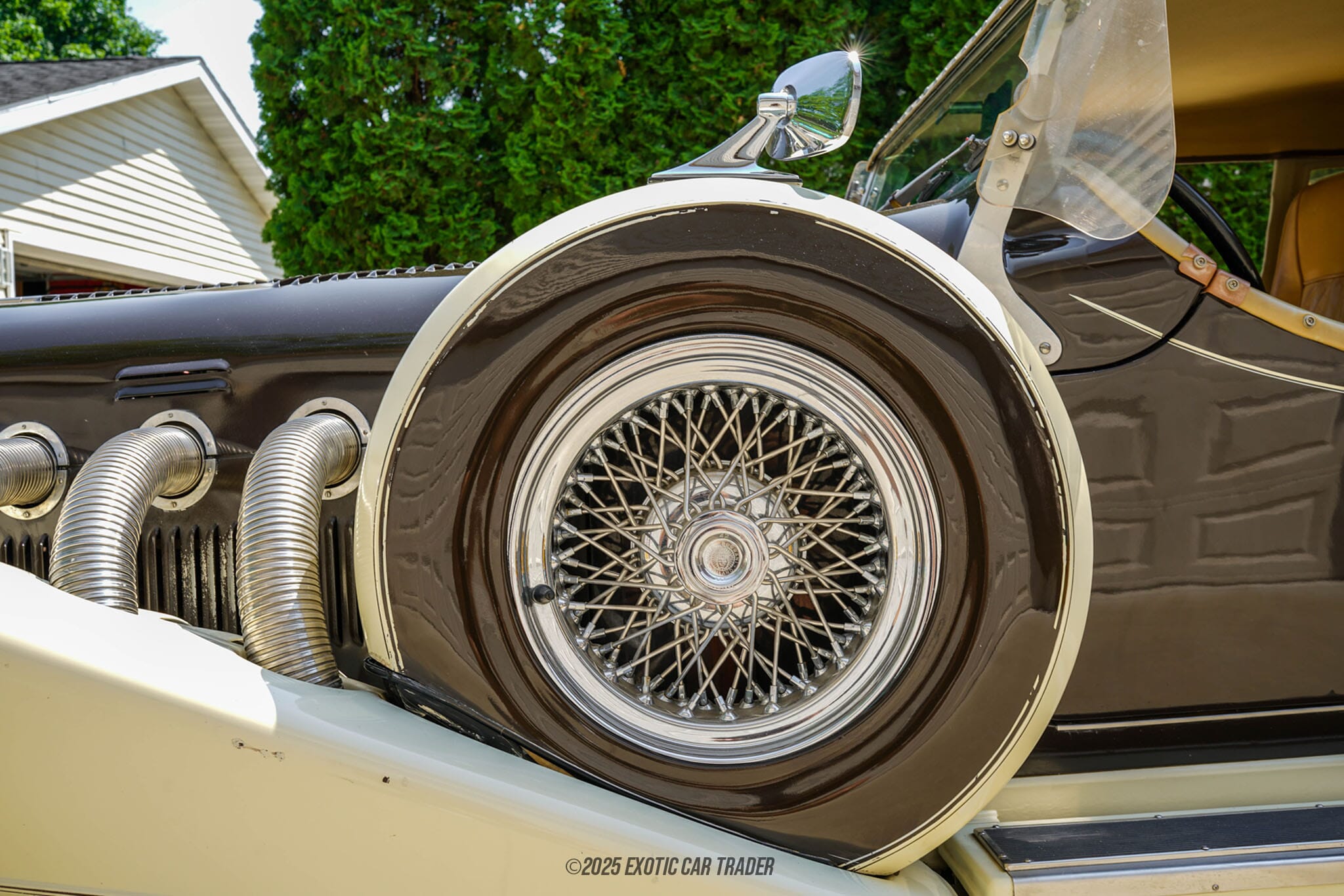
- Wire Wheels
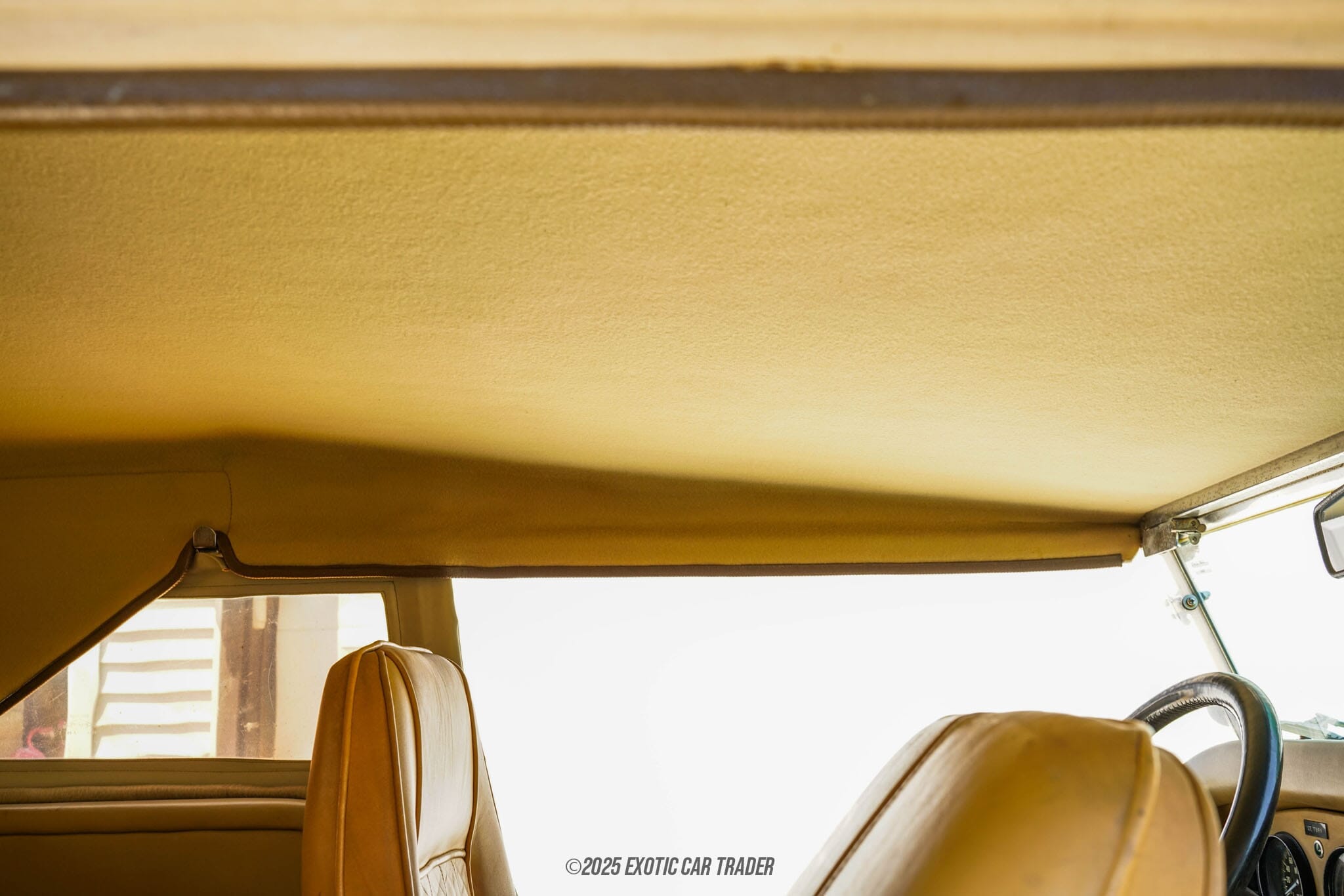
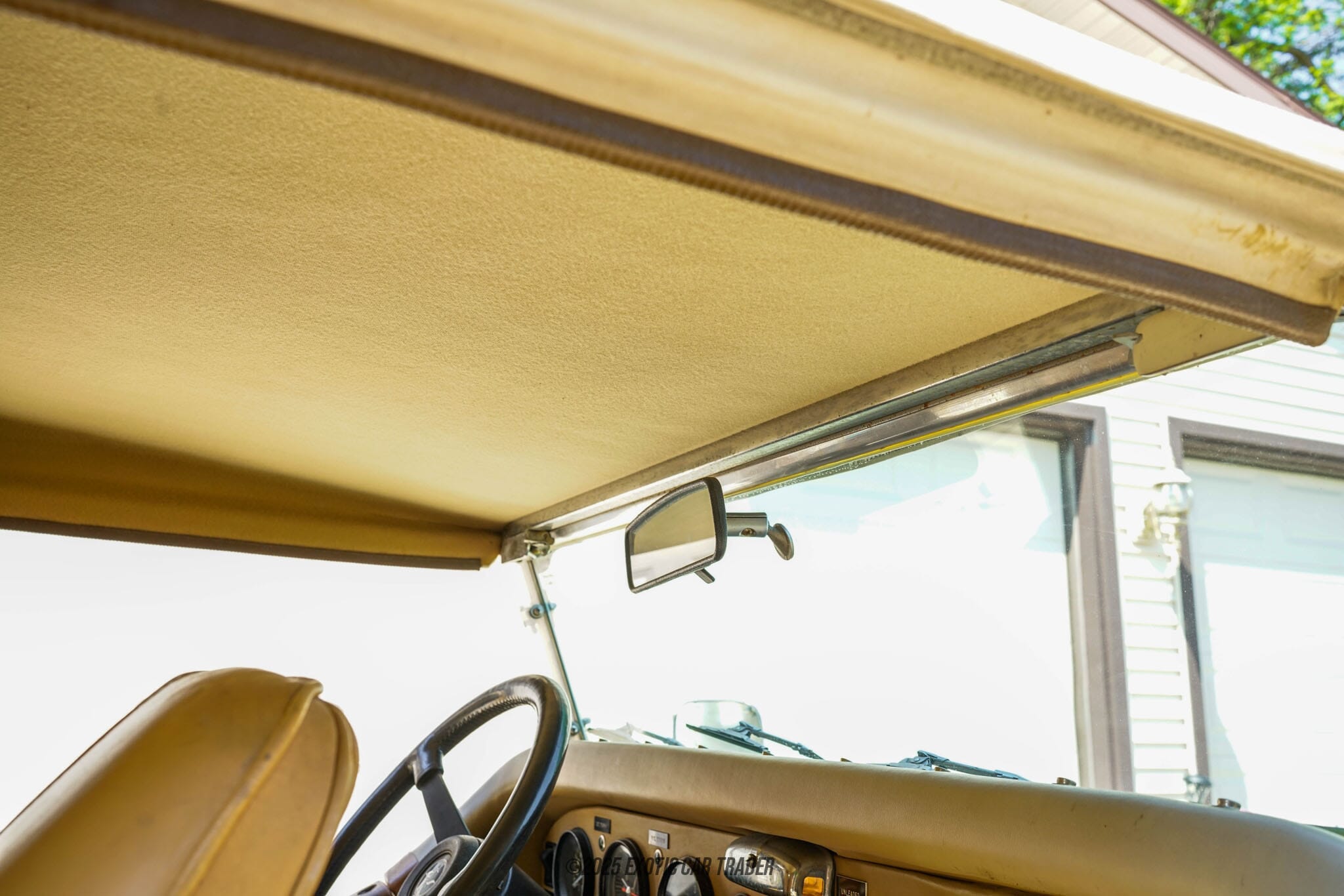
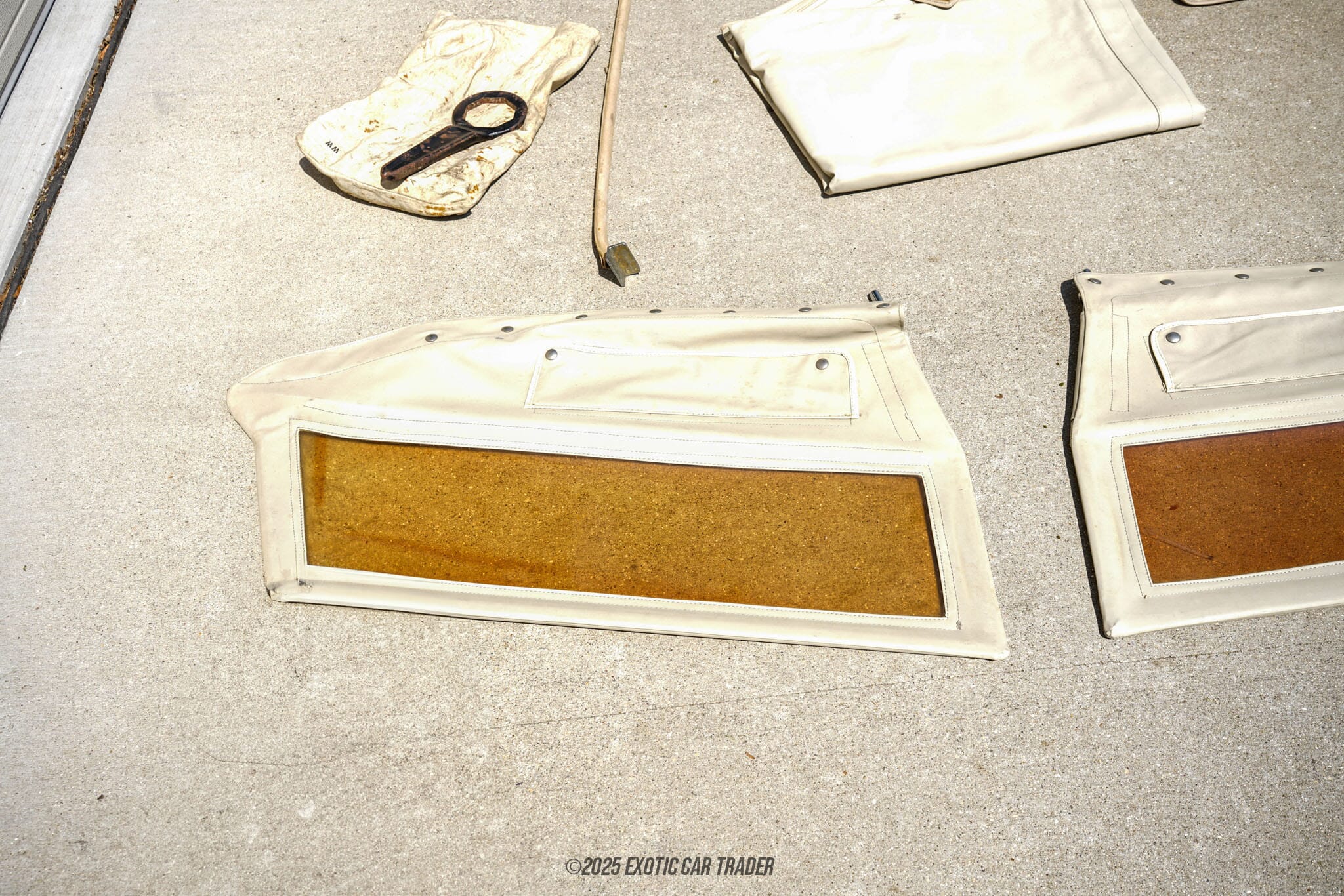
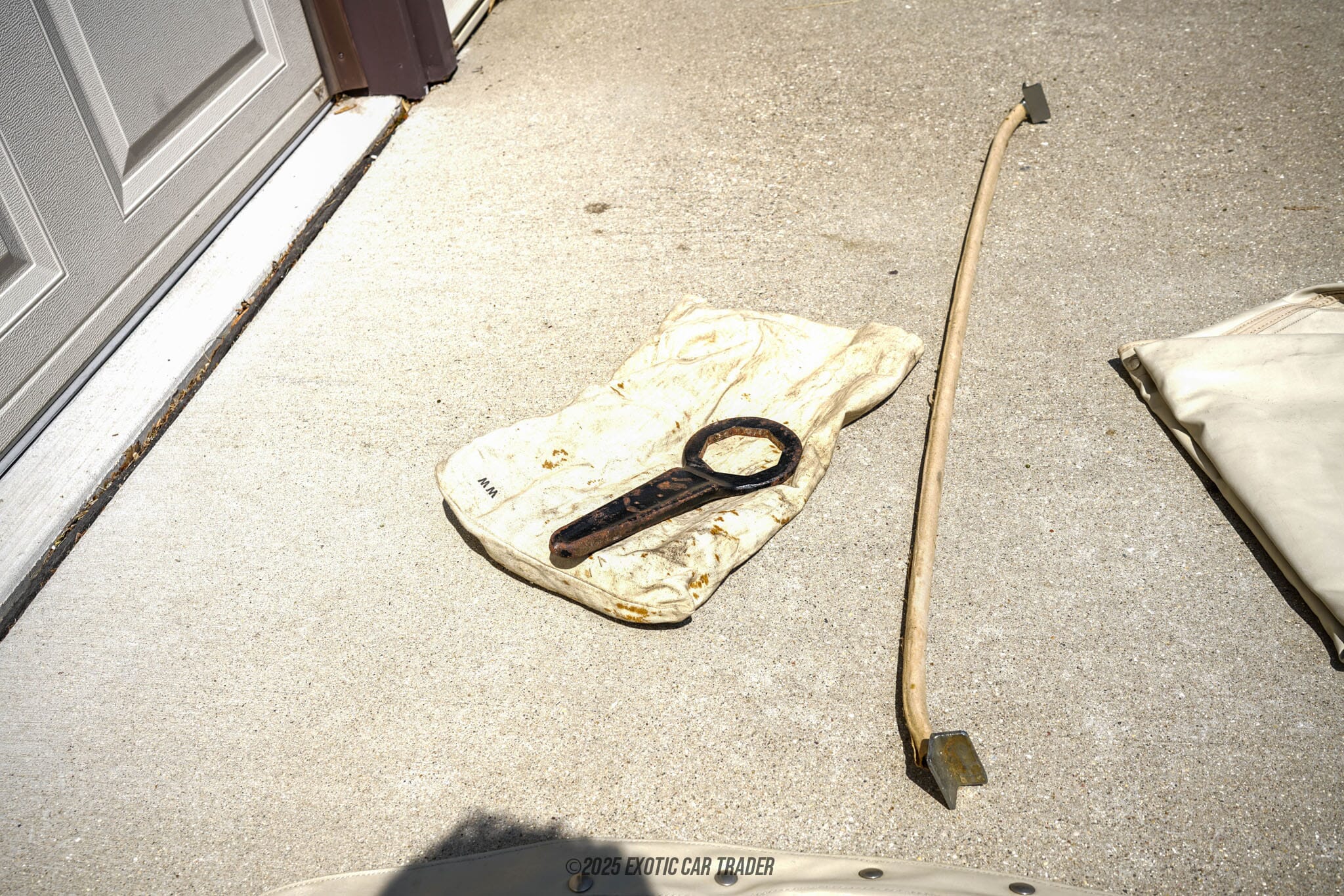
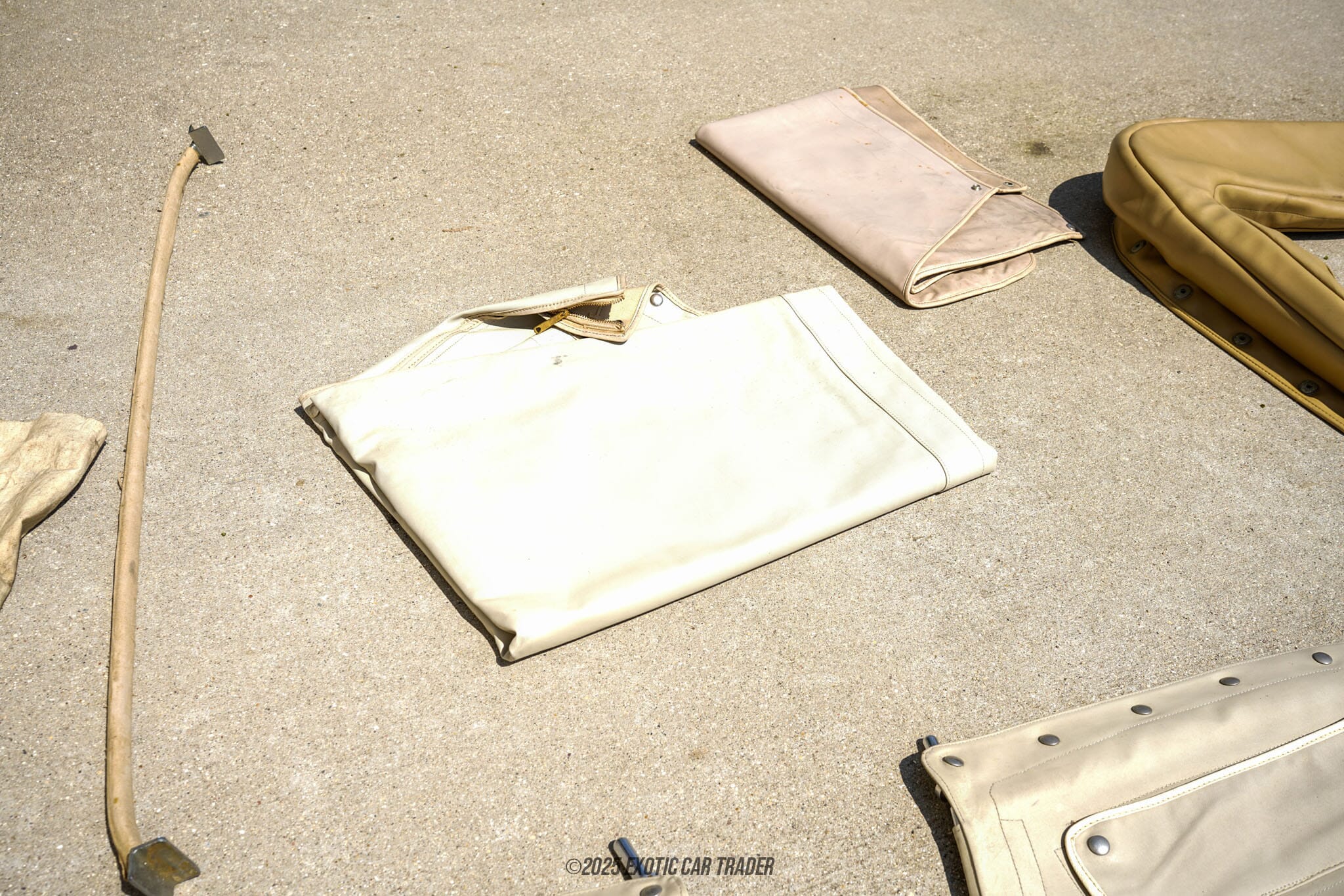
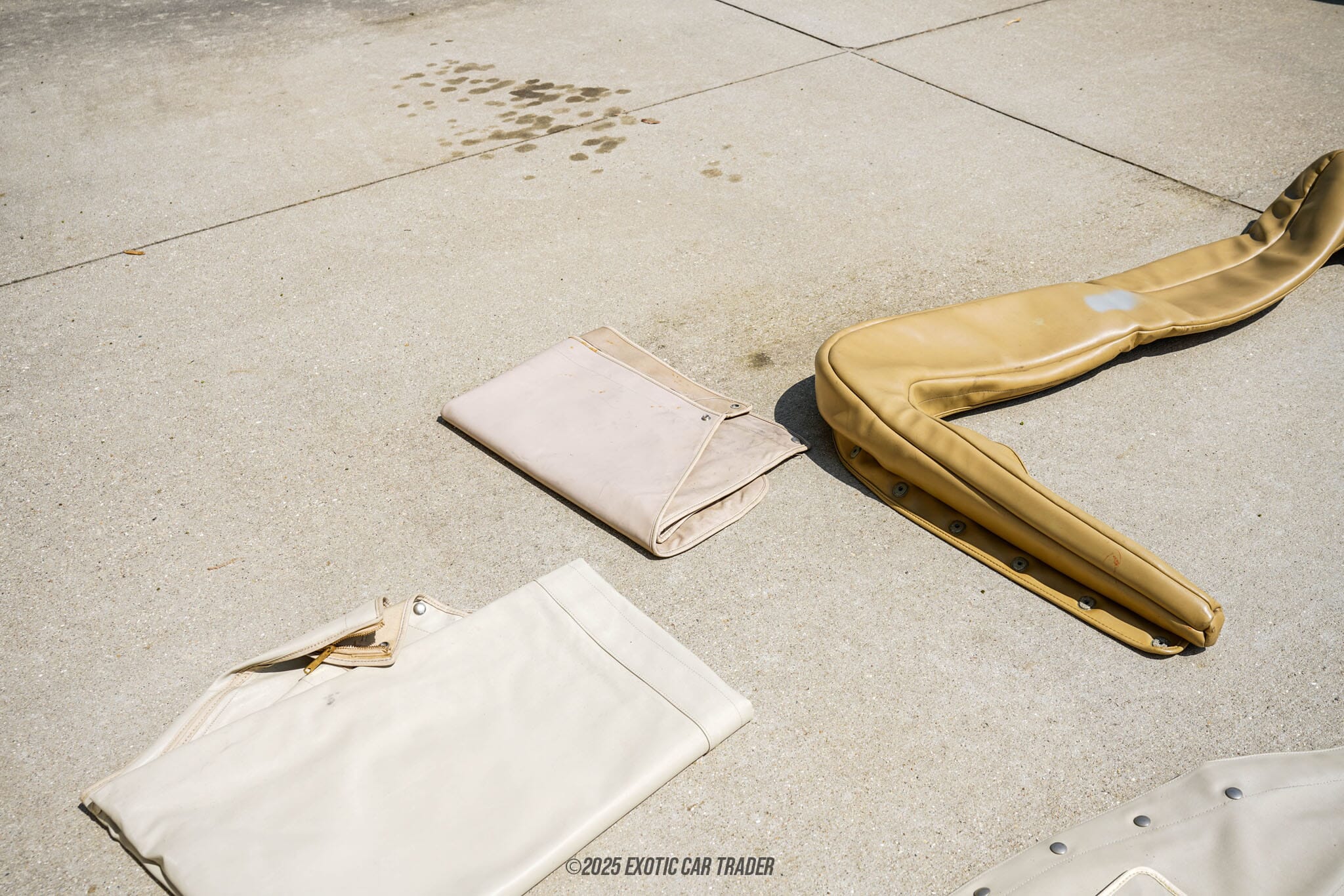
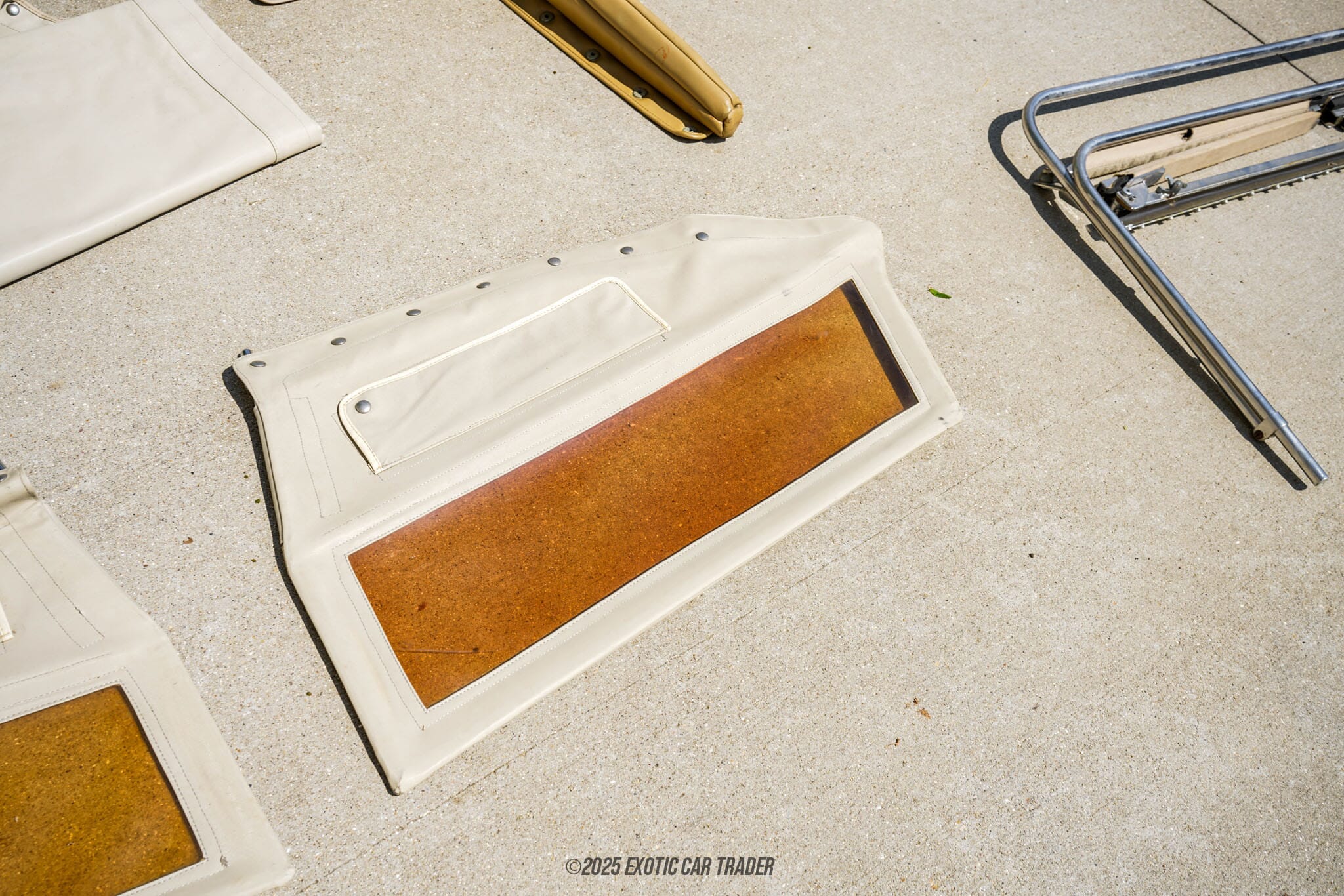
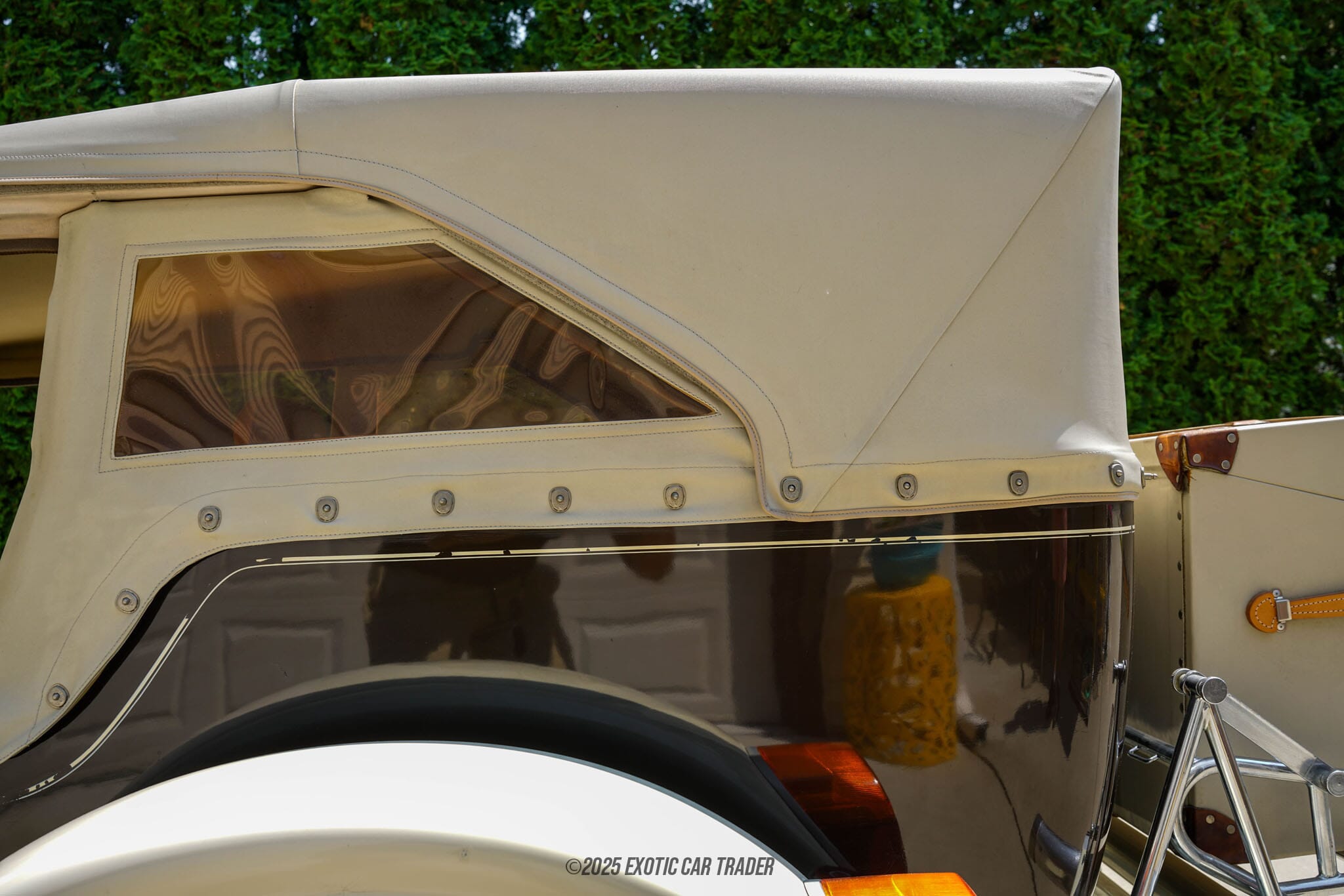
- Convertible Soft Top


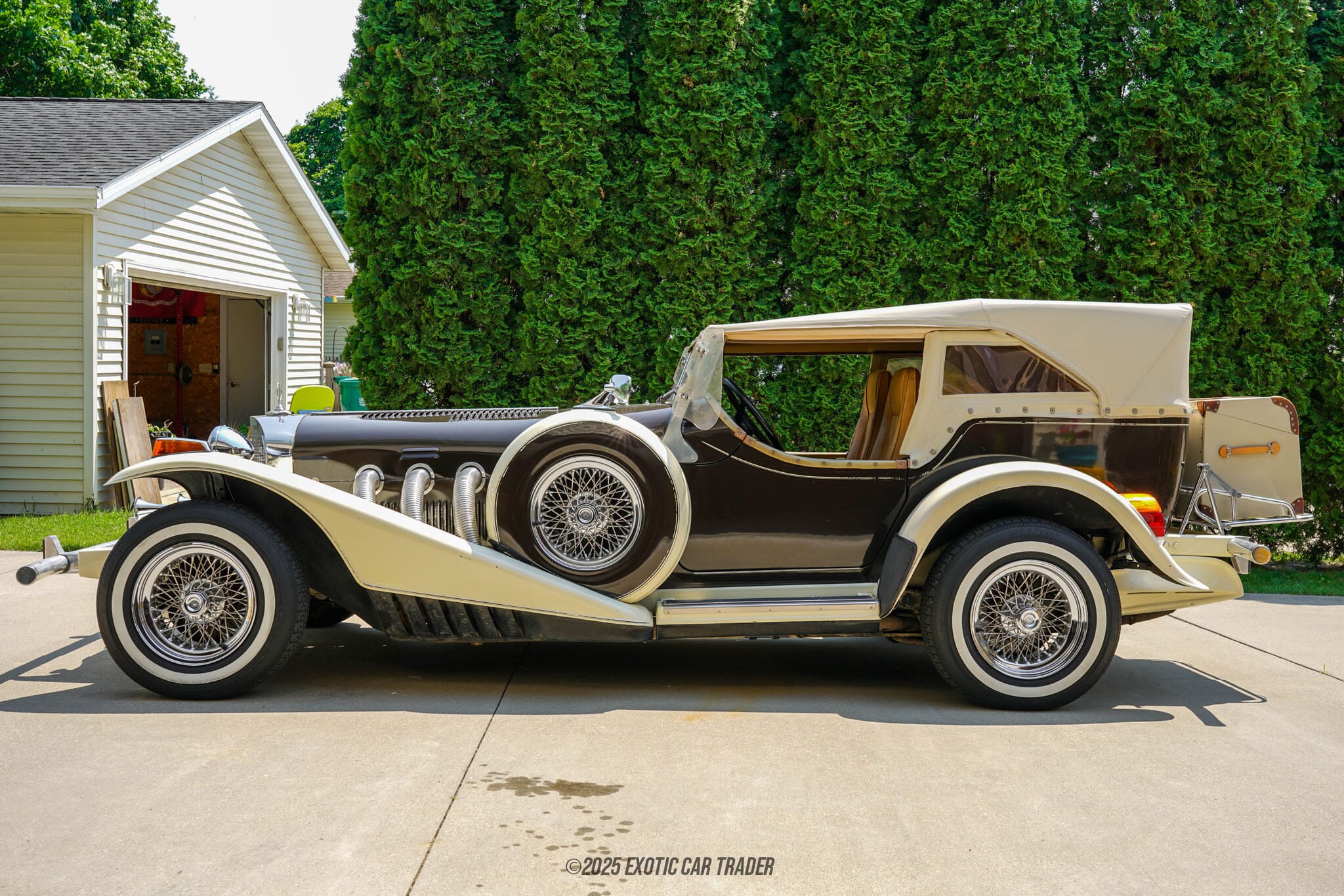
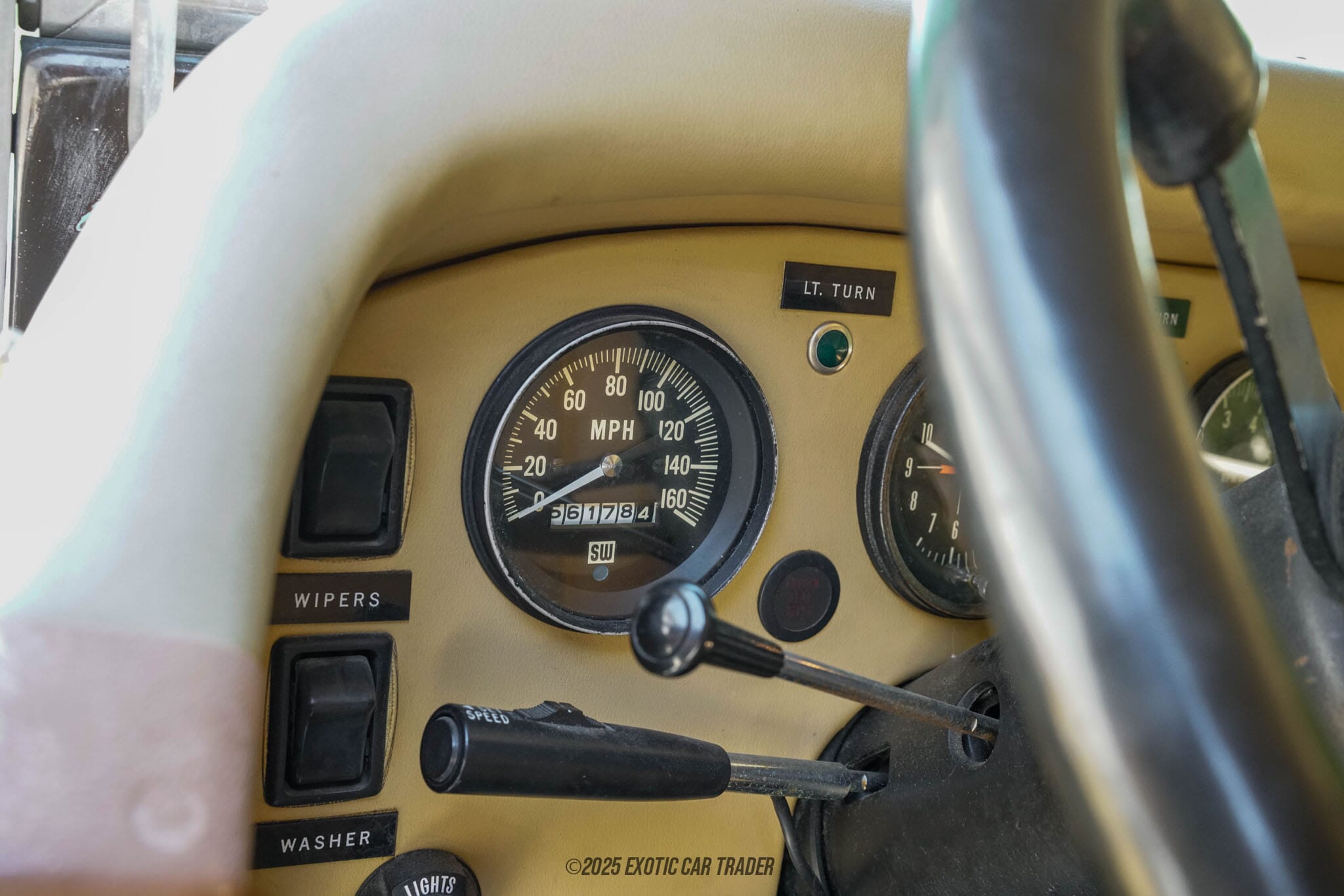
The story of Excalibur is interesting. Initially styled by Brooks Stevens for Studebaker, Stevens subsequently formed a company to produce the cars himself. Built in Wisconsin, it’s estimated that over 3,500 examples of this neo-classic automobile were made until 1990, even though the company folded in 1986 and was subsequently revived for a short time thereafter. Excalibur’s unique selling point was to offer classic 1920s and 1930s styling paired with modern mechanicals and creature comforts at the time. Today, we’ve got one of these curious cars for sale, a 1975 Excalibur Series III Phaeton from Edgerton, Wisconsin, with 56,178 miles on the clock. Let us tell you more about this car and why you should snap it up if you’ve got an eye for, and a desire to own unconventional pieces of American automotive history.
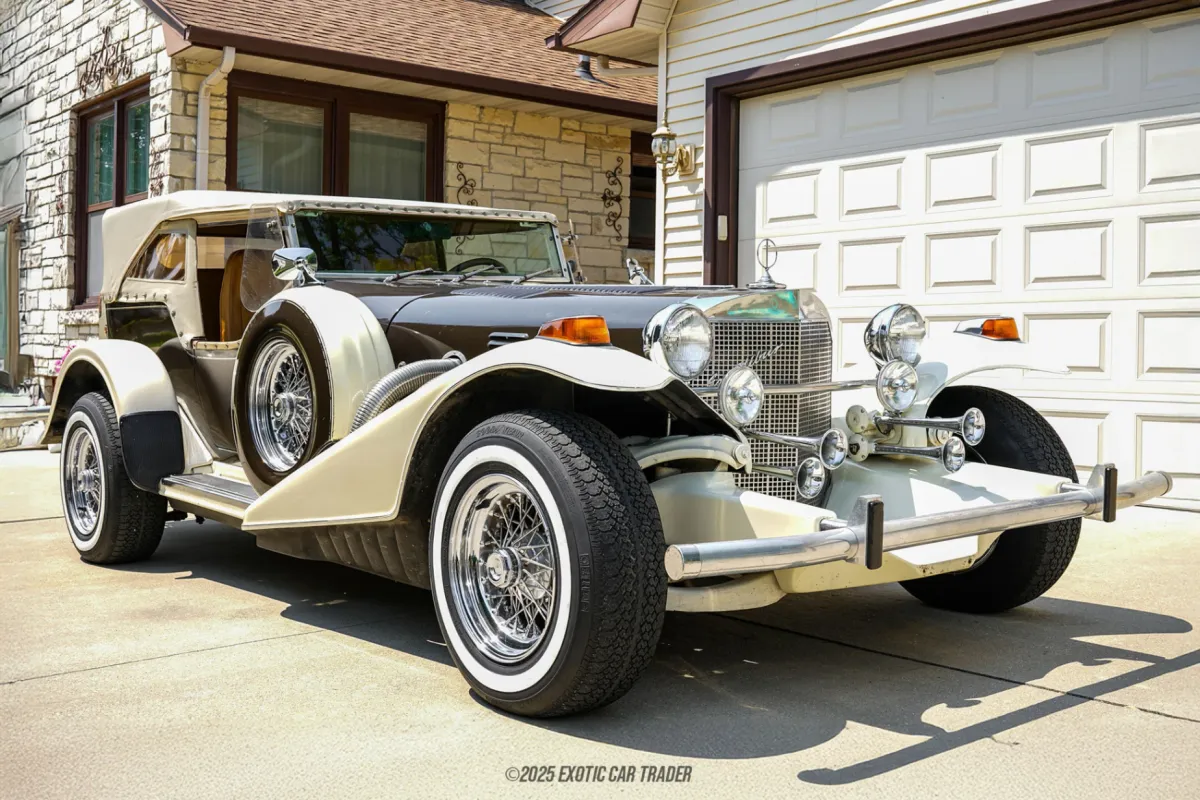
Exterior and Interior
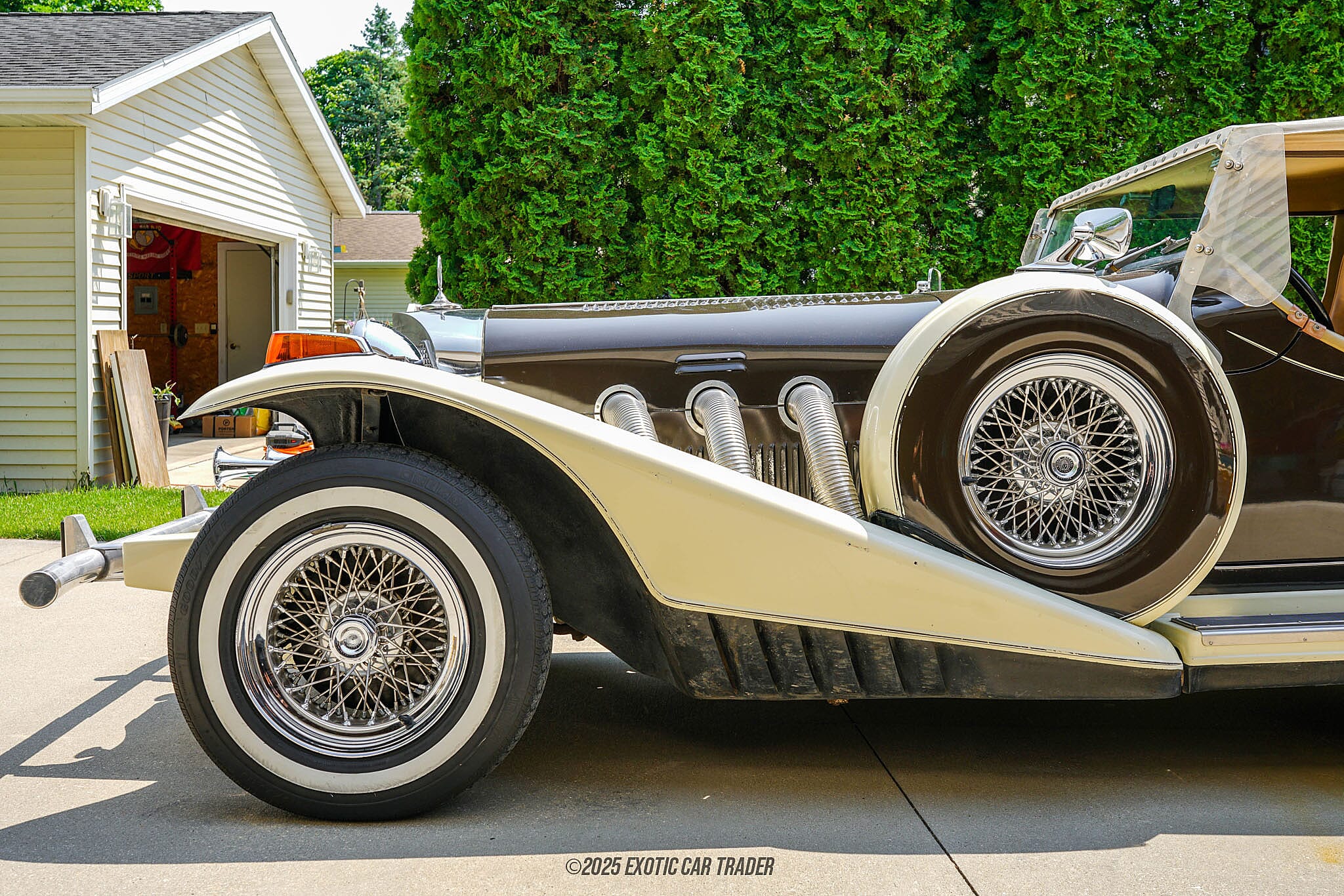
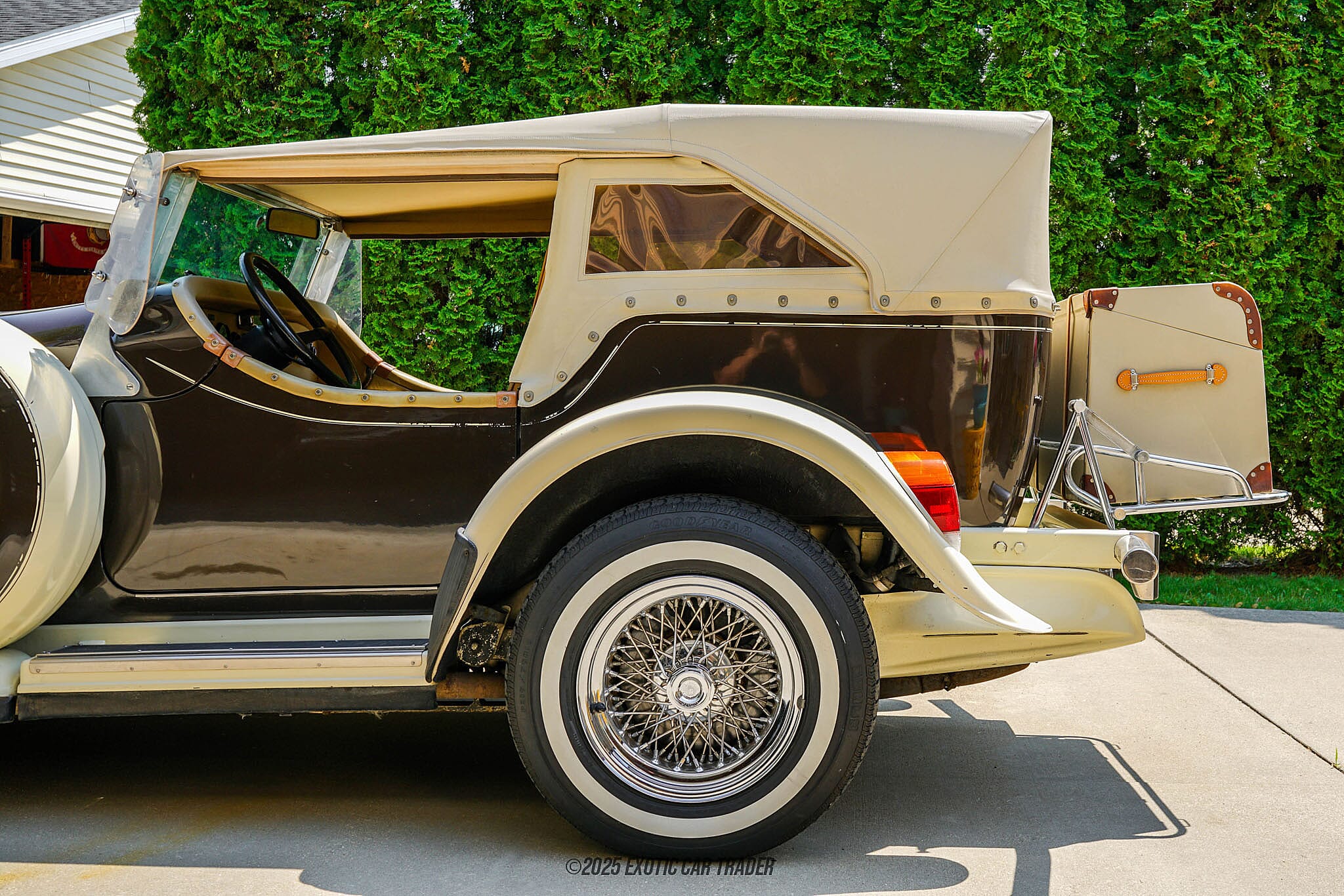
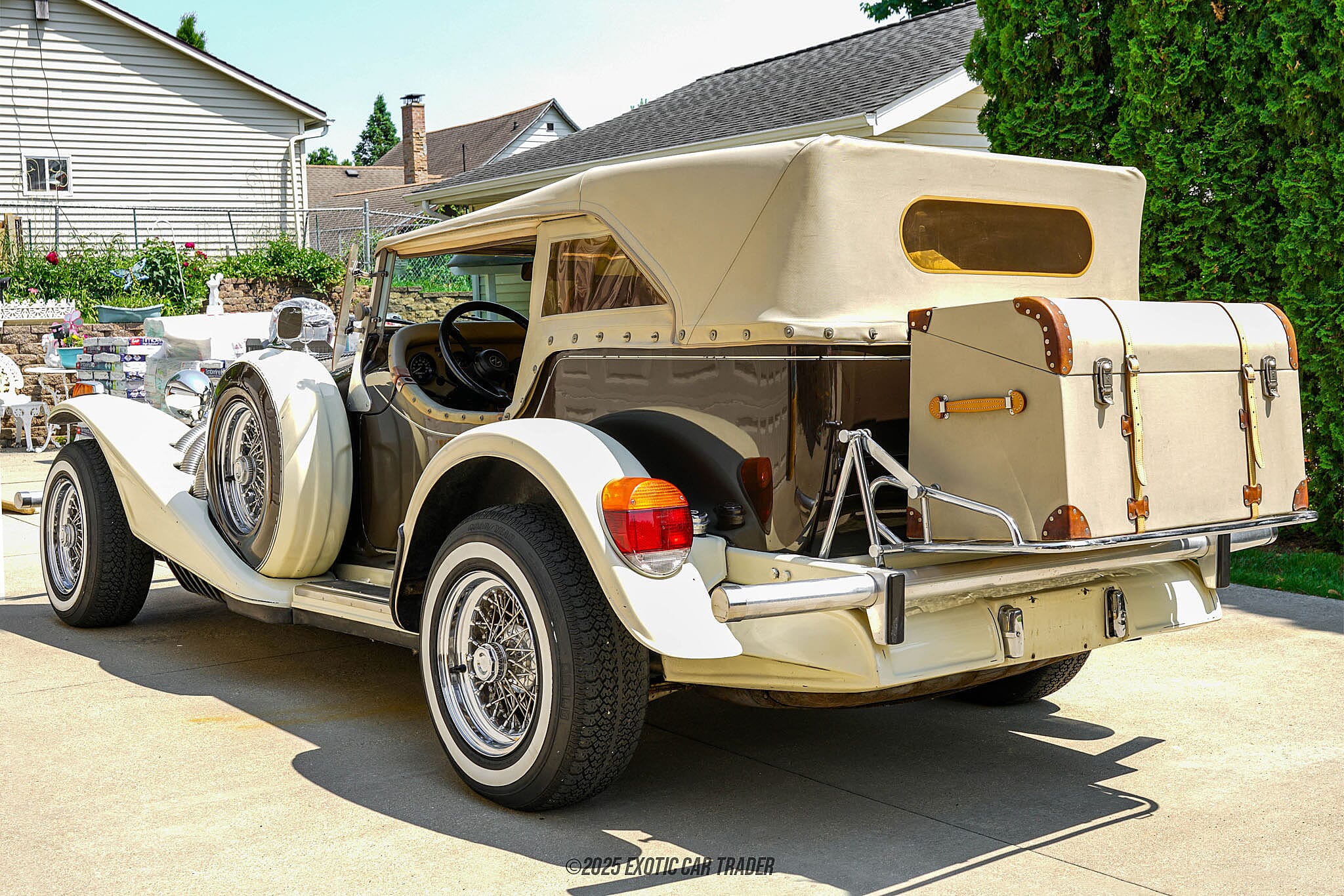
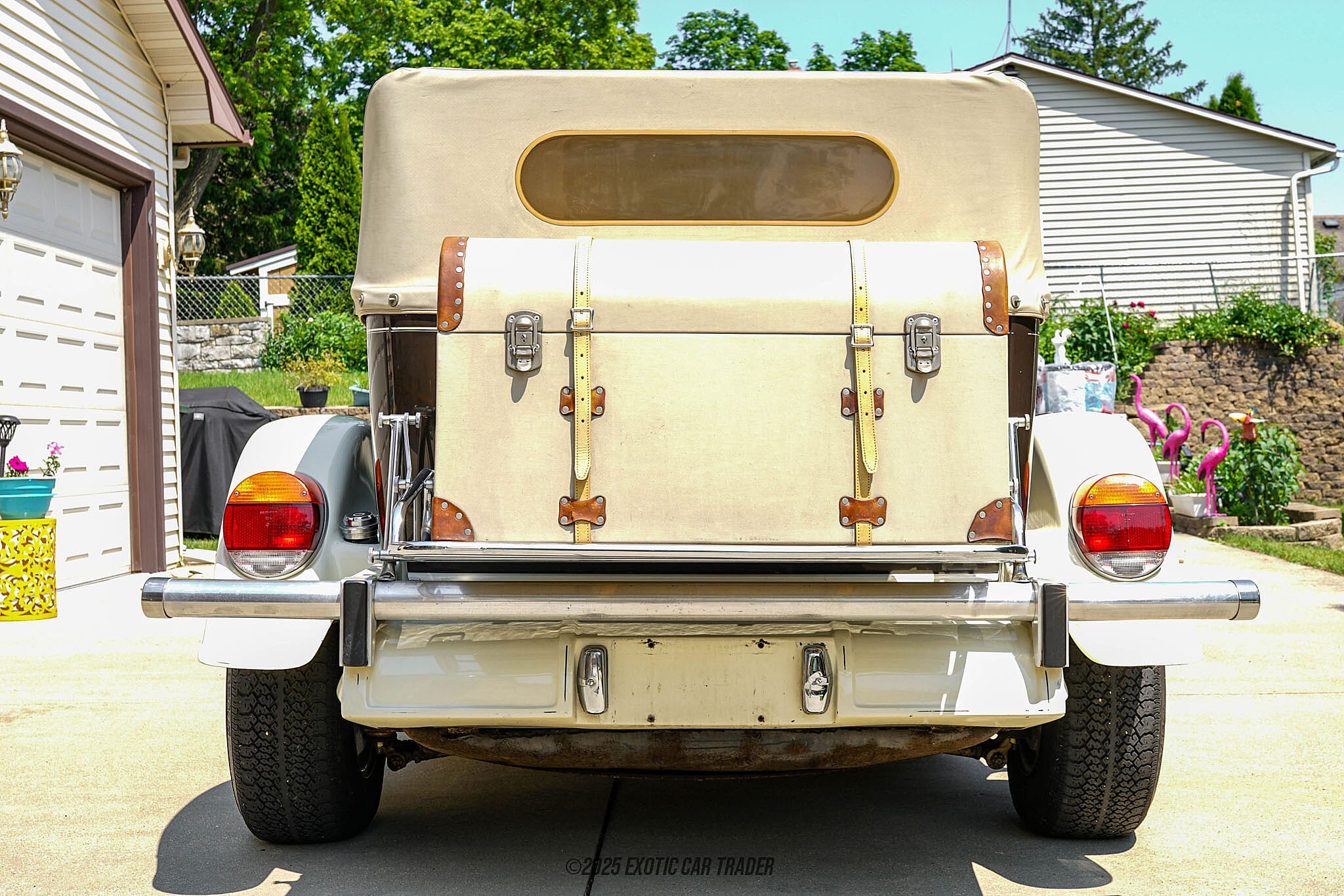
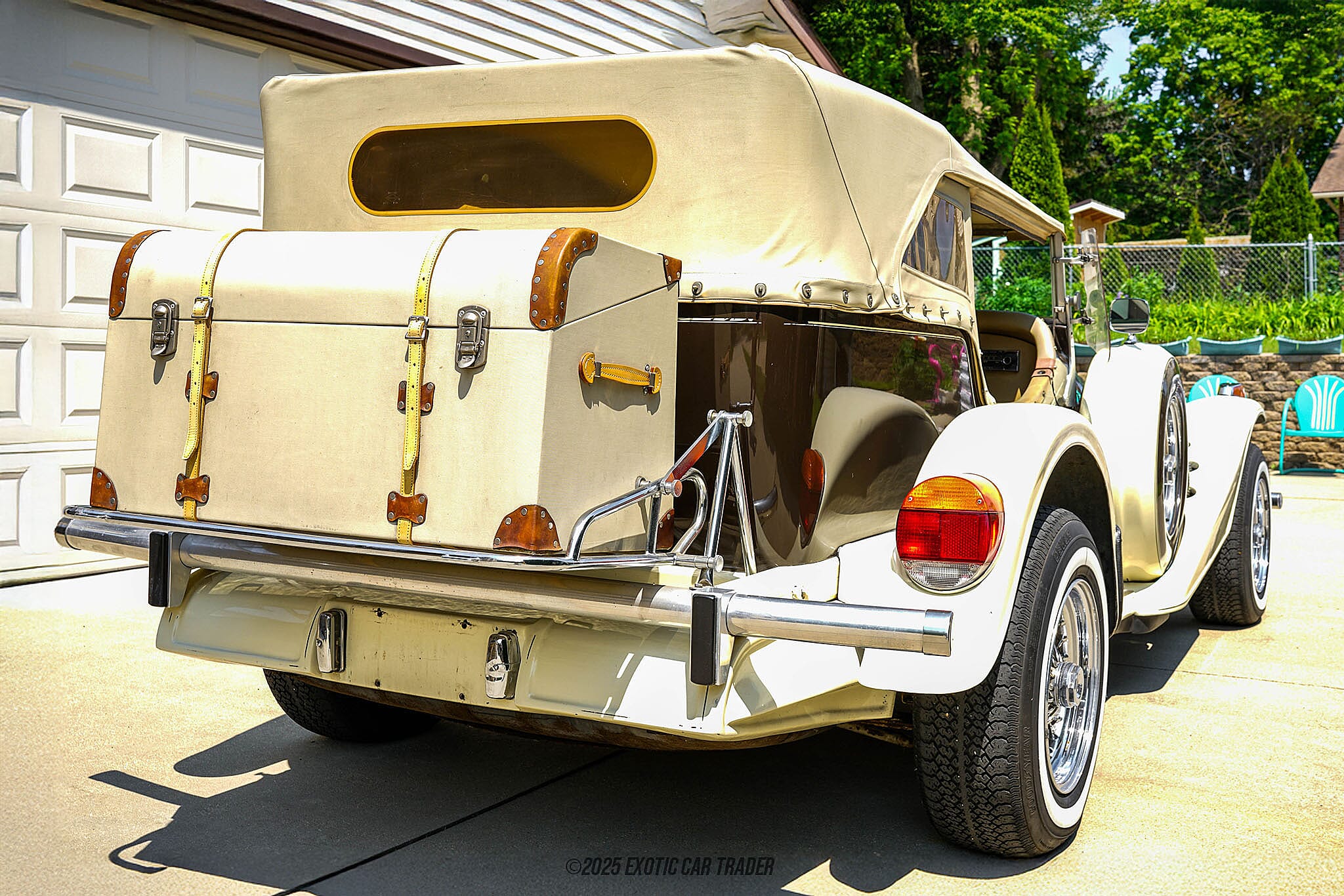
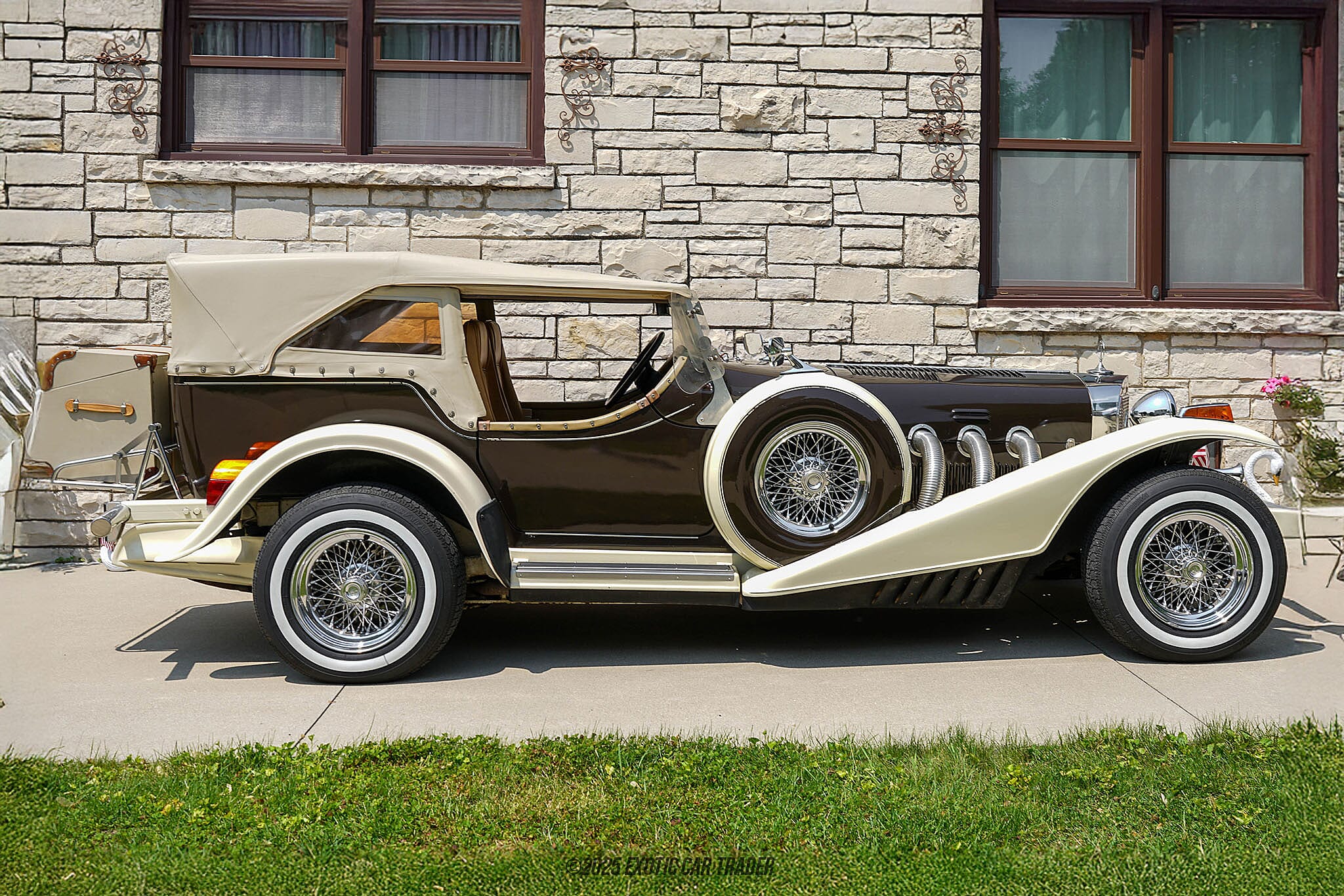
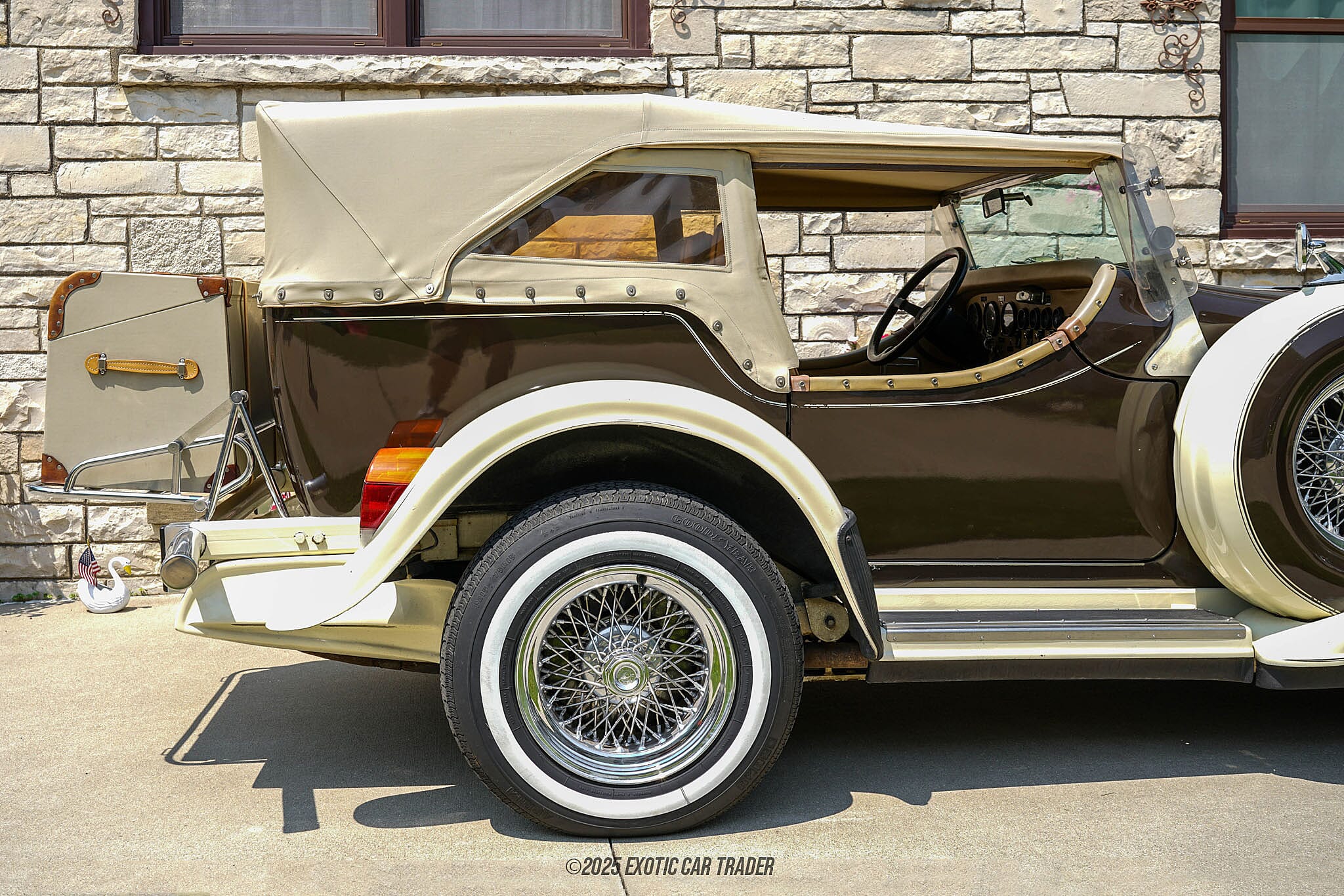
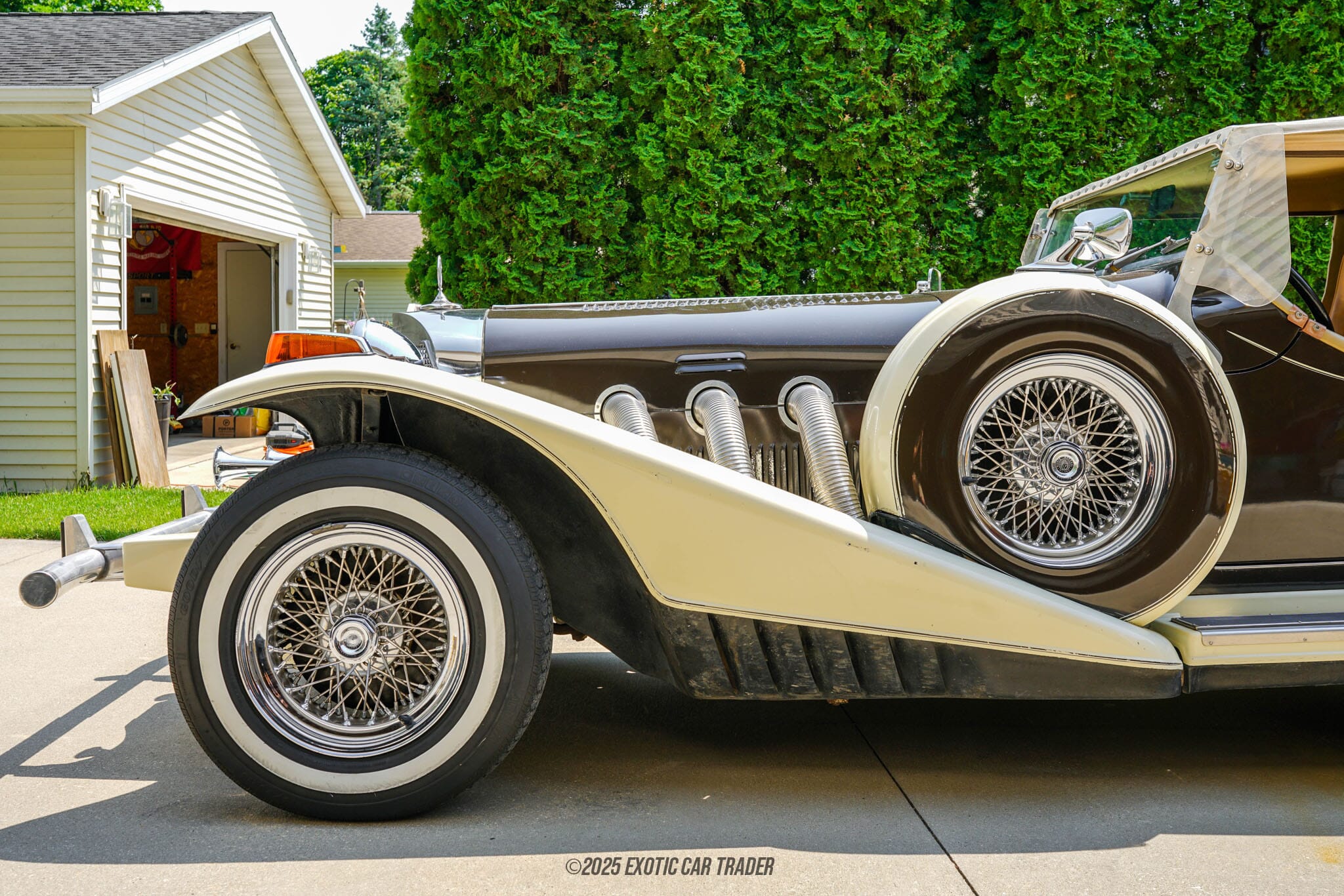
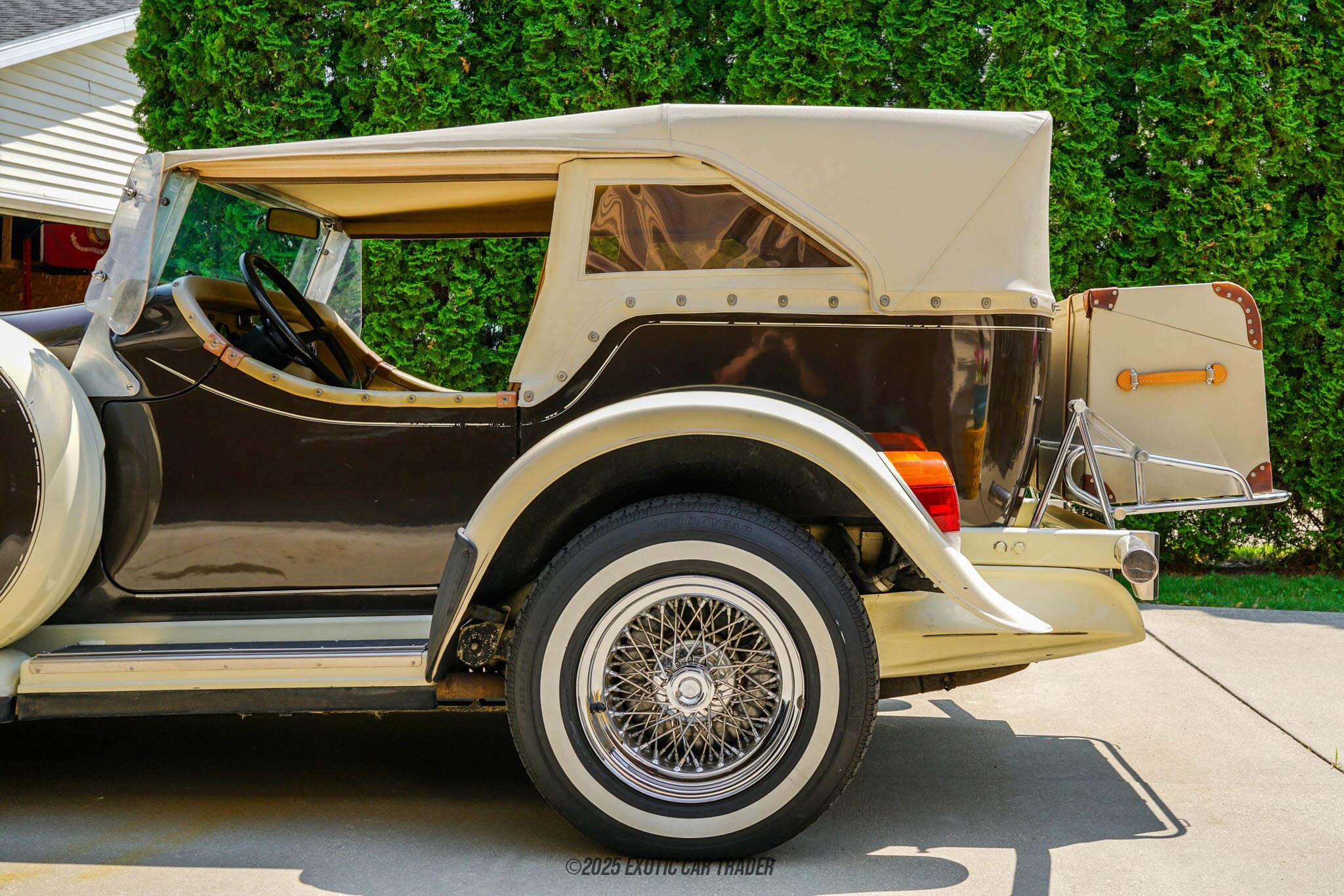
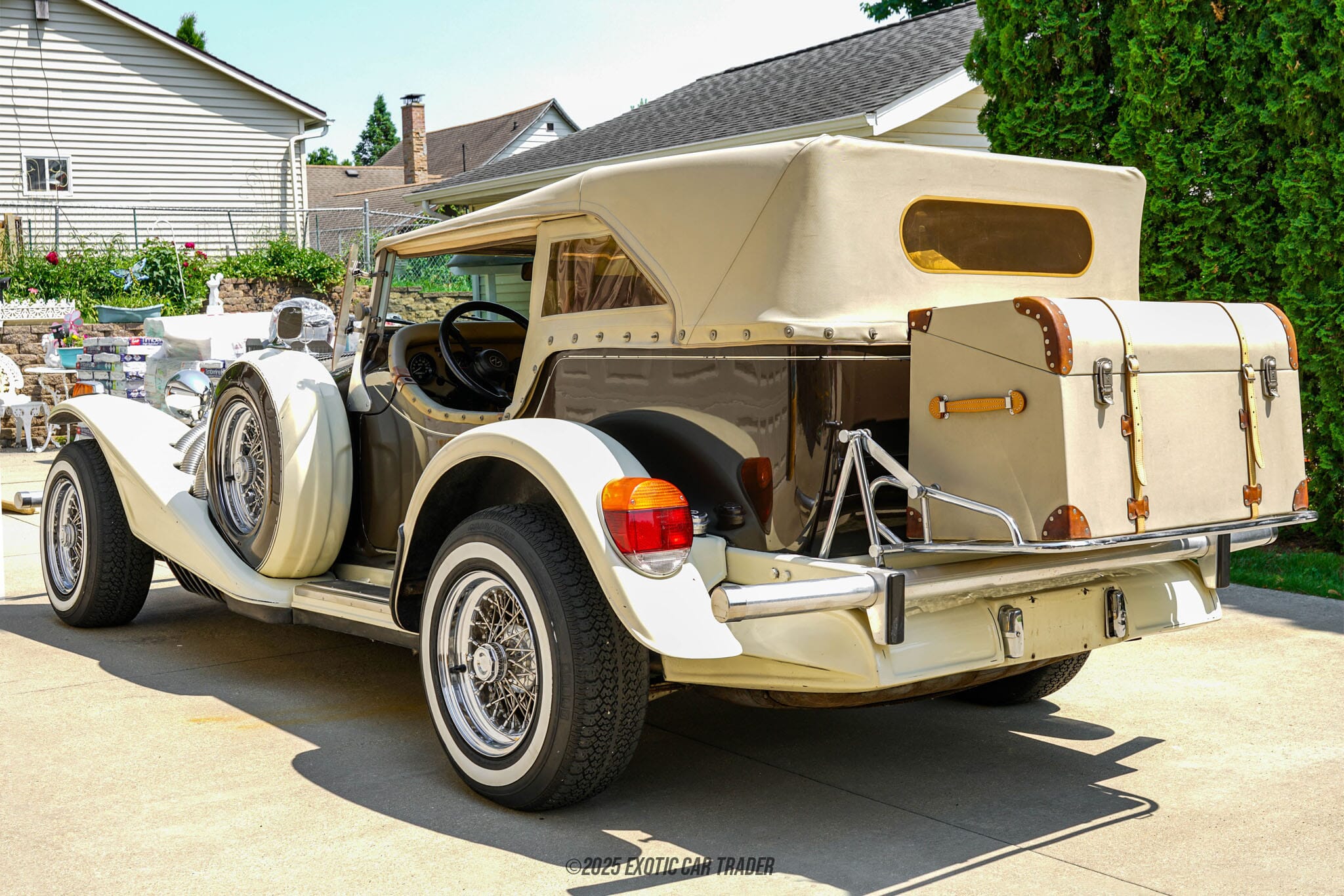
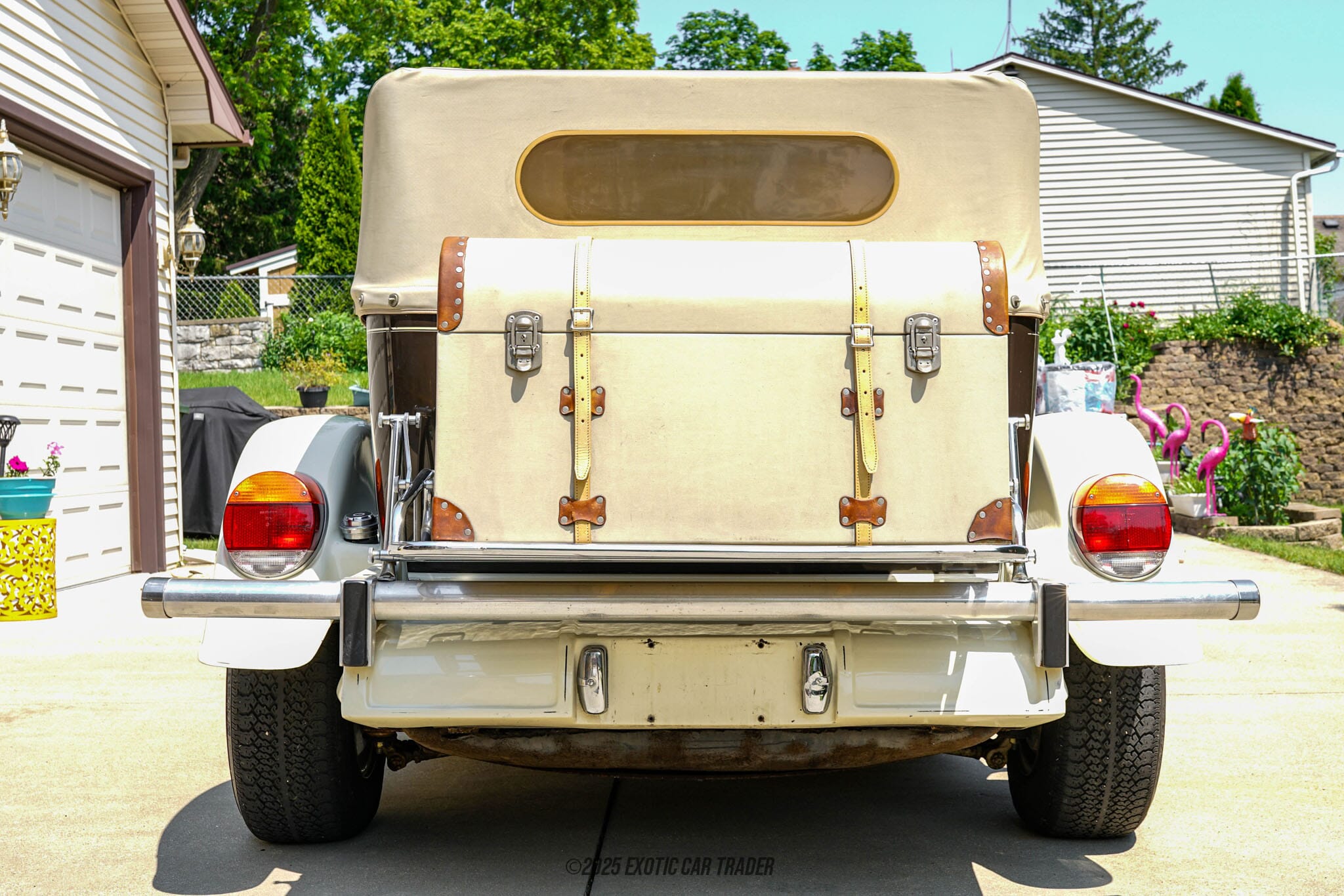
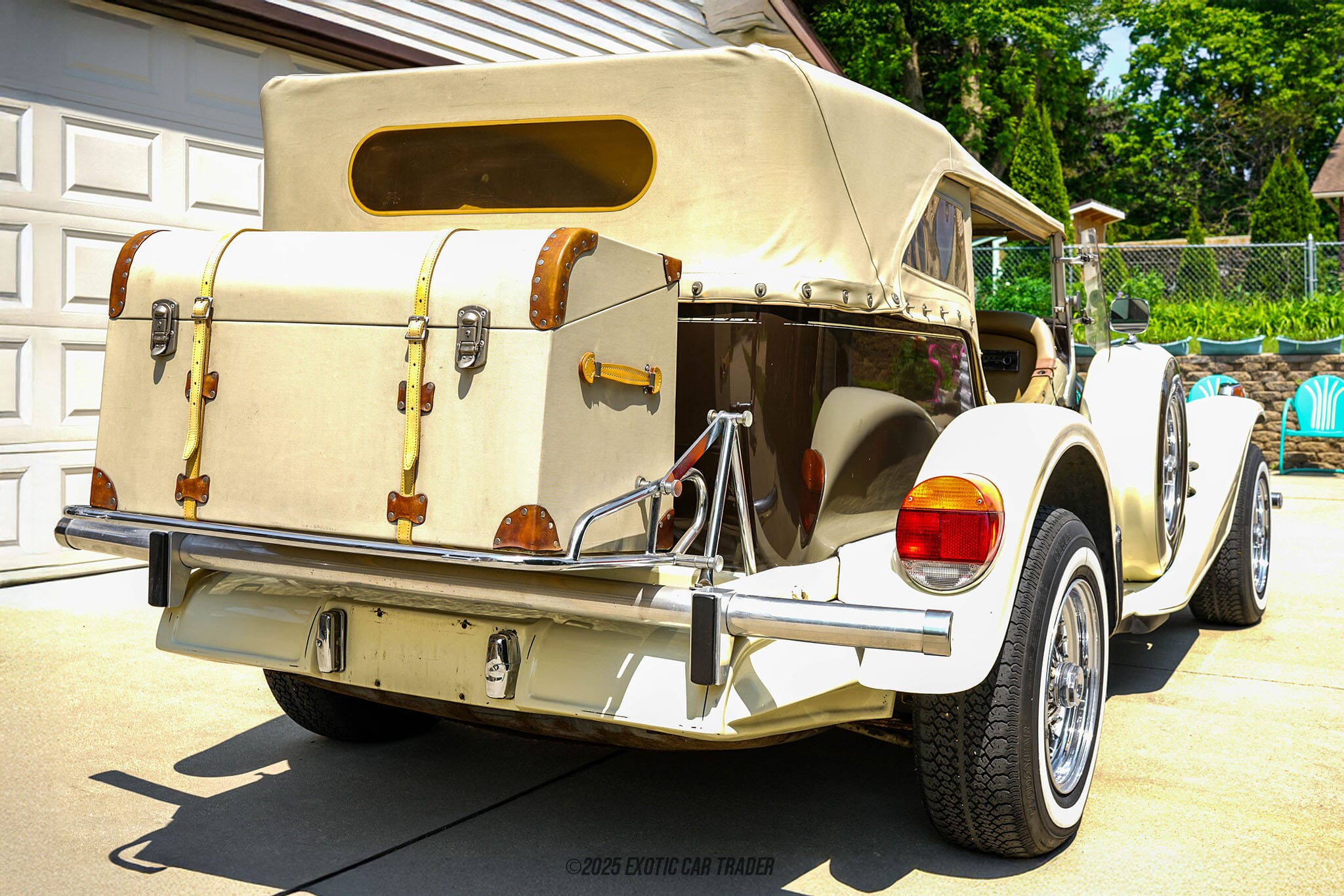
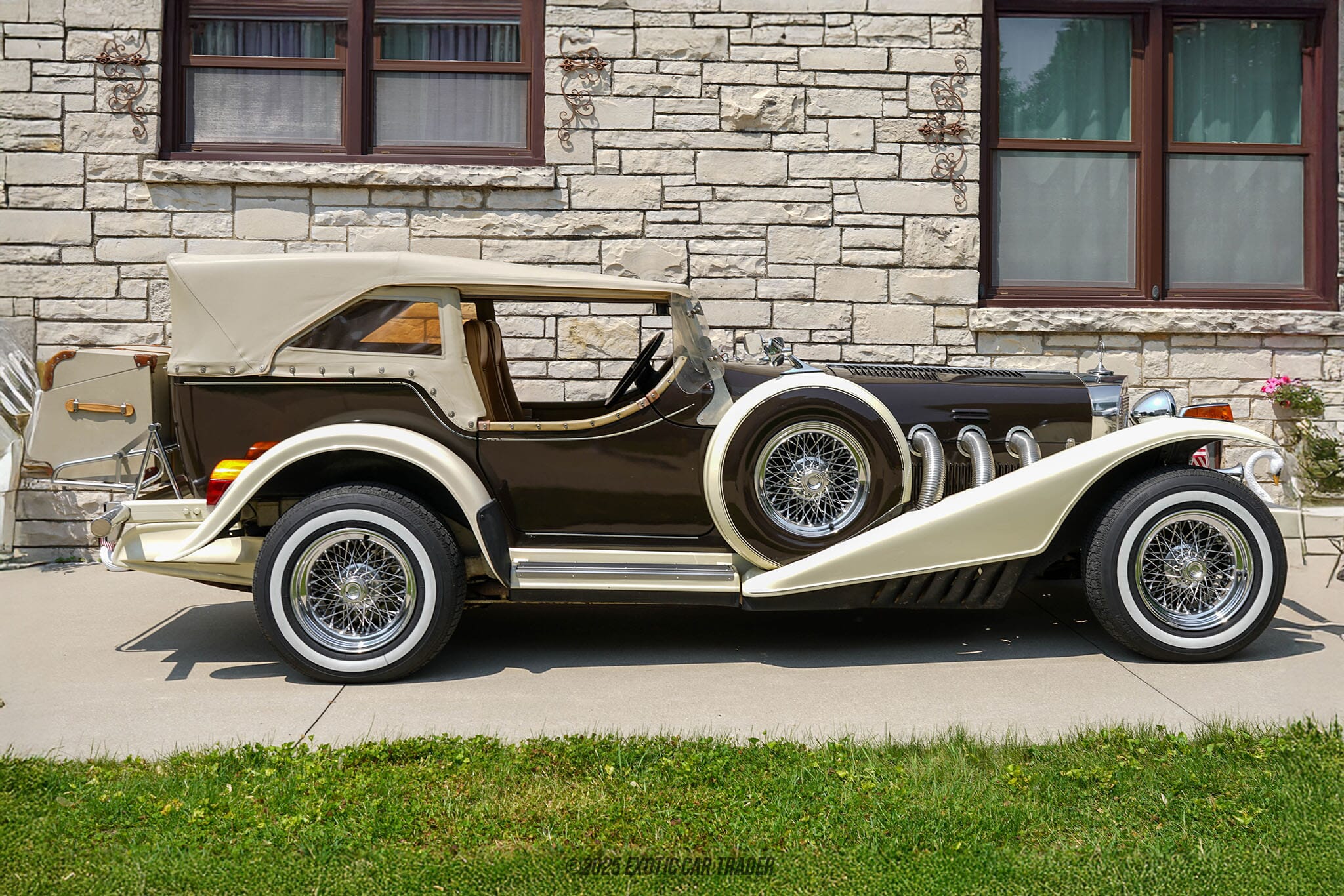
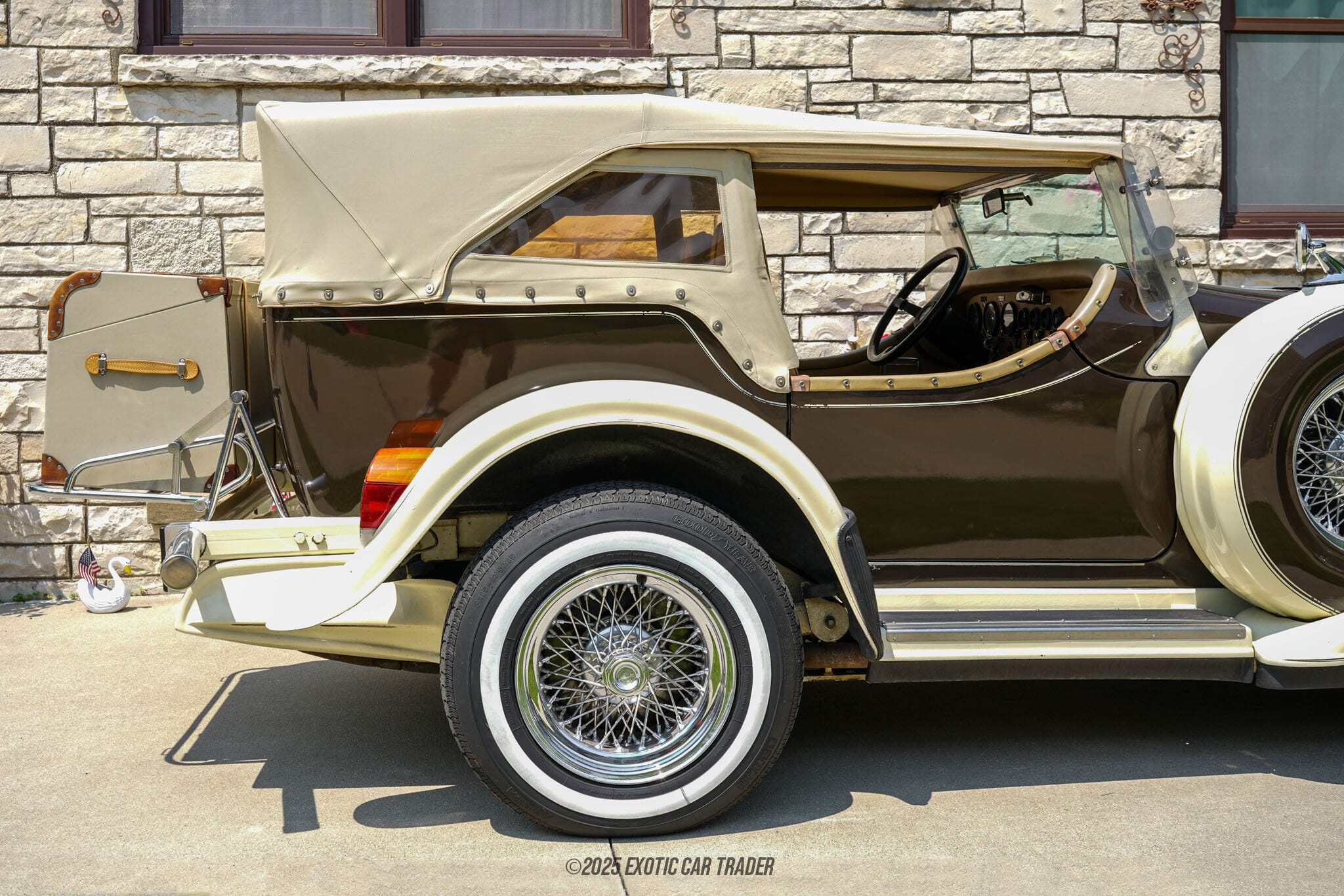
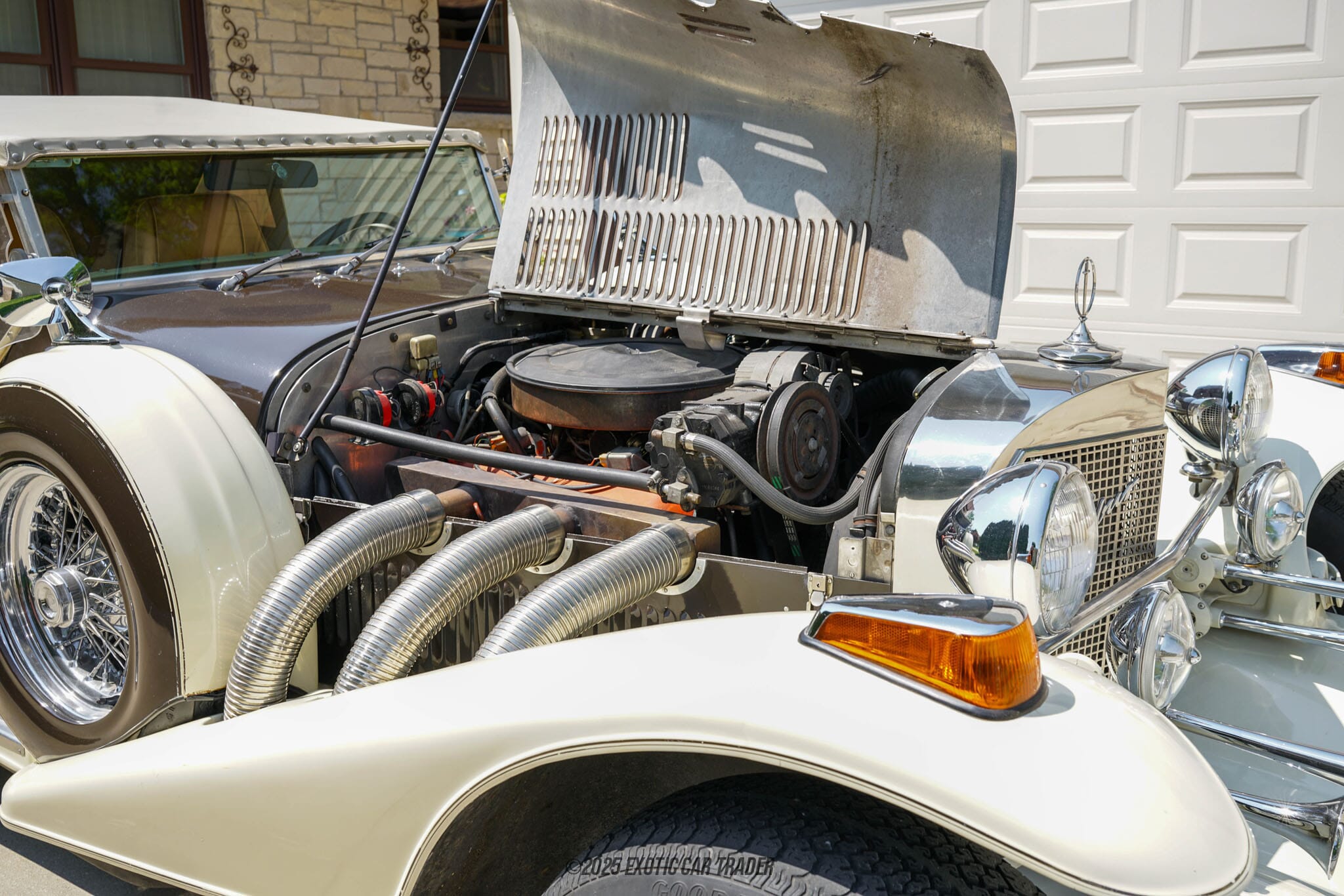
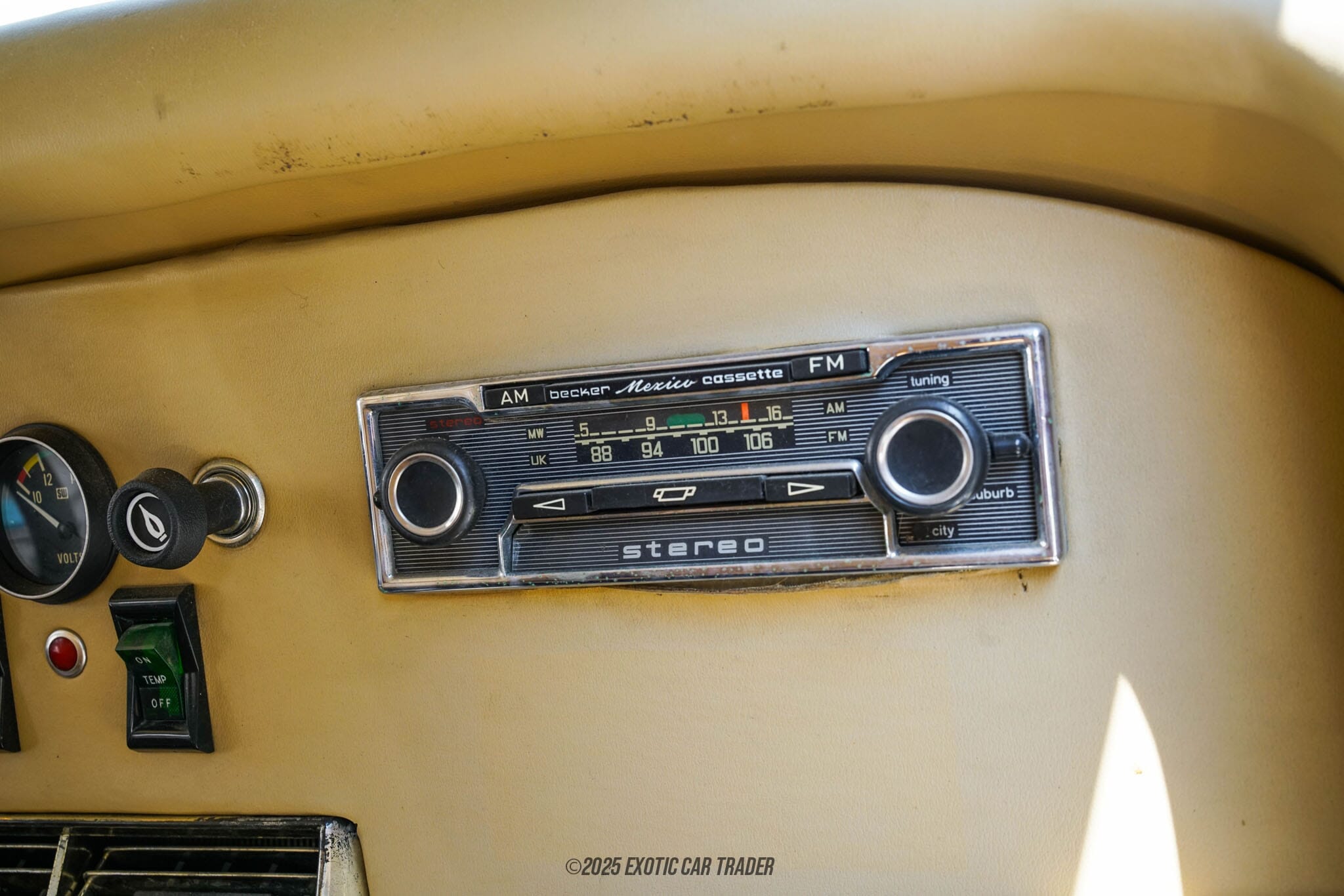
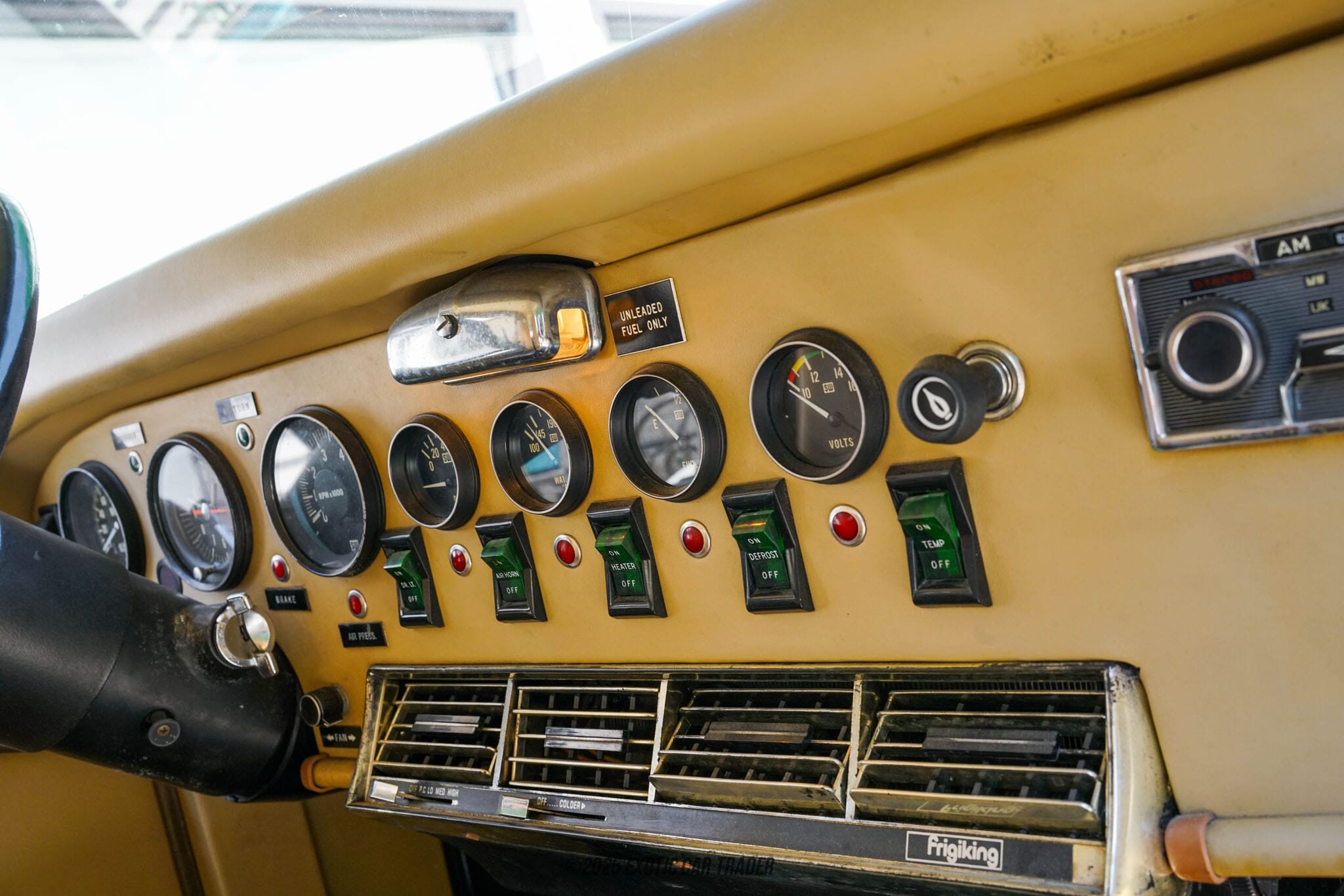
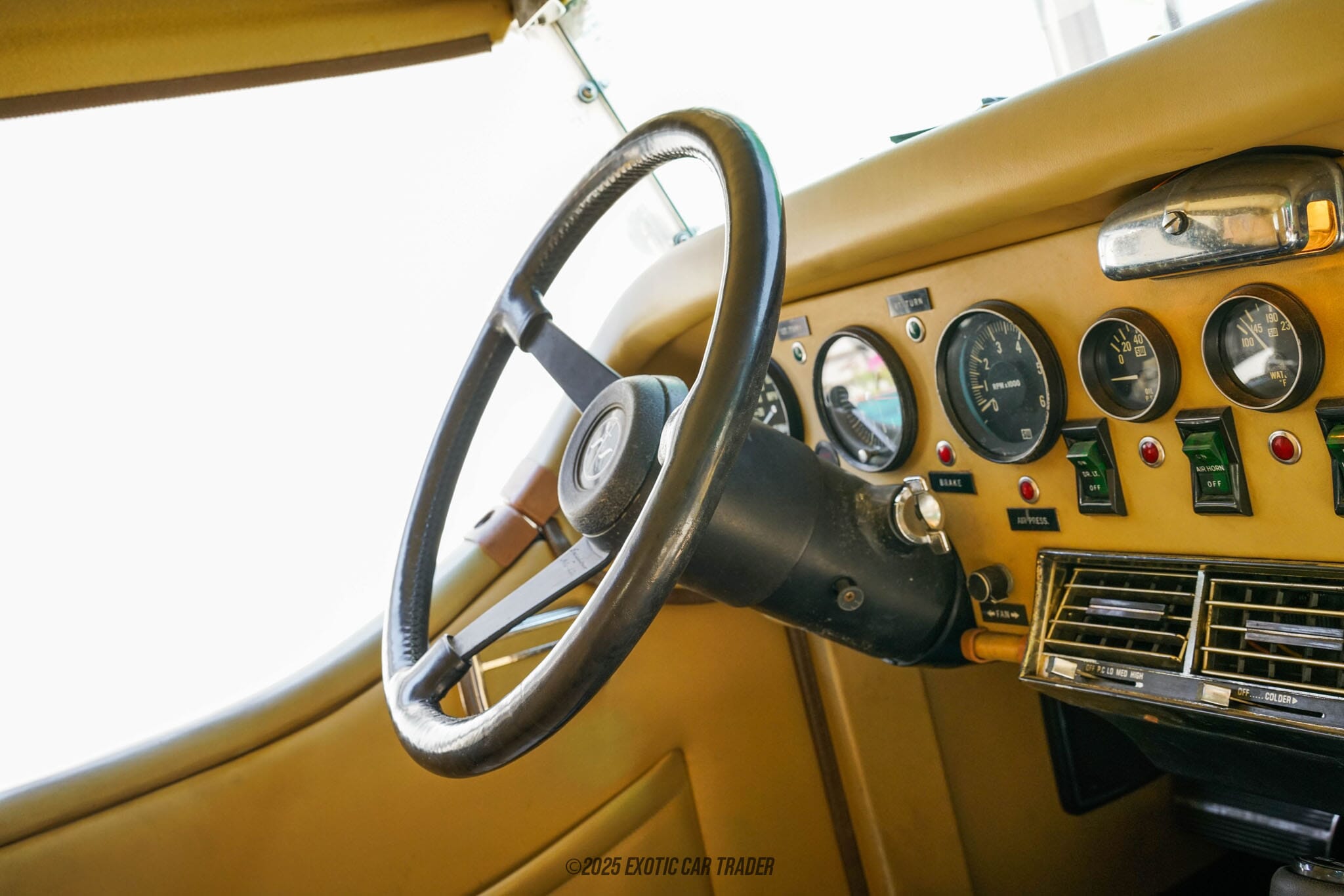
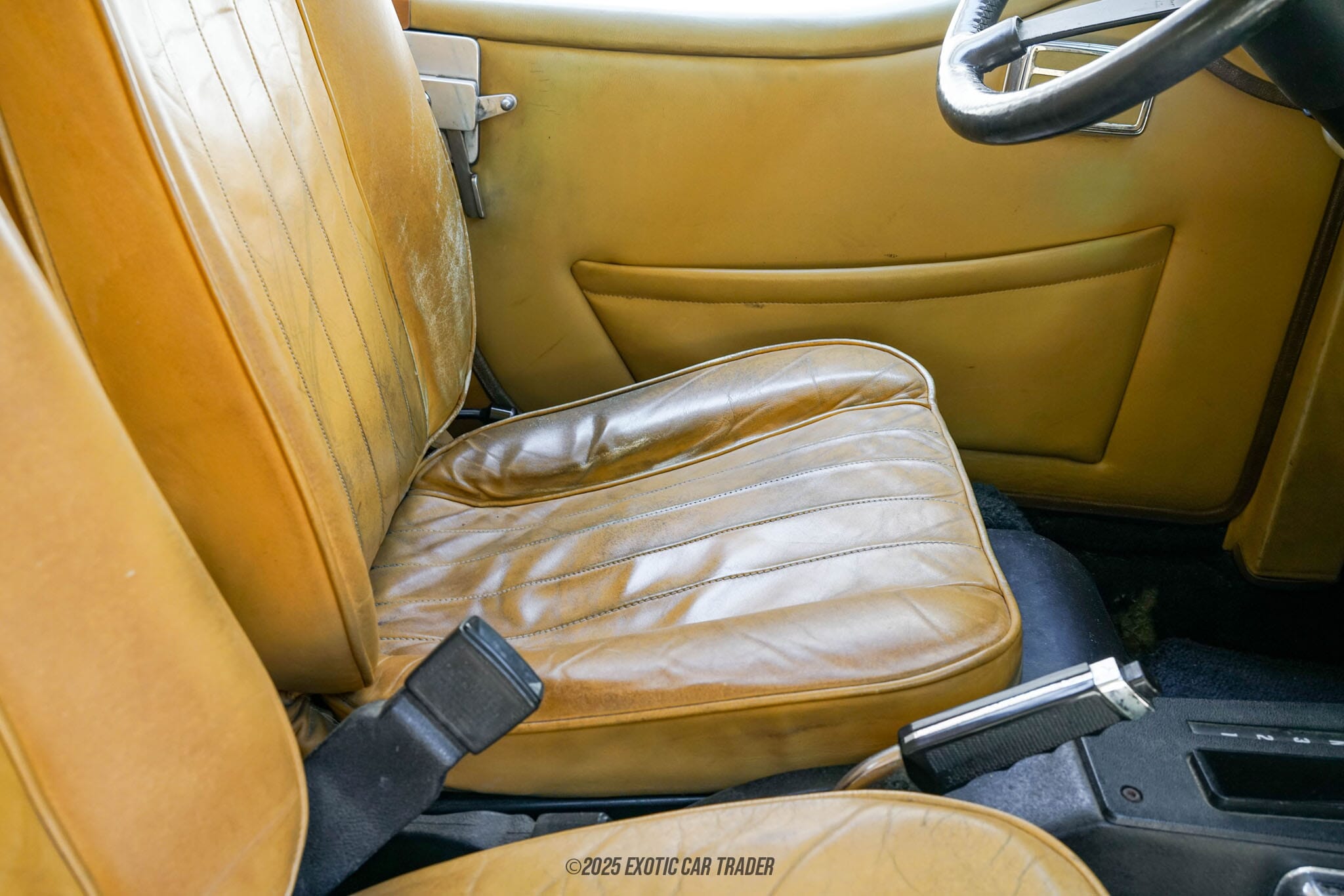
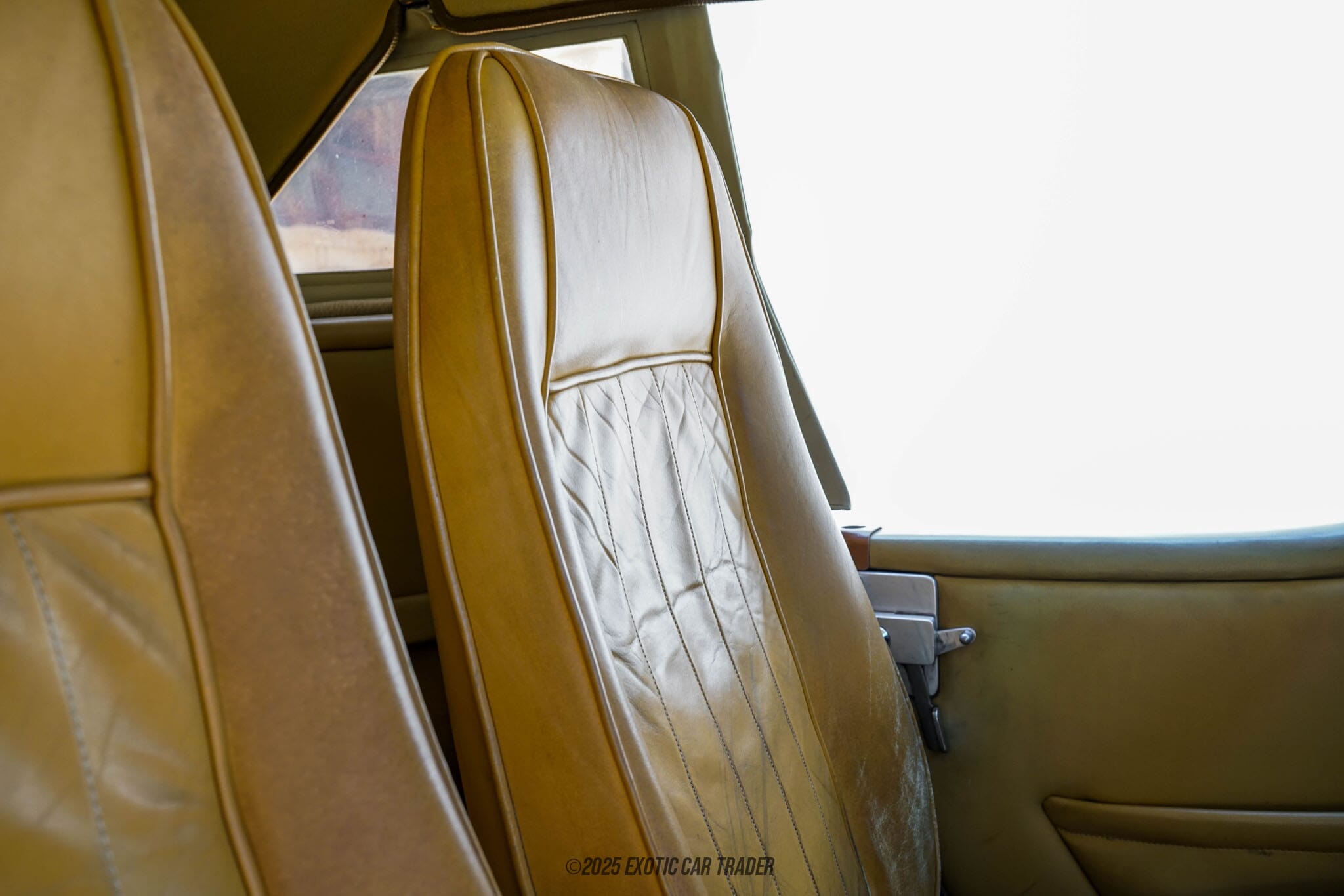
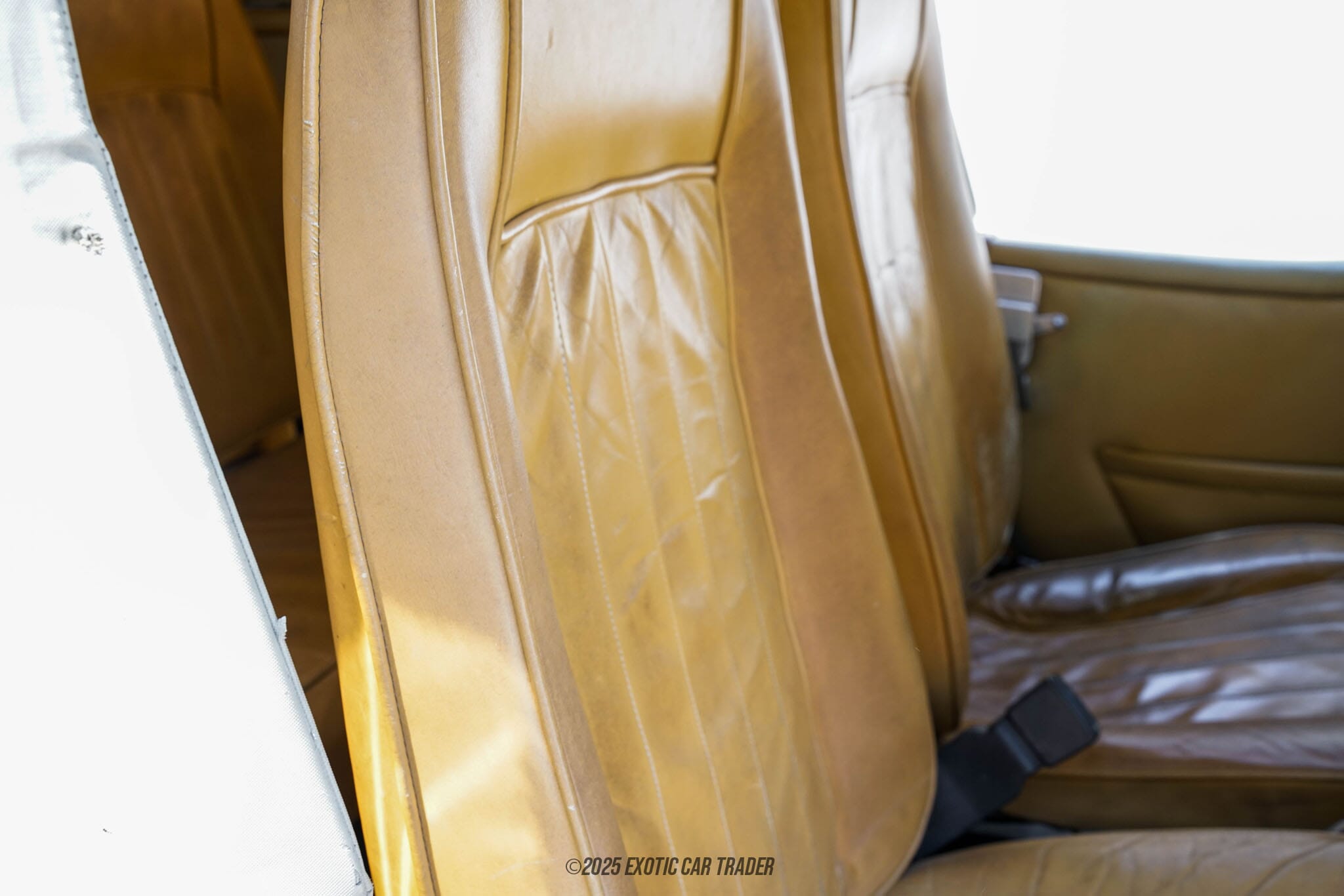
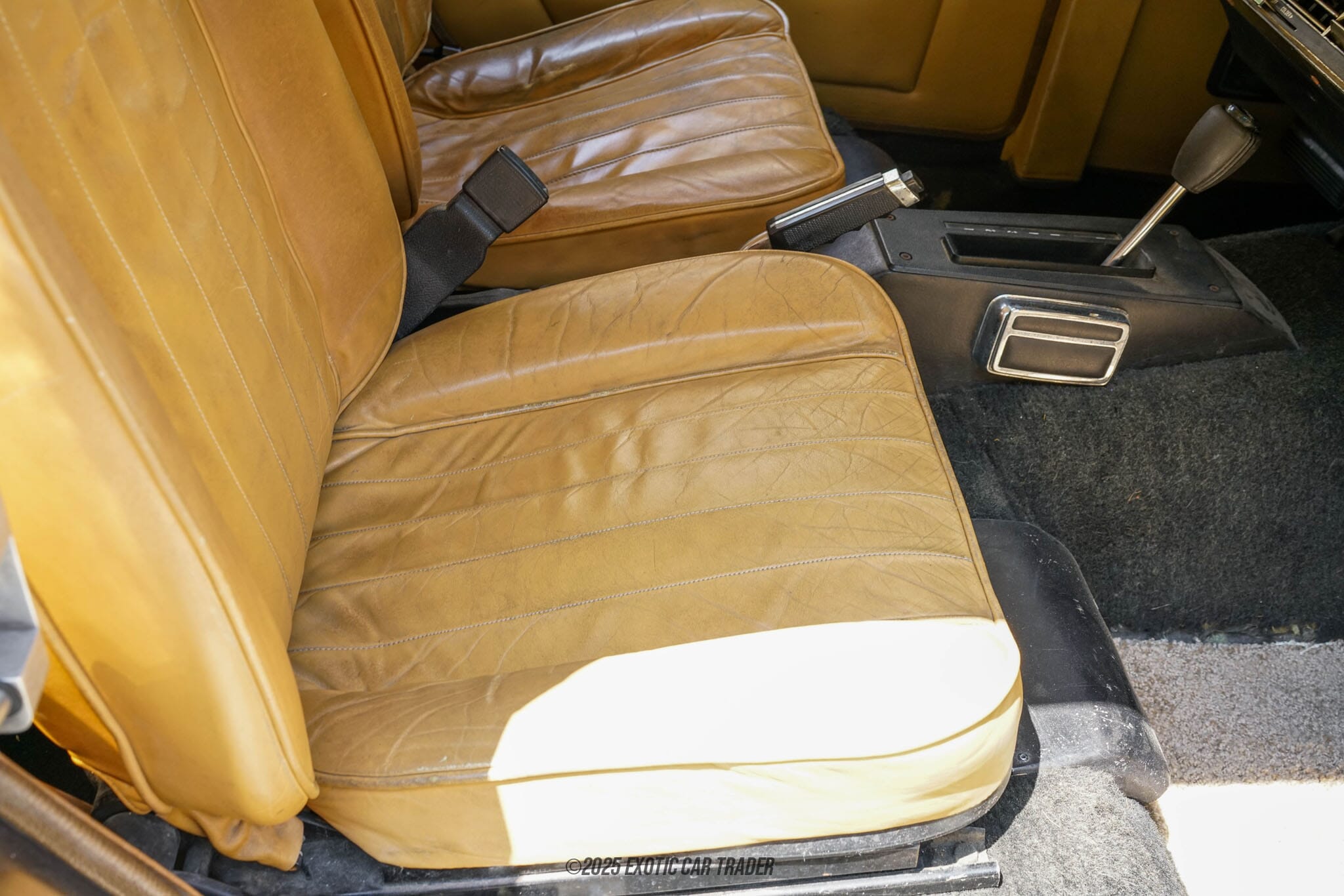
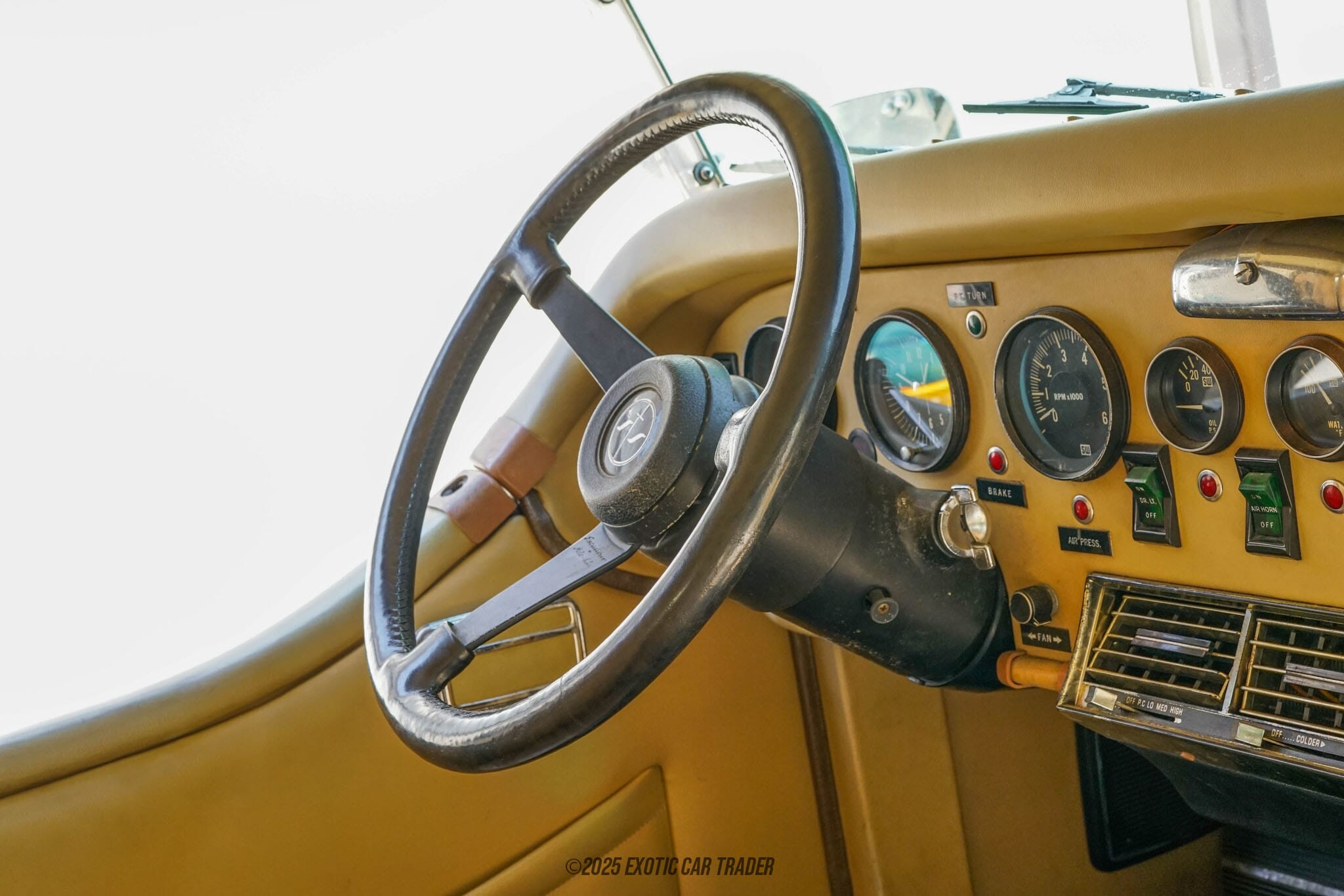
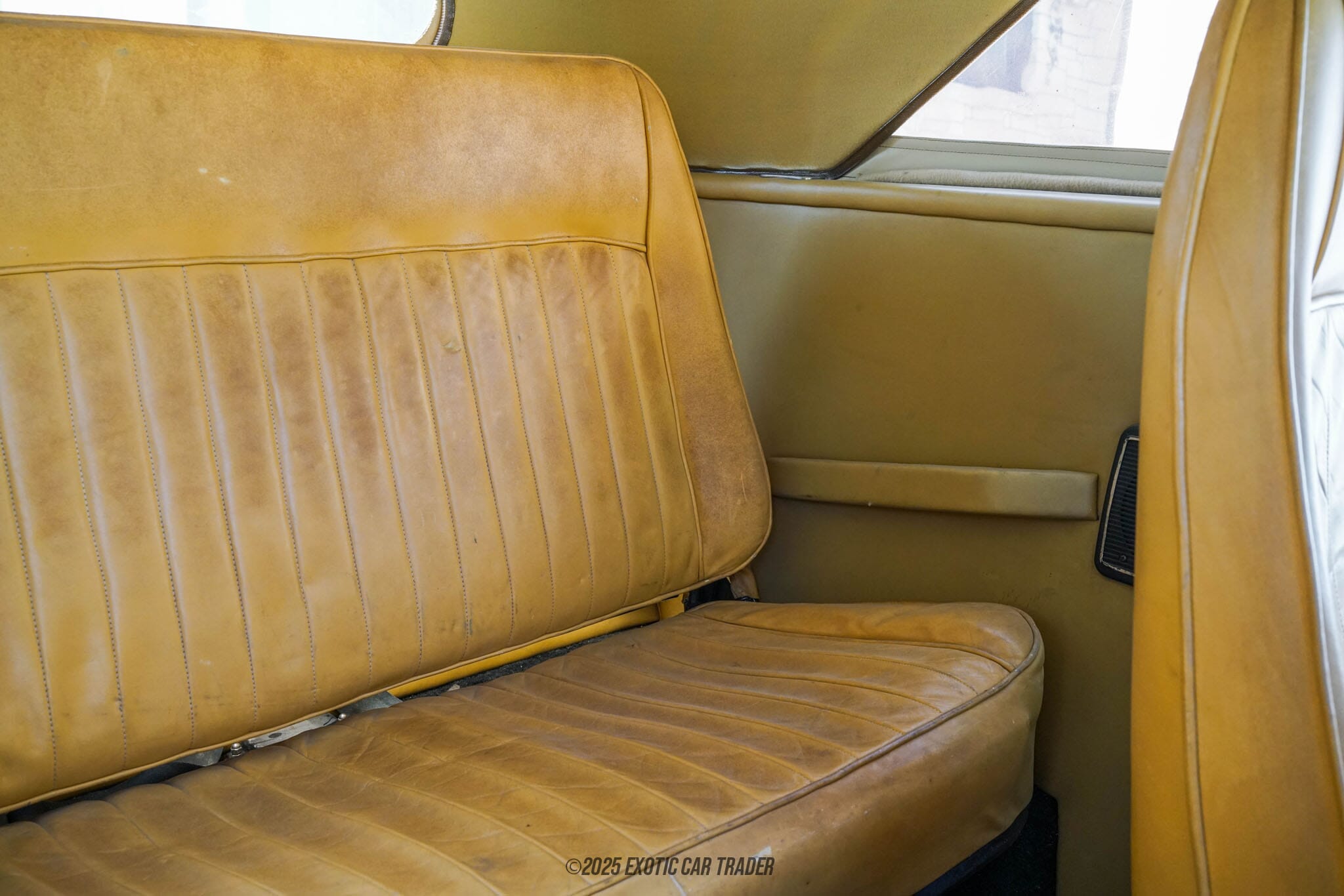
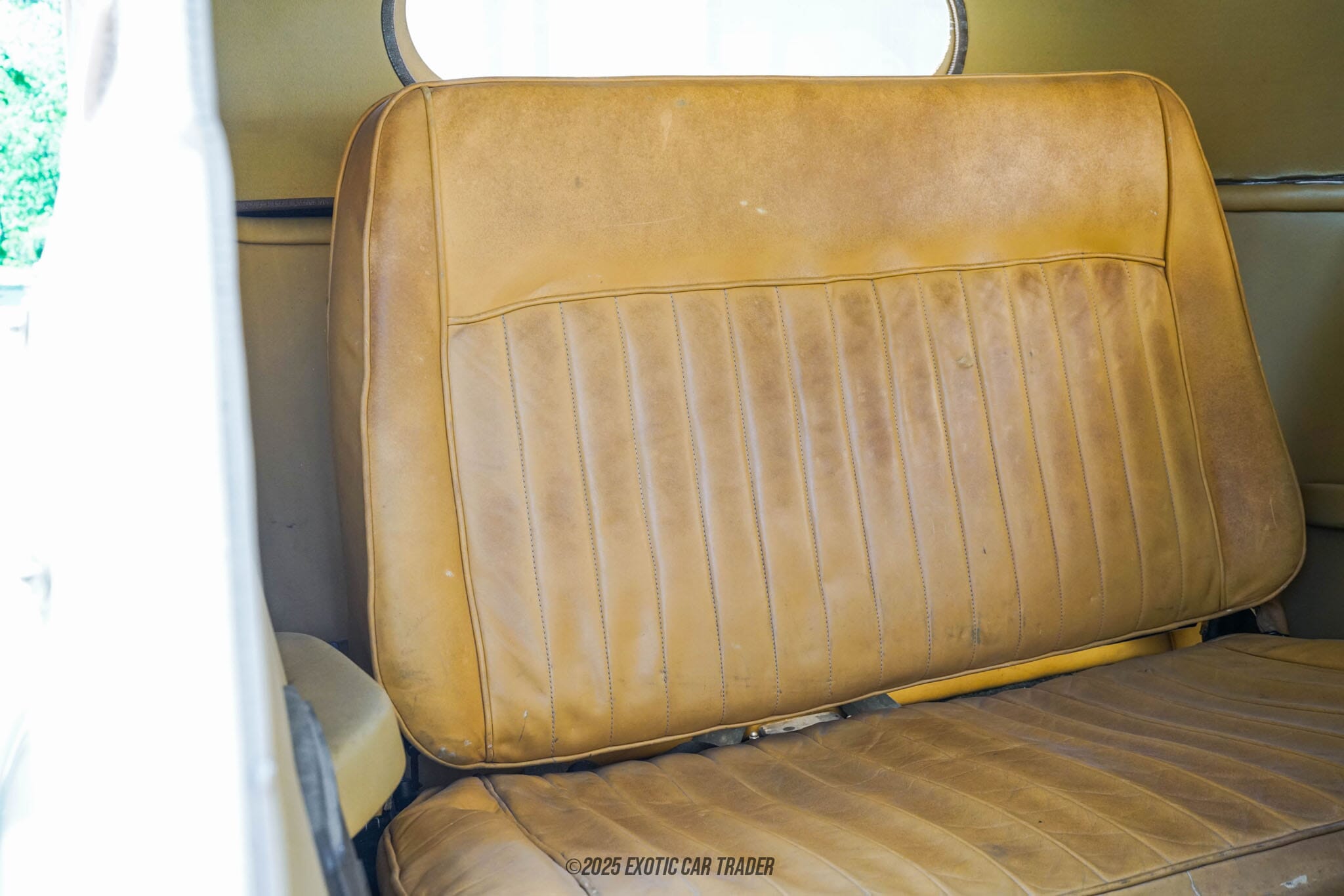
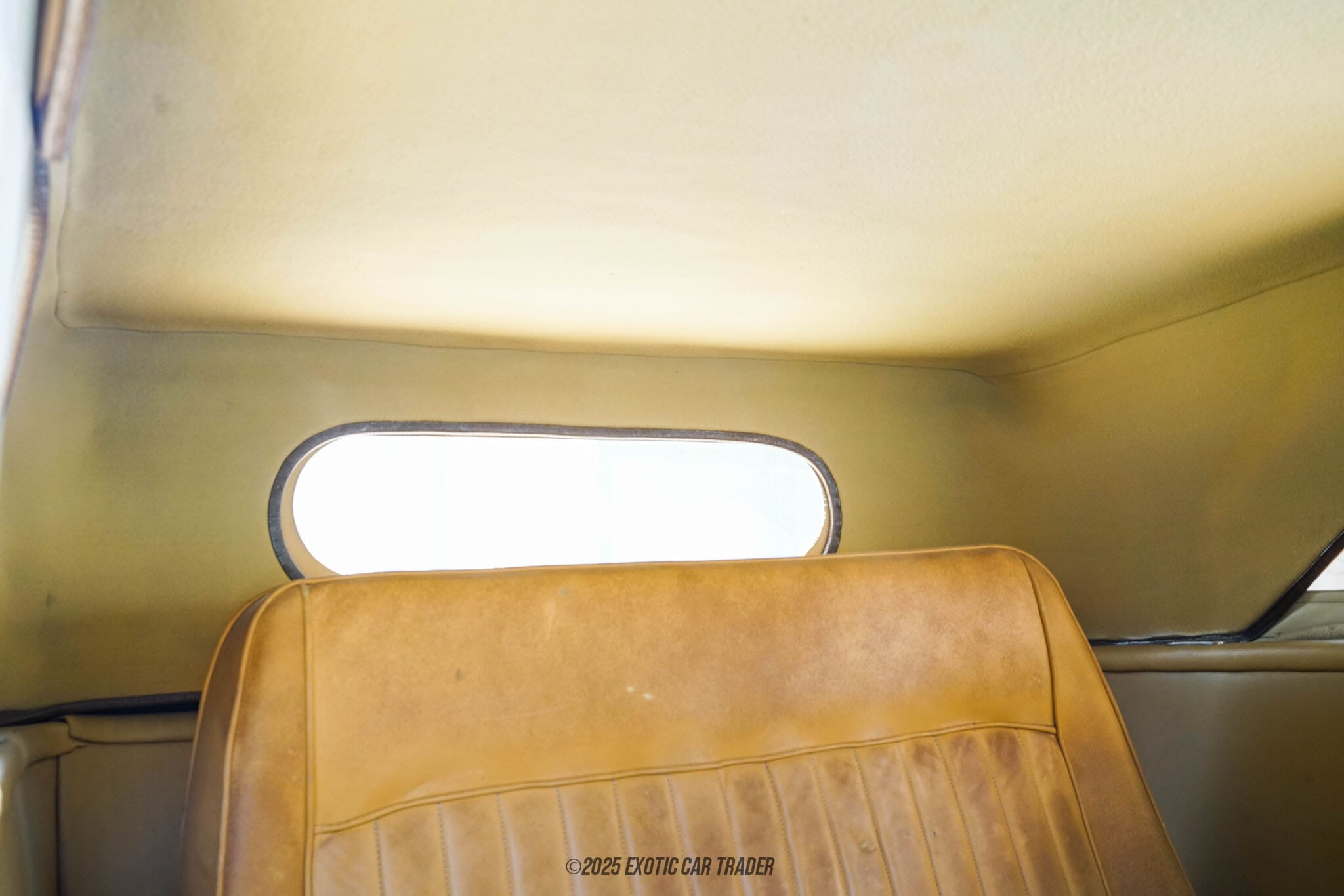
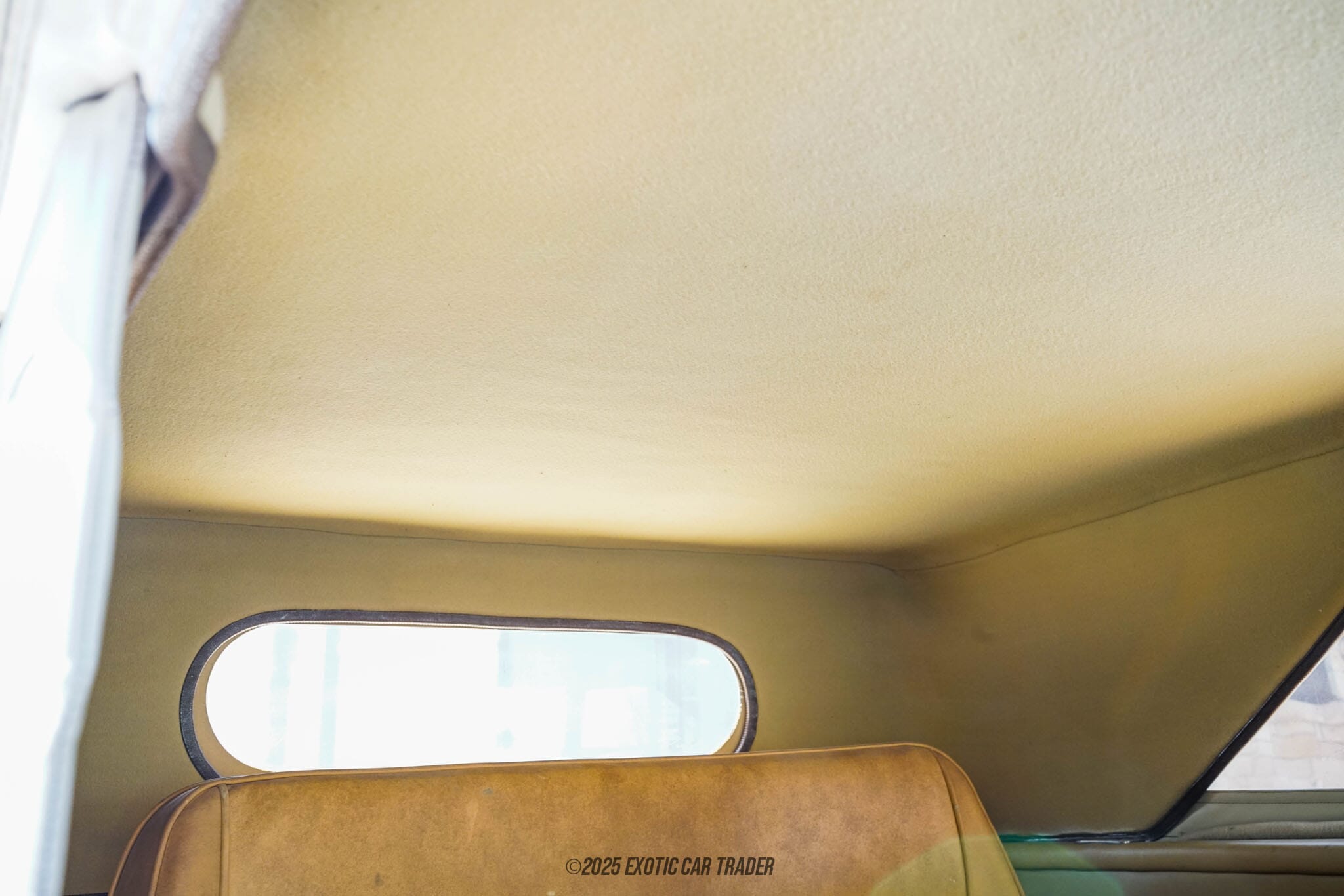
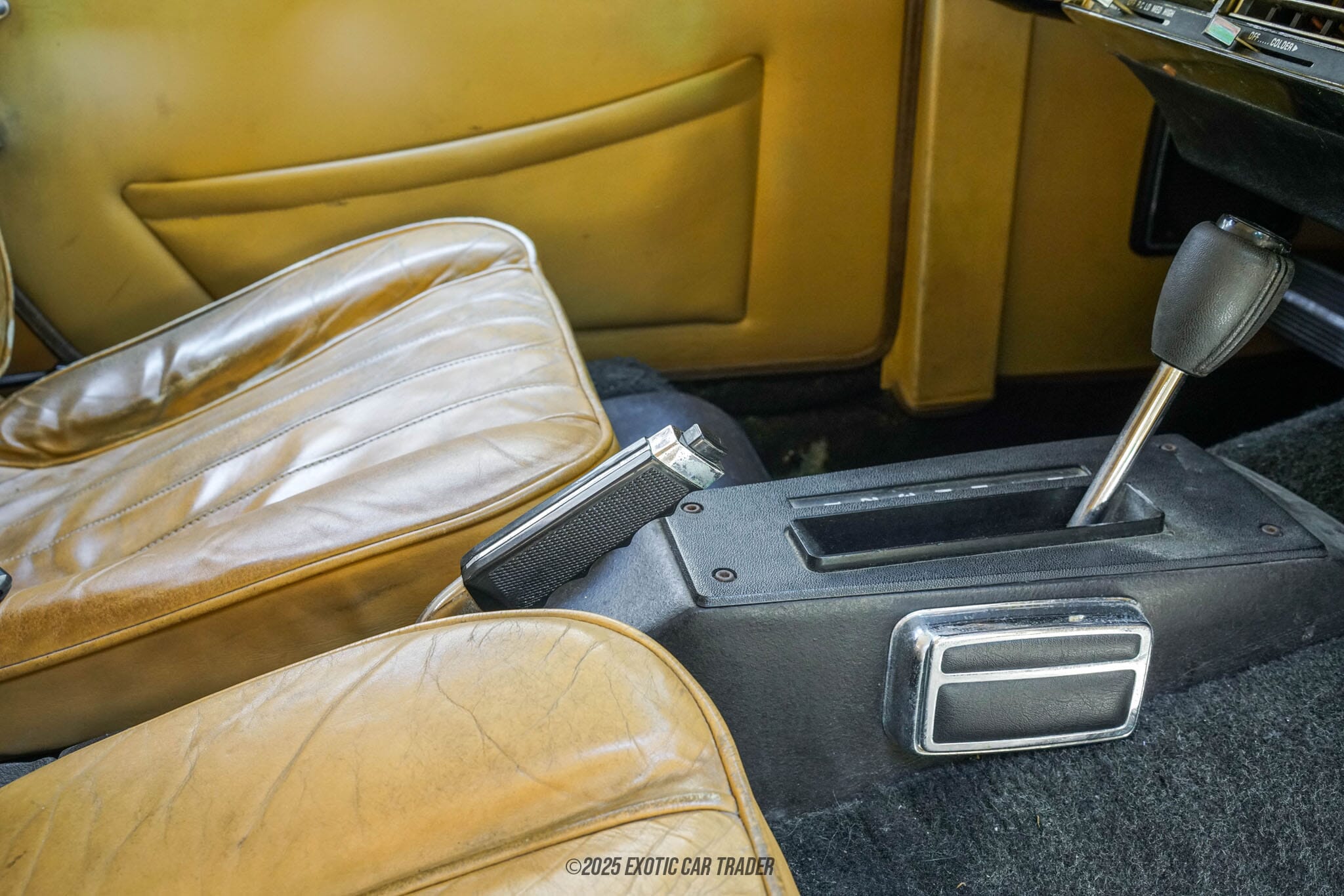
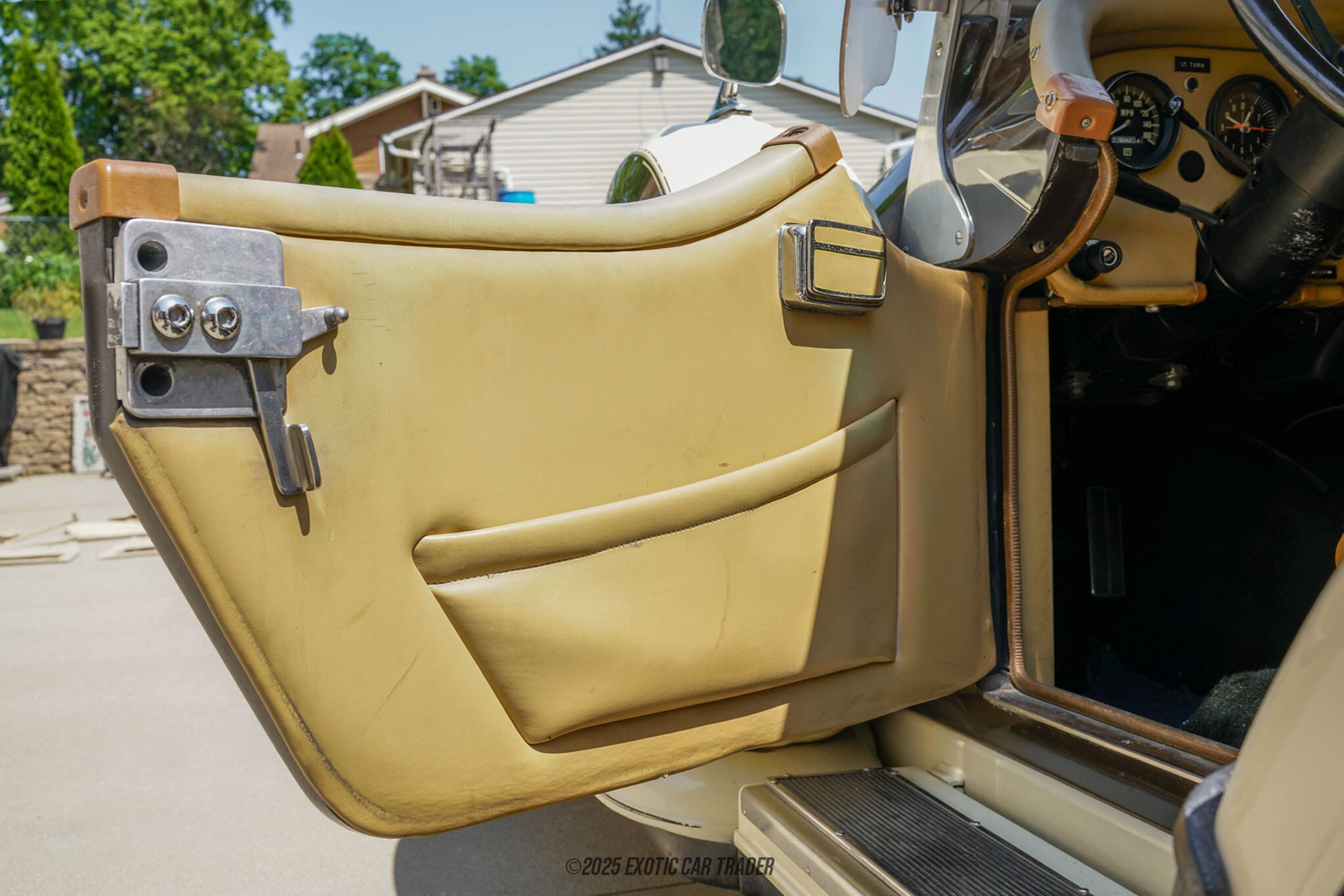
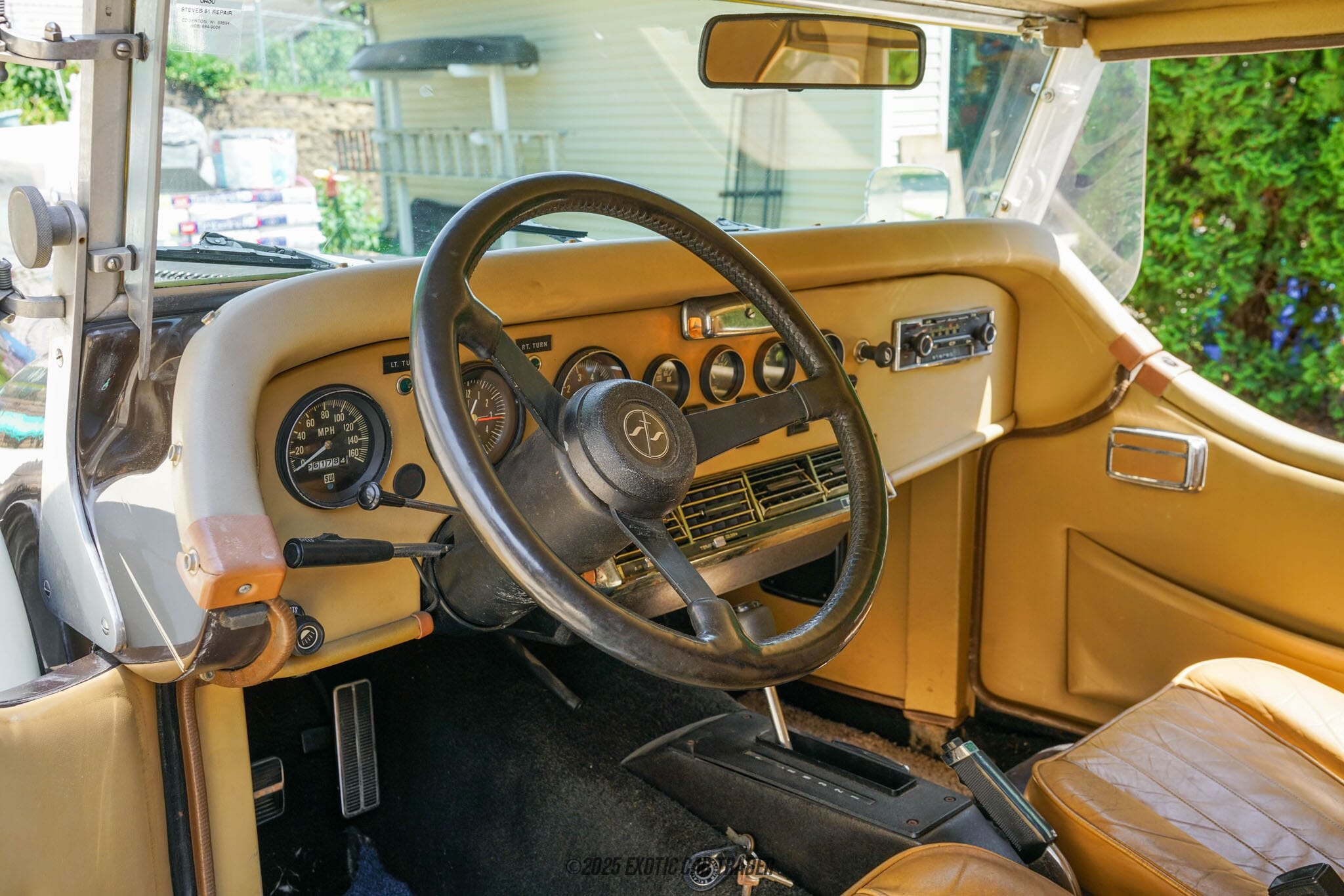
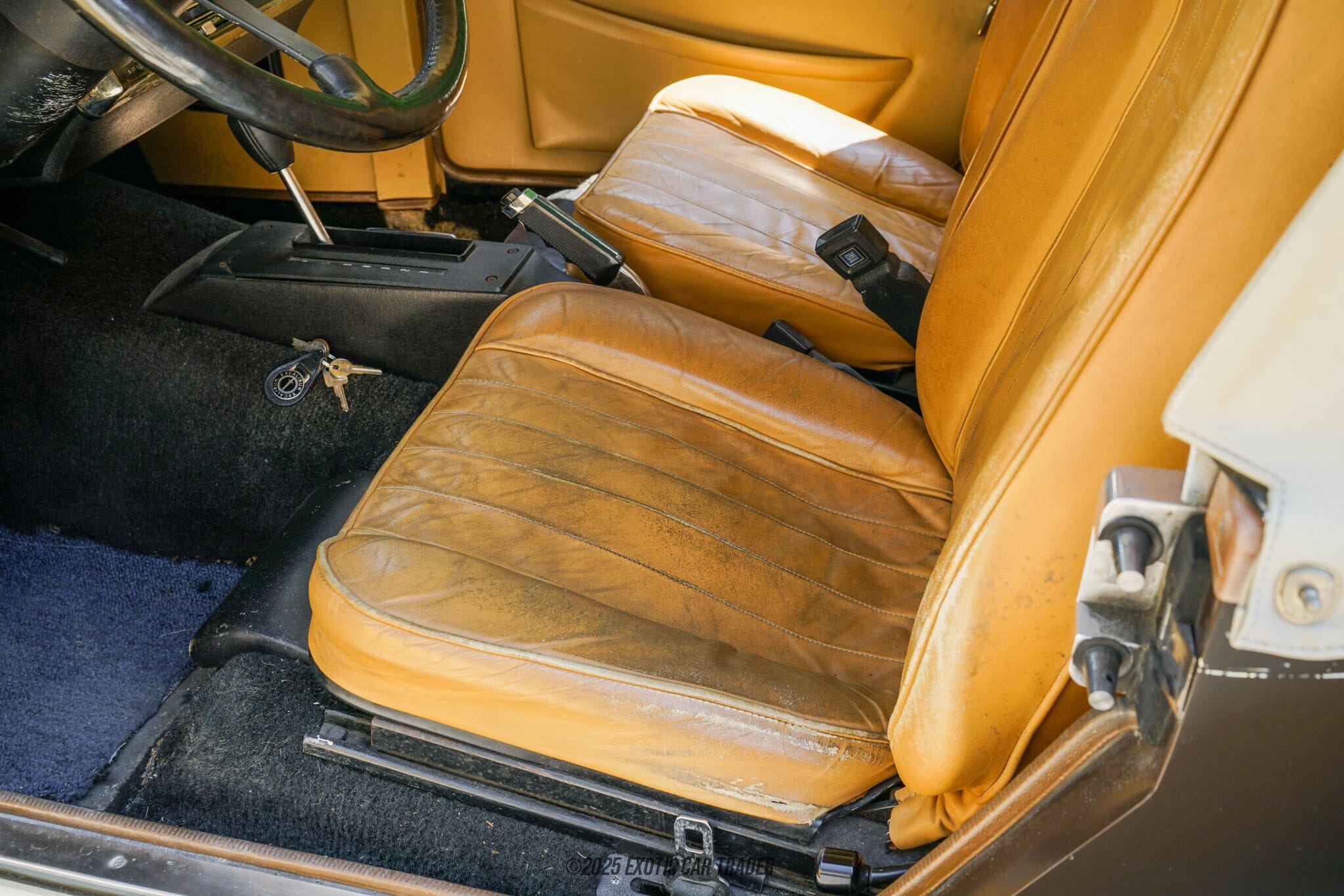
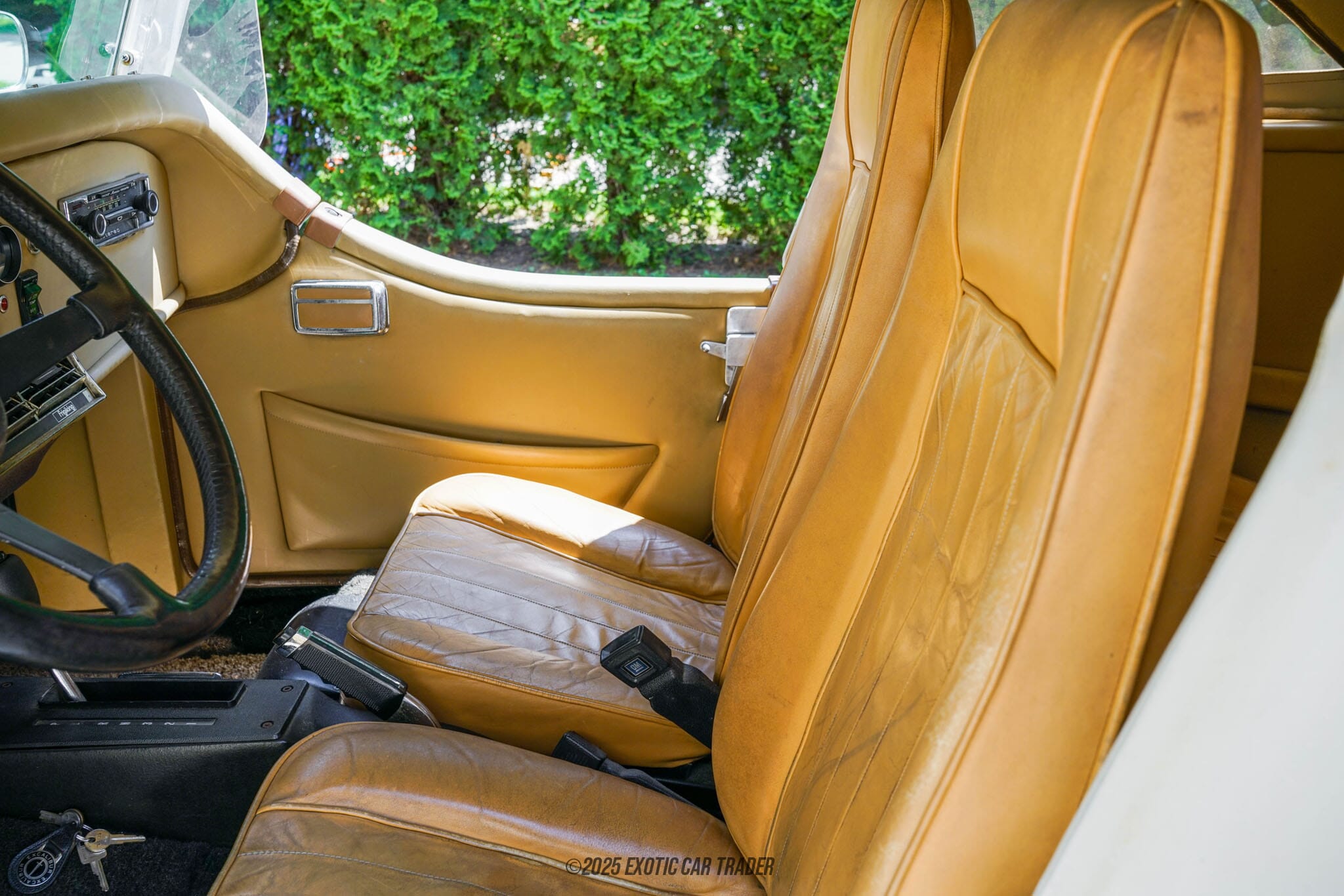
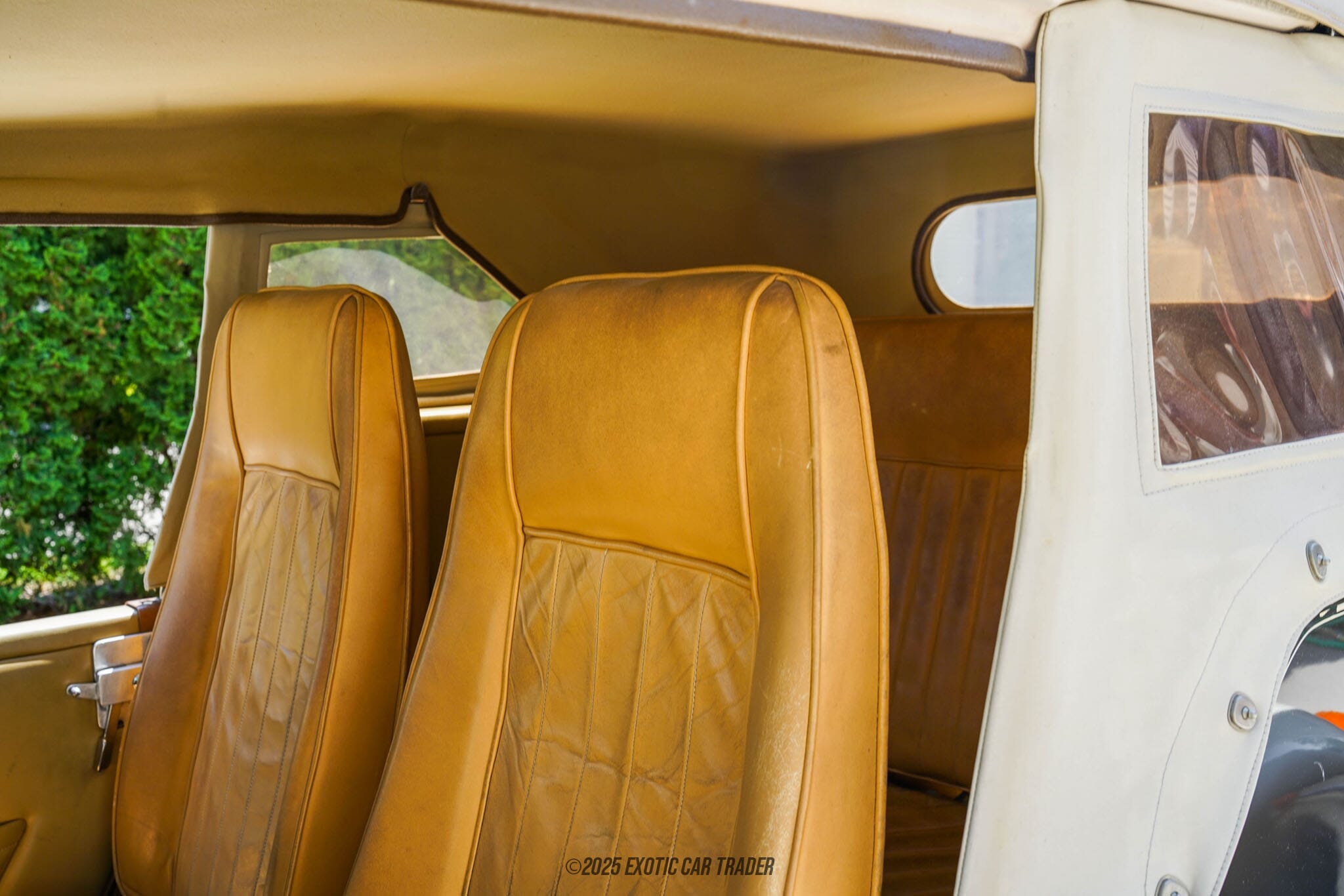
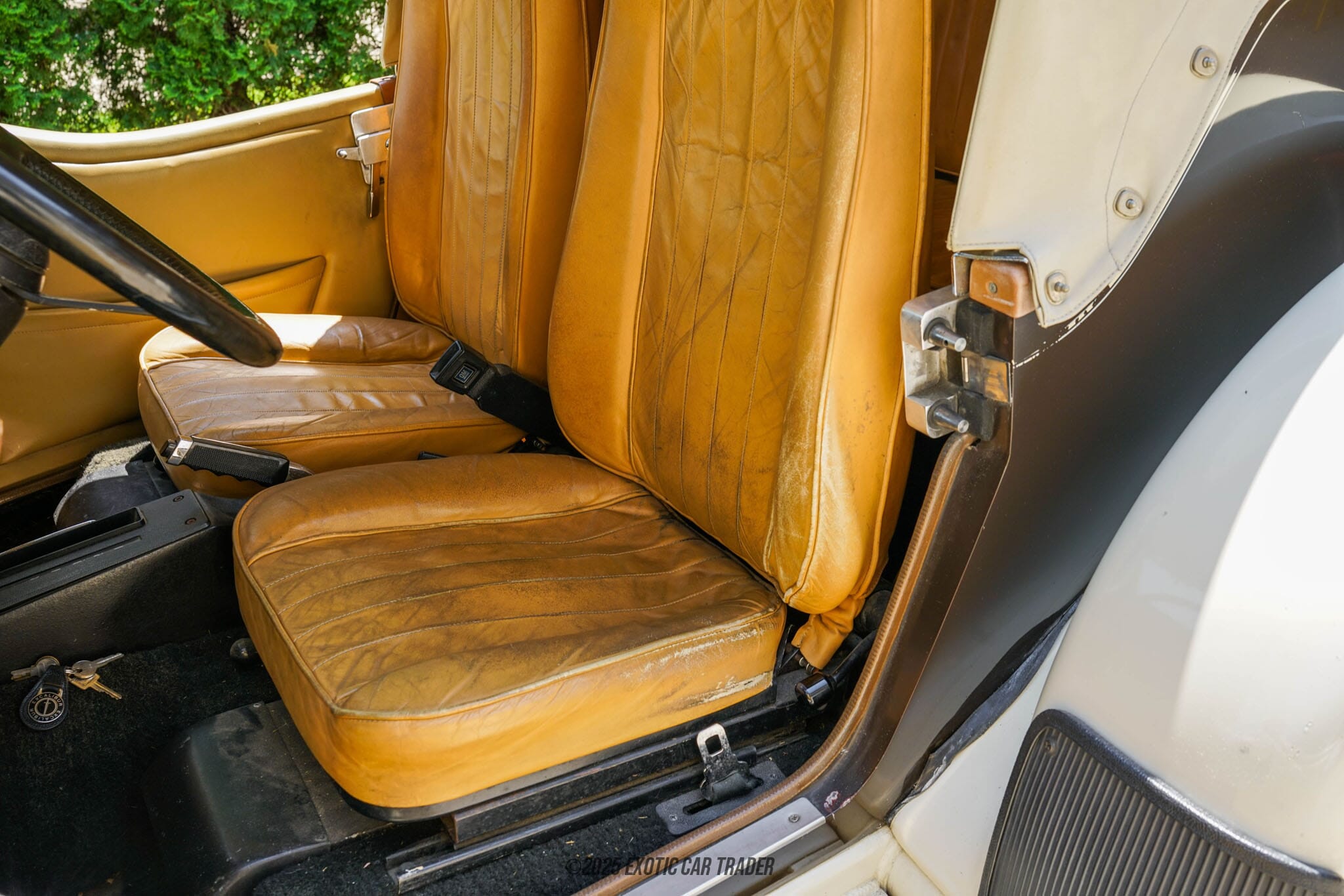
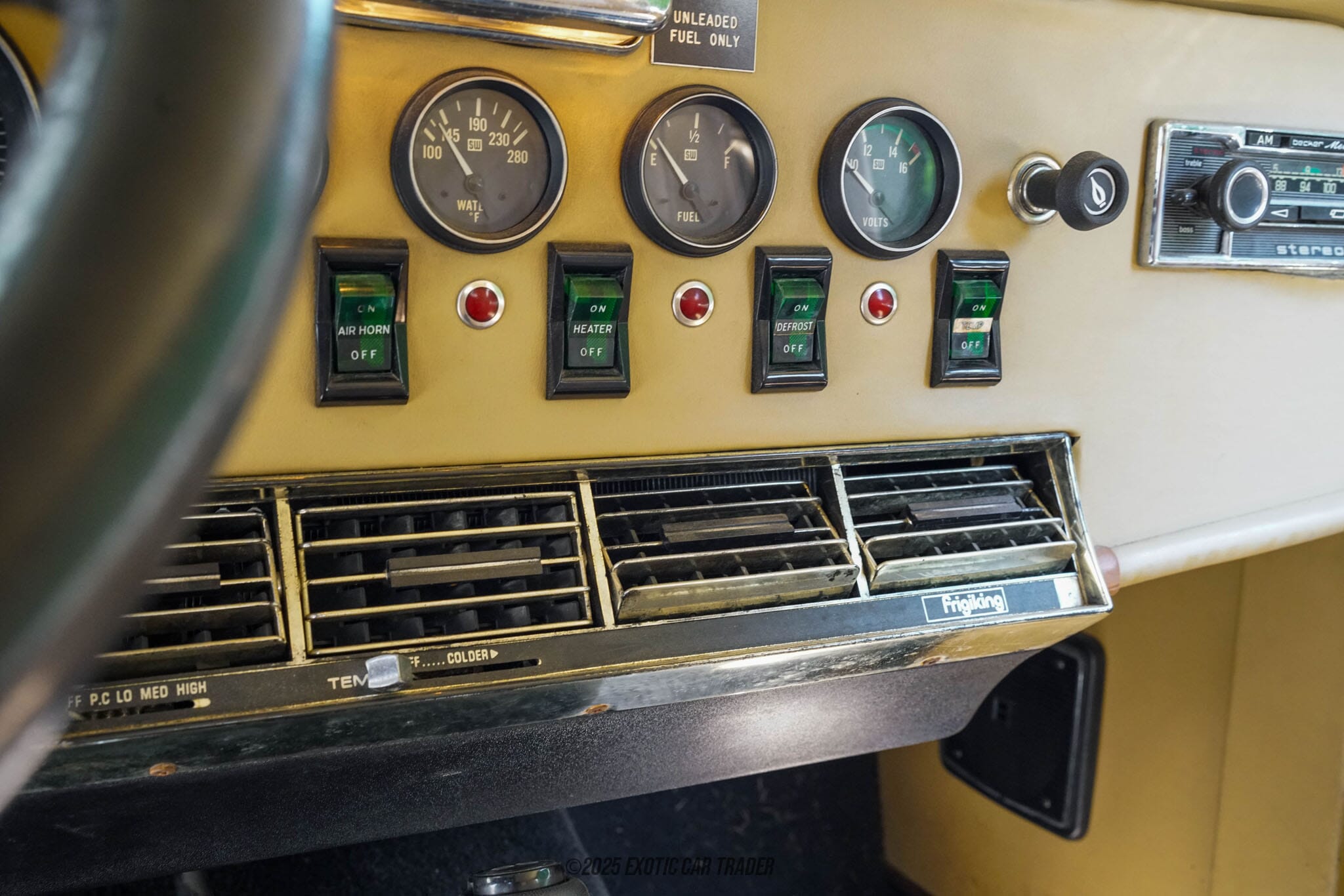
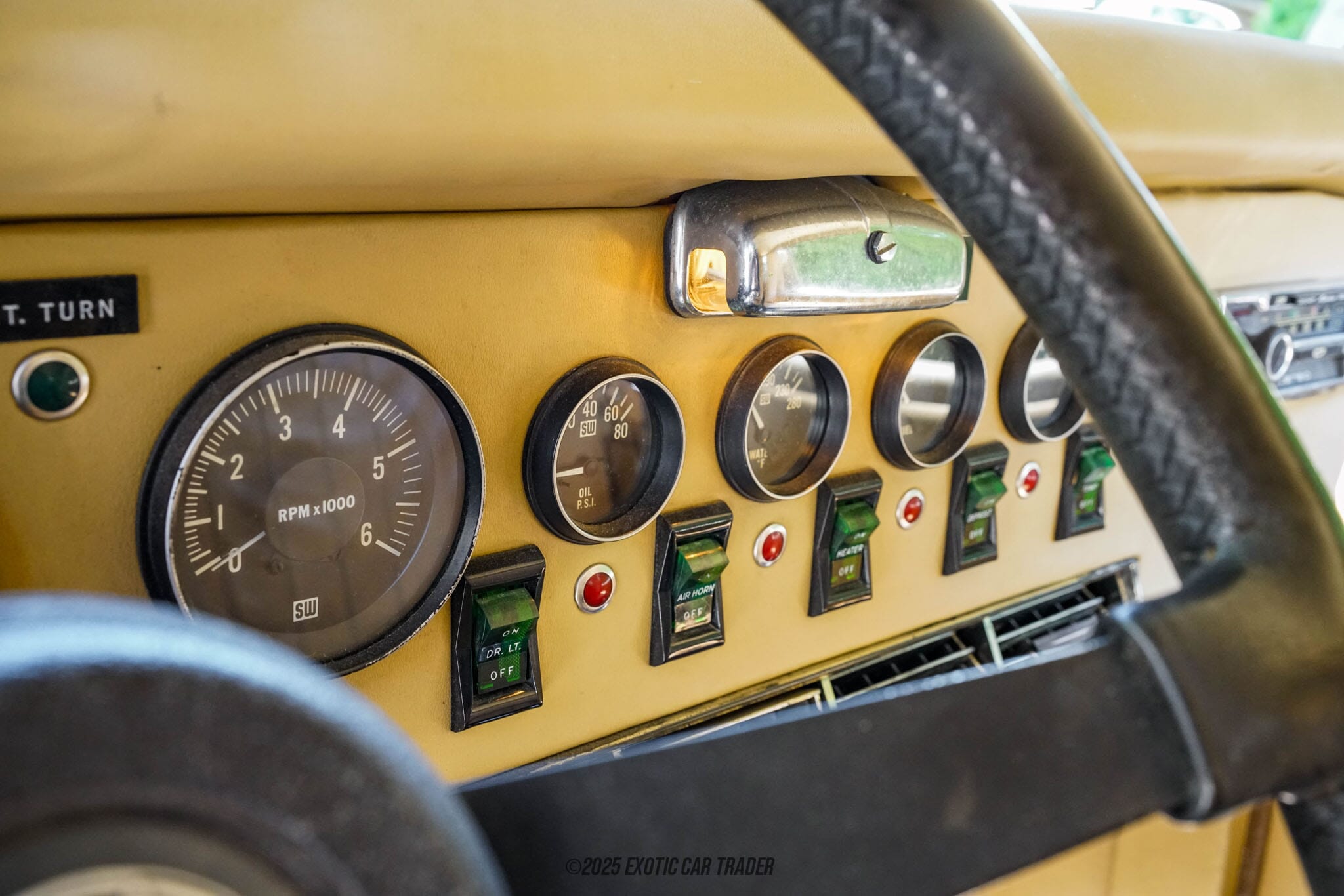
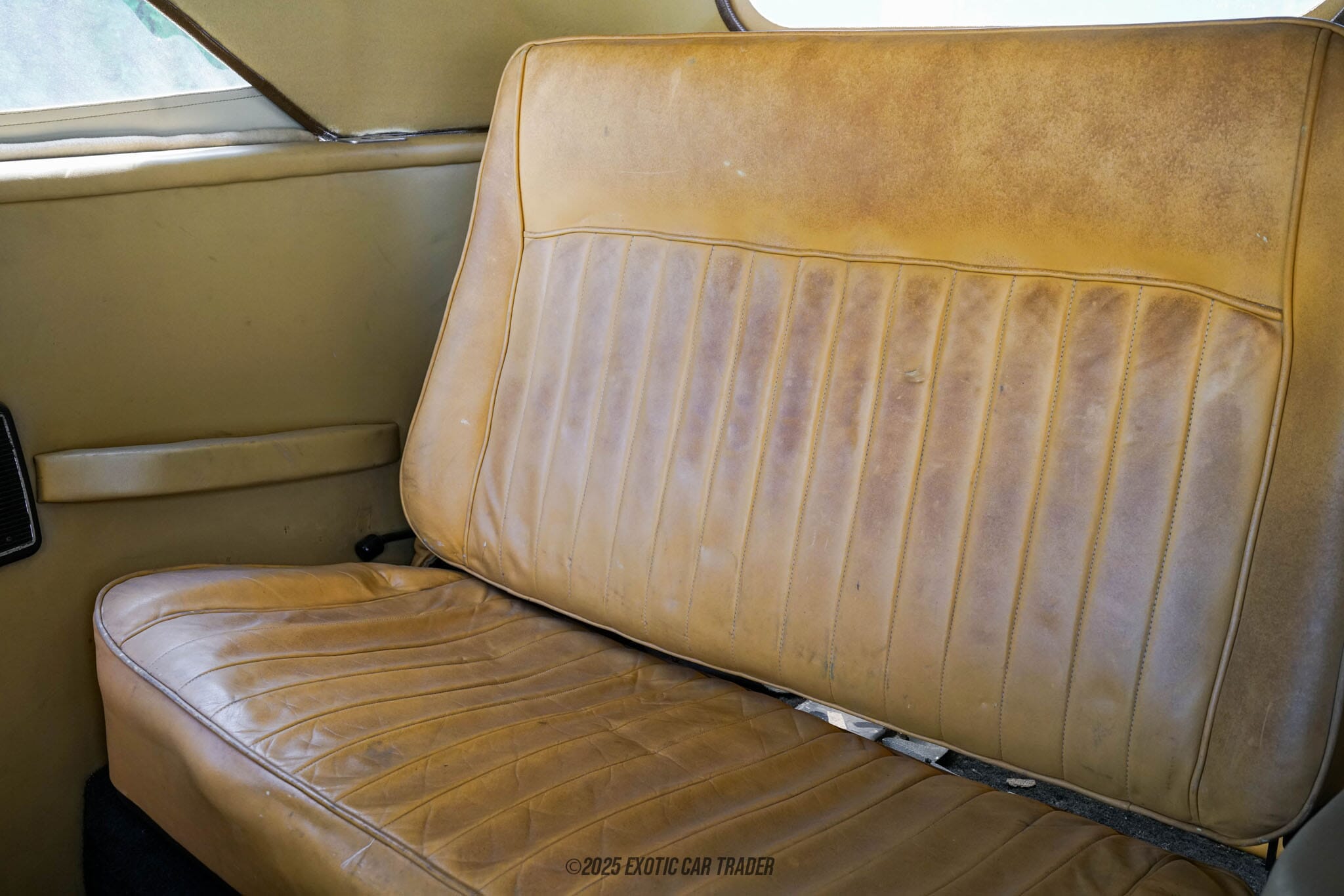
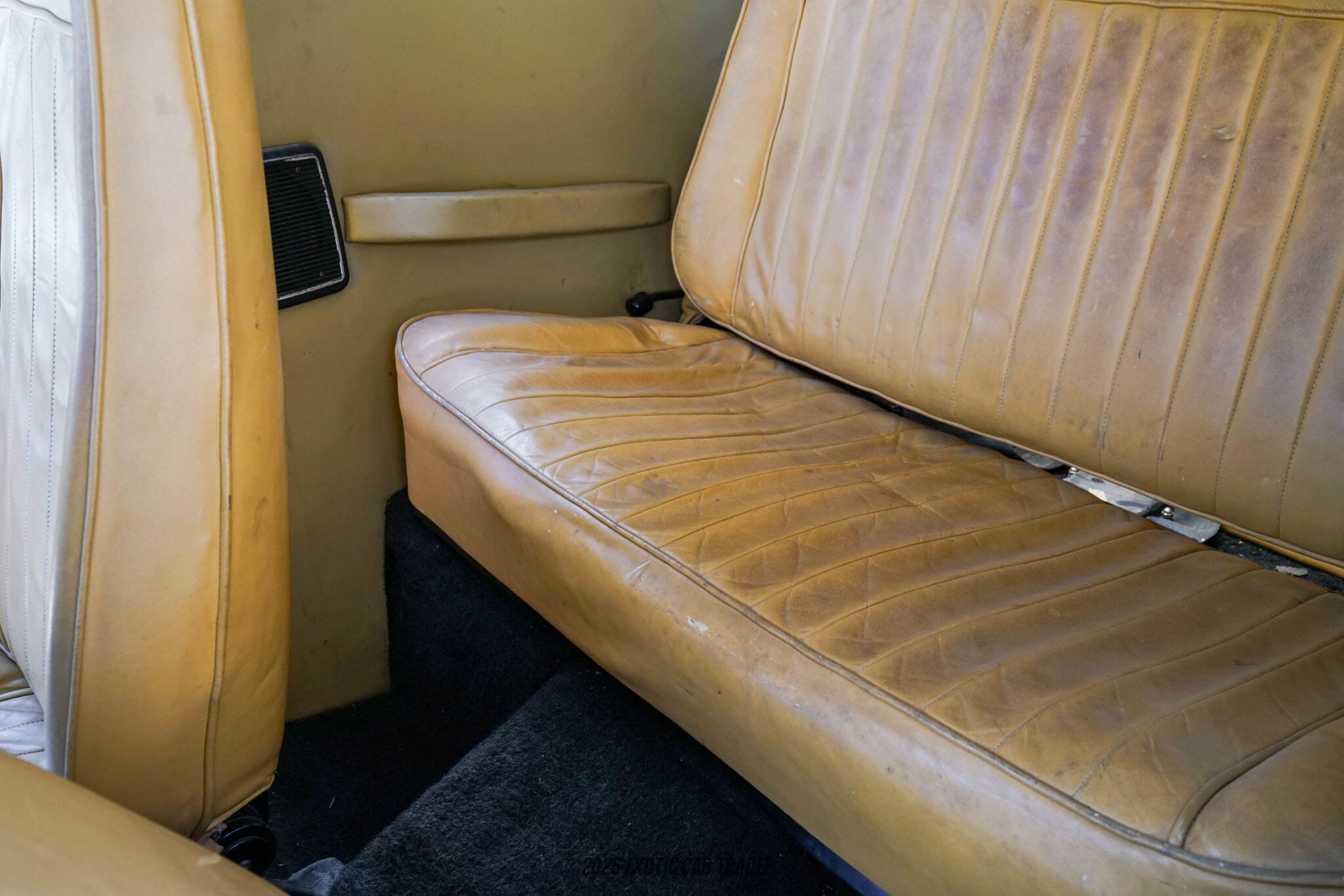
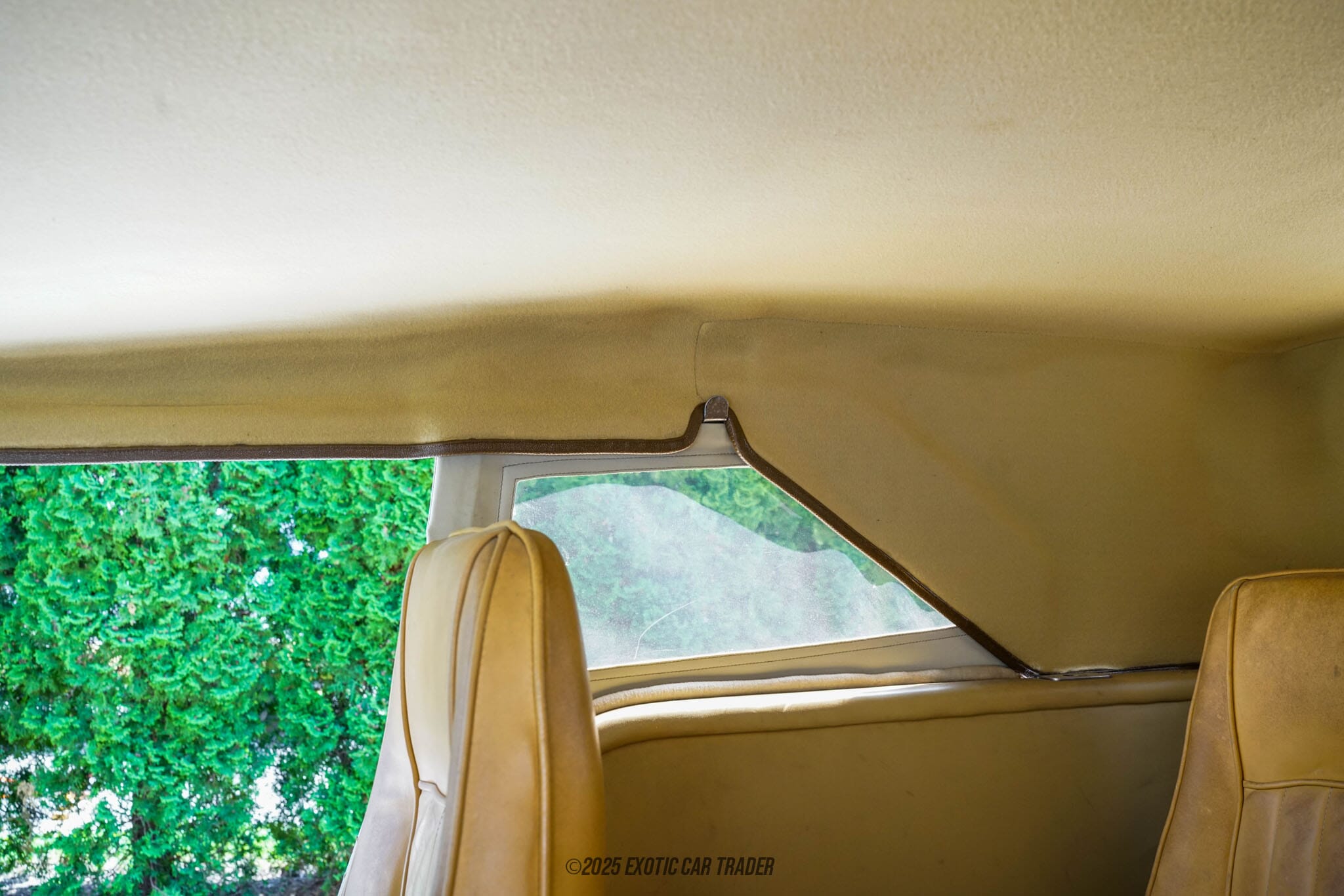
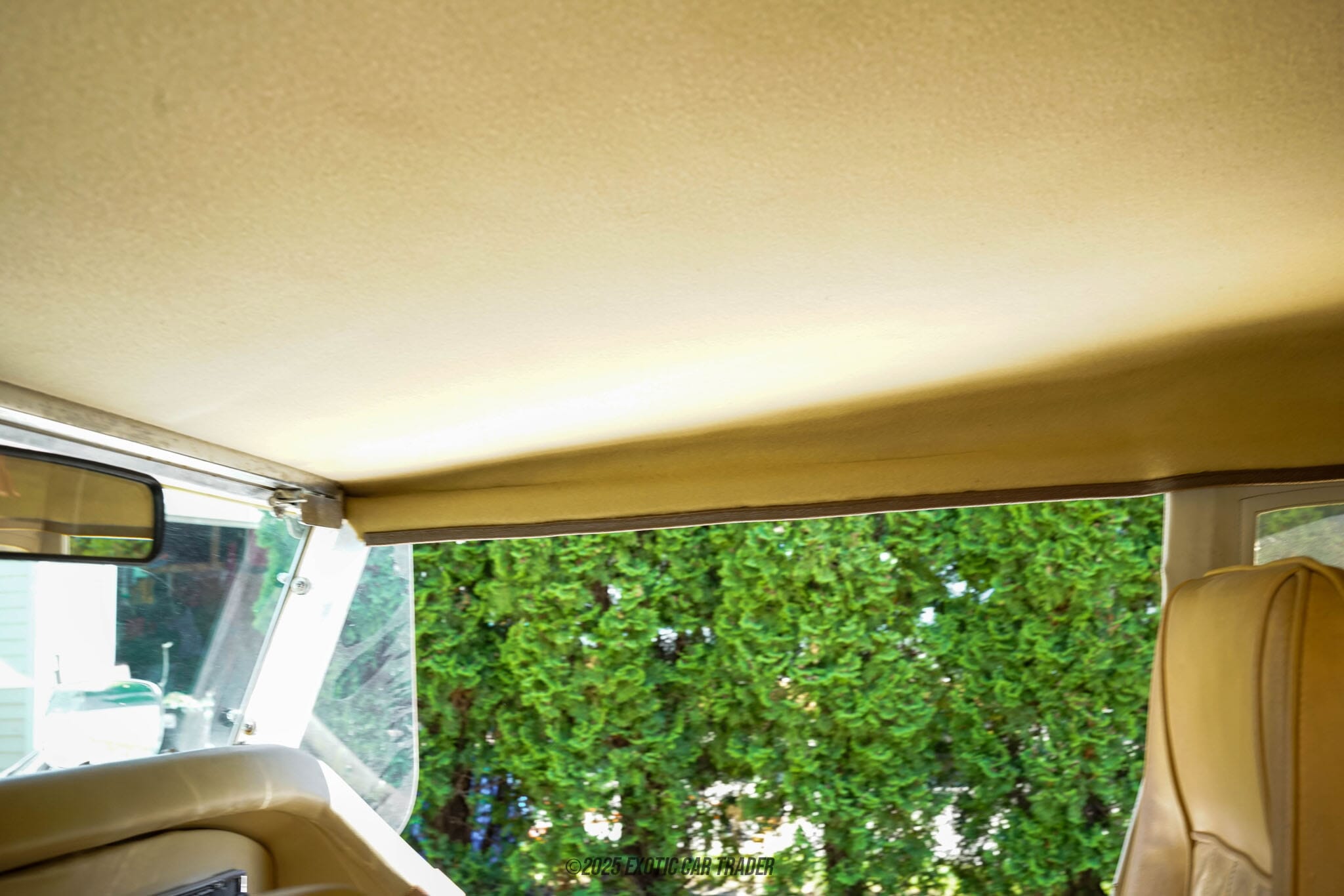
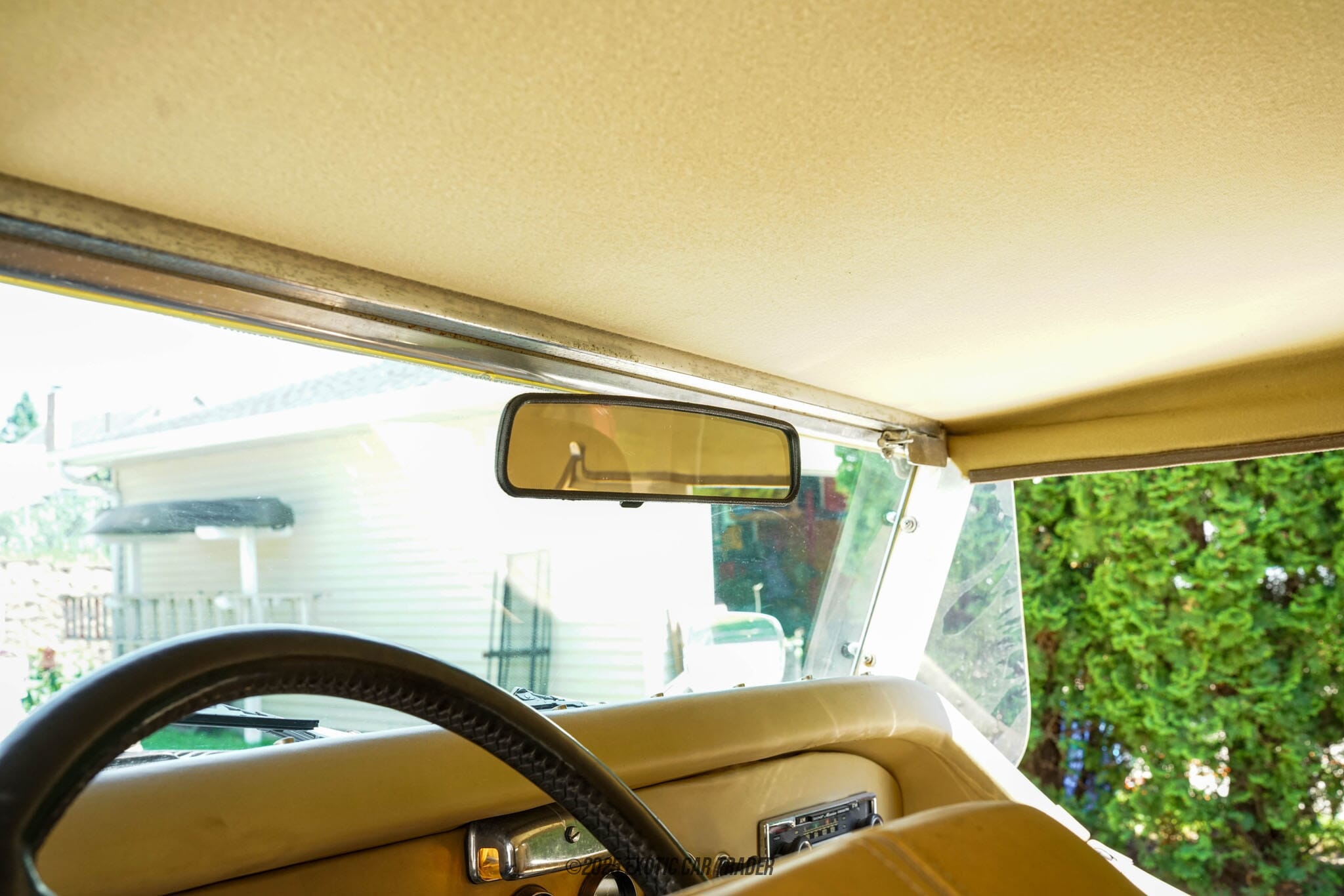
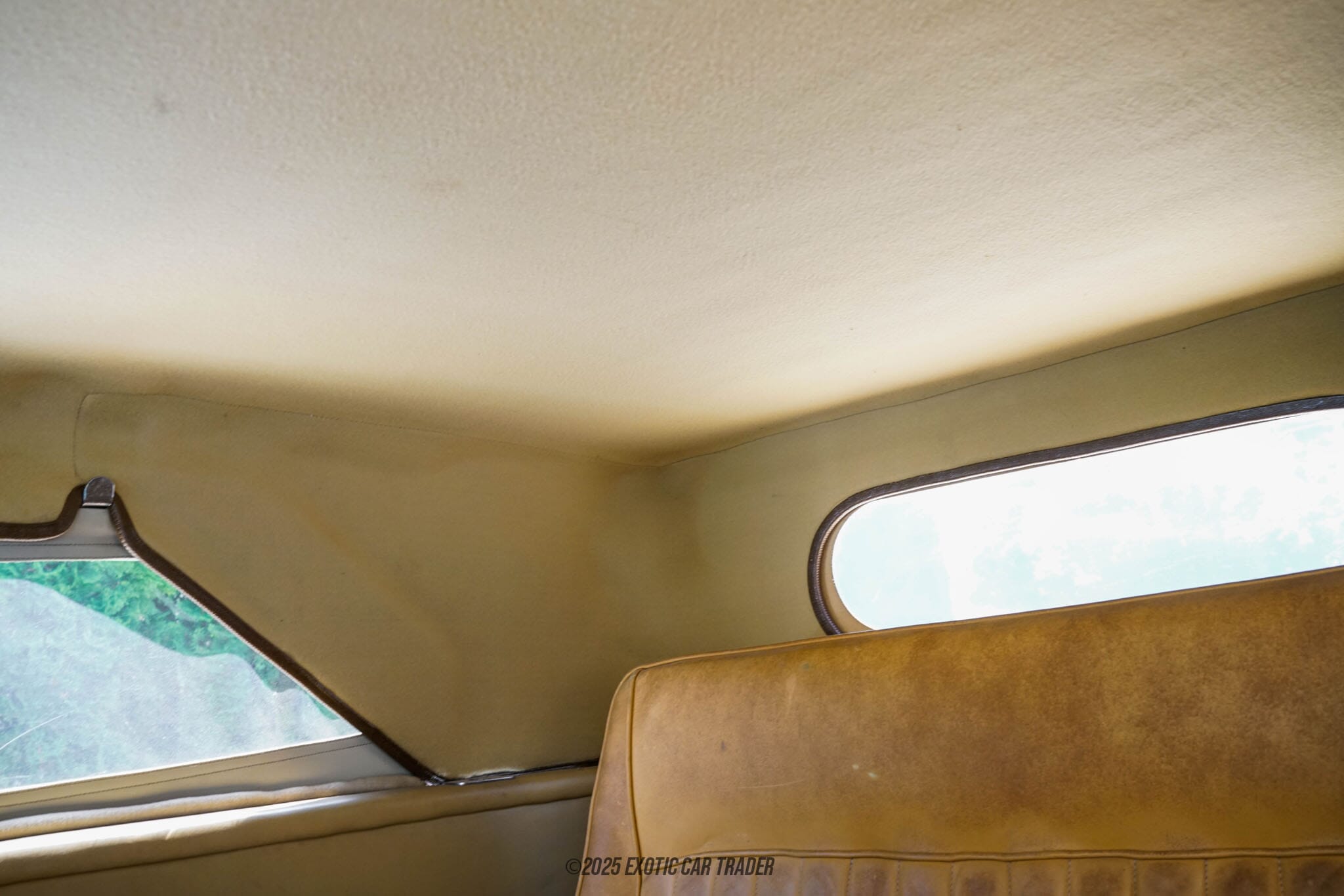
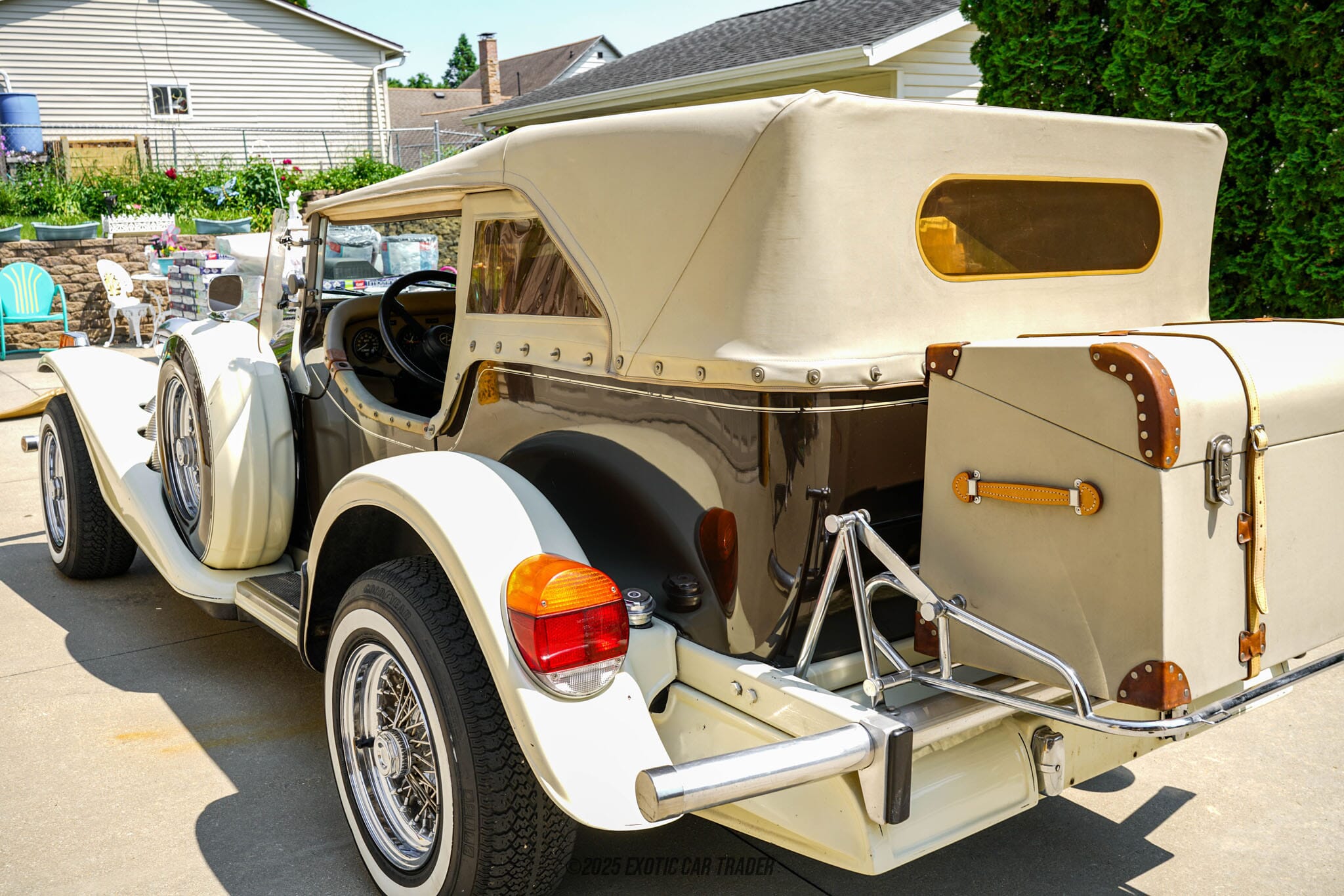
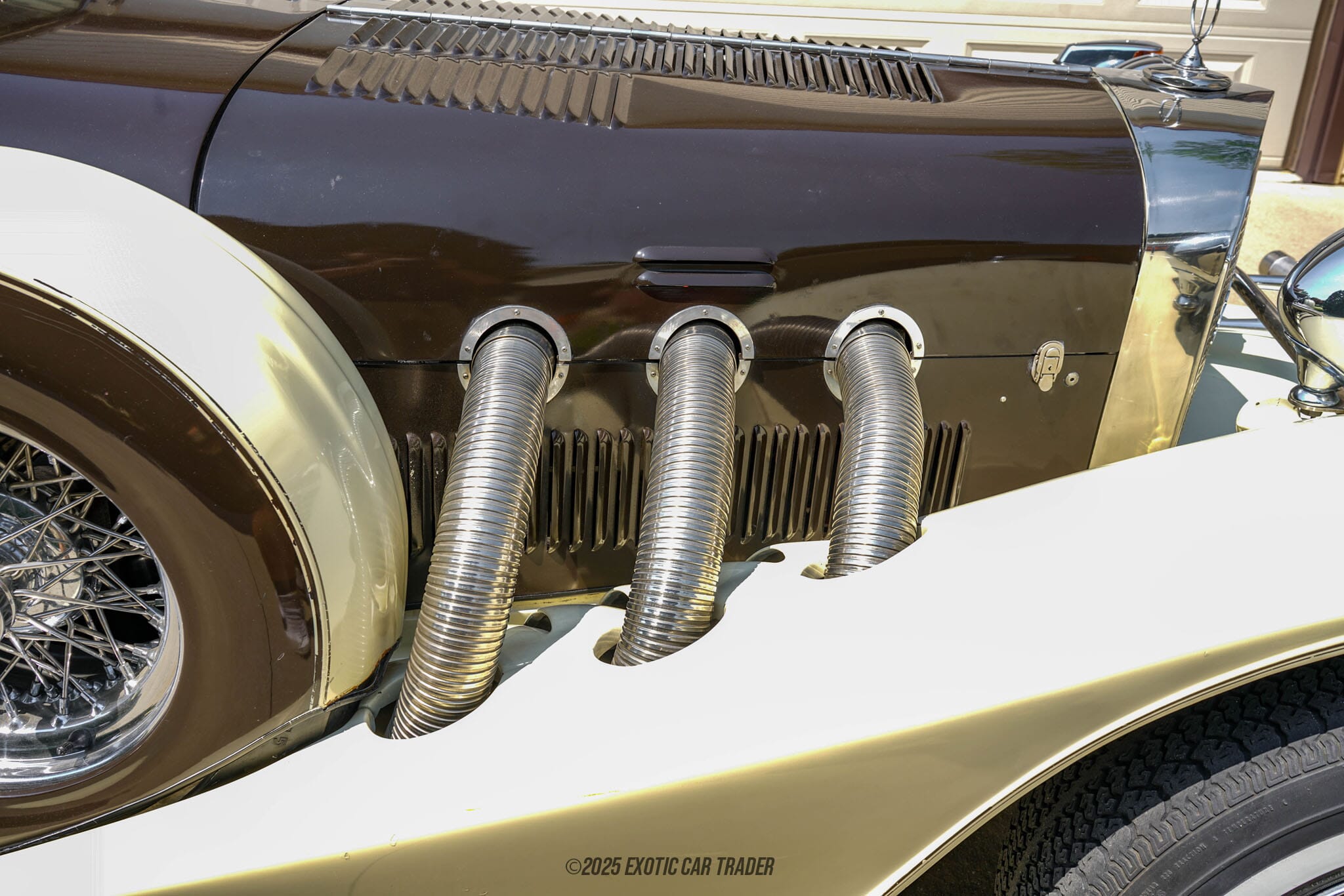
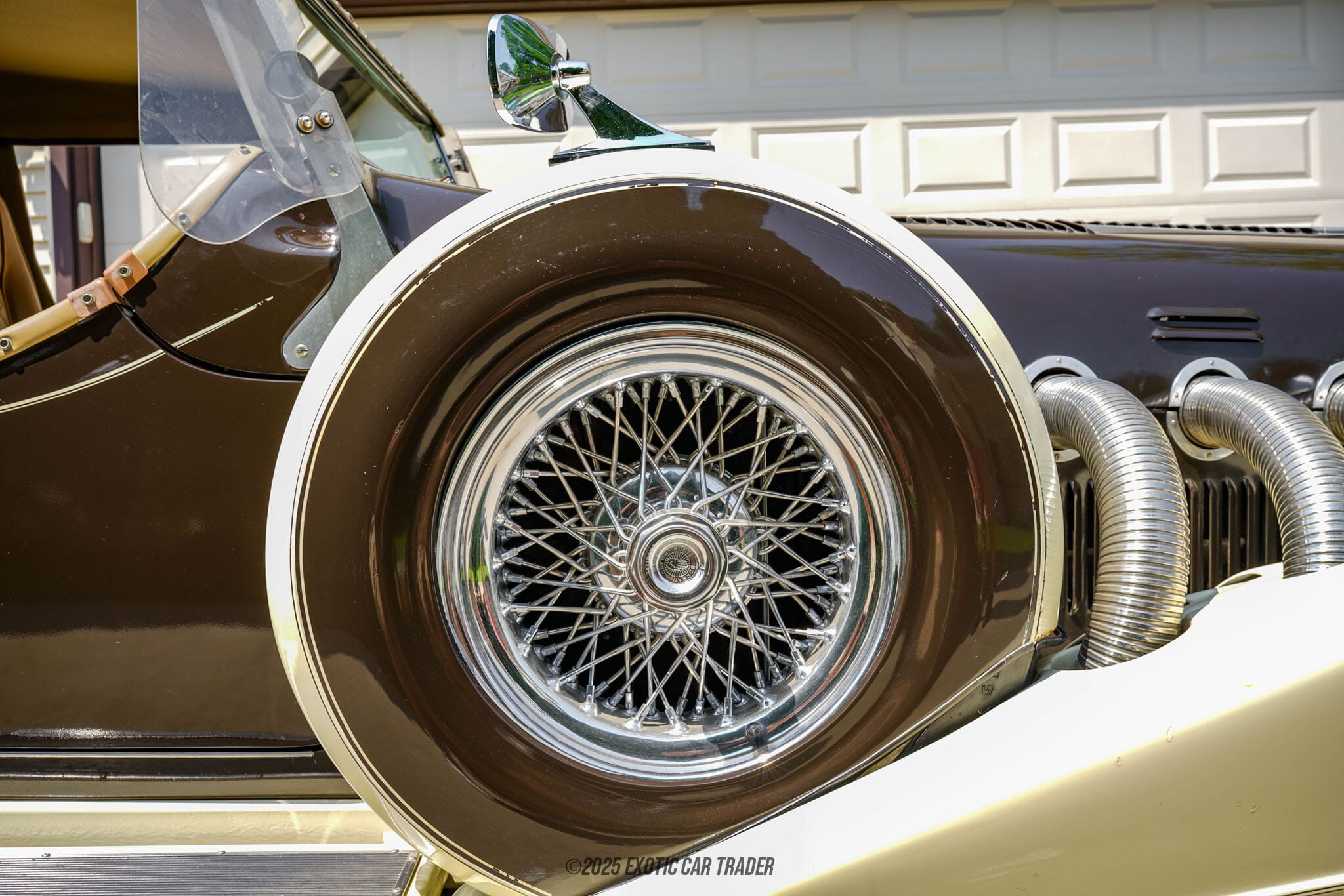
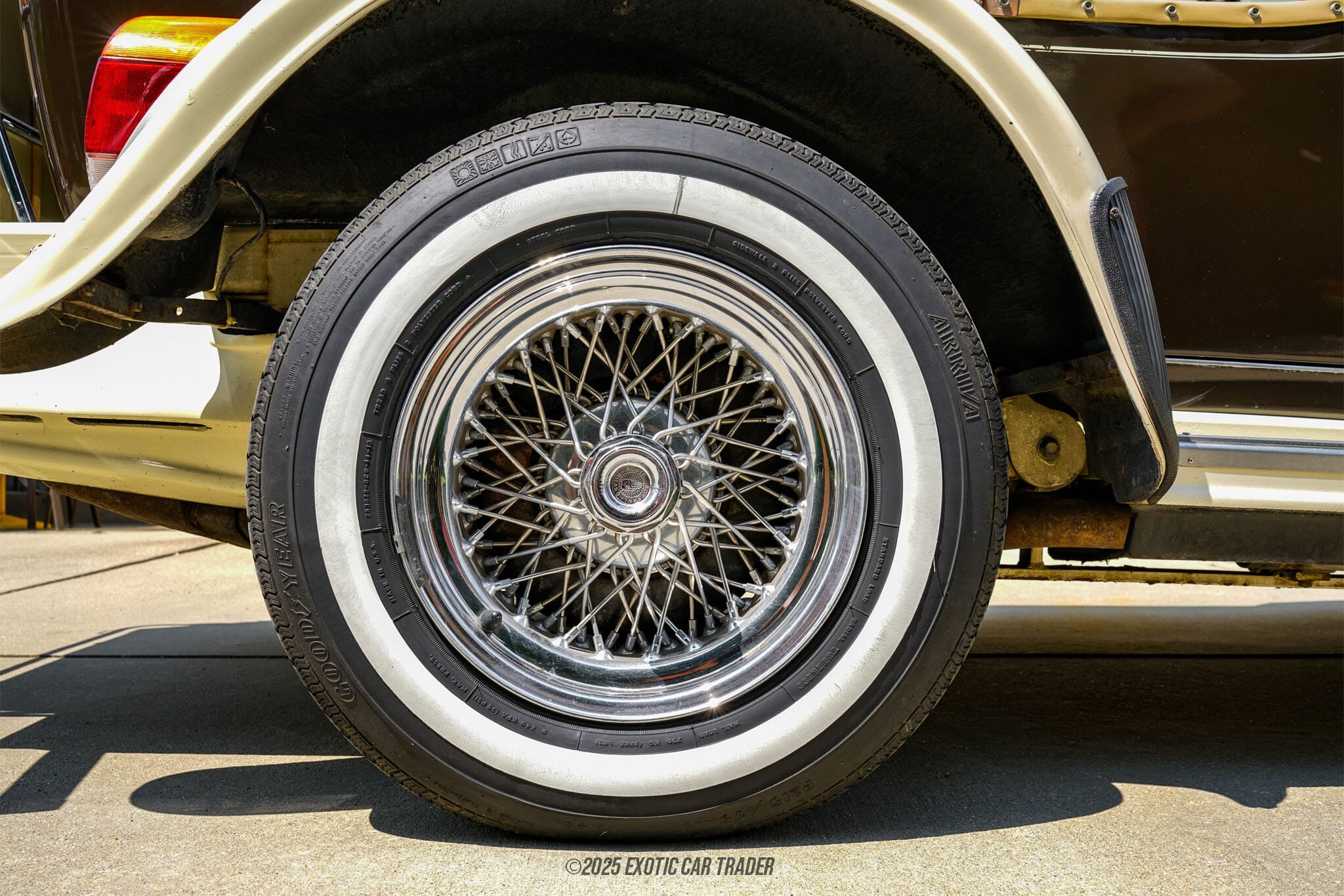
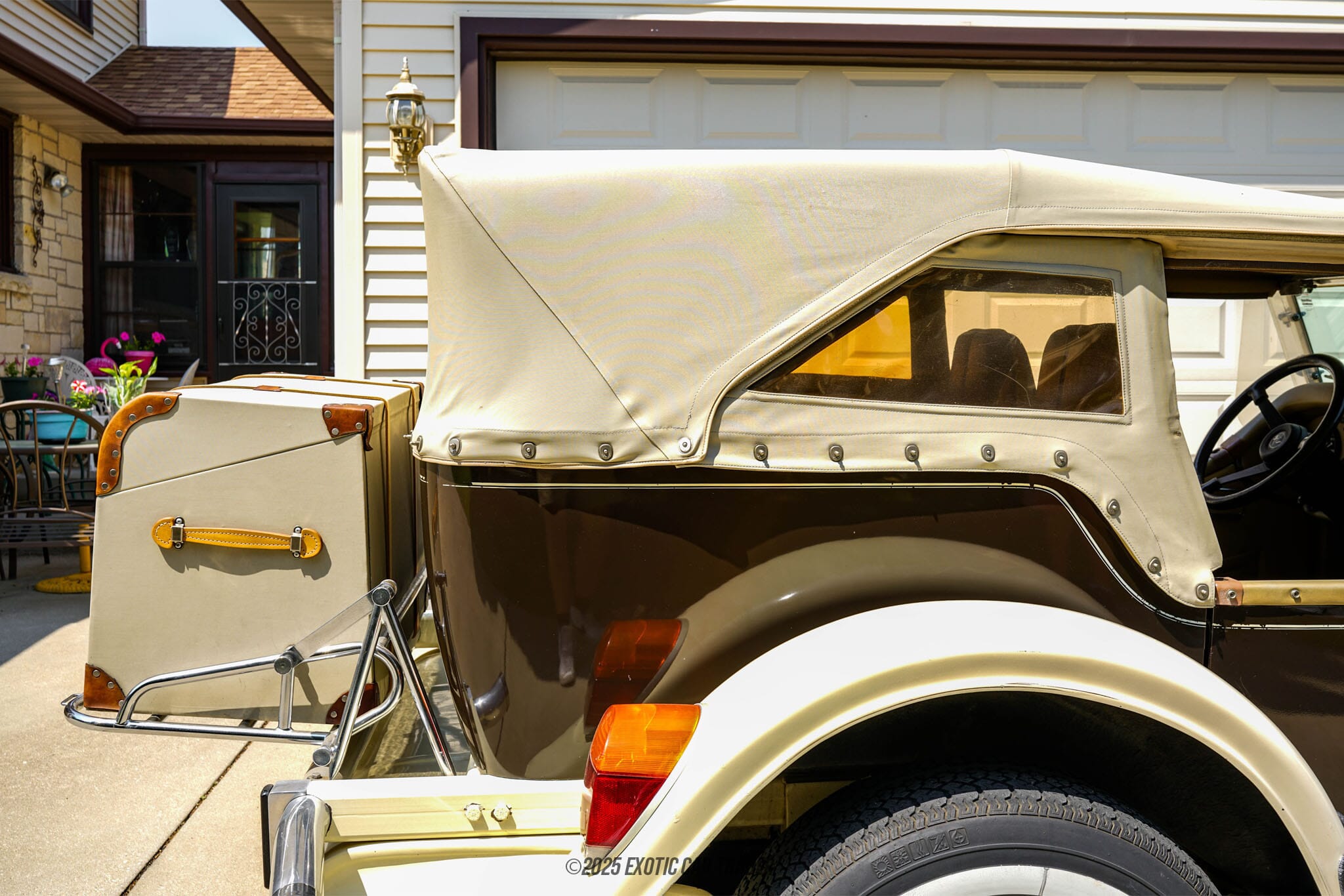
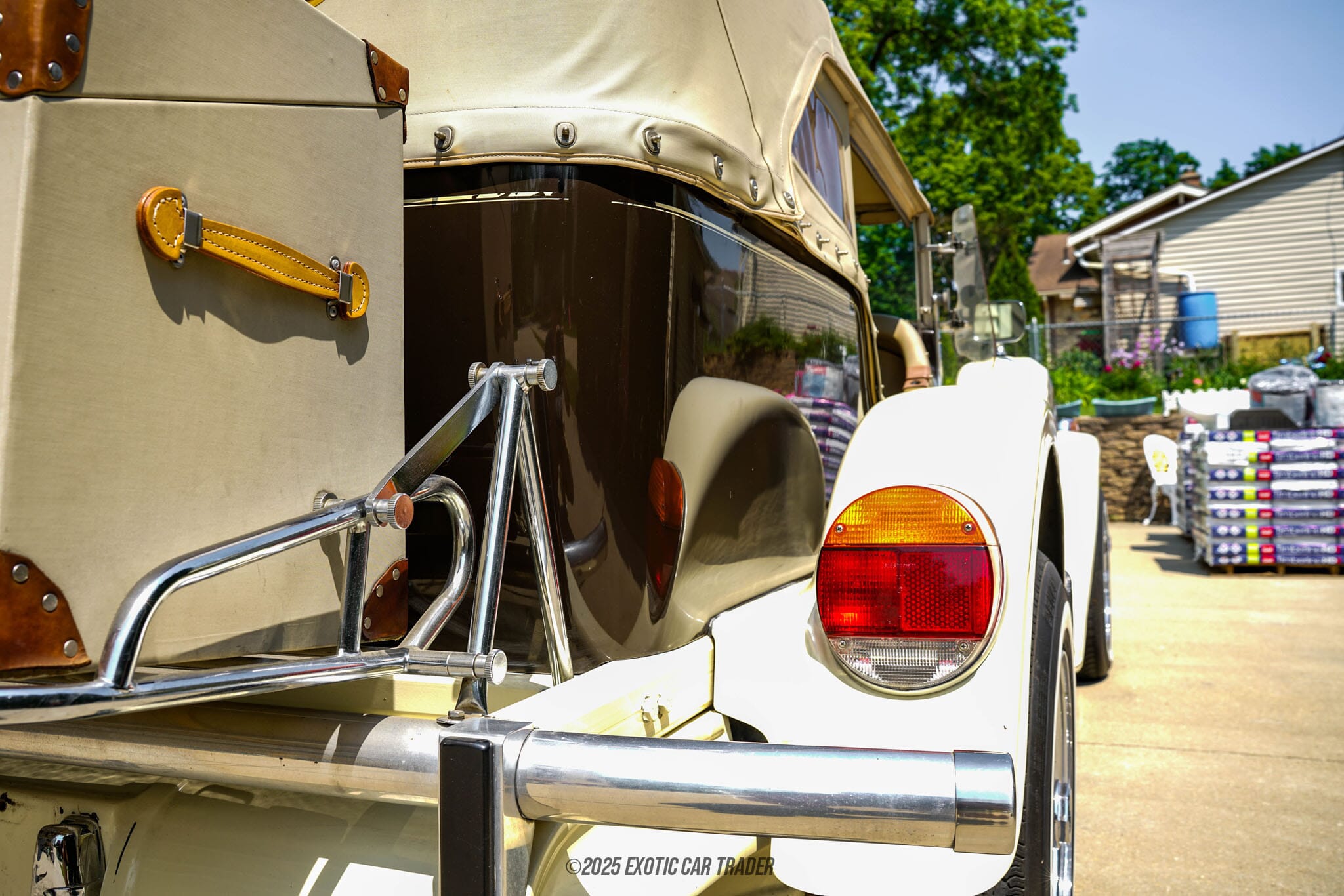
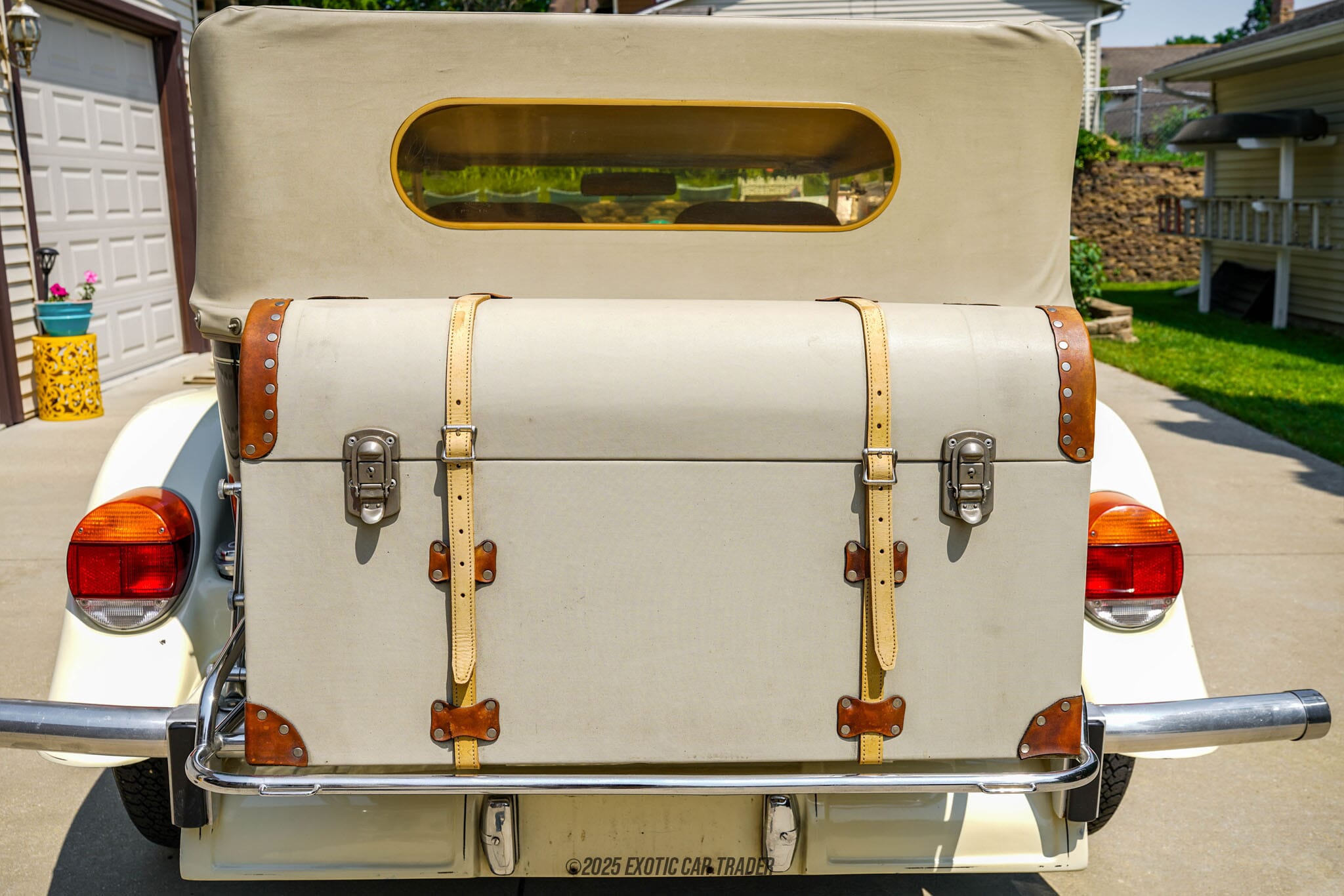
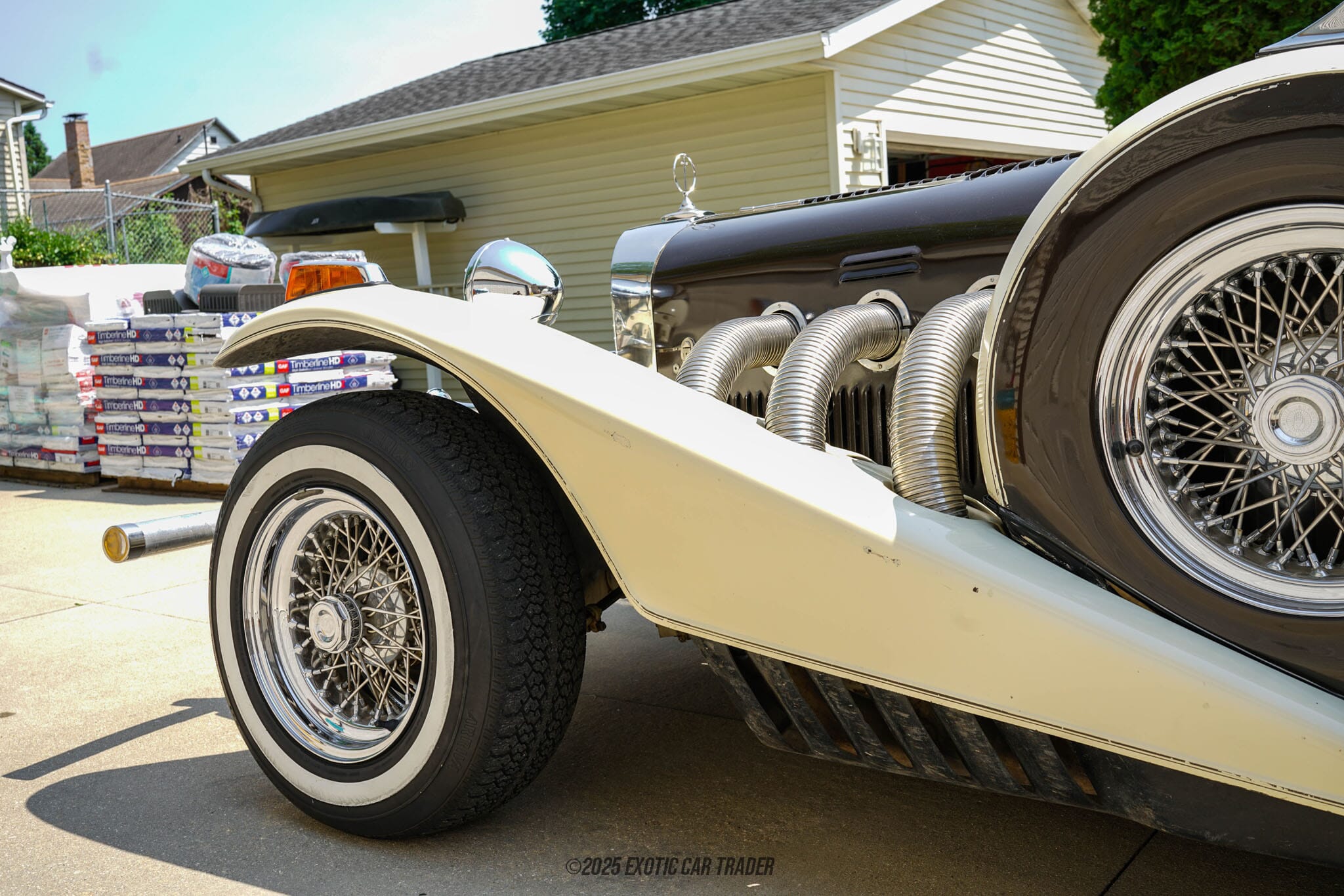
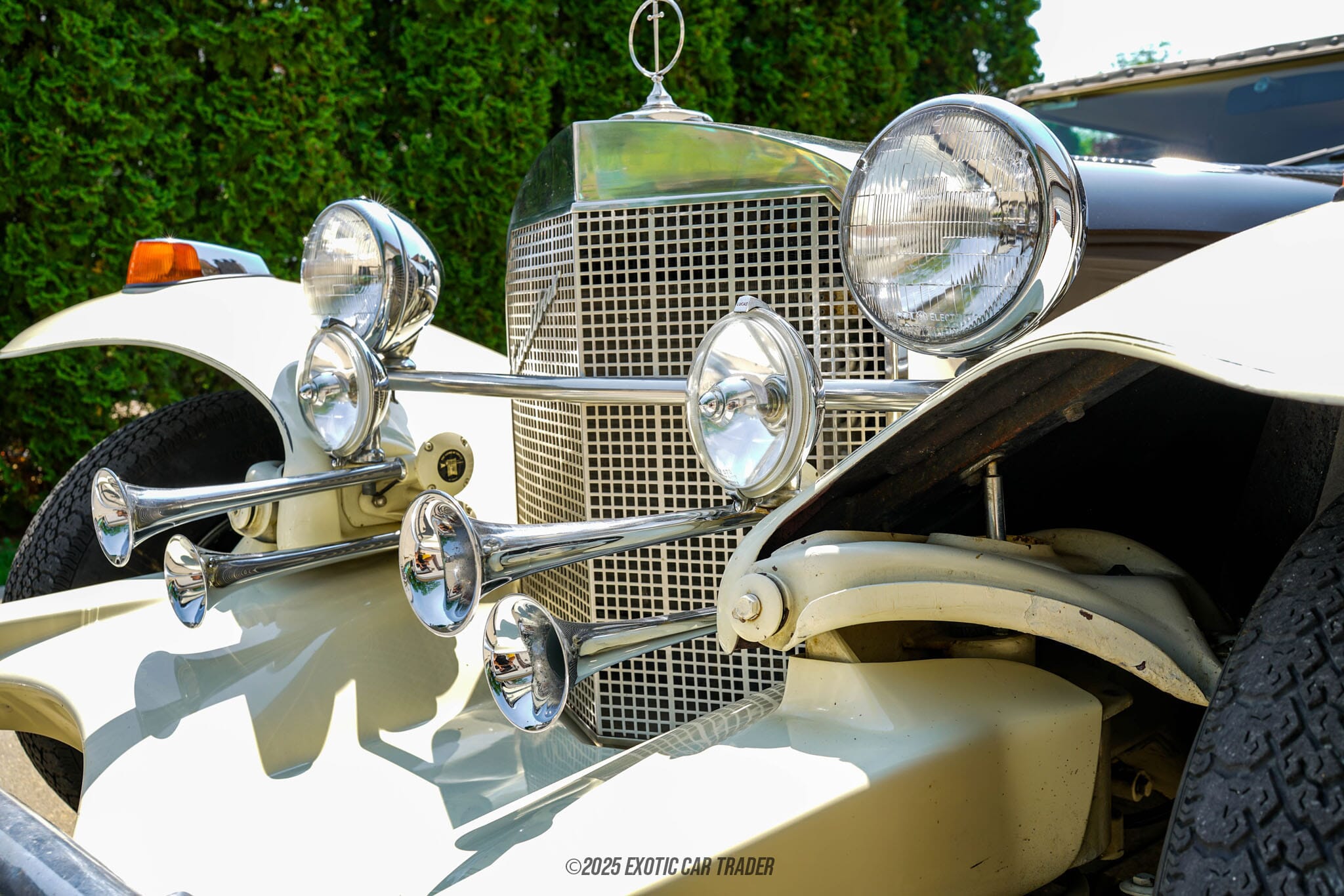
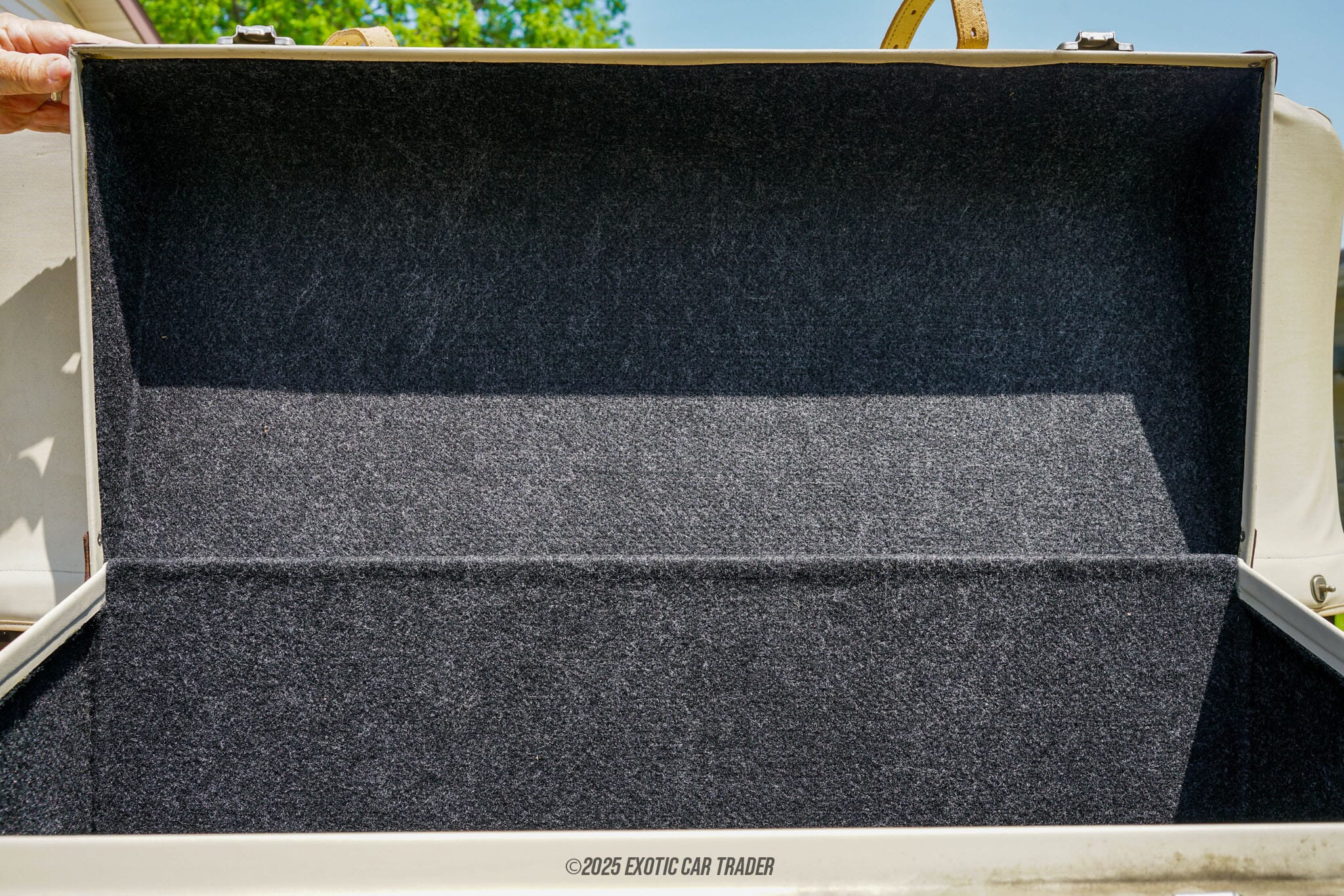
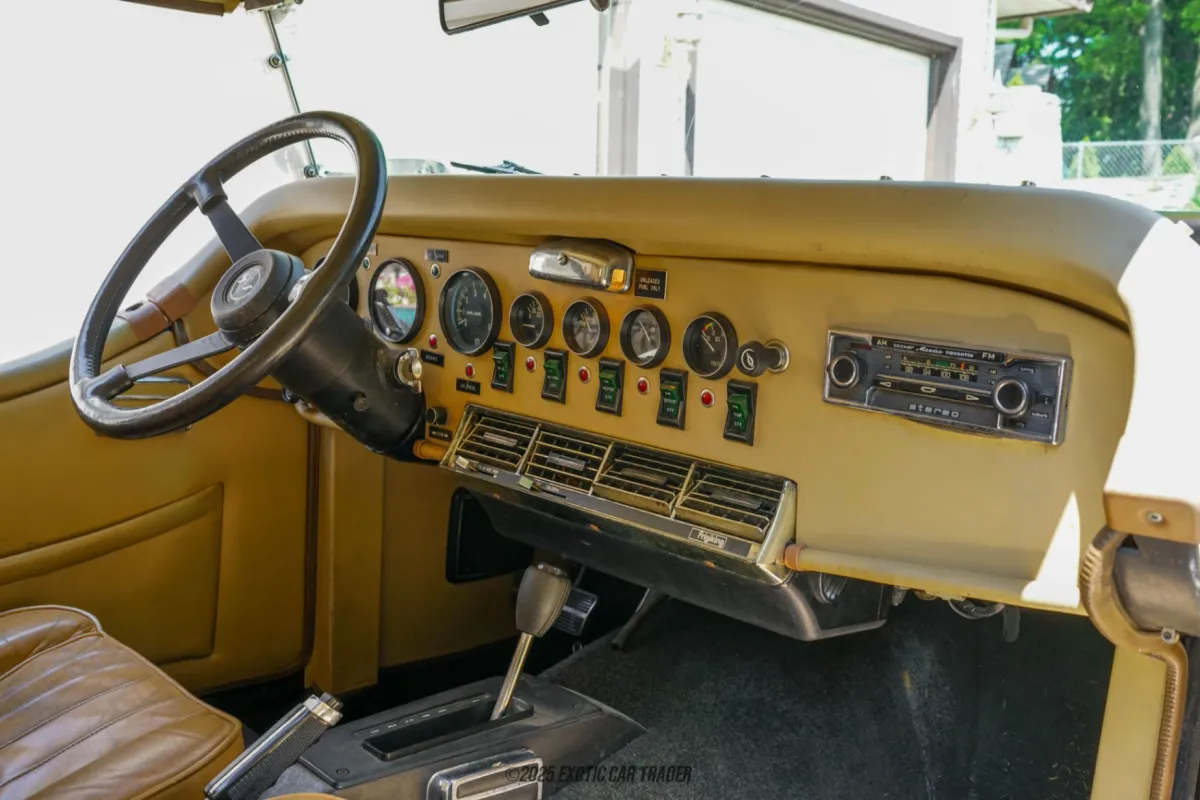
This 1975 Excalibur Series III Phaeton might look like a 1920s Mercedes-Benz SSK because that’s the look that Brooks Stevens was going for with the Excalibur. So, it’s got external headlamp pods, running boards, prominent wheel arches, white-striped tires, wire-effect wheels and of course, that opulent silhouette. The body is fiberglass with aluminum panels, and the car sports a modern convertible hood too, making it easier to drive in hot sun or rain. You’ll also notice some components such as Volkswagen Beetle rear lighting clusters which add turn signals and reversing lamps to this otherwise vintage-styled car. The interior of this 1975 Excalibur Series III Phaeton features a real wood dashboard, tan leather seats, and relatively modern convenience features such as air conditioning. It’s a four-seat affair with a rear bench plus two individually adjustable front seats, and feels quite modern as a result. You’ve also got plenty of instrumentation which once again, is not commonly found in cars from the 1920s and 1930s. As for luggage, there’s enough space in a compartment styled to look like an externally-mounted trunk.
Engine
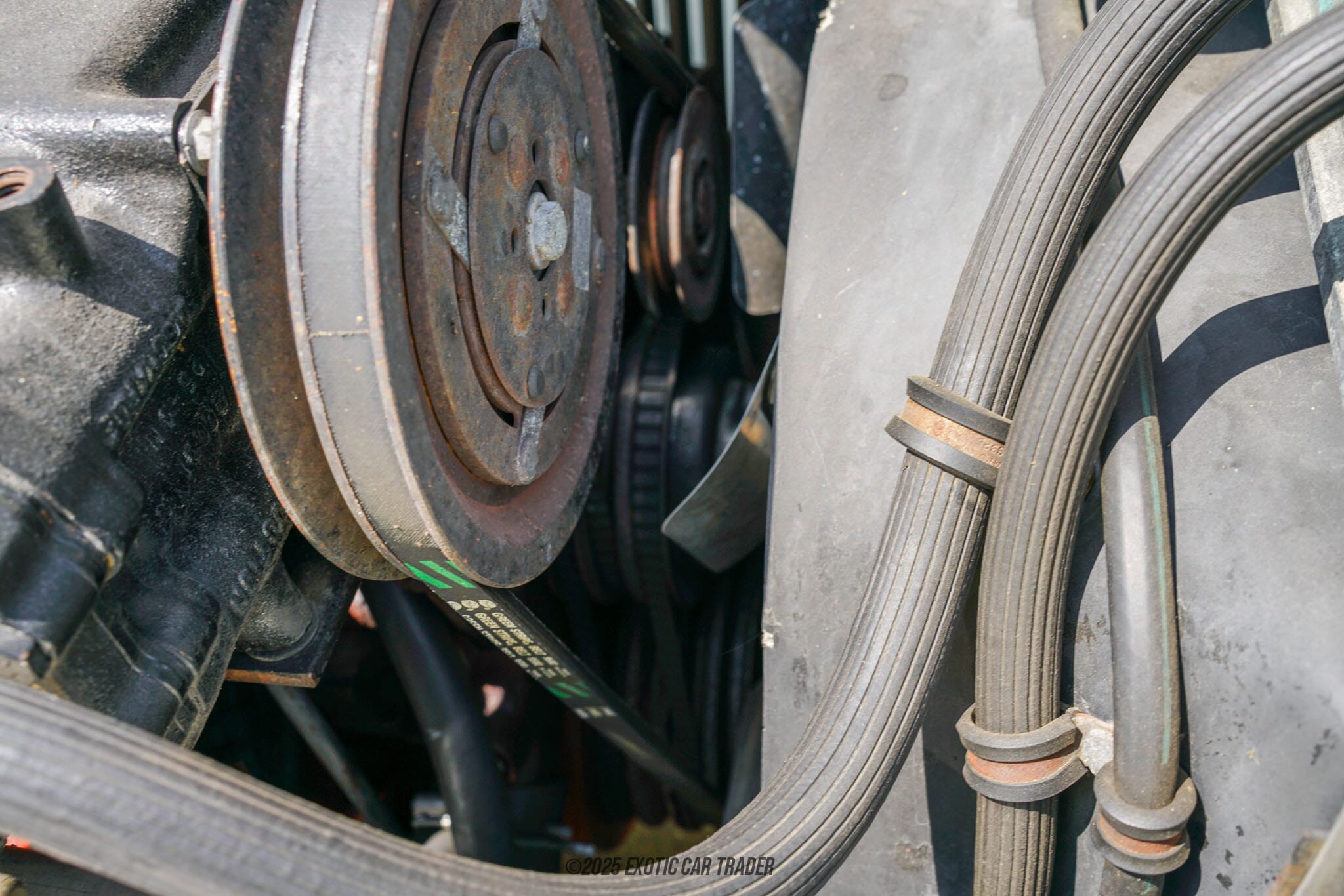
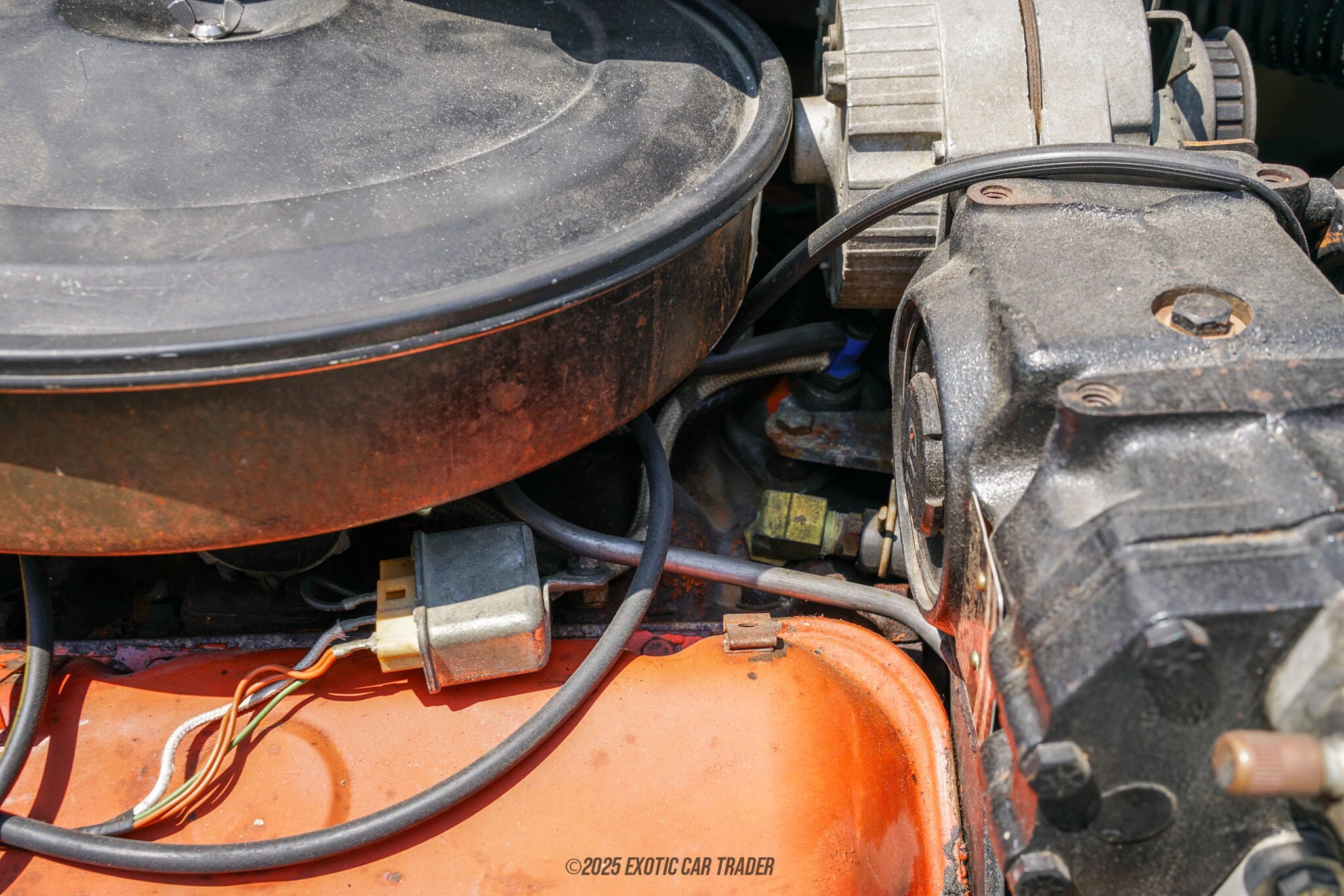
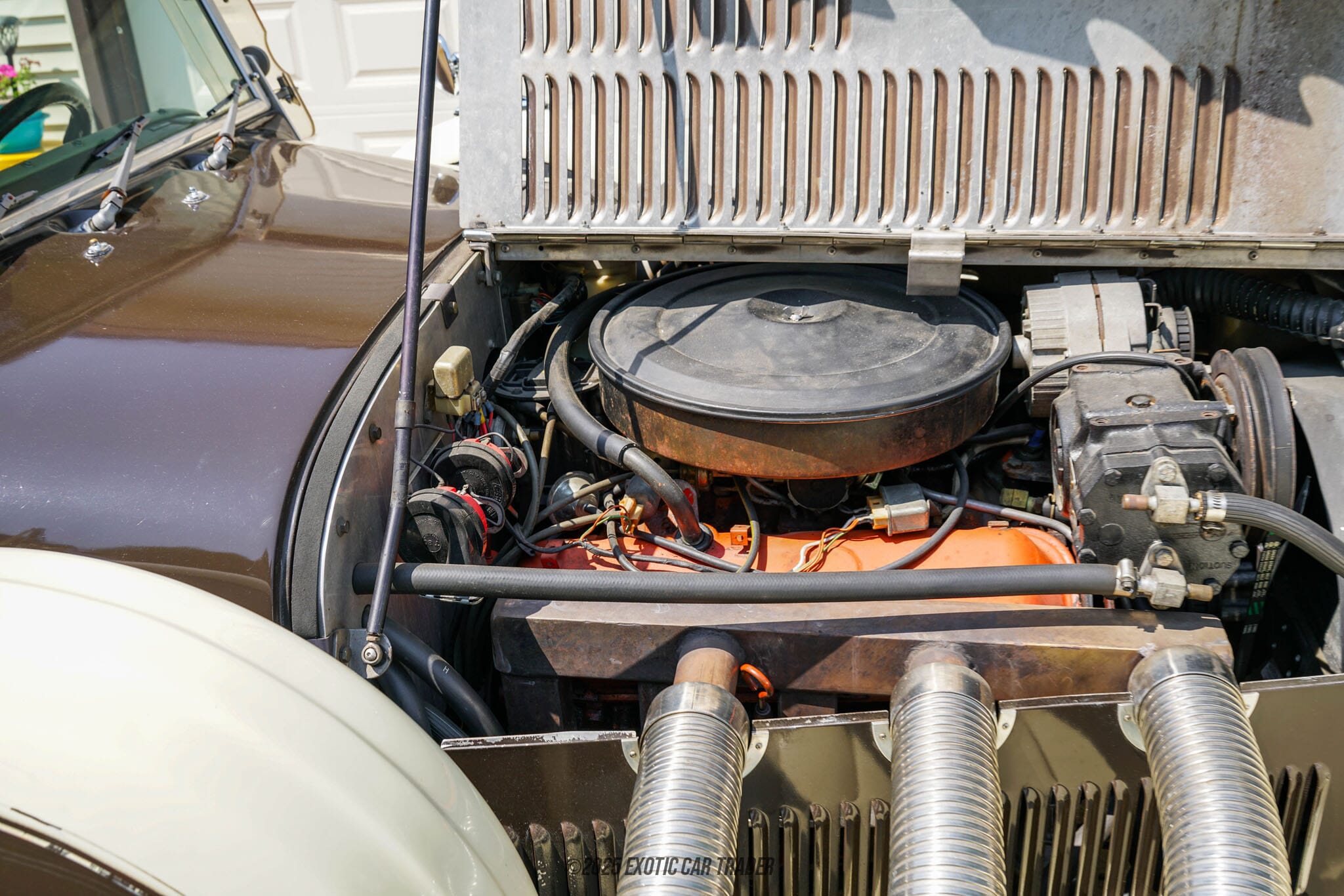
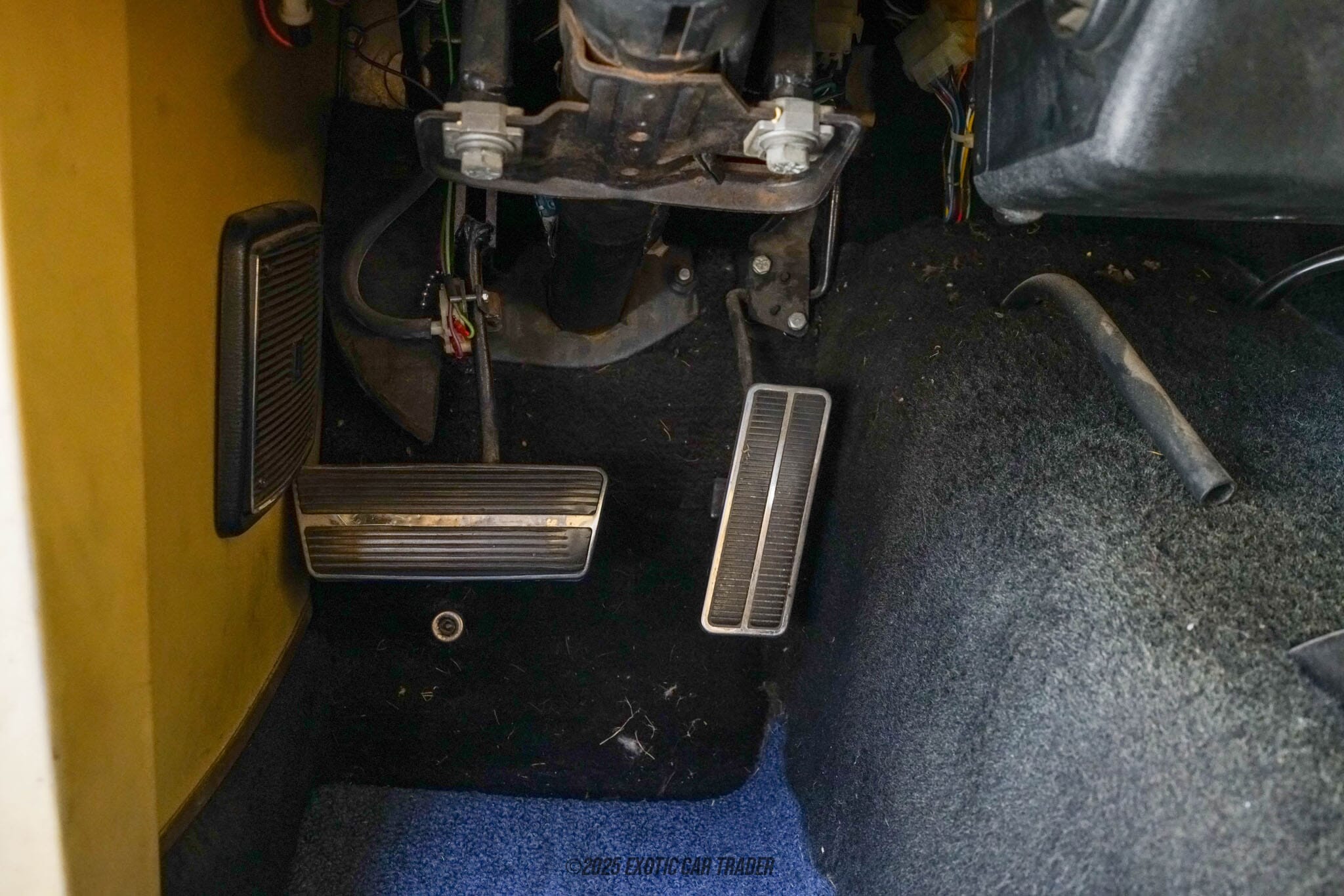
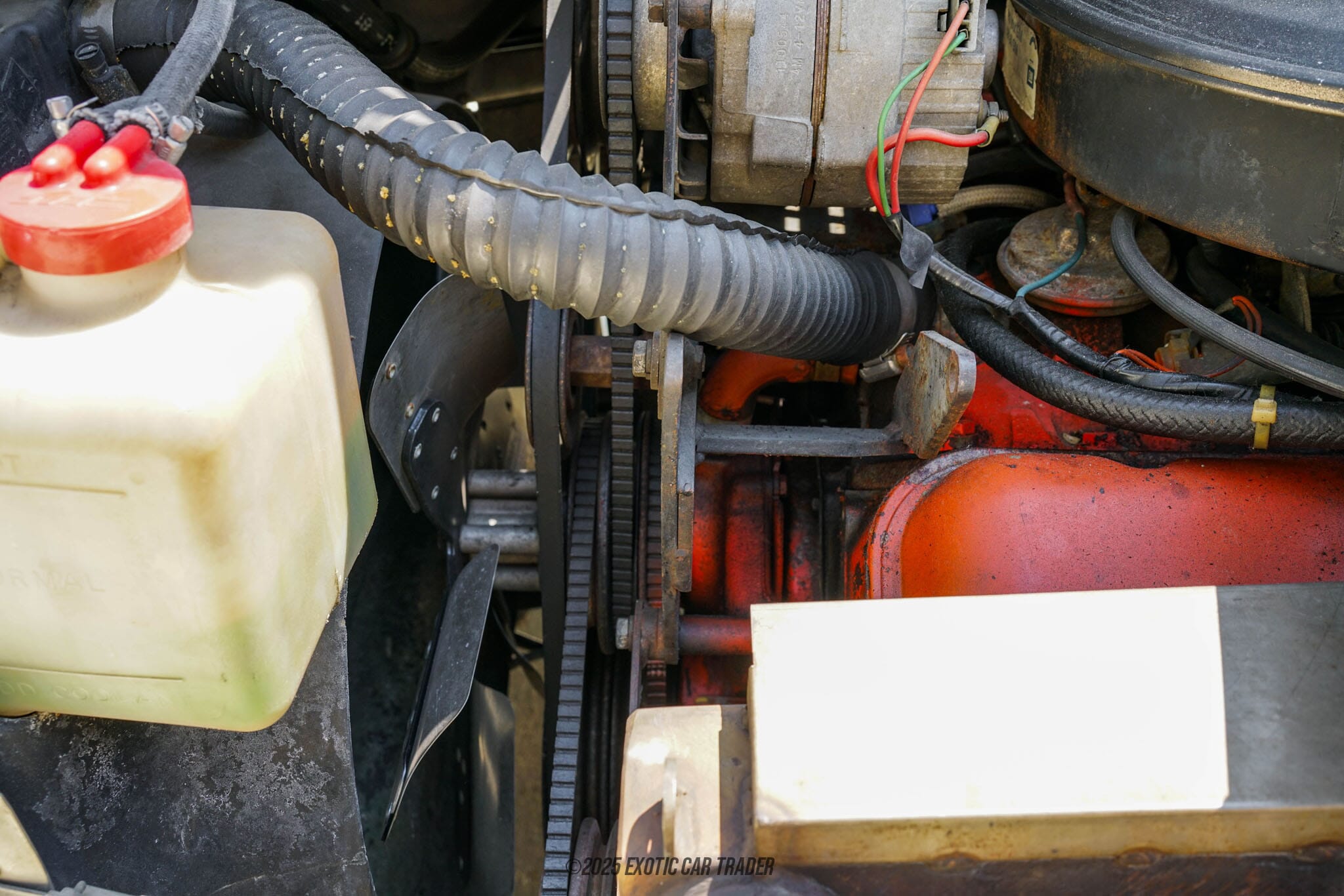
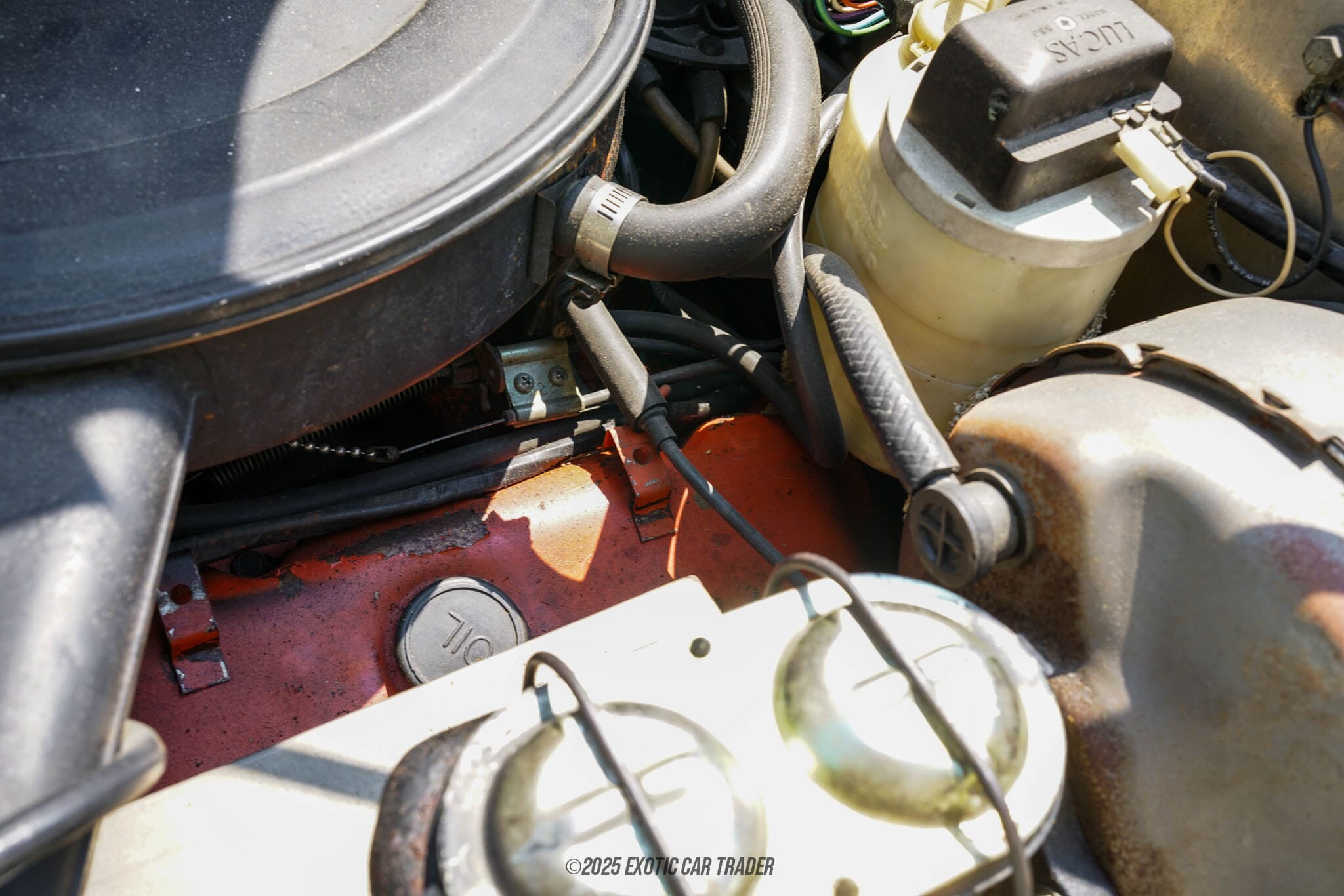
Powering this 1975 Excalibur Series III Phaeton is a massive 454ci Chevy V8, hooked up to a Turbo-Hydramatic 3-speed automatic gearbox. The car is rear-wheel drive as you’d expect. Braking is via front power-assisted discs and rear drums. So, it’s actually quite easy to drive.


The story of Excalibur is interesting. Initially styled by Brooks Stevens for Studebaker, Stevens subsequently formed a company to produce the cars himself. Built in Wisconsin, it’s estimated that over 3,500 examples of this neo-classic automobile were made until 1990, even though the company folded in 1986 and was subsequently revived for a short time thereafter. Excalibur’s unique selling point was to offer classic 1920s and 1930s styling paired with modern mechanicals and creature comforts at the time. Today, we’ve got one of these curious cars for sale, a 1975 Excalibur Series III Phaeton from Edgerton, Wisconsin, with 56,178 miles on the clock. Let us tell you more about this car and why you should snap it up if you’ve got an eye for, and a desire to own unconventional pieces of American automotive history.
The story of Excalibur is interesting. Initially styled by Brooks Stevens for Studebaker, Stevens subsequently formed a company to produce the cars himself. Built in Wisconsin, it’s estimated that over 3,500 examples of this neo-classic automobile were made until 1990, even though the company folded in 1986 and was subsequently revived for a short time thereafter. Excalibur’s unique selling point was to offer classic 1920s and 1930s styling paired with modern mechanicals and creature comforts at the time. Today, we’ve got one of these curious cars for sale, a 1975 Excalibur Series III Phaeton from Edgerton, Wisconsin, with 56,178 miles on the clock. Let us tell you more about this car and why you should snap it up if you’ve got an eye for, and a desire to own unconventional pieces of American automotive history.
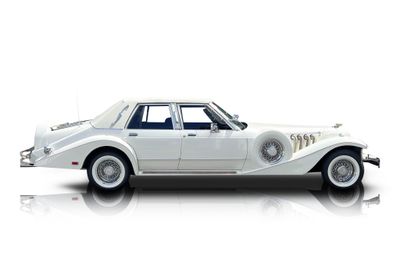
What do you get when you imbue an Eighties car with Twenties (no not Twenty Twenties, but Nineteen Twenties) styling? That’s precisely what Excalibur aimed to do. This Milwaukee-based outfit was the work of Clifford Brooks Stevens, who initially designed the cars for Studebaker. Stevens subsequently formed a company to create them by himself. Sadly, the project wasn’t as successful as all involved would have expected, and after several failures, Excalibur folded in 1990. Of course, that hasn’t stopped others from creating replicas, such as this 1989 Excalibur Series V Replica. Built on a 1989 Mercury Grand Marquis GS chassis, this 17,688-mile automobile awaits its new owner in Williston, Vermont. It is often said that imitation is the best form of flattery, so the fact that someone built a replica of the Excalibur means that the car is worth checking out. If you’re the kind of person who lusts after the quirky and isn’t afraid to push the boundaries of what many consider a ‘classic’ or ‘modern classic’, why not buy this car and become its custodian?

Excalibur…that’s not an automotive brand that many have heard of. Things get even more confusing when you set eyes upon this machine via our photos. The bottom half of it looks like something from the 1920s. The top half is decidedly more modern, and the title says it’s a 1989 Excalibur Series V Sedan. Well, you see, the Excalibur is a car that is designed to look like a 1920s automobile but based on something decidedly more modern. This Milwaukee-based company has been at it from the 1960s, right up until 1990. Although as you can imagine, they didn’t exactly sell massive volumes. Production volumes are estimated at over 3,500, but actual figures are hard to come by. So, if you want an American curio to grace your driveway, this 1989 Excalibur Series V Sedan with its 17,600 miles is a great candidate. We’re told that the car has documented mileage and includes its owner's manual.
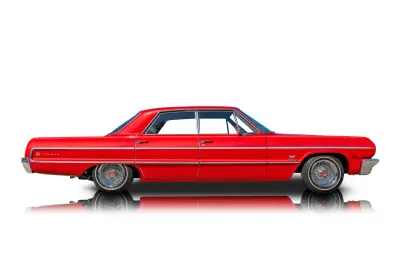
The 1964 Chevrolet Impala 4-Door Sedan captures the long, low, unmistakable style that made Chevrolet’s full-size cars such icons of the 1960s. Showing approximately 28,076 miles, this example combines a 327ci V8 with a 2-barrel carburetor and 2-speed Powerglide automatic transmission, while power steering and power brakes make it considerably easier to enjoy from behind the wheel. Finished in Red over a Black interior, it also benefits from tasteful modern upgrades including aftermarket coilover suspension and a Bluetooth-capable sound system, adding usability without taking away from the car’s classic character.
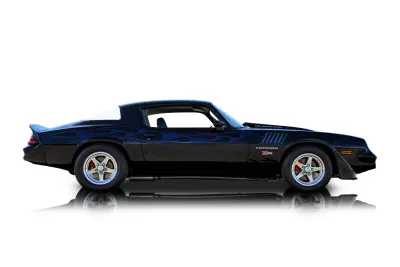
This 1979 Chevrolet Camaro Restomod takes the unmistakable shape of Chevrolet’s second-generation F-body and gives it a much more aggressive enthusiast-focused personality. Showing approximately 752 miles, this example combines a 383ci stroker V8 with a 750 CFM Holley 4-barrel carburetor and a 4-speed manual transmission, giving it the kind of old-school muscle-car formula that puts driver involvement front and center. Finished in Black with custom Purple & Red flame graphics, this Camaro also features a Hurst shifter, Grant GT steering wheel, aftermarket gauges, and a number of exterior and audio upgrades that give it a distinctly custom-built character.
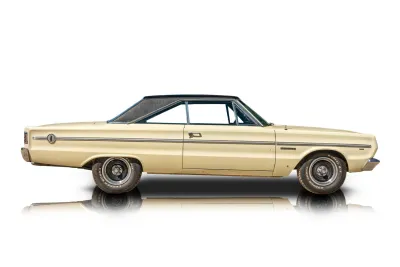
The 1966 Plymouth Belvedere II Hardtop is the kind of Mopar that gets enthusiasts interested before the hood is even opened. Its clean B-body lines, pillarless hardtop profile, Soft Yellow paint, black vinyl roof, and Magnum 500-style wheels give it the restrained factory muscle look of the mid-1960s, but this example carries much more serious hardware underneath. Showing approximately 91,610 miles, it is powered by a 440ci big-block V8 backed by a TorqueFlite 727 automatic, giving it the kind of drivetrain combination that feels right at home in a classic Plymouth. Add power steering, power disc brakes, air conditioning, and a dual exhaust system, and this Belvedere blends old-school Mopar attitude with enough comfort to make it more than just a weekend bruiser.

Terms of Service
Be Kind and Courteous
We're here to create a platform to better the automotive industry through communication and transparency. Please treat everyone with respect. Healthy debates are natural, but kindness is required.
No Hate Speech
Make sure everyone feels safe. Hate speech of any kind is strictly prohibited. Degrading comments about things like race, religion, culture, sexual orientation, etc. will not be tolerated.
No Promotions or Spam
Give more than you take. Self-promotion, spam, or links of any kind are not allowed.
