



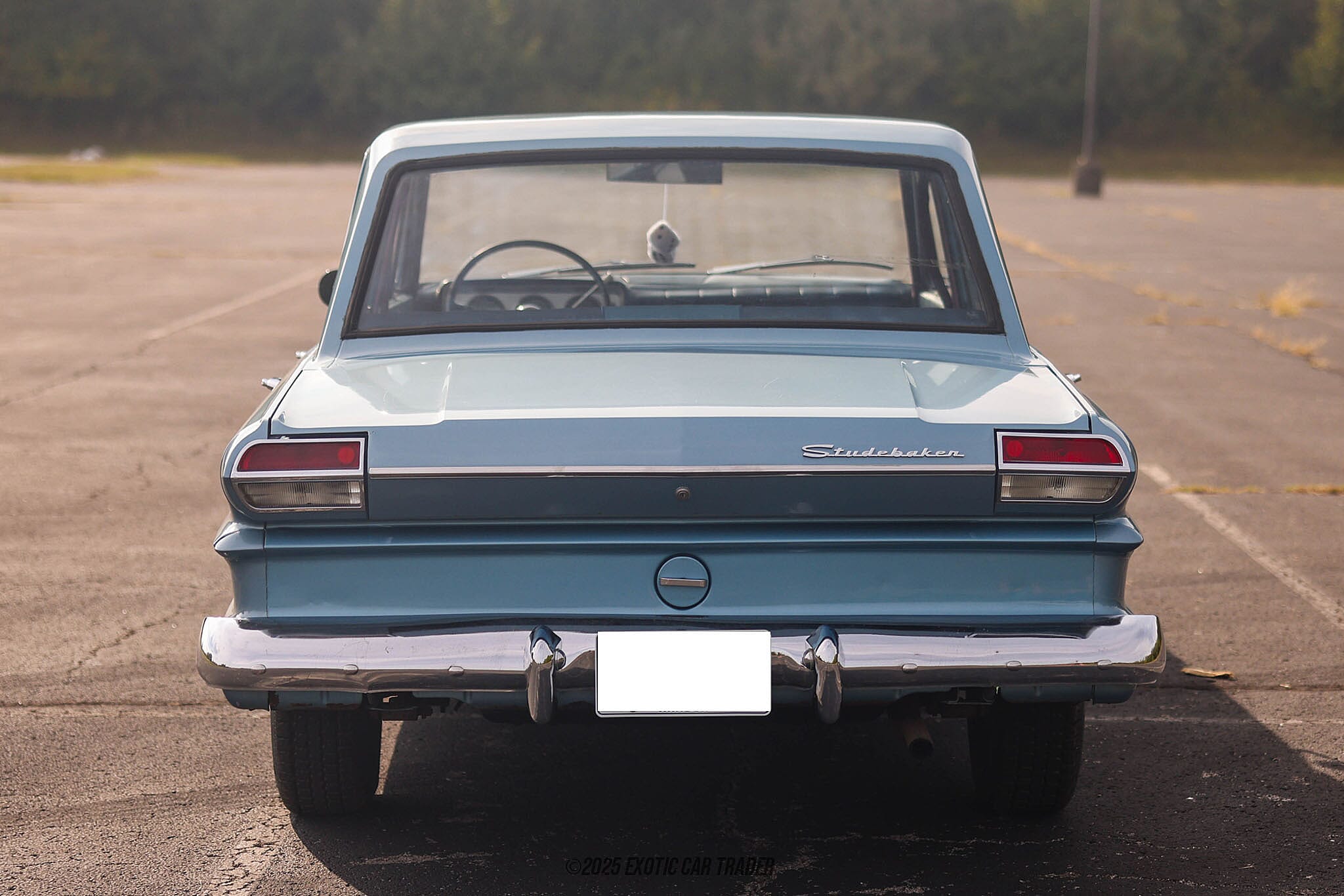
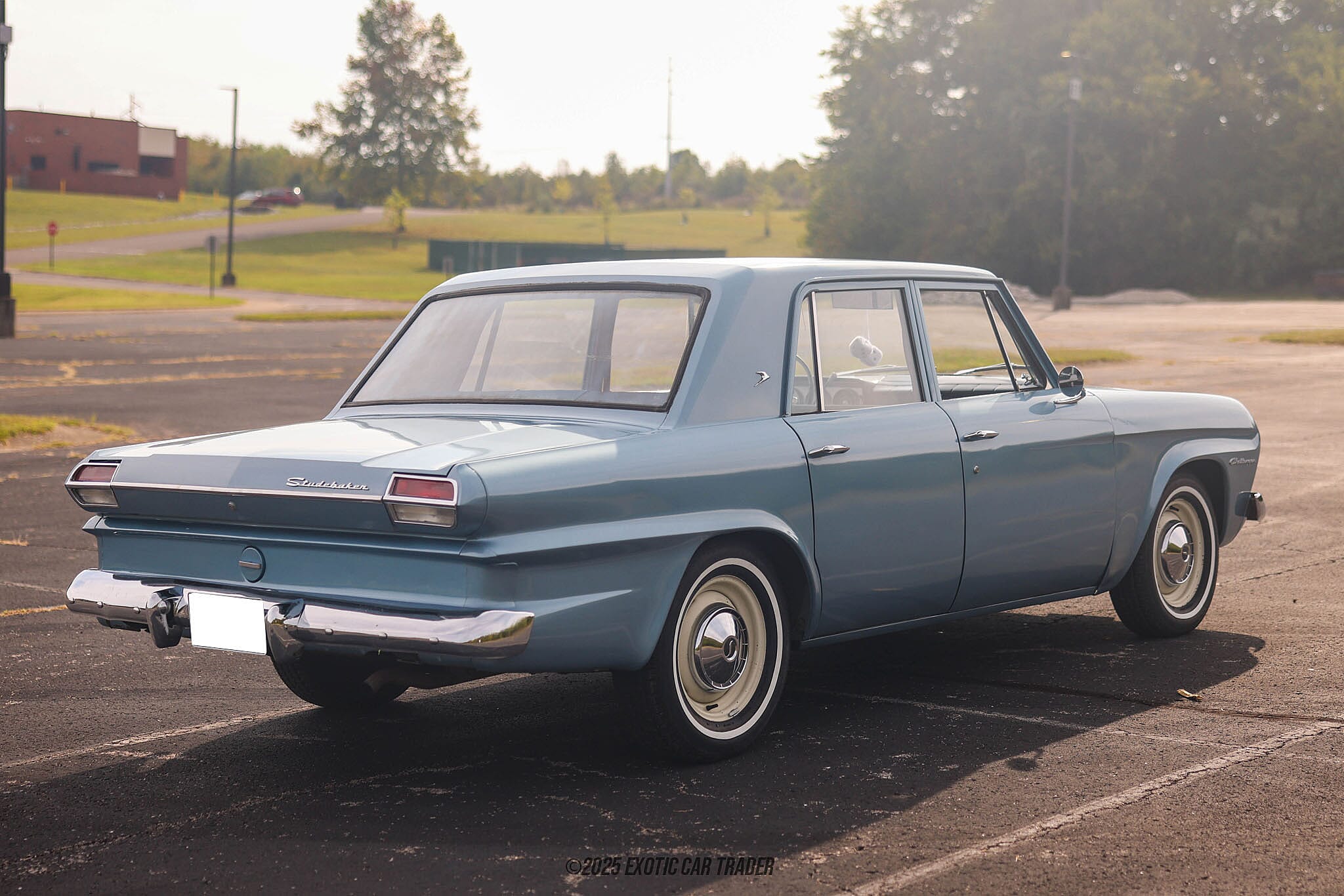
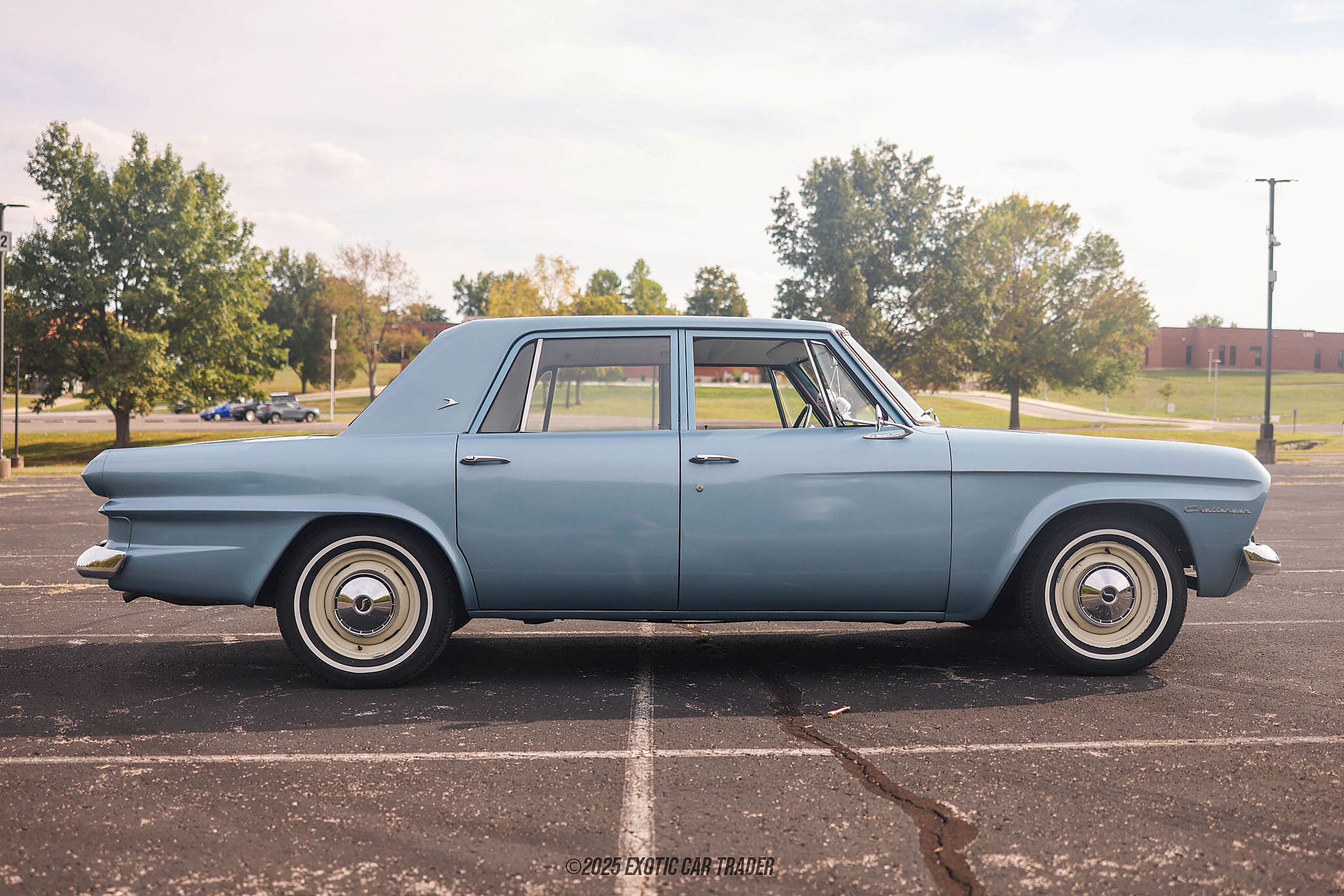
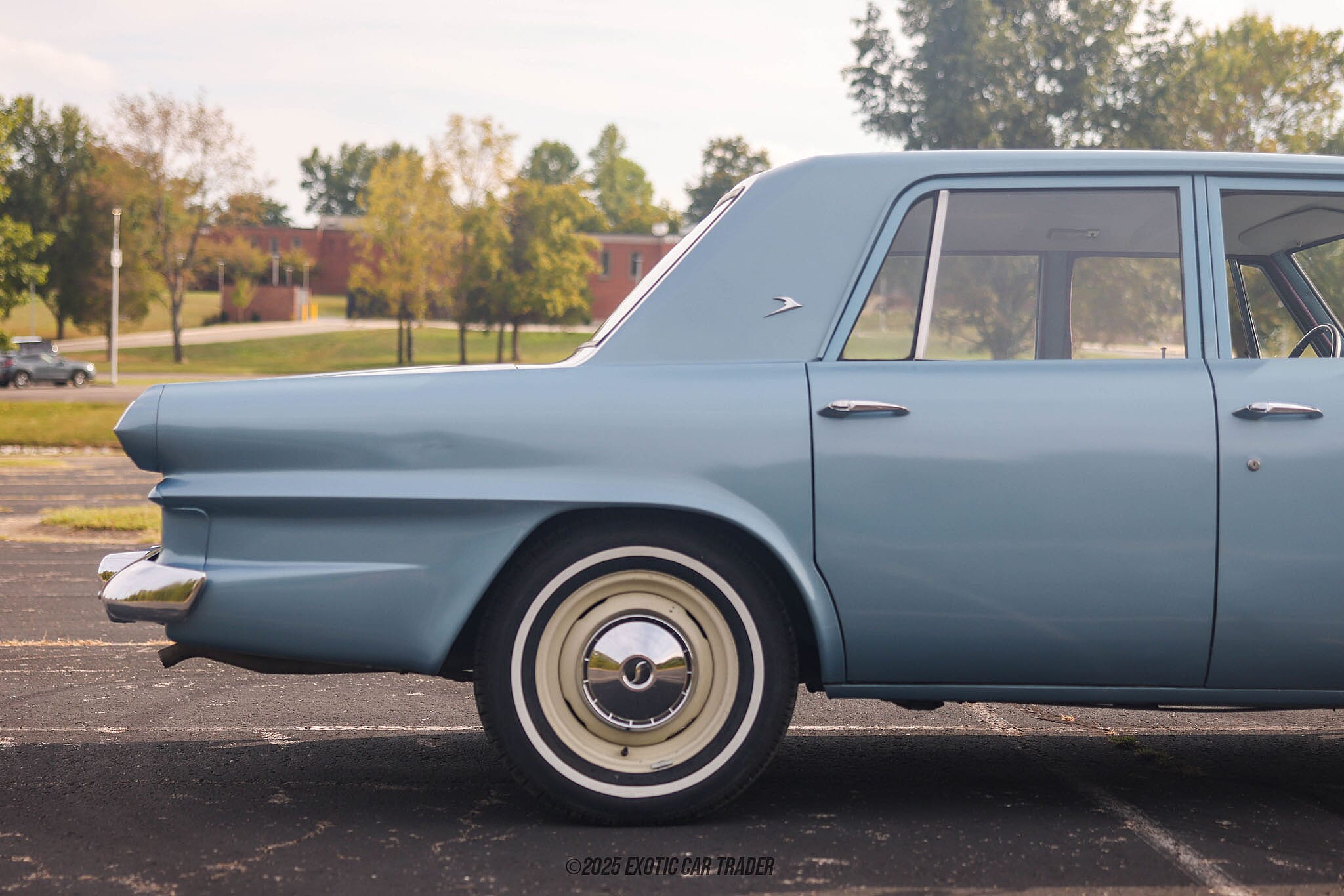

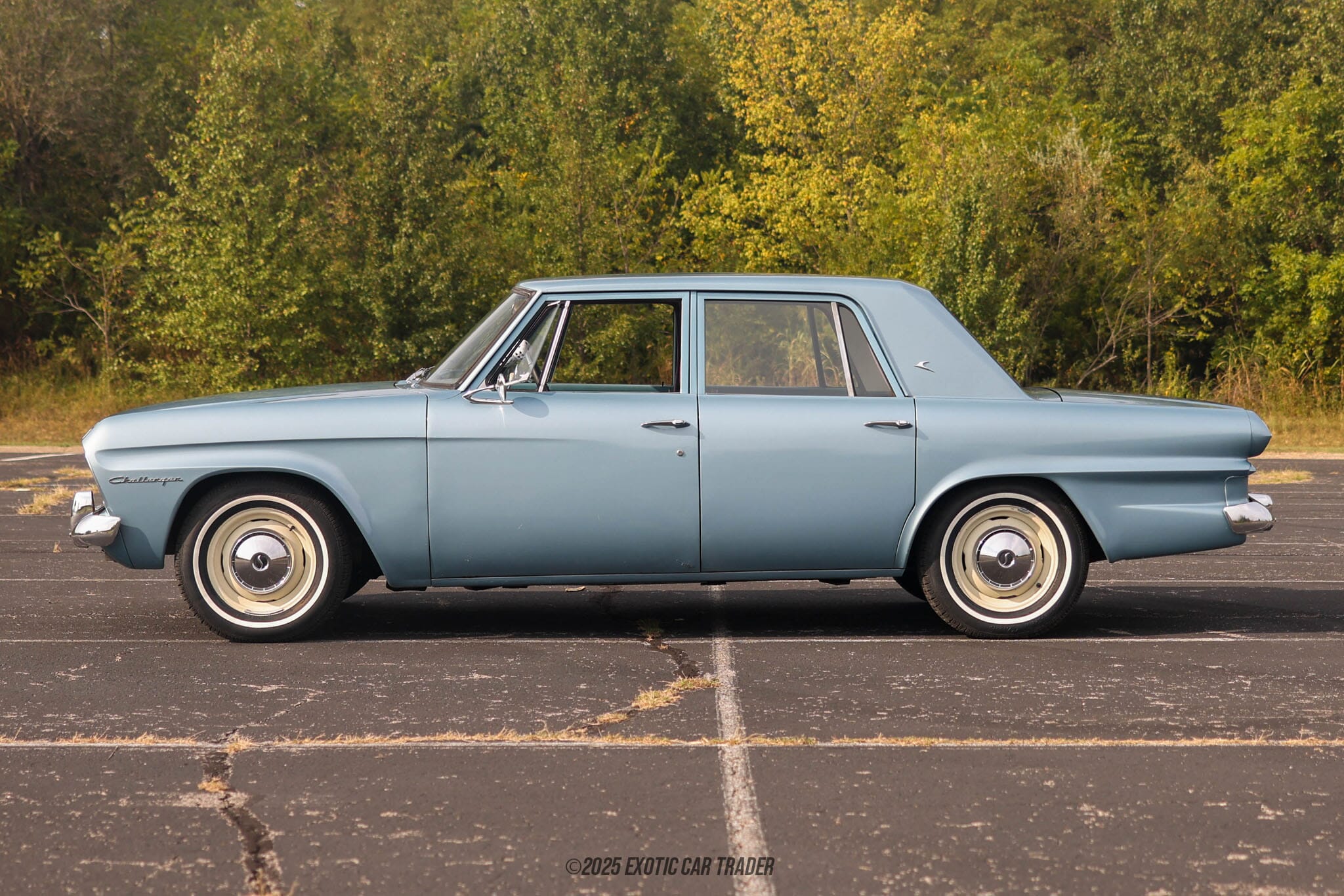
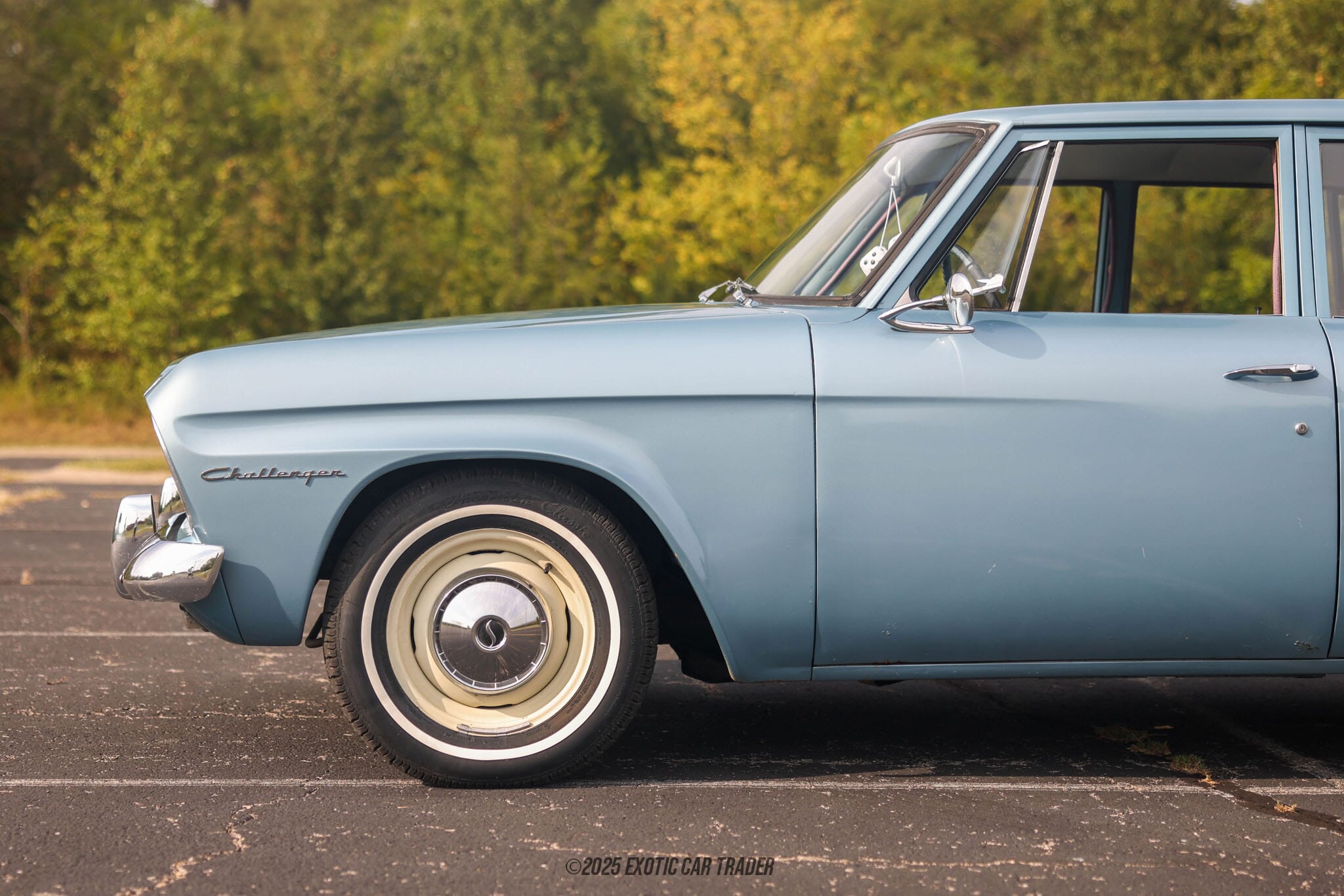
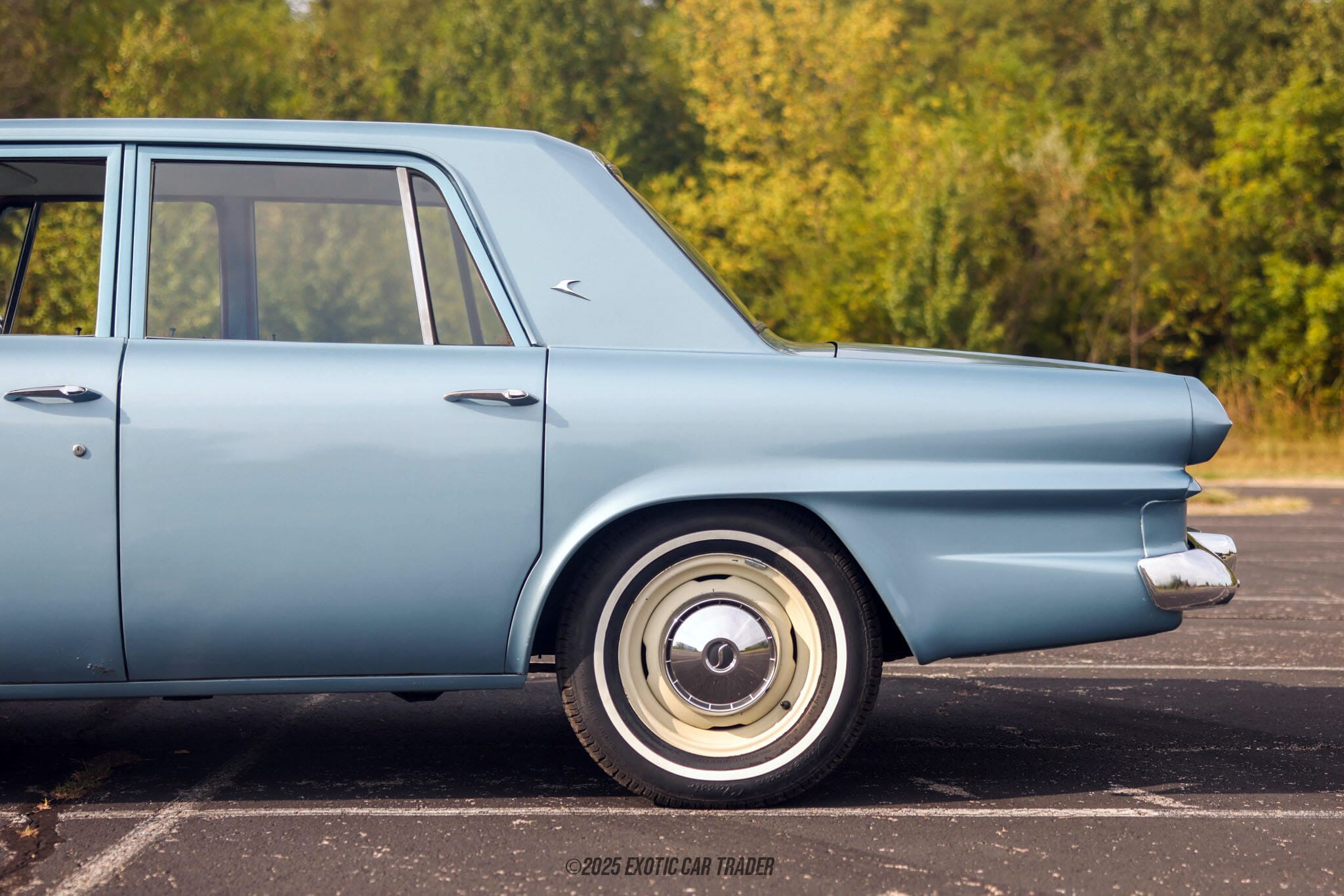
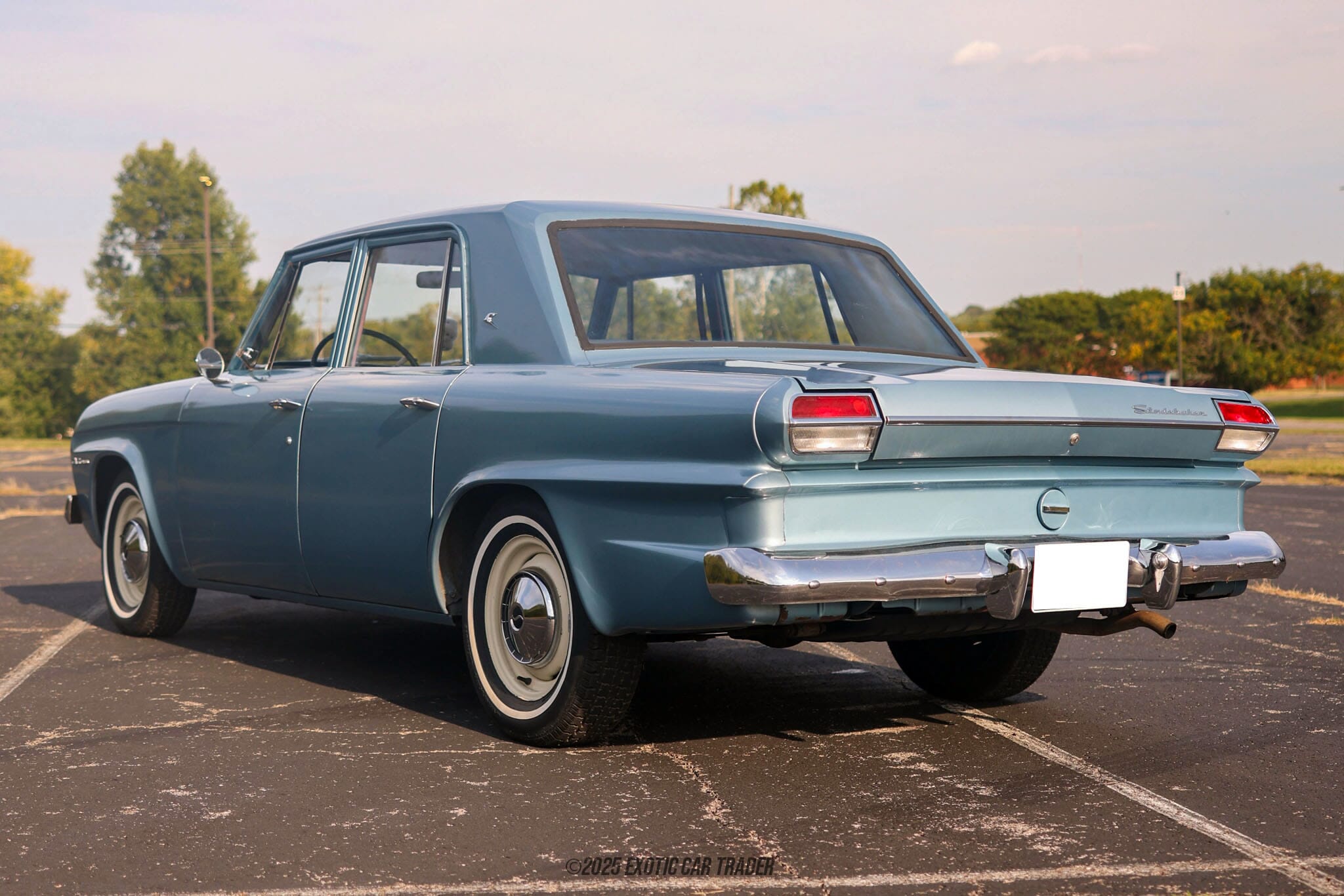
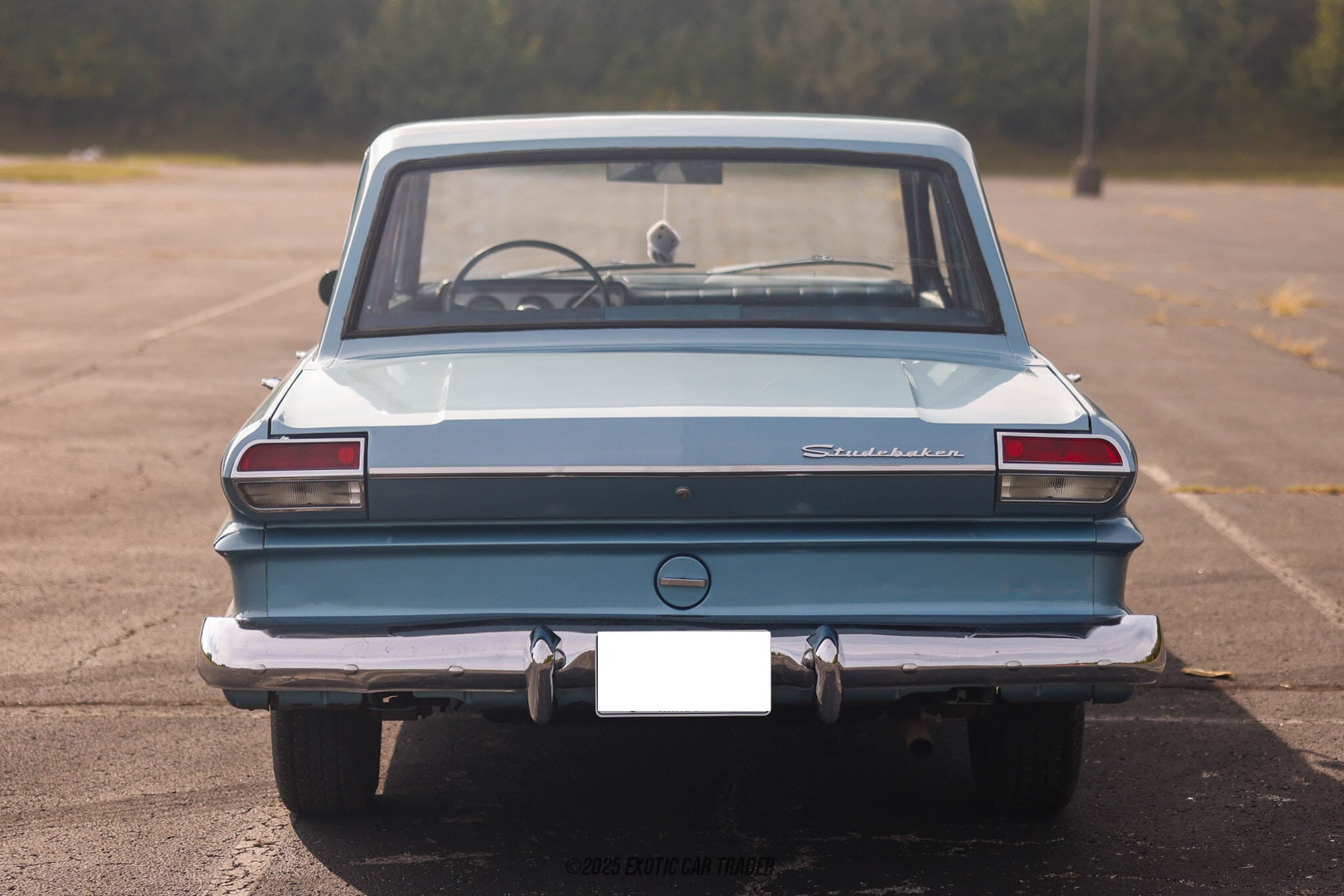
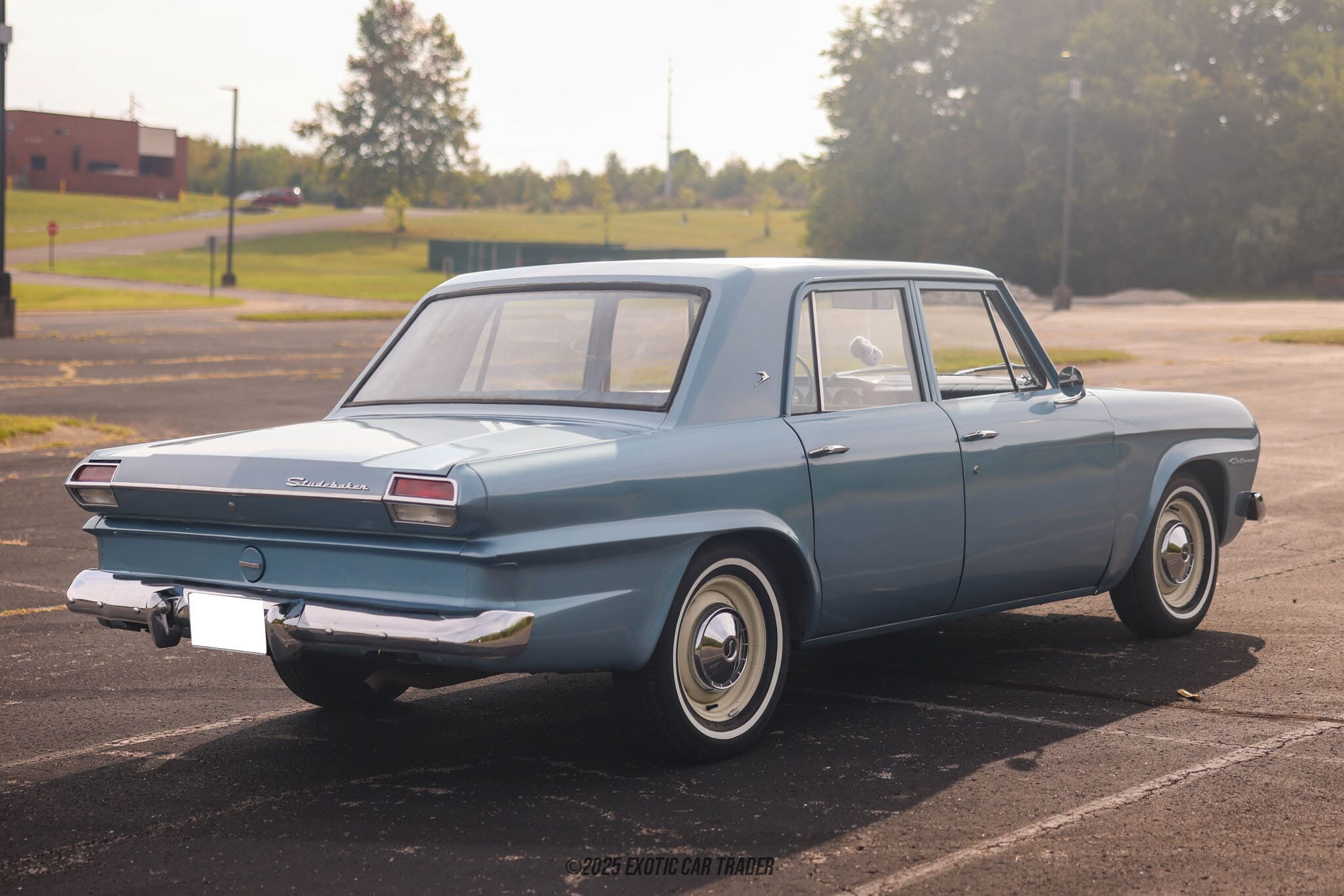
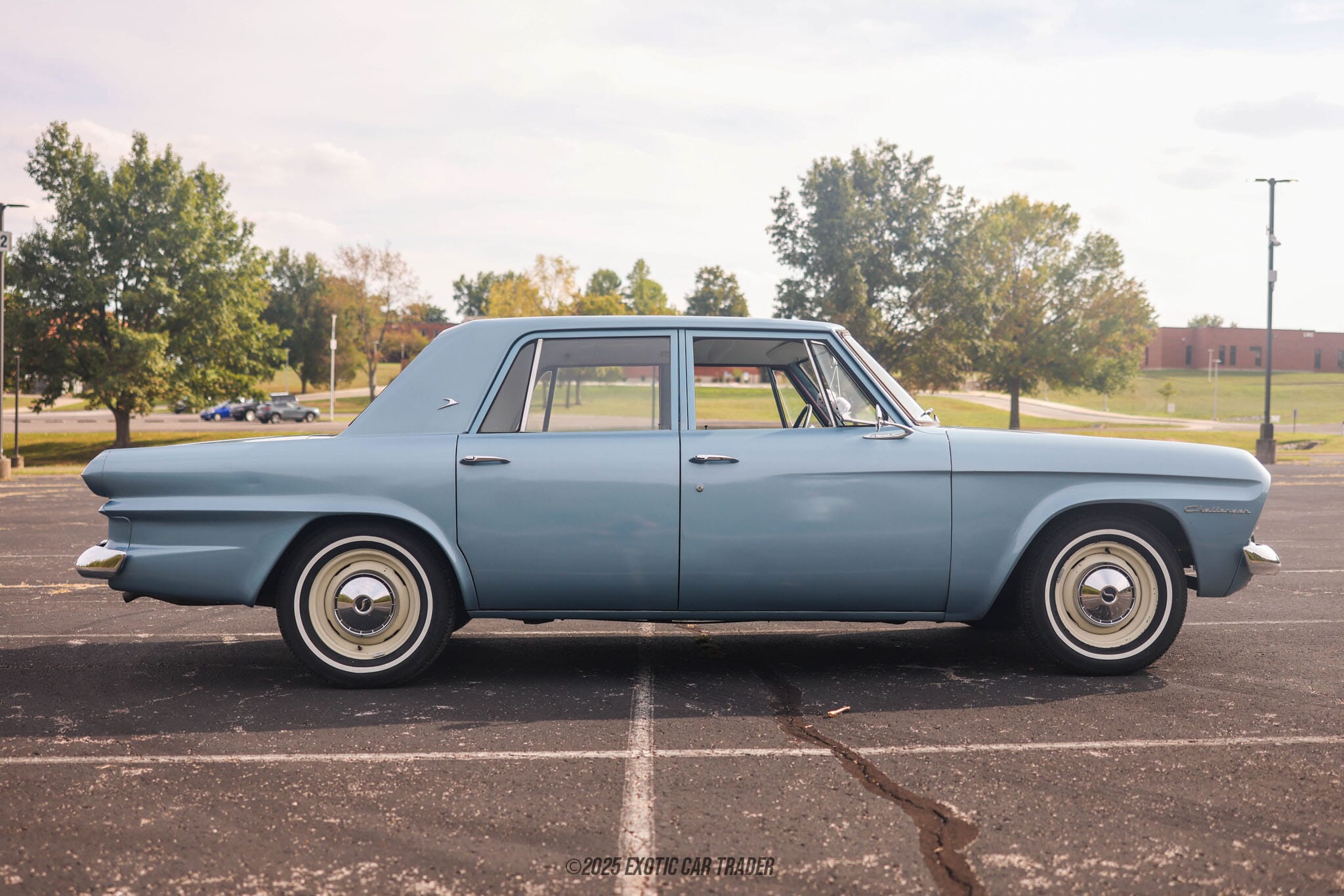
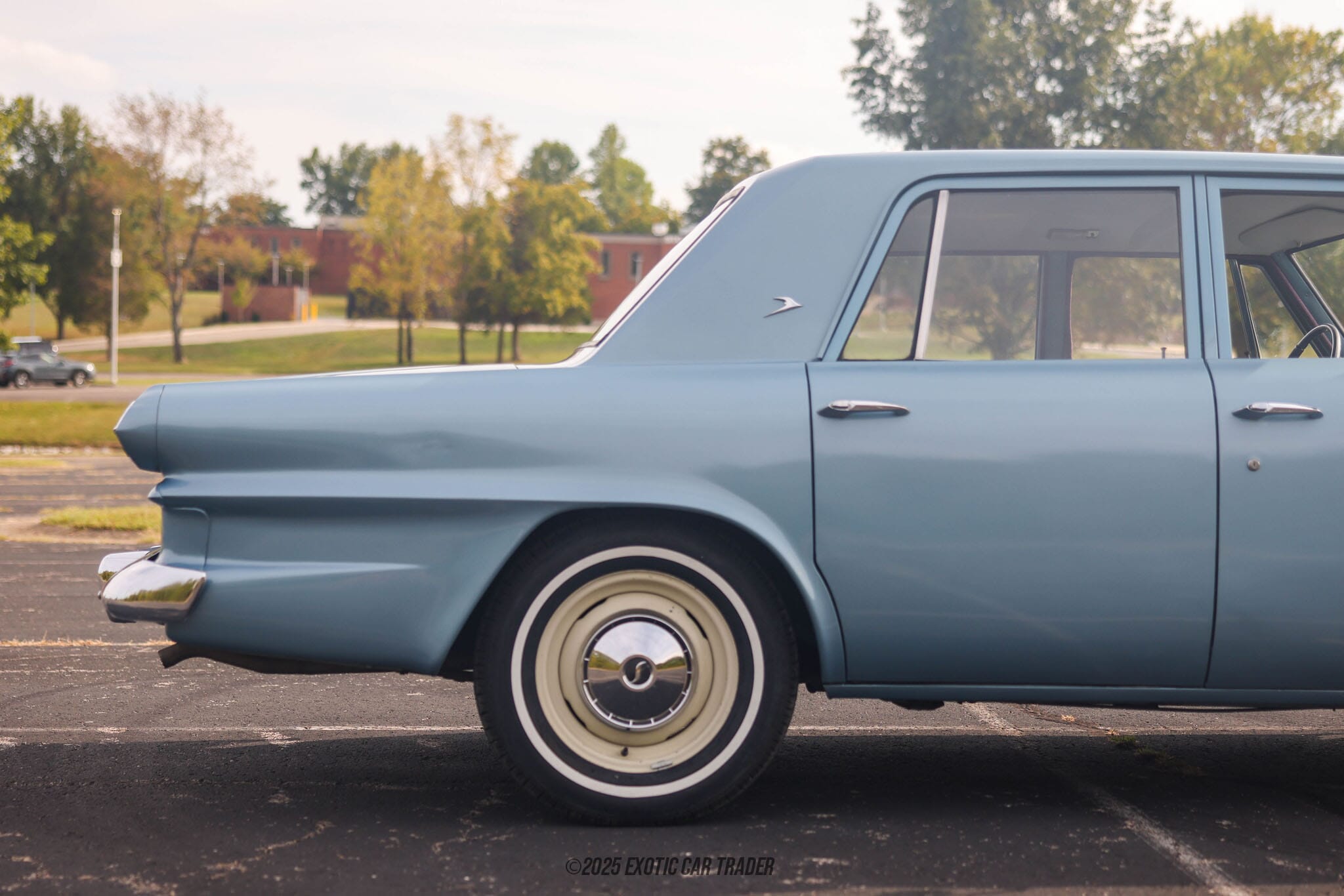
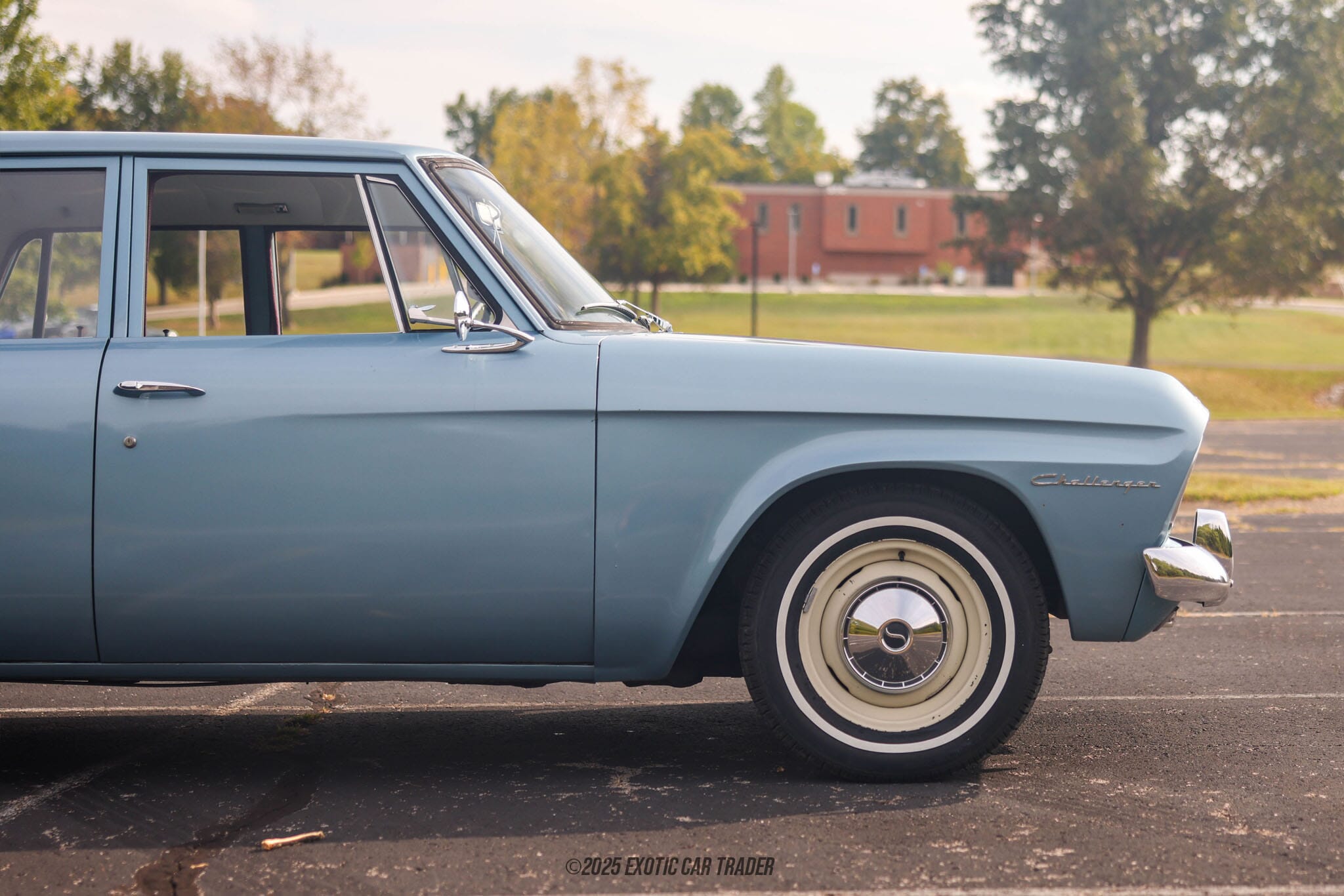
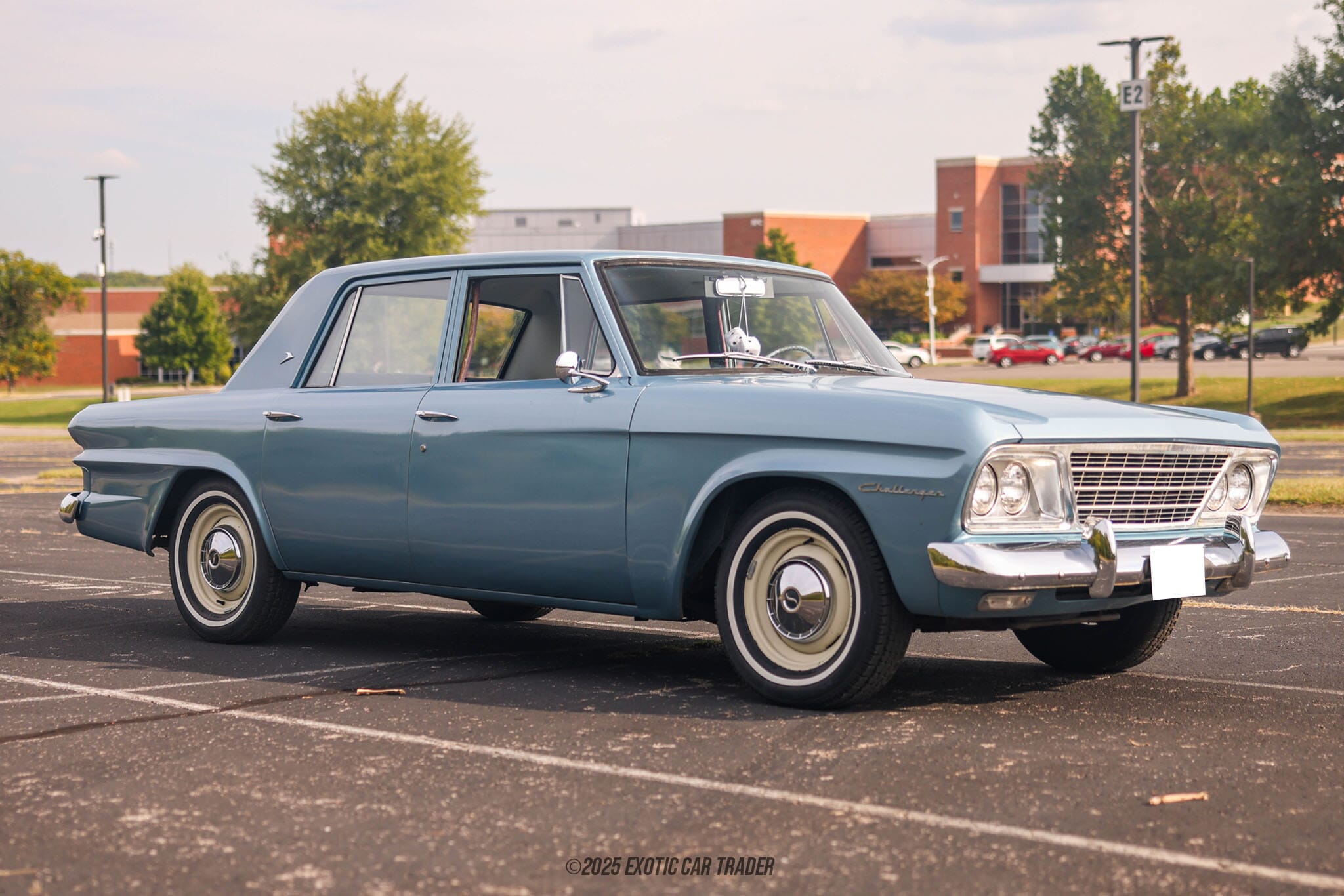
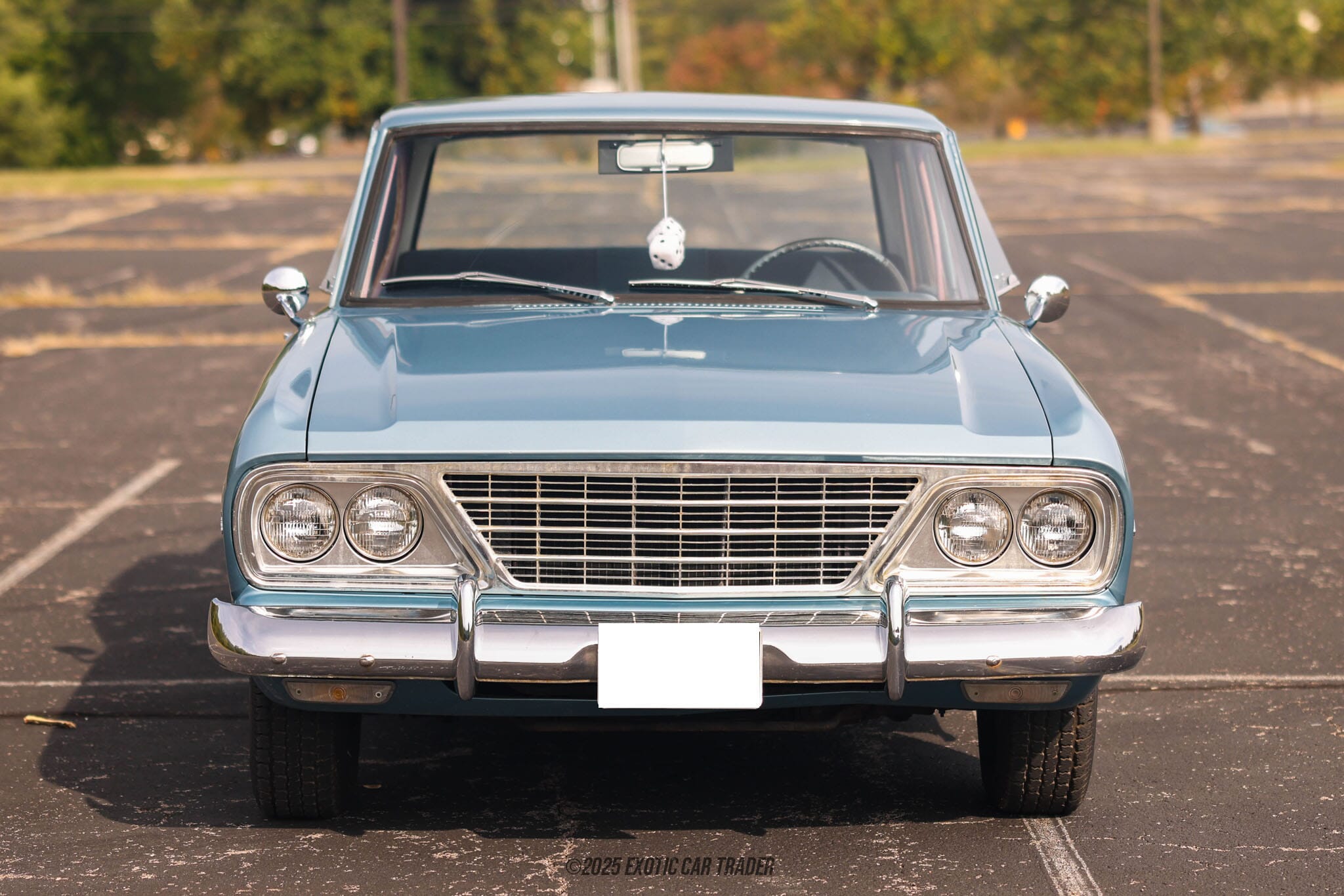
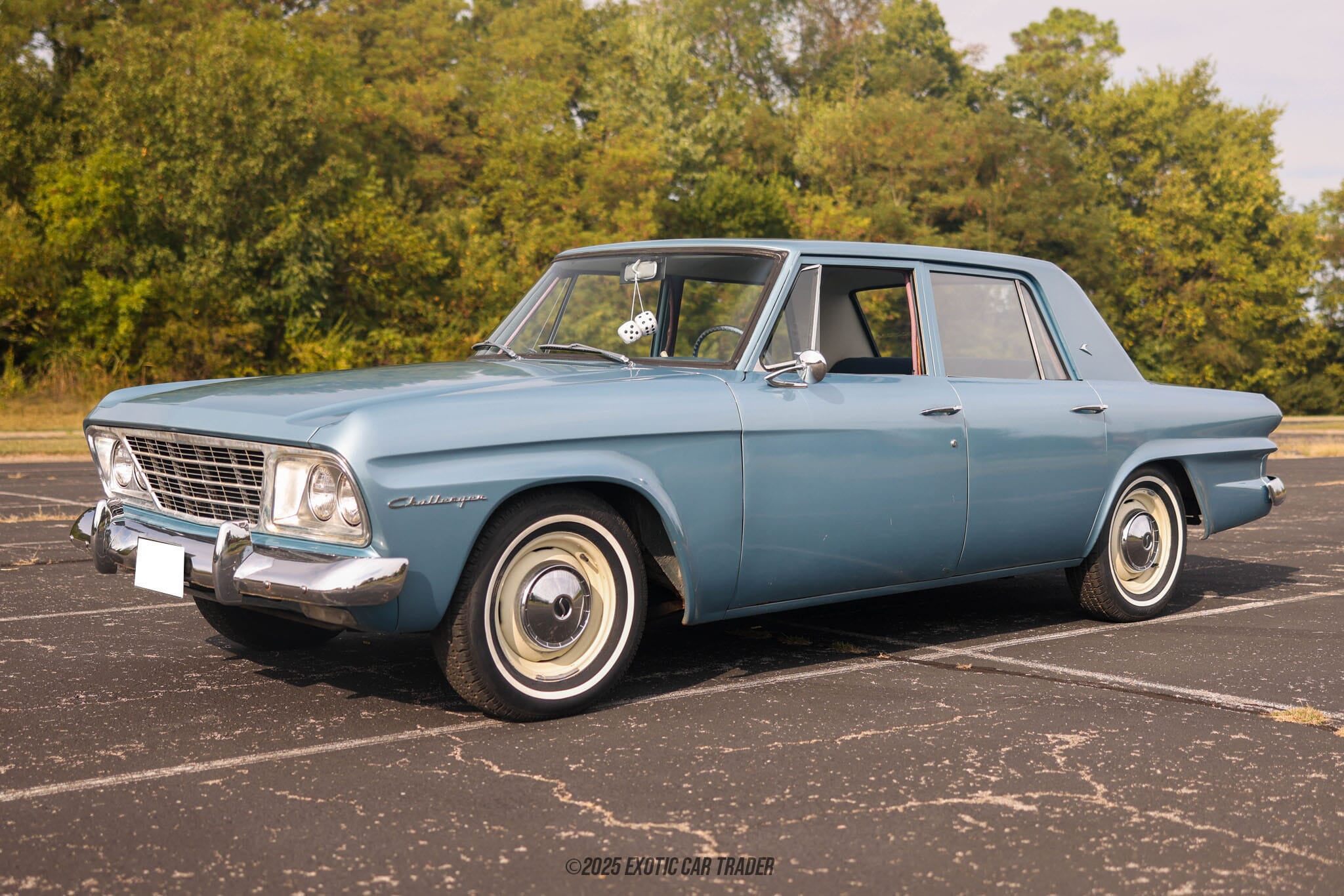

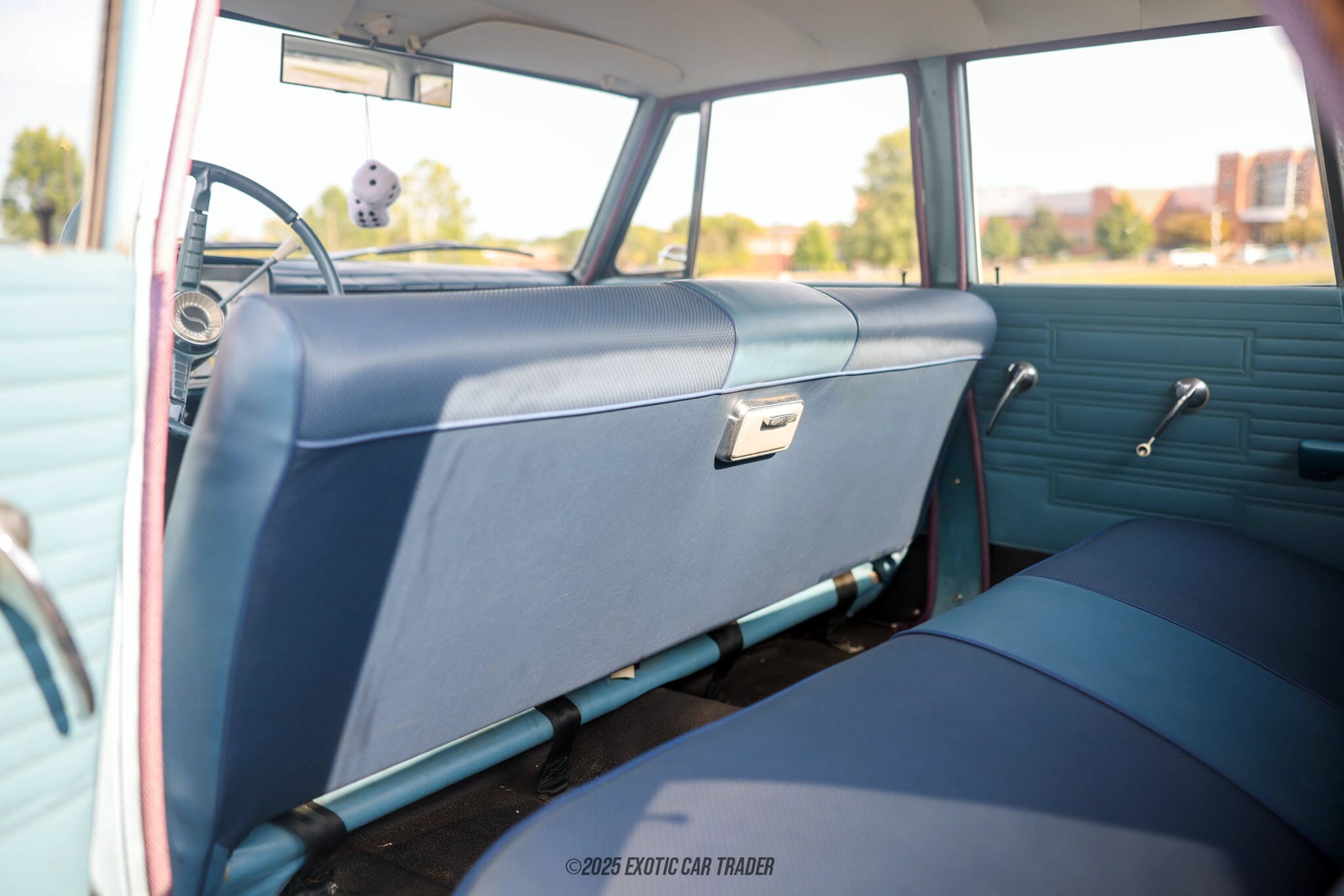
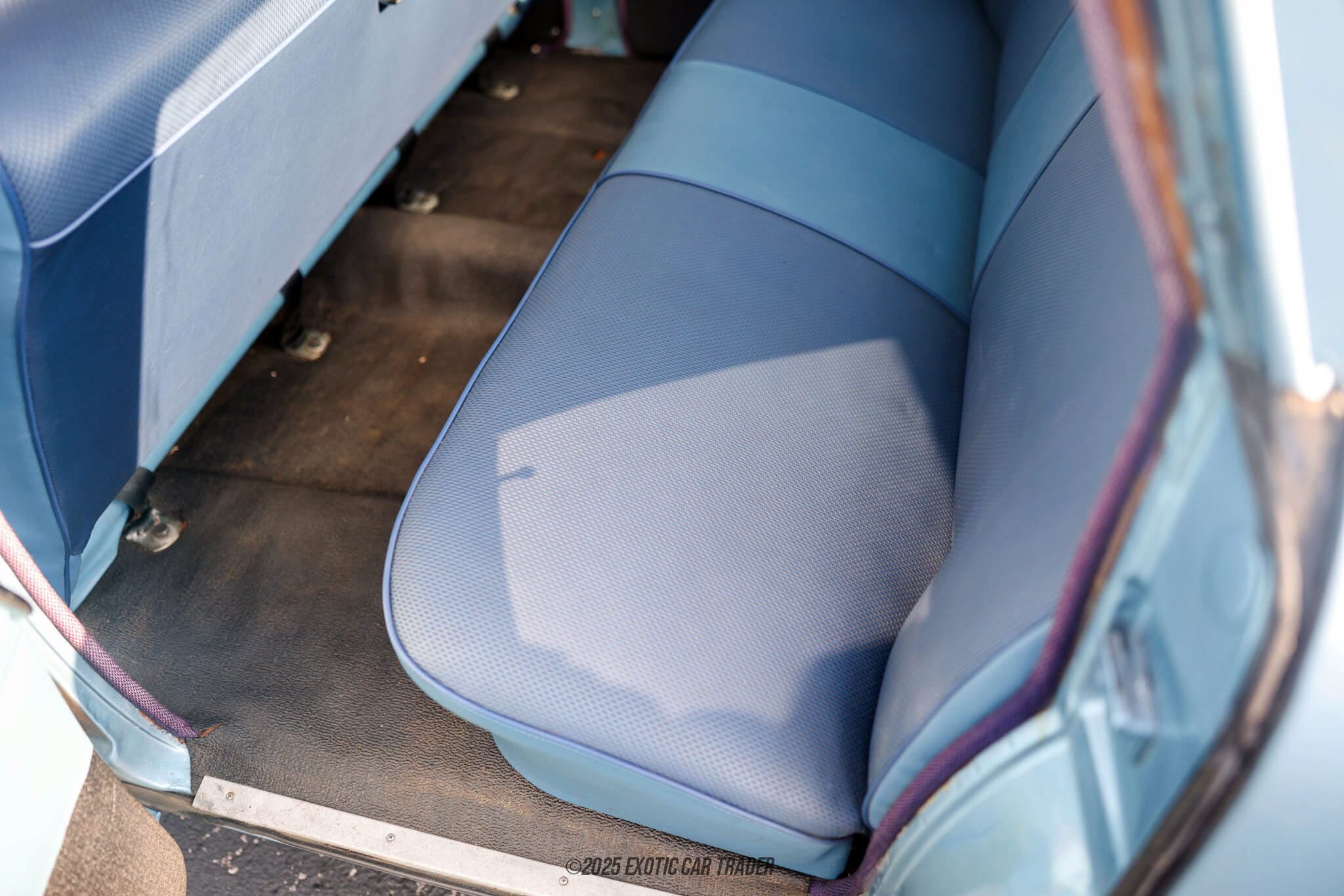
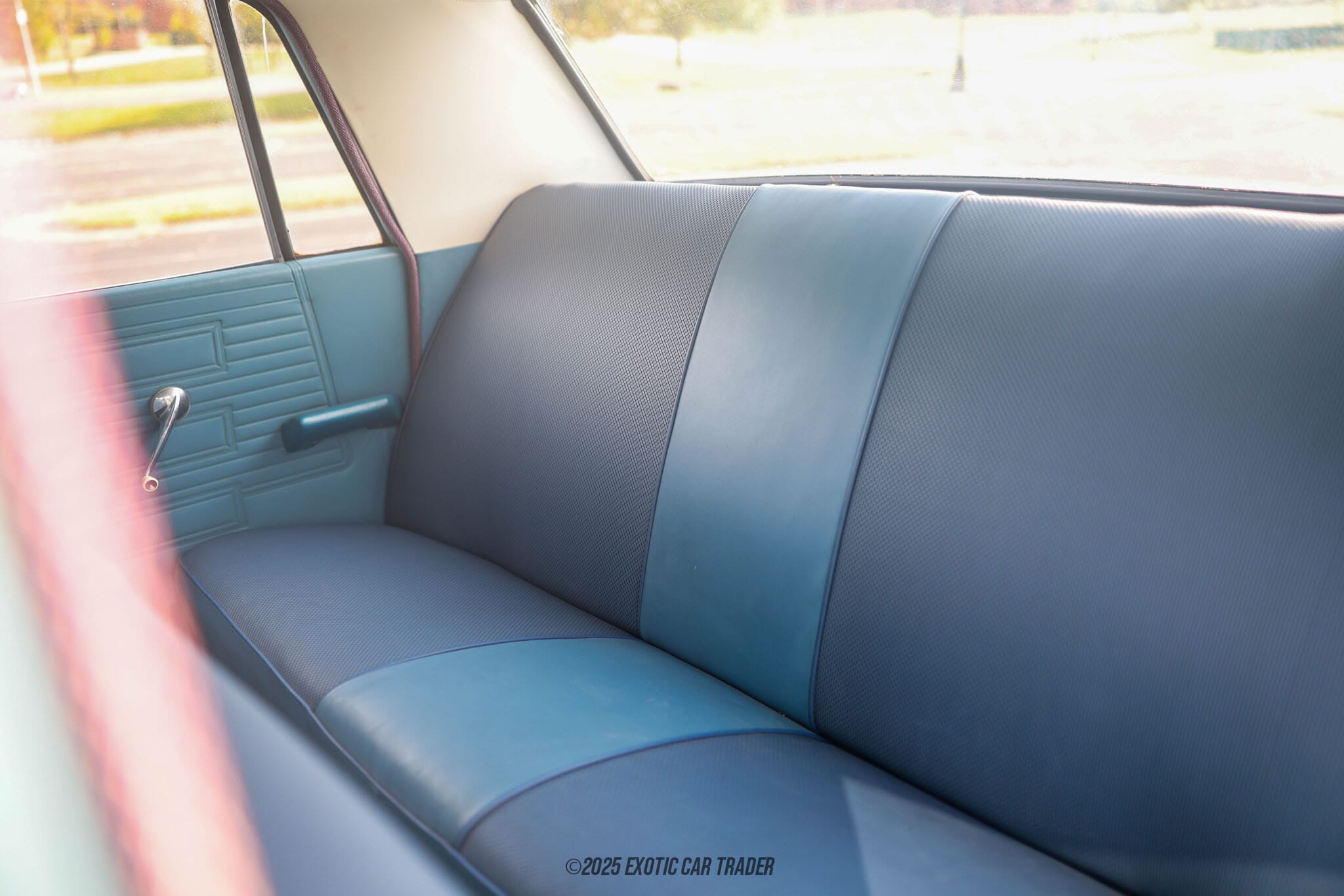
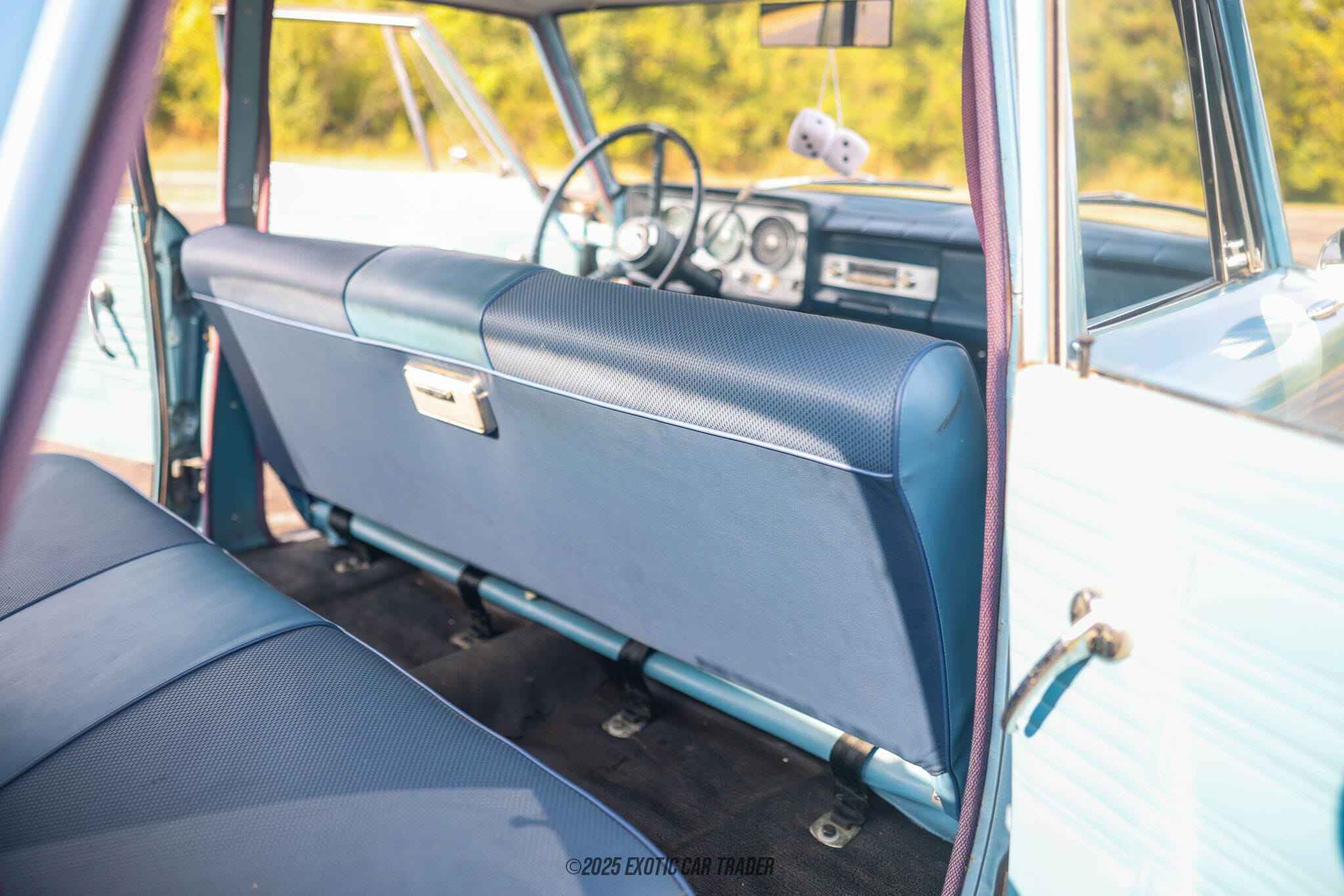
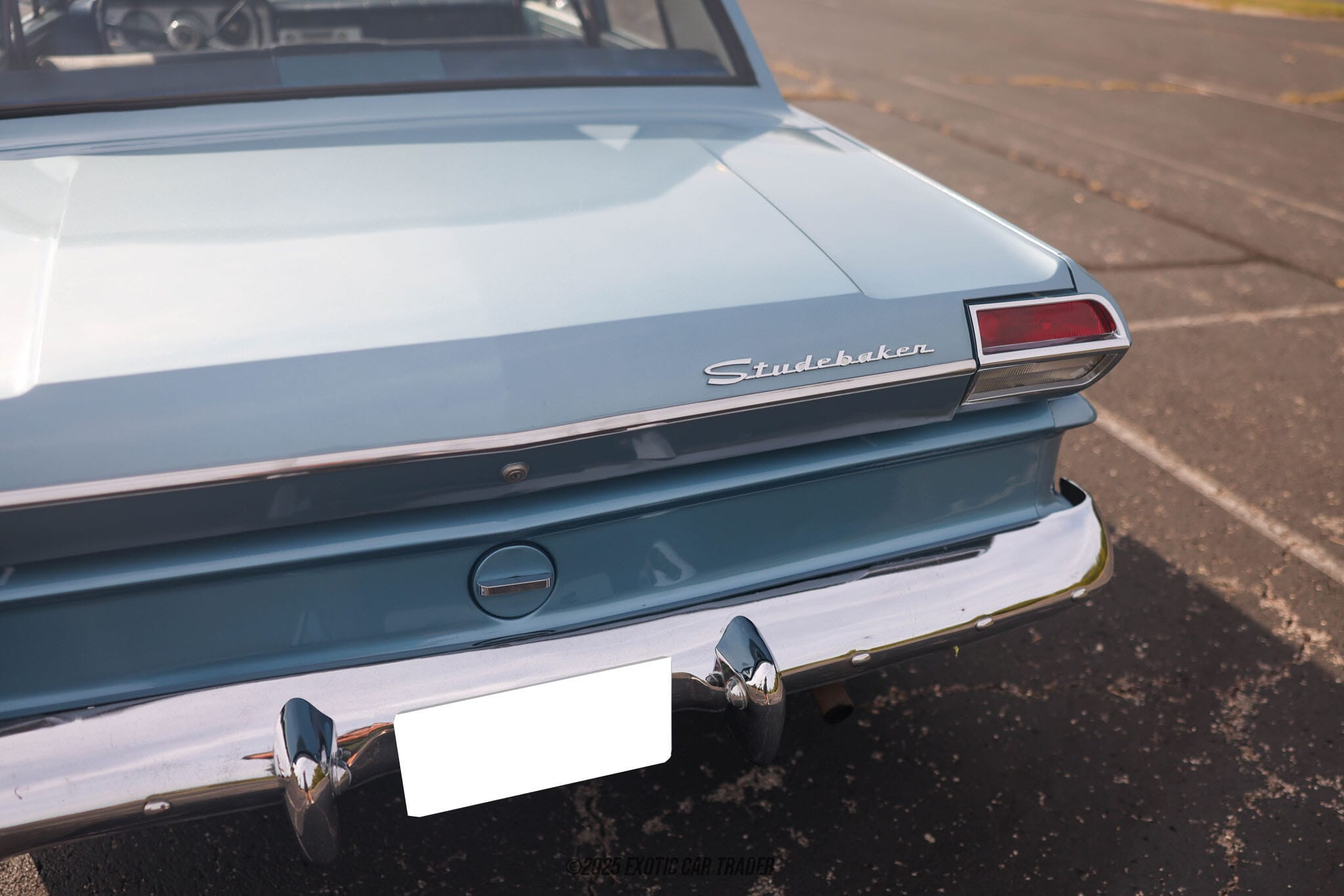
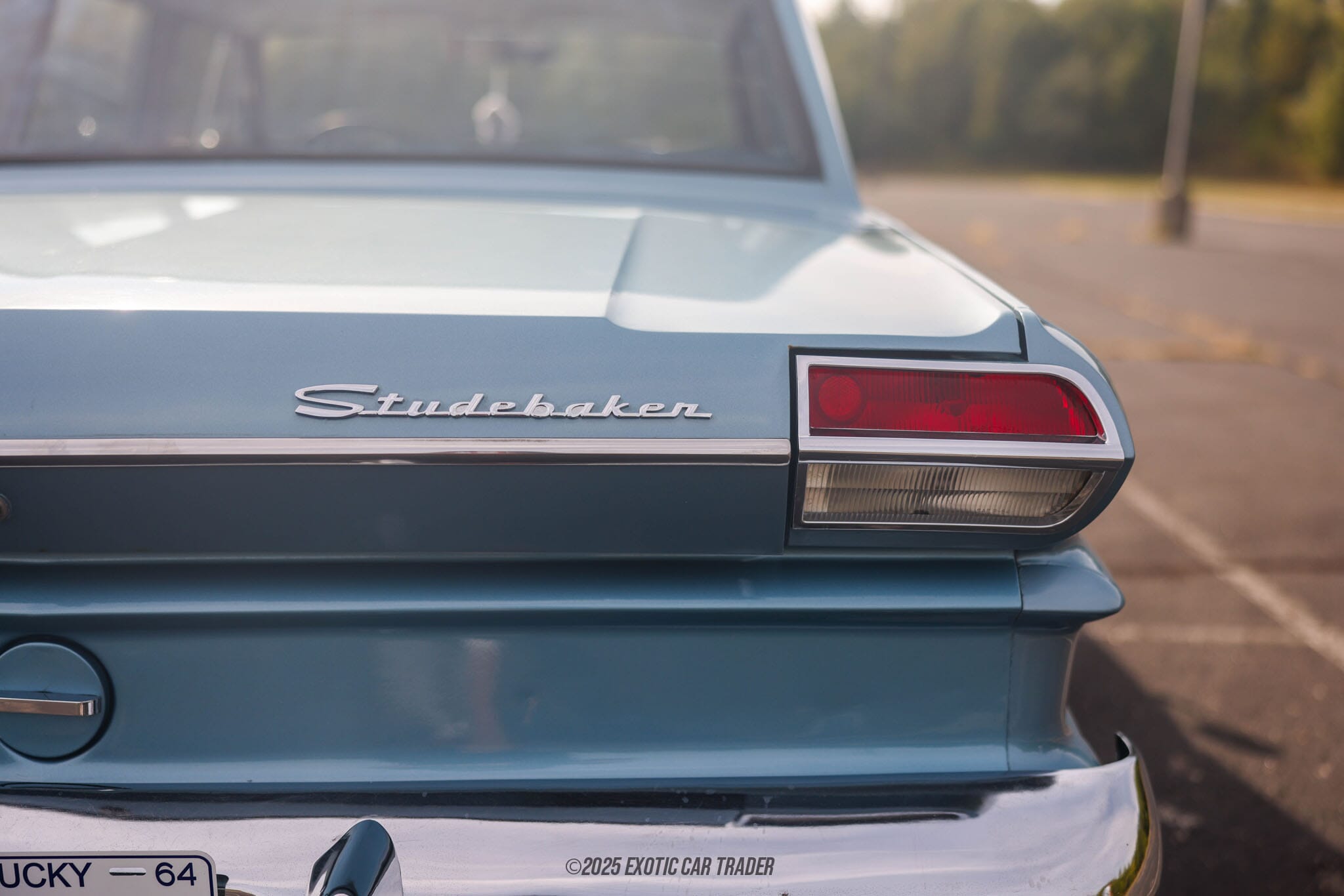
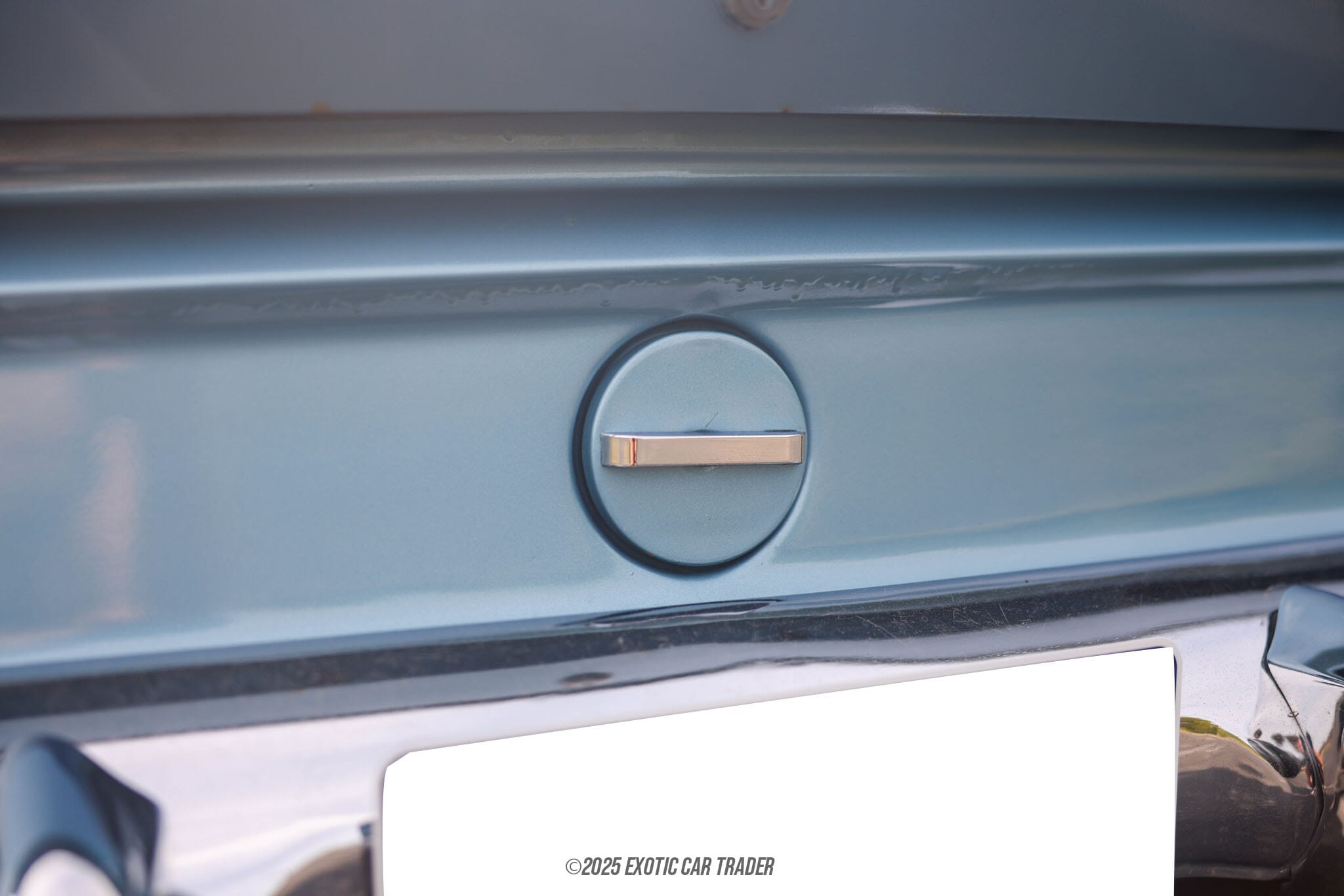
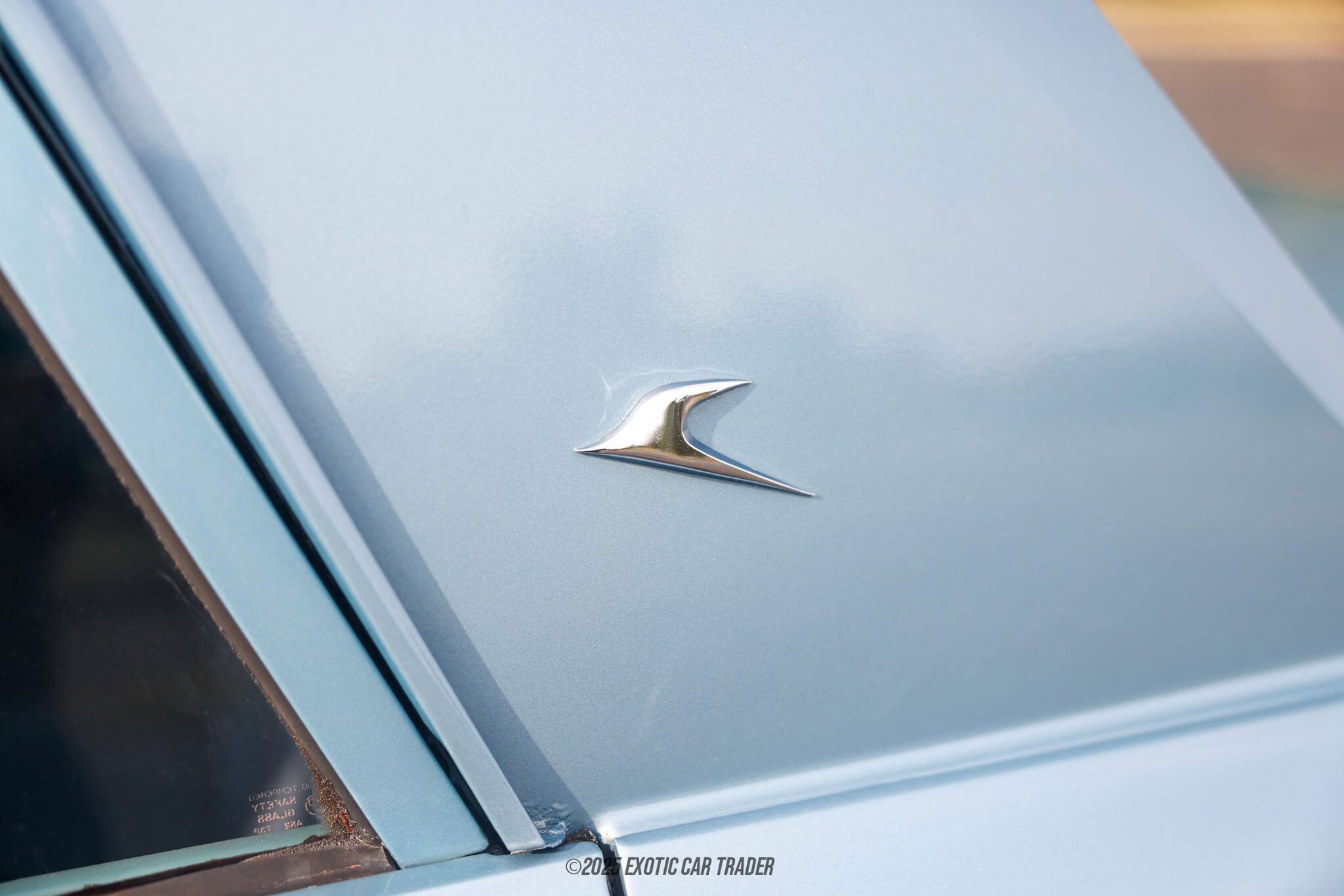
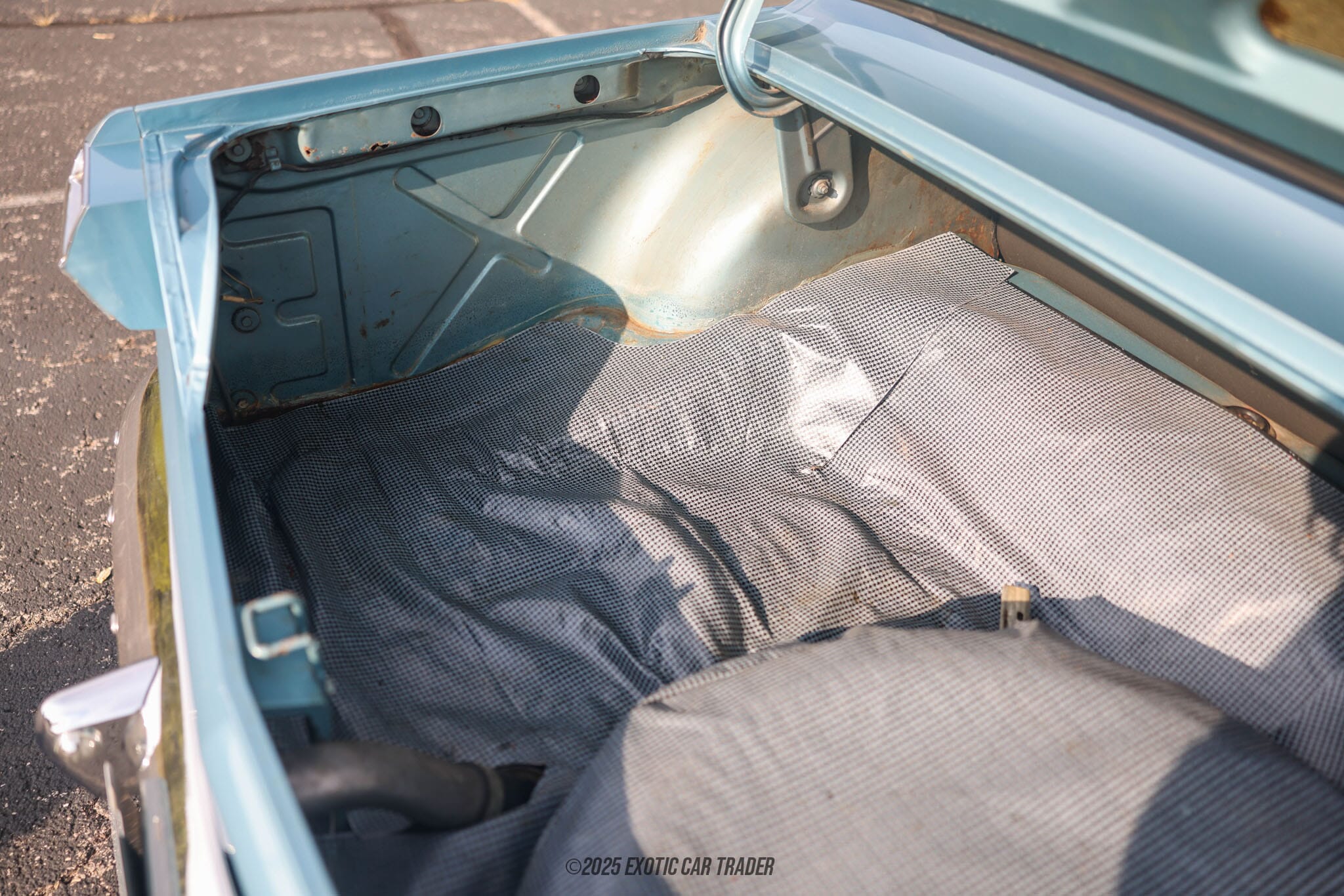
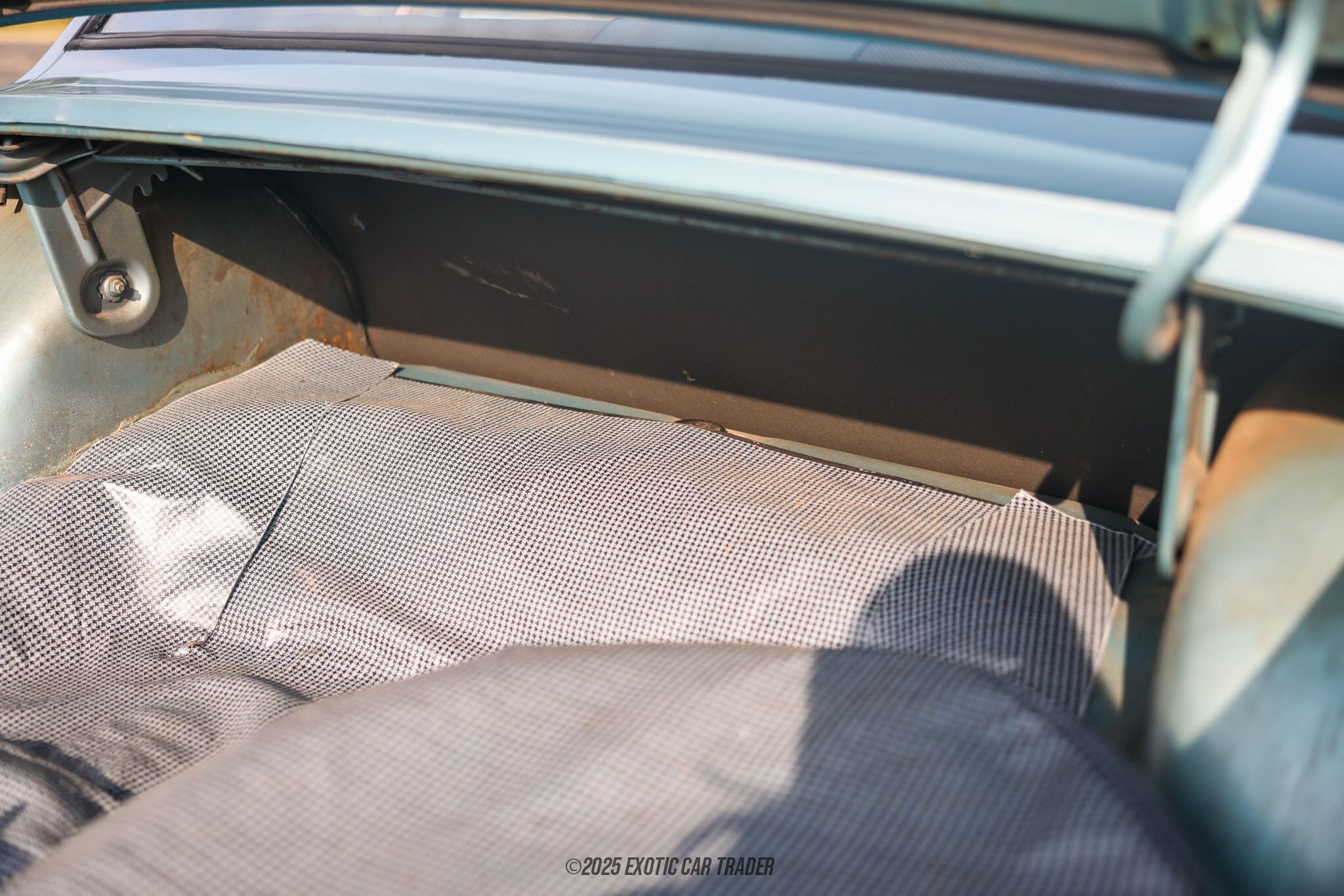
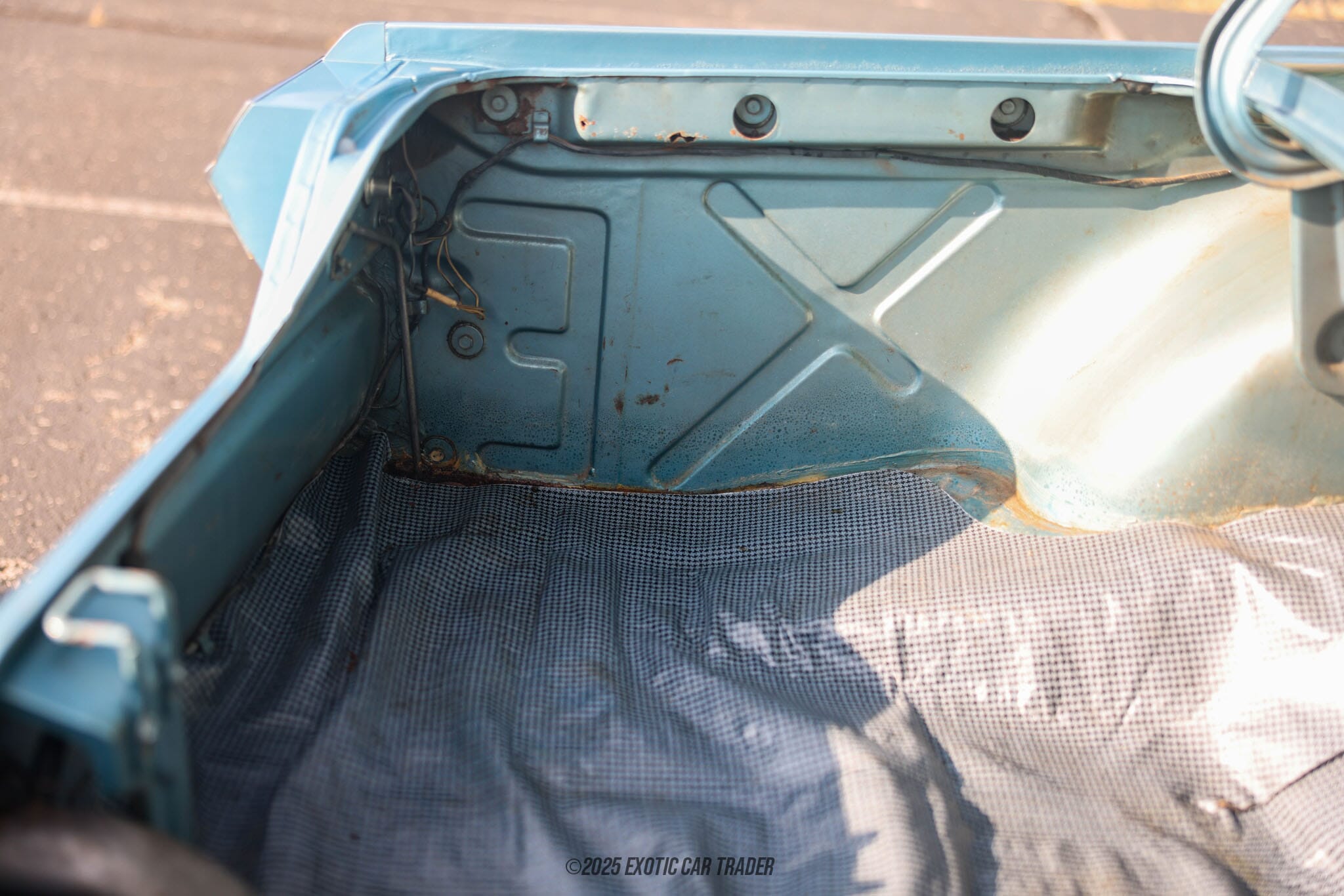
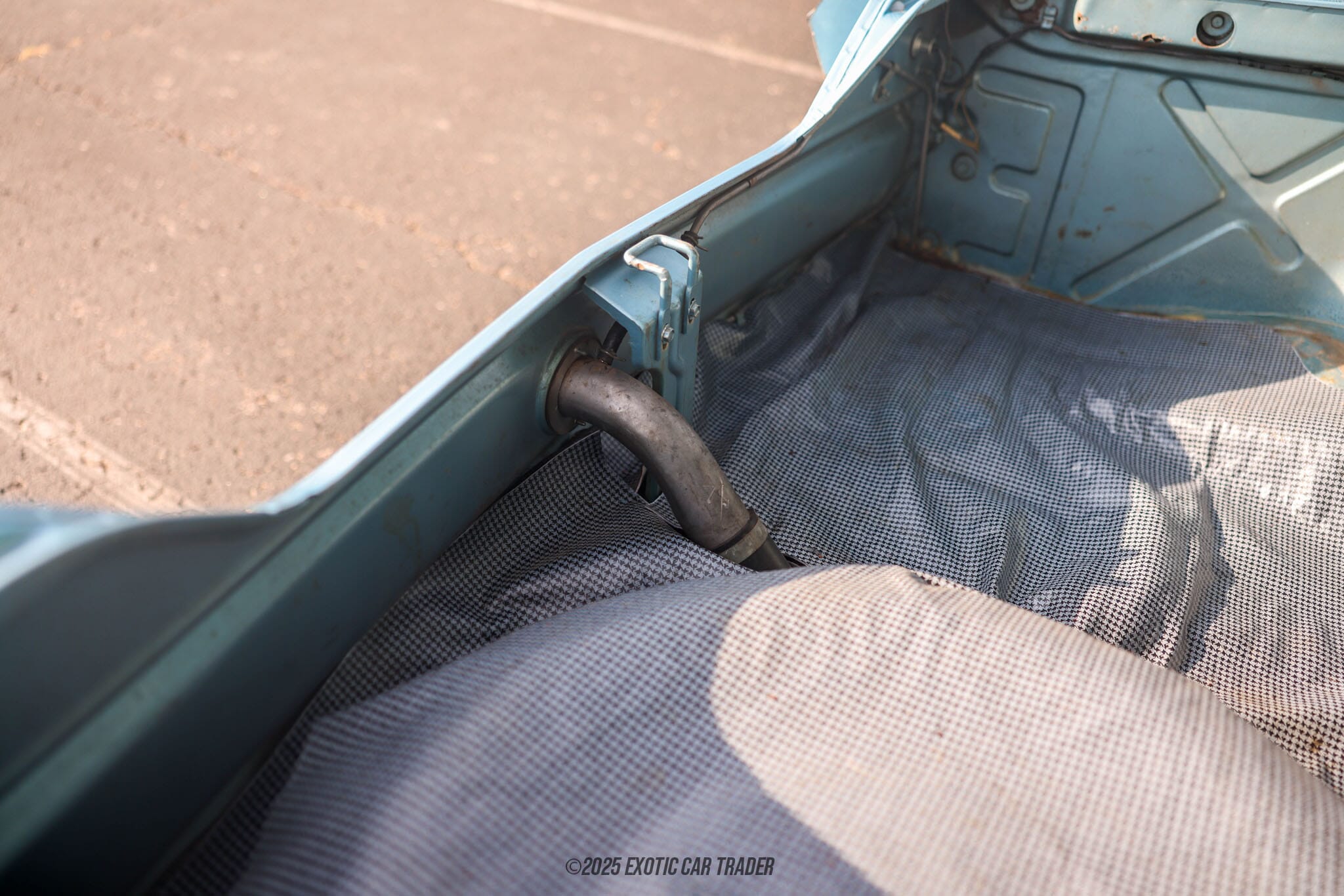
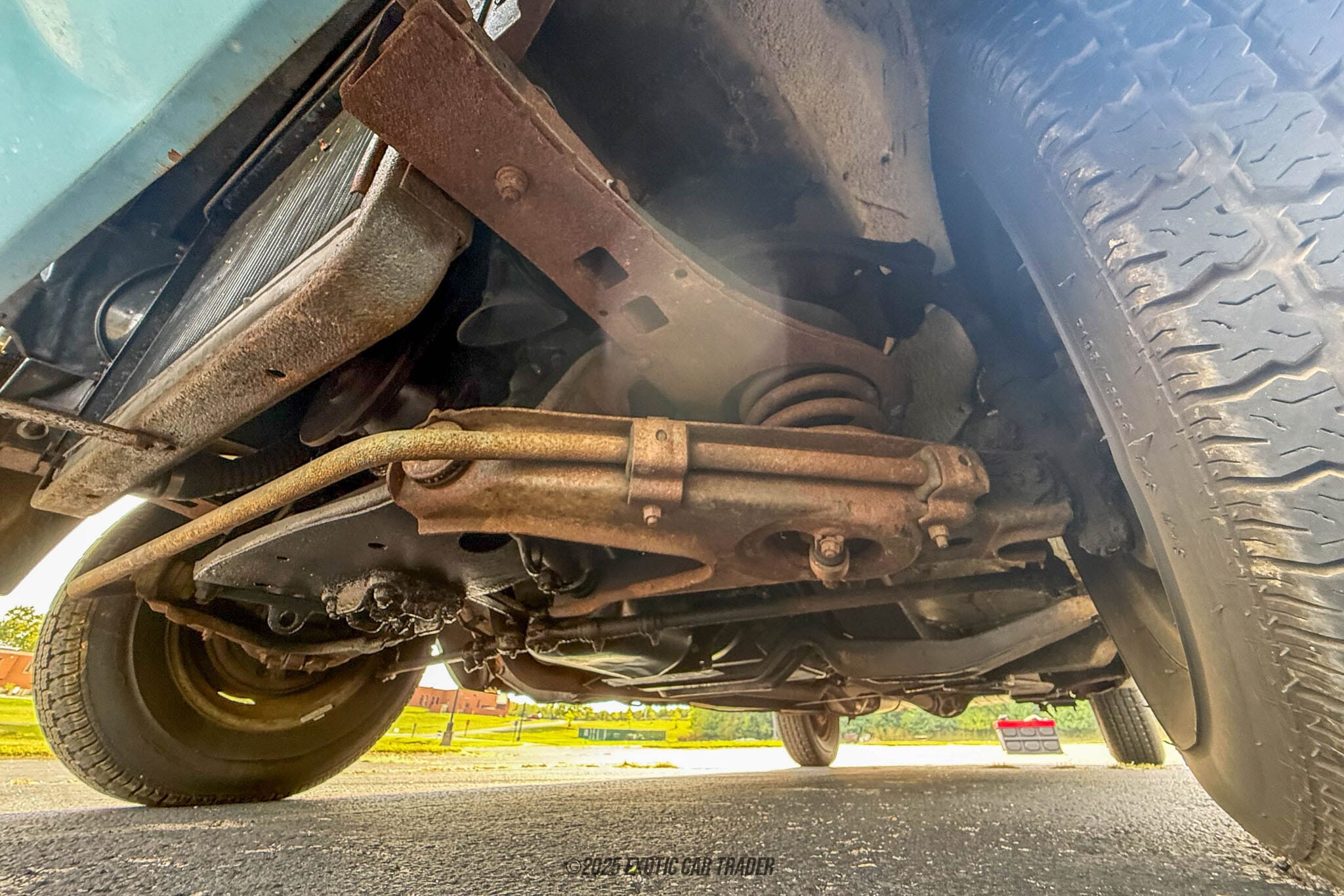
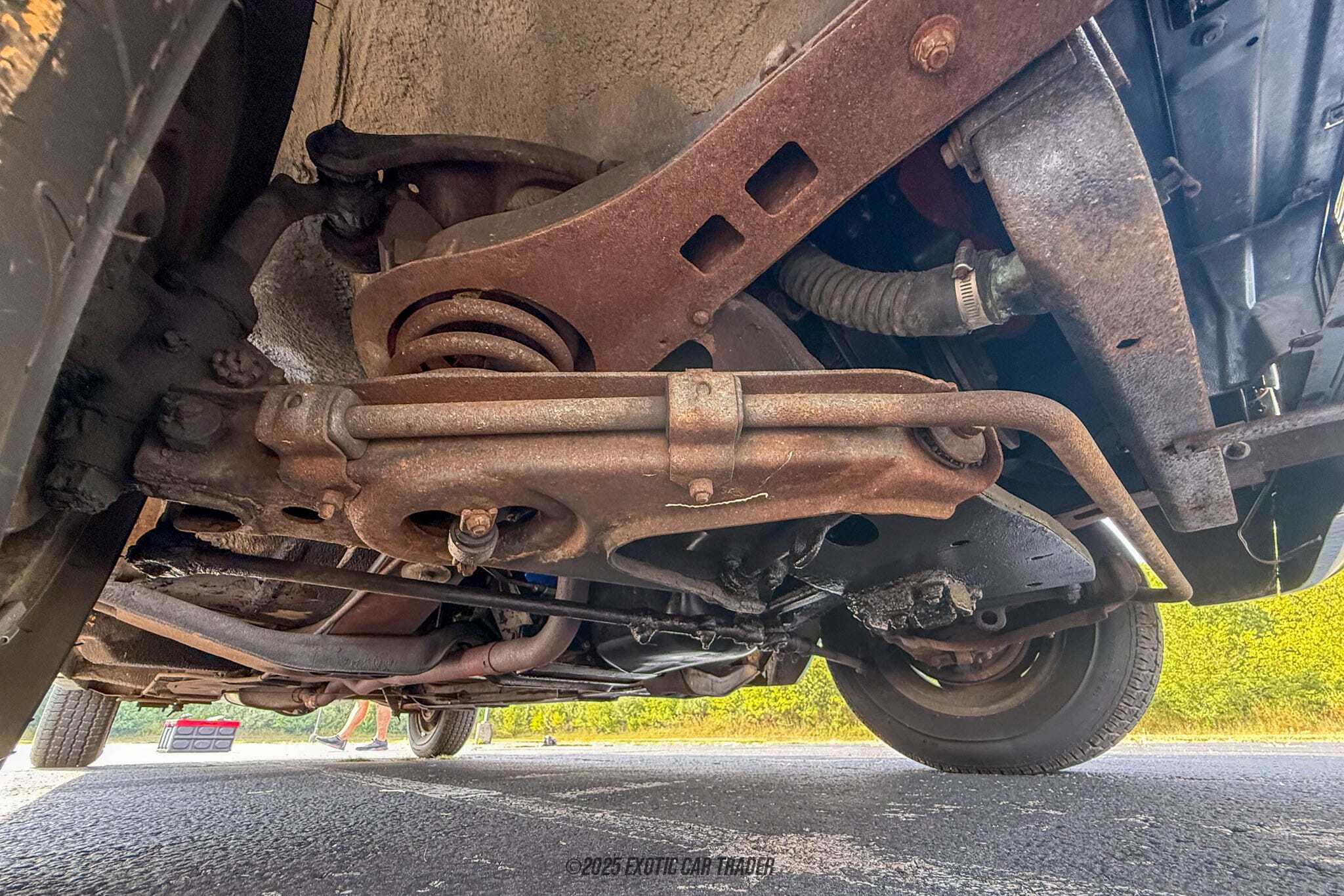
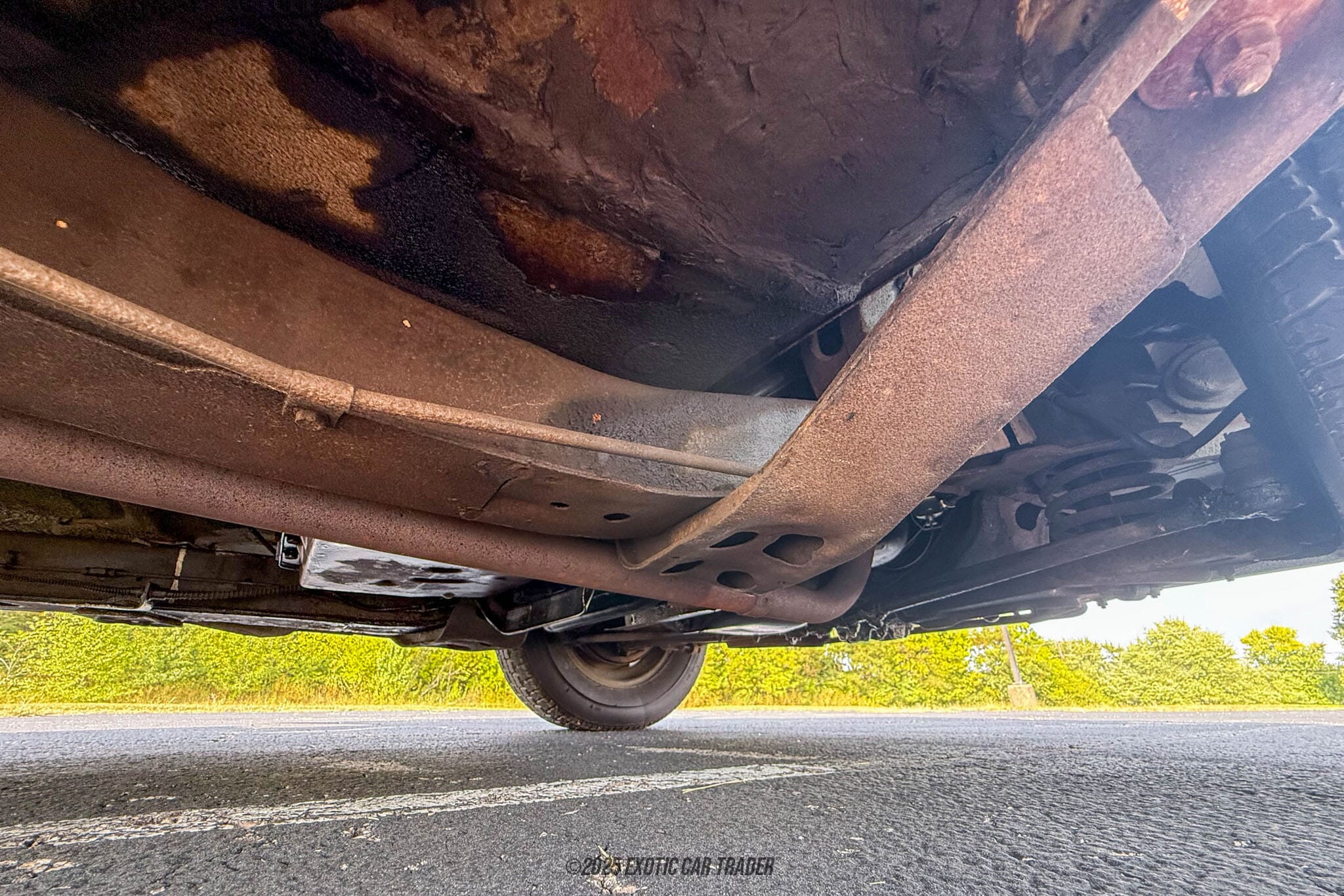
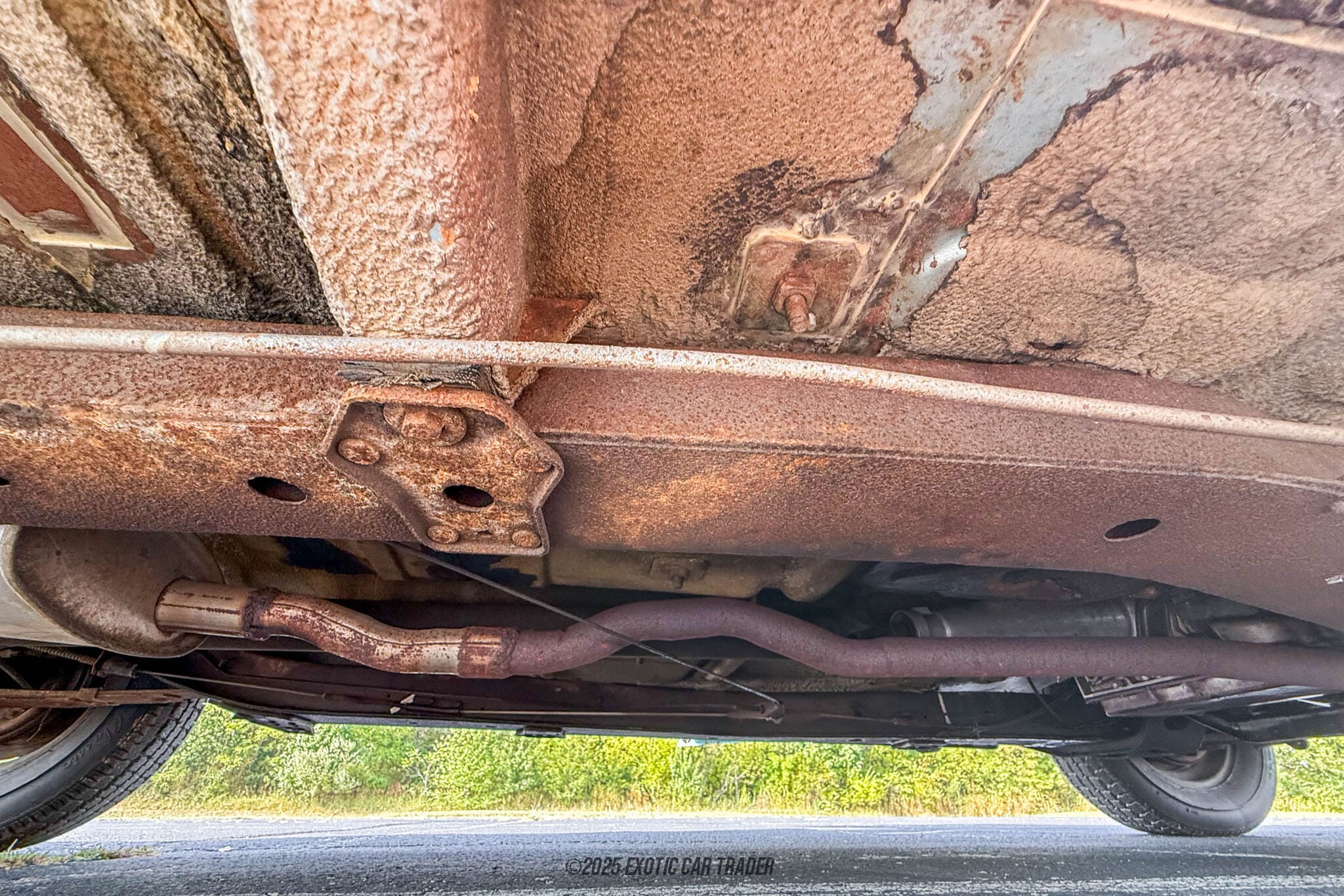


- 1964 Studebaker Challenger
- 170ci I6
- Single-Barrel Carburetor
- Flight-O-Matic 3-Speed Automatic
- RWD
- Blue Exterior
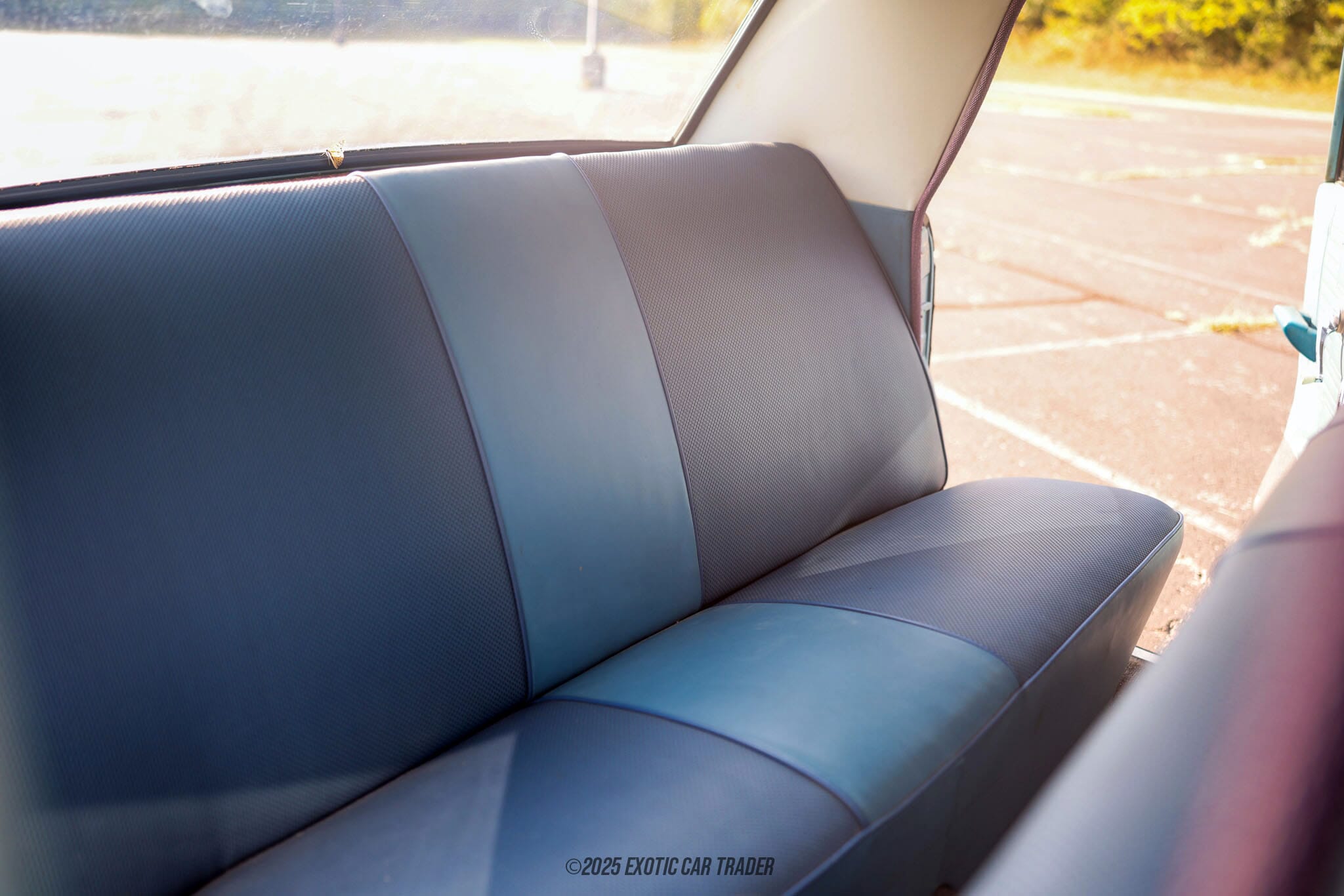
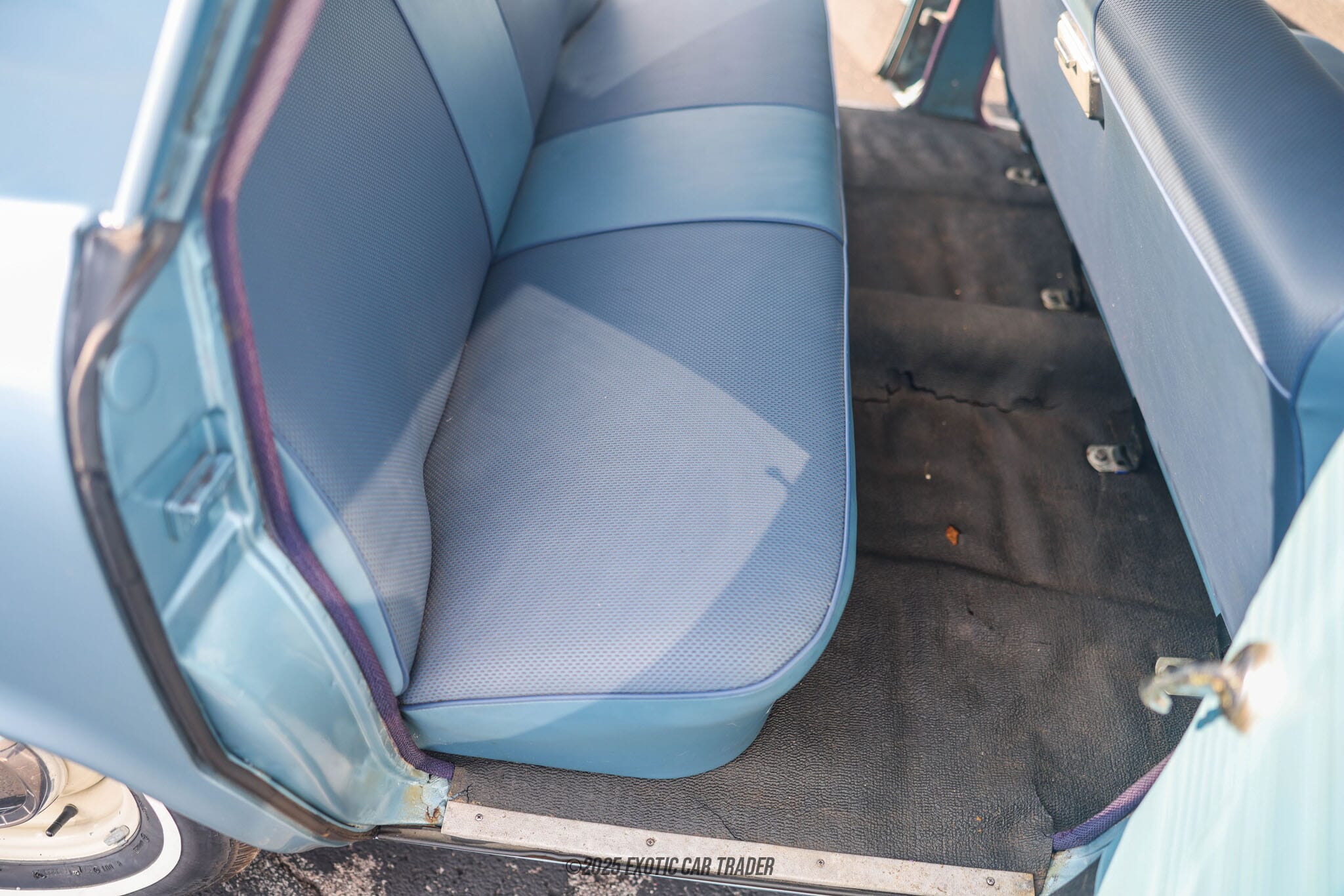
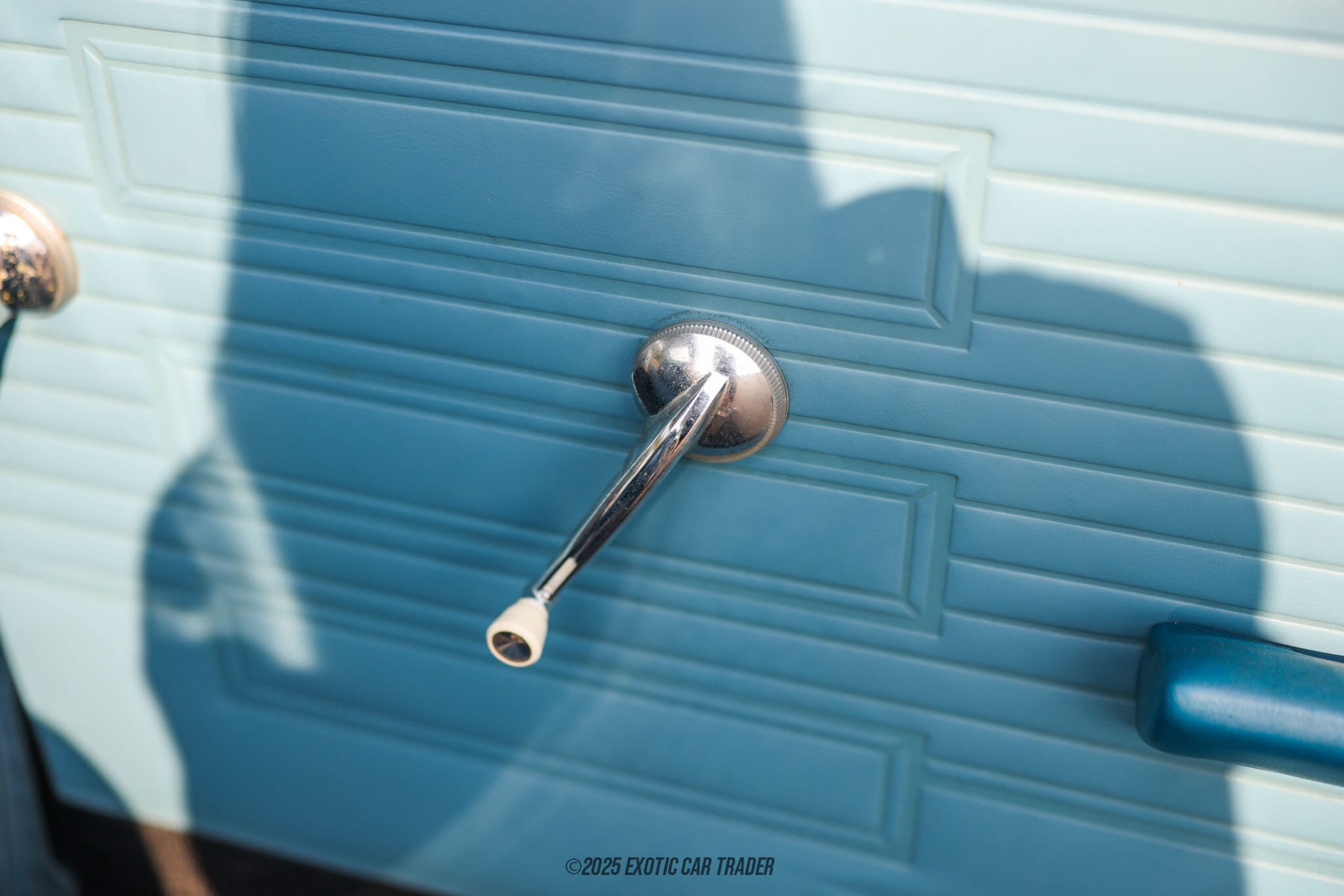
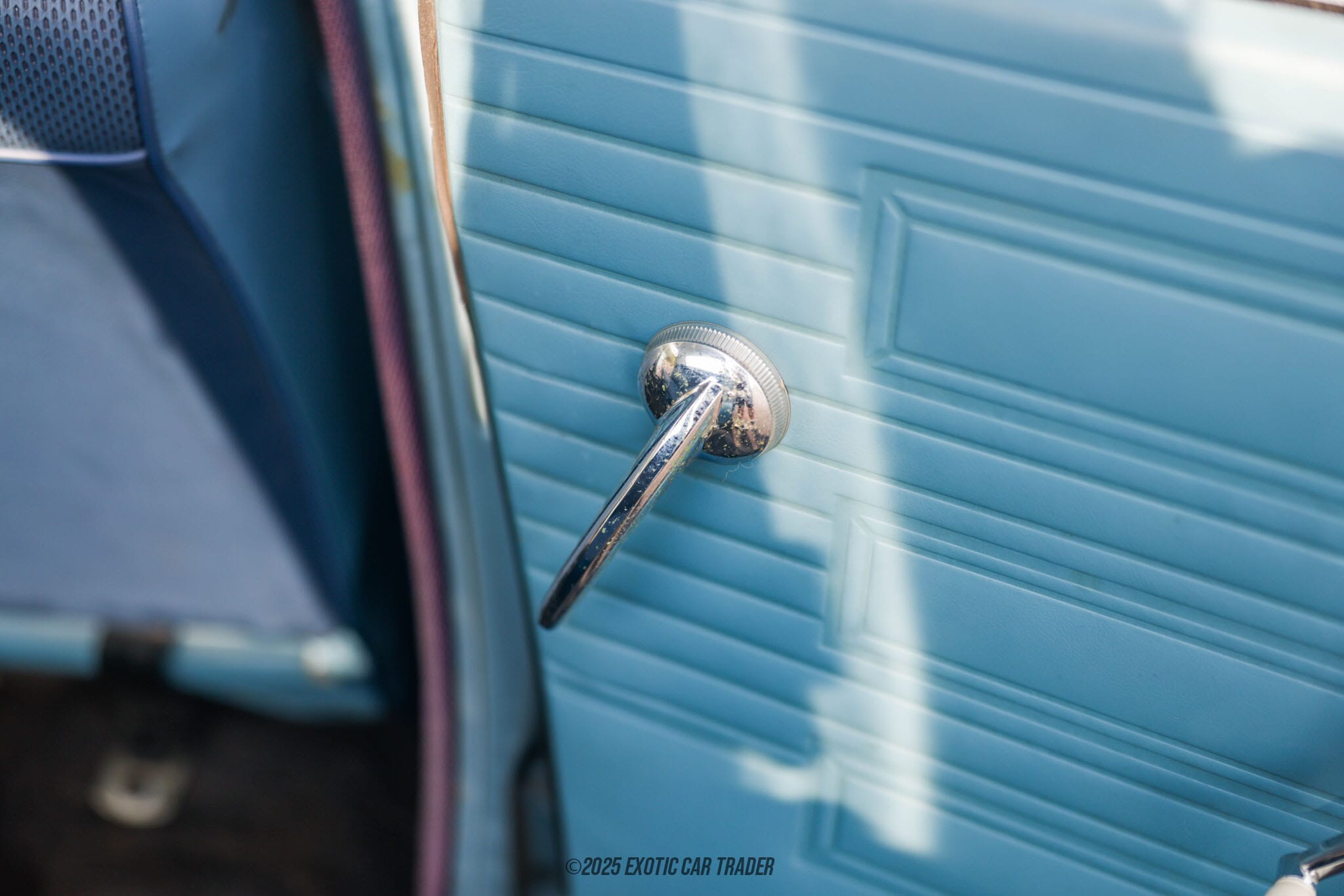
- Blue Interior
- Repainted In Original Color
- All Original Reported


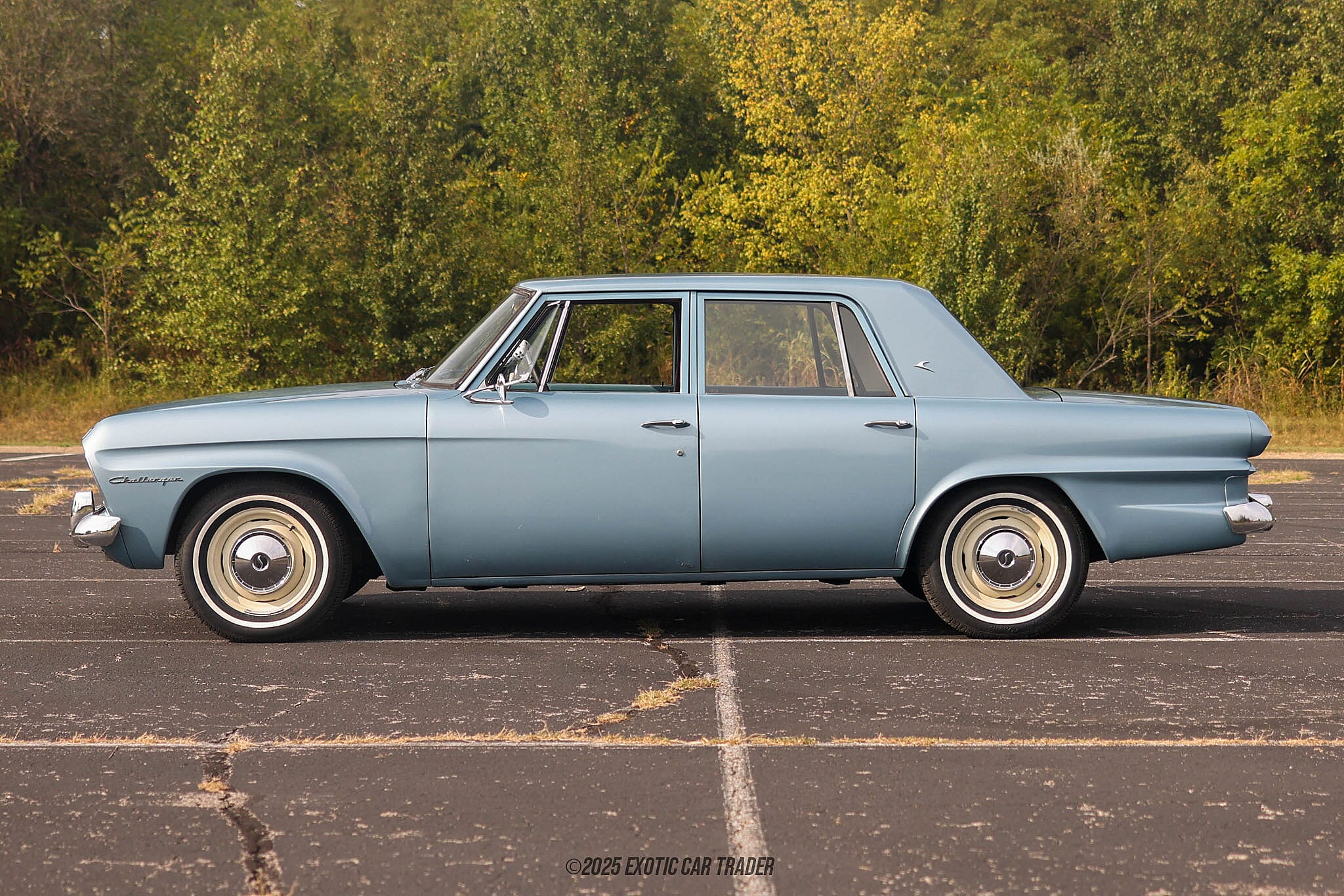
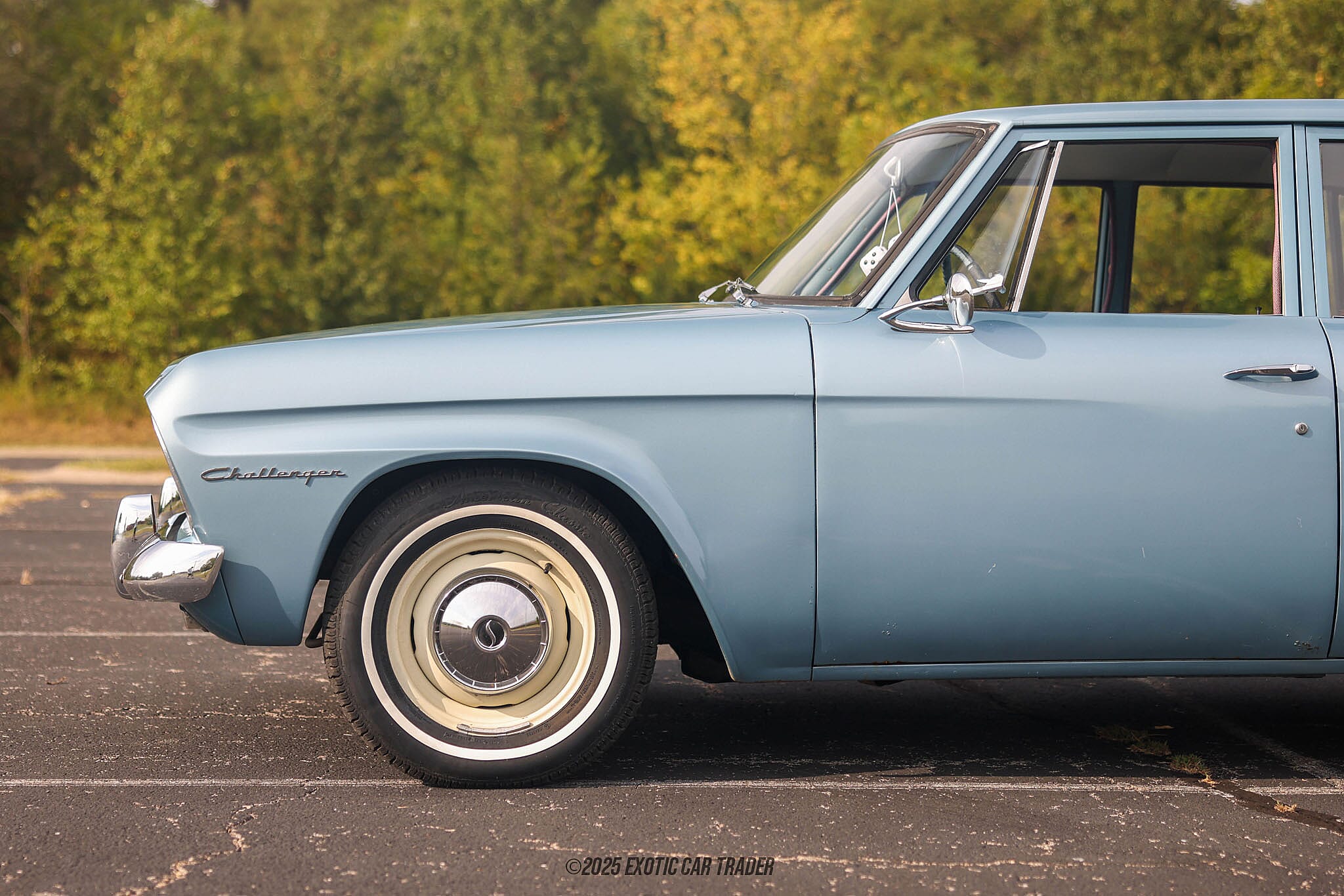
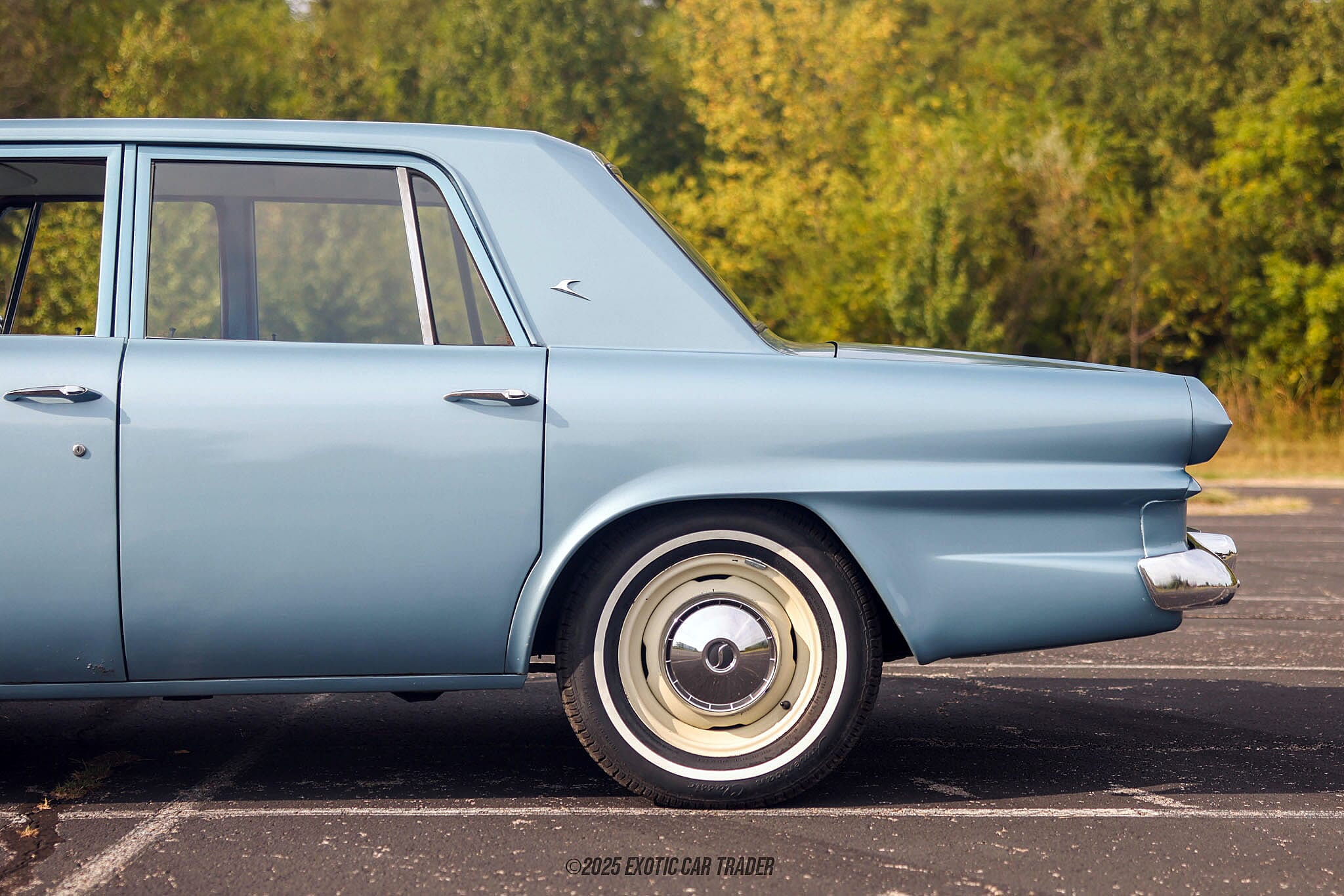
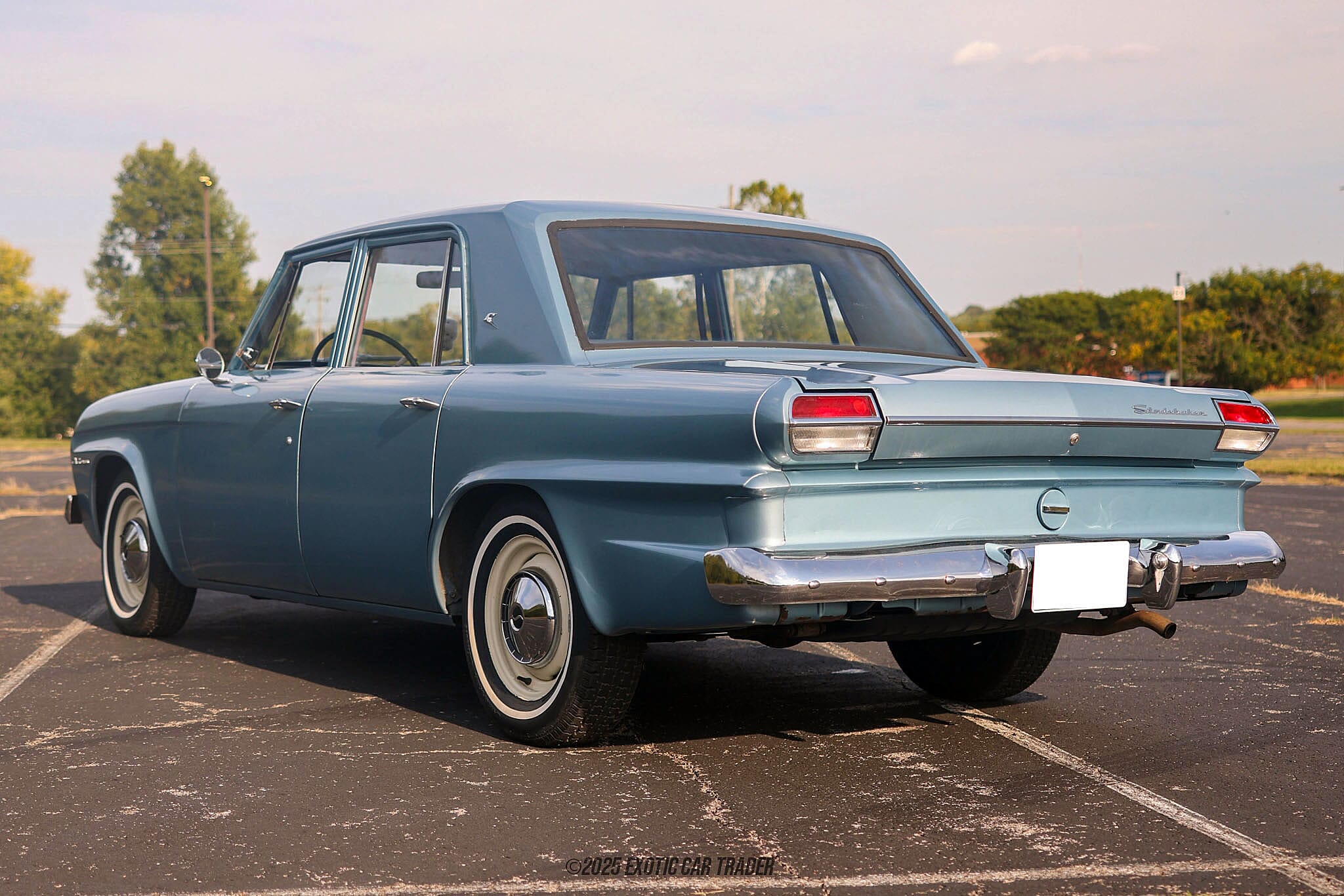
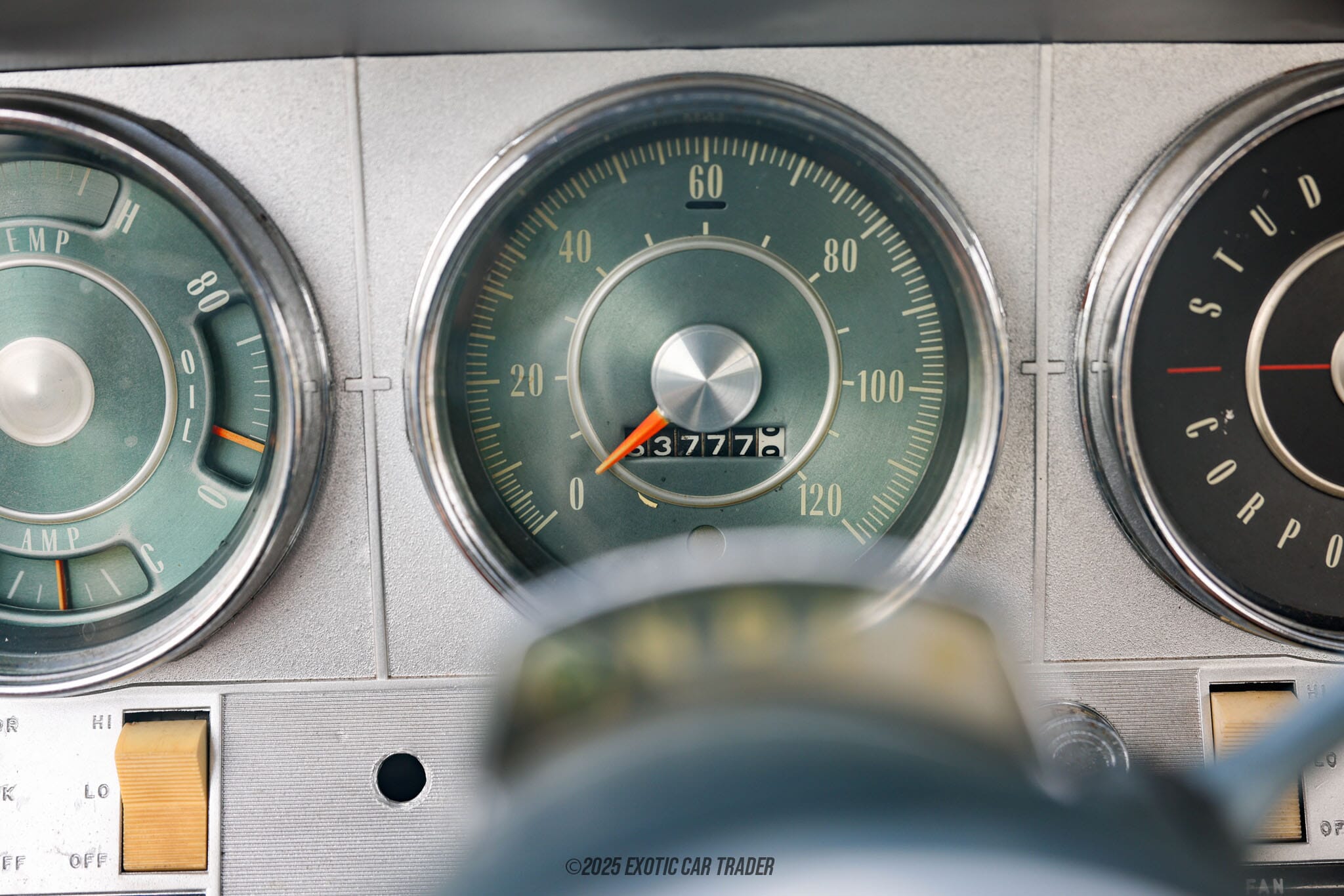
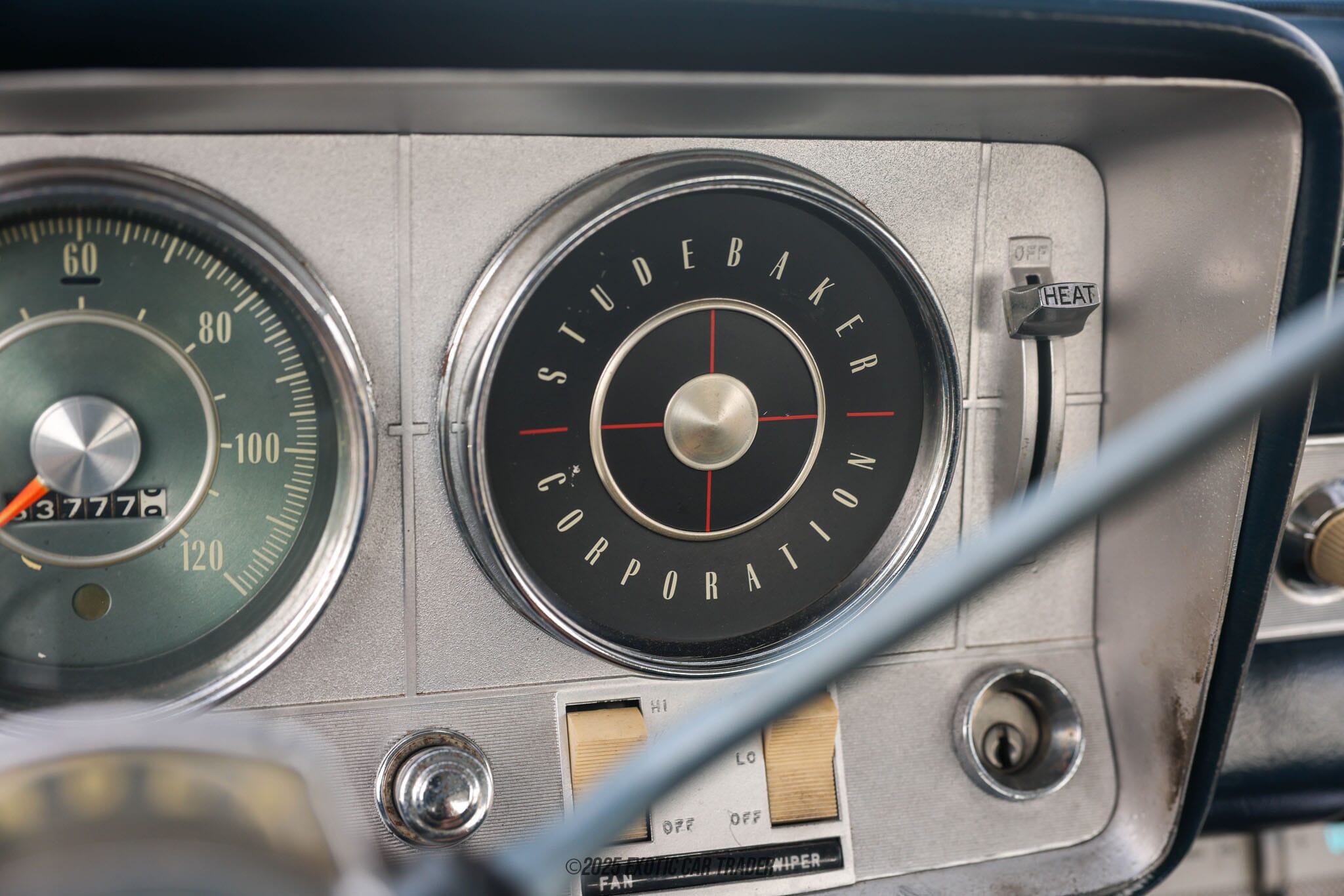
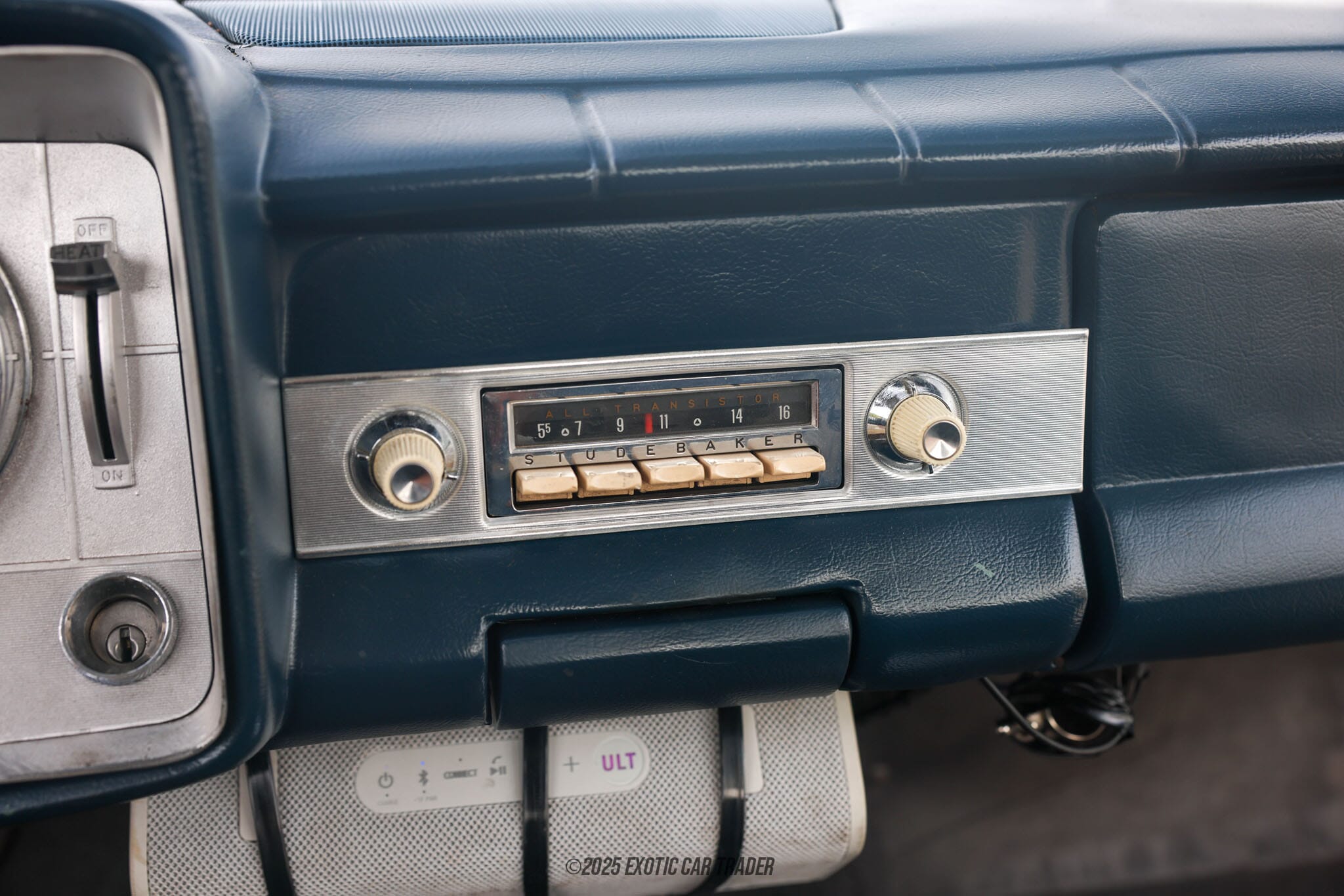
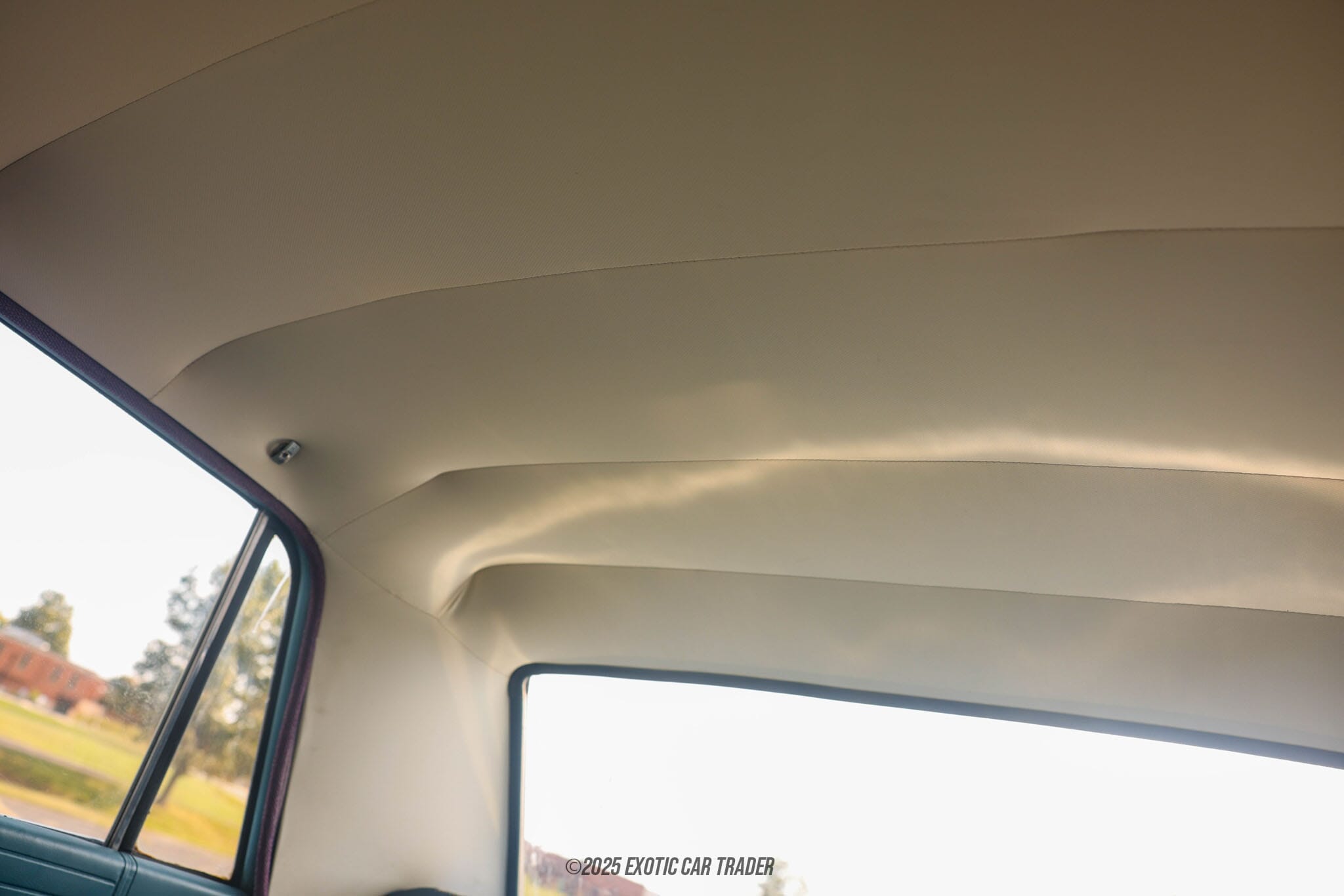
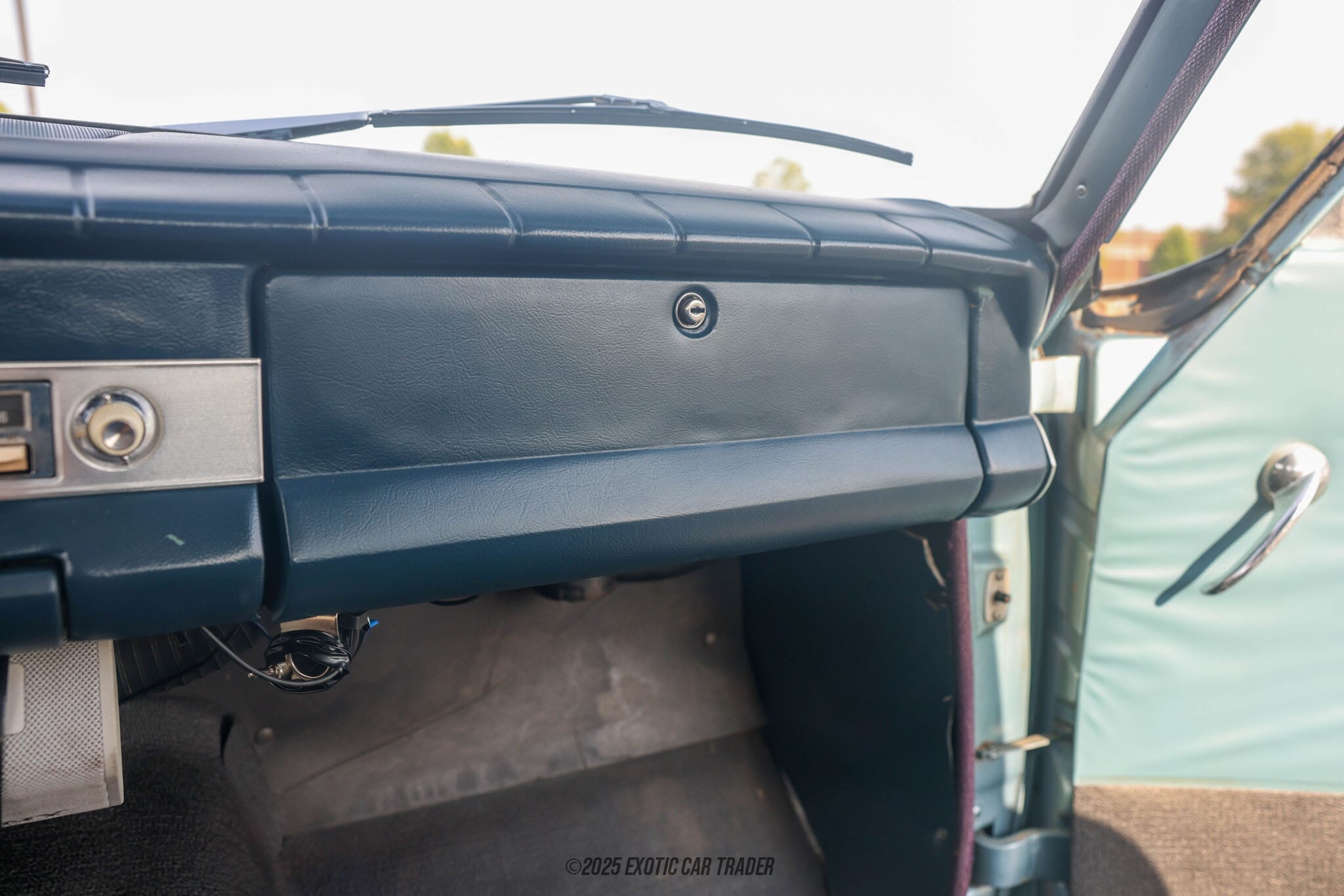
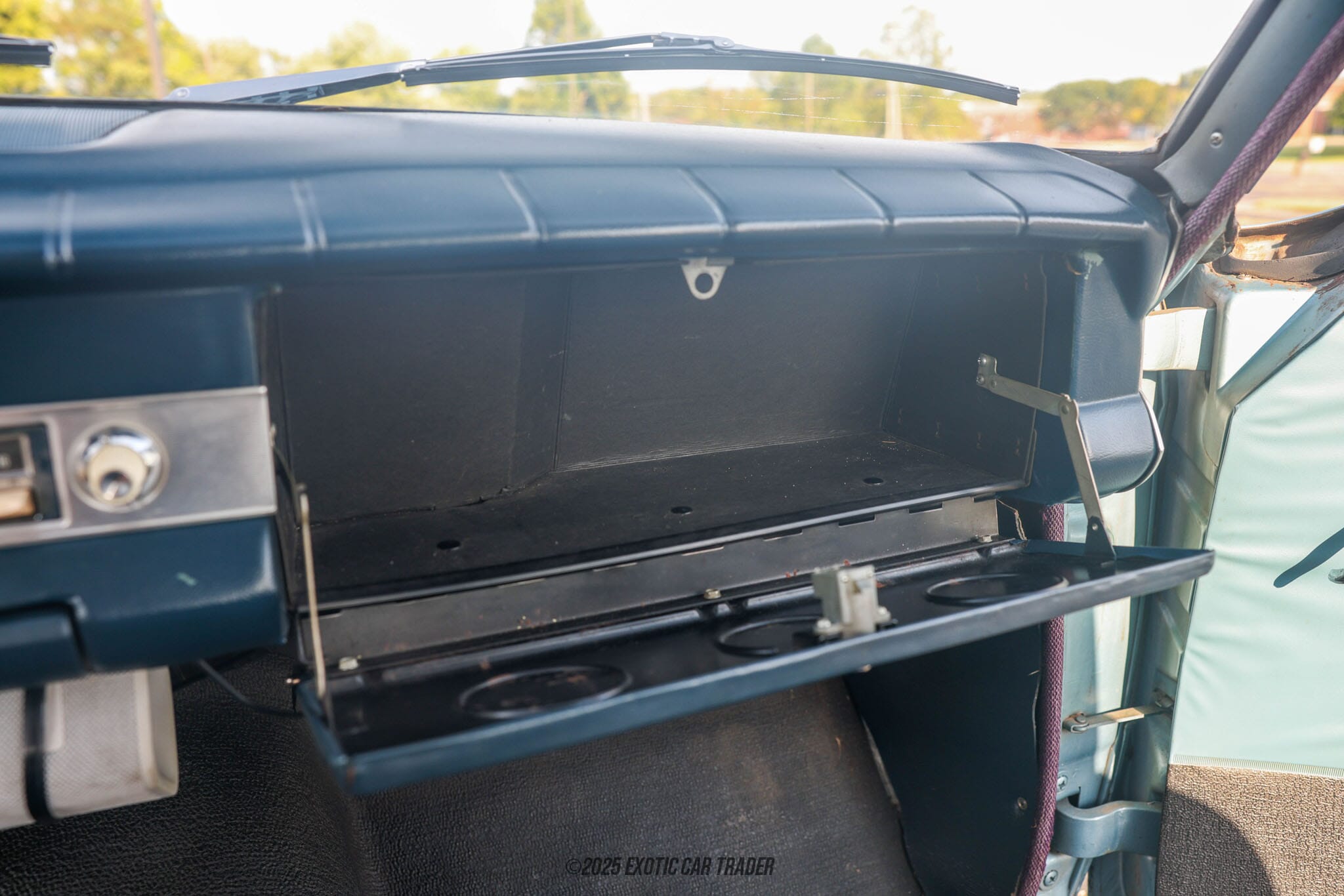
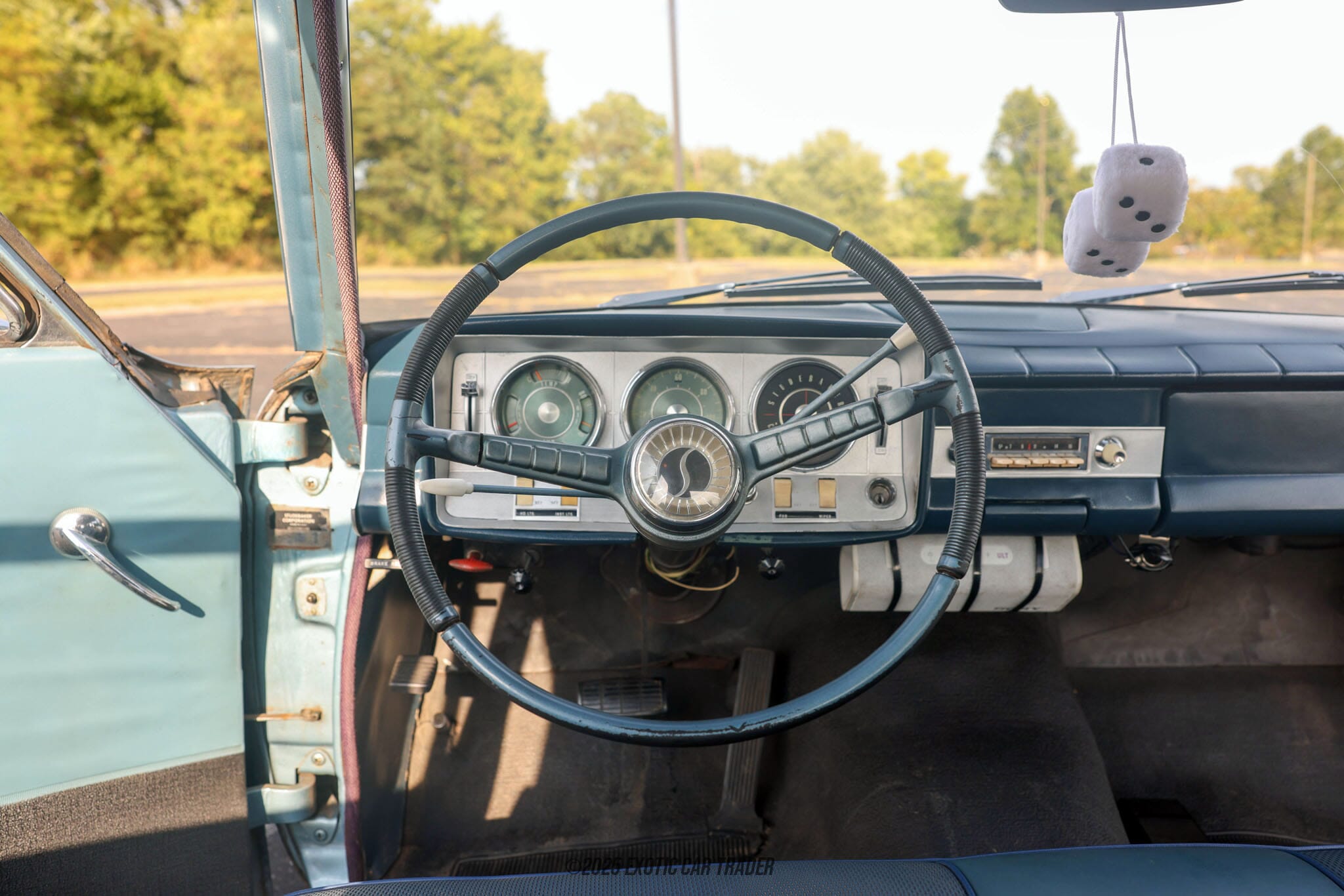
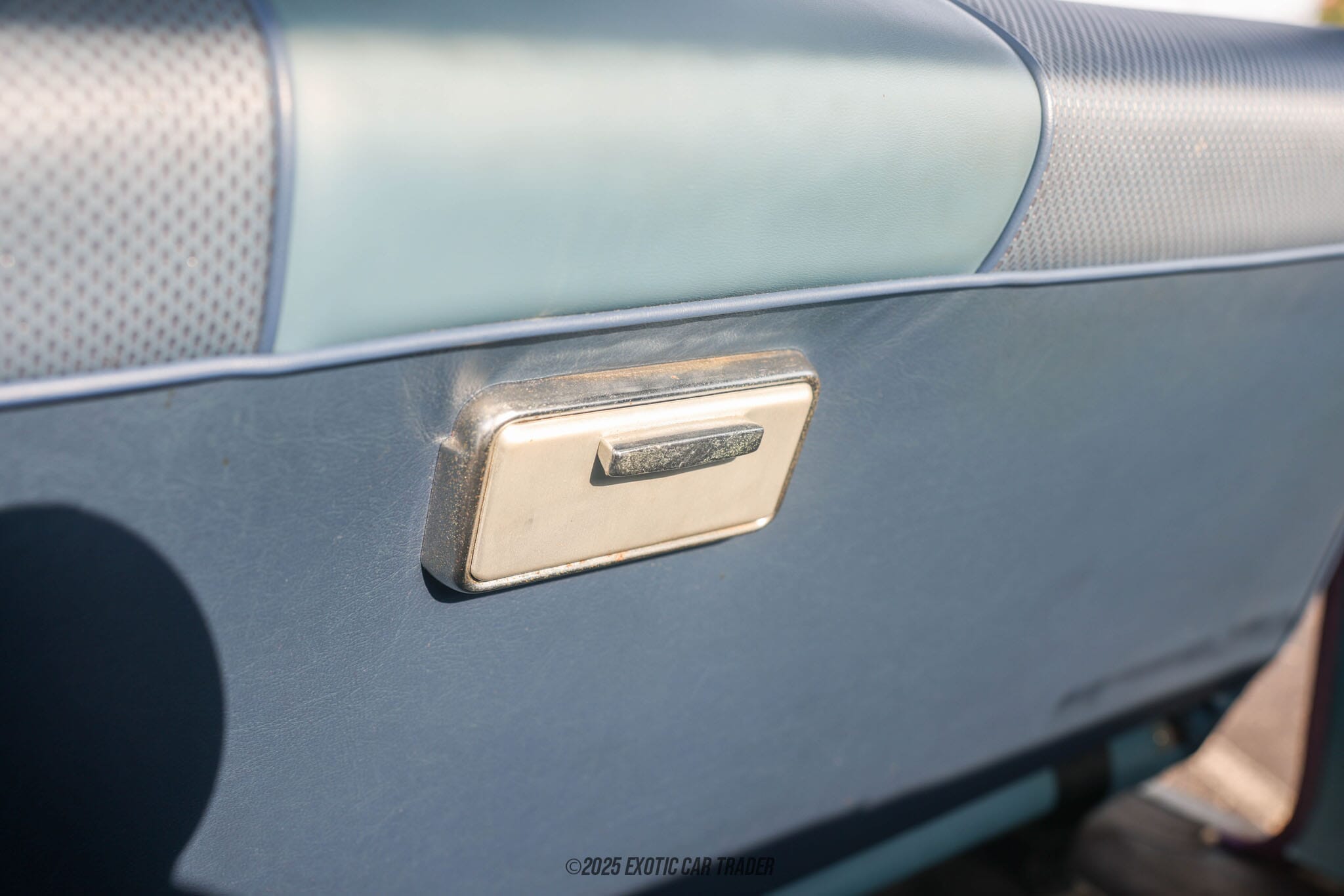
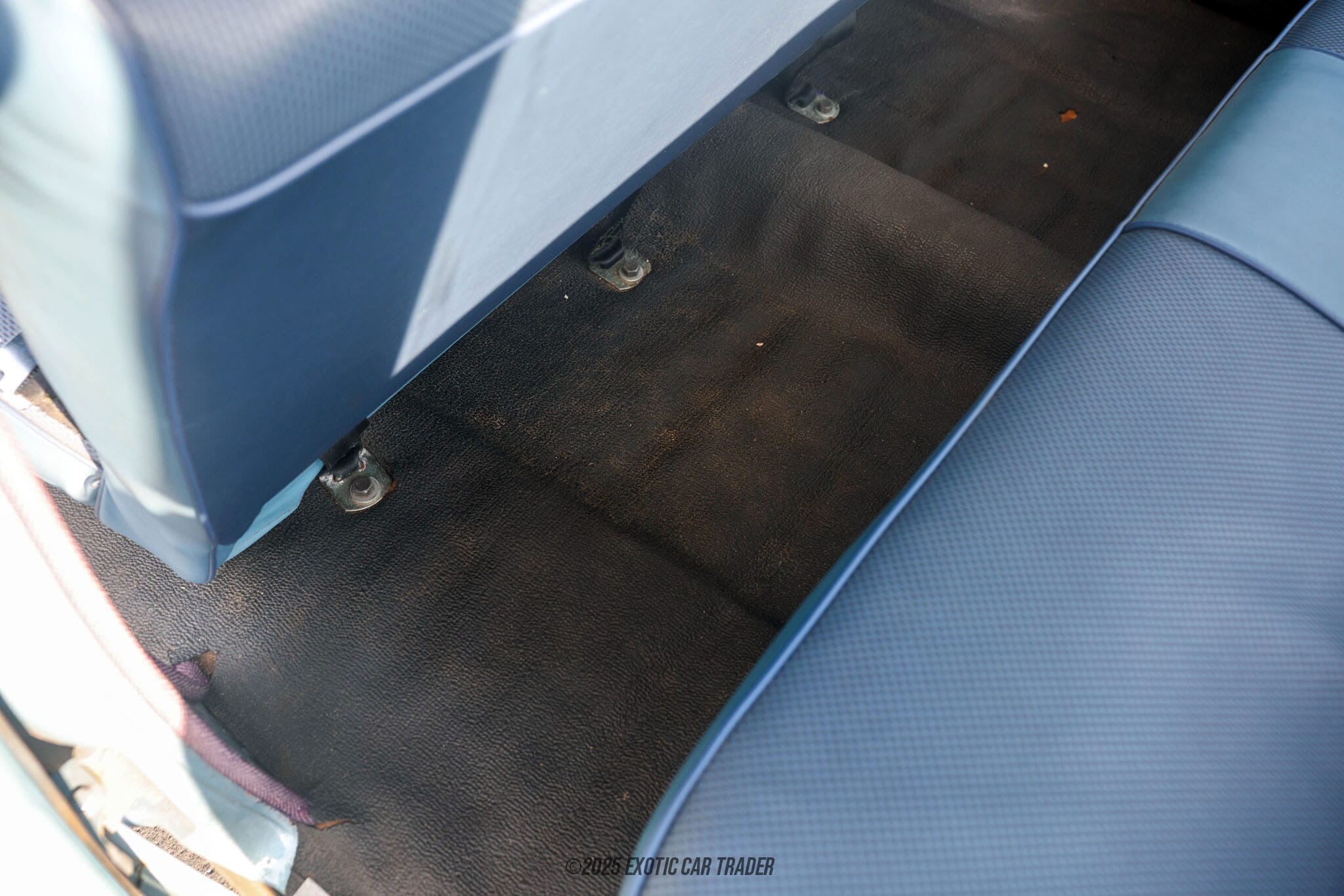
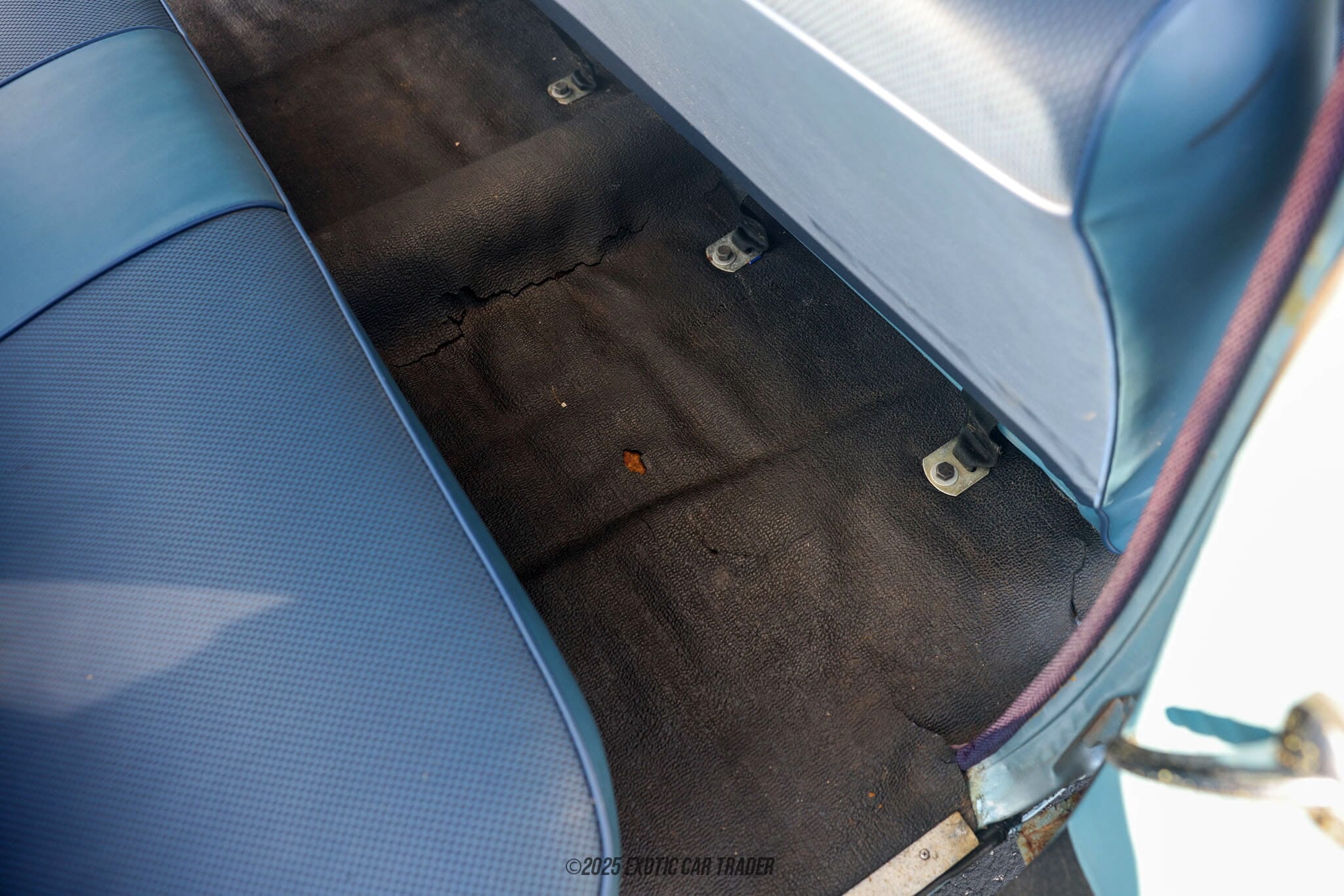
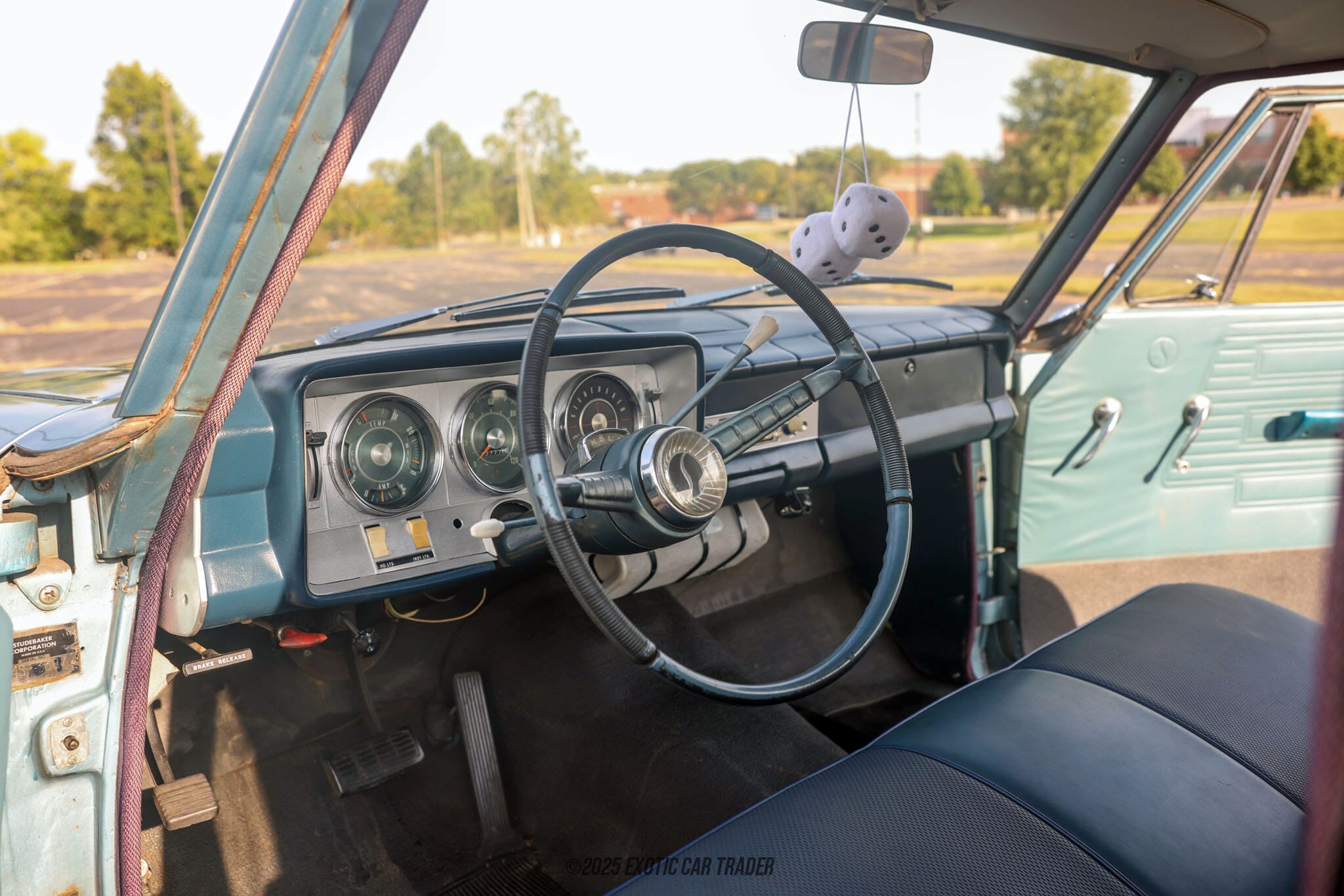
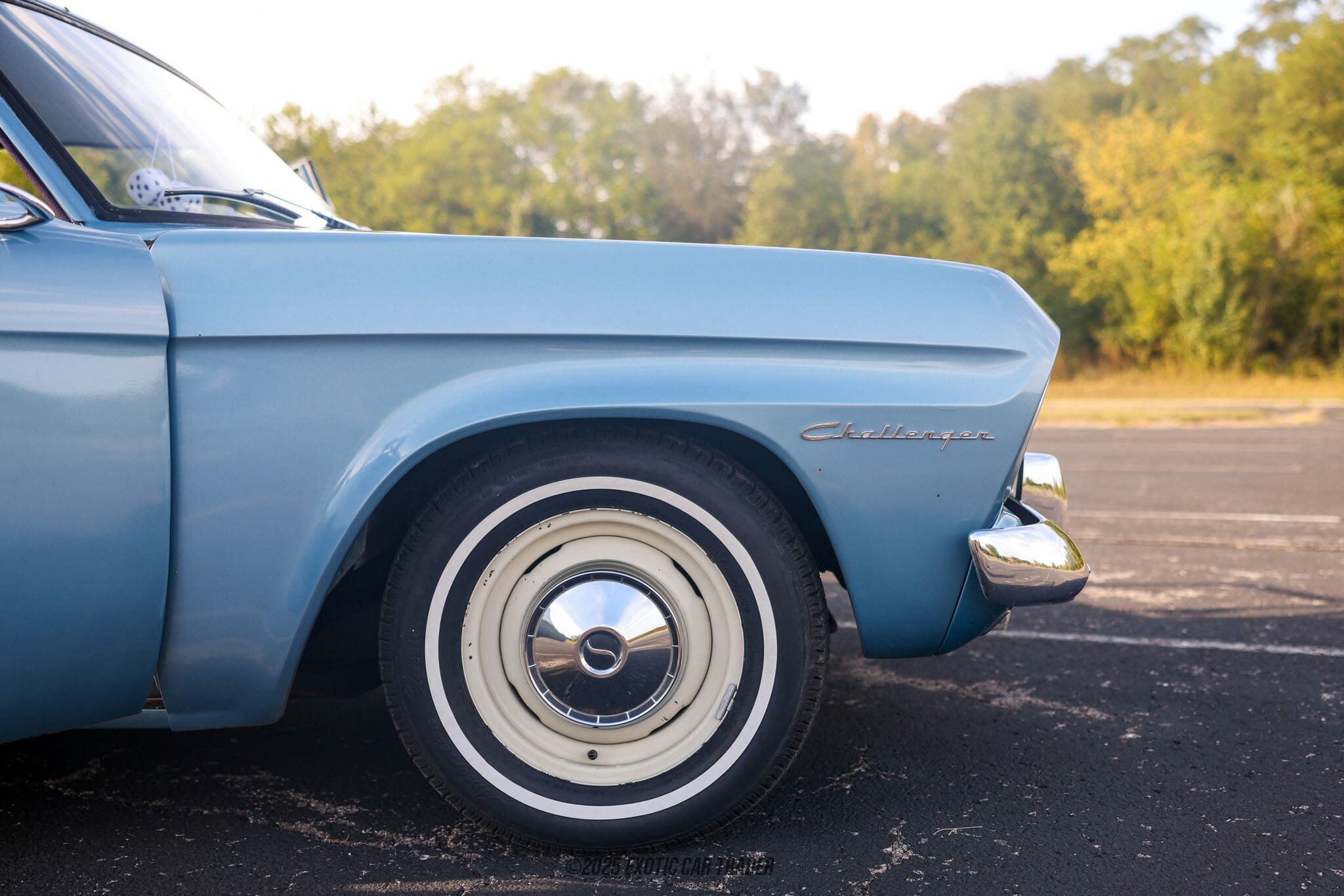
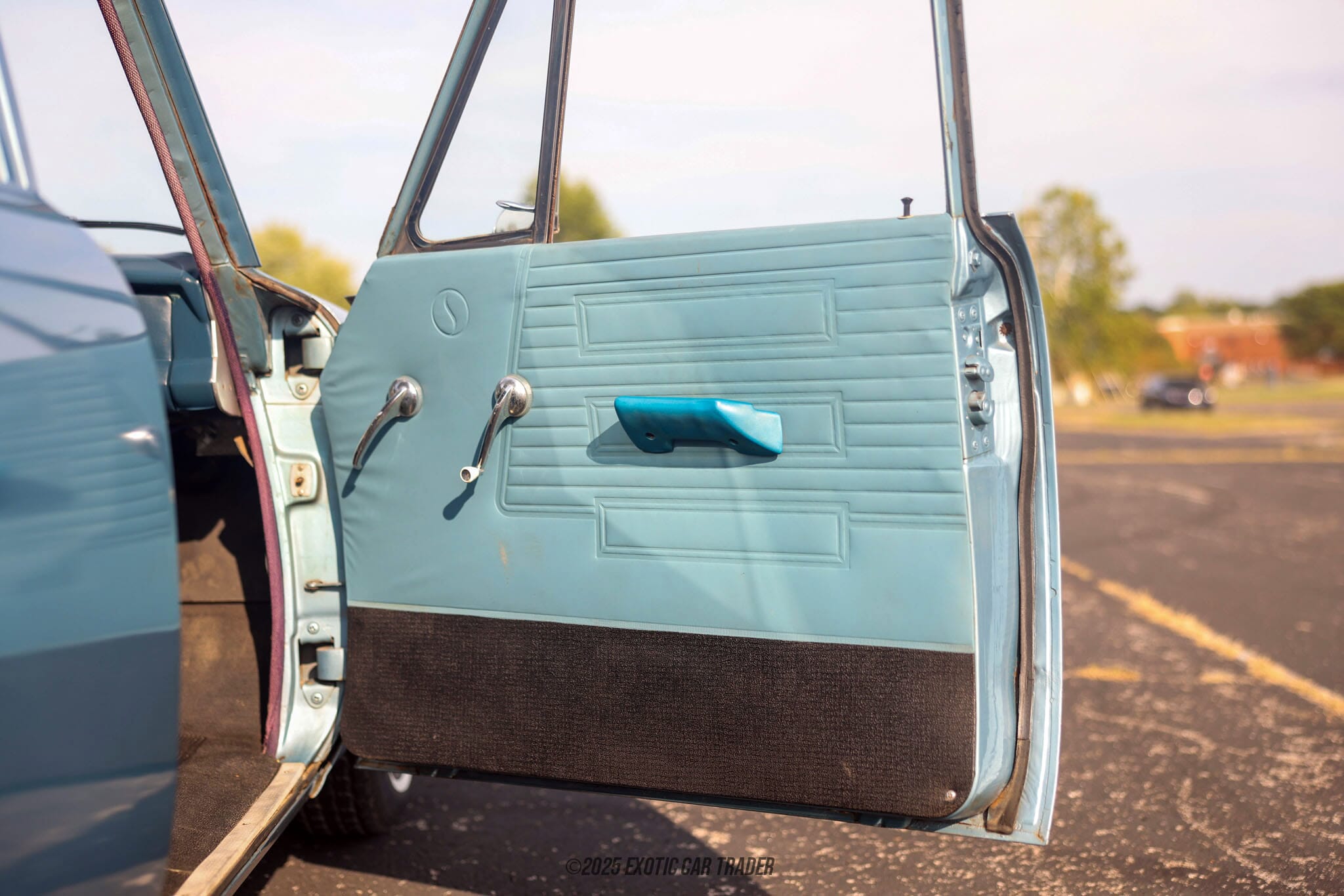
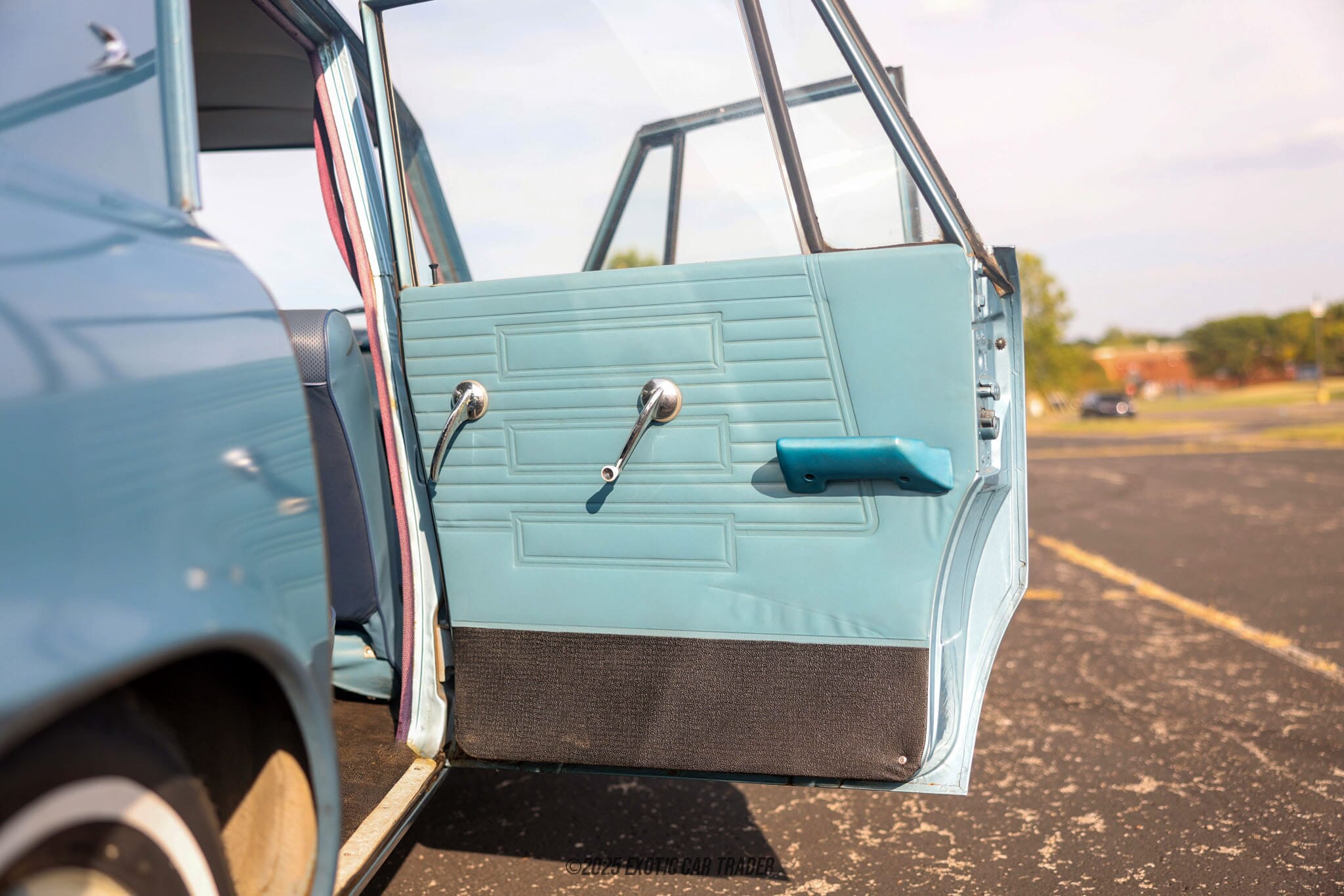
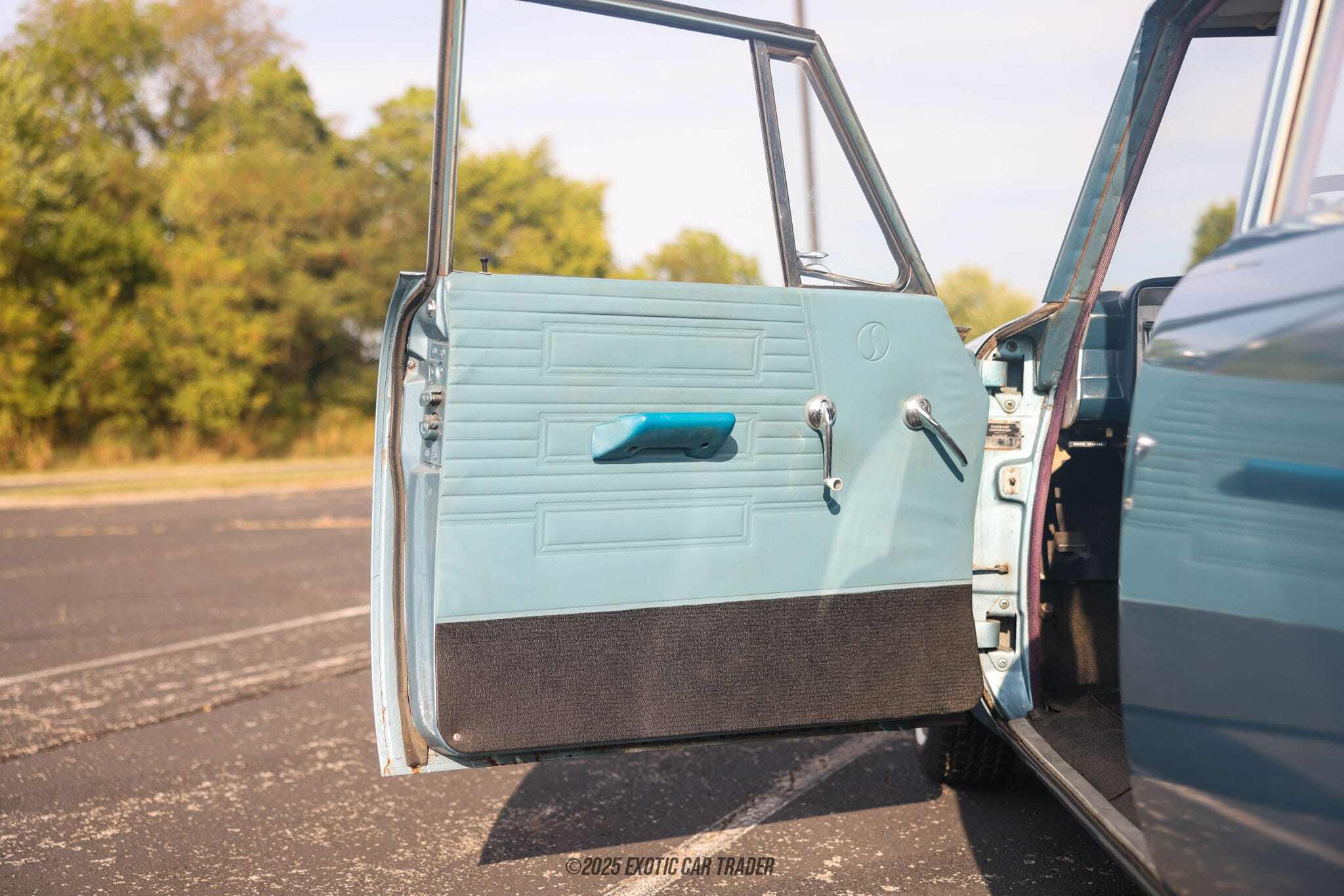
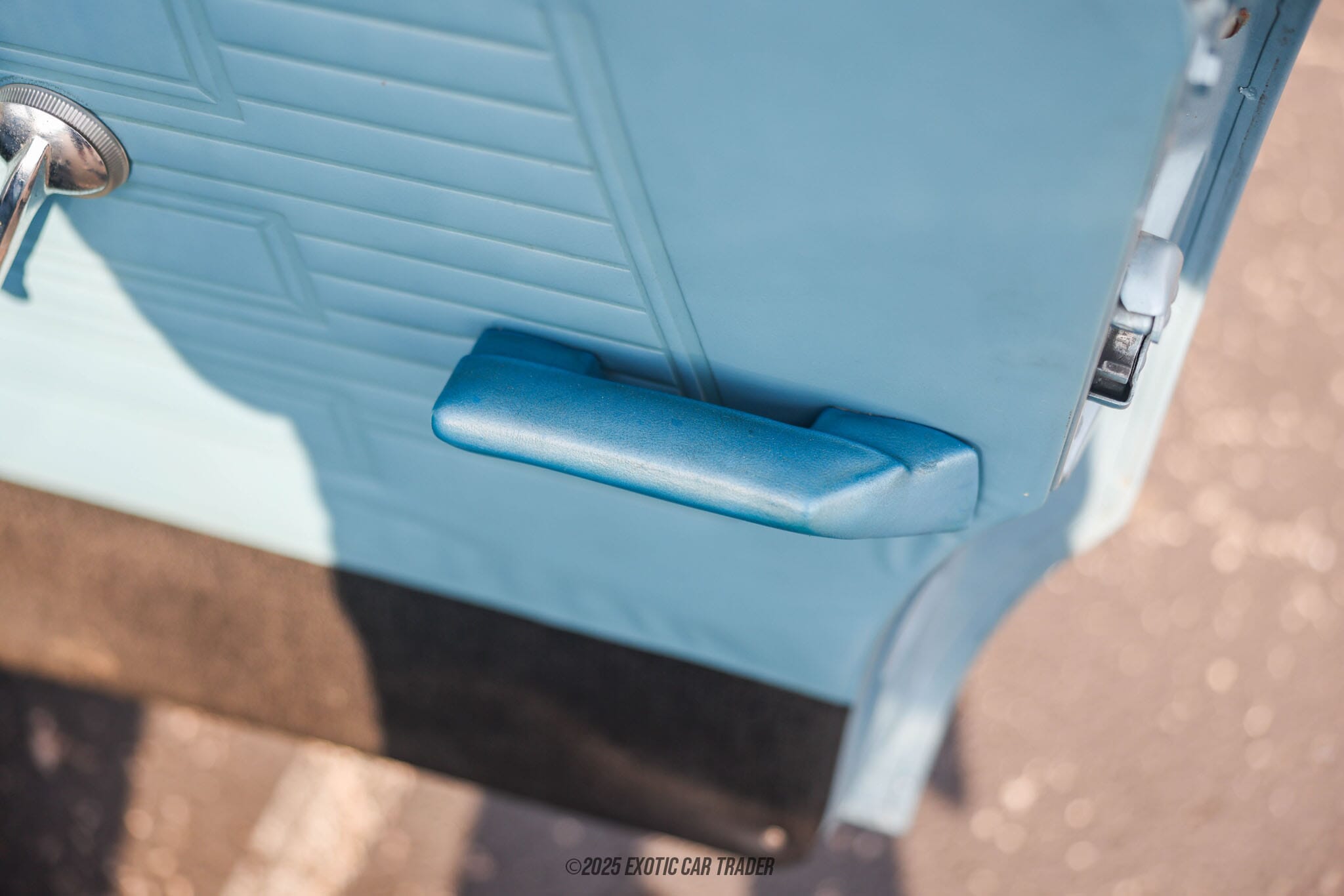
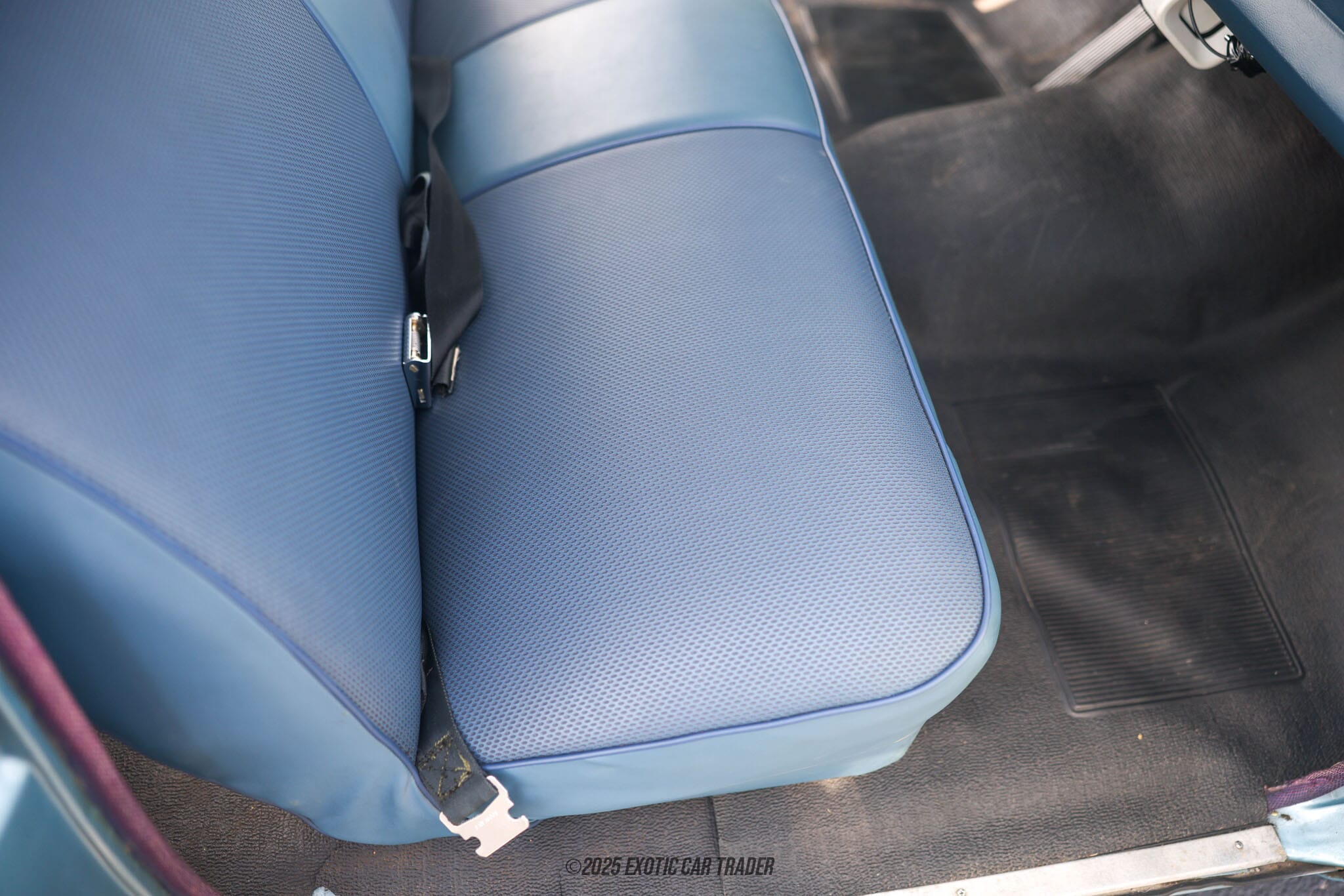
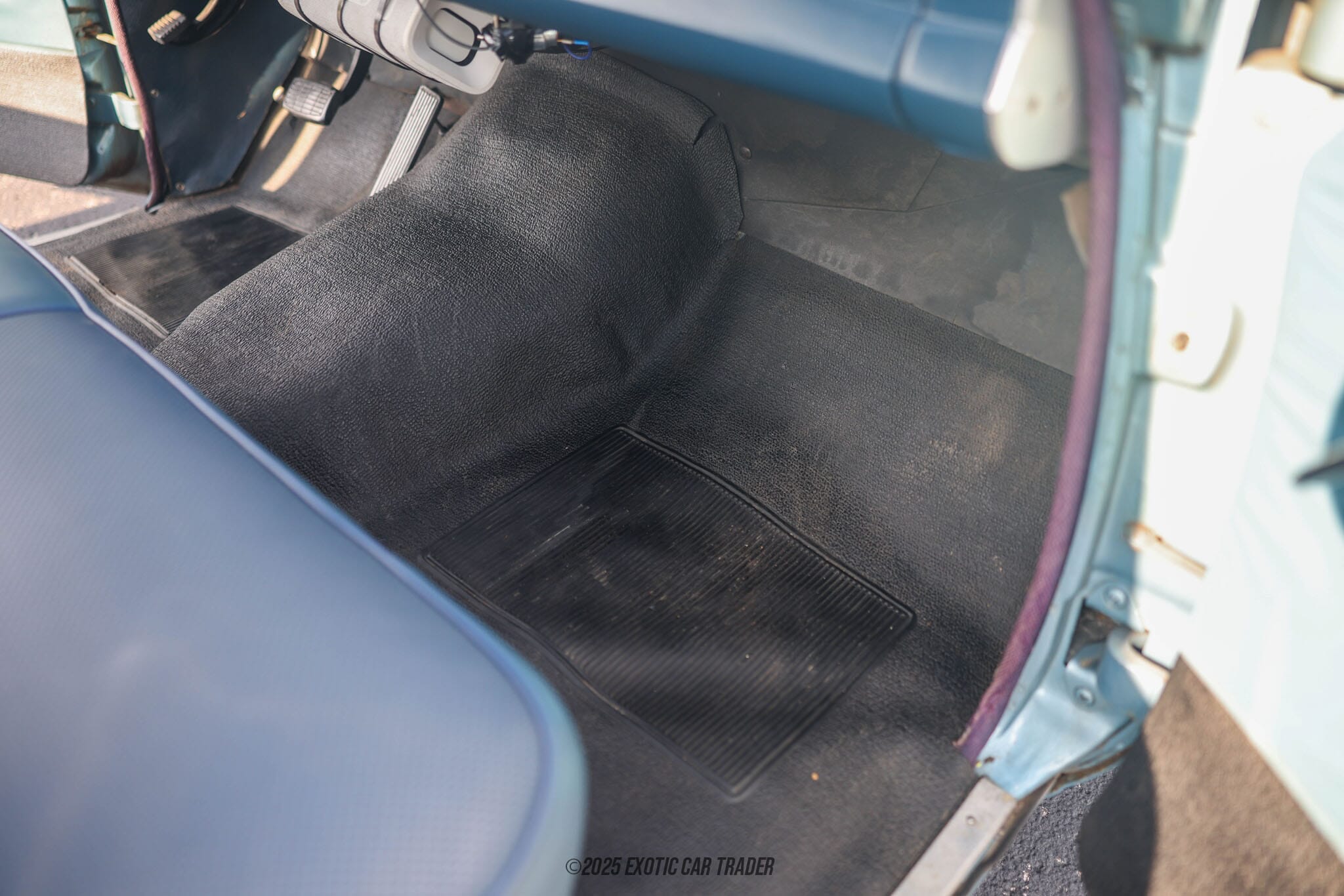
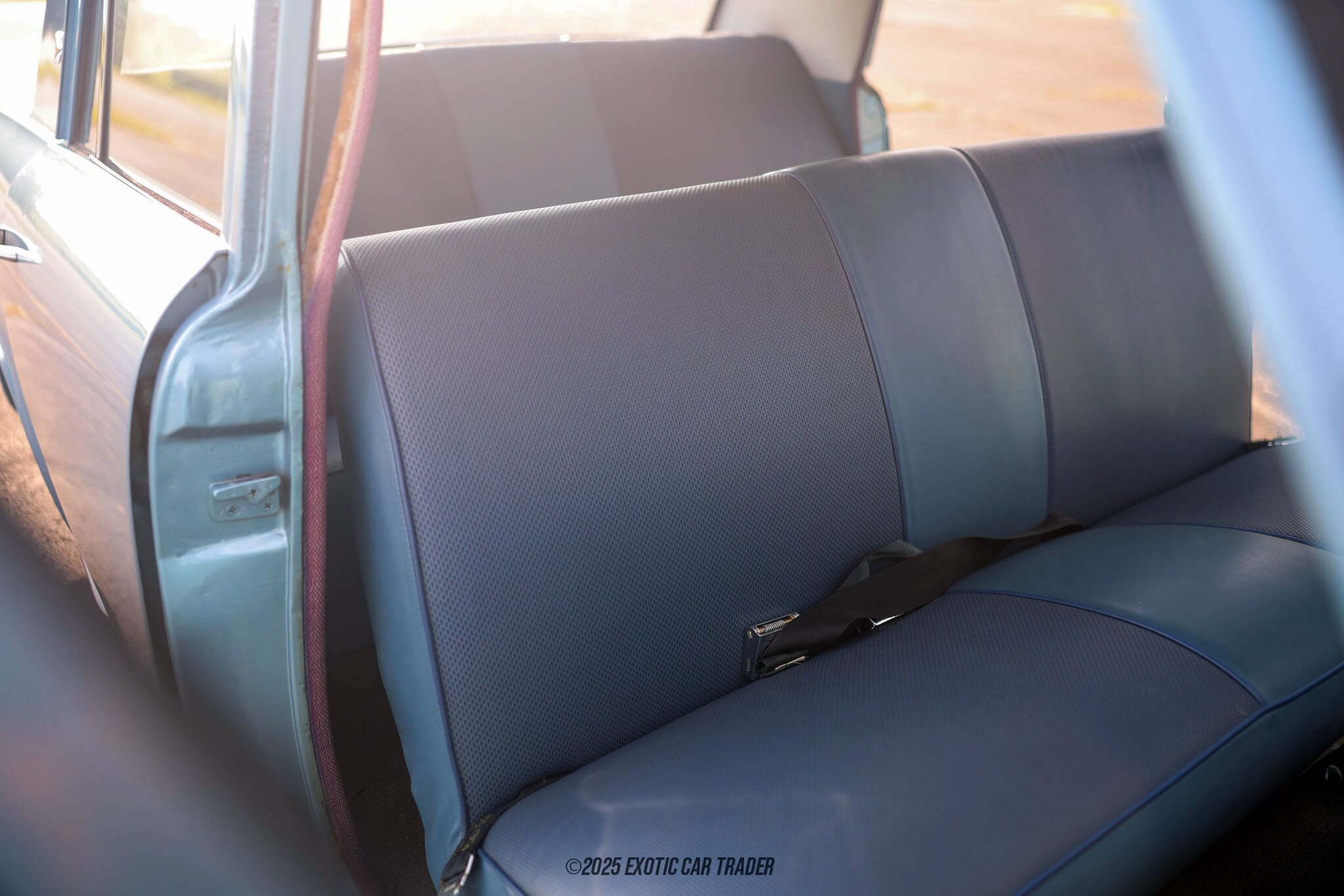
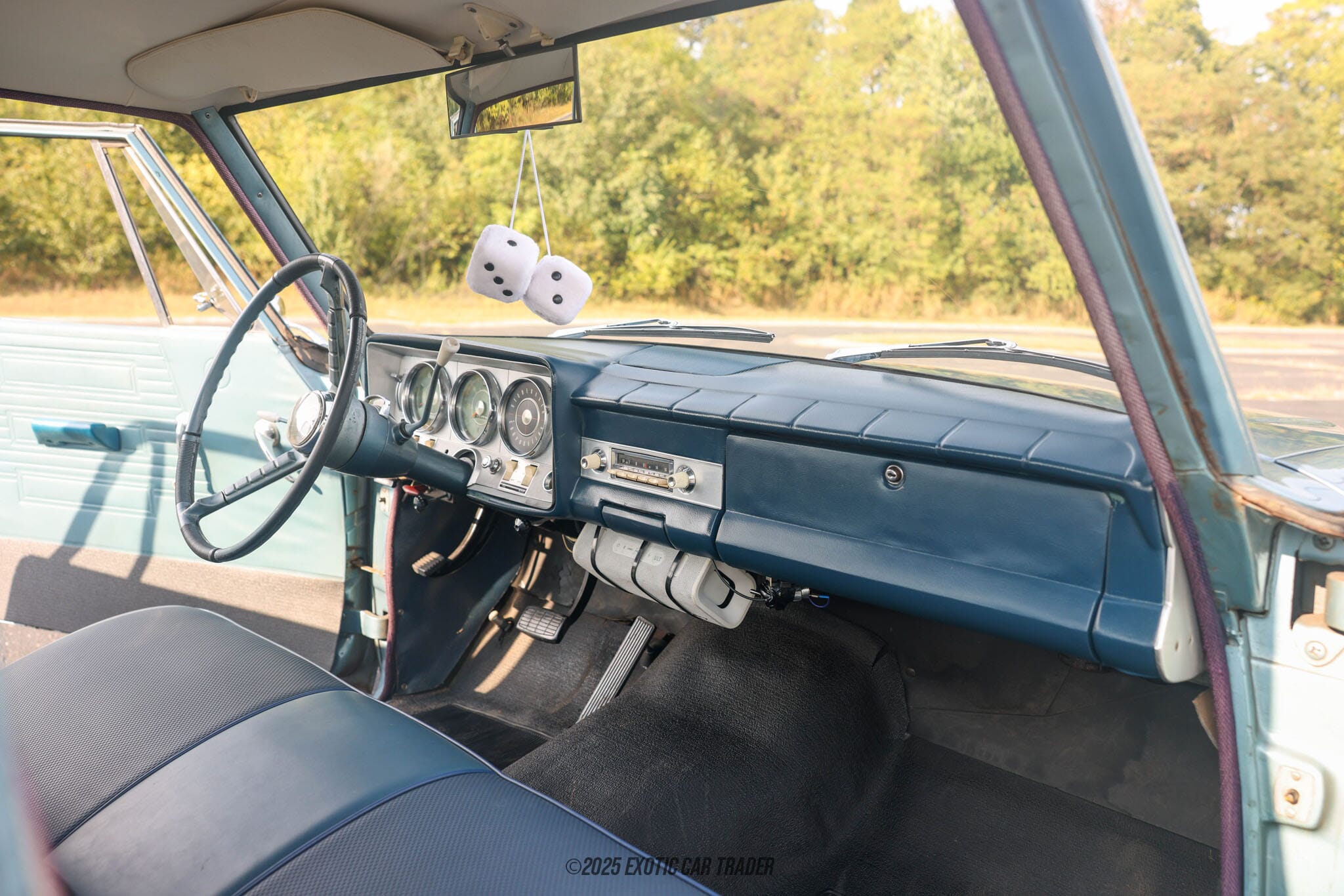
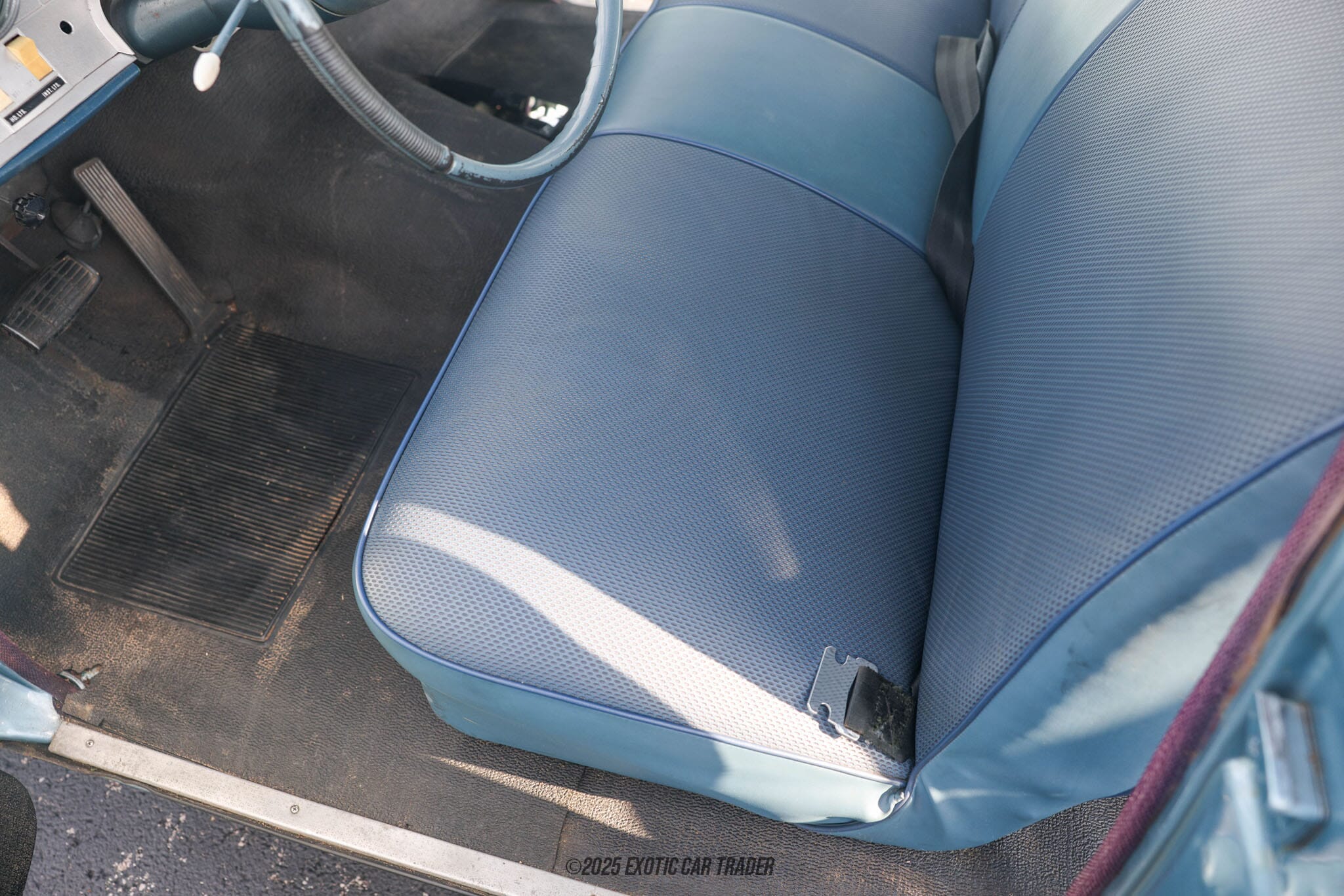
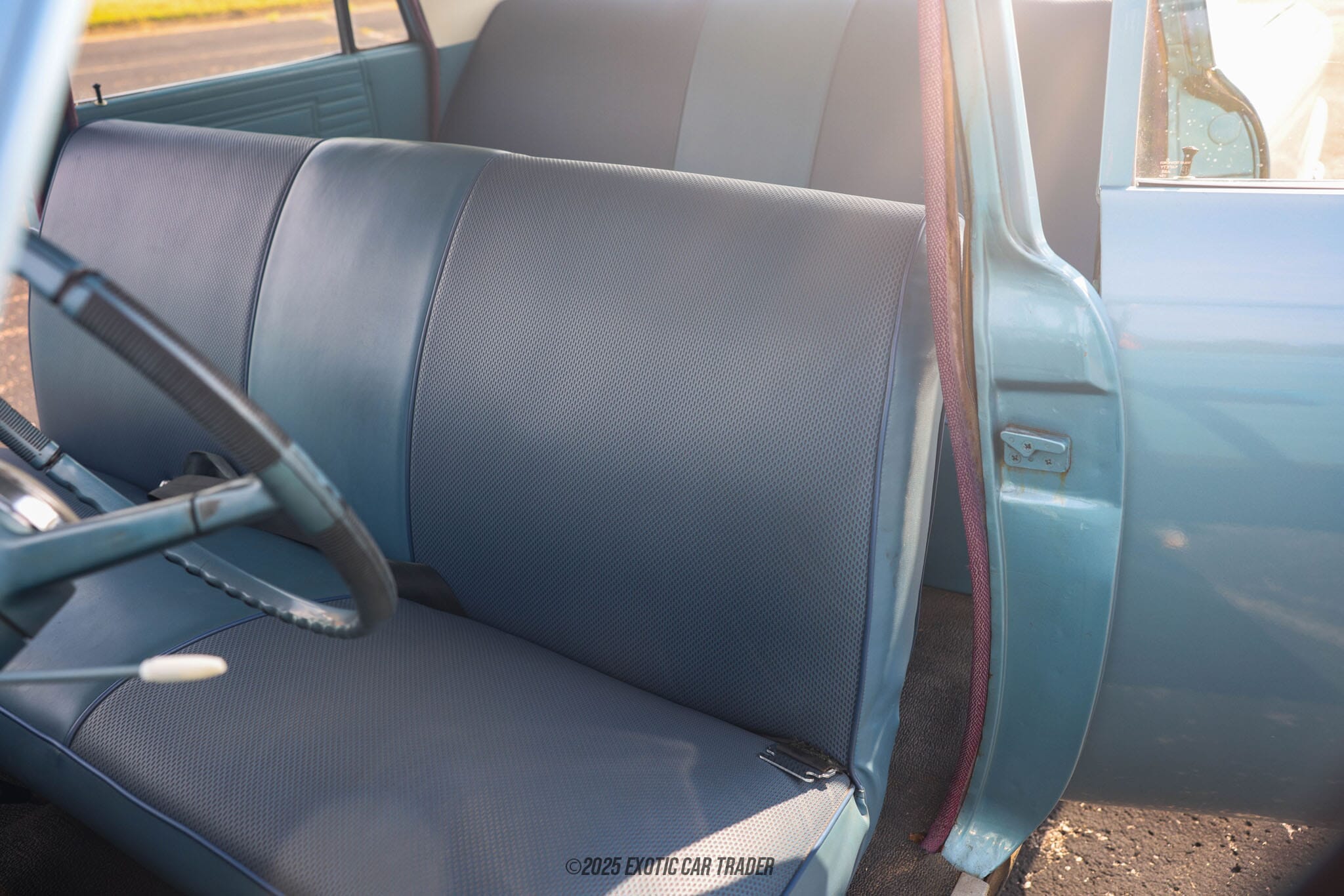
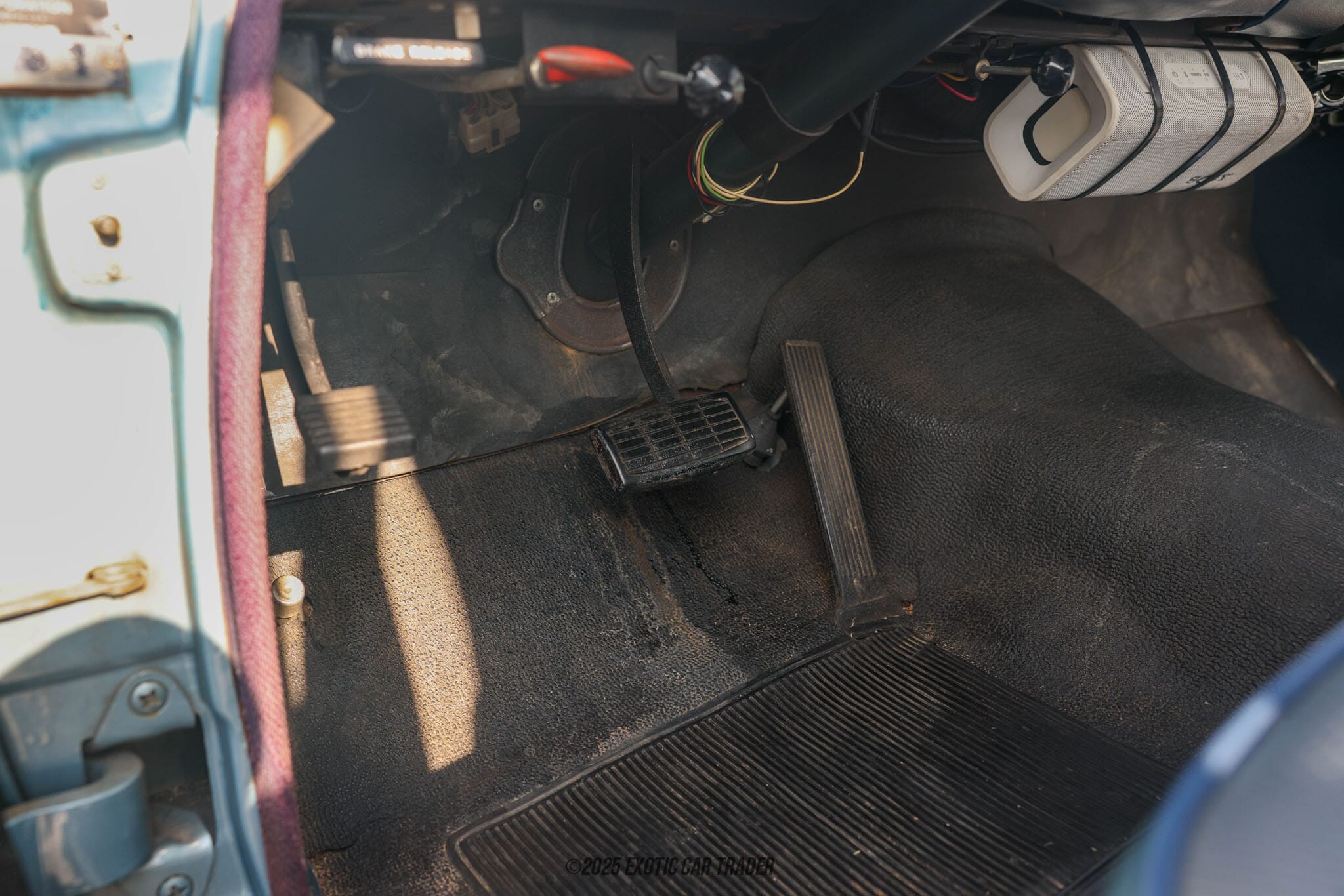
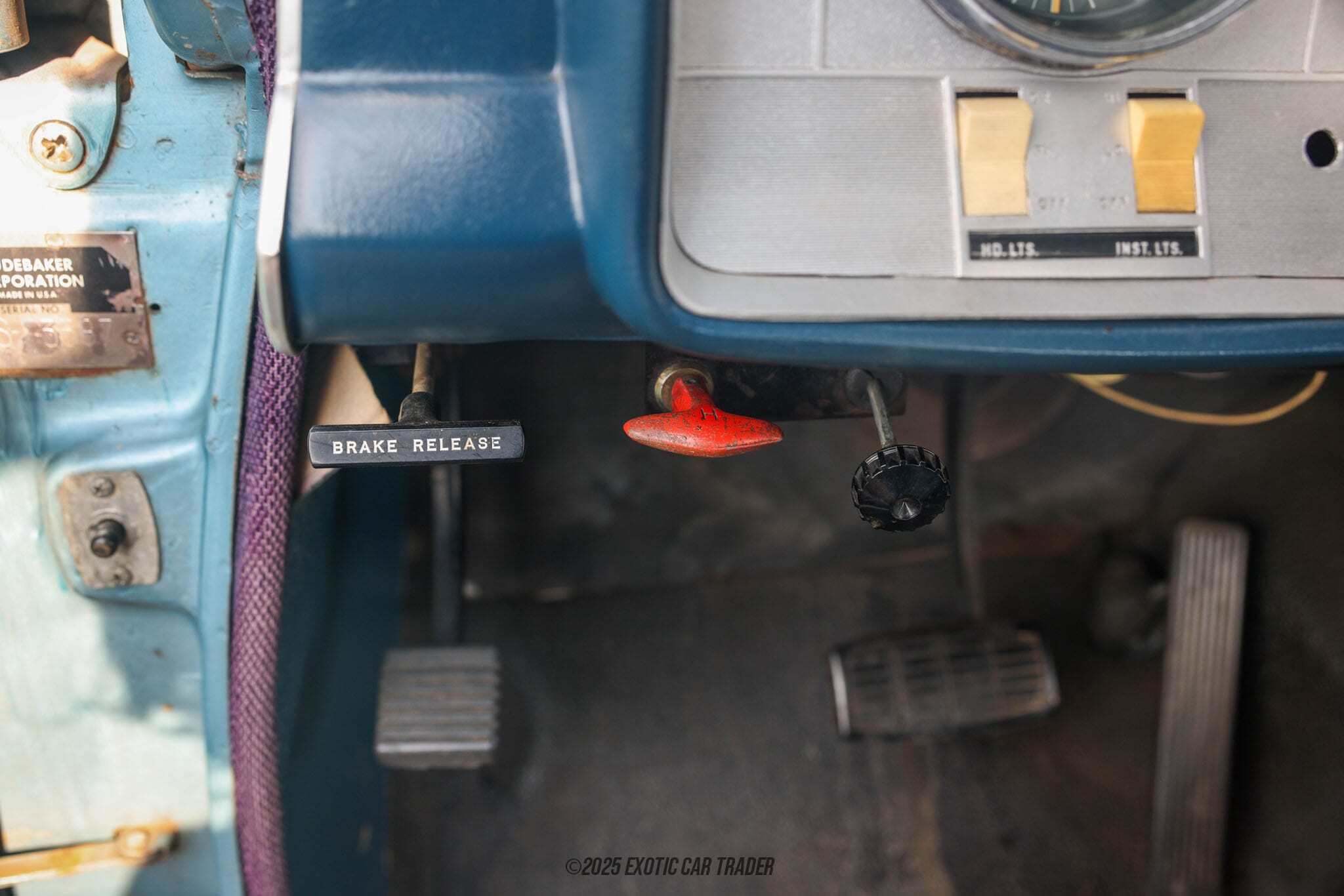
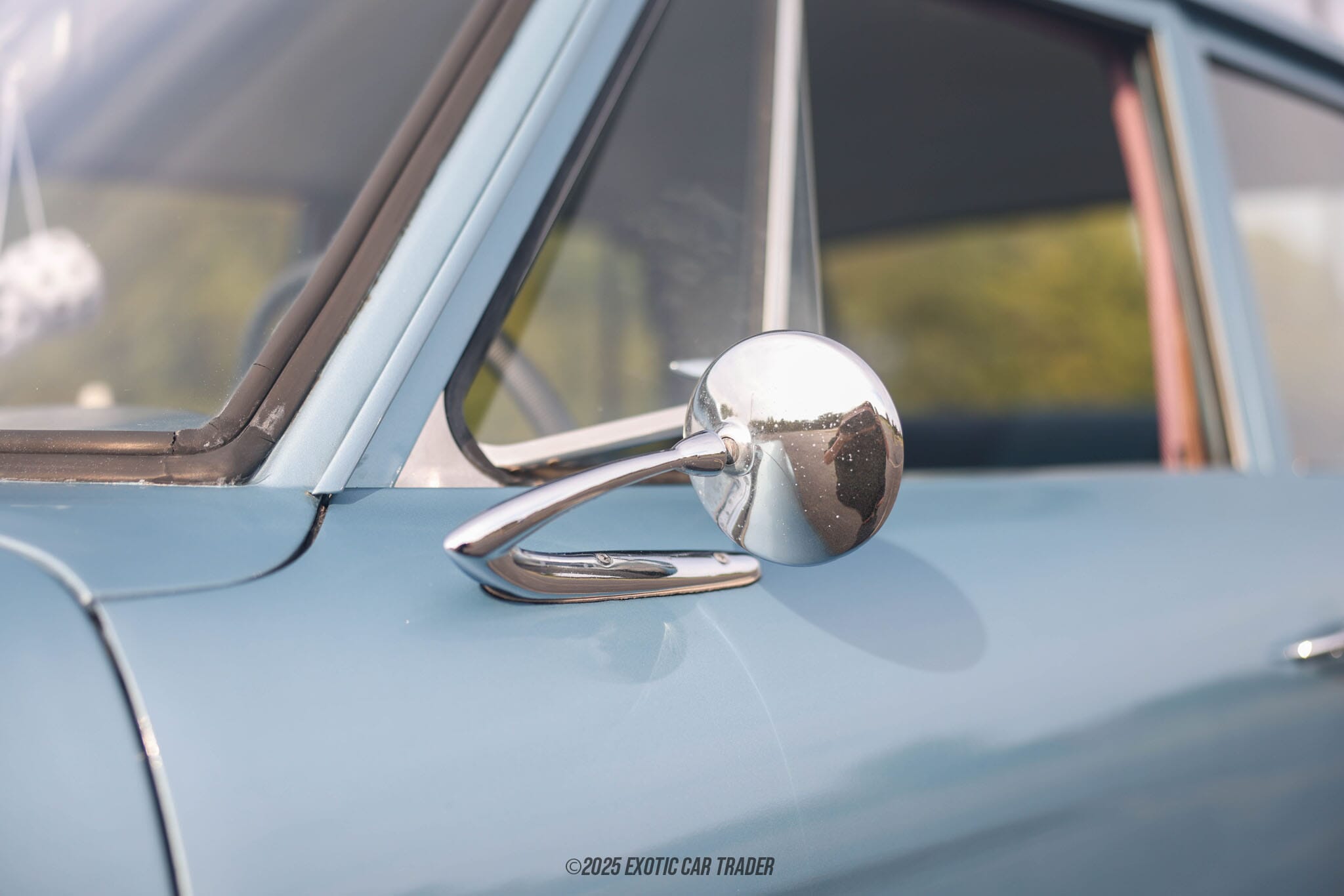
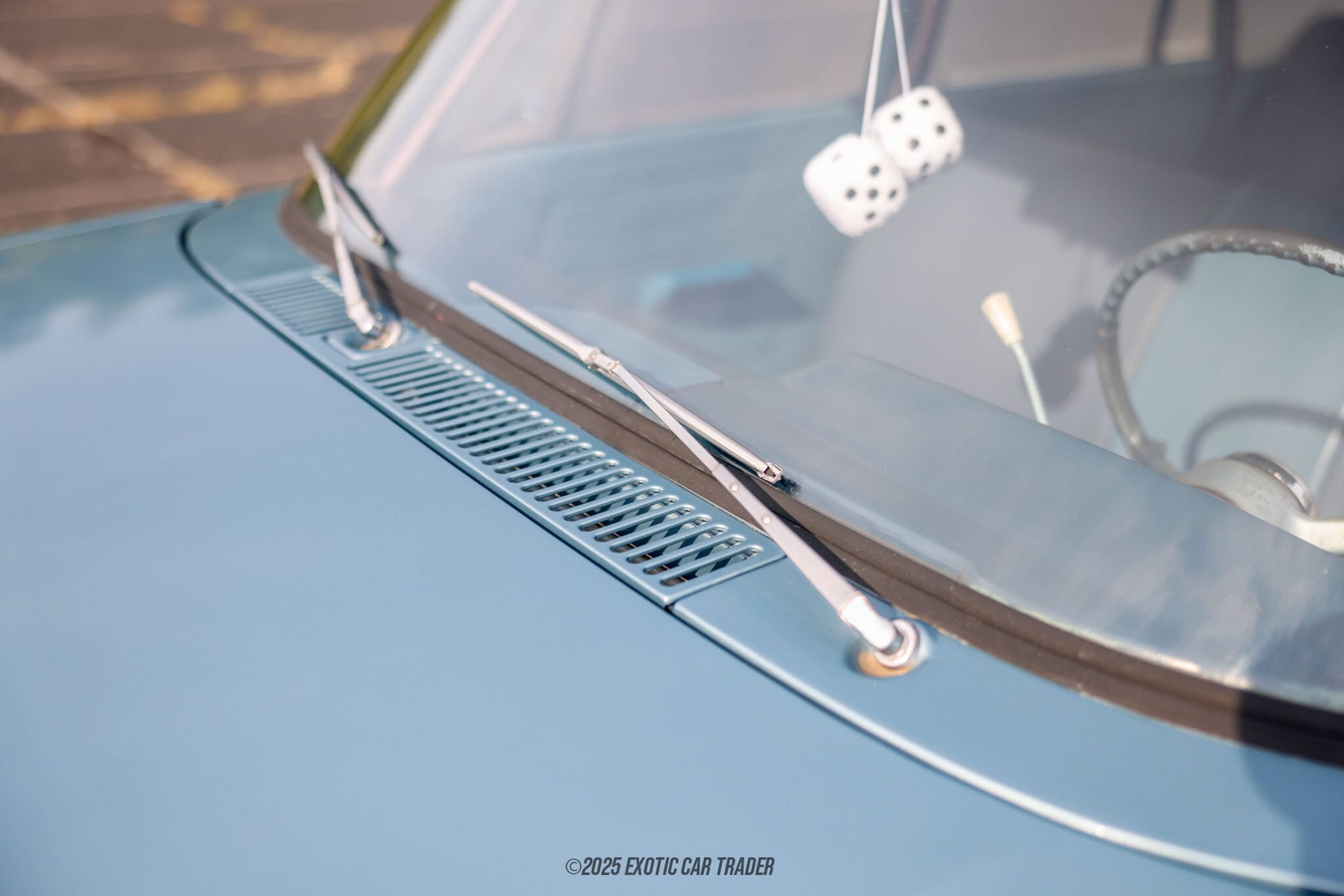
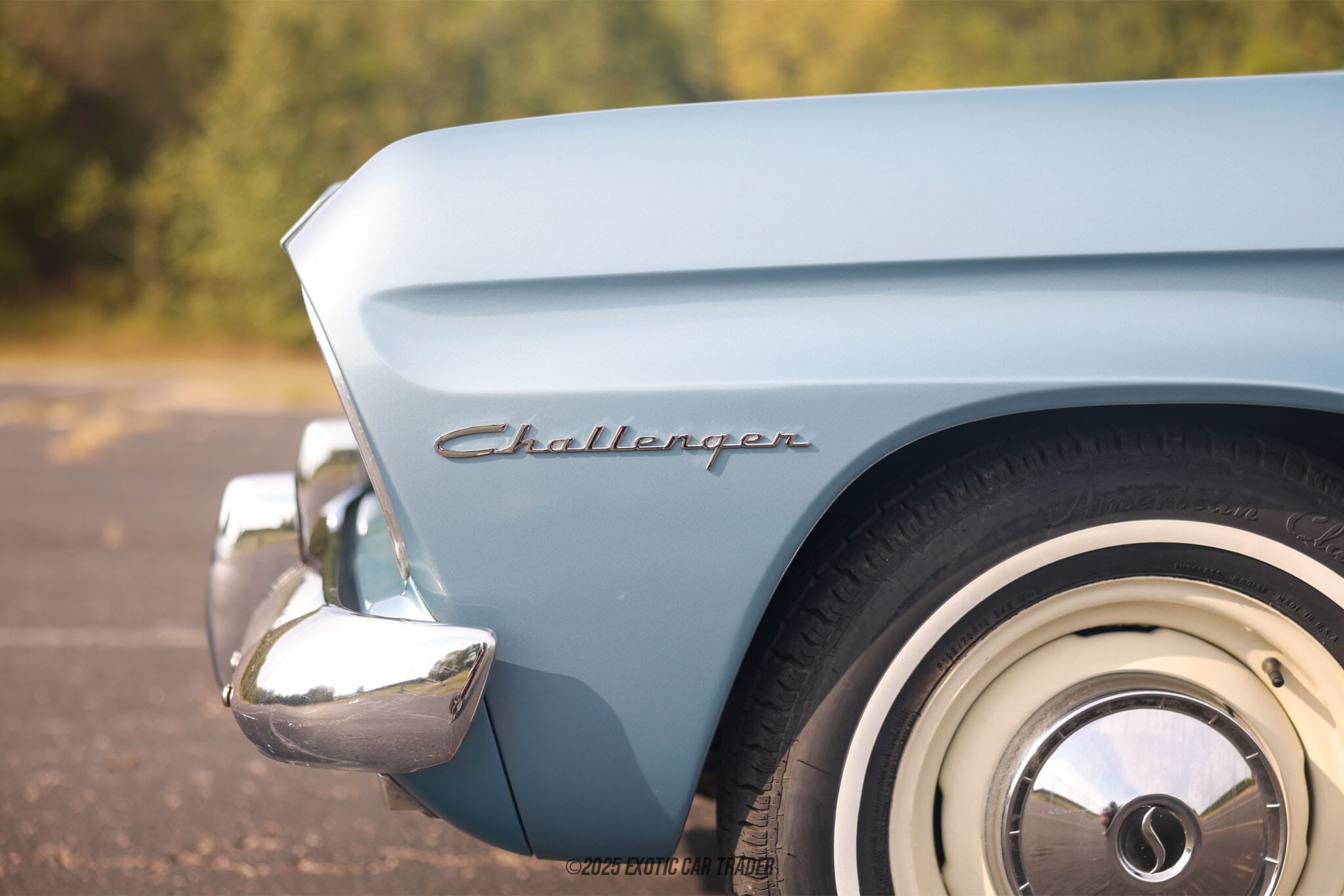
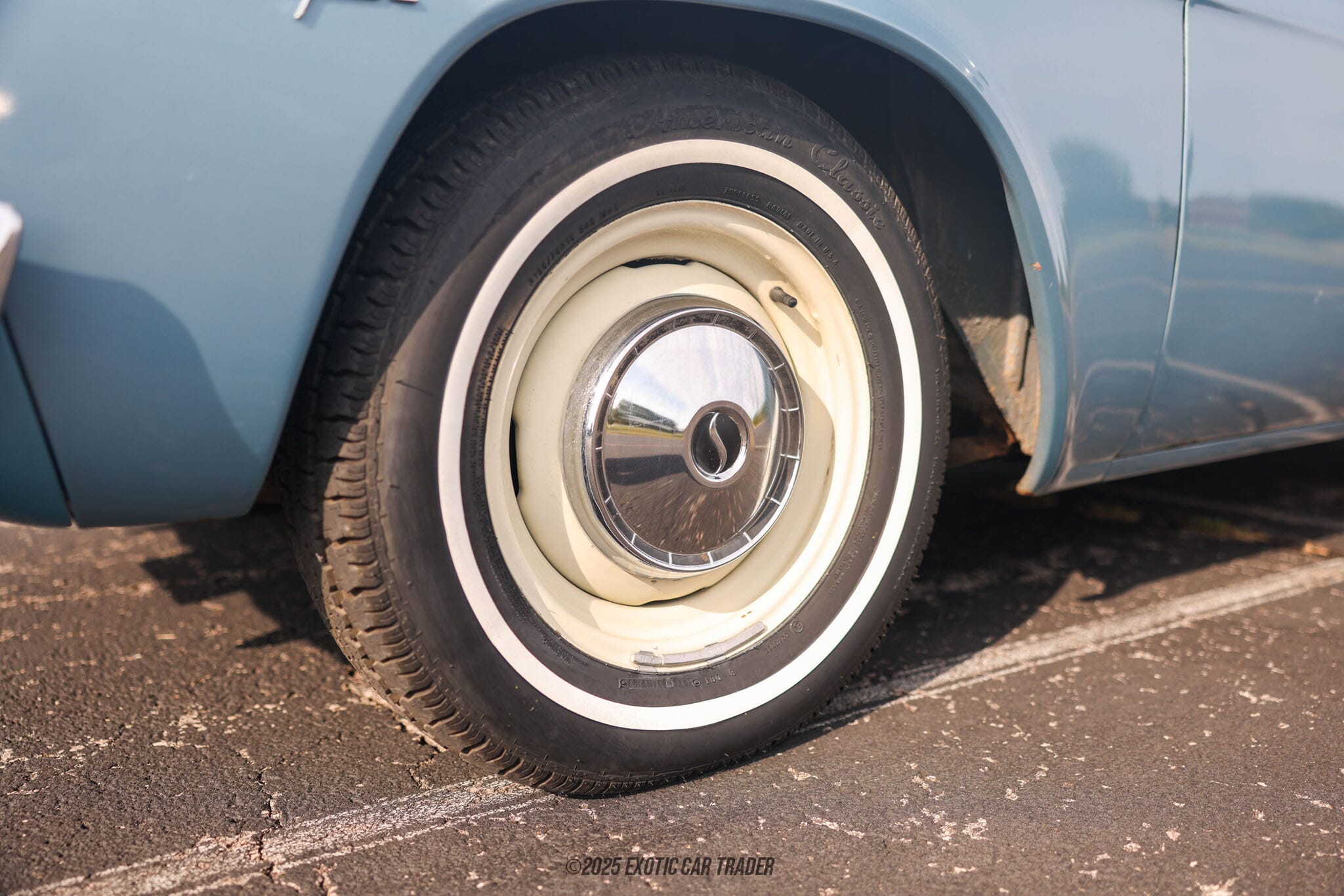
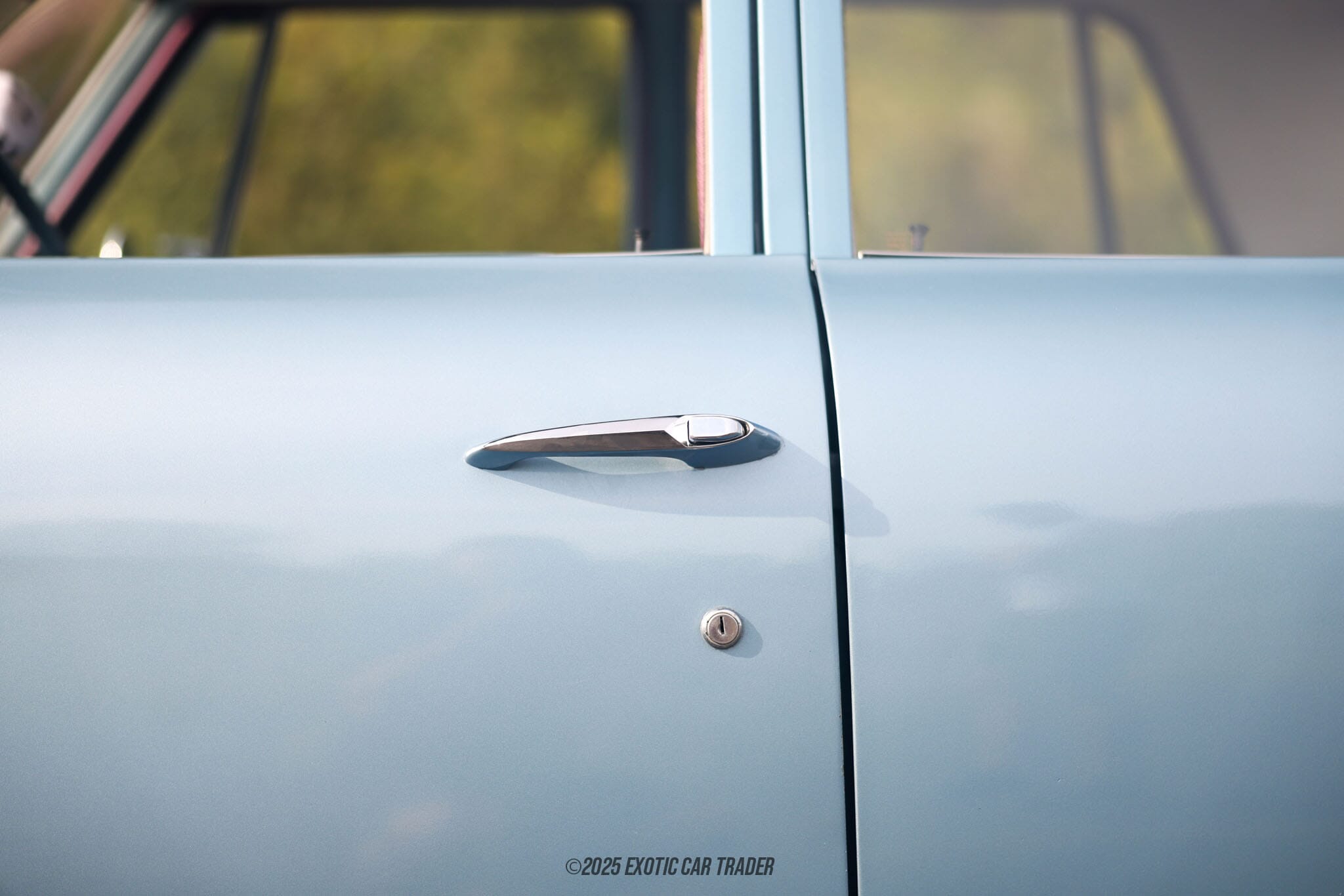
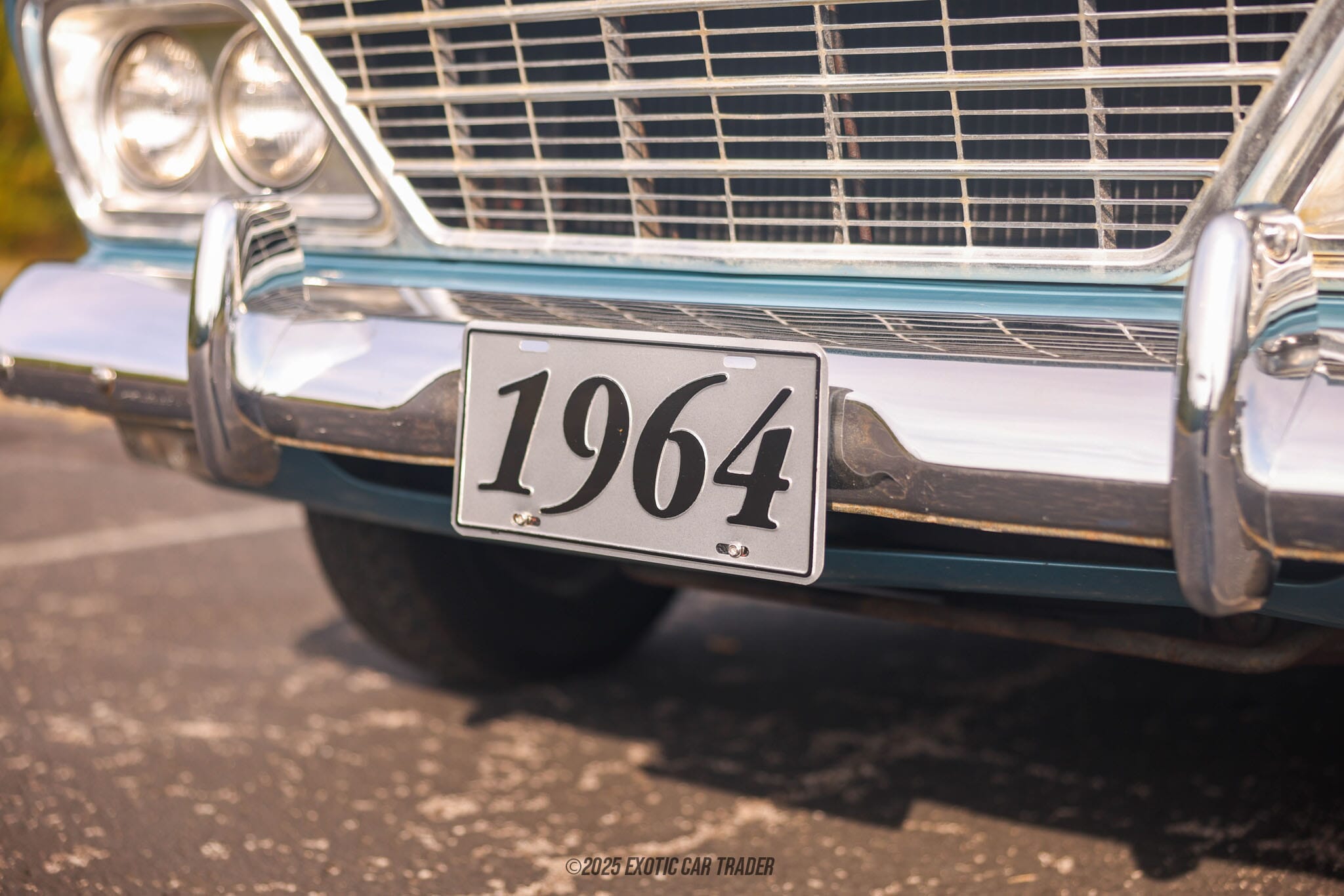
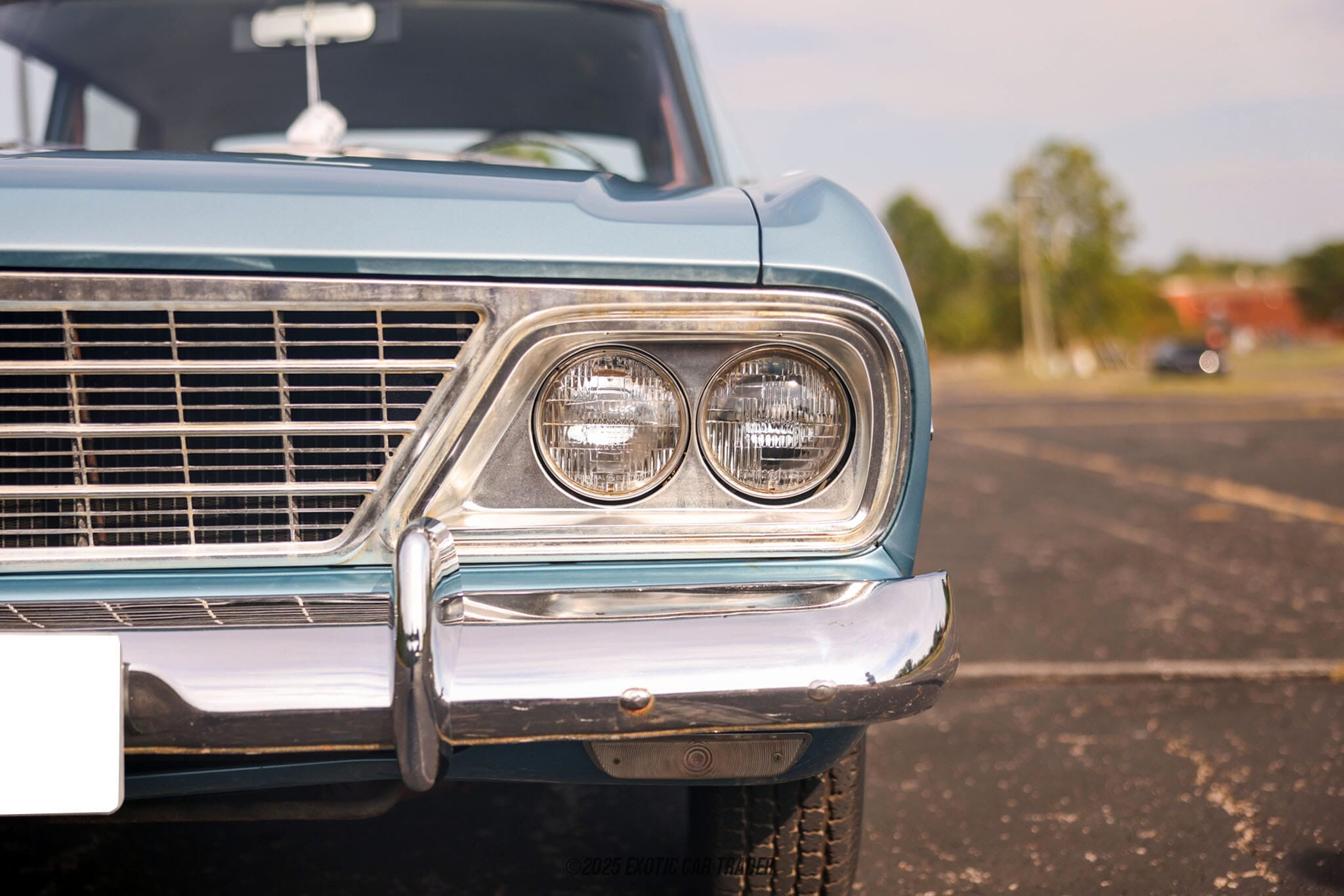
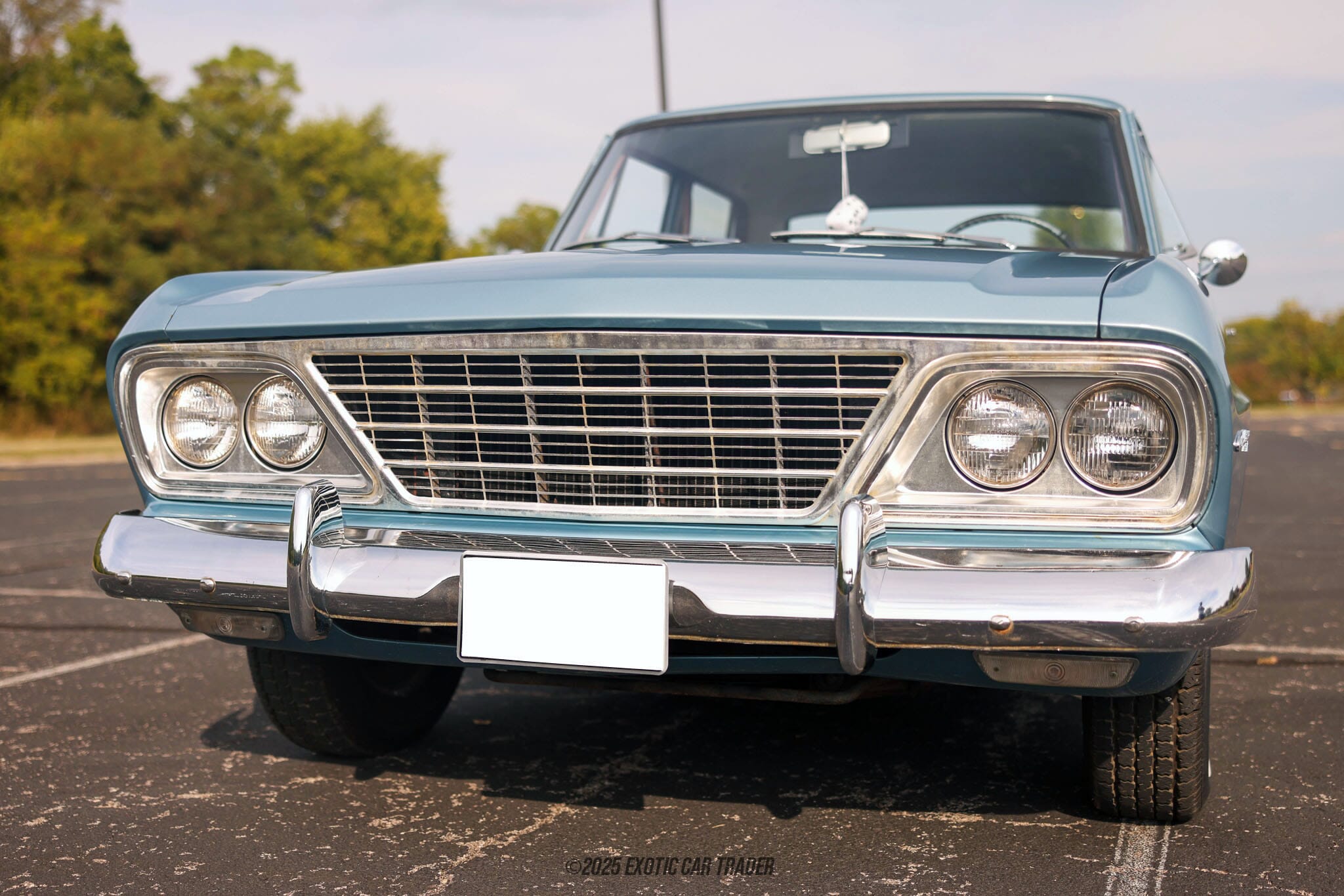
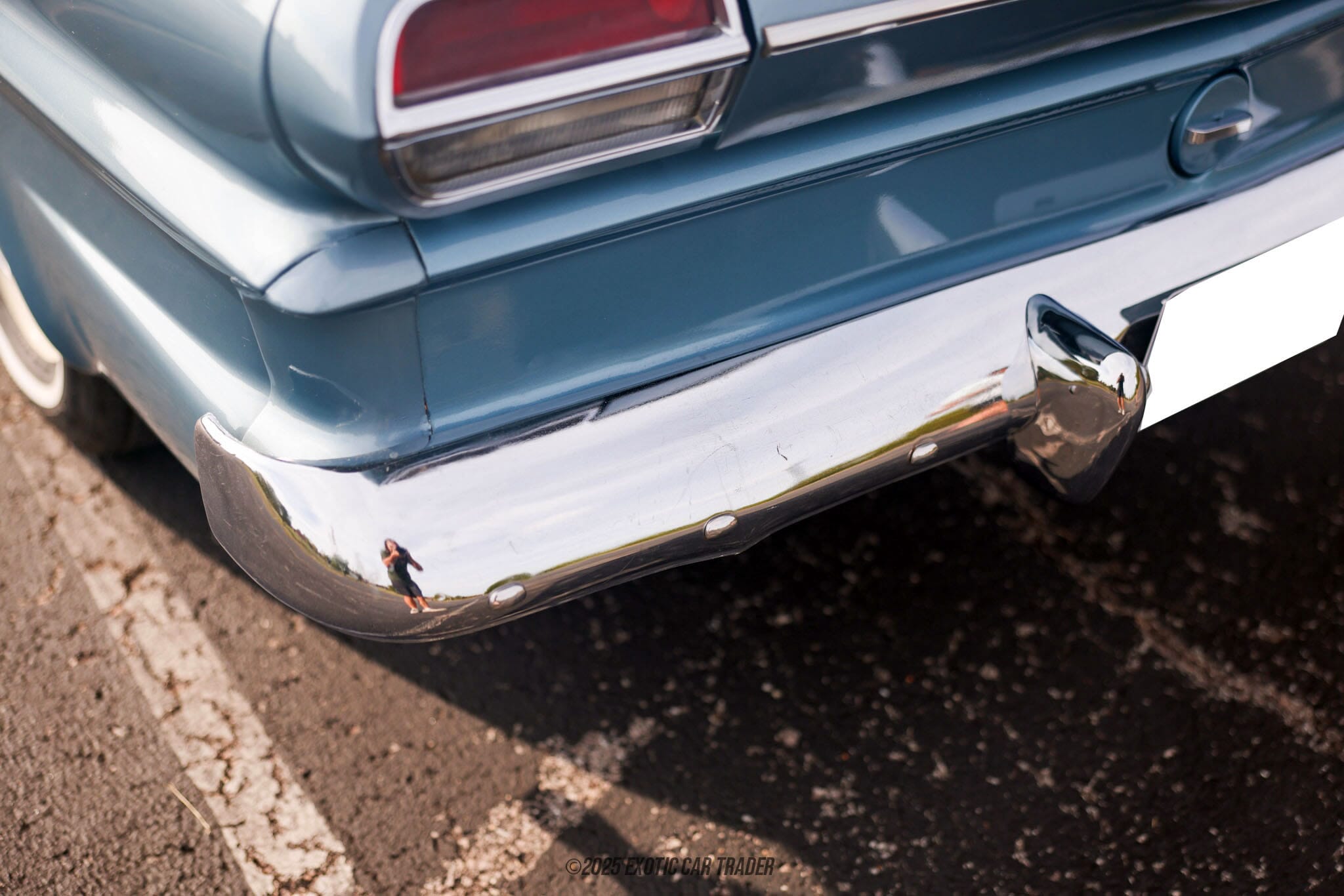
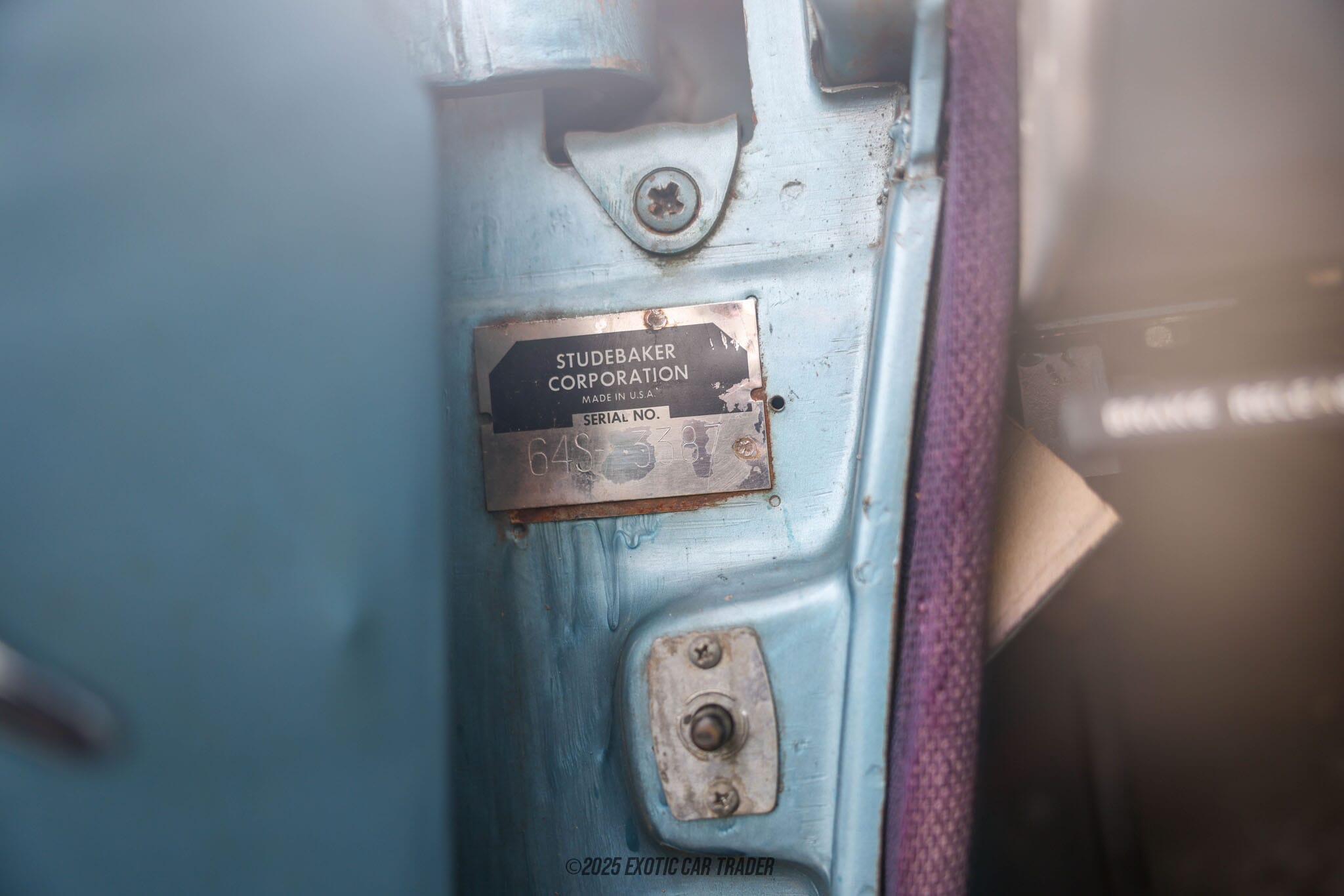
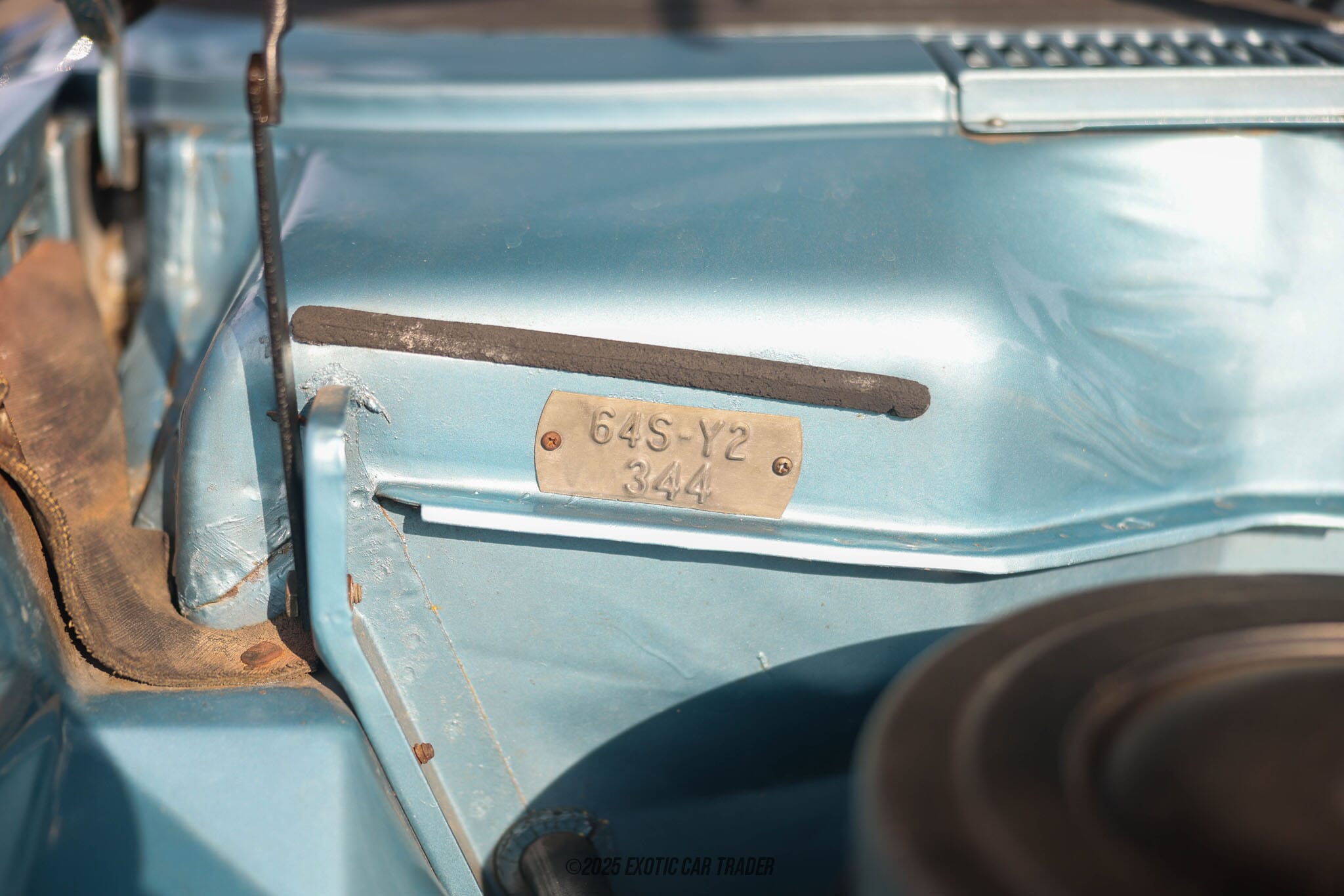
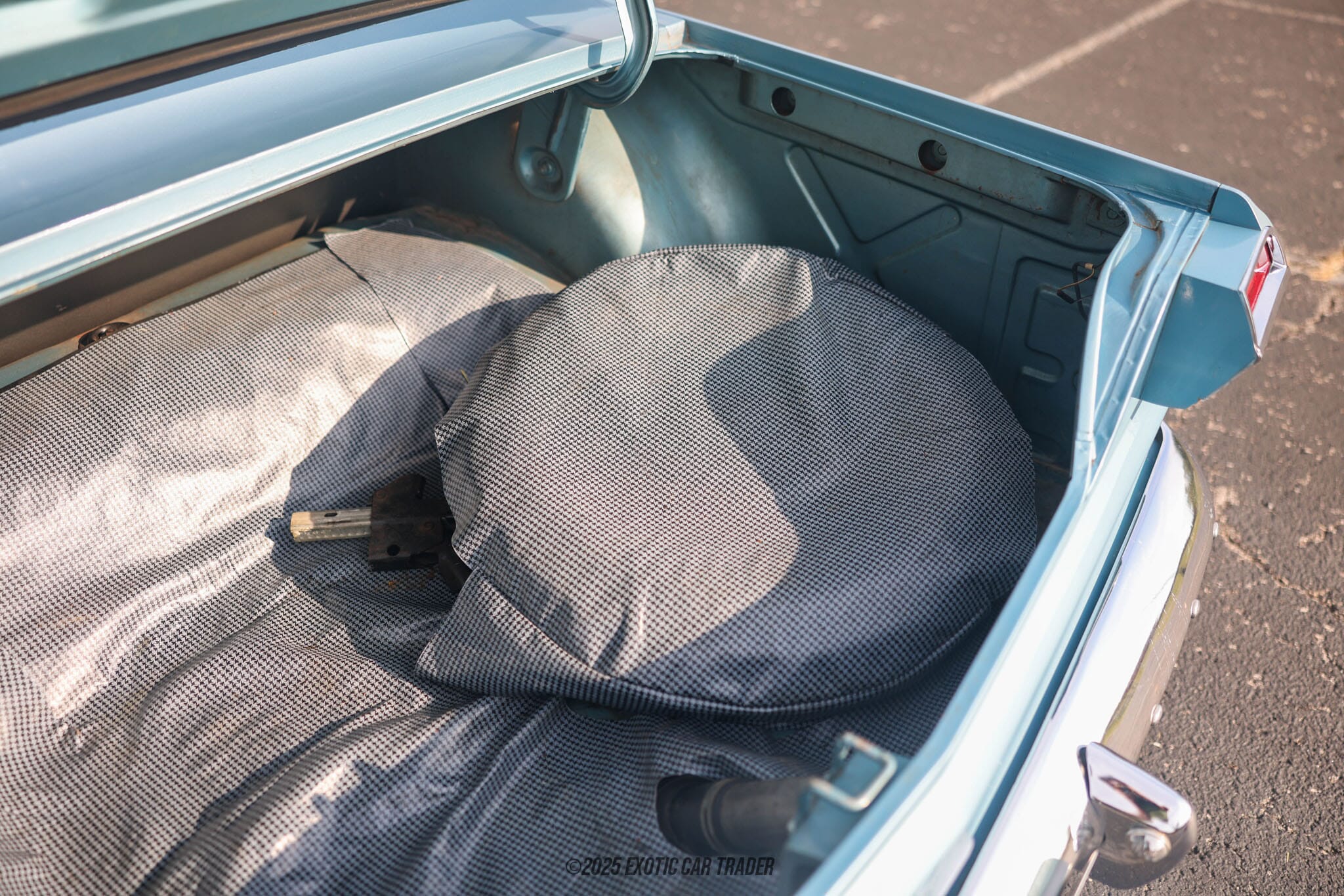
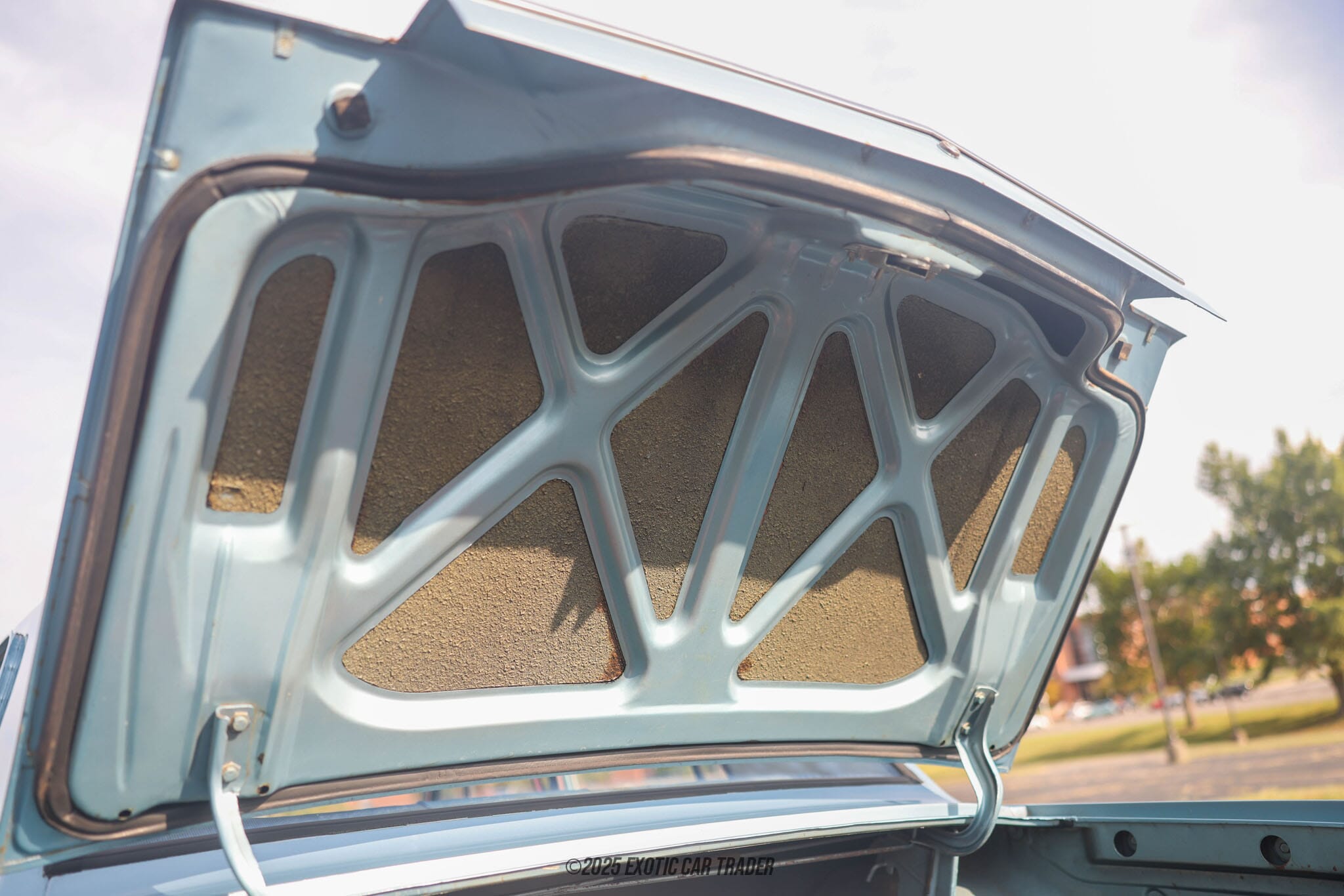
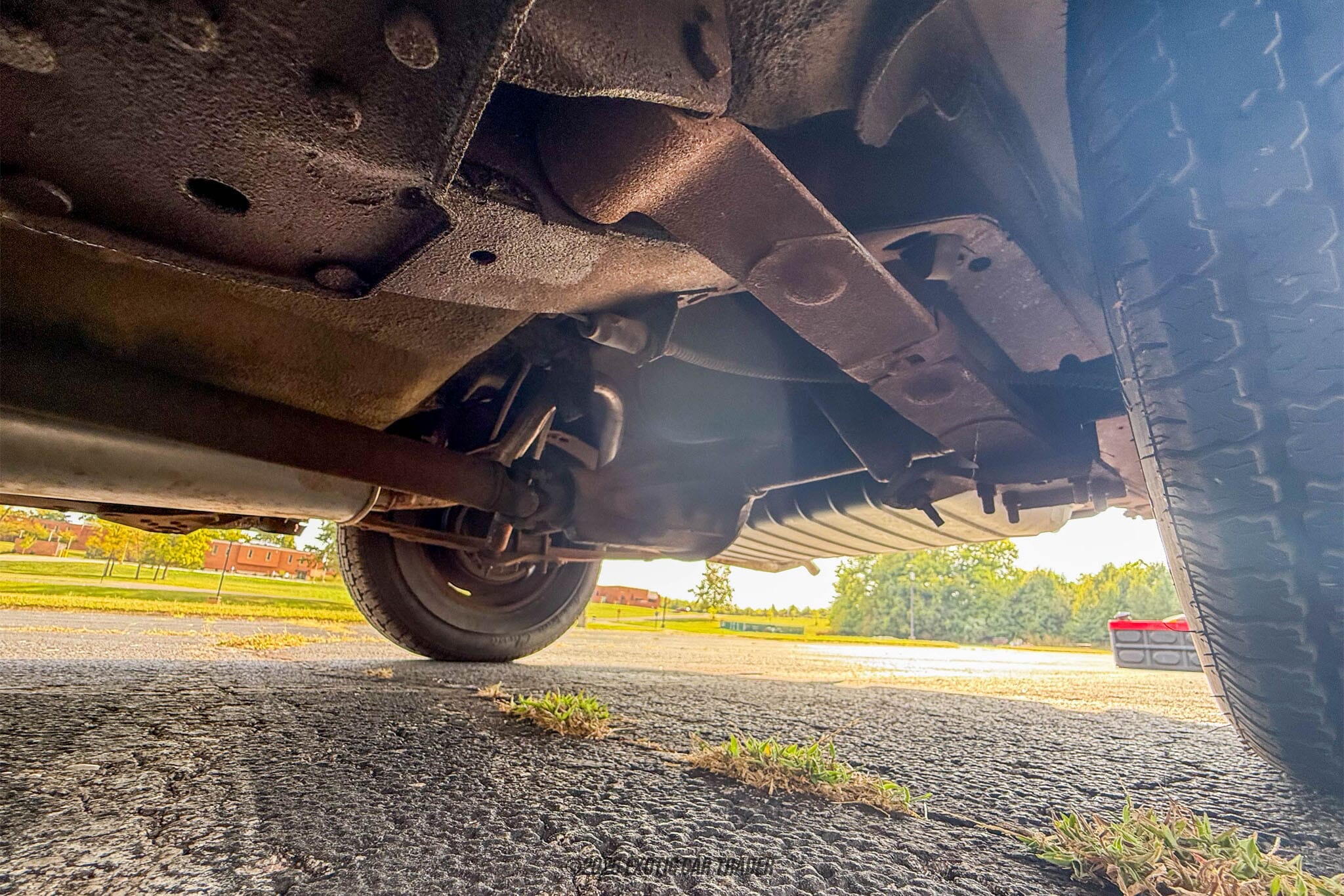
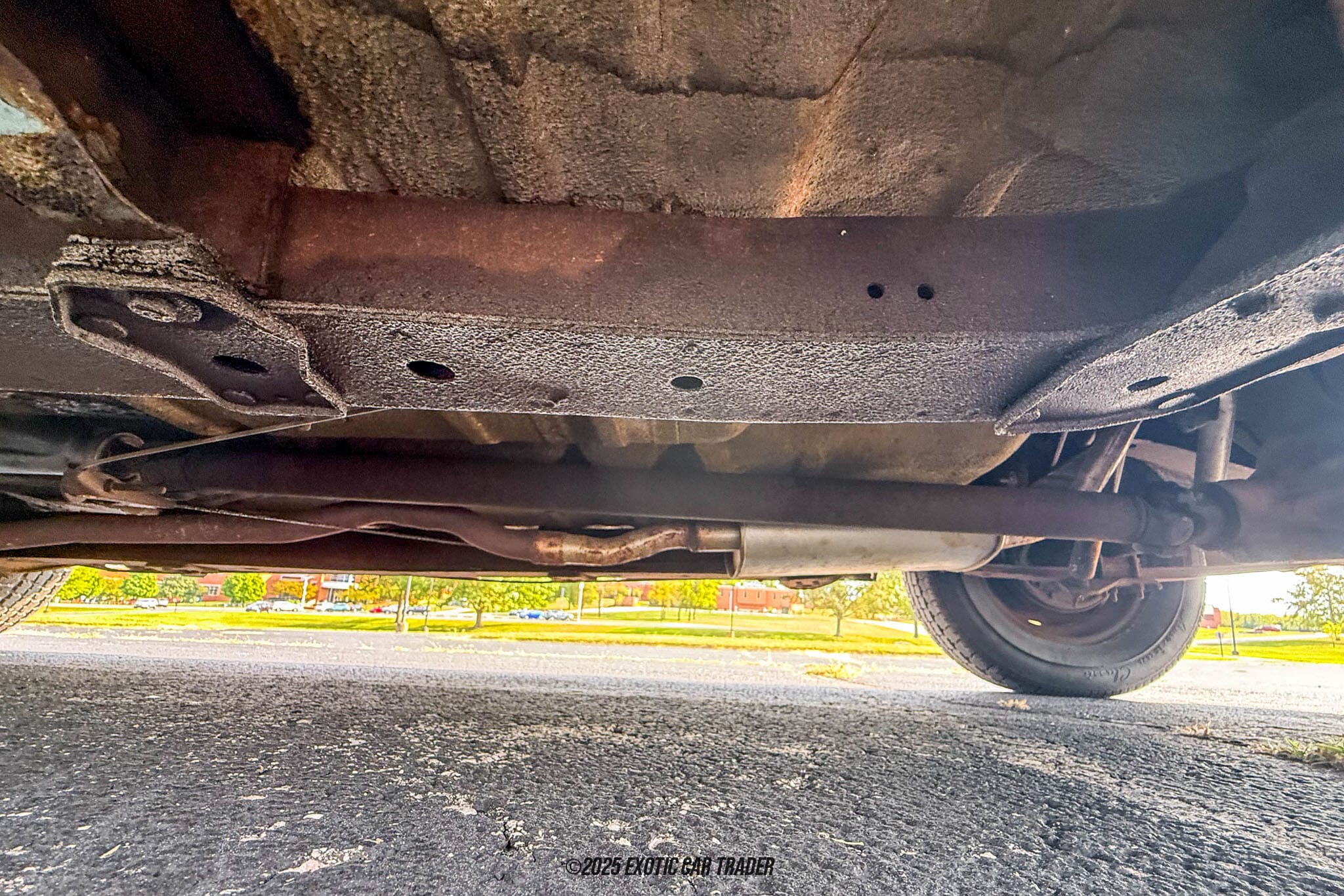
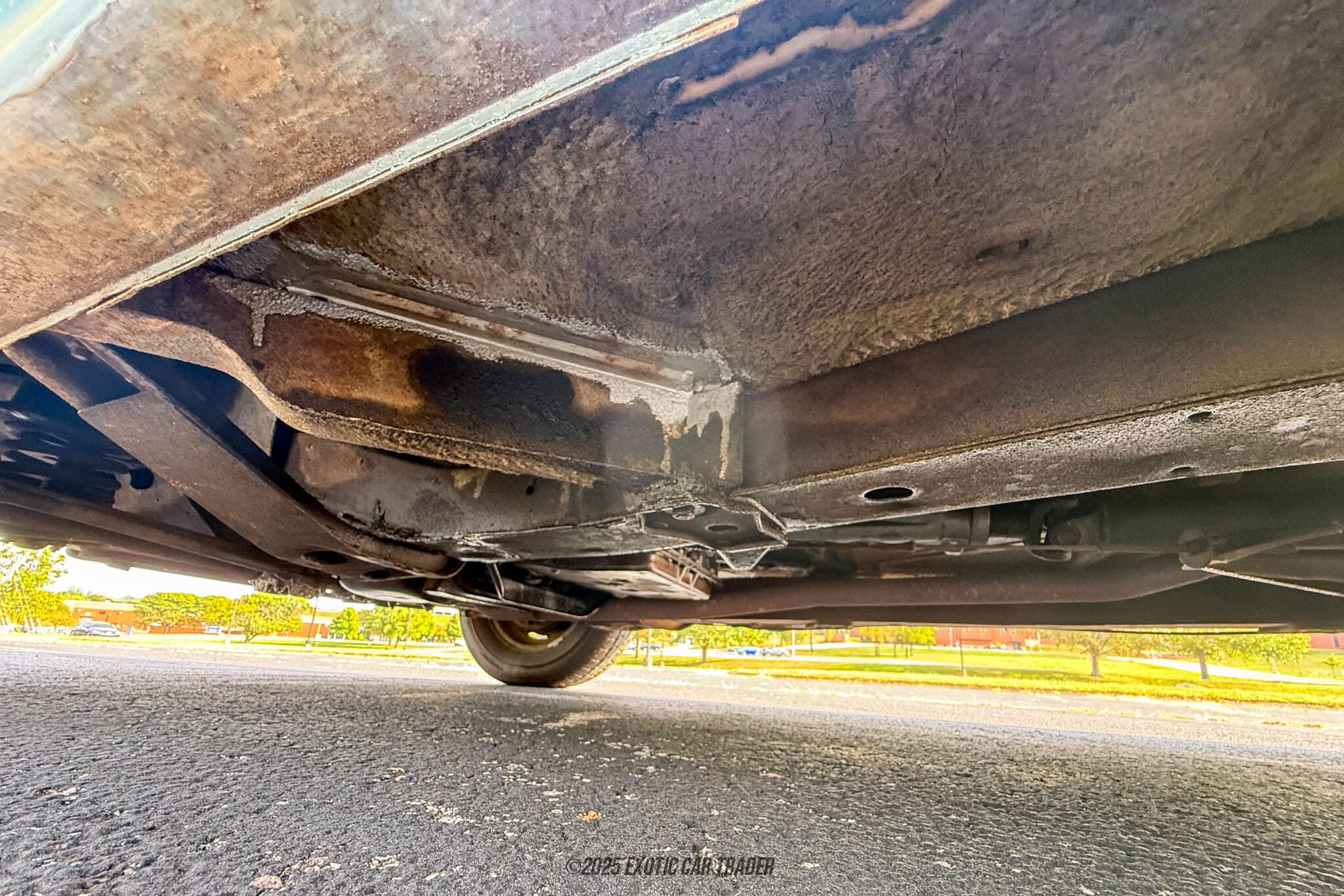
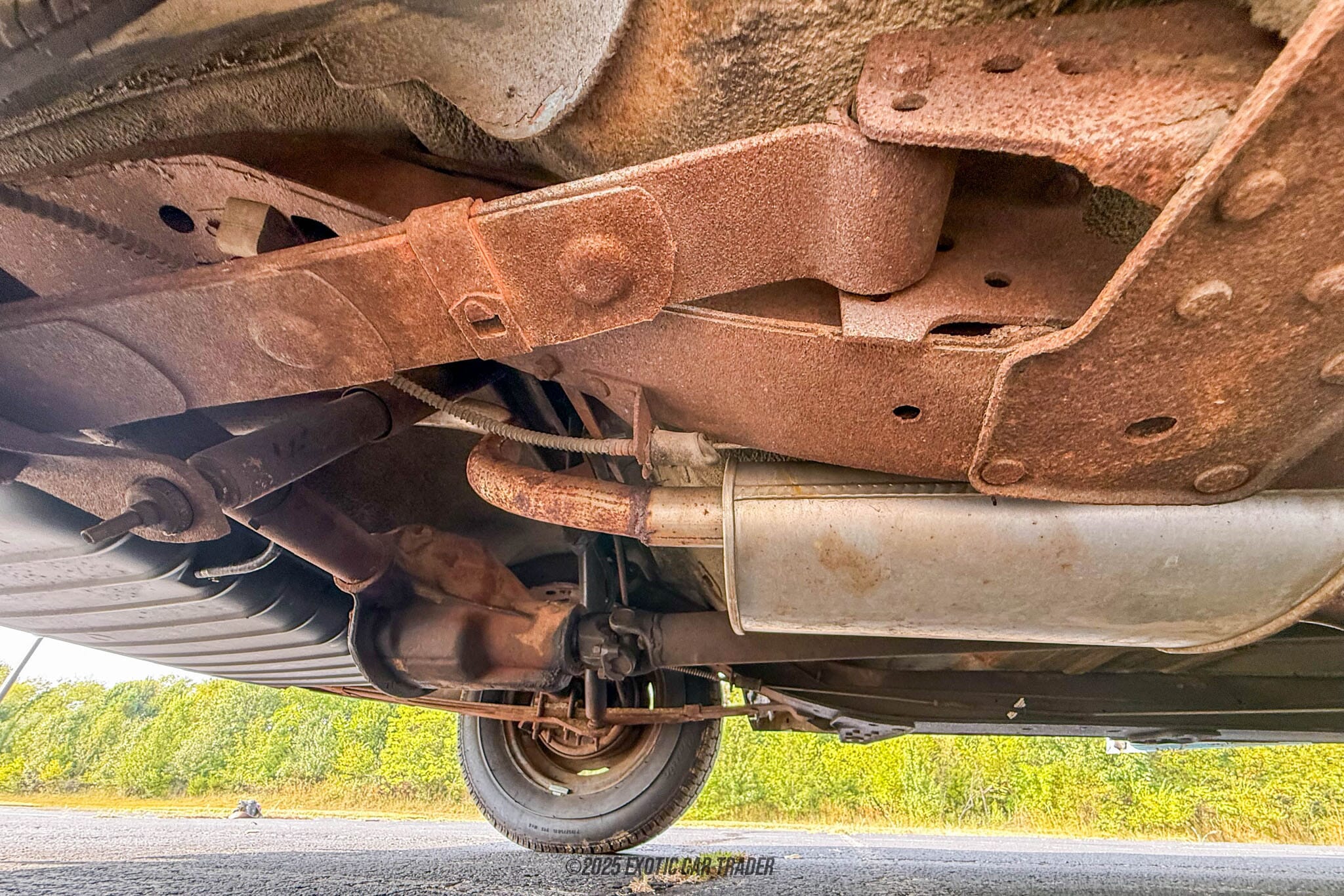
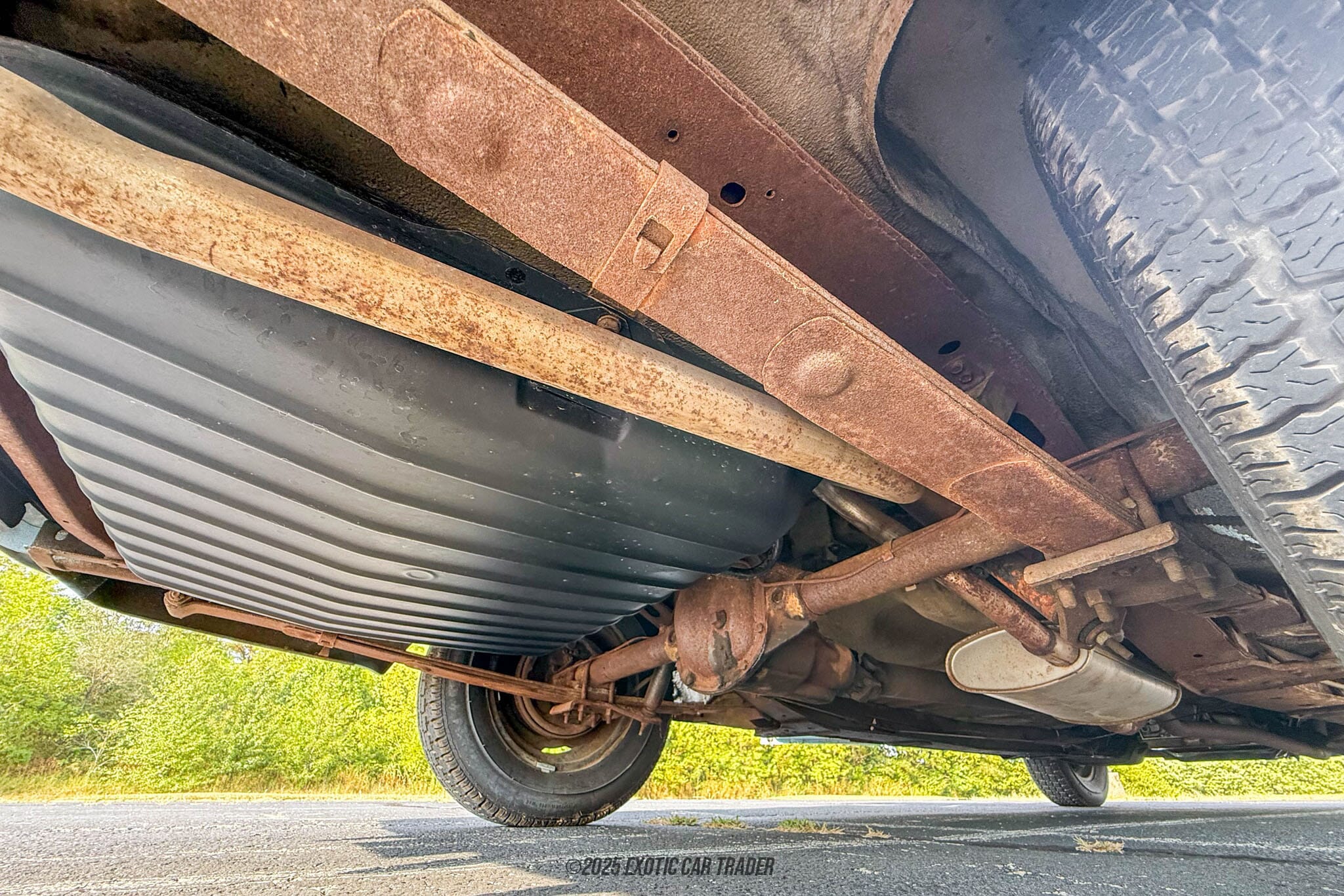
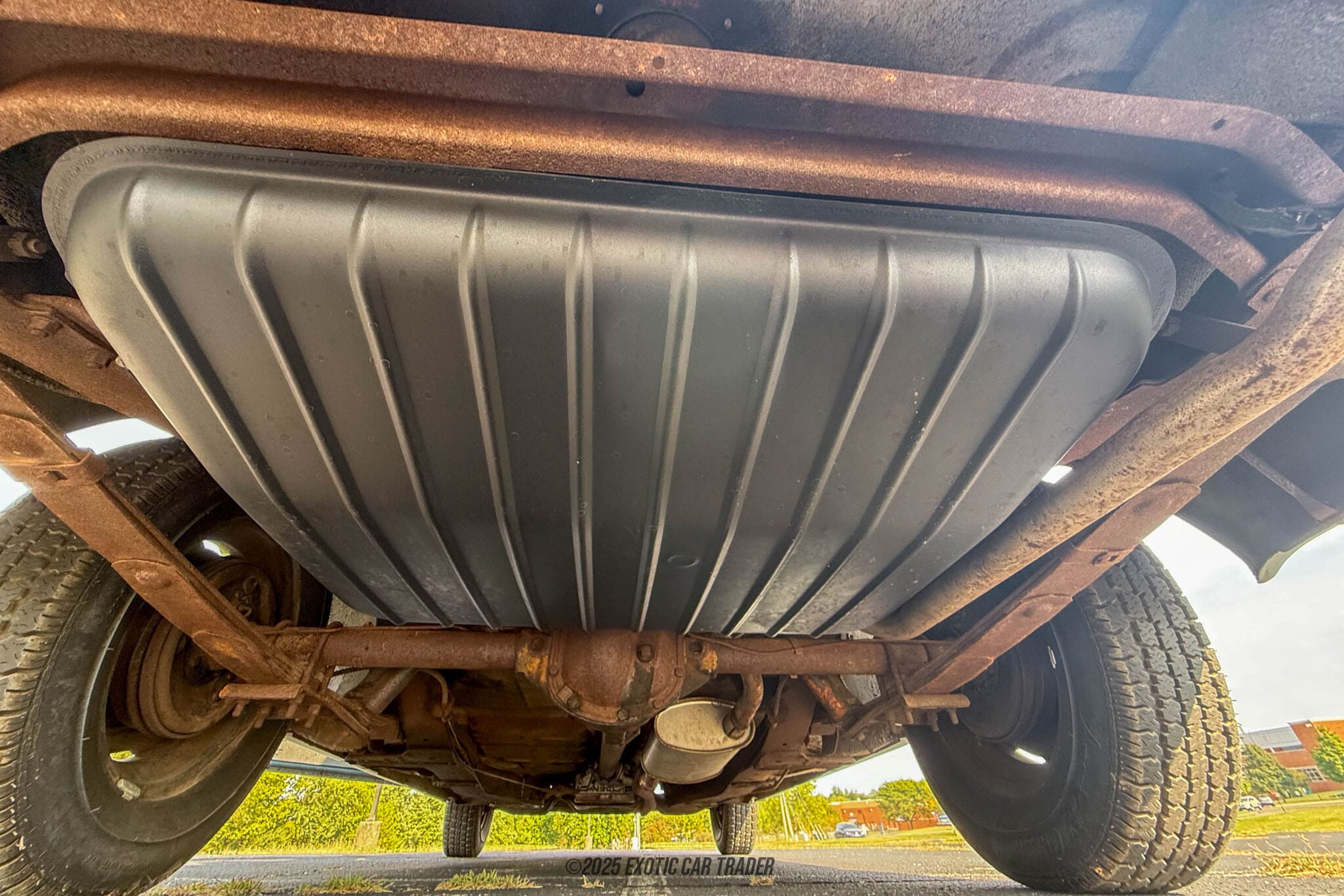
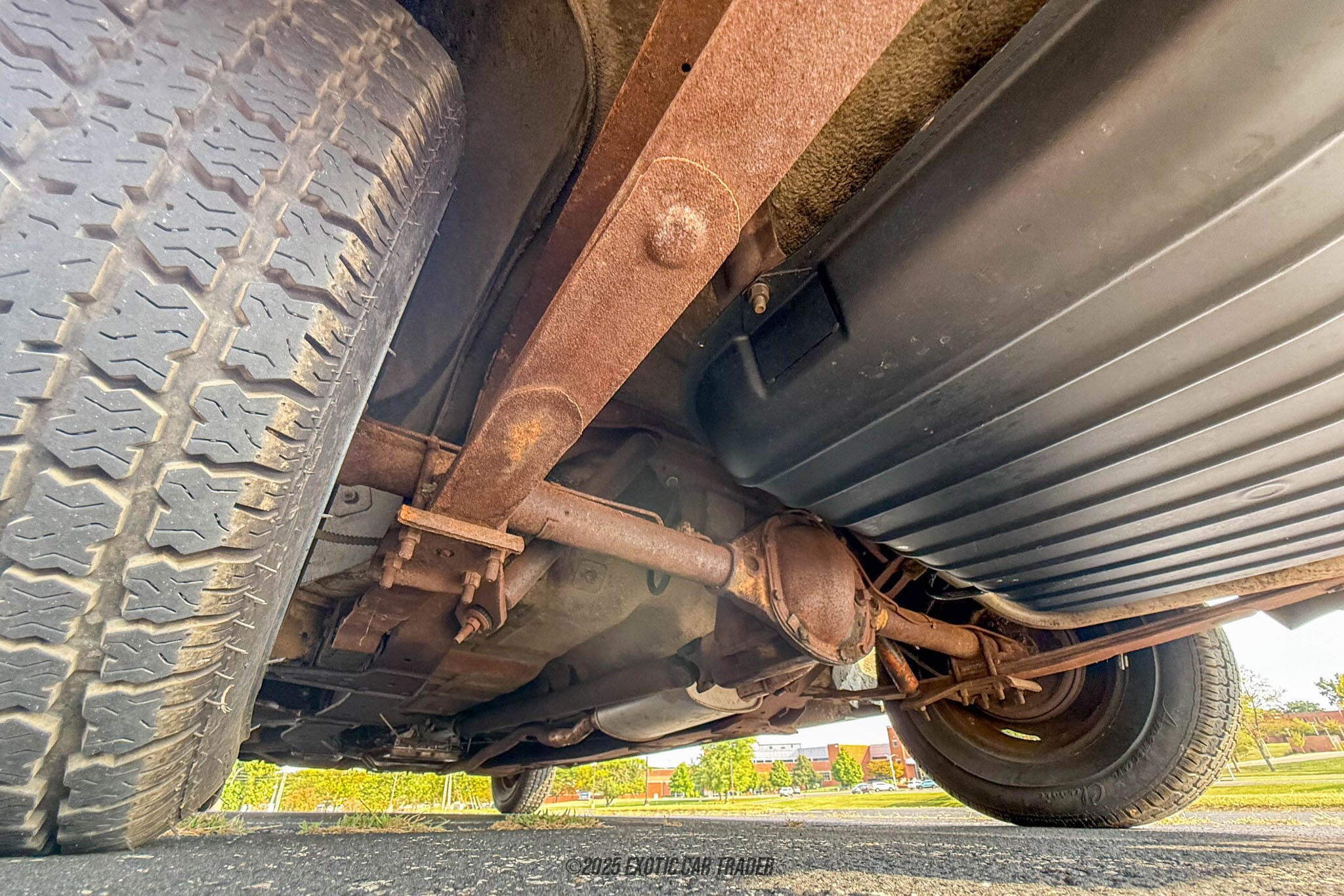
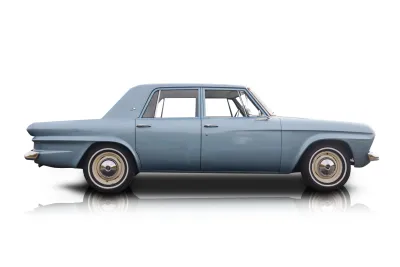
The 1964 Studebaker Challenger was the entry-level midsize model in the South Bend automaker’s lineup, offering understated styling and dependable mechanicals at an affordable price. Today, it represents a rare sight on American roads, appealing to collectors of orphan brands and enthusiasts of mid-century design. This example, finished in blue over a matching blue interior, has been repainted in its original color and is reported to remain largely original, preserving the authenticity that makes it special.
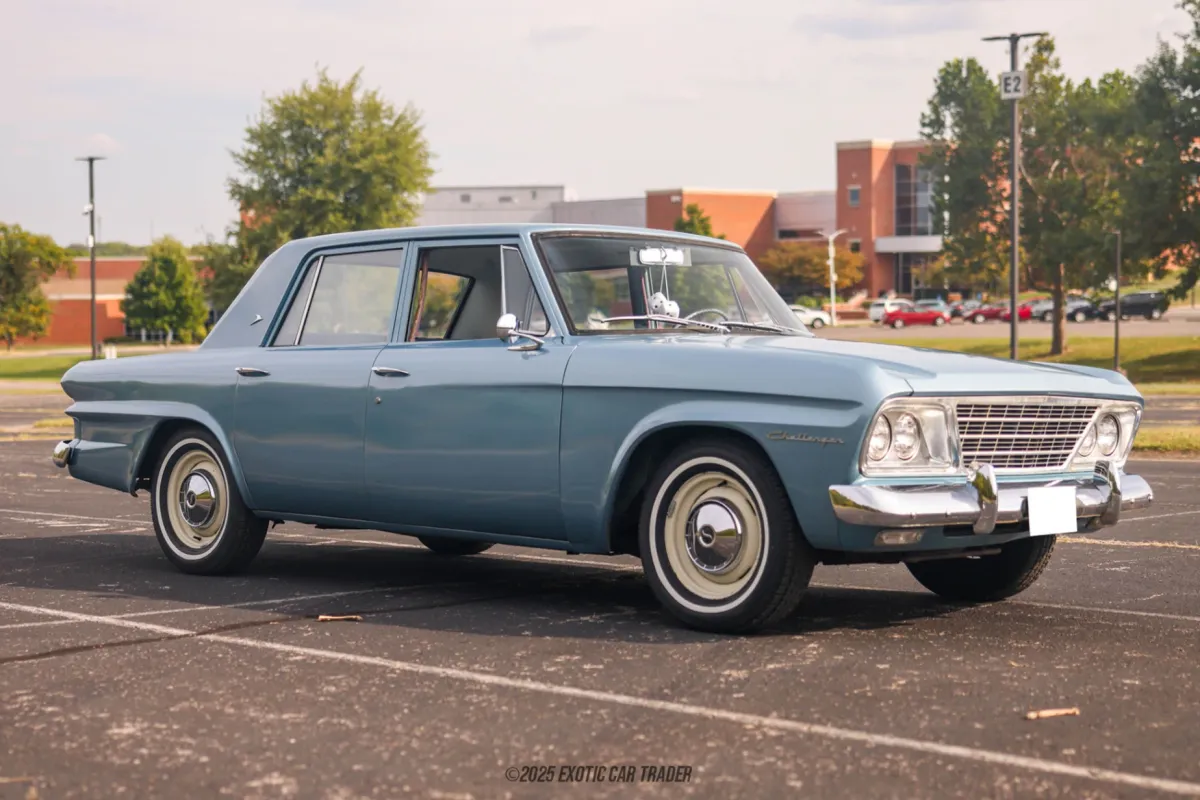
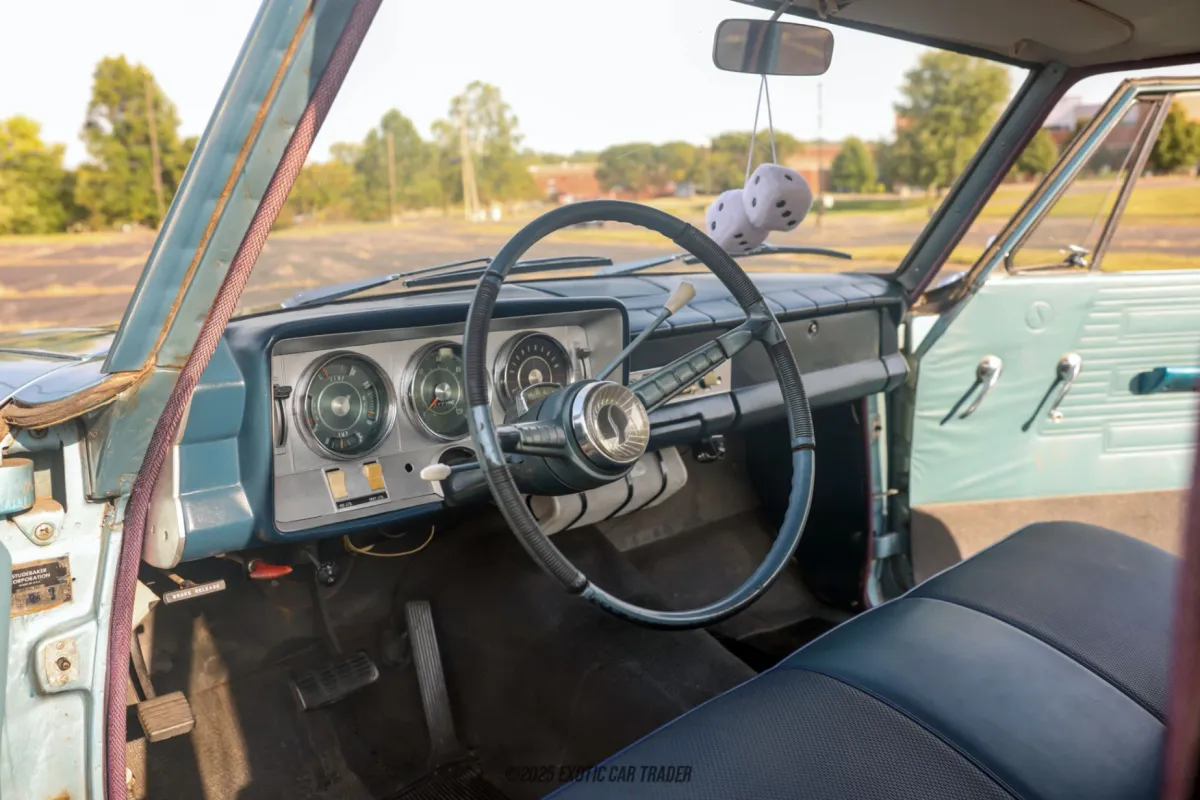
Exterior and Interior
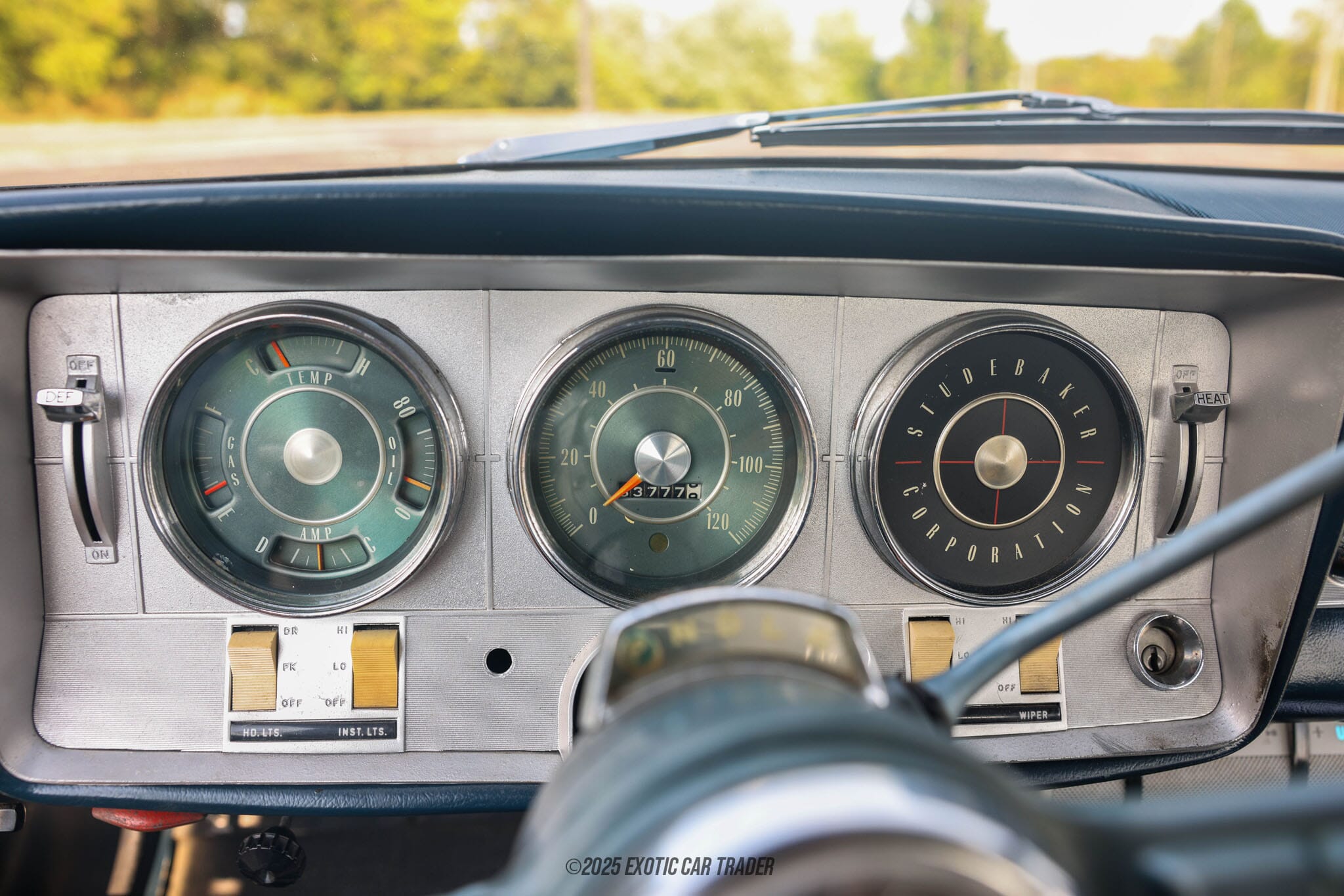
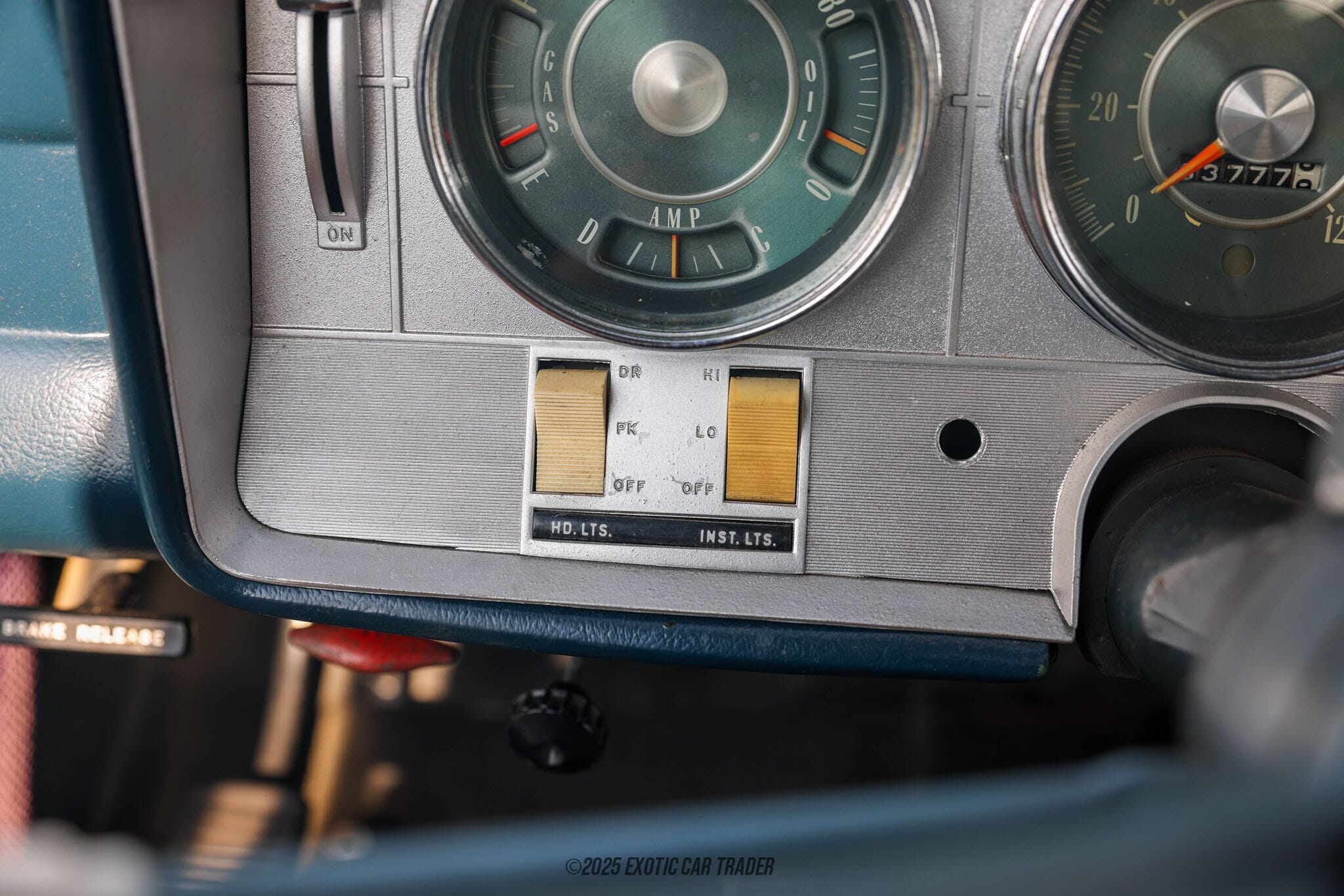
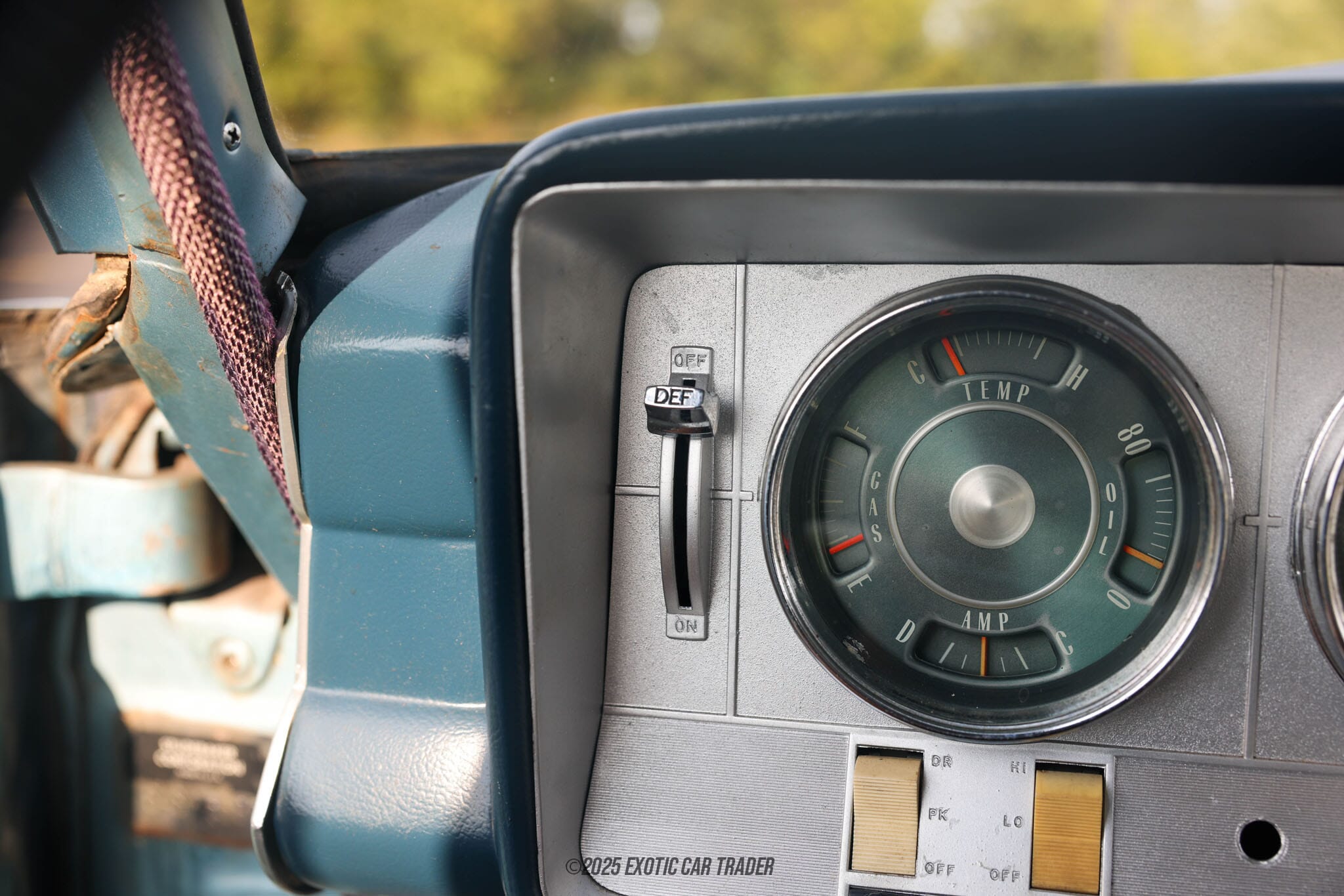
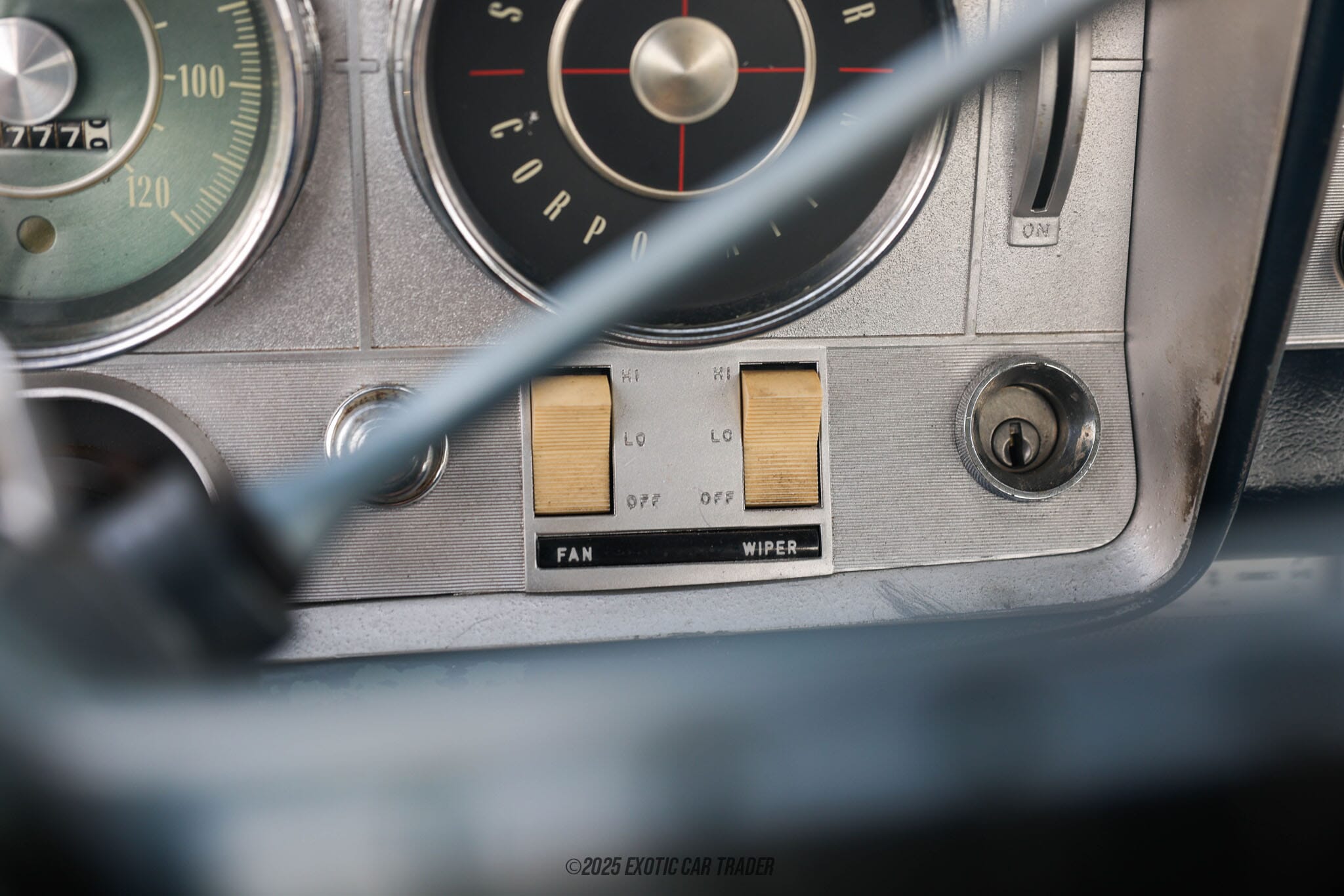
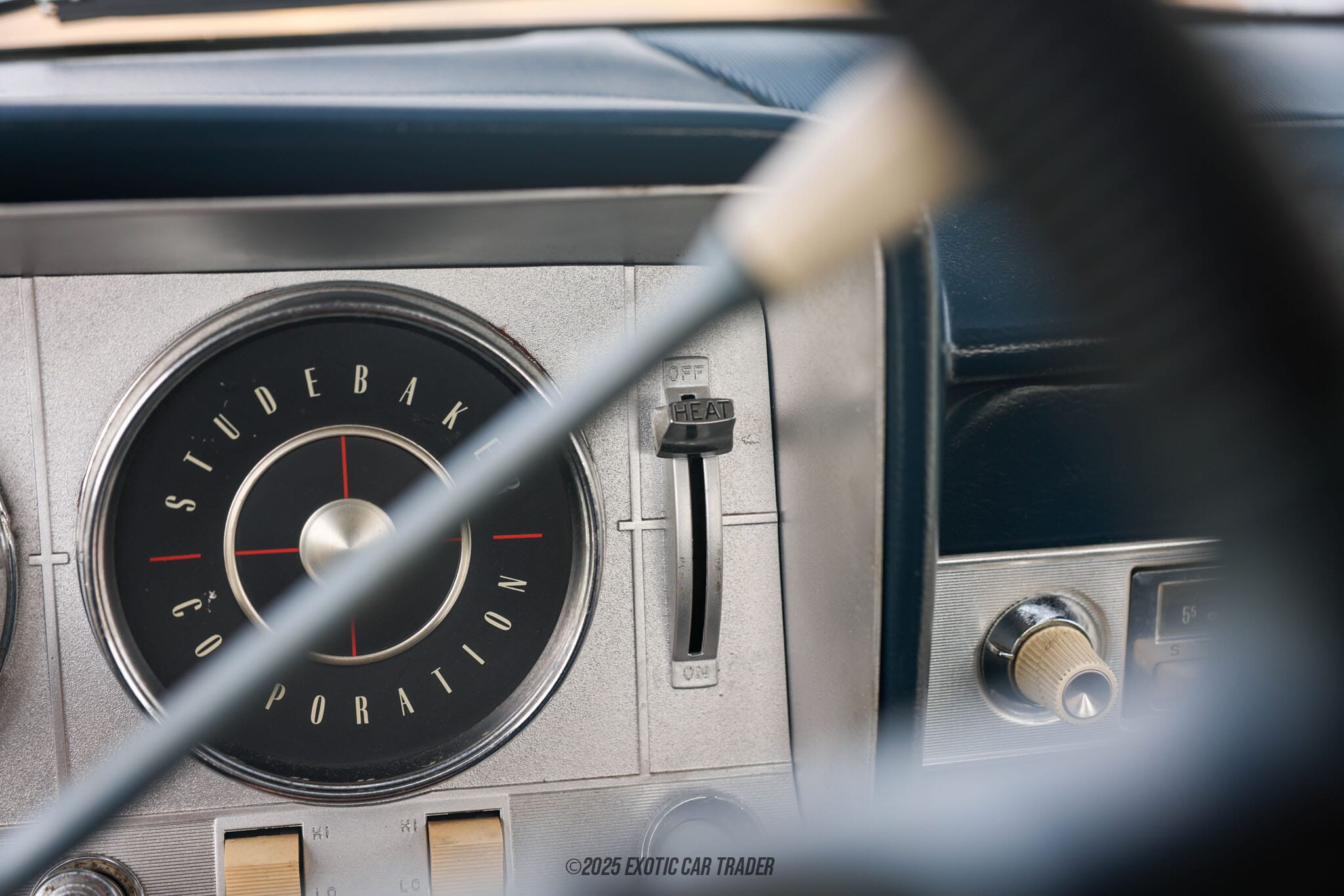
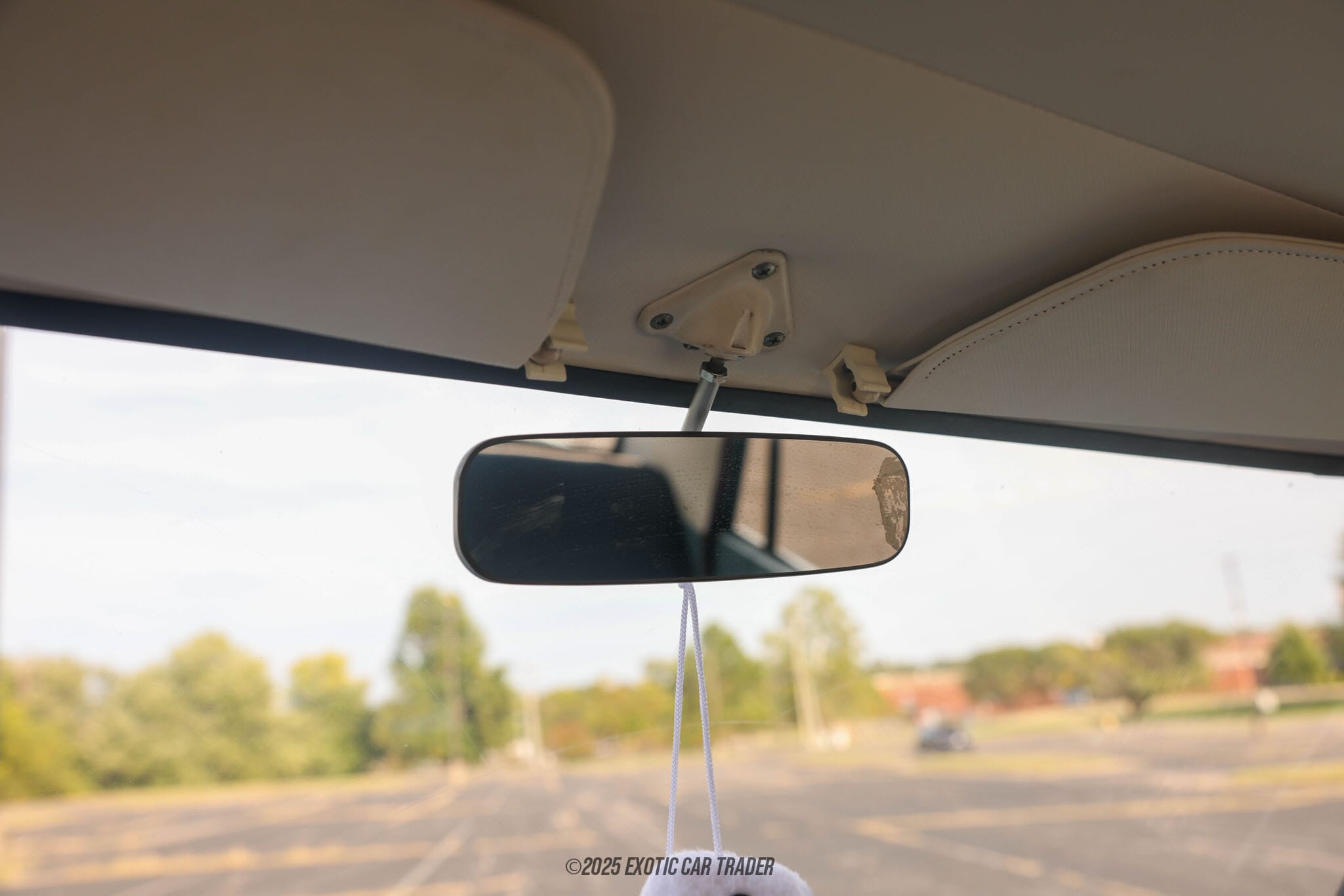
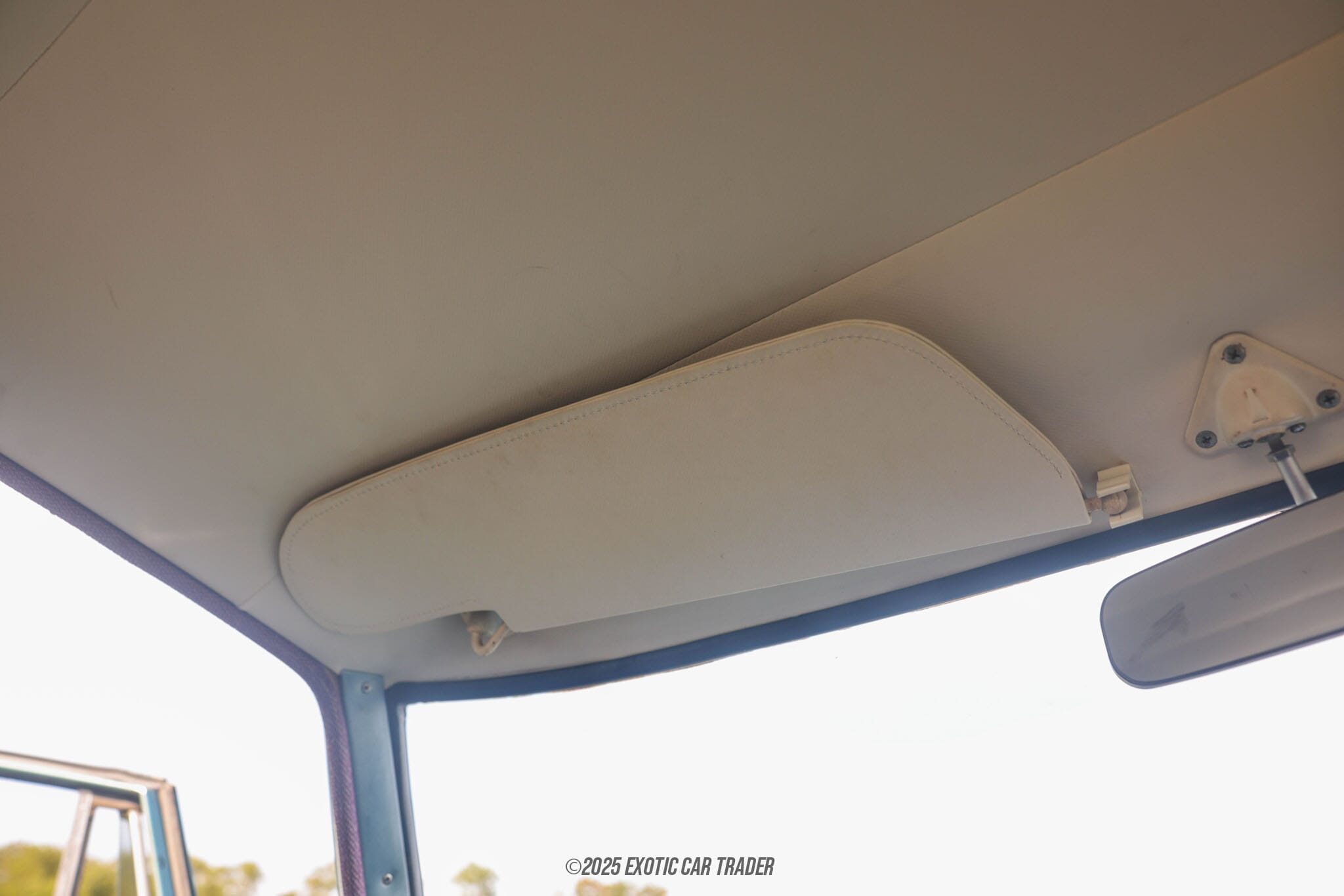
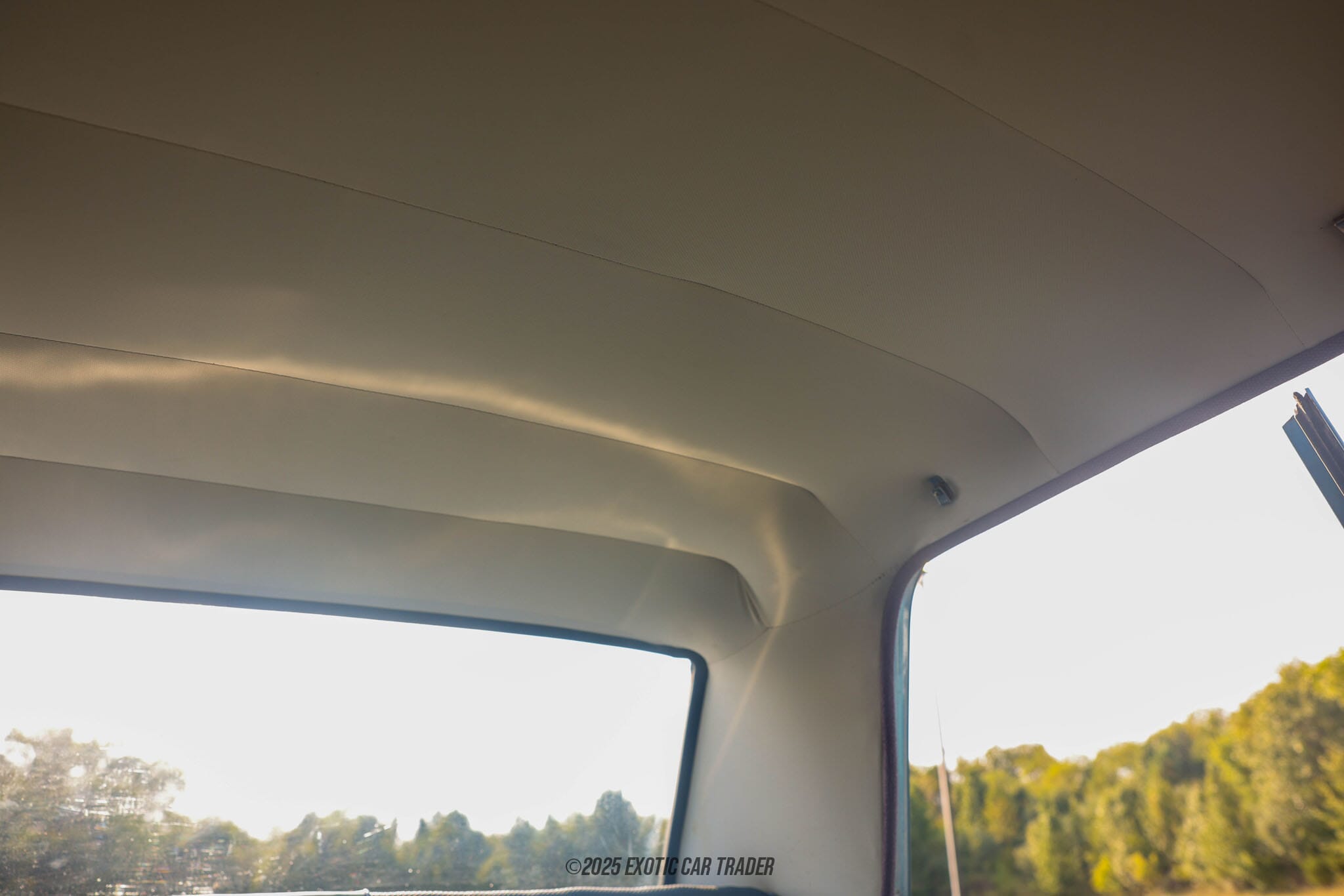
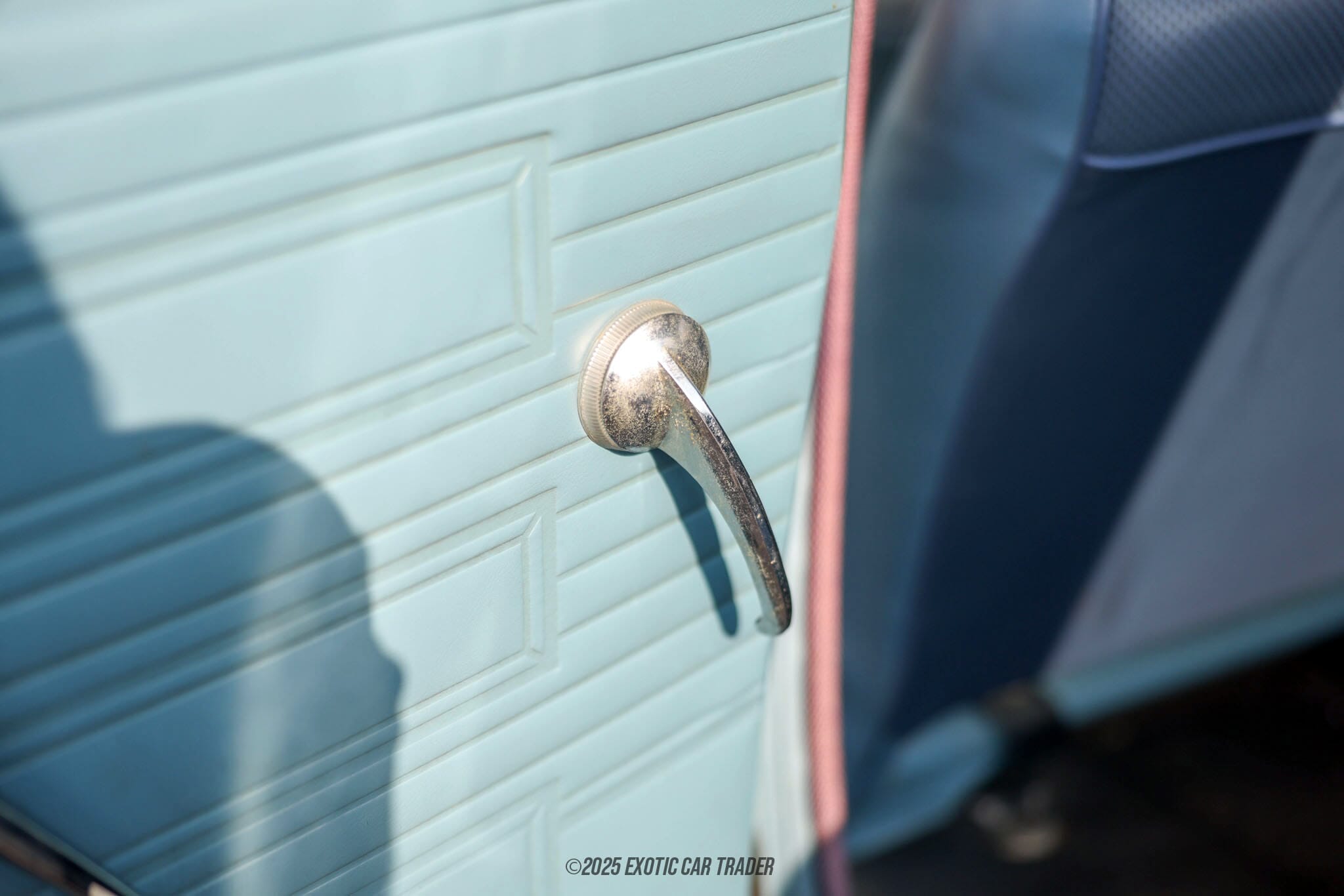
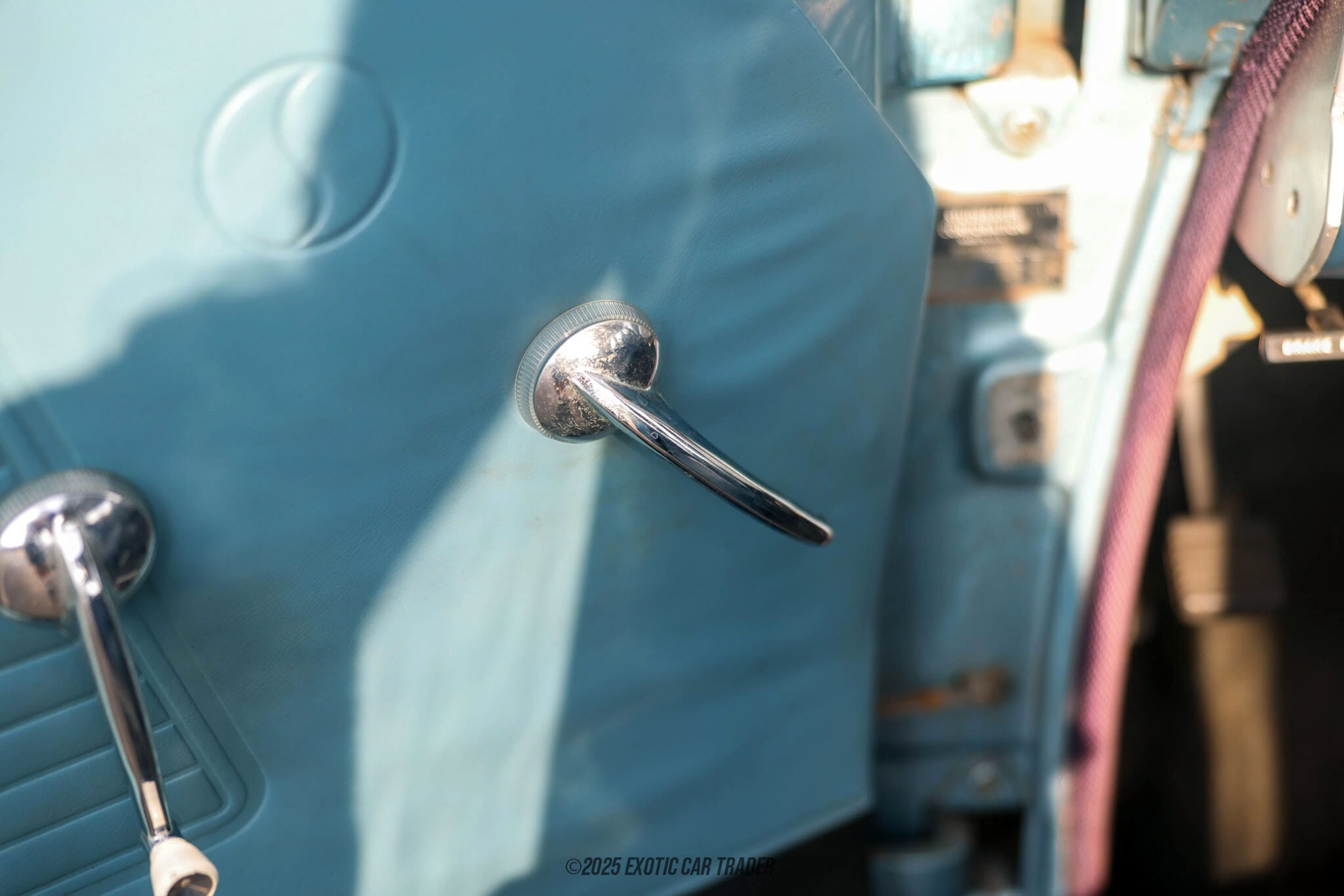
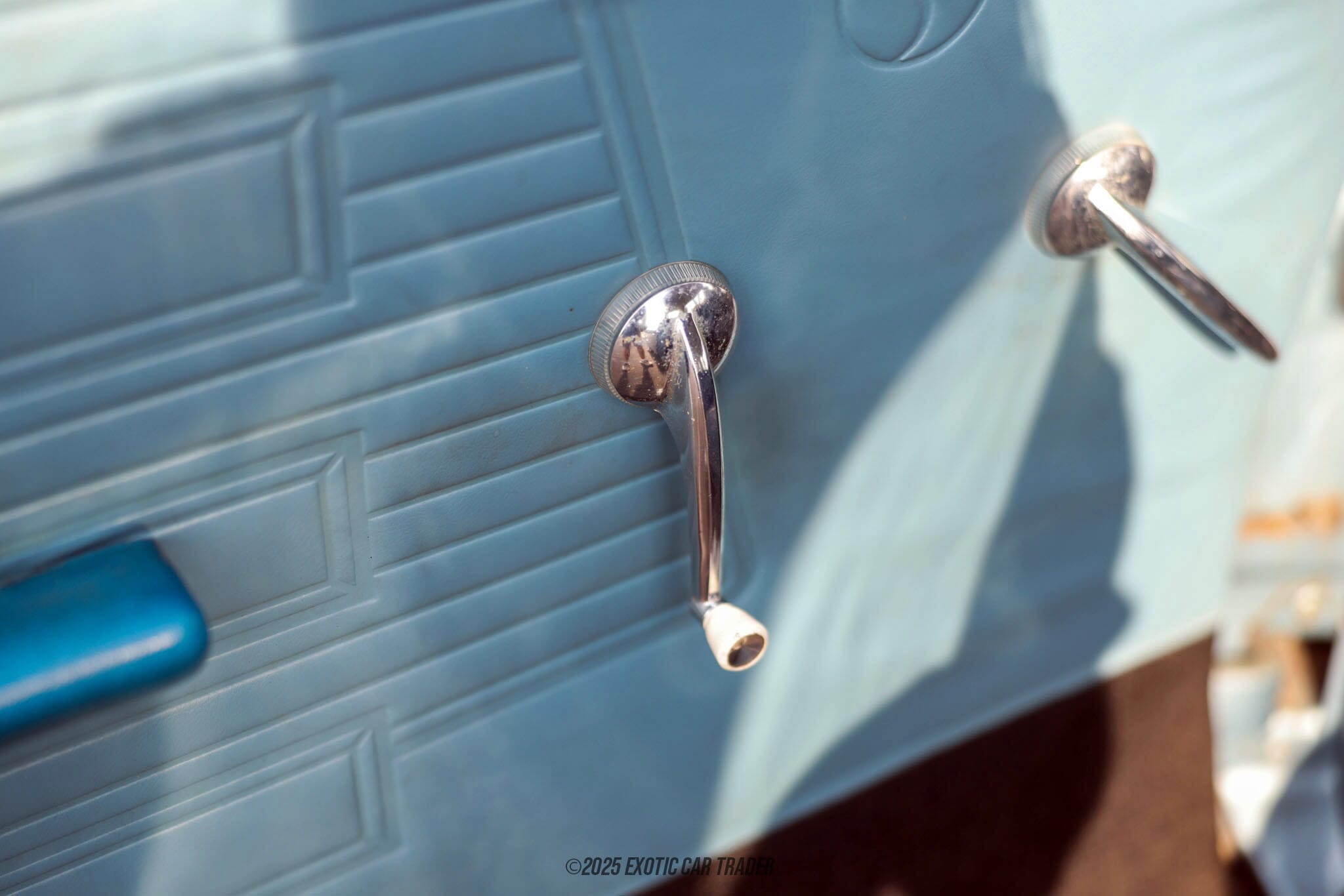
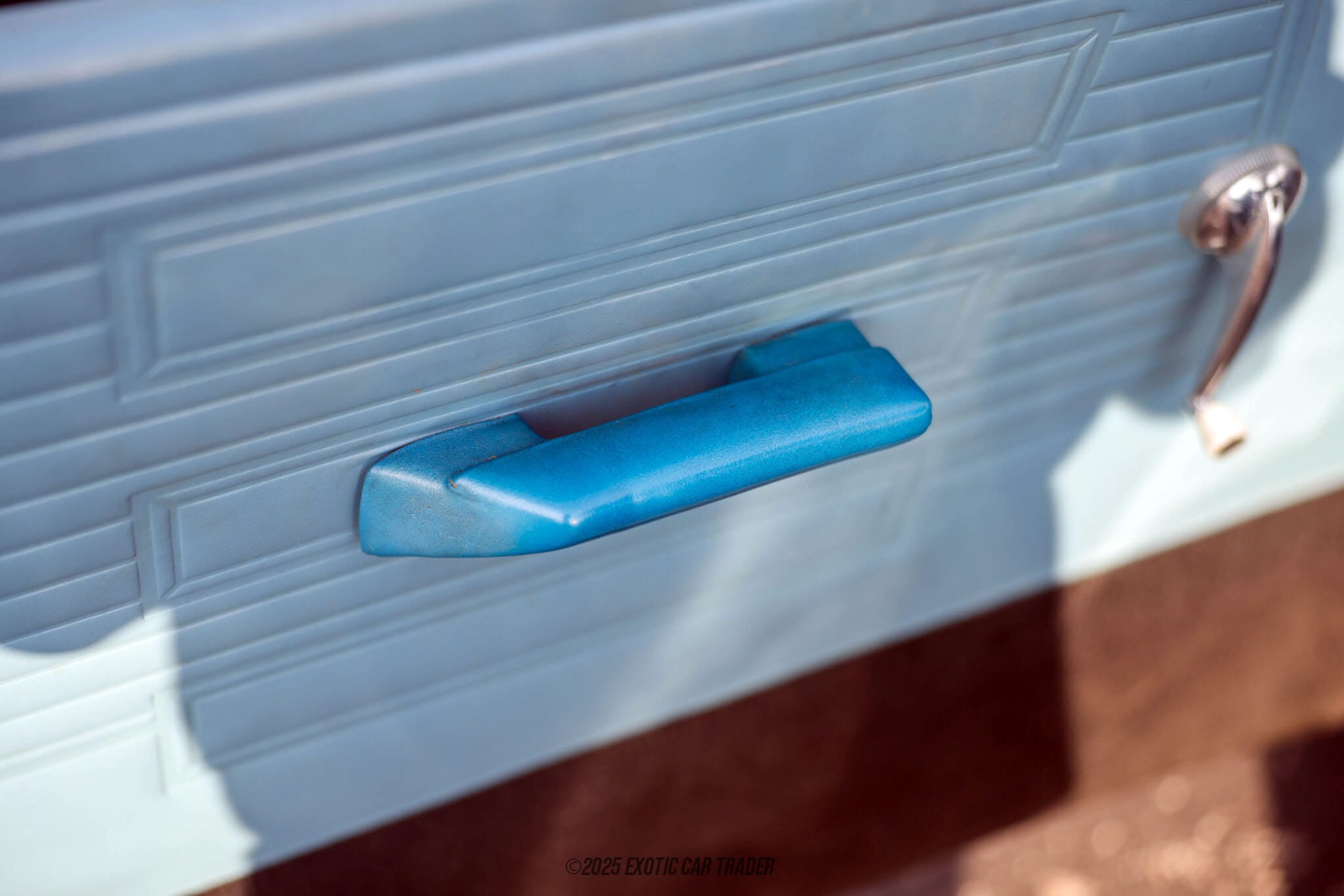
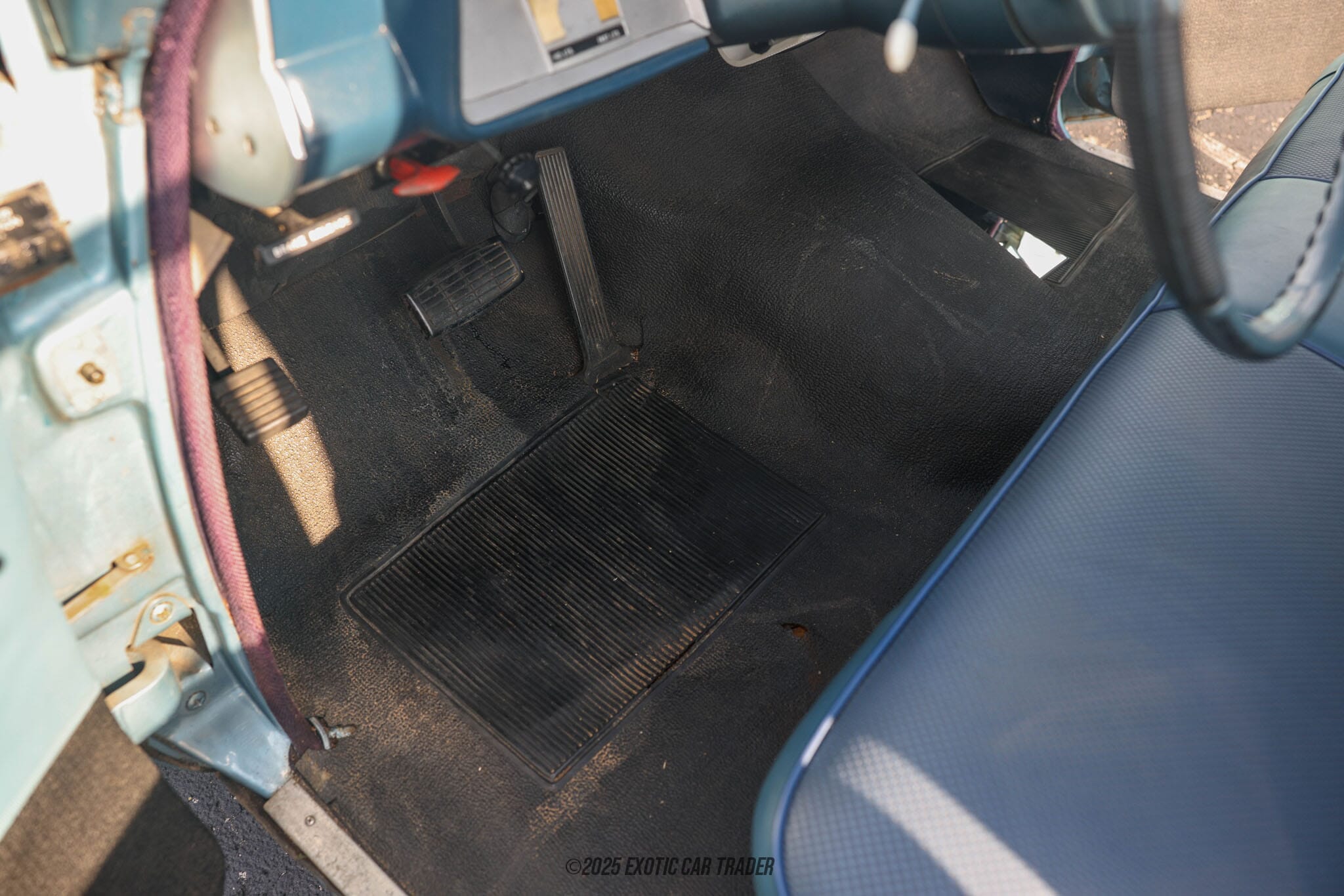
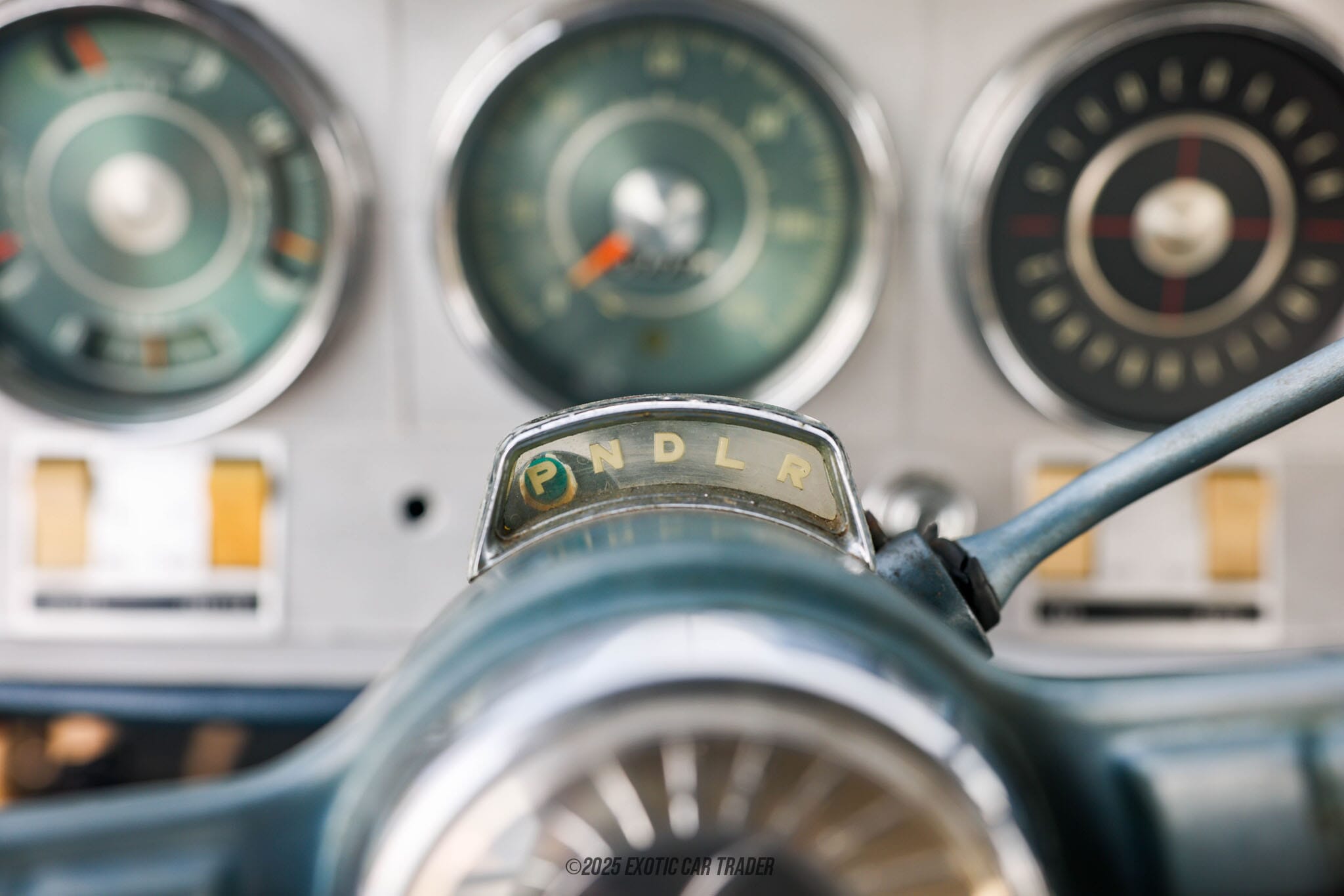
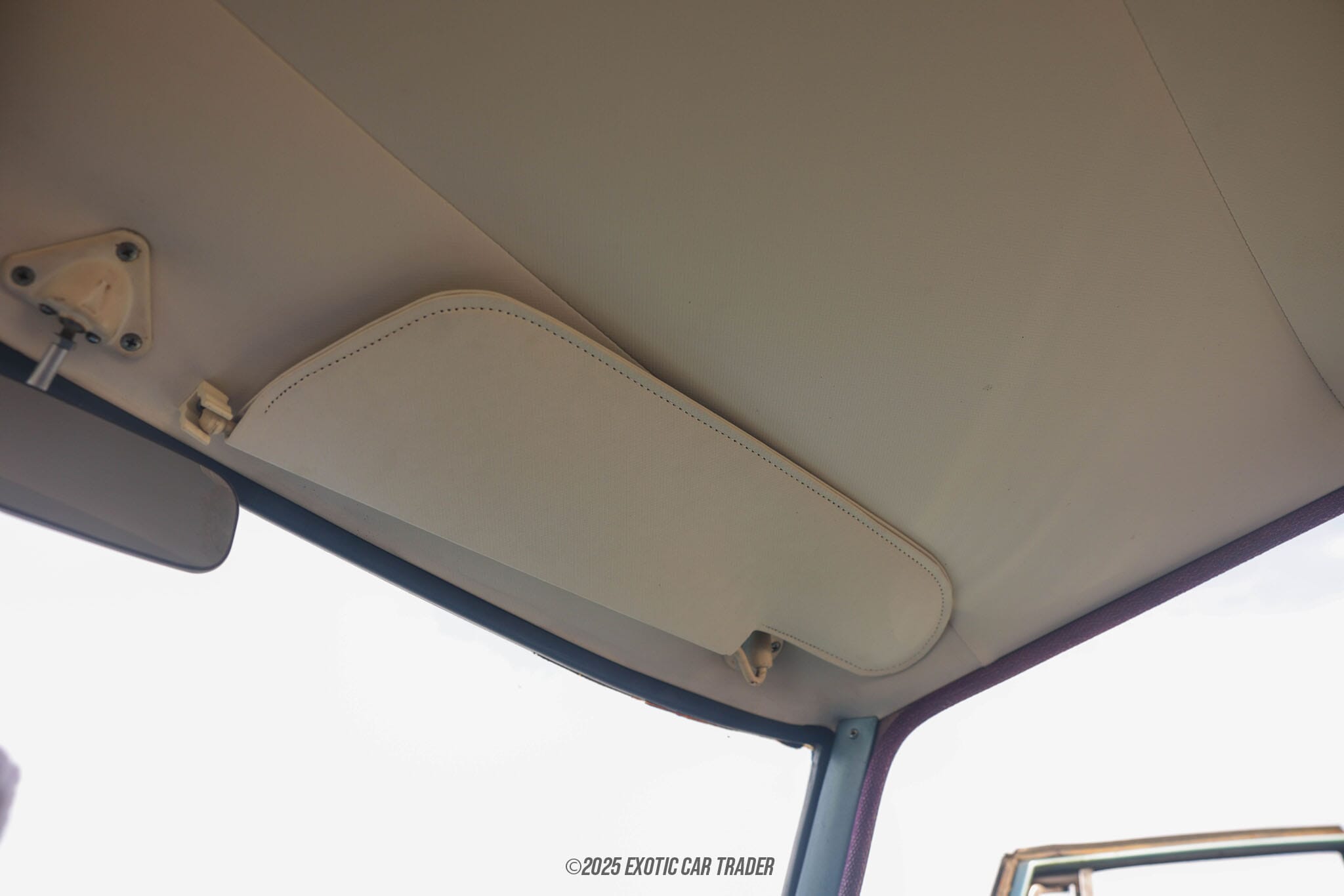
The Challenger’s clean, no-nonsense lines are enhanced by its fresh repaint in factory-correct blue, a hue that complements the restrained yet elegant proportions of the body. Chrome trim and period detailing reflect the styling cues of the era, while the matching blue interior continues the theme inside. Simplicity and originality define the cabin, offering a glimpse into Studebaker’s design philosophy during the final years of the company’s passenger car production.
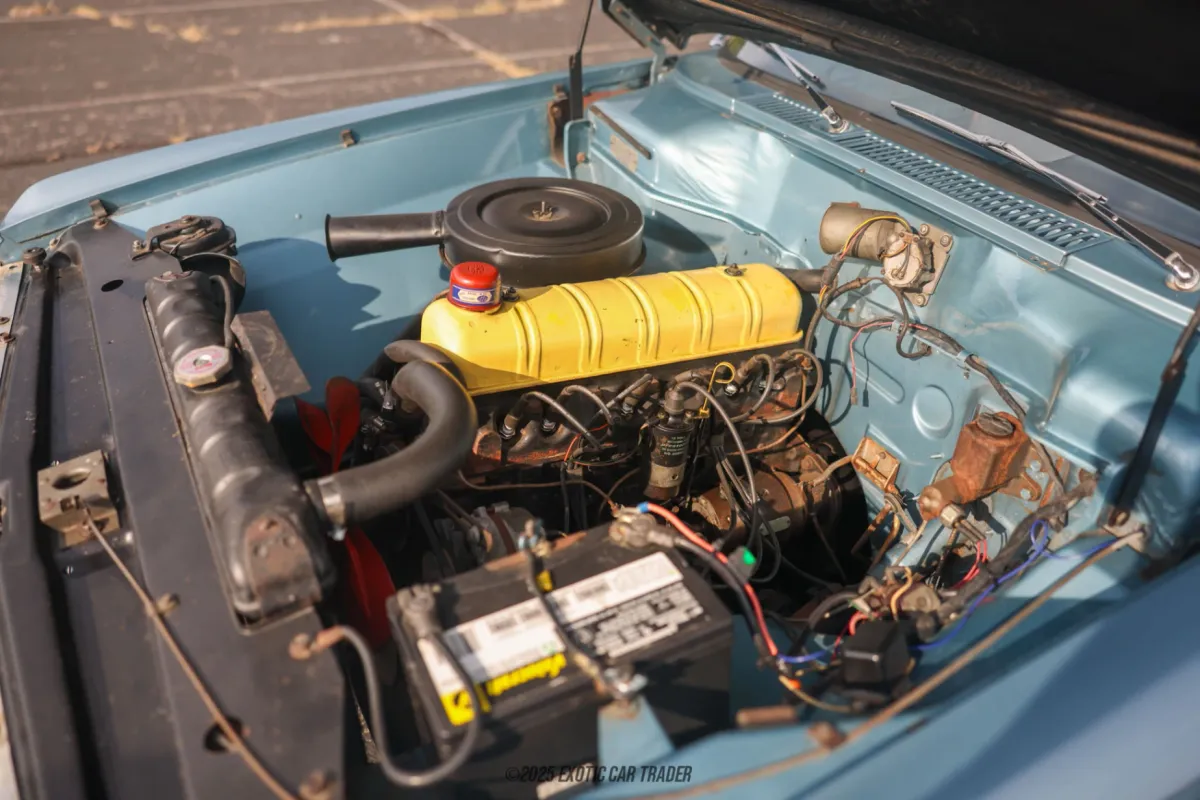
Engine
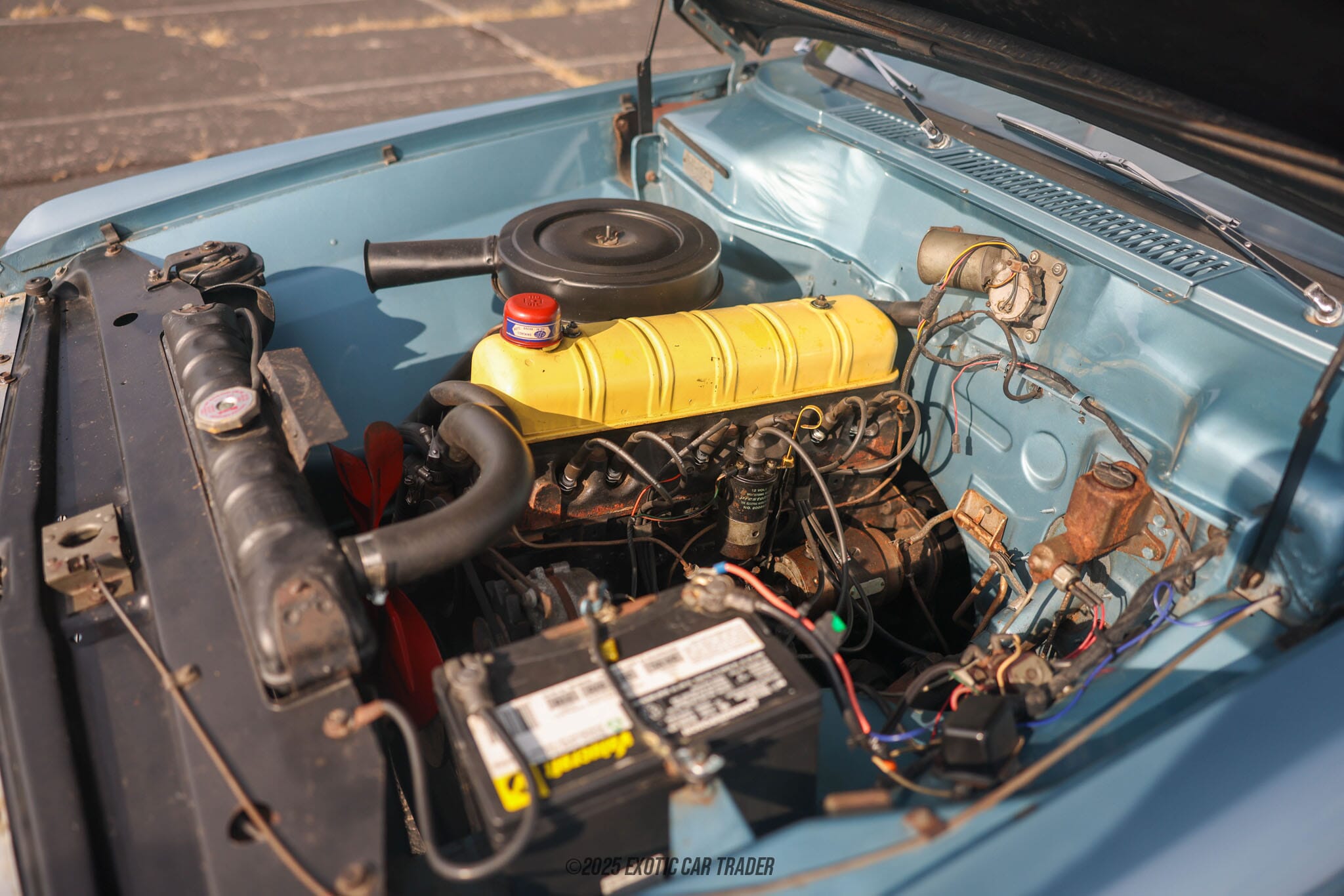
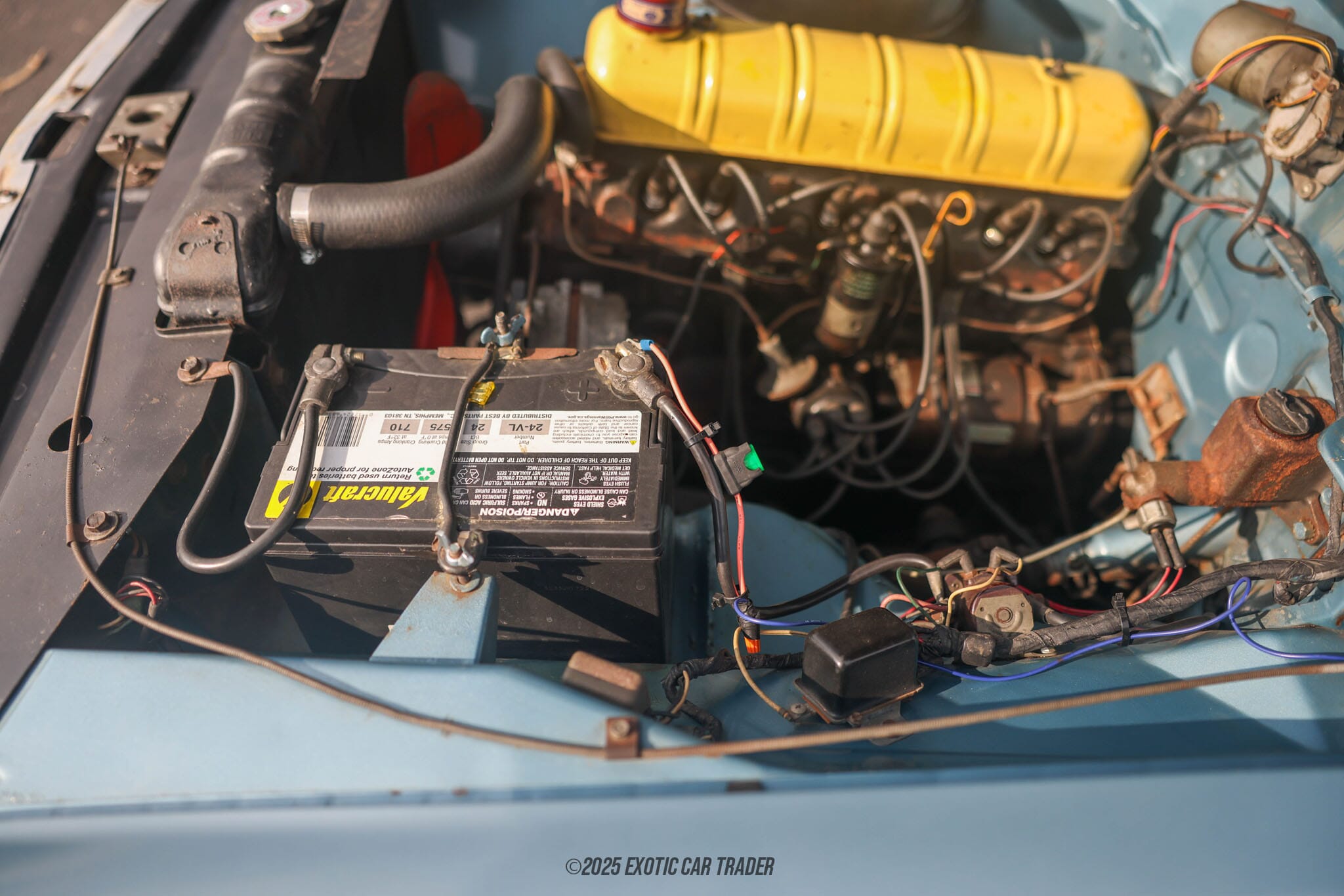
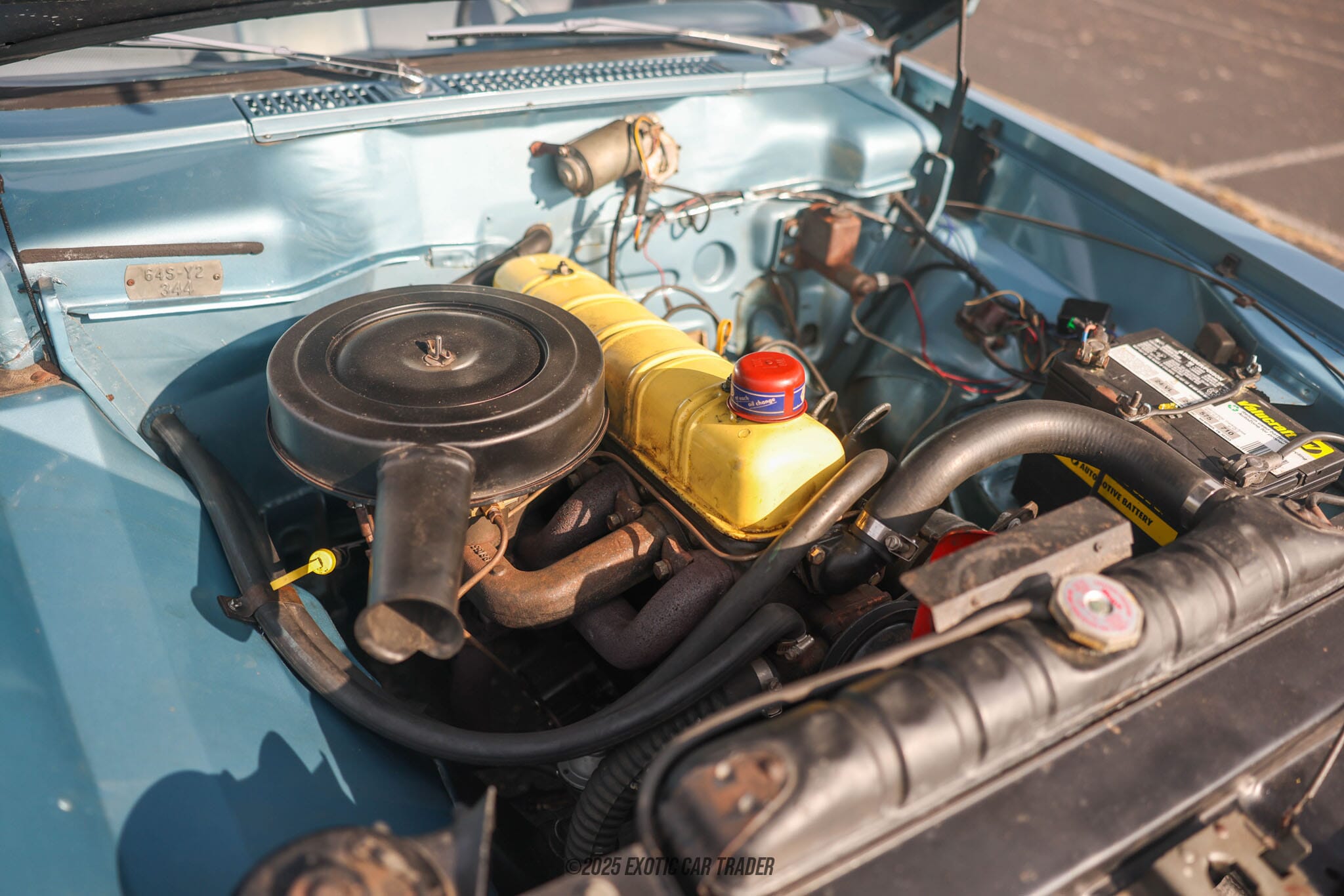
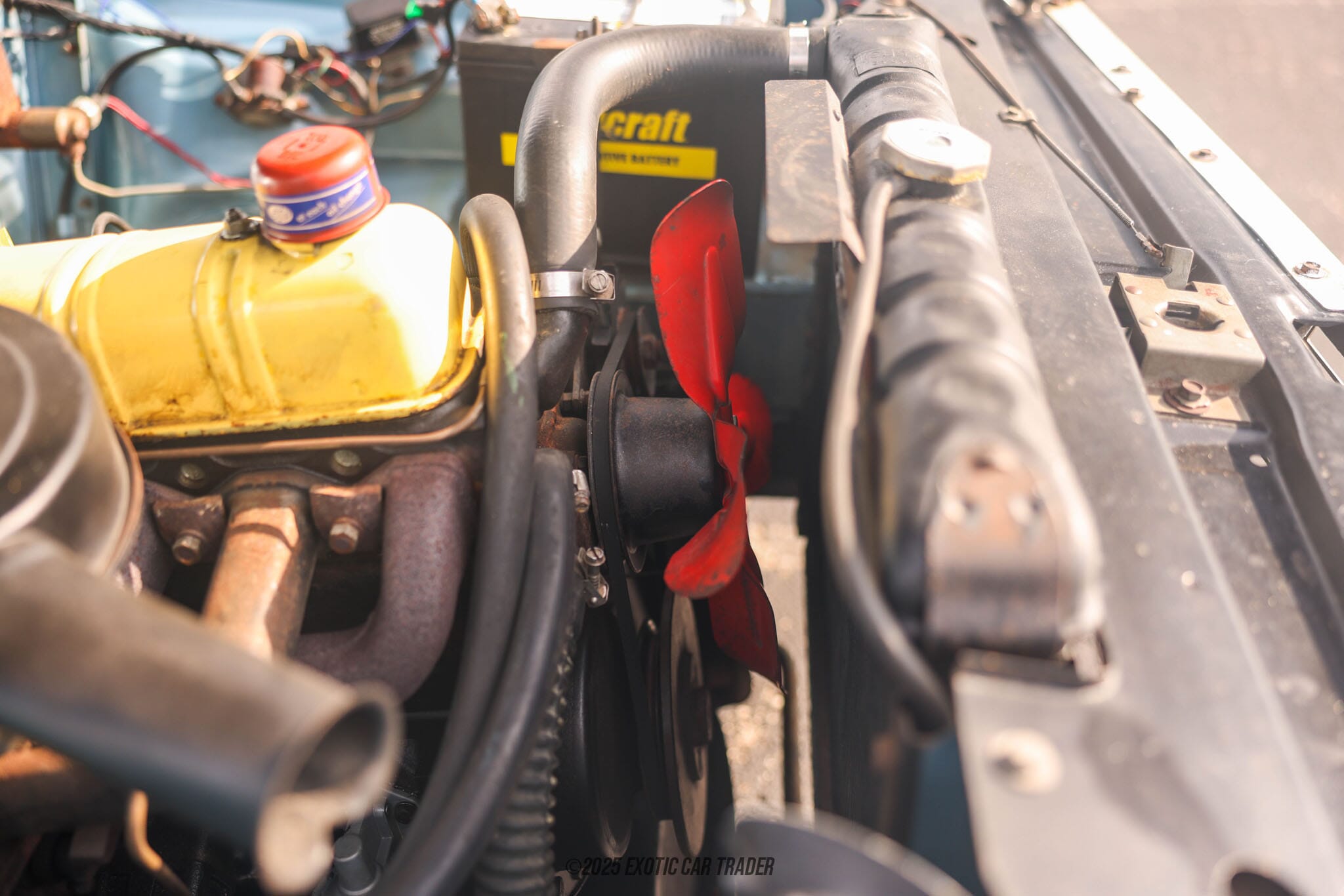
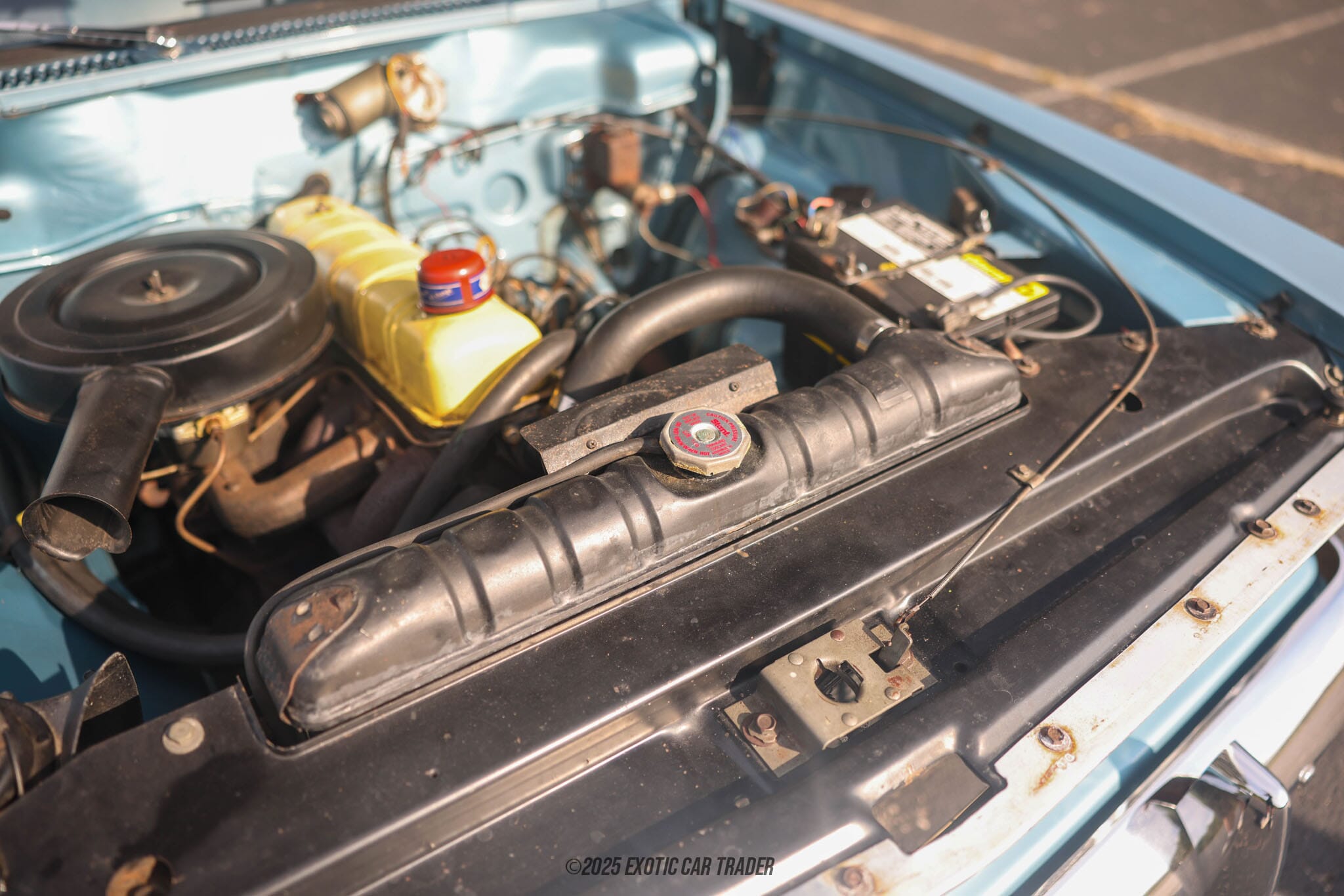
Under the hood, this Challenger features Studebaker’s 170ci inline-six engine paired with a Flight-O-Matic 3-speed automatic transmission, sending power to the rear wheels. While not built for raw performance, the combination delivers smooth and reliable cruising, making it an enjoyable car for relaxed weekend drives or local shows.


The 1964 Studebaker Challenger was the entry-level midsize model in the South Bend automaker’s lineup, offering understated styling and dependable mechanicals at an affordable price. Today, it represents a rare sight on American roads, appealing to collectors of orphan brands and enthusiasts of mid-century design. This example, finished in blue over a matching blue interior, has been repainted in its original color and is reported to remain largely original, preserving the authenticity that makes it special.
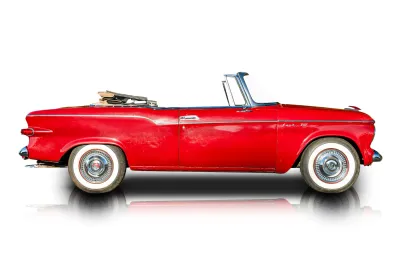
Showing 76,087 miles, this 1960 Studebaker Lark VIII Convertible is an example of Studebaker’s distinctive compact V8 platform, combining classic styling with the performance-oriented Lark VIII drivetrain. Finished in red with a red/black interior and tan convertible soft top, this open-air cruiser is powered by a 259ci V8 paired with a 3-speed Flight-O-Matic automatic transmission, offering a unique alternative to the more common offerings from Detroit’s Big Three.
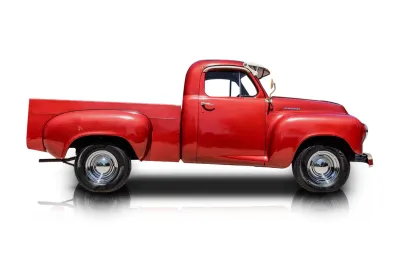
The postwar pickup market was fiercely competitive, but Studebaker managed to stand apart with distinctive styling, solid engineering, and a reputation for durability. This 1950 Studebaker 2R5 Pickup represents that era well, combining classic American truck design with practical utility. Showing approximately 10,070 miles on the odometer, this truck benefits from a reupholstered interior and retains many of its period-correct details, making it an appealing choice for collectors and enthusiasts alike. Its charming appearance, all-steel bed floor, and iconic Studebaker character make it equally suitable for local shows, weekend cruises, or display in a vintage vehicle collection.
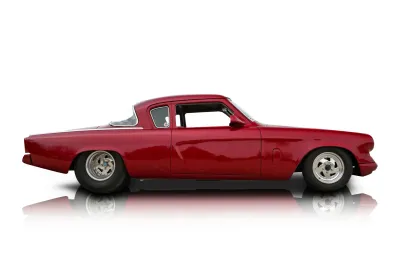
Studebaker is one of those legendary American automakers that’s long gone but never forgotten. Our automotive history is full of brands that gave us iconic machines—cars that still stir emotion decades later in a way modern tech-focused brands may never match. Today’s vehicles are fast and advanced, but will they inspire the same connection fifty years from now? Will they even survive that long? Classic cars were built with longevity, soul, and mechanical simplicity, not planned obsolescence. That’s why a seventy-two-year-old build like this 1953 Studebaker Commander Pro Street build still exists—and still turns heads. Based out of Hiawatha, Iowa, this restomod has been transformed into a true street-strip performer, featuring a massive LS6 V8 with the current owner reporting just under 700 miles since completion. It’s a striking custom that’s ready for its next run.
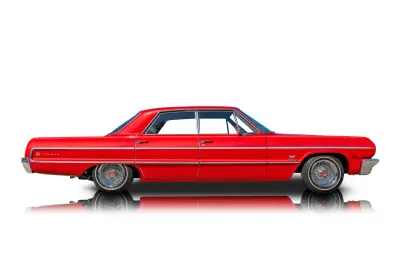
The 1964 Chevrolet Impala 4-Door Sedan captures the long, low, unmistakable style that made Chevrolet’s full-size cars such icons of the 1960s. Showing approximately 28,076 miles, this example combines a 327ci V8 with a 2-barrel carburetor and 2-speed Powerglide automatic transmission, while power steering and power brakes make it considerably easier to enjoy from behind the wheel. Finished in Red over a Black interior, it also benefits from tasteful modern upgrades including aftermarket coilover suspension and a Bluetooth-capable sound system, adding usability without taking away from the car’s classic character.
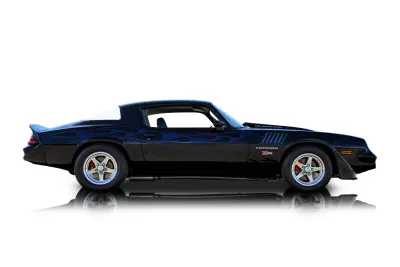
This 1979 Chevrolet Camaro Restomod takes the unmistakable shape of Chevrolet’s second-generation F-body and gives it a much more aggressive enthusiast-focused personality. Showing approximately 752 miles, this example combines a 383ci stroker V8 with a 750 CFM Holley 4-barrel carburetor and a 4-speed manual transmission, giving it the kind of old-school muscle-car formula that puts driver involvement front and center. Finished in Black with custom Purple & Red flame graphics, this Camaro also features a Hurst shifter, Grant GT steering wheel, aftermarket gauges, and a number of exterior and audio upgrades that give it a distinctly custom-built character.
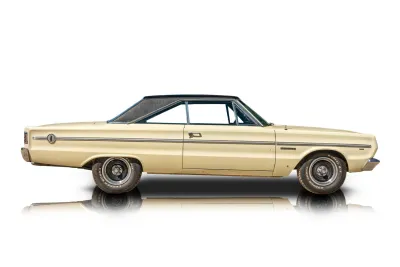
The 1966 Plymouth Belvedere II Hardtop is the kind of Mopar that gets enthusiasts interested before the hood is even opened. Its clean B-body lines, pillarless hardtop profile, Soft Yellow paint, black vinyl roof, and Magnum 500-style wheels give it the restrained factory muscle look of the mid-1960s, but this example carries much more serious hardware underneath. Showing approximately 91,610 miles, it is powered by a 440ci big-block V8 backed by a TorqueFlite 727 automatic, giving it the kind of drivetrain combination that feels right at home in a classic Plymouth. Add power steering, power disc brakes, air conditioning, and a dual exhaust system, and this Belvedere blends old-school Mopar attitude with enough comfort to make it more than just a weekend bruiser.

Terms of Service
Be Kind and Courteous
We're here to create a platform to better the automotive industry through communication and transparency. Please treat everyone with respect. Healthy debates are natural, but kindness is required.
No Hate Speech
Make sure everyone feels safe. Hate speech of any kind is strictly prohibited. Degrading comments about things like race, religion, culture, sexual orientation, etc. will not be tolerated.
No Promotions or Spam
Give more than you take. Self-promotion, spam, or links of any kind are not allowed.
