





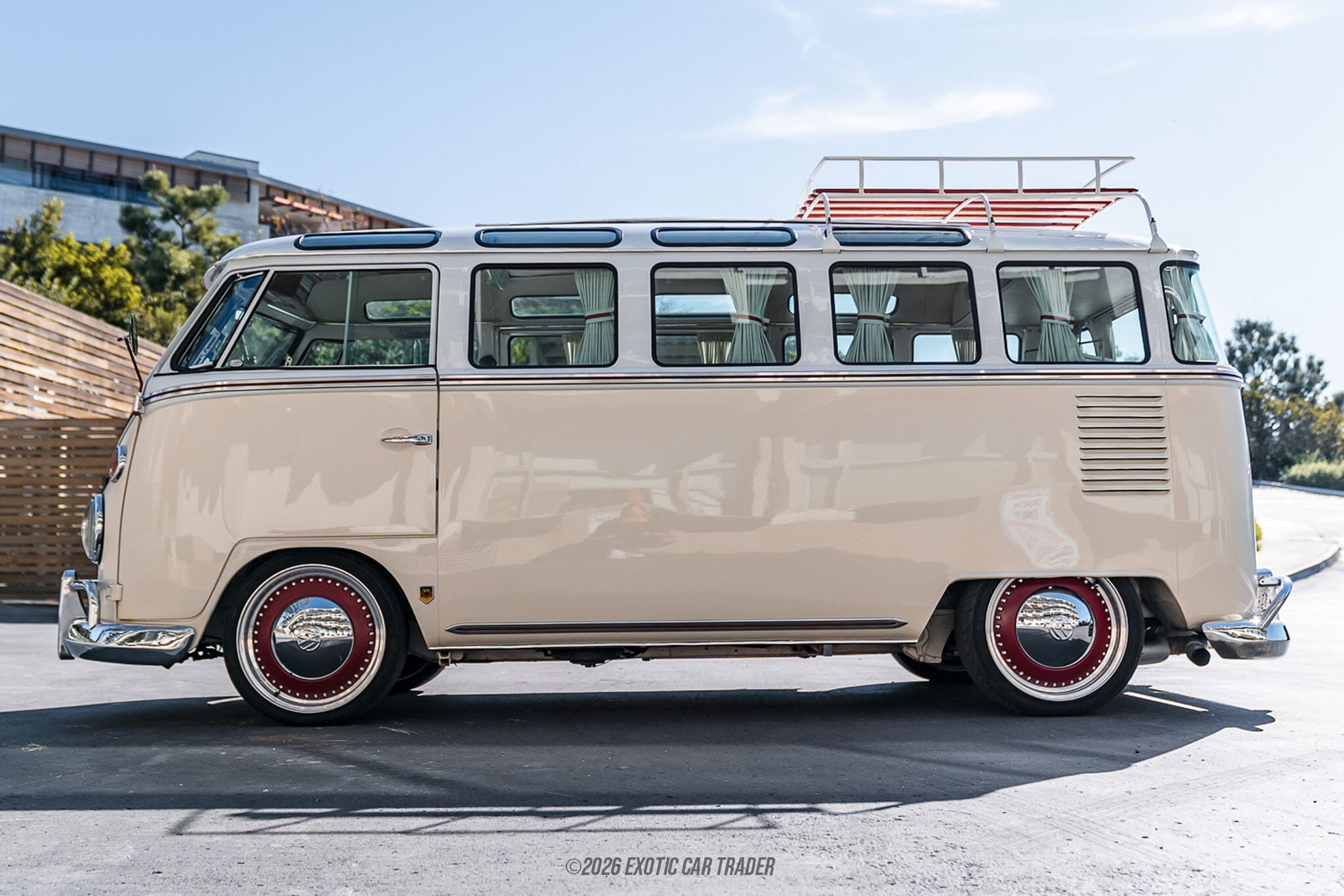
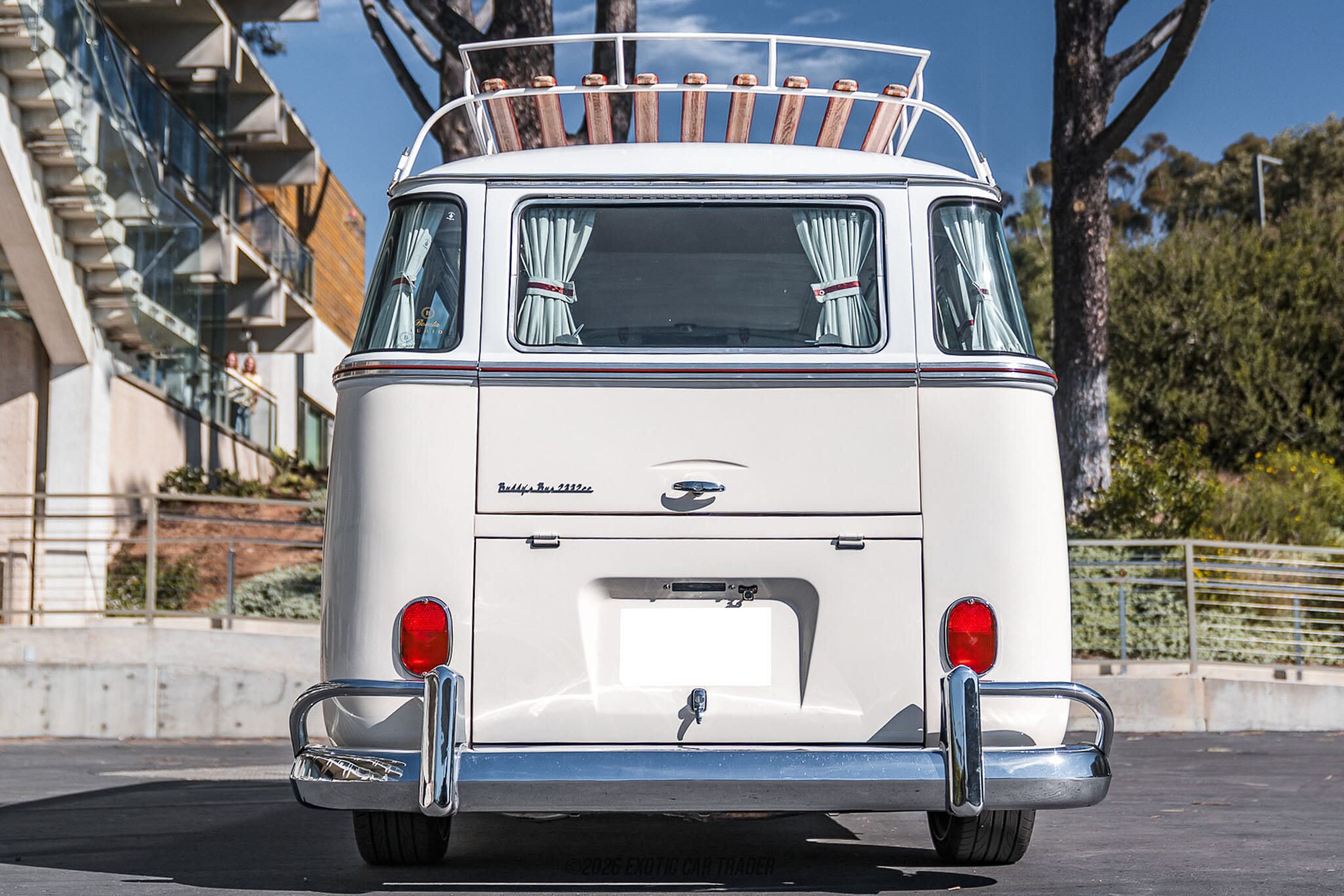
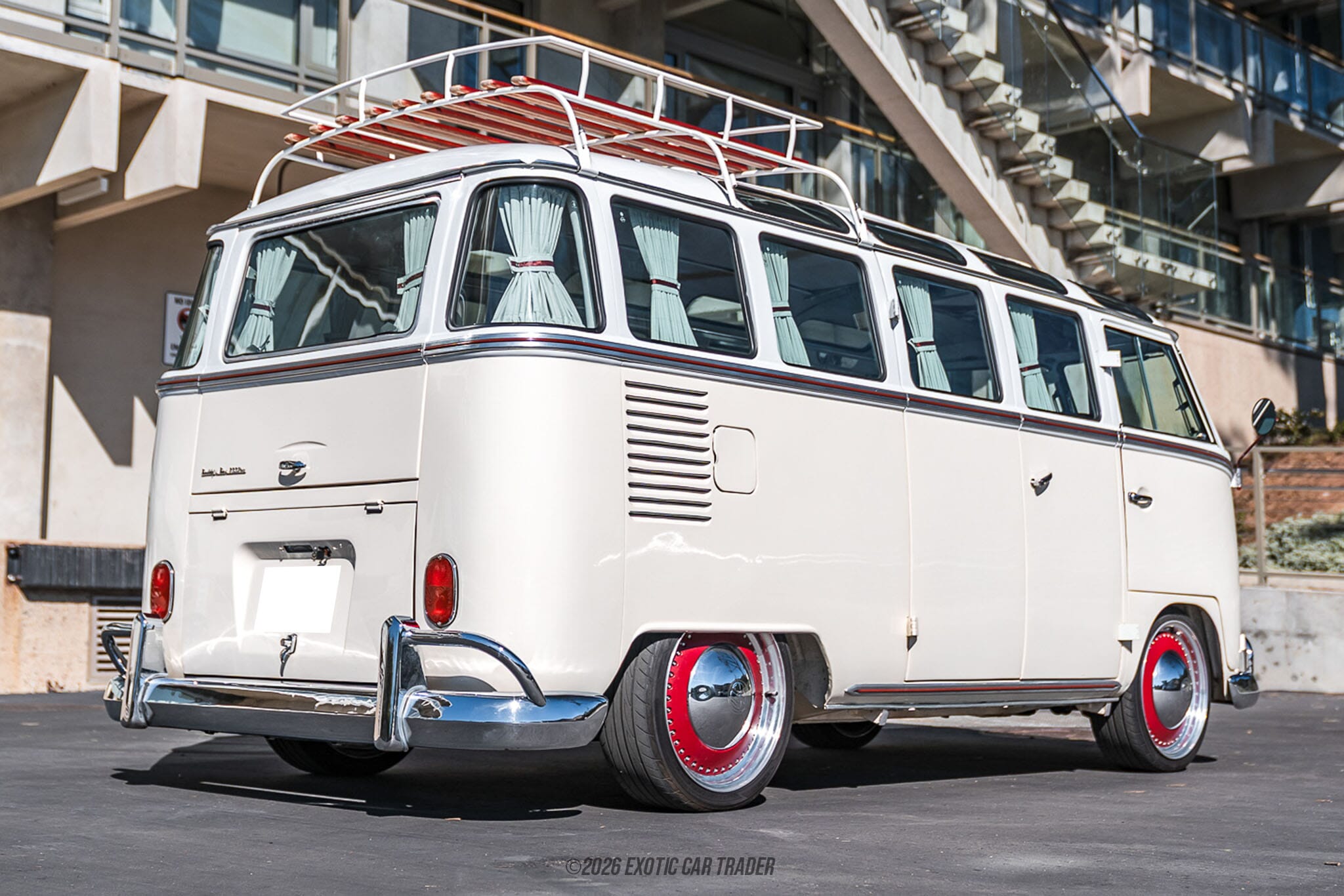
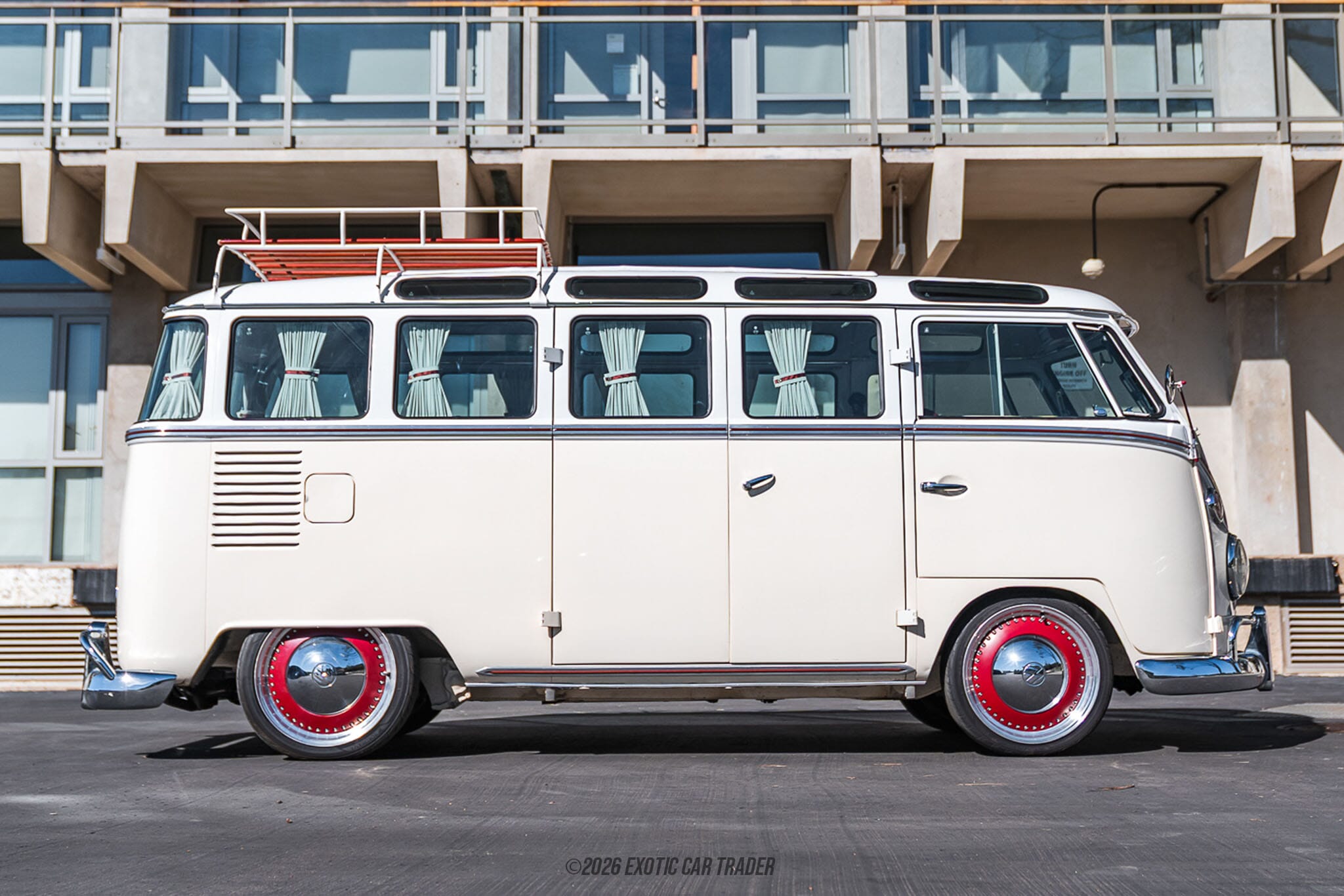
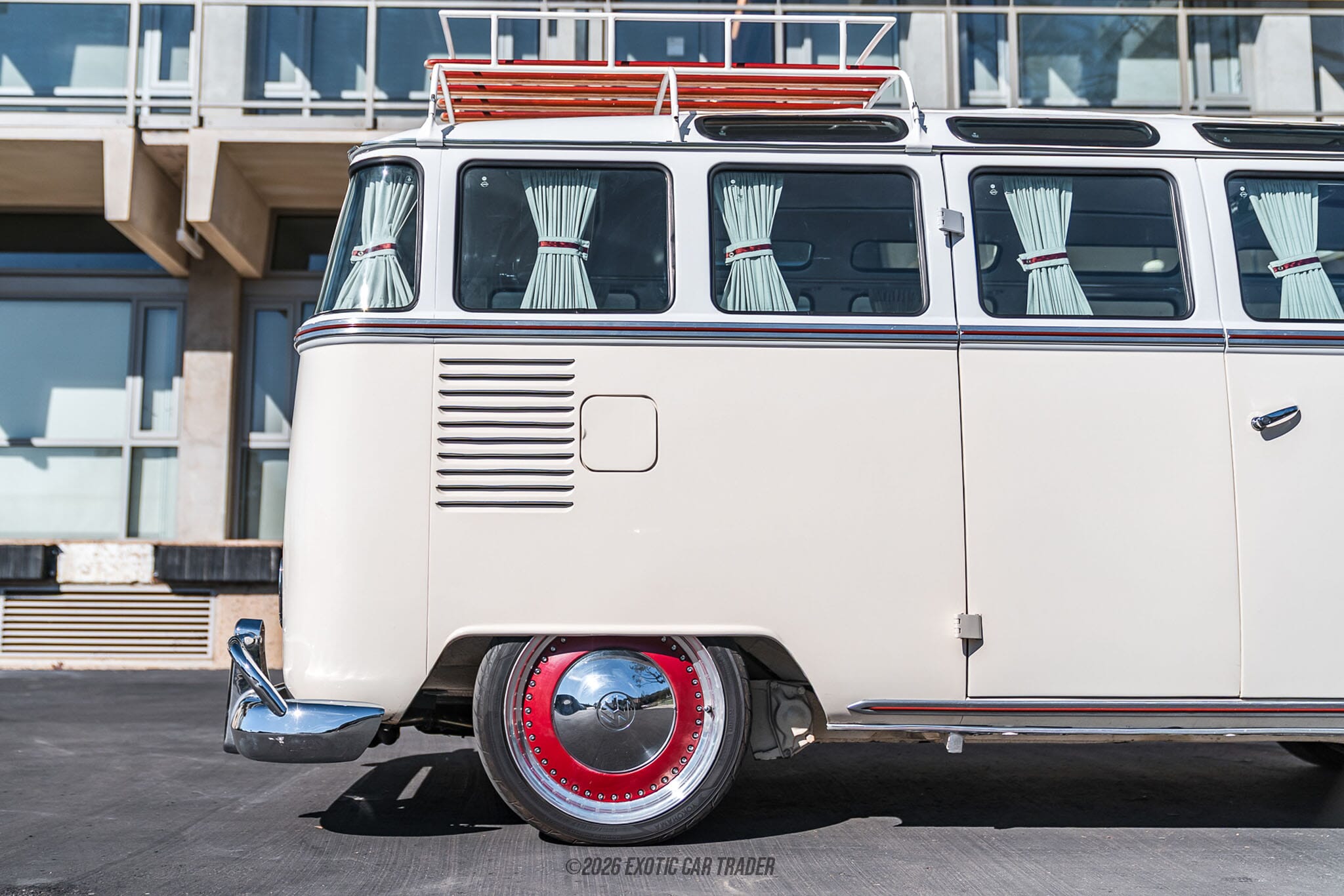
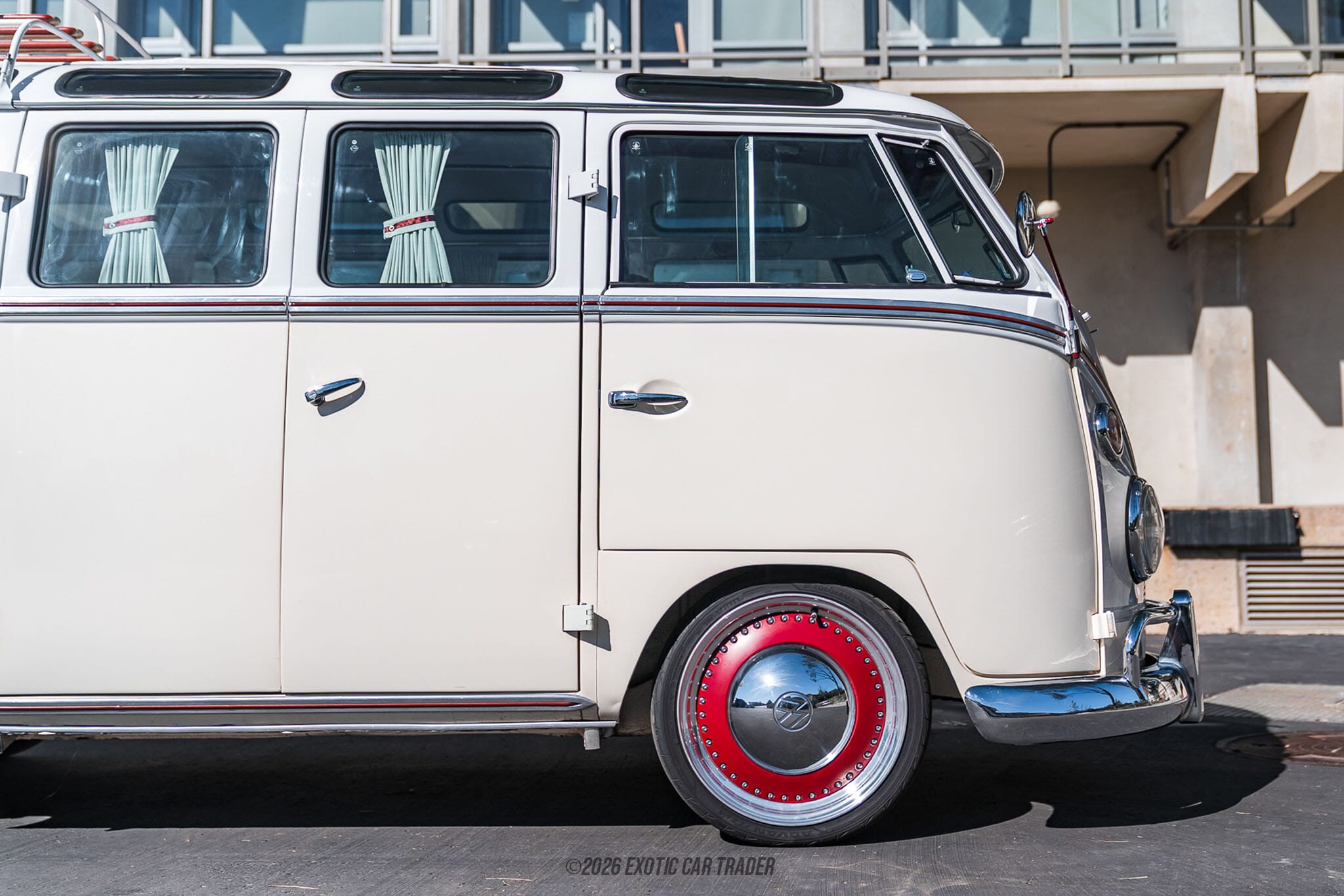
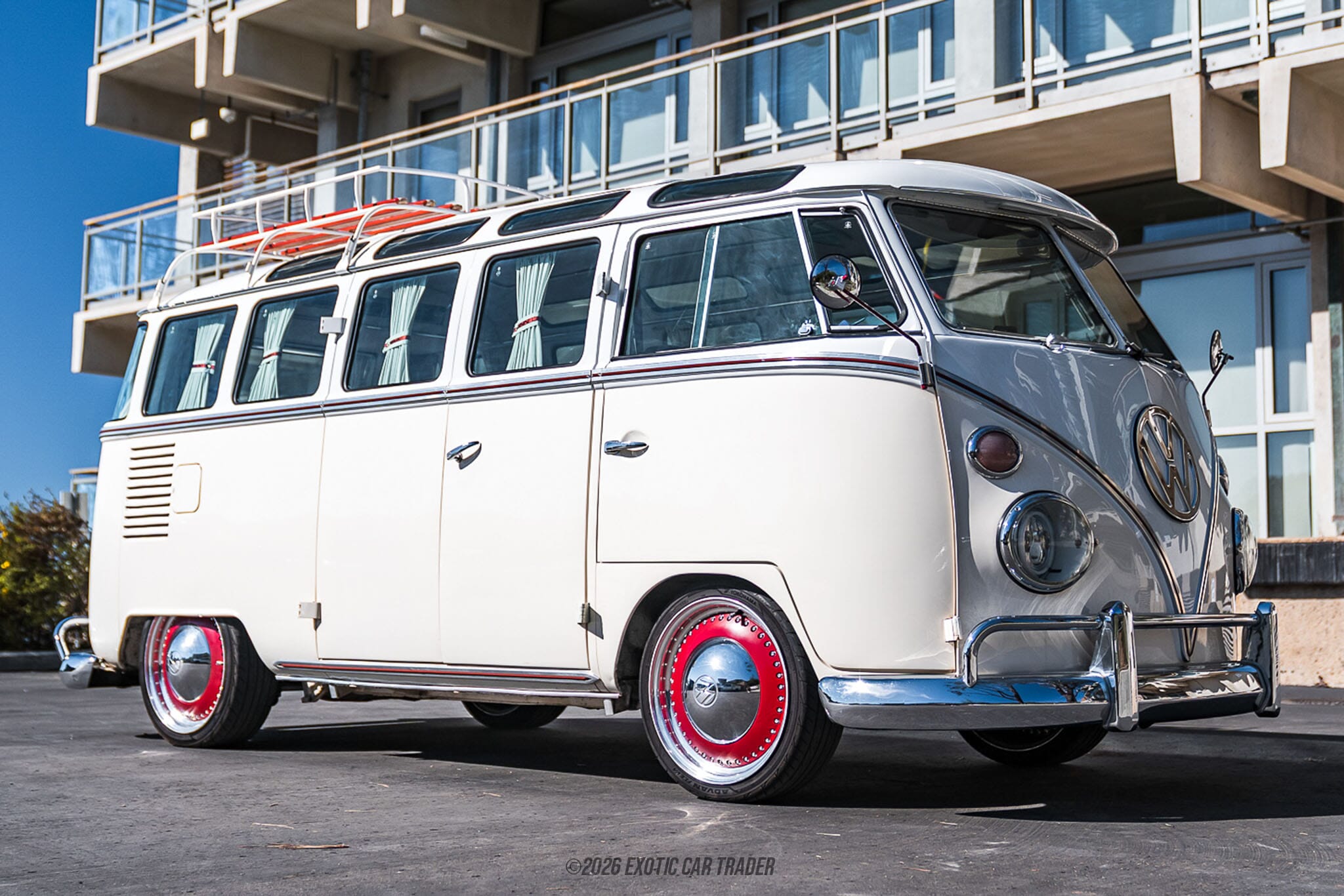
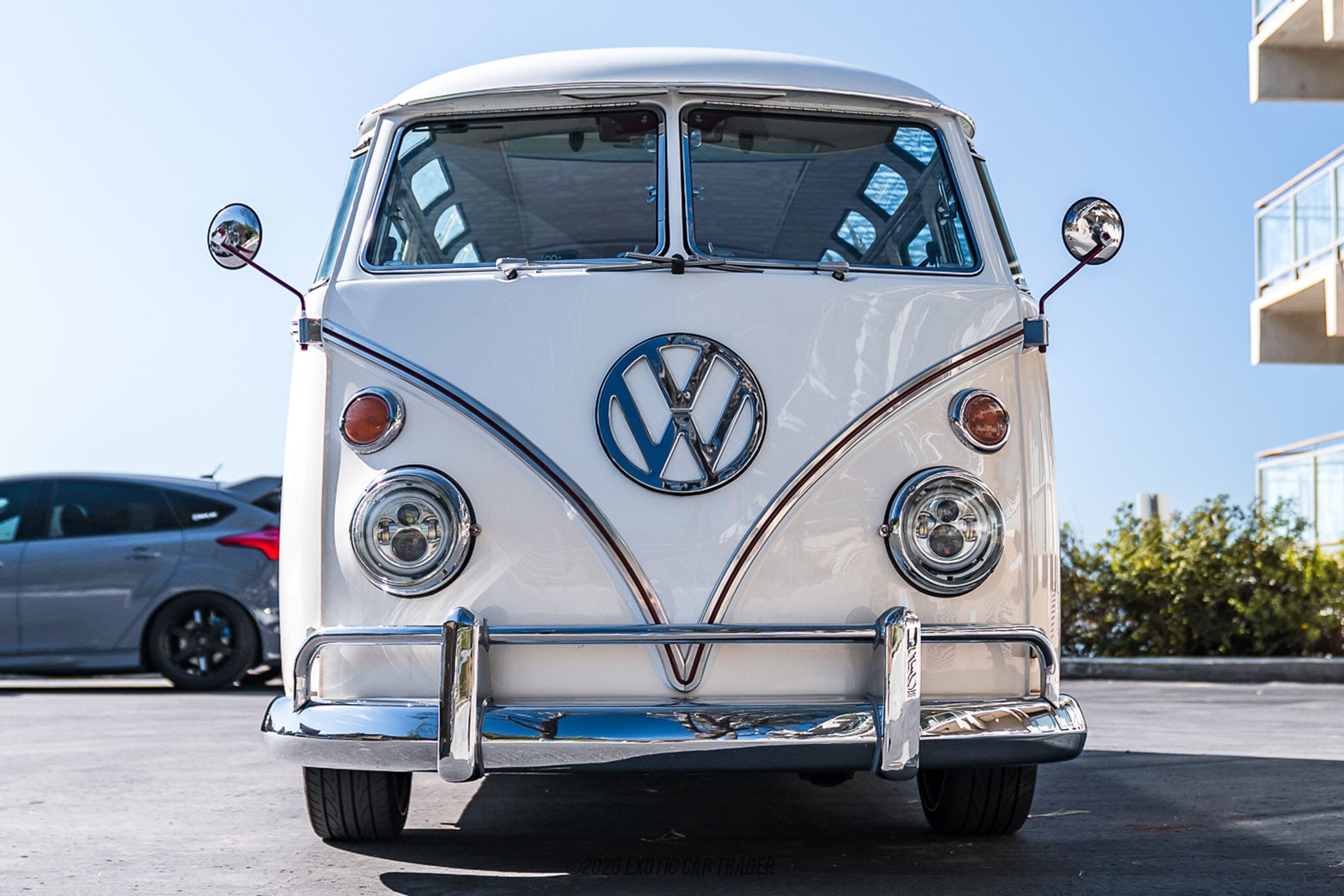
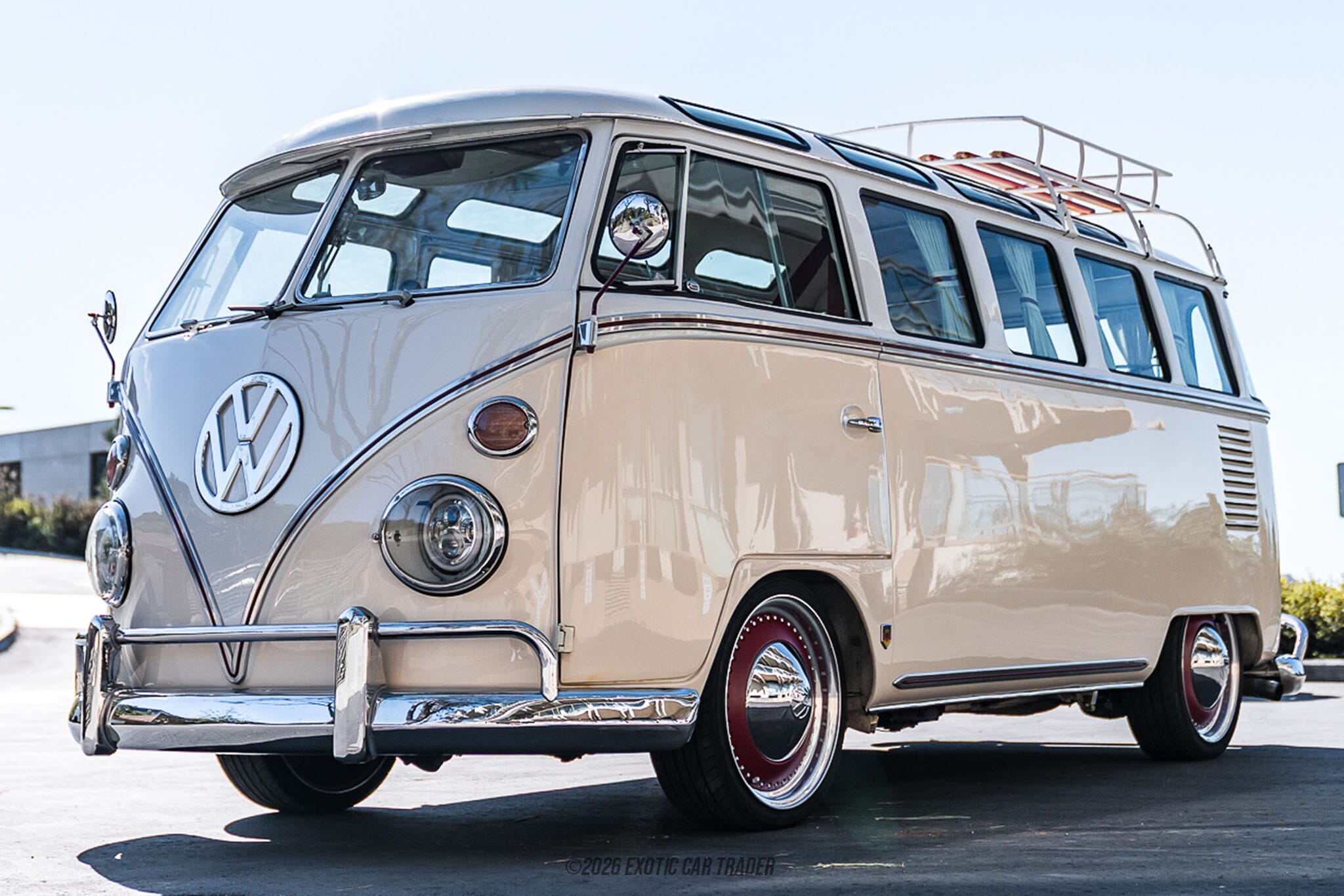
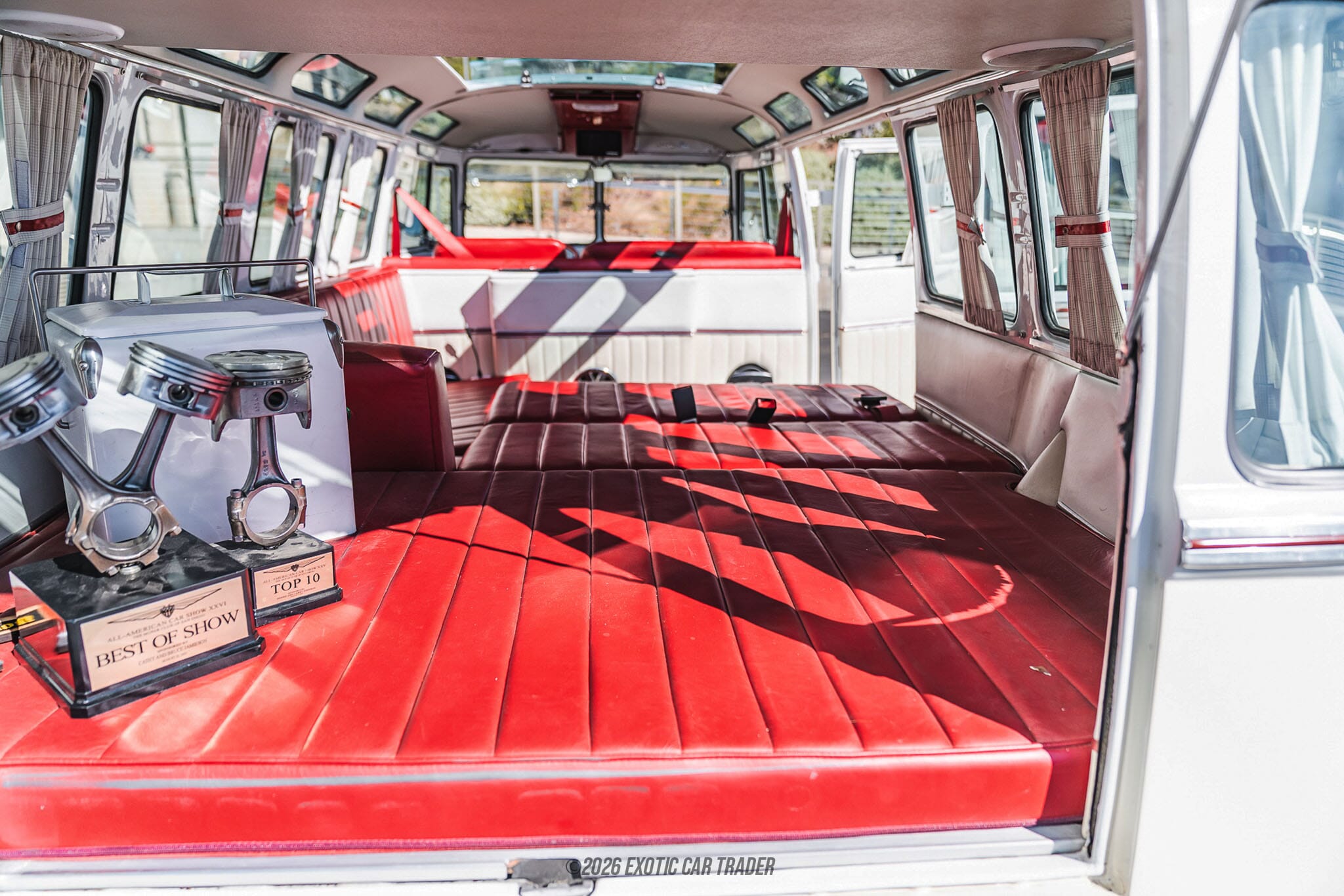
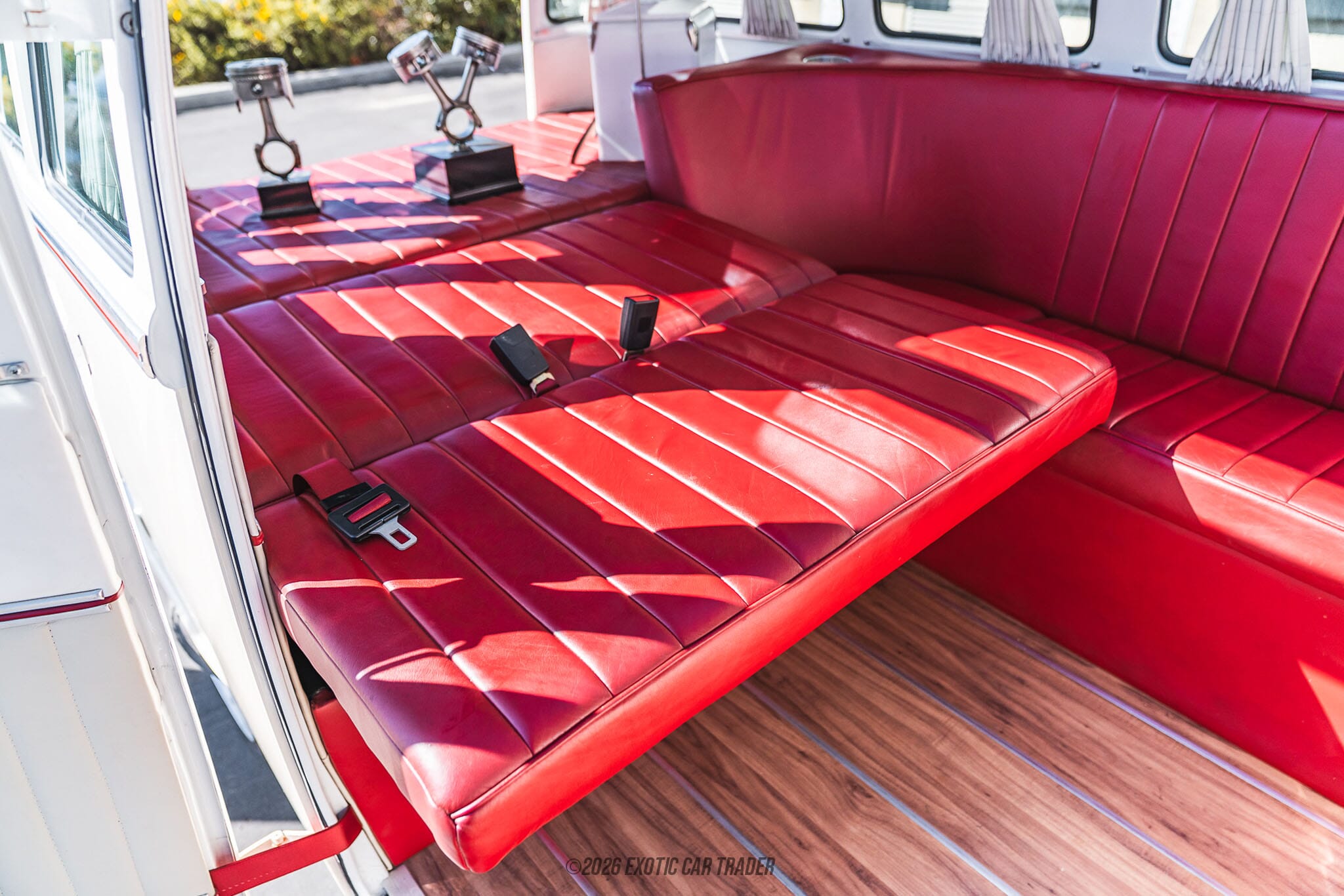
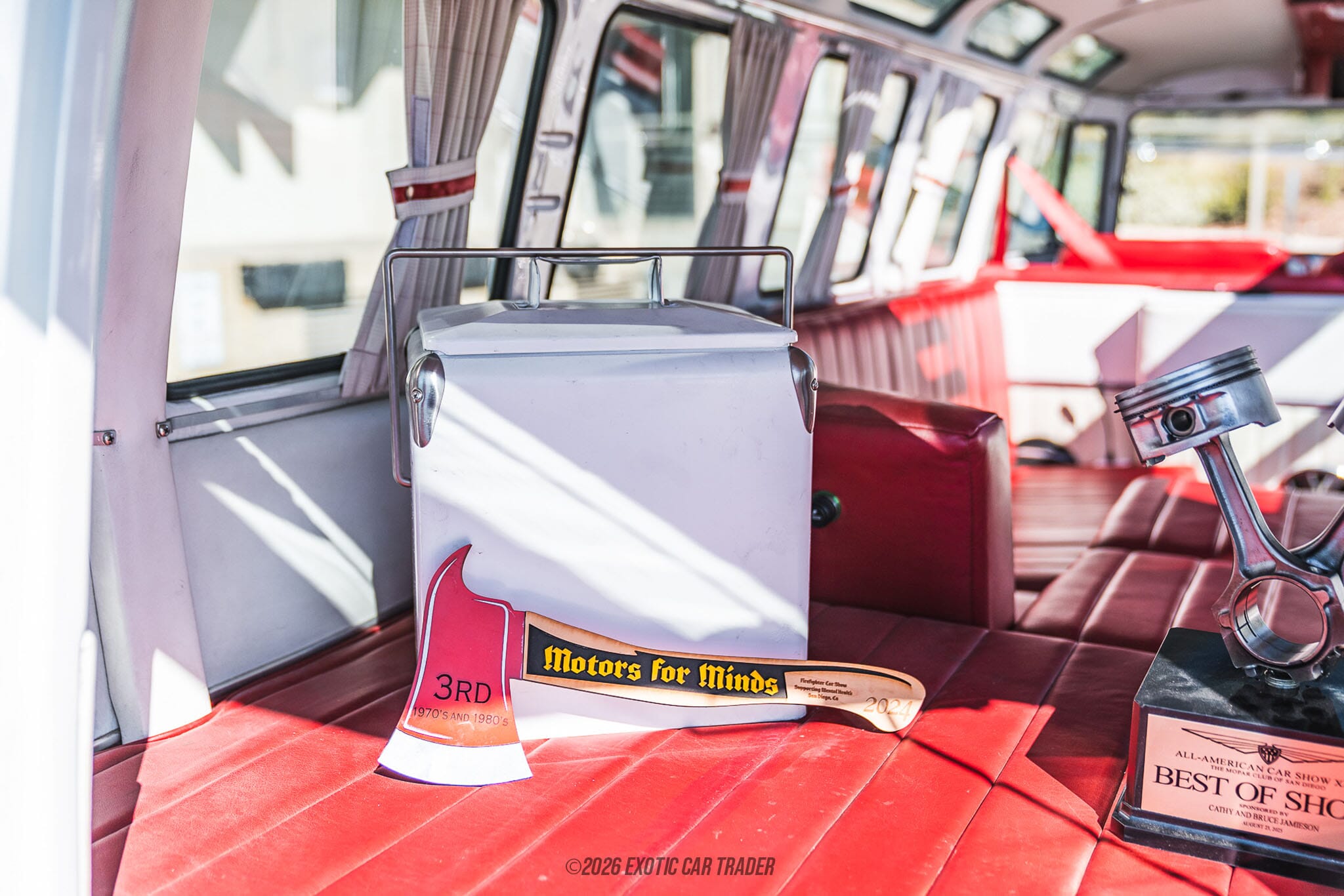
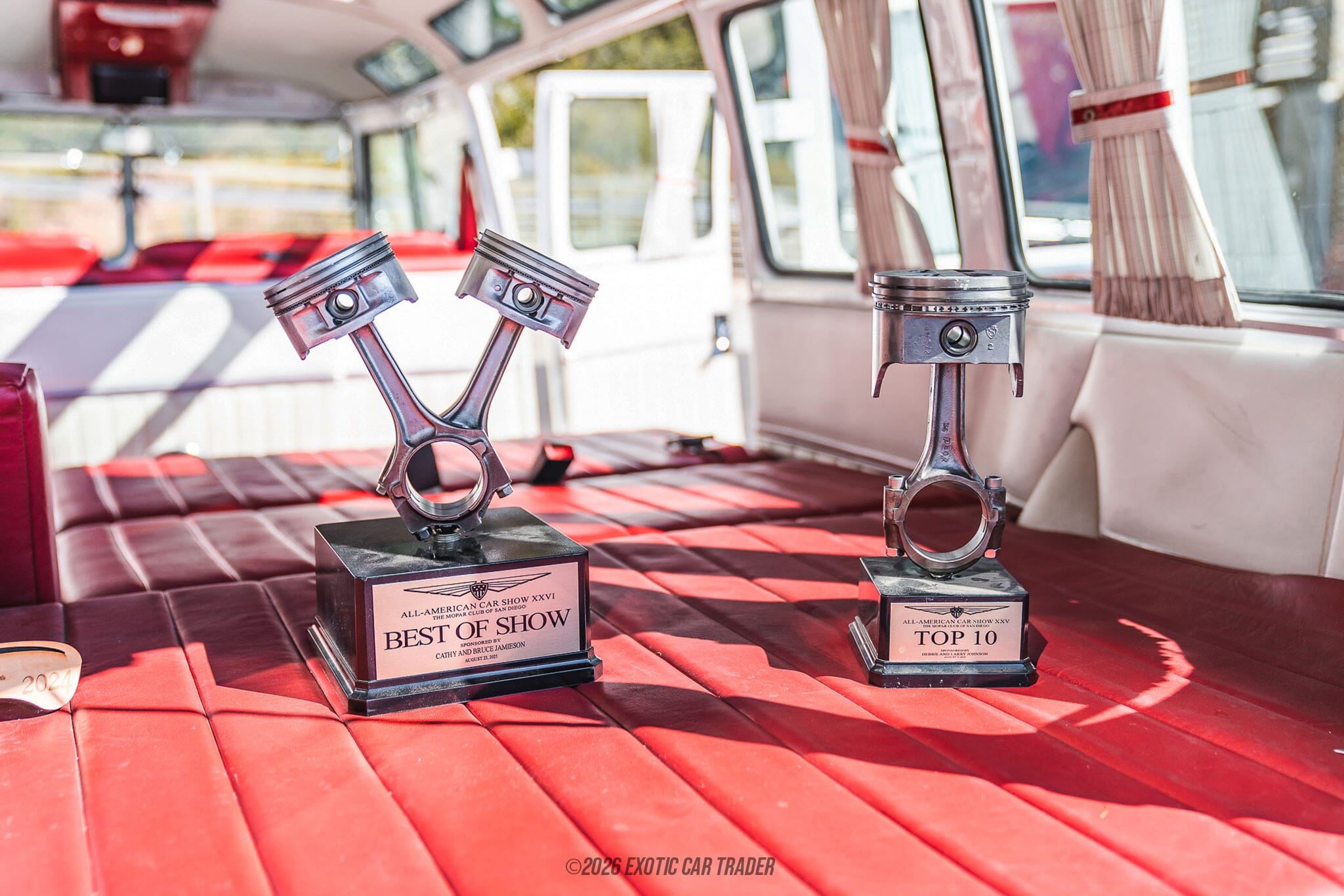
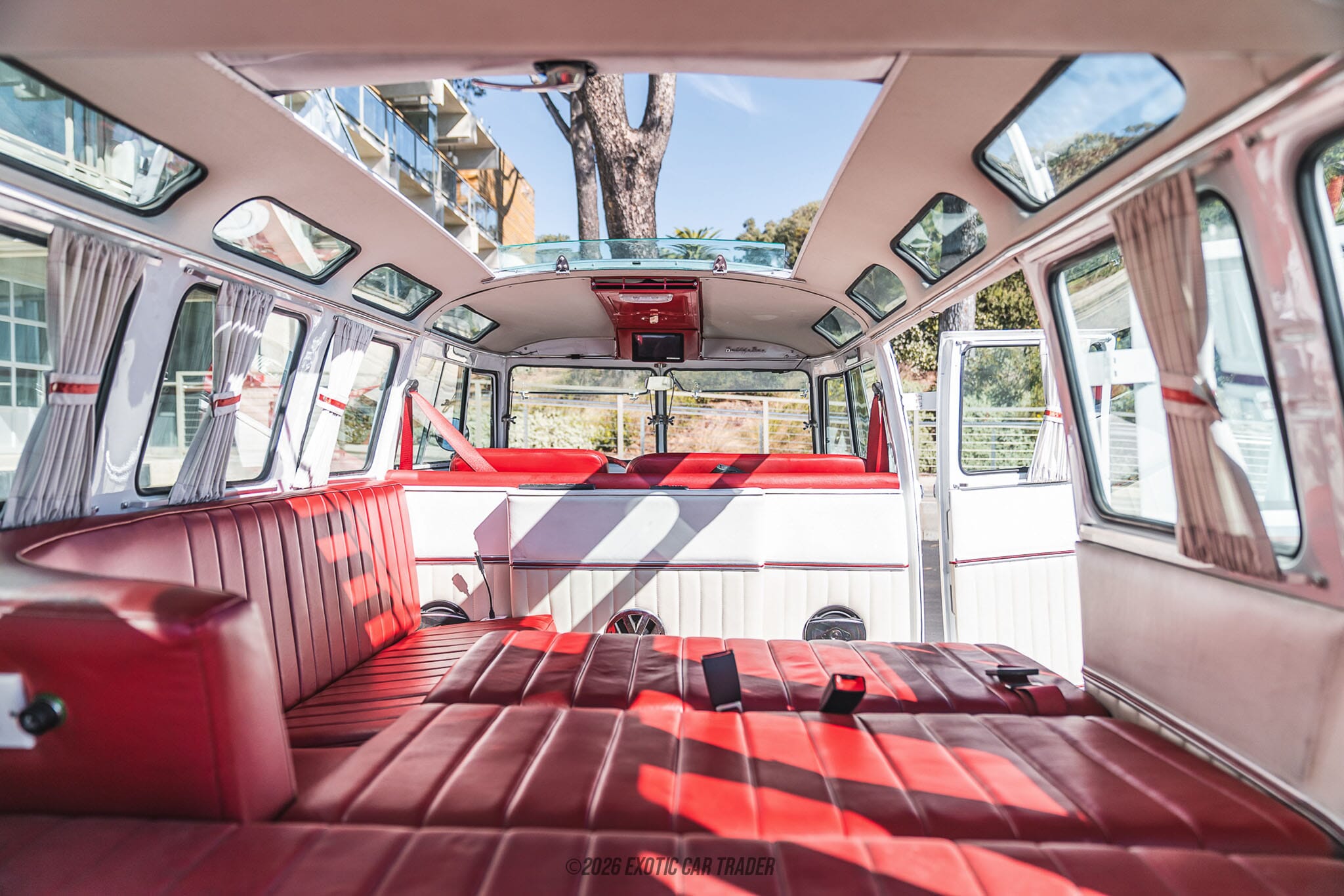


- 1975 Volkswagen Type 2 Samba Deluxe Transporter Bus
- 2,332cc Naturally Aspirated H4 - 150 HP
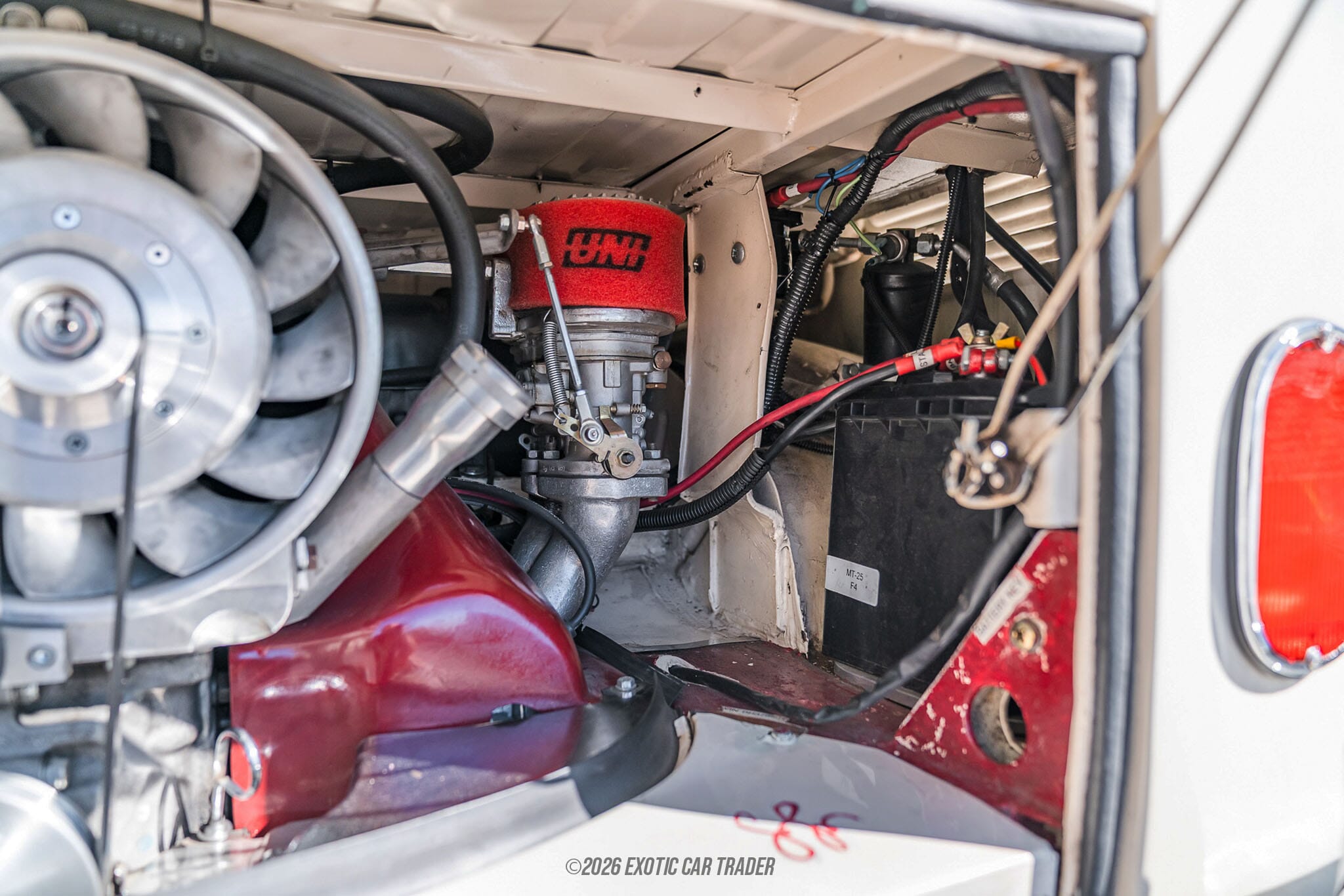
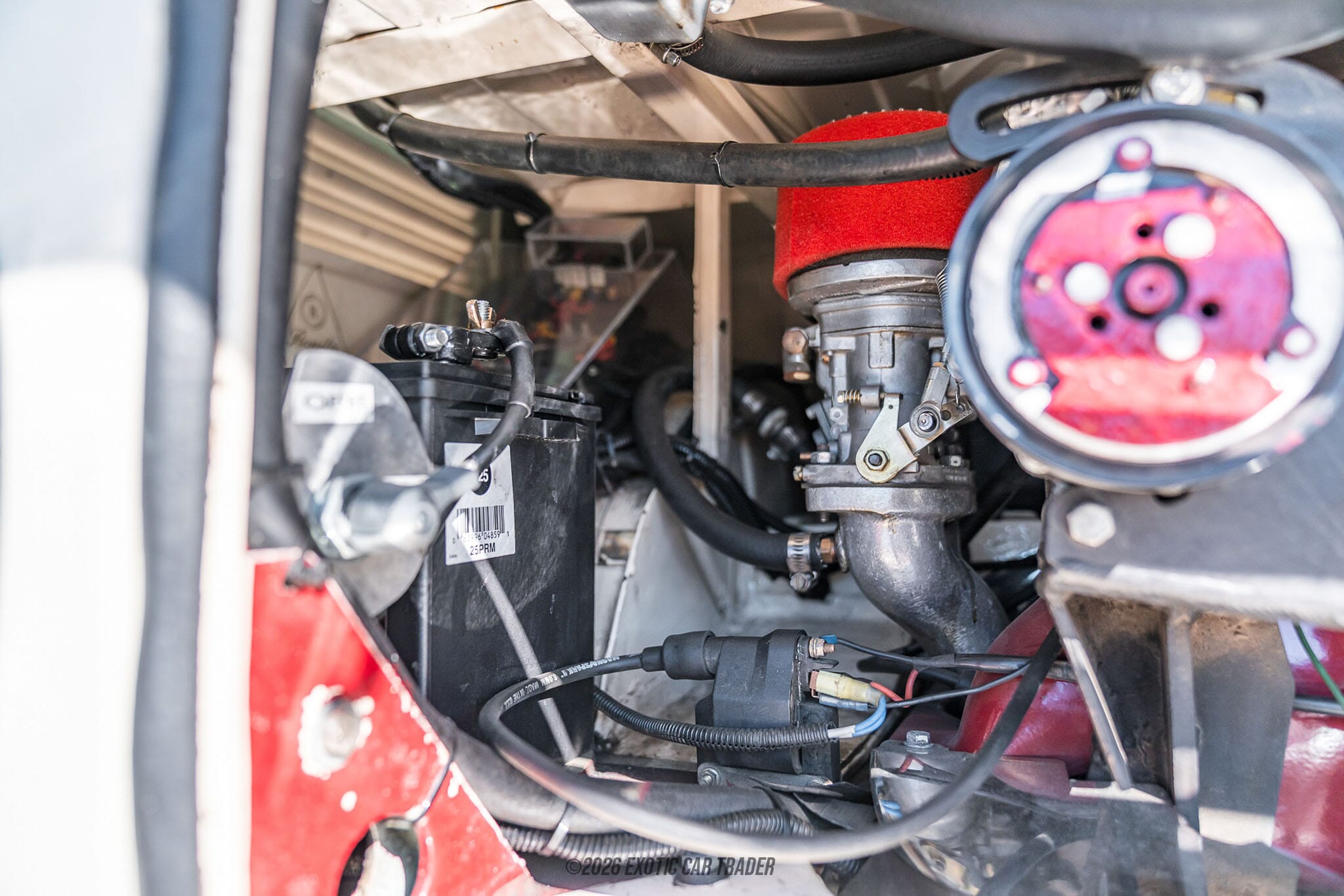
- Dual Weber Carburetors
- 4-Speed Manual
- RWD
- Cream/White Exterior
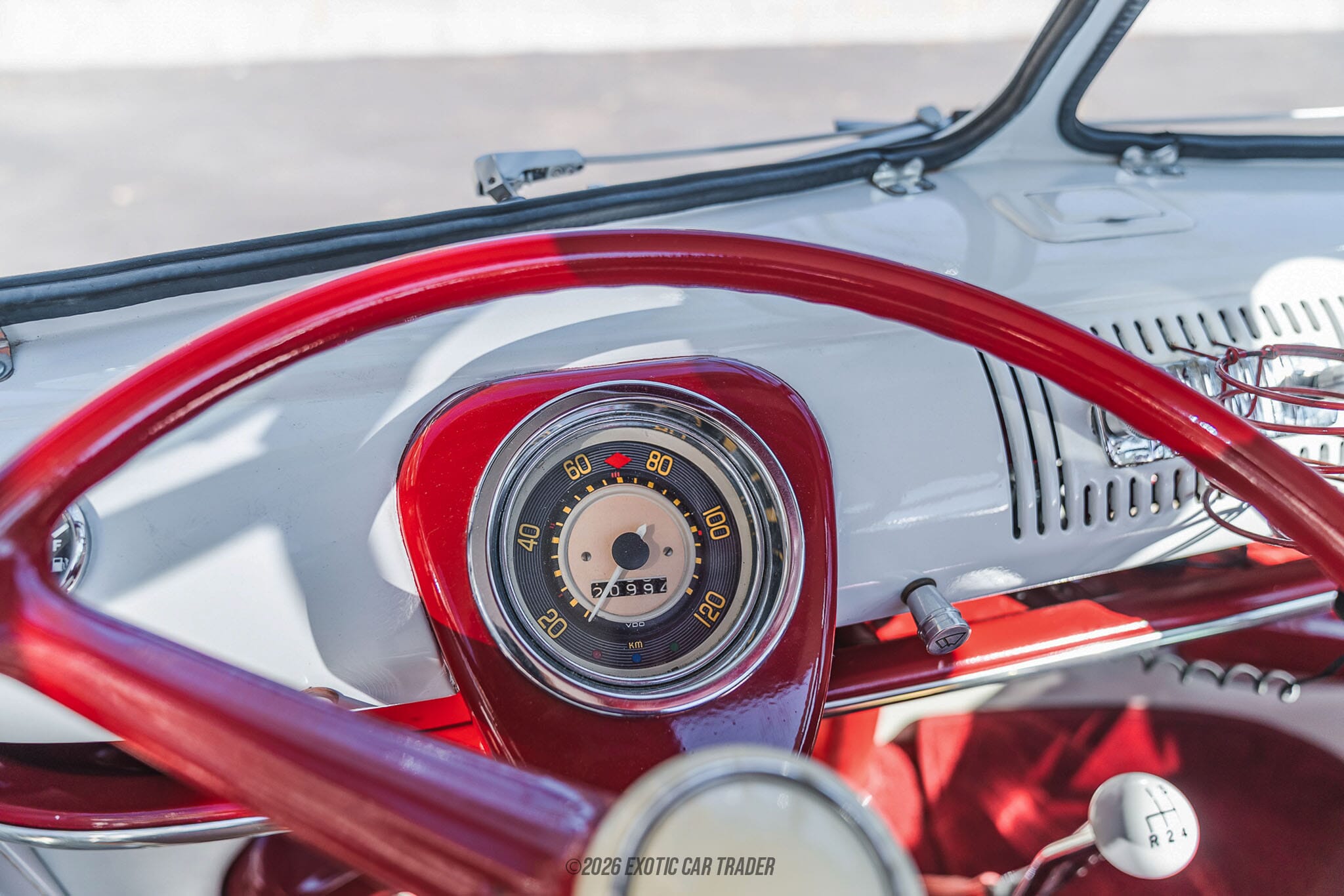
- White/Cream/Burgundy Interior
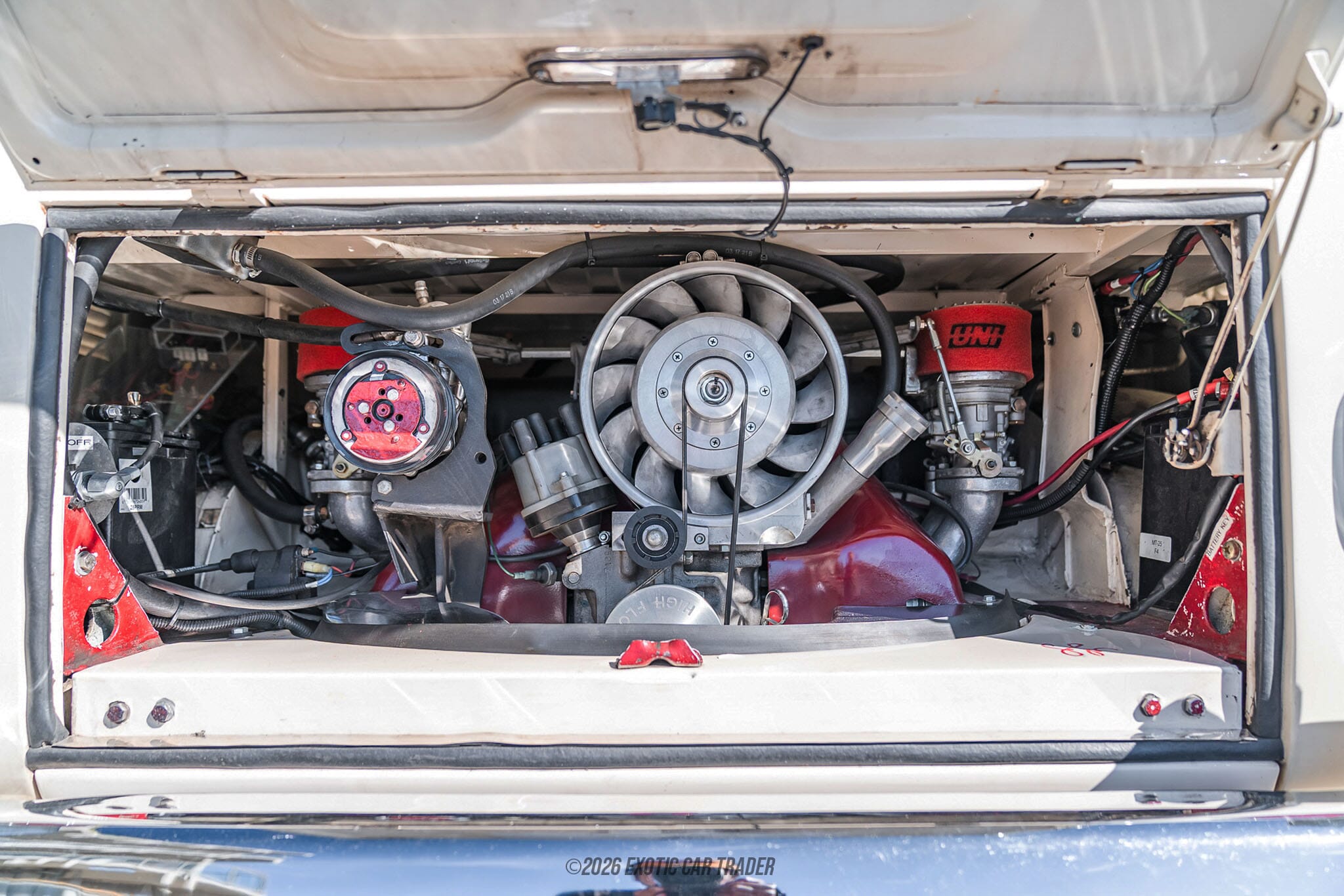
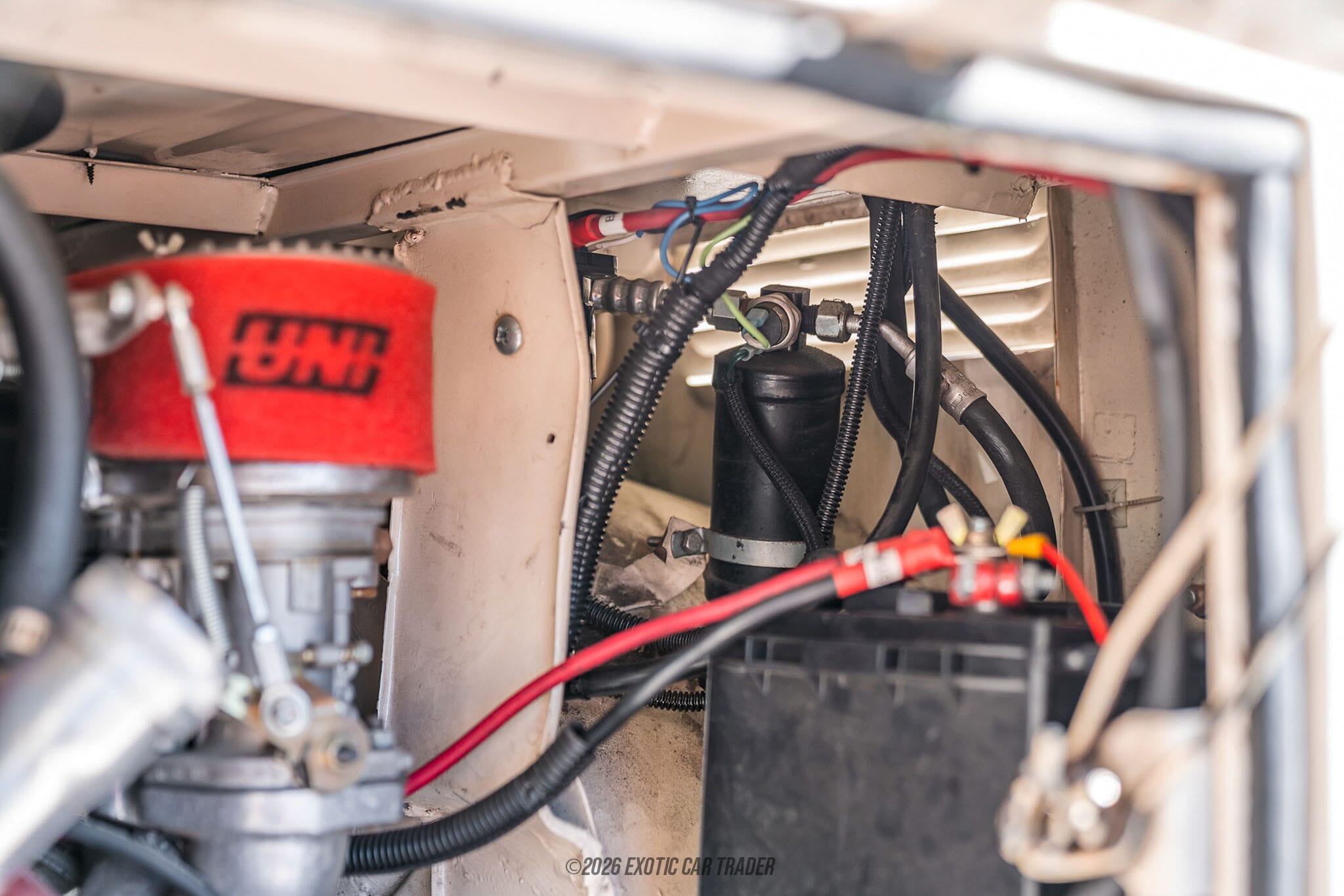
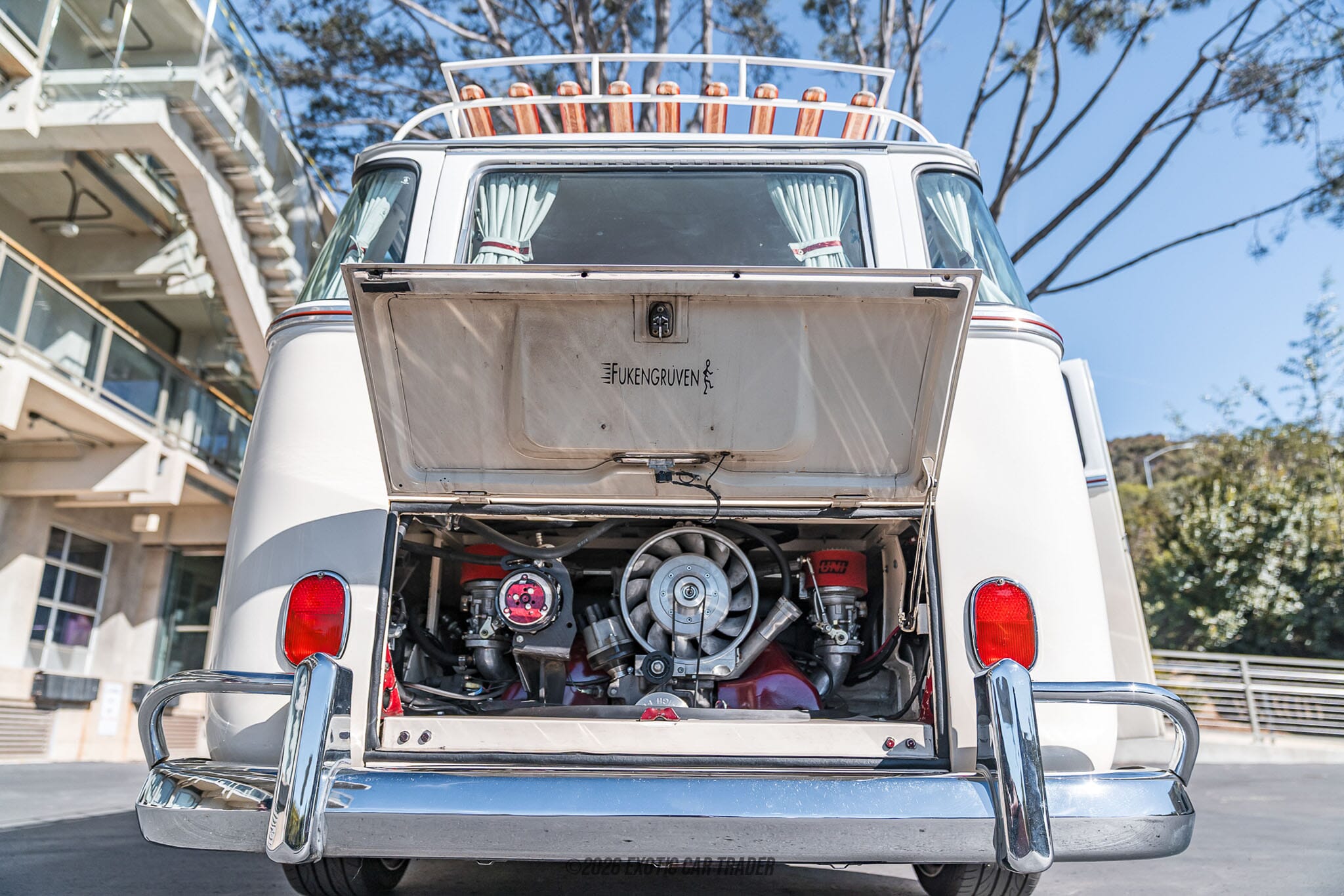
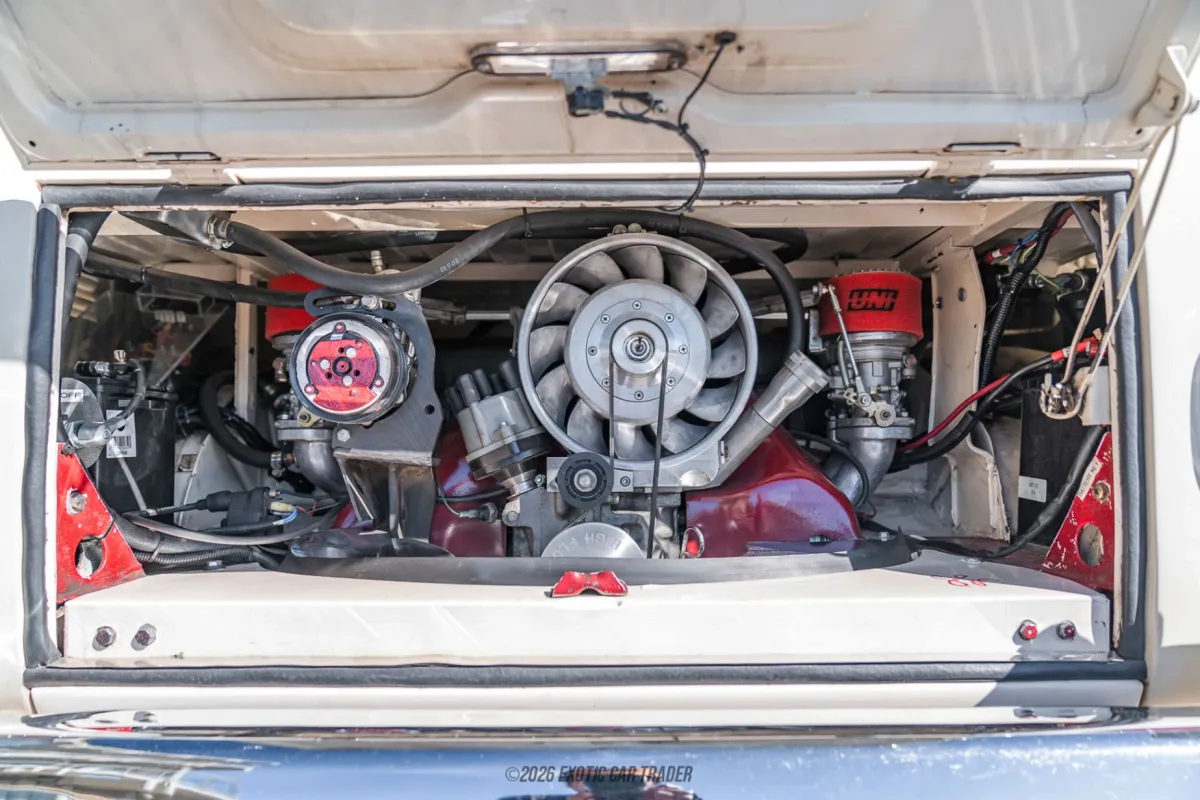
- Aftermarket Red Foam Air Filters
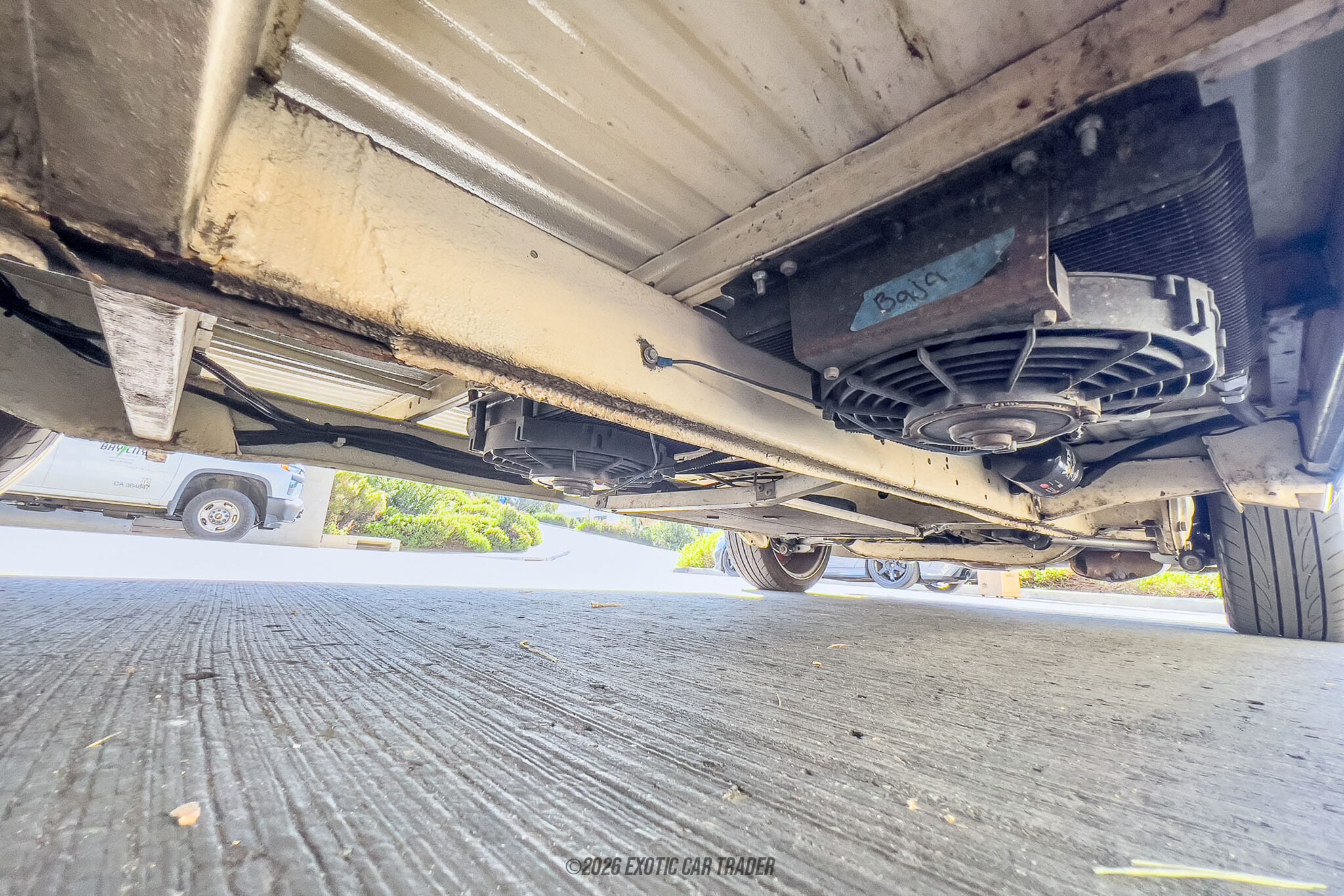
- Upright Cooling Fan Conversion
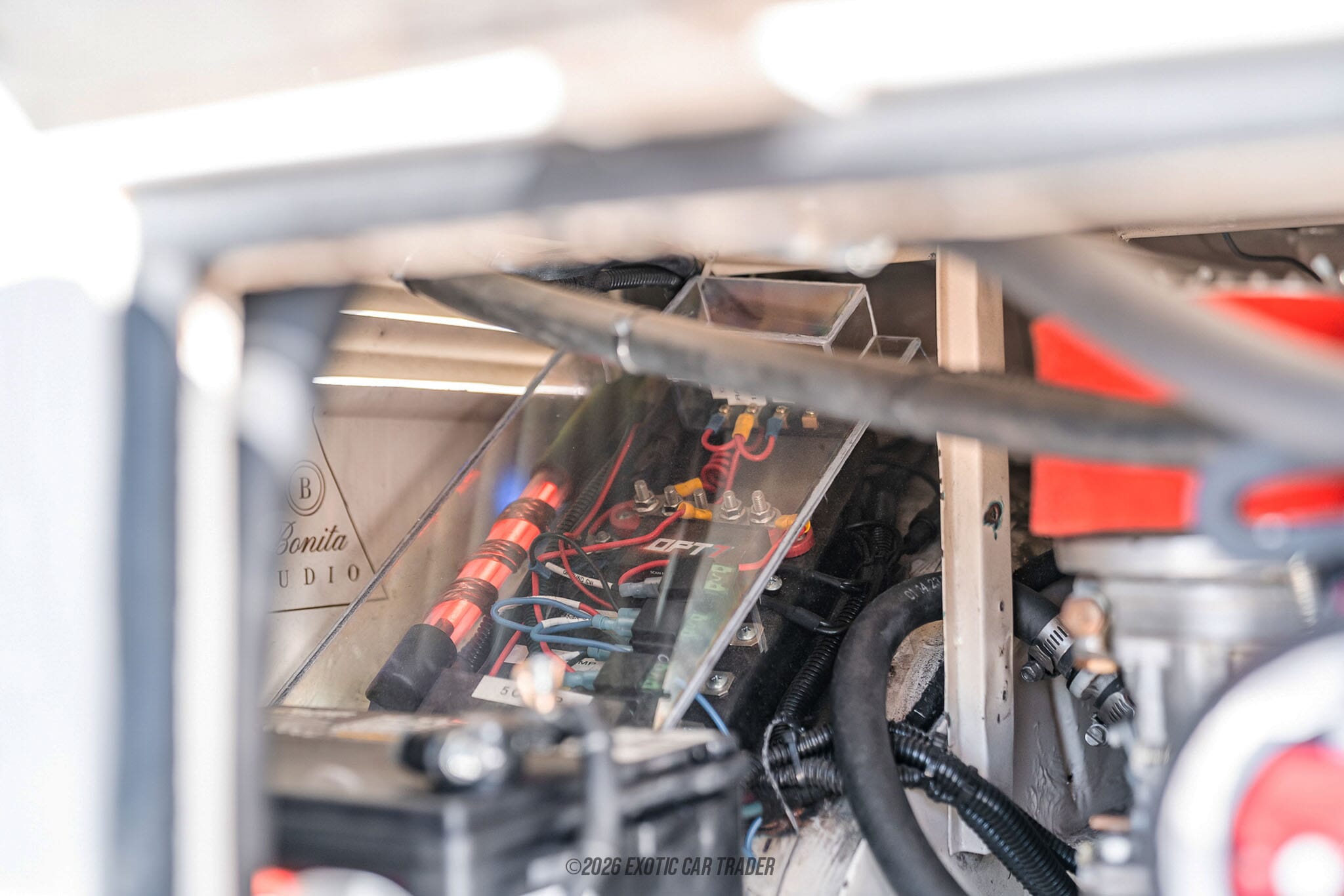
- 12-Volt Electrical System
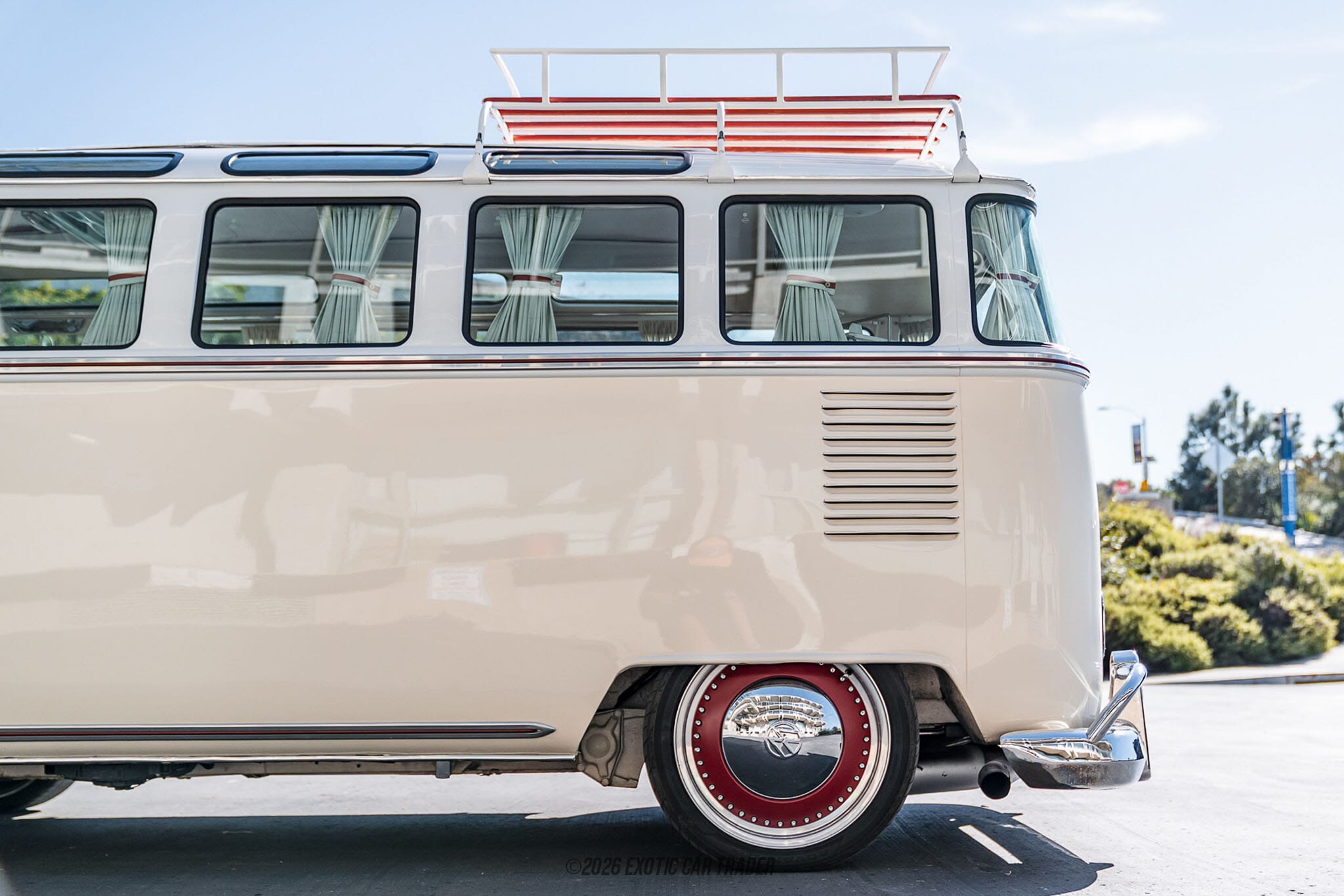
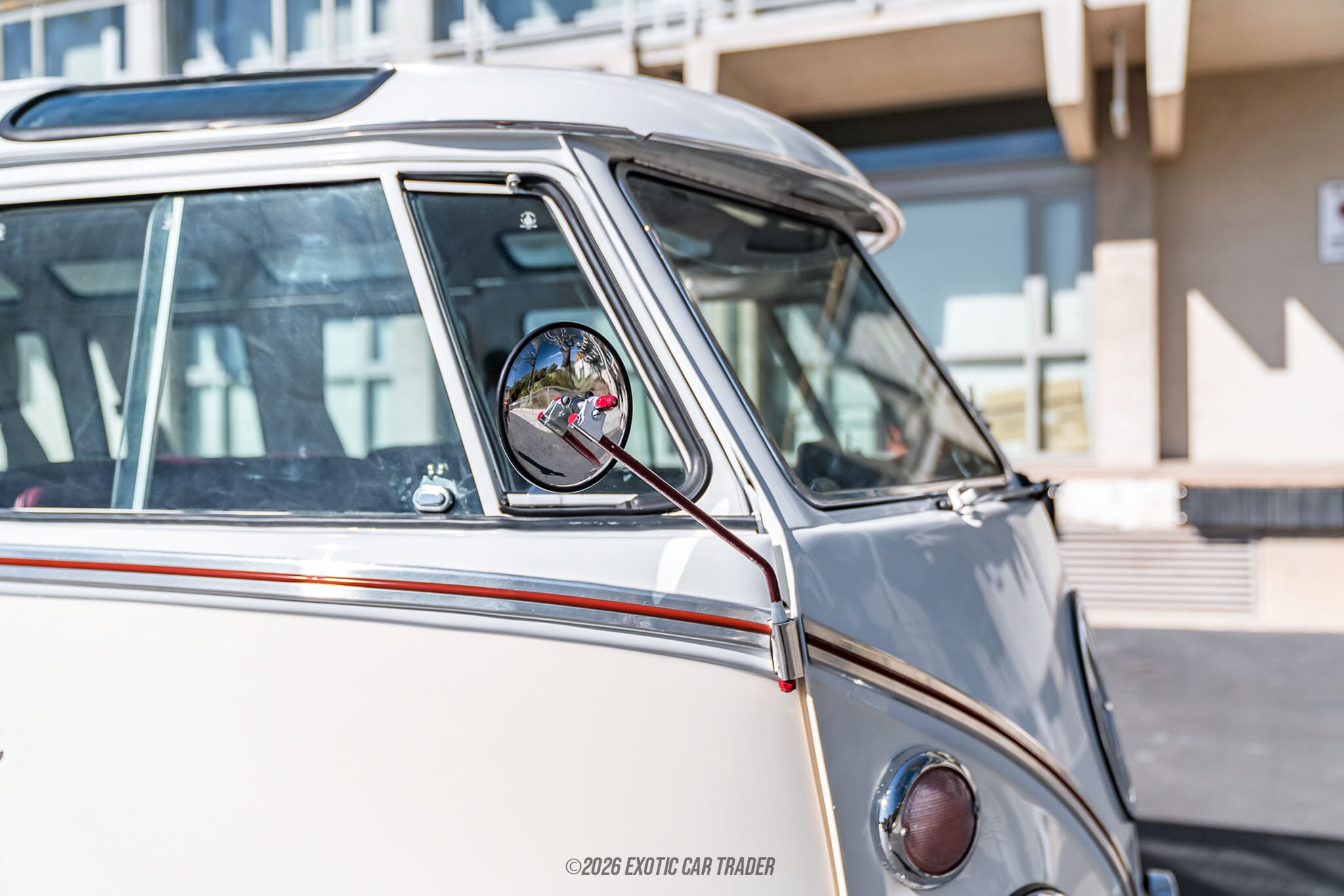
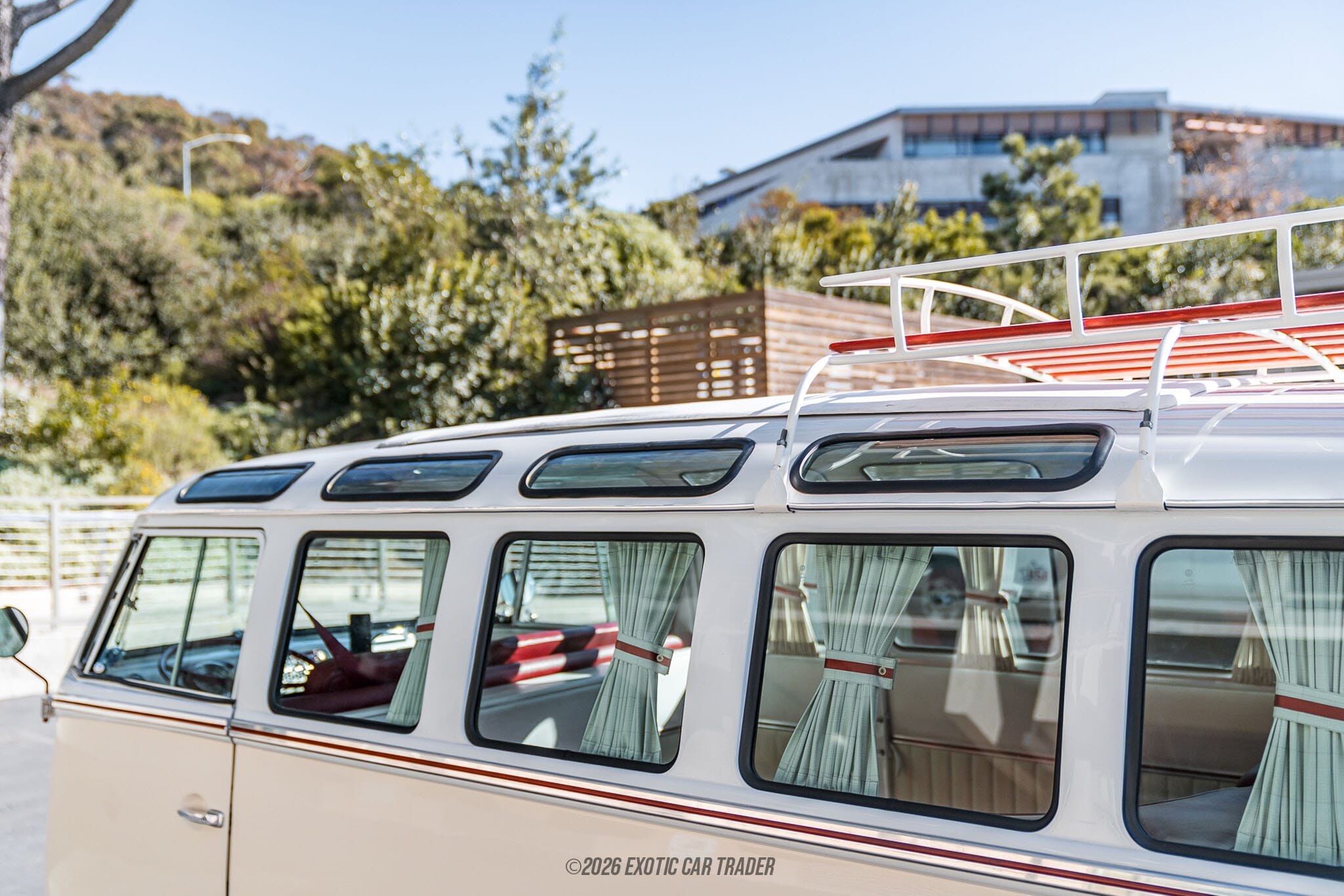
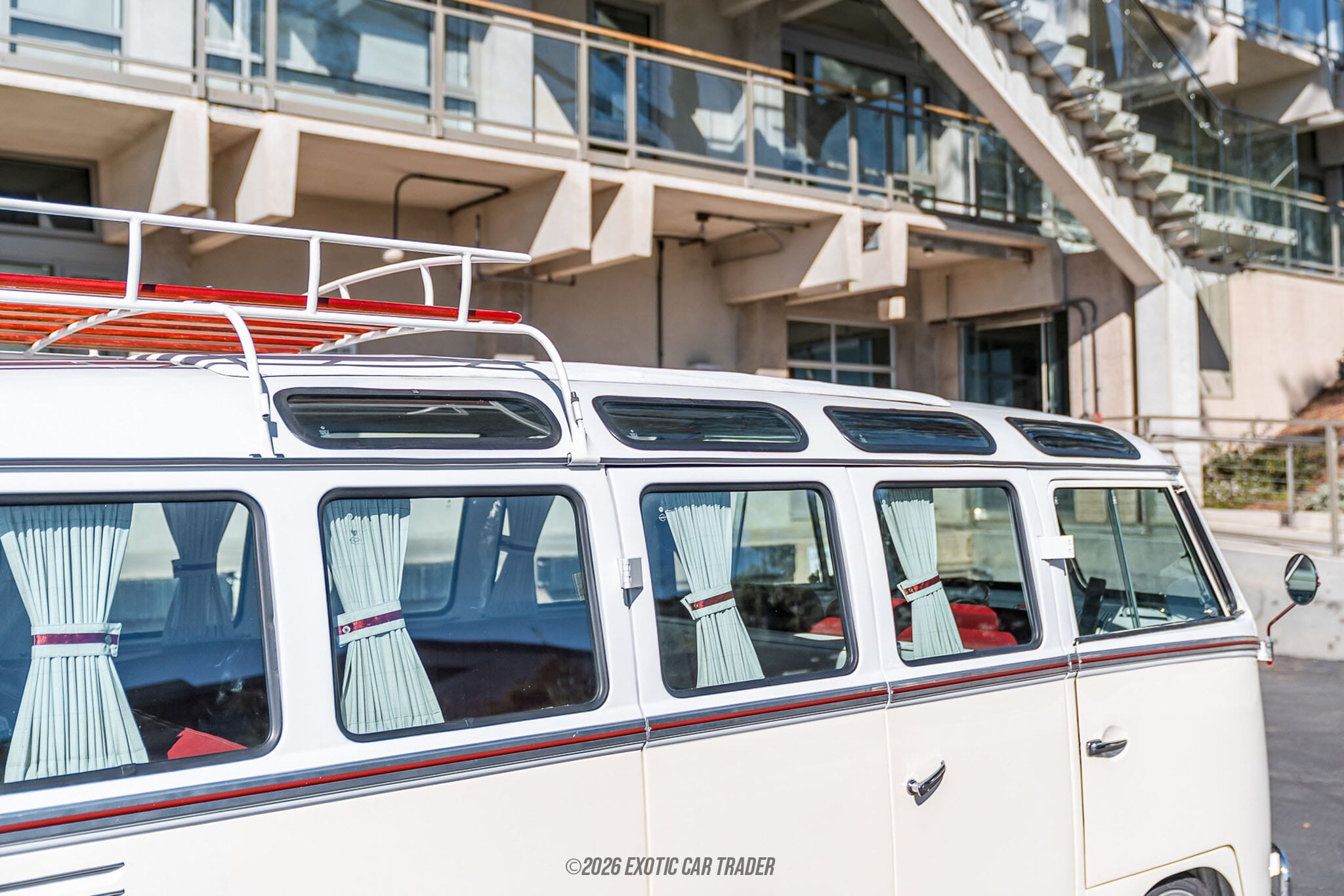
- 23-Window Samba-Style Configuration
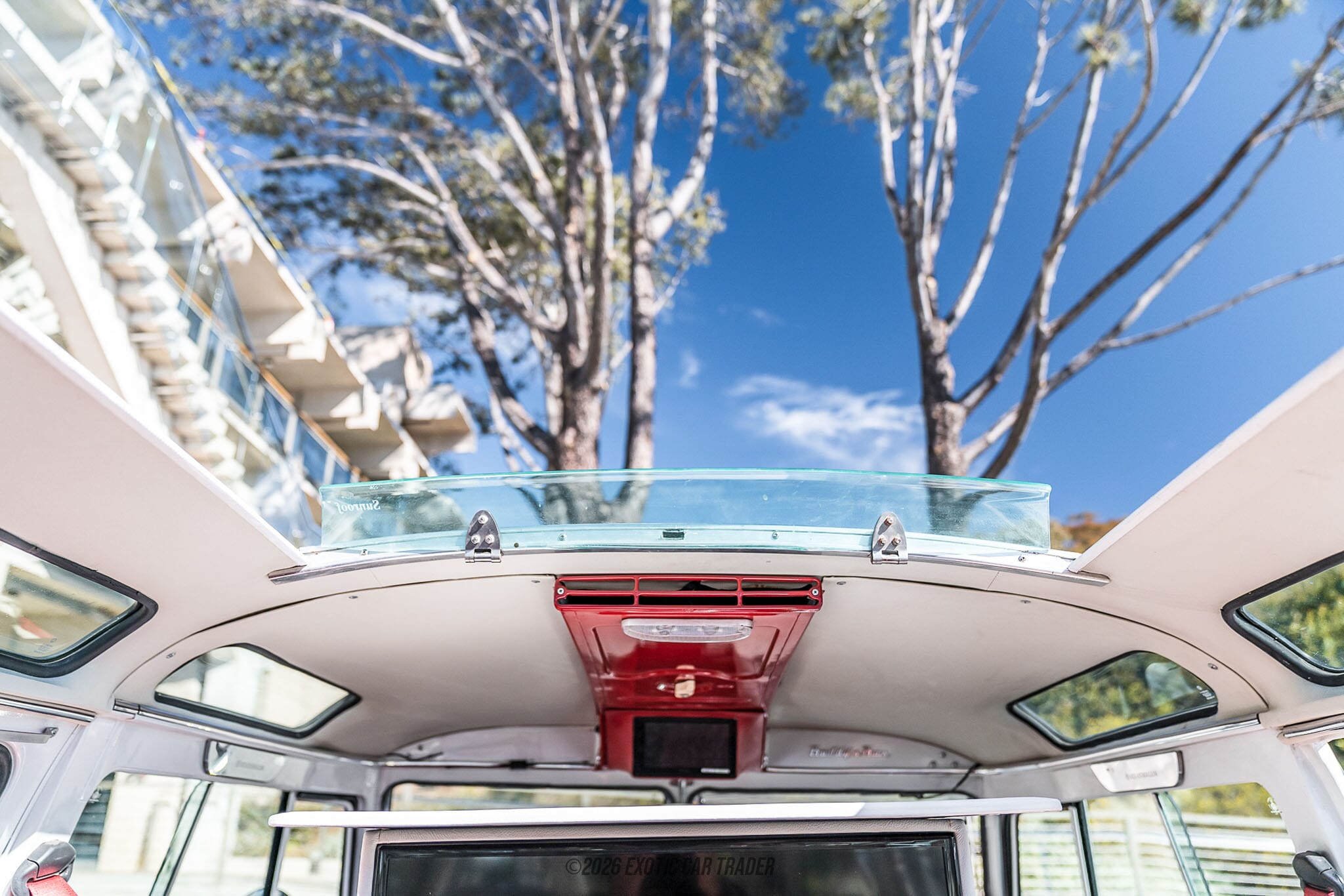
- Sliding Ragtop Sunroof
- Full-Length Canvas Sunroof Opening
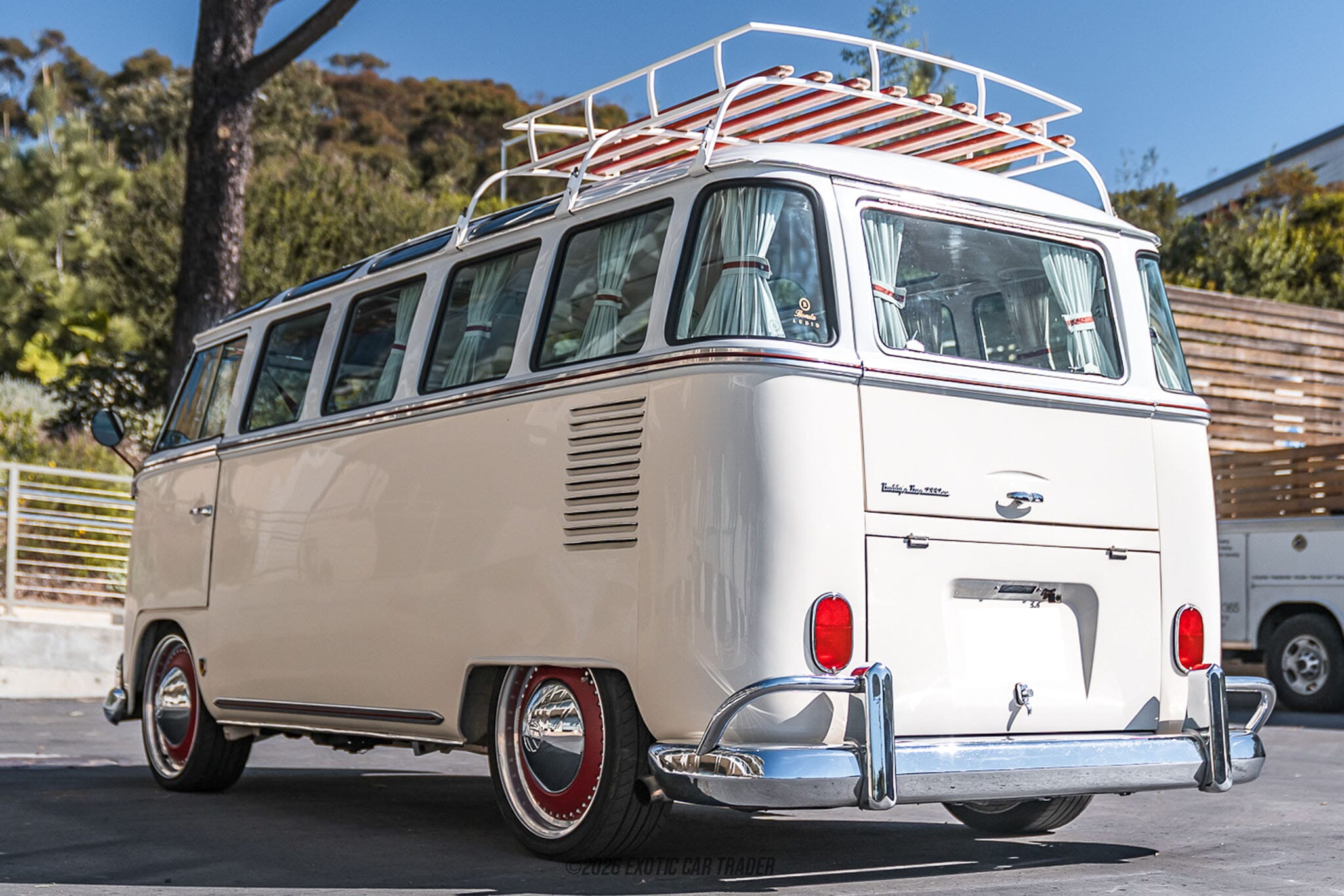
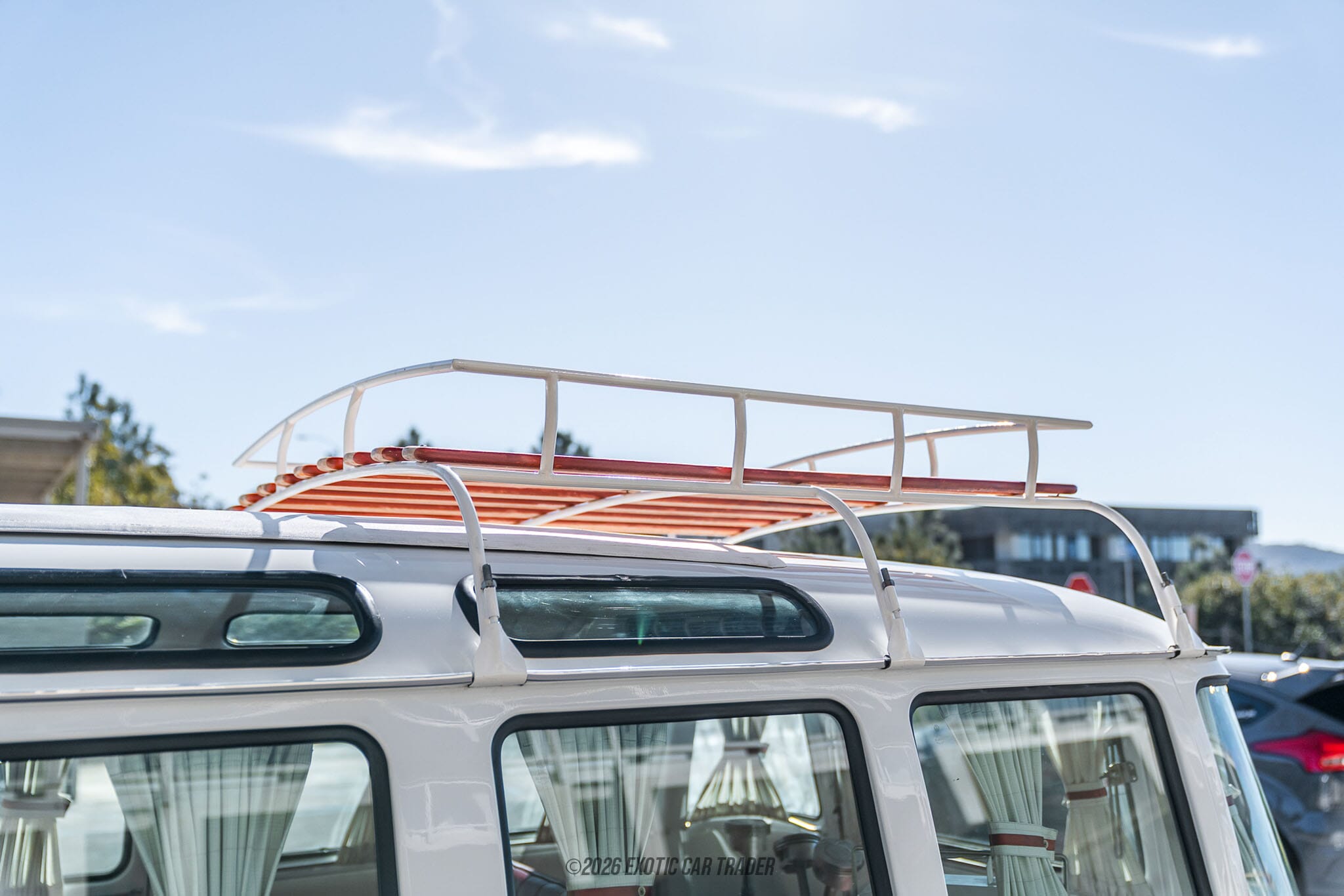
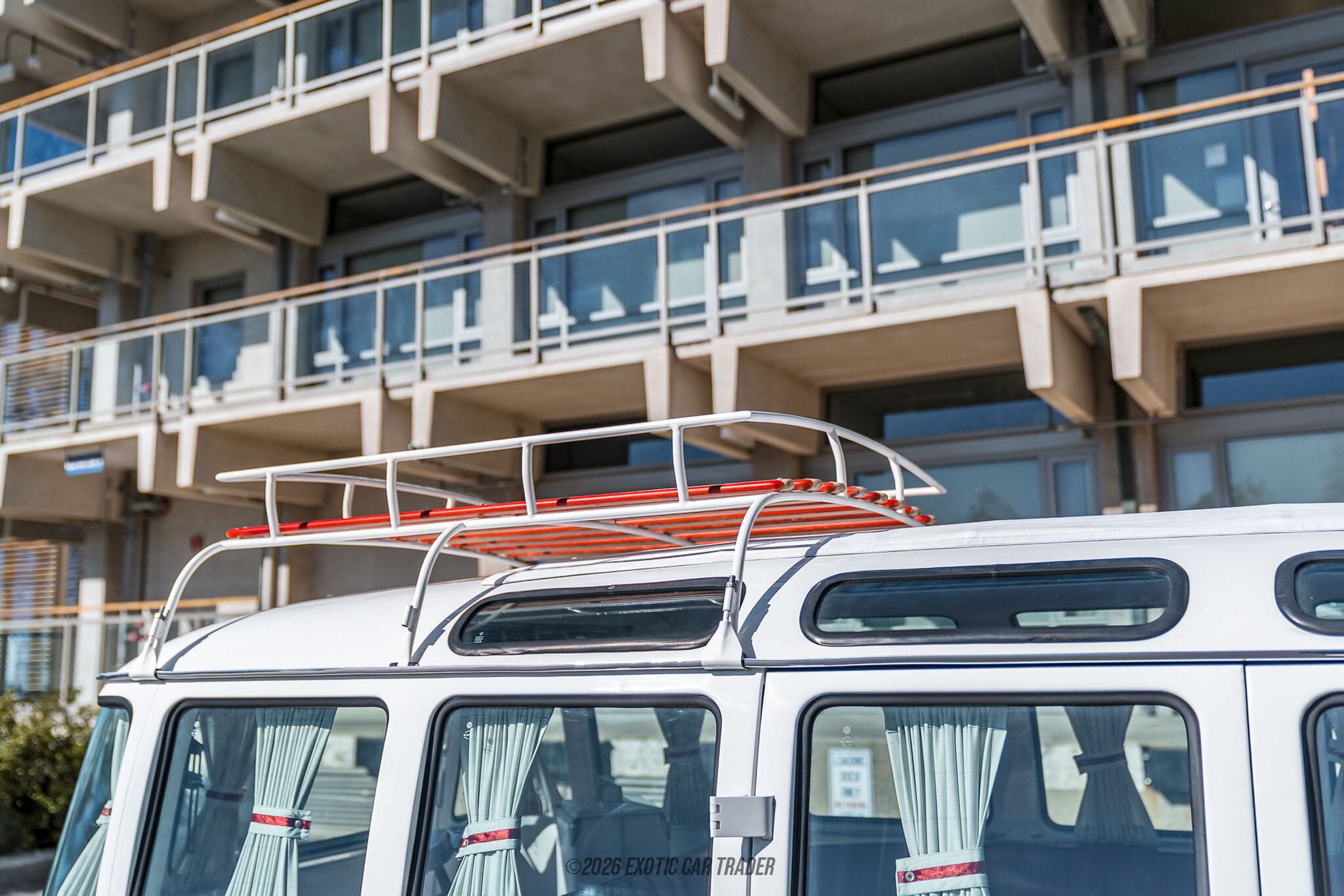
- Roof Rack w/ Wood Slats
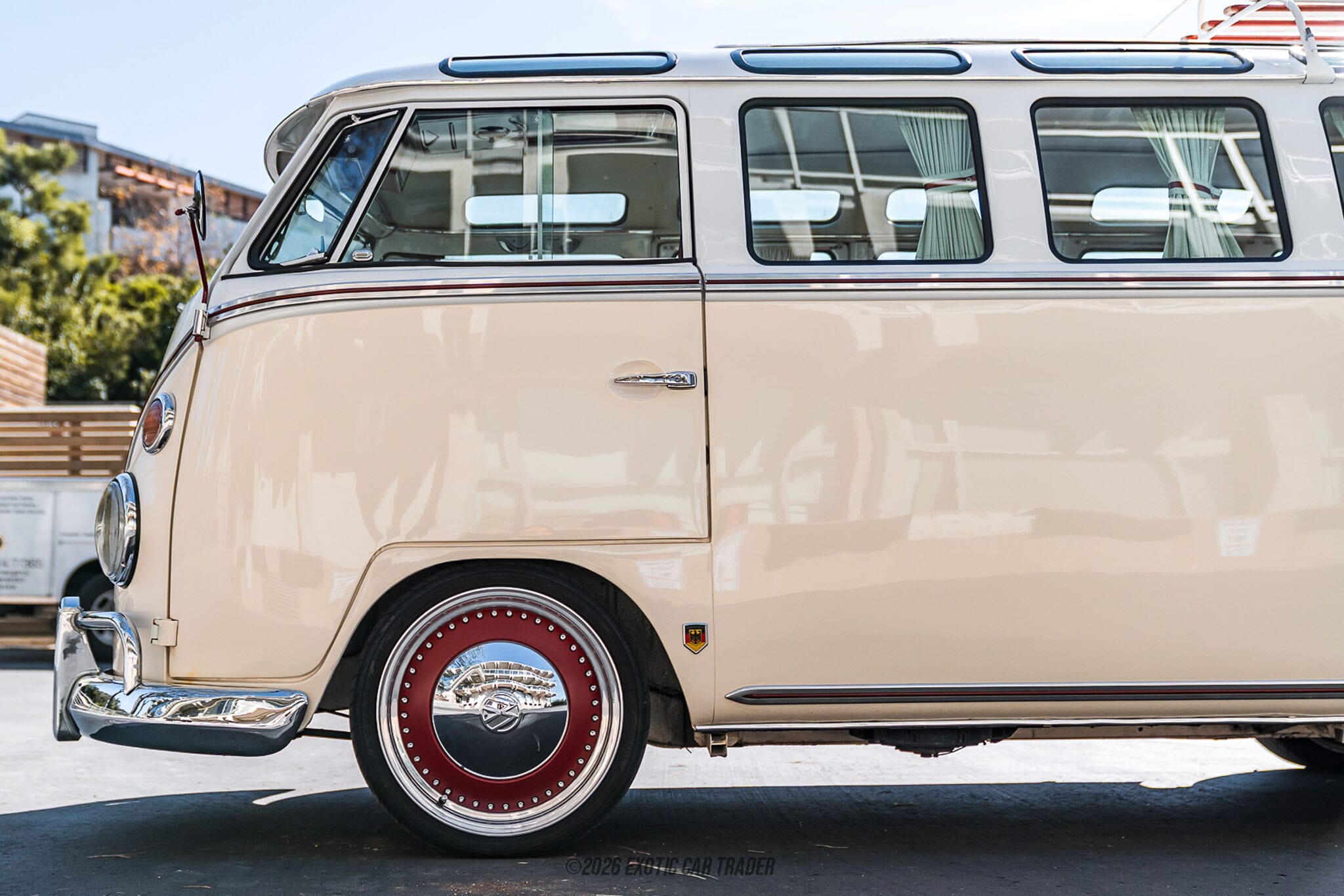
- Safari-Style Front Windshield
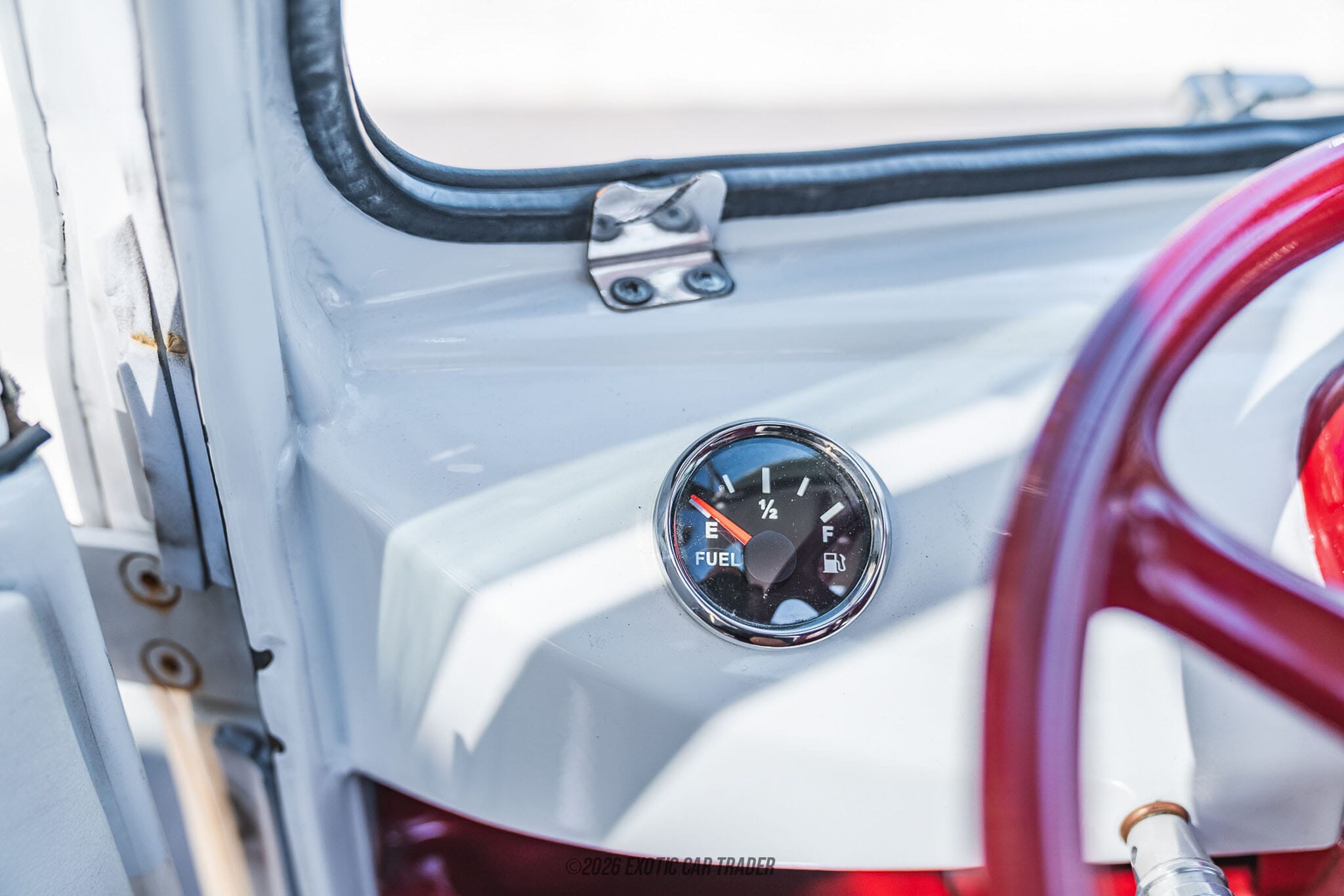
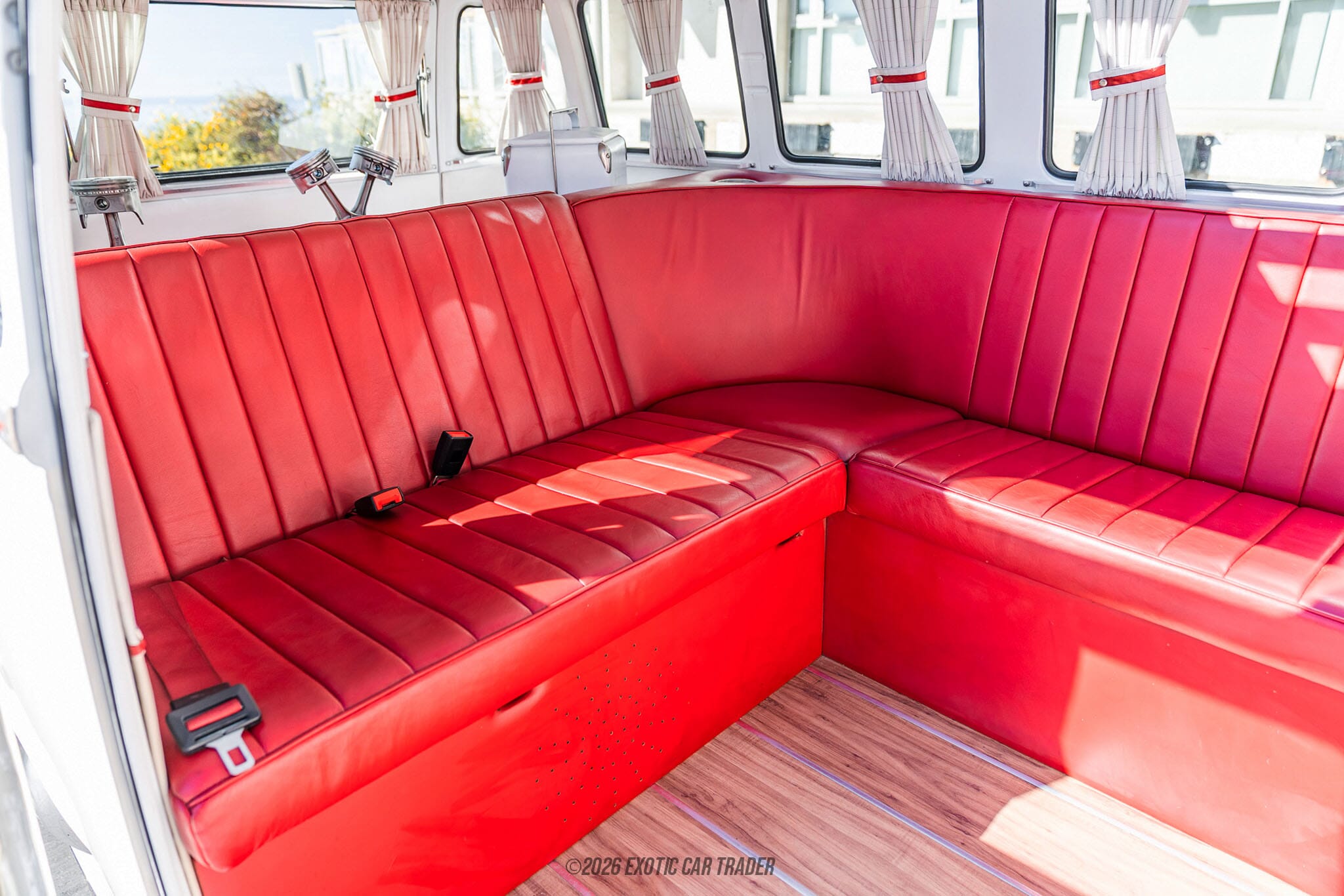
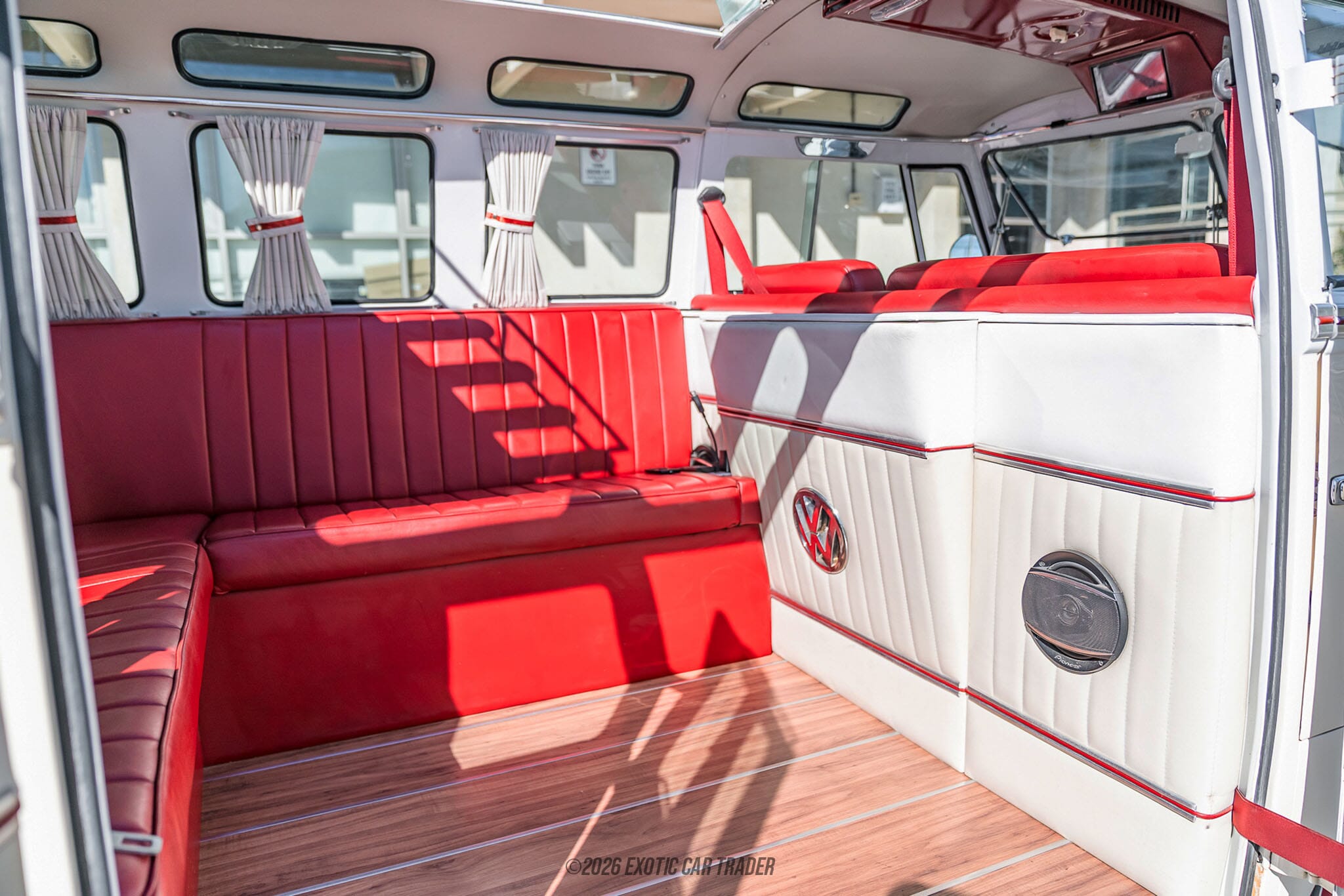
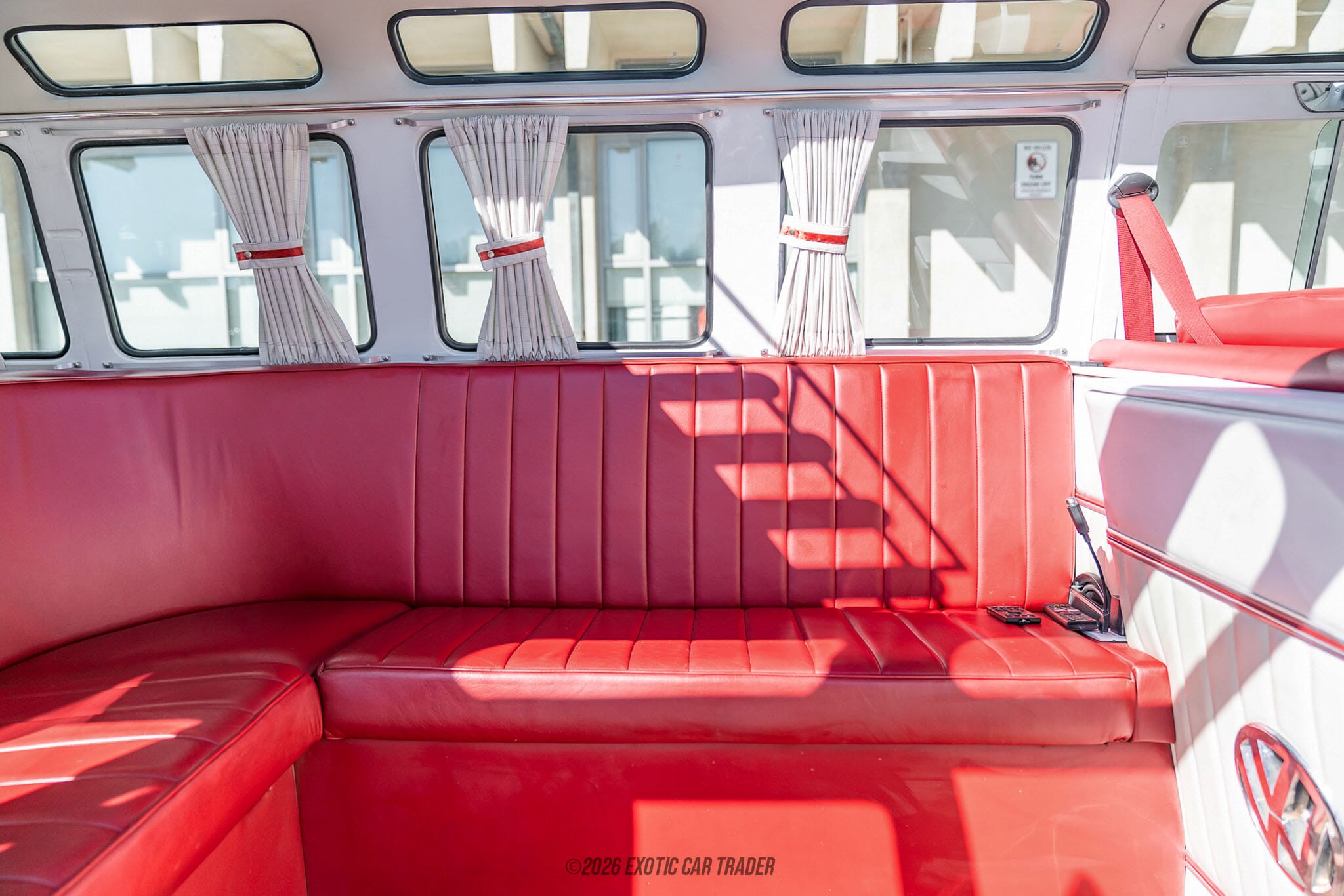
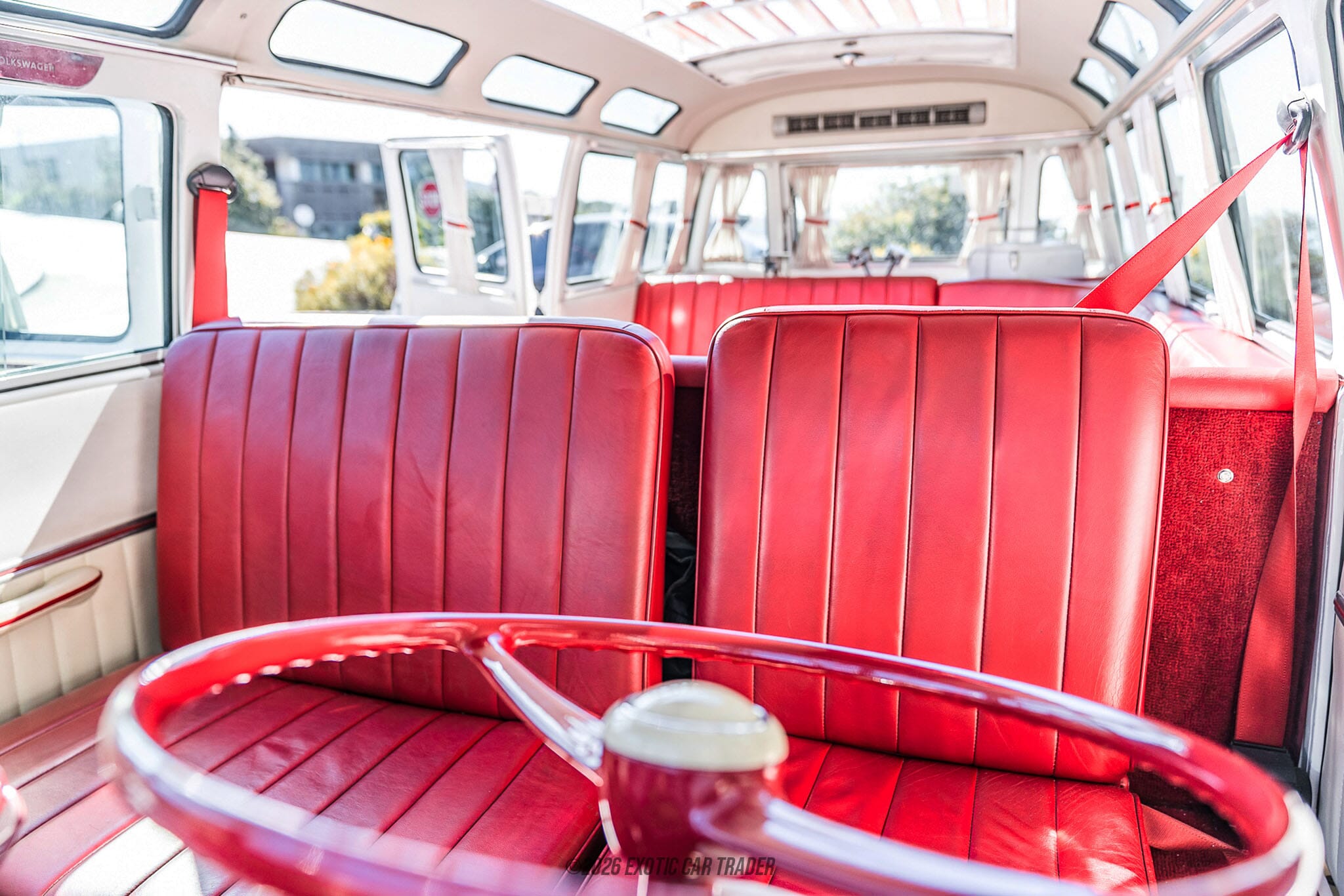
- Reupholstered Two-Tone Interior
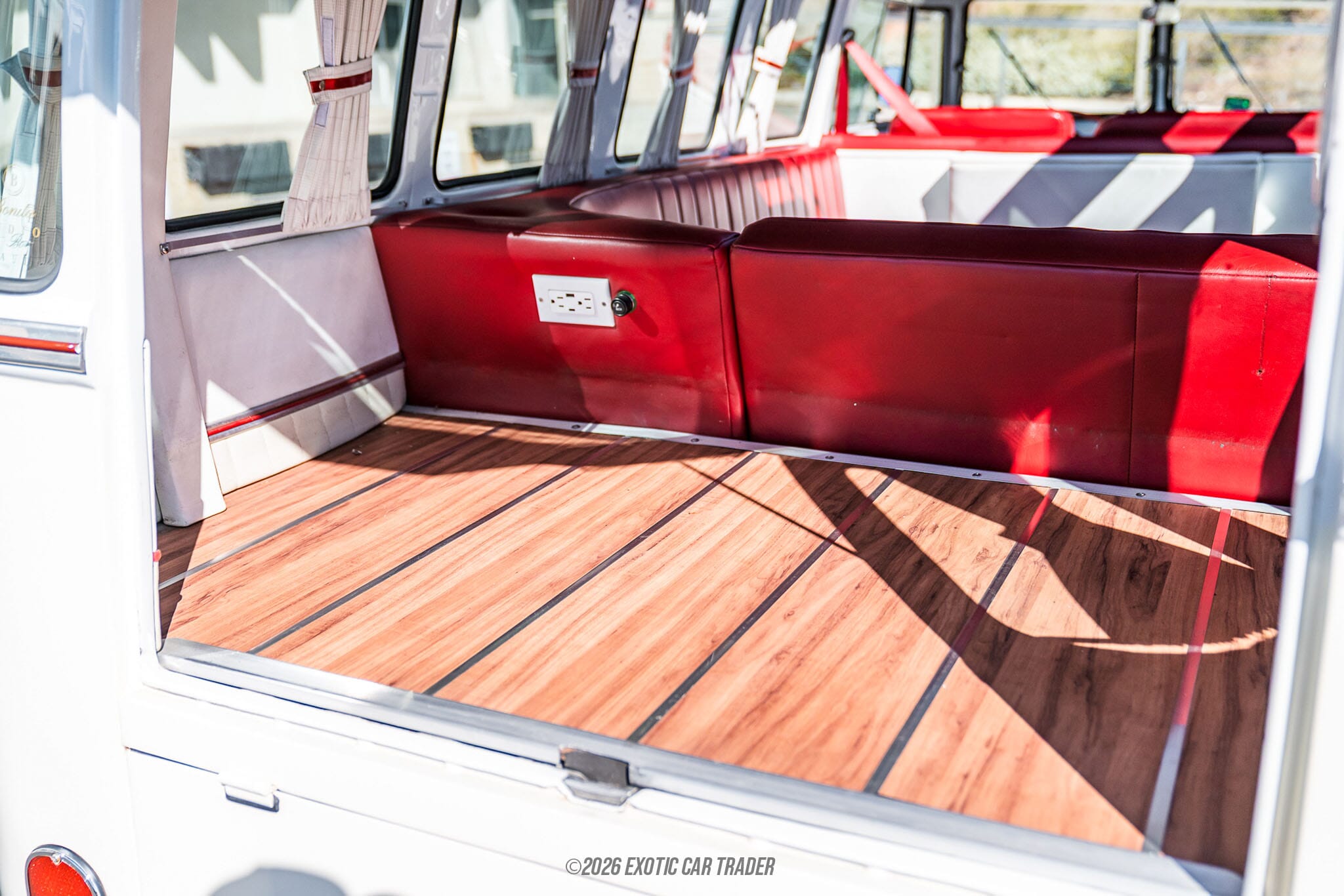
- Full Lounge-Style Rear Seating
- Wood-Style Floor Panels
- Curtains Throughout Cabin
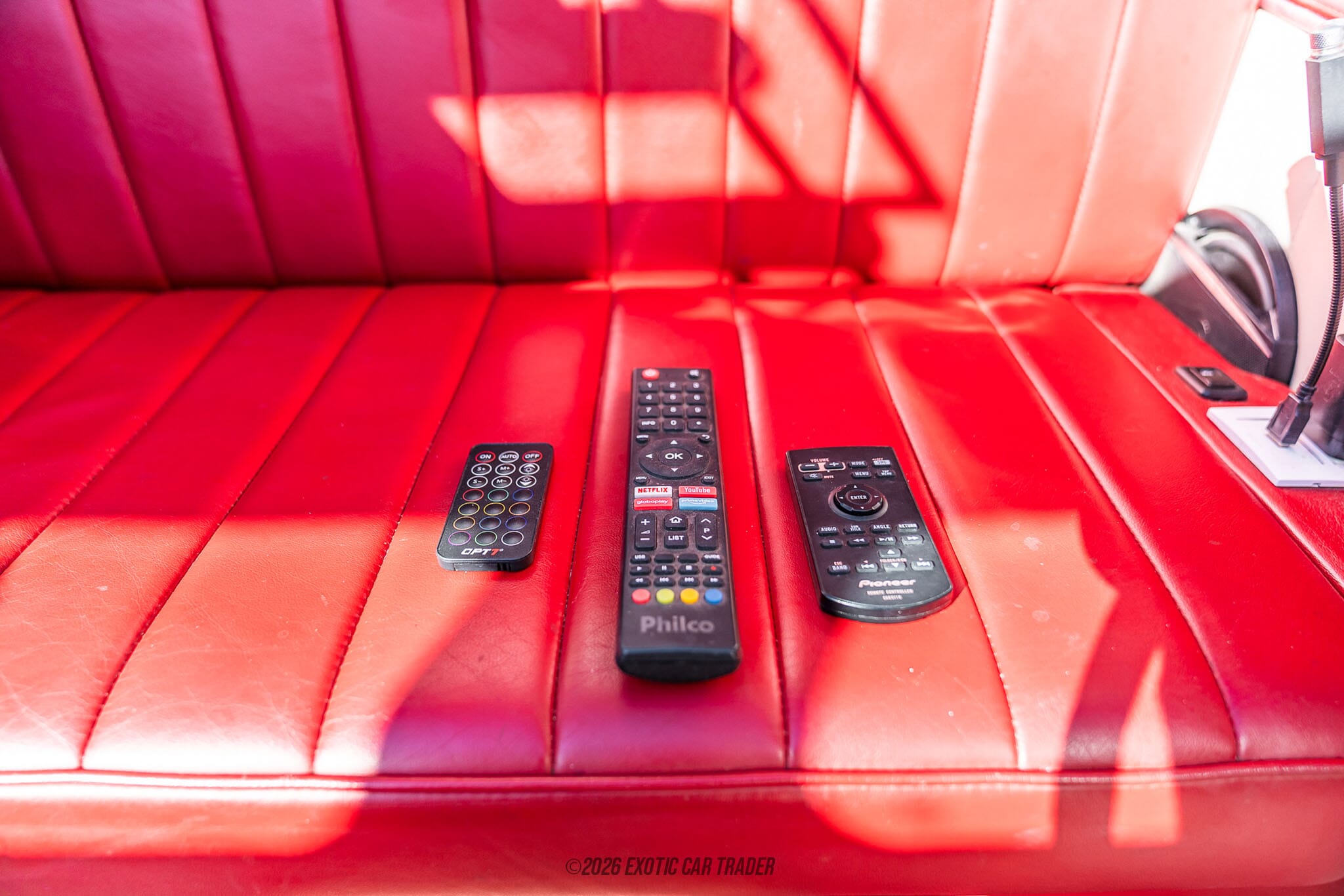
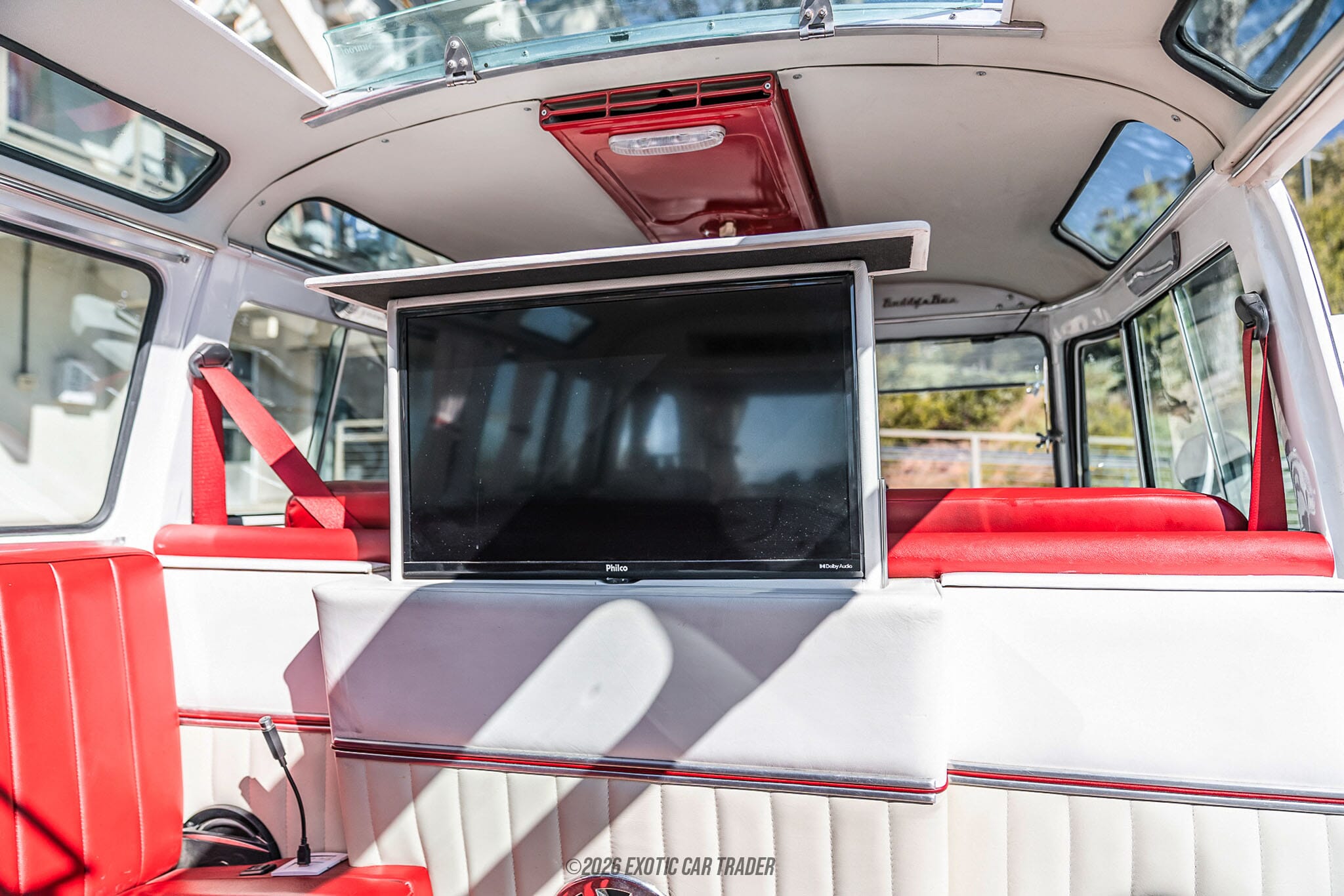
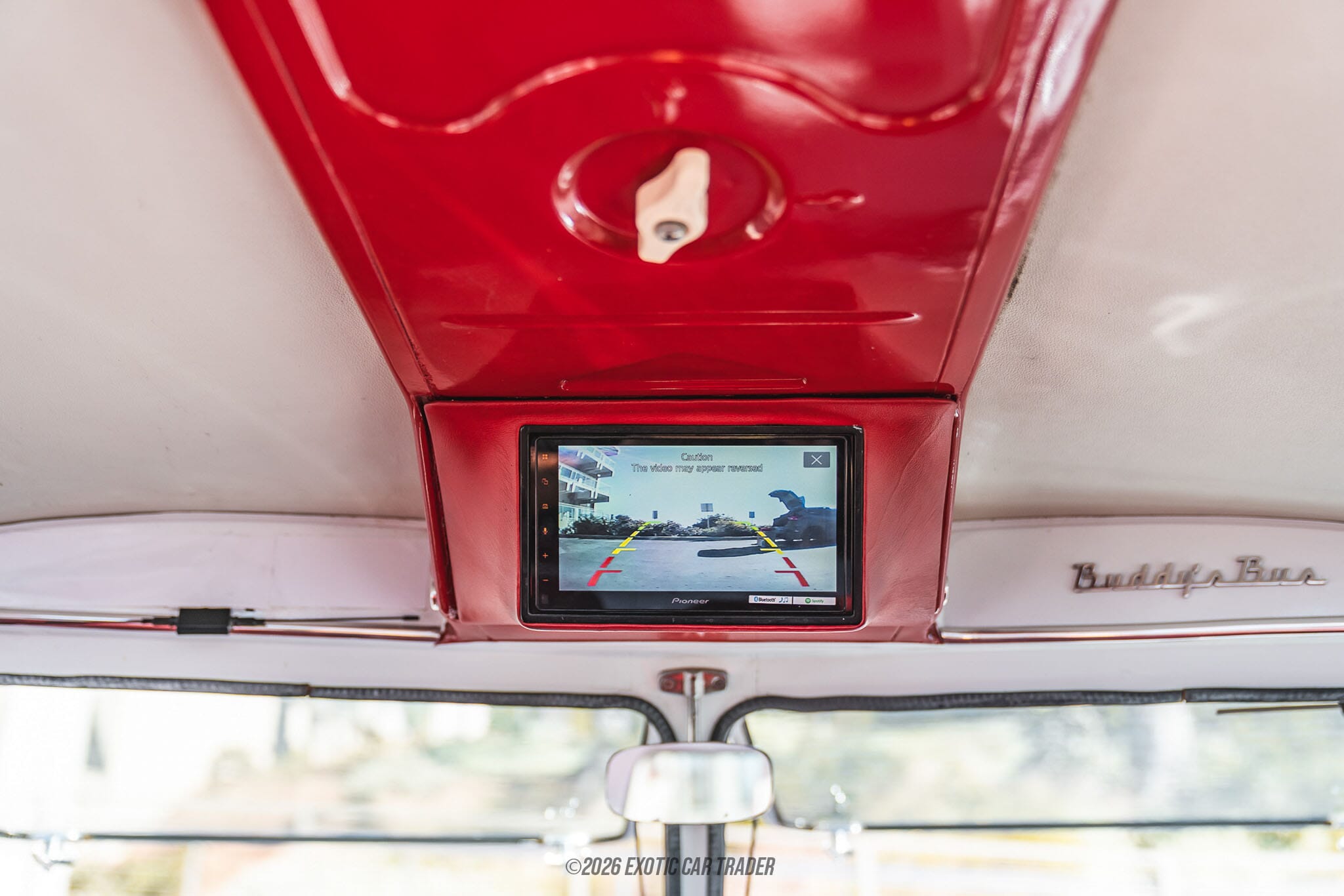
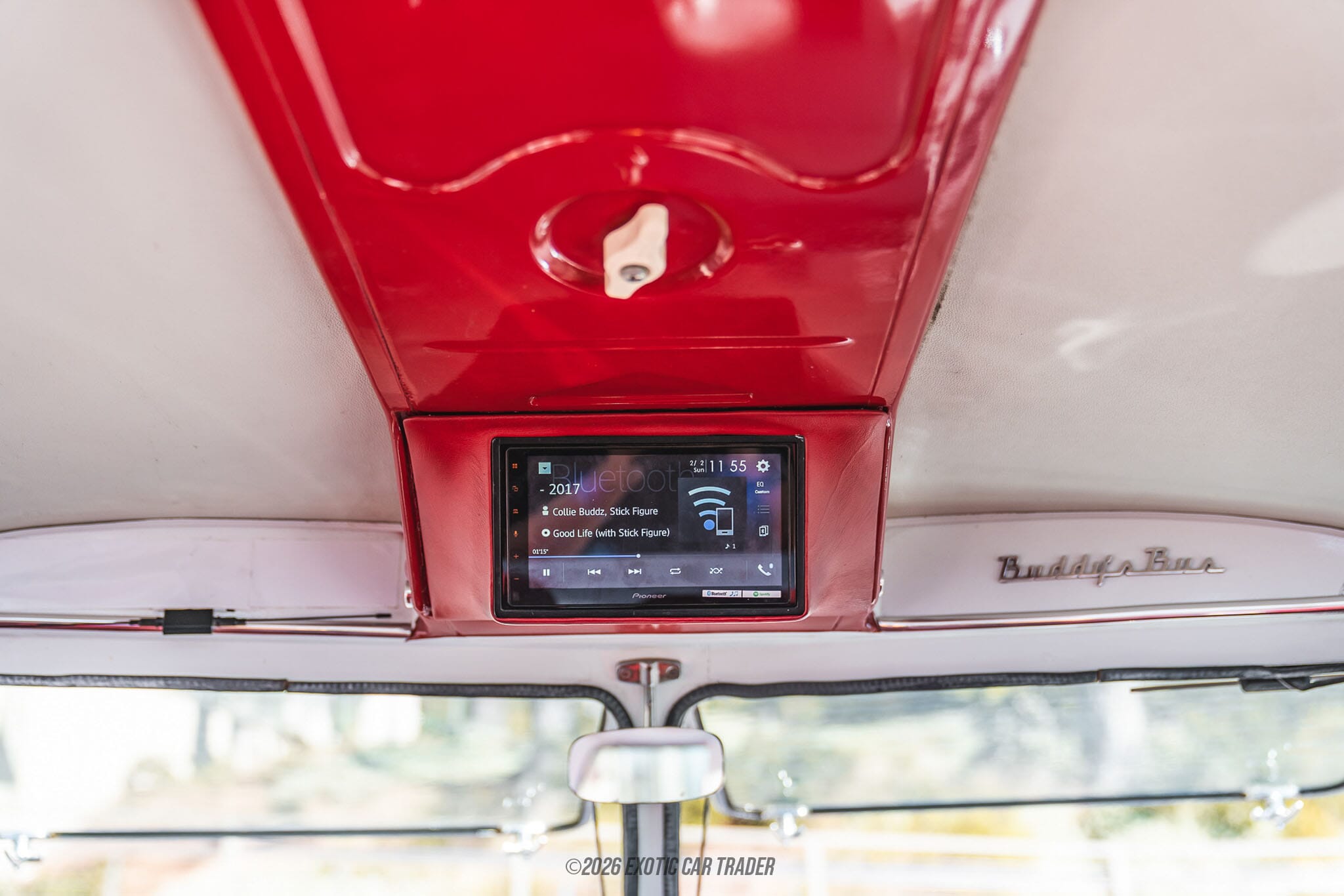
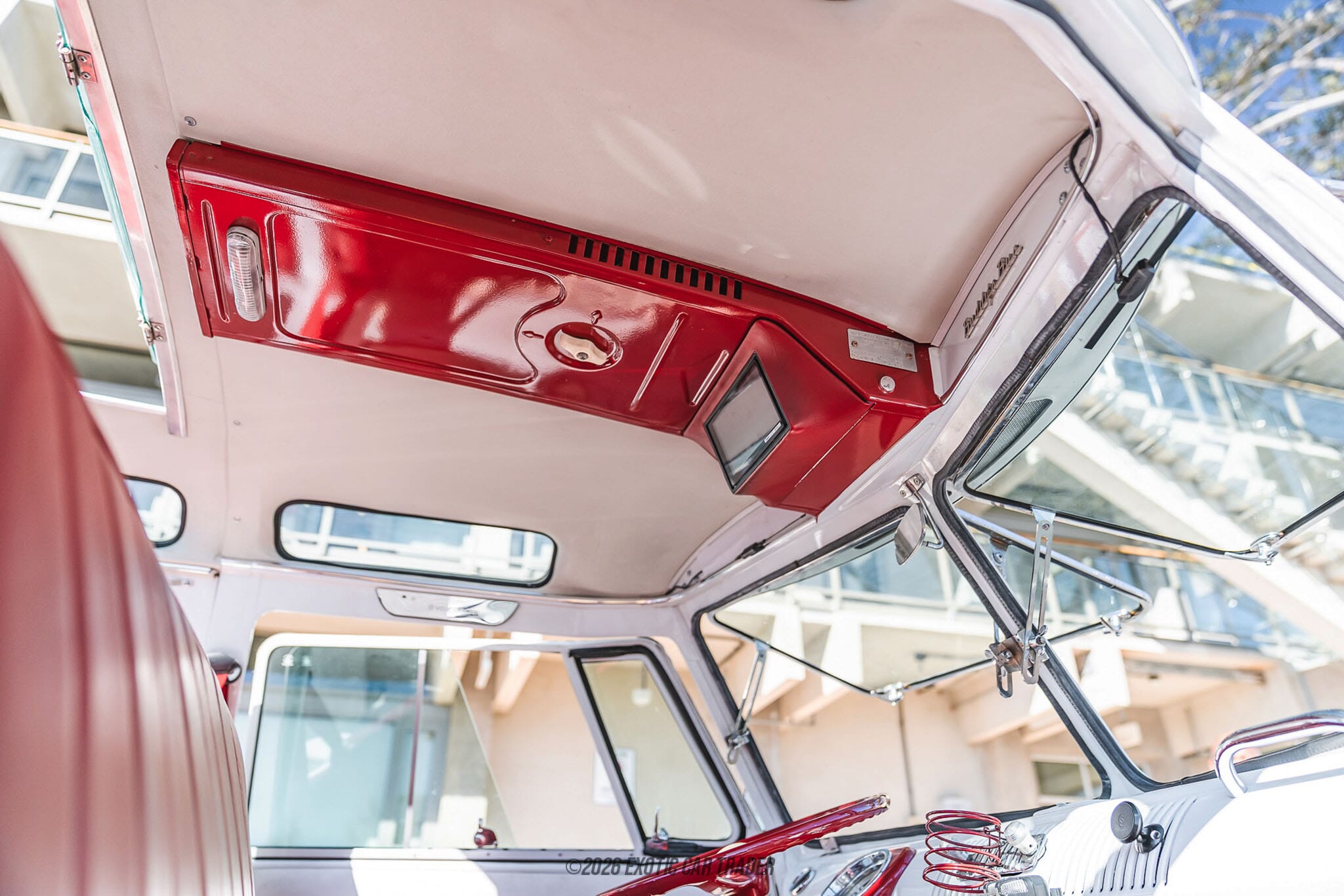
- Overhead Flat-Screen Display
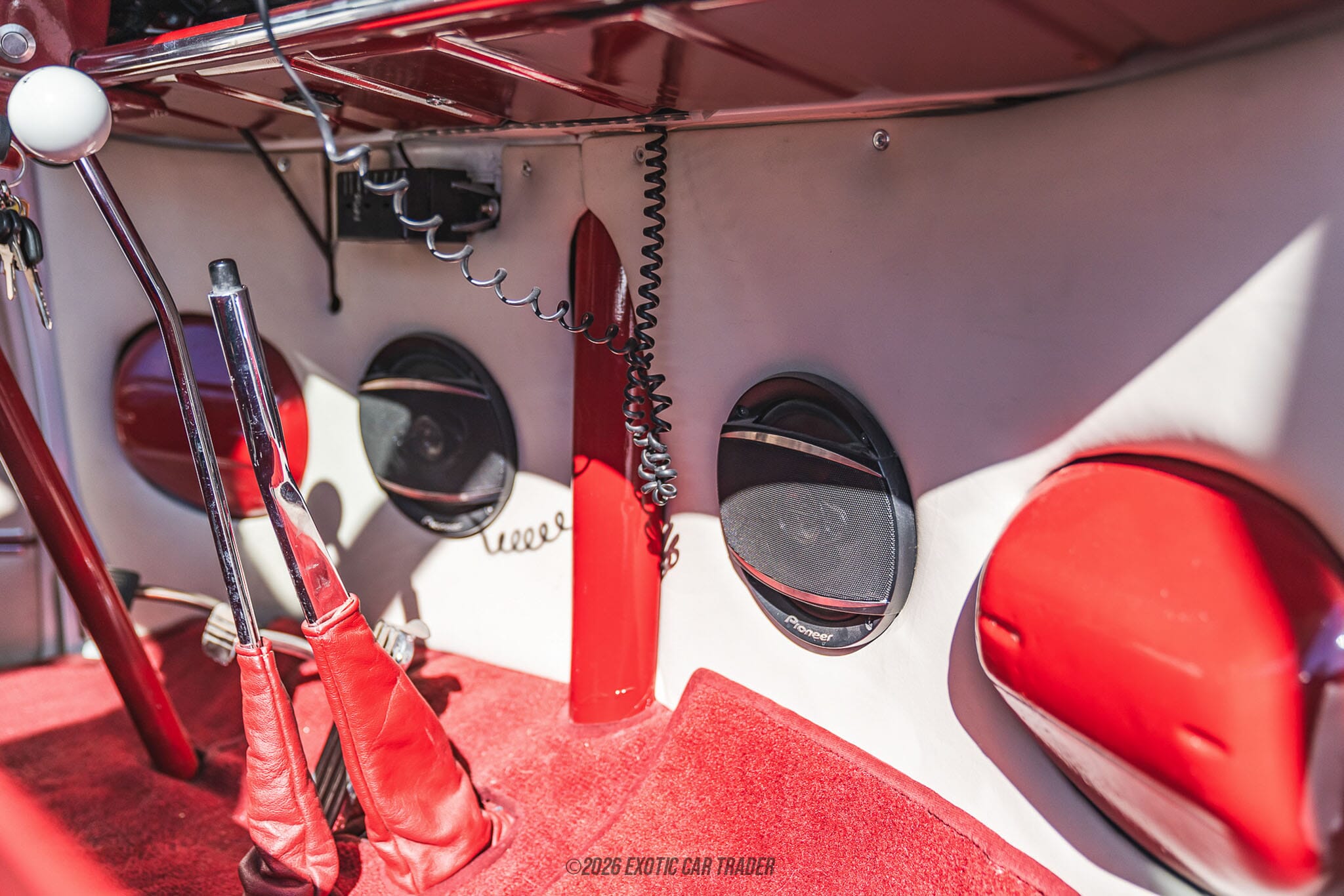
- Aftermarket 1,500-Watt Stereo System
- Pop-Up TV
- Buddy Bench Seating Layout
- Air Conditioning
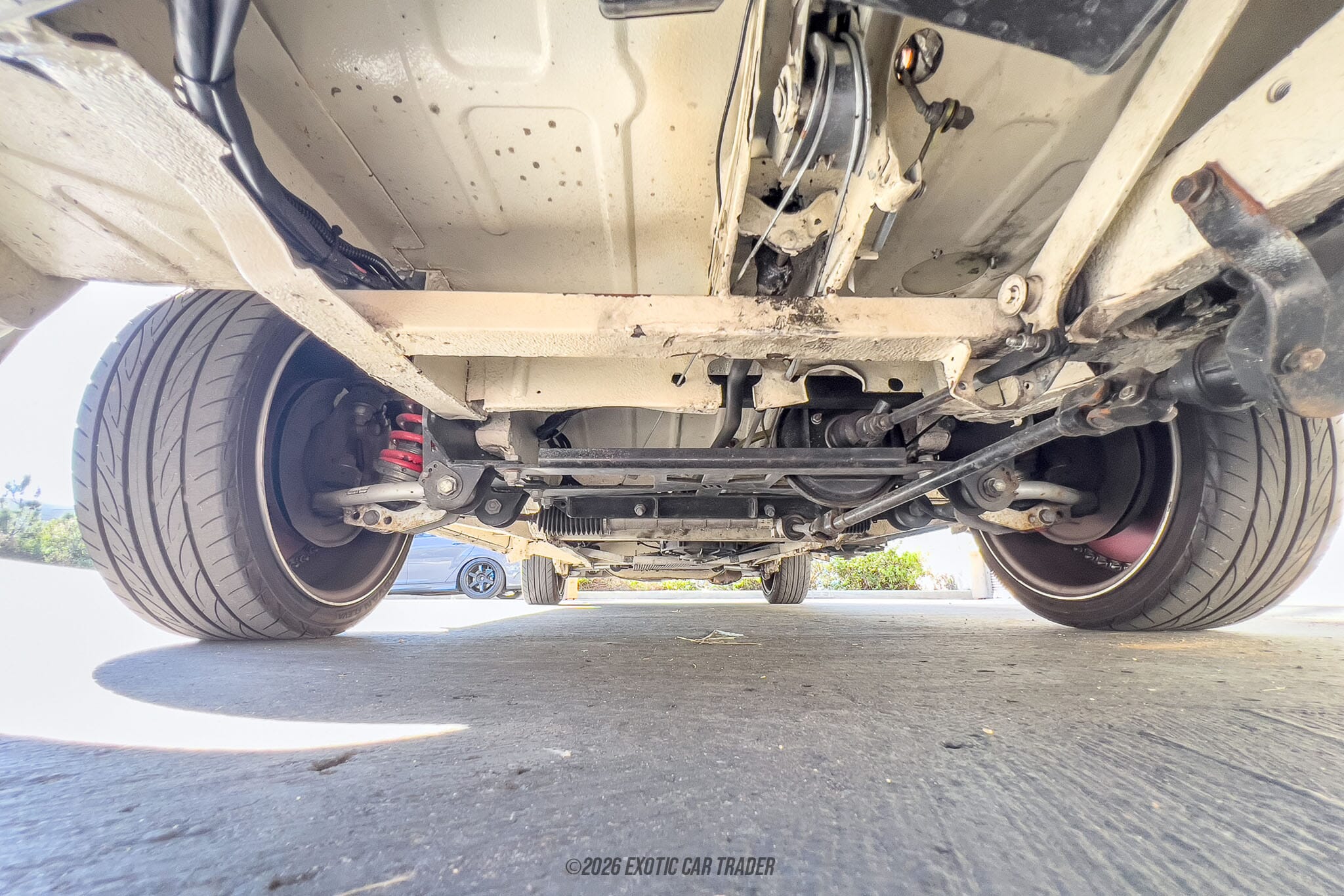
- Rack-And-Pinion Steering
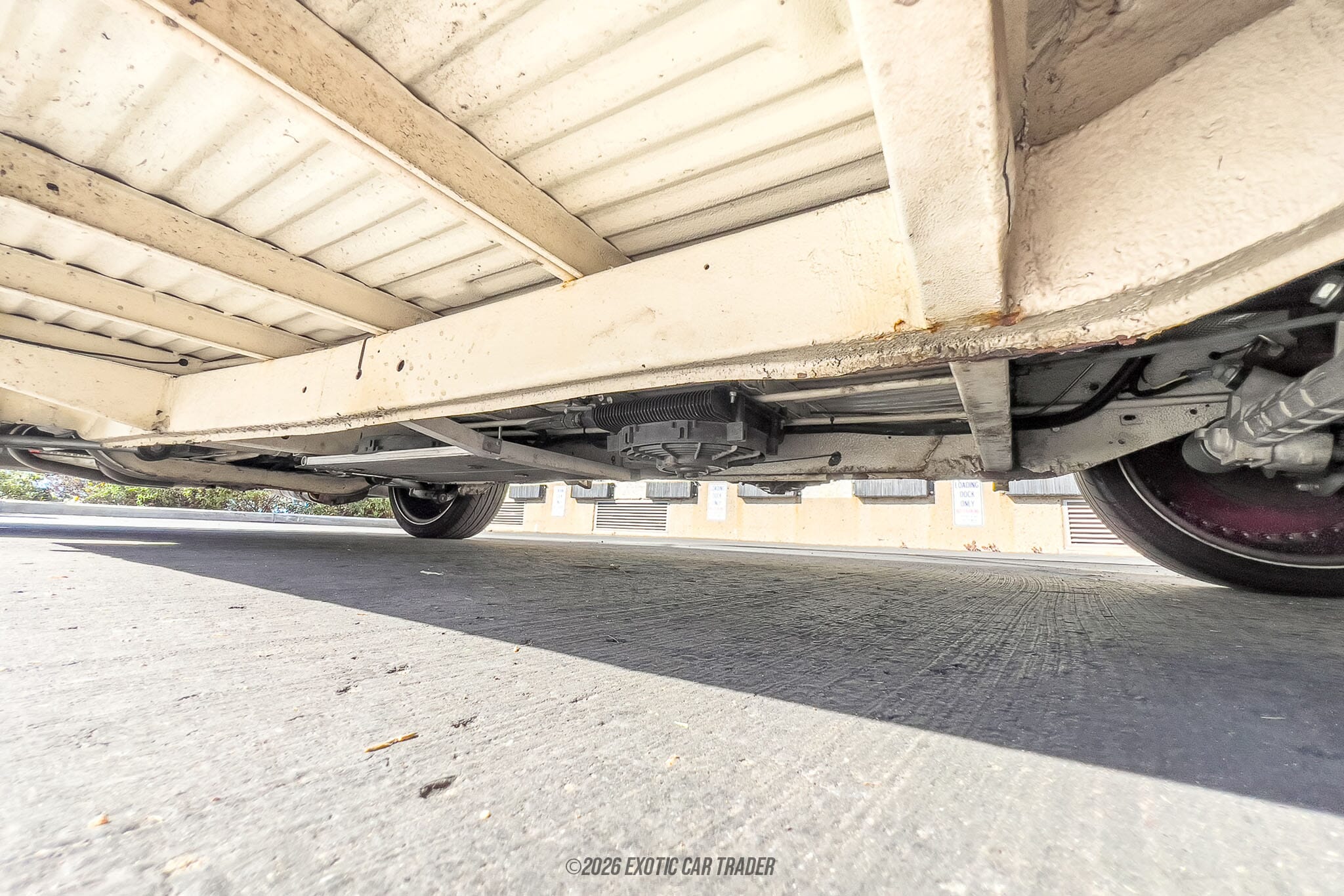
- Independent Front & Rear Suspension w/ Adjustable Coilovers
- 911 Type Fan & Shroud
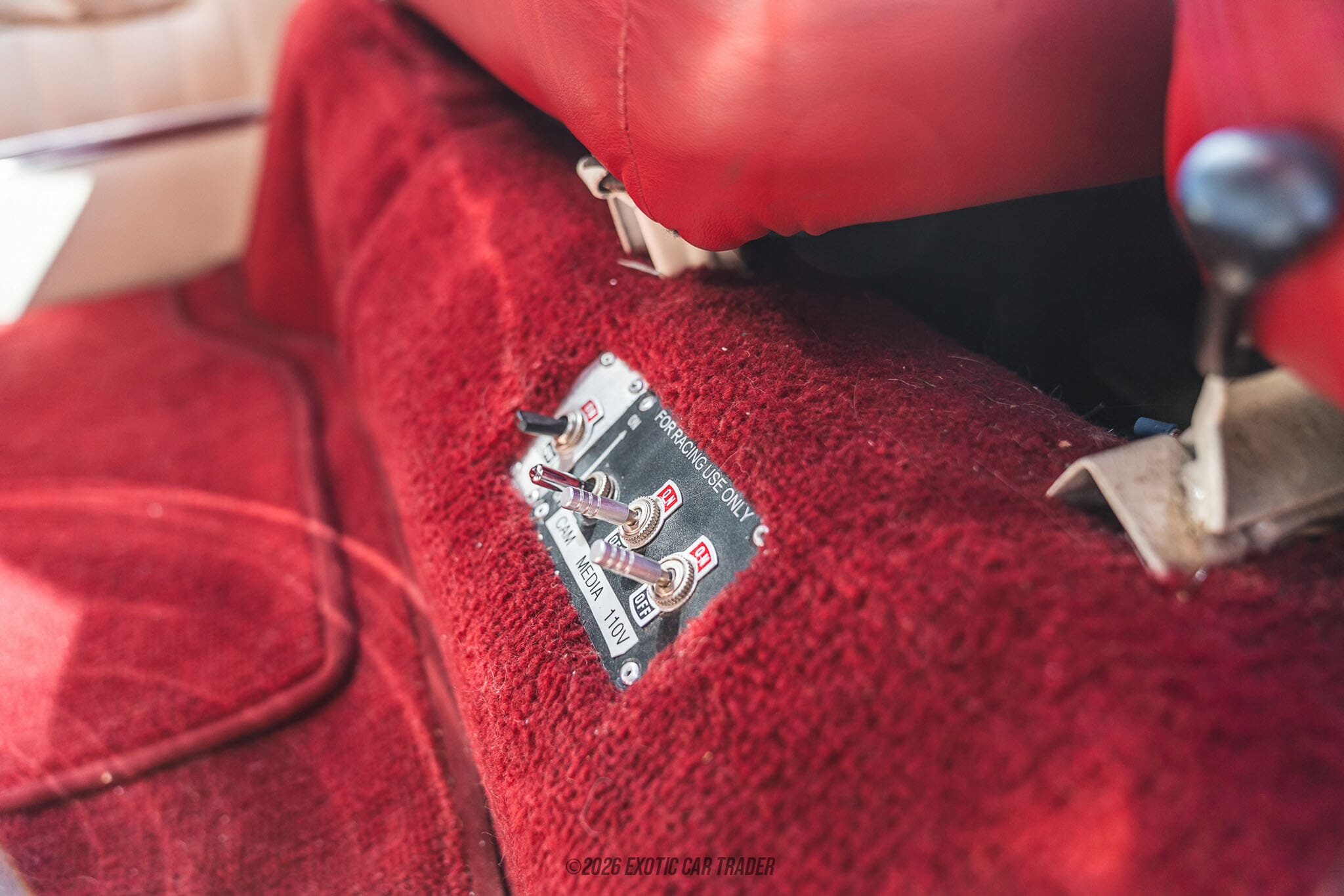
- Dual Battery w/ Inverters
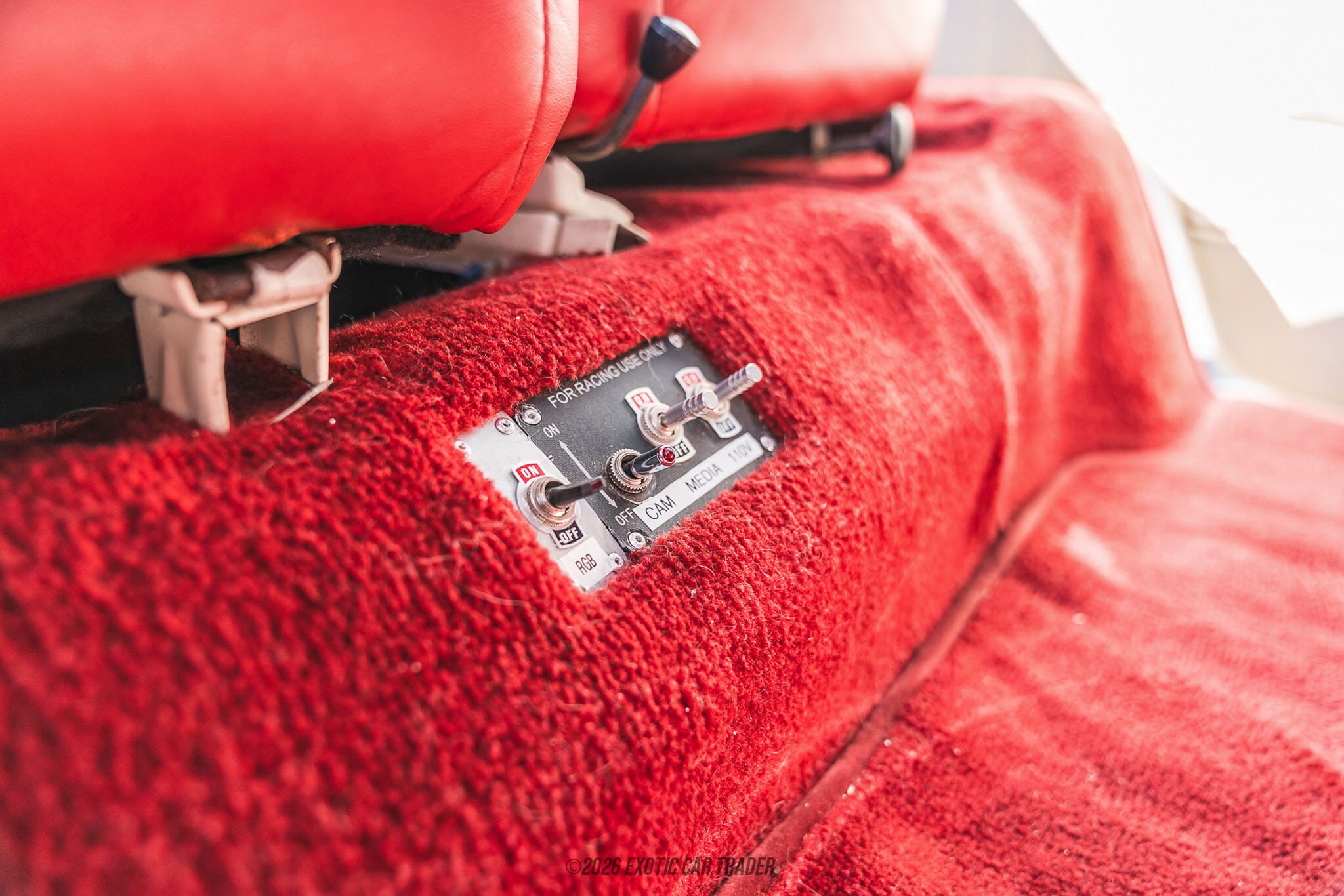
- RGB Lighting Array
- PA System
- 110V Outlets
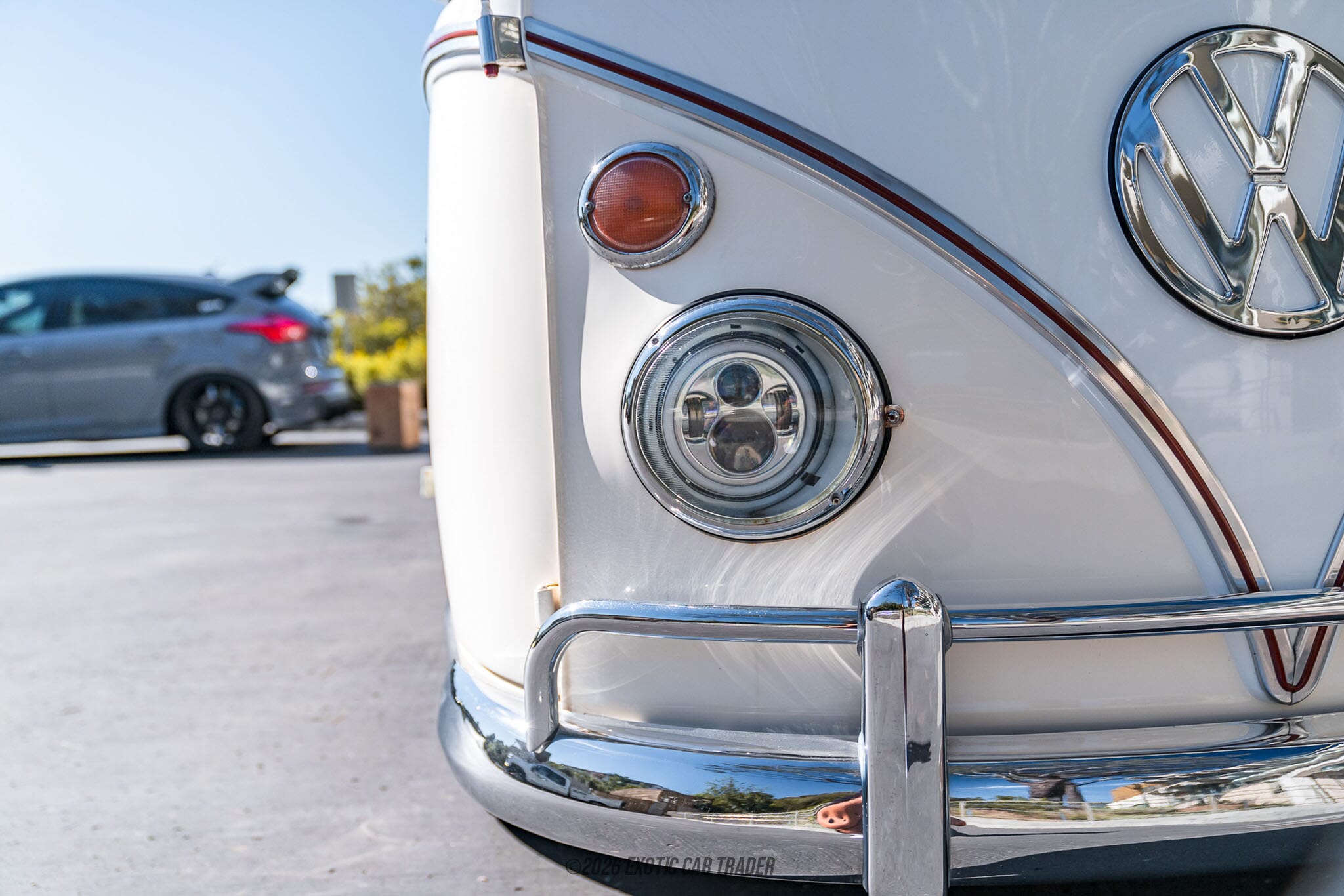
- Angel Eye Headlights
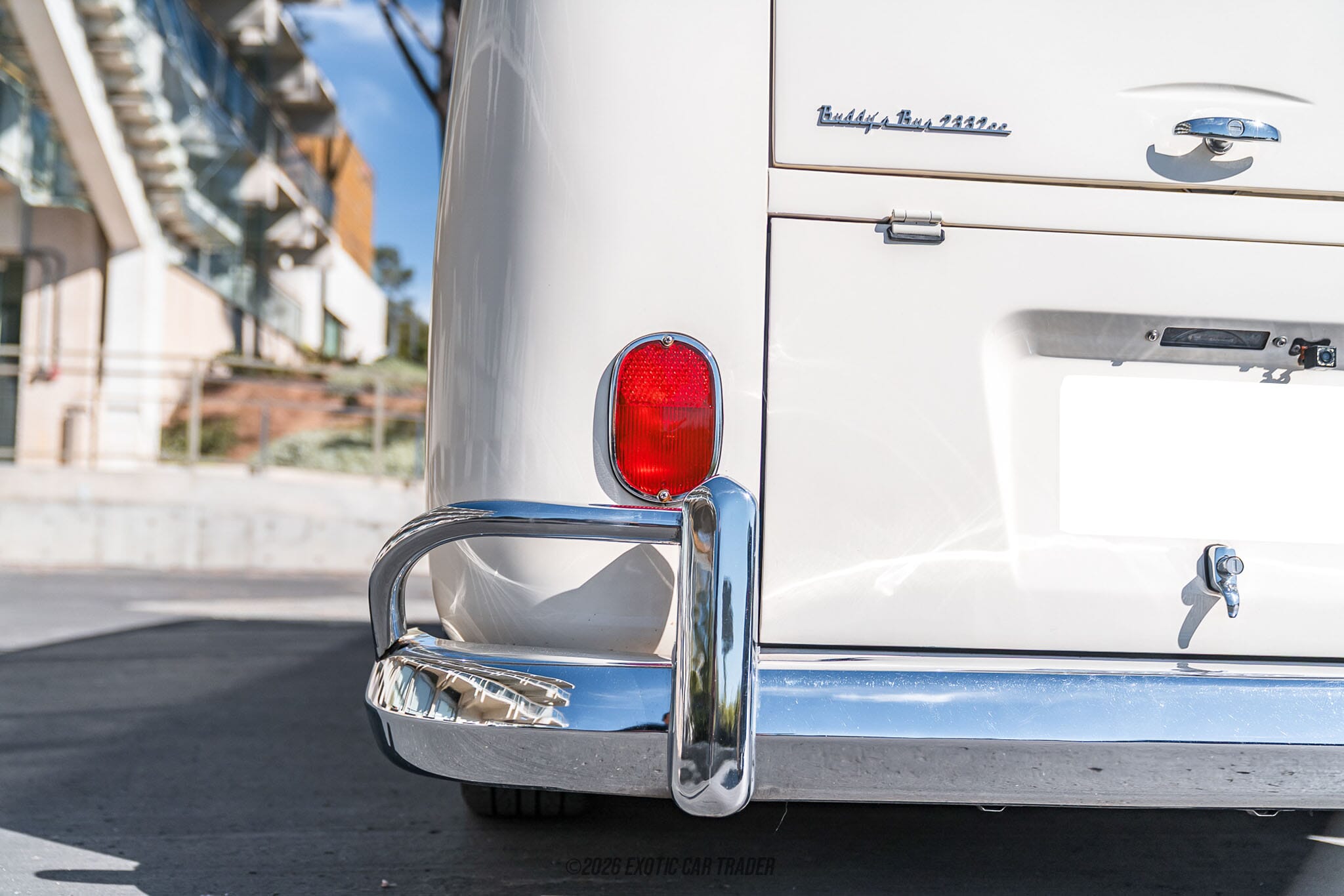
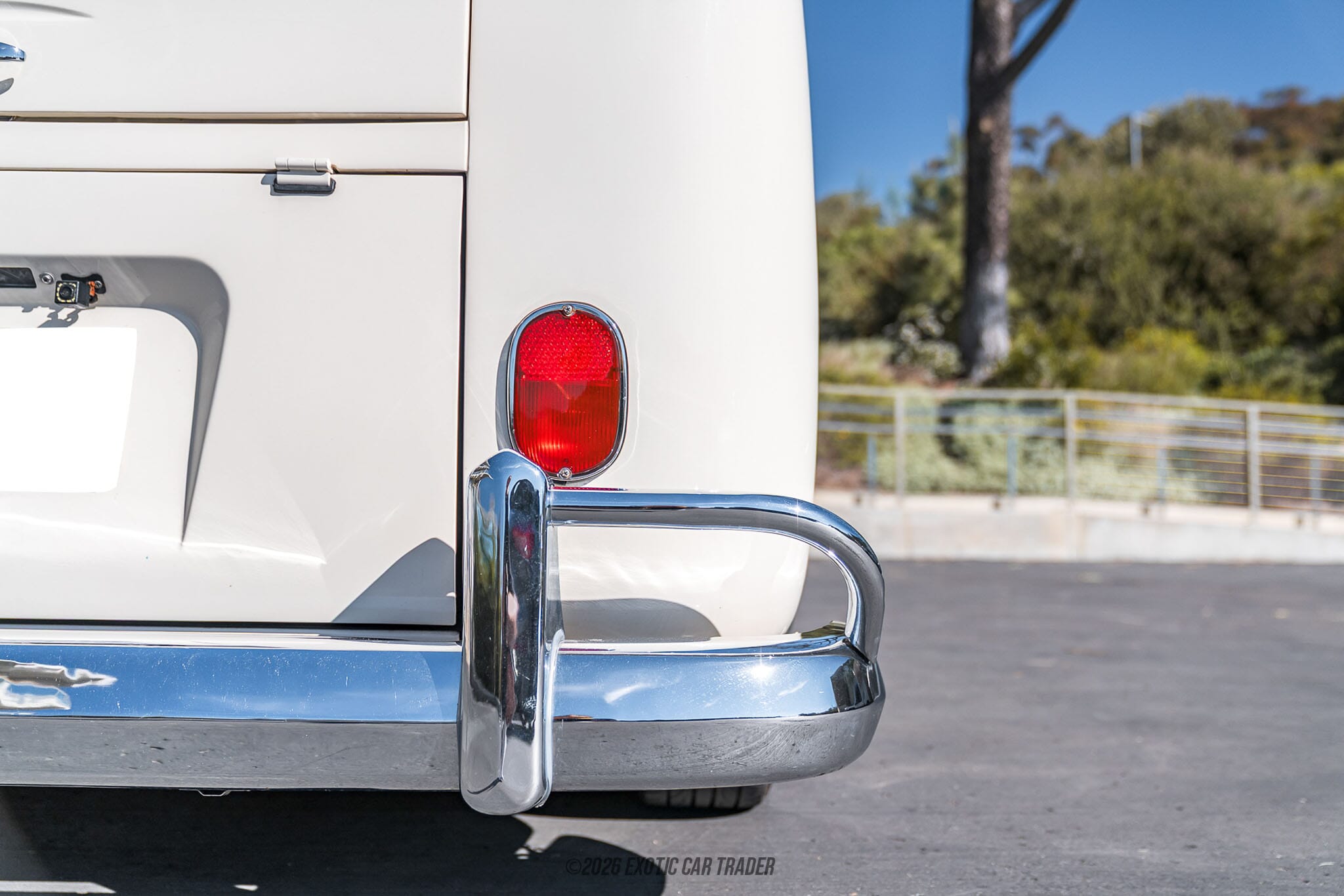
- Backup Camera
- Custom Furniture
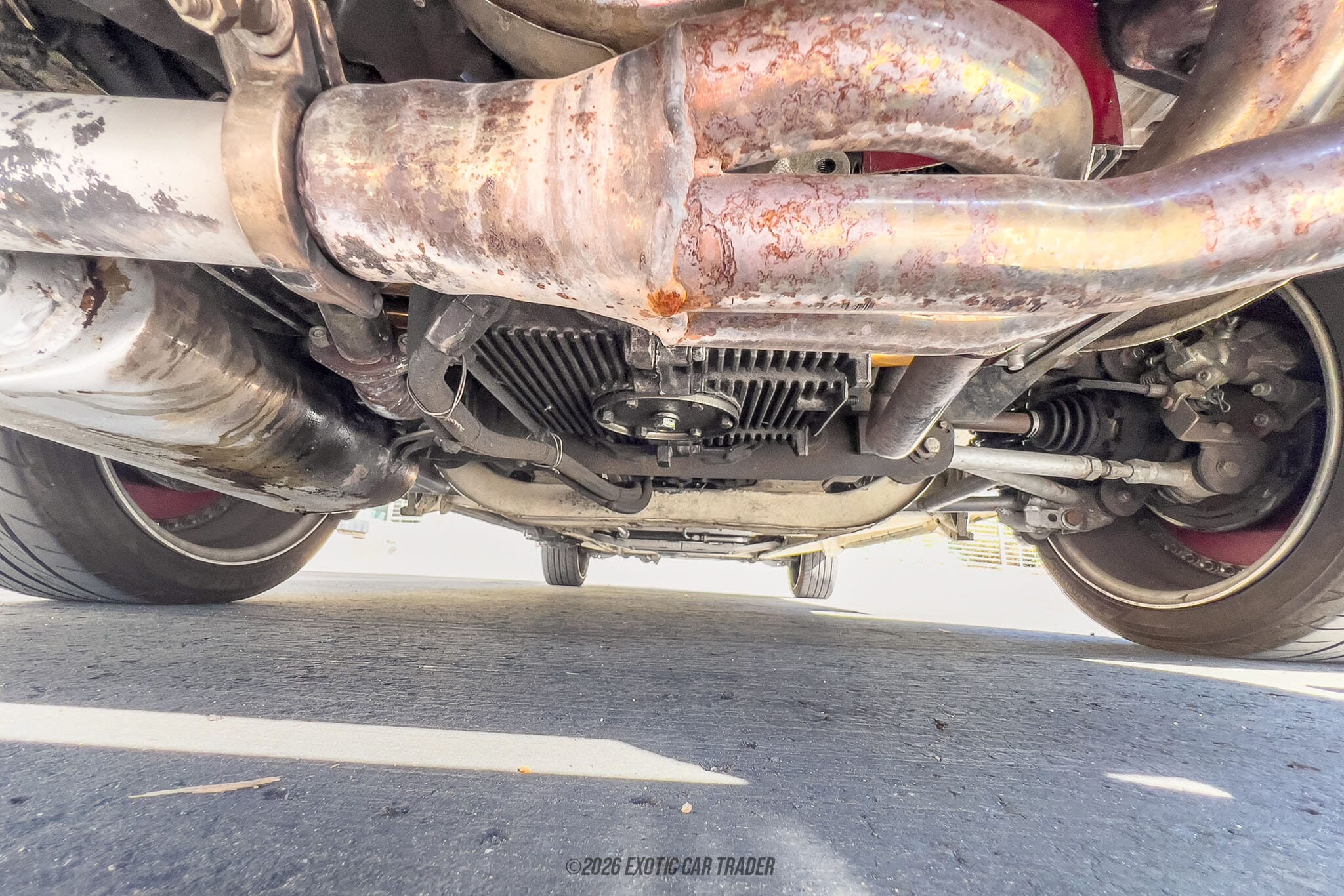
- Custom Pro Street Manual Transmission
- 4-Wheel Disc Brakes
- Imported From Brazil
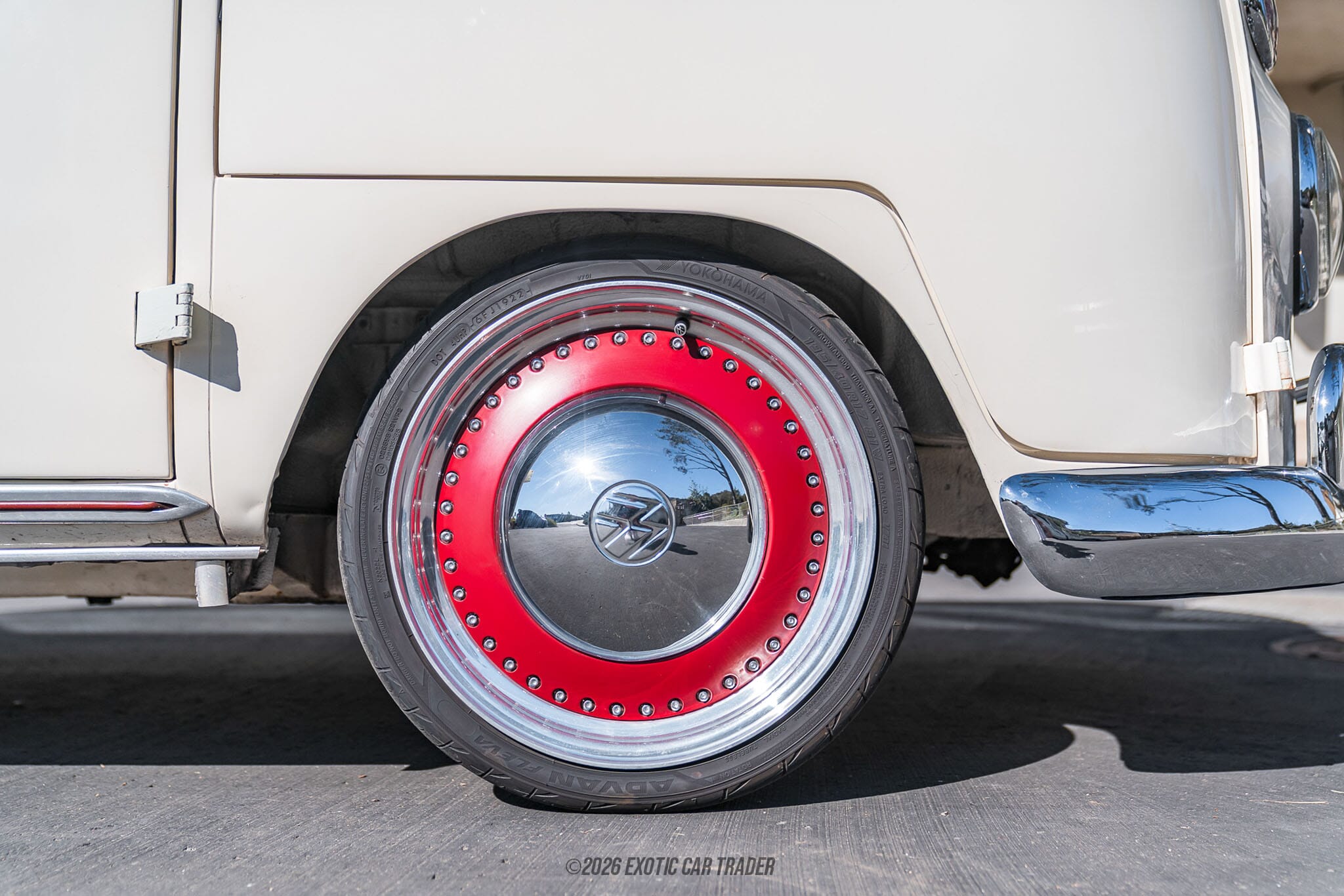
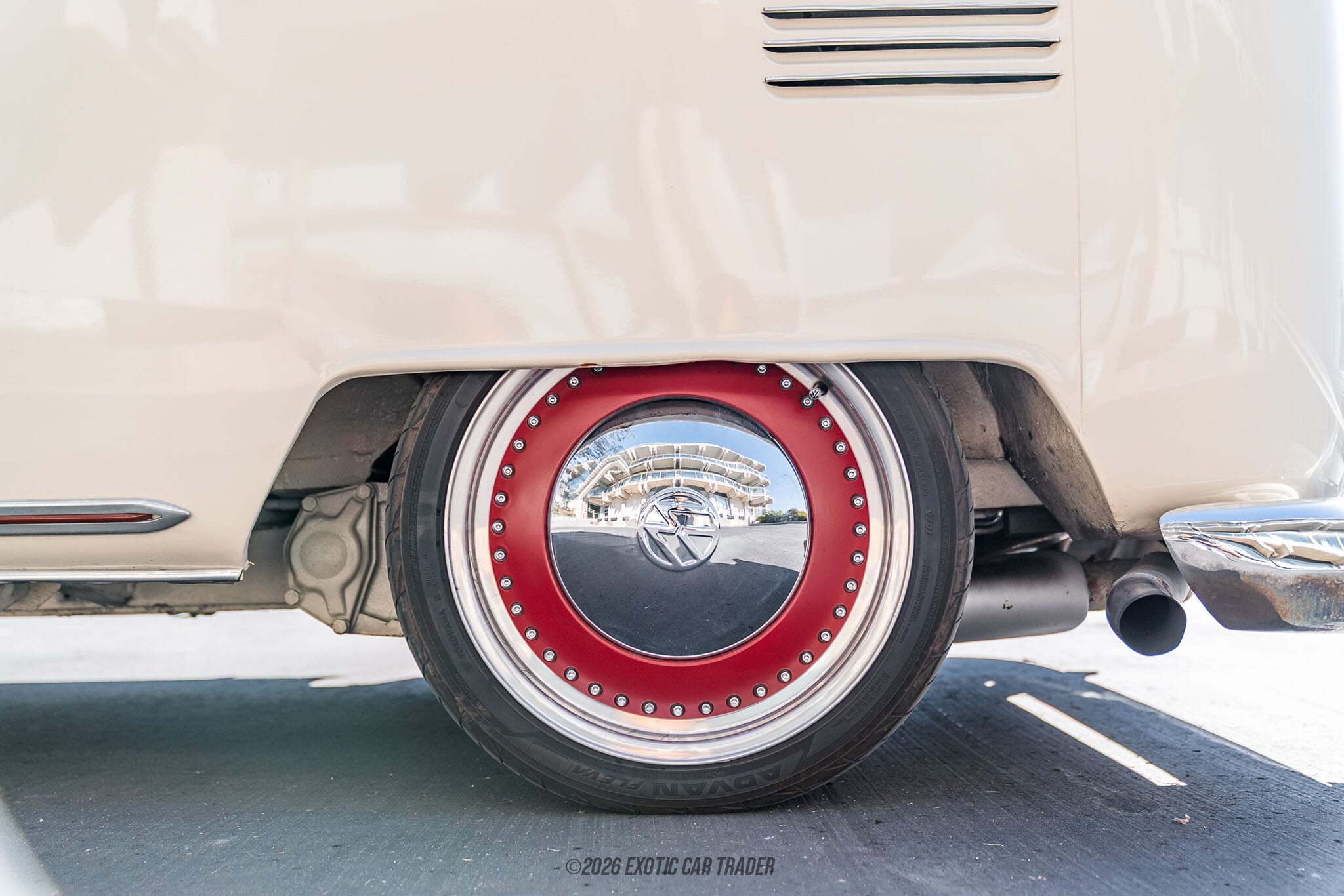
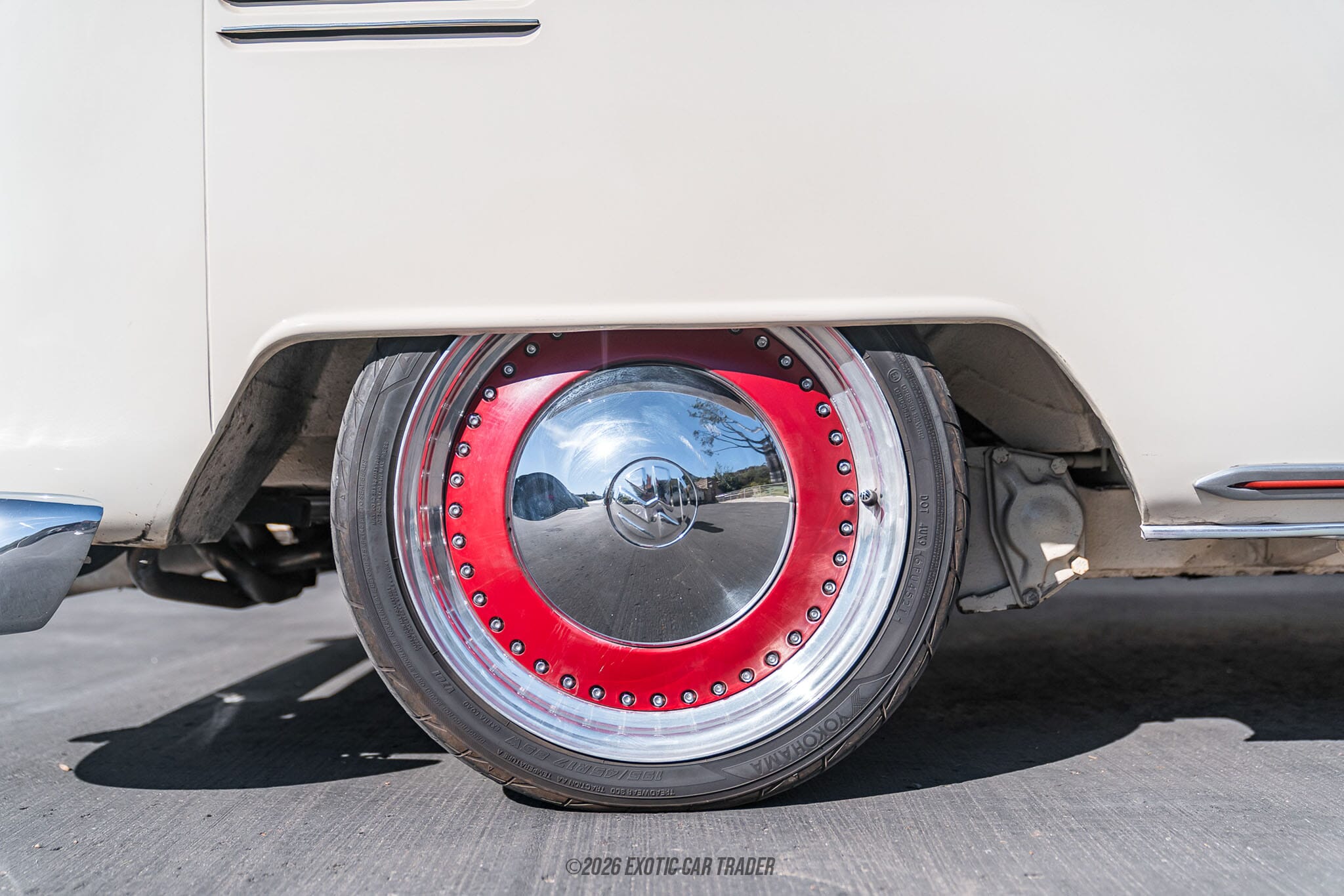
- 3 Piece AirKewld Smoothie 17 Inch Wheels
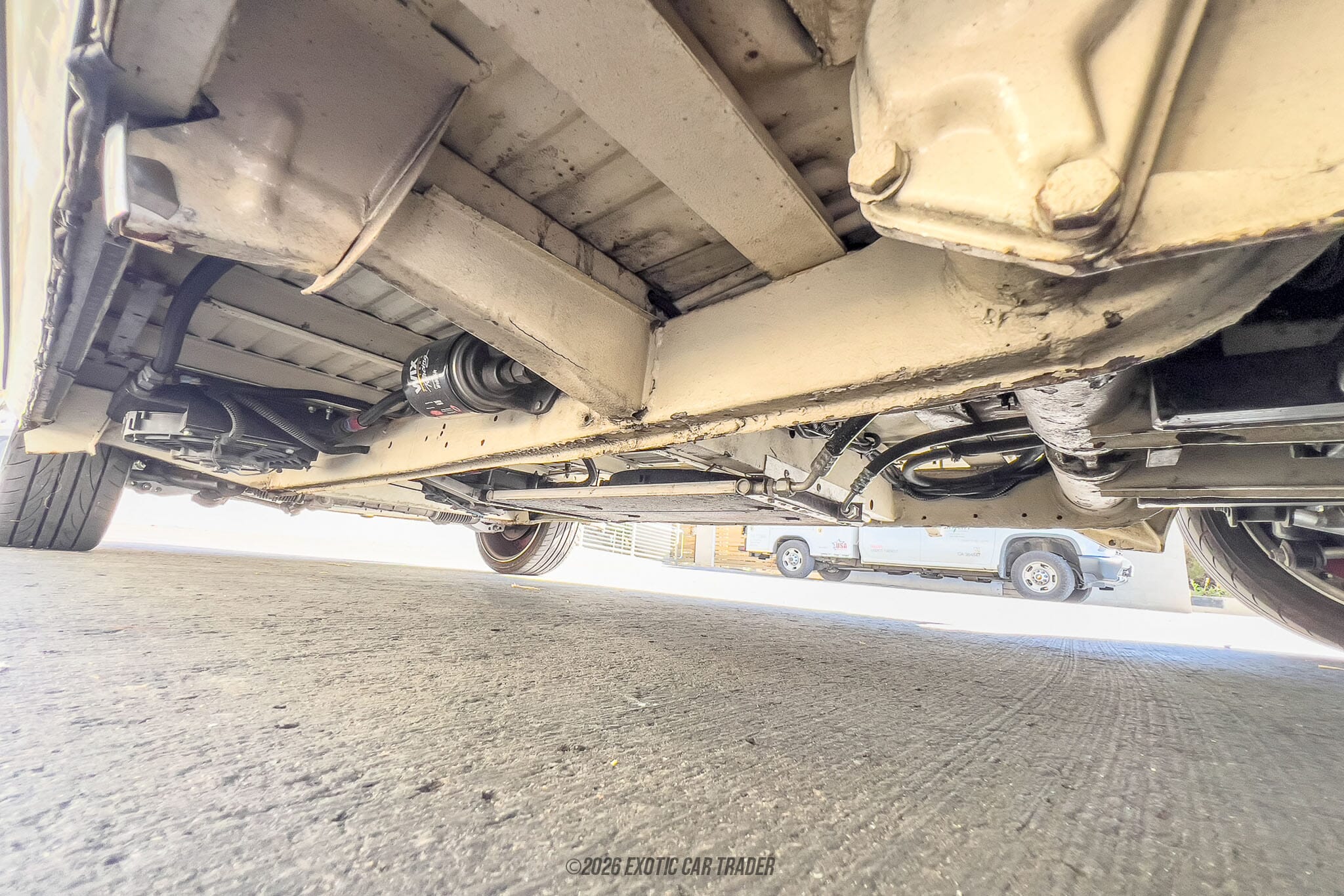
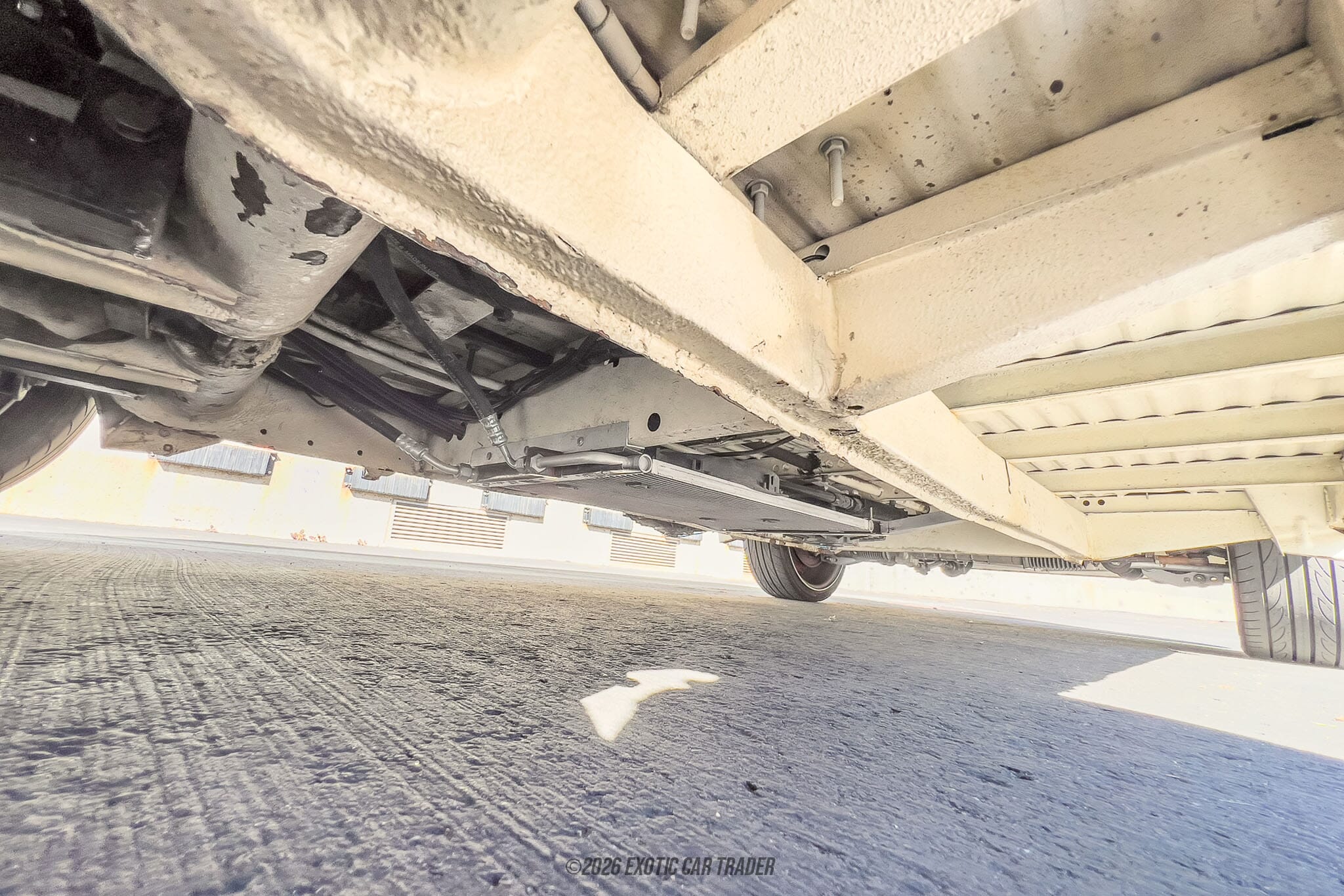
- Dual Oiler Coolers w/ Electric Fan


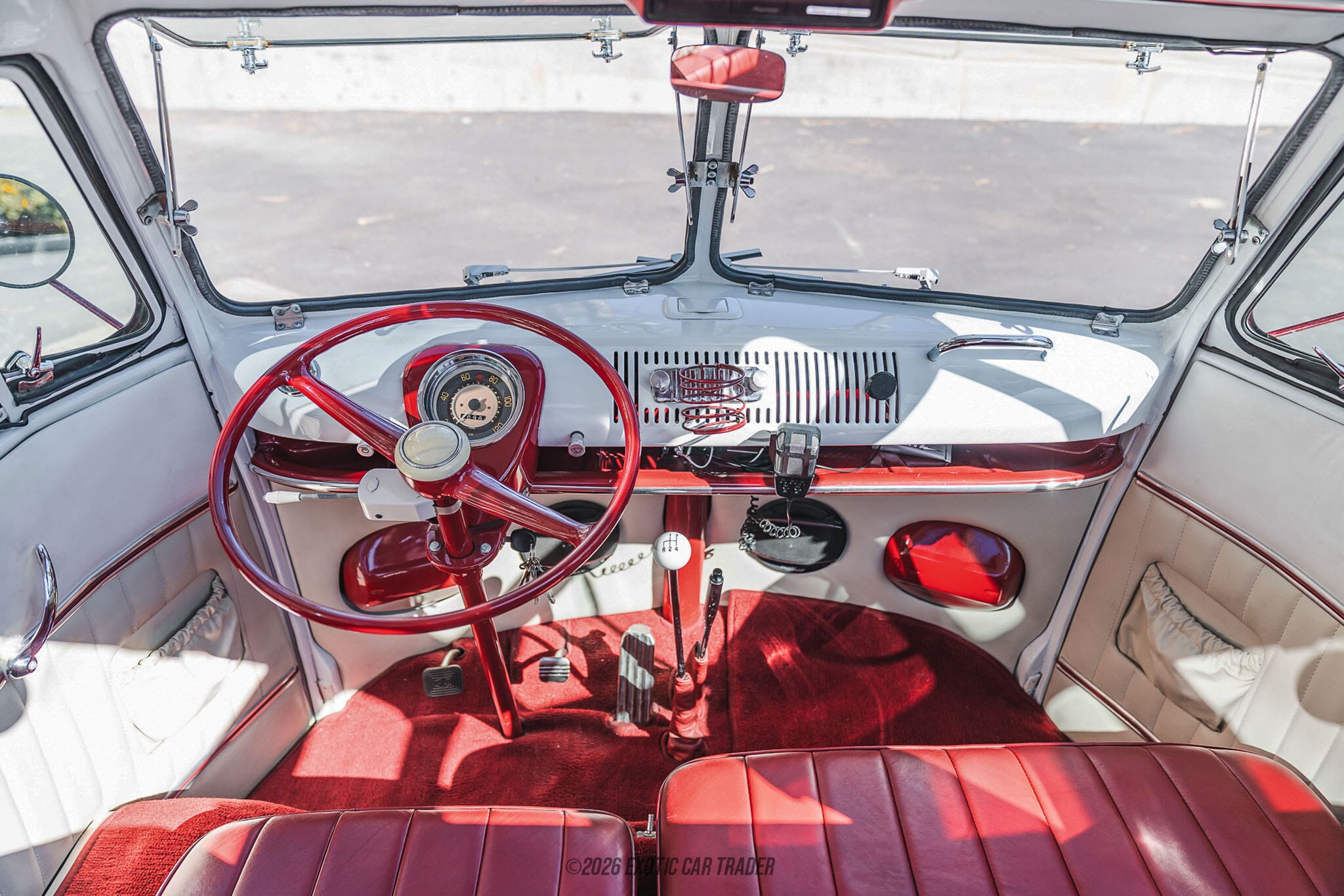
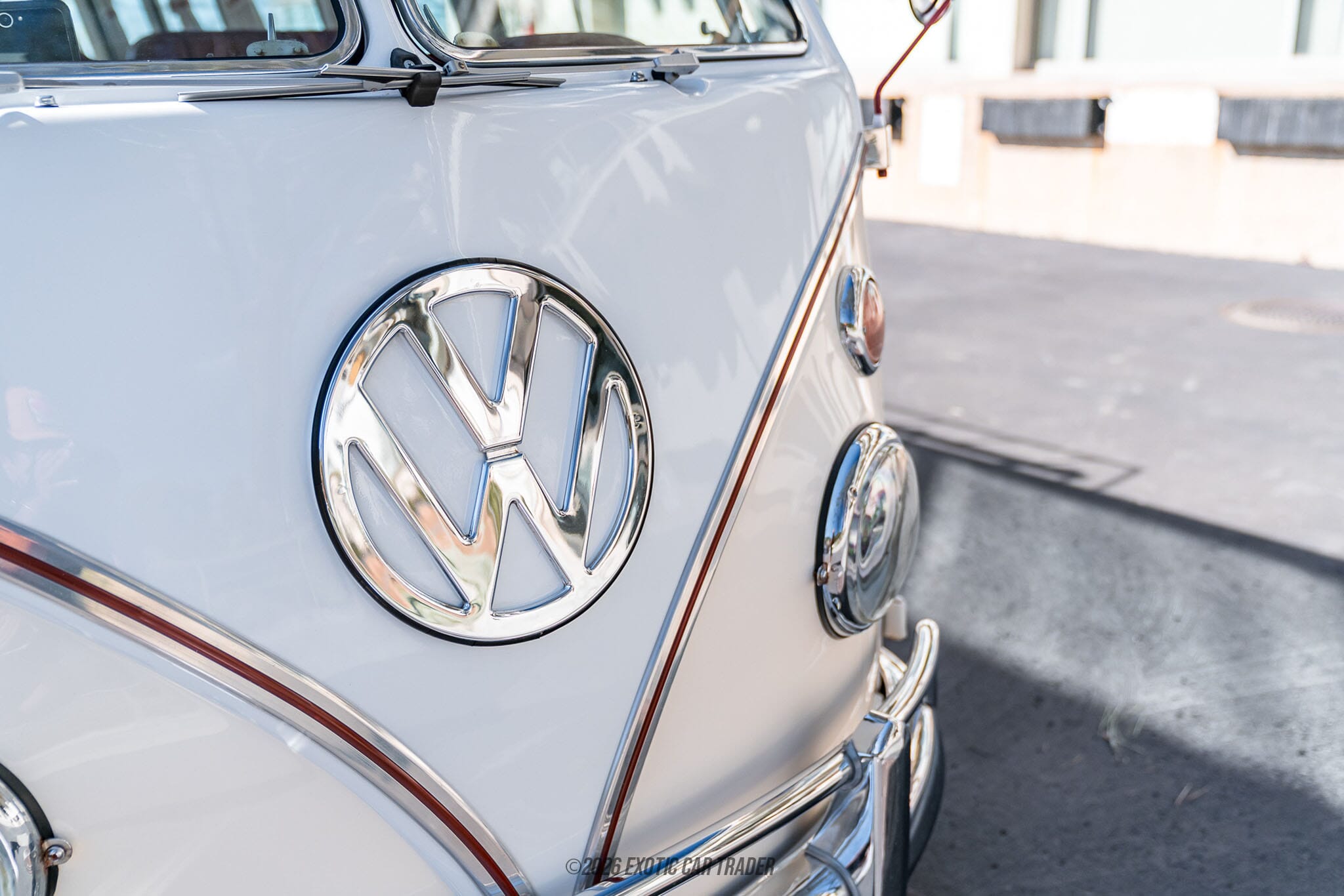
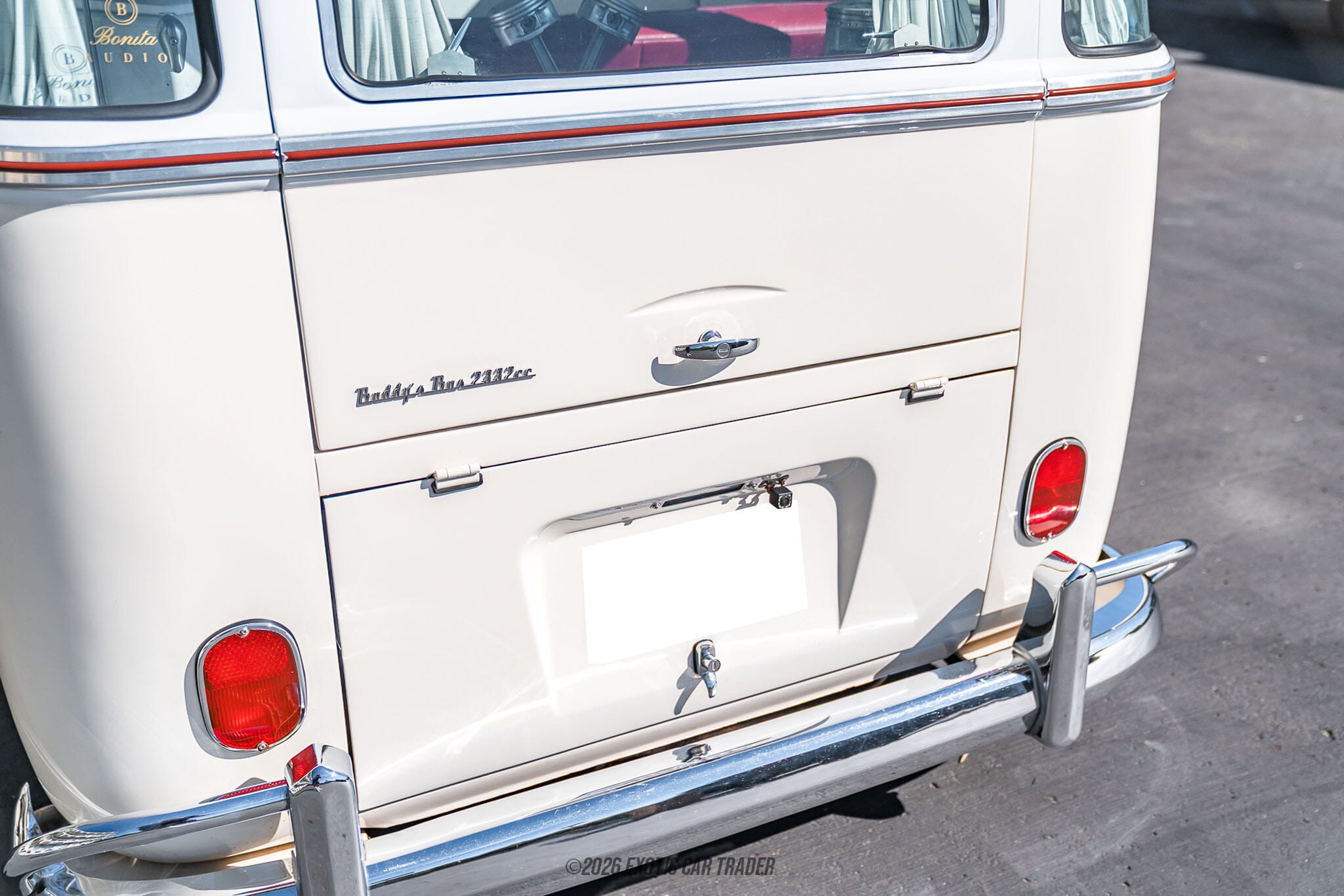
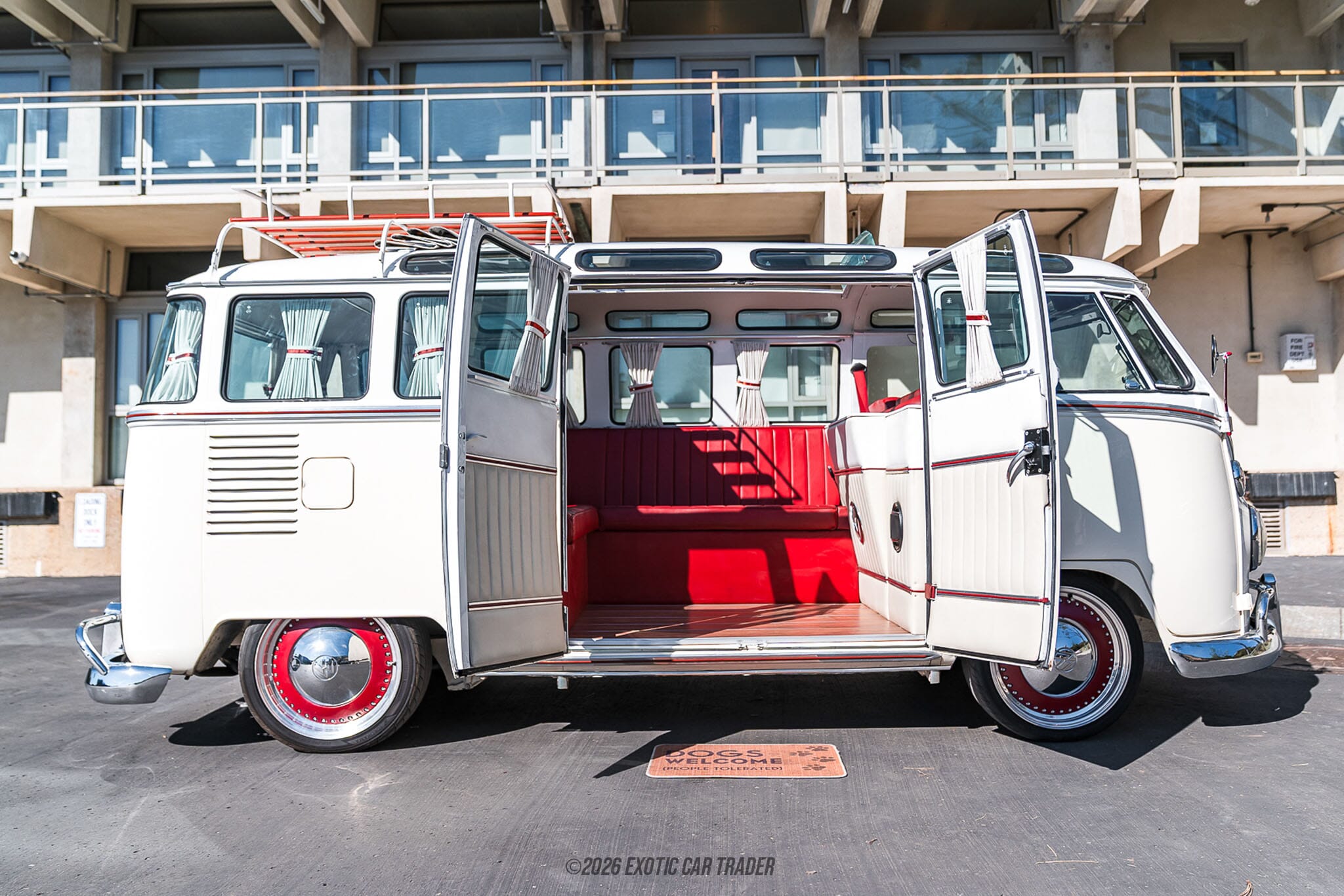
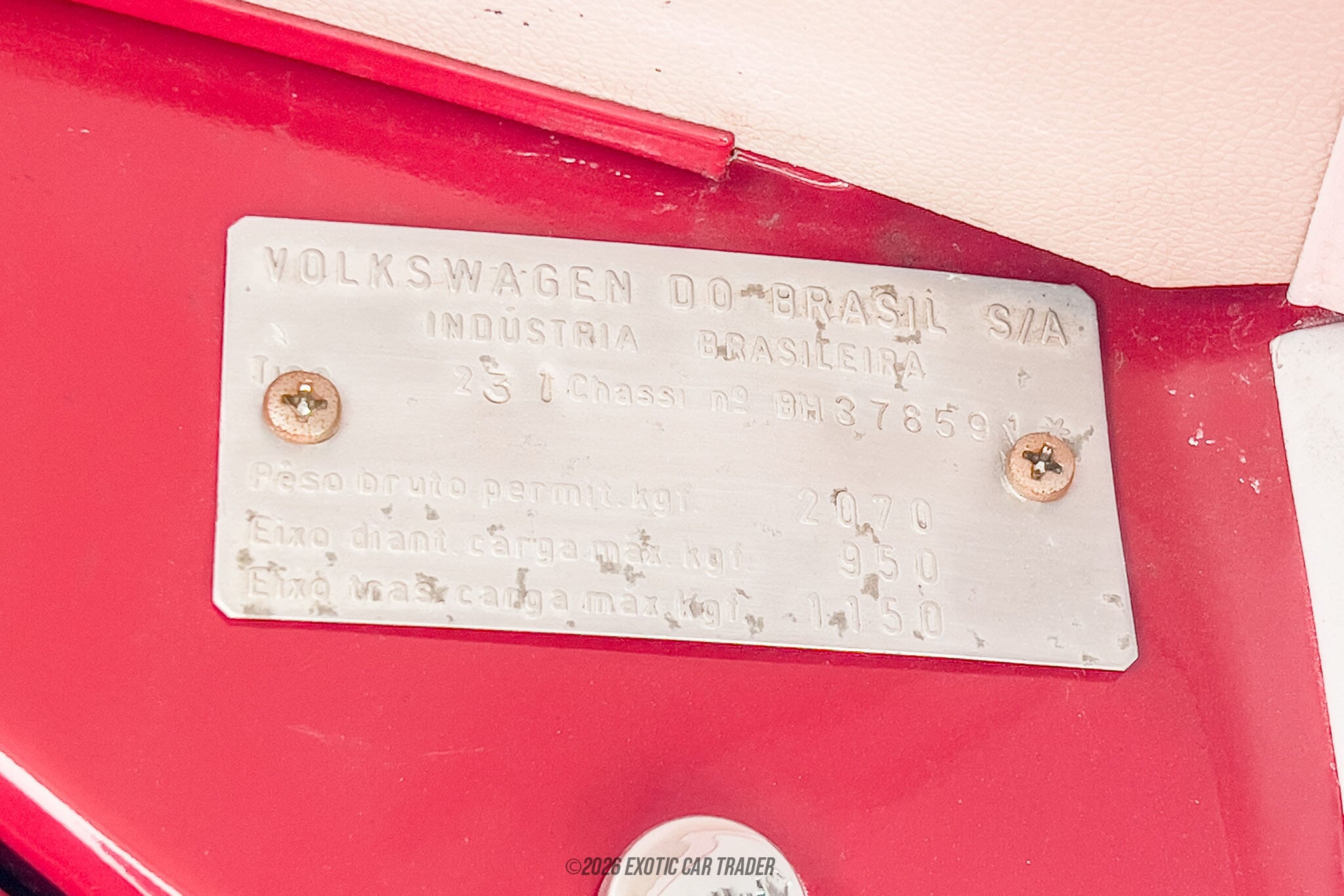
This 1975 Volkswagen Type 2 23-window Samba Deluxe Transporter represents a highly customized interpretation of the iconic microbus, combining classic design language with modern comfort and entertainment-oriented enhancements. Configured in a 23-window Samba-style layout and imported from Brazil, this example reflects the extended global production legacy of the Type 2 platform. With approximately 13,048 miles shown since conversion, rear-wheel drive, and adjustable suspension, this vehicle is positioned primarily as a lifestyle-oriented cruiser rather than a utility-focused transporter.
Exterior and Interior
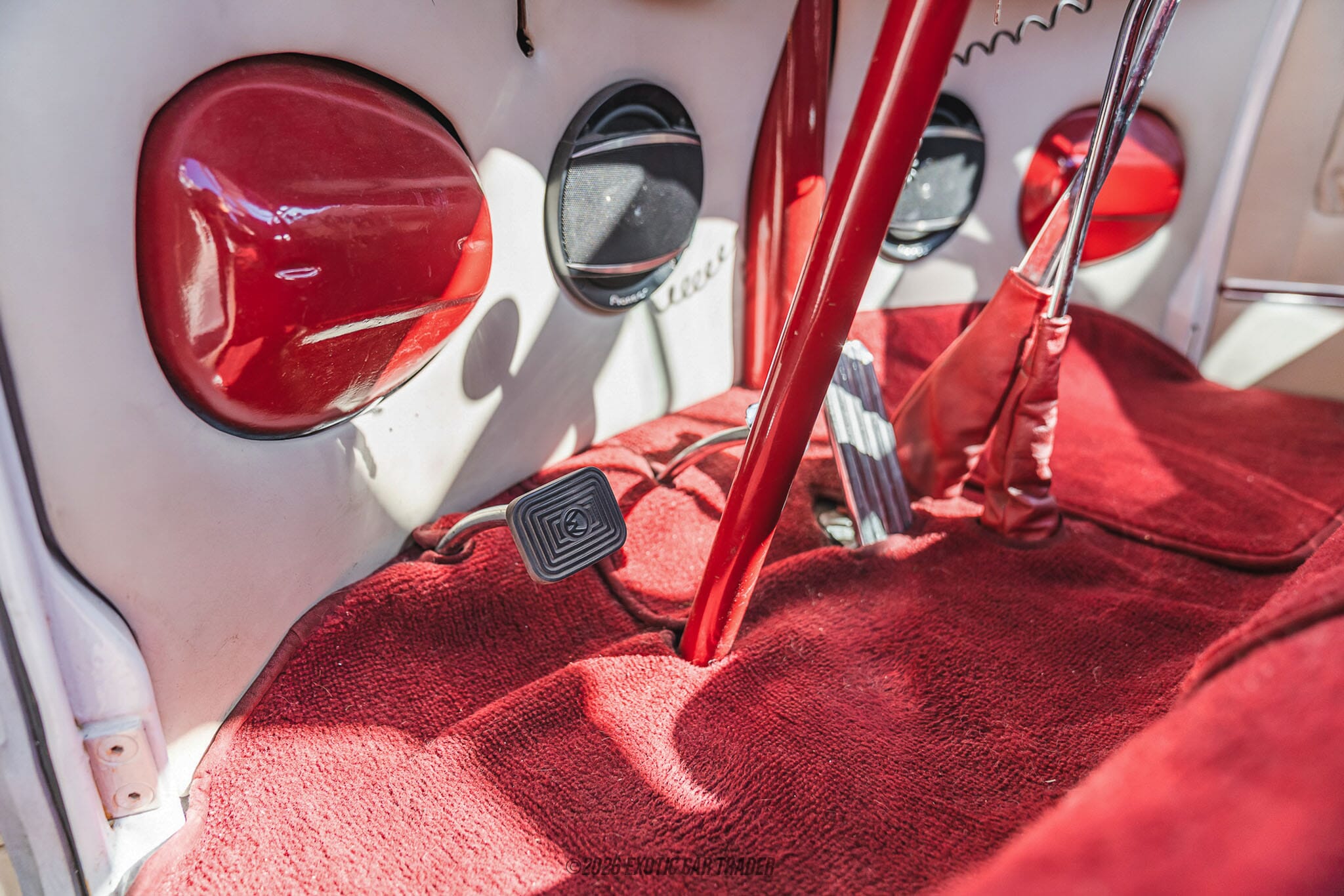
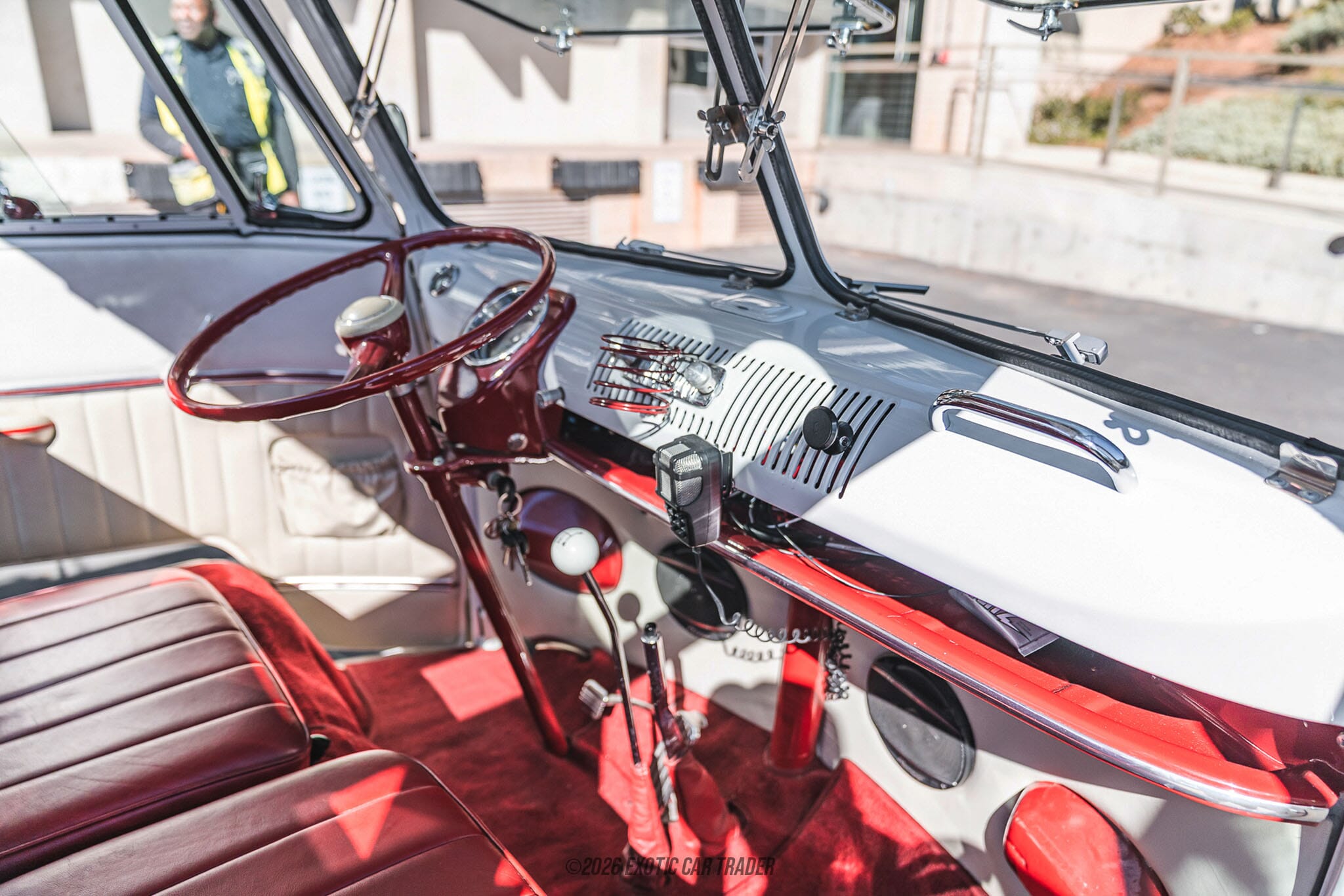
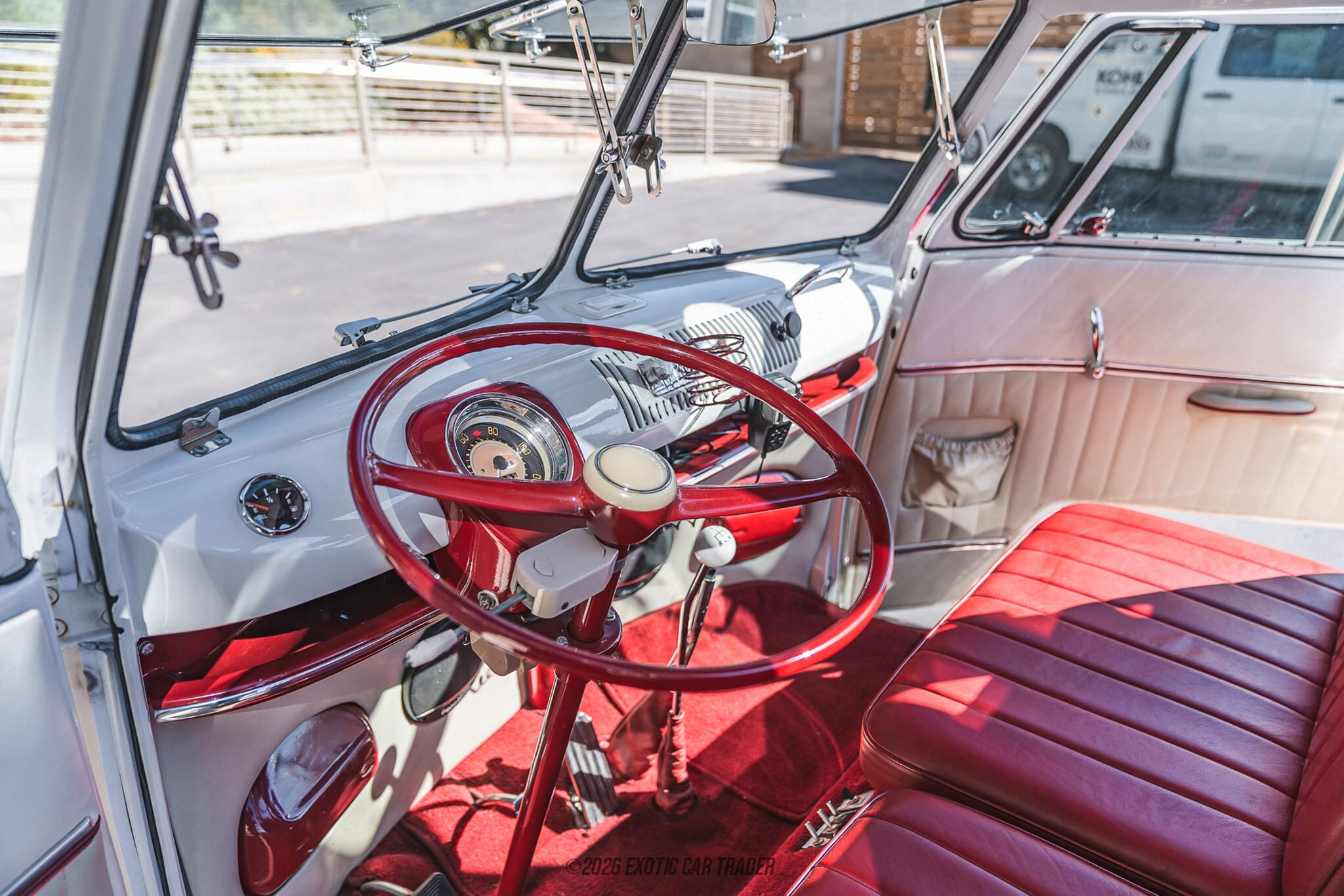
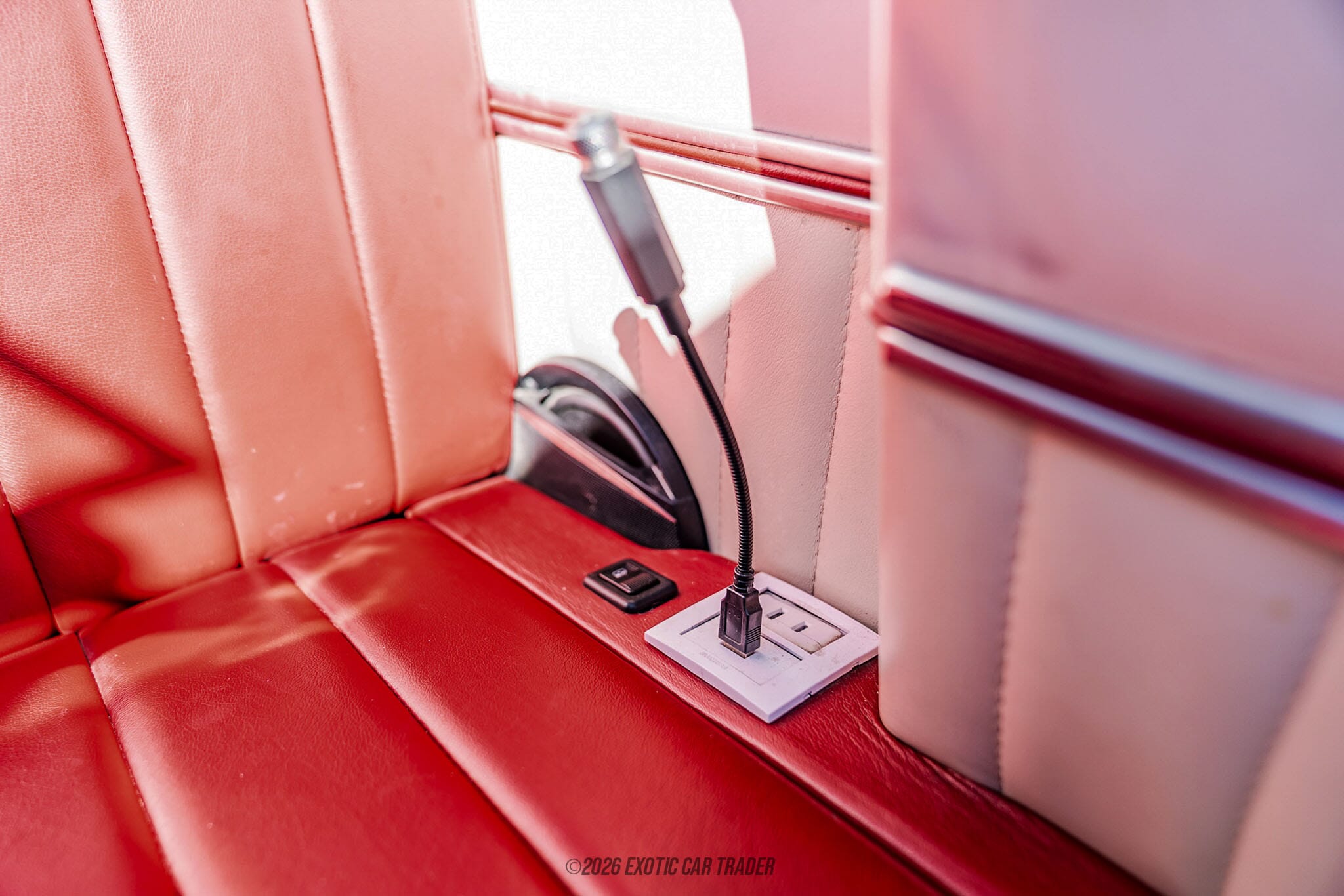
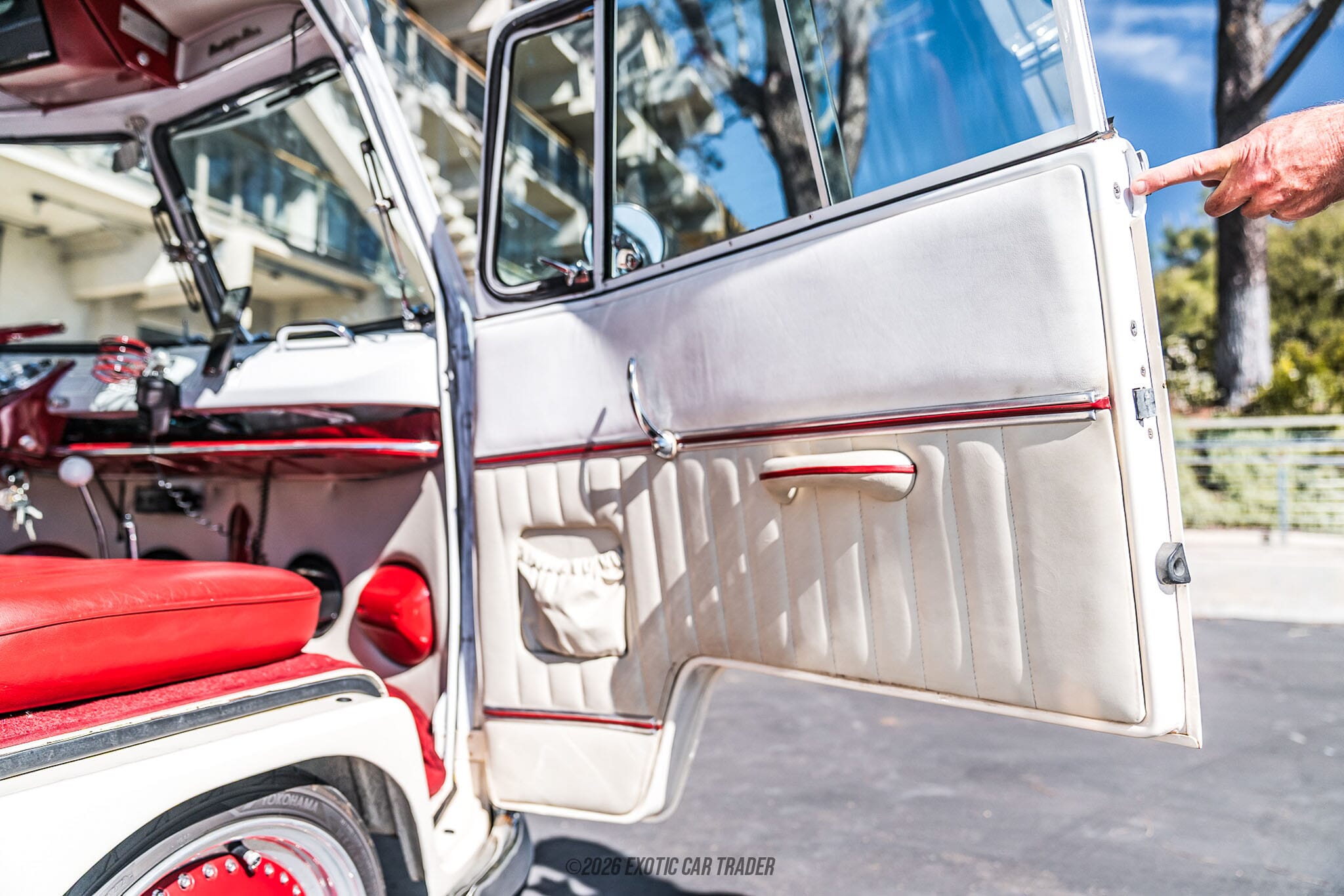
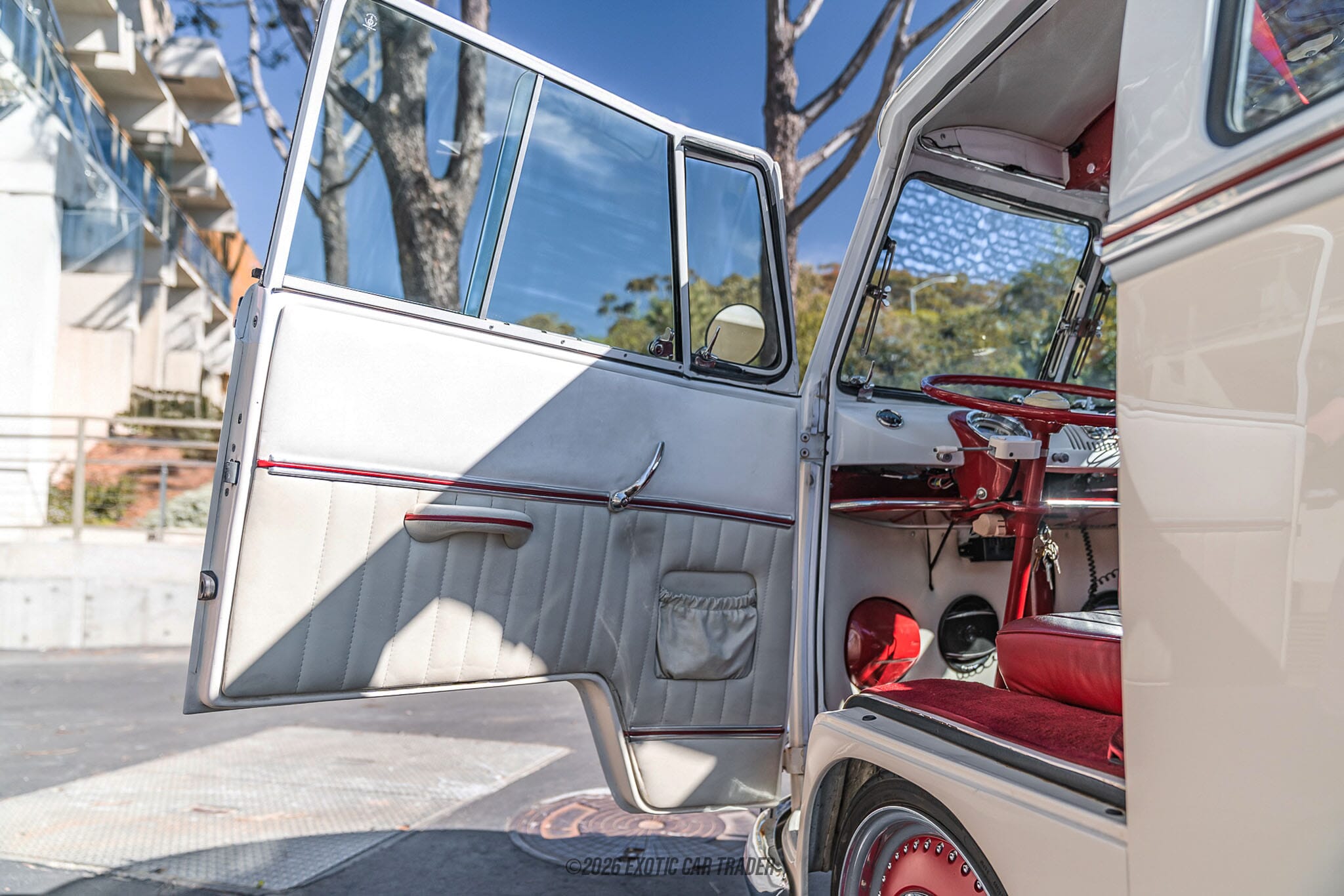
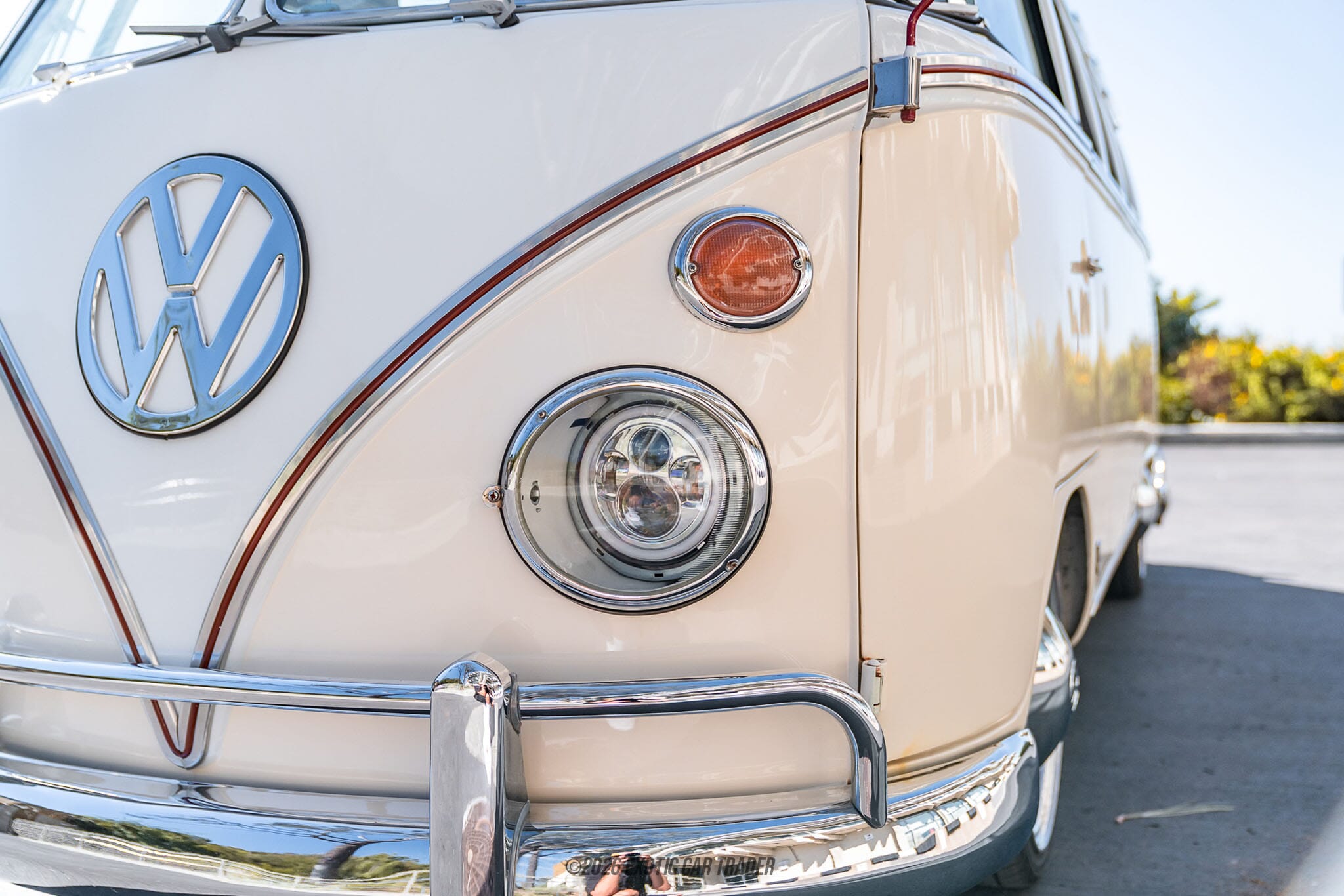
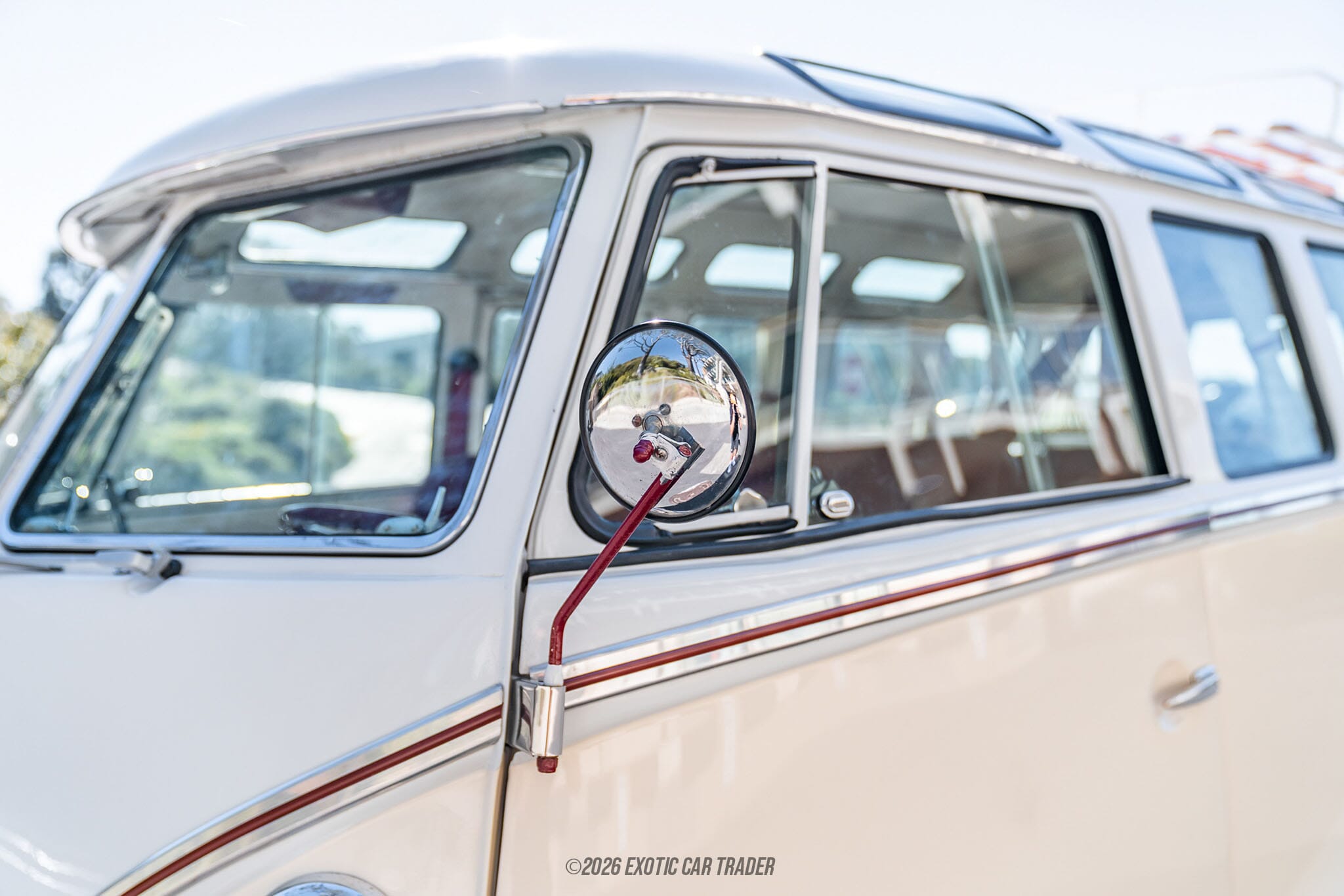
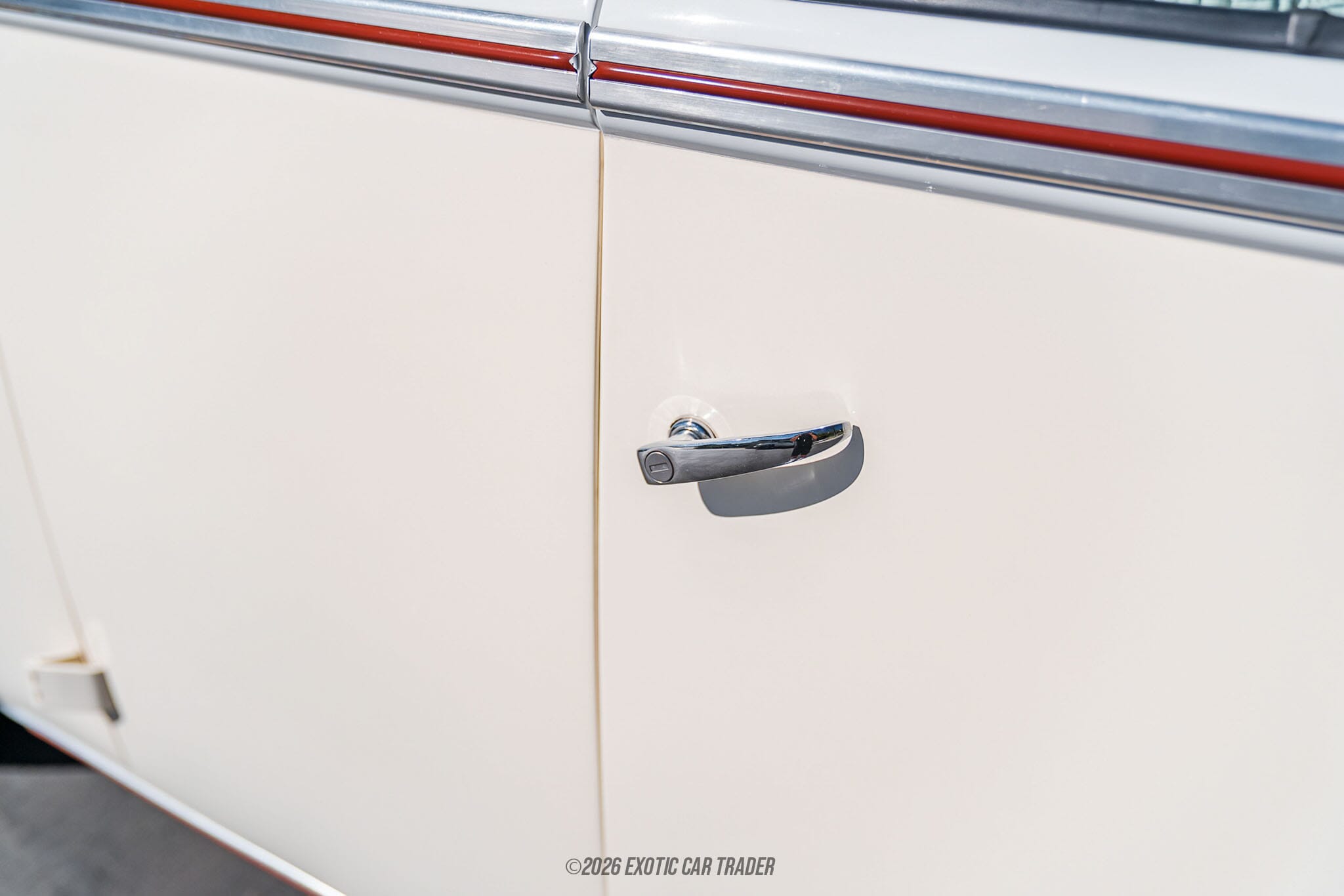
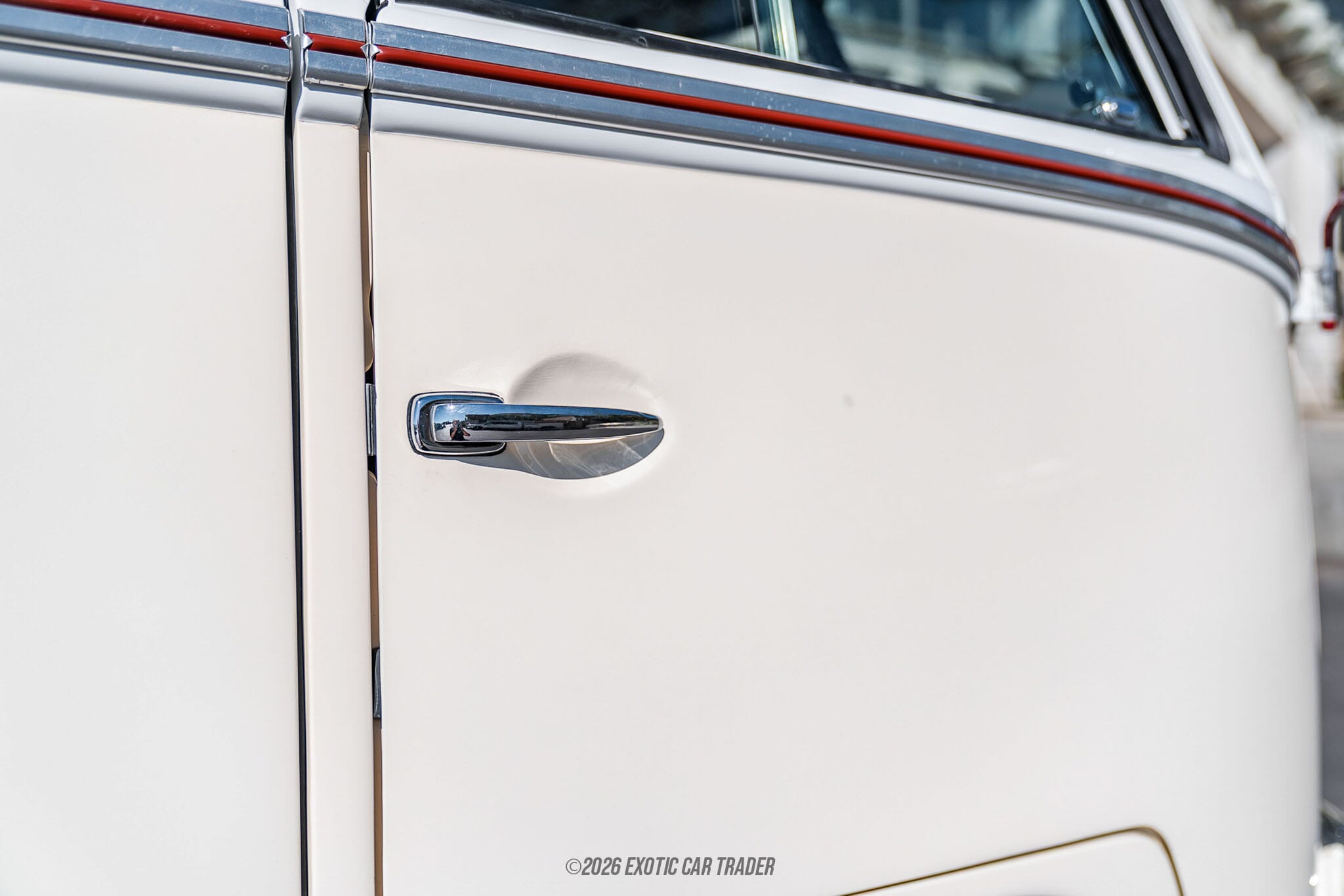
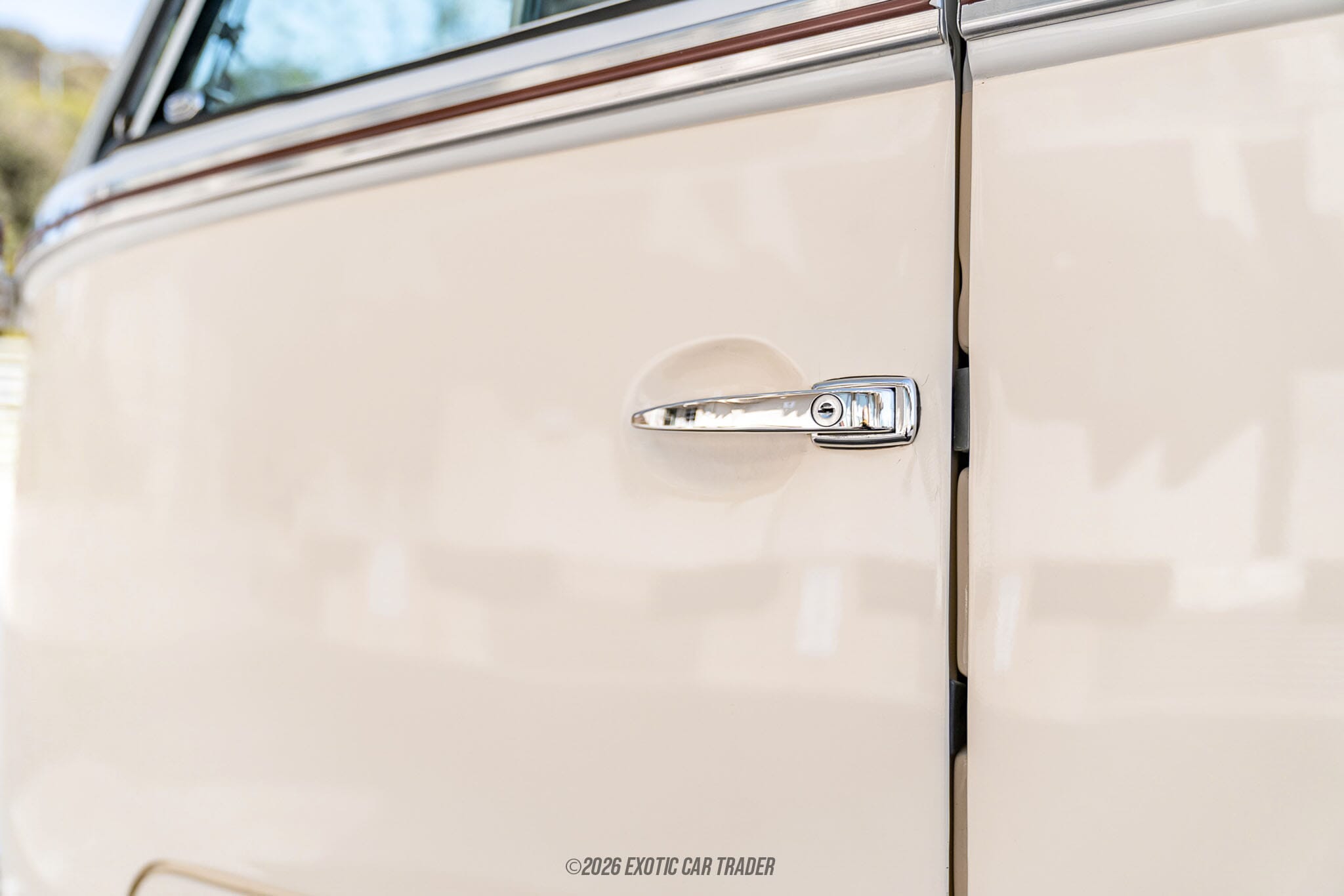
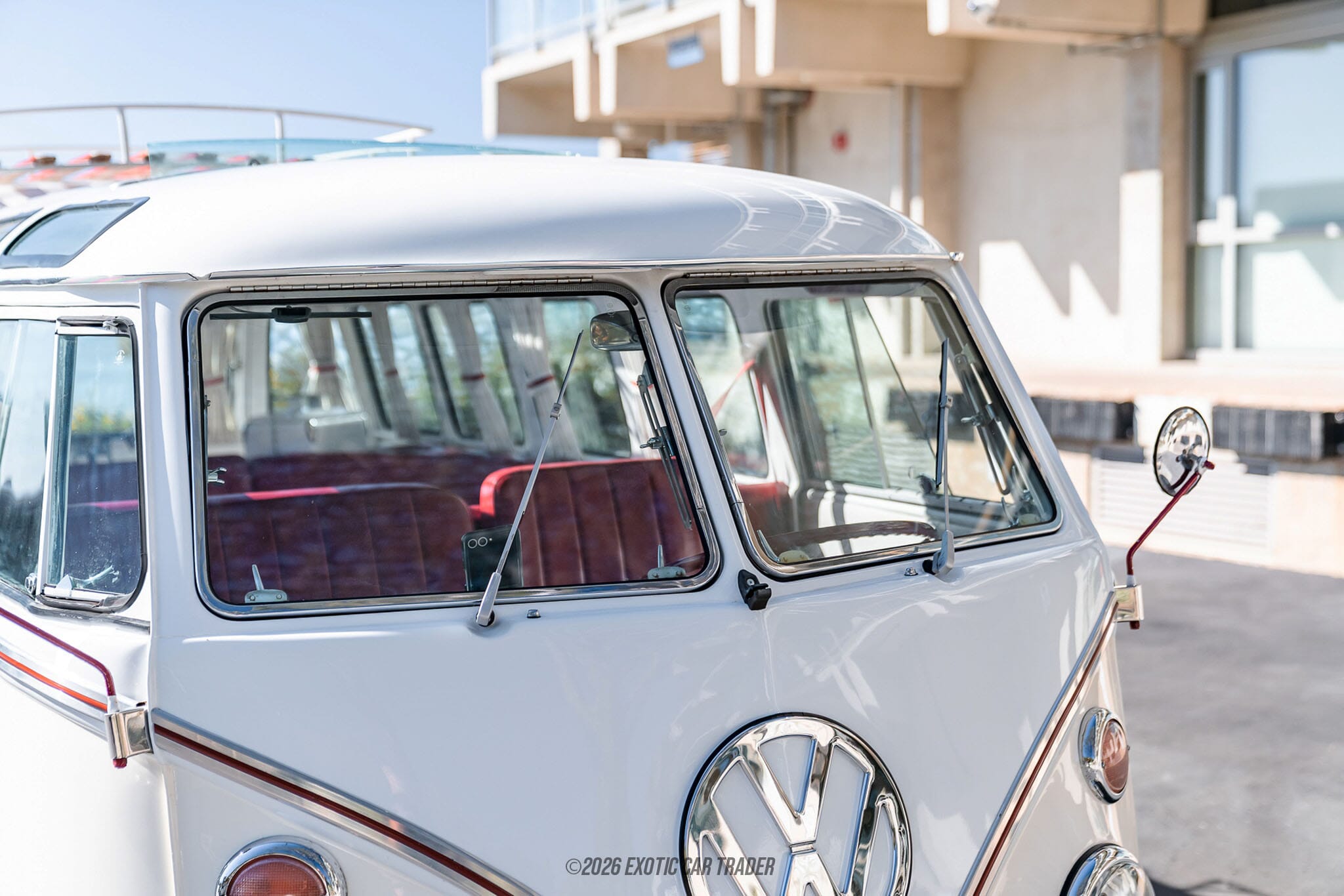
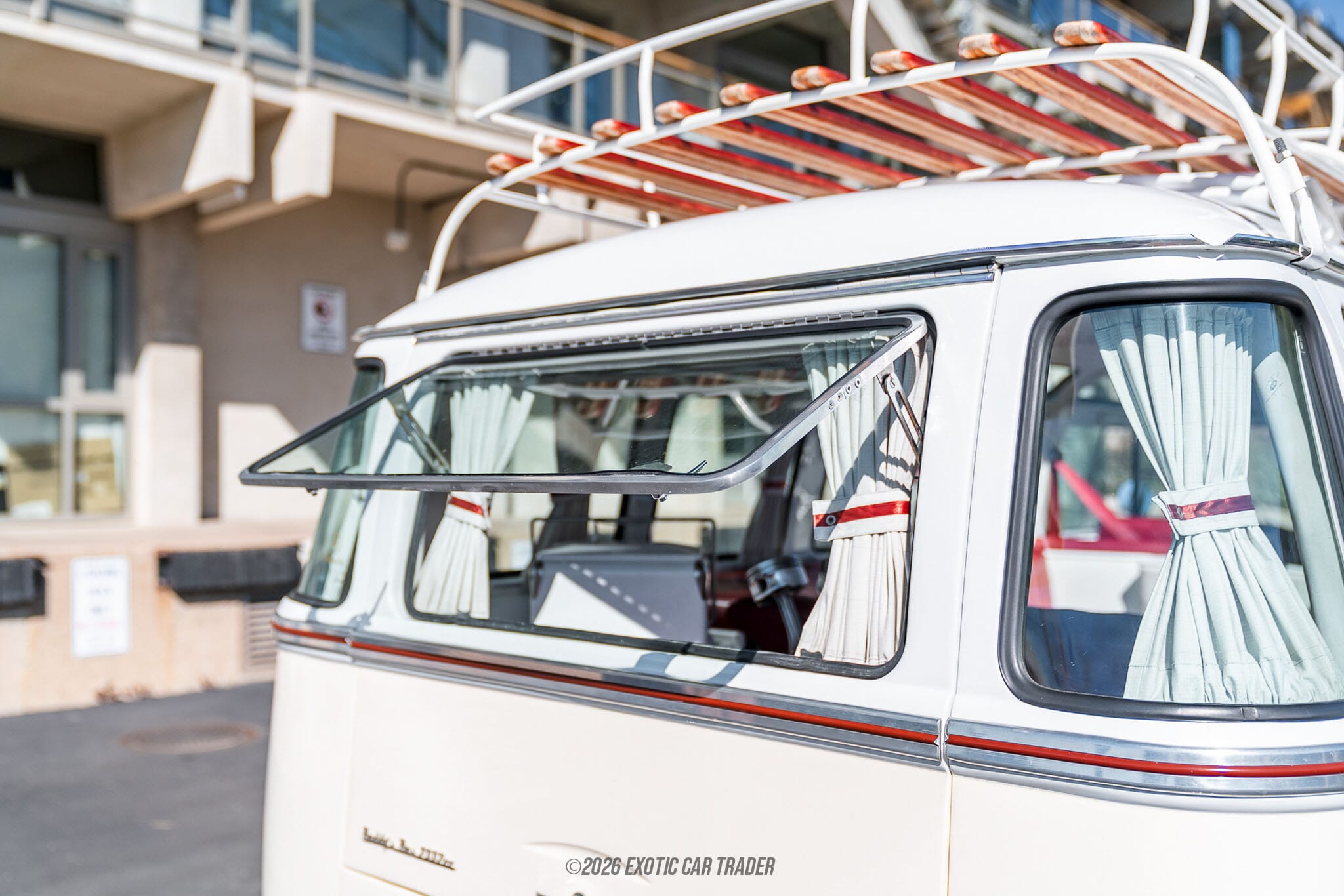
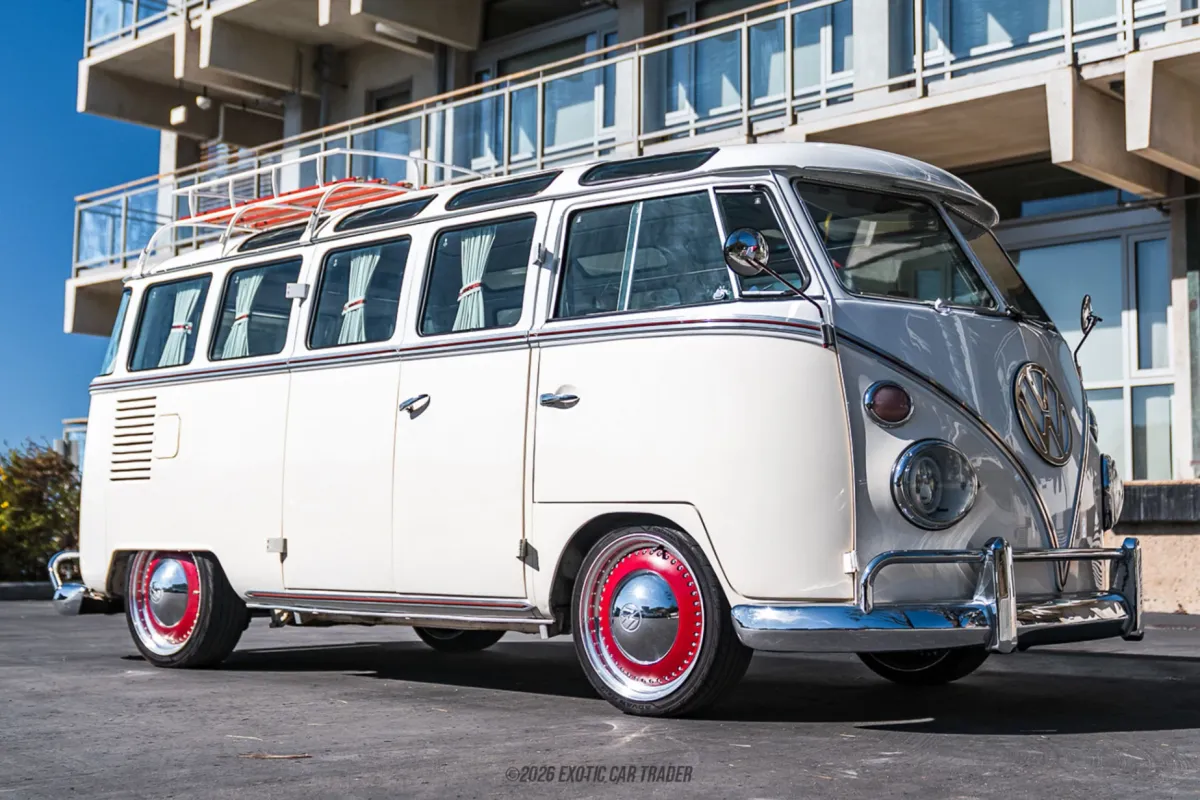
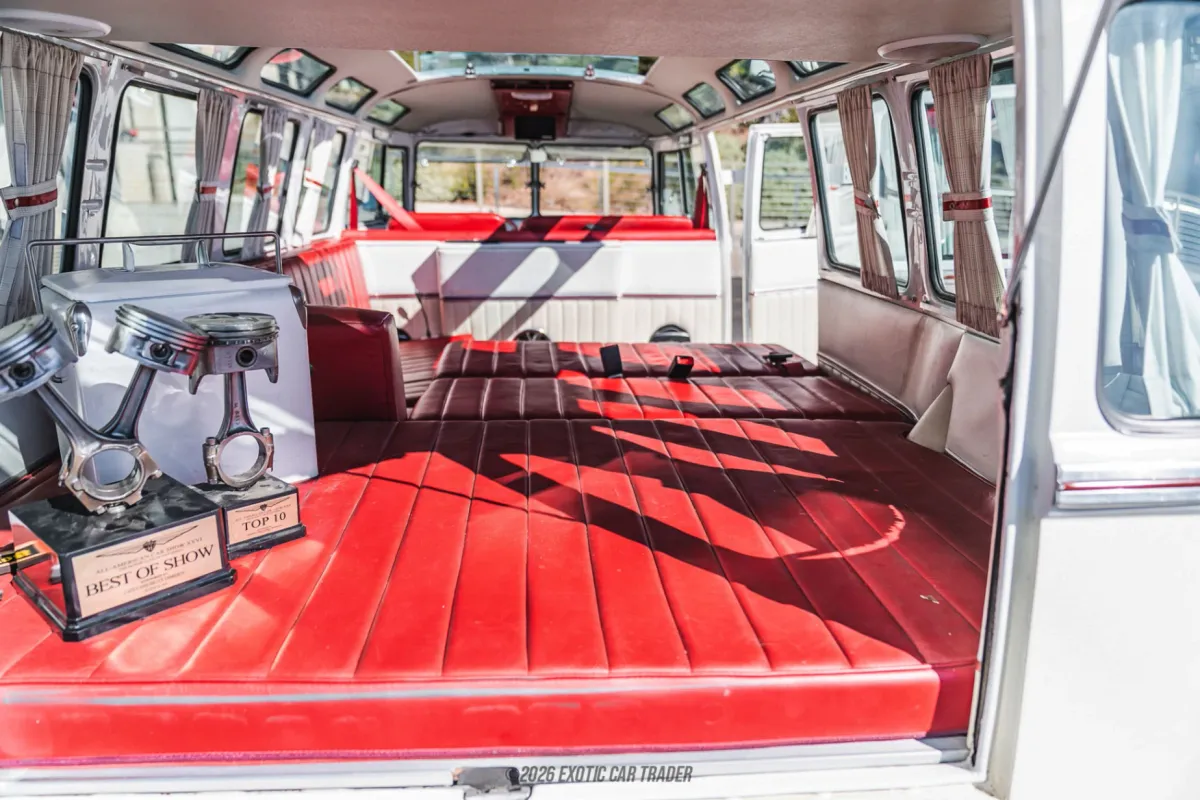
The exterior is finished in a cream and white color scheme and is defined by its extensive 23-window Samba-style configuration, sliding ragtop sunroof, and full-length canvas sunroof opening. Additional exterior features include a safari-style front windshield, roof rack w/ wood slats, Custom 3 Piece AirKewld Smoothie 17 Inch Wheels, and angel eye headlights. The interior is appointed in a white, cream, and burgundy two-tone reupholstered finish and features full lounge-style rear seating, buddy bench seating, curtains throughout the cabin, wood-style floor panels, and custom furniture. Comfort and technology amenities include air conditioning, an overhead flat-screen display, pop-up TV, aftermarket 1,500-watt stereo system, RGB lighting array, PA system, backup camera, dual battery setup w/ inverters, and integrated 110V power outlets.
Engine
Power is provided by a 2,332cc (142ci) naturally aspirated air-cooled H4 engine rated at 150 hp, equipped w/ dual Weber carburetors, Porsche 911 Type Fan and Shroud with two electric oil coolers and fans to keep the motor running cool, and a 12-volt electrical system. The engine is paired to a custom Pro Street 4-speed manual transmission driving the rear wheels. Chassis and drivetrain enhancements include rack-and-pinion steering, independent front and rear suspension w/ adjustable coilovers, and 4-wheel disc brakes, offering improved ride adjustability and braking capability compared to a standard period configuration.

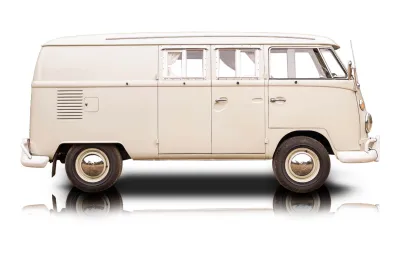

This 1966 Volkswagen Type 2 Transporter Riviera Camper Conversion captures the spirit of classic Volkswagen travel culture with its iconic T1 styling, compact footprint, and versatile camper layout. Showing approximately 800 miles on the current build, this example features a Riviera camper conversion with a walk-through hardtop configuration, rear sleeping area, and built-in wood cabinetry. The Riviera conversion adds particular enthusiast appeal, as these period camper configurations are sought after for their distinctive layouts, usability, and connection to vintage West Coast camping culture. Finished in Arctic White with a Turquoise interior, this vintage Volkswagen combines nostalgic charm with practical camper functionality, making it an appealing choice for enthusiasts seeking a unique piece of classic automotive history.
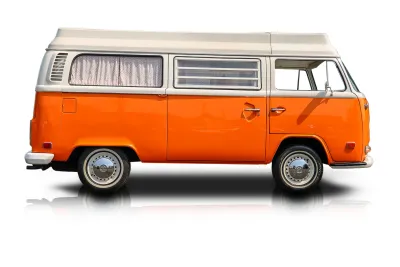
For decades, the Volkswagen Type 2 has represented freedom on four wheels, becoming one of the most recognizable camper vans ever produced. This 1972 Volkswagen Type 2 Transporter Camper Van carries on that legacy with its classic Orange and White finish, pop-top camper roof, and thoughtfully configured camper interior conversion. Showing approximately 88,815 miles, this air-cooled icon blends vintage character with the functionality that made these Transporters favorites among adventurers, surfers, and road-trip enthusiasts. Whether destined for weekend camping excursions, local Cars & Coffee events, or simply reliving the golden age of overland travel, this Type 2 is ready for its next chapter.
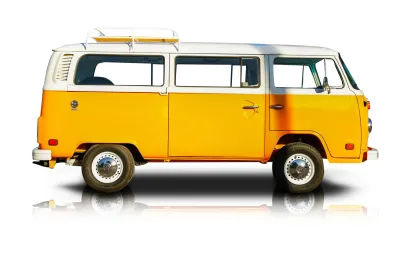
The Volkswagen Type 2 is one of the most recognizable vehicles ever produced, symbolizing freedom, adventure, and a carefree lifestyle for generations of enthusiasts. By 1977, the Bay Window Transporter had evolved into a more refined and capable vehicle while retaining the unmistakable character that made it a cultural icon. Showing 49,097 miles, this 1977 Volkswagen Transporter stands out with its attractive Marino Yellow and Pastel White two-tone exterior, restored interior, and tasteful upgrades. Featuring custom upholstery, woodgrain interior accents, an aftermarket safari-style roof rack, and a classic air-cooled powertrain, this Transporter captures the spirit of vintage Volkswagen motoring while offering the charm and usability that collectors continue to seek today.
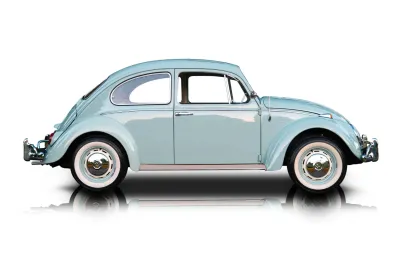
The 1966 Volkswagen Beetle is one of the most iconic vehicles ever produced, celebrated for its unmistakable styling, simple mechanical design, and enduring enthusiast following. Showing 71,480 miles, this example represents the classic Beetle formula with its 1,300cc air-cooled flat-four engine, rear-engine layout, and engaging 4-speed manual transmission. Finished in Bahama Blue with a reupholstered two-tone interior, this Beetle combines vintage charm with refreshed presentation while preserving the character that has made the Volkswagen Beetle a beloved classic around the world.
This 1966 Volkswagen Type 2 Transporter Riviera Camper Conversion captures the spirit of classic Volkswagen travel culture with its iconic T1 styling, compact footprint, and versatile camper layout. Showing approximately 800 miles on the current build, this example features a Riviera camper conversion with a walk-through hardtop configuration, rear sleeping area, and built-in wood cabinetry. The Riviera conversion adds particular enthusiast appeal, as these period camper configurations are sought after for their distinctive layouts, usability, and connection to vintage West Coast camping culture. Finished in Arctic White with a Turquoise interior, this vintage Volkswagen combines nostalgic charm with practical camper functionality, making it an appealing choice for enthusiasts seeking a unique piece of classic automotive history.
For decades, the Volkswagen Type 2 has represented freedom on four wheels, becoming one of the most recognizable camper vans ever produced. This 1972 Volkswagen Type 2 Transporter Camper Van carries on that legacy with its classic Orange and White finish, pop-top camper roof, and thoughtfully configured camper interior conversion. Showing approximately 88,815 miles, this air-cooled icon blends vintage character with the functionality that made these Transporters favorites among adventurers, surfers, and road-trip enthusiasts. Whether destined for weekend camping excursions, local Cars & Coffee events, or simply reliving the golden age of overland travel, this Type 2 is ready for its next chapter.
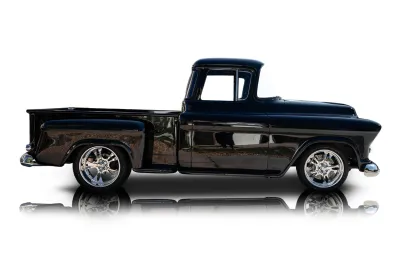
This 1956 Chevrolet 3100 Stepside Restomod takes the unmistakable shape of Chevrolet’s Task Force-era pickup and pairs it with a thoroughly modernized performance package. Showing approximately 28,601 miles, this build is powered by a supercharged 5.0L Coyote V8 with electronic fuel injection and a Roush supercharger, sending power to the rear wheels through an automatic transmission. Finished in black over a beige interior, it also benefits from a reupholstered cabin, aftermarket digital gauges, a Pioneer audio head unit, custom wood bed flooring, and aftermarket wheels. It is a strong blend of vintage truck styling and contemporary performance hardware.
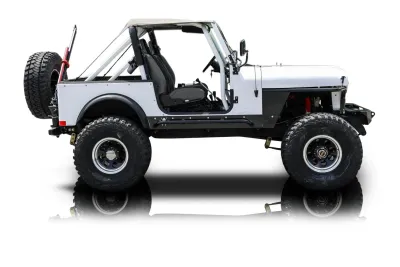
This 1982 Jeep CJ-7 represents the classic Jeep formula taken to an enthusiast level, combining vintage 4x4 character with a comprehensive off-road build. Showing approximately 4,831 miles since the build, this CJ-7 has been extensively upgraded with a reinforced and powder-coated frame, Mountain Off-Road Enterprises suspension components, upgraded axles, four-wheel disc brakes, and a strengthened drivetrain designed for serious trail use. Finished in white with a black interior, it features a Clifford Performance blueprinted 292ci inline-six, NV4500 5-speed manual transmission, Atlas transfer case, MasterCraft Baja RS suspension seats, and a long list of purpose-built improvements. With the current owner reporting approximately 4 inches of additional width over stock axles and only a few thousand miles since completion, this CJ-7 represents a highly customized interpretation of Jeep’s legendary open-air 4x4 platform.
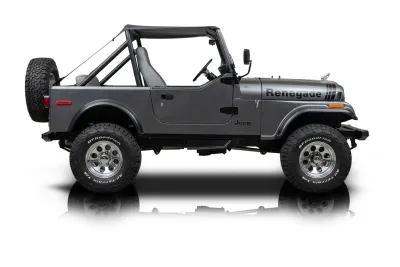
The CJ-7 sits right in the sweet spot of classic Jeep history: compact, simple, unapologetically mechanical, and still built around the kind of body-on-frame 4x4 formula enthusiasts love. This 1986 Jeep CJ-7 Renegade takes that foundation and adds a long list of thoughtful upgrades, with the current owner reporting that the build took approximately two years to complete. Showing just 1,210 miles, it combines its classic Renegade identity with modernized fueling and ignition, a 5-speed manual transmission, a 2-inch suspension lift, a TDK frame, upgraded instrumentation, and a refreshed interior. Finished in Chevrolet Shark Gray with a black hard top, it has the rugged stance of a traditional CJ while bringing in just enough modern hardware to make it a particularly appealing enthusiast build.

Terms of Service
Be Kind and Courteous
We're here to create a platform to better the automotive industry through communication and transparency. Please treat everyone with respect. Healthy debates are natural, but kindness is required.
No Hate Speech
Make sure everyone feels safe. Hate speech of any kind is strictly prohibited. Degrading comments about things like race, religion, culture, sexual orientation, etc. will not be tolerated.
No Promotions or Spam
Give more than you take. Self-promotion, spam, or links of any kind are not allowed.
