




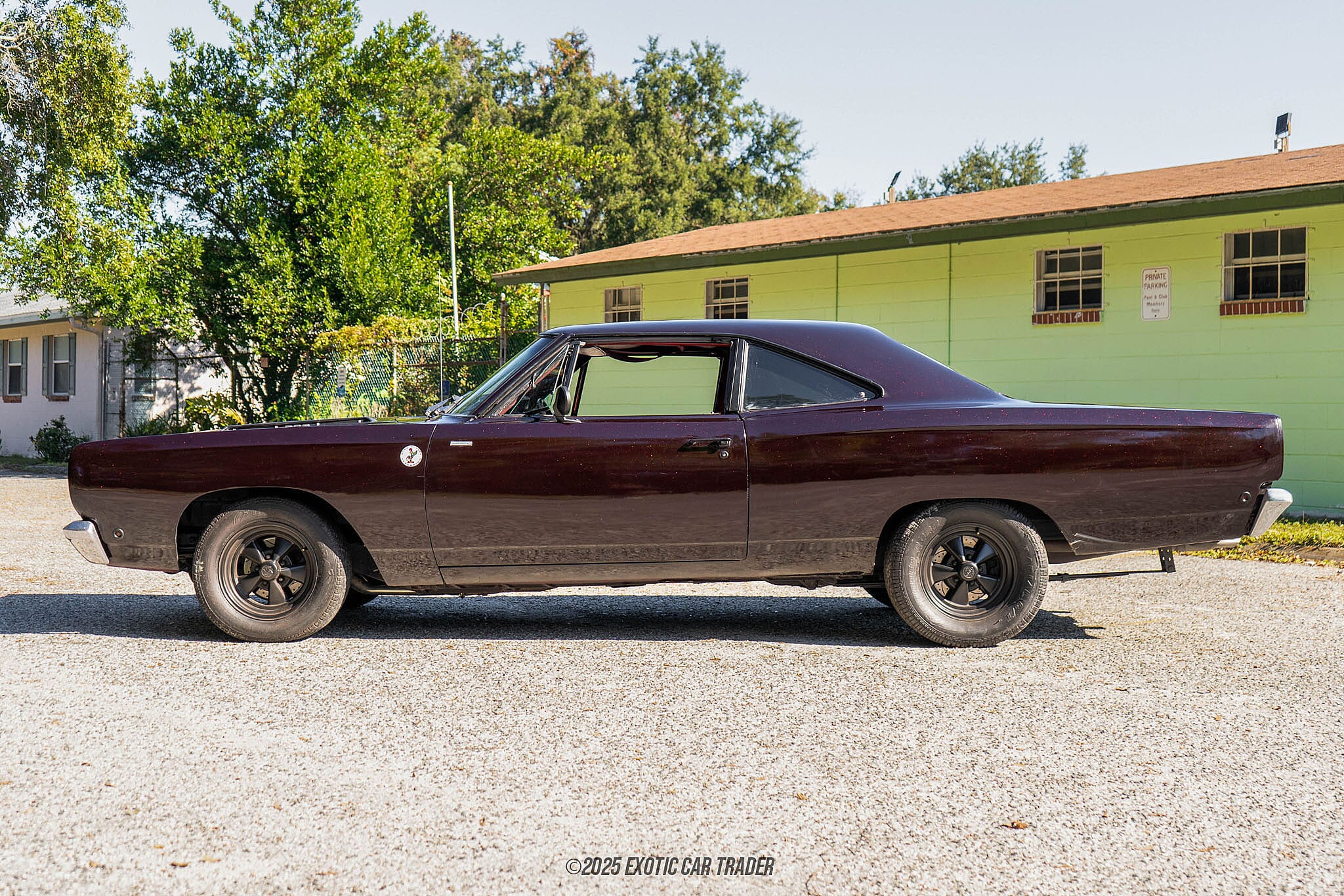
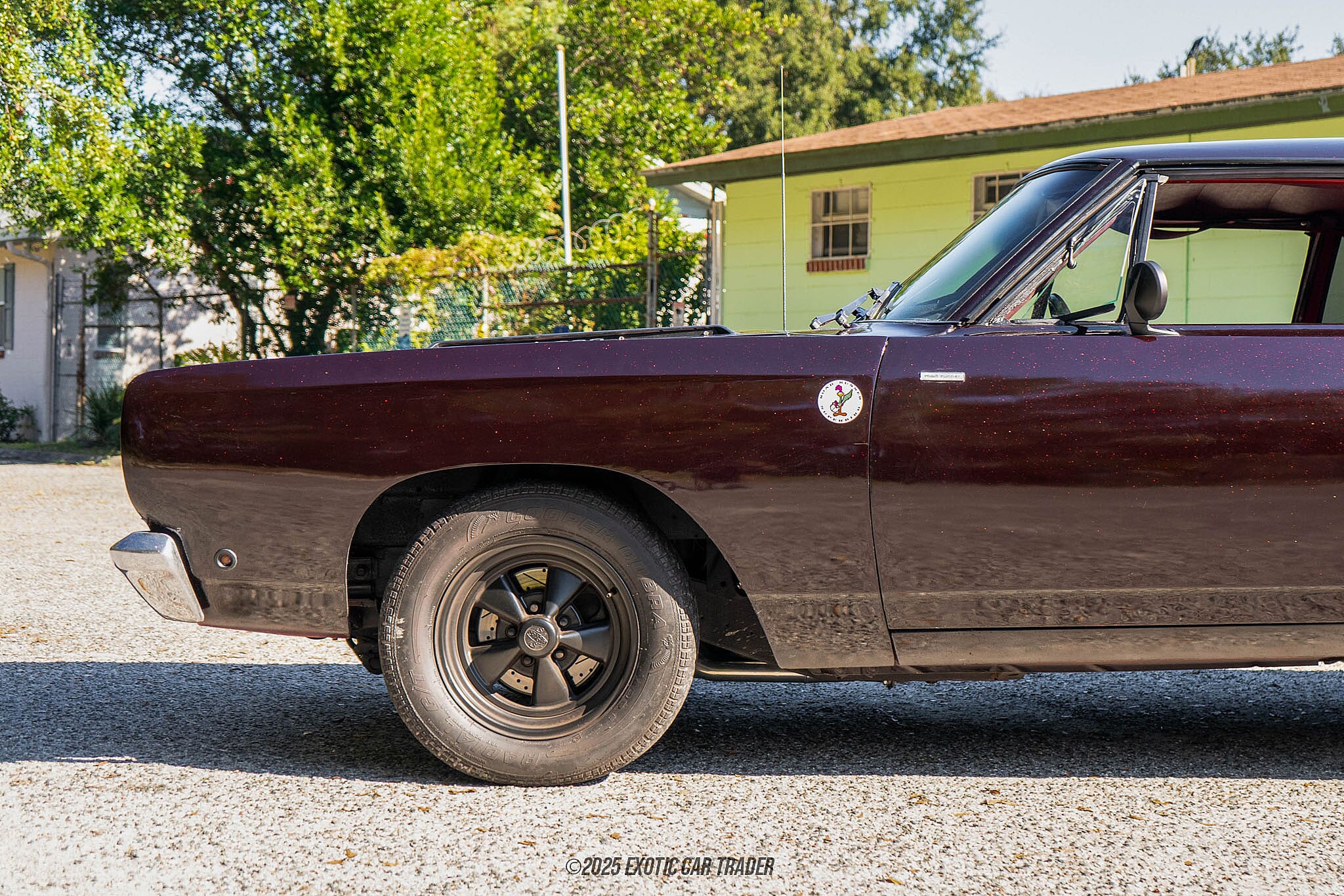
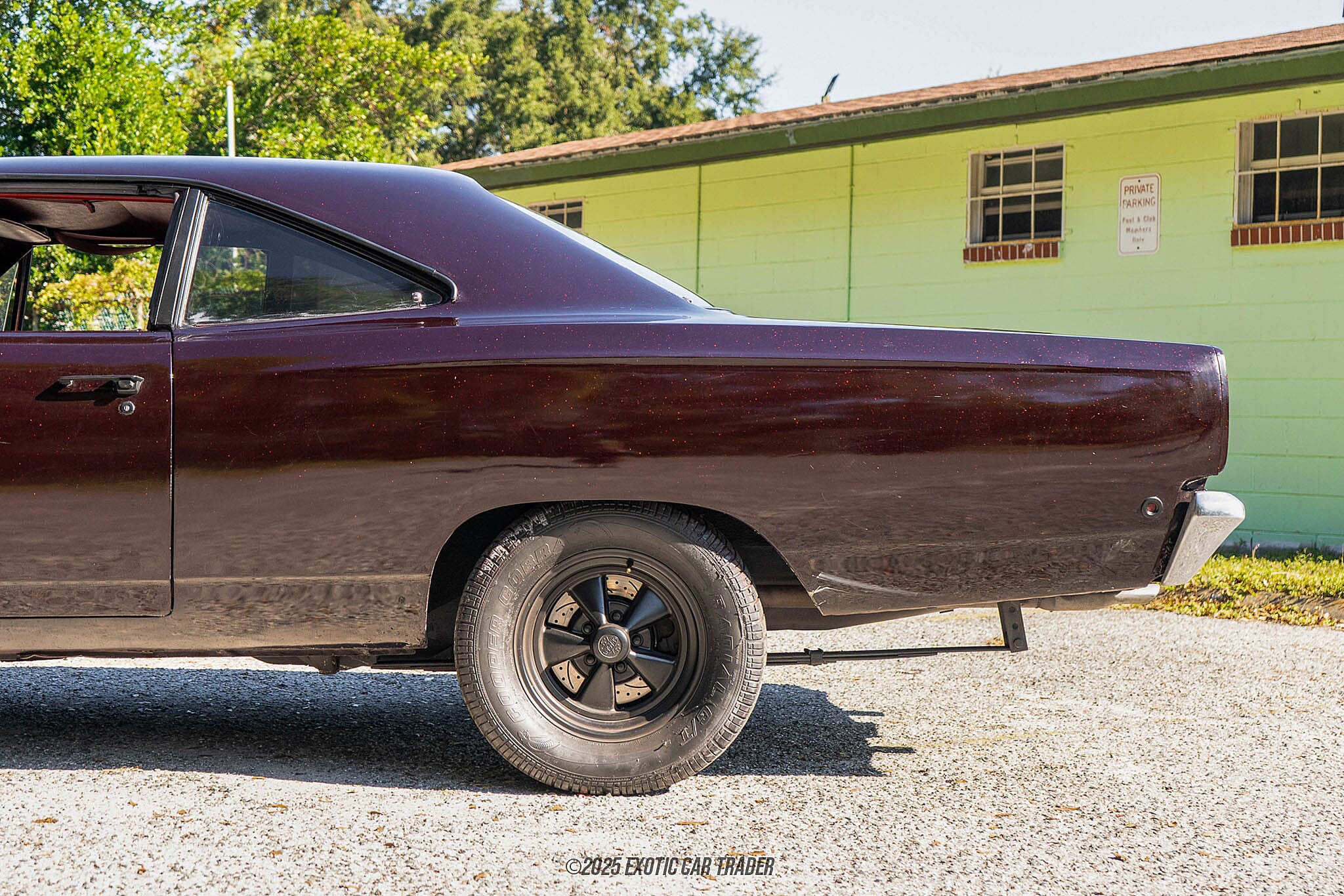
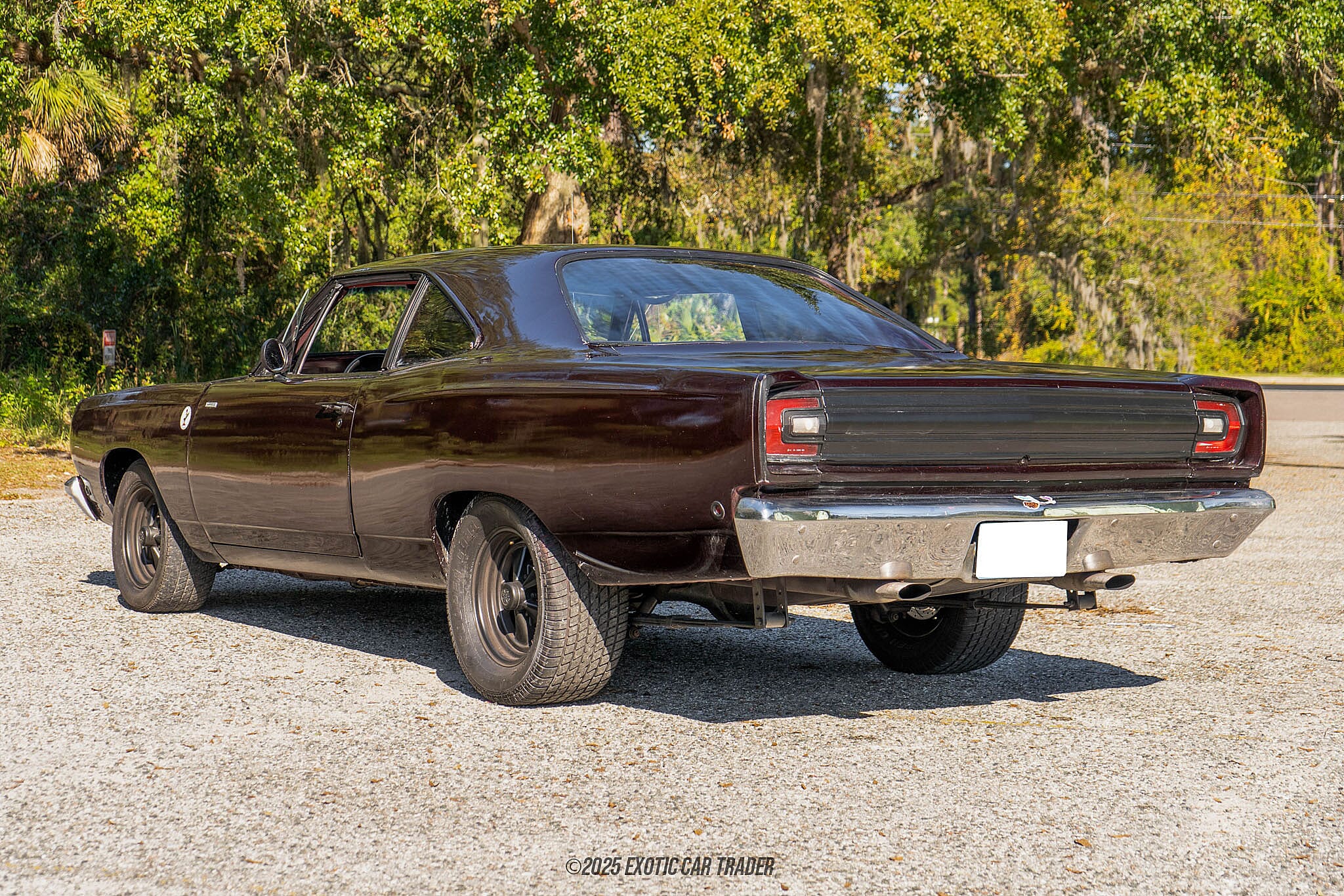
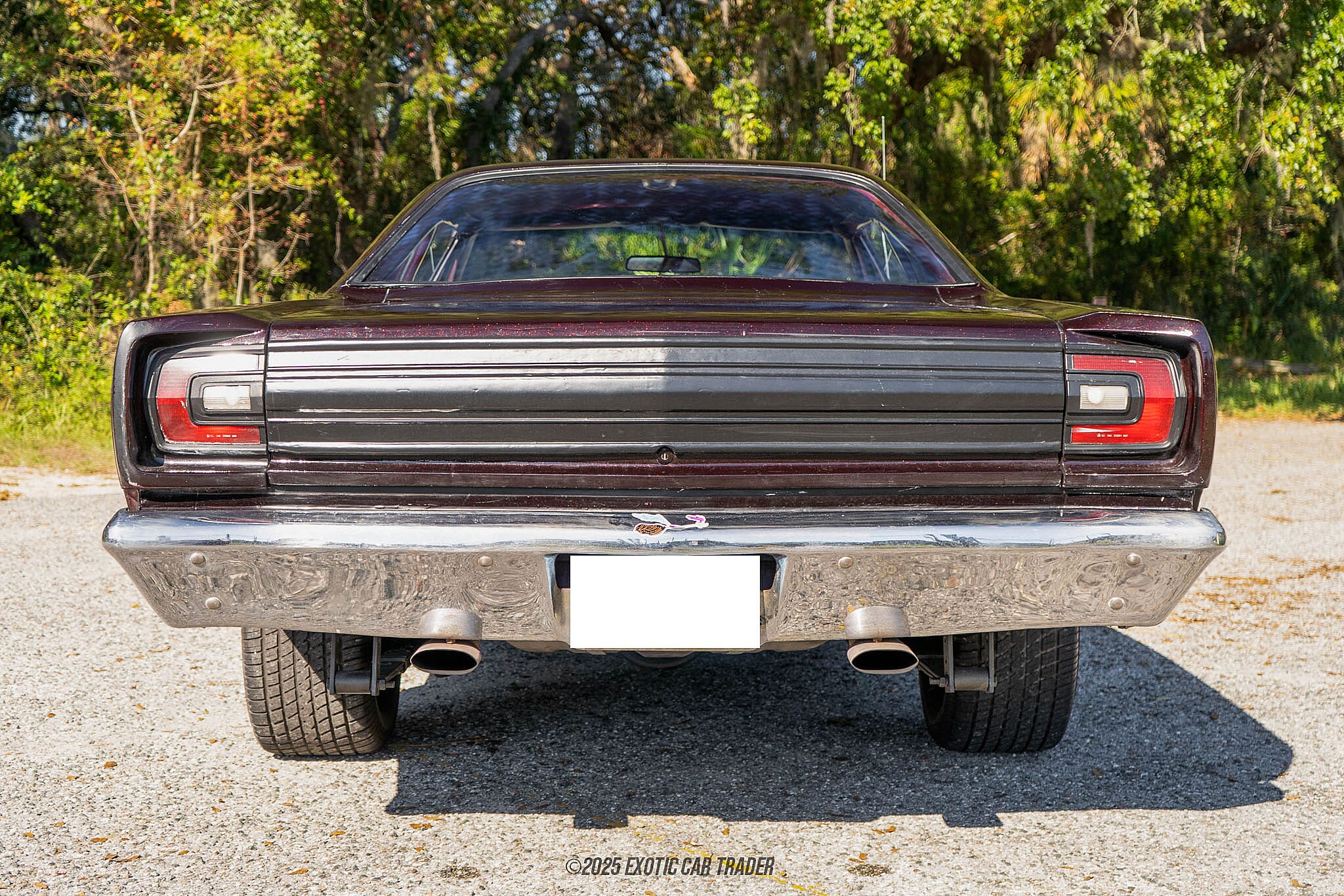
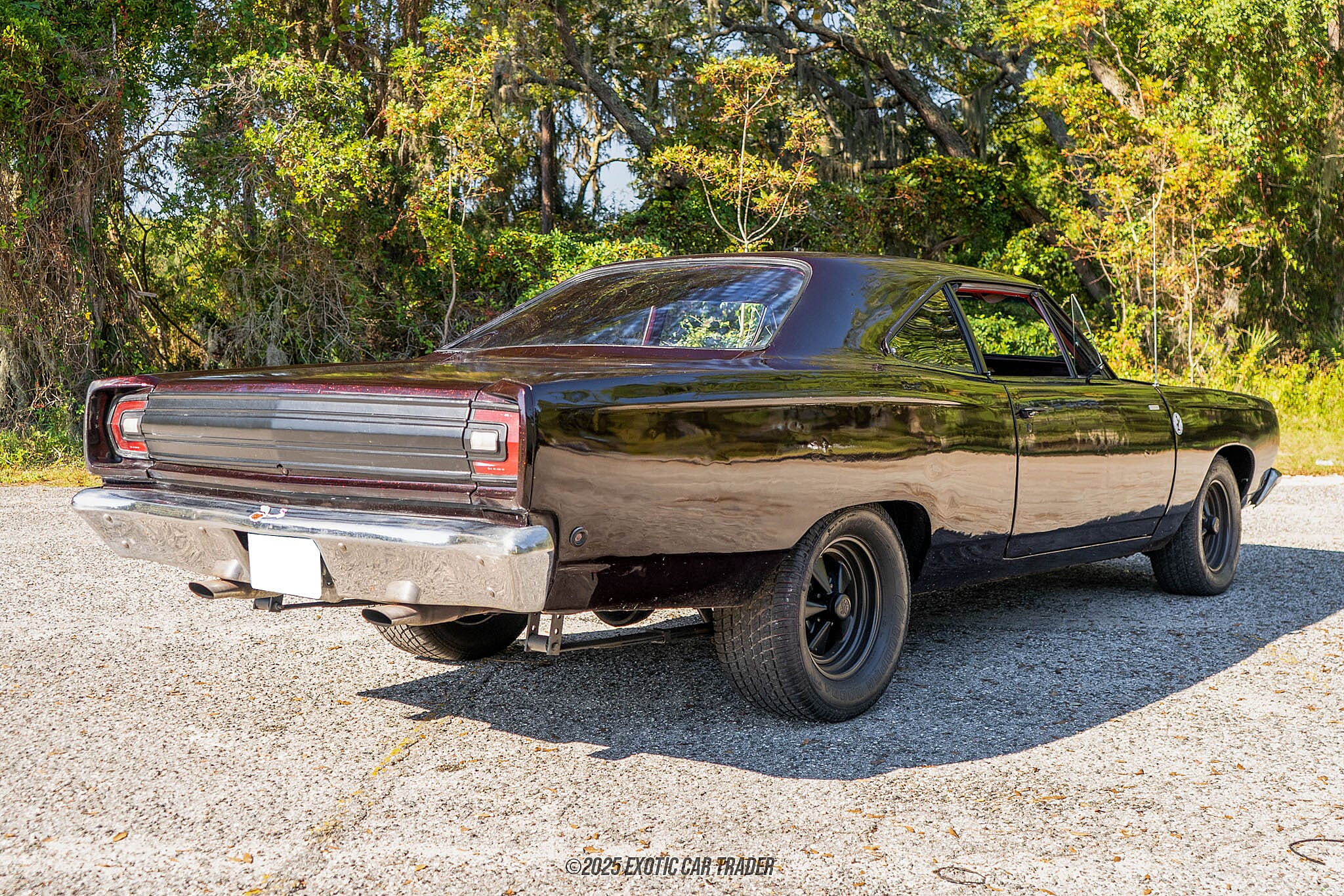
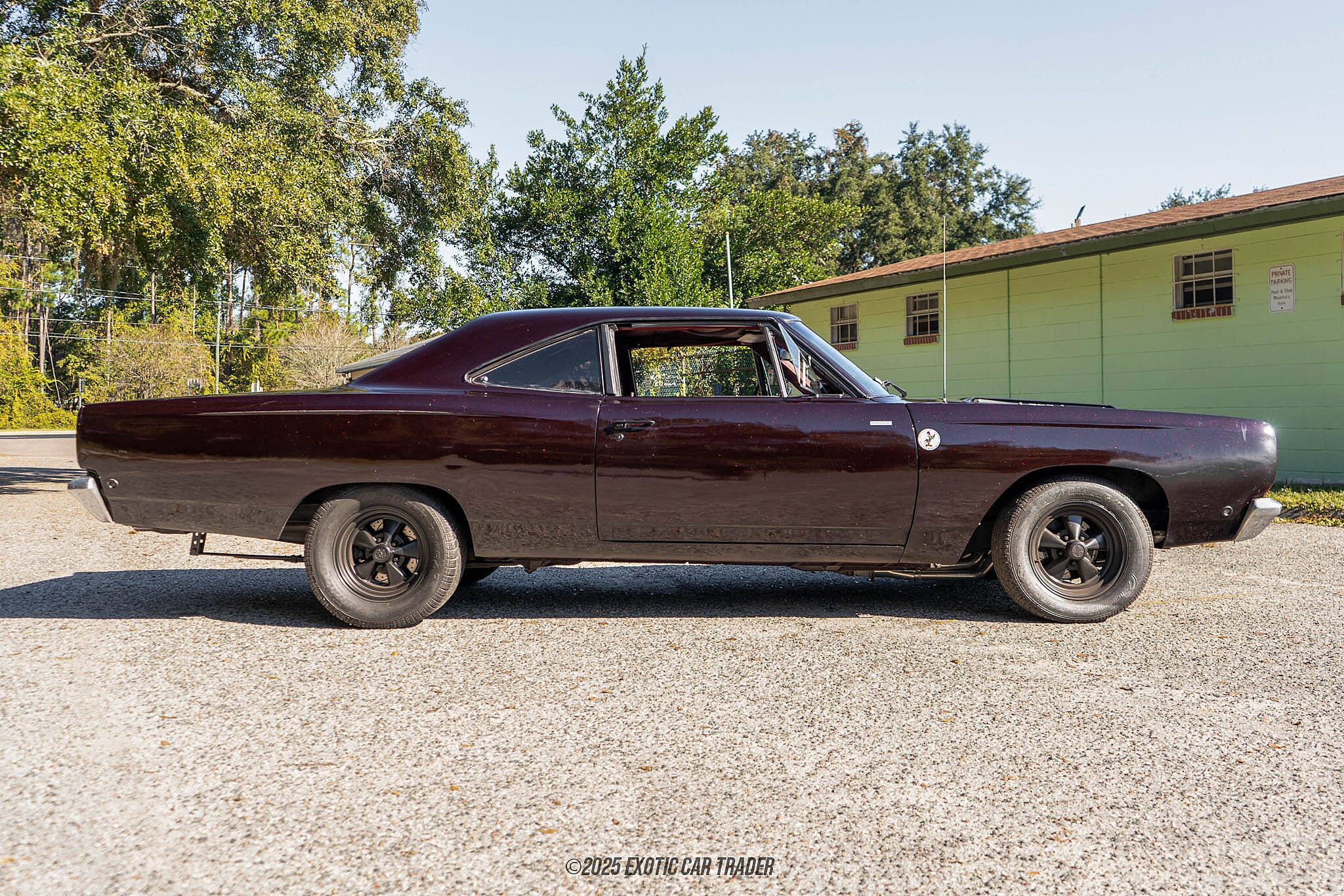
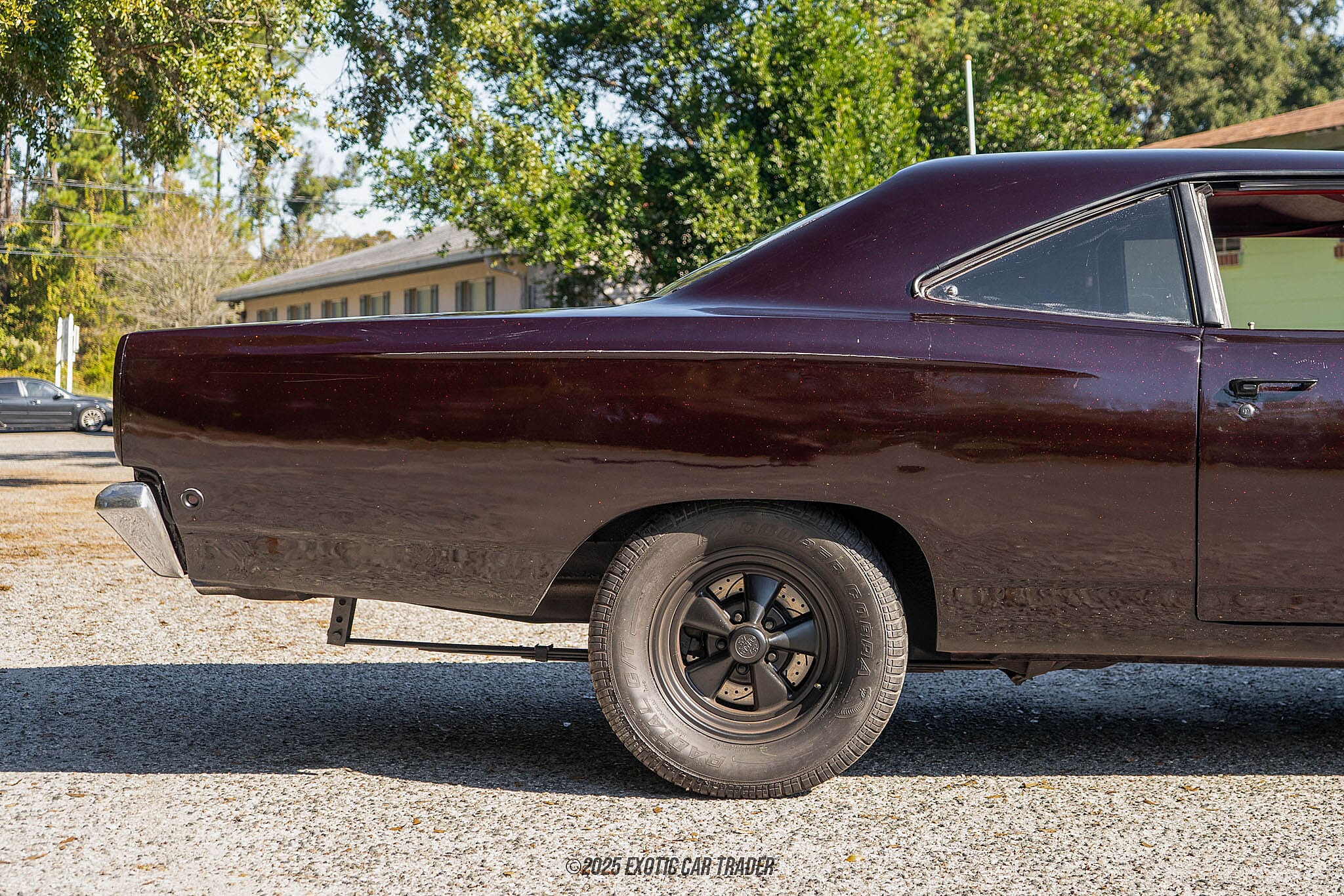

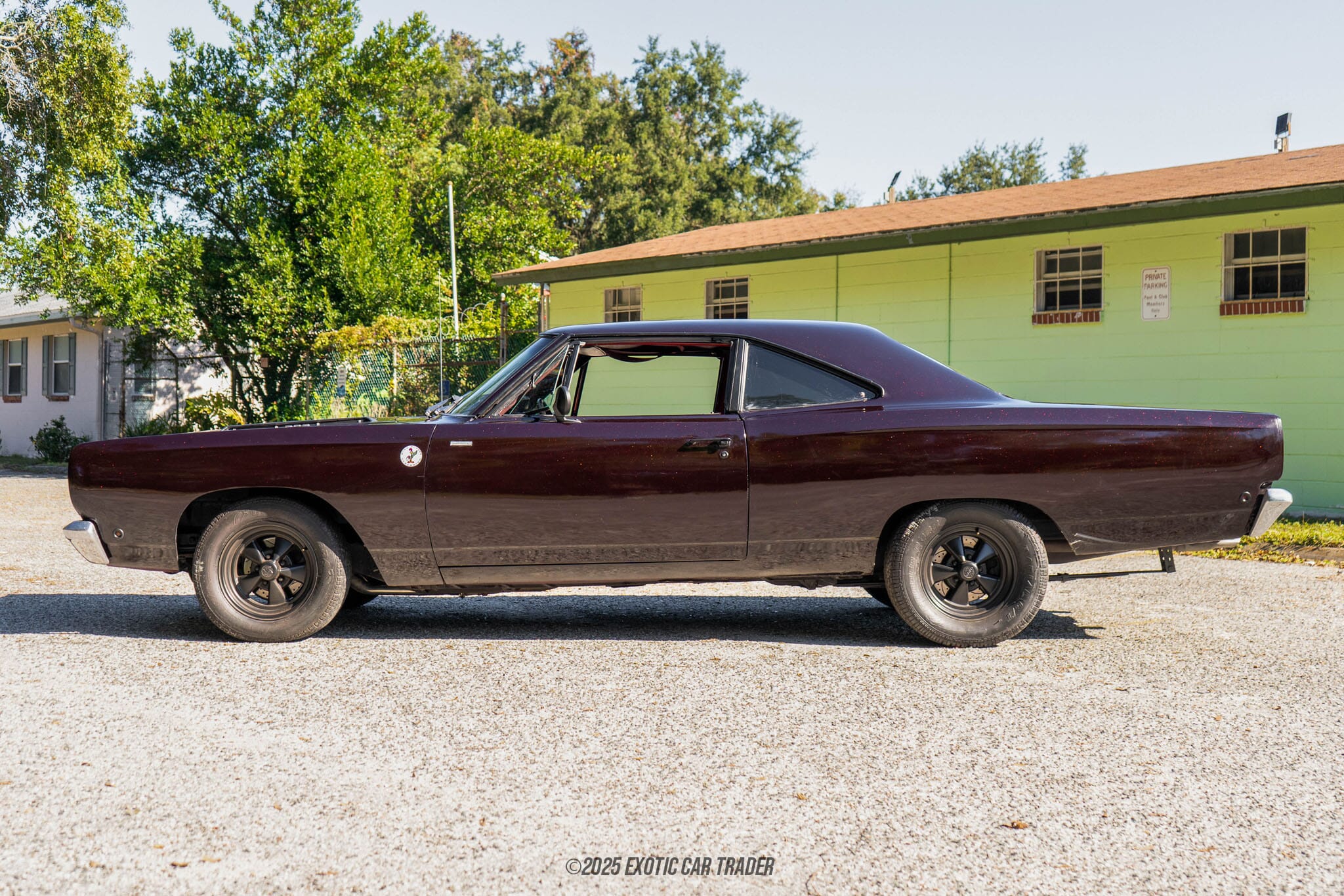


- 1968 Plymouth Road Runner
- 383ci V8
- Edelbrock 4-Barrel Carburetor
- 3-Speed Automatic
- RWD
- Black Cherry Metallic Exterior
- Black/Burgundy Interior
- Black Painted 5-Spoke Steel-Style Wheels
- Cooper Cobra Radial G/T Tires
- Blacked-Out Front Grille & Chrome Bumpers
- Burgundy/Maroon Dash
- Aftermarket Pioneer Head Unit
- Burgundy Headliner
- B&M Chrome Floor Shifter
- 3-Spoke Custom Steering Wheel
- Edelbrock Chrome Air Cleaner
- Chrome Valve Covers
- Aftermarket Performance Distributor


Automakers don’t do silly things anymore. Like, say, create a muscle car and name it after a beloved cartoon character. Or spend a significant sum of money to buy the naming rights from the intellectual property holder of said character. Or spend even more money after that to develop a horn that sounds just like that character’s jaunty cry. That’s what Plymouth did in the Sixties, with the Road Runner. They paid Warner Brothers US$50,000 to license their Road Runner character’s name and likeness. Then, they spent a further $10,000 to develop a horn that said “Beep Beep” just like the character did on screen. Was it a success? You bet! In fact, if not for the Malaise Era’s impending arrival and renewed focus on fuel economy and emissions, the Road Runner might have run a little bit longer than 1980. Today, we have a 1968 Plymouth Road Runner for sale from Jacksonville, Florida. With a nice 383ci V8, an automatic gearbox and an aftermarket head unit from Pioneer, this 42,228-mile machine is a fine catch for a savvy collector of American classics – or someone who wants to start a collection.
Exterior and Interior
This 1968 Plymouth Road Runner comes wearing Black Cherry Metallic paint and riding on a set of black-painted 5-spoke steel-styled wheels with Cooper Cobra Radial G/T tires. Yes, the vehicle’s exterior color theme tends towards the darker end of the spectrum, but the car is definitely a head-turner, nevertheless. Its long and low profile, quad headlamps and Road Runner emblems all attract just the right amount and kind of attention. A blacked-out front grille and chrome bumpers are also present. The black and burgundy two-tone interior of this 1968 Plymouth Road Runner features a two-tone dash, a burgundy headliner and the aforementioned Pioneer aftermarket radio. The interior shows signs of its age, and is definitely unrestored, but isn’t run down either. You’ve also got a B&M floor shifter in chrome, and a custom 3-spoke steering wheel.
Engine
This 1968 Plymouth Road Runner uses a 383ci V8 with a 4-barrel carburetor from Edelbrock. It’s rear-wheel drive and uses a 3-speed automatic transmission. You’ve also got an Edelbrock chrome air cleaner, chrome valve covers and an aftermarket performance distributor in place.


By 1969, the Plymouth Road Runner had firmly established itself as one of the defining muscle cars of the era, combining big-block performance with a no-nonsense attitude that appealed to enthusiasts looking for speed over luxury. This 1969 Plymouth Road Runner embodies that philosophy with its legendary 383ci V8, desirable 4-speed manual transmission, and iconic Air Grabber induction system. Showing approximately 82,962 miles, this Ivy Green classic offers the unmistakable styling, raw driving experience, and factory performance pedigree that continue to make the Road Runner one of Mopar's most celebrated creations.
This 1974 Plymouth Road Runner Pro Street Supercharged is a purpose-built street-and-strip muscle car combining classic Mopar styling with serious drag racing hardware. Originally a 340ci V8, this Road Runner has been transformed with a professionally built and balanced big block powerplant featuring a Dyer’s Machine Blower Company supercharger system, dual Holley carburetors, and an estimated 800 horsepower output. Designed for high-performance driving, it pairs its supercharged engine with a reverse-pattern 727 TorqueFlite automatic transmission, Detroit Locker differential, 4-link rear suspension, and Mickey Thompson ET Street tires. Finished in a vibrant Lime Green exterior with a competition-inspired setup including a full roll cage, racing harnesses, and upgraded chassis components, this Pro Street build represents the classic era of American horsepower taken to an extreme level.
The Plymouth Road Runner was introduced for buyers who wanted one thing above all else: performance. By stripping away unnecessary luxury features and focusing on big-block power, Plymouth created one of the most successful muscle cars of the era. This 1968 Plymouth Road Runner Hardtop Coupe shows 57,801 miles and is powered by the legendary 383ci Magnum V8, making it a textbook example of the formula that made the Road Runner a household name among enthusiasts. Finished in an eye-catching green exterior over a white vinyl interior, this first-year Road Runner embodies the no-nonsense attitude that helped establish the model as one of the most iconic muscle cars of the late 1960s.
The 1999 Plymouth Prowler represents one of the most distinctive production vehicles of the modern automotive era, bringing the spirit of traditional American hot rodding into a factory-built roadster. Originally introduced as a concept car before entering production, the Prowler combined classic hot rod influences such as its open-wheel front suspension, long hood, and low-slung stance with advanced engineering techniques including lightweight aluminum construction and composite body panels. Showing approximately 24,531 miles, this example is finished in Prowler Black with an Agate interior and features a black convertible soft top and chrome wheels. Powered by a 3.5L naturally aspirated V6 paired with Chrysler’s AutoStick automatic transmission, the Prowler delivers a unique blend of retro-inspired styling, modern drivability, and collectible character. As one of Chrysler’s most ambitious design statements of the late 1990s, the Prowler remains a standout example of a factory-built hot rod interpretation.
The 1949 Plymouth Deluxe PE Model Woody Wagon is a distinctive postwar American station wagon featuring classic wood-bodied styling and Plymouth’s durable flathead six-cylinder powertrain. Showing 47,295 miles, this example is powered by a 217.8ci L-Head Inline-6 paired with a 3-speed manual transmission and rear-wheel drive. Finished in Brown with a matching Brown interior and woodgrain exterior trim panels, this Deluxe Woody Wagon represents the traditional craftsmanship and character of early American family wagons.
By 1969, the Plymouth Road Runner had firmly established itself as one of the defining muscle cars of the era, combining big-block performance with a no-nonsense attitude that appealed to enthusiasts looking for speed over luxury. This 1969 Plymouth Road Runner embodies that philosophy with its legendary 383ci V8, desirable 4-speed manual transmission, and iconic Air Grabber induction system. Showing approximately 82,962 miles, this Ivy Green classic offers the unmistakable styling, raw driving experience, and factory performance pedigree that continue to make the Road Runner one of Mopar's most celebrated creations.
The 1979 MG Midget represents the closing chapter of MG’s long-running tradition of lightweight British sports cars, carrying forward the simple formula that made the marque beloved by driving enthusiasts: compact dimensions, an open cockpit, rear-wheel drive, and an engaging manual transmission. Originally introduced as an affordable sports car focused on driver enjoyment, the Midget became known for its approachable character and ability to deliver an authentic roadster experience without unnecessary complexity. Showing approximately 47,372 miles, this example embodies the charm of a classic British convertible, offering the opportunity to enjoy a vintage sports car experience defined by mechanical simplicity, light handling, and timeless roadster appeal.
The 1991 Chevrolet Corvette Coupe represents the final refinement of the iconic C4 generation, combining classic Corvette styling with improved performance, technology, and everyday drivability. Showing approximately 21,136 miles, this example is finished in Torch Red over a Saddle Interior and features the enthusiast-favorite combination of the 5.7L L98 V8, 6-speed manual transmission, and removable roof panel. Additional highlights include dual power sport seats, 5-spoke aluminum wheels, Bose premium audio, digital instrumentation, and an aftermarket exhaust system, making this Corvette an appealing example of an era-defining American sports car with low mileage and driver-focused character.
The 1965 Chevrolet Corvette Sting Ray Coupe represents one of the most celebrated eras in Corvette history, combining dramatic styling, advanced engineering, and genuine competition-inspired performance. As the second year of the iconic C2 generation, the 1965 model introduced significant mechanical advancements while retaining the split personality that made the Sting Ray legendary: a refined grand touring coupe with the capability of a serious sports car. This example shows approximately 42,644 miles and is powered by the highly desirable 327ci L84 V8, featuring Rochester Ramjet mechanical fuel injection, one of the most advanced performance systems available from Chevrolet during the era. Finished in Nassau Blue with a Black interior, this Corvette is equipped with a 4-speed manual transmission, side-mount exhaust system, knock-off-style aluminum wheels, four-wheel disc brakes, and a wood-rimmed 3-spoke steering wheel. According to the current owner, the vehicle was museum-housed until 2014, adding to its appeal as a well-documented example of Chevrolet’s legendary mid-year Corvette.

Terms of Service
Be Kind and Courteous
We're here to create a platform to better the automotive industry through communication and transparency. Please treat everyone with respect. Healthy debates are natural, but kindness is required.
No Hate Speech
Make sure everyone feels safe. Hate speech of any kind is strictly prohibited. Degrading comments about things like race, religion, culture, sexual orientation, etc. will not be tolerated.
No Promotions or Spam
Give more than you take. Self-promotion, spam, or links of any kind are not allowed.
