



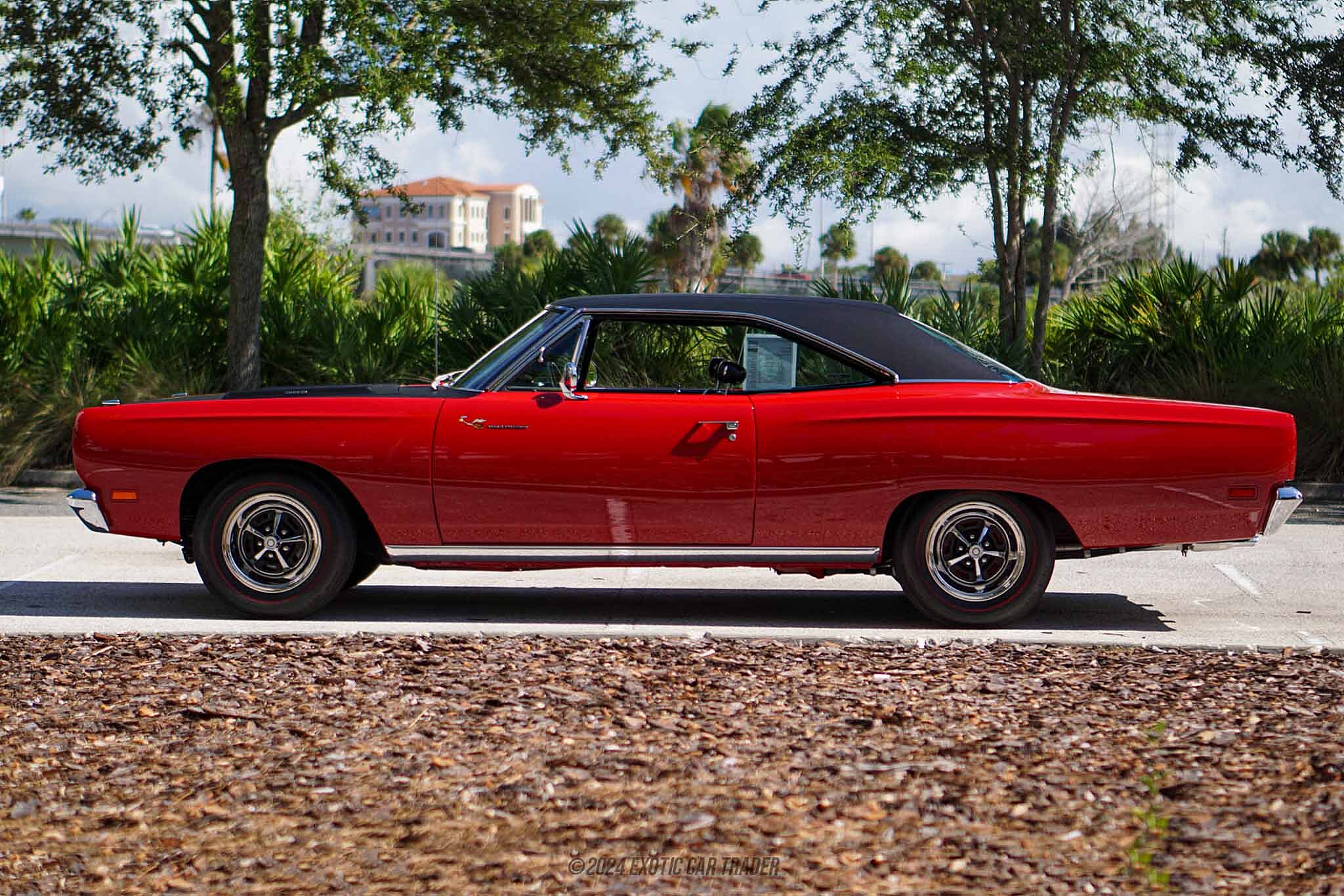
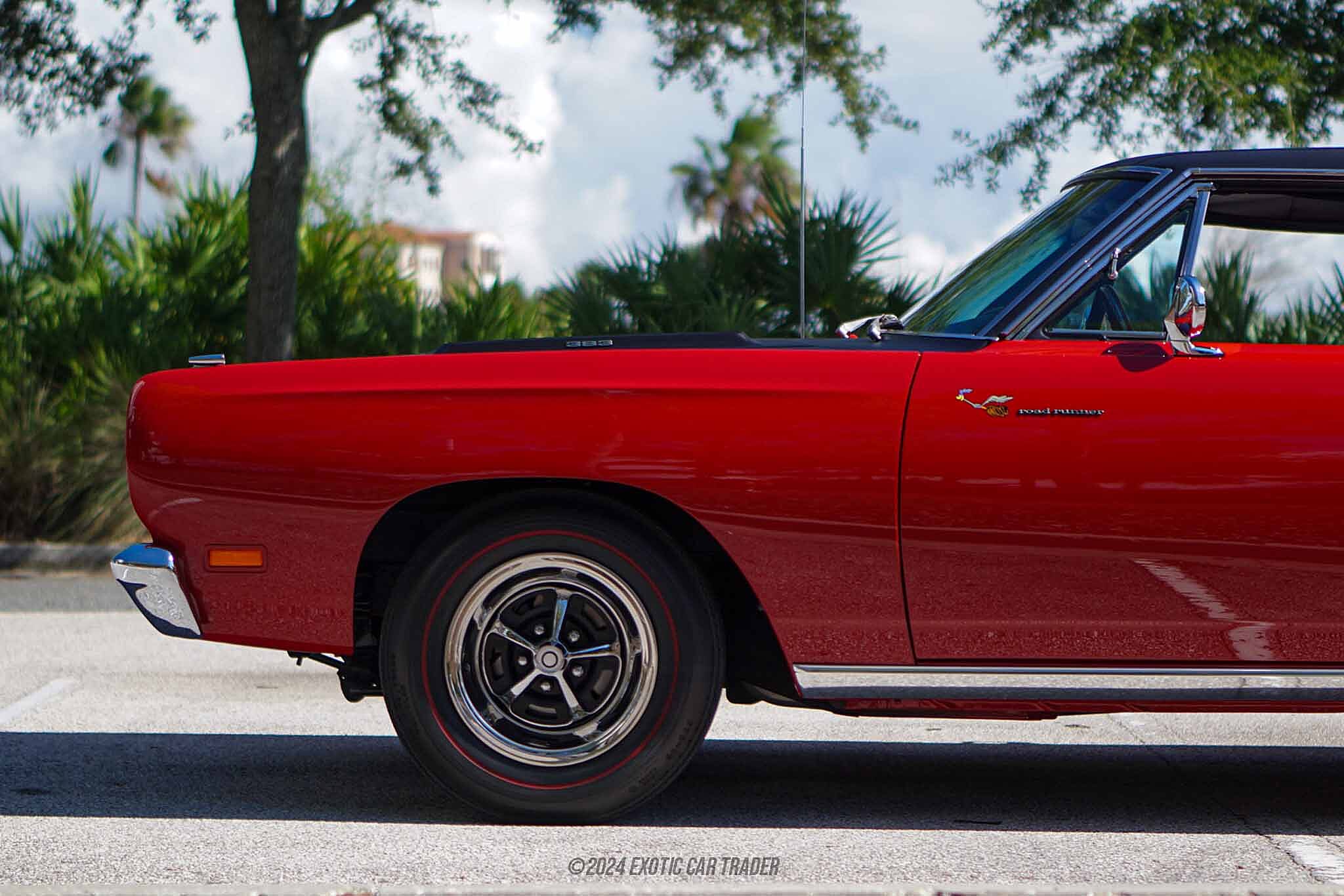
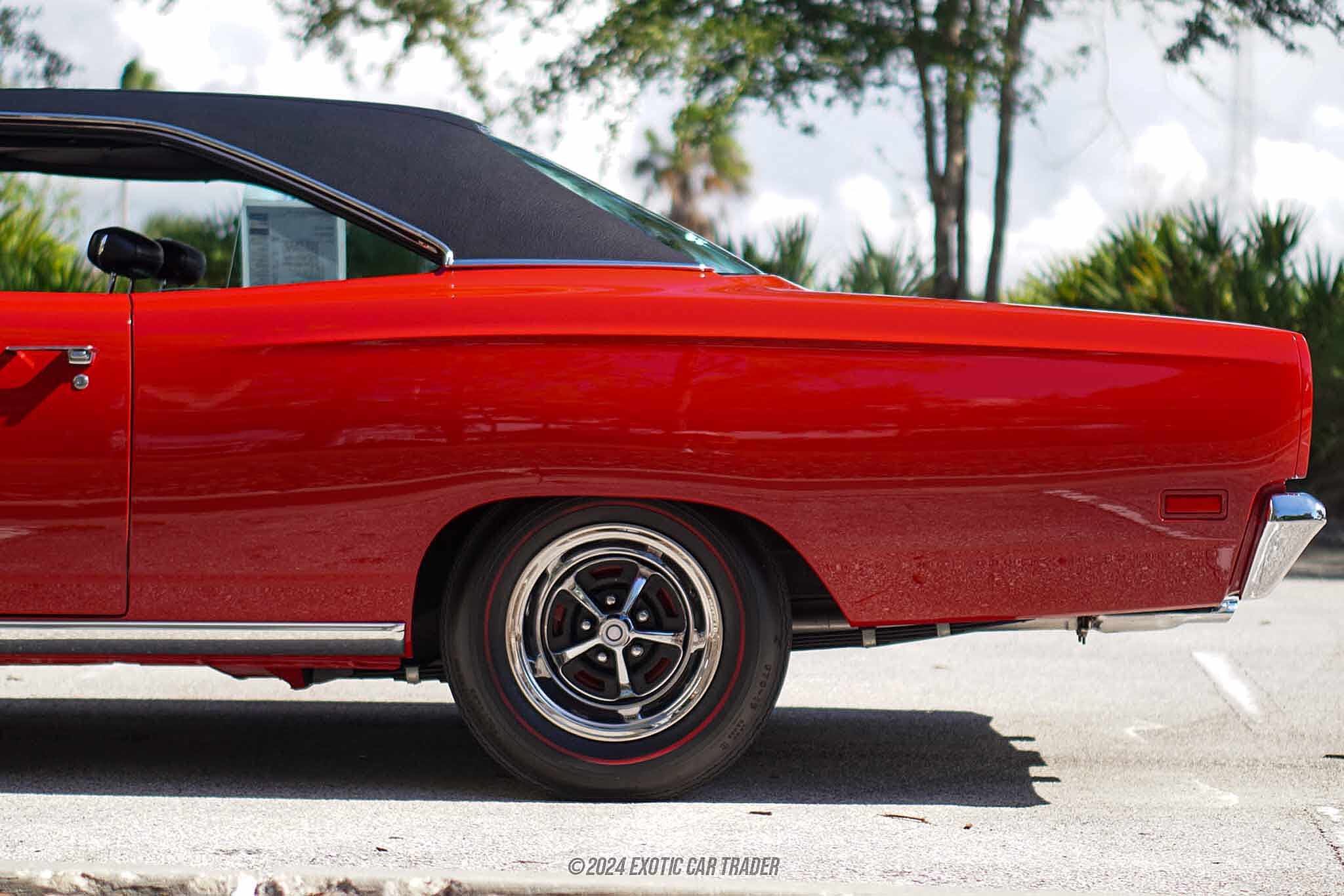
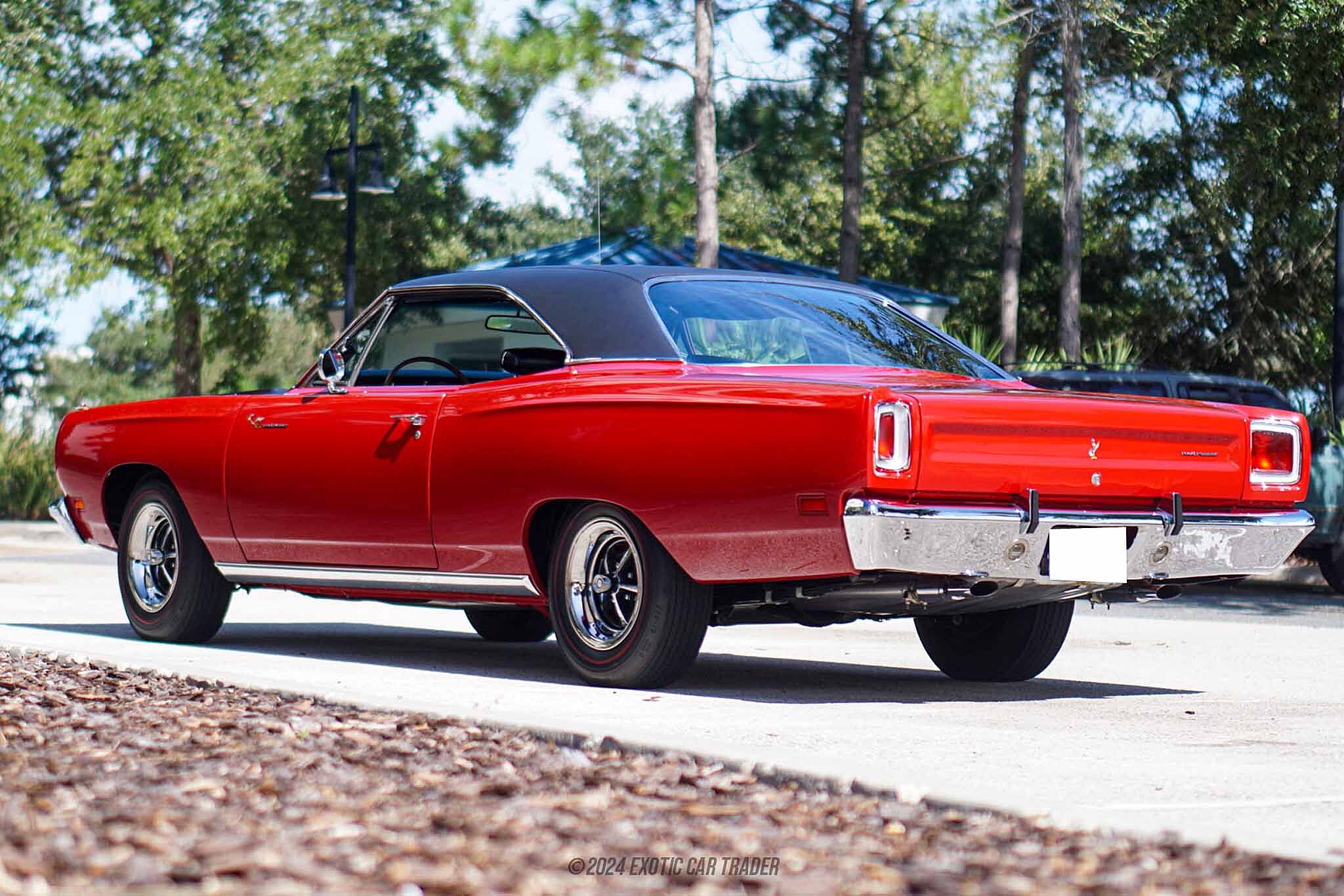
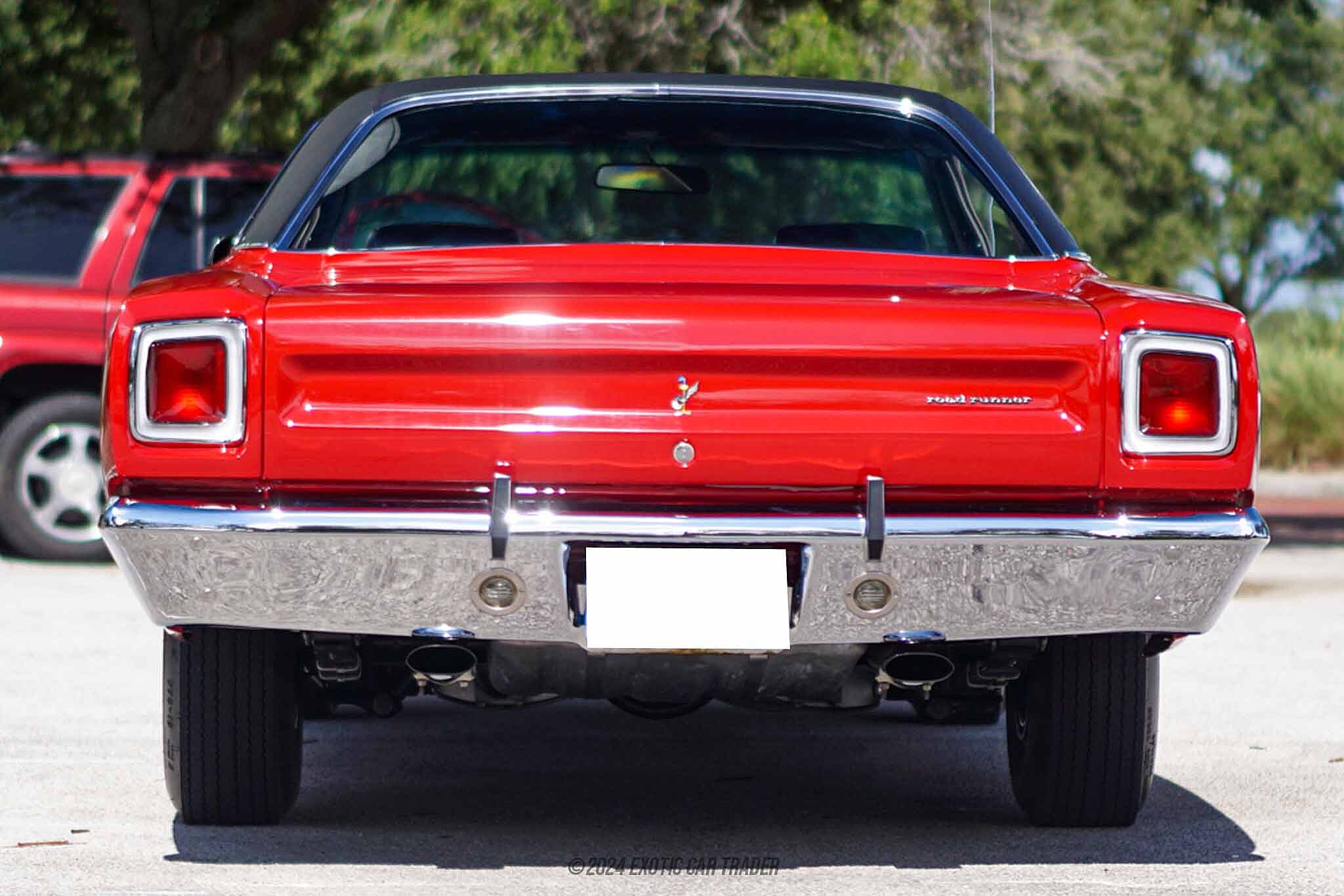
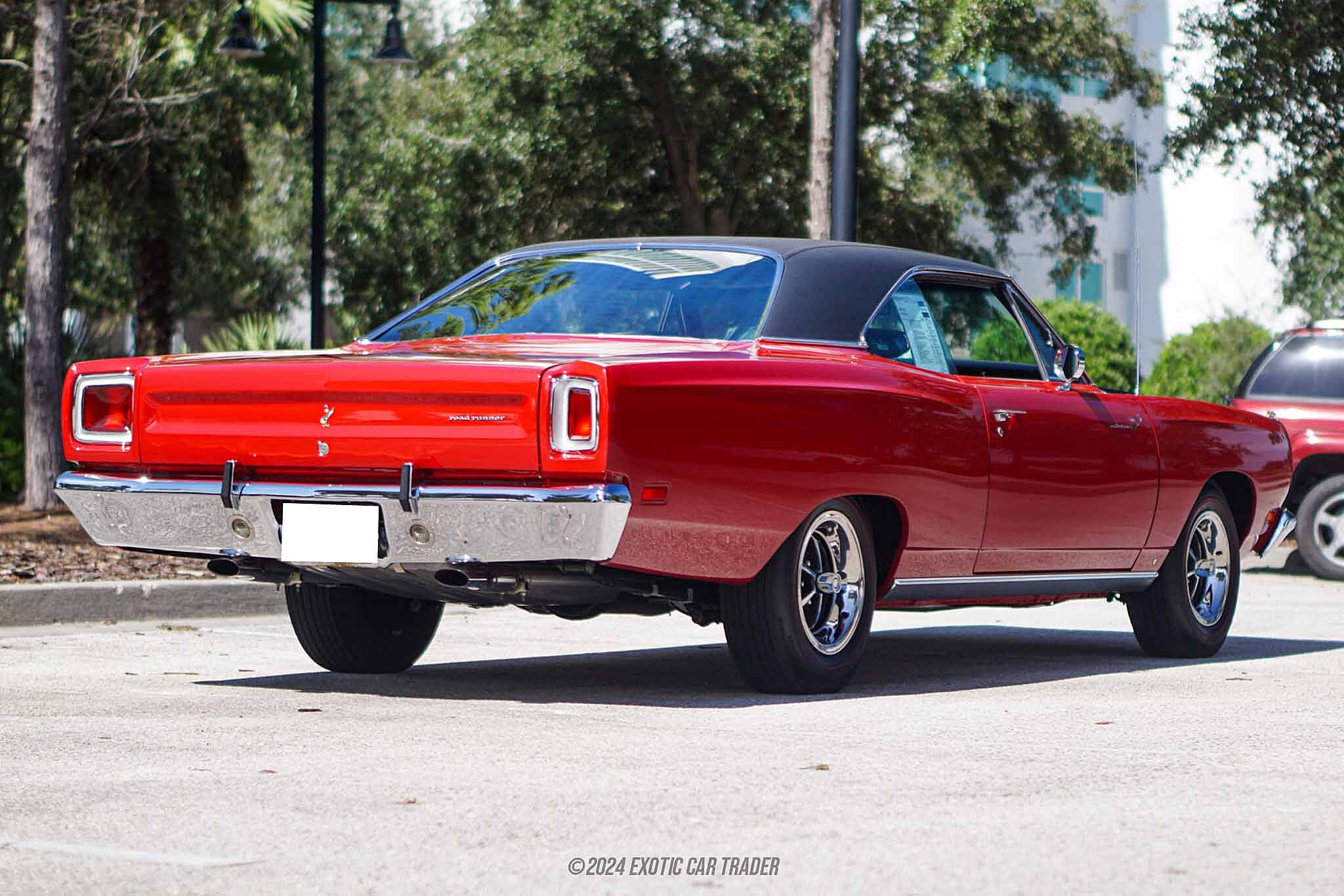
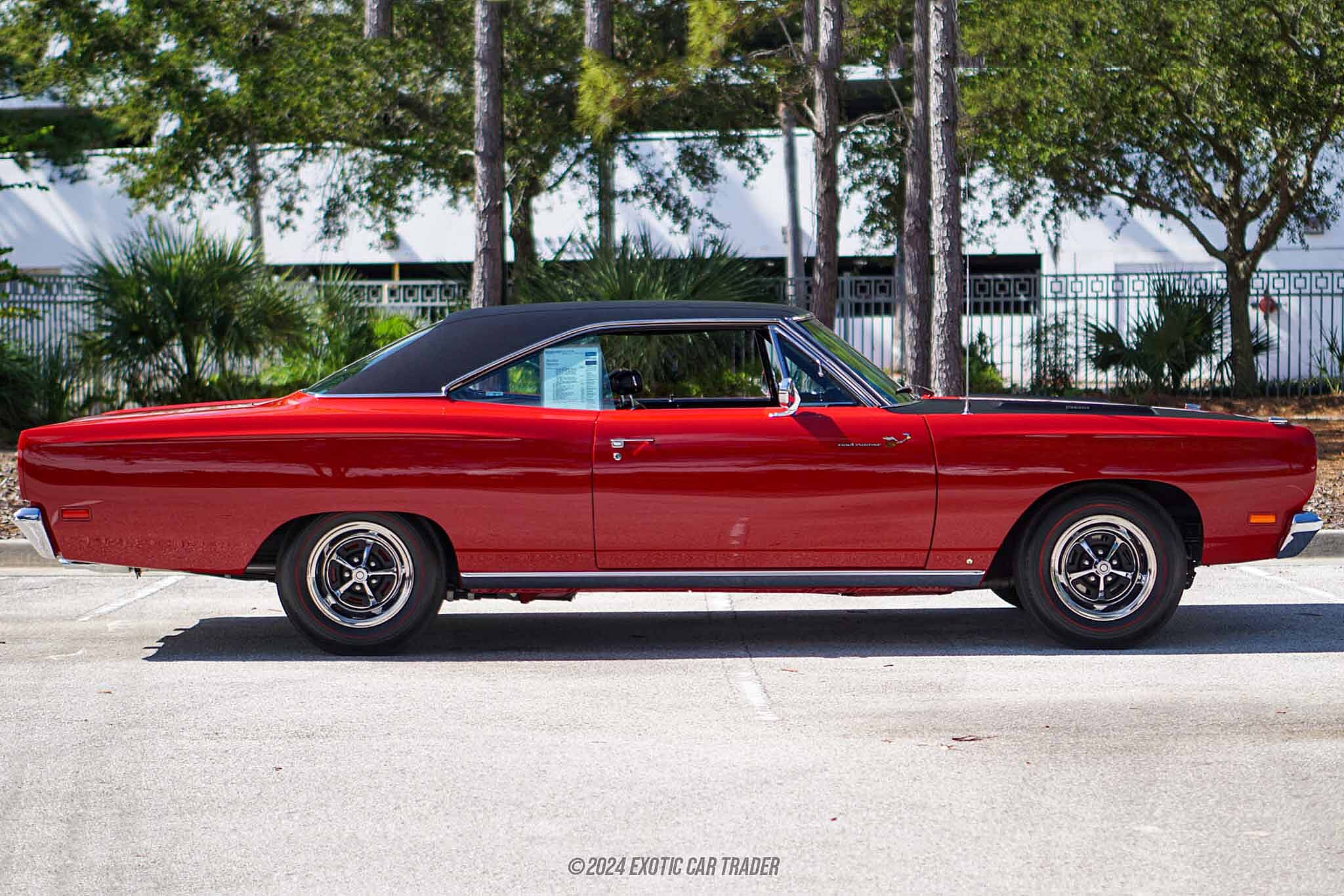
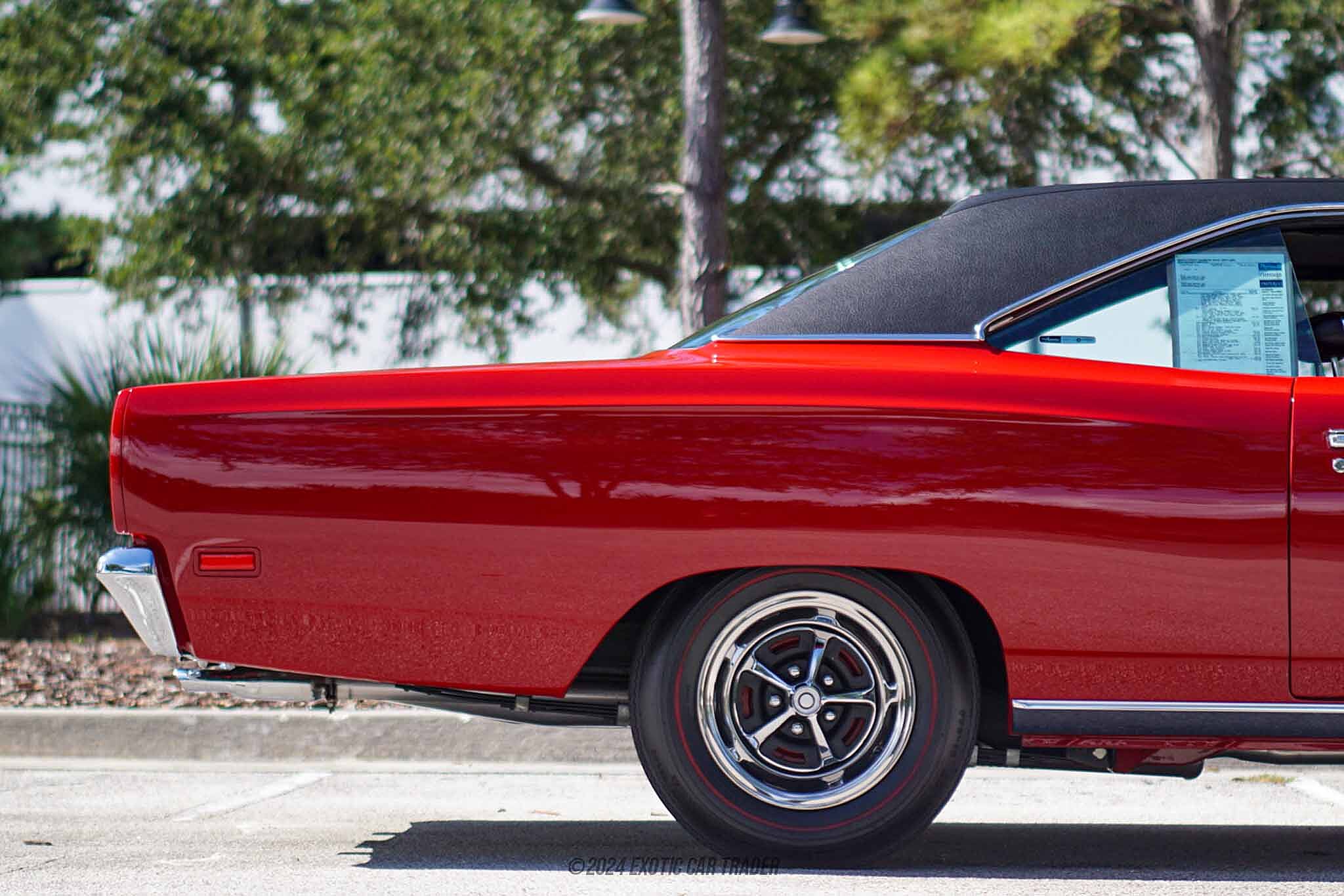

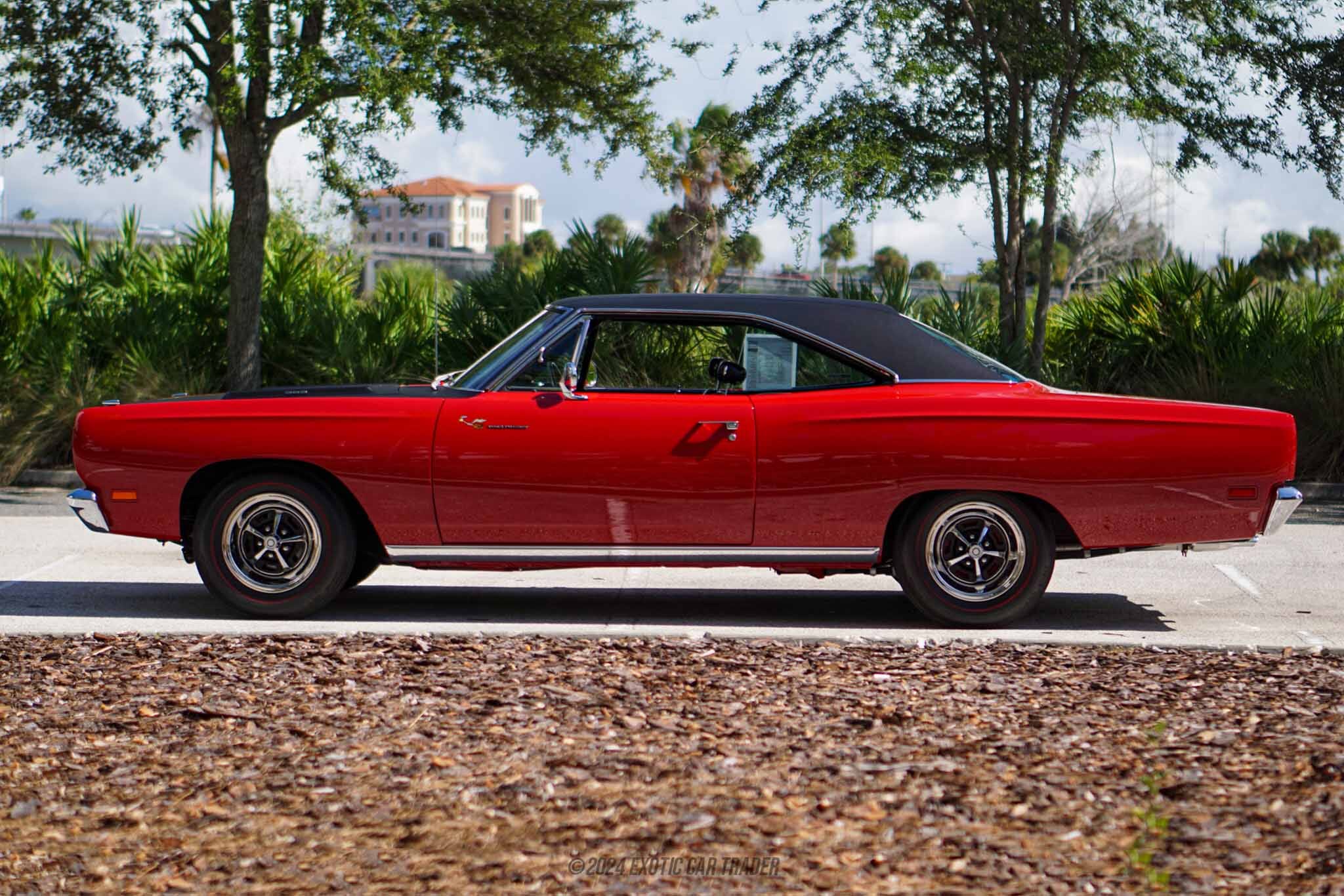
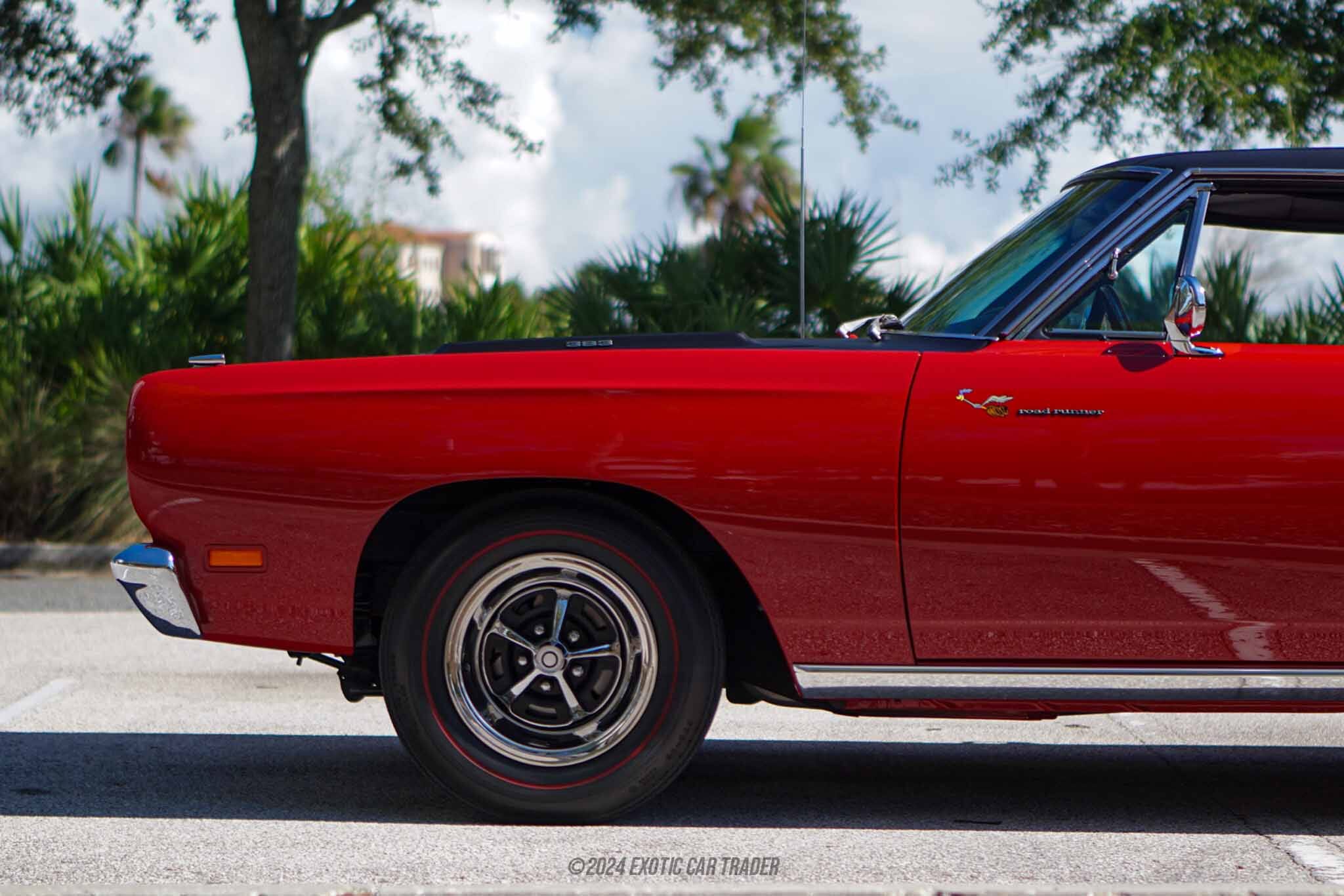
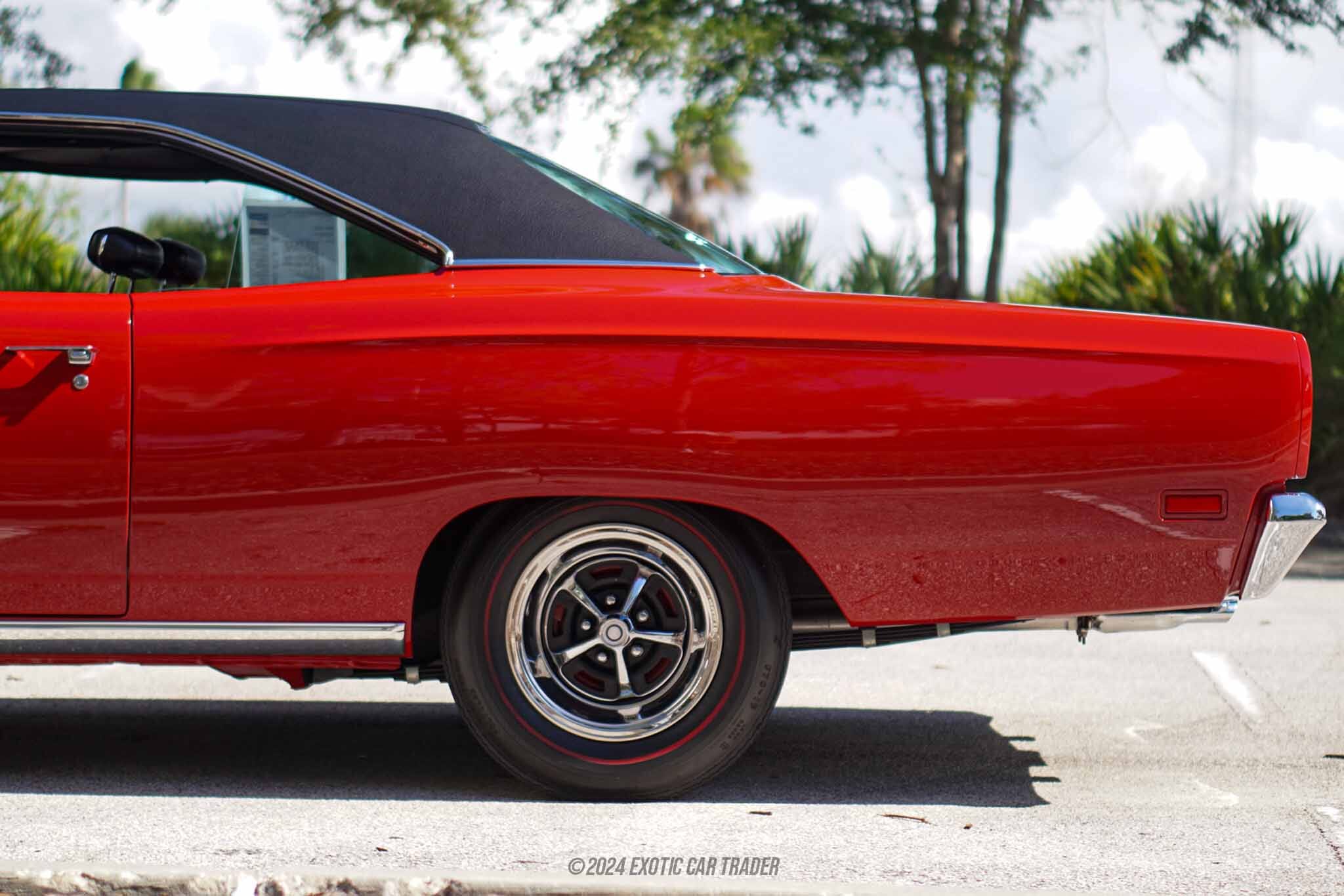
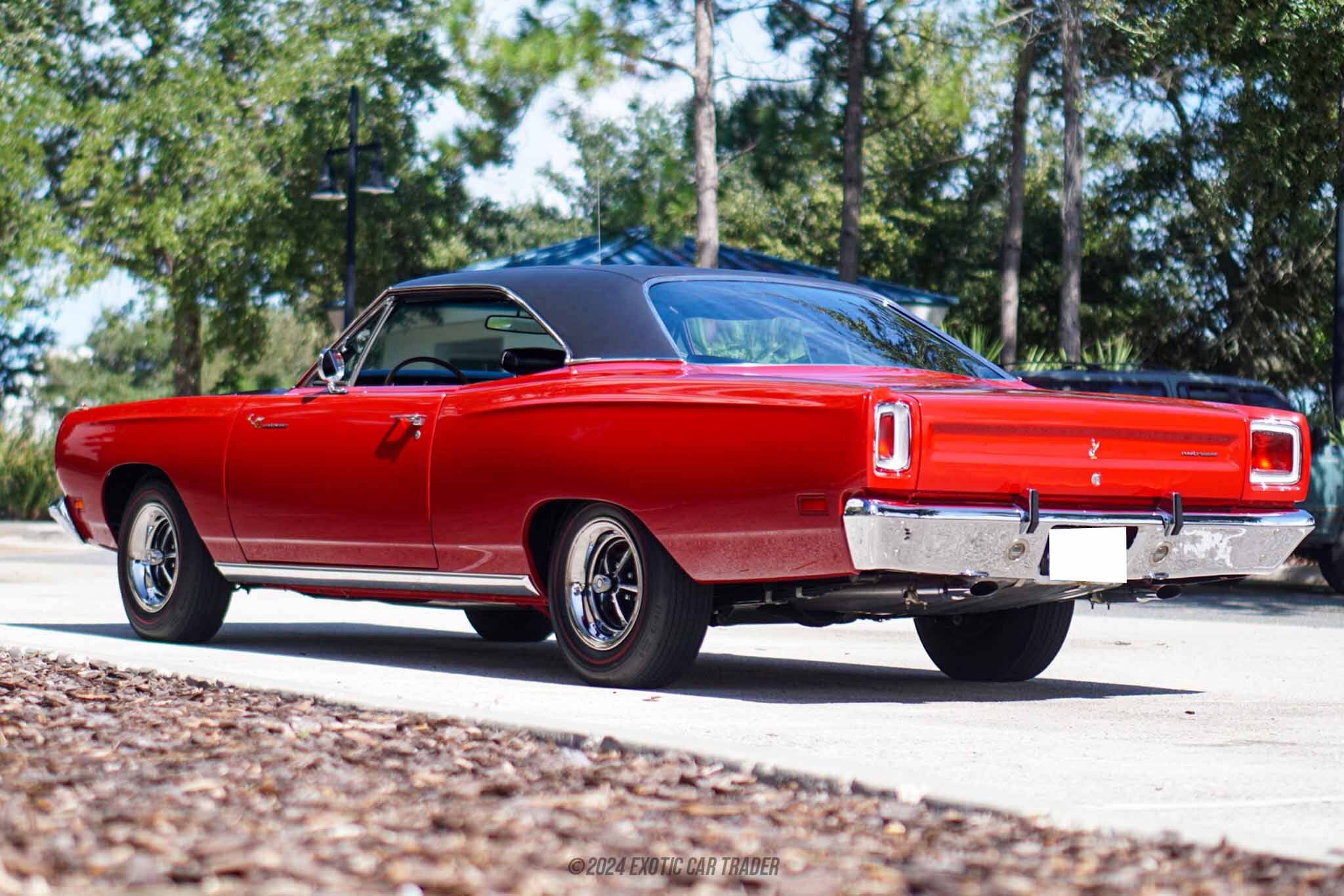
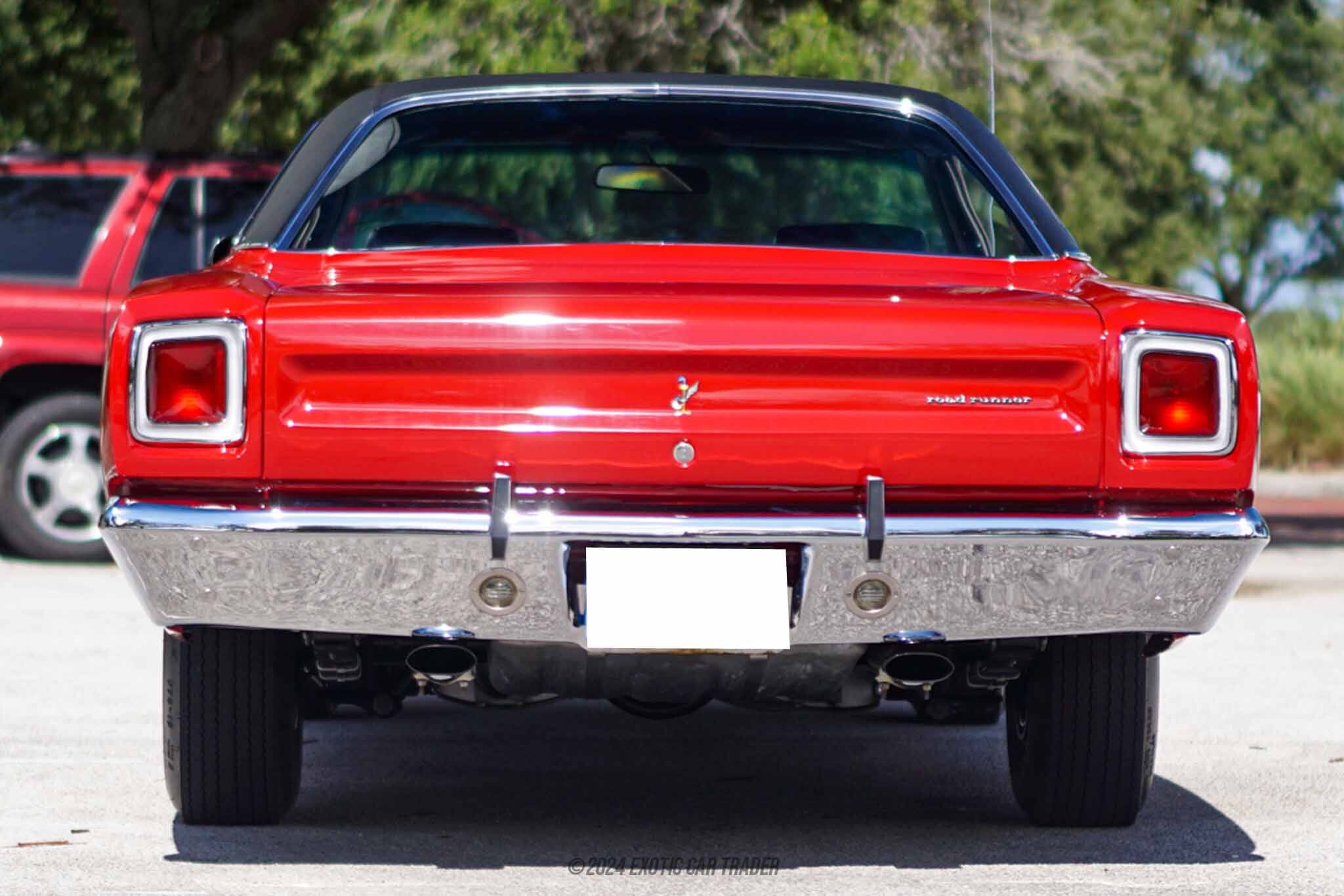
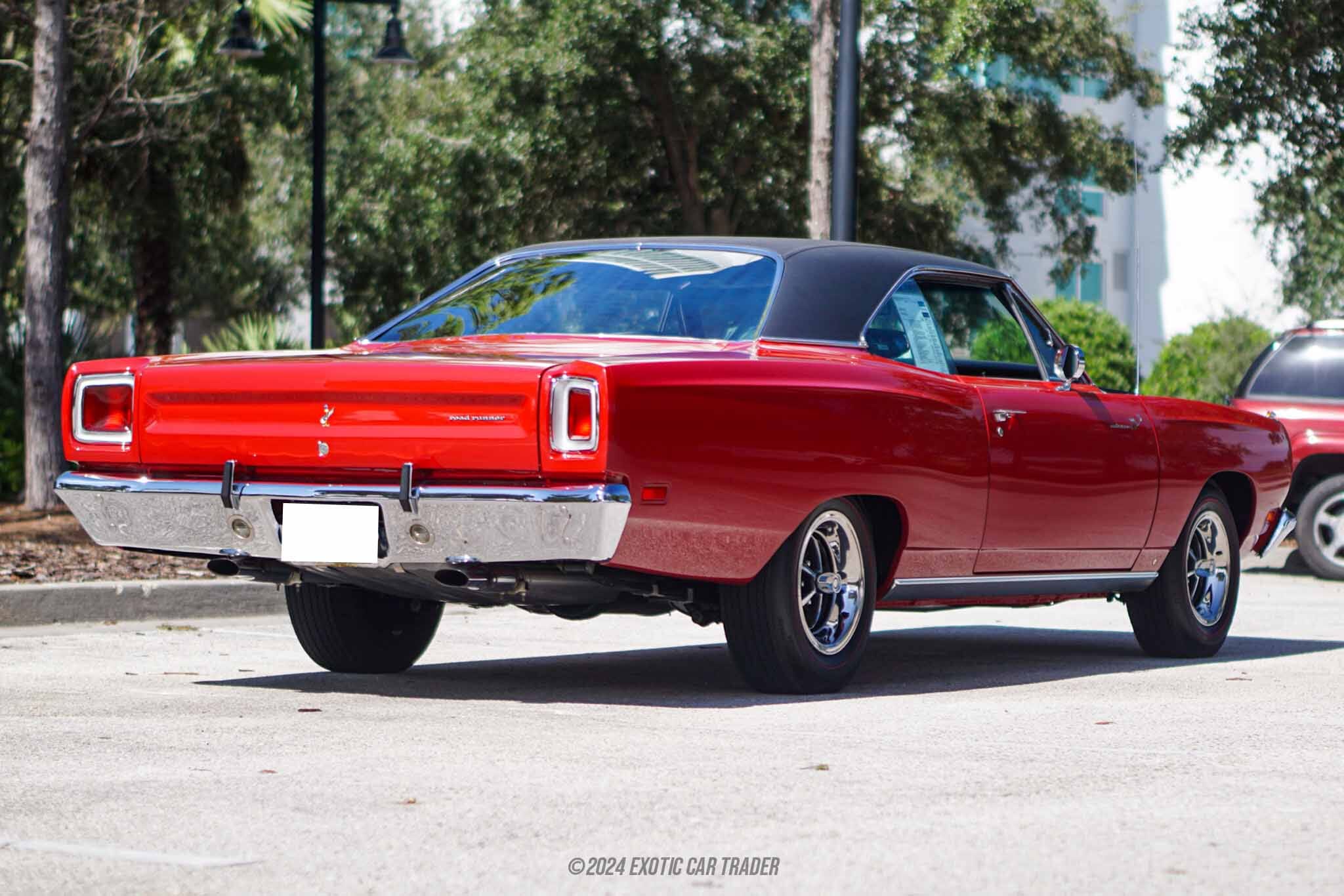
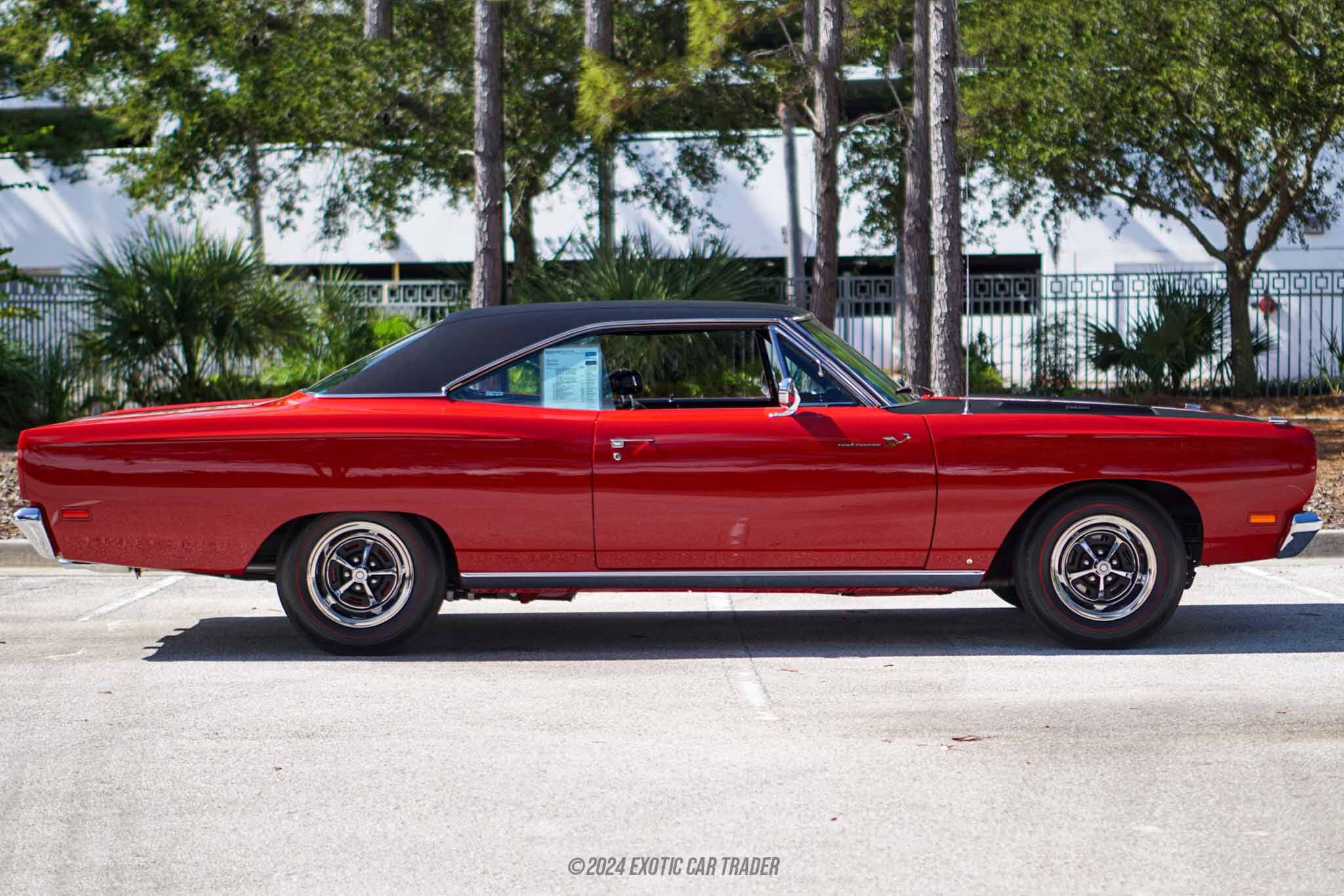
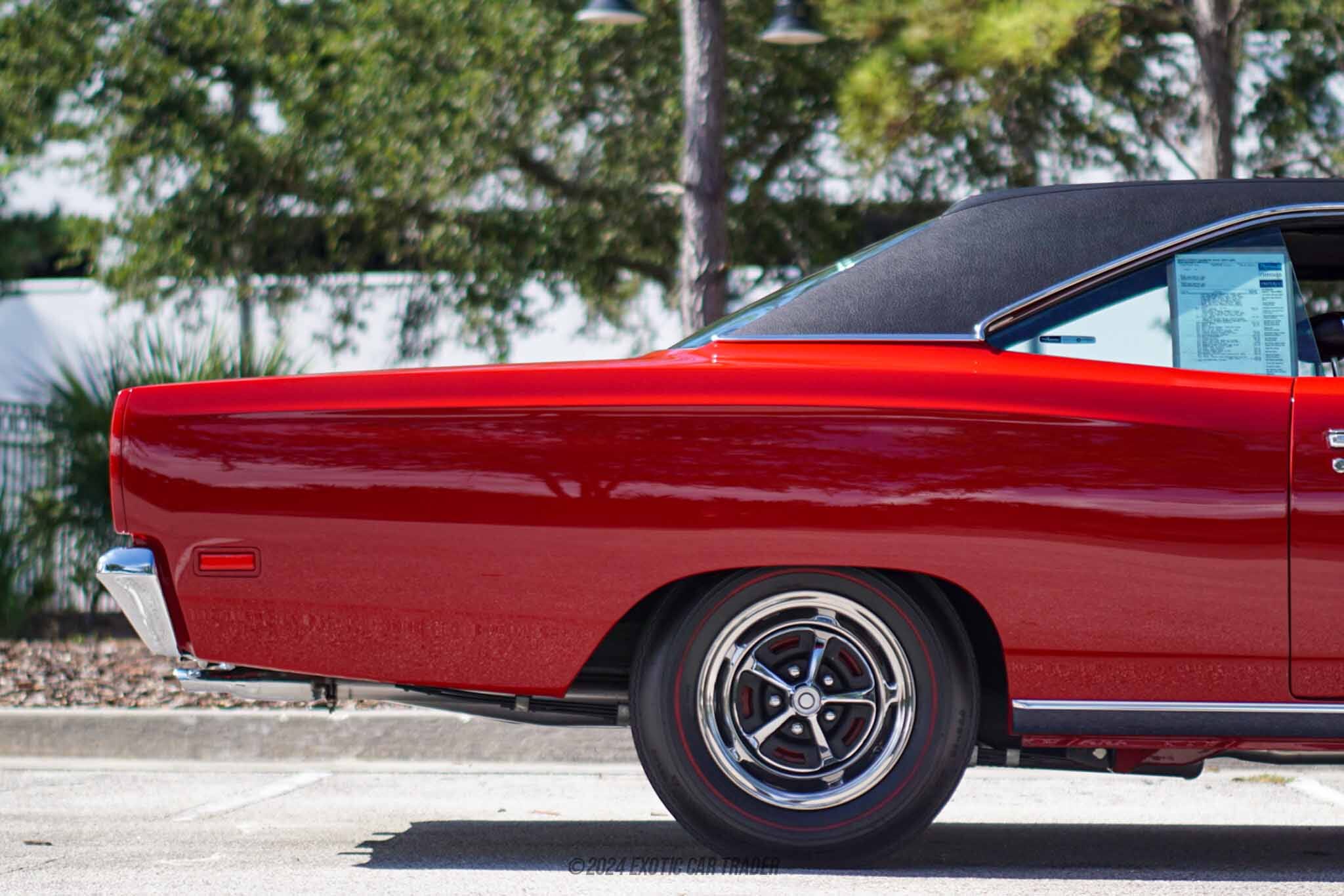
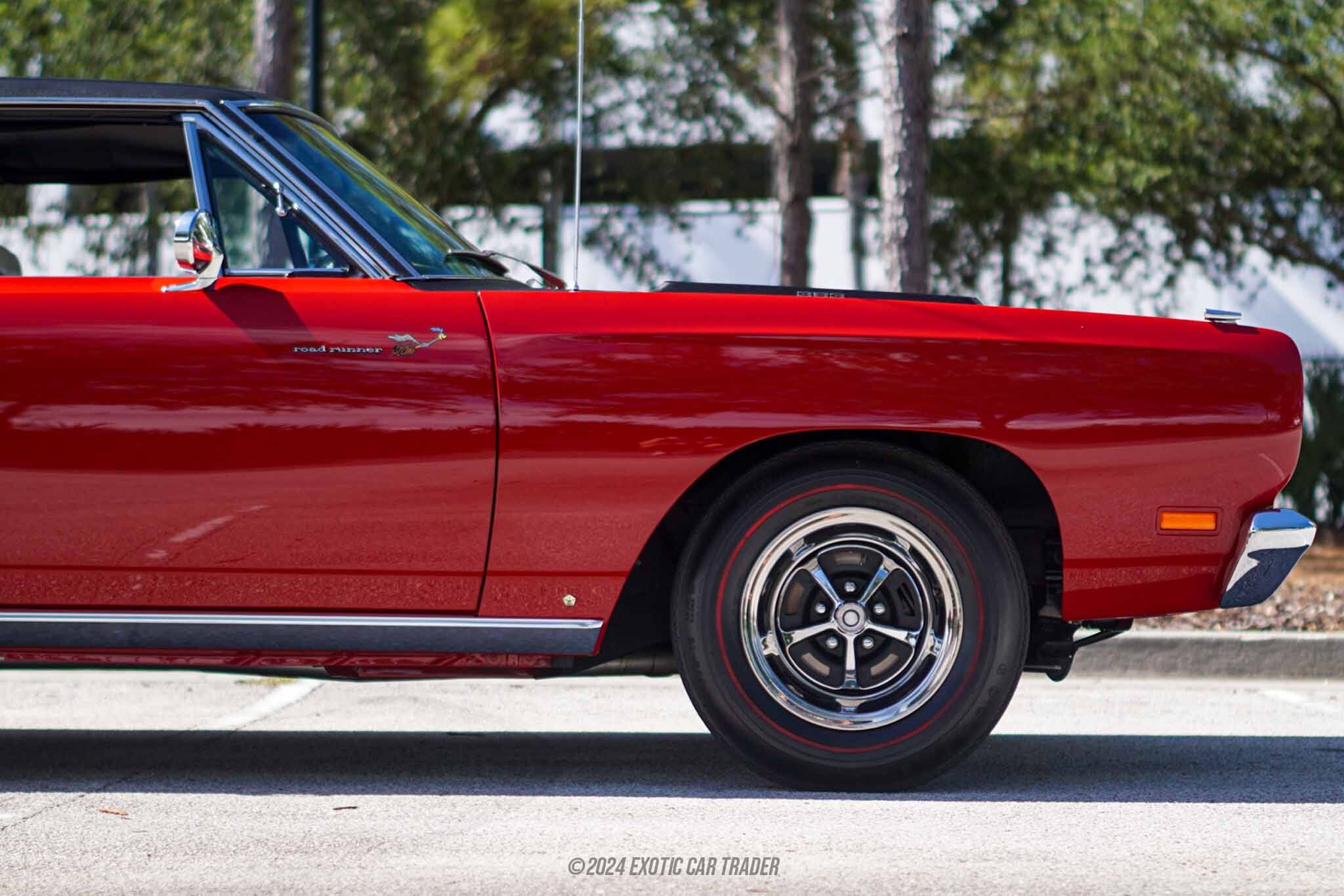
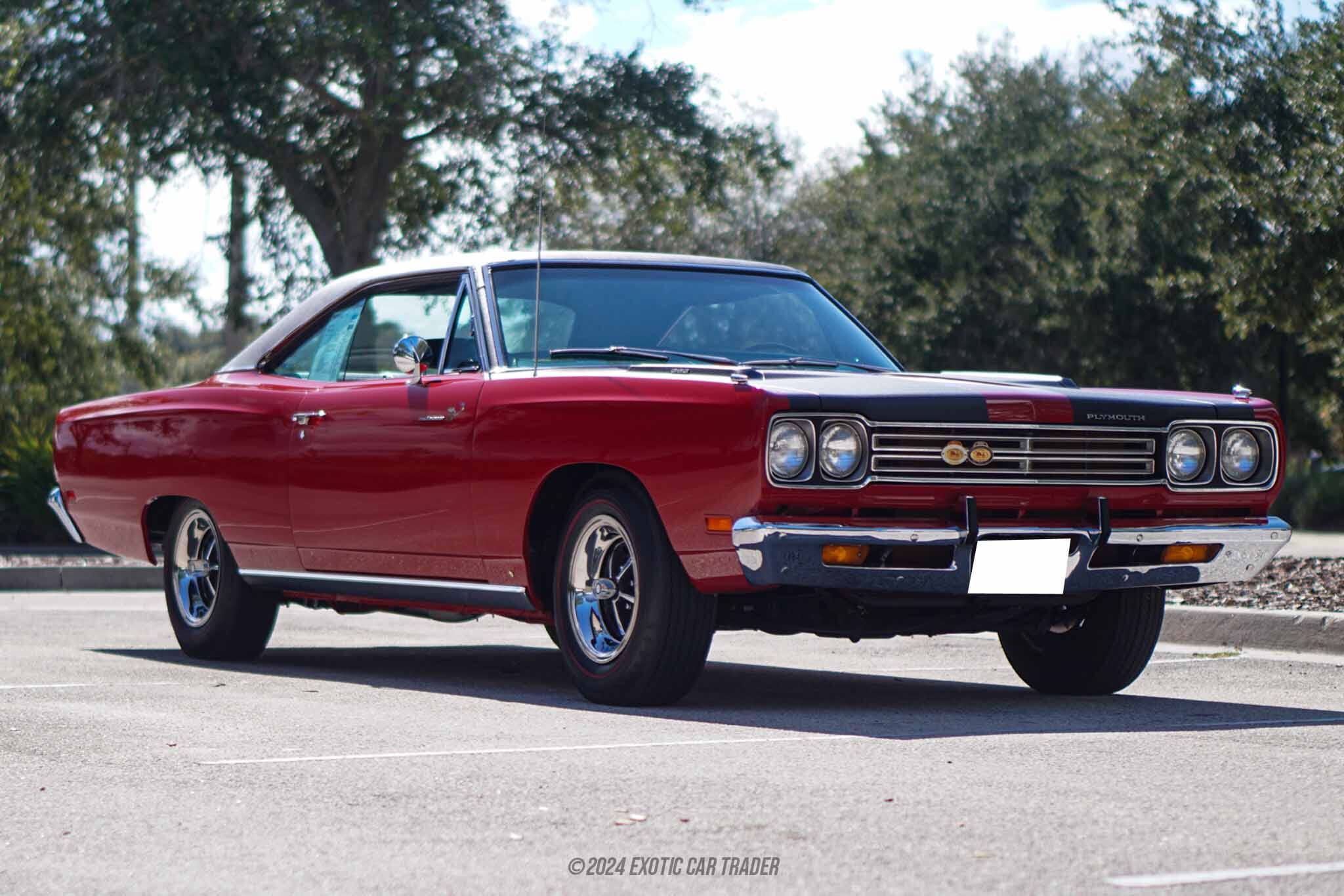
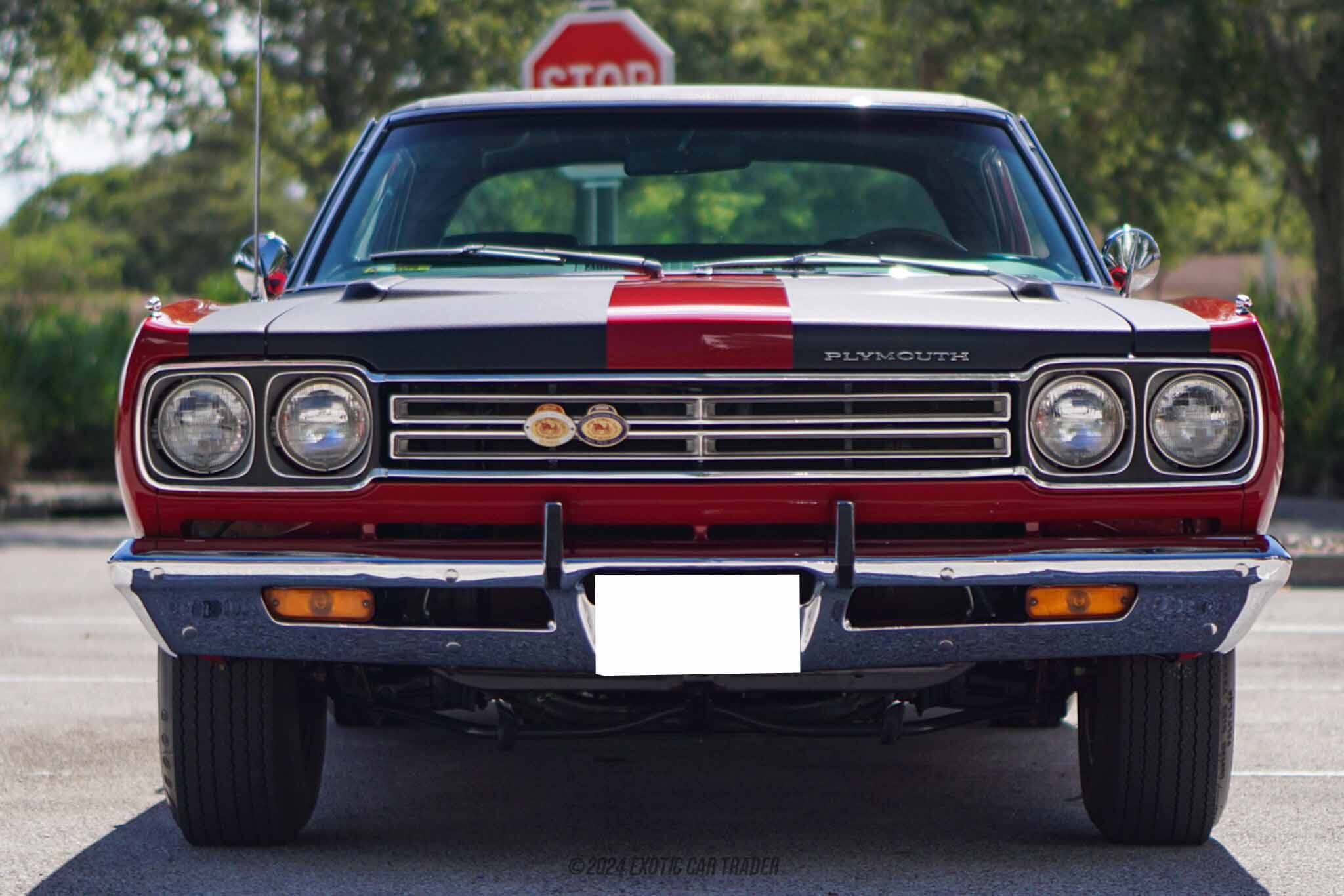
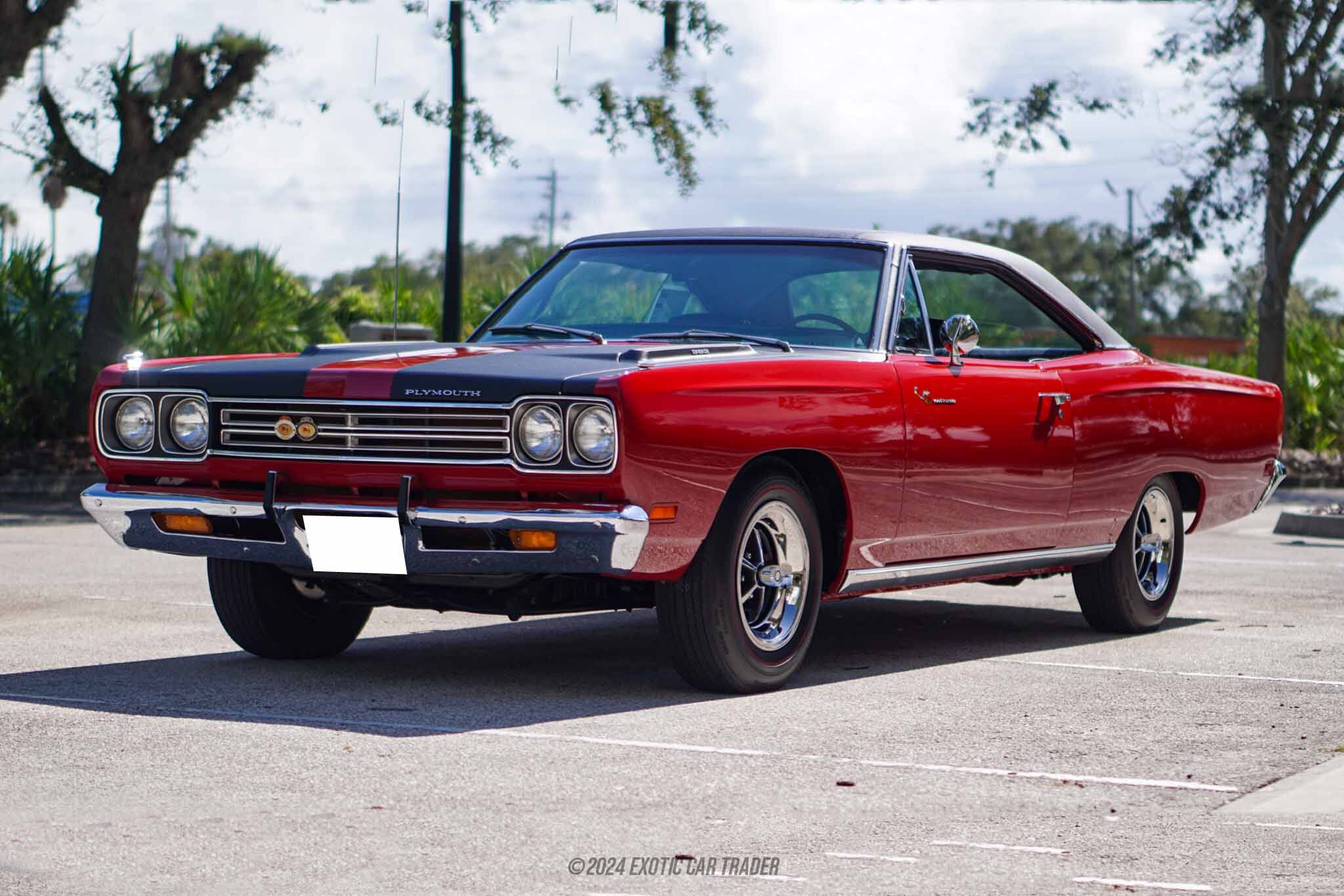
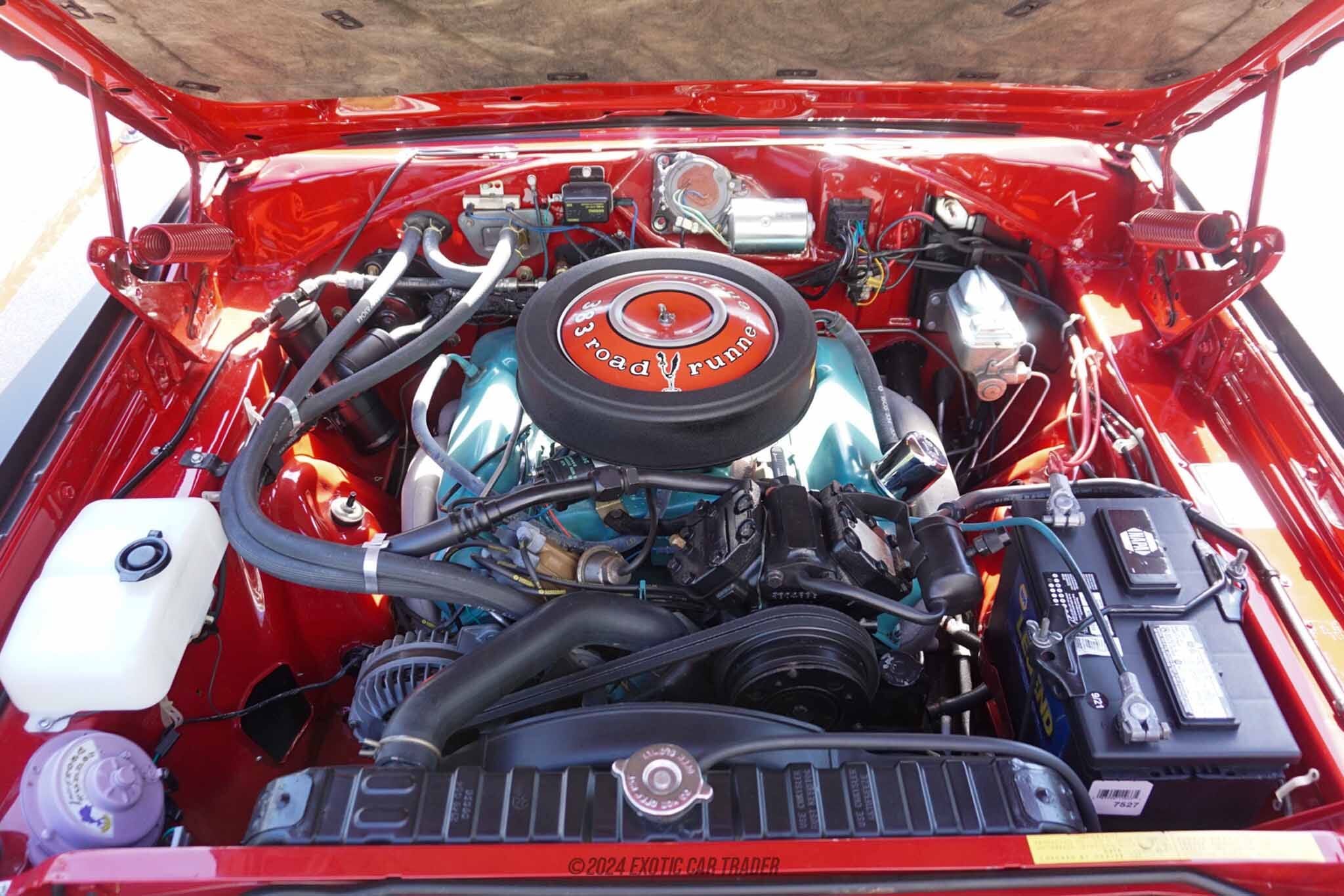
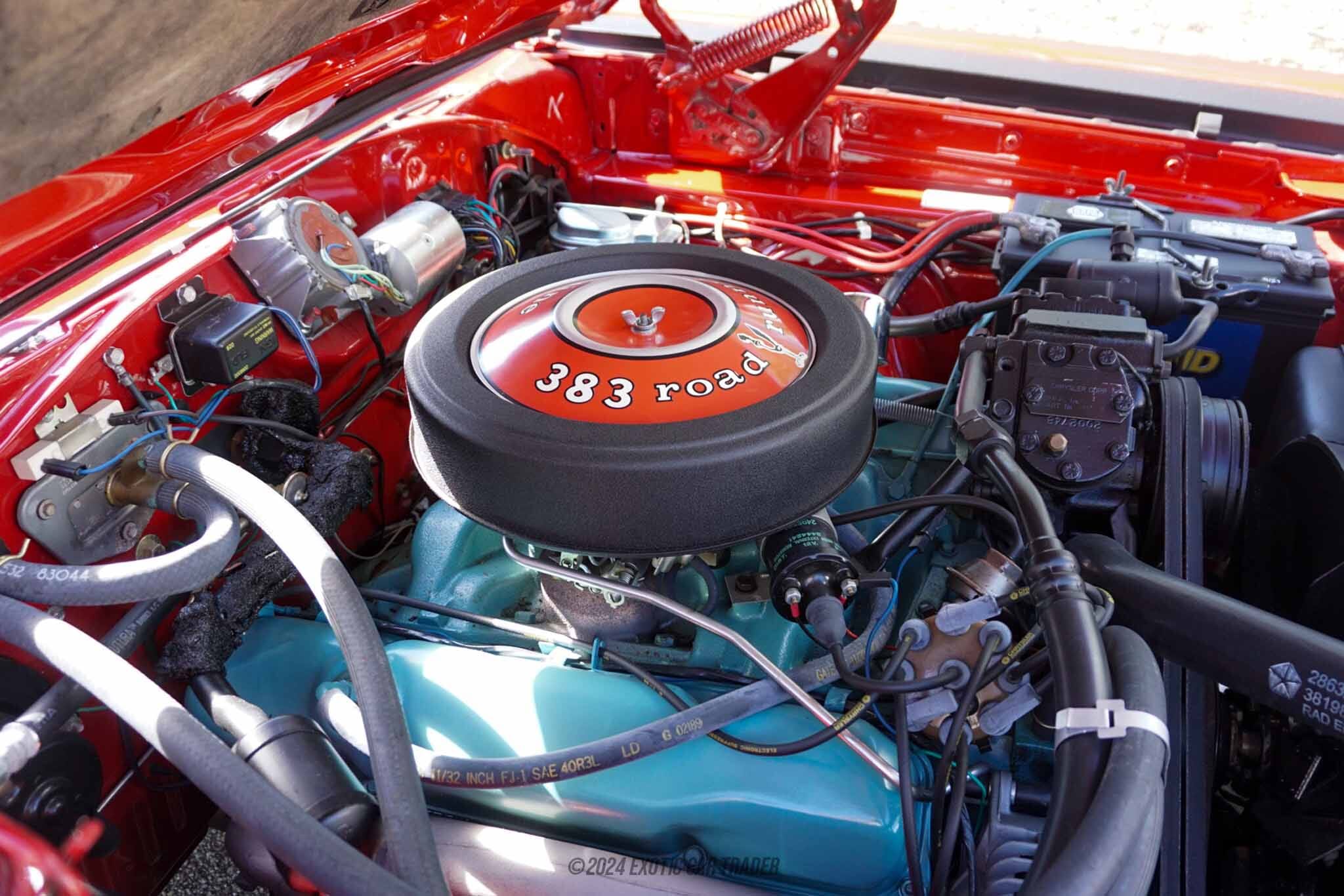
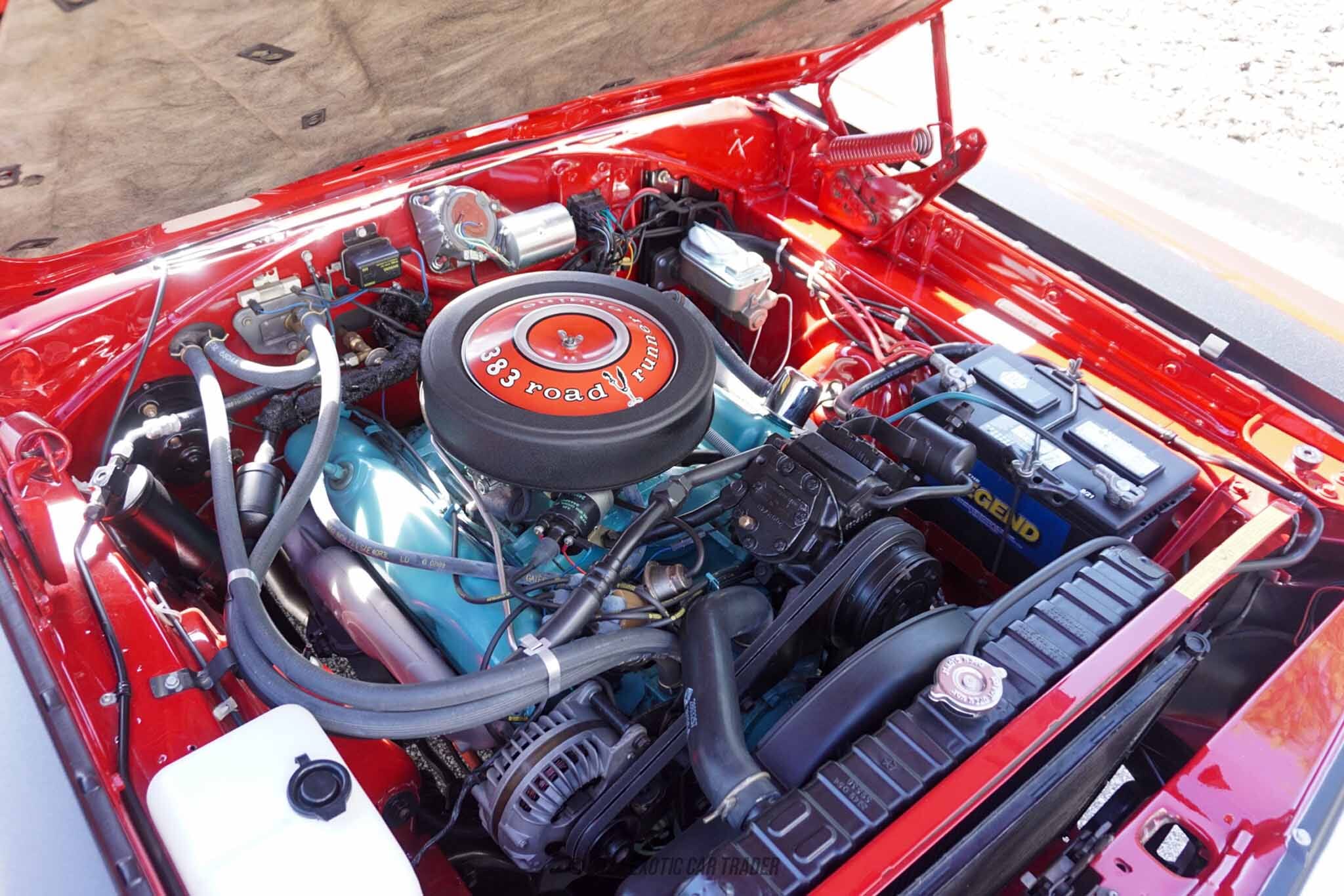
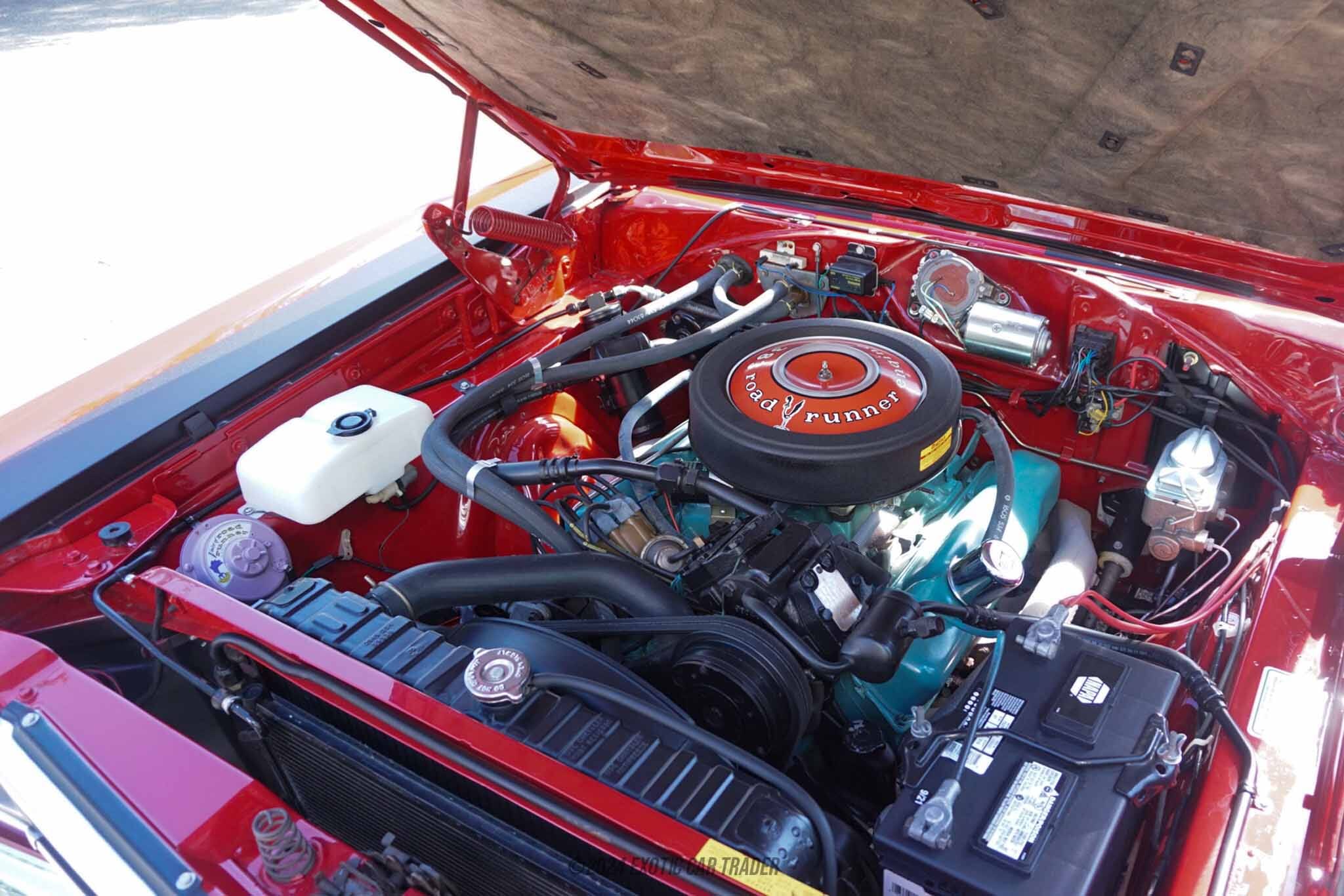
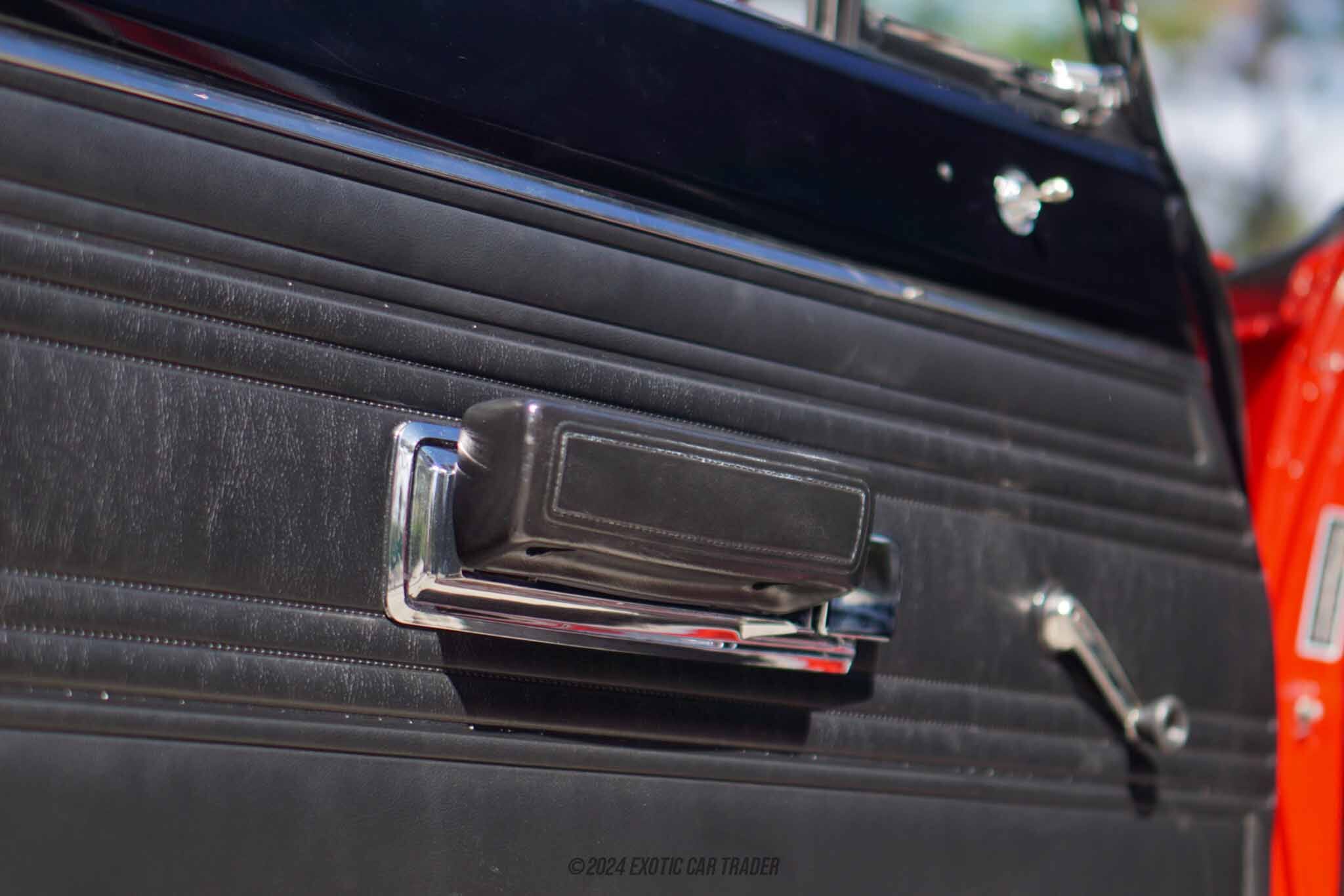
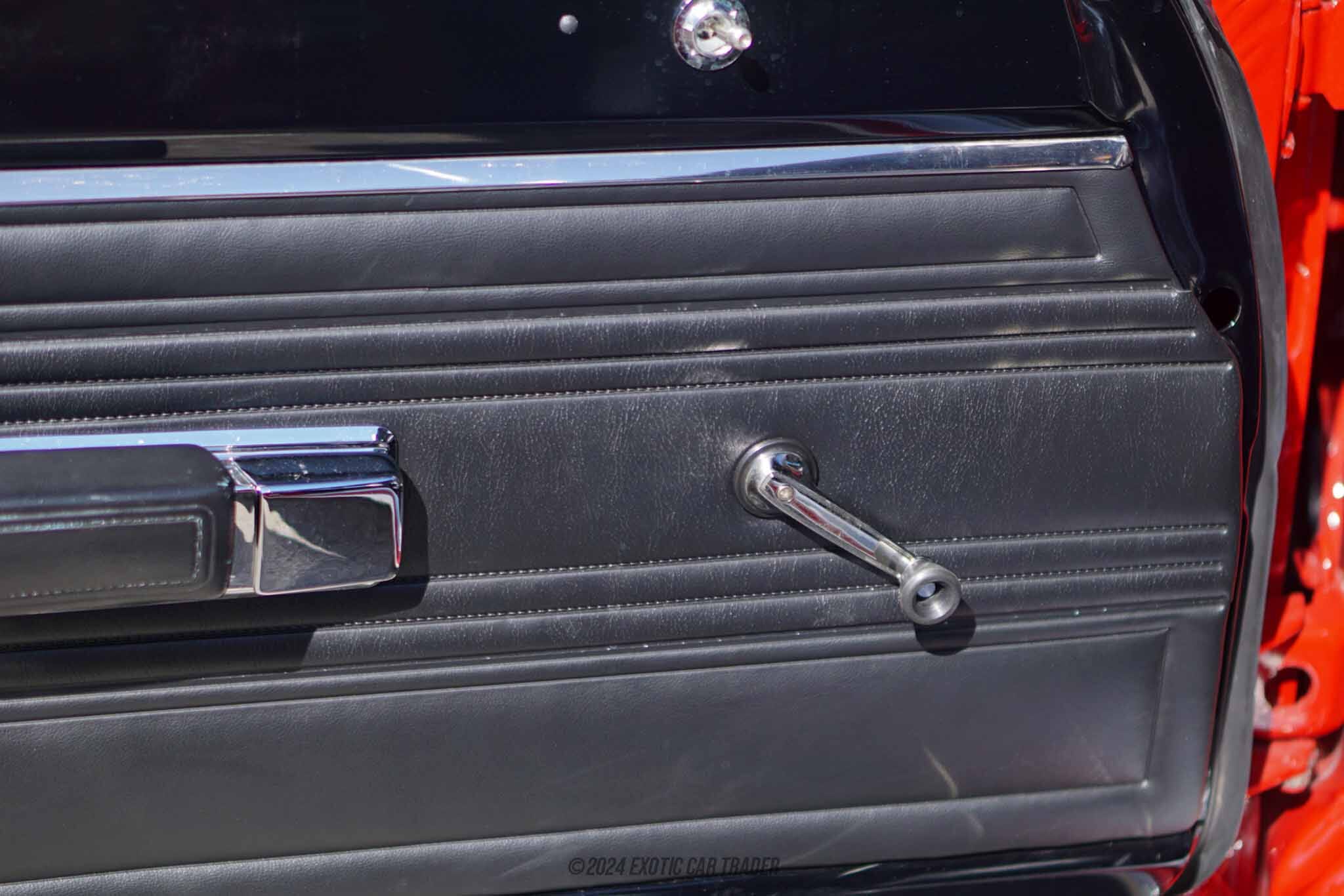
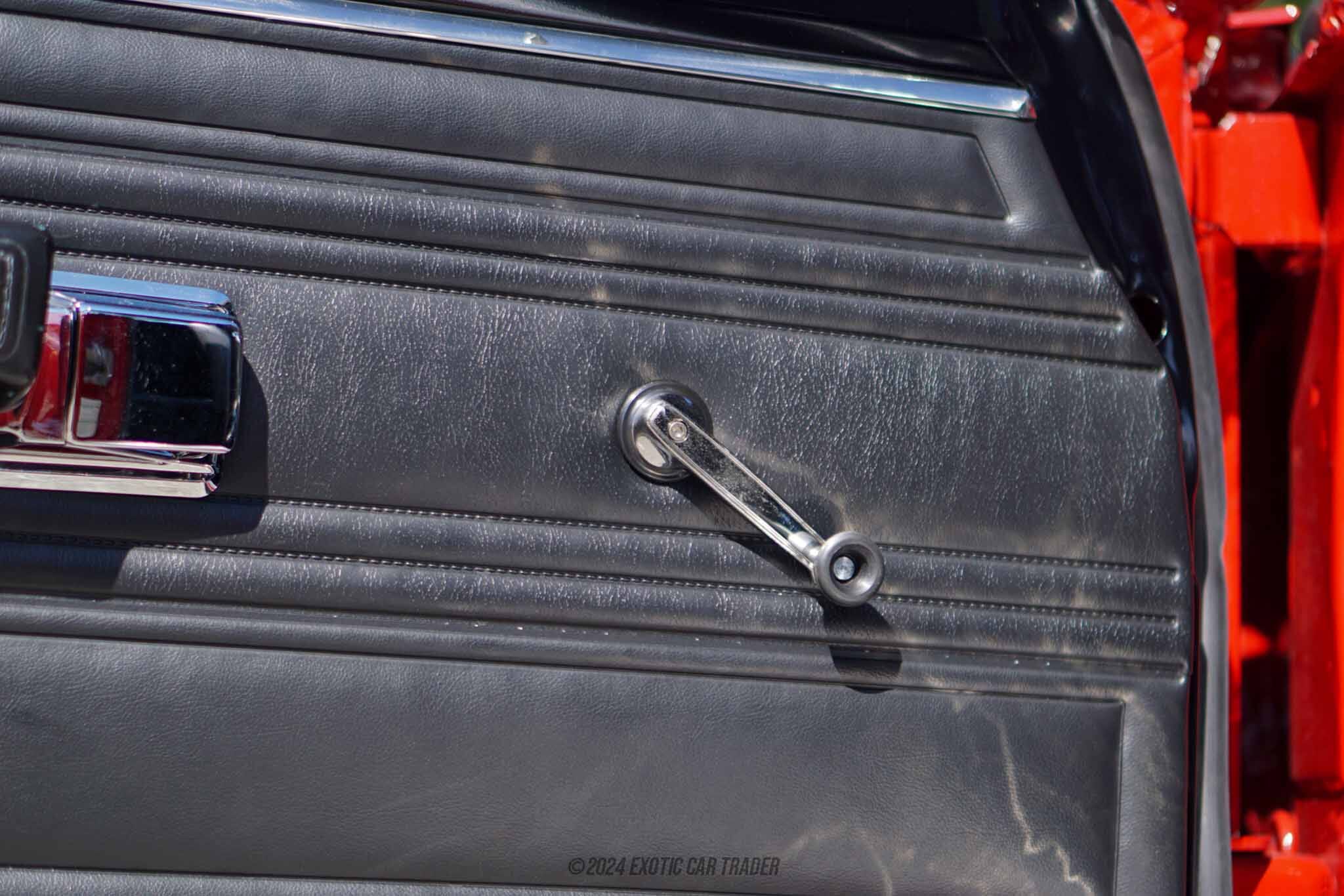
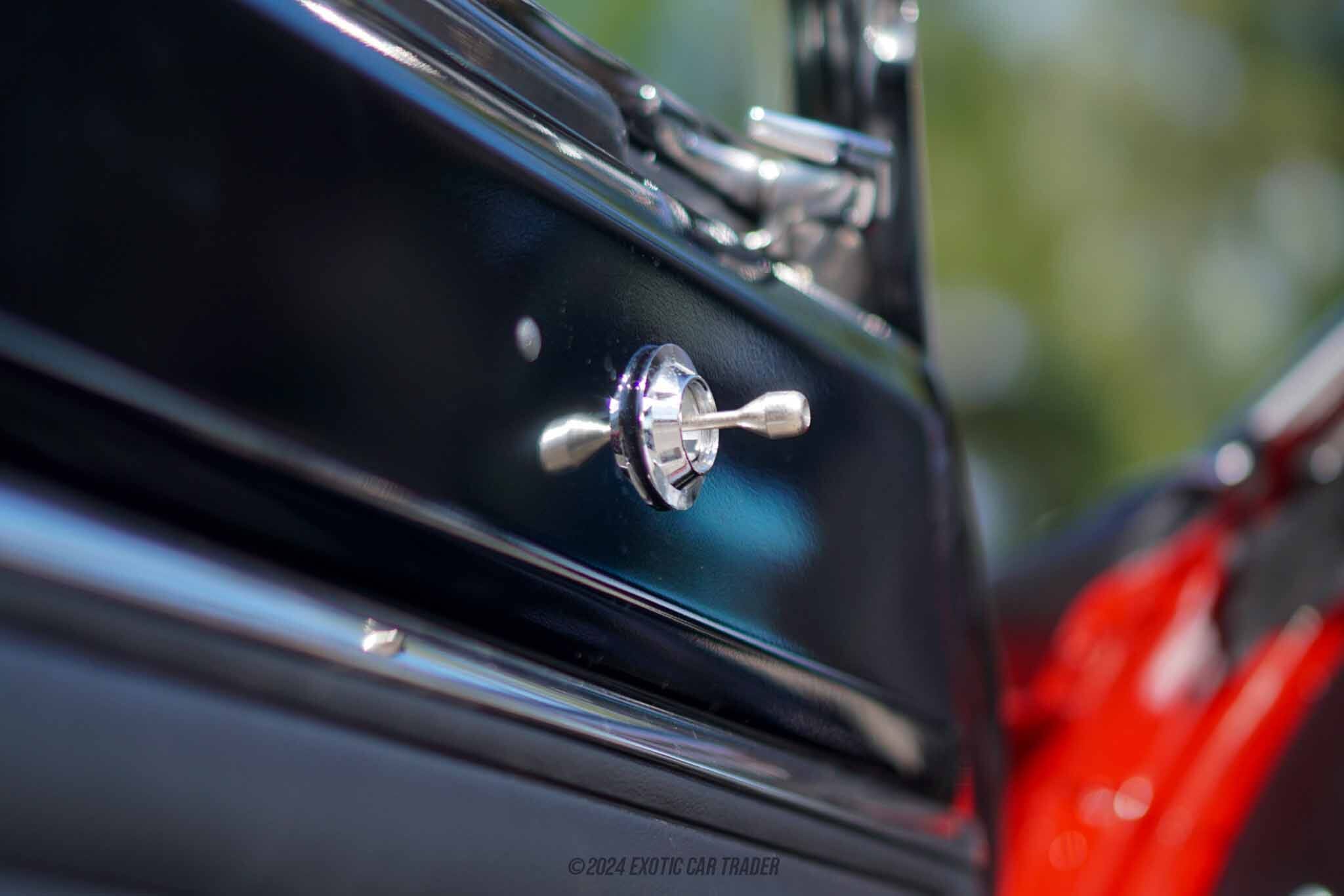
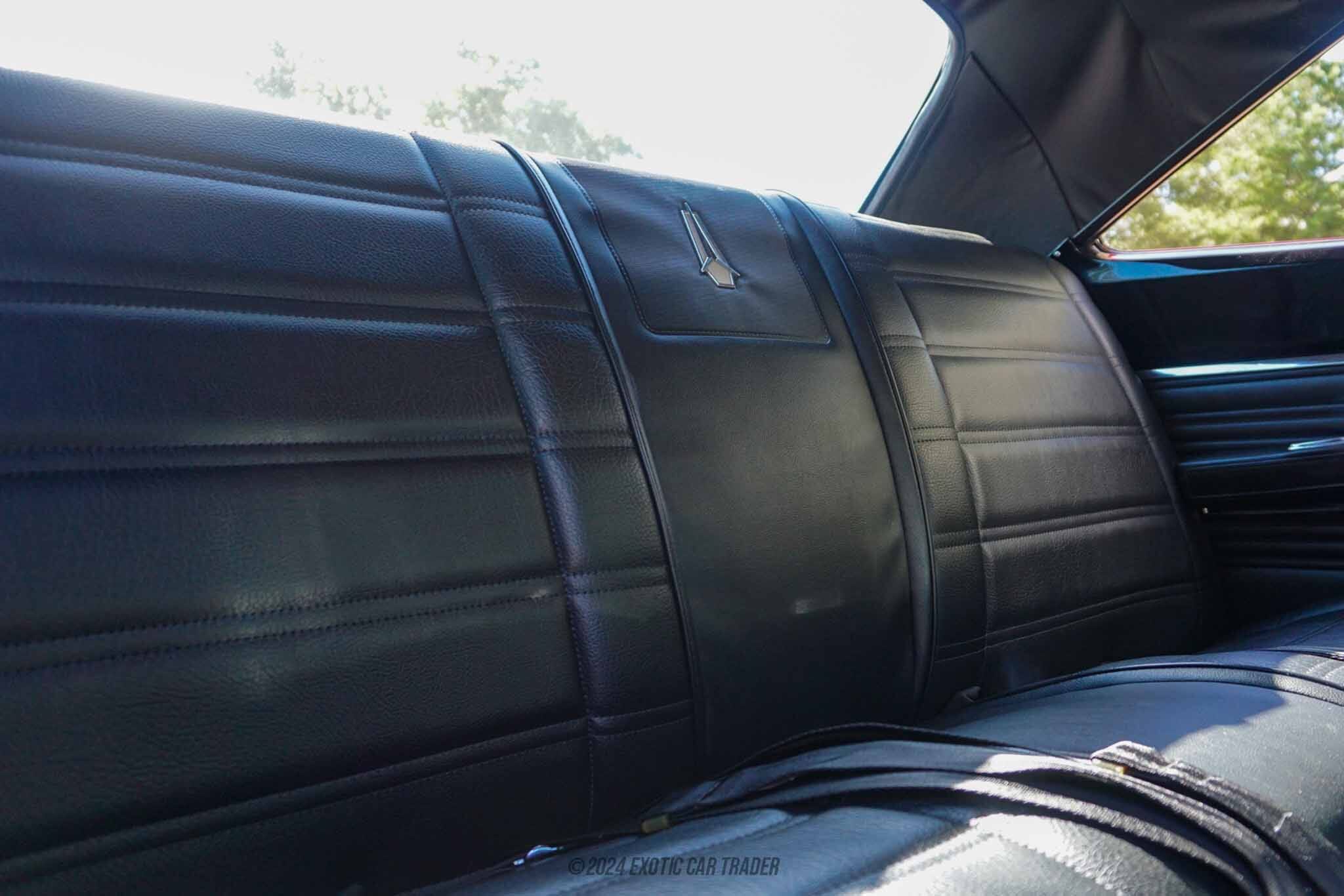
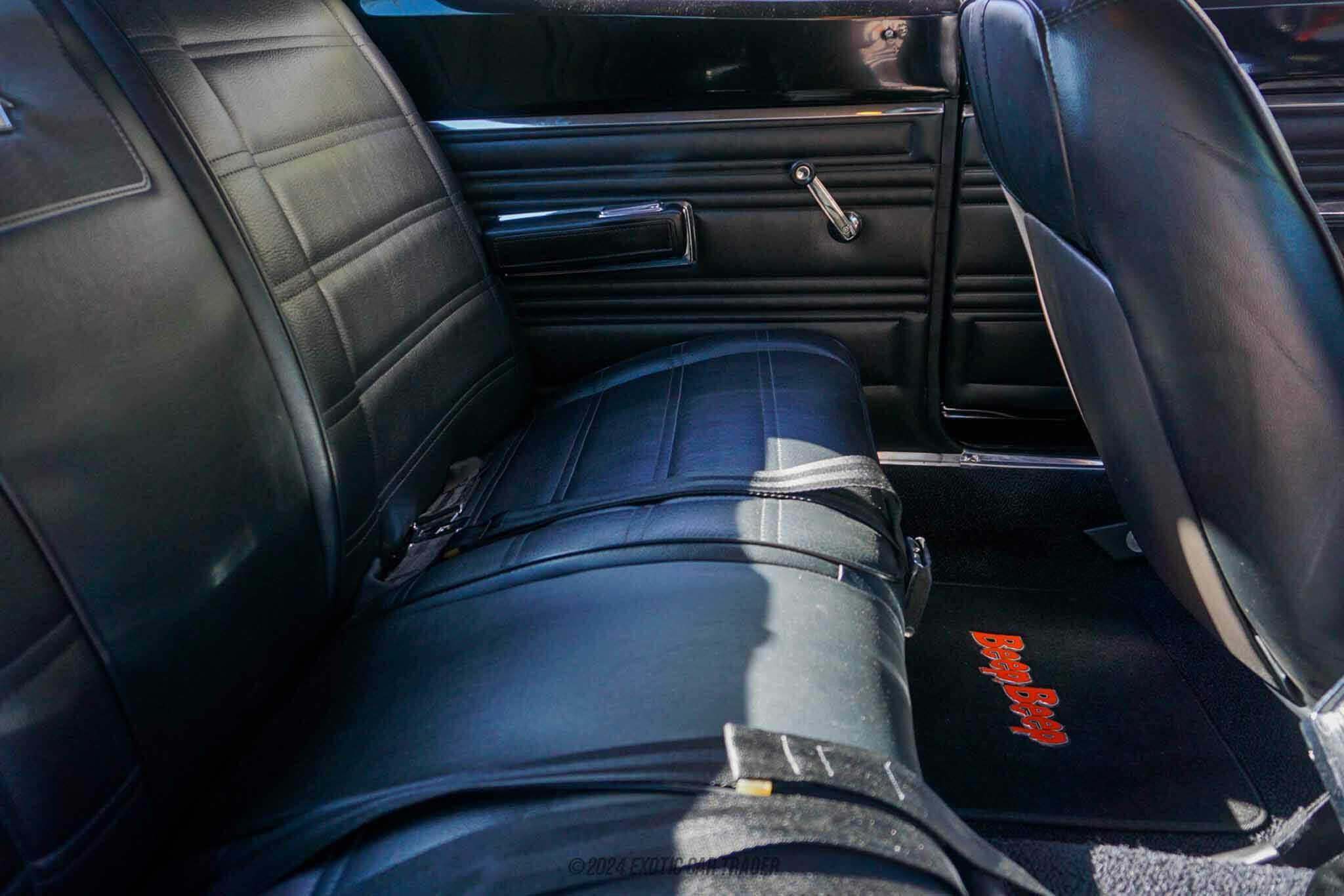
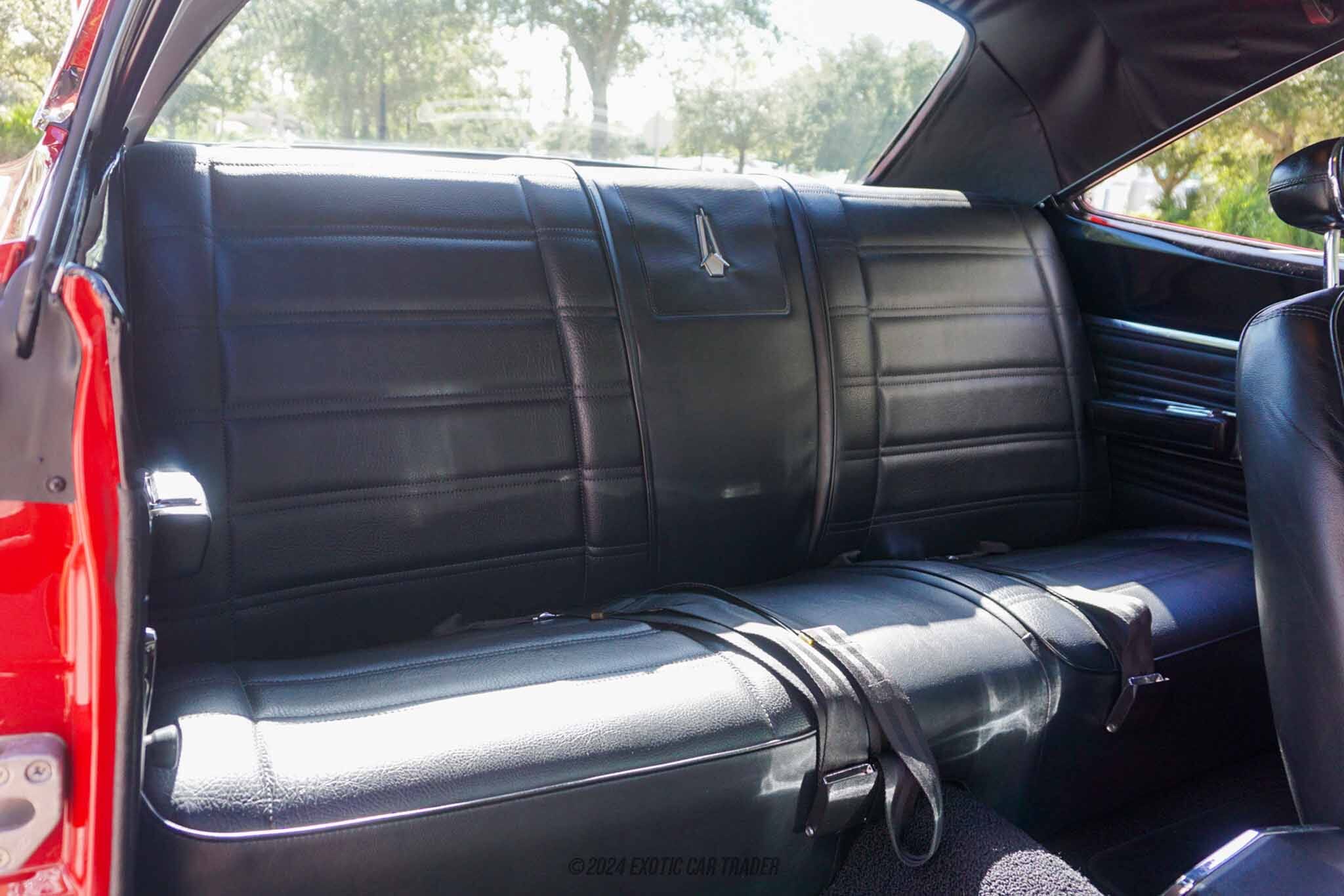
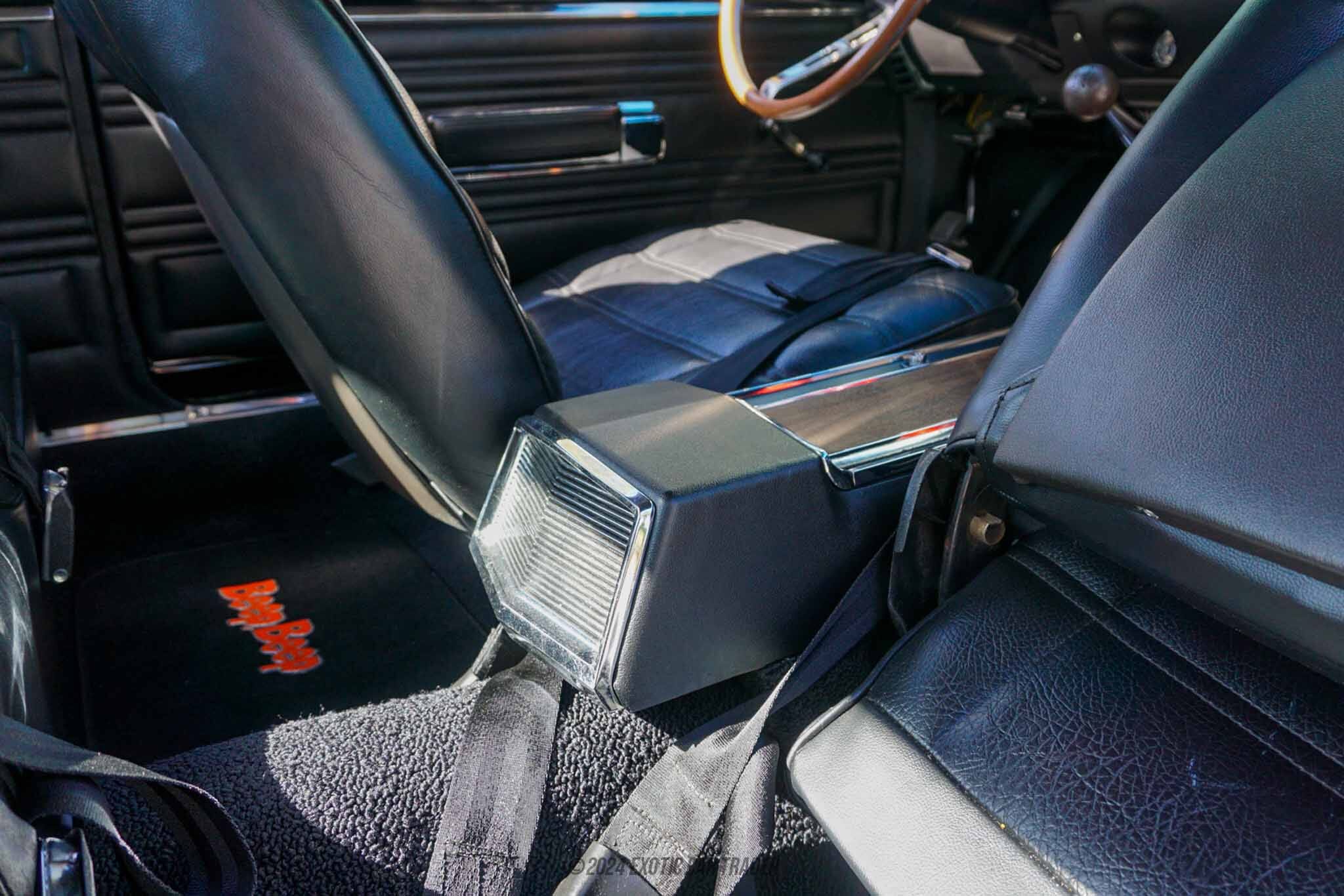
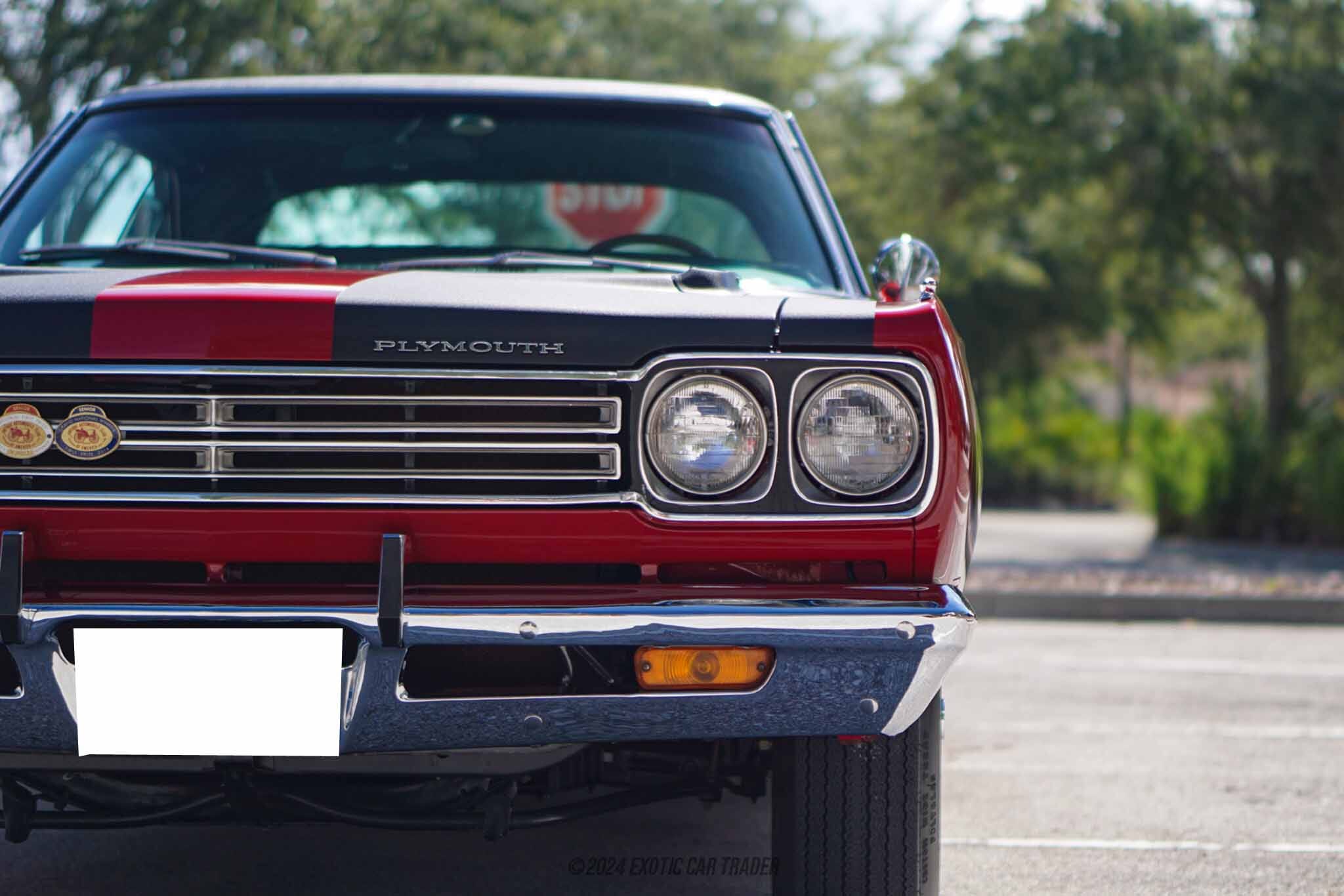
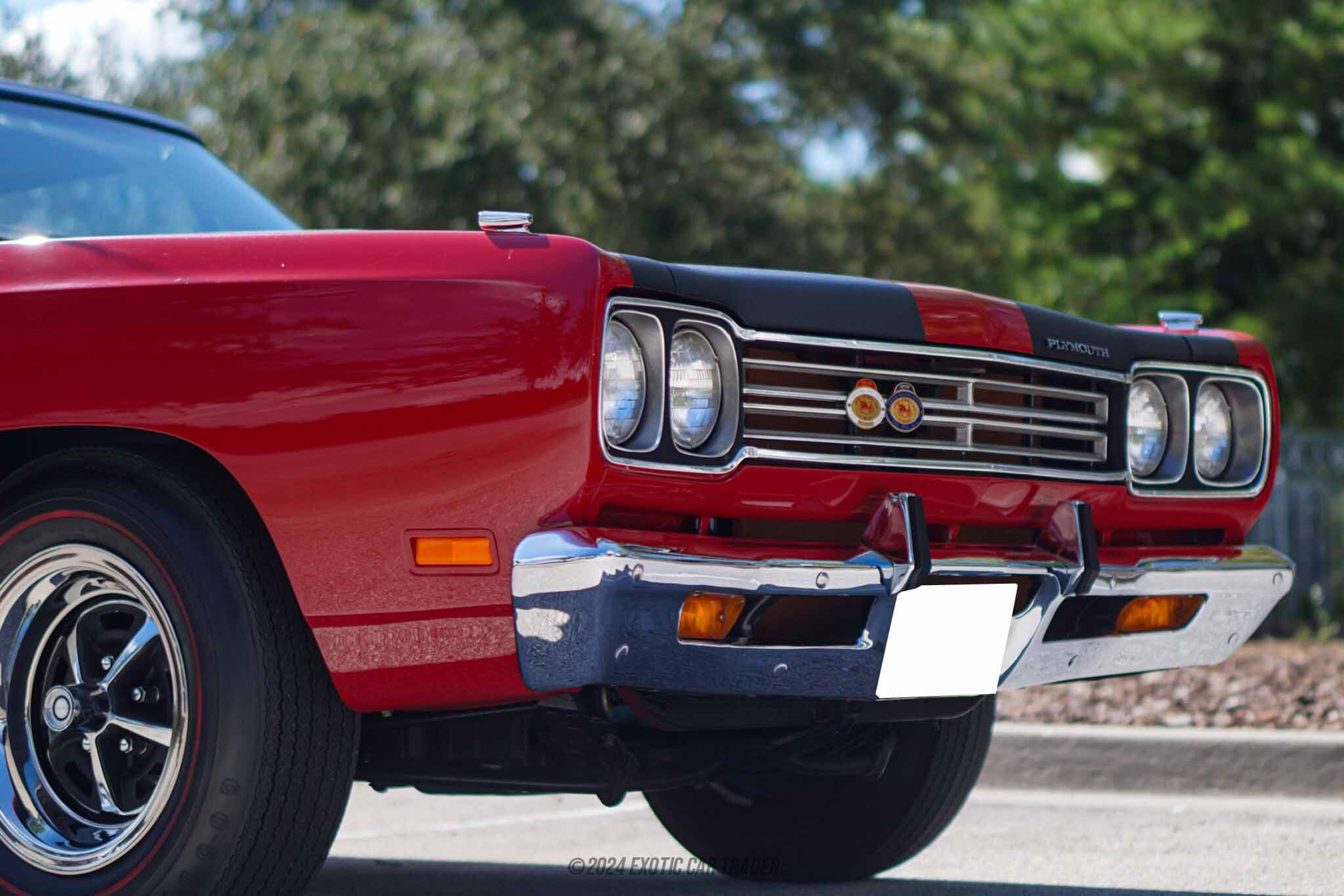
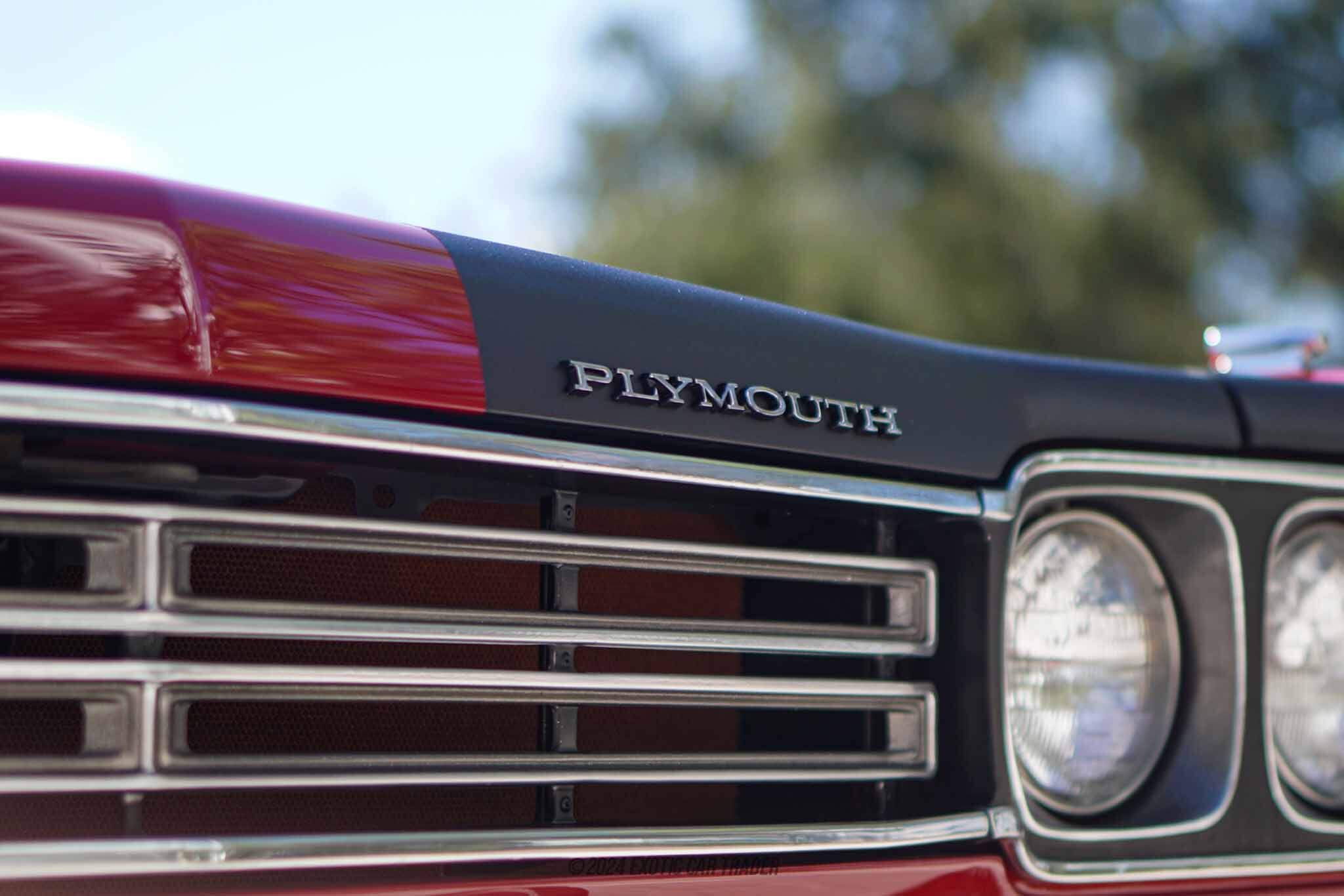
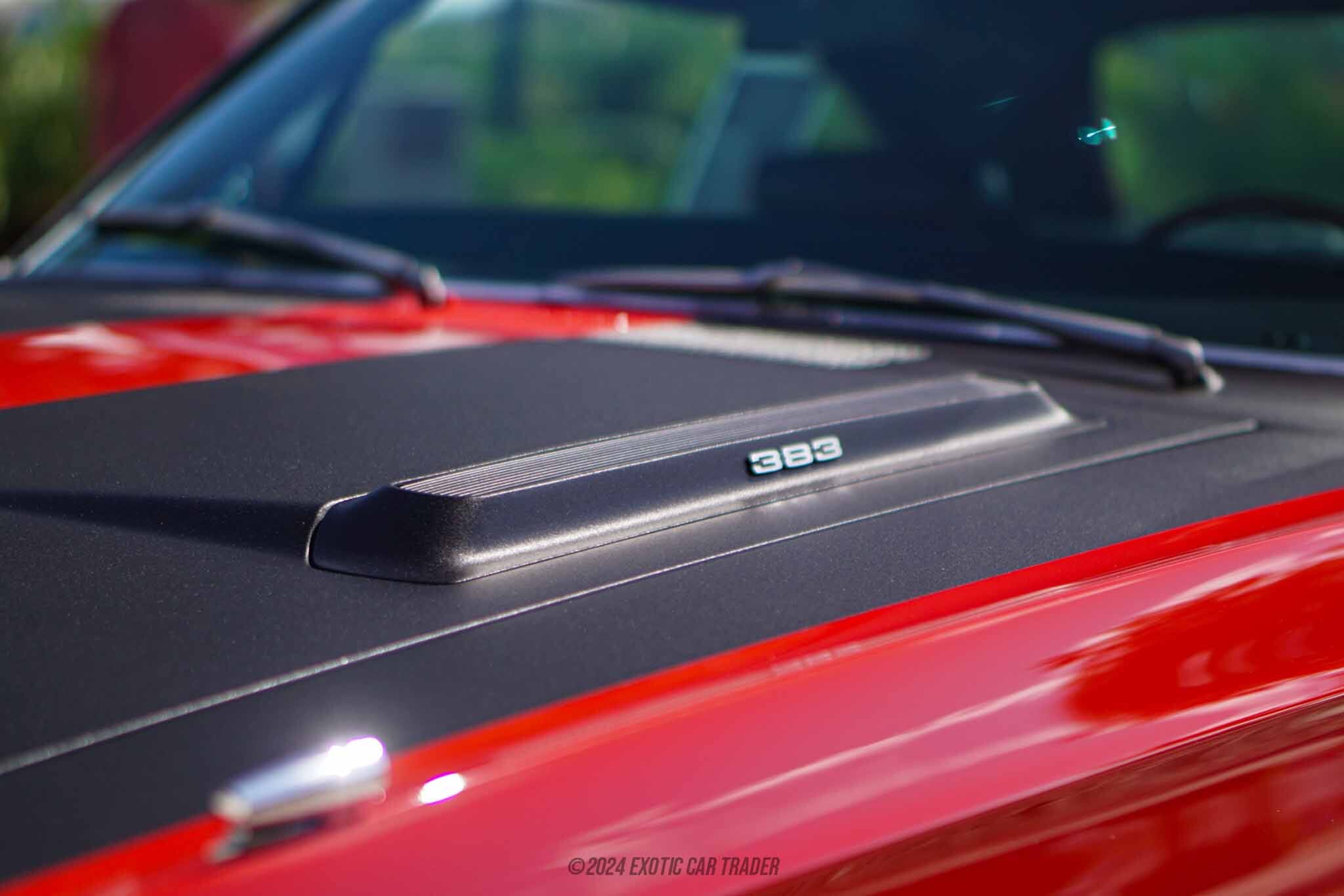
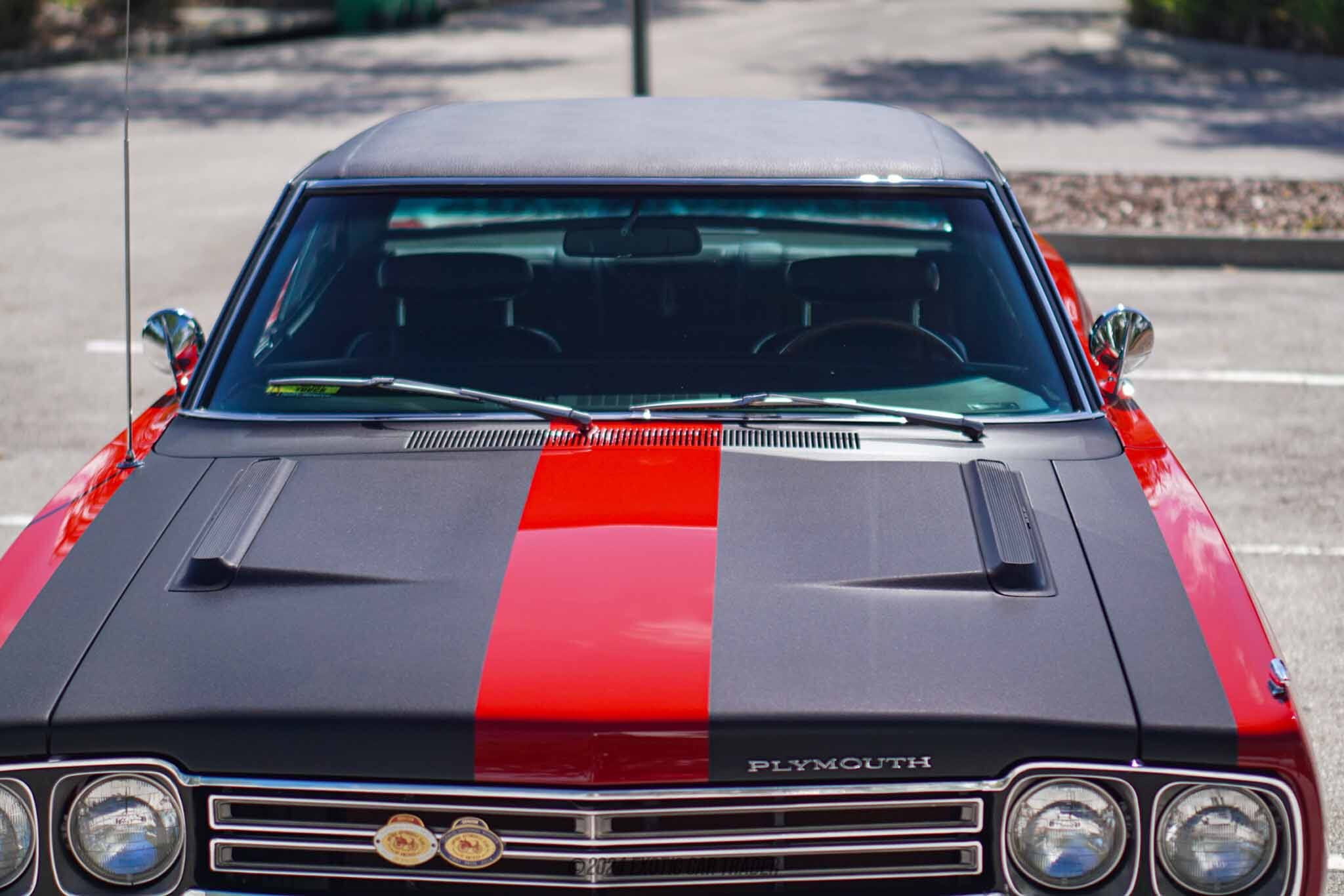
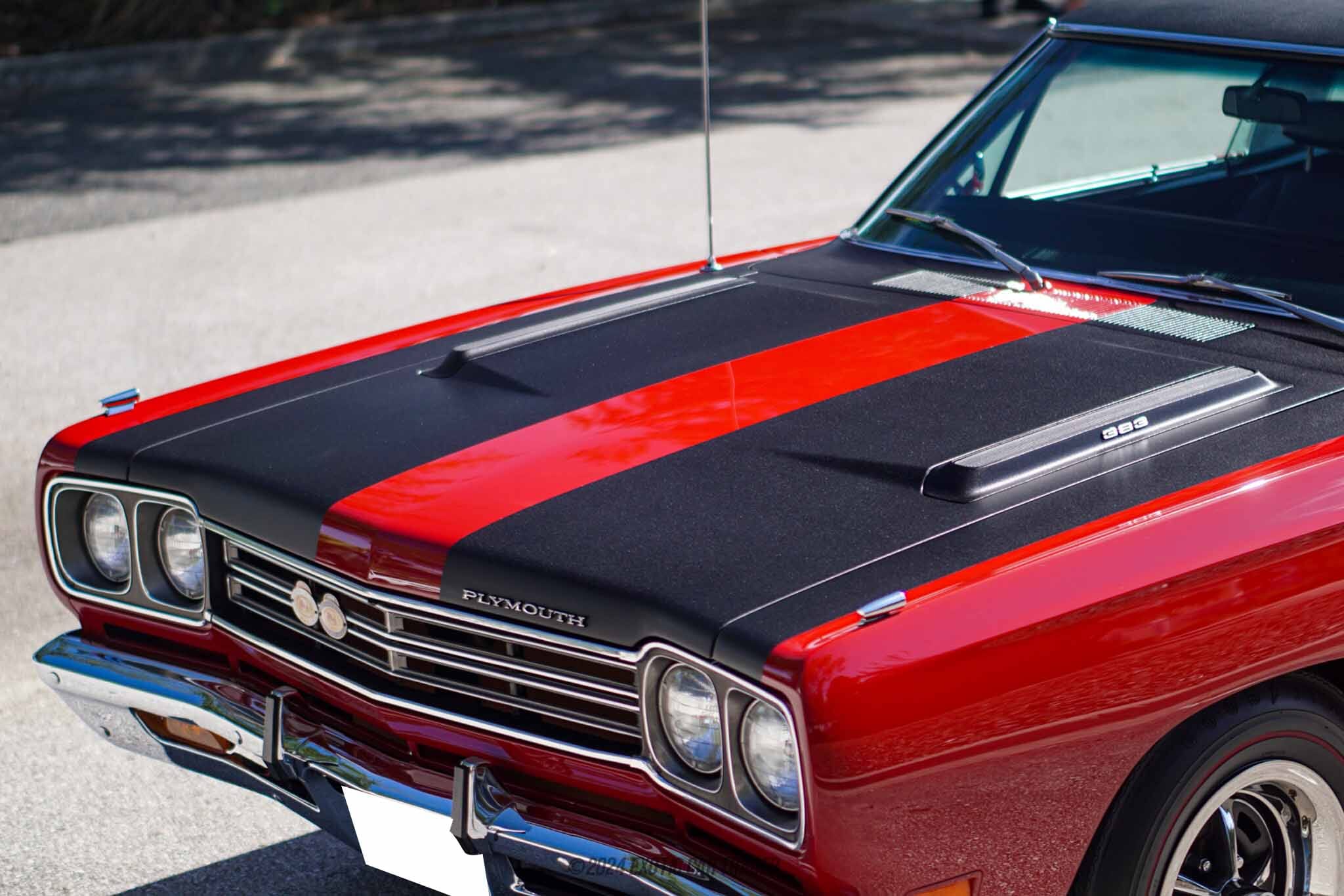
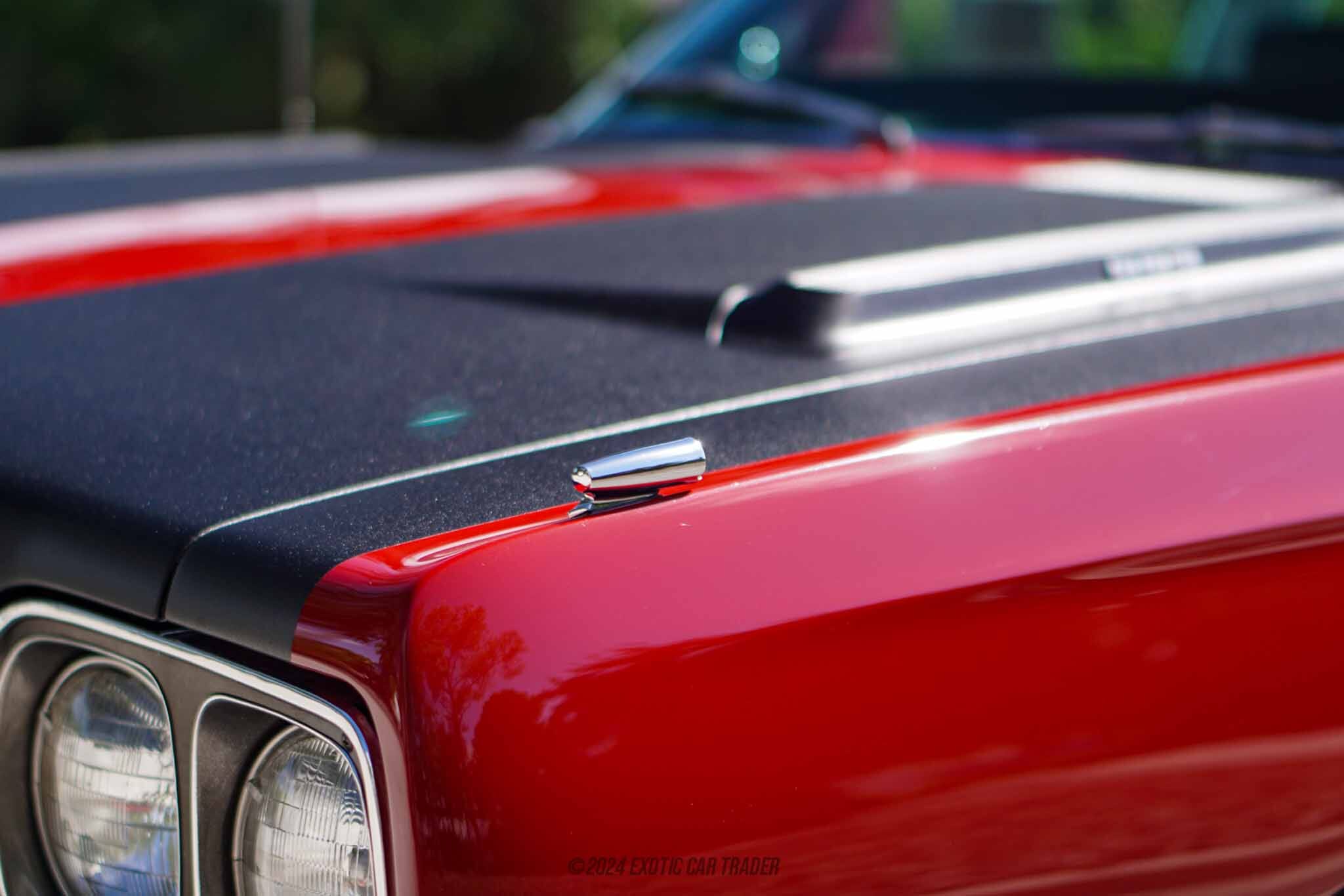
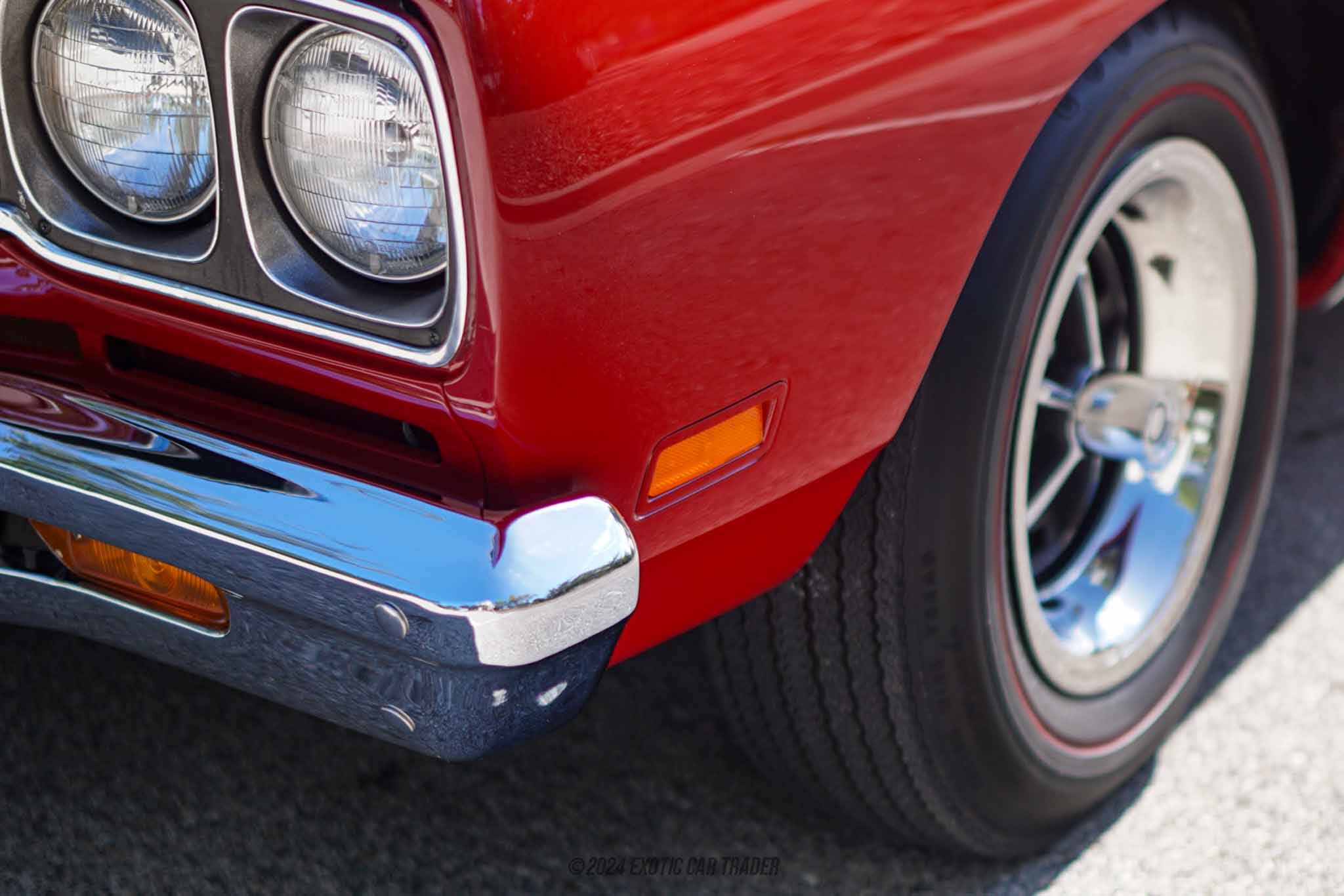
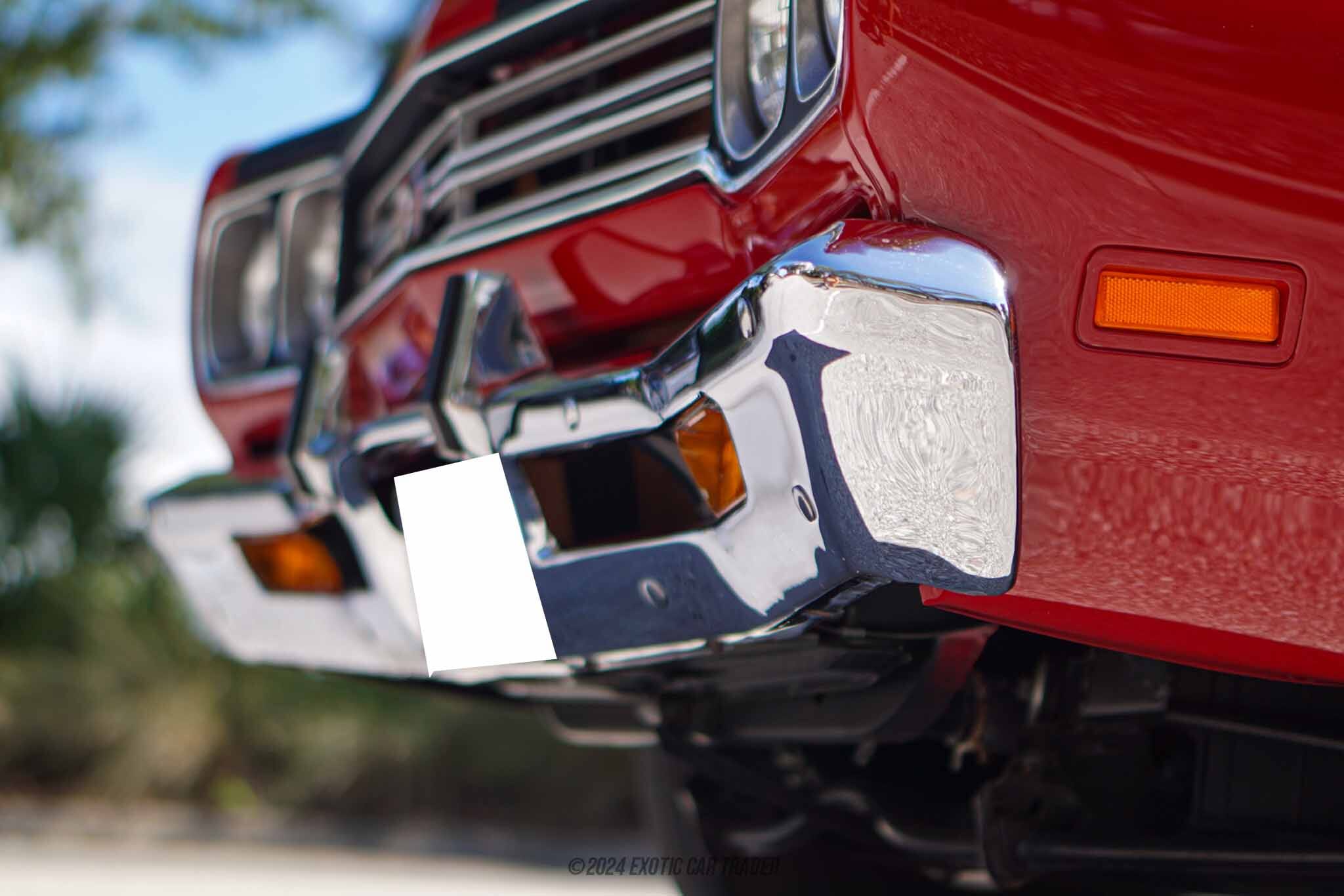
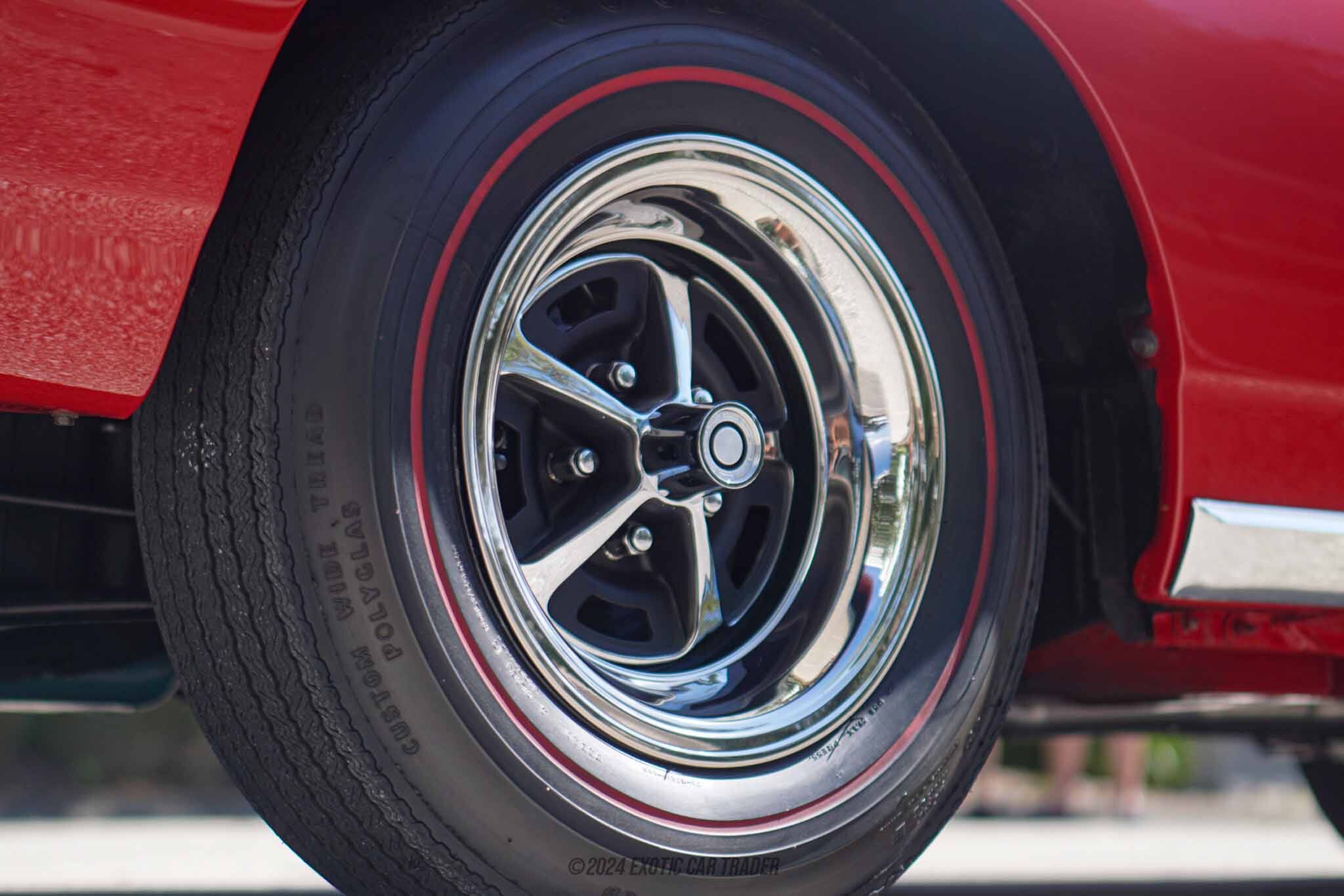
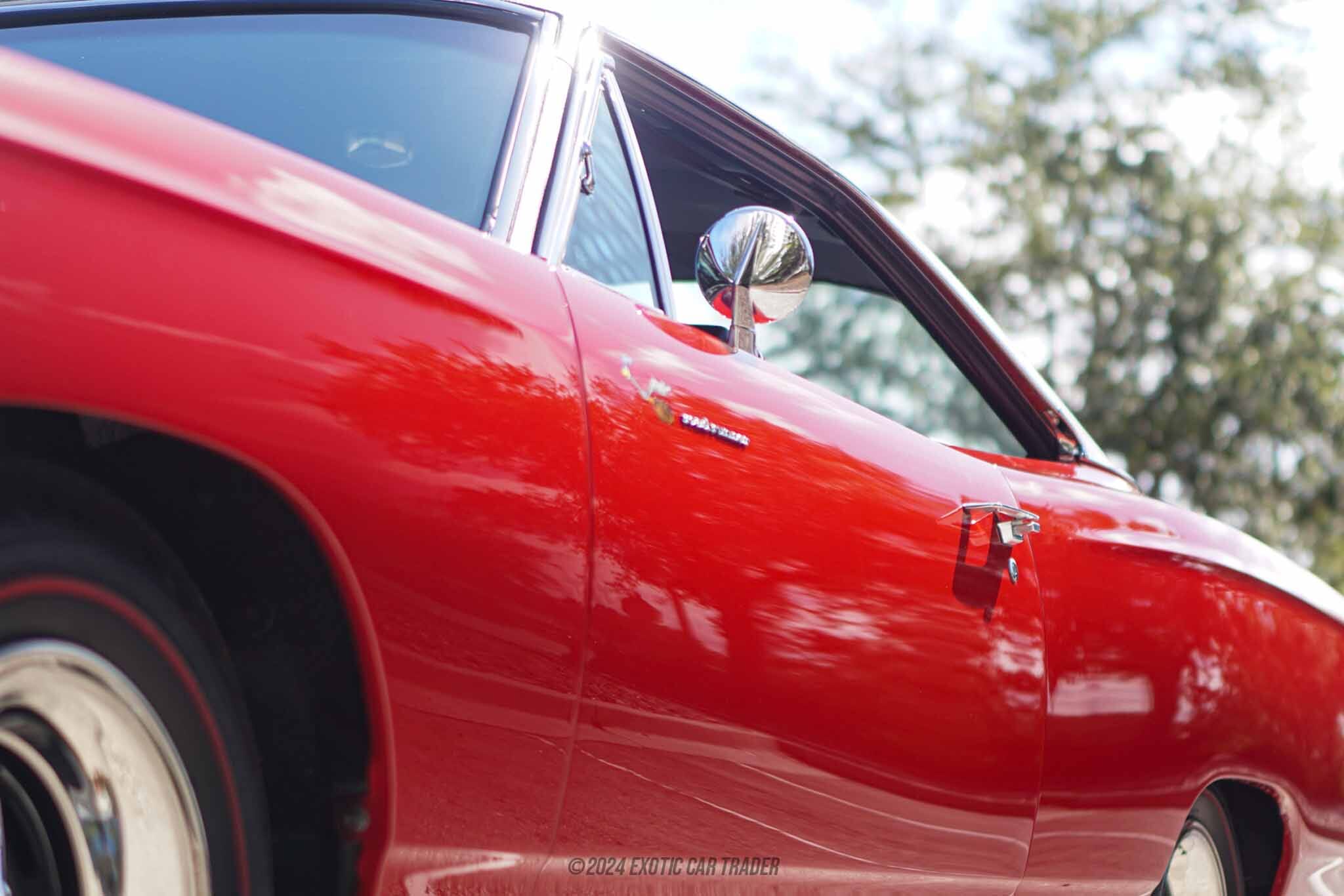
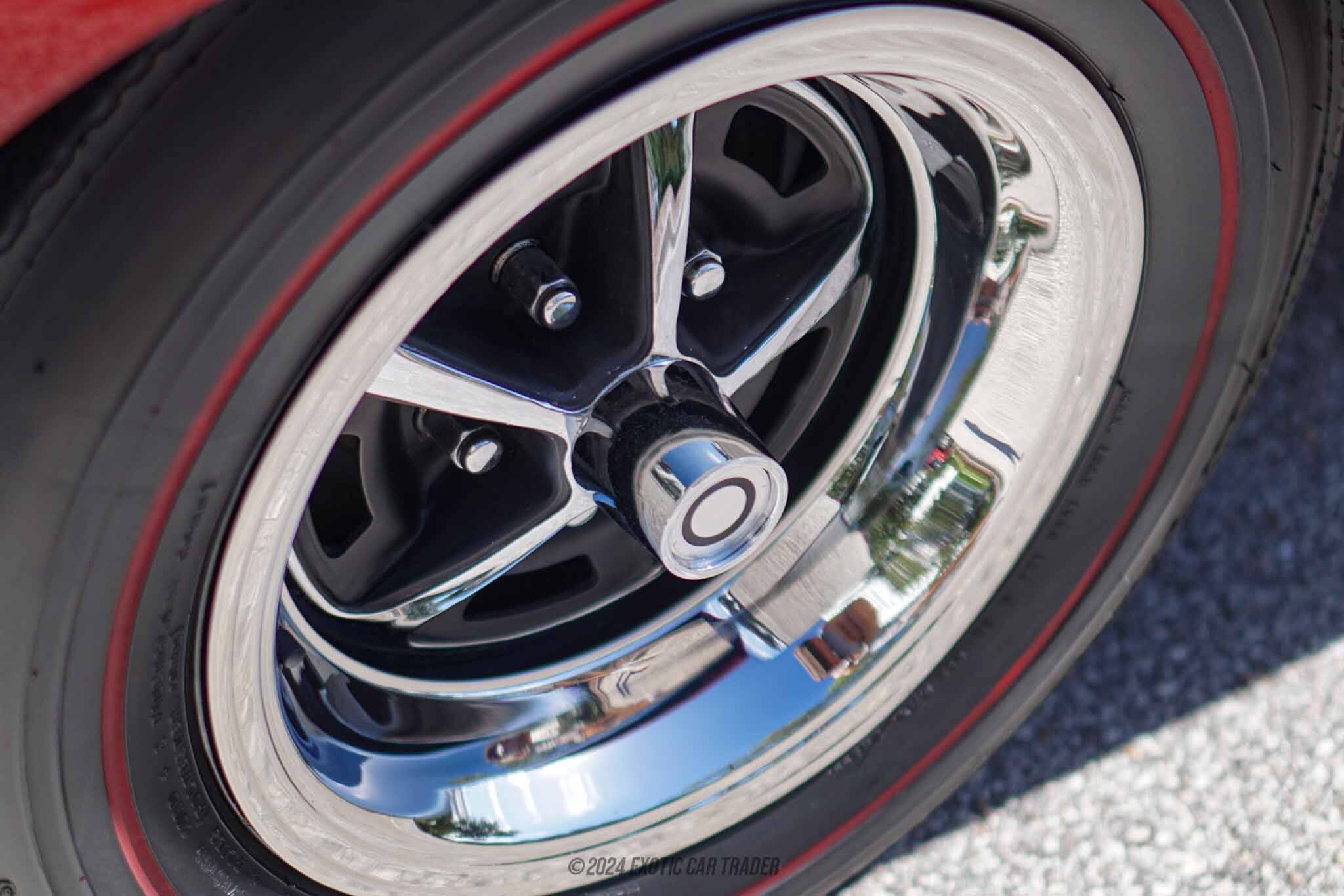
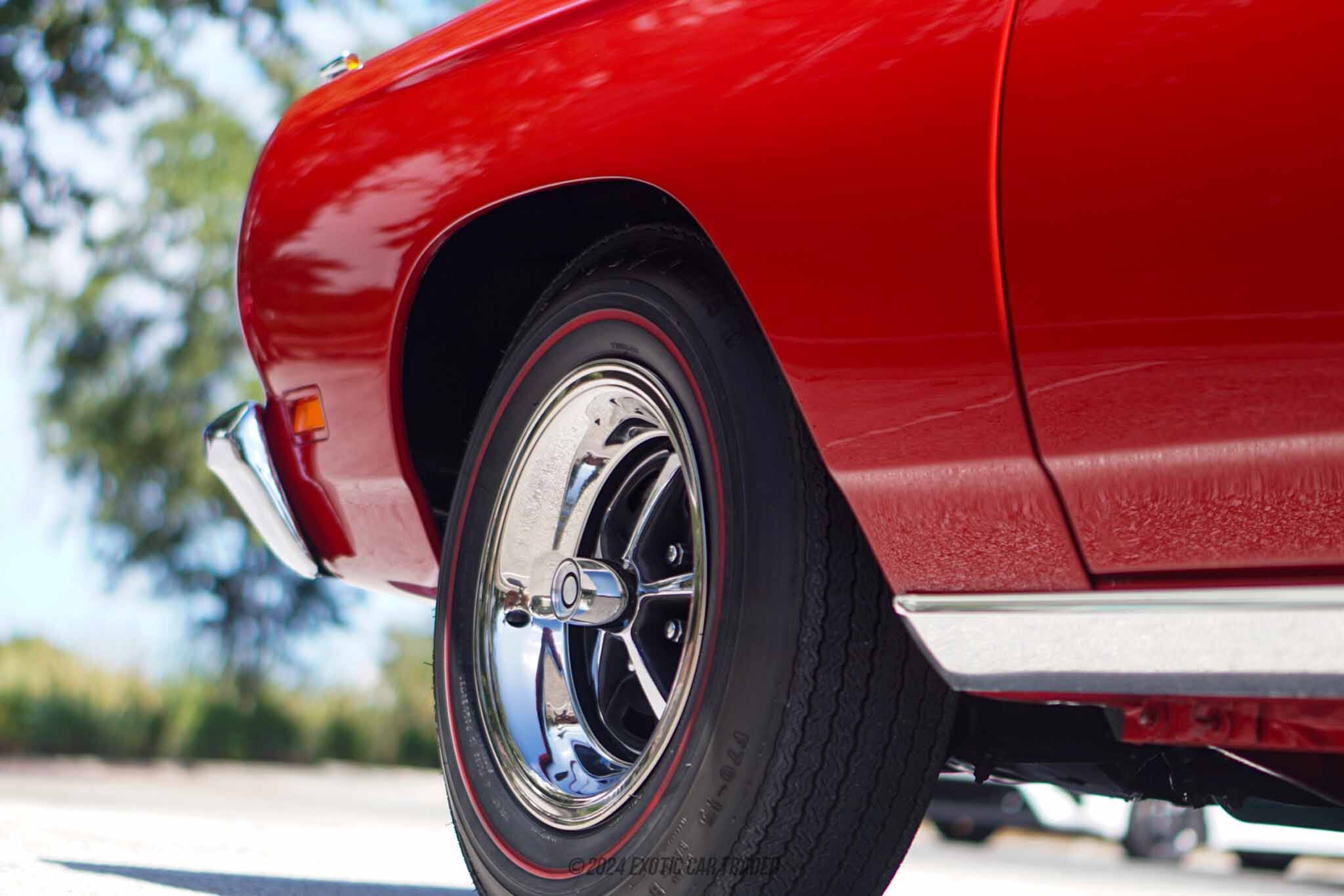
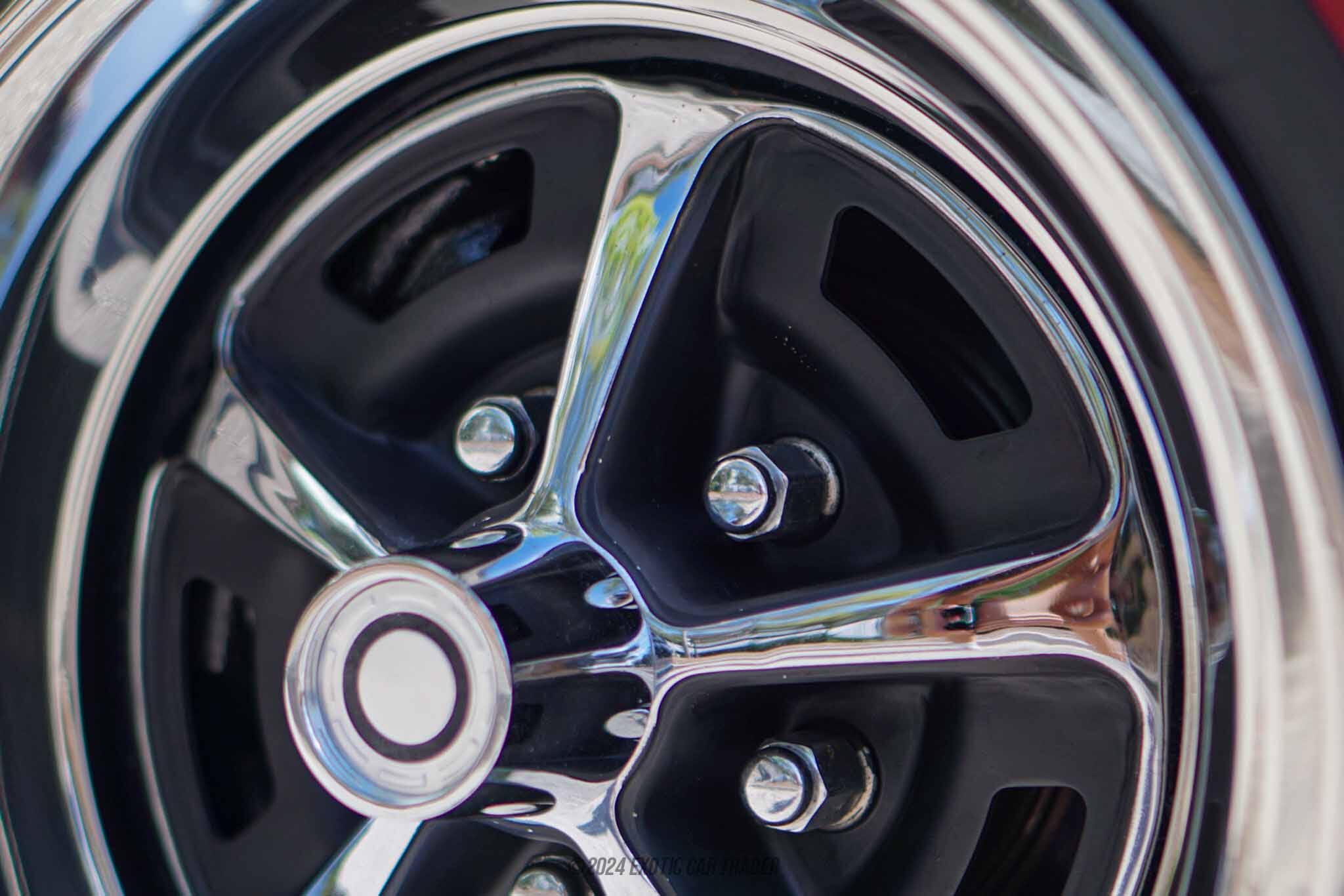
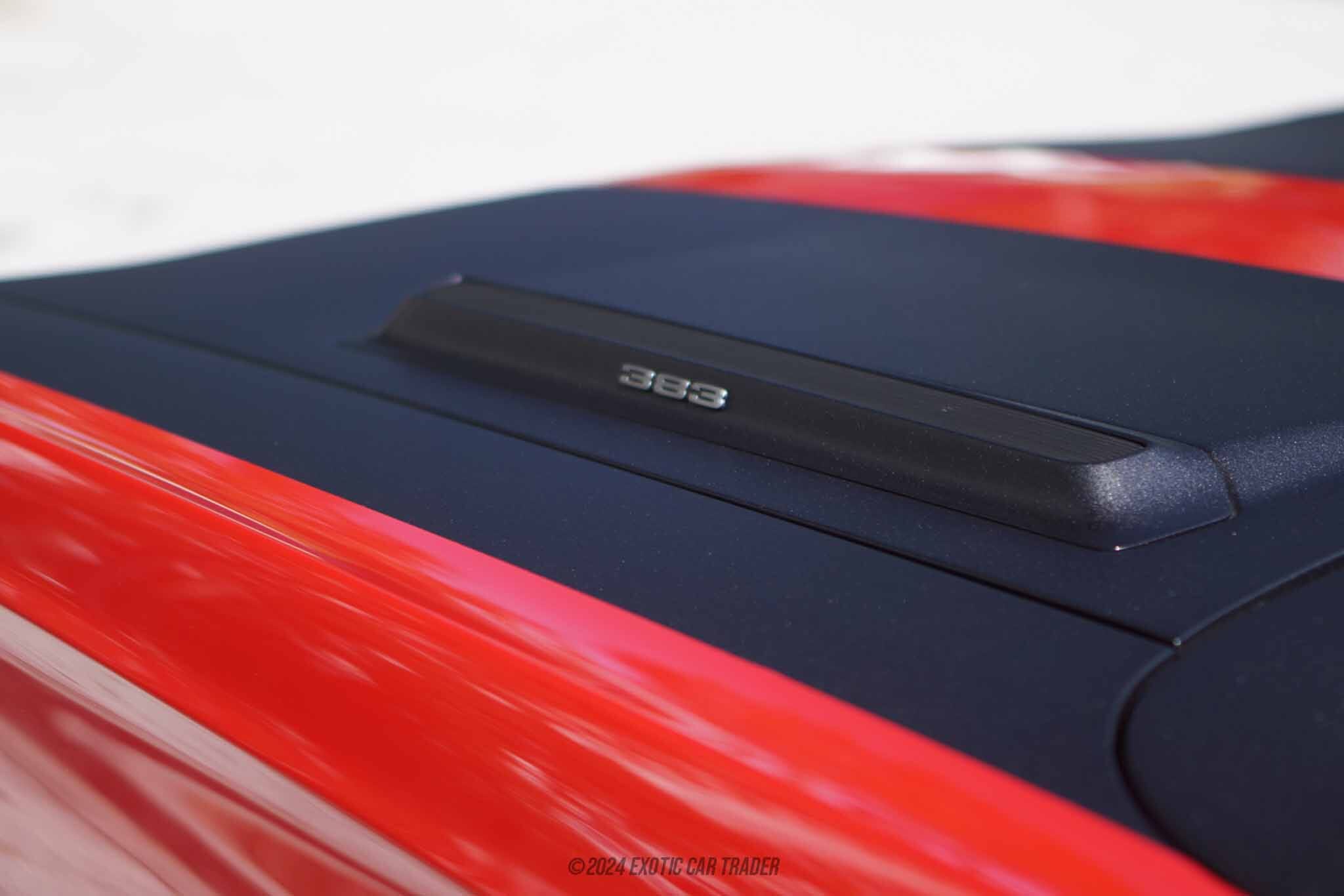
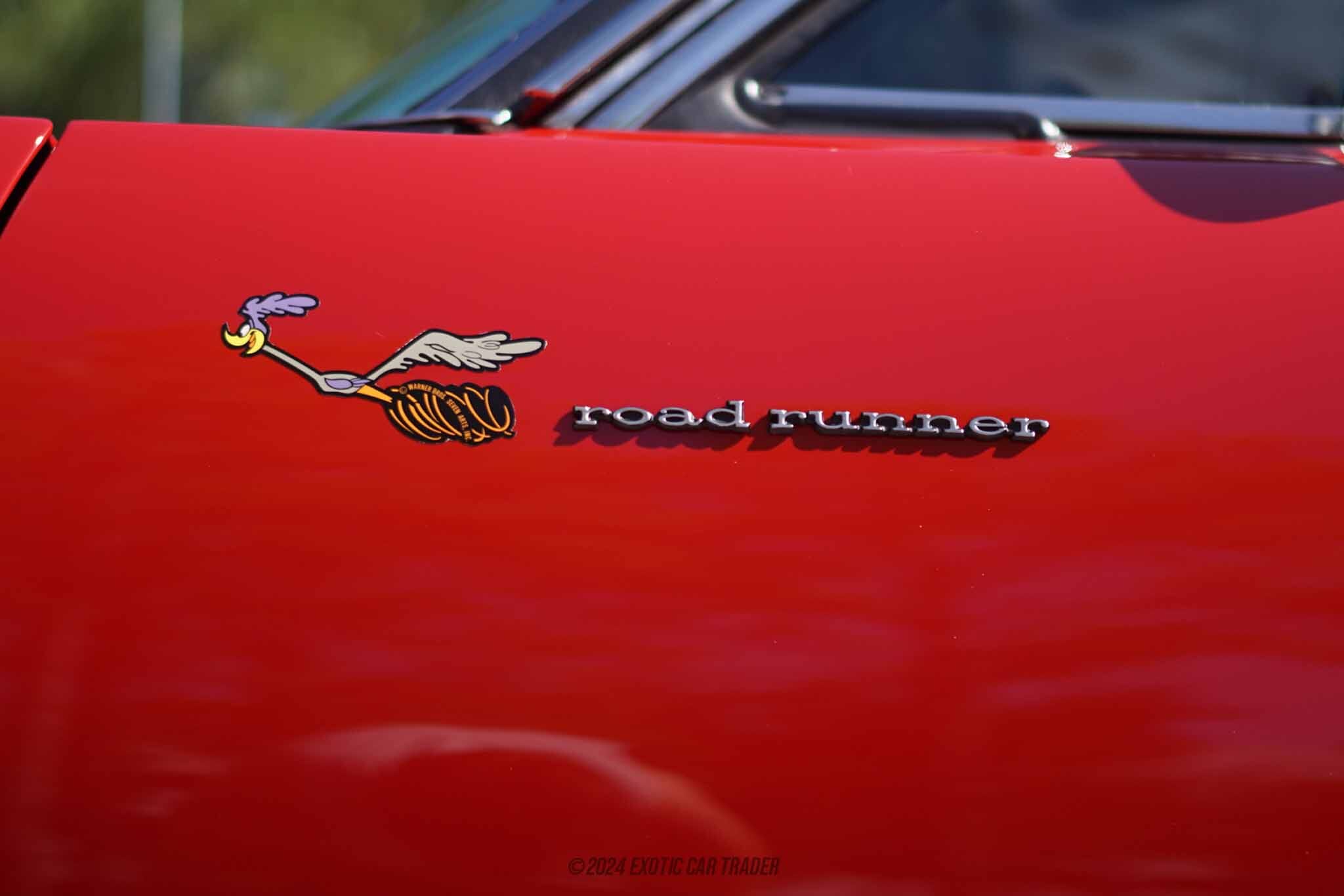
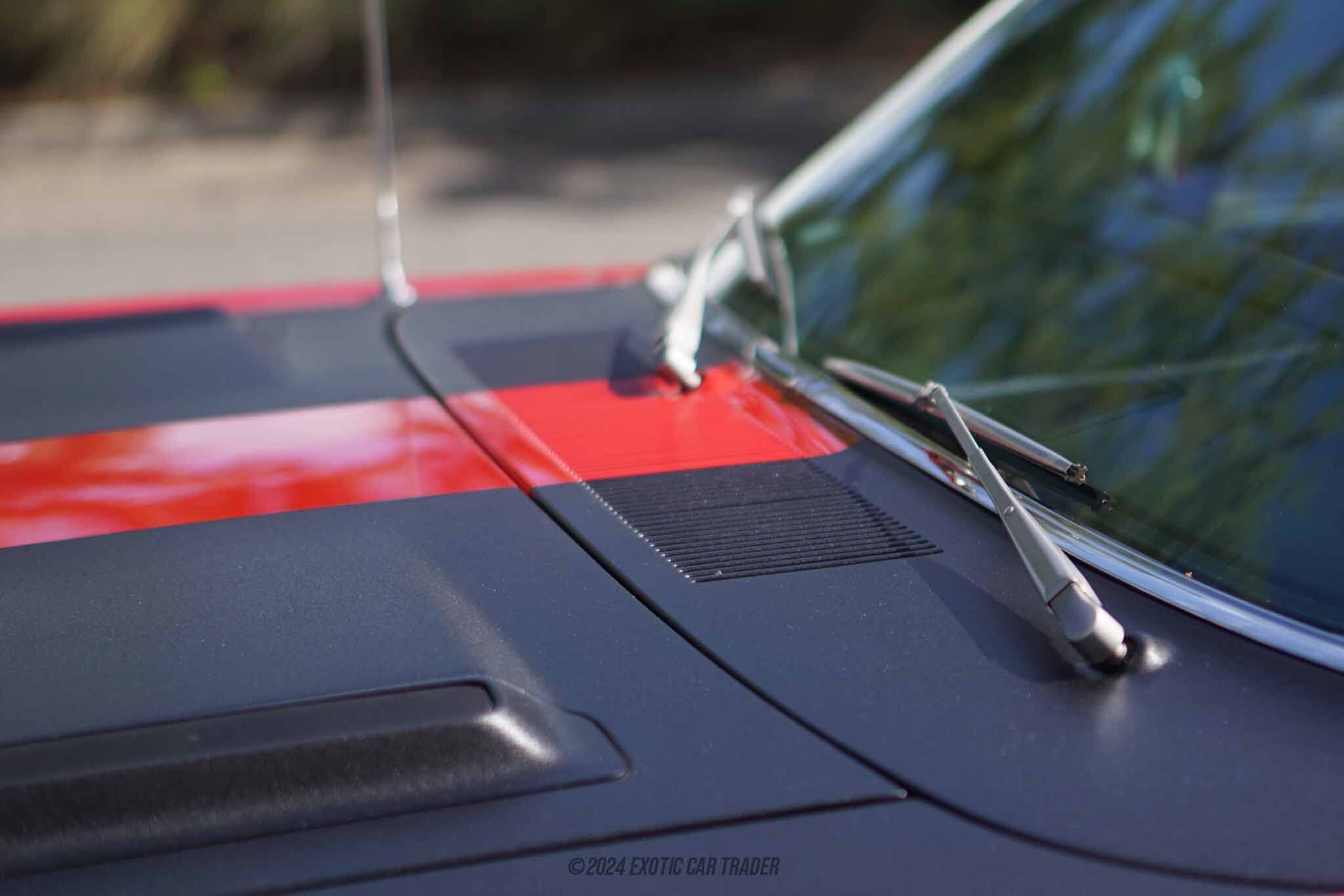
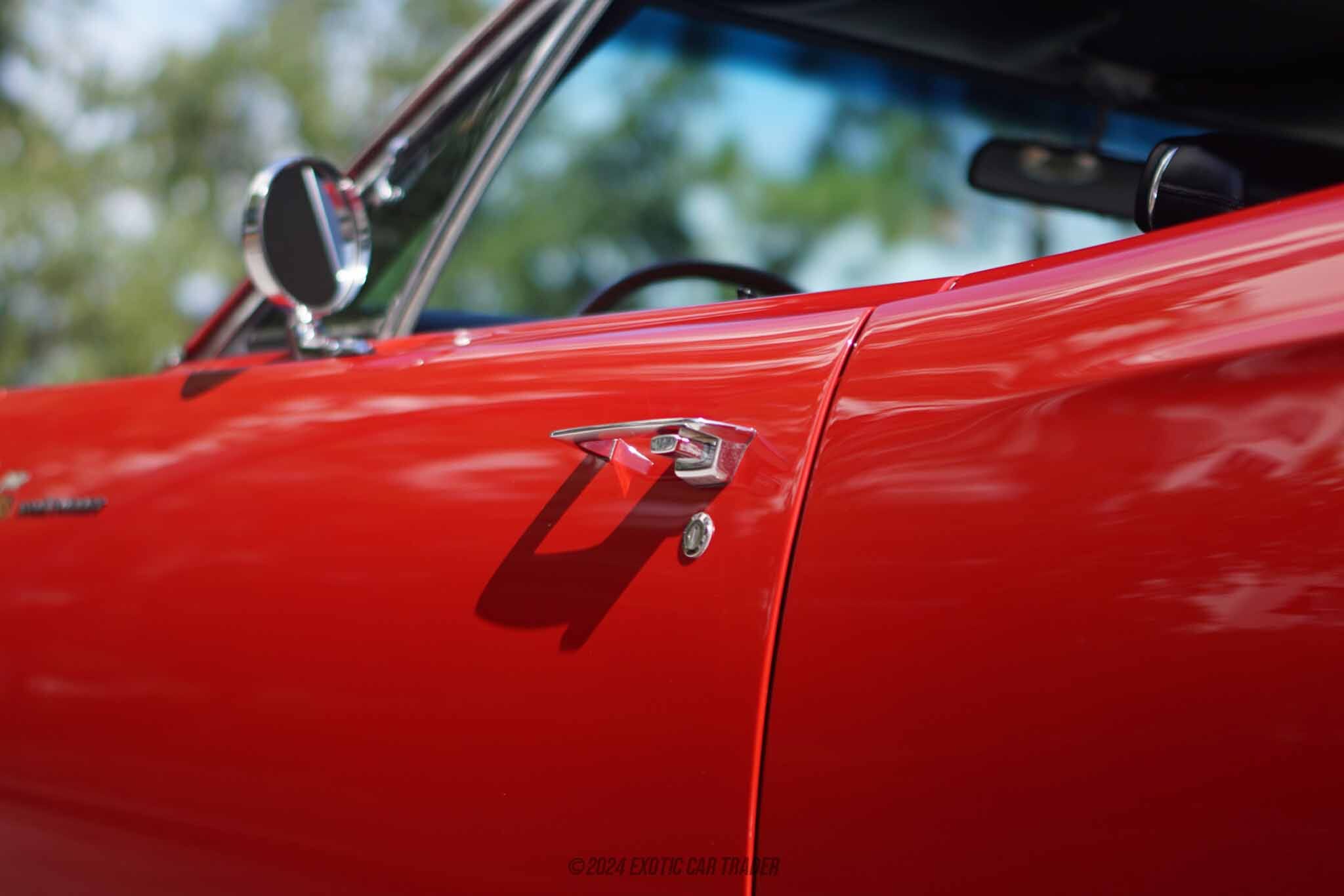
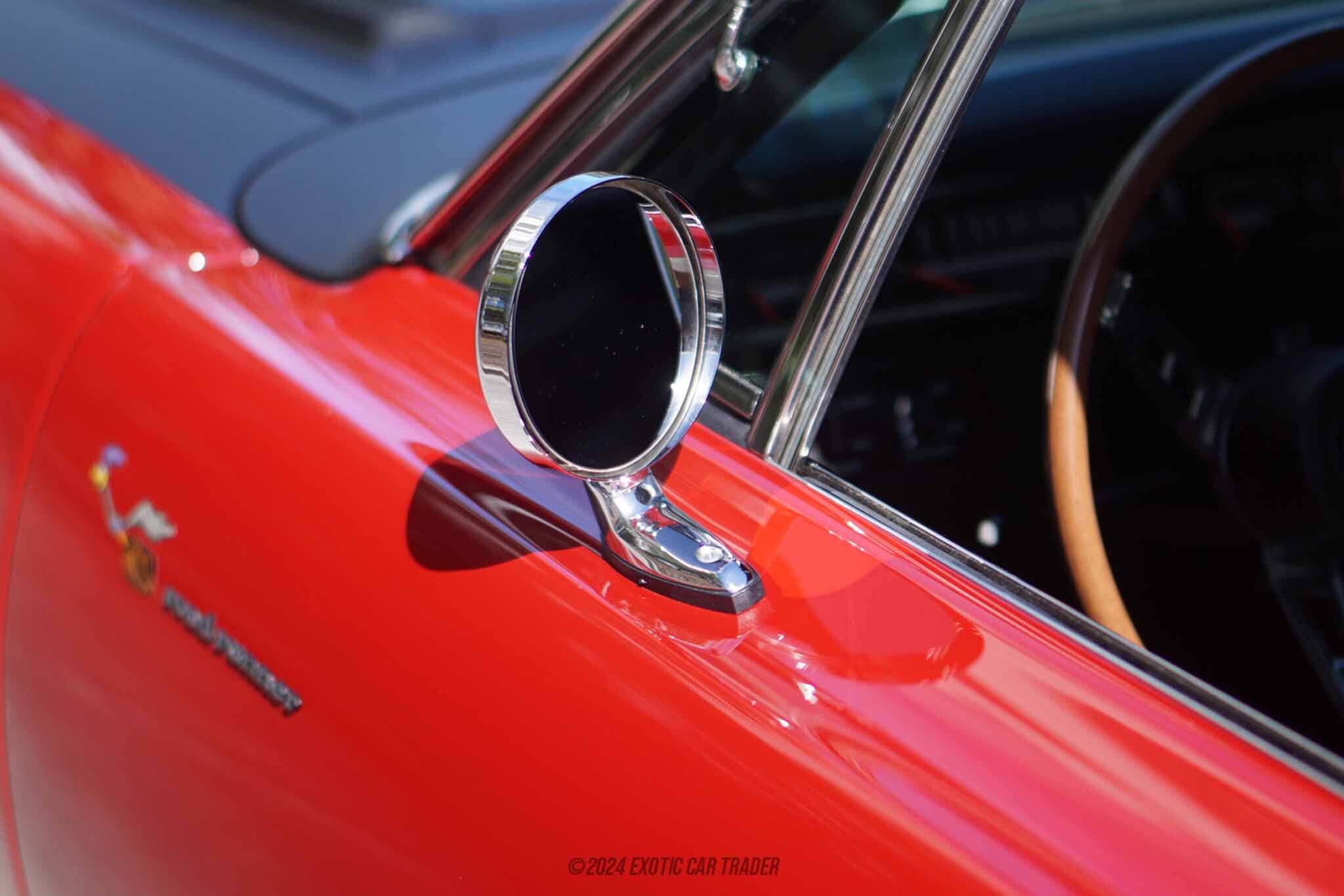
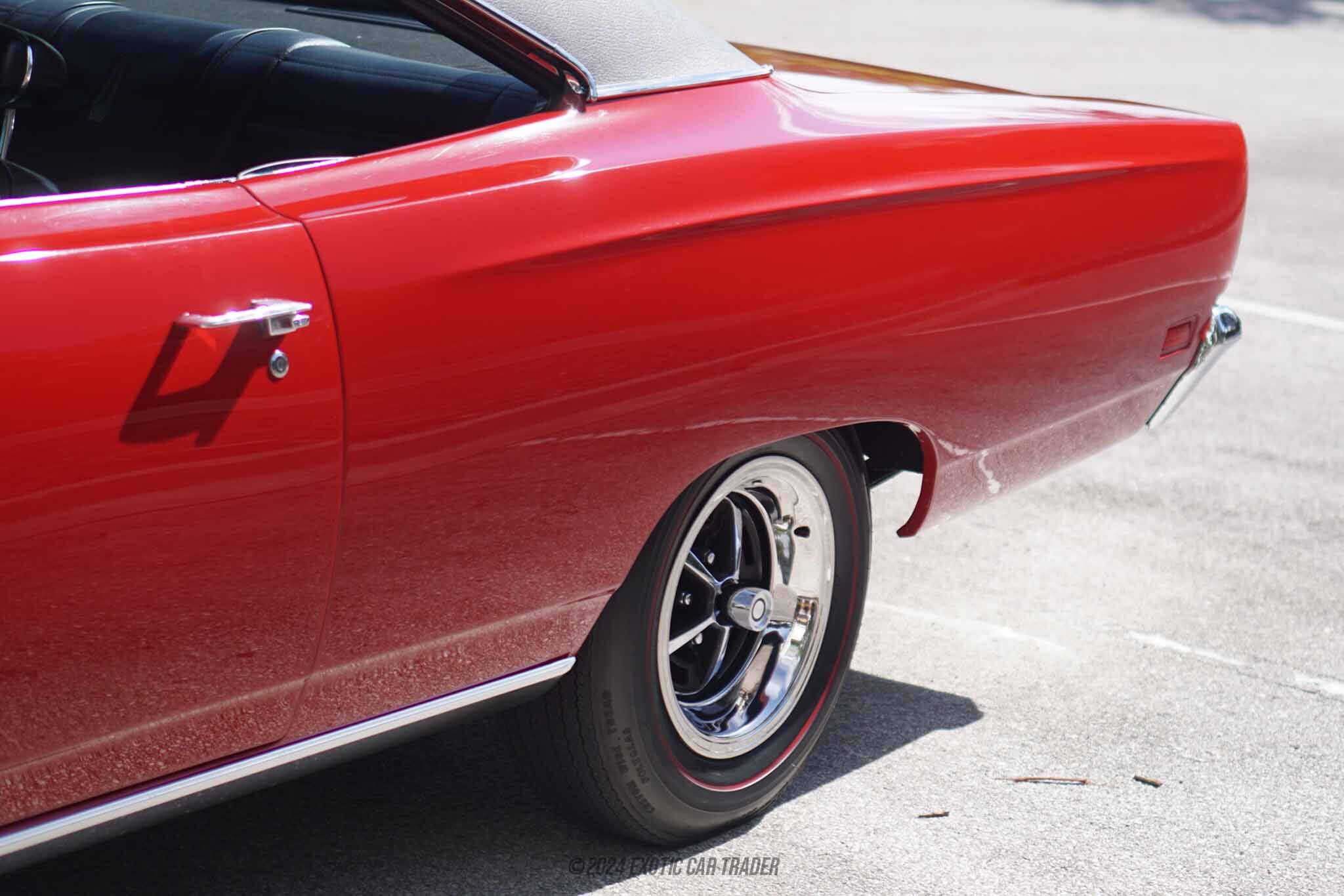
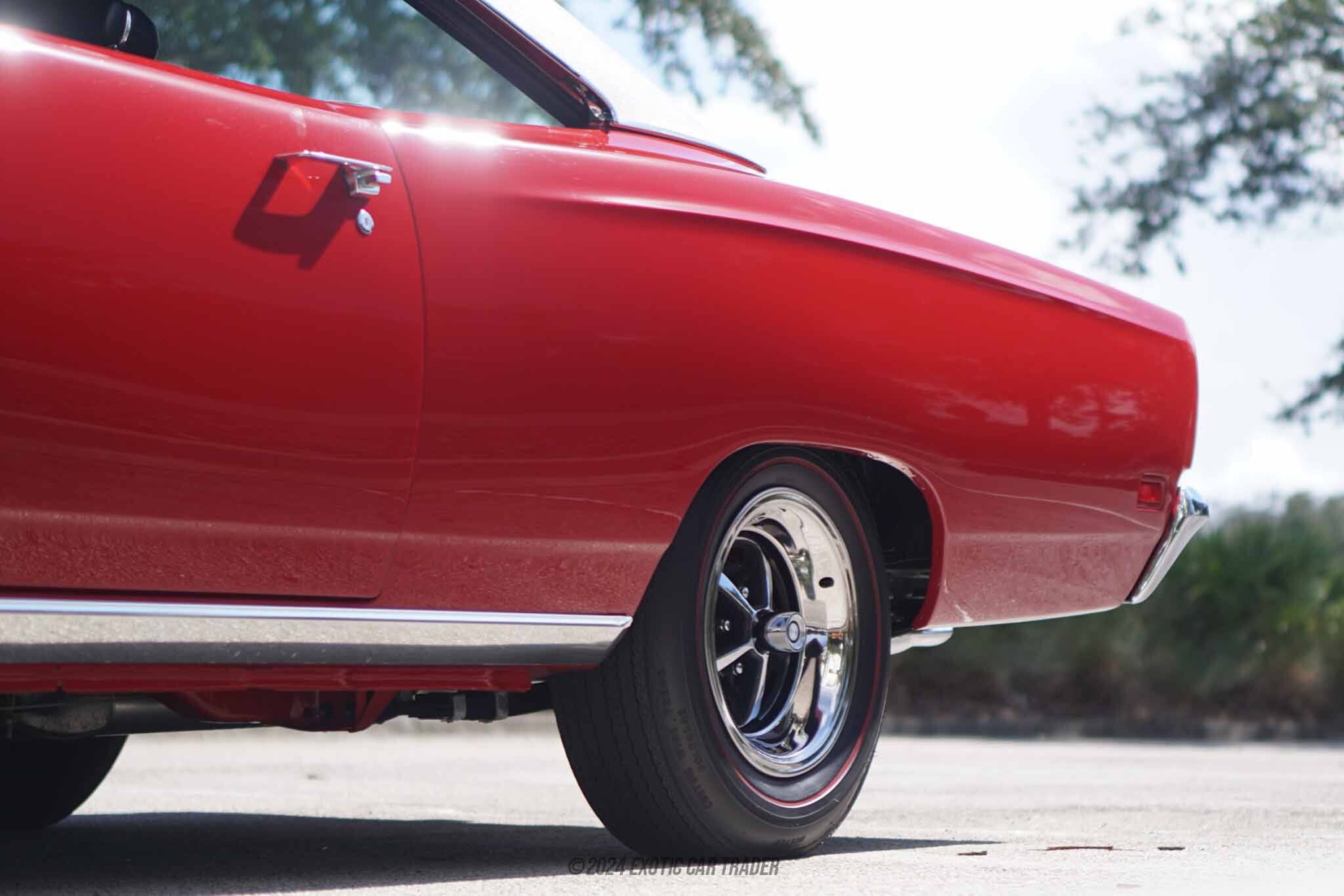
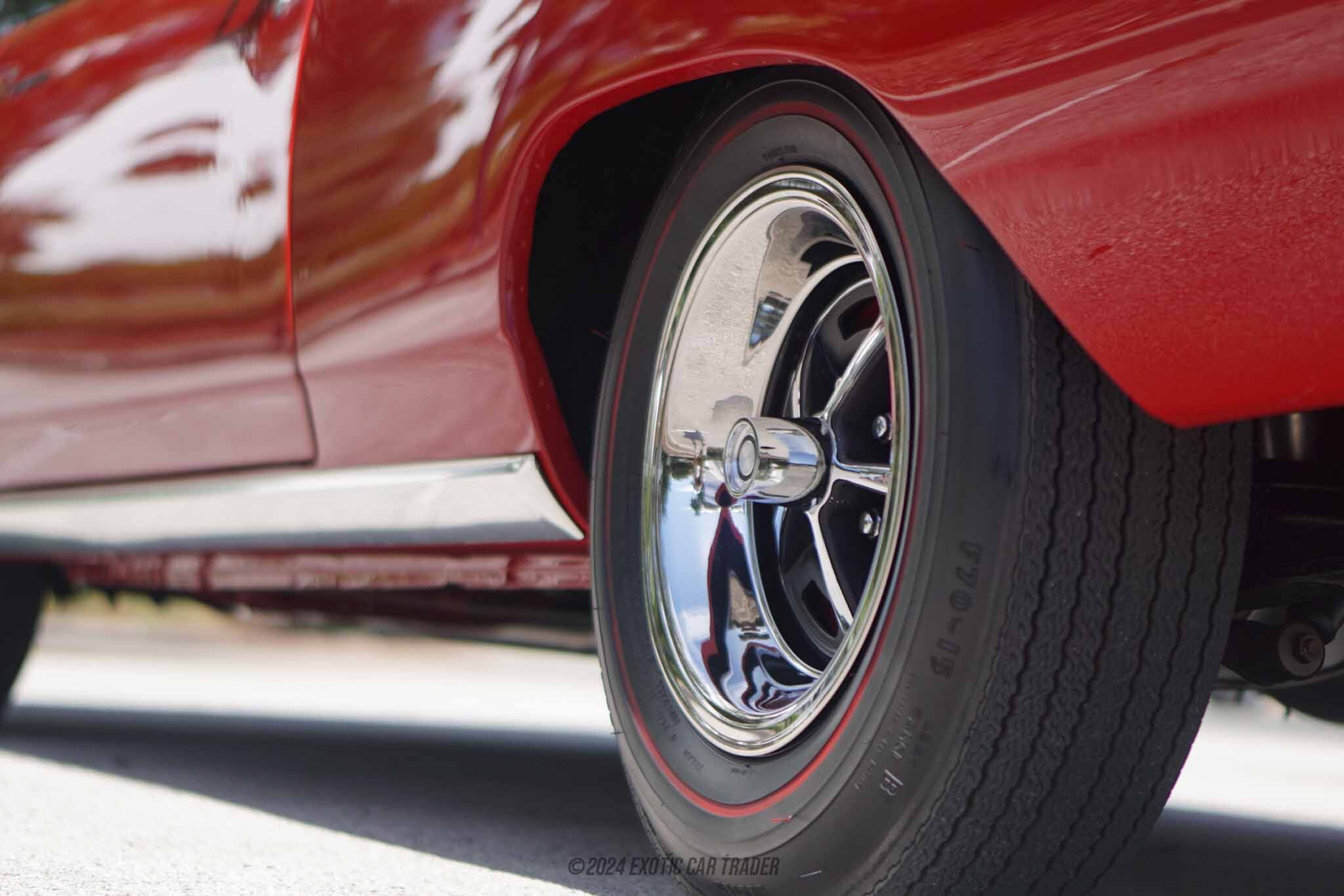
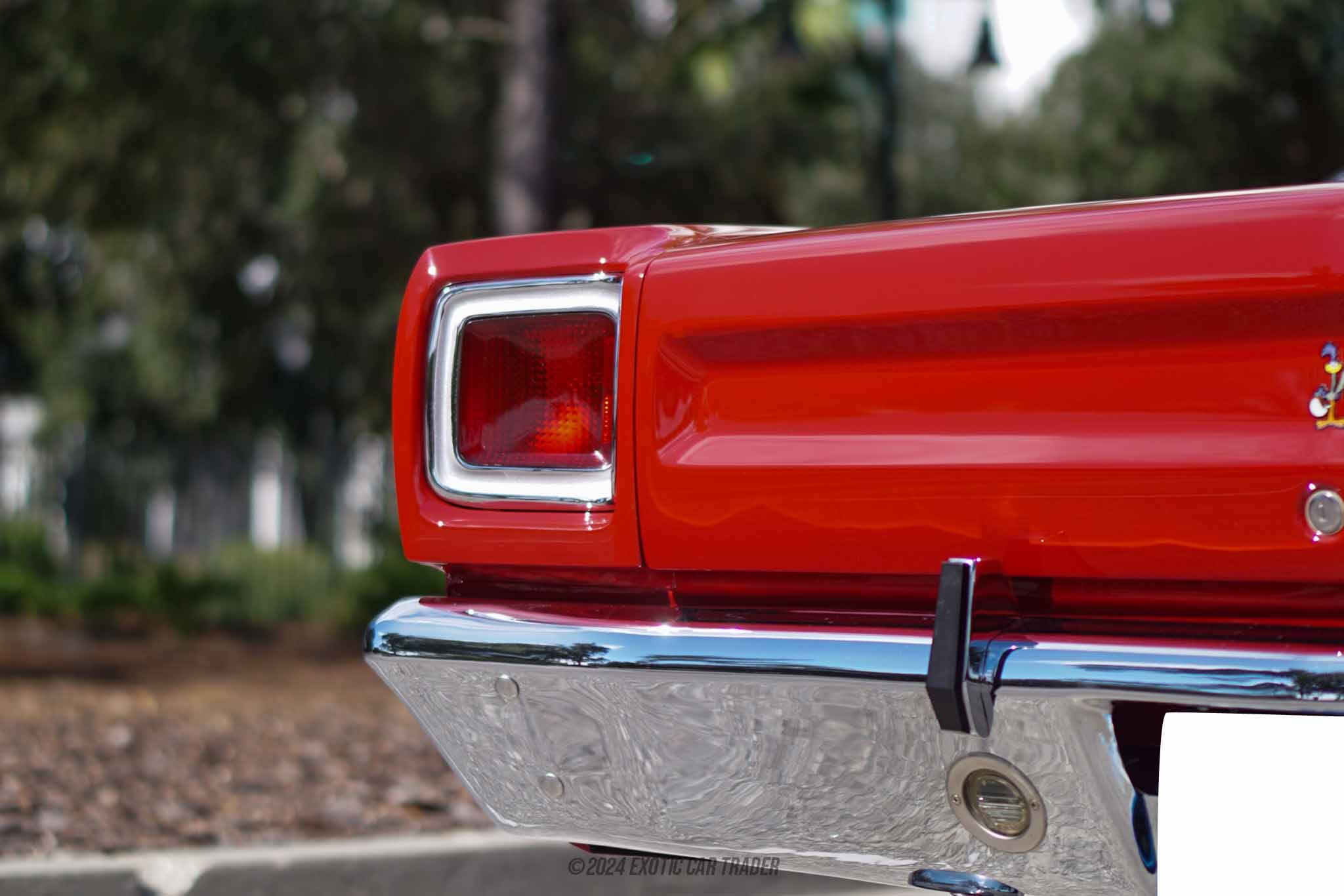
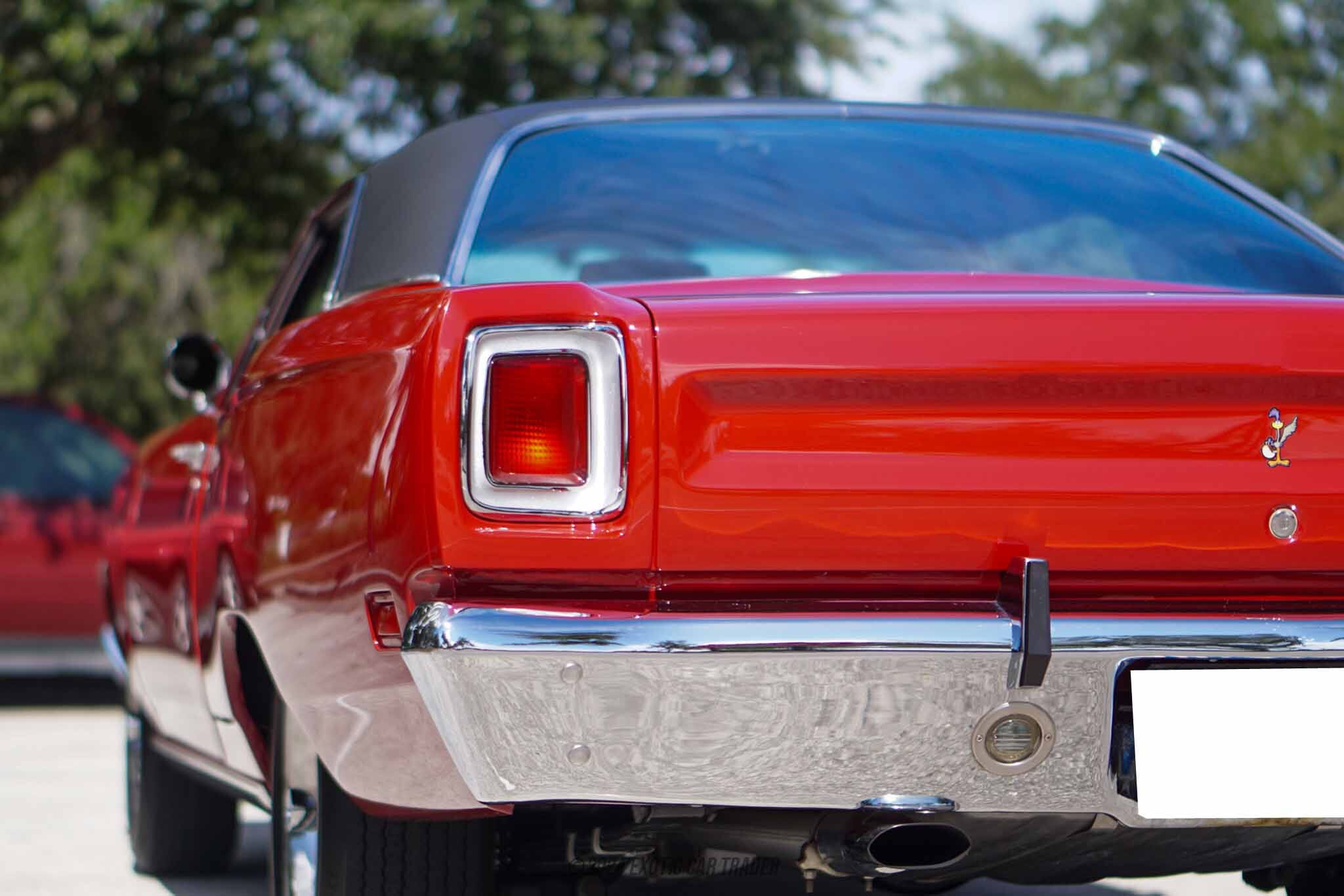
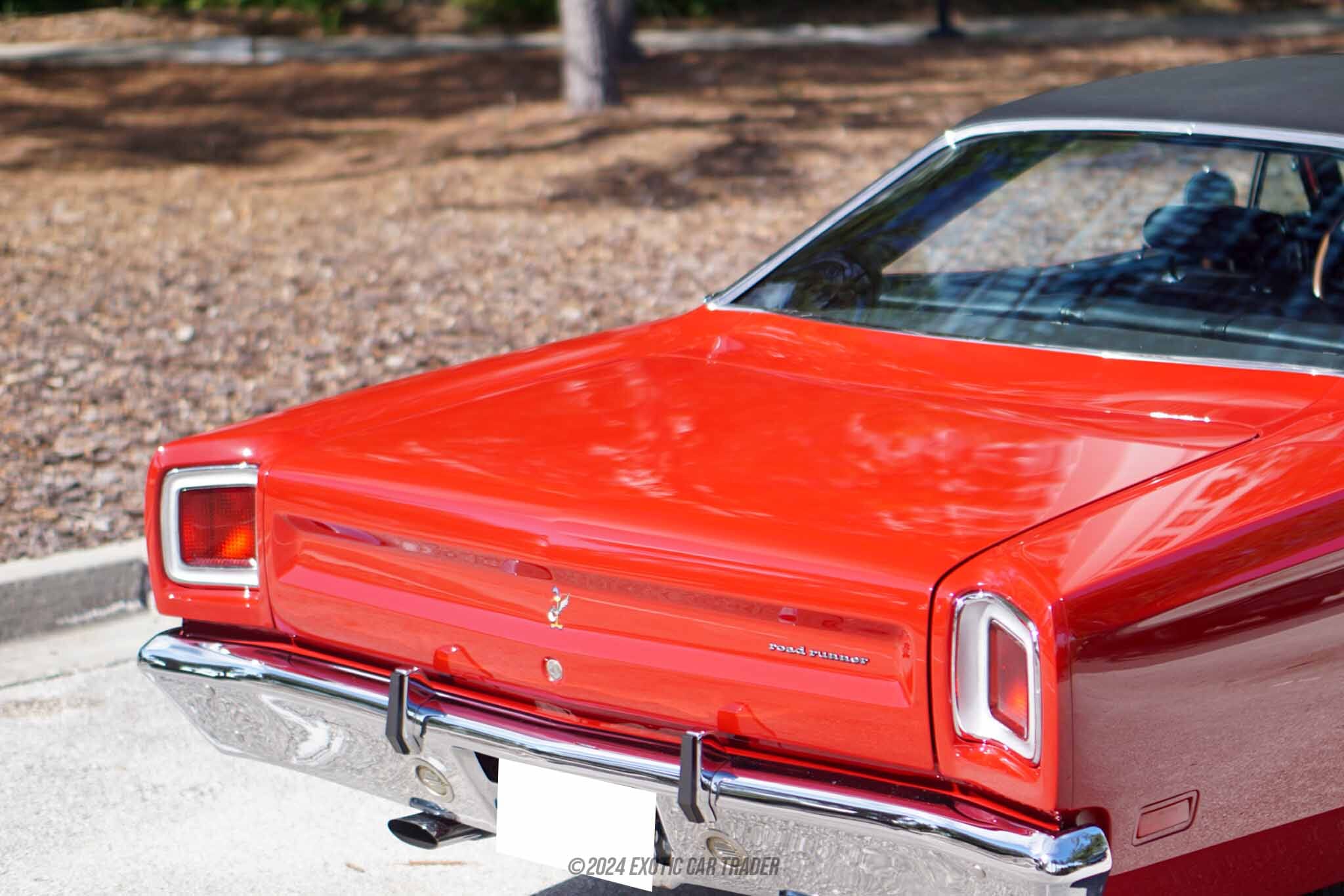
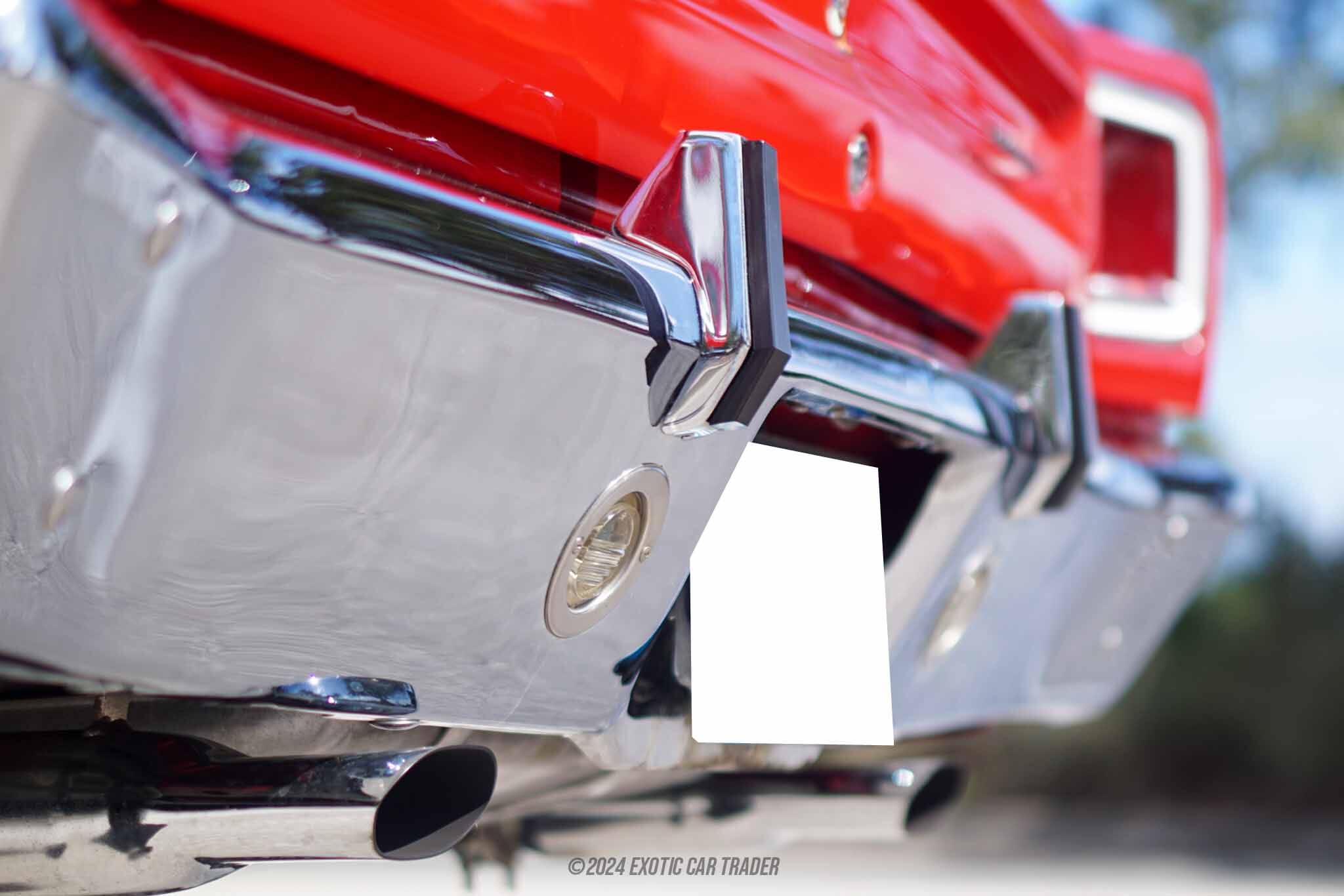
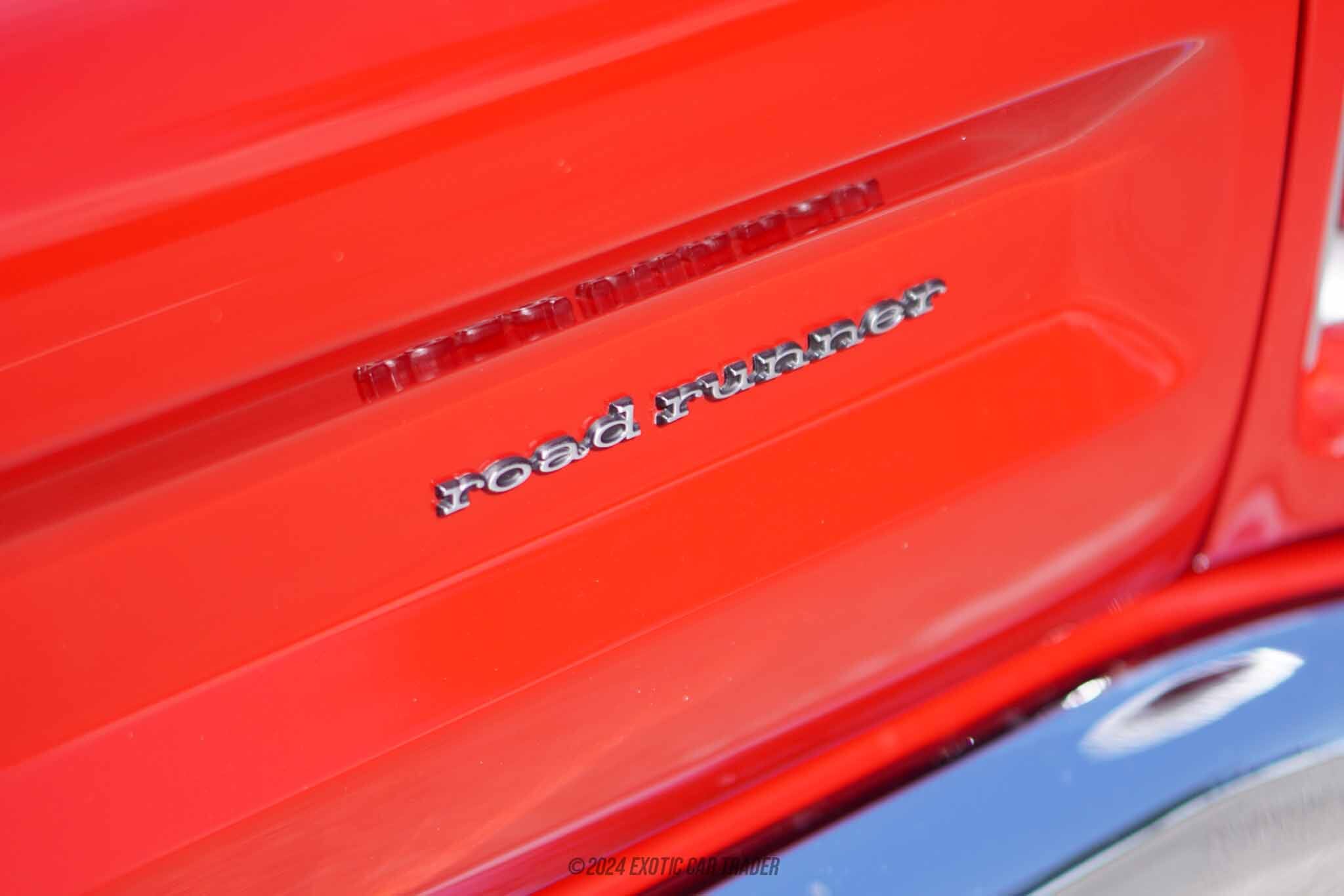
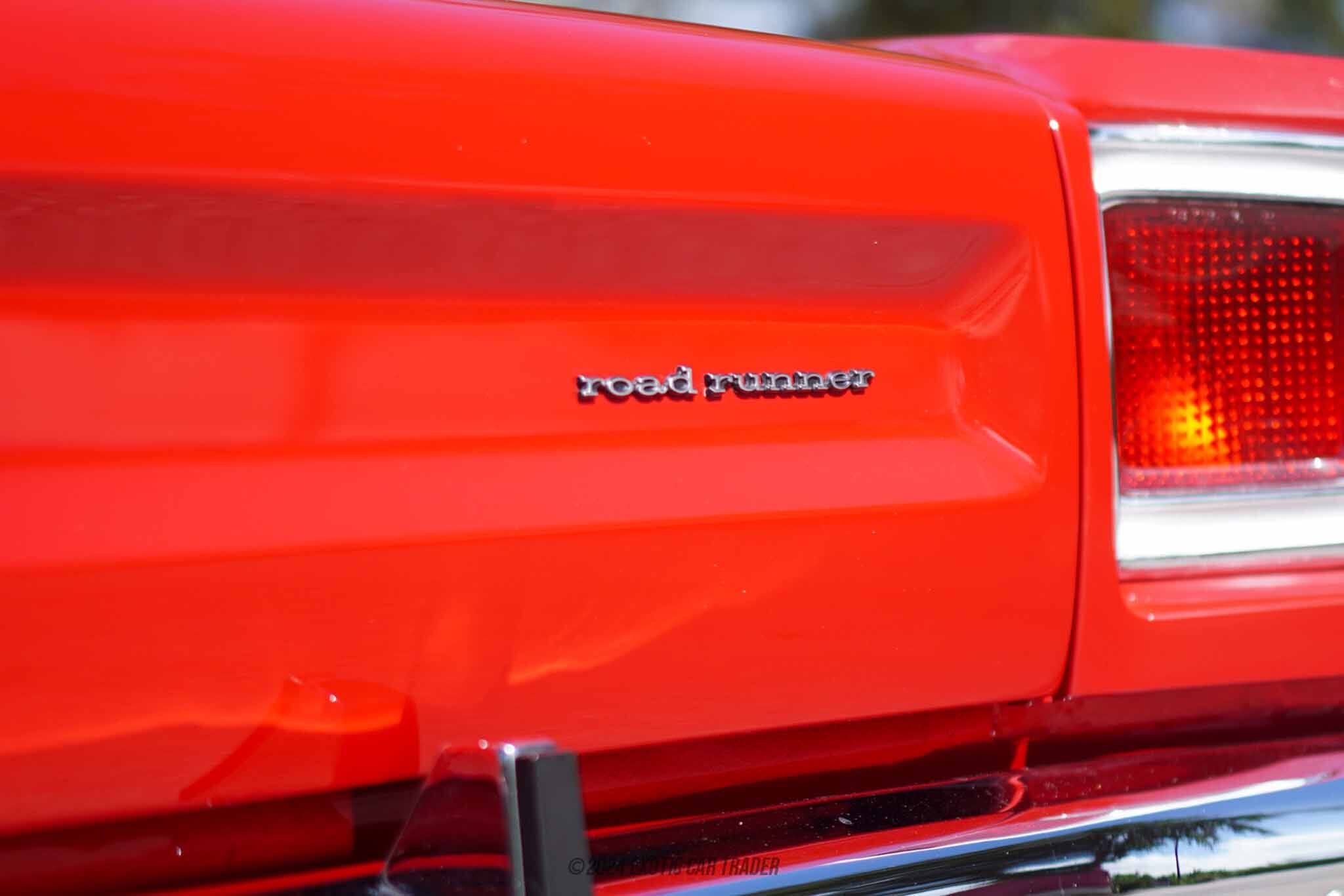
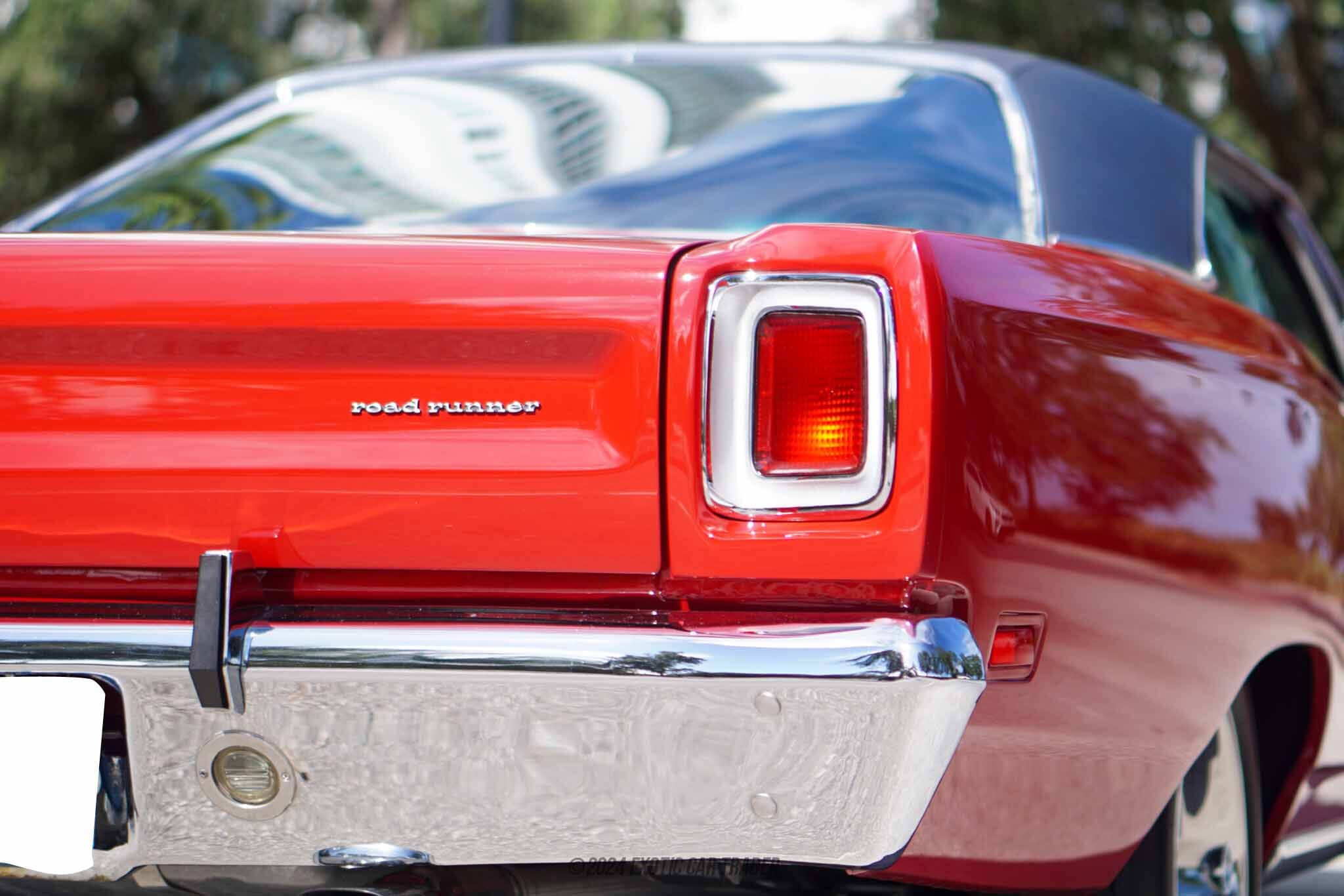
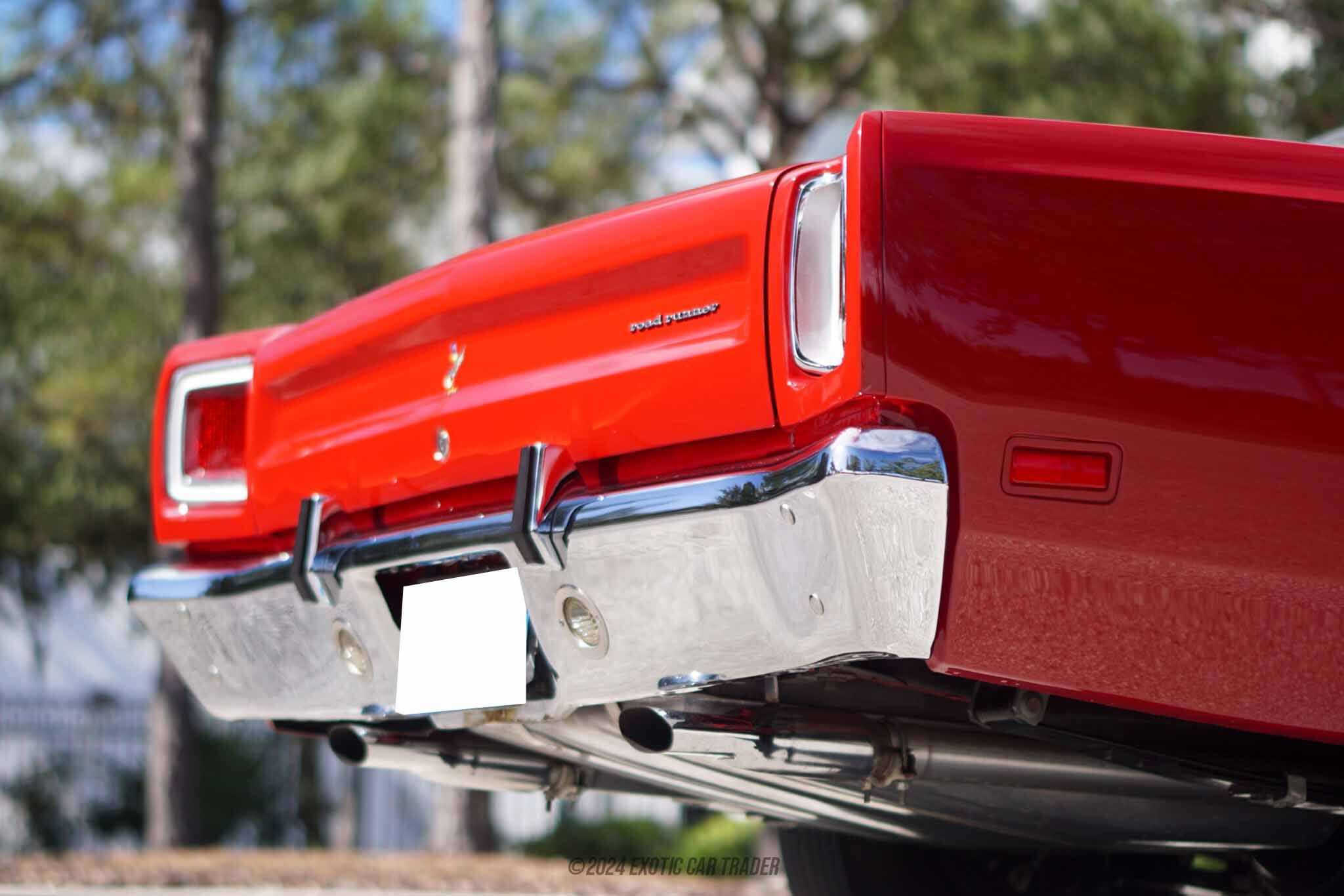
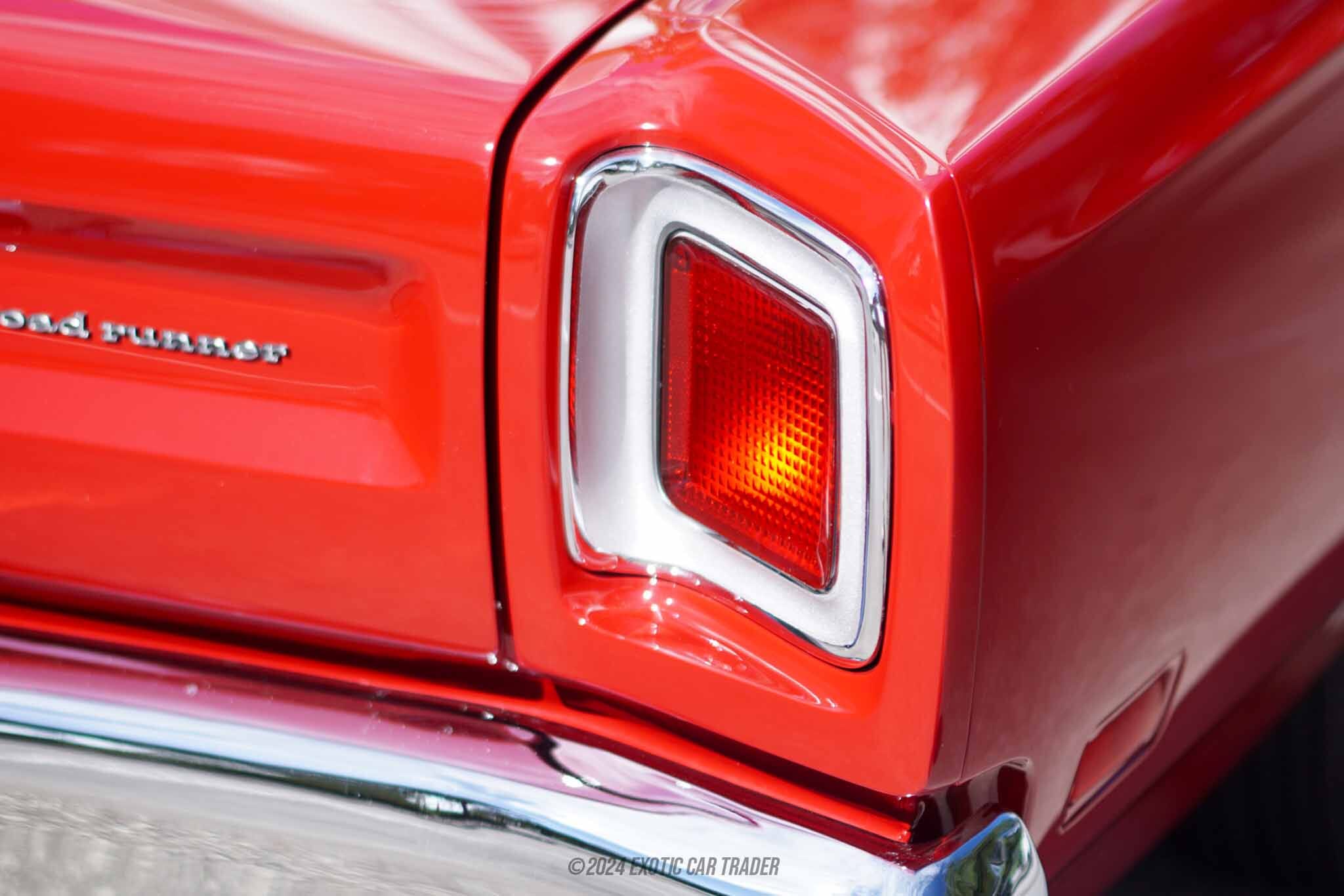
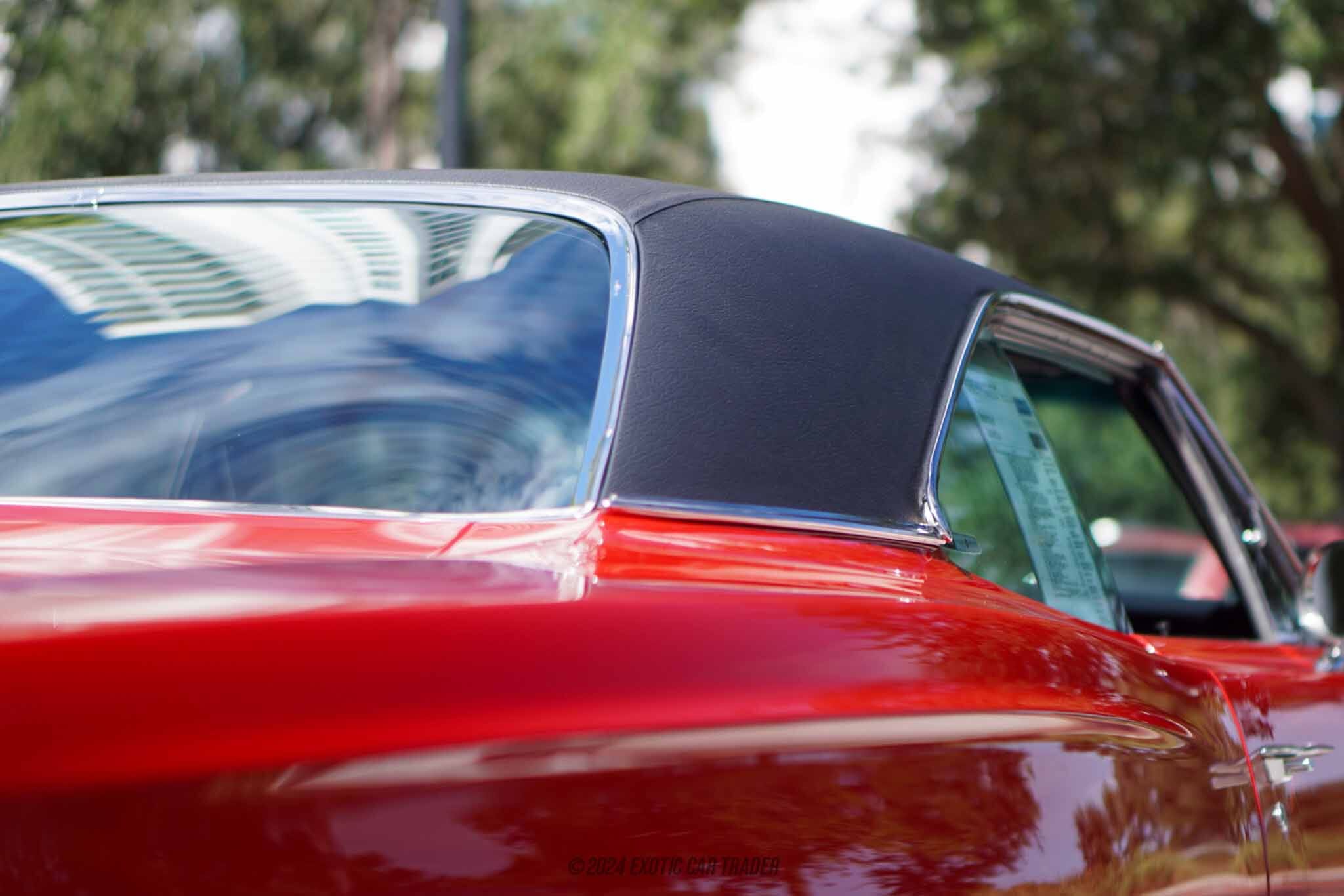
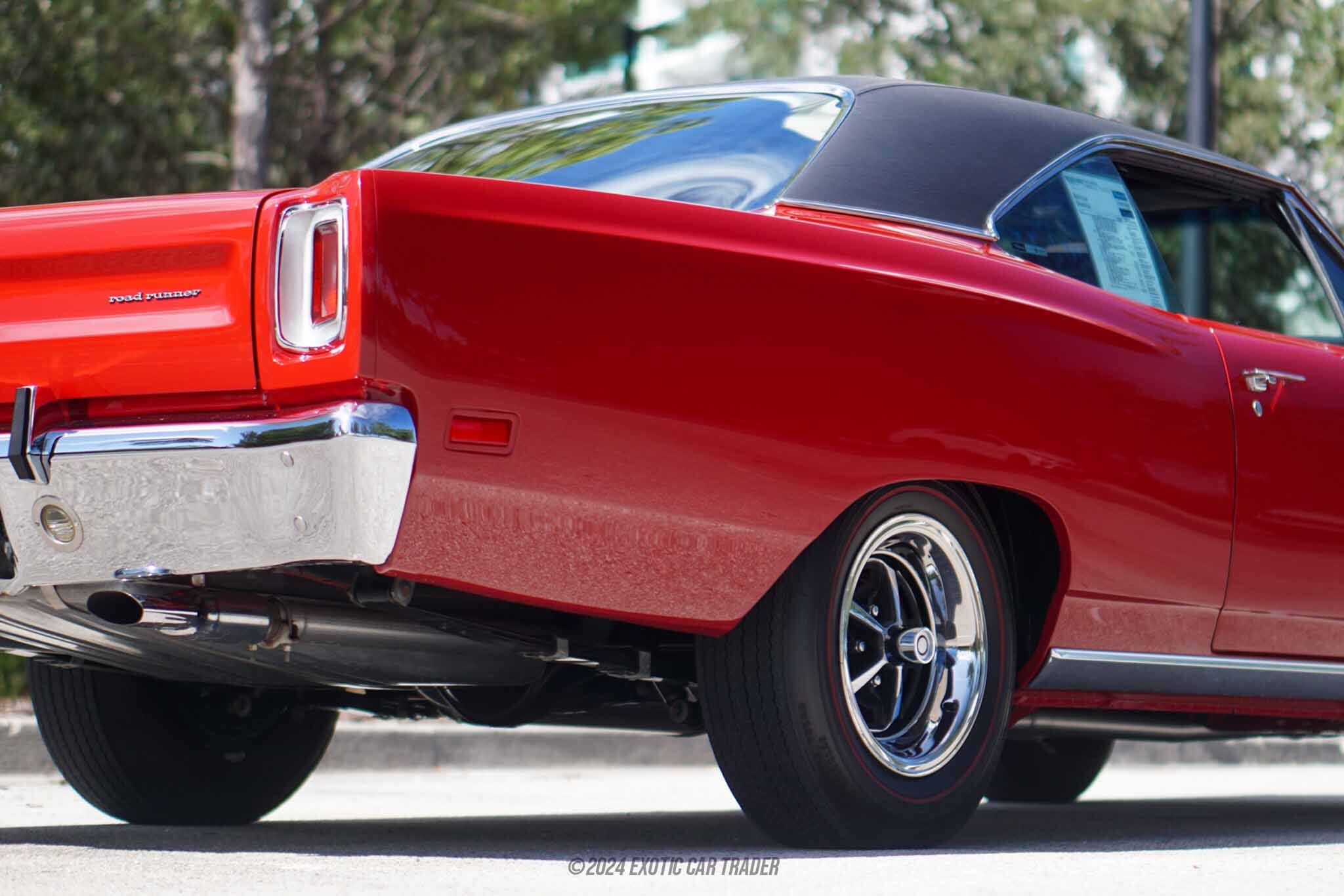
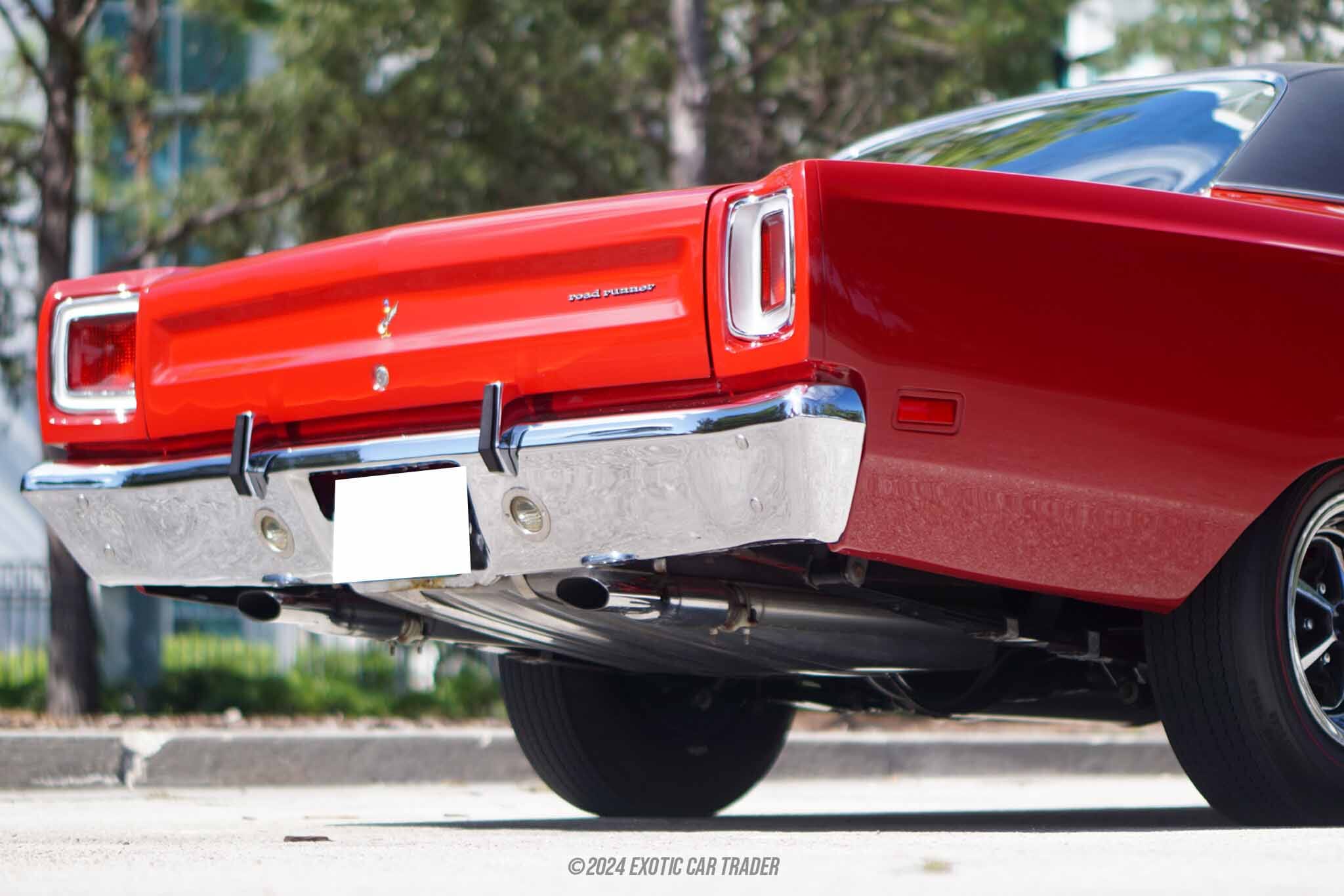
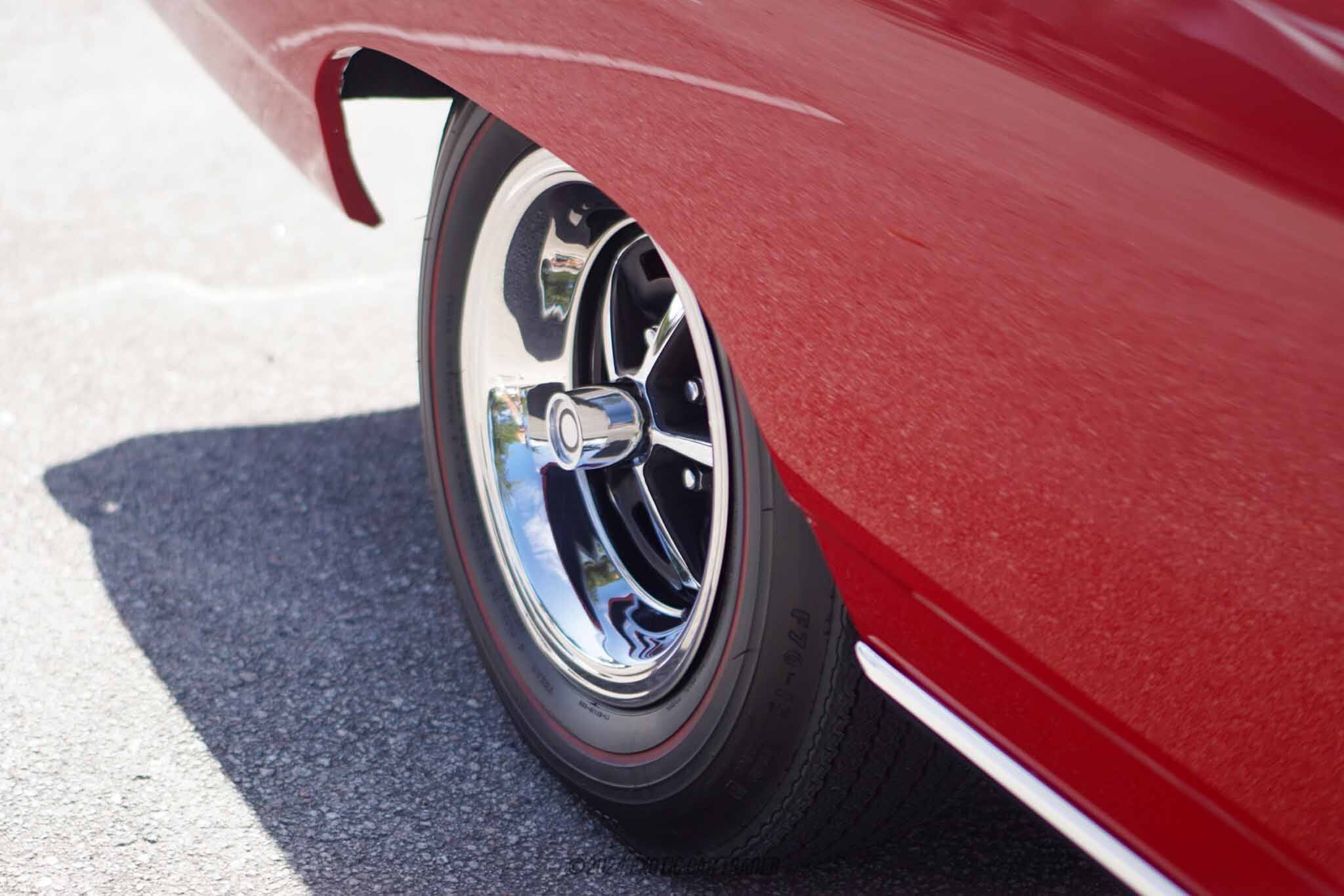
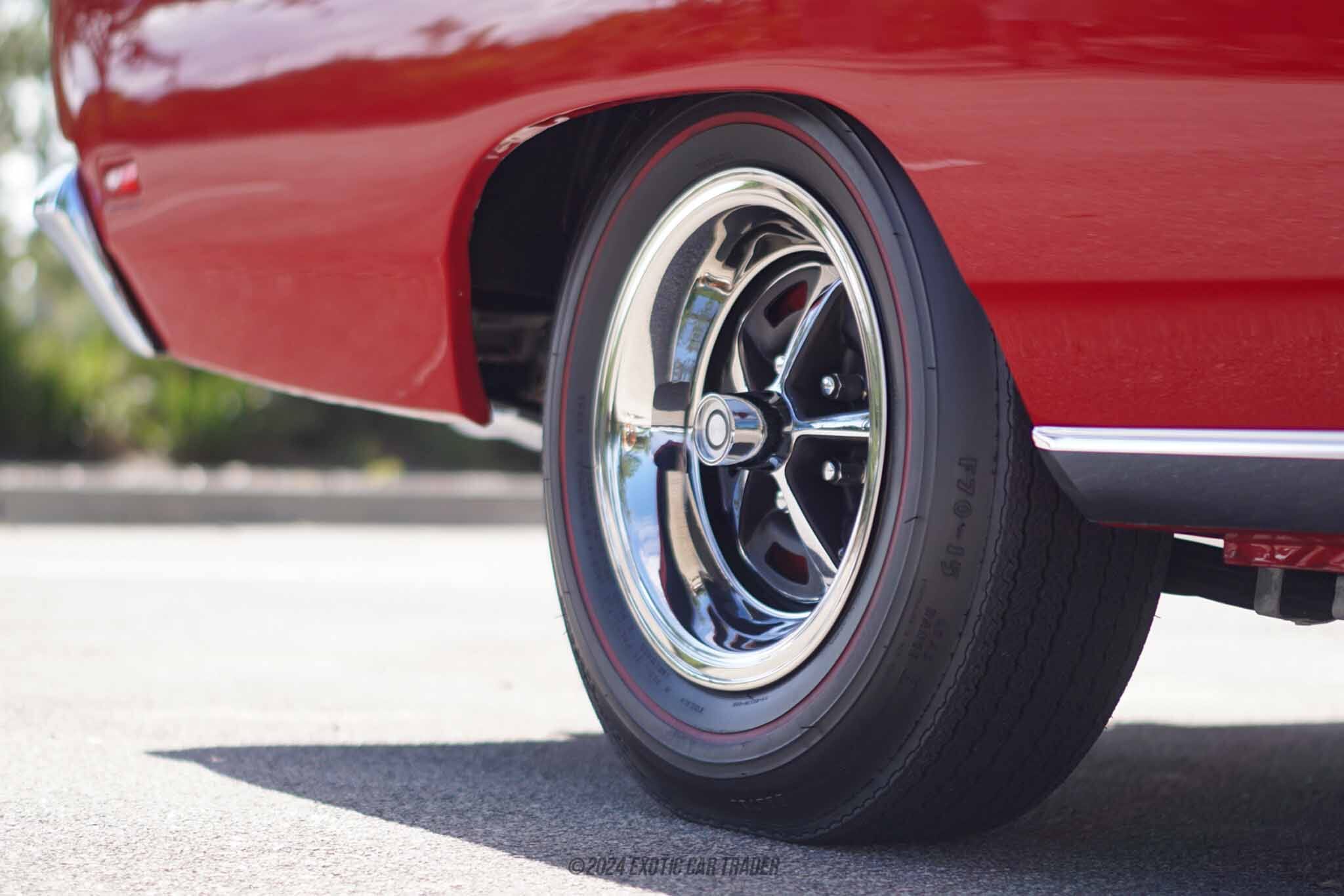
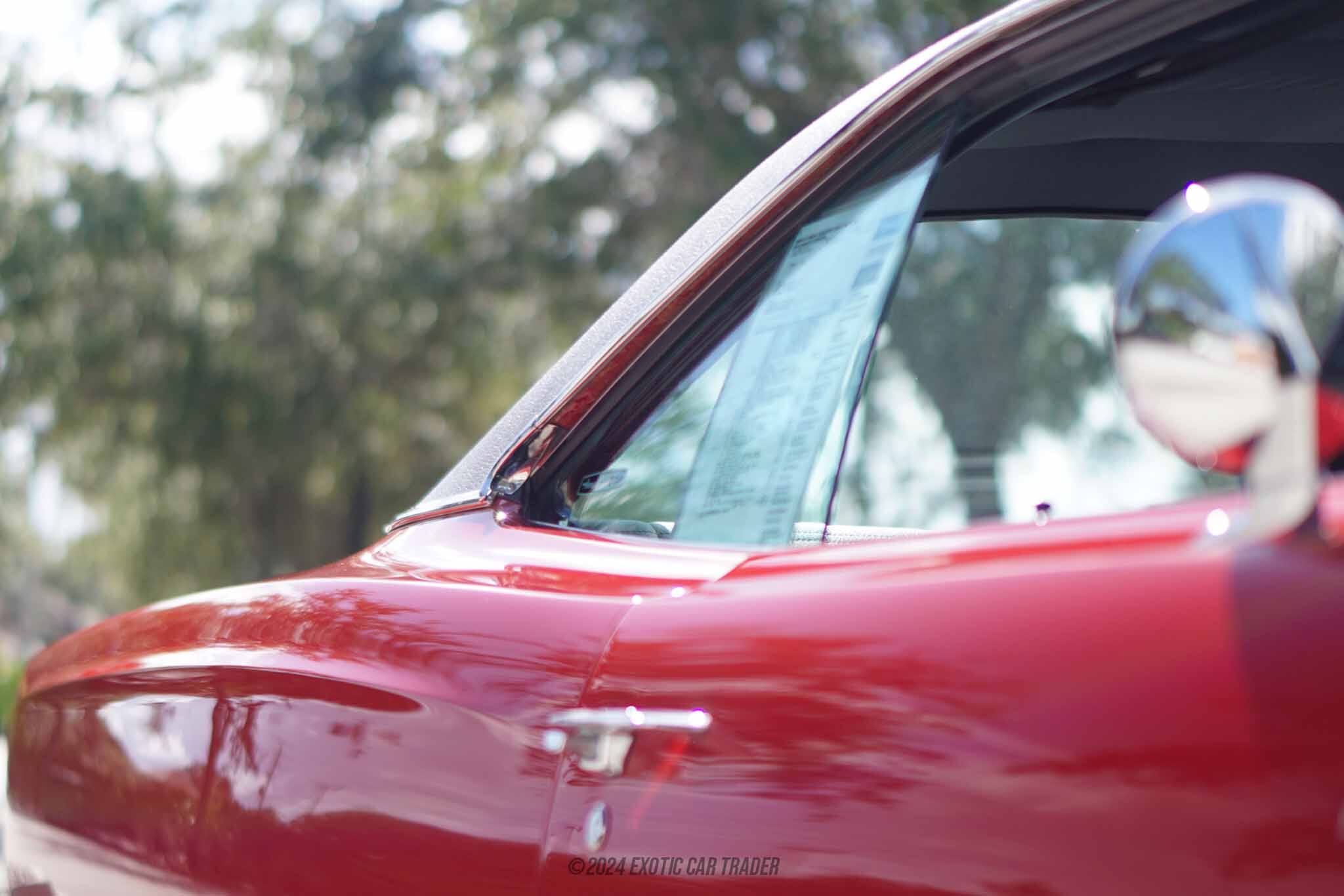
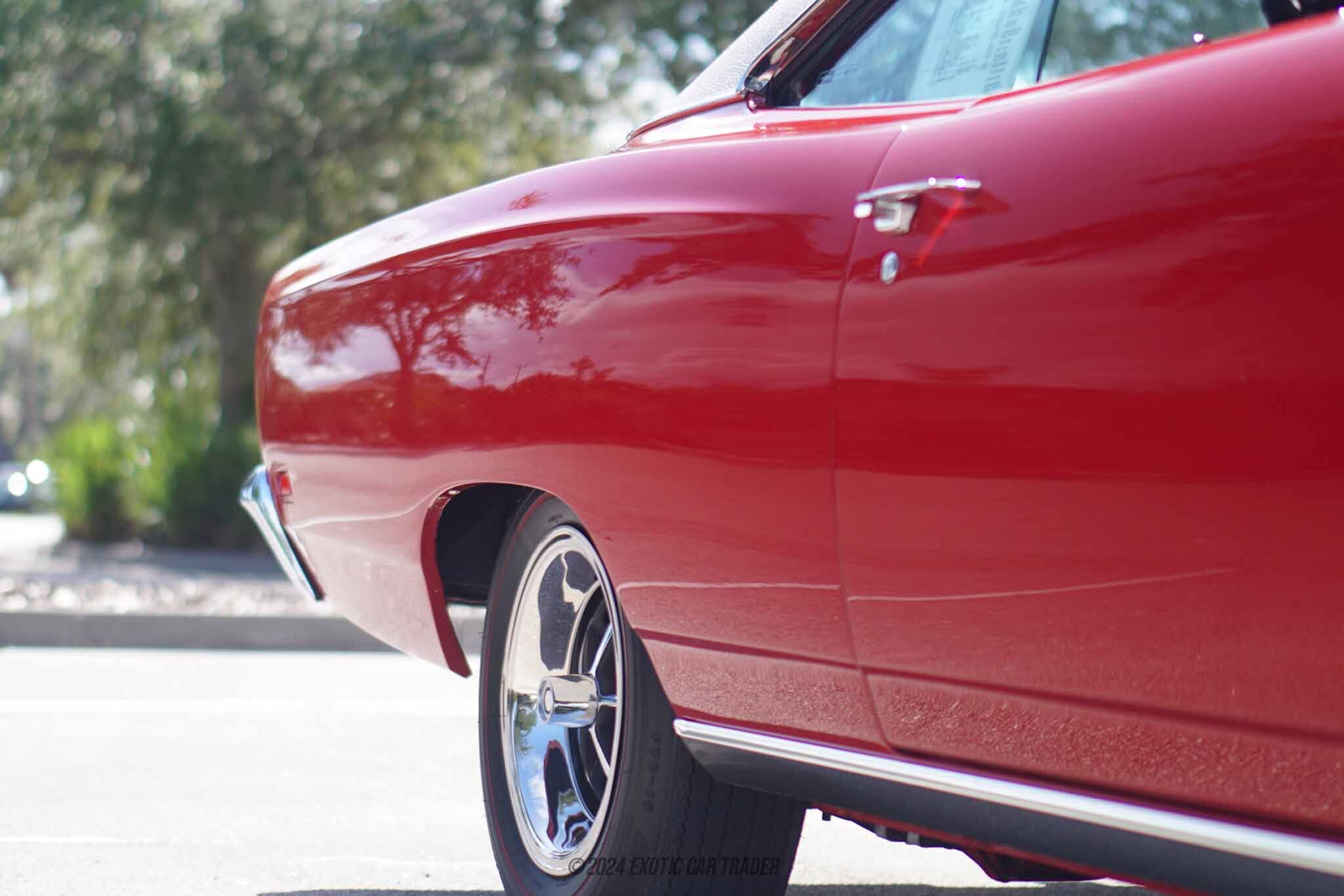
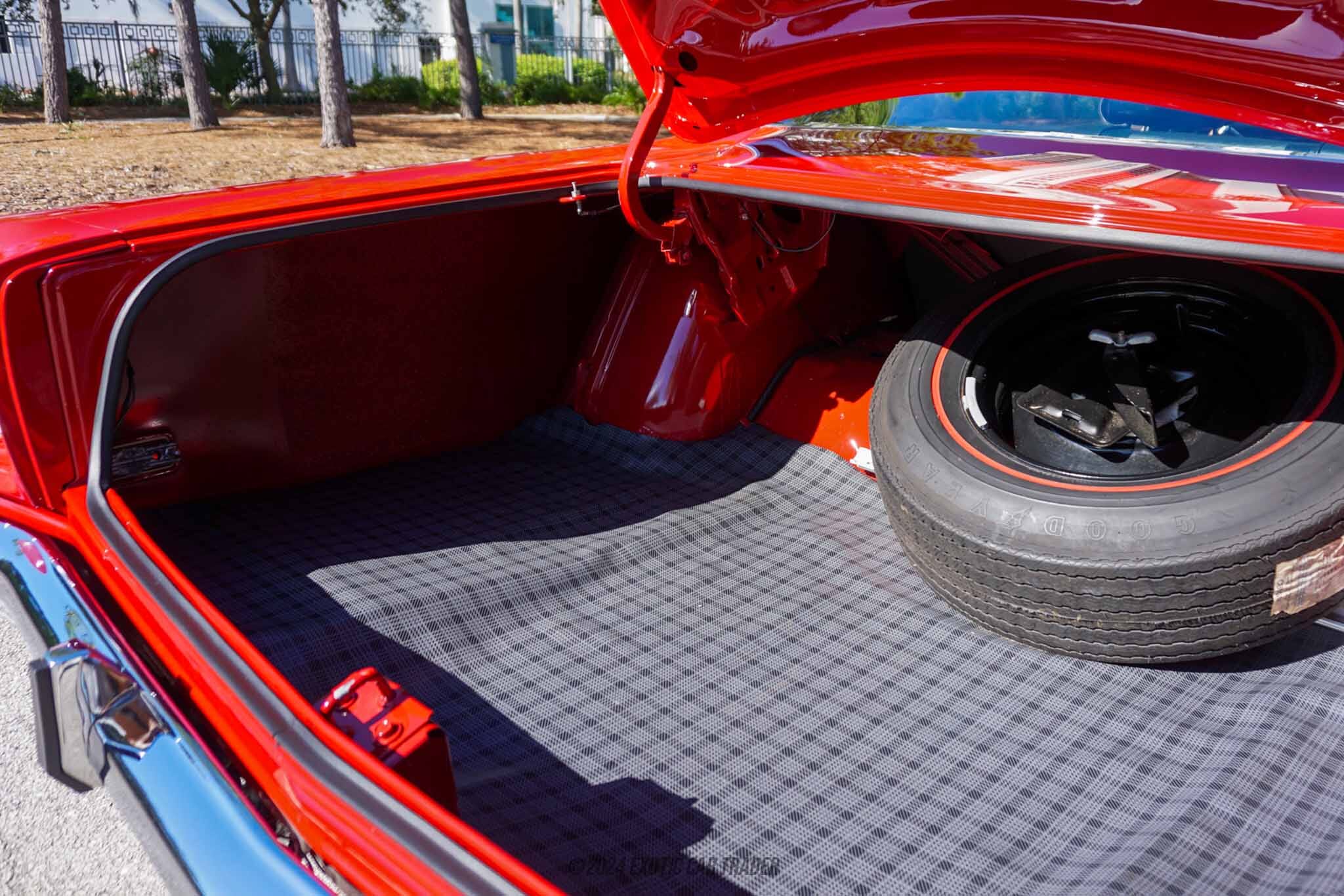
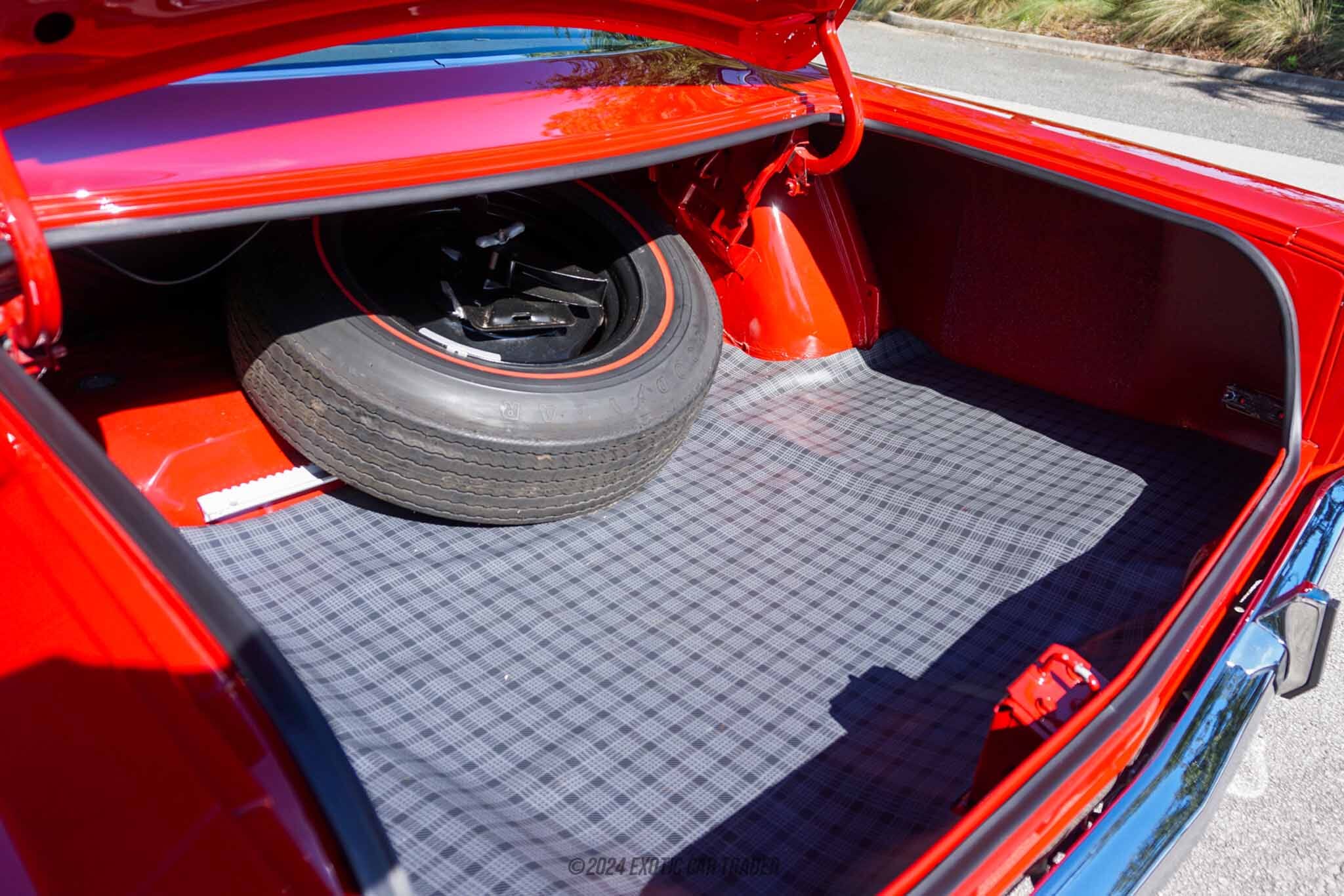
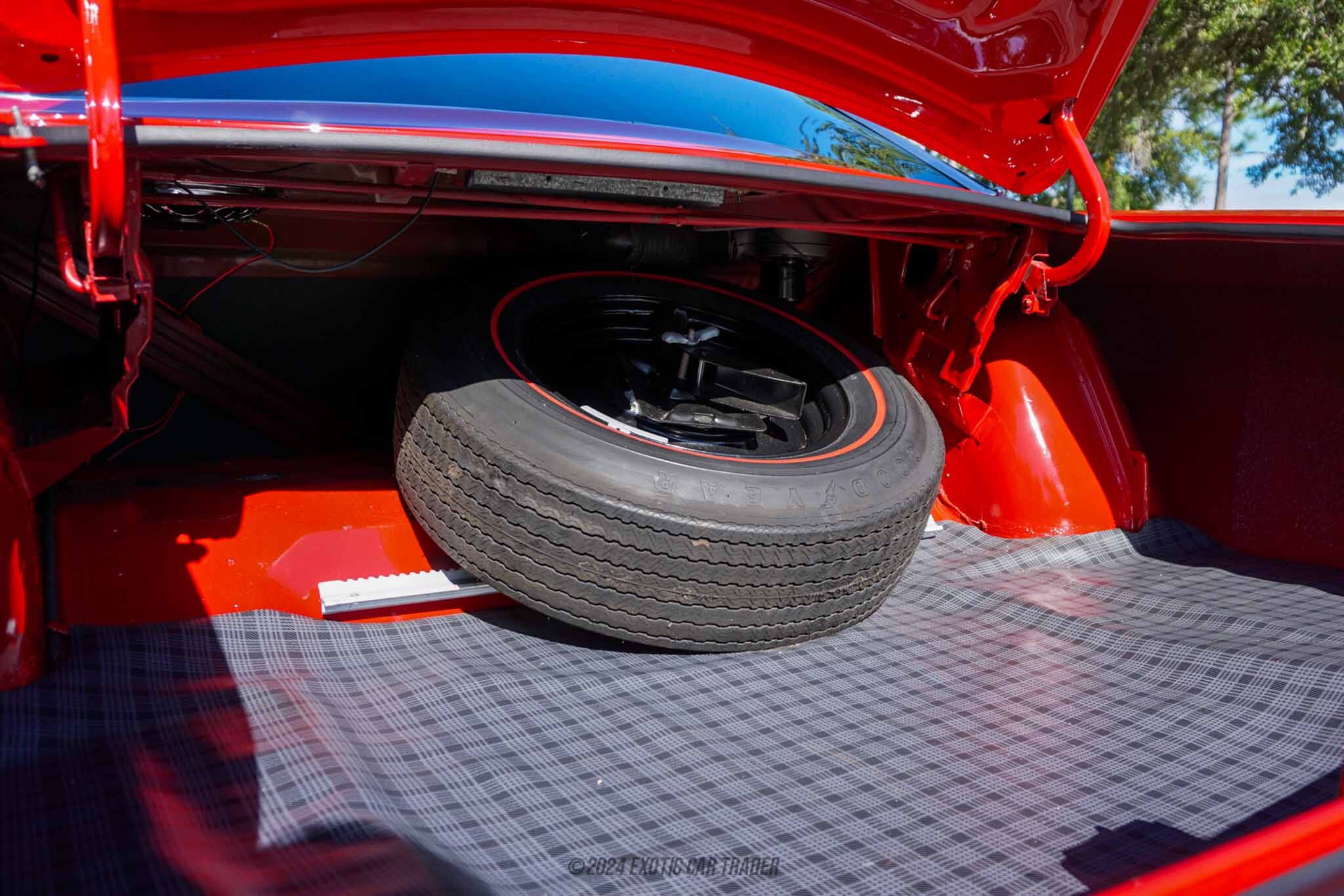
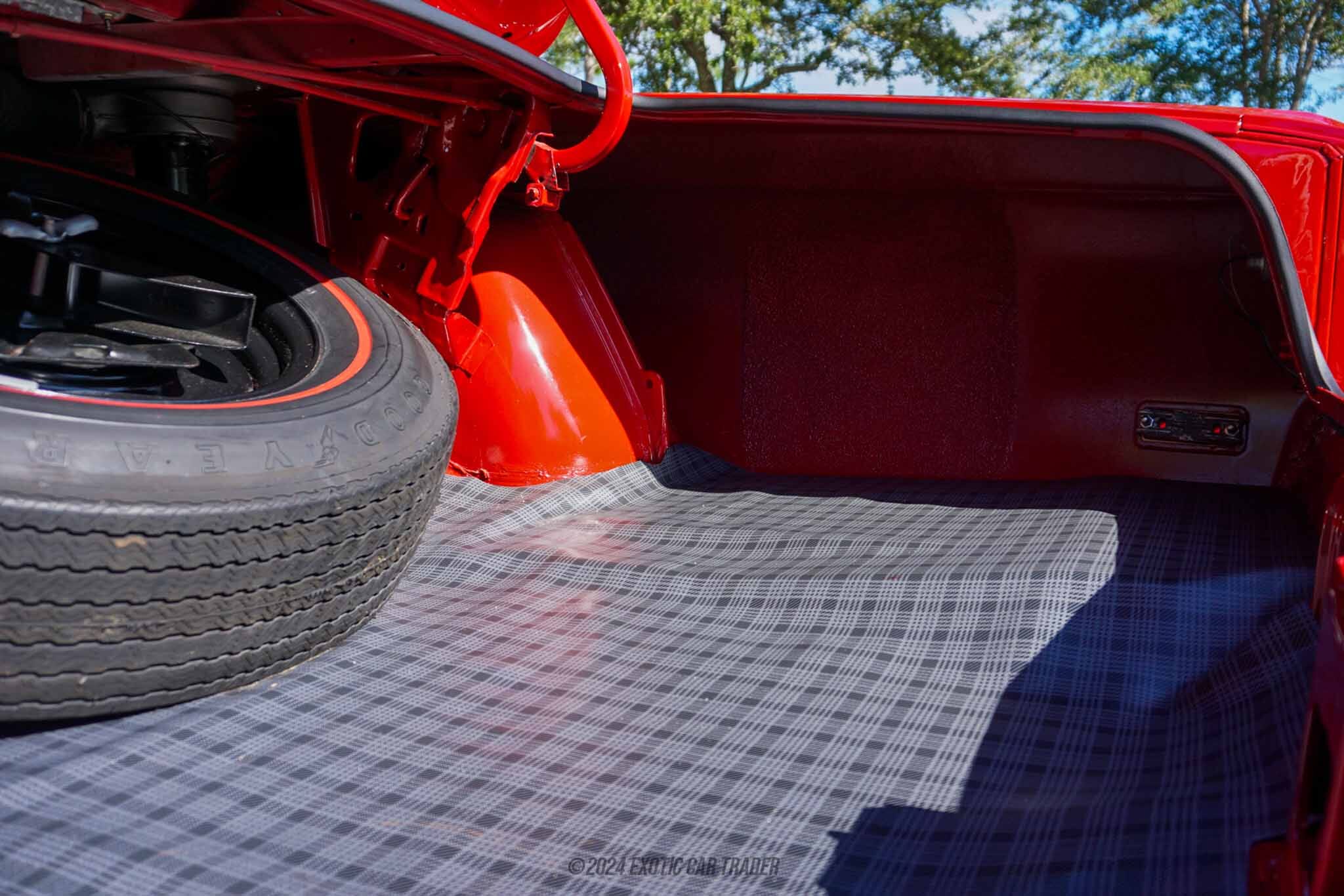
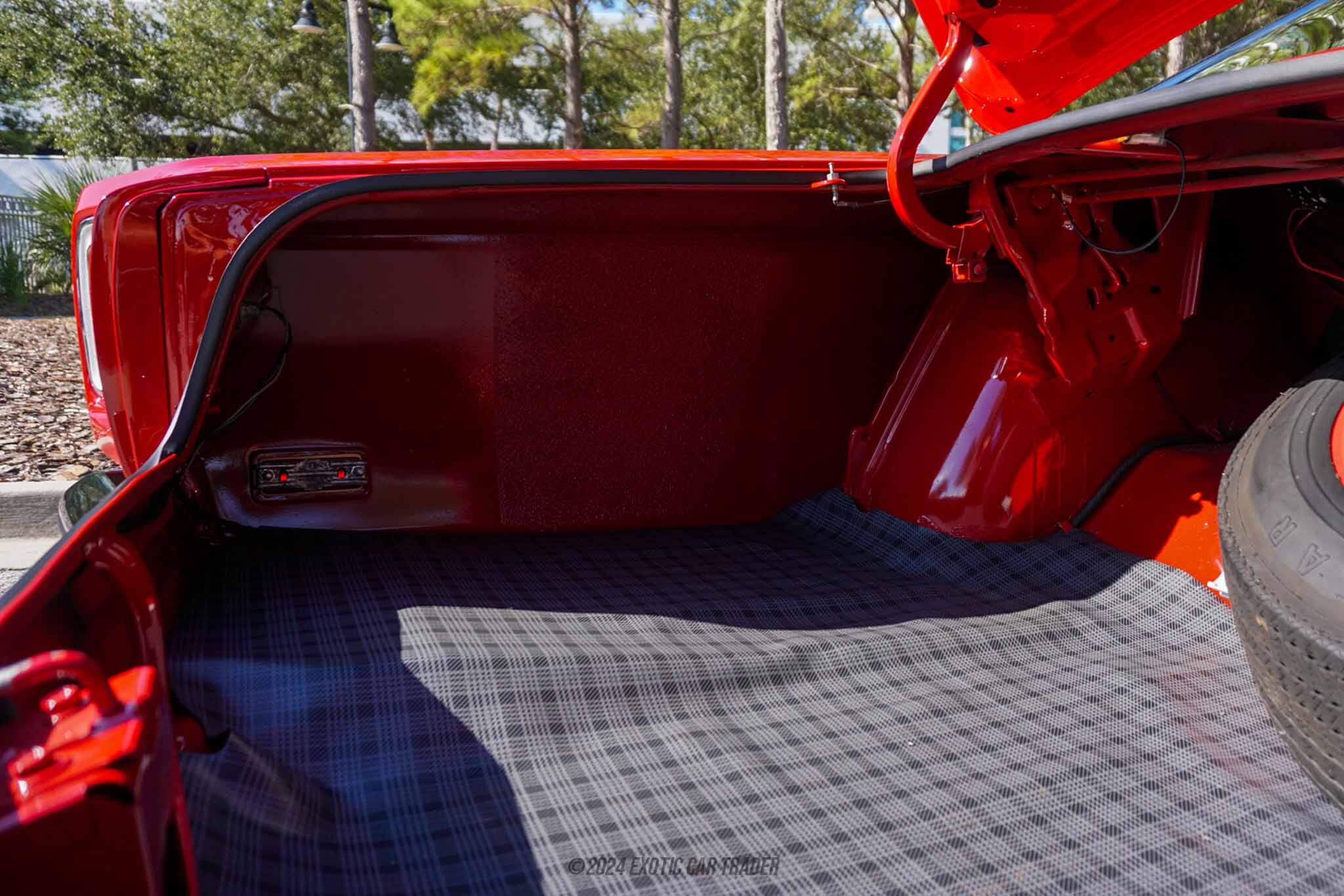
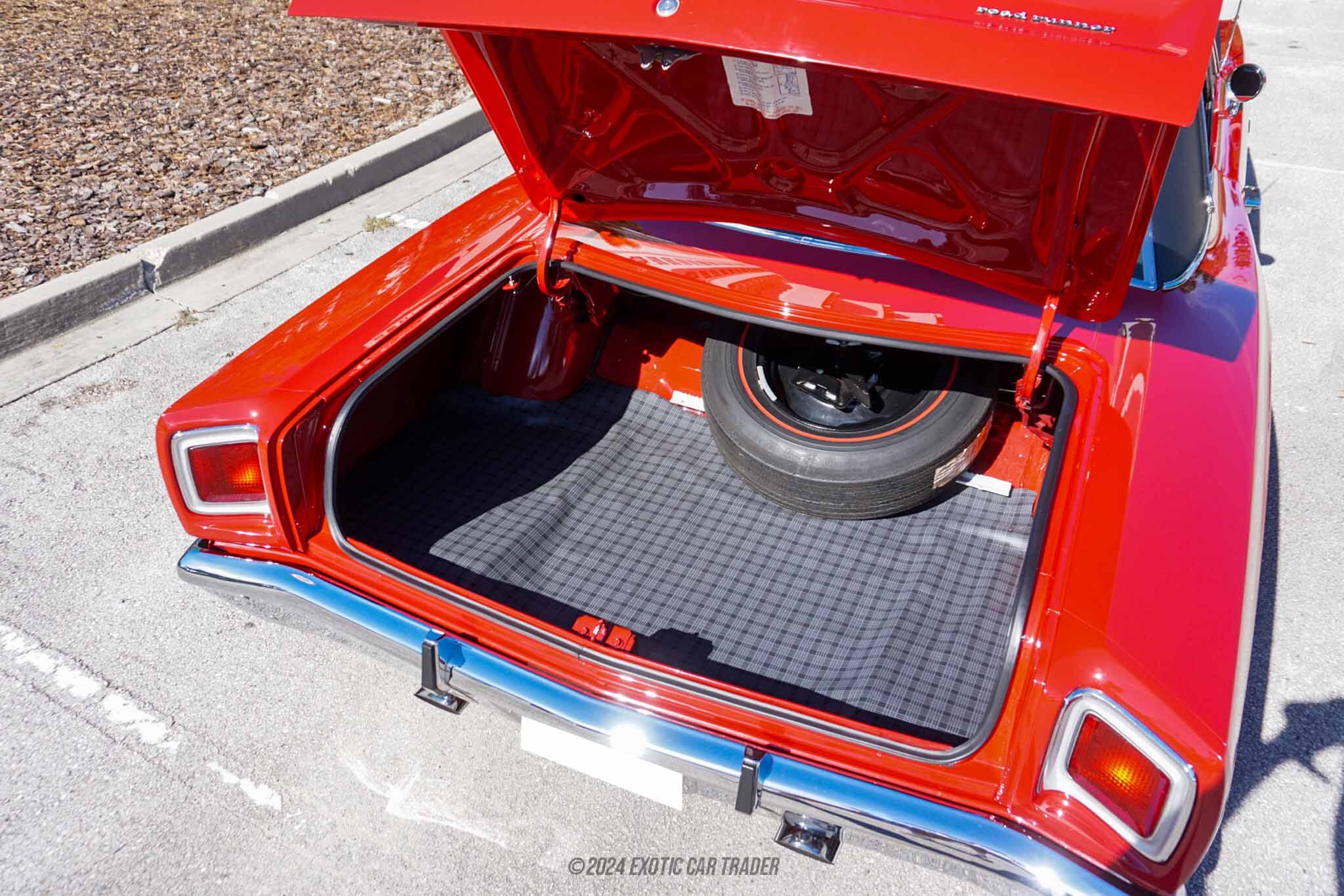
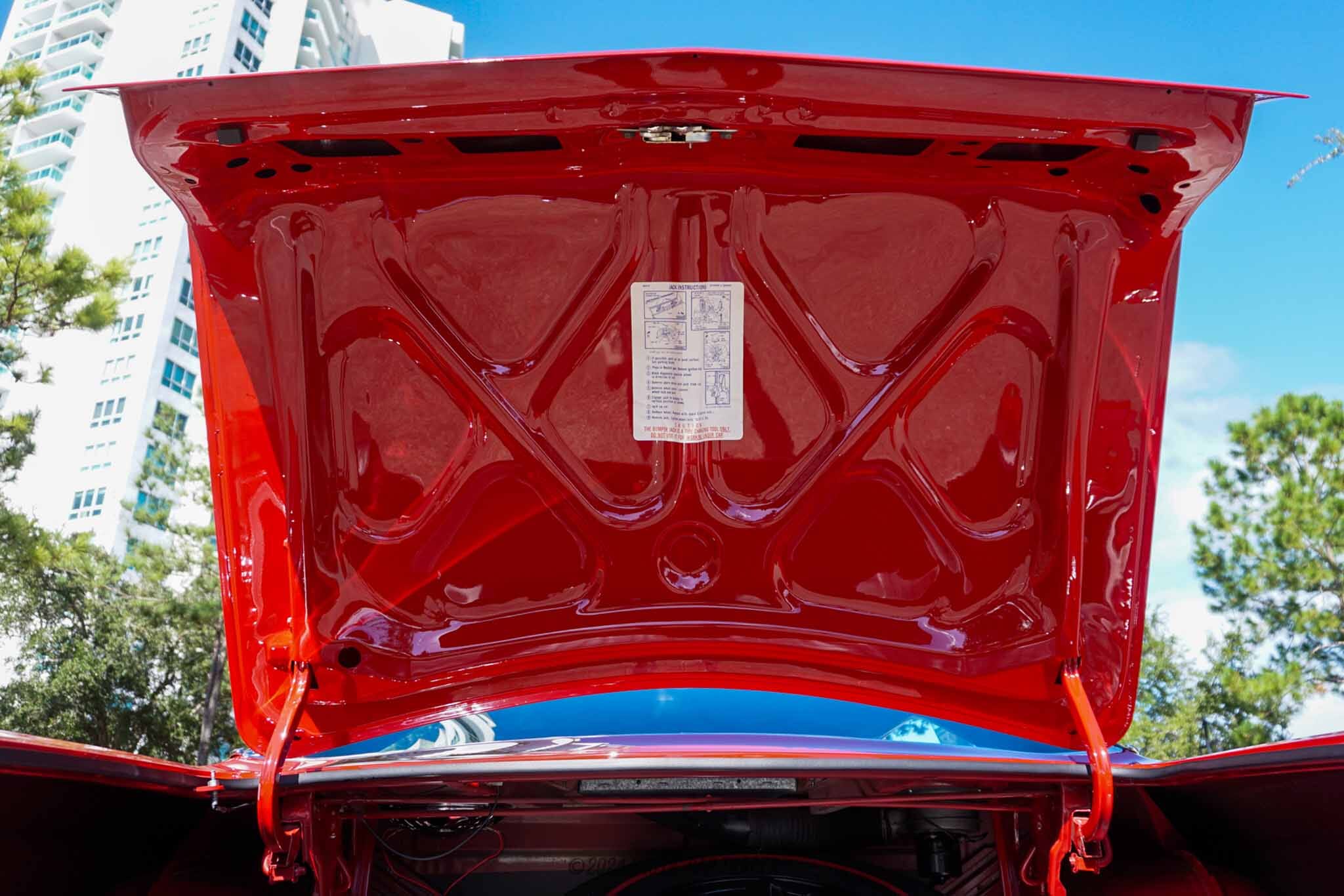
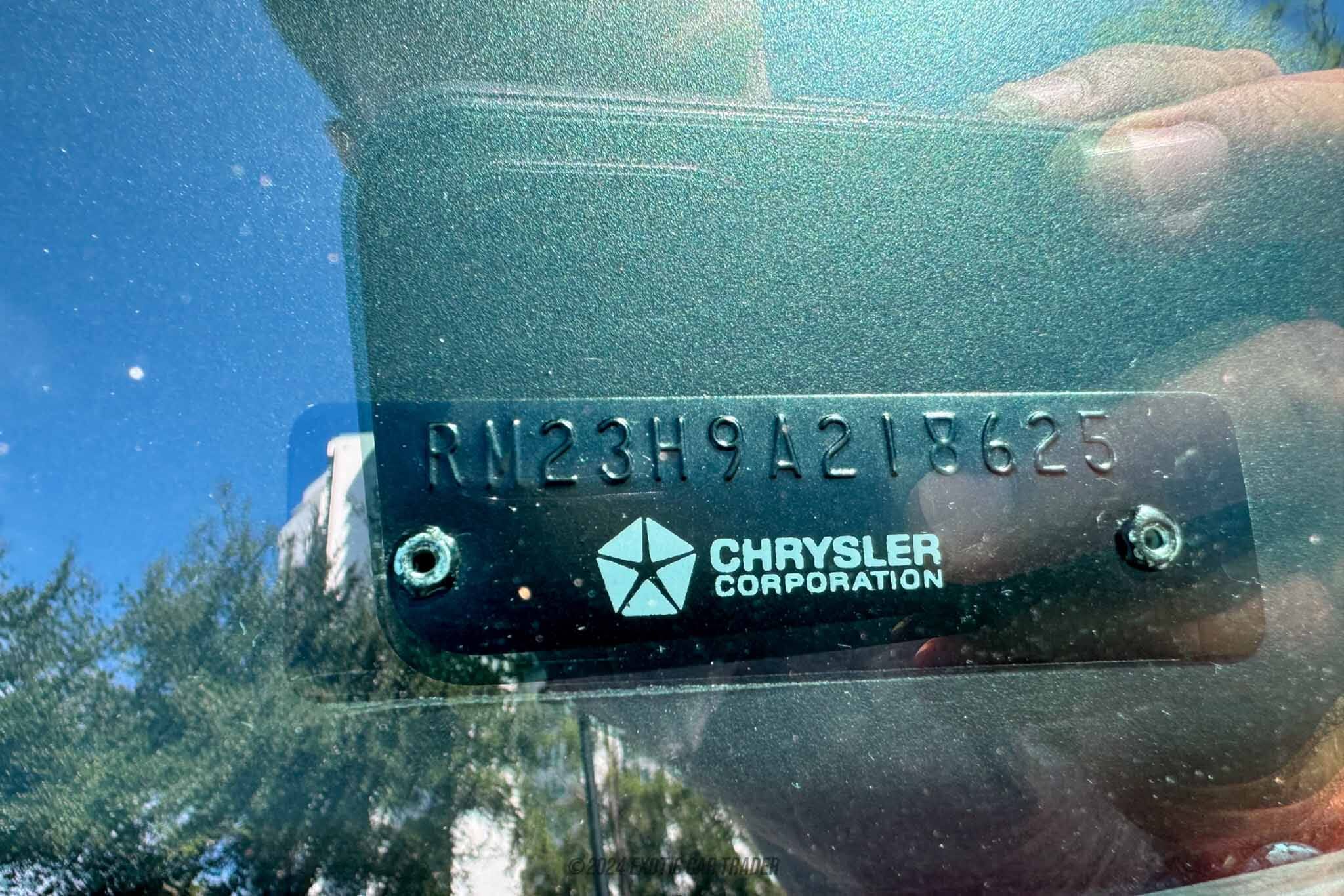
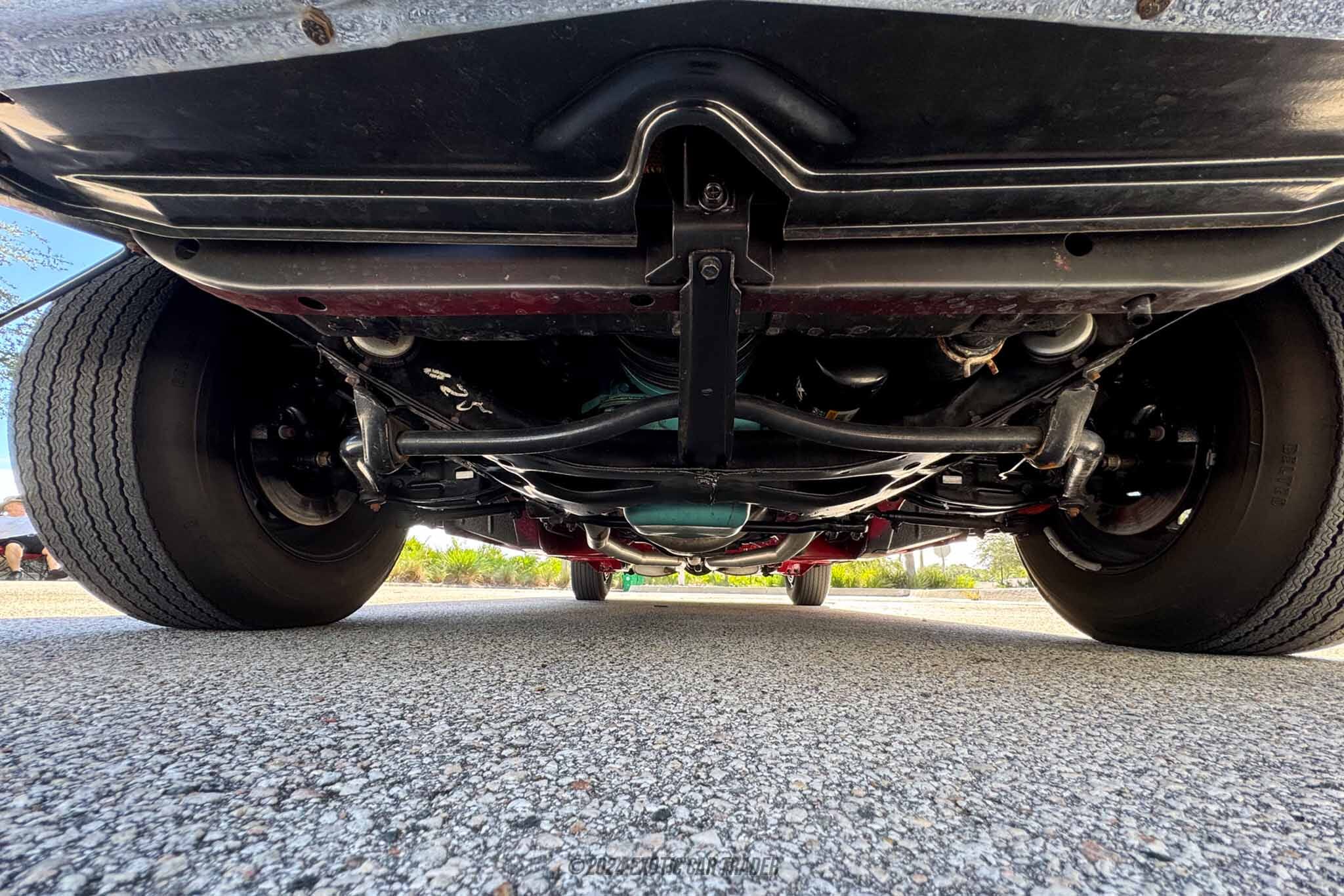
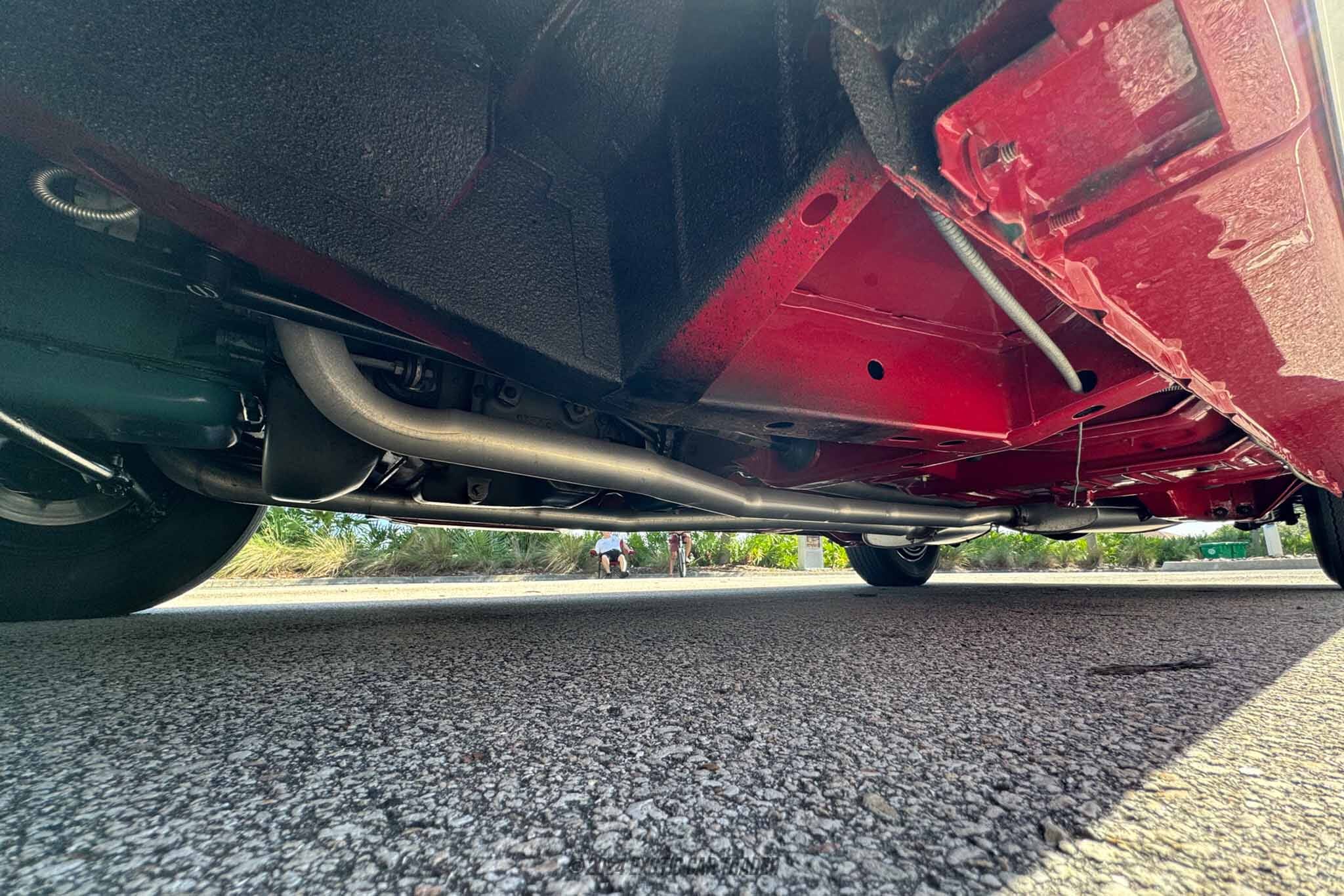
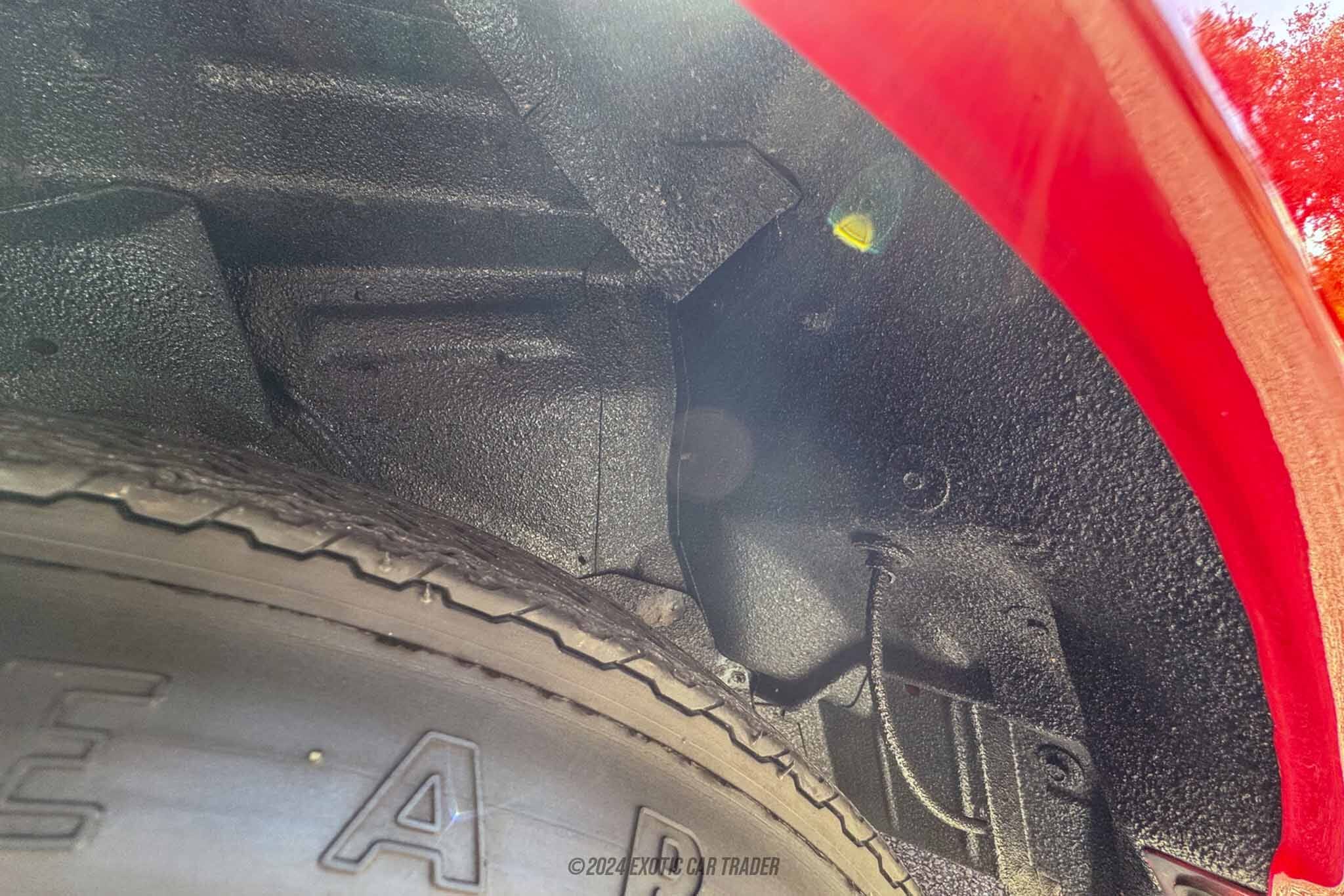
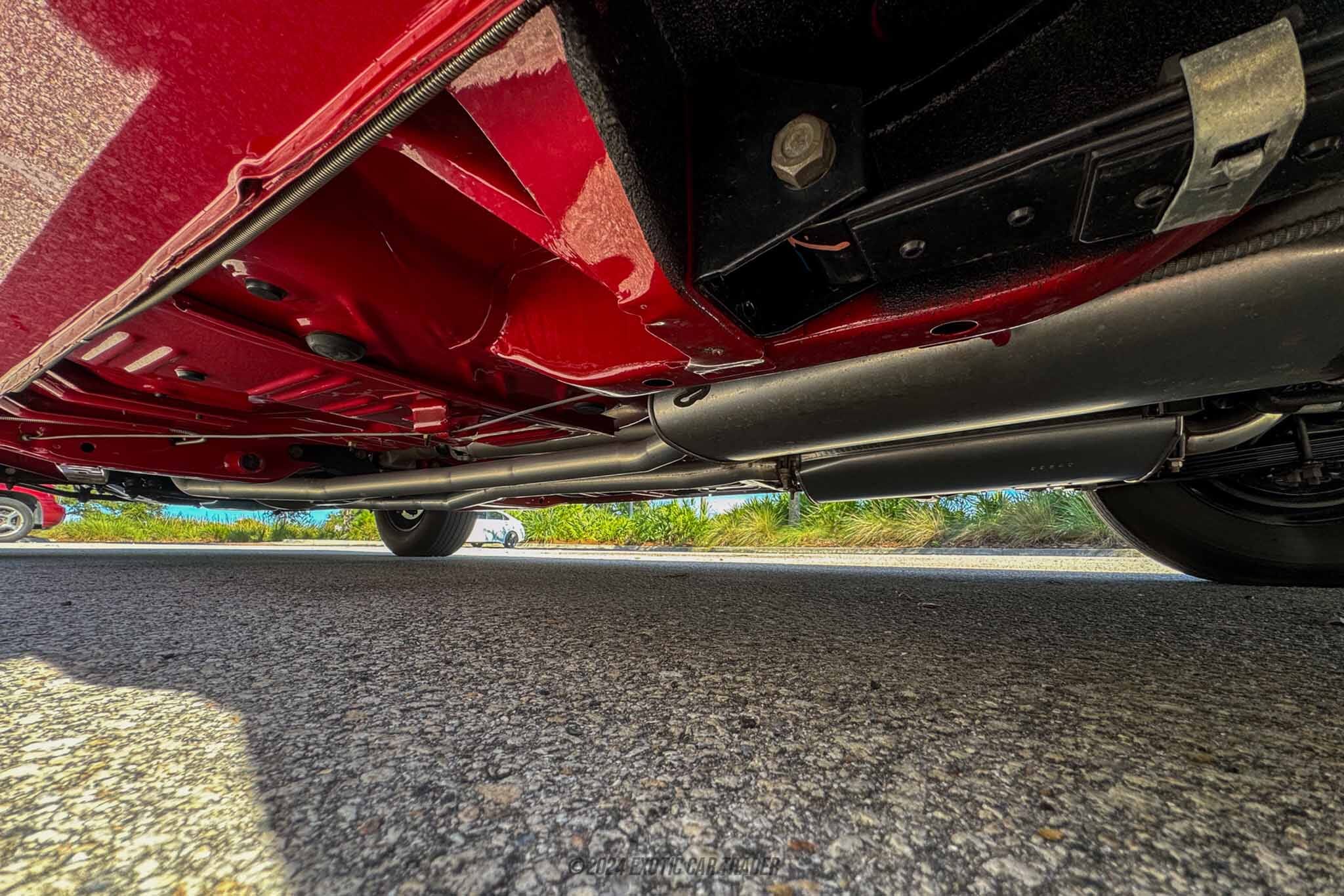
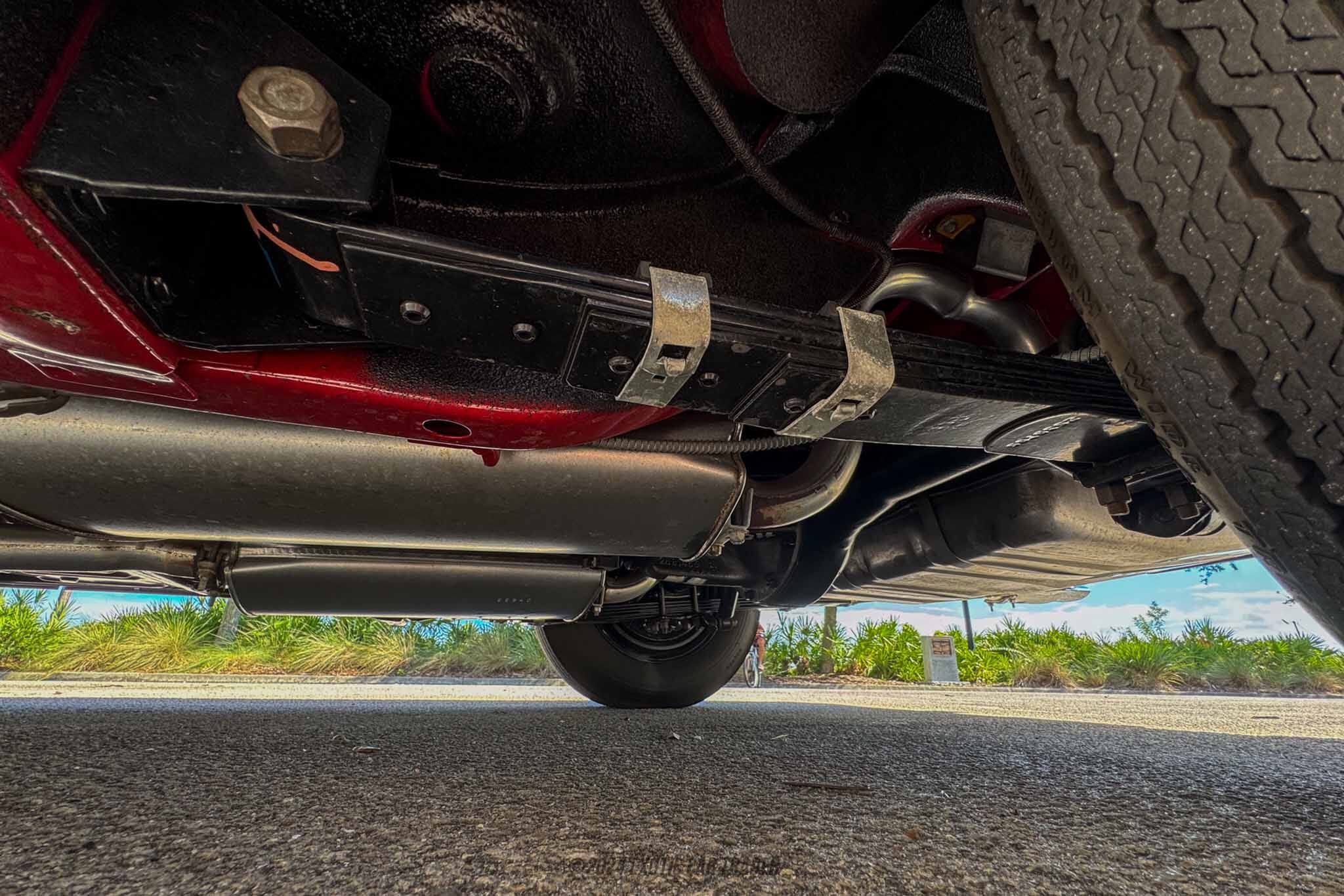
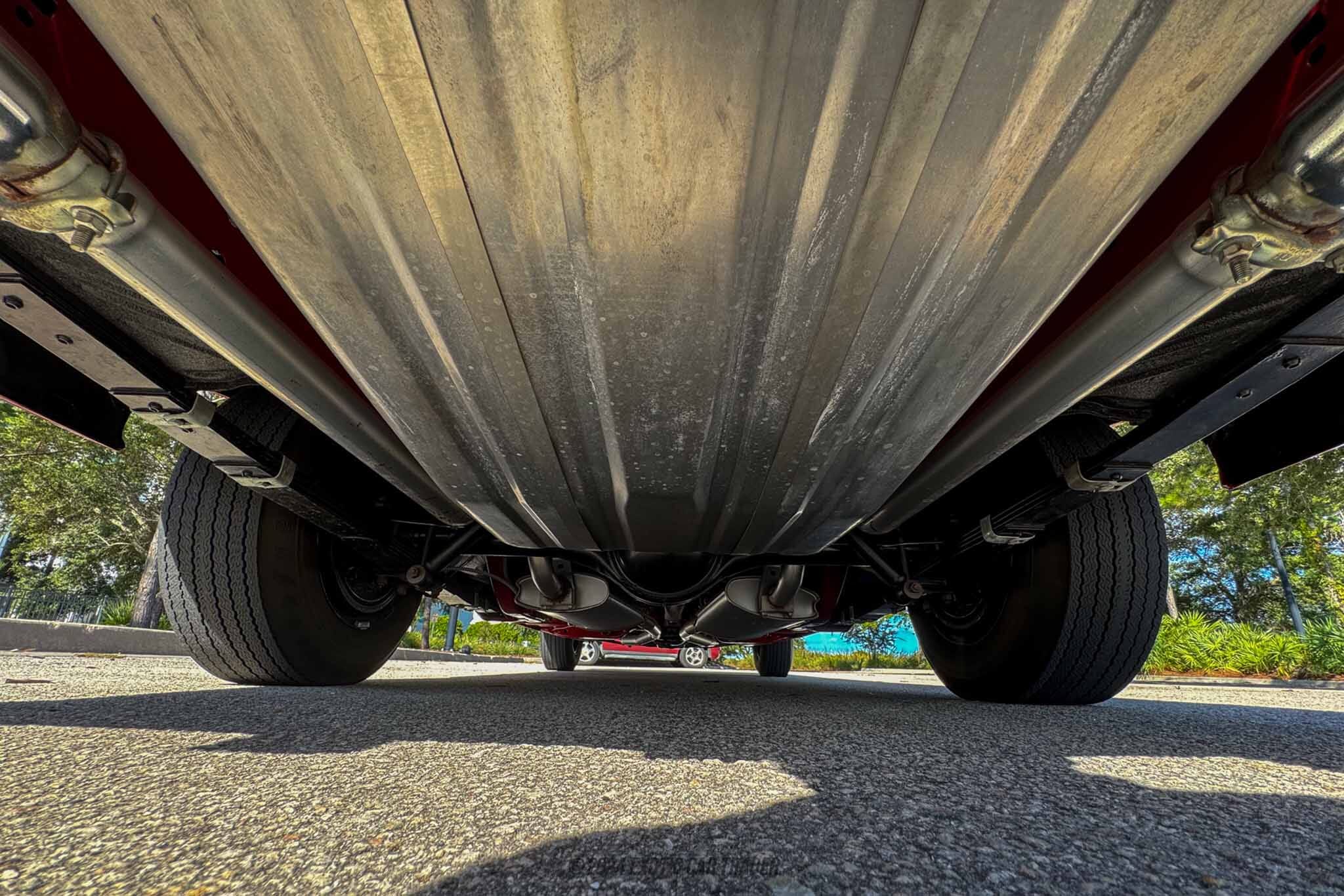
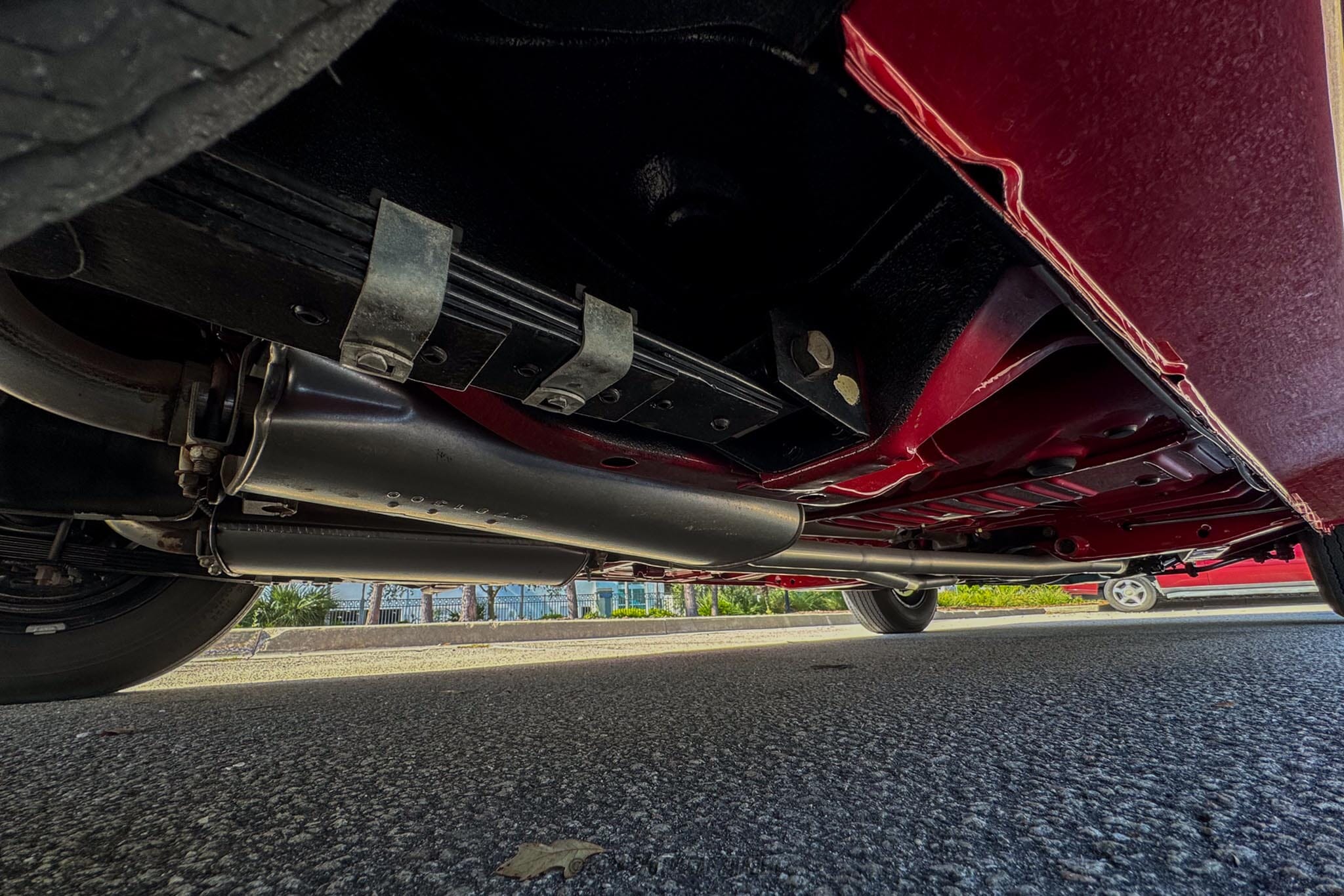


- MY 1969 Plymouth Road Runner
- 100% Full Rotisserie Restoration done in 2015
- All Numbers Matching Car
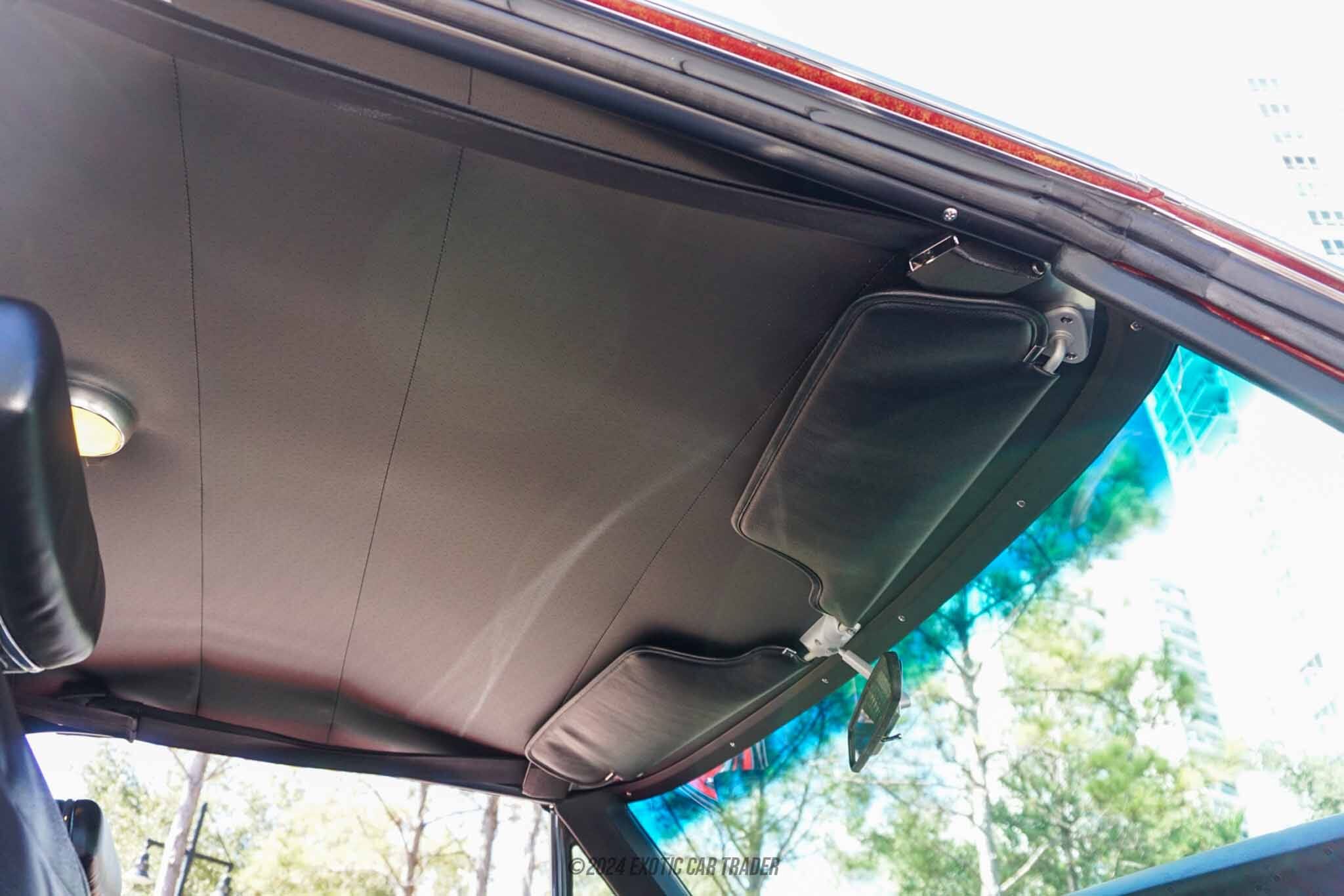
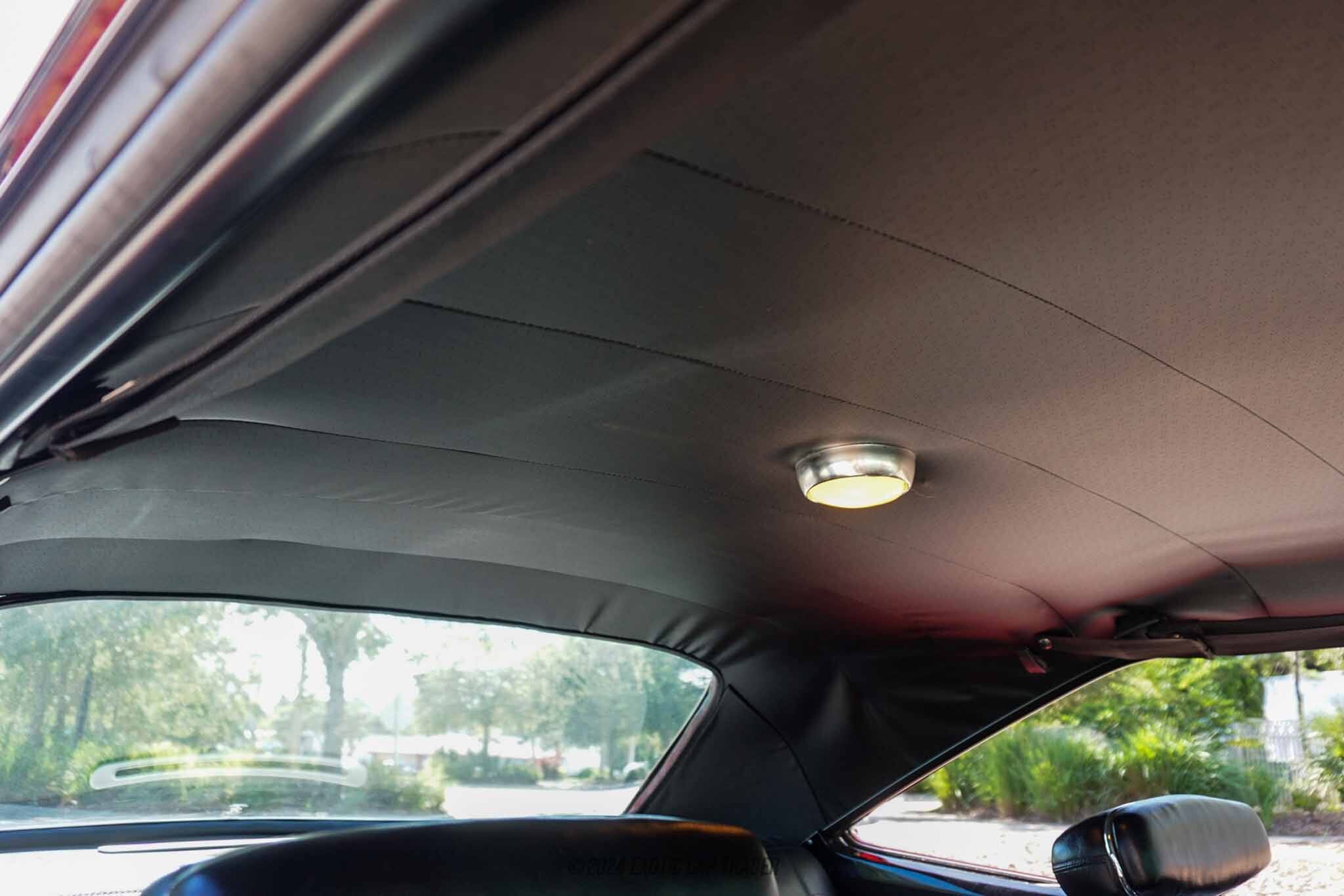
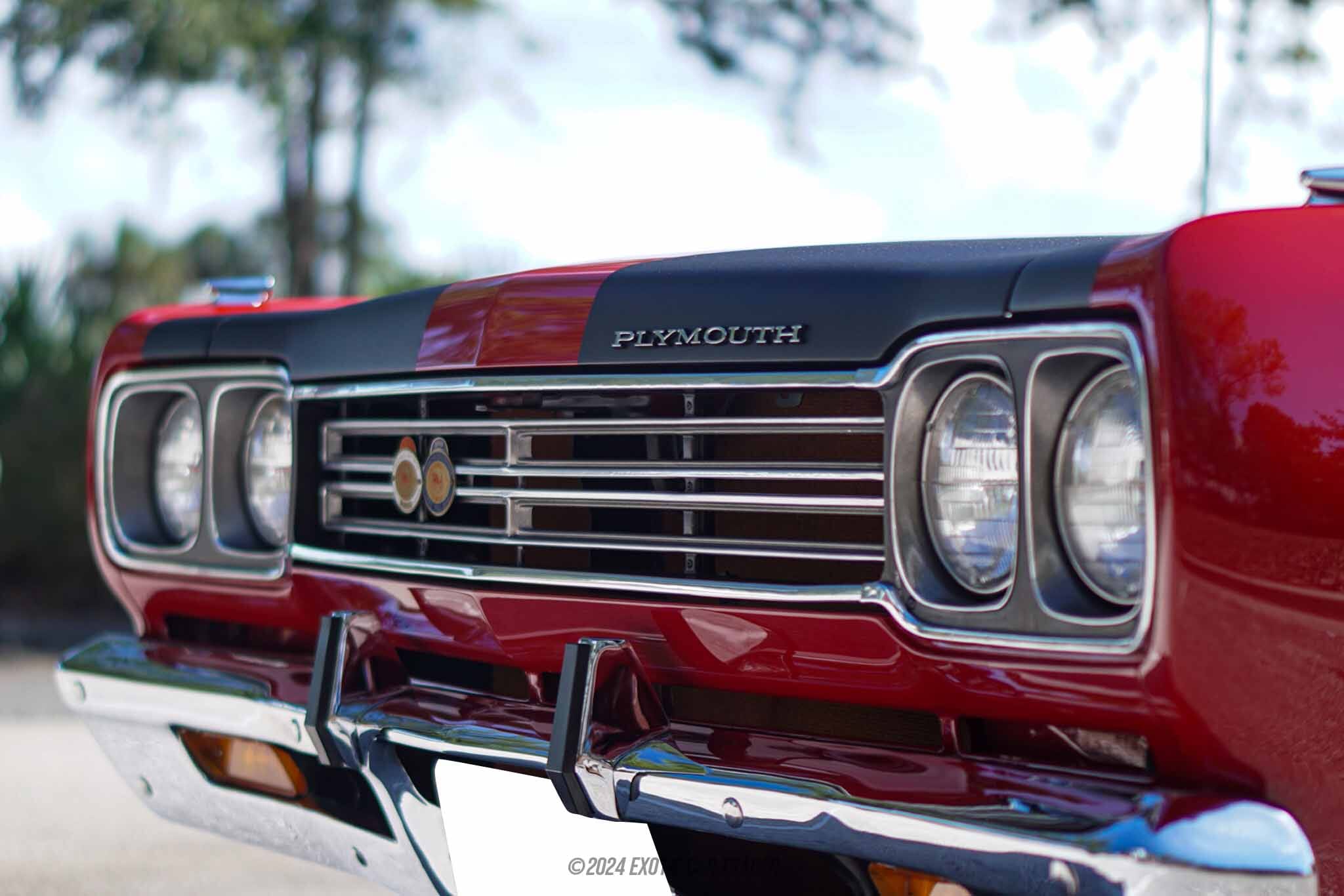
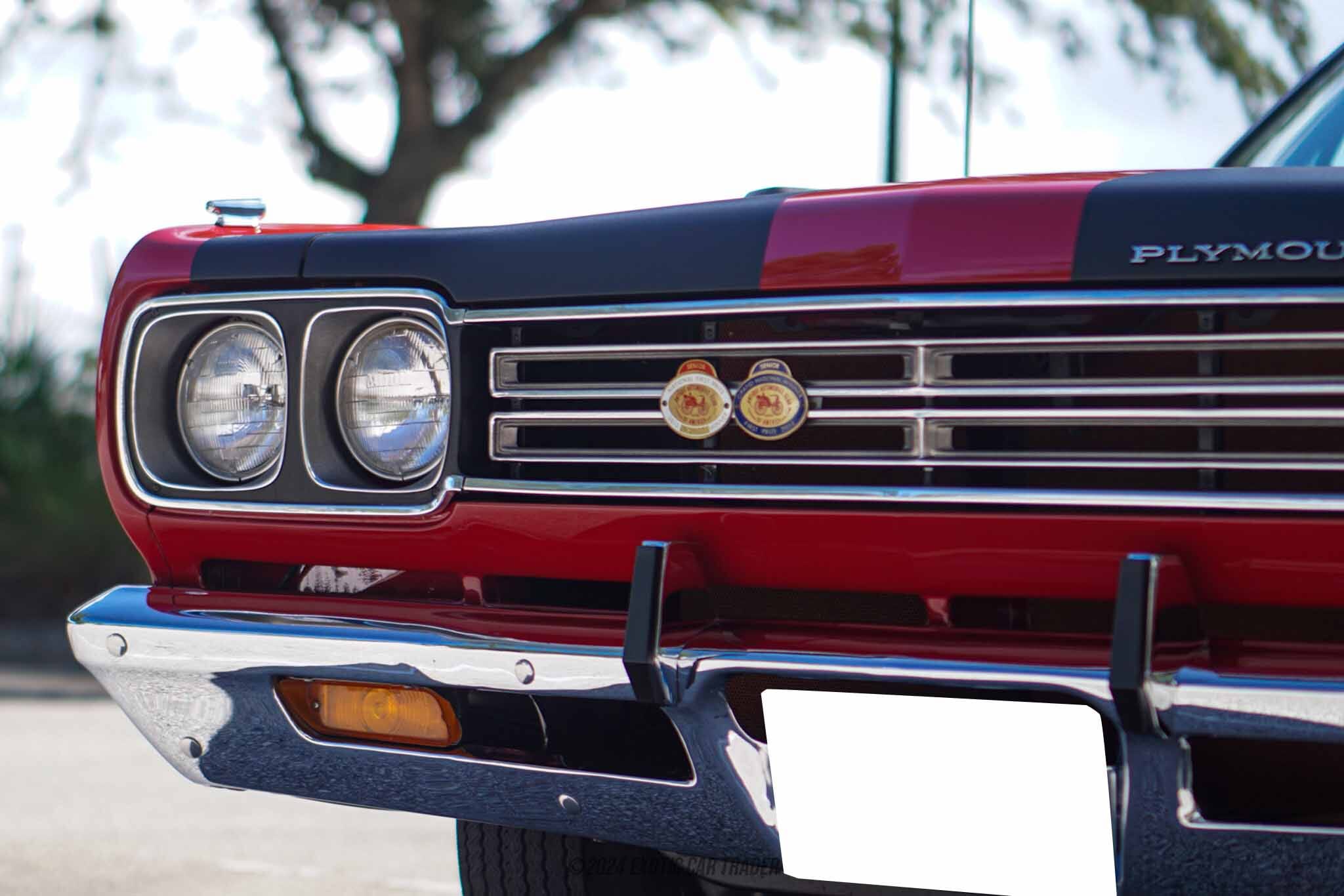
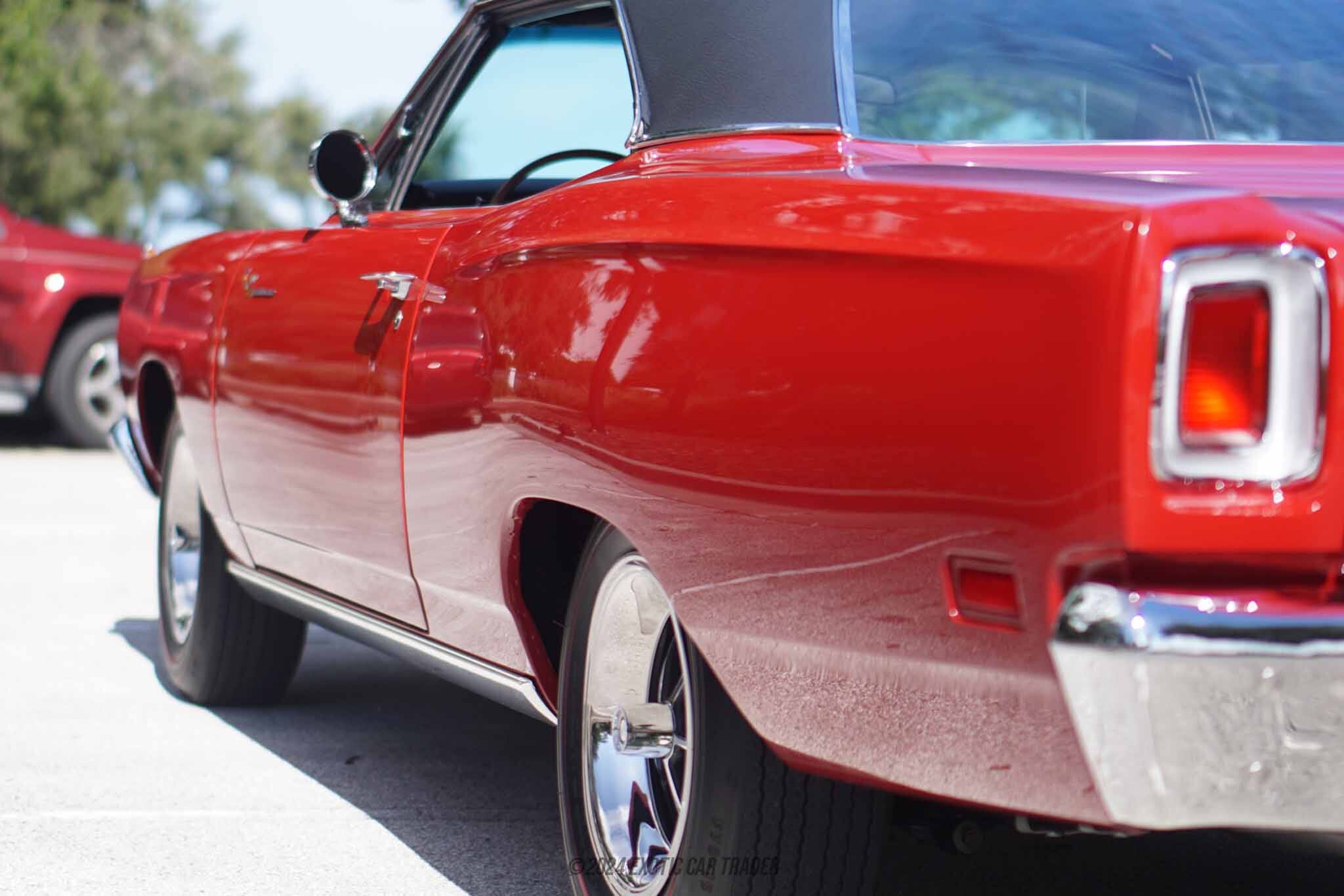
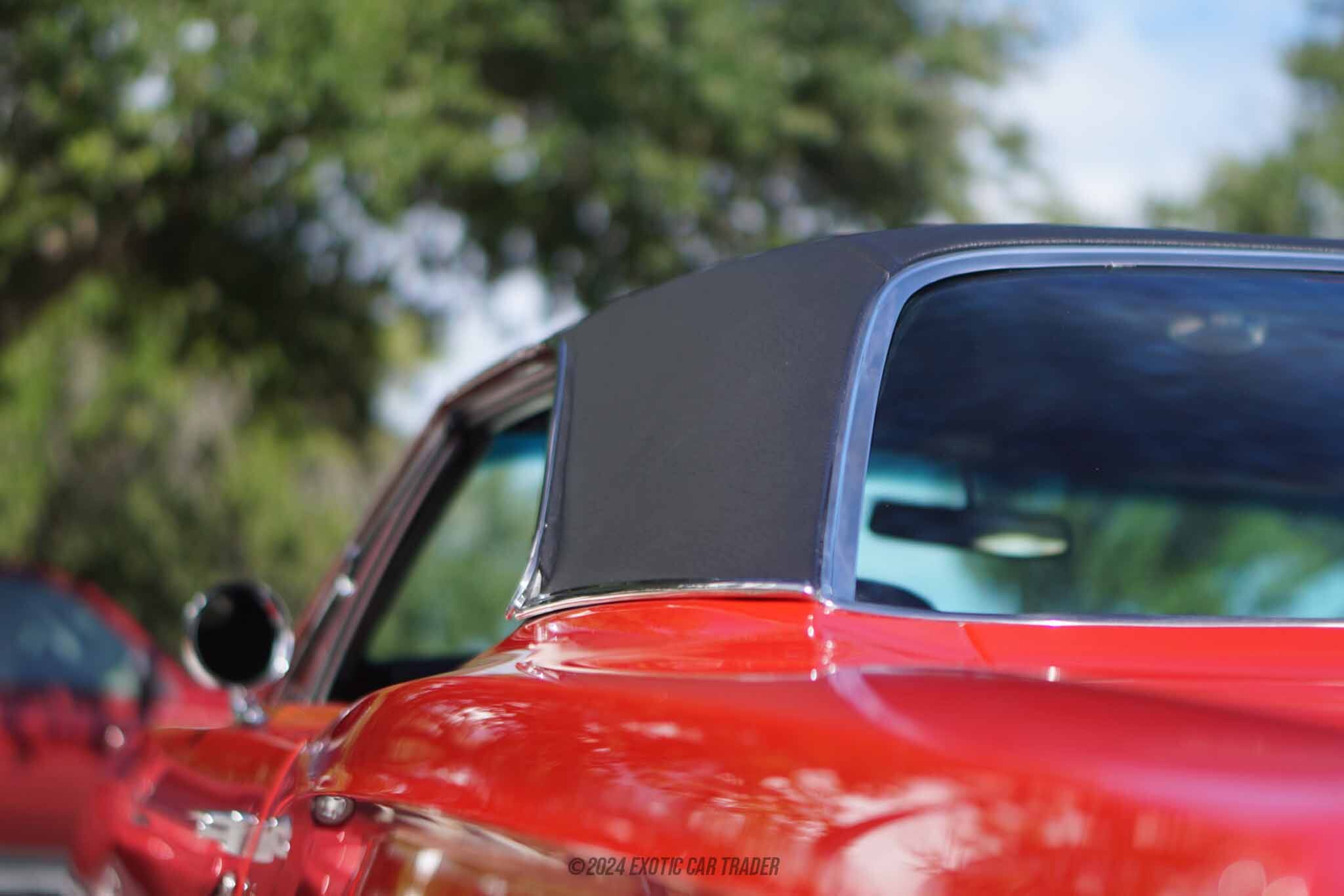
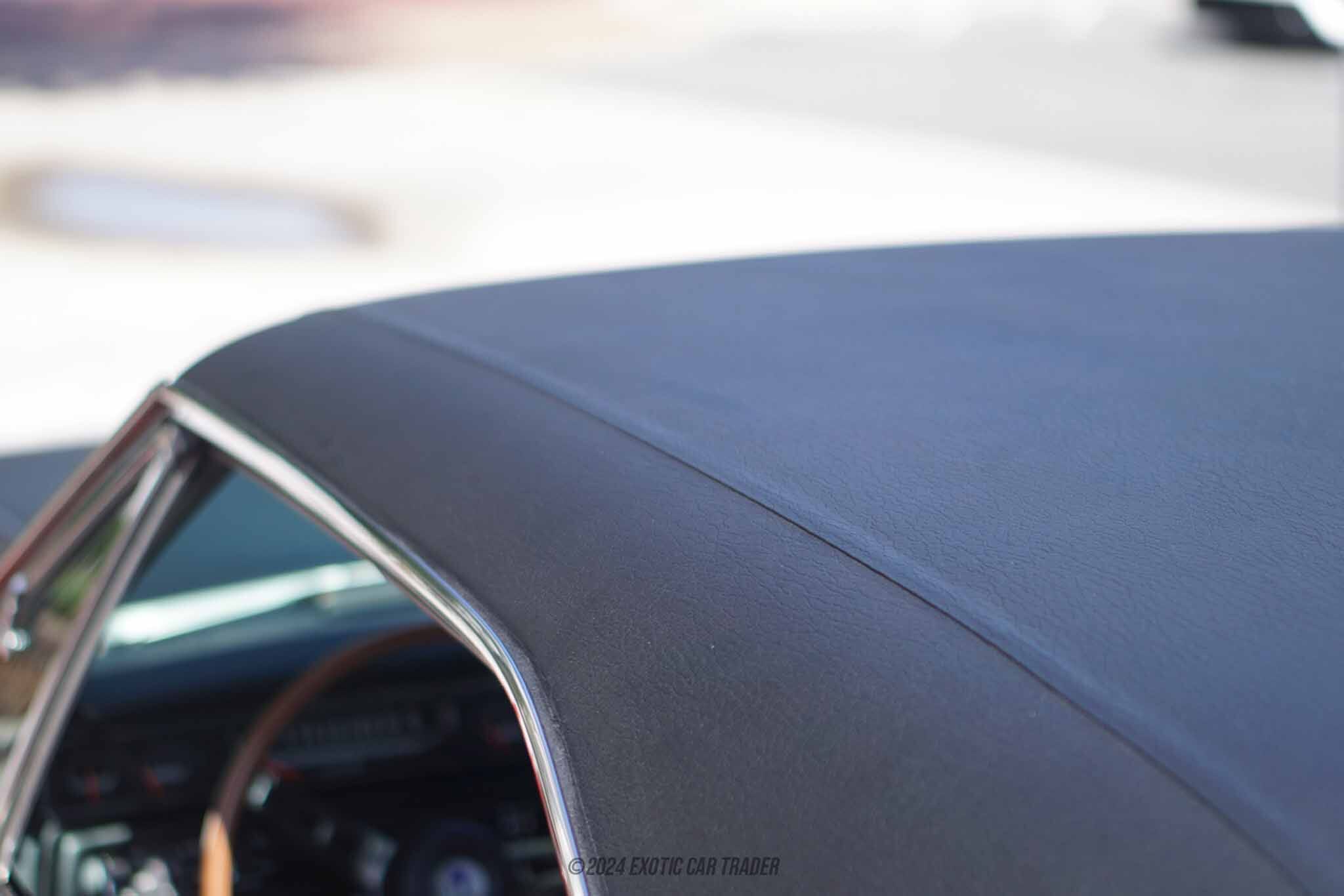
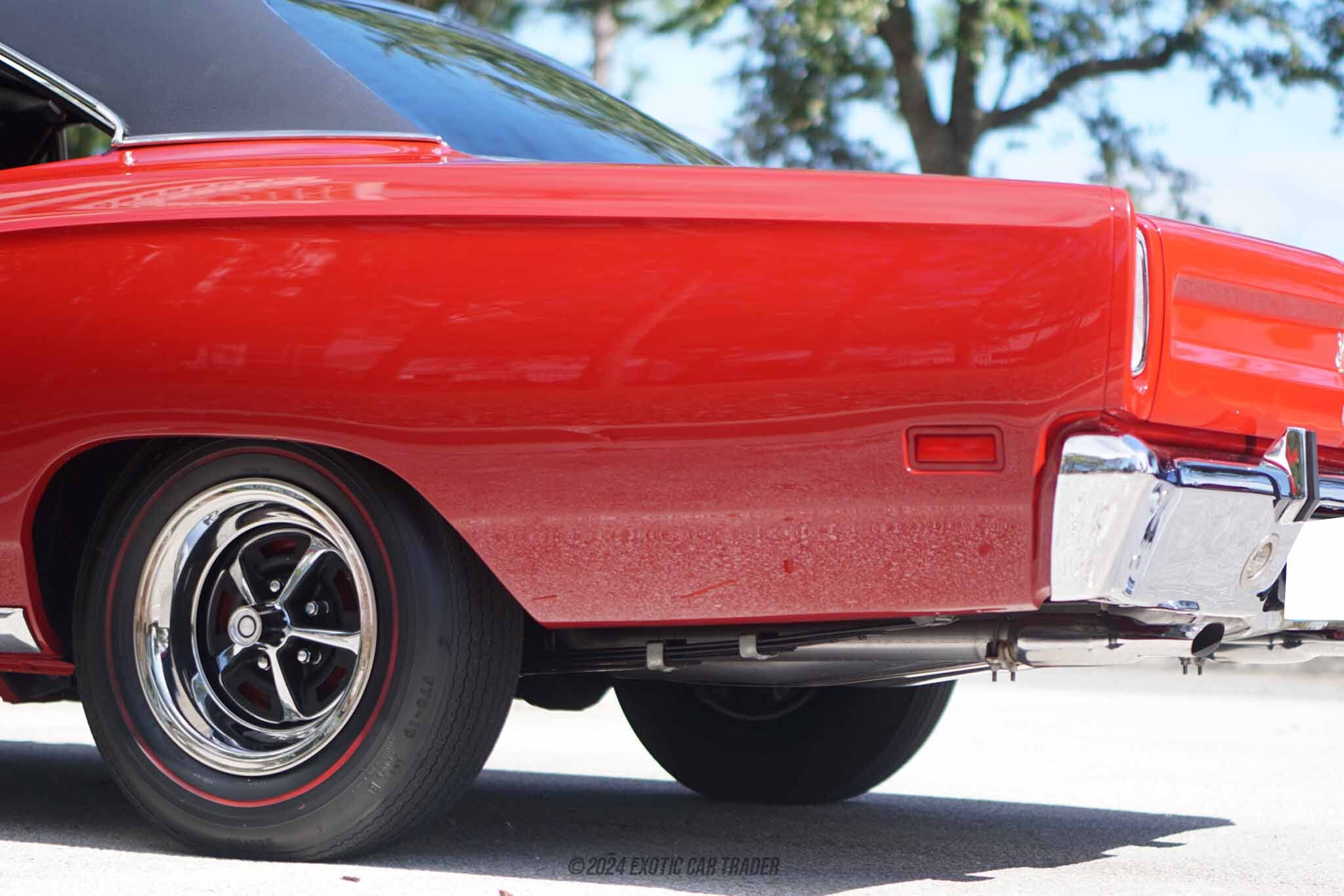
- Red Exterior Paint with Black Vinyl Top
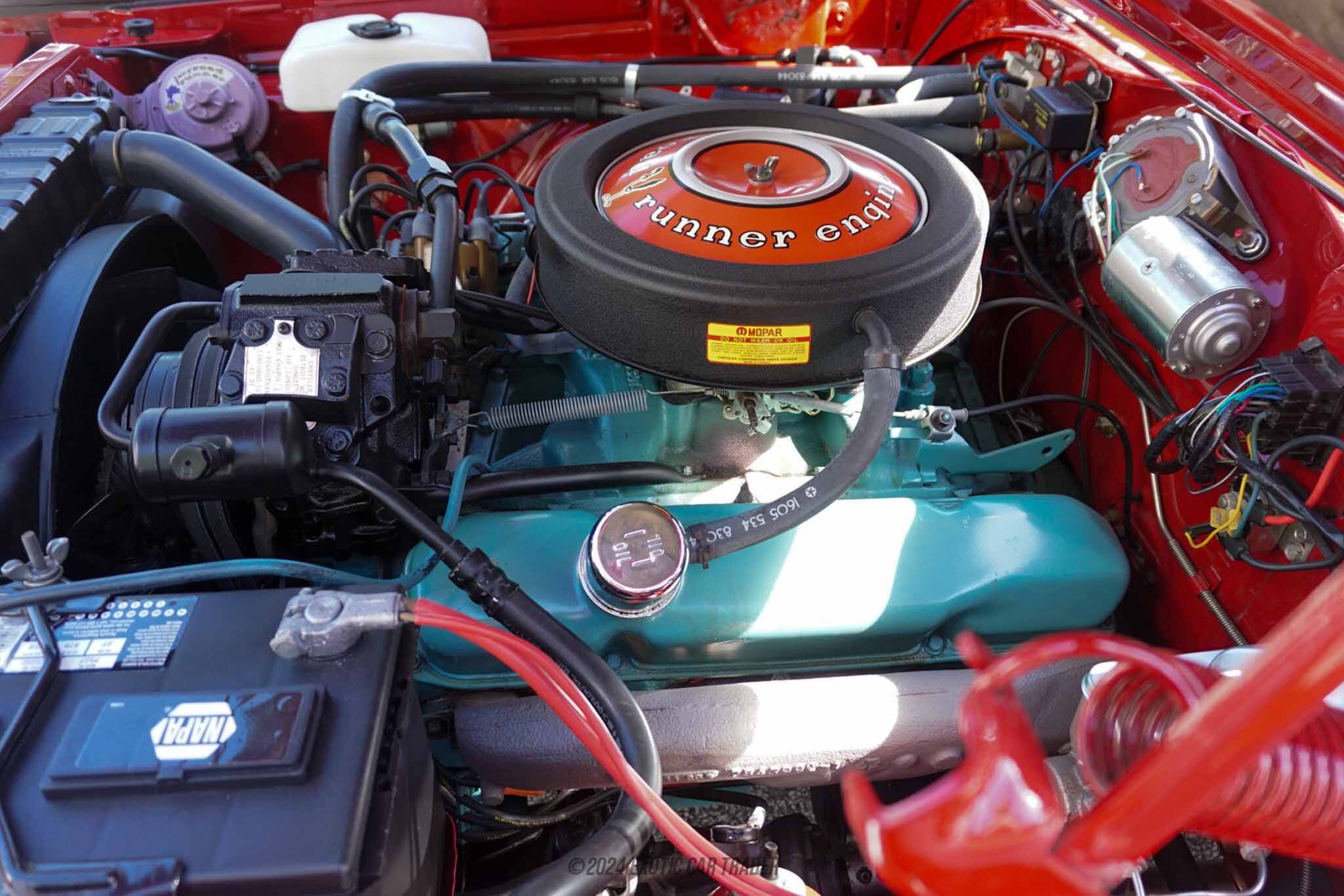
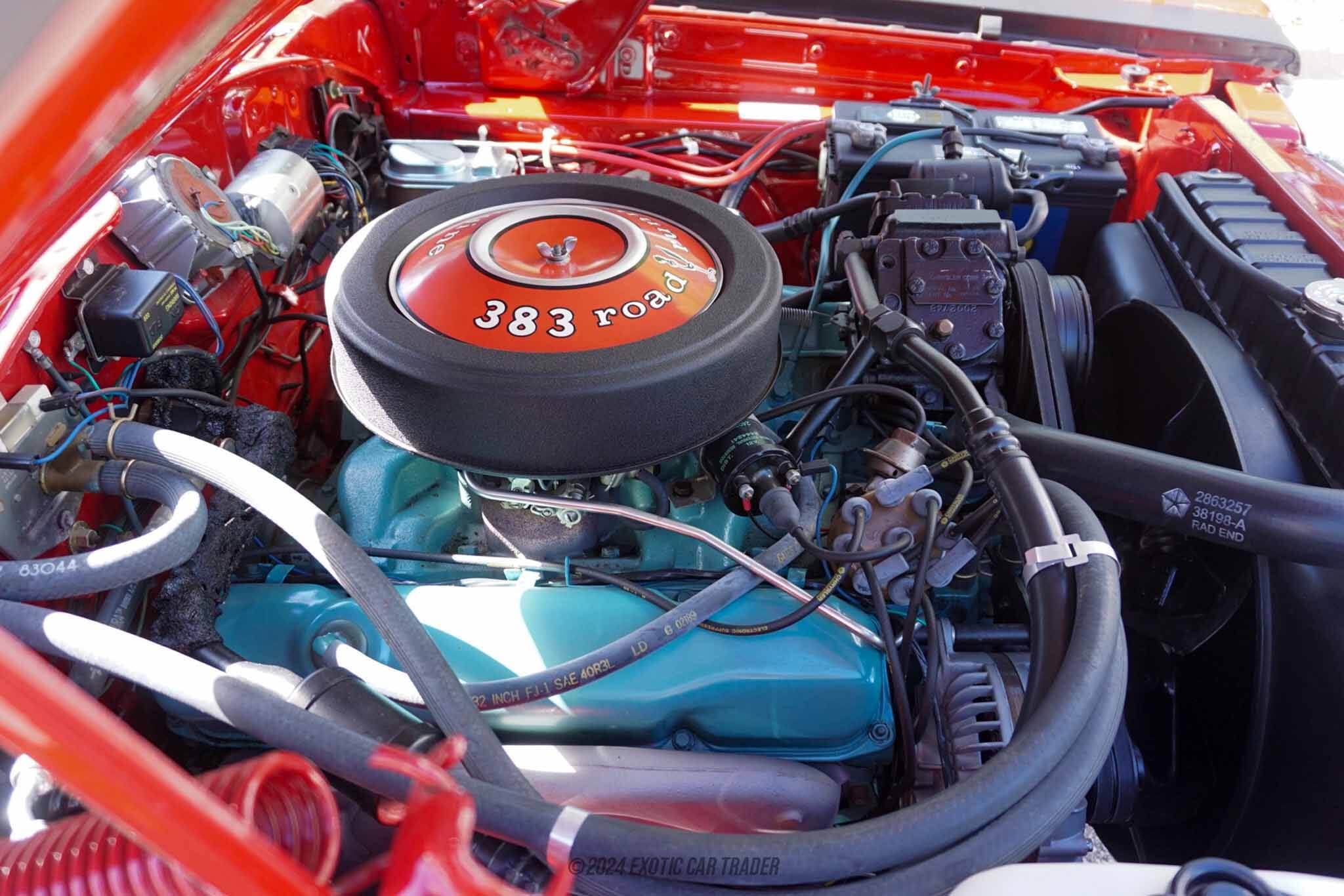
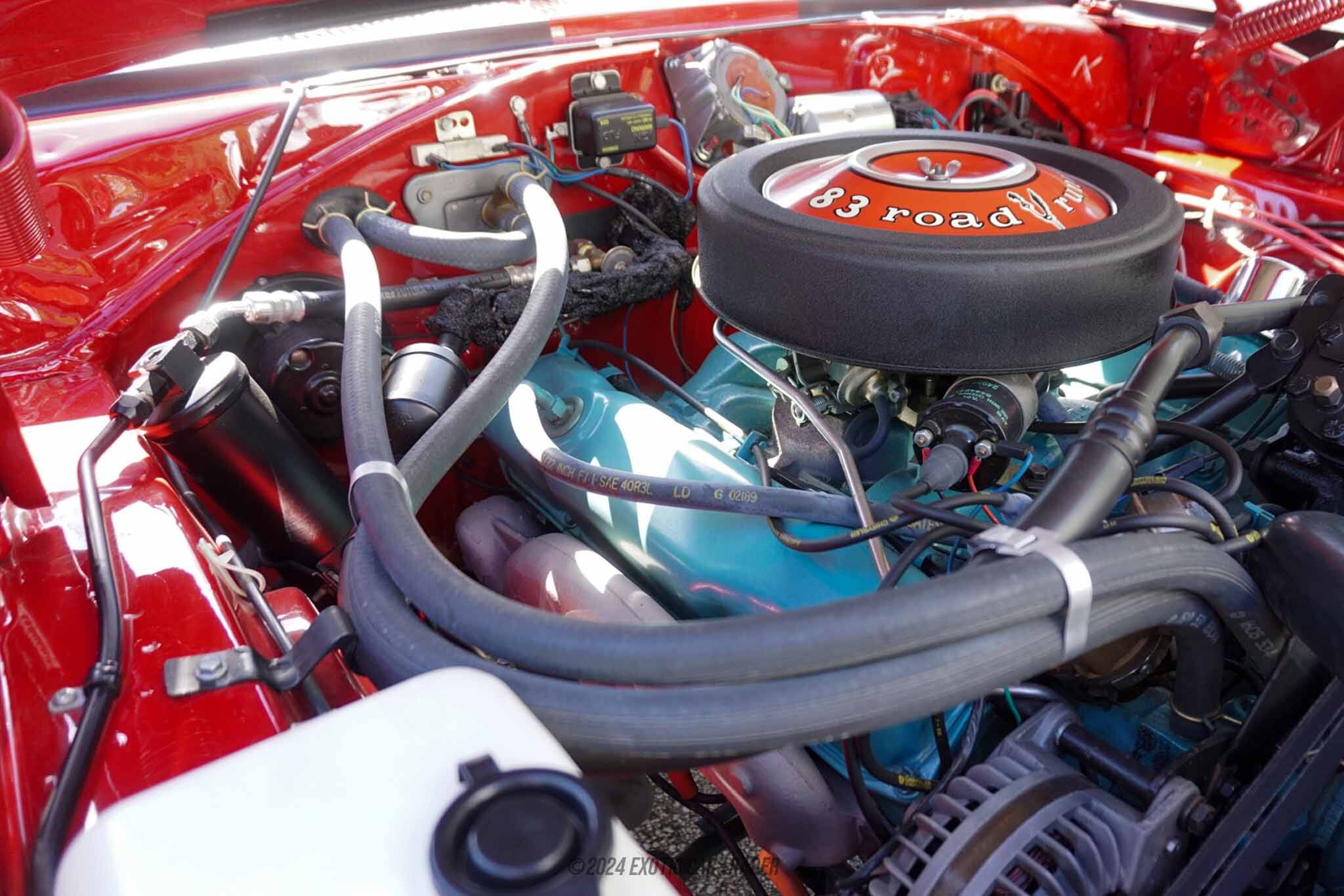
- 439ci Rebuilt V8
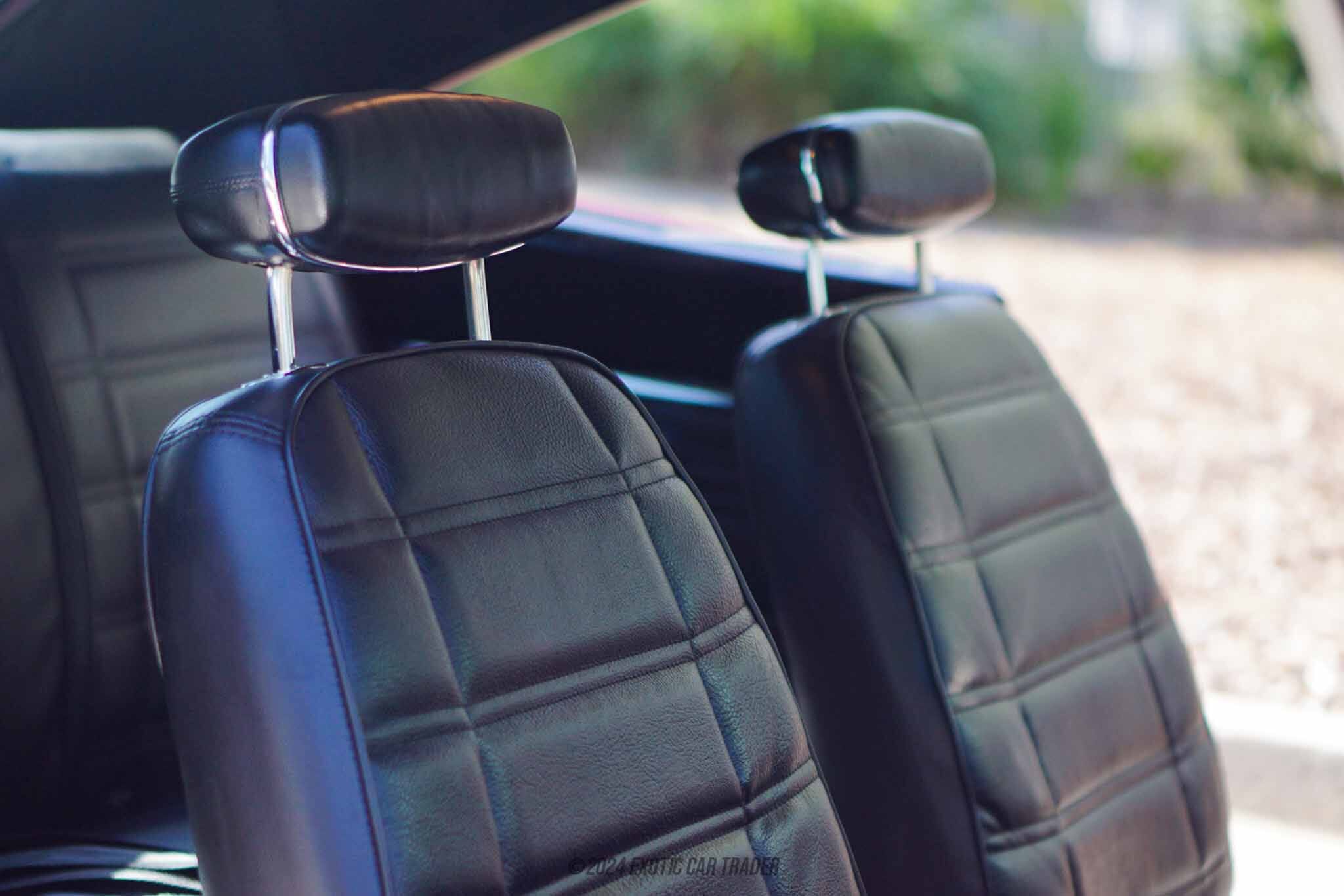
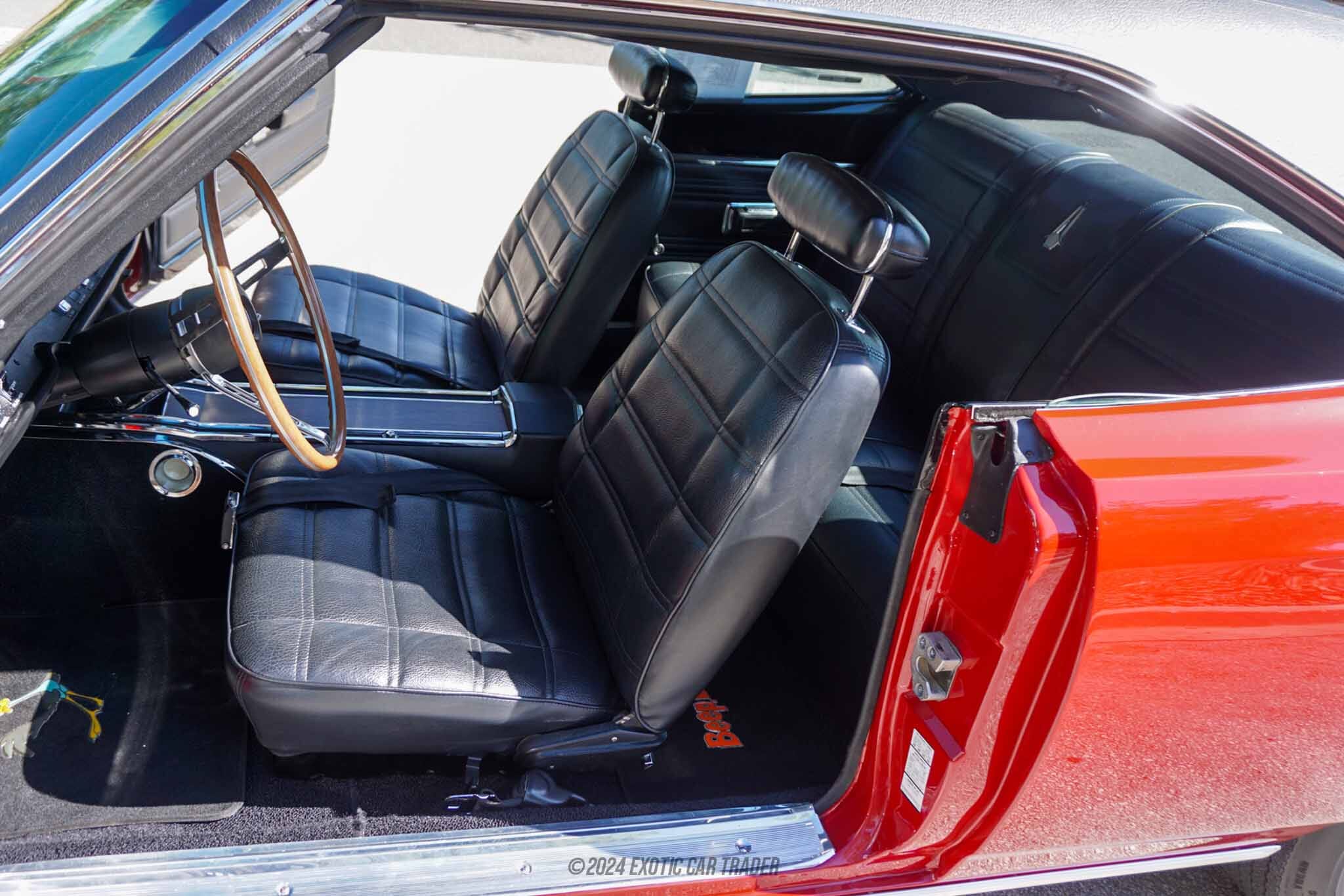
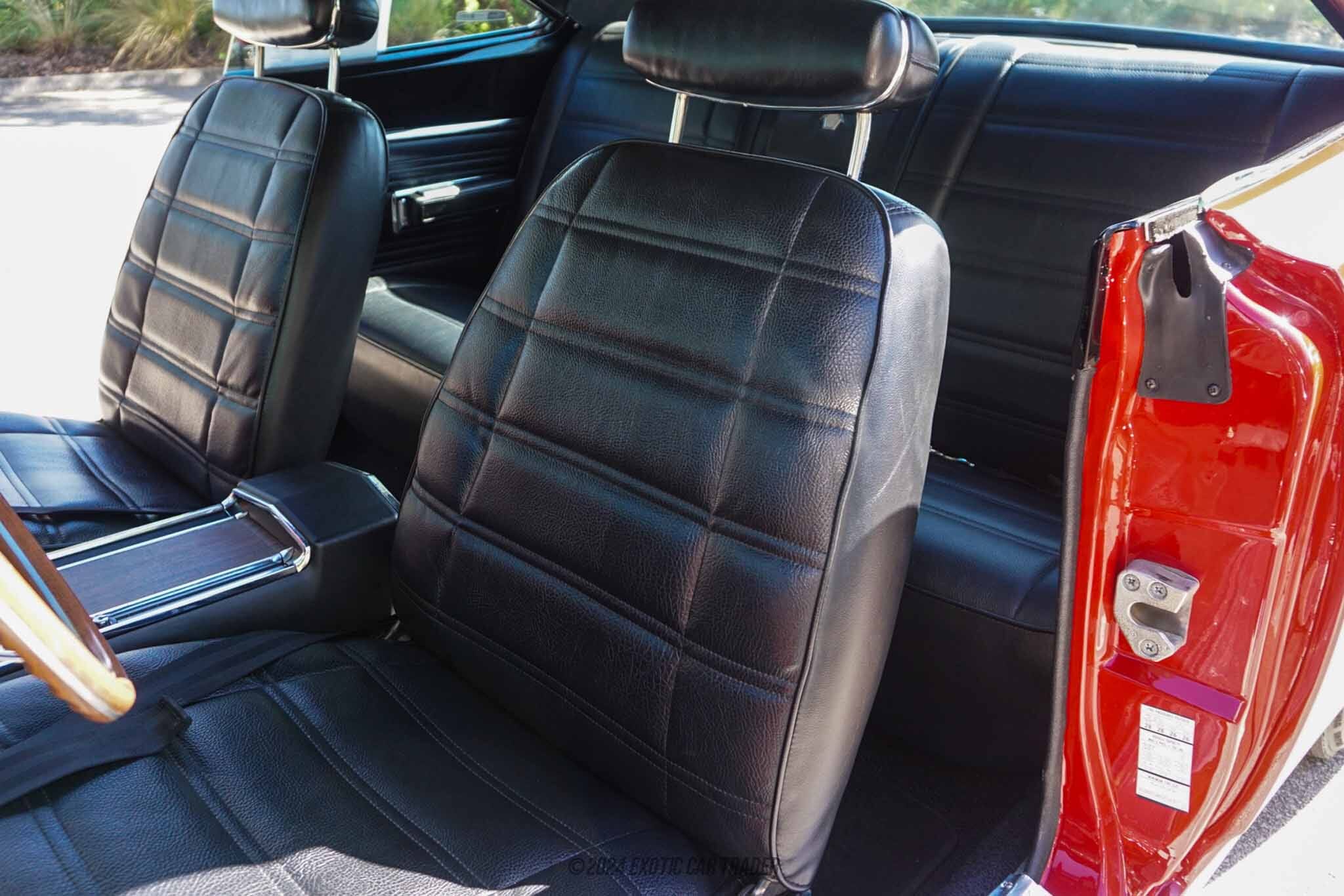
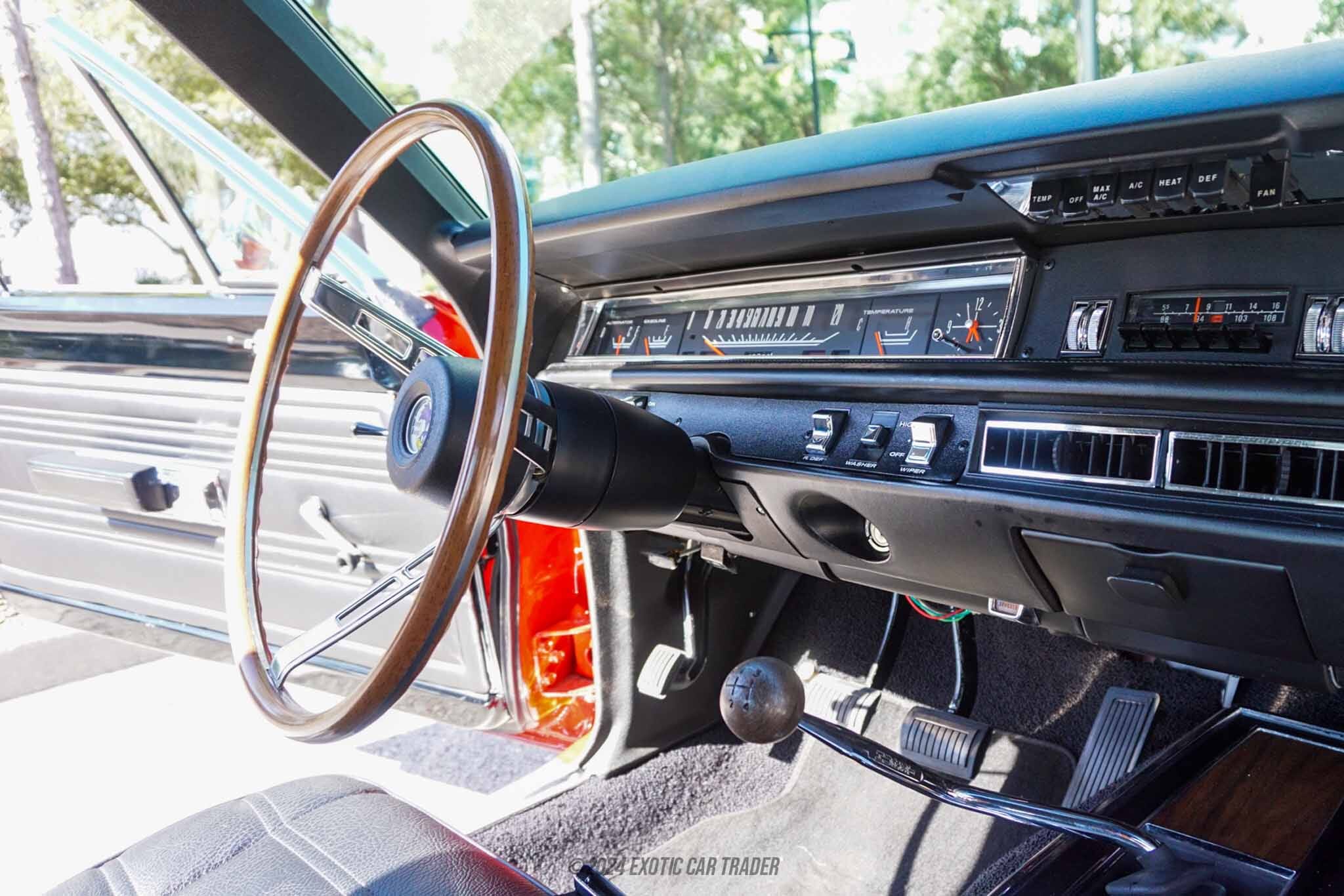
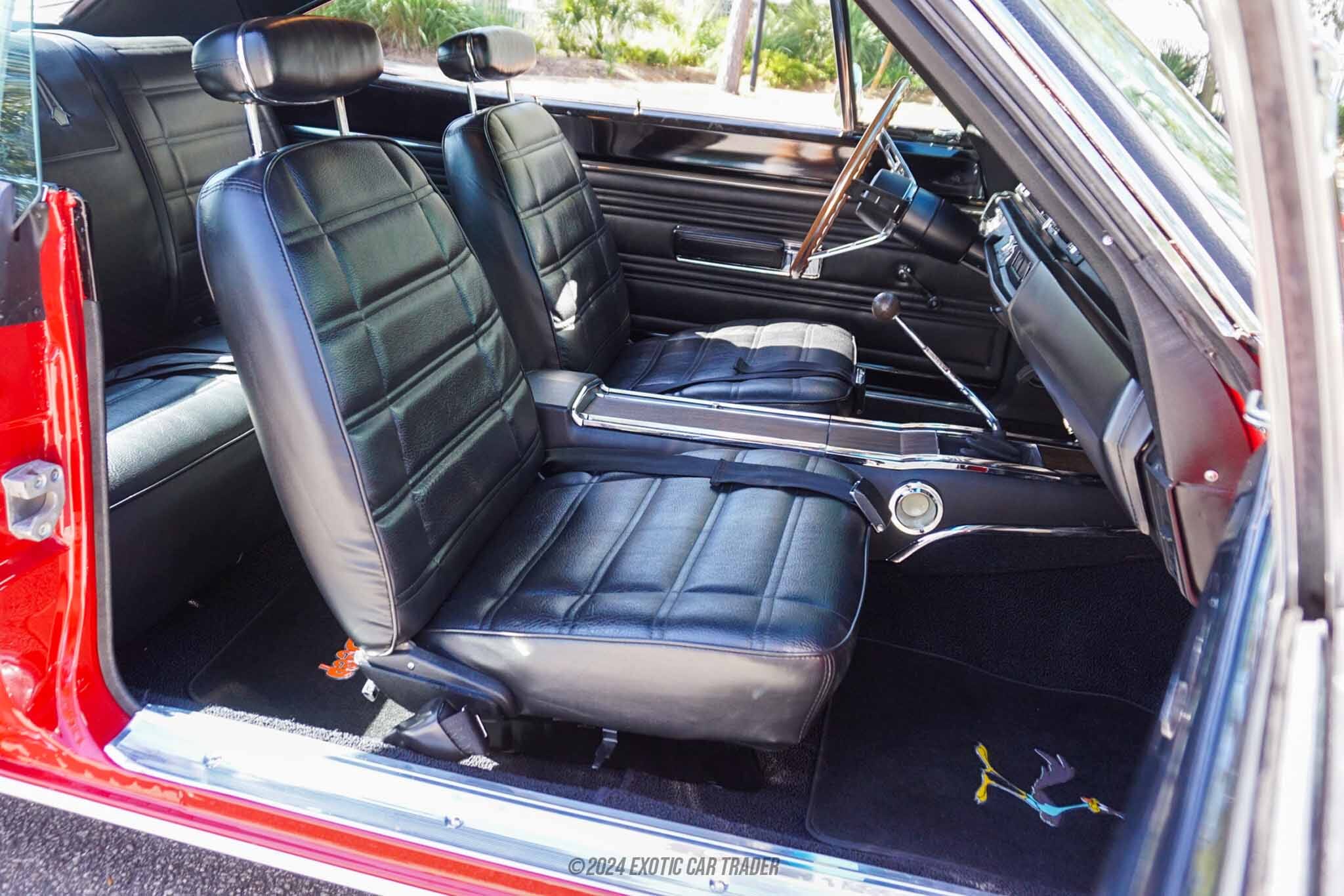
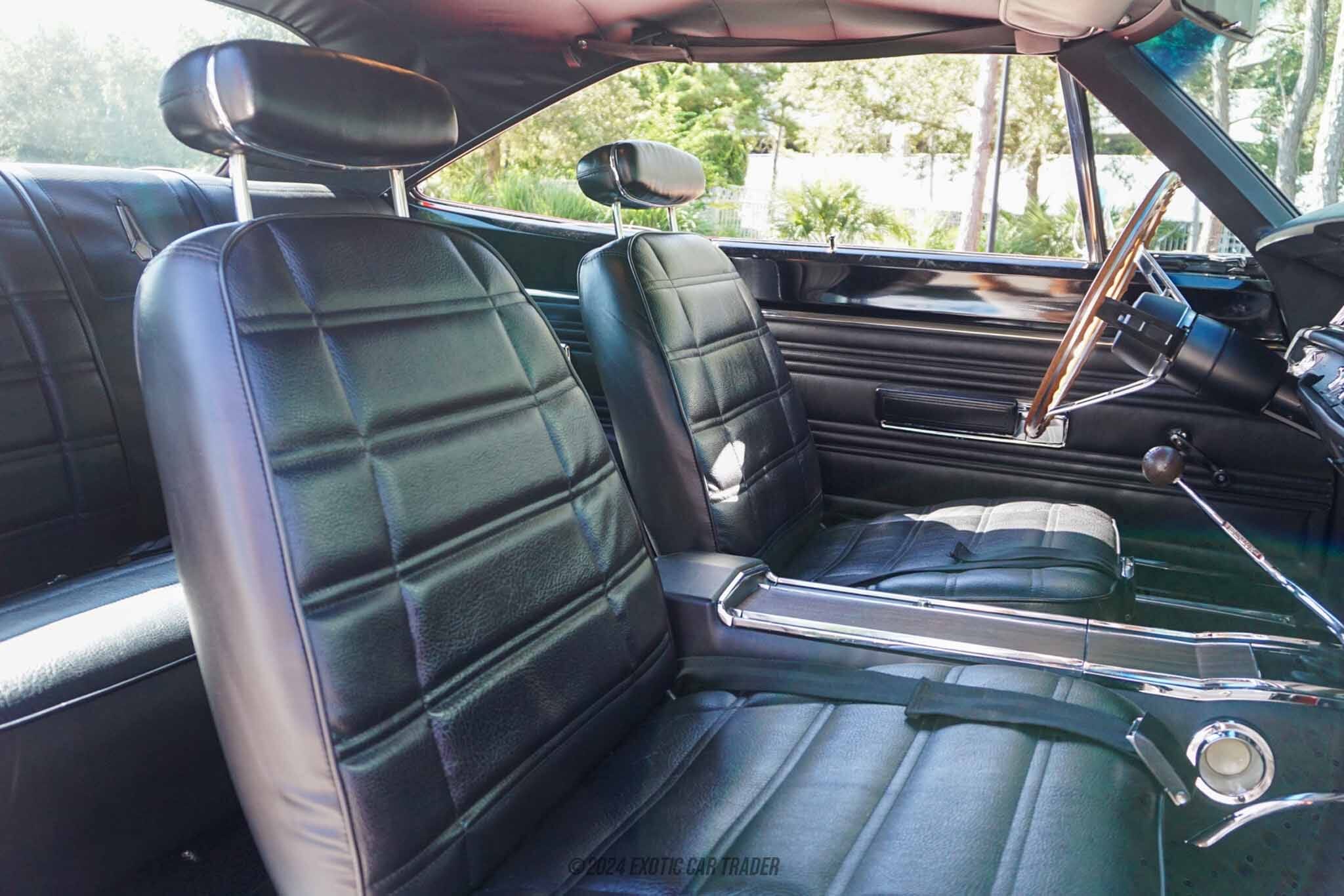
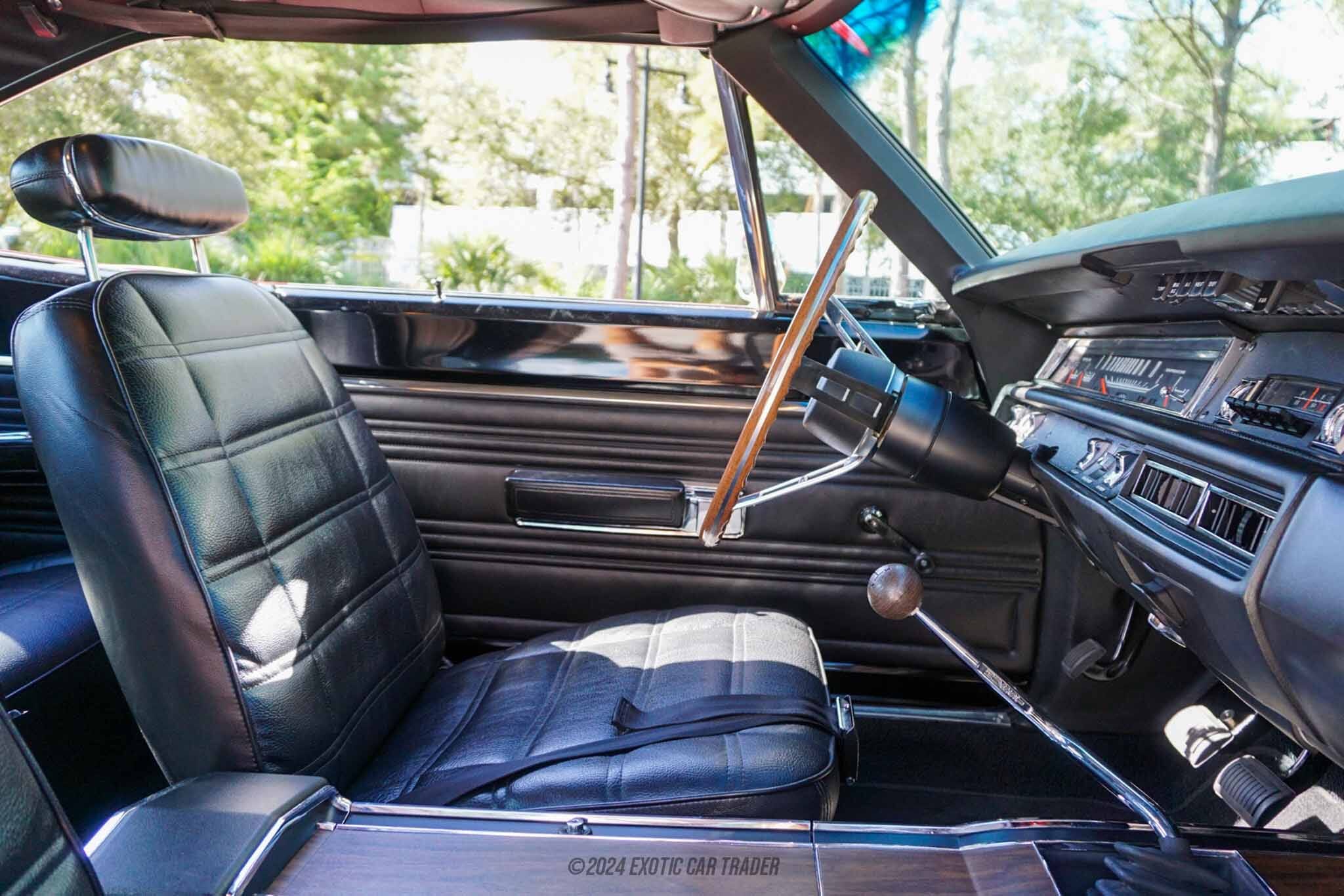
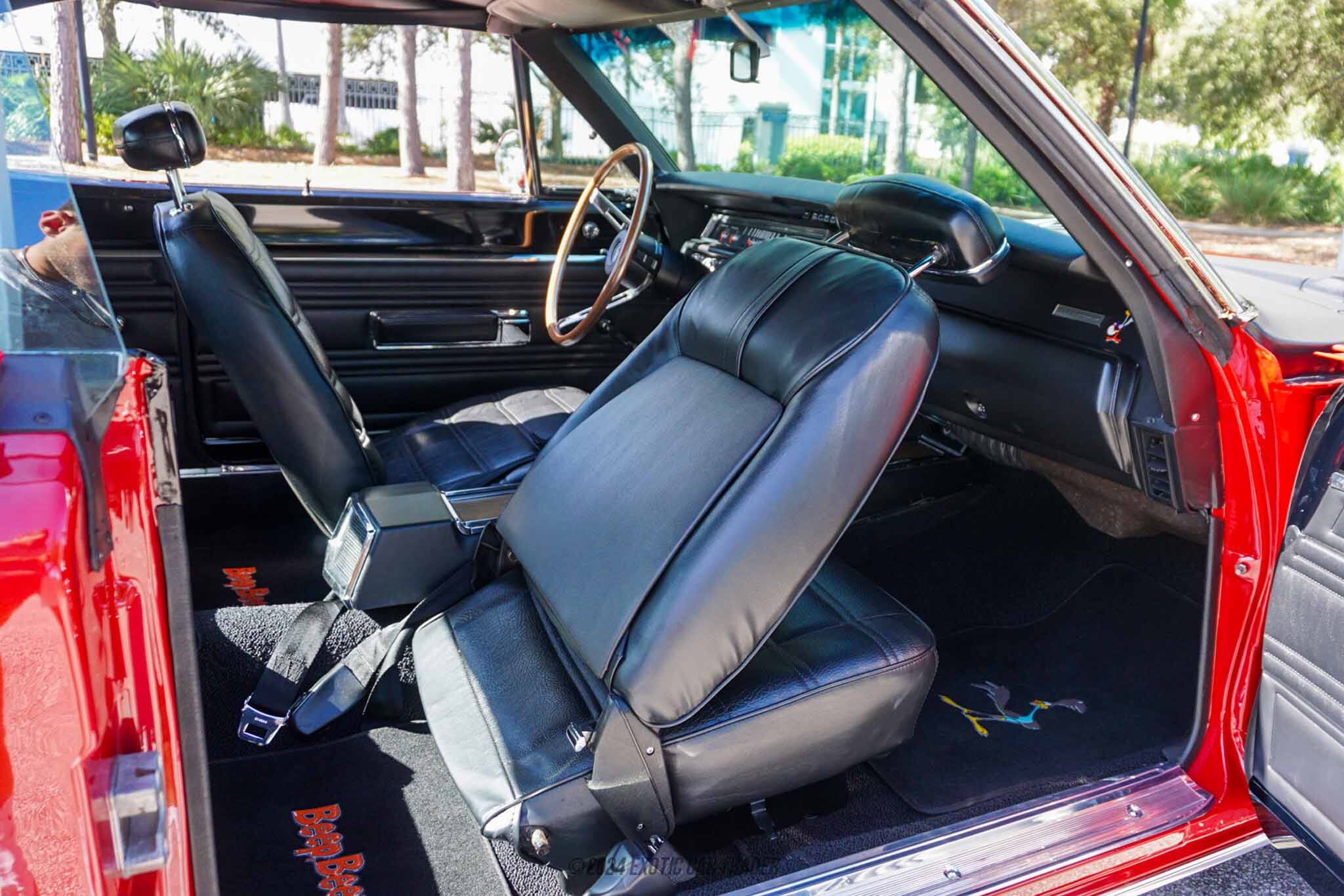
- Front Bucket Seats
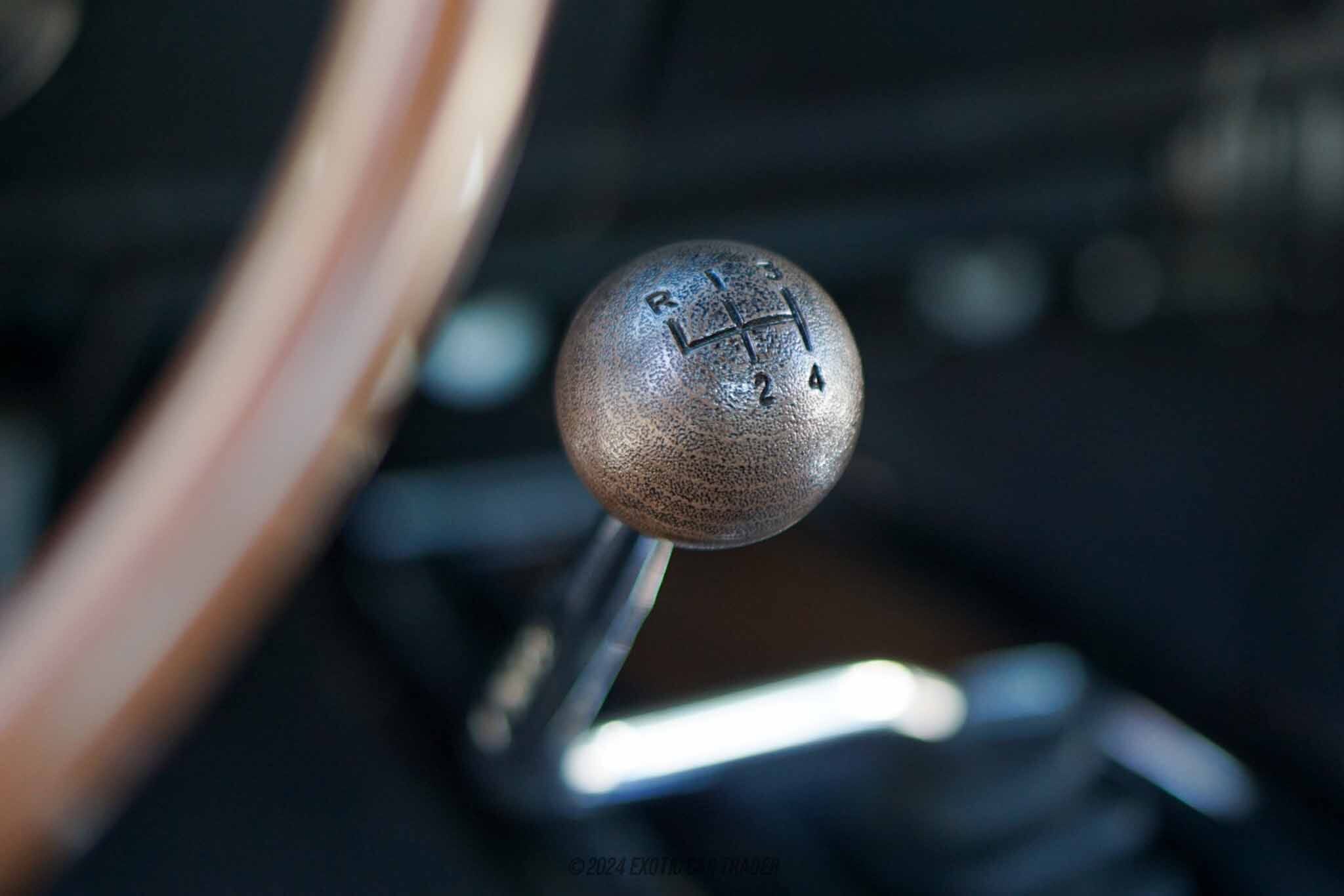
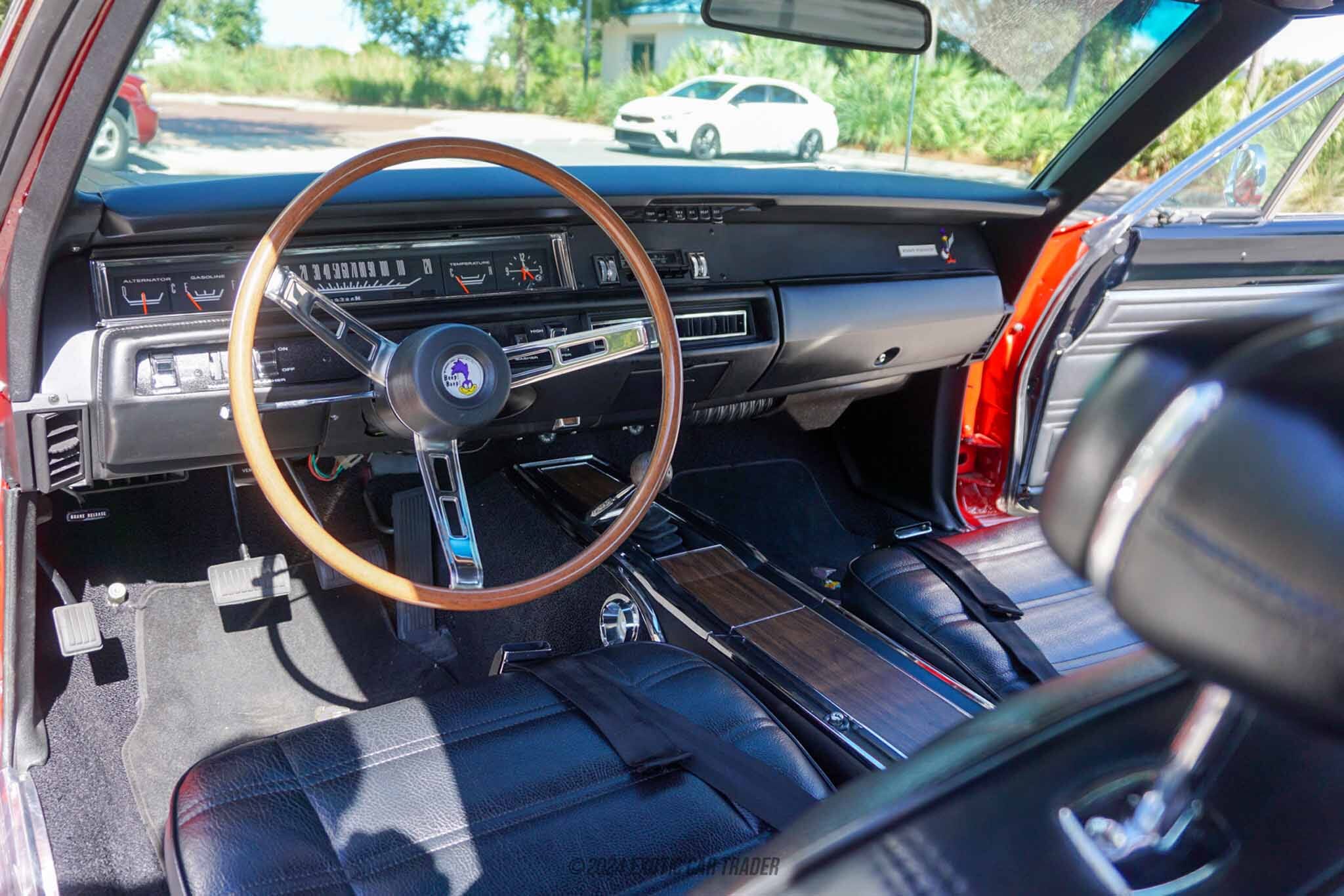
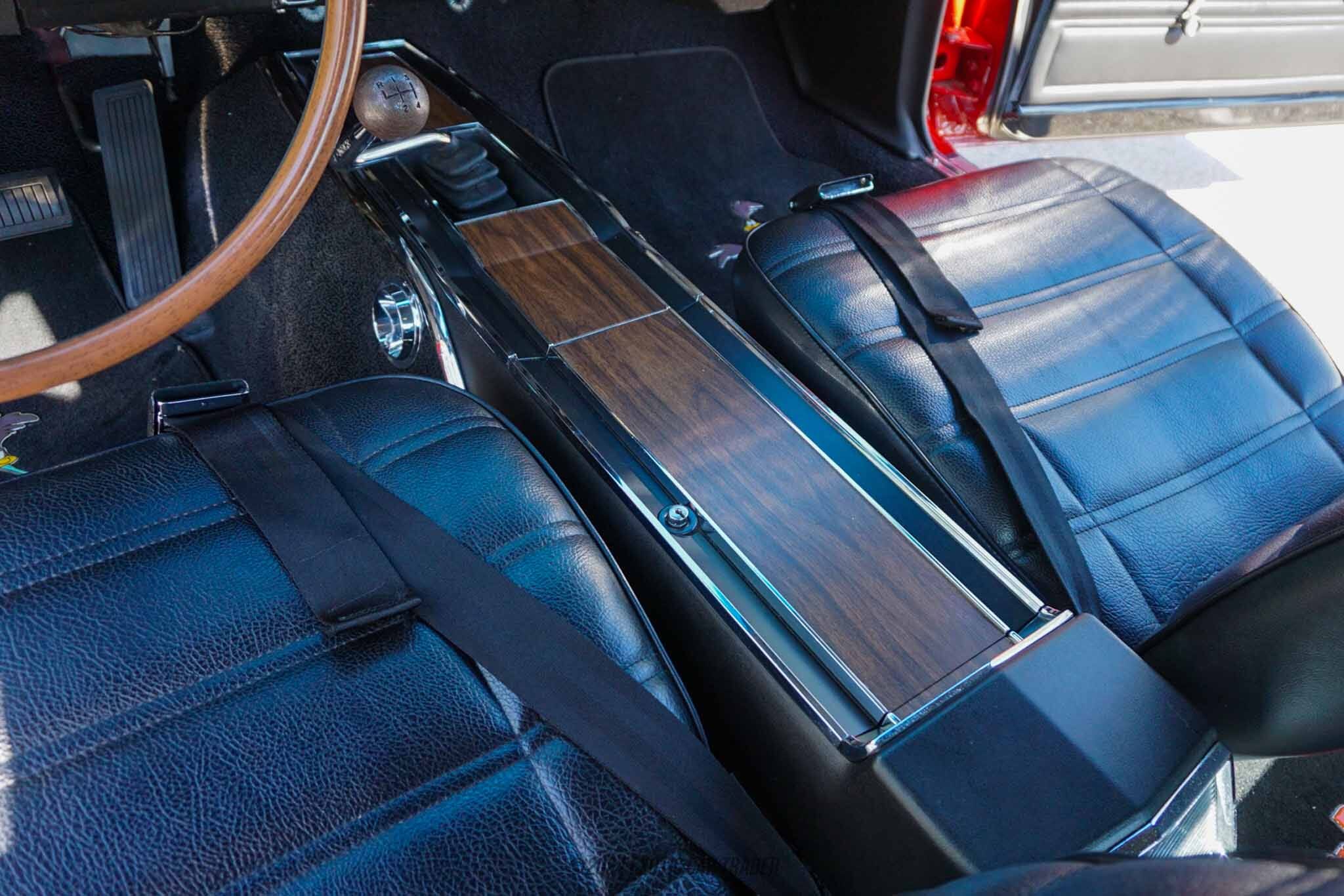
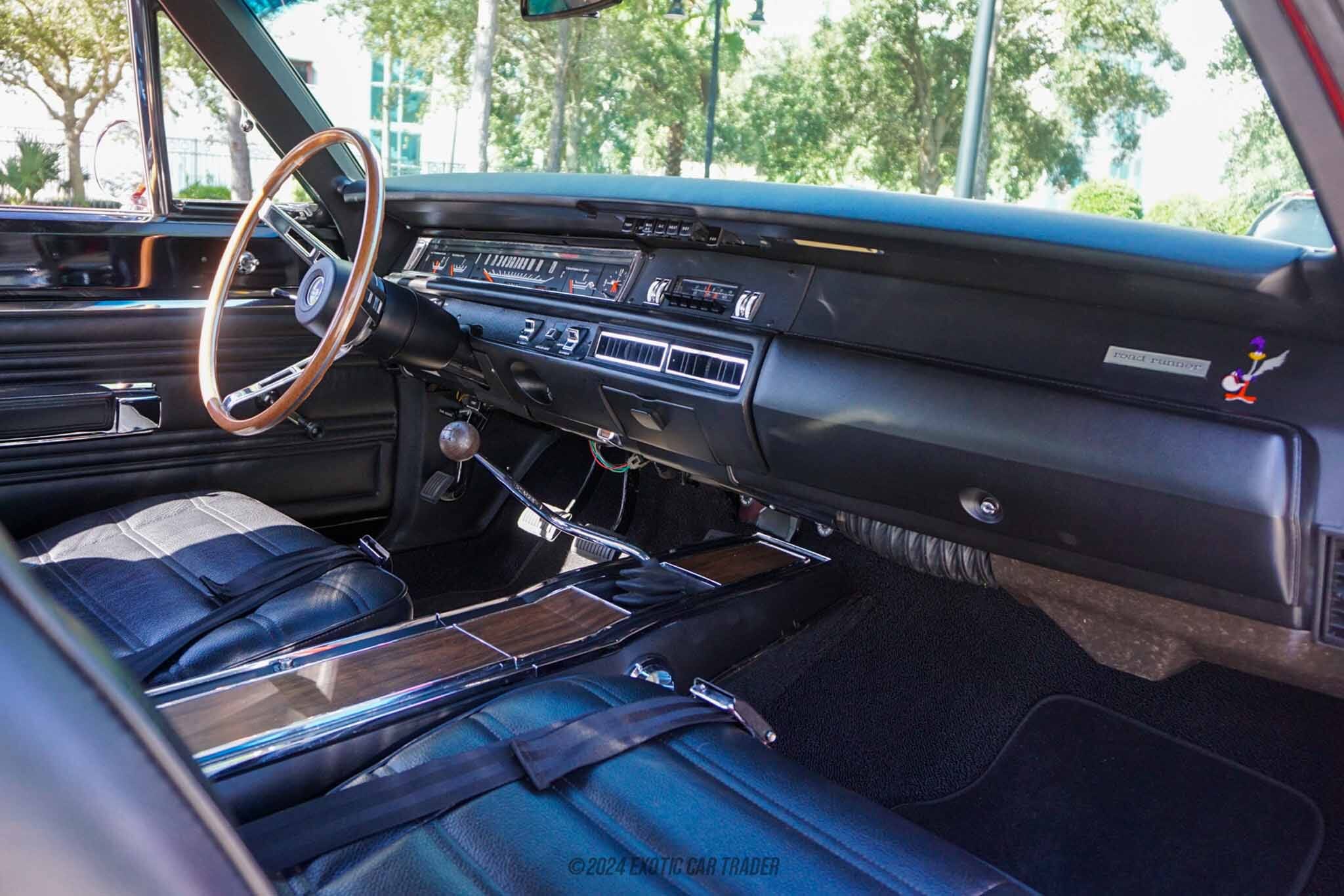
- Four Speed Manual Transmission
- New Headers
- New Exhaust
- New Crank Rods and Pistons
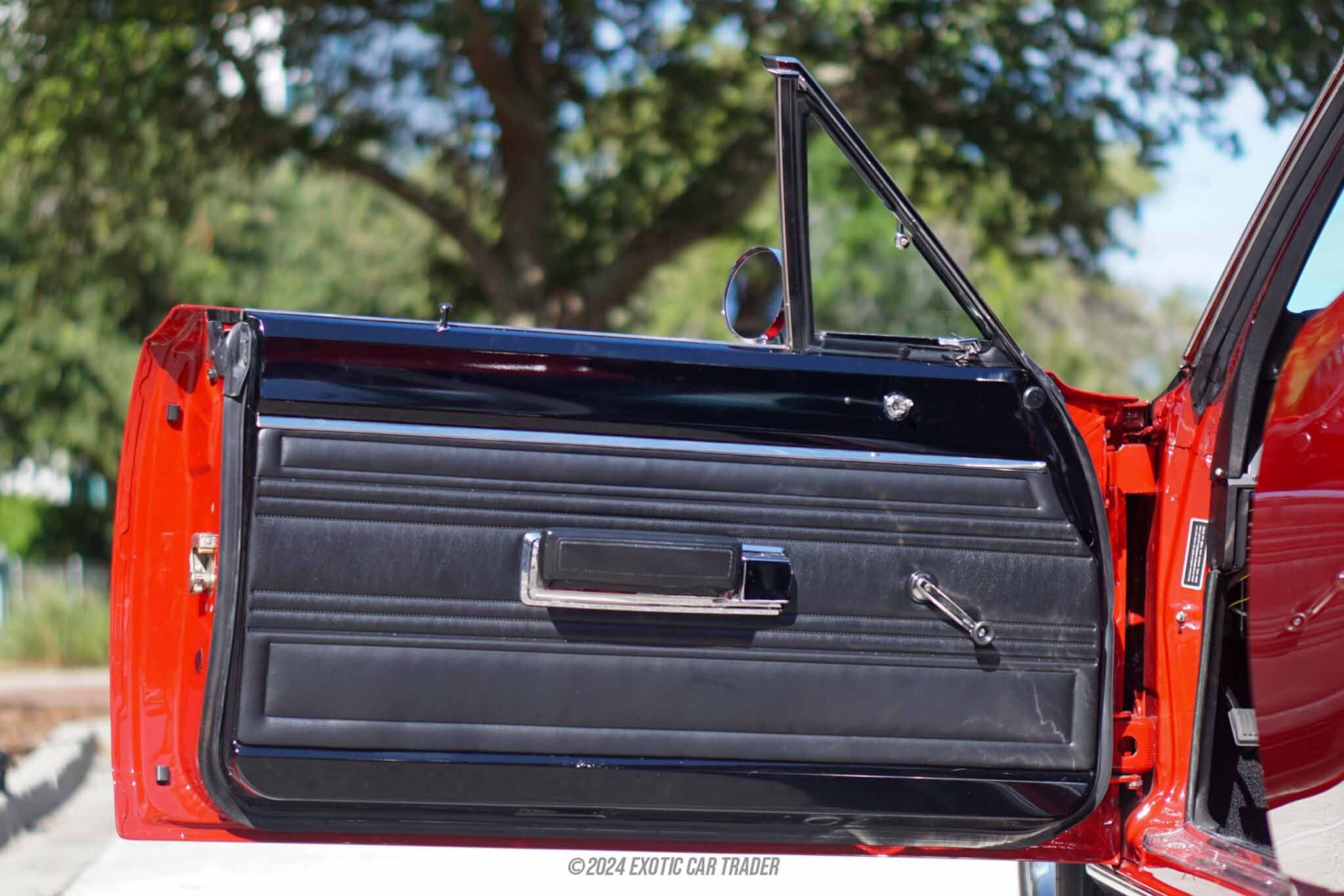
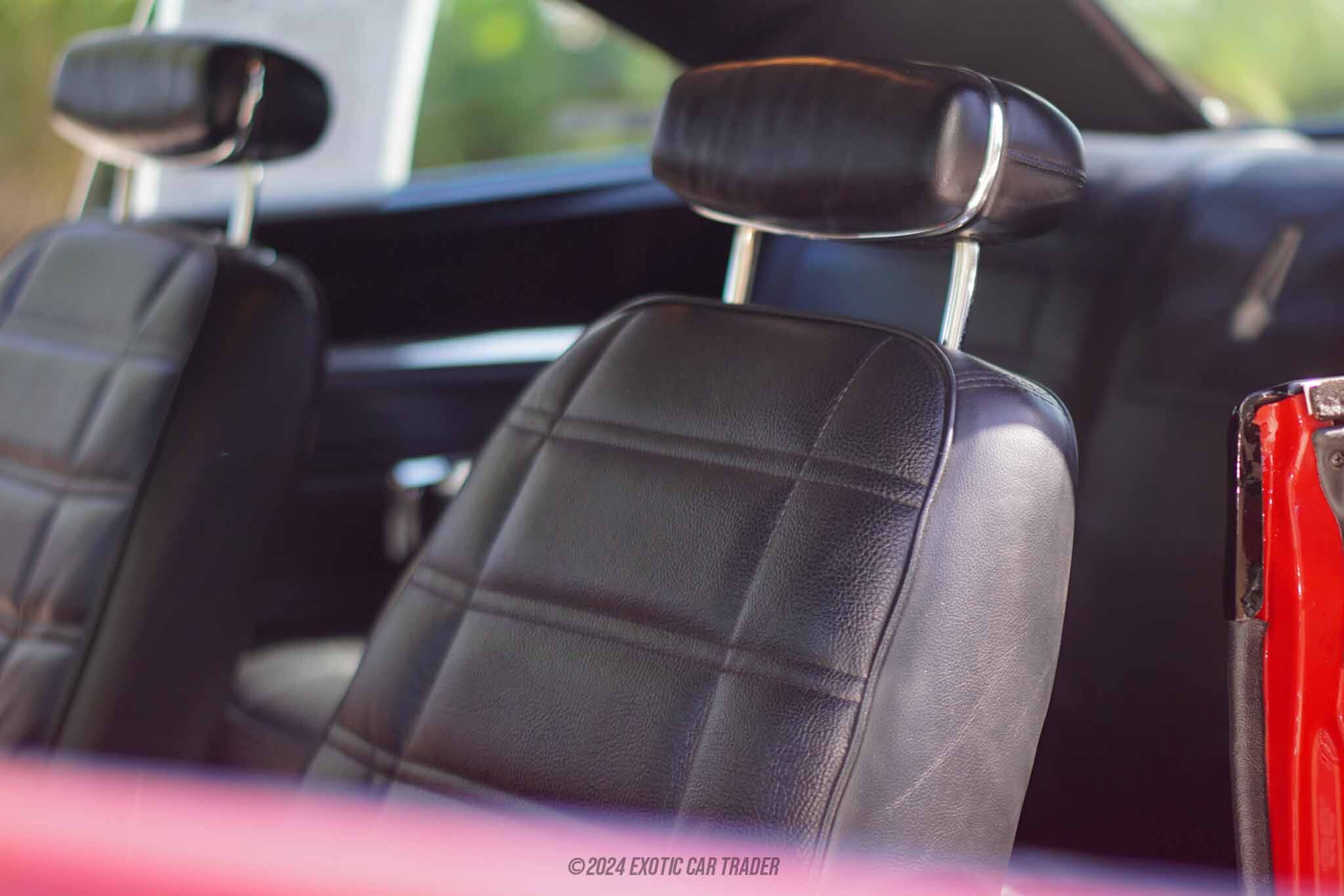
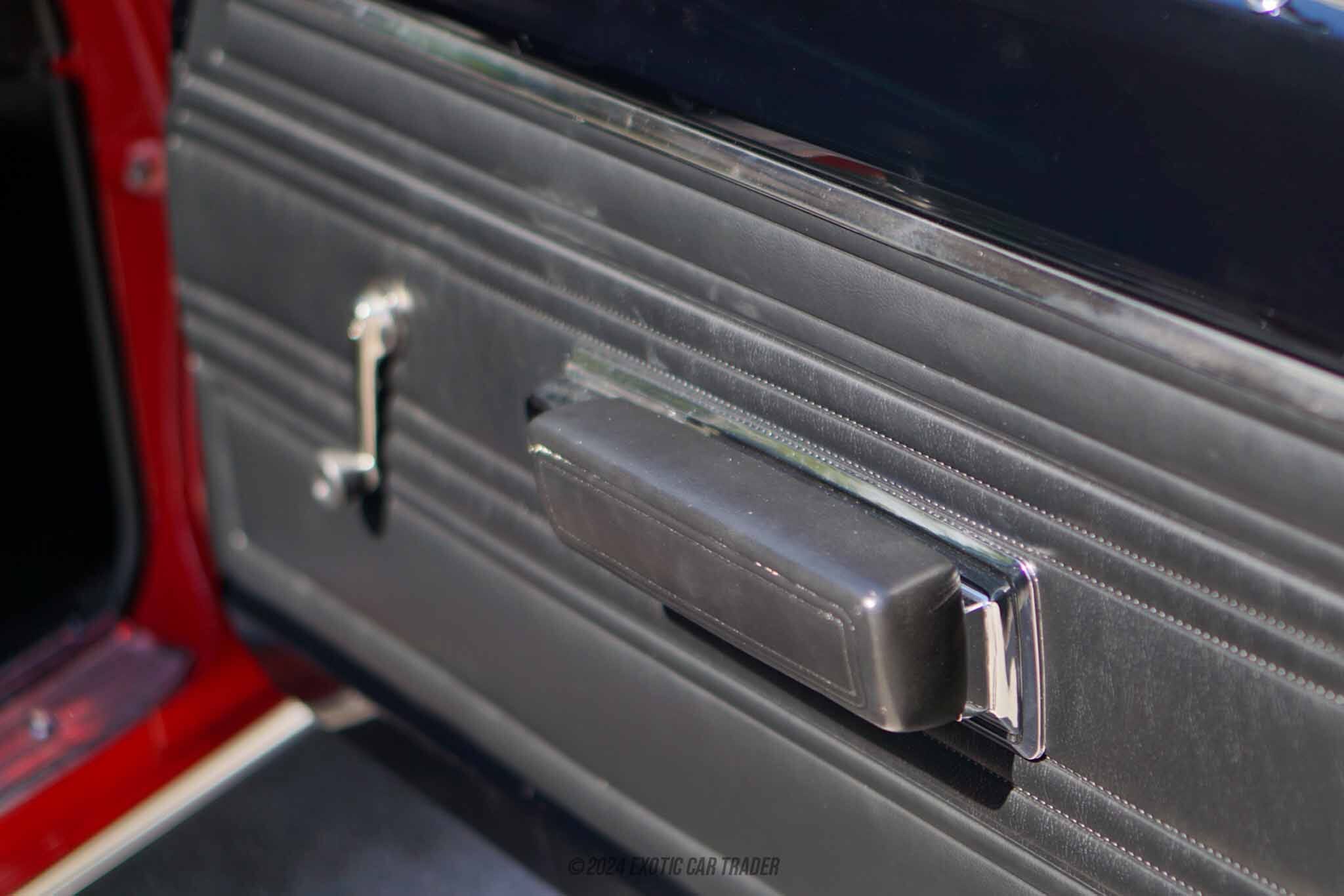
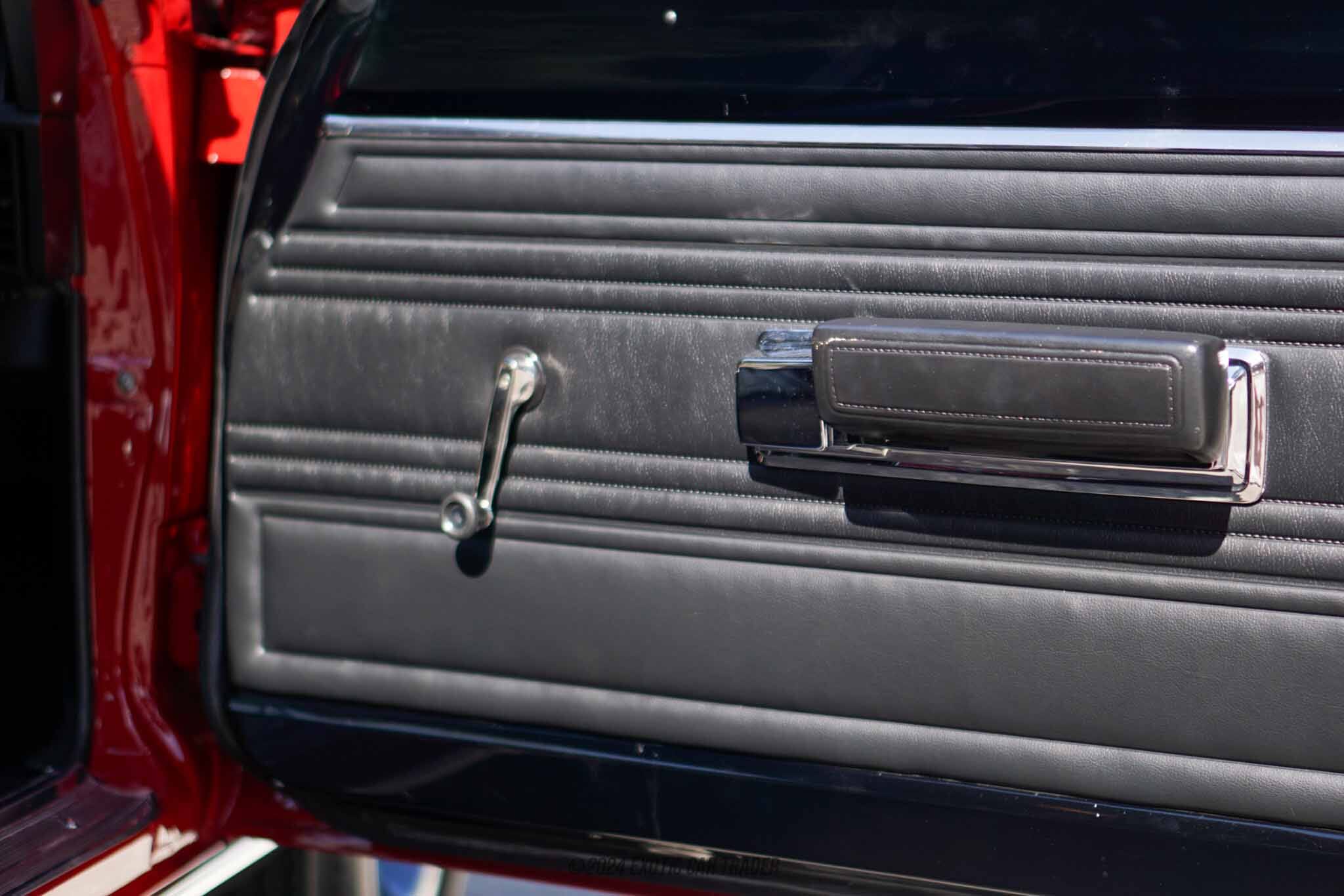
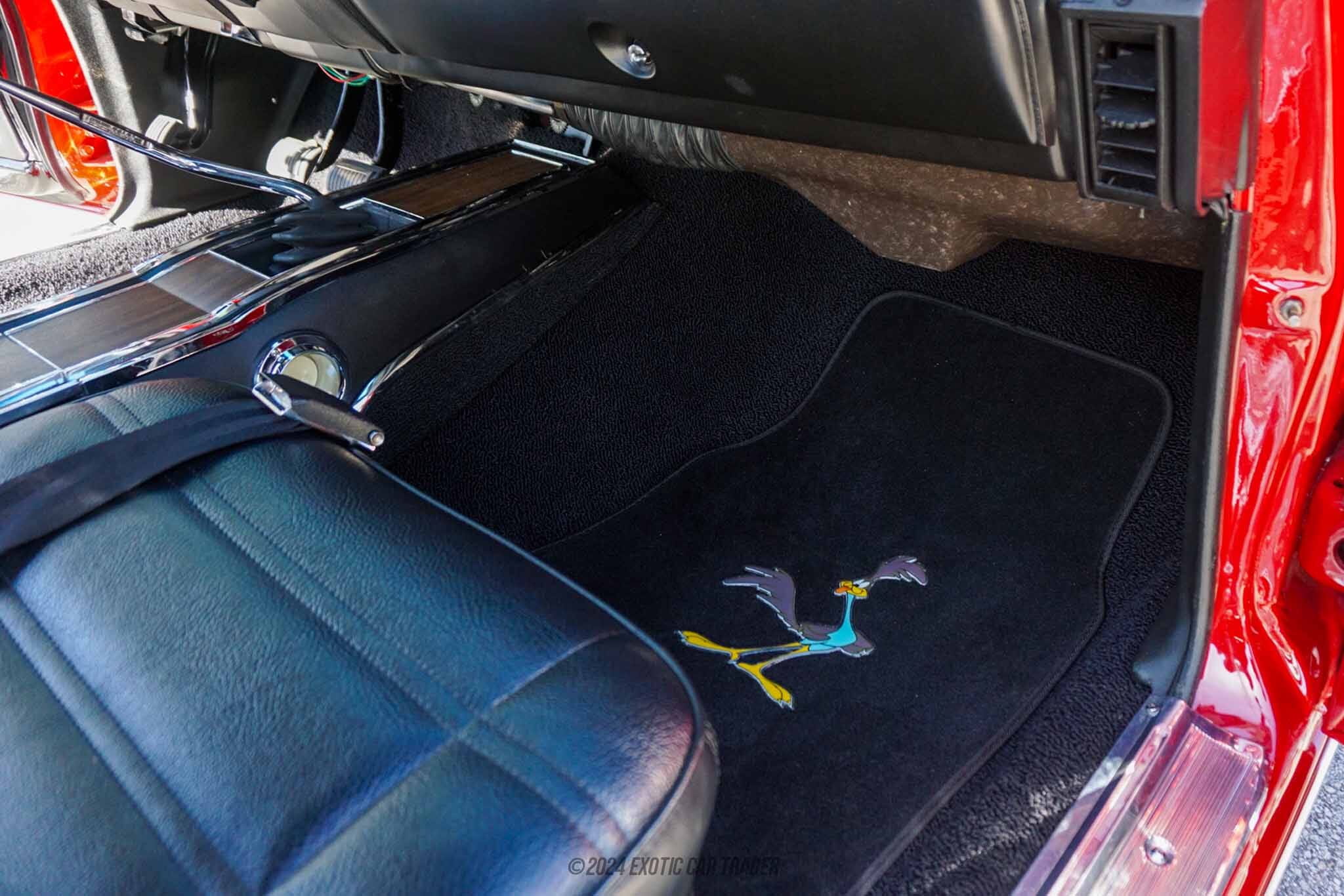
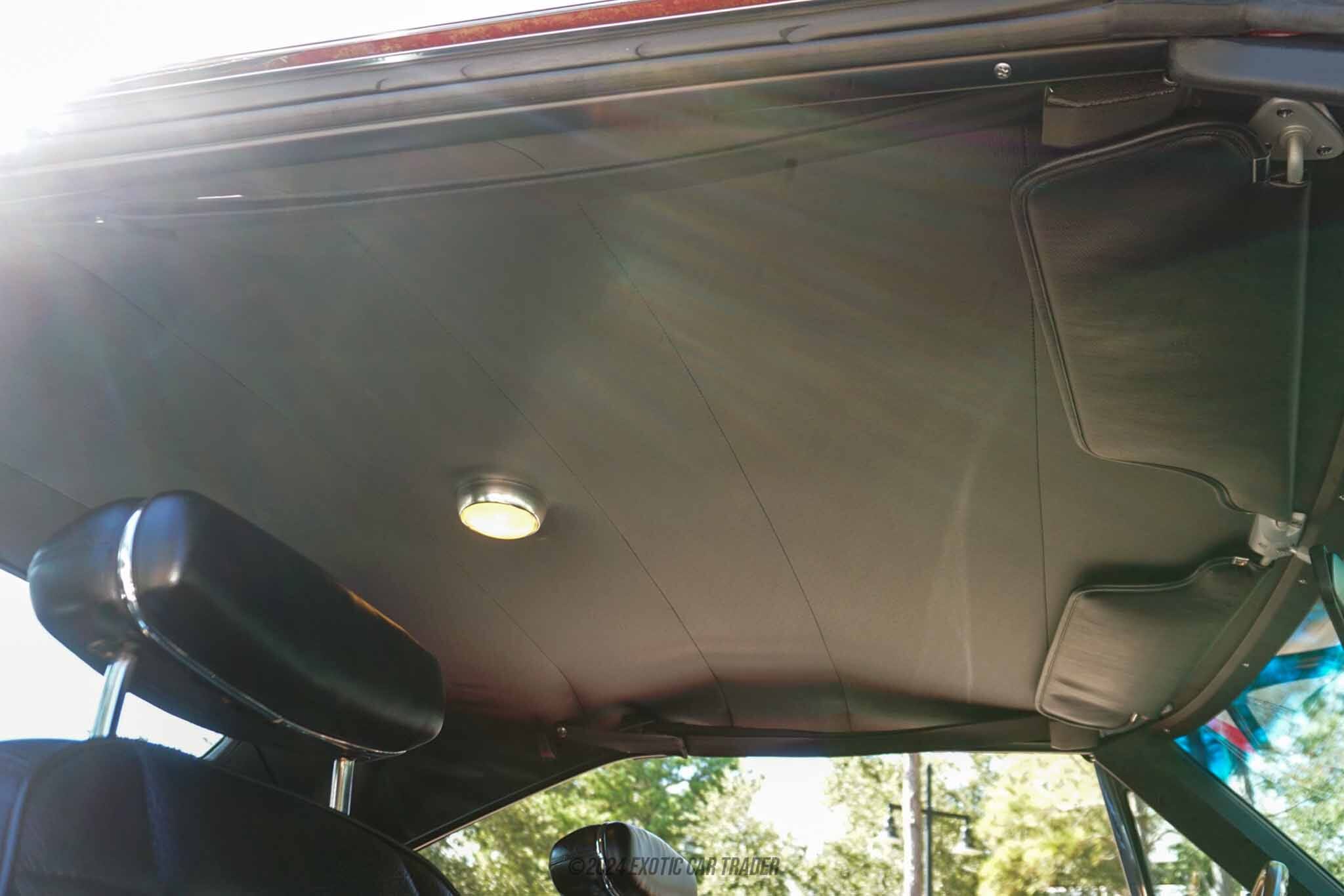
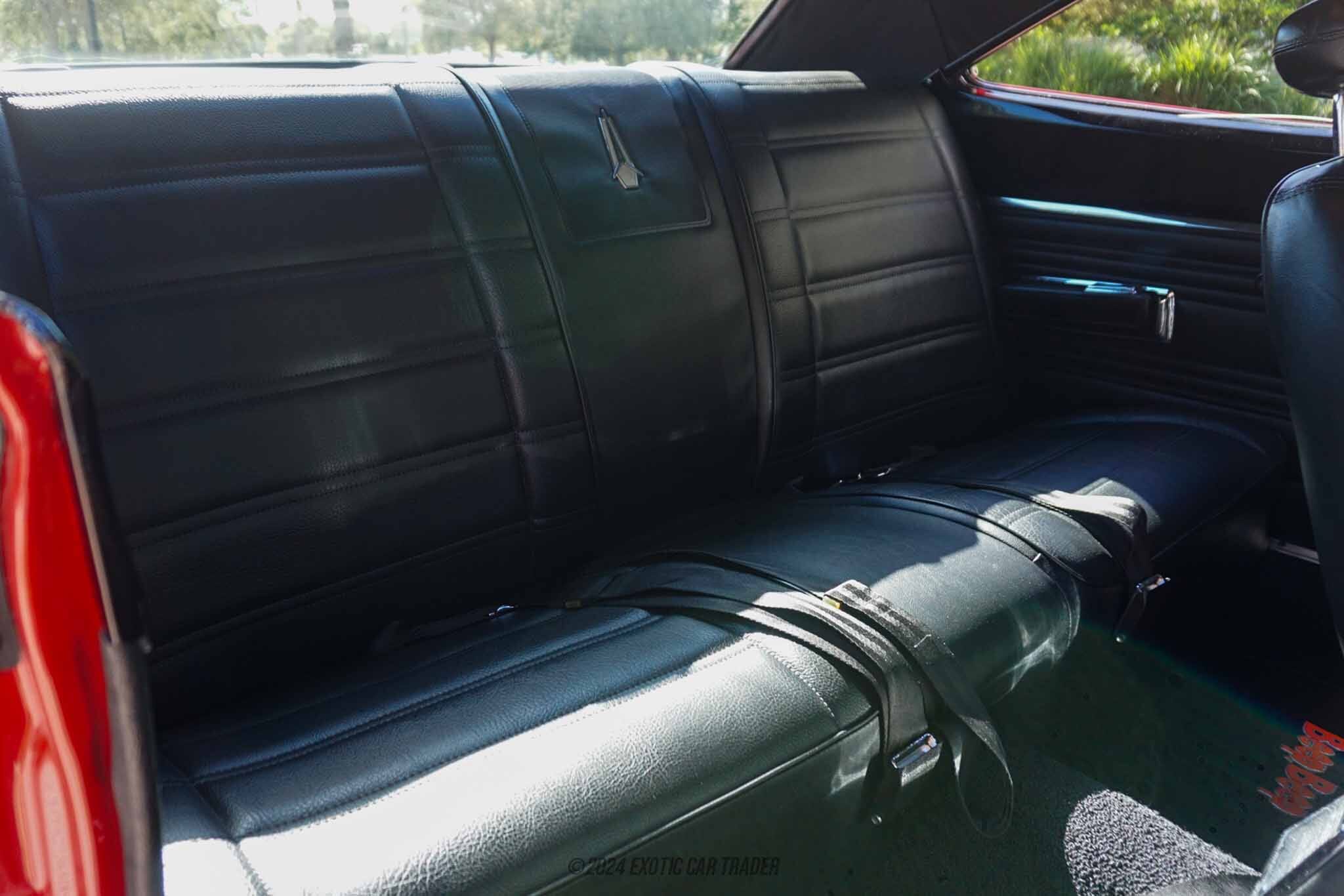
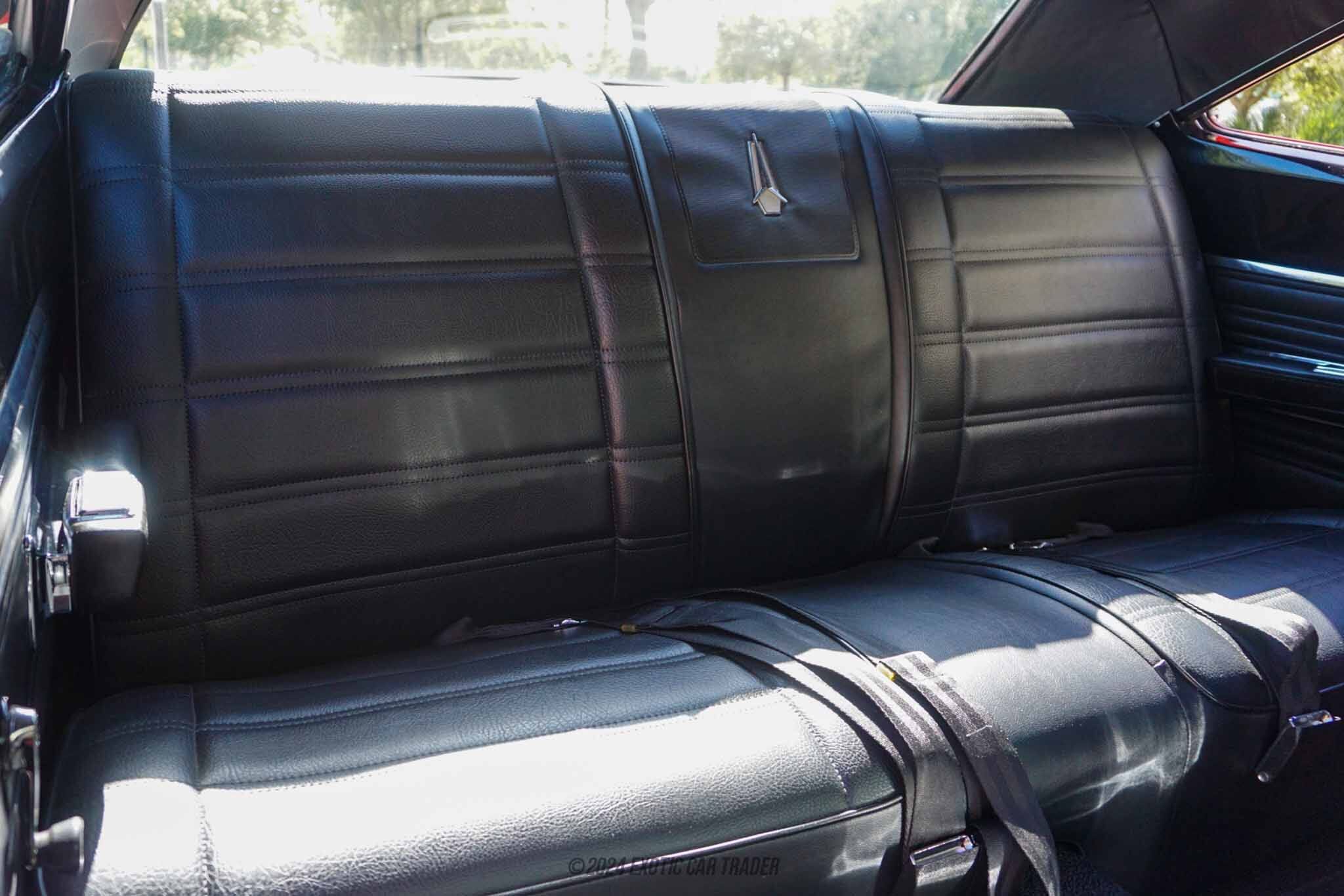
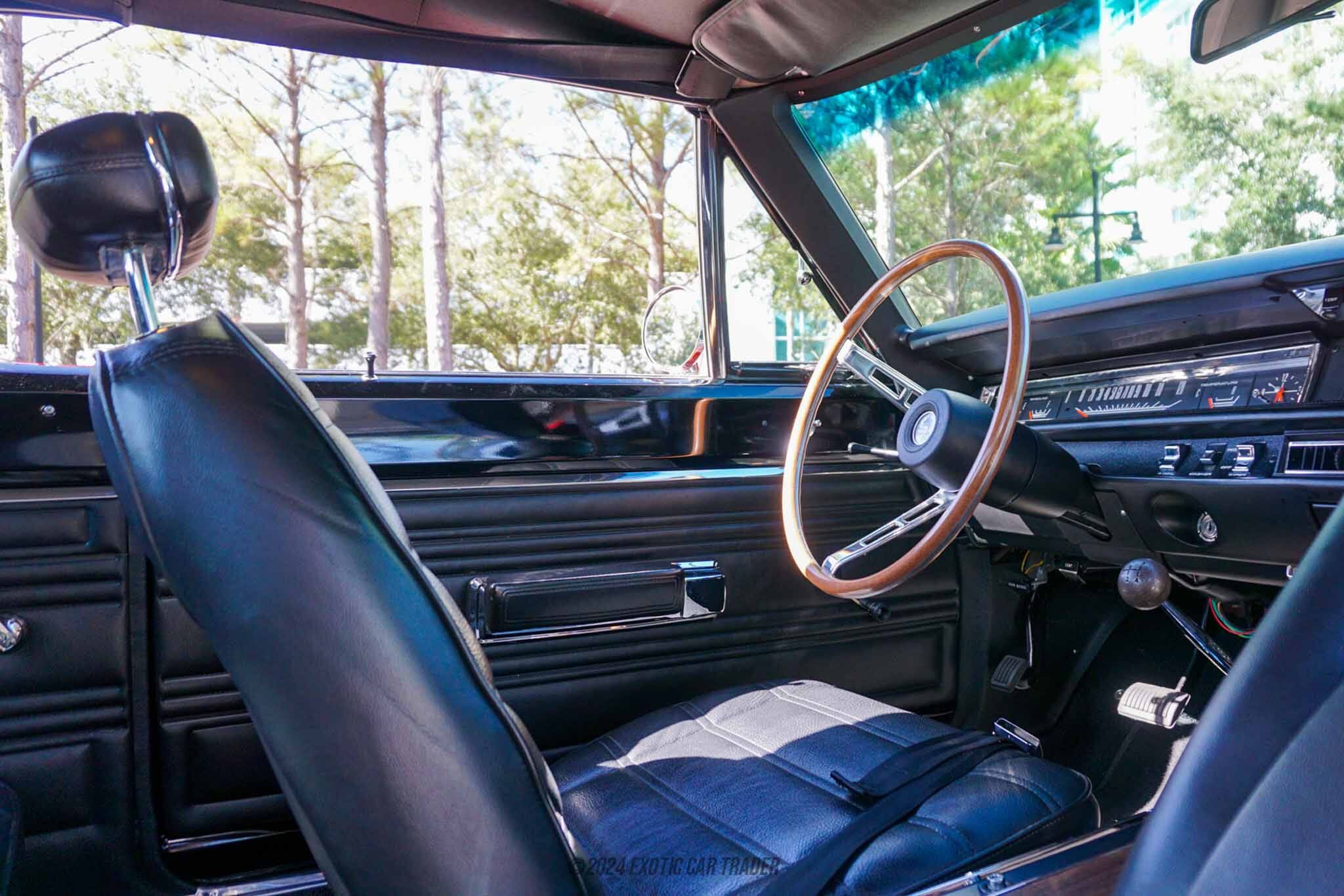
- Black Leather Interior


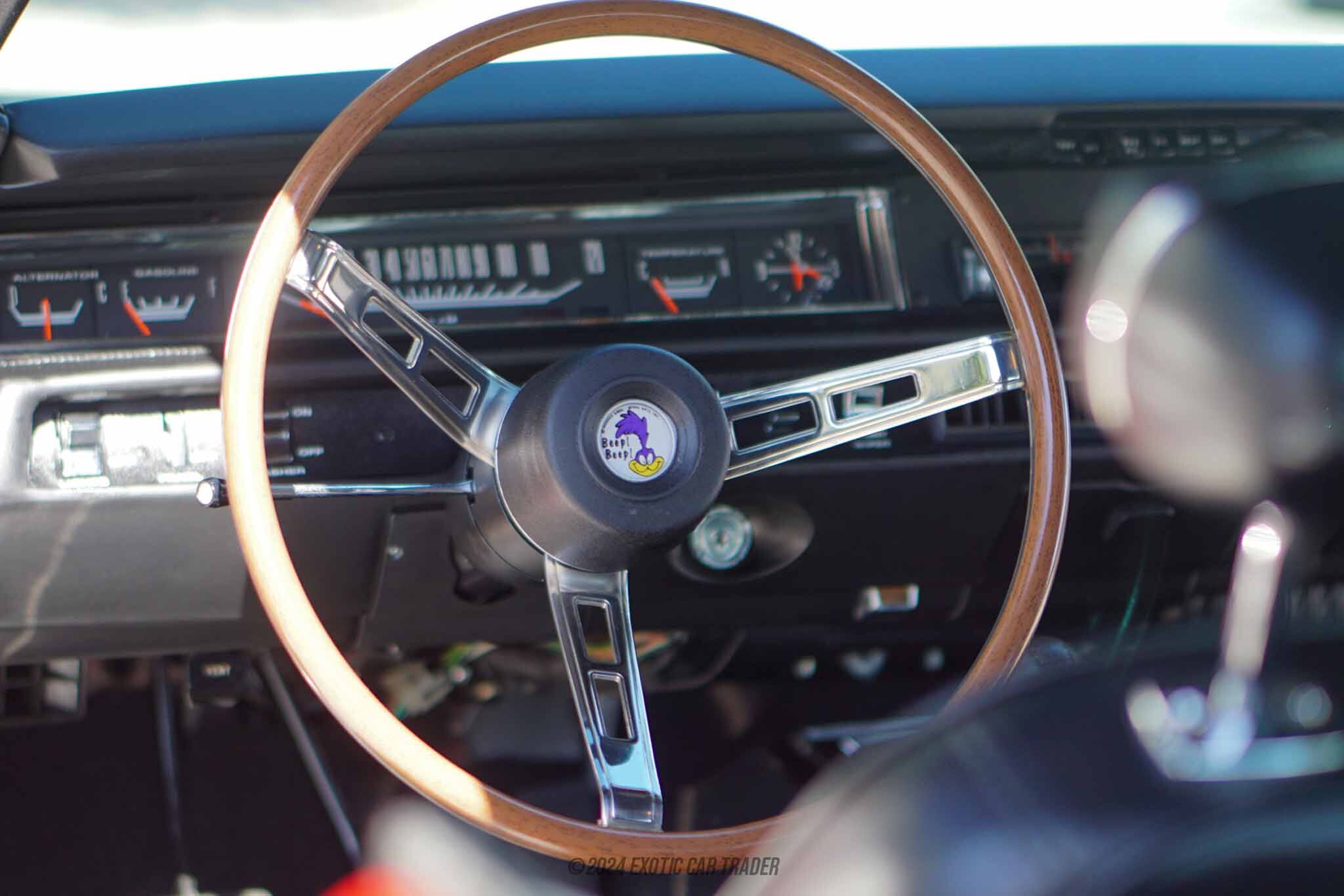
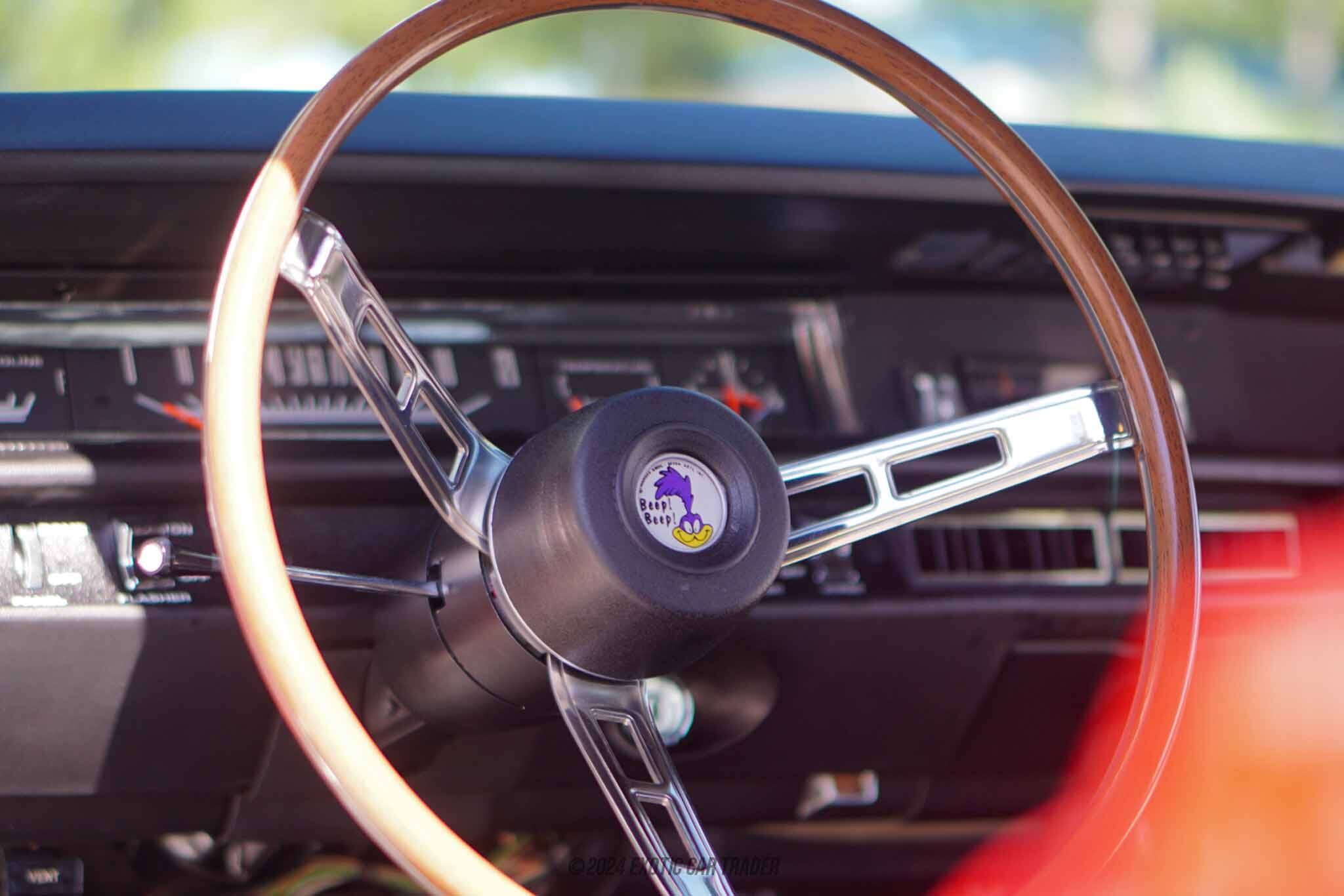
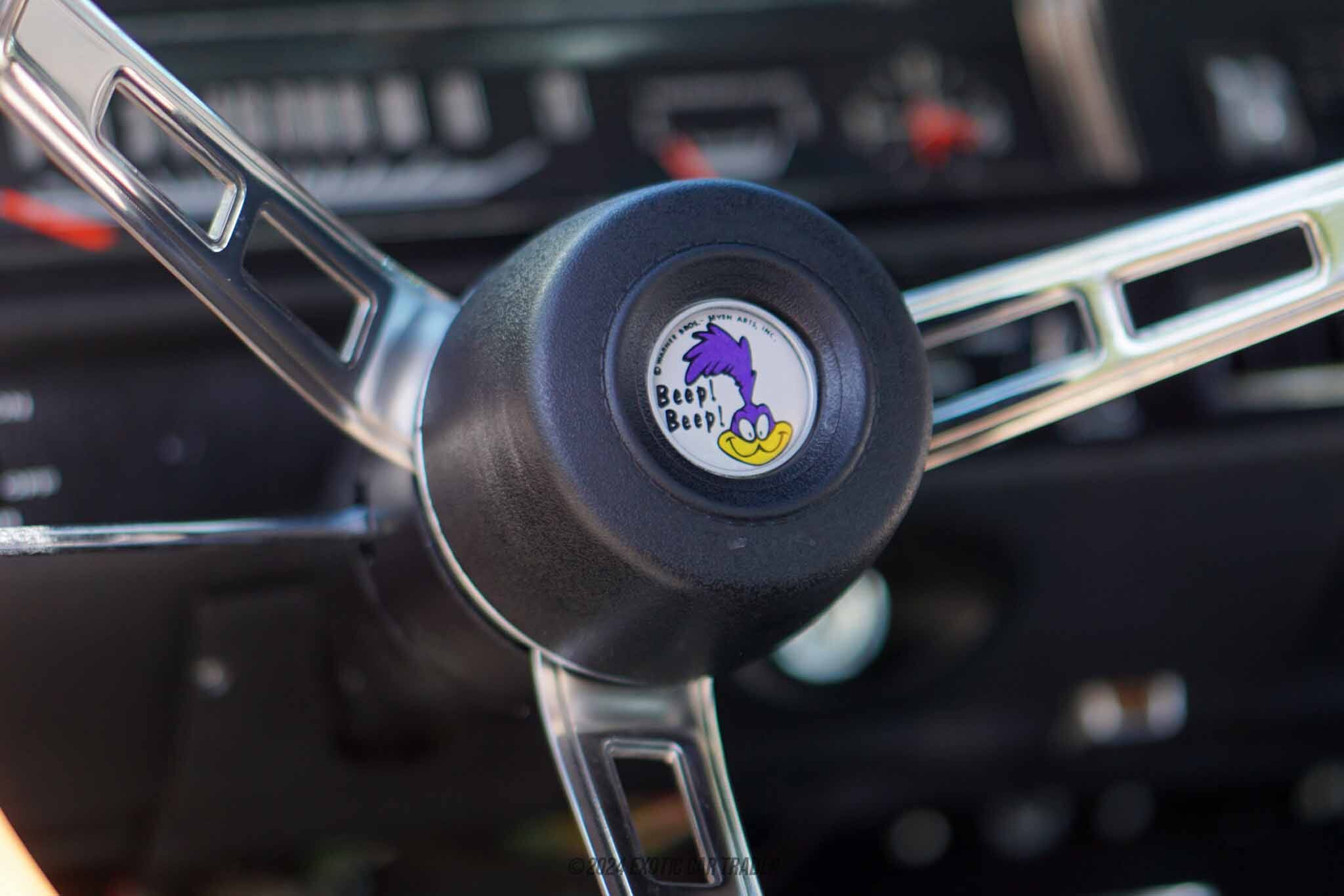
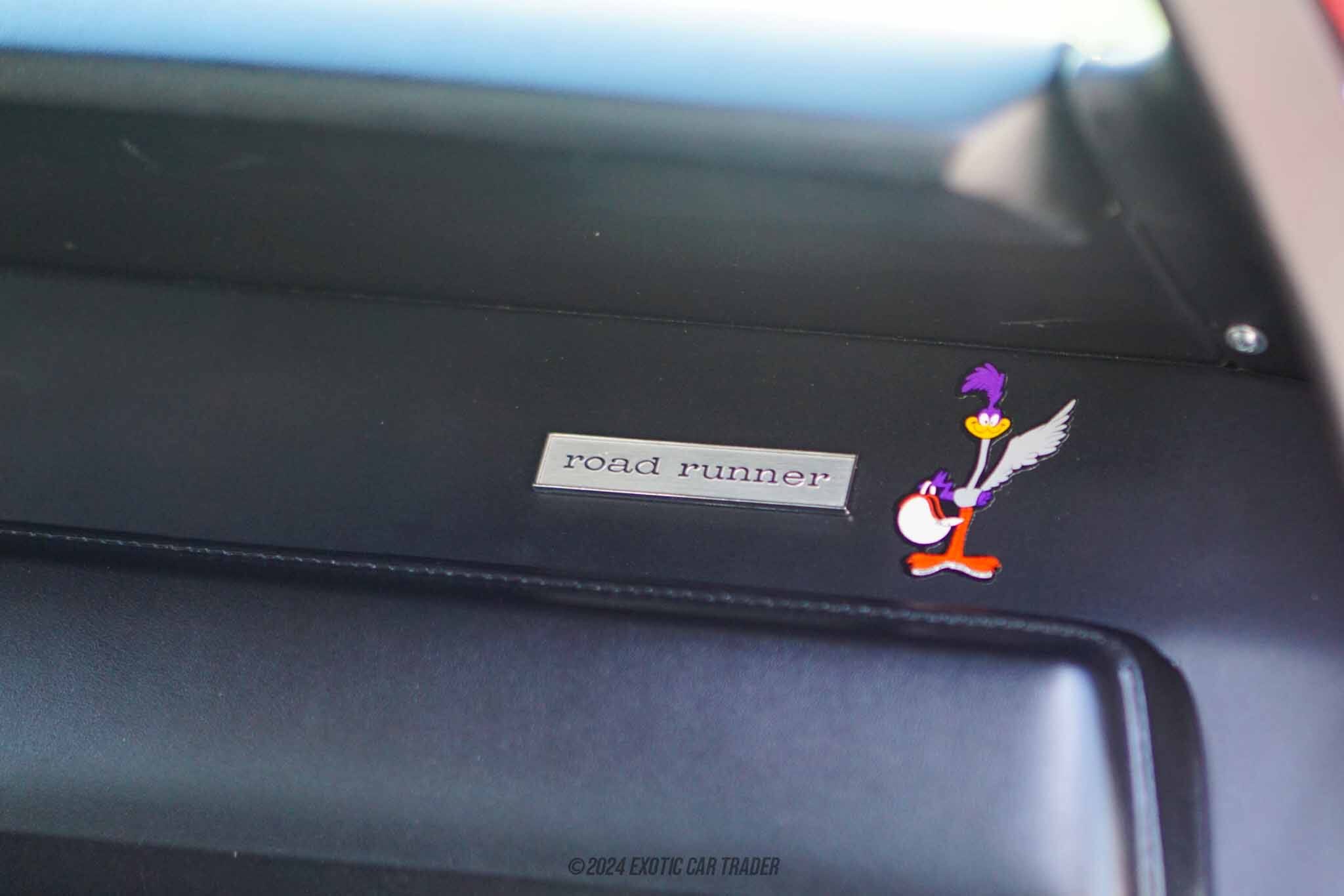
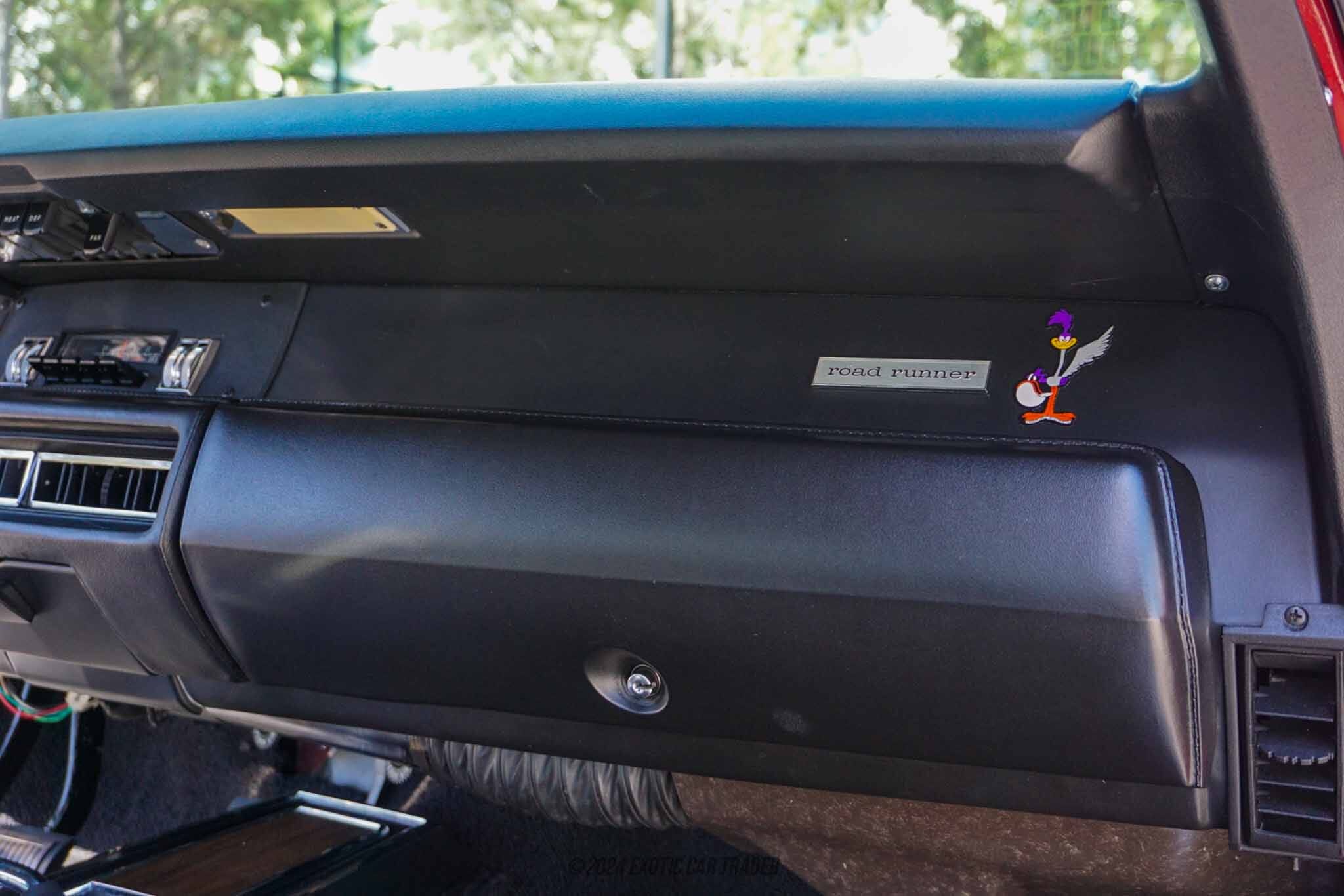
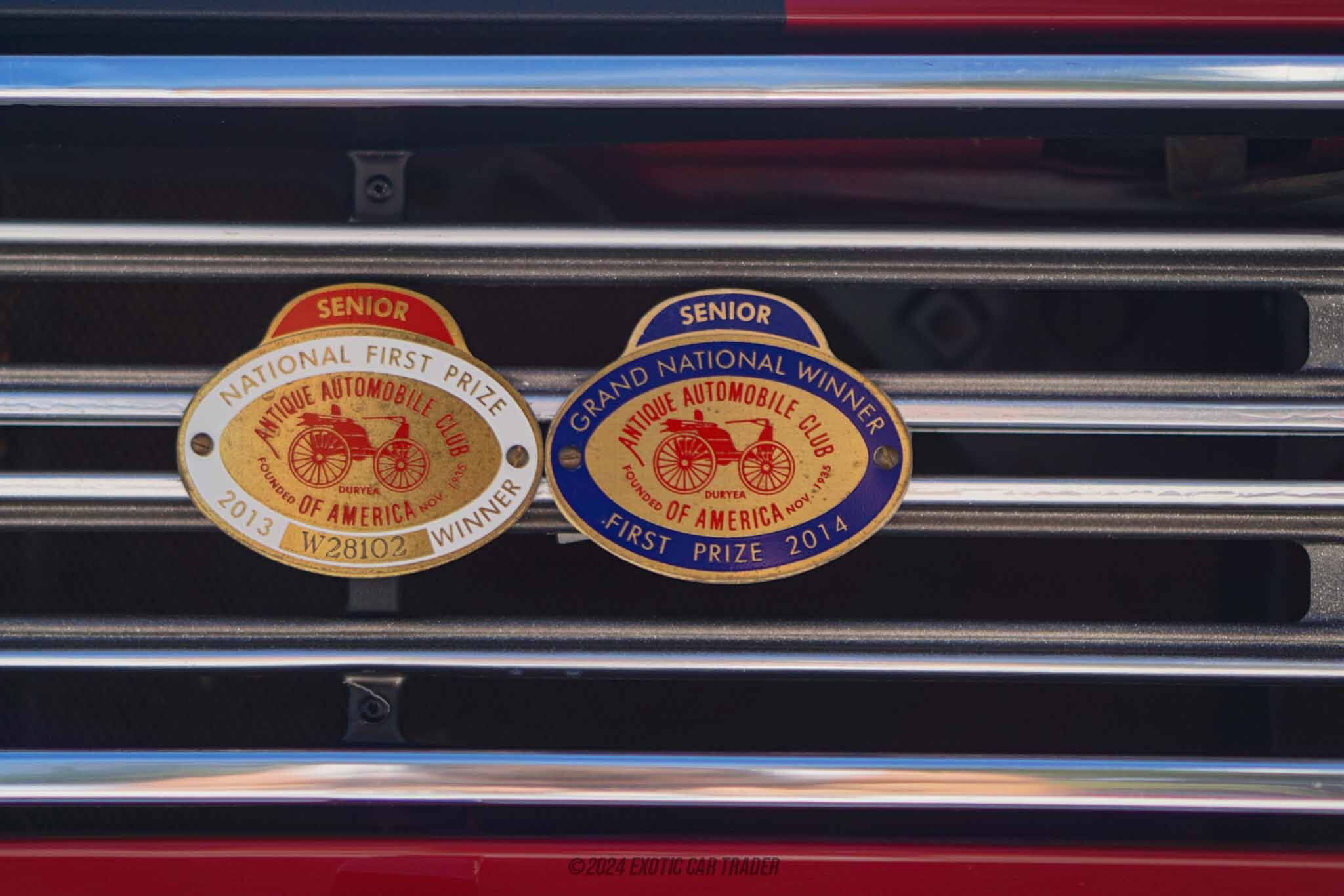
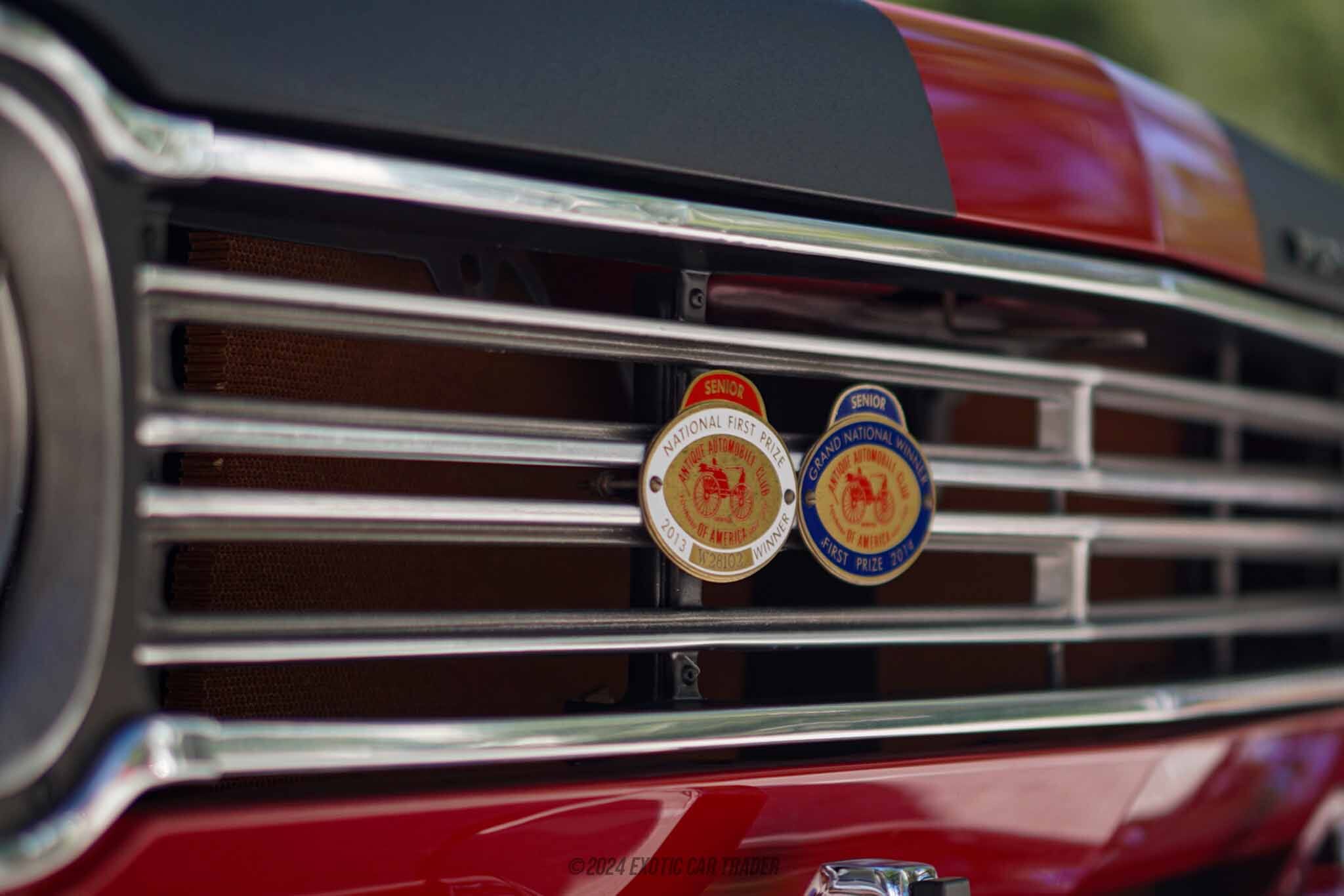
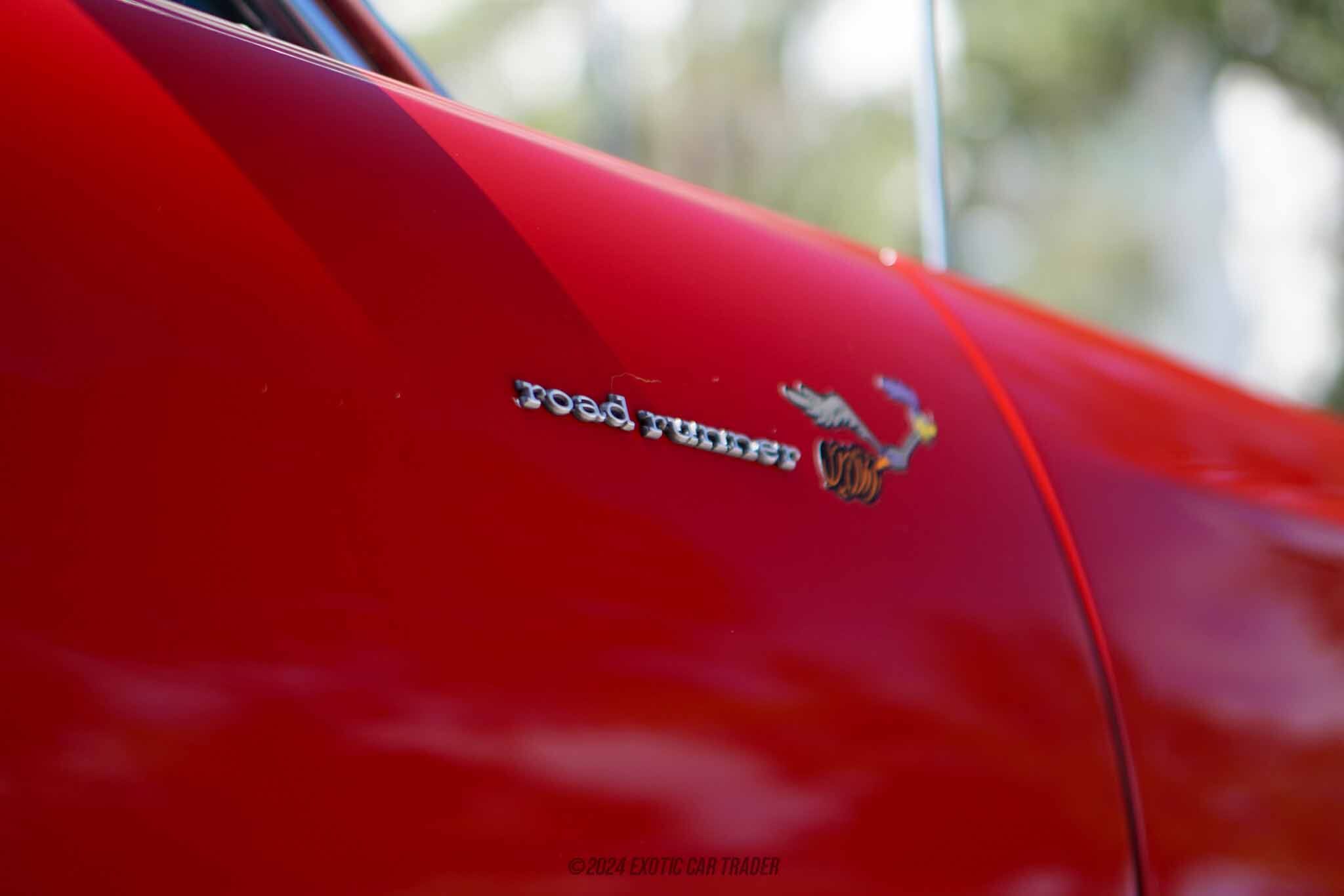
Beep Beep! Did you know that the Plymouth Road Runner is named after the Warner Brothers cartoon character of the same name? Plymouth paid Warner Brothers $50,000 to license the name and likeness of the character. Then, they spent an additional $10,000 to outfit the car with a characteristic “Beep Beep” horn! Talk about commitment to pop culture of the period! Anyways, the Road Runner would go on to become a potent muscle car renowned for, well, its ability to disappear down the road, leaving a cloud of dust or smoked rubber in its wake. That’s why we’re sure that this 1969 Plymouth Road Runner will be quickly snapped up – if you’re reading this, so are several other people! Act fast because this is a numbers-matching car that’s had a complete rotisserie restoration done in 2015. Hence, it won’t stay available for long.
Exterior and Interior
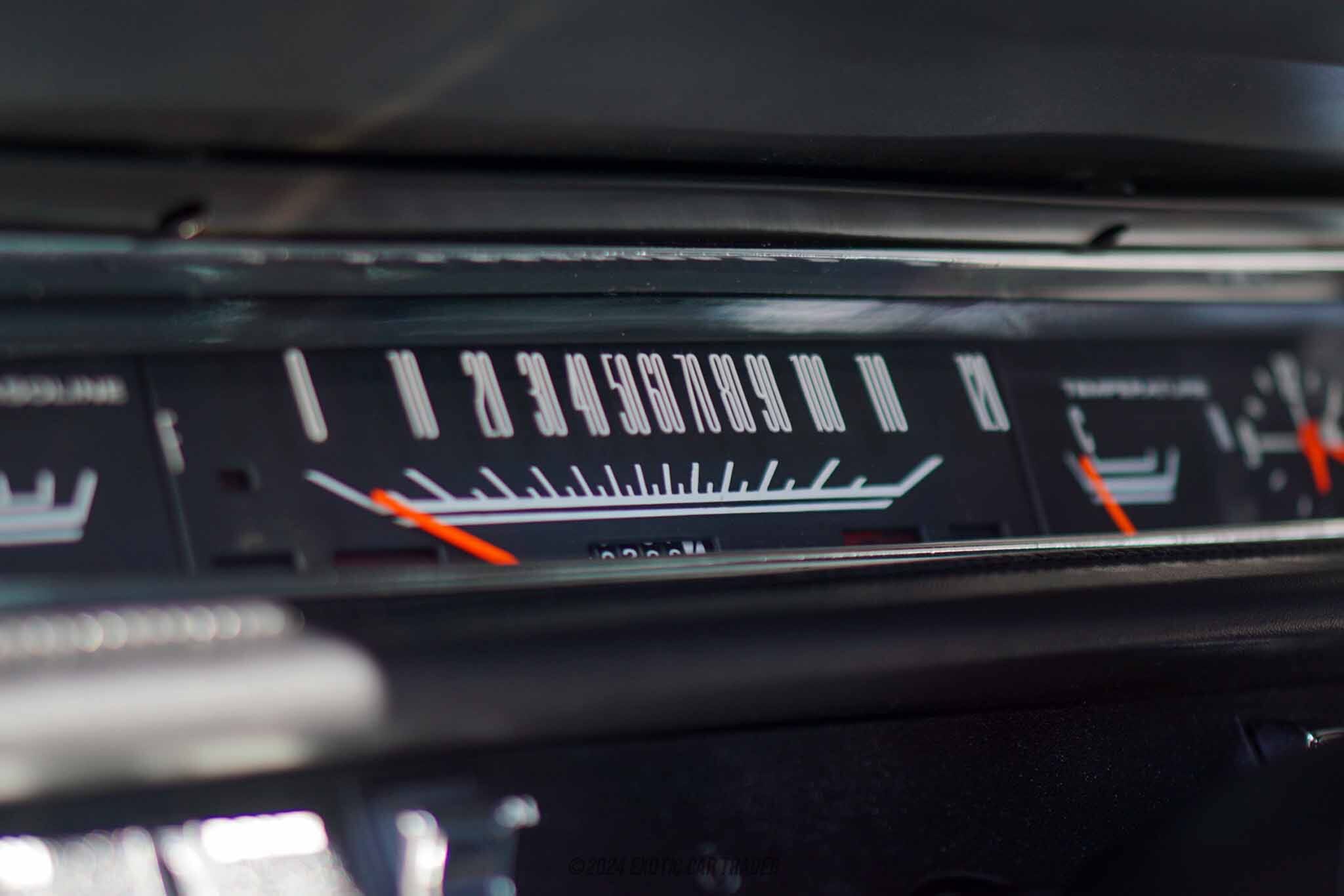
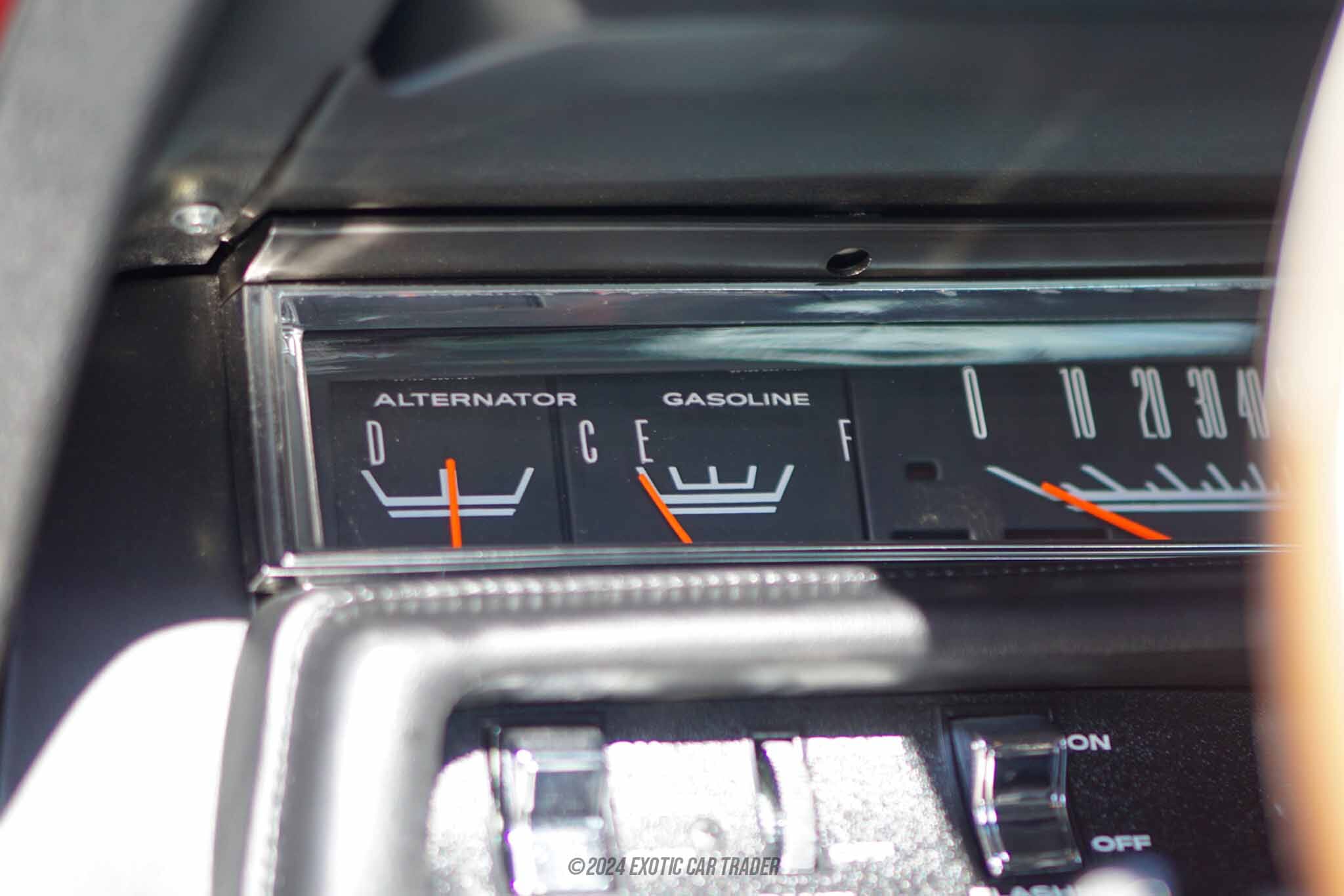
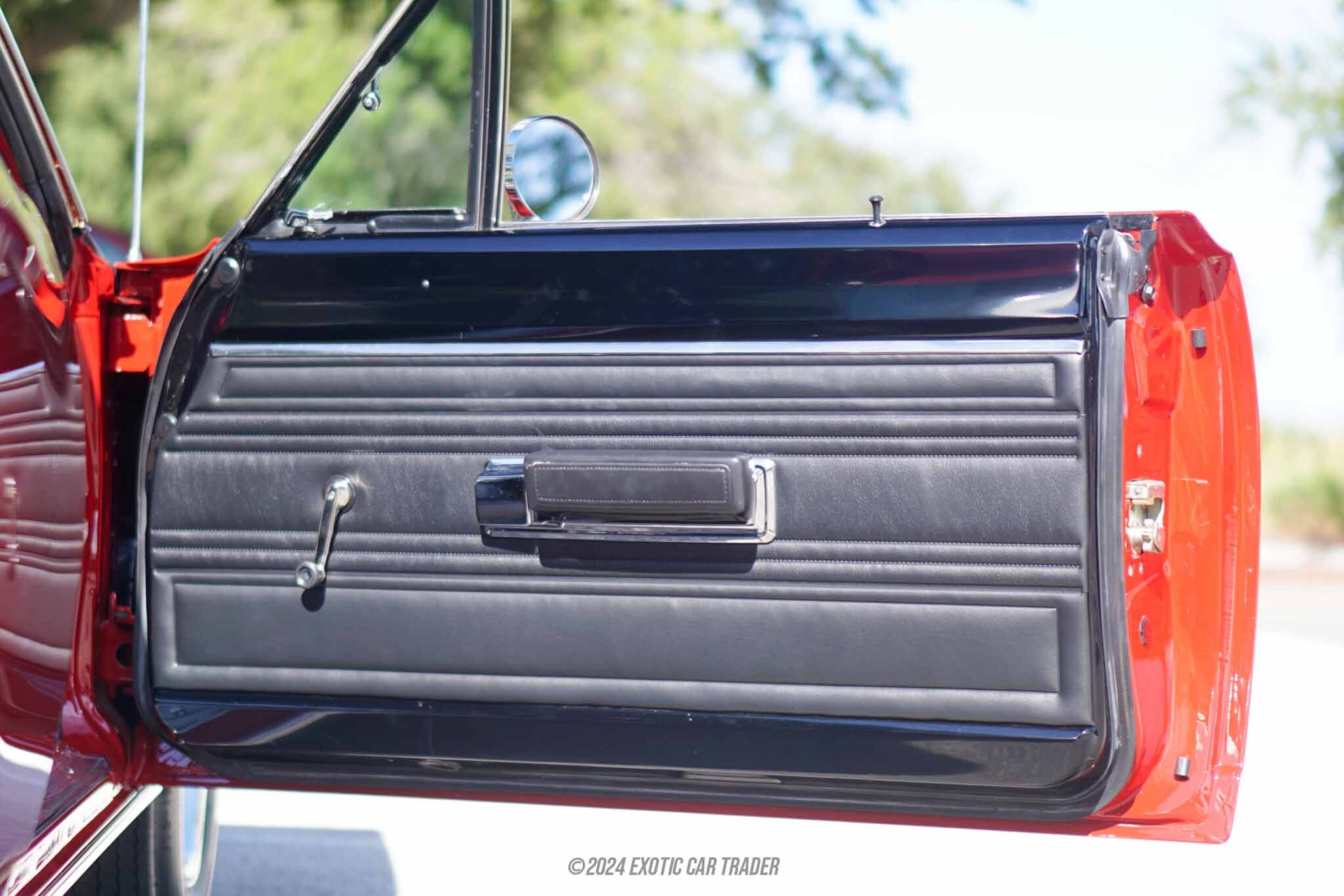
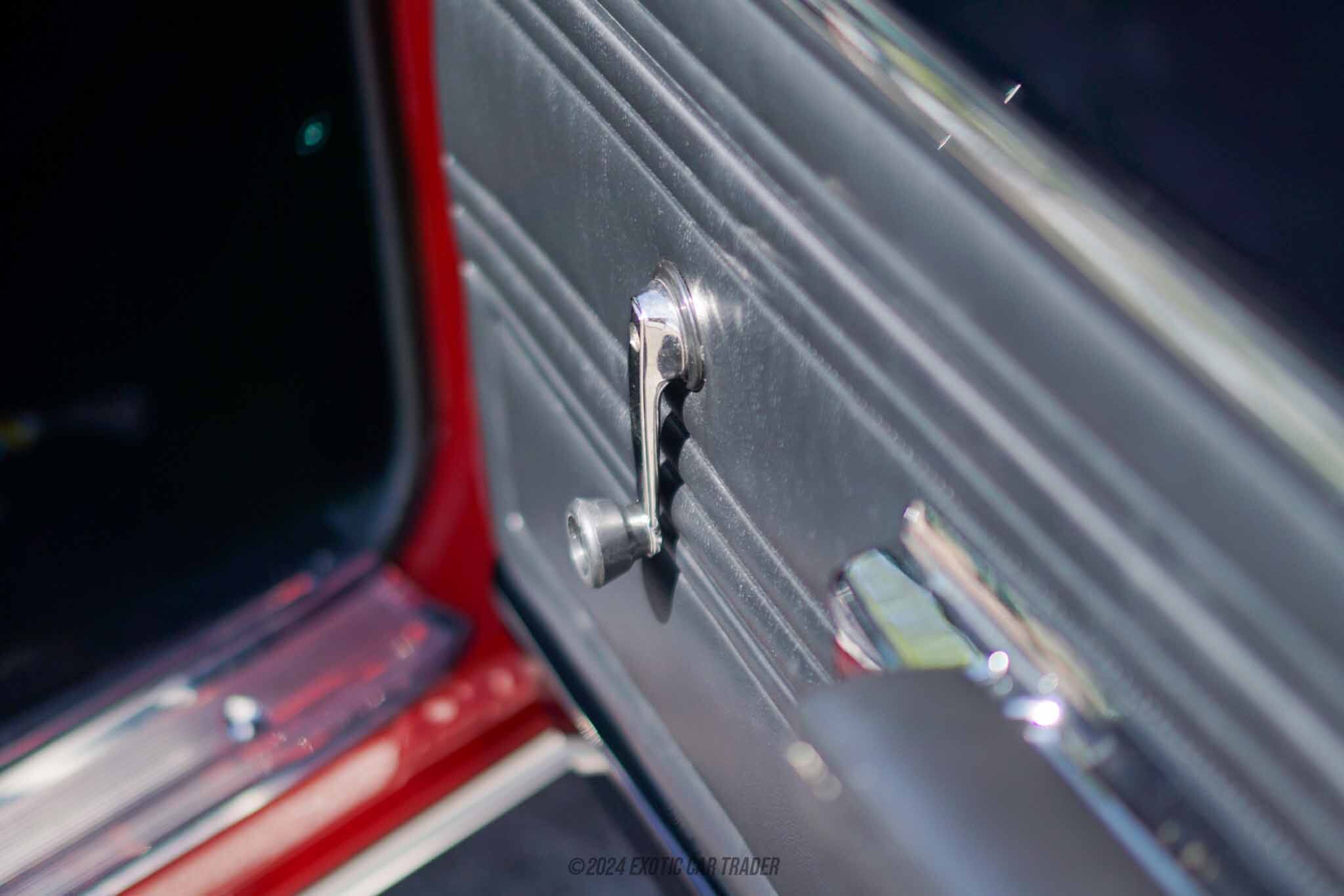
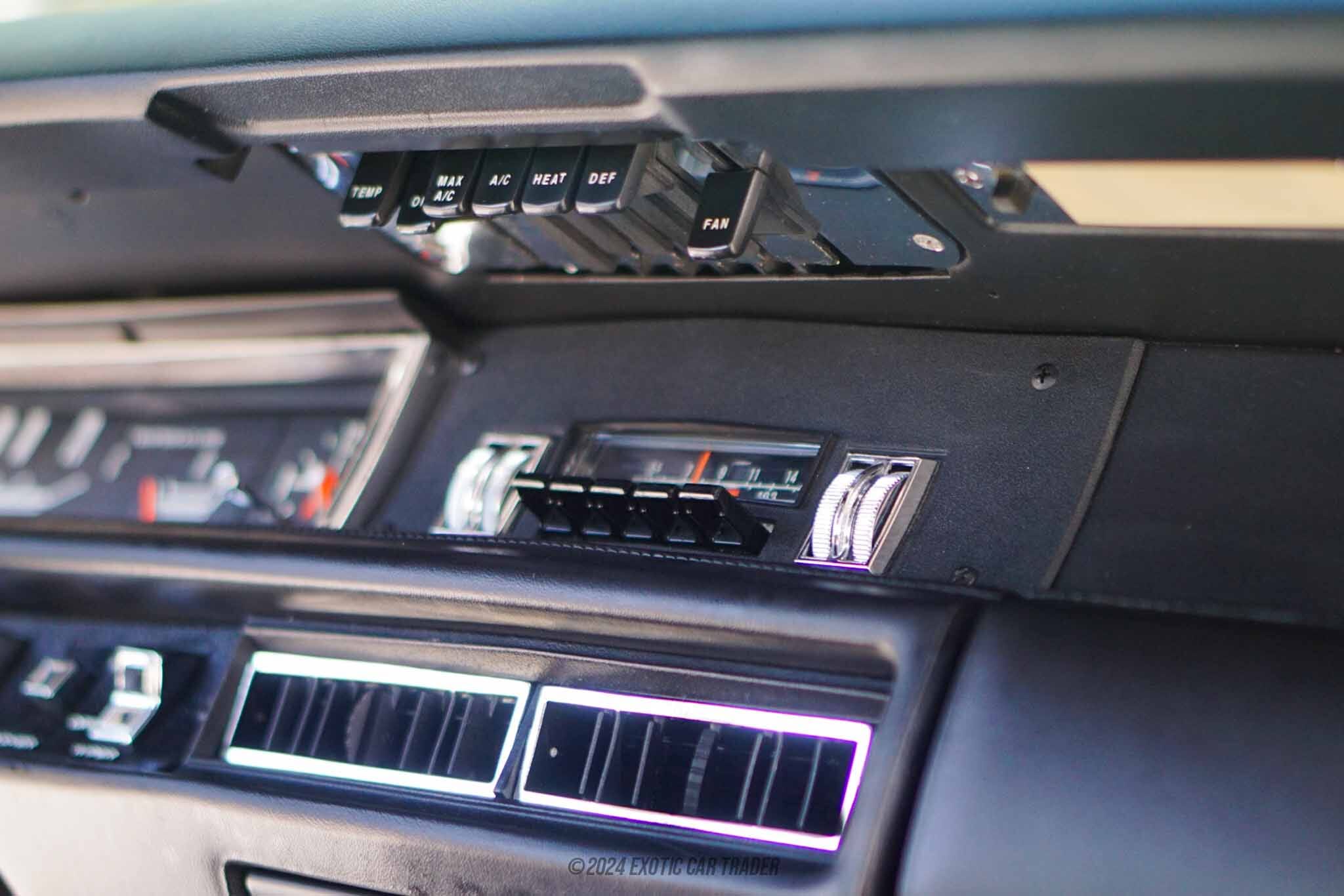
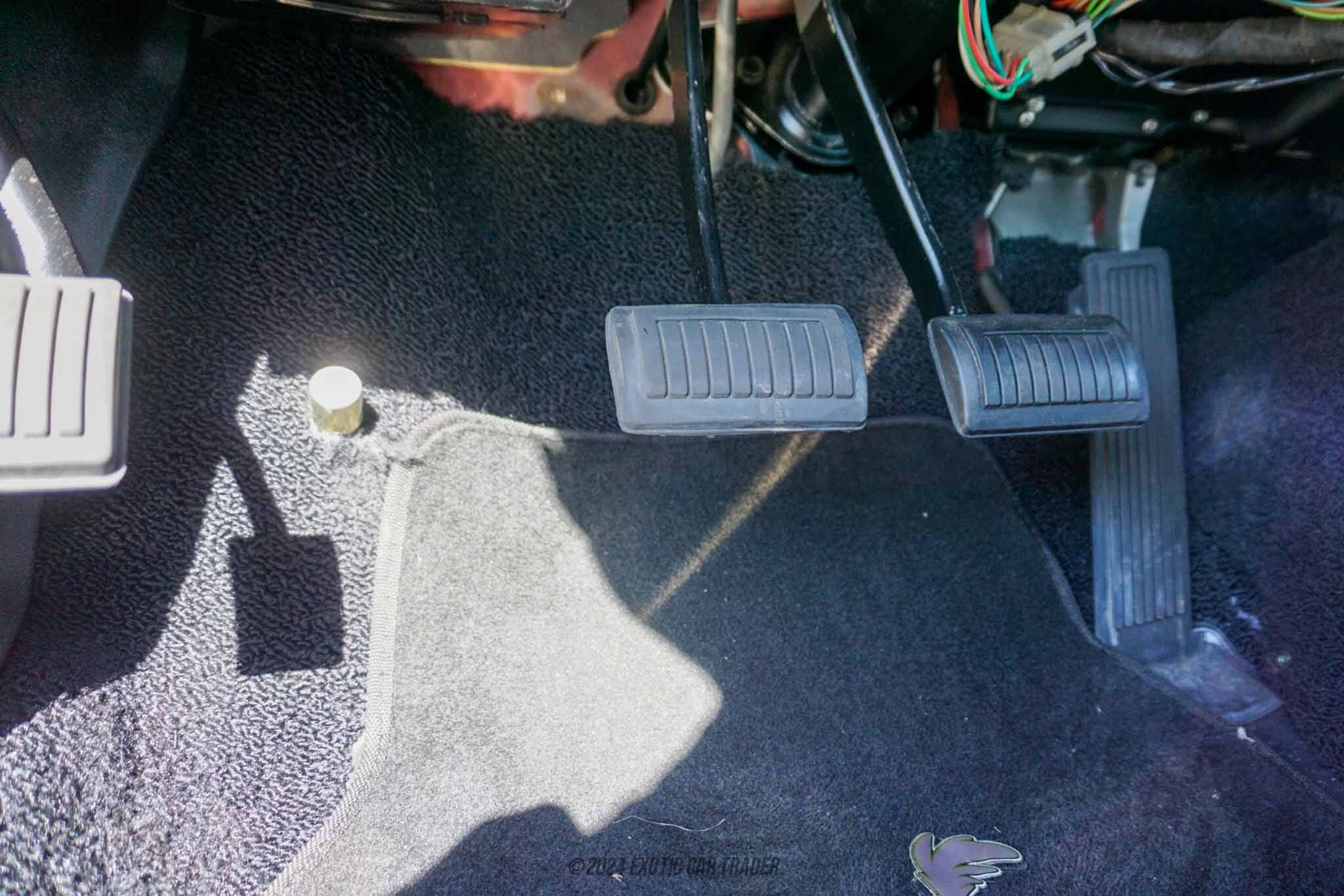
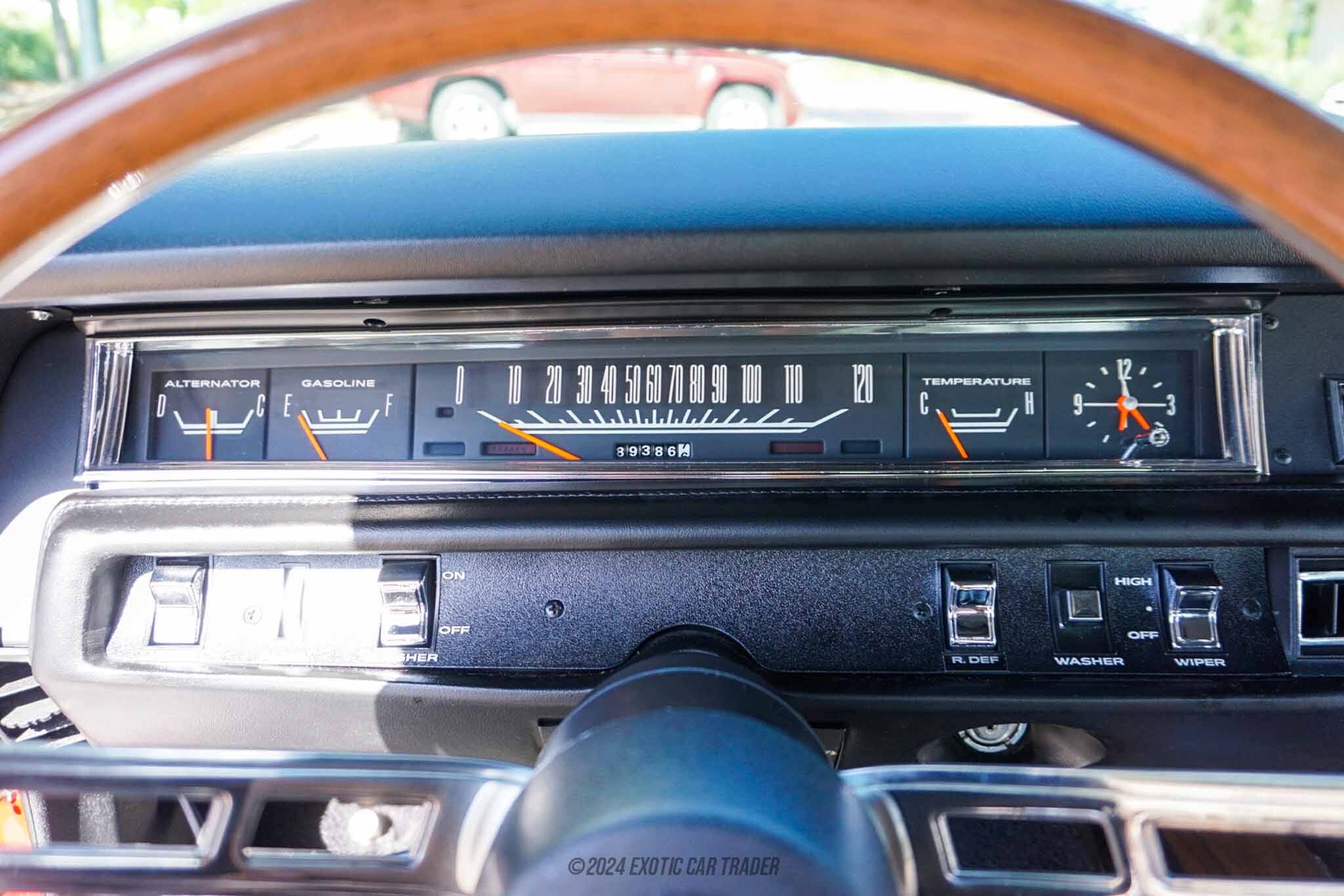
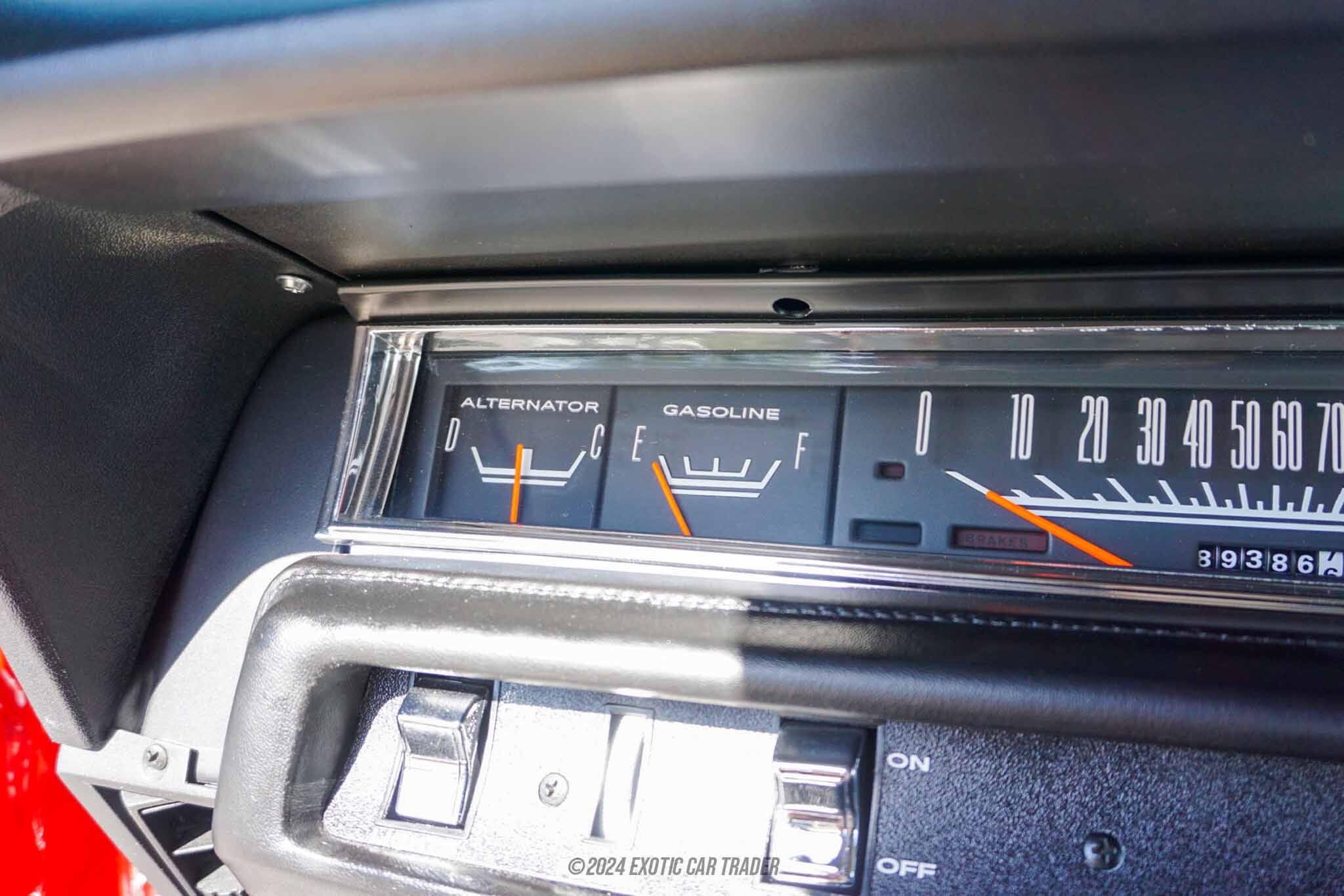
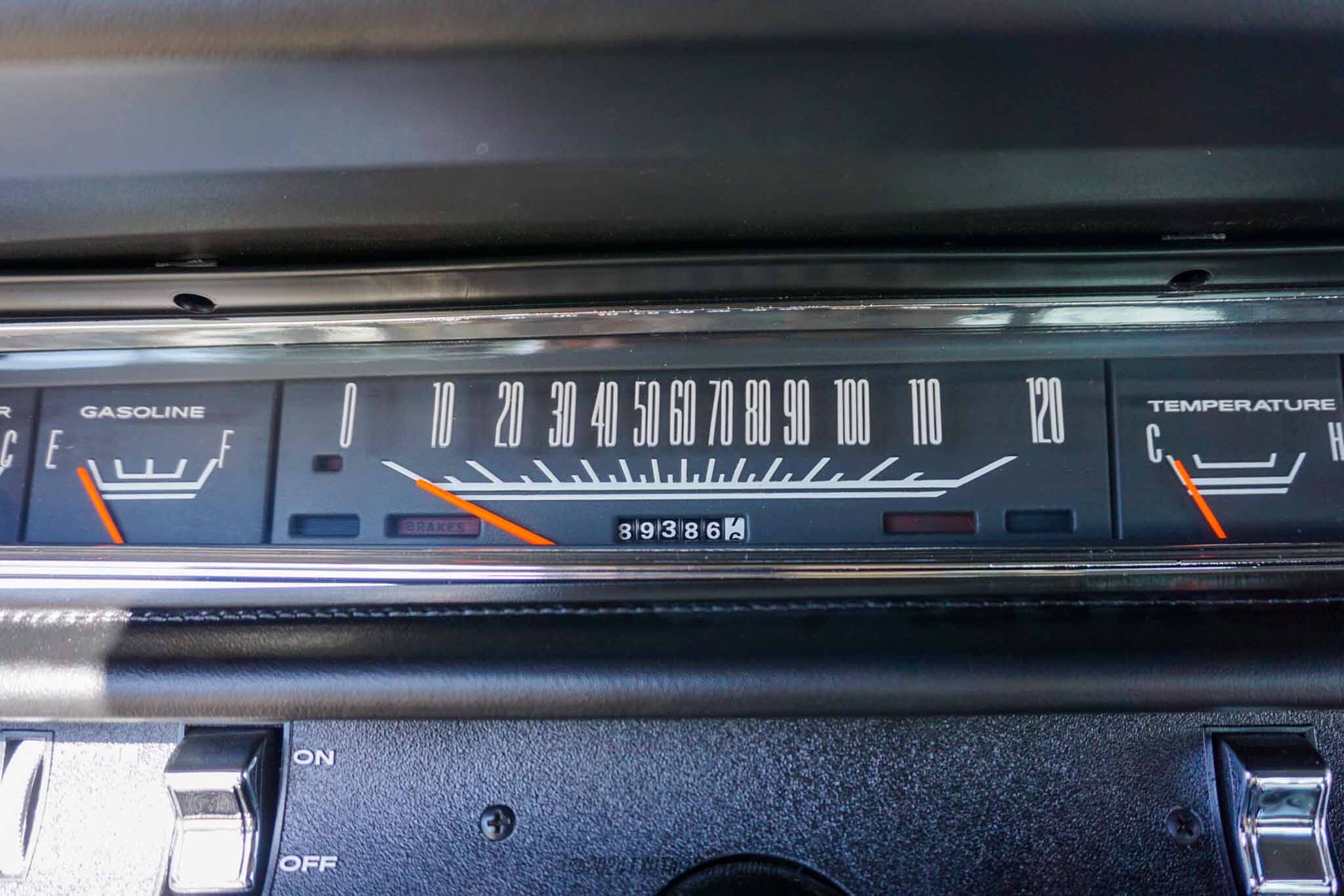
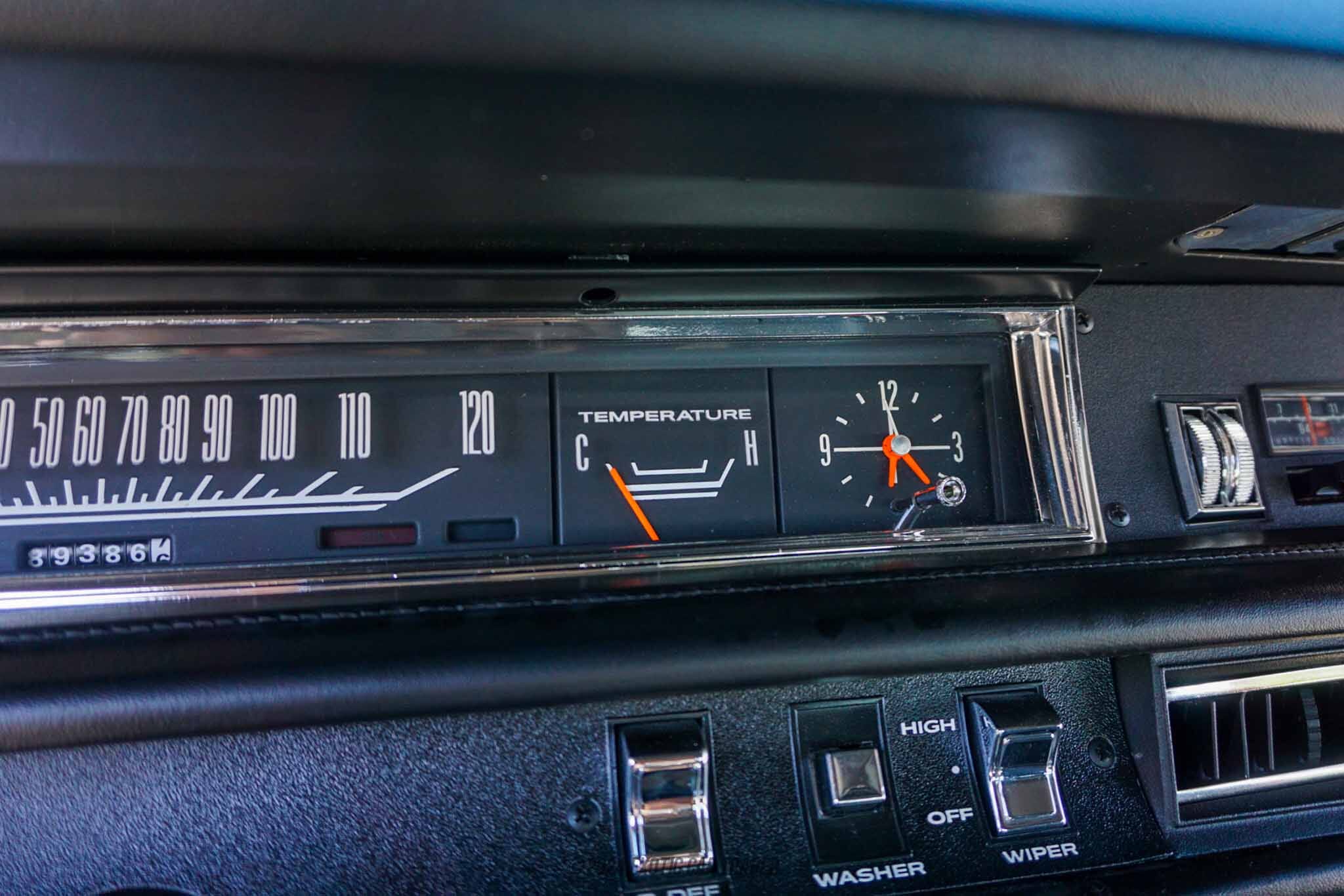
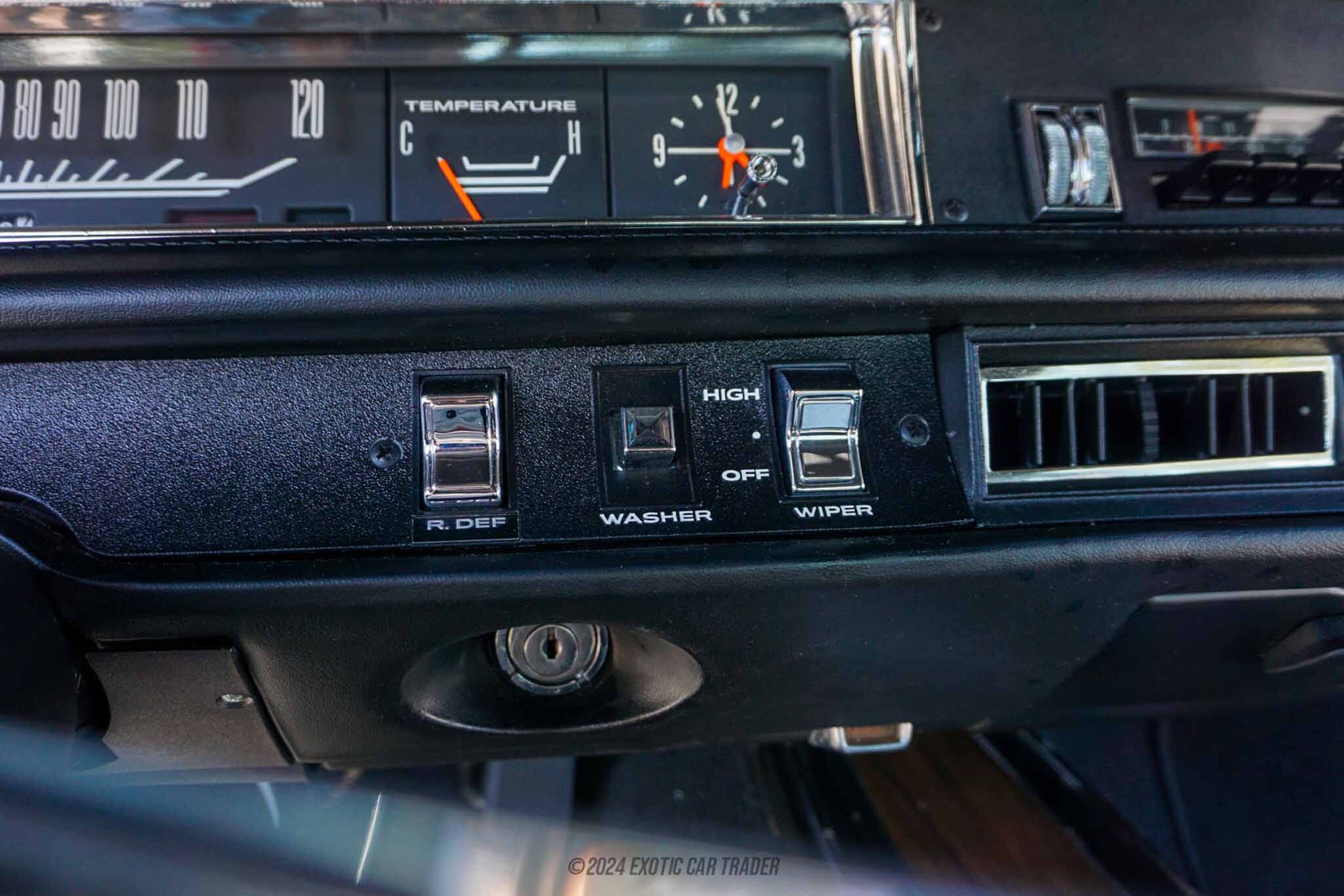
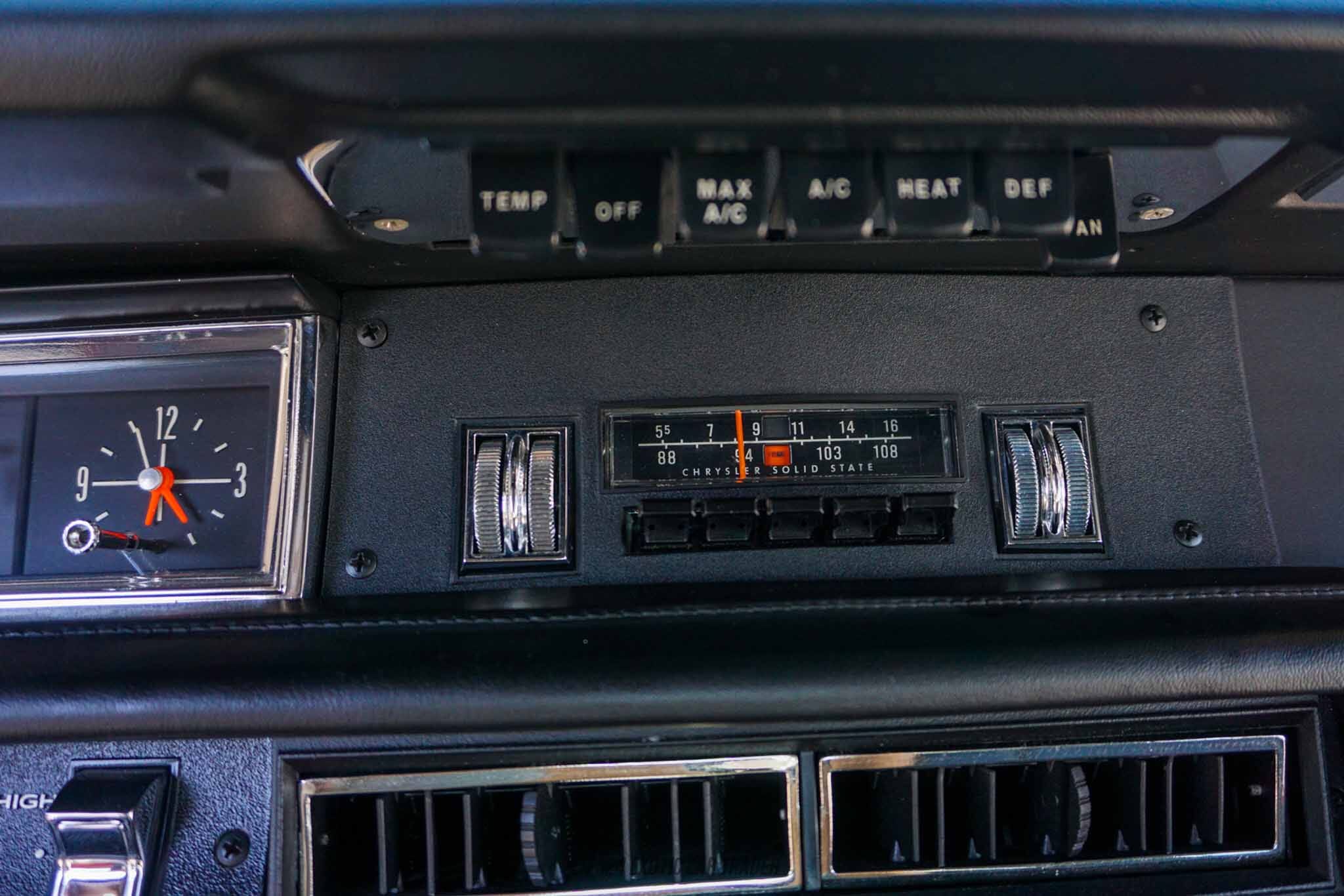
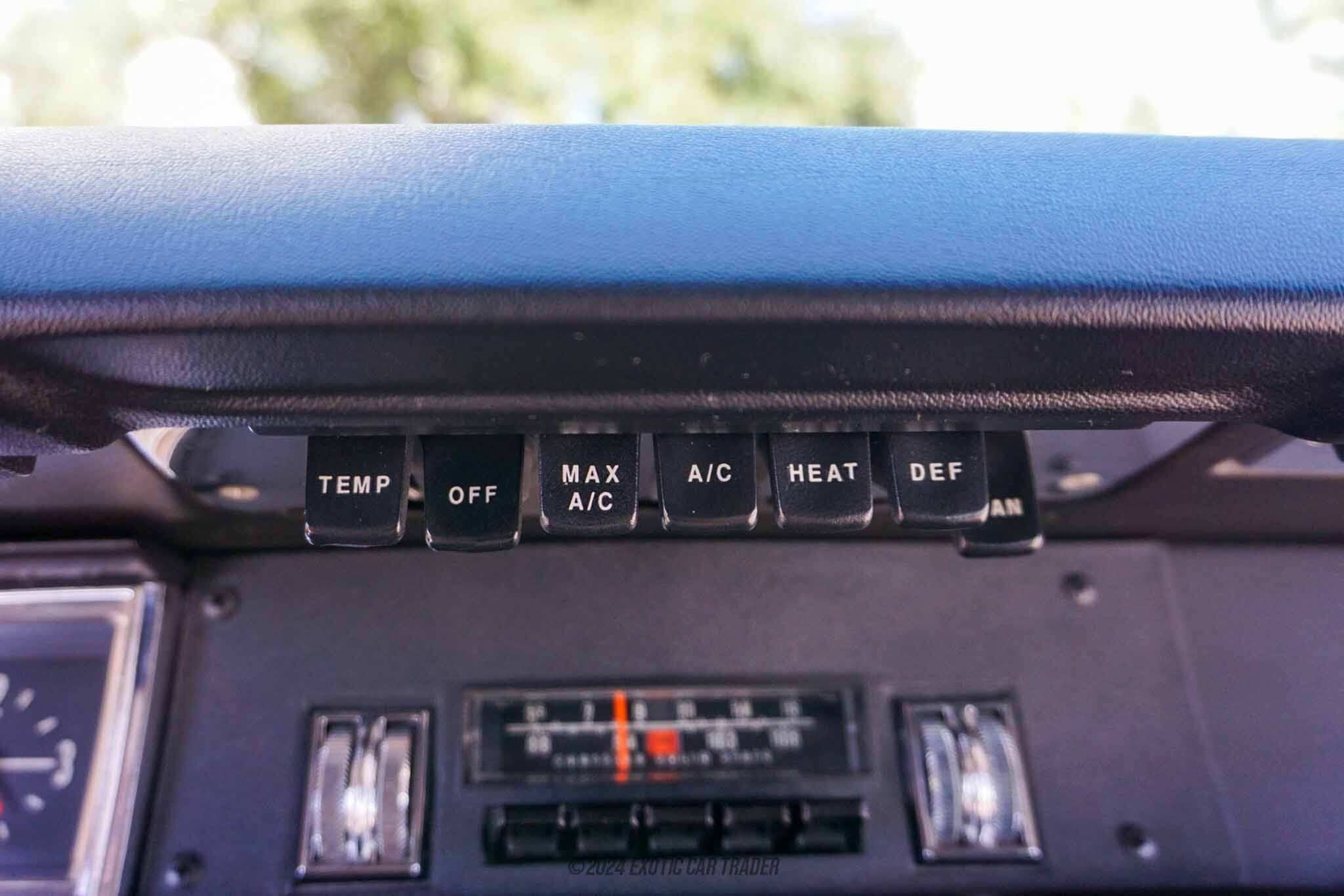
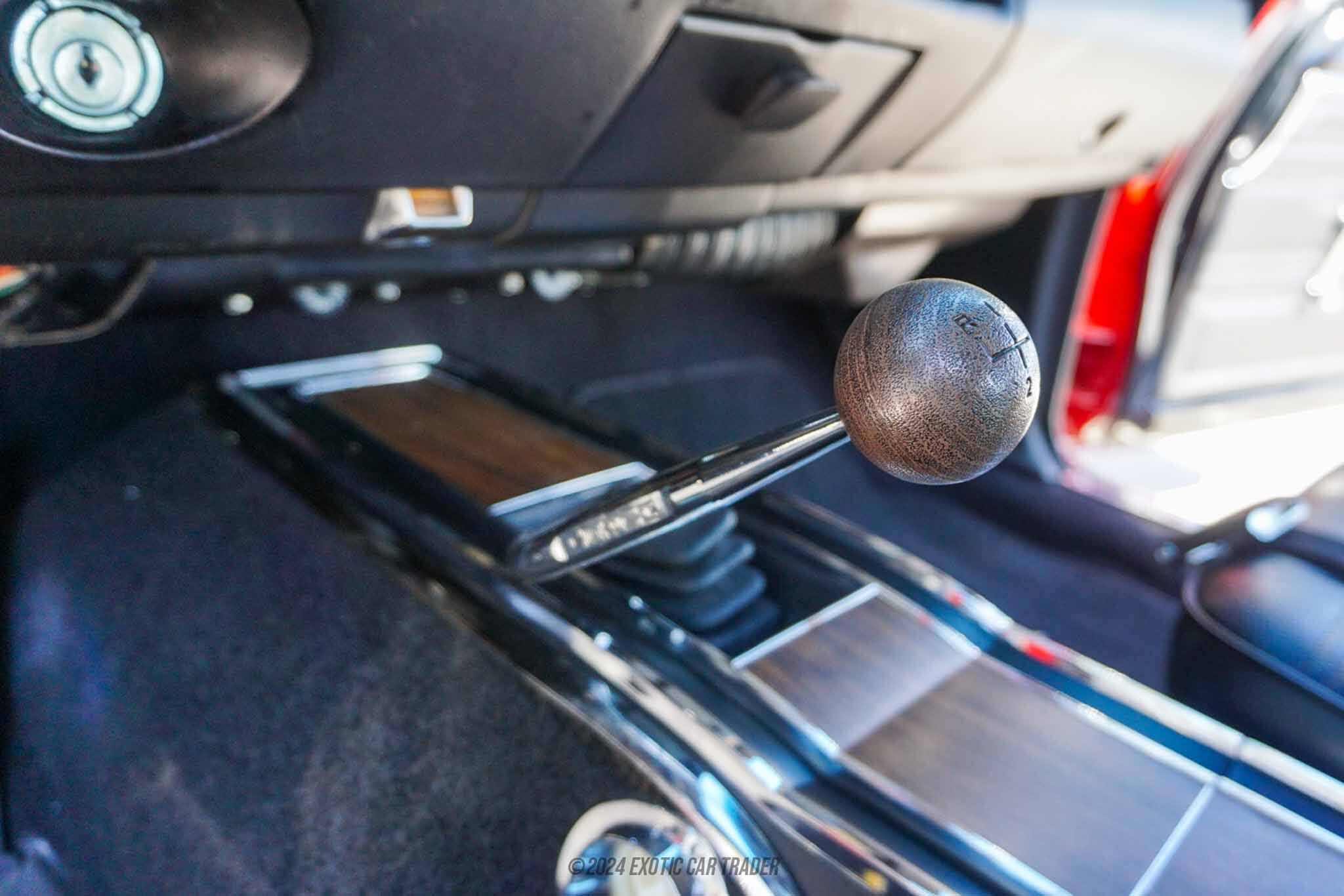
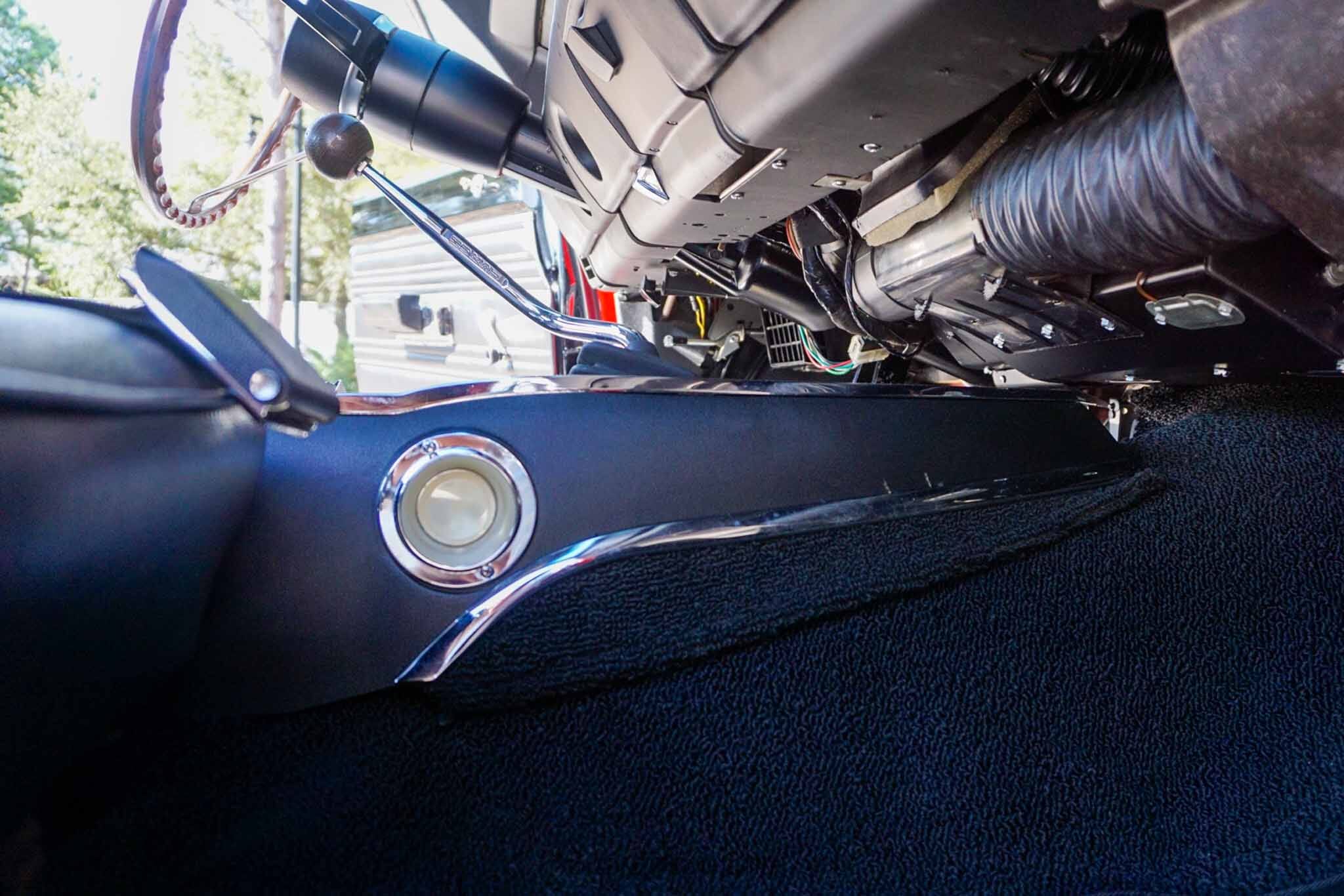
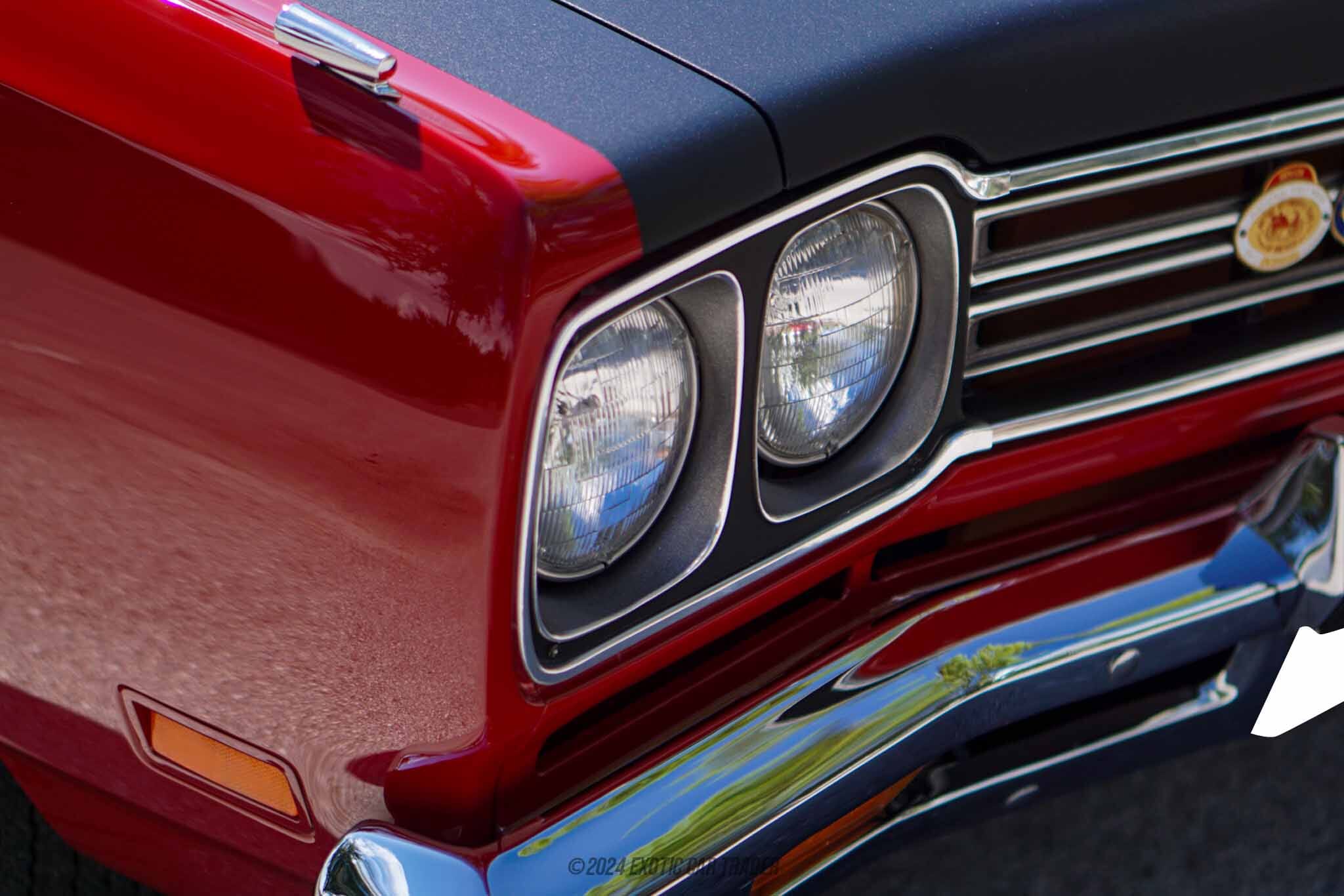
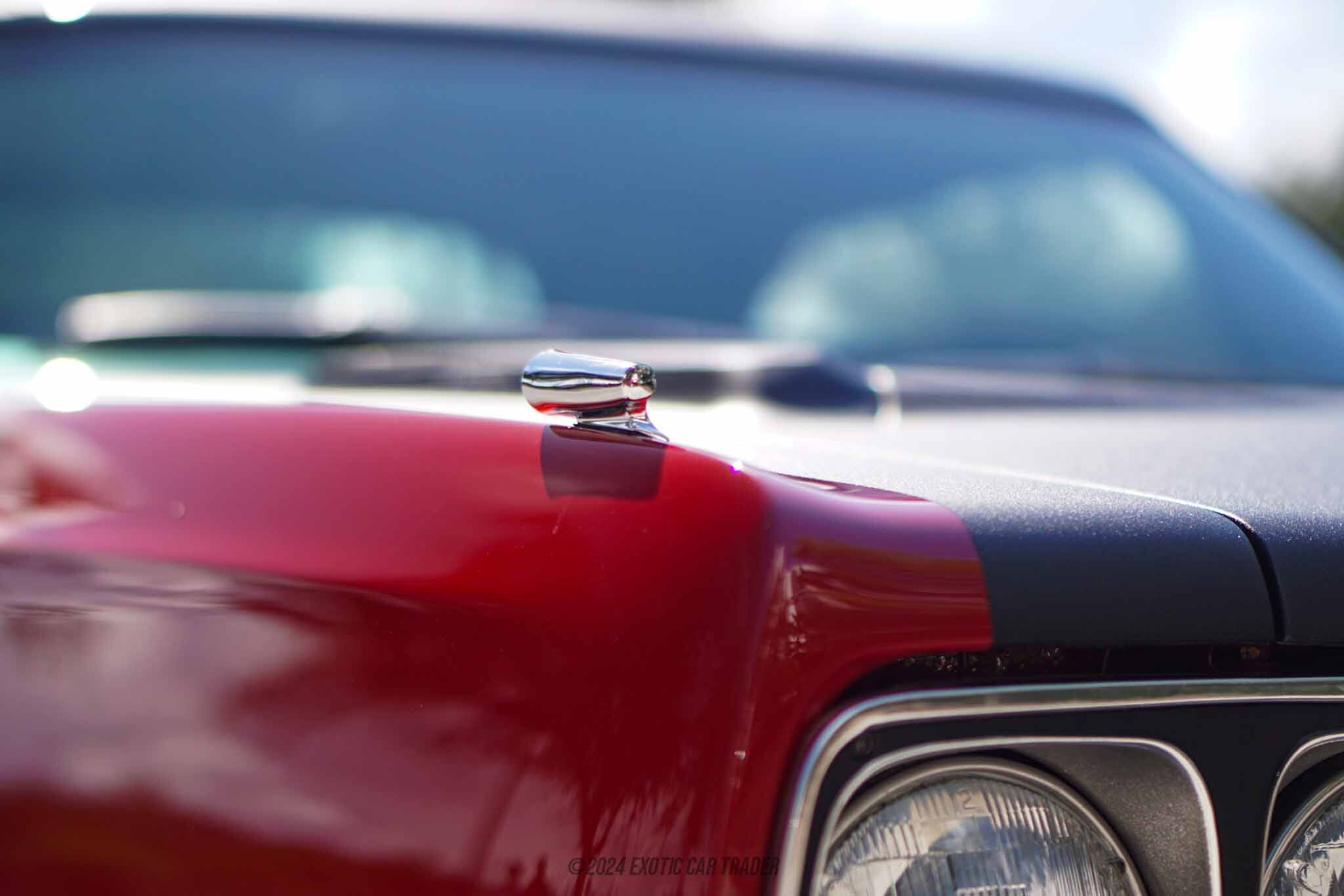
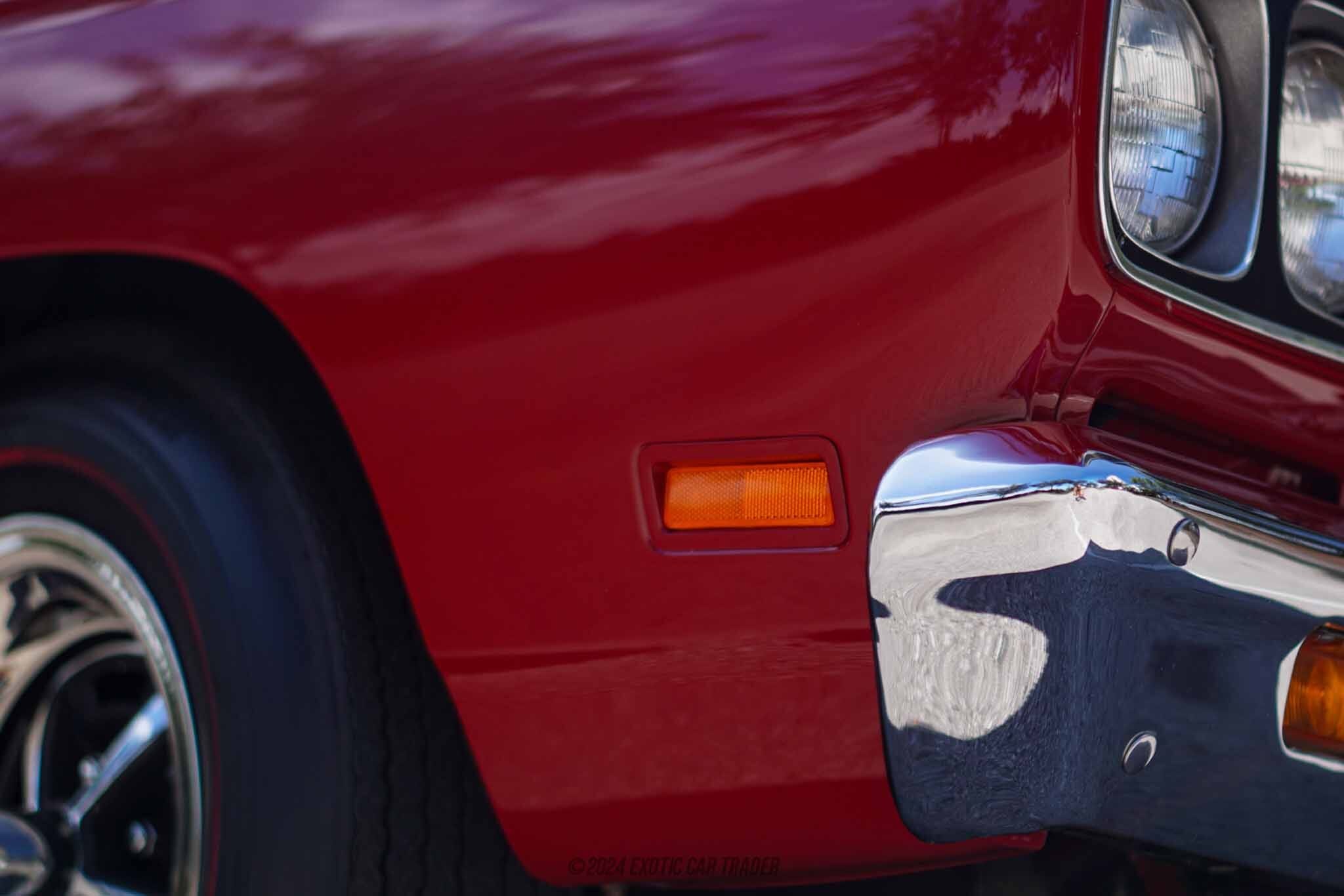
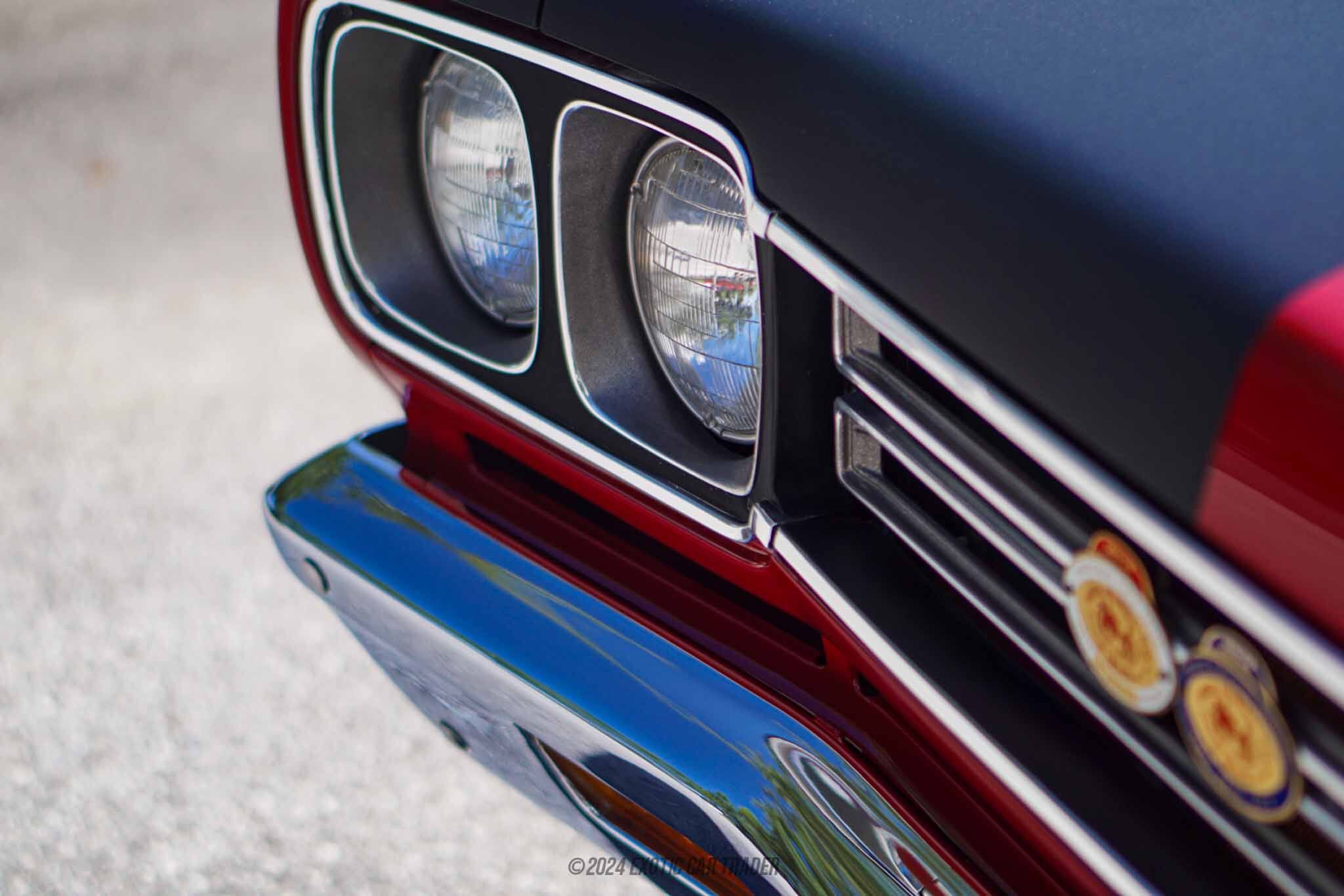
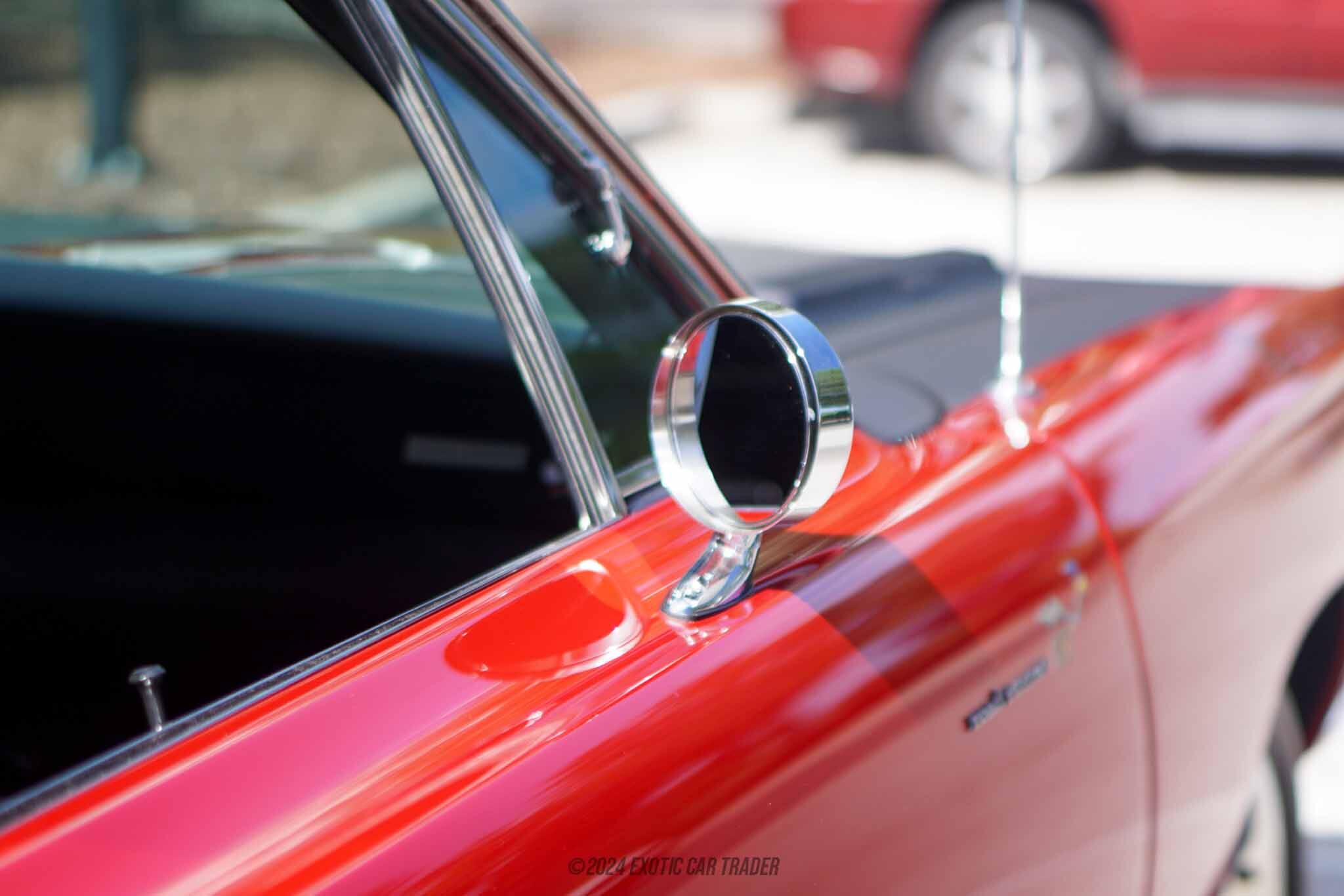
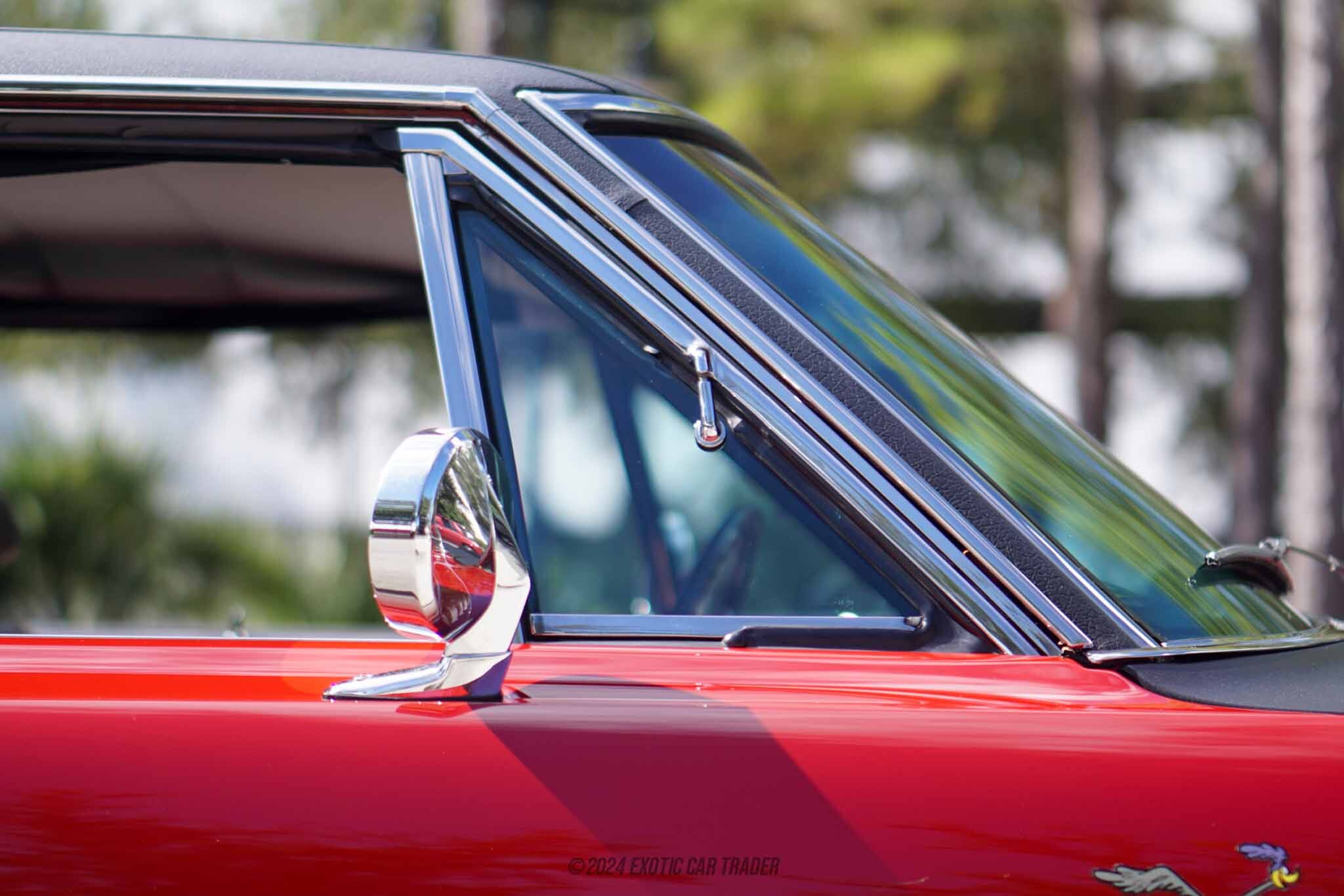
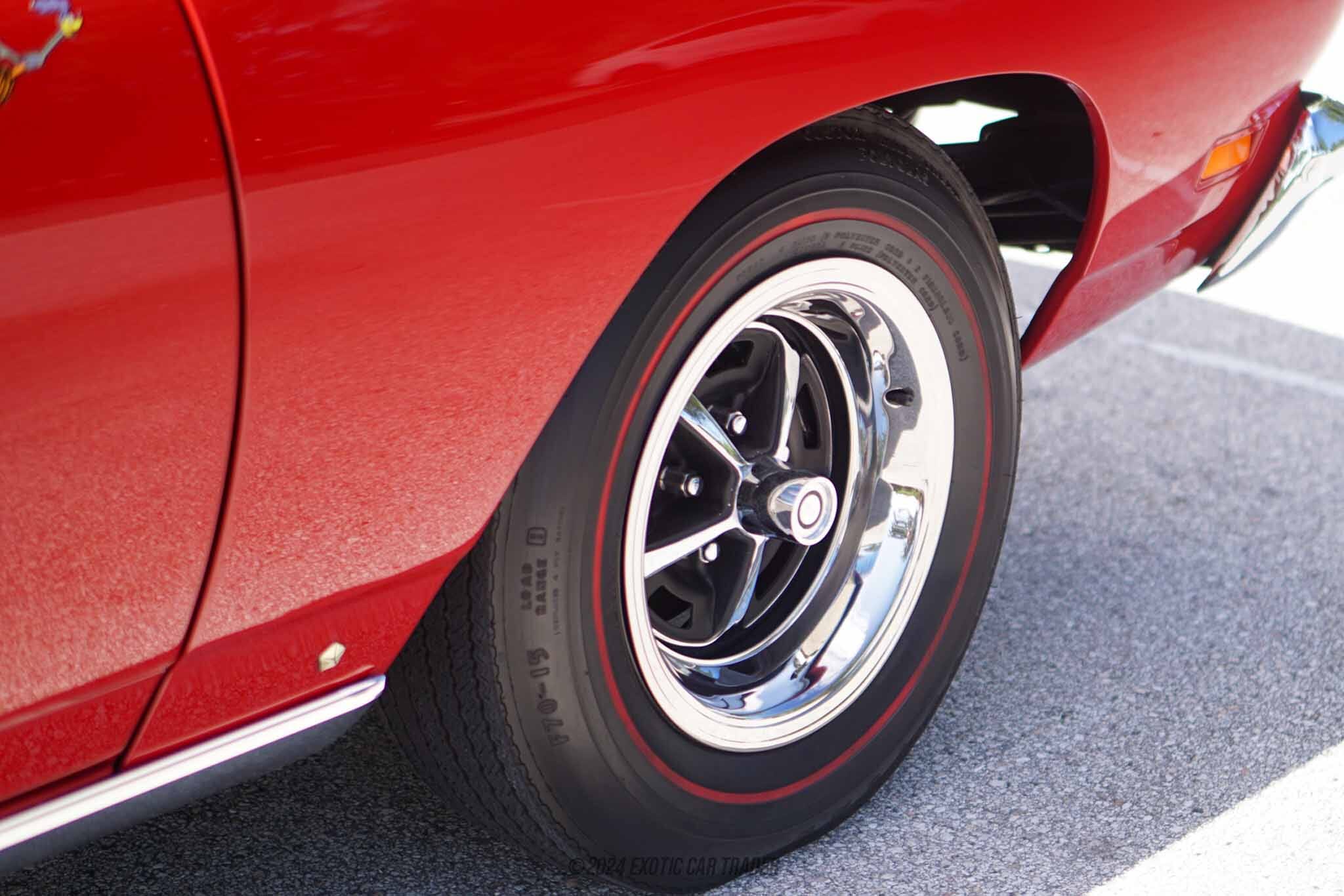
This 1969 Plymouth Road Runner sports a prominent red exterior paint coat with a black vinyl-covered hardtop, as was the style then. The car certainly looks speedy with its dart-like profile, dual headlamps, and lovely period wheels. Look closer, and you’ll note some black hood stripes, gloriously contrasting with the chromed front bumper. The rear bumper receives the same shiny treatment, as do the exits for the dual tailpipes directly beneath. The interior of this 1969 Plymouth Road Runner wears black leather and features front bucket seats plus a rear bench. Look closer, and you’ll note features such as air conditioning and a push-button radio are present. But the essence of the interior remains true to the car’s roots, replete with wind-up windows, ashtrays, and some wood trim here and there. Perhaps the most striking feature here is the car’s gauge cluster, which looks virtually brand-new! Ditto the wood-rimmed steering wheel and wood-topped gear shifter. This is a car that’s been so well restored that it may have been immediately teleported to 2024 right after it rolled off the factory lines in 1969.
Engine
This 1969 Plymouth Road Runner comes with the original, numbers matching 383ci V8 under the hood, powering the rear wheels through a 4-speed manual gearbox. The engine has reportedly received new headers, new crank, rods and pistons, and a new exhaust system. Starting from the 383ci block, the engine has been bored out to 439ci V8, giving it a great added rumble and grunt with a bump in power over factory.


This 1974 Plymouth Road Runner Pro Street Supercharged is a purpose-built street-and-strip muscle car combining classic Mopar styling with serious drag racing hardware. Originally a 340ci V8, this Road Runner has been transformed with a professionally built and balanced big block powerplant featuring a Dyer’s Machine Blower Company supercharger system, dual Holley carburetors, and an estimated 800 horsepower output. Designed for high-performance driving, it pairs its supercharged engine with a reverse-pattern 727 TorqueFlite automatic transmission, Detroit Locker differential, 4-link rear suspension, and Mickey Thompson ET Street tires. Finished in a vibrant Lime Green exterior with a competition-inspired setup including a full roll cage, racing harnesses, and upgraded chassis components, this Pro Street build represents the classic era of American horsepower taken to an extreme level.
The Plymouth Road Runner was introduced for buyers who wanted one thing above all else: performance. By stripping away unnecessary luxury features and focusing on big-block power, Plymouth created one of the most successful muscle cars of the era. This 1968 Plymouth Road Runner Hardtop Coupe shows 57,801 miles and is powered by the legendary 383ci Magnum V8, making it a textbook example of the formula that made the Road Runner a household name among enthusiasts. Finished in an eye-catching green exterior over a white vinyl interior, this first-year Road Runner embodies the no-nonsense attitude that helped establish the model as one of the most iconic muscle cars of the late 1960s.
Collaborations can truly be a lovely thing when done right, and Plymouth did exactly that with its iconic Roadrunner back in the 60s. What was a reported payment of $50,000 for name rights and a further $10,000 to develop the iconic “beep beep” horn is now a cult classic in the muscle car collectors' circle. Present today is your chance to own a true American icon that takes shape with this 1970 Plymouth Roadrunner. Hailing from Saint Mary’s, Ohio and with just 34,793 miles on its clock, this quirky classic can be yours to “beep beep” your way into the weekend.
This 1974 Plymouth Road Runner Pro Street Supercharged is a purpose-built street-and-strip muscle car combining classic Mopar styling with serious drag racing hardware. Originally a 340ci V8, this Road Runner has been transformed with a professionally built and balanced big block powerplant featuring a Dyer’s Machine Blower Company supercharger system, dual Holley carburetors, and an estimated 800 horsepower output. Designed for high-performance driving, it pairs its supercharged engine with a reverse-pattern 727 TorqueFlite automatic transmission, Detroit Locker differential, 4-link rear suspension, and Mickey Thompson ET Street tires. Finished in a vibrant Lime Green exterior with a competition-inspired setup including a full roll cage, racing harnesses, and upgraded chassis components, this Pro Street build represents the classic era of American horsepower taken to an extreme level.
Before the GTX and Road Runner took over Plymouth’s performance image, the Satellite was the B-body sleeper that could be ordered with Chrysler’s most feared street engine. This 1966 Plymouth Satellite 426 HEMI 4 Speed shows approximately 25,134 miles and combines a black-on-black presentation with the legendary dual-quad 426 Street HEMI, a four-speed manual, Dana 60 rear axle, and Sure Grip differential. The current owner reports that it is one of of only 502 Hemi's produced, making this a seriously rare early HEMI-era Mopar with the kind of specification collectors and true muscle-car enthusiasts immediately recognize.
The Plymouth Road Runner was introduced for buyers who wanted one thing above all else: performance. By stripping away unnecessary luxury features and focusing on big-block power, Plymouth created one of the most successful muscle cars of the era. This 1968 Plymouth Road Runner Hardtop Coupe shows 57,801 miles and is powered by the legendary 383ci Magnum V8, making it a textbook example of the formula that made the Road Runner a household name among enthusiasts. Finished in an eye-catching green exterior over a white vinyl interior, this first-year Road Runner embodies the no-nonsense attitude that helped establish the model as one of the most iconic muscle cars of the late 1960s.

Terms of Service
Be Kind and Courteous
We're here to create a platform to better the automotive industry through communication and transparency. Please treat everyone with respect. Healthy debates are natural, but kindness is required.
No Hate Speech
Make sure everyone feels safe. Hate speech of any kind is strictly prohibited. Degrading comments about things like race, religion, culture, sexual orientation, etc. will not be tolerated.
No Promotions or Spam
Give more than you take. Self-promotion, spam, or links of any kind are not allowed.
