





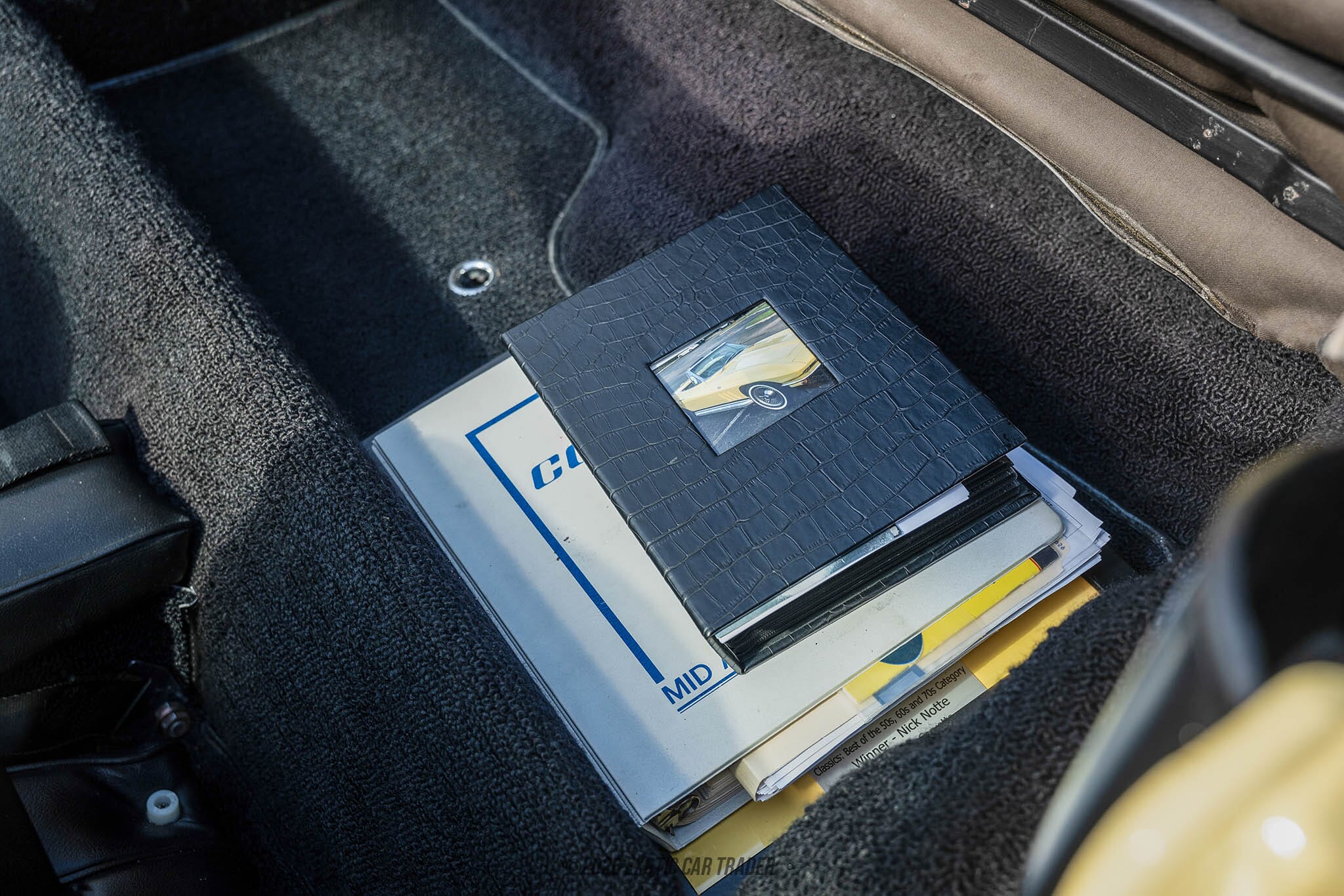
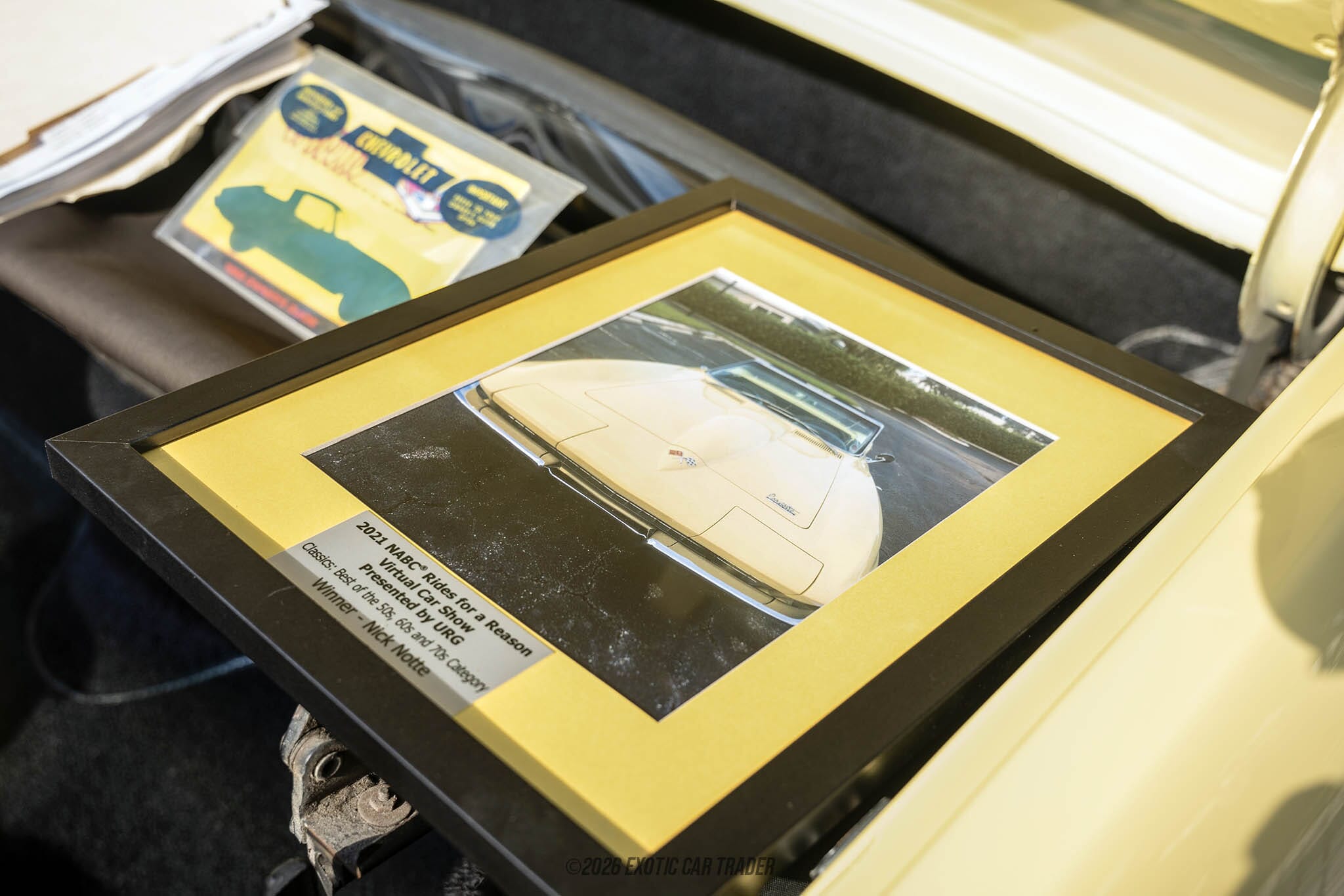


Buyer Resources





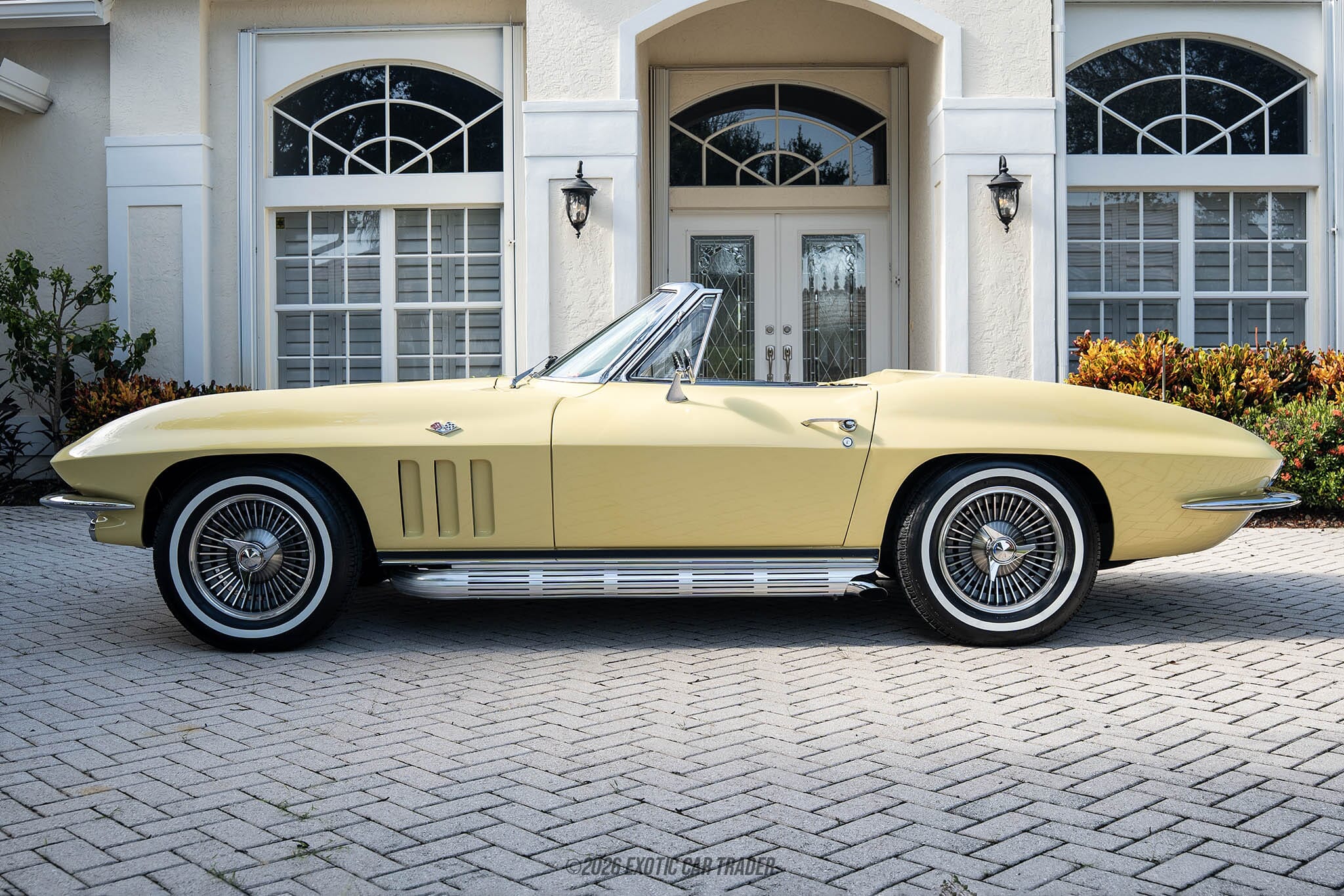
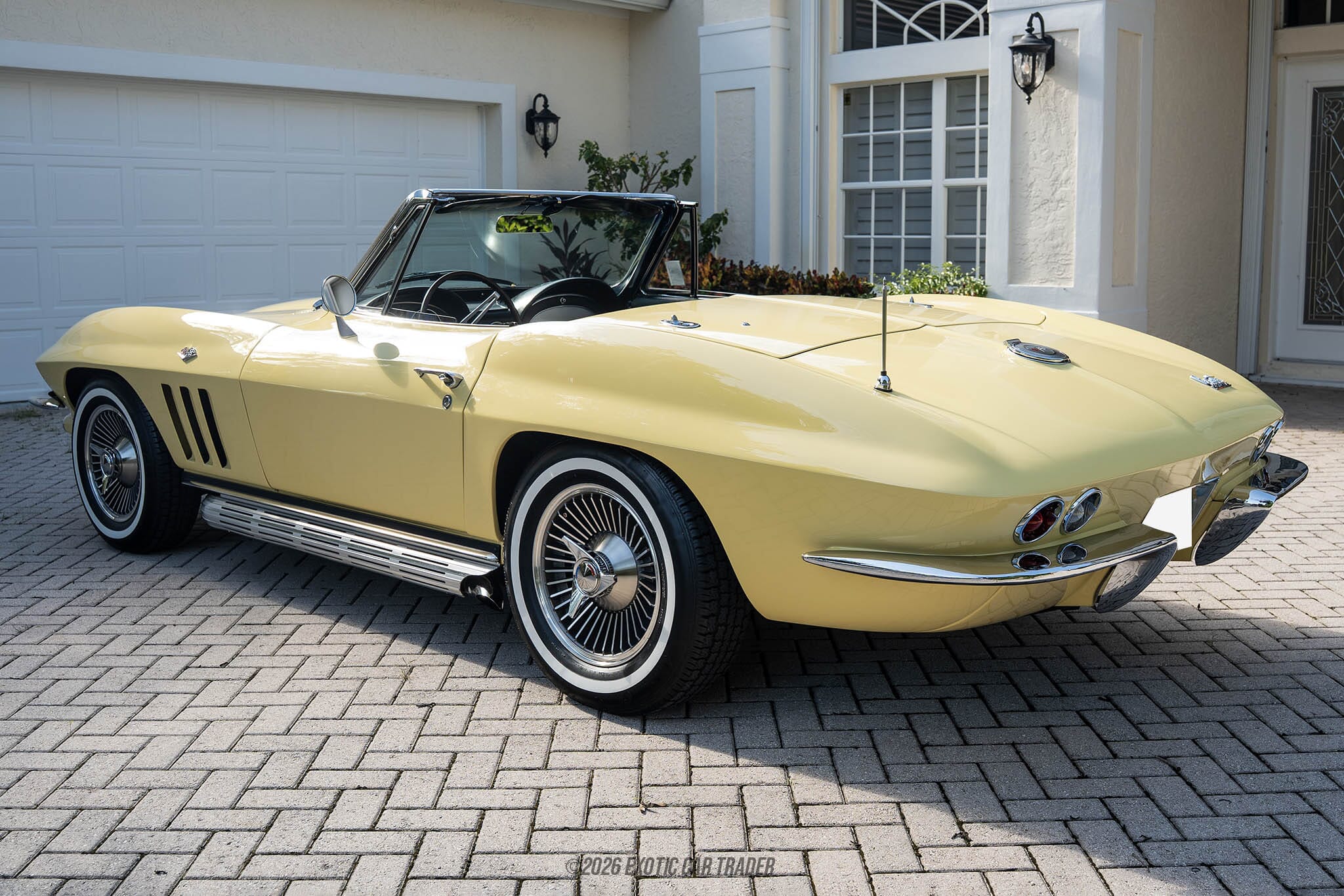
- 1966 Chevrolet Corvette Convertible
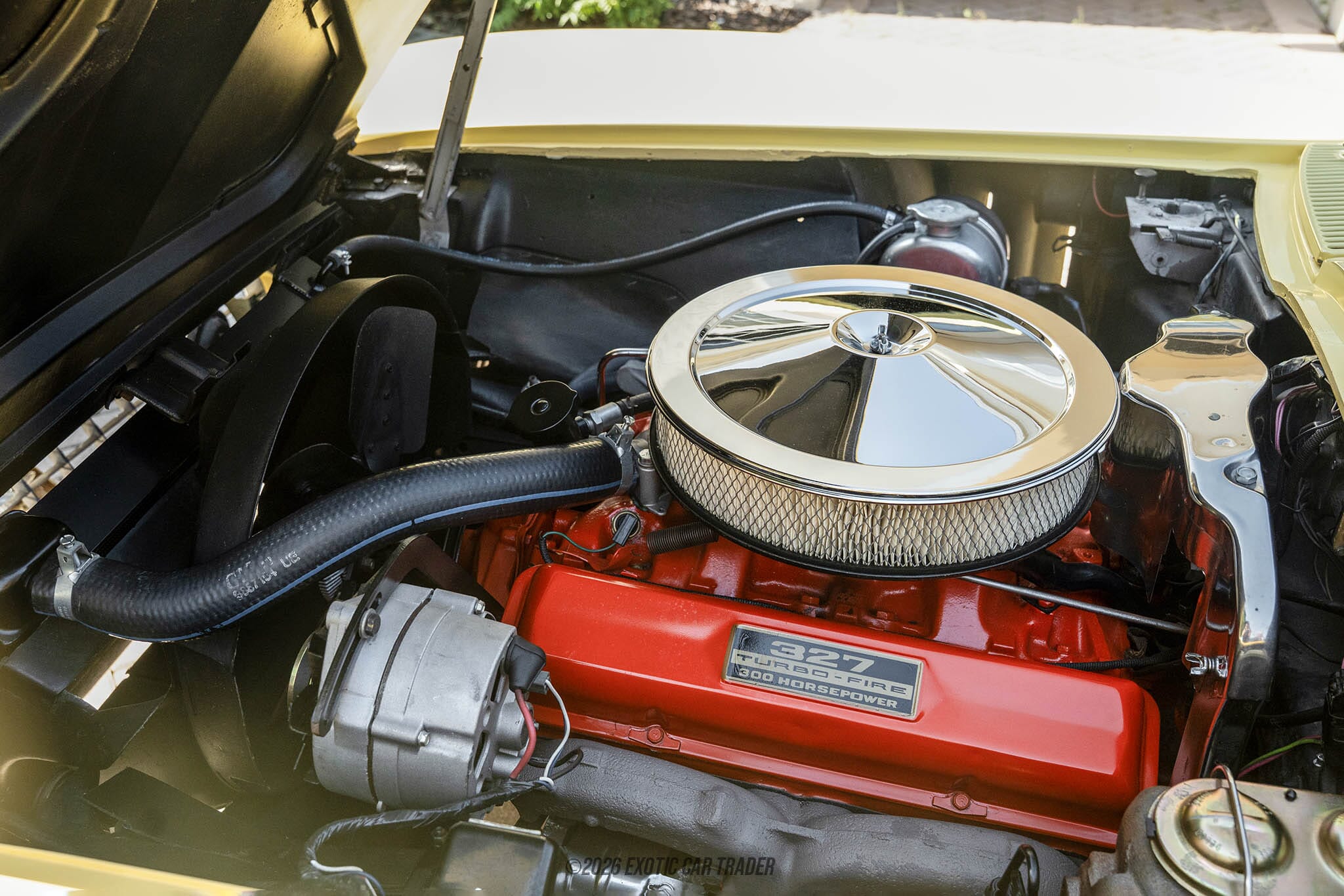
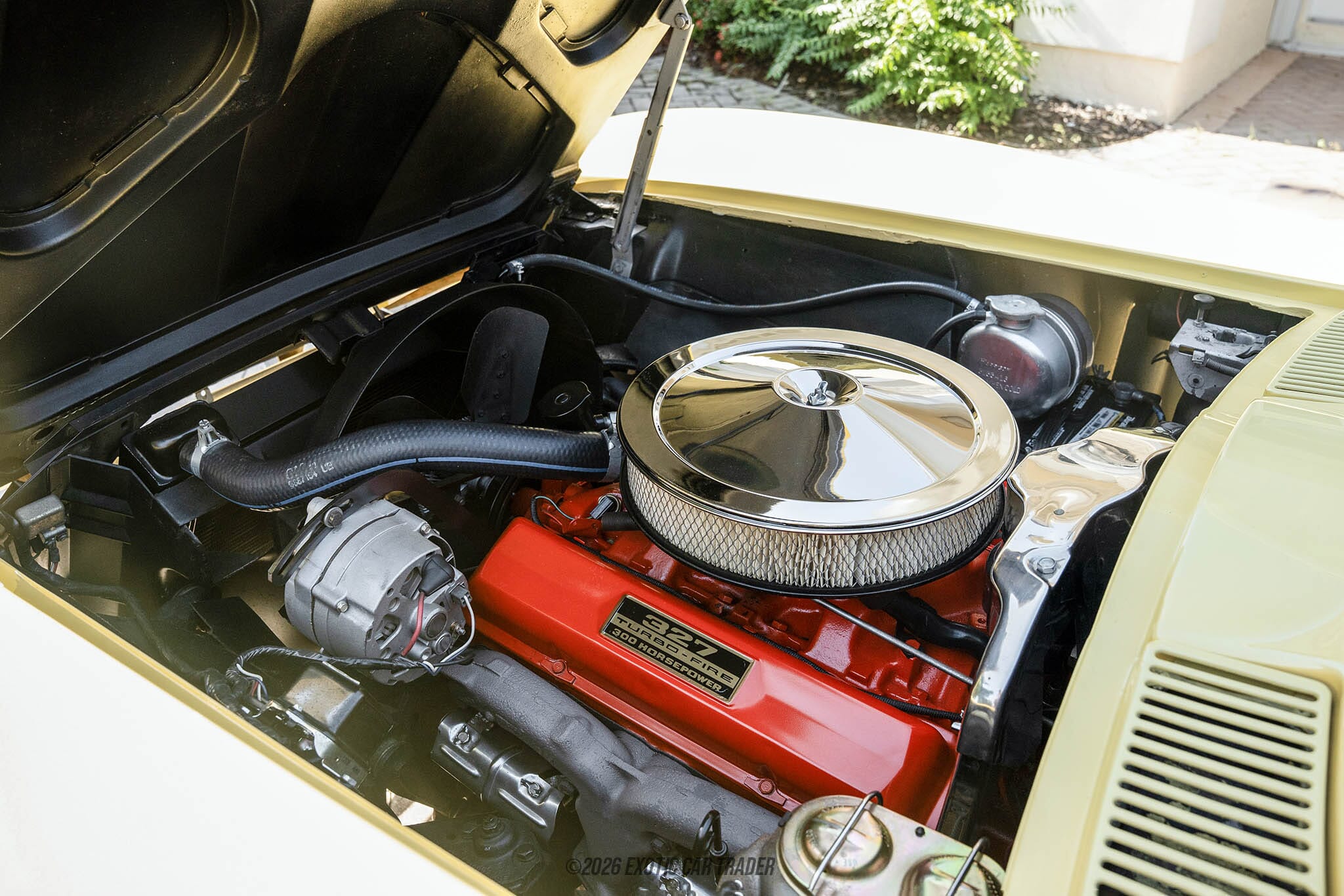
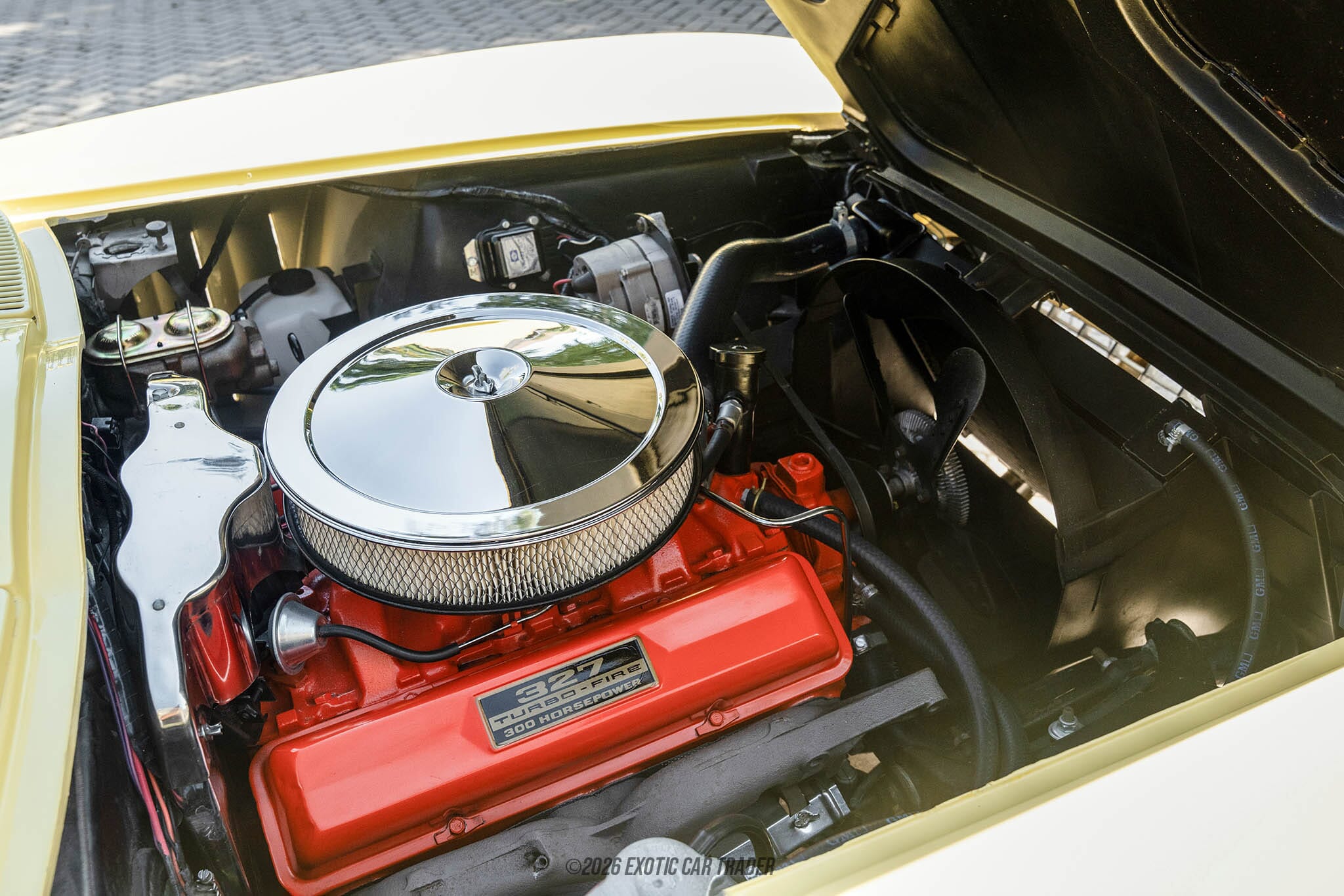
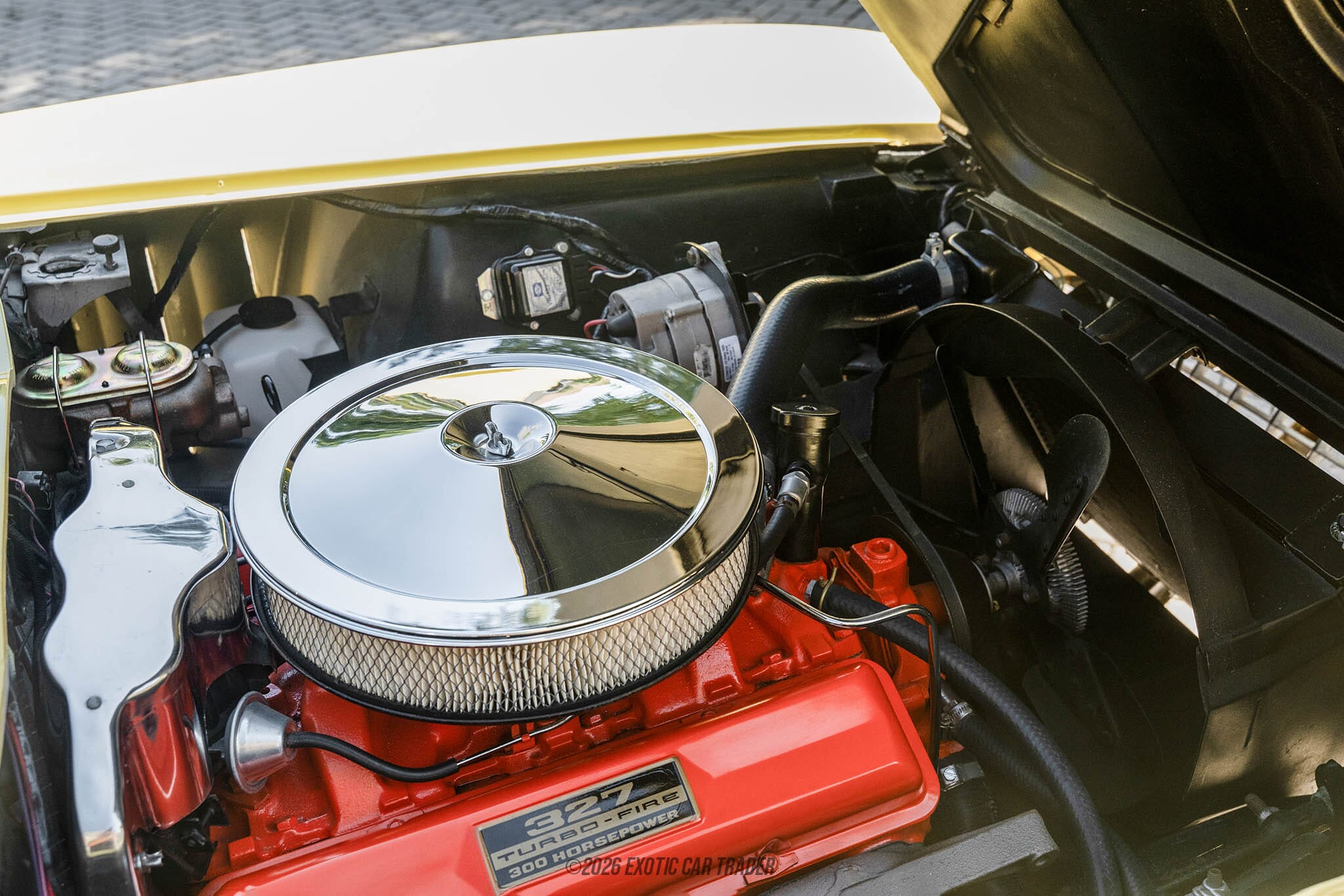
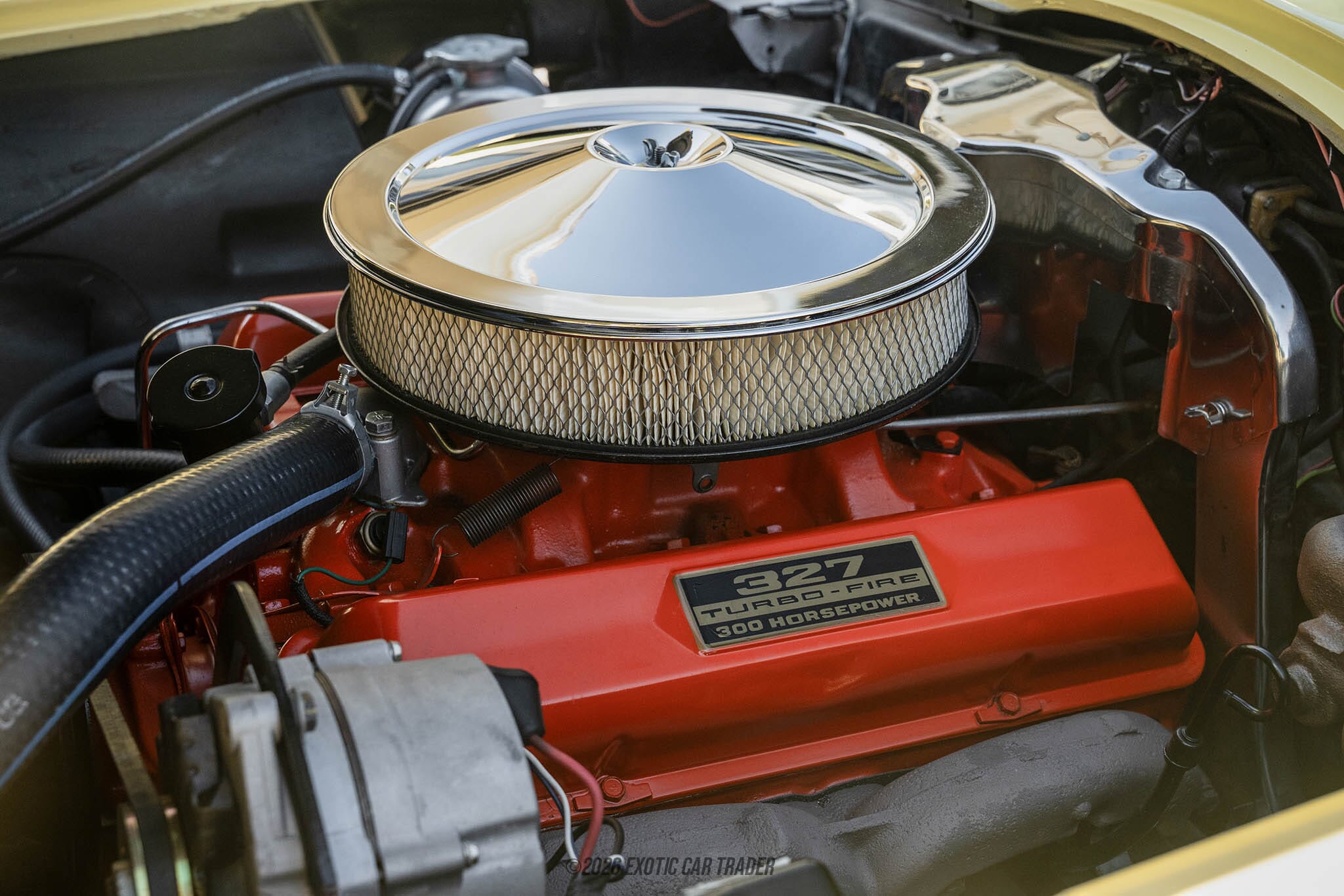
- 327ci V8
- 4-Barrel Carbuetor
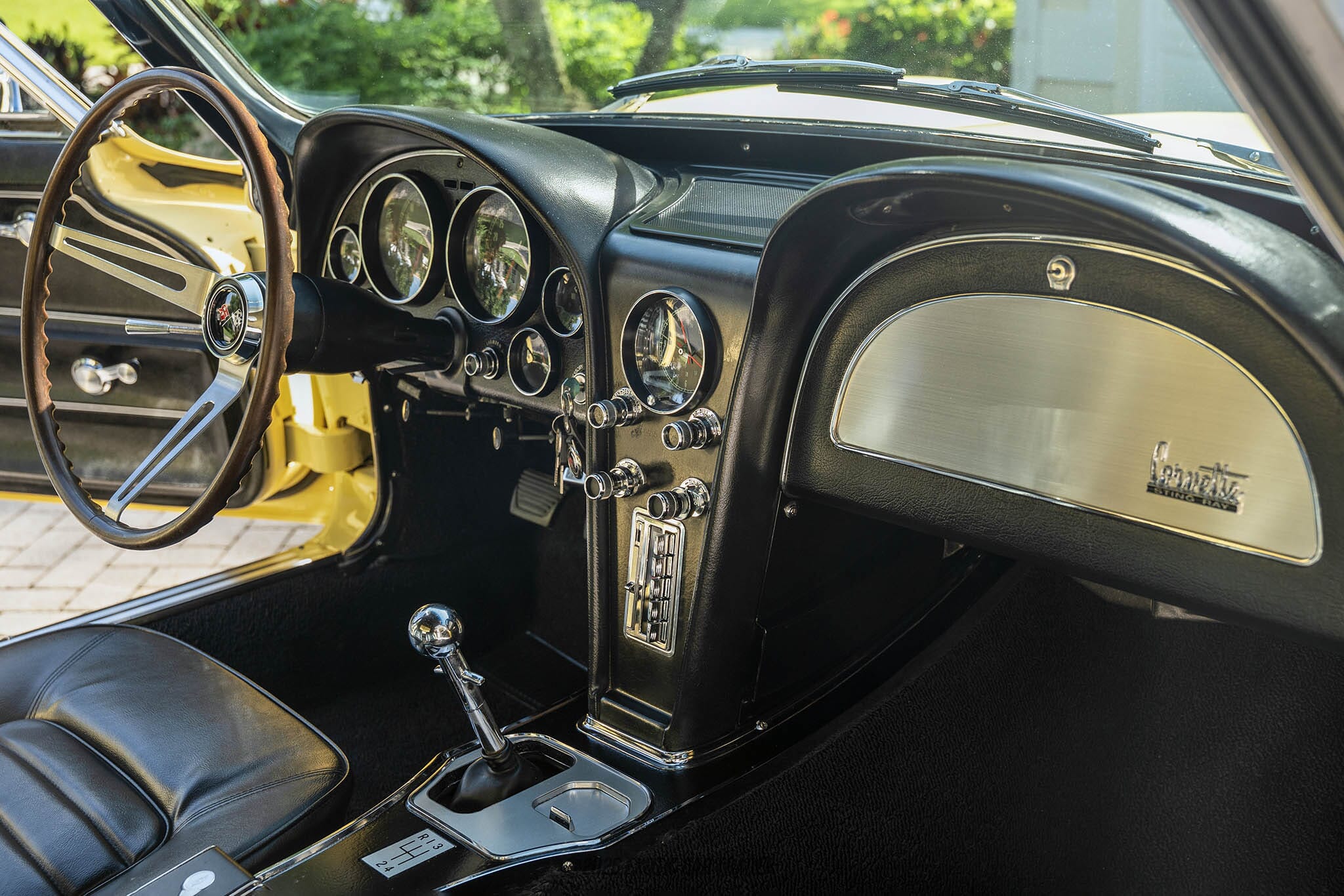
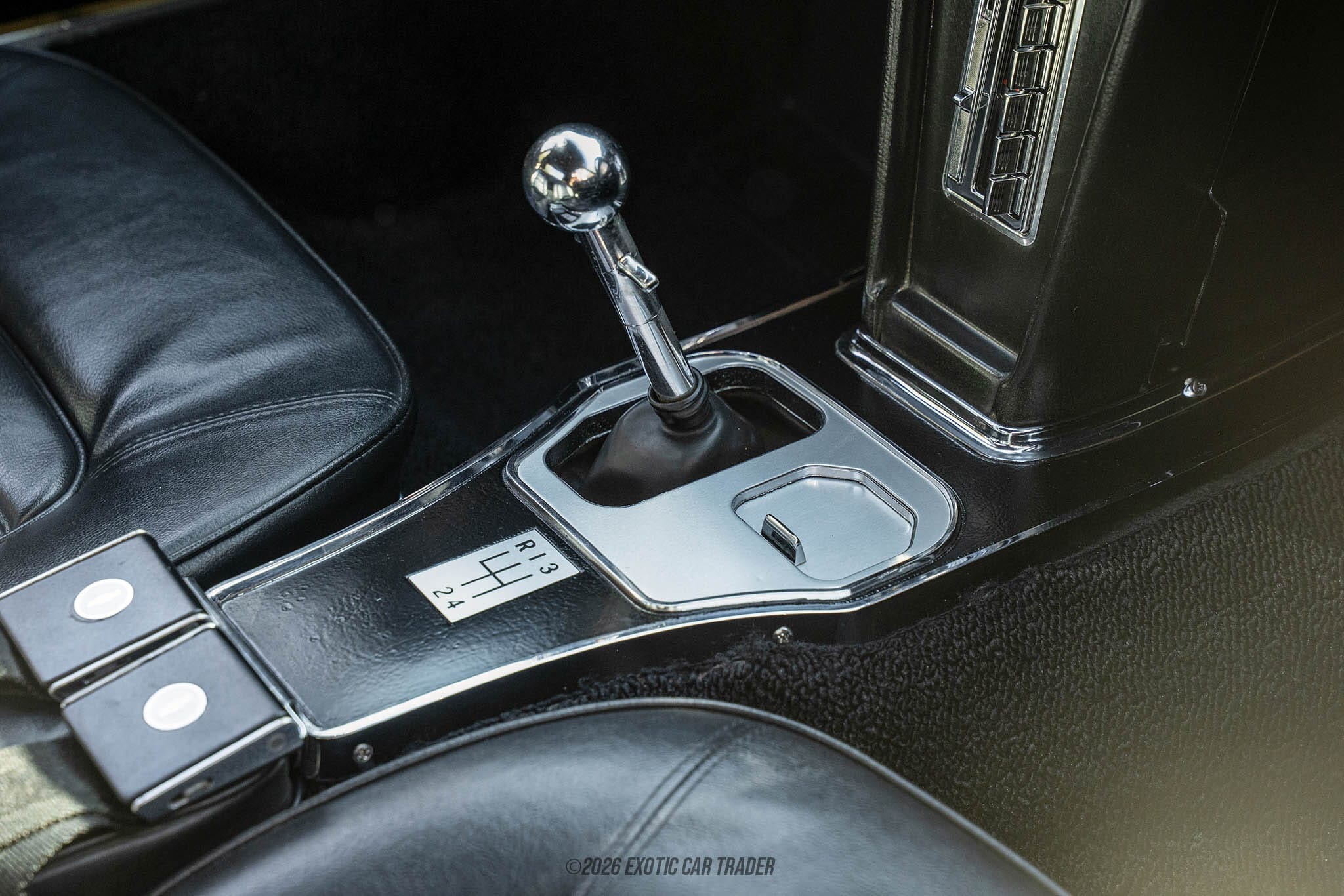
- 4-Speed Manual
- RWD
- Sunfire Yellow Exterior
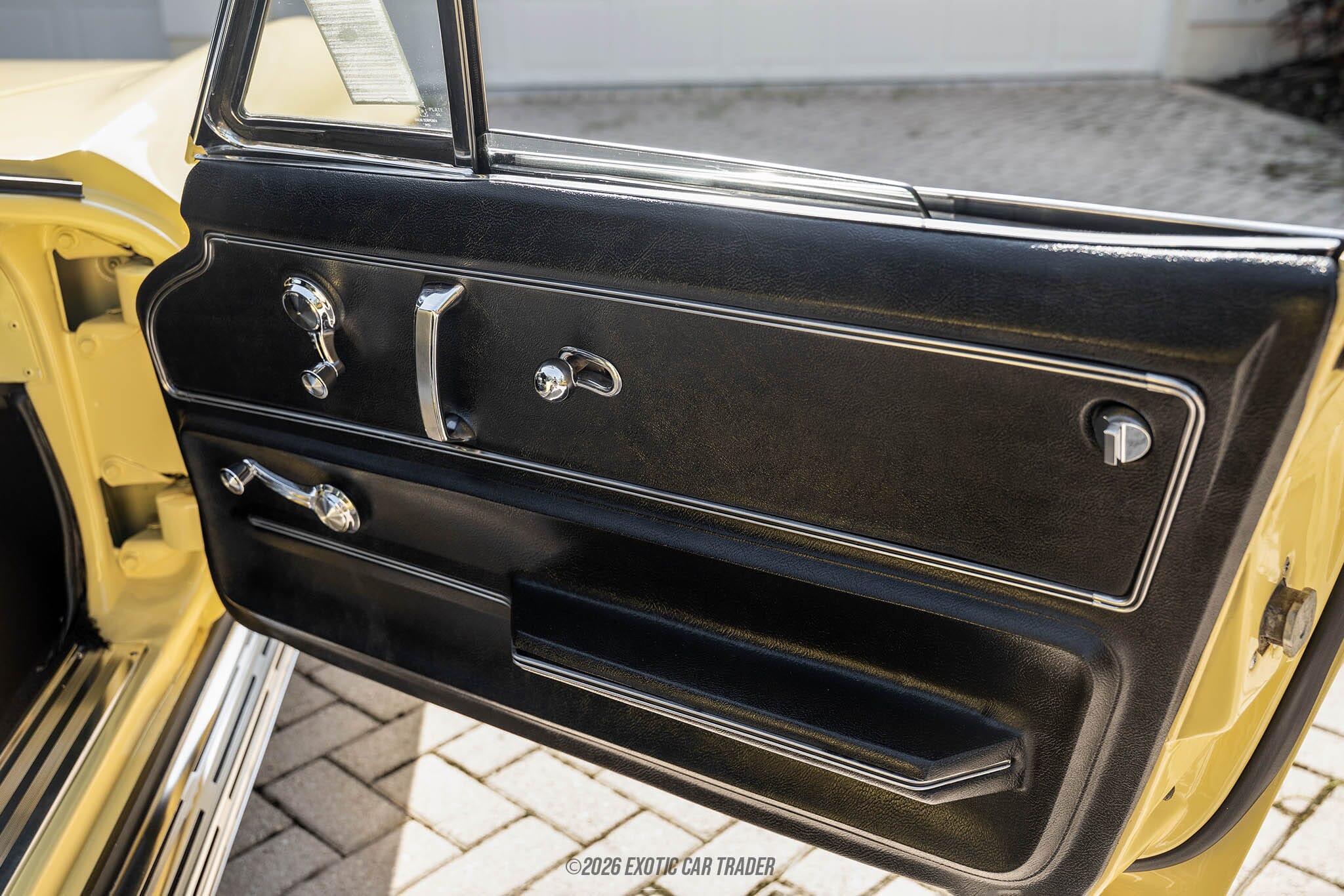
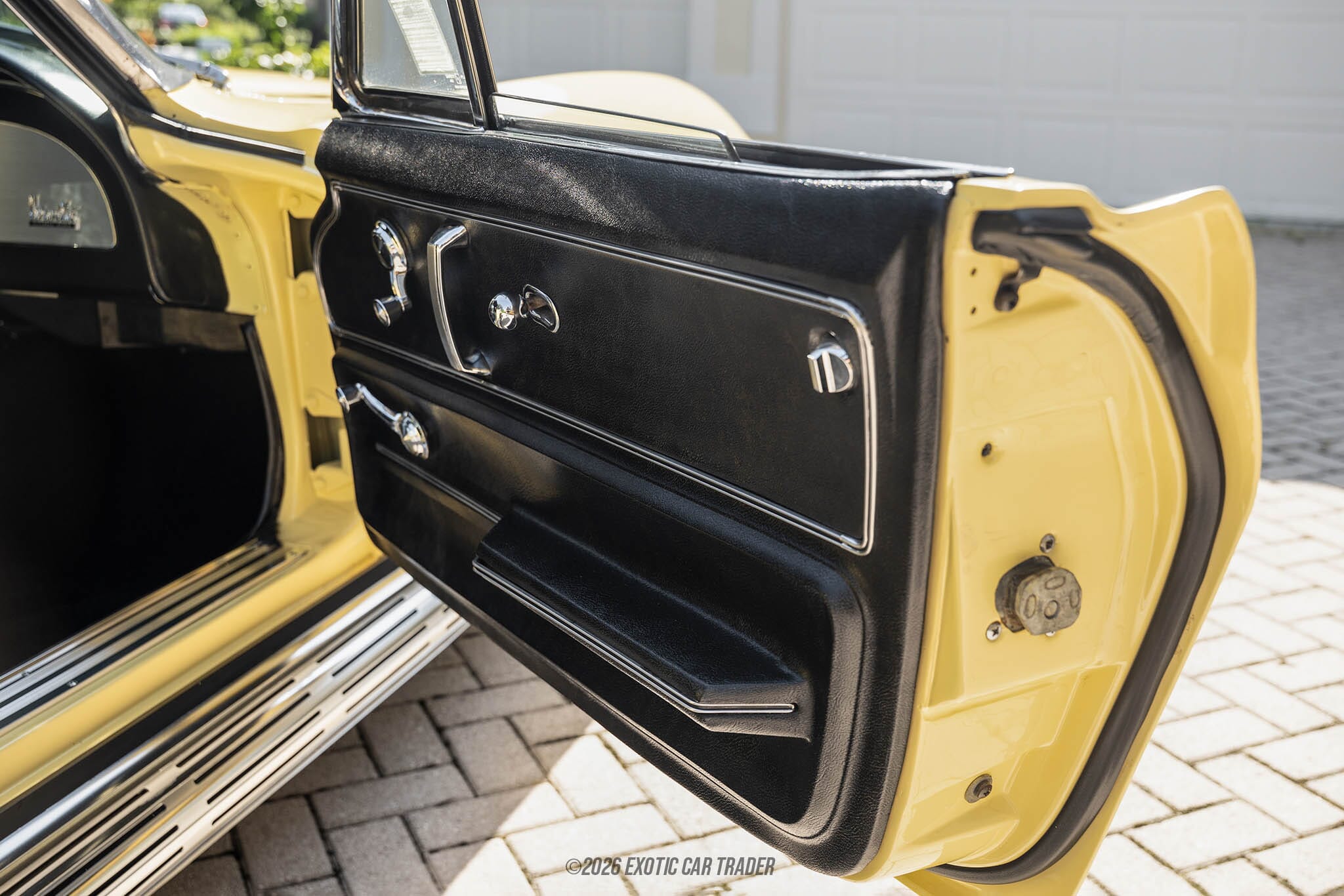
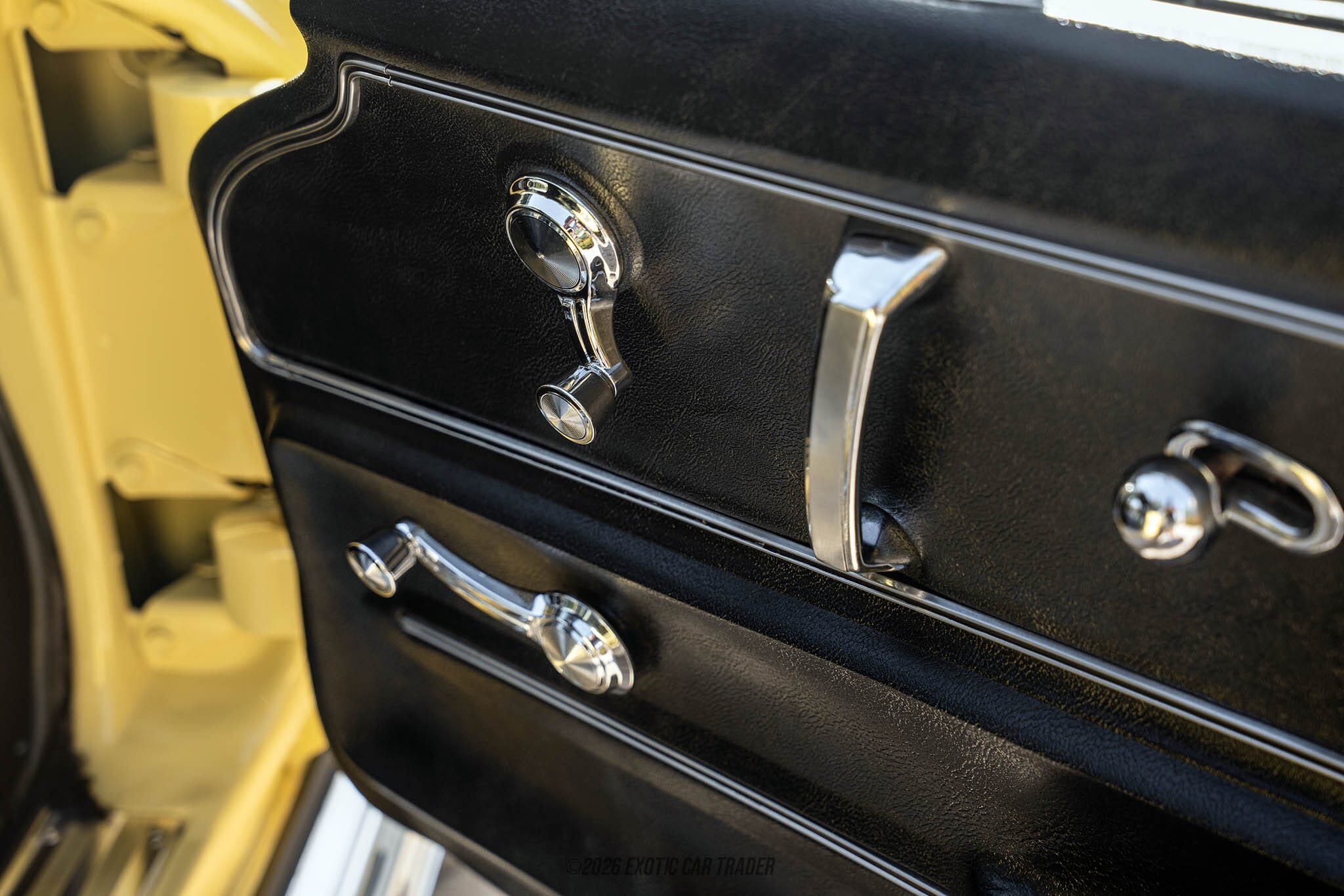
- Black Vinyl Interior
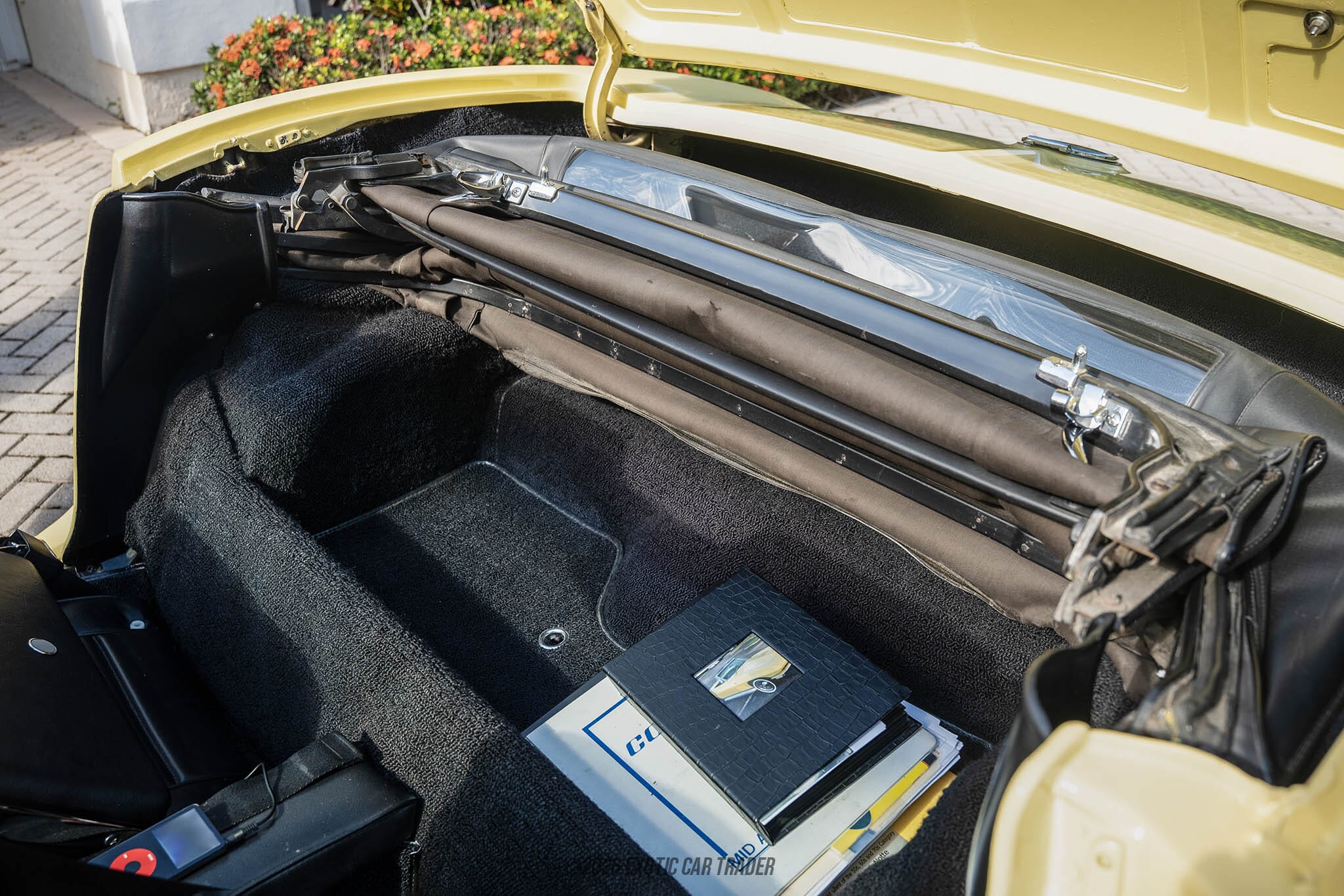
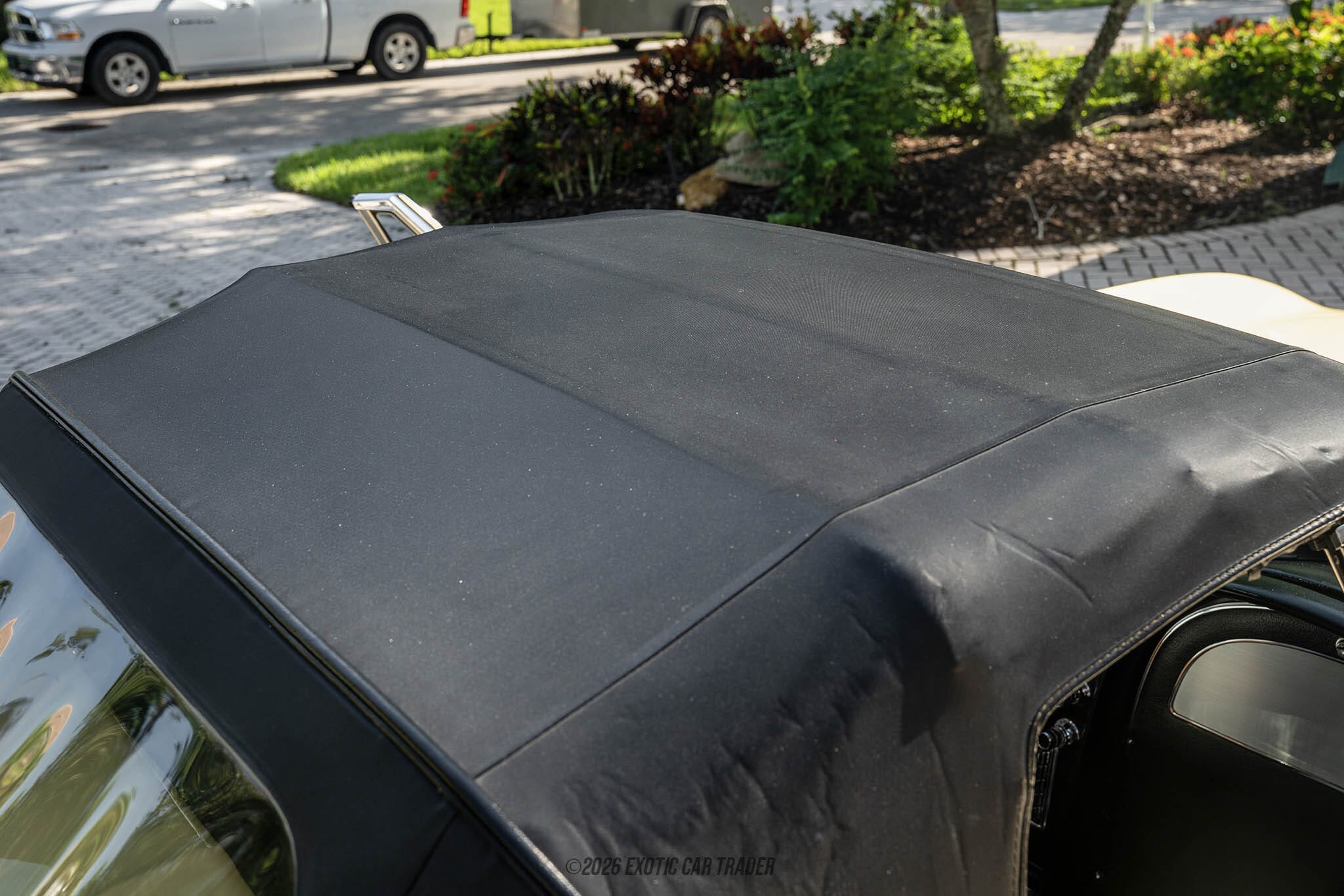
- Aftermarket Black Convertible Soft Top
- Black Loop Carpet
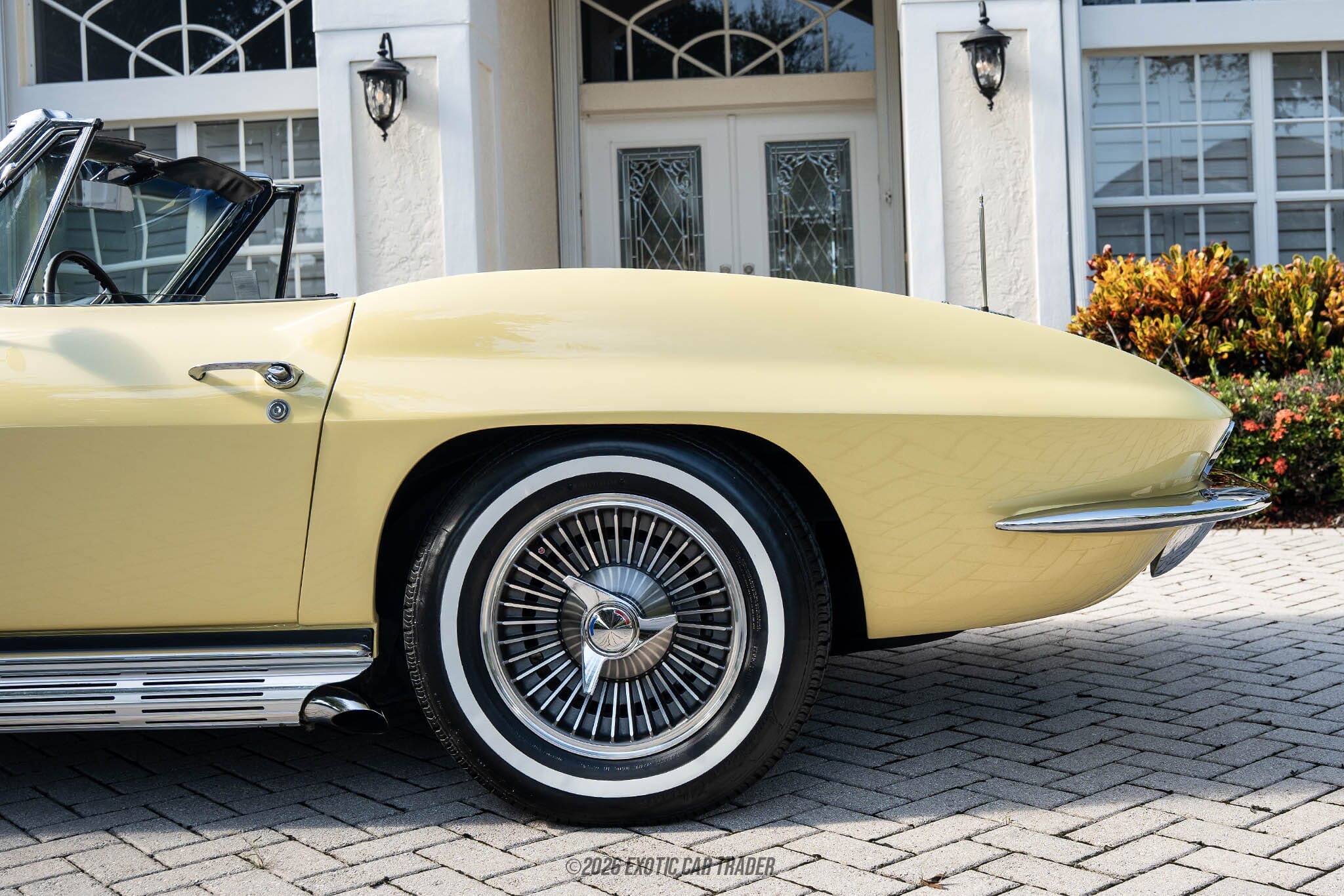
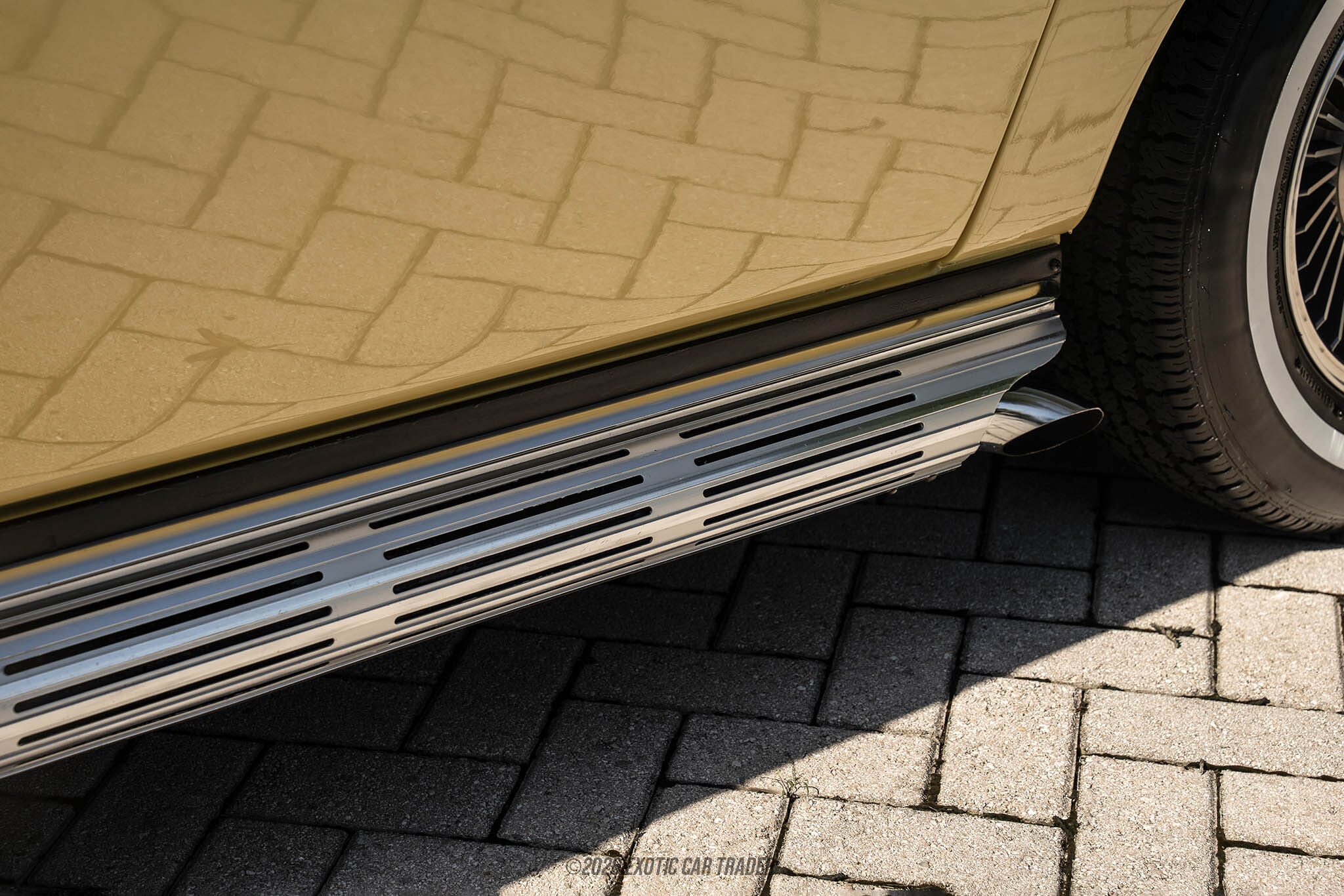
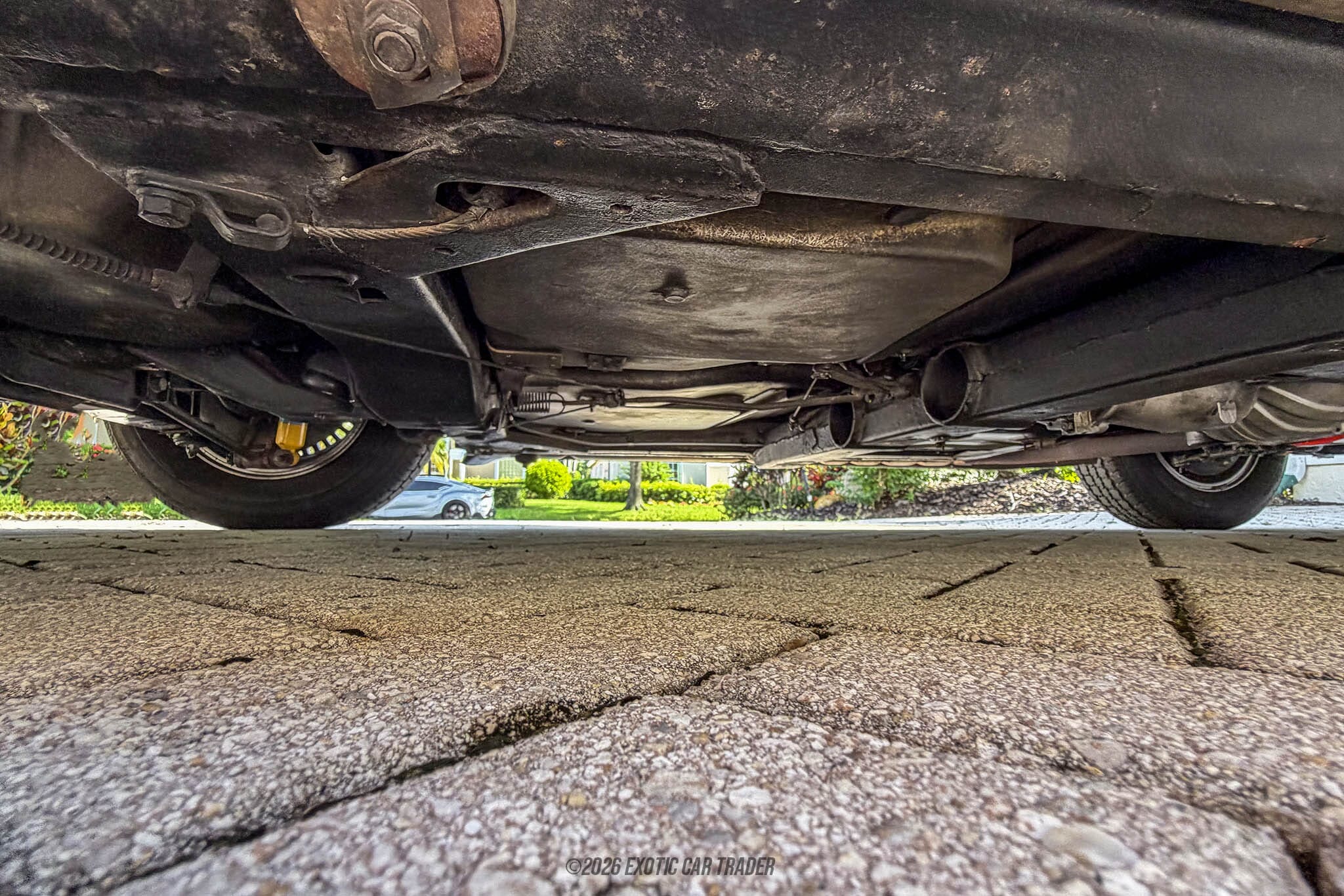
- Side Mount Exhaust
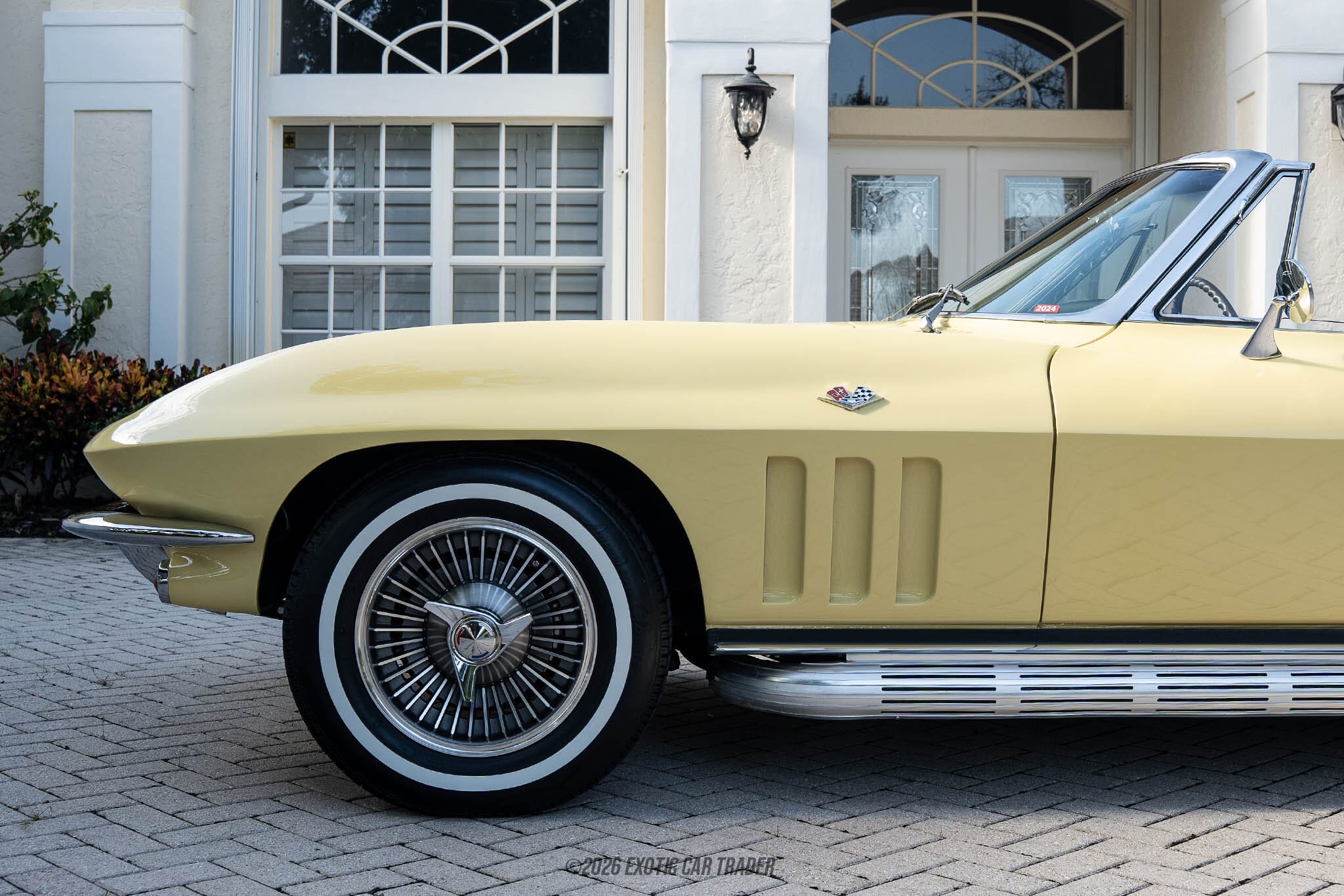
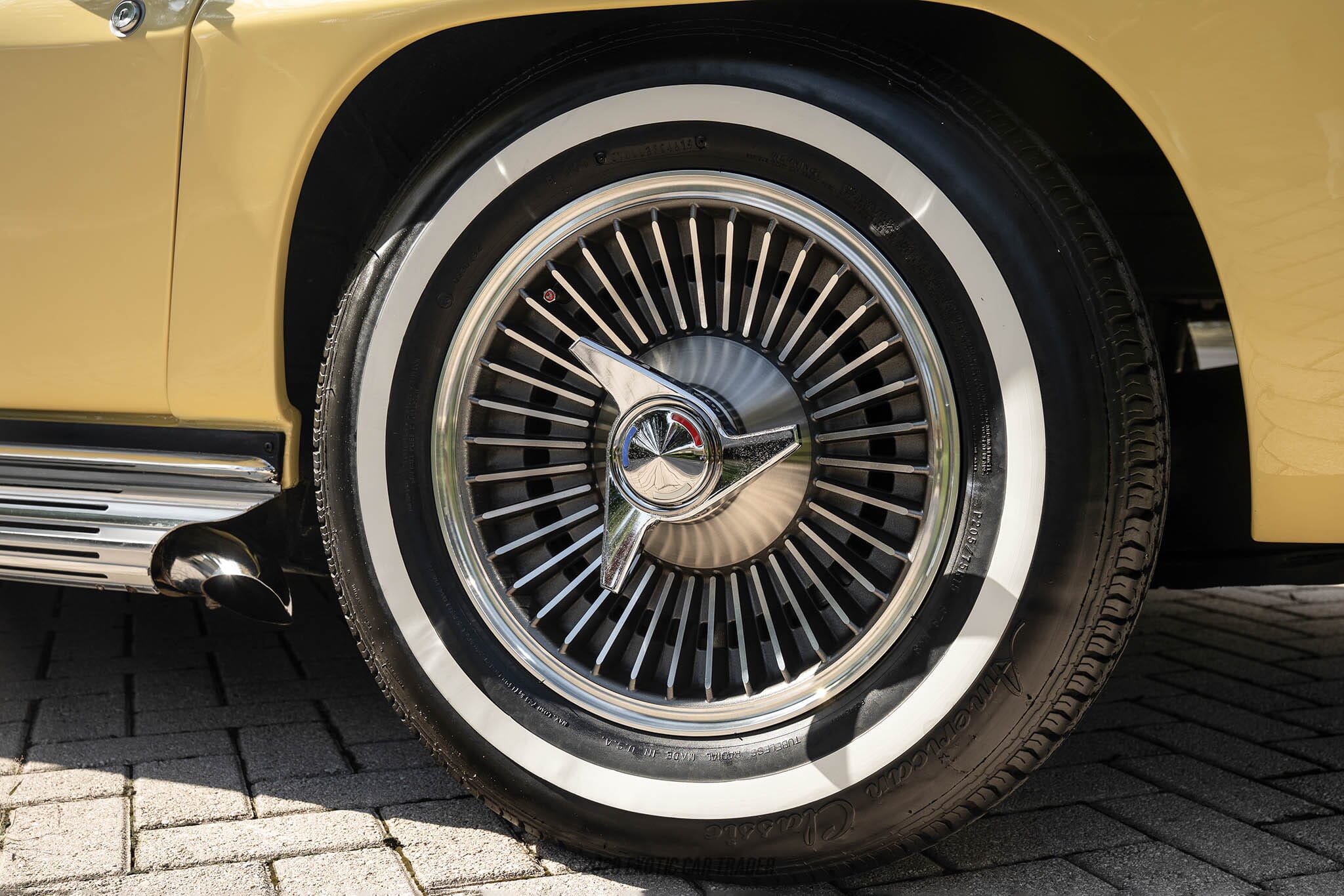
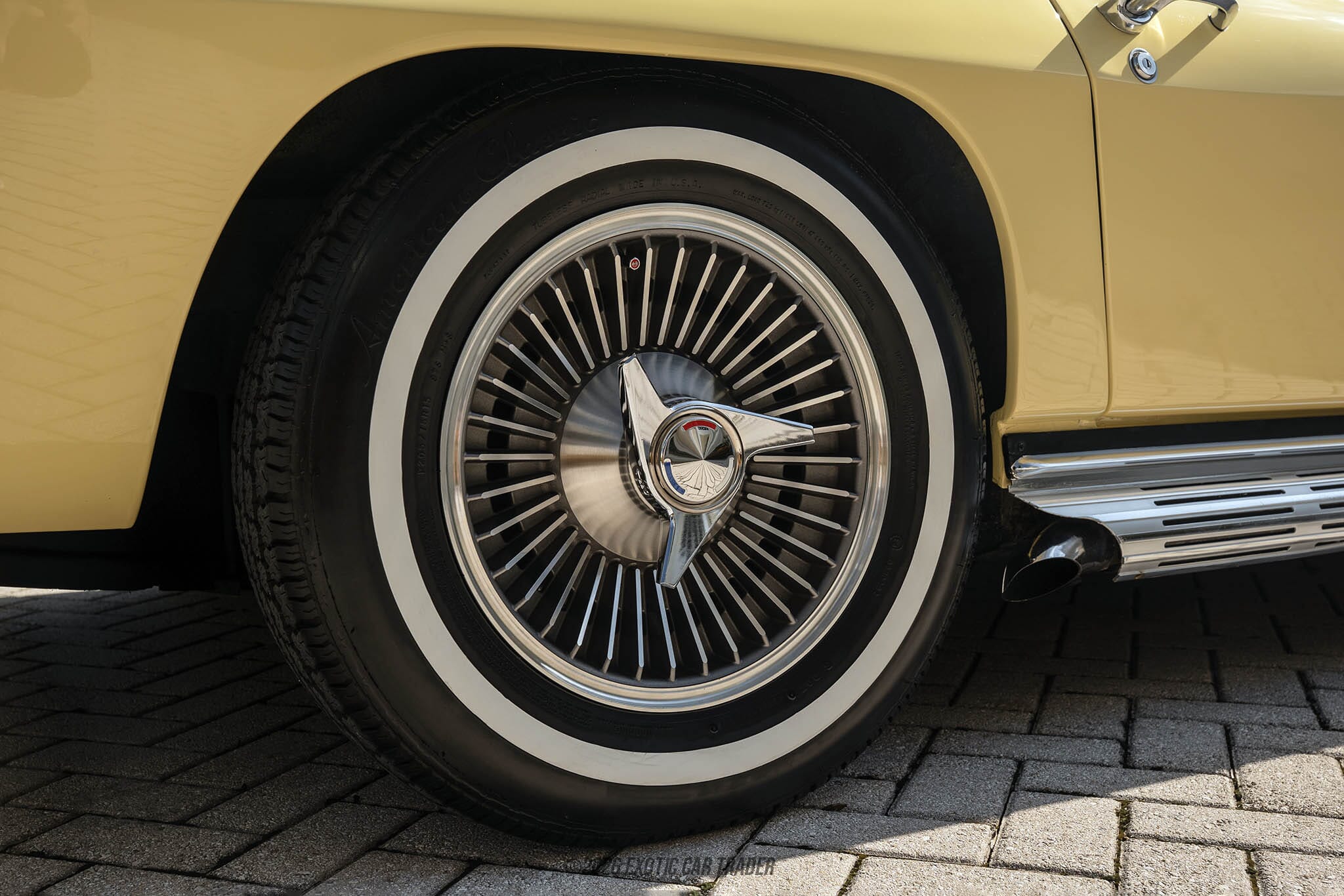
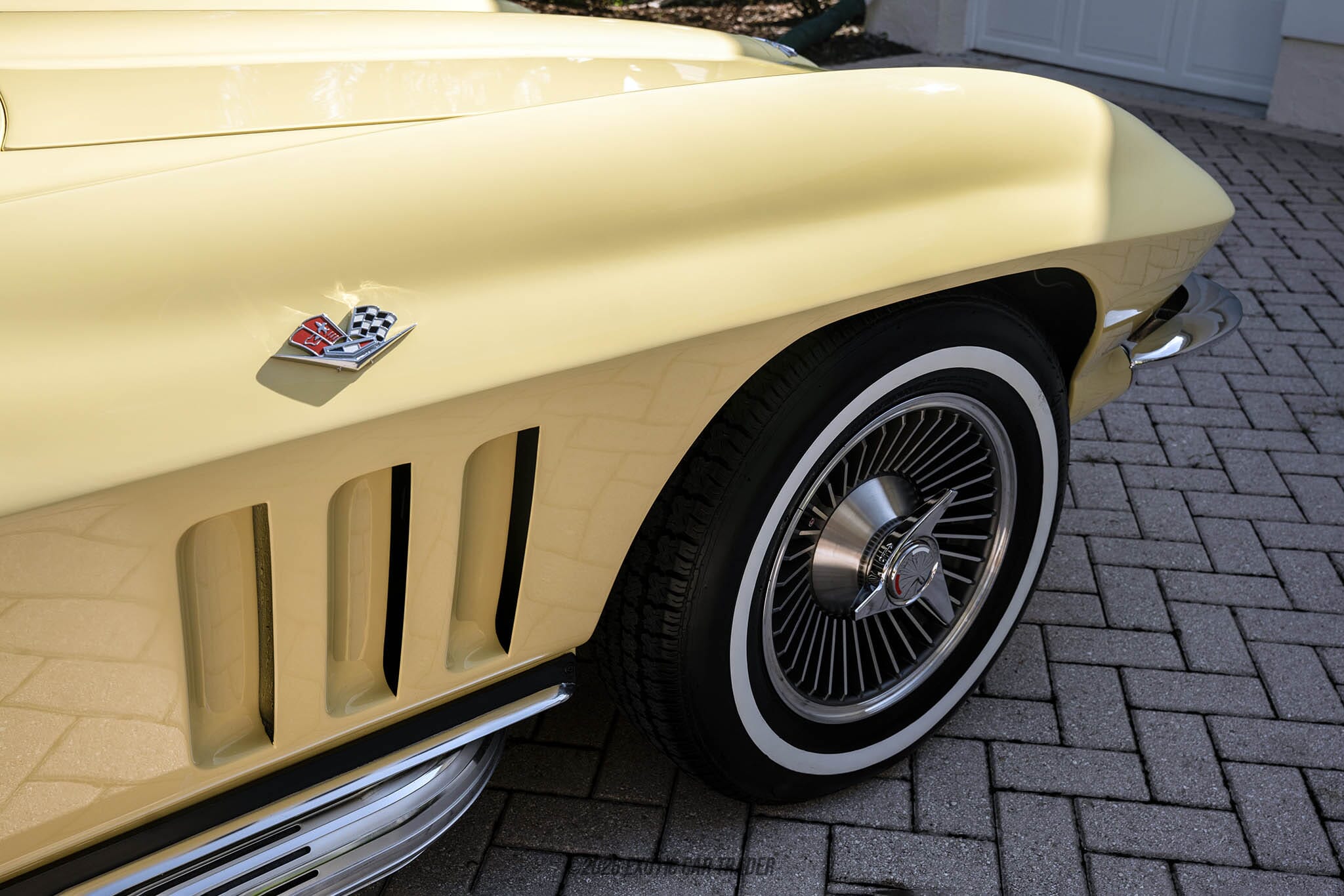
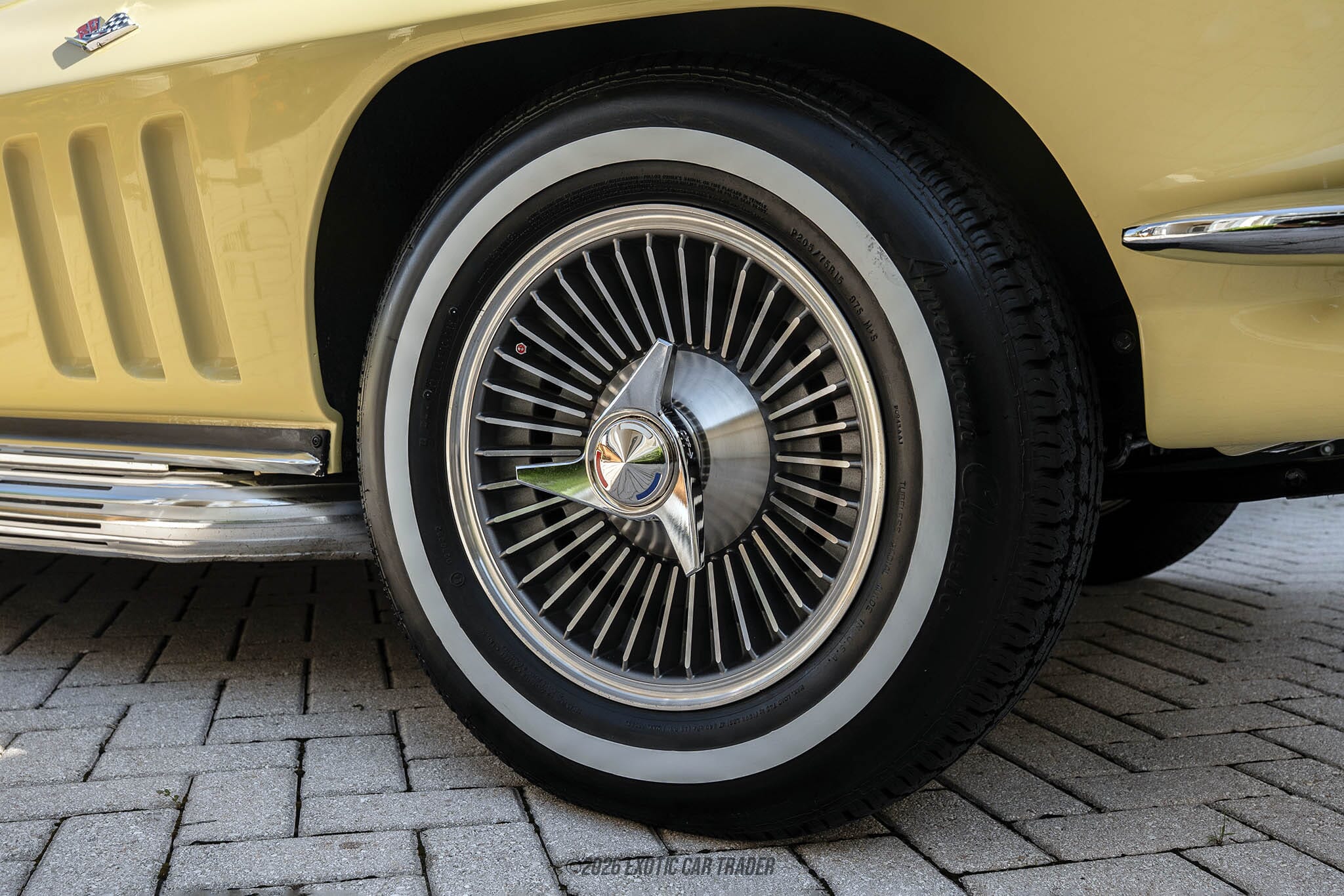
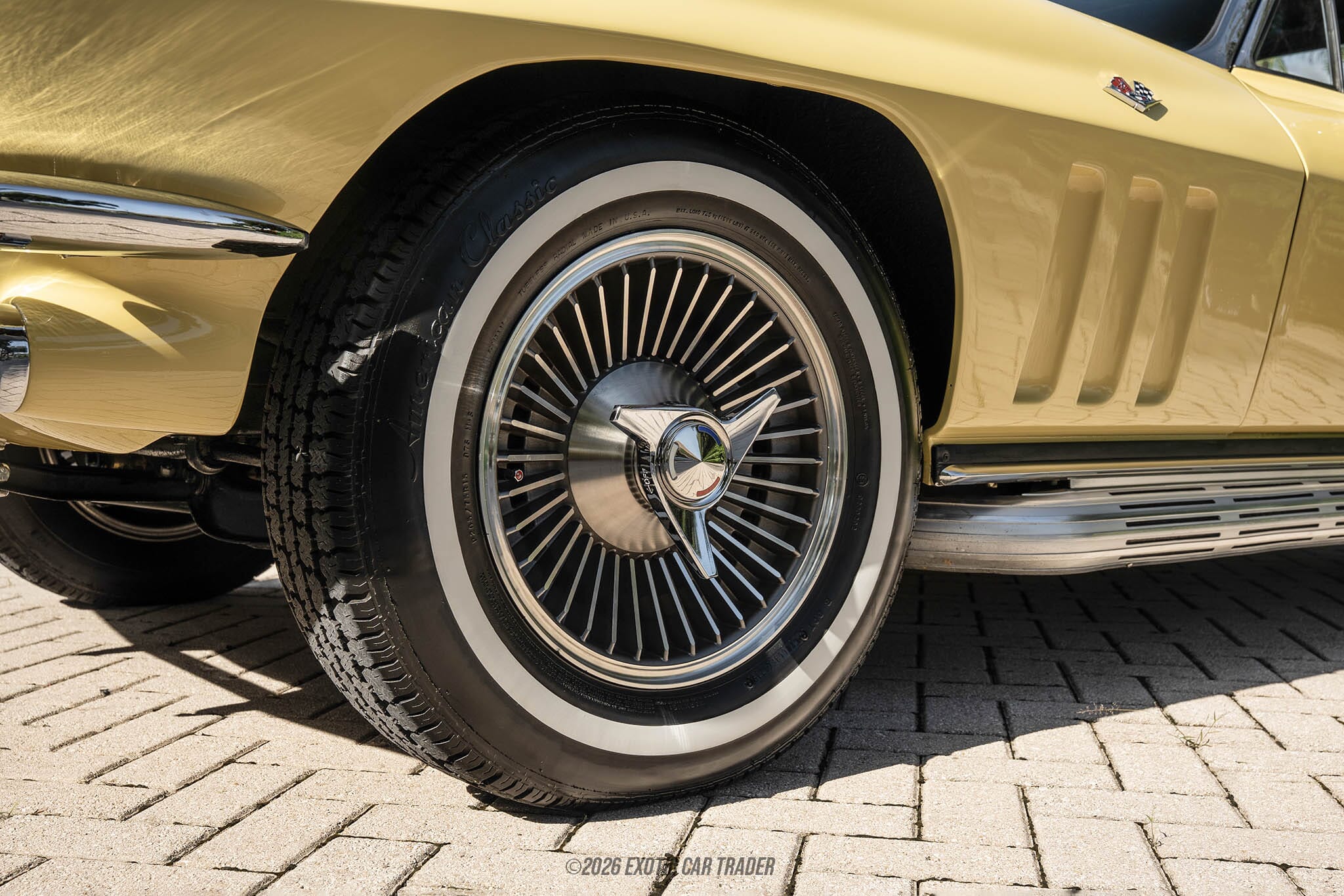
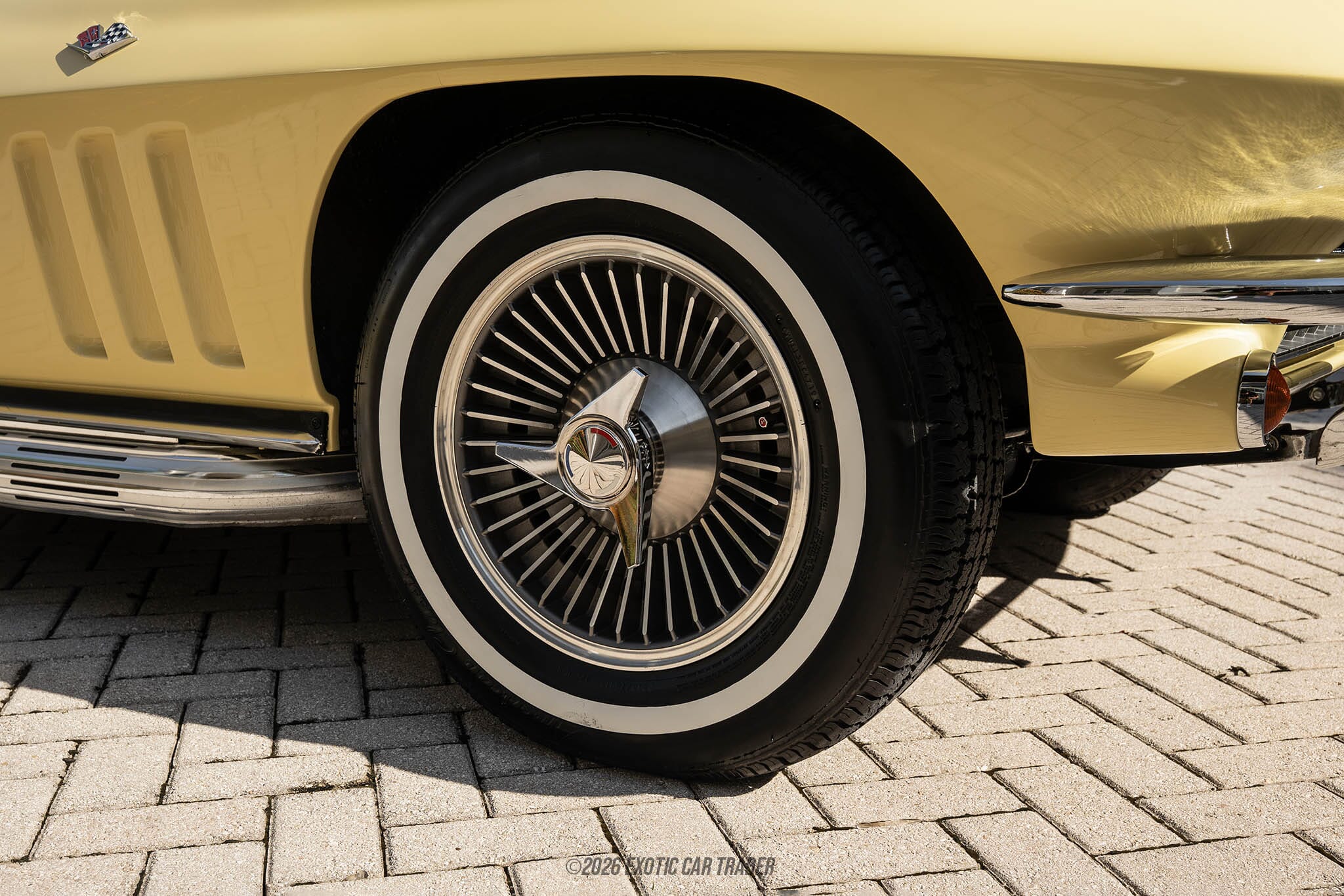
- 15” Turbine Style Aluminum Wheels w/ Knock-Off Spinners
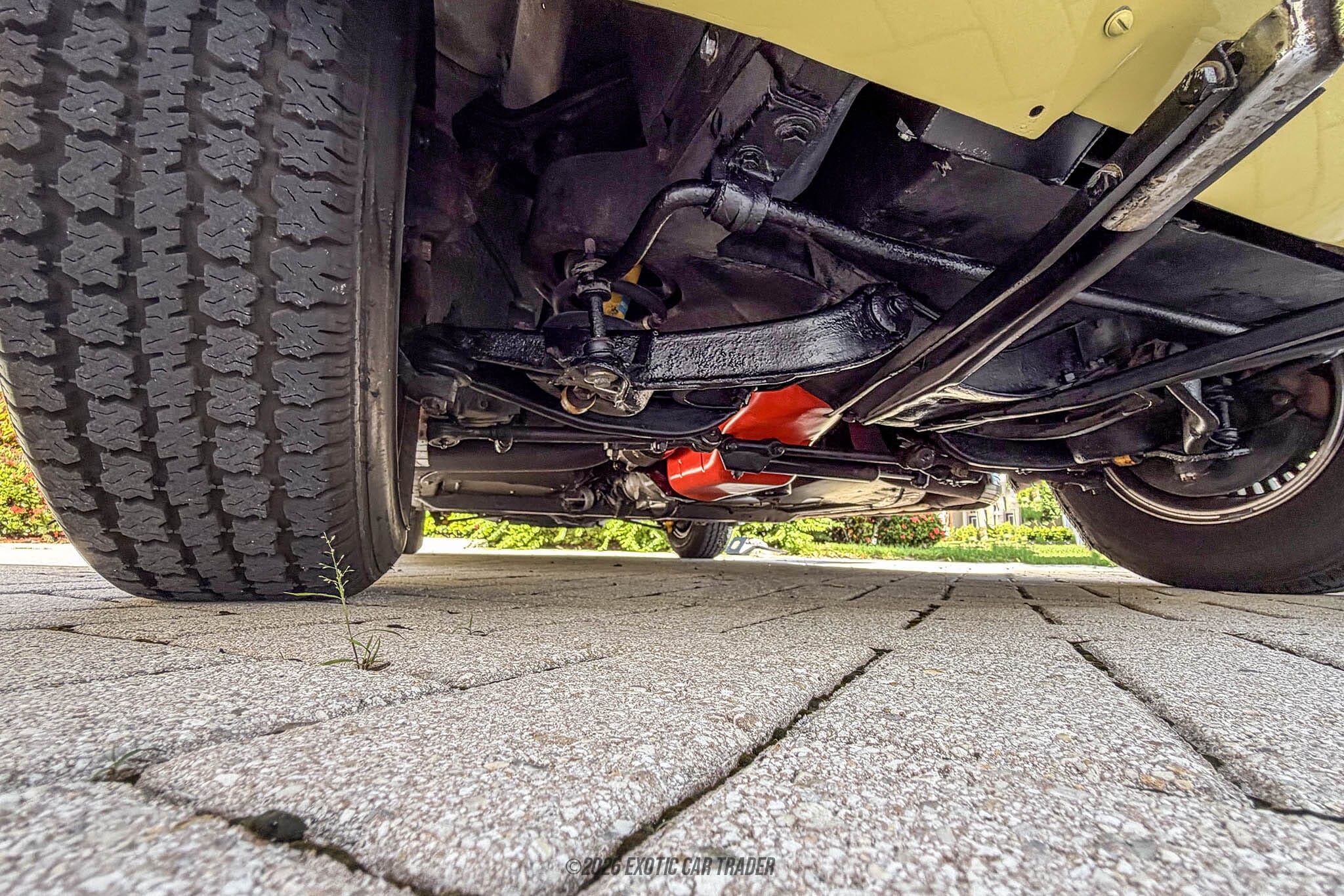
- 4-Wheel Disc Brakes
- Aftermarket Tail Lights
- Aftermarket Locking Gaskets for Doors, Hood & Trunk
- Aftermarket Timing Gears & Timing Chain
- Aftermarket Cooling Equipment
- Aftermarket Spark Plugs & Wires
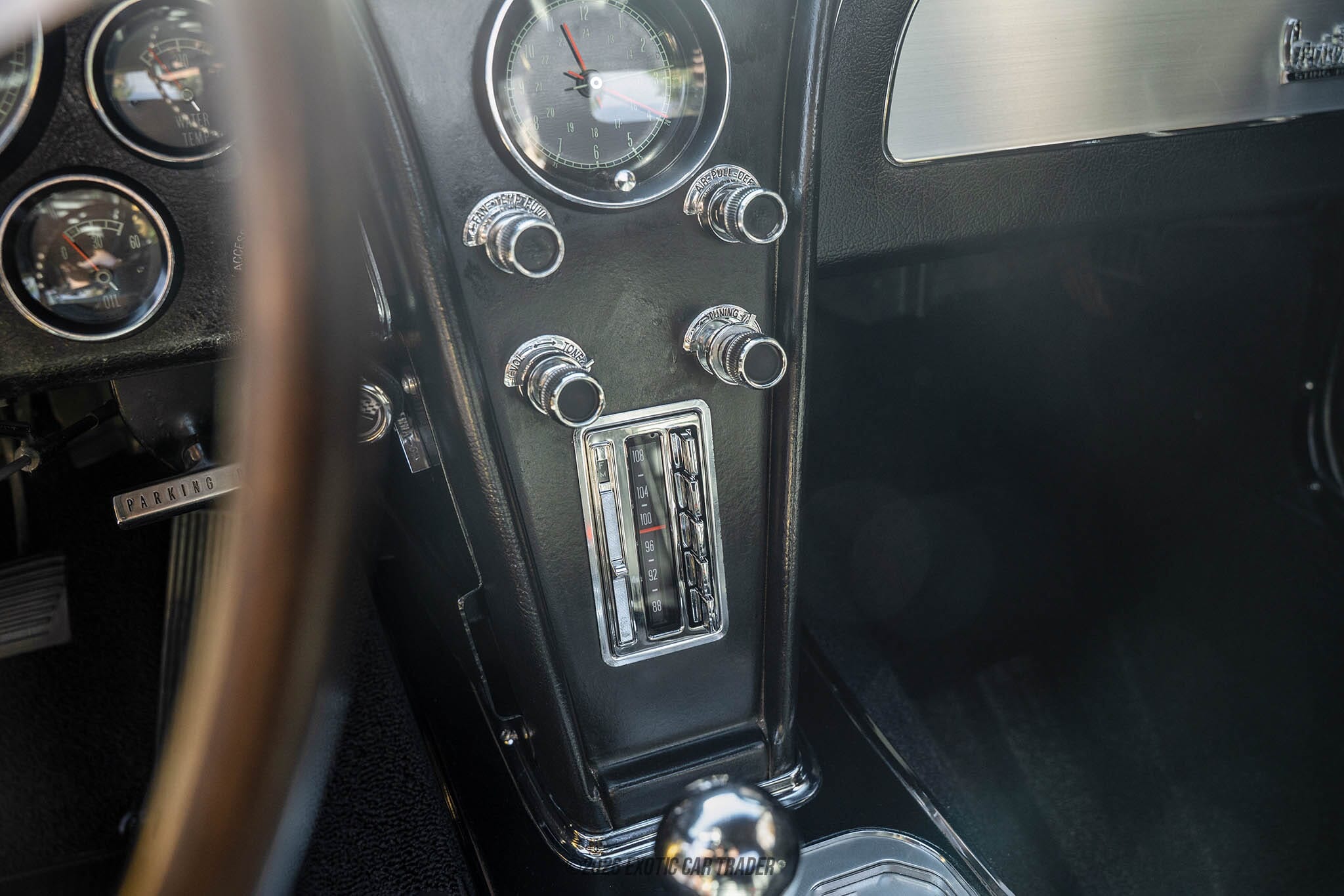
- Aftermarket Bluetooth Radio
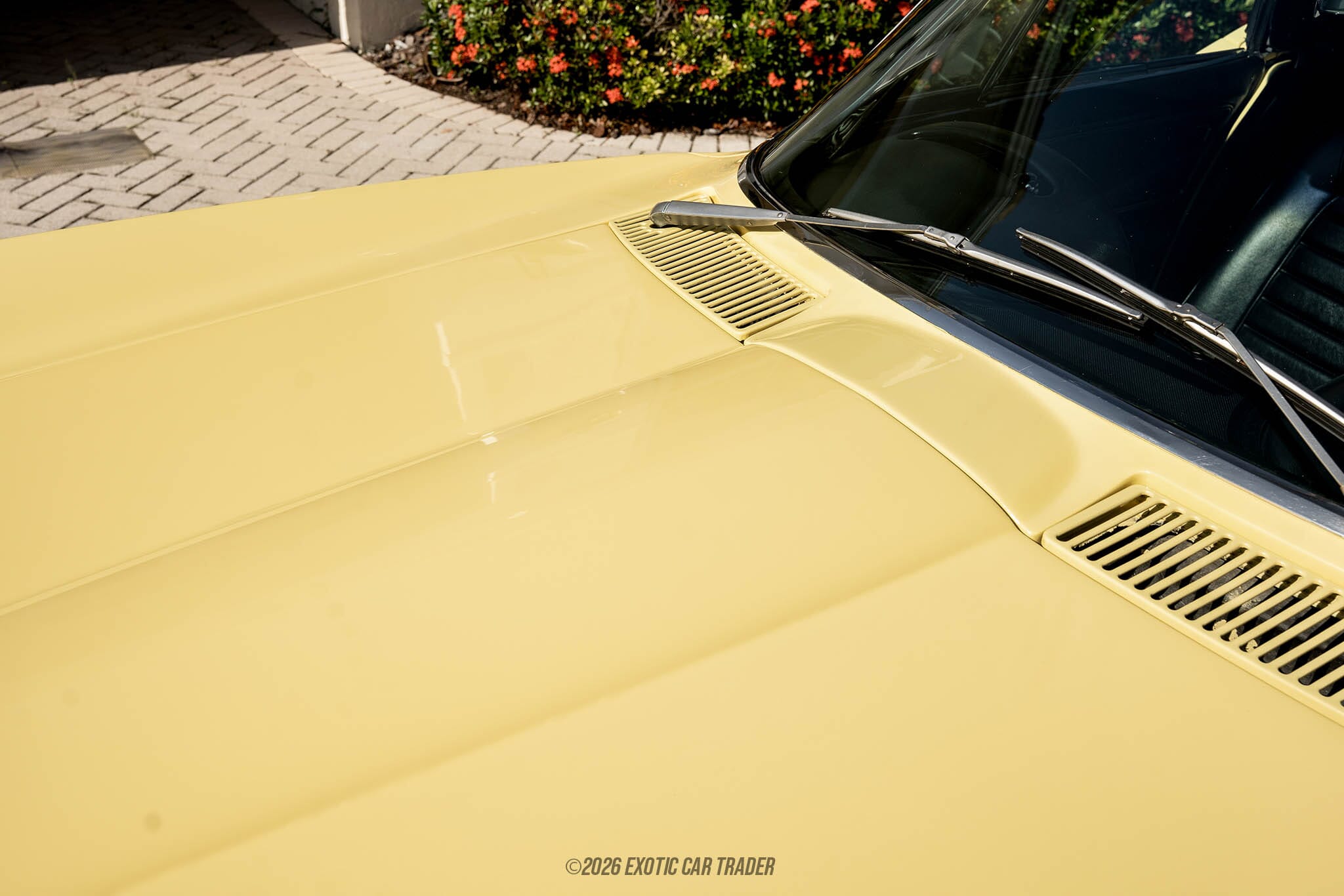
- Custom Paint Job


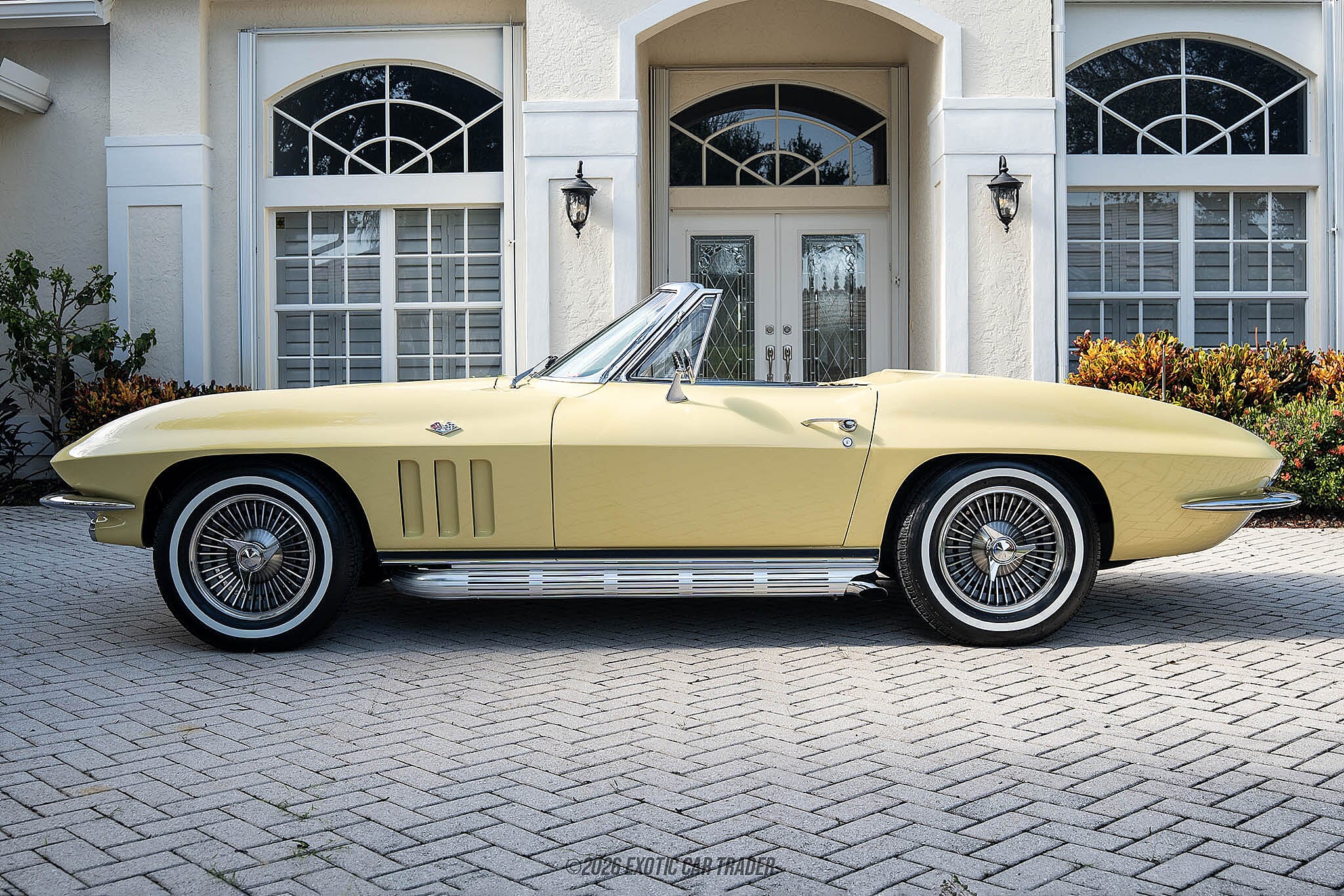
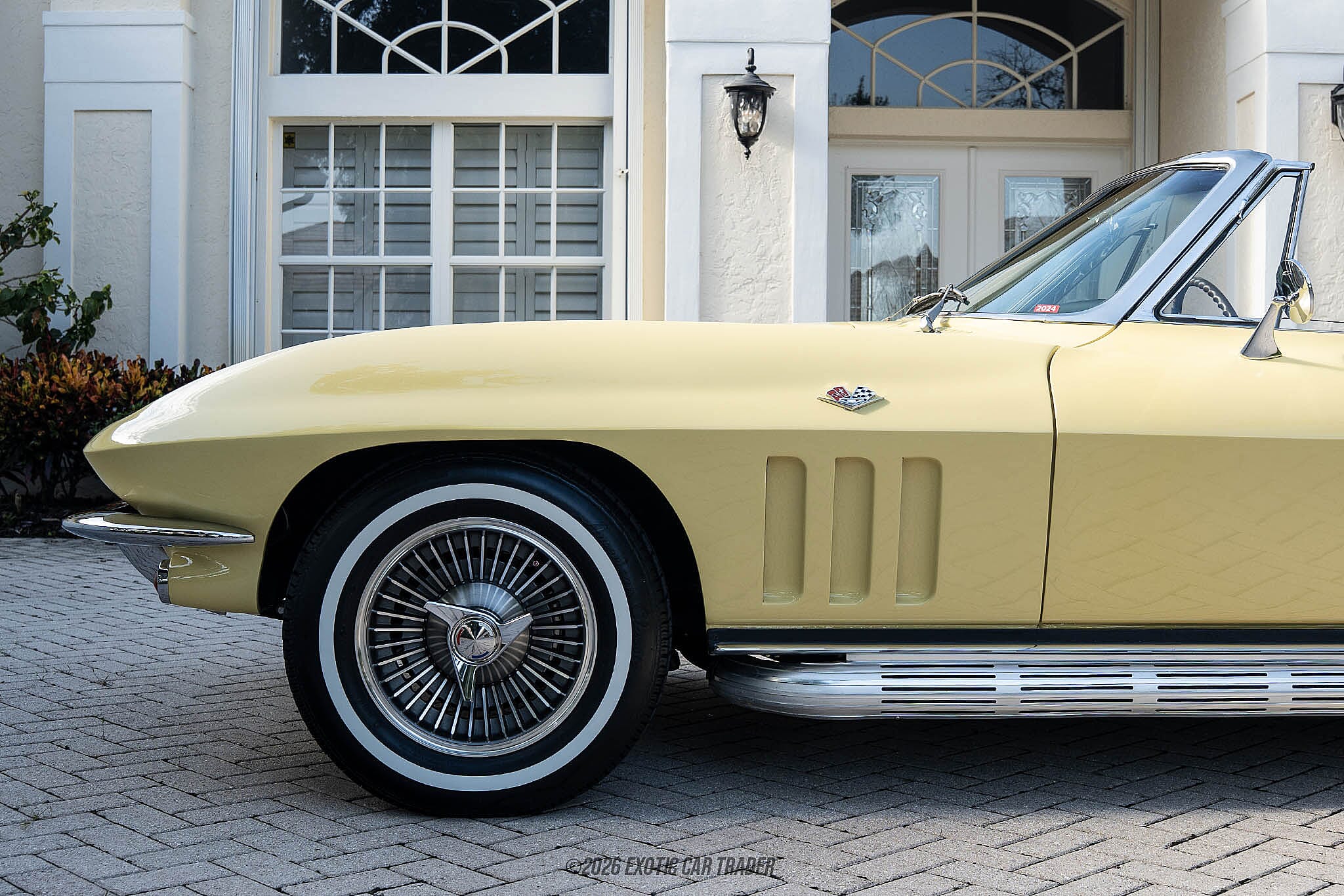
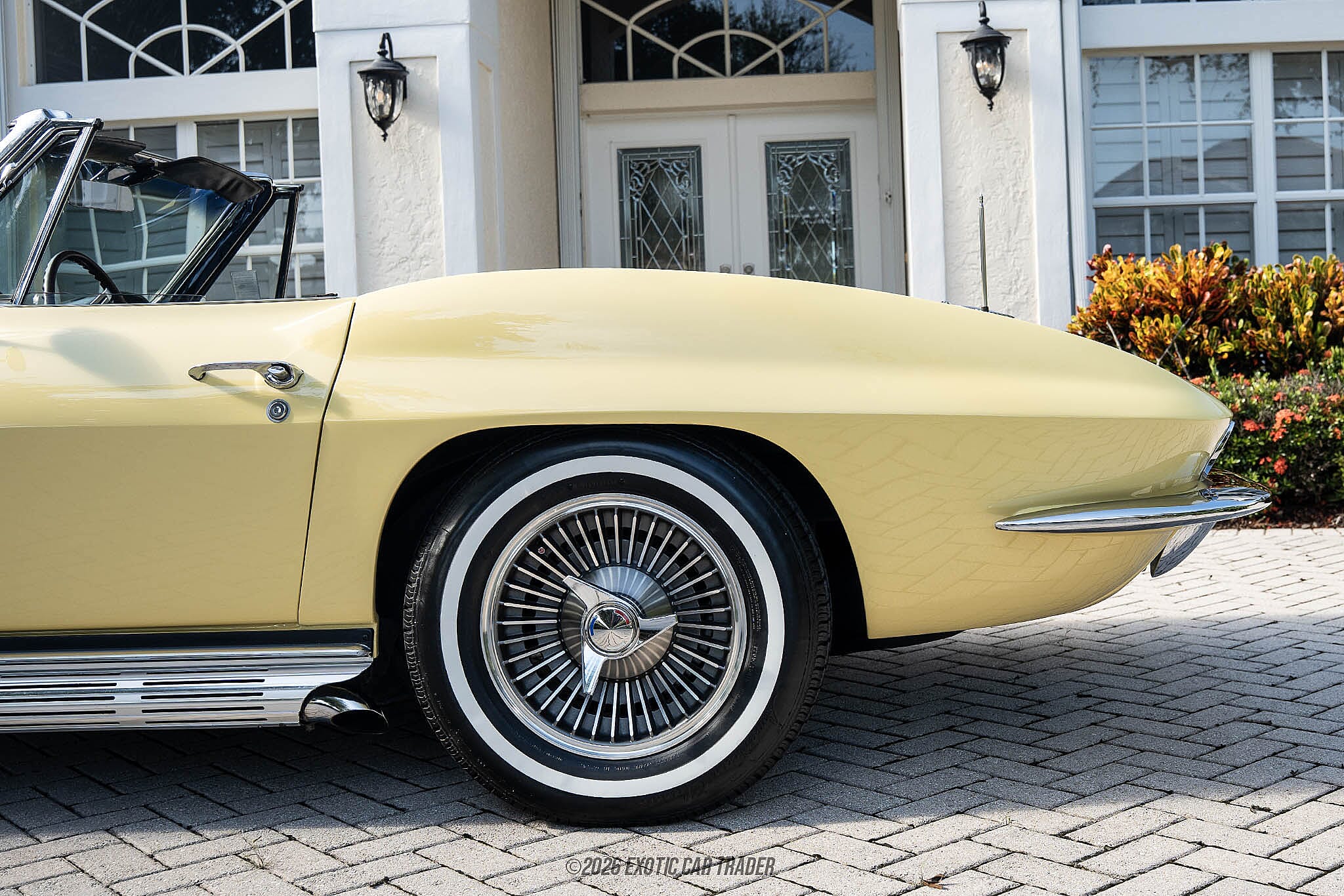
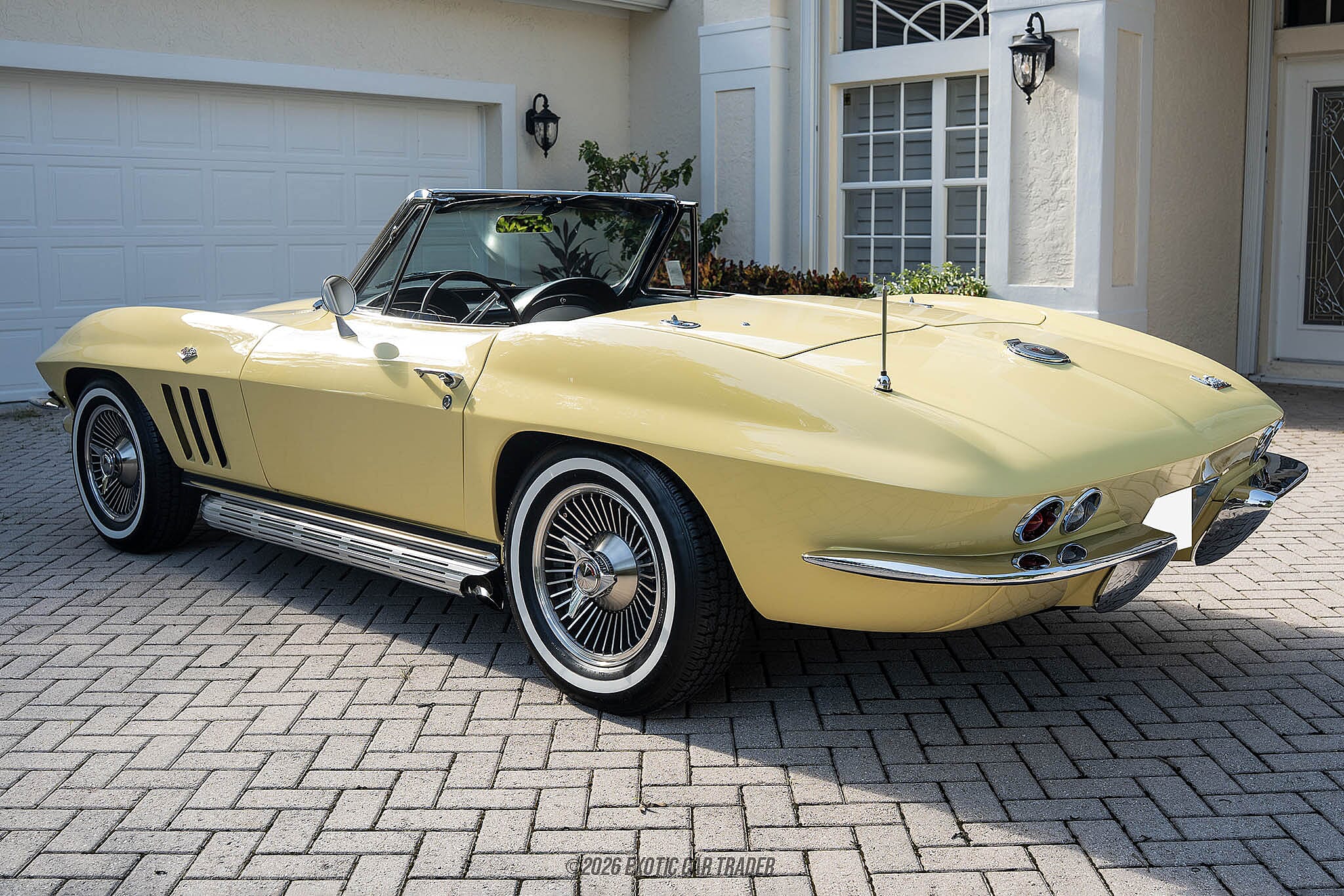
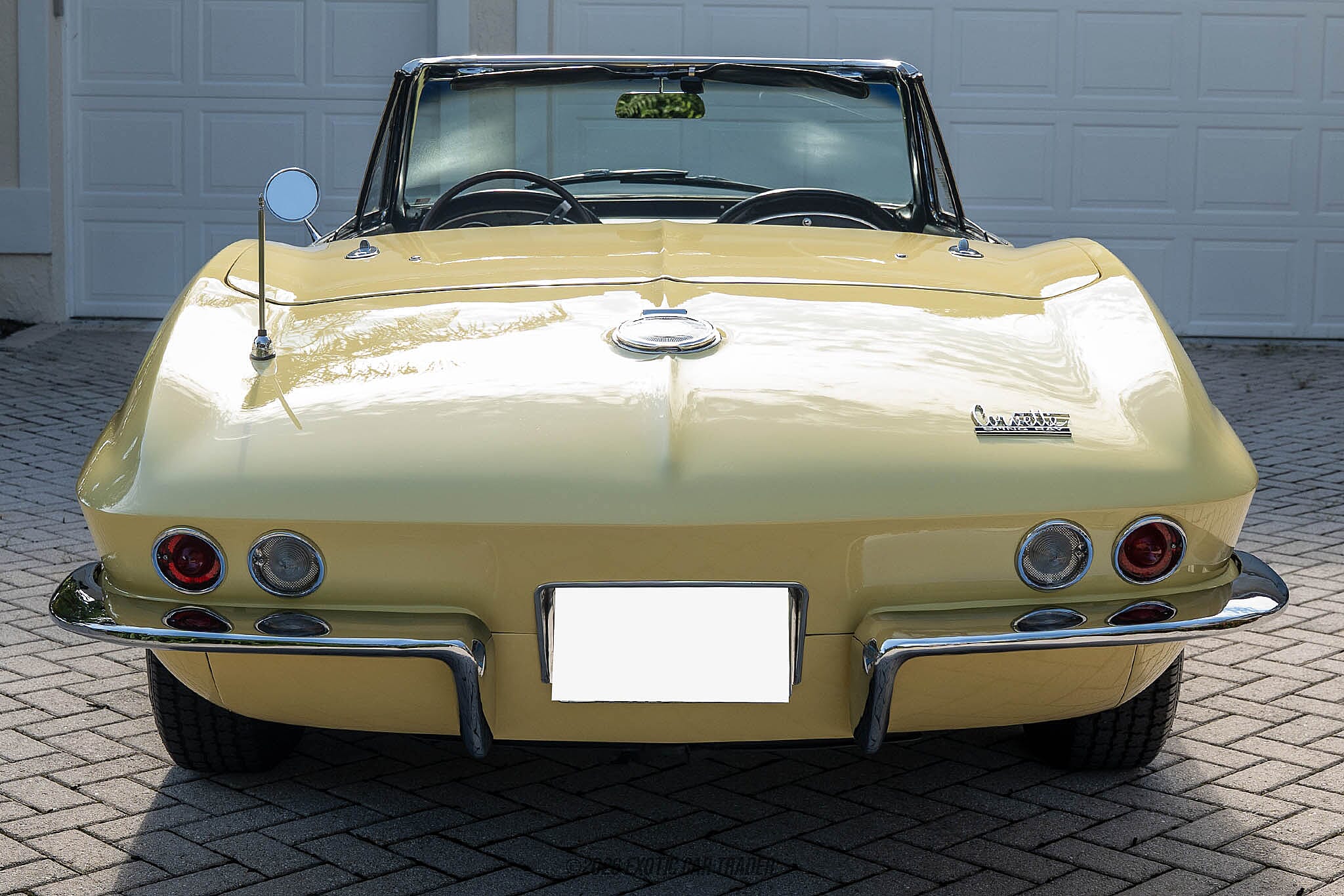
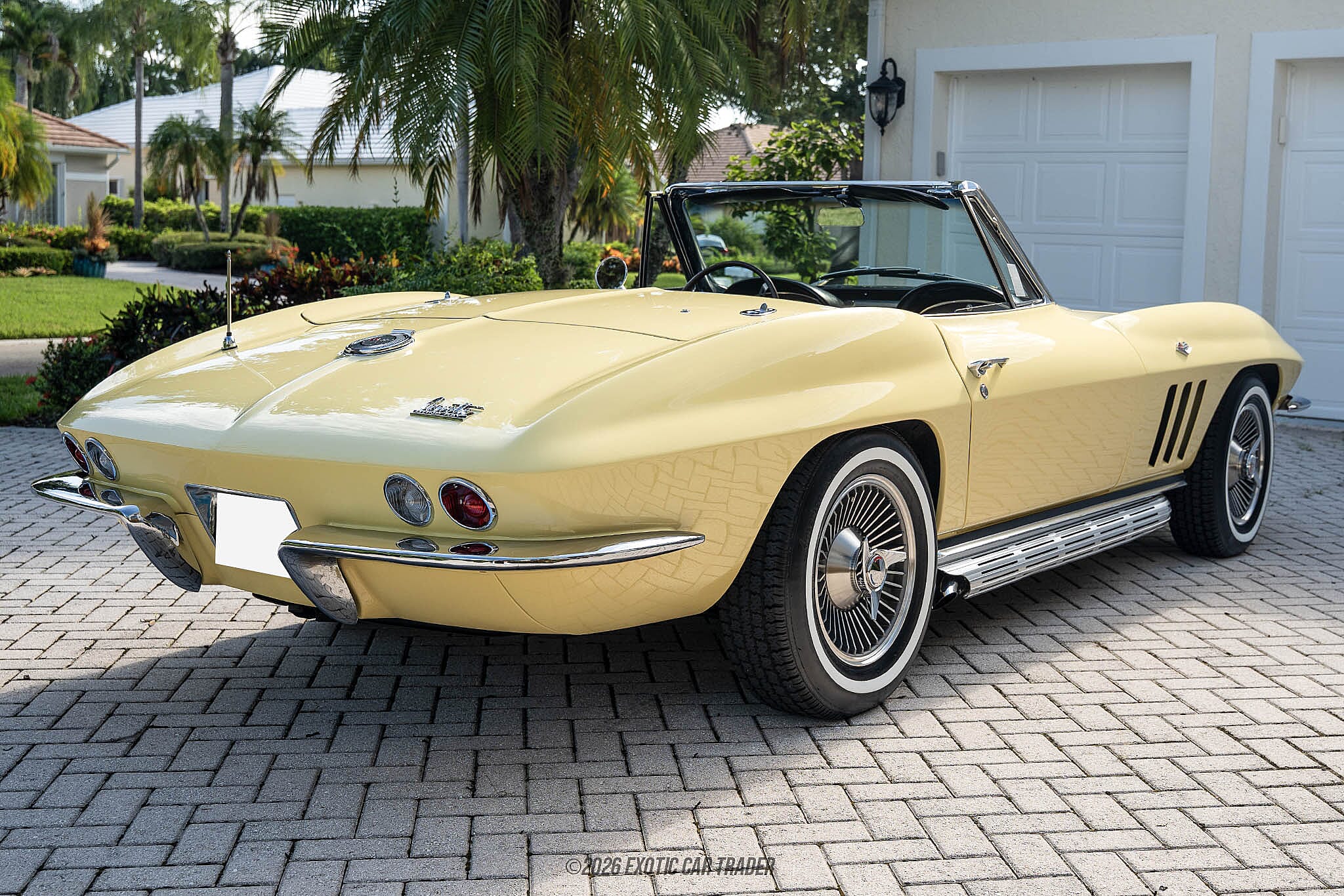
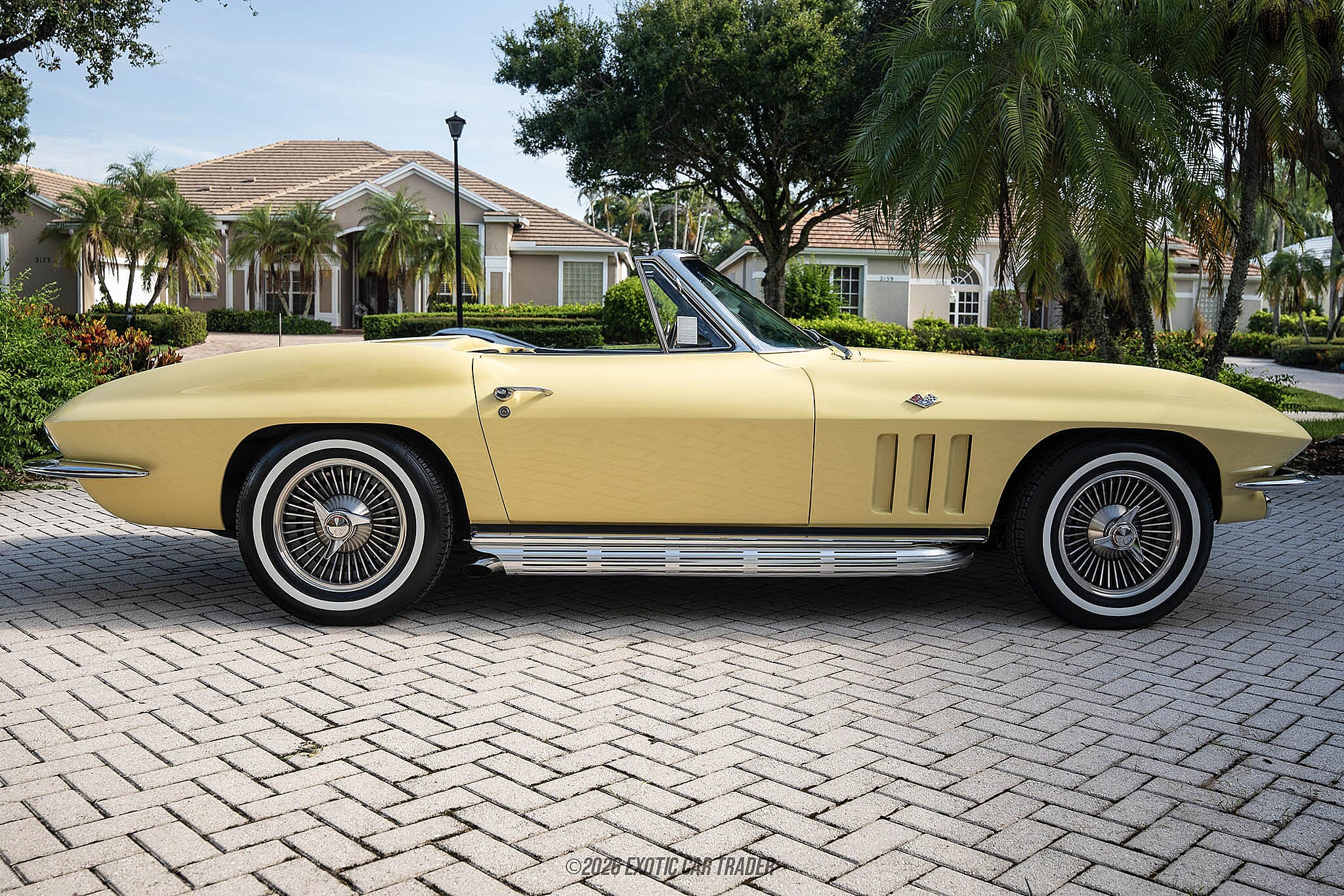
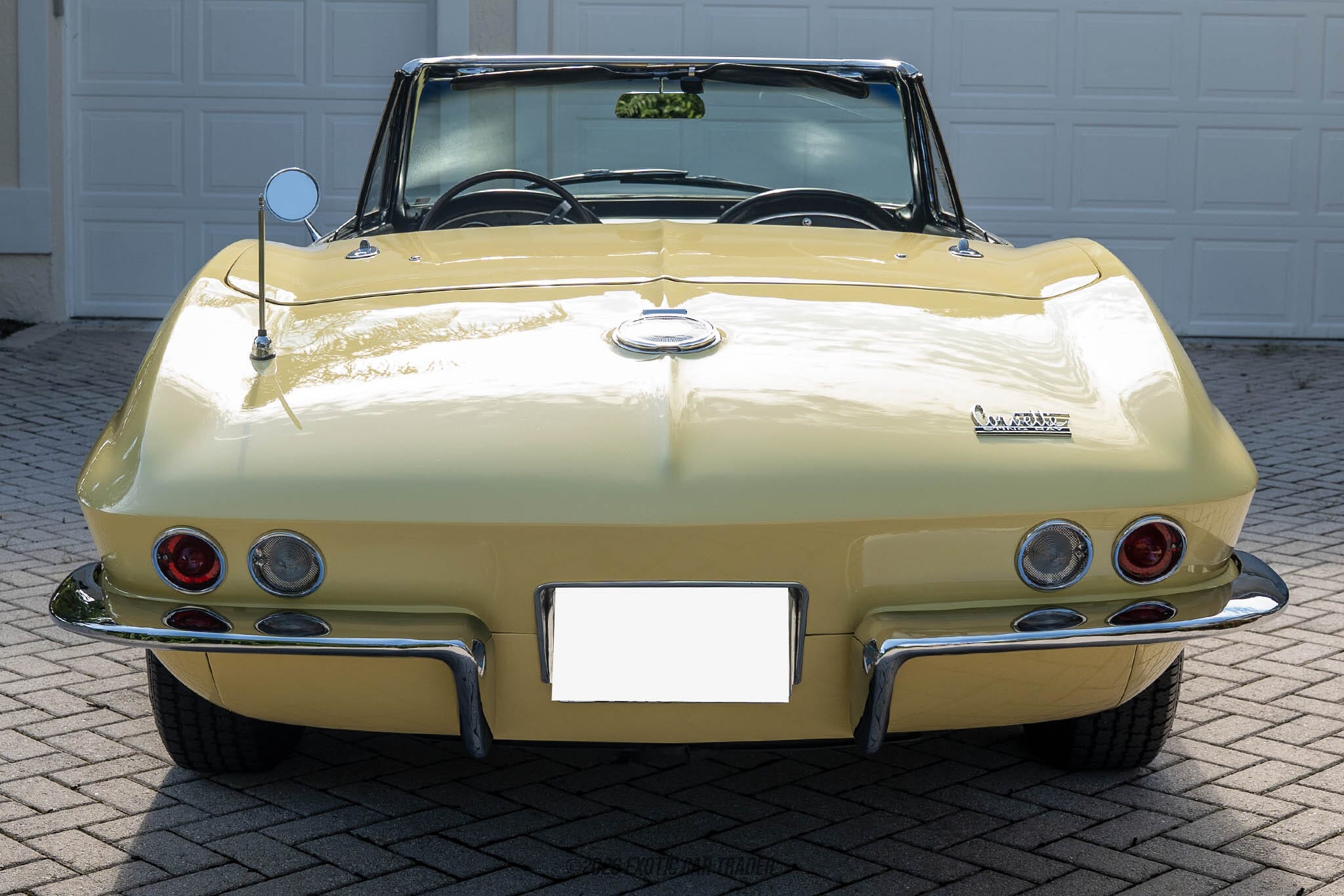
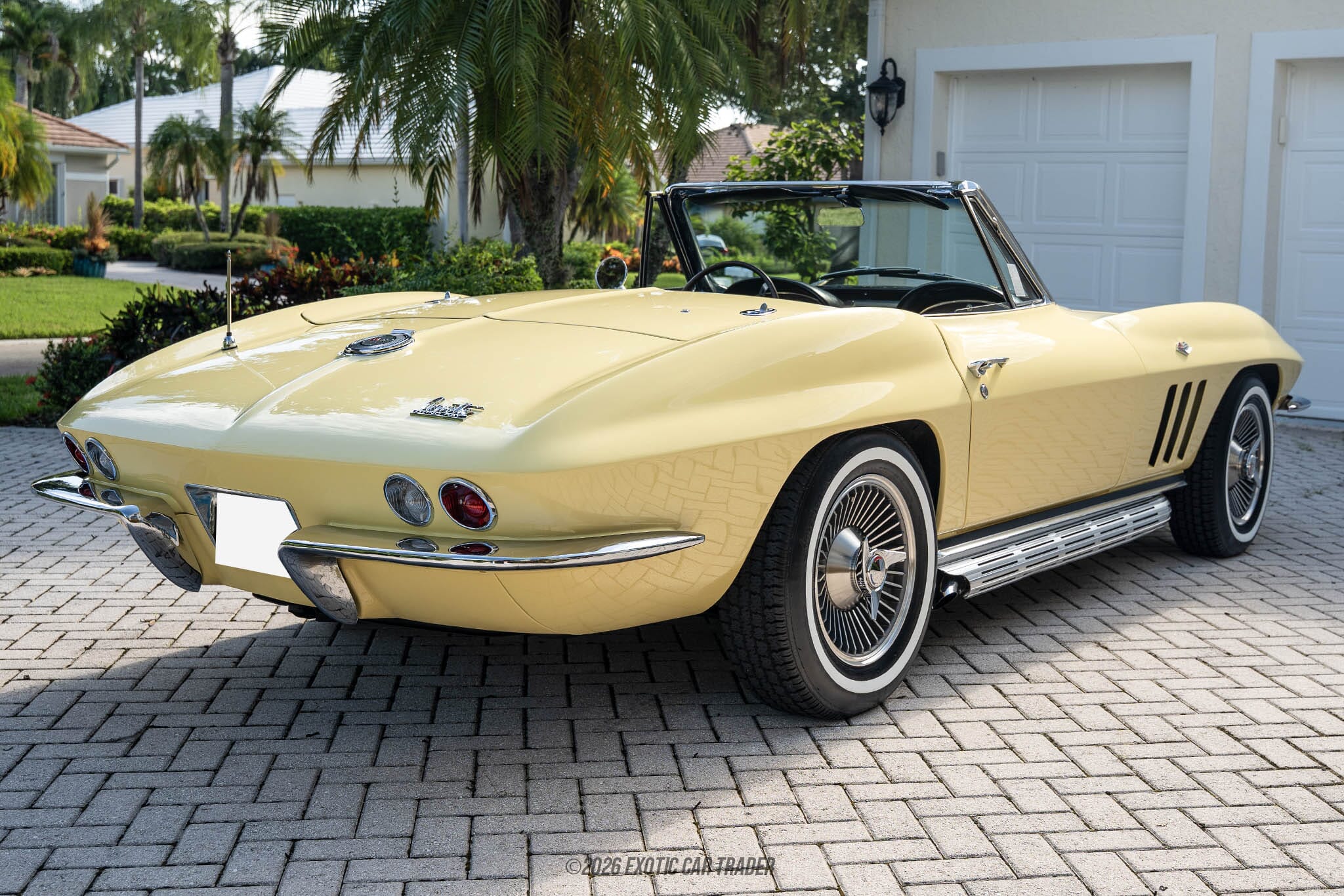
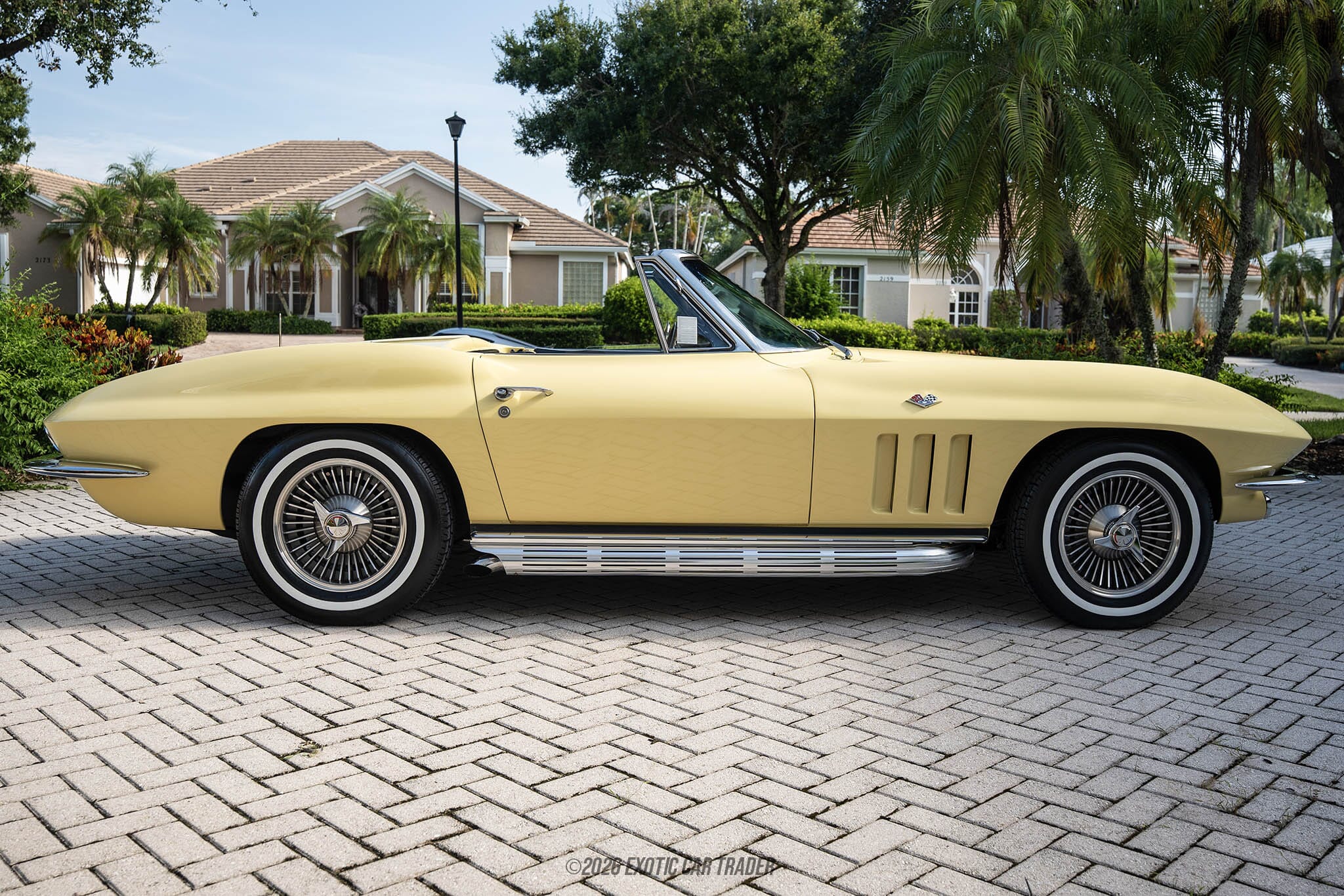
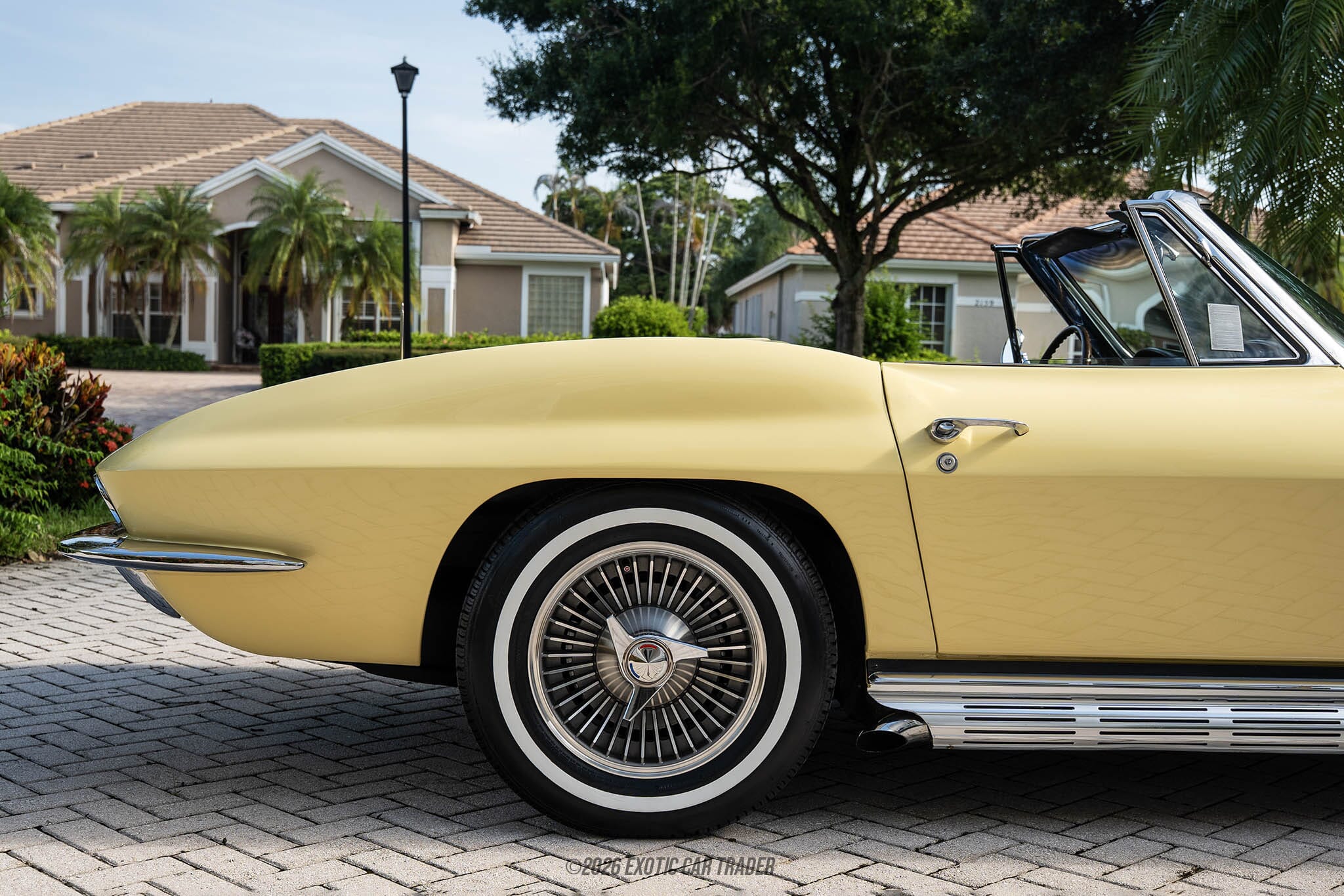
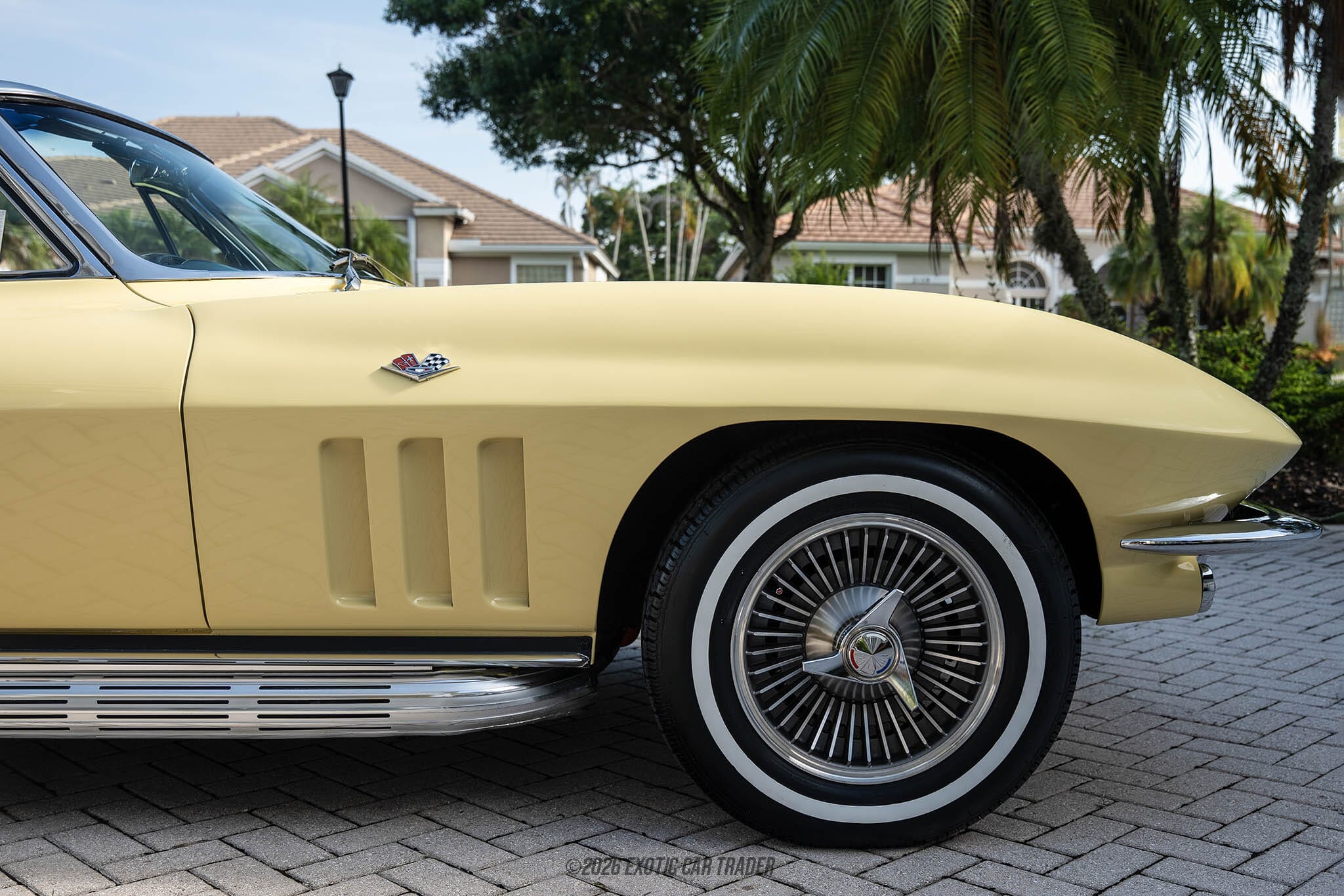
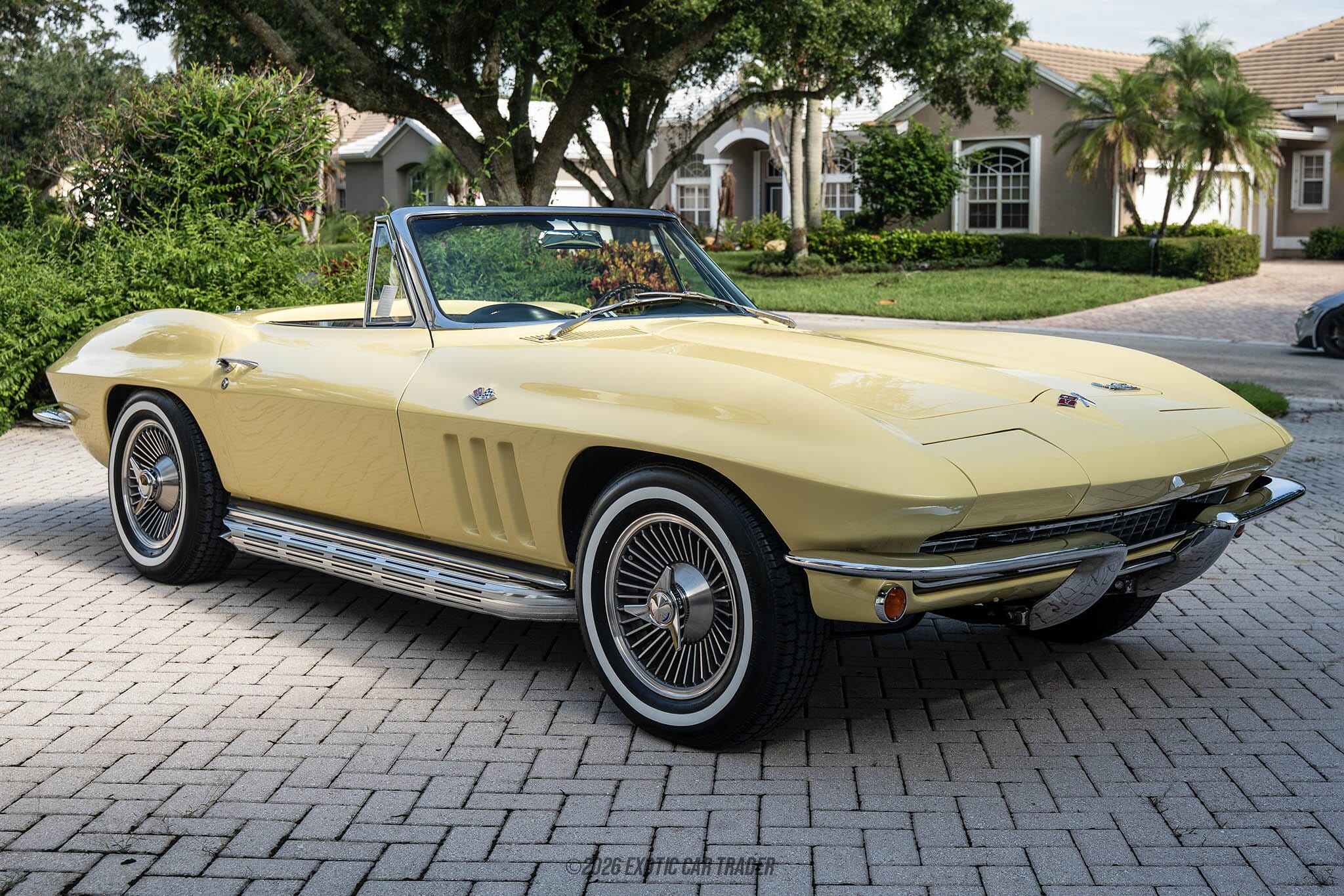
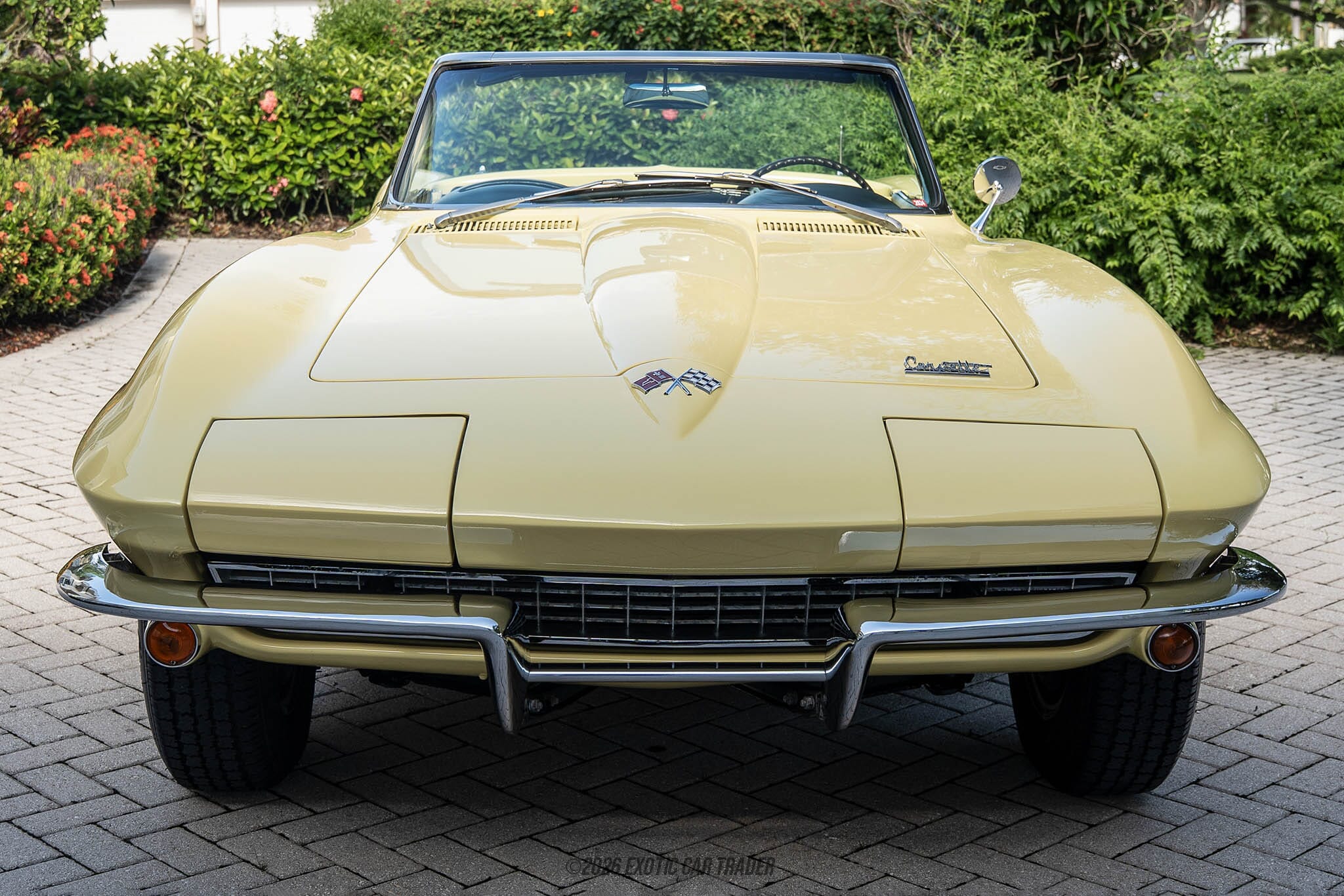
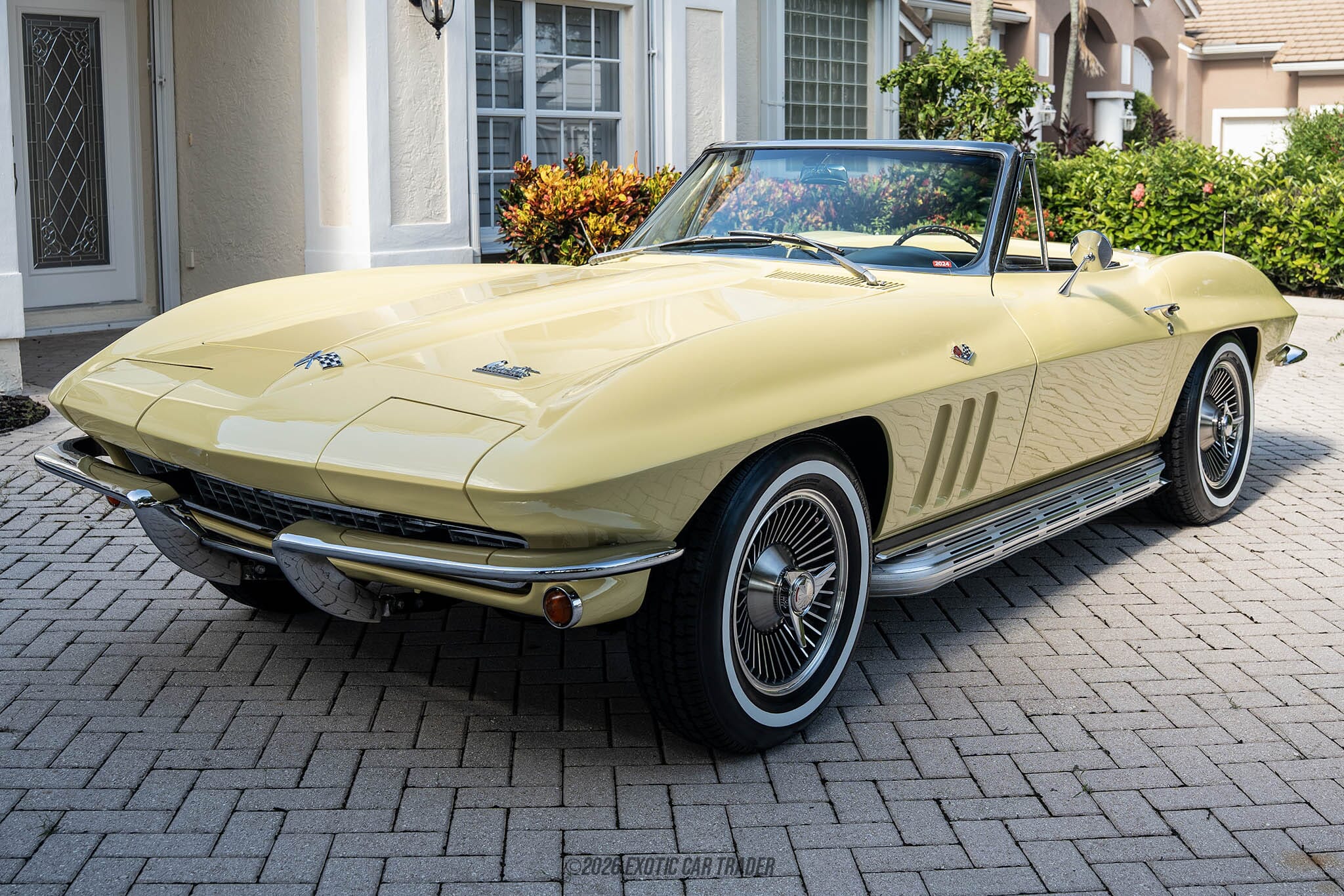
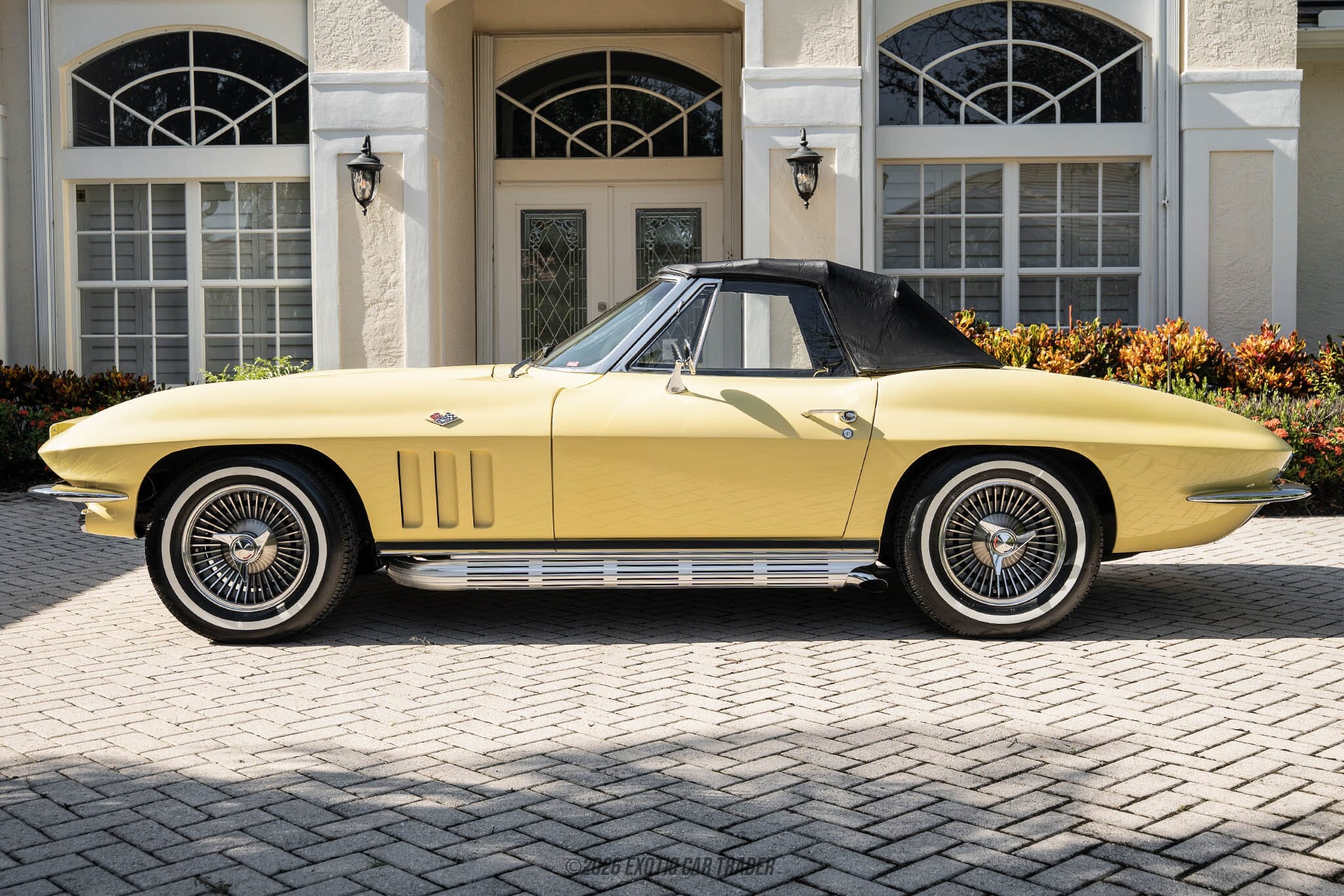
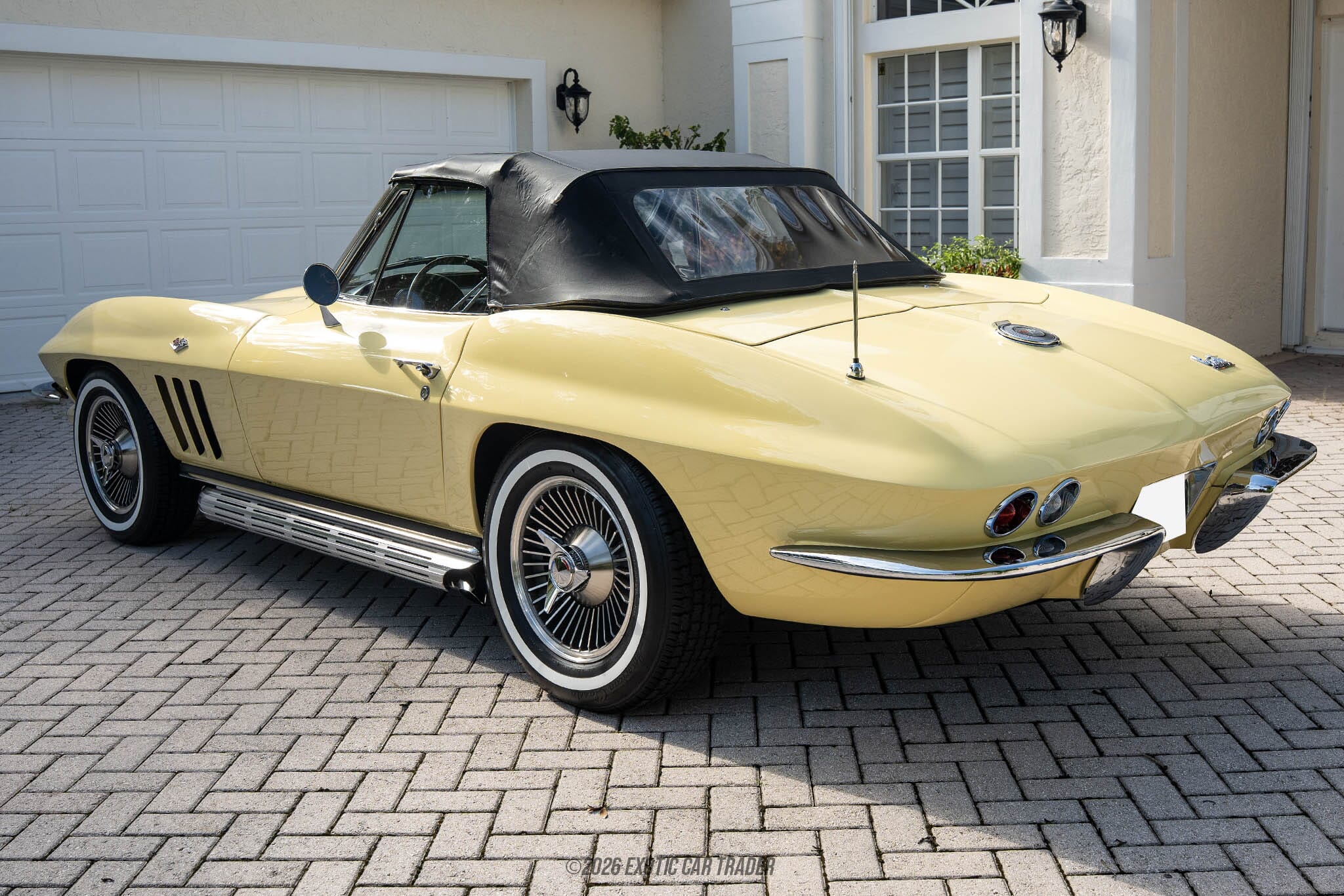
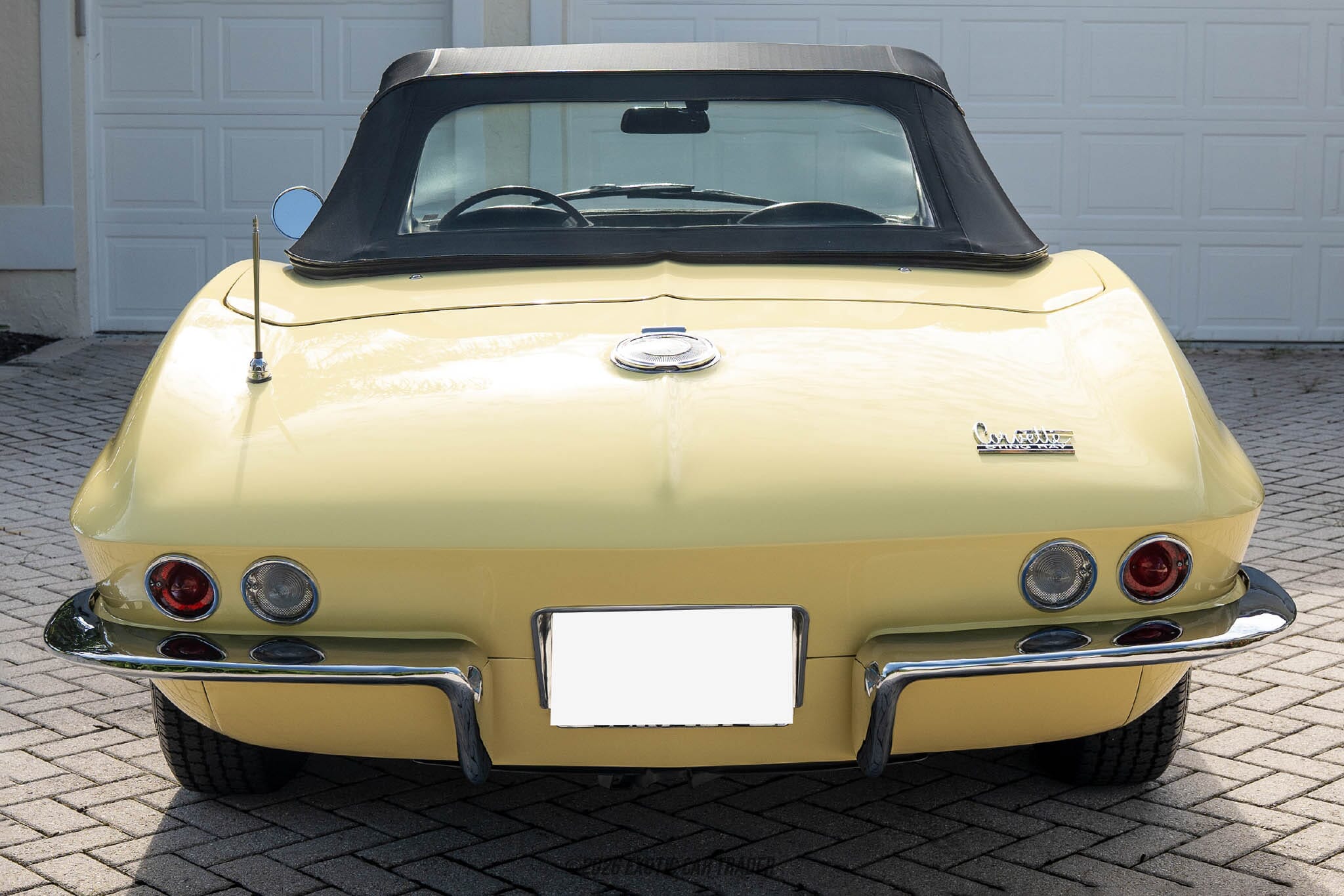
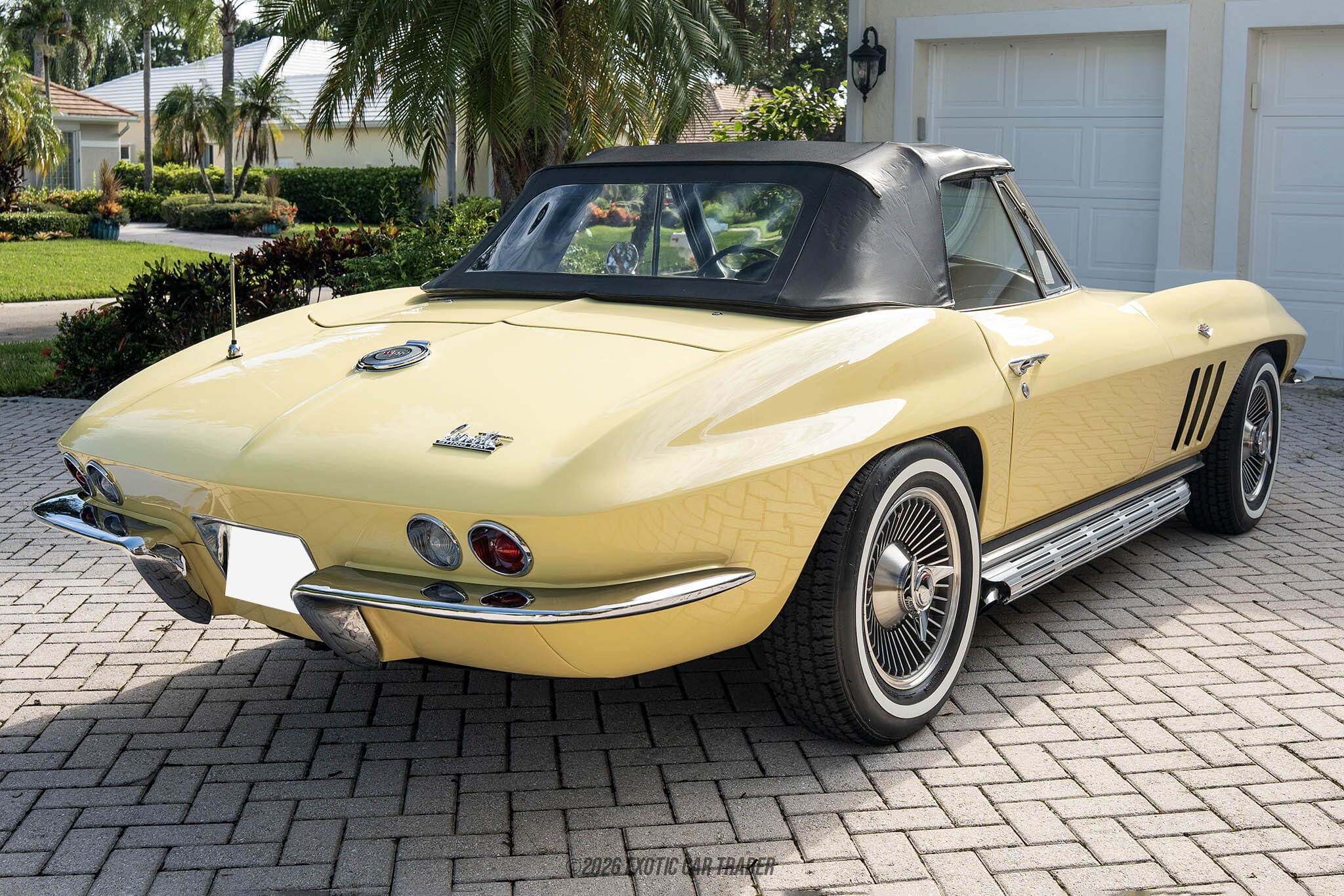
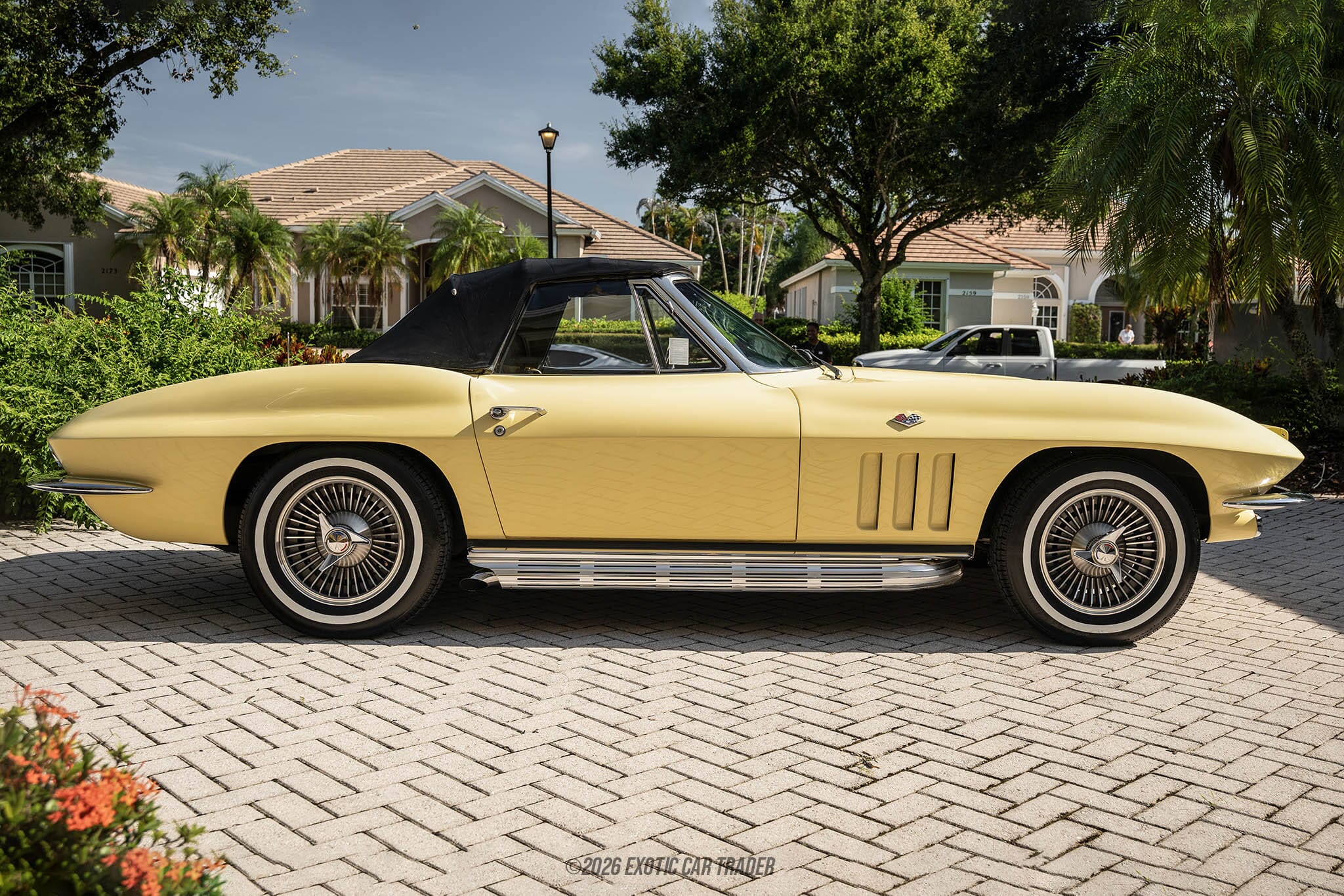
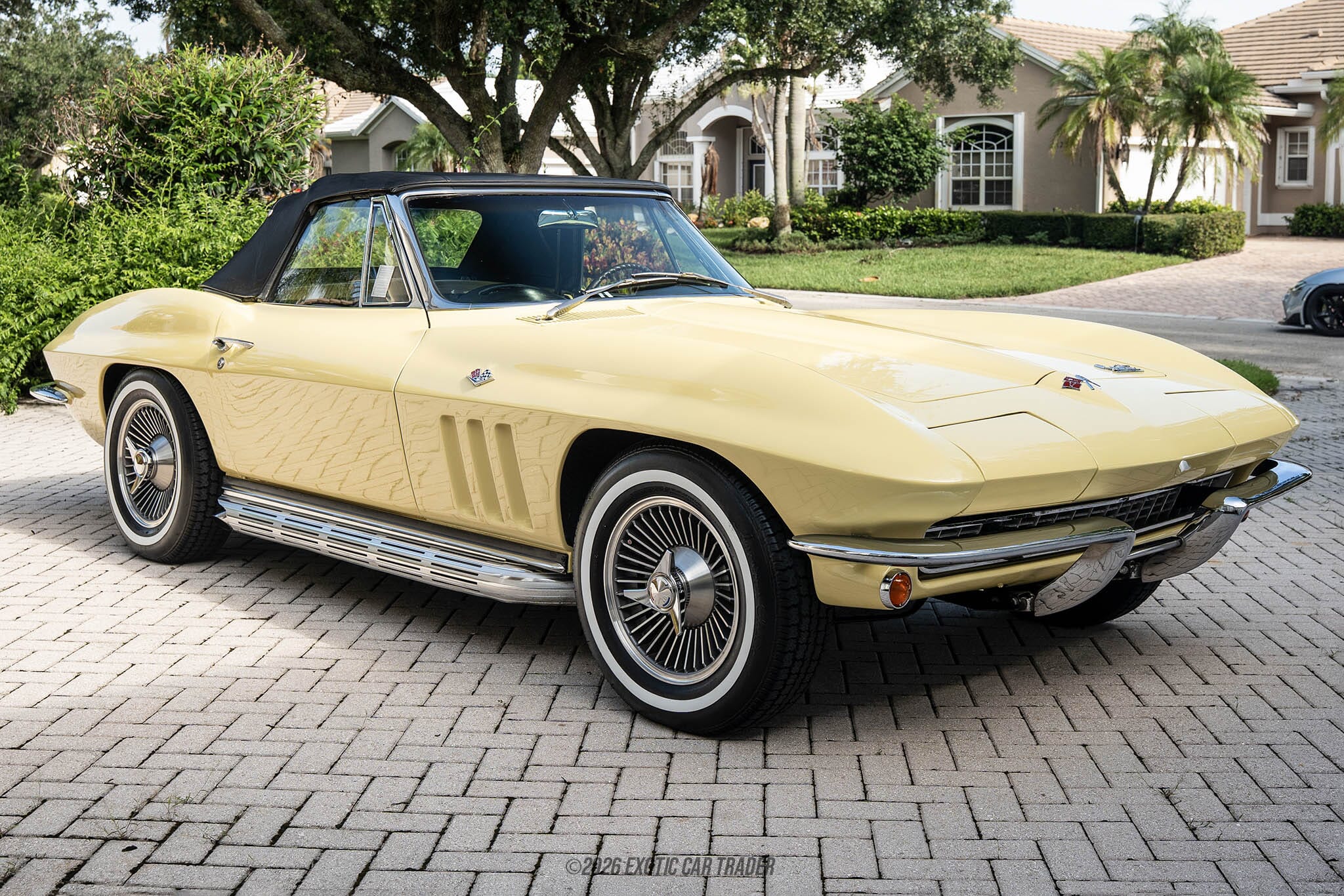
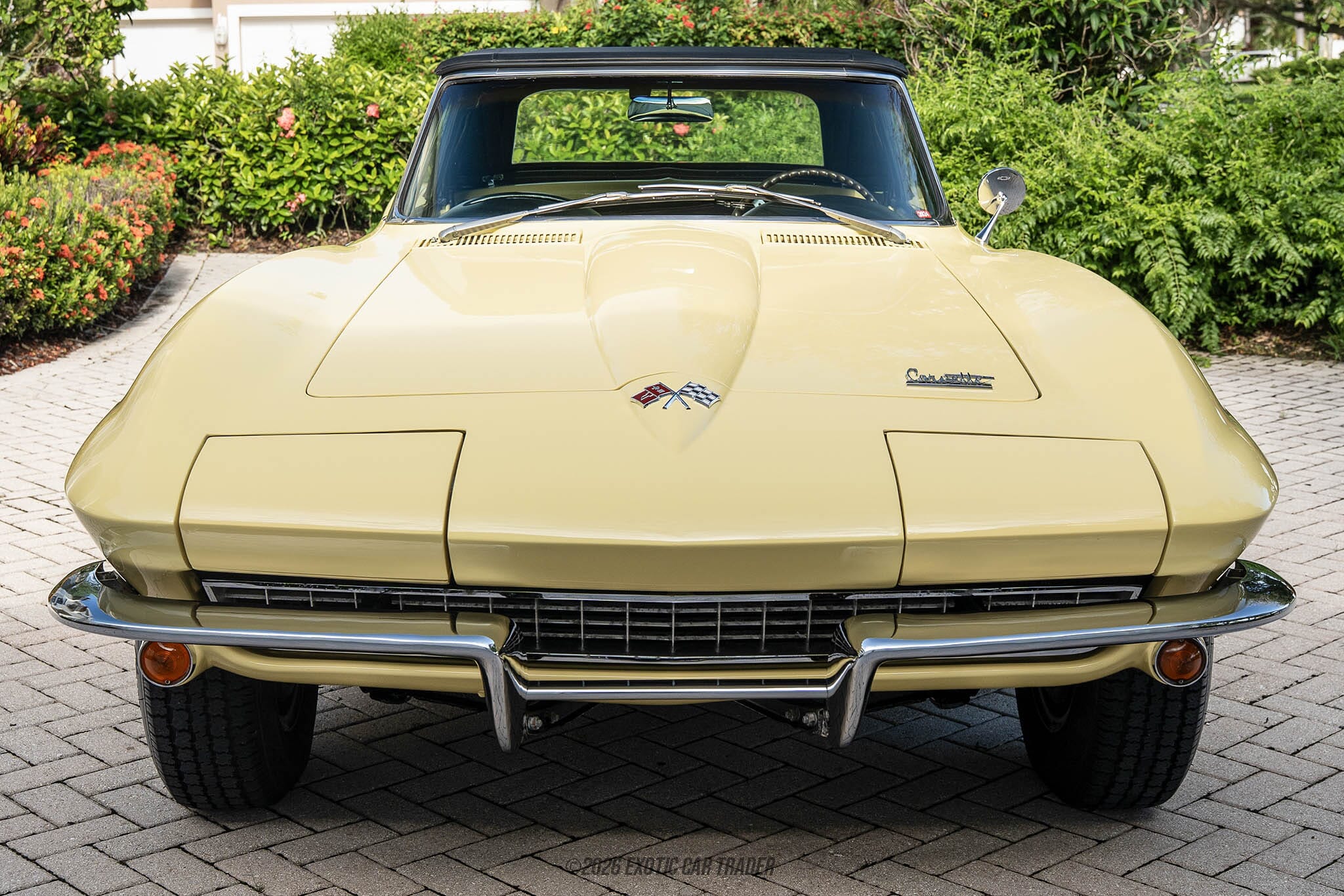
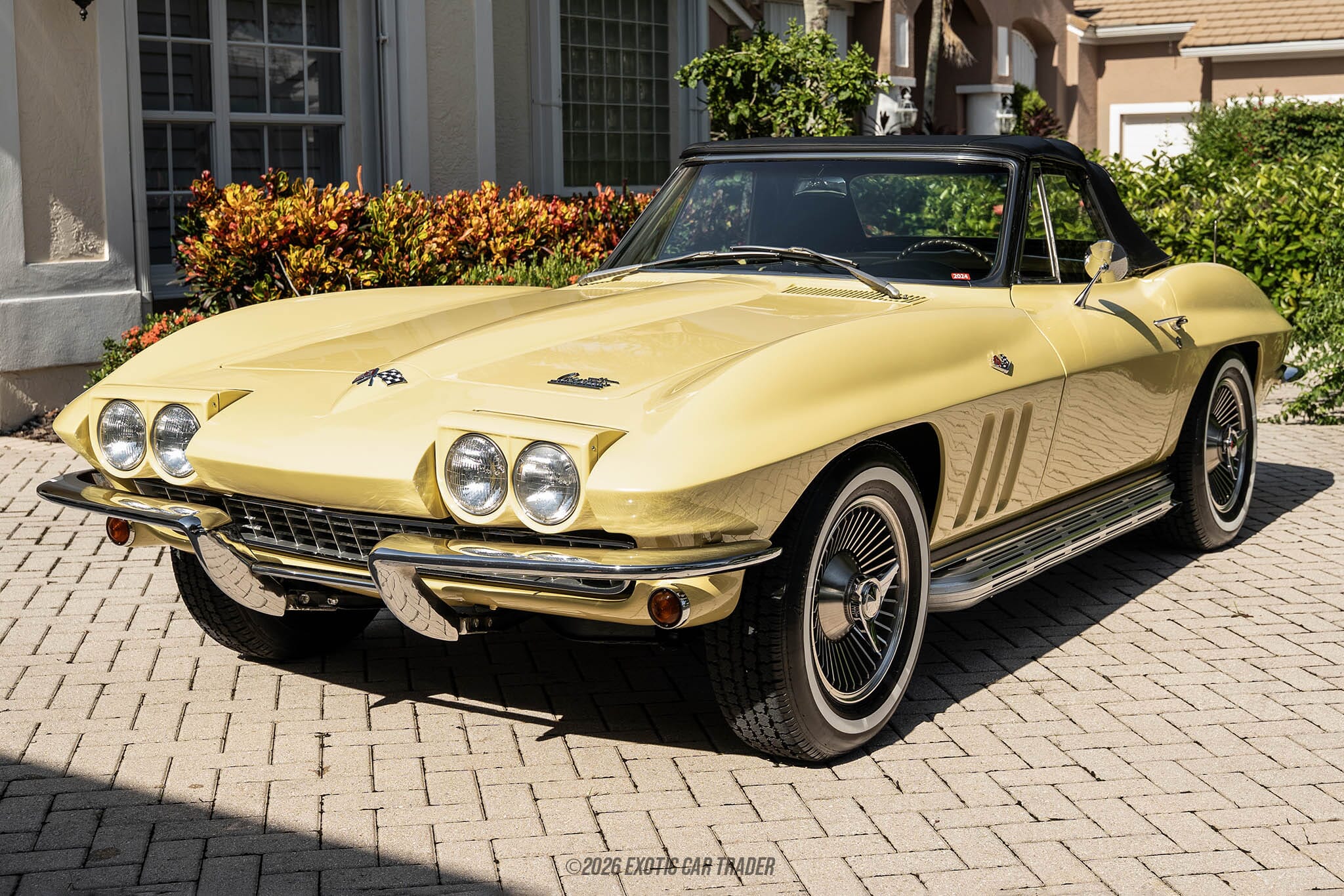
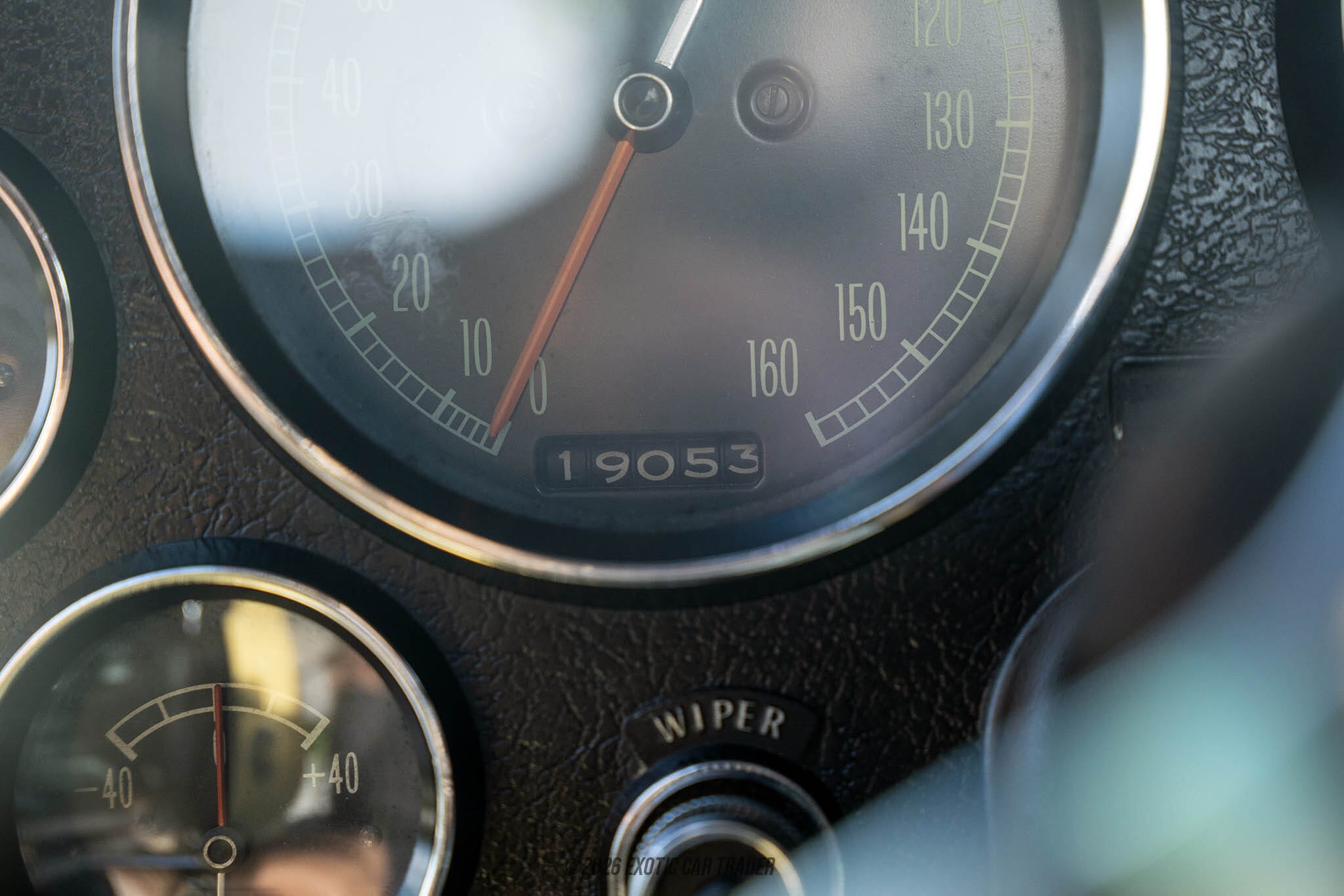
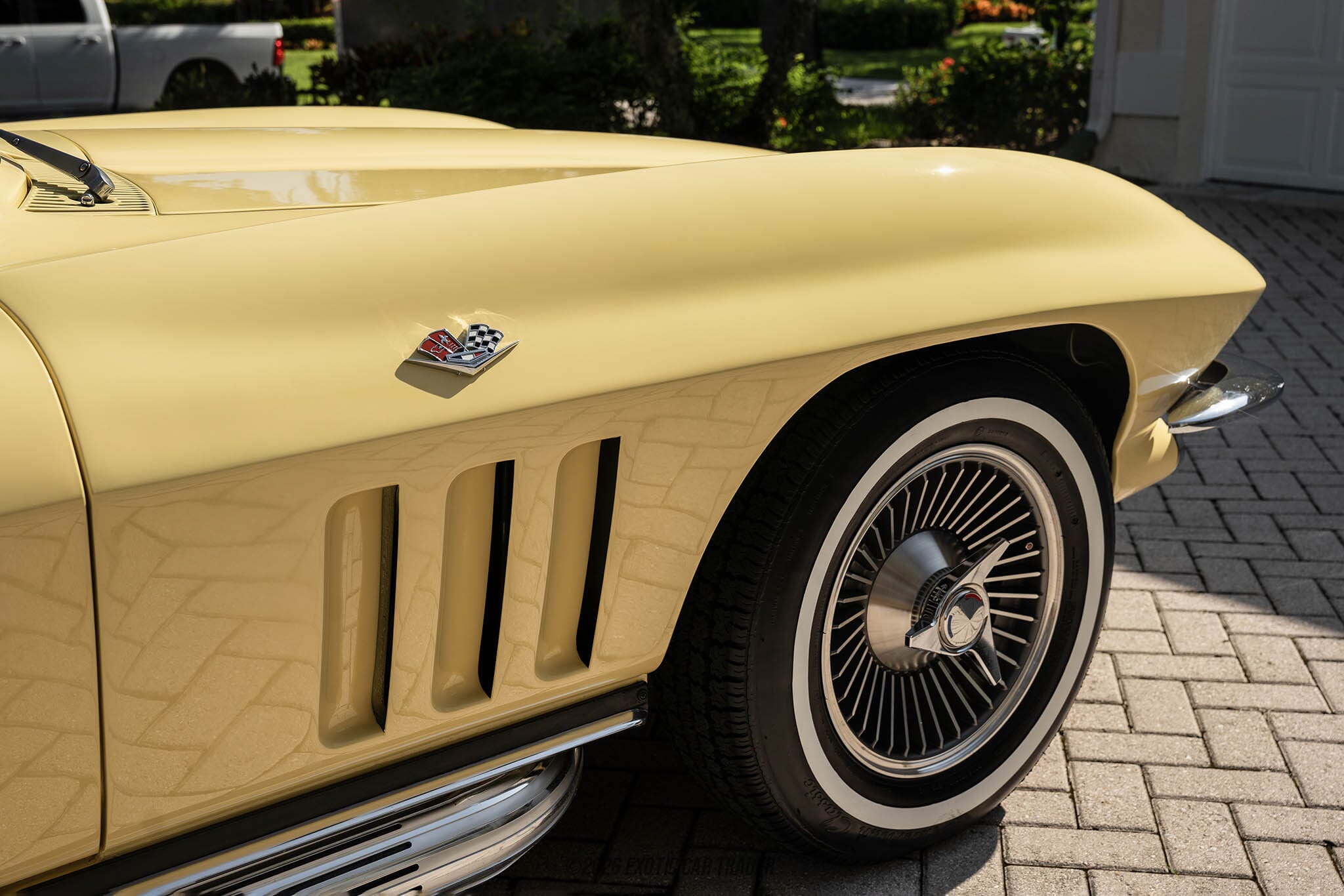
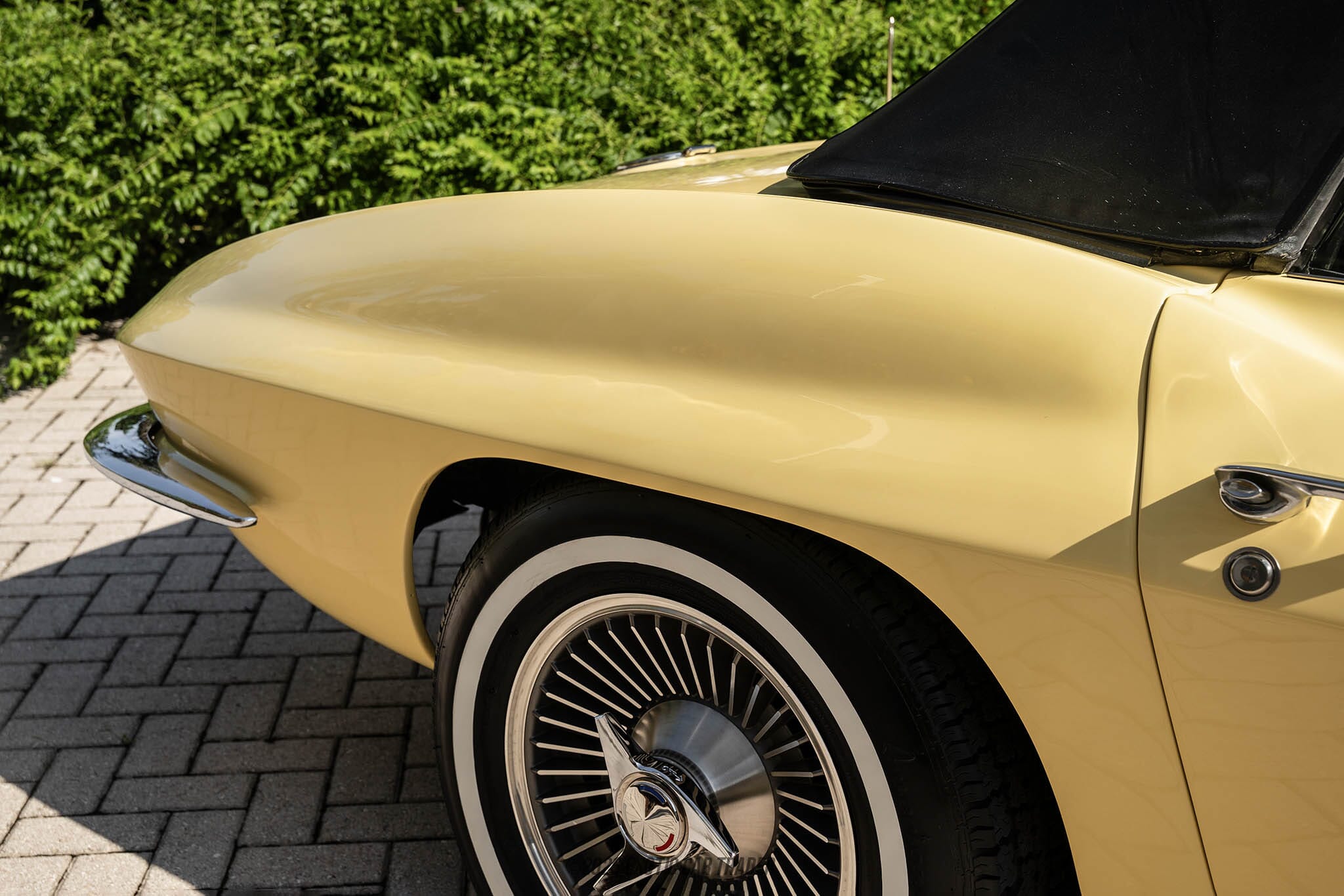
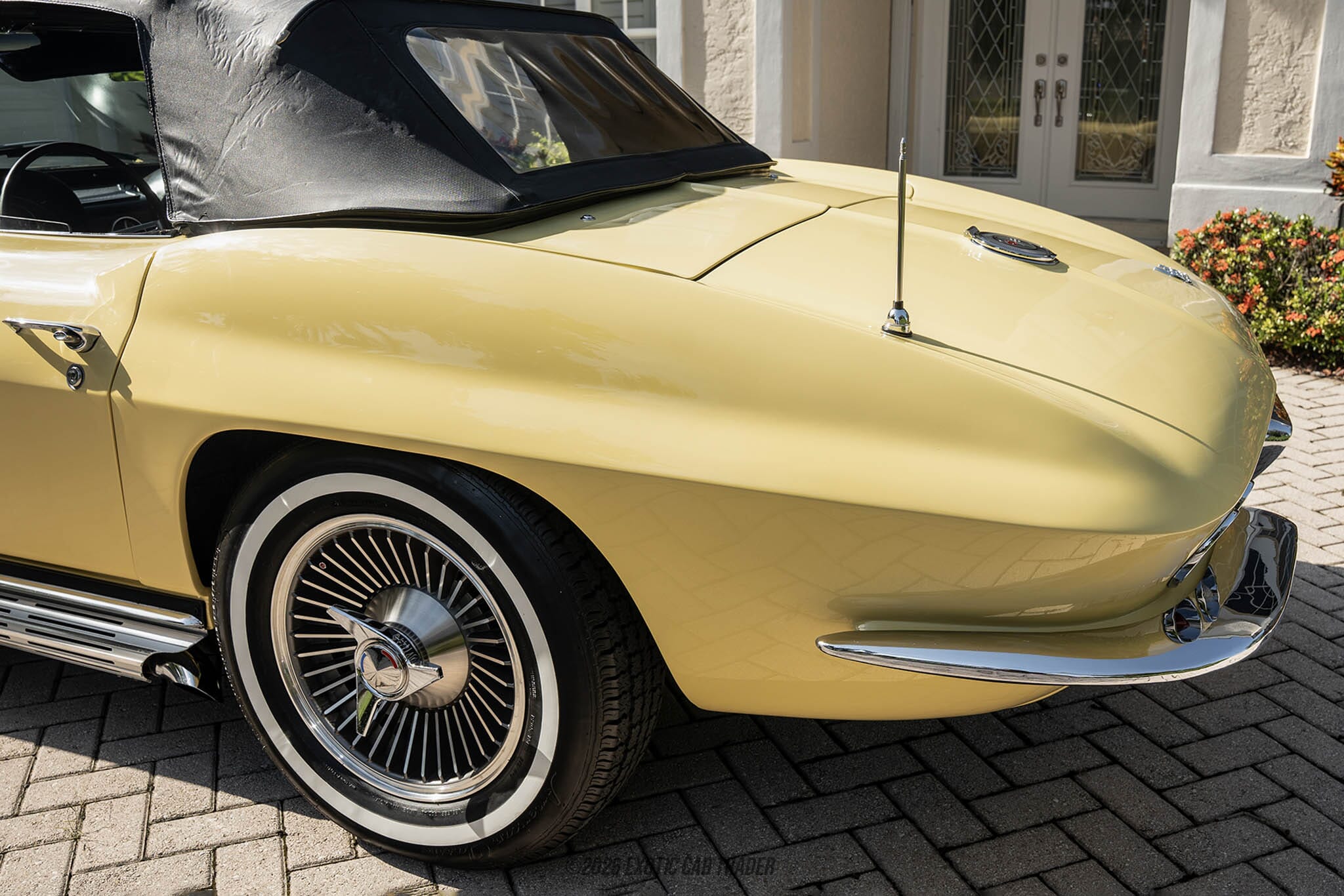
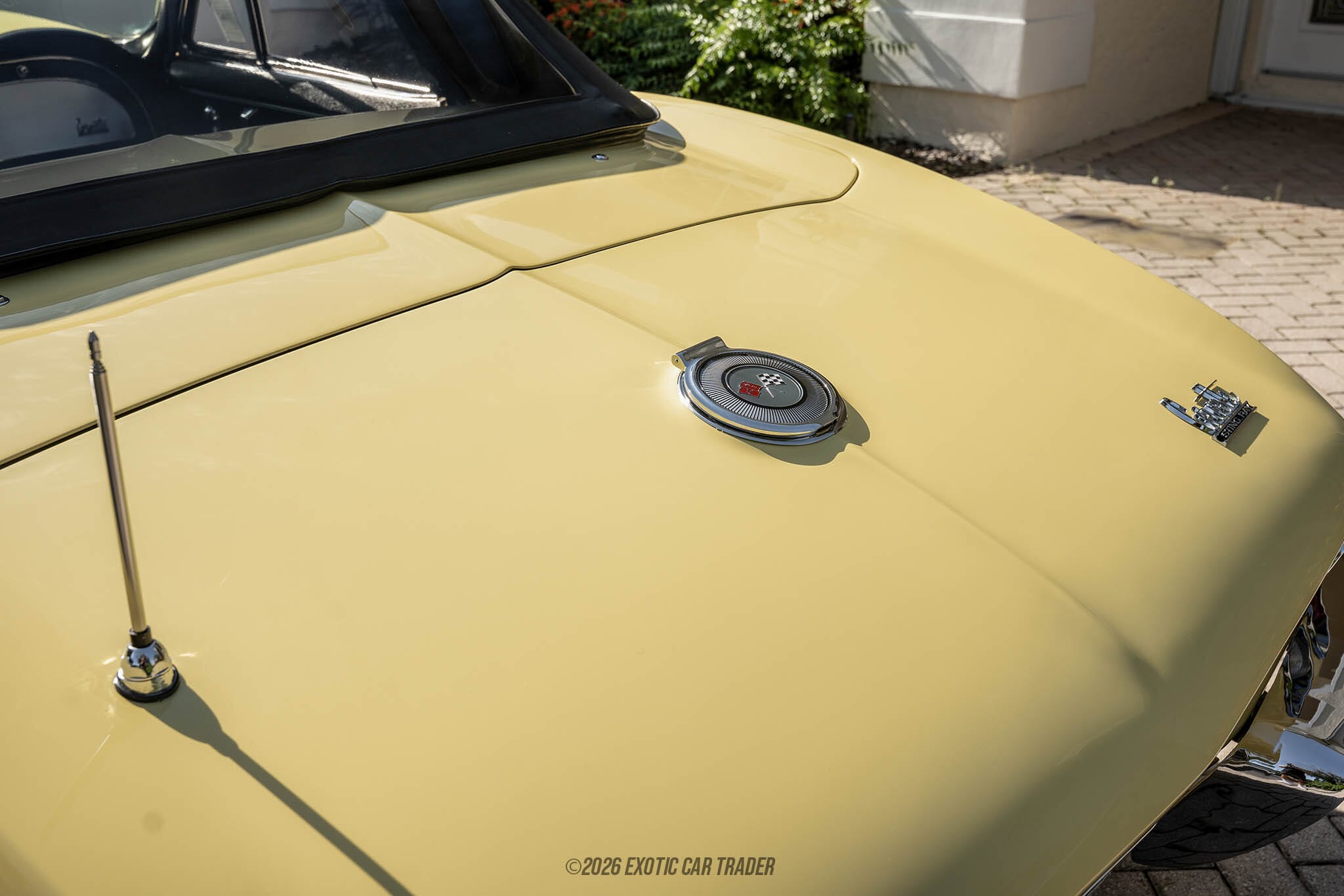
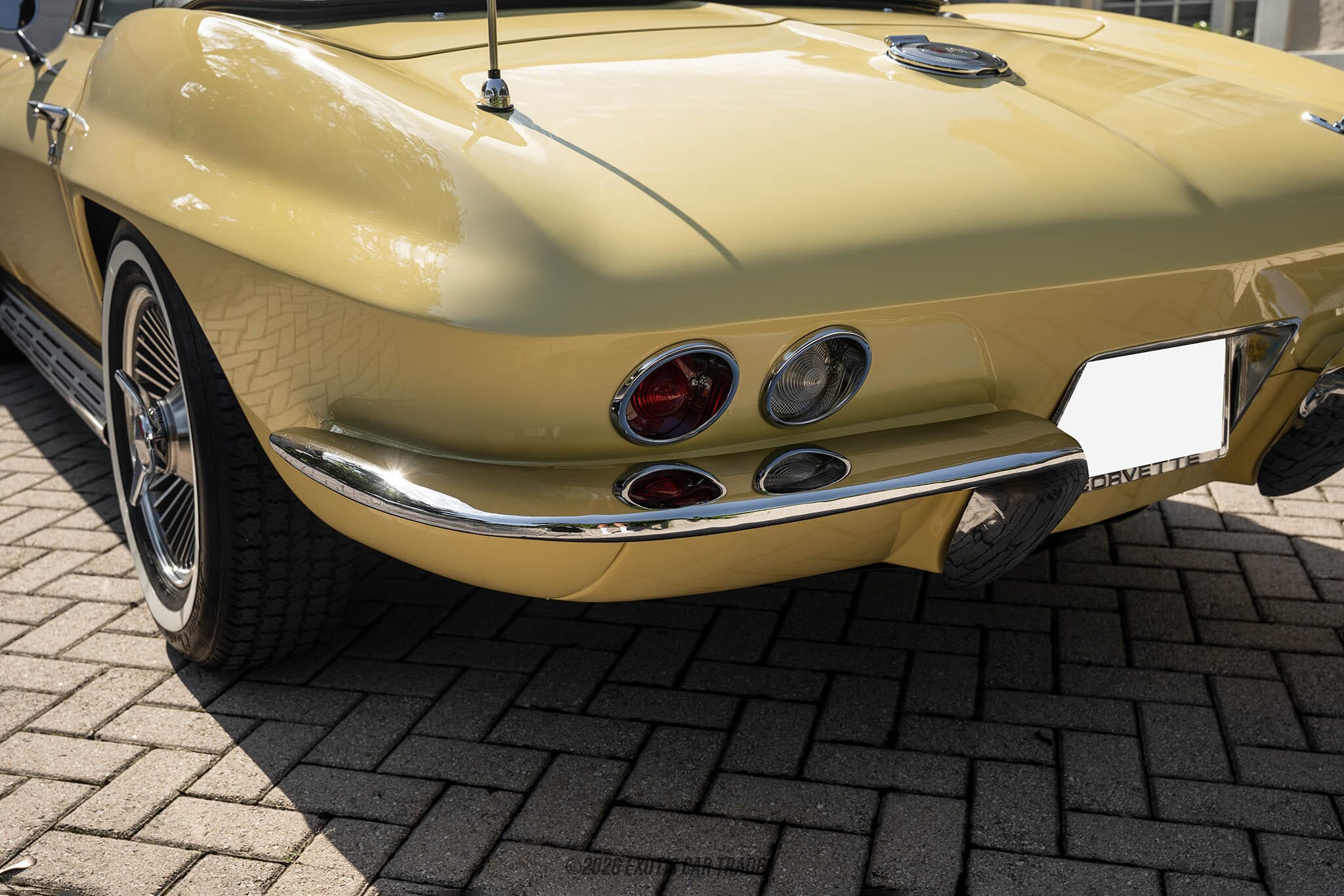
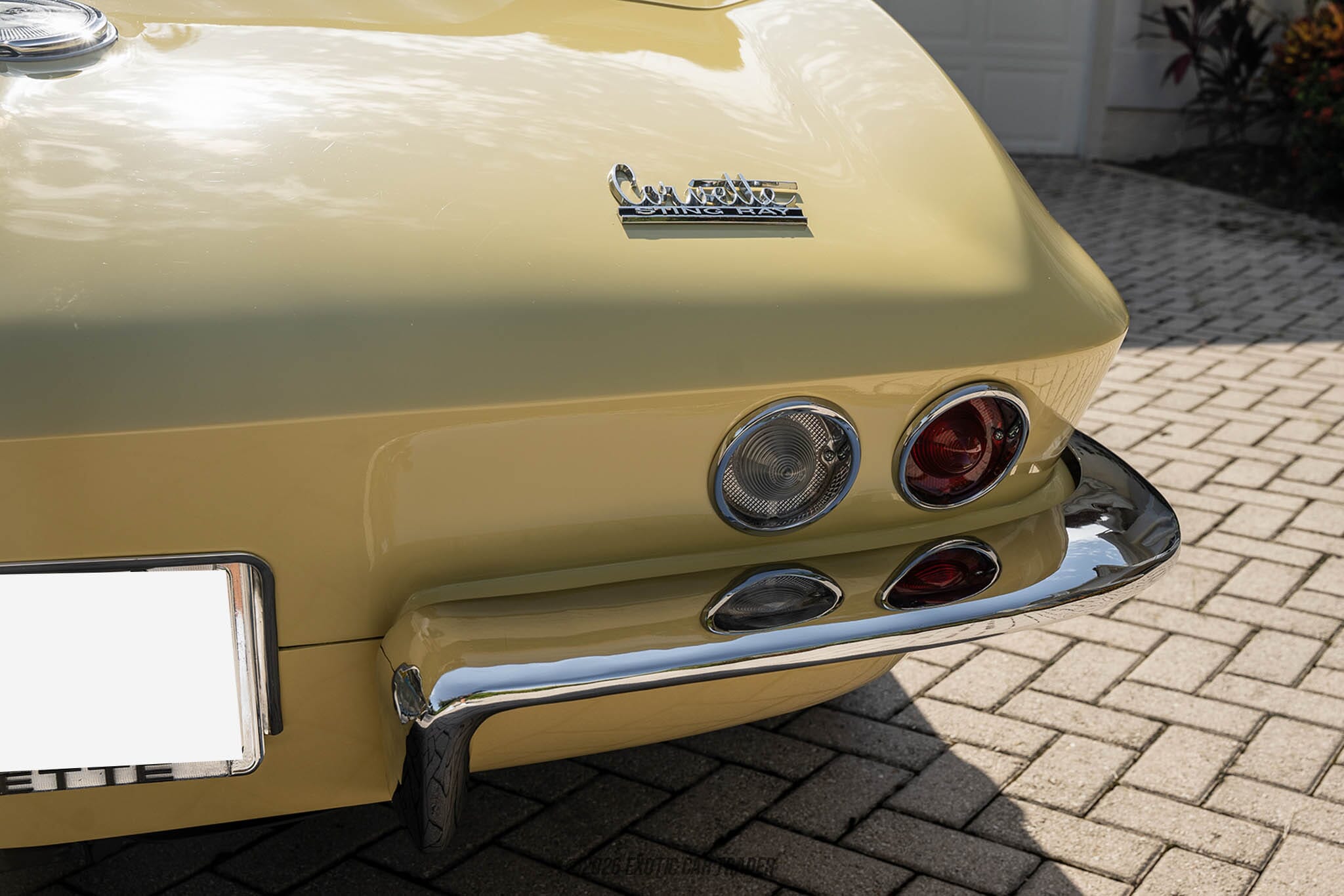
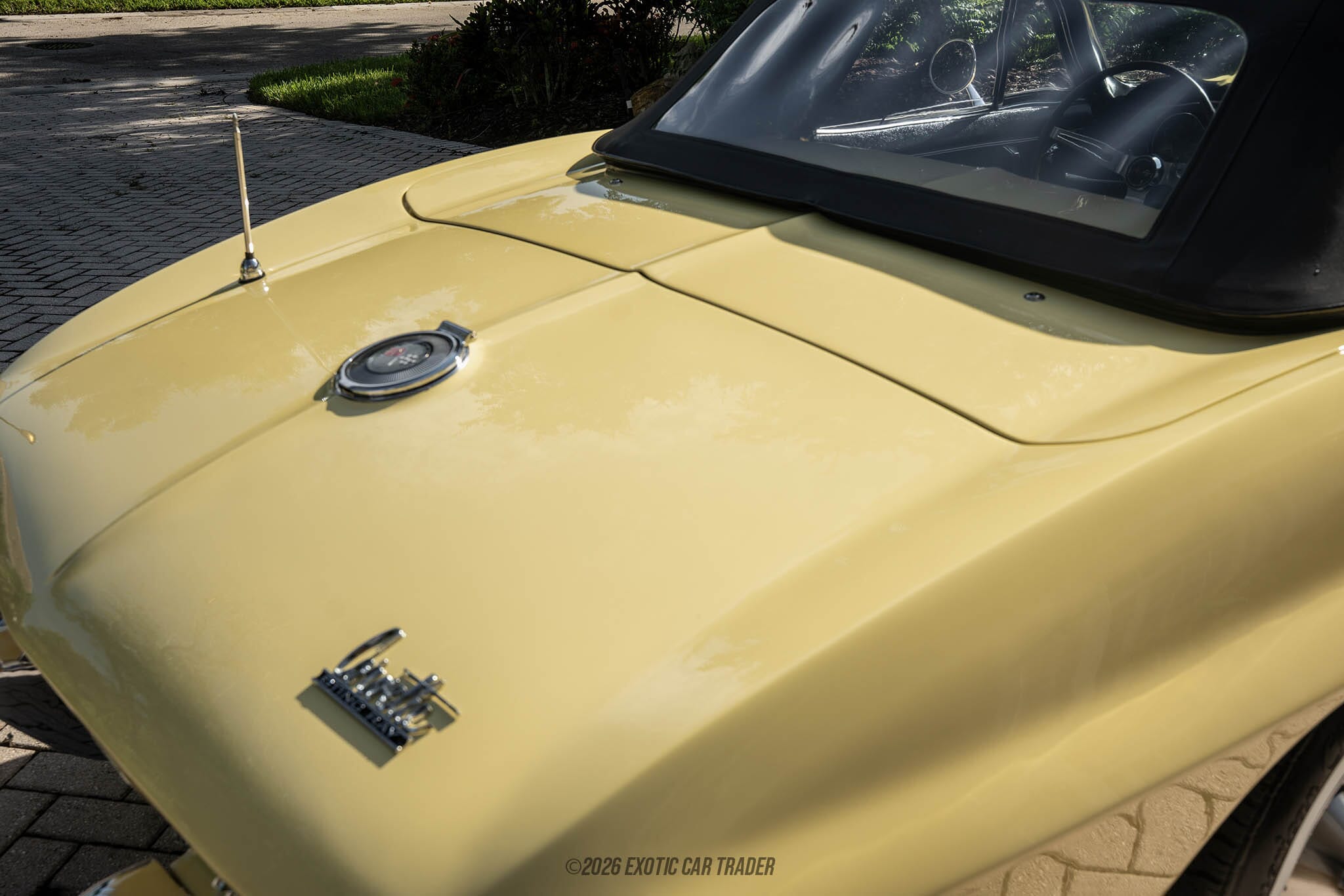
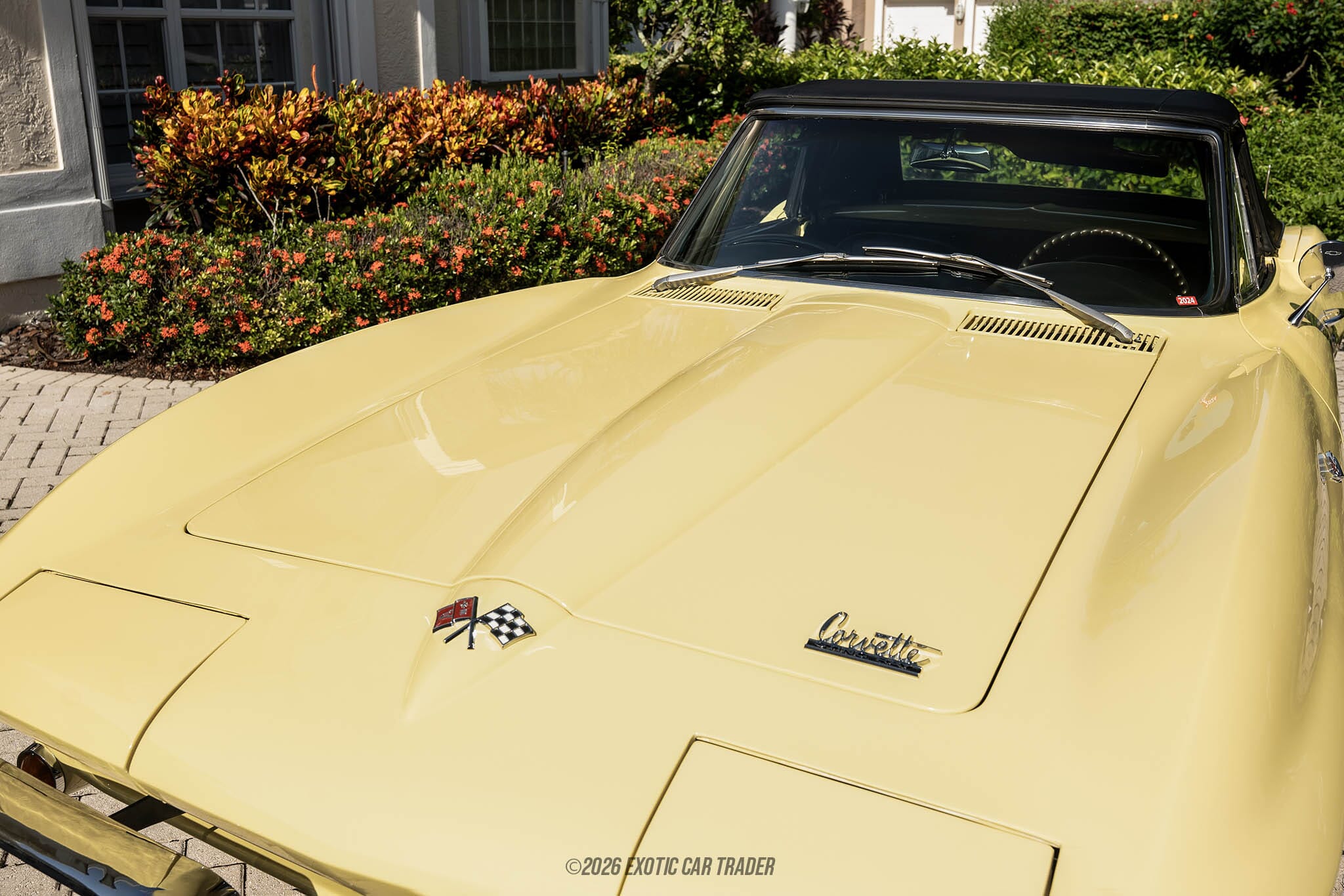
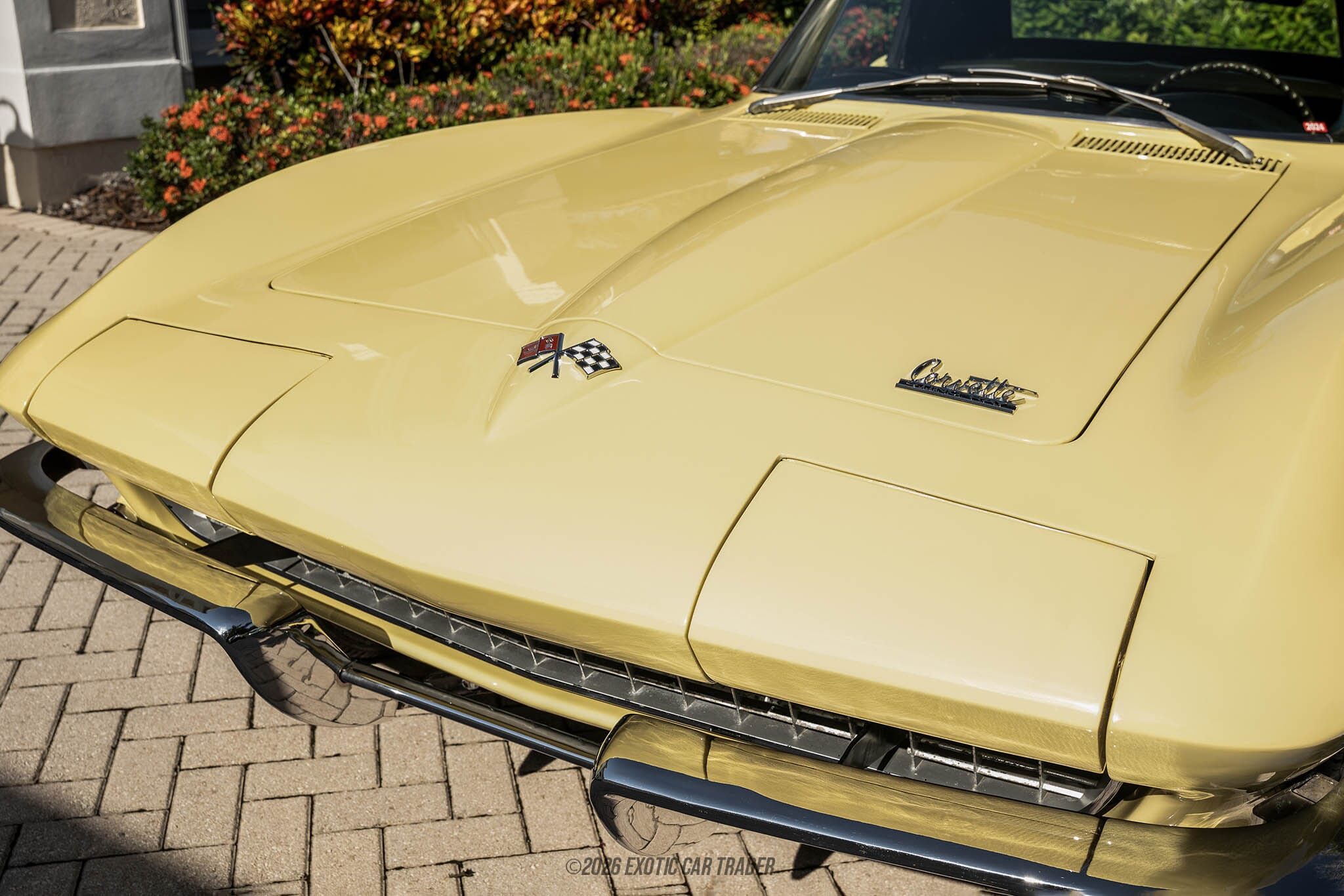
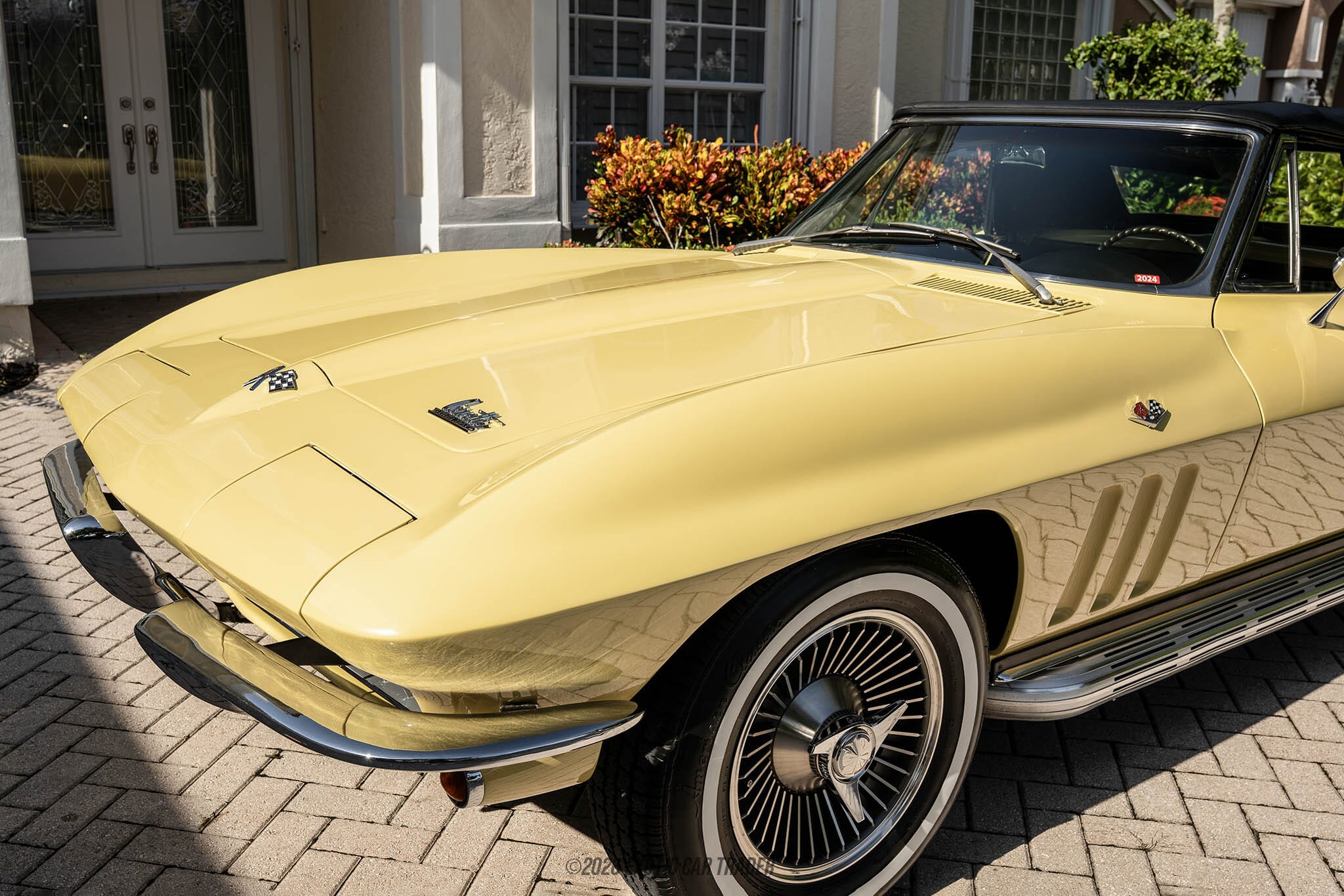
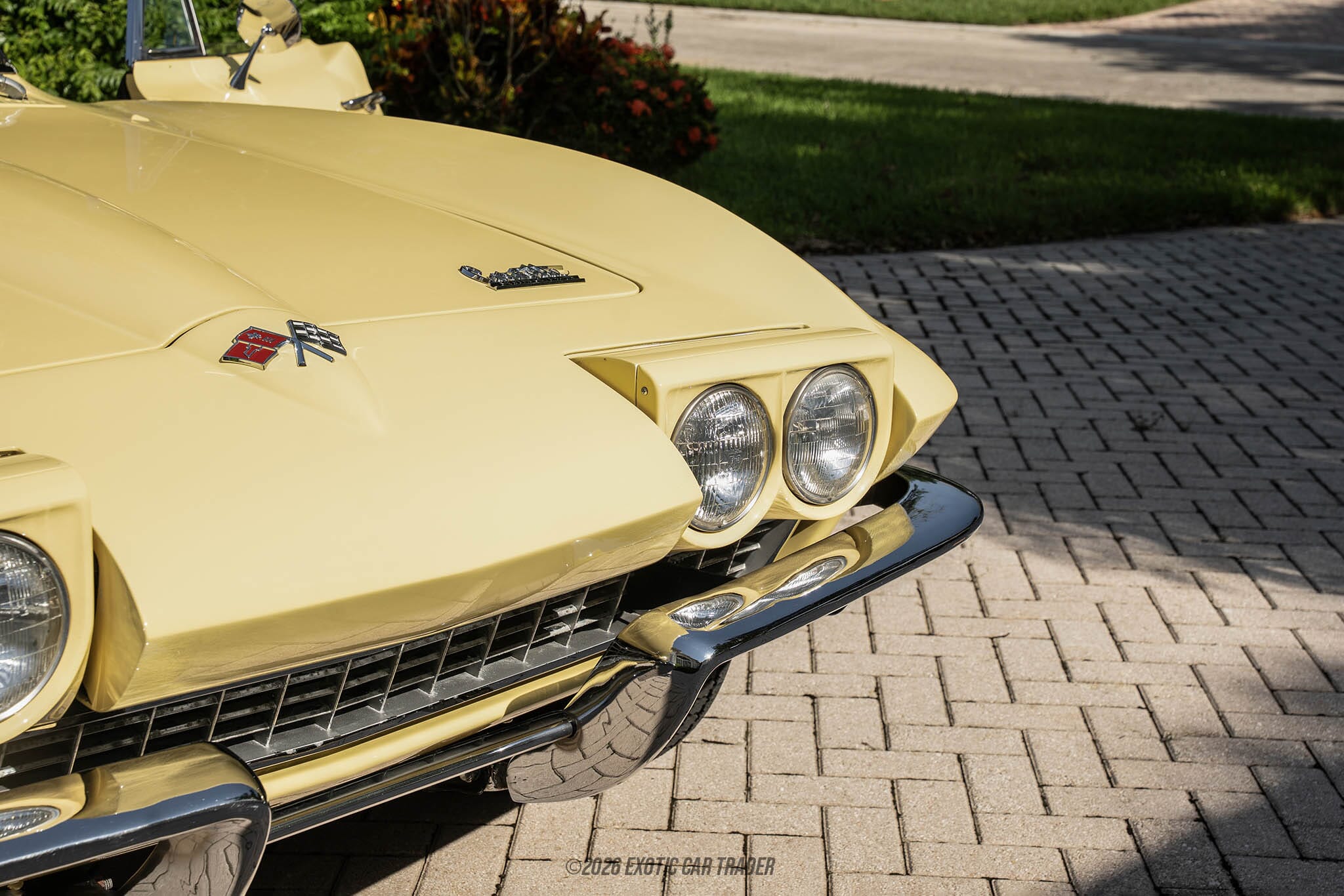
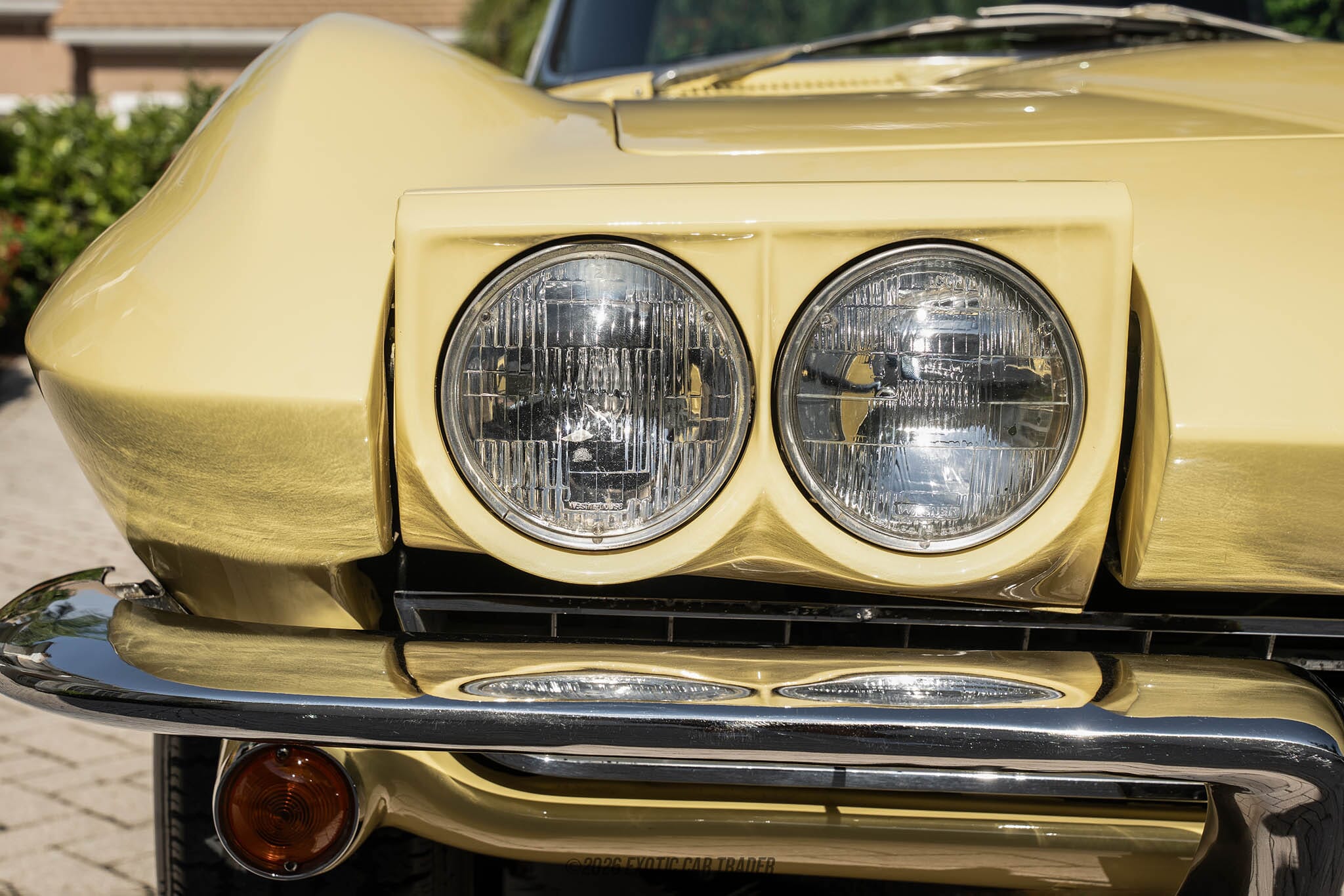
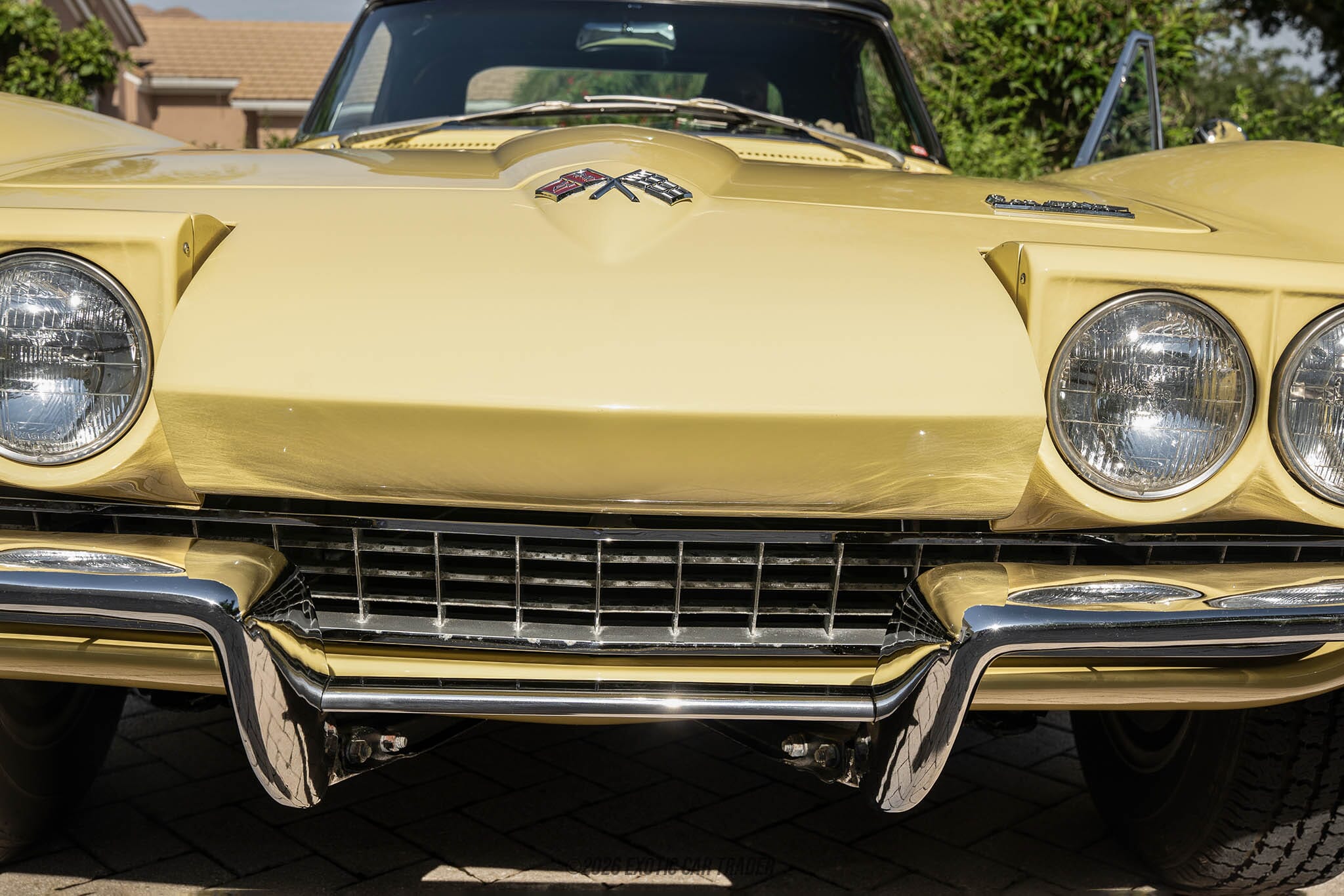
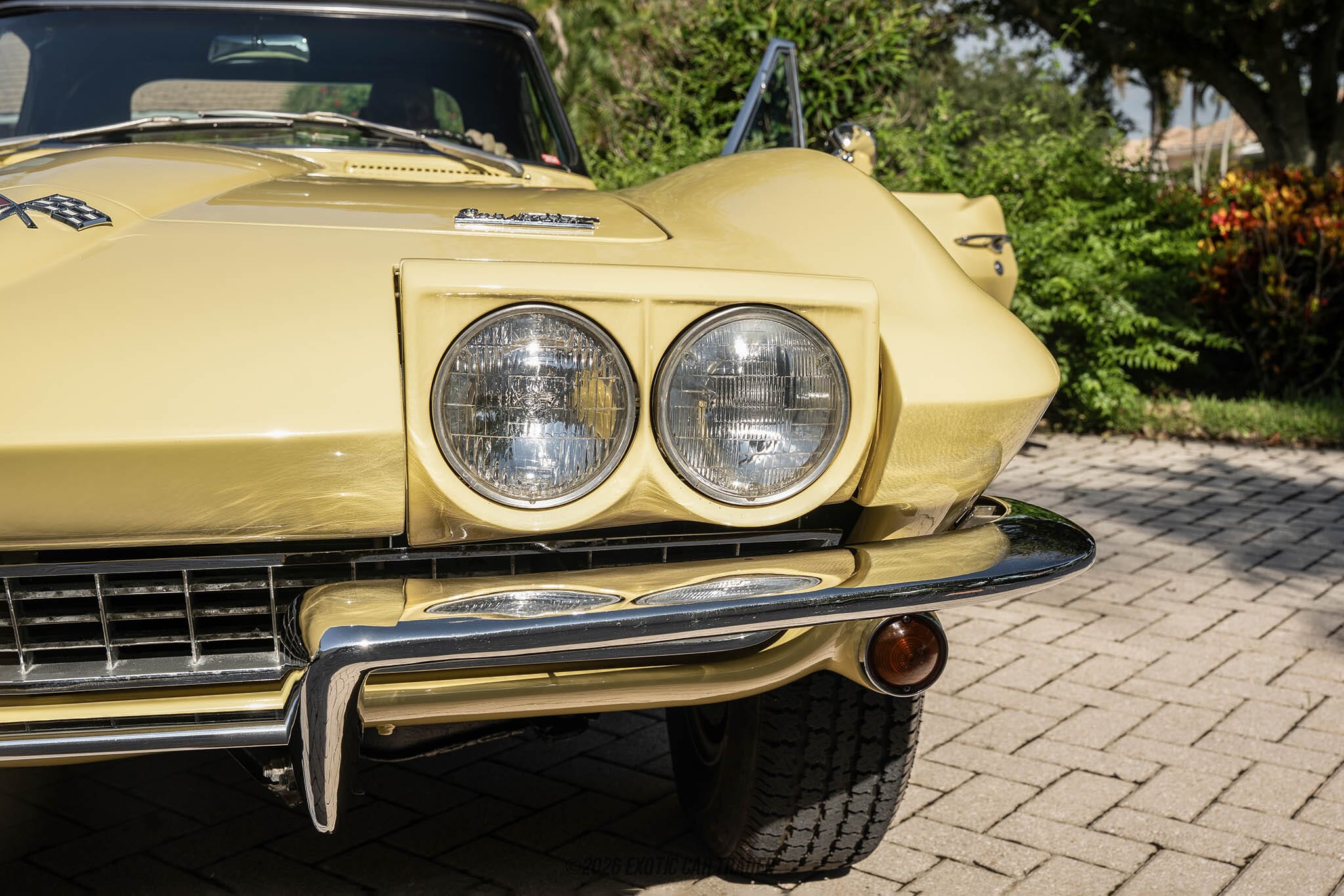
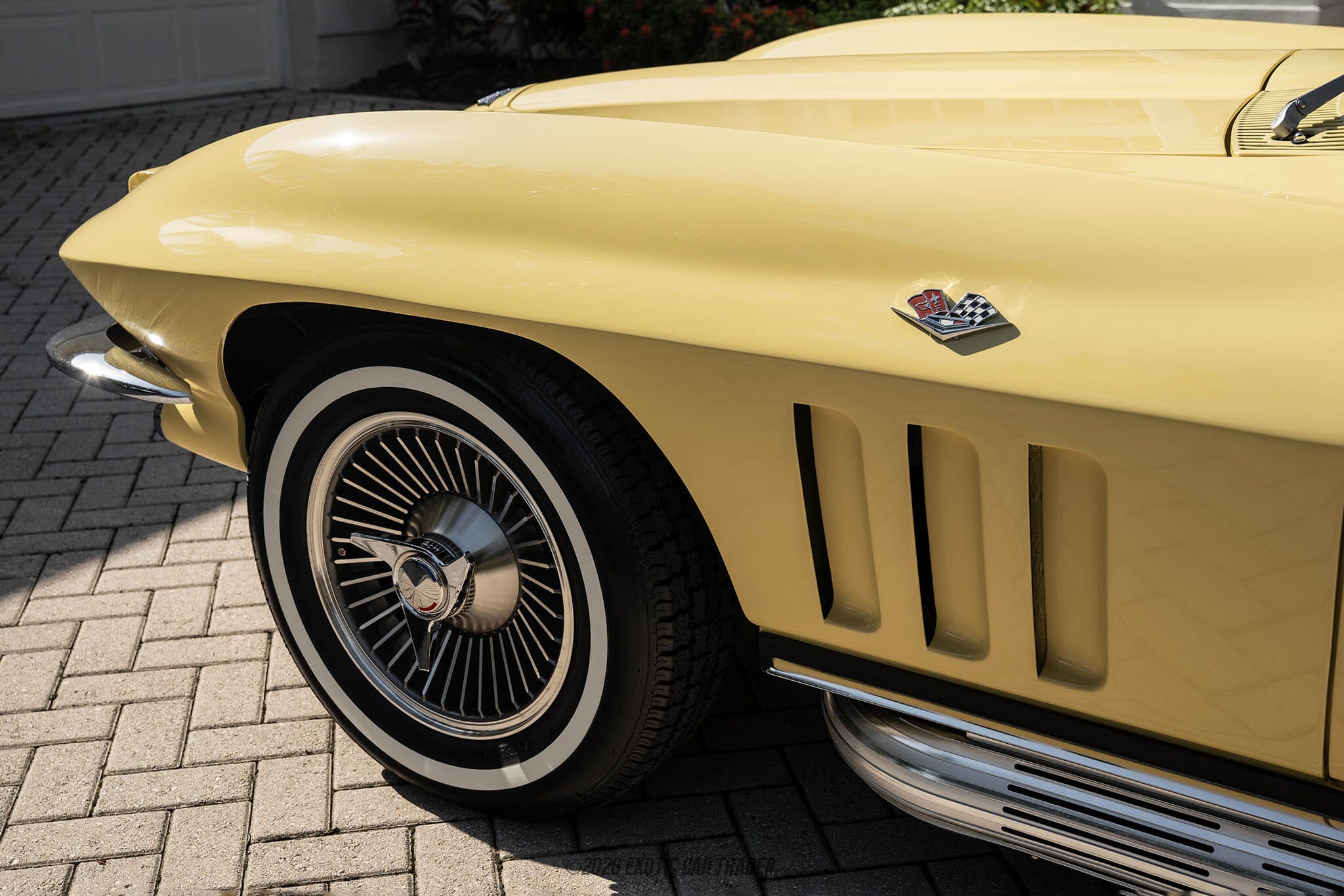
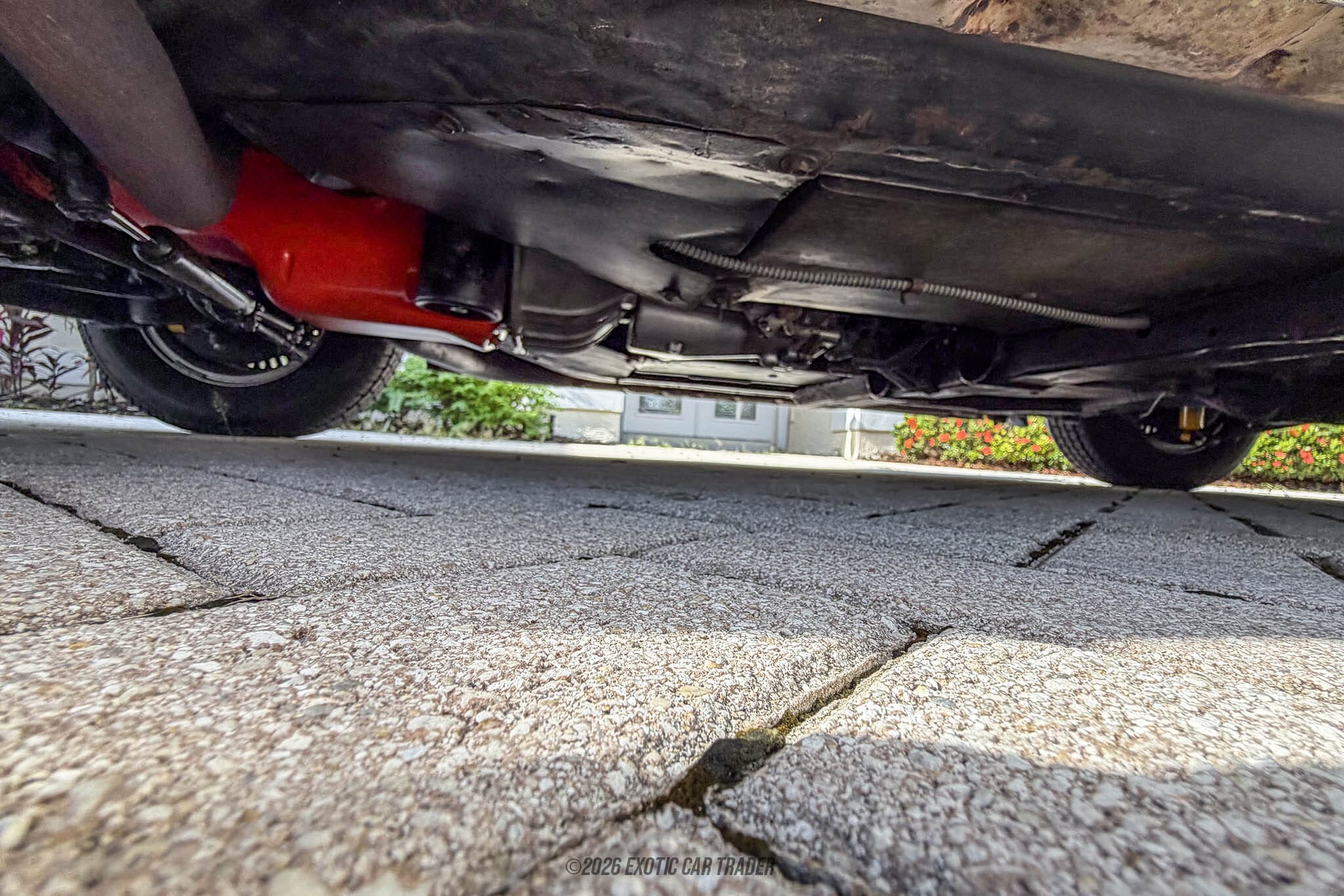
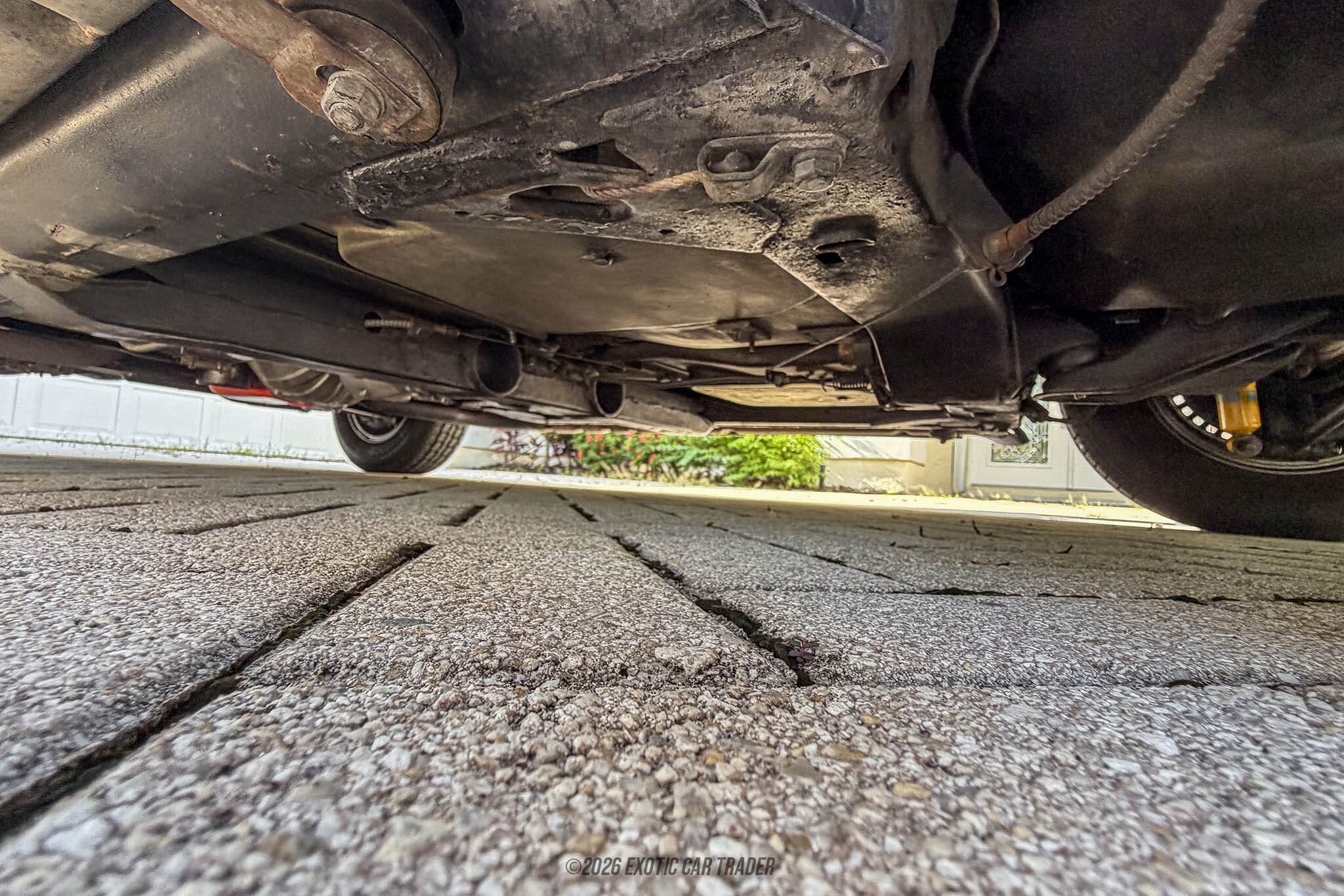
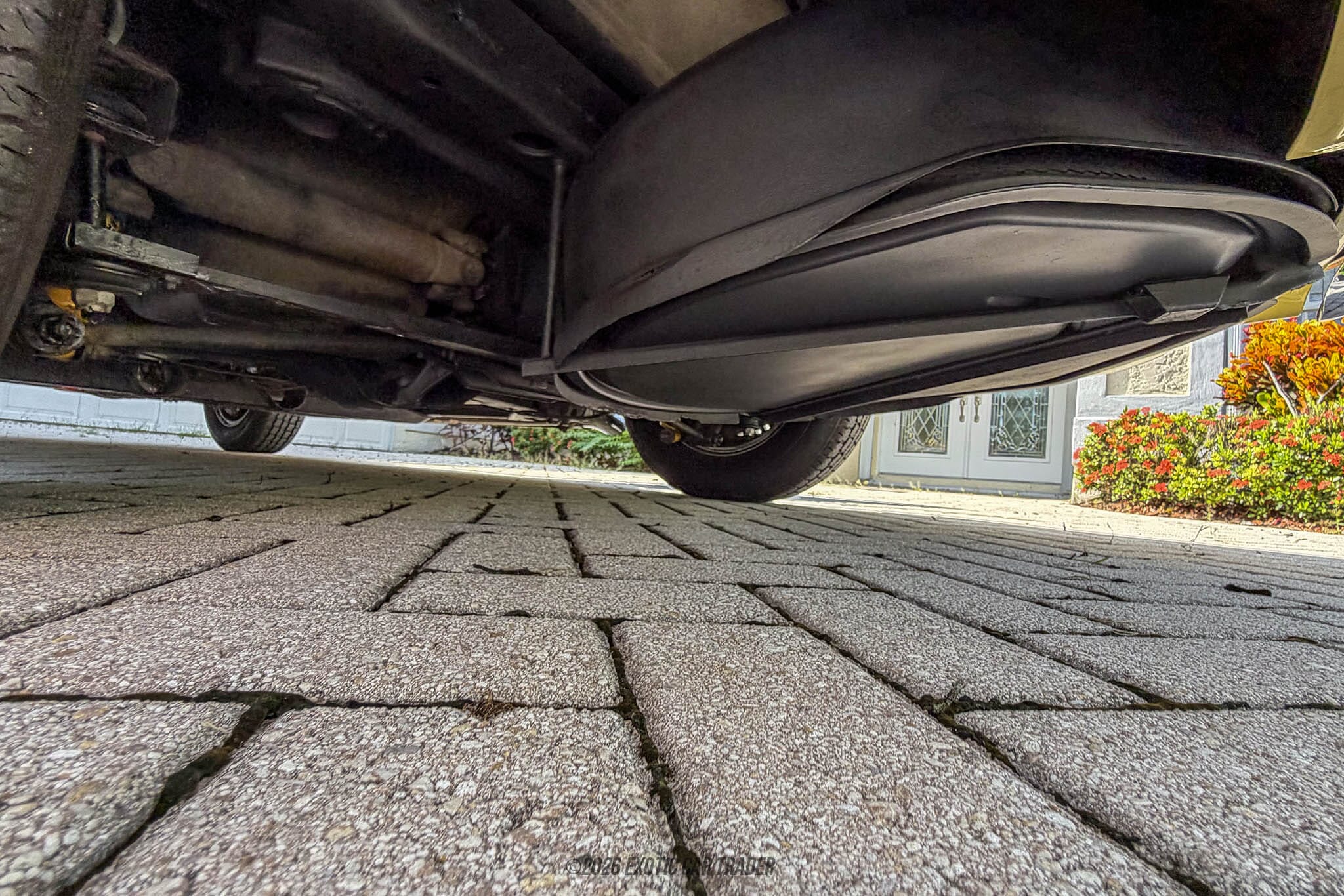
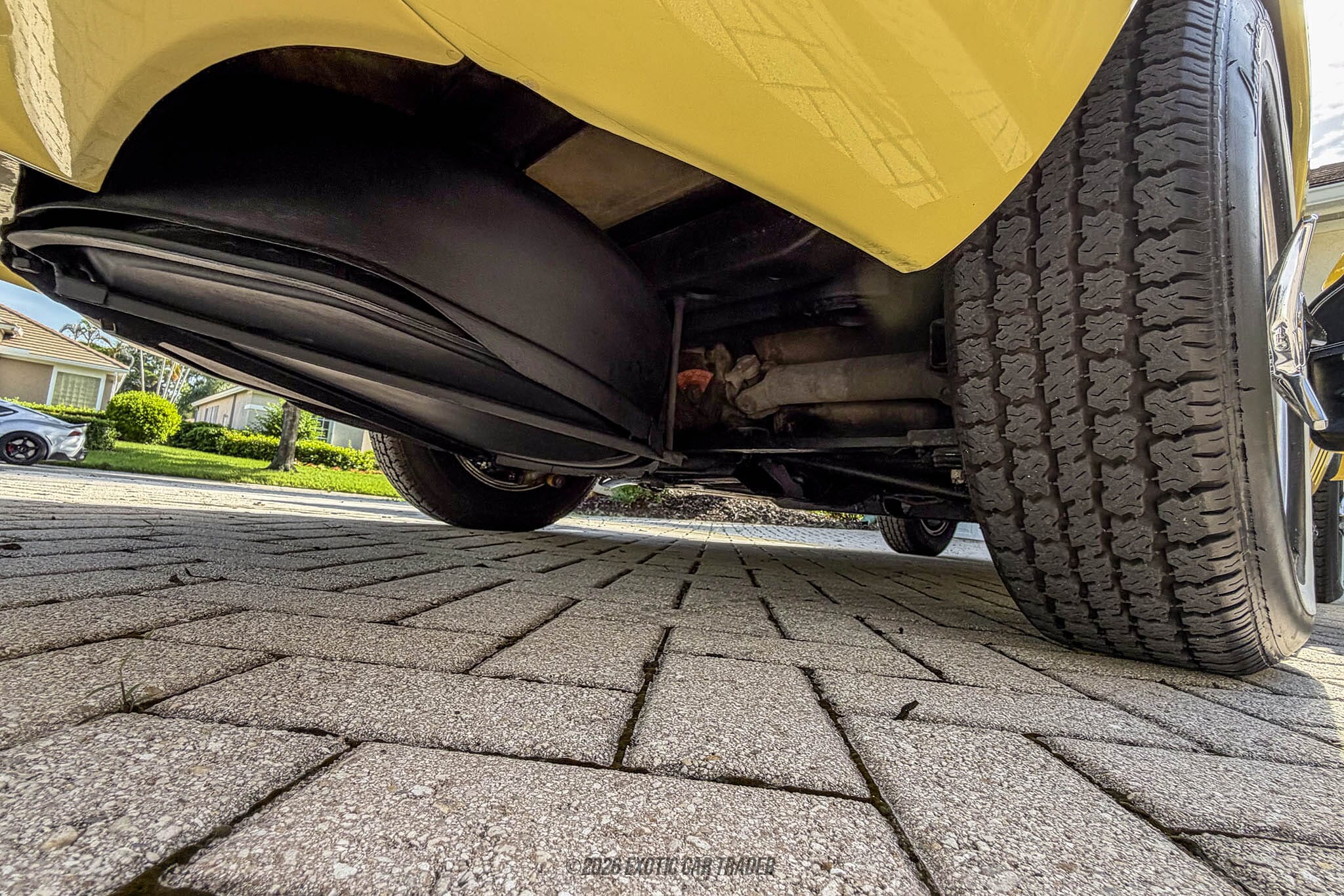
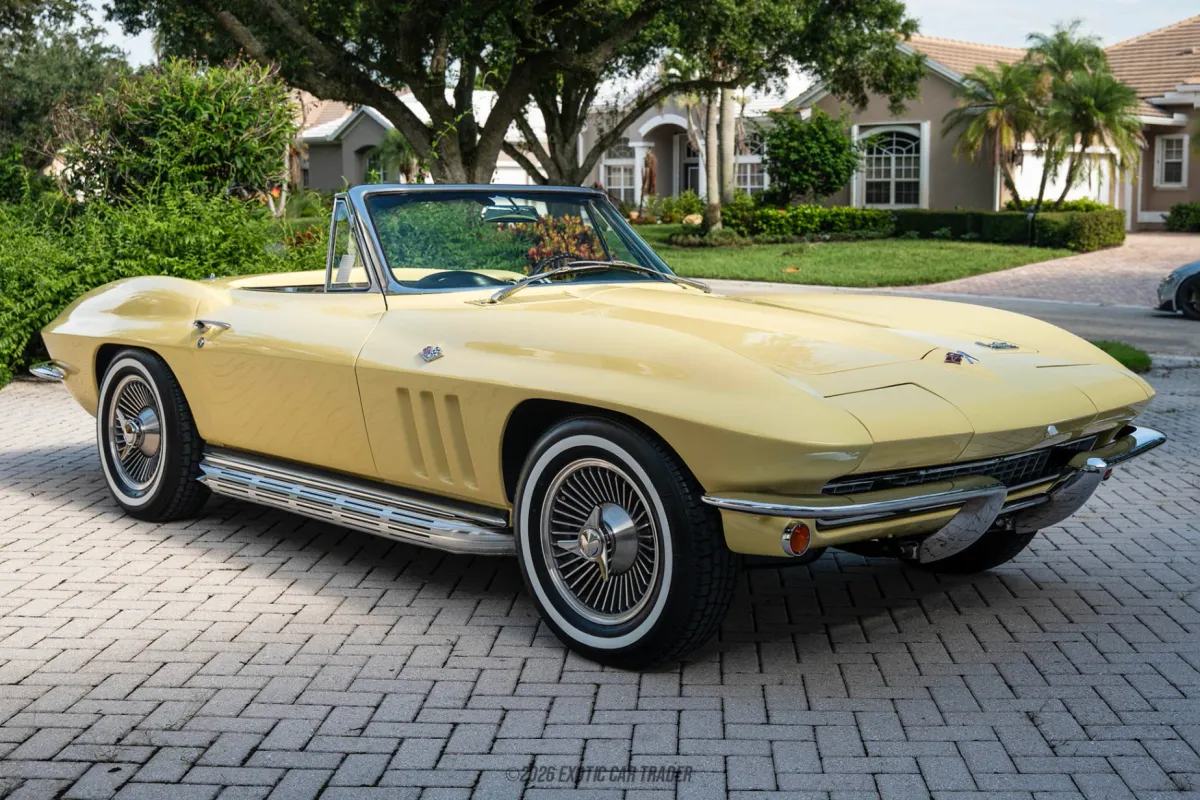
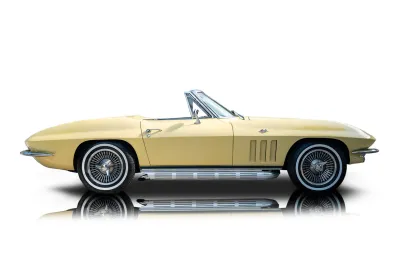
The 1966 Chevrolet Corvette Convertible comes from the heart of the C2 era, when the Corvette had already matured into a genuinely serious American sports car without losing the raw character that made the Sting Ray famous. This example leans heavily into that character. Showing 19,053 miles, it pairs a 327ci V8 with a four-barrel carburetor and a four-speed manual transmission, then adds the kind of period-style attitude enthusiasts gravitate toward: side-mount exhaust, knock-off-style turbine wheels, and a vivid Sunfire Yellow finish over a black interior. The current owner reports more than $83,000 invested into the build, with attention extending beyond cosmetics into the cooling system, ignition components, timing hardware, and other supporting mechanical upgrades. What makes this car appealing is that it still delivers the classic C2 experience in the way enthusiasts want it: small-block V8 up front, manual gearbox in the middle, drive going to the rear, and very little standing between the driver and the car. The side pipes give the Corvette a more aggressive presence and soundtrack, while the custom paint and wheel setup emphasize the long-hood, short-deck proportions that made the midyear Corvette one of Chevrolet’s most iconic designs.
Exterior and Interior
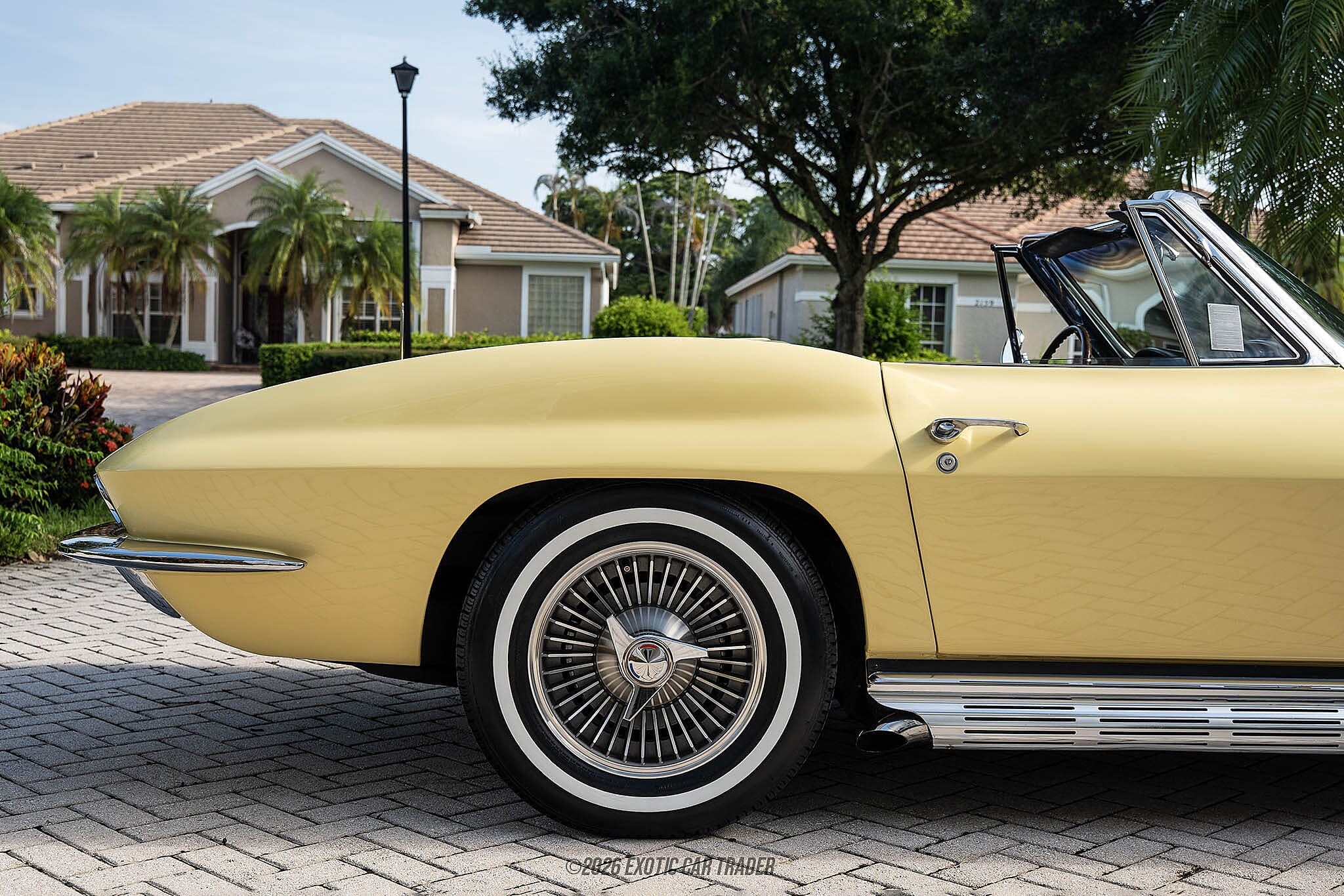
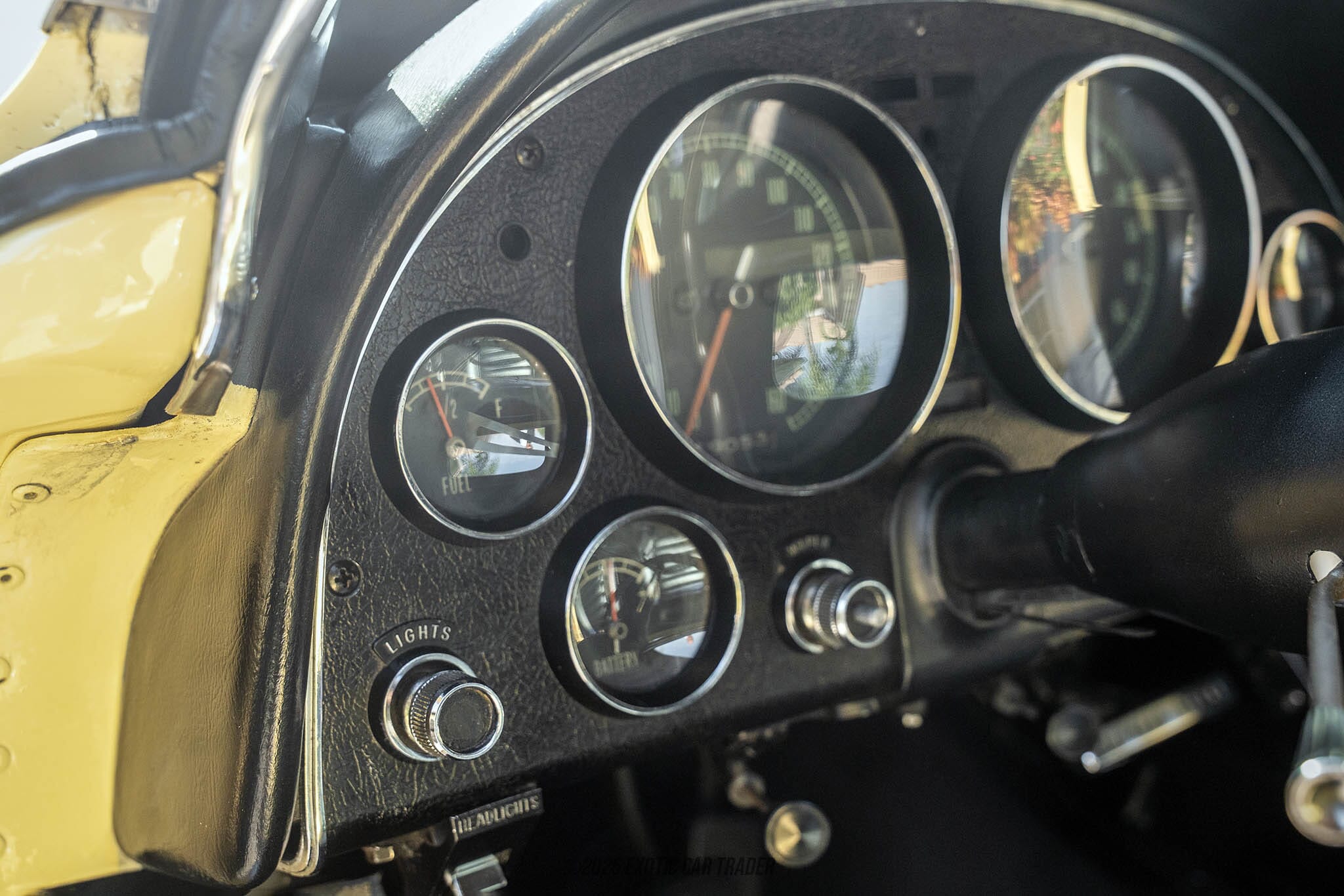
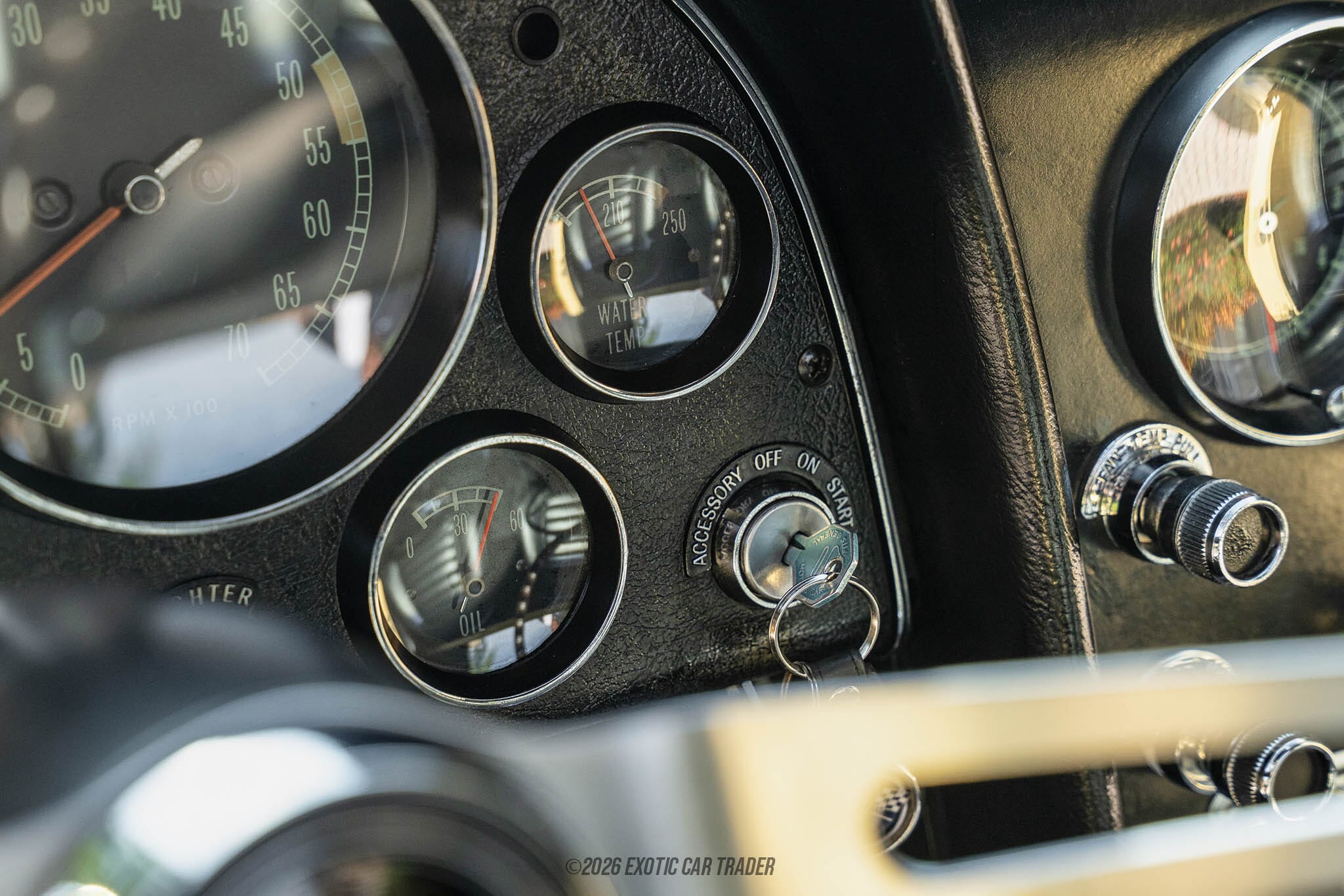
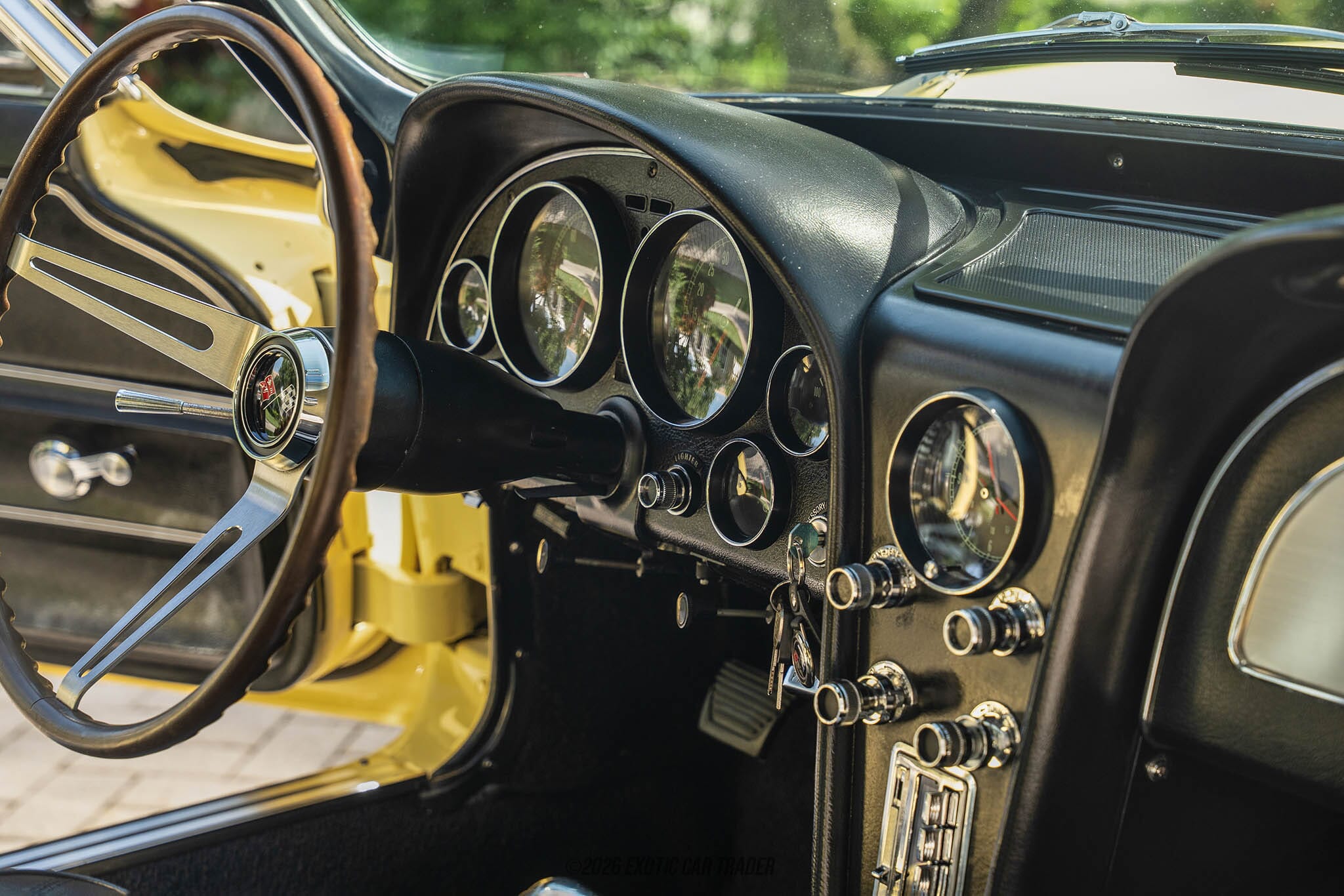
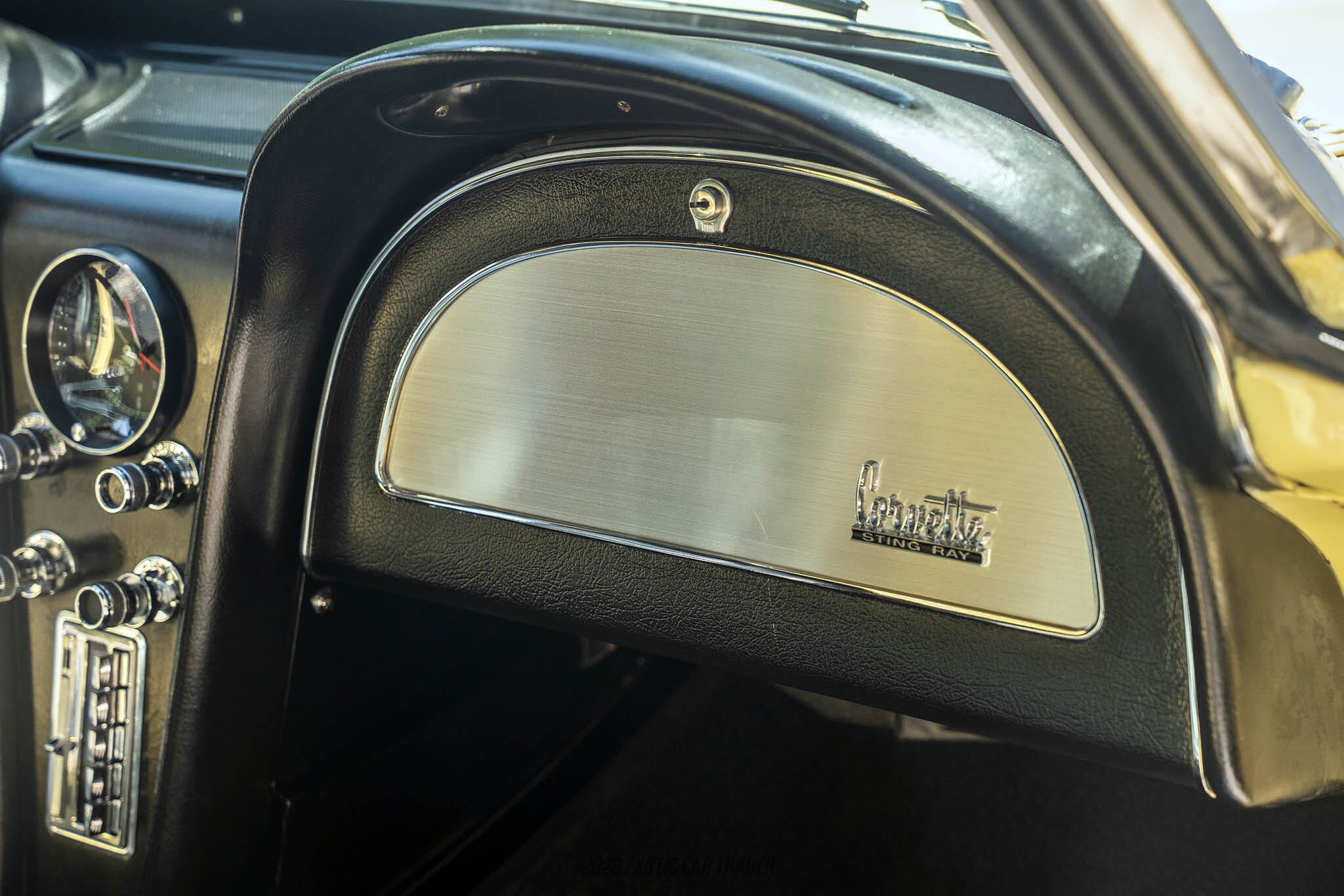
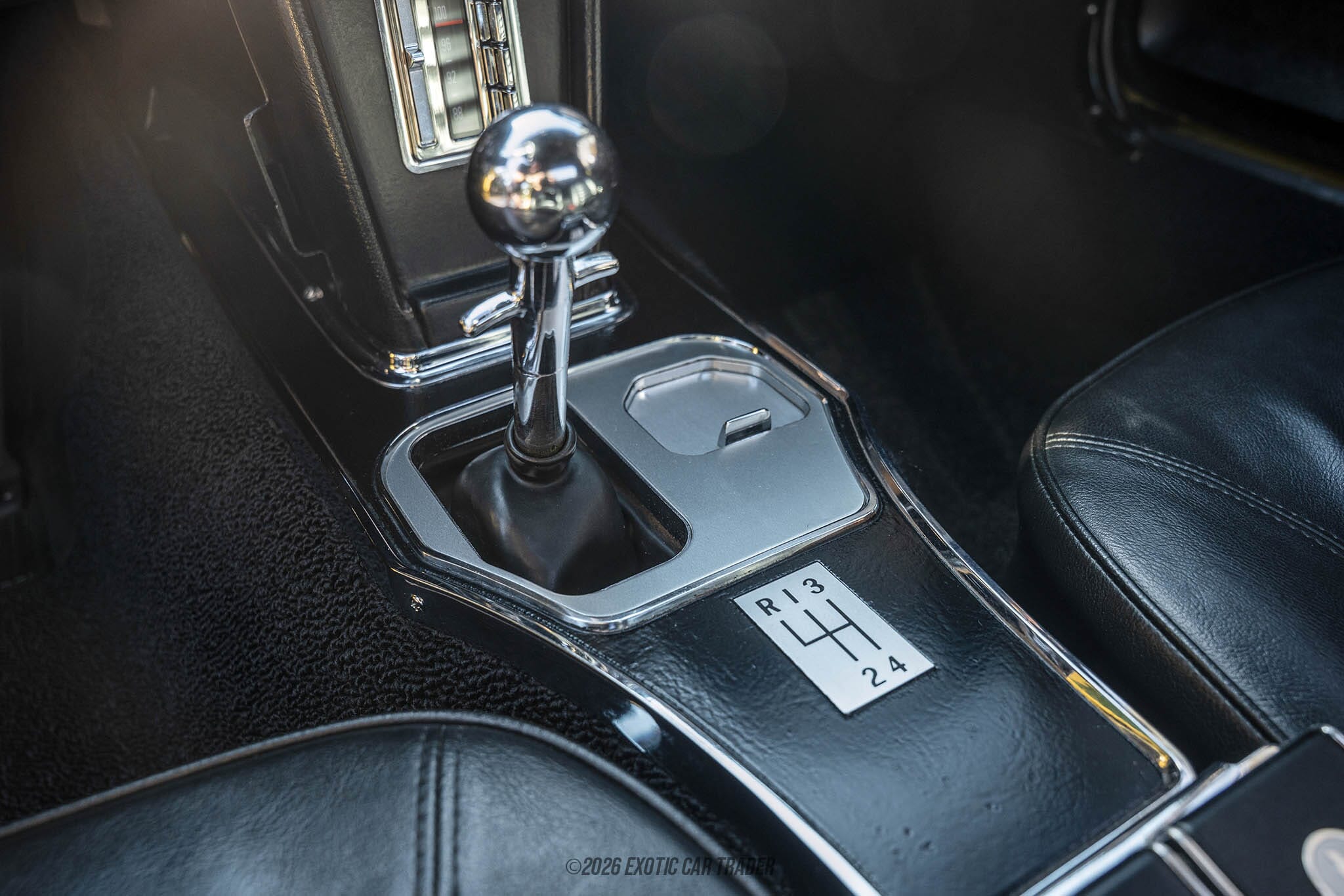
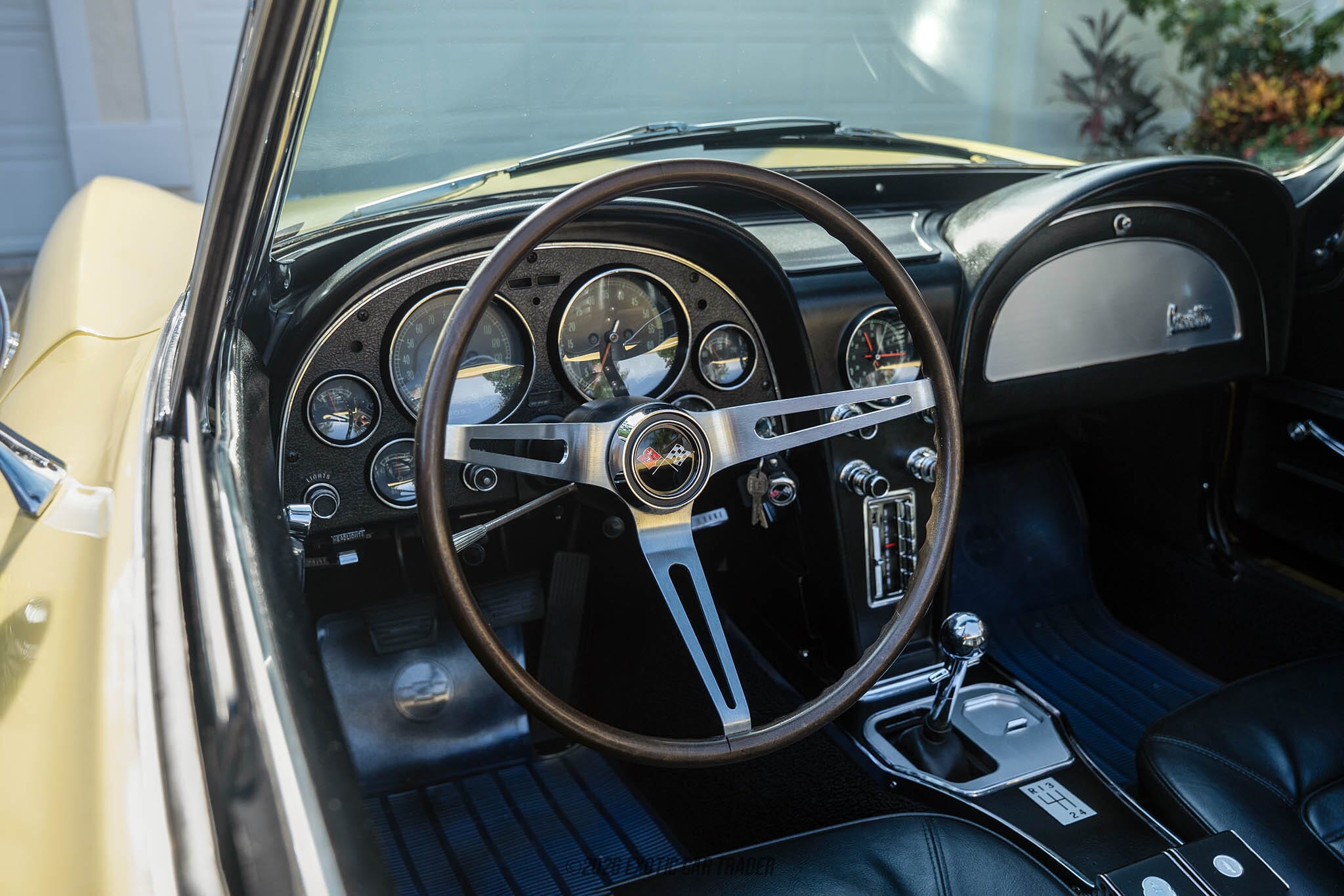
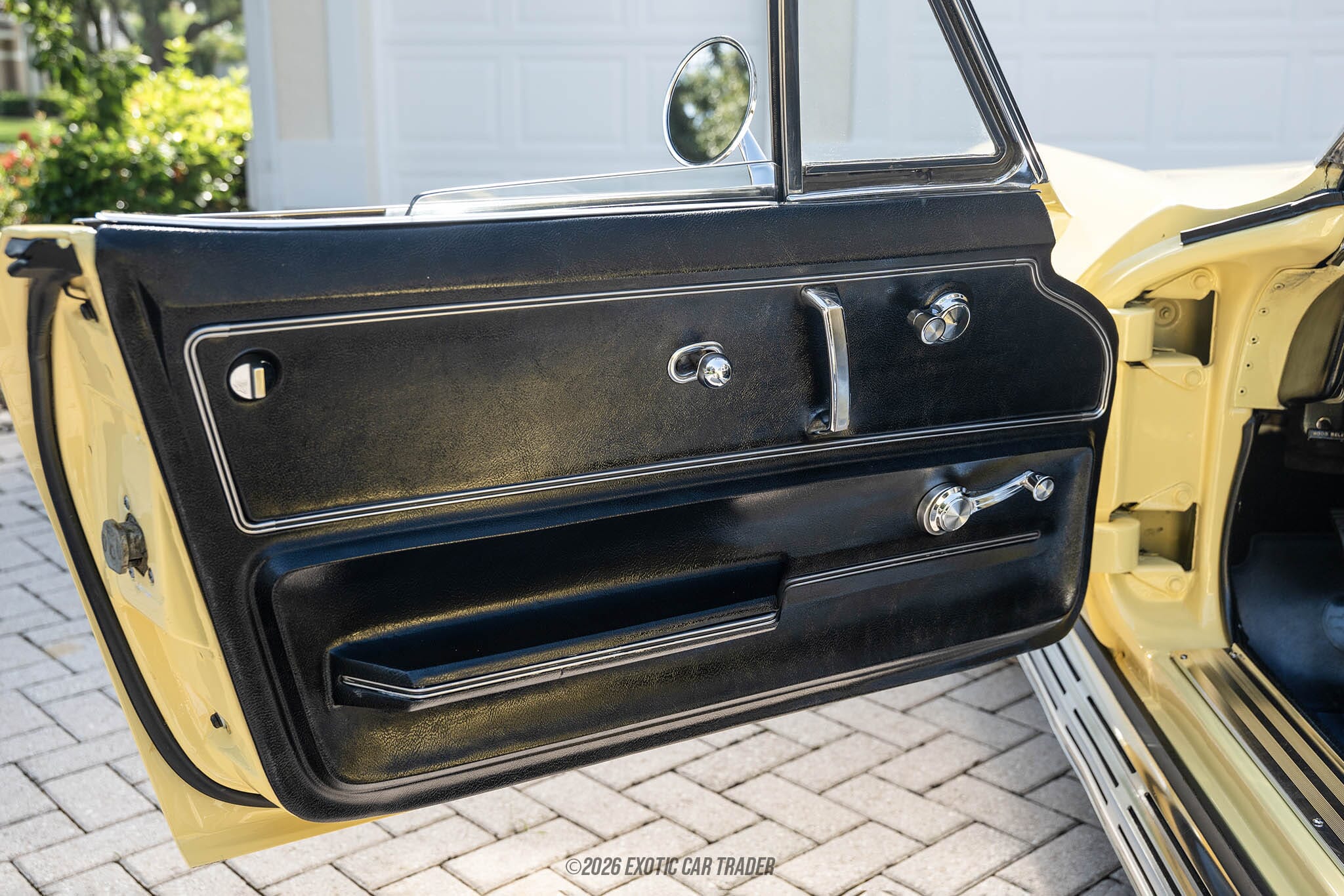
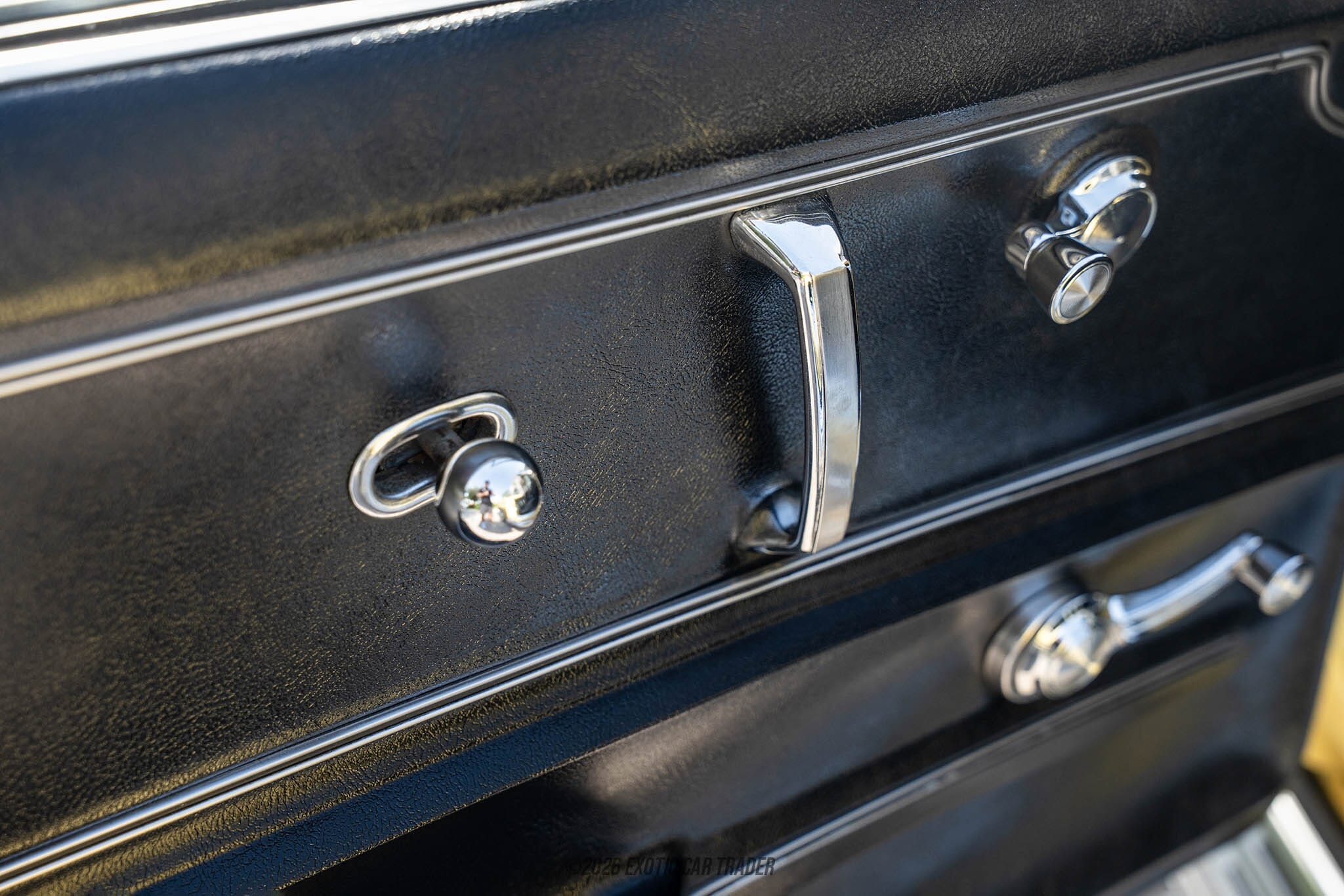
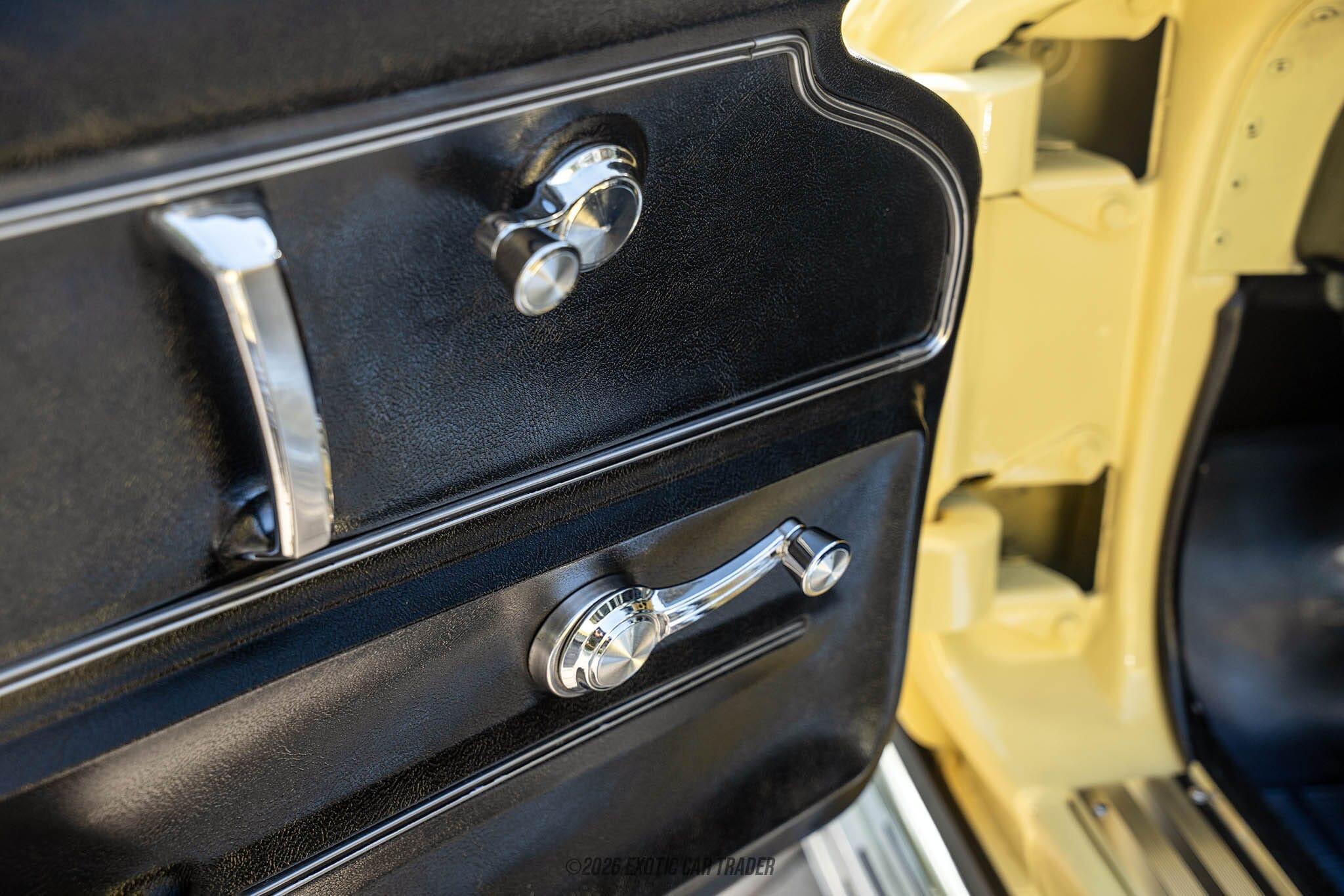
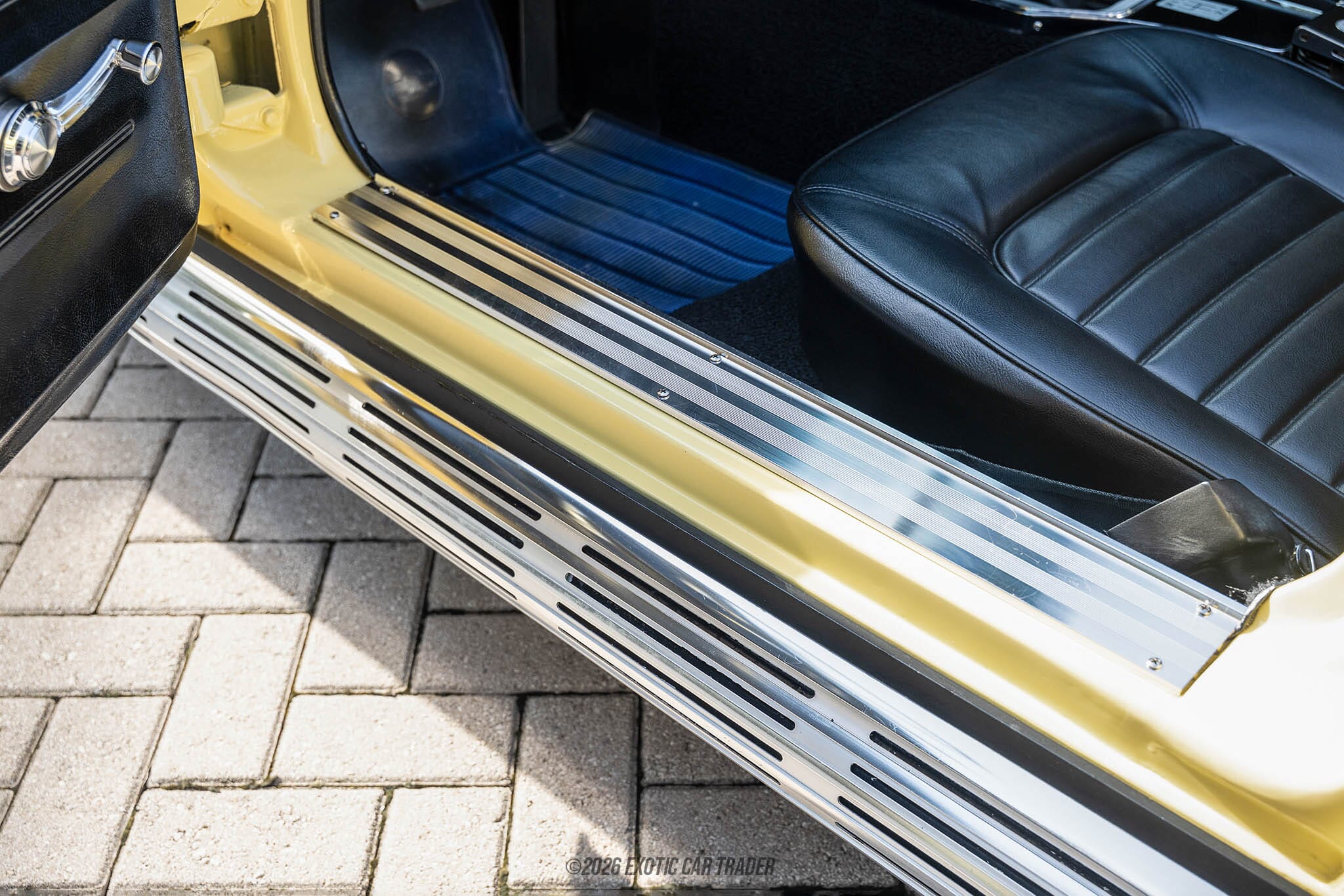
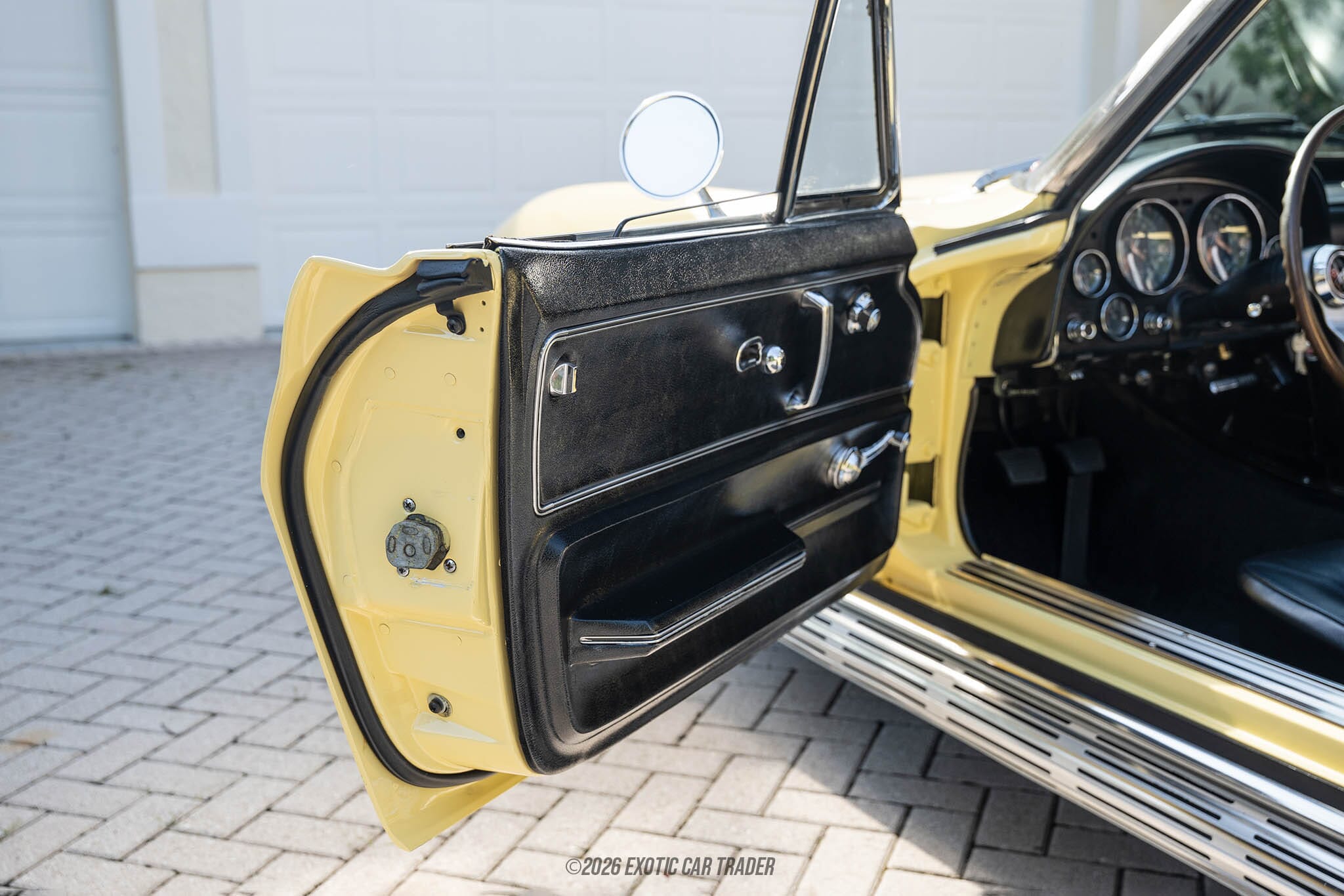
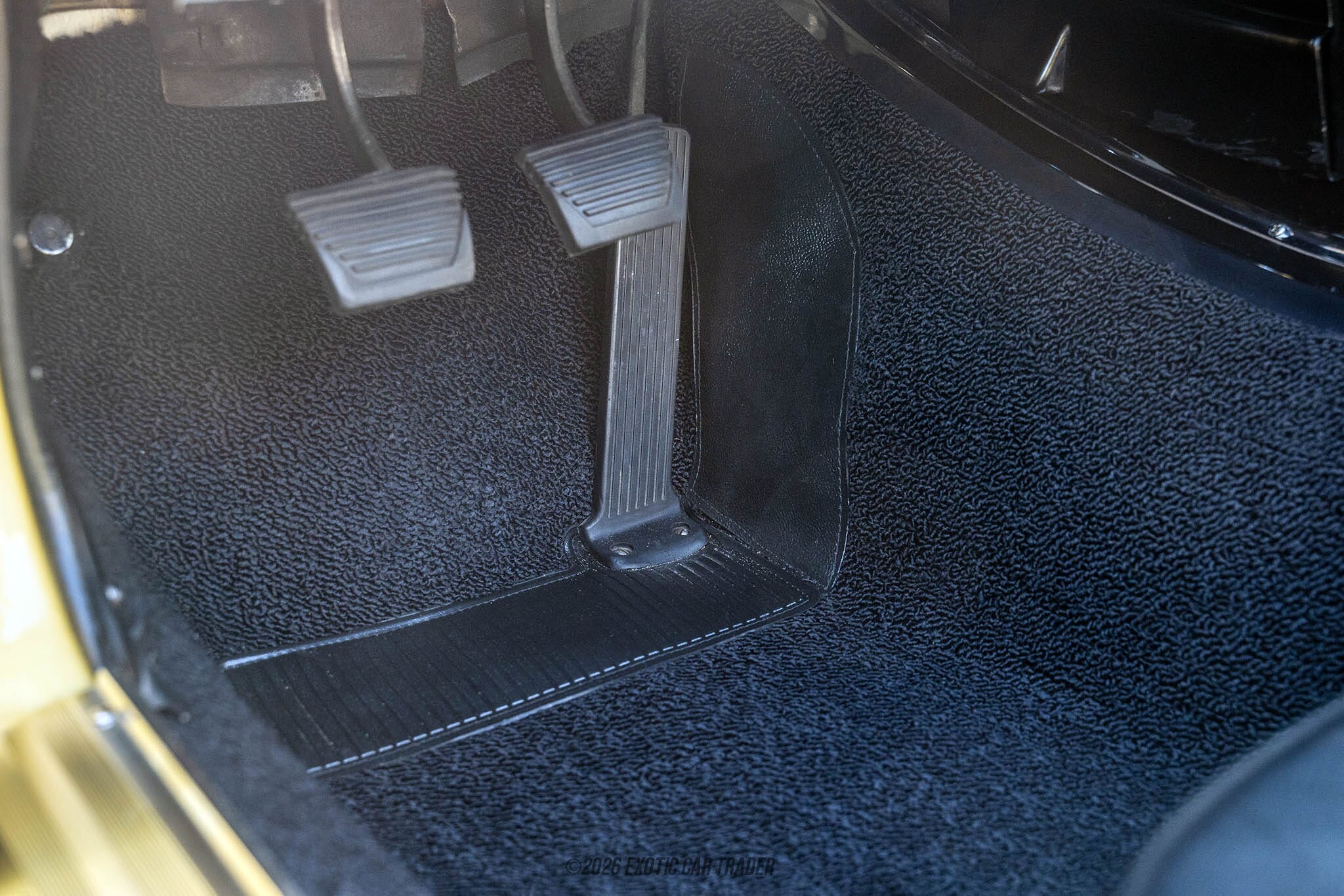
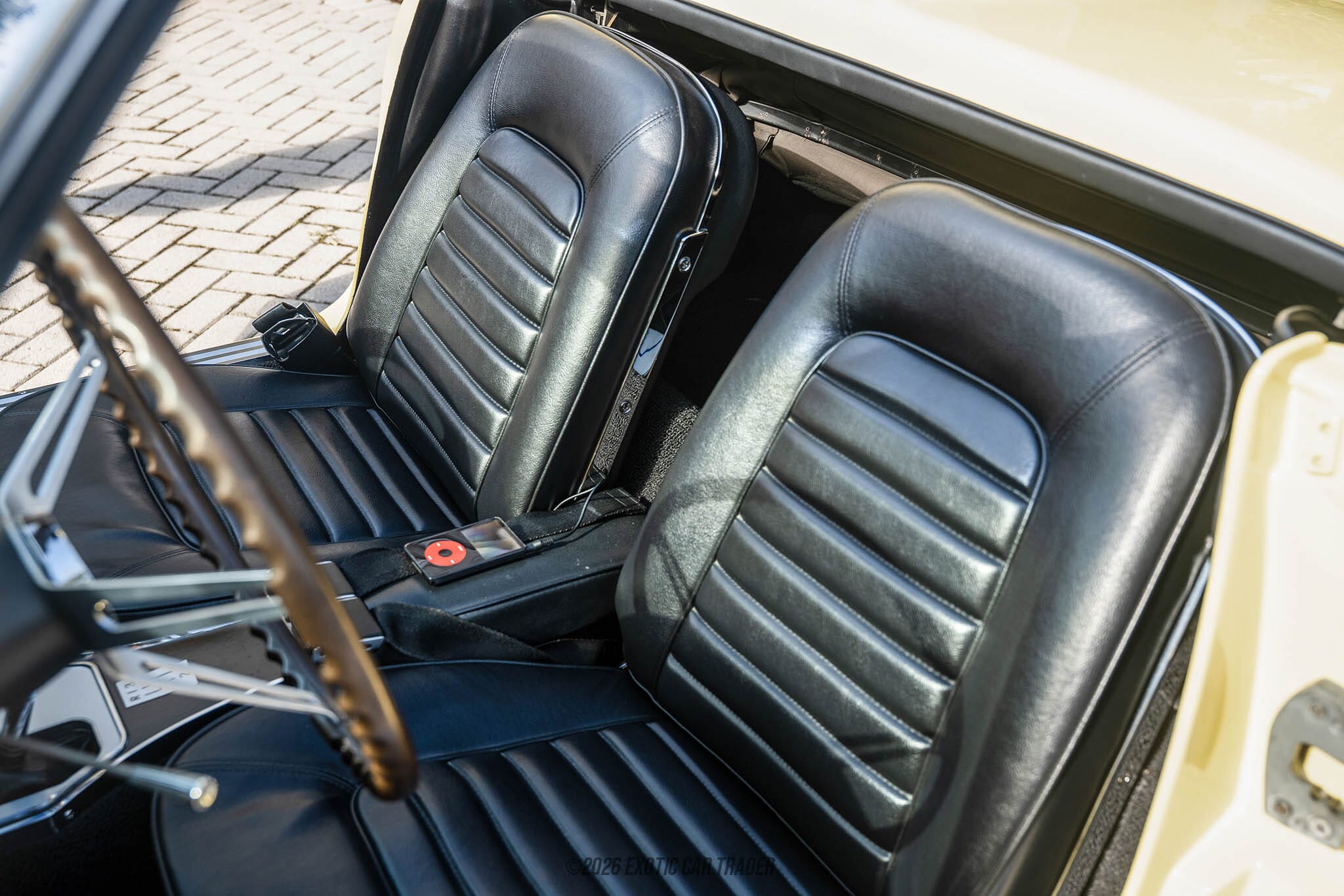
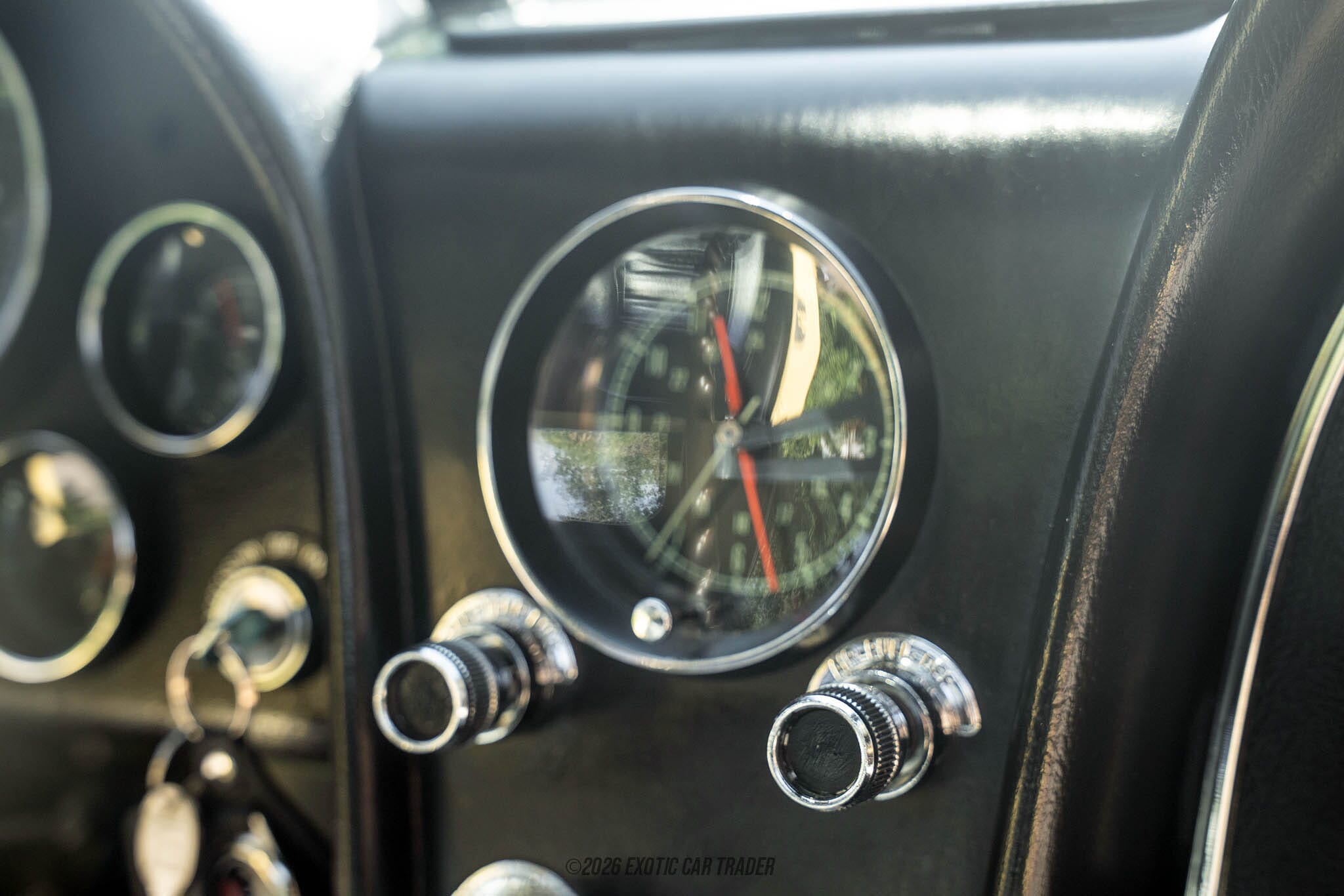
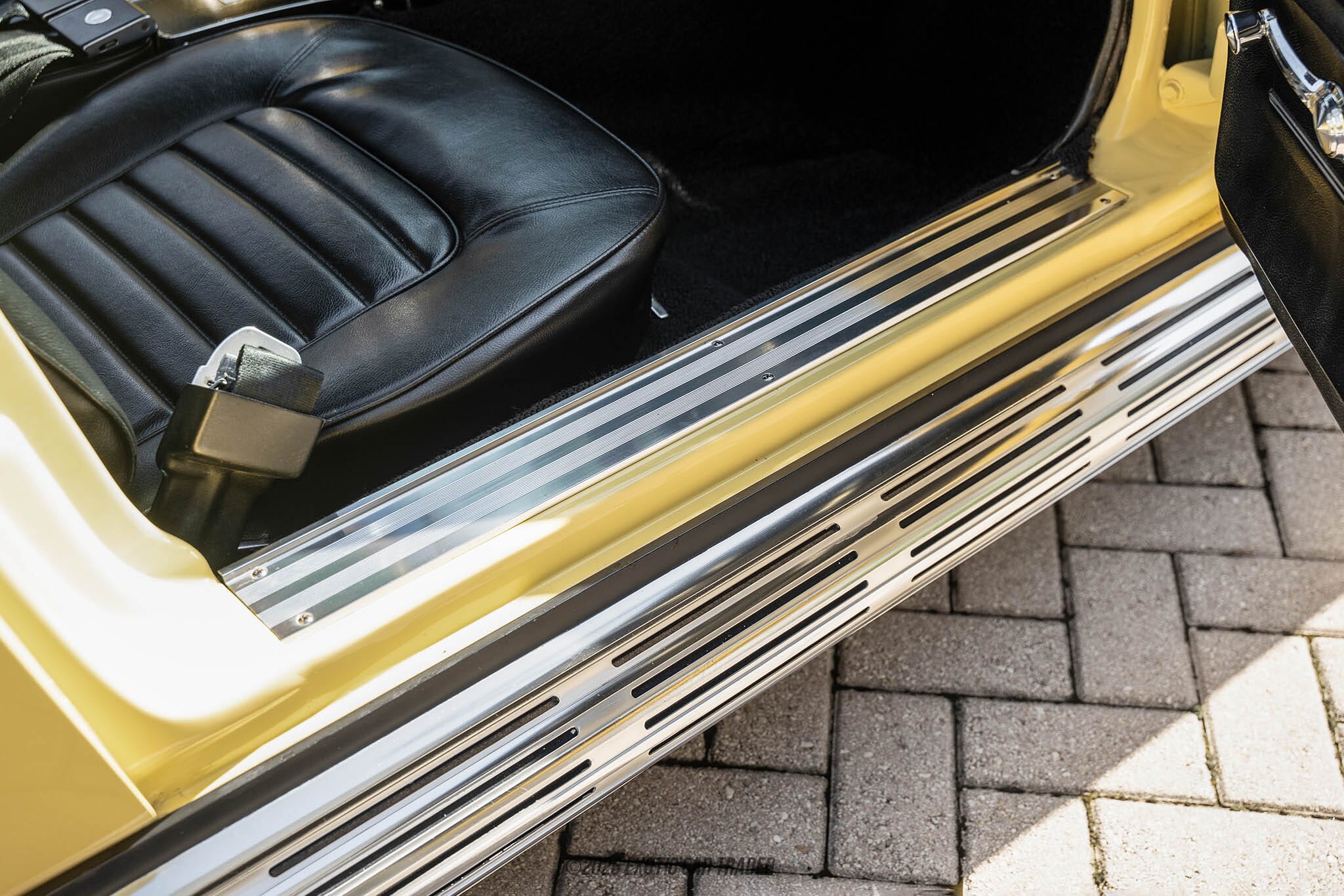
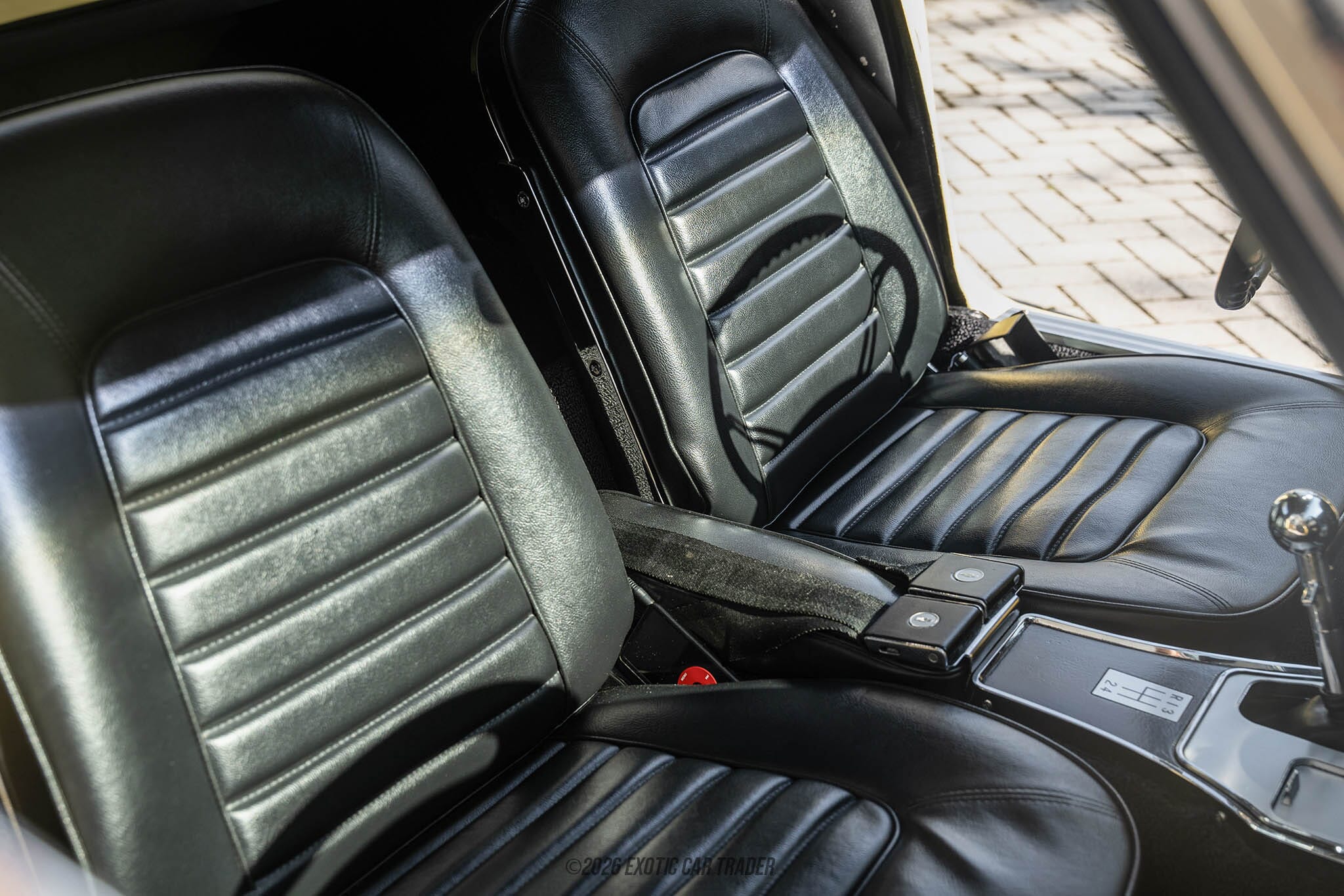
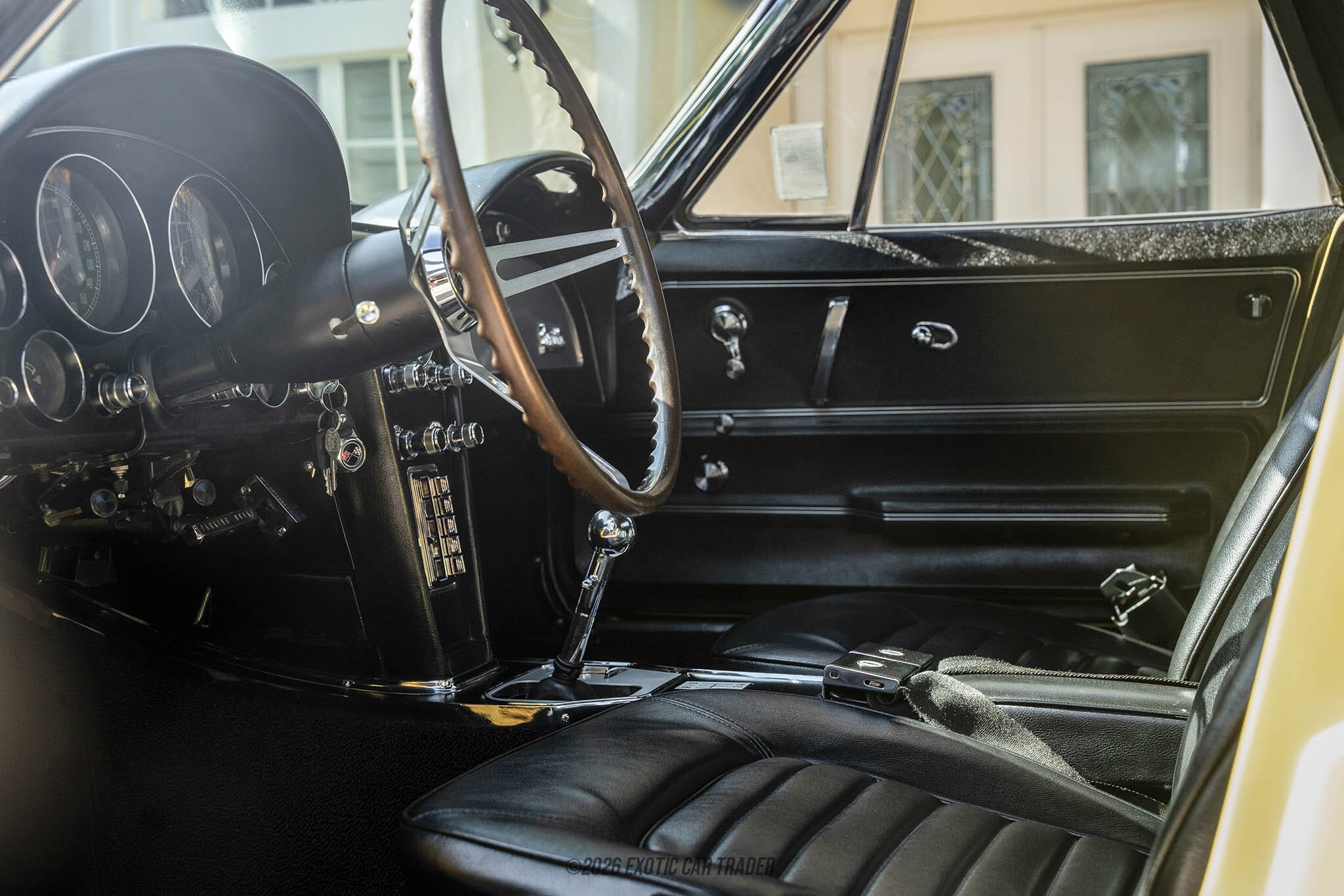
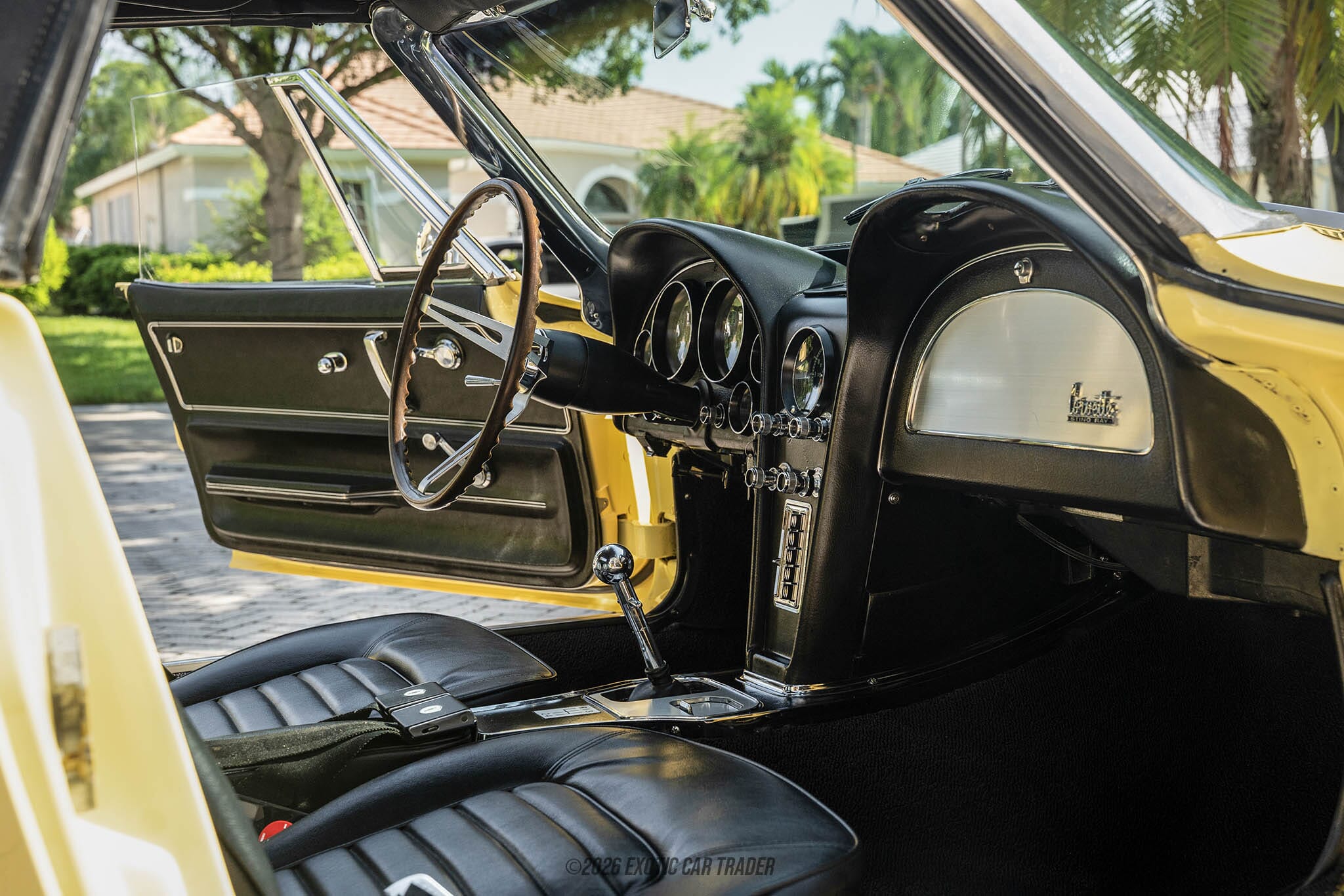
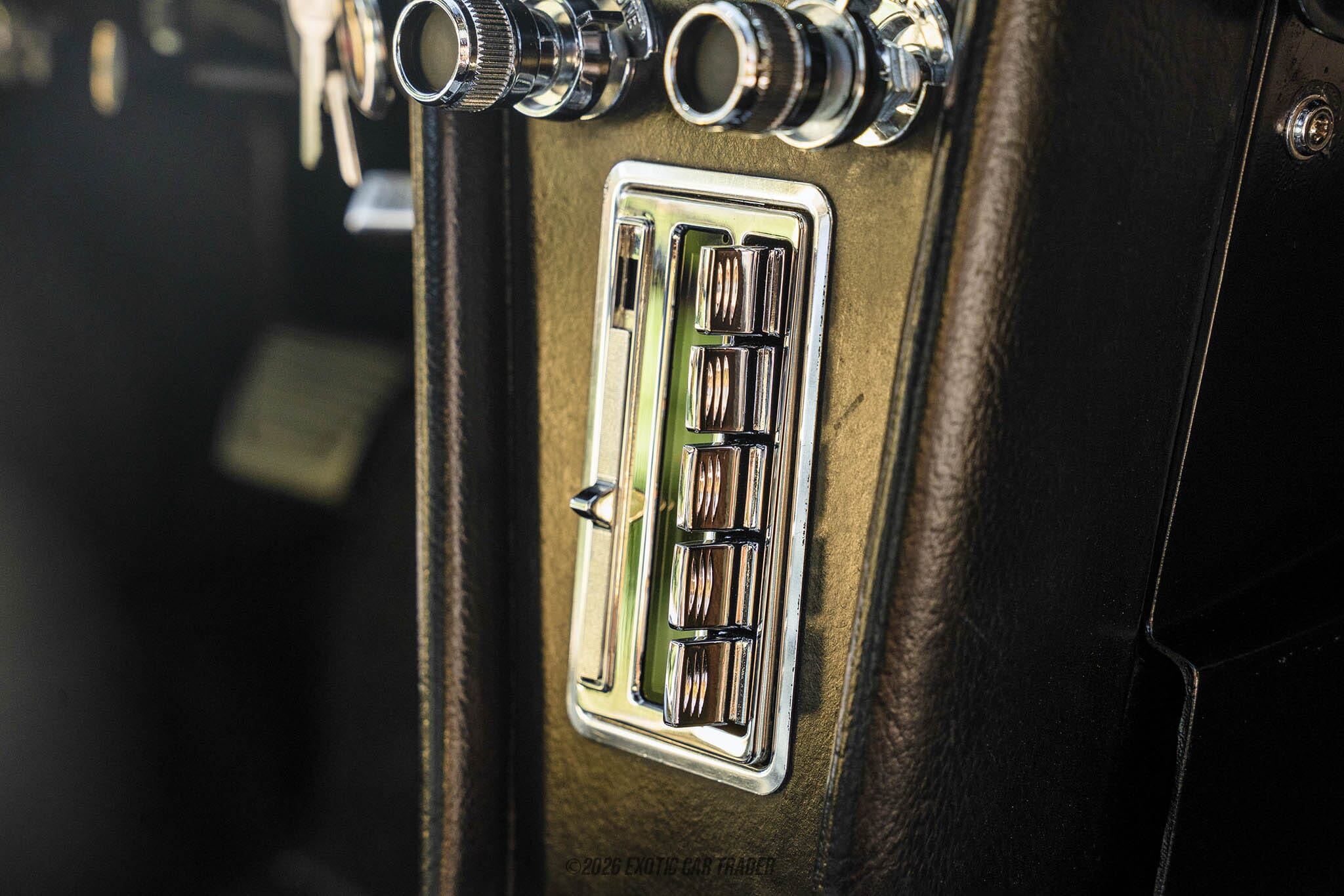
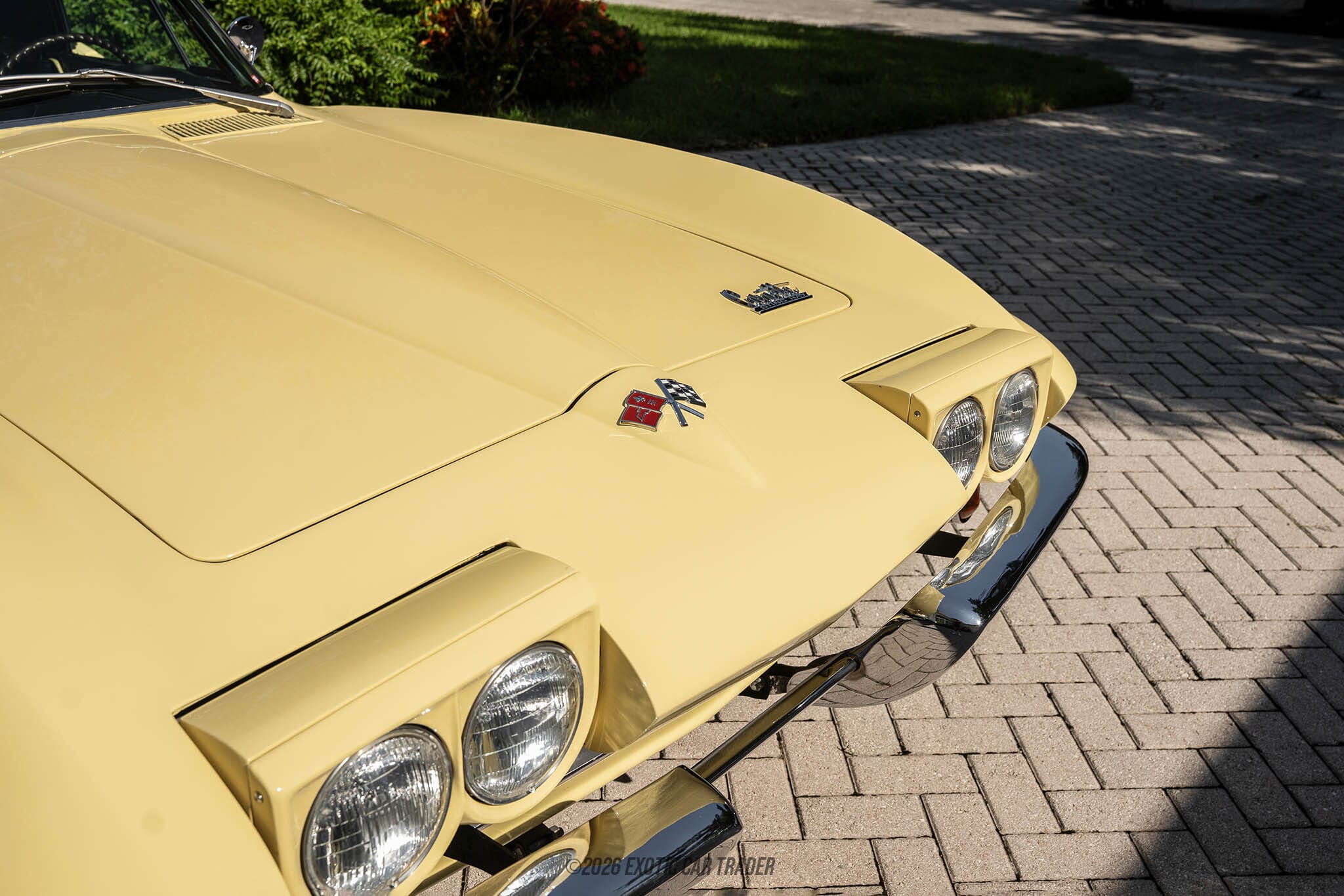
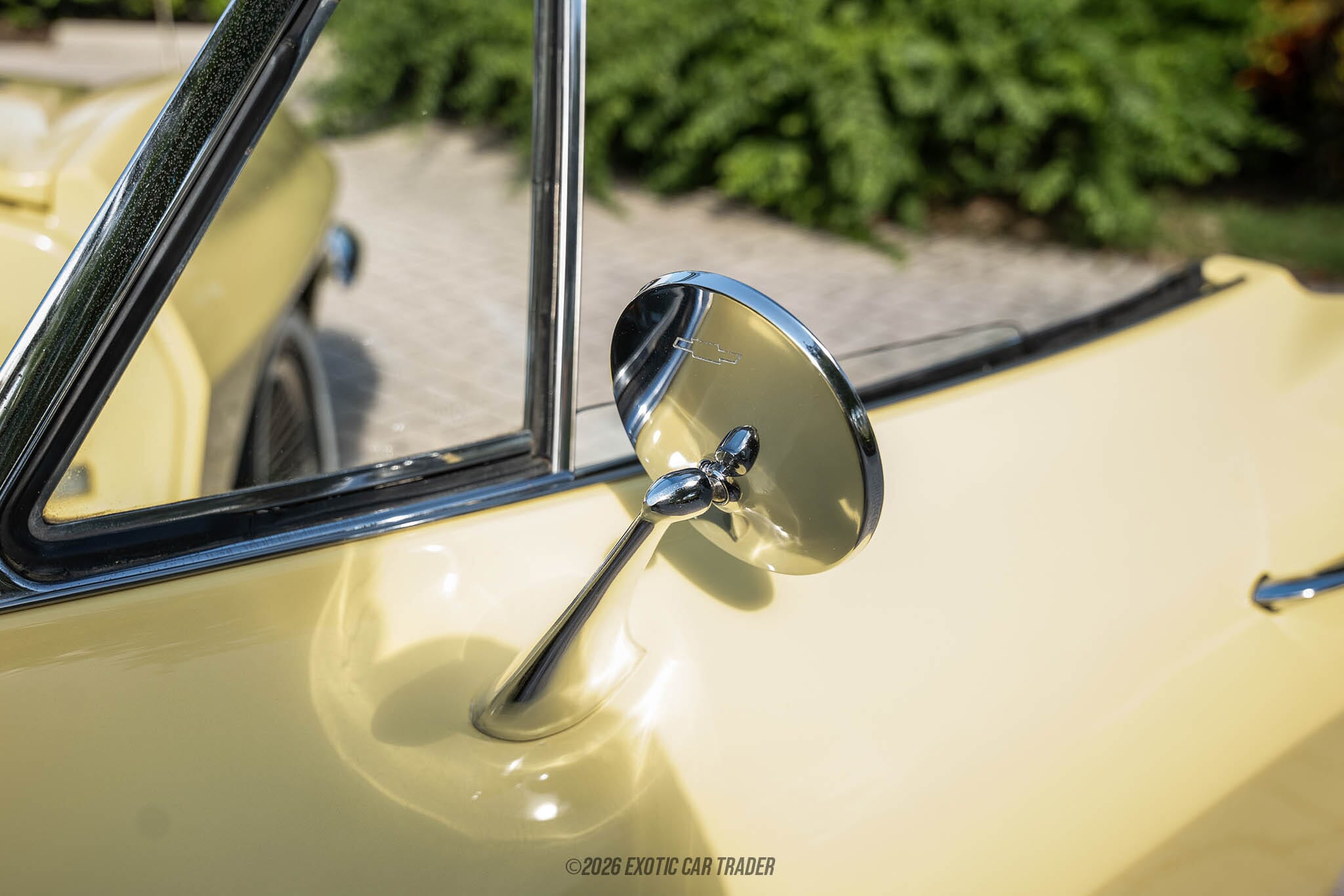
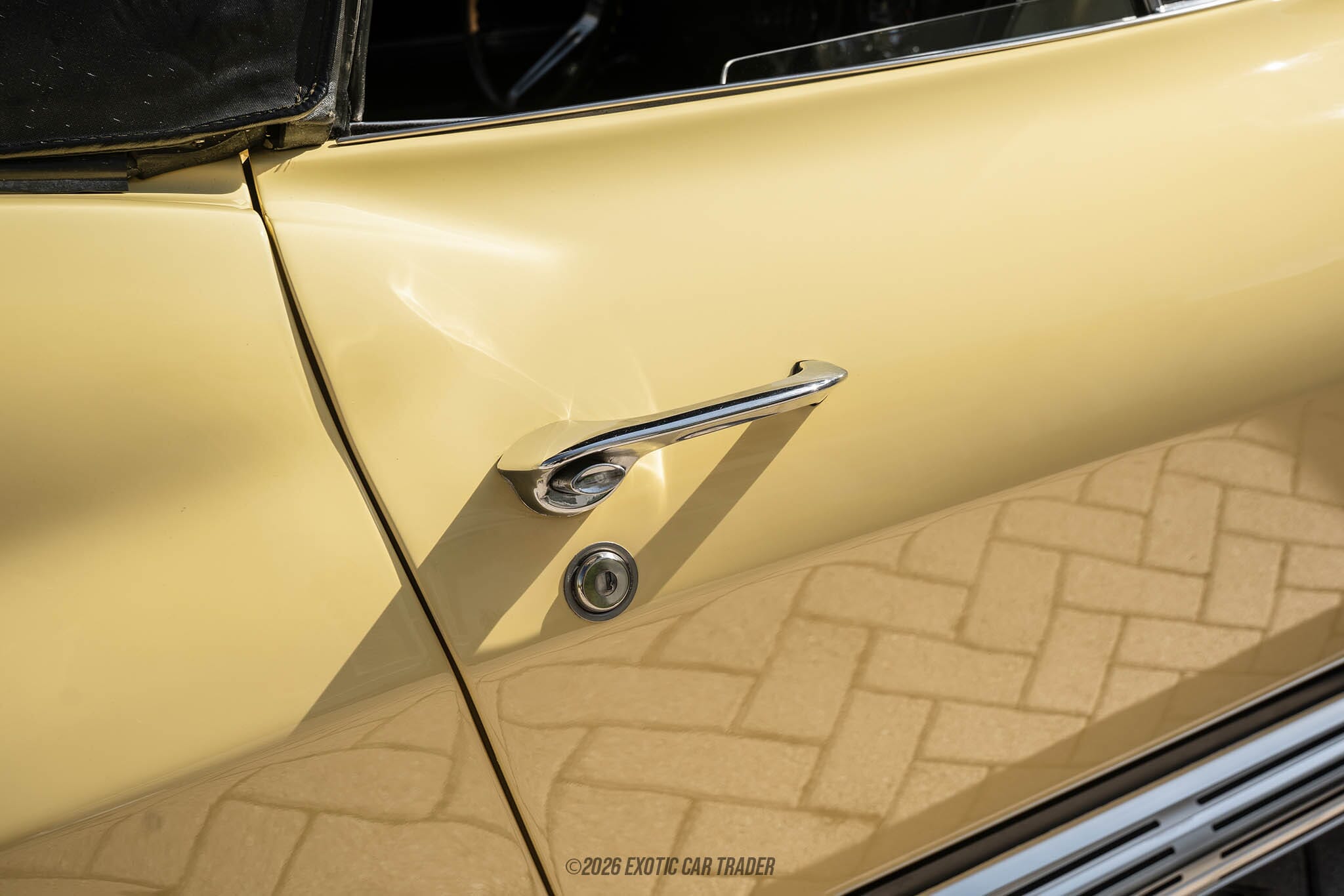
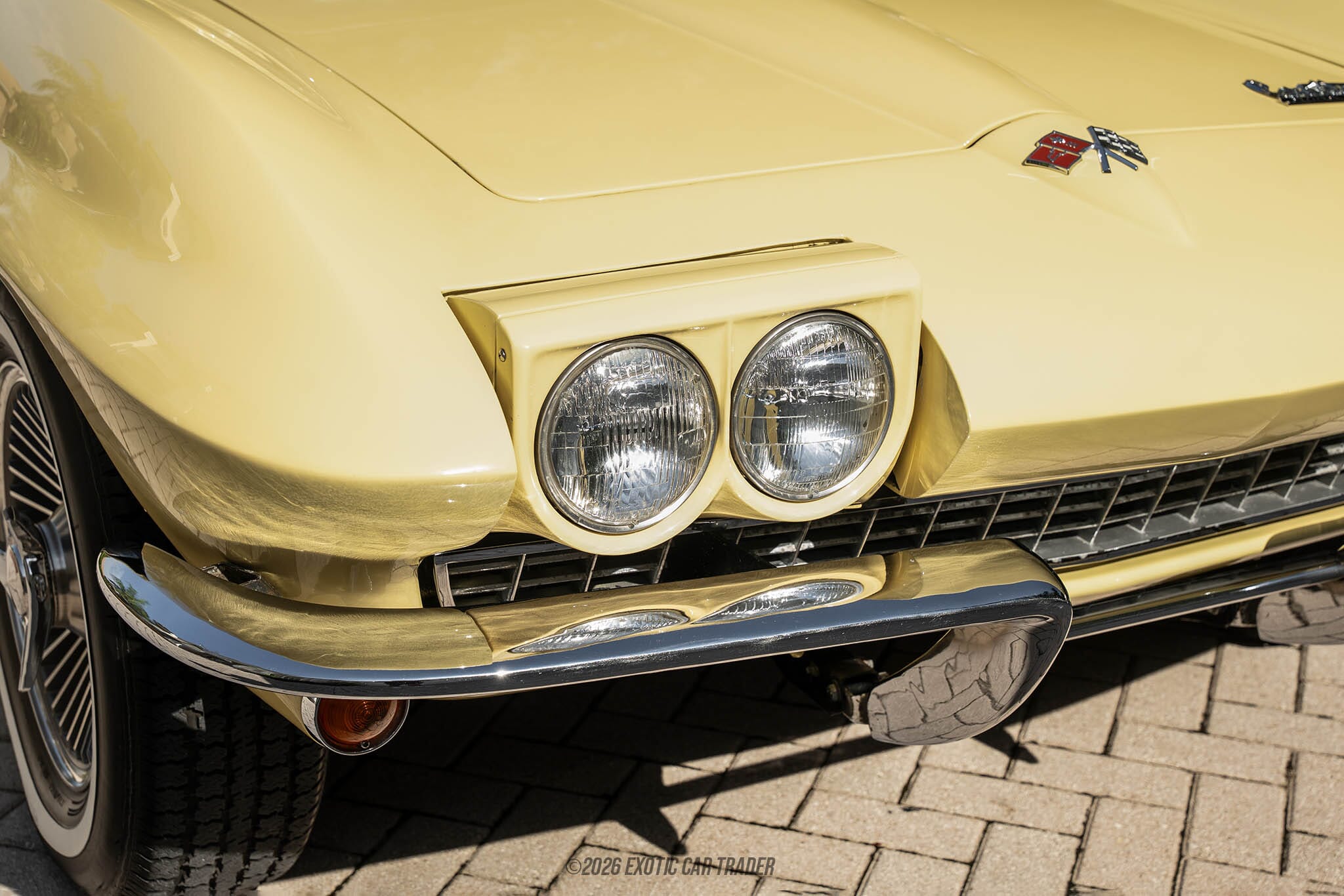
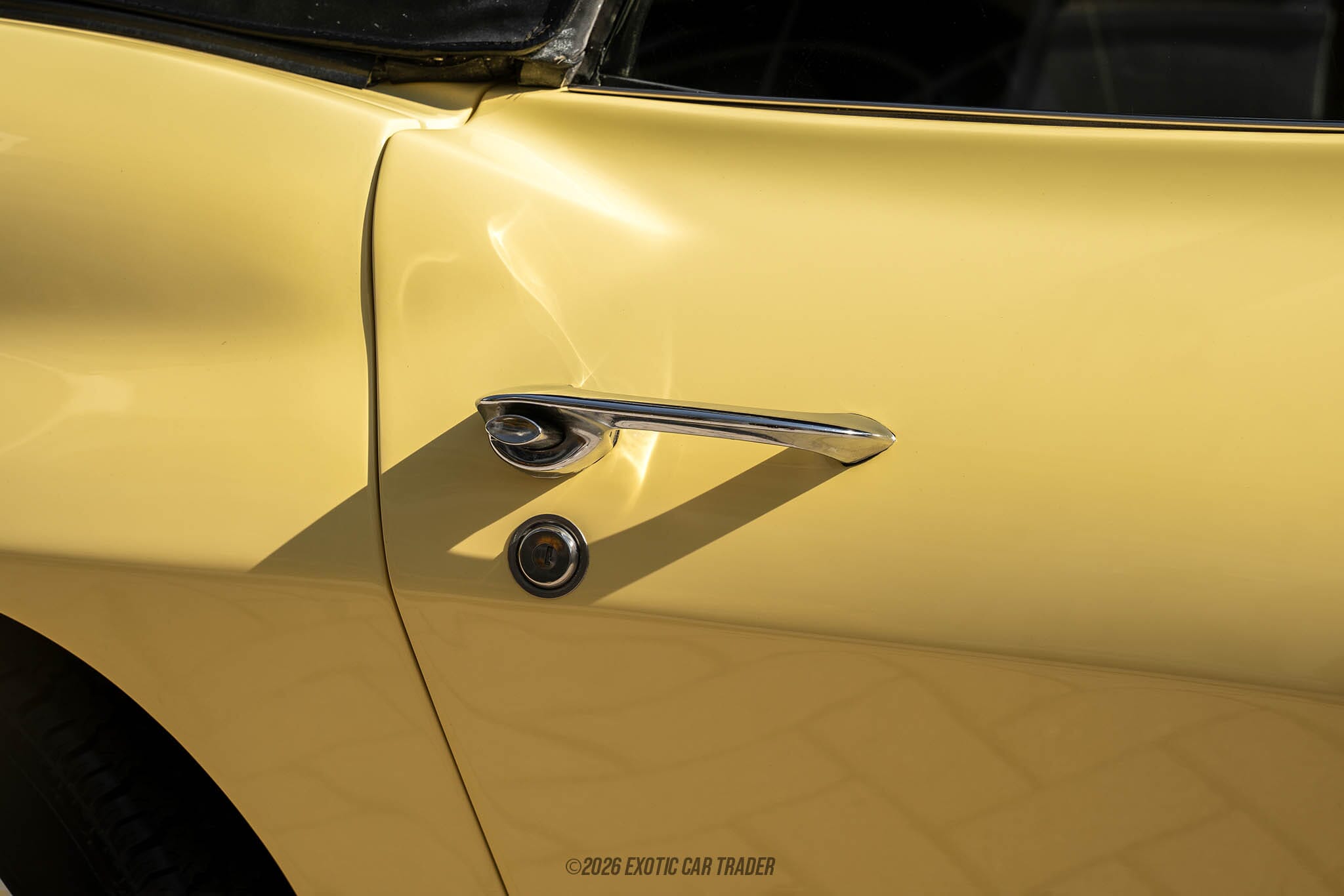
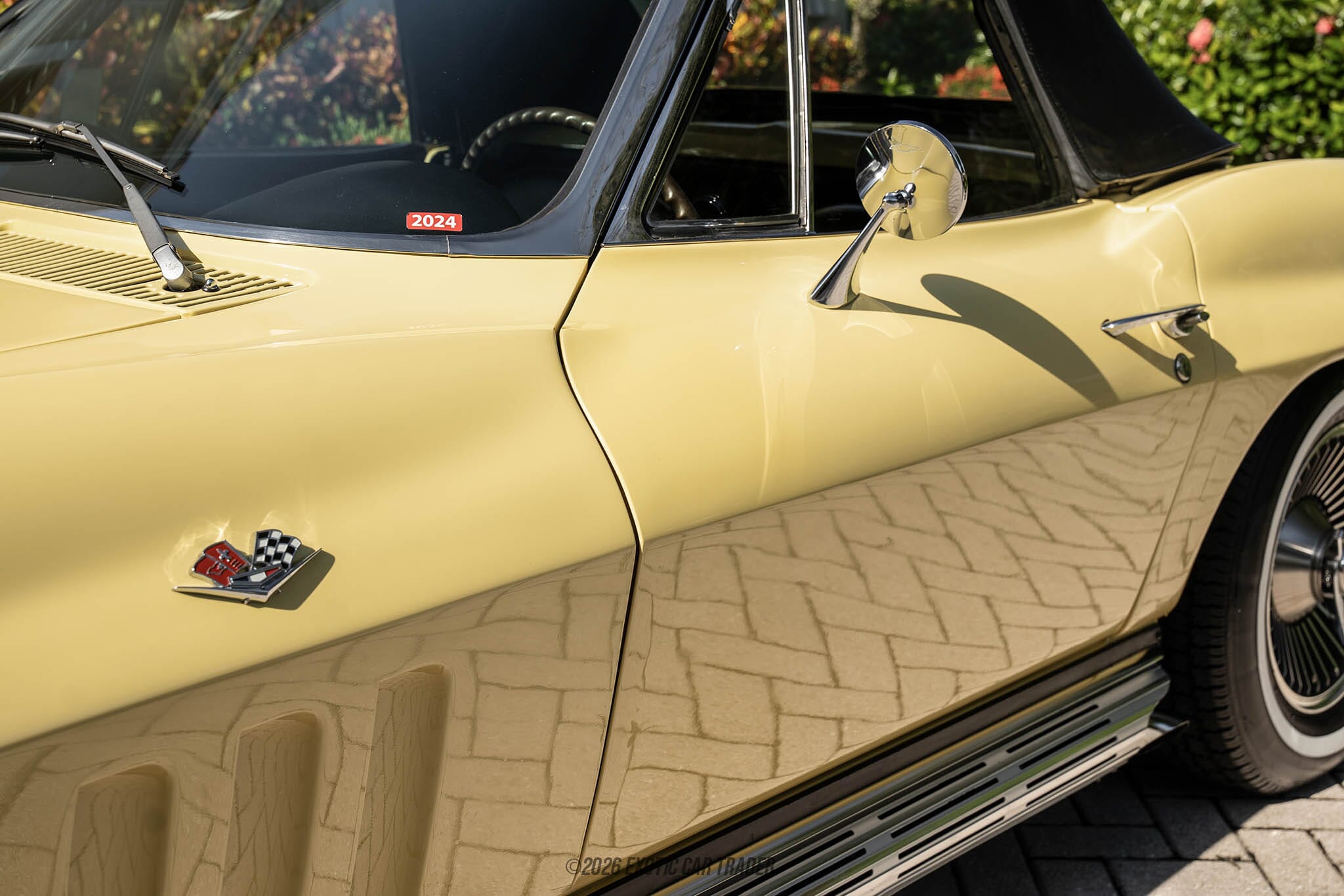
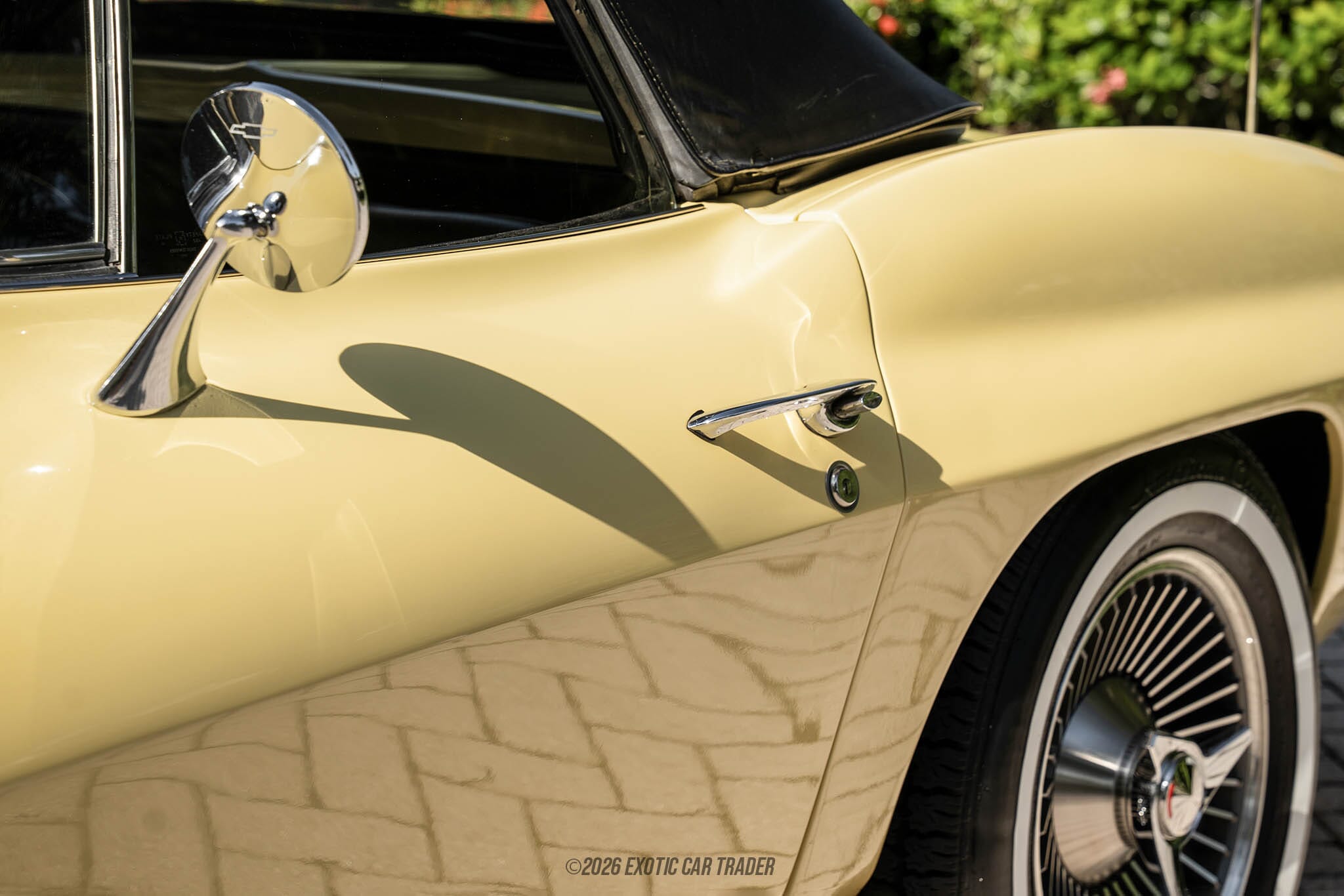
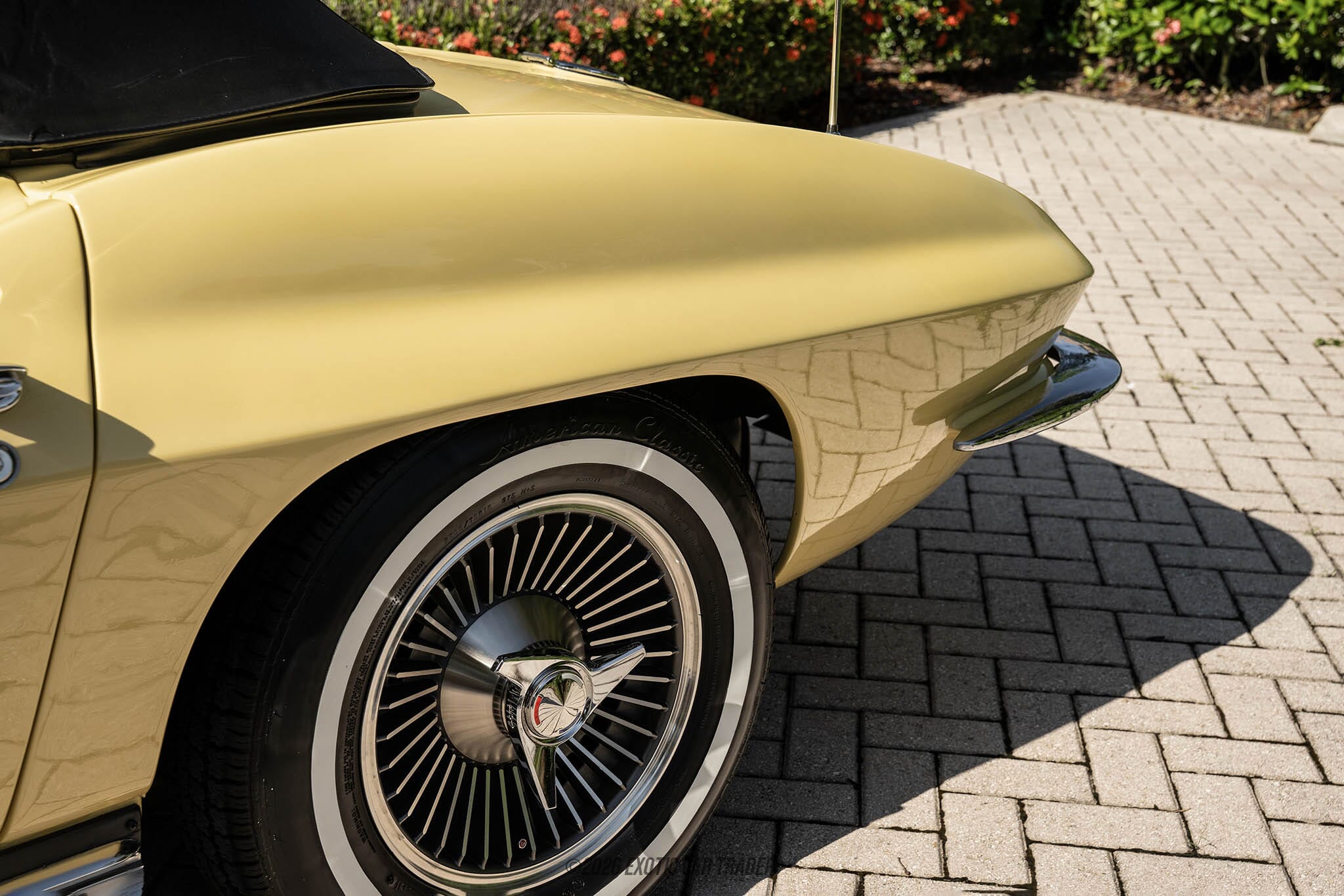
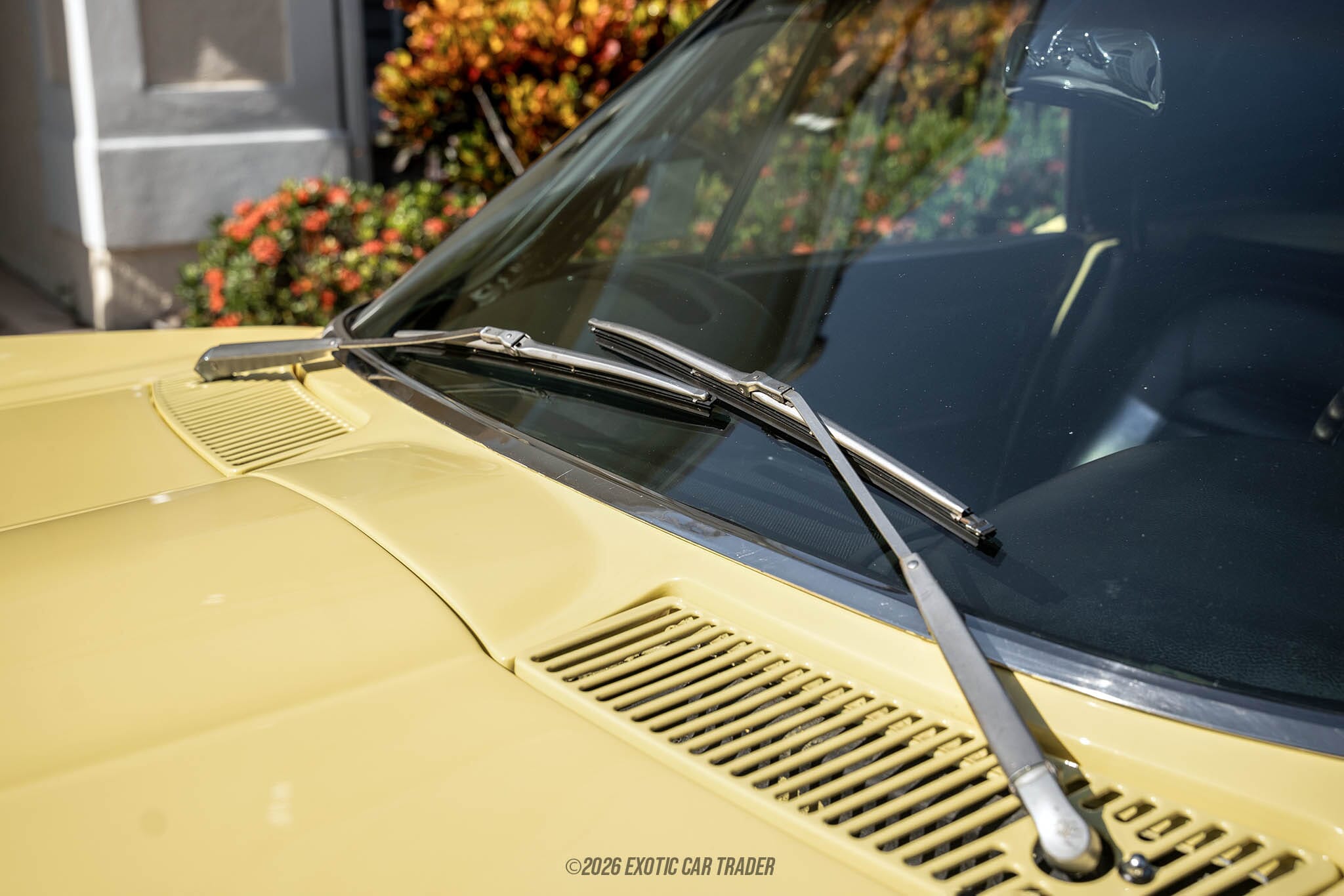
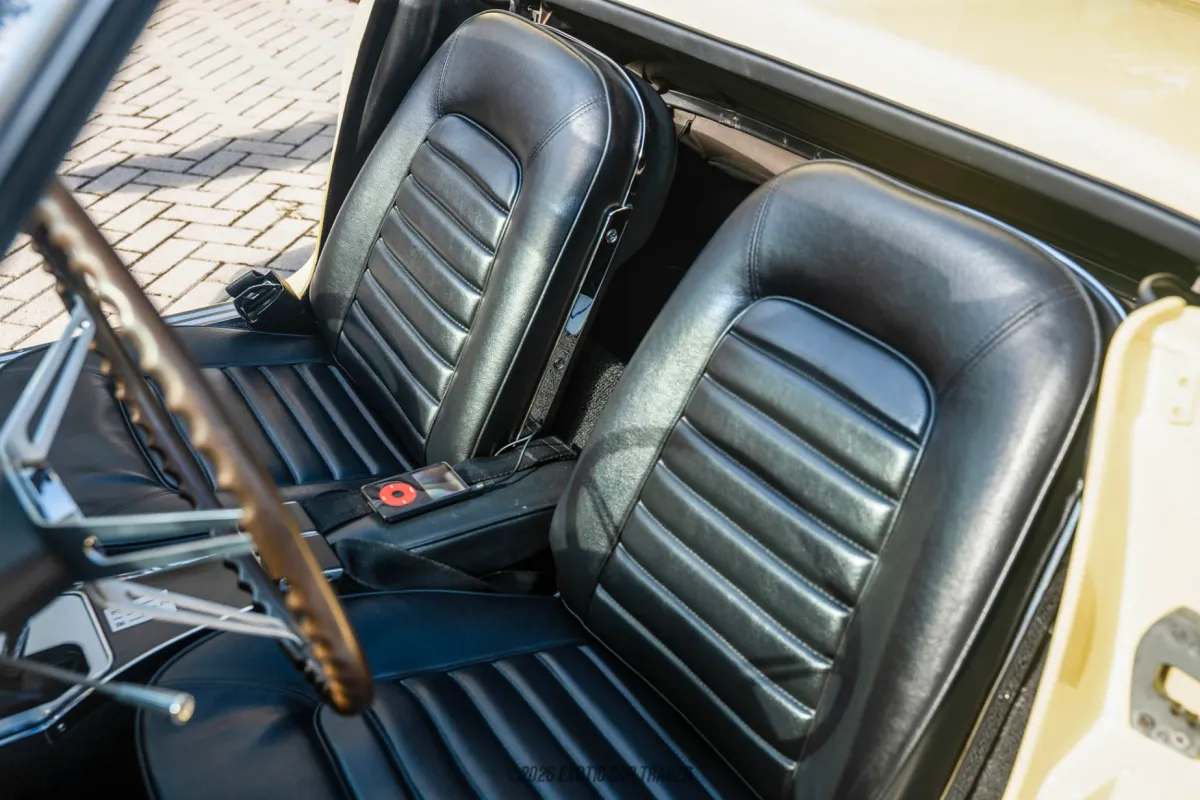
Finished in Sunfire Yellow as part of a custom paint job, this Corvette has the sort of visual presence that suits a midyear Sting Ray perfectly. The sculpted front fenders, pronounced rear haunches, and compact roadster body already give the C2 an unmistakable silhouette, and the bright exterior color makes those shapes stand out even more. A black aftermarket convertible soft top provides contrast when fitted, while the side-mount exhaust gives the car a much more purposeful profile. Fifteen-inch turbine-style aluminum wheels with knock-off spinners deliver the period performance look enthusiasts expect from a properly styled C2, and the combination works especially well with the car’s lower black detailing. Aftermarket tail lights and locking gaskets for the doors, hood, and trunk further distinguish this example from a factory-stock presentation. Inside, the Corvette keeps the classic black-on-black sports car theme with black vinyl upholstery and black loop carpeting. The cabin remains appropriately driver-focused, with the long center console, deeply set instrumentation, and four-speed manual shifter creating the kind of cockpit that helped define the Sting Ray.
Engine
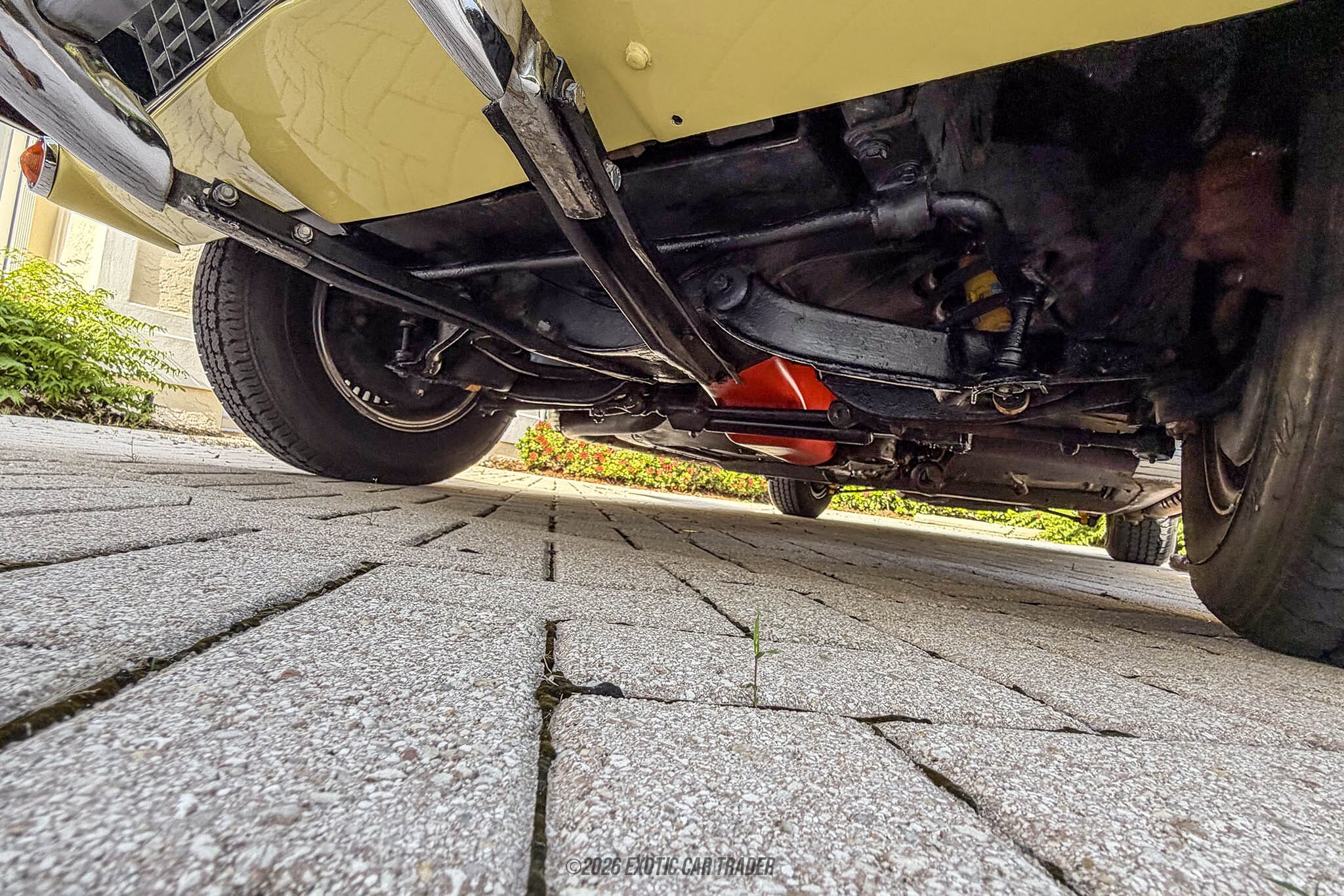
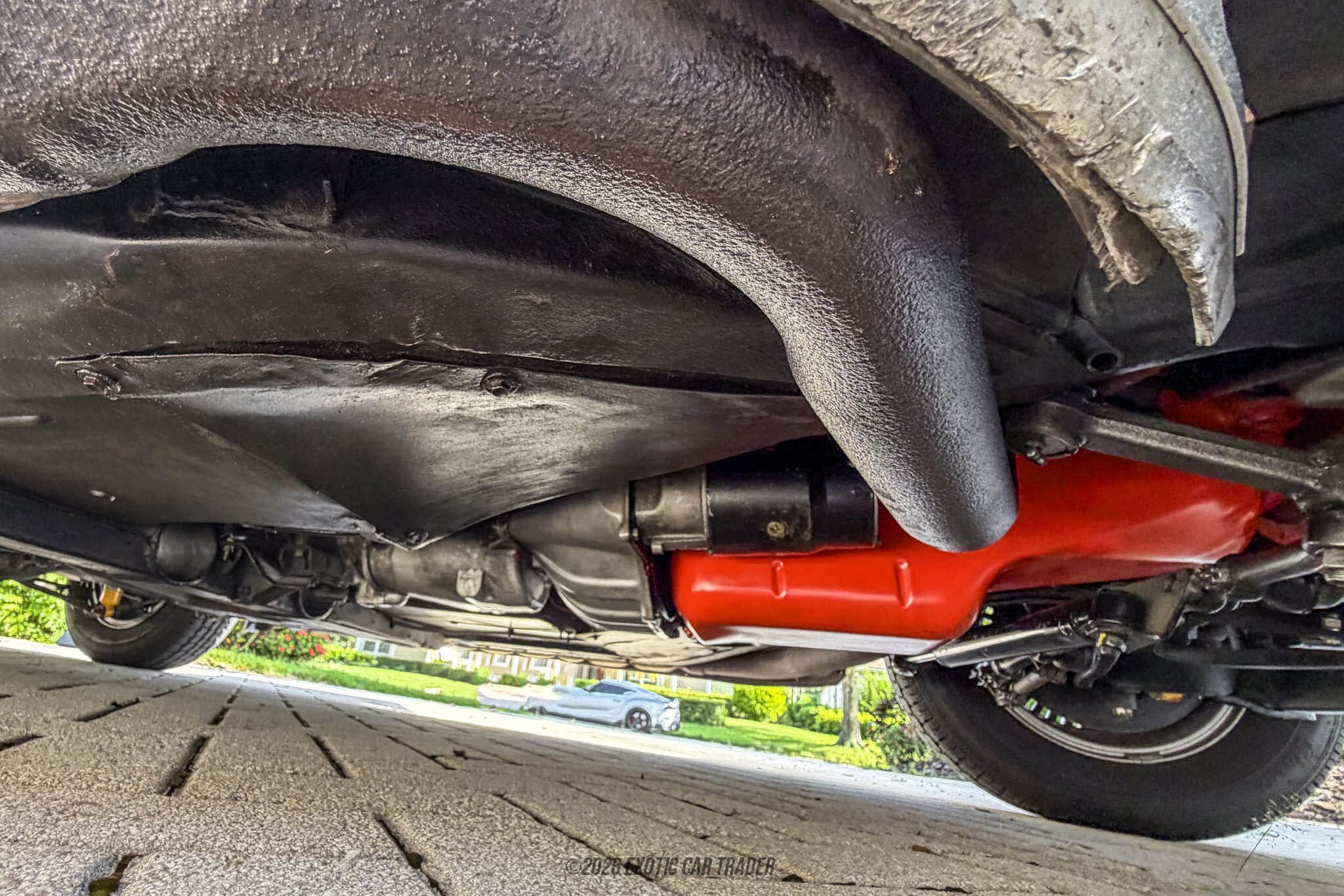
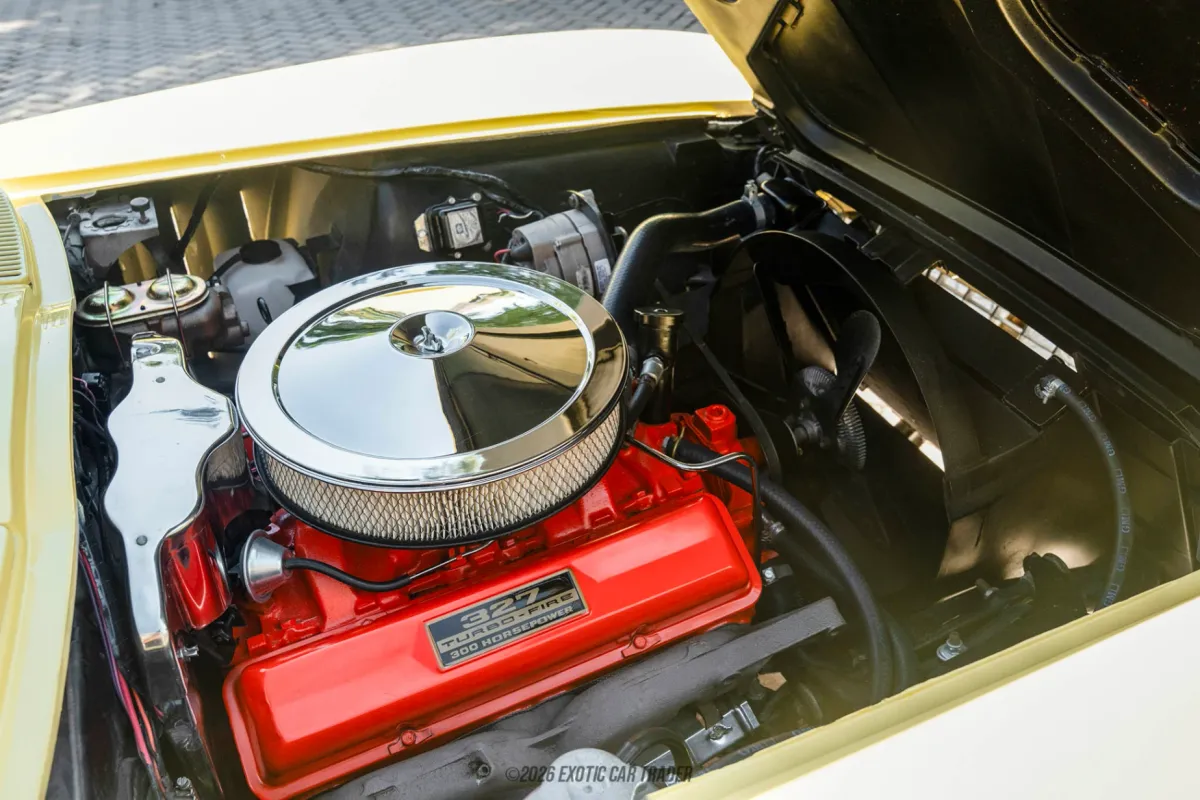
The heart of this Corvette is its 327ci V8, breathing through a four-barrel carburetor and backed by a four-speed manual transmission. For many enthusiasts, this is the quintessential midyear Corvette formula: a naturally aspirated small-block, carbureted induction, rear-wheel drive, and a manual gearbox that lets the driver work directly with the engine. This example also benefits from a number of reported mechanical upgrades, including aftermarket timing gears and timing chain components, aftermarket spark plugs and wires, and upgraded cooling equipment. Those additions are particularly relevant on a classic that is meant to be driven rather than simply displayed. Four-wheel disc brakes provide strong period-correct stopping hardware, while the side-mount exhaust adds both visual drama and the unmistakable sound of a carbureted small-block V8 exiting just behind the front wheels. Combined with the reported $83,000-plus investment in the build, this Corvette presents as a carefully developed enthusiast car rather than a lightly modified cruiser.


The 1966 Chevrolet Corvette Convertible comes from the heart of the C2 era, when the Corvette had already matured into a genuinely serious American sports car without losing the raw character that made the Sting Ray famous. This example leans heavily into that character. Showing 19,053 miles, it pairs a 327ci V8 with a four-barrel carburetor and a four-speed manual transmission, then adds the kind of period-style attitude enthusiasts gravitate toward: side-mount exhaust, knock-off-style turbine wheels, and a vivid Sunfire Yellow finish over a black interior. The current owner reports more than $83,000 invested into the build, with attention extending beyond cosmetics into the cooling system, ignition components, timing hardware, and other supporting mechanical upgrades. What makes this car appealing is that it still delivers the classic C2 experience in the way enthusiasts want it: small-block V8 up front, manual gearbox in the middle, drive going to the rear, and very little standing between the driver and the car. The side pipes give the Corvette a more aggressive presence and soundtrack, while the custom paint and wheel setup emphasize the long-hood, short-deck proportions that made the midyear Corvette one of Chevrolet’s most iconic designs.
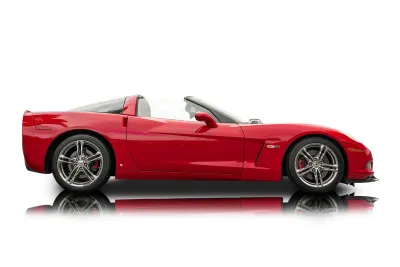
By 2008, the C6 Corvette had matured into one of the strongest all-around American performance cars of its era, and this example combines the right mechanical hardware with an unusually extensive equipment list. Showing 50,966 miles, this 2008 Chevrolet Corvette Coupe is equipped with the desirable 3LT Preferred Equipment Group and Z51 Performance Package, pairing the LS3 V8 with a six-speed manual transmission, 3.42:1 limited-slip rear axle, and dual-mode performance exhaust. It was also specified with the GCA Ultimate Package, adding a collection of appearance upgrades that give this Victory Red Corvette a more distinctive presence than a typical C6. An aftermarket front splitter and audio head unit add further personalization while retaining the fundamental character that makes a manual Z51 C6 such an appealing enthusiast car.
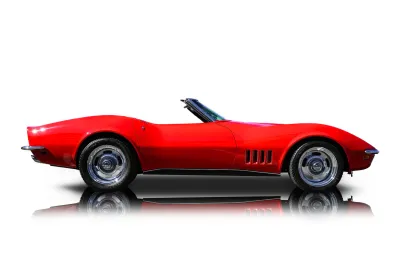
The 1969 Chevrolet Corvette Stingray Convertible sits at the heart of the early C3 era, pairing dramatic styling with the kind of mechanical specification that made these cars so memorable. Showing approximately 5,672 miles, this example is finished in Monza Red over a Black interior and is equipped with the desirable L46 350ci V8 rated at 350 horsepower. A 4-speed manual transmission and Positraction rear axle keep the driving experience firmly enthusiast-focused, while power steering and power-assisted four-wheel disc brakes add useful road manners. Chrome Rally wheels, a black convertible soft top, and the unmistakable Stingray bodywork give the exterior its period-correct presence, while the cabin retains the classic twin-cowl dash, center console, and auxiliary gauge layout. An aftermarket steering wheel, manual shifter, air cleaner, and JVC audio head unit add a handful of personalized touches without taking away from the car’s classic Corvette character.
The 1966 Chevrolet Corvette Convertible comes from the heart of the C2 era, when the Corvette had already matured into a genuinely serious American sports car without losing the raw character that made the Sting Ray famous. This example leans heavily into that character. Showing 19,053 miles, it pairs a 327ci V8 with a four-barrel carburetor and a four-speed manual transmission, then adds the kind of period-style attitude enthusiasts gravitate toward: side-mount exhaust, knock-off-style turbine wheels, and a vivid Sunfire Yellow finish over a black interior. The current owner reports more than $83,000 invested into the build, with attention extending beyond cosmetics into the cooling system, ignition components, timing hardware, and other supporting mechanical upgrades. What makes this car appealing is that it still delivers the classic C2 experience in the way enthusiasts want it: small-block V8 up front, manual gearbox in the middle, drive going to the rear, and very little standing between the driver and the car. The side pipes give the Corvette a more aggressive presence and soundtrack, while the custom paint and wheel setup emphasize the long-hood, short-deck proportions that made the midyear Corvette one of Chevrolet’s most iconic designs.
By 2008, the C6 Corvette had matured into one of the strongest all-around American performance cars of its era, and this example combines the right mechanical hardware with an unusually extensive equipment list. Showing 50,966 miles, this 2008 Chevrolet Corvette Coupe is equipped with the desirable 3LT Preferred Equipment Group and Z51 Performance Package, pairing the LS3 V8 with a six-speed manual transmission, 3.42:1 limited-slip rear axle, and dual-mode performance exhaust. It was also specified with the GCA Ultimate Package, adding a collection of appearance upgrades that give this Victory Red Corvette a more distinctive presence than a typical C6. An aftermarket front splitter and audio head unit add further personalization while retaining the fundamental character that makes a manual Z51 C6 such an appealing enthusiast car.
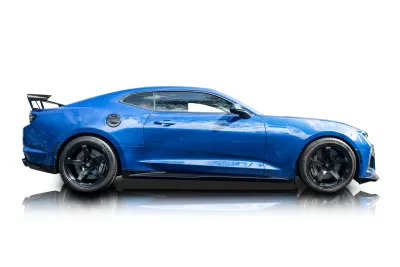
The 2021 Chevrolet Camaro ZL1 is already one of the most serious modern American performance cars, combining supercharged V8 power, a six-speed manual transmission, rear-wheel drive, and Magnetic Ride Control in a package built to run with far more exotic machinery. This example takes that formula several steps further. Showing approximately 16,439 miles, it has been extensively upgraded around a Magnuson 2650 supercharger setup with supporting fuel, valvetrain, exhaust, cooling, and drivetrain hardware. A Satin Black vinyl wrap over Riverside Blue Metallic, aftermarket wheels, BMR springs, an aftermarket spoiler, and an Anderson carbon fiber wing give it the visual presence to match the mechanical work underneath. For the enthusiast who wants a manual ZL1 that goes well beyond bolt-on territory, this is the kind of build that delivers both attitude and substance.
The 1966 Chevrolet Corvette Convertible comes from the heart of the C2 era, when the Corvette had already matured into a genuinely serious American sports car without losing the raw character that made the Sting Ray famous. This example leans heavily into that character. Showing 19,053 miles, it pairs a 327ci V8 with a four-barrel carburetor and a four-speed manual transmission, then adds the kind of period-style attitude enthusiasts gravitate toward: side-mount exhaust, knock-off-style turbine wheels, and a vivid Sunfire Yellow finish over a black interior. The current owner reports more than $83,000 invested into the build, with attention extending beyond cosmetics into the cooling system, ignition components, timing hardware, and other supporting mechanical upgrades. What makes this car appealing is that it still delivers the classic C2 experience in the way enthusiasts want it: small-block V8 up front, manual gearbox in the middle, drive going to the rear, and very little standing between the driver and the car. The side pipes give the Corvette a more aggressive presence and soundtrack, while the custom paint and wheel setup emphasize the long-hood, short-deck proportions that made the midyear Corvette one of Chevrolet’s most iconic designs.
The 1969 Chevrolet Corvette Stingray Convertible sits at the heart of the early C3 era, pairing dramatic styling with the kind of mechanical specification that made these cars so memorable. Showing approximately 5,672 miles, this example is finished in Monza Red over a Black interior and is equipped with the desirable L46 350ci V8 rated at 350 horsepower. A 4-speed manual transmission and Positraction rear axle keep the driving experience firmly enthusiast-focused, while power steering and power-assisted four-wheel disc brakes add useful road manners. Chrome Rally wheels, a black convertible soft top, and the unmistakable Stingray bodywork give the exterior its period-correct presence, while the cabin retains the classic twin-cowl dash, center console, and auxiliary gauge layout. An aftermarket steering wheel, manual shifter, air cleaner, and JVC audio head unit add a handful of personalized touches without taking away from the car’s classic Corvette character.
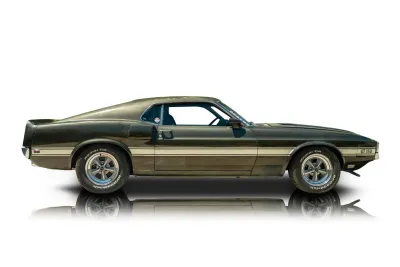
By 1969, the Shelby GT350 had evolved from the raw, competition-minded Mustang of the mid-1960s into something broader in character: still unmistakably performance-focused, but now with the presence and comfort of a true high-speed grand tourer. This 1969 Ford Mustang Shelby GT350 shows approximately 80,436 miles and wears Black Jade over a Black interior with red seat accents, a combination that suits the car’s more mature personality especially well. Its Shelby identity is everywhere, from the functional twin-scoop fiberglass hood and Cobra-branded grille to the side scoops, GT350 graphics, rear decklid spoiler, Shelby Automotive identification plate, and Carroll Shelby signature across the passenger-side dash. Underneath, the 351ci Windsor V8, SelectShift Cruise-O-Matic automatic, and 3.25:1 Traction-Lok rear axle give it the kind of effortless V8 pace expected from a late-1960s Shelby, while power steering, power-assisted front disc brakes, and air conditioning make this example as much a road-going GT as it is a muscle car. It is a fitting snapshot of the moment when Shelby Mustangs became less about stripped-down competition and more about combining speed, style, and long-distance usability.

Terms of Service
Be Kind and Courteous
We're here to create a platform to better the automotive industry through communication and transparency. Please treat everyone with respect. Healthy debates are natural, but kindness is required.
No Hate Speech
Make sure everyone feels safe. Hate speech of any kind is strictly prohibited. Degrading comments about things like race, religion, culture, sexual orientation, etc. will not be tolerated.
No Promotions or Spam
Give more than you take. Self-promotion, spam, or links of any kind are not allowed.
