




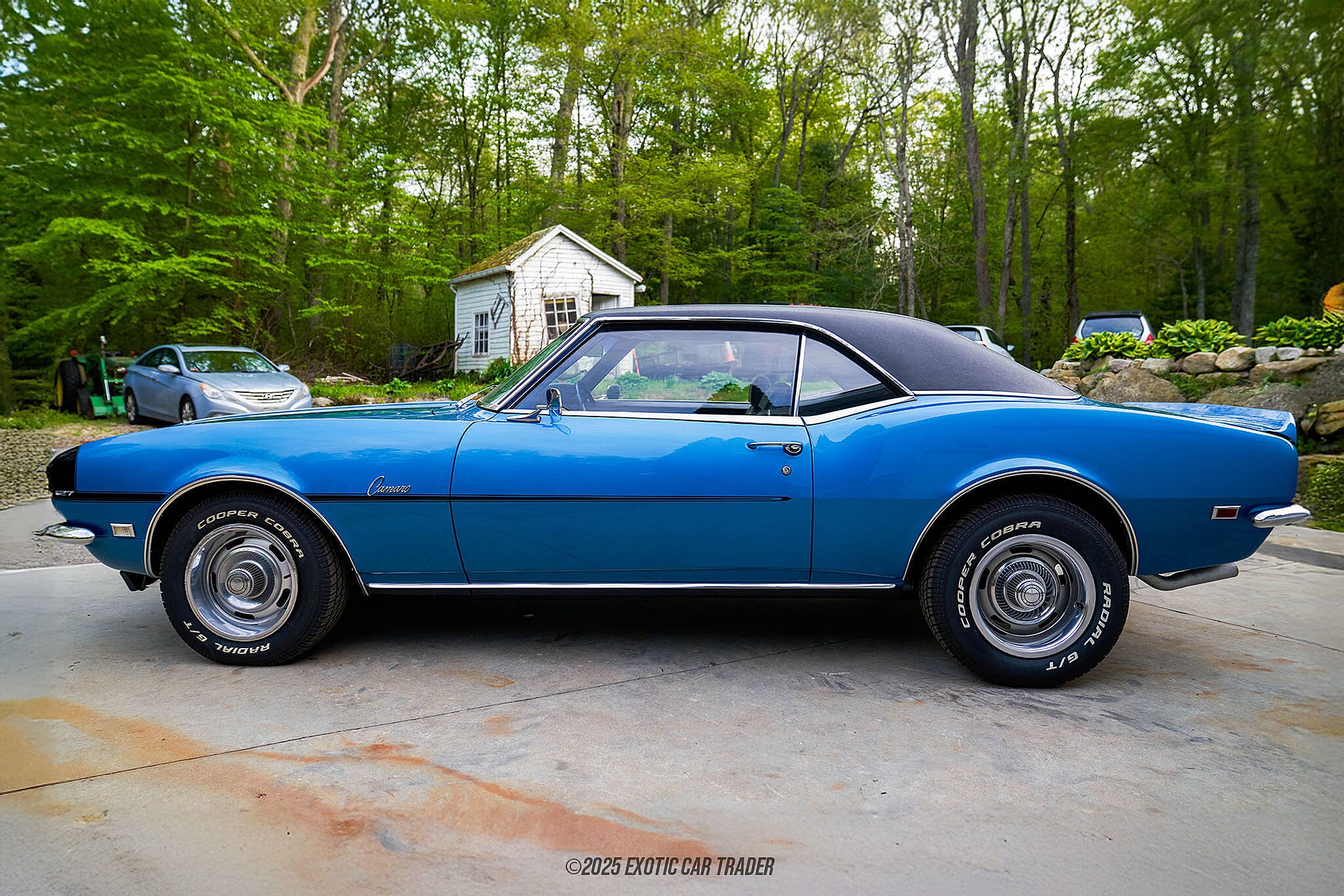
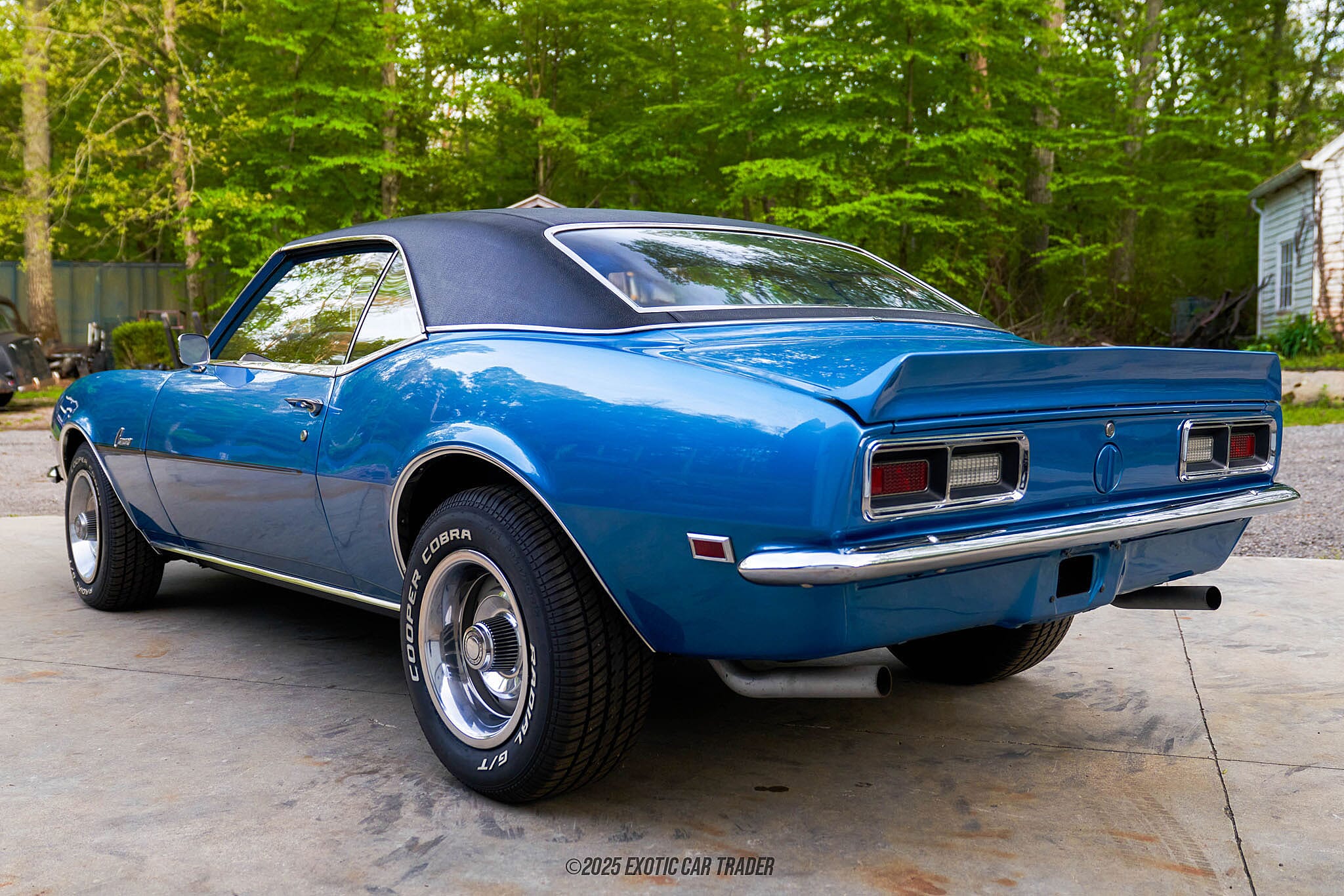
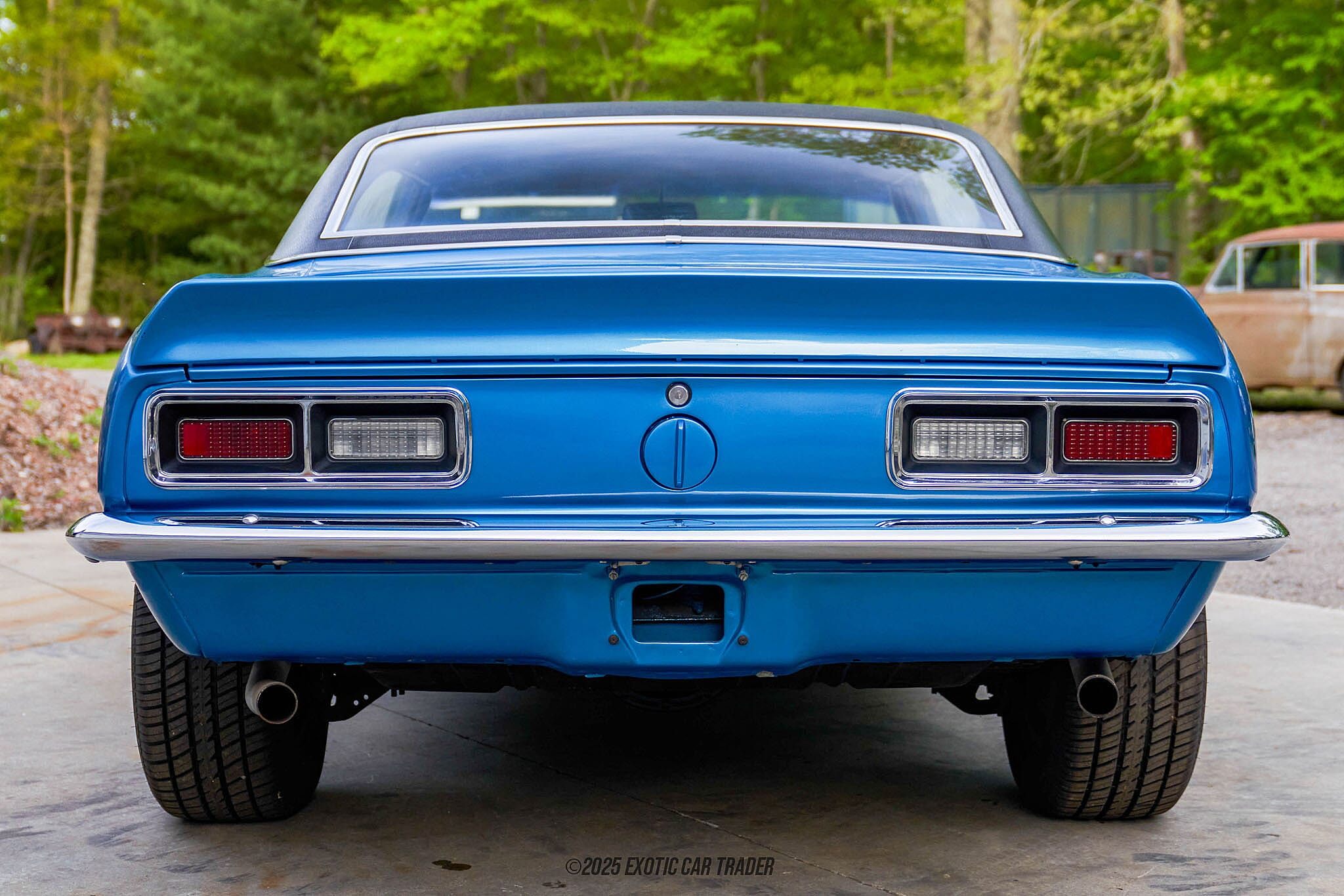
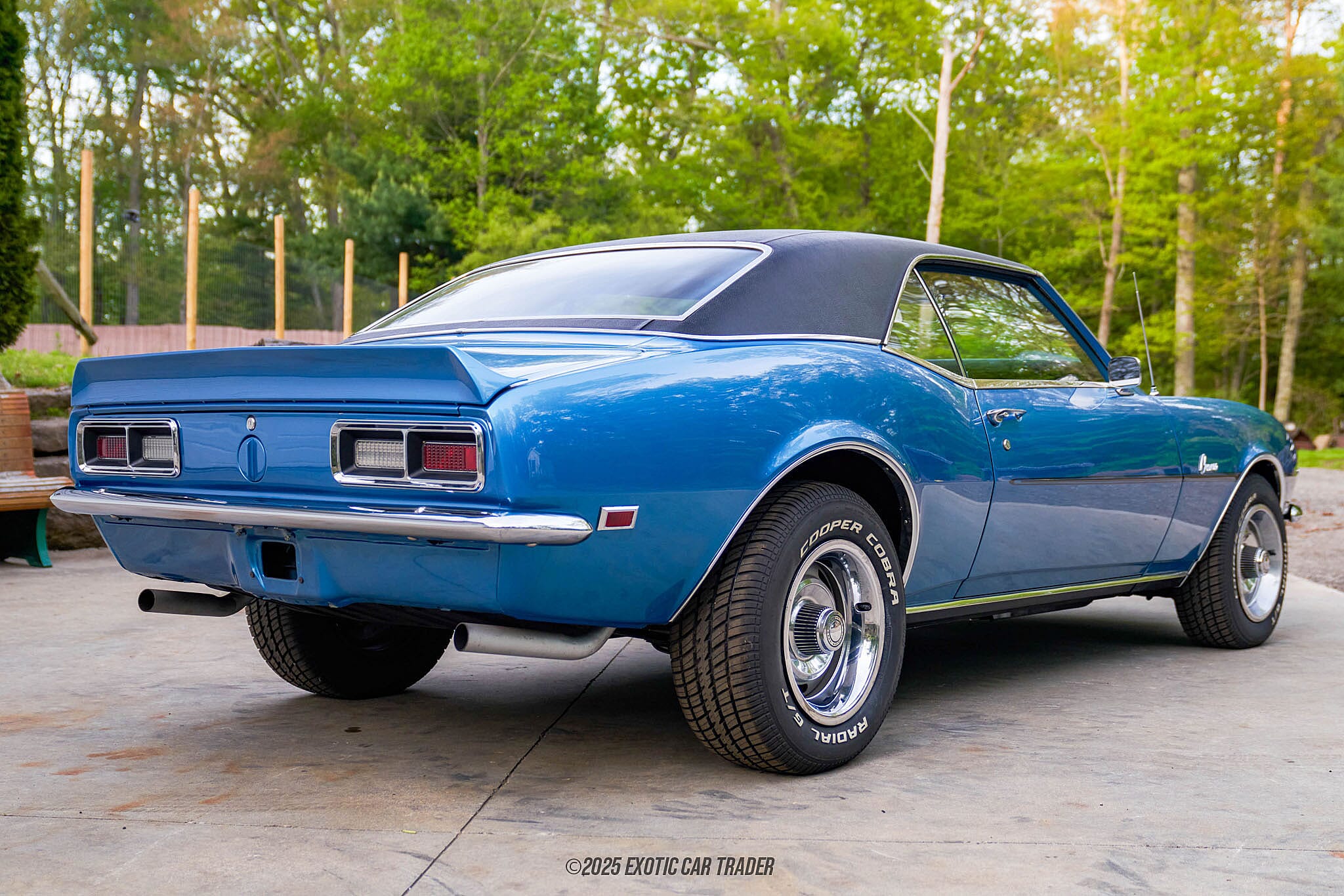
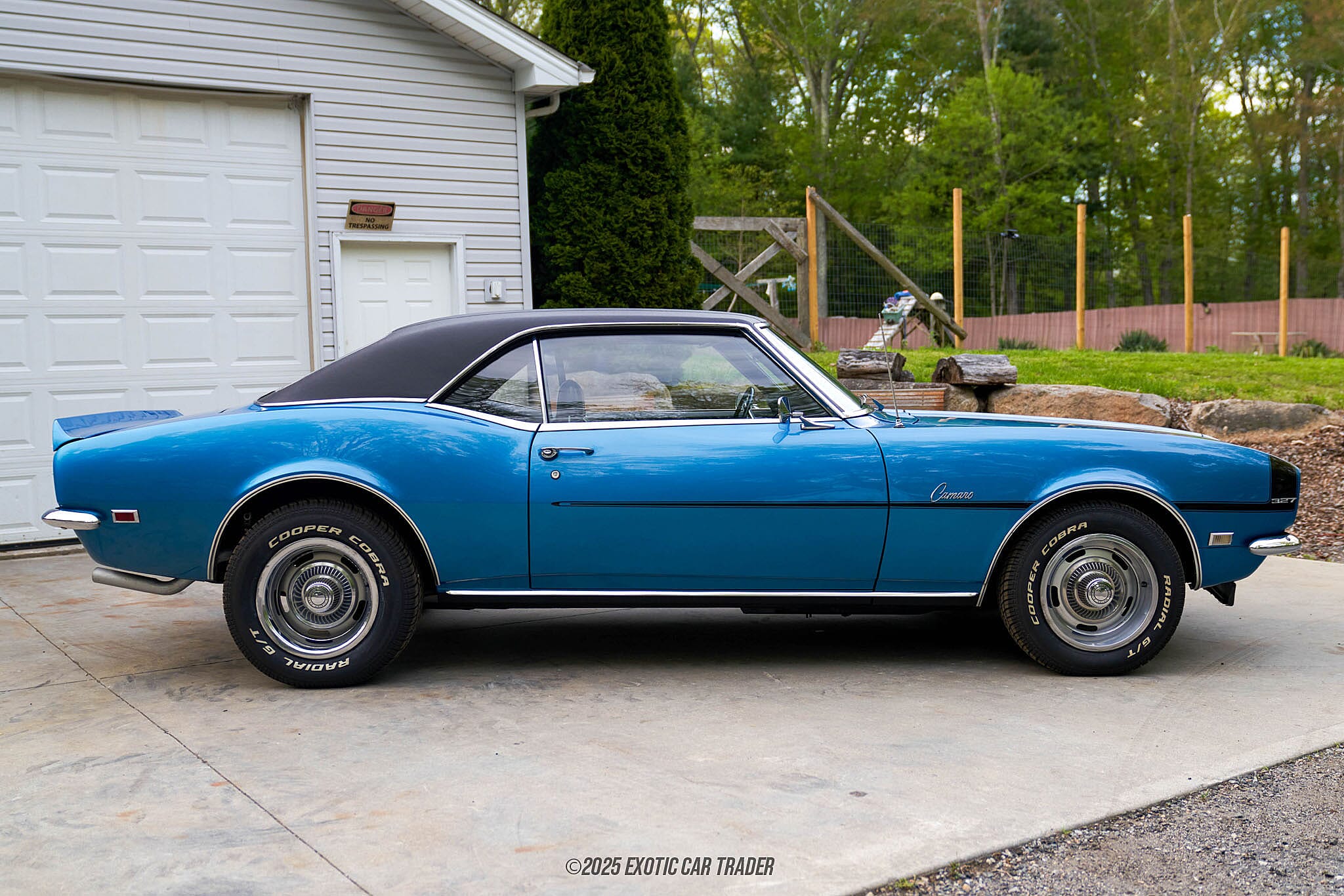
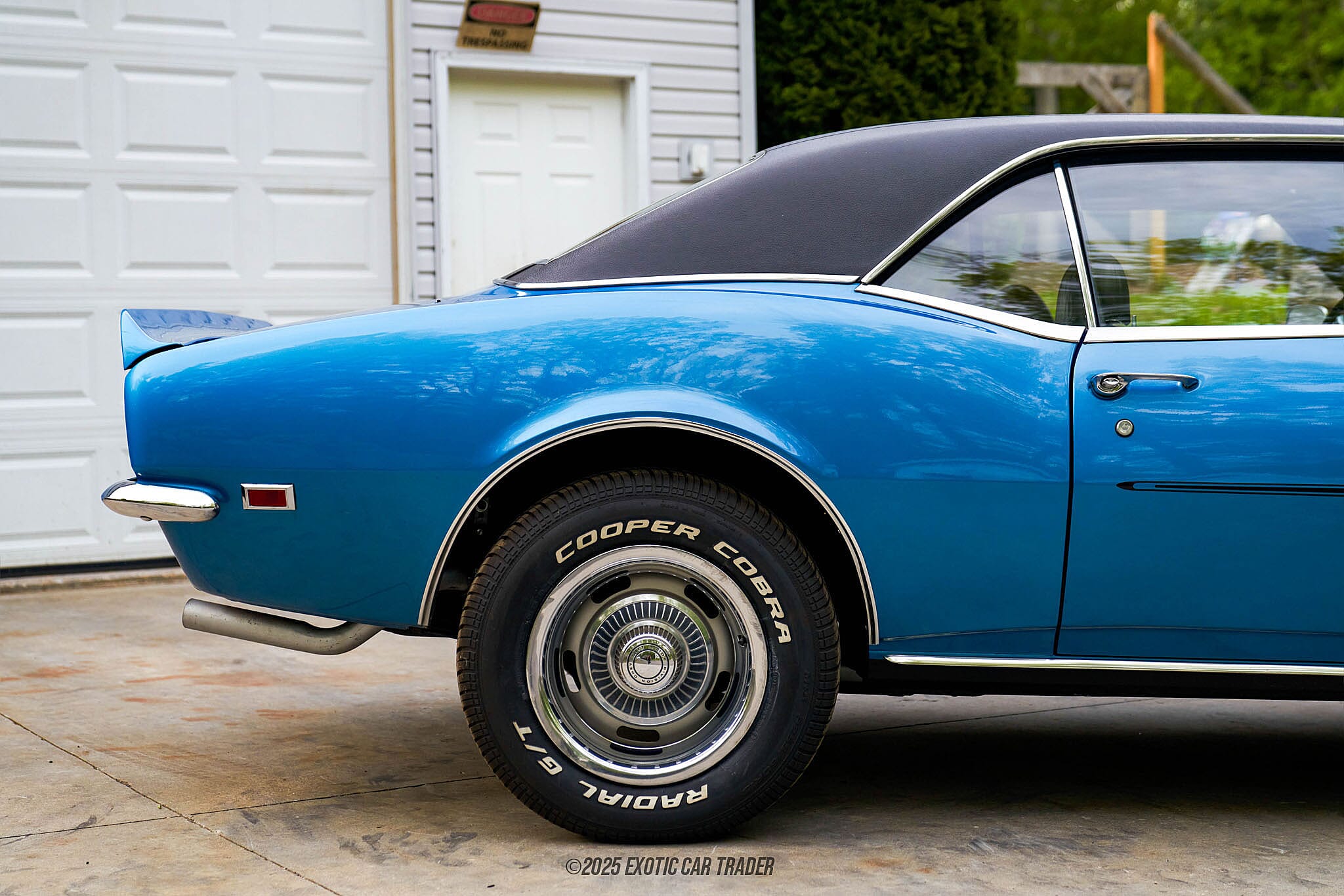

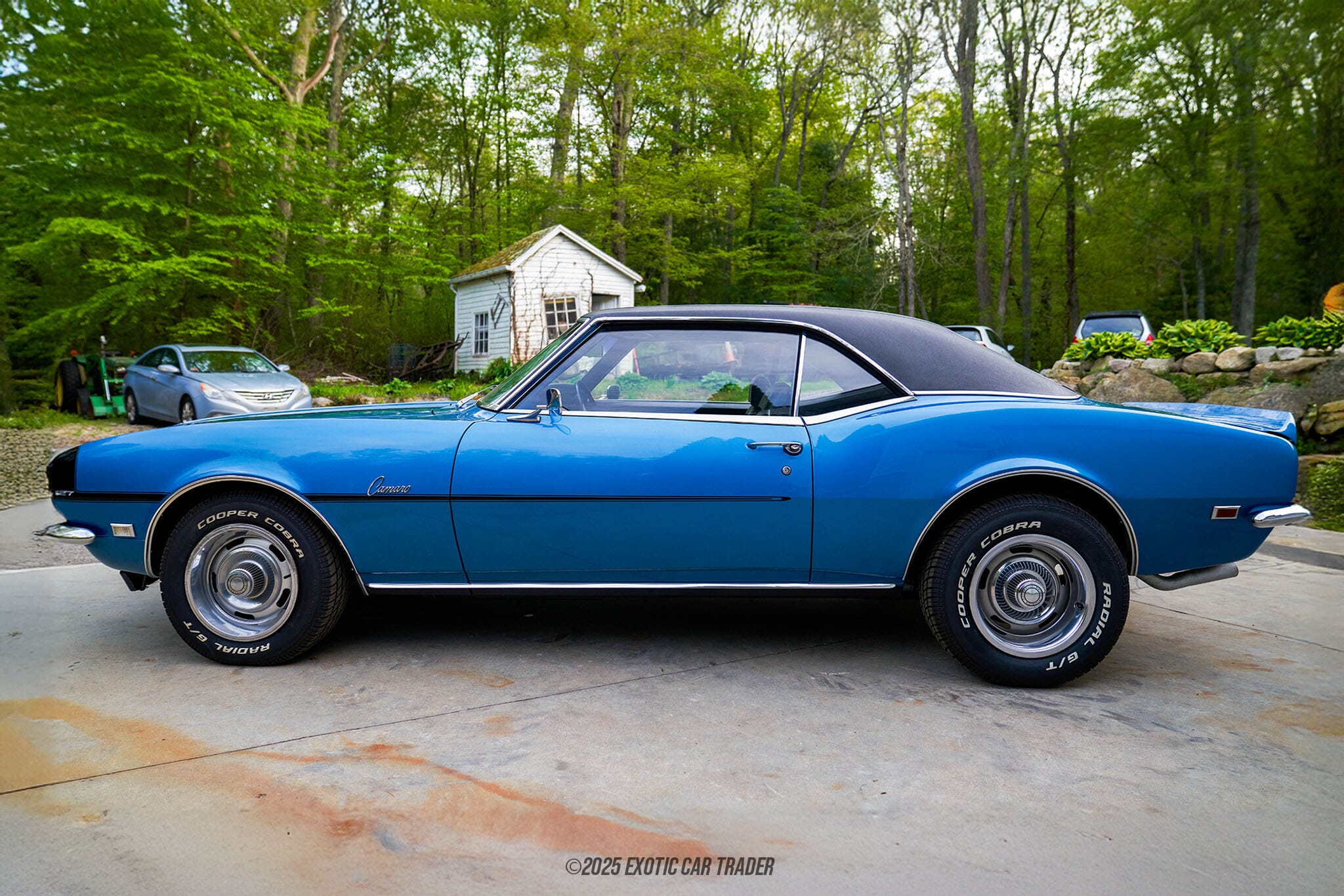
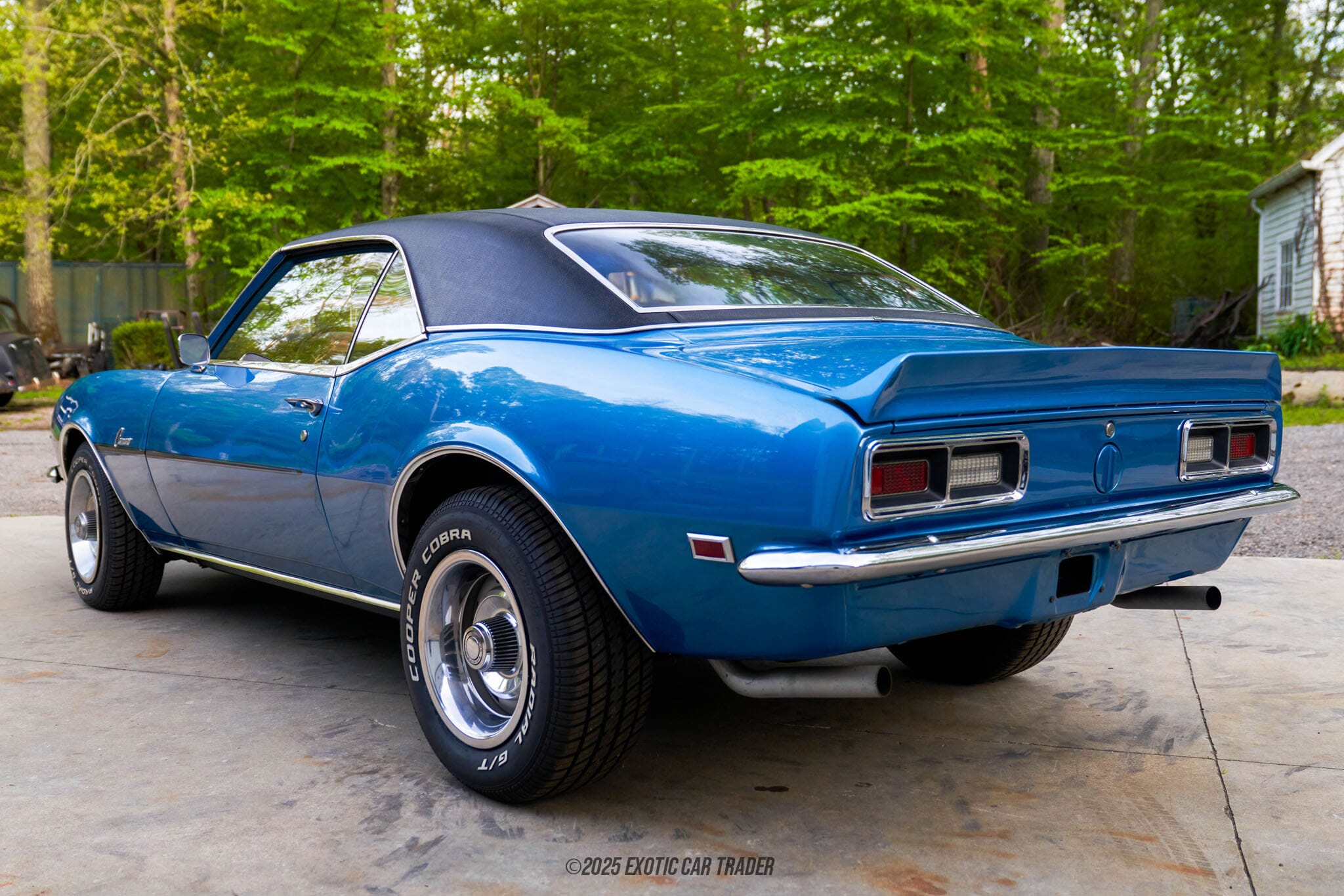
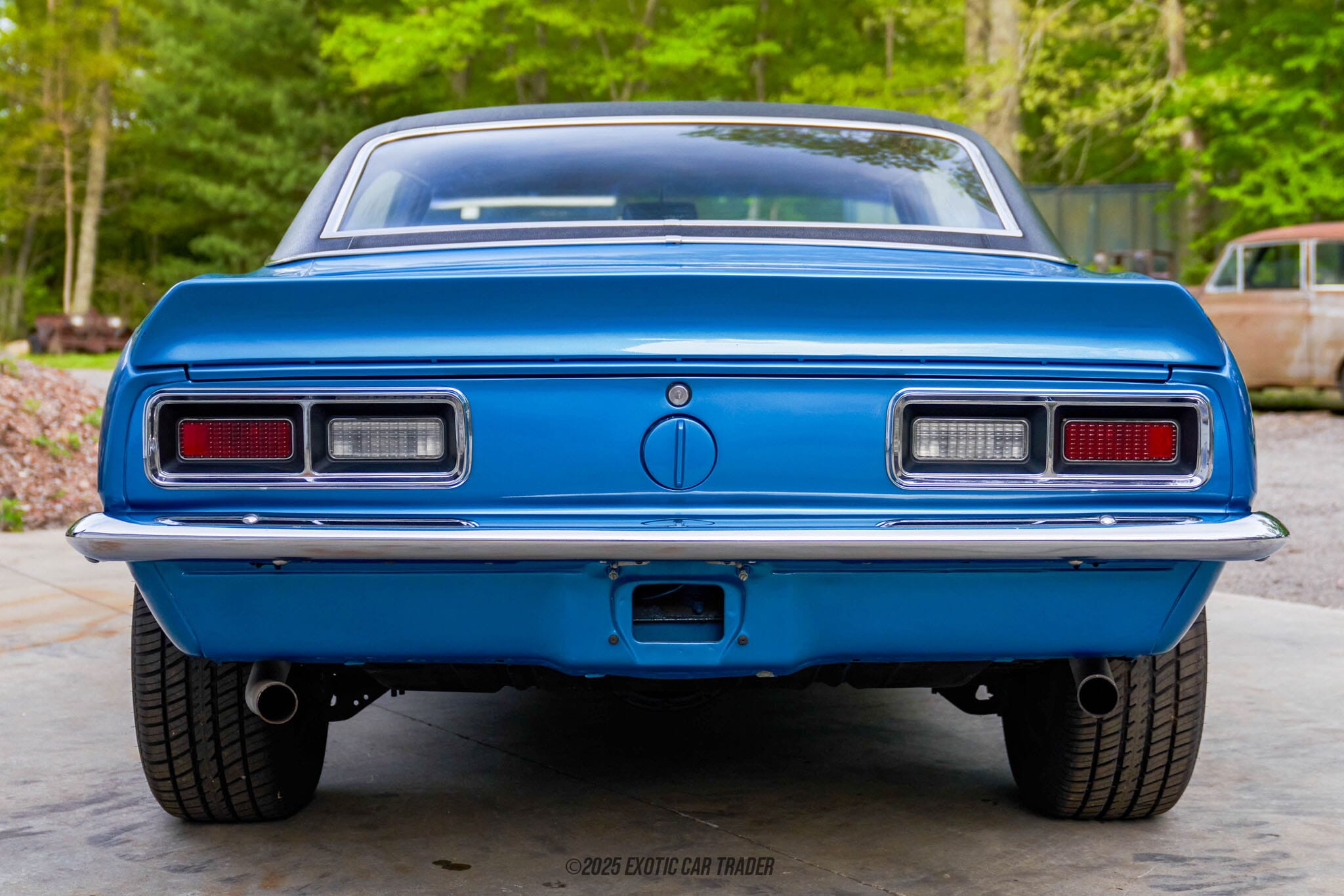
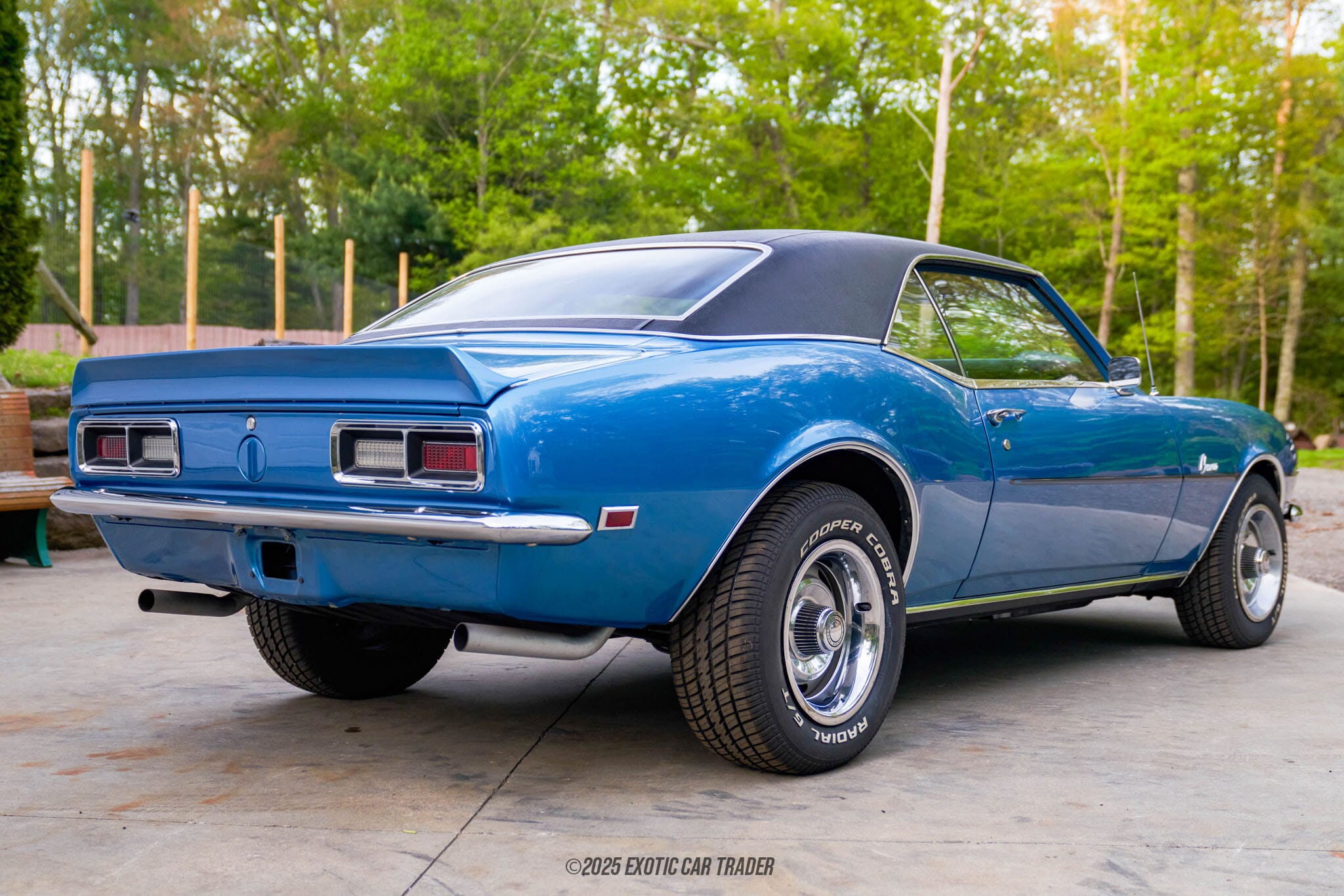
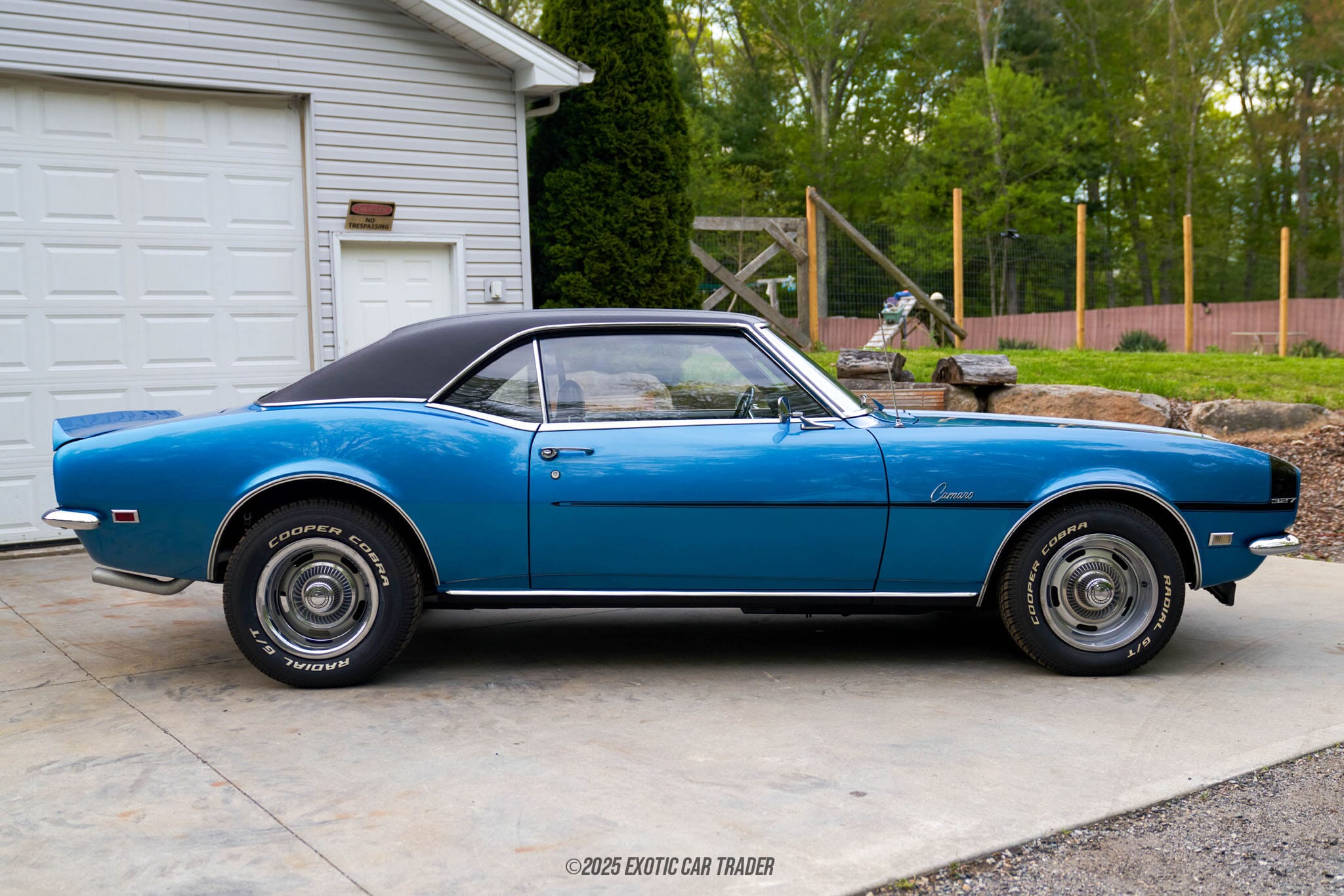
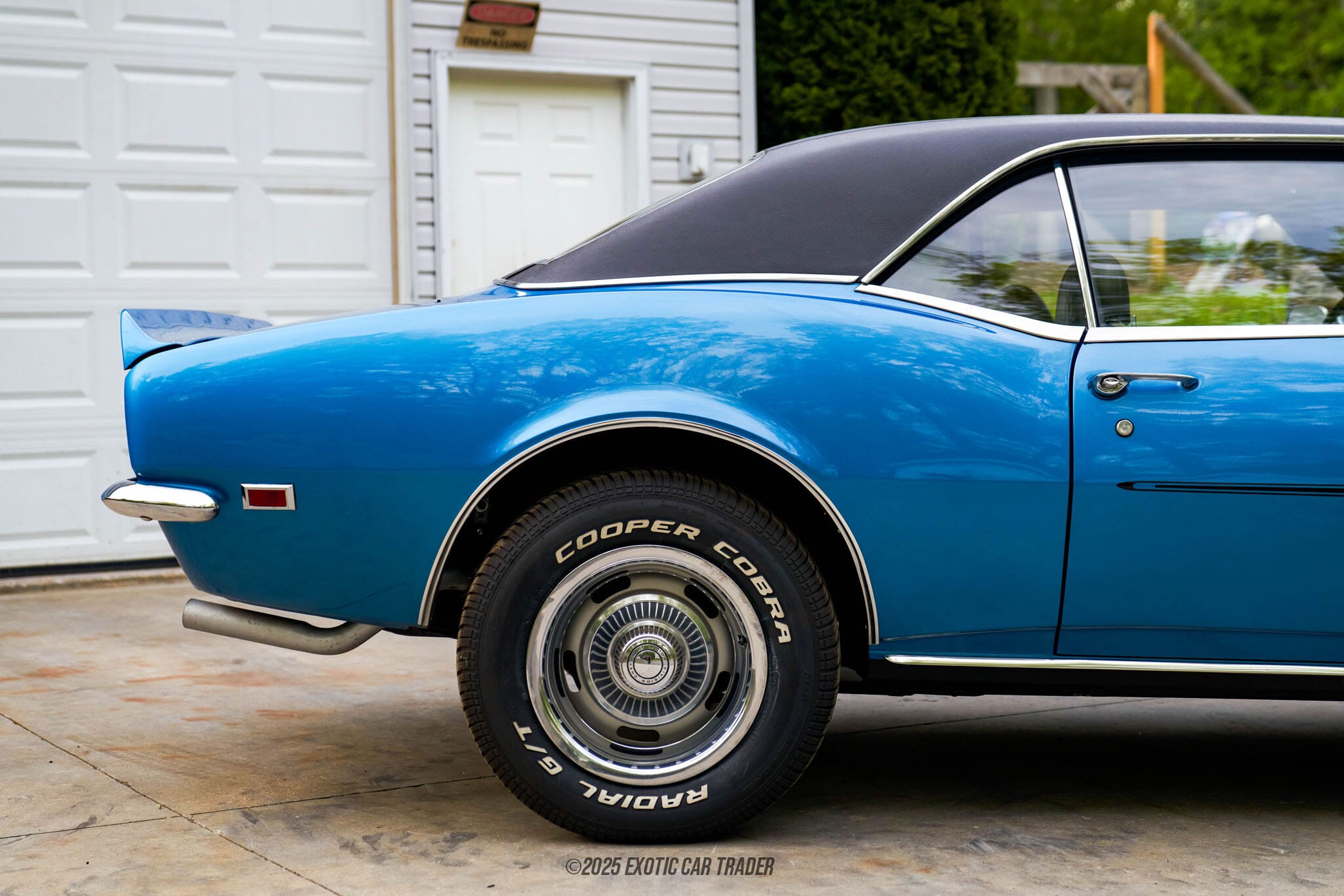
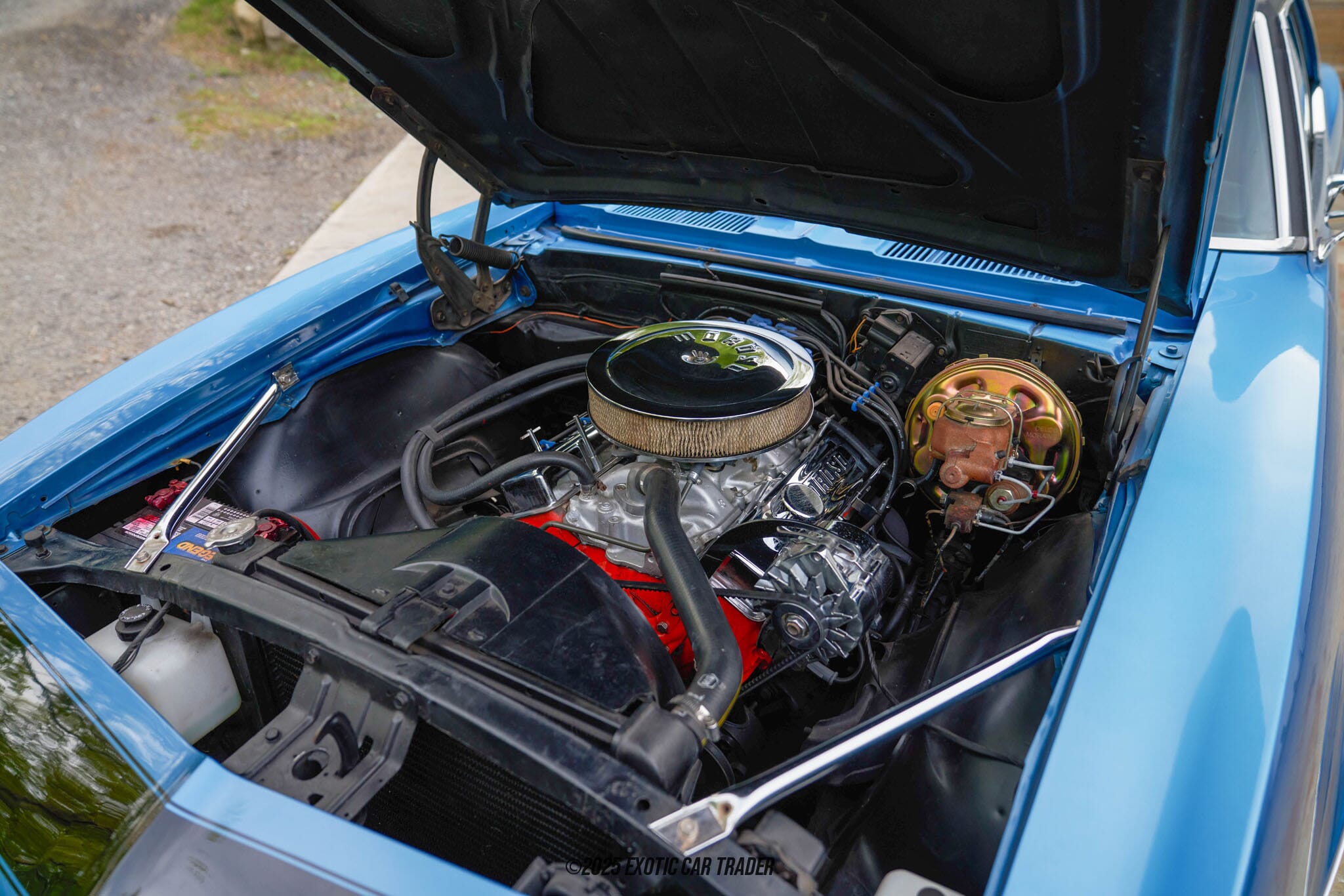
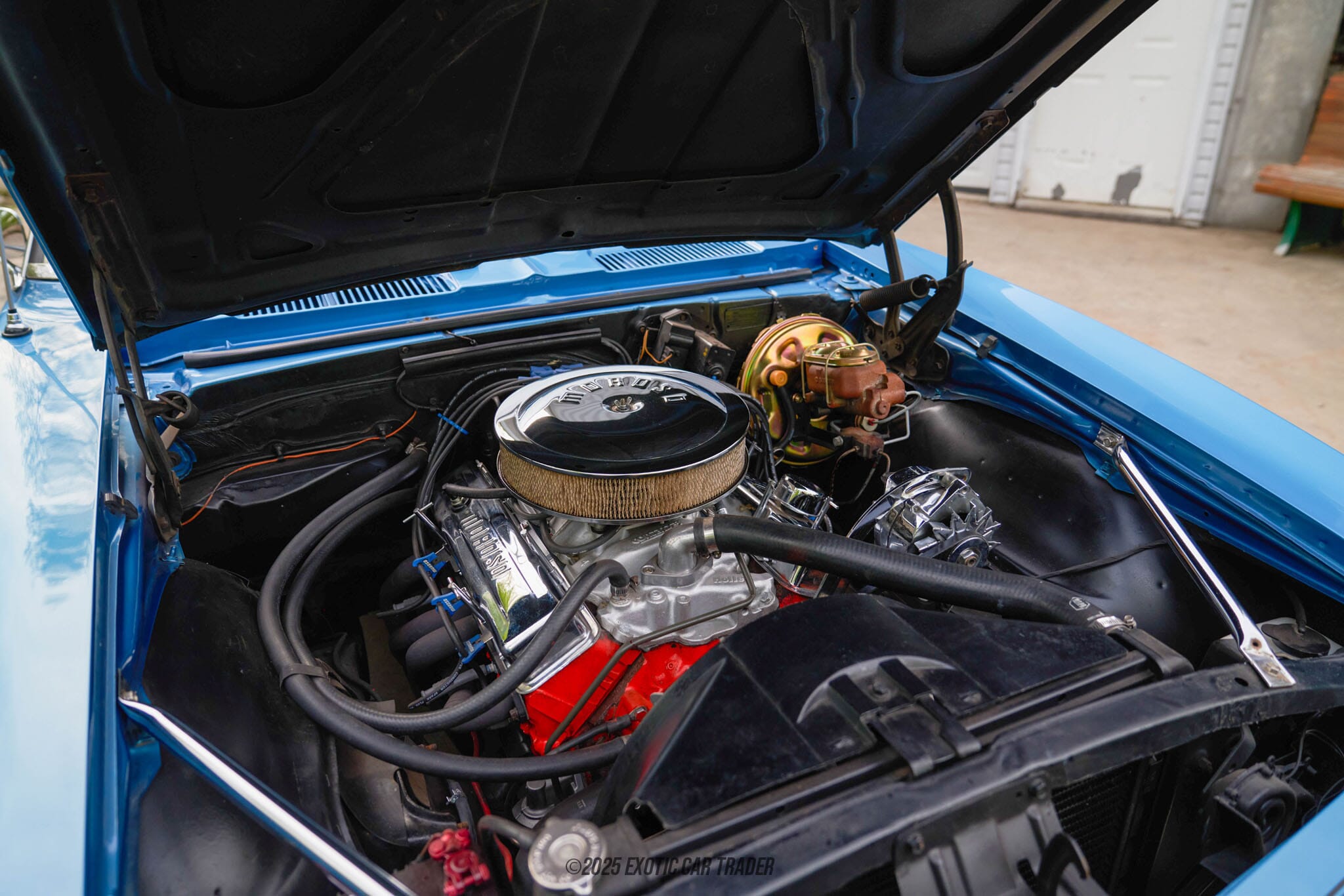
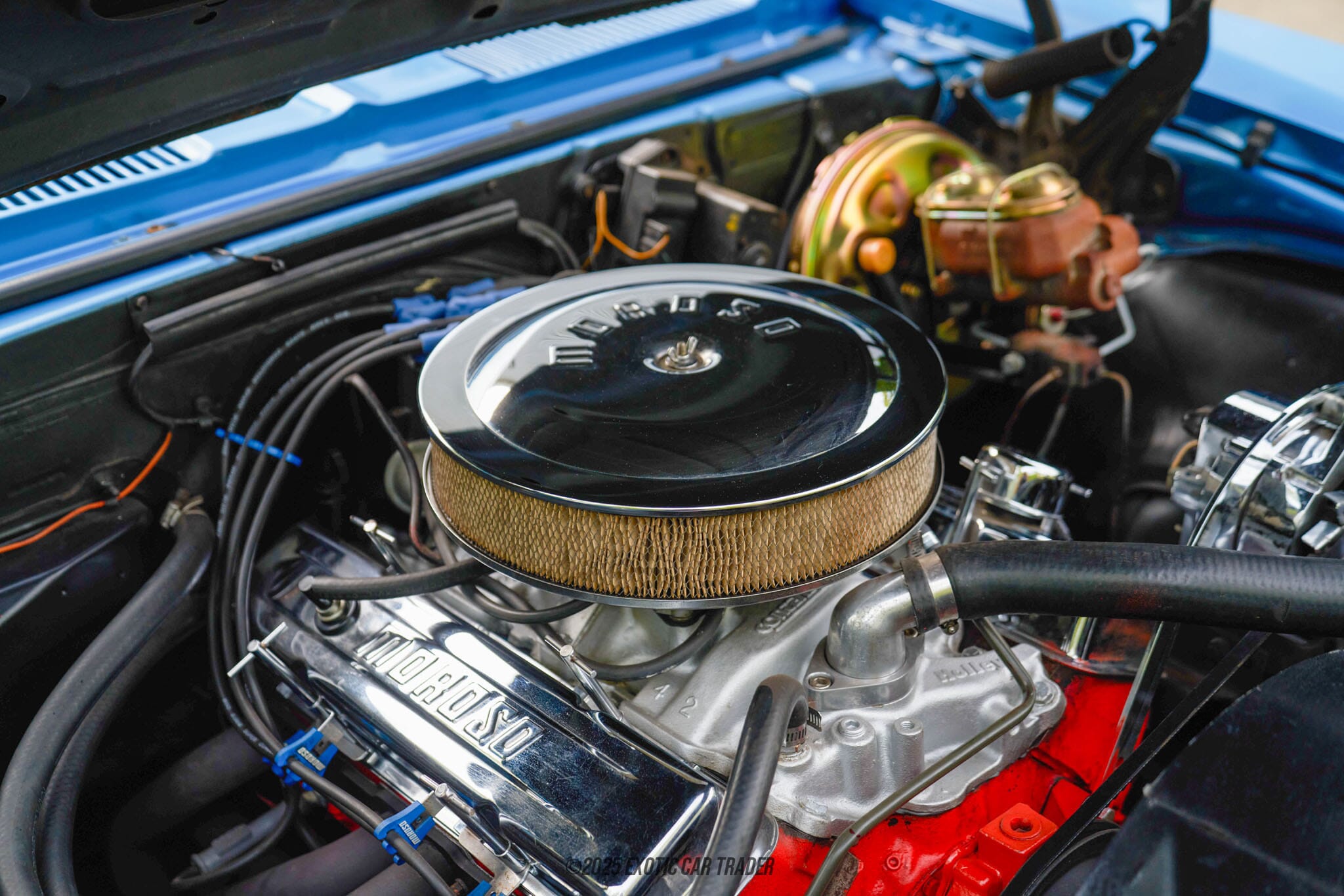
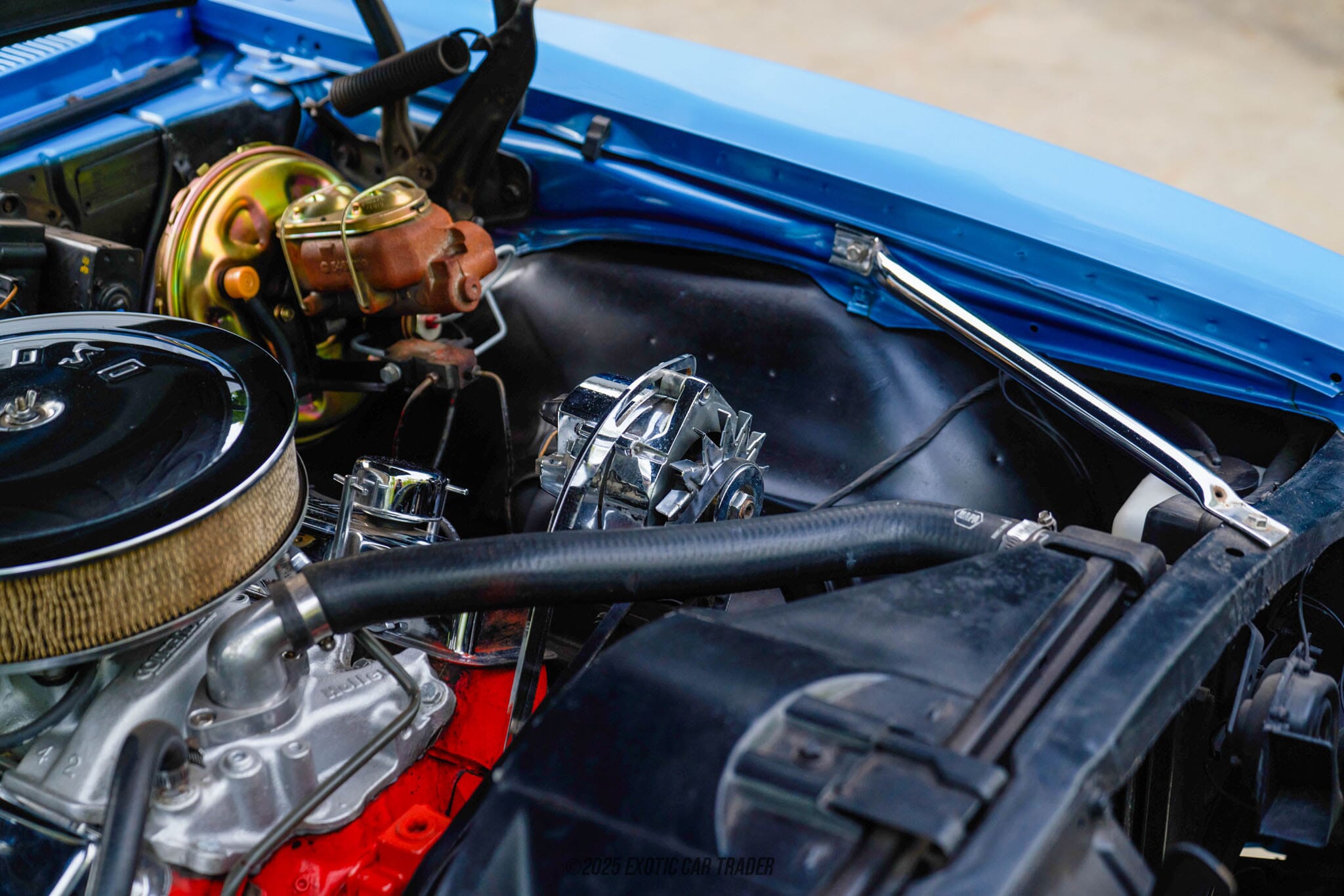
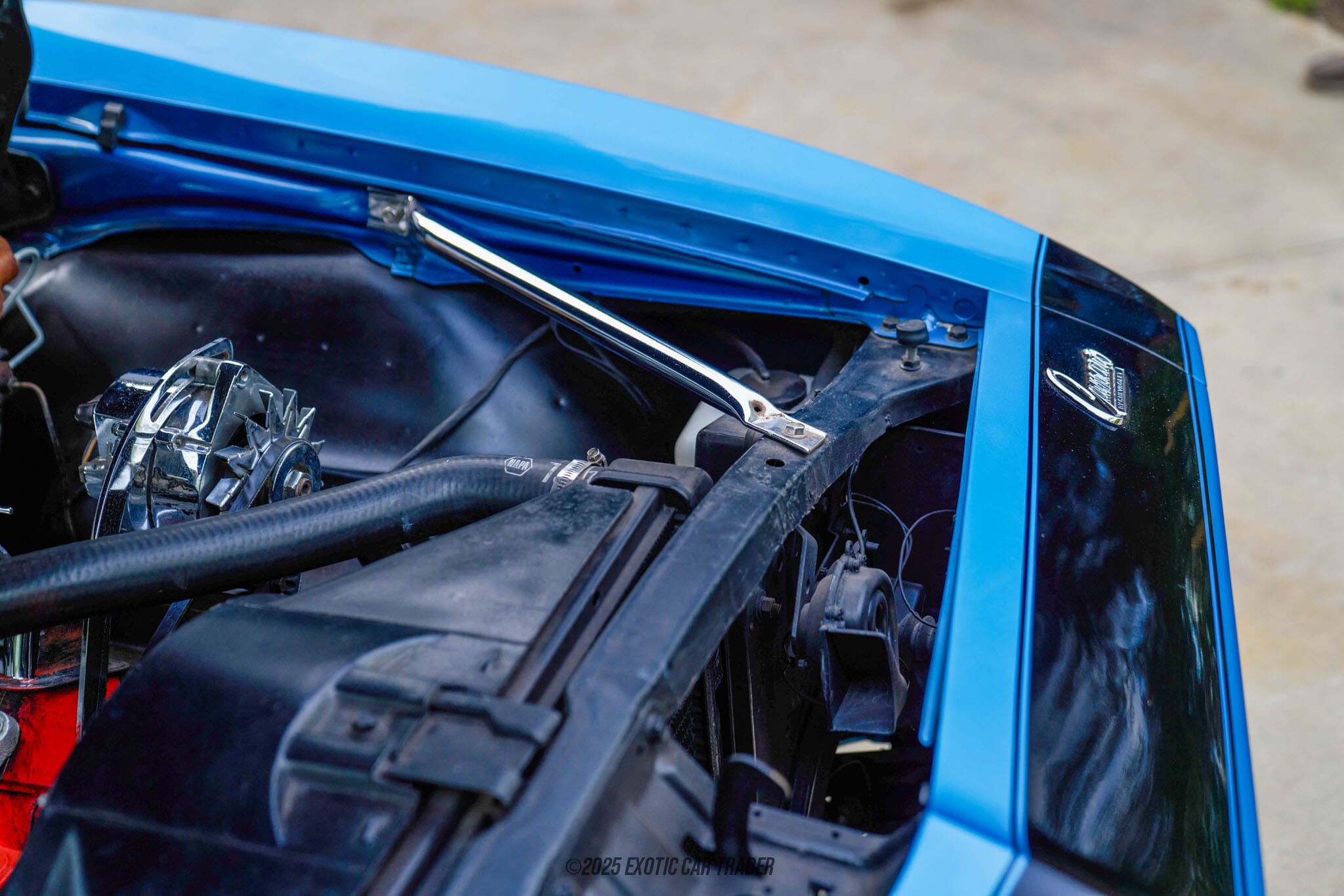
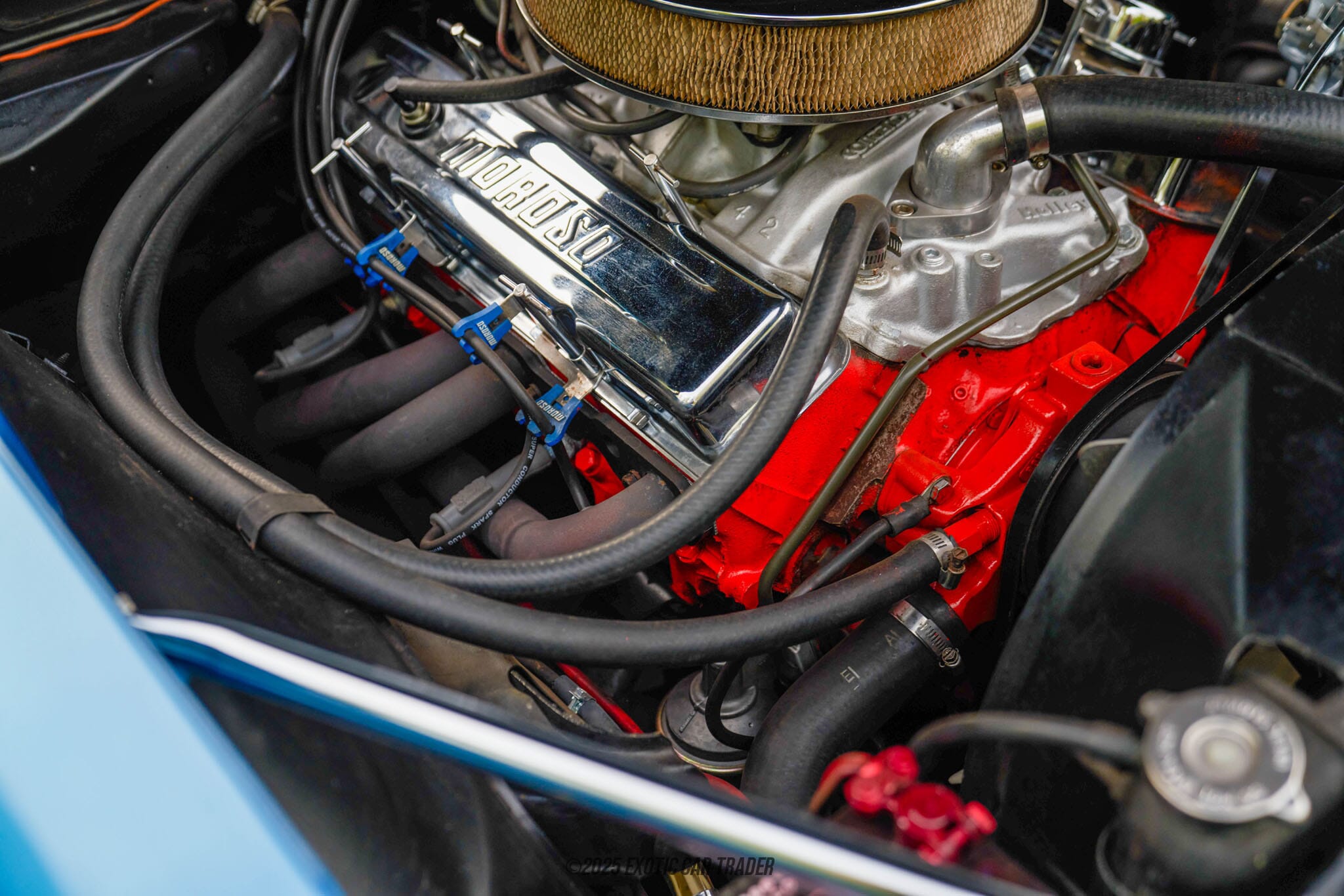
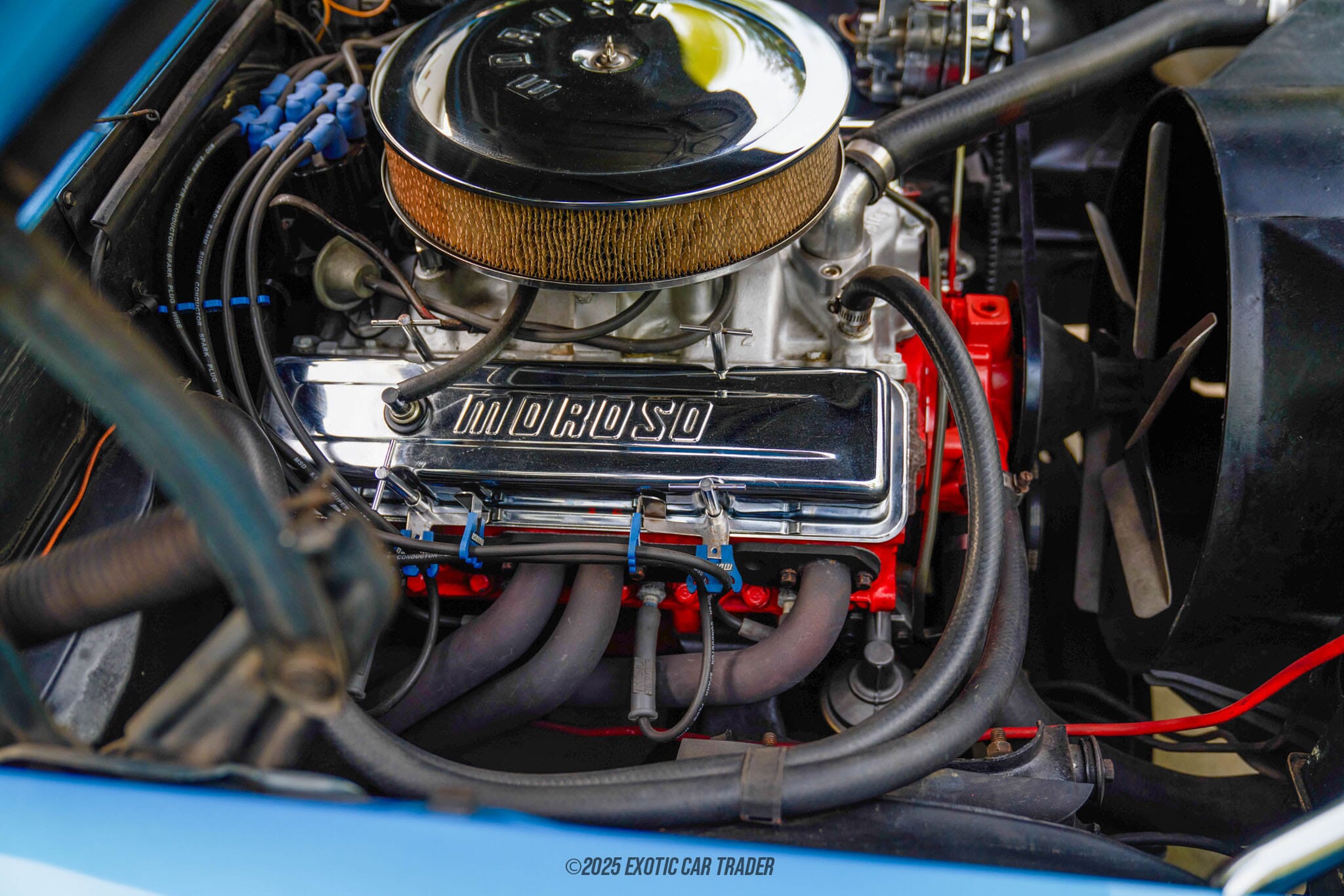
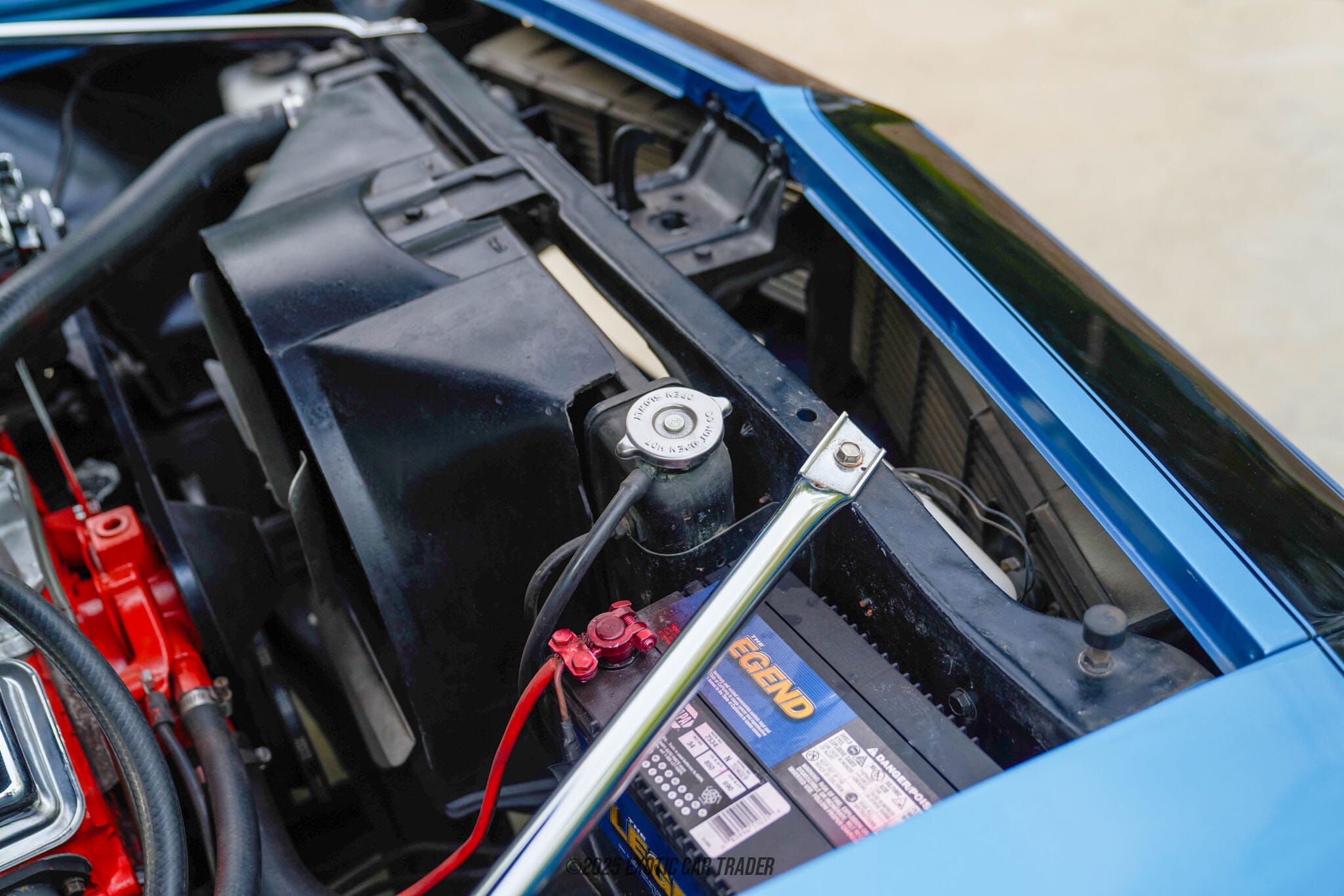
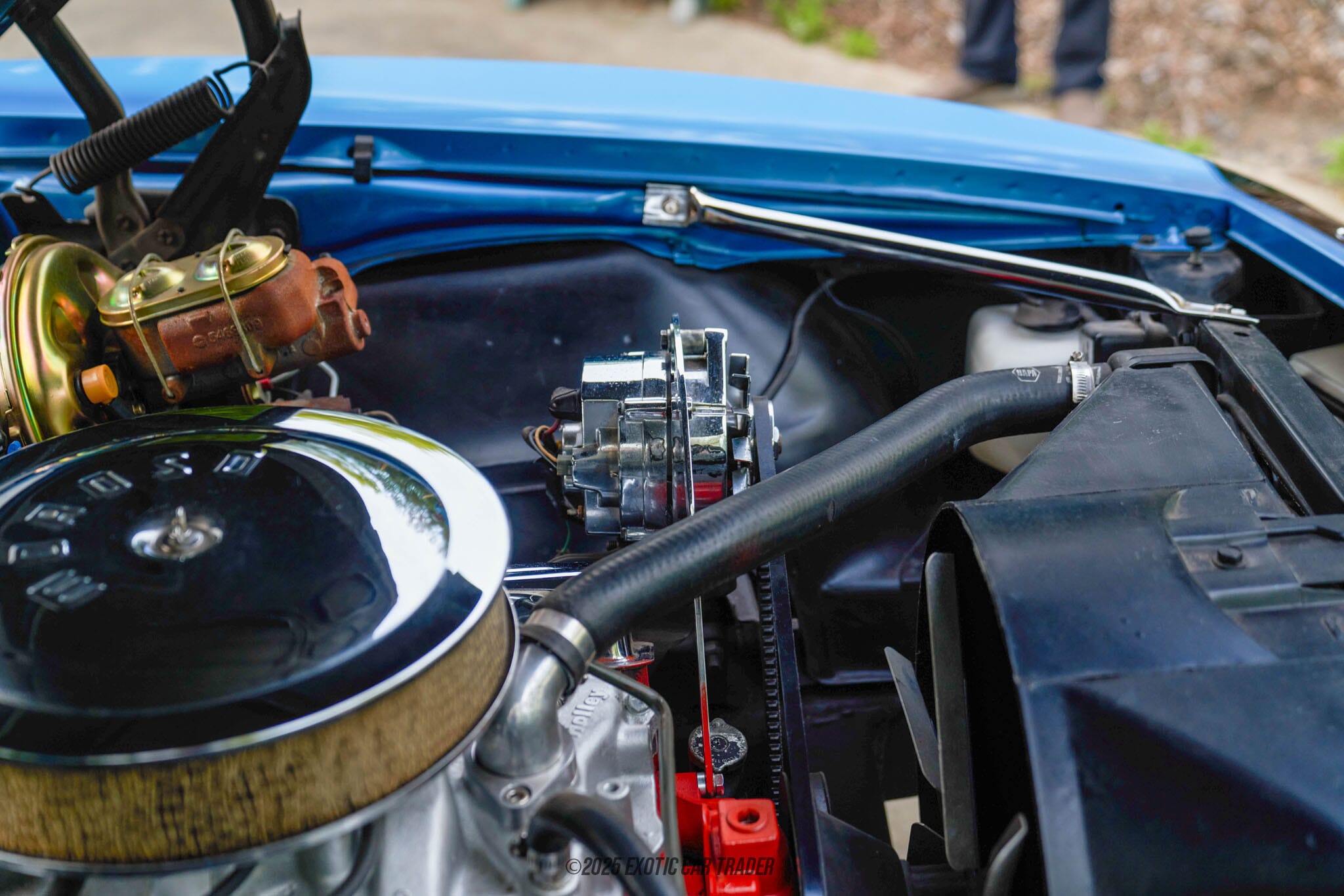
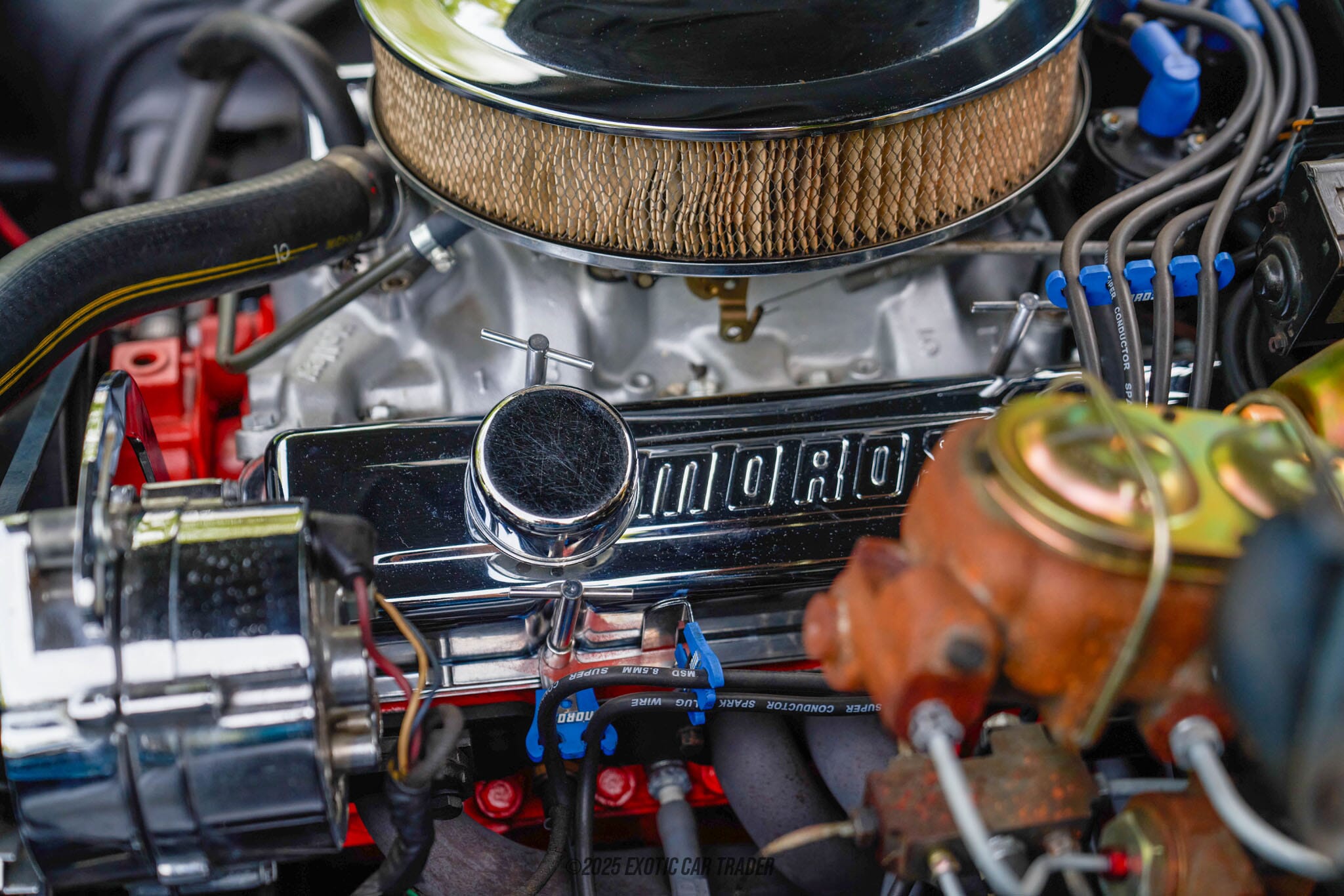
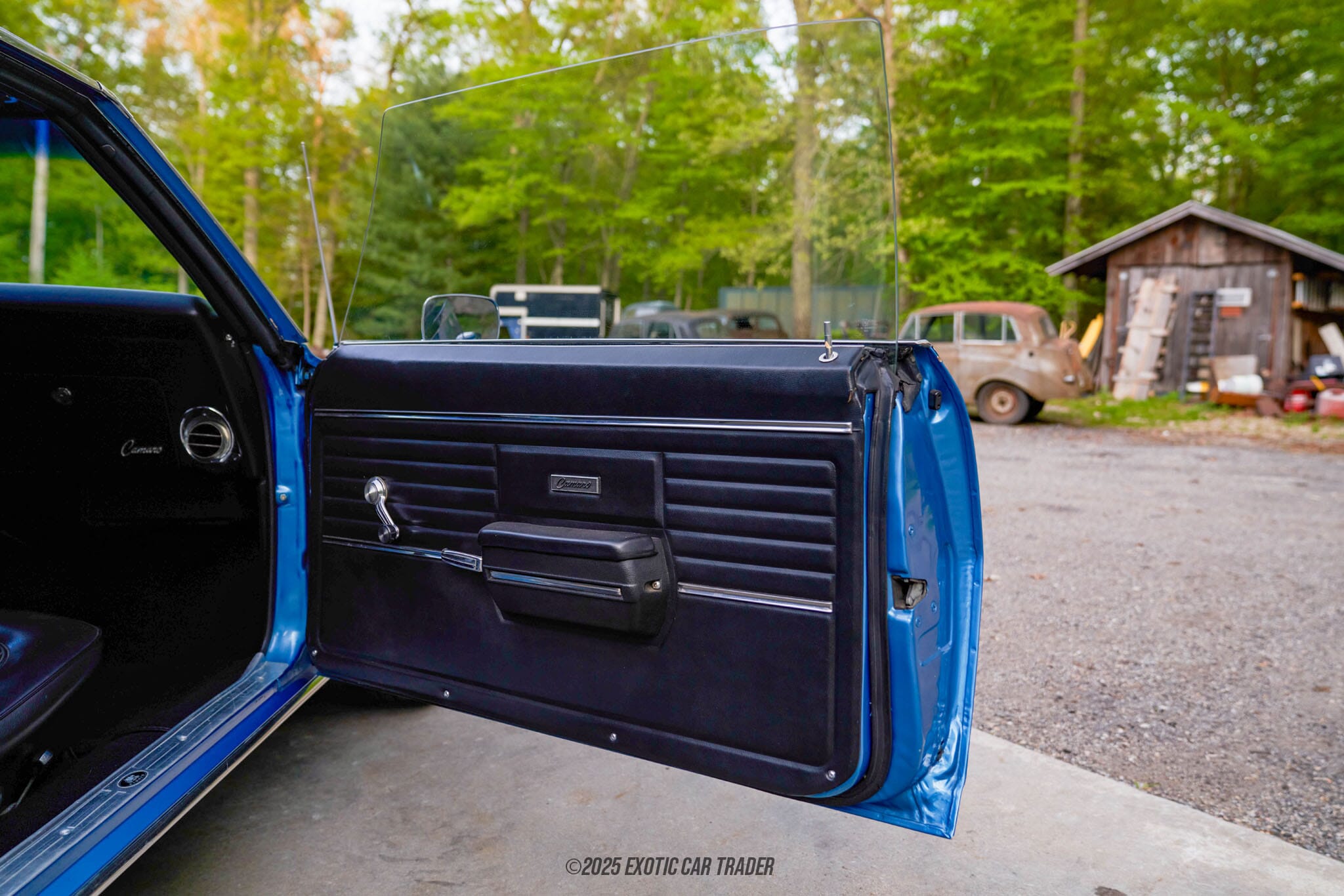
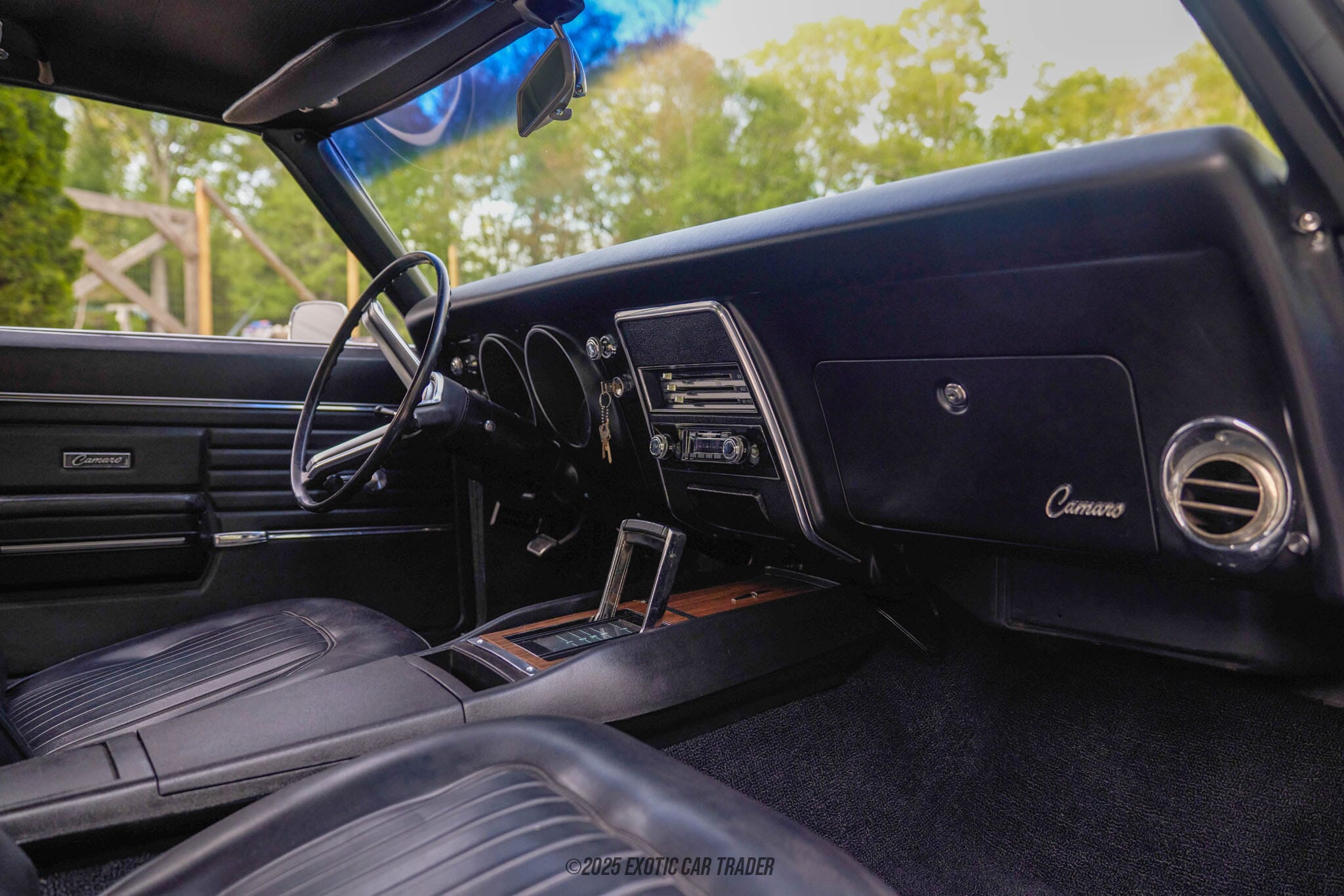
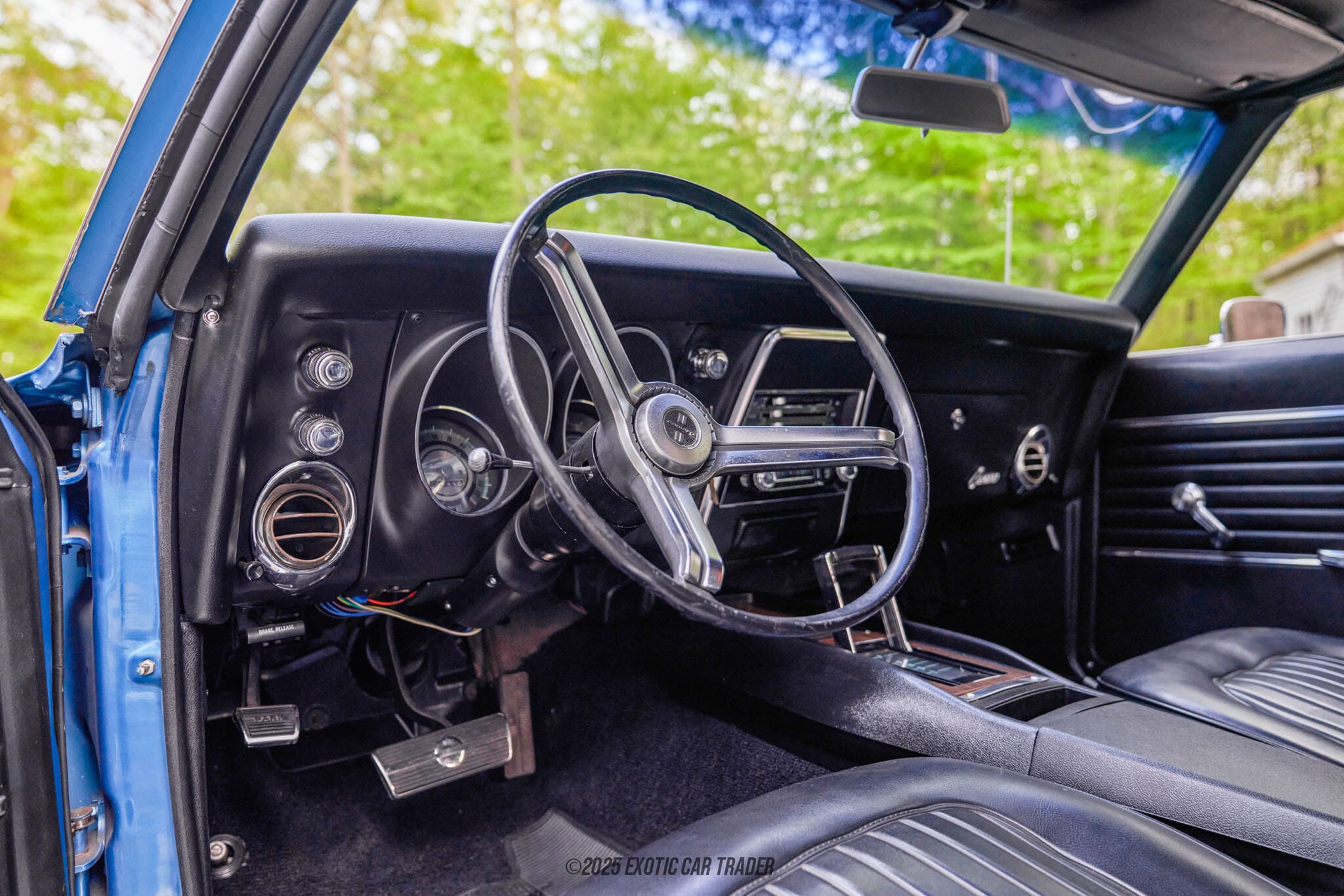
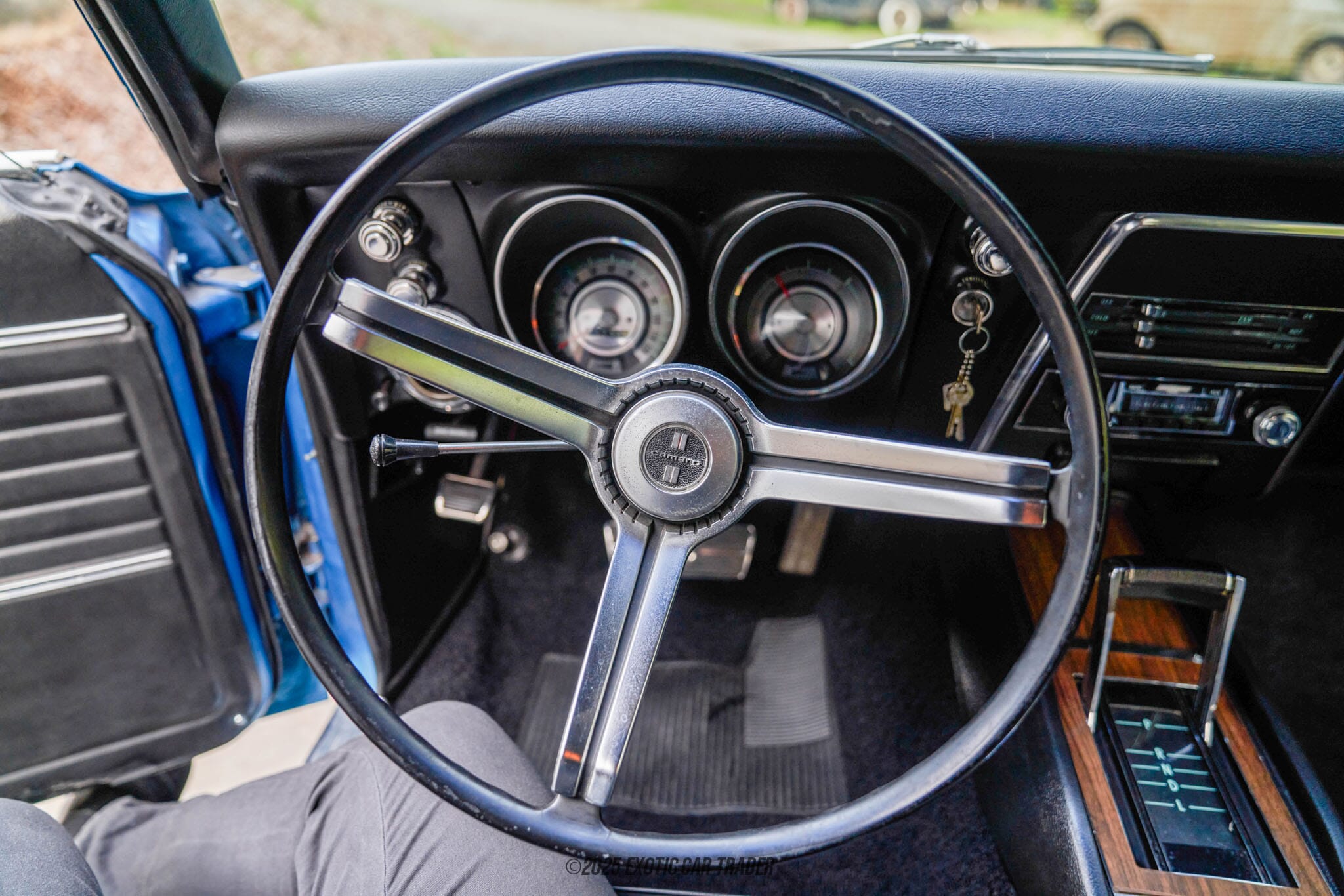
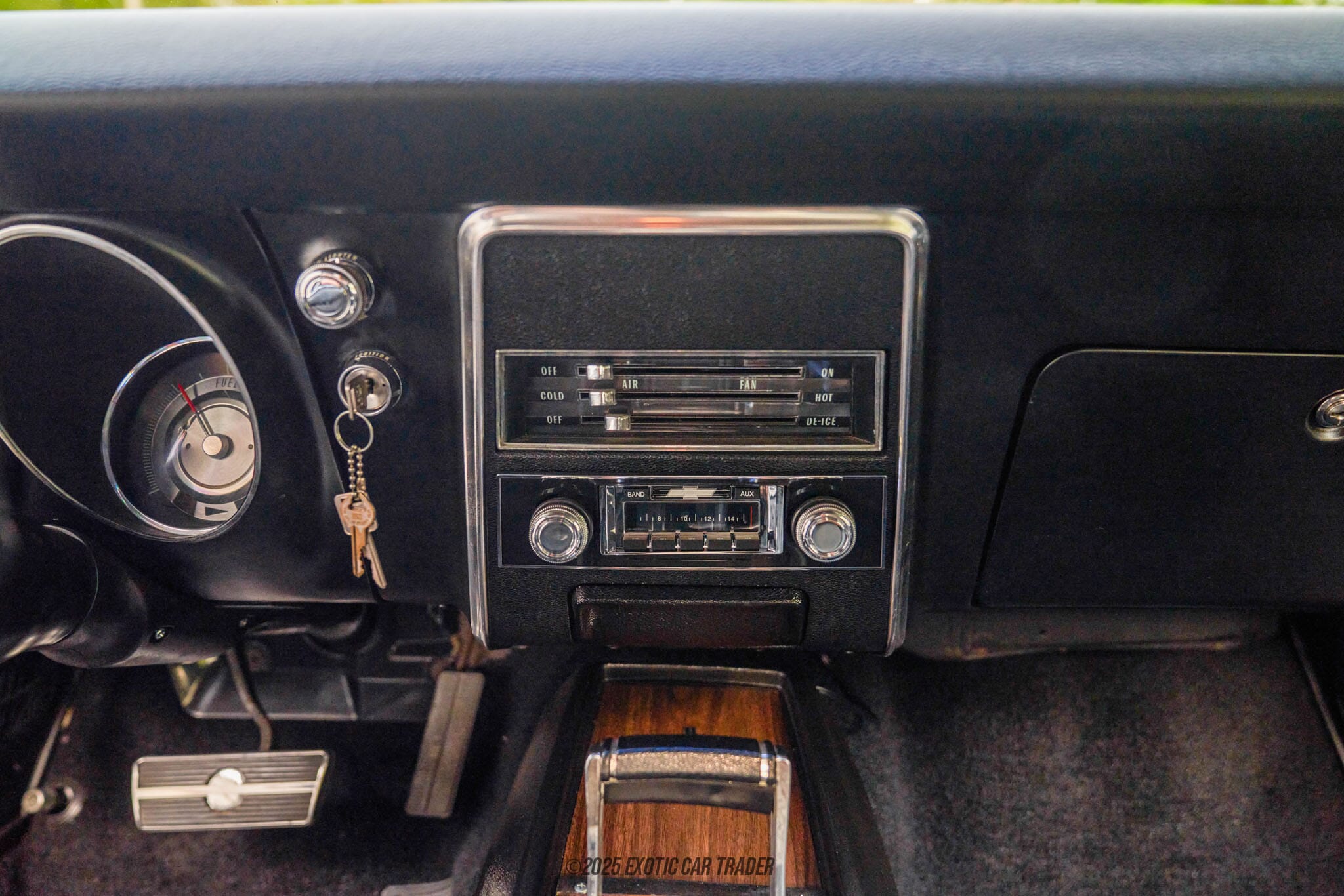
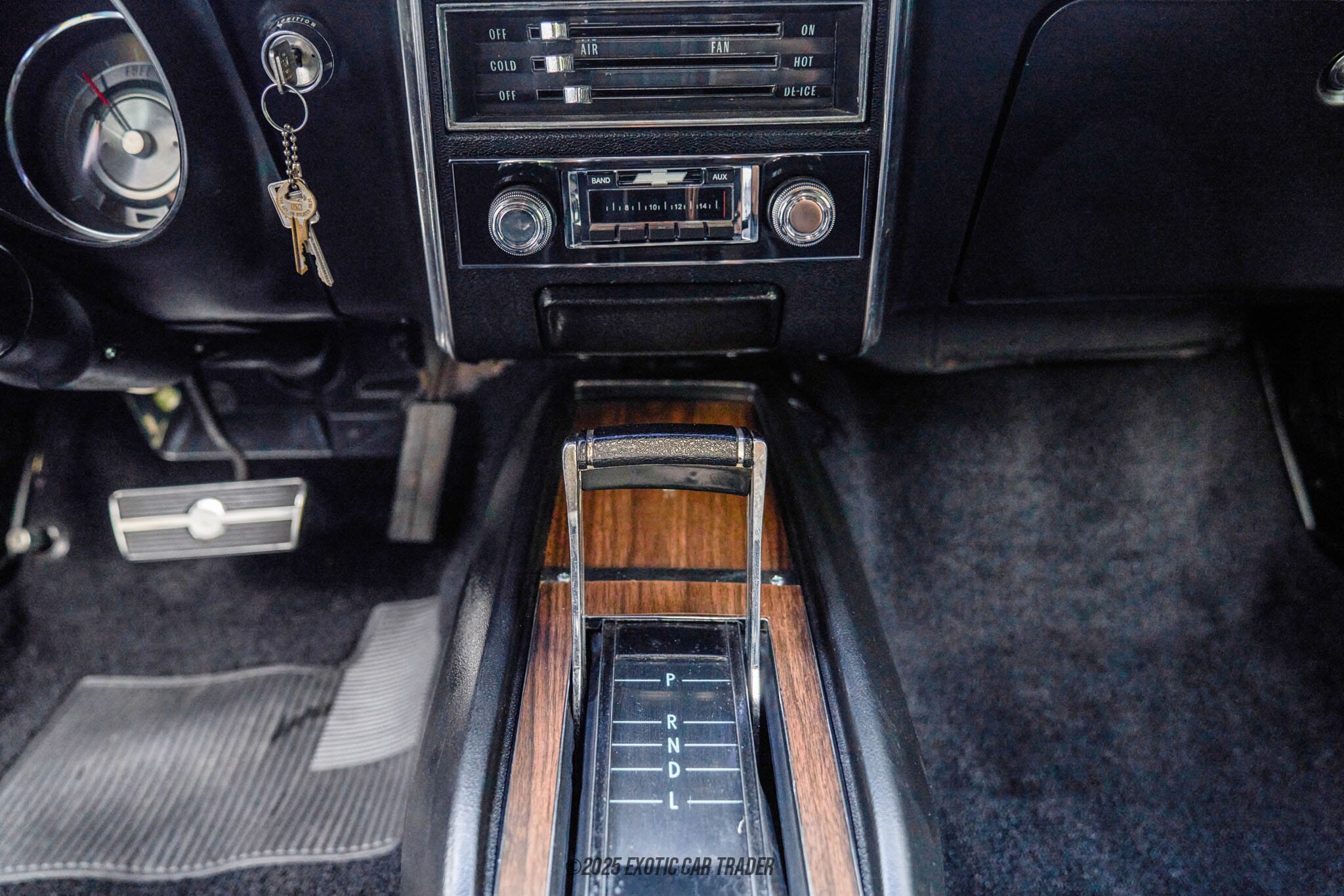


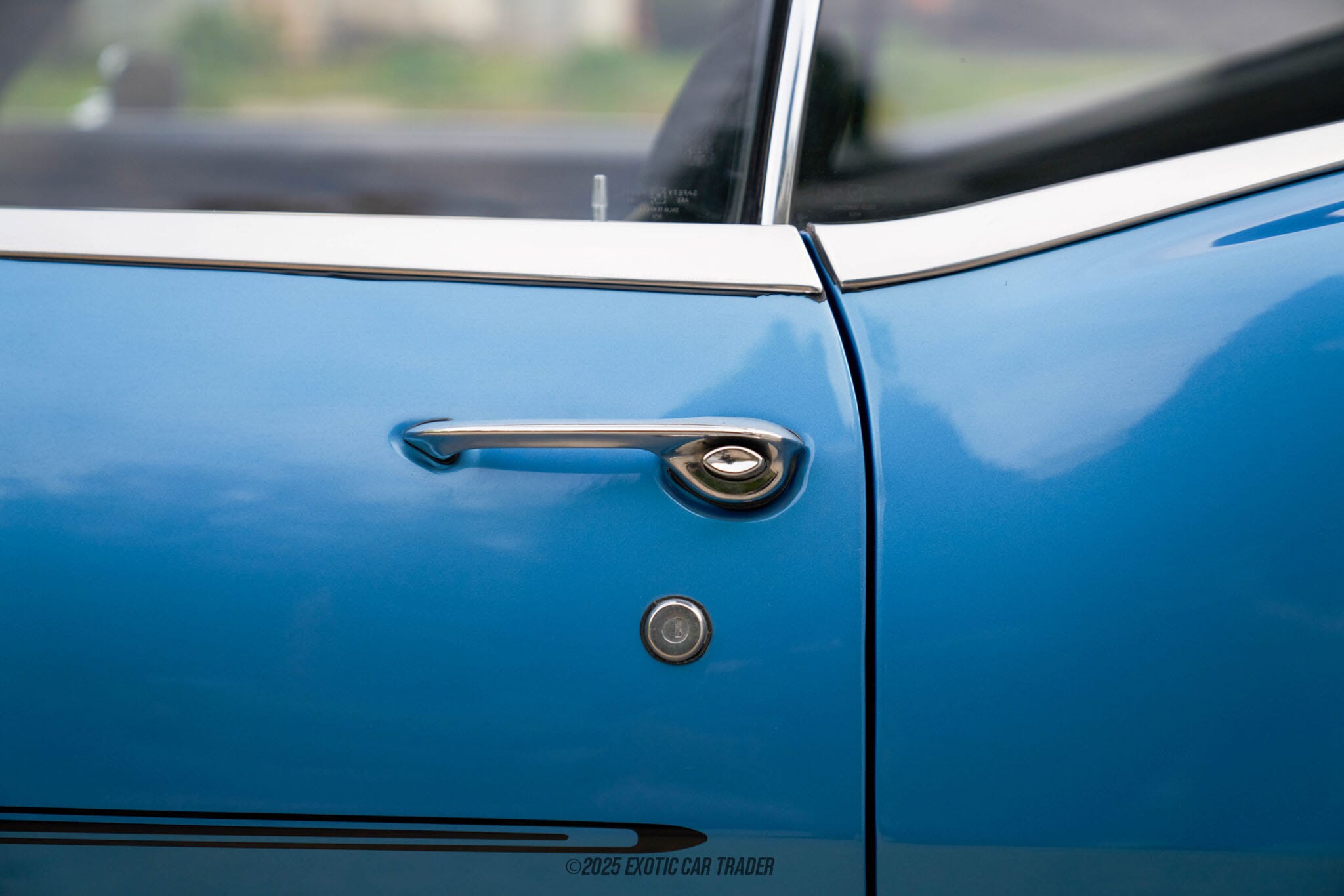
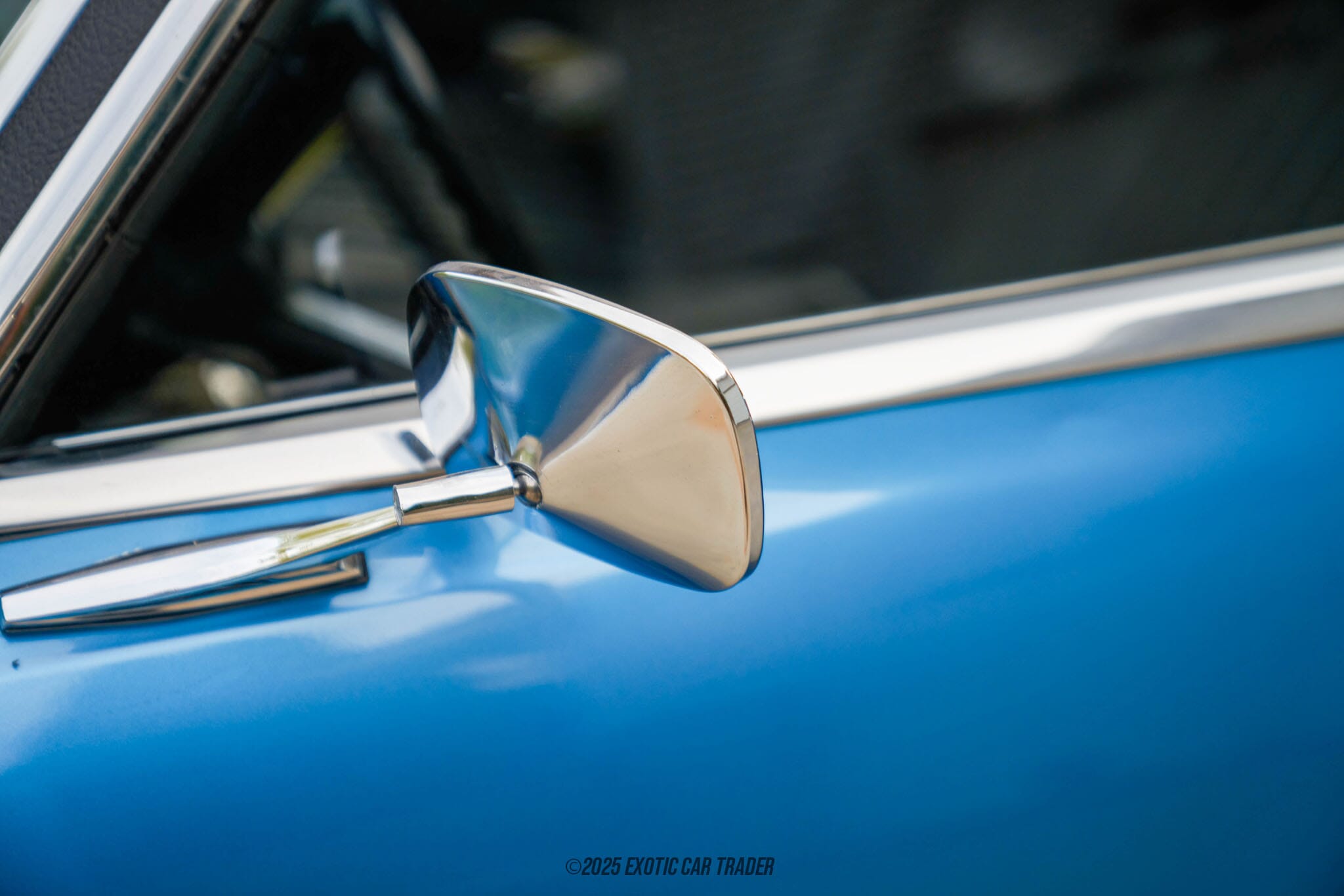
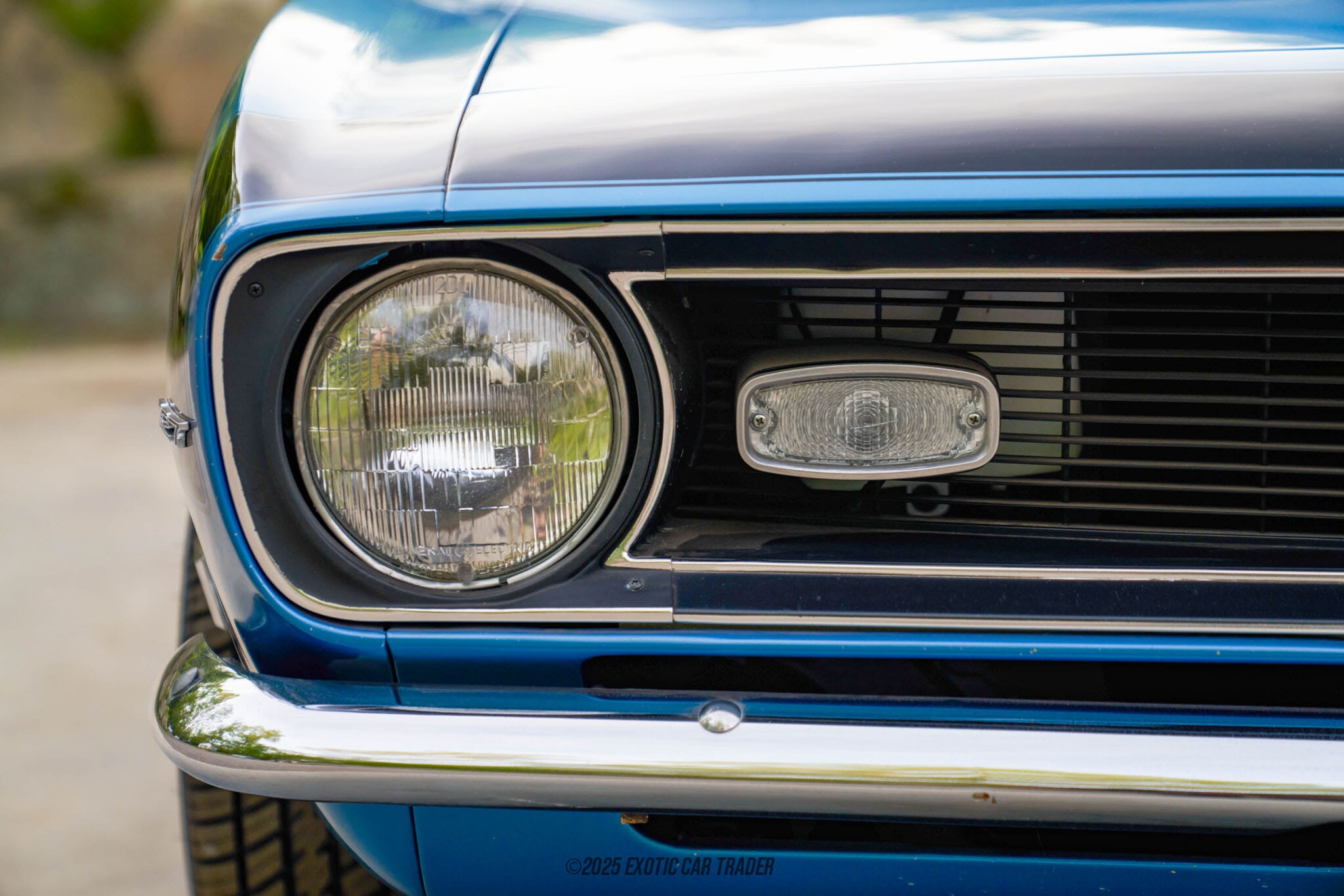
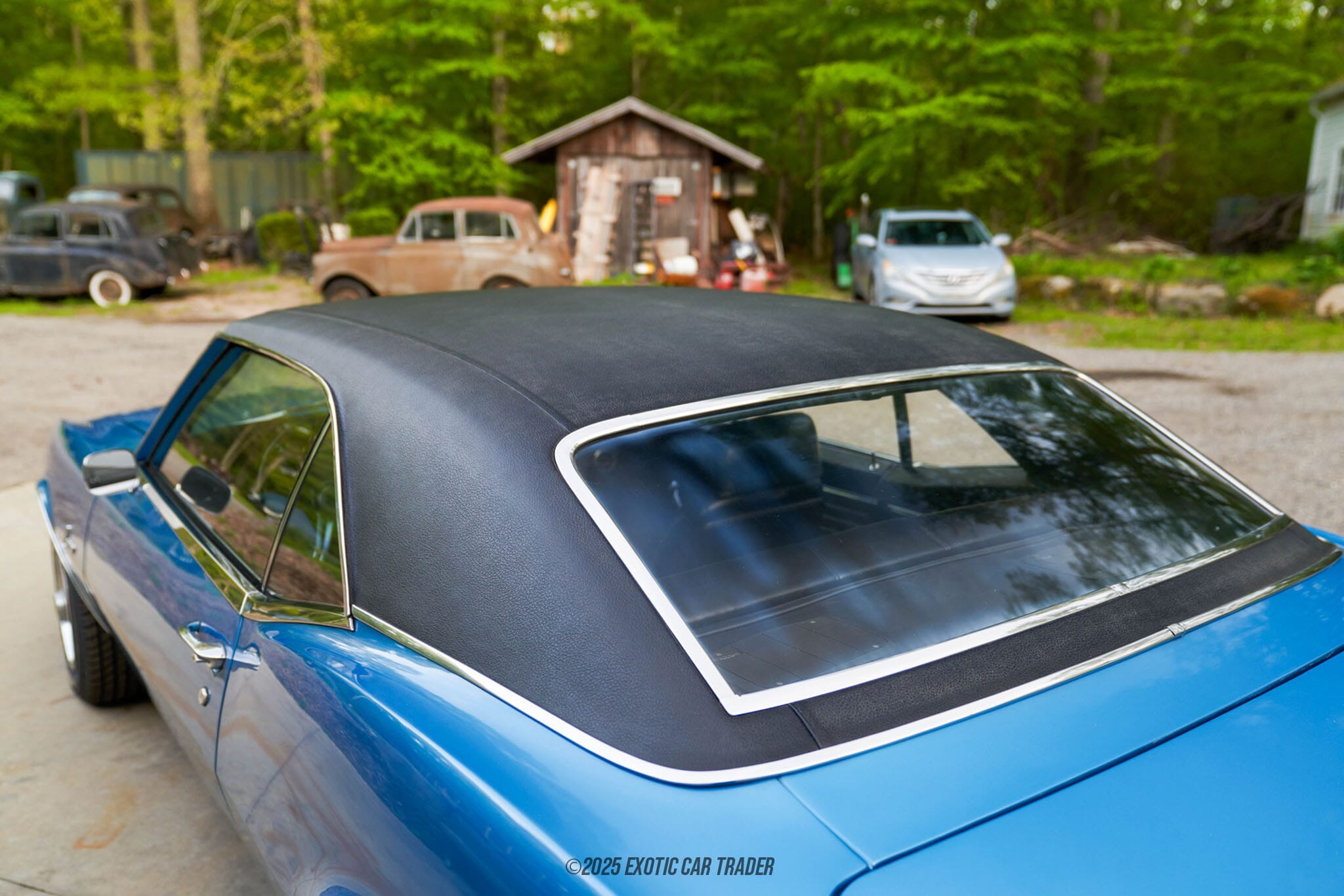
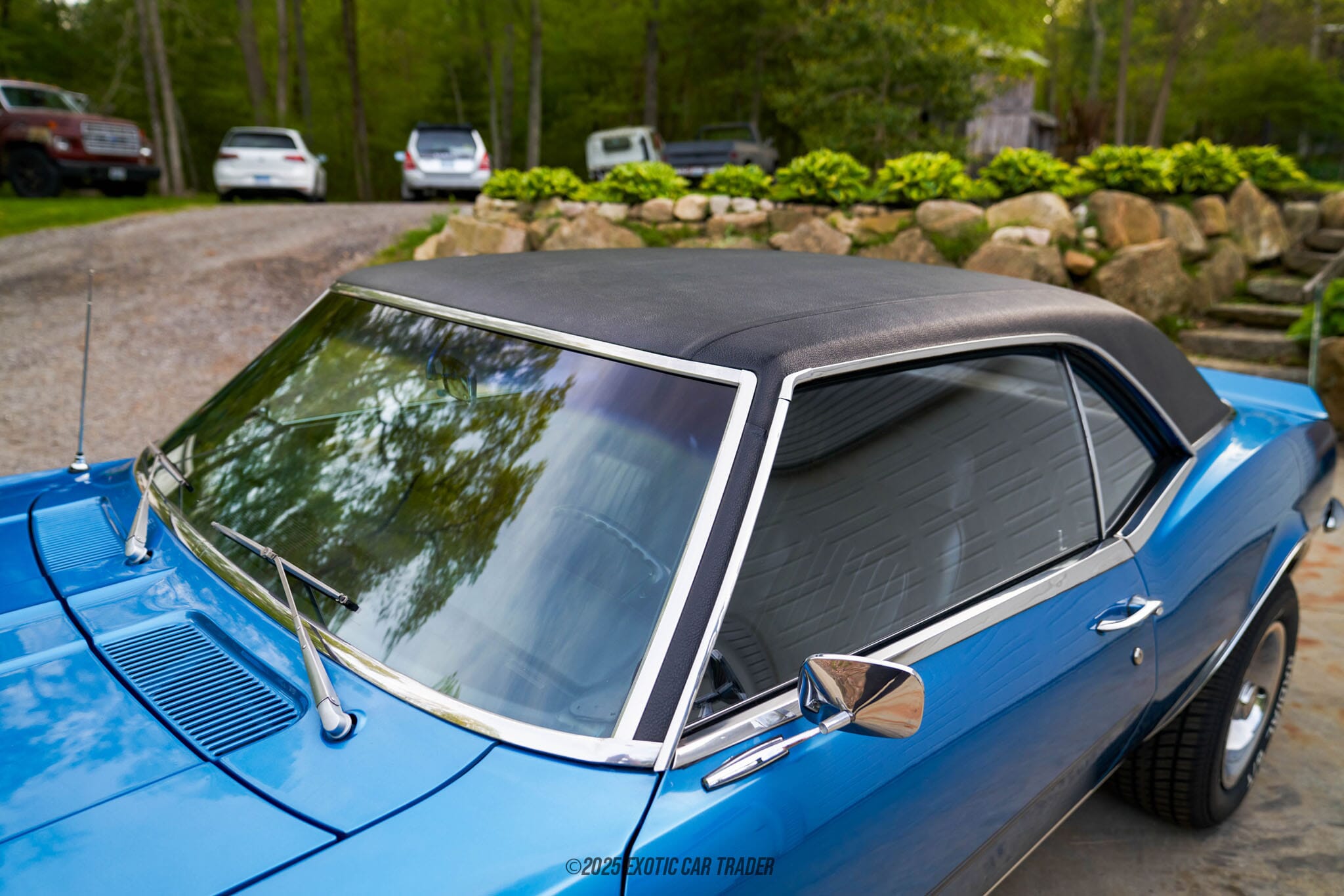
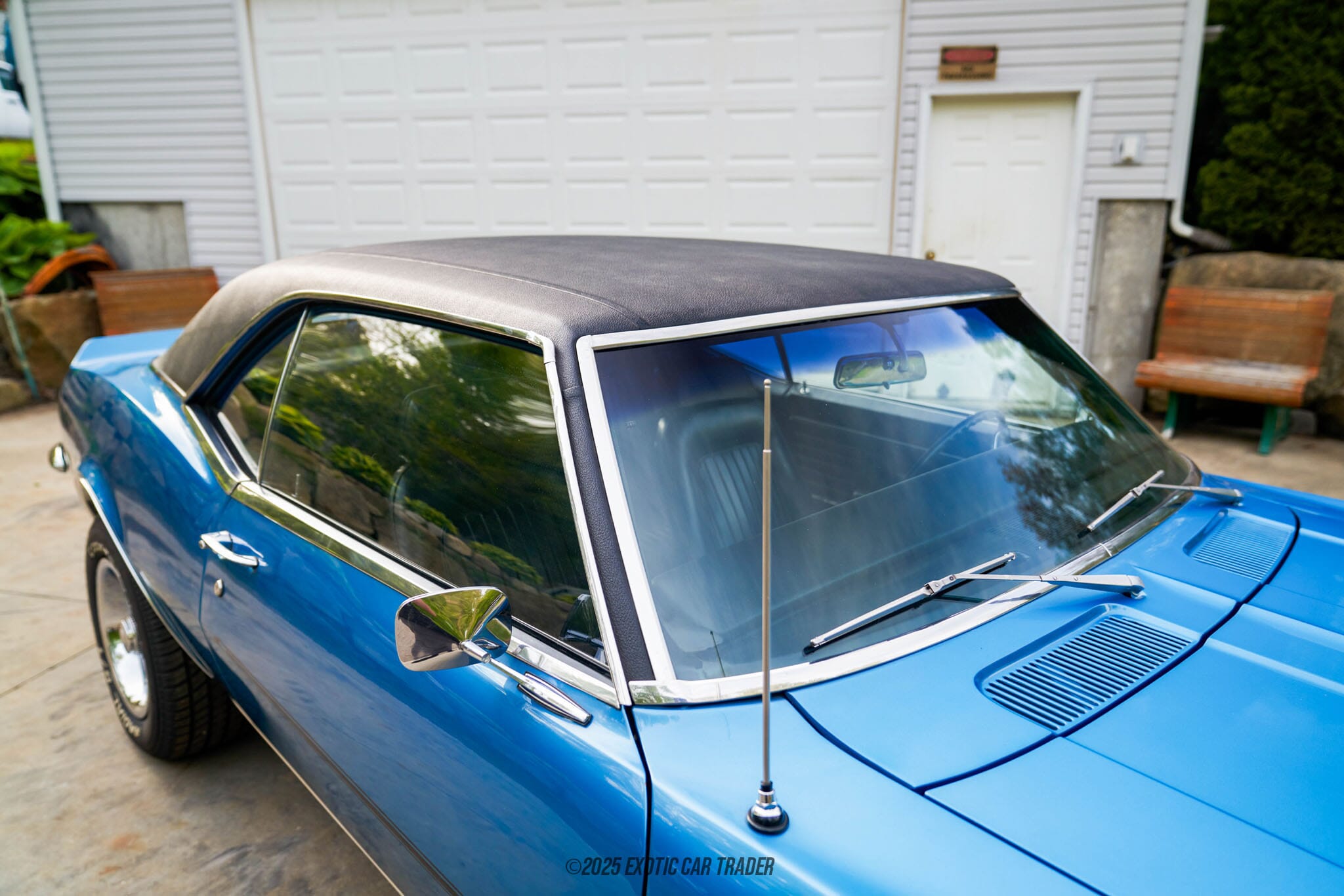
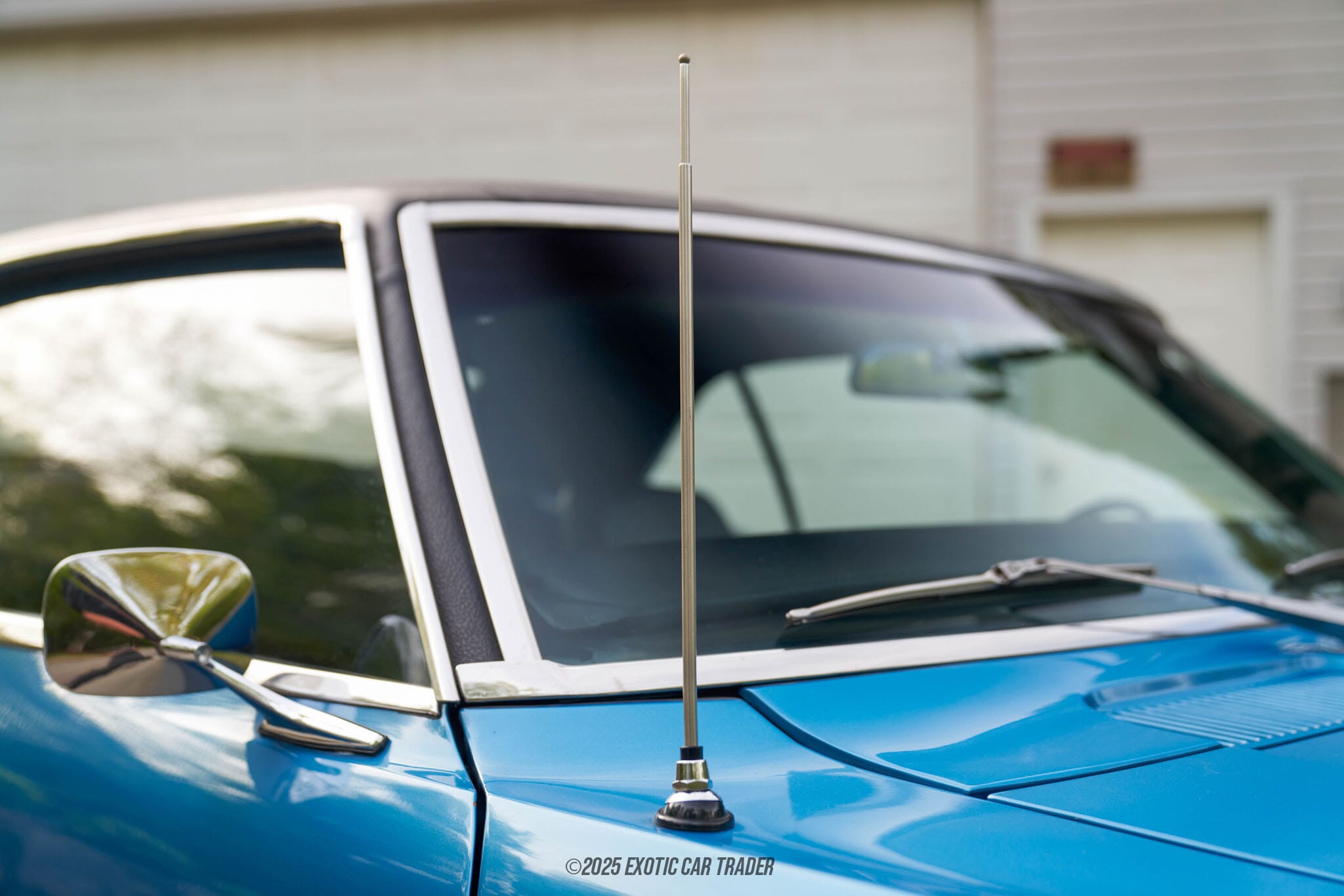
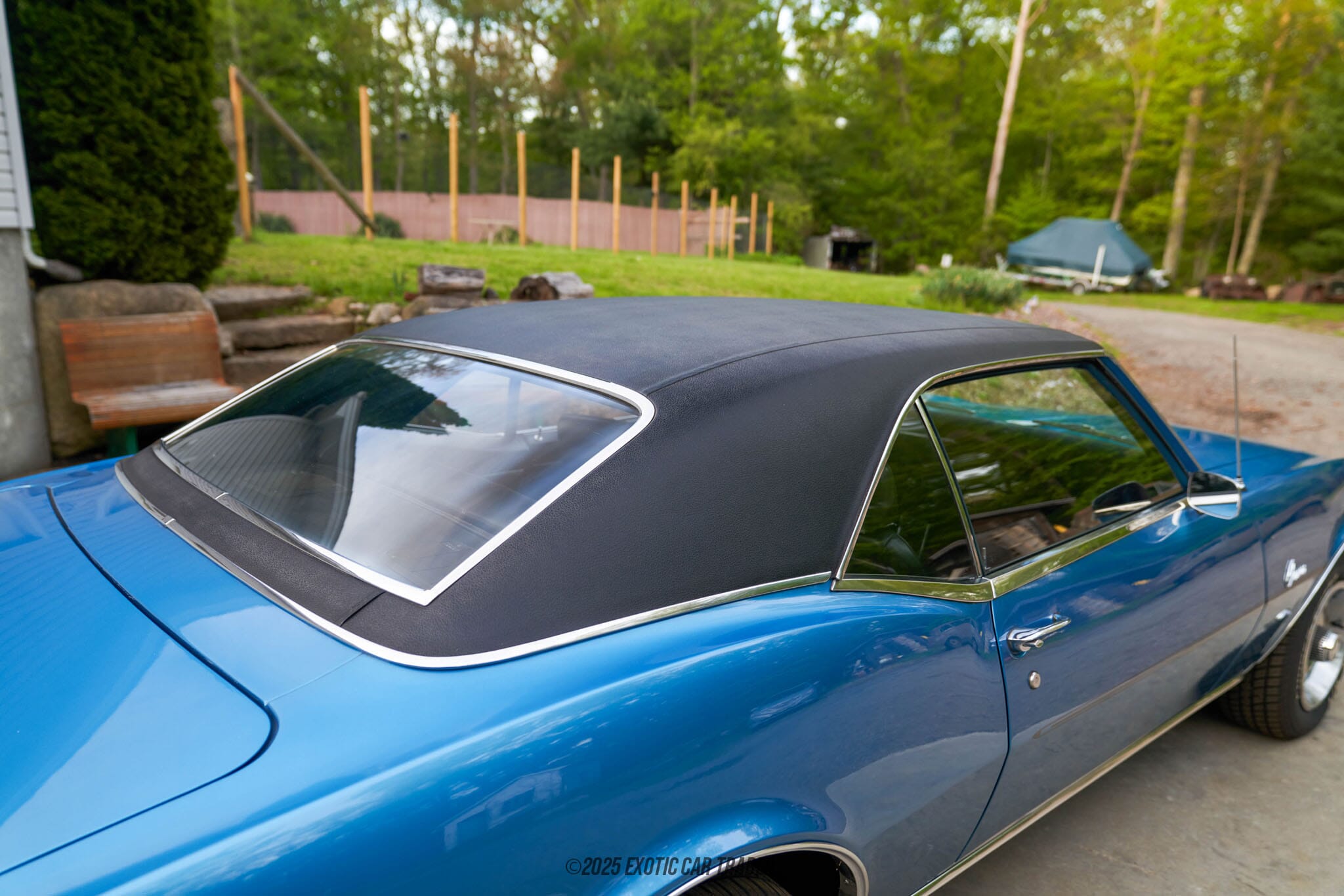
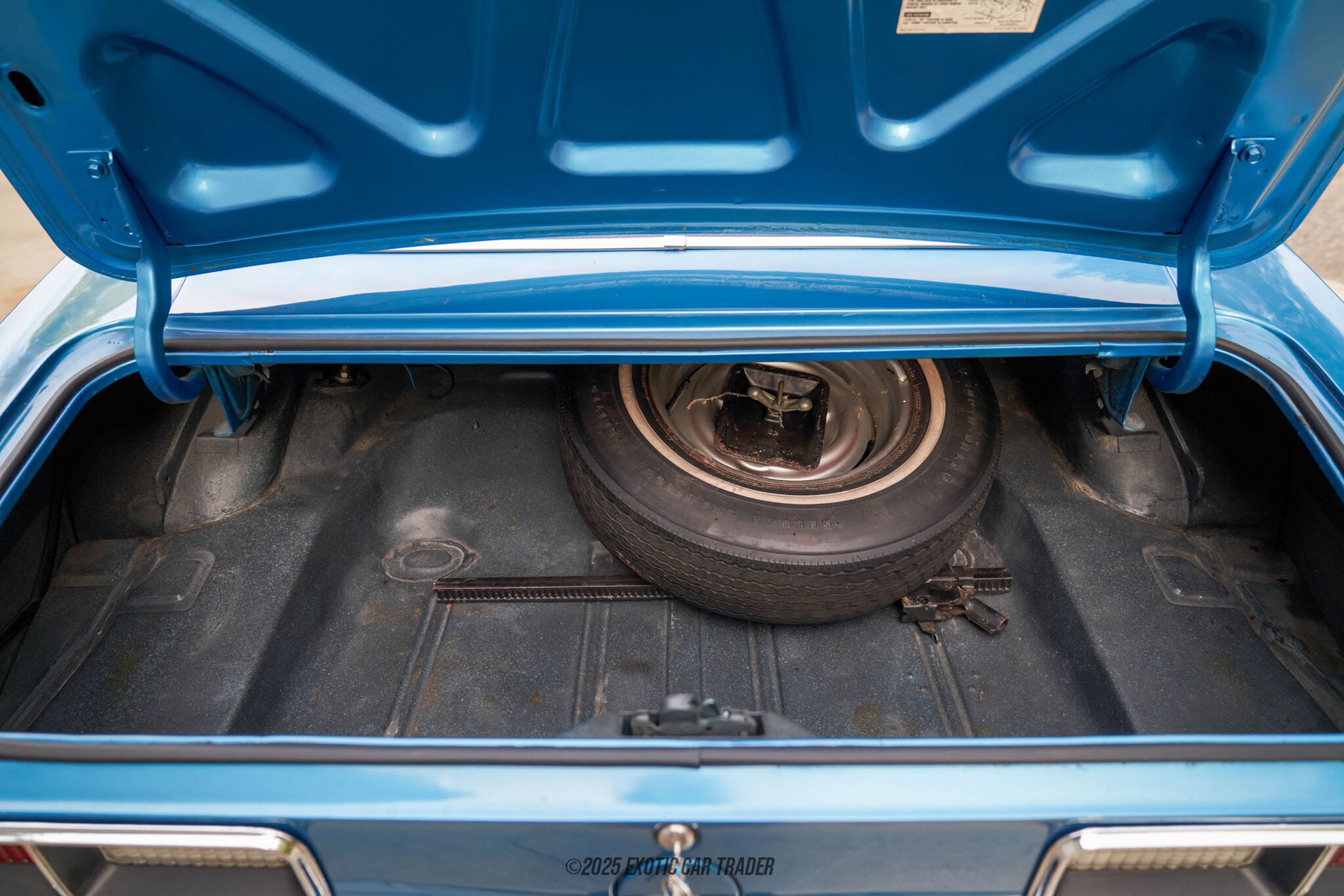
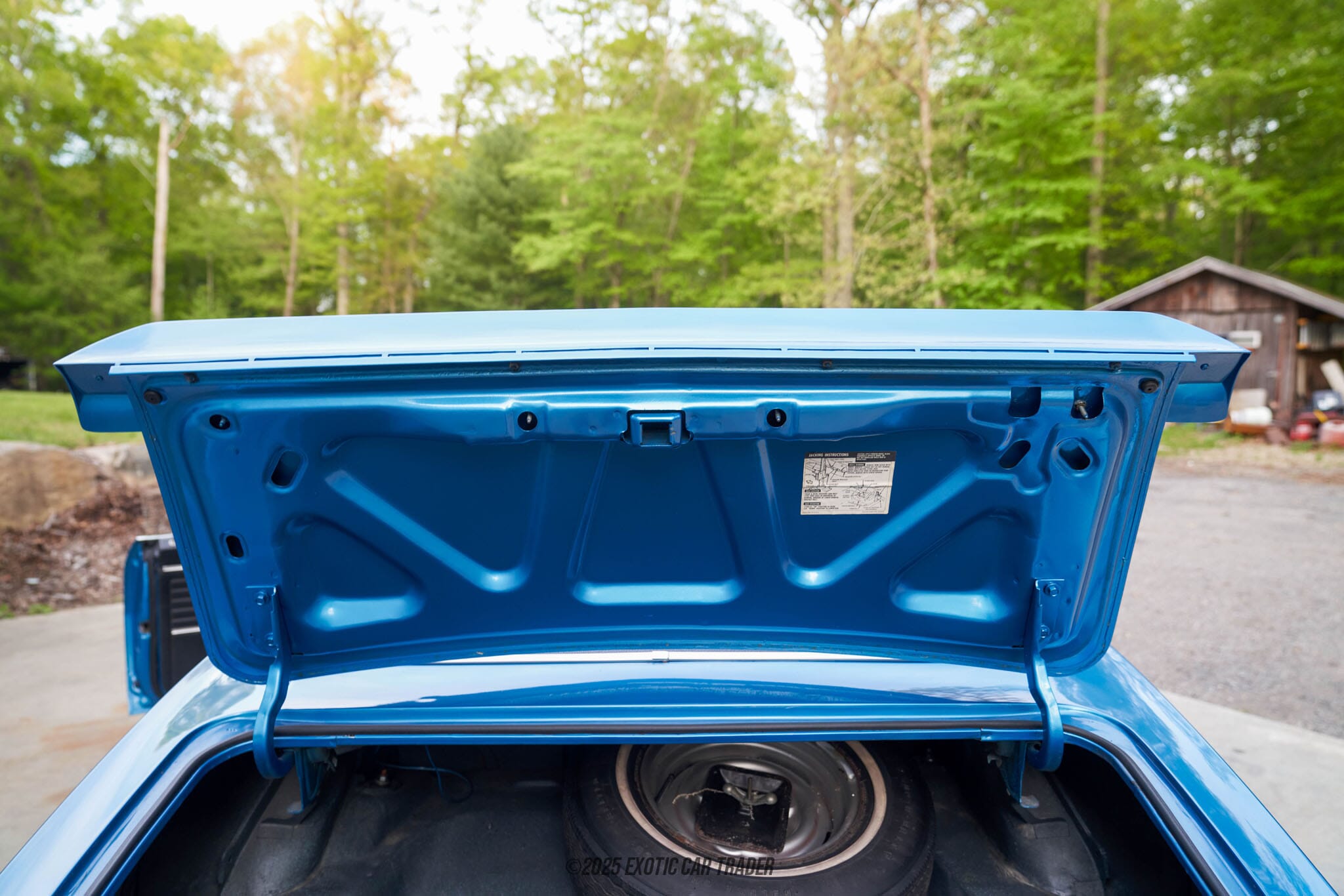
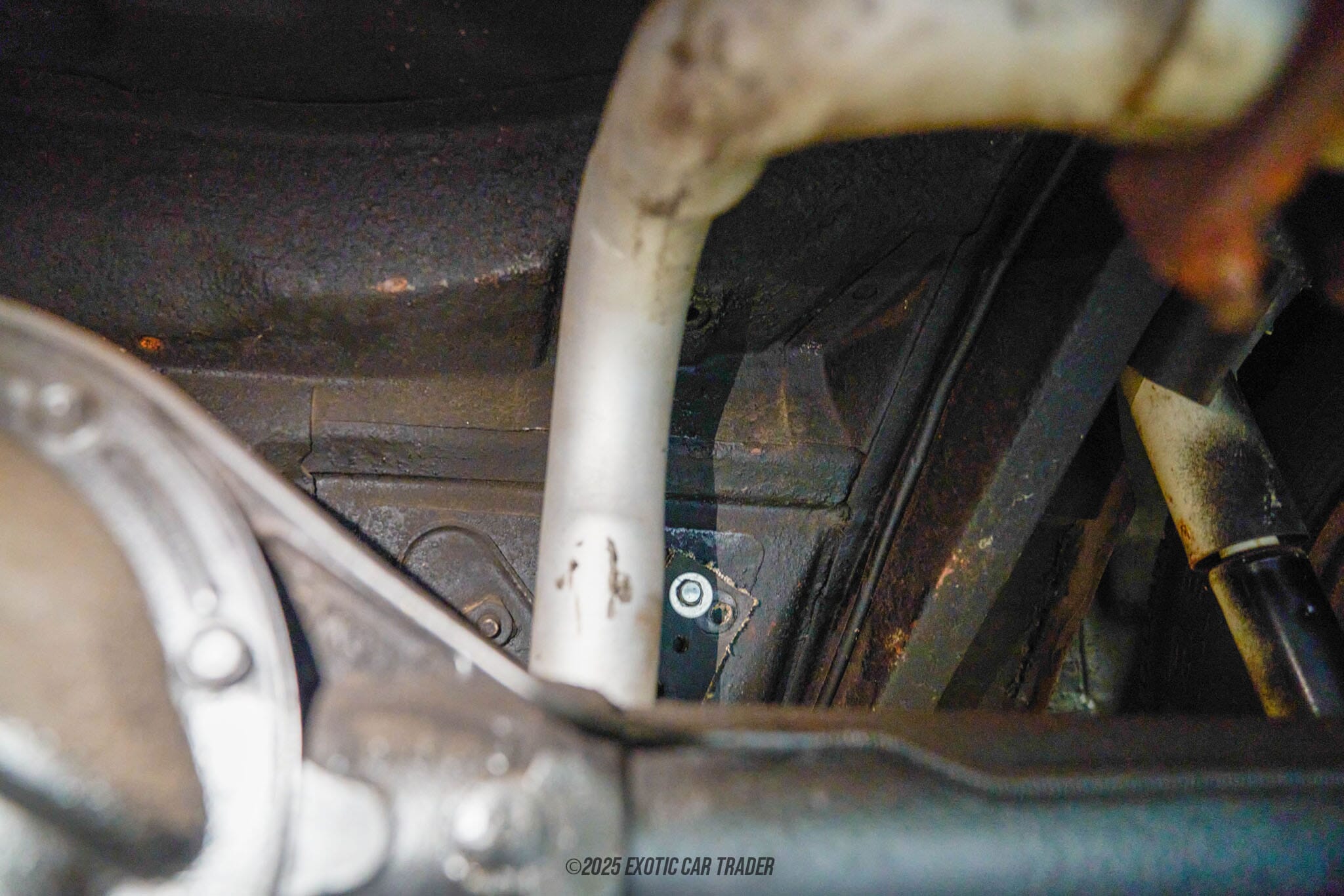
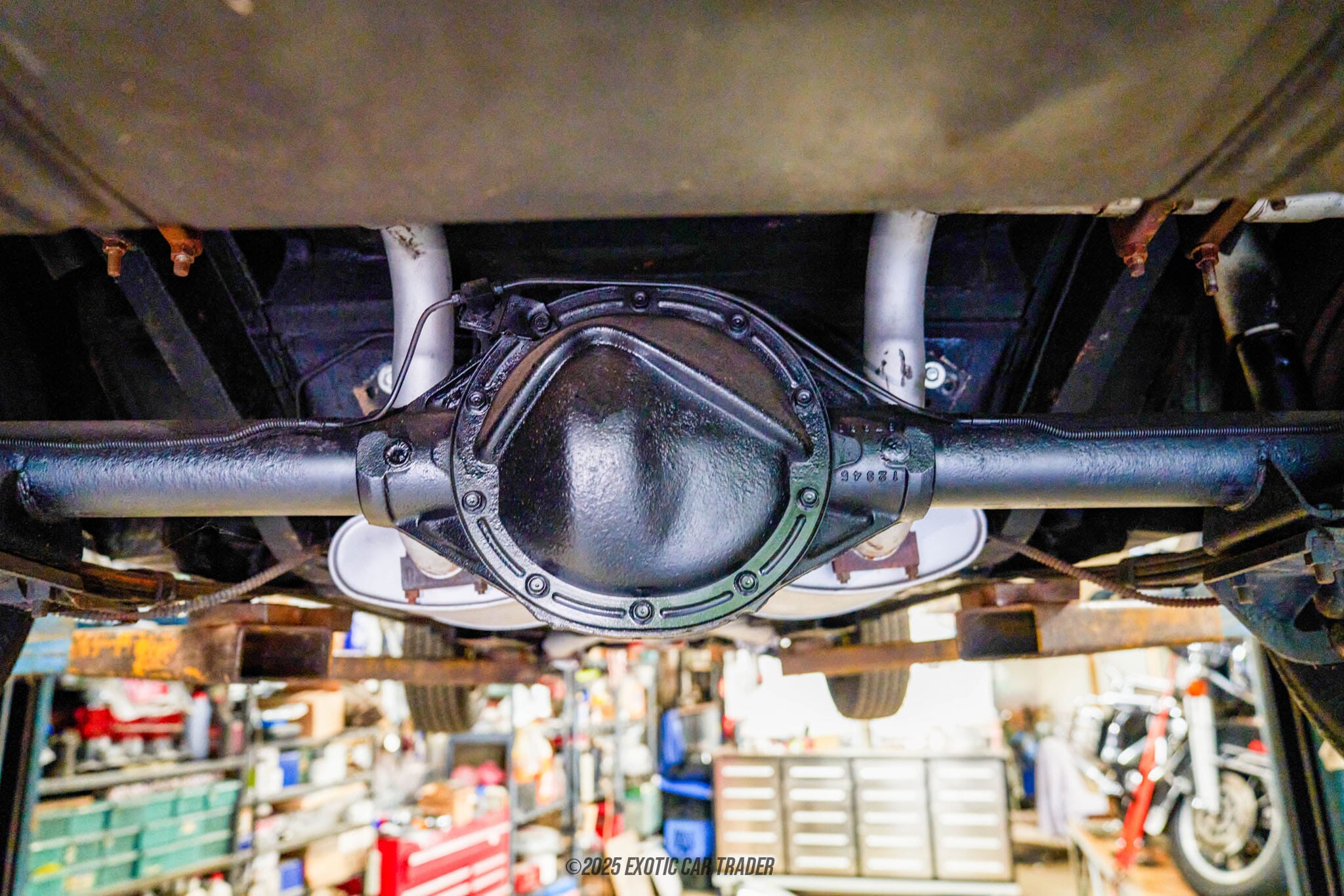
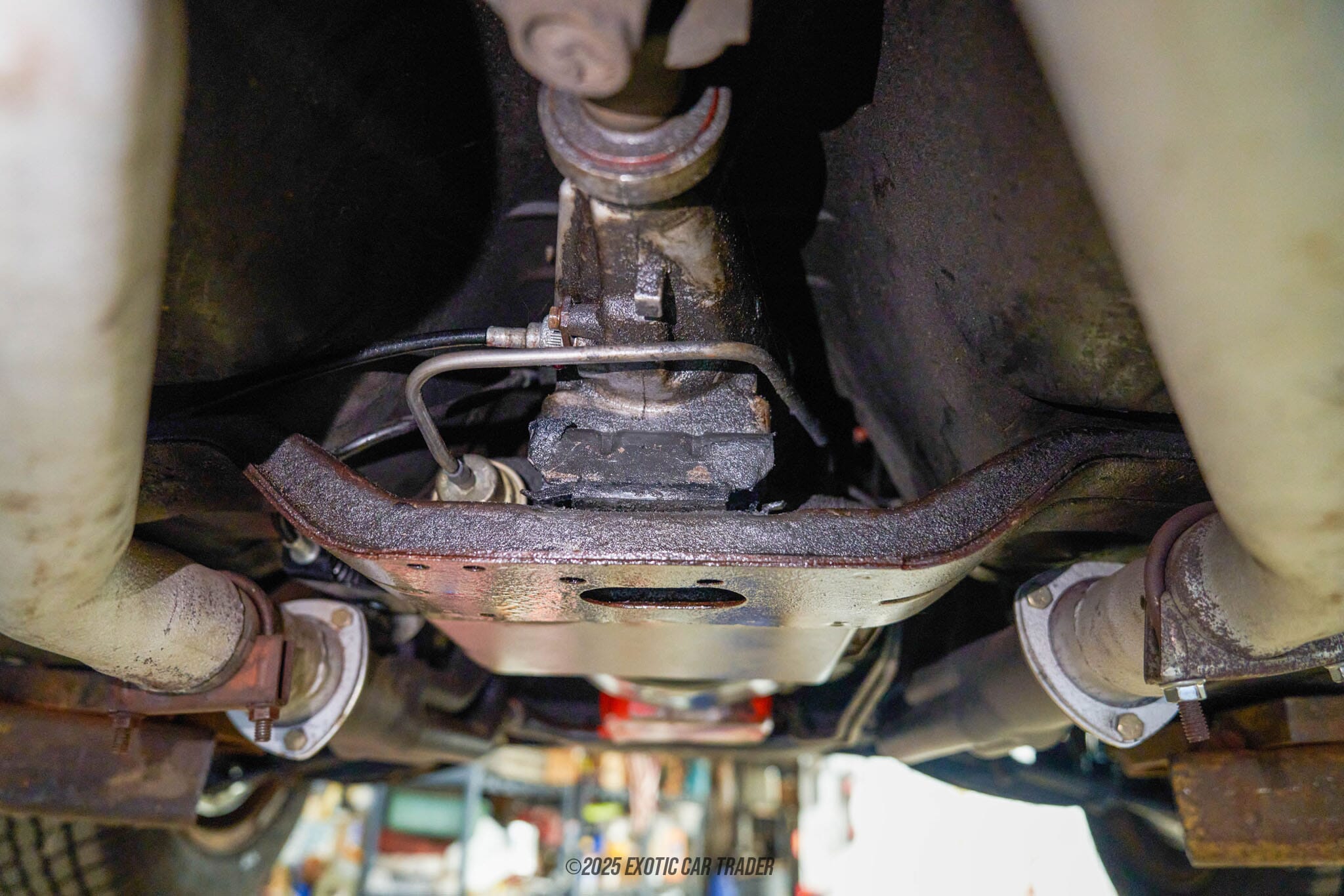
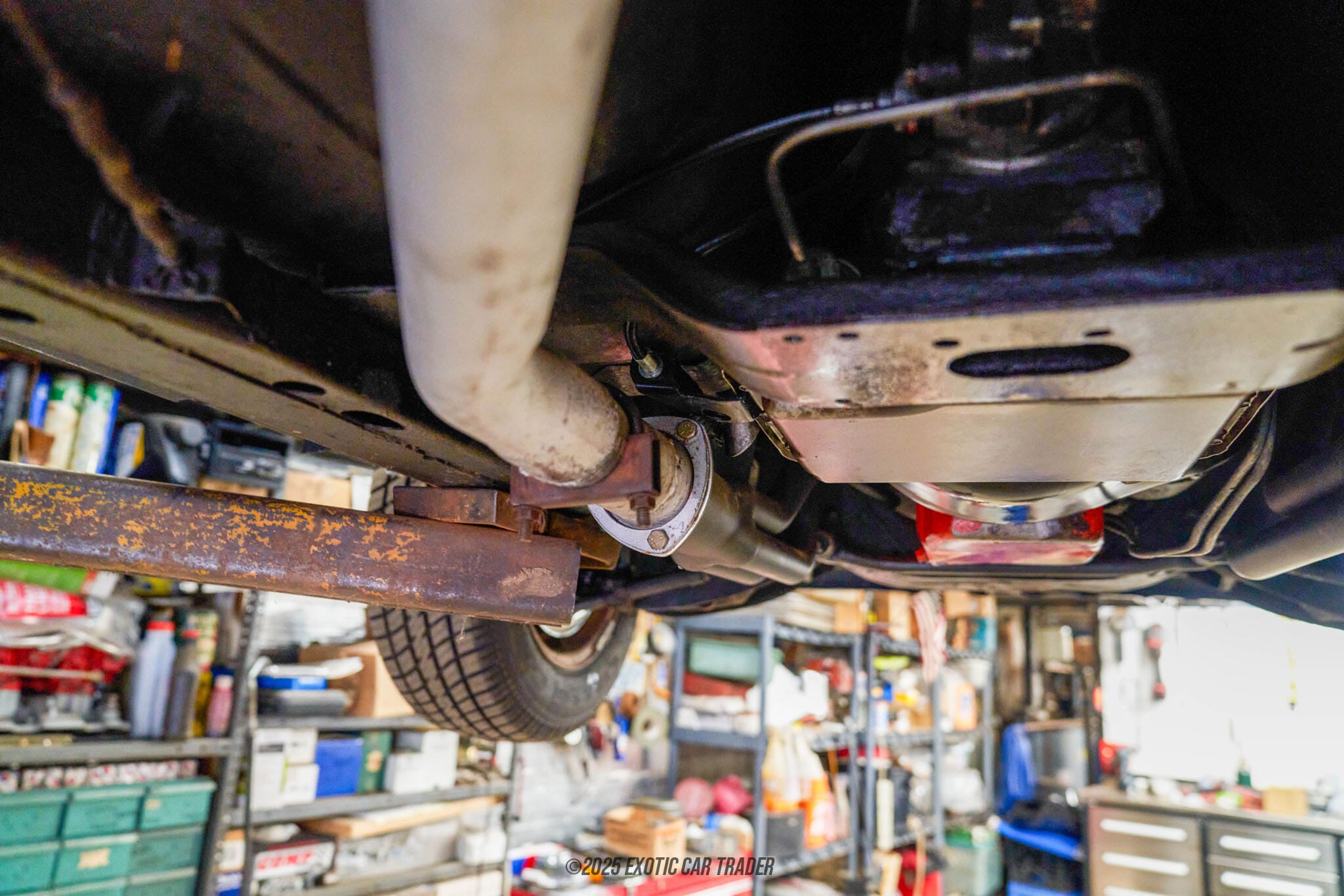


- 1968 Chevrolet Camaro
- 327ci V8
- 4-Barrel Carburetor
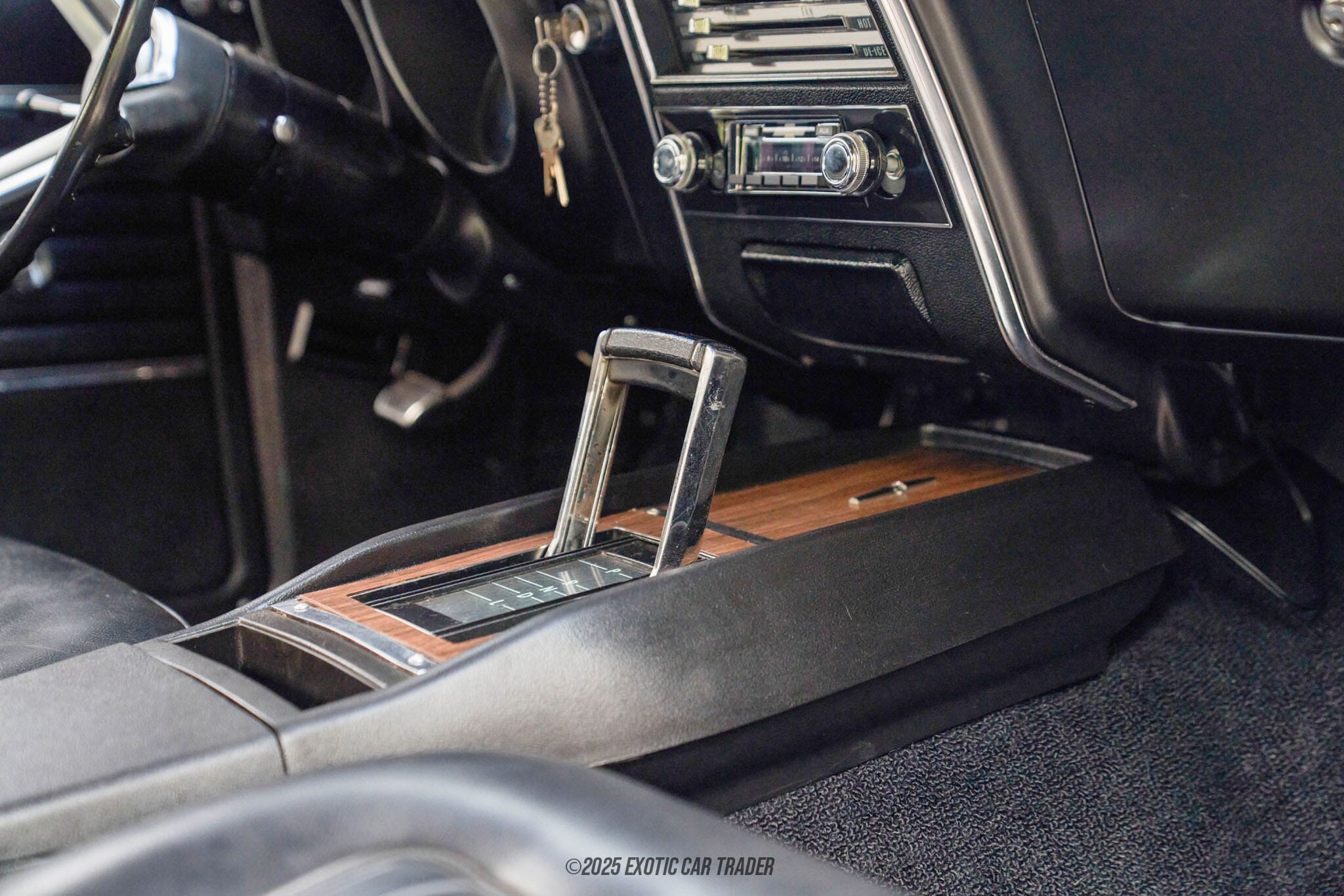
- Automatic Transmission
- RWD
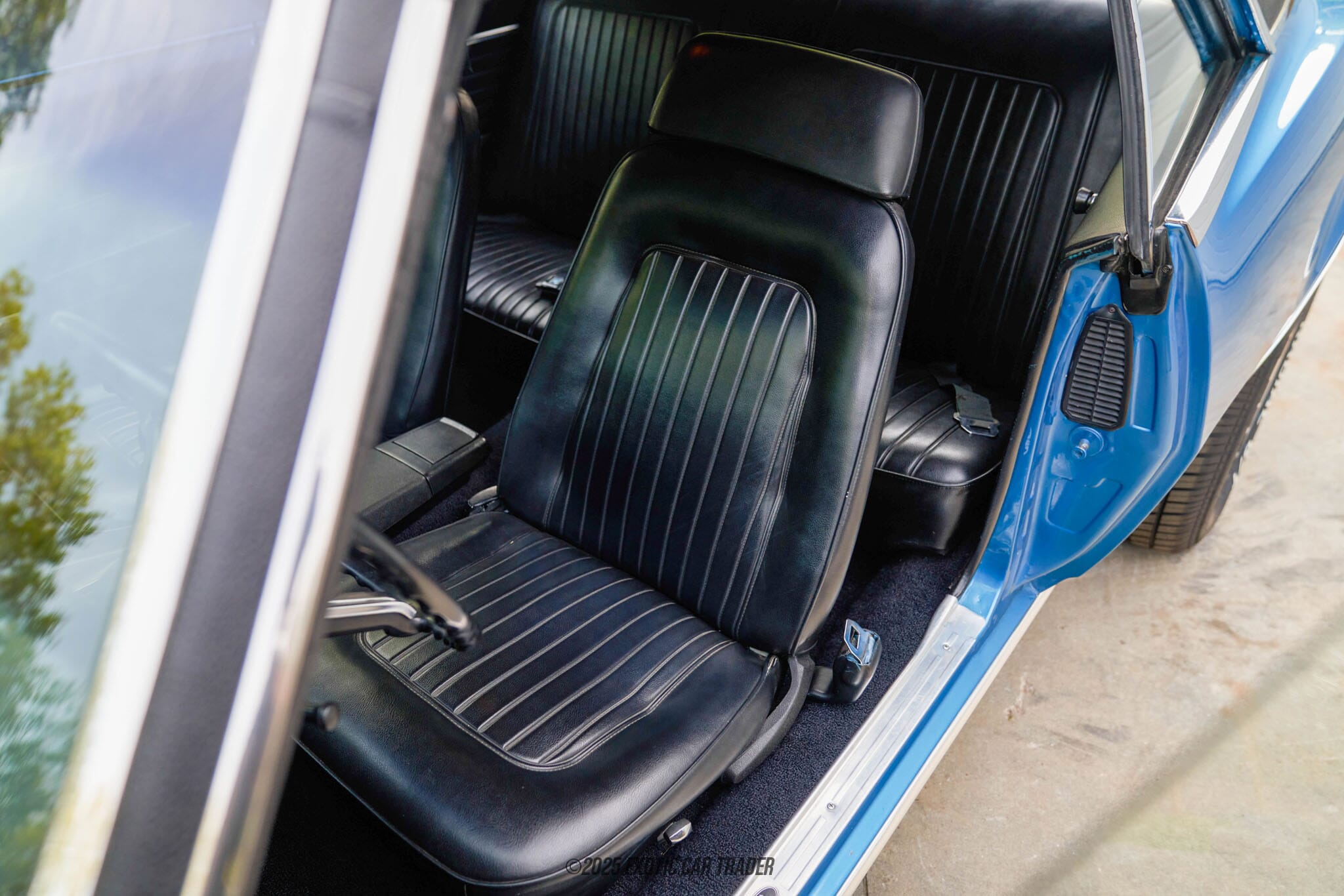
- Blue Exterior
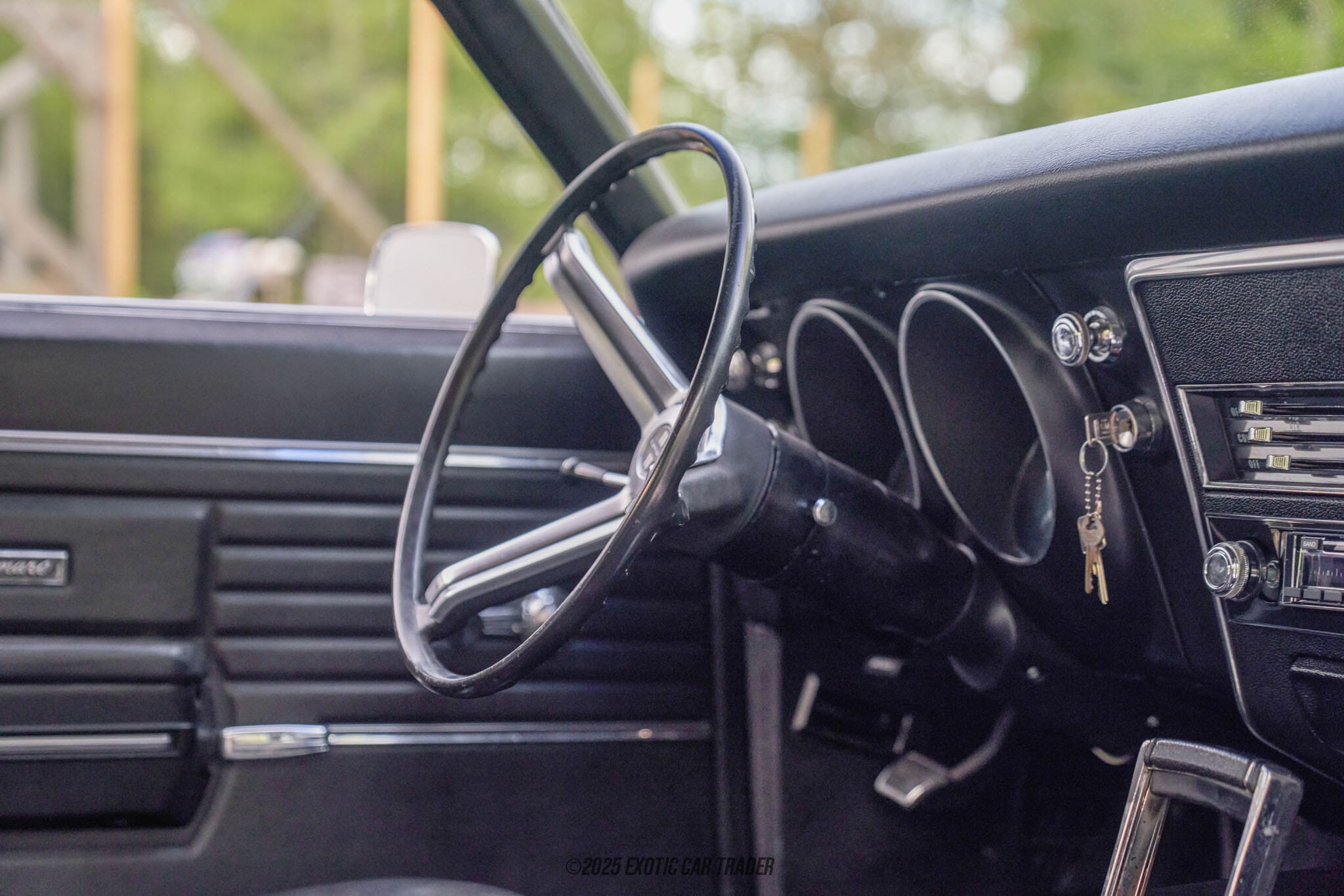
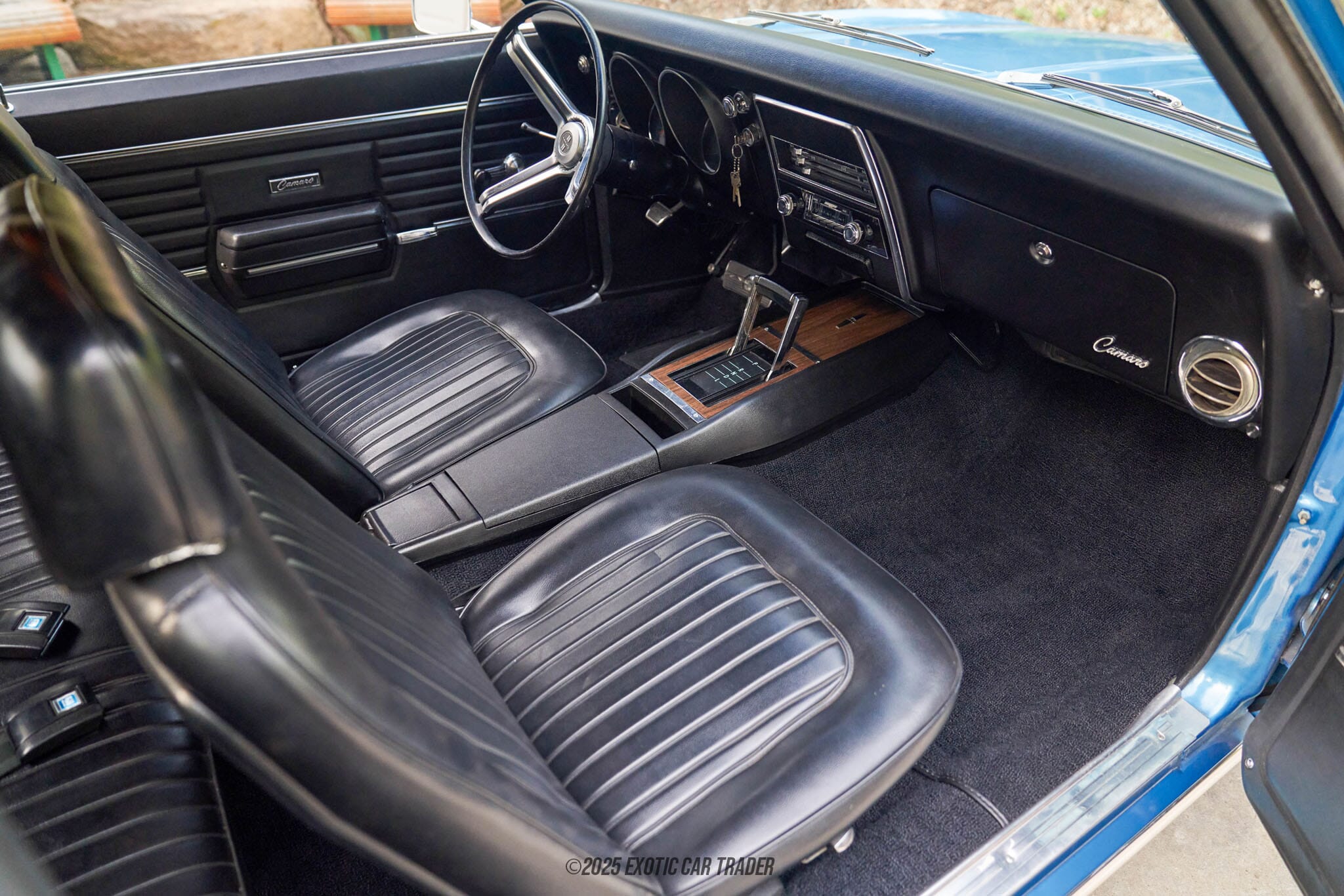
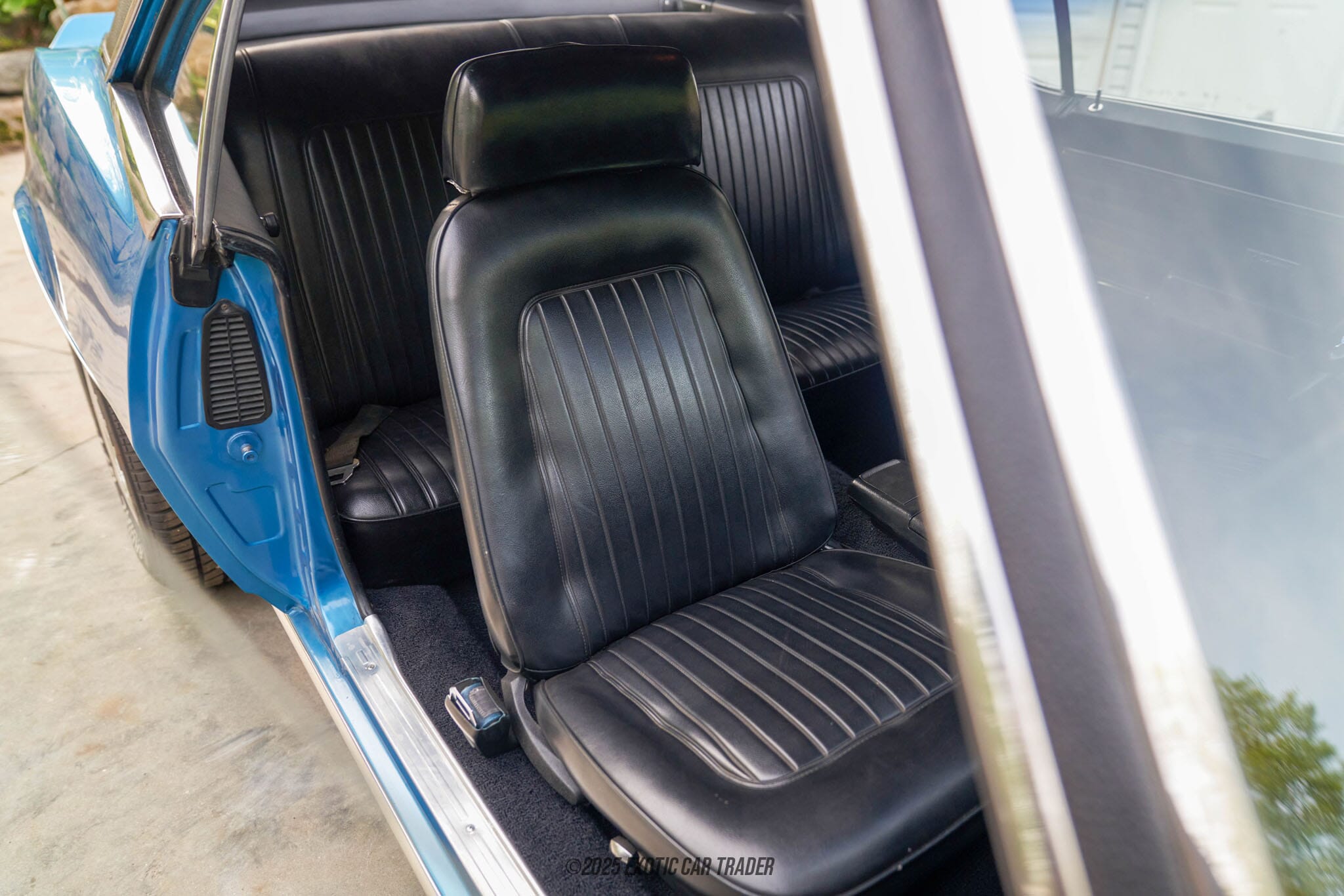
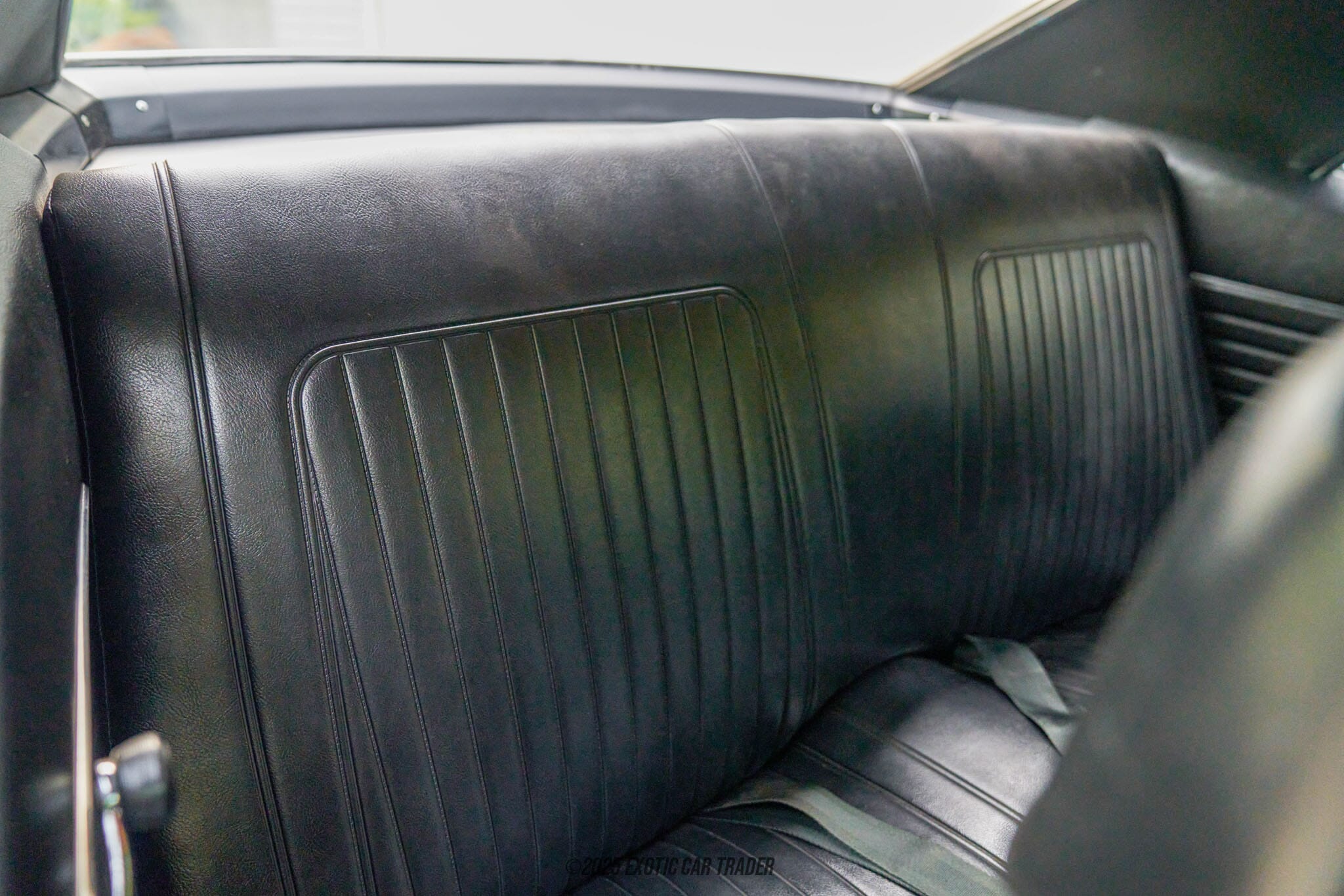
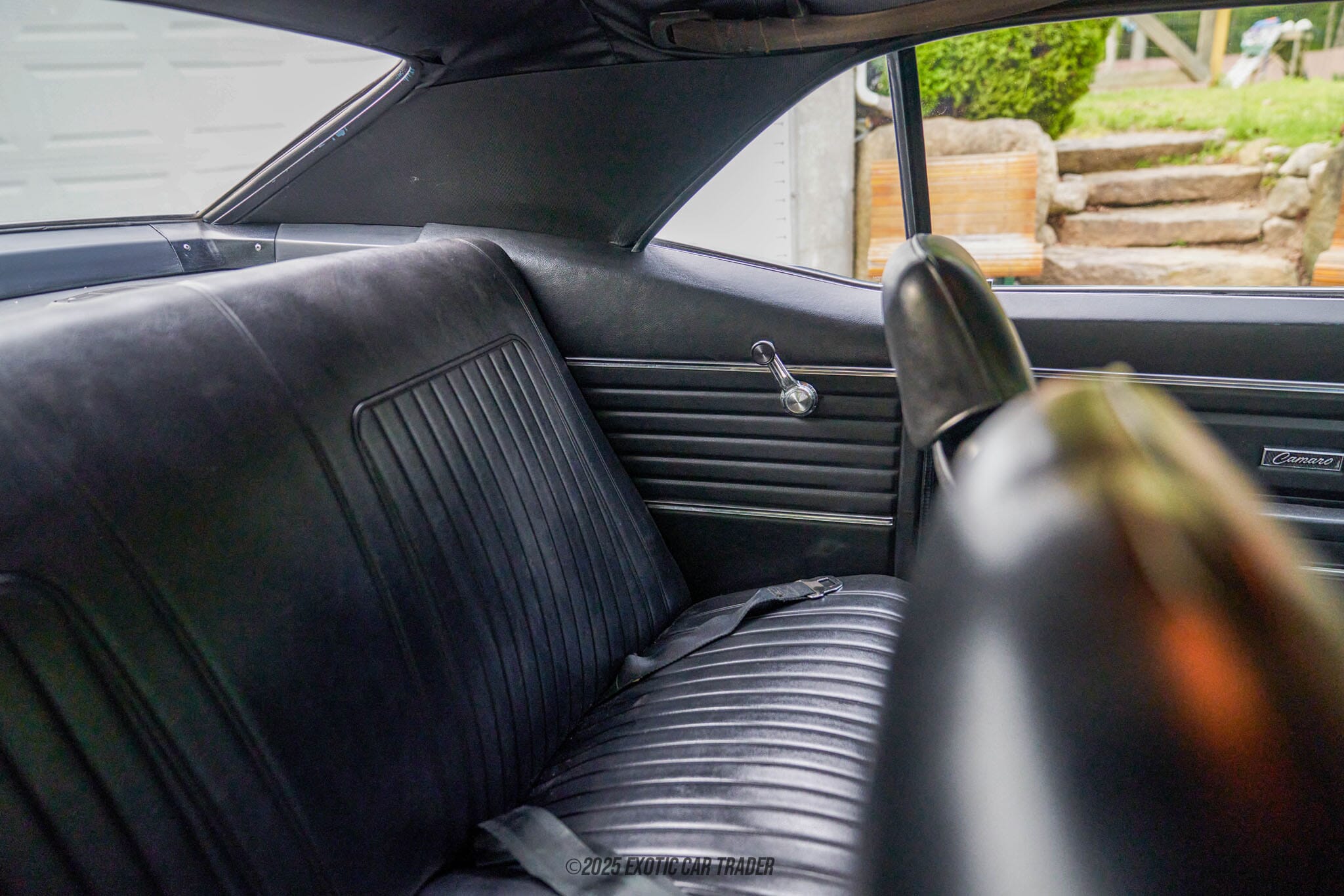
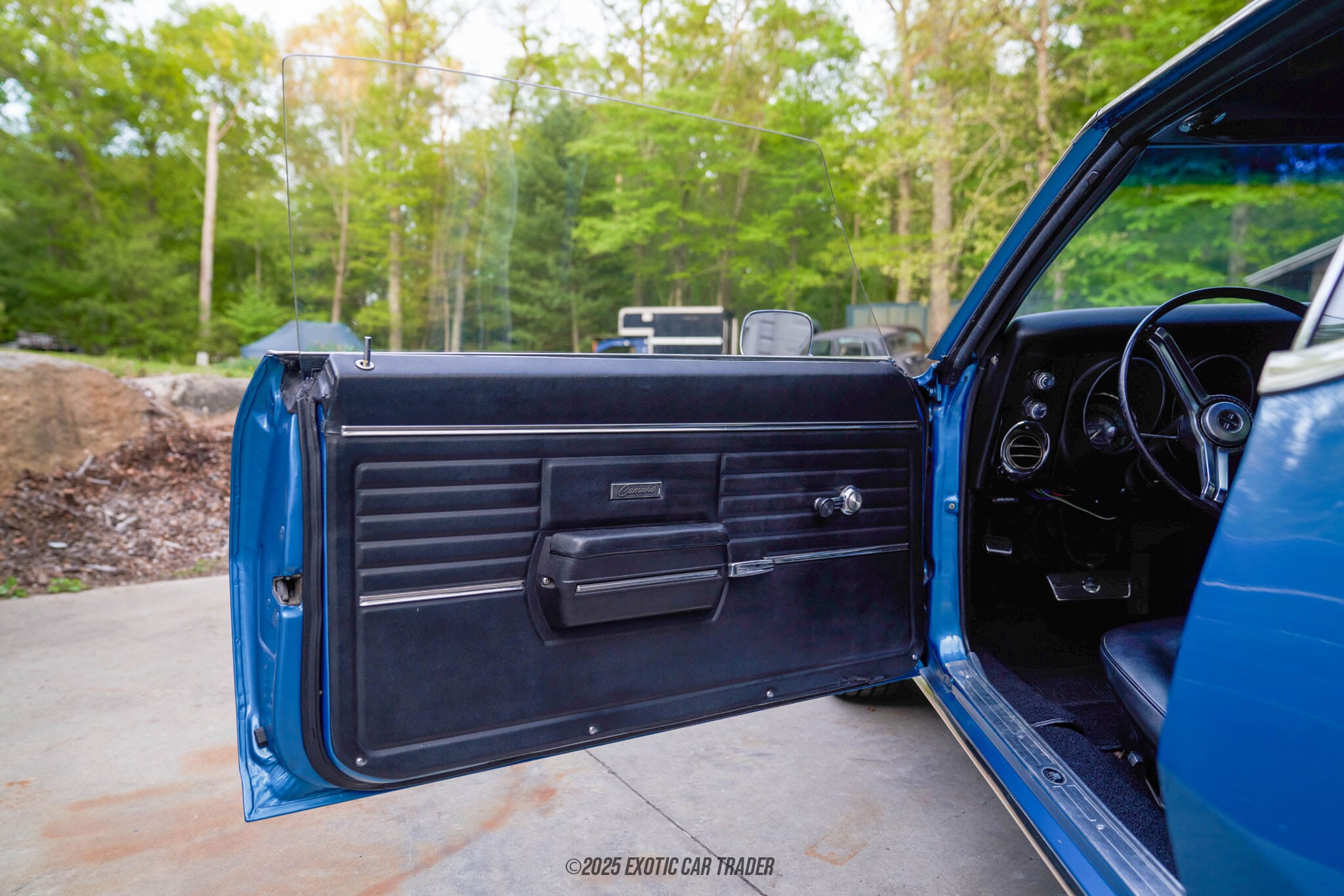
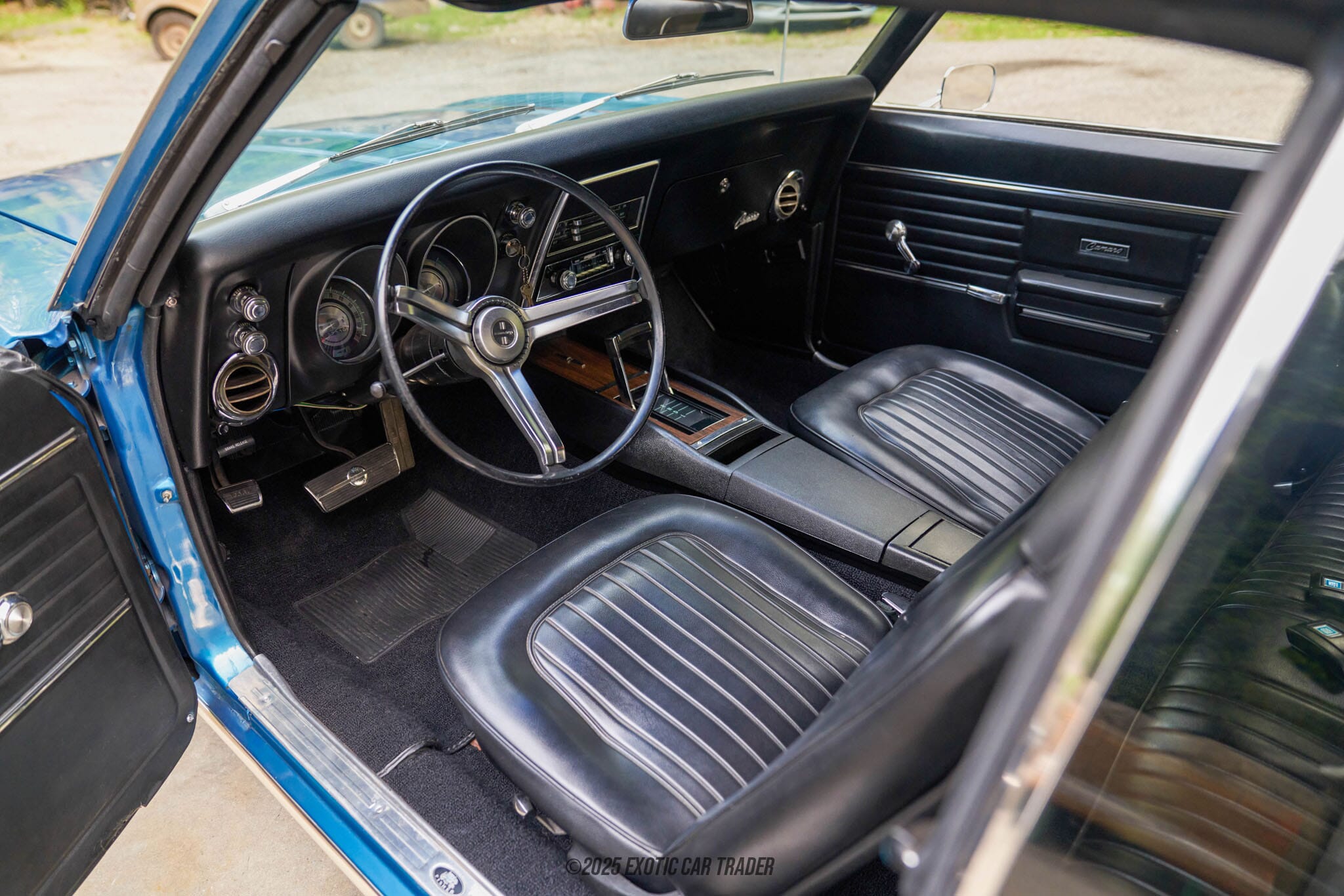
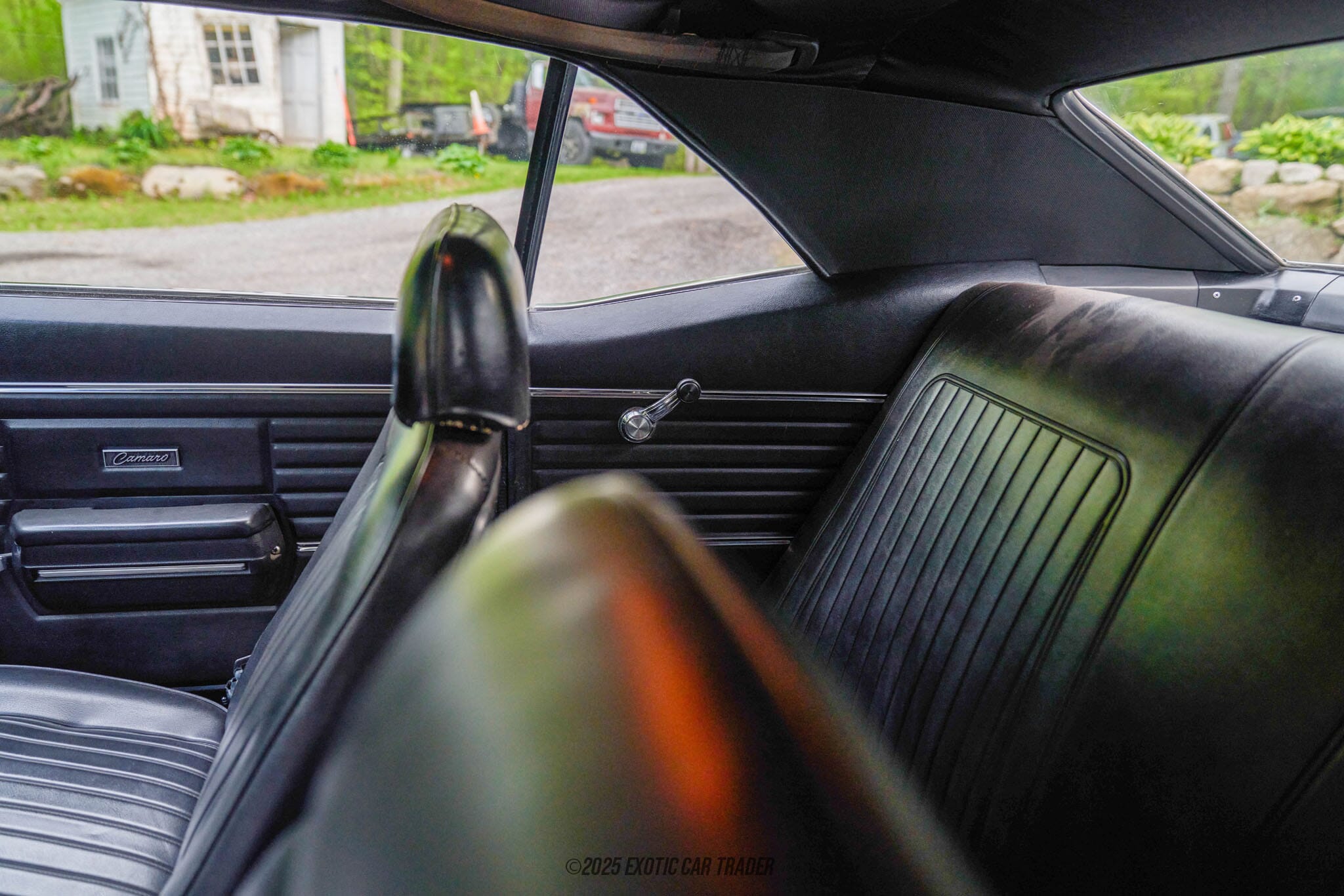
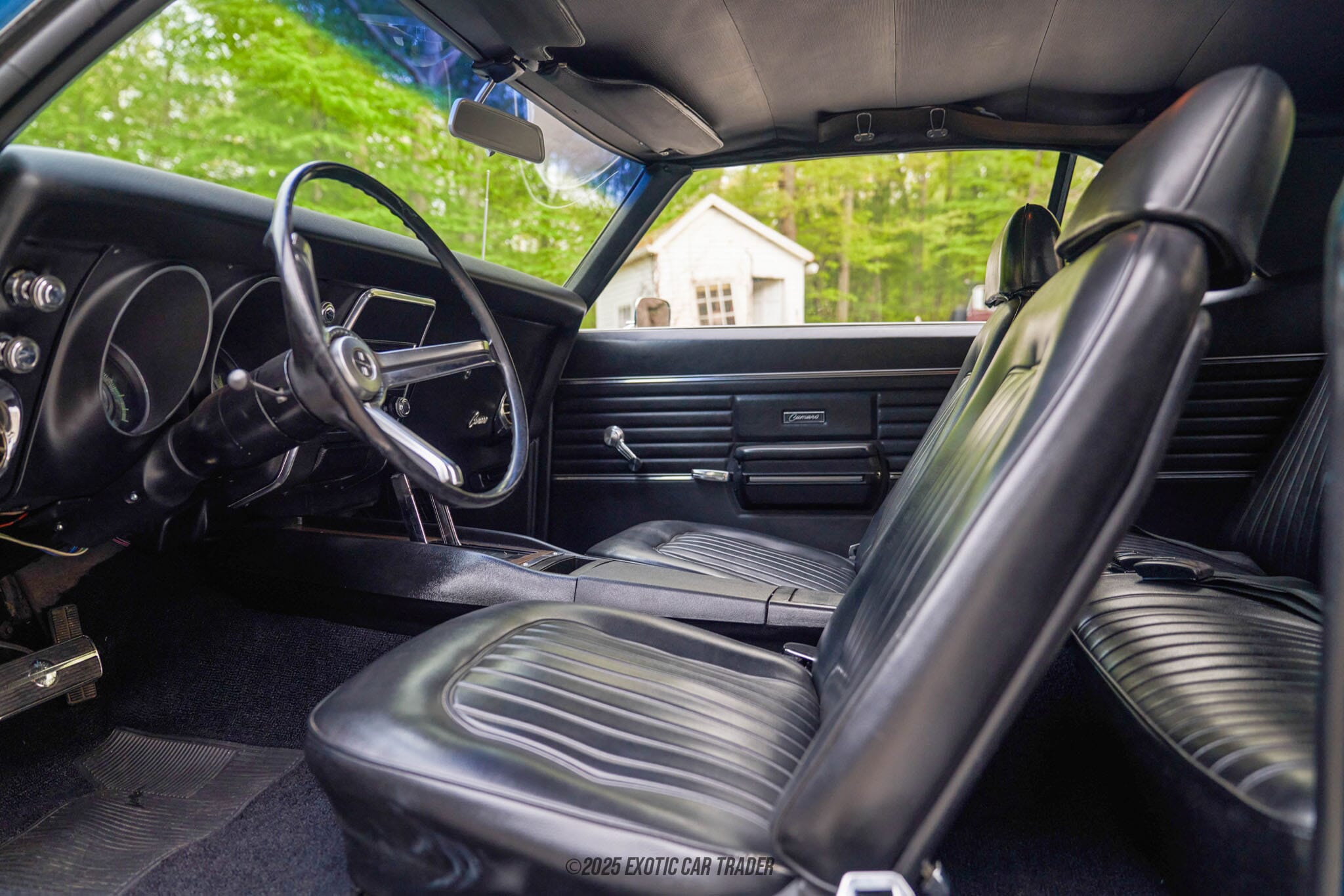
- Black Vinyl Interior
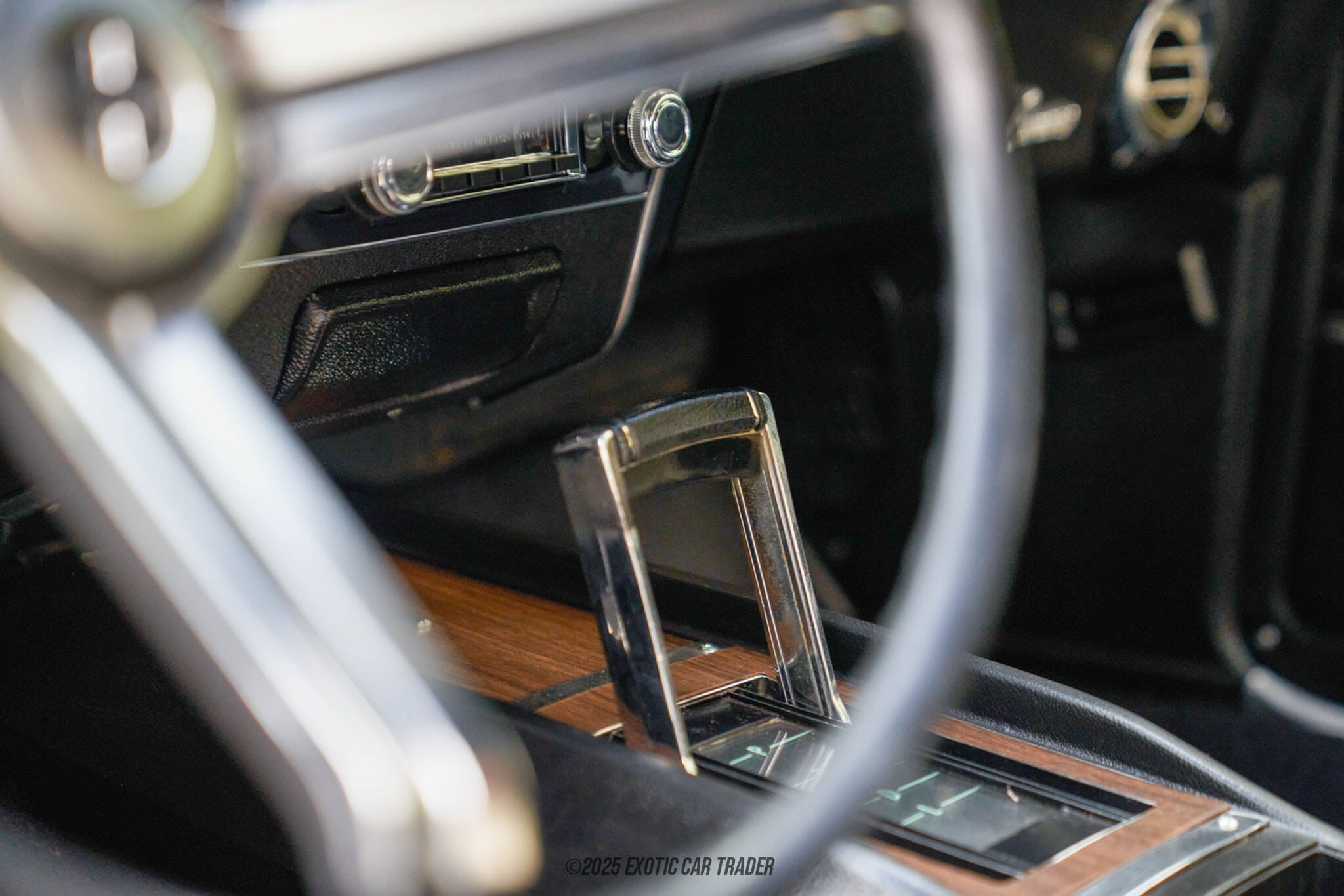
- Center Console Shifter
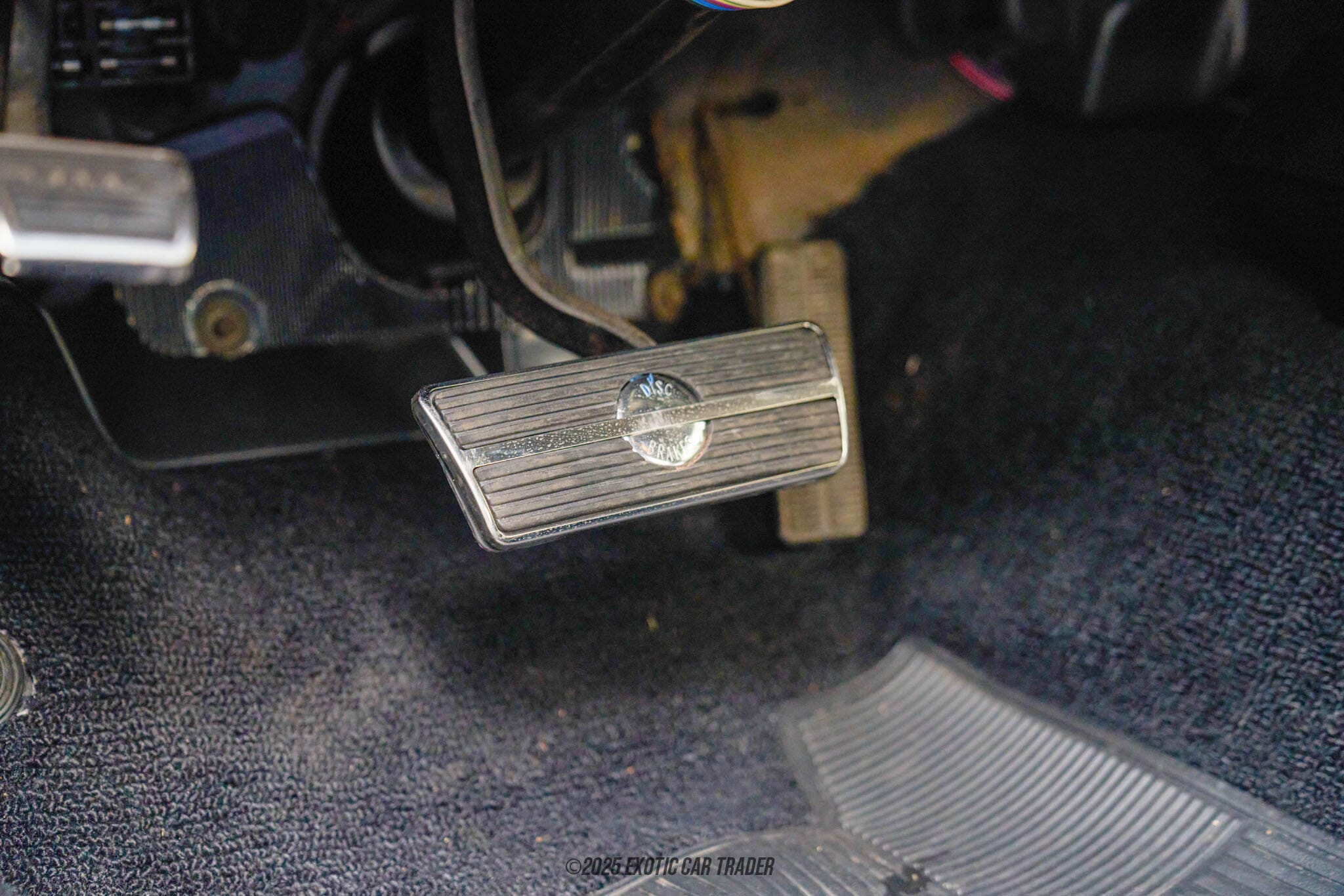
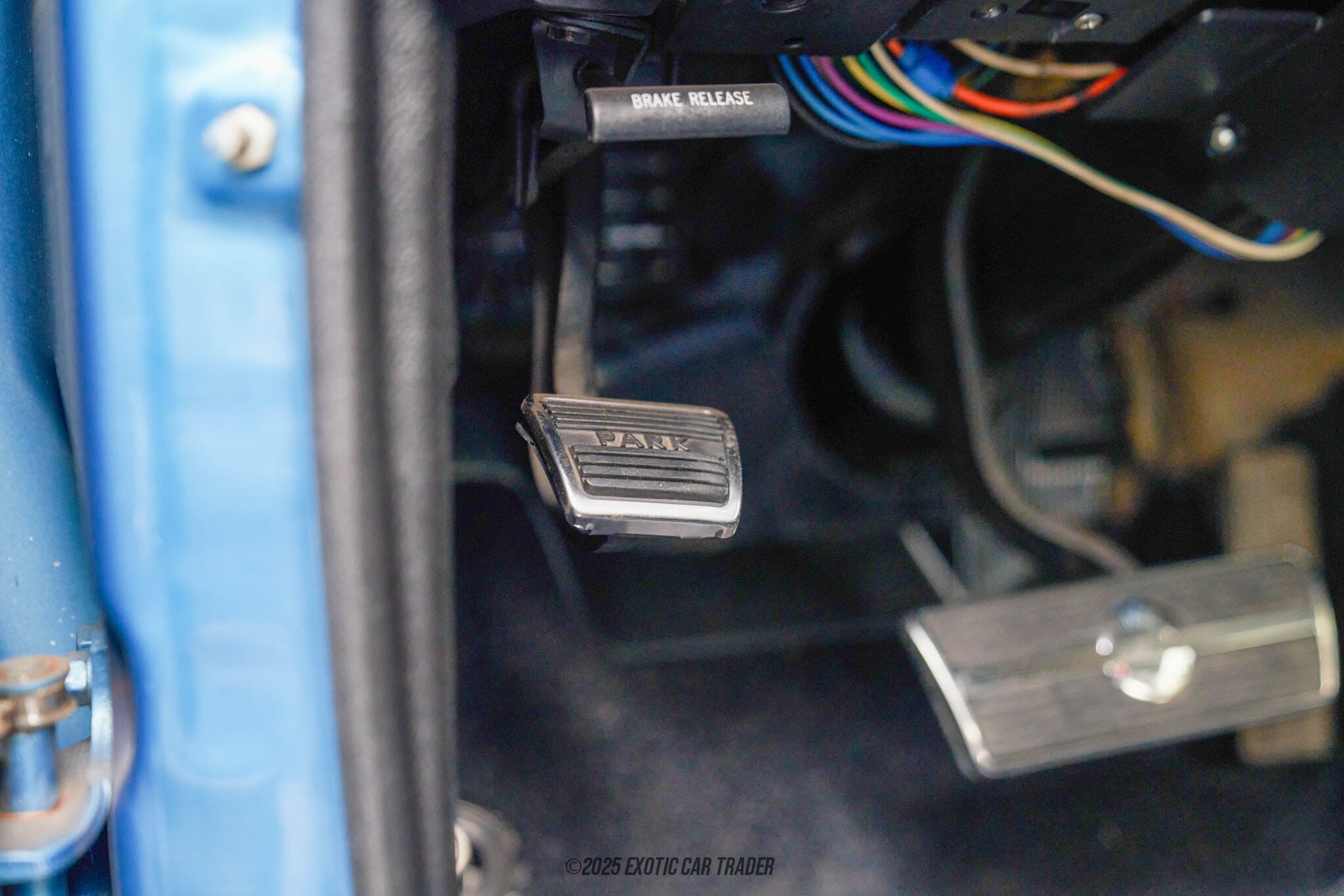
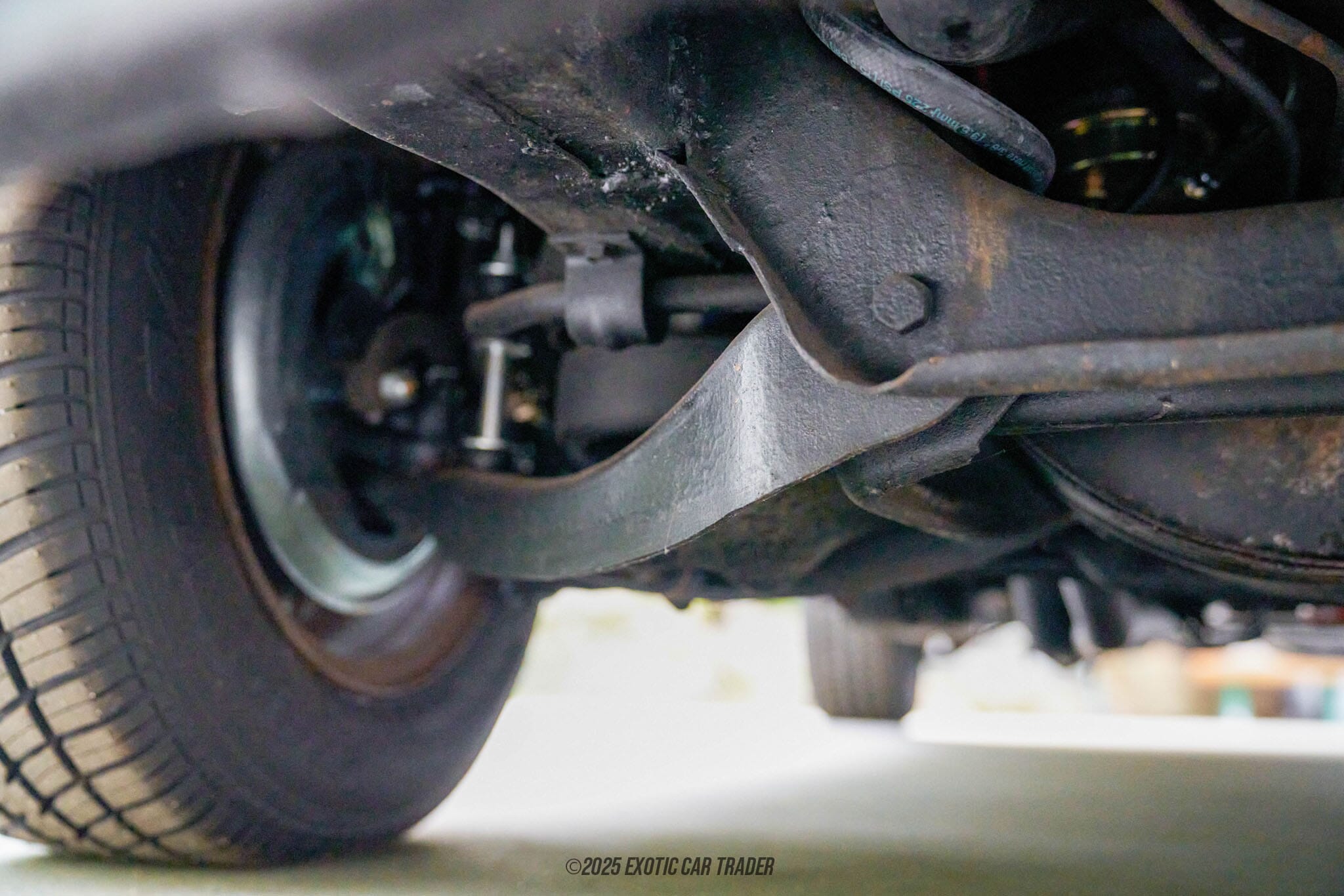
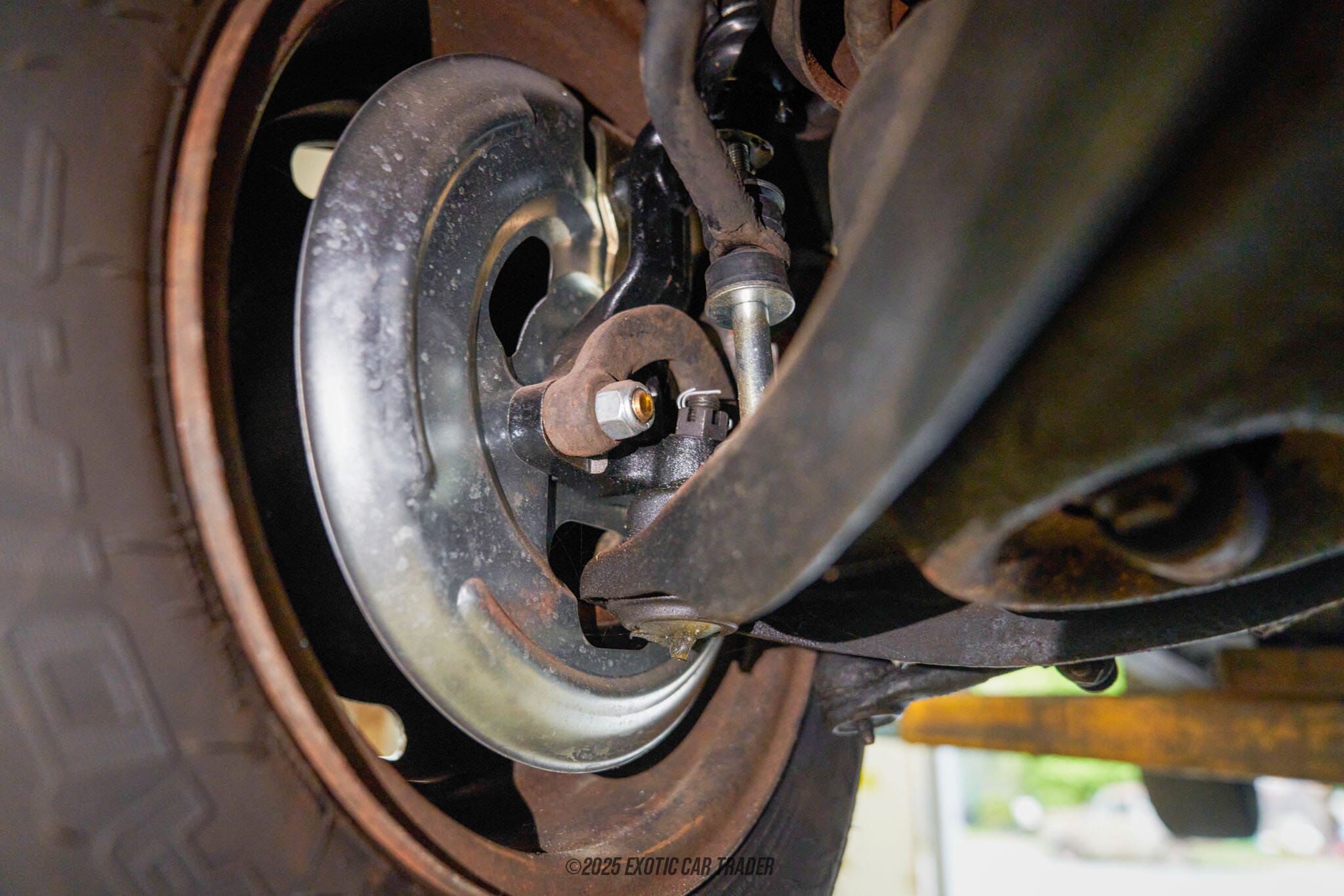
- Front Disc Brakes
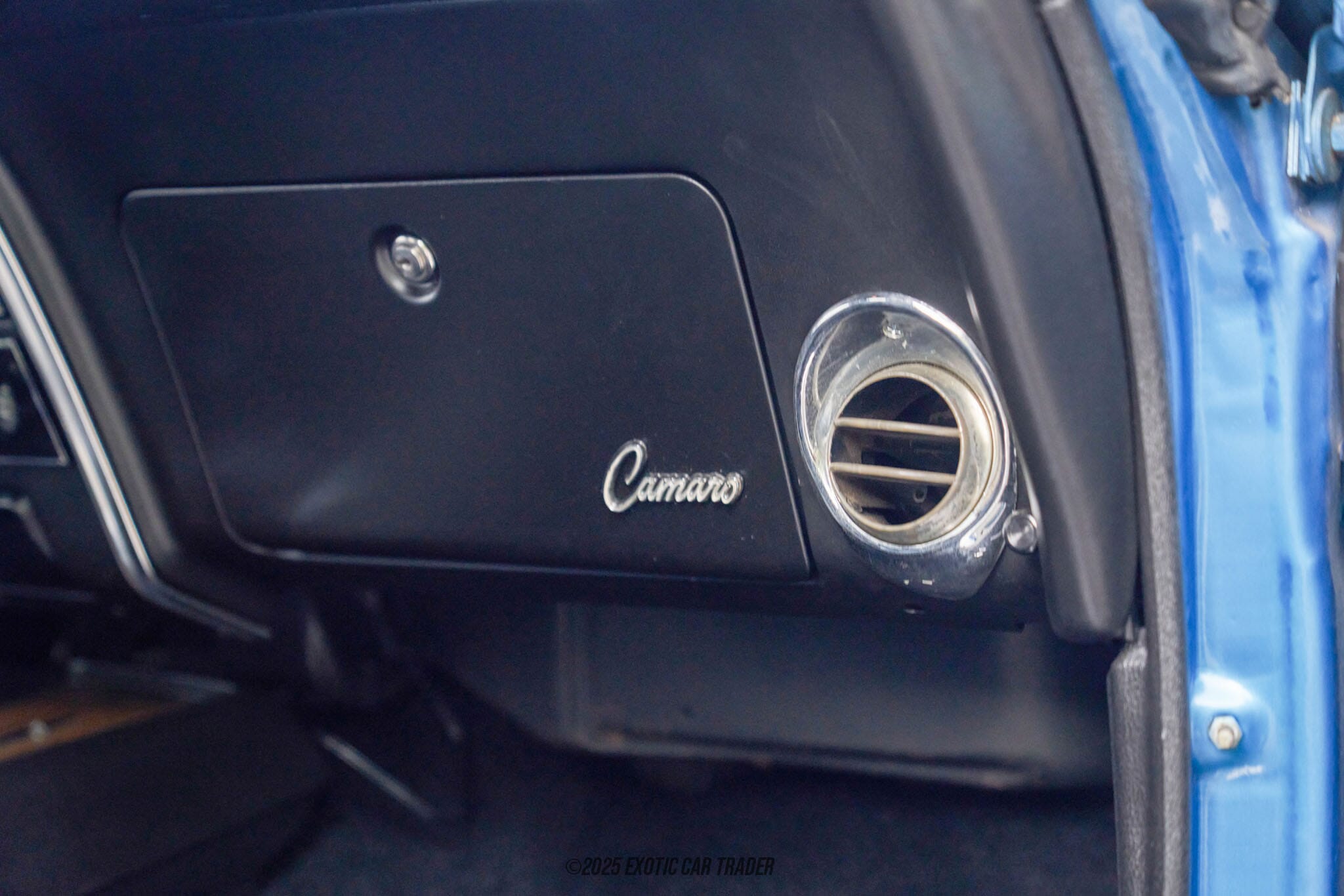
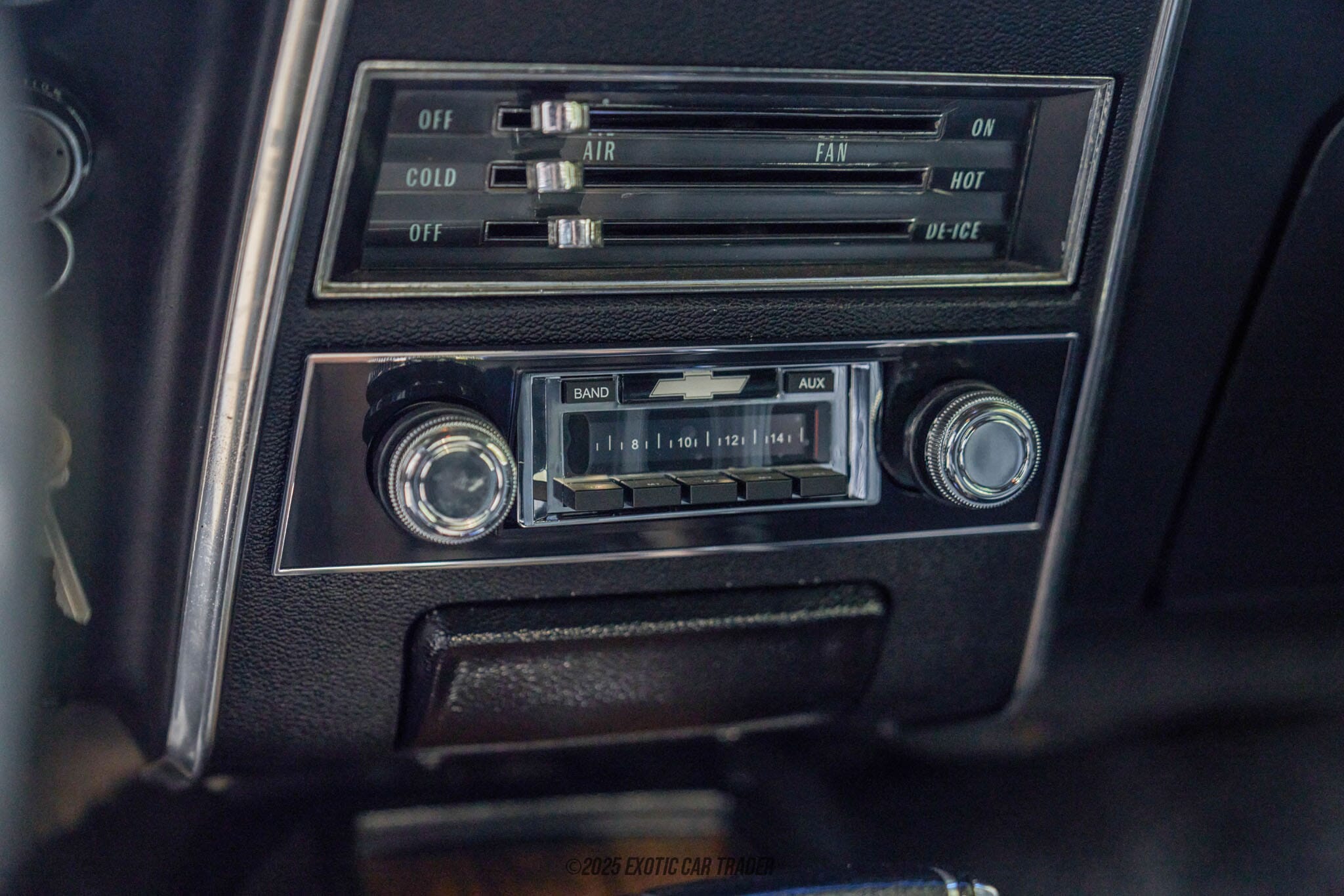
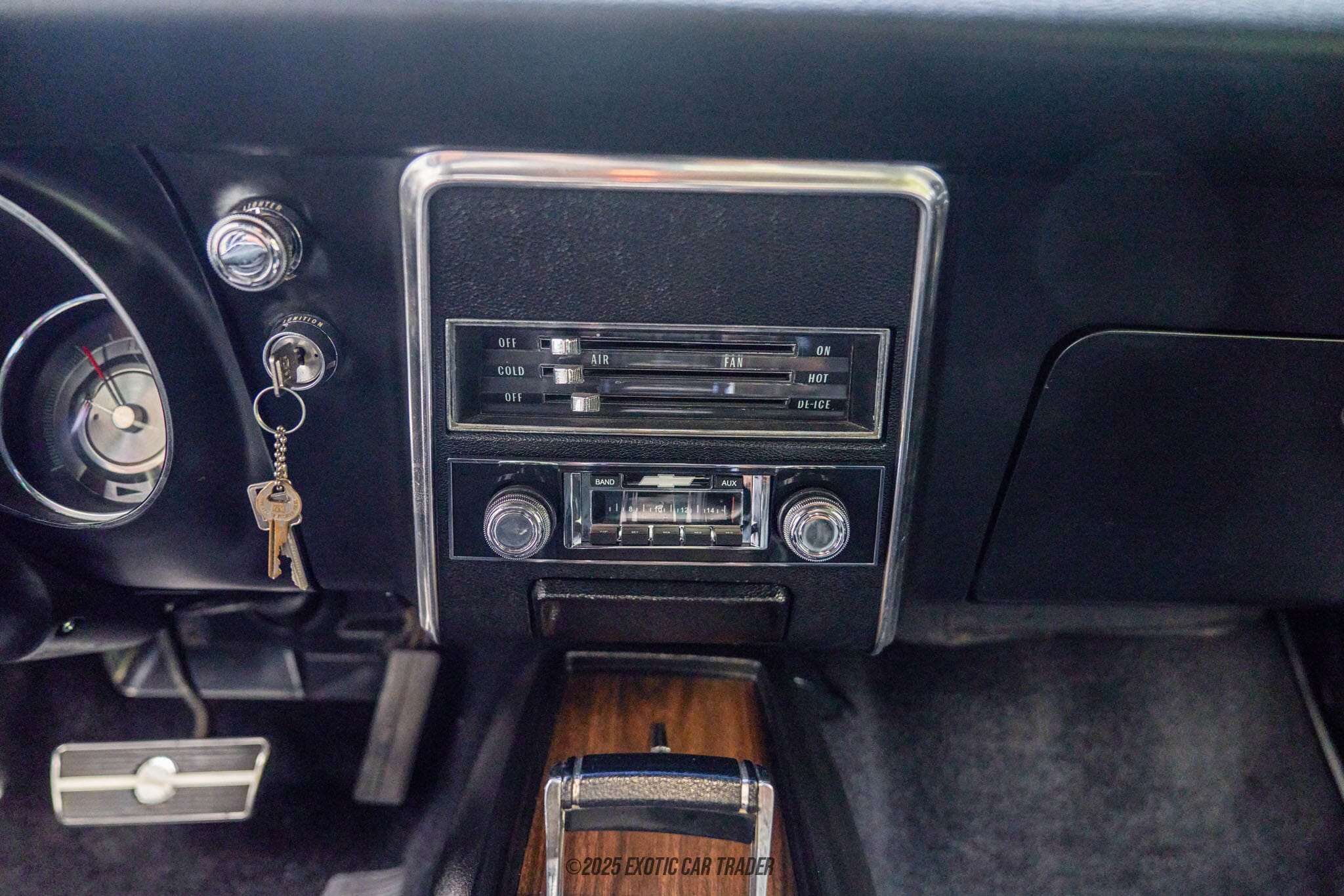
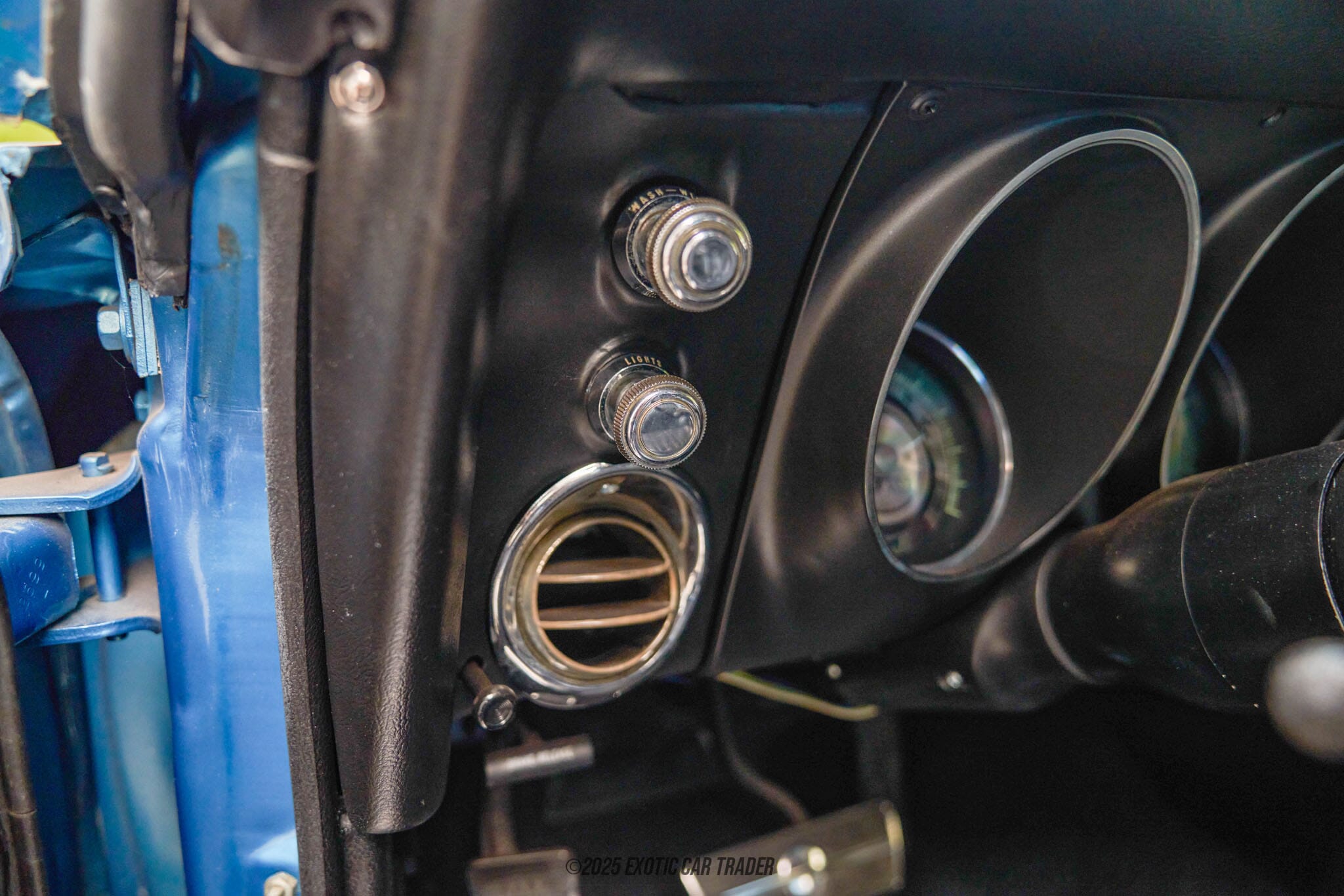
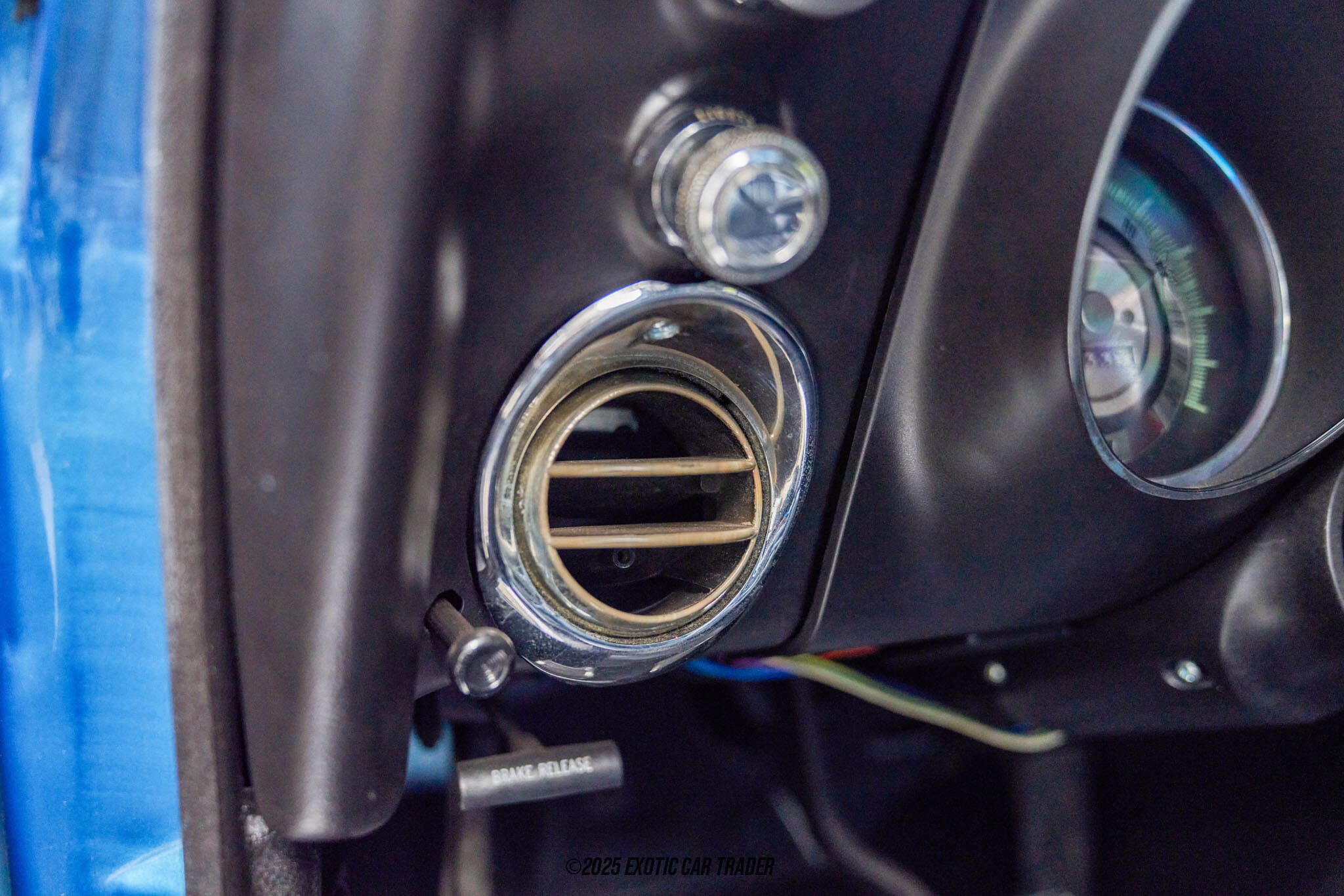
- Factory A/C
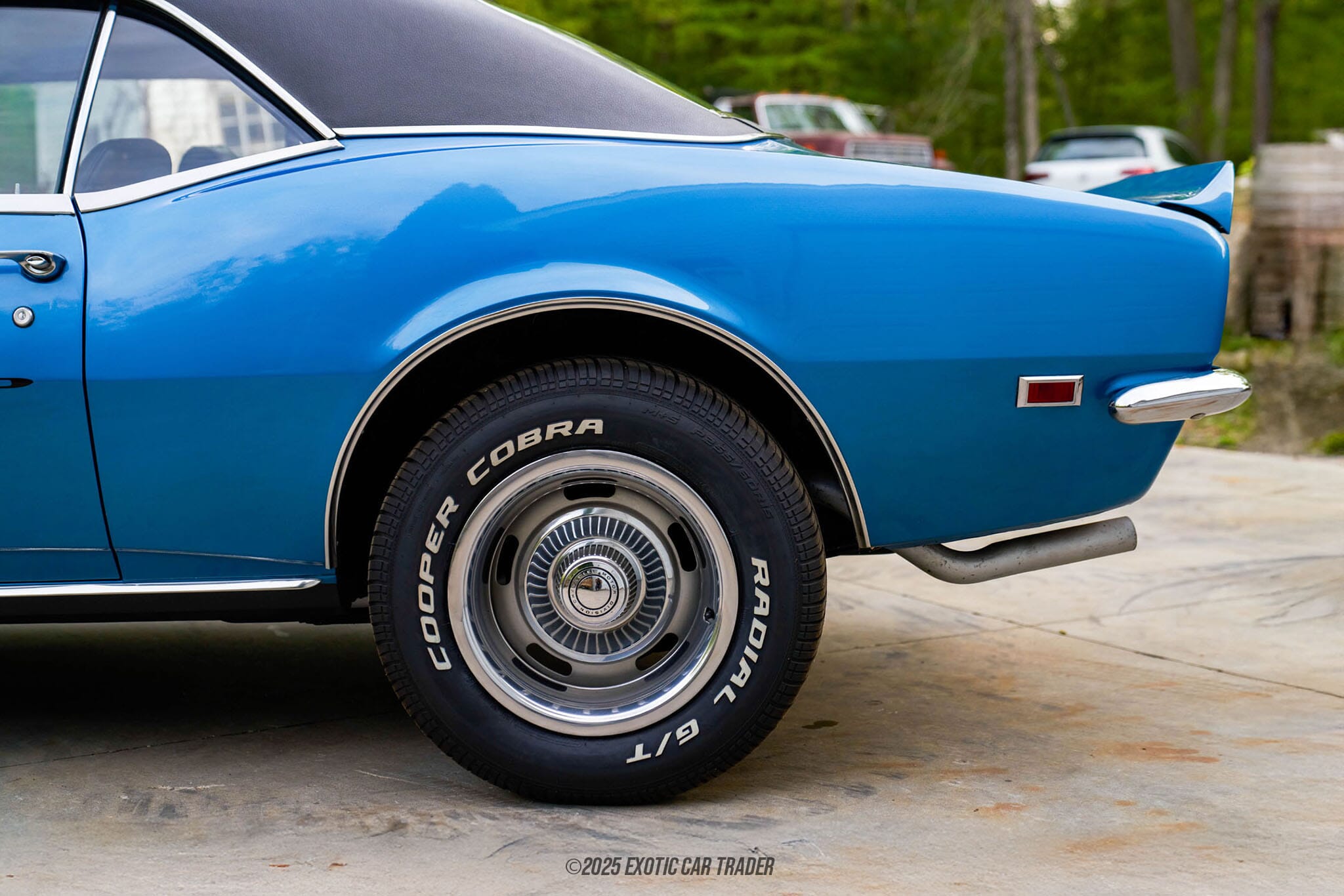
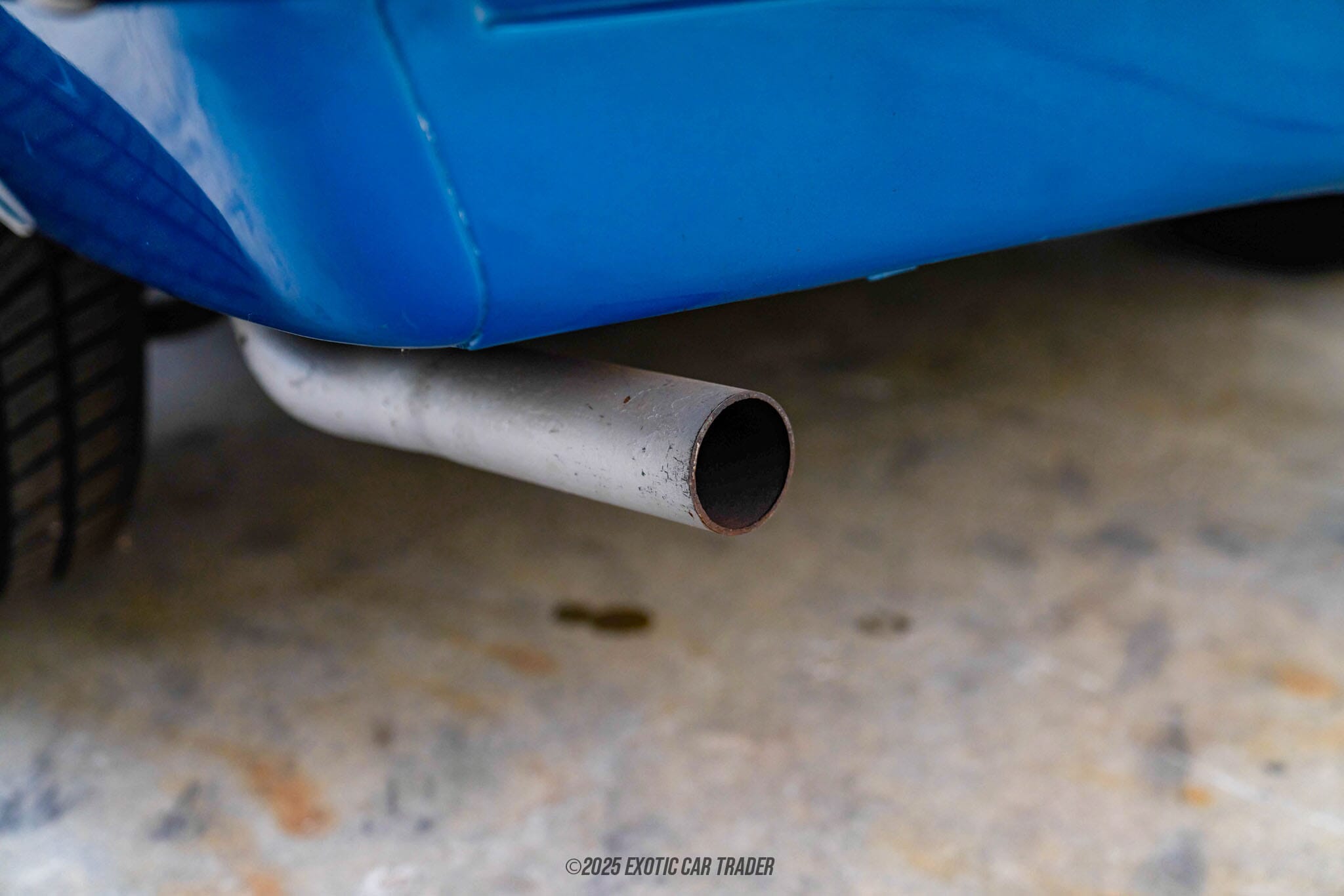
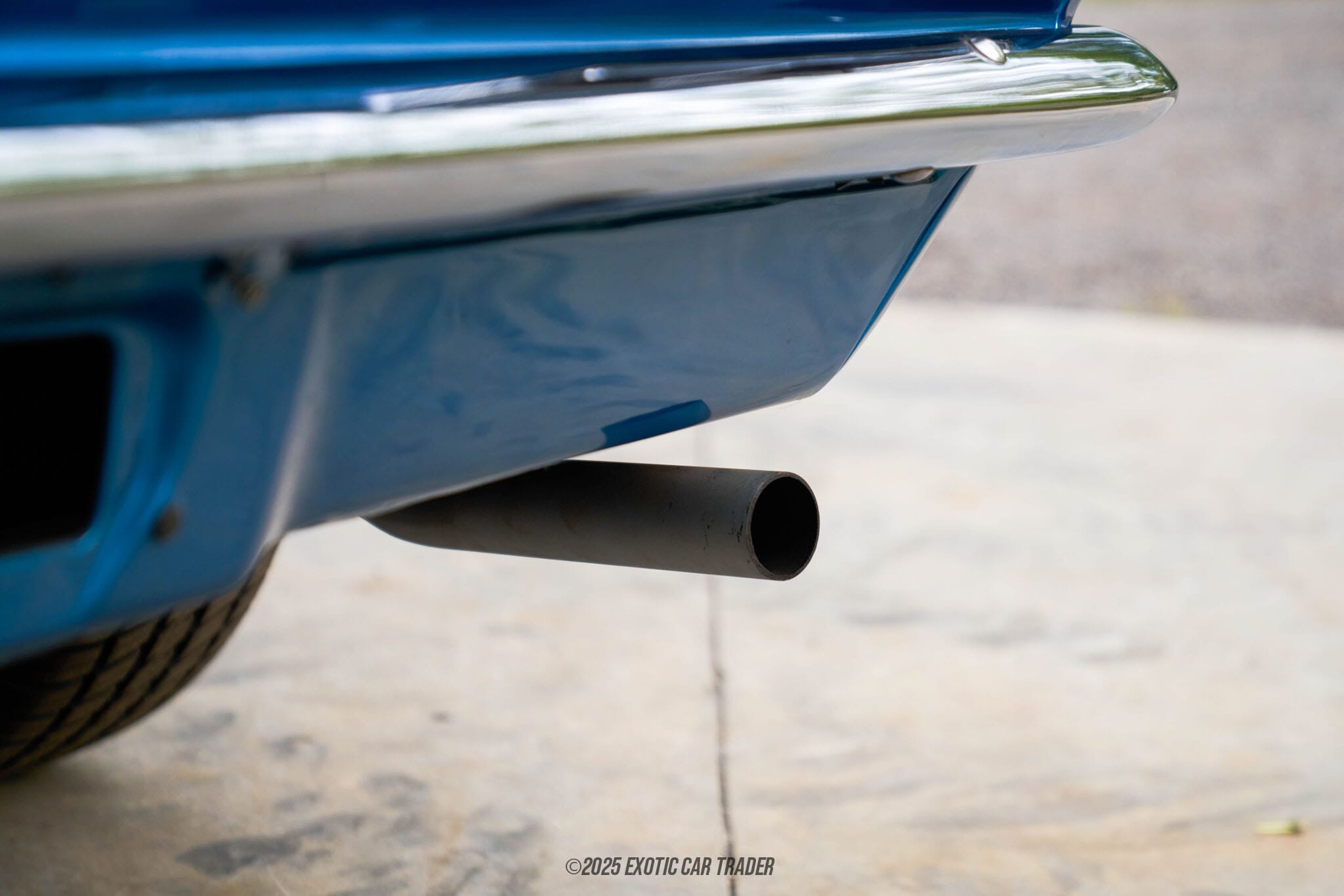
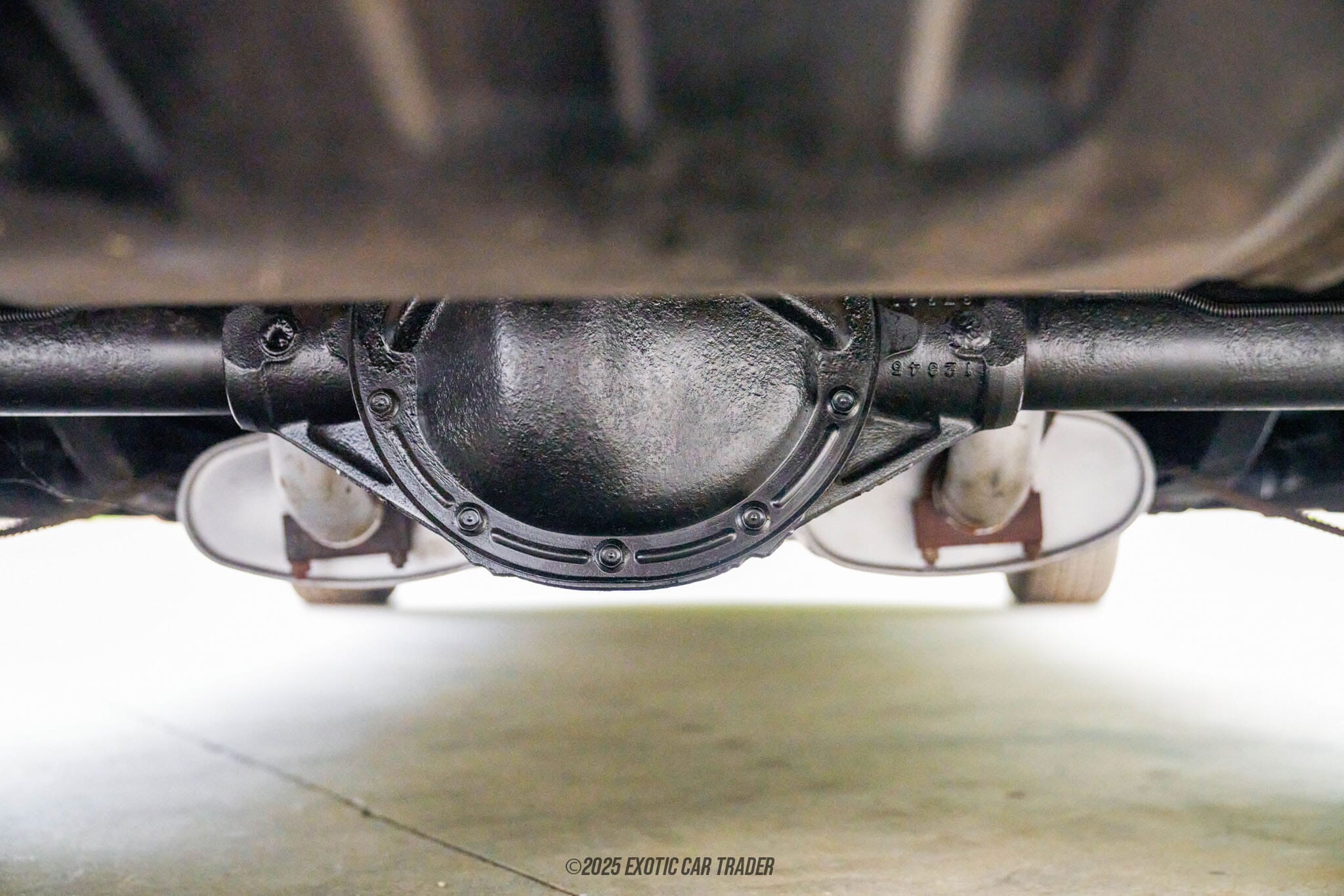
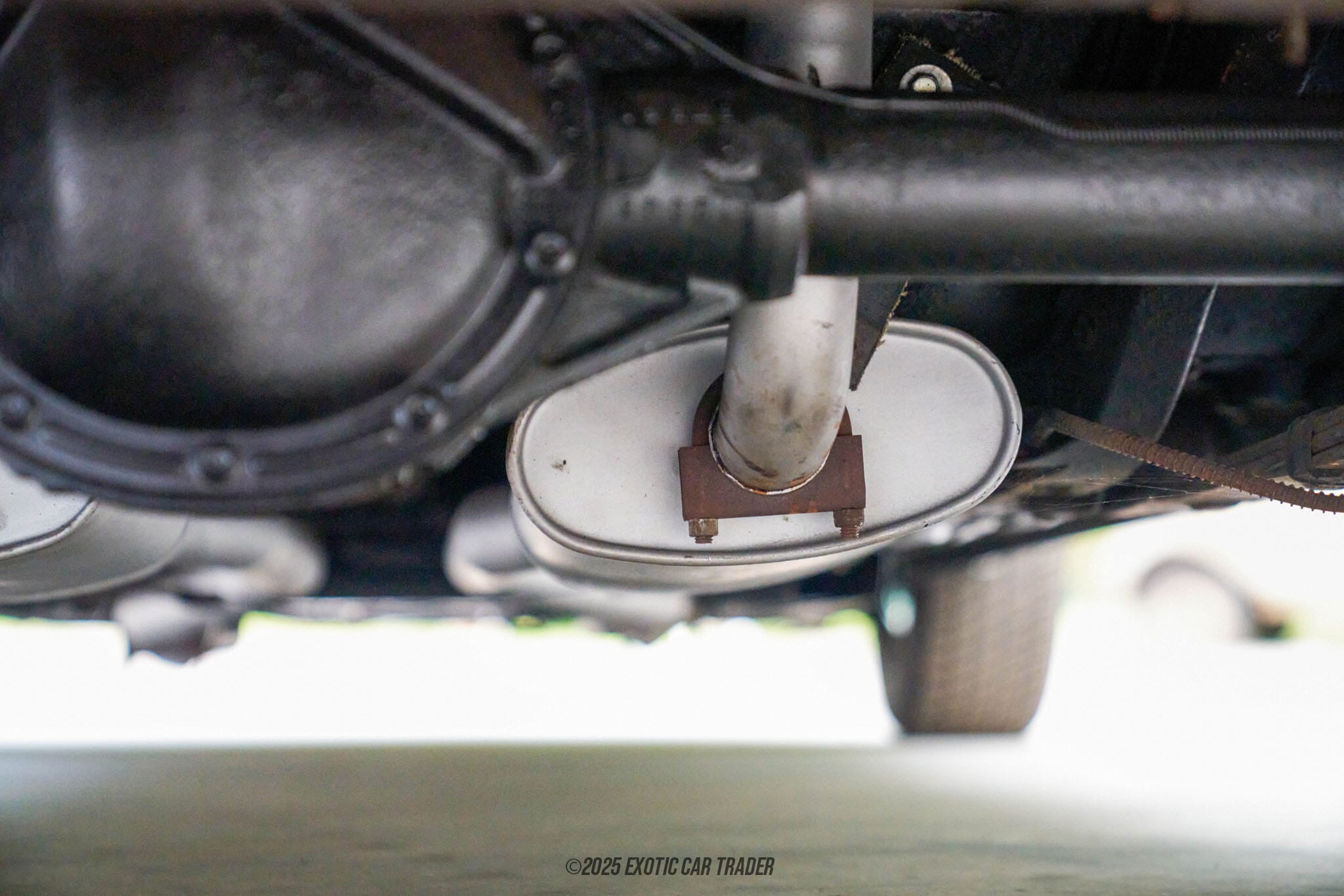
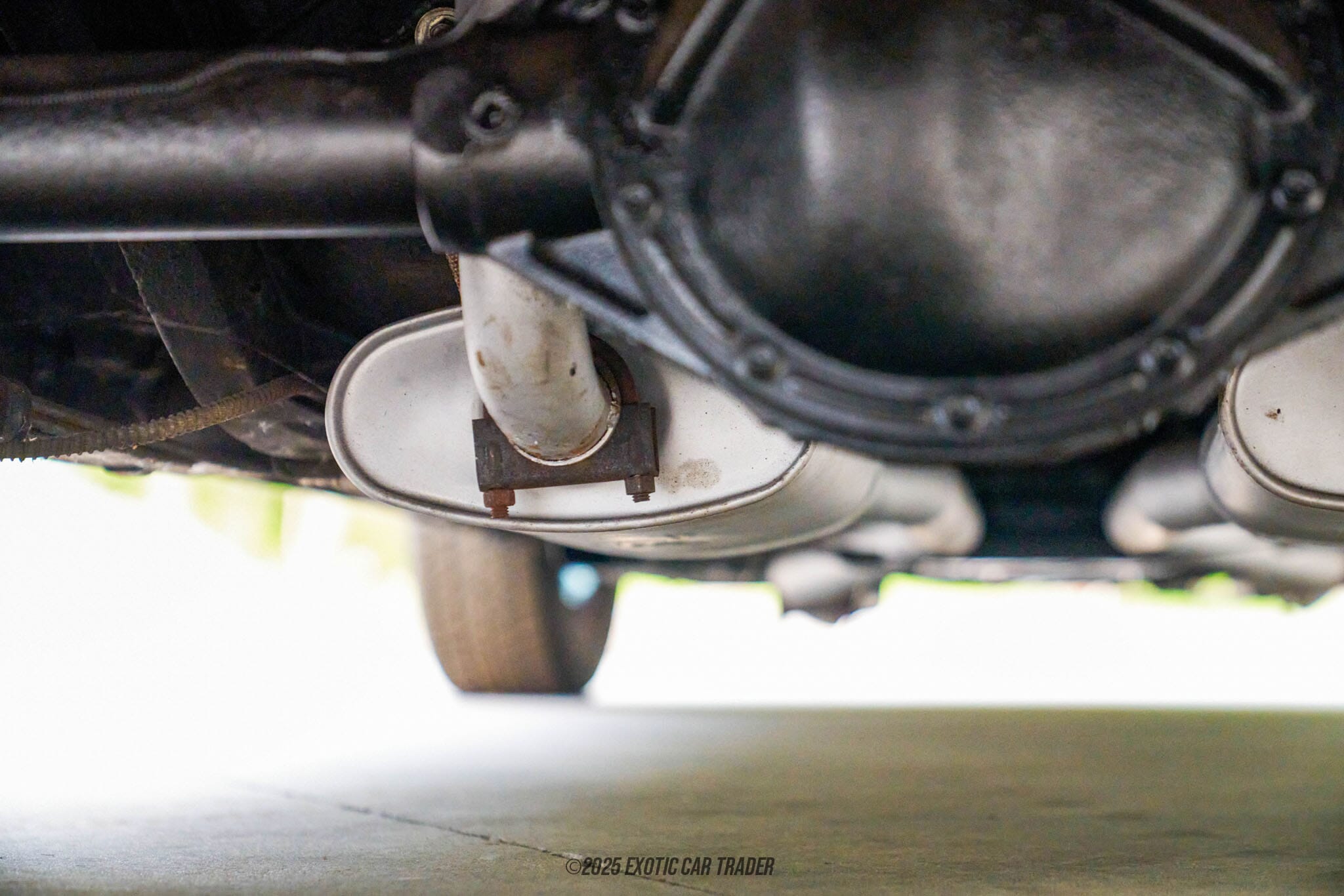
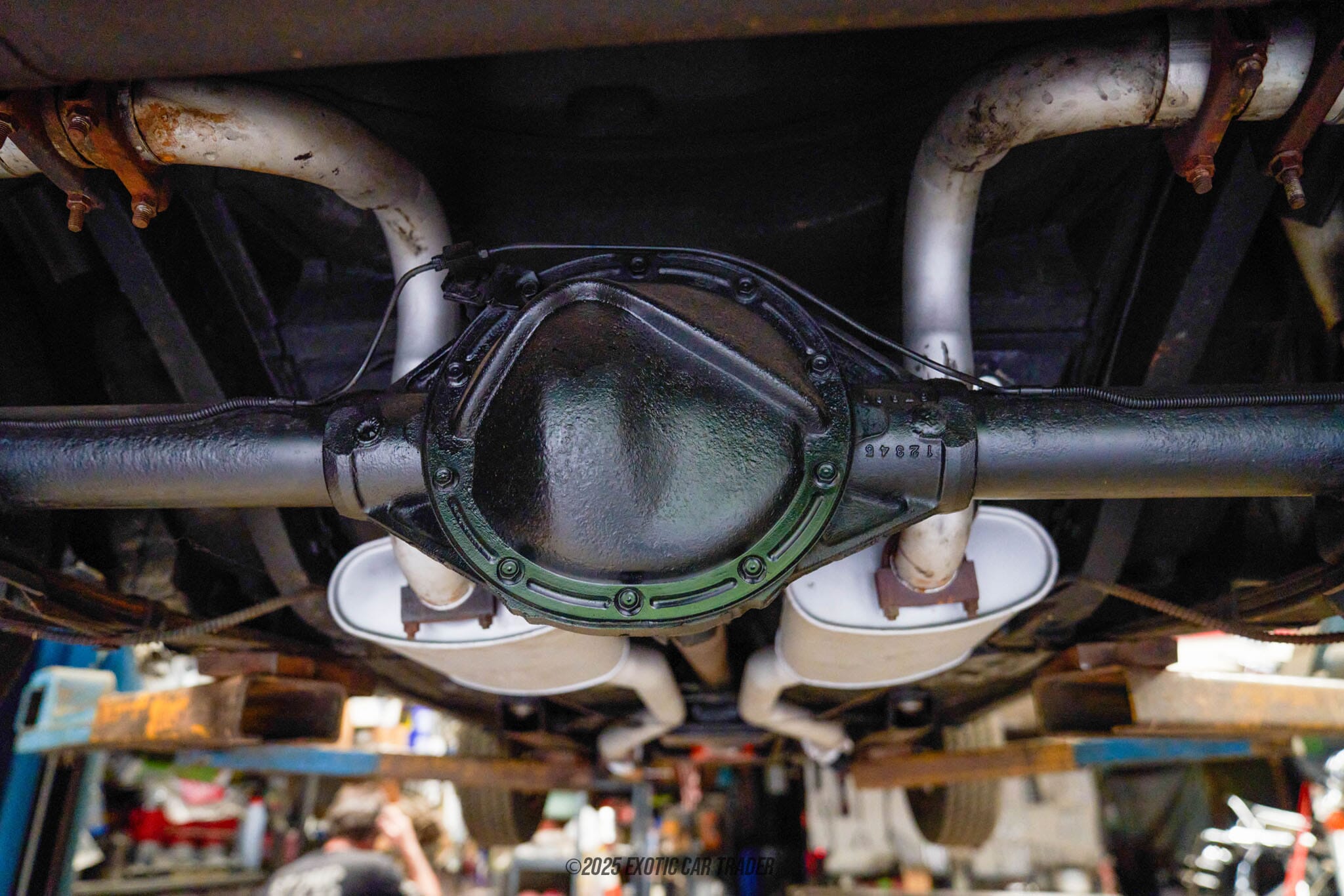
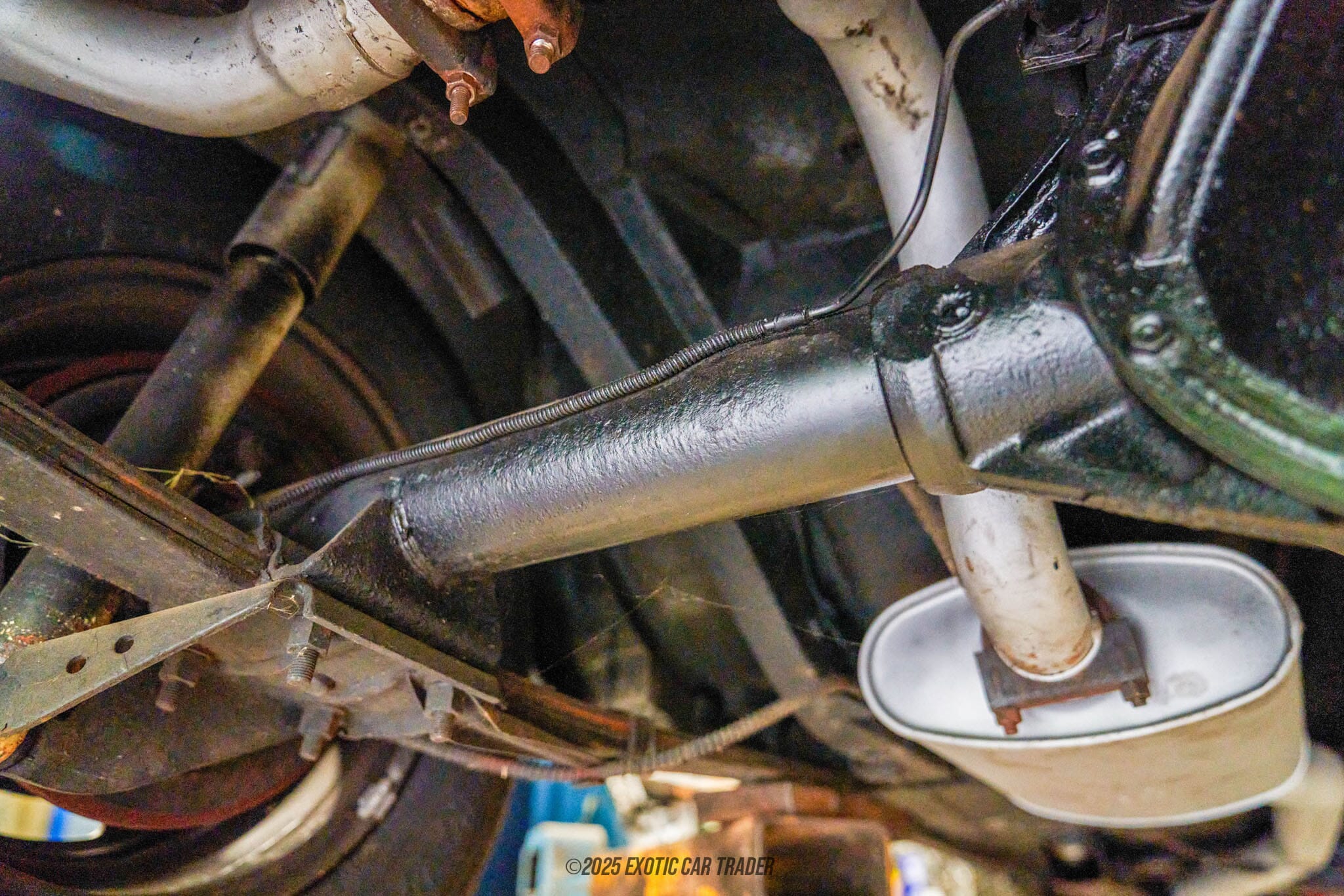
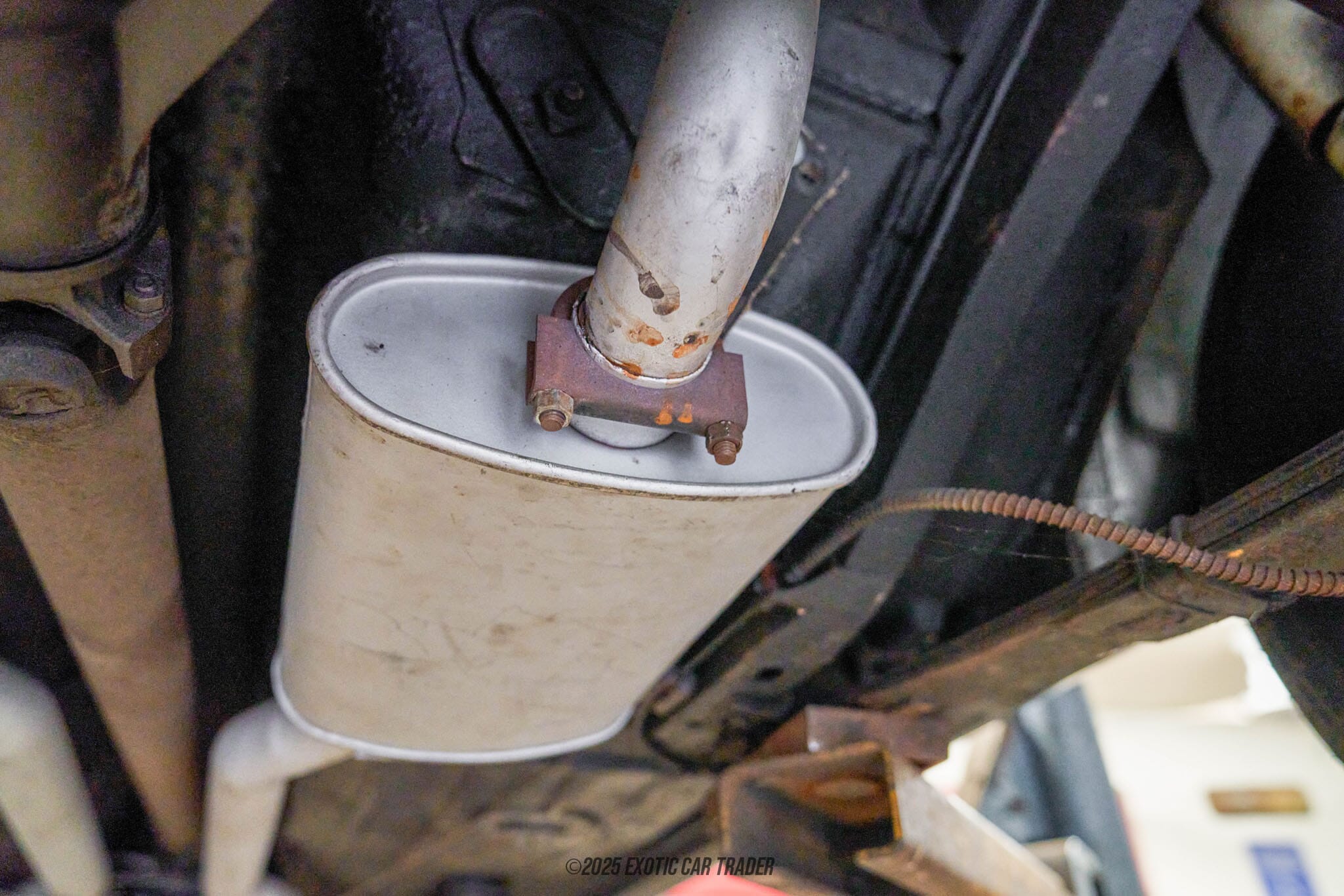
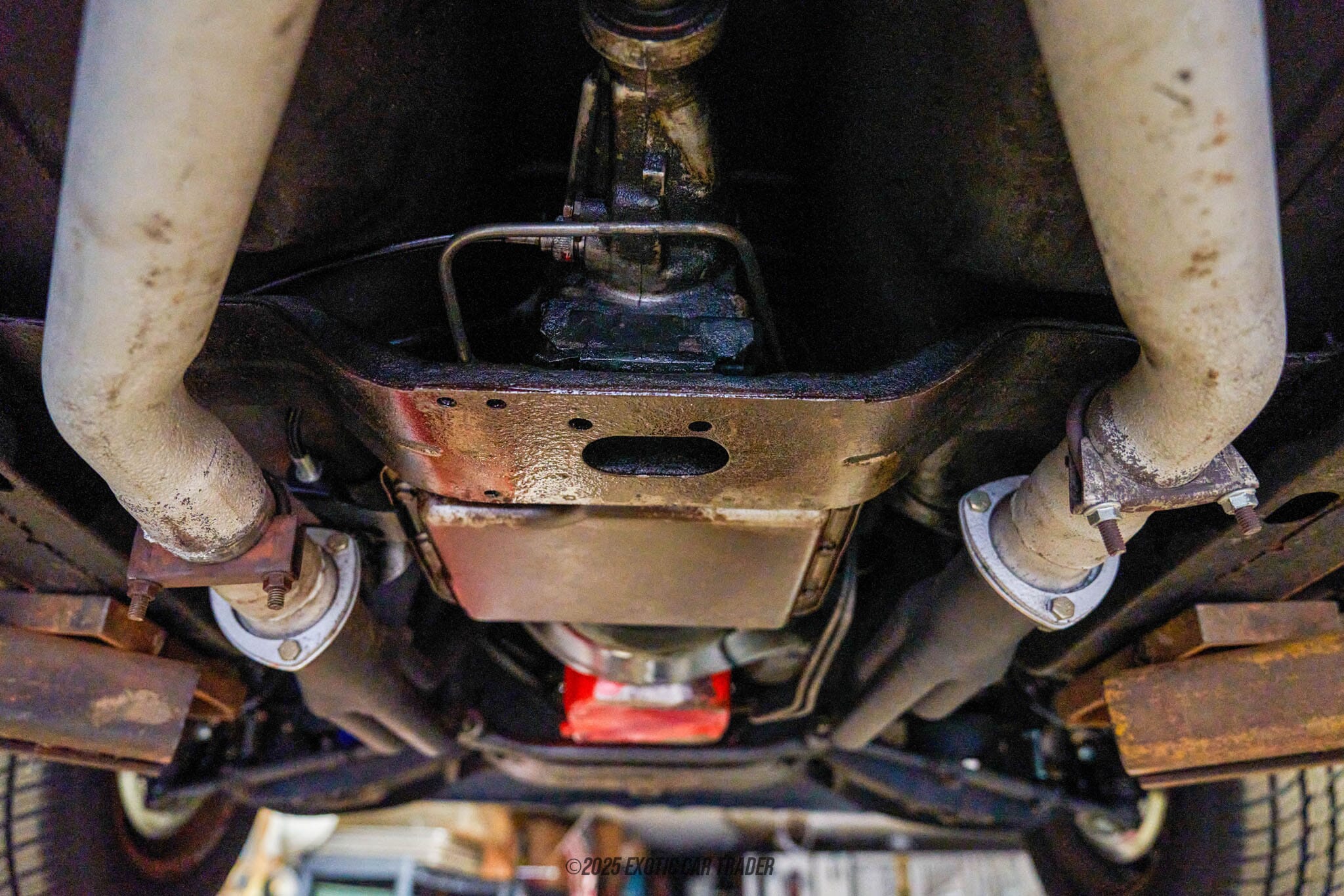
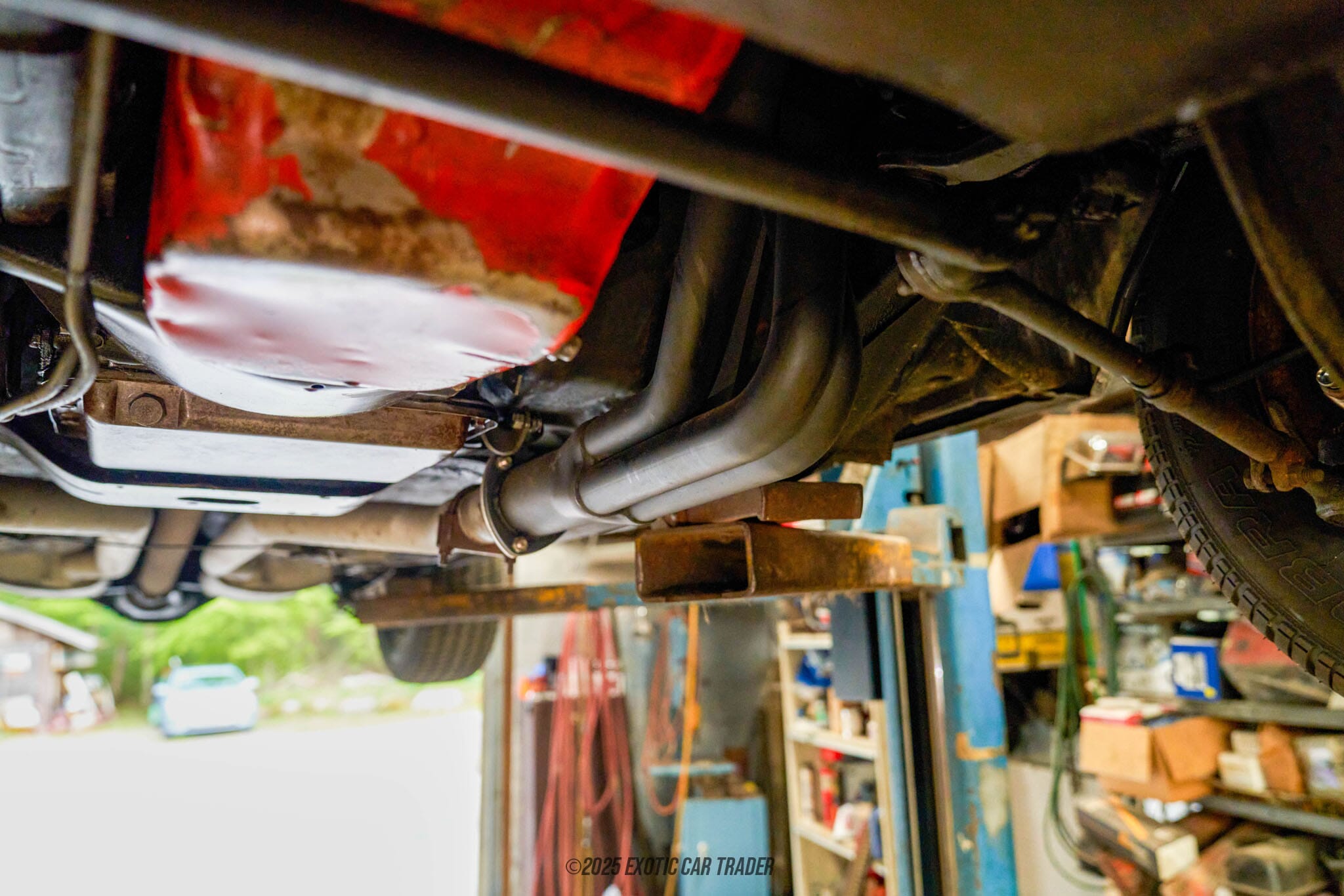
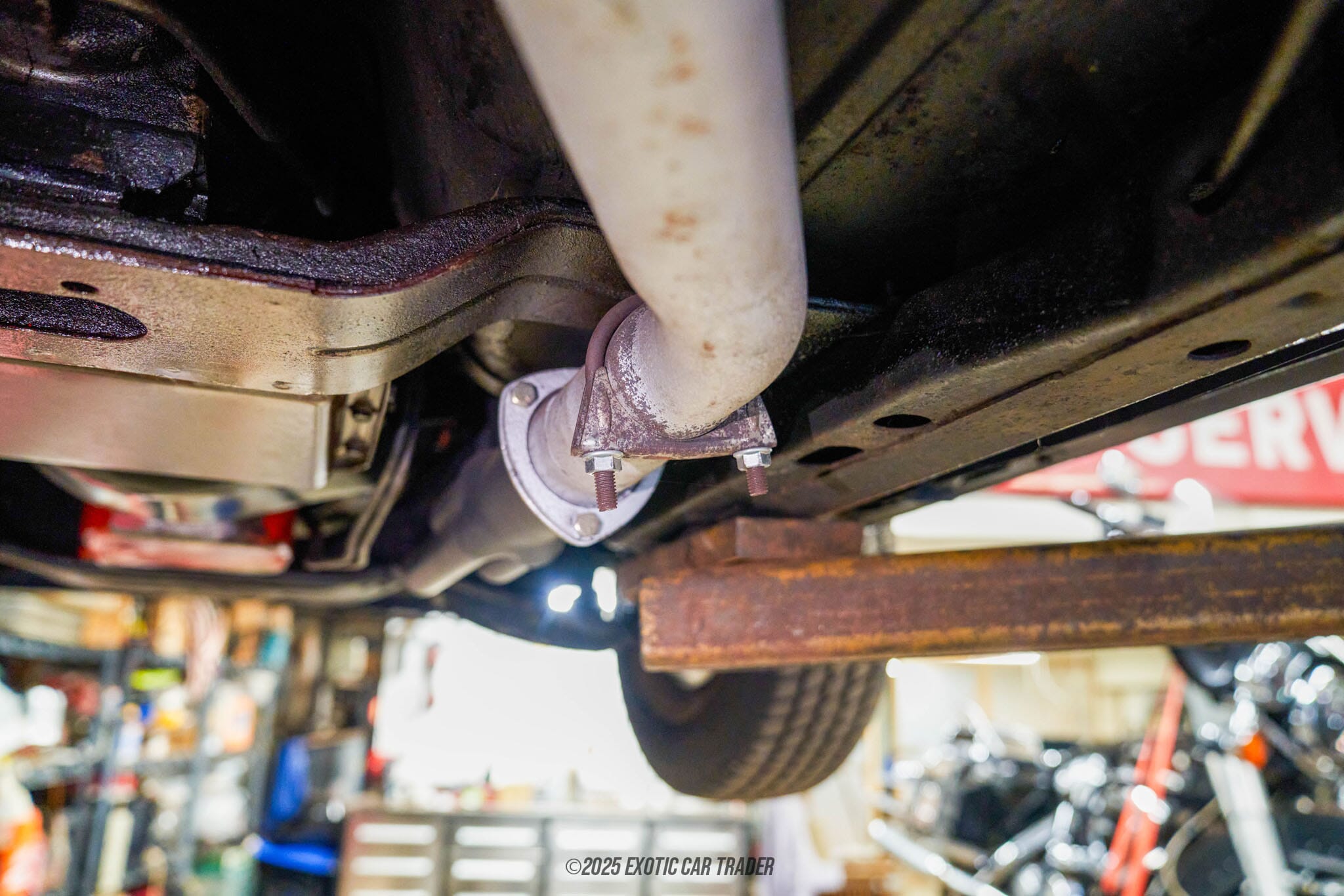
- Dual Exit Exhaust
- AM Radio
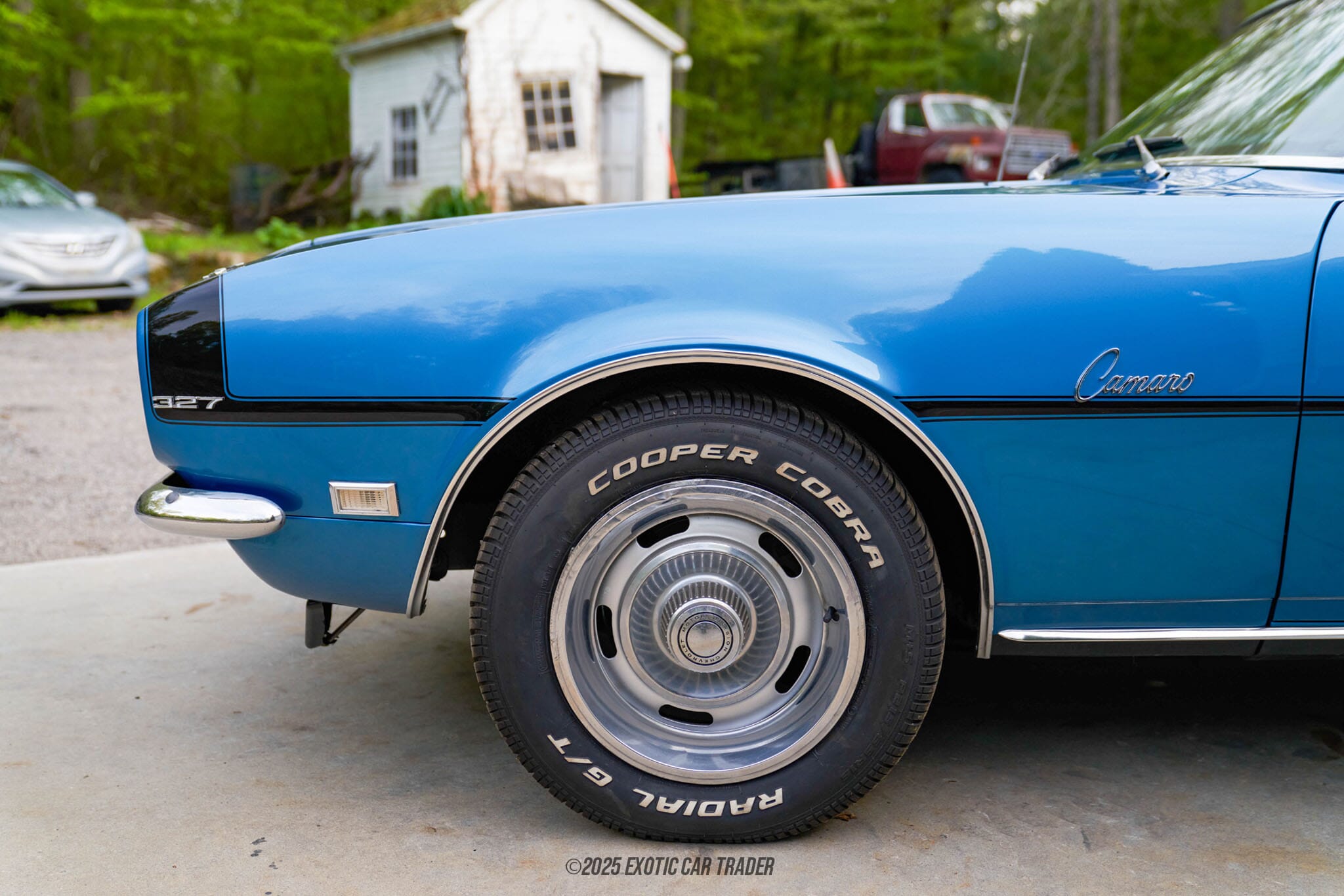
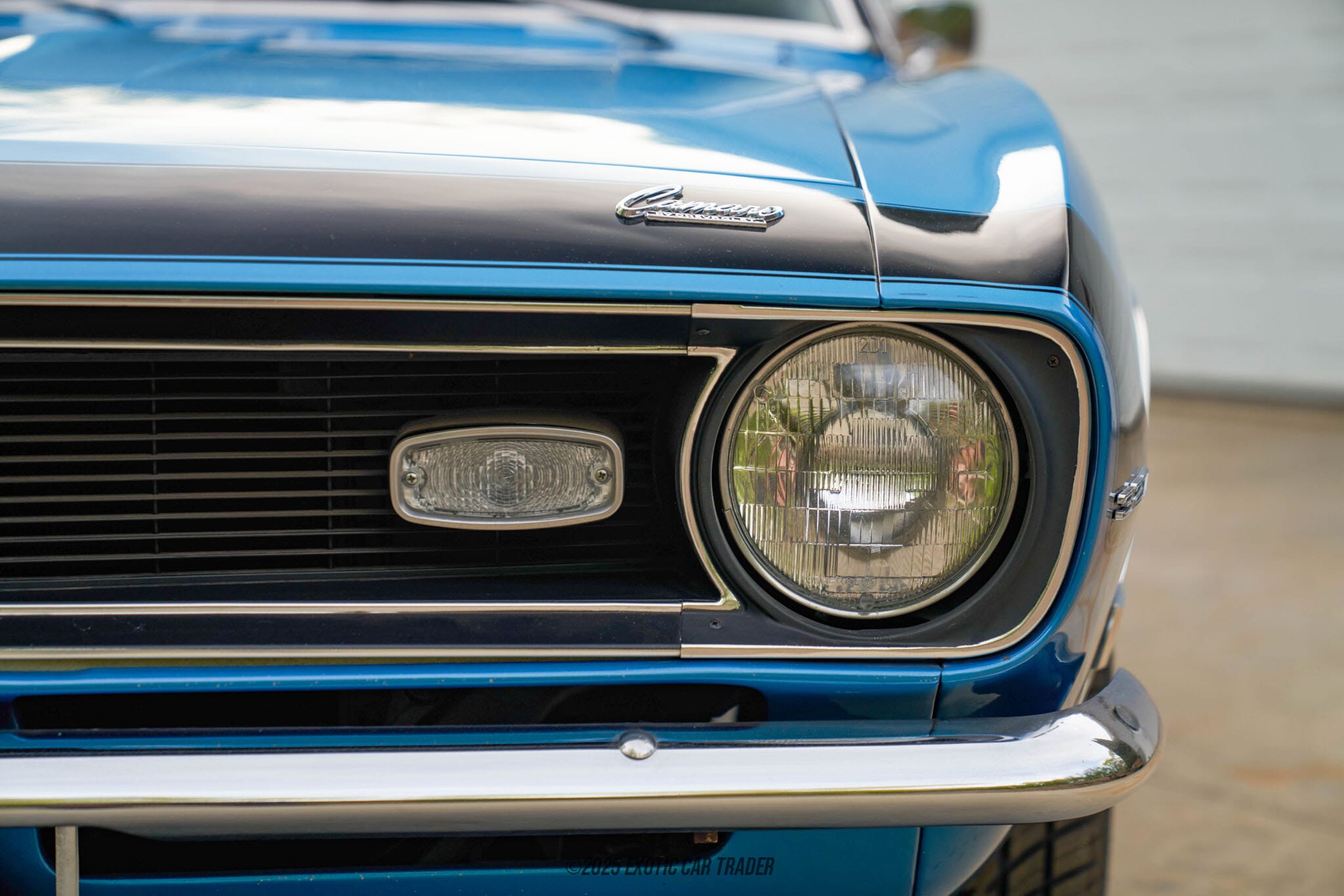
- "Bumble Bee" Front Nose Stripe
- Black Vinyl Top In Satin Levant Grain


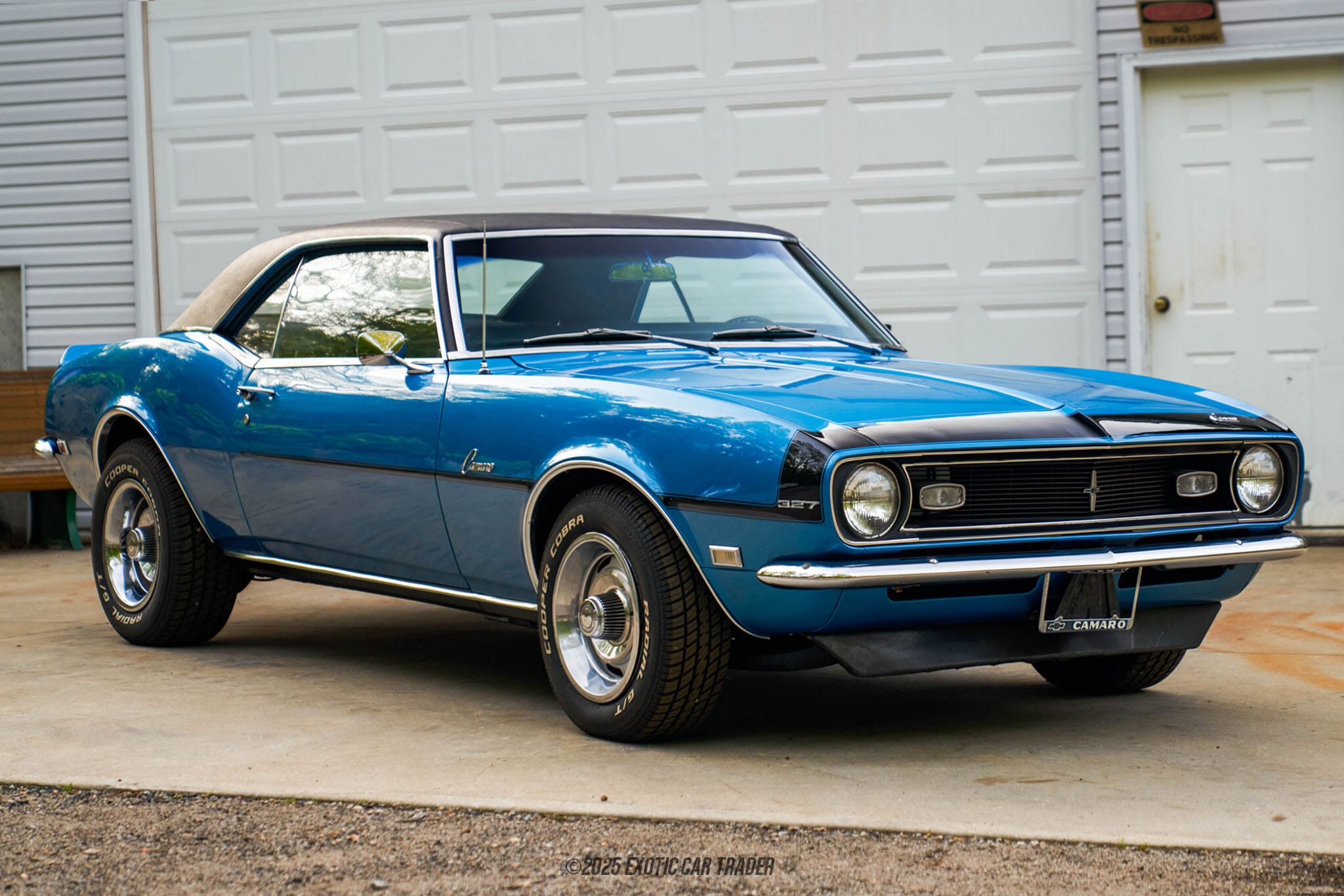
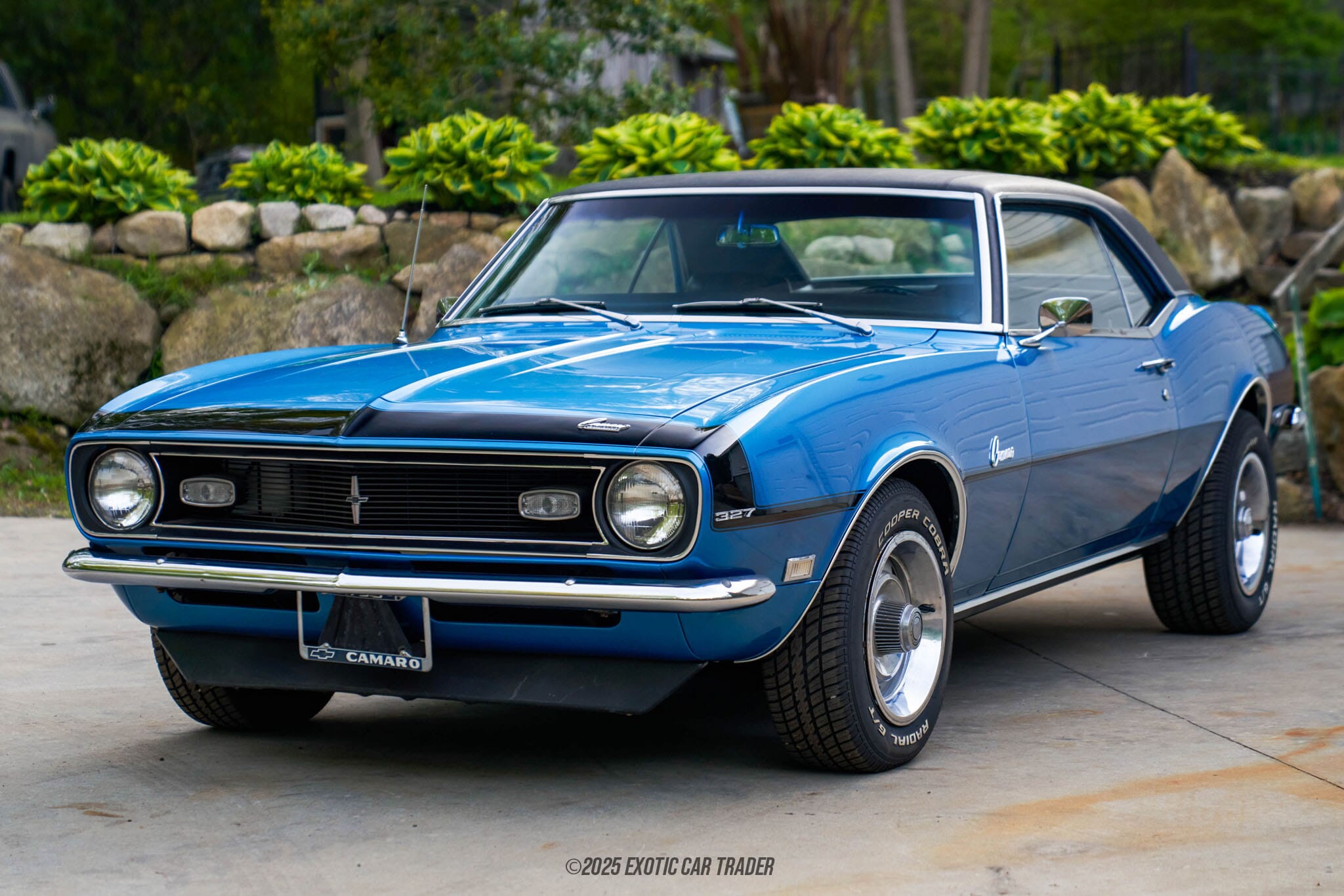
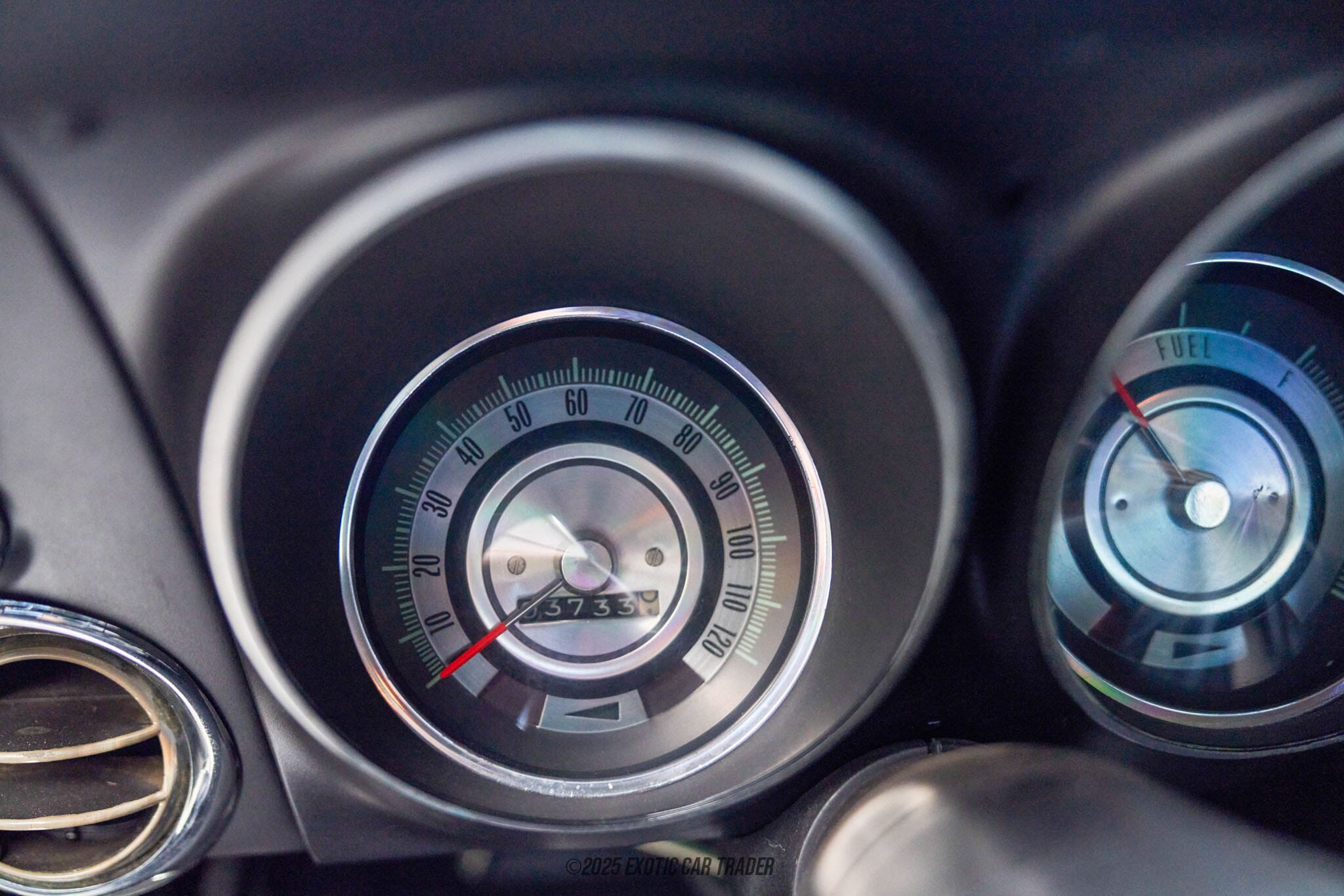
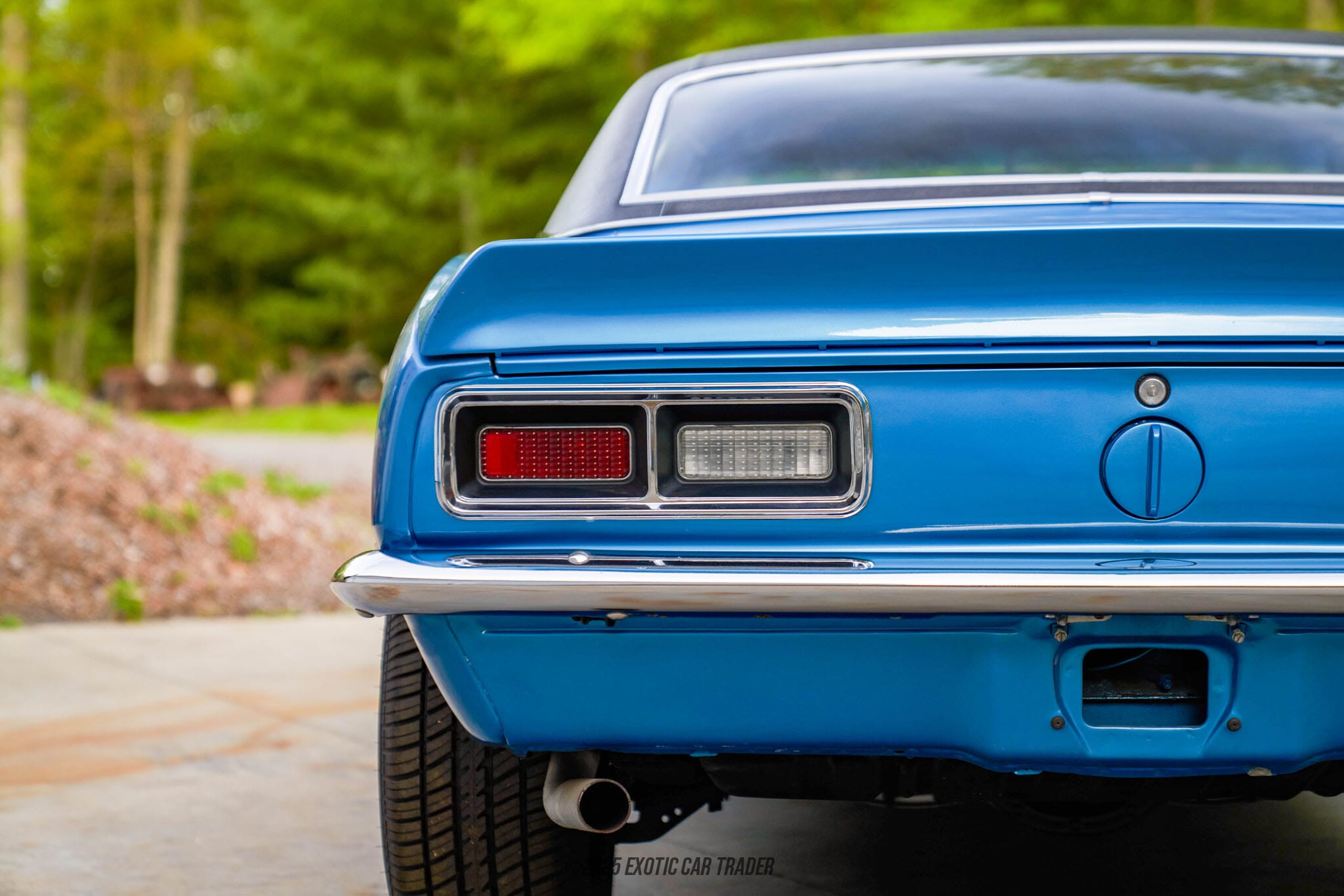
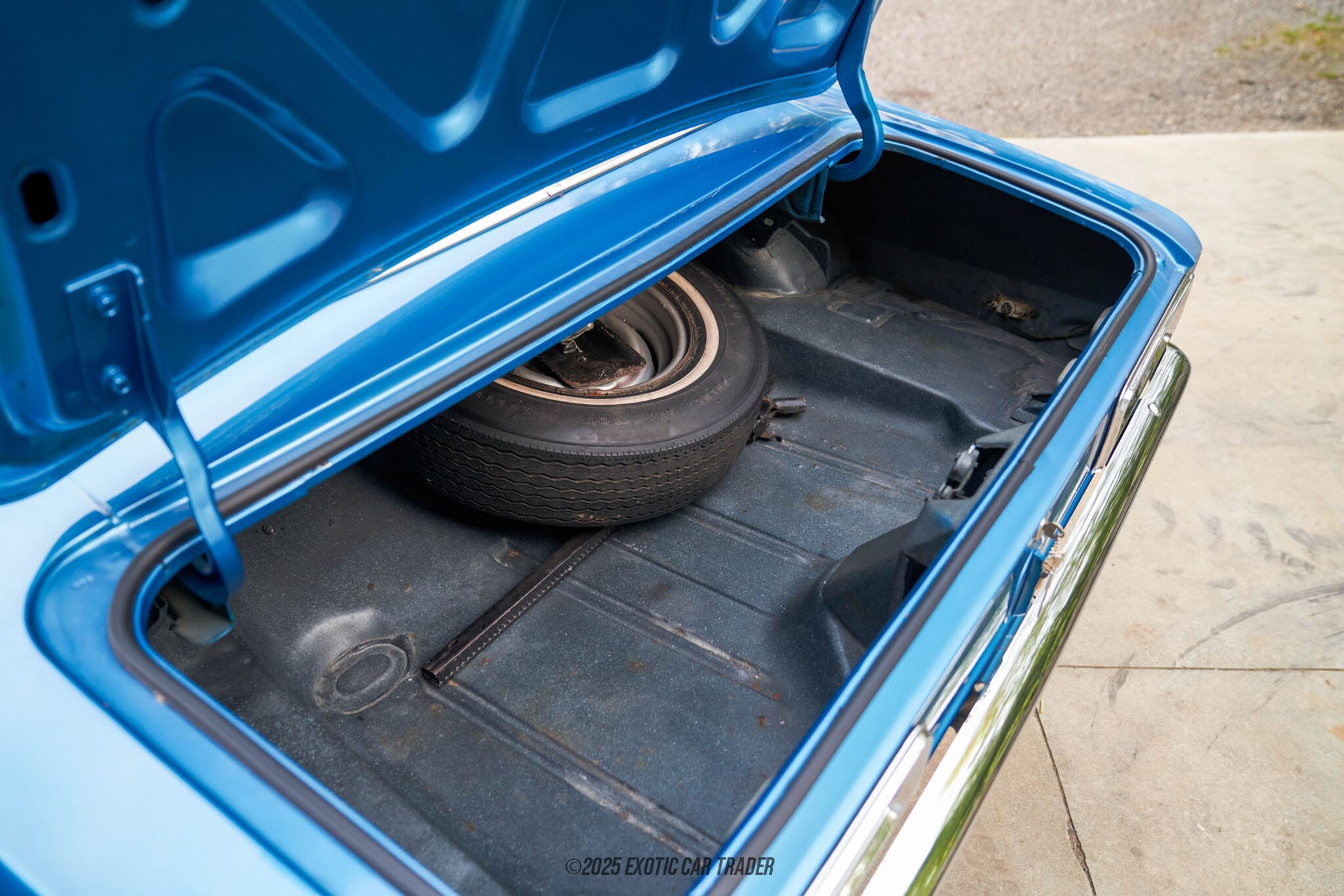
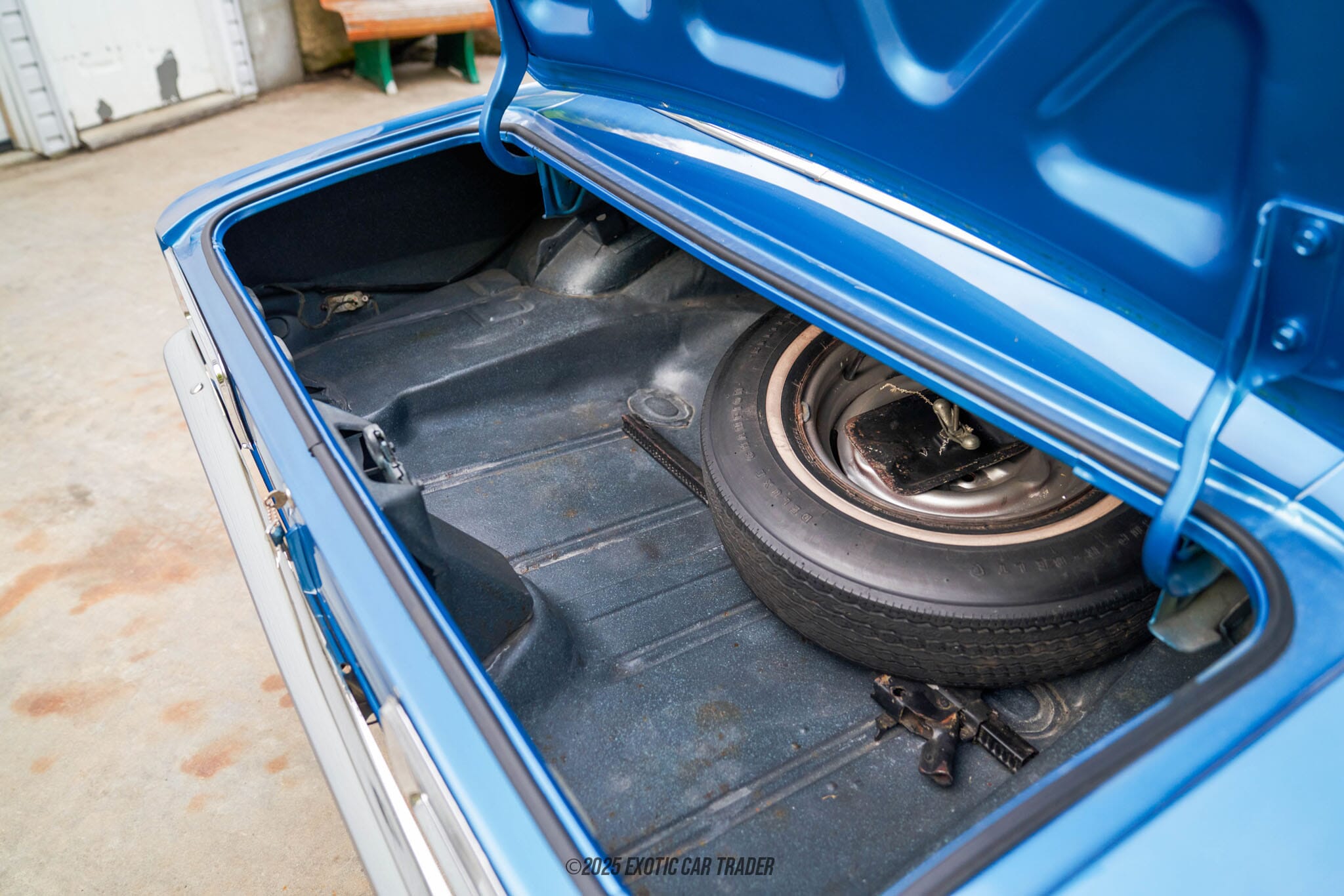
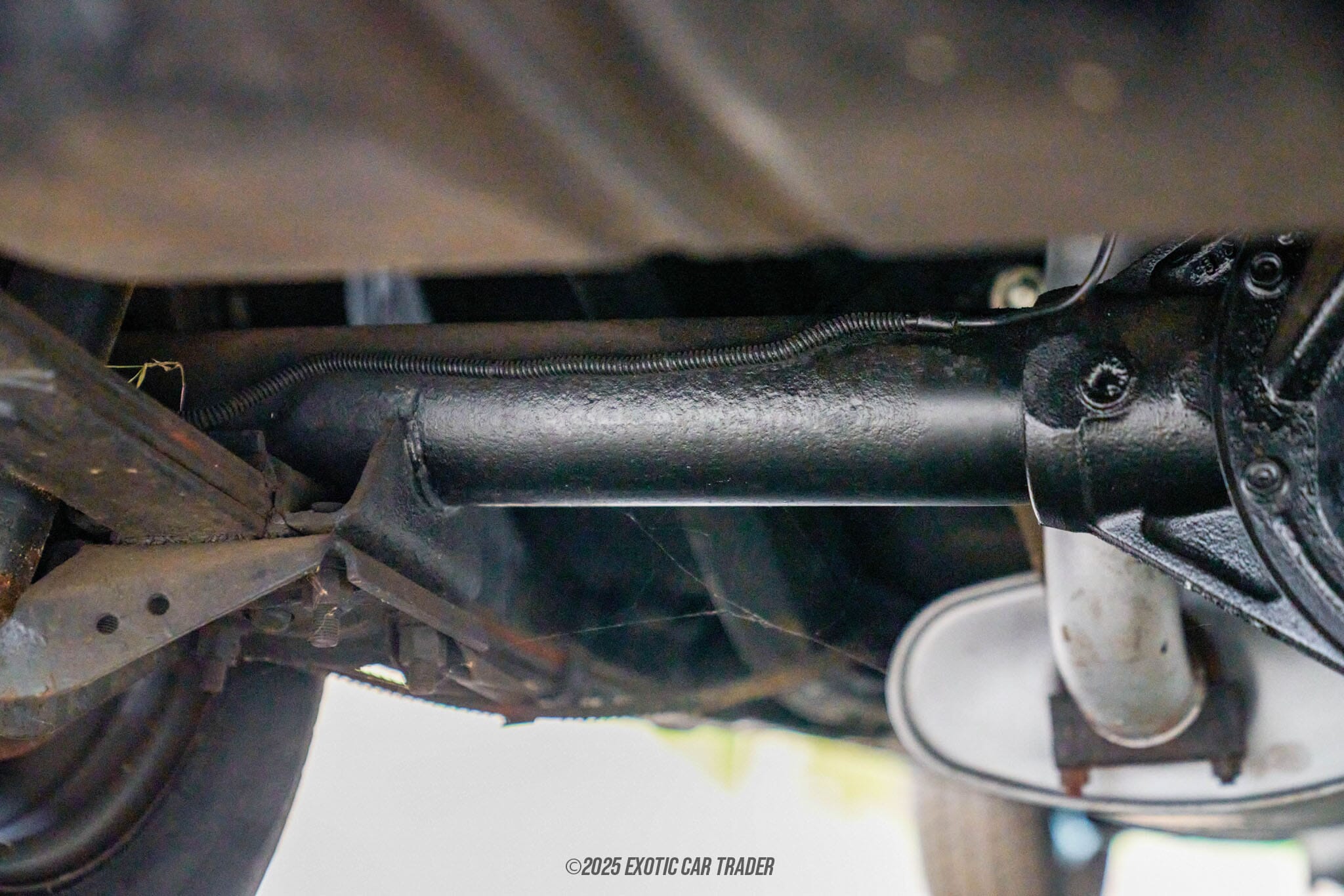
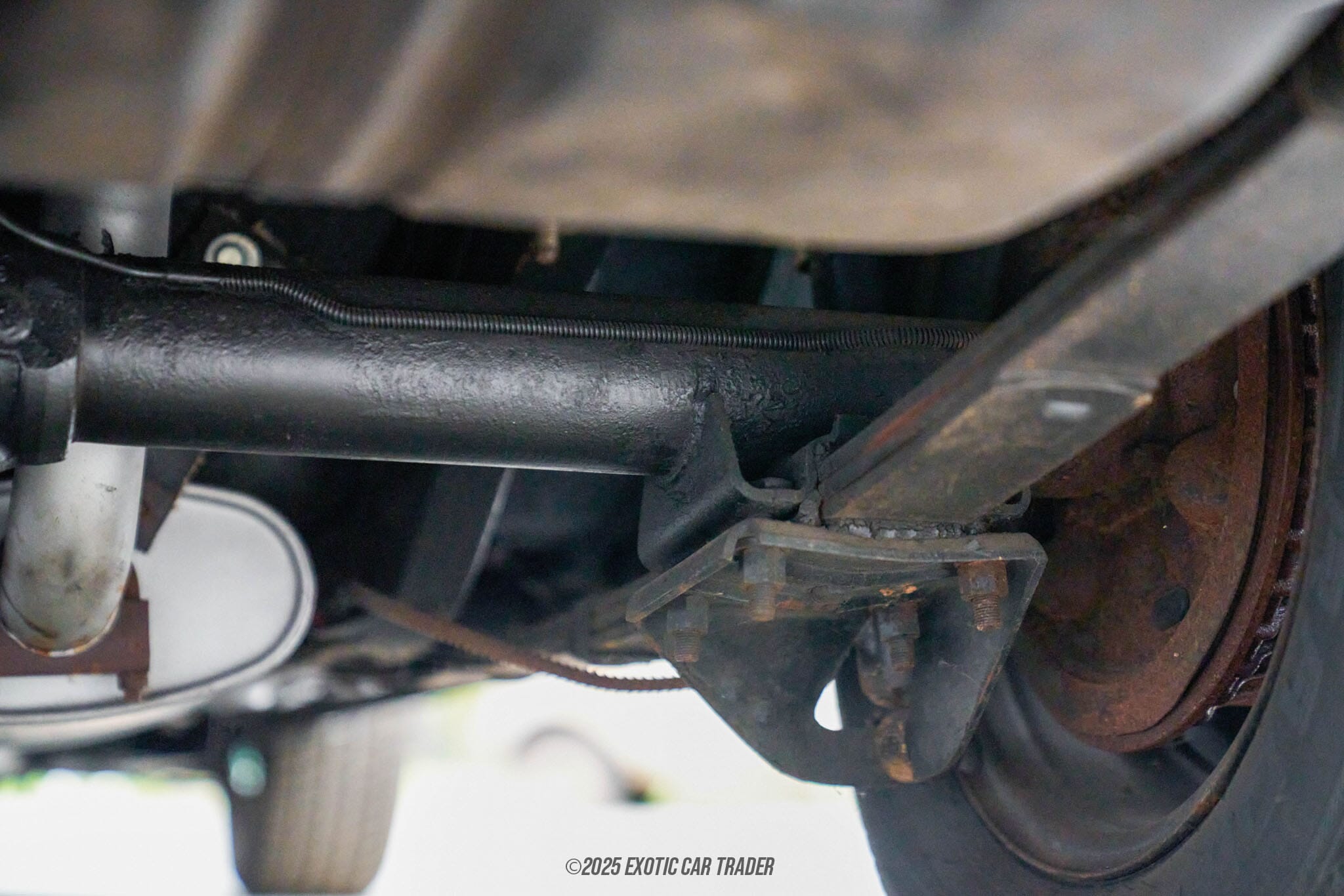
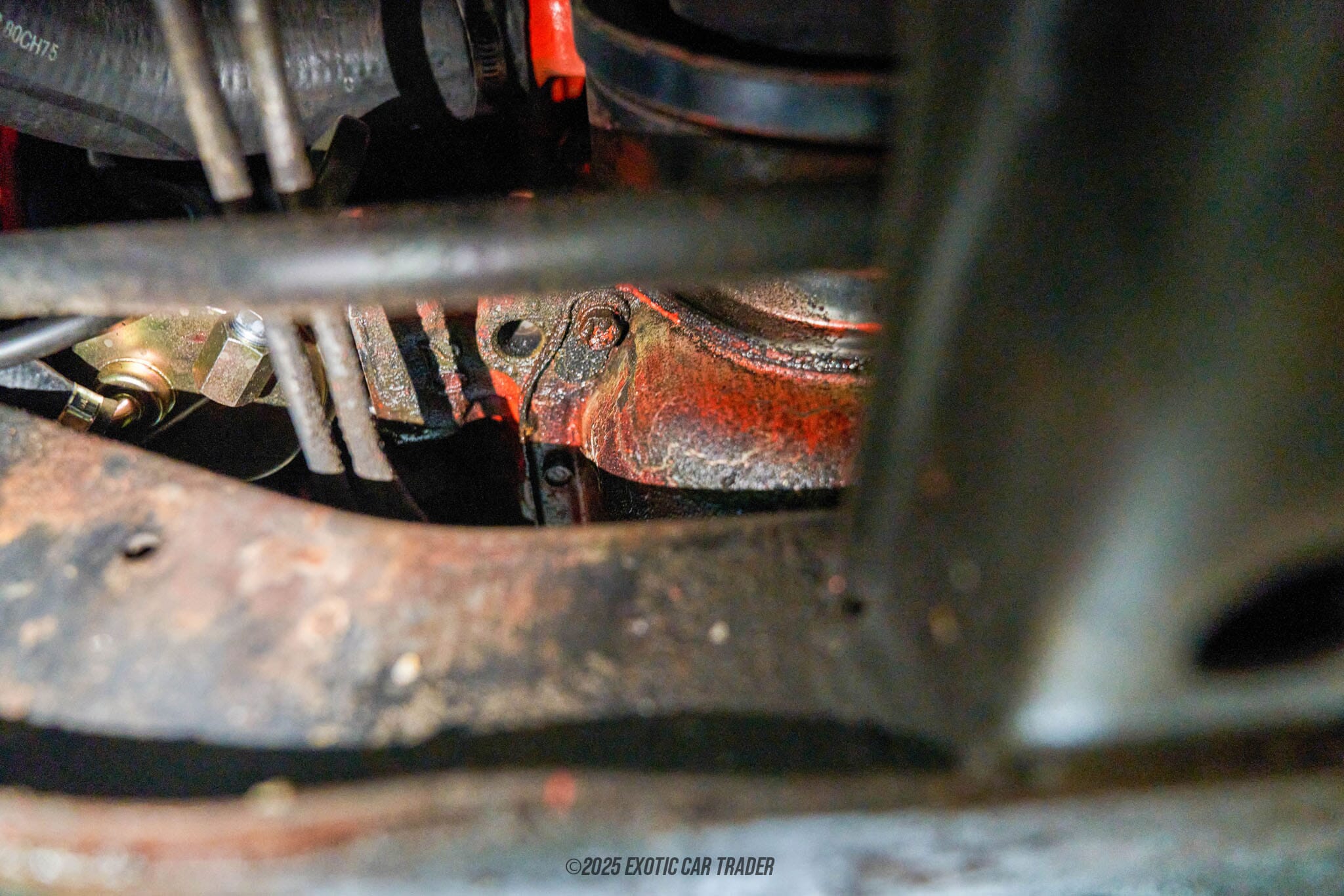
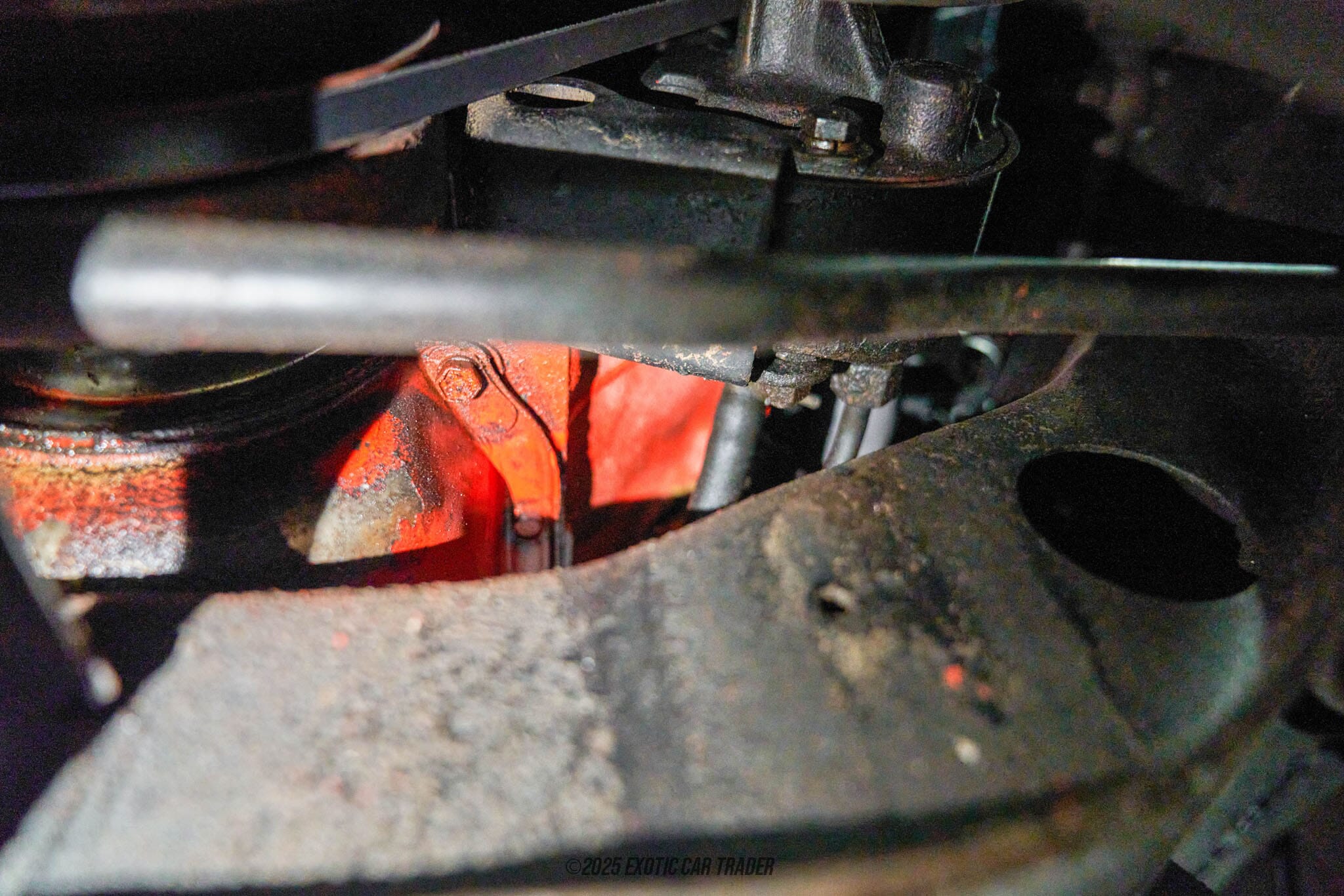
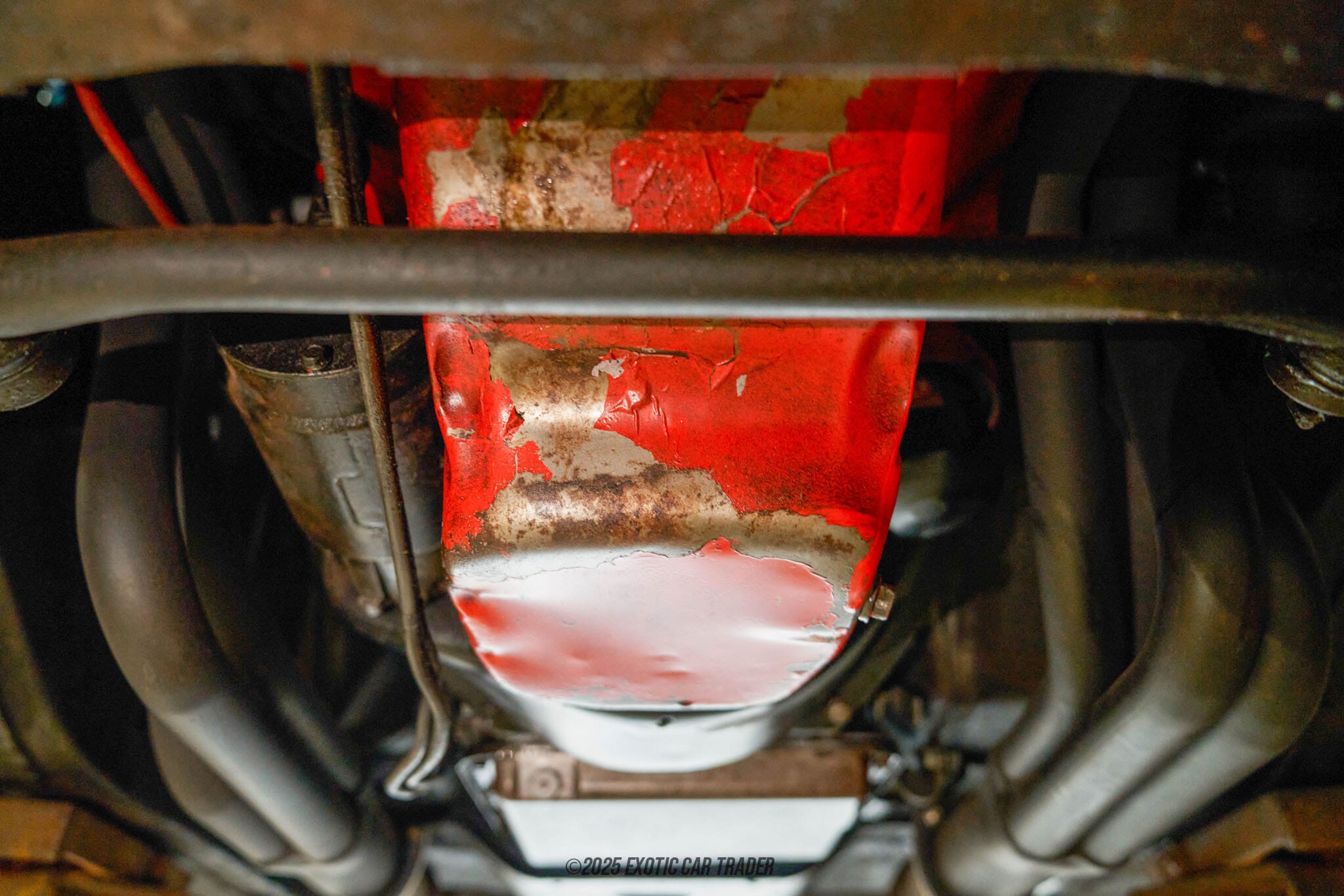
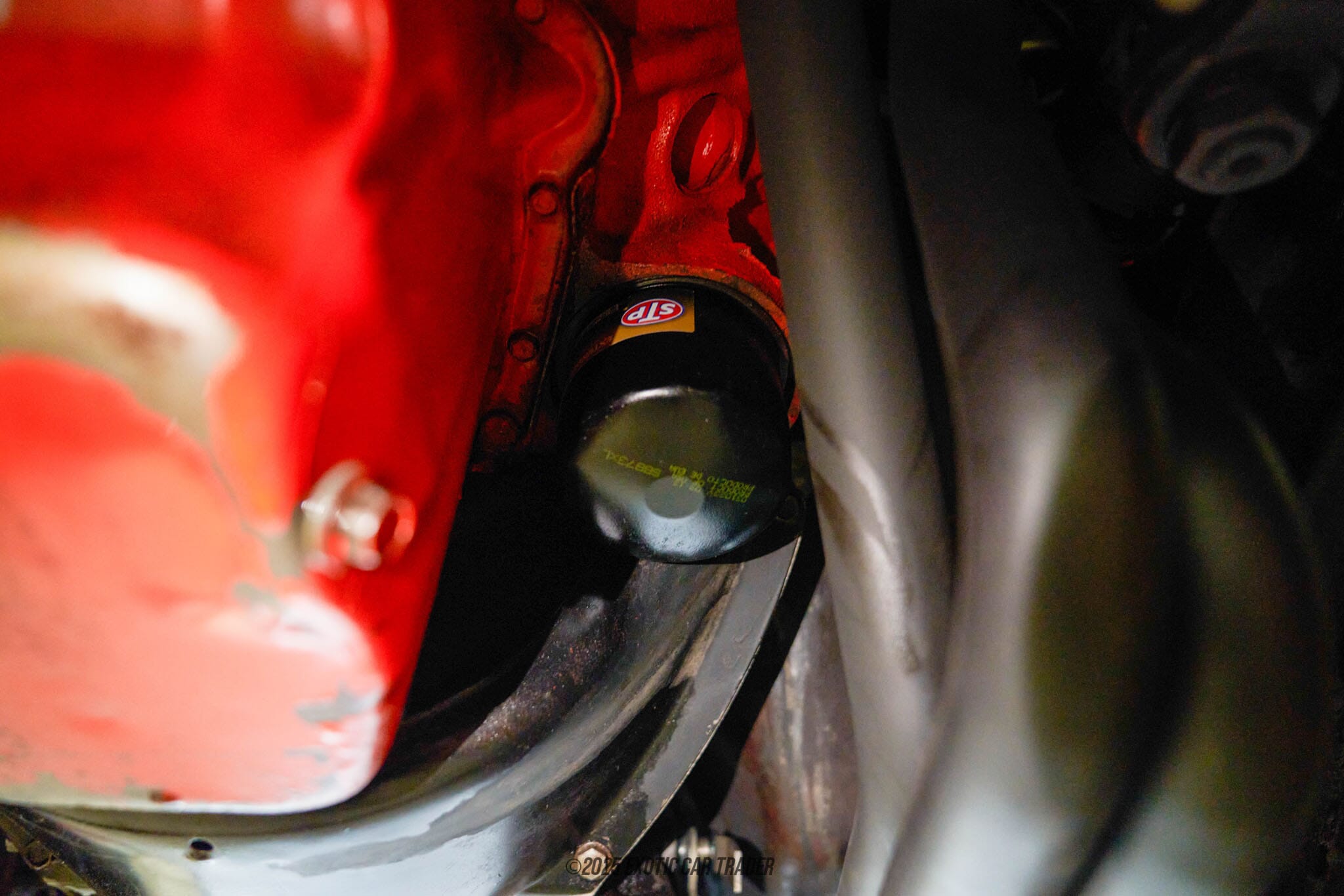
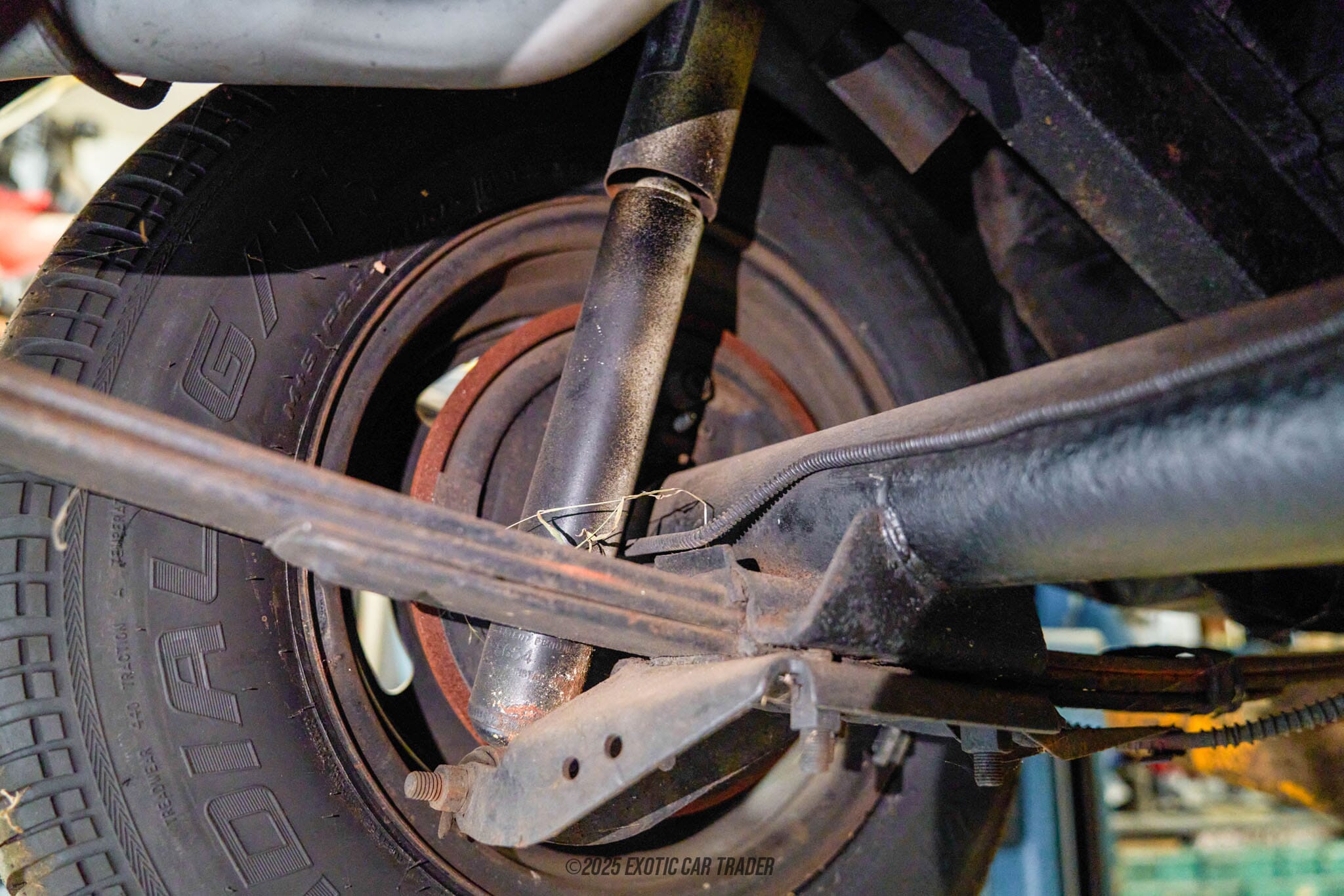
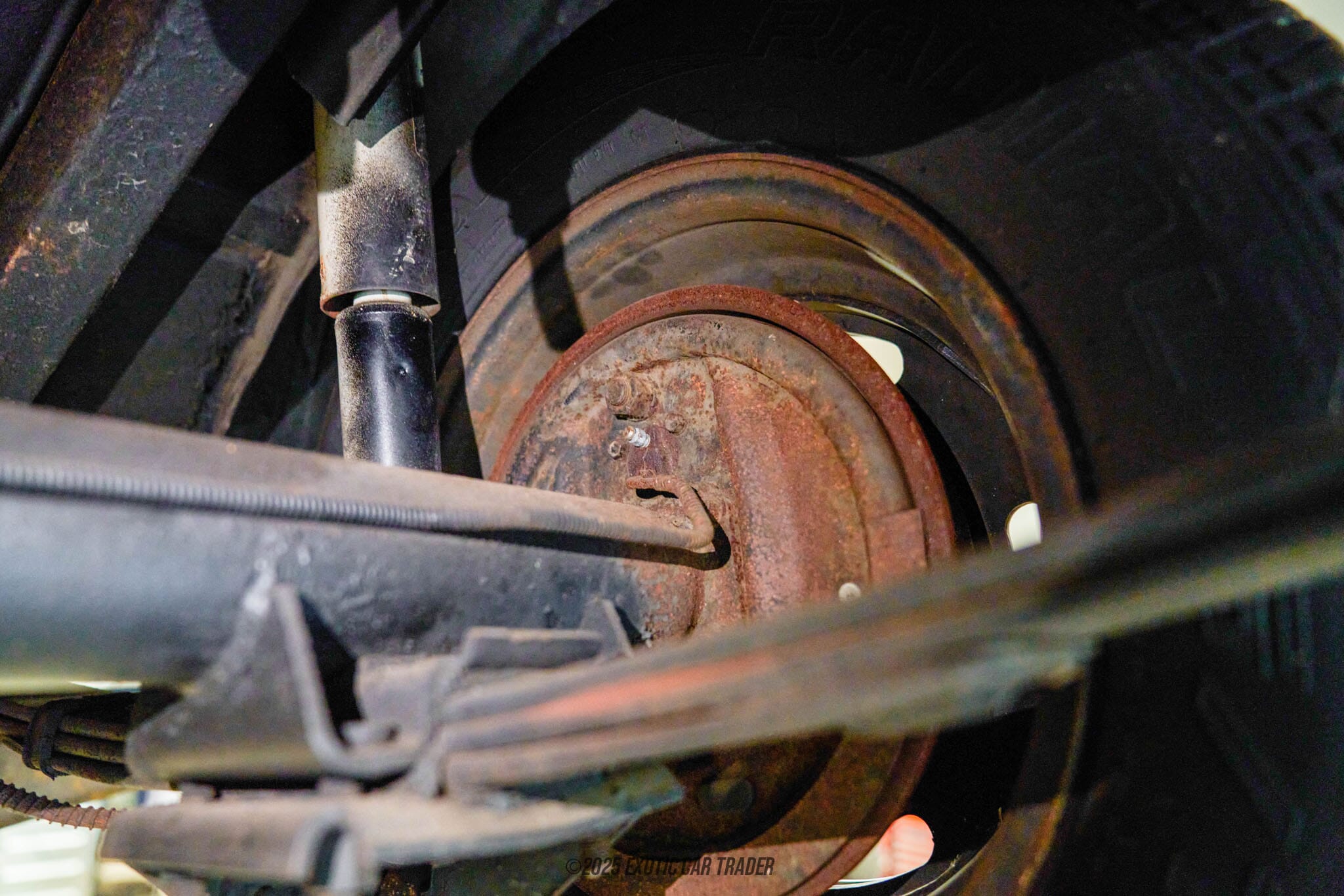
When Chevrolet first introduced the Camaro, it had some serious competition in the pony car segment. Knowing this, they developed a brand-new rear-wheel-drive GM F-body platform that was shared with the famous Pontiac Firebird for all generations. To keep up with the pony car manufacturers, the Camaro was offered with eight engine options to choose from. These strategies eventually made the Camaro the longest-running segment competitor. It butted heads against the other pony car competitors for six generations. What we have in our inventory is a 1968 Chevrolet Camaro that was made during the very first generation of the Camaro lineup. This well-maintained example is up for sale in Hopkinton, Rhode Island. The odometer displays 37,330 miles. They are now prepared to pass it onto the next owner so they can discover the joys of driving a classic pony car.
Exterior and Interior
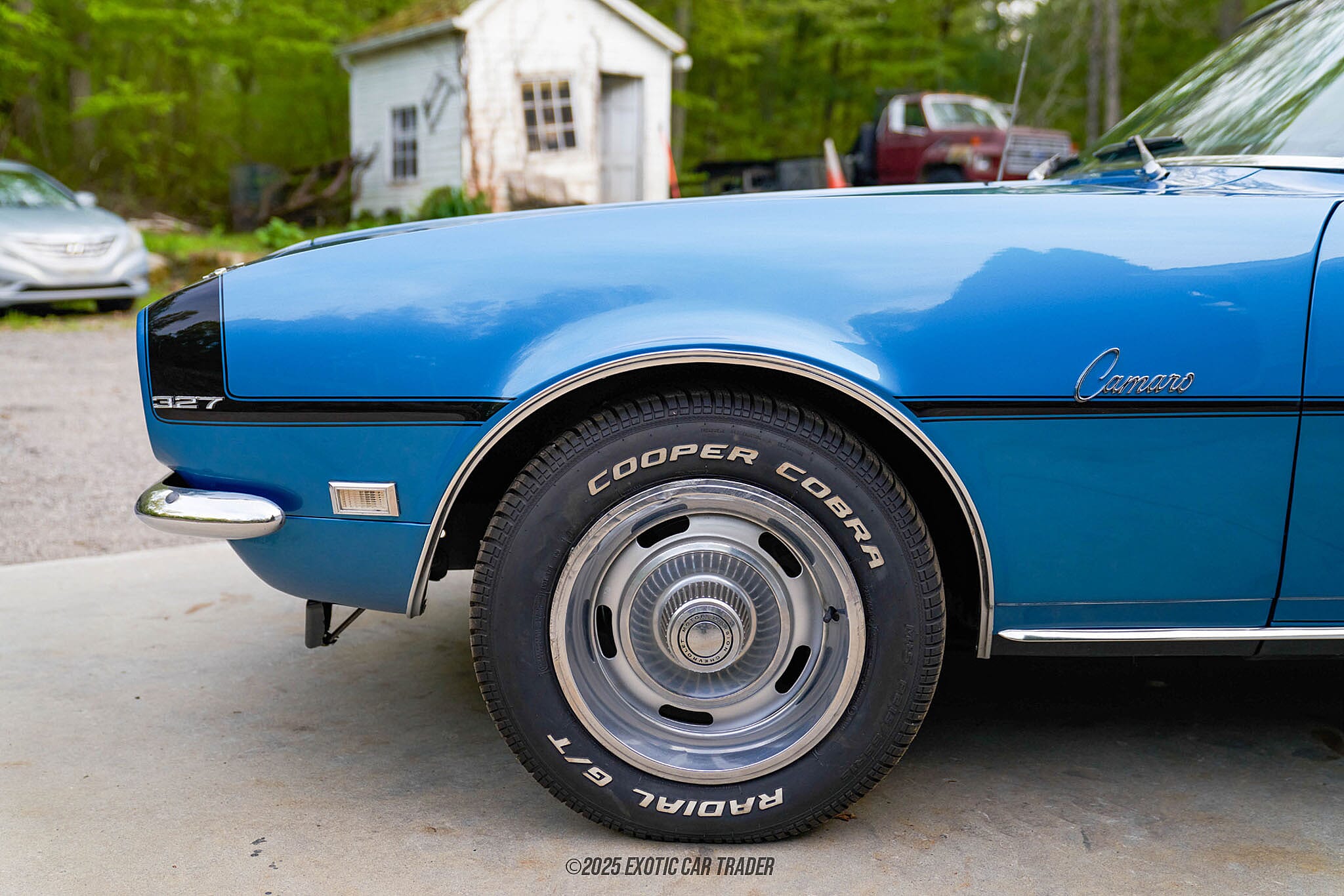
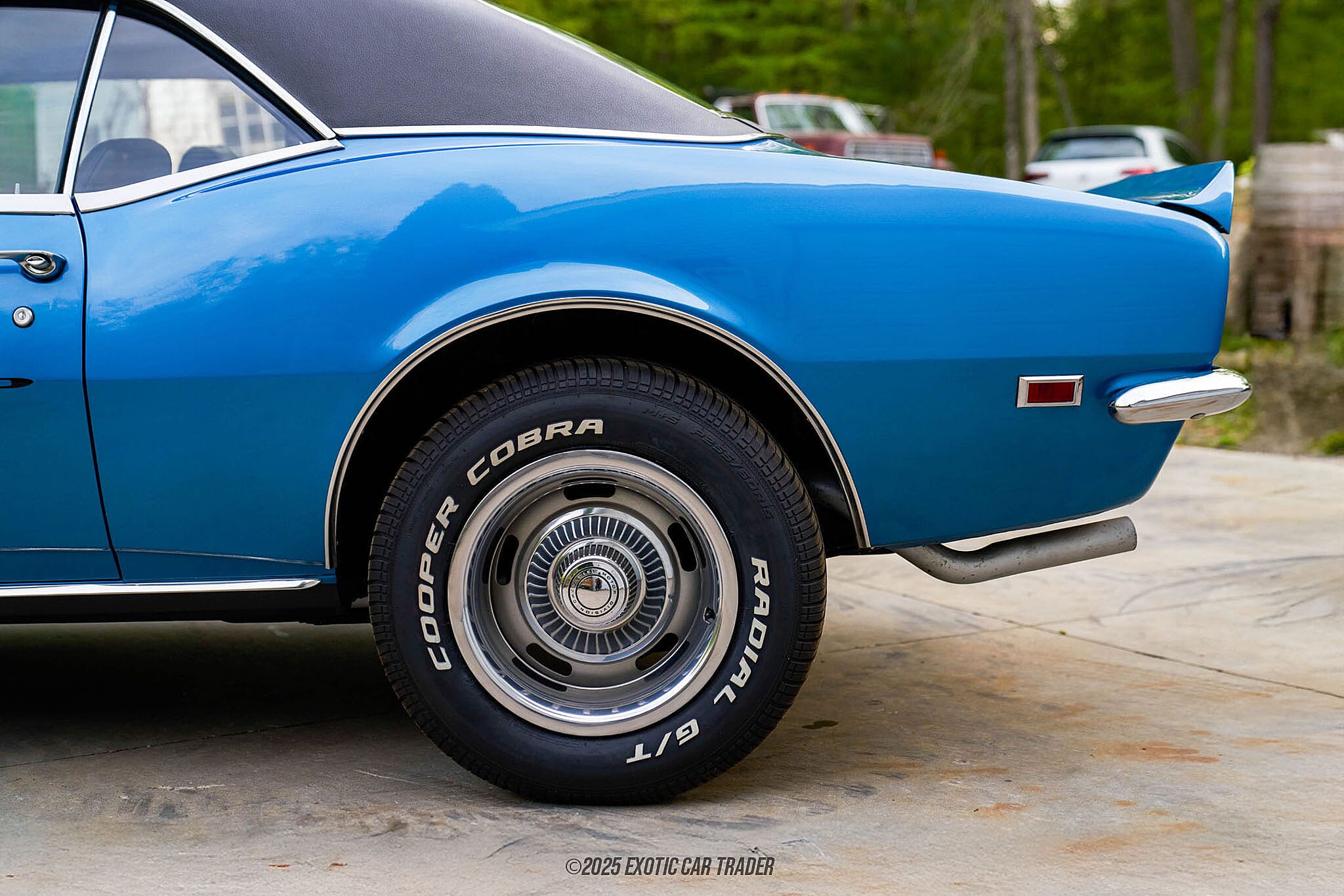
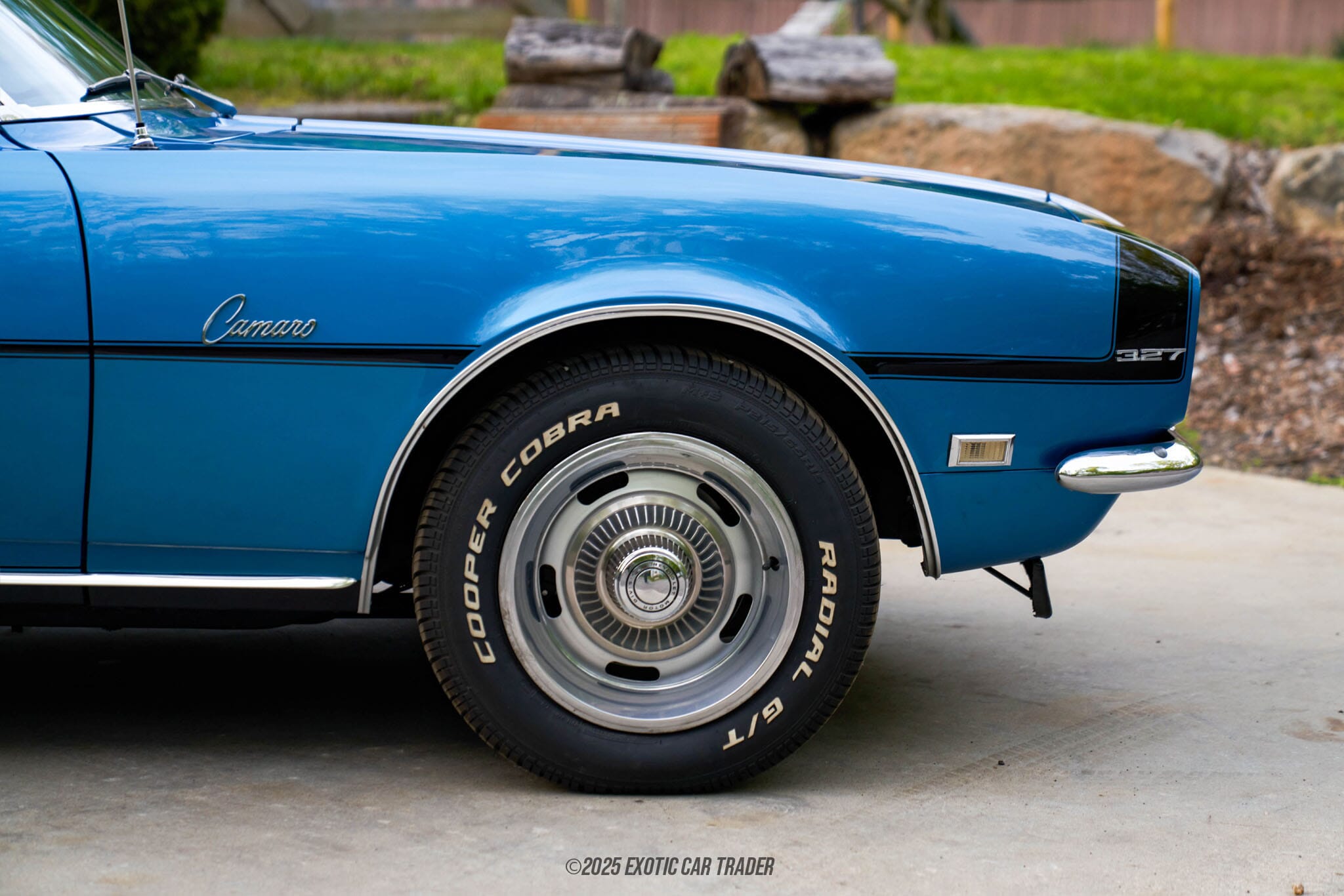
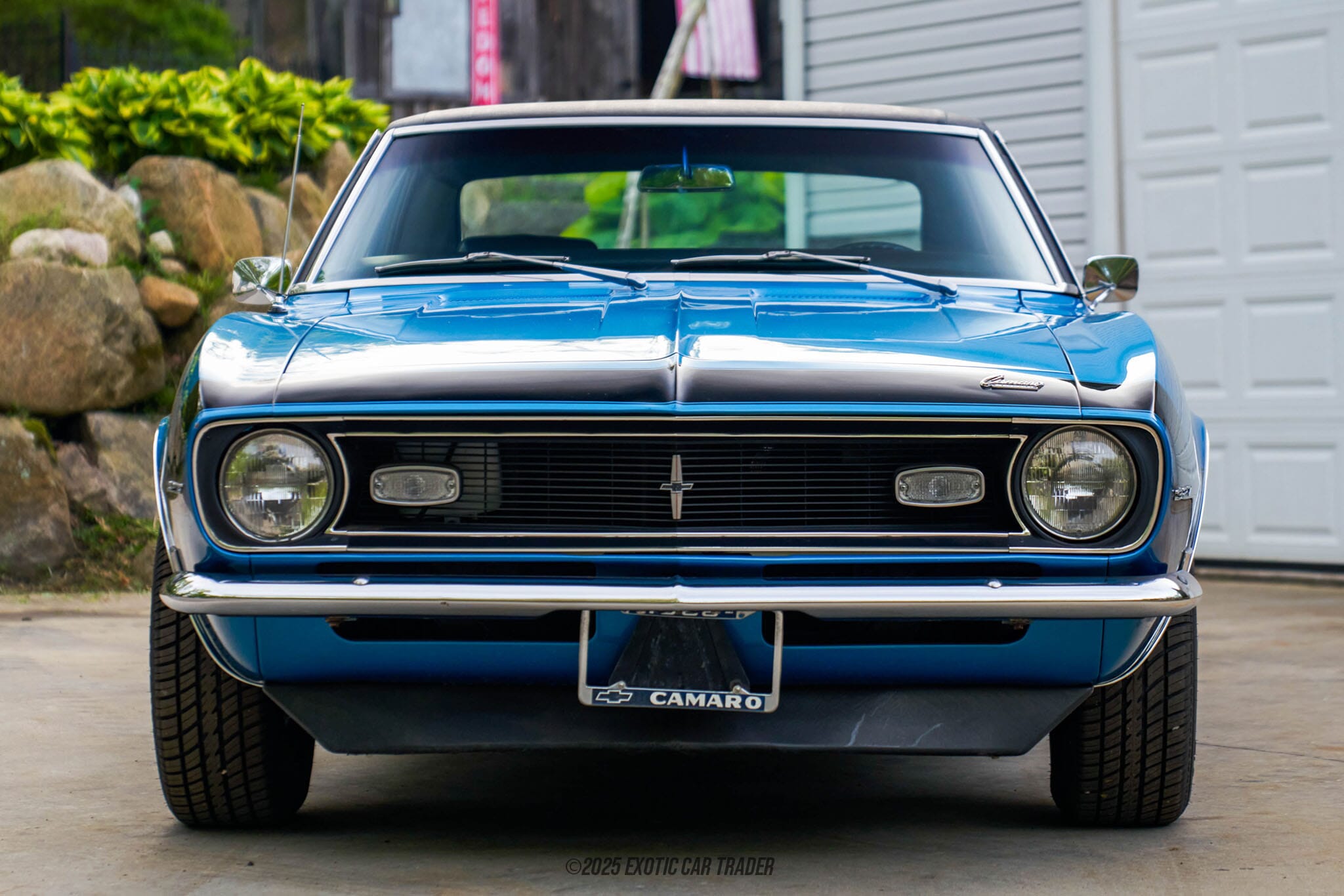
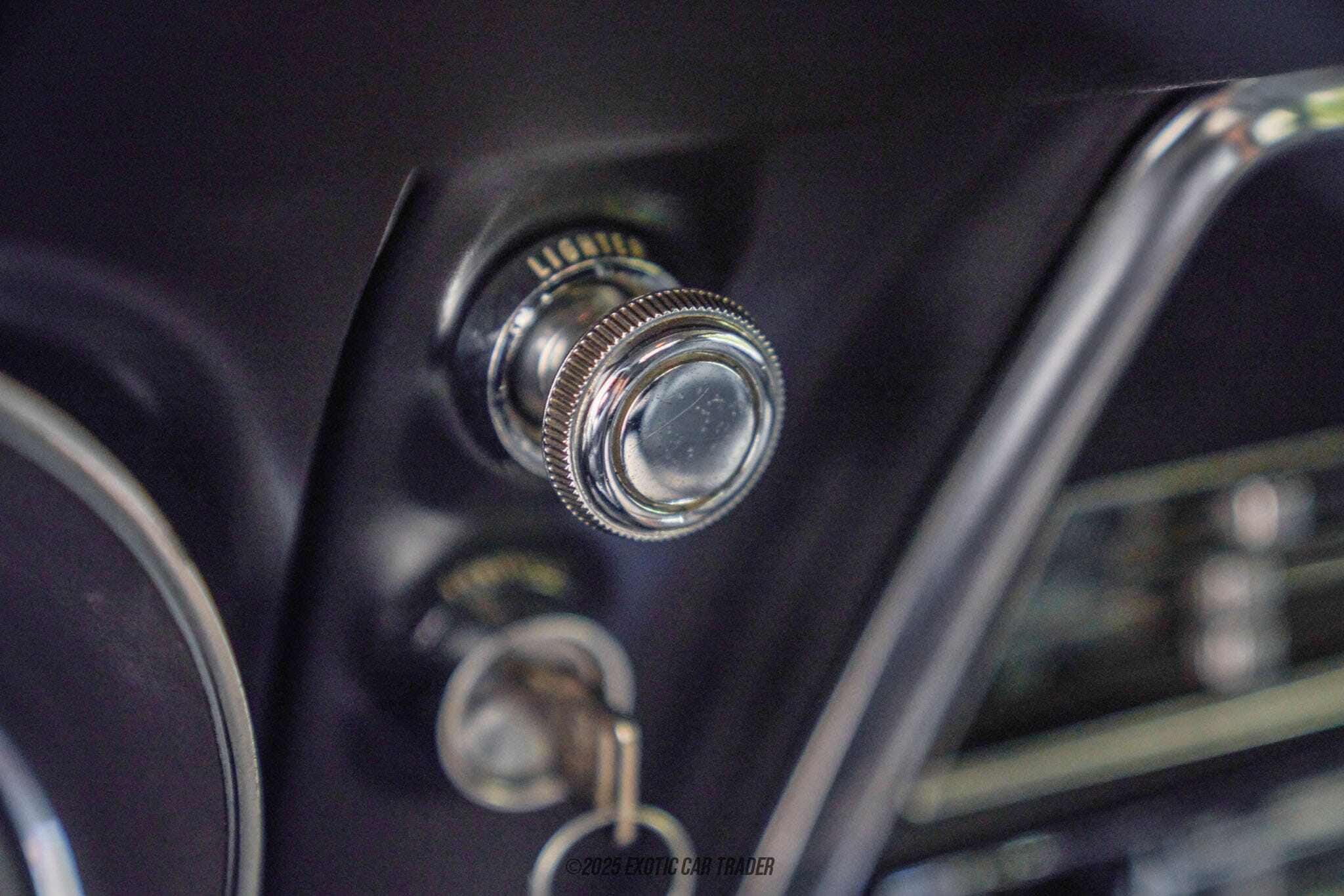
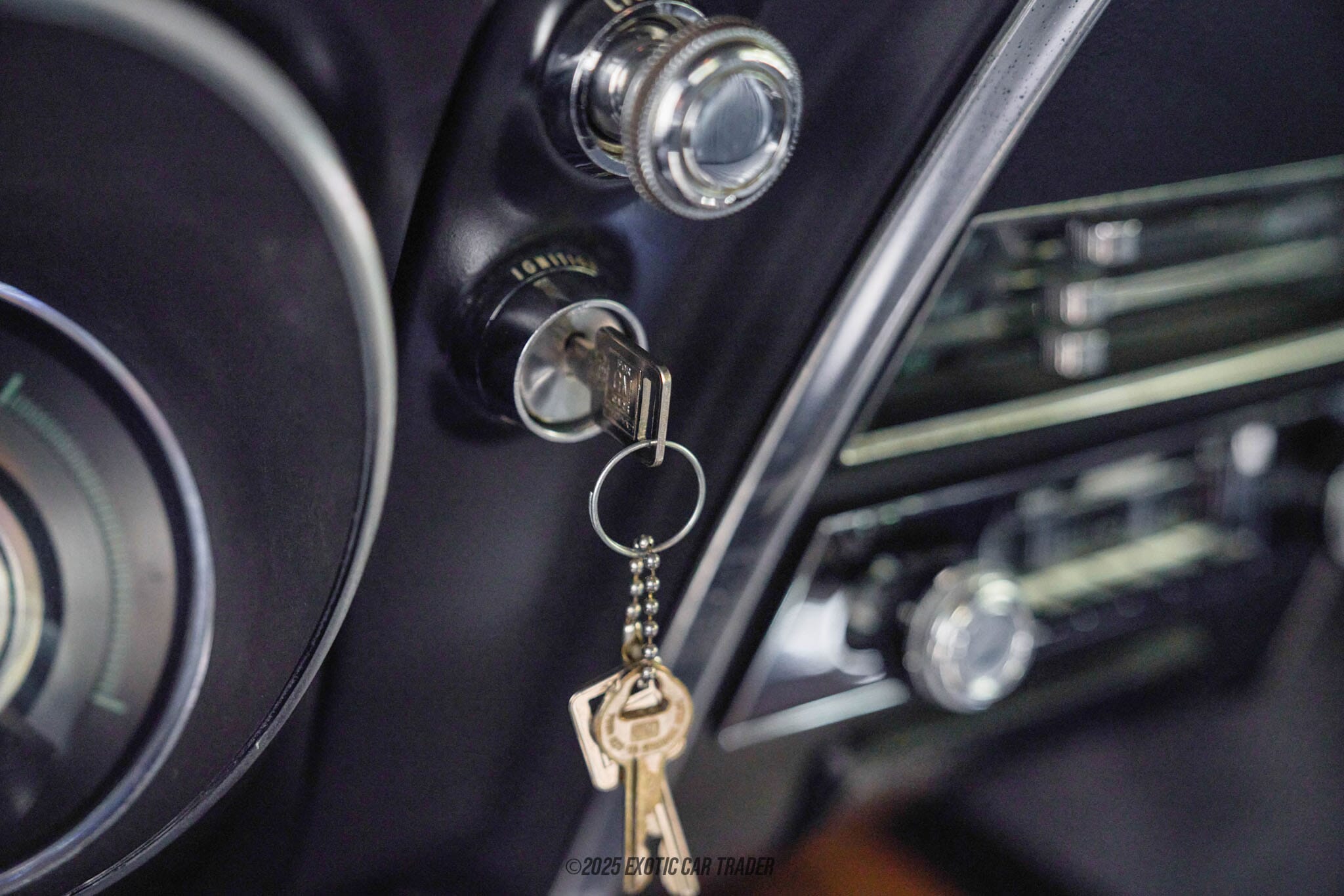
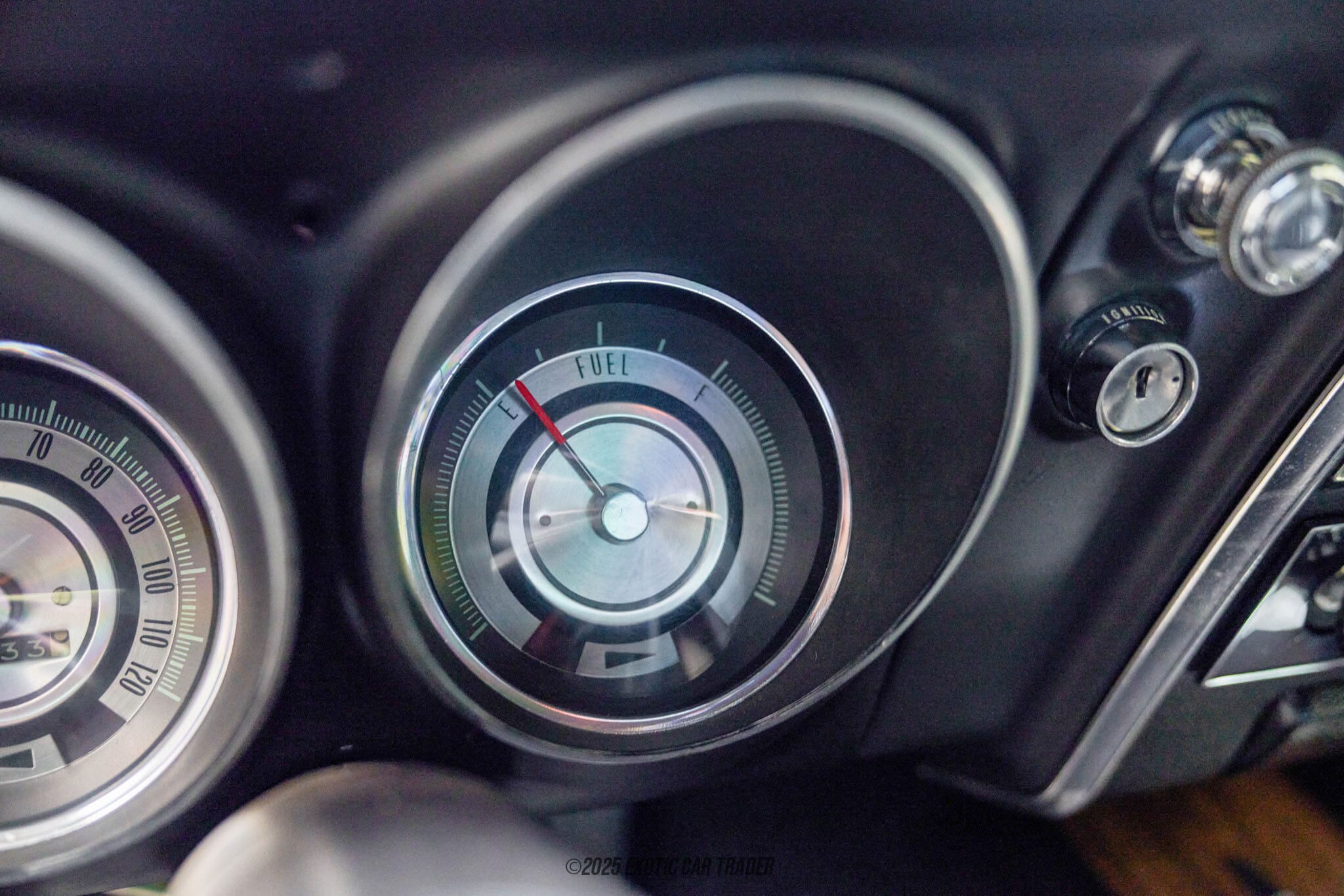
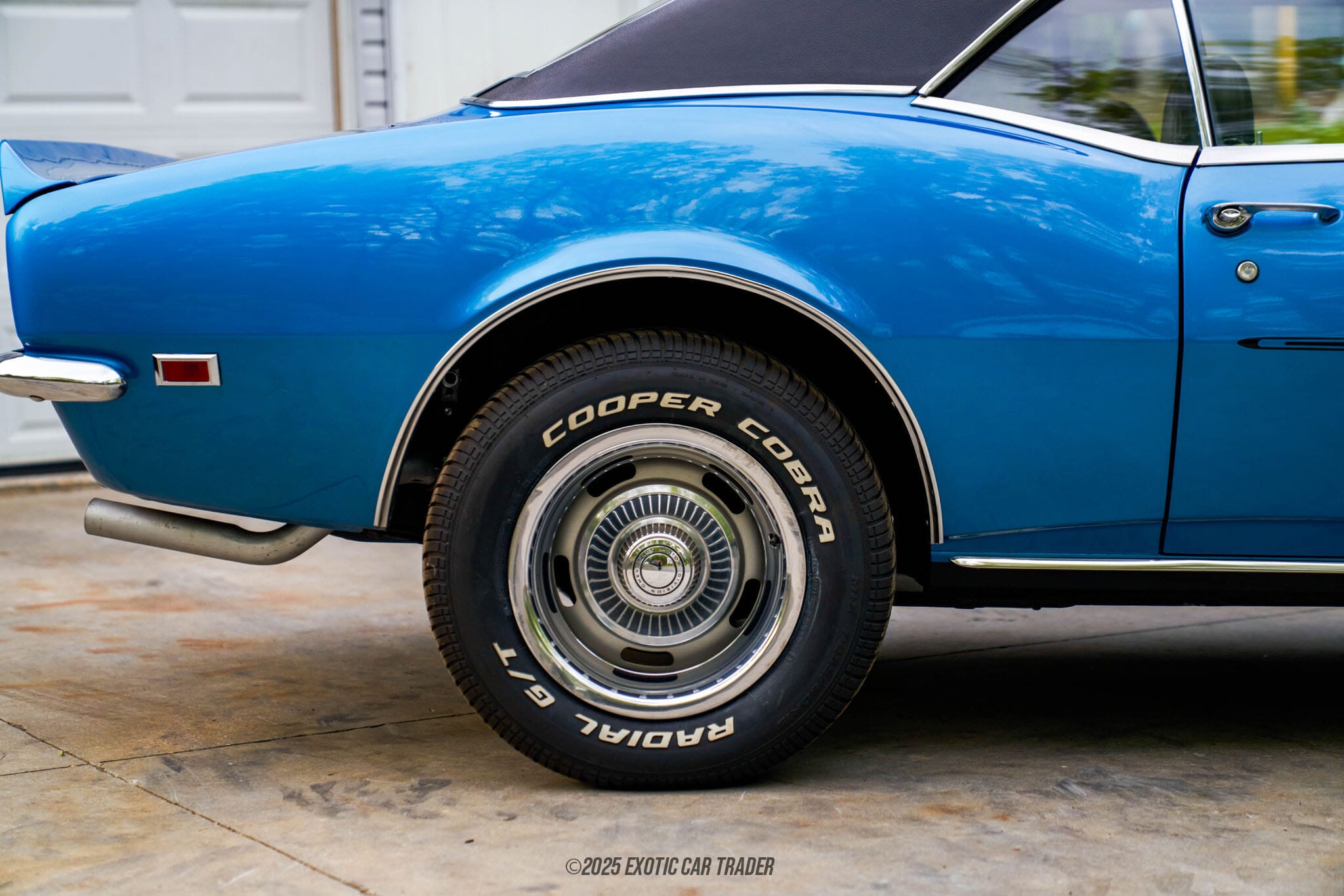
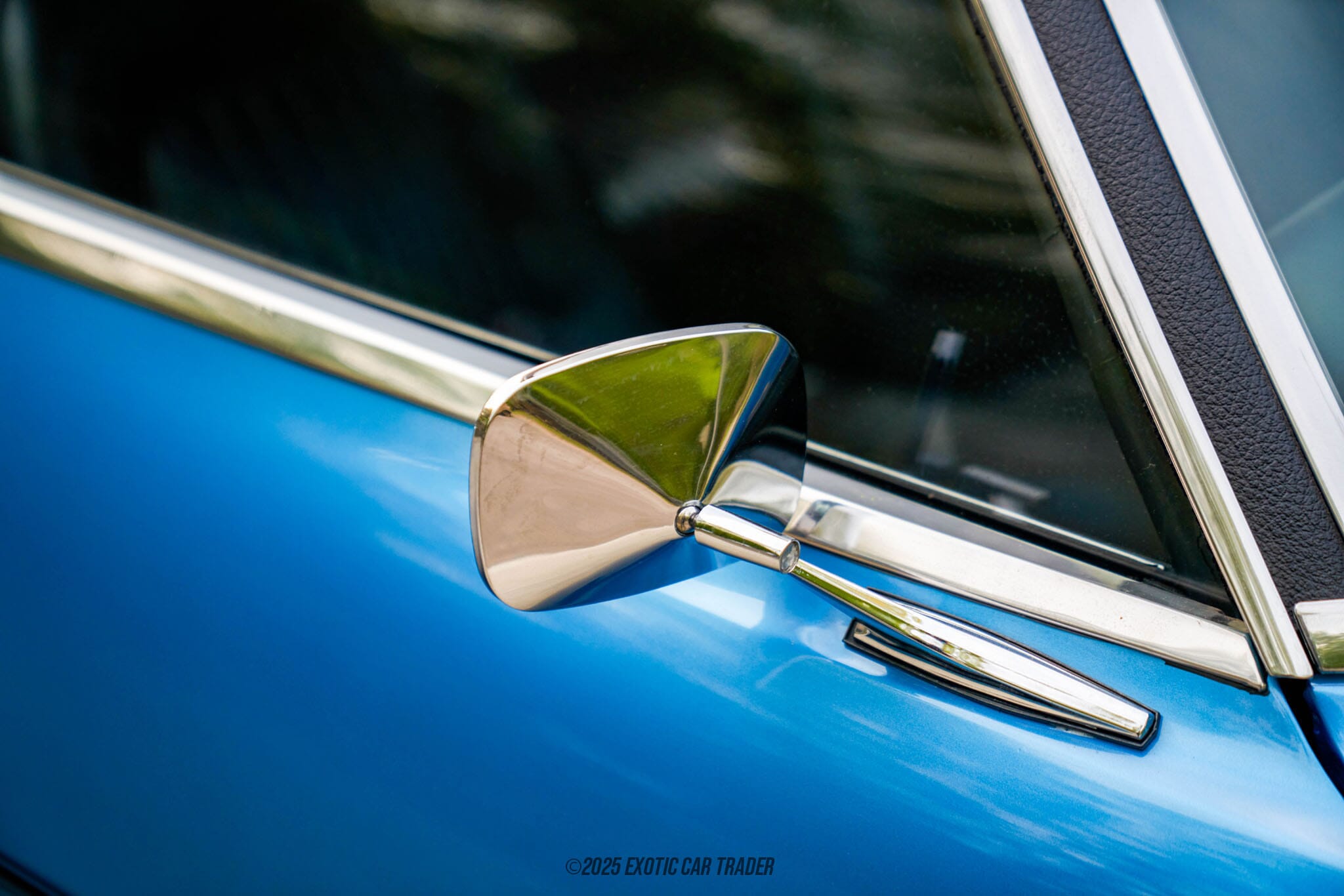
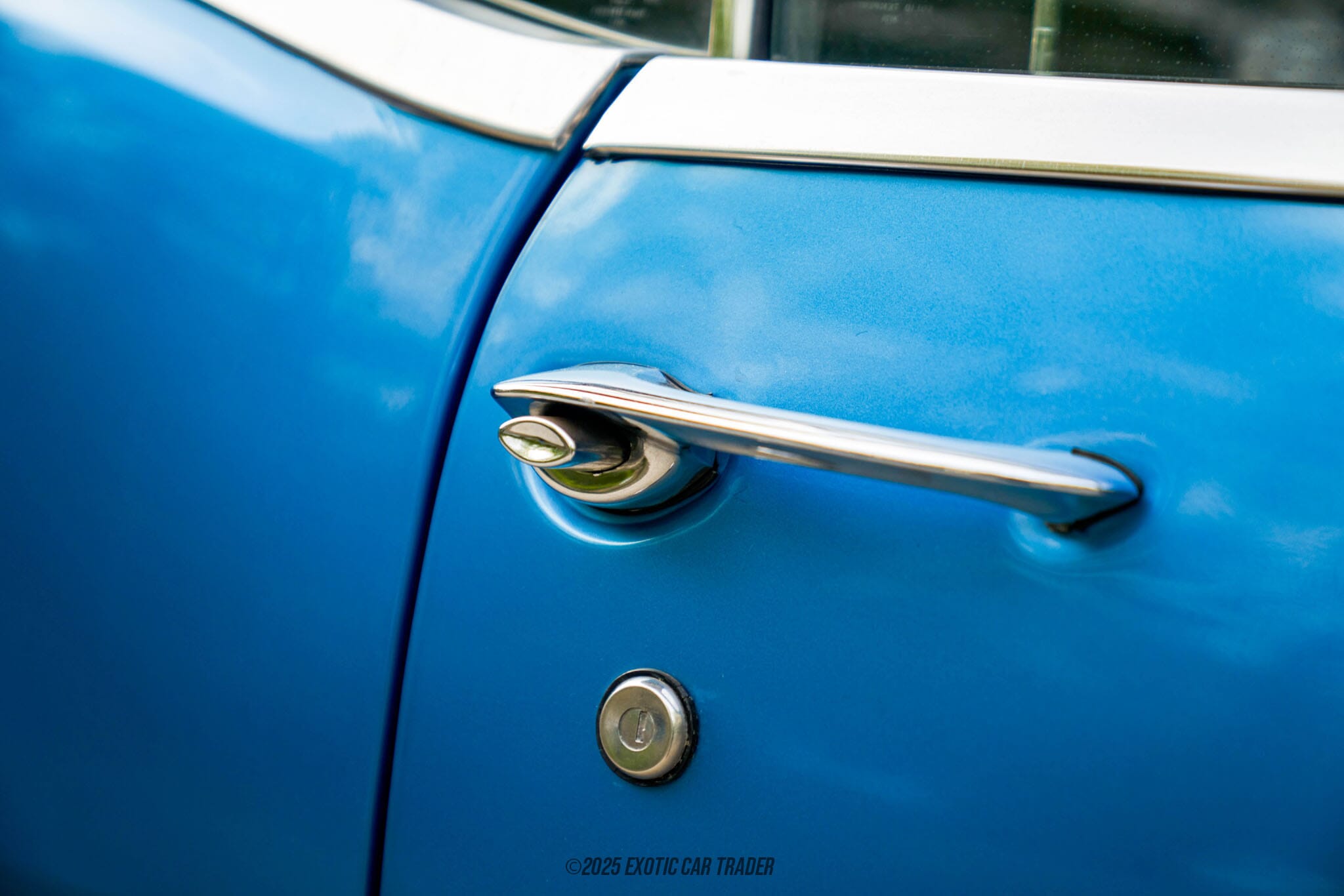
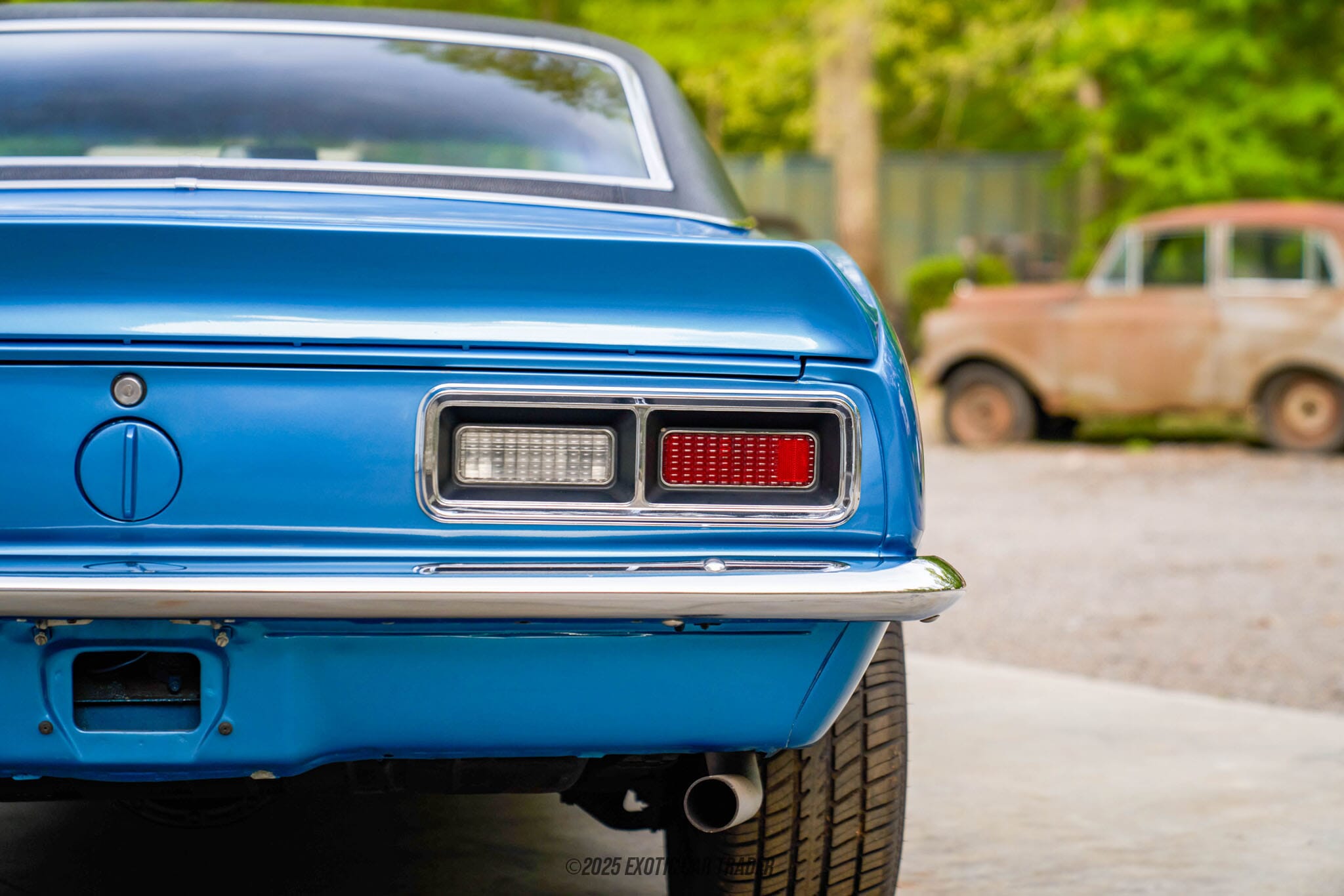
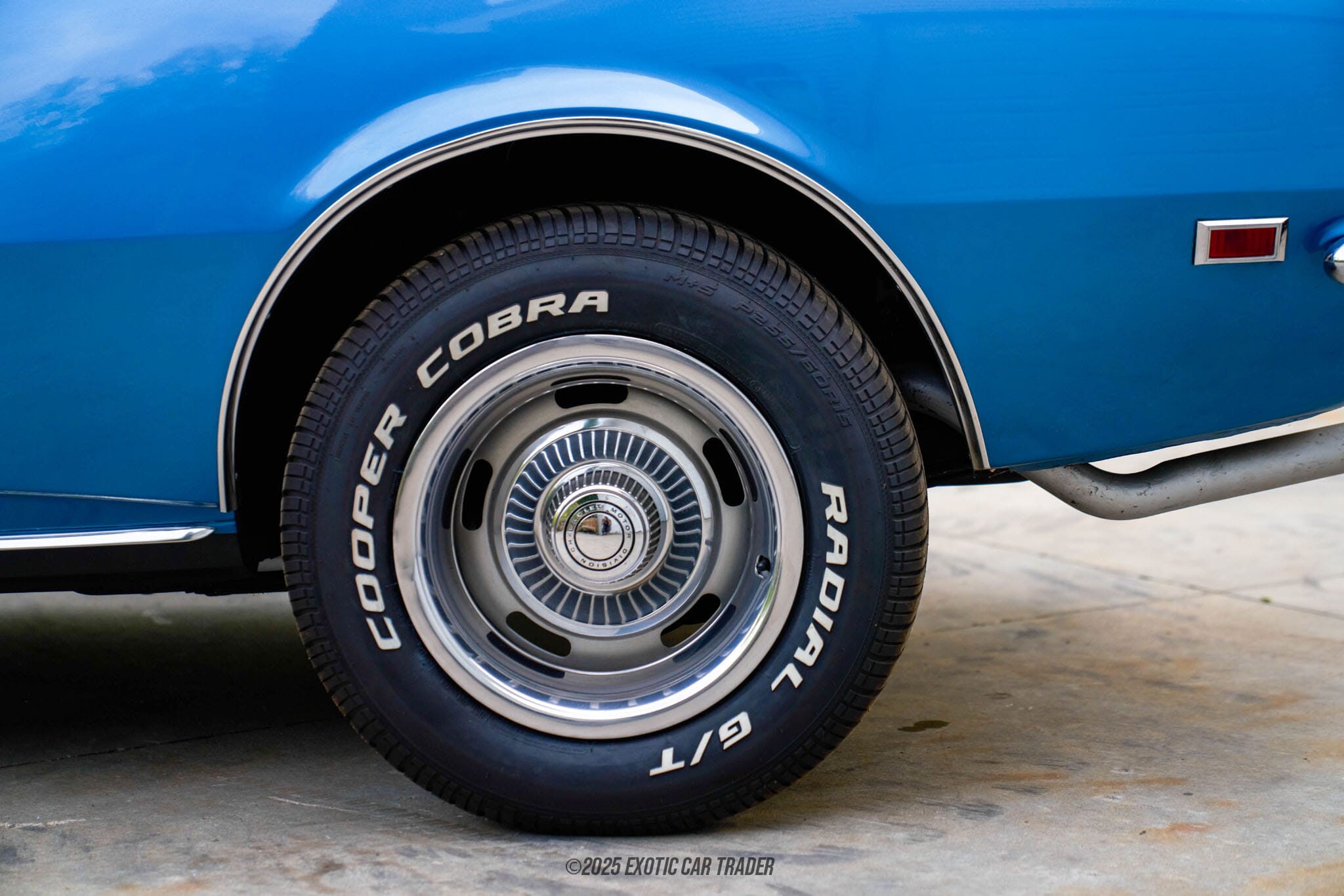
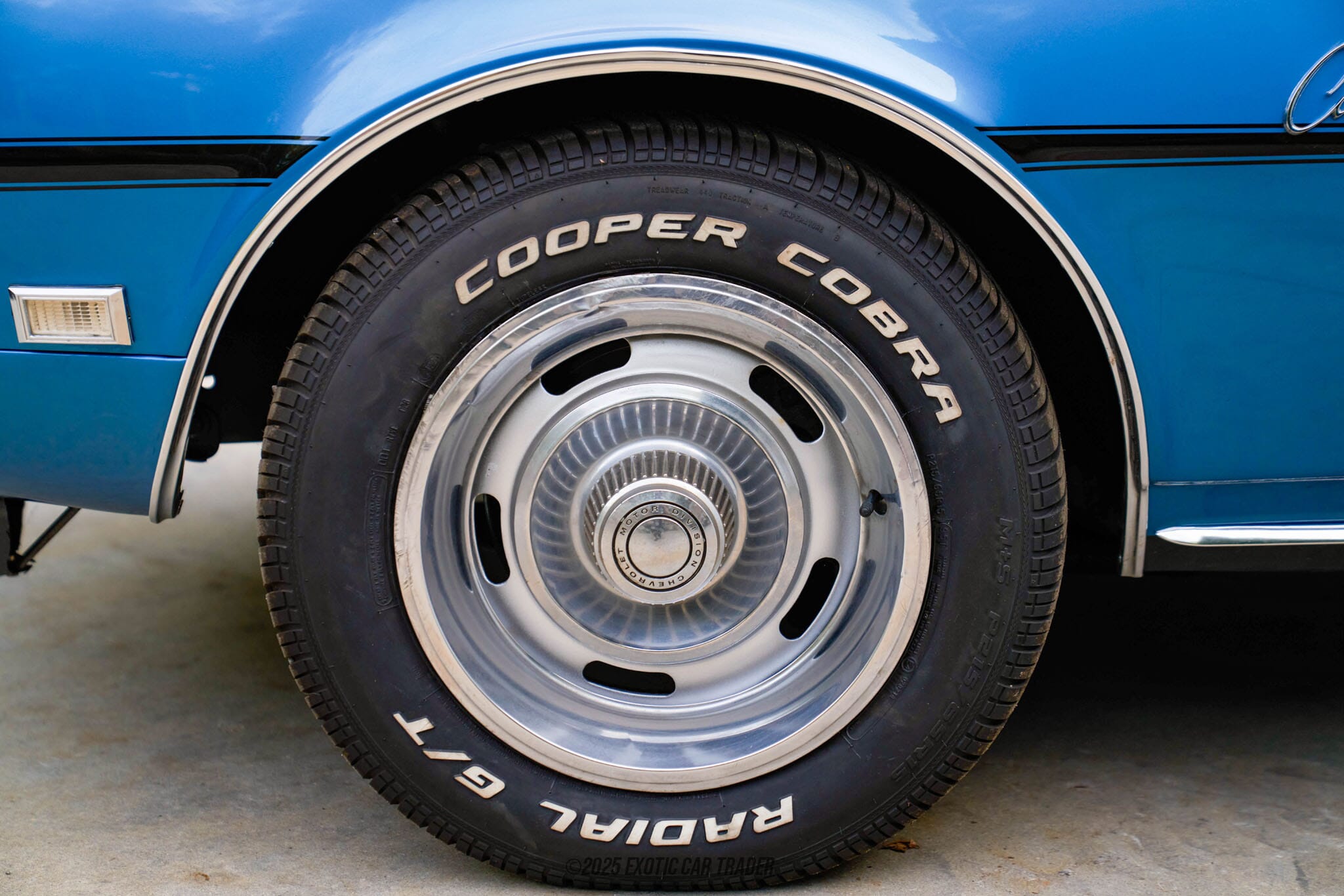
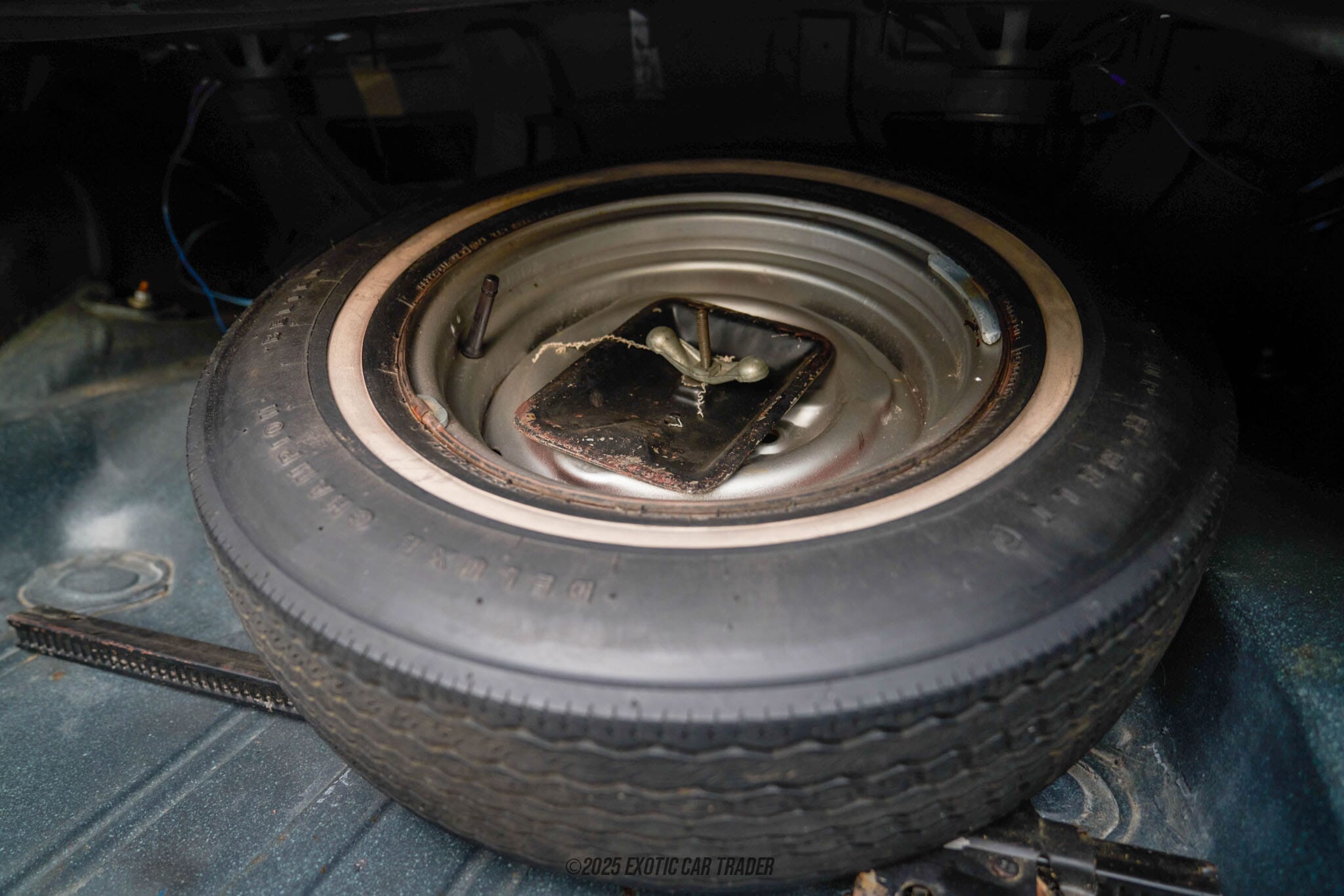
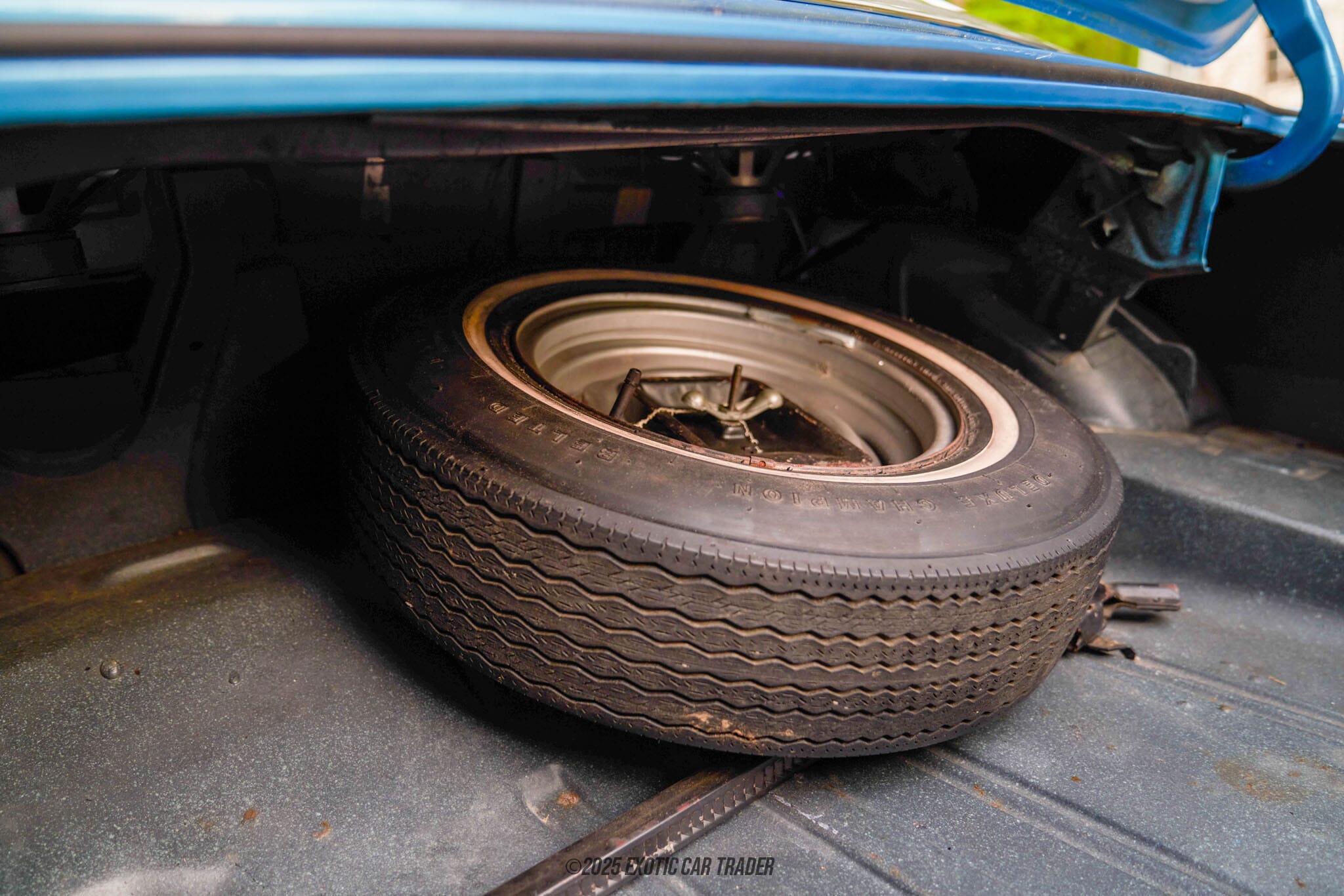
The 1968 Chevrolet Camaro is undoubtedly a handsome vehicle, and the blue paint job on our subject car makes it stand out. The black stripe on the nose makes its way to the rear of the car from the sides. Side marker lights were added on the front and rear fenders as part of safety requirements. The front fenders display the 327 badging, indicating what’s amid them. The Camaro insignia is displayed behind the front wheels and on the right side of the front fascia. Meanwhile, the rear of the car stays clear of badging. This Camaro rolls on a set of 15-inch steel wheels and Cobra Radial G/T Cooper tires. The interior of the 1968 Chevrolet Camaro is kept minimalistic, as luxury was not the theme of a pony car. However, the passengers are seated comfortably, and the rear bench seats optimize space. The center console shifter is located on the center console, which has a wood accent trim.
Engine
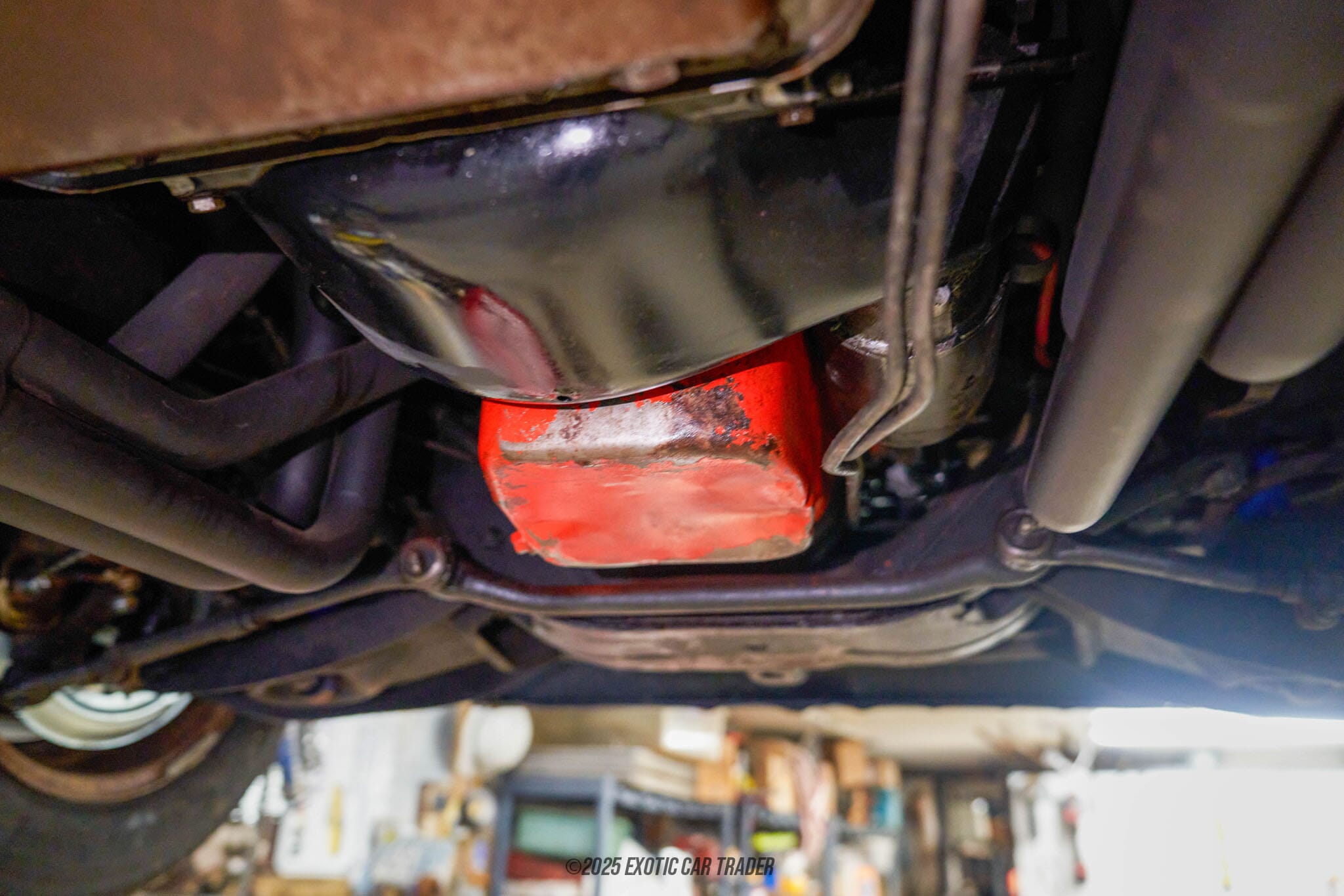
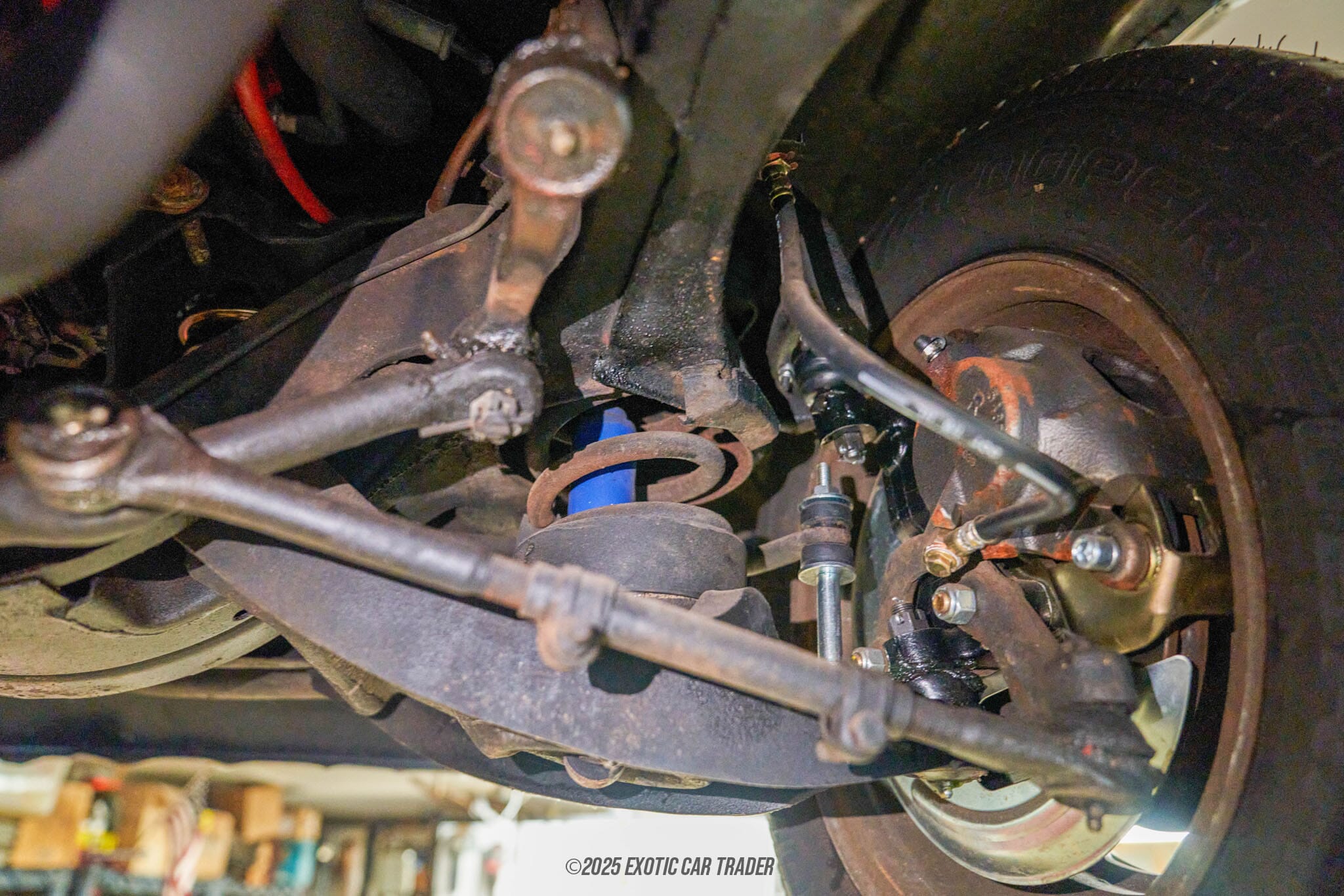
Under the hood of this 1968 Chevrolet Camaro is a 327ci V8 powerhouse that is reportedly factory rated at 210 BHP. It utilizes an automatic transmission to send power to the rear wheels. Meanwhile, front disc brakes enhance stopping power.


The 1971 Chevrolet Camaro marked the beginning of a new era for Chevrolet's pony car. While the second-generation Camaro retained its unmistakable long-hood, short-deck proportions, it adopted a more European-inspired design with improved handling and a driver-focused cockpit. This example has been tastefully transformed into a Z/28 Tribute, combining the iconic appearance of Chevrolet's legendary Trans-Am-inspired performance model with the added muscle of a Blueprint-built 383ci stroker V8. Finished in striking Viper Red with classic Black Z/28 stripes, this Camaro delivers the aggressive looks, V8 soundtrack, and engaging four-speed driving experience that enthusiasts seek from a classic American muscle car.
The 1968 Chevrolet Camaro Rally Sport represents one of the most desirable years of the first-generation Camaro, combining iconic styling, aggressive proportions, and classic American muscle car performance. Showing 99,814 miles, this example features a big-block 454ci V8, 4-speed manual transmission, and rear-wheel drive, creating the engaging driving experience that has made Camaros legendary among enthusiasts. Finished in a bold Yellow exterior with Black Rally Stripes, this Camaro features Rally Sport appearance styling, SS badging, upgraded performance components, and a traditional muscle car interior. With its combination of first-generation Camaro heritage, big-block power, and classic manual-transmission configuration, this RS represents the timeless appeal of Chevrolet’s golden era of performance.
The 2021 Chevrolet Camaro ZL1 Coupe is already one of the most serious modern muscle cars Chevrolet has built, but this example takes the formula much further with a heavily upgraded forced-induction build from Complete Street Performance. Showing 16,439 miles, it pairs a 6.2L supercharged V8 with a 6-speed manual transmission, rear-wheel drive, Magnetic Ride Control, and a 3.73 rear axle ratio. Finished in Riverside Blue Metallic beneath a Satin Black vinyl wrap and fitted with an Anderson carbon fiber wing, this ZL1 backs up its aggressive look with serious hardware, including a Magnuson 2650 supercharger, CSP longtube headers, upgraded fuel system, custom CSP camshaft, CNC-ported heads, upgraded valvetrain, Monster triple-disc clutch, and Corsa exhaust system.
The 1971 Chevrolet Camaro marked the beginning of a new era for Chevrolet's pony car. While the second-generation Camaro retained its unmistakable long-hood, short-deck proportions, it adopted a more European-inspired design with improved handling and a driver-focused cockpit. This example has been tastefully transformed into a Z/28 Tribute, combining the iconic appearance of Chevrolet's legendary Trans-Am-inspired performance model with the added muscle of a Blueprint-built 383ci stroker V8. Finished in striking Viper Red with classic Black Z/28 stripes, this Camaro delivers the aggressive looks, V8 soundtrack, and engaging four-speed driving experience that enthusiasts seek from a classic American muscle car.
The 1954 Chevrolet 3100 is one of the most recognizable American pickup trucks ever built, celebrated for its Advance-Design styling and timeless proportions. While its classic lines remain unmistakable, this example has been comprehensively transformed into a modern restomod that blends vintage character with contemporary performance and drivability. Showing just 1,480 miles since completion, it features a professionally engineered chassis, upgraded suspension, fuel-injected V8 power, and numerous comfort amenities, making it equally suited for weekend cruising, cross-country road trips, or the show field.
The 1955 Chevrolet Bel Air is one of the most celebrated icons of the Tri-Five era, prized for its clean styling and endless potential as a performance build. This 1955 Chevrolet Bel Air 2-Door Sedan Restomod takes that timeless formula and elevates it with modern performance, upgraded suspension, and dependable drivability. Showing 3,790 miles on the odometer, the current owner reports approximately 800 miles on the current build. Offered from Florida, this Bel Air is finished in a striking custom two-tone Red and White paint scheme over a matching White and Red interior. With a fuel-injected 383 stroker V8, four-wheel disc brakes, adjustable coilover suspension, and numerous mechanical upgrades, this is a classic Chevrolet built to be driven and enjoyed.
The 1971 Chevrolet Camaro marked the beginning of a new era for Chevrolet's pony car. While the second-generation Camaro retained its unmistakable long-hood, short-deck proportions, it adopted a more European-inspired design with improved handling and a driver-focused cockpit. This example has been tastefully transformed into a Z/28 Tribute, combining the iconic appearance of Chevrolet's legendary Trans-Am-inspired performance model with the added muscle of a Blueprint-built 383ci stroker V8. Finished in striking Viper Red with classic Black Z/28 stripes, this Camaro delivers the aggressive looks, V8 soundtrack, and engaging four-speed driving experience that enthusiasts seek from a classic American muscle car.
For many enthusiasts, the 1967 Buick Riviera represents the pinnacle of Buick's personal luxury era. Widely regarded as one of Bill Mitchell's finest designs, the second-generation Riviera combined razor-sharp styling with effortless V8 performance, creating a grand touring coupe that could comfortably compete with the Ford Thunderbird while maintaining a character all its own. Beneath its sculpted sheet metal lies Buick's legendary 430ci Nailhead successor, an engine celebrated for its immense torque delivery and smooth highway manners. Showing 19,594 miles, this Riviera is finished in elegant Goldmist Metallic over a Black interior with a Black vinyl roof, presenting a timeless combination on one of GM's most iconic personal luxury cars.
The 1955 Chevrolet Bel Air is one of the most celebrated icons of the Tri-Five era, prized for its clean styling and endless potential as a performance build. This 1955 Chevrolet Bel Air 2-Door Sedan Restomod takes that timeless formula and elevates it with modern performance, upgraded suspension, and dependable drivability. Showing 3,790 miles on the odometer, the current owner reports approximately 800 miles on the current build. Offered from Florida, this Bel Air is finished in a striking custom two-tone Red and White paint scheme over a matching White and Red interior. With a fuel-injected 383 stroker V8, four-wheel disc brakes, adjustable coilover suspension, and numerous mechanical upgrades, this is a classic Chevrolet built to be driven and enjoyed.

Terms of Service
Be Kind and Courteous
We're here to create a platform to better the automotive industry through communication and transparency. Please treat everyone with respect. Healthy debates are natural, but kindness is required.
No Hate Speech
Make sure everyone feels safe. Hate speech of any kind is strictly prohibited. Degrading comments about things like race, religion, culture, sexual orientation, etc. will not be tolerated.
No Promotions or Spam
Give more than you take. Self-promotion, spam, or links of any kind are not allowed.
