



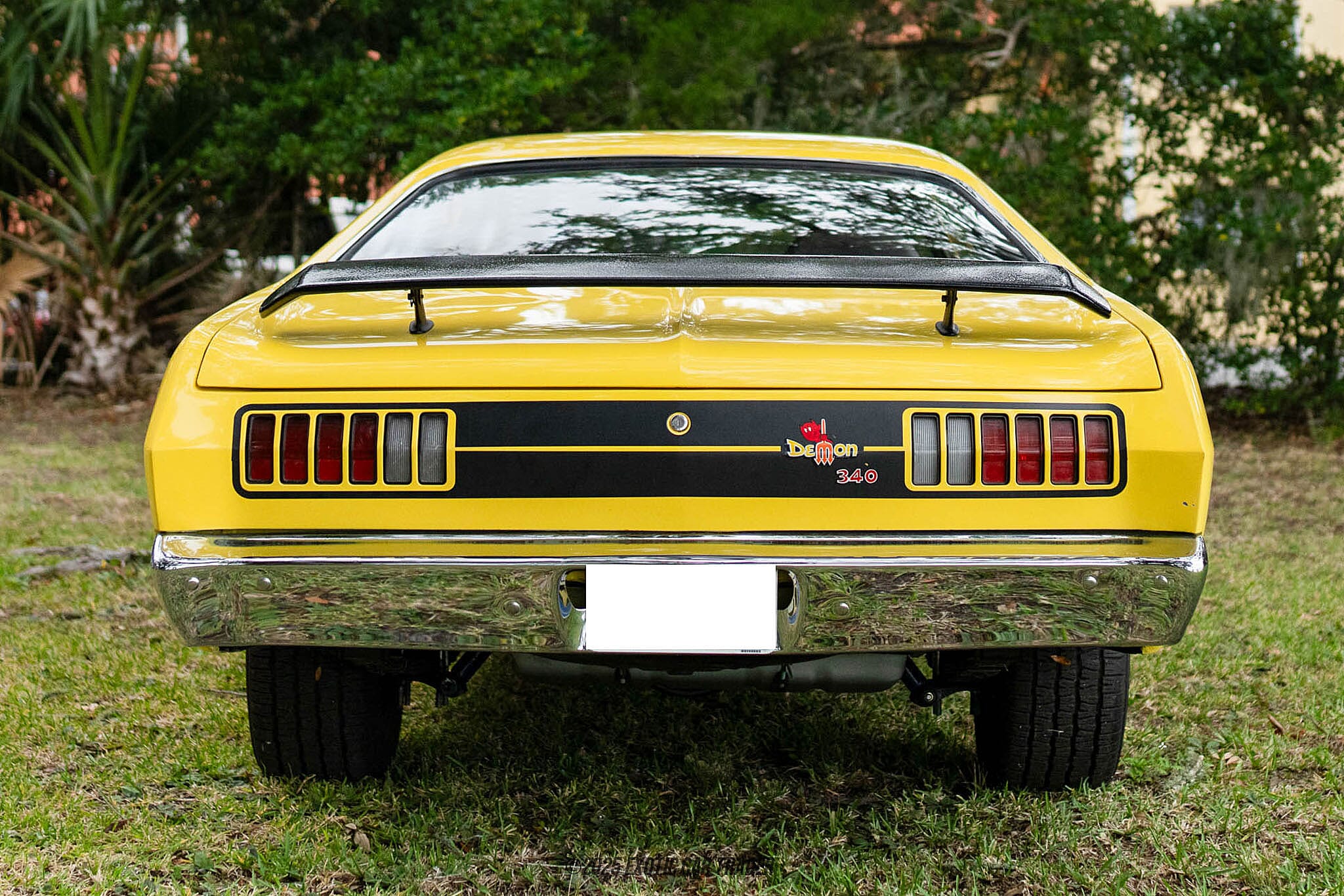
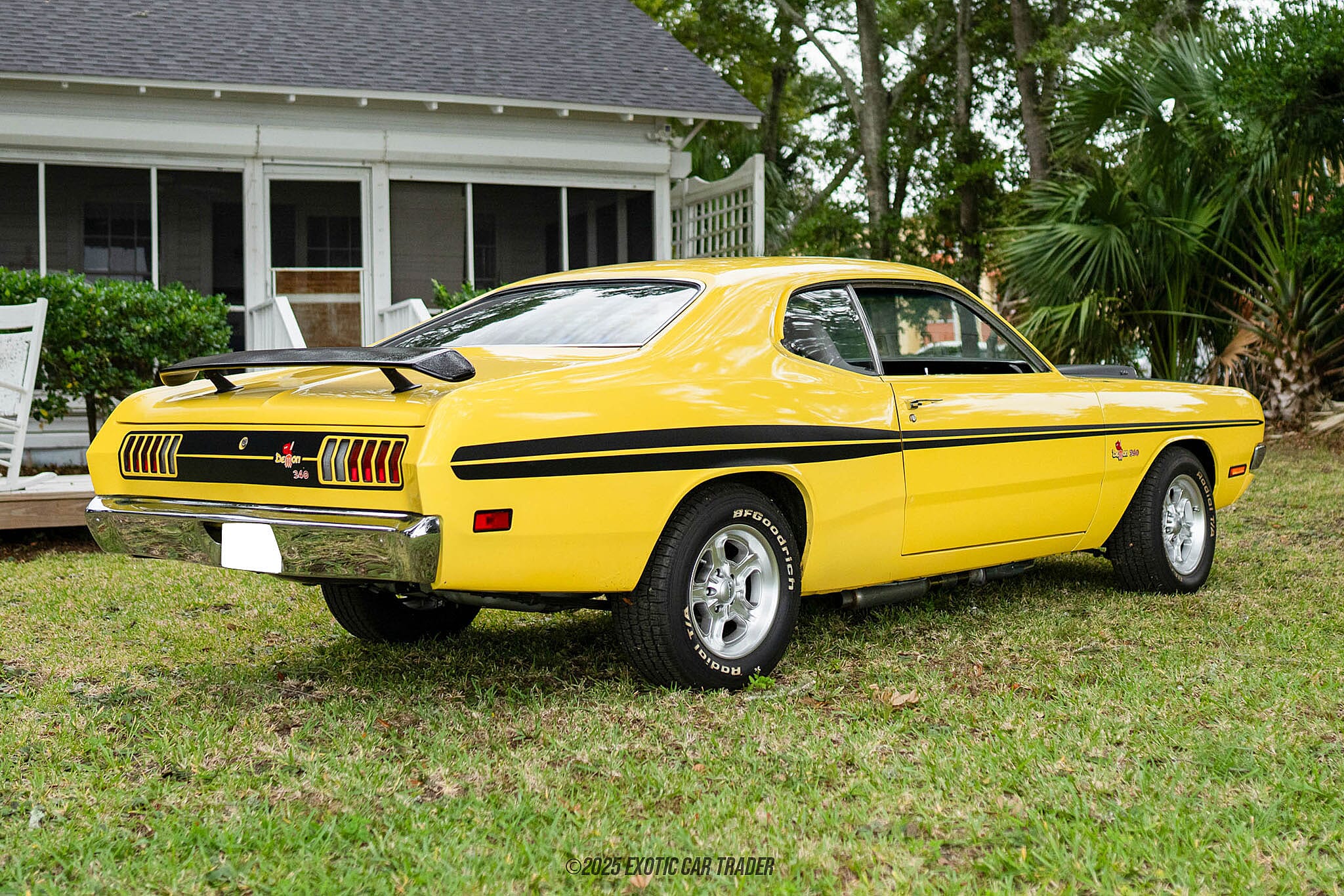
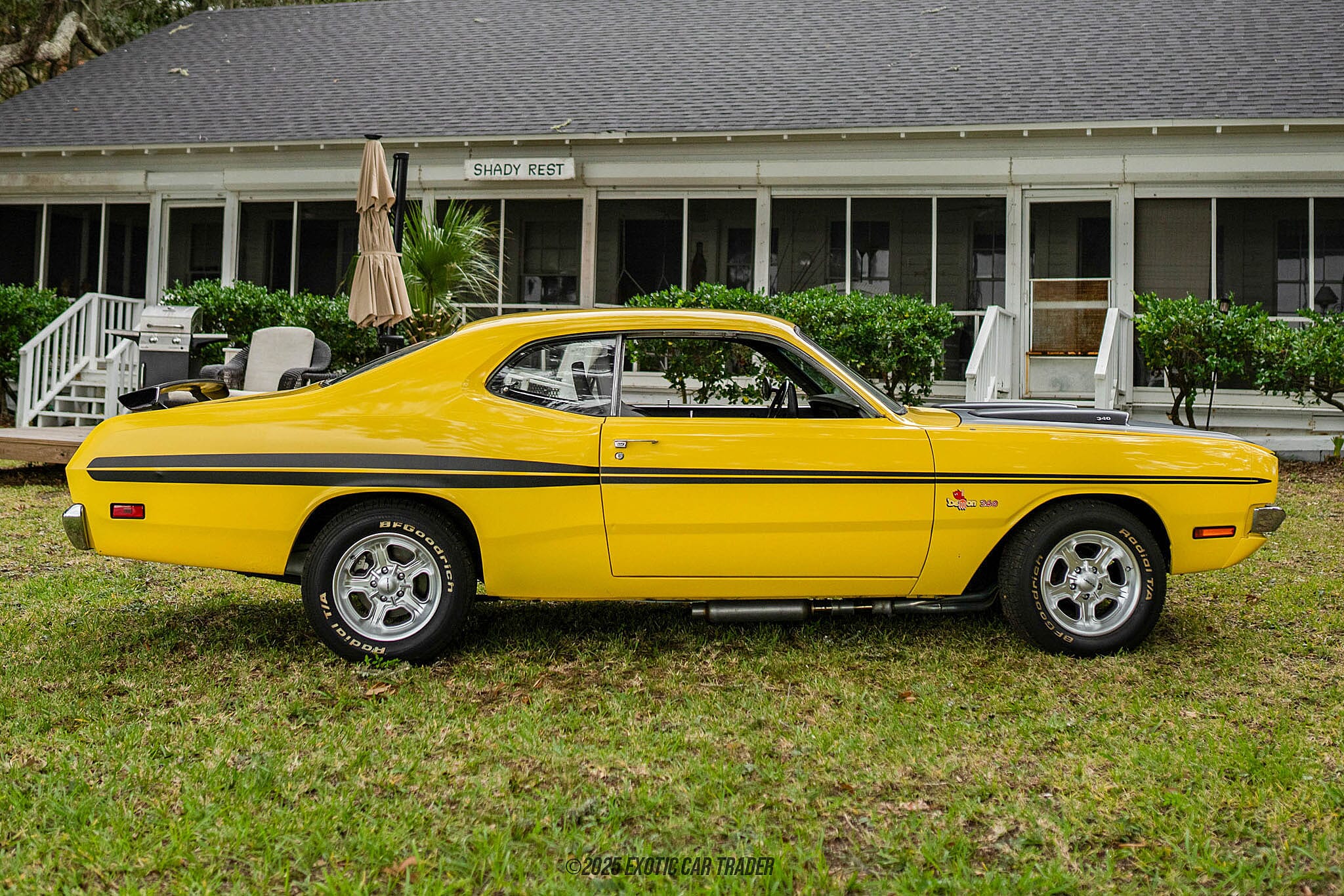

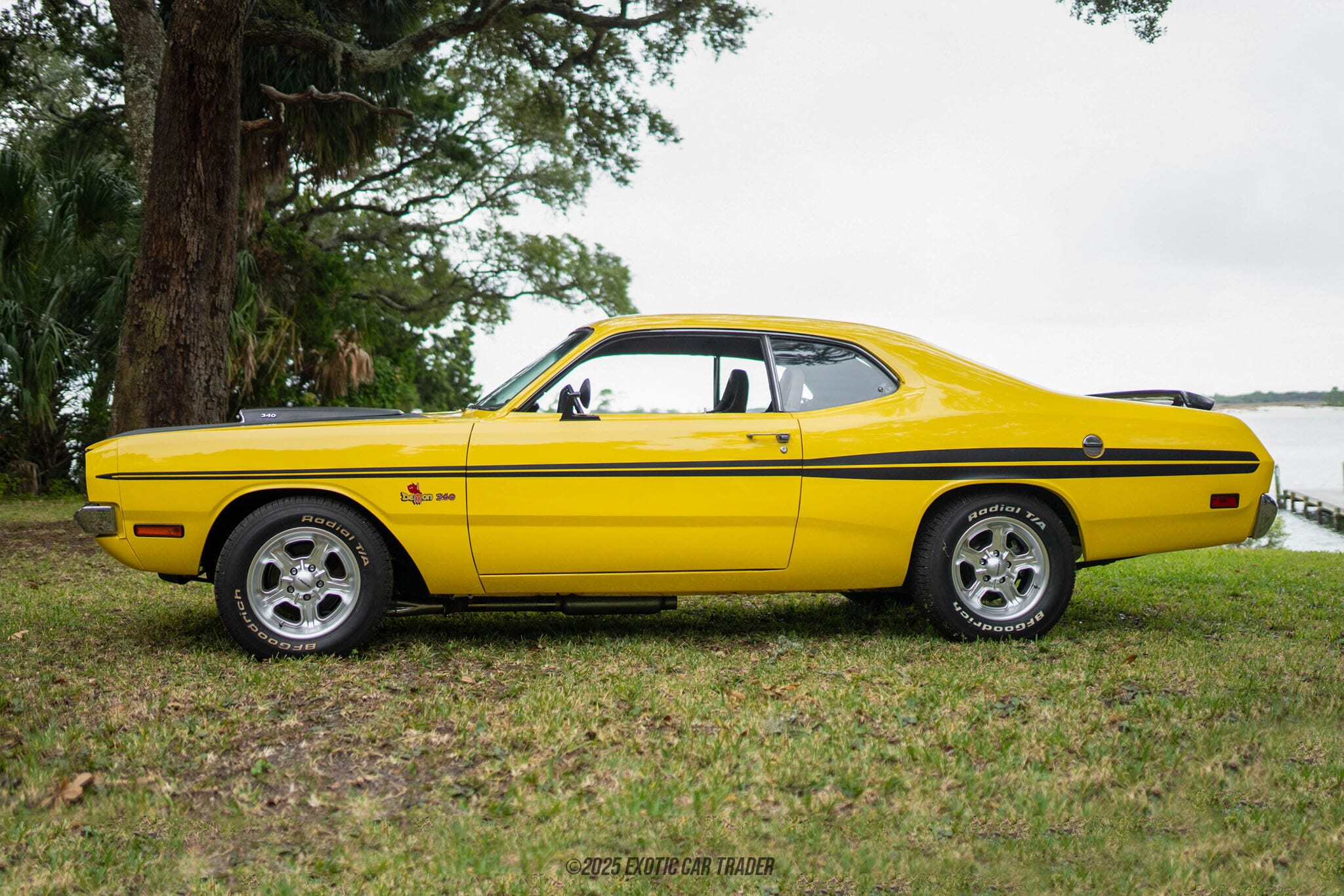
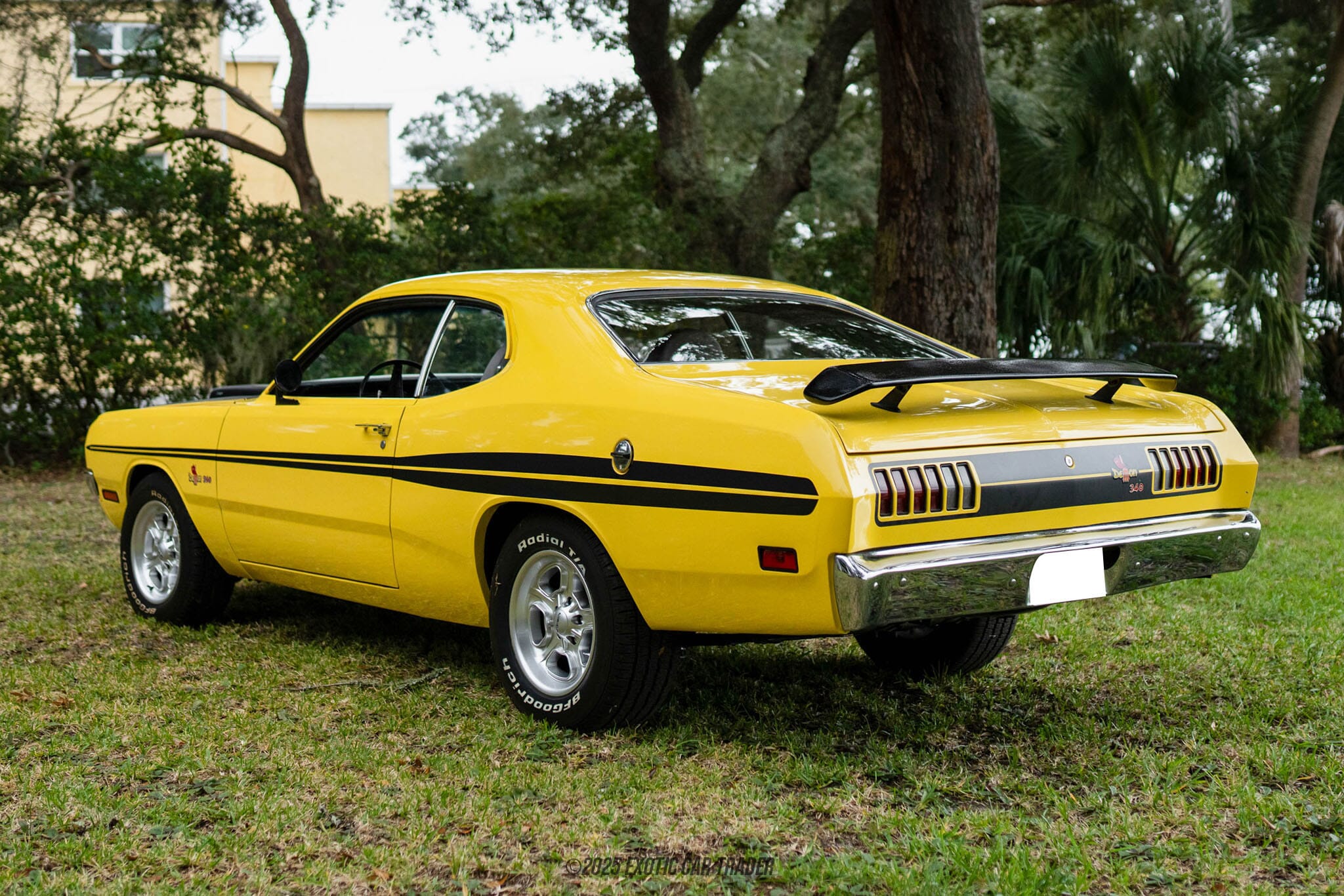
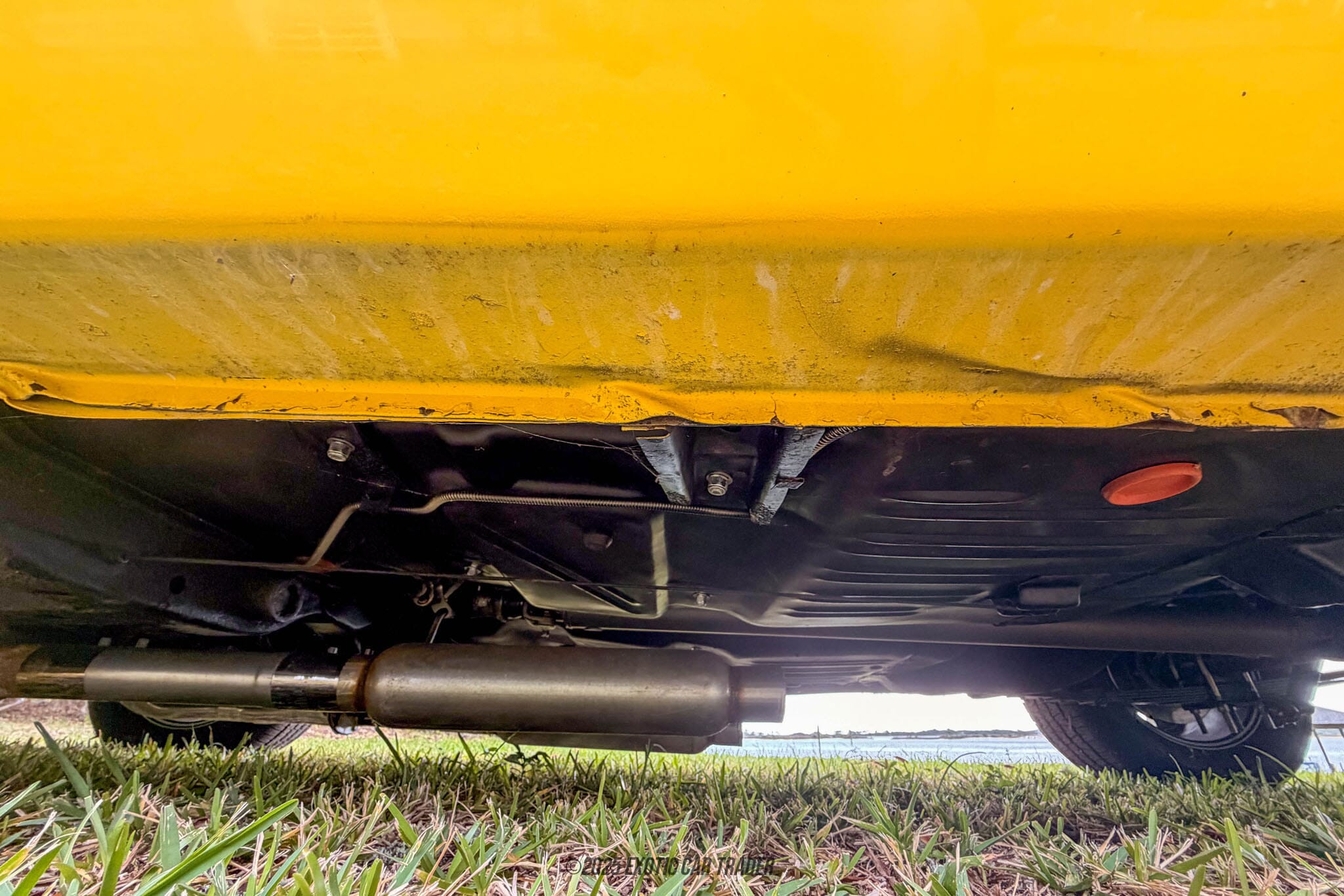
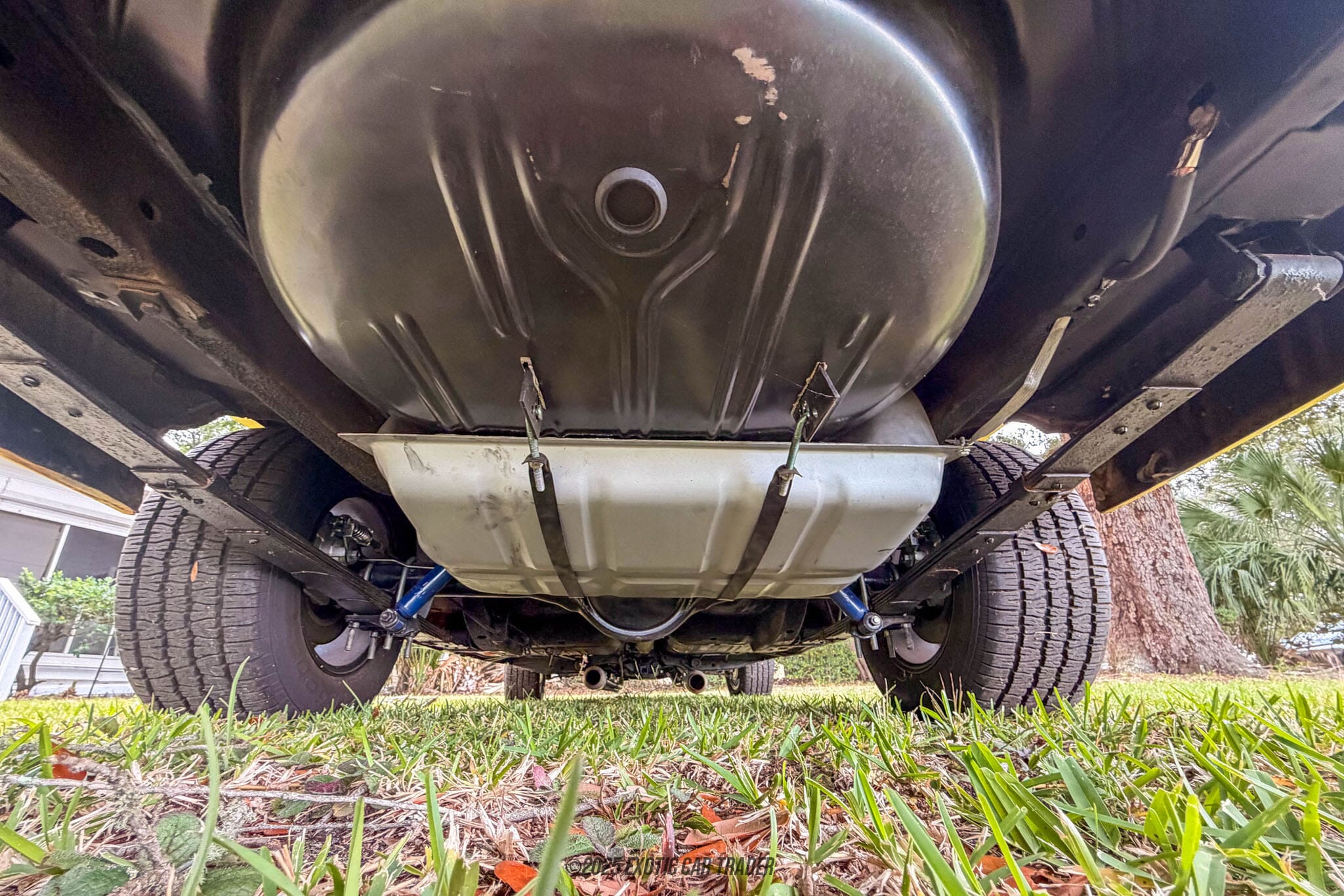
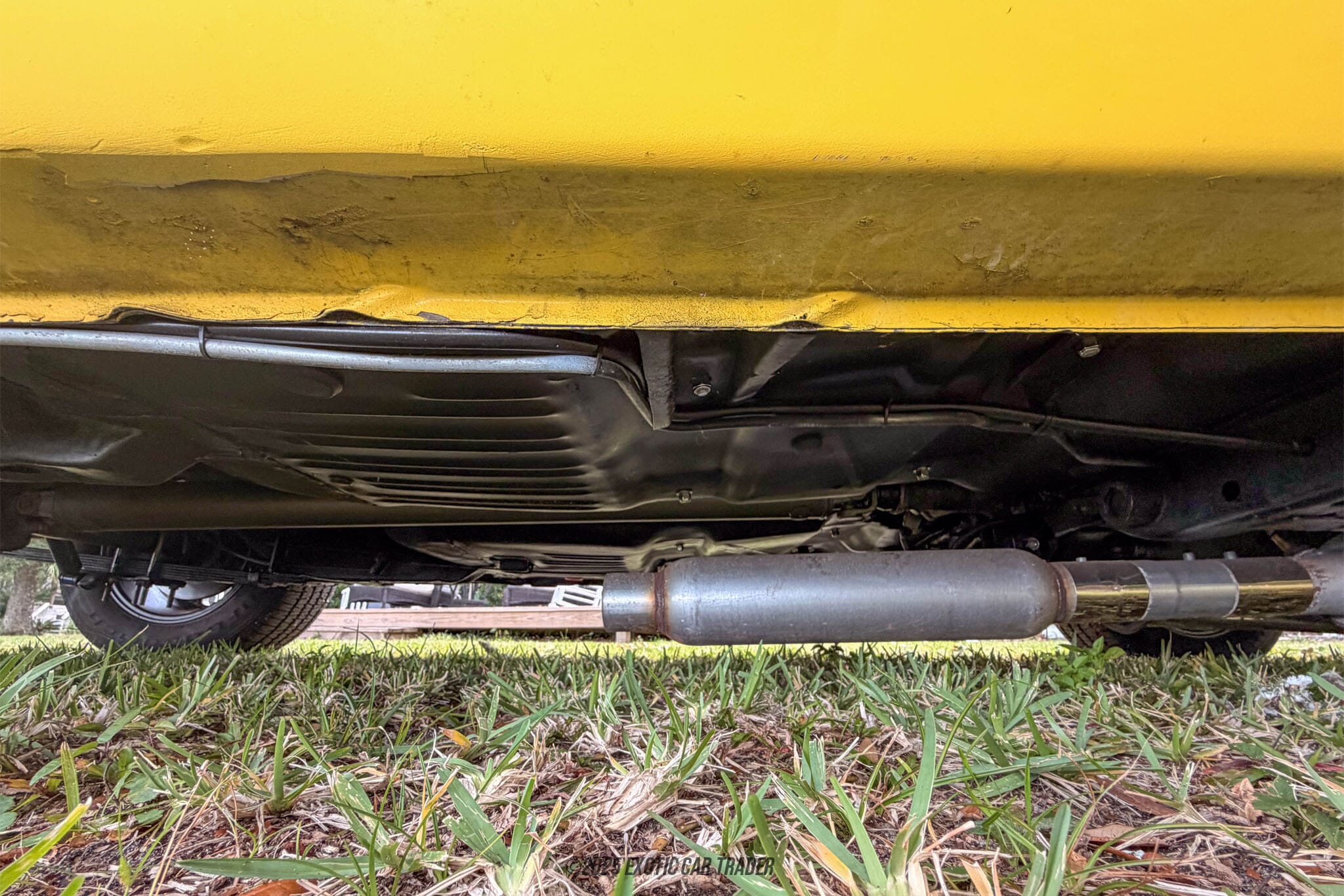
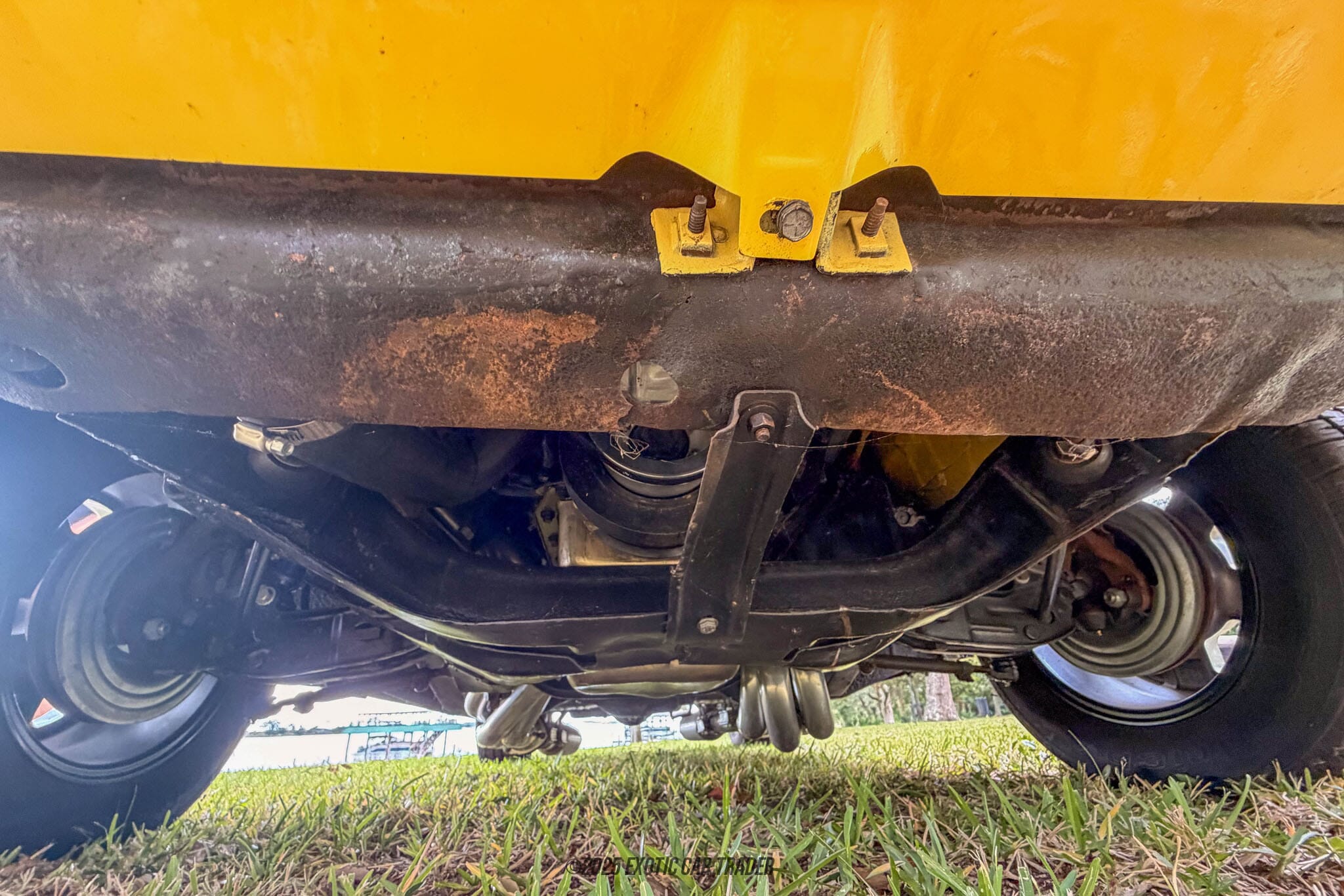


- 1971 Dodge Dart Demon
- 340ci V8
- Indy Cylinder Heads Triple 2-Barrel Carburetors
- 4-Speed Manual
- RWD
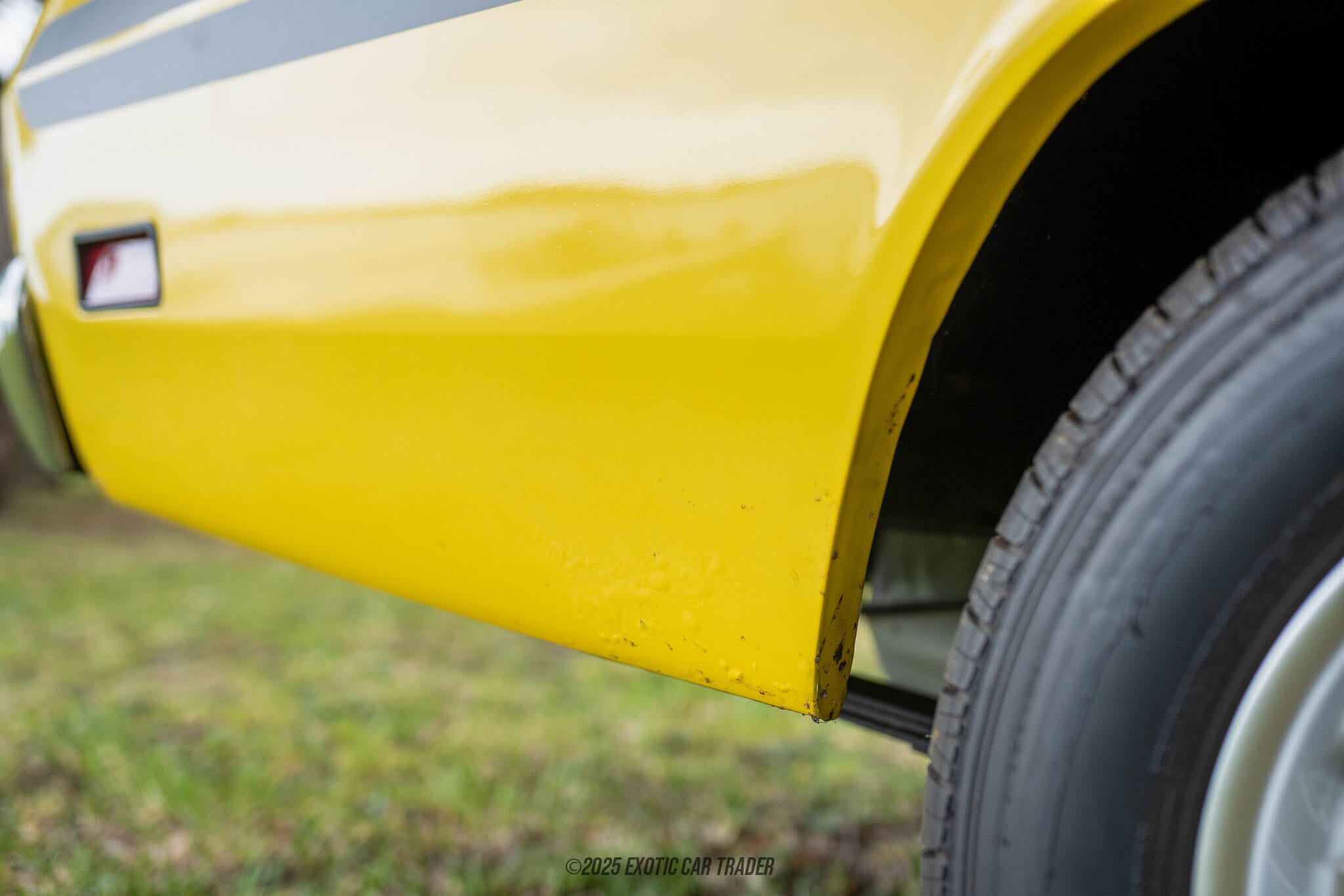
- Yellow Exterior
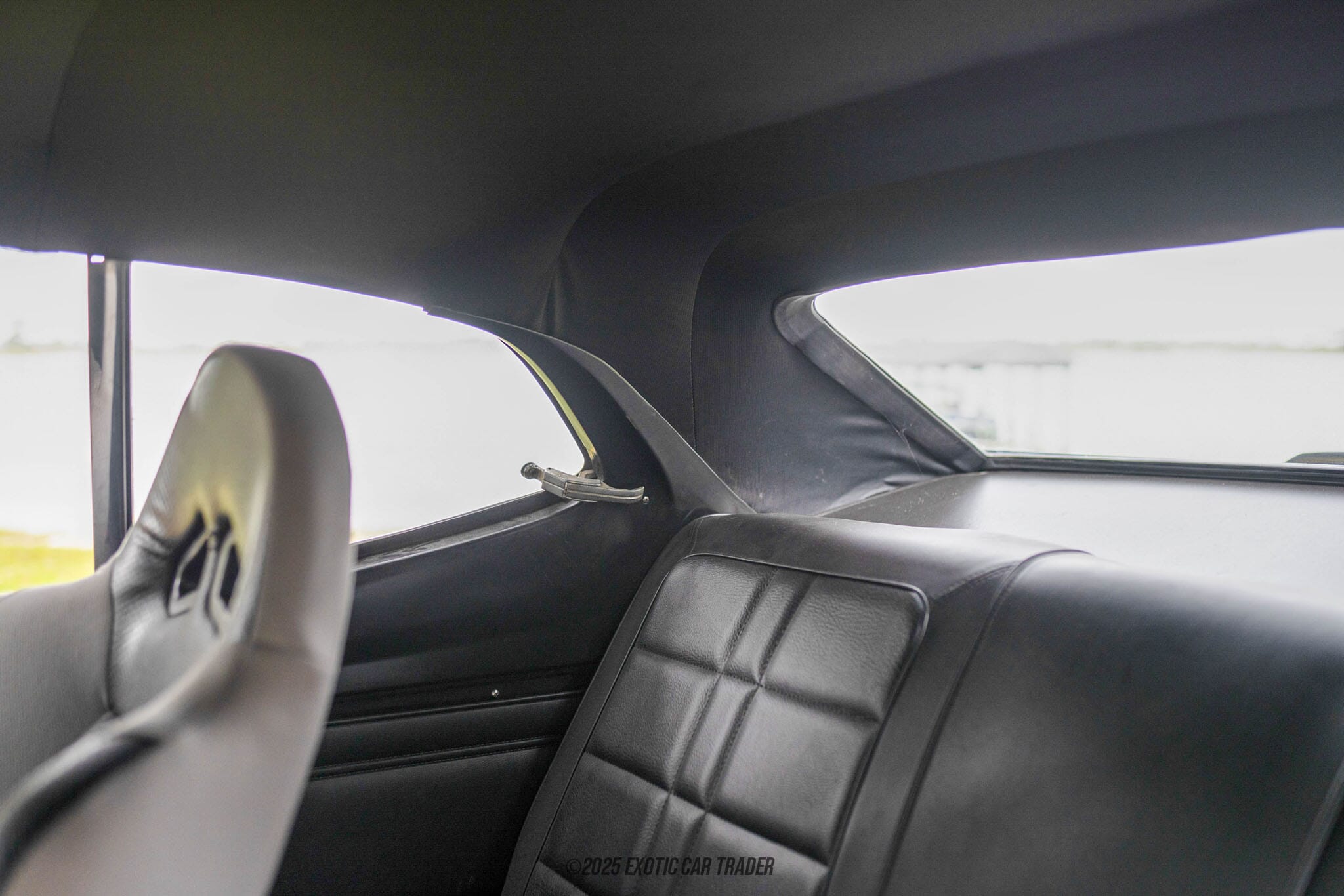
- Black Interior
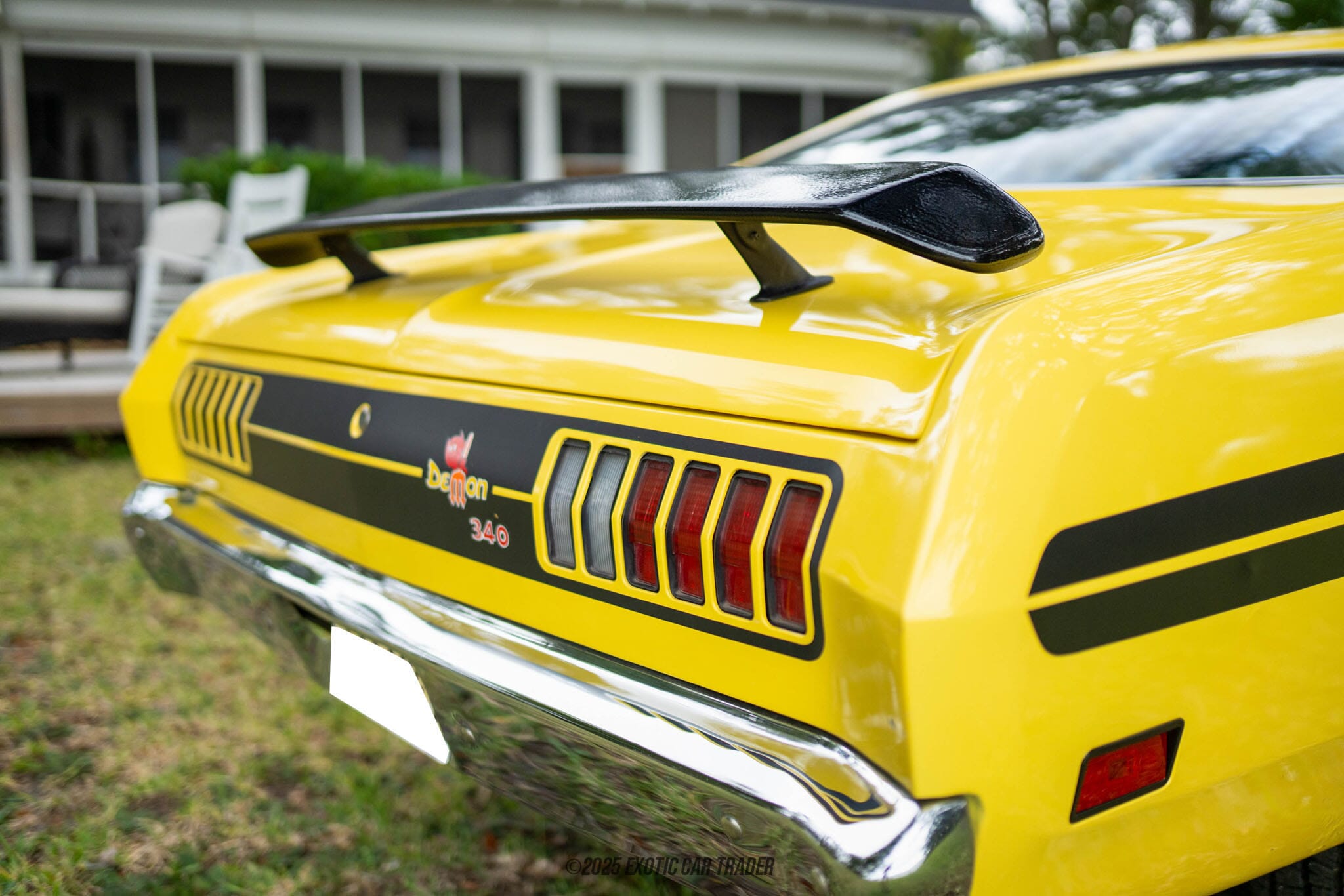
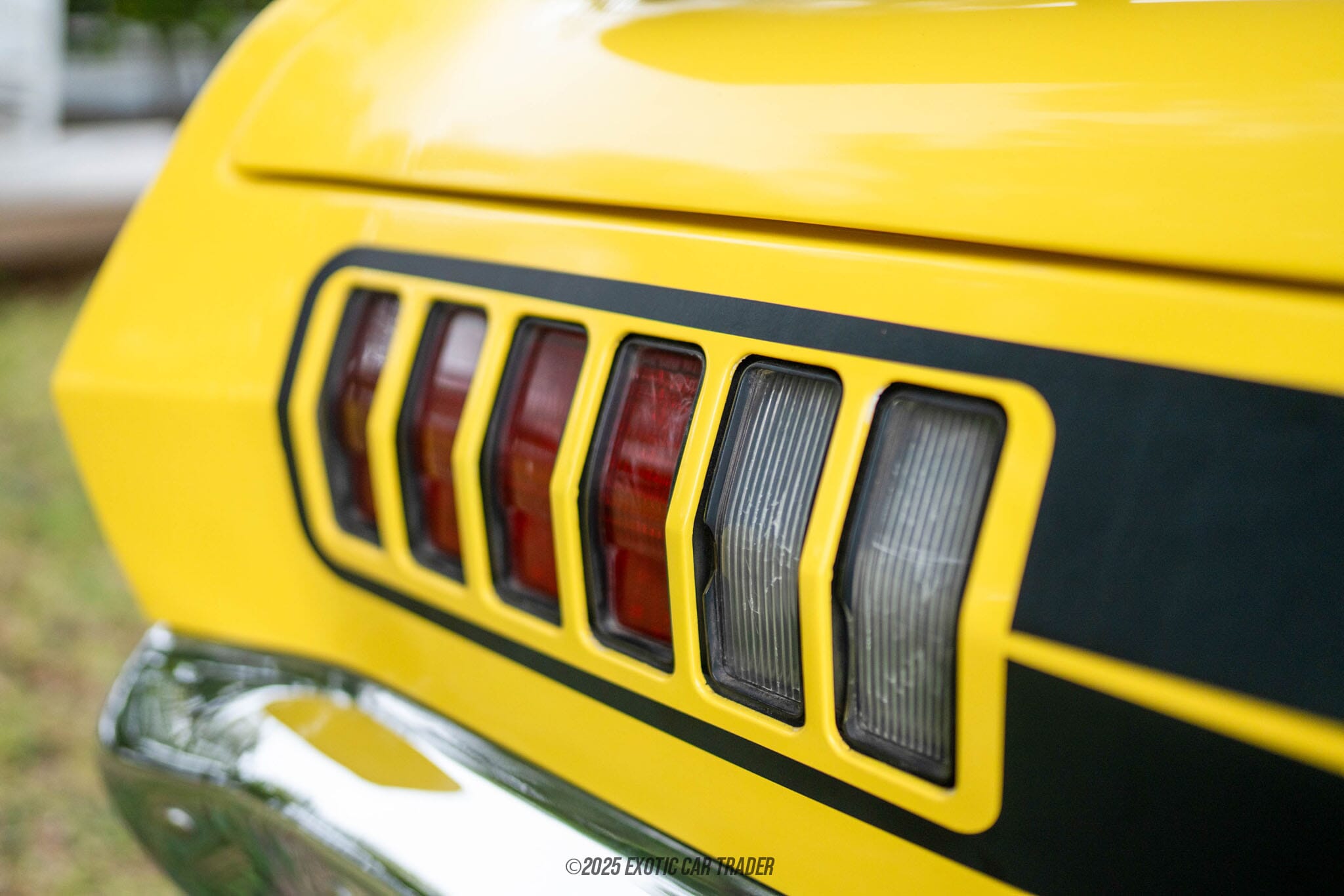
- LED Tail Lights
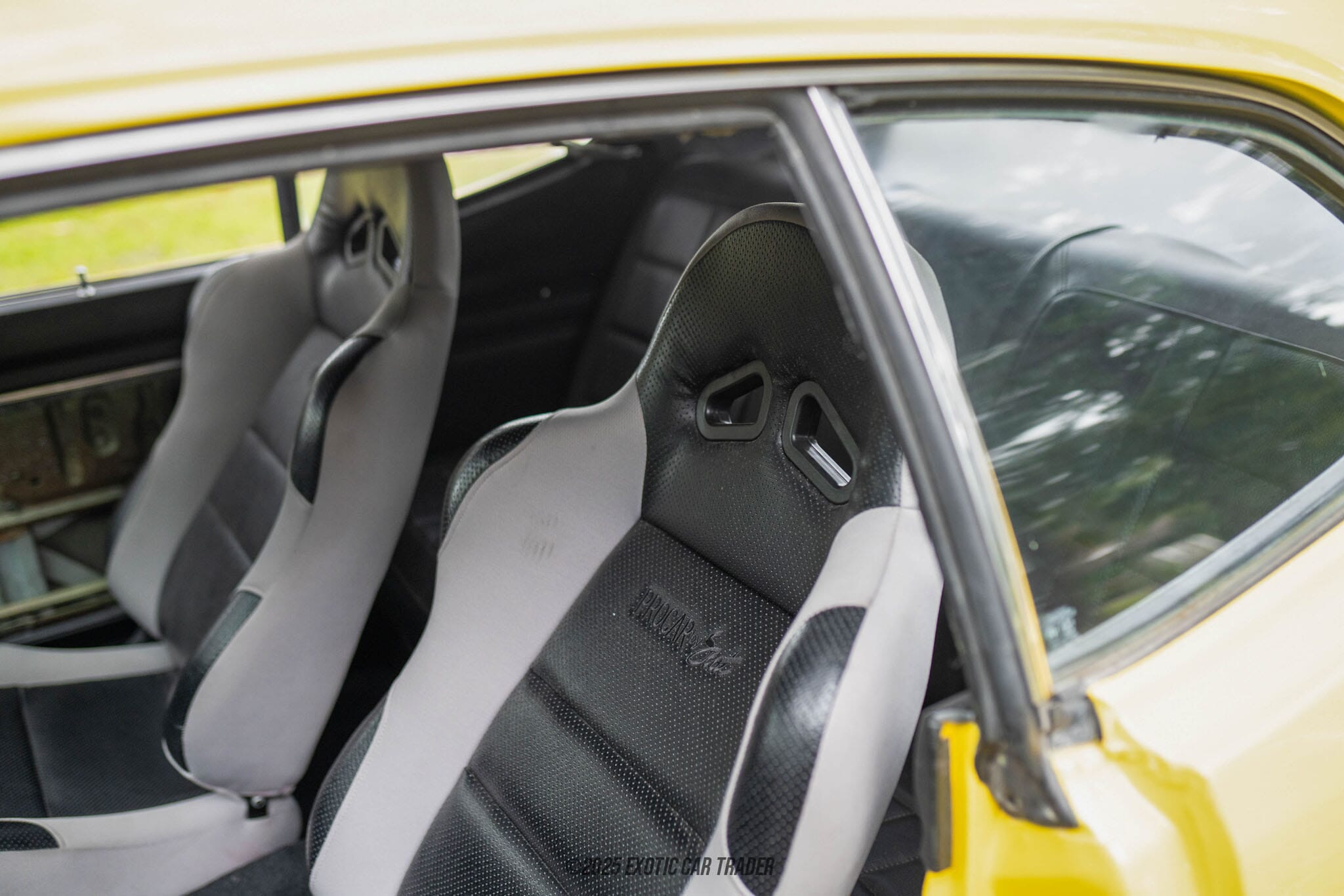
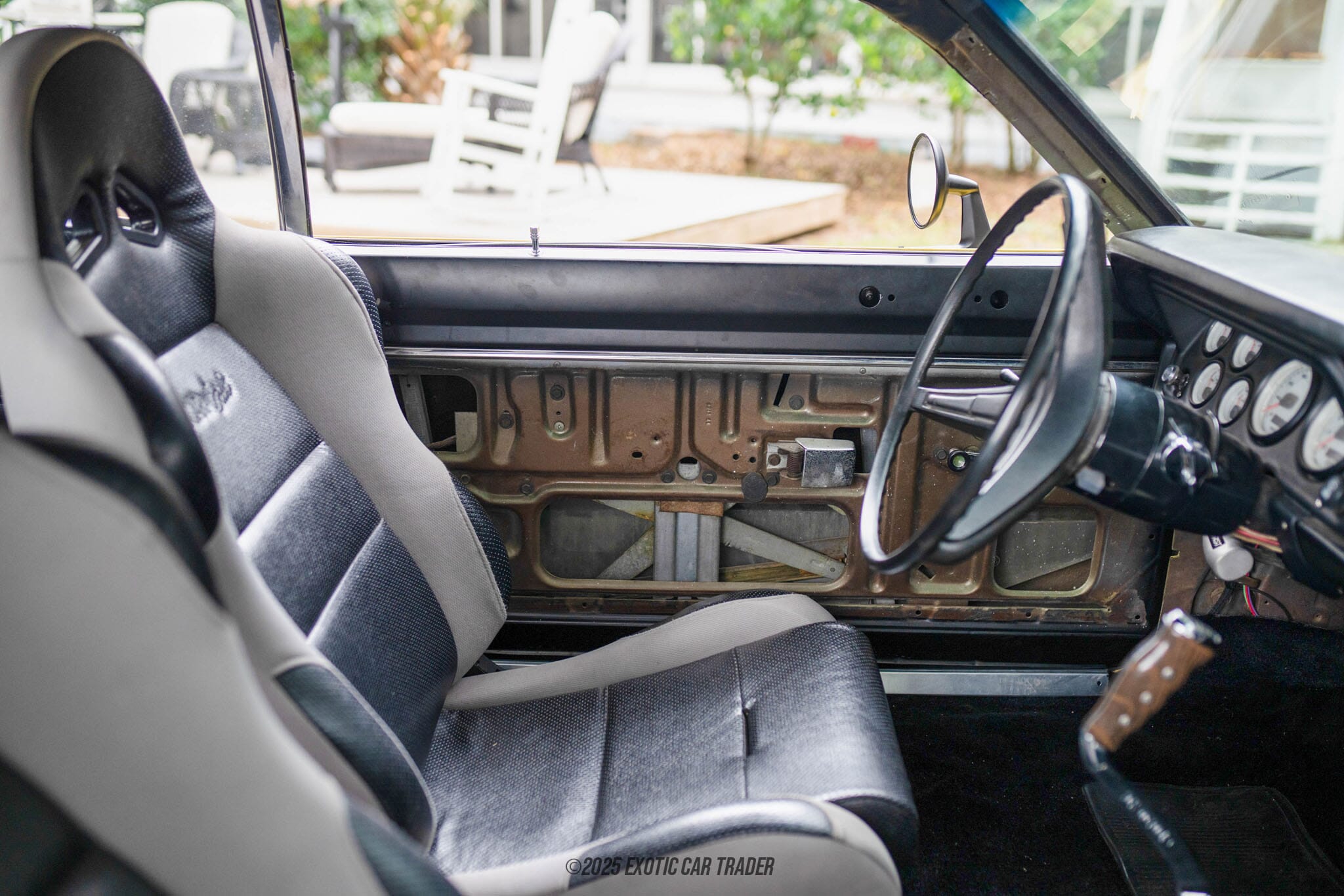
- Reupholstered Interior
- LA Sleeve & Machine Timing Chain Cover
- AMD Roller Cam
- Complete Painless Wiring System
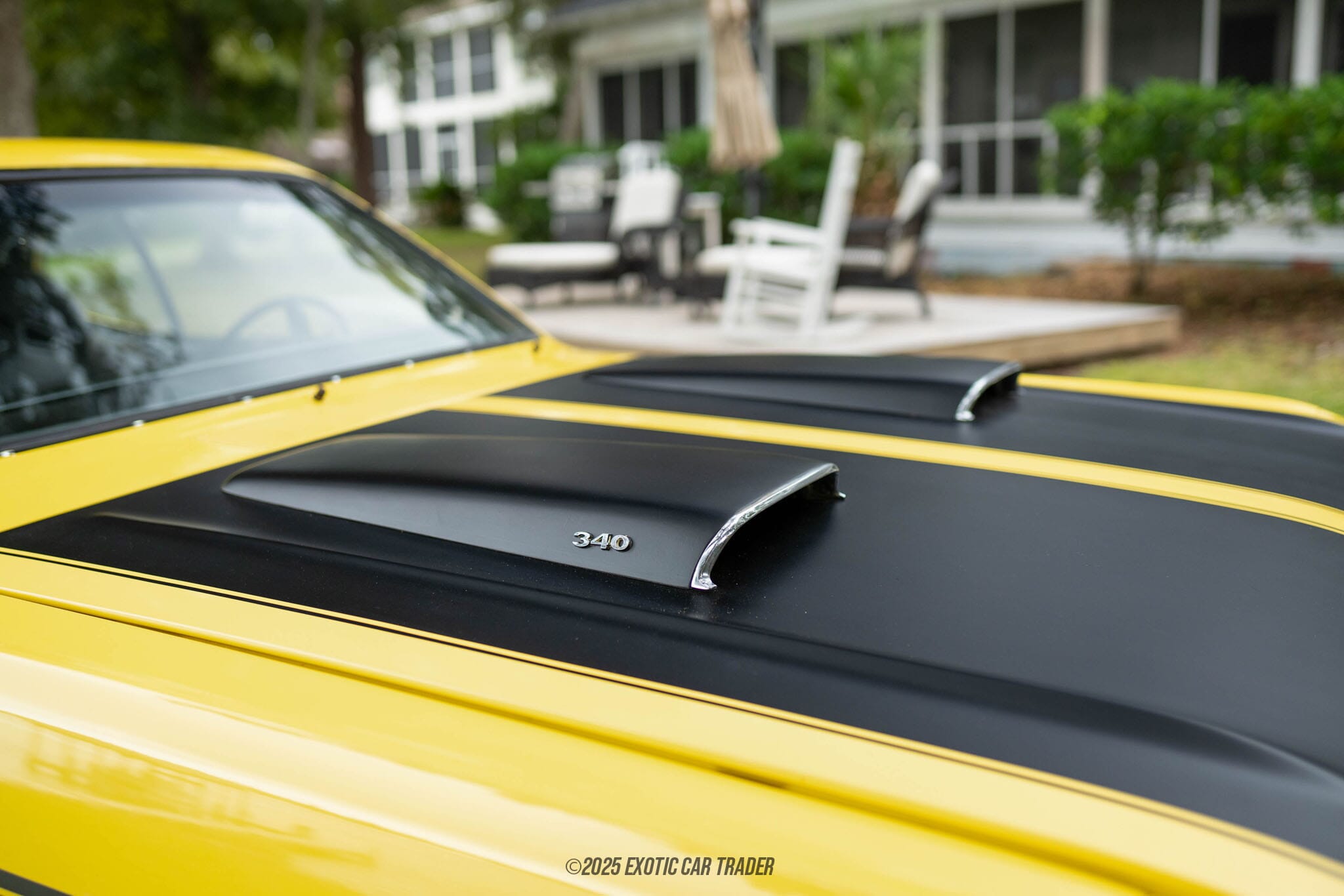
- Dual-Snorkel Hood Scoops
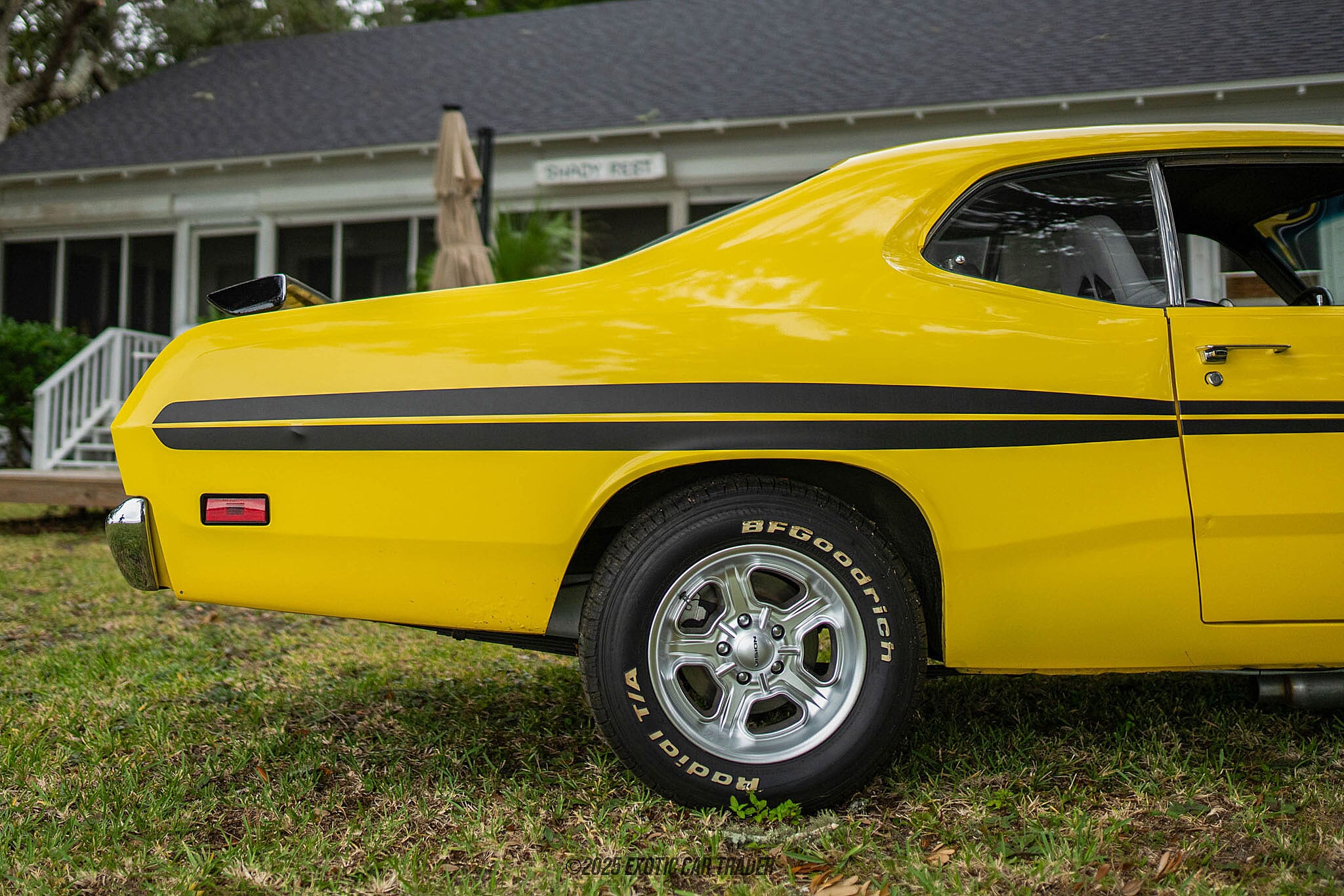
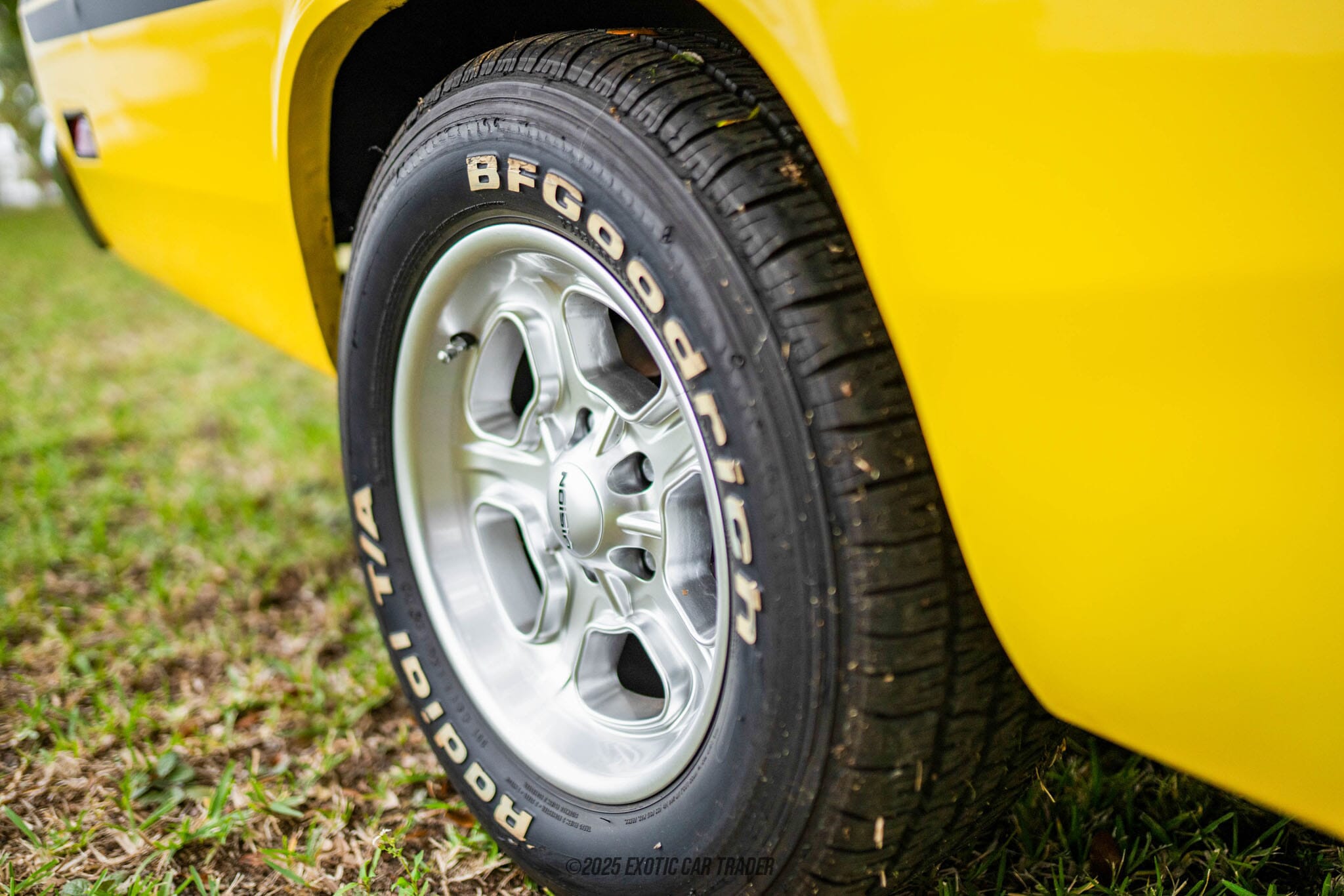
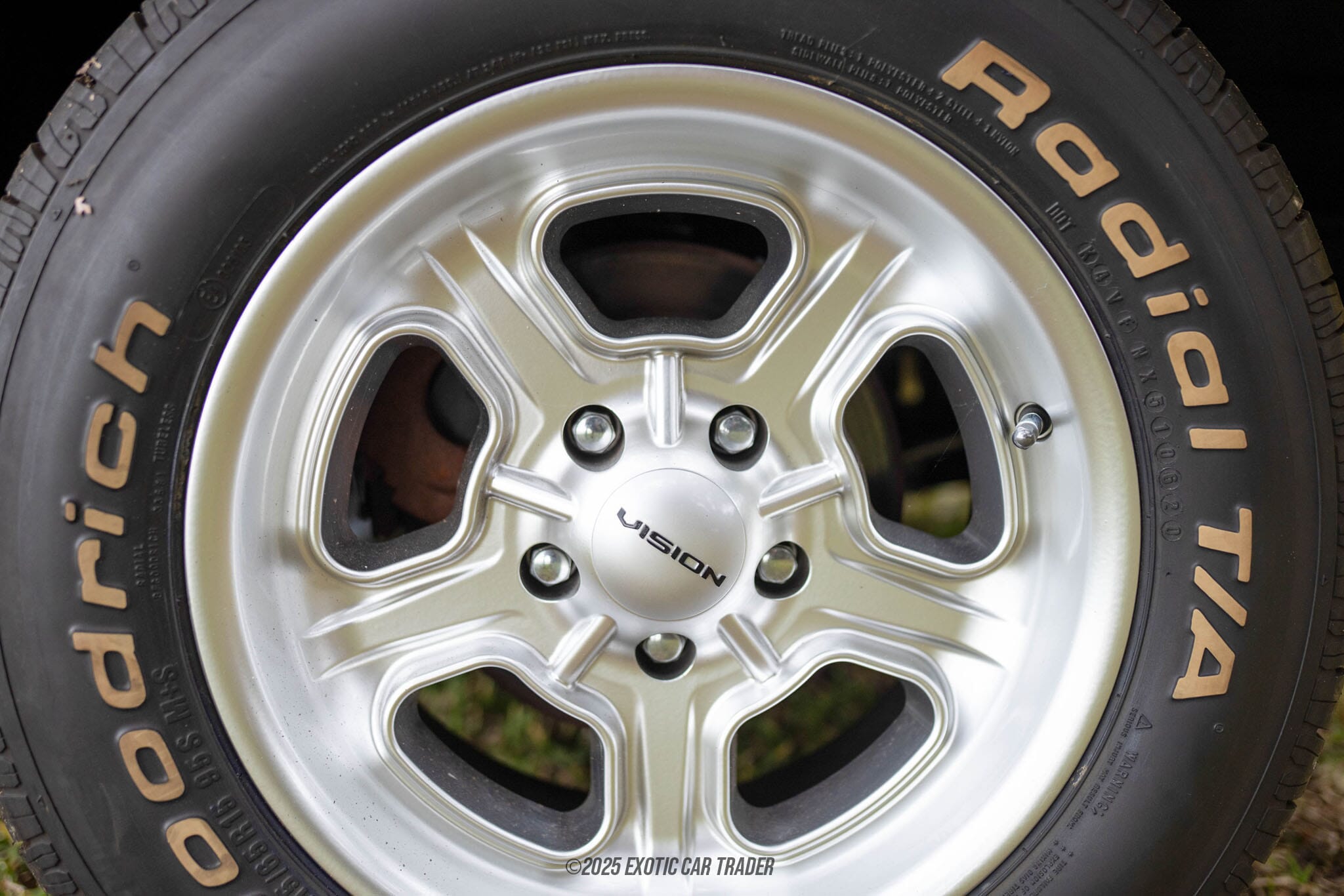
- Vision 5-Spoke Alloy Wheels
- BFGoodrich Radial T/A Tires
- 4-Wheel Disc Brakes
- Demon Replica Build


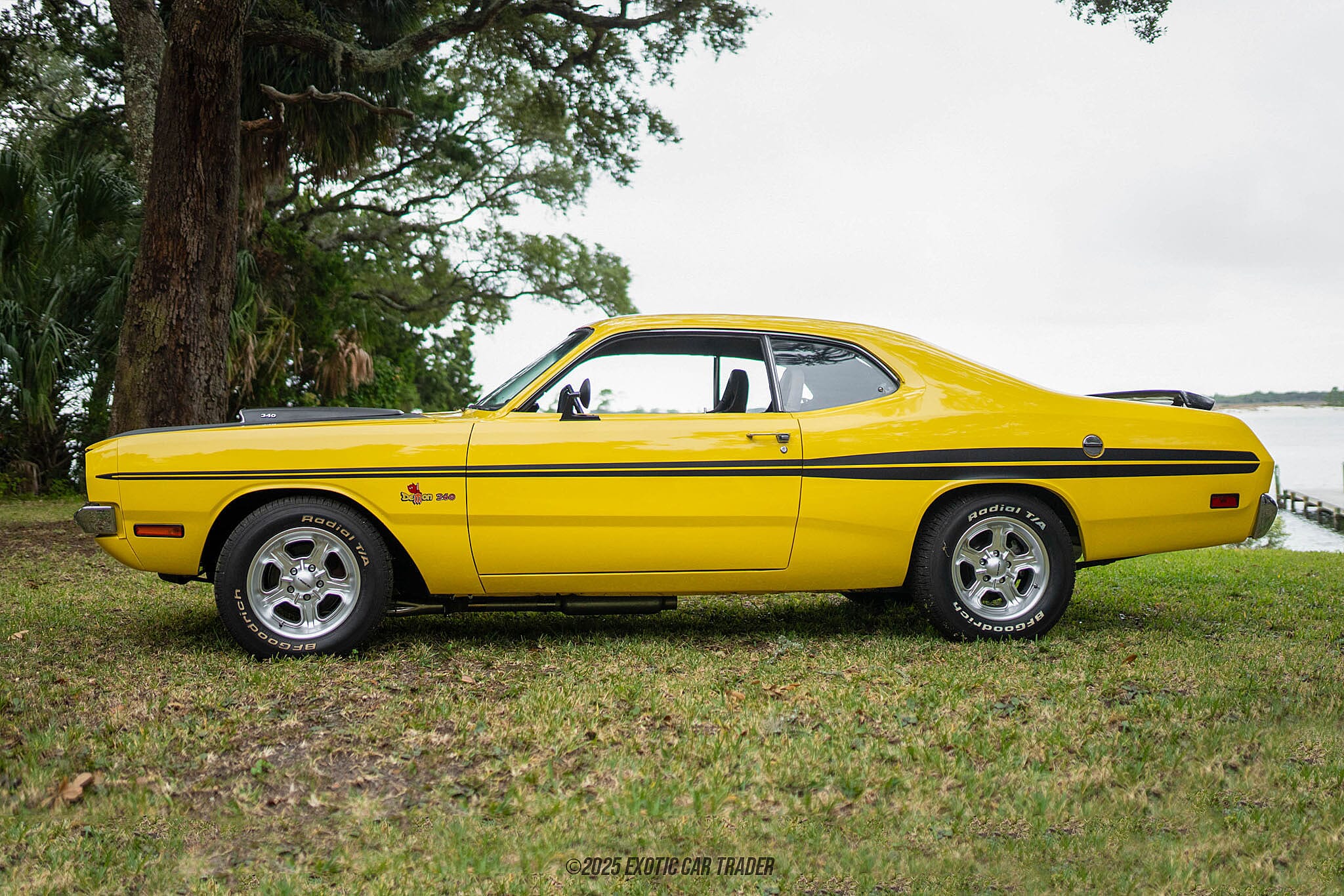
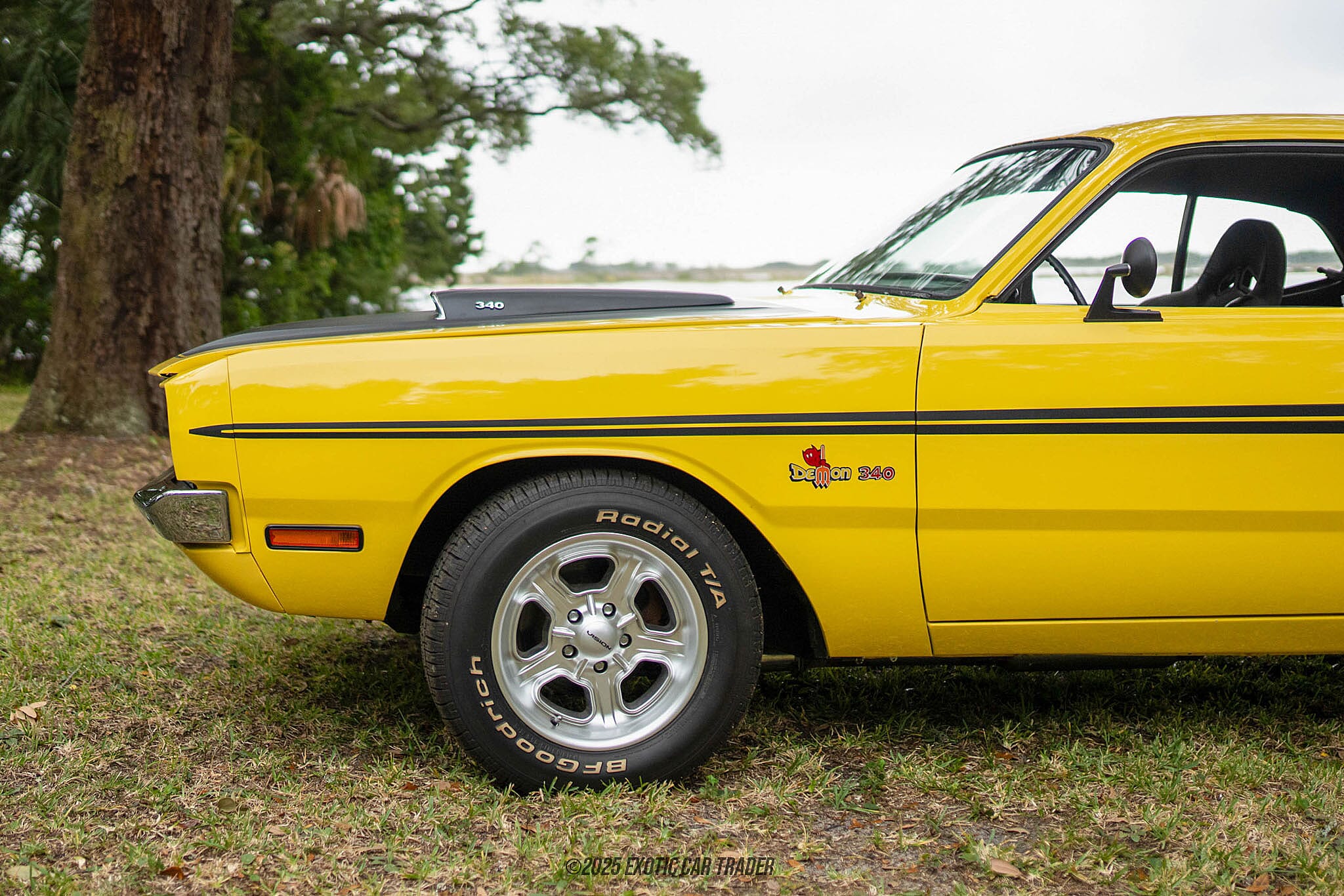
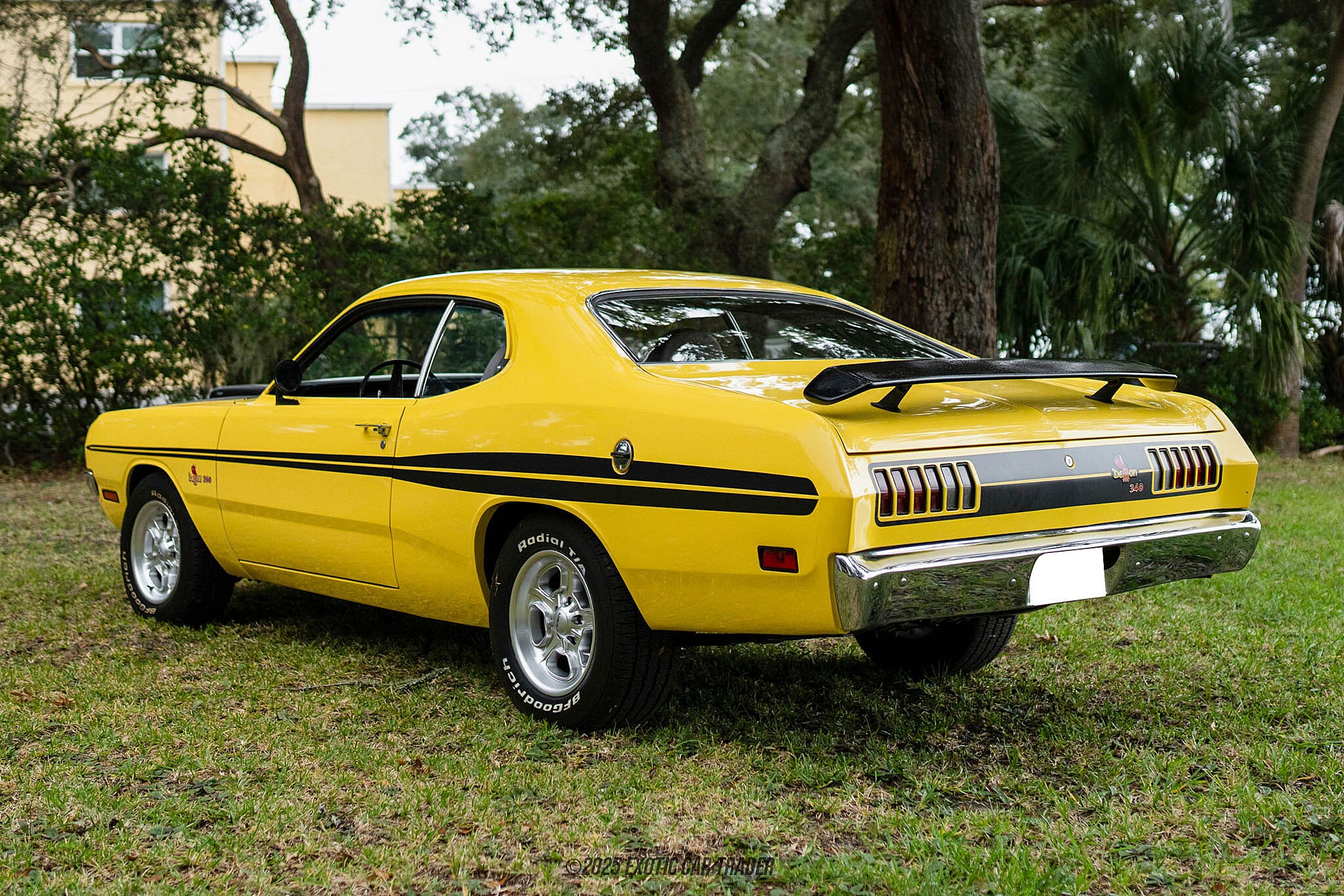
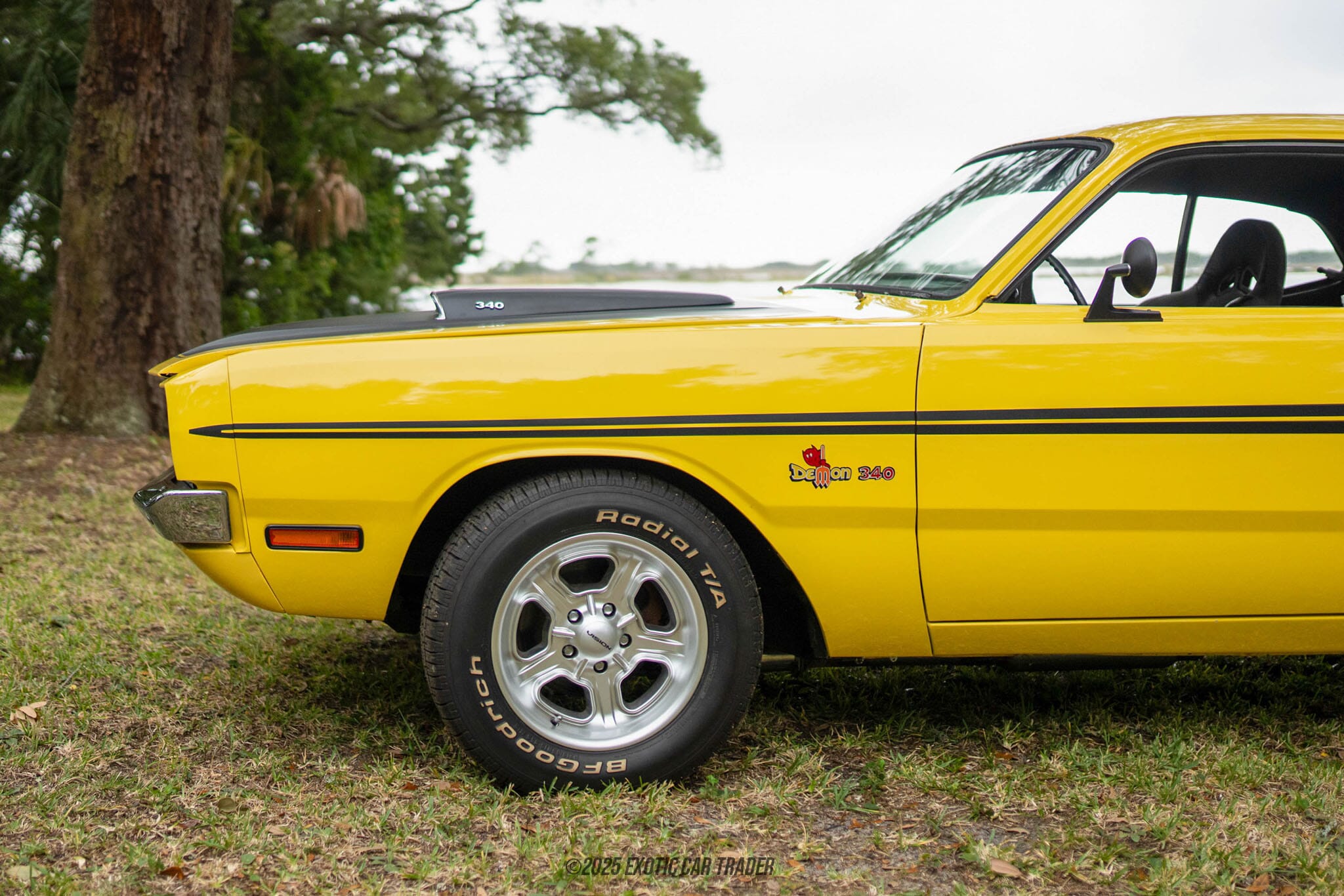
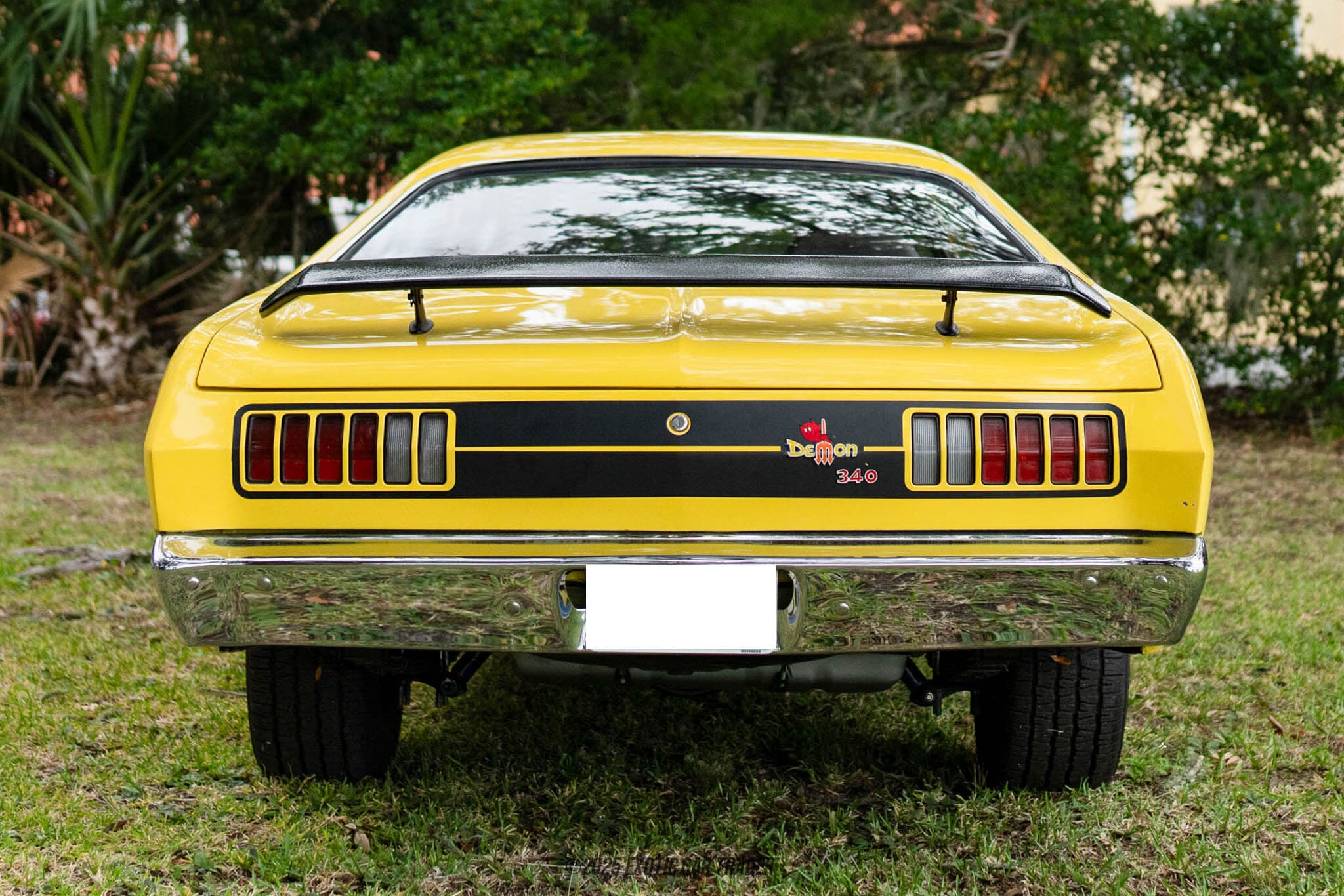
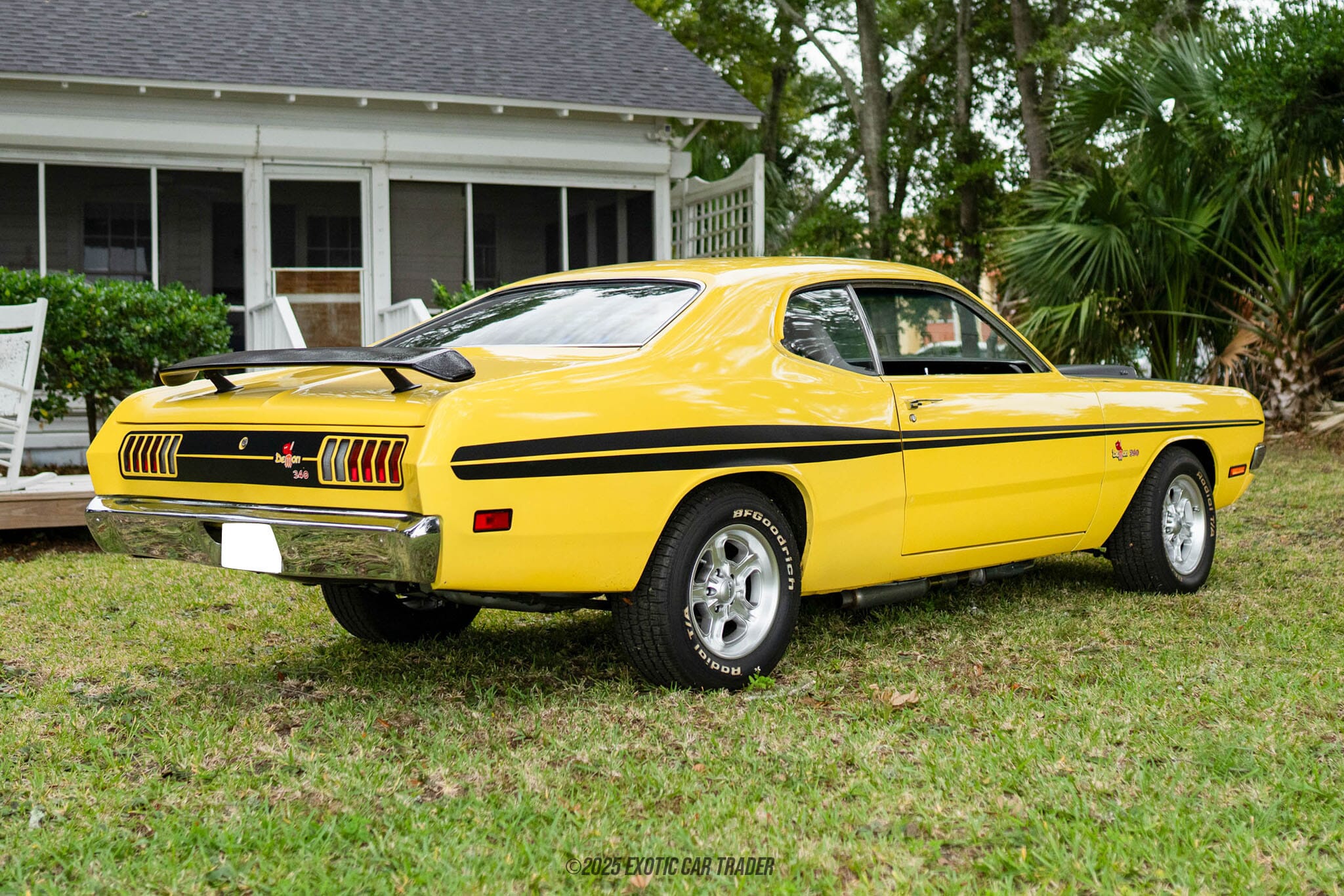
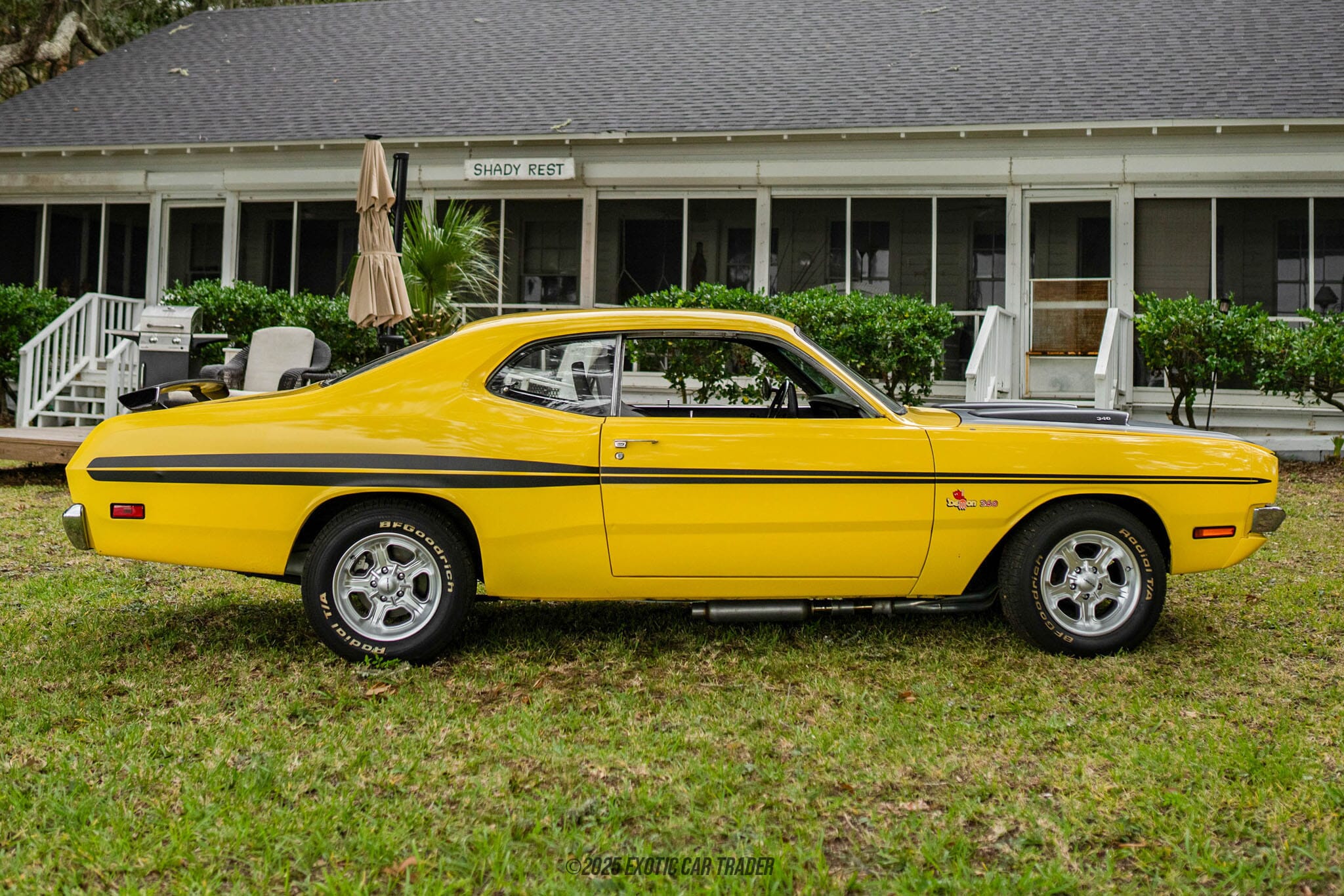
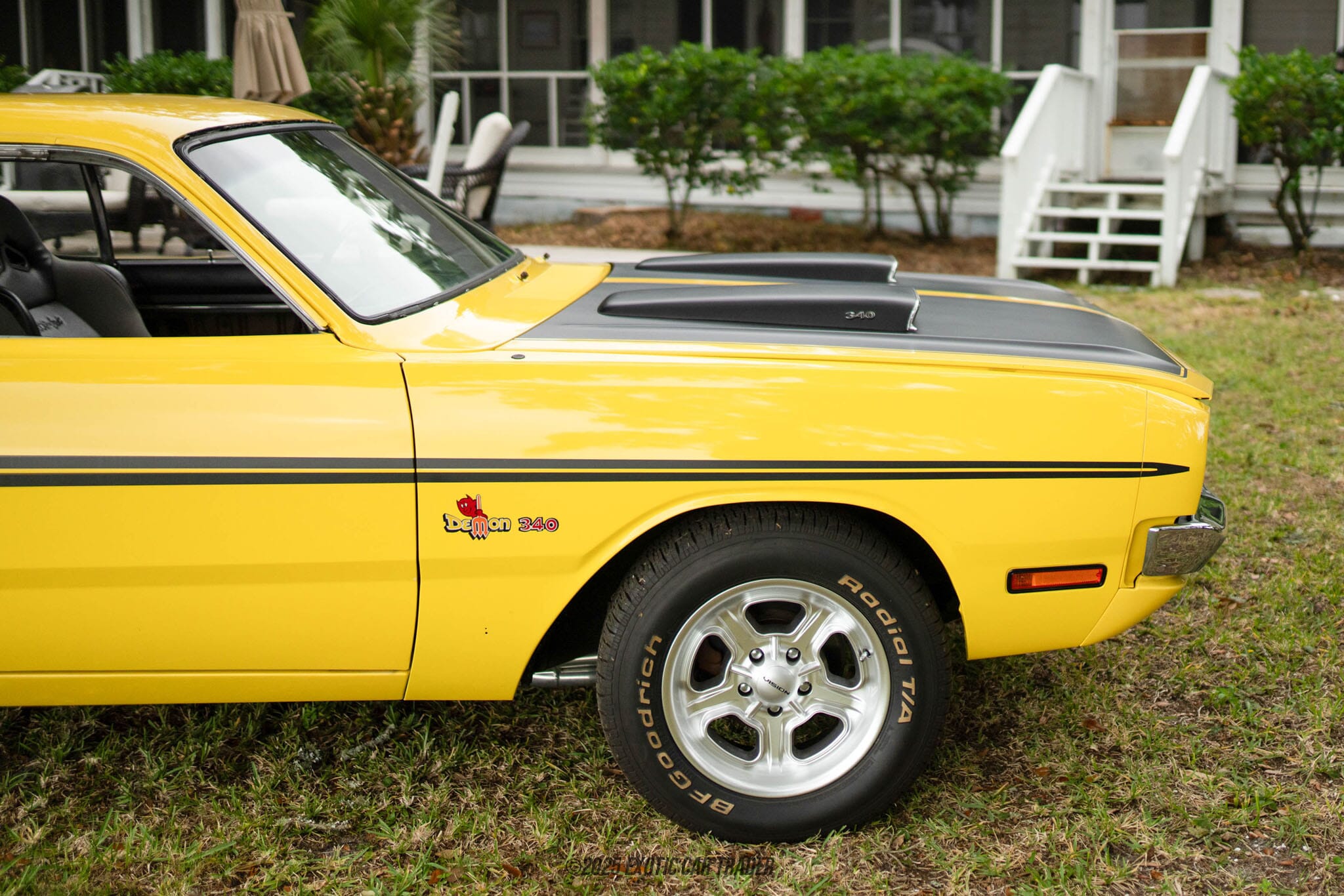
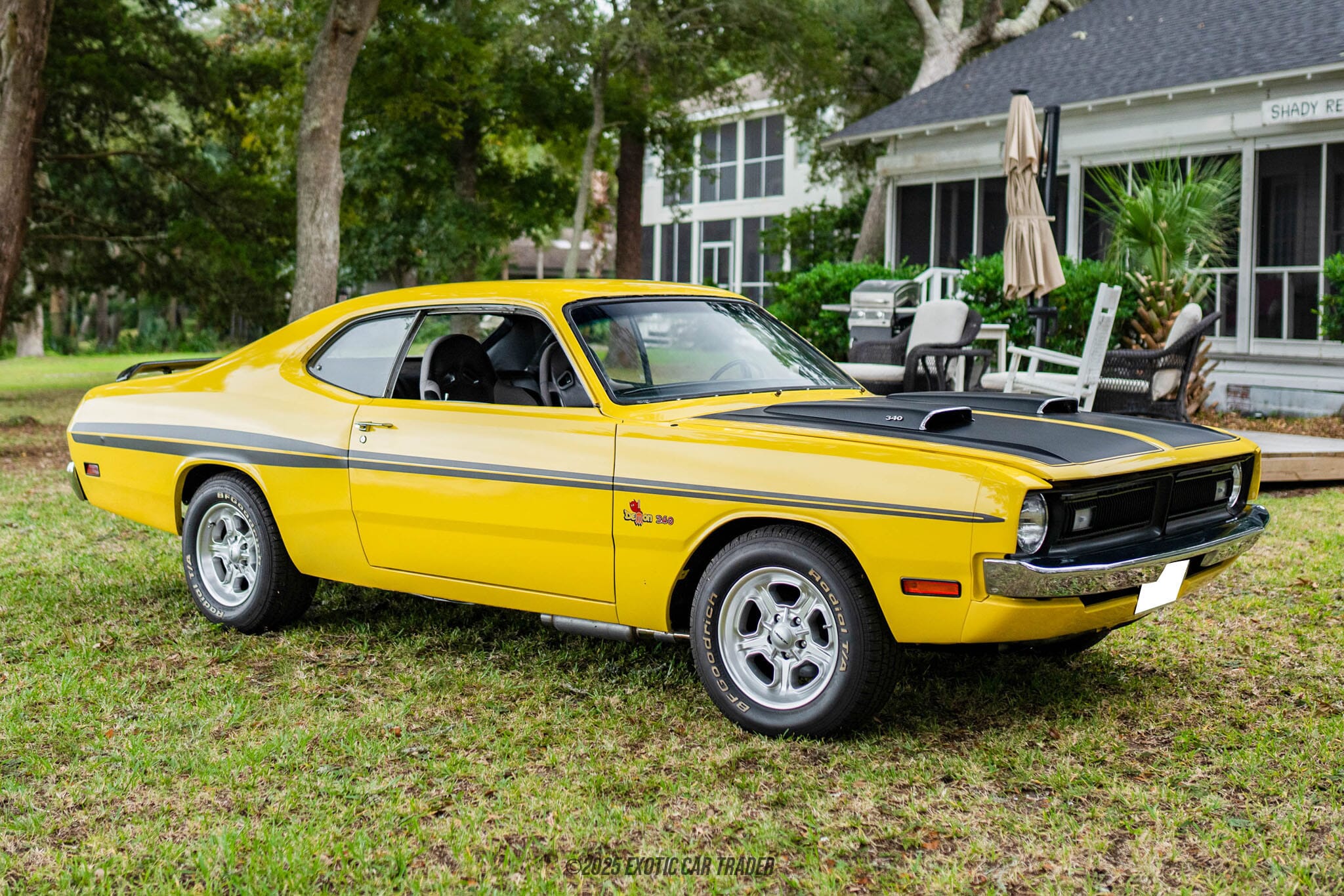
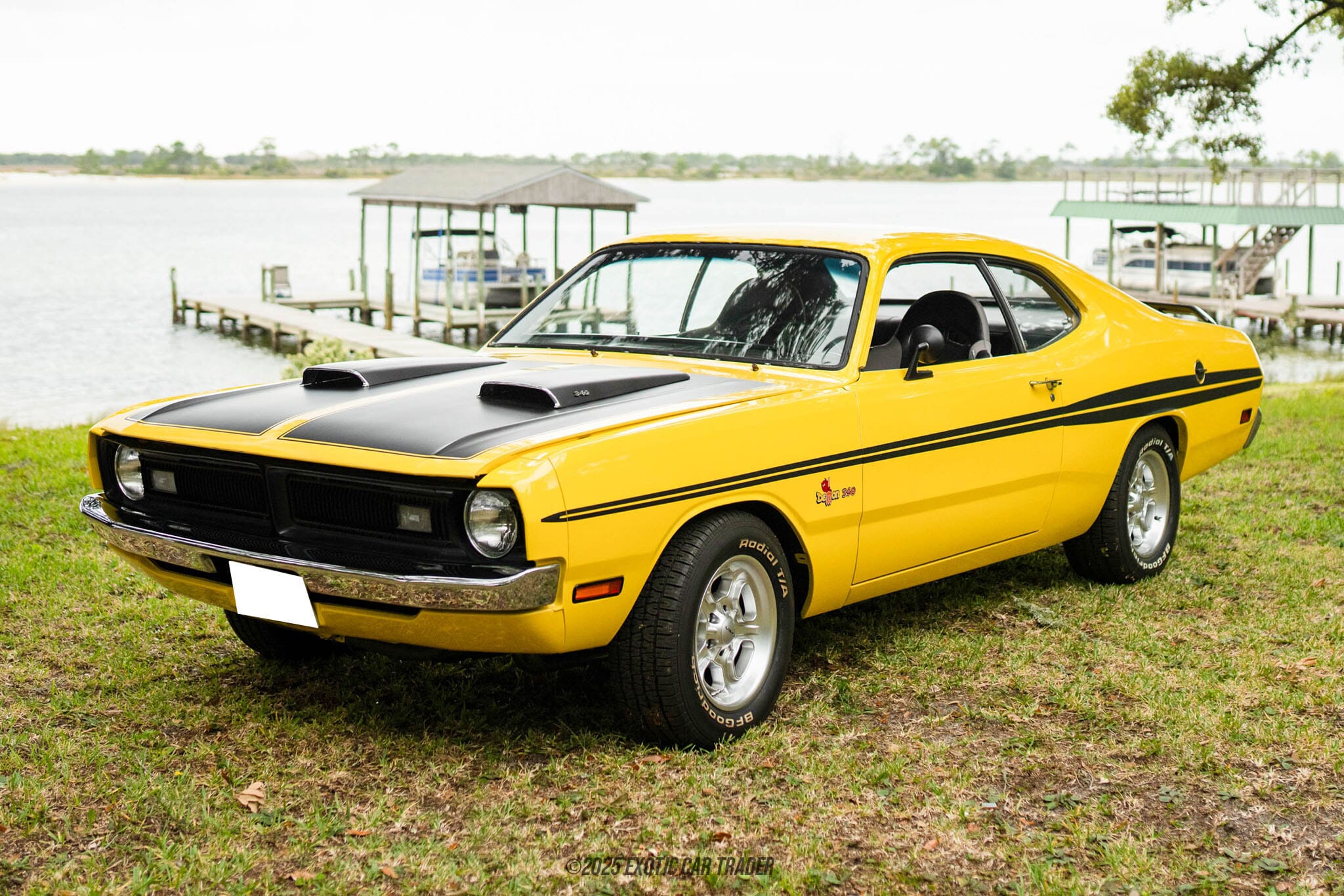
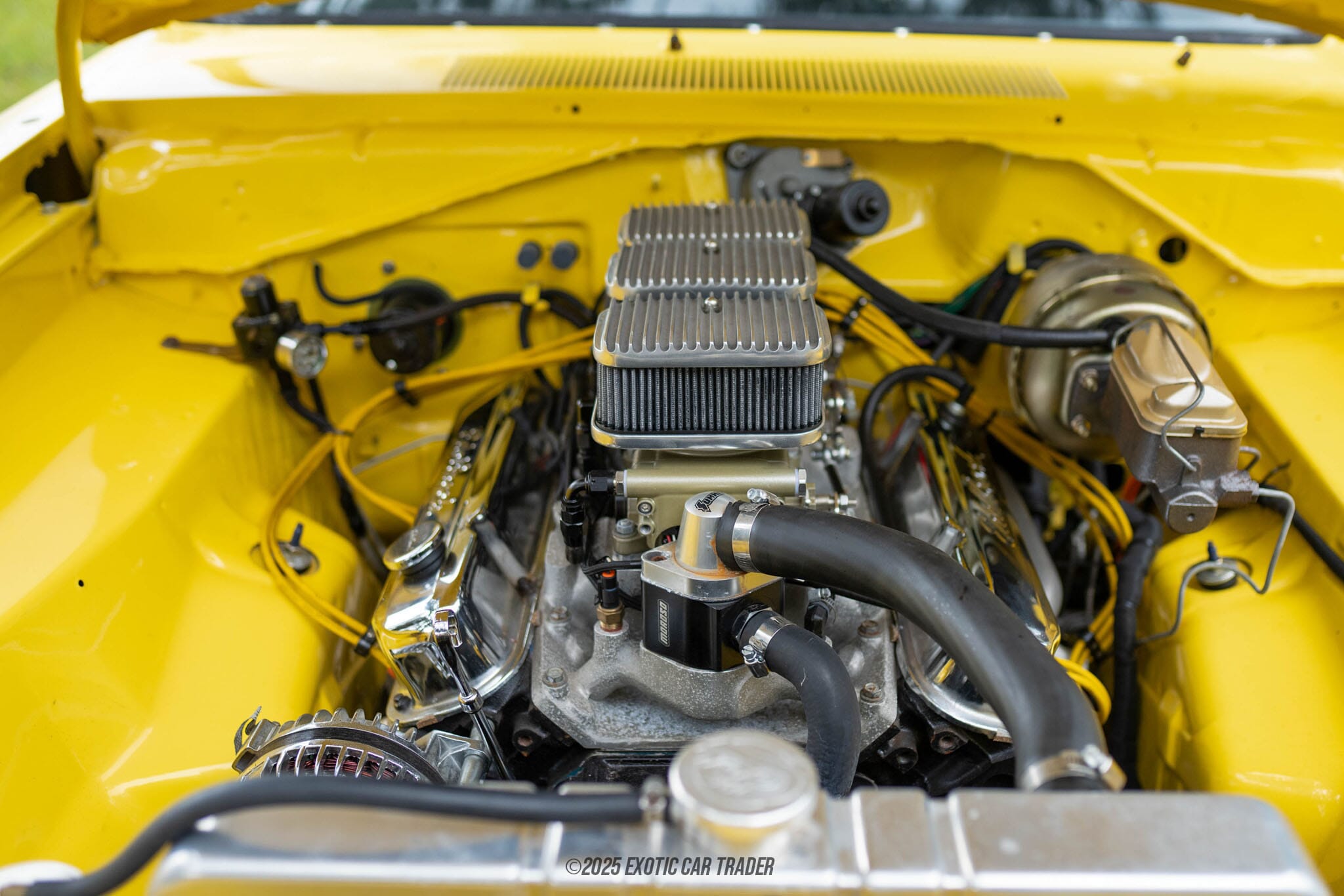
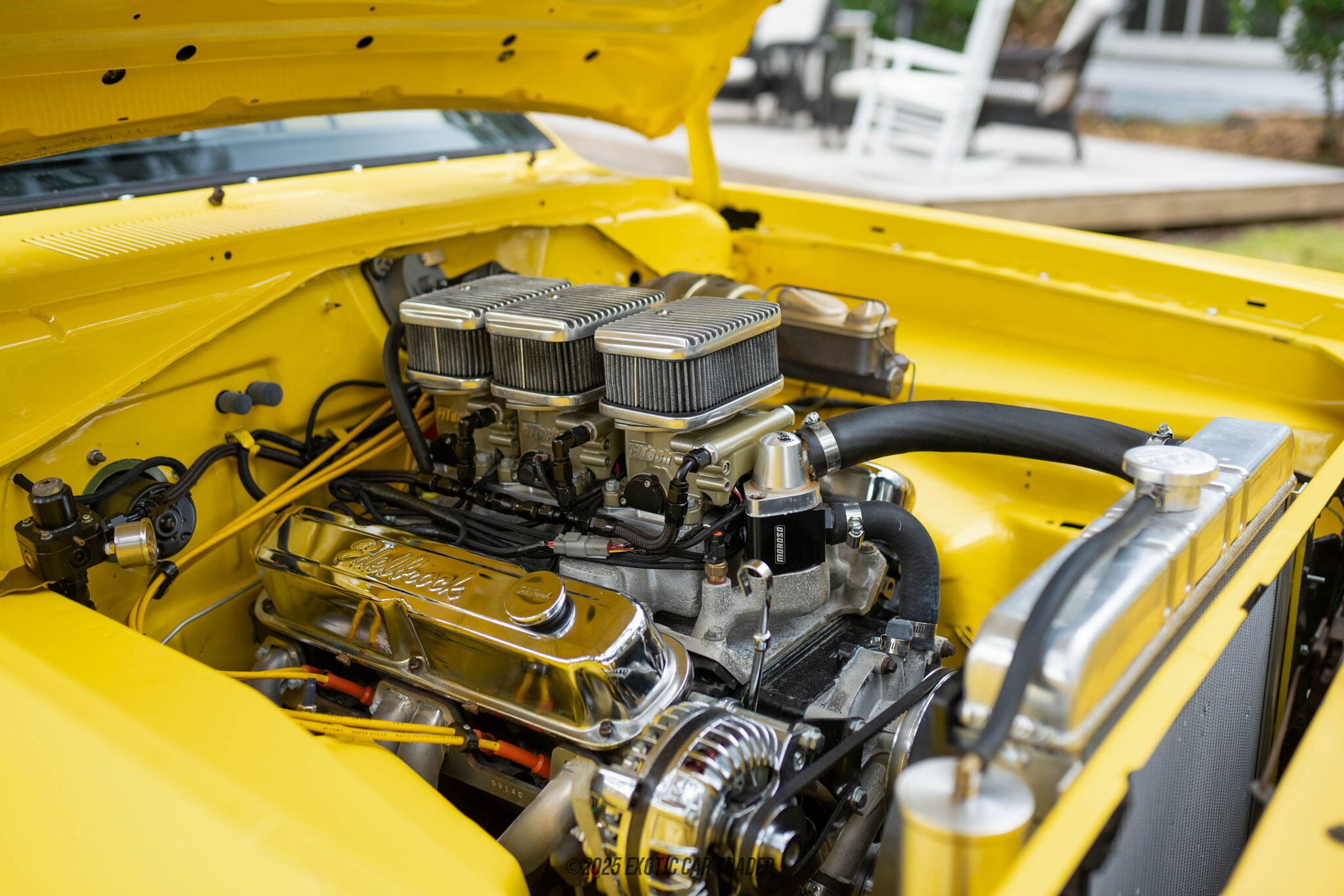
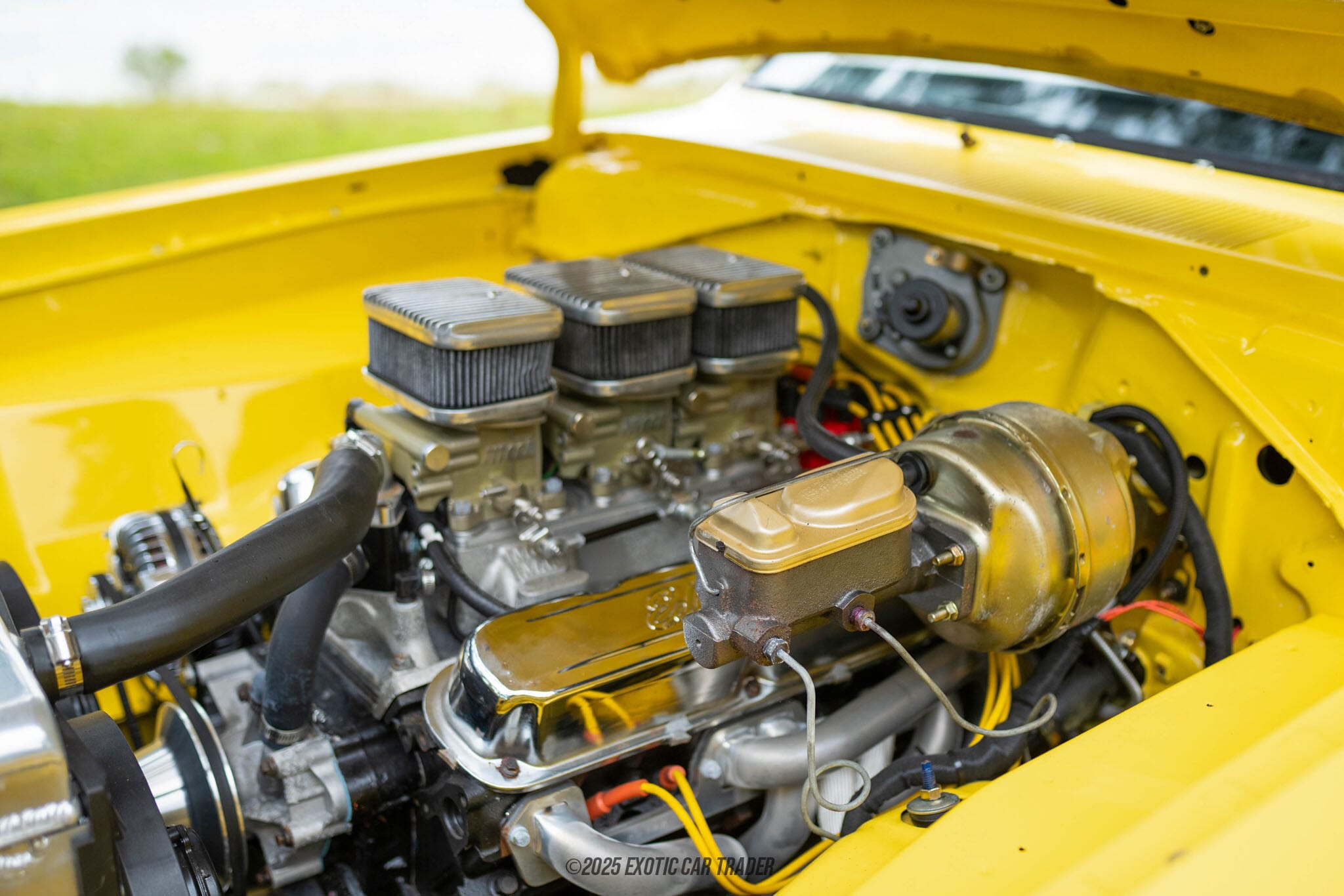
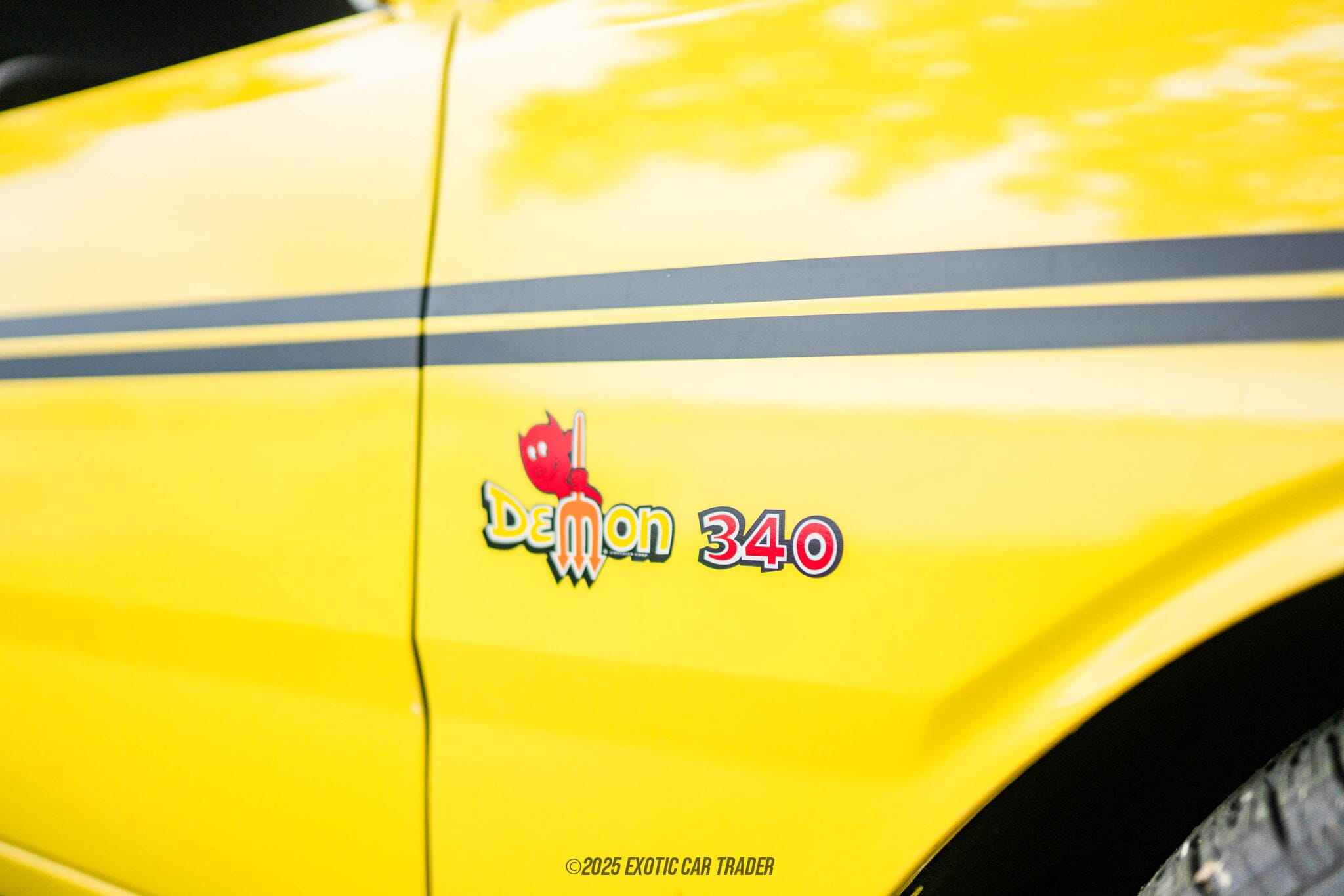
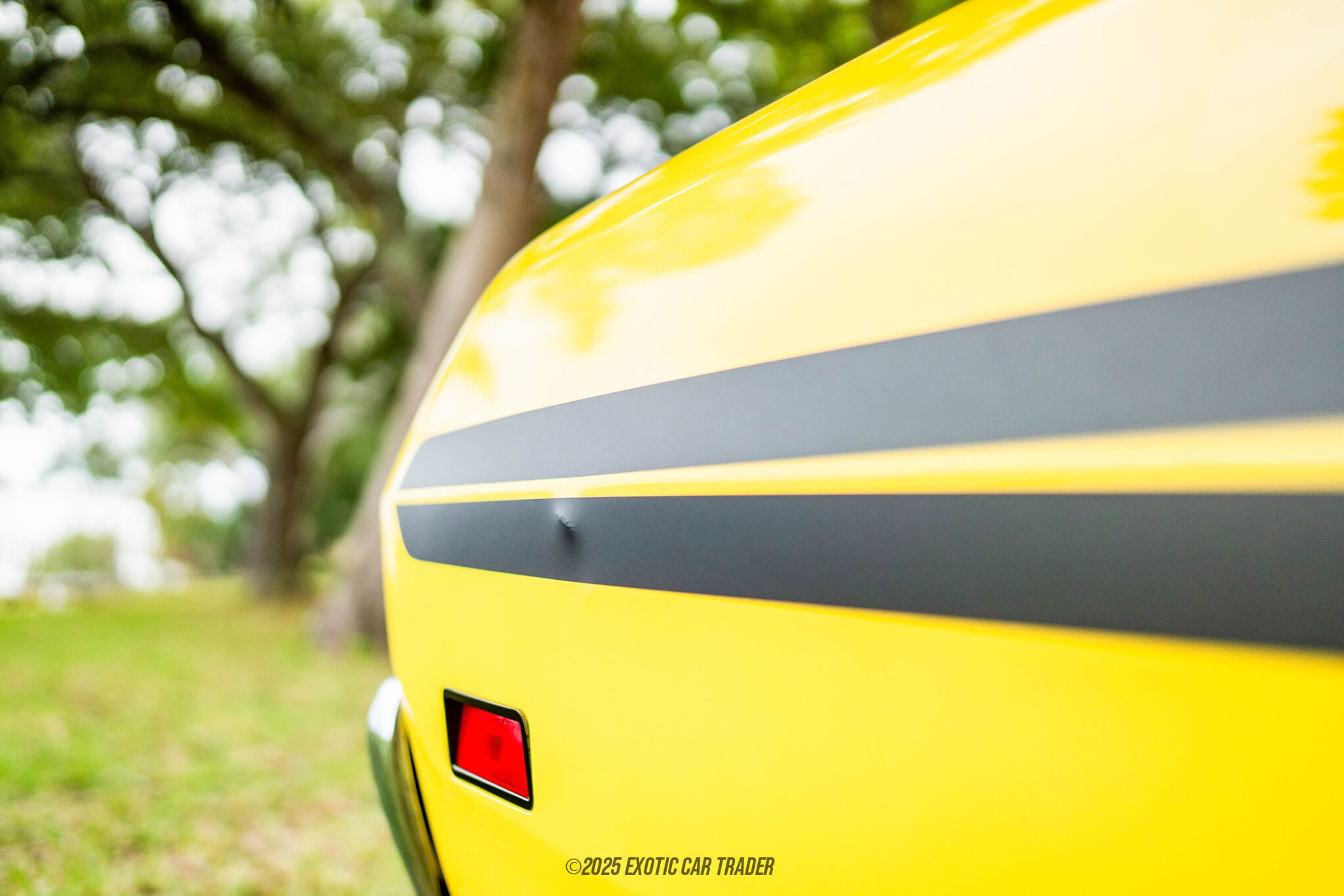
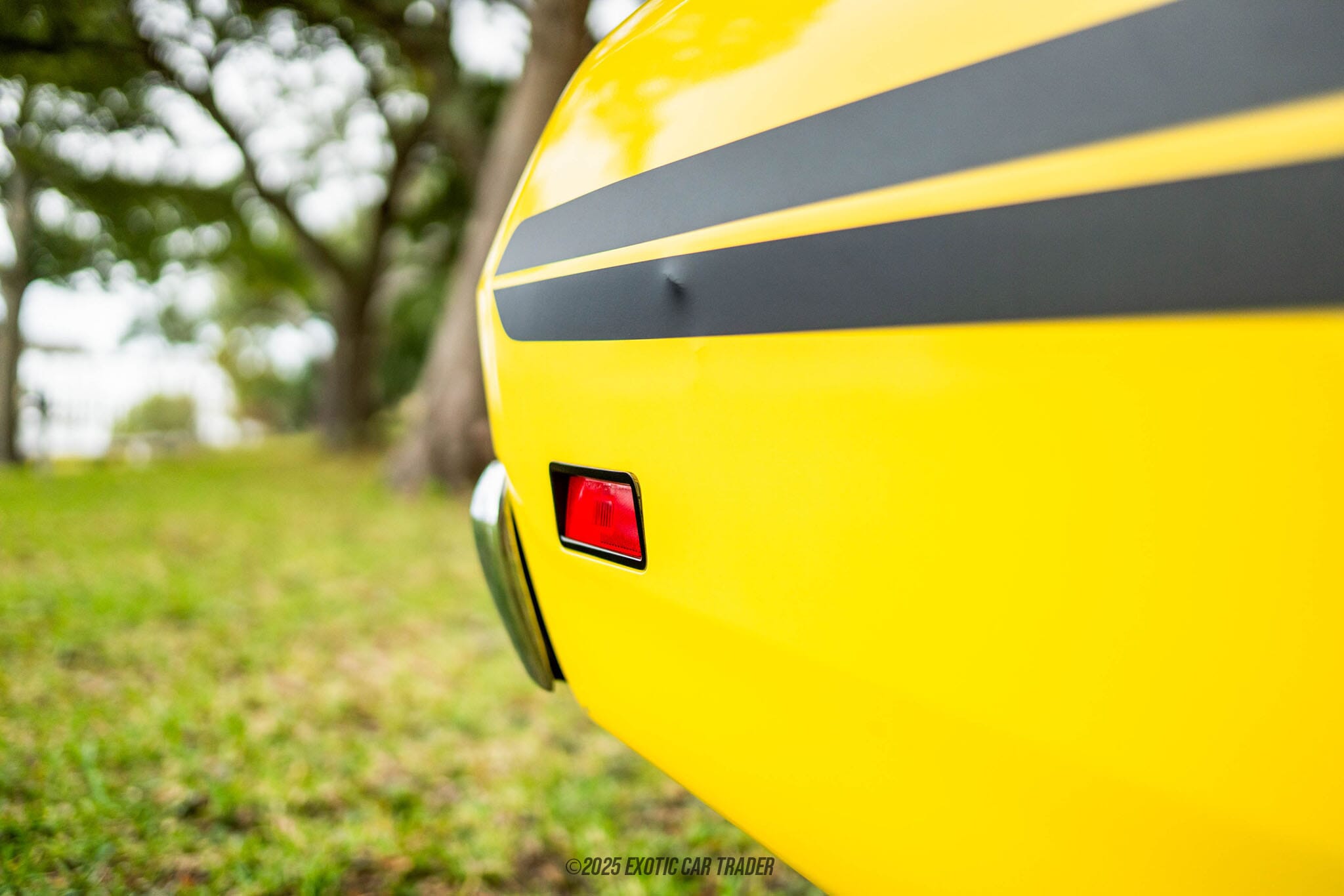
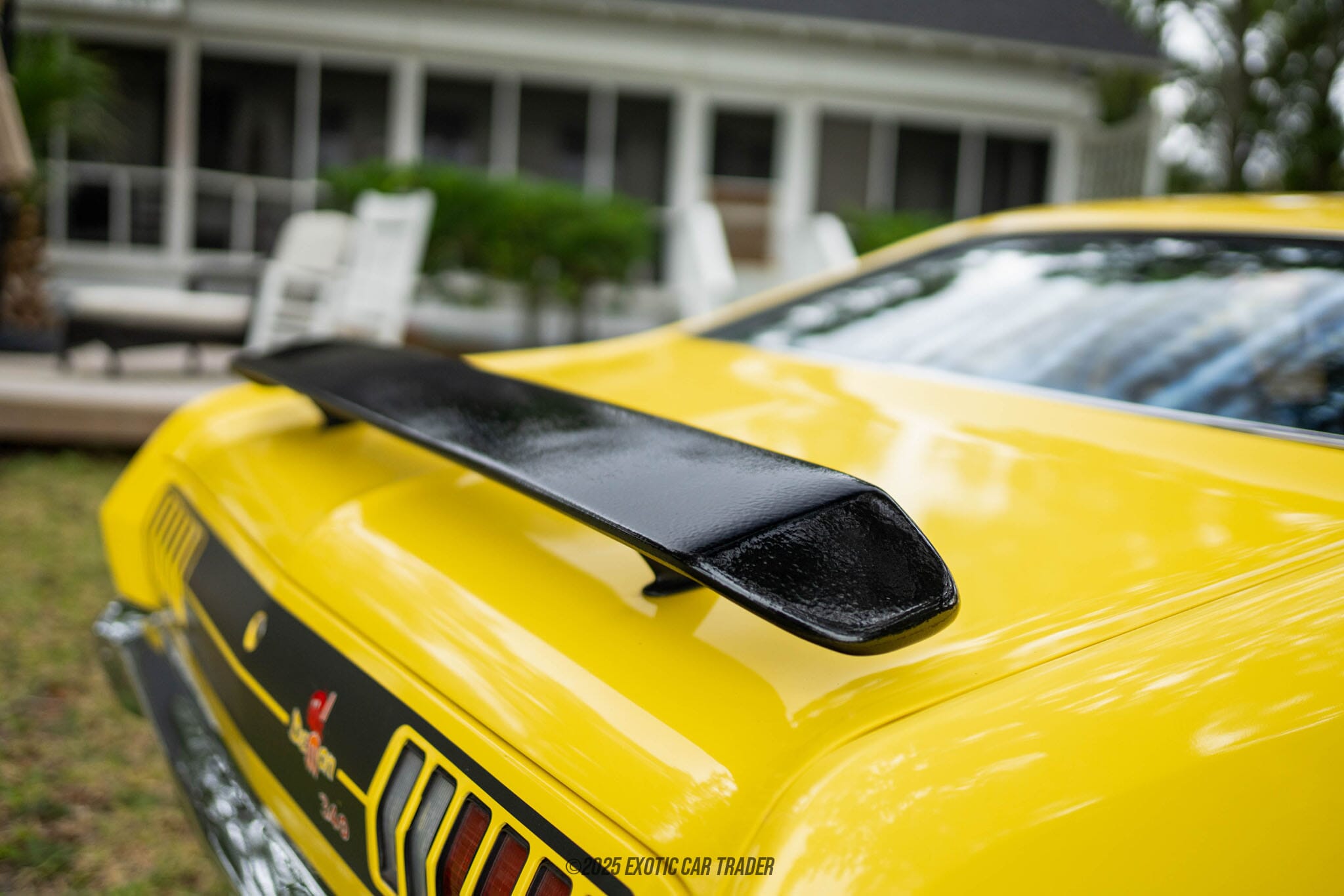
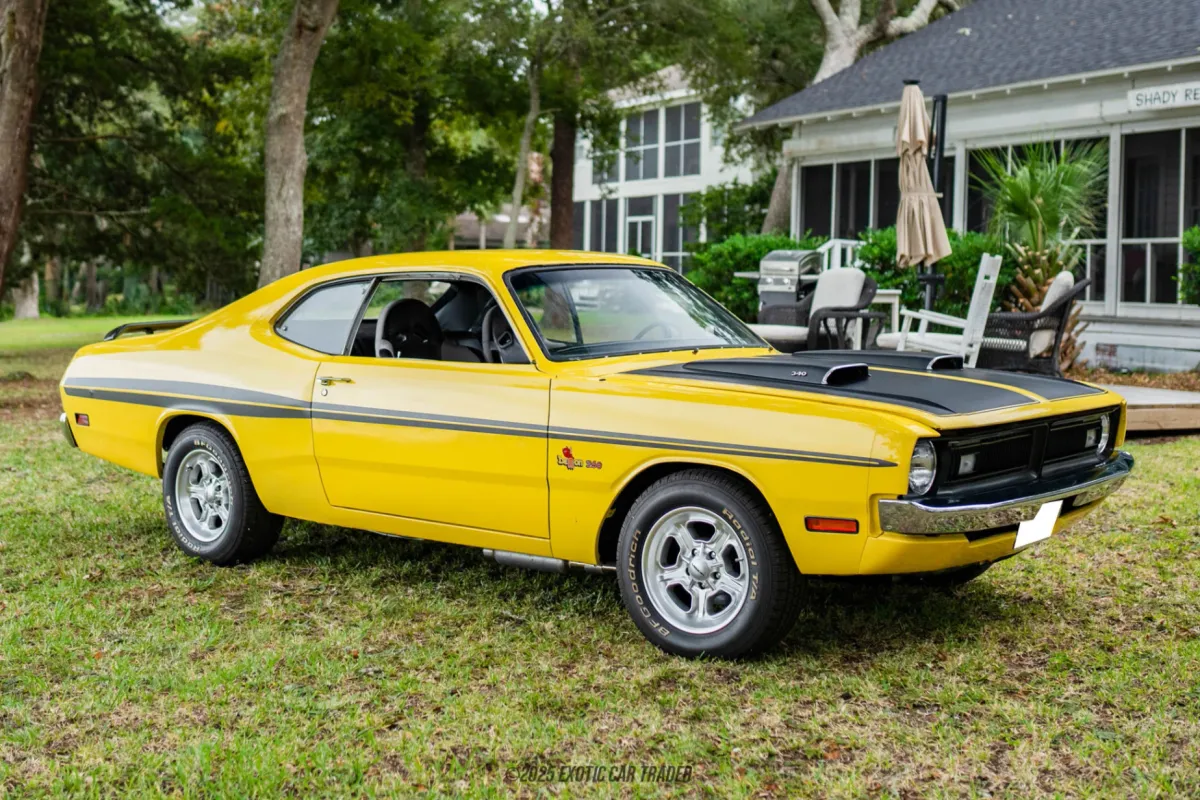
The Dodge Dart was a line of cars produced by Dodge between 1959 and 1976. Over its long lifespan, the Dart shifted between compact, midsize, and full-size segments depending on the generation. Today’s 1971 Dodge Dart Demon comes from the fourth generation—an era when the Dart firmly occupied the compact segment. The Demon itself was essentially a fastback variant of the Plymouth Valiant, and was originally slated to be called the Beaver. Predictably, pop-culture implications pushed Dodge to rethink that branding, leading to the now-iconic Demon nameplate before the model ever reached showrooms. This particular Demon presents in striking yellow with blackout hood treatment and correct Demon 340 graphics, and it comes out of Florida with serious performance intent. Under the hood sits a 340ci small-block equipped with an Indy-style Six-Pack setup—three Holley-type two-barrel carburetors on a 6-pack intake, giving the car a classic tri-power personality and far more punch than stock. Disc brakes add welcome stopping power, while the 4-speed manual transmission and headers complete a mechanical package that feels very much like a purpose-built, analog muscle car.
Exterior and Interior
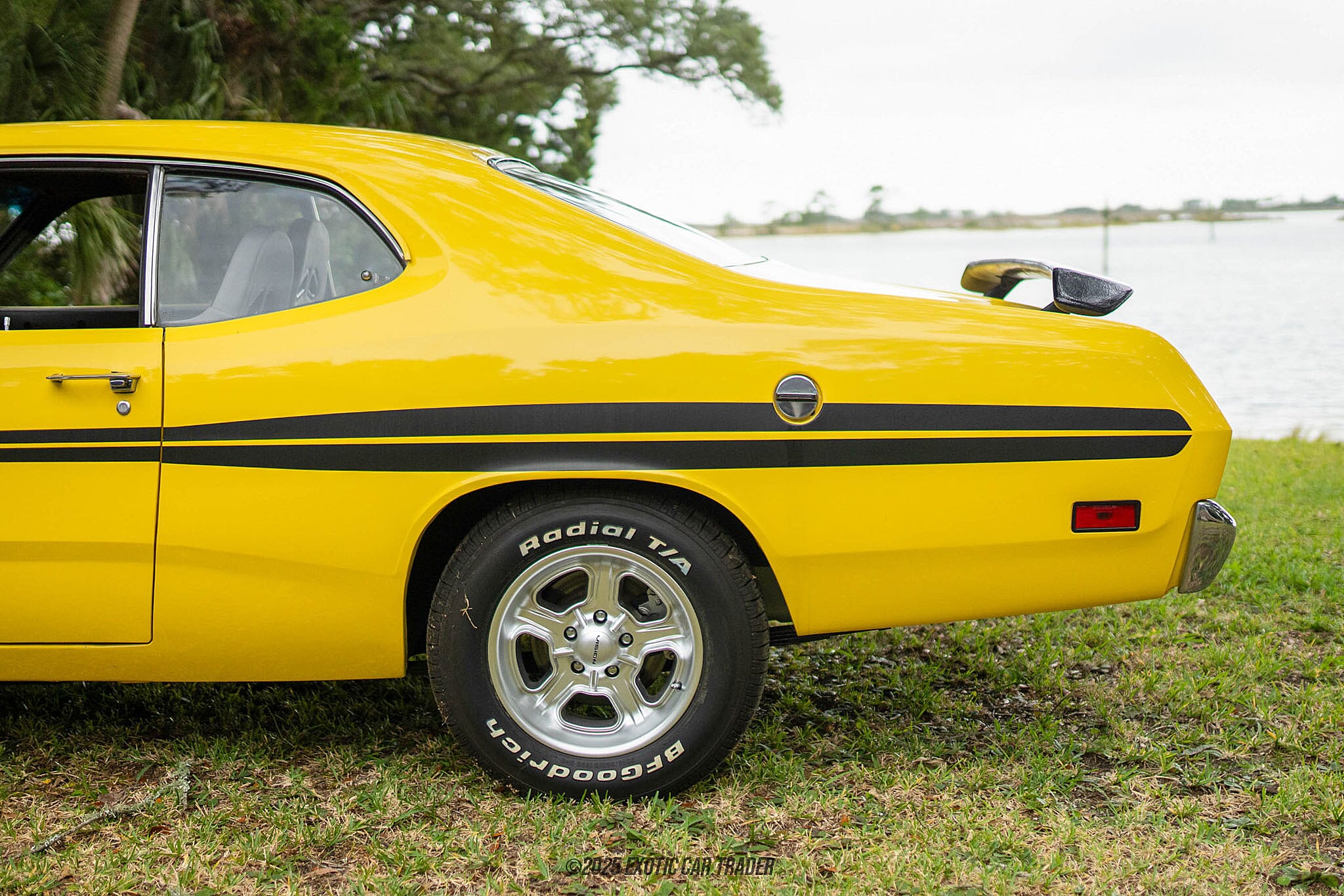
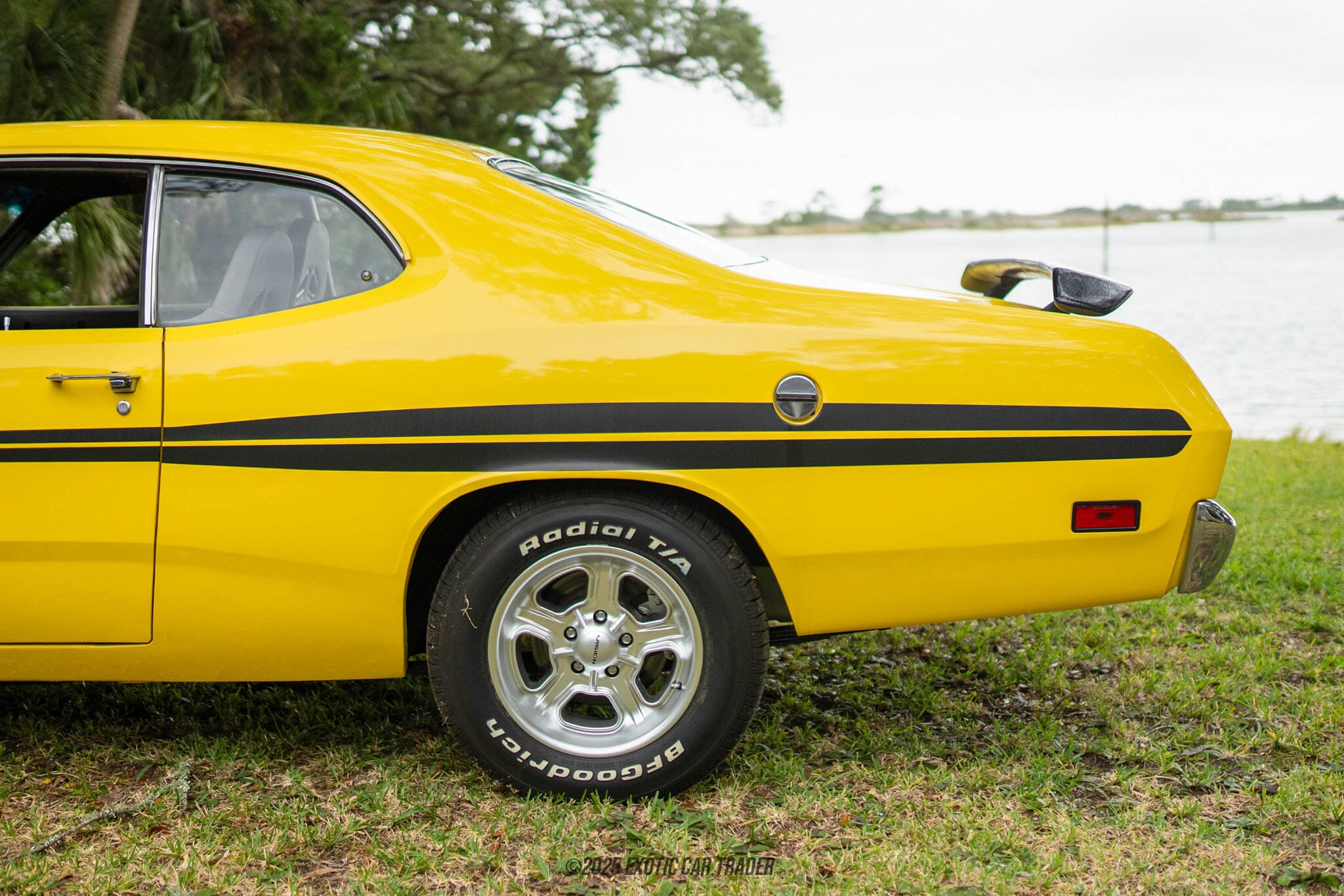
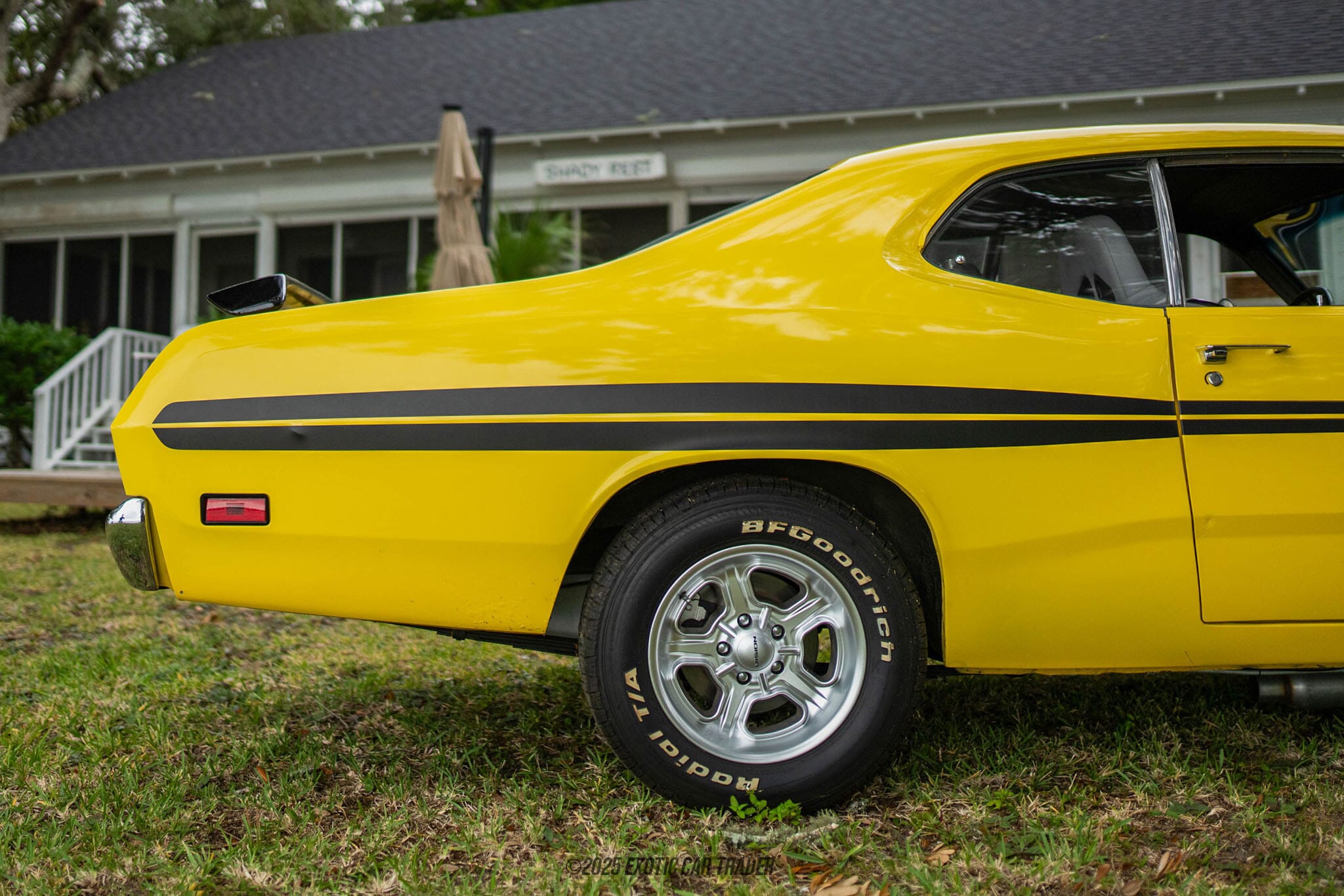
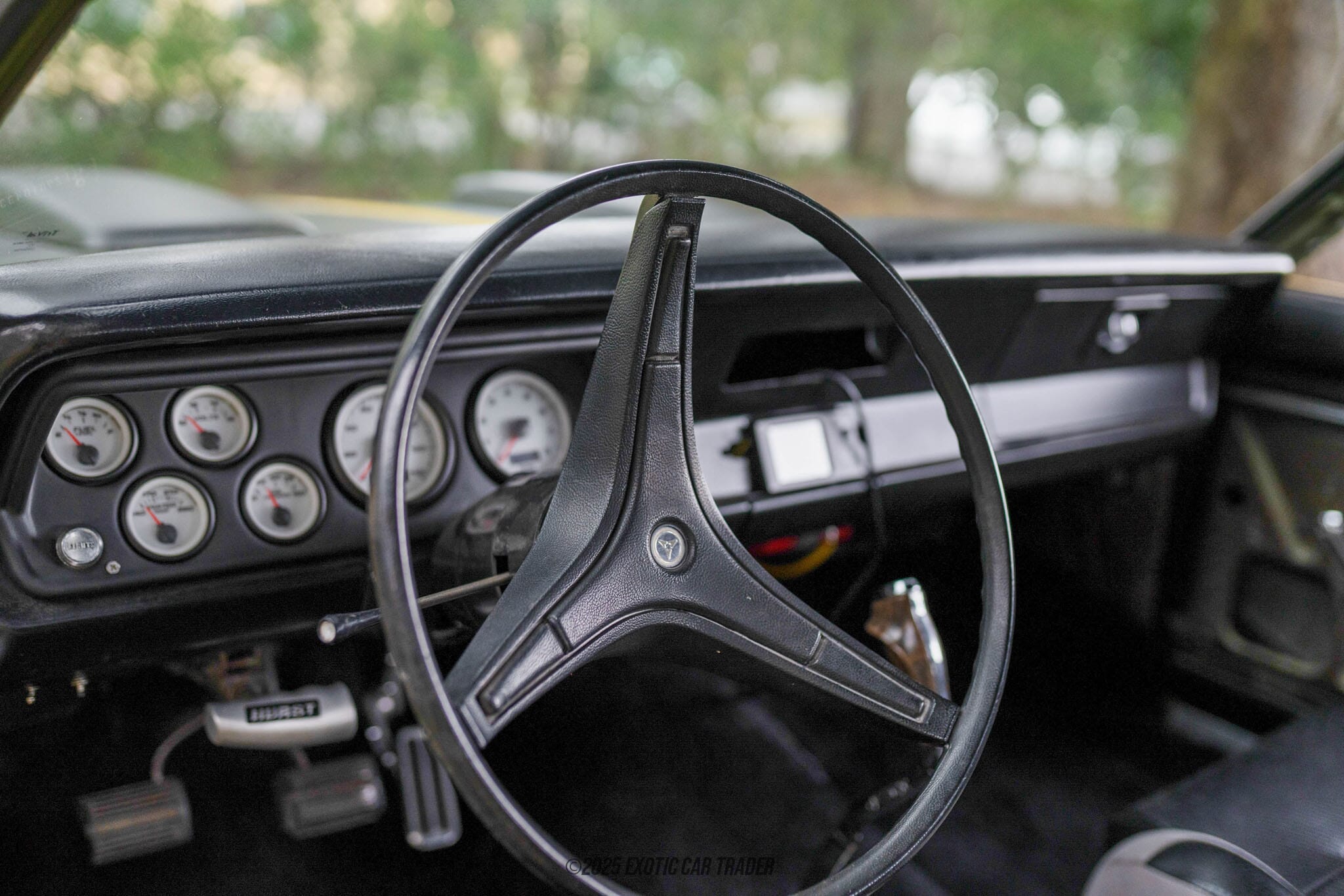
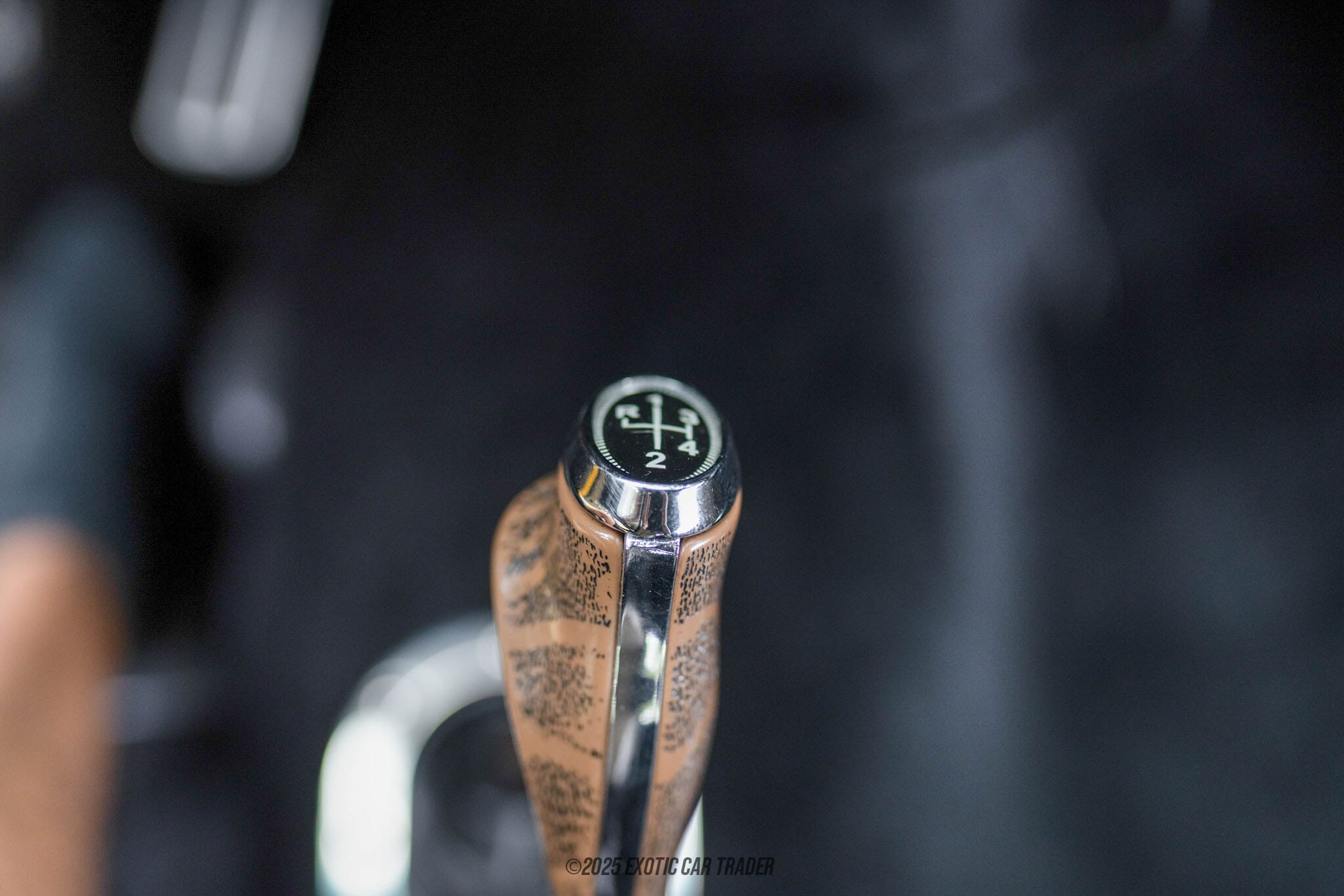
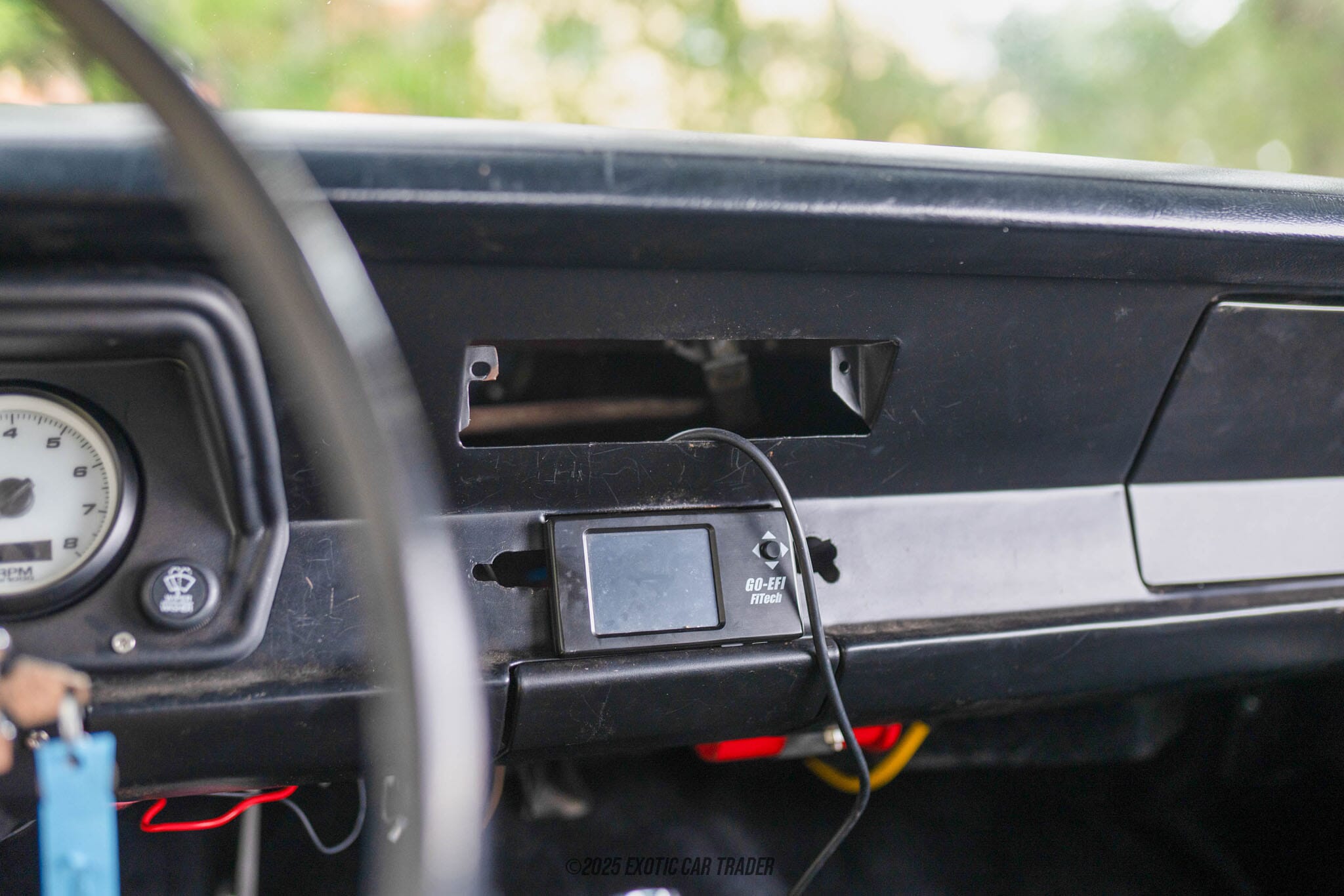
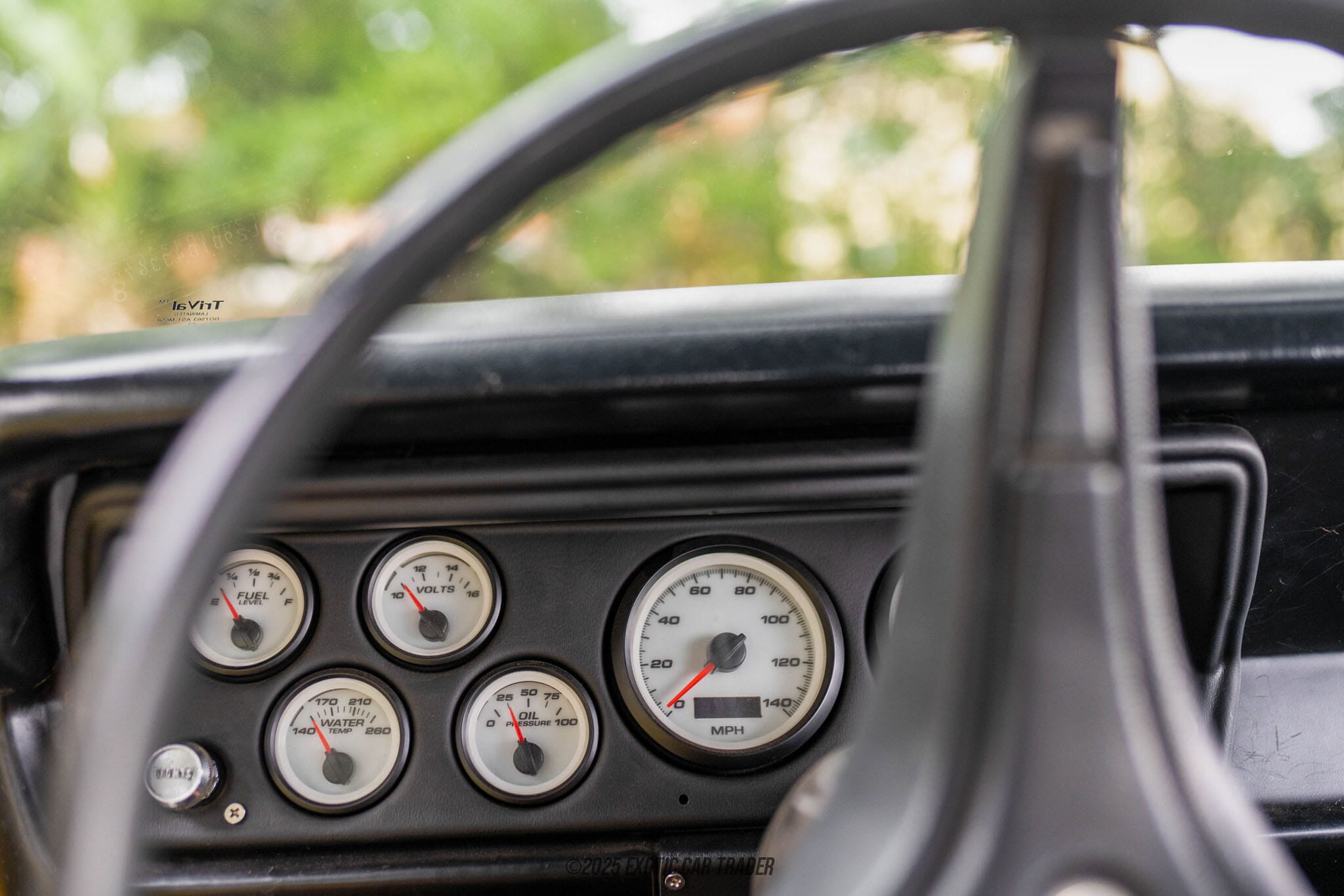
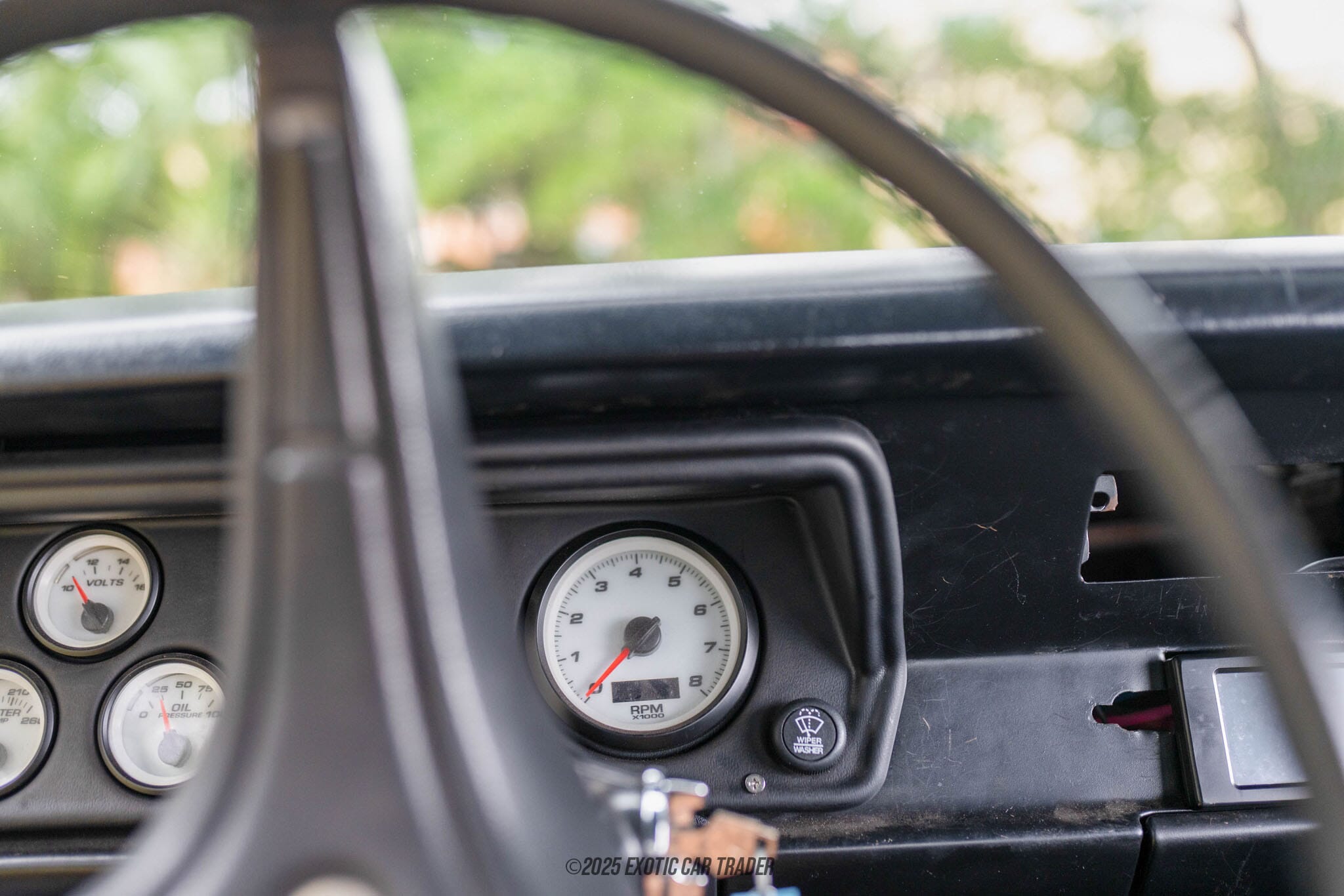
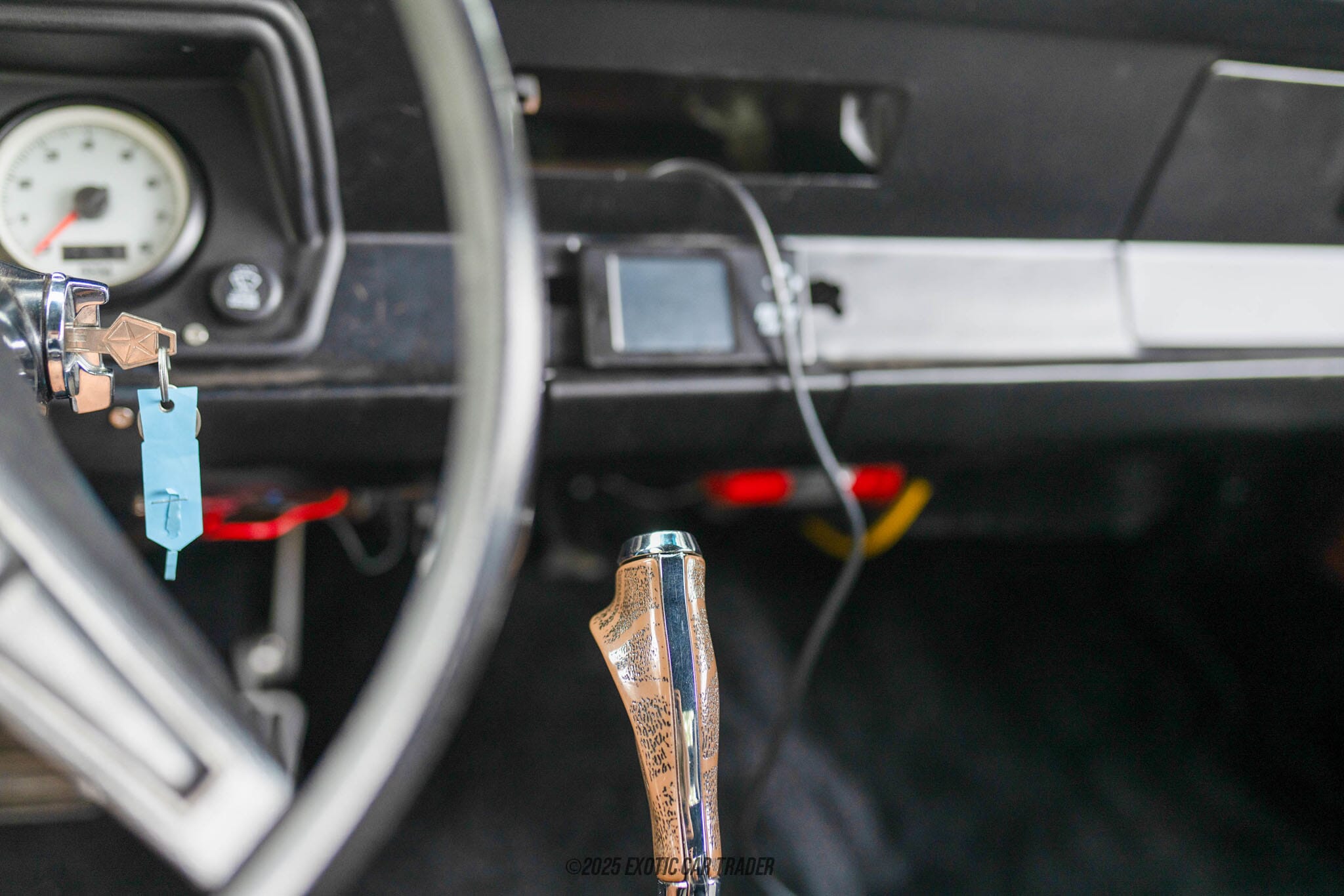
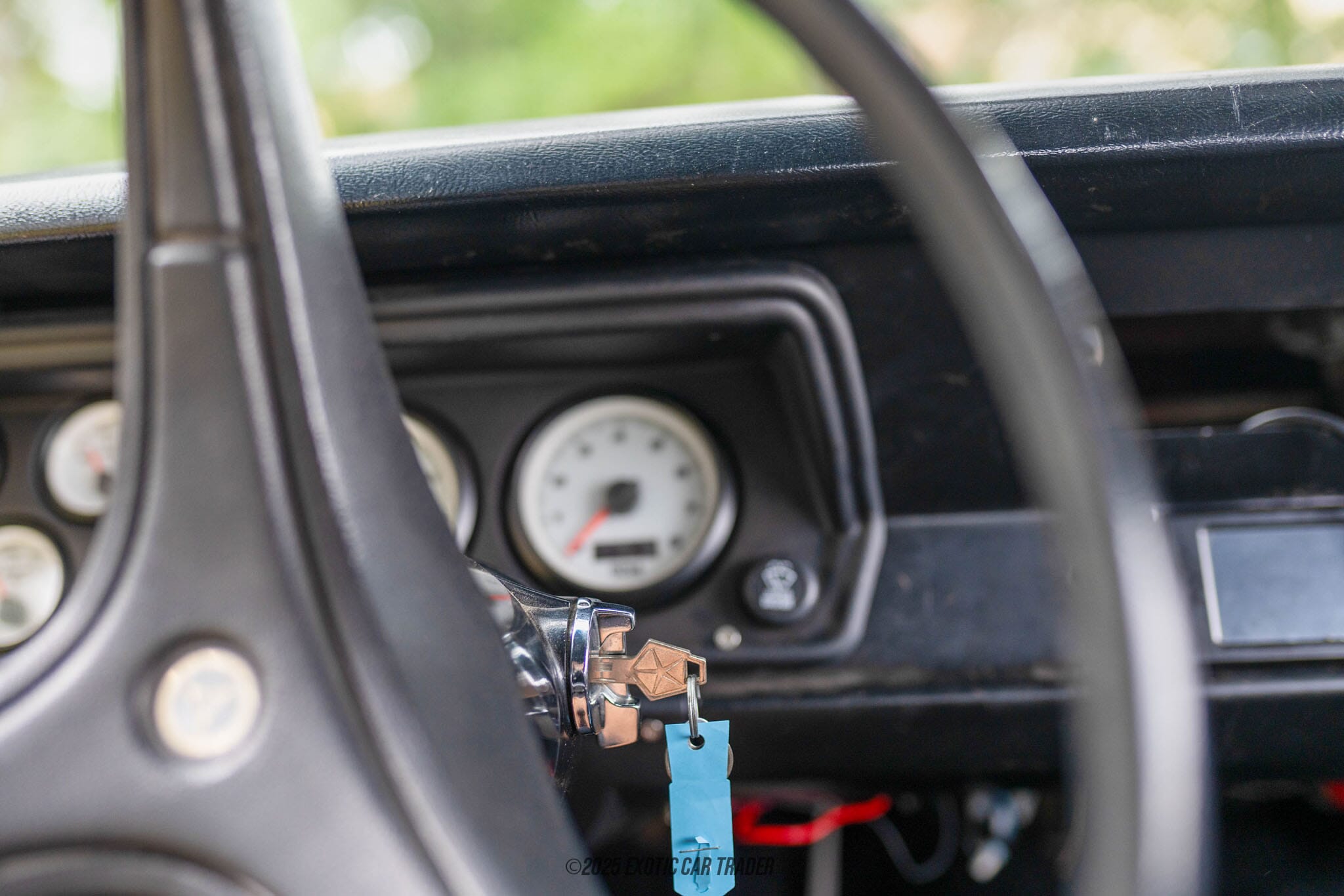
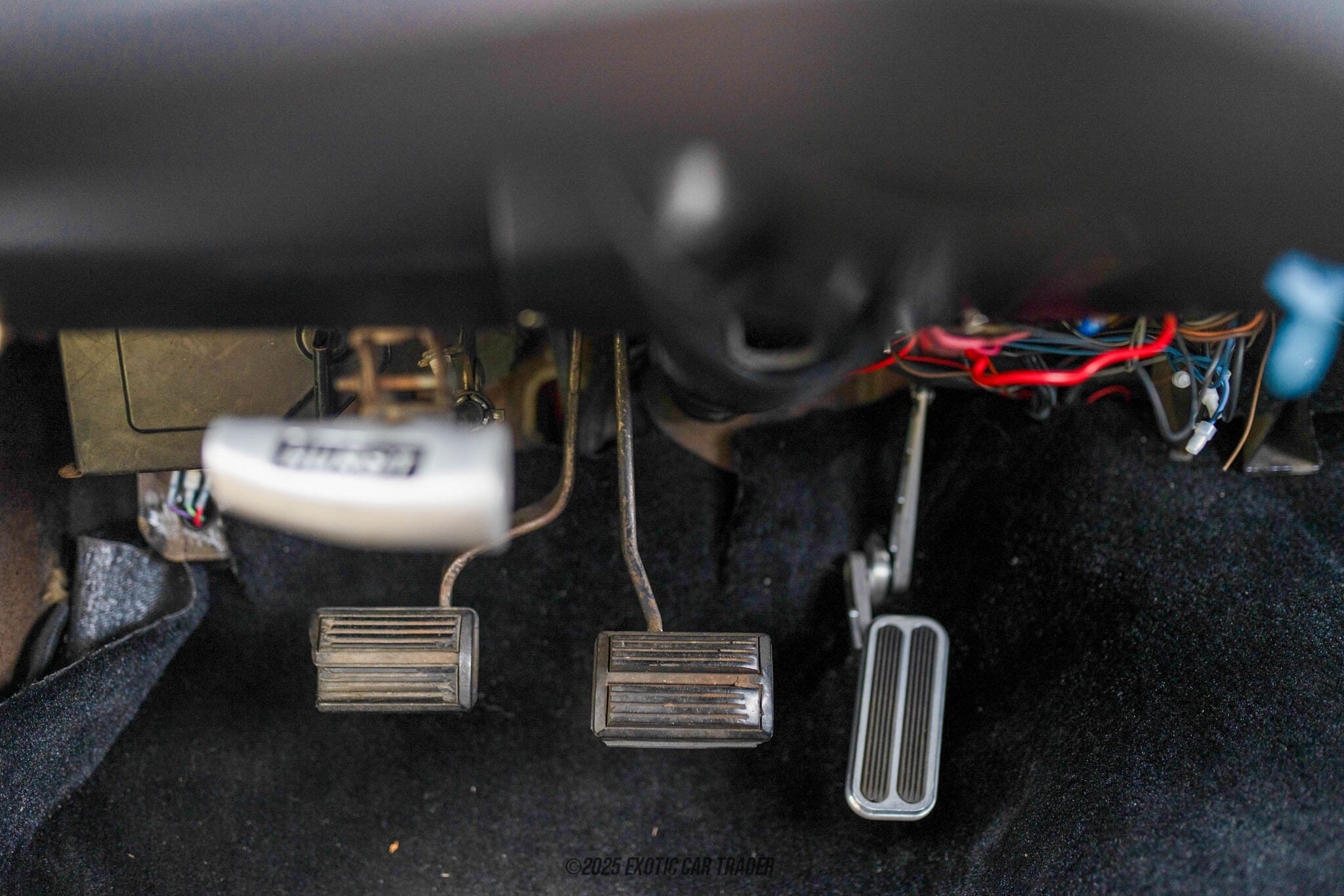
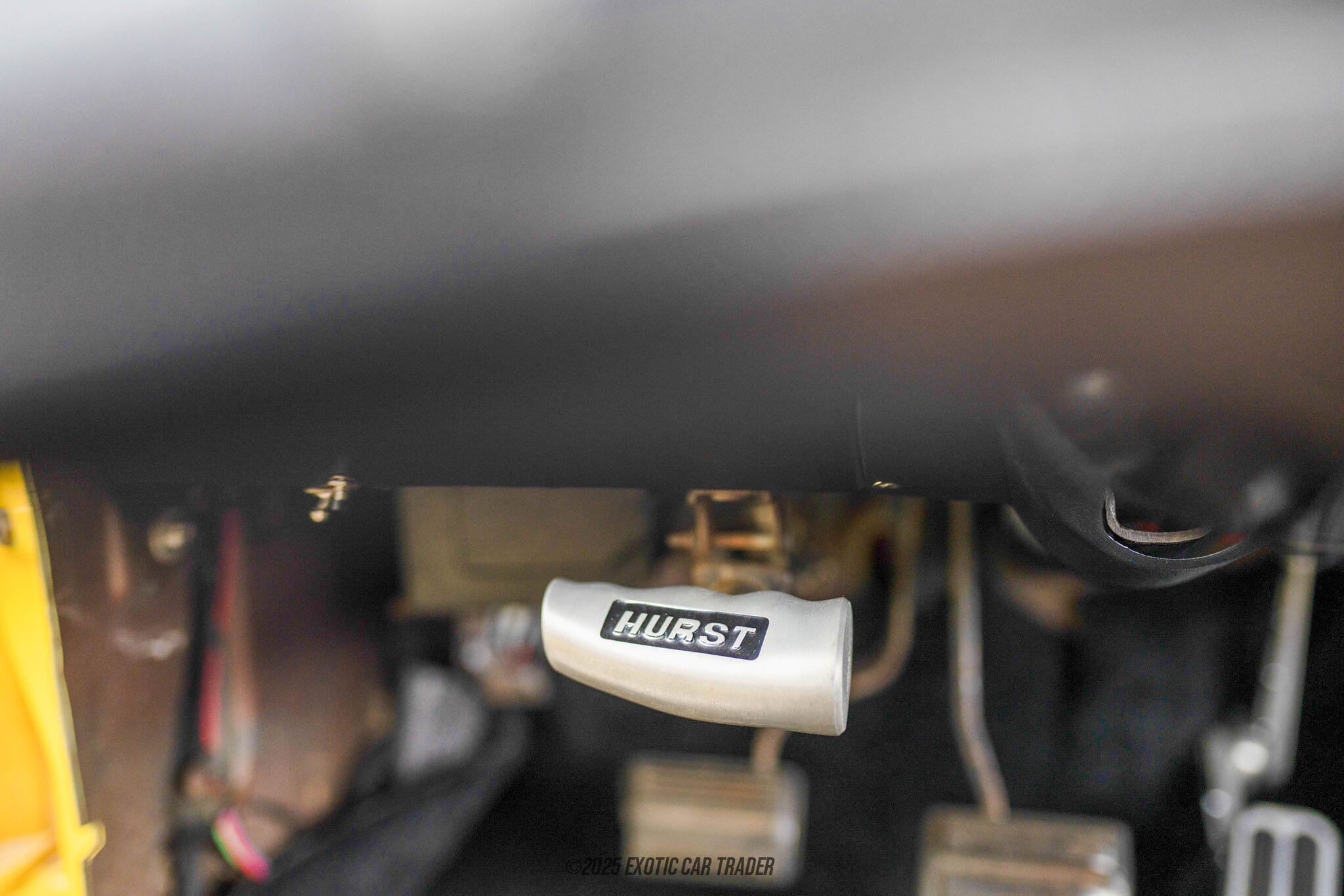
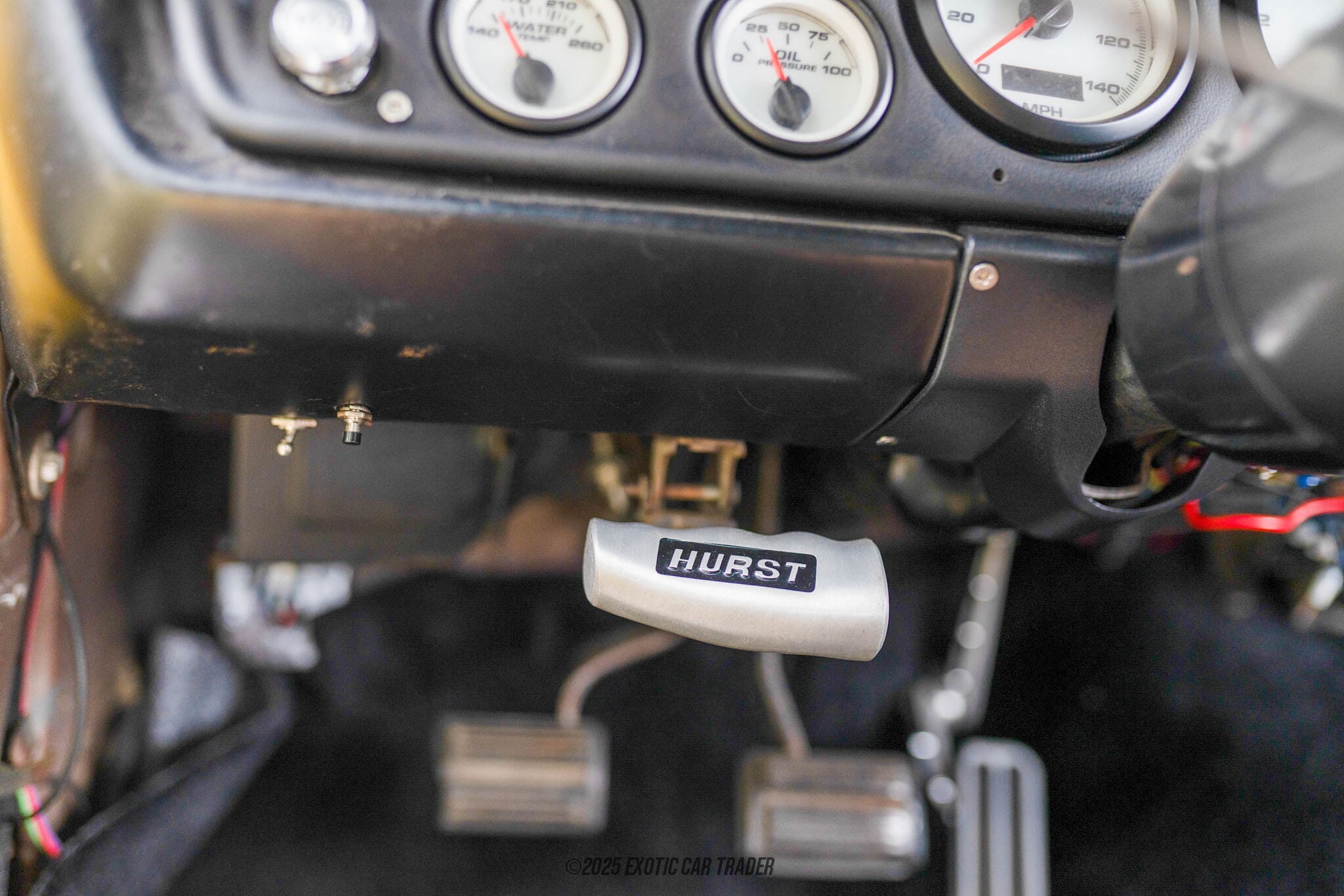
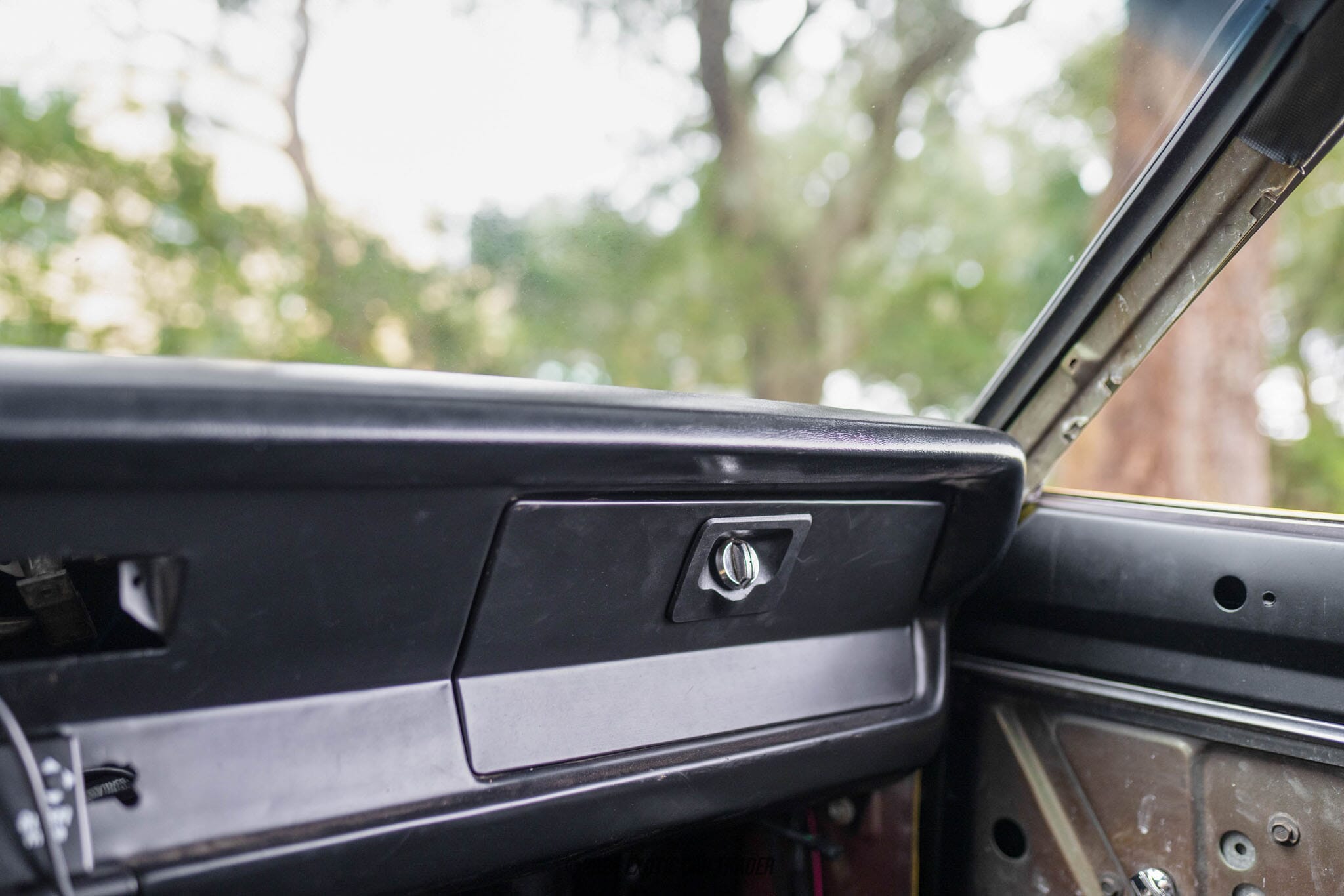
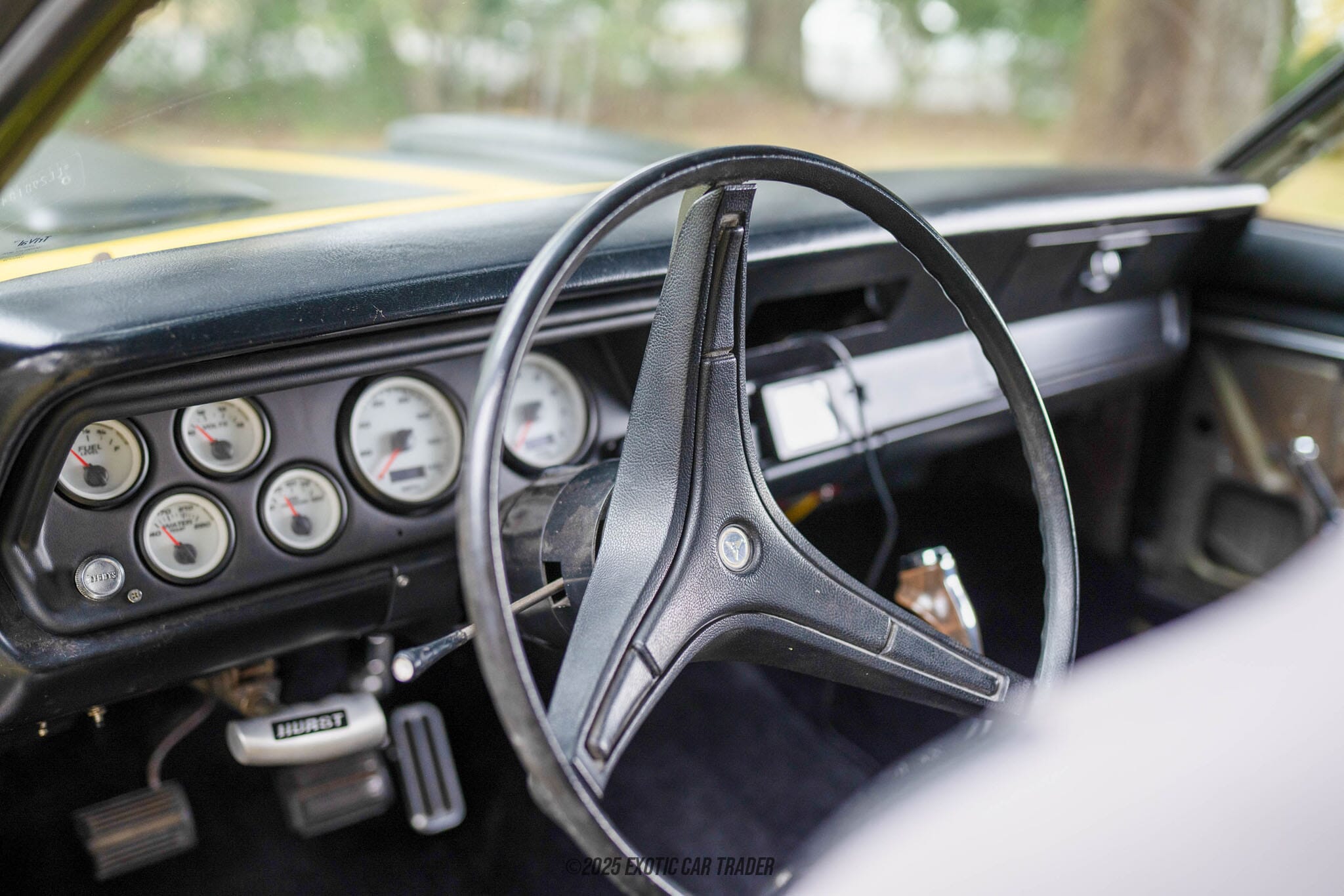
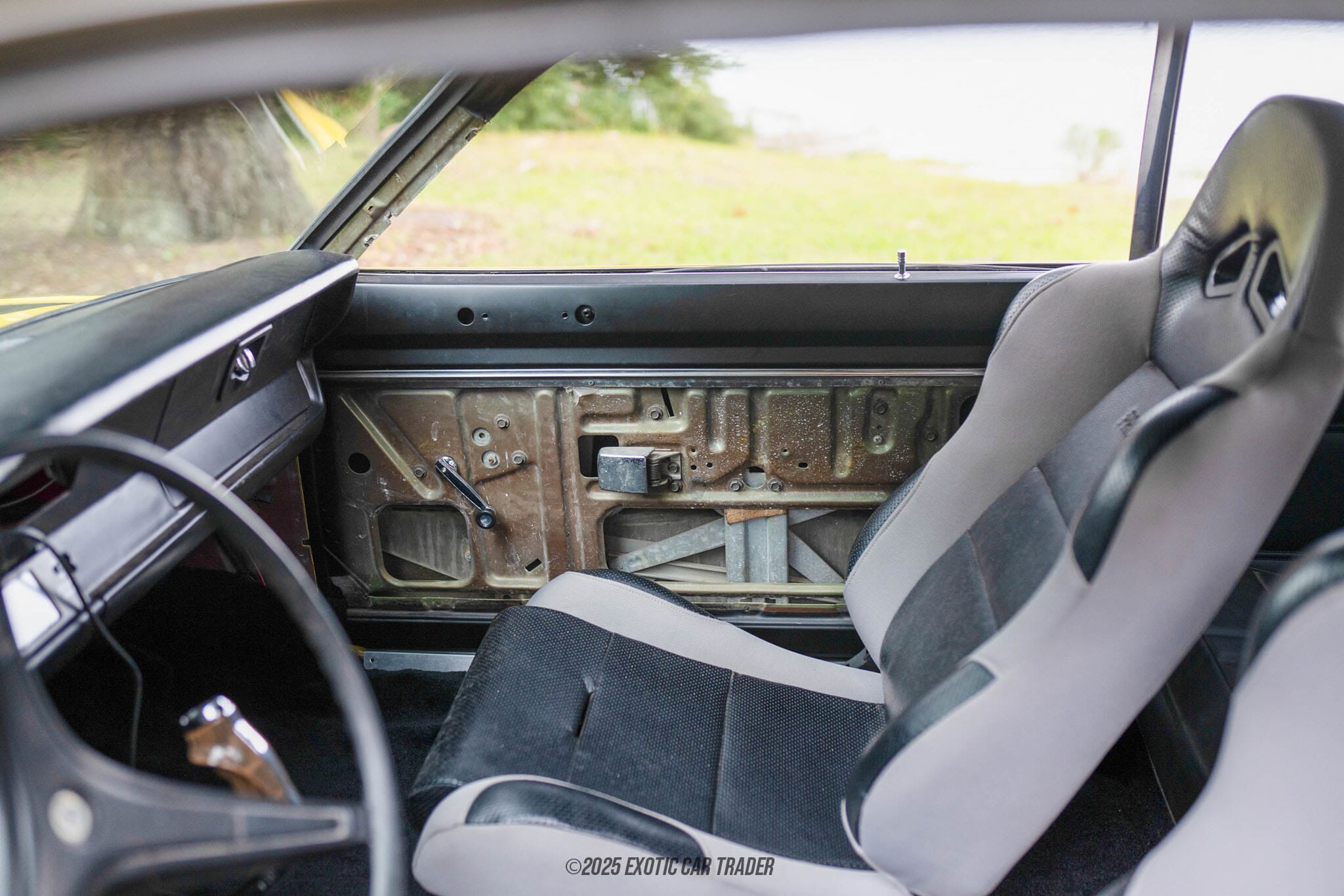
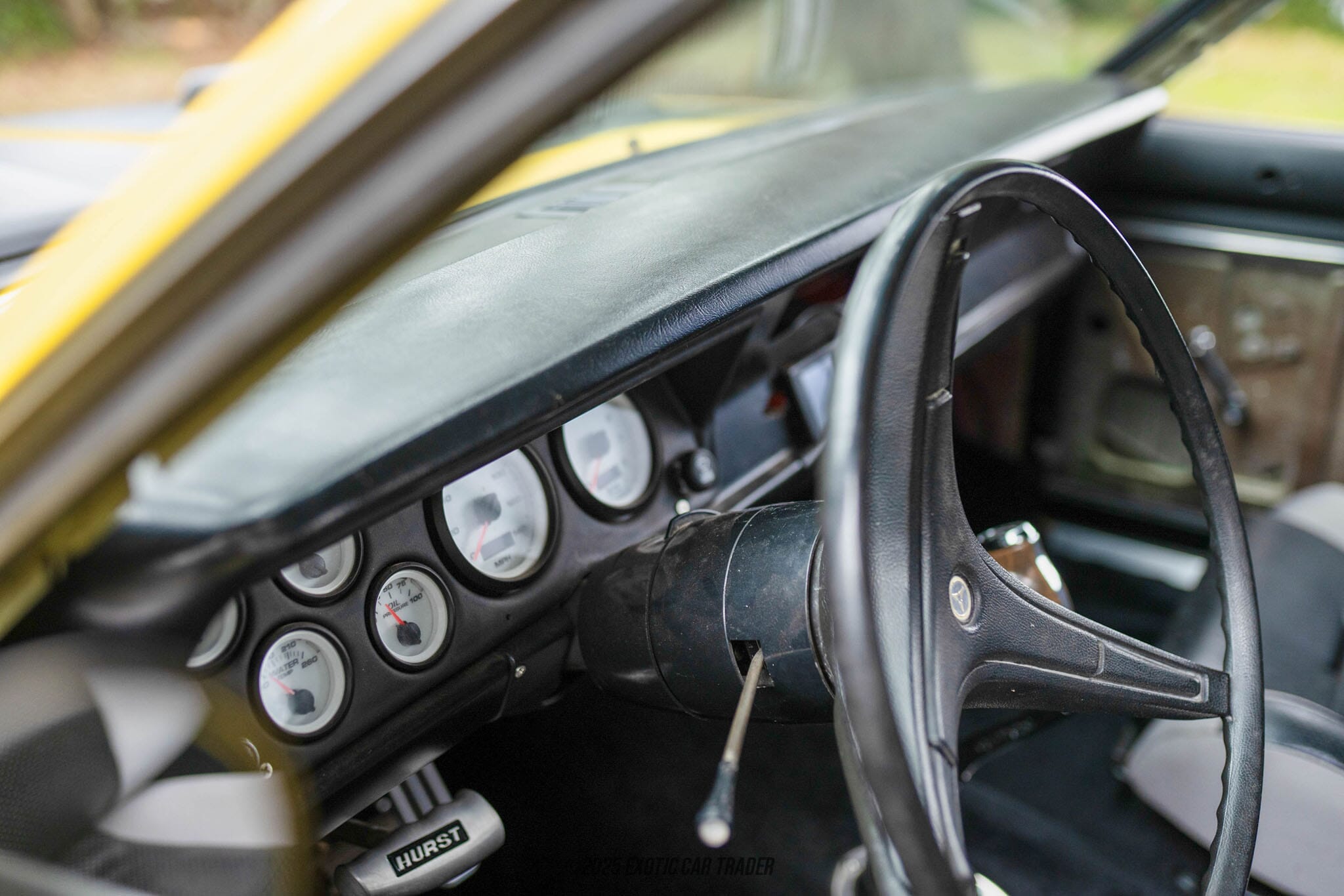
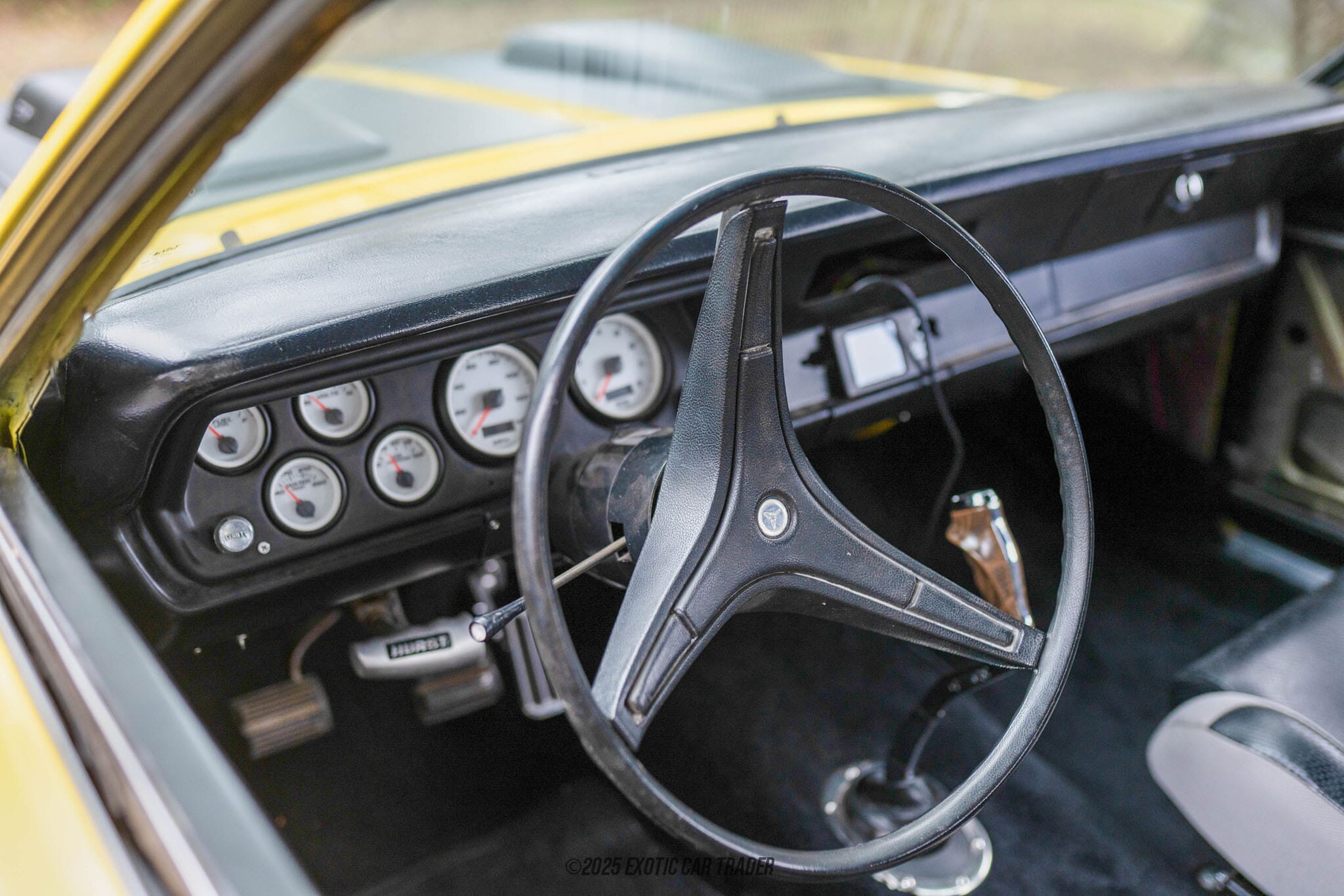
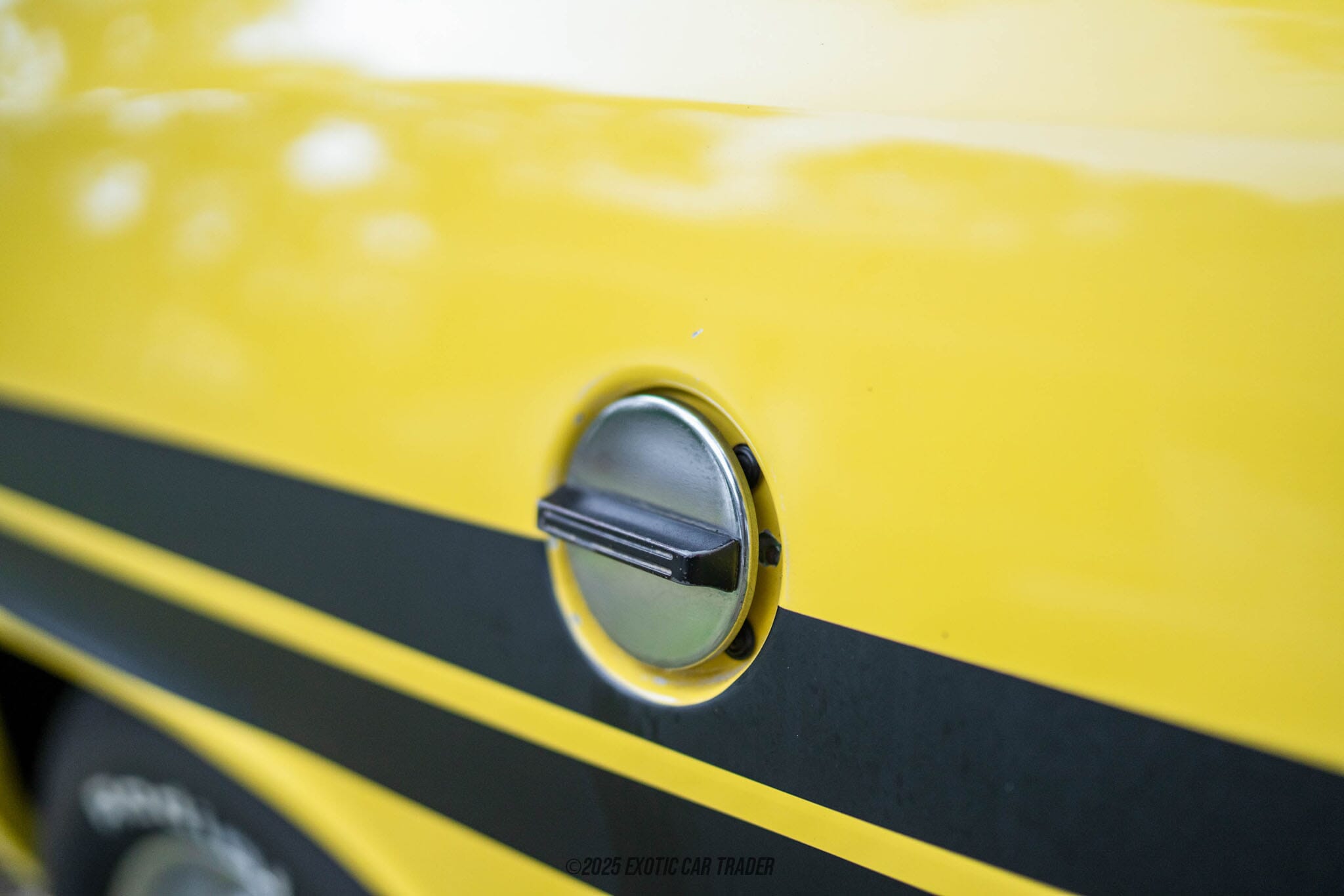
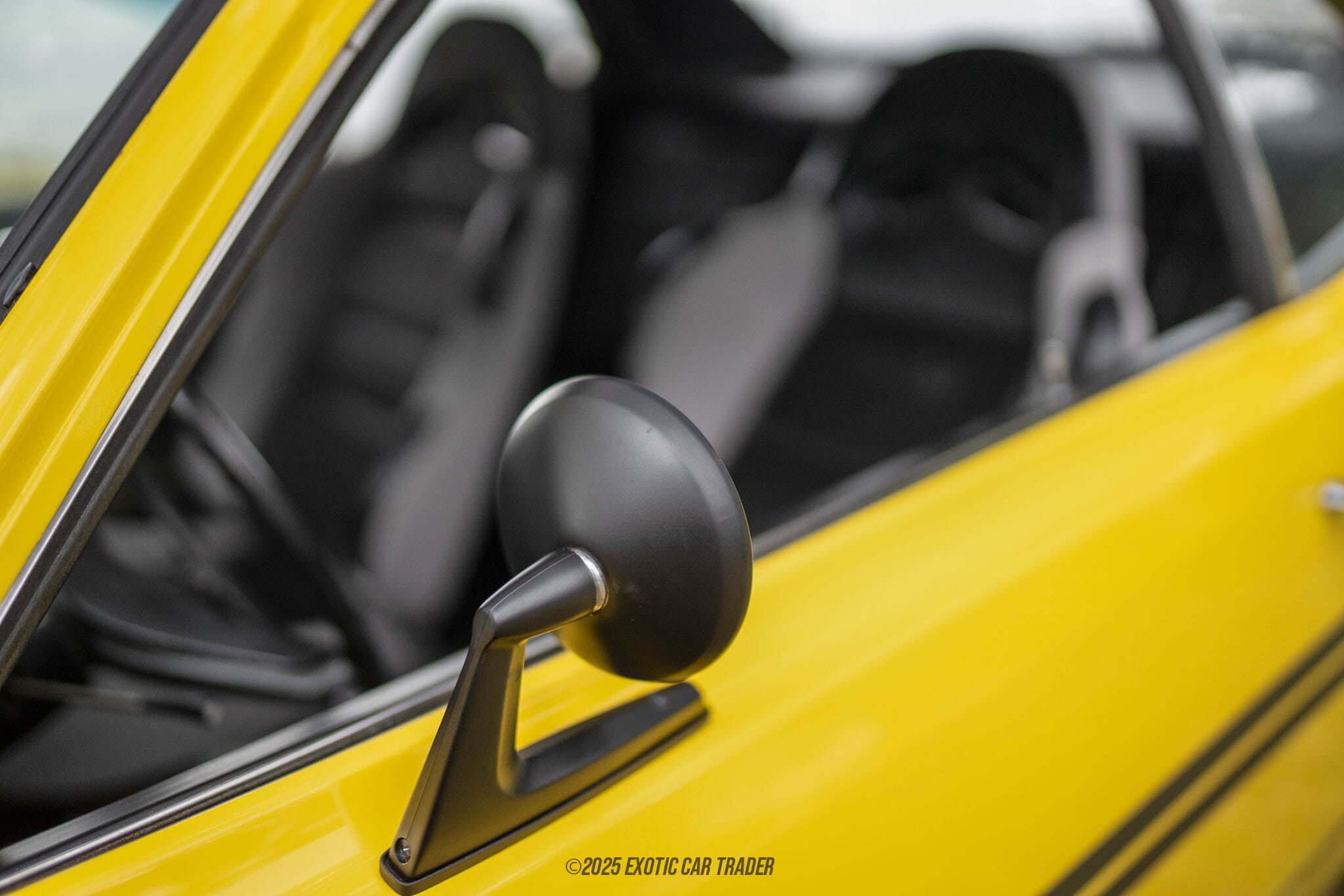
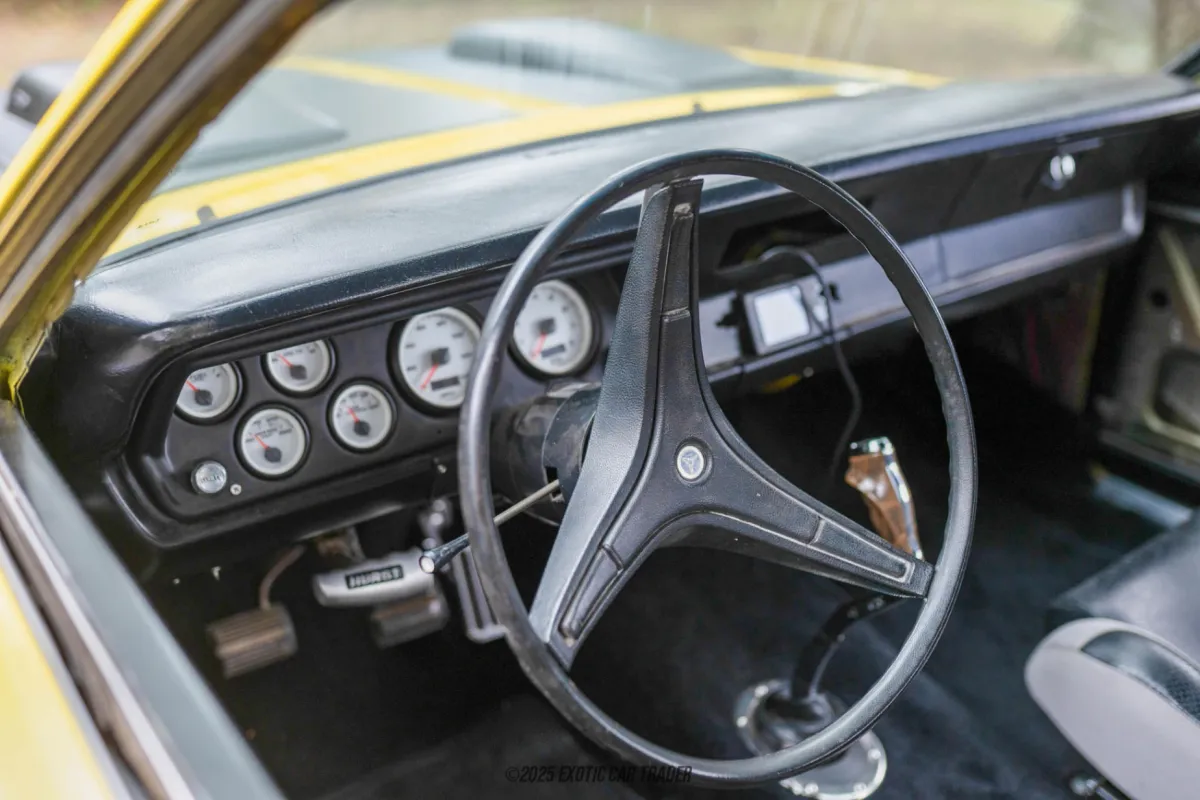
Visually, the car stands out with its high-gloss yellow paint, black performance hood treatment, and period-correct Demon 340 graphics on the fenders. The twin hood scoops and black striping complete the factory-inspired look. It rides on Vision 5-spoke alloy wheels wrapped in BFGoodrich Radial T/A tires, adding to its retro muscle appearance. Inside, the cabin keeps things simple and functional with a black interior, aftermarket white-face gauges, and a factory-style three-spoke steering wheel. A Hurst-style pistol-grip shifter provides a tactile connection to the 4-speed manual transmission. The interior reflects a driver-focused setup with purposeful upgrades and a clean presentation.
Engine
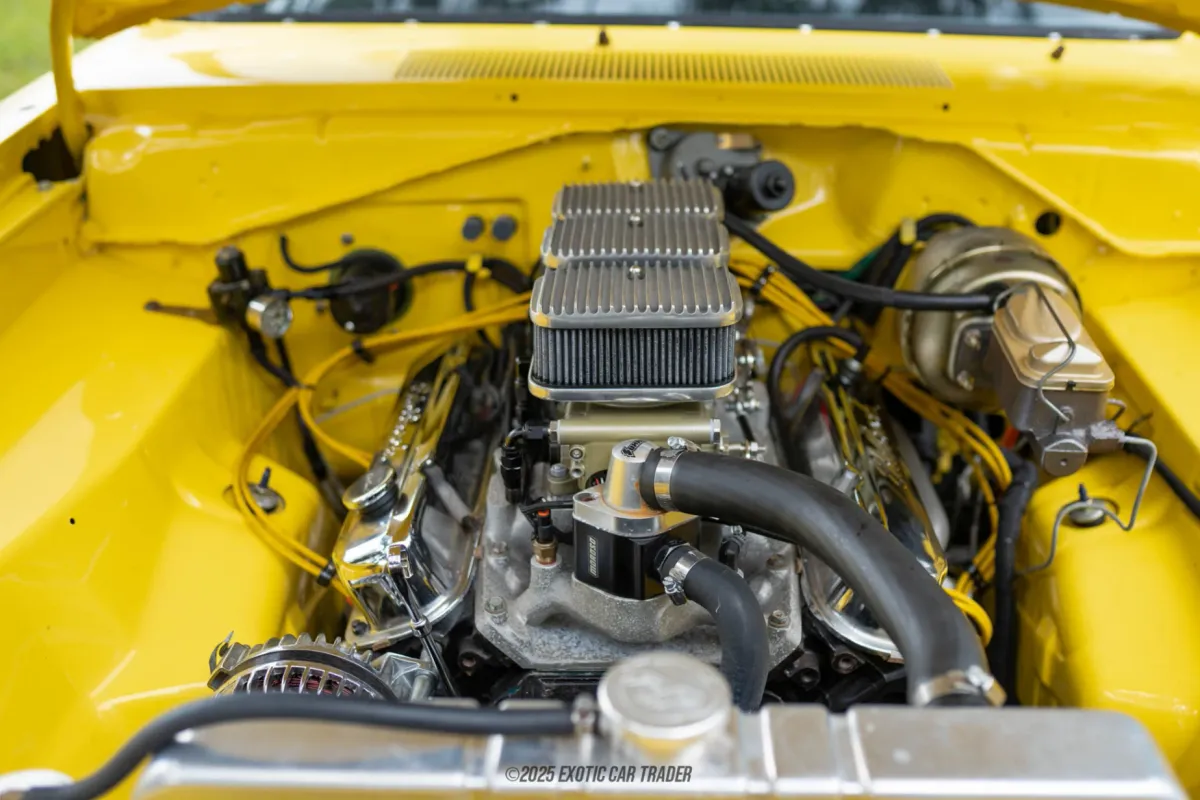
The star of the build is the carbureted Indy-style 340 Six-Pack induction system, featuring three Holley-type two-barrel carburetors mounted on a 6-pack intake manifold with triple finned air cleaners. This tri-power arrangement transforms the small-block 340 into a far more potent setup, offering strong throttle response and classic Mopar performance character. Additional engine bay highlights include chrome valve covers, an aluminum radiator, upgraded ignition components, and a power brake booster. The 4-speed manual transmission and headers further enhance the car’s mechanical engagement, making this Demon Replica a lively, analog muscle machine.


Introduced as Dodge's sporty A-body coupe, the 1970 Dodge Dart Swinger earned a reputation for offering lightweight construction, straightforward engineering, and dependable performance. Showing 60,771 miles, this example is finished in Blue over a matching Blue interior and is powered by Chrysler's legendary 225ci Inline-6 paired with a 3-Speed TorqueFlite automatic transmission driving the rear wheels. Equipped with factory air conditioning & heat, power steering, power front disc brakes, and several tasteful upgrades, this Dart Swinger delivers classic Mopar styling with the comfort and reliability that have made the Slant Six-powered Dart a favorite among enthusiasts for decades.
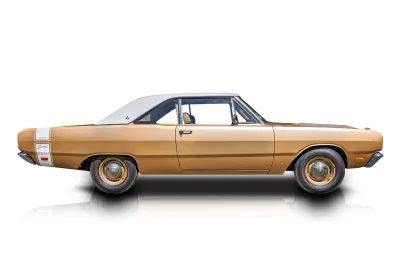
The Dodge Dart Swinger 340 earned its reputation as one of the most formidable compact muscle cars of the late 1960s, combining Mopar's high-performance 340ci V8 with lightweight A-Body styling for an entertaining driving experience. This 1969 Dodge Dart Swinger 340 shows approximately 48,402 miles and is finished in Bronze Metallic with a contrasting White Vinyl Roof over a Tan interior. This Dart retains many of its desirable factory features, including the legendary 727 TorqueFlite automatic transmission, 3.23 rear axle ratio, power steering, power brakes, and period-correct styling details that make it a standout example of Chrysler's golden era of muscle.
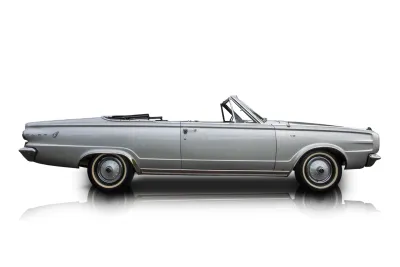
The Dodge Dart earned a reputation during the 1960s for delivering dependable performance, clean styling, and impressive value, making it one of Chrysler’s most successful compact cars. This 1966 Dodge Dart GT Convertible represents one of the most desirable variants of the lineup, pairing V8 power with top-down cruising enjoyment. Showing approximately 15,347 miles, this example is finished in elegant Silver Poly over a Black Vinyl interior and retains many of the features that made the GT trim a standout offering. Equipped with a 273ci V8, automatic transmission, and power steering, this Dart delivers a classic American driving experience wrapped in a stylish and increasingly collectible package.
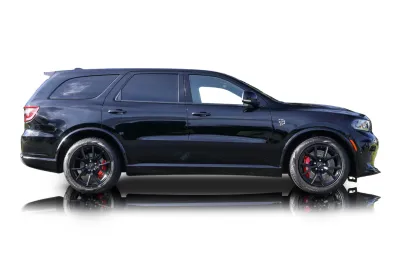
The 2026 Dodge Durango SRT Hellcat Jailbreak AWD takes Dodge’s three-row SUV formula and turns it into something far more extreme. This example shows just 4,823 miles and pairs everyday passenger space with the 6.2L supercharged HEMI V8 and SRT hardware that define the Hellcat name. The Jailbreak configuration adds its own visual and interior details, while equipment such as the Premium Group, Trailer-Tow Group IV, forged 20-inch wheels, Brembo brakes, adaptive cruise control, and Harman Kardon audio give this Durango a broad mix of performance, technology, and comfort.
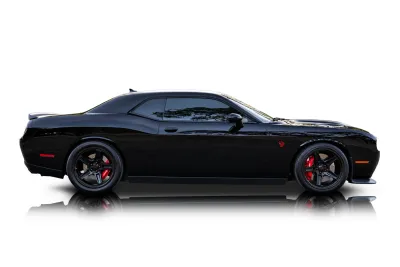
The 2016 Dodge Challenger SRT Hellcat is one of the cars that helped redefine what a modern American muscle car could be. Showing approximately 29,340 miles, this Pitch Black Clearcoat example pairs its unmistakable wide-shouldered Challenger styling with the centerpiece that made the Hellcat famous: a 6.2L supercharged V8 backed by an 8-speed HP90 automatic transmission. The Quick Order Package 26R SRT Hellcat, Laguna Performance Seats with SRT-embossed logos, and power sunroof add to the appeal, while the all-black color combination gives the car an especially sinister look. With rear-wheel drive, massive supercharged power, and the everyday usability of a full-size coupe, this Hellcat blends old-school muscle-car attitude with modern performance engineering in a way few cars can match.
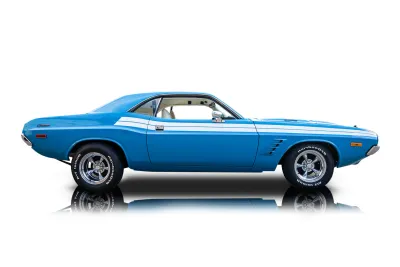
The 1972 Dodge Challenger sits squarely in the golden era of Mopar muscle, and this Petty Blue example brings together the visual drama and small-block character that made the E-body such an enduring favorite. Showing just 168 miles on the odometer, it is powered by a 340ci V8 backed by a 727 TorqueFlite 3-speed automatic, with Hooker headers and dual exhaust adding some extra attitude to the combination. The Petty Blue finish, white side stripes, dual hood scoops, 340 Magnum callouts, and chrome 5-spoke wheels give it the unmistakable look of a period street machine. Then there is the cabin: a rare white vinyl interior that completely changes the personality of the car and gives this Challenger a far more distinctive presentation than the usual dark-trimmed muscle car.
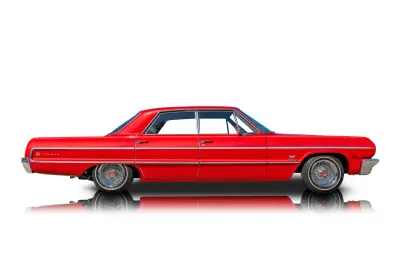
The 1964 Chevrolet Impala 4-Door Sedan captures the long, low, unmistakable style that made Chevrolet’s full-size cars such icons of the 1960s. Showing approximately 28,076 miles, this example combines a 327ci V8 with a 2-barrel carburetor and 2-speed Powerglide automatic transmission, while power steering and power brakes make it considerably easier to enjoy from behind the wheel. Finished in Red over a Black interior, it also benefits from tasteful modern upgrades including aftermarket coilover suspension and a Bluetooth-capable sound system, adding usability without taking away from the car’s classic character.
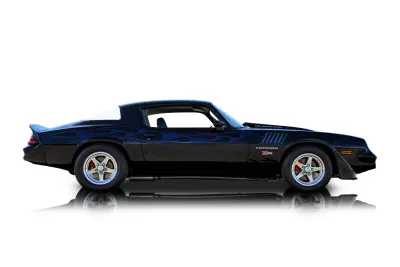
This 1979 Chevrolet Camaro Restomod takes the unmistakable shape of Chevrolet’s second-generation F-body and gives it a much more aggressive enthusiast-focused personality. Showing approximately 752 miles, this example combines a 383ci stroker V8 with a 750 CFM Holley 4-barrel carburetor and a 4-speed manual transmission, giving it the kind of old-school muscle-car formula that puts driver involvement front and center. Finished in Black with custom Purple & Red flame graphics, this Camaro also features a Hurst shifter, Grant GT steering wheel, aftermarket gauges, and a number of exterior and audio upgrades that give it a distinctly custom-built character.
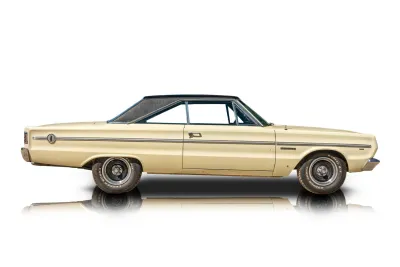
The 1966 Plymouth Belvedere II Hardtop is the kind of Mopar that gets enthusiasts interested before the hood is even opened. Its clean B-body lines, pillarless hardtop profile, Soft Yellow paint, black vinyl roof, and Magnum 500-style wheels give it the restrained factory muscle look of the mid-1960s, but this example carries much more serious hardware underneath. Showing approximately 91,610 miles, it is powered by a 440ci big-block V8 backed by a TorqueFlite 727 automatic, giving it the kind of drivetrain combination that feels right at home in a classic Plymouth. Add power steering, power disc brakes, air conditioning, and a dual exhaust system, and this Belvedere blends old-school Mopar attitude with enough comfort to make it more than just a weekend bruiser.

Terms of Service
Be Kind and Courteous
We're here to create a platform to better the automotive industry through communication and transparency. Please treat everyone with respect. Healthy debates are natural, but kindness is required.
No Hate Speech
Make sure everyone feels safe. Hate speech of any kind is strictly prohibited. Degrading comments about things like race, religion, culture, sexual orientation, etc. will not be tolerated.
No Promotions or Spam
Give more than you take. Self-promotion, spam, or links of any kind are not allowed.
