




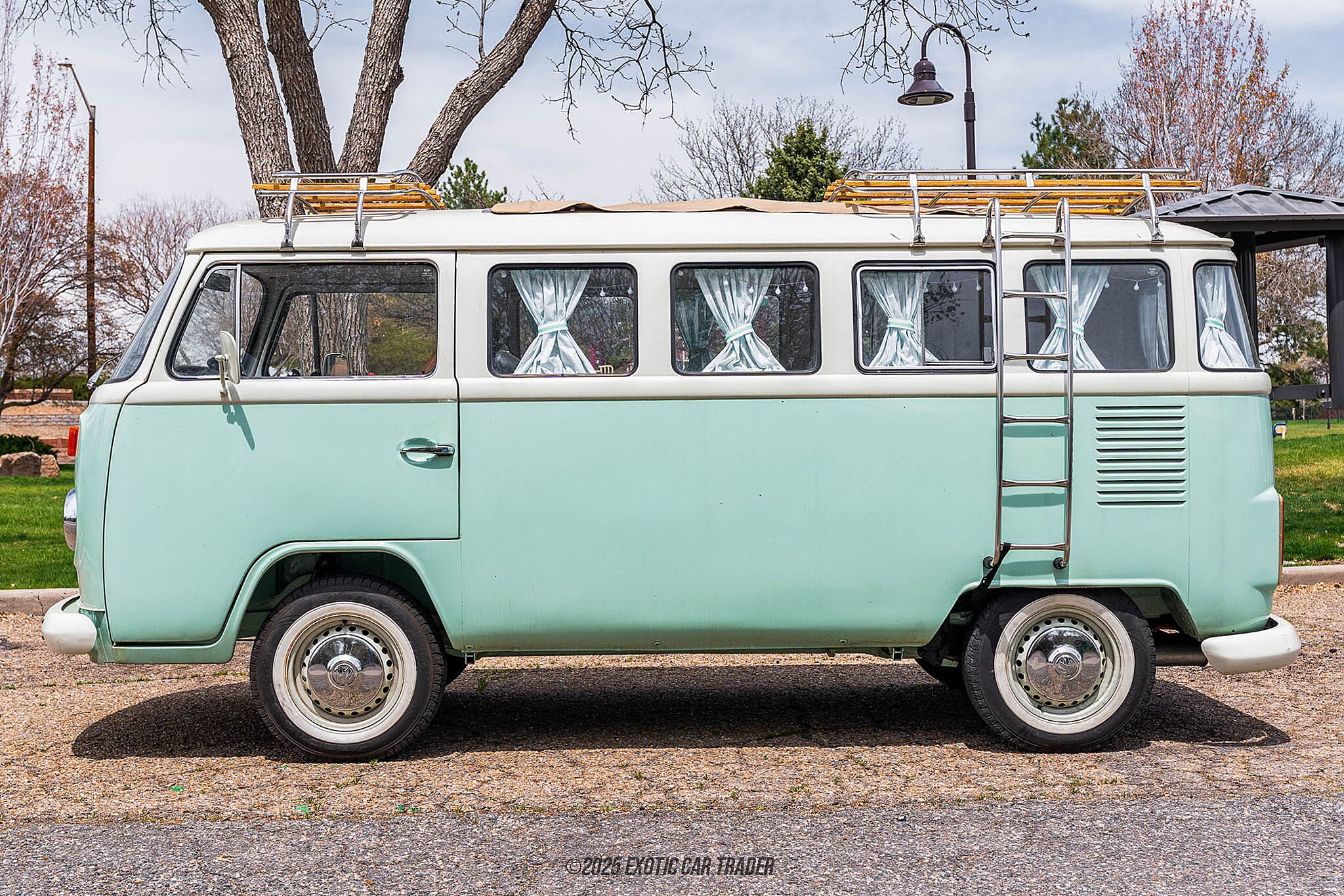
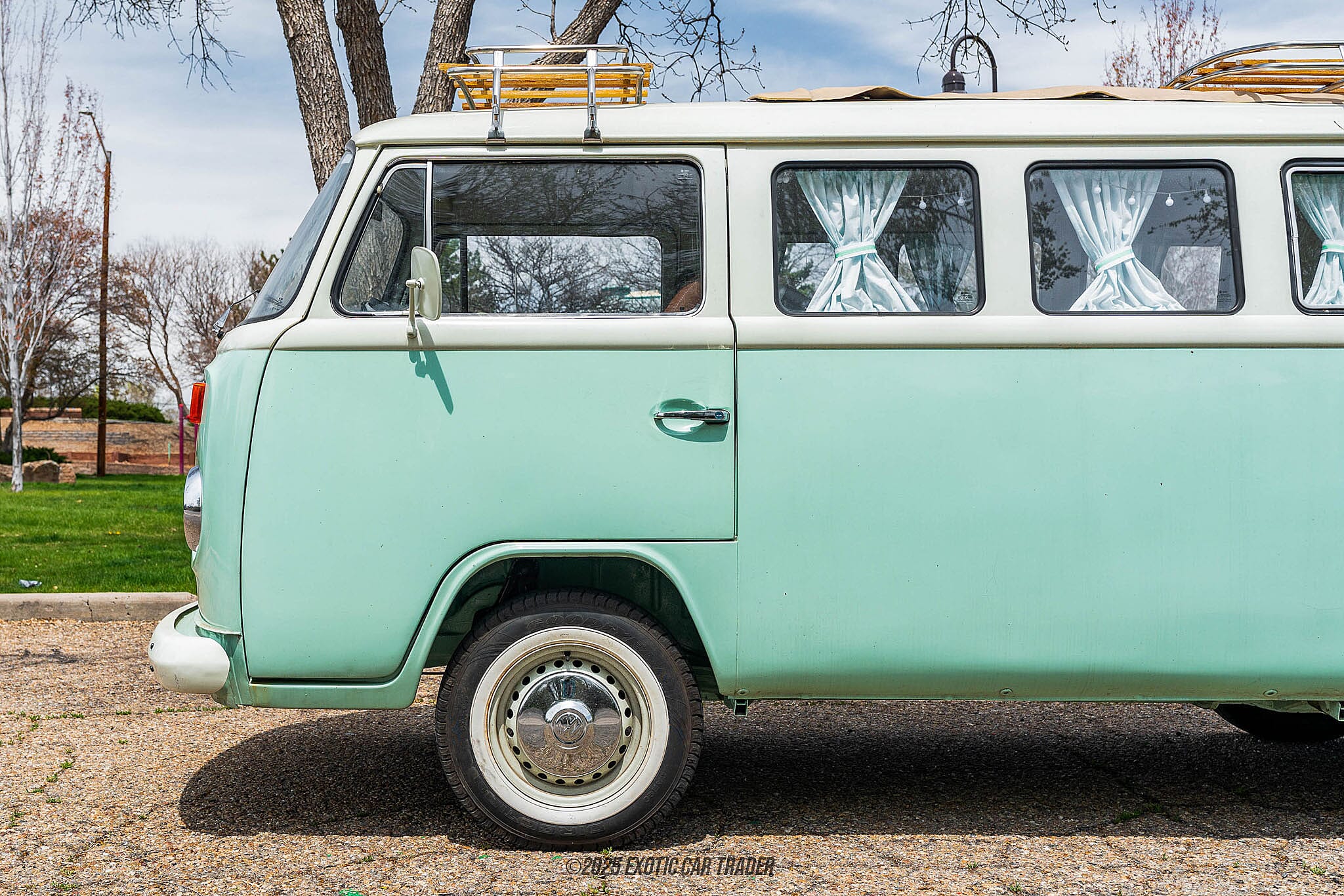
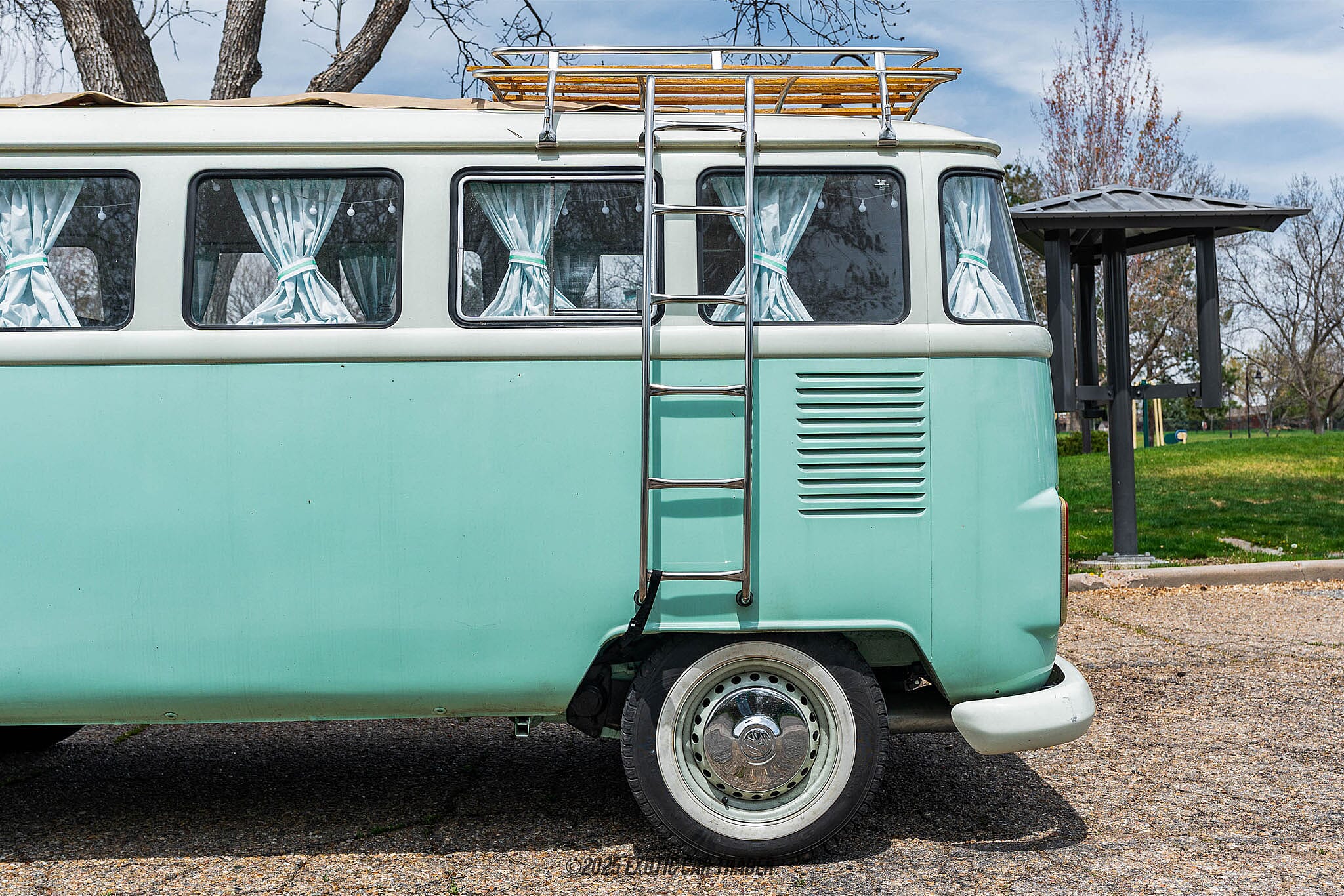
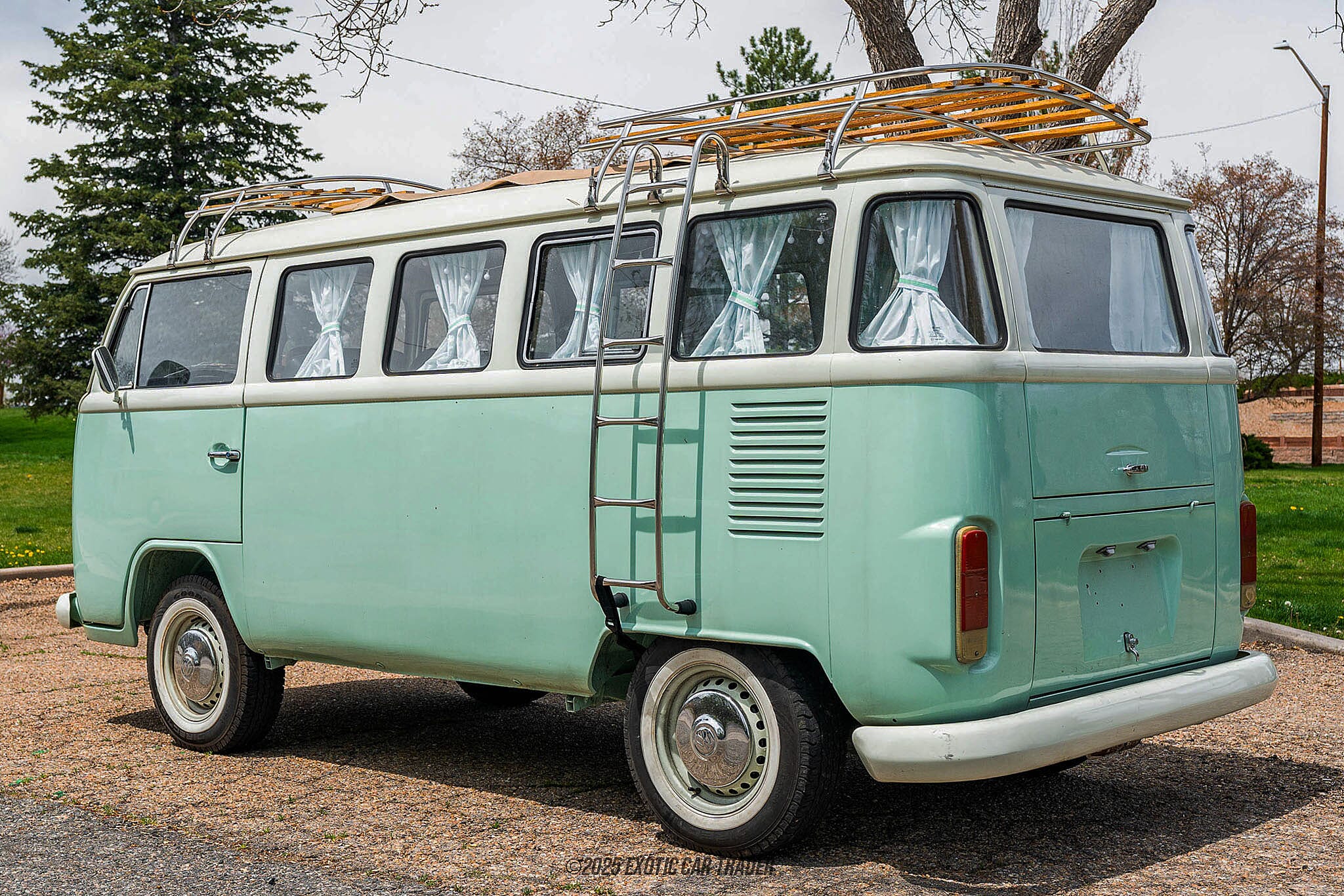

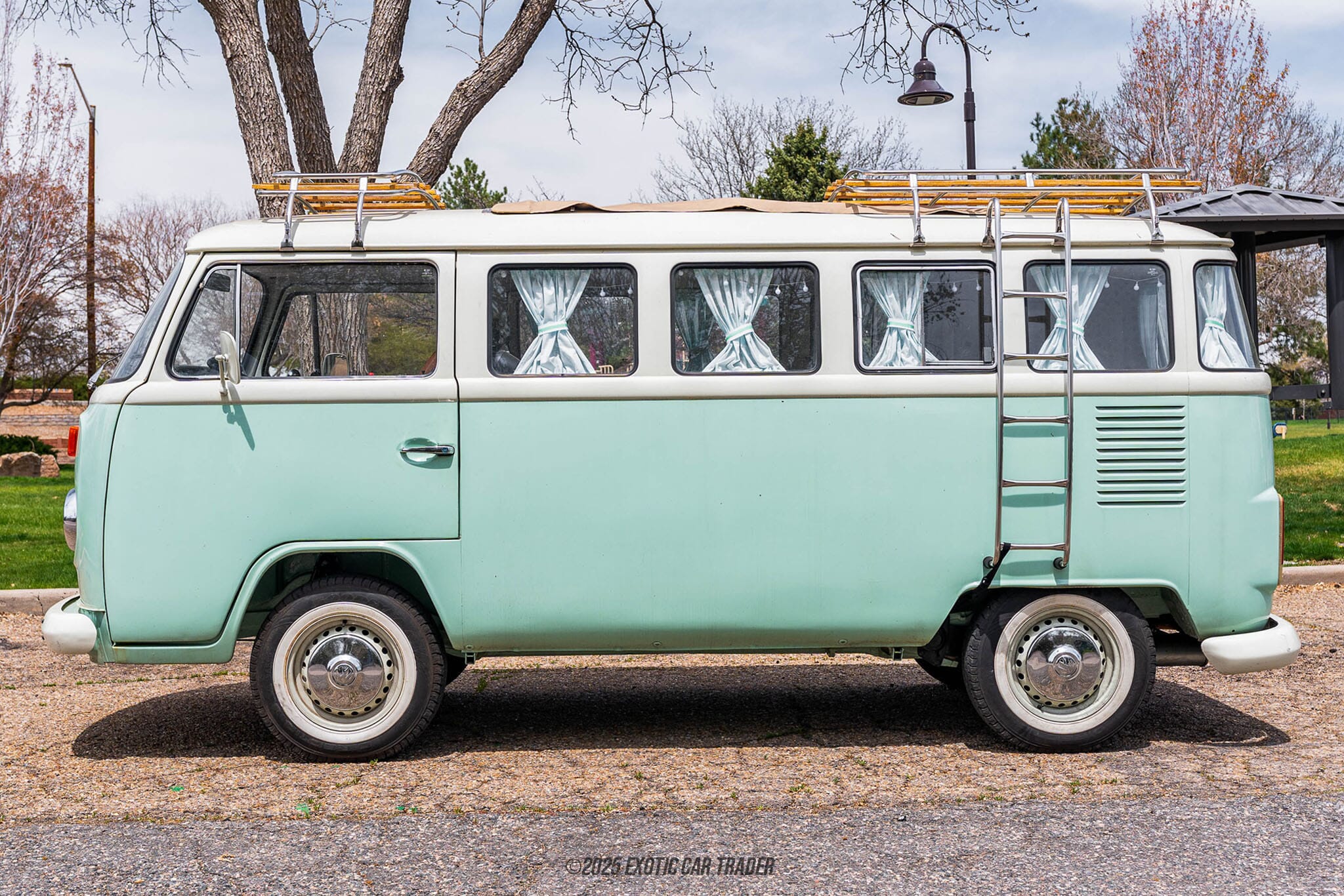
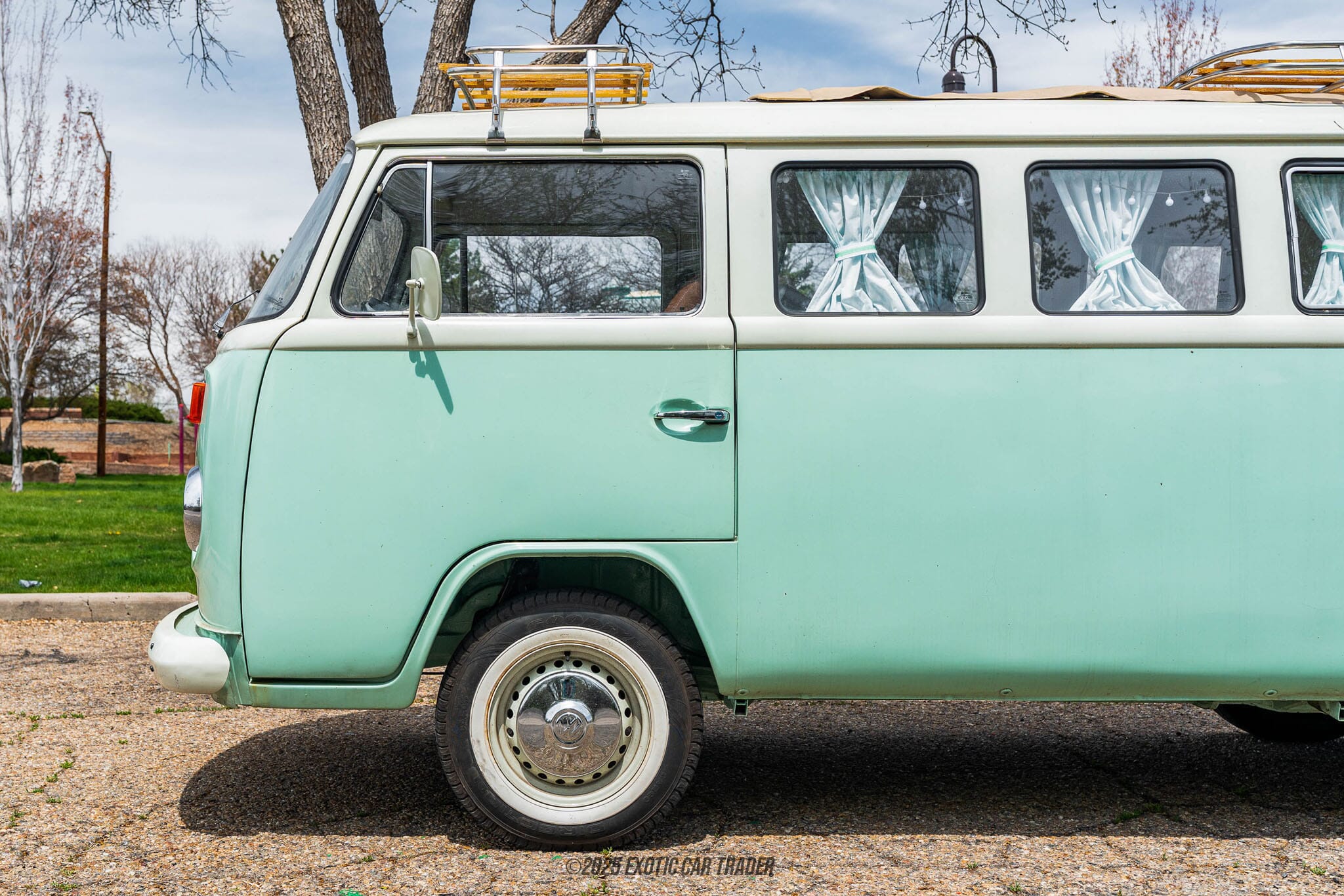
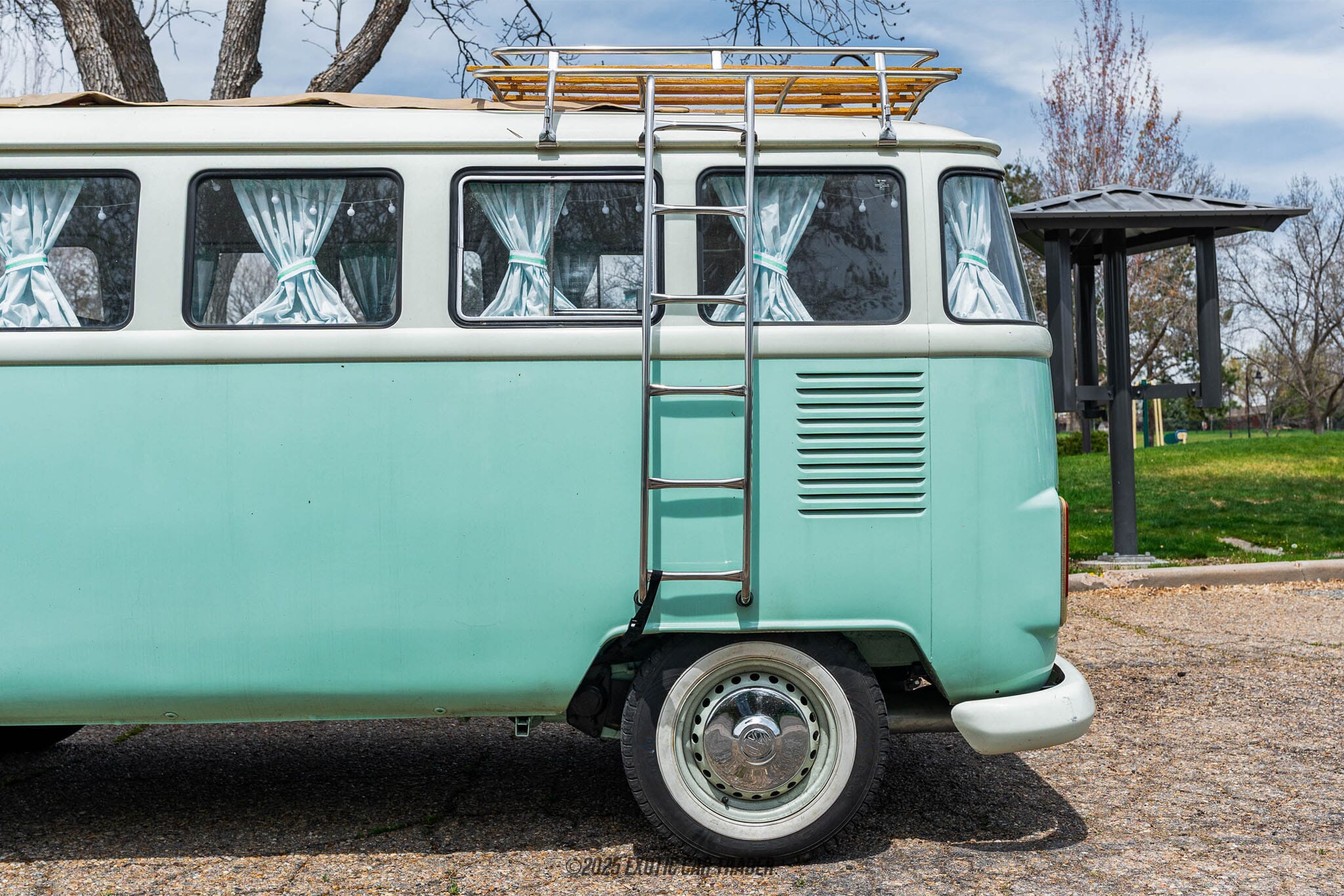
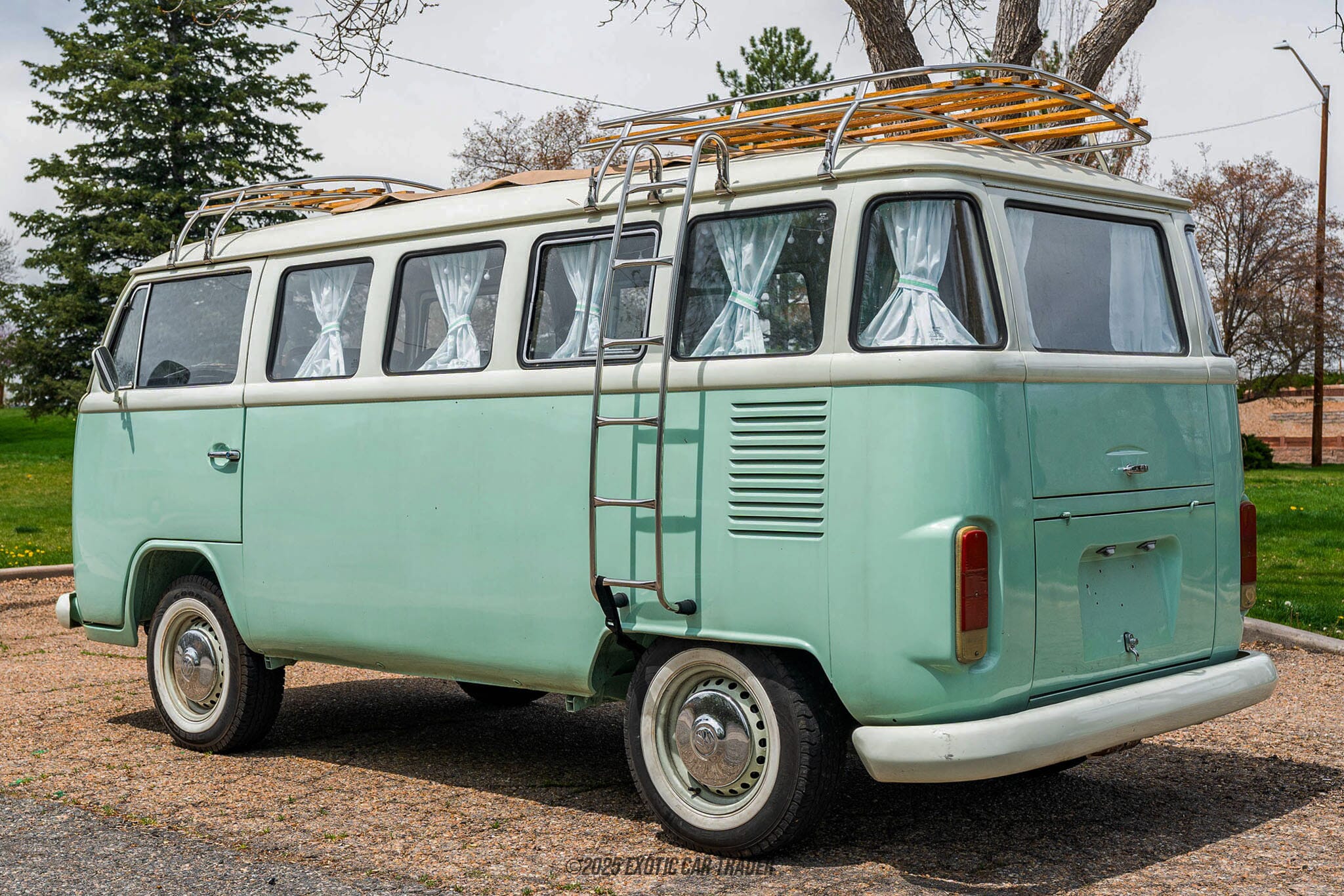
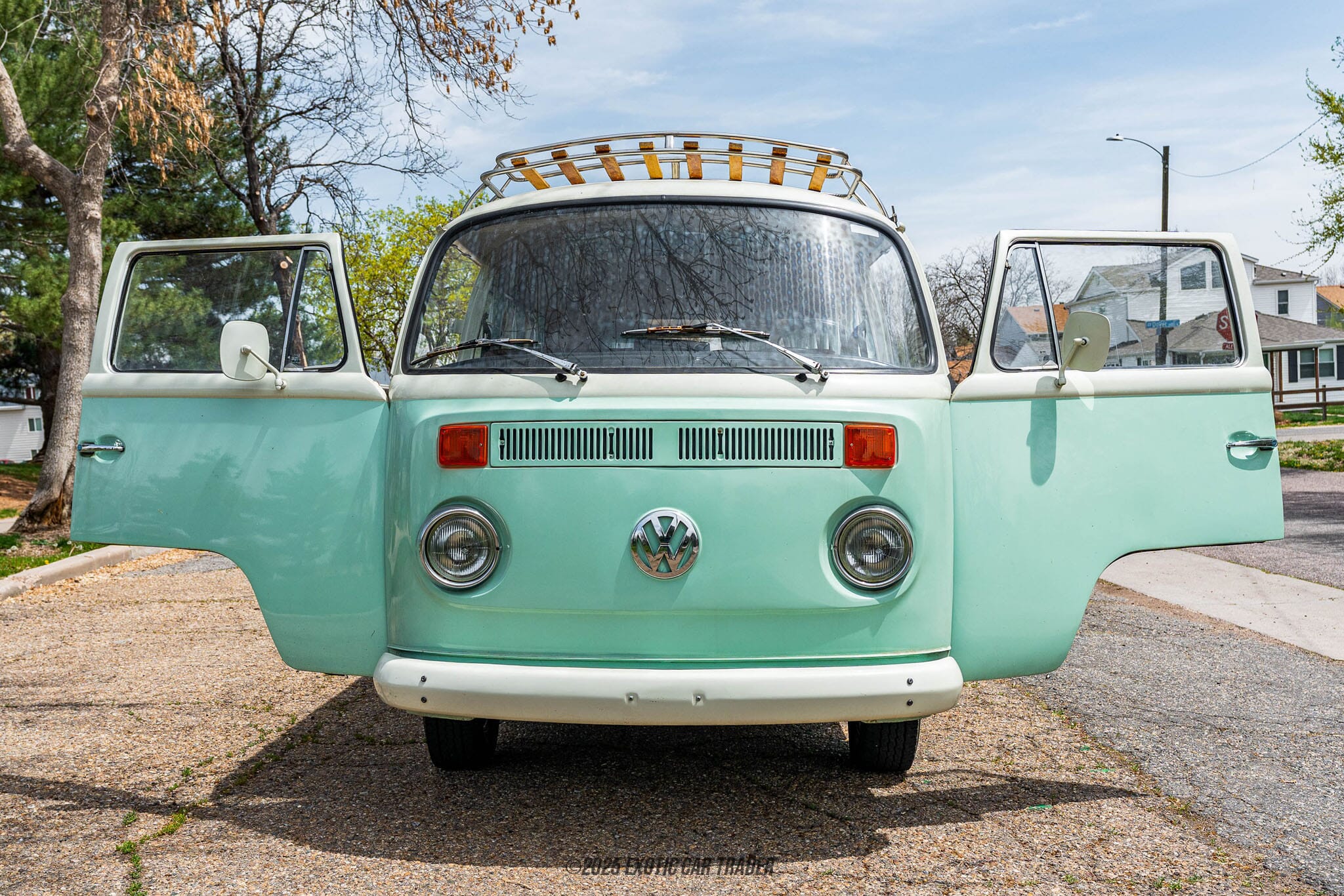
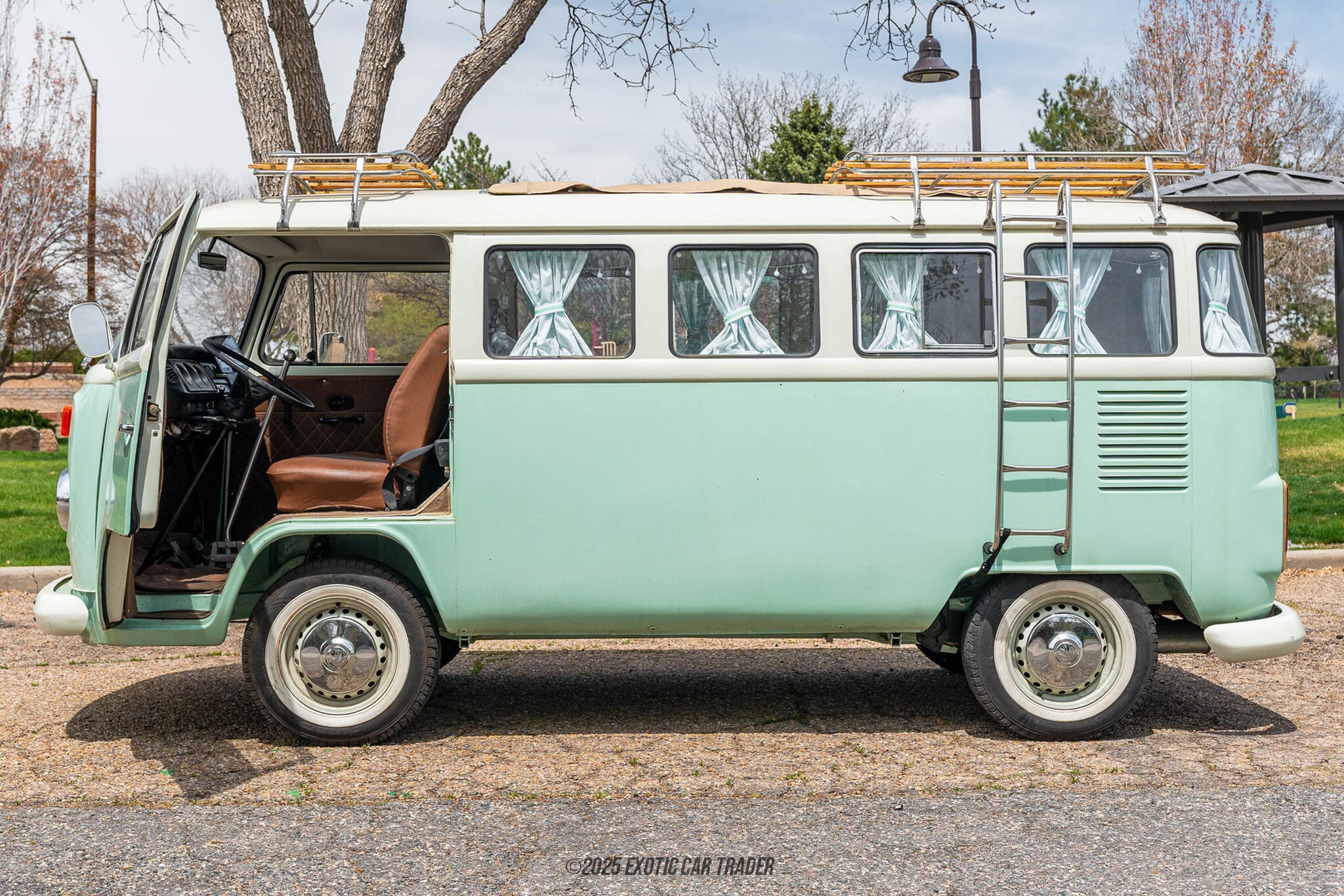
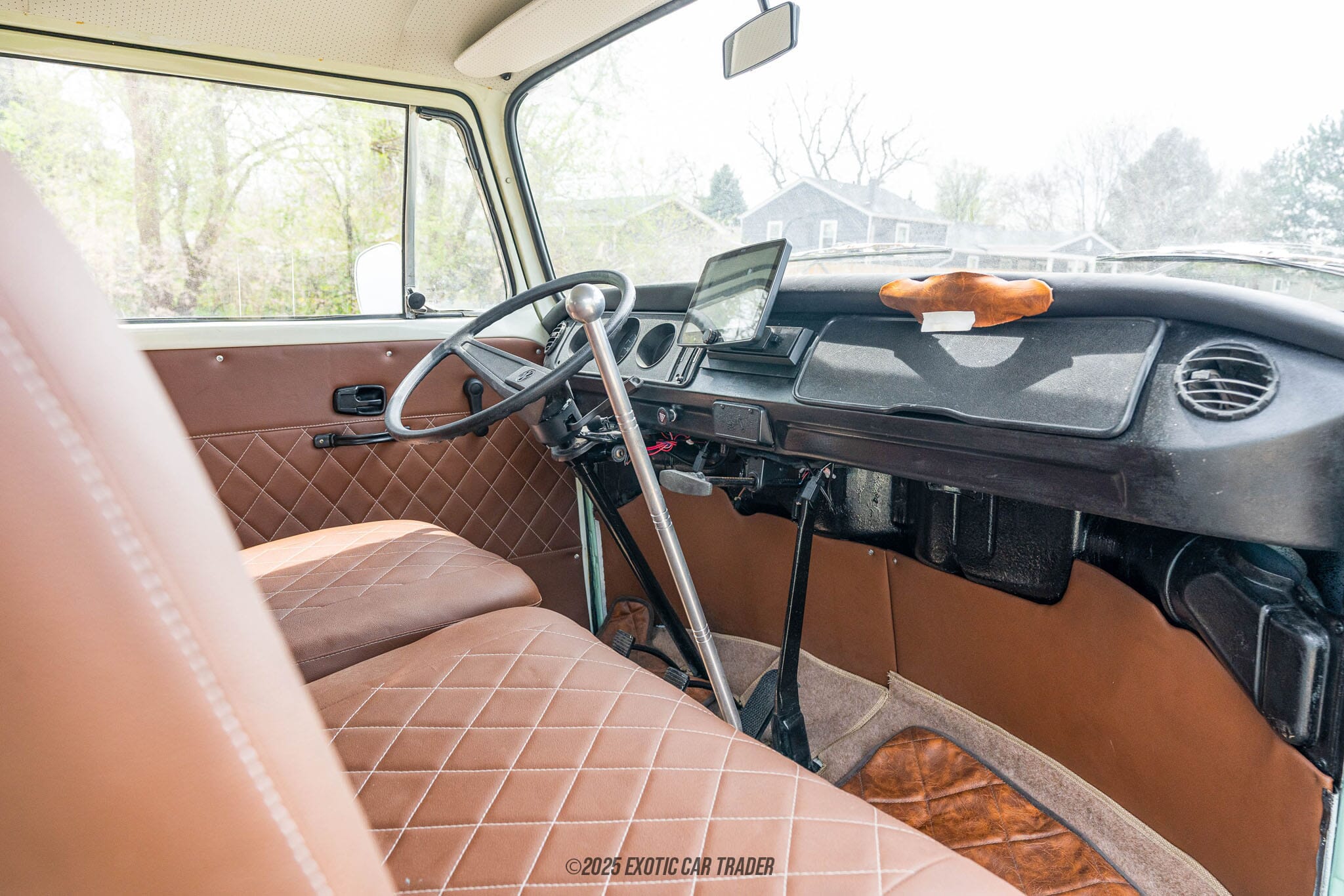
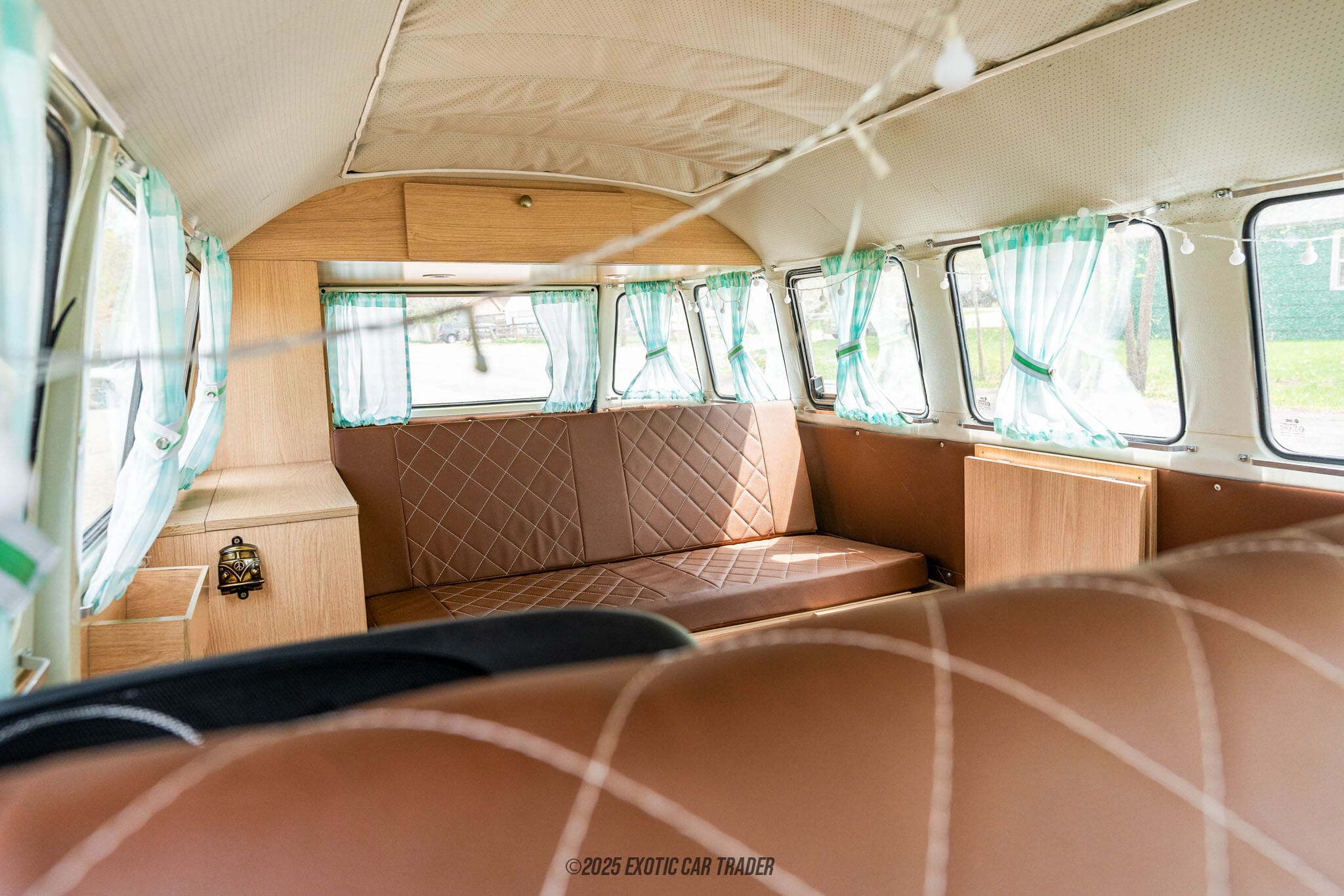
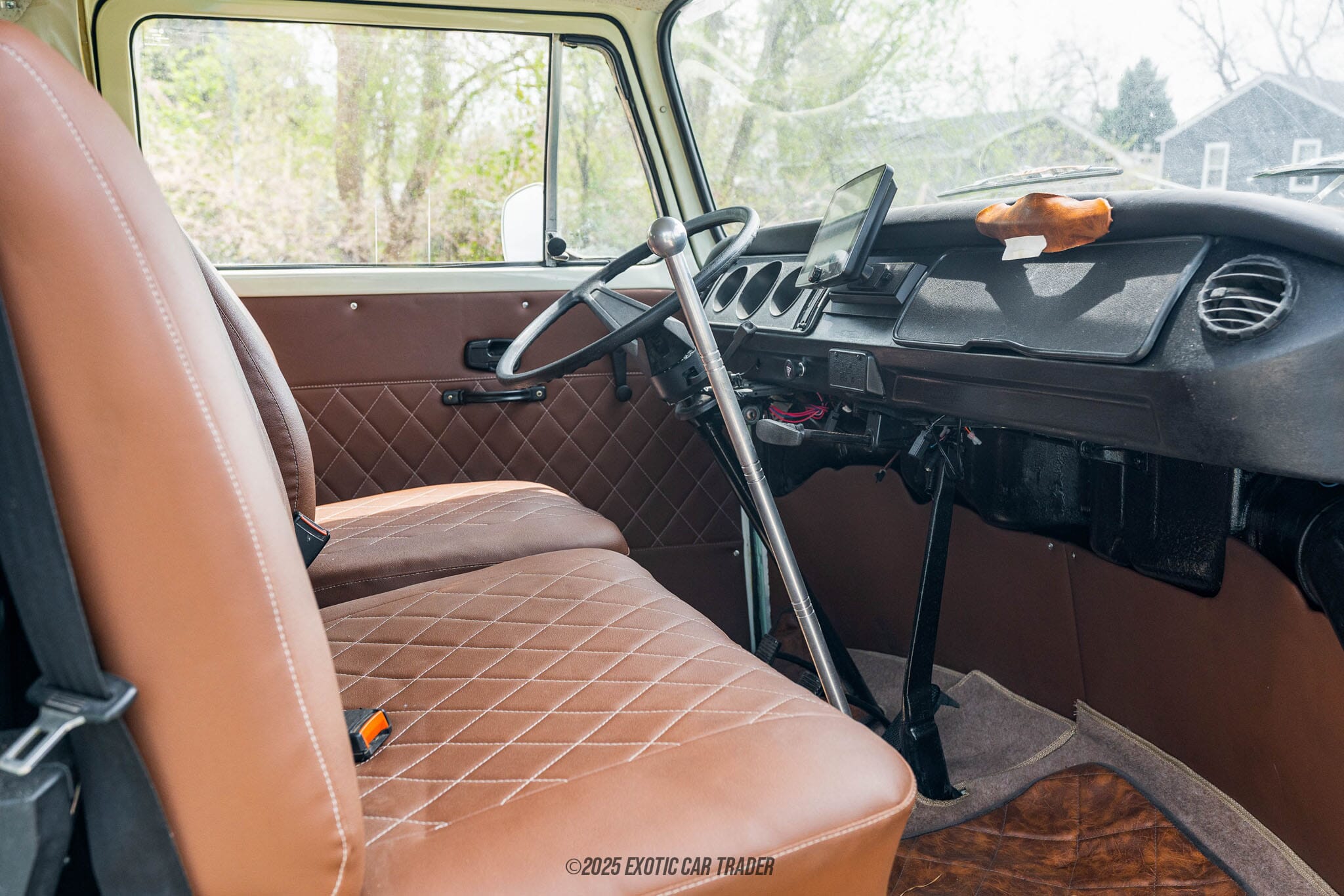
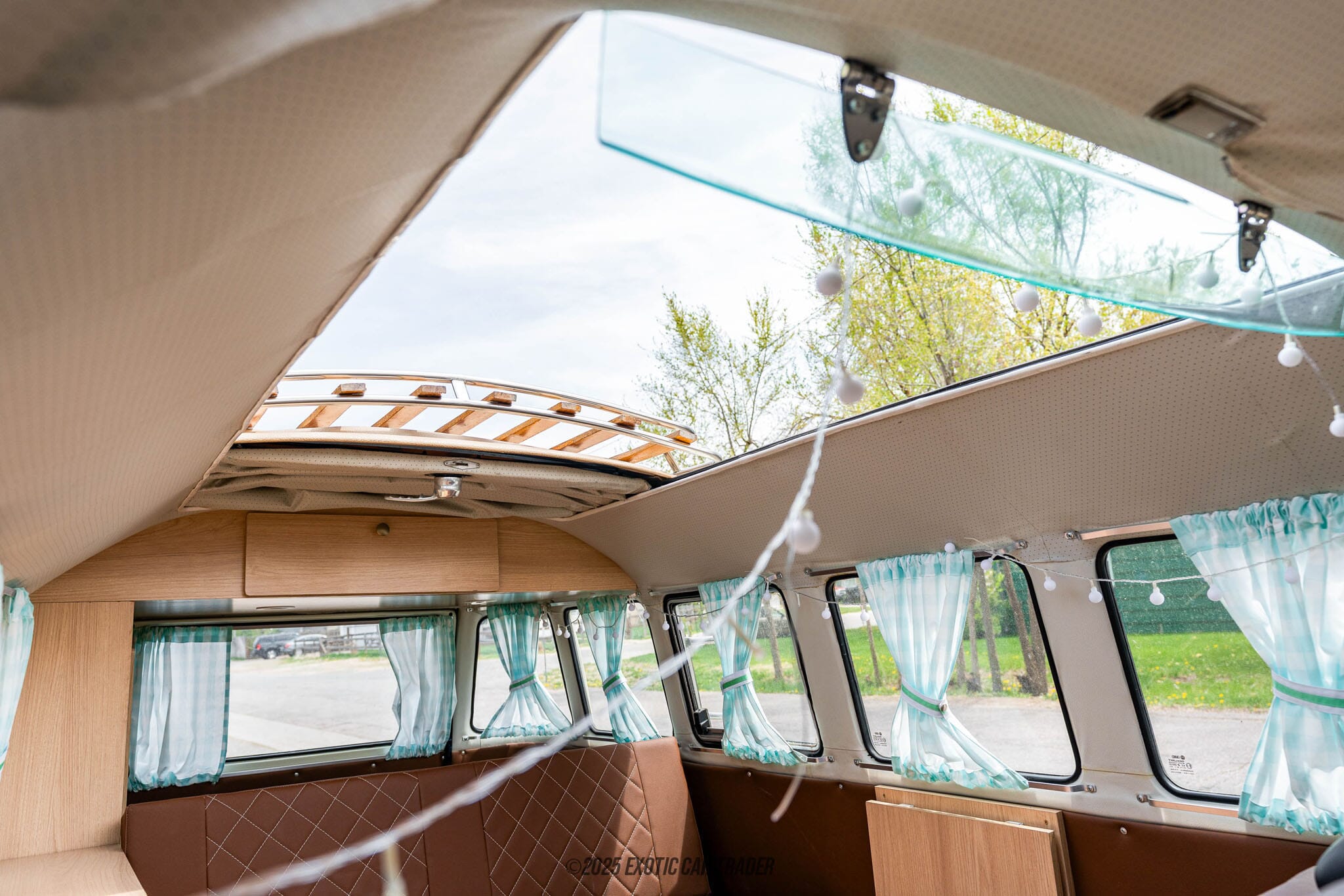
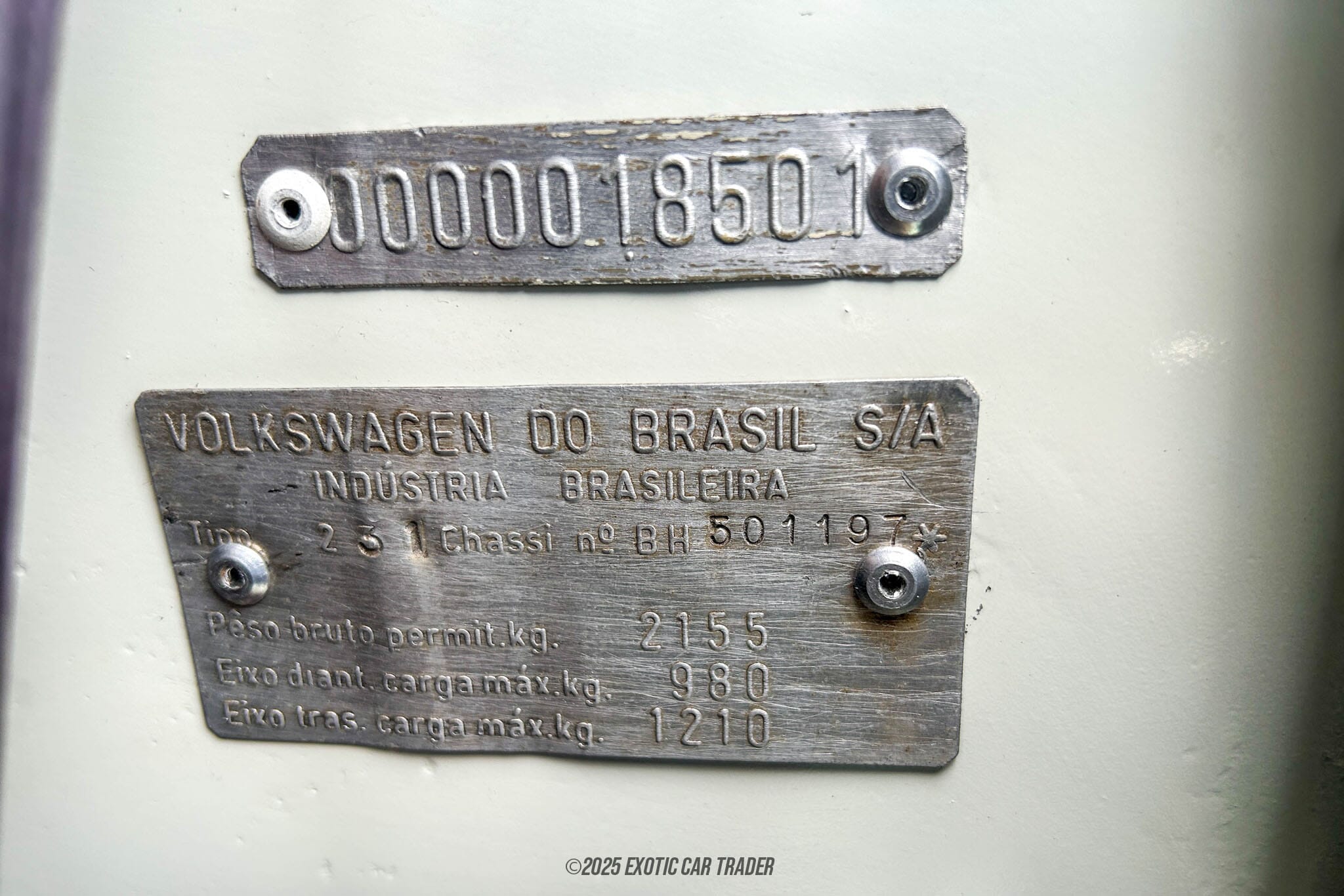
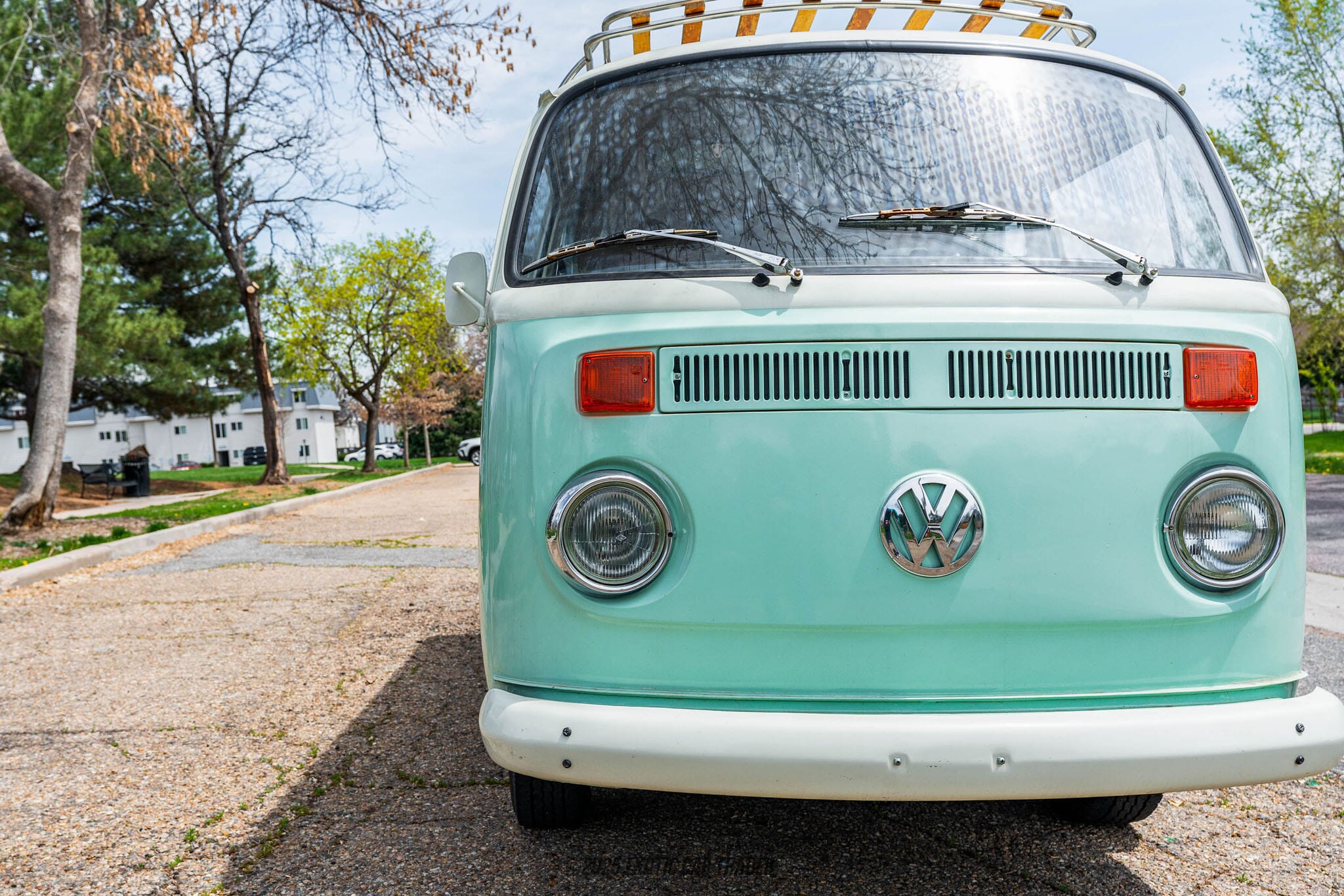
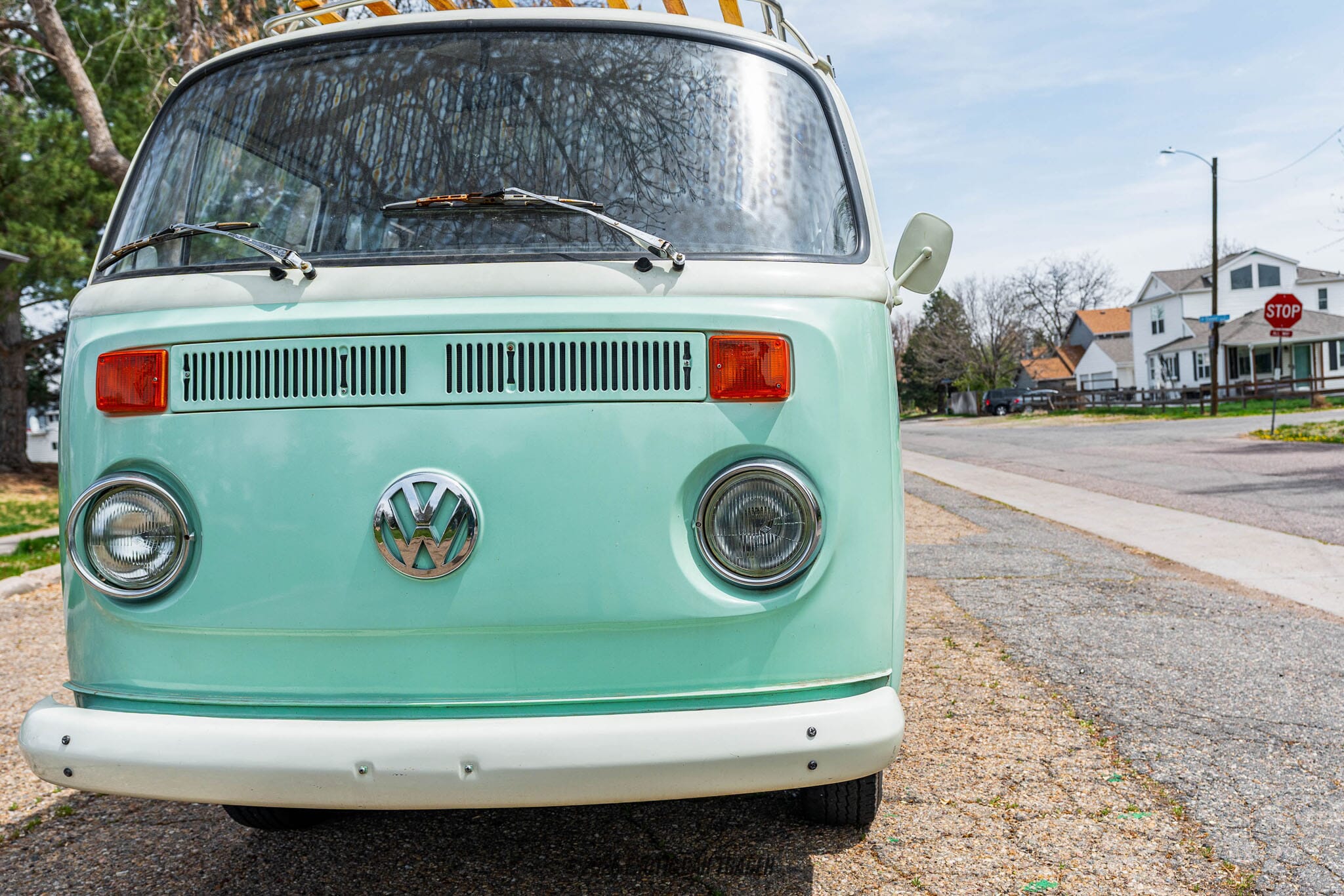
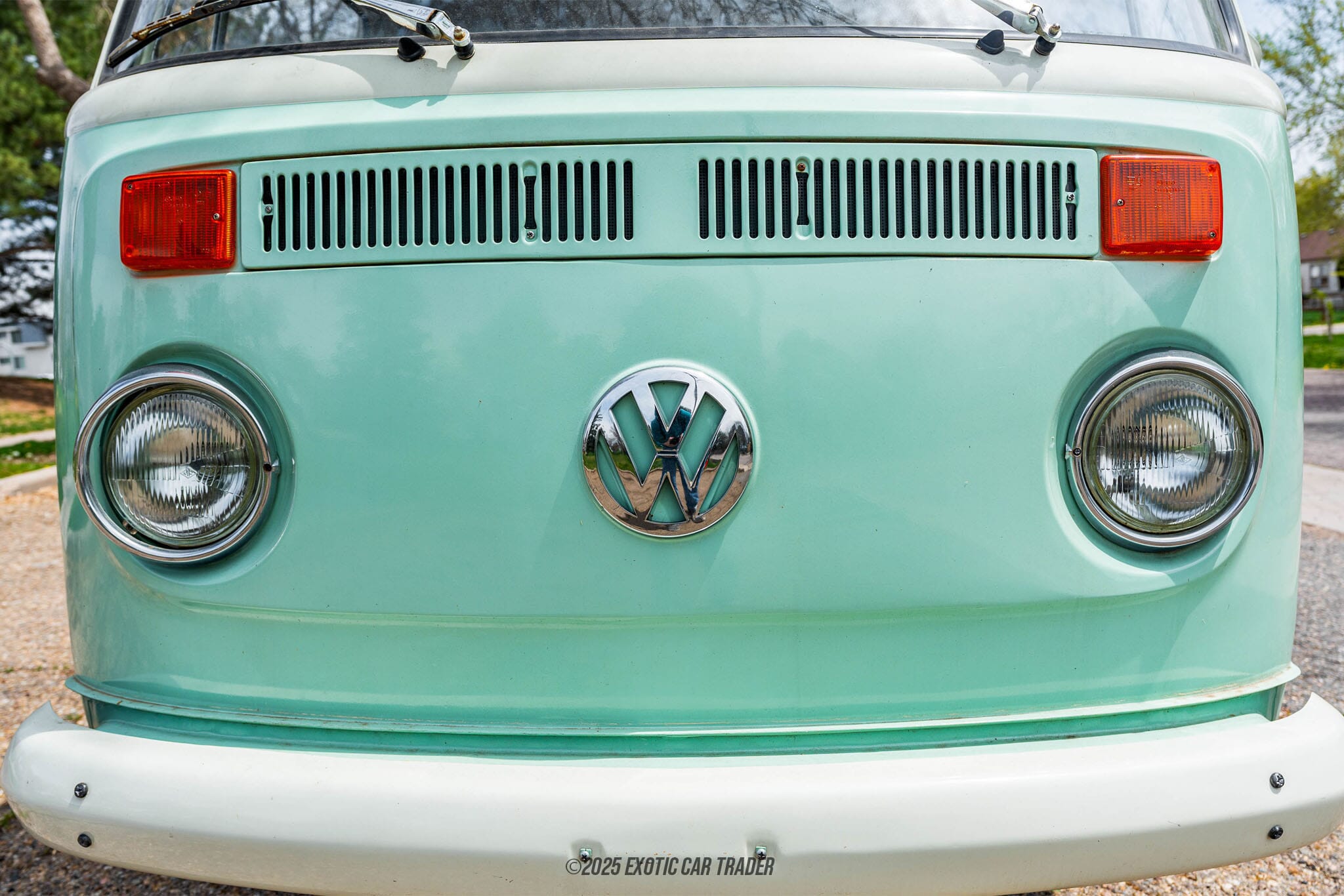
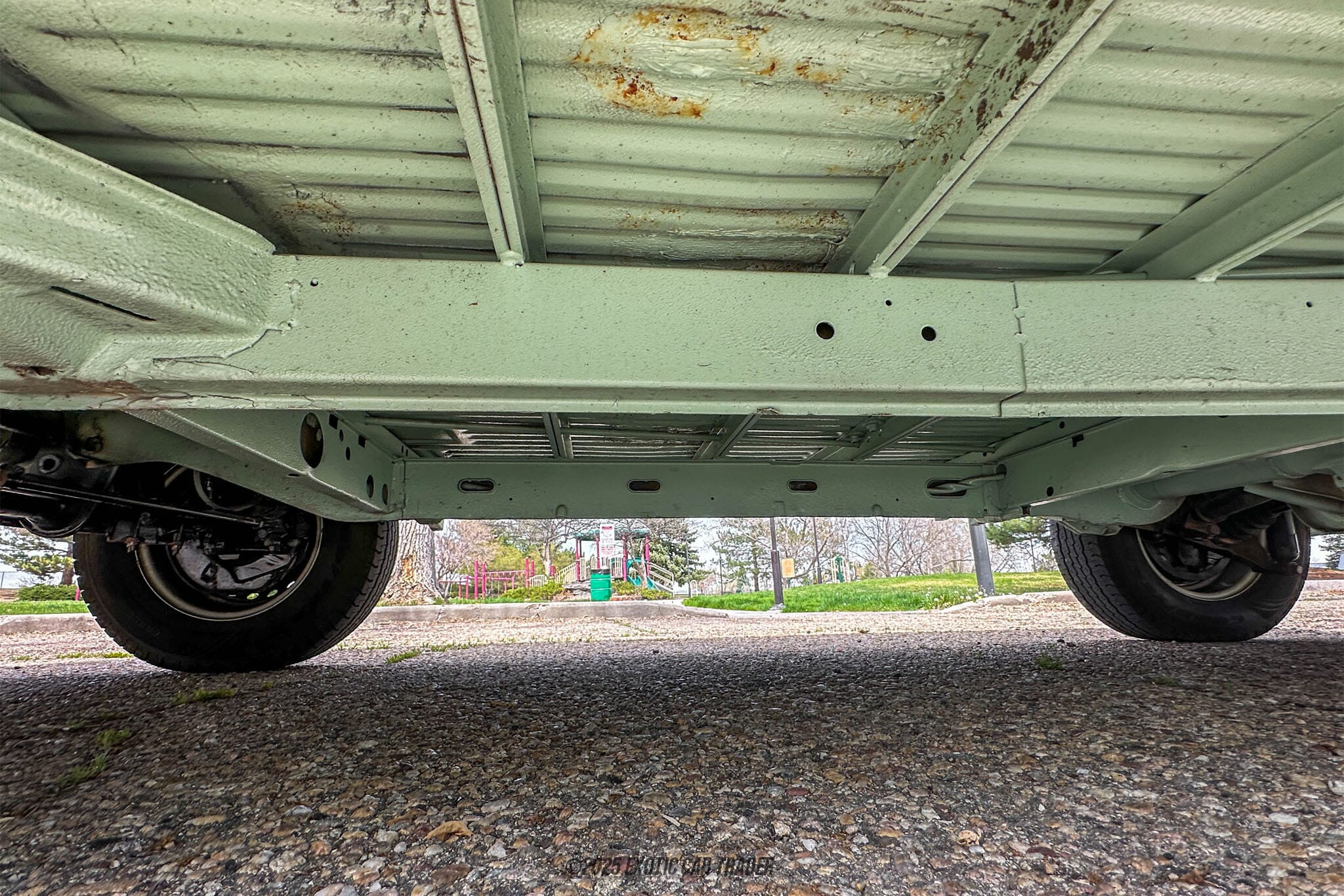
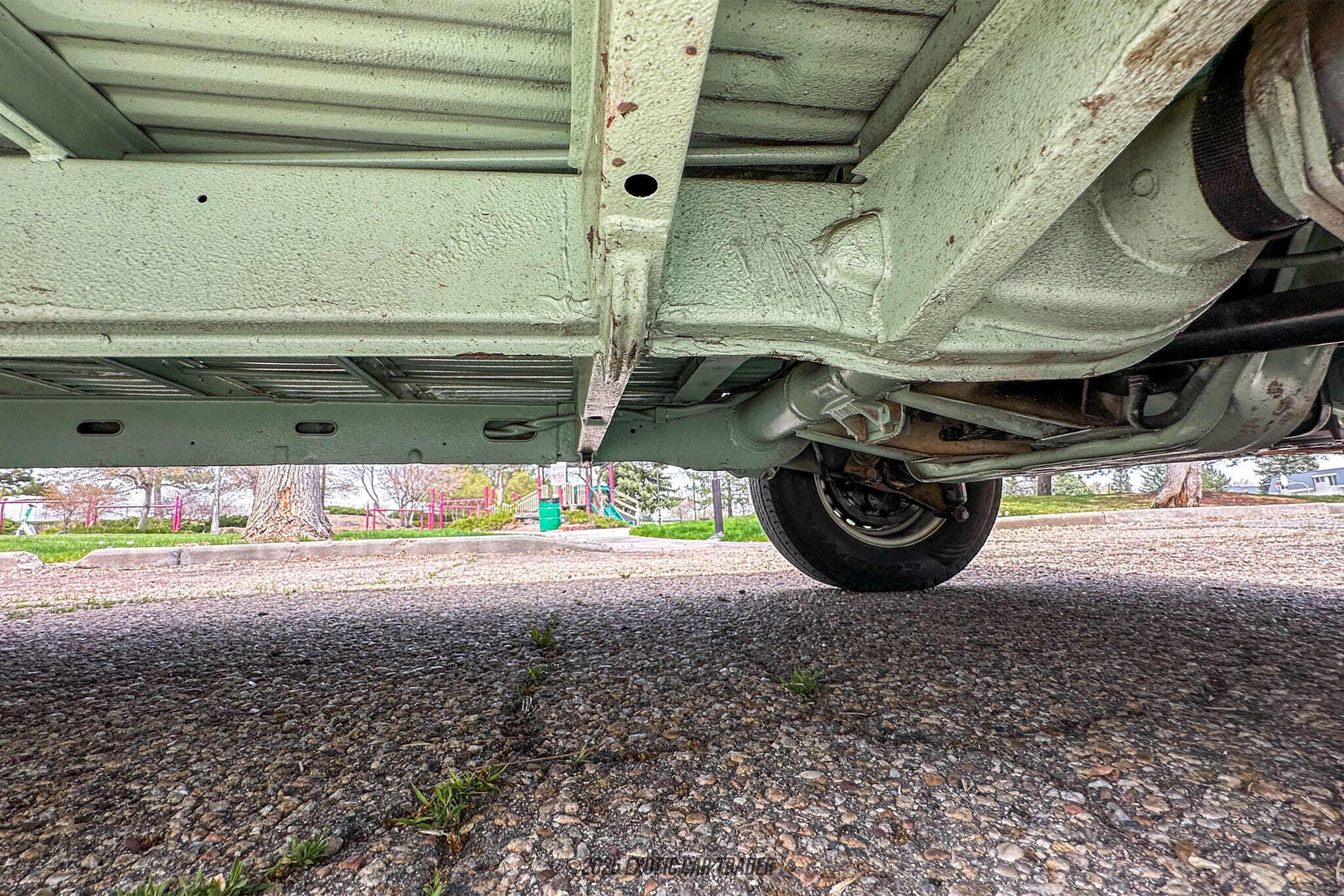
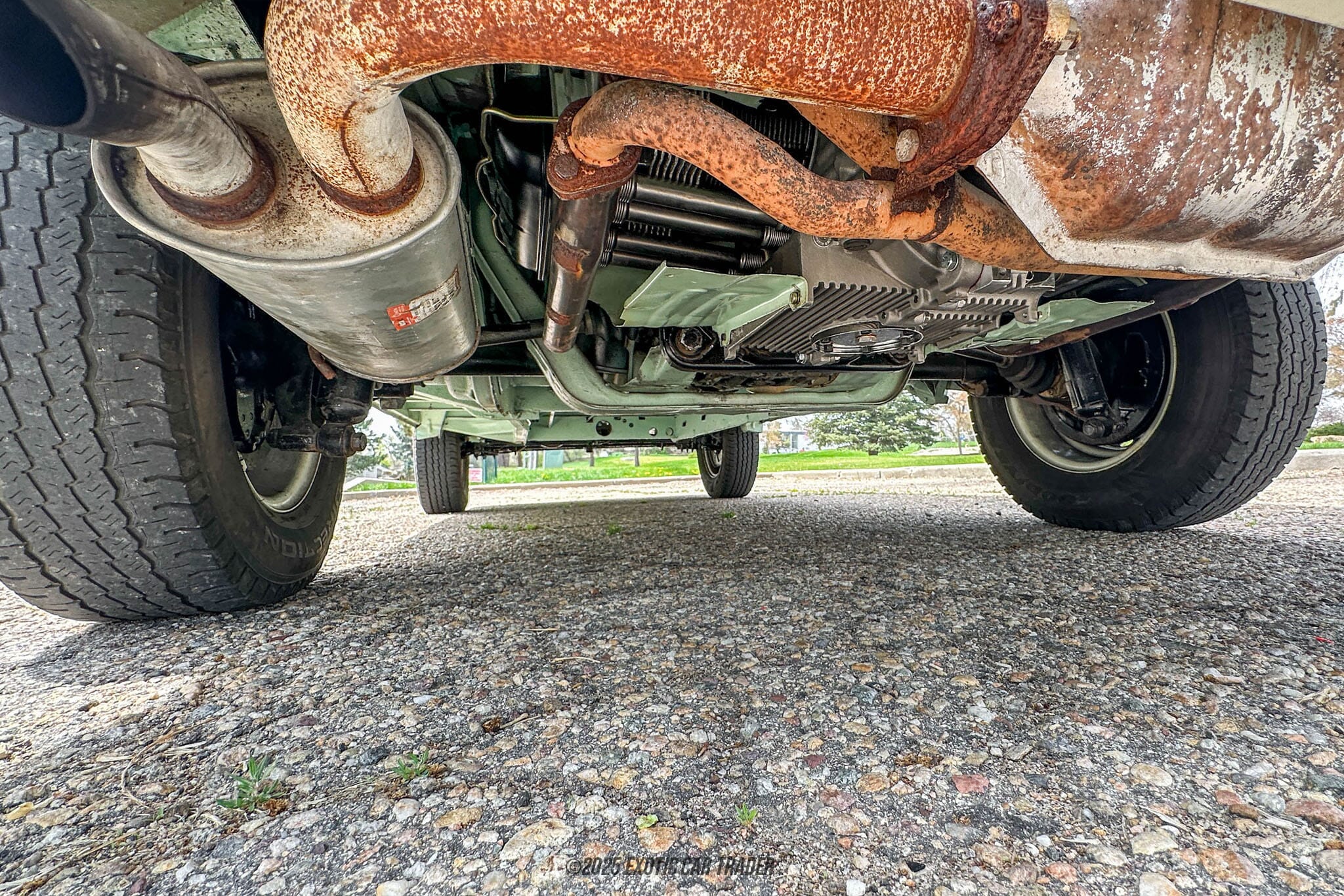
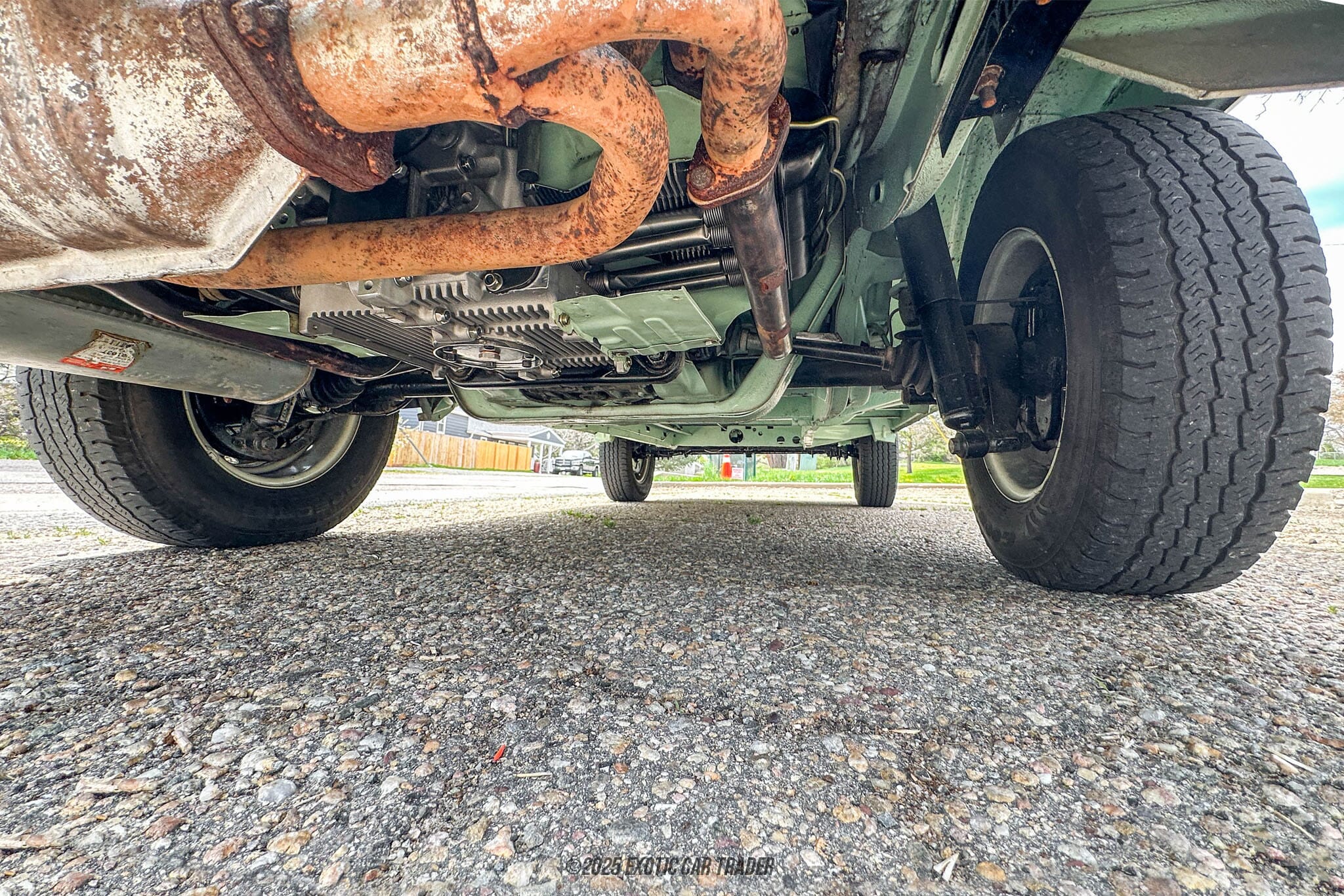
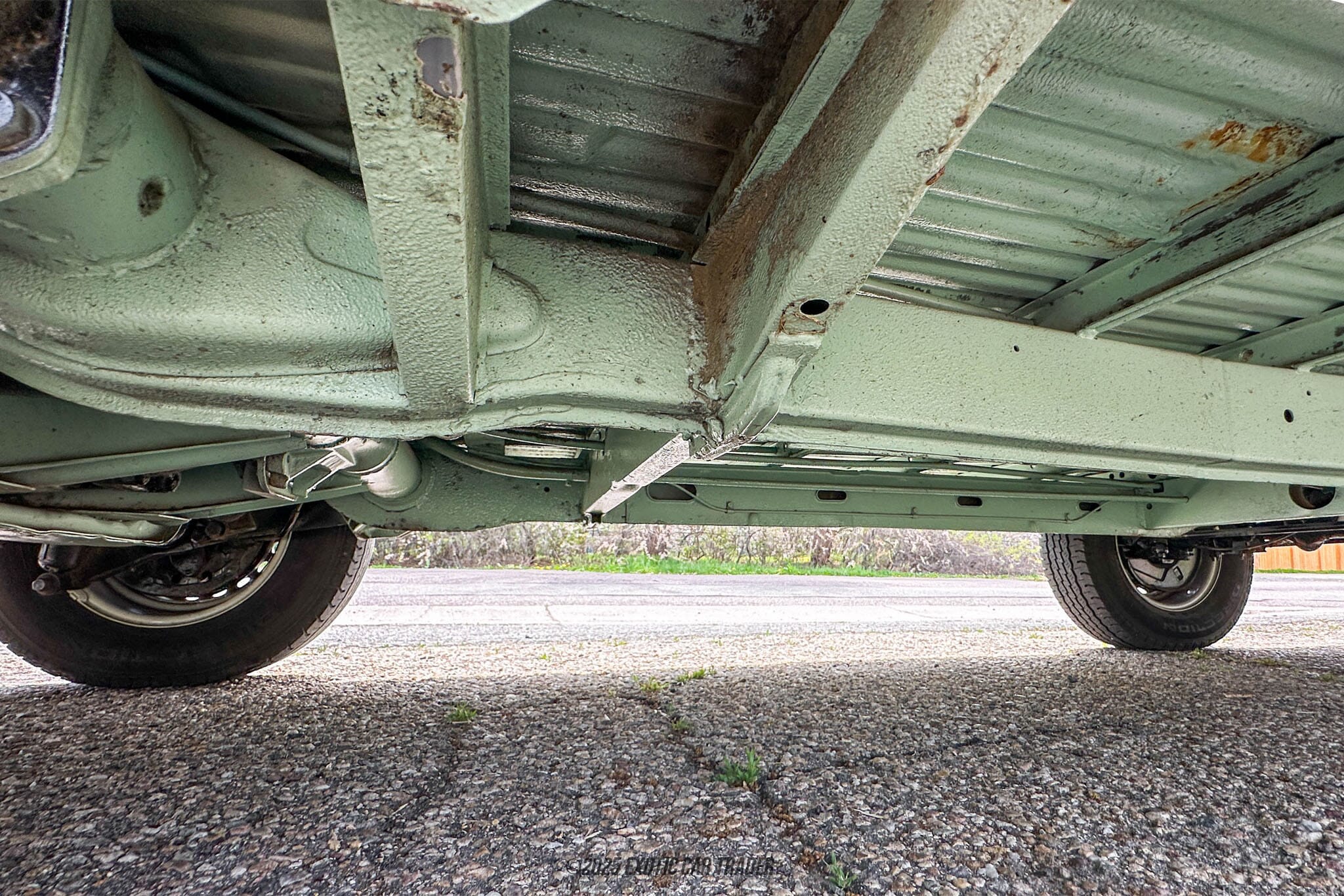
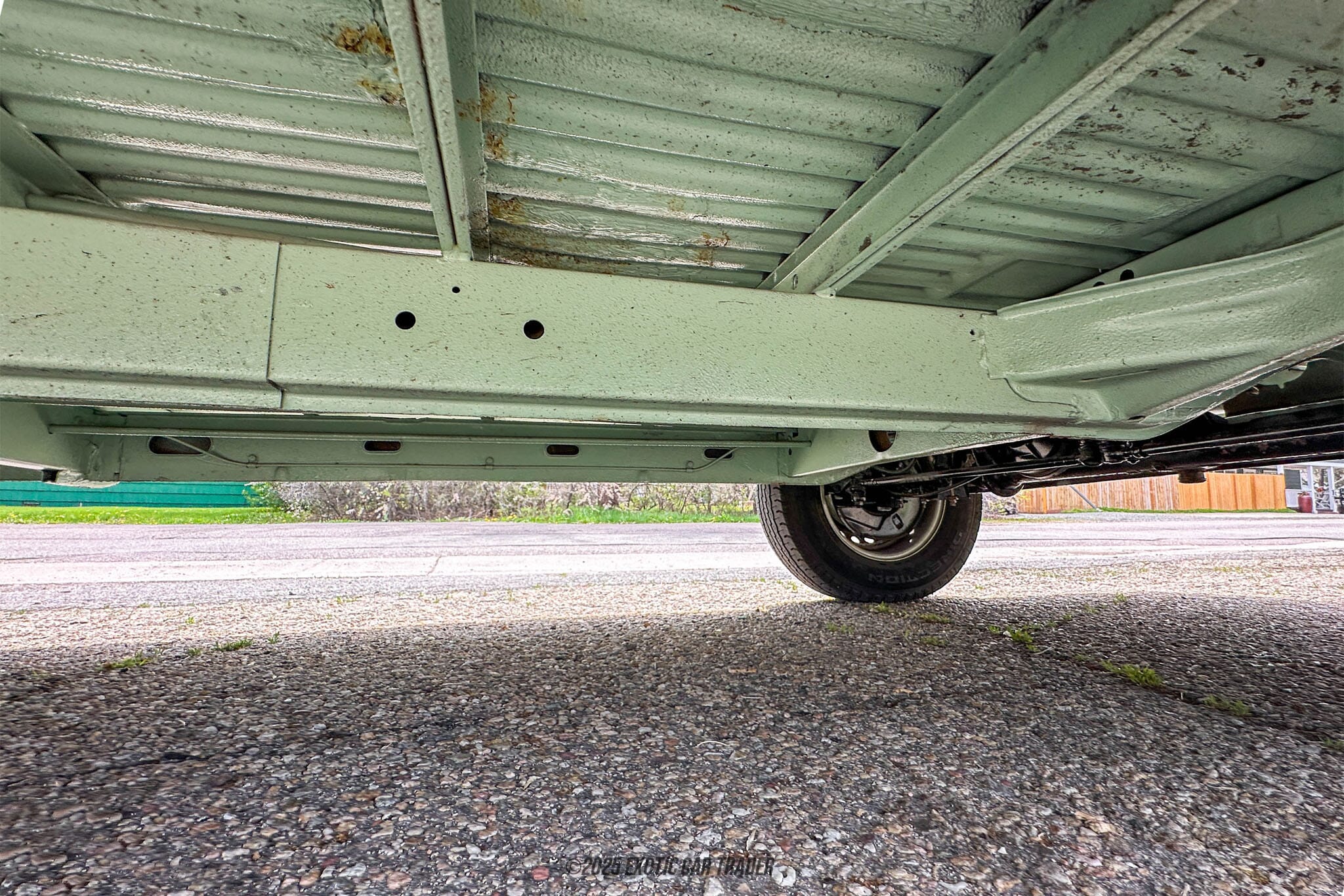
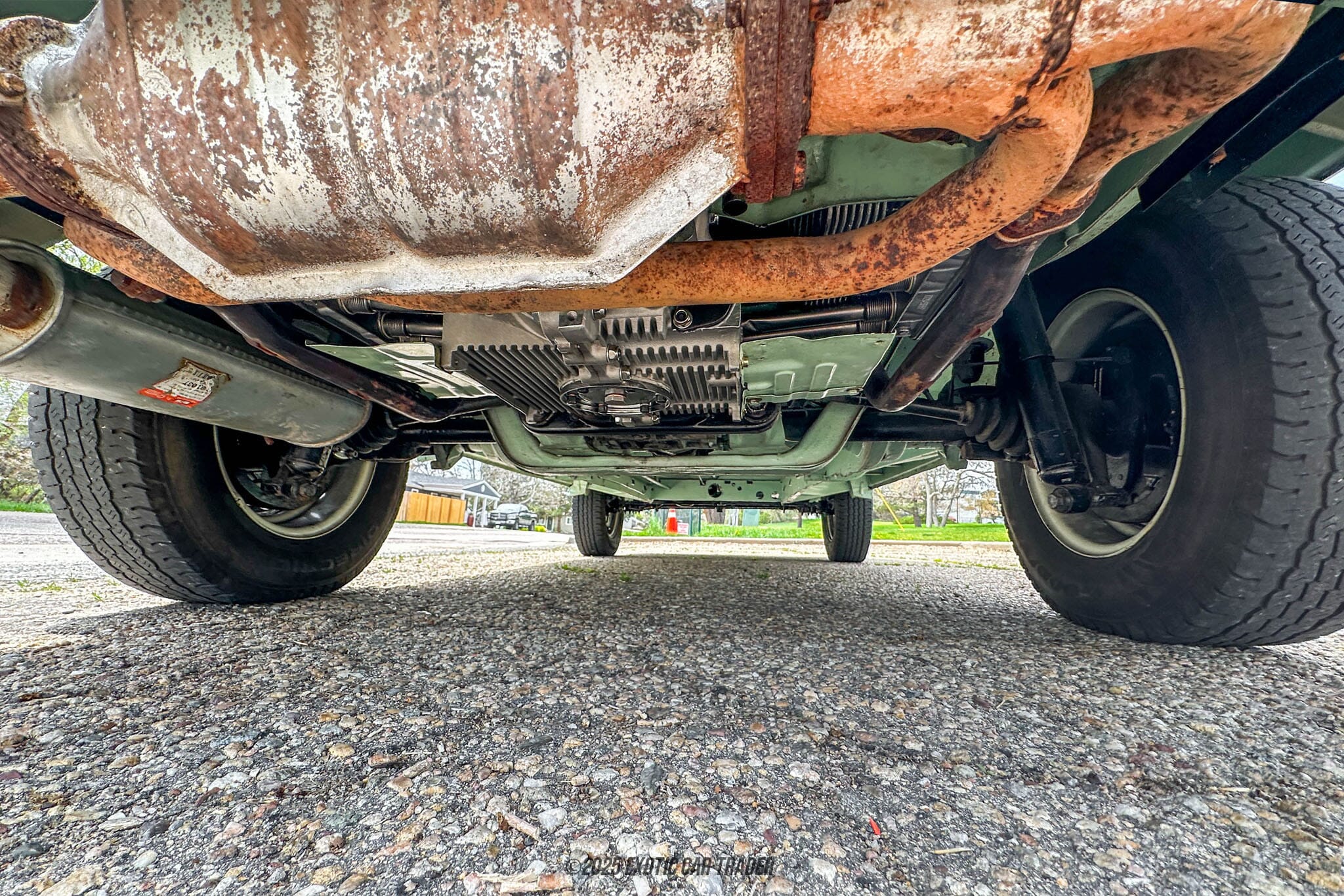


- 1977 Volkswagen Kombi Camper Van
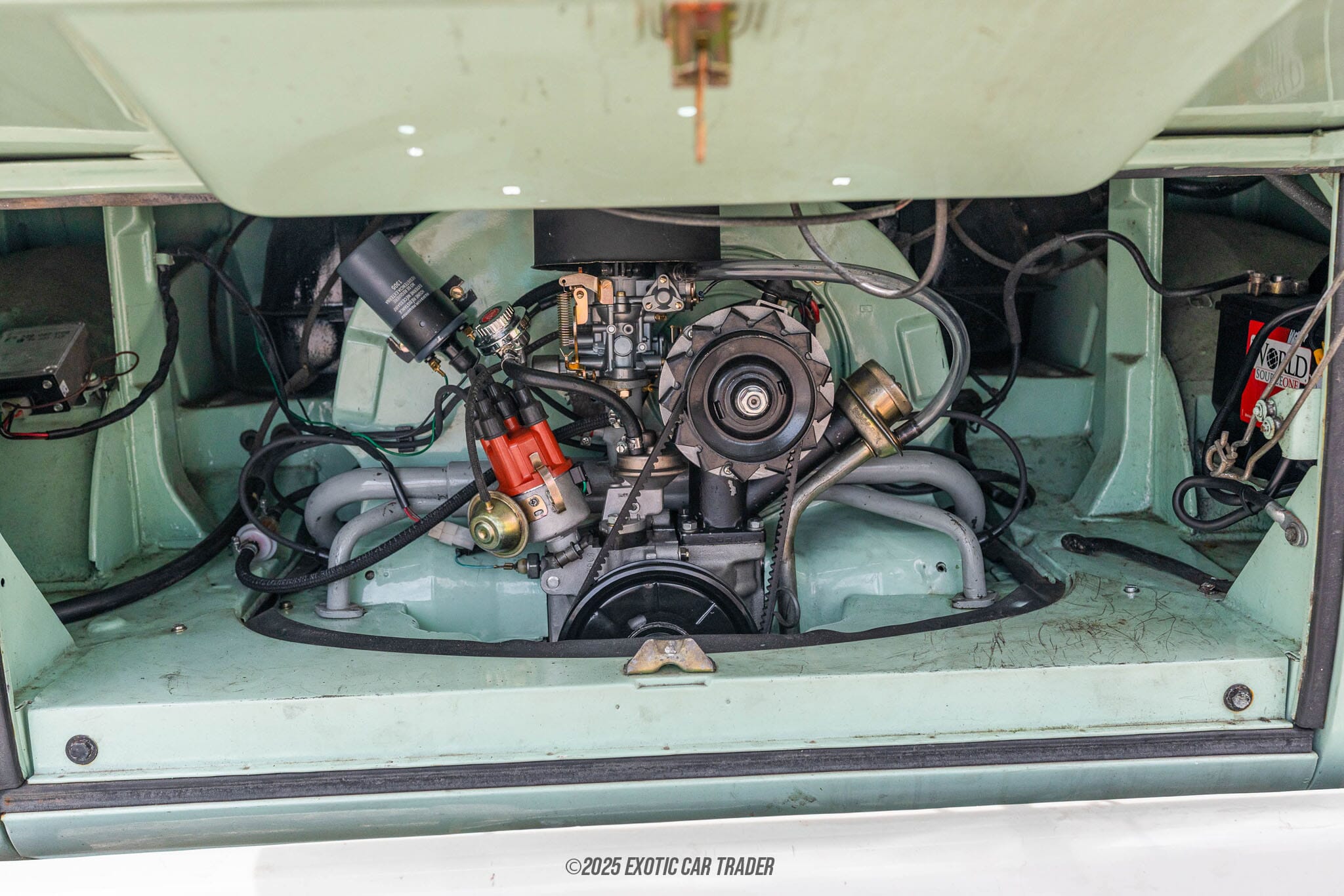
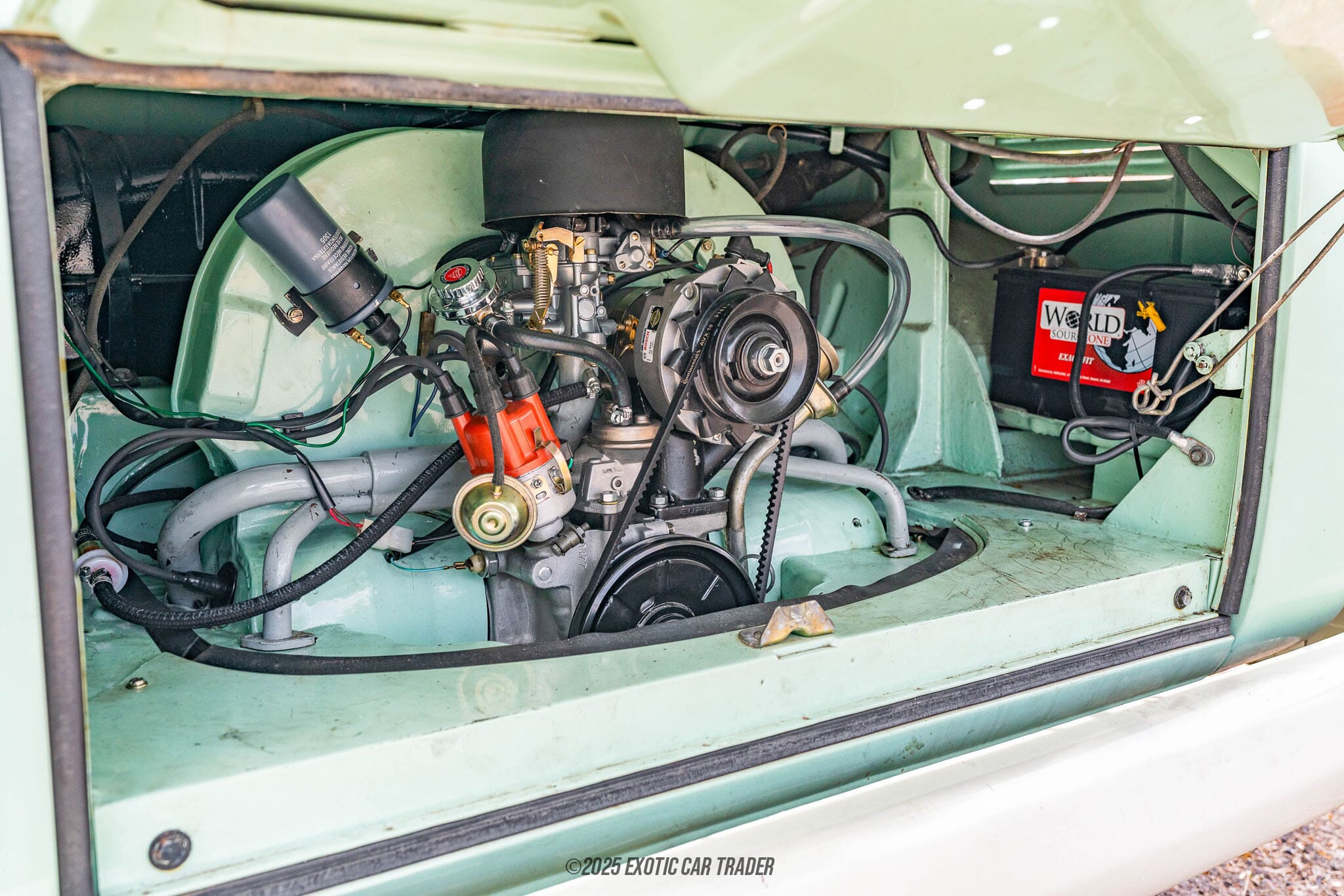
- 1,600cc Air-Cooled Naturally Aspirated H4
- Electric Choke Carburetor
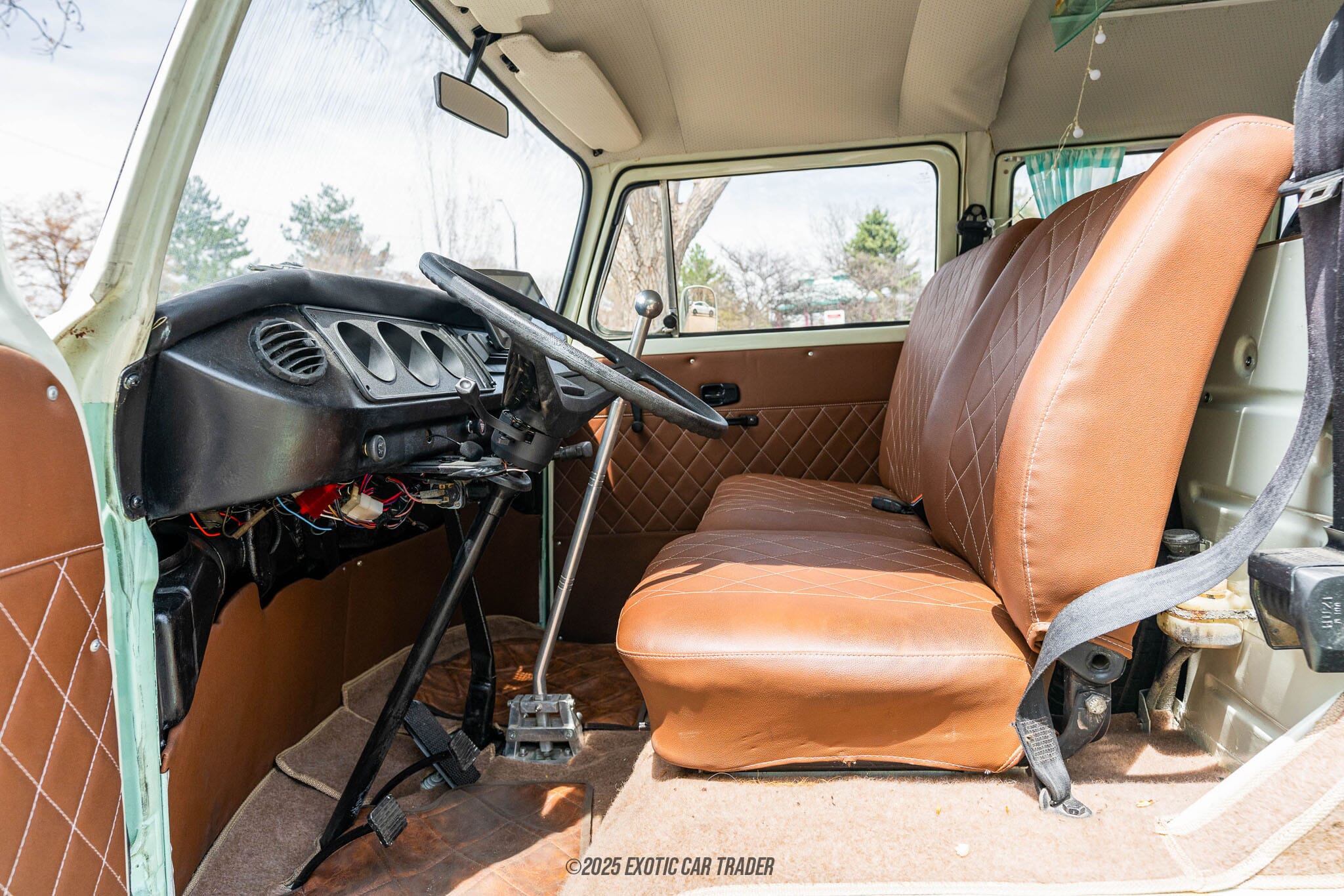
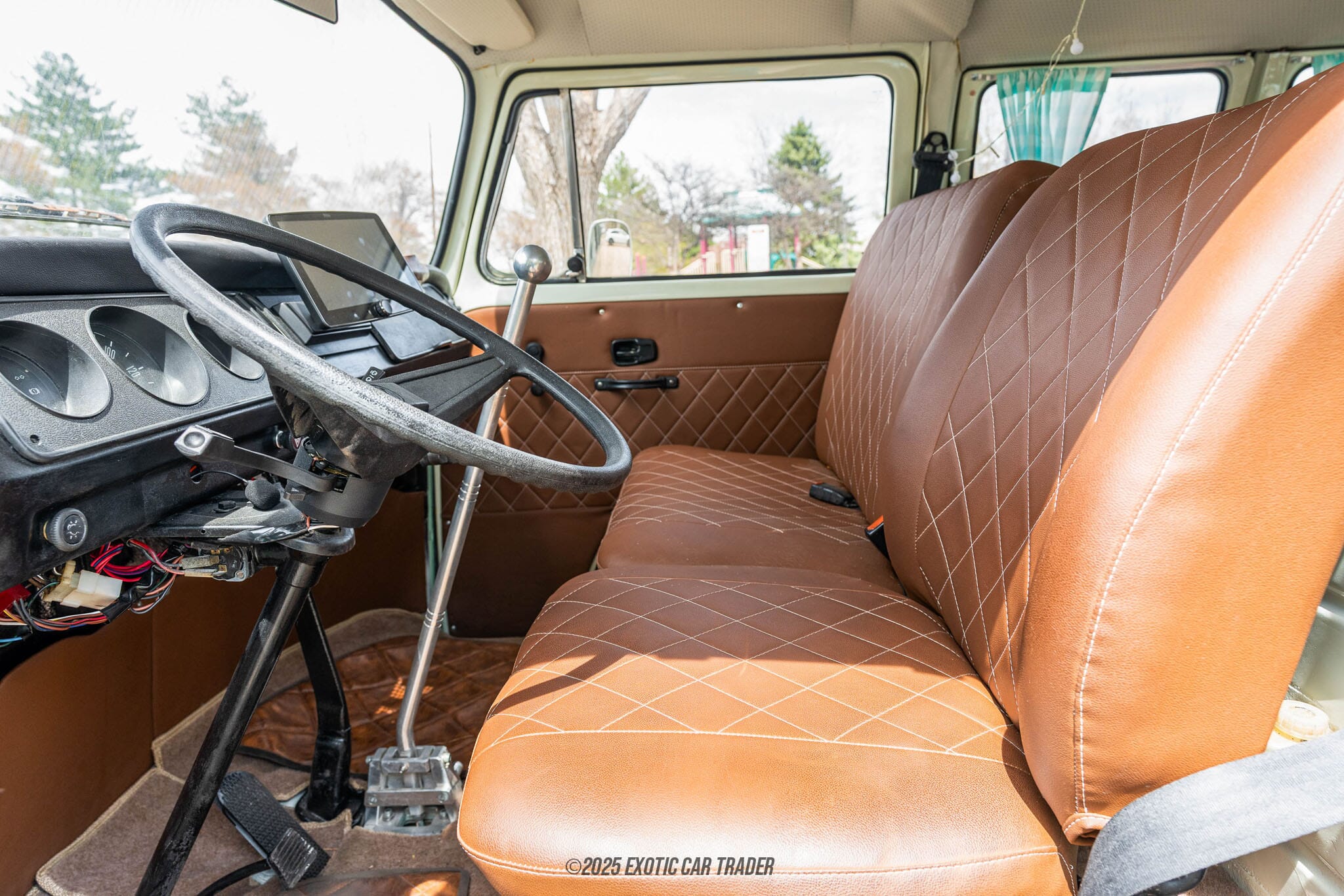
- 4-Speed Manual
- RWD
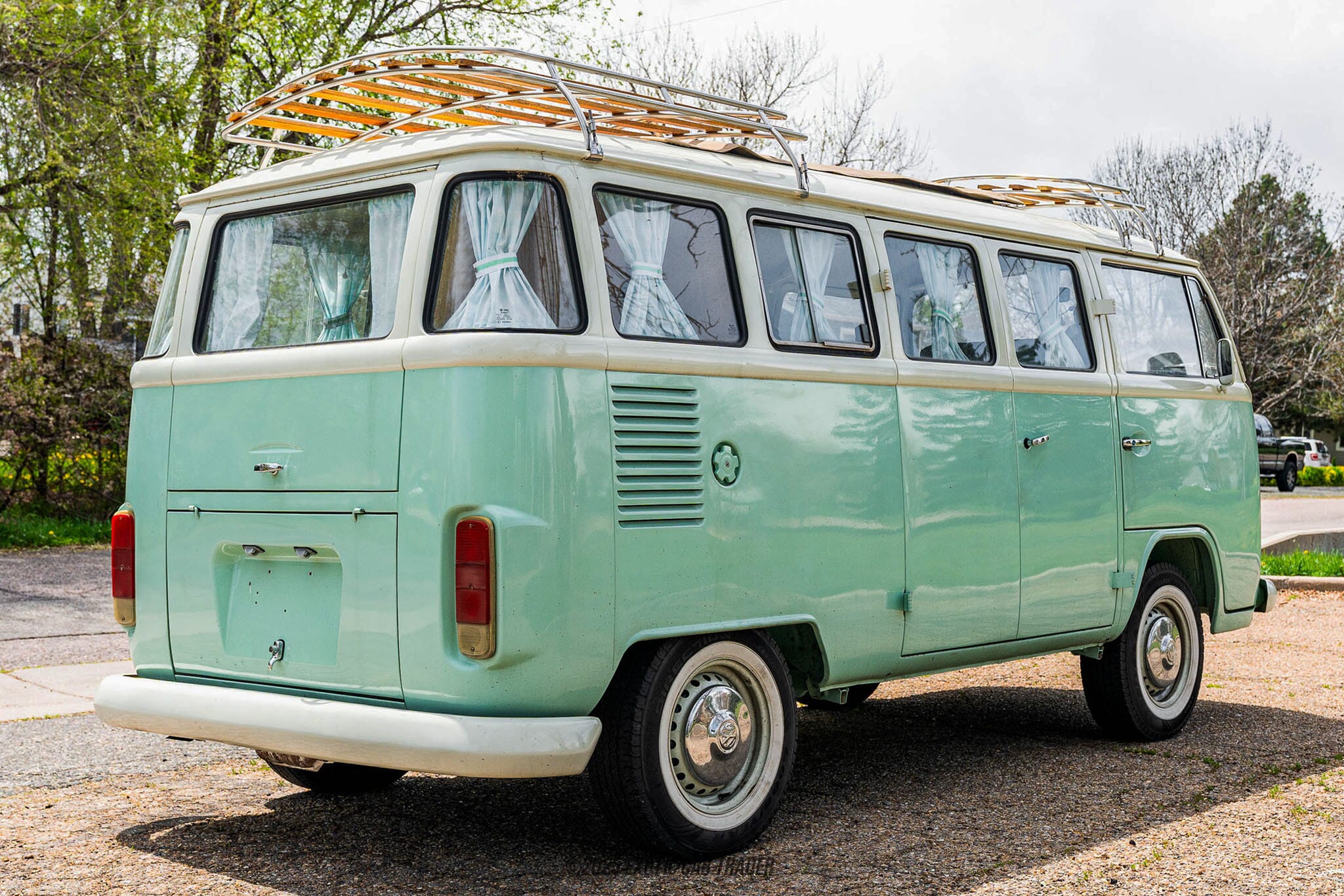
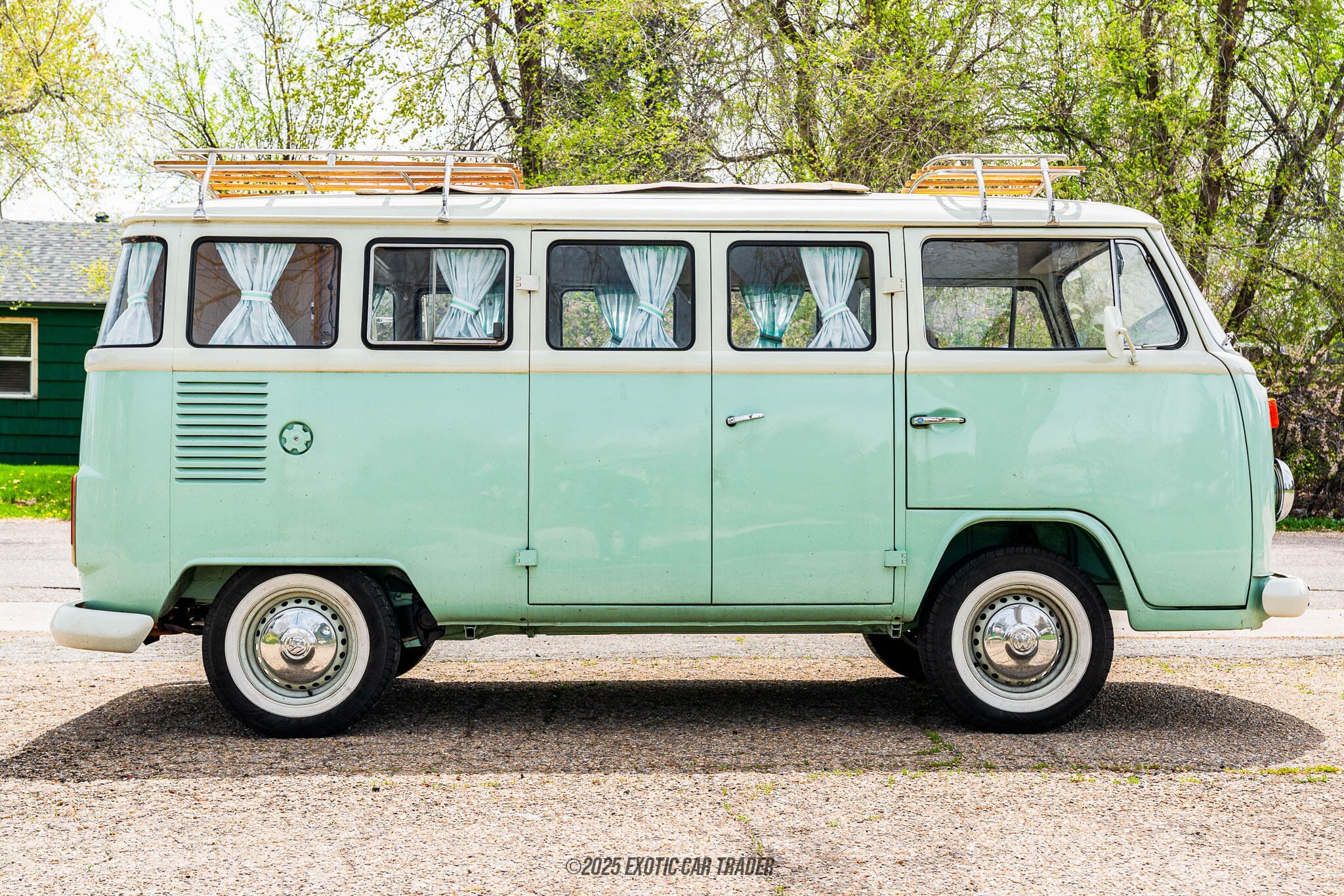
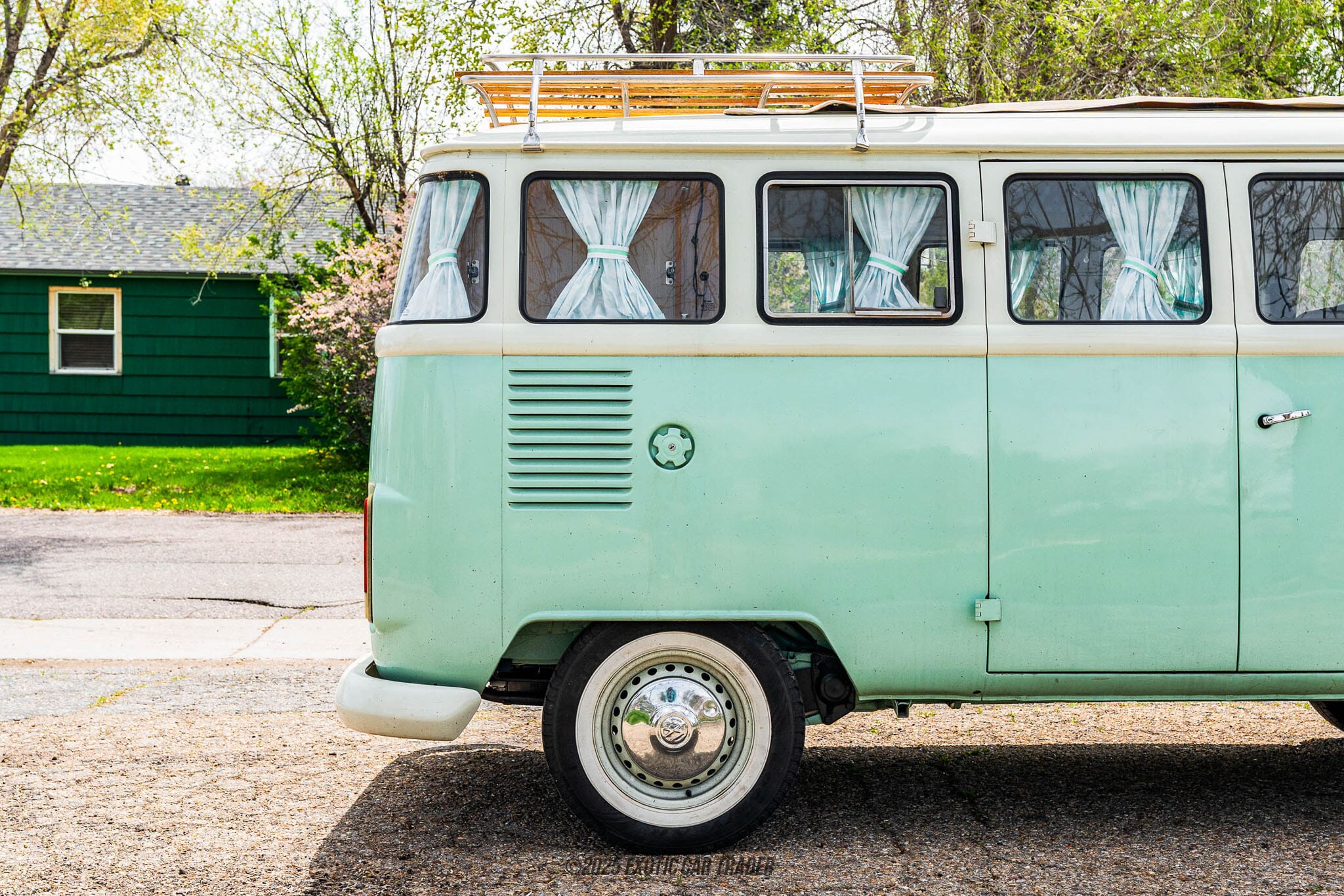
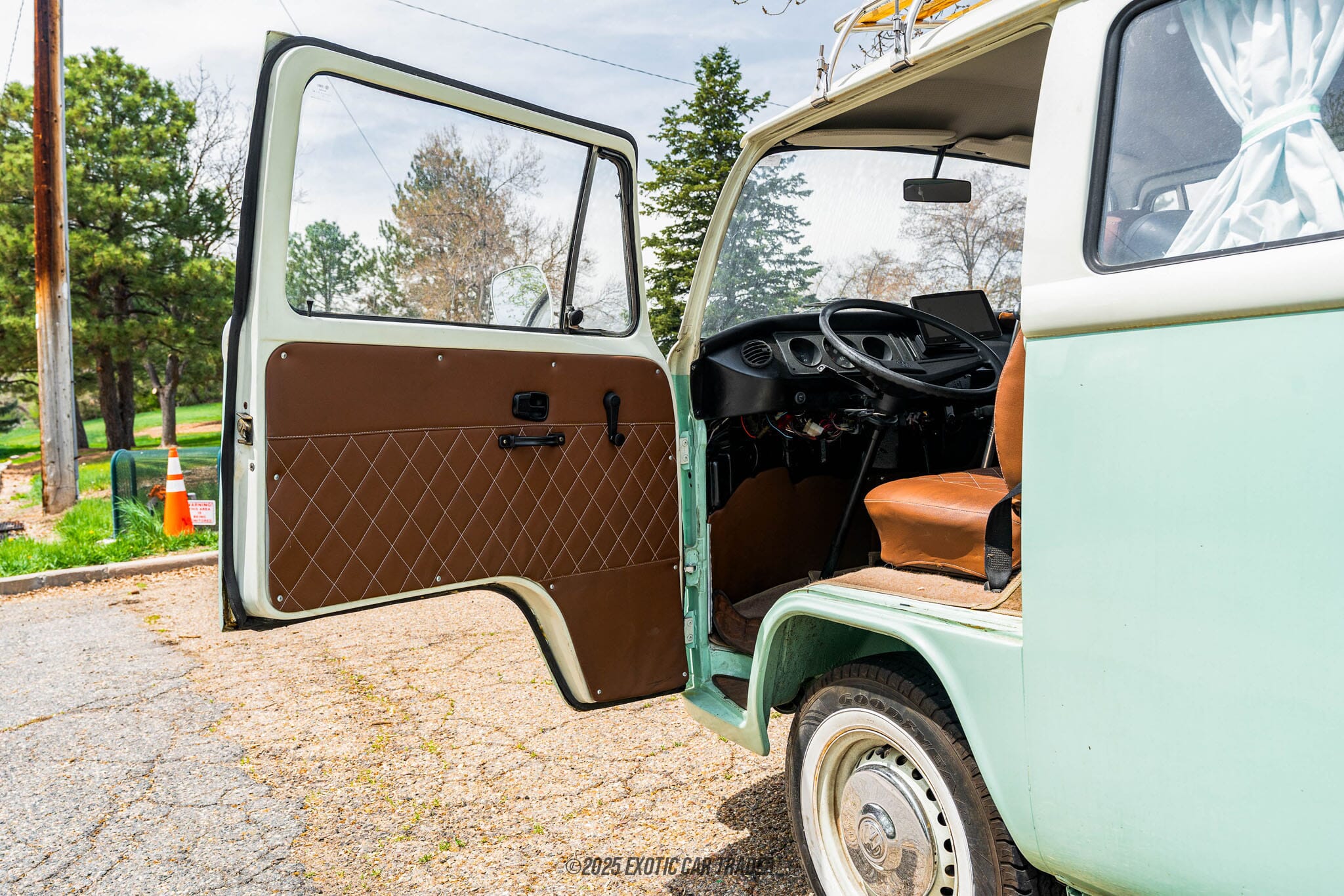
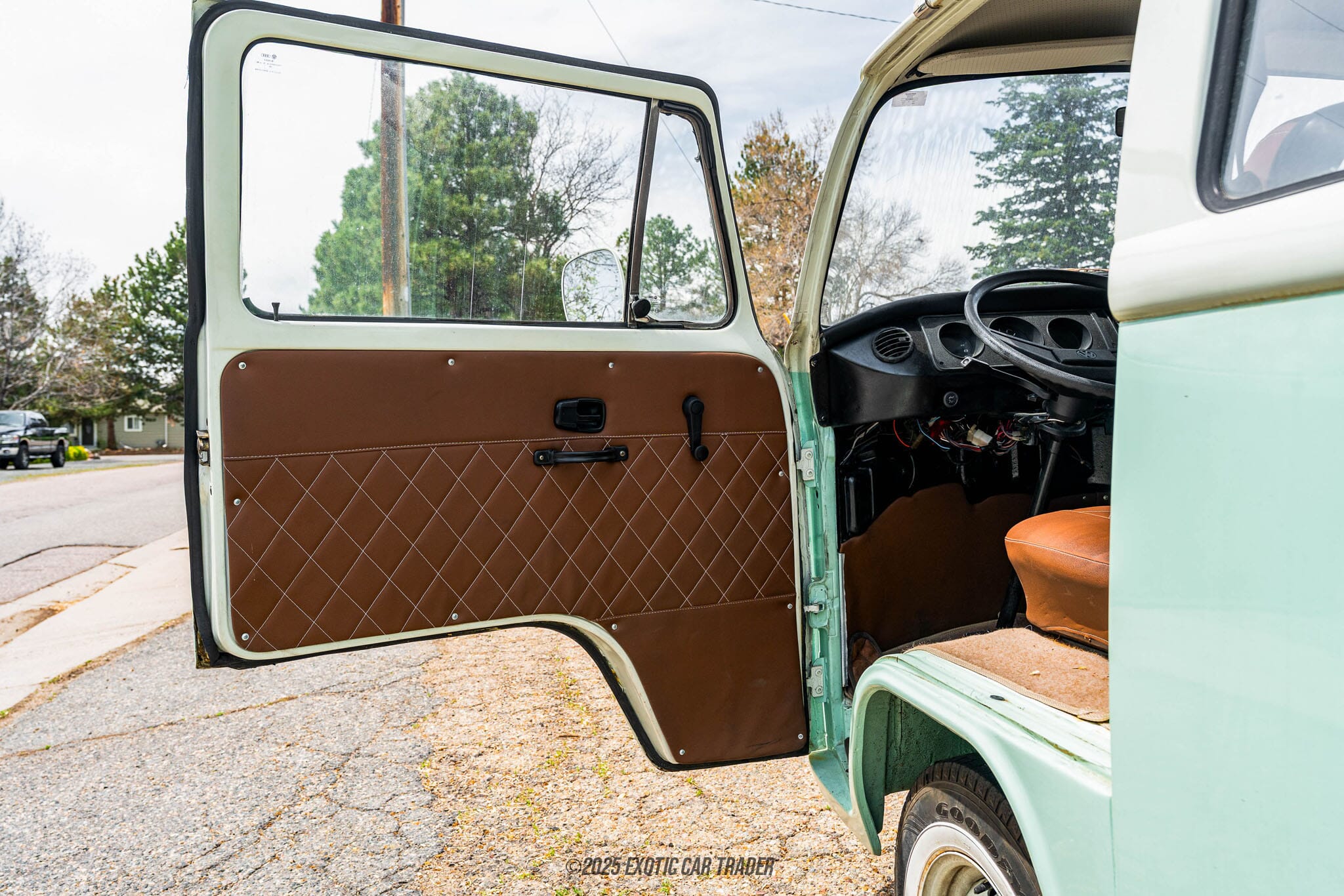
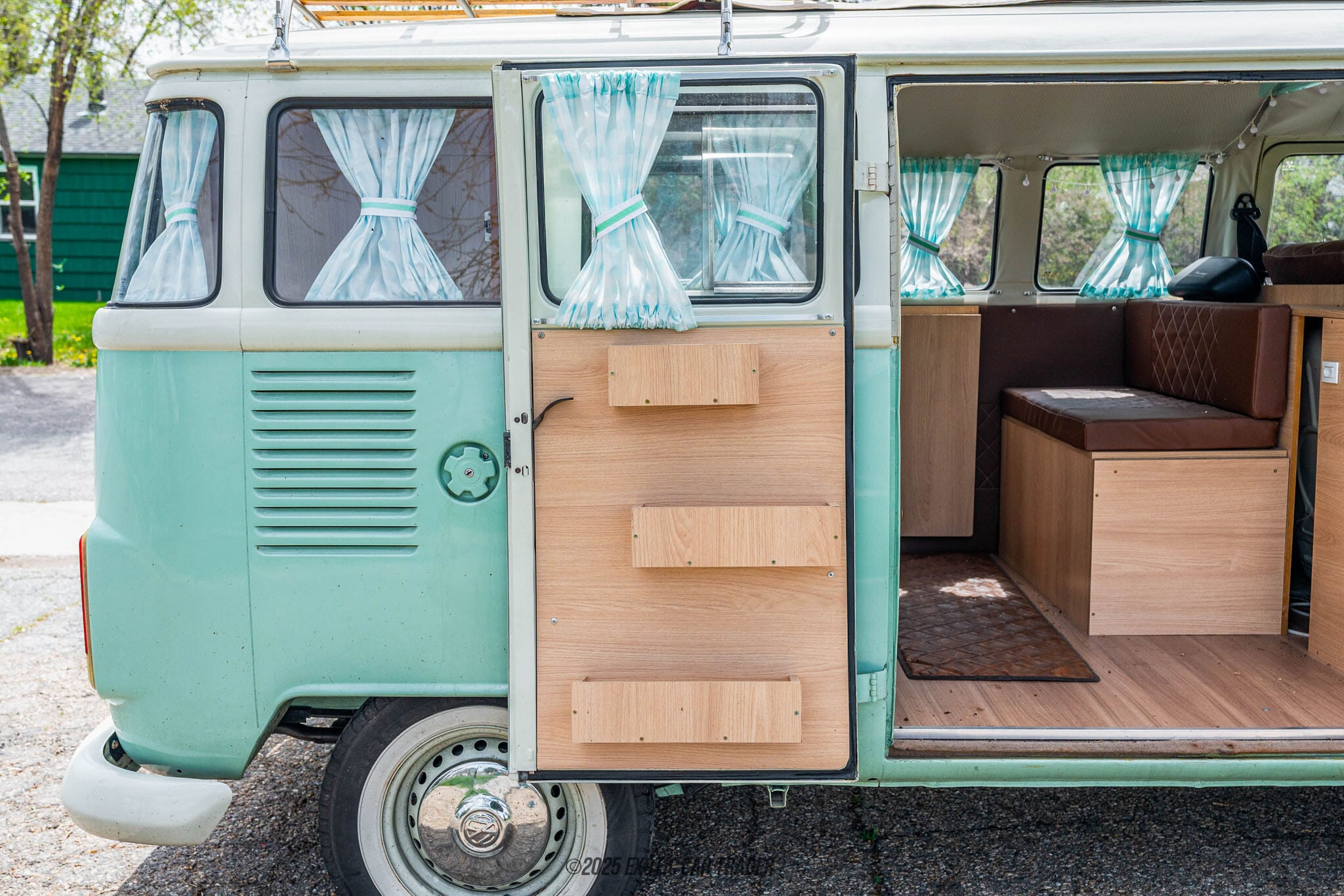
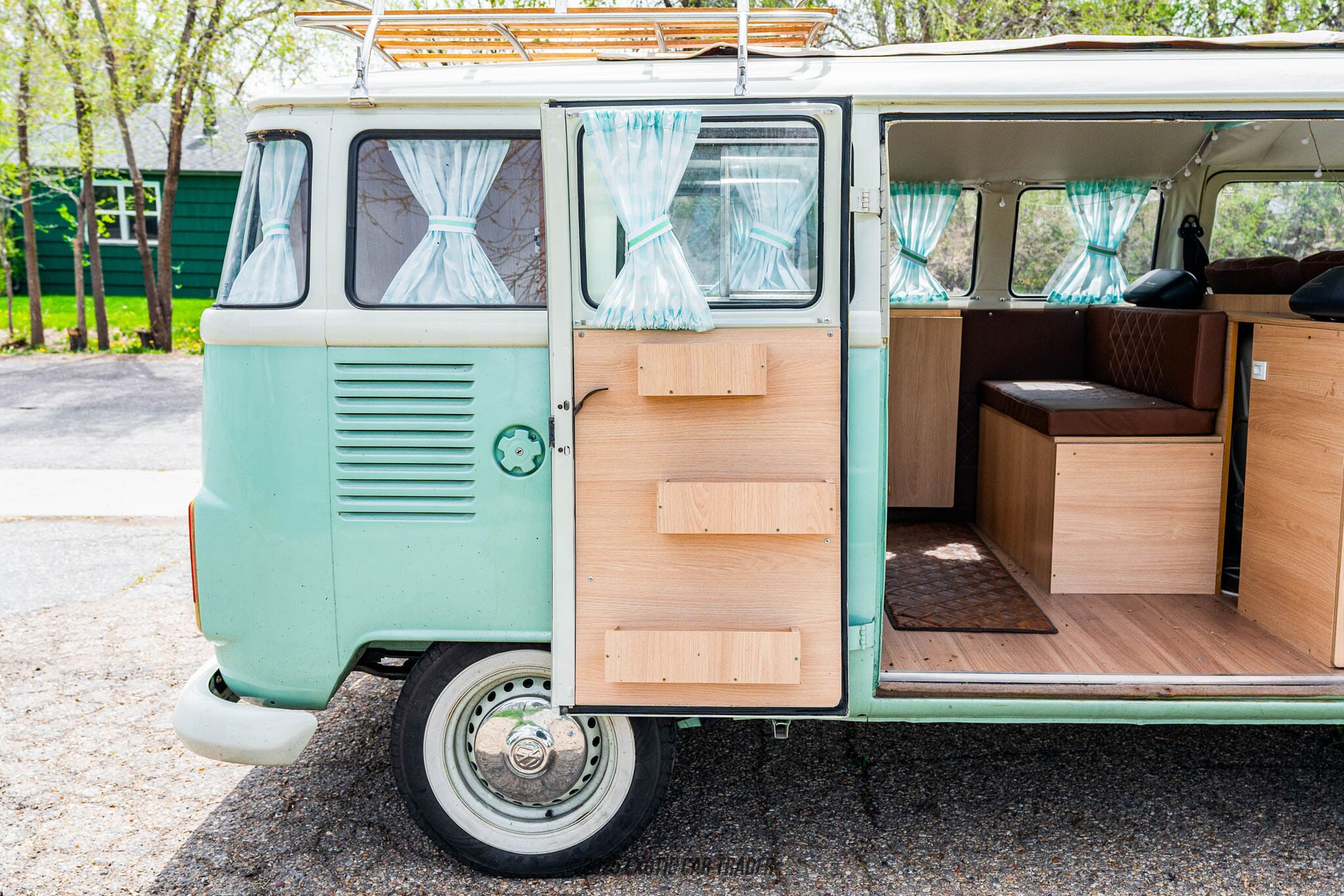
- Teal/White Exterior
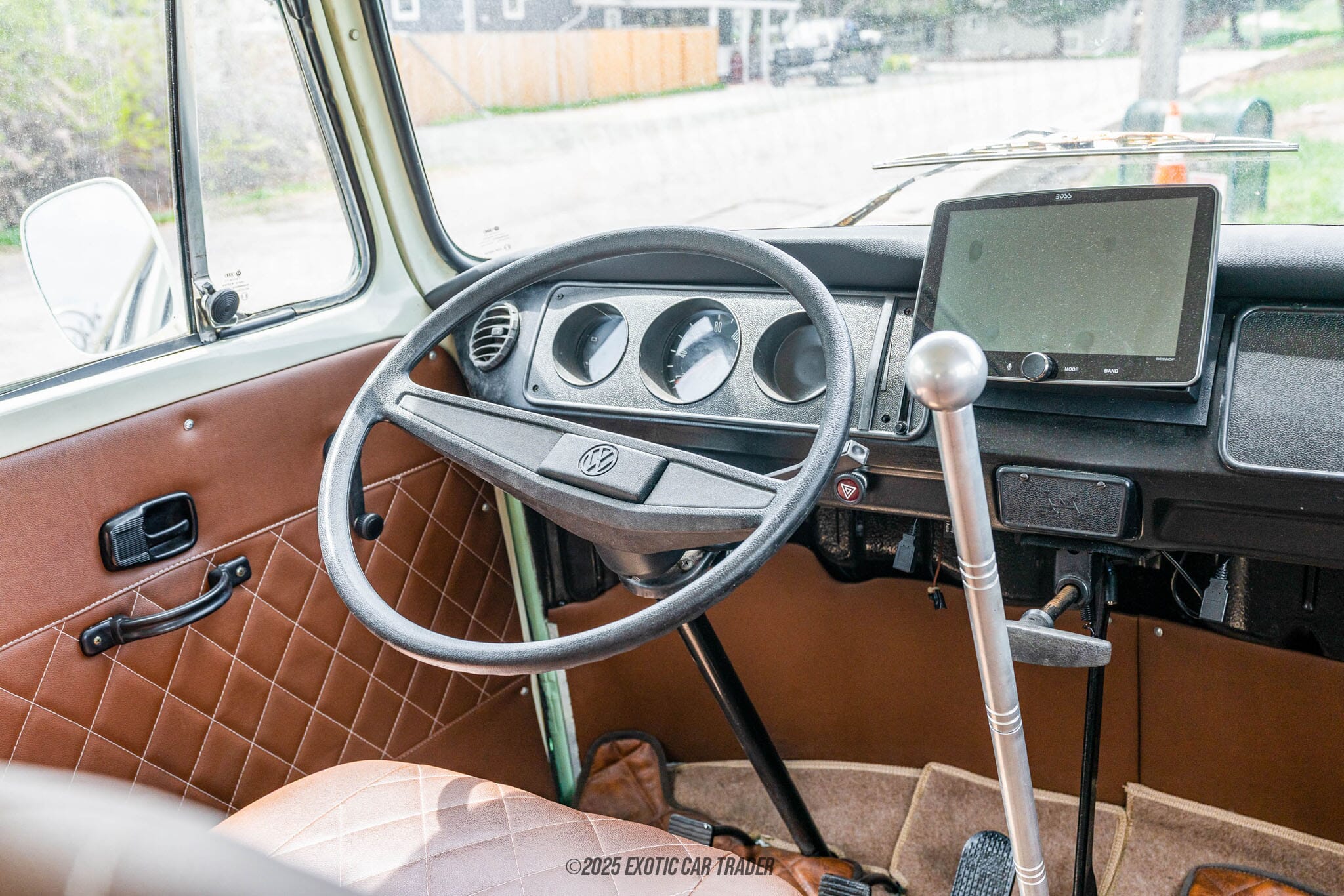
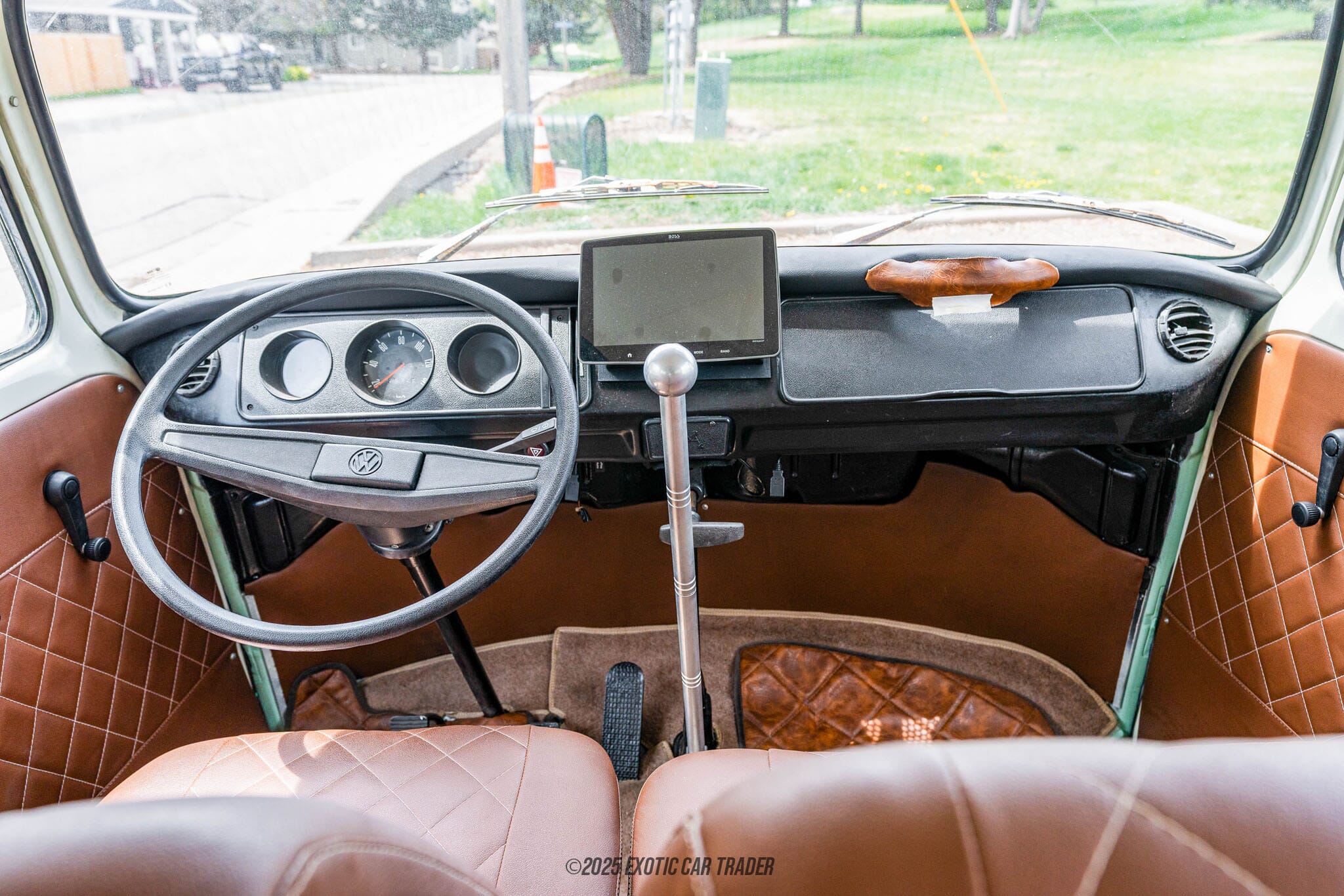
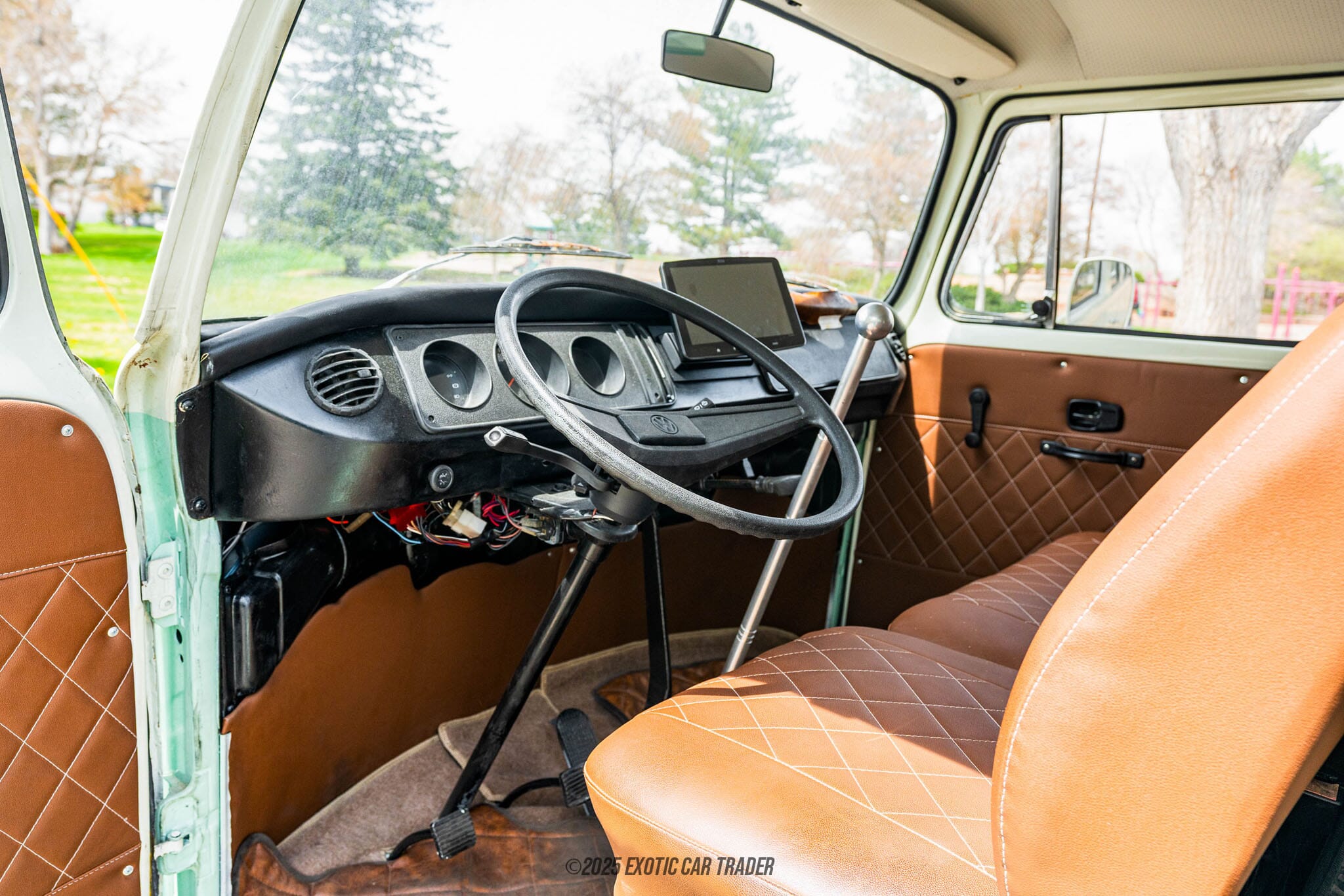
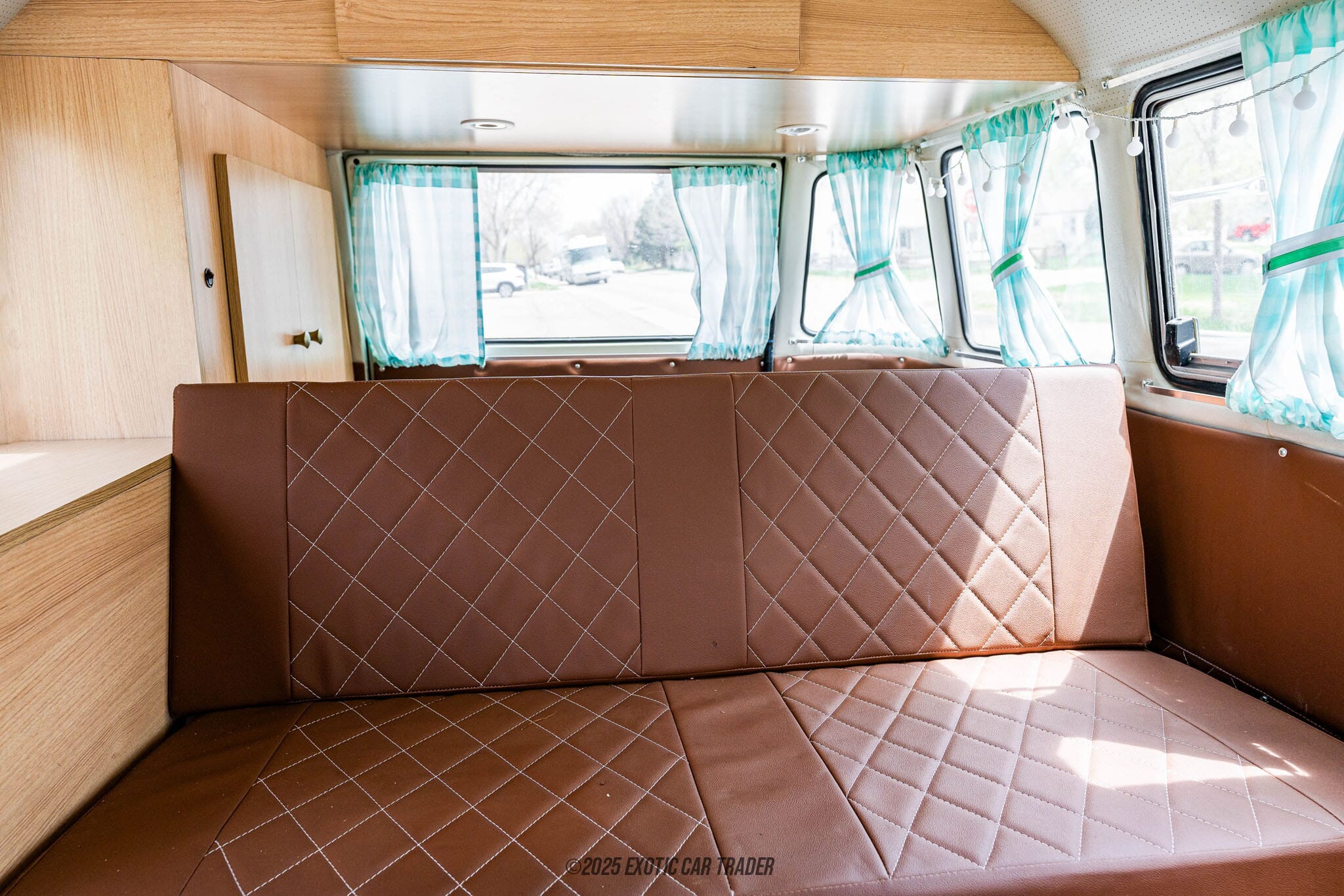
- Brown Interior
- New 1,600cc Dual Port Air-Cooled Long Block Engine
- Replaced Ignition Control Module
- Replaced Engine Latch & Locks
- 14" Steel Wheels
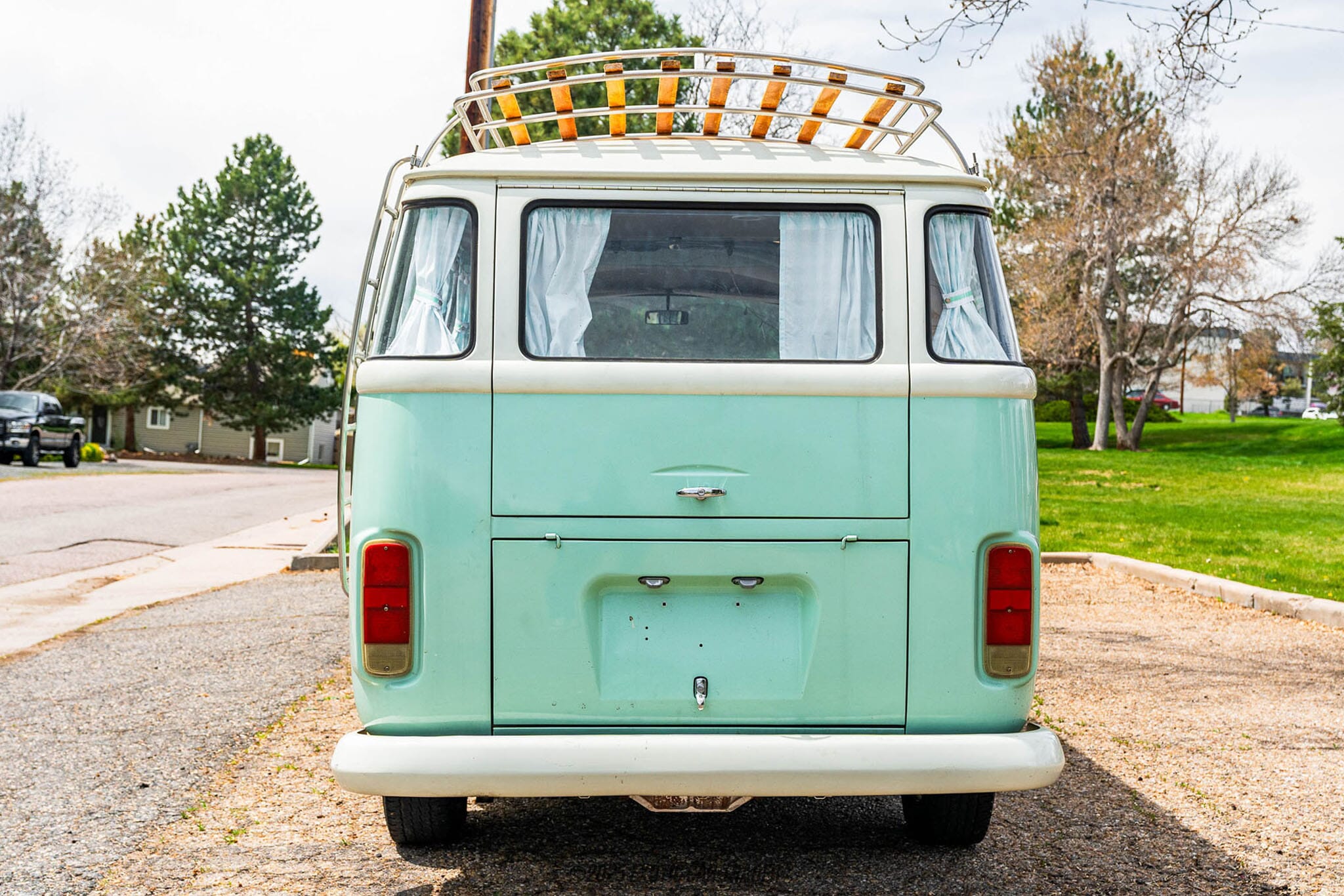
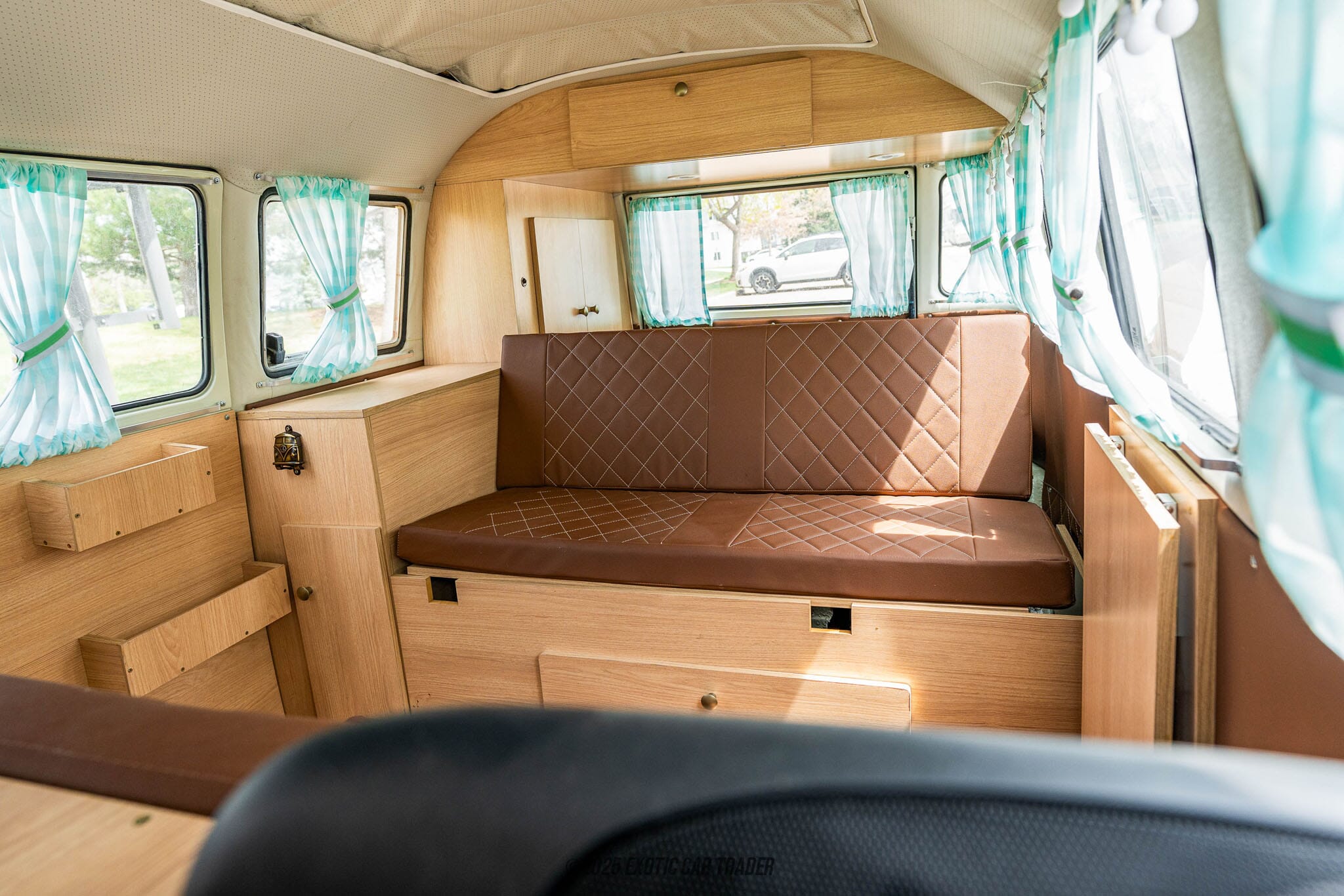
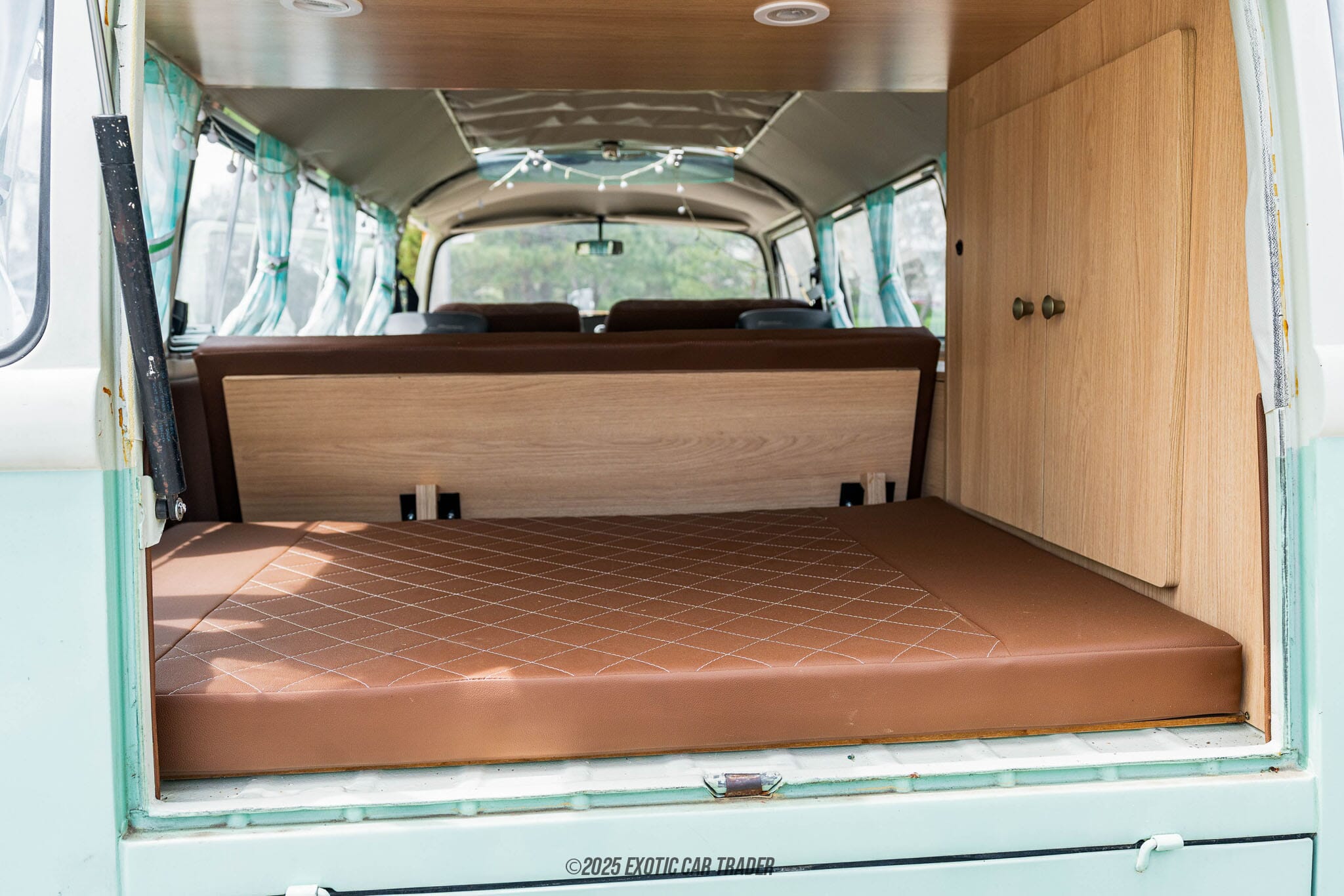
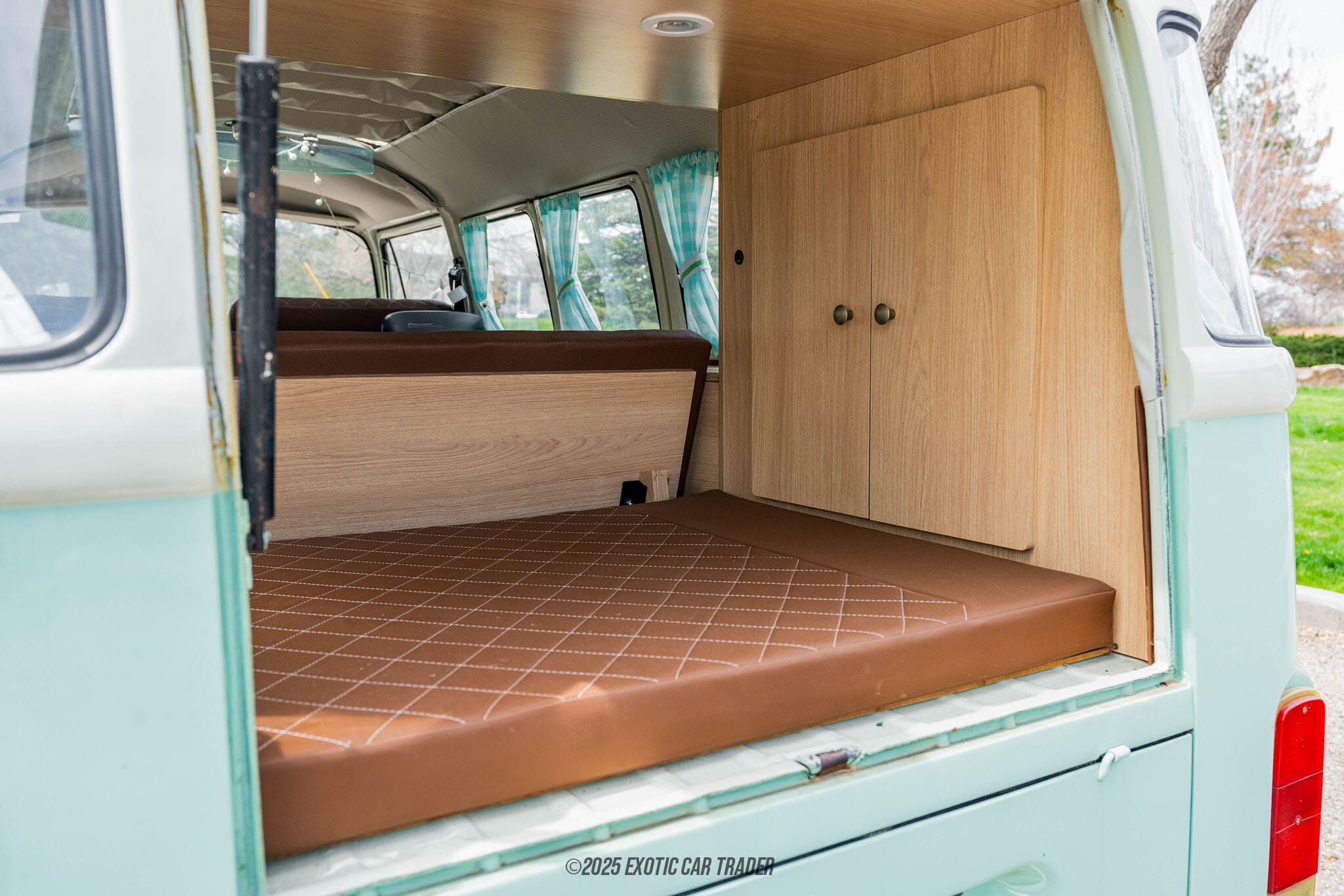
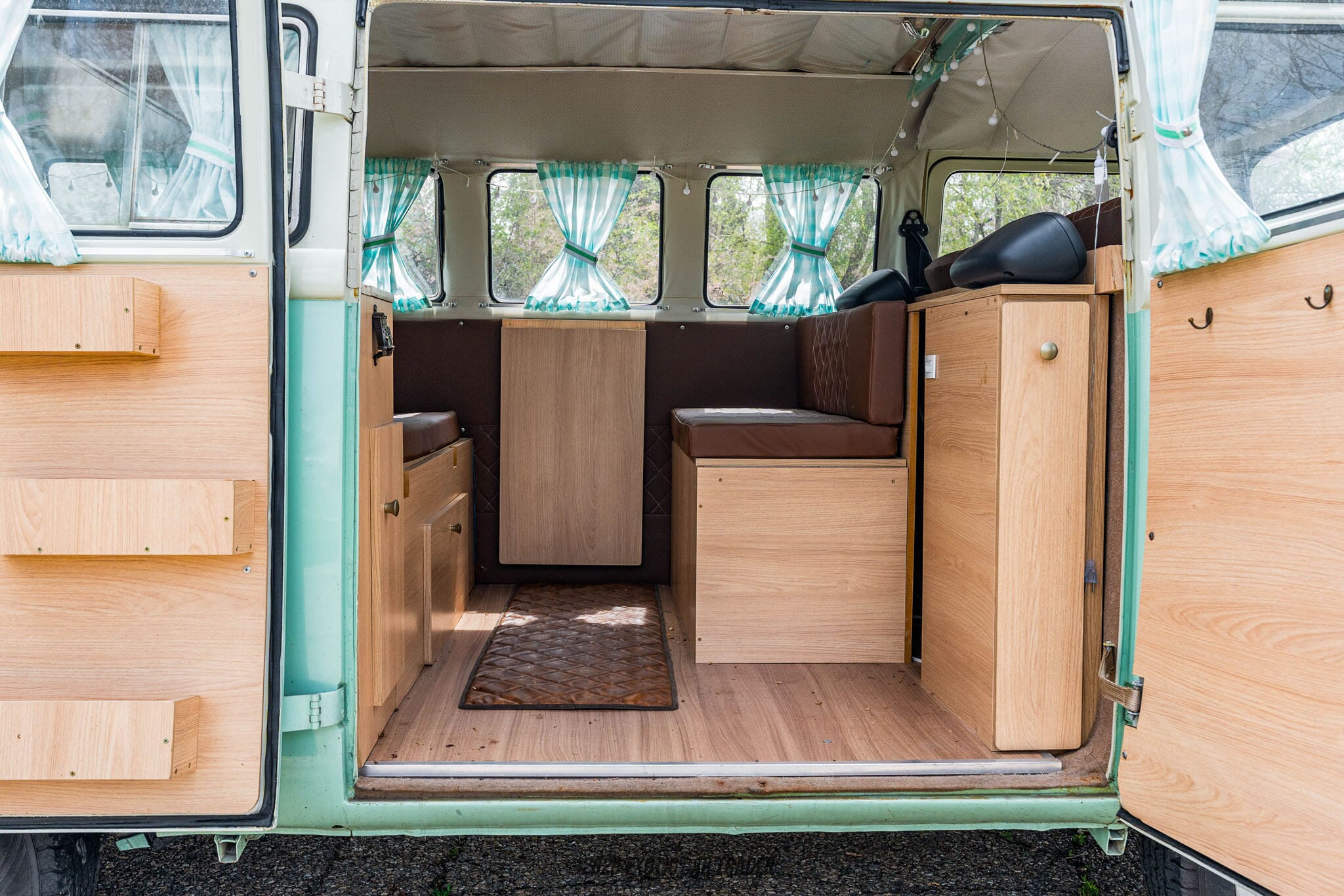
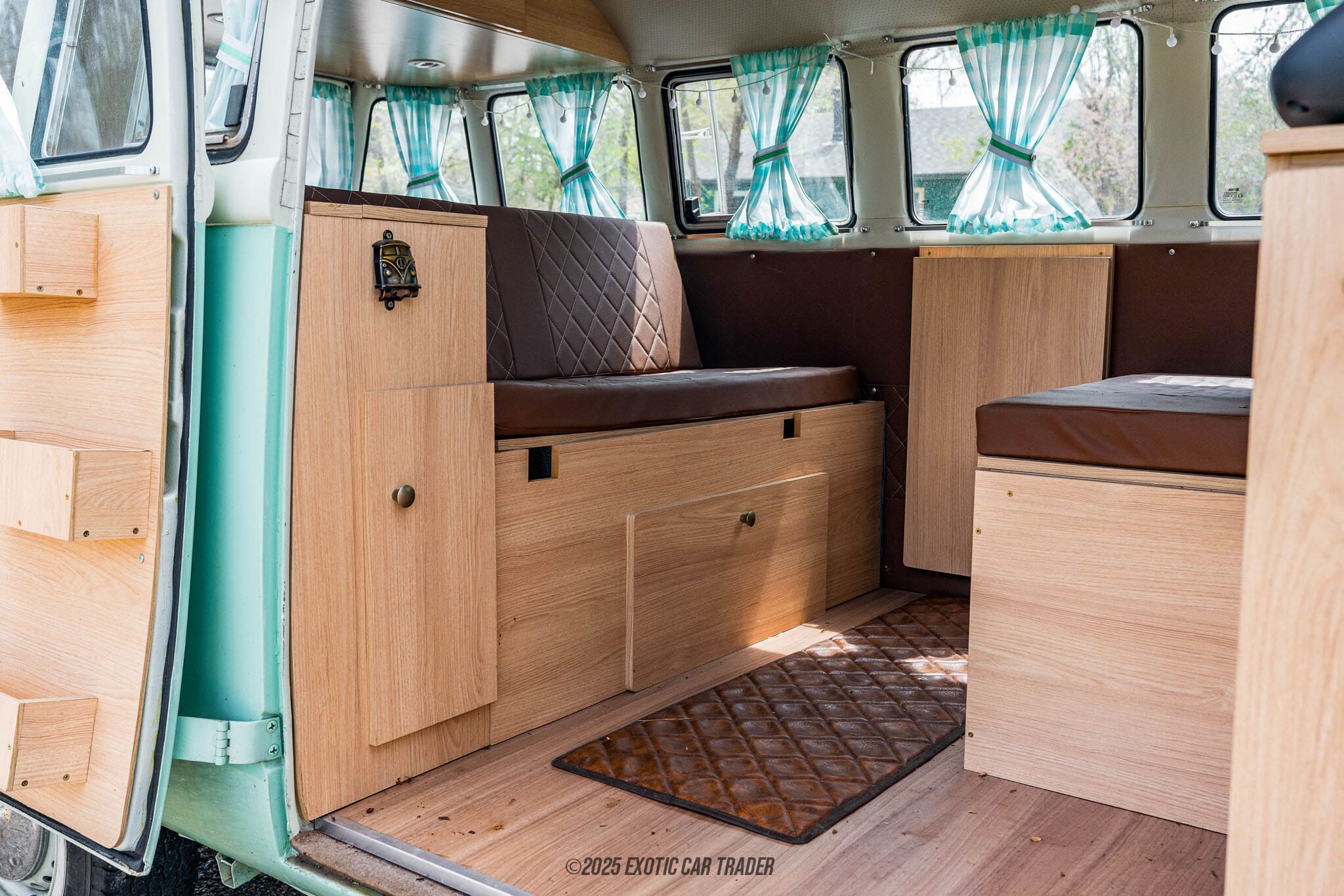
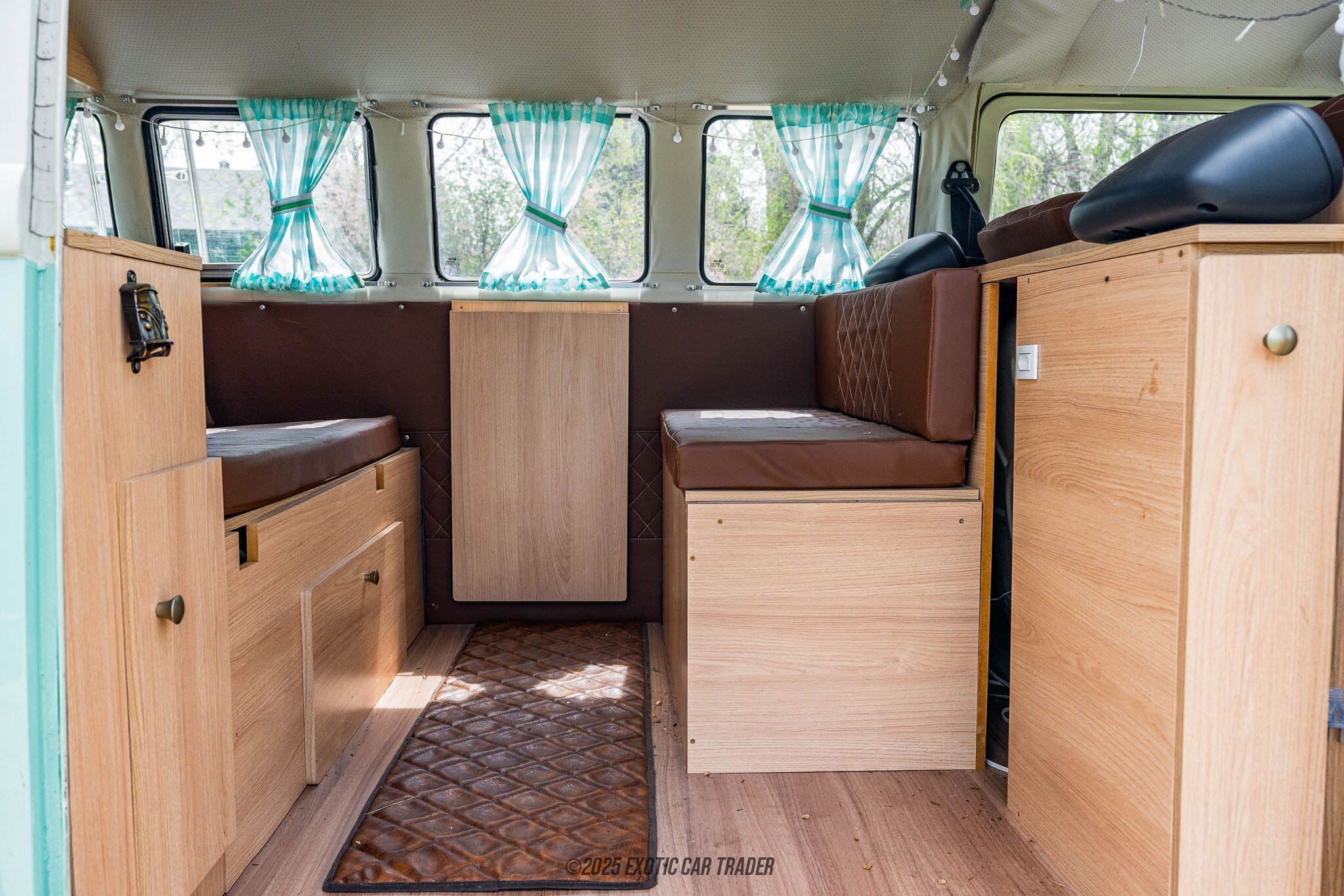
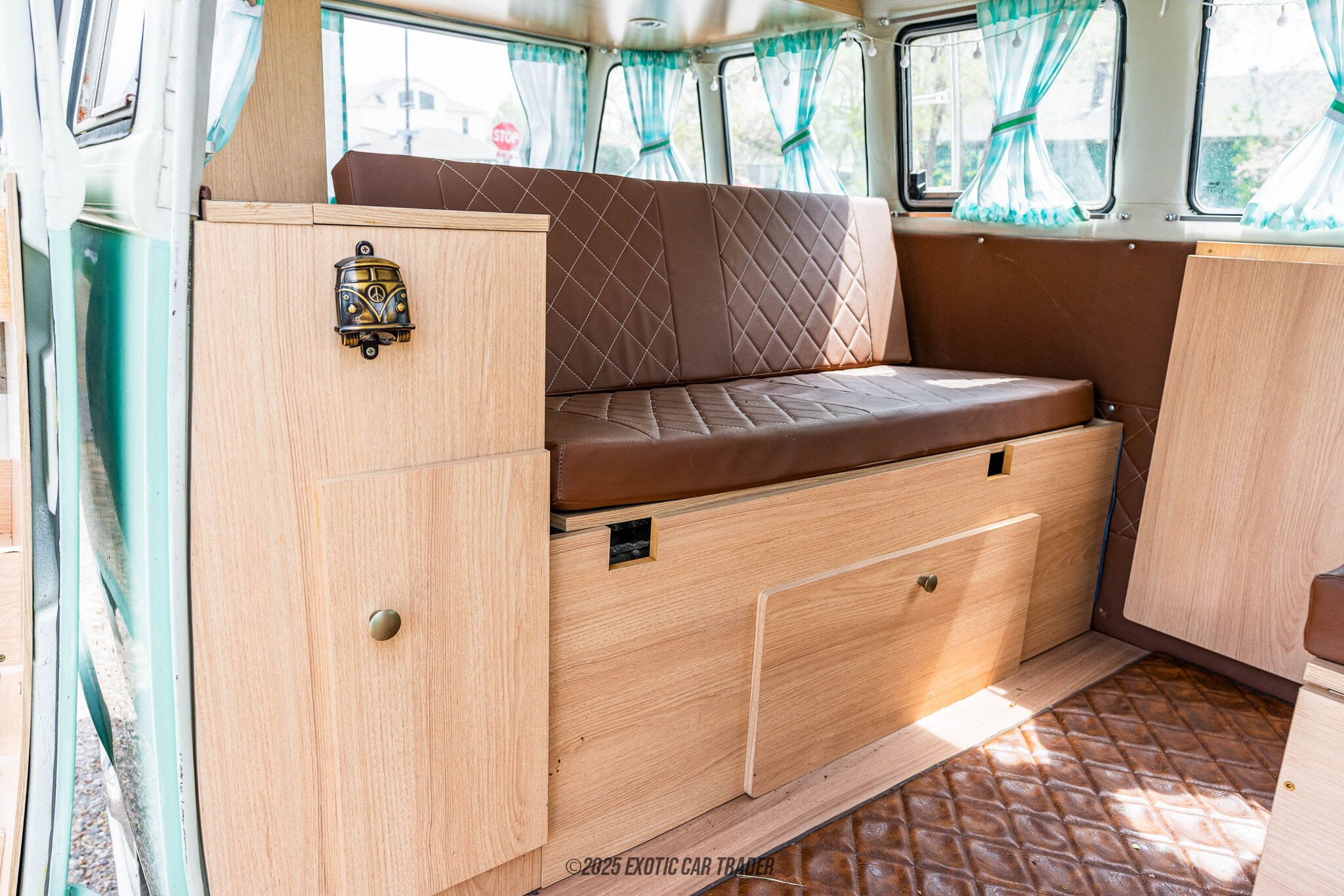
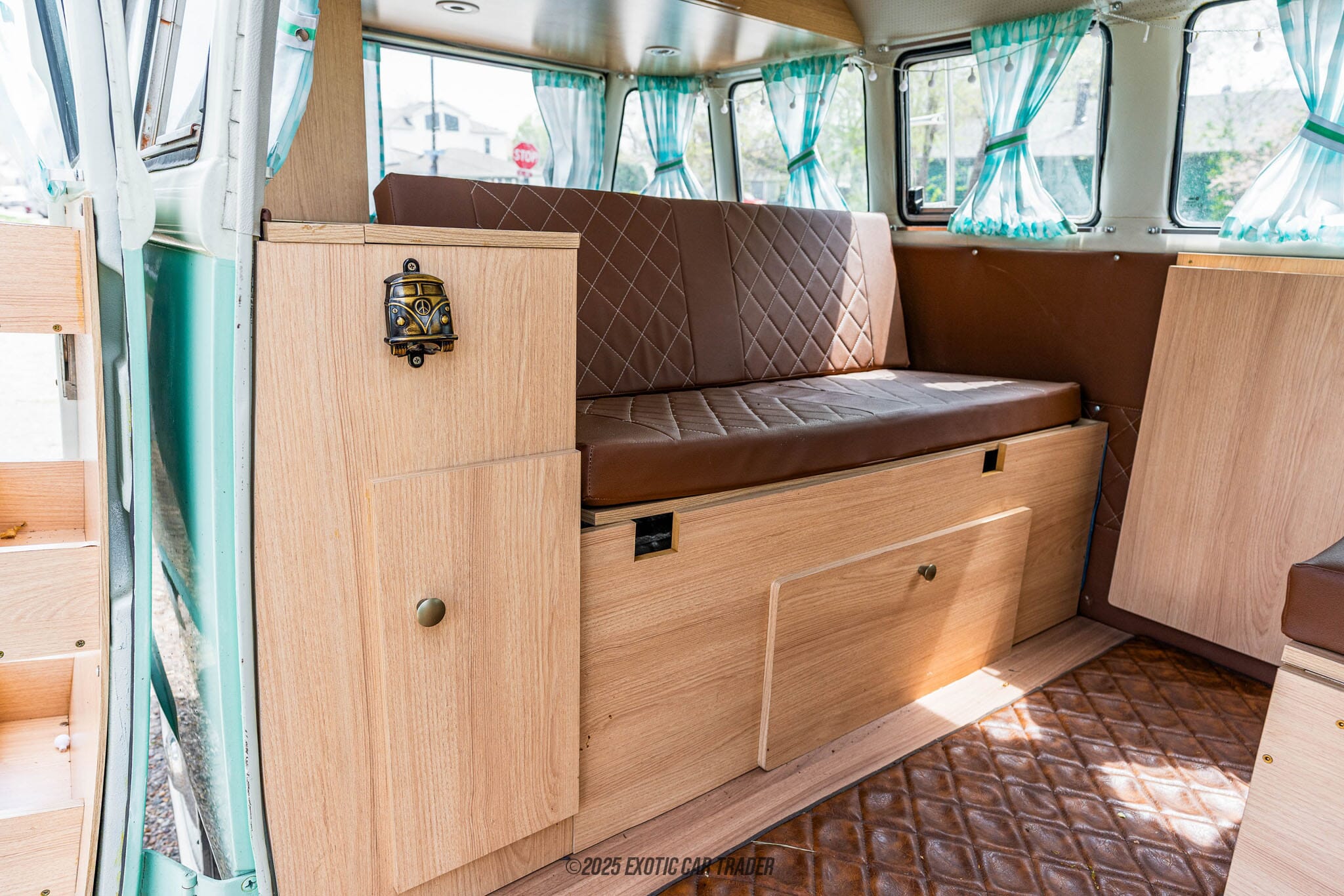
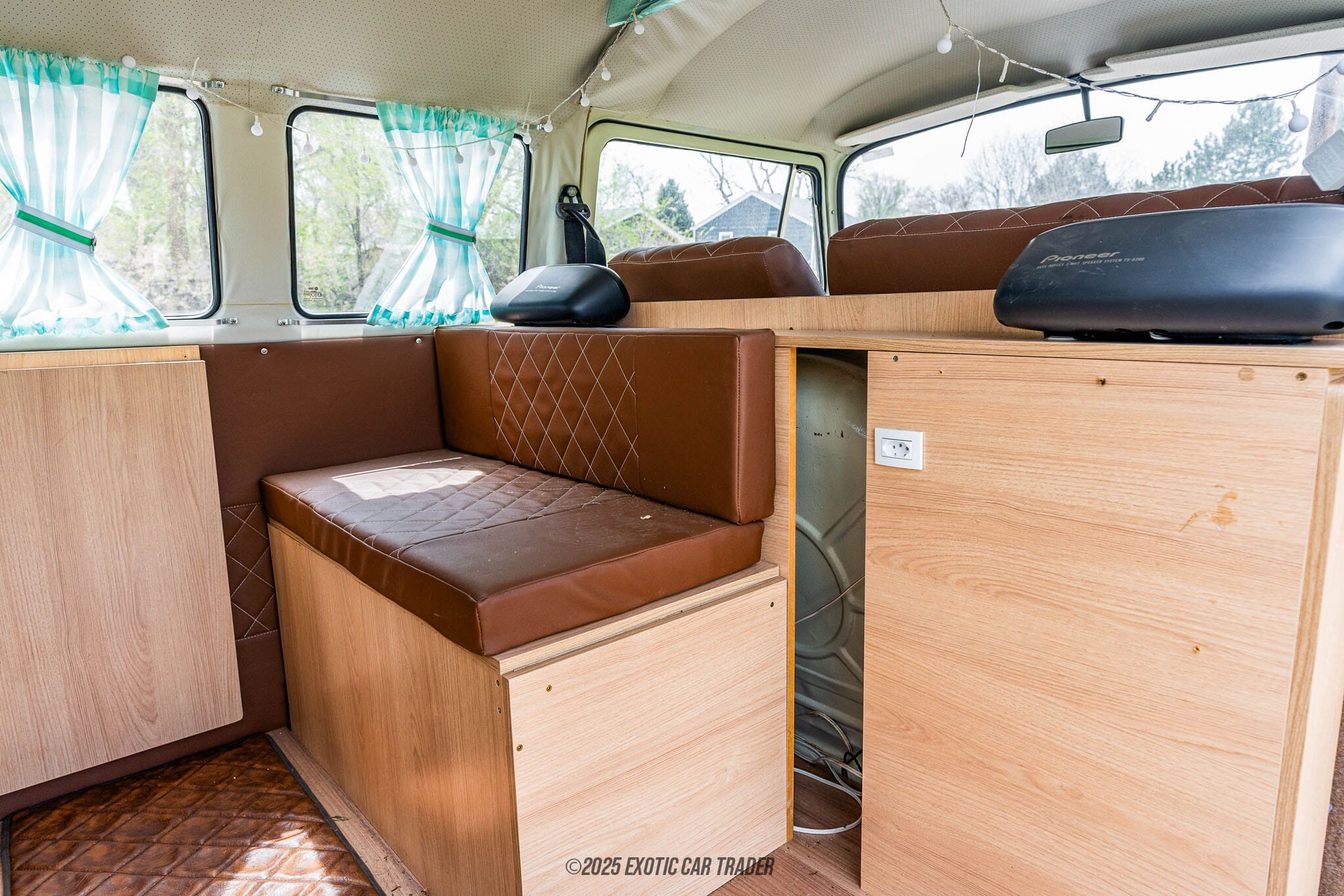
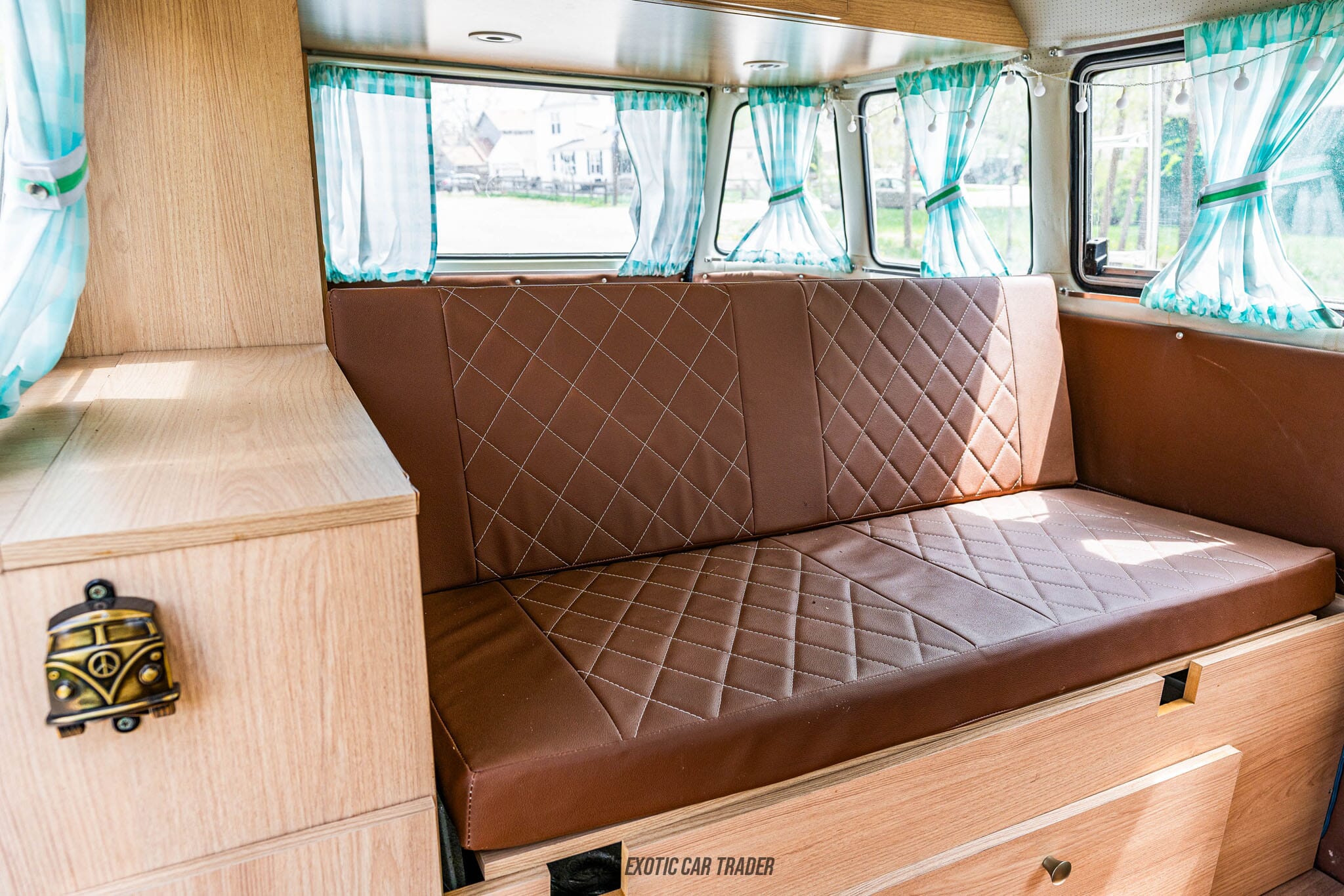
- Camper Setup w/ Rear Sleeping Platform
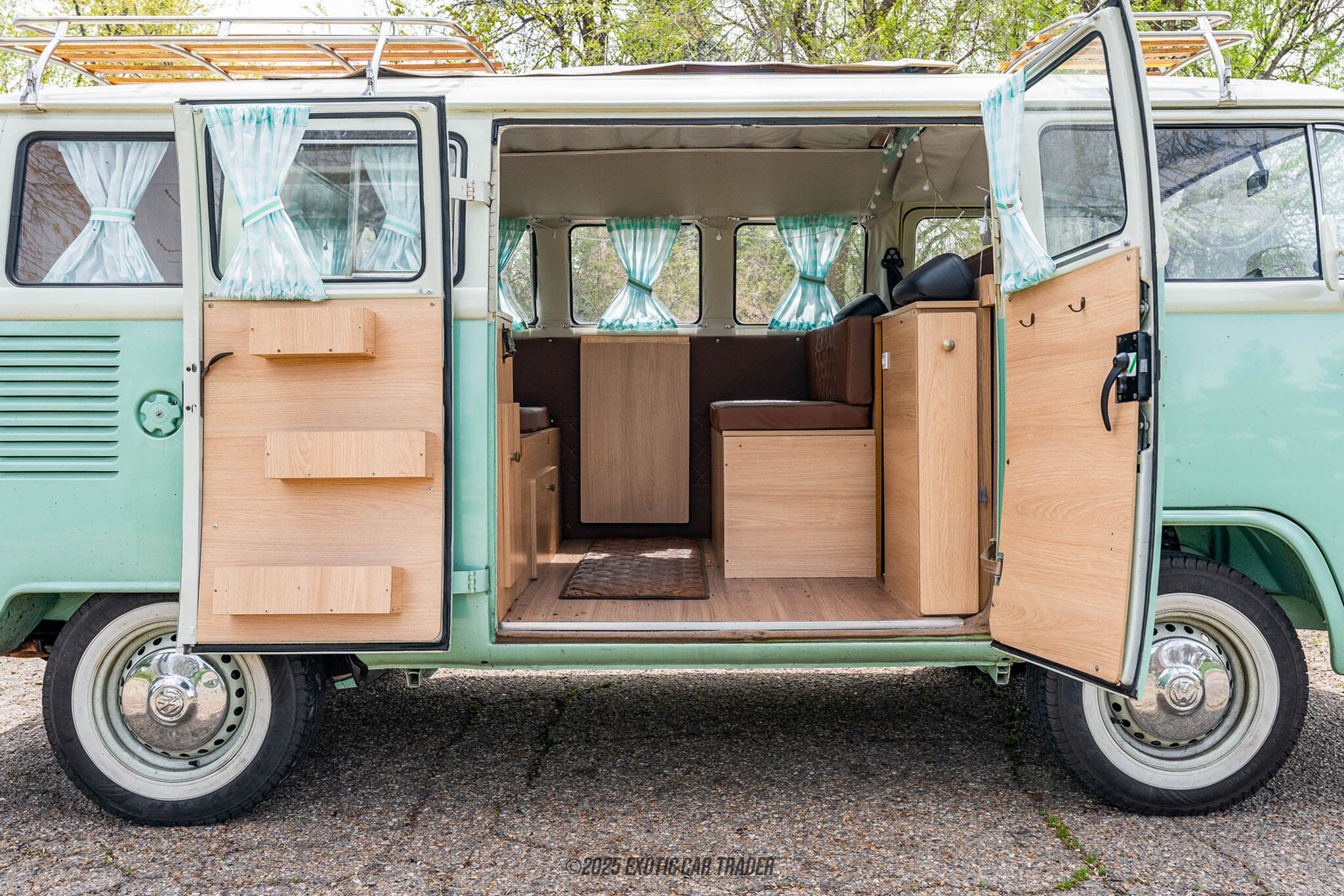
- Access Ladder
- Window Curtains
- Fort & Rear Roof Racks
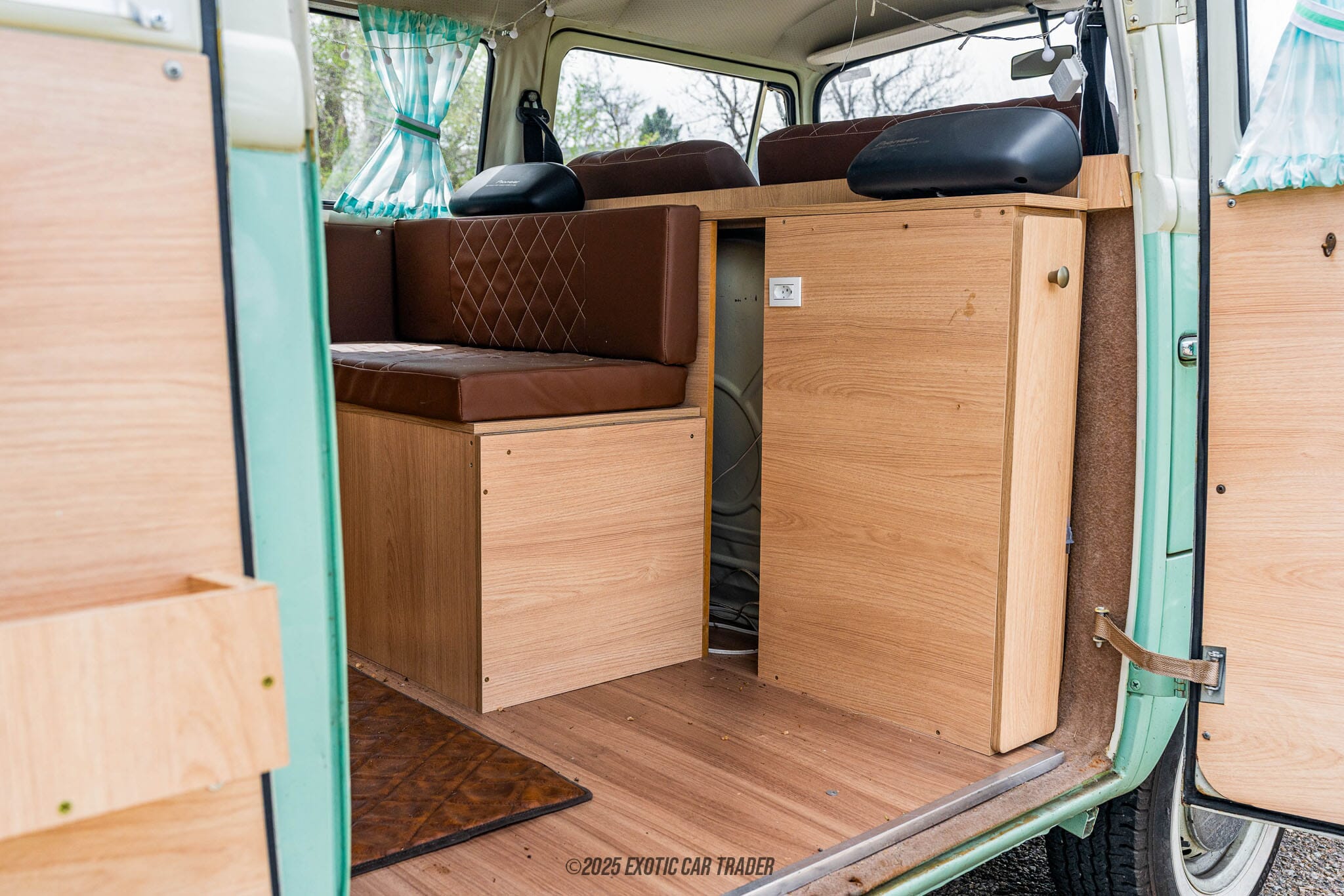
- Kitchen Setup w/ Dining Table & Cabinets
- Electric Stove
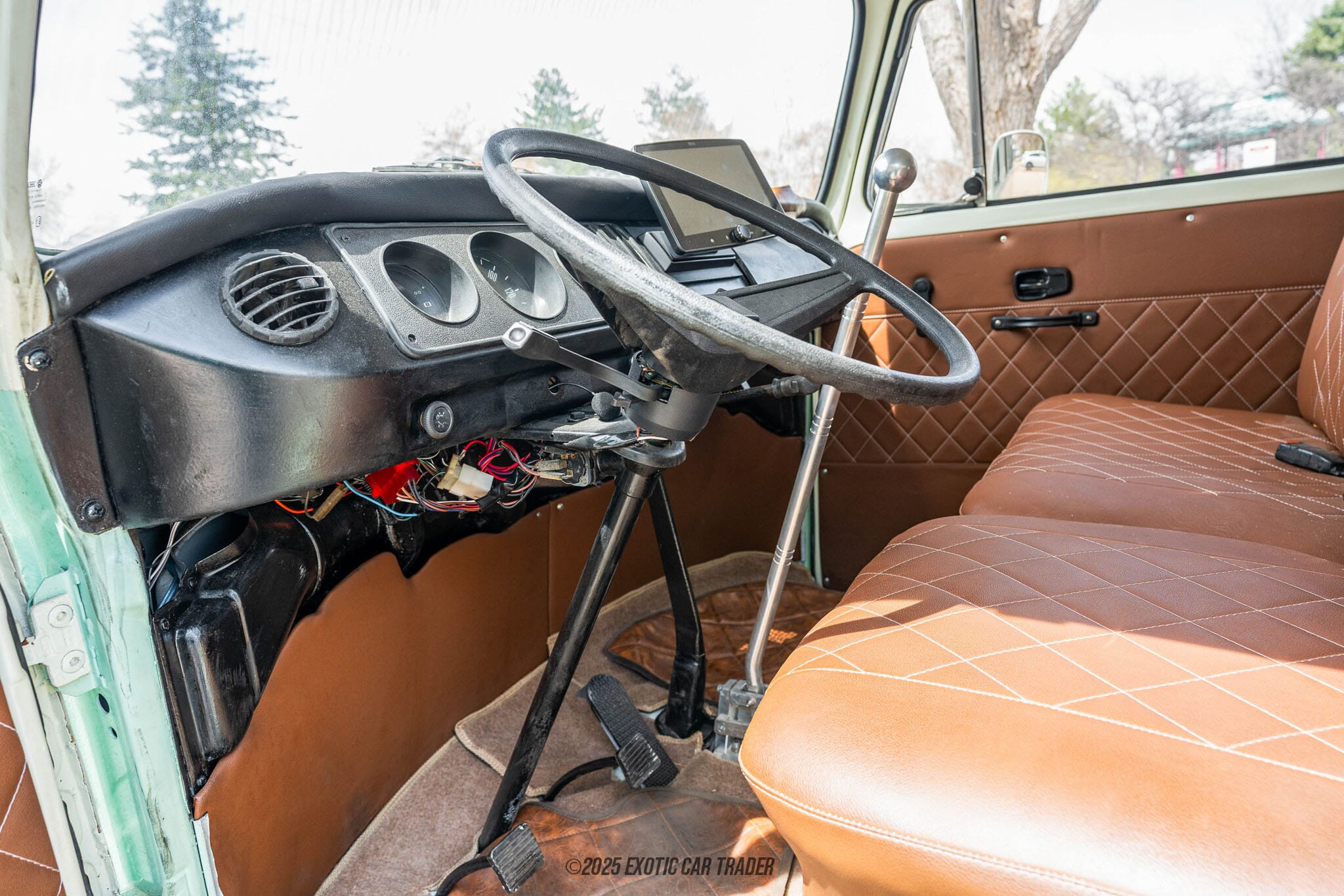
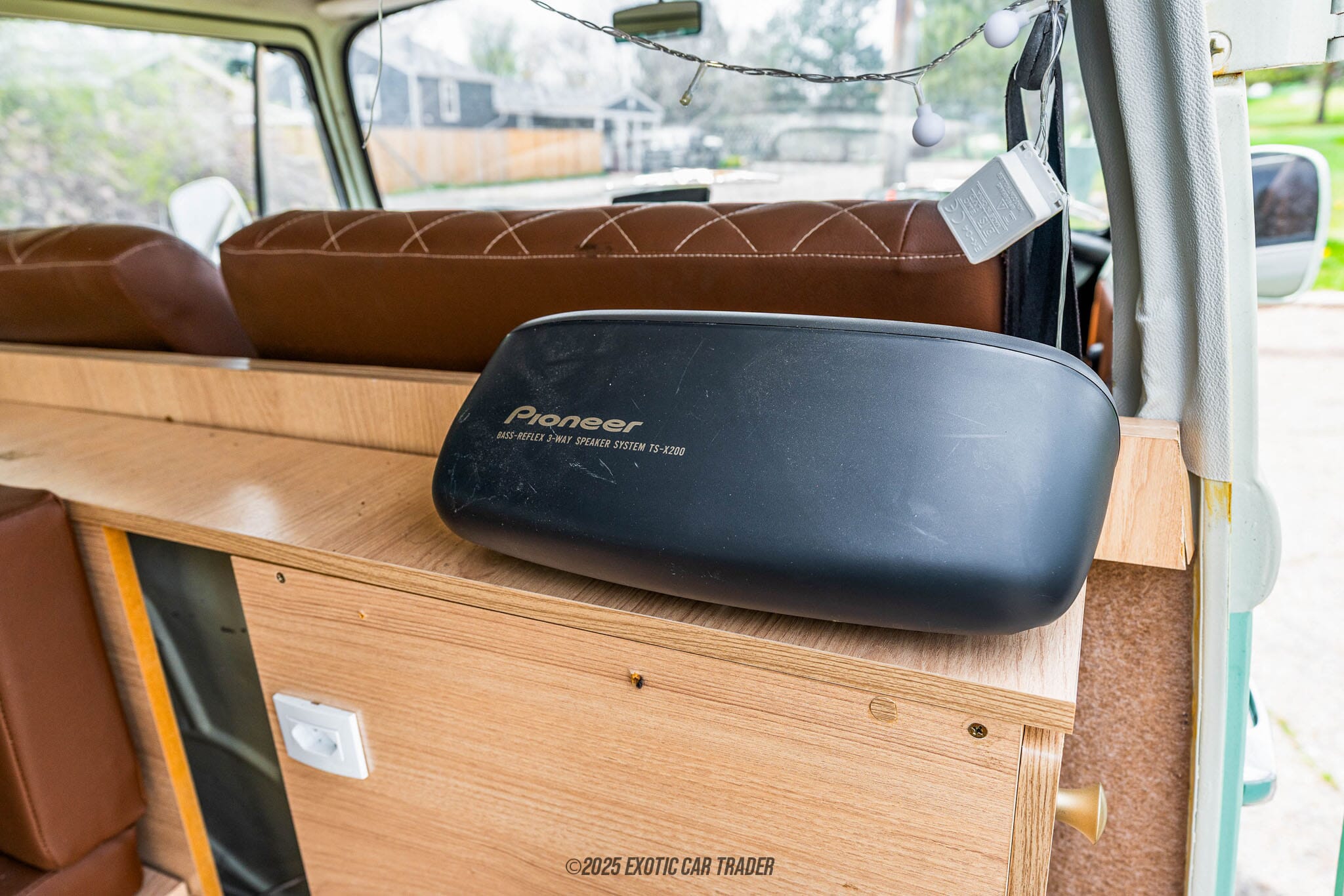
- Aftermarket Touchscreen Head Unit


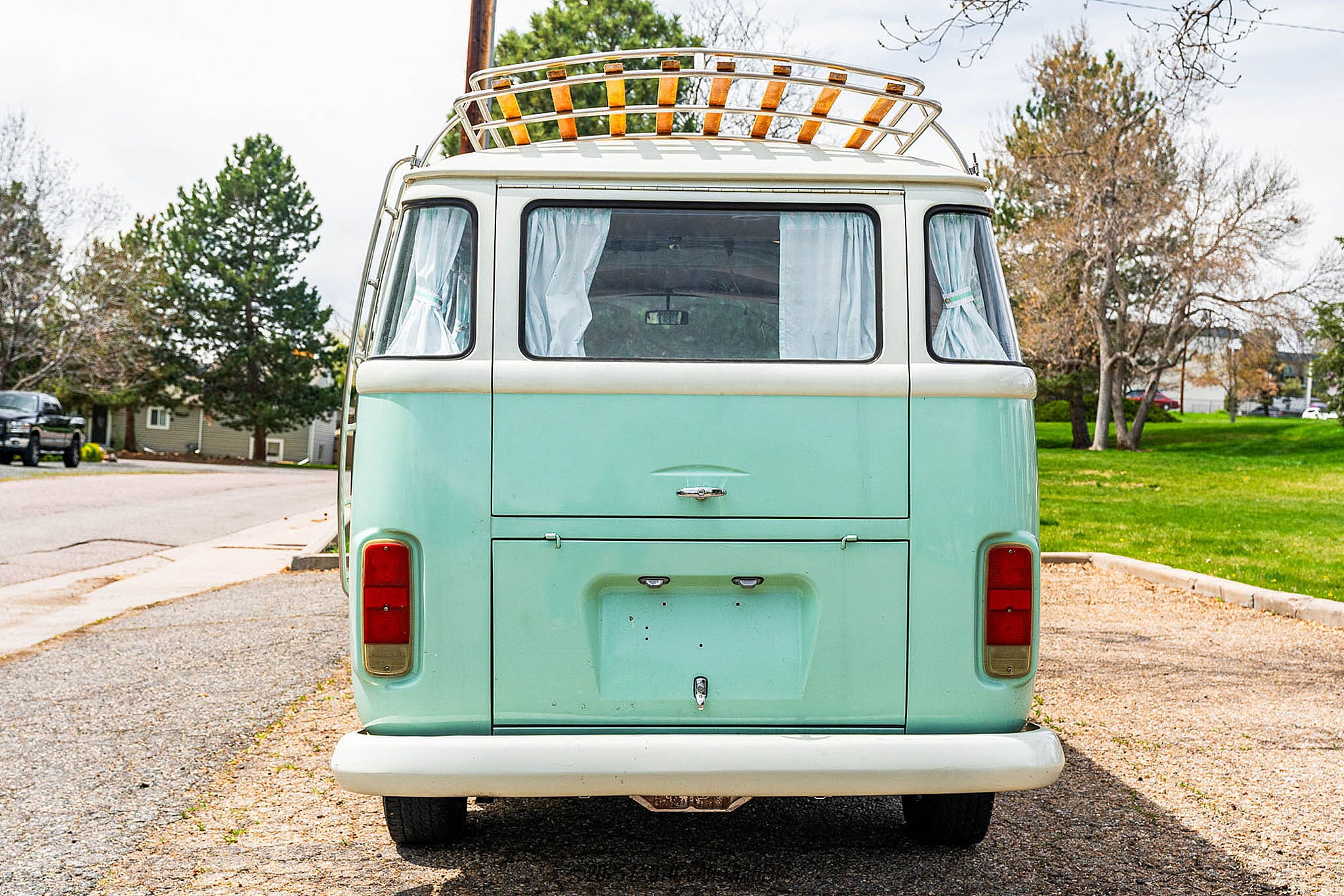
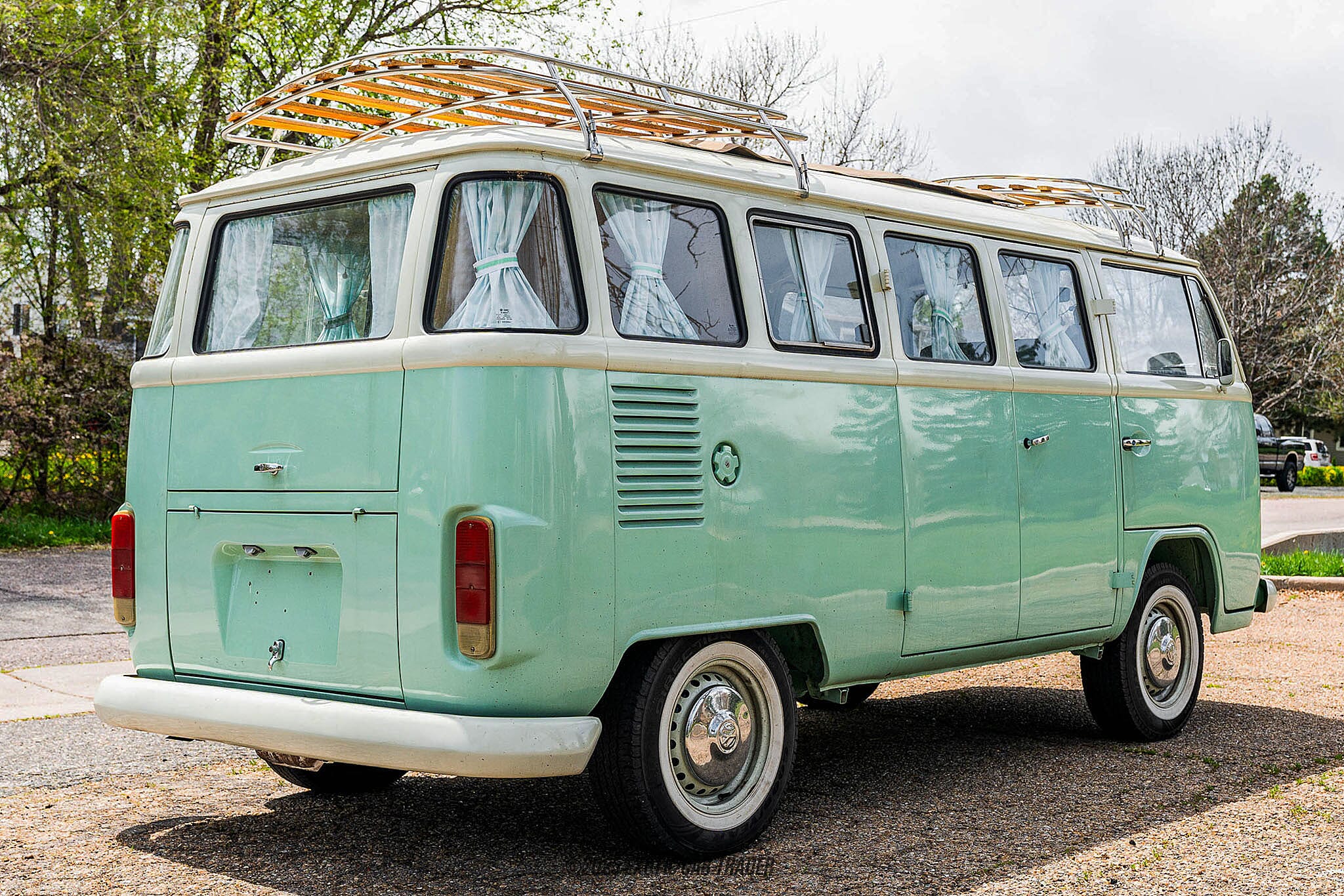
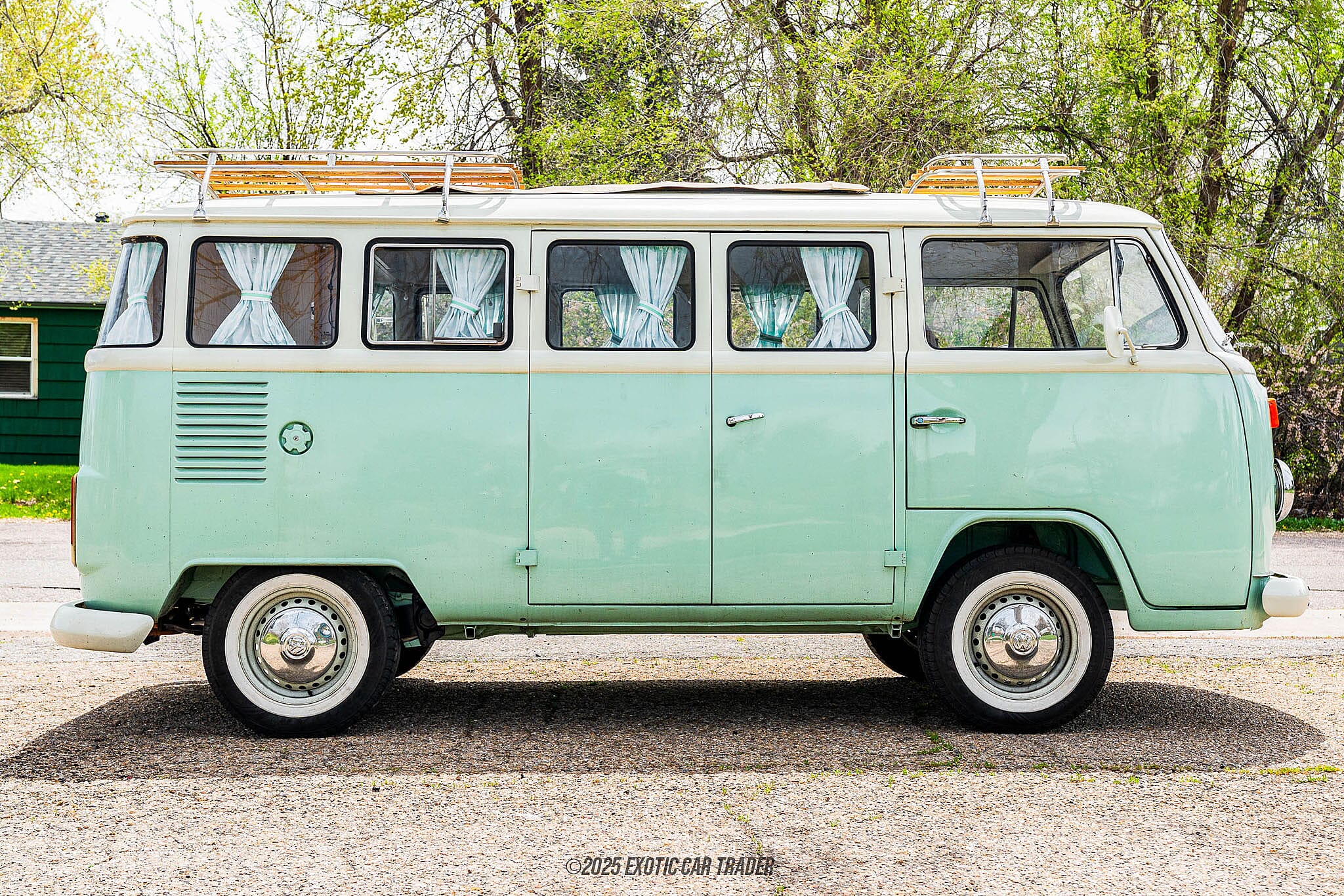
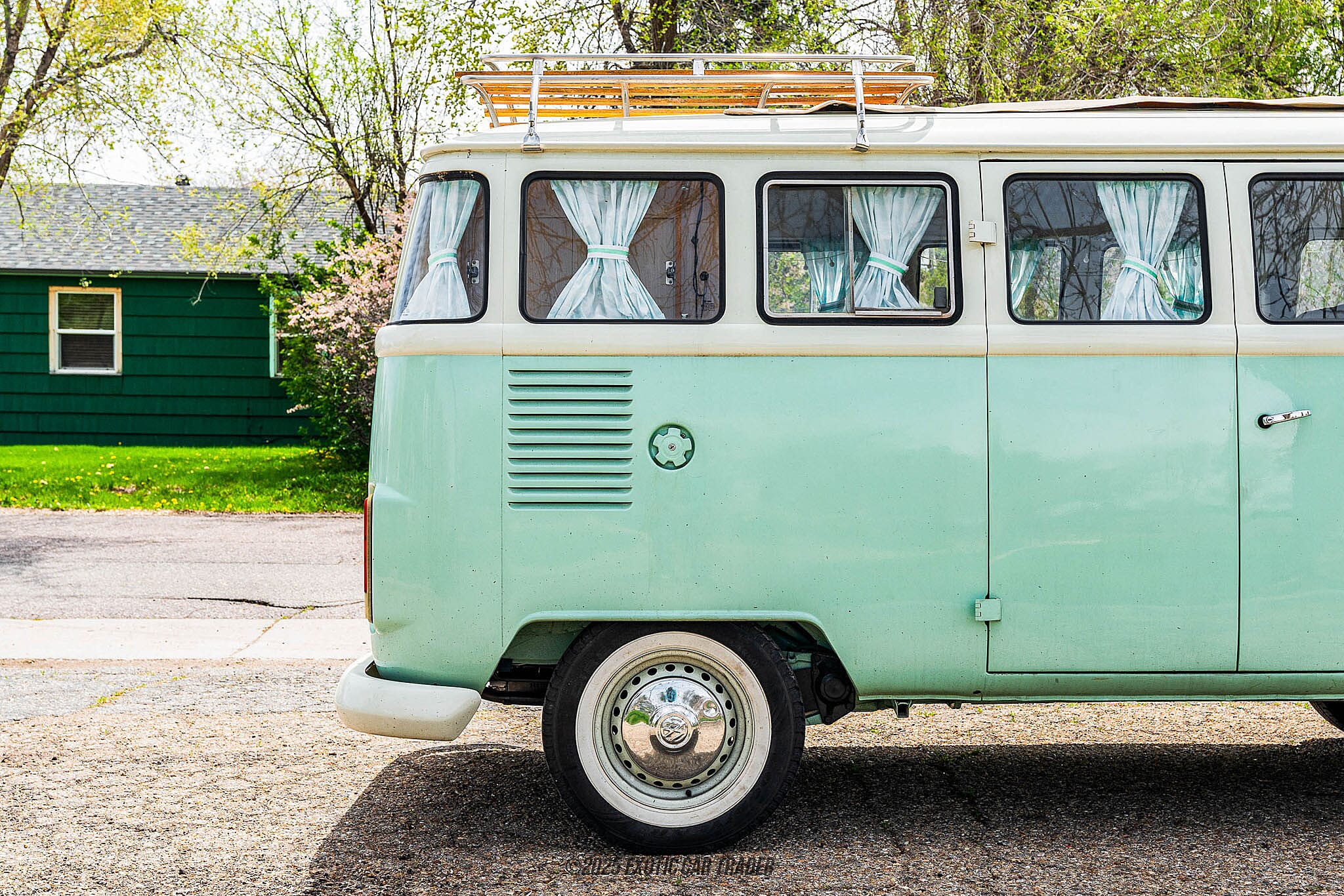
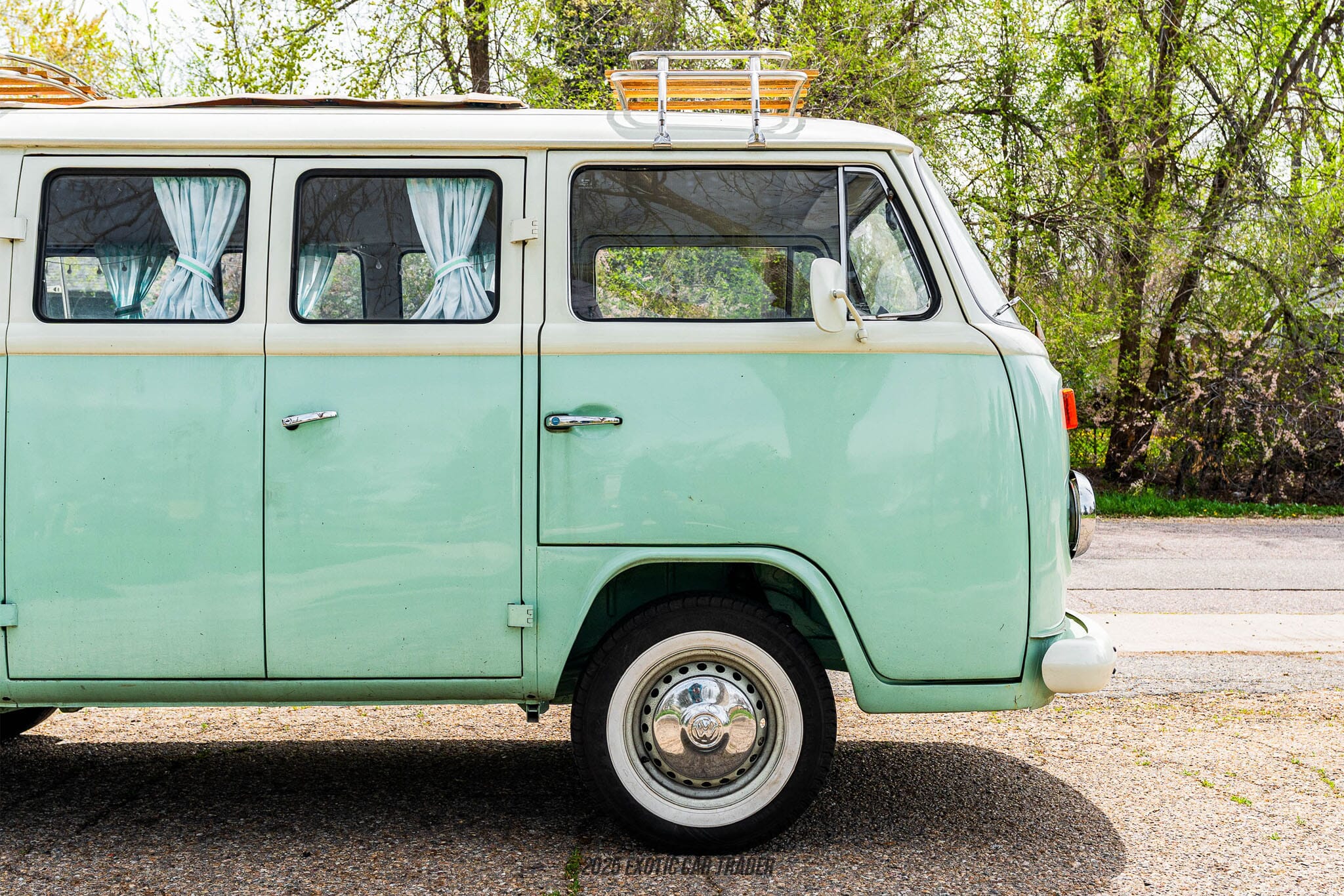
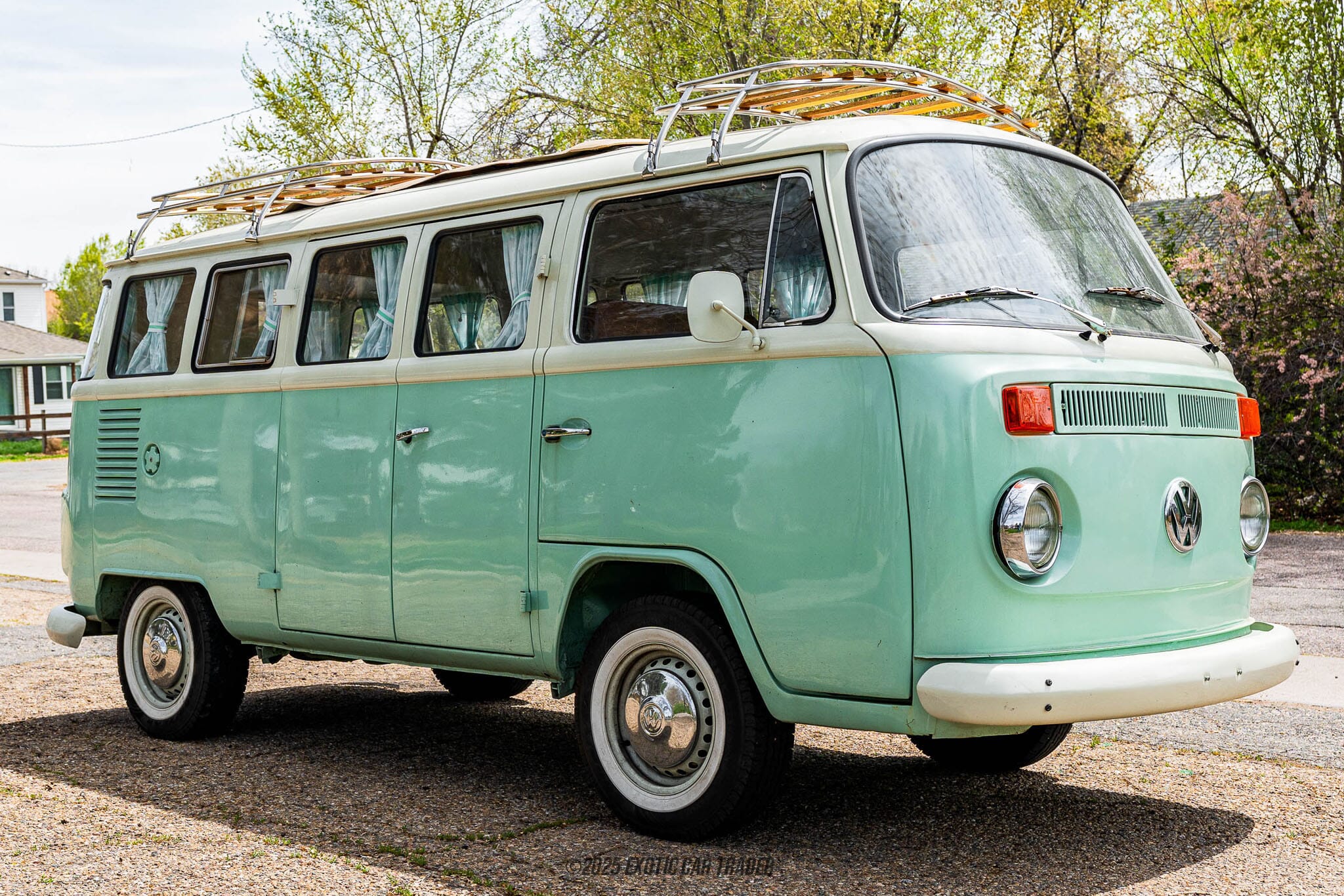
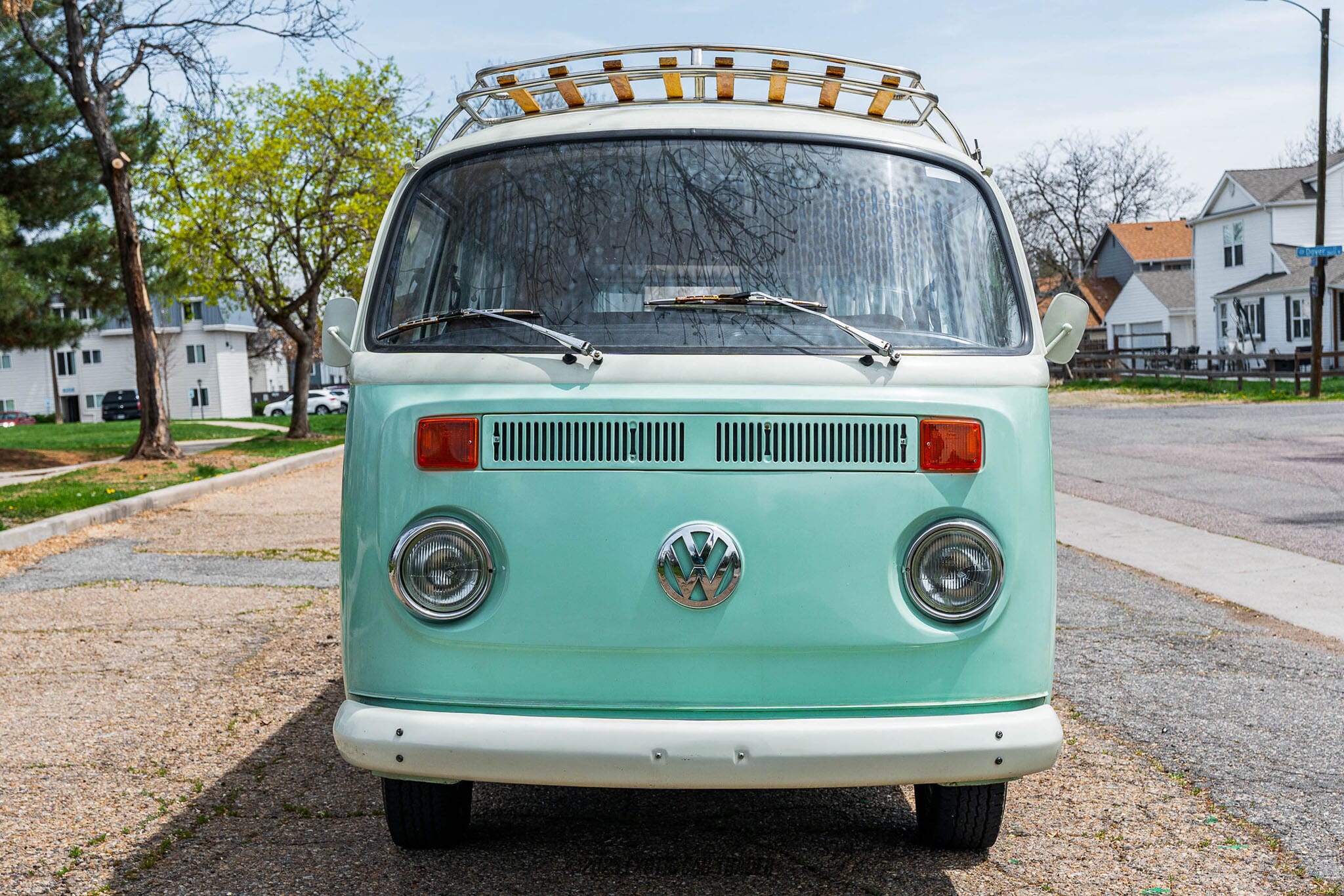
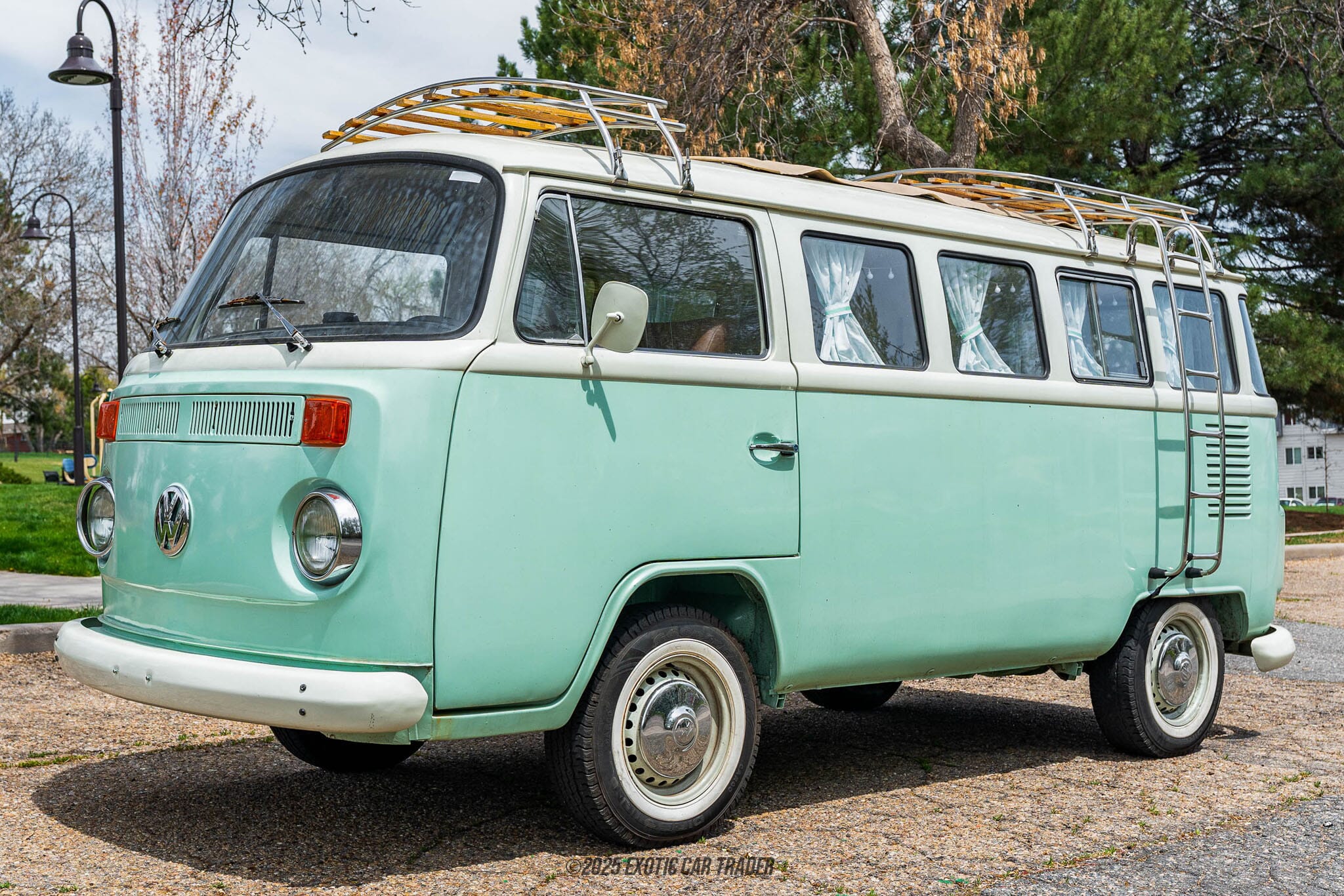
The spirit of adventure is alive and well in this 1977 Volkswagen Bus Kombi Camper Van, a timeless icon ready to hit the open road. Finished in an eye-catching two-tone Green and White color scheme, this Kombi has been thoughtfully updated with a brand-new 1600cc dual port air-cooled engine and a full camper setup, making it the perfect companion for weekend getaways, road trips, or even full-time van life. Located in Arvada, Colorado, this classic VW embodies freedom and simplicity with undeniable vintage charm.
Exterior and Interior
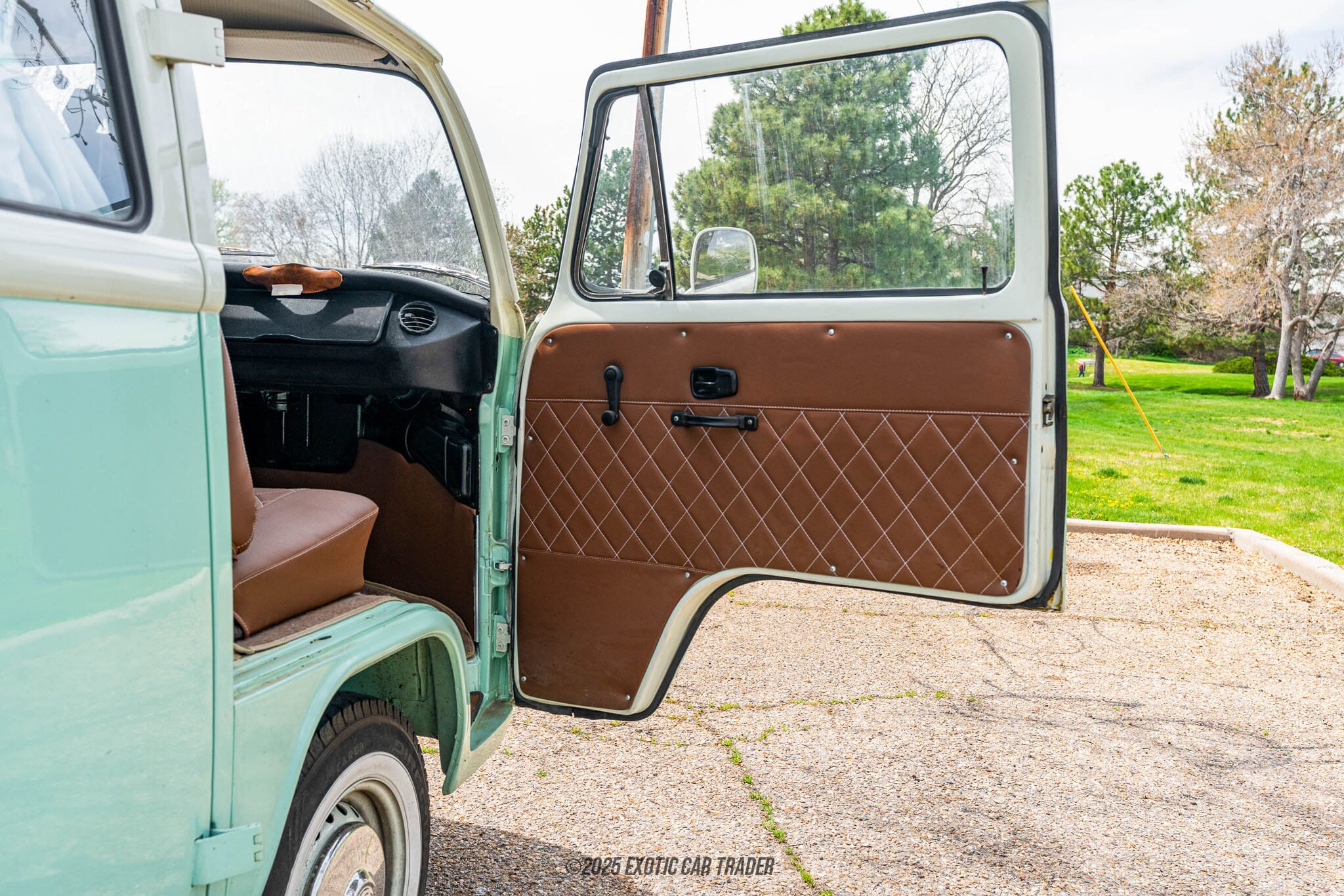
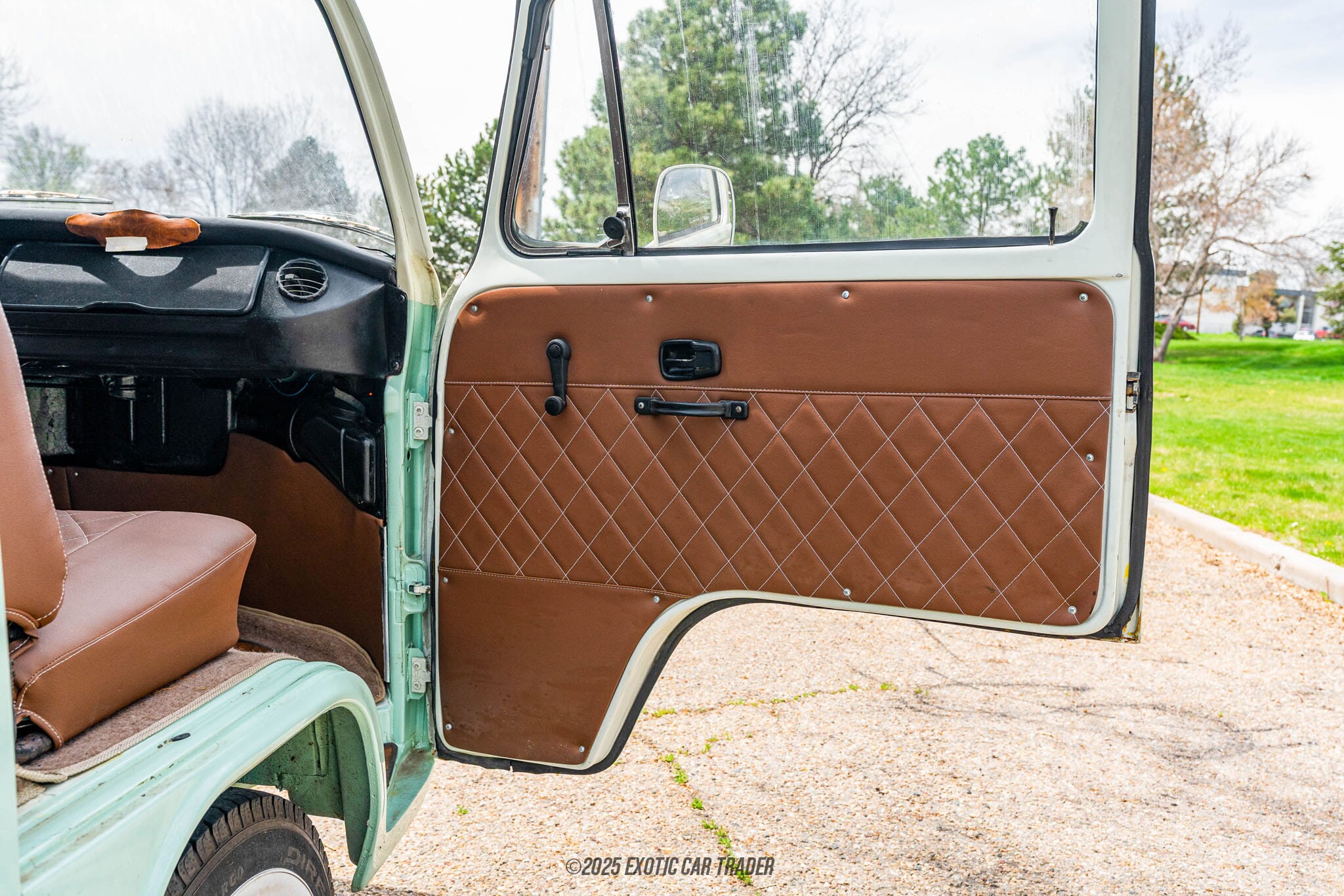
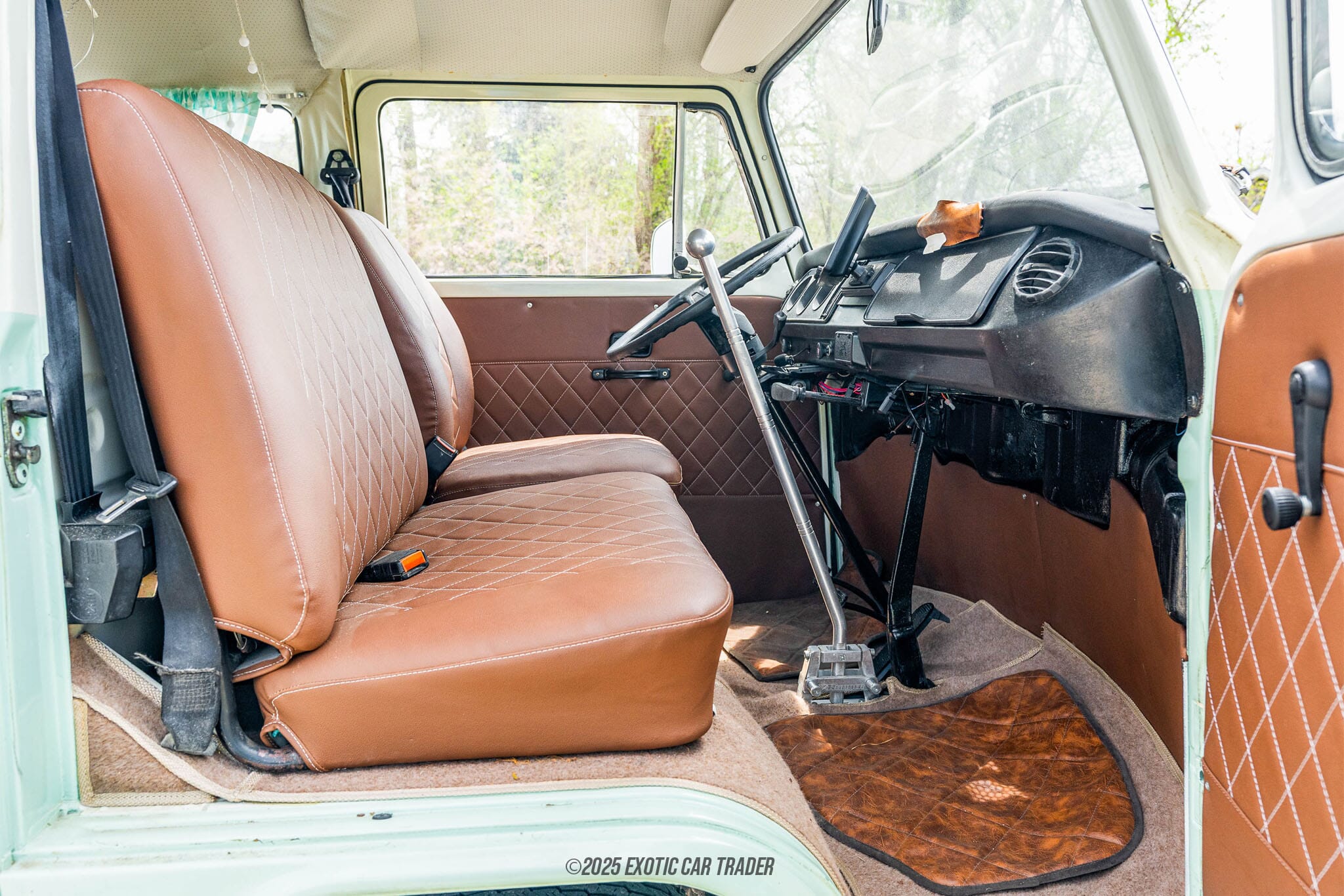
The Kombi's teal and white exterior captures the quintessential 1970s vibe, accented by 14-inch steel wheels and practical front and rear roof racks for added storage. An access ladder makes reaching the racks easy, while window curtains provide privacy inside the cabin. This van’s exterior strikes a perfect balance between utility and nostalgia, offering a ready-to-use platform that looks great both parked at a campsite or rolling down the highway. Inside, the brown interior has been purposefully configured for adventure, featuring a camper setup complete with a rear sleeping platform, a compact kitchen area with dining table and cabinets, and an electric stove for meal prep on the go. The thoughtful design maximizes available space, creating a cozy and functional environment for travel or extended stays. Whether you’re chasing sunsets or setting up camp in the woods, the Kombi’s interior
Engine
Powering this classic is a brand-new 1600cc dual port air-cooled long block engine, ensuring reliable performance with vintage character. A new electric choke carburetor and a new ignition control module have also been installed, further enhancing drivability. Power is sent to the rear wheels via a 4-speed manual transmission, providing a hands-on driving experience that’s both engaging and nostalgic. Recent updates, including a new engine latch and locks, make this van ready for worry-free adventures.


The spirit of adventure is alive and well in this 1977 Volkswagen Bus Kombi Camper Van, a timeless icon ready to hit the open road. Finished in an eye-catching two-tone Green and White color scheme, this Kombi has been thoughtfully updated with a brand-new 1600cc dual port air-cooled engine and a full camper setup, making it the perfect companion for weekend getaways, road trips, or even full-time van life. Located in Arvada, Colorado, this classic VW embodies freedom and simplicity with undeniable vintage charm.
The Volkswagen Type 2 was Volkswagen’s second mass production vehicle, after the popular Beetle. Introduced for 1950, the Type 2 came in panel van, minibus and pickup truck variants. Soon, it became immensely popular in its own right, most notably as a symbol of the Sixties. Subsequently, the name changed to Transporter, and it’s a name that we see to this day. However, few today will make the connection between the two. For many, the Volkswagen Type 2, Microbus, Kombi or bus is its own vehicle, and a fine classic too. Here, we’ve got a 1965 Volkswagen Bus of the 21-window variety, for sale in Elk Grove California after undergoing a full rotisserie restoration. That makes it an excellent turn-key classic that you can drive straight away.
Travelling creates memories, it's always not about the destination per se, but the journey to it that makes it truly one for the books. The best way to ensure you maximise memories made is to pick the right machine to travel further and in style. Present today is arguably the best way to travel and look good doing so and takes shape with this lovely 1972 Volkswagen Westfalia Camper Van. With a reported 1,430 miles on the clock, this iconic ’70s motor features a host of tasteful upgrades with its iconic classic Volkswagen charm and can be yours to pack up and travel today.
For decades, the Volkswagen Type 2 has represented freedom on four wheels, becoming one of the most recognizable camper vans ever produced. This 1972 Volkswagen Type 2 Transporter Camper Van carries on that legacy with its classic Orange and White finish, pop-top camper roof, and thoughtfully configured camper interior conversion. Showing approximately 88,815 miles, this air-cooled icon blends vintage character with the functionality that made these Transporters favorites among adventurers, surfers, and road-trip enthusiasts. Whether destined for weekend camping excursions, local Cars & Coffee events, or simply reliving the golden age of overland travel, this Type 2 is ready for its next chapter.
The Volkswagen Beetle is one of the most recognizable automobiles ever produced, earning a reputation for its simple engineering, unmistakable styling, and enduring reliability. This 1963 Volkswagen Beetle takes that iconic formula several steps further with a professionally upgraded drivetrain and numerous performance enhancements while retaining the timeless charm that has made the Beetle a beloved classic for generations. Showing off a striking Crimson Red finish over a Gray interior, this Beetle is powered by a Scat-built 2027cc air-cooled flat-four equipped with dual Weber 44mm carburetors, creating a spirited driving experience that far exceeds the performance of its original factory configuration.
The Volkswagen Karmann Ghia has long been admired for blending dependable German engineering with elegant Italian styling. Penned by Carrozzeria Ghia and hand-assembled by Karmann, it offered sports car looks while retaining the reliability and simplicity of the legendary Beetle. This 1969 Volkswagen Karmann Ghia Coupe carries on that legacy, showing 155,708 miles and delivering the unmistakable charm that has made air-cooled Volkswagens favorites among collectors for decades. Finished in Cherry Red over a Black interior, this classic is equipped with a 4-speed manual transmission and even features a period General Electric CB radio, making it a nostalgic cruiser that’s equally enjoyable at local cars & coffee events or weekend drives.
The 1955 Chevrolet 3100 Restomod is a custom-built pickup that combines the timeless appearance of Chevrolet’s iconic Task Force-era truck with the modern mechanical foundation of a 2012 Chevrolet Silverado 1500. Showing approximately 4,601 miles, this build retains the classic 1955 Chevrolet 3100 cab, front fenders, hood, grille, bed, and other vintage body components while utilizing the Silverado’s modern chassis, drivetrain, suspension, fuel system, and electrical components underneath. The result is a unique restomod that preserves the character of a classic Chevrolet pickup while incorporating the drivability and technology of a much newer platform.
The 1968 Ford Bronco Restomod blends the timeless appeal of Ford’s first-generation 4x4 icon with modern performance upgrades designed to enhance capability, drivability, and reliability. Introduced in 1966 as Ford’s answer to the growing demand for compact utility vehicles, the early Bronco quickly earned a reputation for its rugged simplicity, go-anywhere capability, and unmistakable styling. This example has been transformed with a performance-focused restomod build centered around a 302ci Ford Racing V8, upgraded Electronic Fuel Injection, and an NV3550 5-speed manual transmission. Finished in Orange with a Black interior, this Bronco features a Dana 20 dual-range transfer case, Skyjacker 2-inch suspension lift, Dick Cepek wheels, Hooker headers, dual exhaust, and modernized braking and steering components. Combining classic Bronco character with thoughtful upgrades, this build delivers the vintage 4x4 experience enthusiasts love while adding the performance and refinement expected from a modernized restomod.
The 1976 Jeep CJ-7 Renegade Levi’s Edition represents one of the most distinctive and collectible versions of Jeep’s classic CJ lineup, combining legendary off-road capability with a unique lifestyle-oriented appearance package. Introduced during Jeep’s transition toward a more refined recreational 4x4 market, the CJ-7 offered improved comfort and versatility while preserving the rugged mechanical character that made the CJ platform famous. The Levi’s Edition added a memorable touch with its denim-inspired interior appointments, creating a special-edition Jeep that stood apart from standard models. Showing approximately 2,507 miles, this example features a factory 304ci V8, TH400 3-speed automatic transmission, and Quadra-Trac 4WD system. Finished in Firecracker Red with a Levi’s Tan interior, it is equipped with a black removable hard top, original Levi’s Edition rear bench seat, black American Racing wheels, power steering, power brakes, and several practical upgrades. According to the current owner, the body tub retains its original paint and remains well preserved, making this CJ-7 a standout example of Jeep’s iconic open-air heritage.

Terms of Service
Be Kind and Courteous
We're here to create a platform to better the automotive industry through communication and transparency. Please treat everyone with respect. Healthy debates are natural, but kindness is required.
No Hate Speech
Make sure everyone feels safe. Hate speech of any kind is strictly prohibited. Degrading comments about things like race, religion, culture, sexual orientation, etc. will not be tolerated.
No Promotions or Spam
Give more than you take. Self-promotion, spam, or links of any kind are not allowed.
