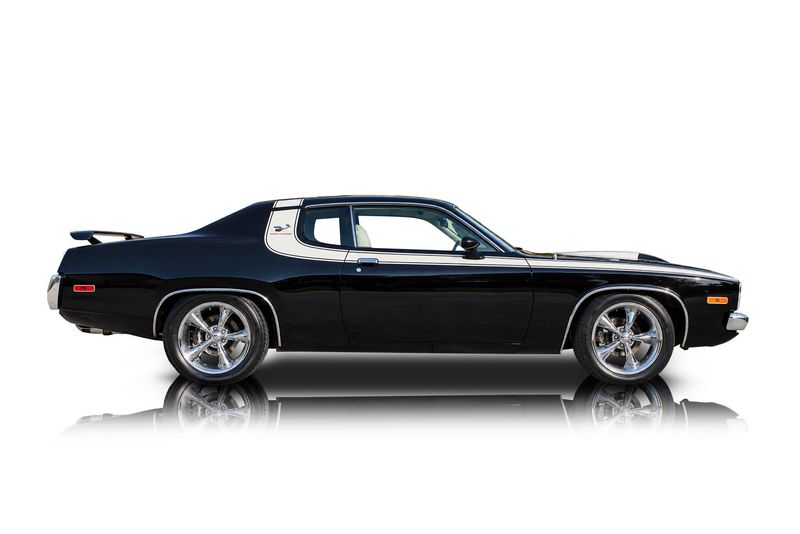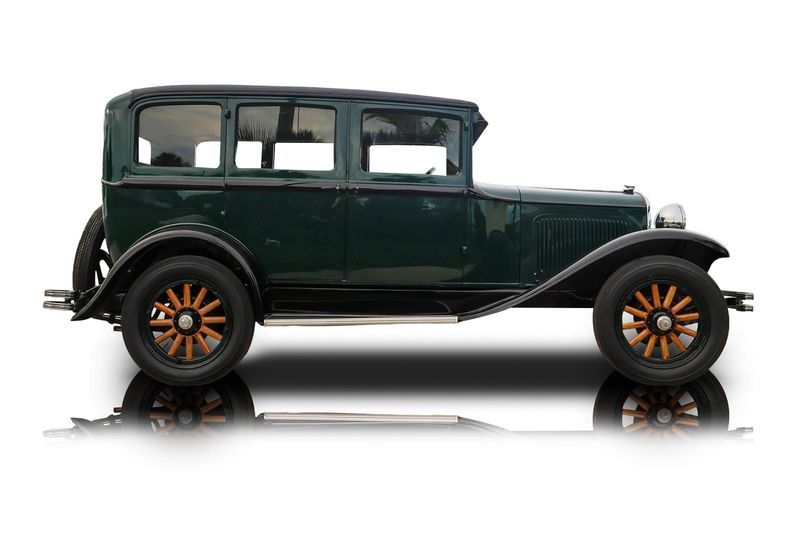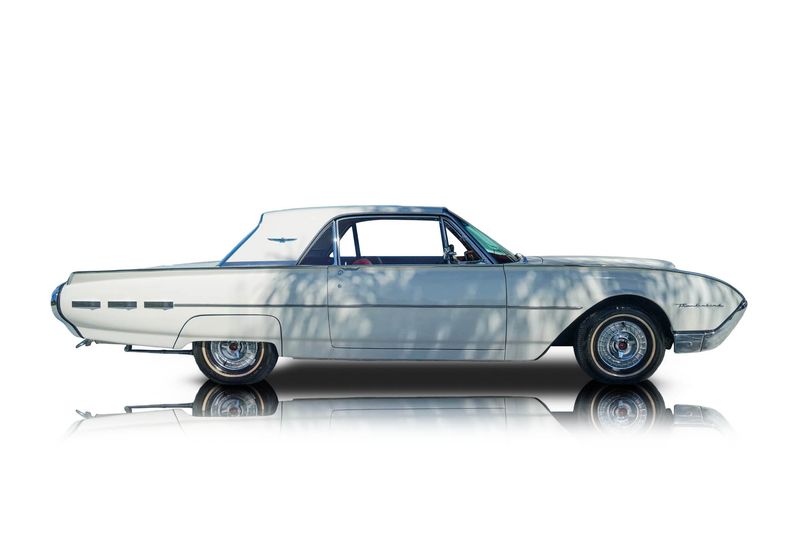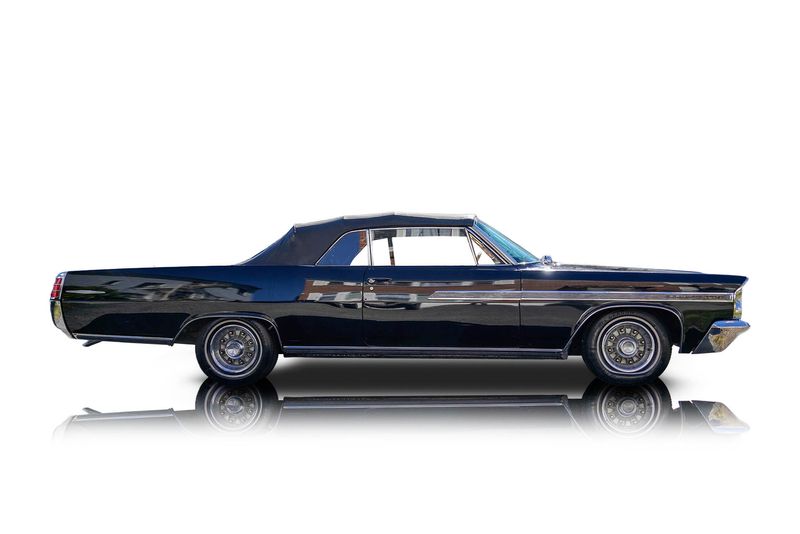


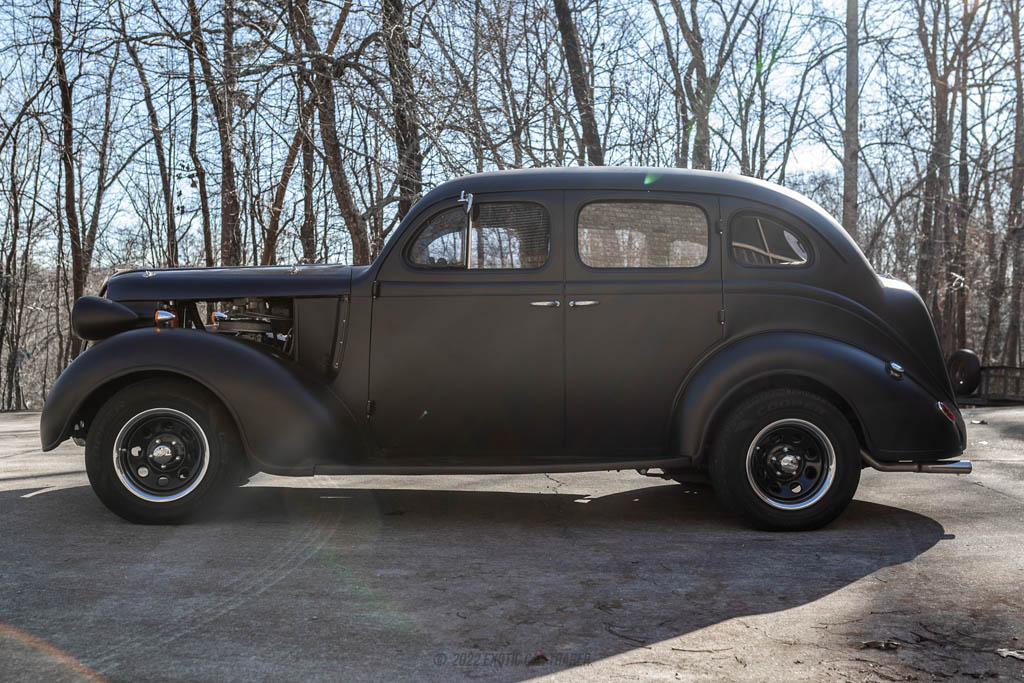
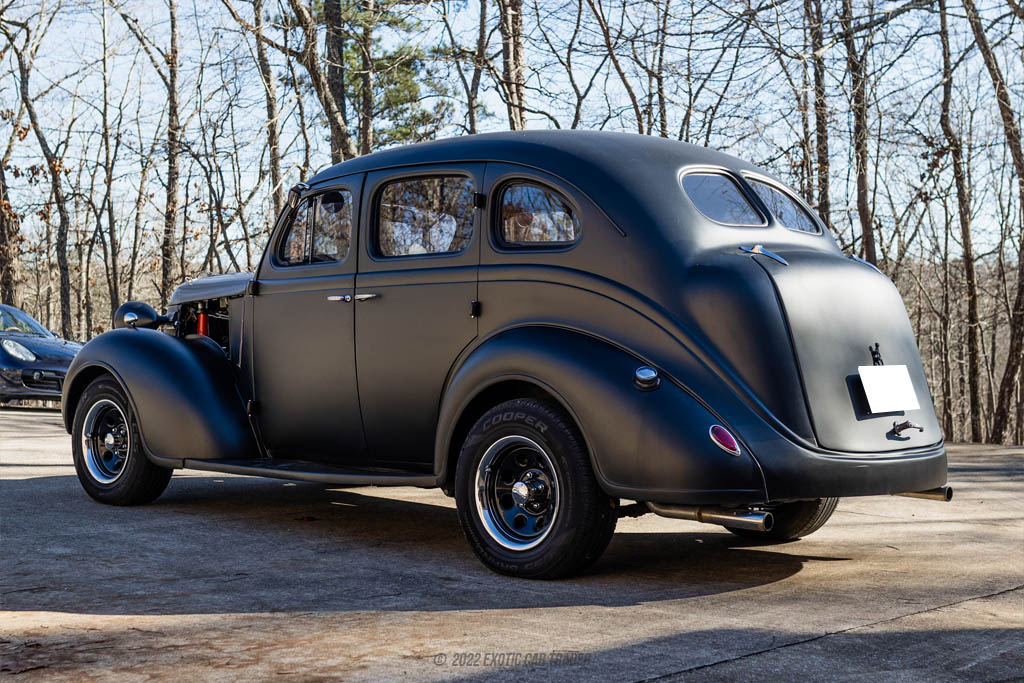
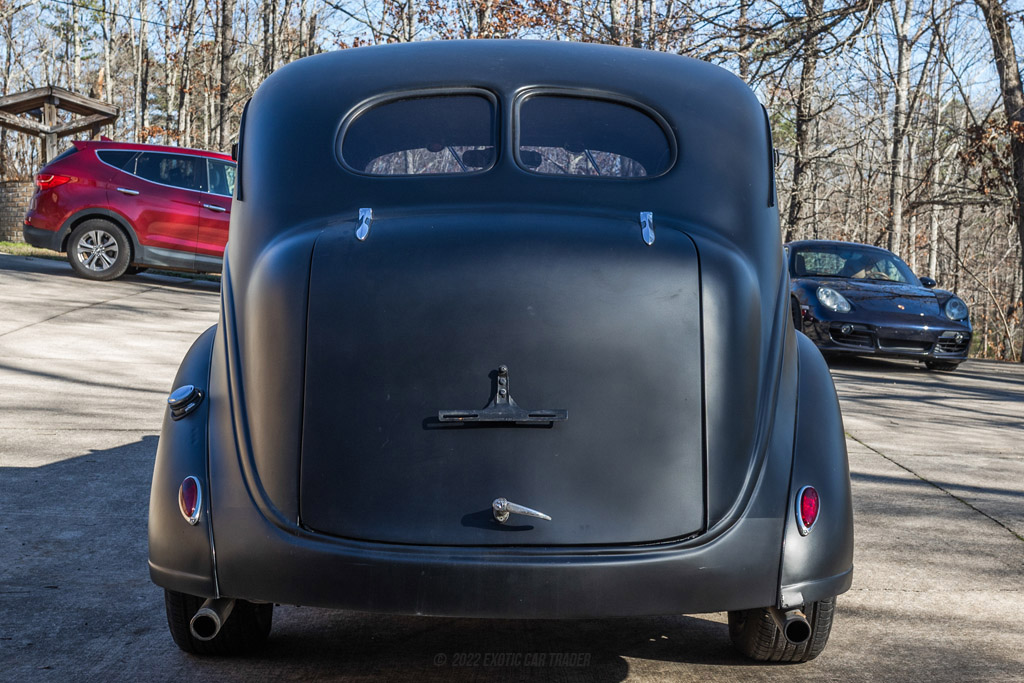
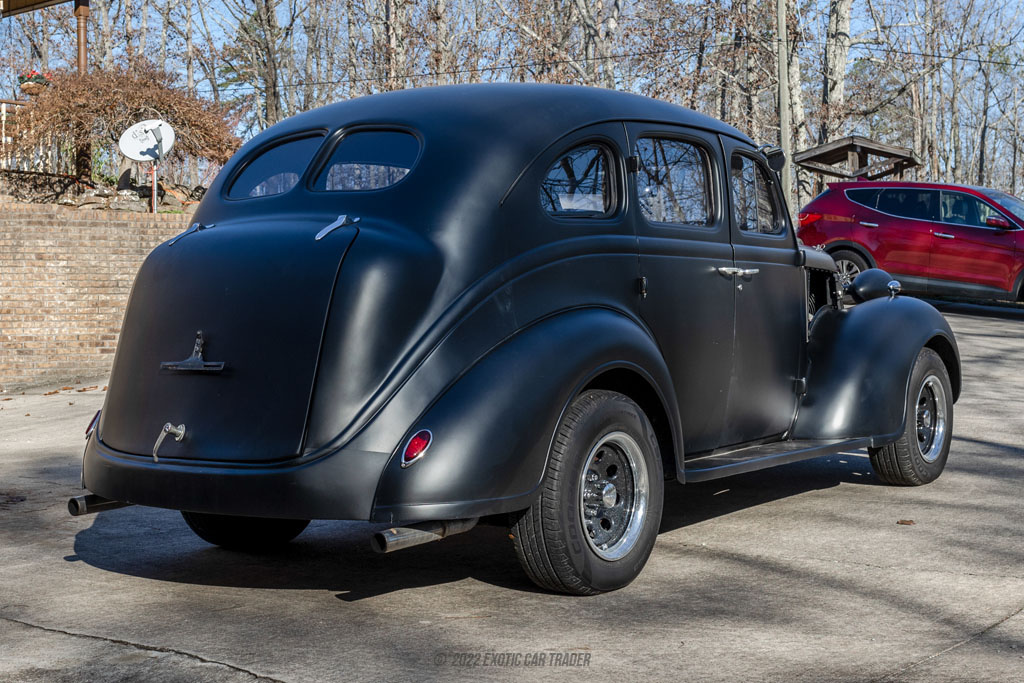
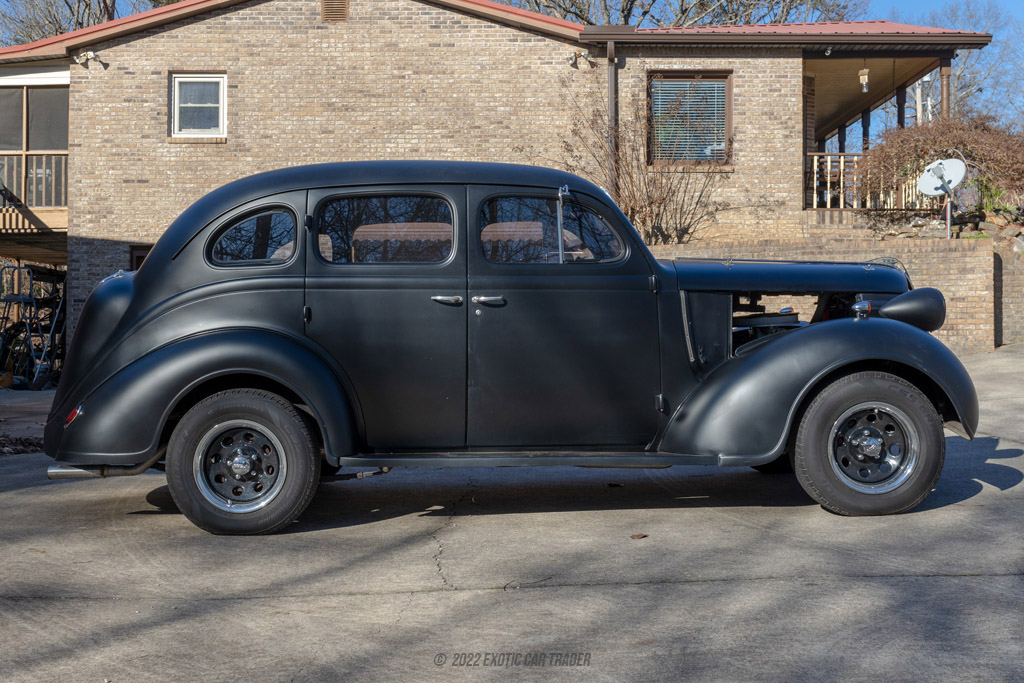
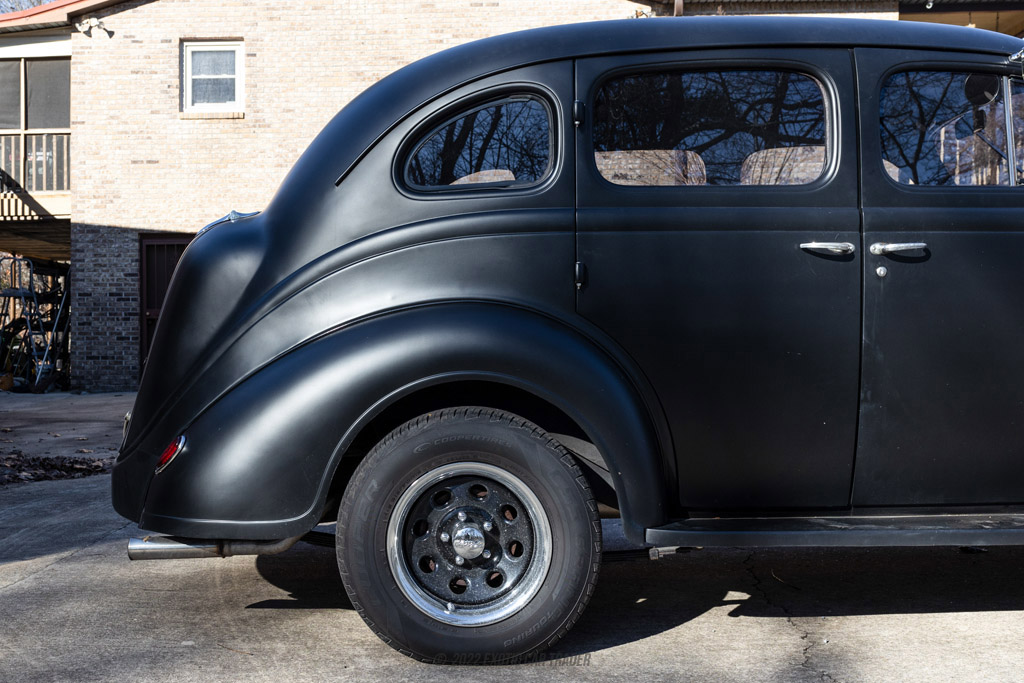
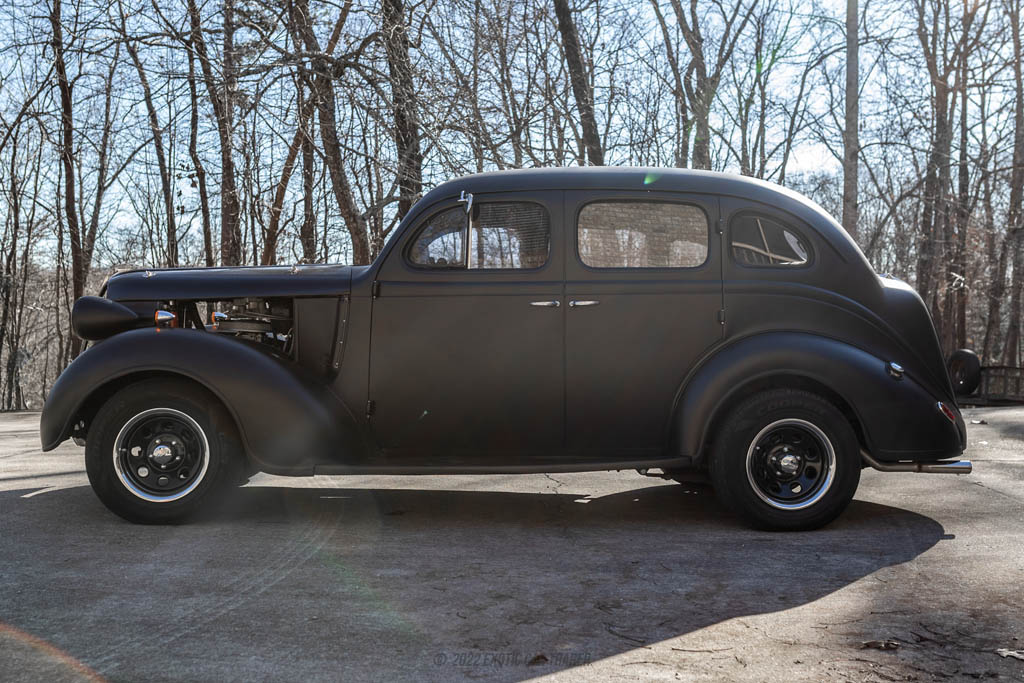
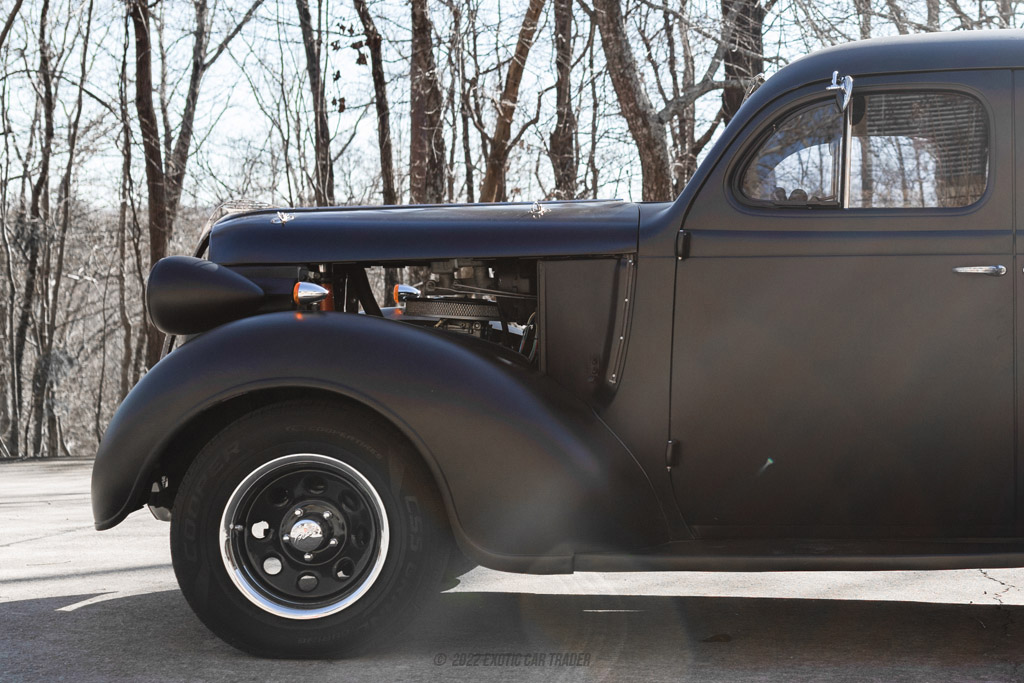
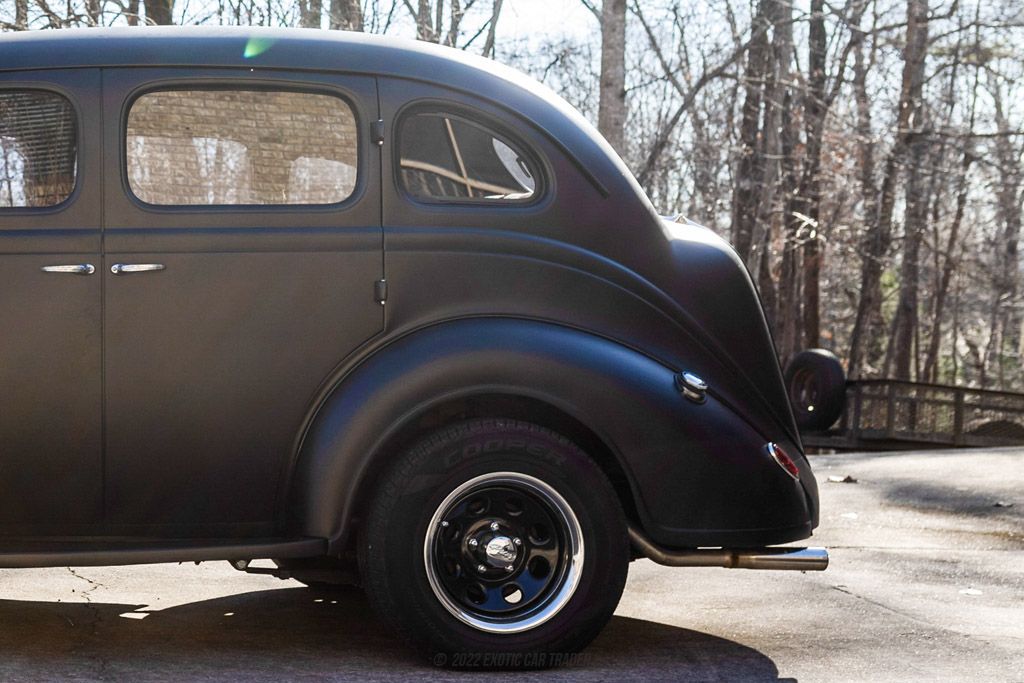
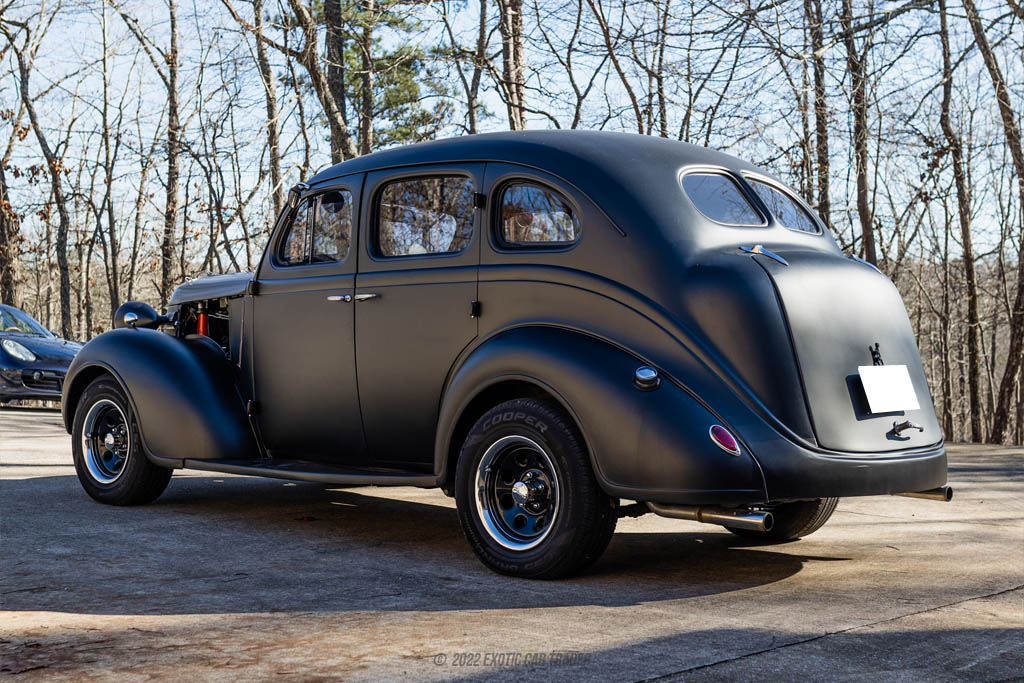
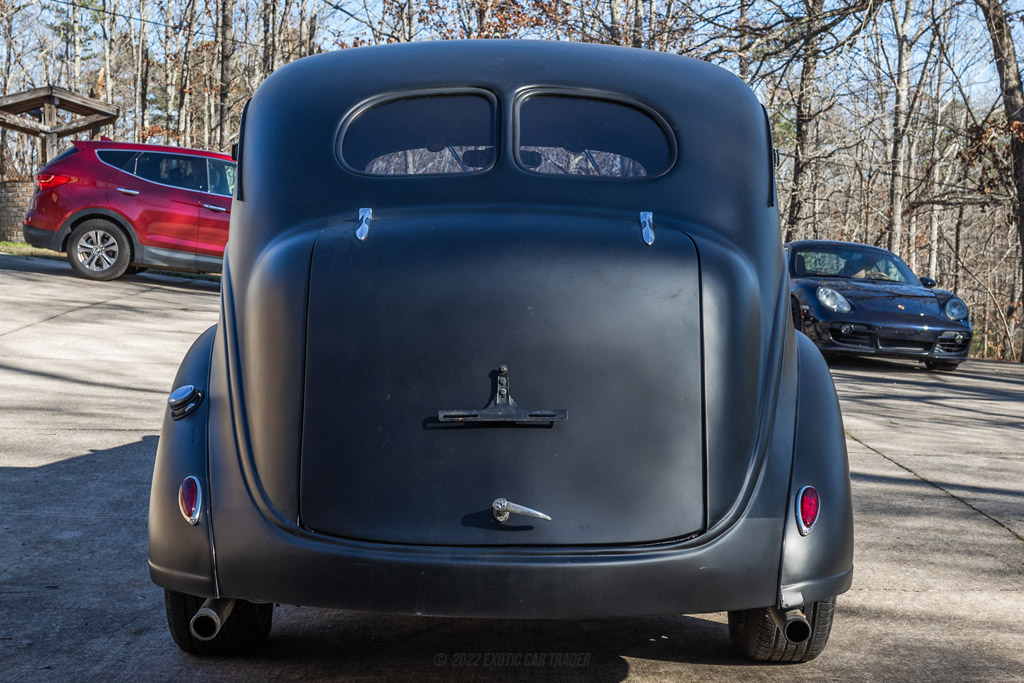
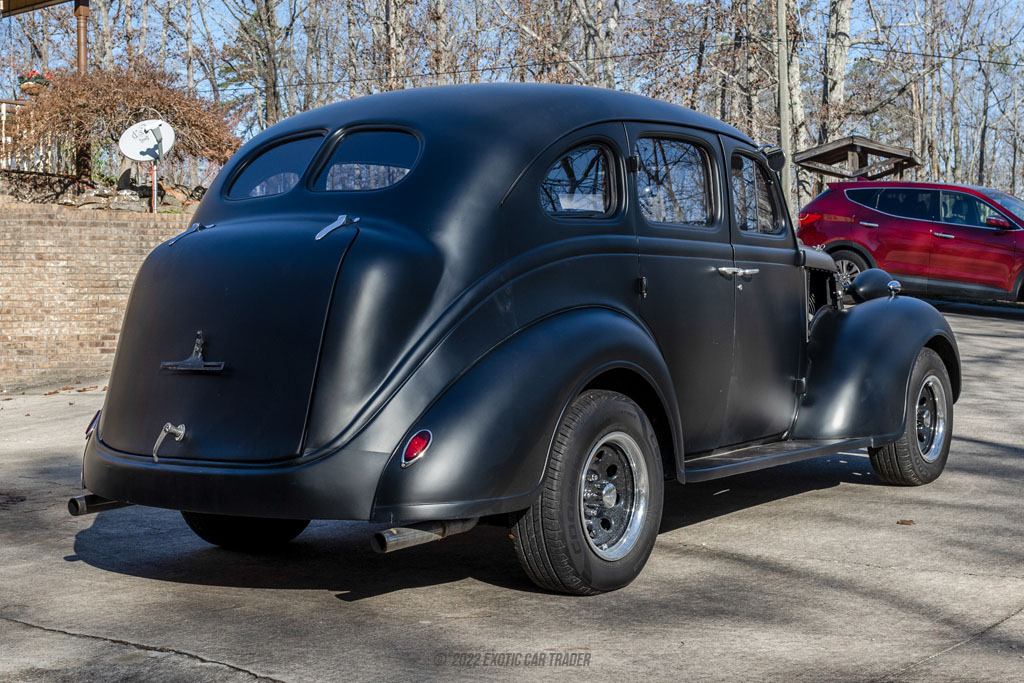
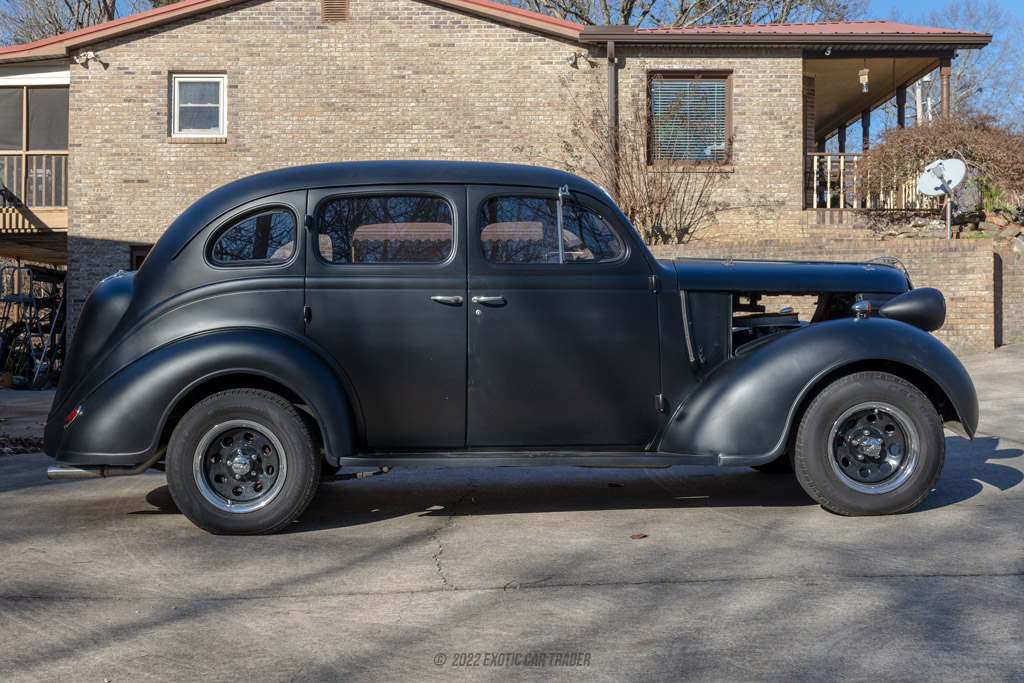
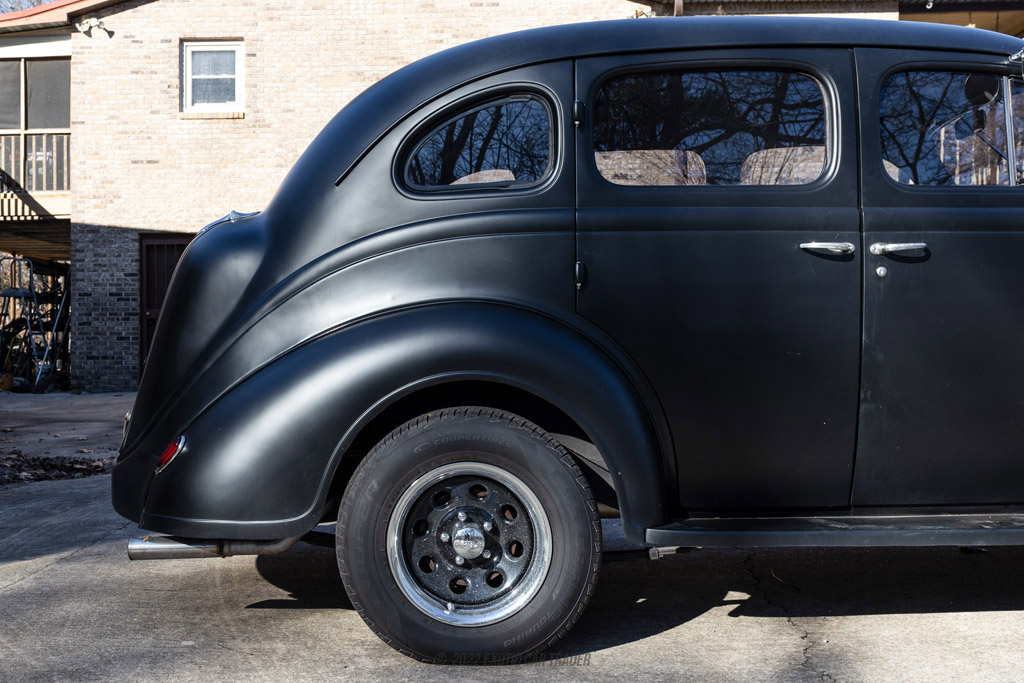
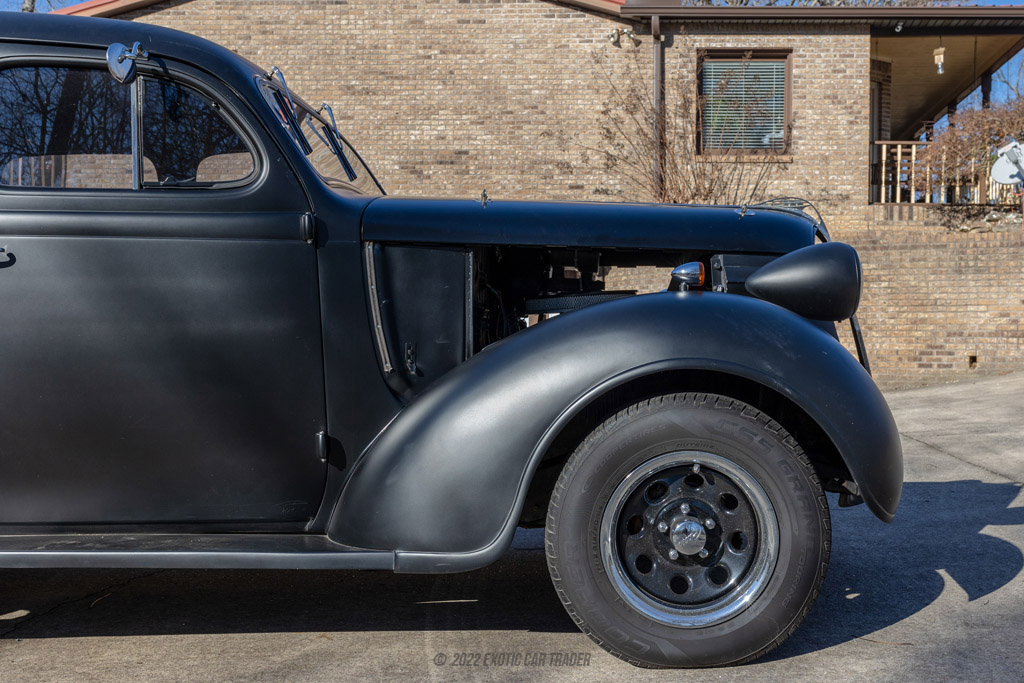
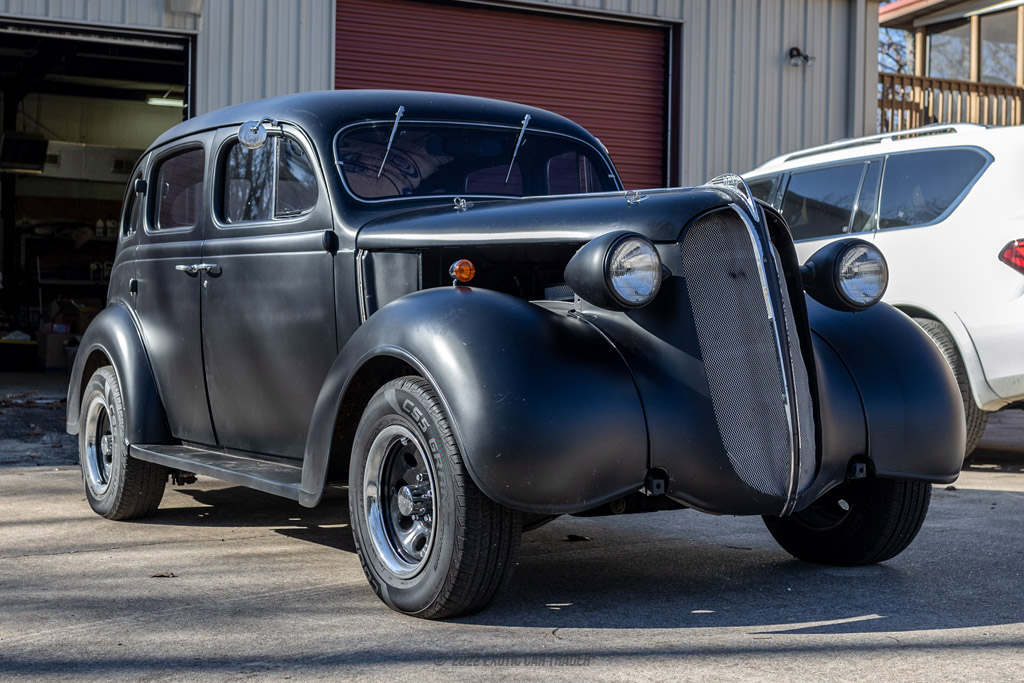
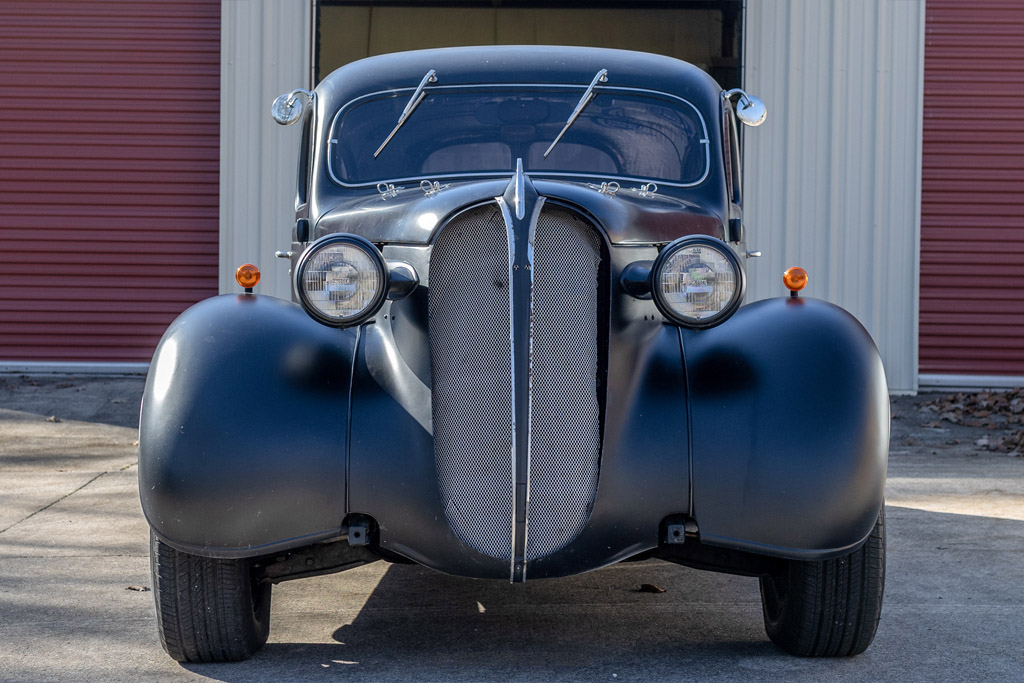
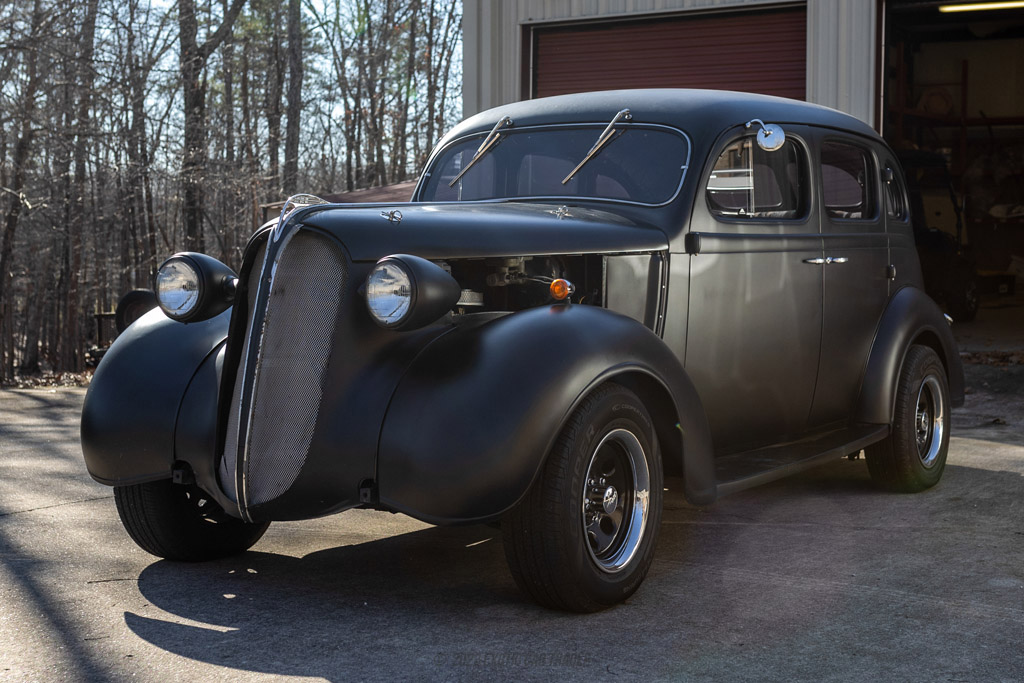
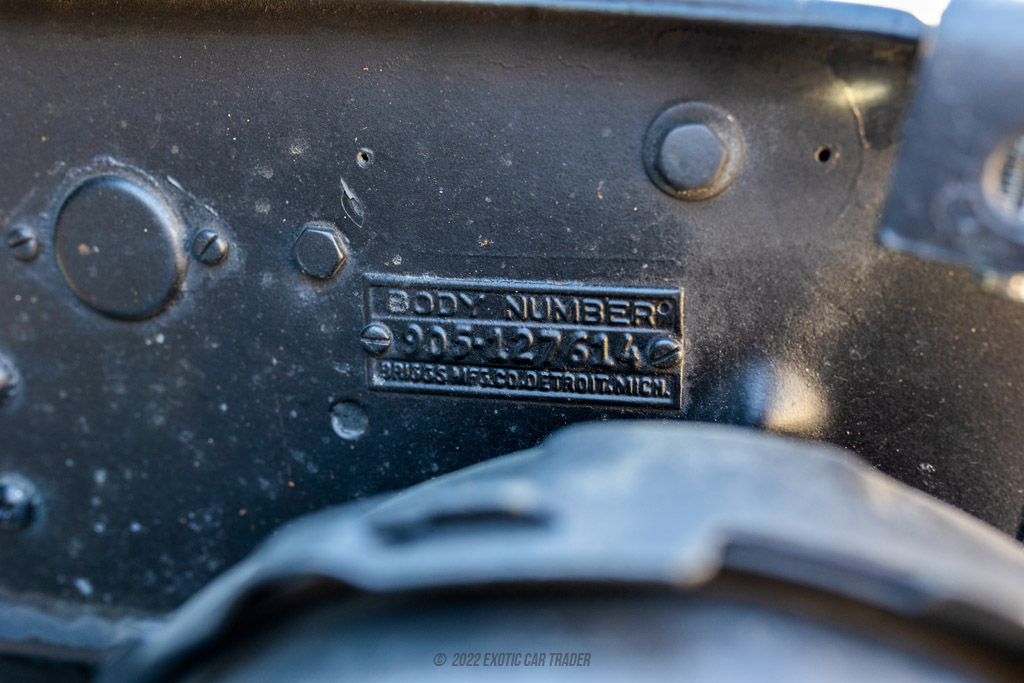
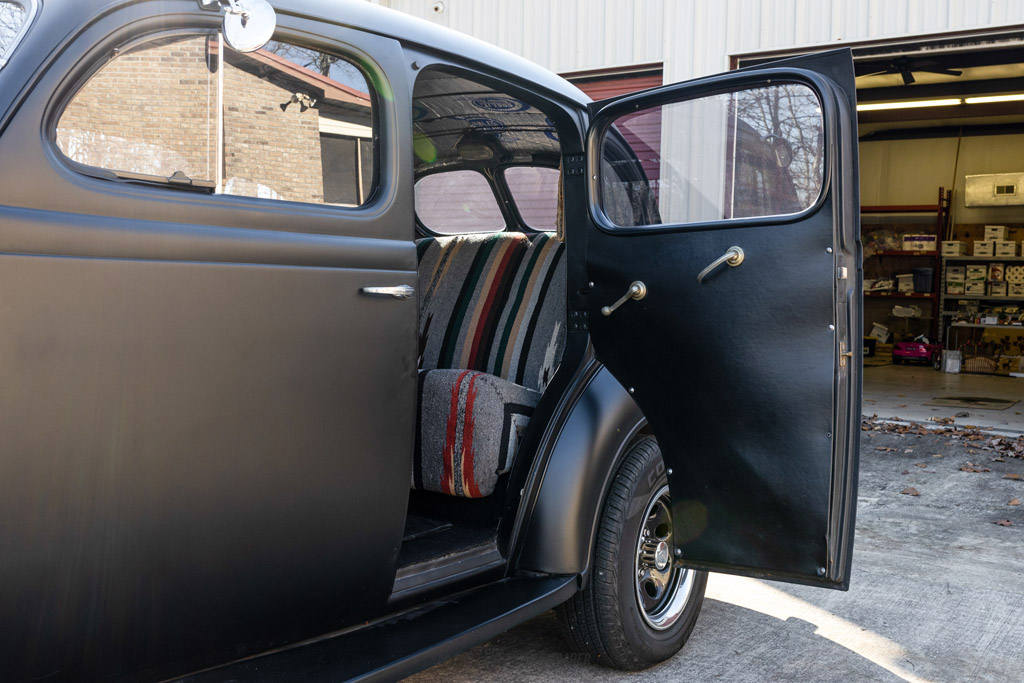
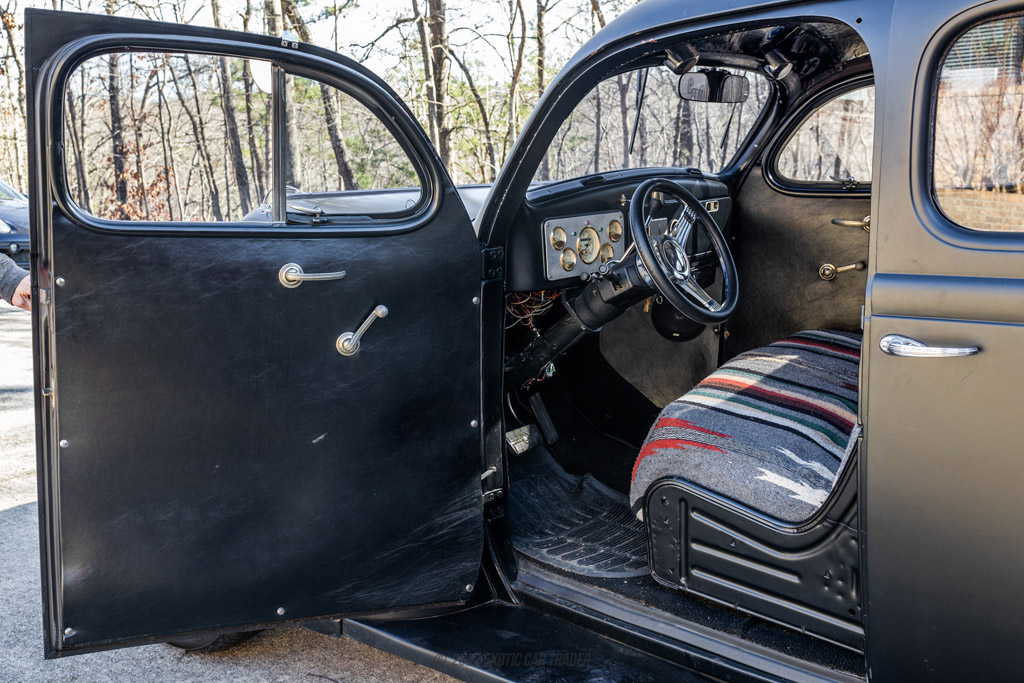
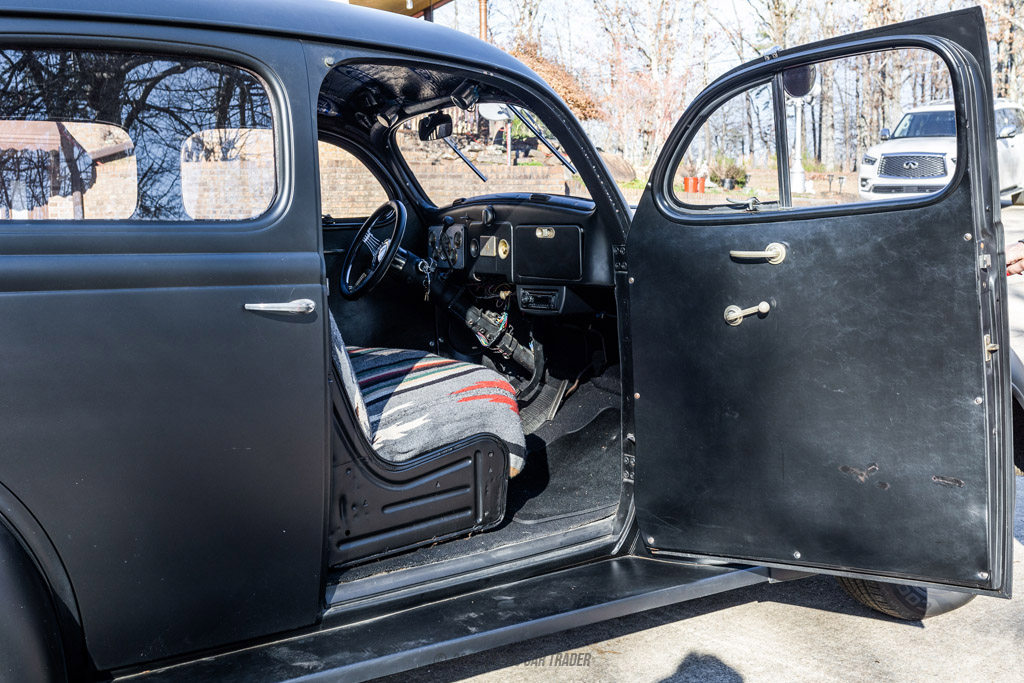
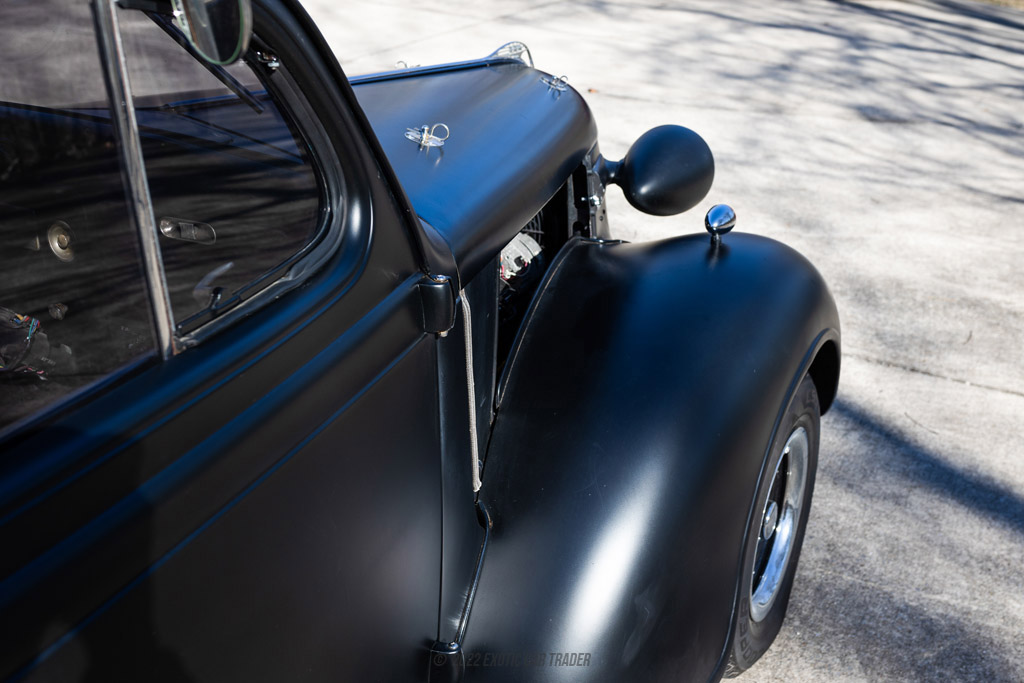
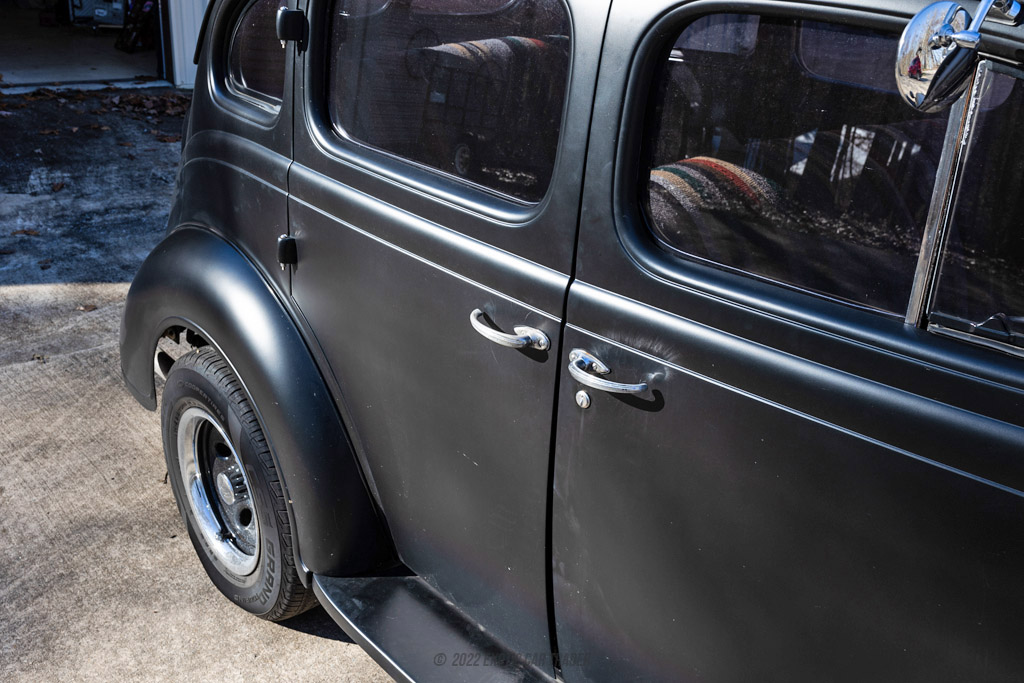
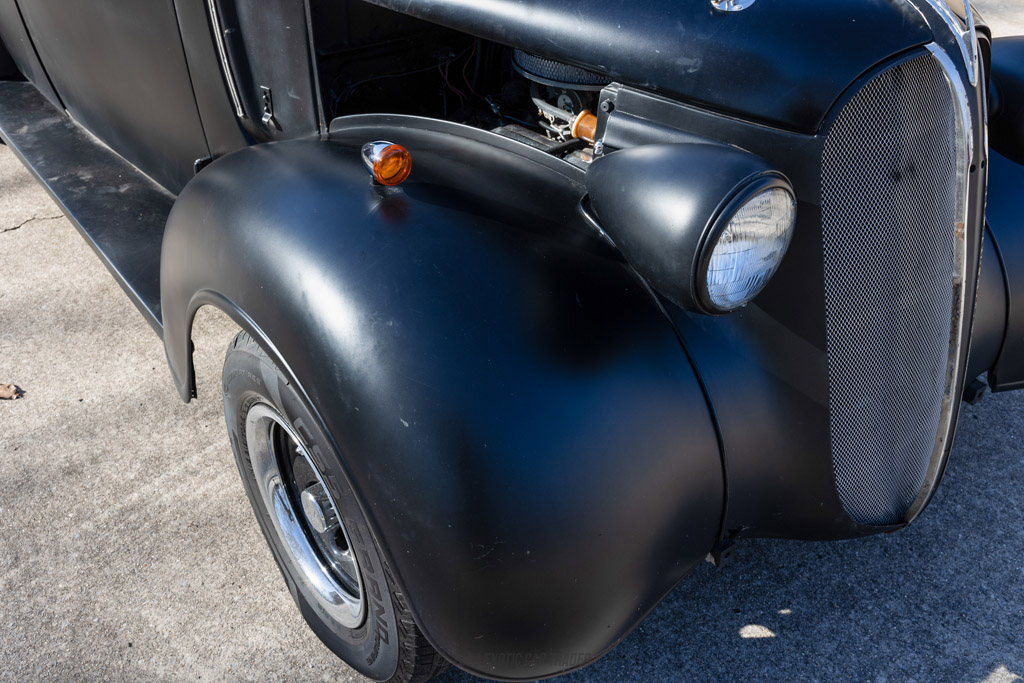
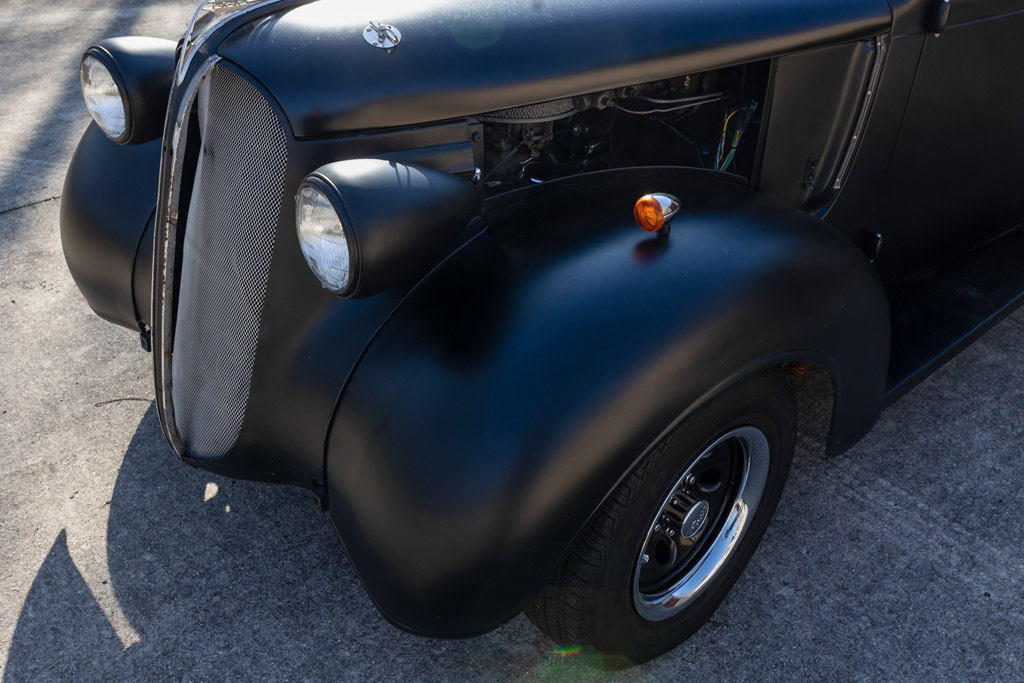
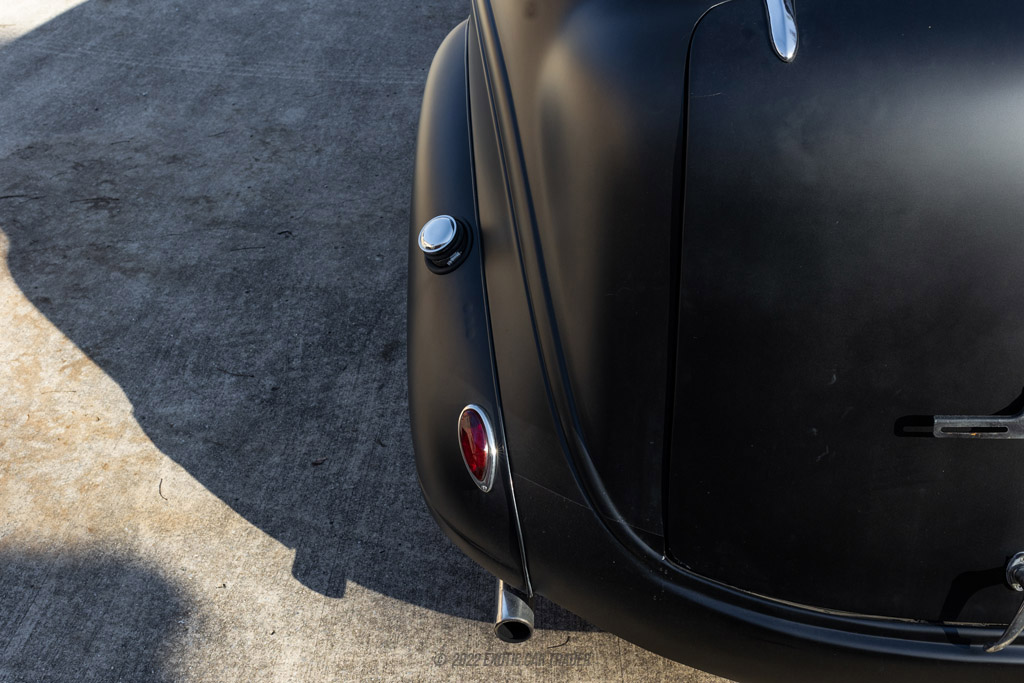
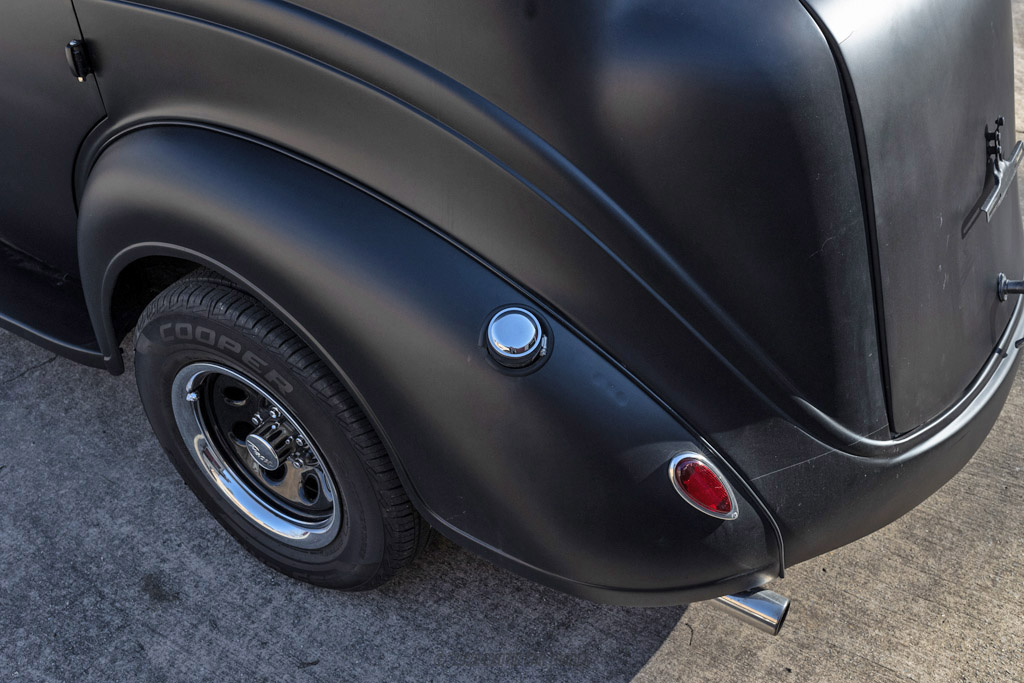
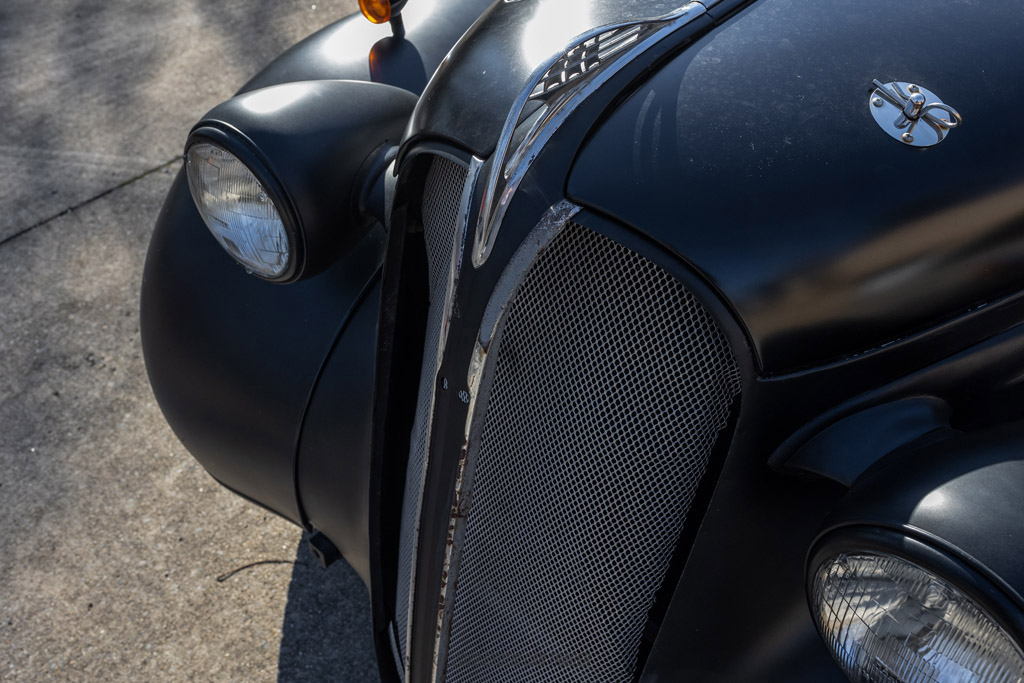
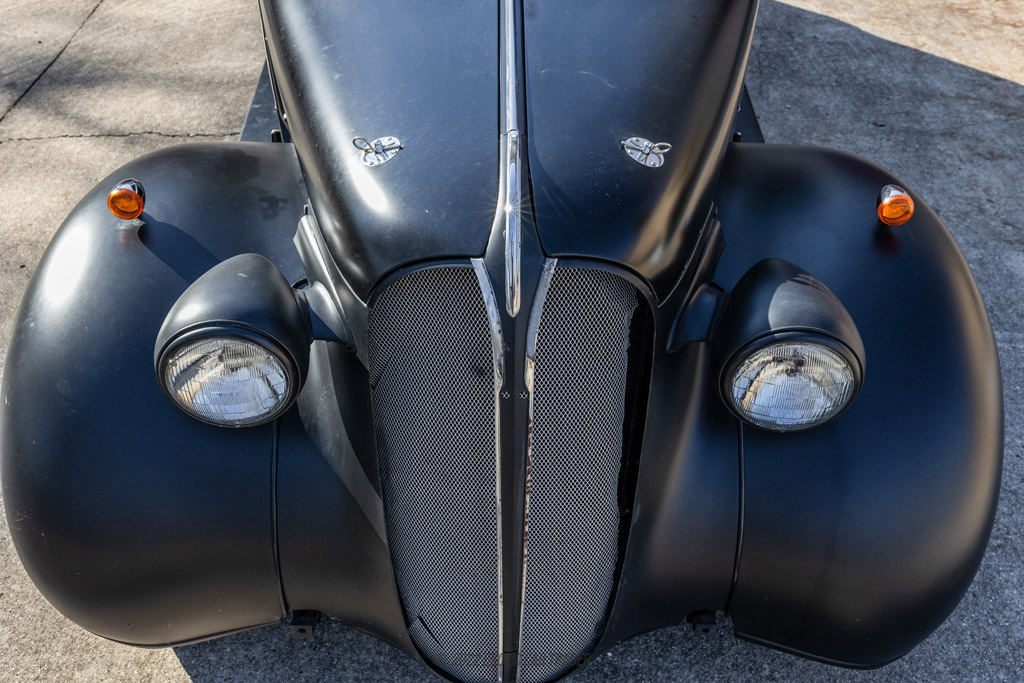
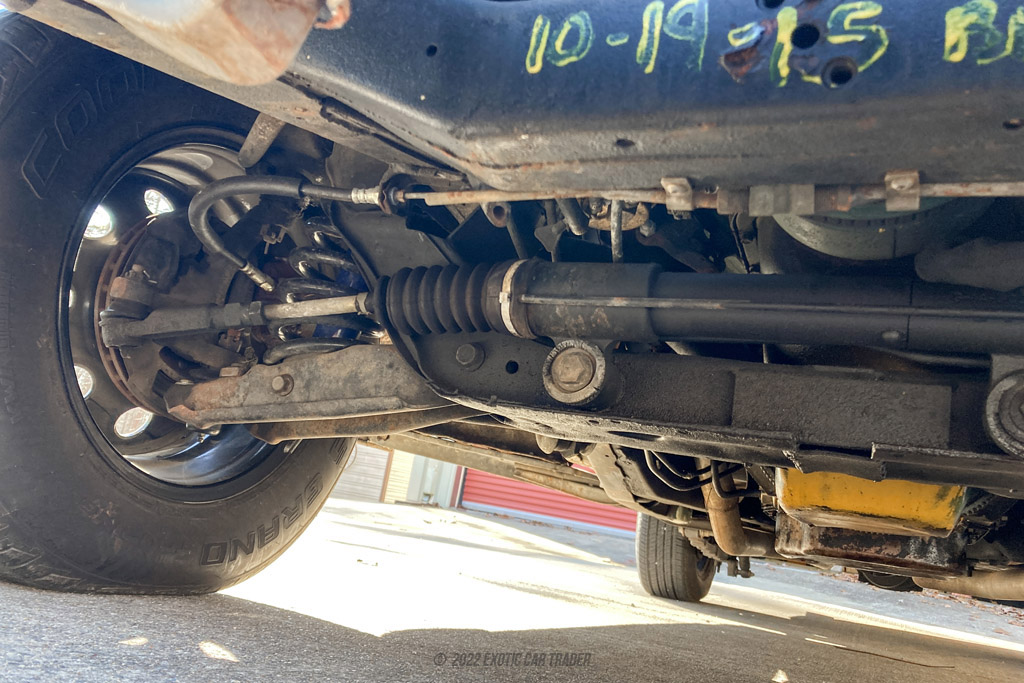
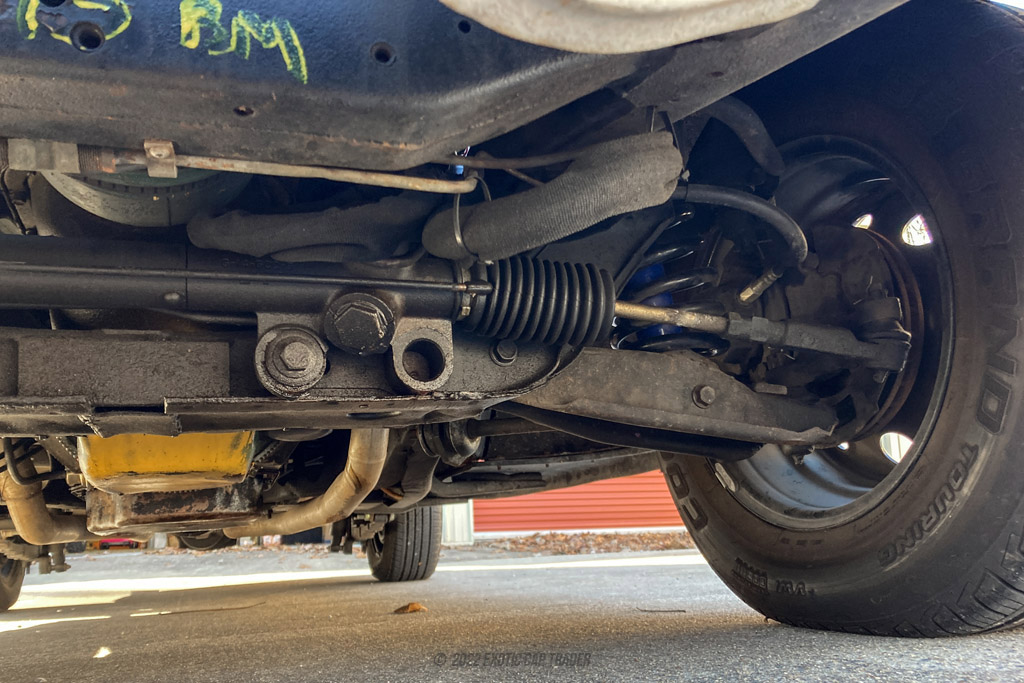
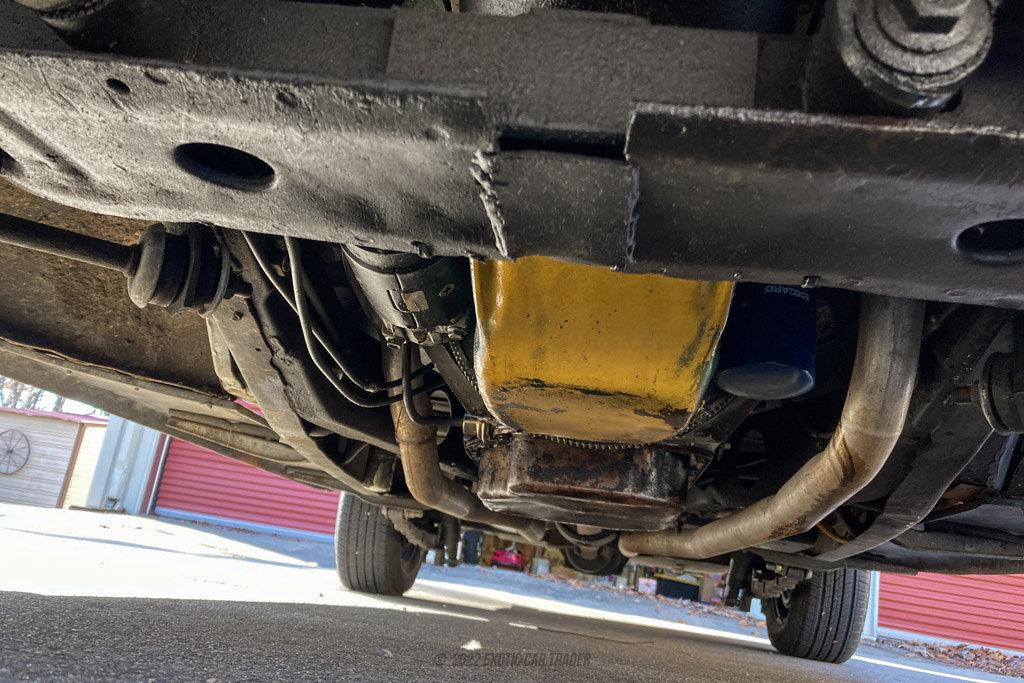
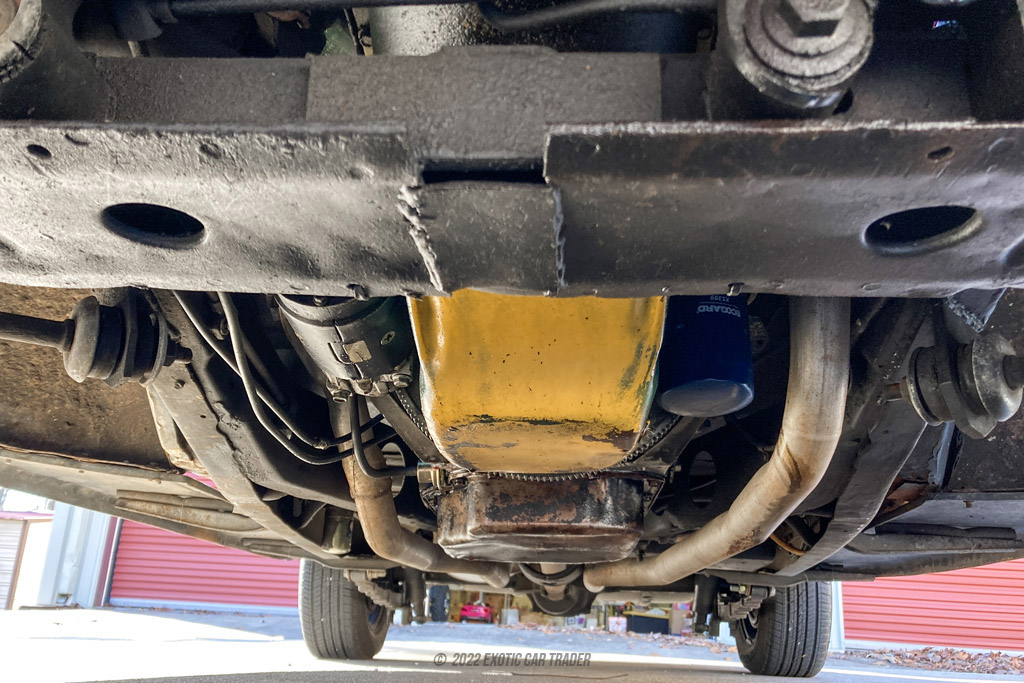
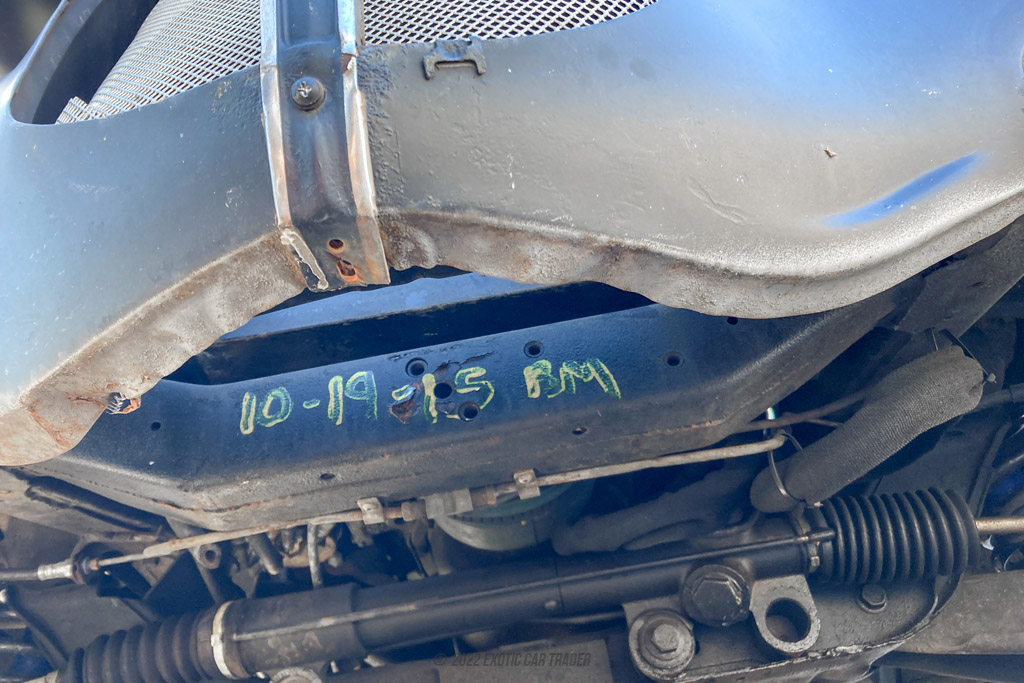
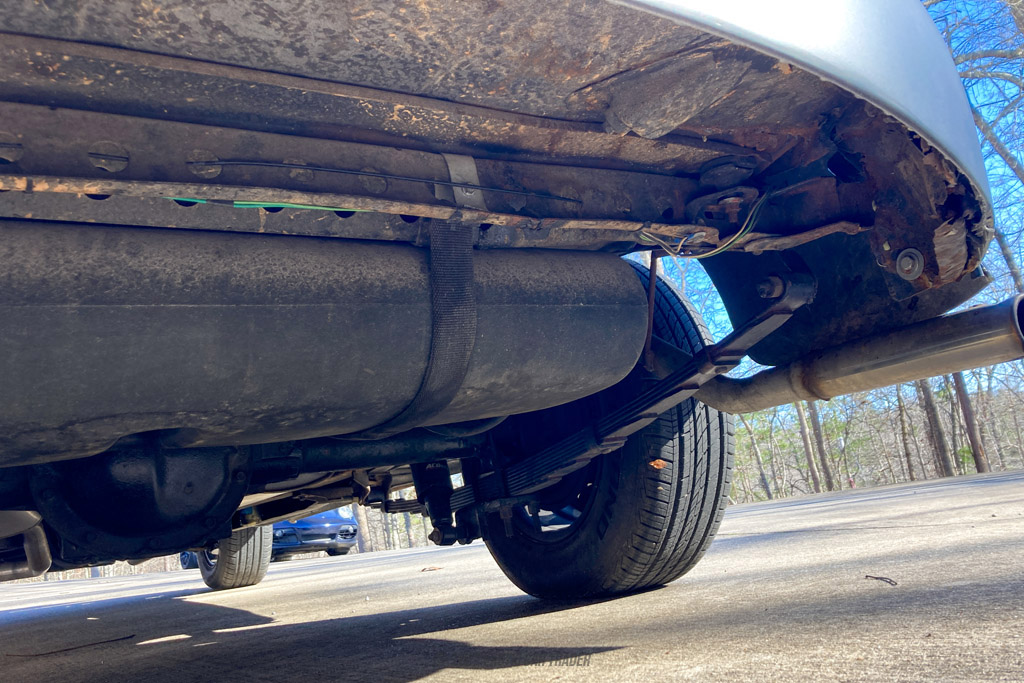
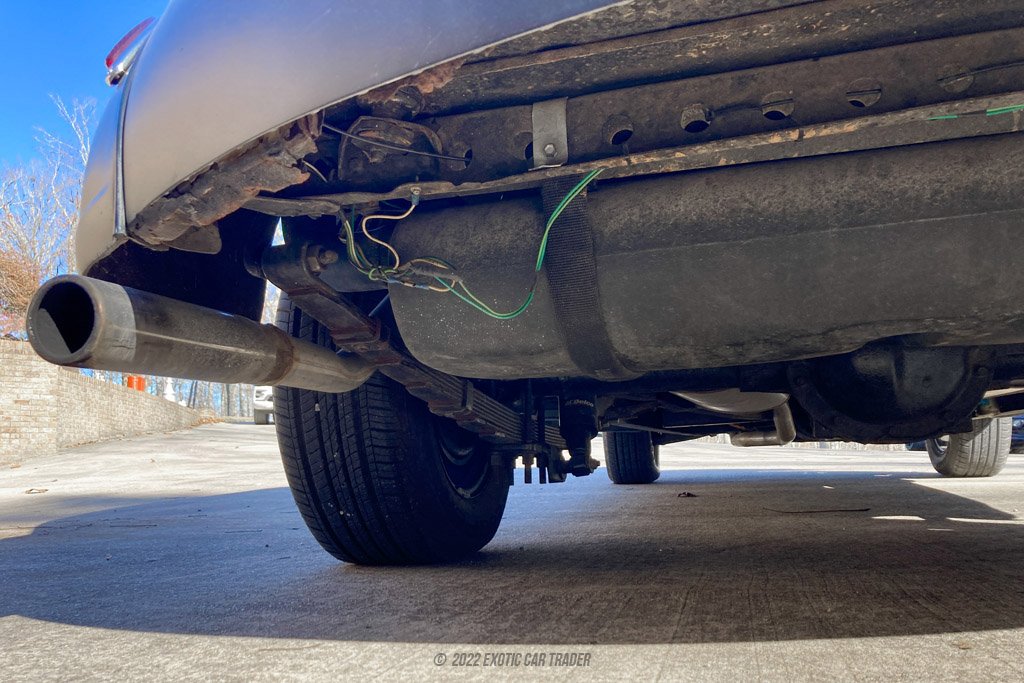
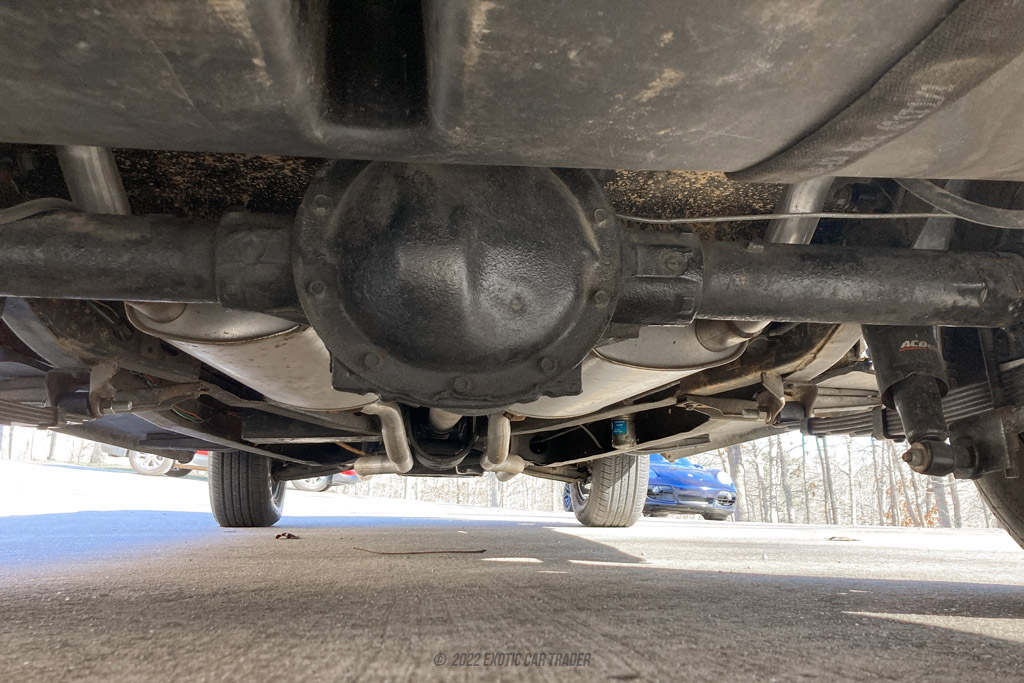
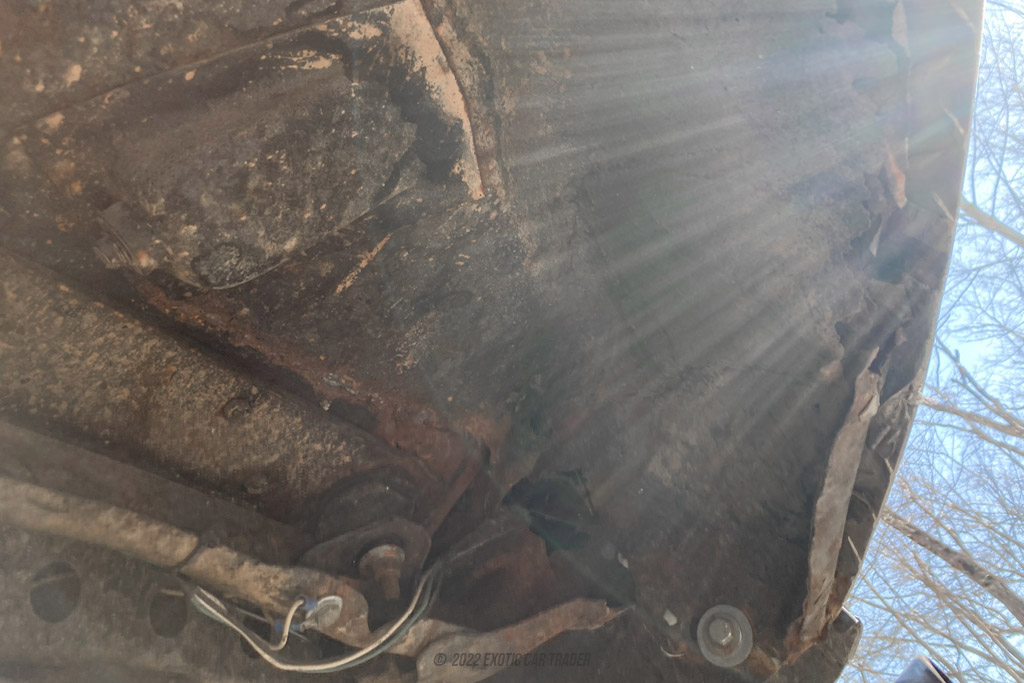
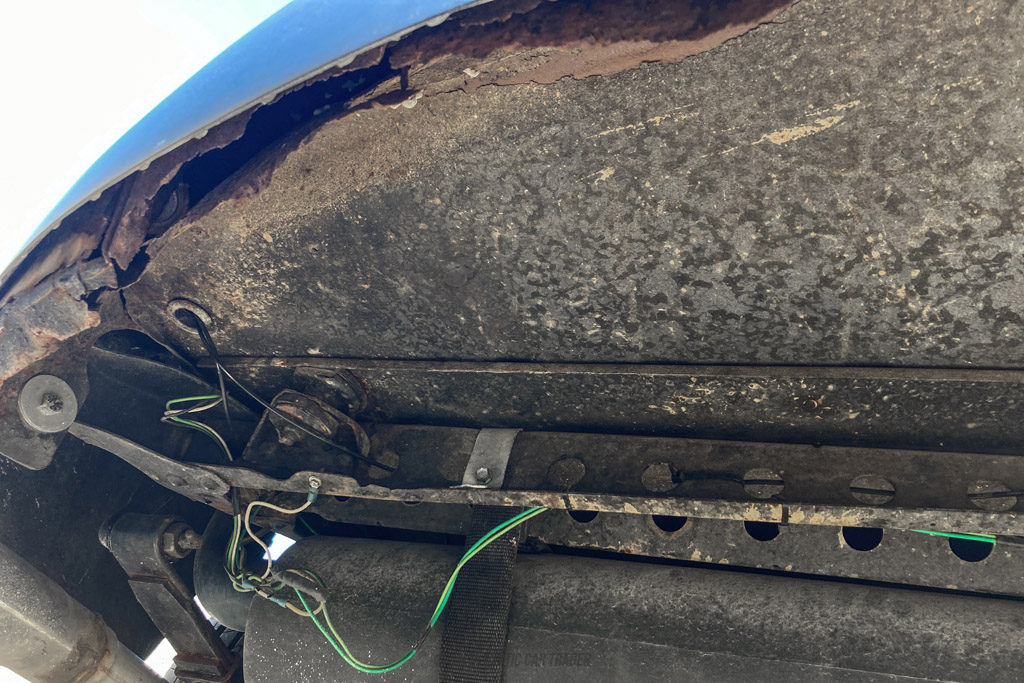
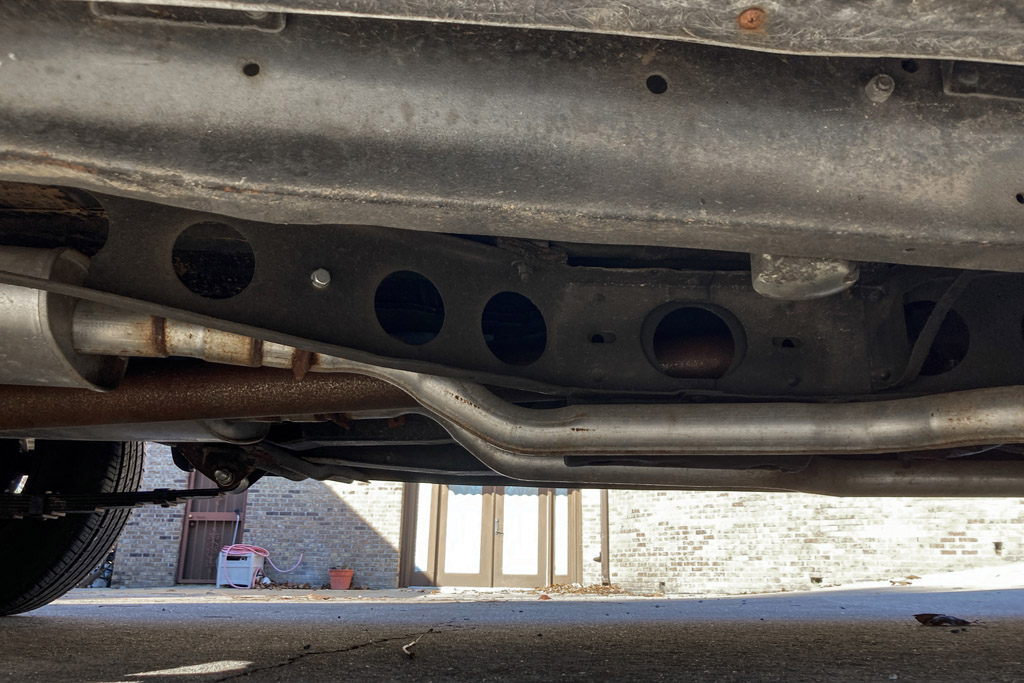
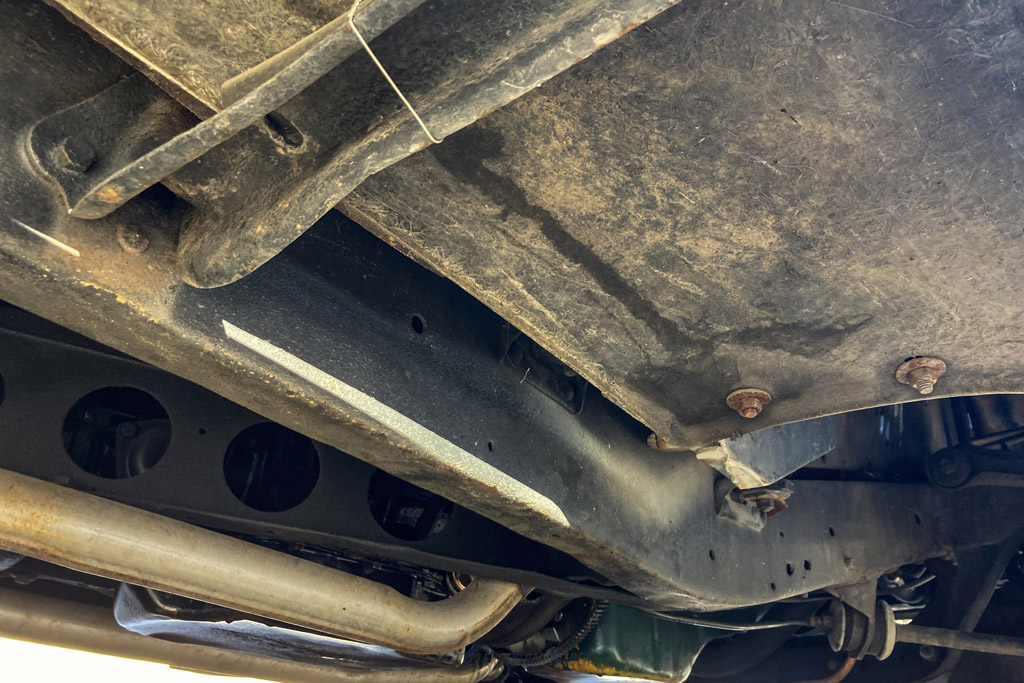
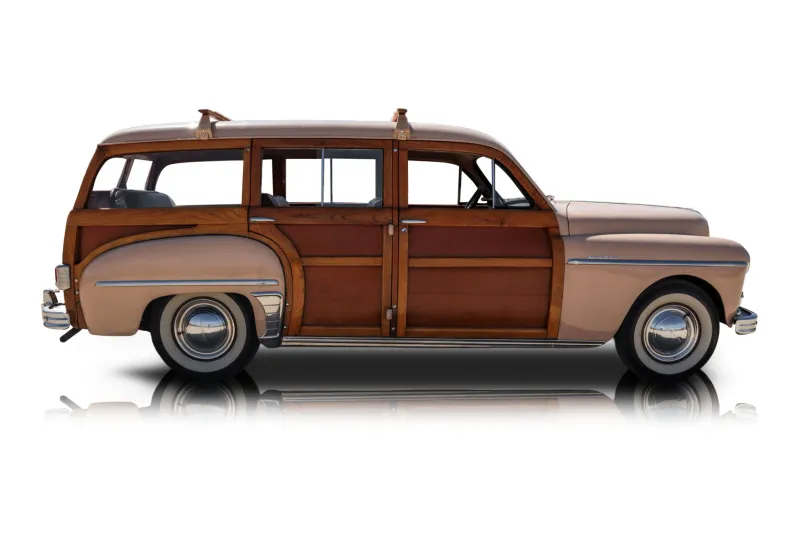
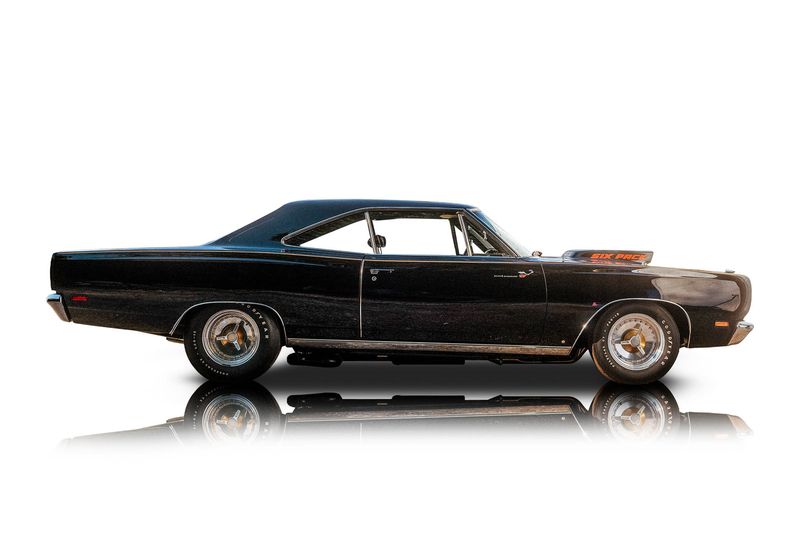
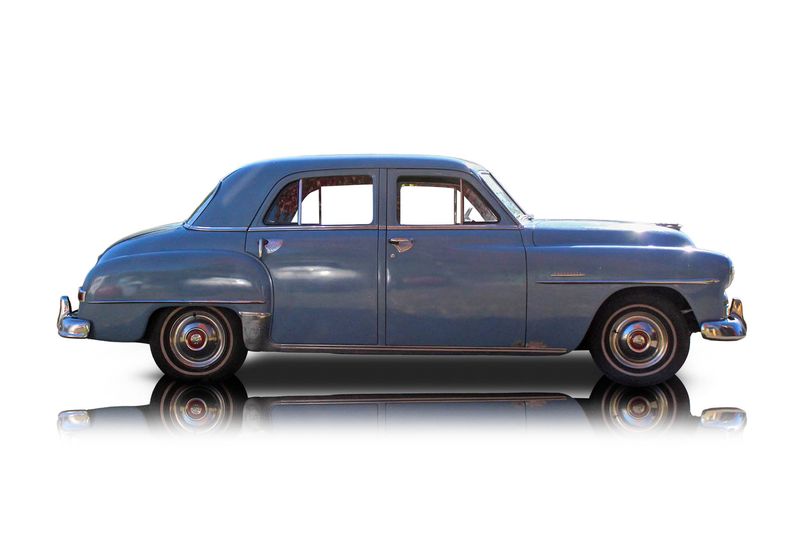


Contrary to popular belief, the Plymouth brand was not named after Plymouth rock. Rather, the name was coined by then-Chrysler executive Joe Frazer after Plymouth binder twine, which was seen to be sturdy, reliable, and low-priced. Plymouth was created to be Chrysler's budget car brand. Fast forward to the current era, and vintage Plymouths in pristine order fetch far more than they ever did brand-new. Of course, they also make great restomod platforms, such as this 1937 Plymouth Deluxe that bears just 6,500 miles after a comprehensive restoration. It's not an all-out restomod, but it retains the classic Thirties design, with some tasteful upgrades here and there.
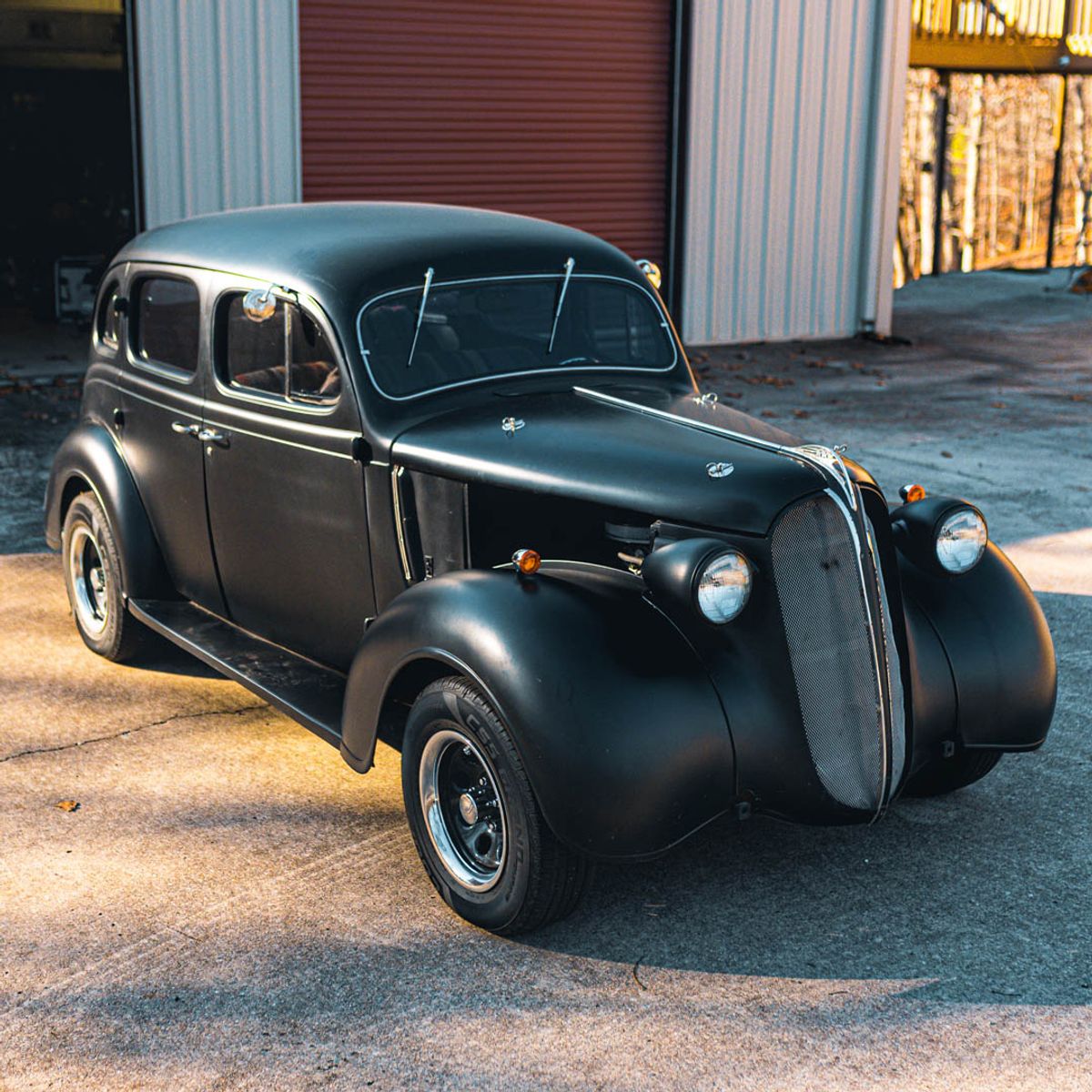
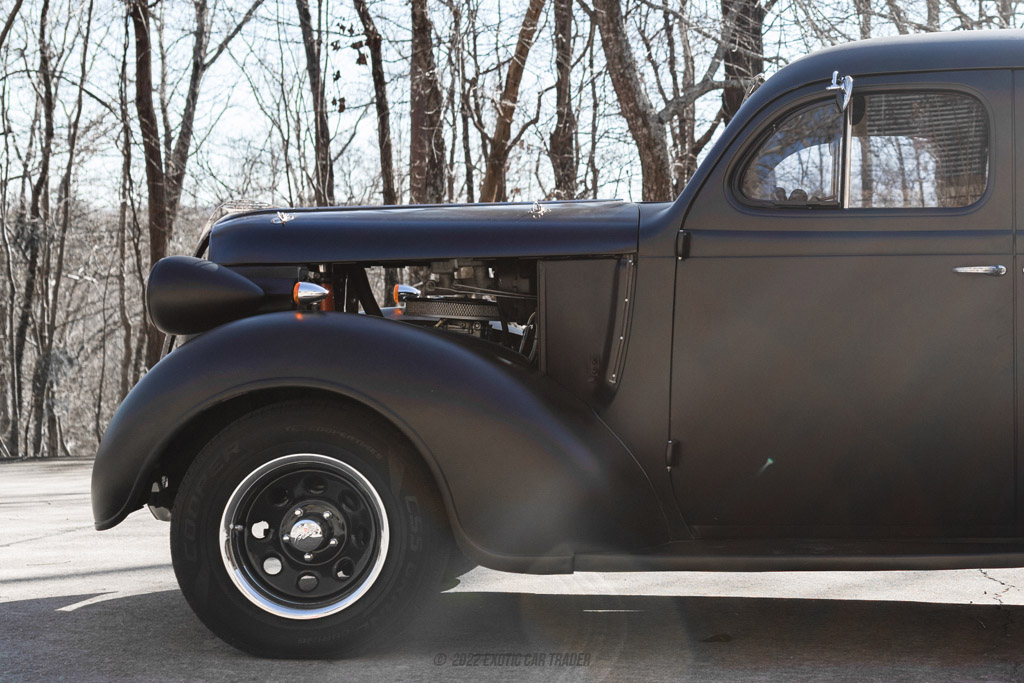
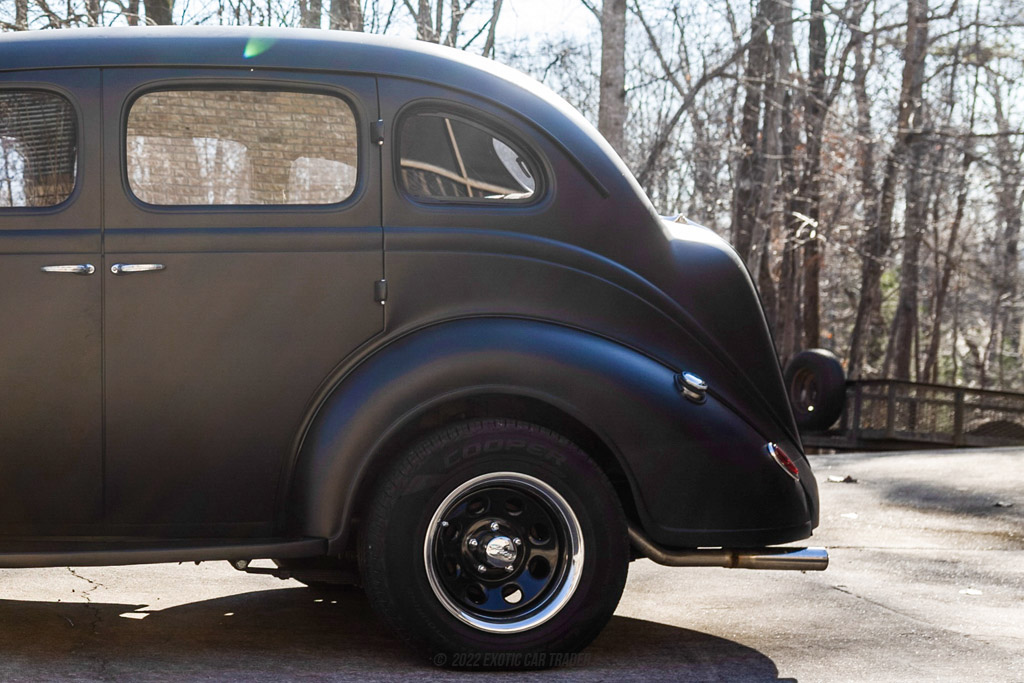
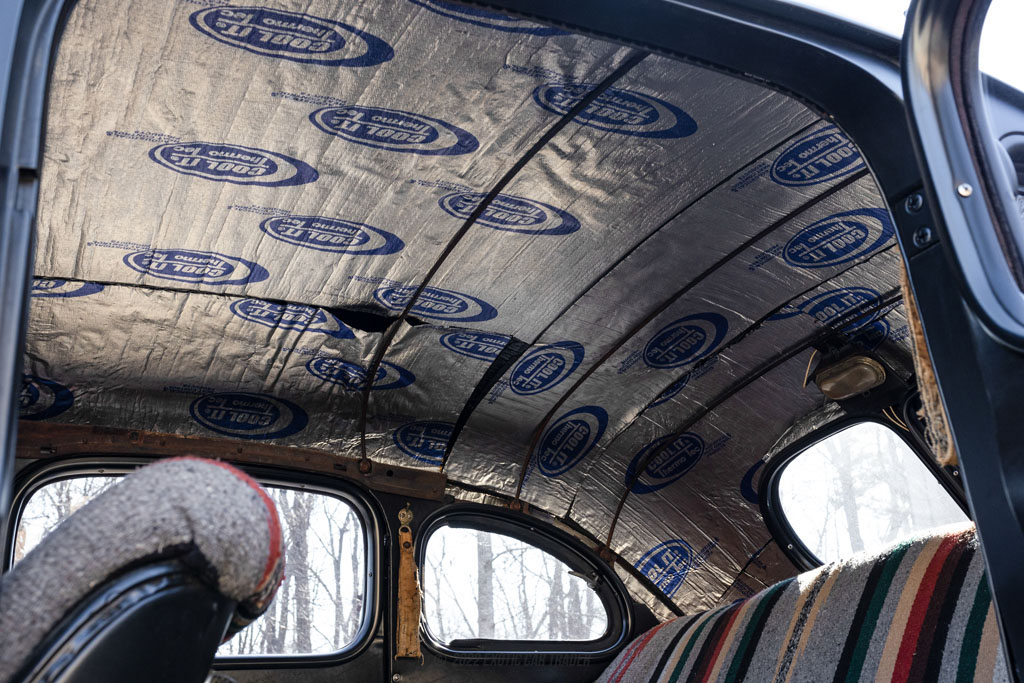
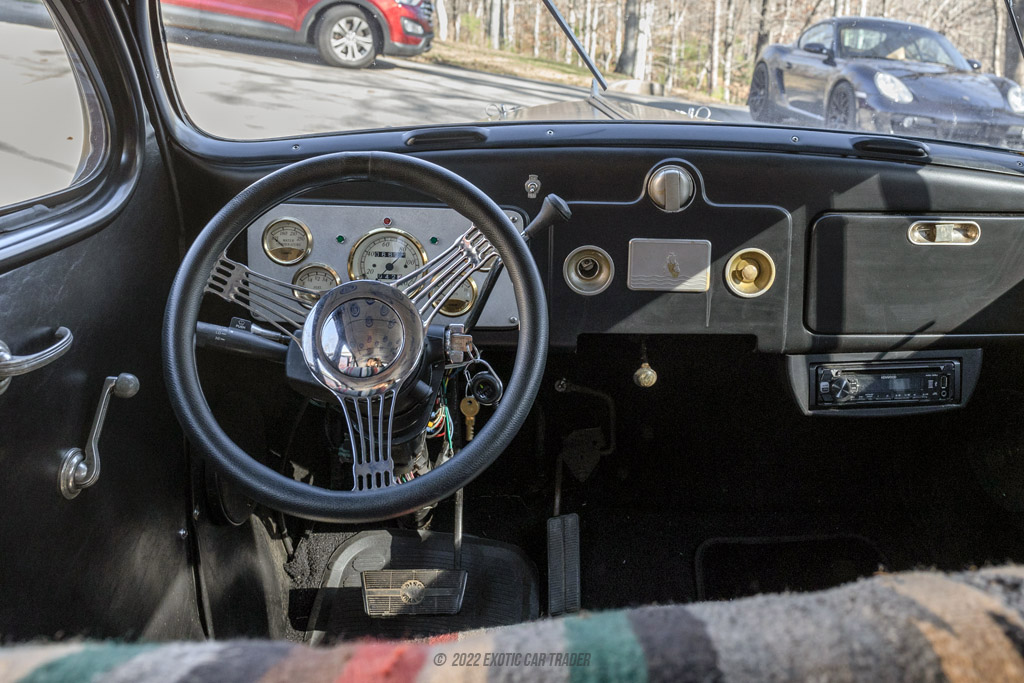
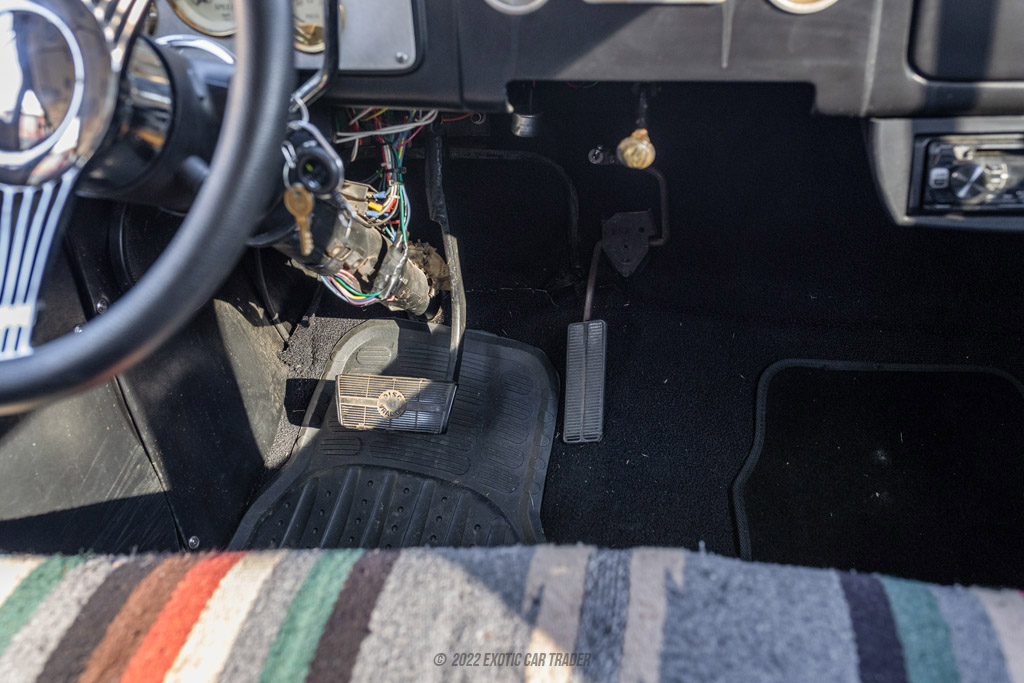
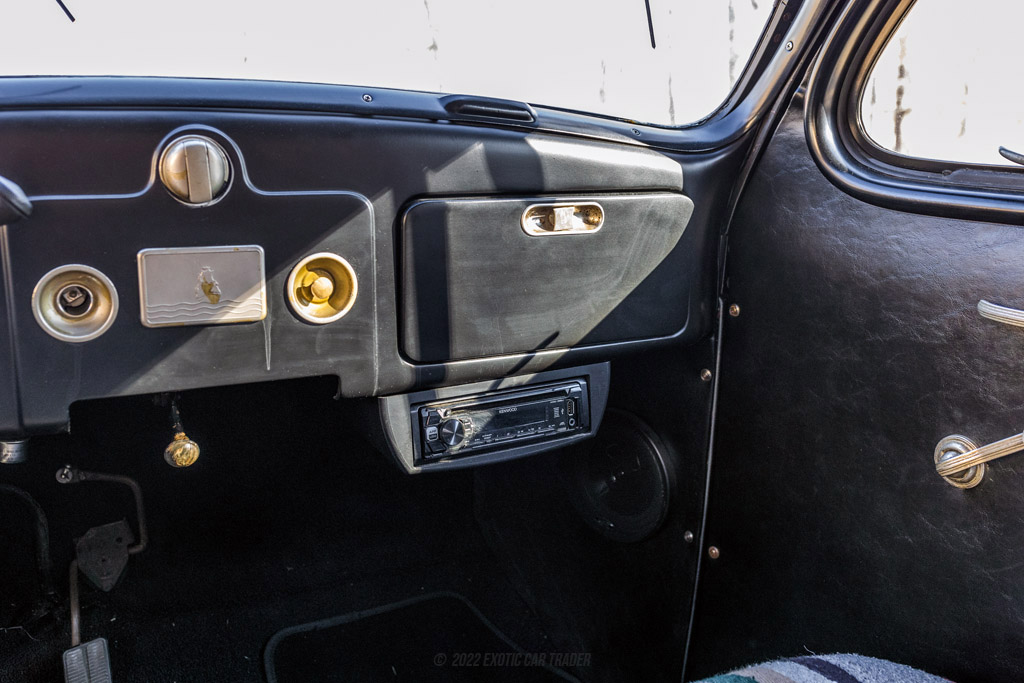
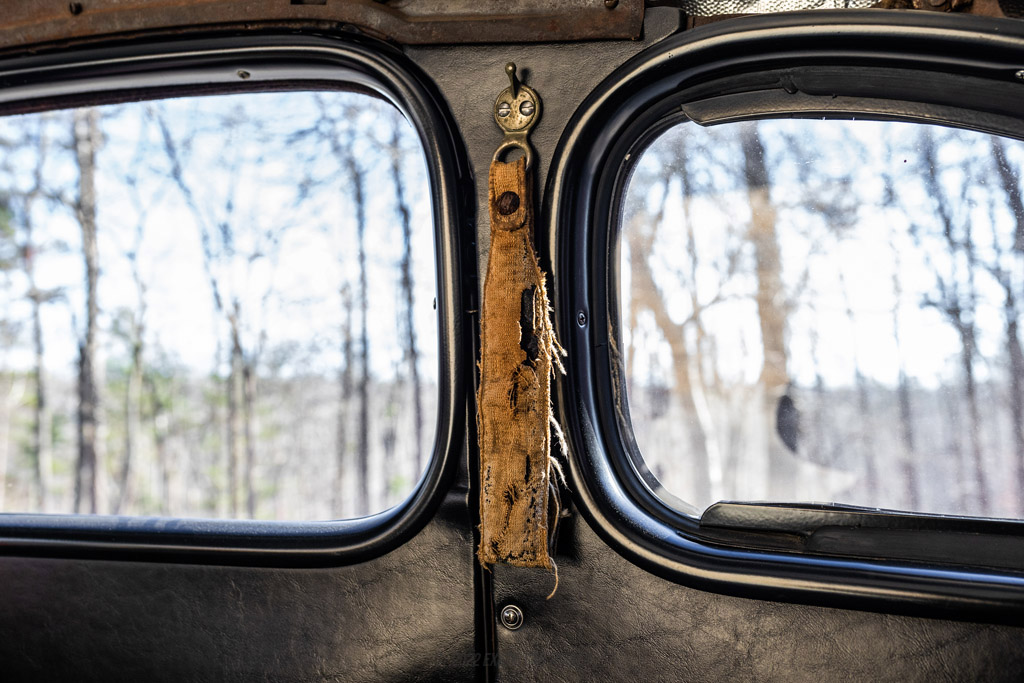
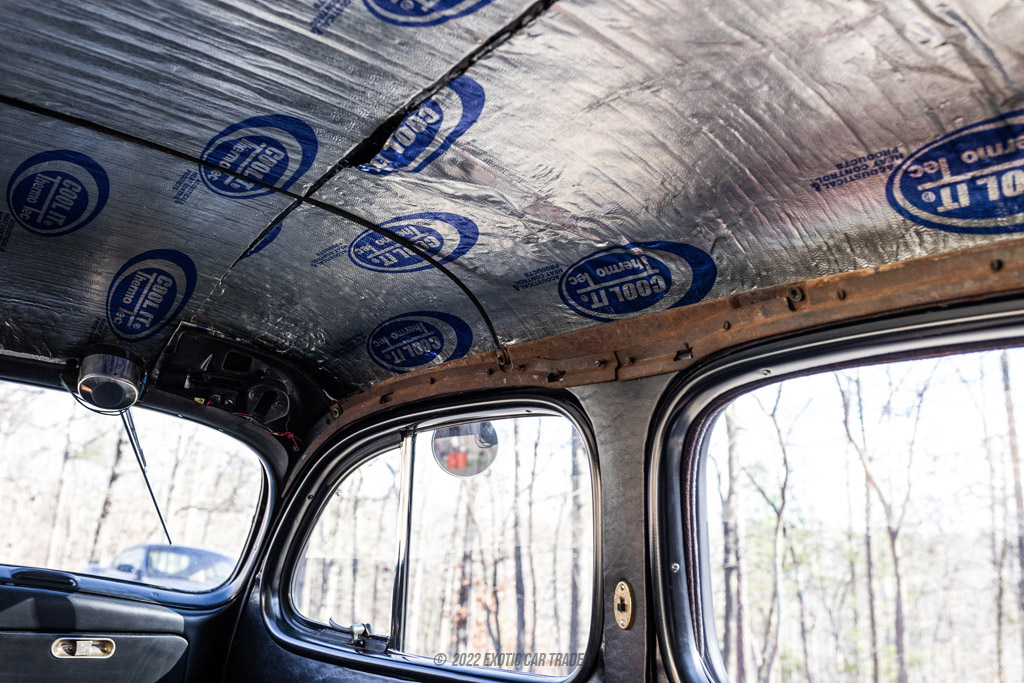
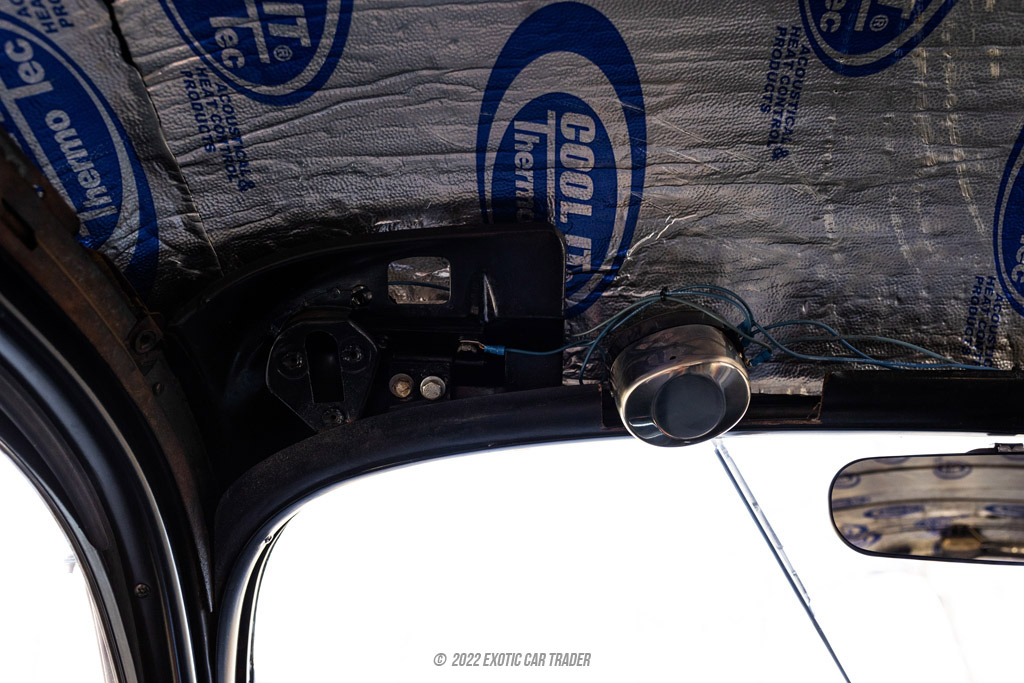
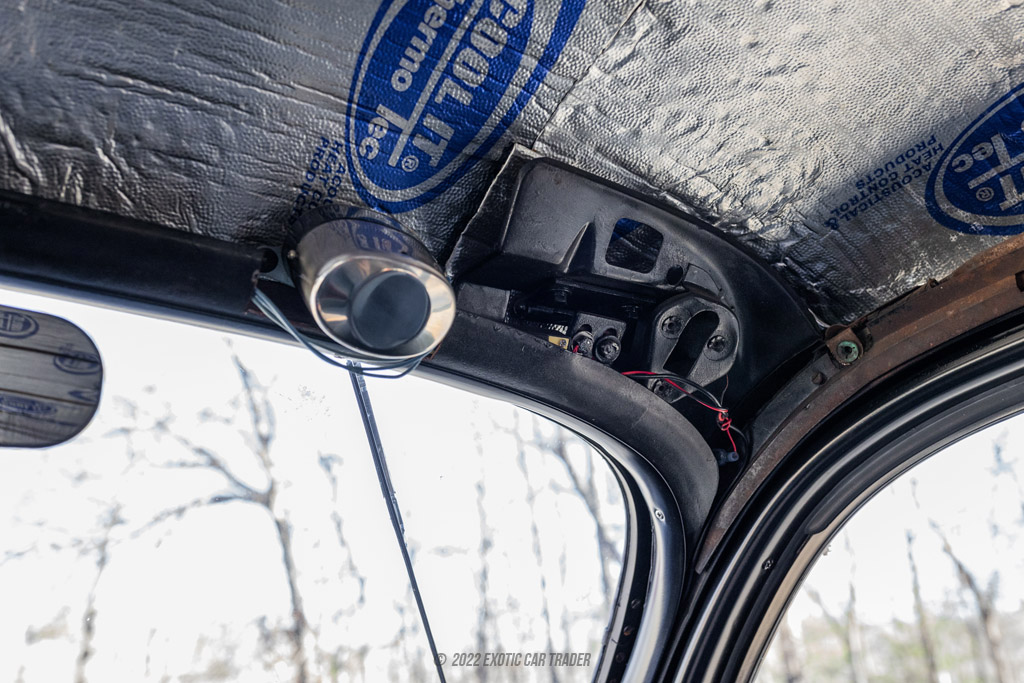
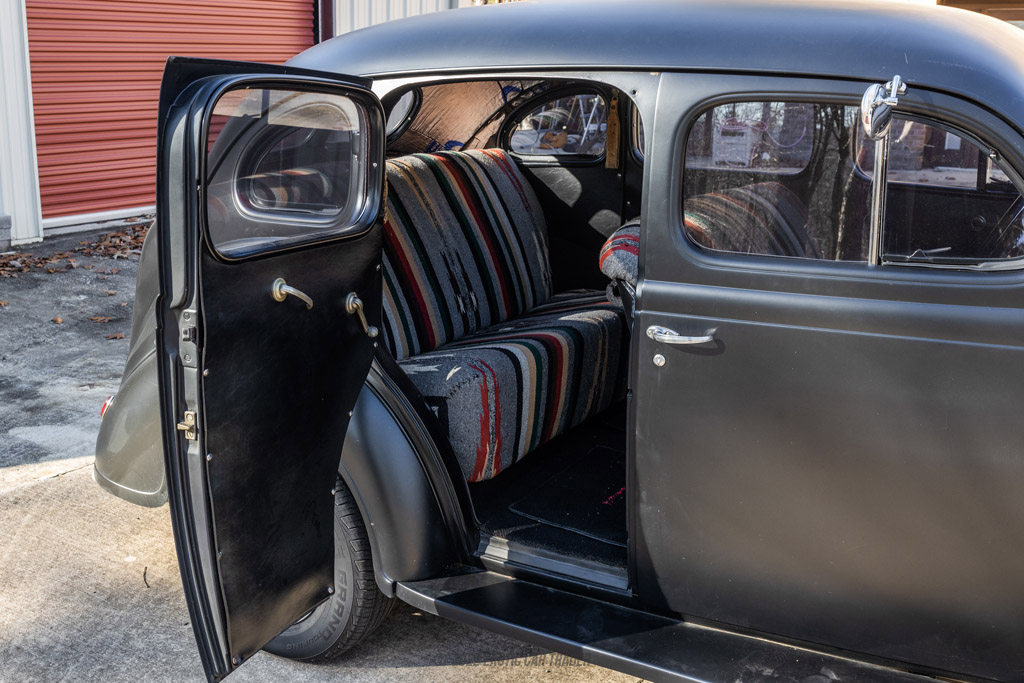
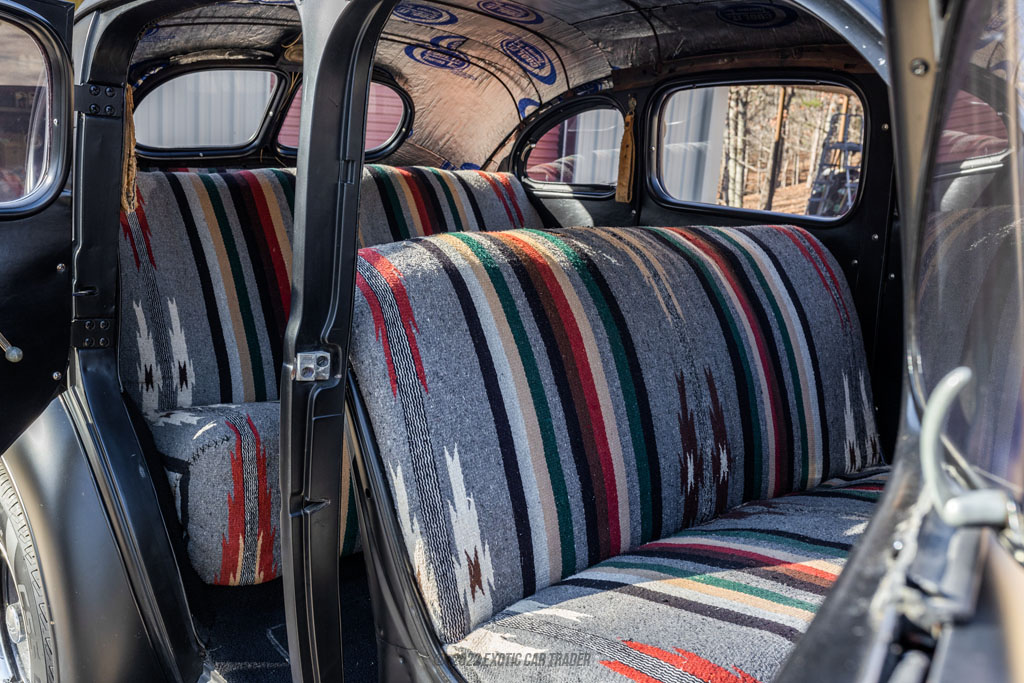
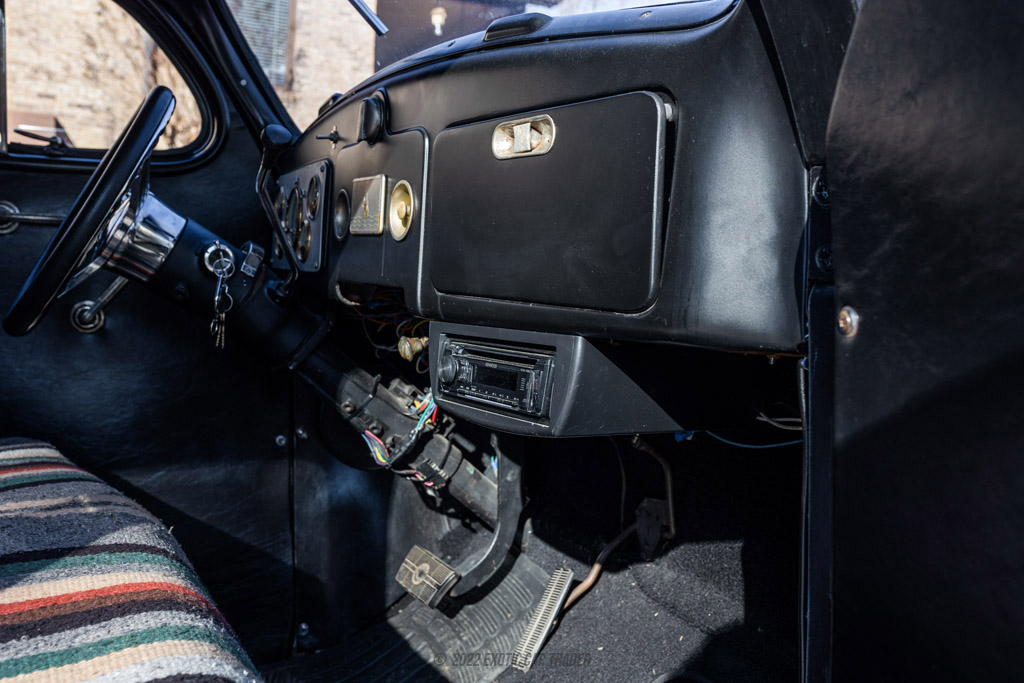
Clothed in a matte black paint job, this 1937 Plymouth Deluxe showcases the typical Thirties profile that's been popularized by the gangster films of yesteryear. Looking closer, you'd notice the rear-hinged coach doors for back seat access and the podded headlamps. The car rolls on a set of black 15-inch rims shod with modern Cooper tires, reportedly new as per the current owner. The interior is similarly tasteful, retaining much of the period cues of this 1937 Plymouth Deluxe, melded with modern conveniences where required. The current owner reports that the seats have been upholstered and covered with Indian blanket covers. The vintage dash remains, with new retro-styled gauges installed ahead of the driver. Ahead of the passenger and beneath the glovebox lies a modern Kenwood head unit with radio, CD, AUX, and USB connectivity options. Gaze upwards, and you can see that the roof has been lined with Cool It Thermo Tec to help keep the interior cool when the sun is out.
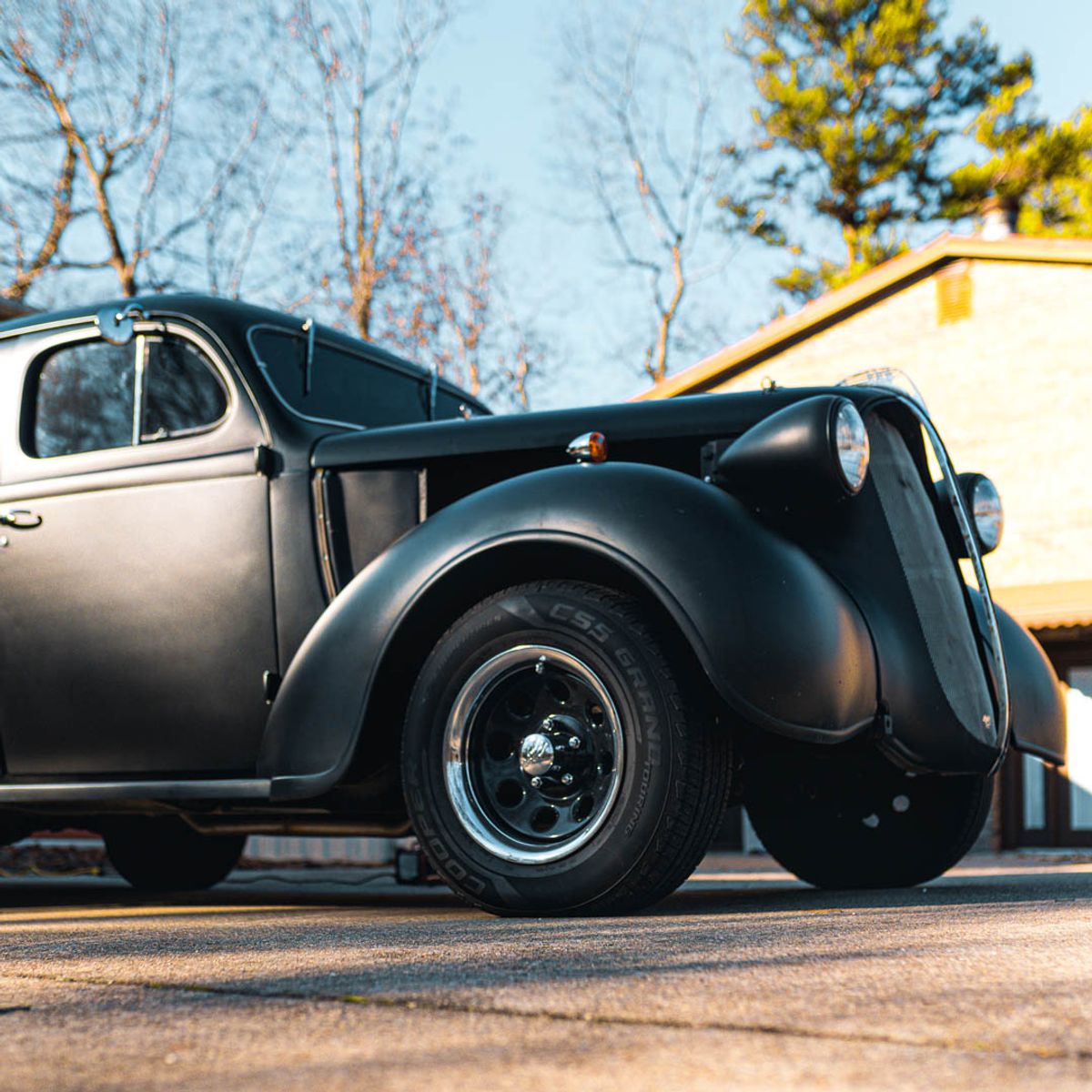
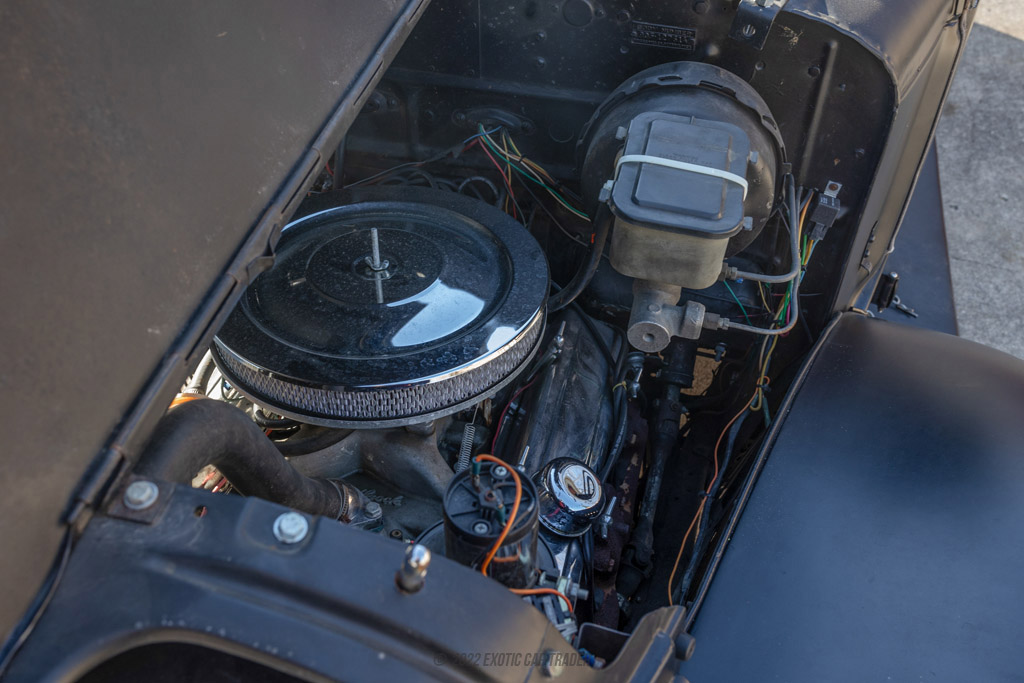
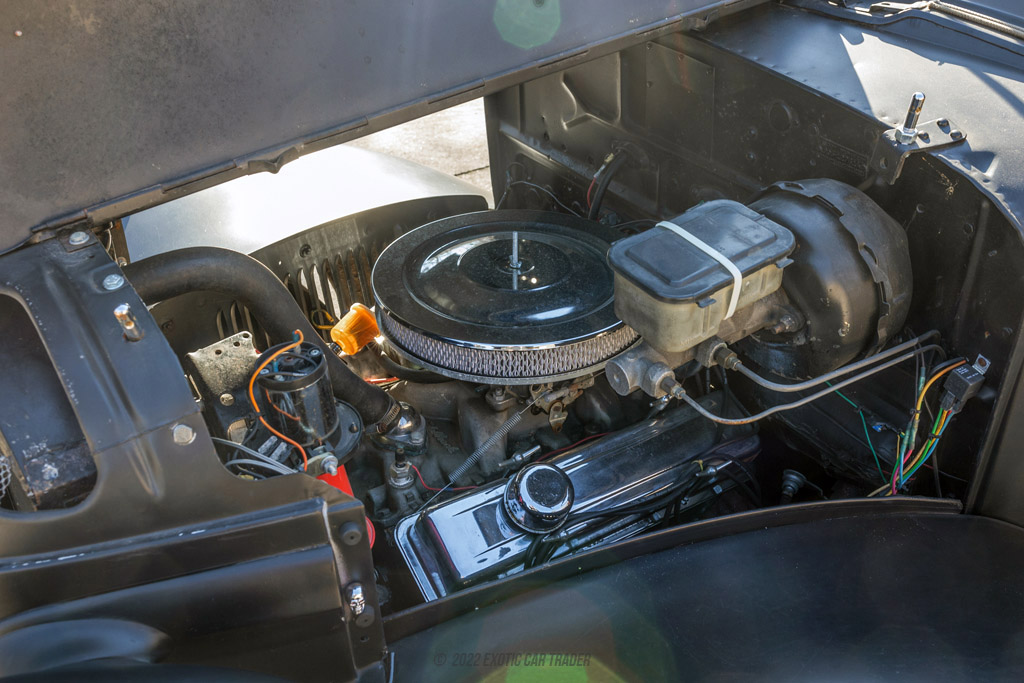
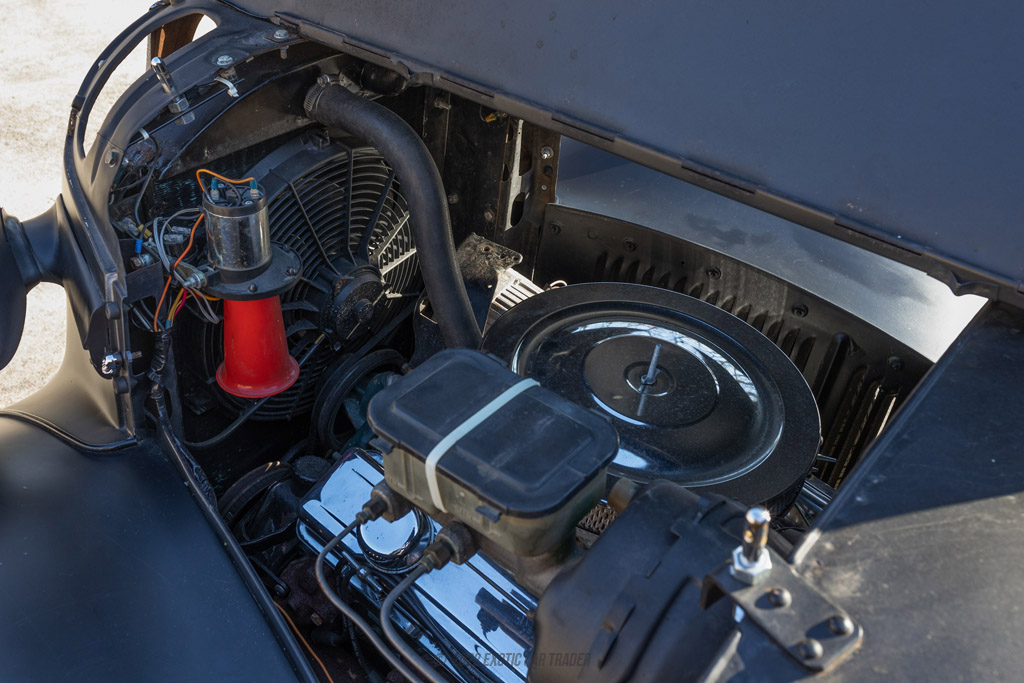
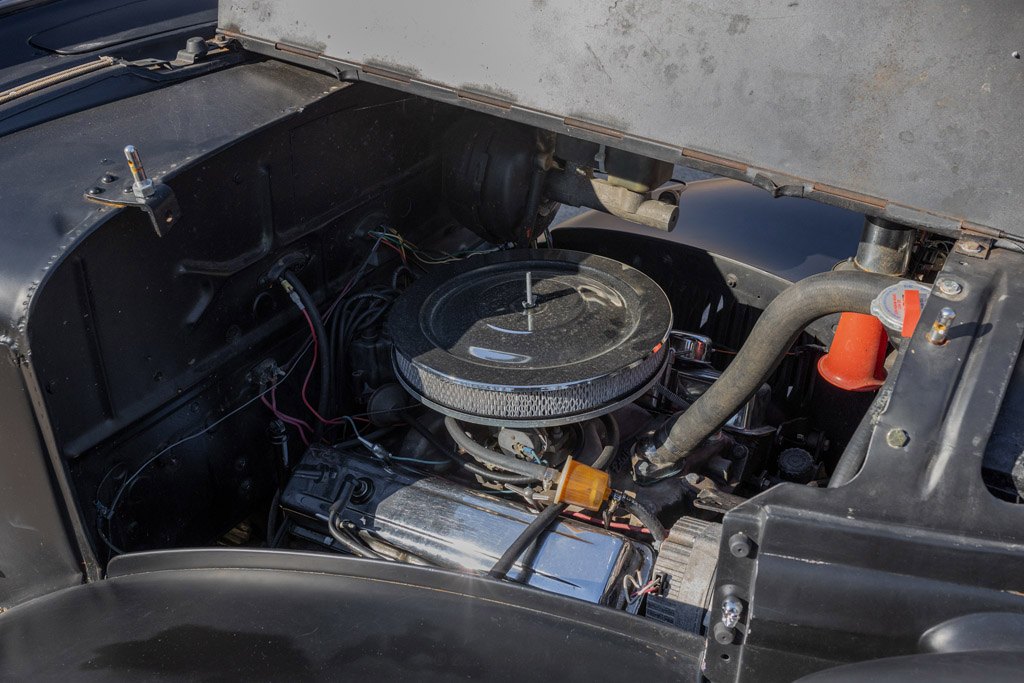
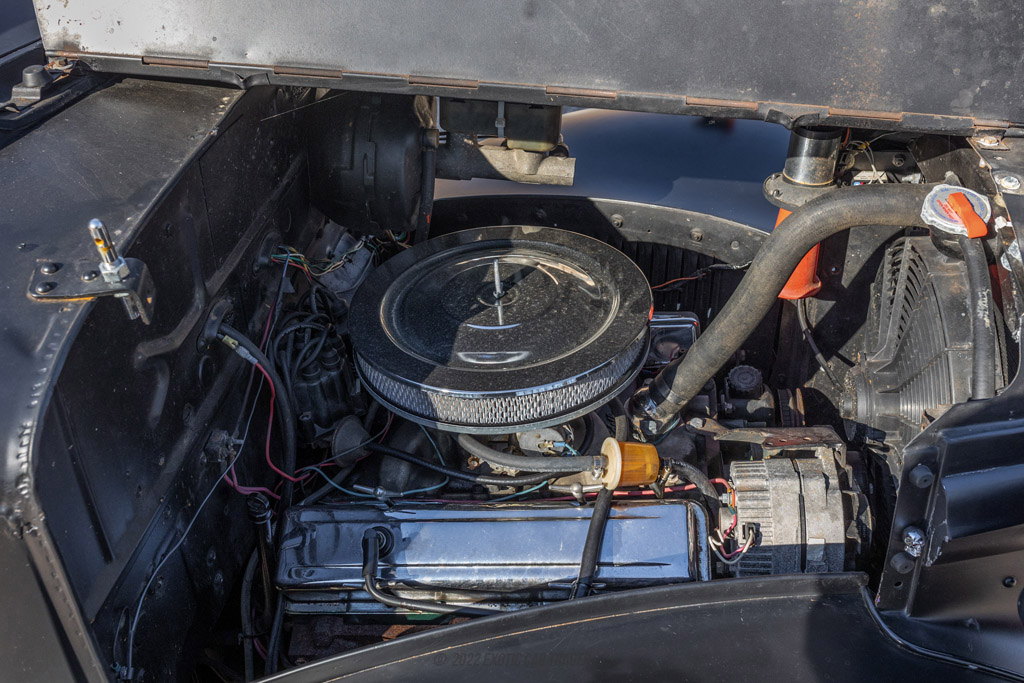
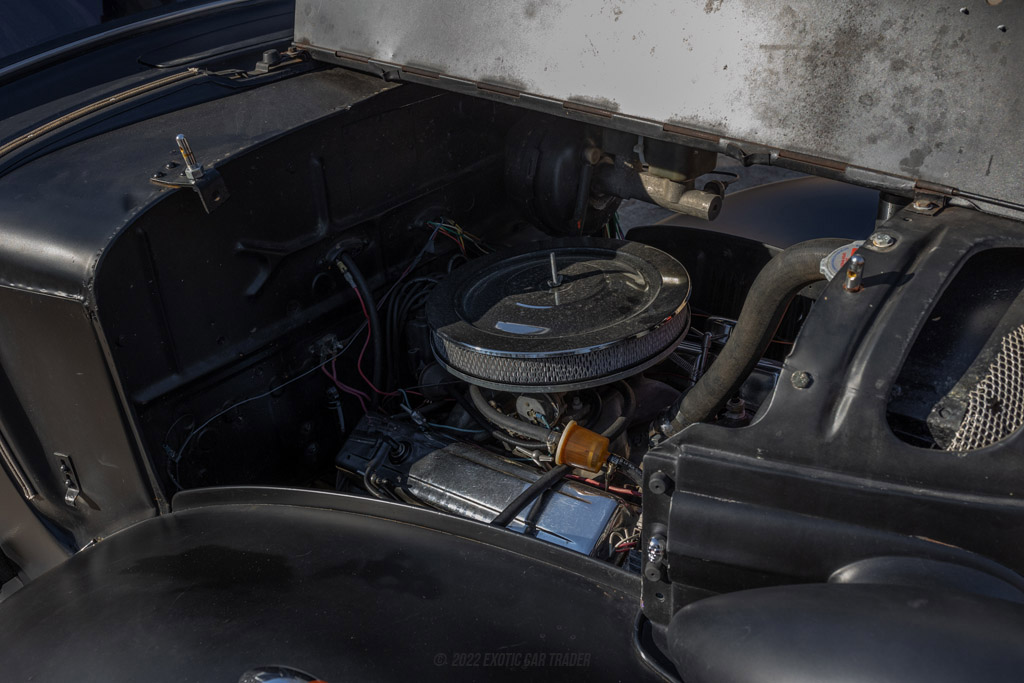
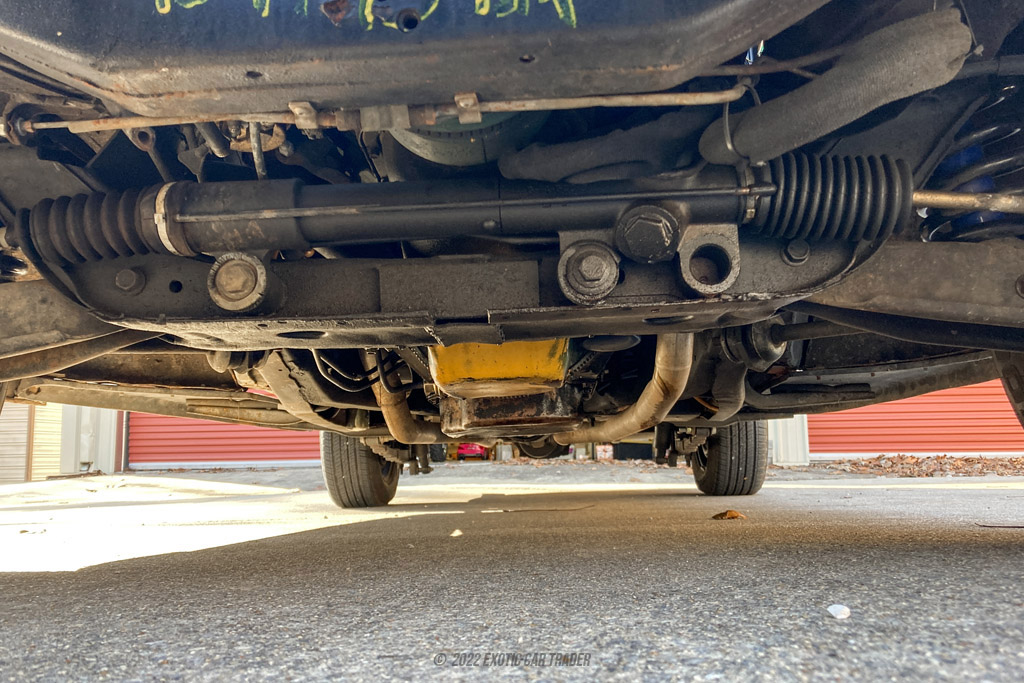
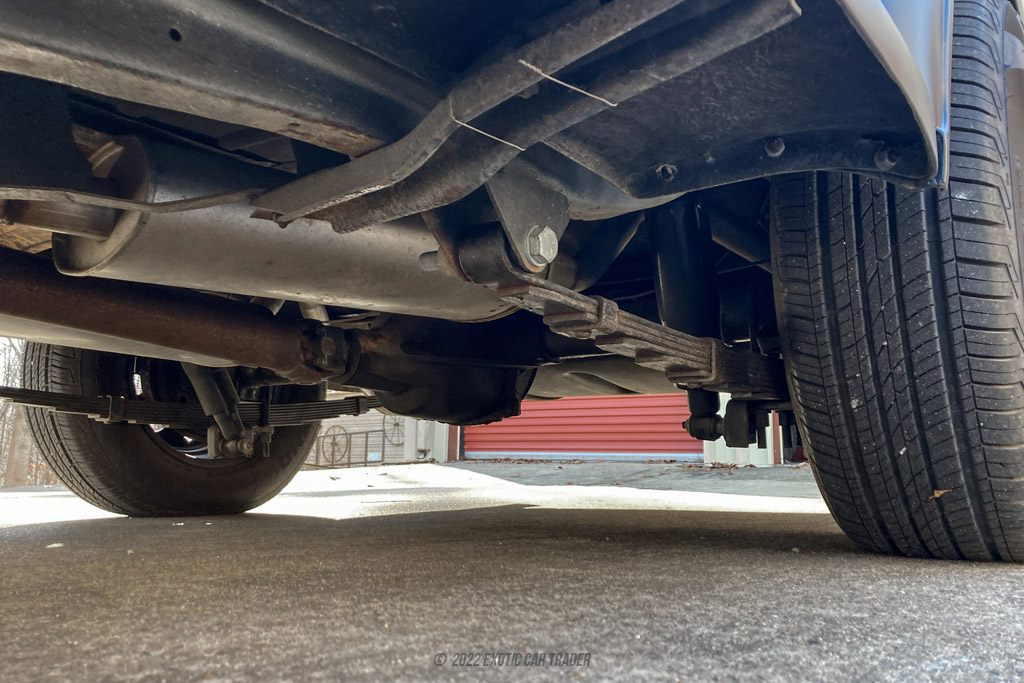
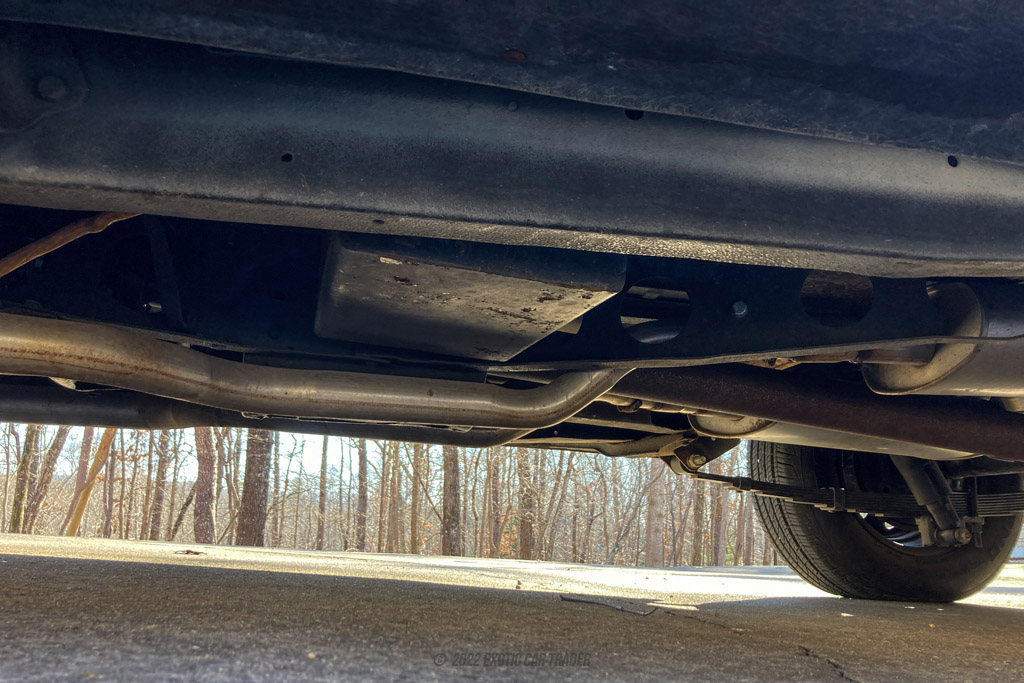
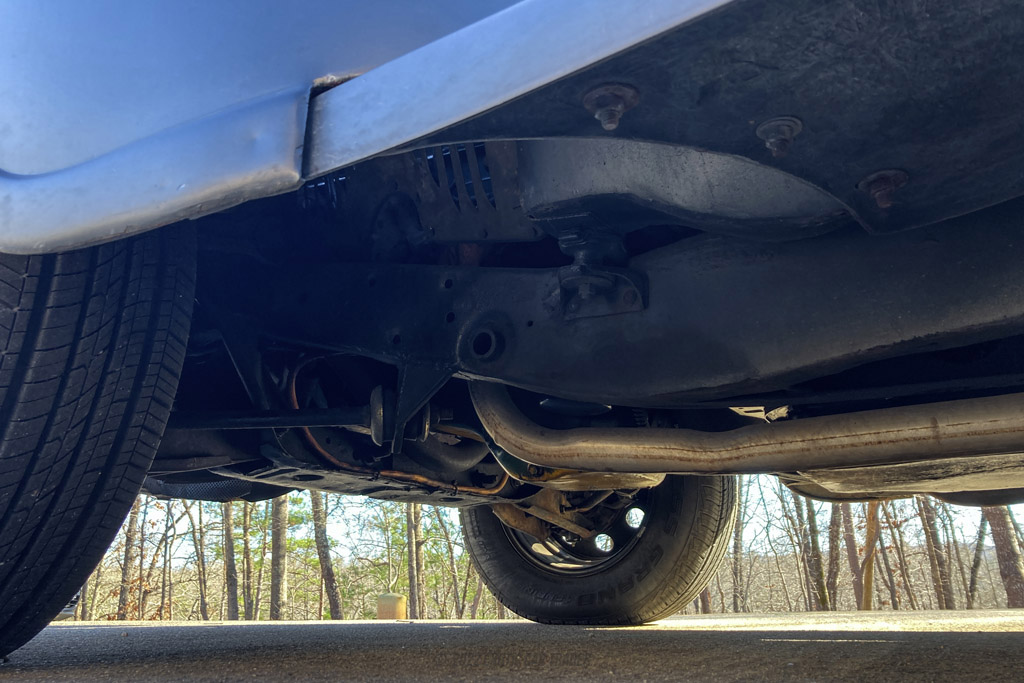
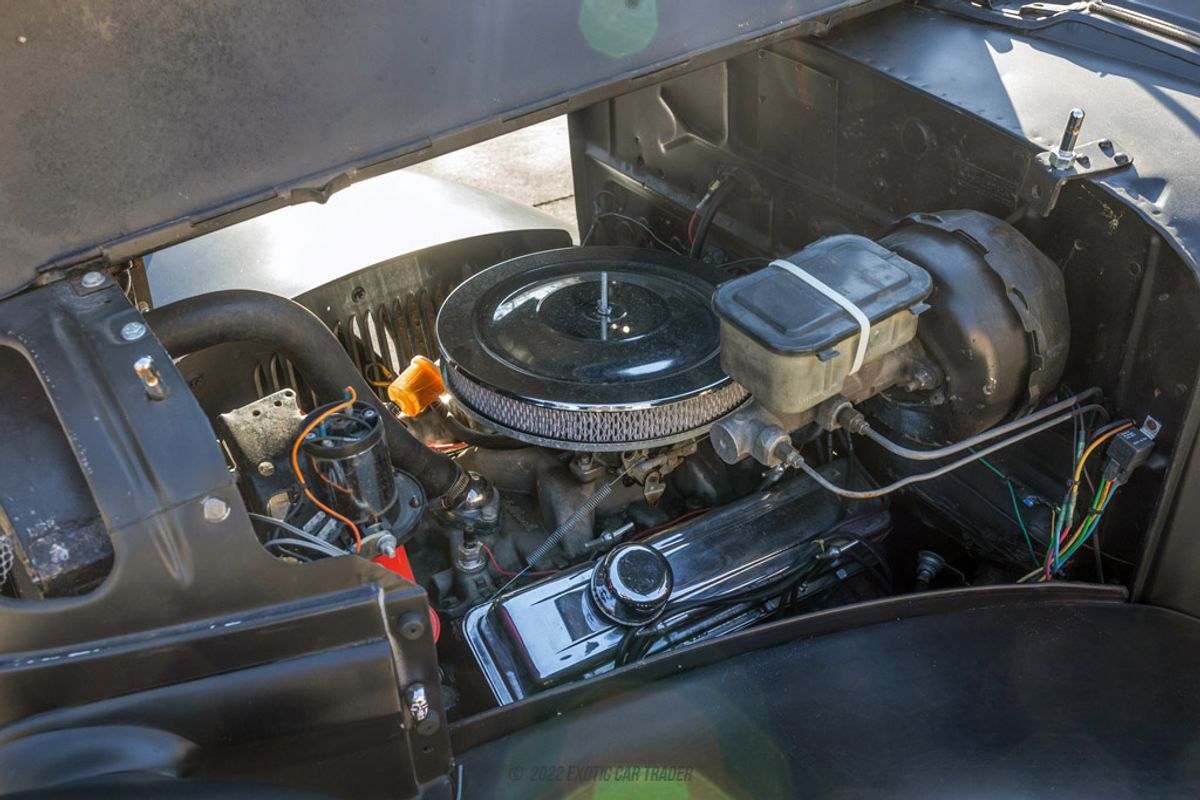
This 1937 Plymouth Deluxe appears to have a V8 engine displacing 257ci, as we are told. Drive goes to the rear wheels through an automatic transmission. The current owner reports that the car has been upgraded with power steering and power brakes to make it easier to drive. Riding on leaf springs and shock absorbers, it's best to enjoy the cruise and turn heads wherever you go.
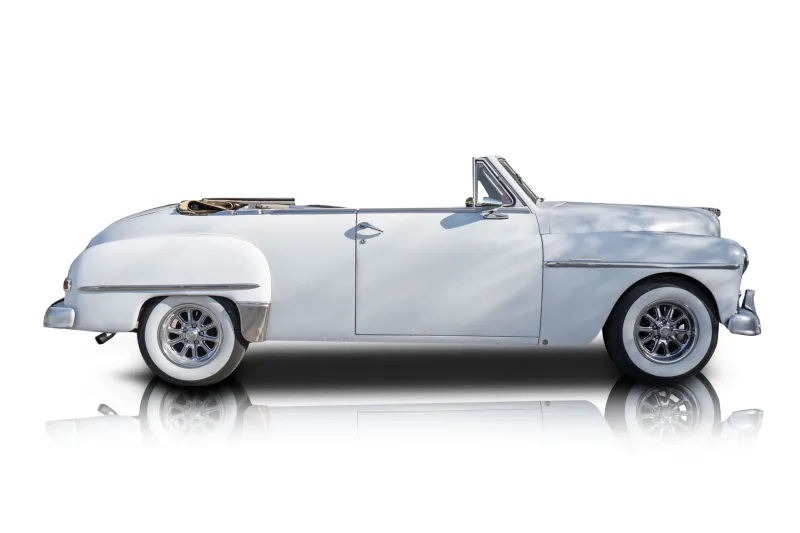
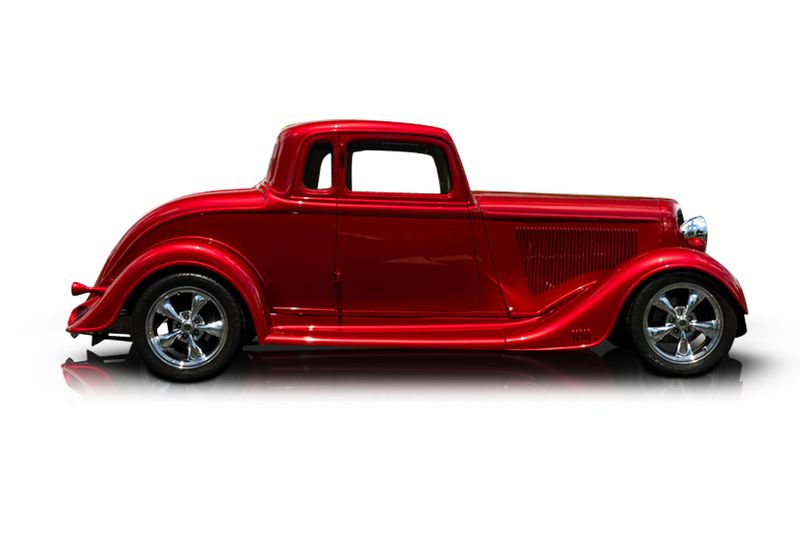
Contrary to popular belief, the Plymouth brand was not named after Plymouth rock. Rather, the name was coined by then-Chrysler executive Joe Frazer after Plymouth binder twine, which was seen to be sturdy, reliable, and low-priced. Plymouth was created to be Chrysler's budget car brand. Fast forward to the current era, and vintage Plymouths in pristine order fetch far more than they ever did brand-new. Of course, they also make great restomod platforms, such as this 1937 Plymouth Deluxe that bears just 6,500 miles after a comprehensive restoration. It's not an all-out restomod, but it retains the classic Thirties design, with some tasteful upgrades here and there.


Automakers don’t do silly things anymore. Like, say, create a muscle car and name it after a beloved cartoon character. Or spend a significant sum of money to buy the naming rights from the intellectual property holder of said character. Or spend even more money after that to develop a horn that sounds just like that character’s jaunty cry. That’s what Plymouth did in the Sixties, with the Road Runner. They paid Warner Brothers US$50,000 to license their Road Runner character’s name and likeness. Then, they spent a further $10,000 to develop a horn that said “Beep Beep” just like the character did on screen. Was it a success? You bet! In fact, if not for the Malaise Era’s impending arrival and renewed focus on fuel economy and emissions, the Road Runner might have run a little bit longer than 1980. Today, we have a 1968 Plymouth Road Runner for sale from Jacksonville, Florida. With a nice 383ci V8, an automatic gearbox and an aftermarket head unit from Pioneer, this 42,228-mile machine is a fine catch for a savvy collector of American classics – or someone who wants to start a collection.


Plymouth may no longer be around, but this storied American auto brand that was under Chrysler’s umbrella will perhaps be best remembered for their Road Runner muscle car. It may seem comical, naming a muscle car after a cartoon character – the Road Runner from the Road Runner and Wile E. Coyote cartoons by Warner Brothers. It might seem even more comical that Plymouth paid $50,000 to Warner Brothers to license the name for the car. And it might seem ridiculous that they spent an extra $10,000 merely to develop a horn that made the signature “Beep Beep” sound of the Road Runner from the cartoons. Remember, all this was in Sixties money, so you can do some calculations and see how much was actually spent by Plymouth to get this iconic muscle car as right as possible. Today, Road Runners are highly desirable, so we’re glad that one has come our way. This 1969 Plymouth Road Runner hails from Pittsburgh and has got a 383ci V8 engine under its hood. If you’d like to catch this bird, give us a call or shoot us a DM right now – don’t call the coyote who clearly needs some coaching.


Beep Beep! Move over, it’s the Road Runner! Named after the lovable Warner Brothers character from the Wile E. Coyote and Road Runner cartoons, Plymouth reportedly paid $50,000 to Warner Brothers for the right to use the Road Runner name and likeness. They spent a further $10,000 on development of a signature “Beep Beep” horn as well! Needless to say, the Road Runner was a massive success and remains one of America’s most loved muscle cars to this day. Now, we have a chance for one lucky enthusiast to get their hands on a massively upgraded 1970 Plymouth Road Runner Restomod from Milford, Pennsylvania. With its 440ci V8, Tremec TK500 5-speed manual transmission and Holley Six Pack Tri-Power system, this is one speedy car!


Chevy’s answer to Ford’s pony car challenge, the Camaro came in 1967 and brought a sister along for the ride, in the shape of the Pontiac Firebird. This was a smart move by General Motors as it allowed them to sell two suitably varied models in the same segment but with much of the same underpinnings, engines and other components. The Firebird was axed in 2002 but the Camaro continued to be made until 2024. That makes it the second longest-running pony car in history. Today, we’ve got a nice first-generation 1969 Chevrolet Camaro SS for sale in St. Cloud, Florida. This 1969 Chevrolet Camaro SS 396 is a show-stopping example of American muscle restored to concours-level detail. Verified by its X66 code and built at the Norwood, Ohio plant, this real-deal Super Sport coupe combines factory originality with subtle performance enhancements that elevate both its drivability and collectability. With its matching-numbers big-block, correct Turbo 400 transmission, and period-authentic Holley 4346 carburetor, this Camaro is the perfect blend of raw 1960s muscle and expert craftsmanship.


Chevy’s second-generation Corvette was made from 1963 to 1967, but across that relatively short lifcycle, over 117,000 examples found homes. This highlights how popular the Corvette was back then, much like it is now. The second generation or C2 brought about many features that we know from later ‘Vettes, such as pop-up headlamps, the boat-tailed styling, and the exclusive use of V8s for the Corvette – the C1 did offer a six cylinder early in its lifecycle but that wasn’t deemed worthy for a top-tier sports car. Today, we’ve got a 1967 Chevrolet Corvette Coupe for sale from Shohola, Pennsylvania, and let us tell you it’s a catch. With a growling 327 under the hood, this is classic American car nirvana at its finest. Plus, given the great condition of the car, it’s a sure-fire appreciating asset if you continue to look after it. If you’re interested in getting your hands on this beauty, we’re waiting for your call or DM.


Chevy’s third-generation Corvette of 1968 to 1982 was the best-seller in the entire range, in terms of generational numbers. Thanks to its super-long production run, over 542,000 were made, despite it carrying on through the dreaded Malaise Era. During these dark times for automotive enthusiasts, Chevy worked hard to maintain the Corvette as one of the fastest American cars around – of course that was a subjective term, but impressive, nonetheless. Hence, a C3 Corvette is a robust way to enter the world of classic American cars. Want to know more? We’ve got a 1977 Chevrolet Corvette for sale from Littleton, Colorado right here. It packs a 350ci L48 under the hood, paired with an automatic transmission to make it more convenient for those who never bothered to learn stick shift.

We're here to create a platform to better the automotive industry through communication and transparency. Please treat everyone with respect. Healthy debates are natural, but kindness is required.
Make sure everyone feels safe. Hate speech of any kind is strictly prohibited. Degrading comments about things like race, religion, culture, sexual orientation, etc. will not be tolerated.
Give more than you take. Self-promotion, spam, or links of any kind are not allowed.
Wholesale
Direct Deal
Upload Inspection
Order Inspection
Modern Vehicle Finance
Classic Vehicle Finance
Document Request
Autrella Rates
60 Days - $999
90 Days - $1499