




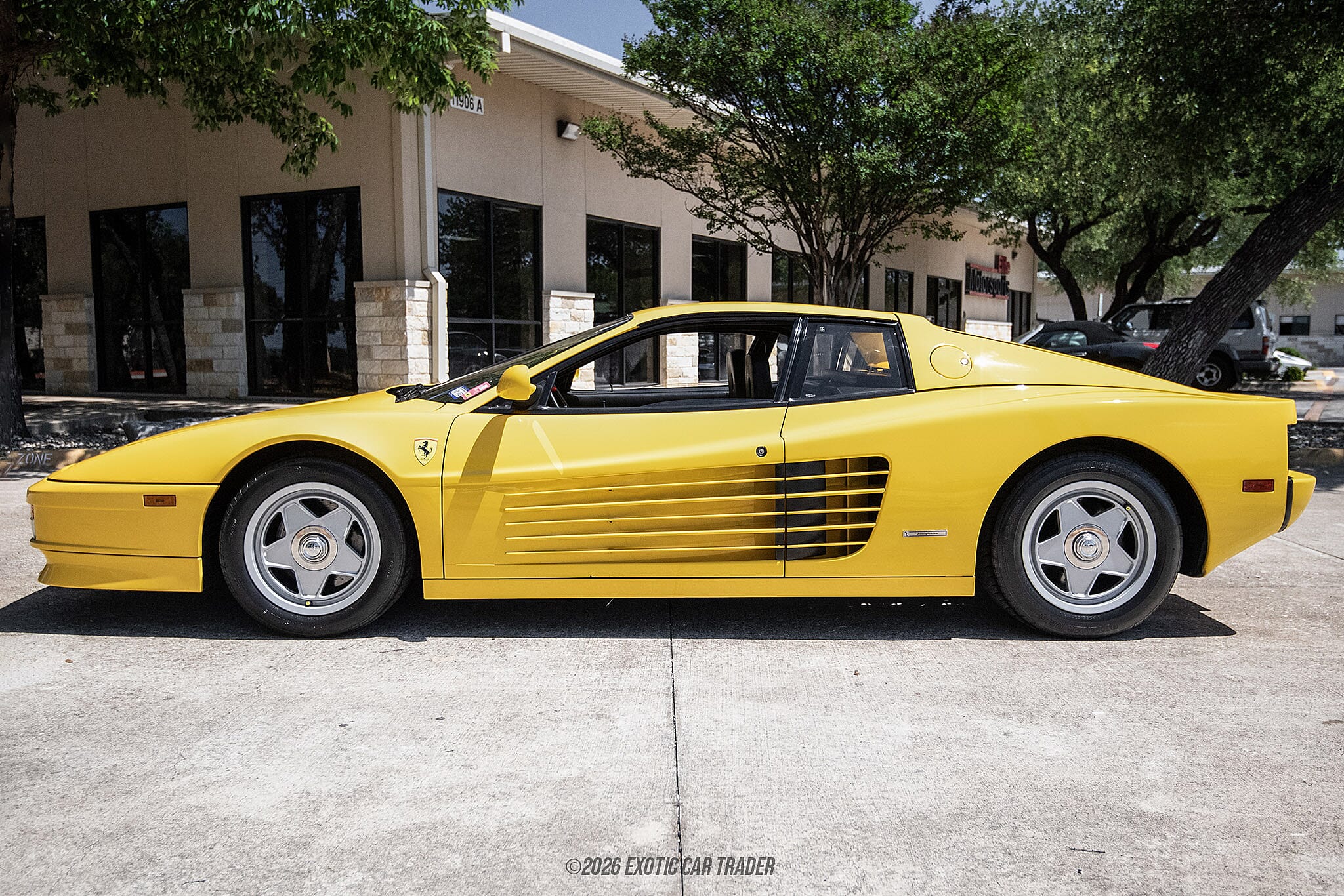
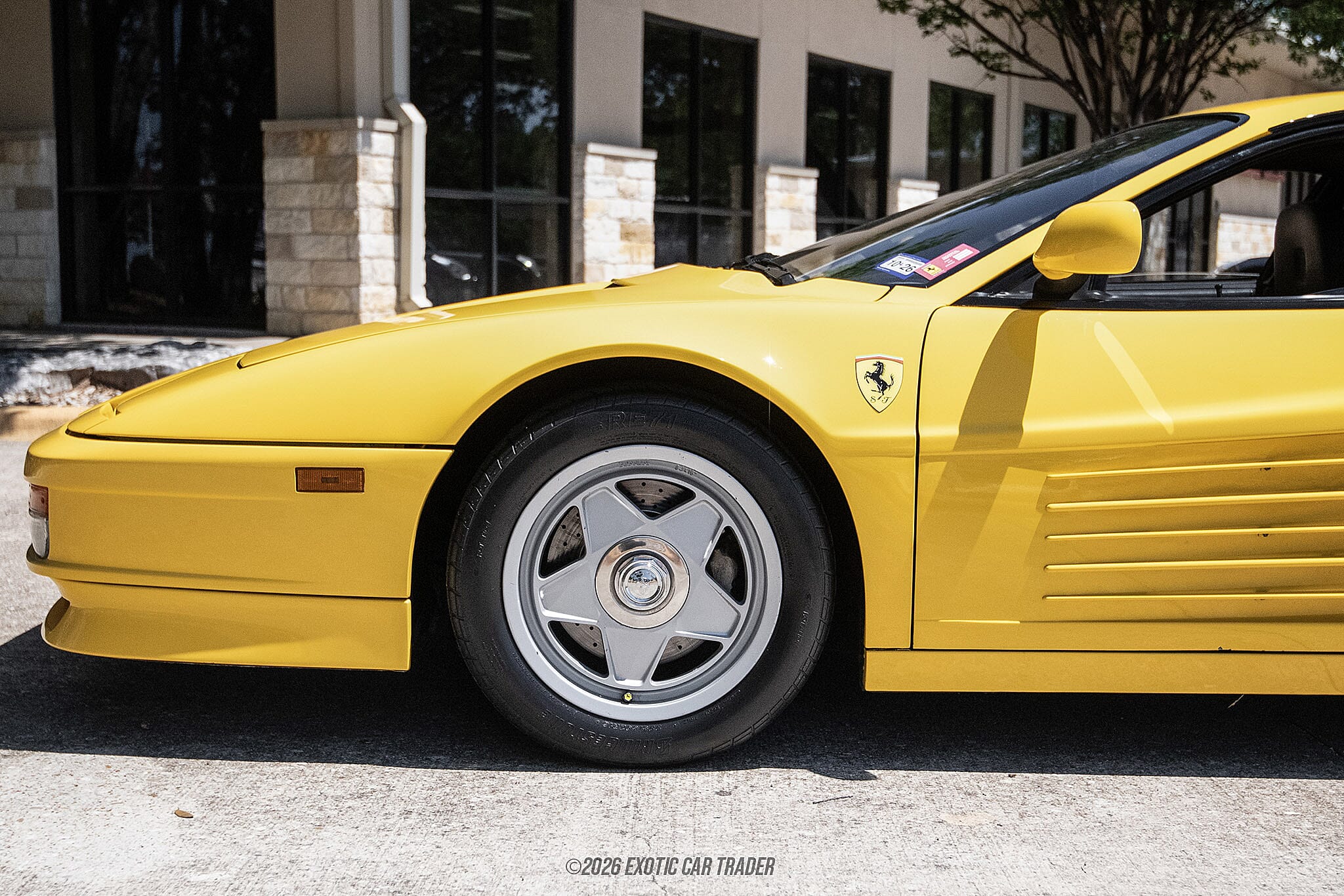
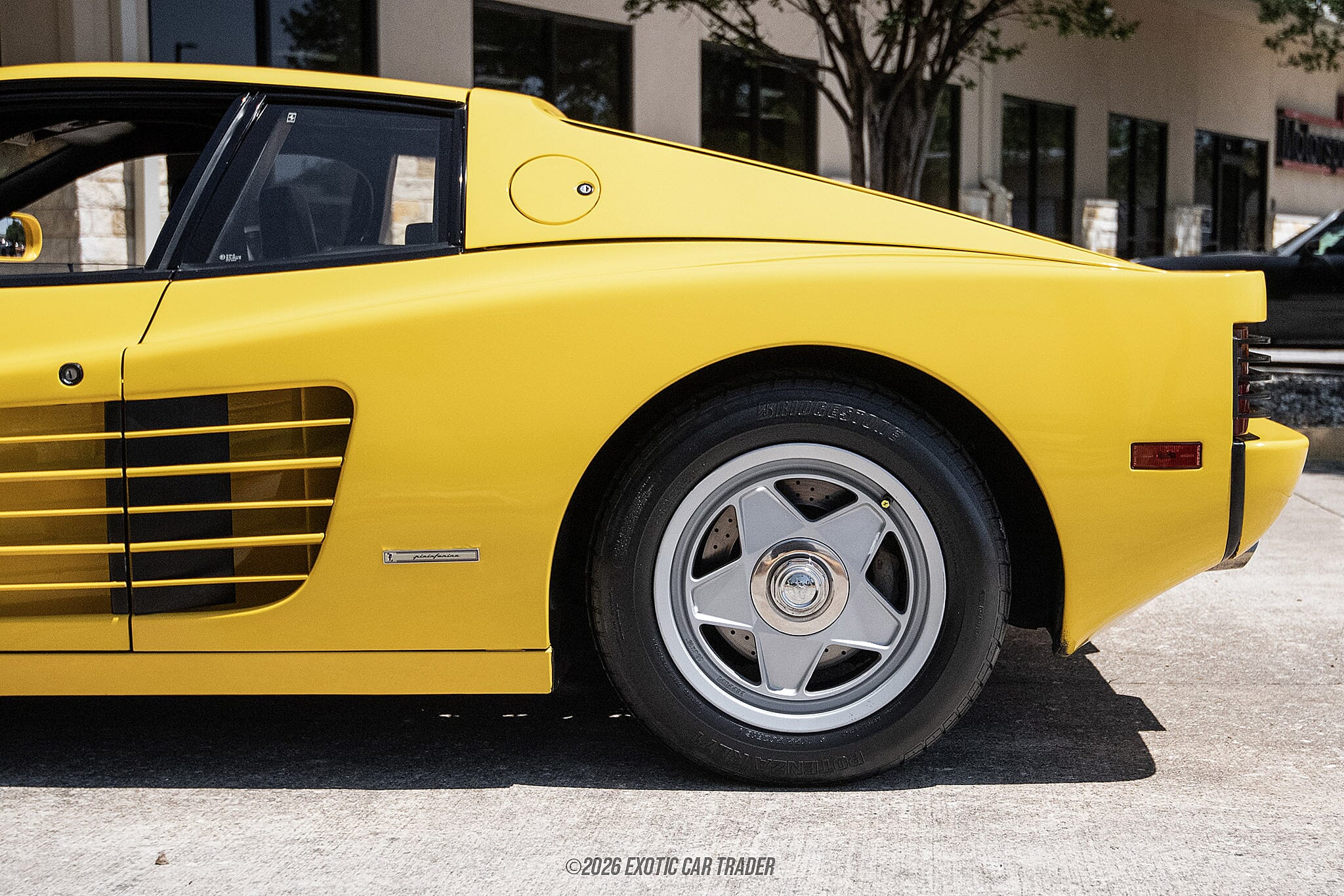
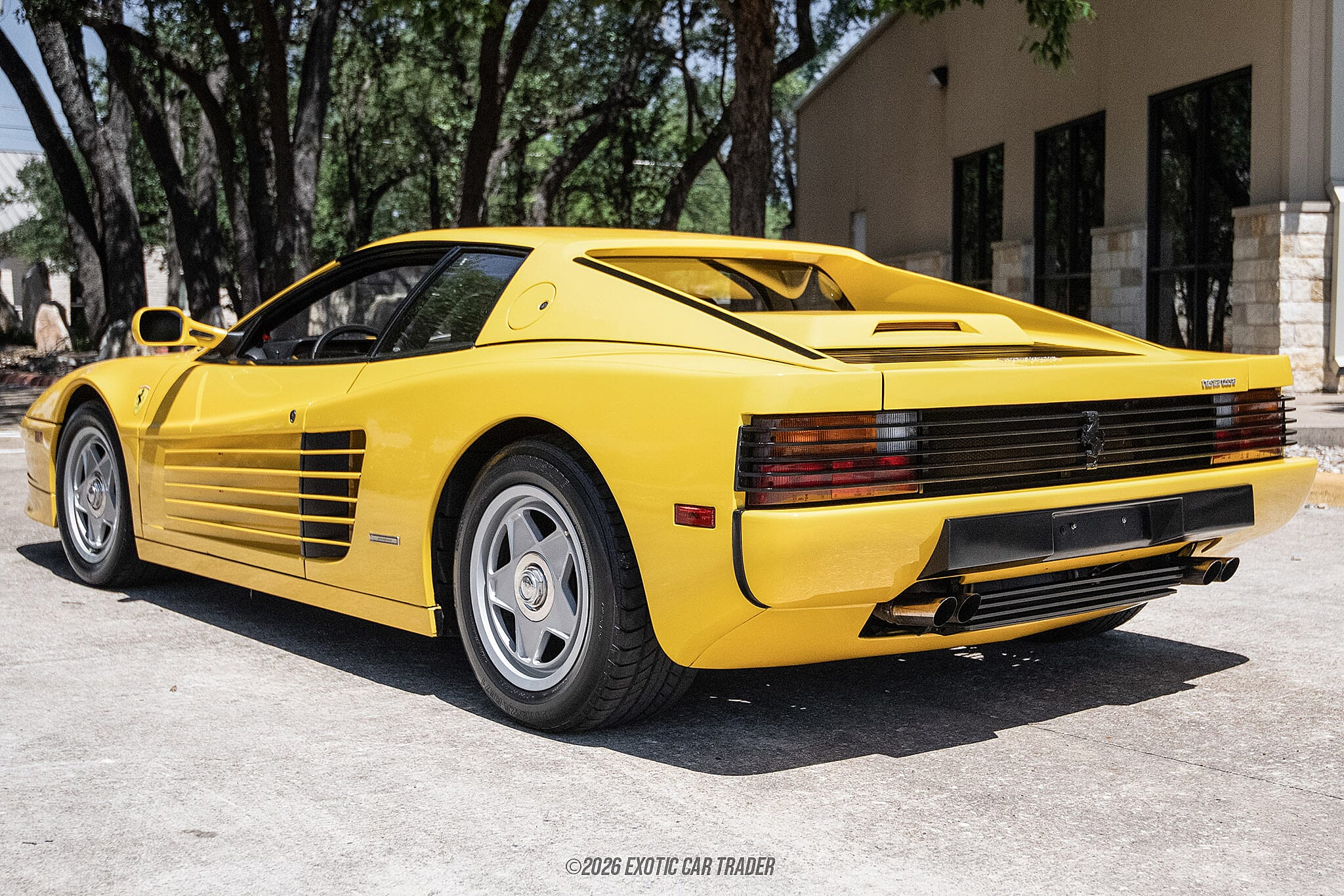
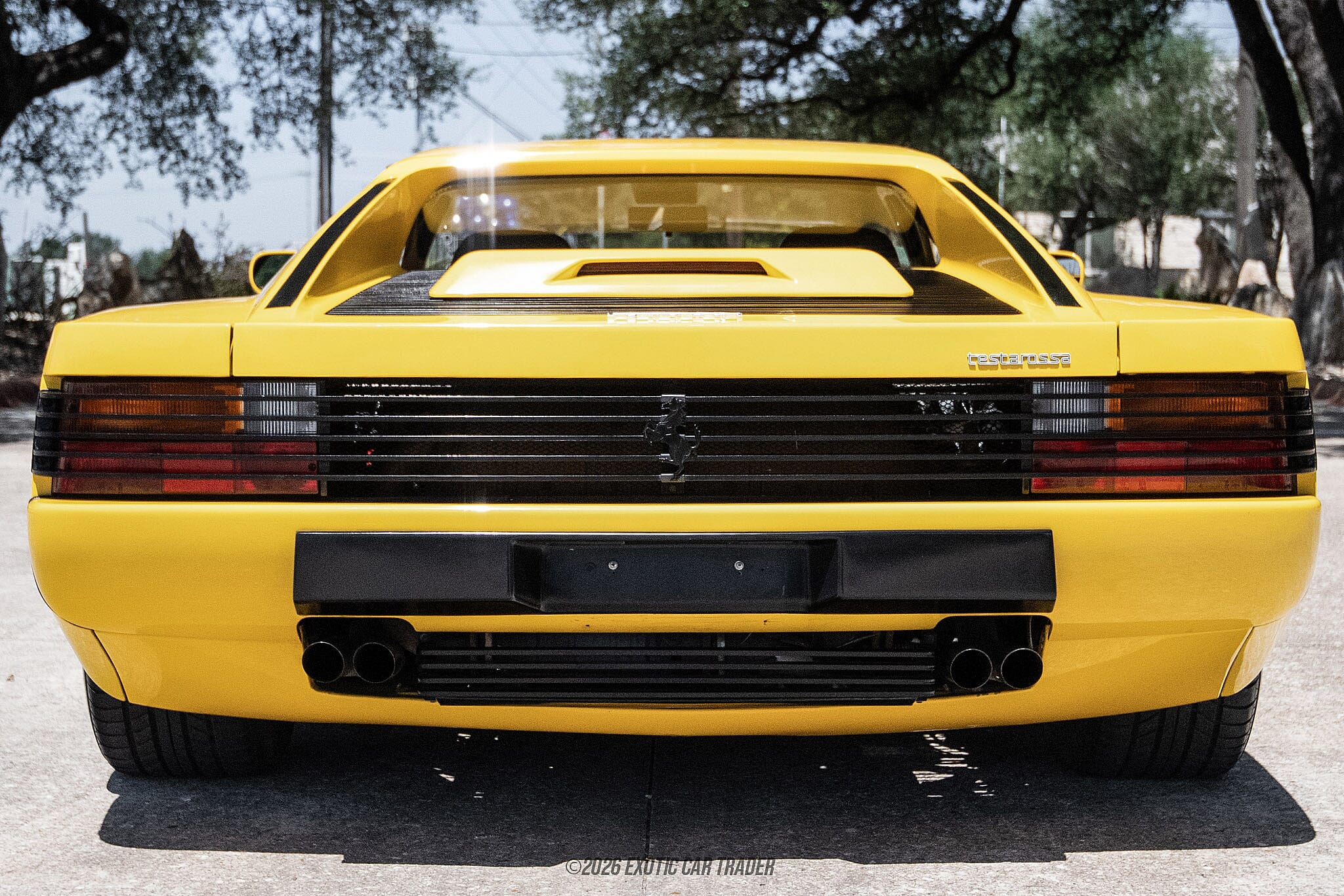
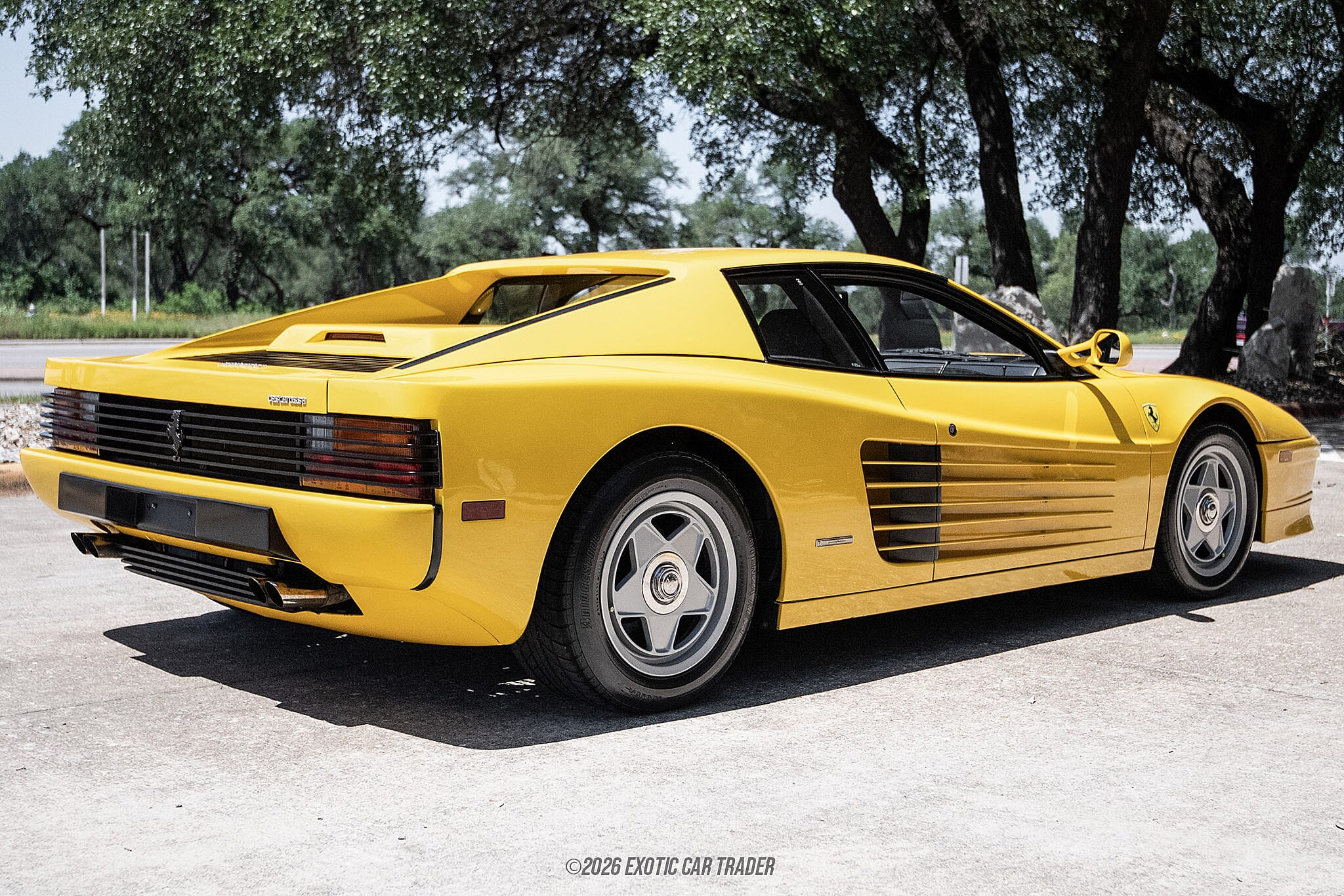
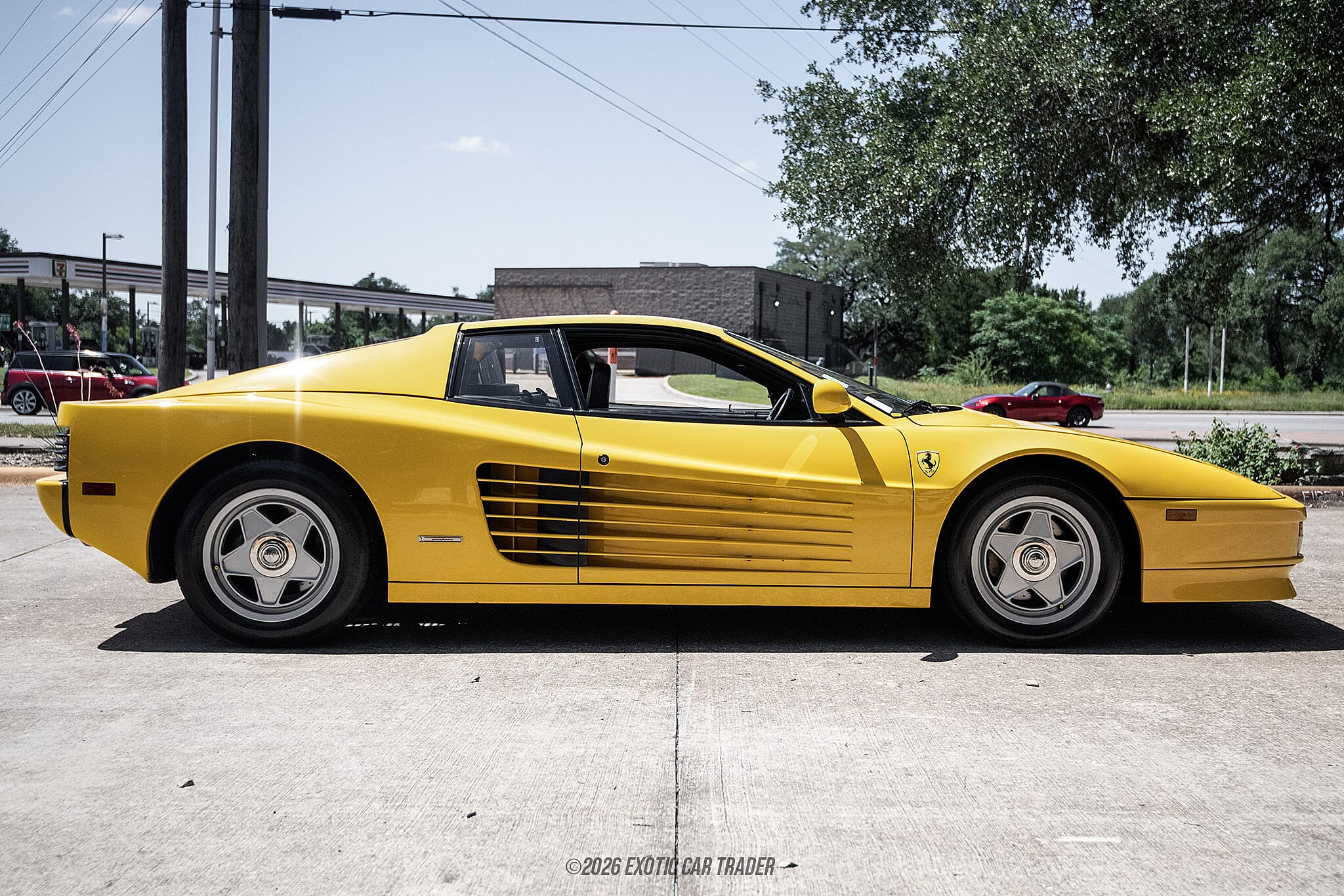
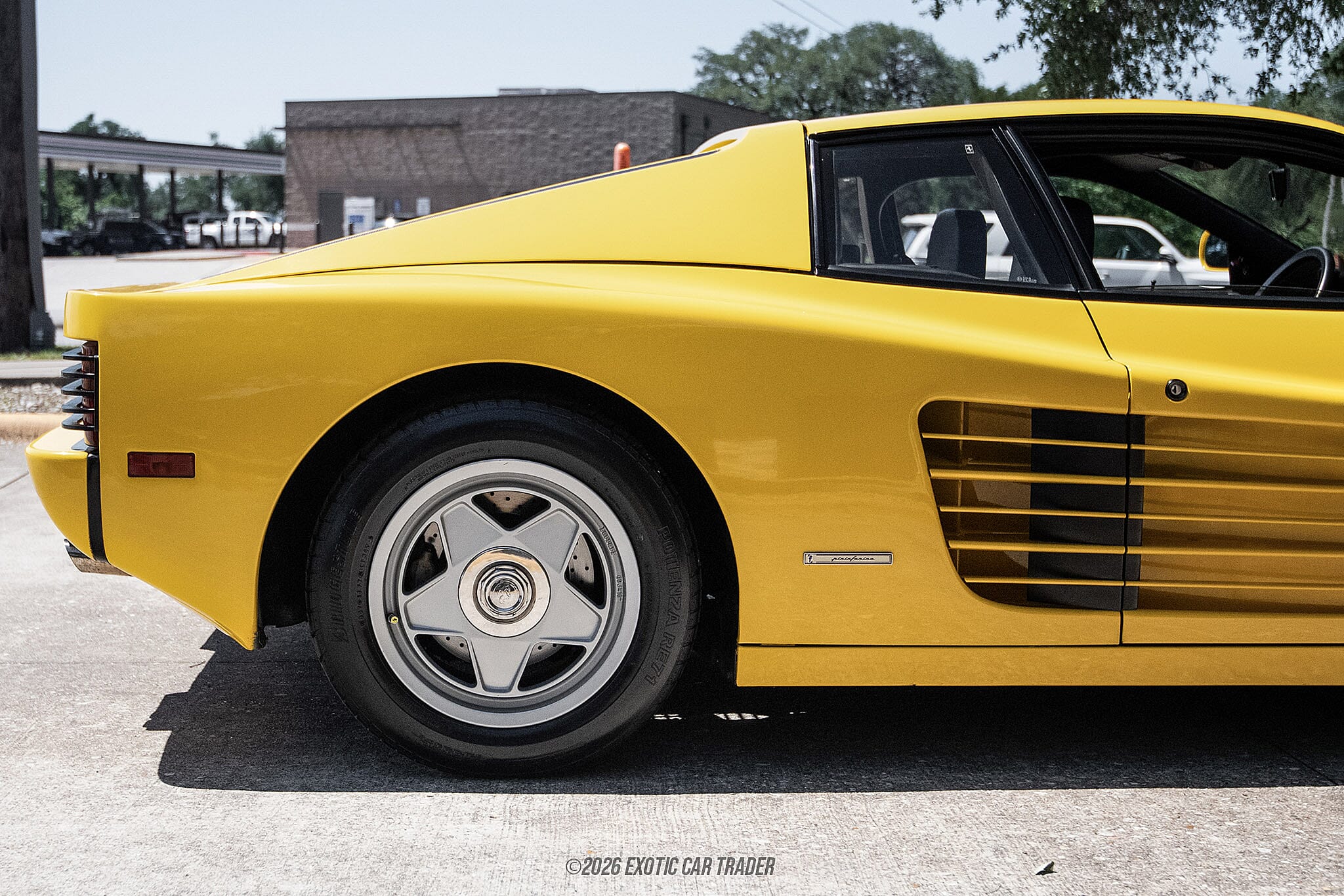

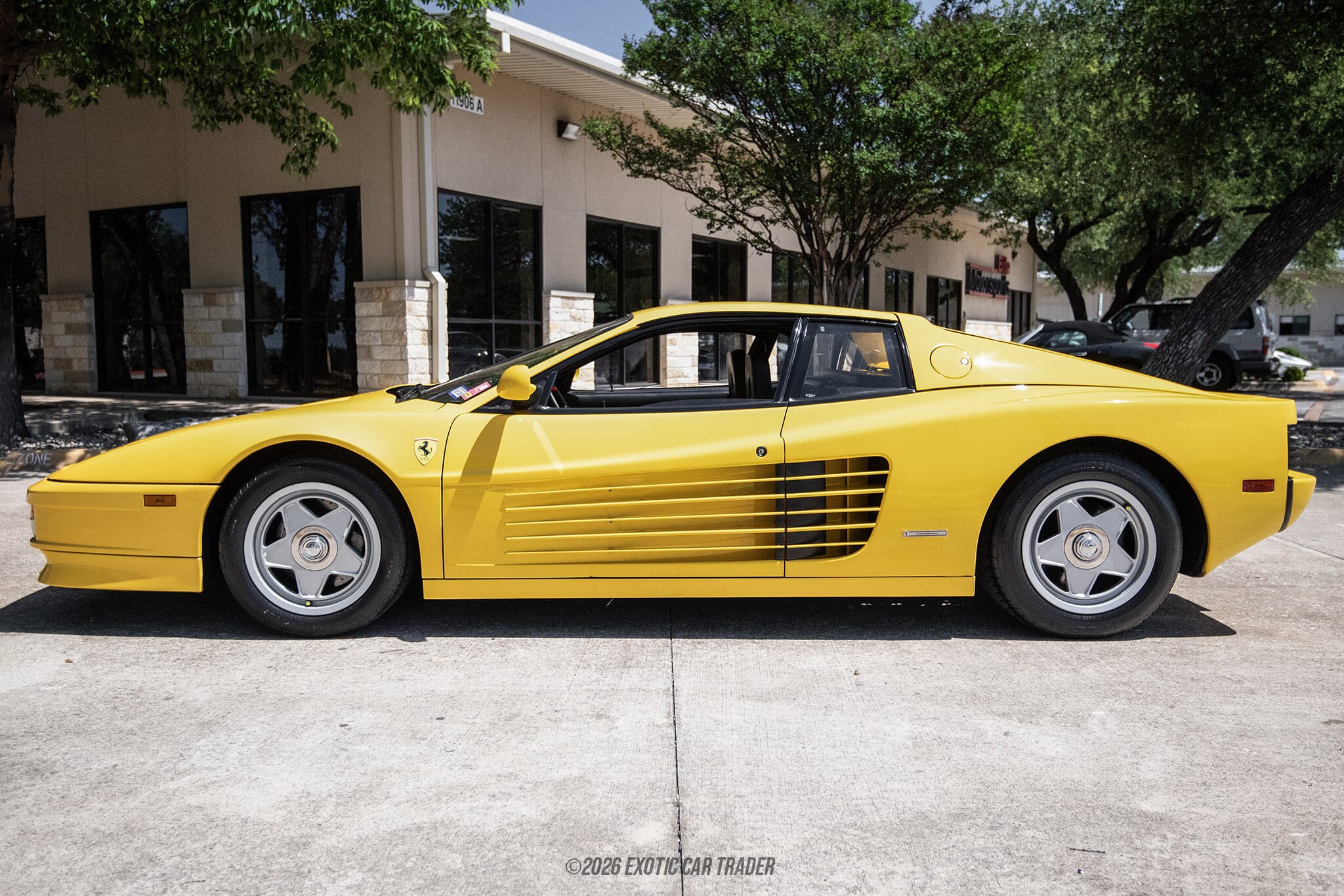
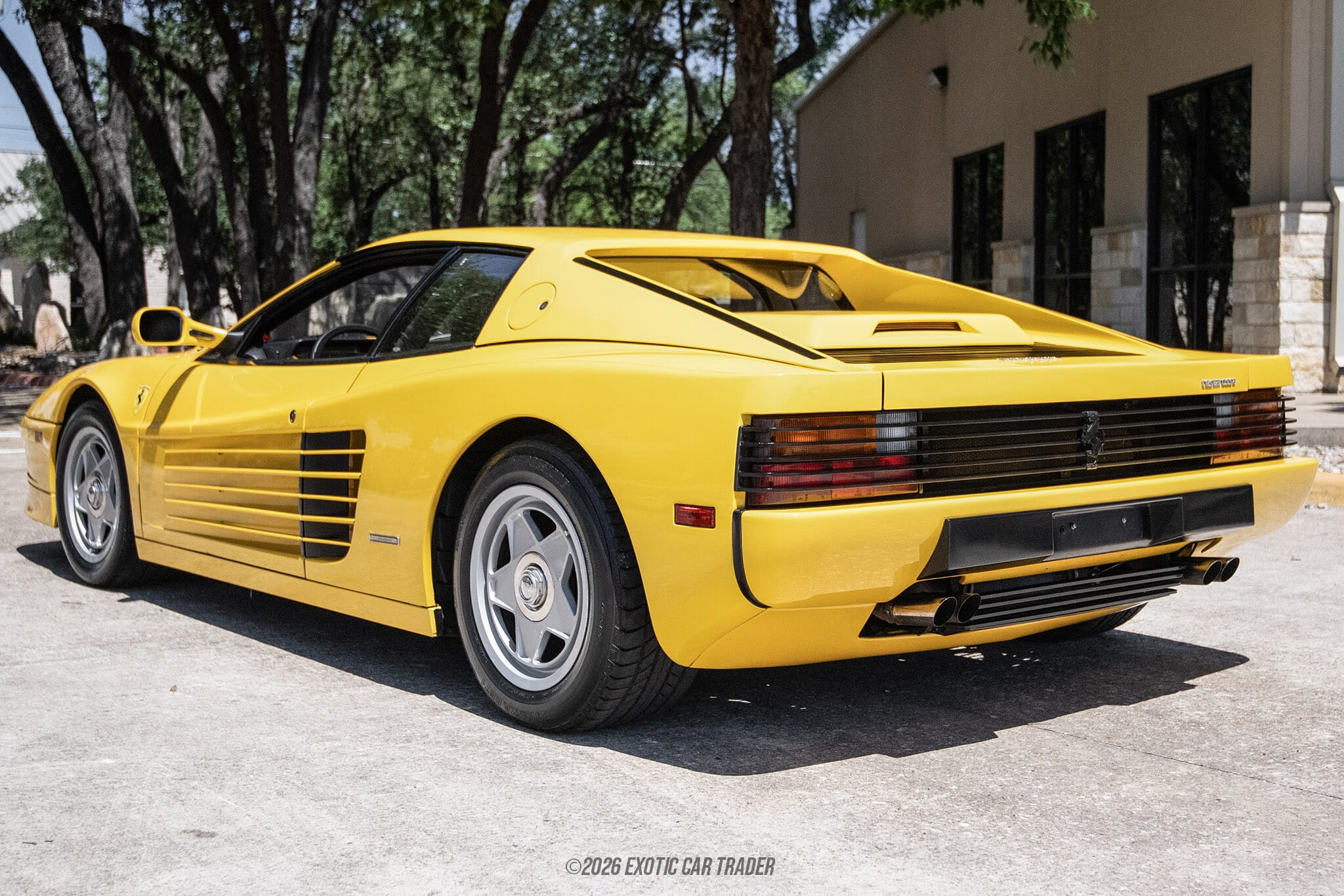
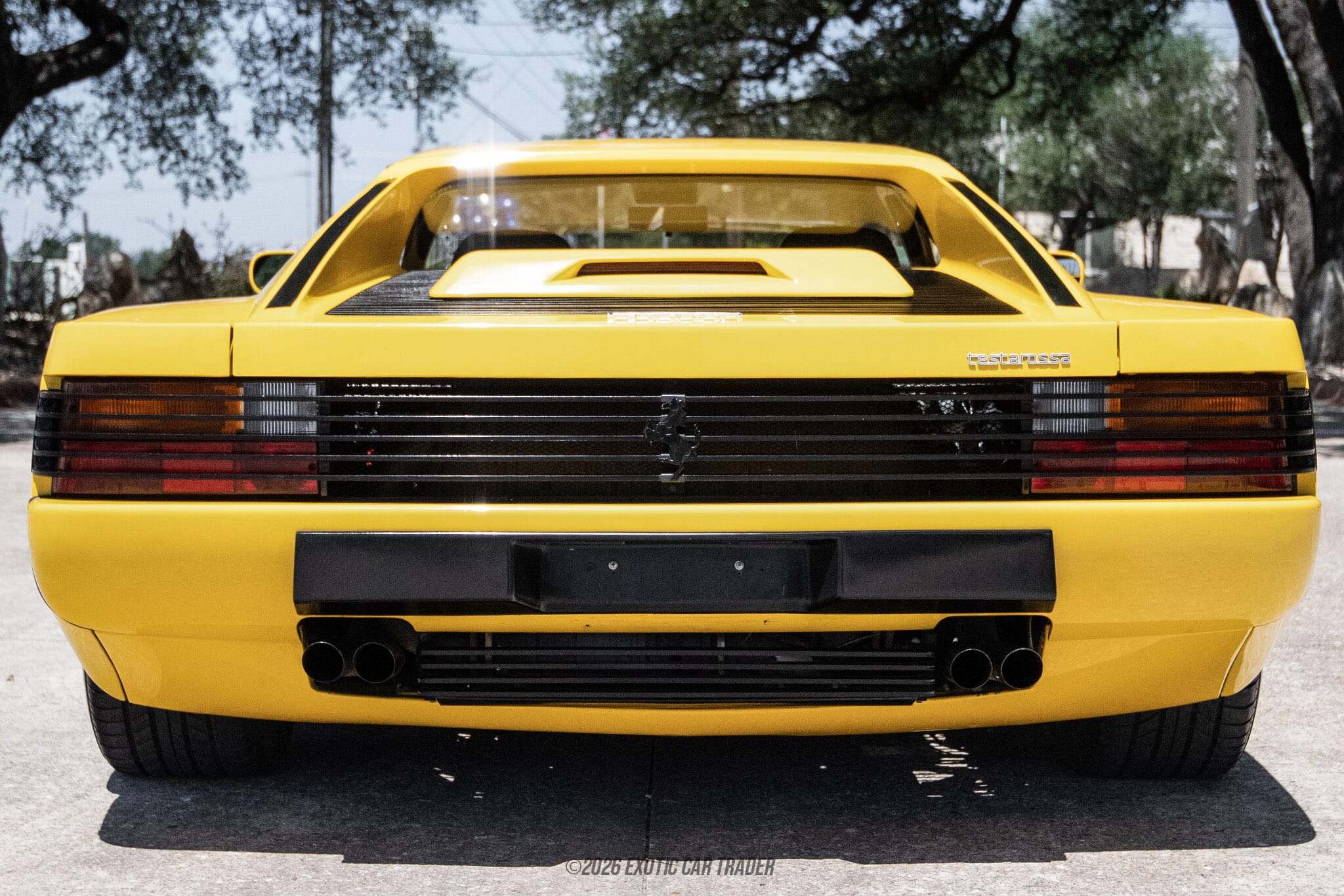
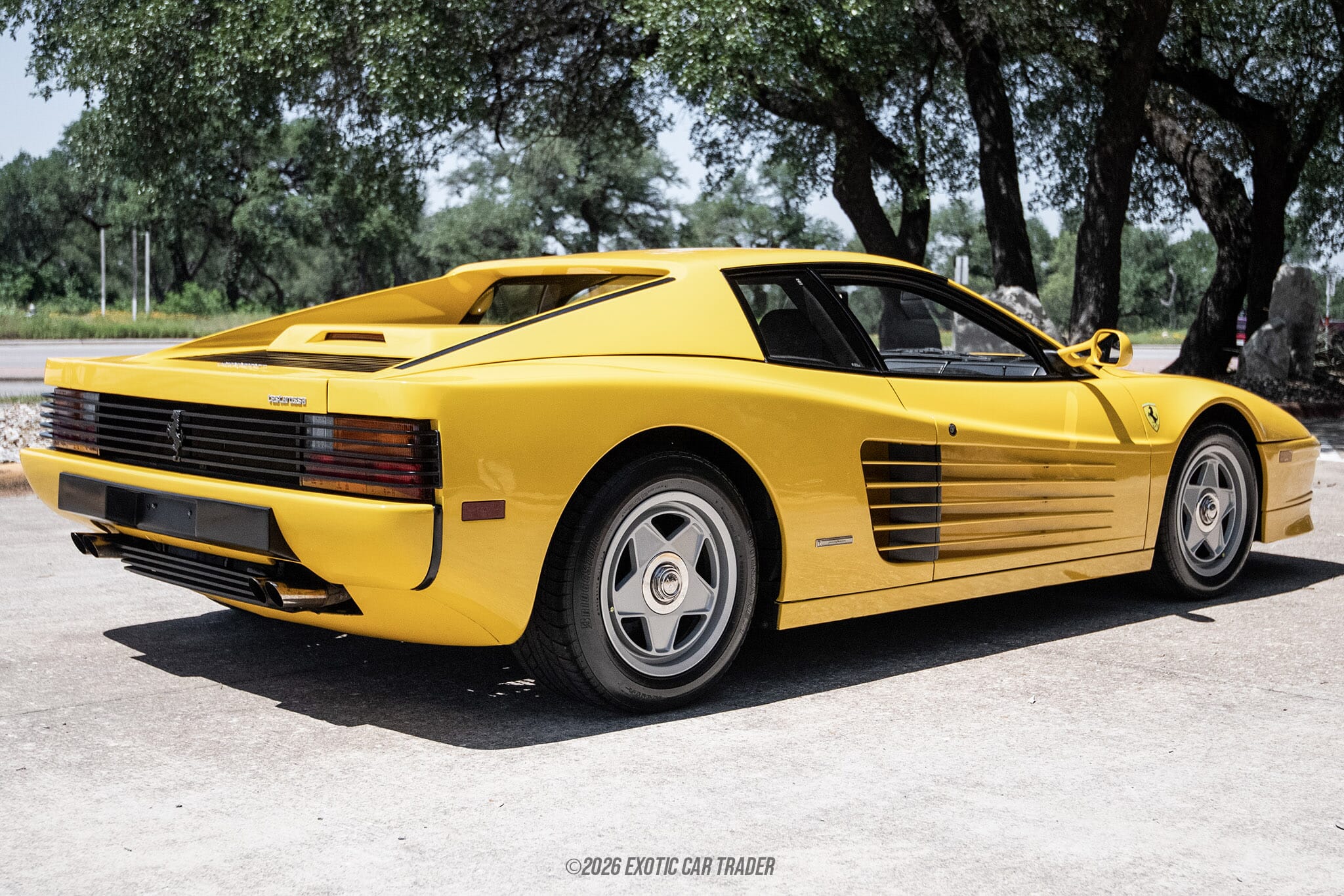
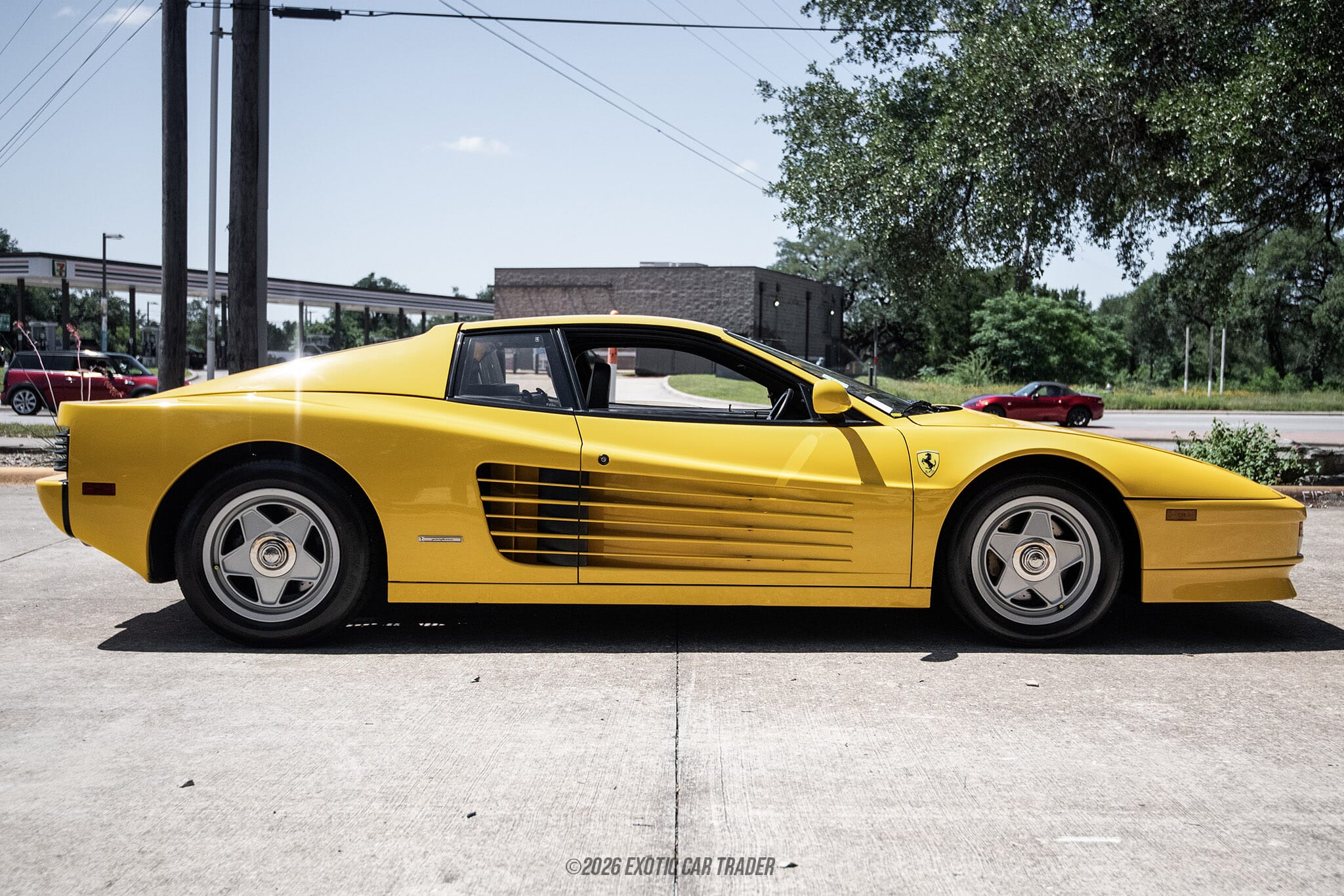
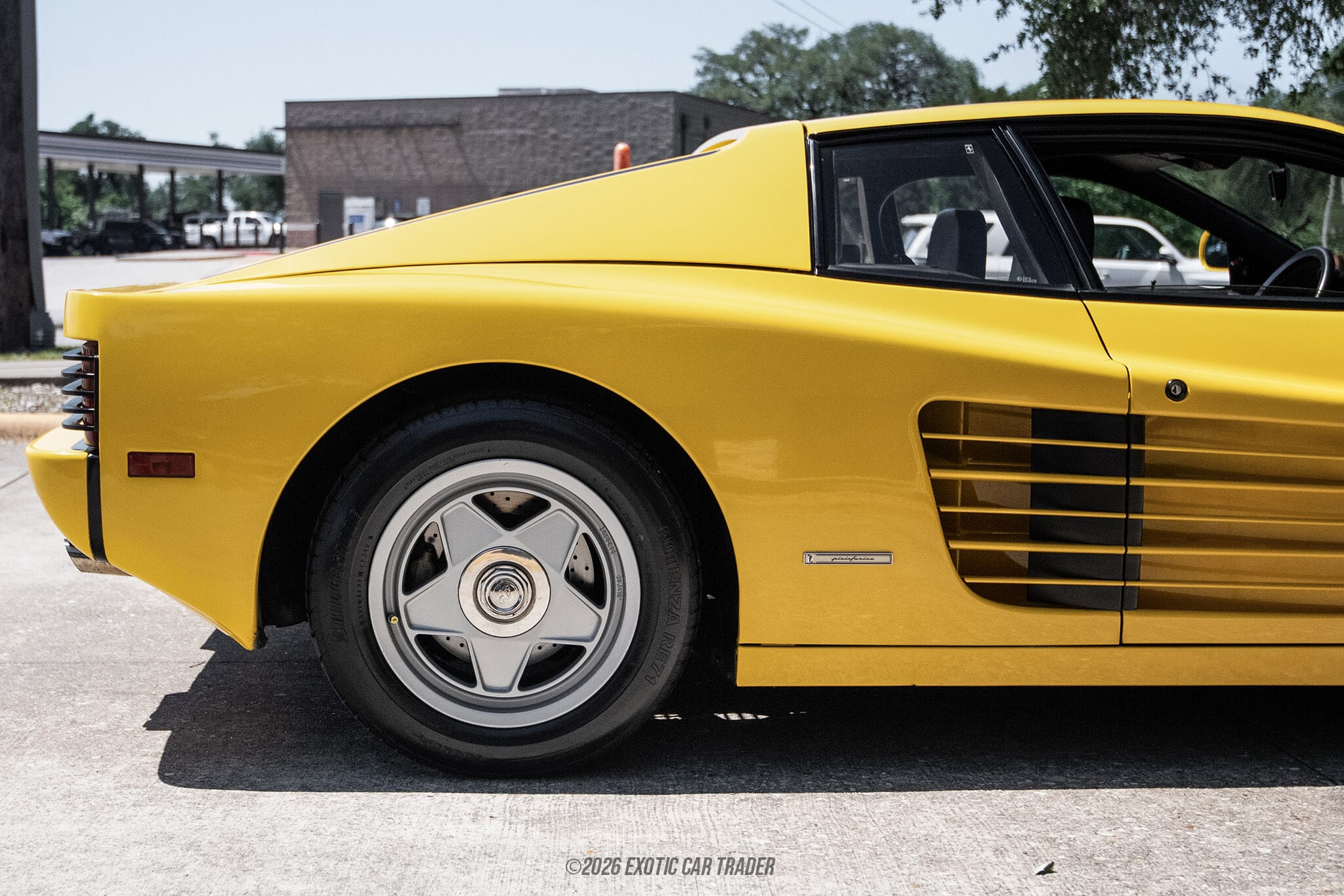
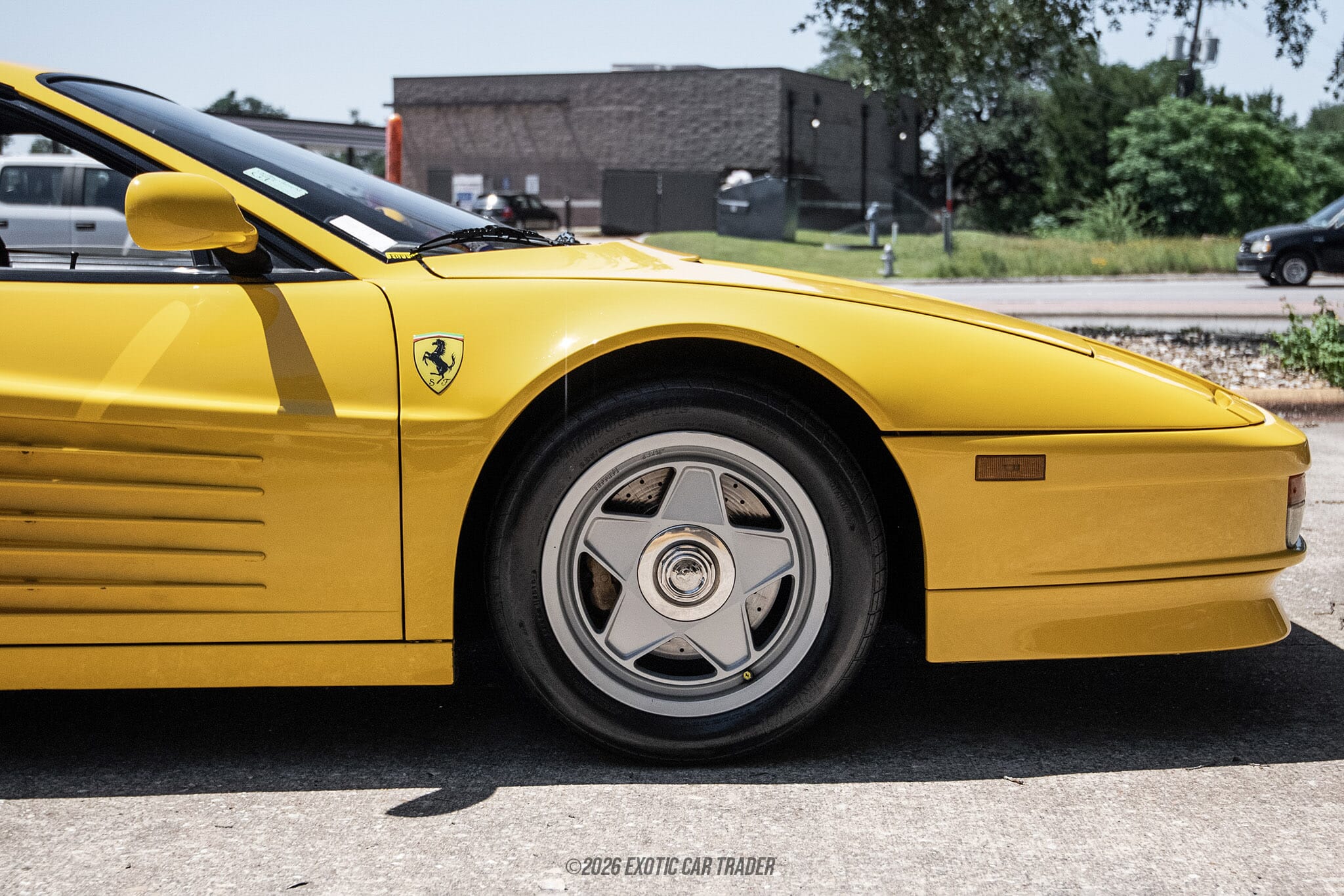
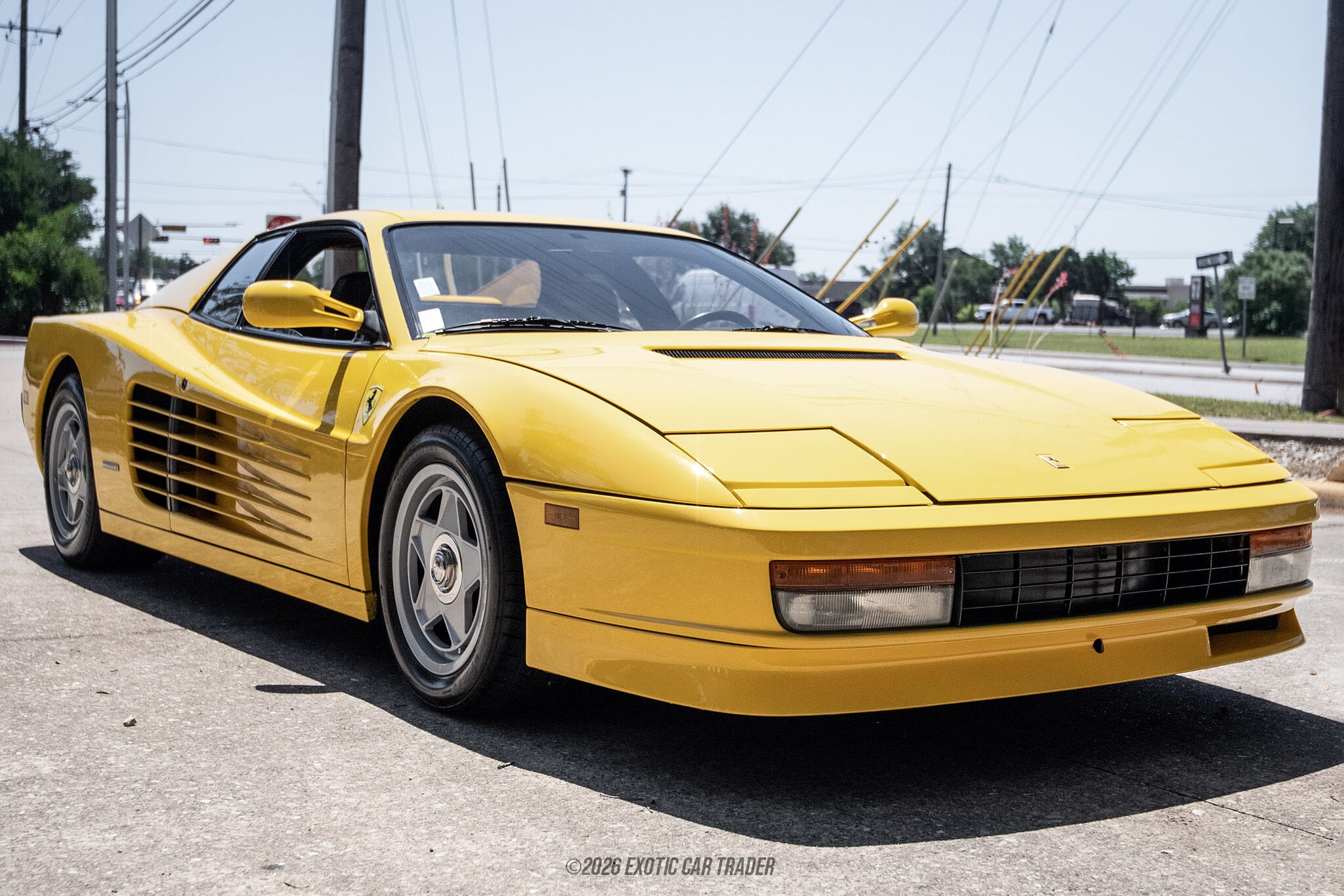
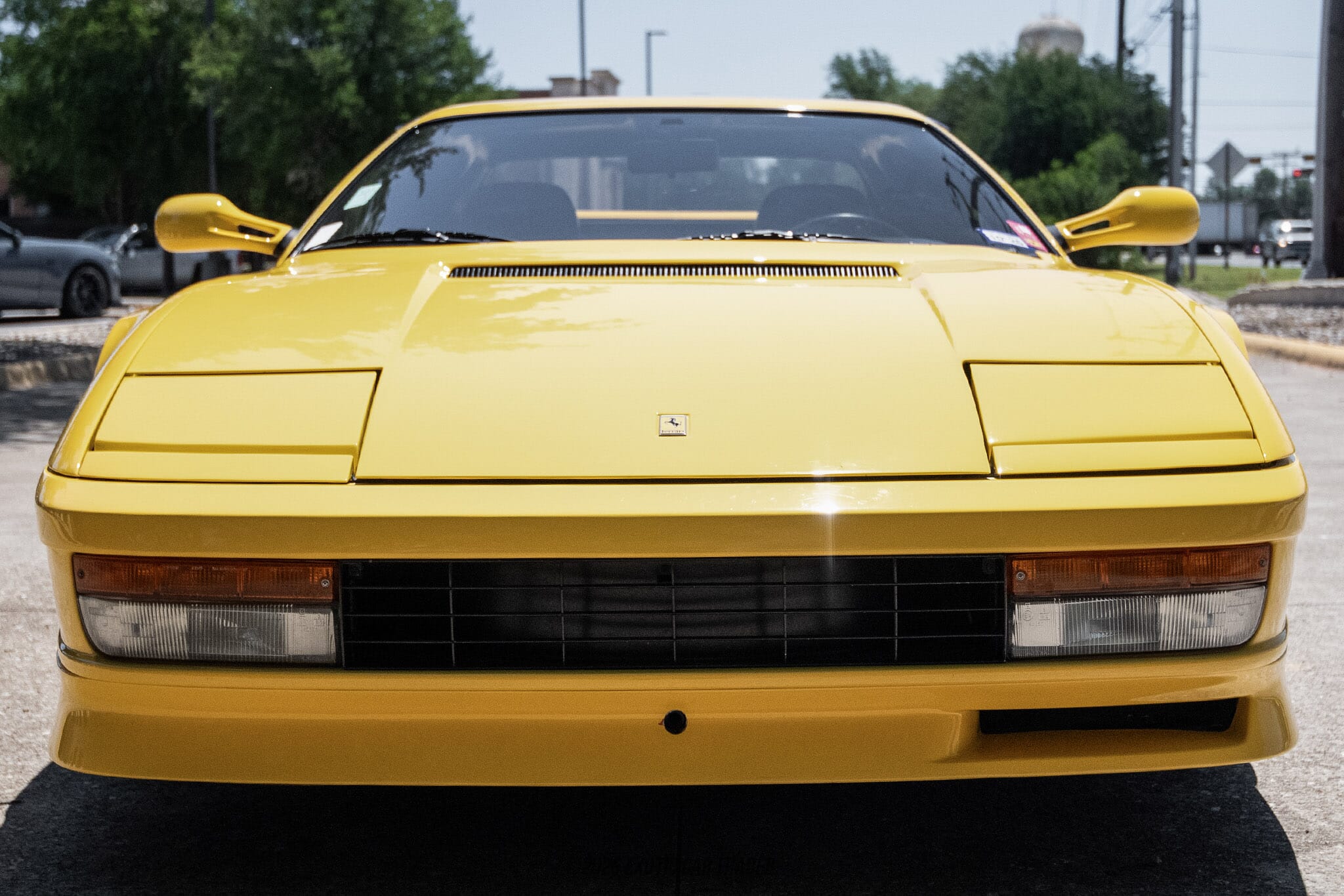
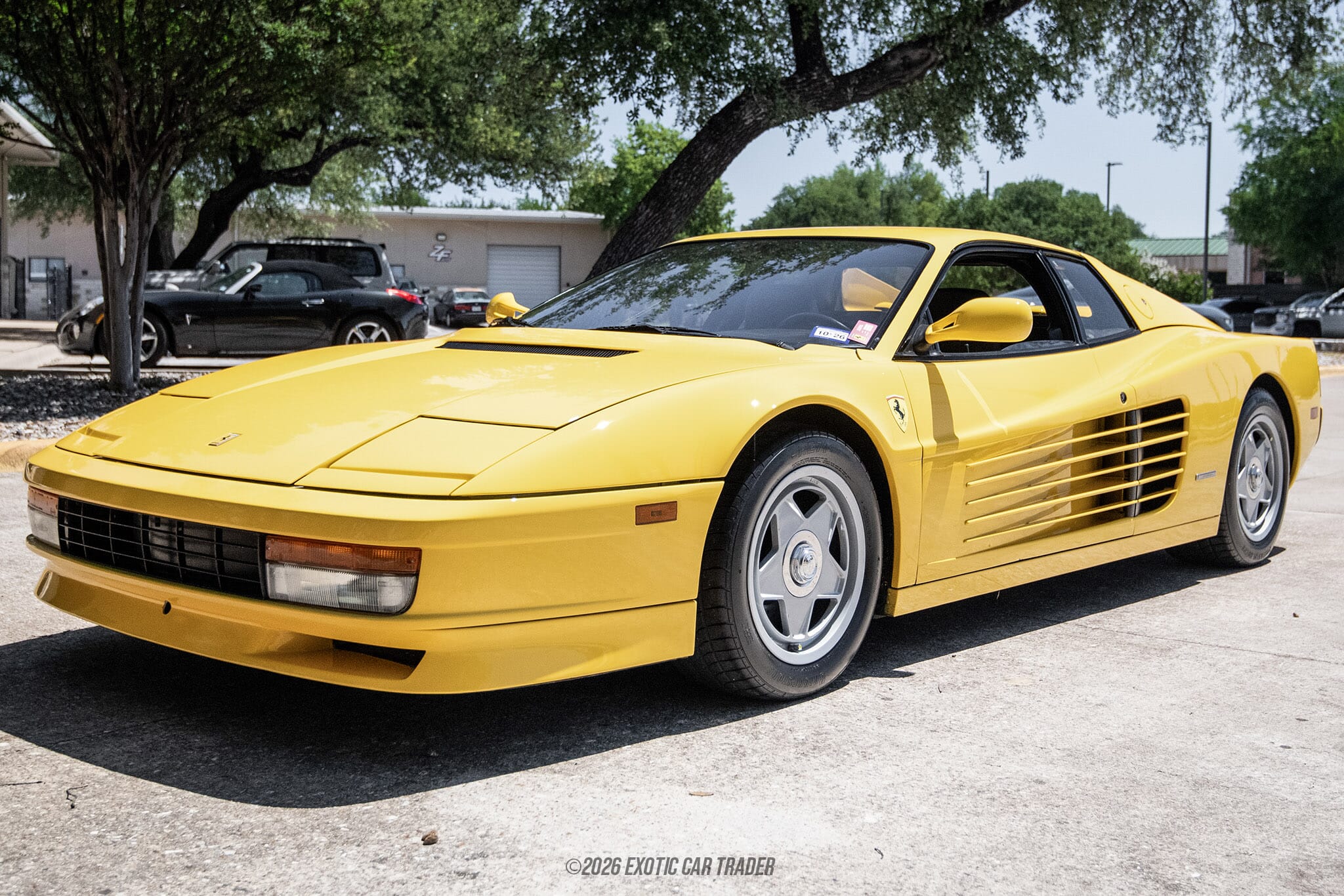
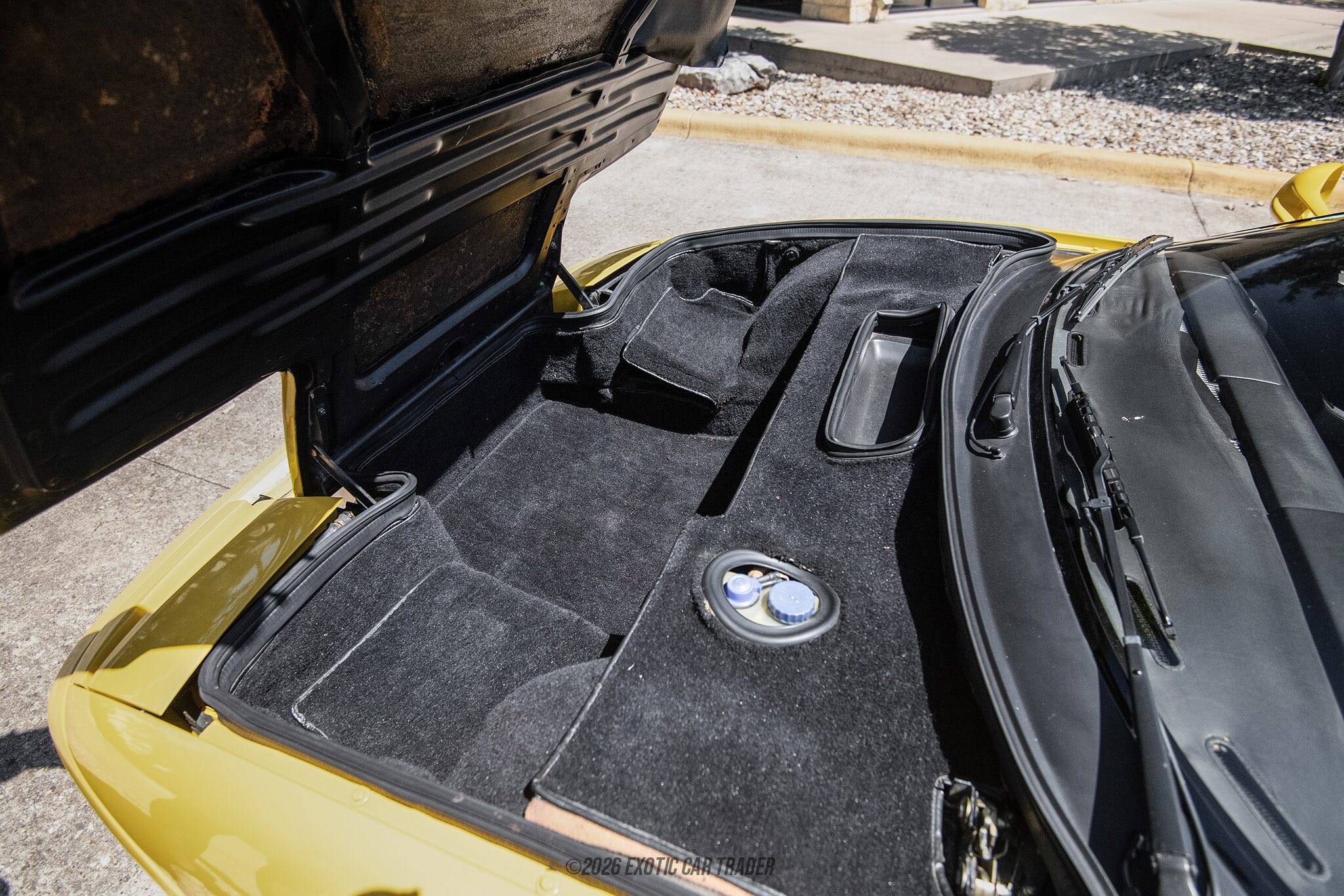
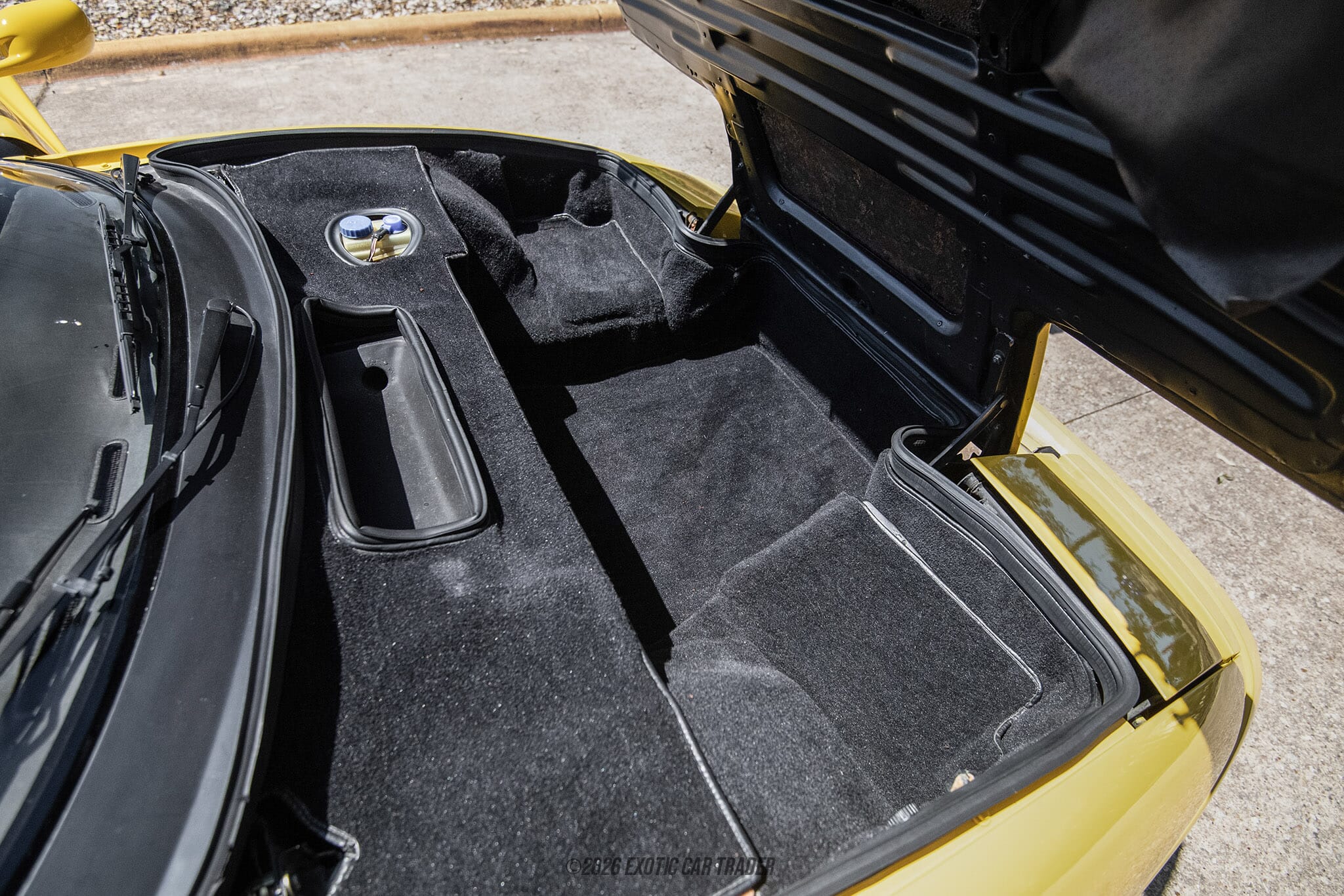
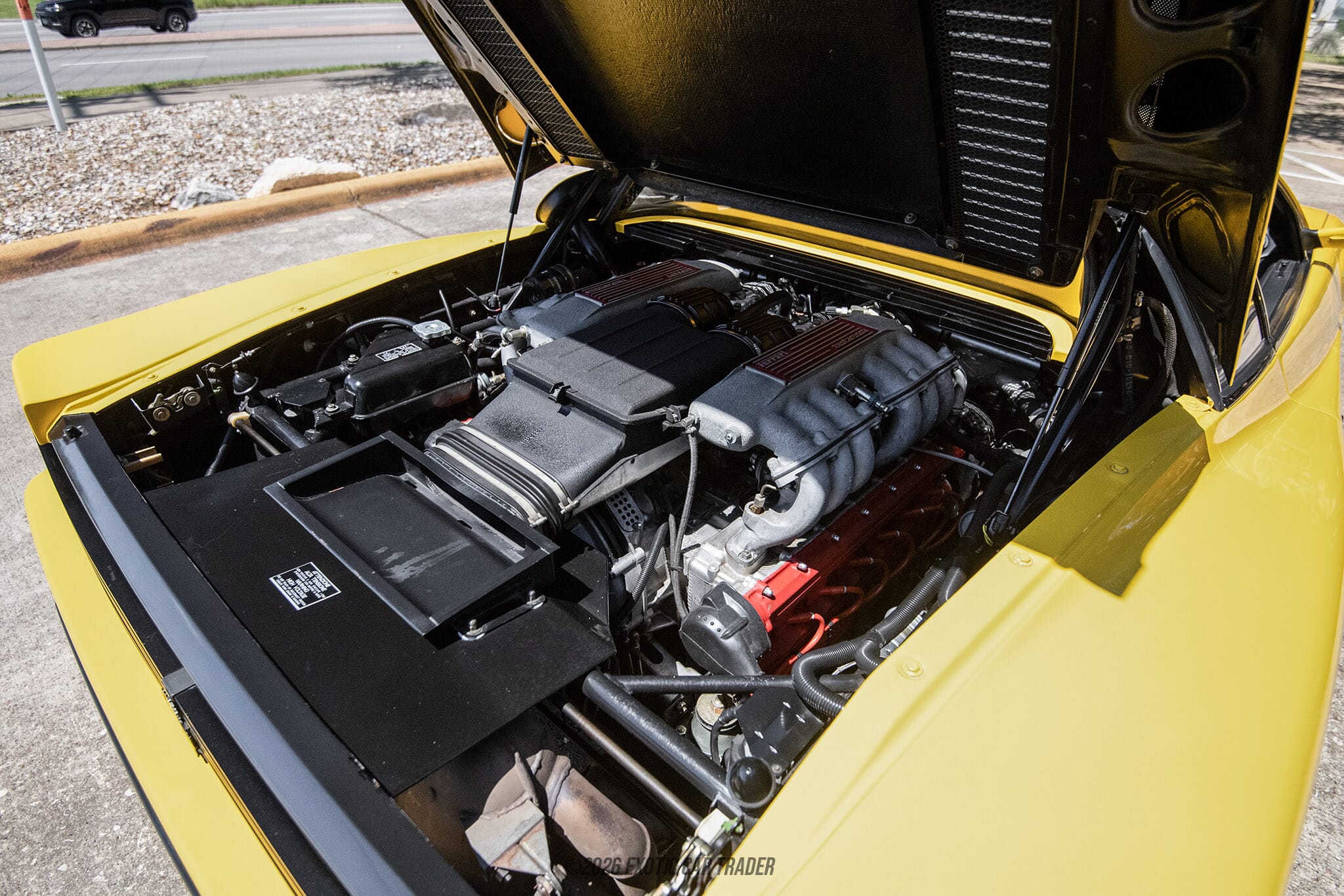
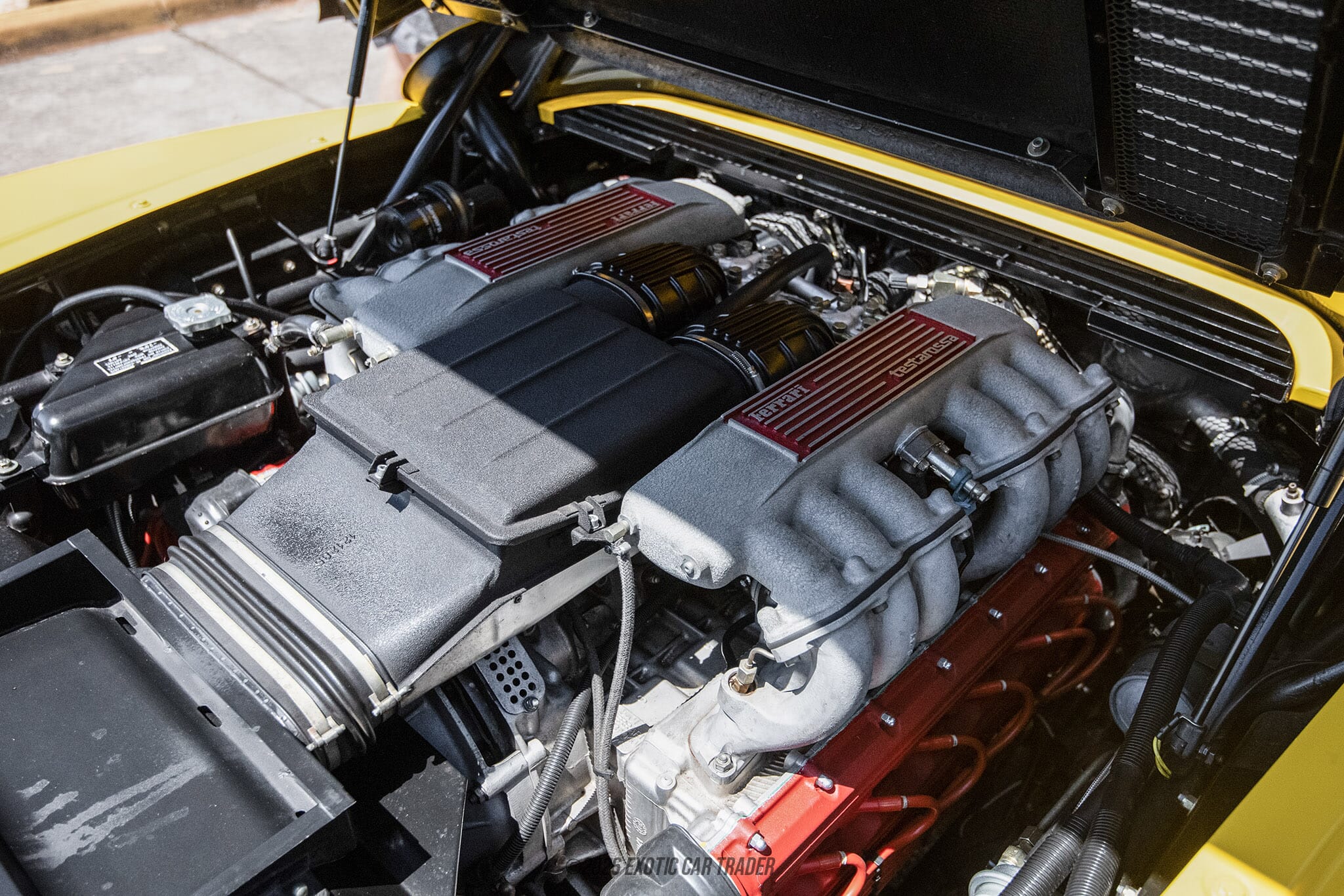
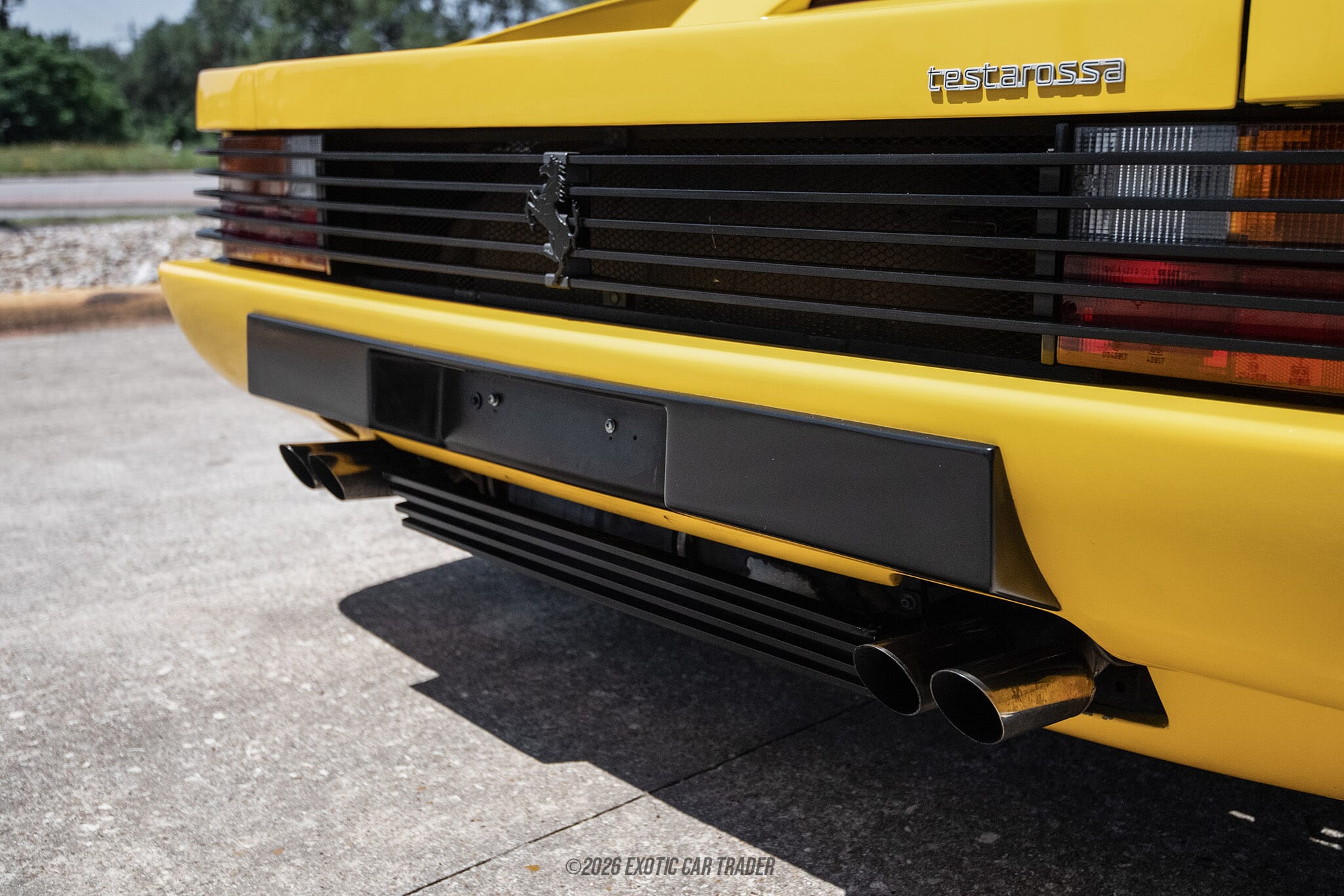
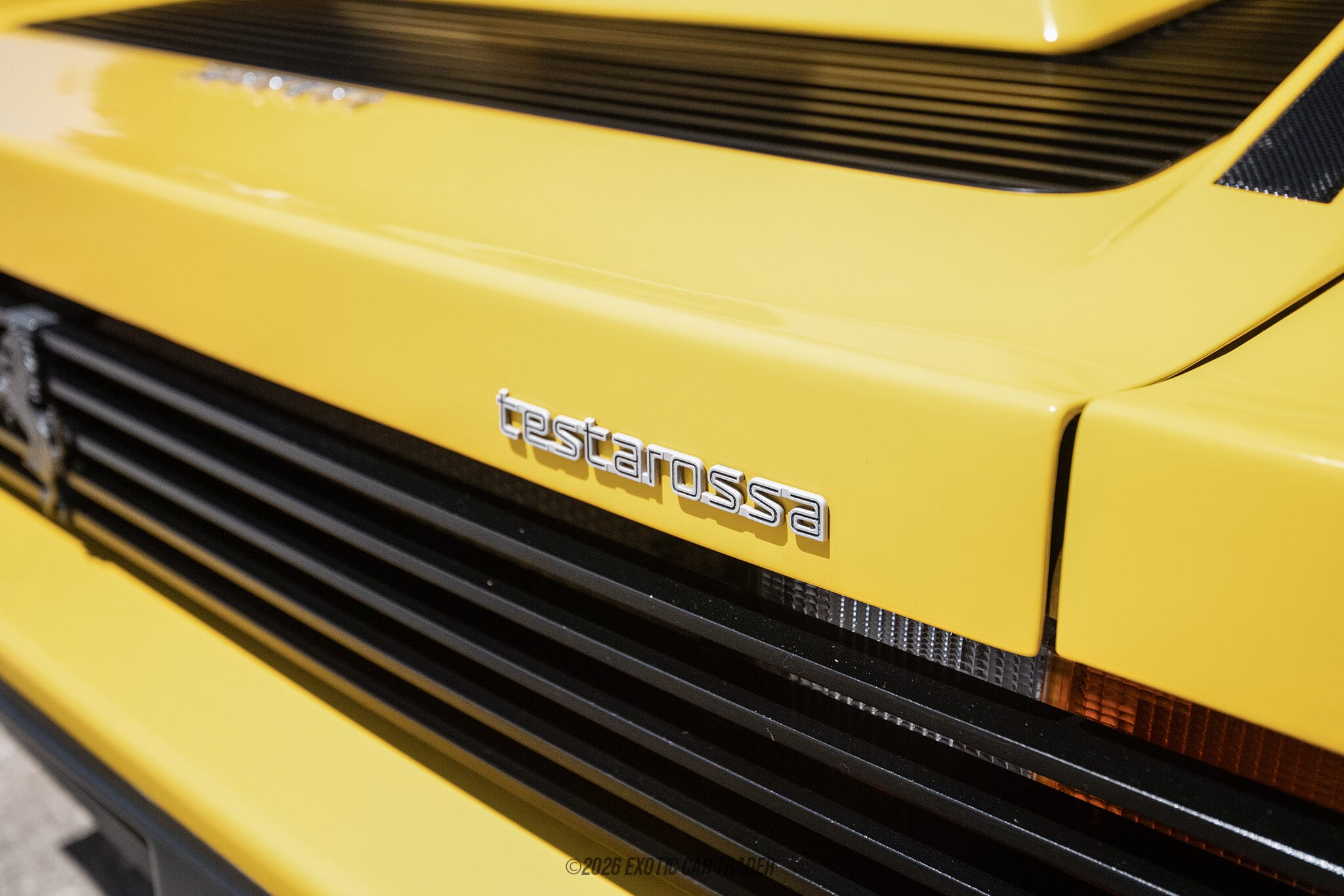
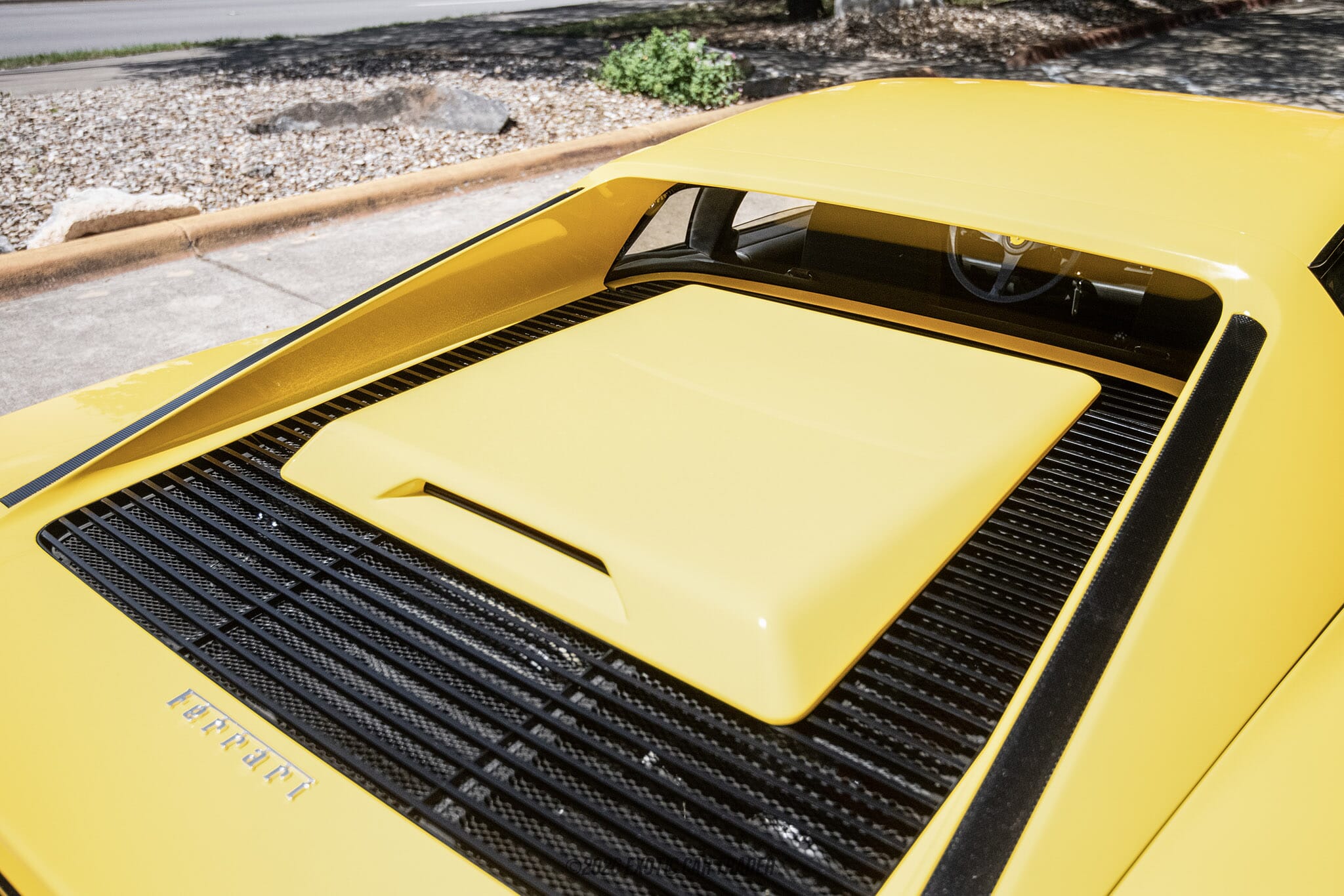
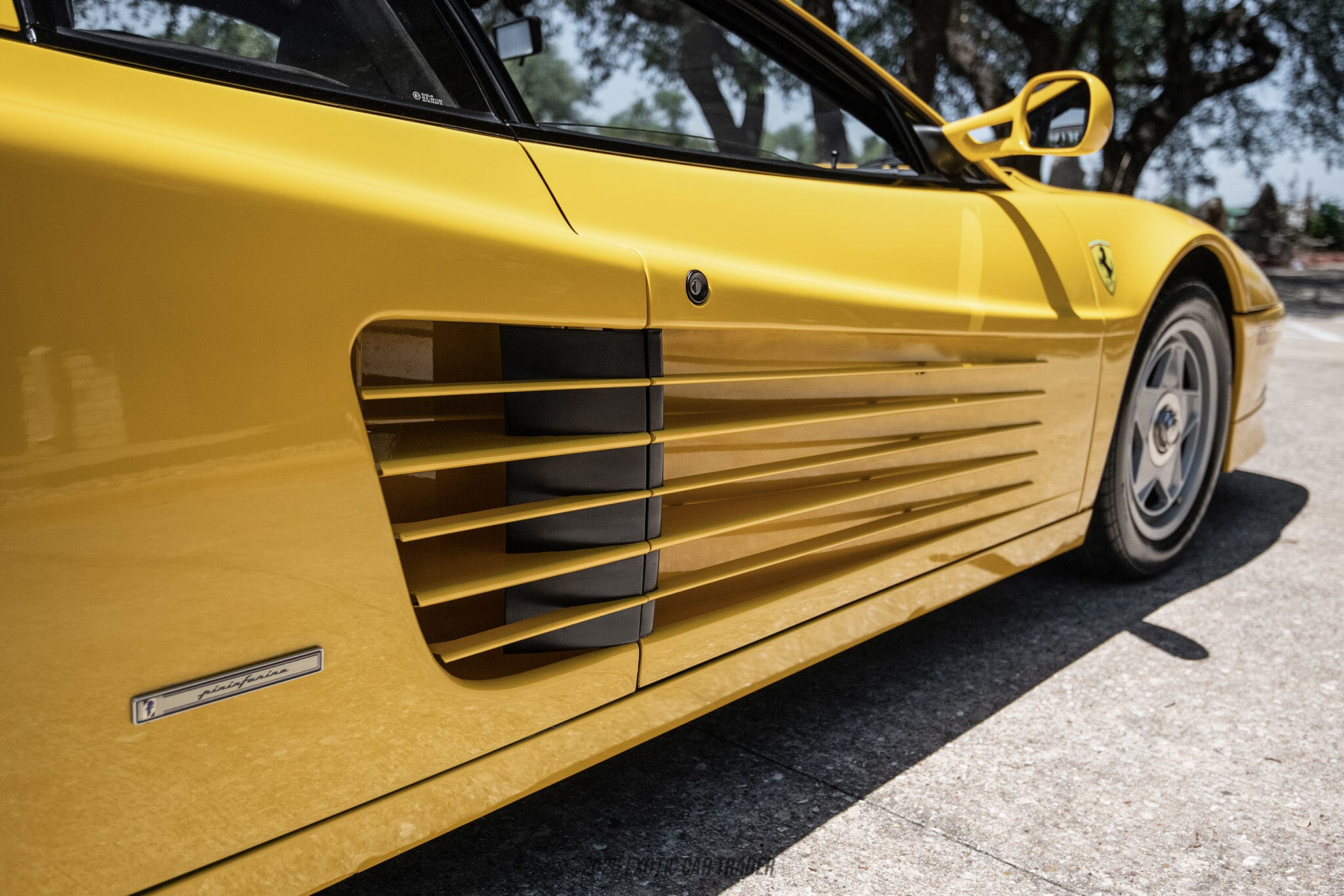
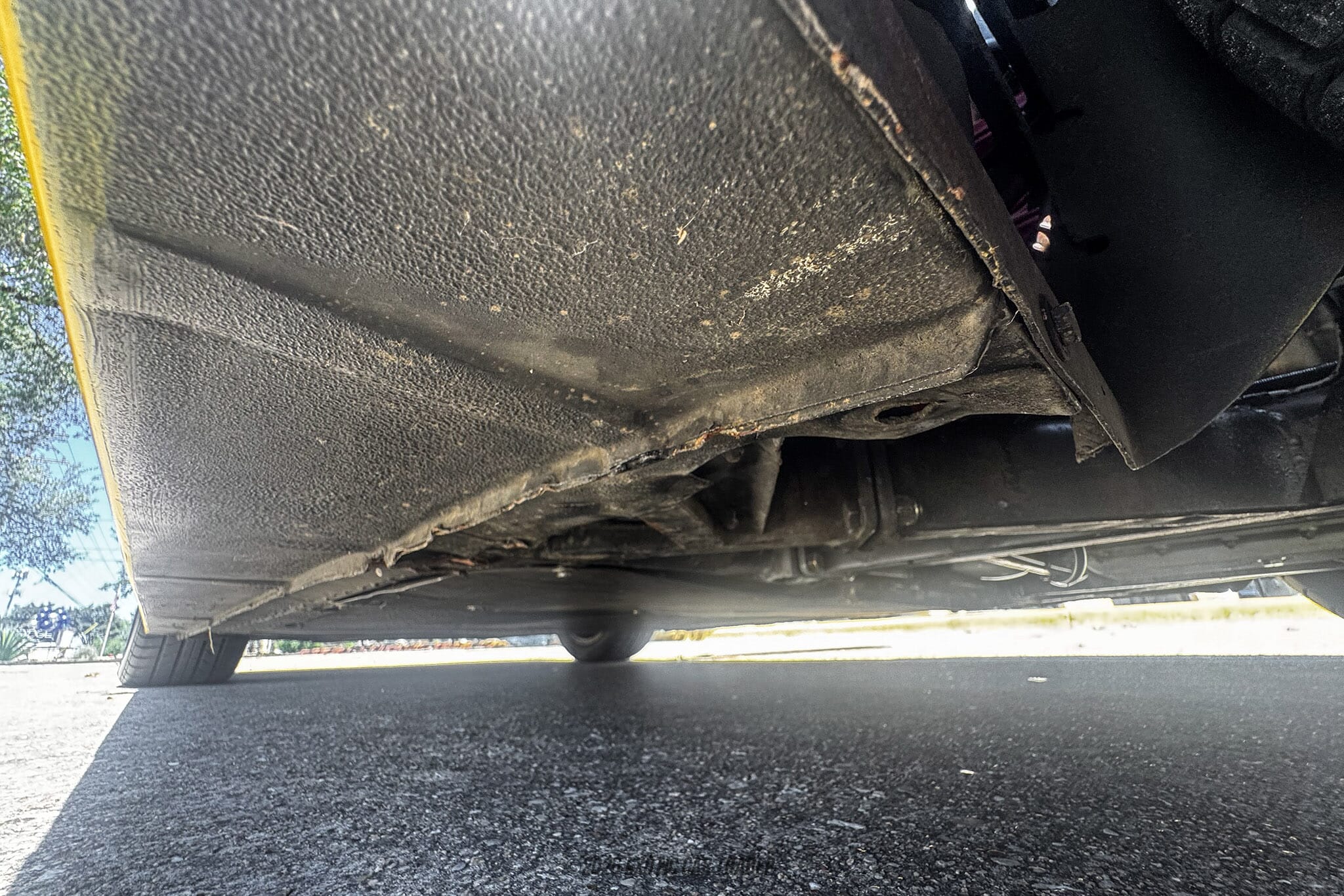
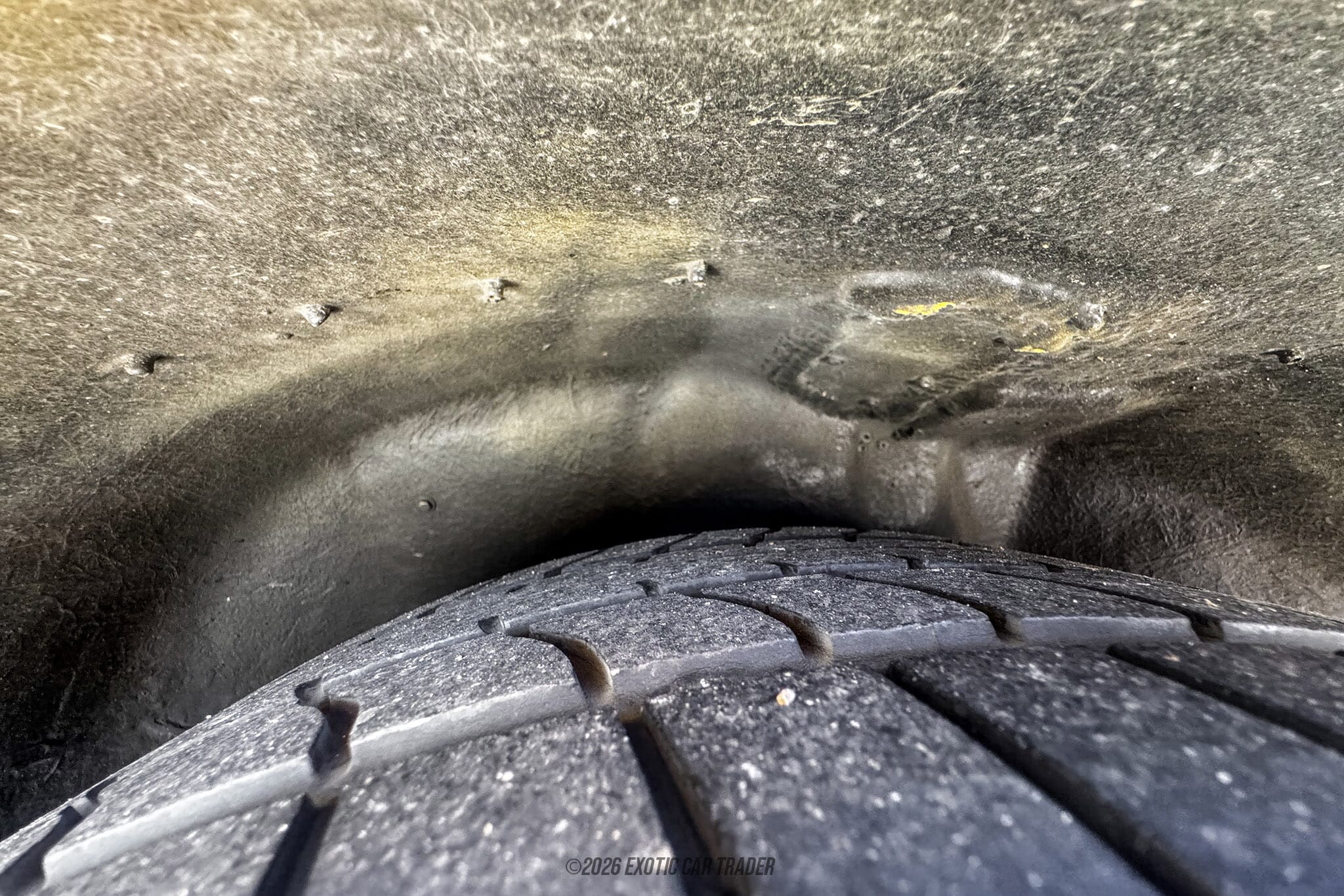
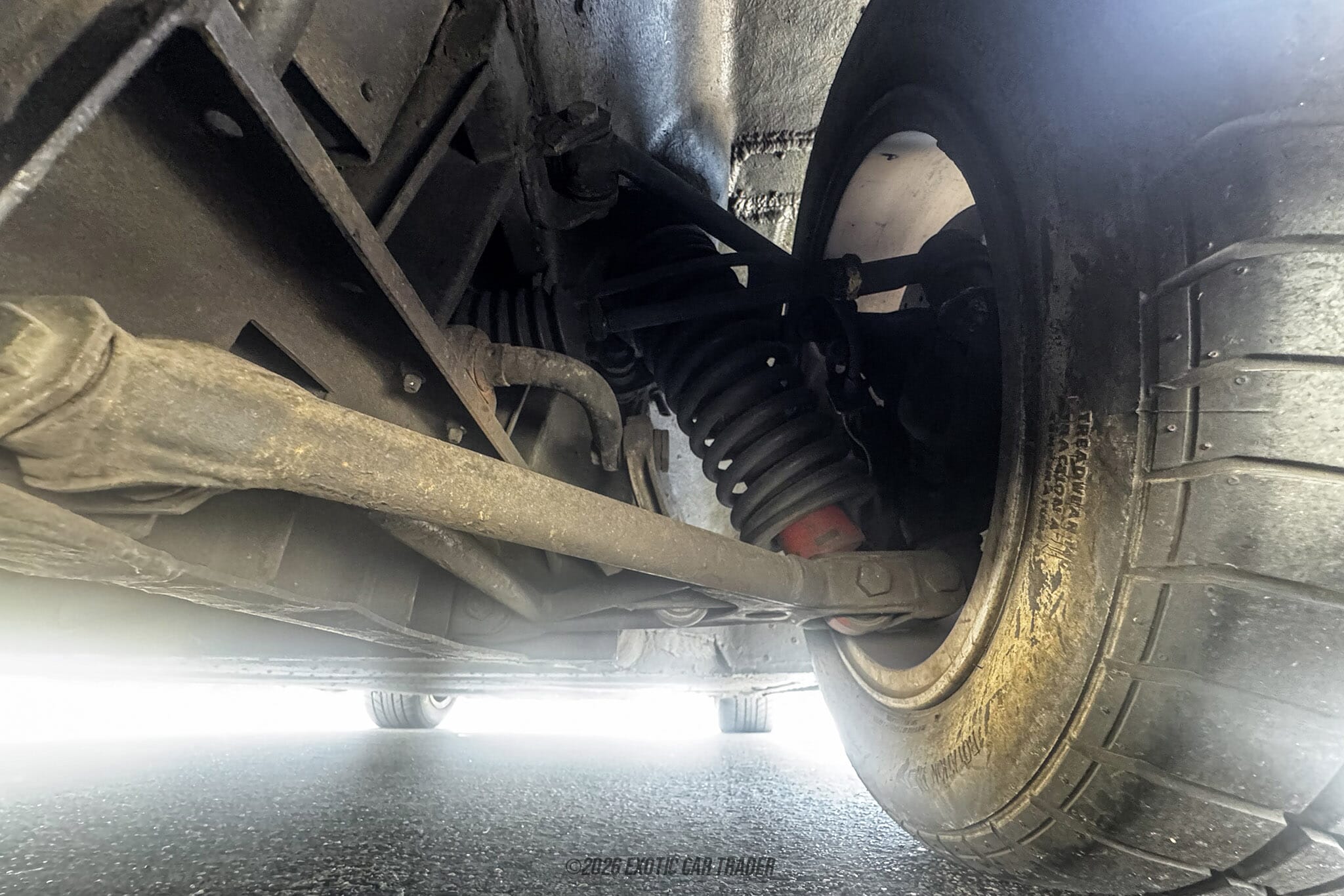
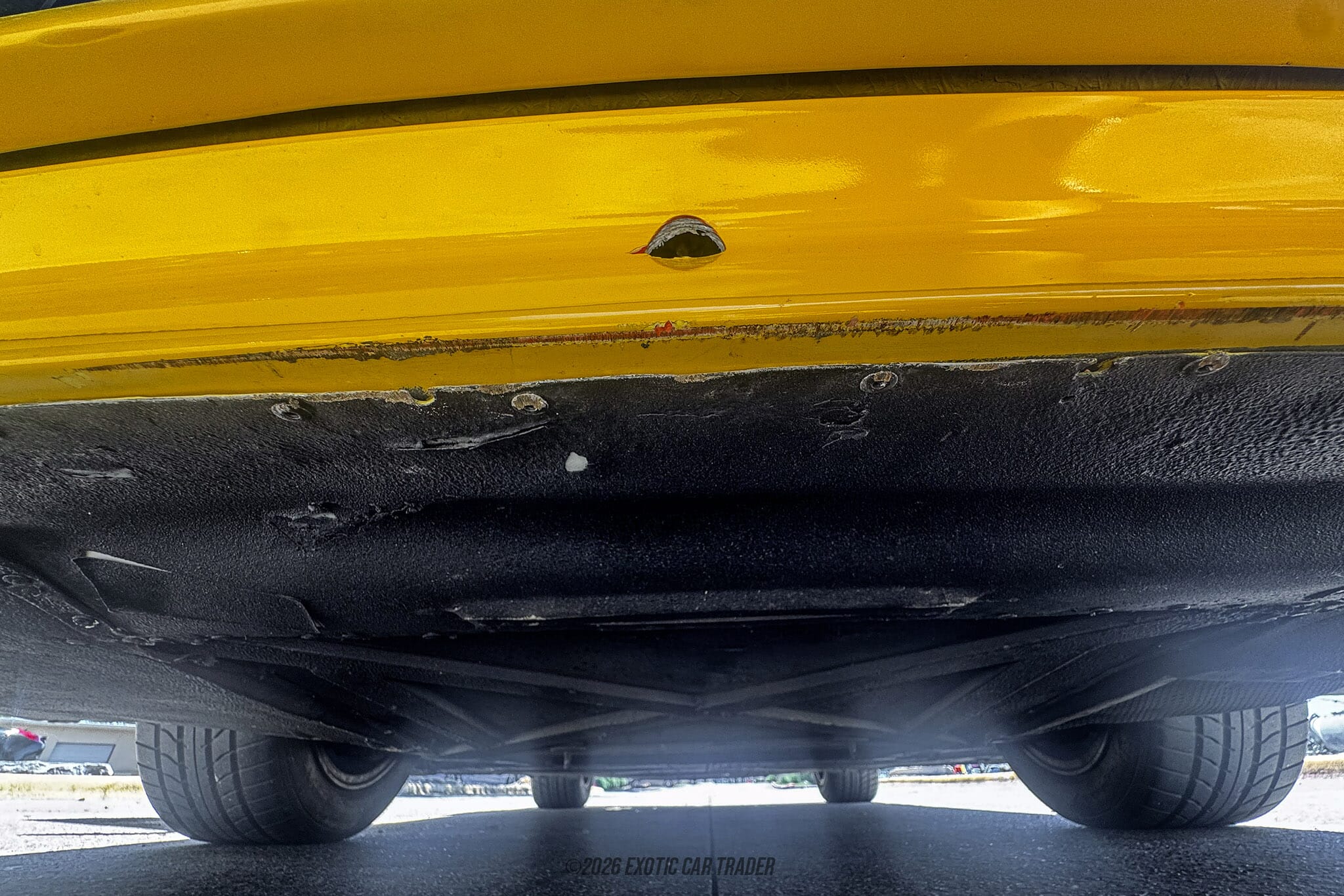
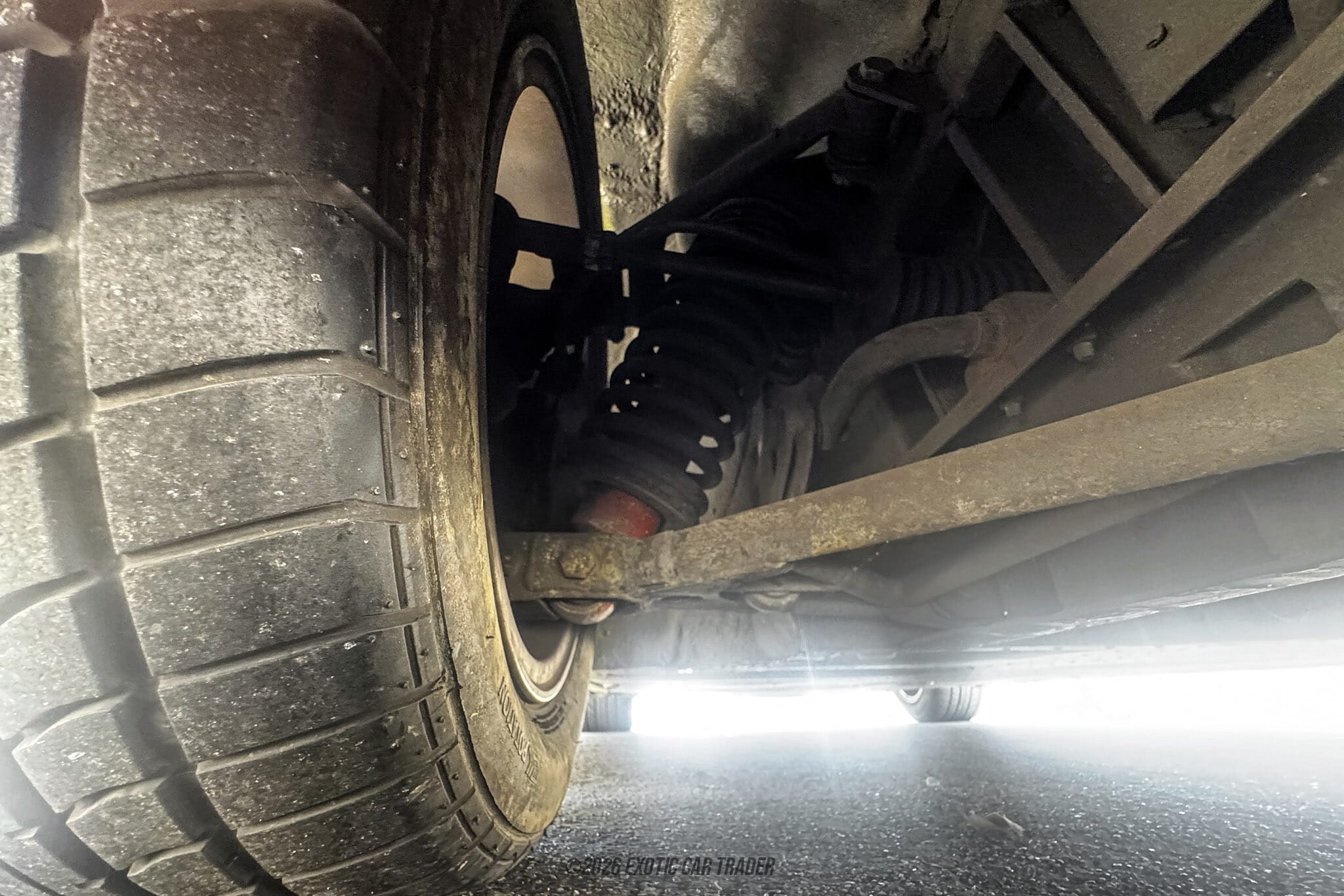
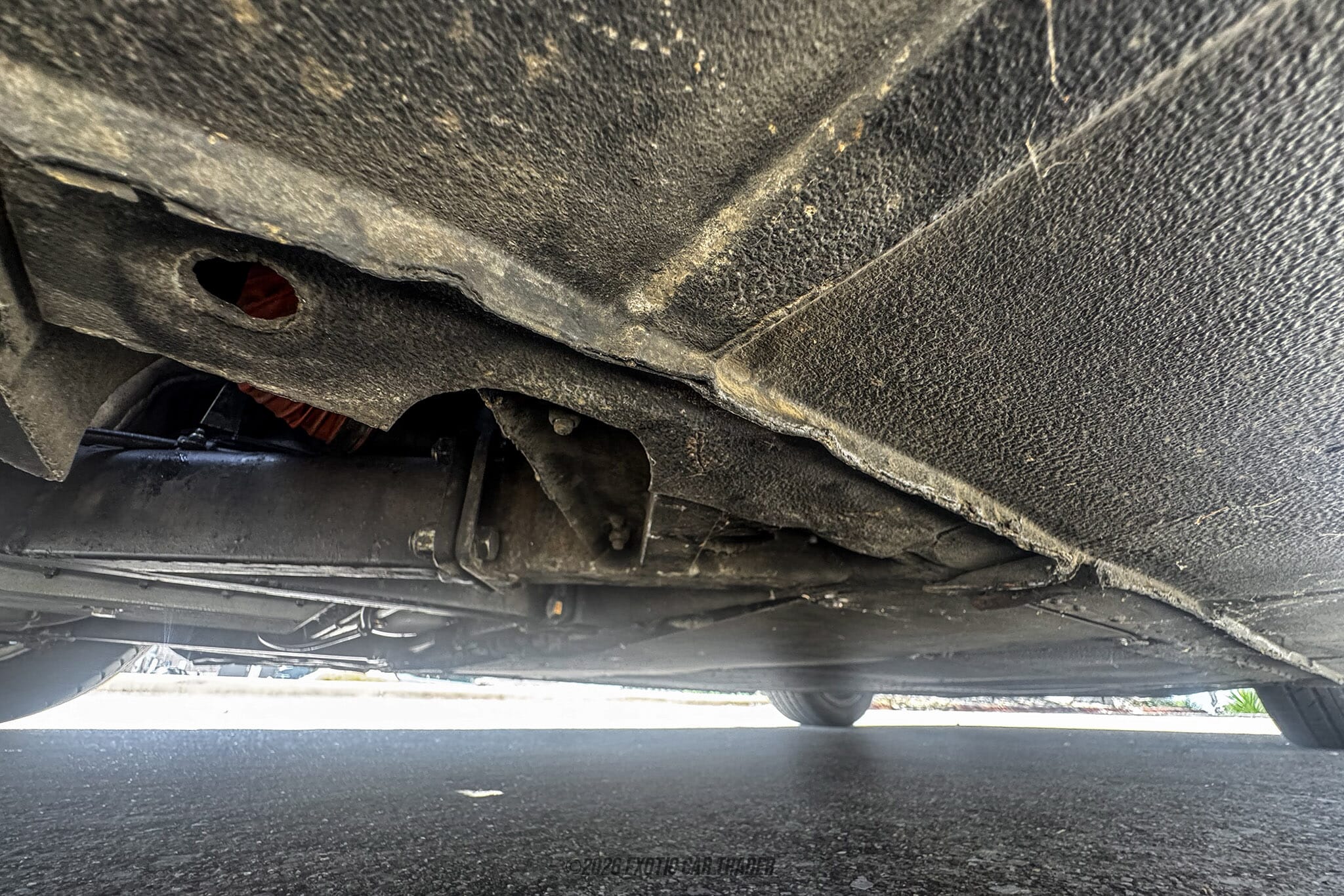
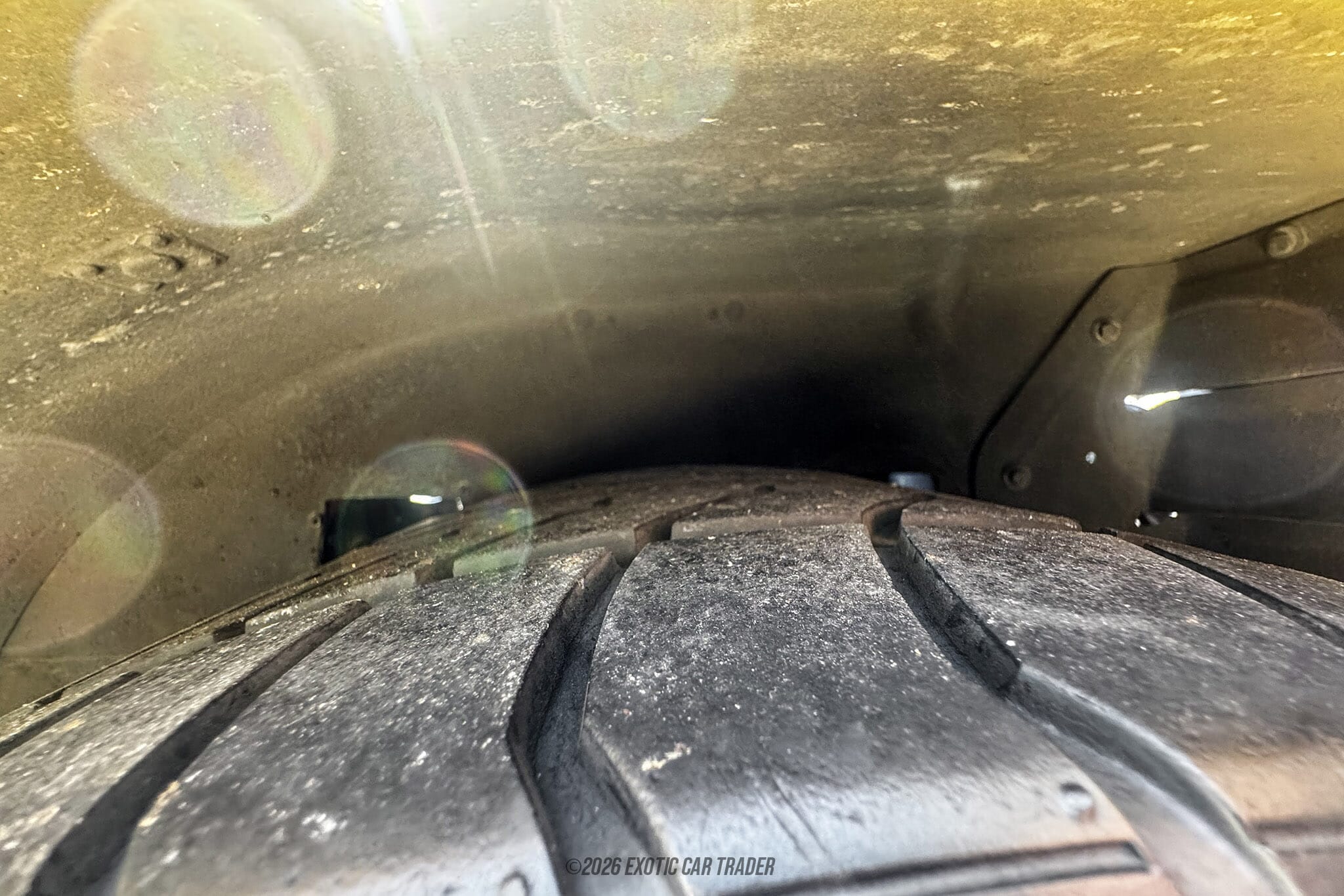
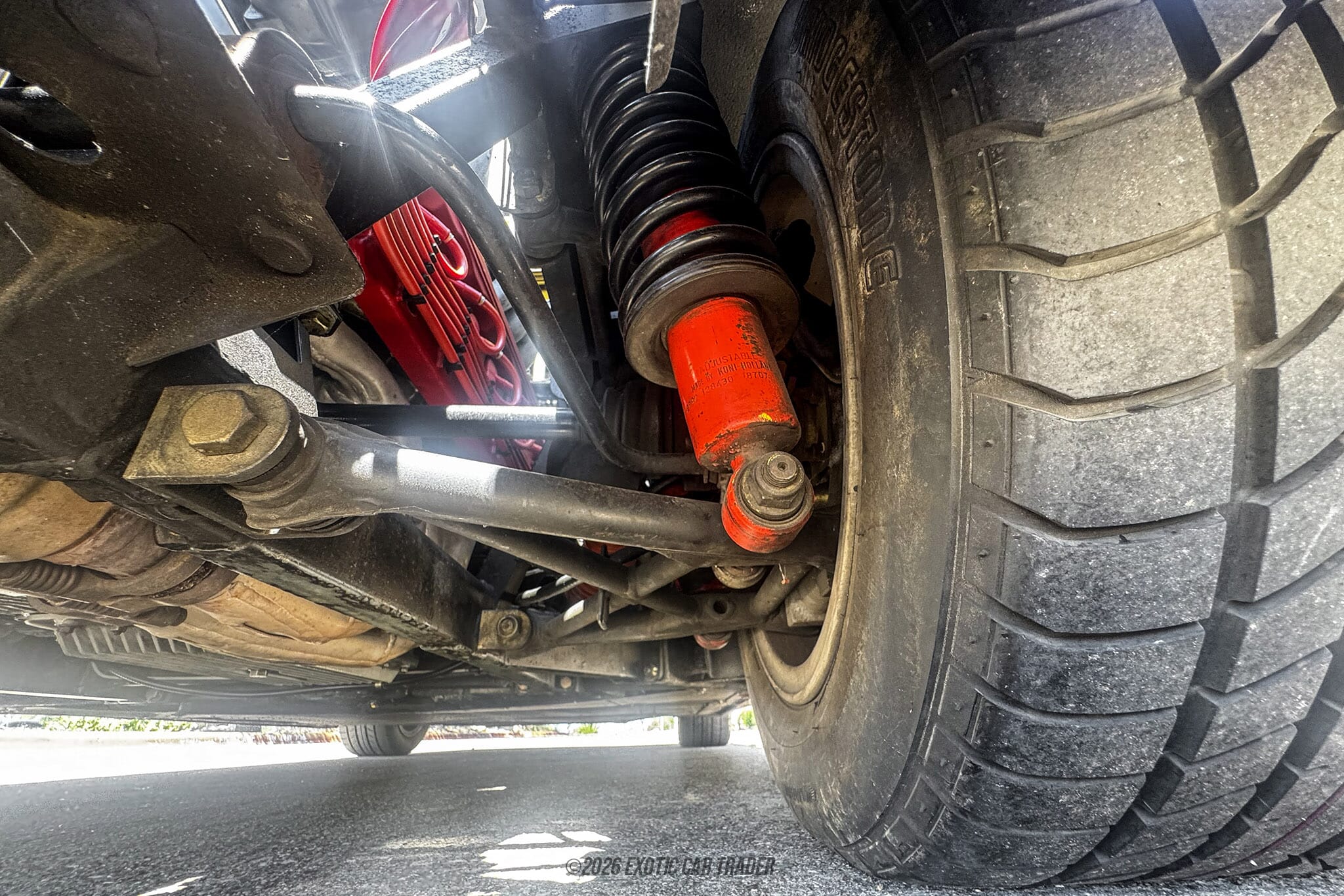
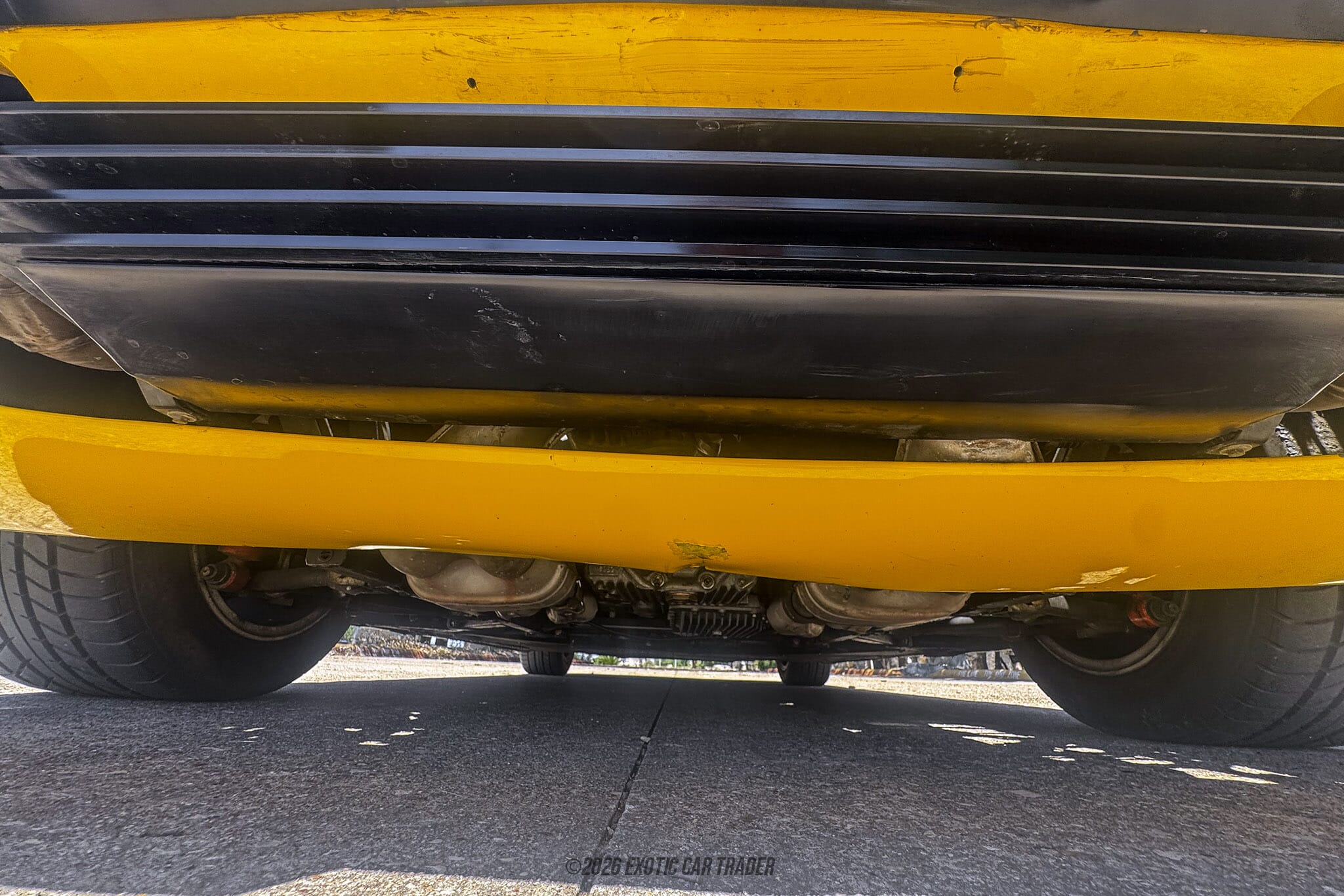
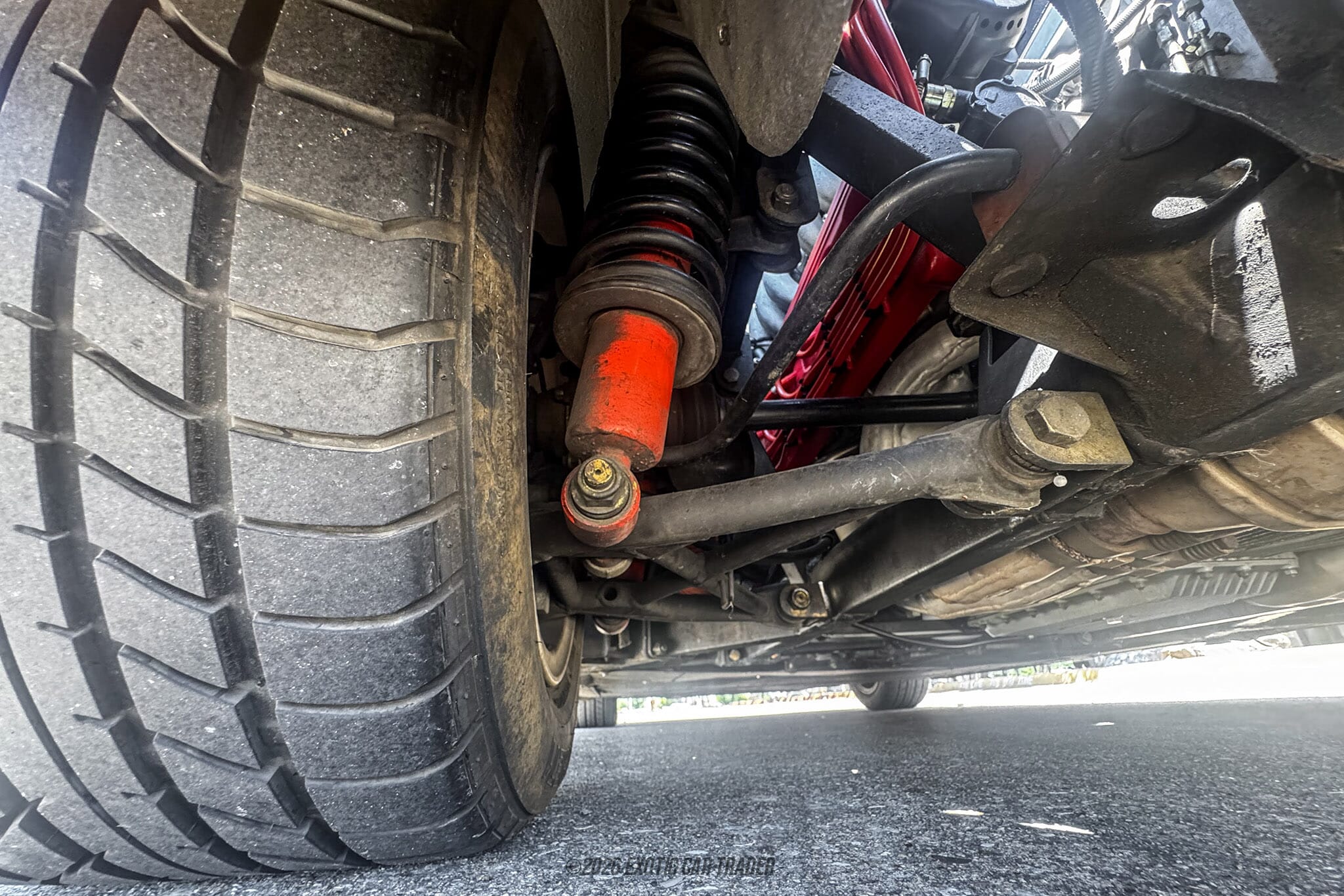


- 1988 Ferrari Testarossa
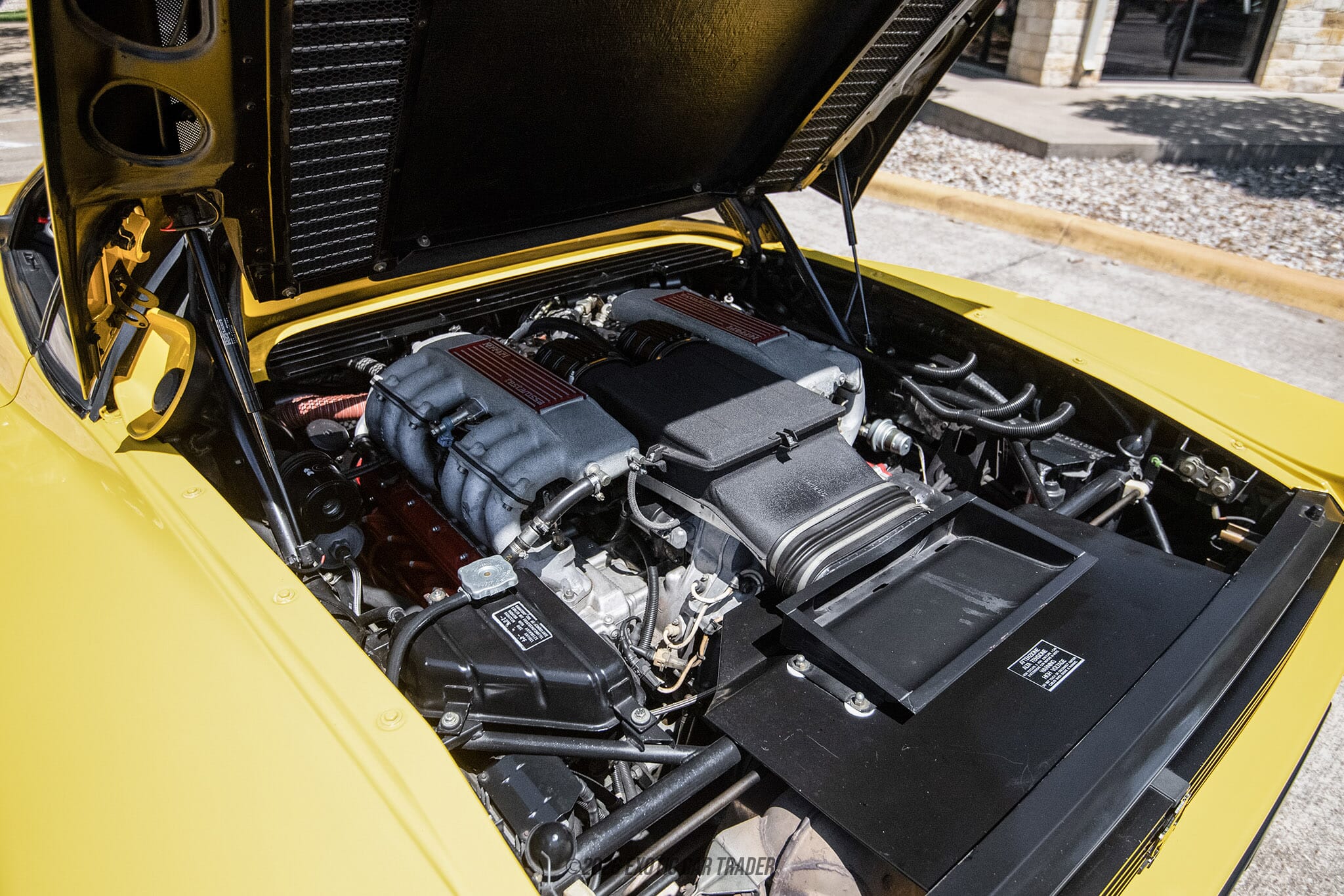
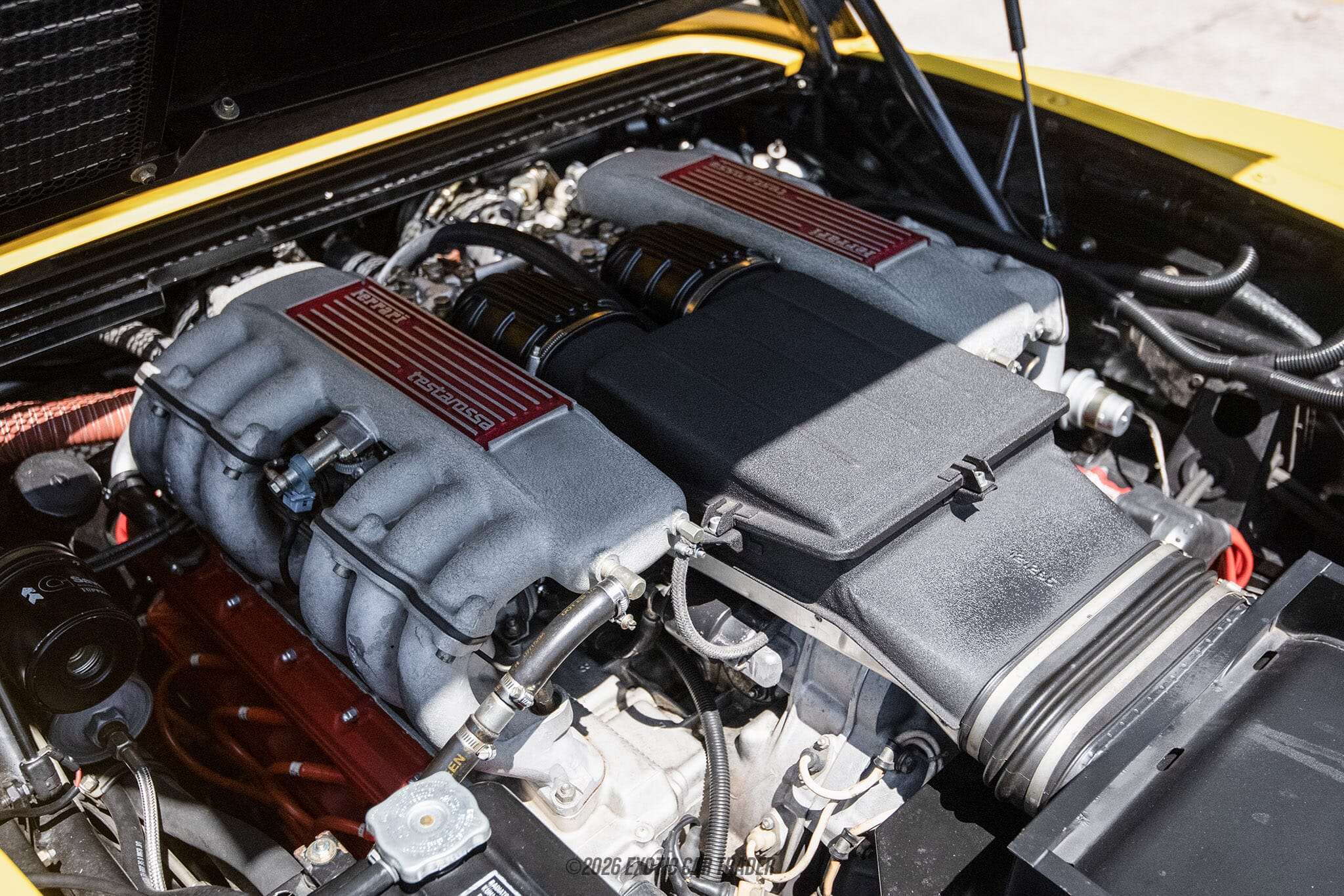
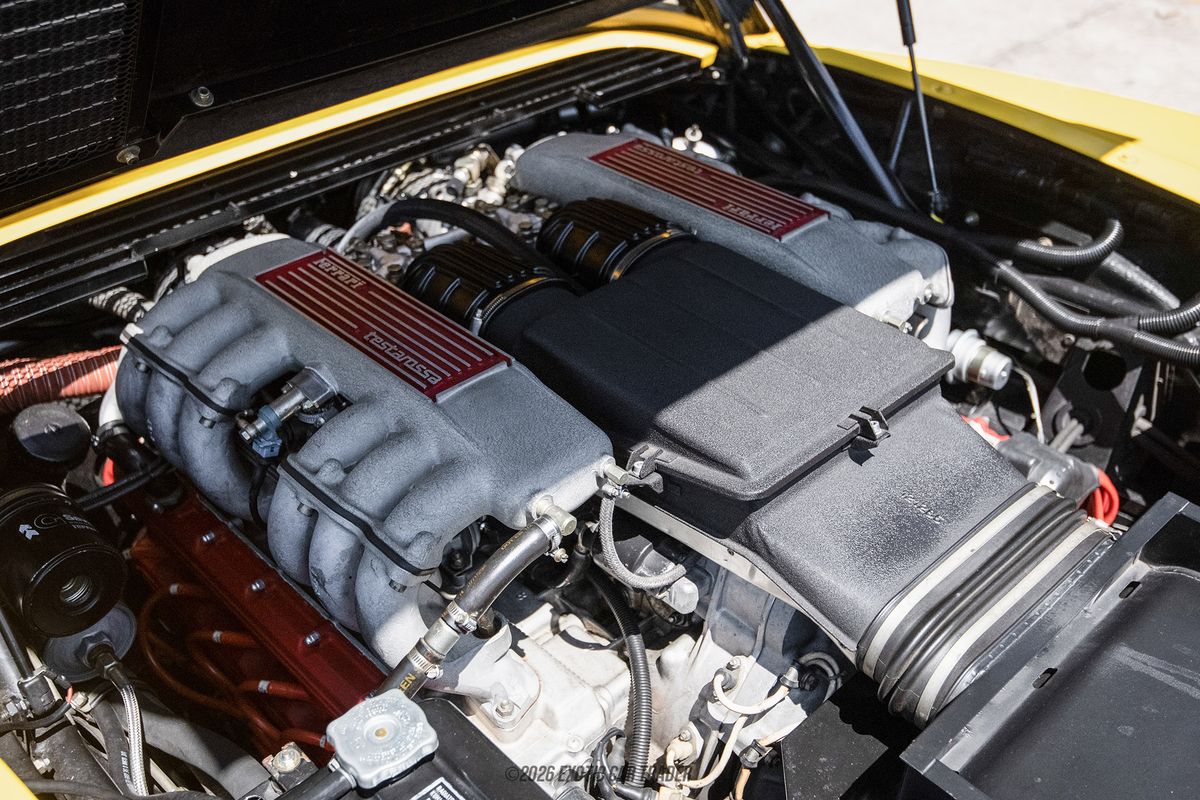
- 4.9L Naturally Aspirated V12
- Bosch KE-Jetronic CIS Fuel Injection
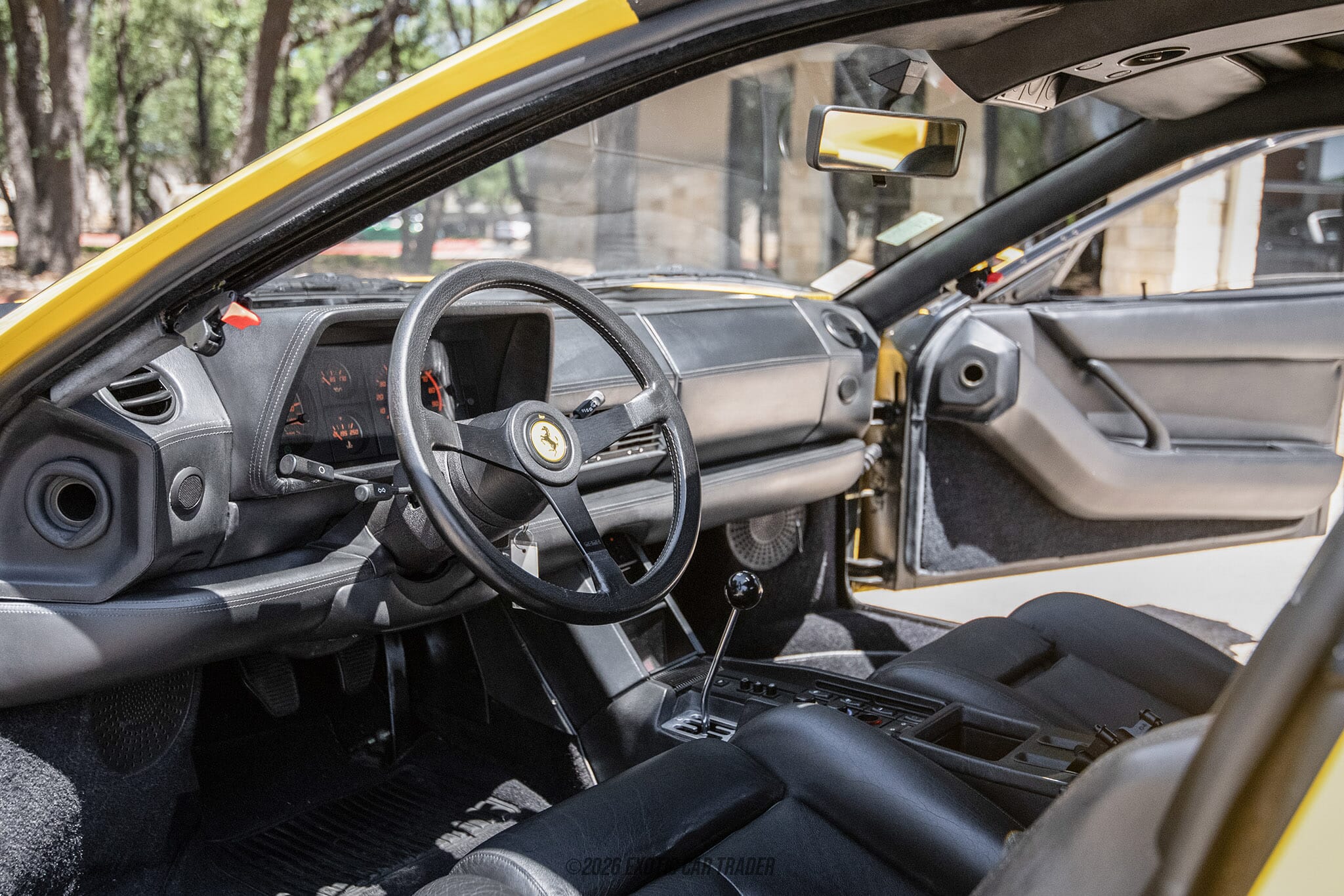
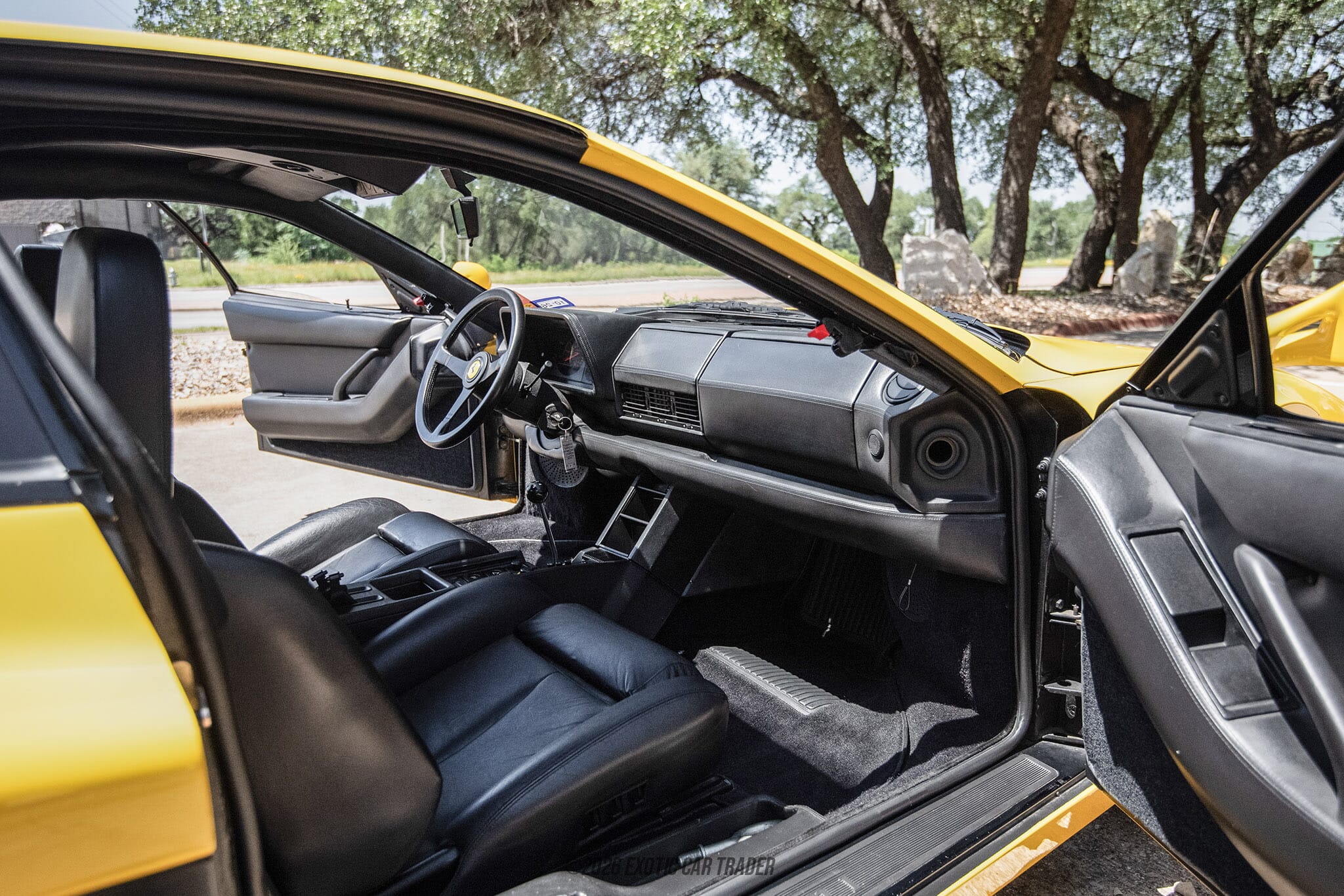
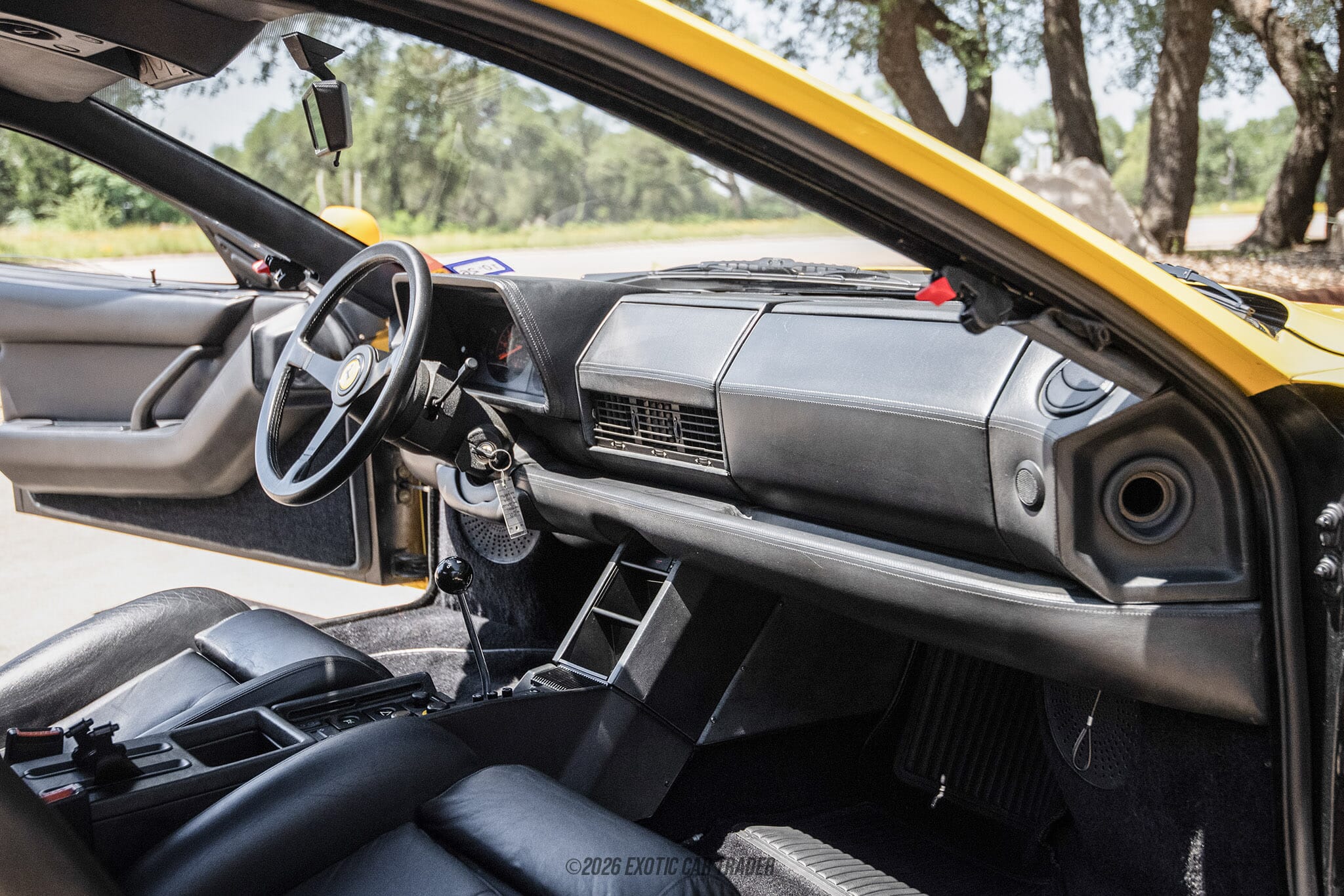
- 5-Speed Gated Manual
- RWD
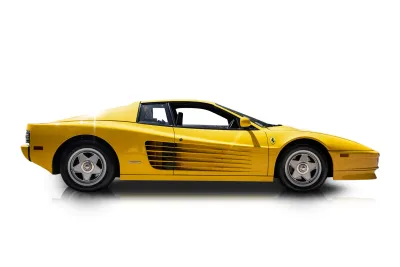
- Giallo Fly Exterior
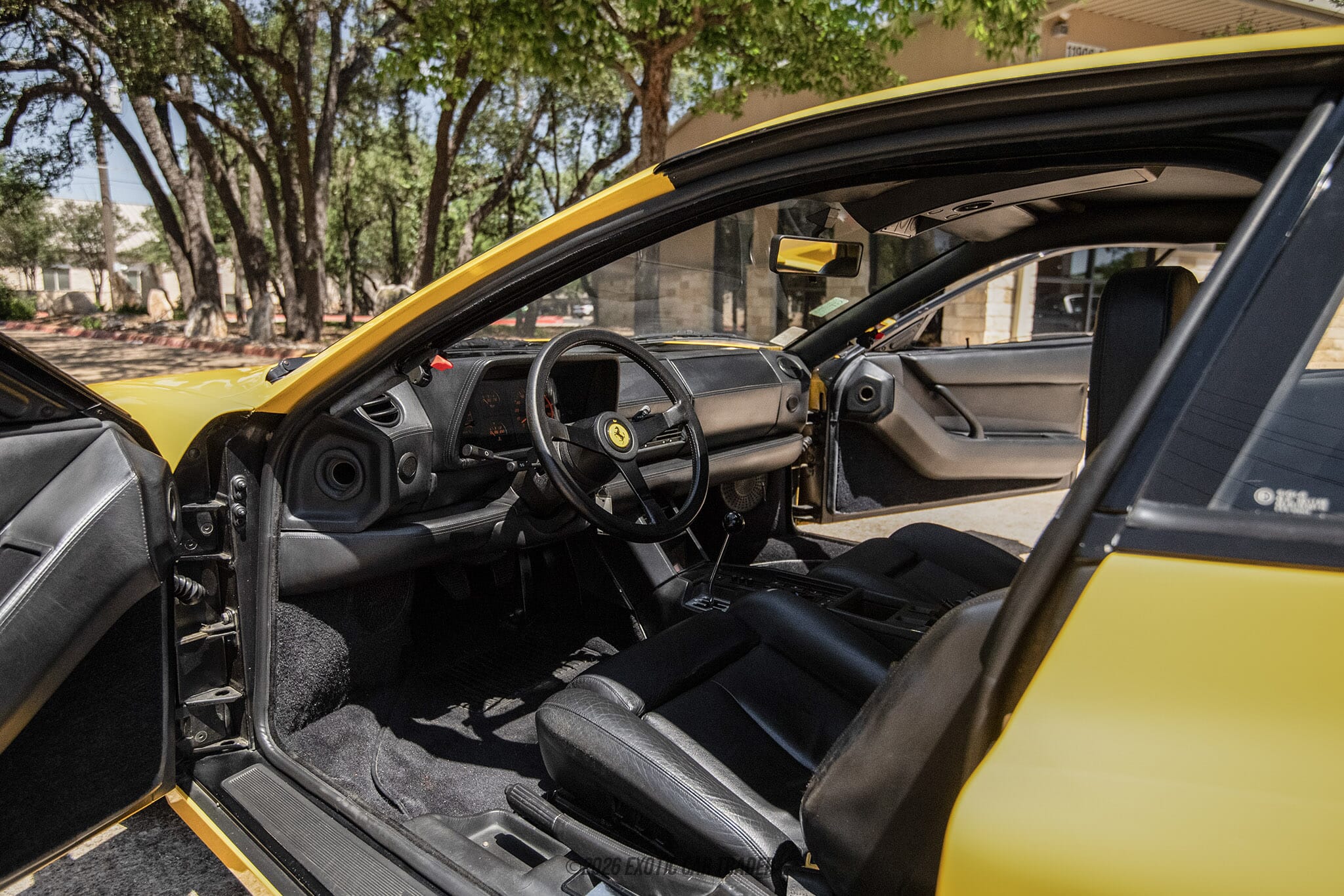
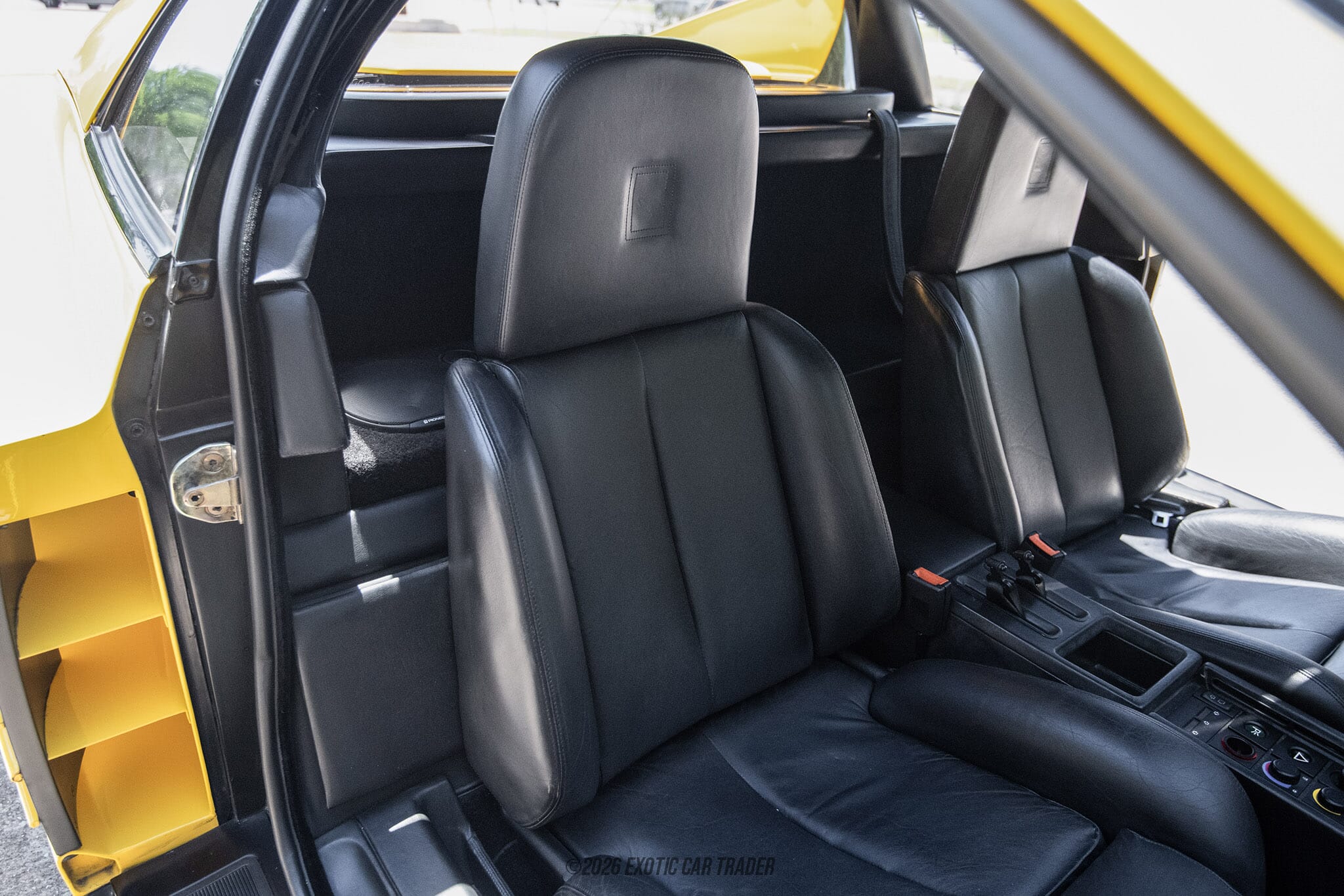
- Nero Interior
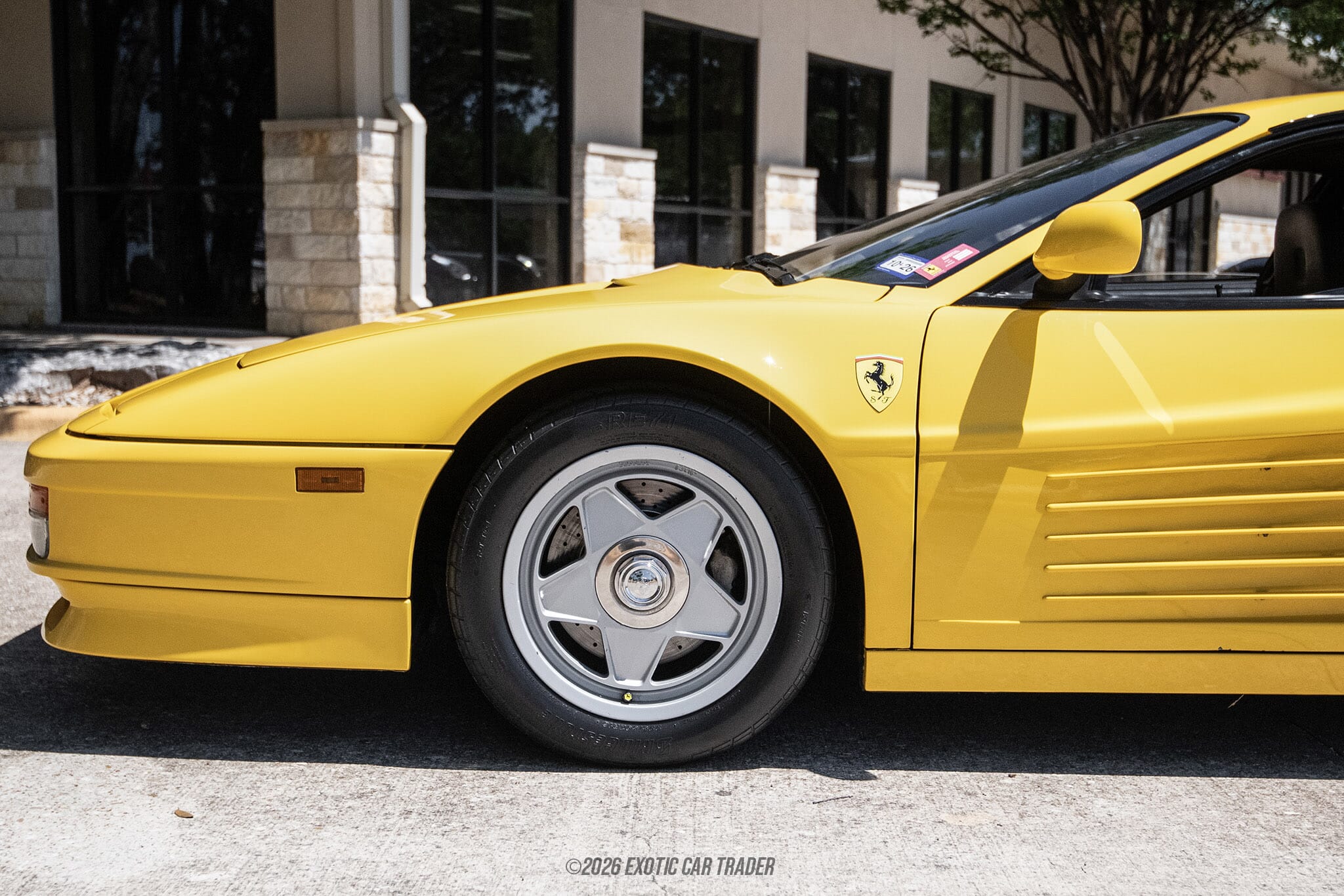
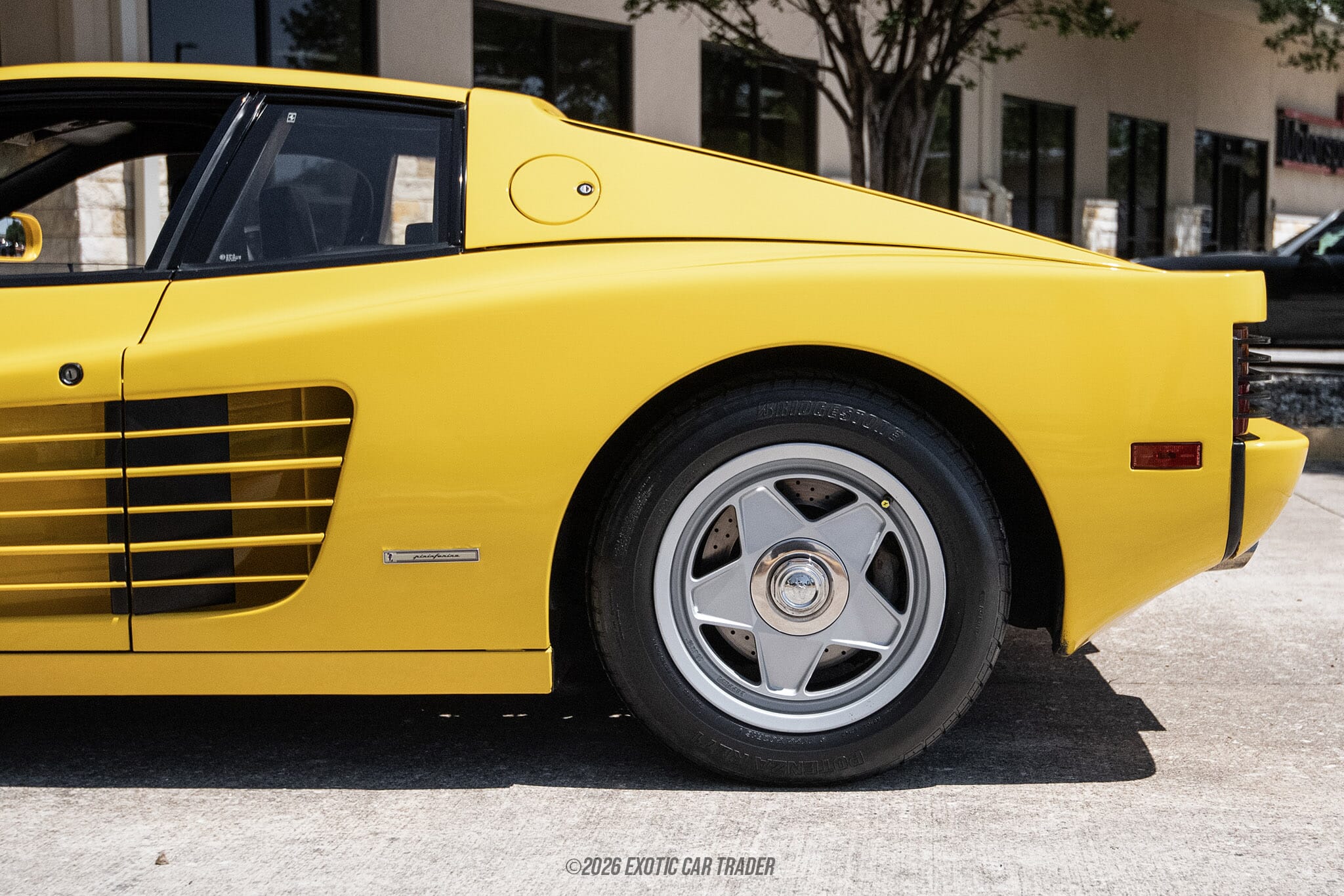
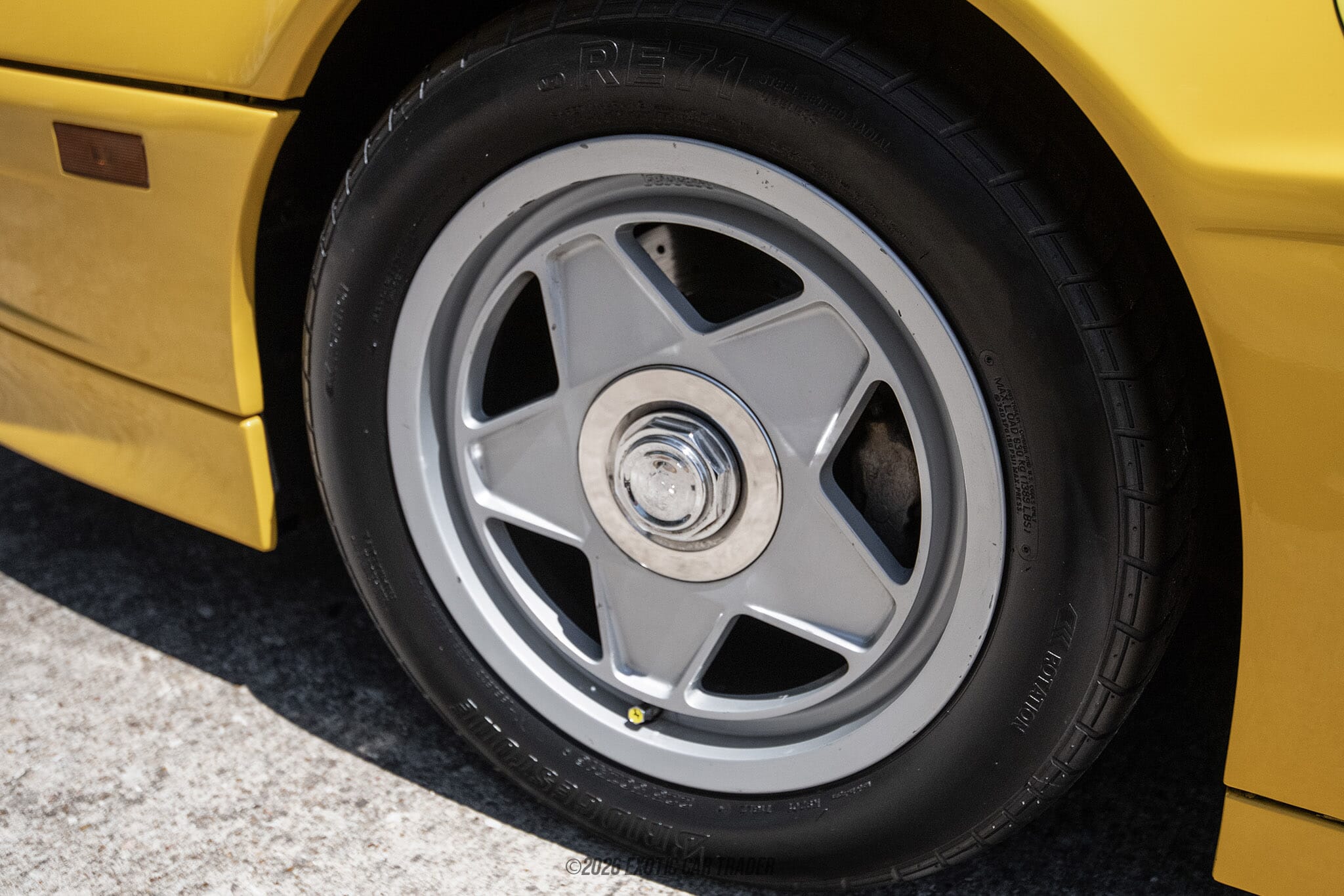
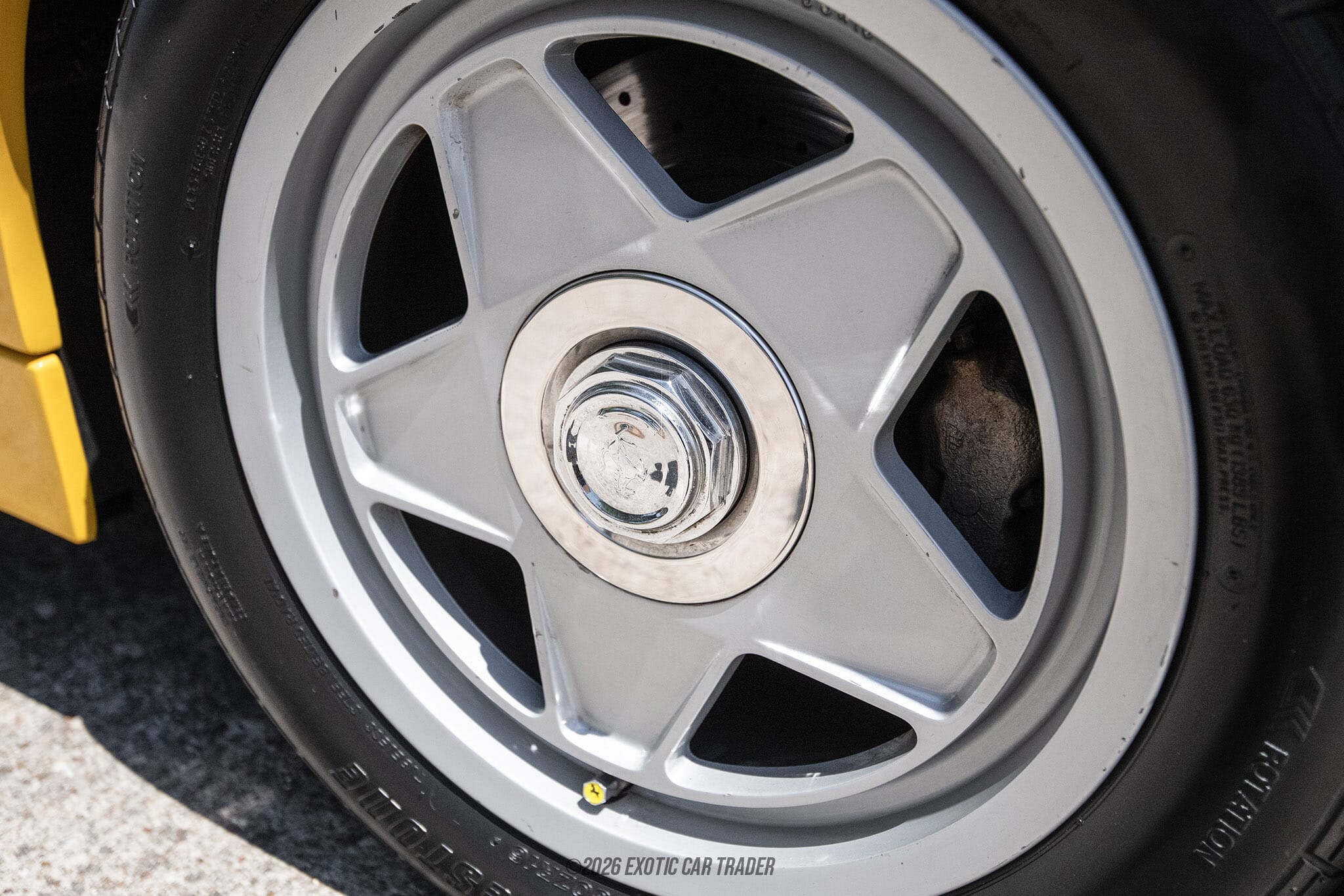
- 16” Five-Spoke Alloy Wheels
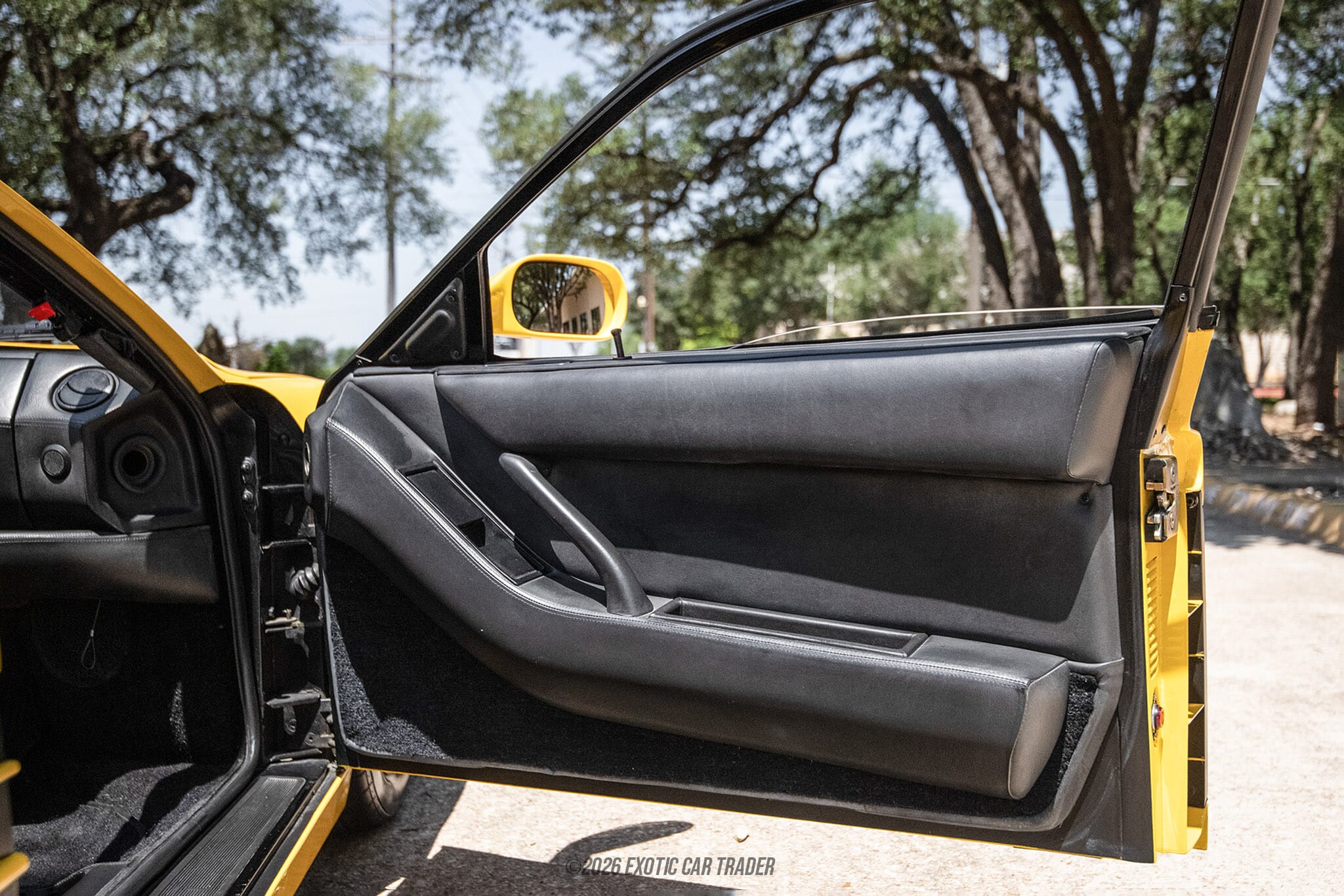
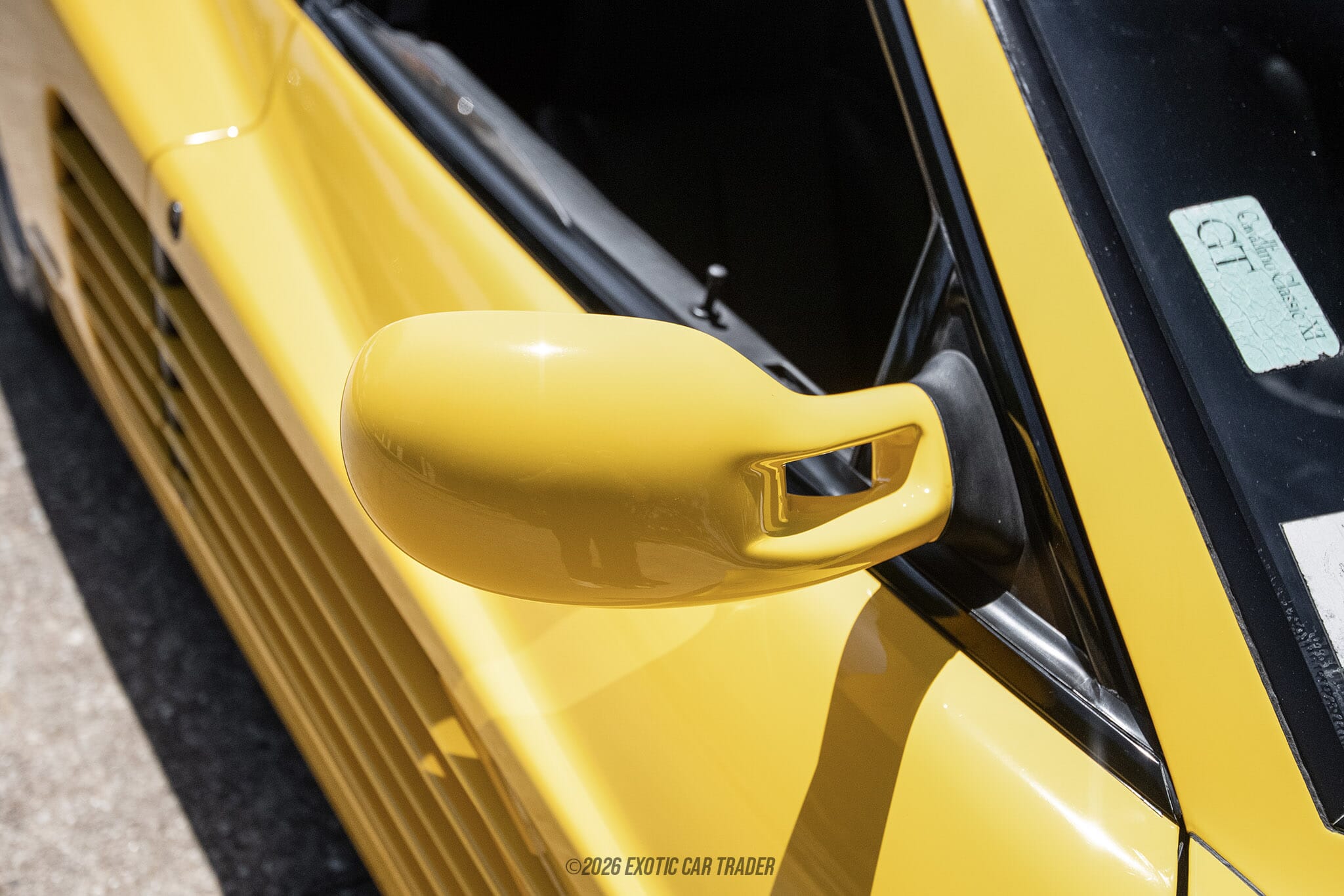
- Dual Low-Mounted Mirrors
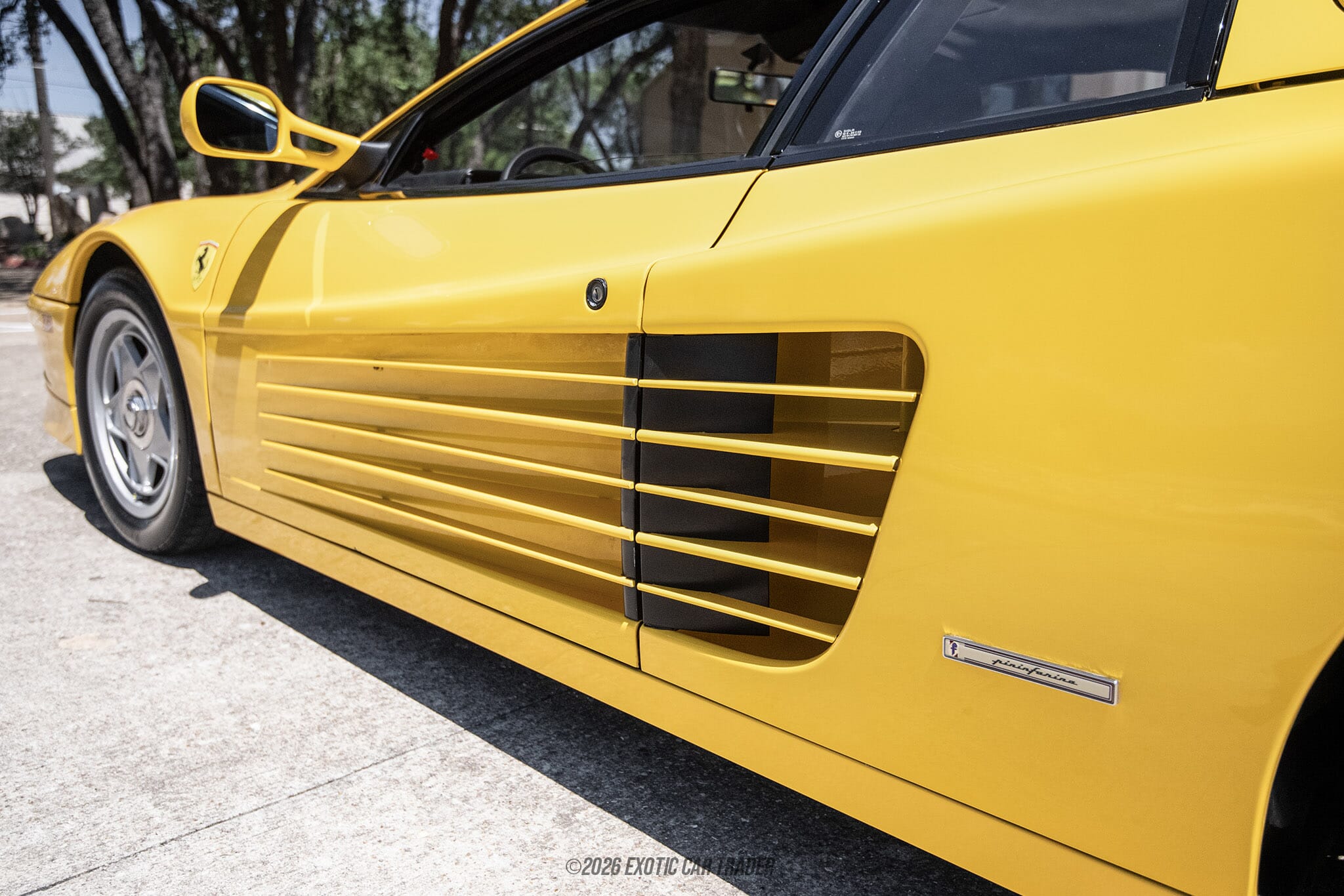
- Side Straked Bodywork
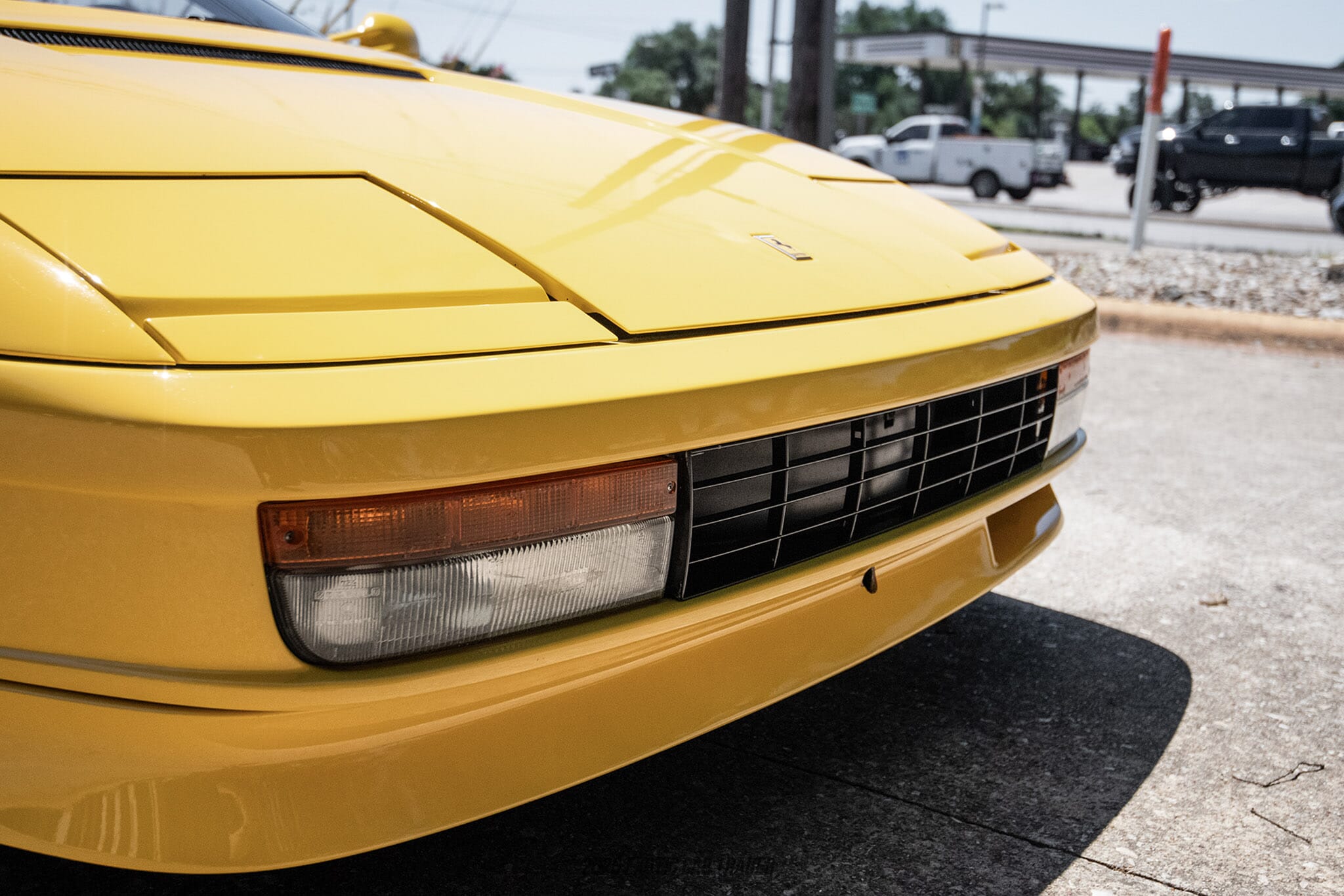
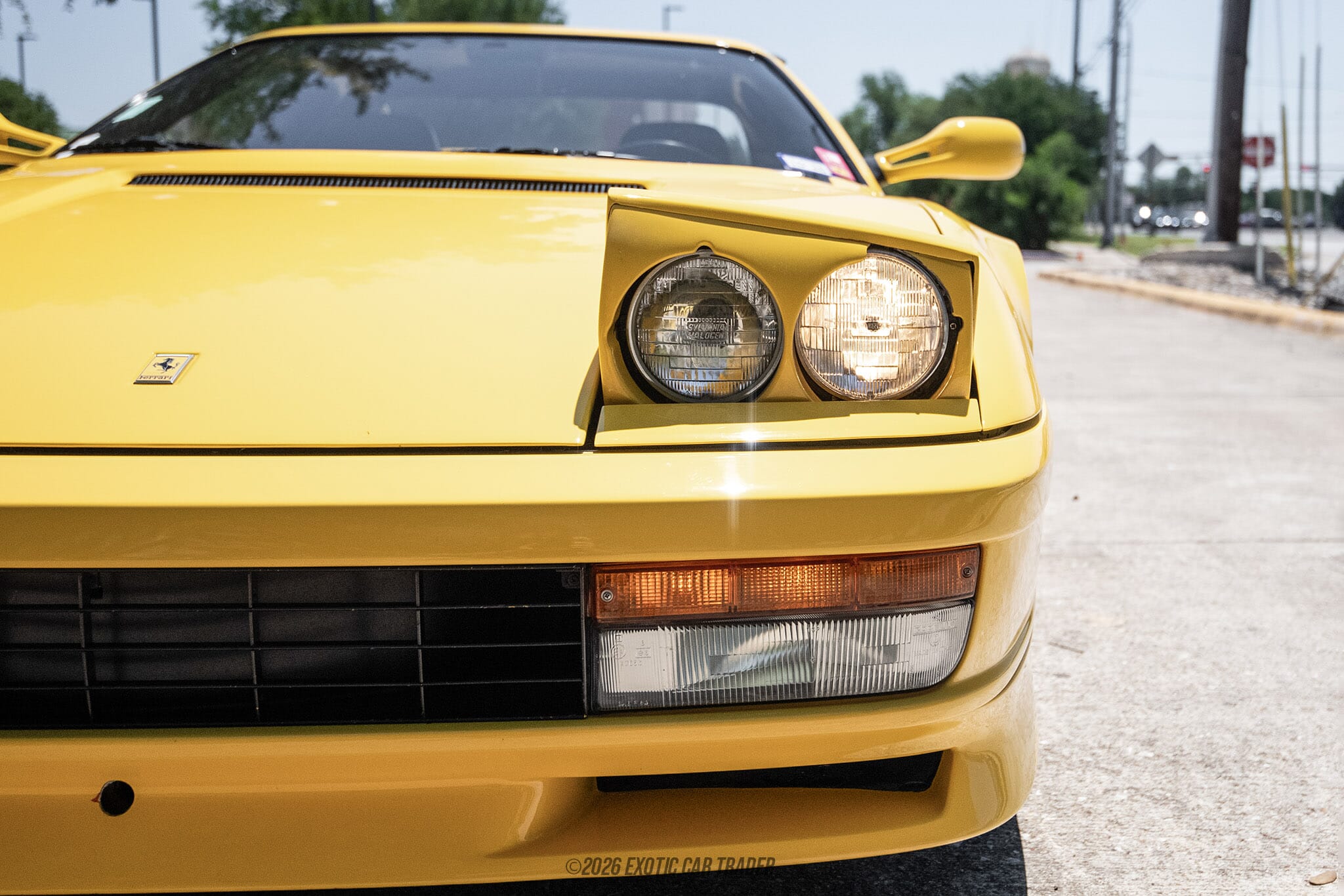
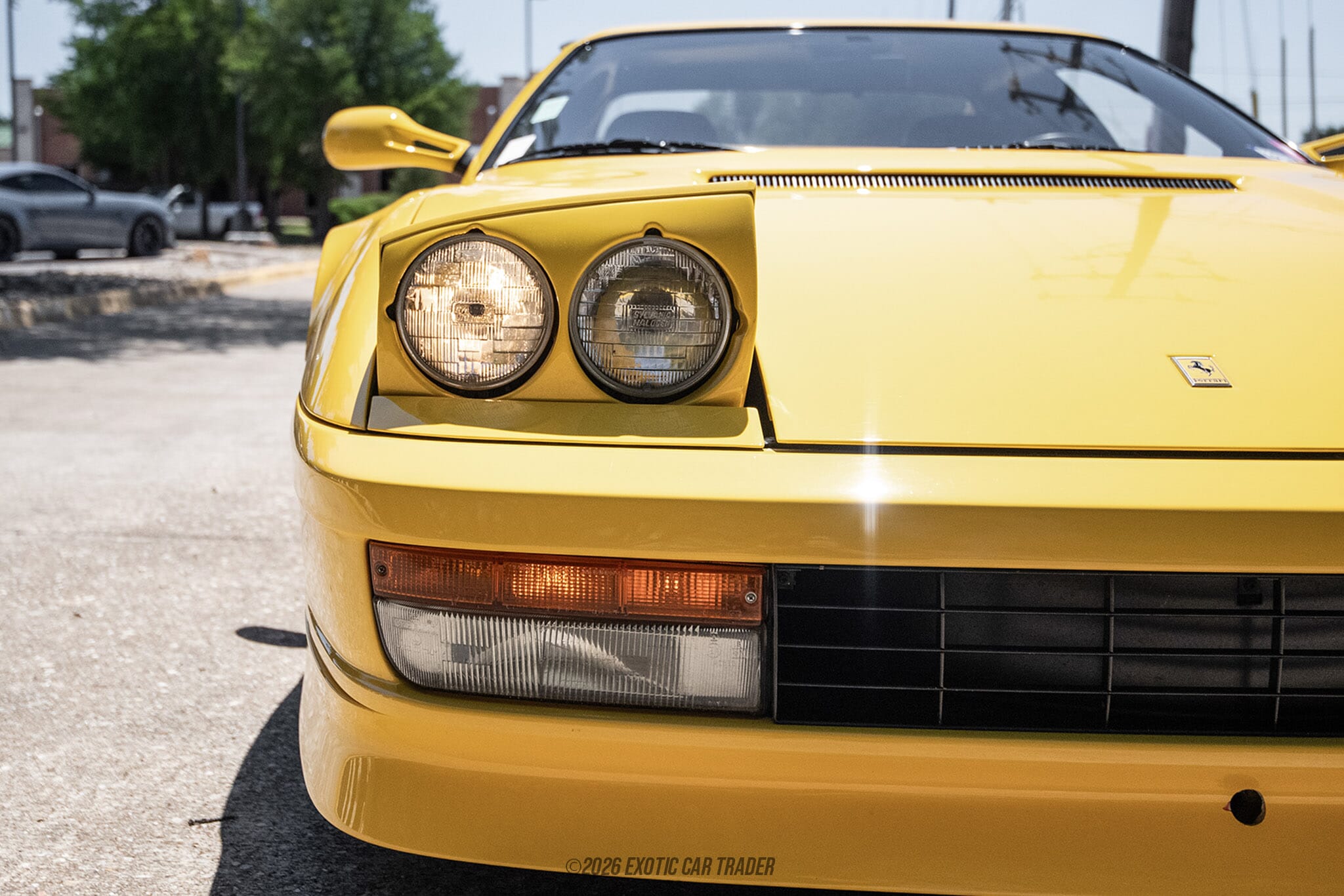
- Pop-Up Headlights
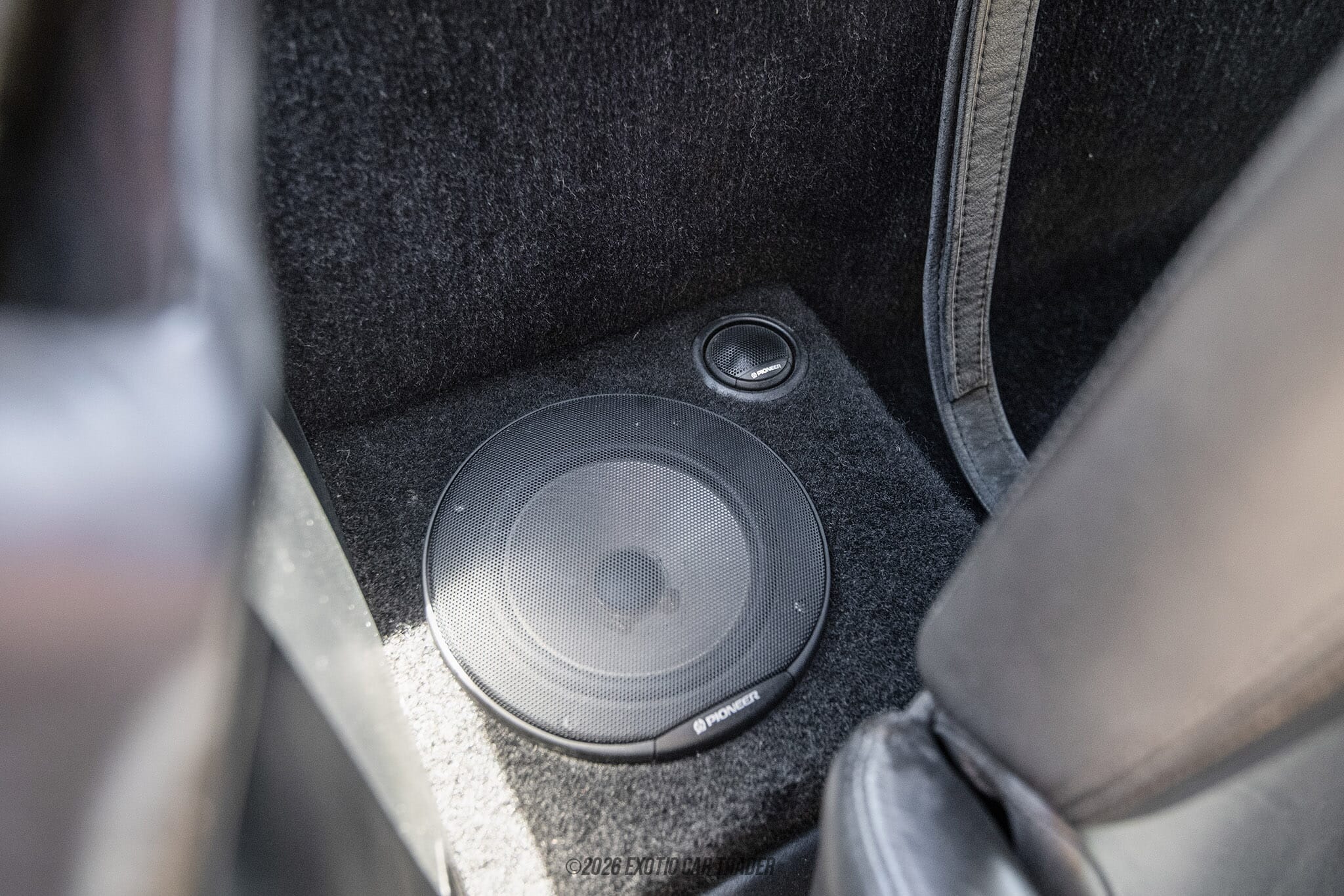
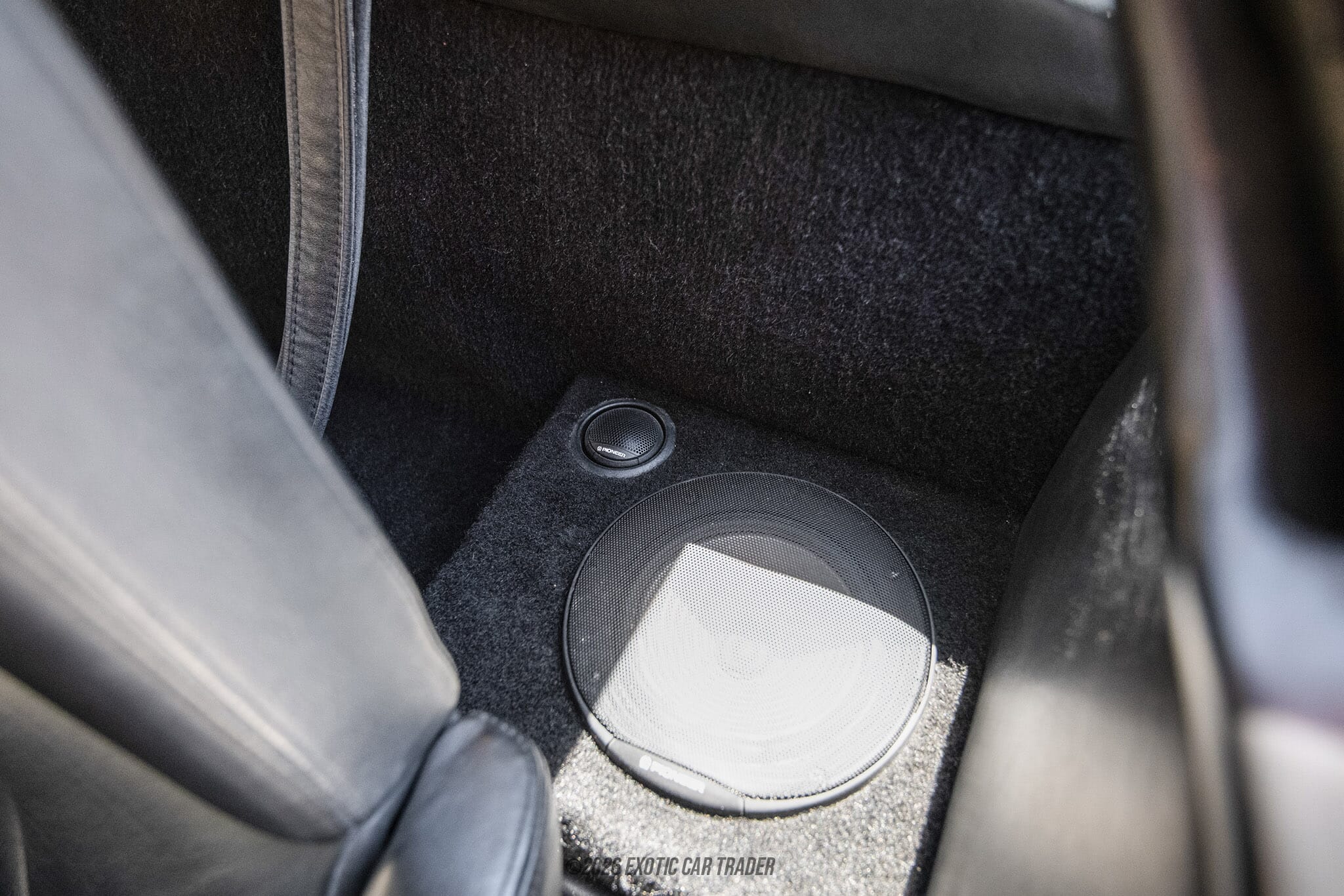
- Aftermarket Sound System
Extras Included in the Sale
- Current Owner Reports Major Service Completed
- Service Records


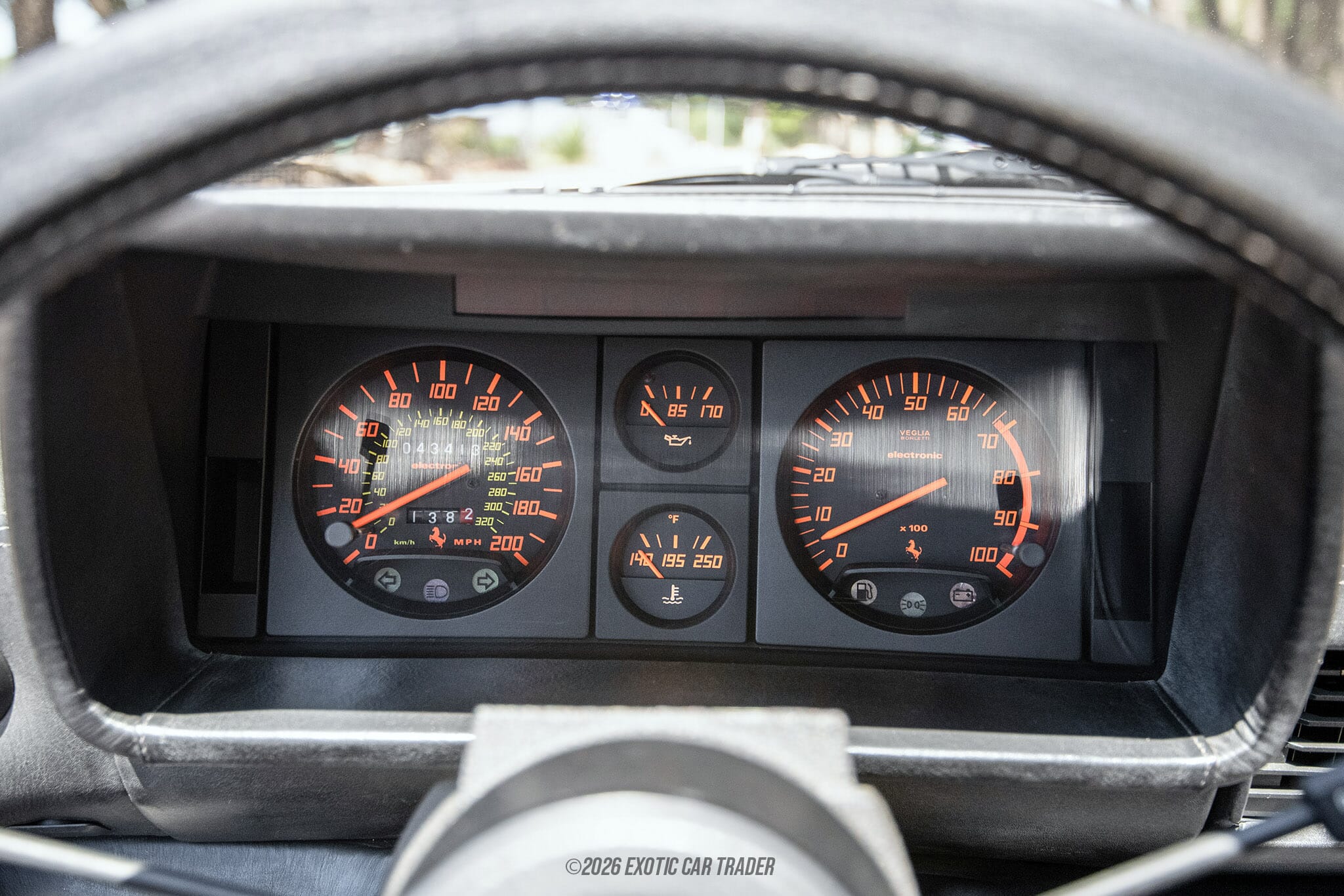
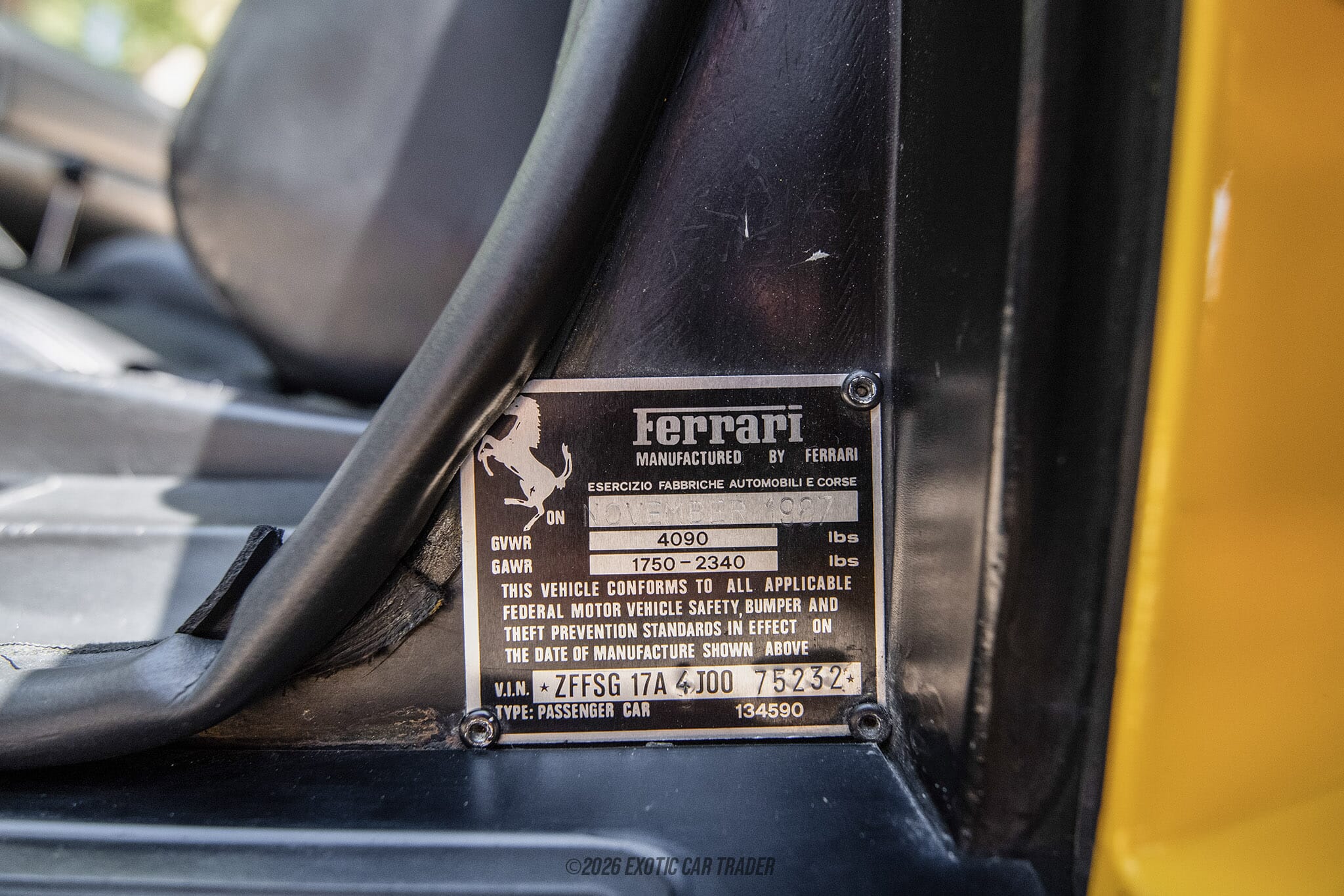
The Ferrari Testarossa remains one of the most instantly recognizable supercars of the 1980s, a machine that perfectly captured the excess, drama, and design experimentation of the era. Introduced as the successor to the Berlinetta Boxer, the Testarossa brought improved refinement, better cooling, and dramatically more interior space, all while retaining Ferrari’s intoxicating flat-12 performance formula. This 1988 Ferrari Testarossa shows 43,413 miles and is finished in eye-catching Giallo Fly over a Nero interior—a combination that amplifies the car’s unmistakable visual theater. While many collectors gravitate toward Rosso Corsa examples, yellow Testarossas carry a distinct period-correct flair that feels especially fitting for such an extroverted design. Adding to the appeal is the engaging gated 5-speed manual transmission, the analog driving experience enthusiasts crave, and a tasteful aftermarket audio upgrade for improved cruising enjoyment.
Exterior and Interior
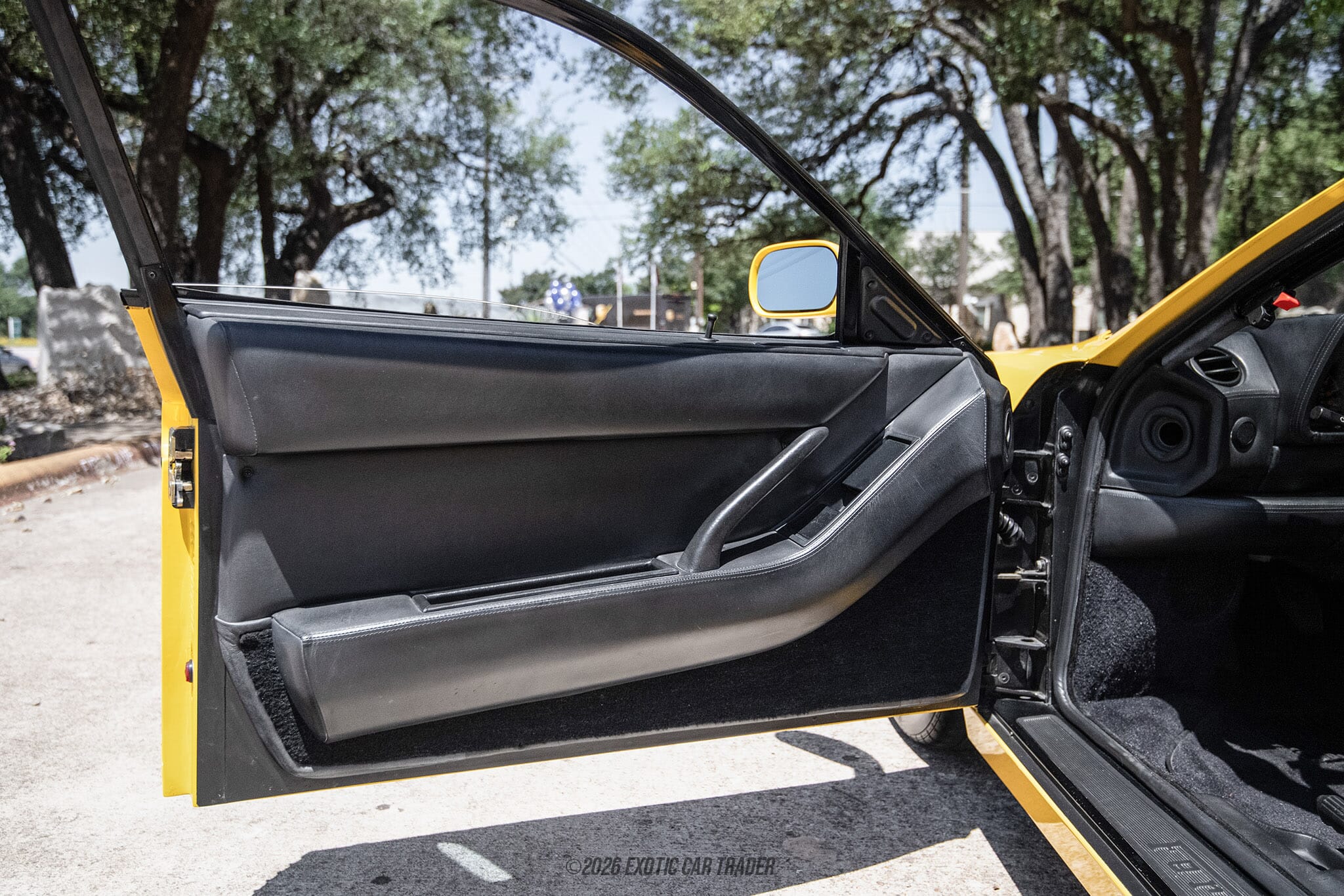
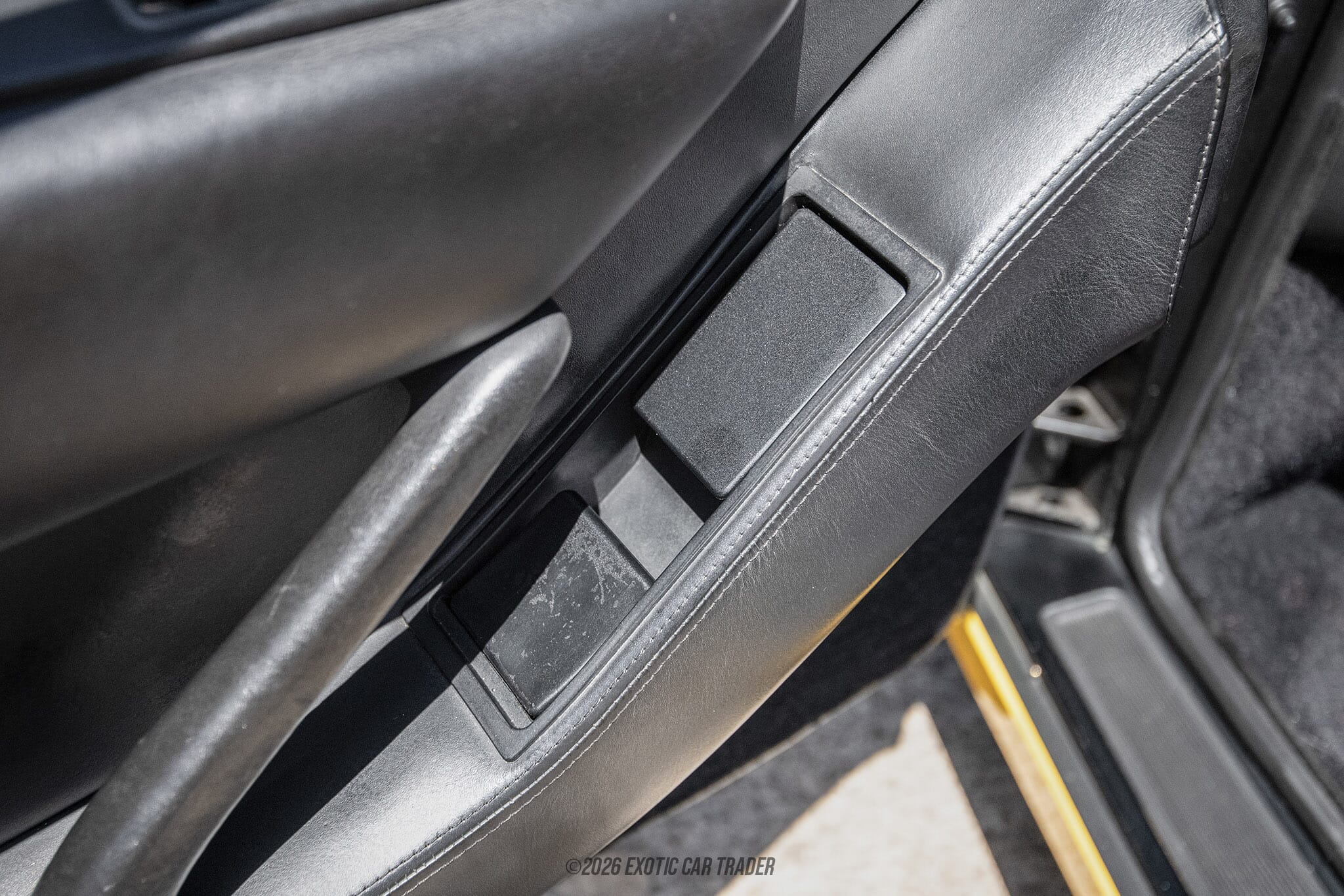
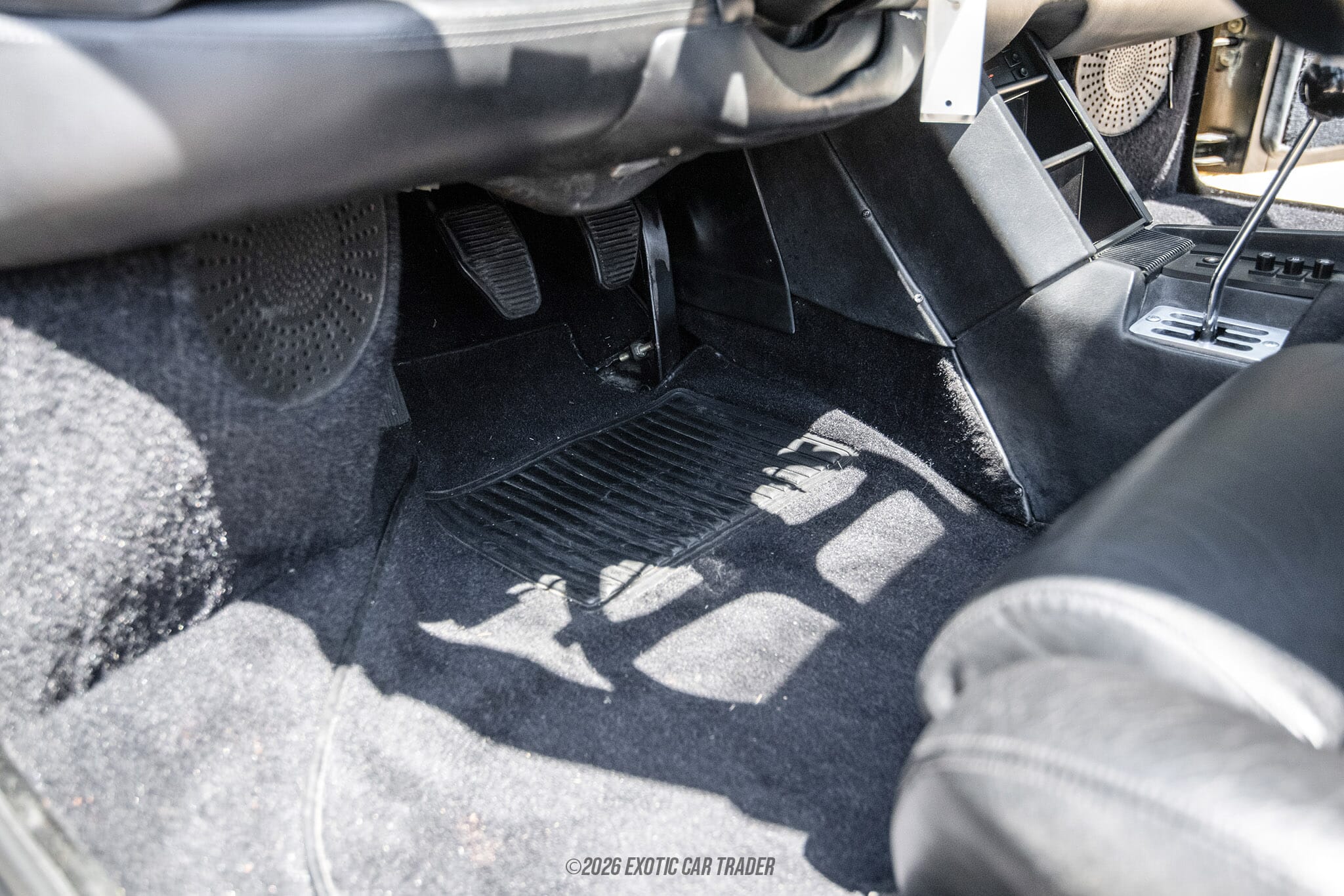
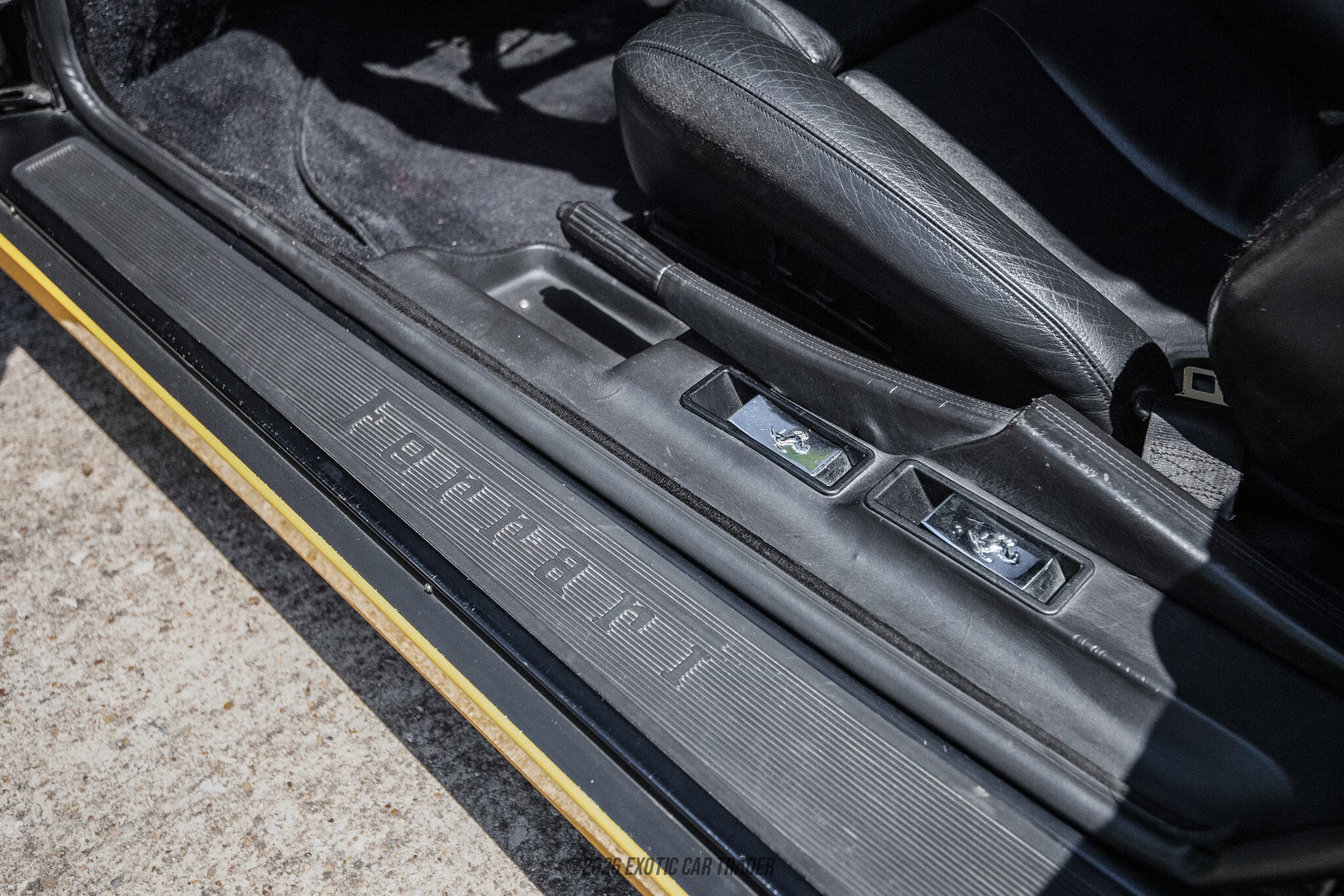
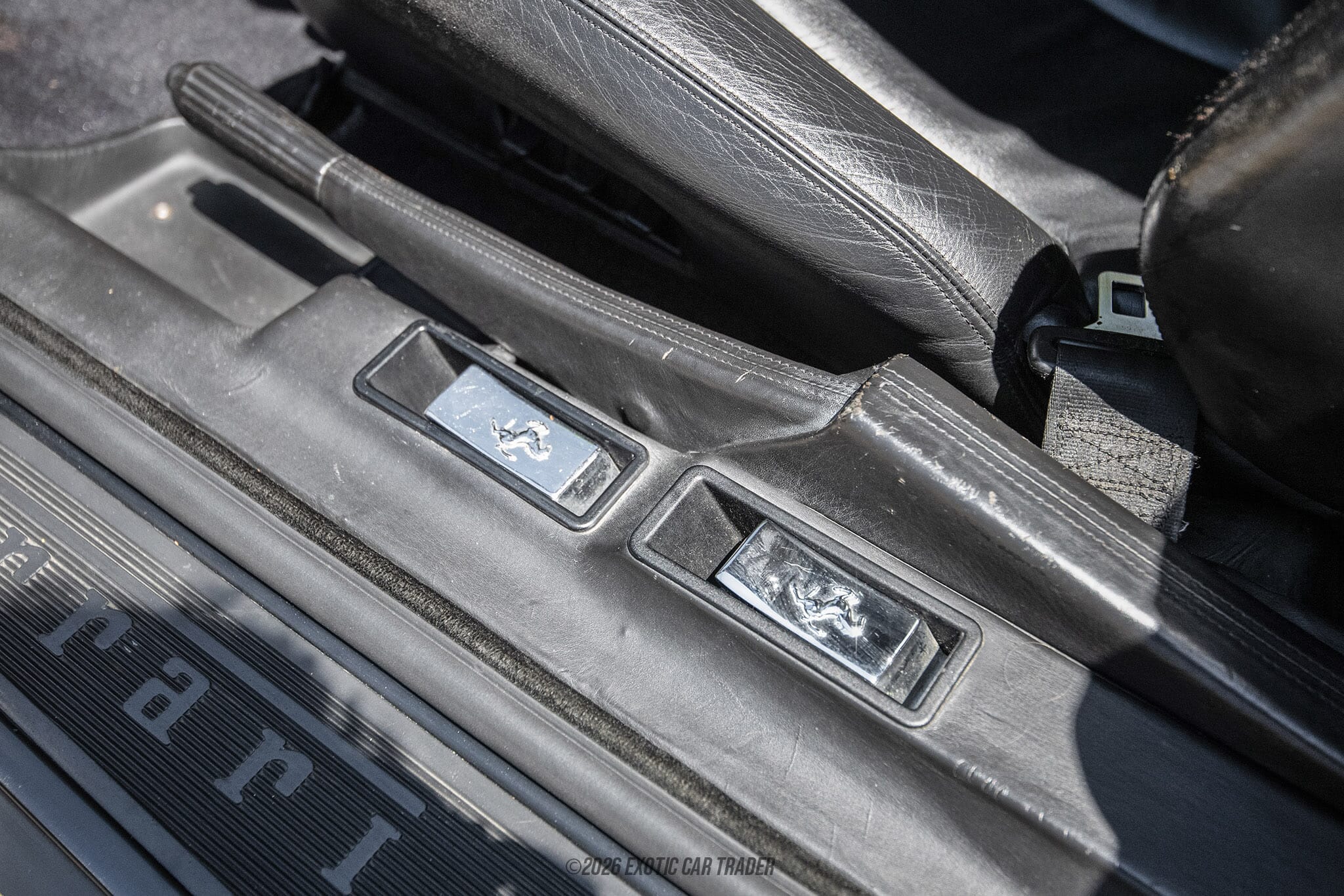
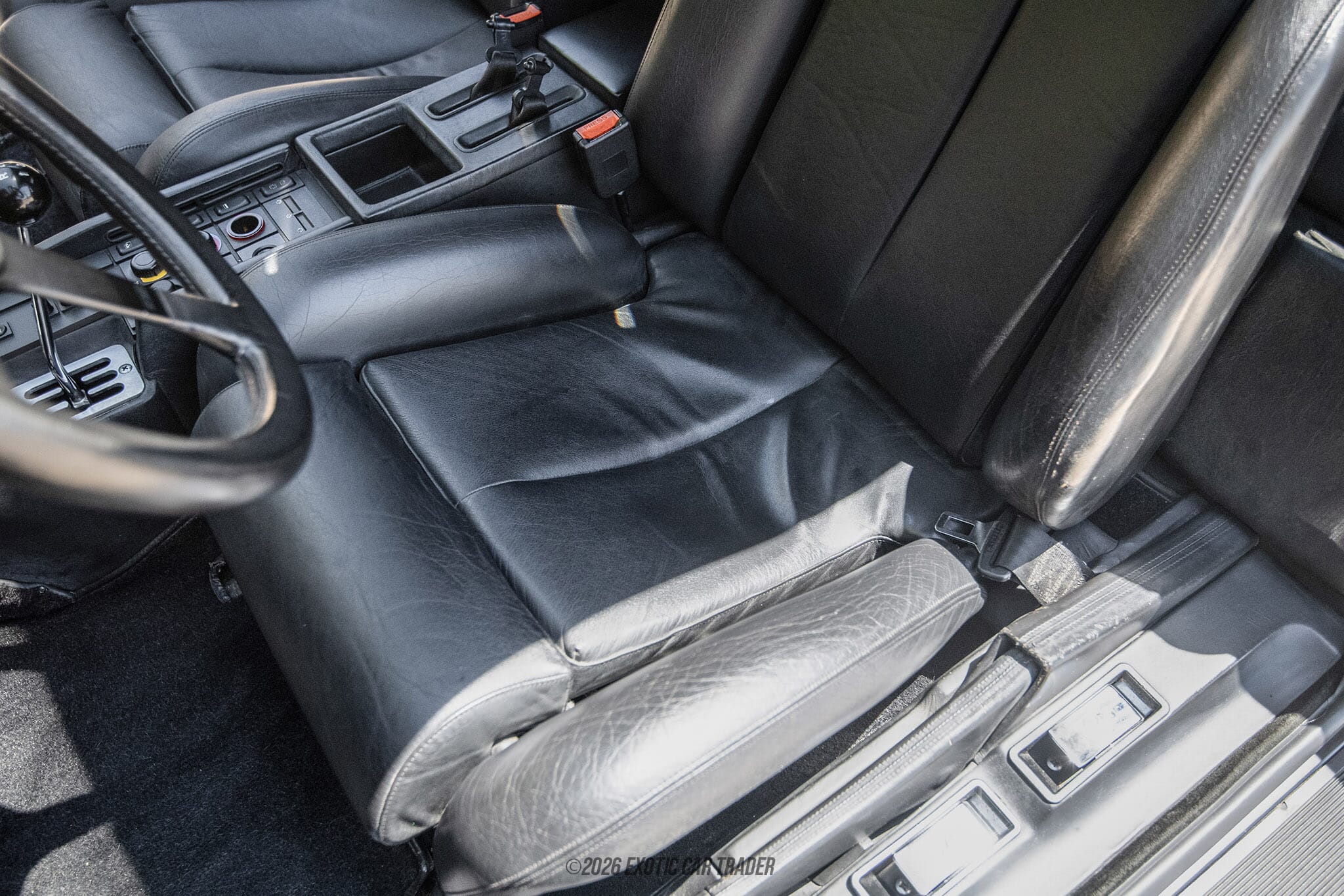
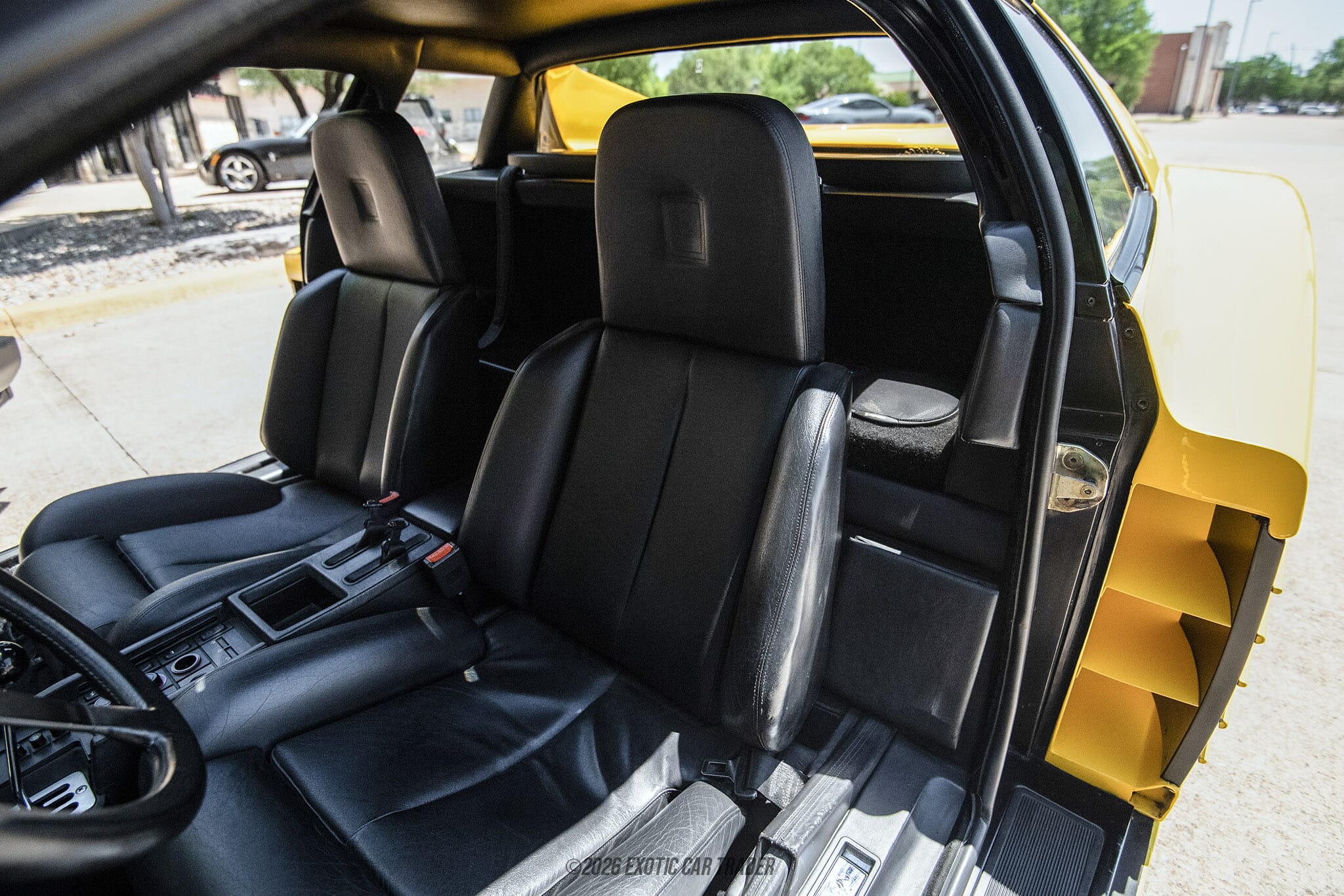
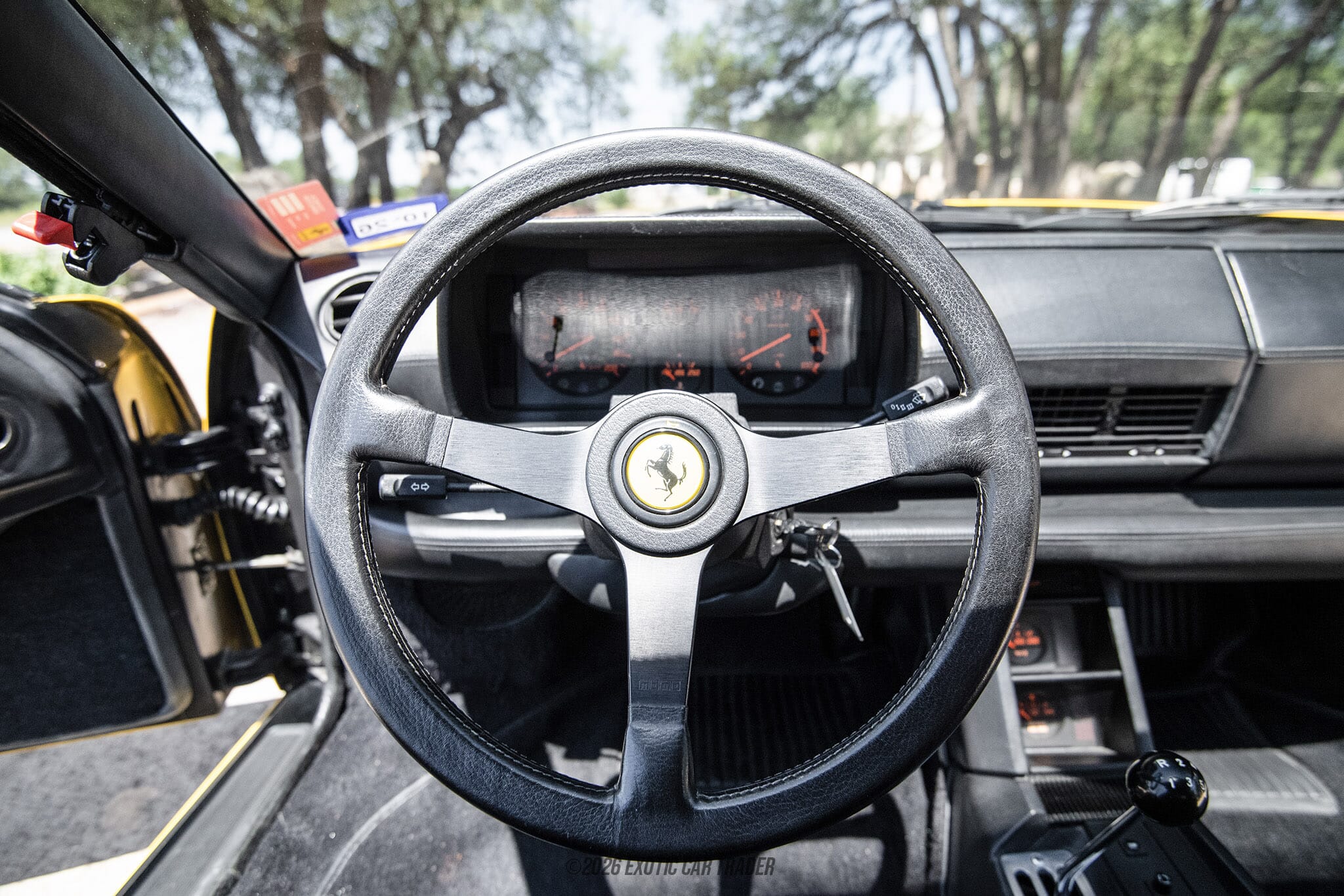
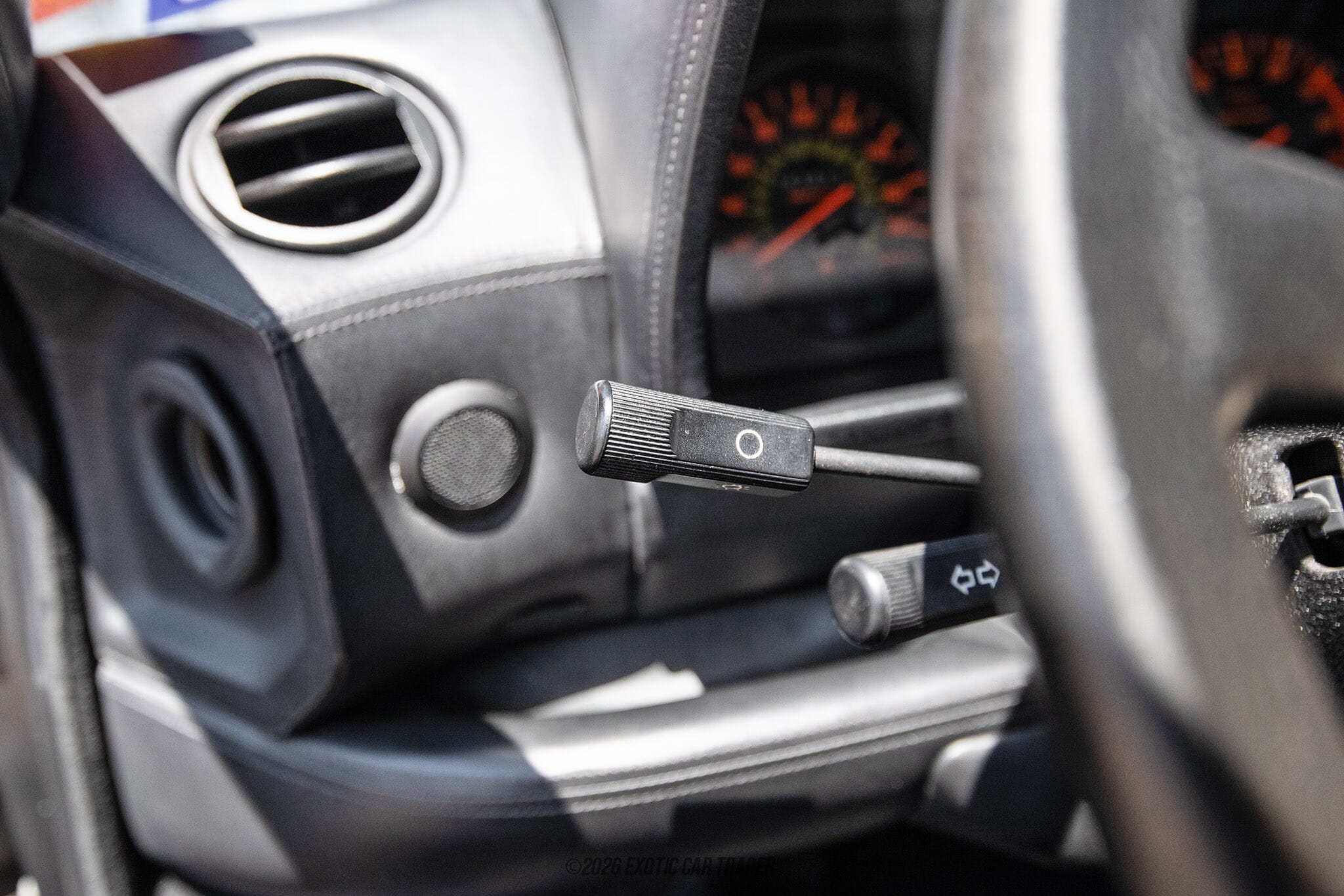
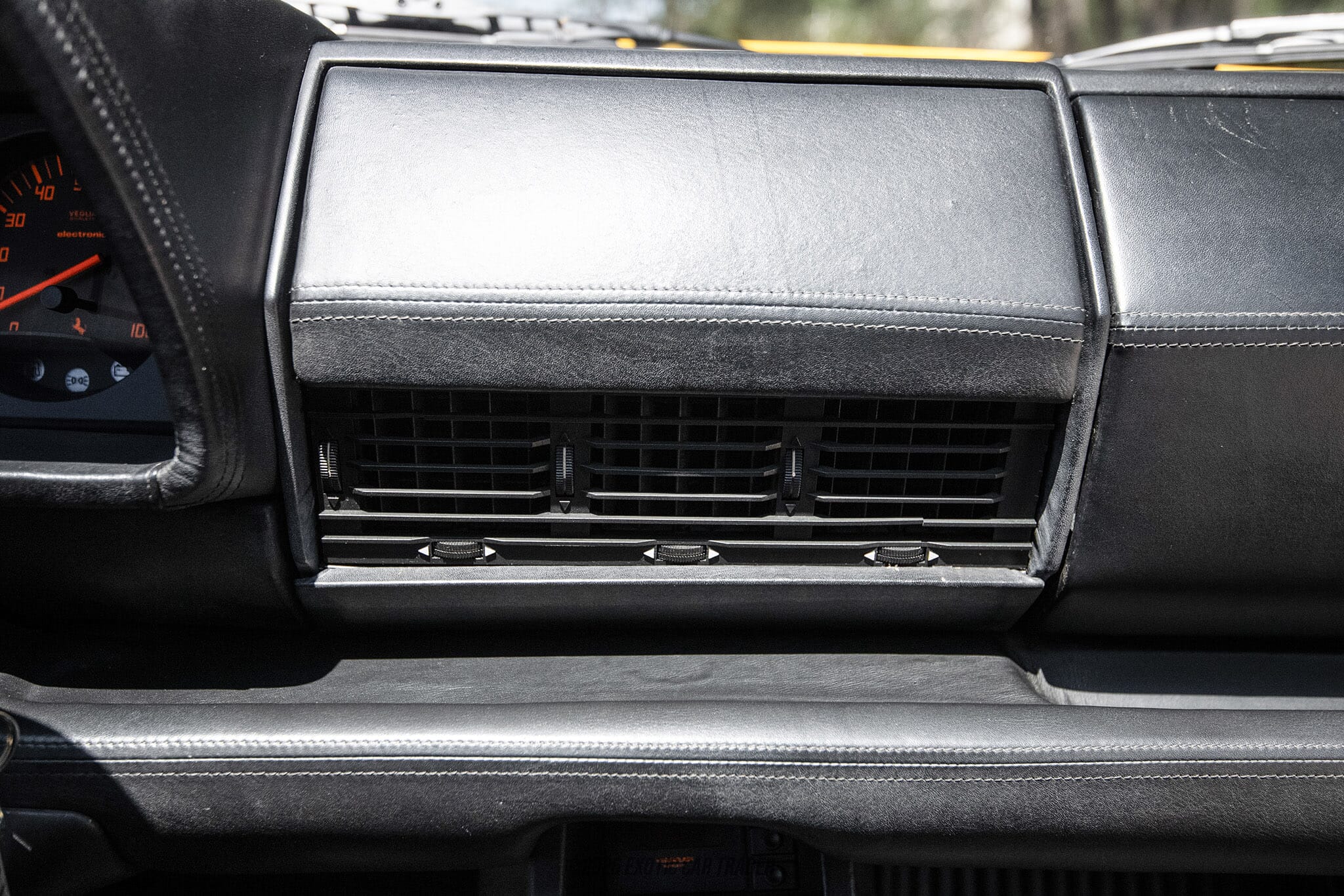
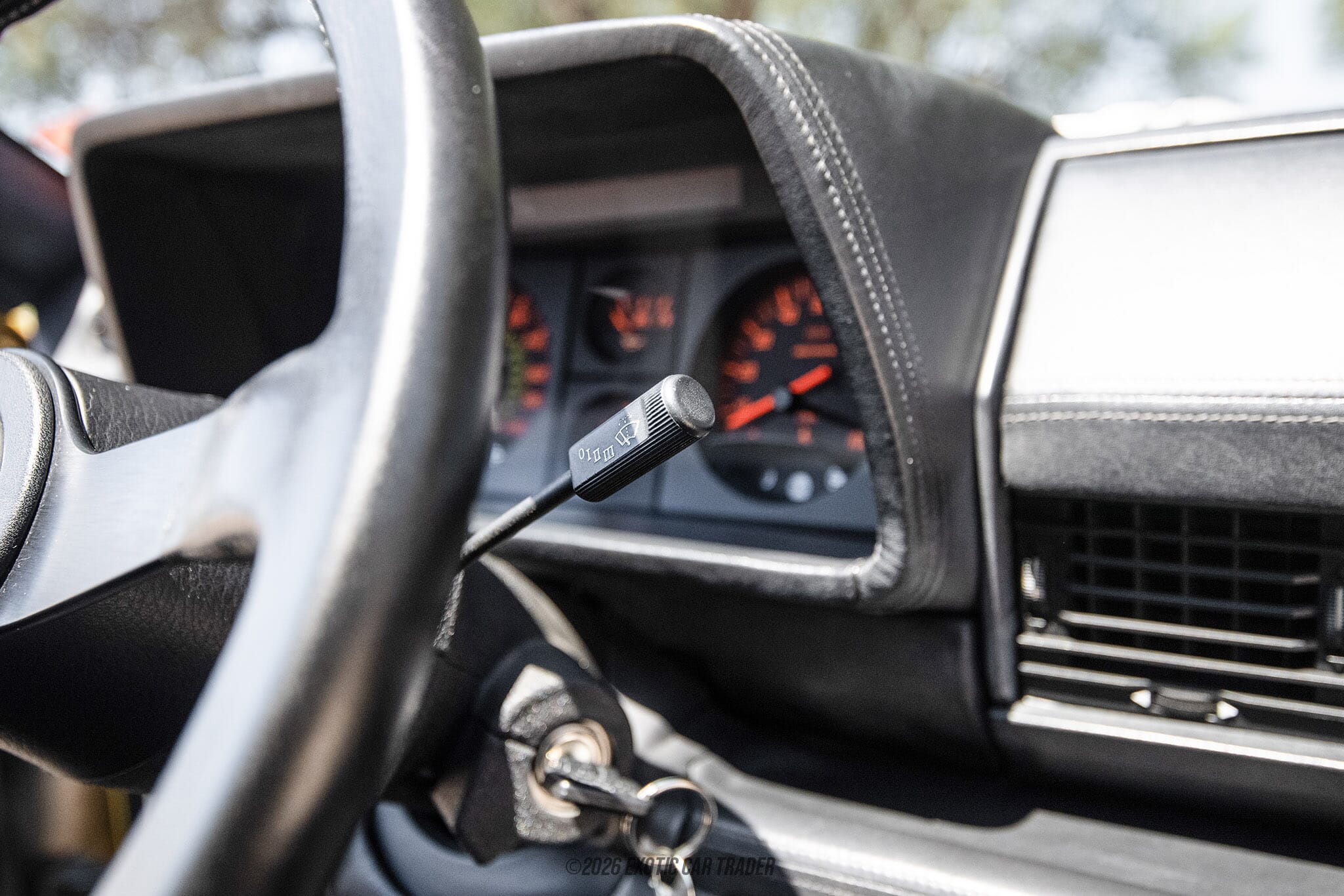
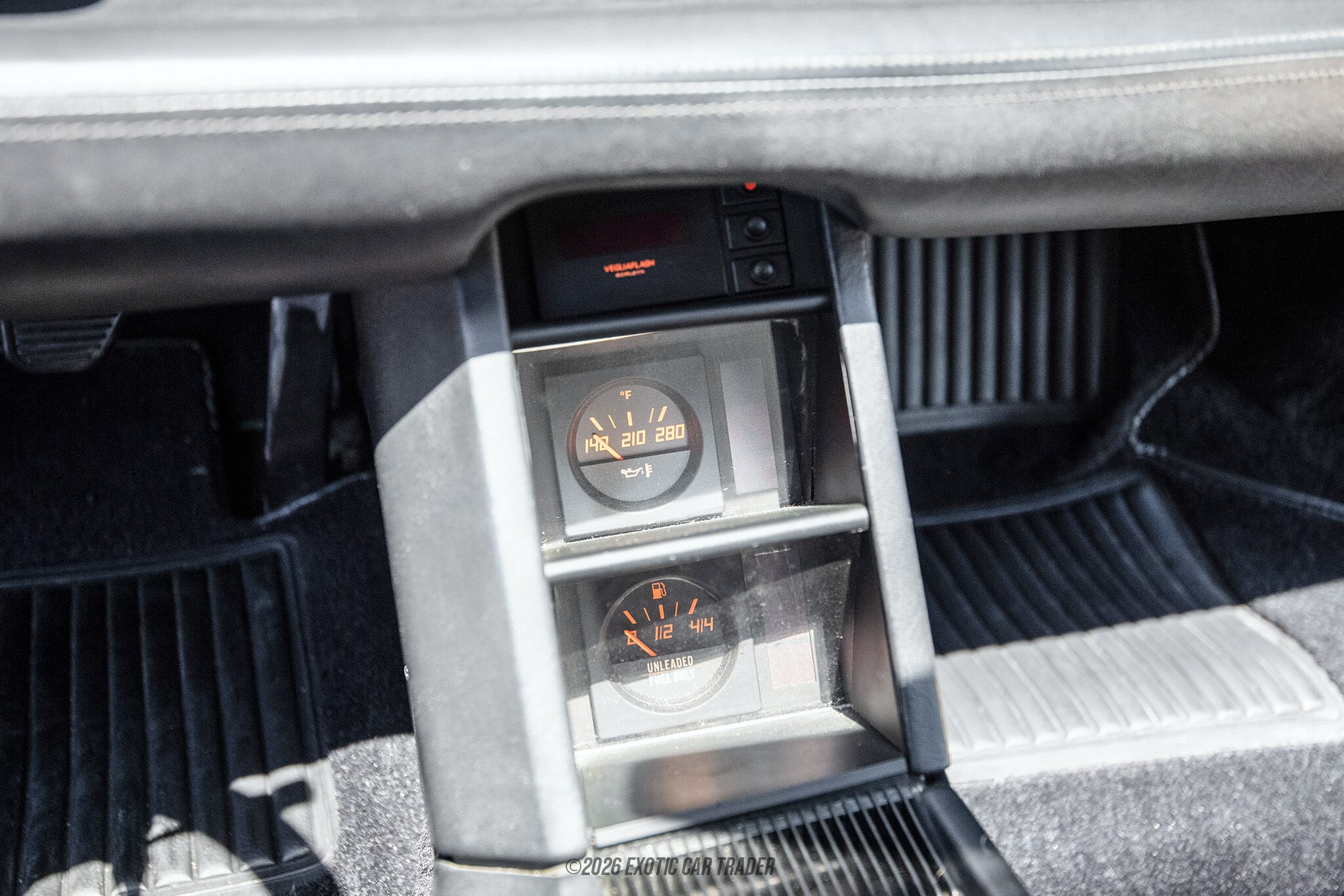
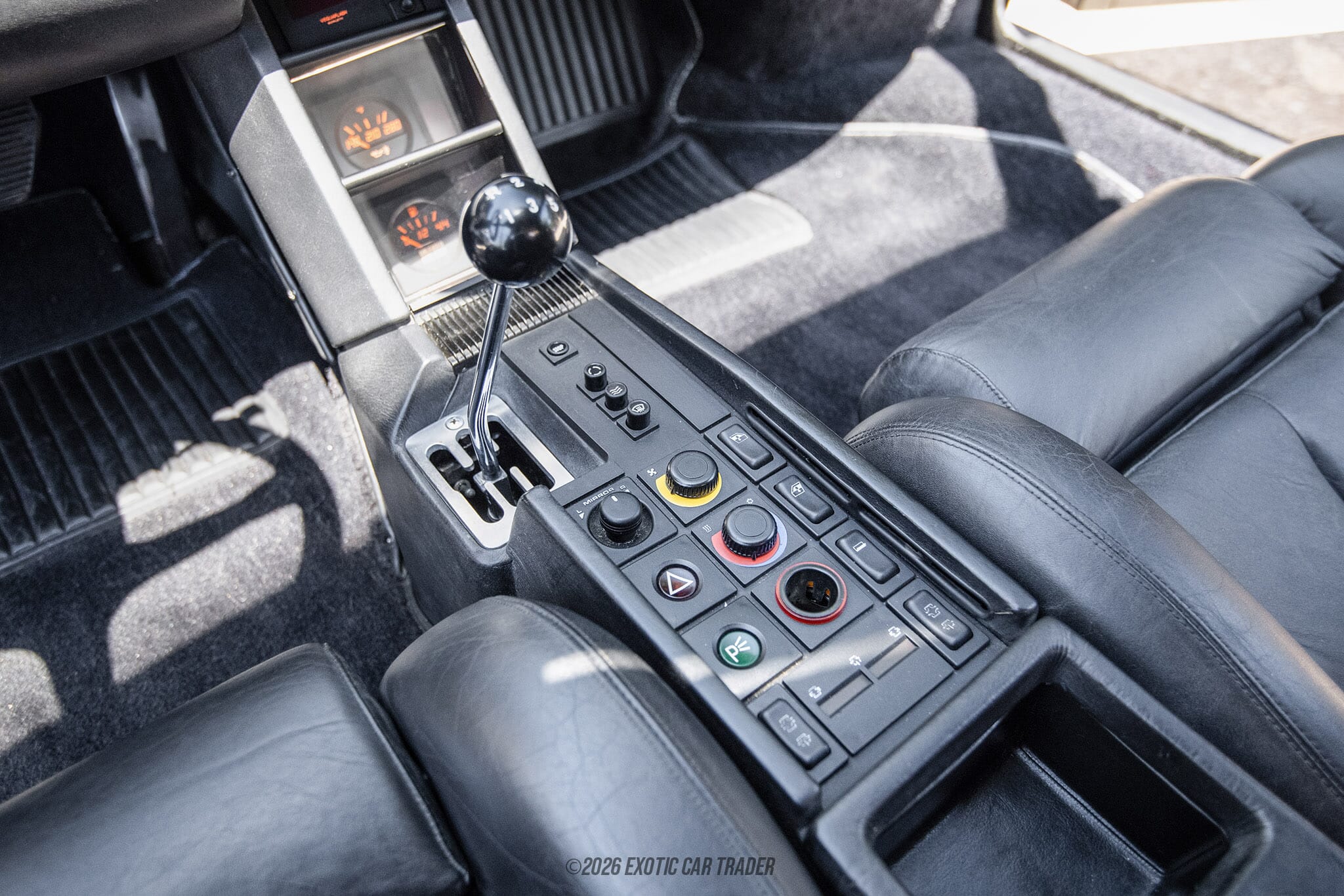
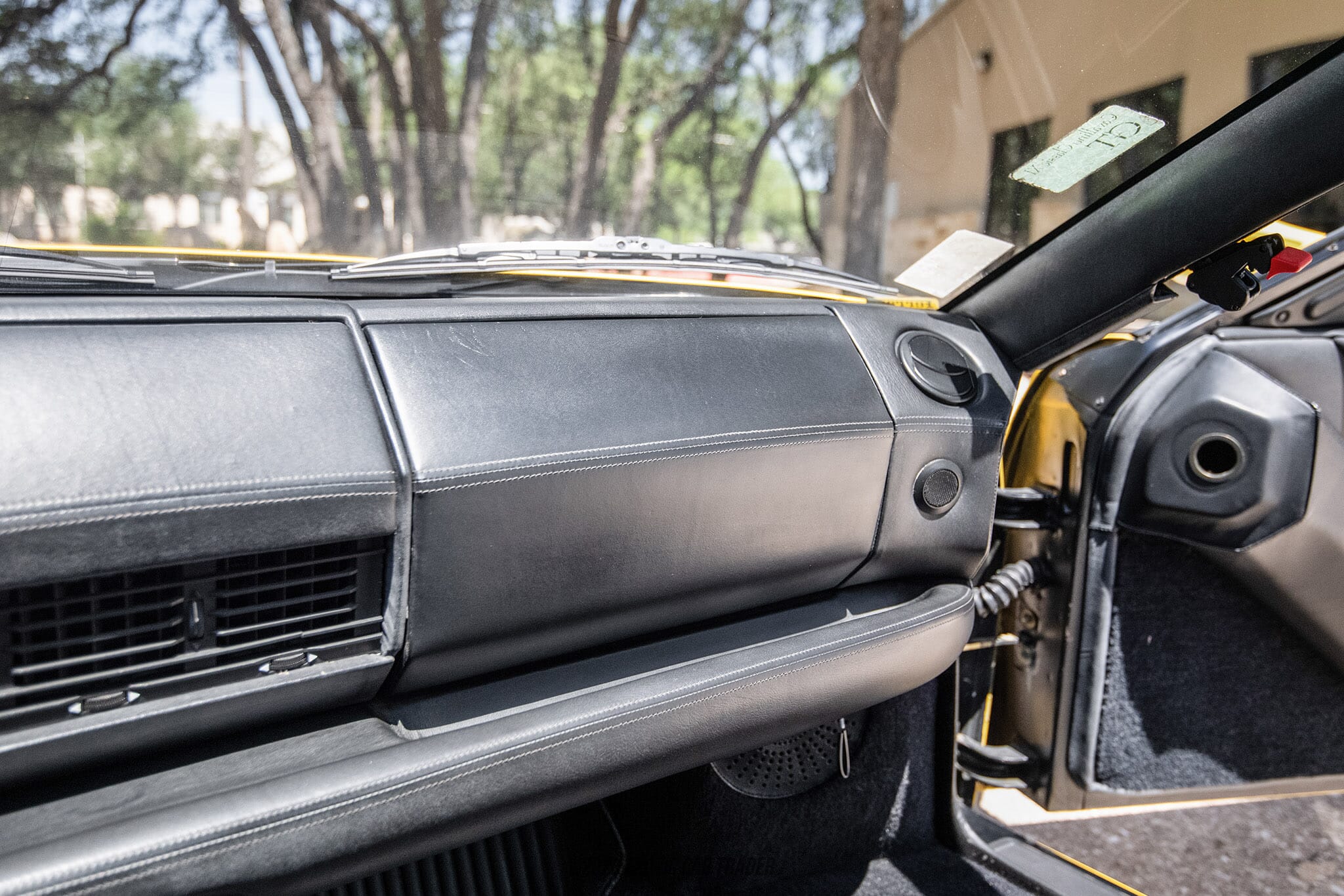
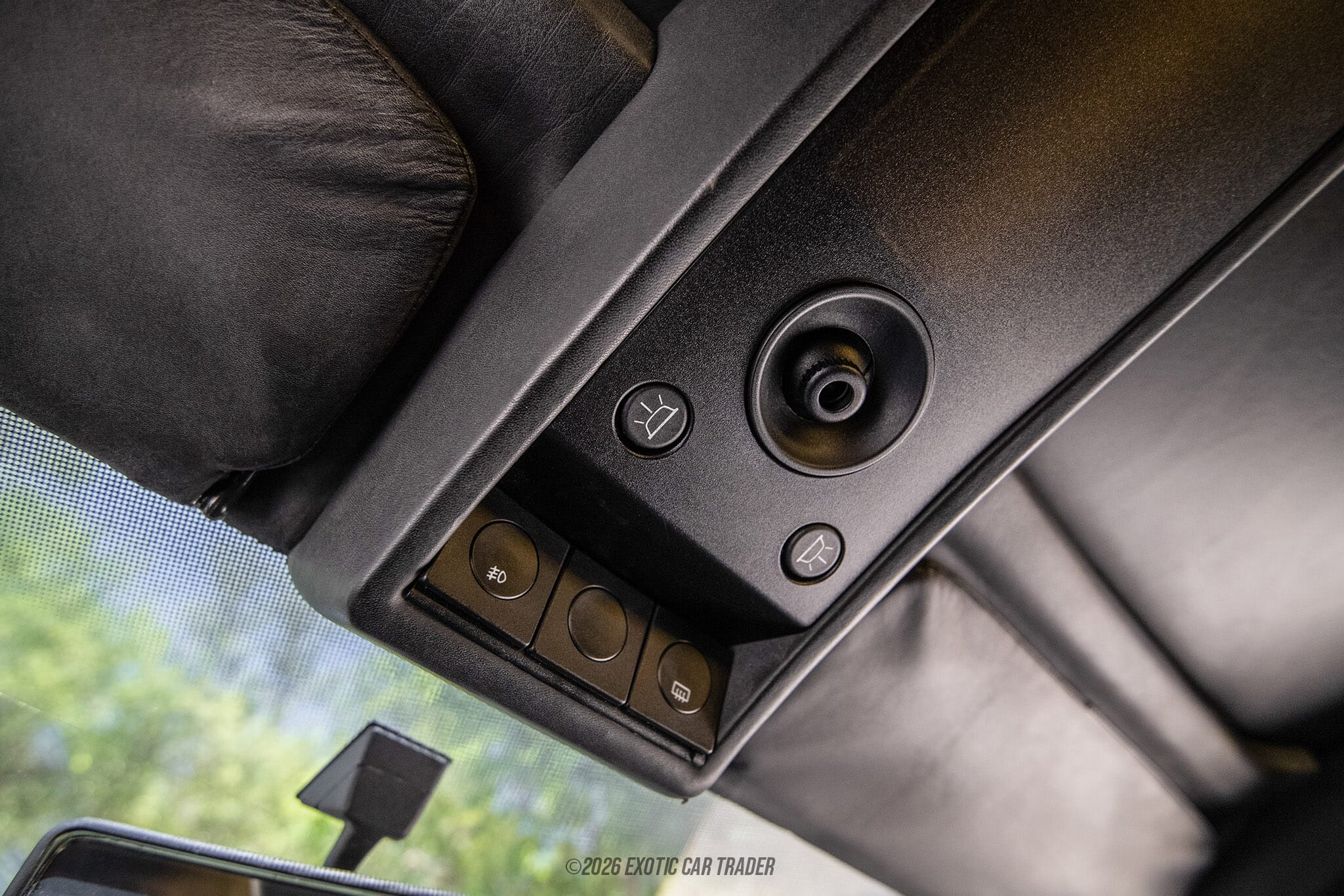
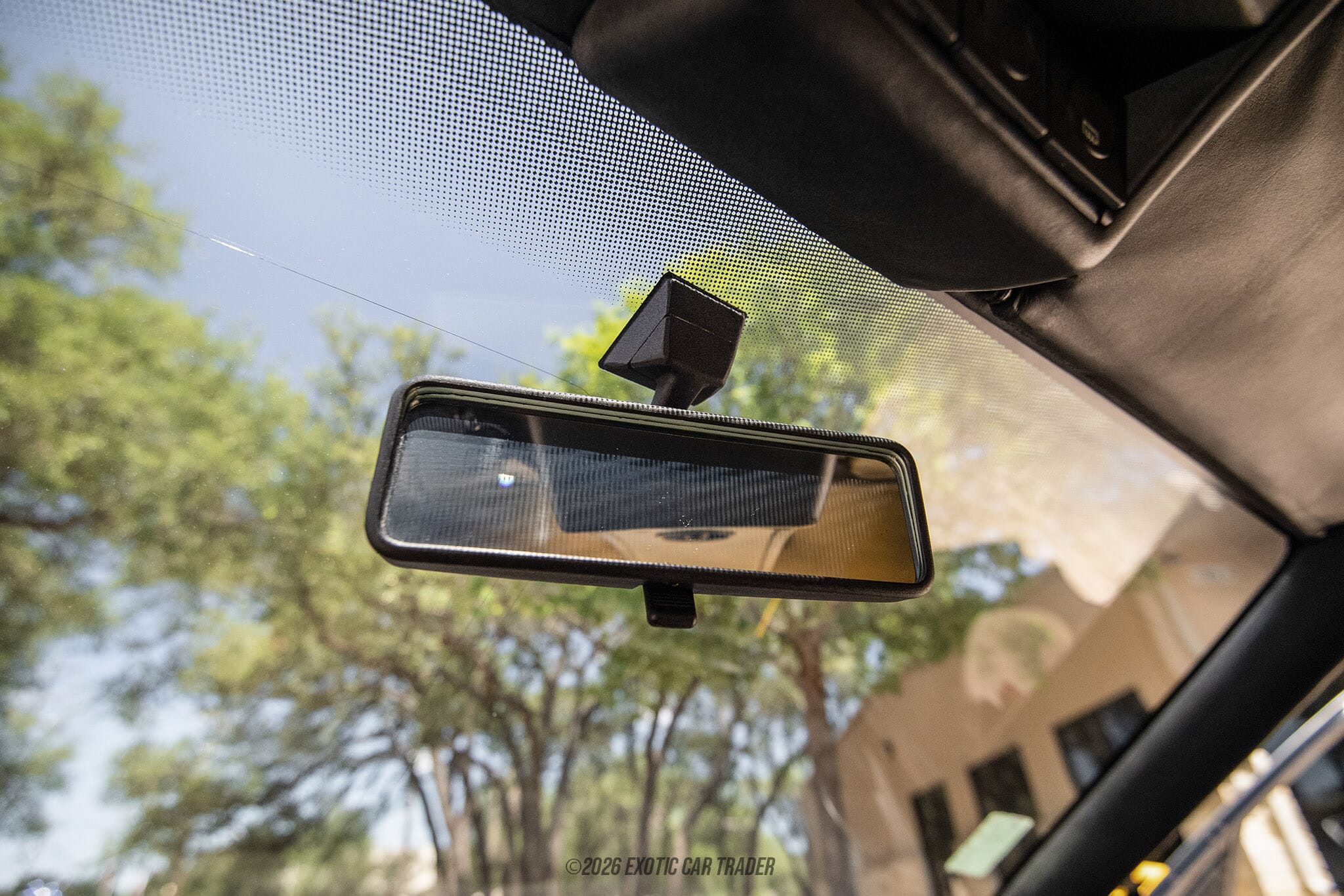
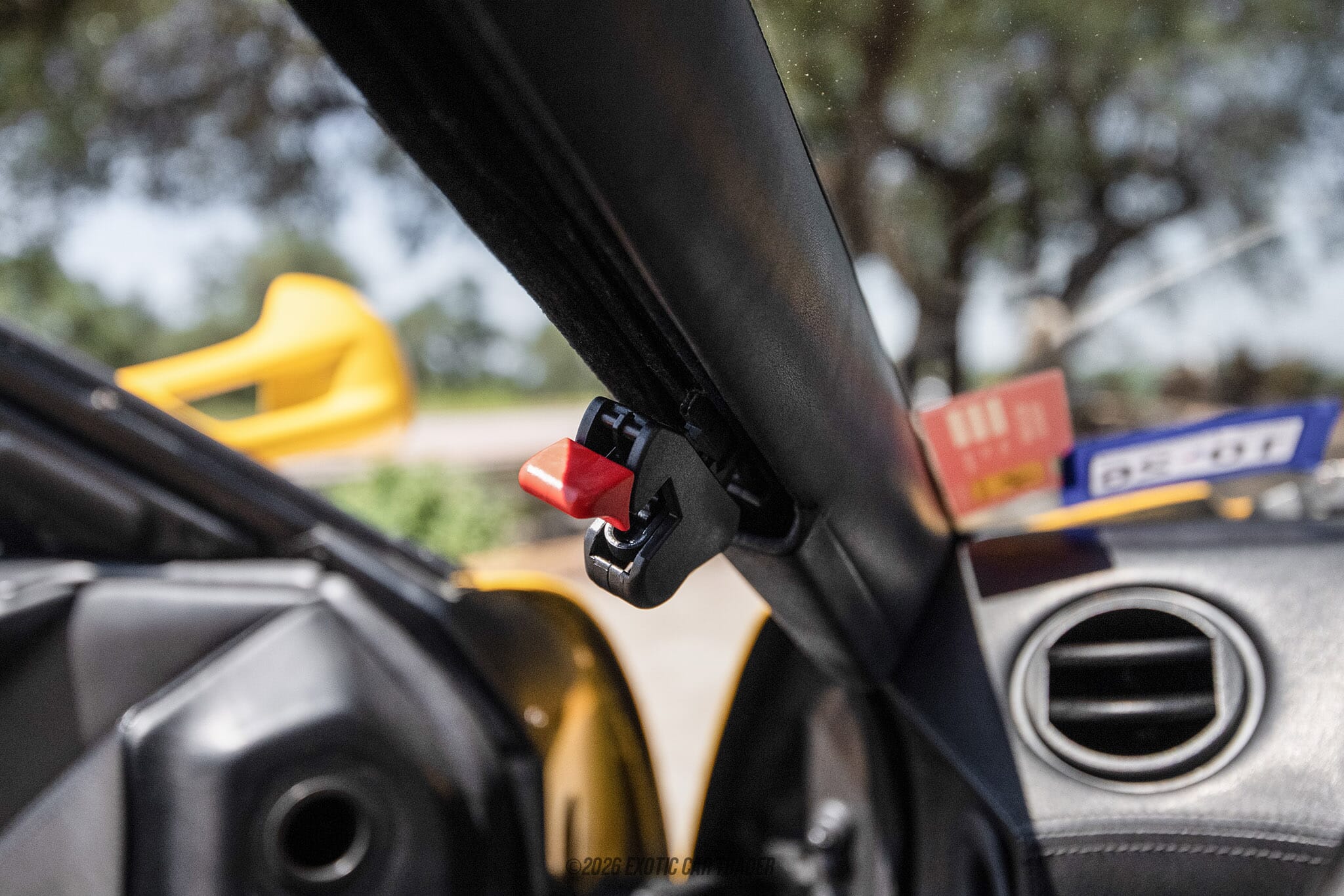
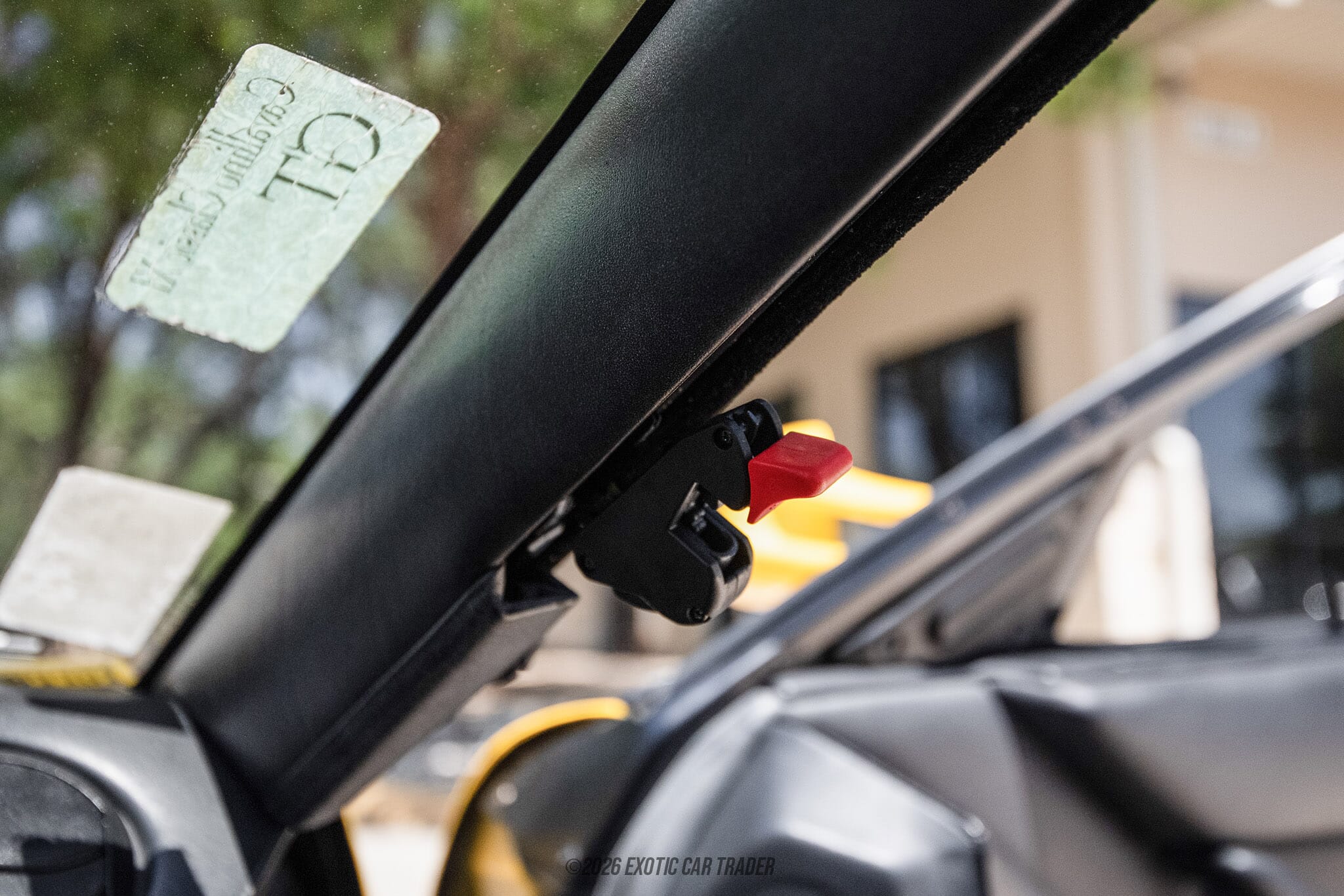
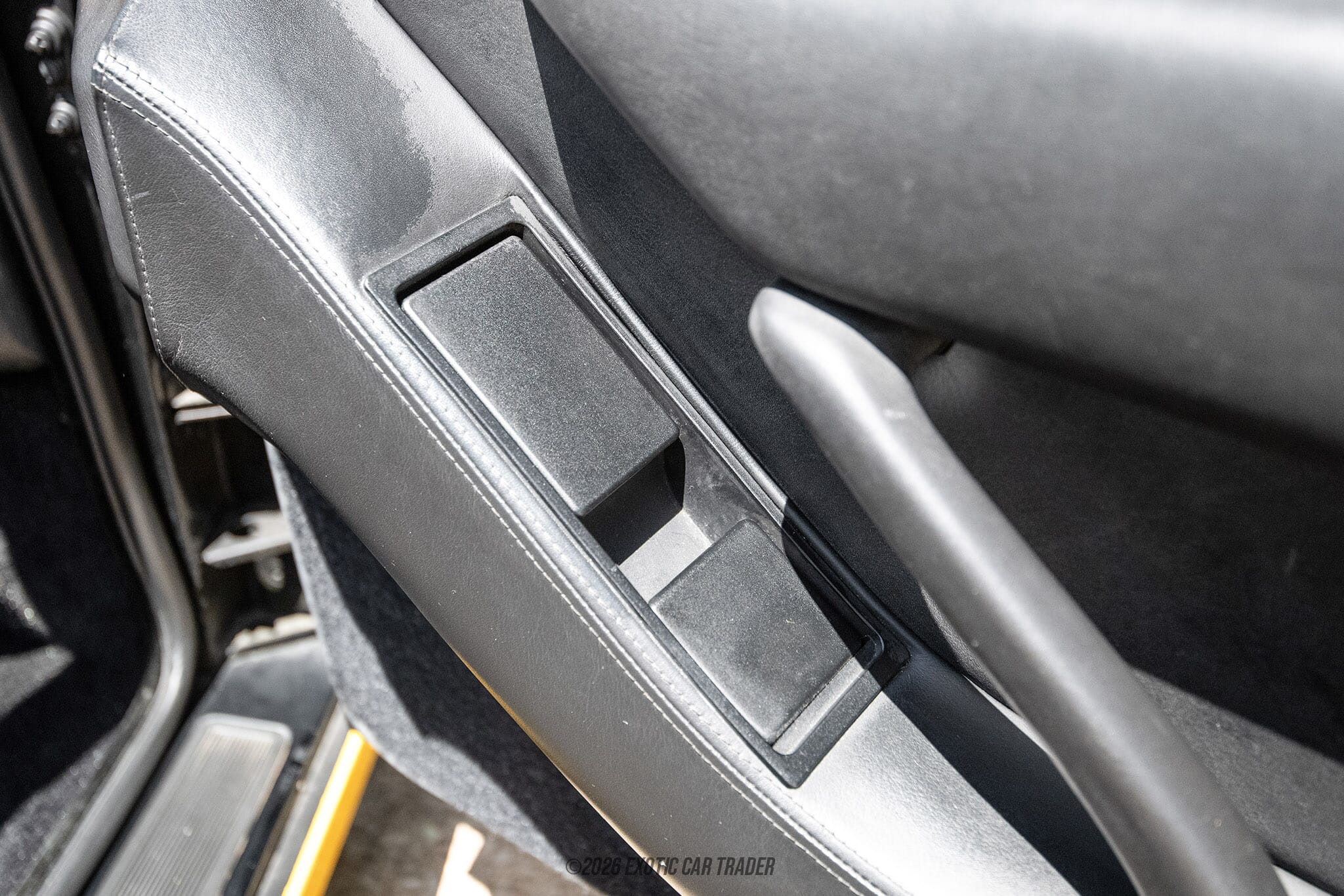
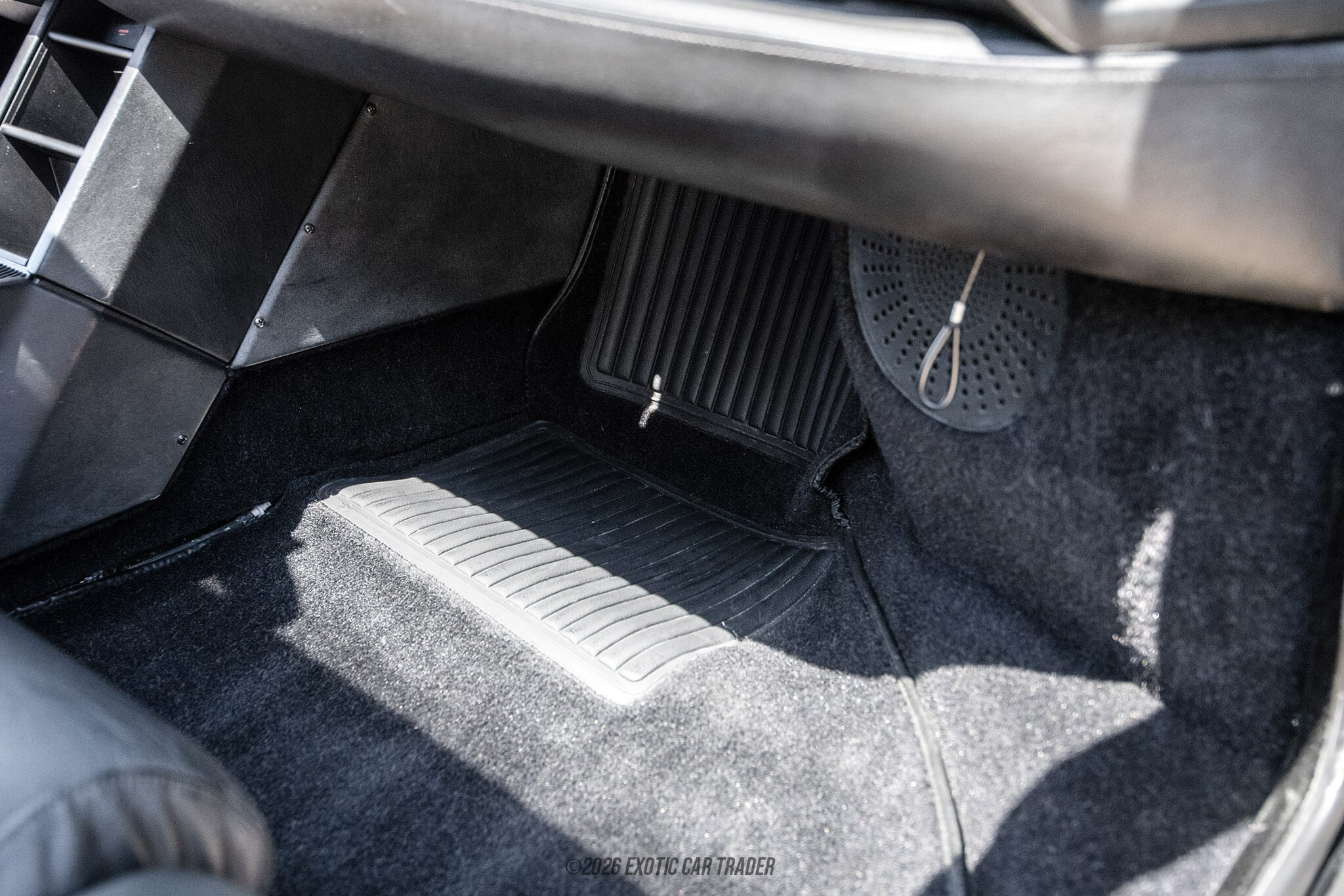
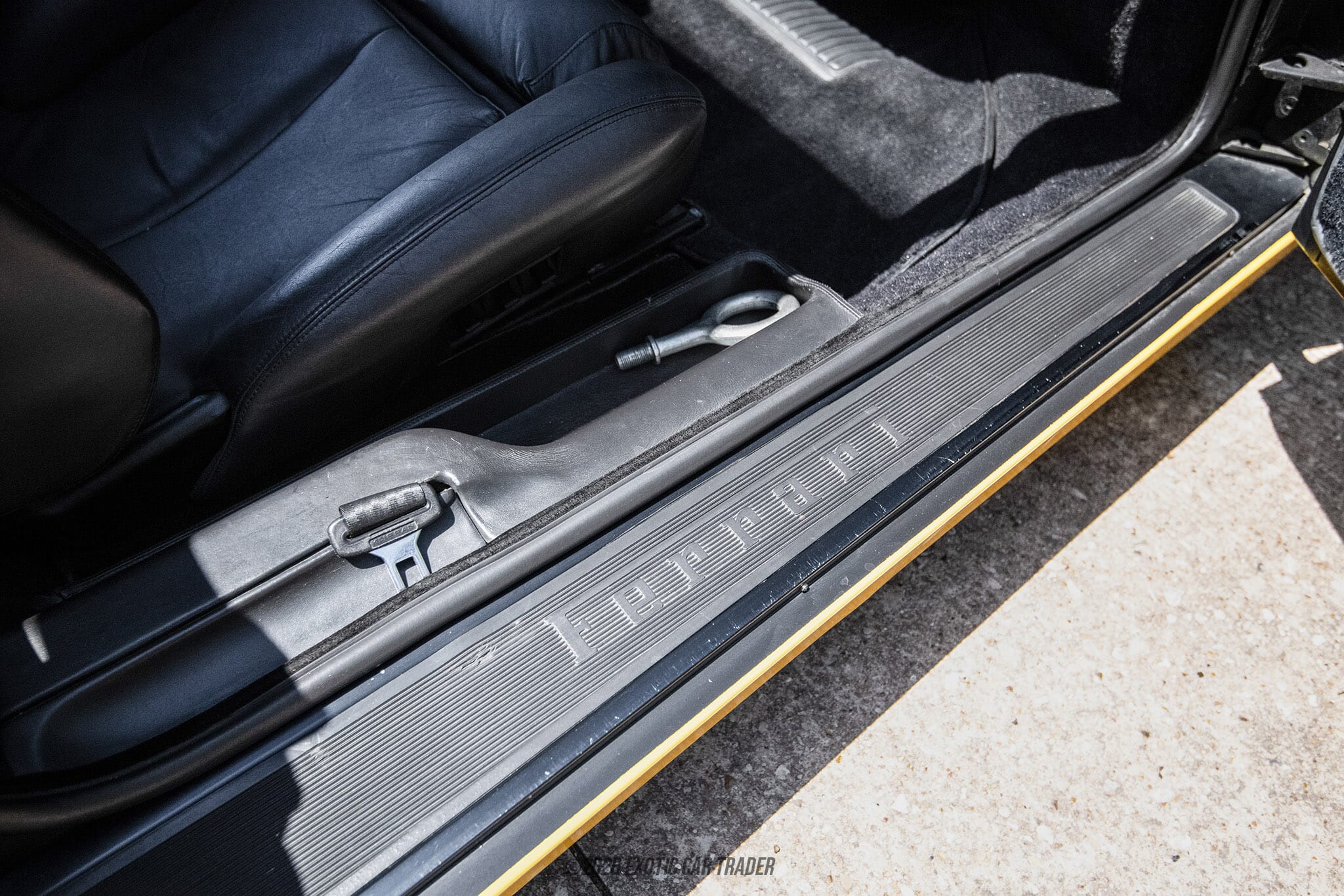
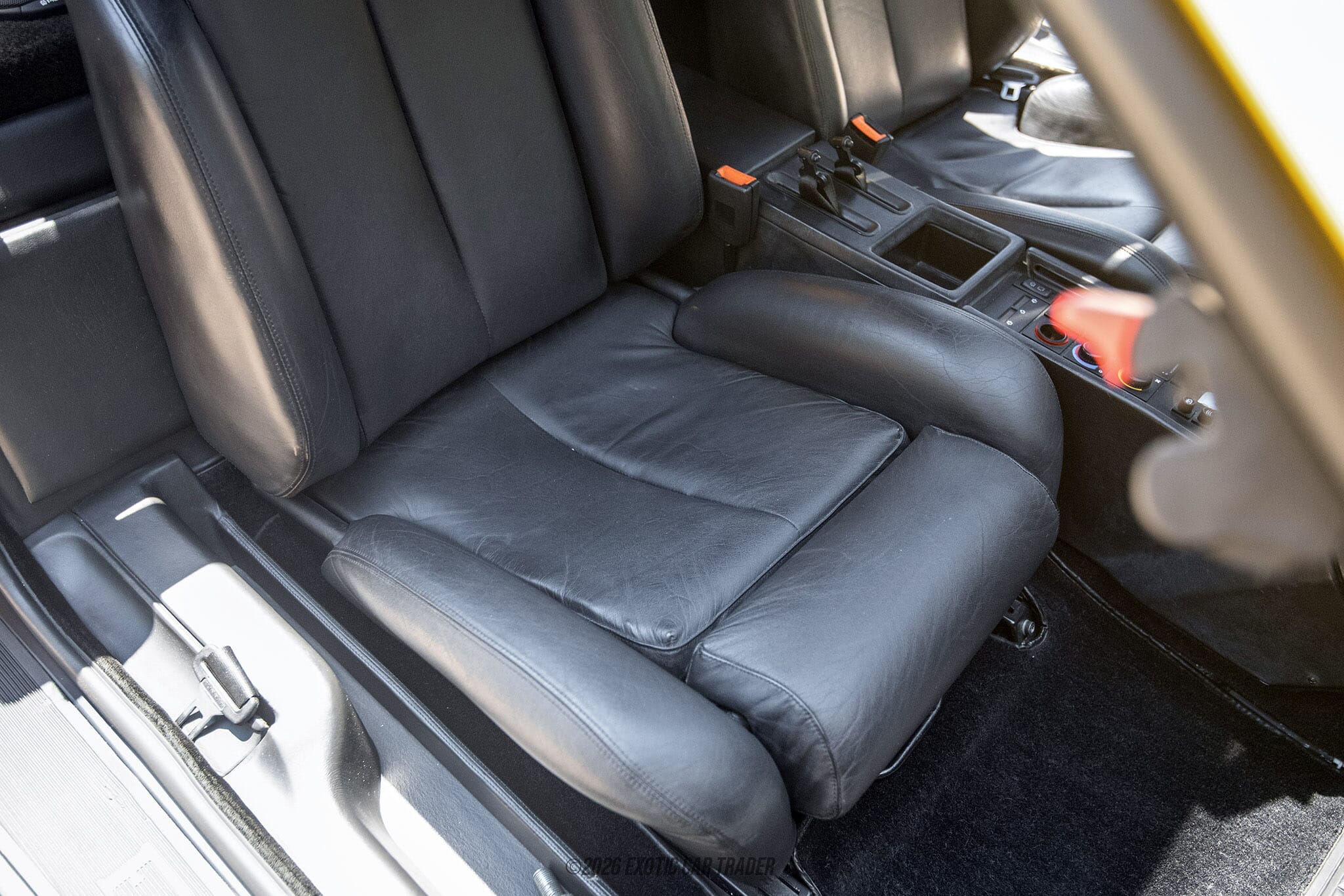
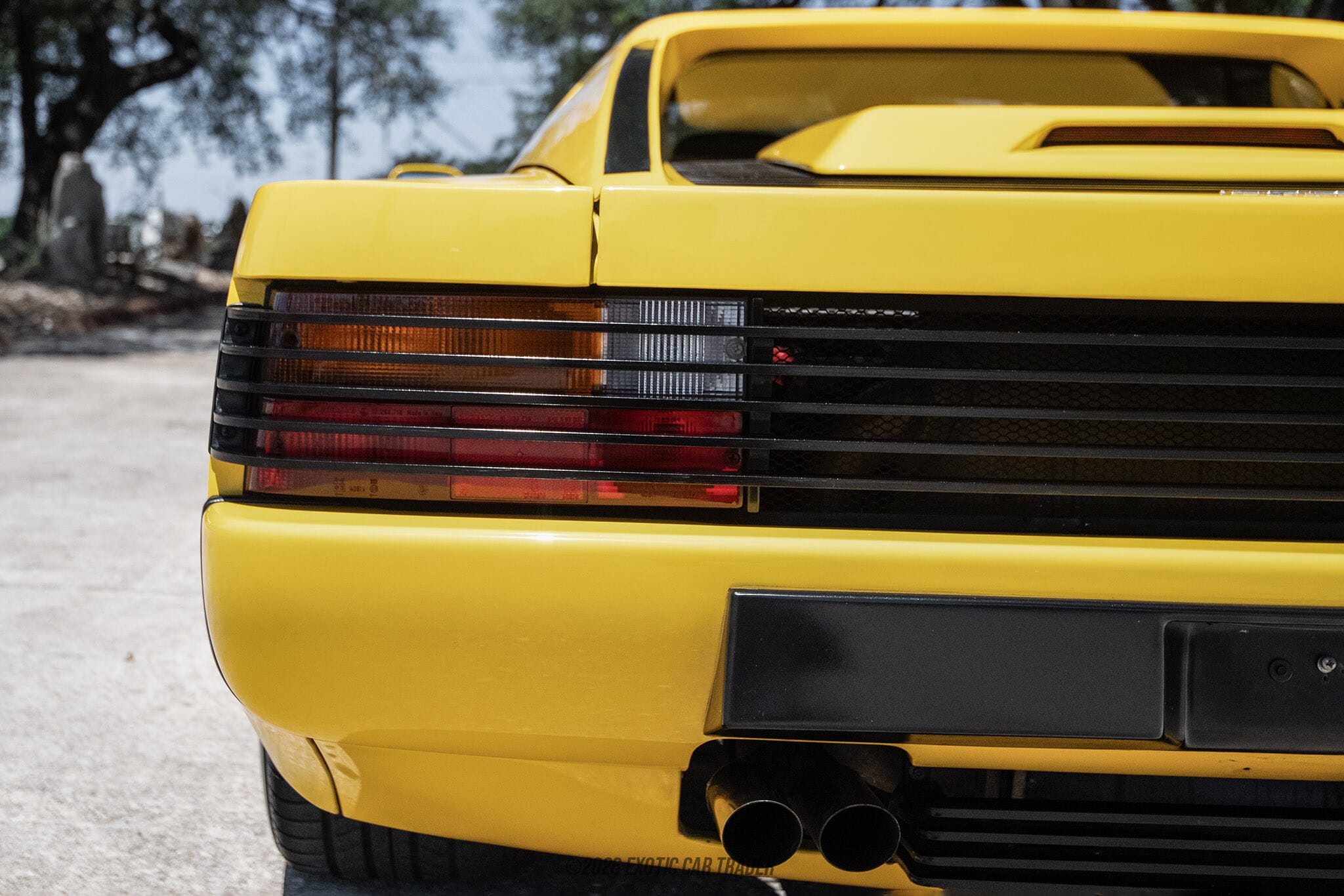
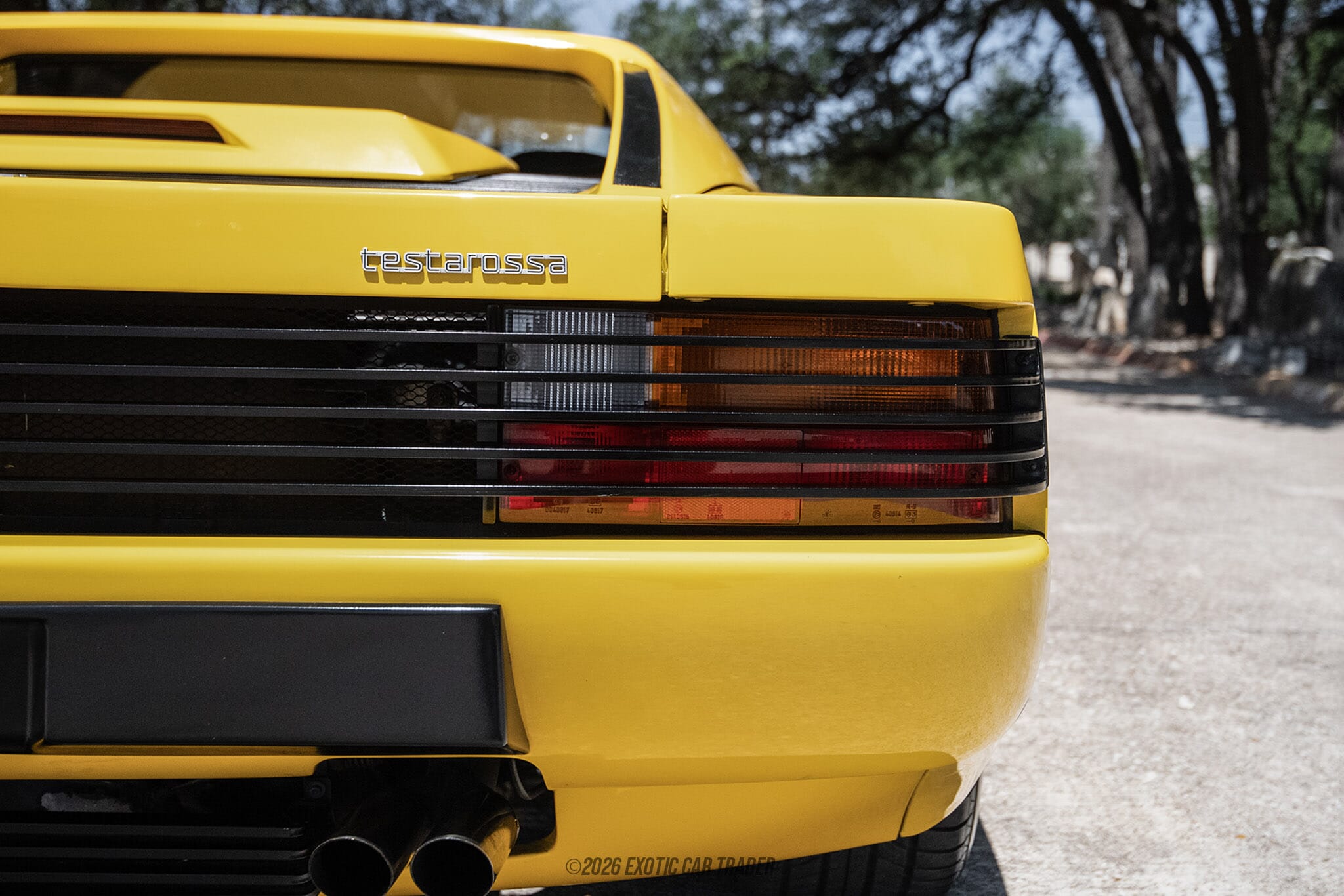
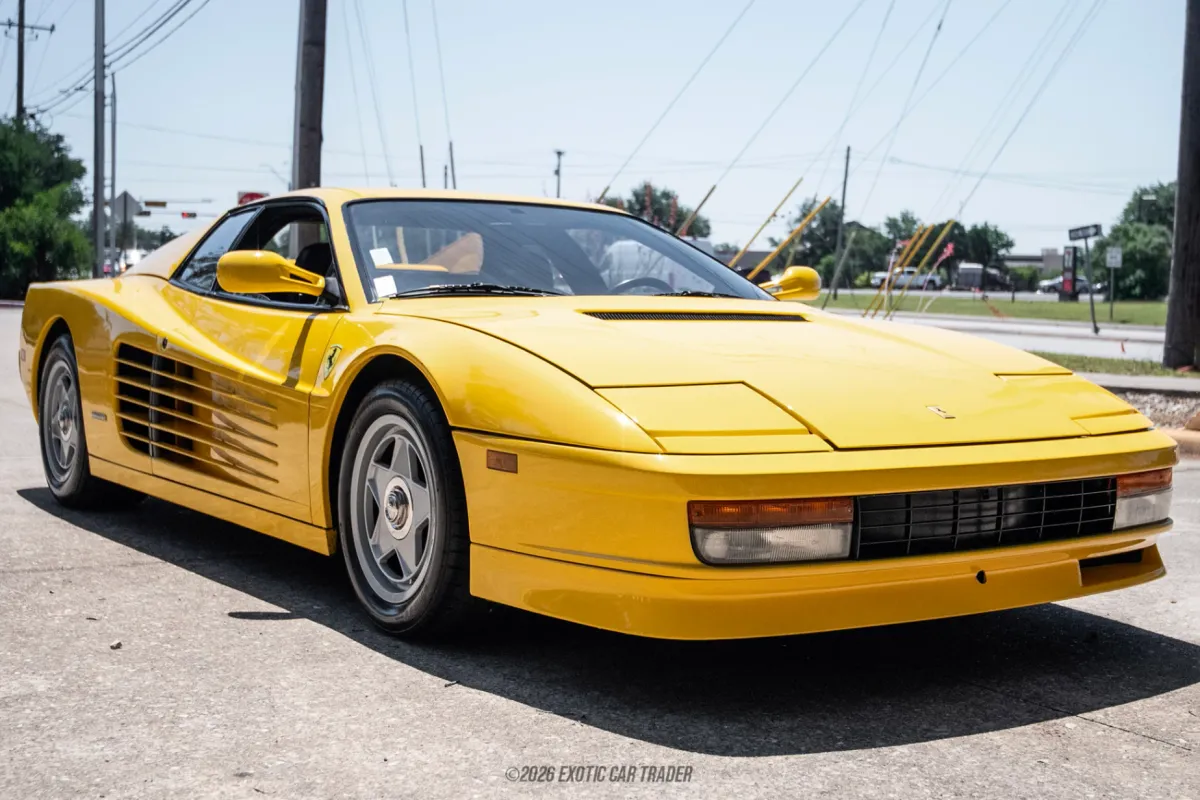
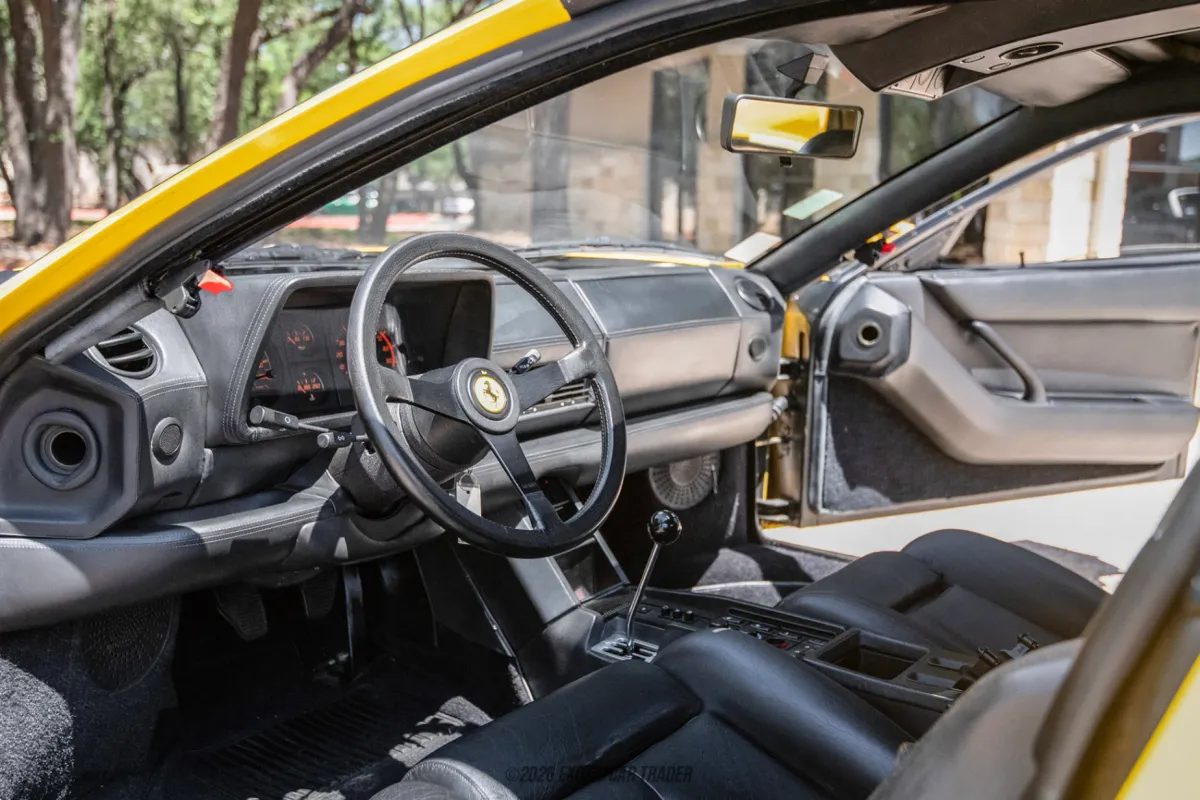
The exterior of this 1988 Ferrari Testarossa is pure automotive poster-car material. Finished in Giallo Fly, the car’s signature side straked bodywork remains one of the most daring and recognizable styling cues ever fitted to a production Ferrari. The low, wide stance, pop-up headlights, broad rear haunches, and dramatic wedge-shaped profile deliver exactly the sort of visual presence that defined late-1980s exotic car culture. This example features dual low-mounted mirrors, the later and more practical setup compared to the early single “flying mirror” cars, along with the factory-style 16-inch five-spoke alloy wheels that preserve the car’s authentic period aesthetic. Even parked, the Testarossa looks fast, theatrical, and unmistakably Italian. The interior of this 1988 Ferrari Testarossa reflects an era when supercars prioritized analog engagement over digital distraction. Finished in Nero, the cabin wraps occupants in classic Ferrari simplicity, with a driver-focused dashboard, iconic gated shifter, and expansive cabin width made possible by the car’s layout. Visibility is surprisingly usable for a supercar of this vintage, and the seating position delivers the low-slung, intimate feel expected from a Ferrari flagship of the time. An aftermarket Pioneer sound system has been fitted, providing upgraded audio capability over the original factory setup while preserving the cabin’s overall character. This is a cockpit built for driving involvement, where mechanical interaction takes center stage.
Engine
Powering this 1988 Ferrari Testarossa is a 4.9L naturally aspirated flat-12 engine fed by Bosch KE-Jetronic CIS fuel injection, a charismatic and unmistakably Ferrari powerplant that helped cement the model’s legendary reputation. Factory output was rated at approximately 380 horsepower for U.S.-spec examples, delivered with a smooth but increasingly urgent powerband that rewards enthusiastic driving. The defining centerpiece of the experience is the gated 5-speed manual transmission, offering the tactile mechanical engagement modern supercars simply cannot replicate. With rear-wheel drive and a mid-engine layout, the Testarossa delivers balanced high-speed touring capability alongside dramatic soundtrack and road presence. More than just performance numbers, this Ferrari offers something increasingly rare: an unapologetically analog exotic experience from one of Maranello’s most iconic eras.


The Ferrari Testarossa remains one of the most instantly recognizable supercars of the 1980s, a machine that perfectly captured the excess, drama, and design experimentation of the era. Introduced as the successor to the Berlinetta Boxer, the Testarossa brought improved refinement, better cooling, and dramatically more interior space, all while retaining Ferrari’s intoxicating flat-12 performance formula. This 1988 Ferrari Testarossa shows 43,413 miles and is finished in eye-catching Giallo Fly over a Nero interior—a combination that amplifies the car’s unmistakable visual theater. While many collectors gravitate toward Rosso Corsa examples, yellow Testarossas carry a distinct period-correct flair that feels especially fitting for such an extroverted design. Adding to the appeal is the engaging gated 5-speed manual transmission, the analog driving experience enthusiasts crave, and a tasteful aftermarket audio upgrade for improved cruising enjoyment.
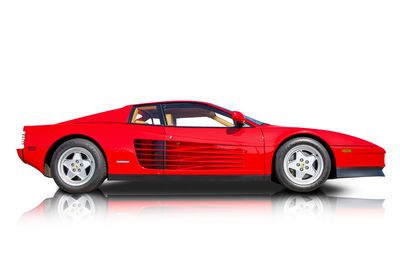
The Ferrari Testarossa, often considered Ferrari's response to the renowned Lamborghini Countach, holds a unique place in automotive history. Some see it as an embodiment of 80s cultural significance, having graced the silver screen in notable films like Miami Vice, Wolf of Wall Street, and the iconic video game Out Run by Sega in 1986. Regardless of its initial intent, the Ferrari Testarossa is an automotive masterpiece that adorned the walls of countless enthusiasts' bedrooms and gave Lamborghini fierce competition. With its signature 12-cylinder engine, featuring red-painted cam covers that inspired its name, "Testa Rossa" (Italian for "redhead"), this particular 1991 Ferrari Testarossa stands as an exceptional example, boasting a mere 11,640 miles on its odometer. Buckle up as we delve into its remarkable attributes.
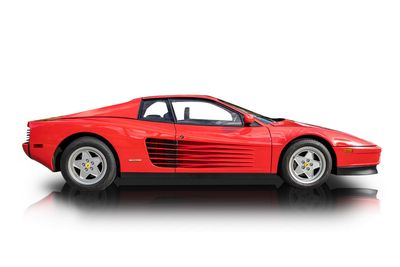
One of the most iconic cars of the Eighties to ever roll out of Enzo Ferrari’s hallowed stables is the Ferrari Testarossa. The mere mention of the name of this car sends petrolheads the world over into a frenzy, from its futuristic styling to the characteristic scream of the twelve-cylinder engine that powered it. If you’d like to own a piece of Italian automotive art and history, here’s a 1989 Ferrari Testarossa Coupe from Florida for sale, having screamed over just 23,500 miles to get here. It’s reportedly for sale by its second owner who is including the original tool kit, books, manuals and two keys in the sale.
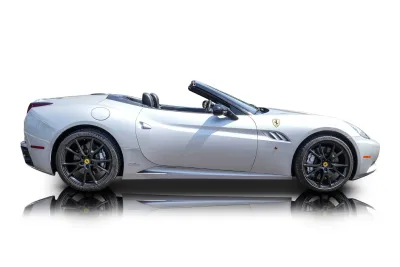
The Ferrari California was designed to broaden the traditional Ferrari formula without losing the sense of occasion expected from Maranello, combining a naturally aspirated V8, a retractable hardtop, and a dual-clutch transmission in a package that could be enjoyed far more often than a typical exotic. This 2012 Ferrari California shows approximately 34,065 miles and is equipped with a notably enthusiast-focused specification, including Magneride suspension, Carbon Fibre Driver Zone with LEDs, carbon fibre rear moulding, 20-inch Diamond-Finish Sport Wheels, “Scuderia Ferrari” shields, and a Yellow Rev Counter. Inside, leather and Alcantara seating is paired with white contrast stitching, while the Alcantara windscreen arch and leather headliner add further visual depth. The result is a California that balances grand-touring usability with enough carbon, chassis hardware, and traditional Ferrari detail to keep the driving experience firmly at the center.
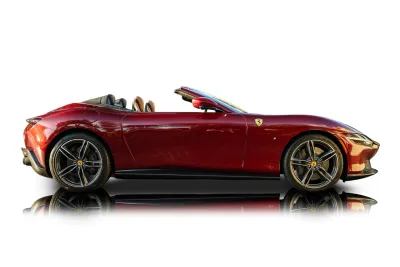
The 2025 Ferrari Roma Spider represents Ferrari’s modern interpretation of the classic Italian grand touring spider, combining timeless design, open-air elegance, and the performance heritage of Maranello. Inspired by Ferrari’s front-engine GT tradition, the Roma Spider delivers a refined yet emotional driving experience with its sculpted proportions and advanced engineering. This example is elevated by one of its most distinctive features: the Rosso Fiorino Extra Range Historical Color, a rare heritage-inspired Ferrari paint finish that draws from the marque’s extensive color history and gives this Roma Spider a level of exclusivity beyond standard production shades. Showing only 1,151 miles, this Ferrari is further distinguished by a highly personalized specification featuring a Cuoio interior with Bordeaux accents, extensive carbon fiber appointments, diamond-polished forged wheels, Scuderia Ferrari Shields, and numerous bespoke details throughout.
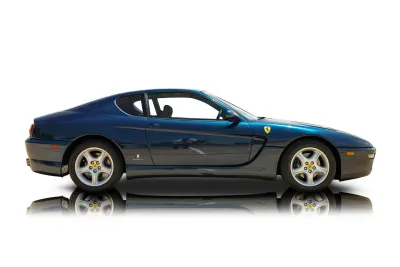
The 1995 Ferrari 456 GT represents a fascinating chapter in Ferrari history, arriving during an era when Maranello still built grand tourers around traditional front-engine V12 architecture and the involvement of a manual gearbox. Unlike Ferrari’s more aggressive mid-engine supercars, the 456 GT was designed to deliver effortless high-speed performance with the comfort and elegance needed for long-distance journeys, all while retaining the unmistakable character of a Ferrari. Showing 30,621 miles, this example is finished in the sophisticated Blu Swaters exterior over a Tan Connolly Leather interior and is equipped with the highly desirable six-speed gated manual transmission. Additional highlights include a limited-slip differential, Scuderia Ferrari fender shields, 17" five-spoke alloy wheels, and a Tubi Style Exhaust System that enhances the soundtrack of the naturally aspirated V12. With its Pininfarina styling, rare three-pedal configuration, and Ferrari’s legendary twelve-cylinder engine, this 456 GT offers an authentic driving experience that bridges the gap between a classic Ferrari sports car and a luxurious grand tourer.

This 1956 Chevrolet 150 Restomod is a clean Tri-Five build with the kind of mechanical and cosmetic upgrades that make these cars genuinely fun to drive. Showing approximately 3,050 miles, it features a custom Green and White paint job over a reupholstered Brown leather interior and is powered by a 383ci Summit Racing crate V8 paired with a 5-speed manual transmission. The engine has been positioned 1.5 inches forward, while Sanderson headers, a 3.90 Posi-Traction rear end, power-assisted disc brakes, electric cooling, and an aluminum radiator give the car a far more capable setup than a stock 150. Add Dakota Digital gauges, air conditioning, a trunk-mounted battery, 17-inch mag wheels, and an upgraded sound system, and this is a well-rounded restomod that blends classic Tri-Five style with much more modern road manners.

This 1957 Buick Roadmaster Riviera 2-Door Hardtop is pure late-1950s American excess in the best possible way, combining dramatic Harley Earl-era styling with the torque-rich character of Buick’s Nailhead V8. Showing approximately 14,574 miles, this example was refurbished in the late 2000s and is finished in Dover White and Bittersweet Red over a Rust and Ivory interior. Its 364ci Nailhead V8 was overhauled, the Dynaflow automatic was rebuilt, and the car was later upgraded with an Air Lift Performance air suspension system. Add in power steering, power brakes, power windows, a power front bench seat, Hot Rod Air climate control, and wide whitewalls, and this Roadmaster delivers the extravagant look of a flagship ’50s Buick with a few thoughtful upgrades that make it even more enjoyable today.

This 1971 Dodge Charger Restomod Super Bee Tribute brings together the aggressive third-generation Charger shape, period-inspired Super Bee styling, and a thoroughly updated big-block drivetrain. Showing approximately 62,213 miles, it is finished in Vitamin C Orange with a Black vinyl roof and Black interior, while the current owner reports that the car underwent a rotisserie build. The centerpiece is a 440ci V8 fitted with FiTech electronic fuel injection and a Mancini Racing Six Pack intake, backed by a TorqueFlite 3-speed automatic and an 8¾-inch Sure Grip rear end with 3.55 gears. Add in the N96 Air Grabber system, AMD bulge hood, Rallye instrumentation, Slap Stik shifter, and Super Bee graphics, and this tribute captures the visual attitude of Mopar’s muscle-car era with a more usable modernized fuel system.

Terms of Service
Be Kind and Courteous
We're here to create a platform to better the automotive industry through communication and transparency. Please treat everyone with respect. Healthy debates are natural, but kindness is required.
No Hate Speech
Make sure everyone feels safe. Hate speech of any kind is strictly prohibited. Degrading comments about things like race, religion, culture, sexual orientation, etc. will not be tolerated.
No Promotions or Spam
Give more than you take. Self-promotion, spam, or links of any kind are not allowed.
