




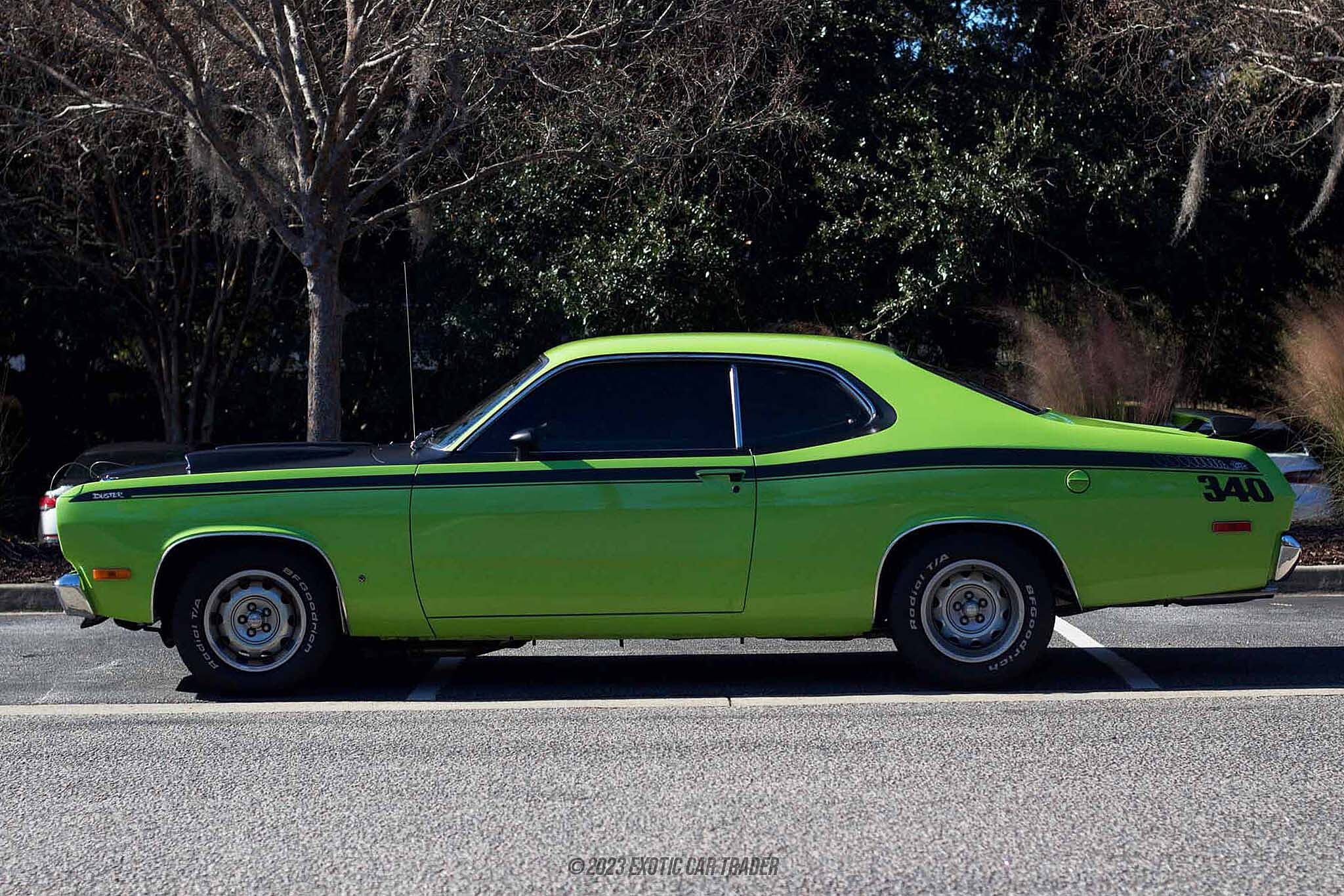
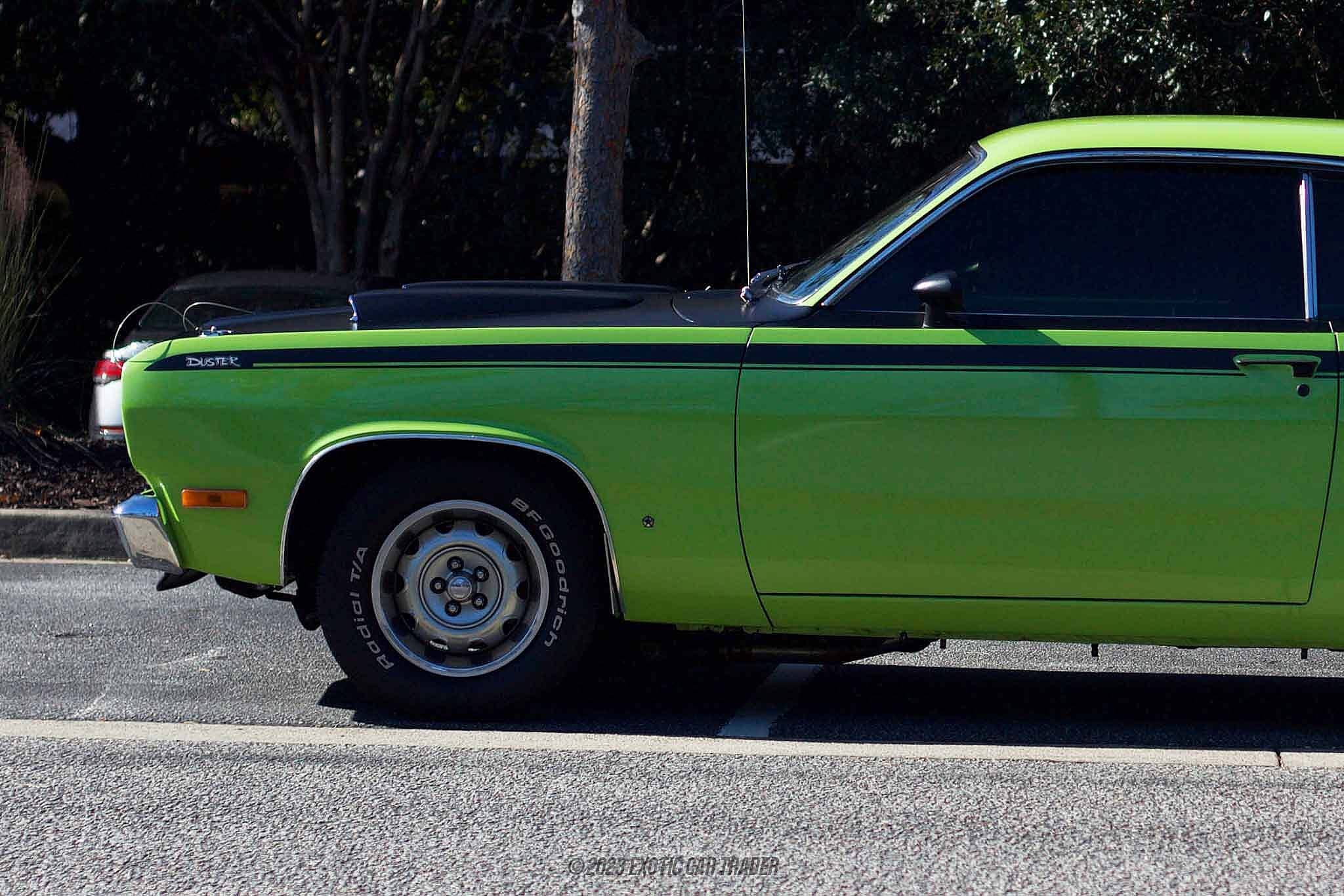
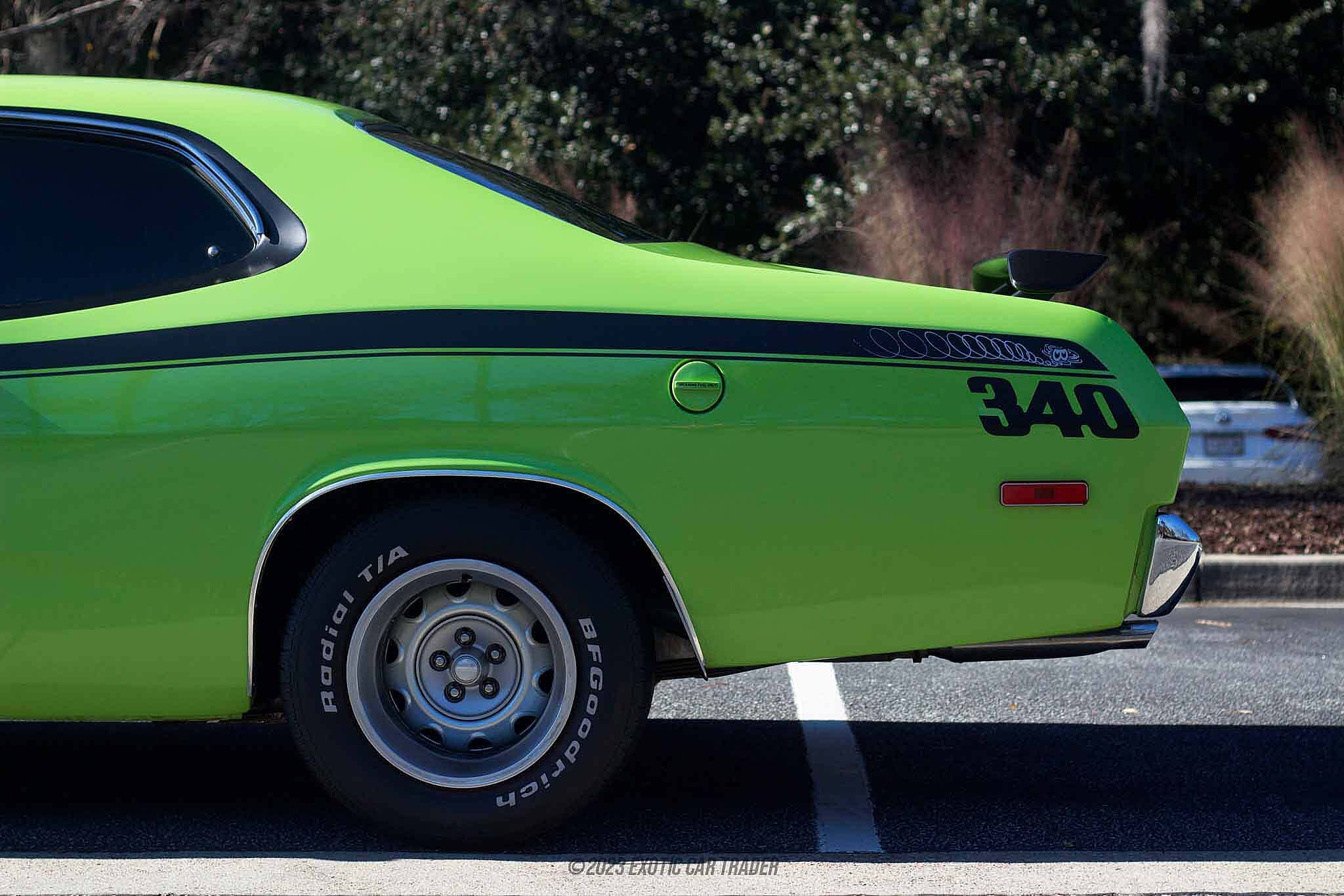
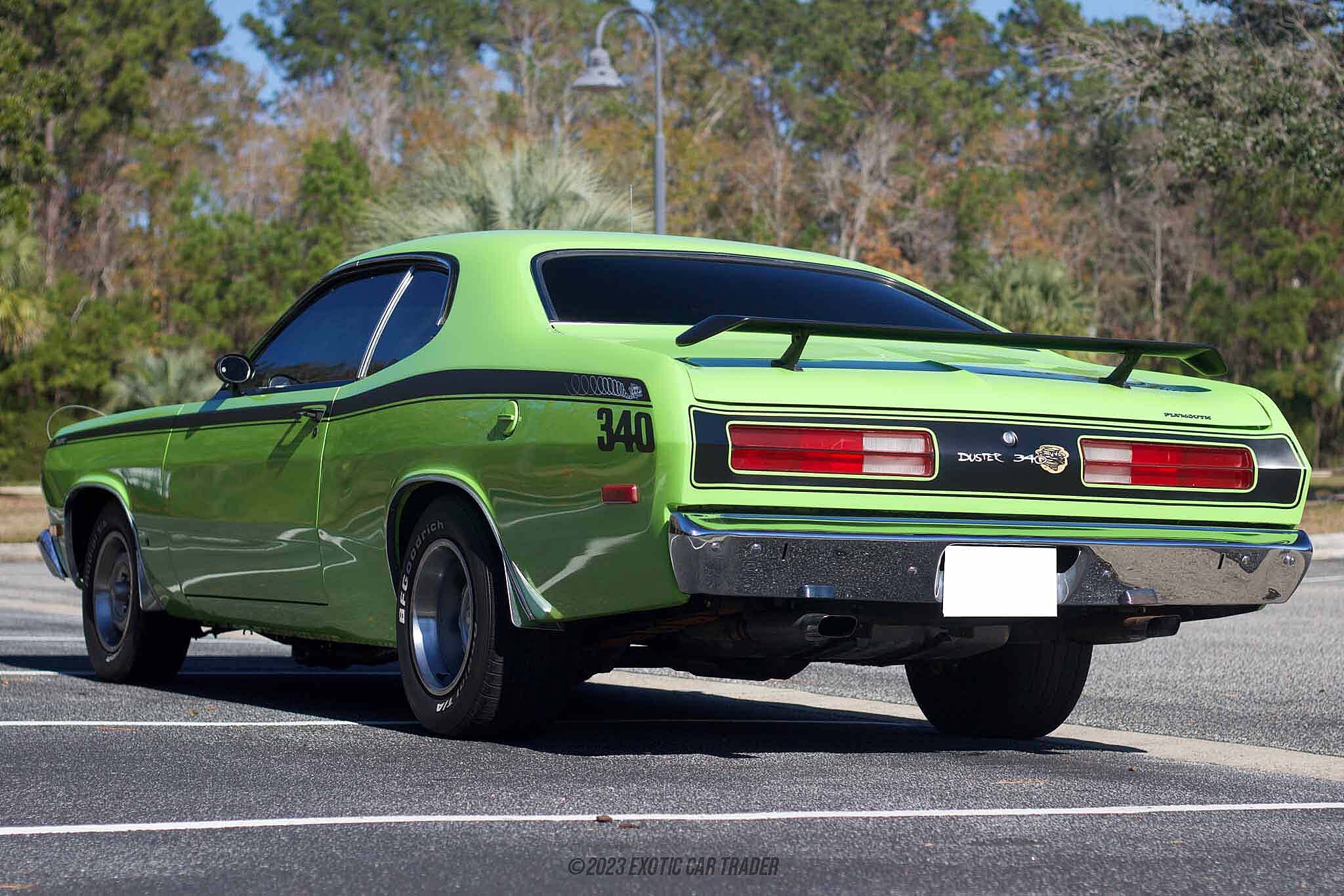
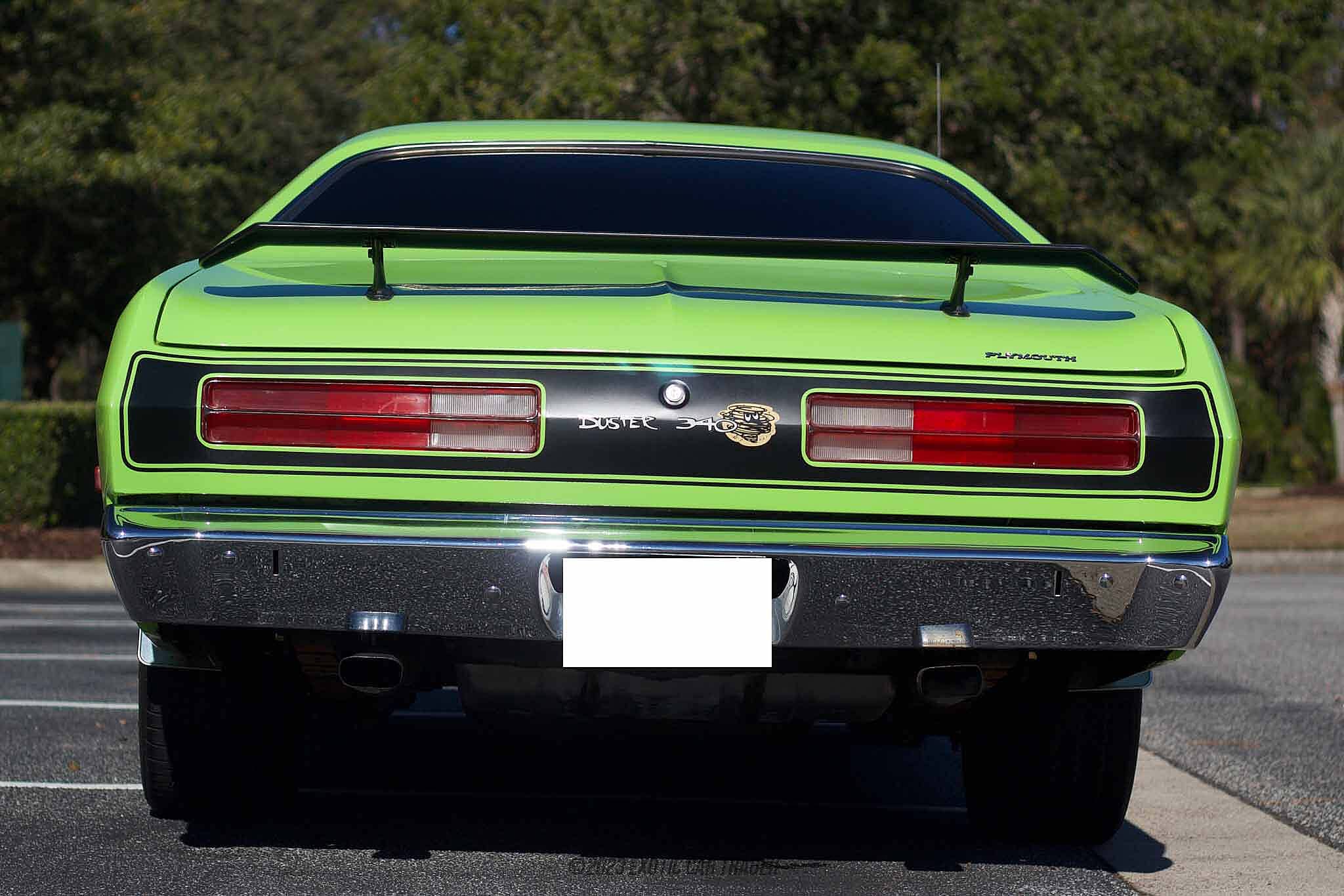
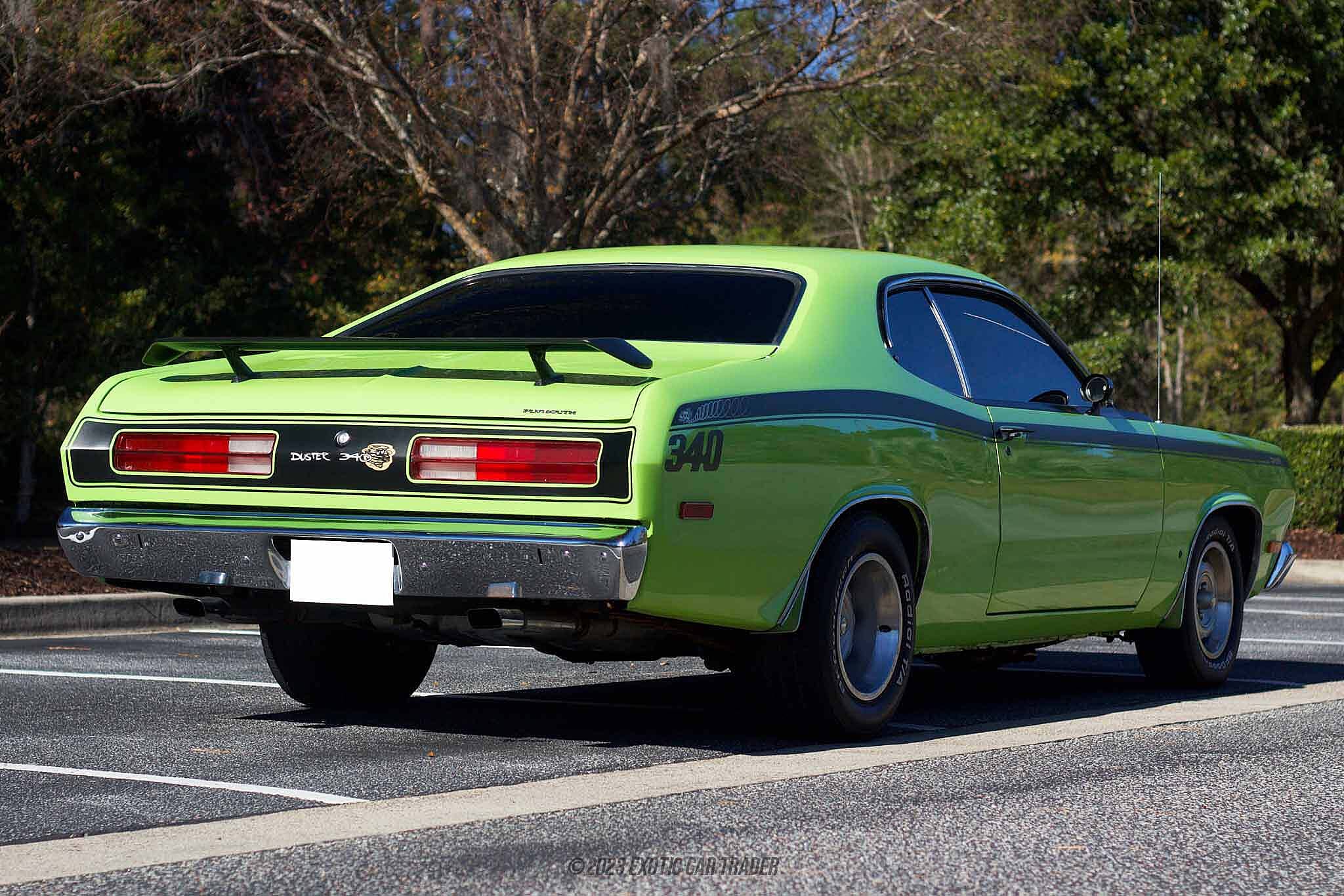
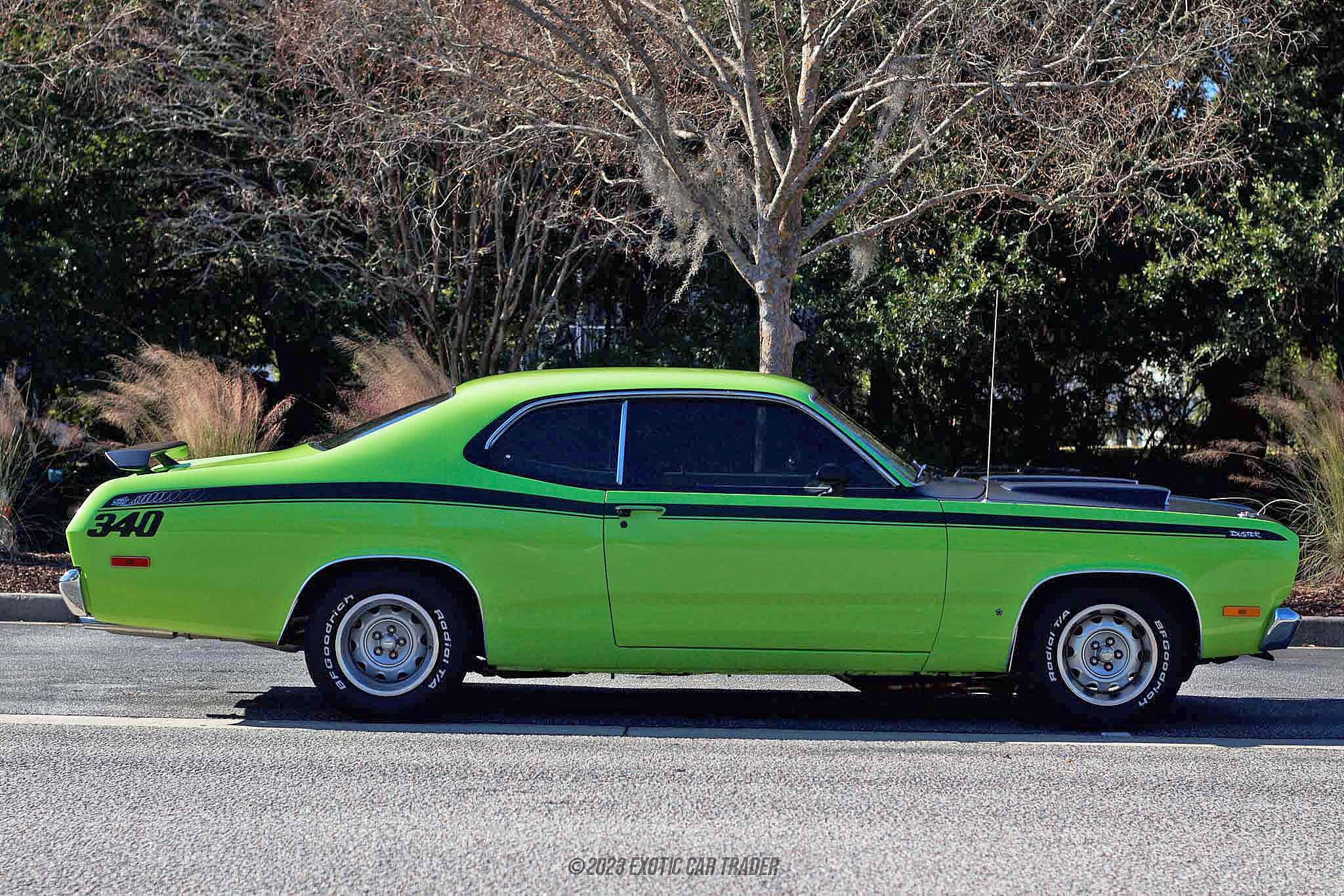
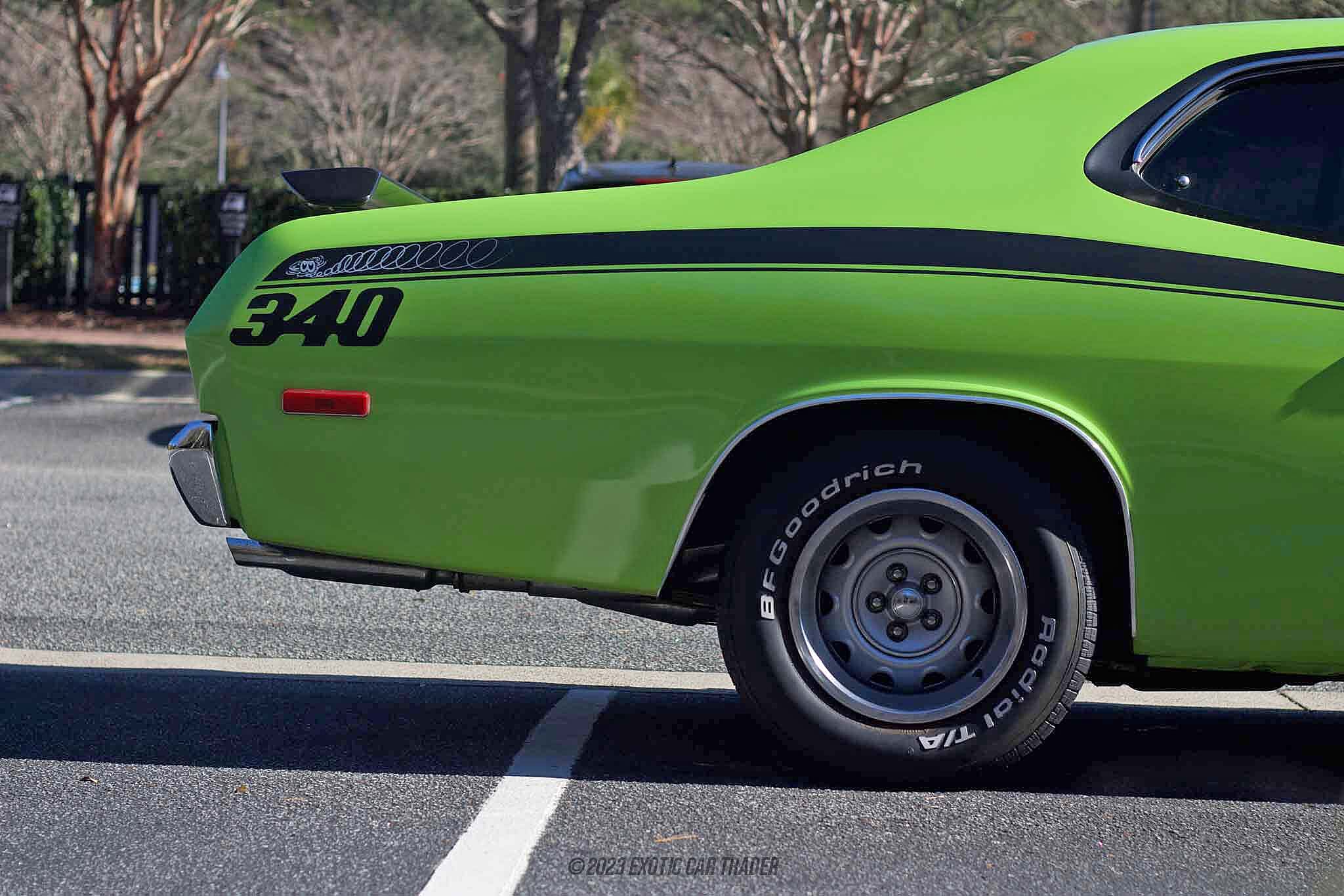

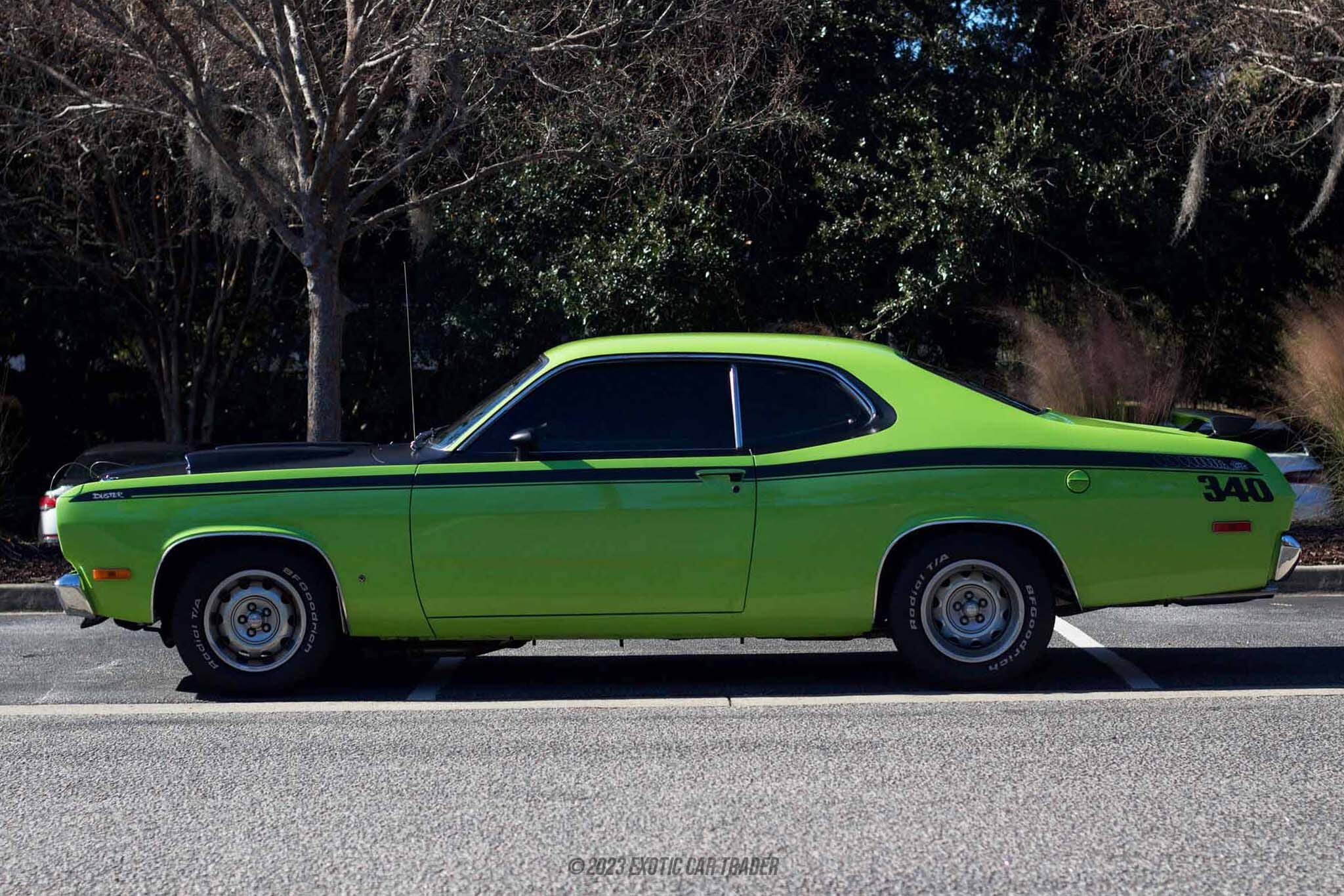
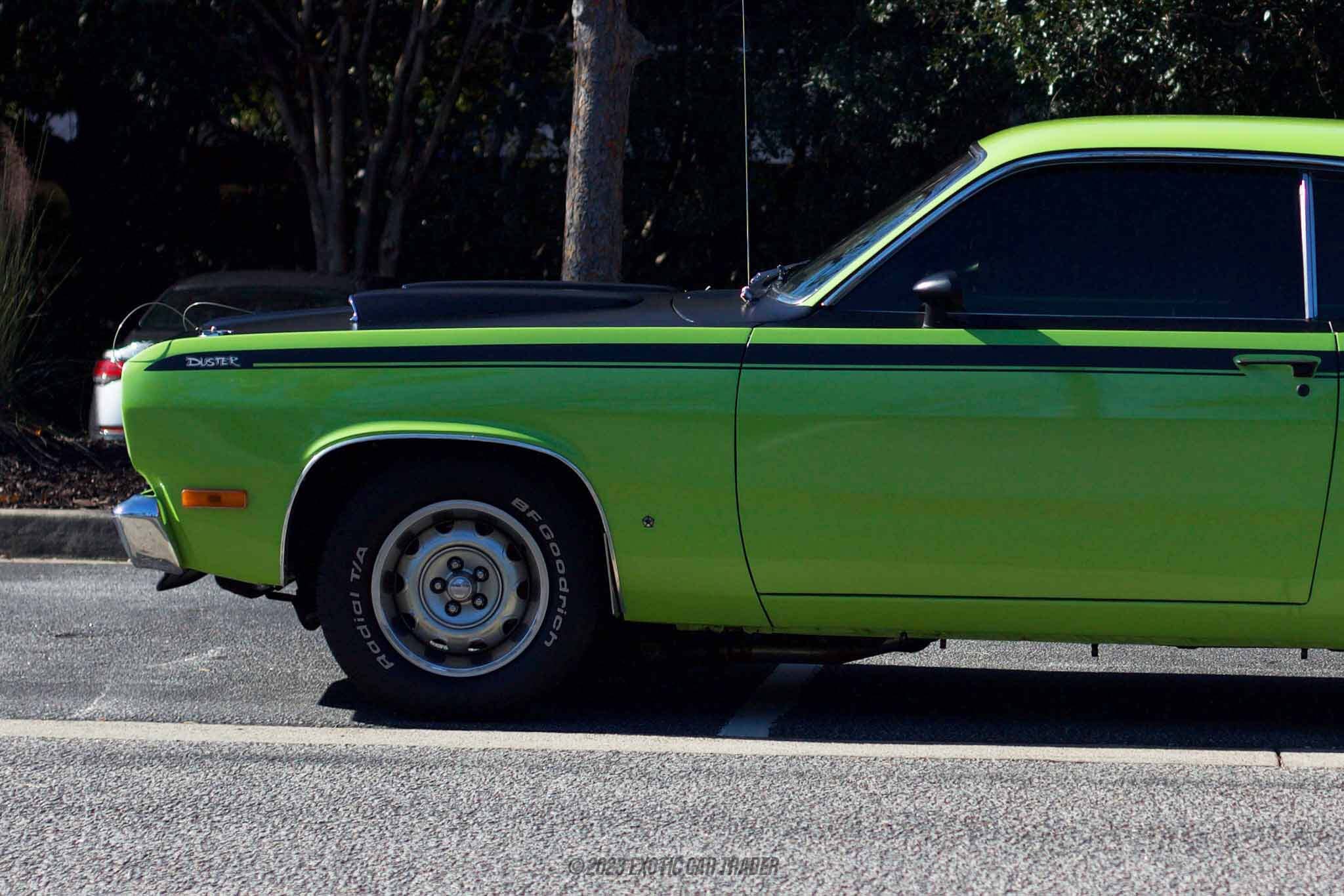
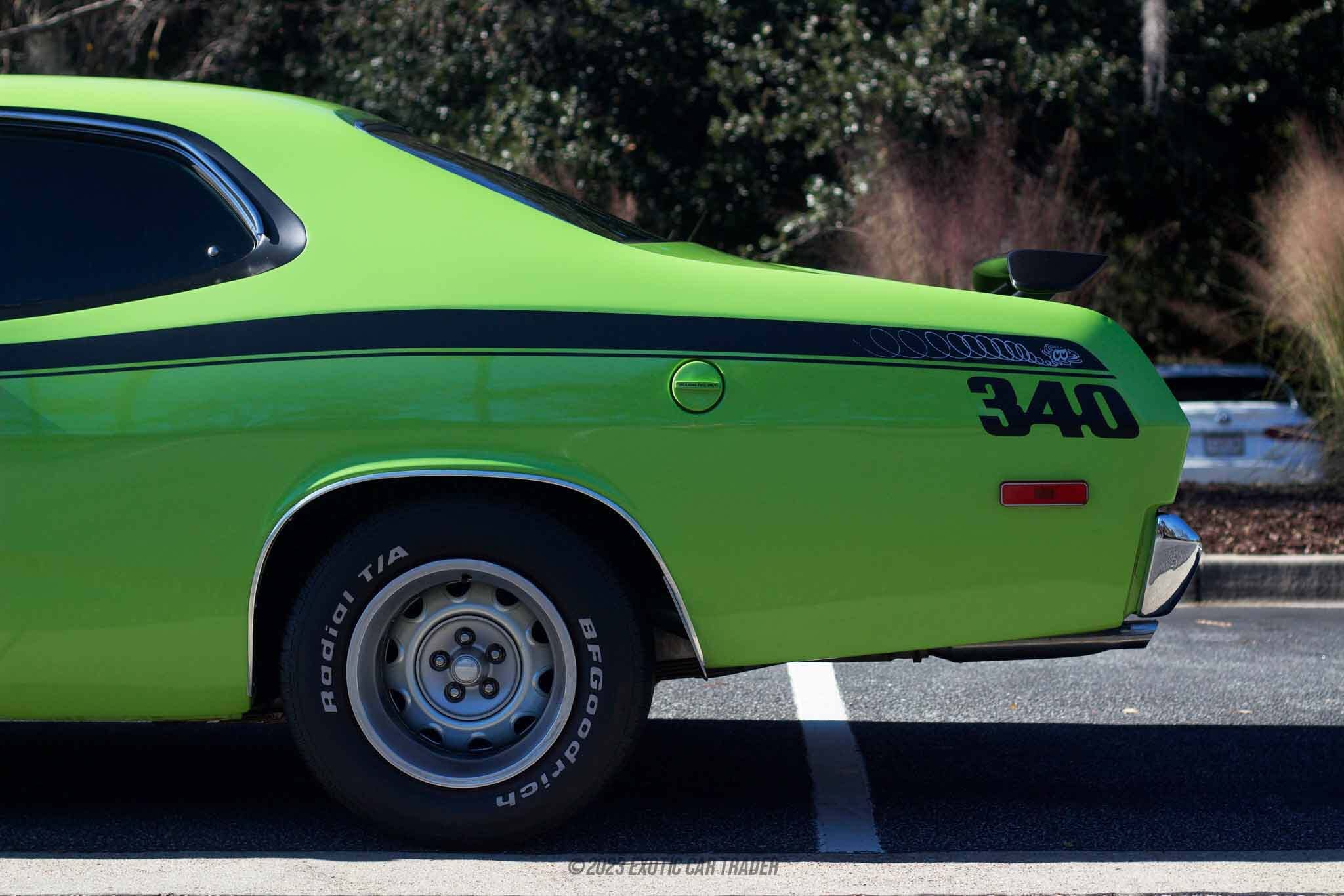
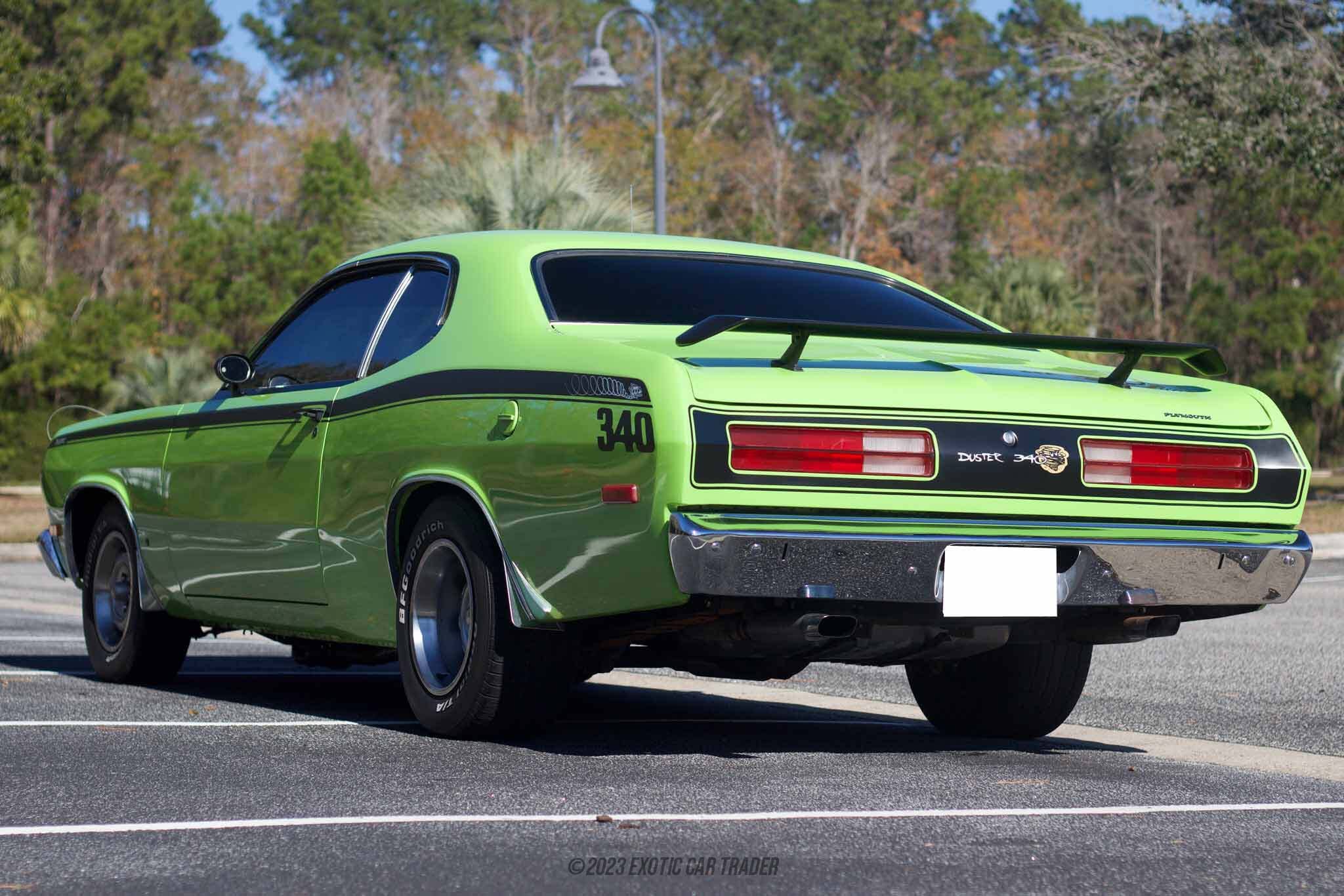
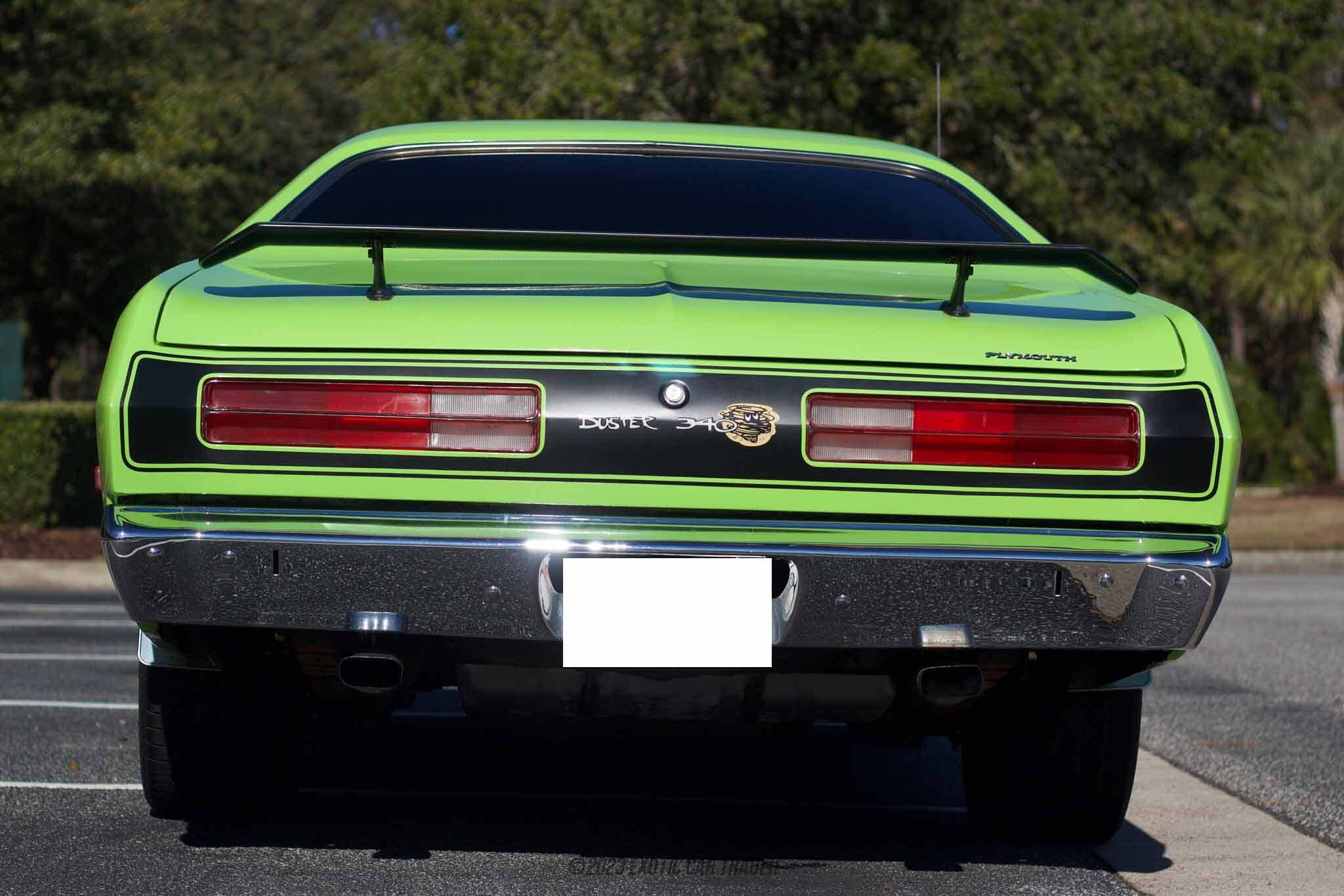
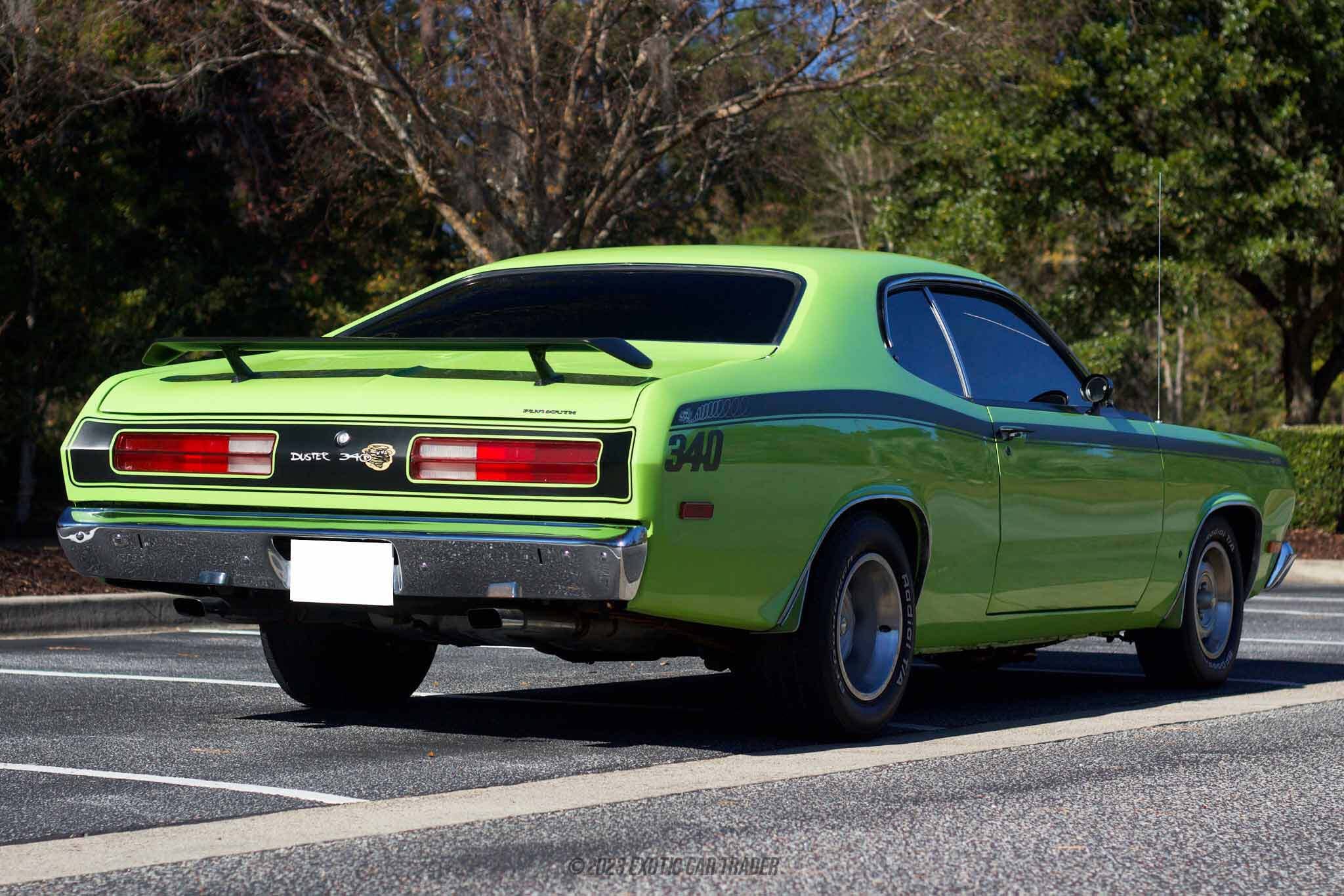
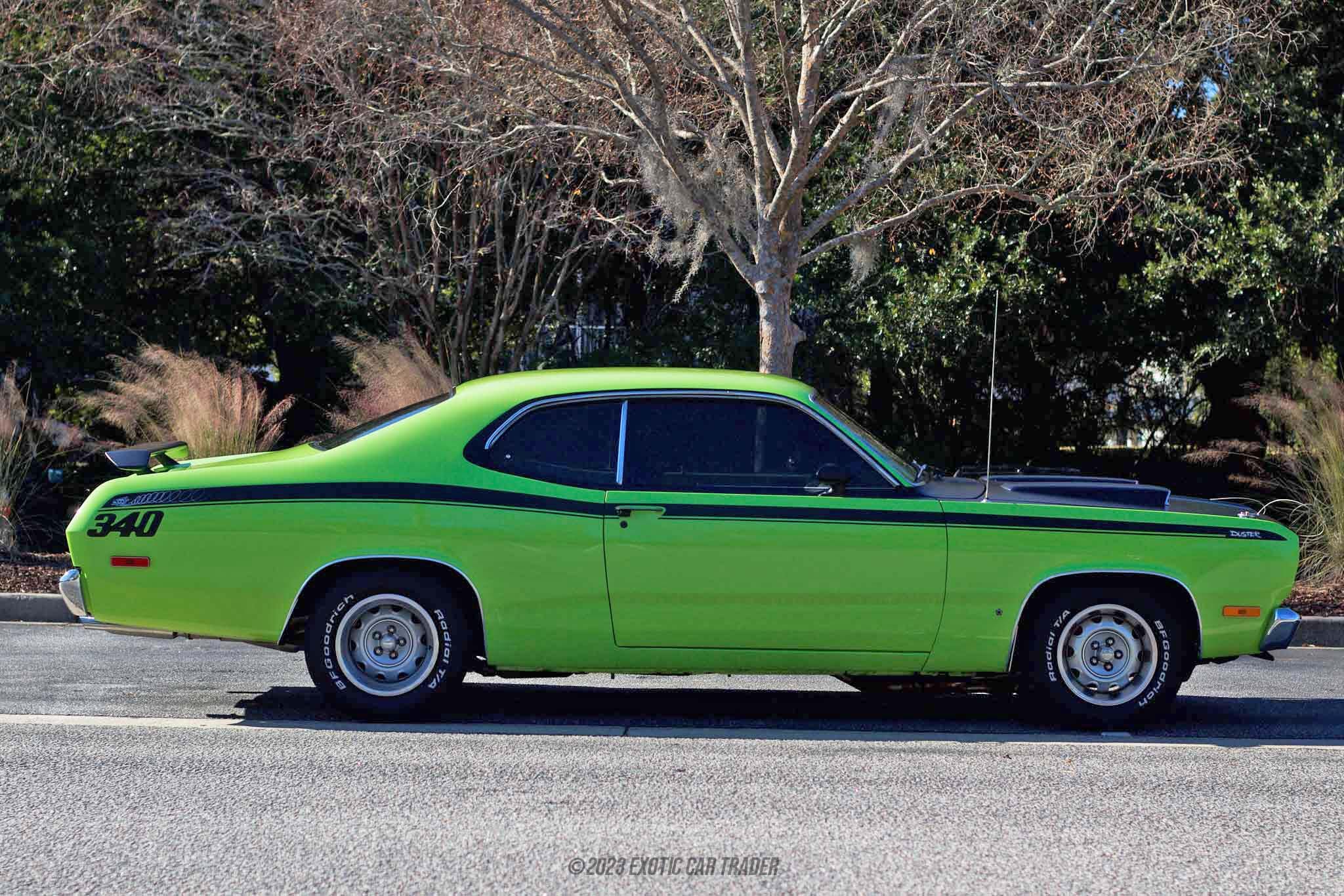
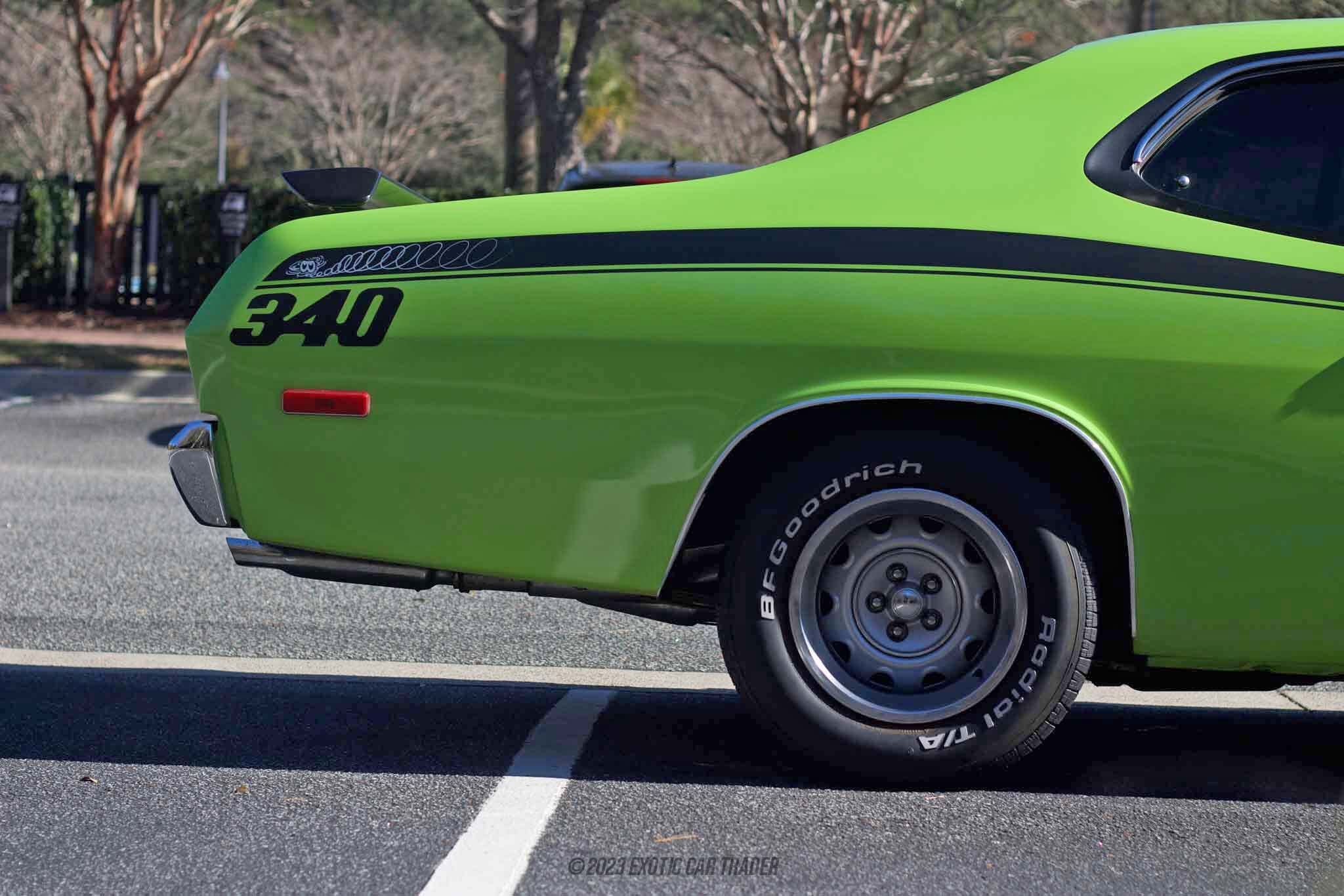
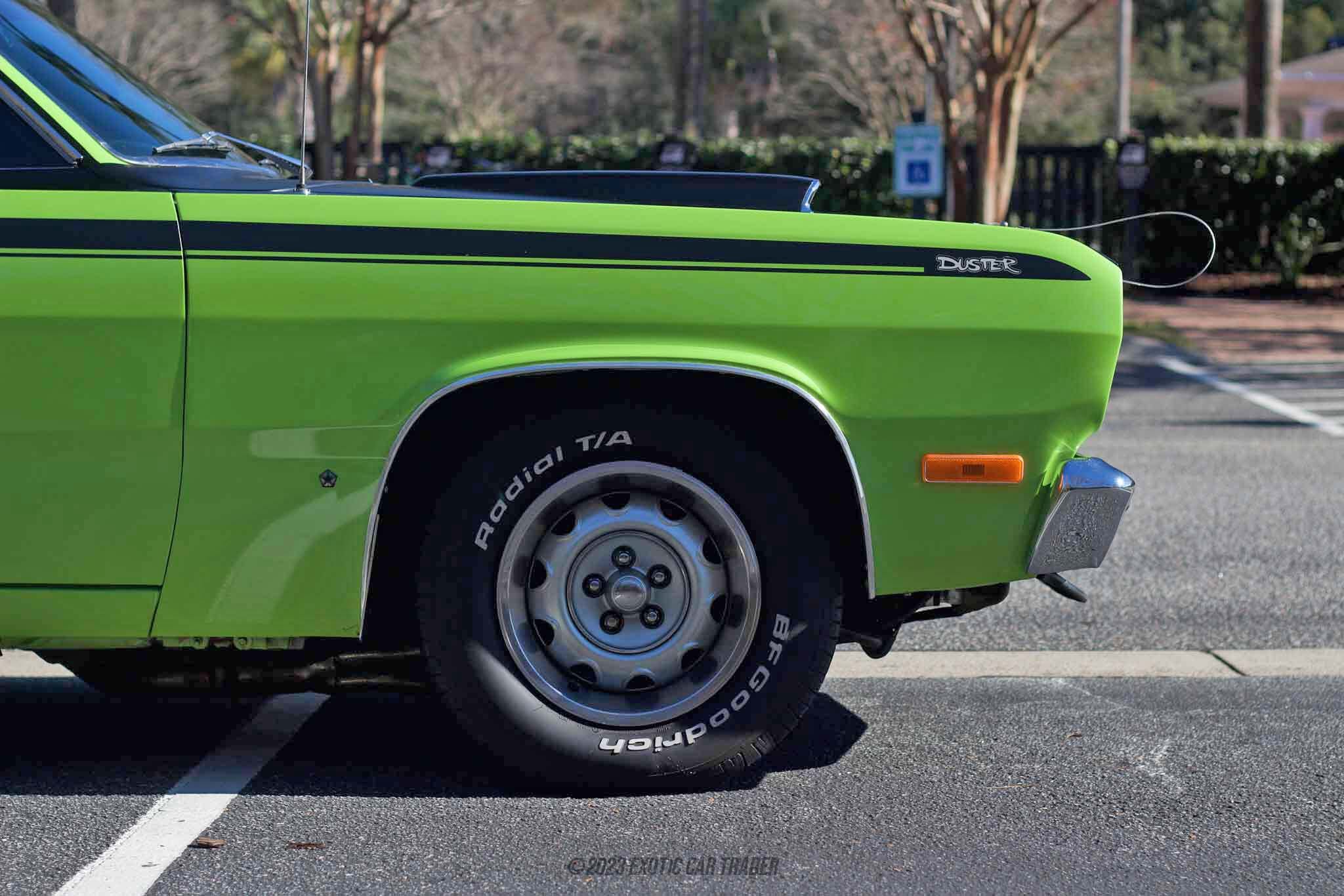
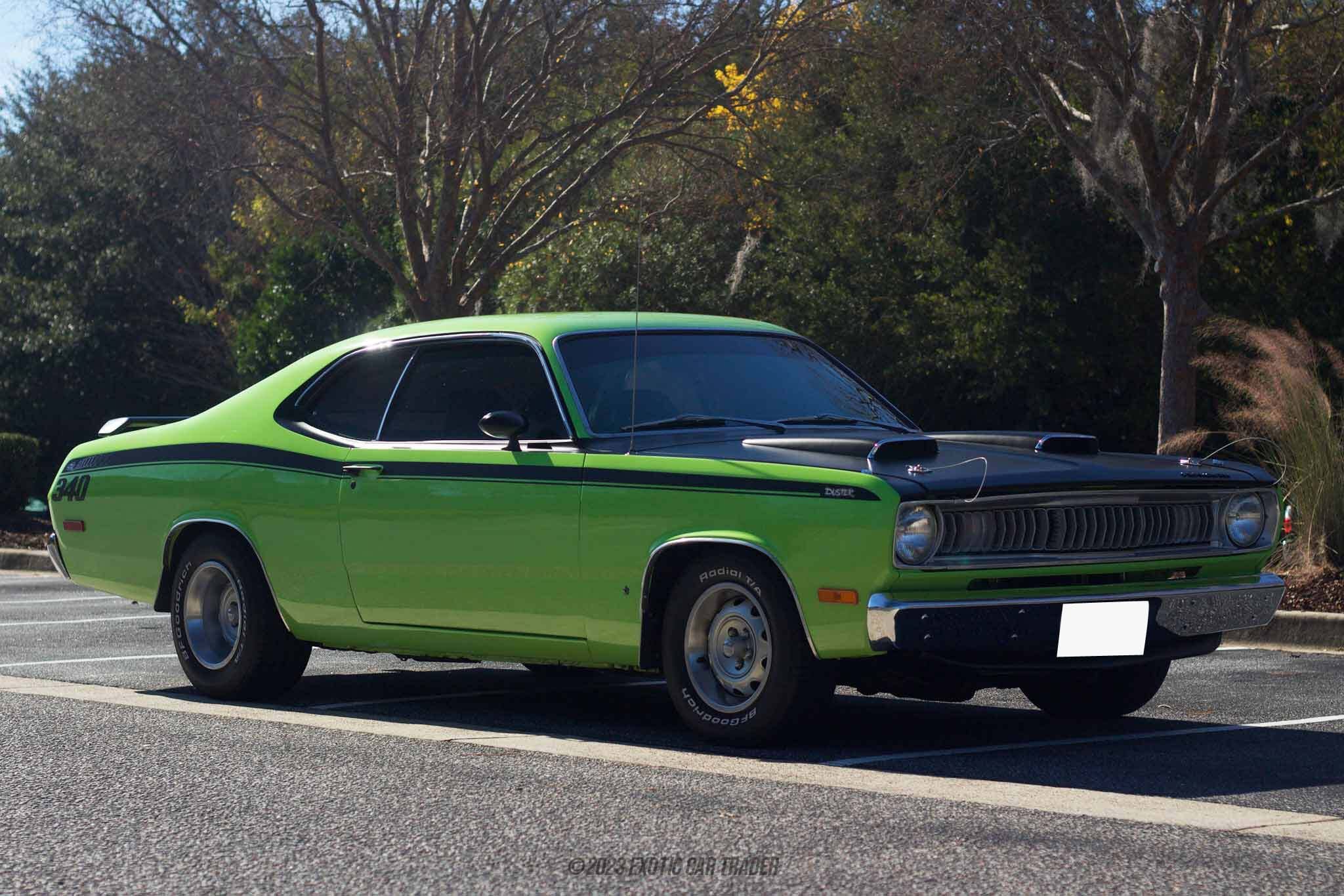
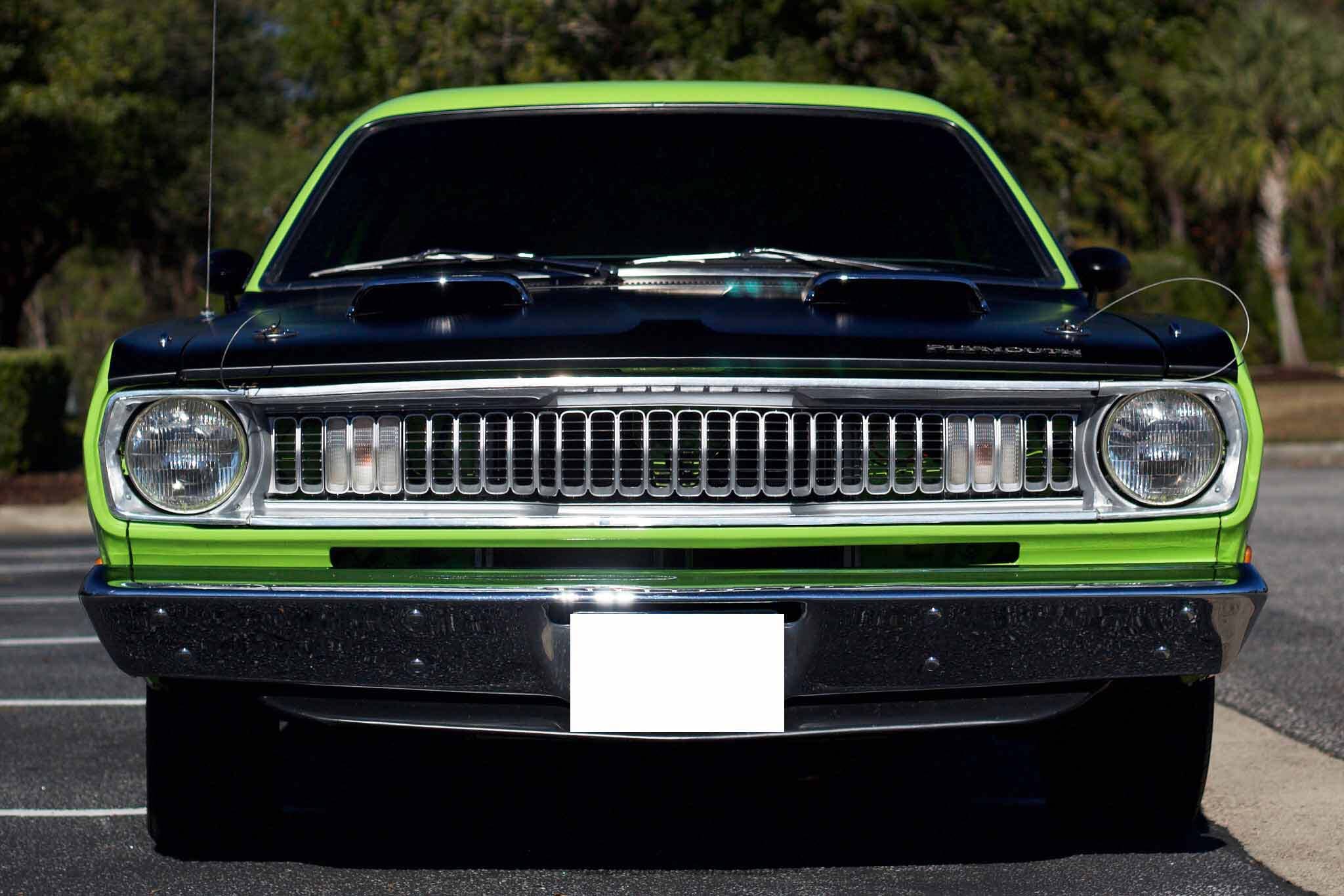
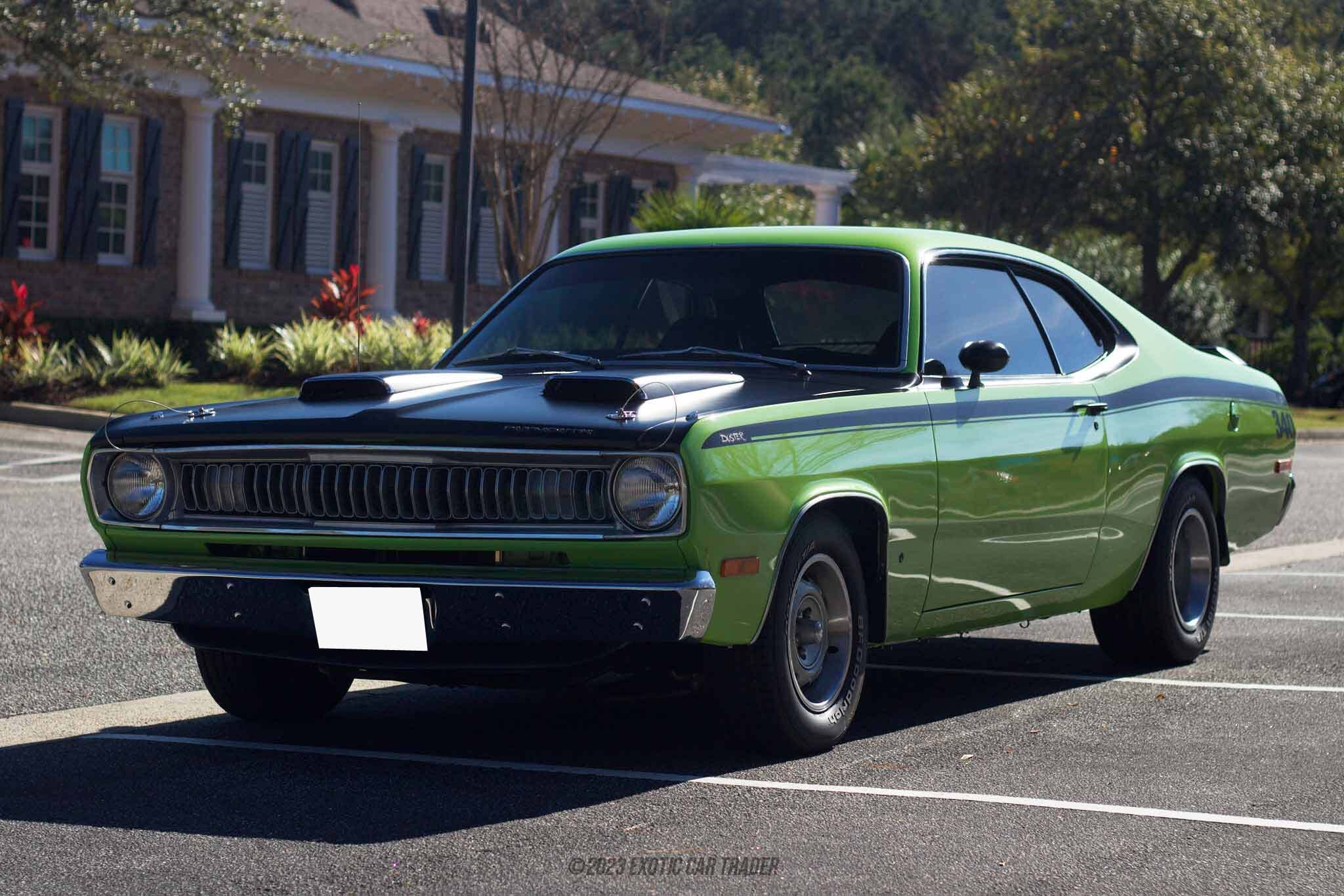


- 1972 MY Plymouth Duster
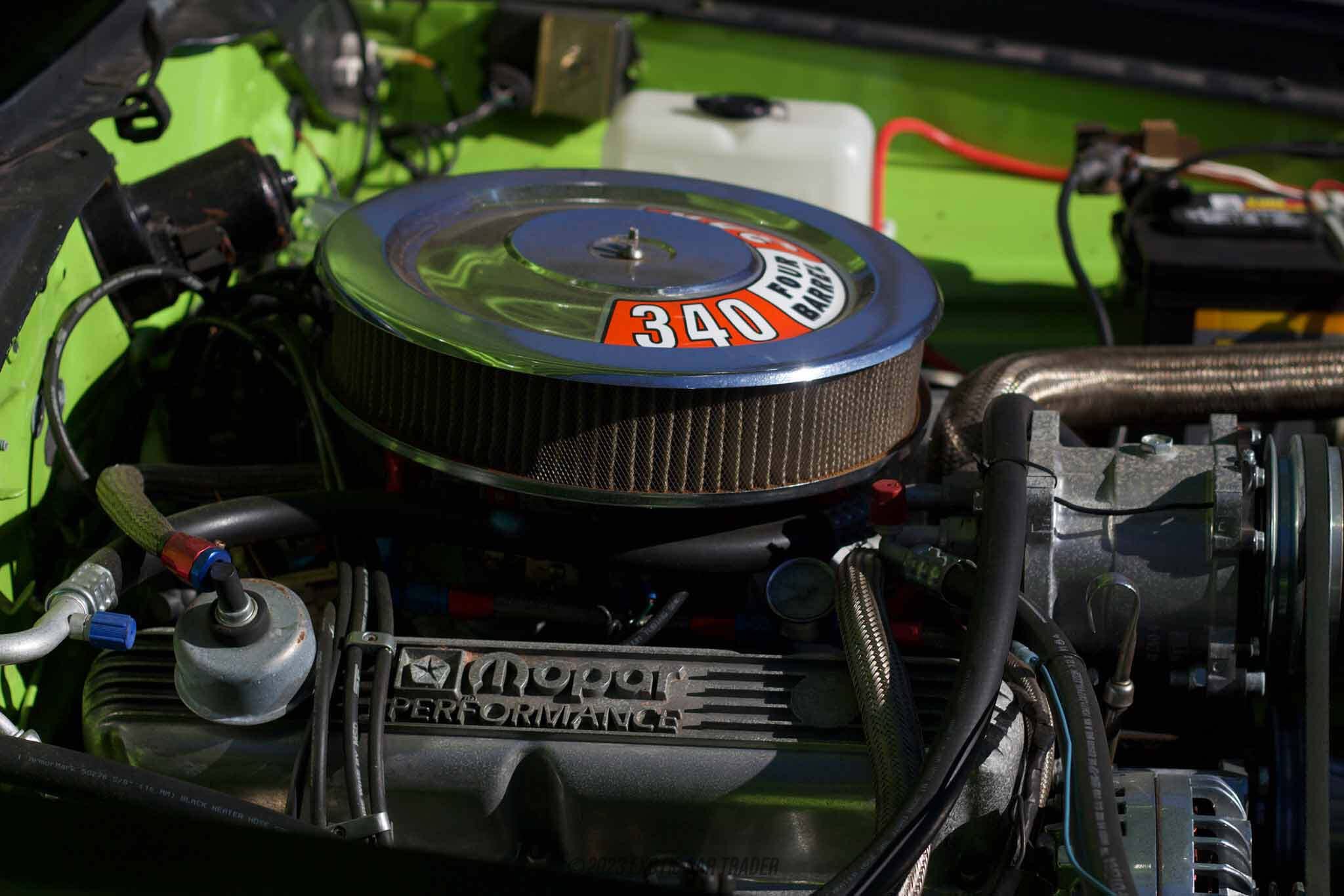
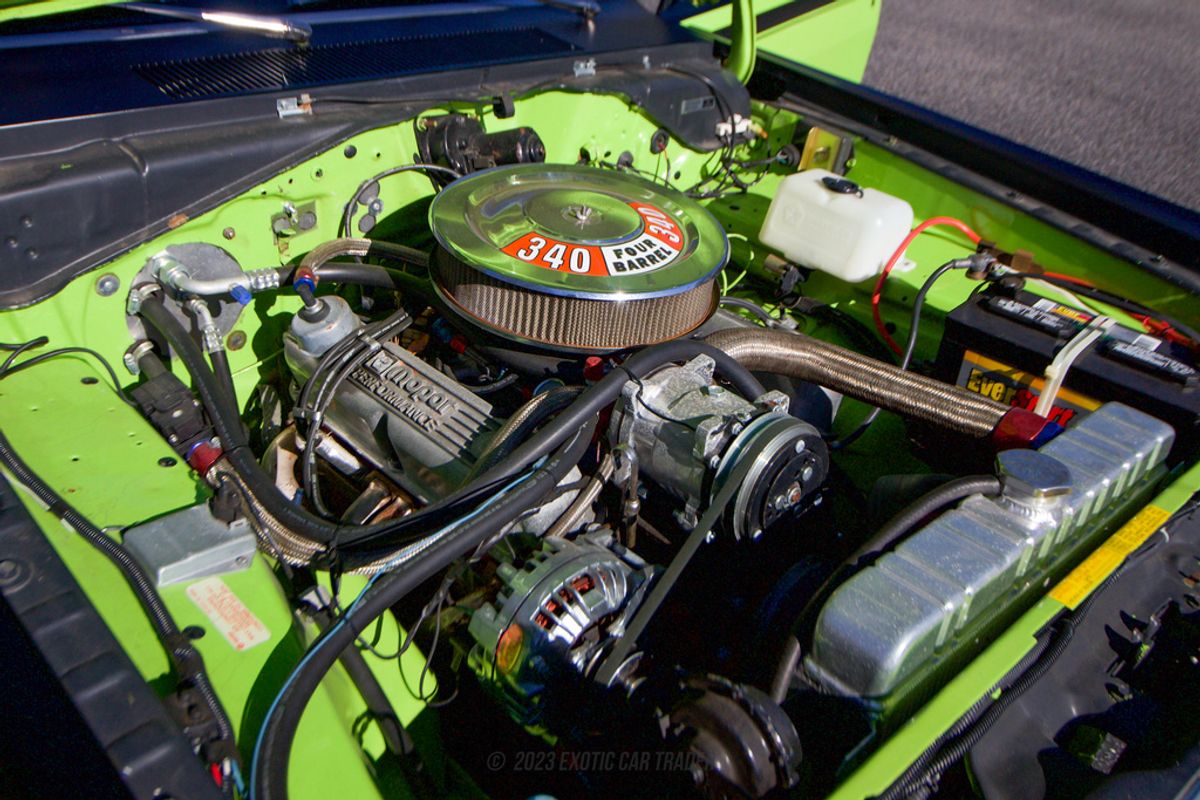
- Current owner reports rebuilt 340ci engine with less than 5,000 miles
- Current owner reports stroker engine professionally built by Sloan Engines
- Current owner reports engine stroked from 340ci to 416ci
- Current owner reports 450 to 500HP
- Torker high rise aluminum intake manifold
- Eagle steel crank shaft
- All aluminum pulleys
- Current owner reports new I-beam rods
- Current owner reports X-heads
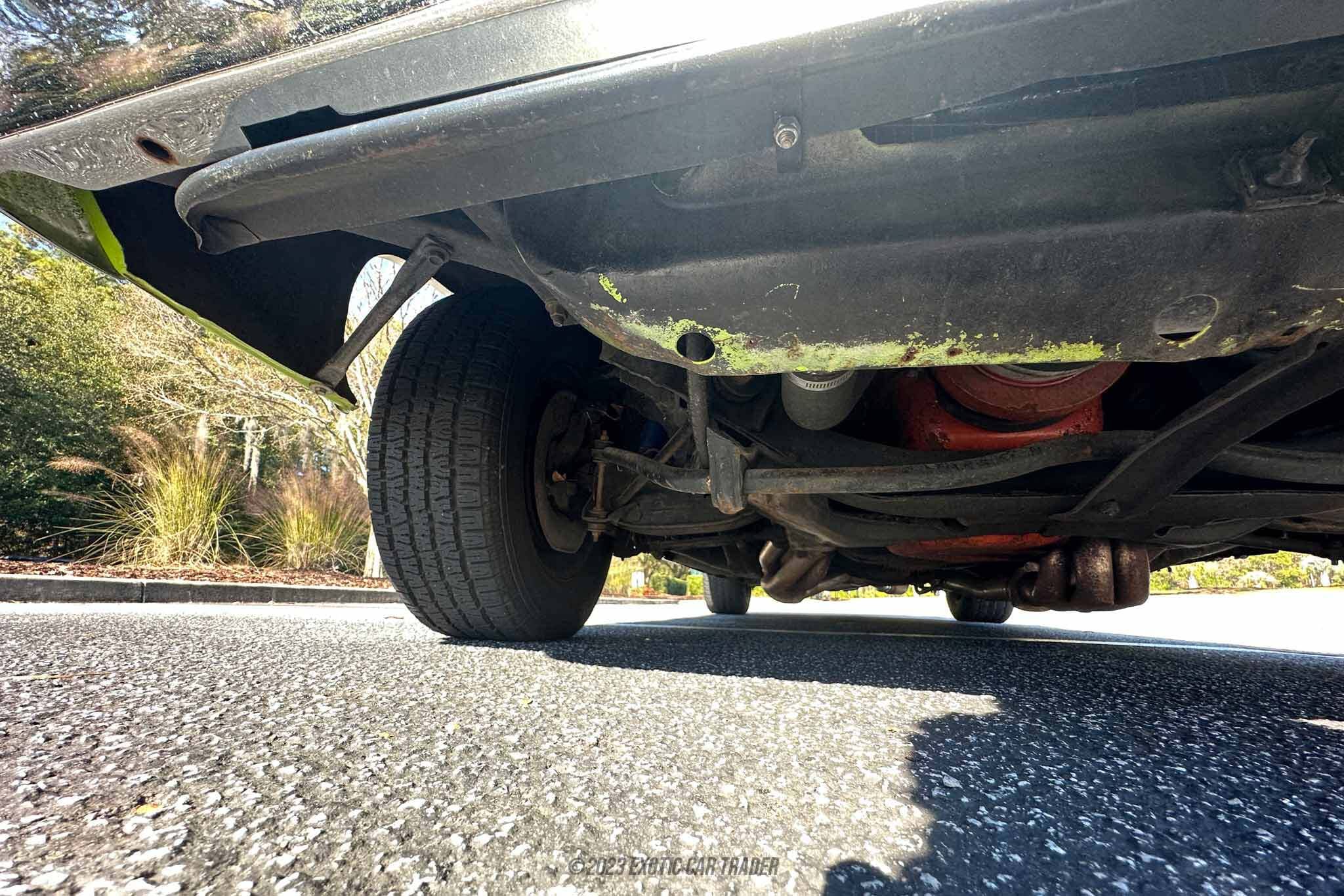
- TTI Performance exhaust headers
- Current owner reports new 650 dual line pumper carburetor
- Current owner reports Holley mechanical high volume pump
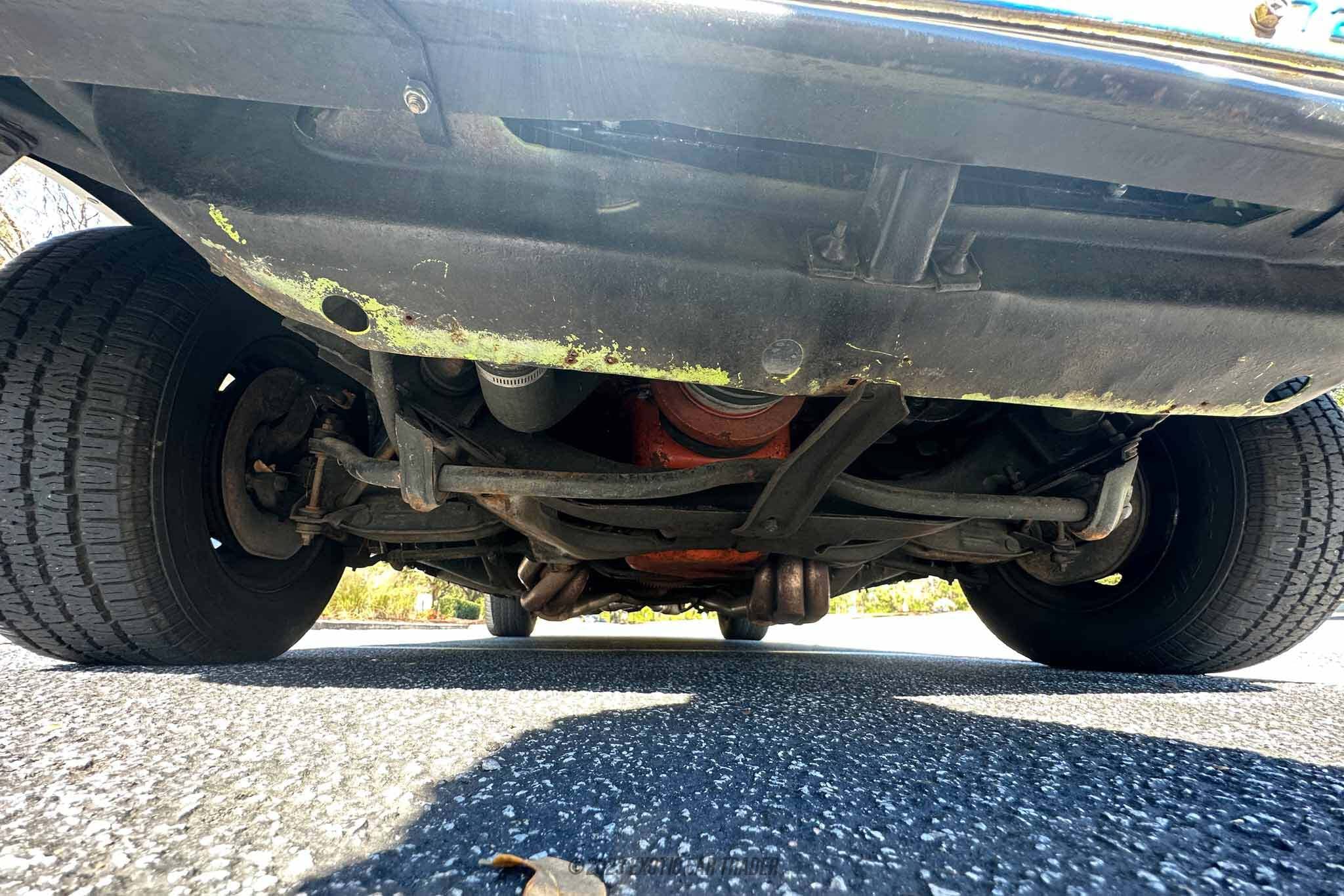
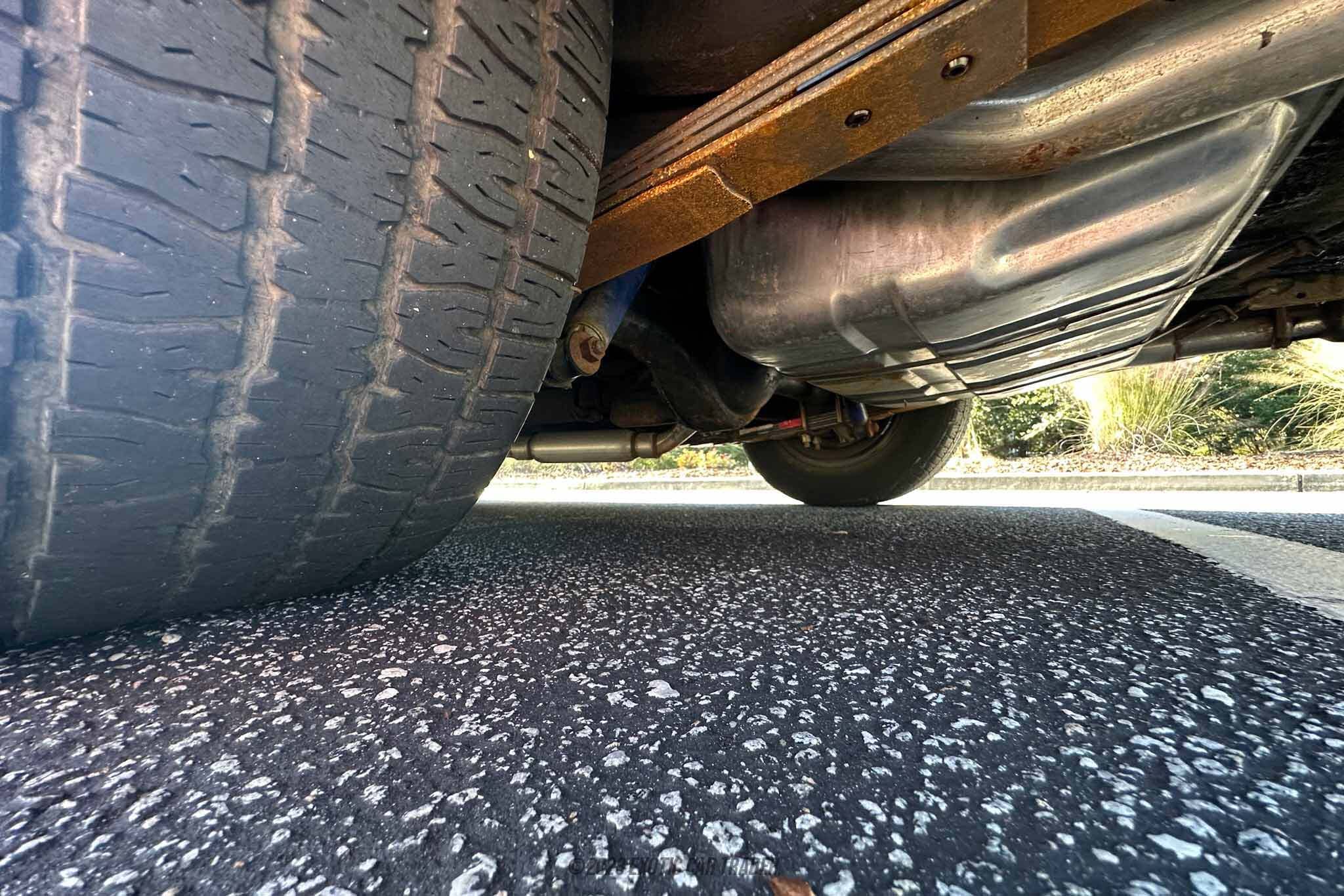
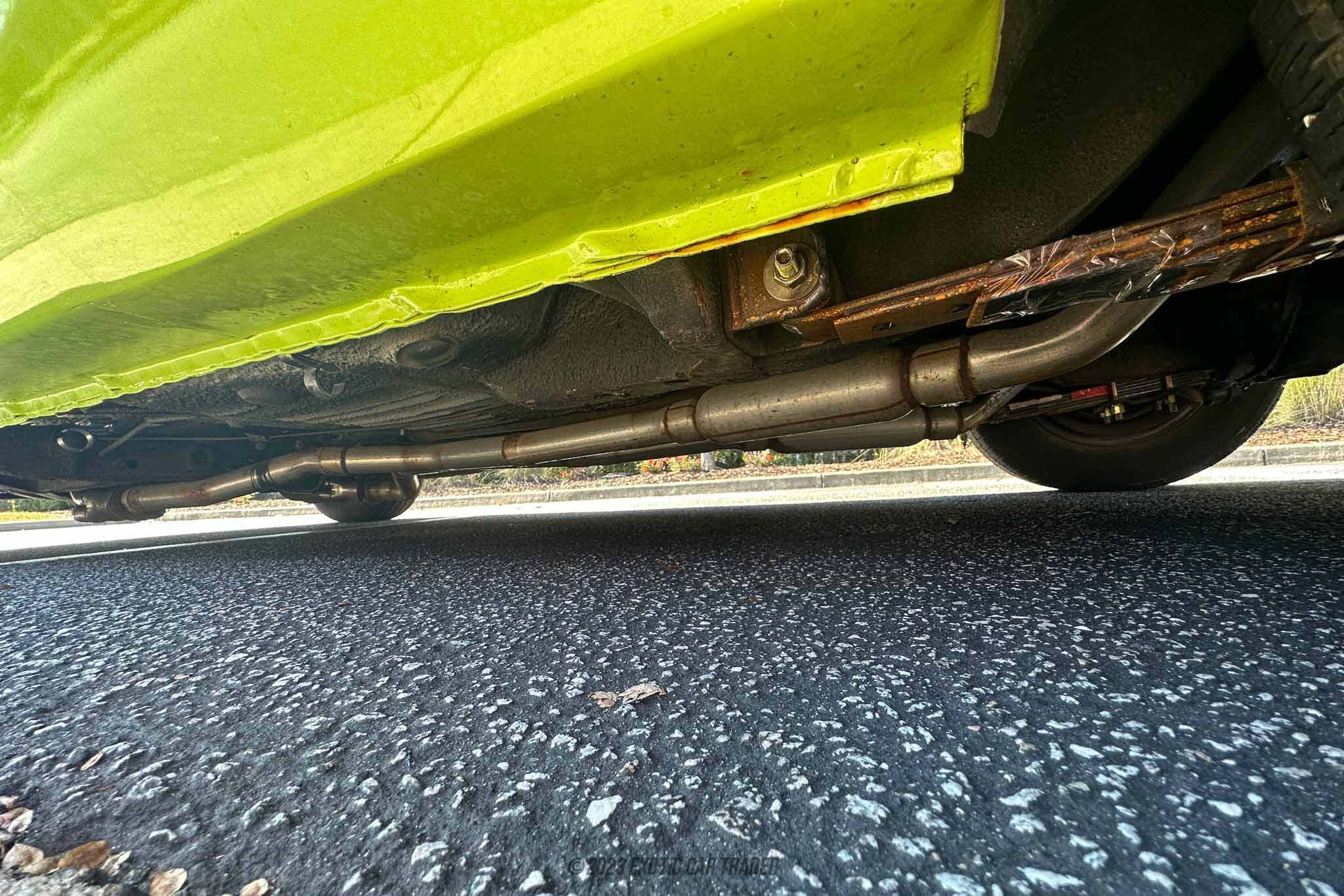
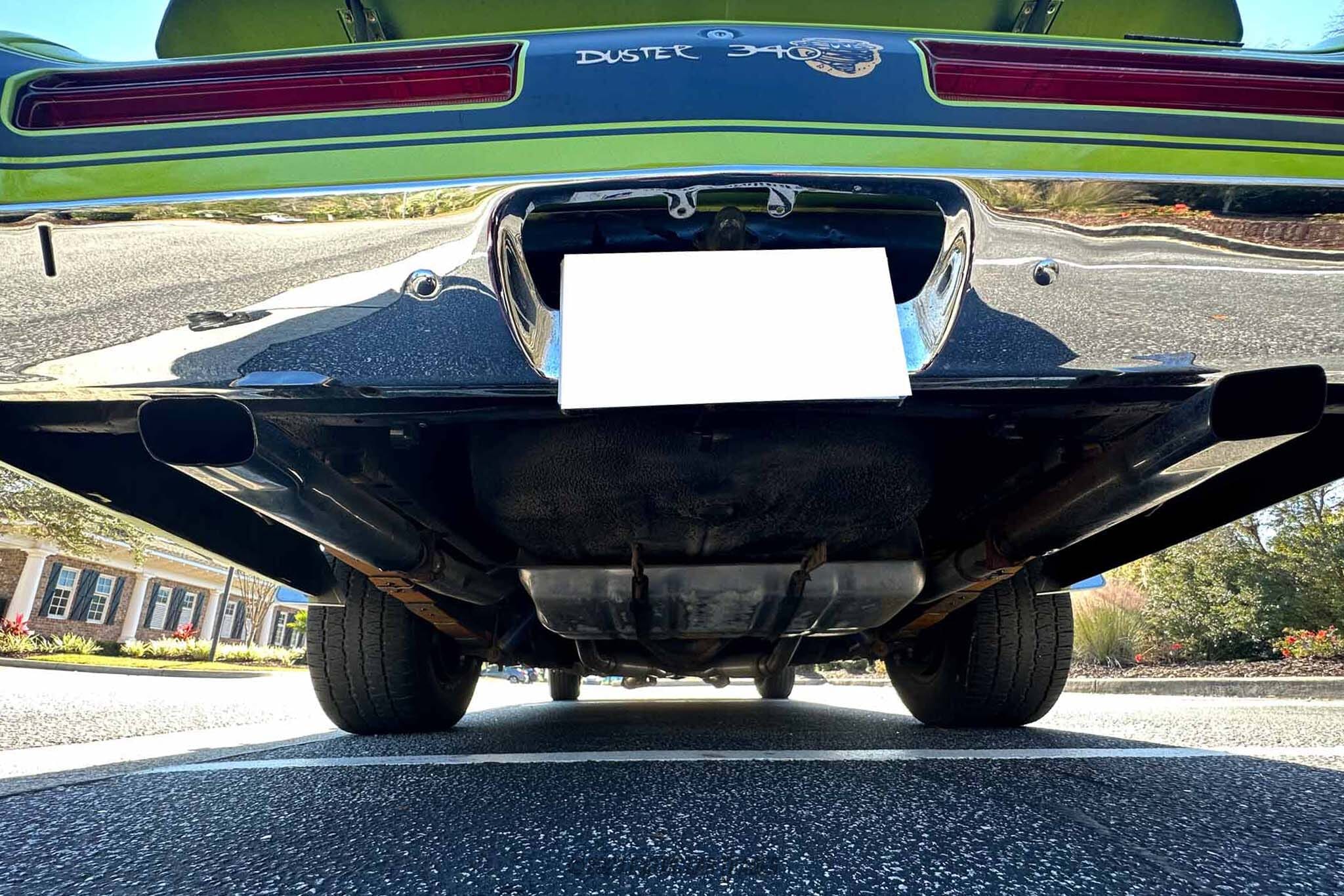
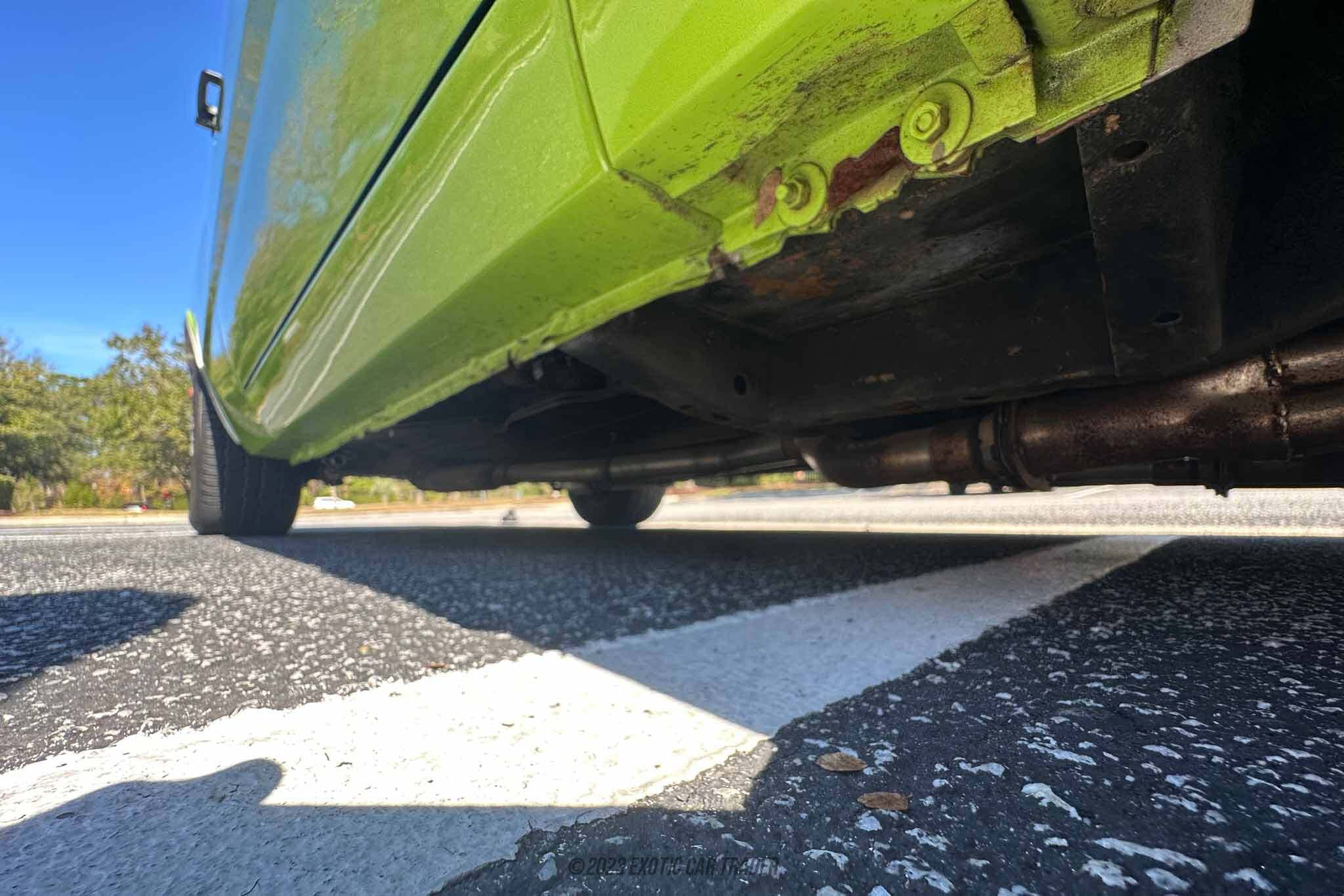
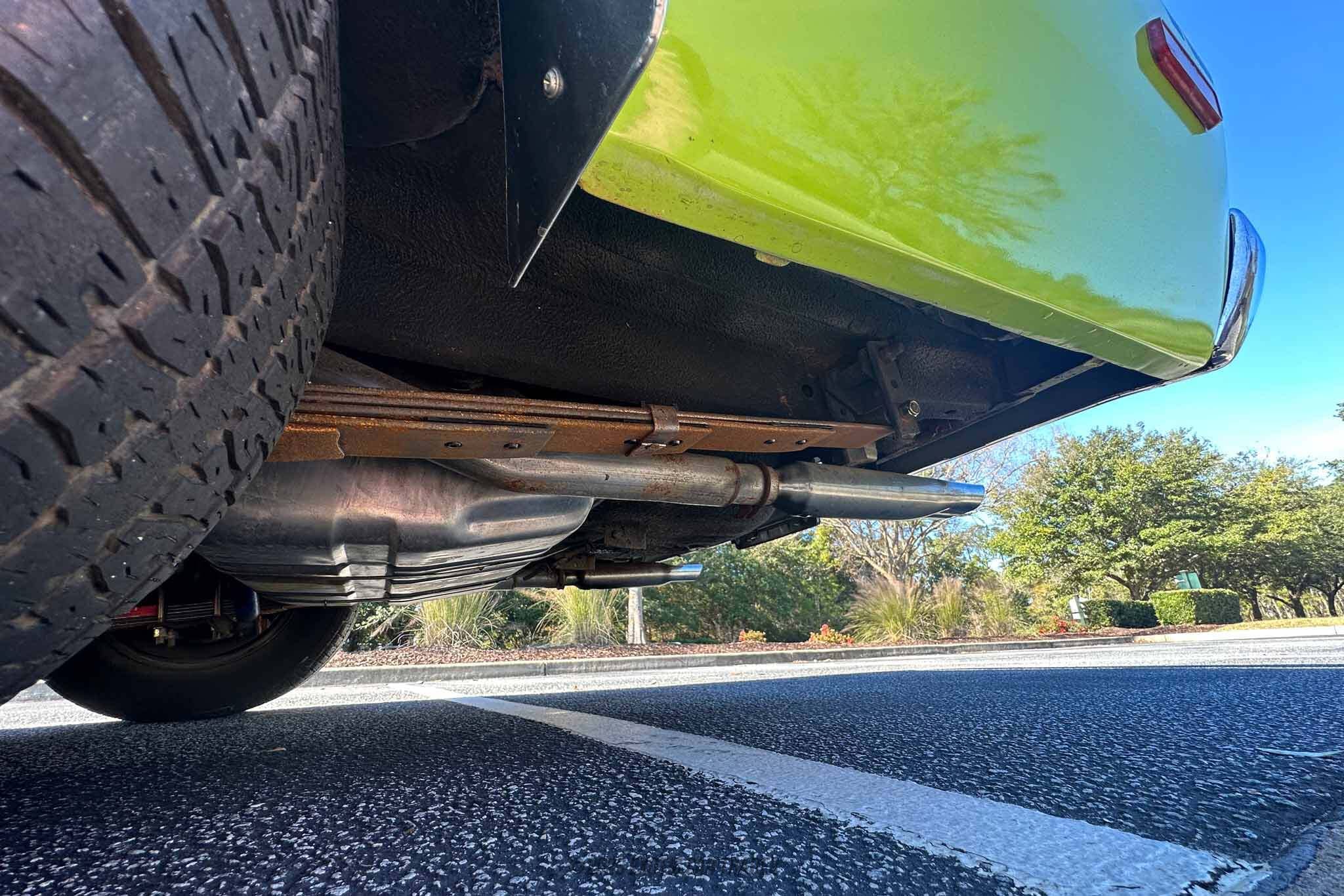
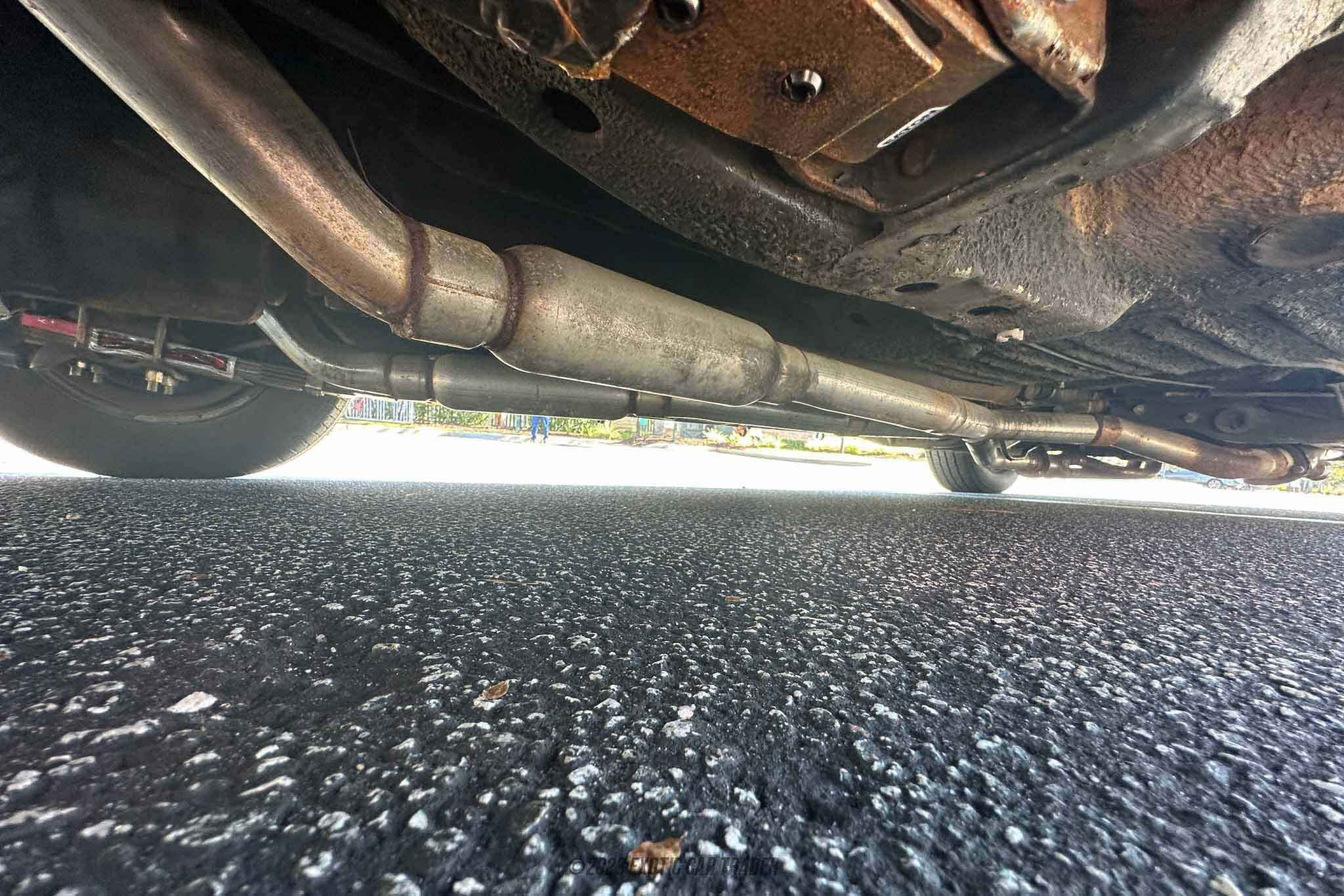
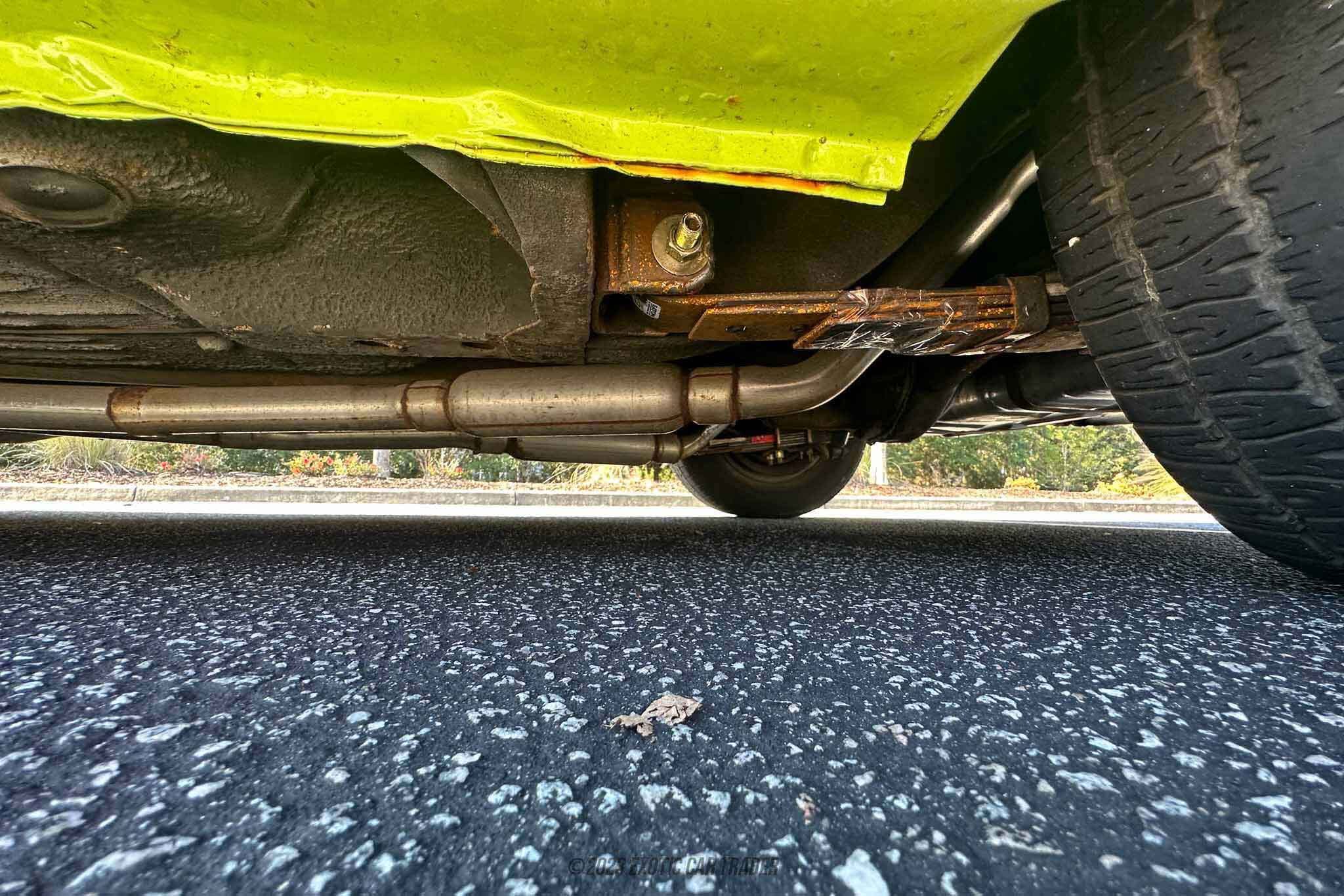
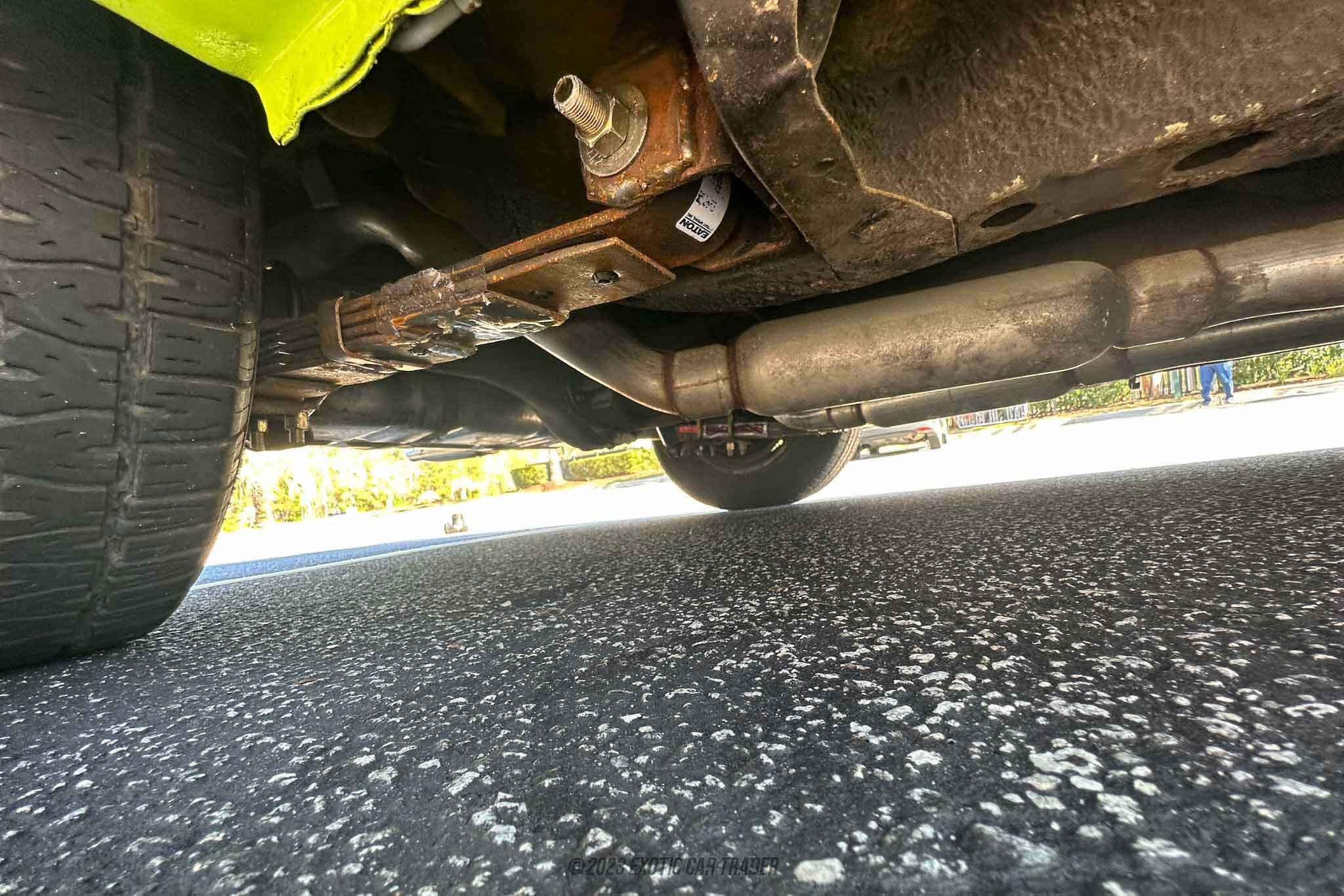
- Current owner reports new exhaust from front to rear
- X Flow system with "Cherry Bomb" glass pack
- Current owner reports new factory stock tips on rear pipes
- Current owner reports rebuilt transmission by Sloan engines
- Current owner reports new shifter forks & shift package
- Current owner reports new 355ci posi-traction rear end with Detroit locker unit
- New air conditioning unit
- Current owner reports new brakes
- Current owner reports new windshield wiper motor & linkage
- Current owner reports new leaf springs & bushings
- Current owner reports recent oil change


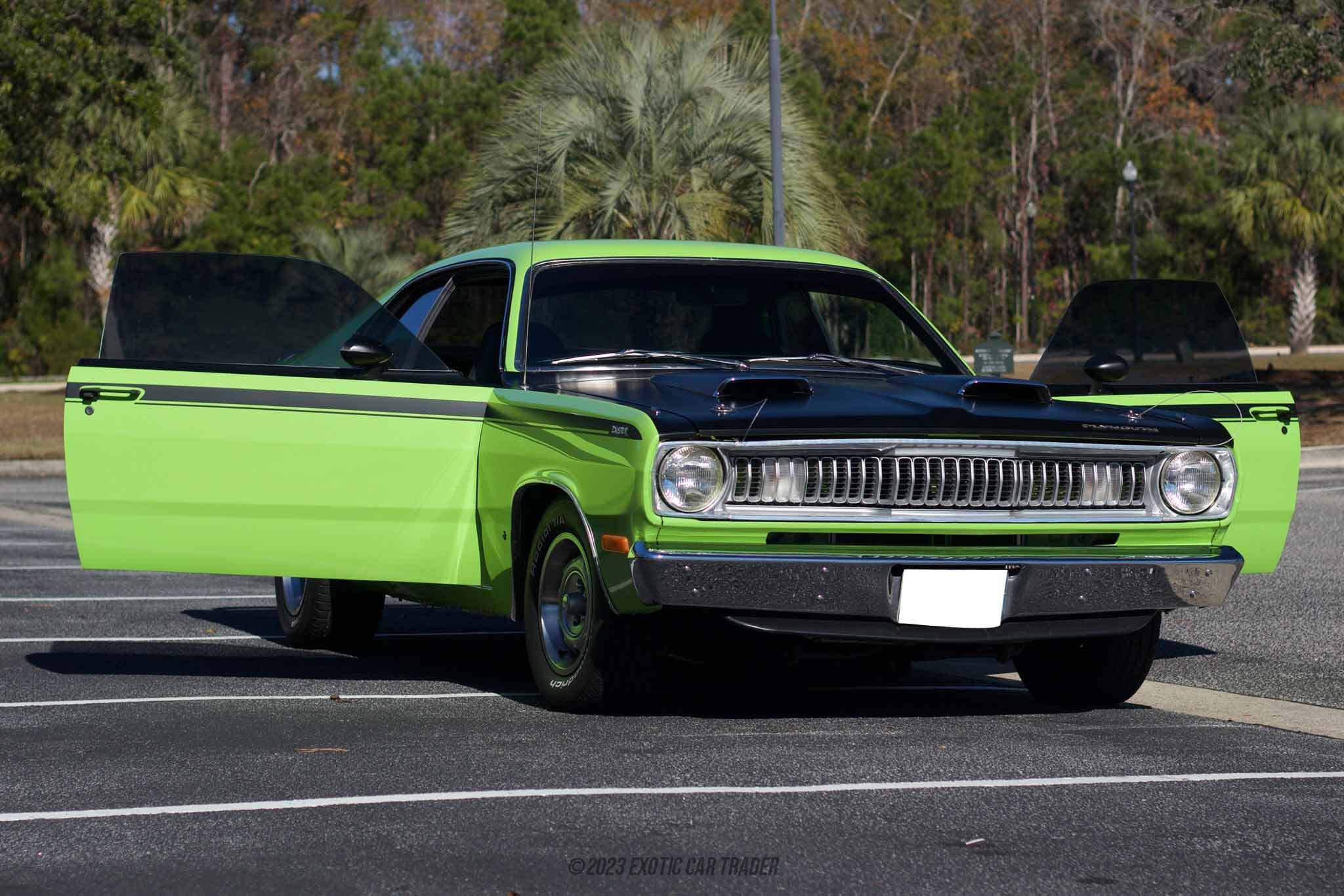
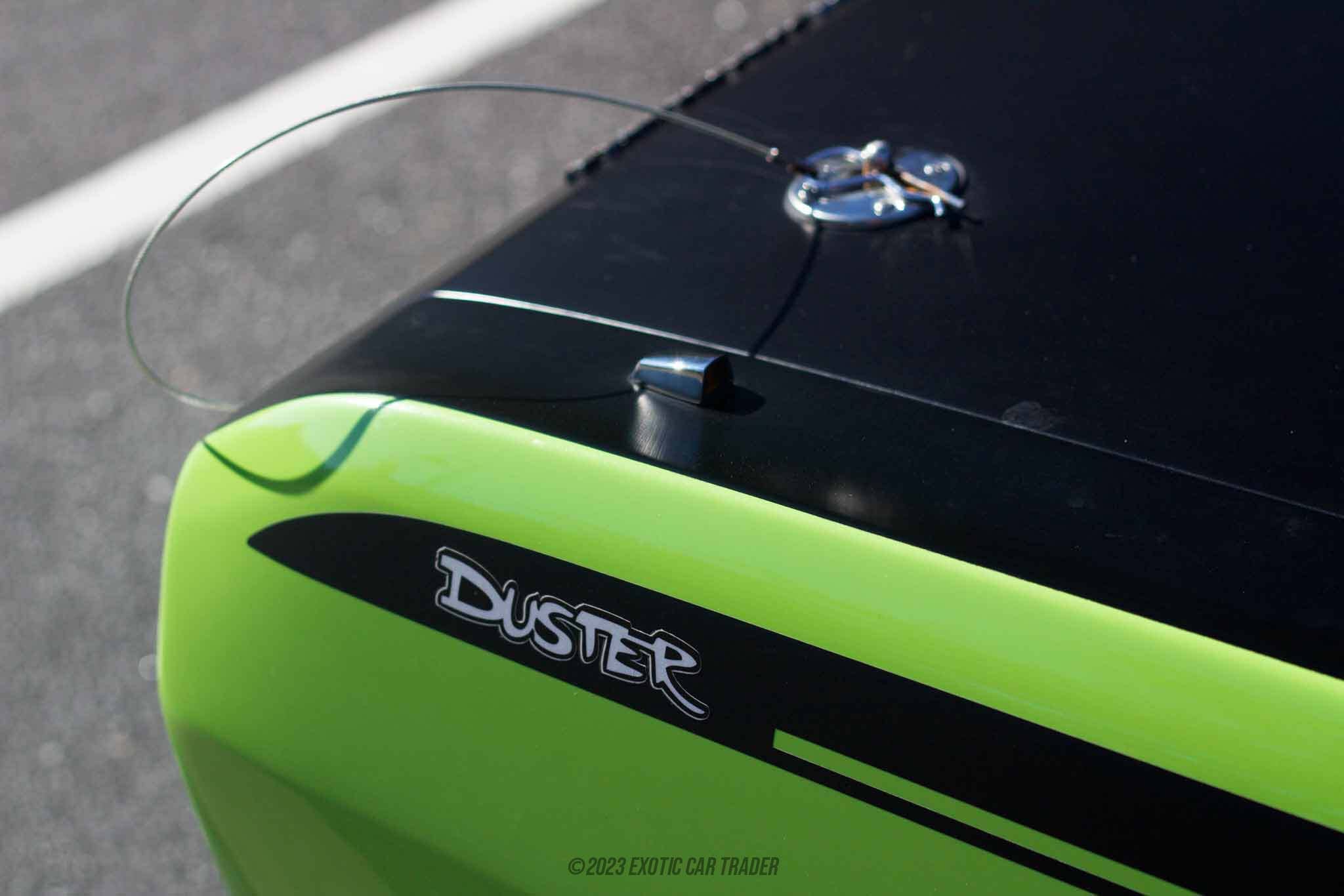
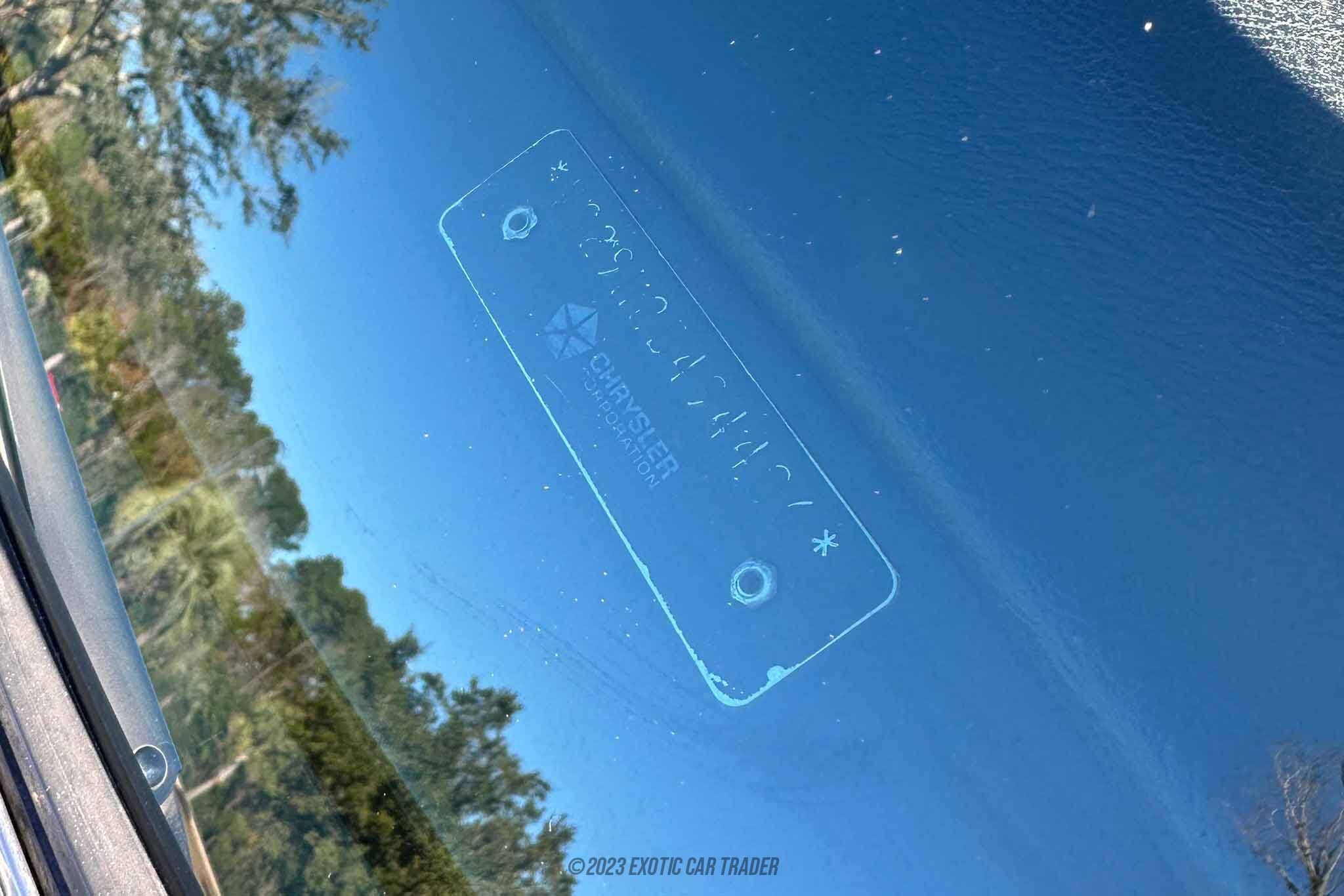
Presenting a rarity not frequently encountered in our collection or cruising the local streets: the Plymouth Duster. This unique model shares an appealing allure akin to its celebrated Plymouth kin, captivating vintage car aficionados with its distinctive charm. Echoing the familial lineage of the Road Runner, the Duster similarly enjoys a whimsical affiliation with Warner Bros.' Tasmanian Devil. This 1972 Plymouth Duster 340 distinguishes itself with a freshly built engine and numerous updated parts, setting it apart from its original factory condition. Nestled in South Carolina, it eagerly awaits a new custodian to embark on the next chapter of its revitalized existence.
Exterior and Interior
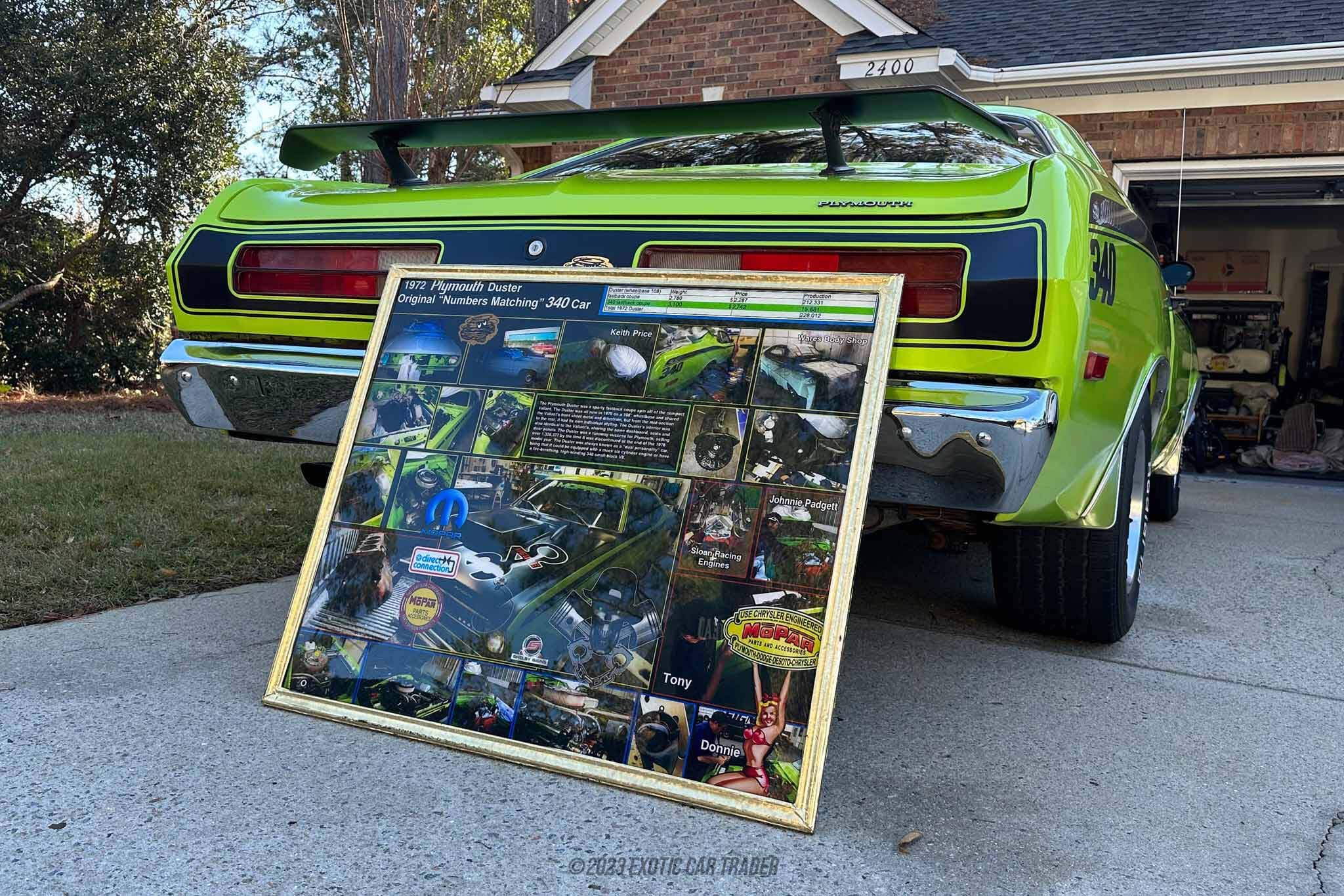
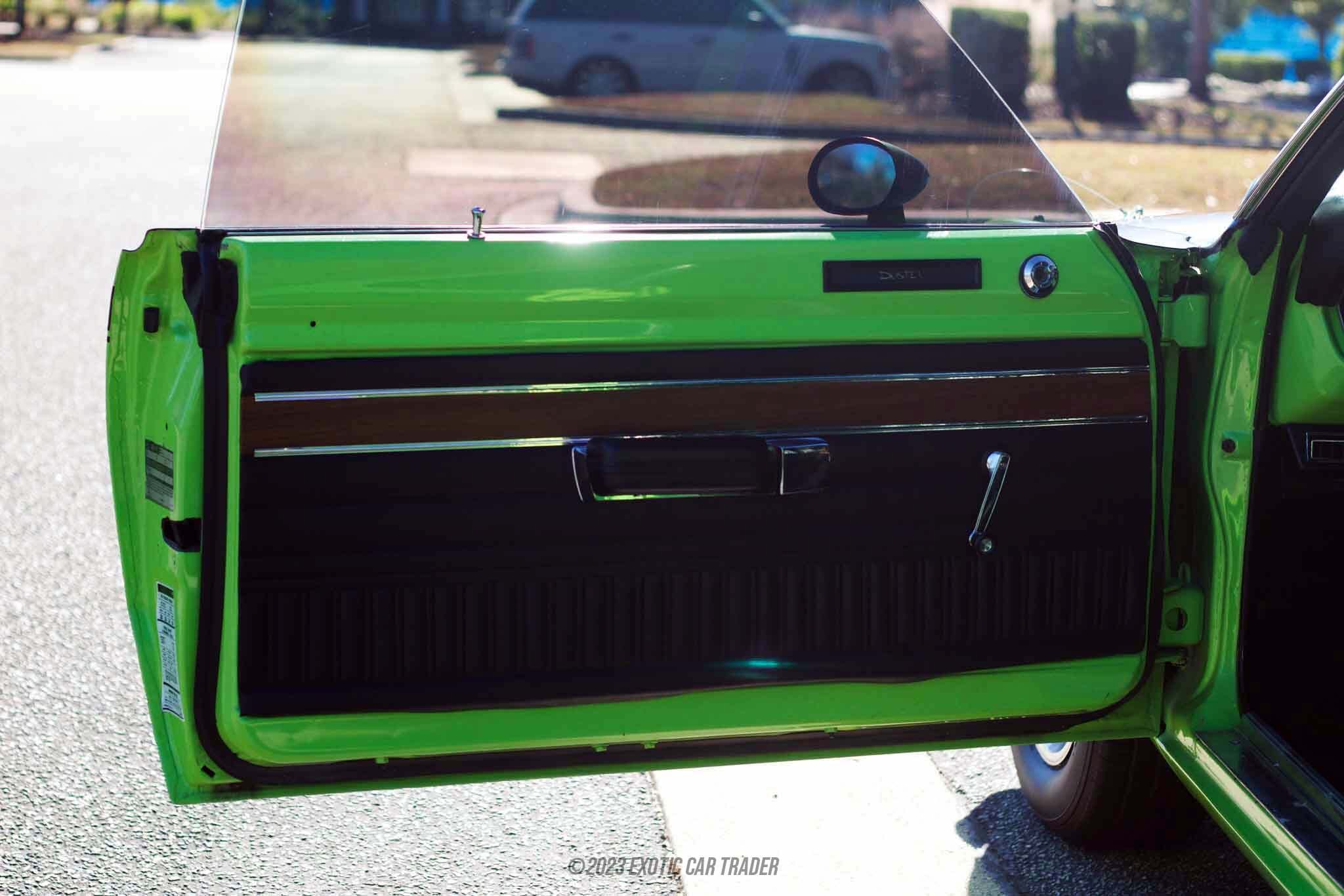
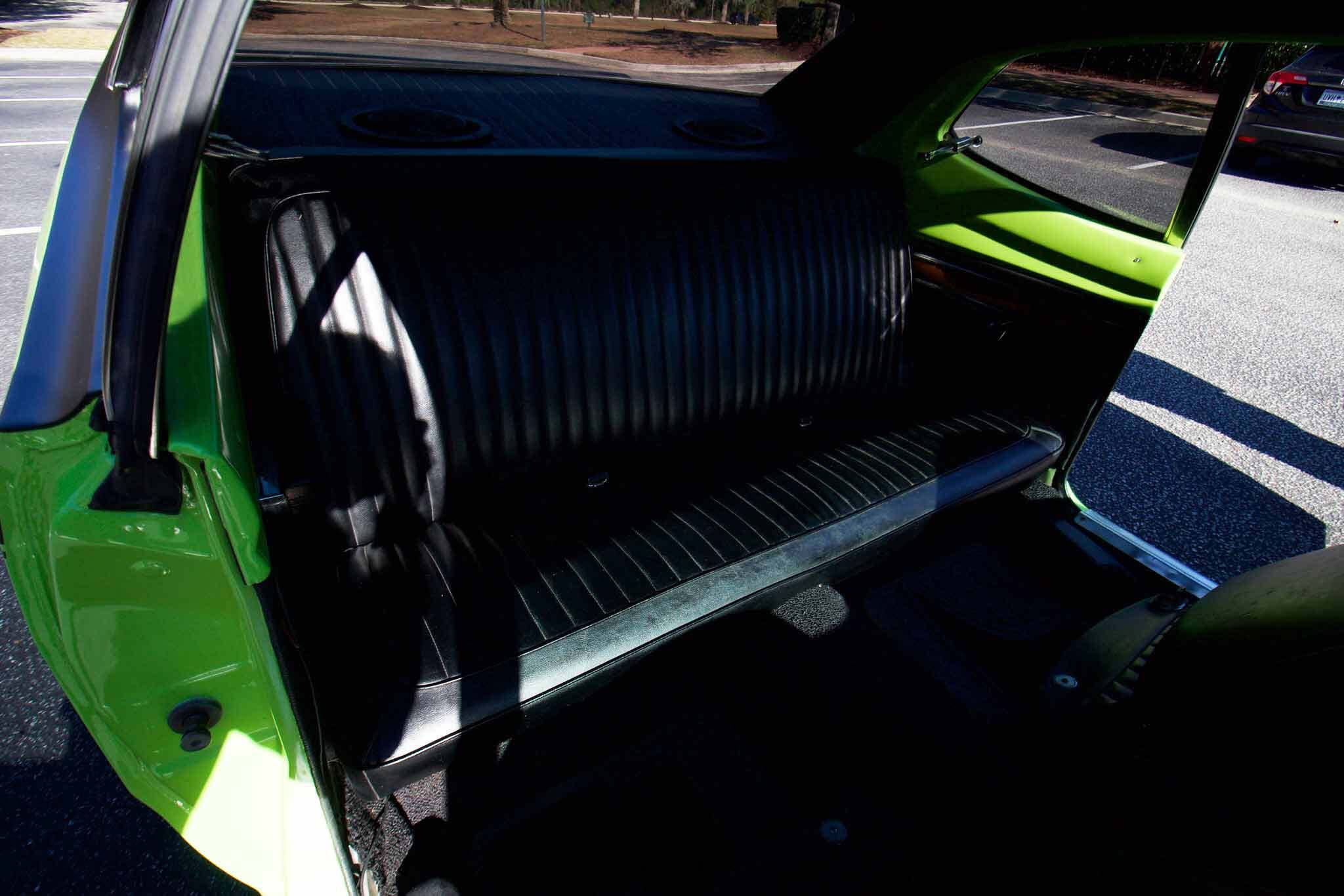
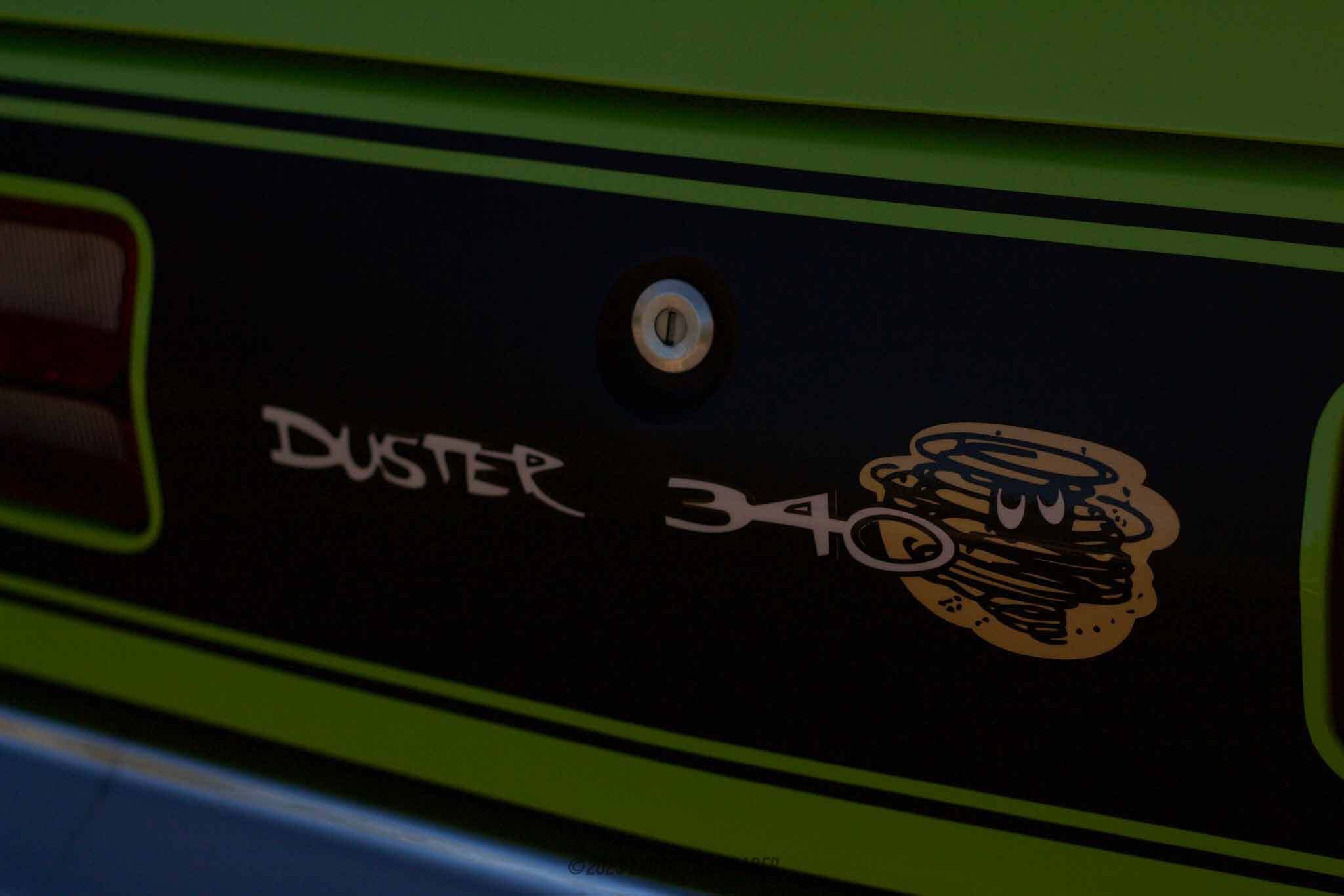
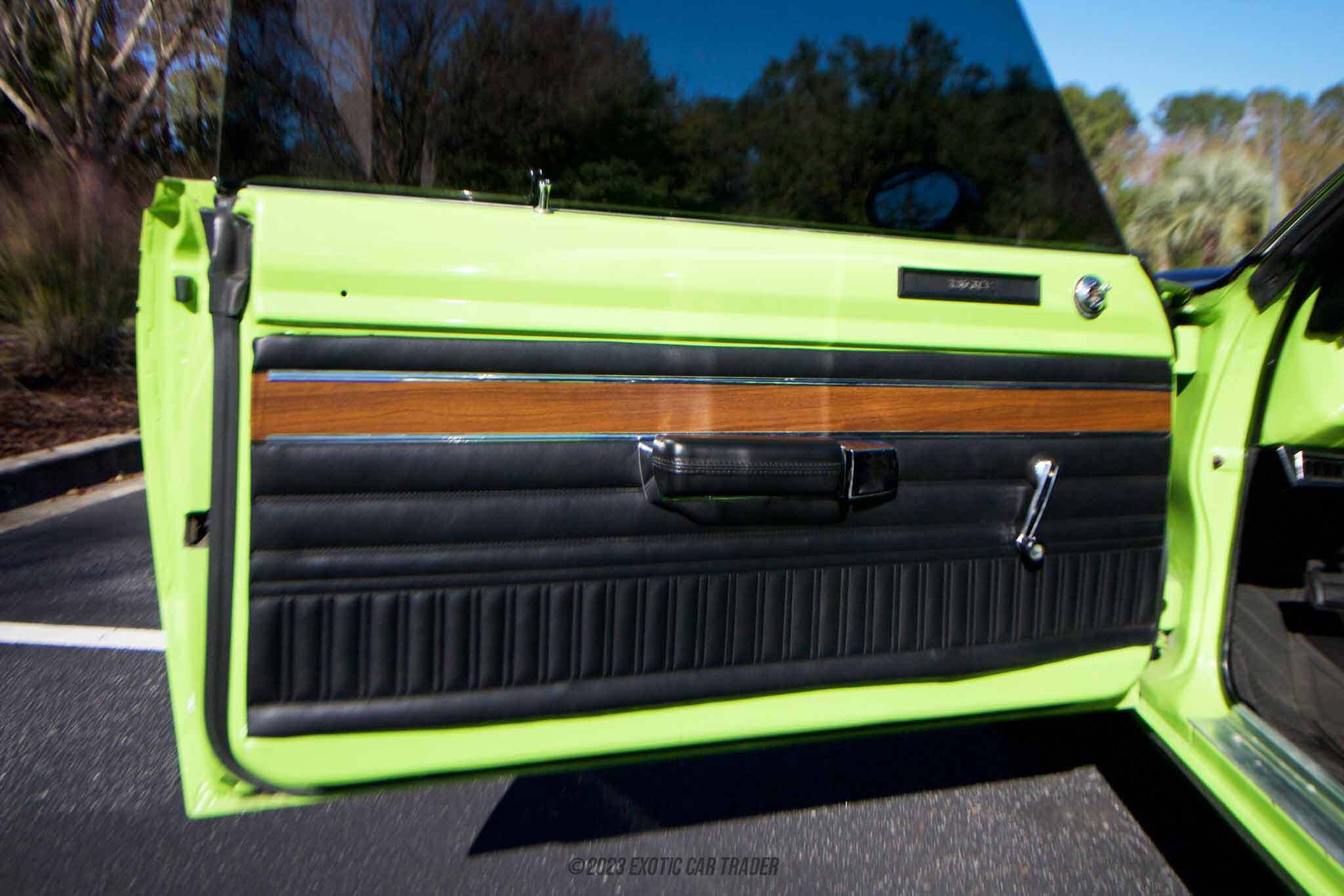
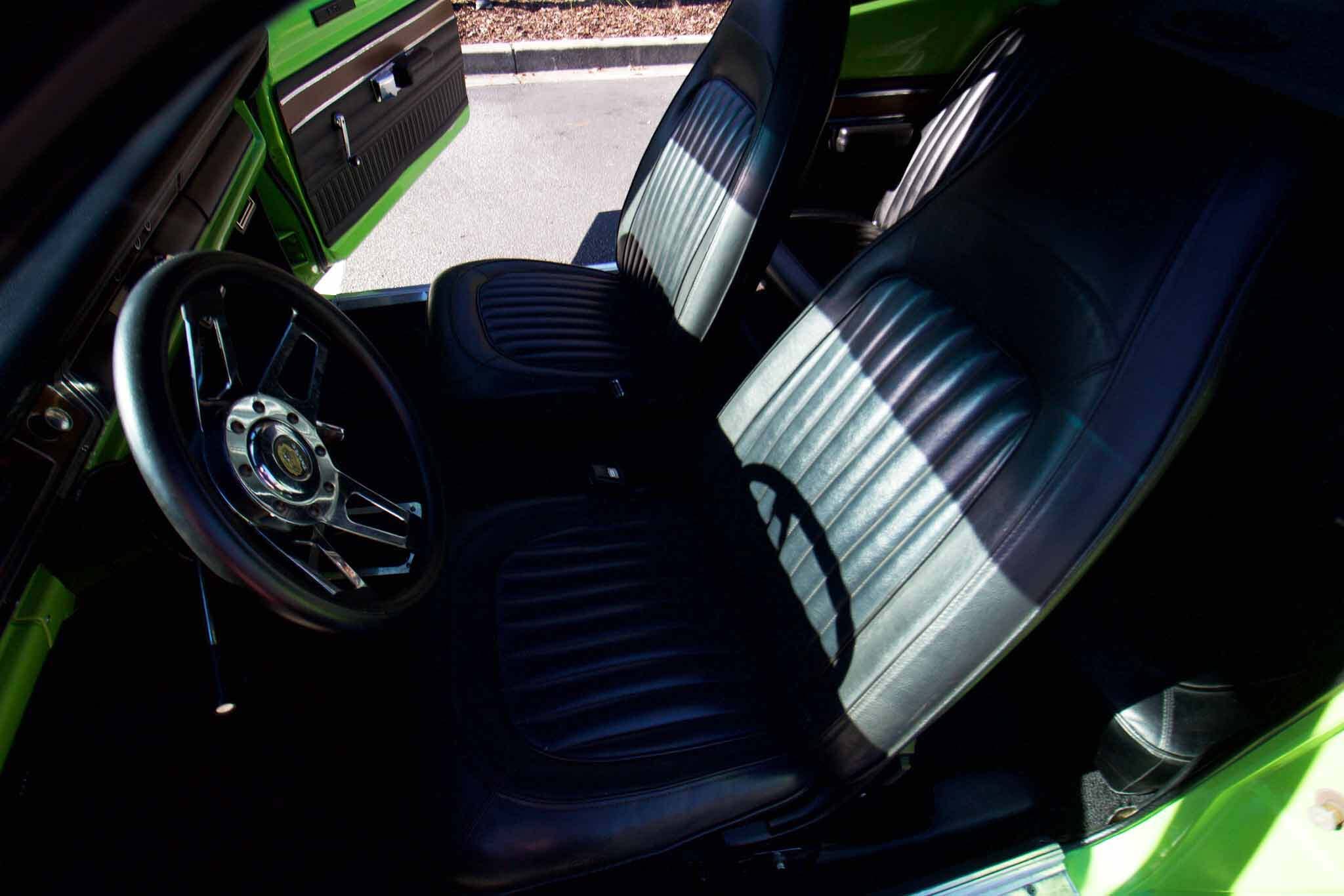
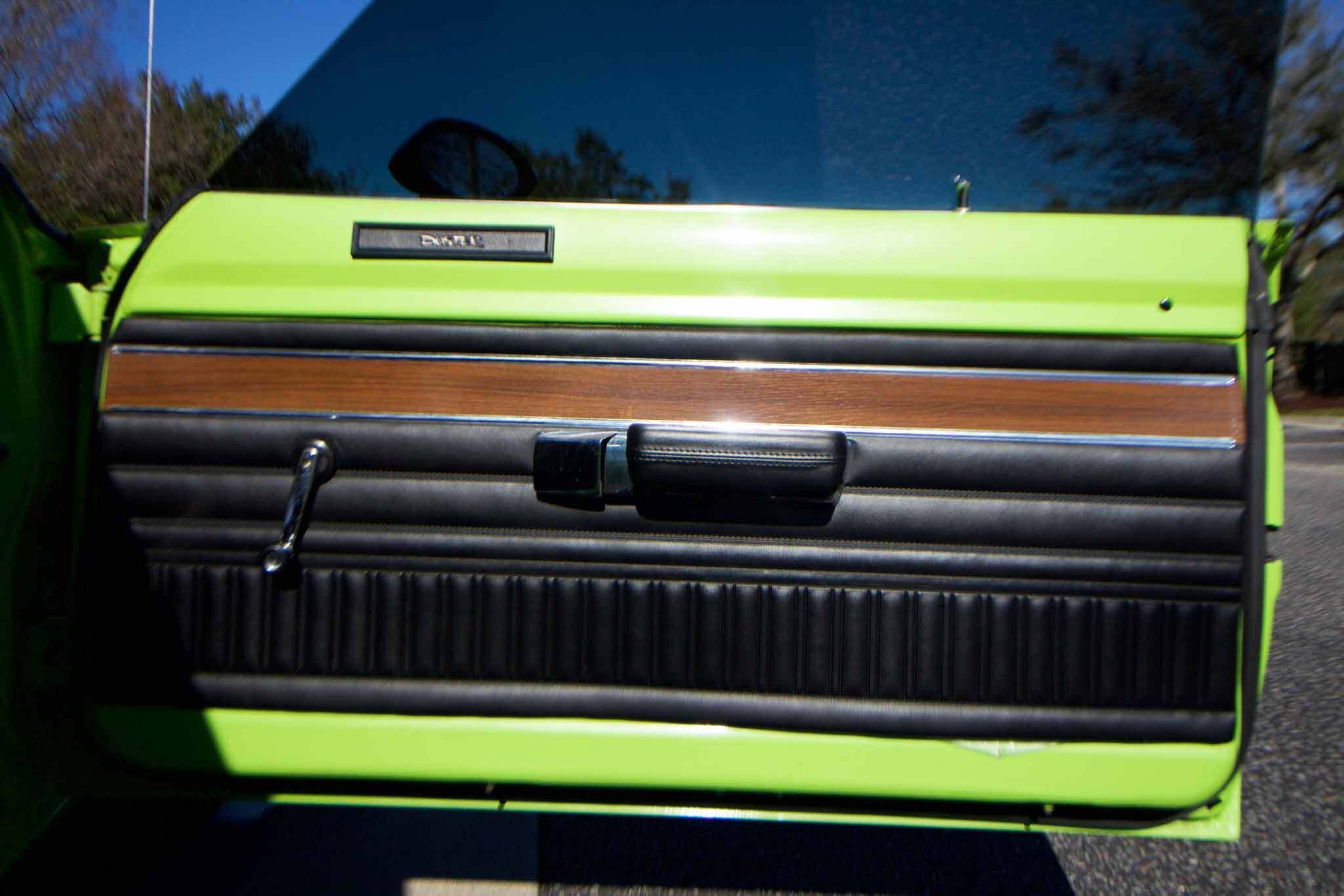
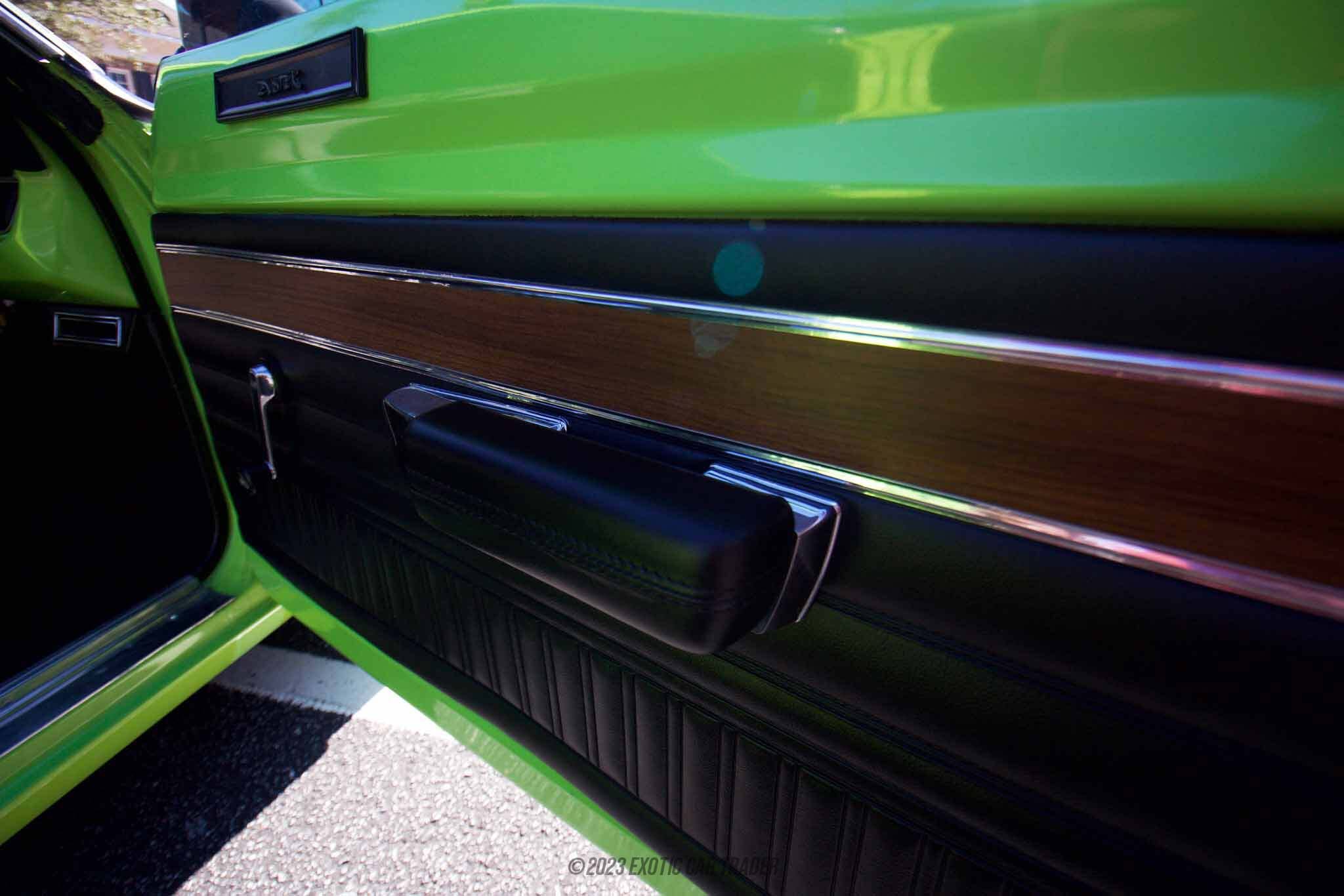
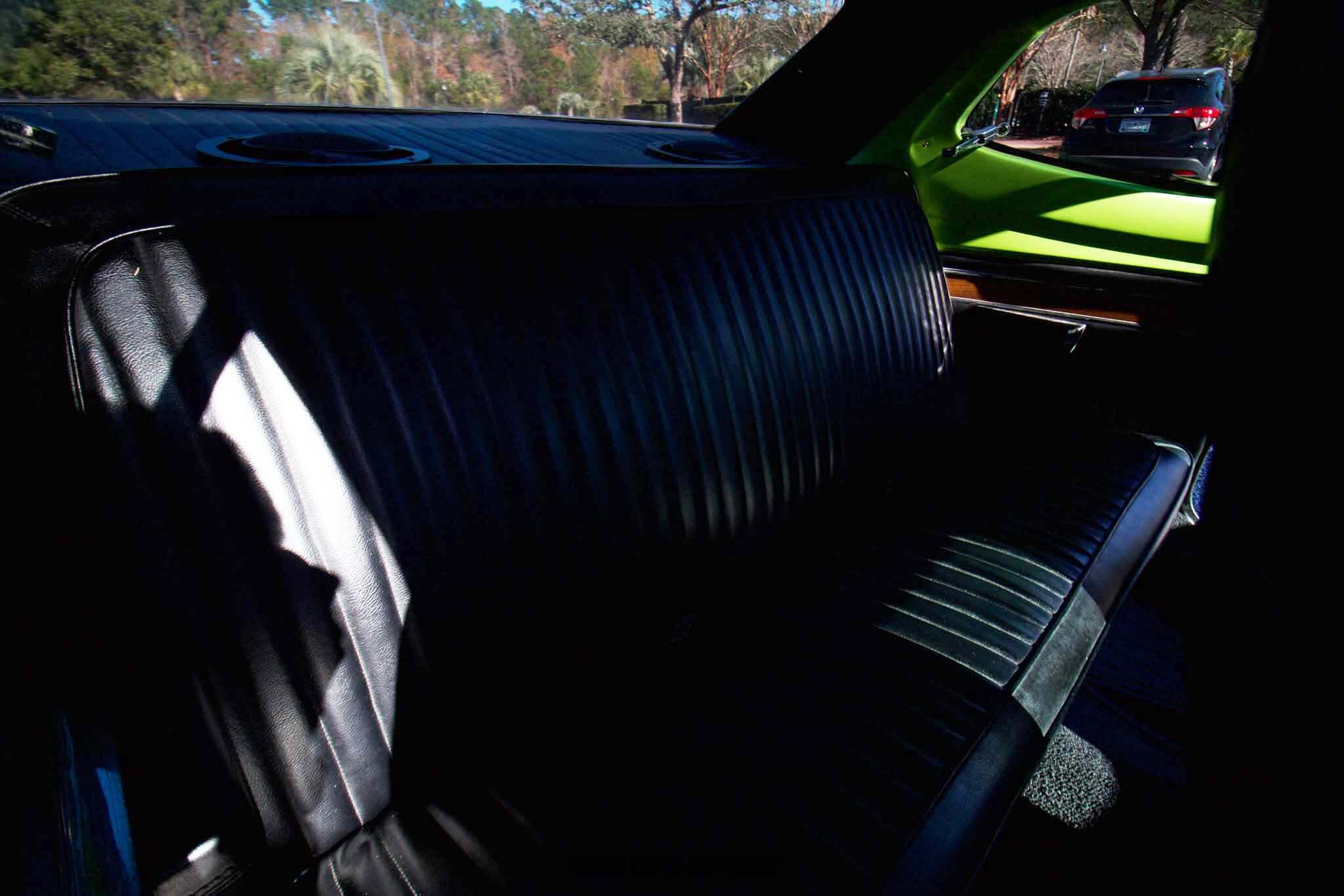
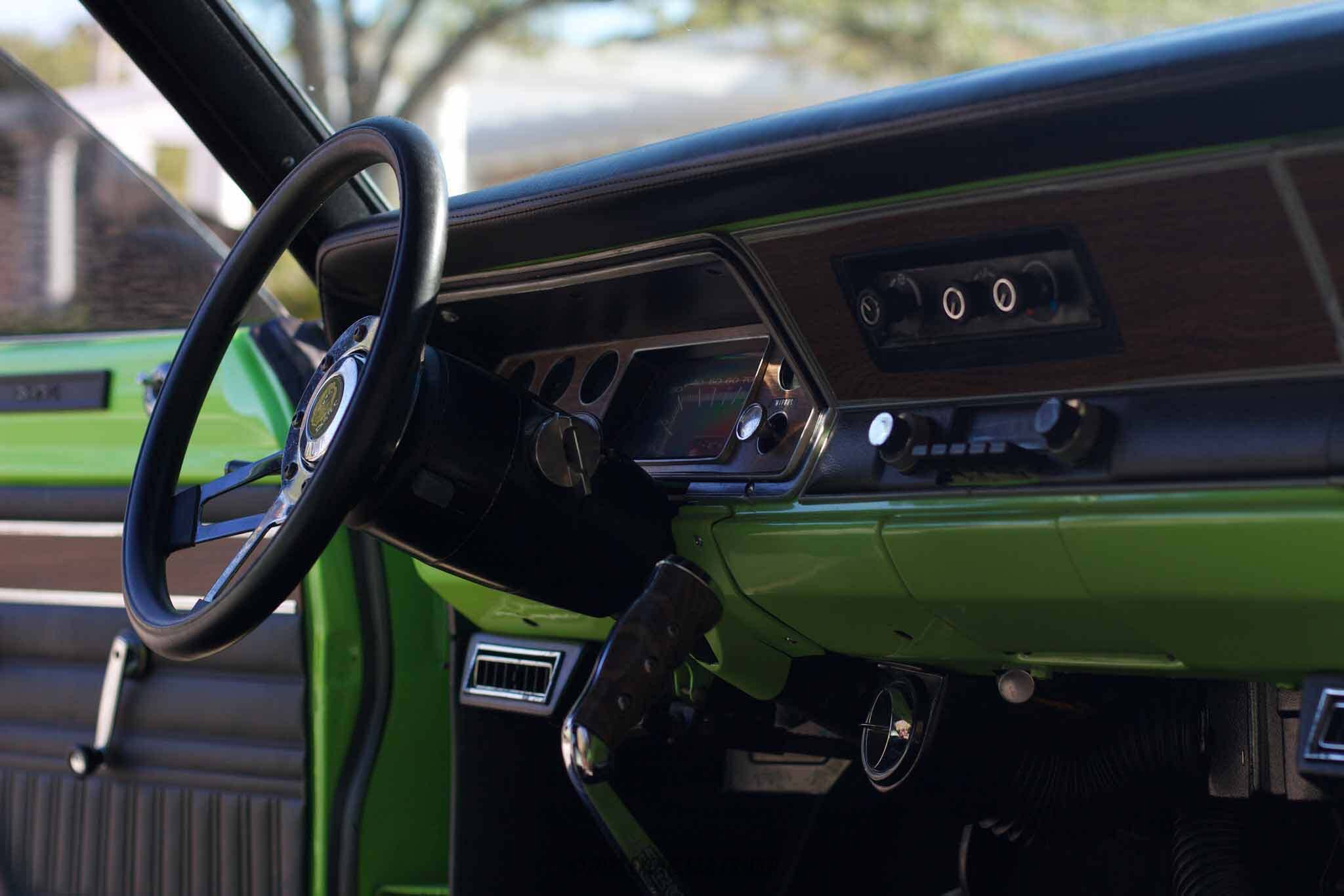
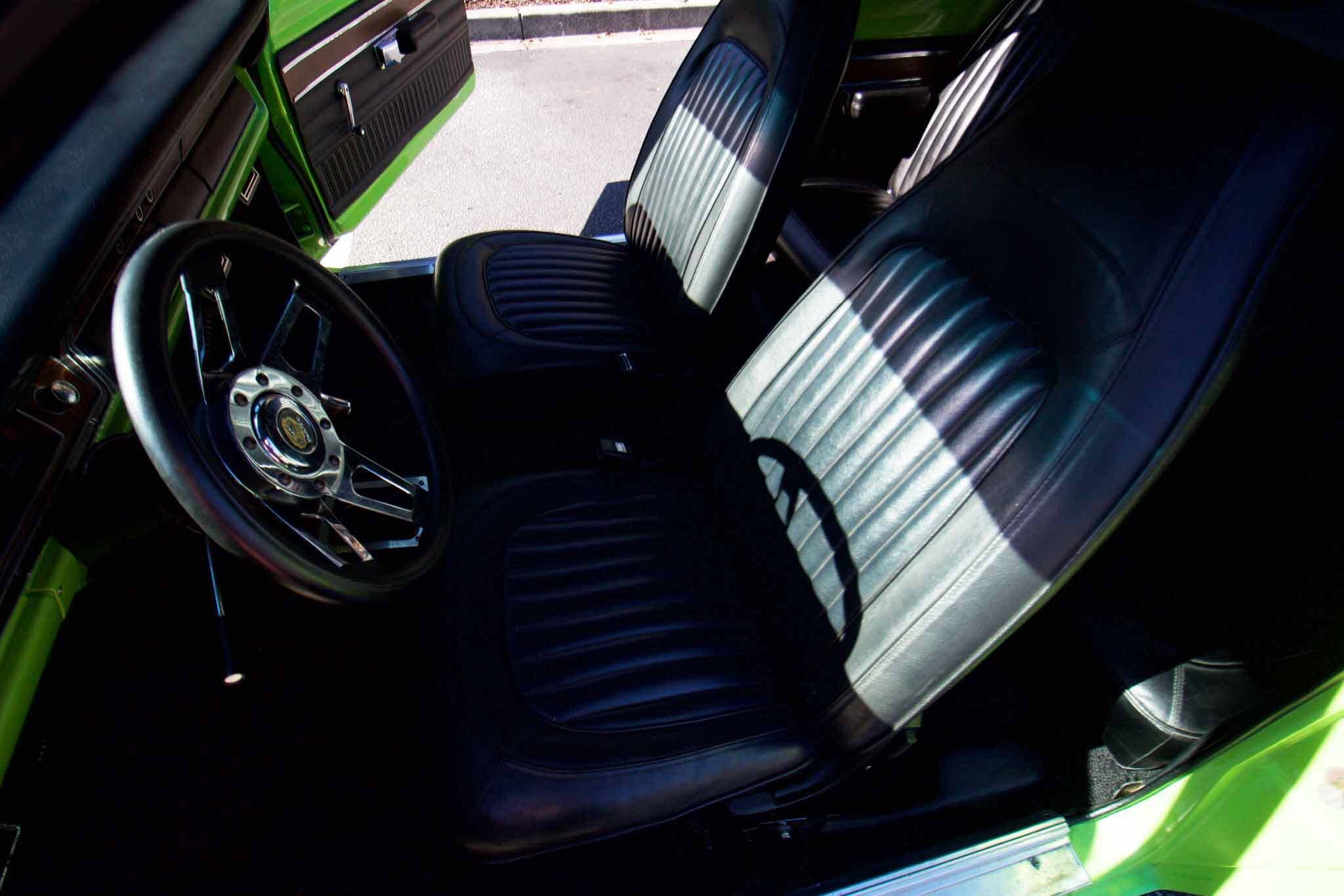
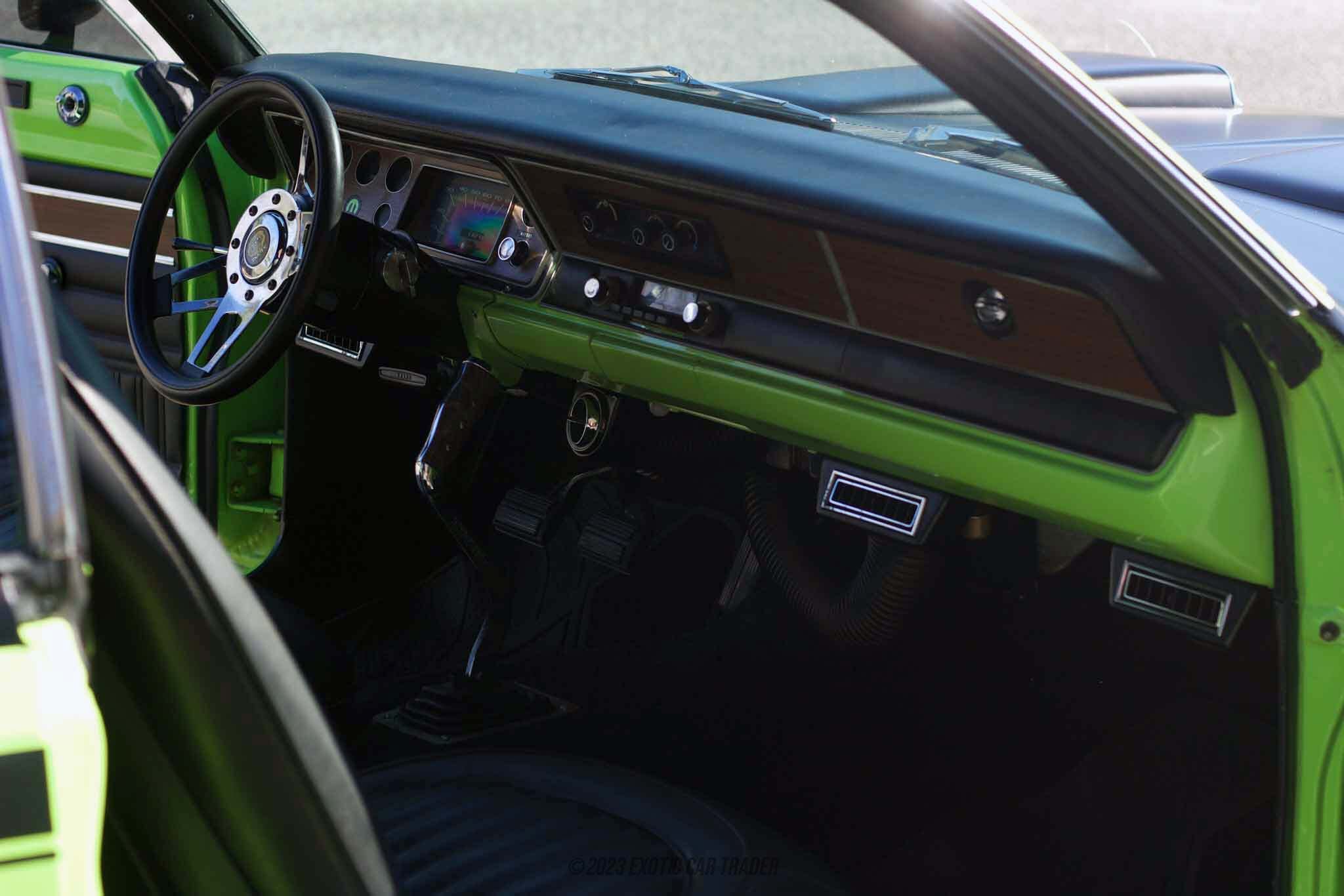
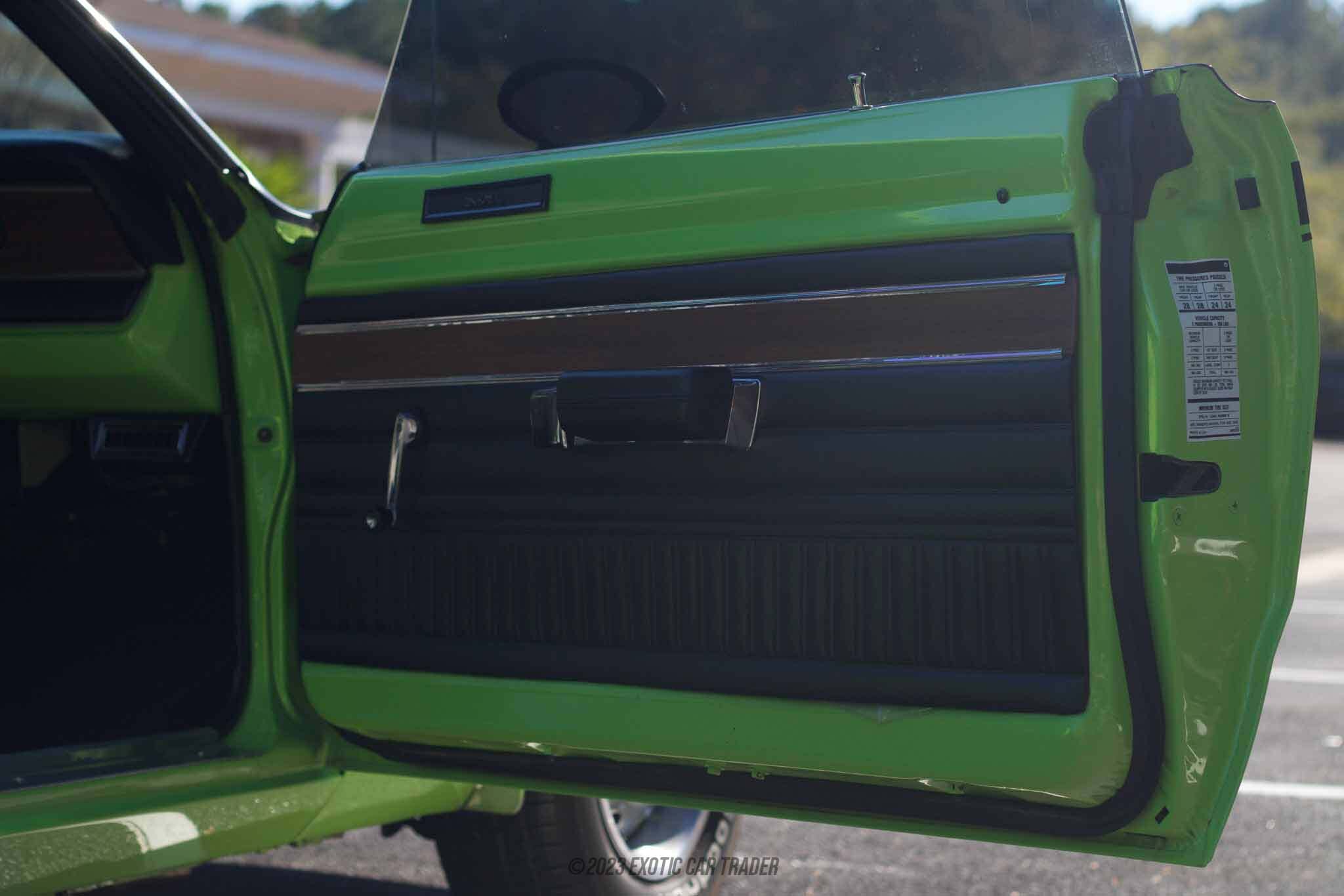
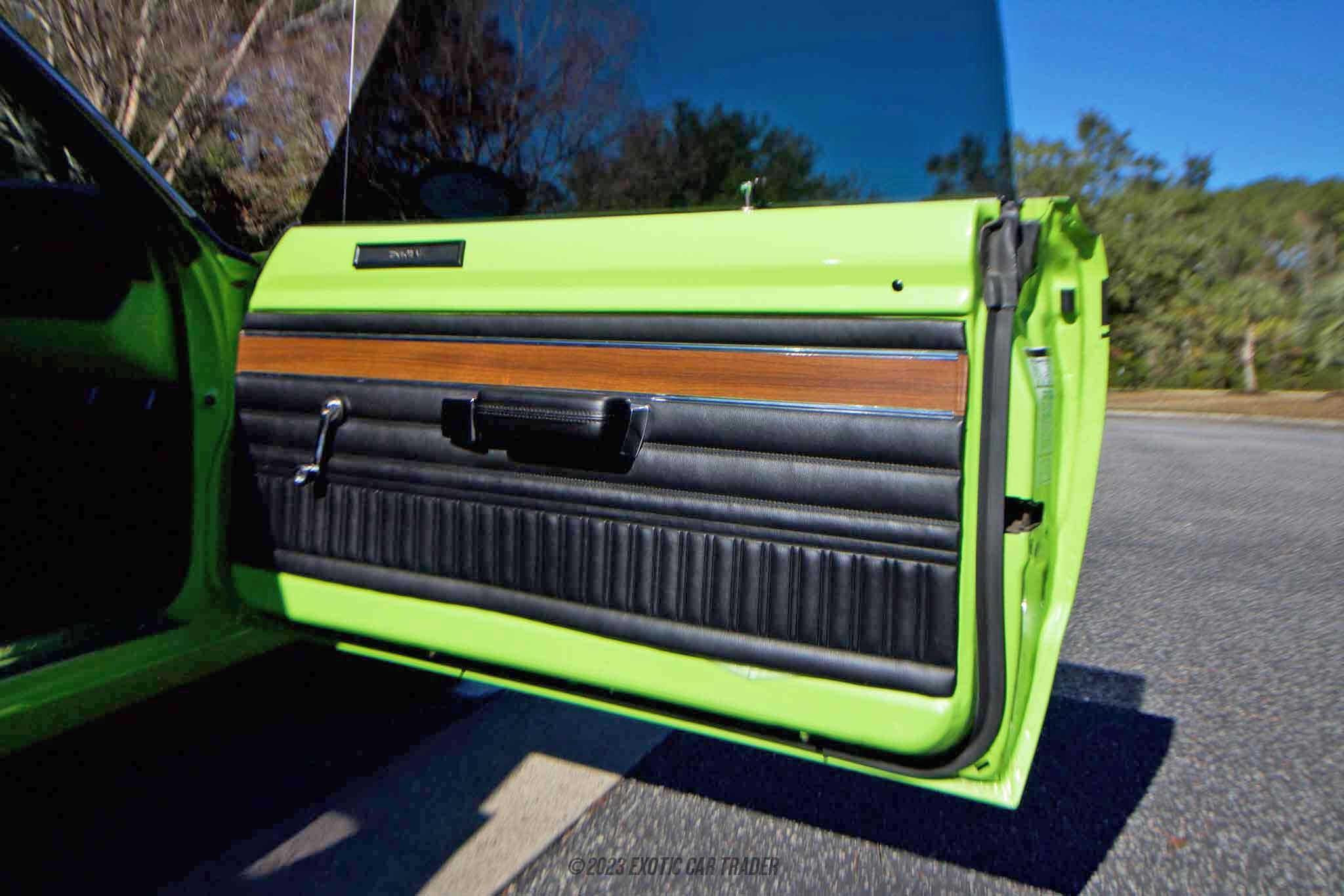
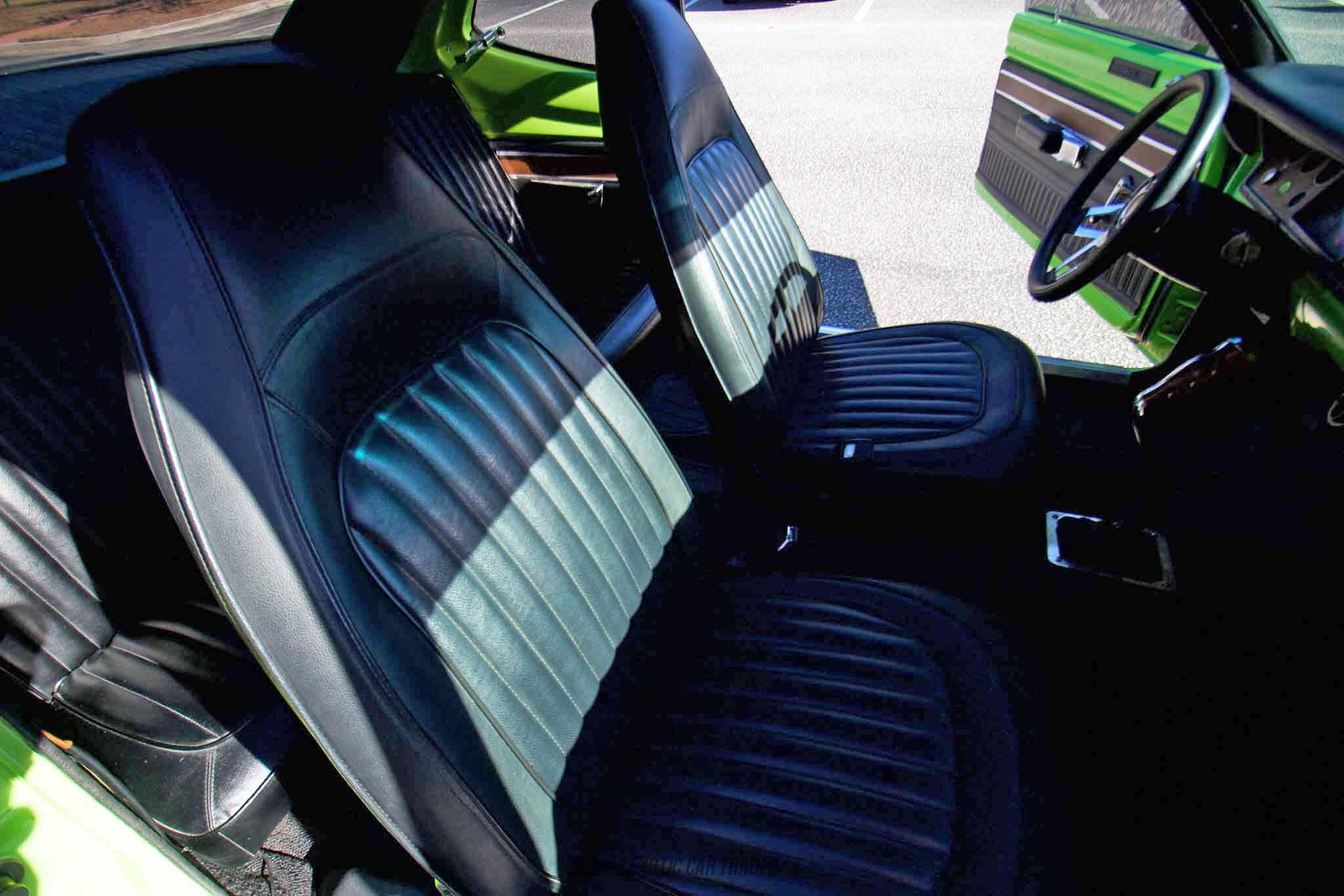
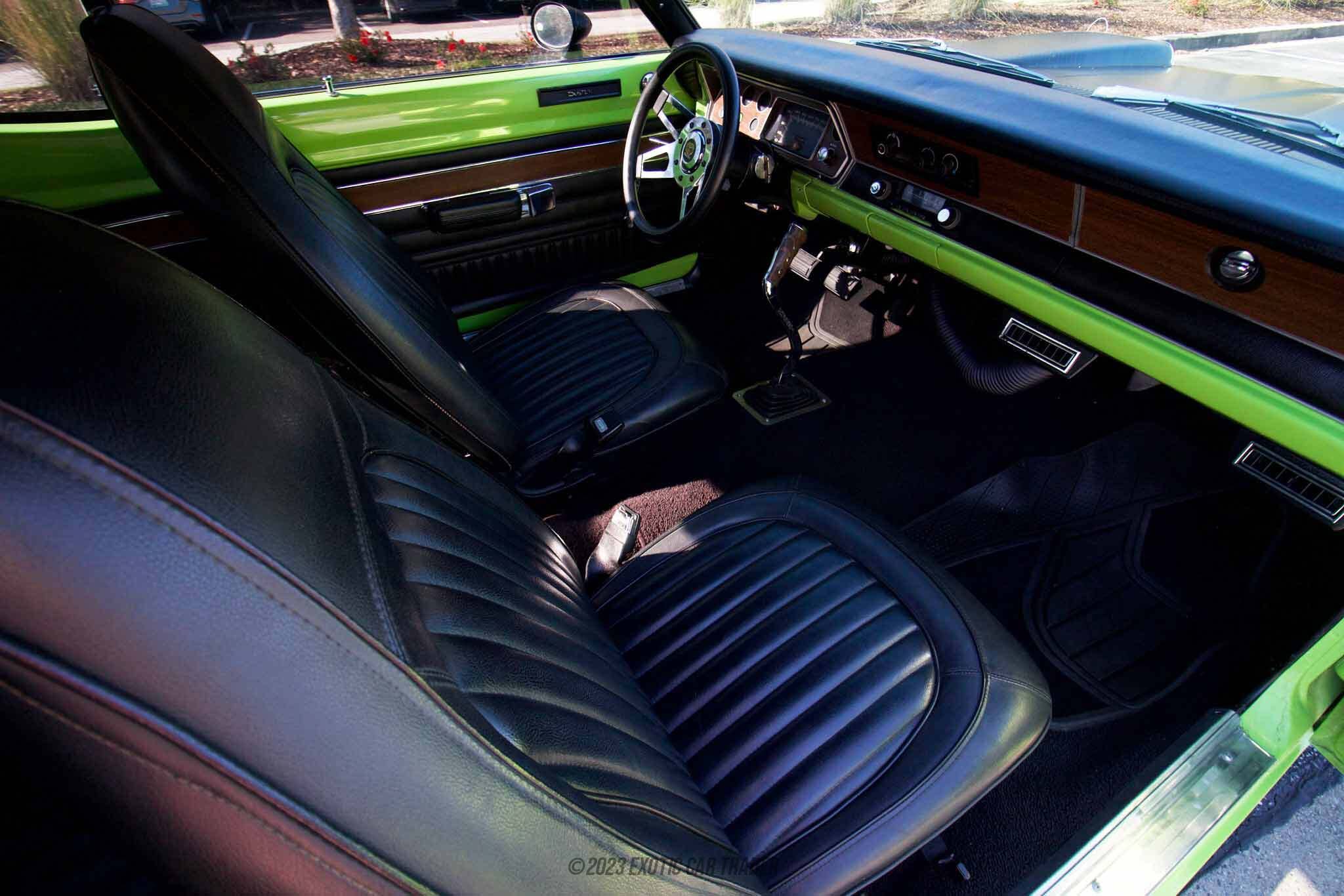
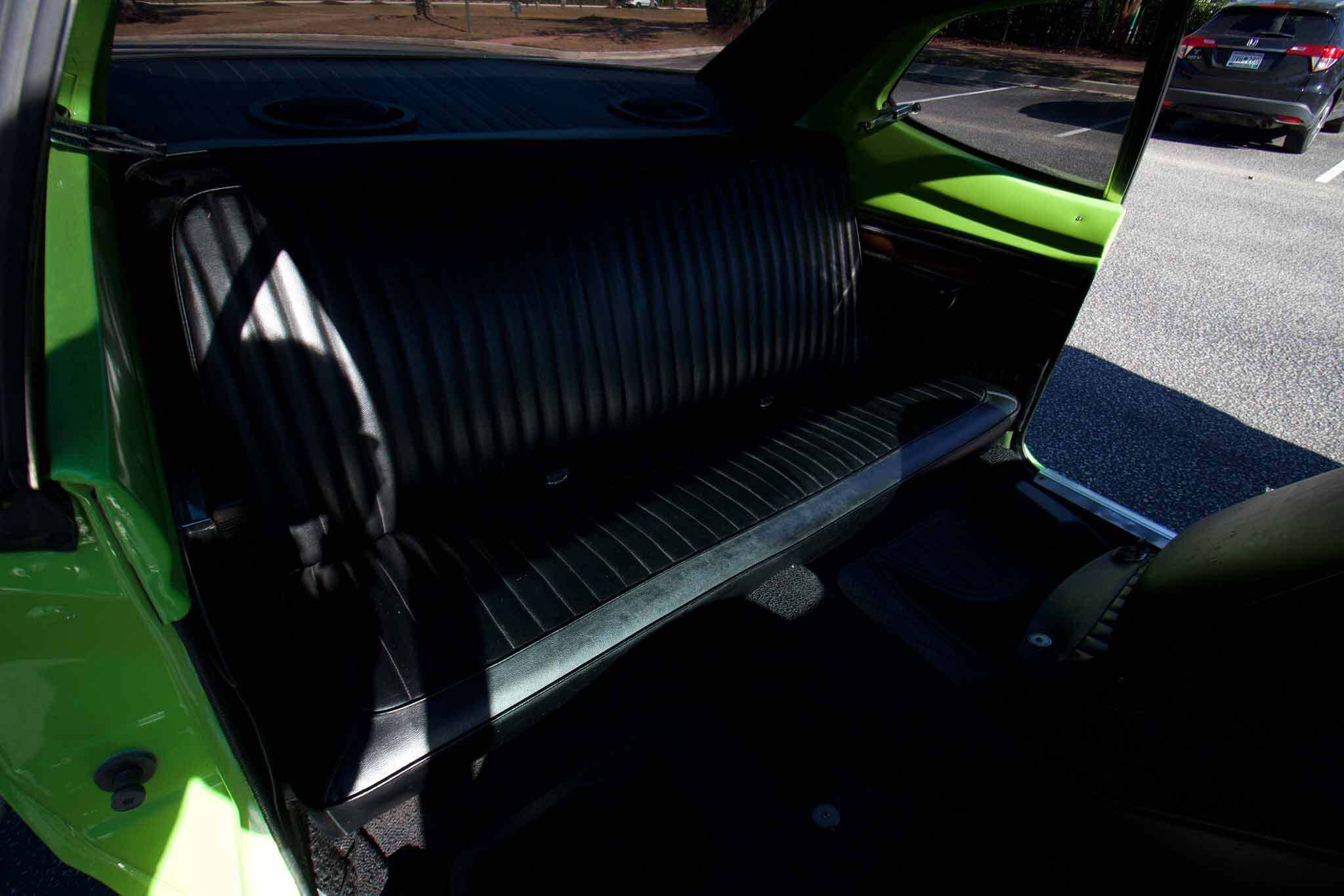
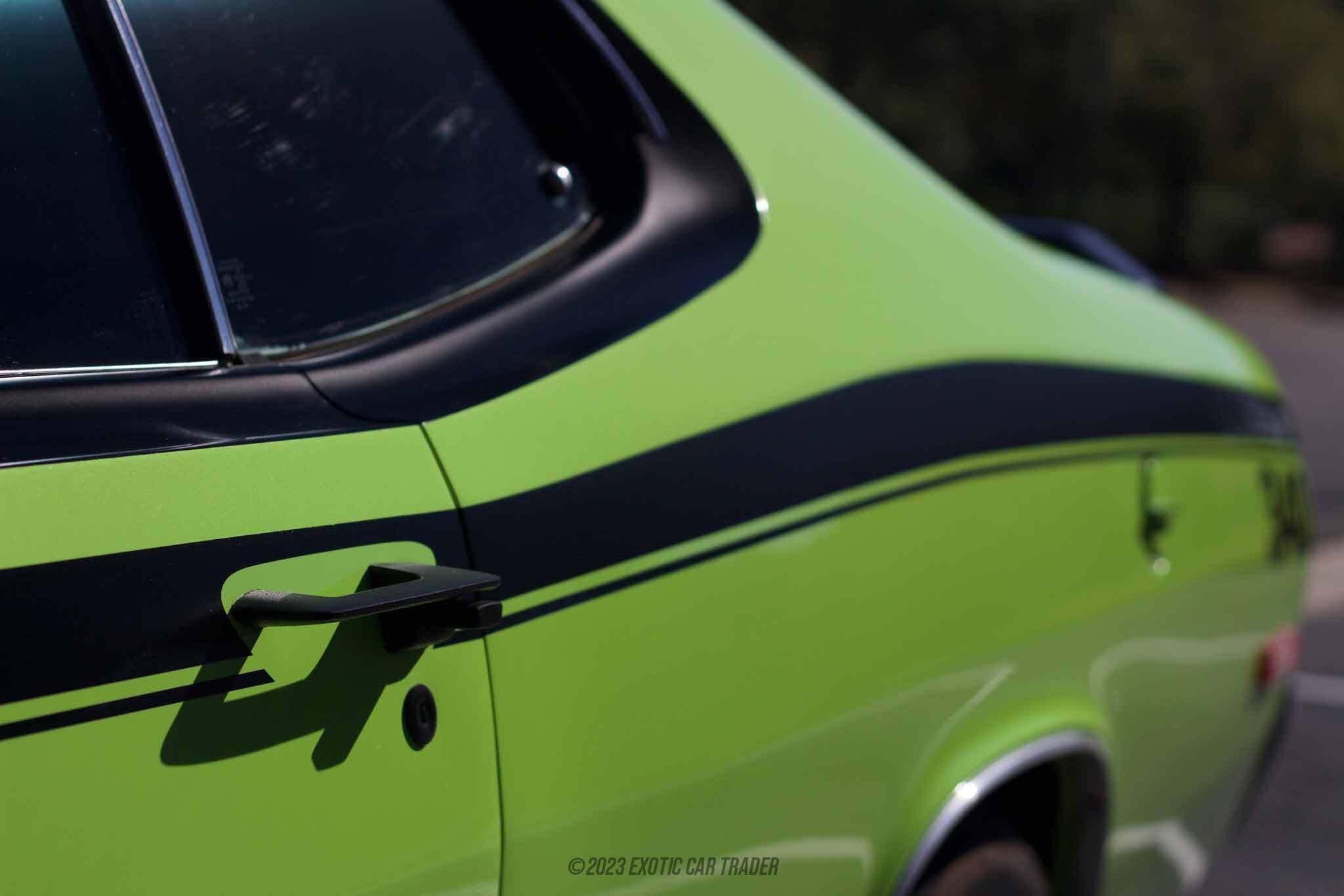
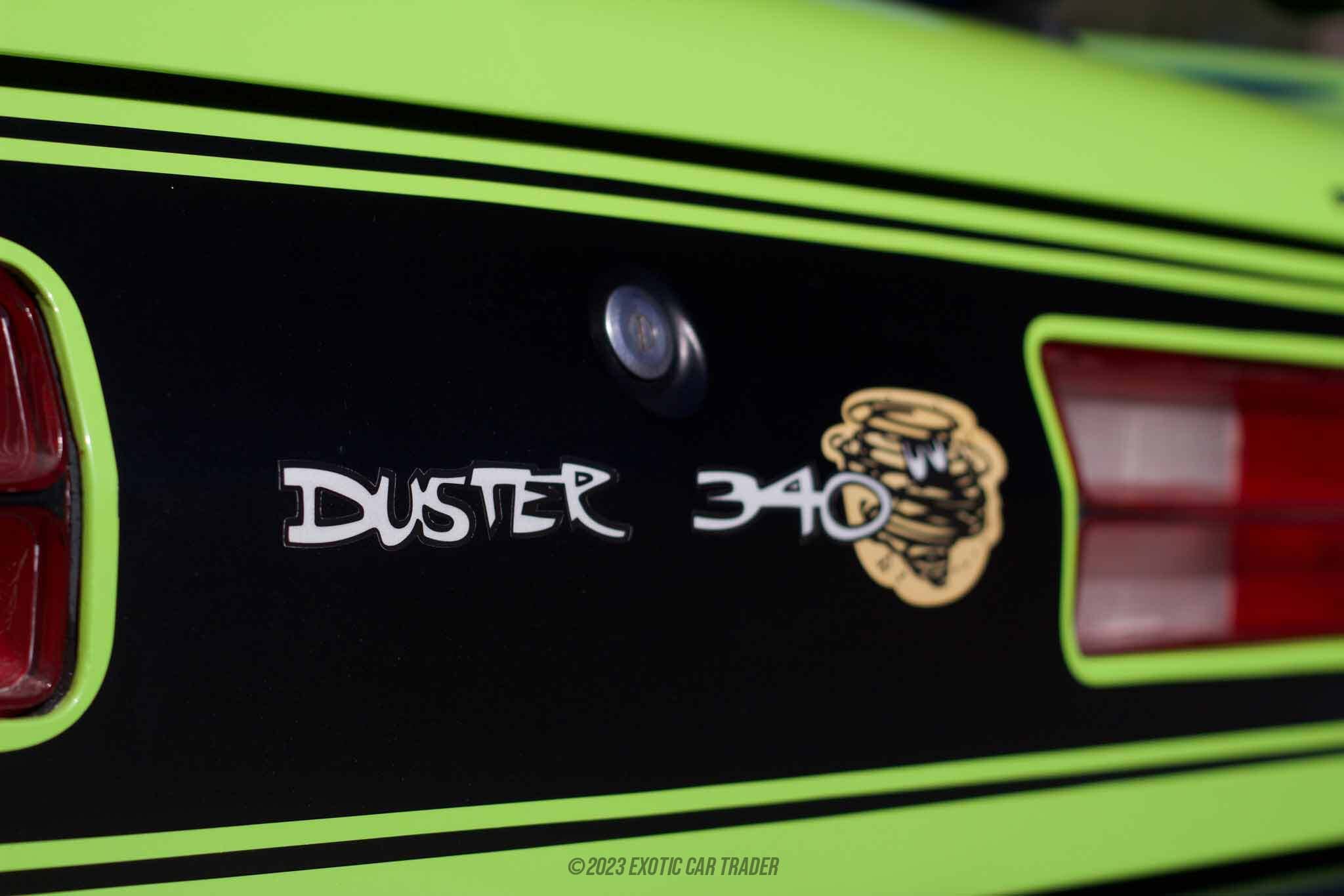
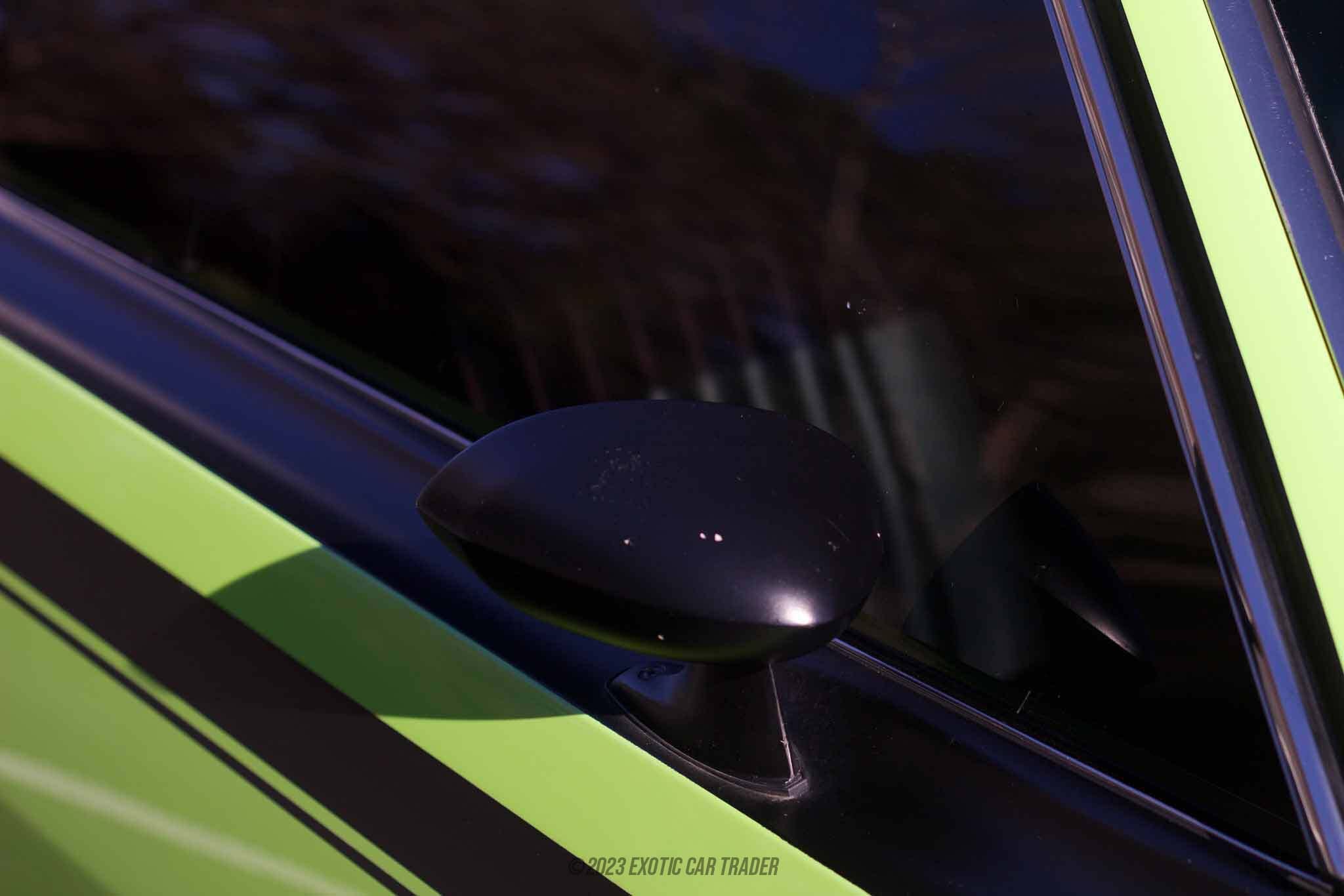
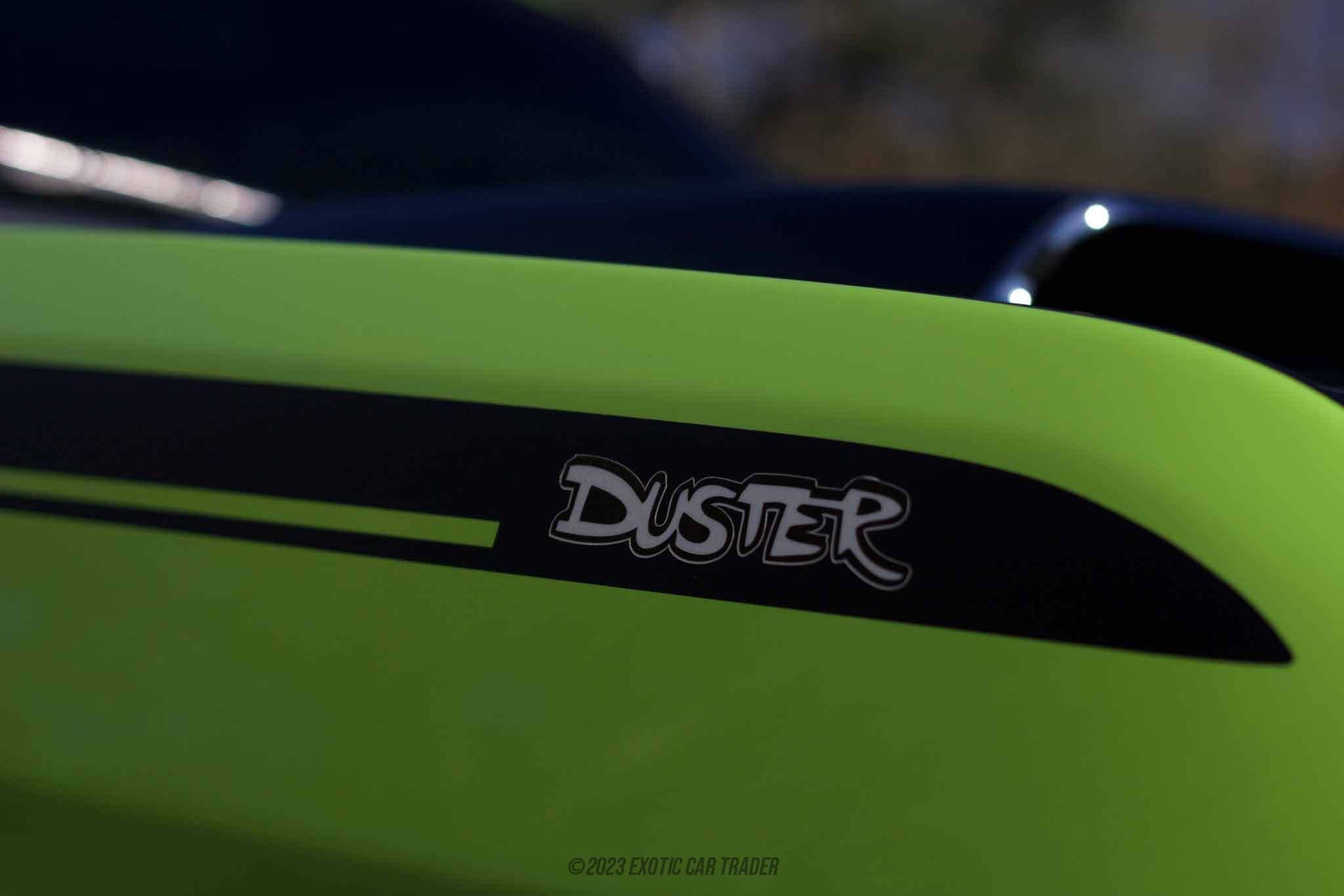
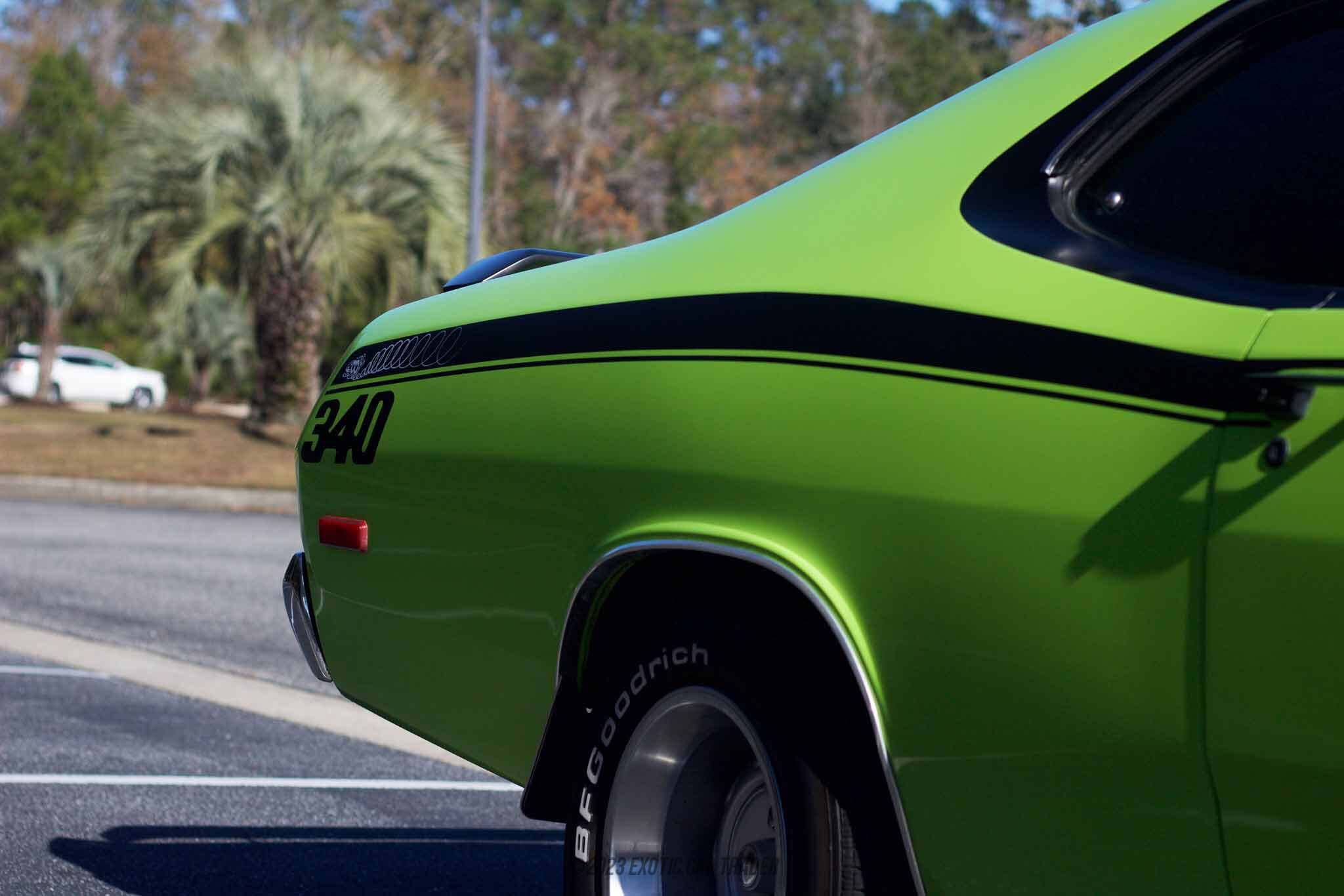
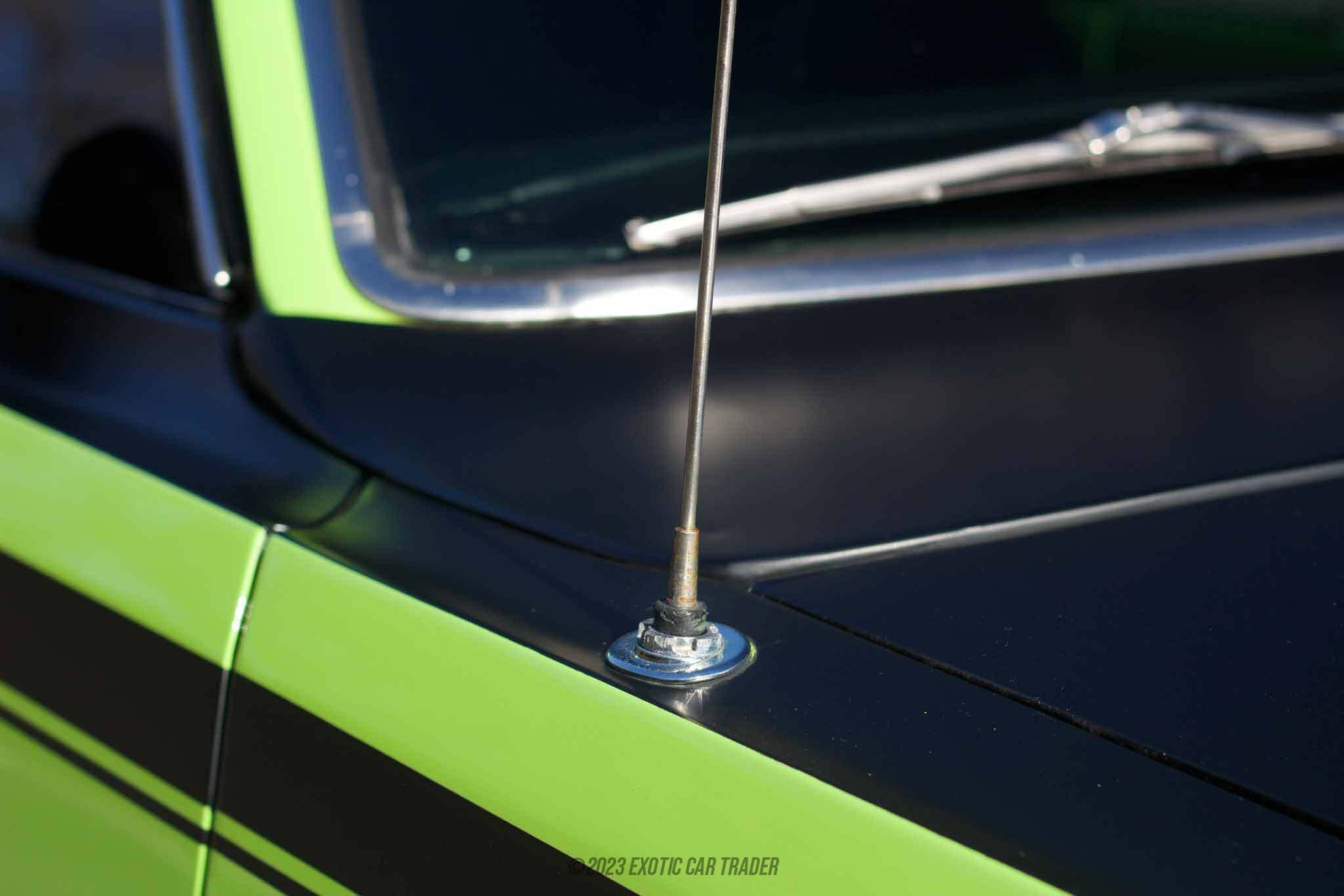
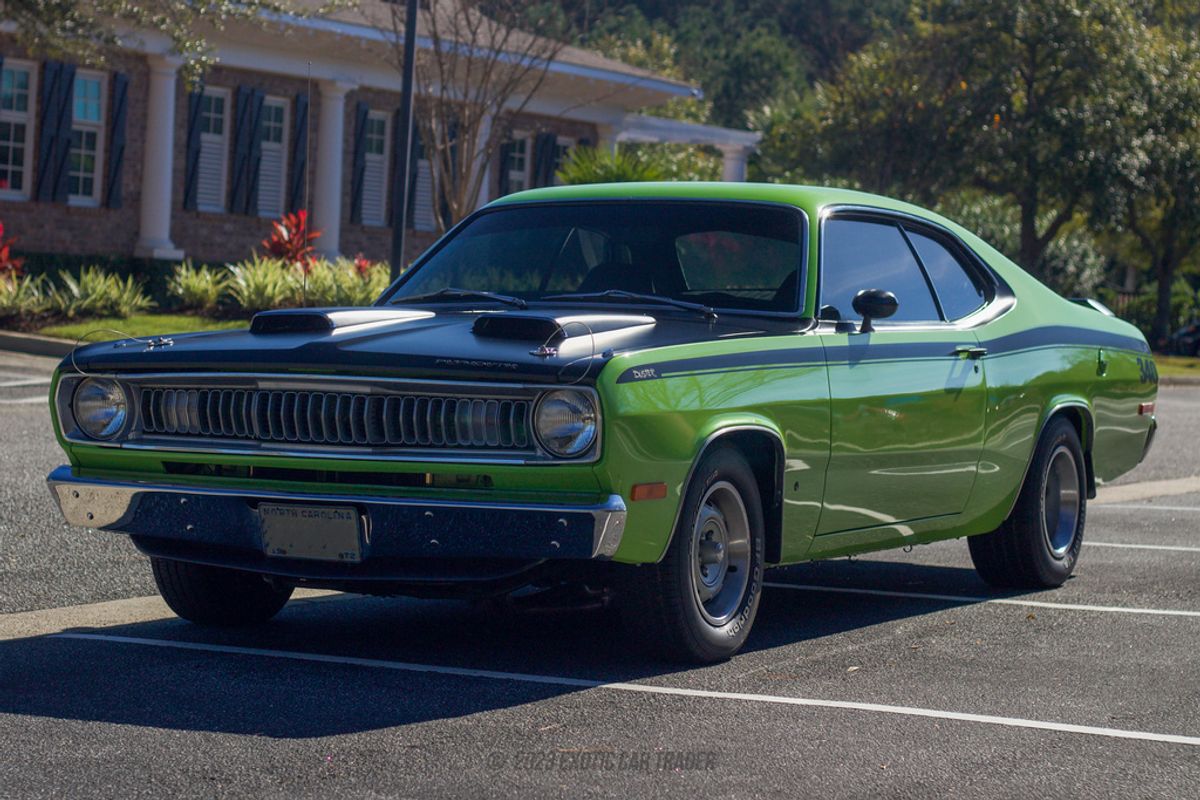
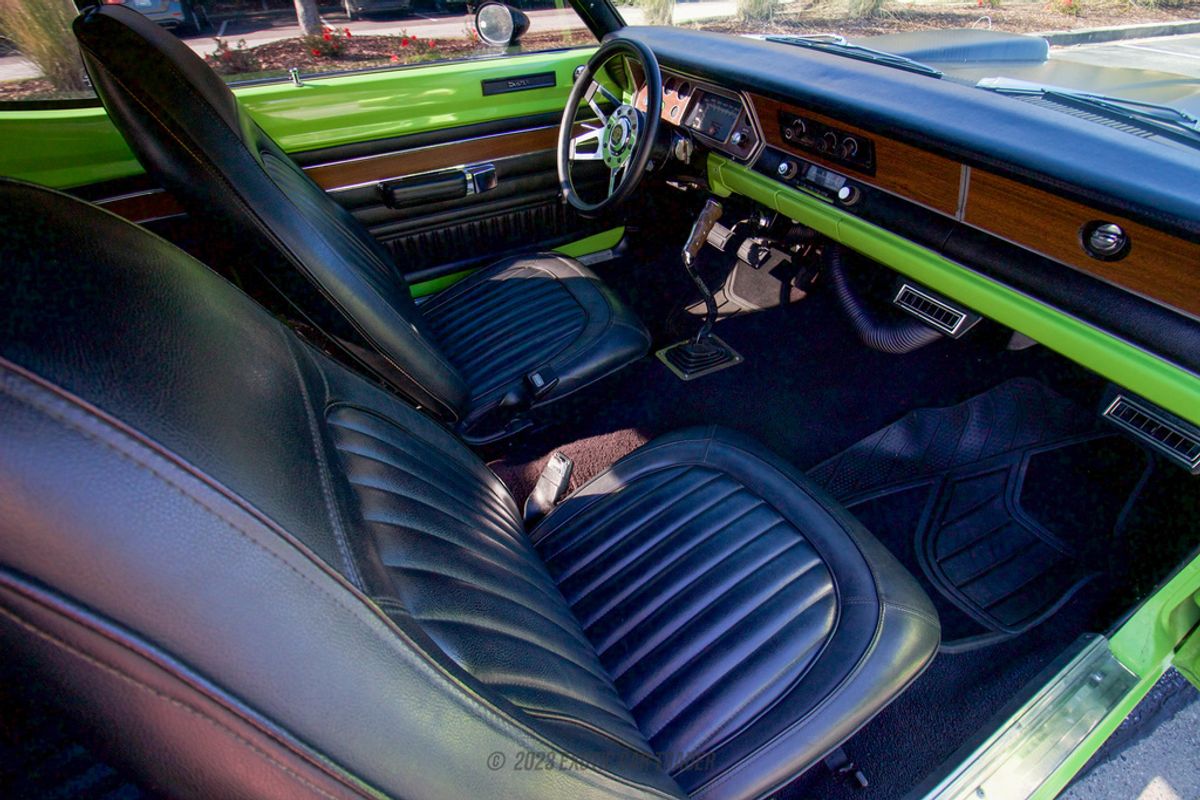
This 1972 Plymouth Duster 340 boasts a sporty Limelight Green exterior, accented with a matte black hood featuring dual scoops and complemented by bold black side stripes culminating in the 340 emblem. A chic black spoiler and chrome bumpers enhance the rear, while it rides on BF Goodrich Radial T/A tires fitted with new brakes for dependable stopping capability. The car's rear proudly displays the unique "twister" emblem, conceived by Chrysler's Thomas Bertsch. The cabin offers a sleek black interior, highlighted by a dash in body color and adorned with classic Duster wood grain on the steering wheel and dashboard, further accentuated by wood trim on the door panels. The driving experience is refined with a Hurst Pistol Grip shifter, and the recent addition of a new air conditioning system ensures rides in this Duster are both comfortable and pleasurable.
Engine
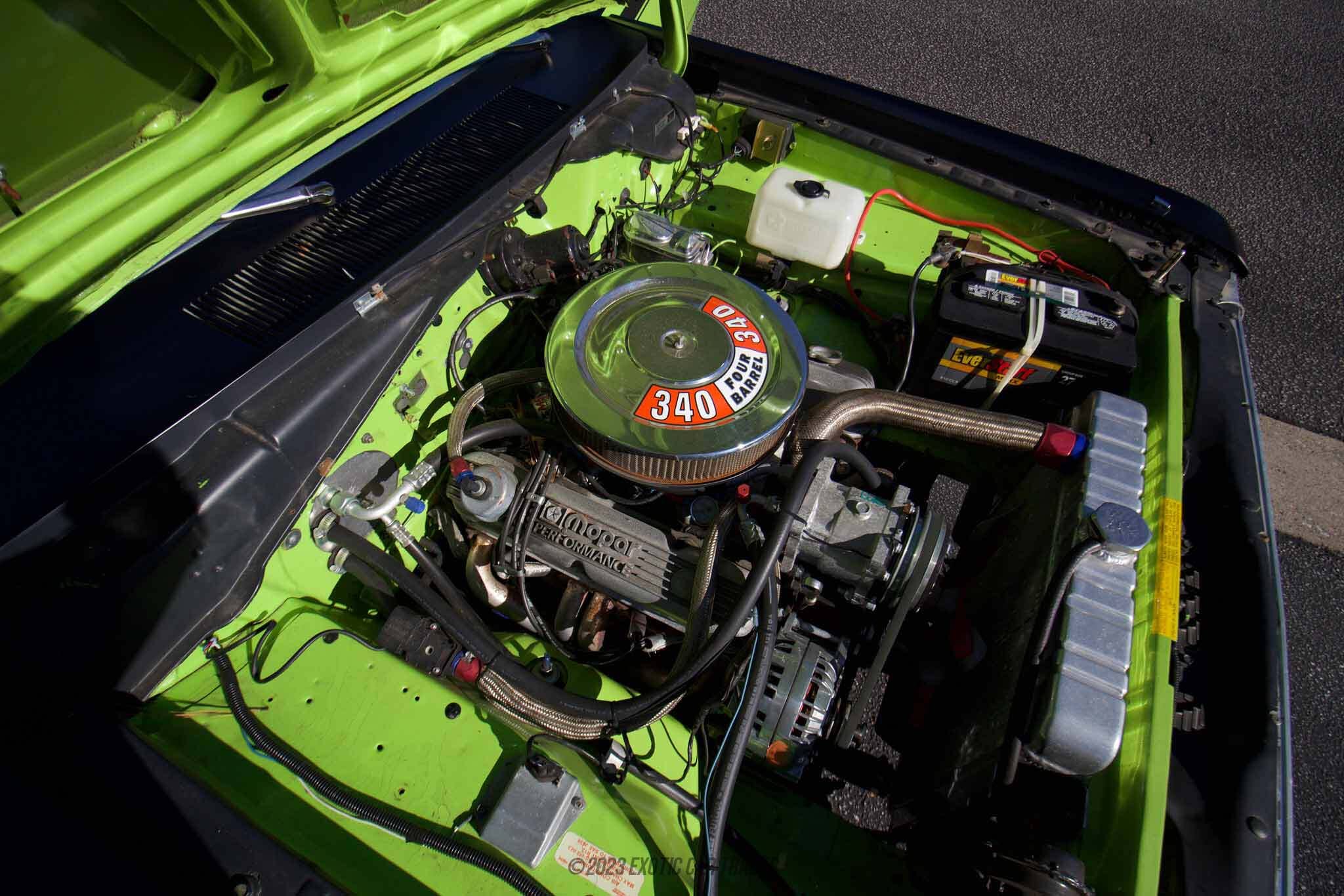
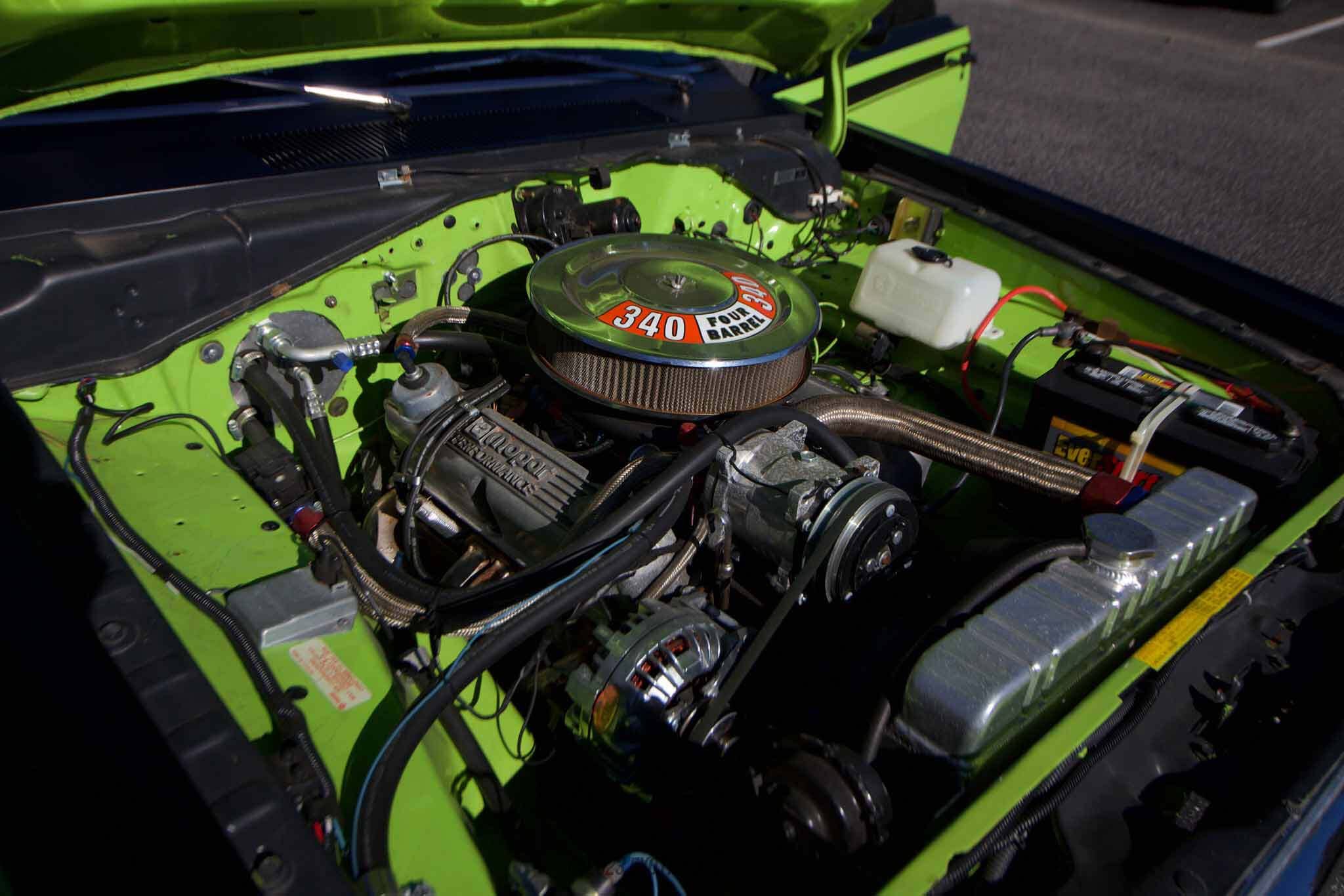
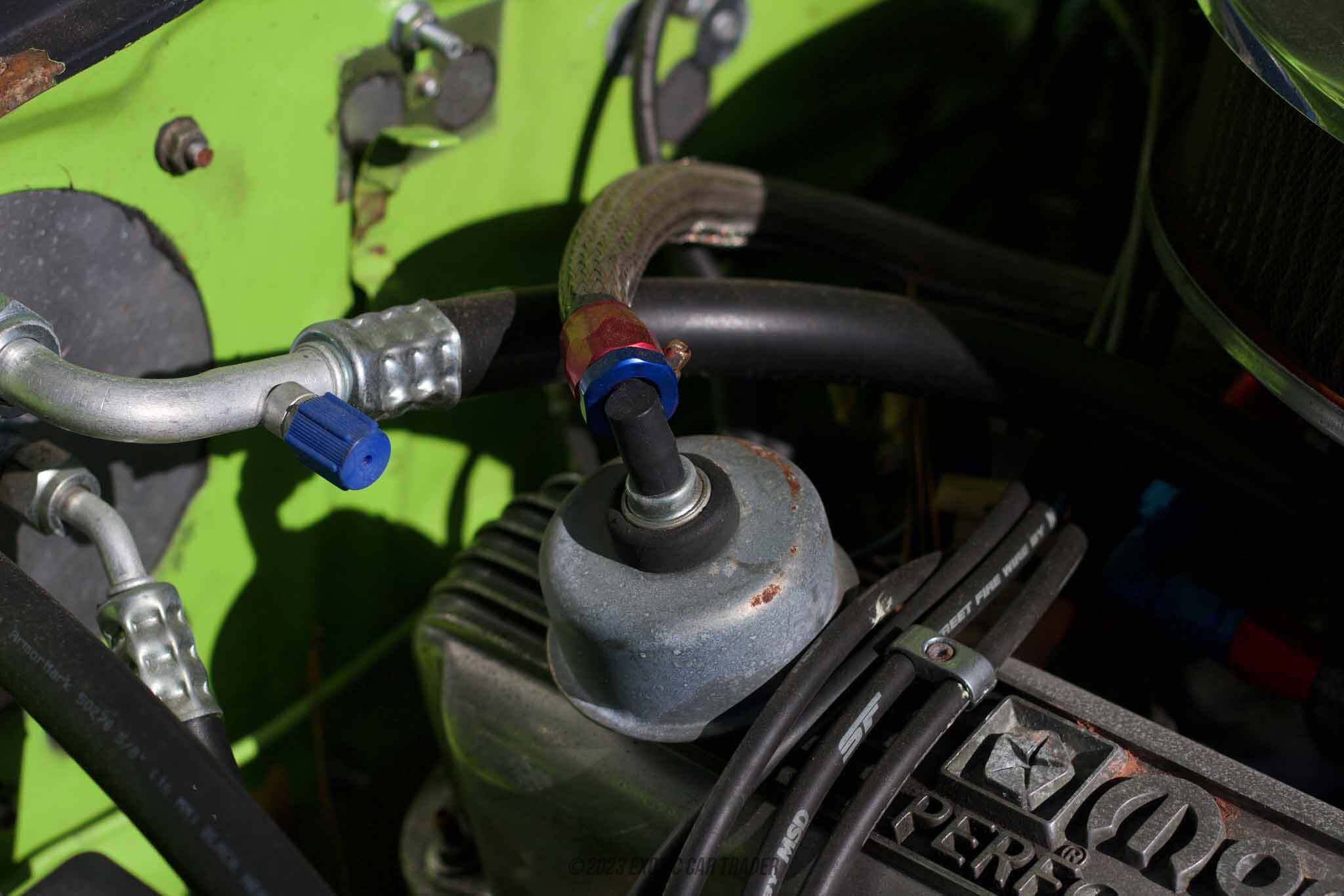
Under the hood, the original 340ci engine of this 1972 Plymouth Duster 340 has undergone a thorough rebuild, now expanded to 416ci and clocking less than 5,000 miles since the overhaul. Engineered by Sloan Engines, this unit boasts an output of 450 to 500hp, enhanced by a Torker high-rise aluminum intake manifold and an Eagle steel crankshaft. Upgrades include aluminum pulleys, new I-beam rods, X-heads, and TTI Performance exhaust headers. Fuel delivery is optimized by a new 650 dual-line pumper carburetor and a Holley mechanical high-volume pump. The exhaust system has been fully updated, incorporating an X Flow design with "Cherry Bomb" glass packs and factory stock tips on the rear pipes. Additionally, the transmission has been meticulously rebuilt, and the rear end fortified with a new 355ci posi-traction with a Detroit locker for superior grip. Practical enhancements such as a new windshield wiper motor and linkage, alongside new leaf springs and bushings, are also featured. A recent oil change ensures this powerhouse is primed for performance.

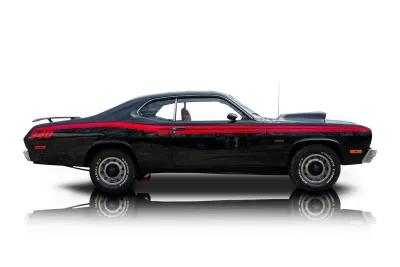

One of the Sport Compacts from the Seventies, the Plymouth Duster was produced between 1970 and 1976, as a stylish two-door coupe with a compact footprint and naturally, V8 power on offer. However, the potential of this car was somewhat stymied by the onset of the Malaise Era, and the Duster would go the way of the dodo, being replaced by the Dodge Aspen/Plymouth Volare combo. Today, we have a 1973 Plymouth Duster for sale from Lafayette, Tennessee, with just under 78,000 miles to its name. This originally 340ci car has received a previously rebuilt engine with a little more displacement for some extra fun.
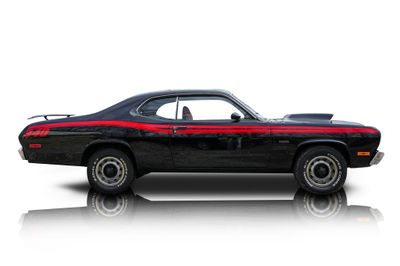
Plymouth made some fantastic vehicles in the ’60s and '70s, capitalizing on the muscle car craze with tenacity. The Duster was one of their compact car offerings, a two-door coupe variant of their Valiant nameplate. Produced between 1969 and 1976, it offered a range of in-line six and V8 powerplants. This meant that buyers could opt for fuel economy or sheer performance. Up for sale today is a fully restored 1973 Plymouth Duster with a rebuilt V8, and all maintenance is reportedly up to date. So, if you’re searching for a great American classic car to add to your collection or start building a collection with, this car is an ideal candidate either way.
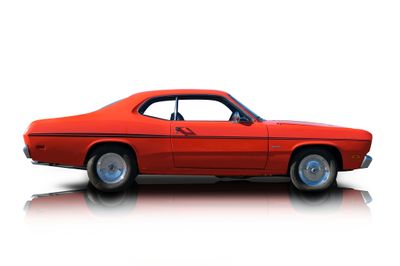
Do you want a muscle car experience in a compact car body? That’s what Plymouth aimed to provide, with the Duster. Made between 1969 and 1976, the Duster was their two-door coupe in the compact car segment. However, Plymouth still endowed it with V8s of varying capacities, ensuring that buyers didn’t get the typically pedestrian performance that came with compact cars. If you’re interested in getting your hands on a Duster, check out this 1970 Plymouth Duster Restomod that’s for sale right now. The car has been completely restored and rocks some neat modern features.
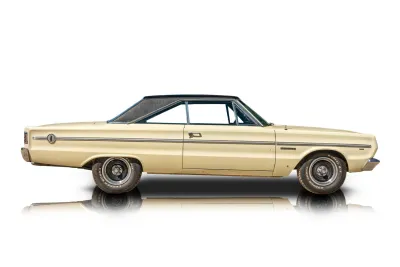
The 1966 Plymouth Belvedere II Hardtop is the kind of Mopar that gets enthusiasts interested before the hood is even opened. Its clean B-body lines, pillarless hardtop profile, Soft Yellow paint, black vinyl roof, and Magnum 500-style wheels give it the restrained factory muscle look of the mid-1960s, but this example carries much more serious hardware underneath. Showing approximately 91,610 miles, it is powered by a 440ci big-block V8 backed by a TorqueFlite 727 automatic, giving it the kind of drivetrain combination that feels right at home in a classic Plymouth. Add power steering, power disc brakes, air conditioning, and a dual exhaust system, and this Belvedere blends old-school Mopar attitude with enough comfort to make it more than just a weekend bruiser.
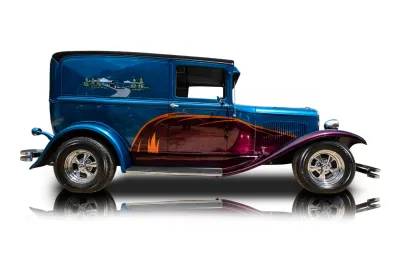
This 1928 Plymouth Model Q Delivery Street Rod takes the distinctive commercial-body styling of an early Plymouth and gives it a decidedly custom street-rod personality. Showing 20,060 miles, it combines a 351ci Windsor V8 with a C6 3-speed automatic transmission and rear-wheel drive, delivering a traditional American hot-rod powertrain in a far less common body style than the usual coupe or roadster. Its blue and Merlot two-tone exterior, custom flame graphics, hand-painted rear quarter artwork, aftermarket air conditioning, and reupholstered interior make this a highly personalized build with plenty of visual character.
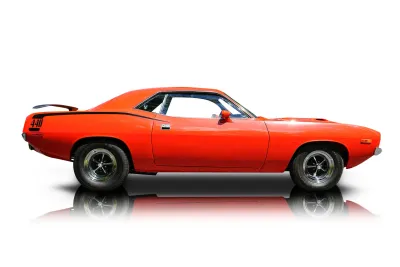
This 1972 Plymouth ’Cuda is a strong example of how the E-body platform can blend original pedigree with period-style muscle-car upgrades. Showing approximately 34,348 miles, this example is finished in Hugger Orange over a Black interior and carries the aggressive visual cues expected from a ’Cuda, including black side graphics, dual hood scoops, chrome bumpers, and Magnum 500-style wheels. The current owner reports that the car was originally equipped with a 340ci V8, while it is now powered by a larger 440ci V8 paired with a TorqueFlite 3-speed automatic. Performance-oriented upgrades include a 4-barrel carburetor, aftermarket aluminum intake manifold, MSD Digital 6AL ignition, aftermarket exhaust headers, and a dual exhaust system, giving this ’Cuda a considerably more muscular character than its original configuration.

Terms of Service
Be Kind and Courteous
We're here to create a platform to better the automotive industry through communication and transparency. Please treat everyone with respect. Healthy debates are natural, but kindness is required.
No Hate Speech
Make sure everyone feels safe. Hate speech of any kind is strictly prohibited. Degrading comments about things like race, religion, culture, sexual orientation, etc. will not be tolerated.
No Promotions or Spam
Give more than you take. Self-promotion, spam, or links of any kind are not allowed.
