




Buyer Resources






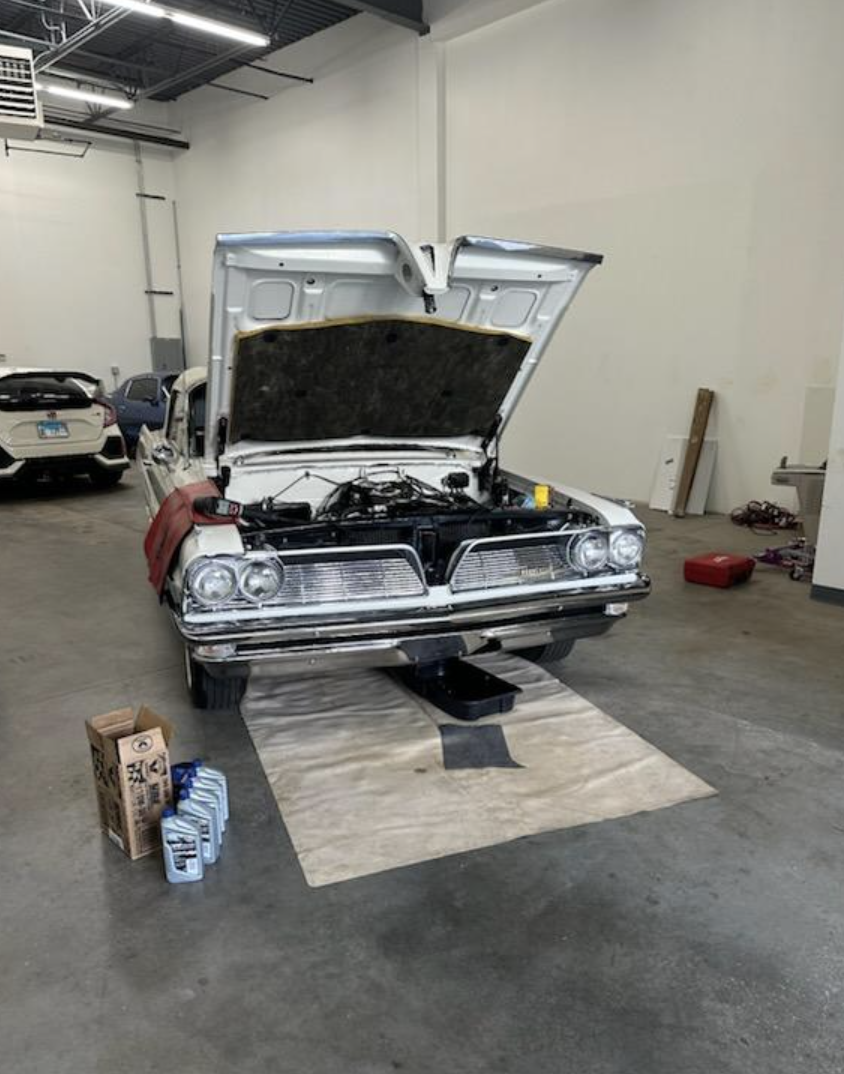
- 1961 Pontiac Bonneville Convertible
- 389ci V8
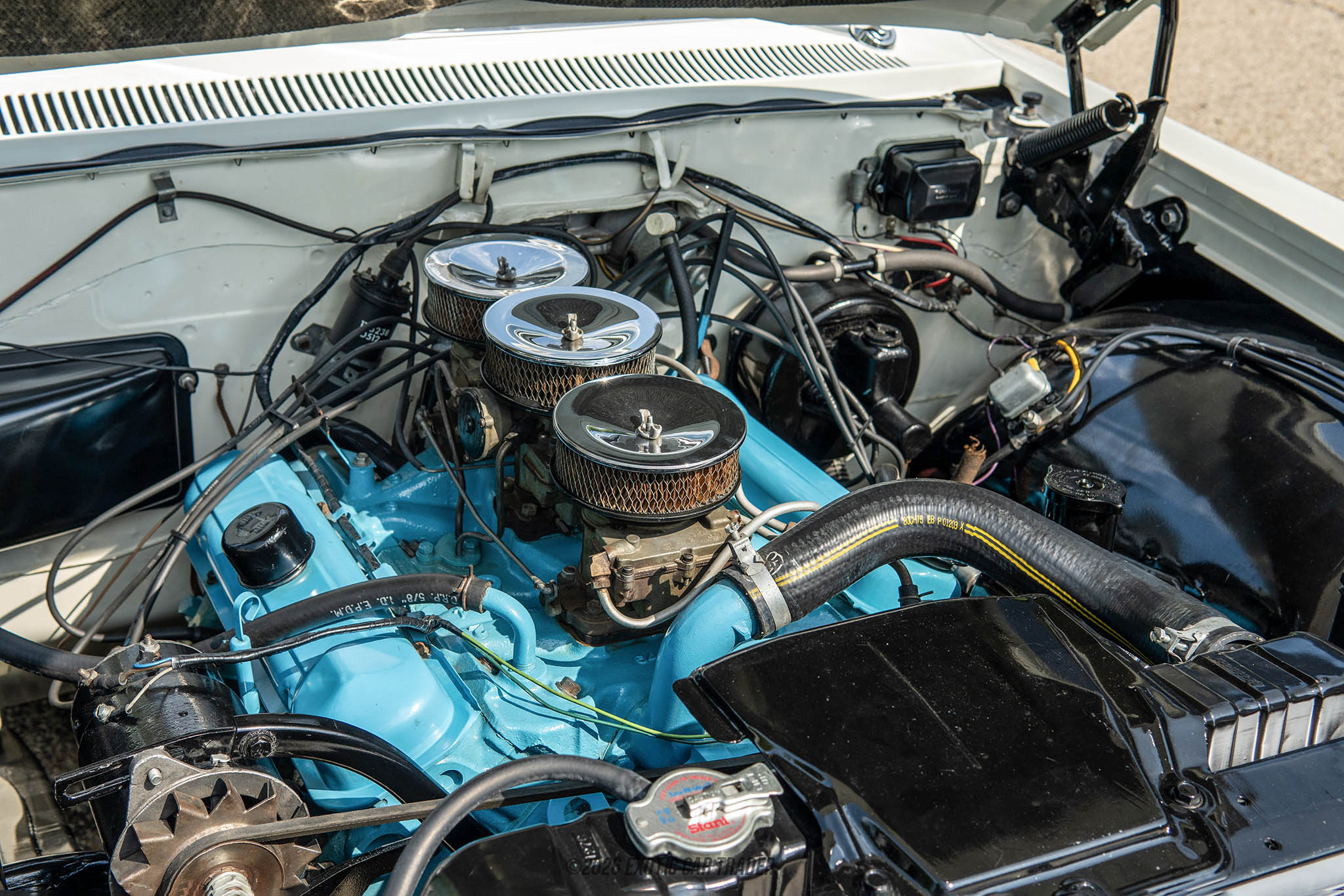
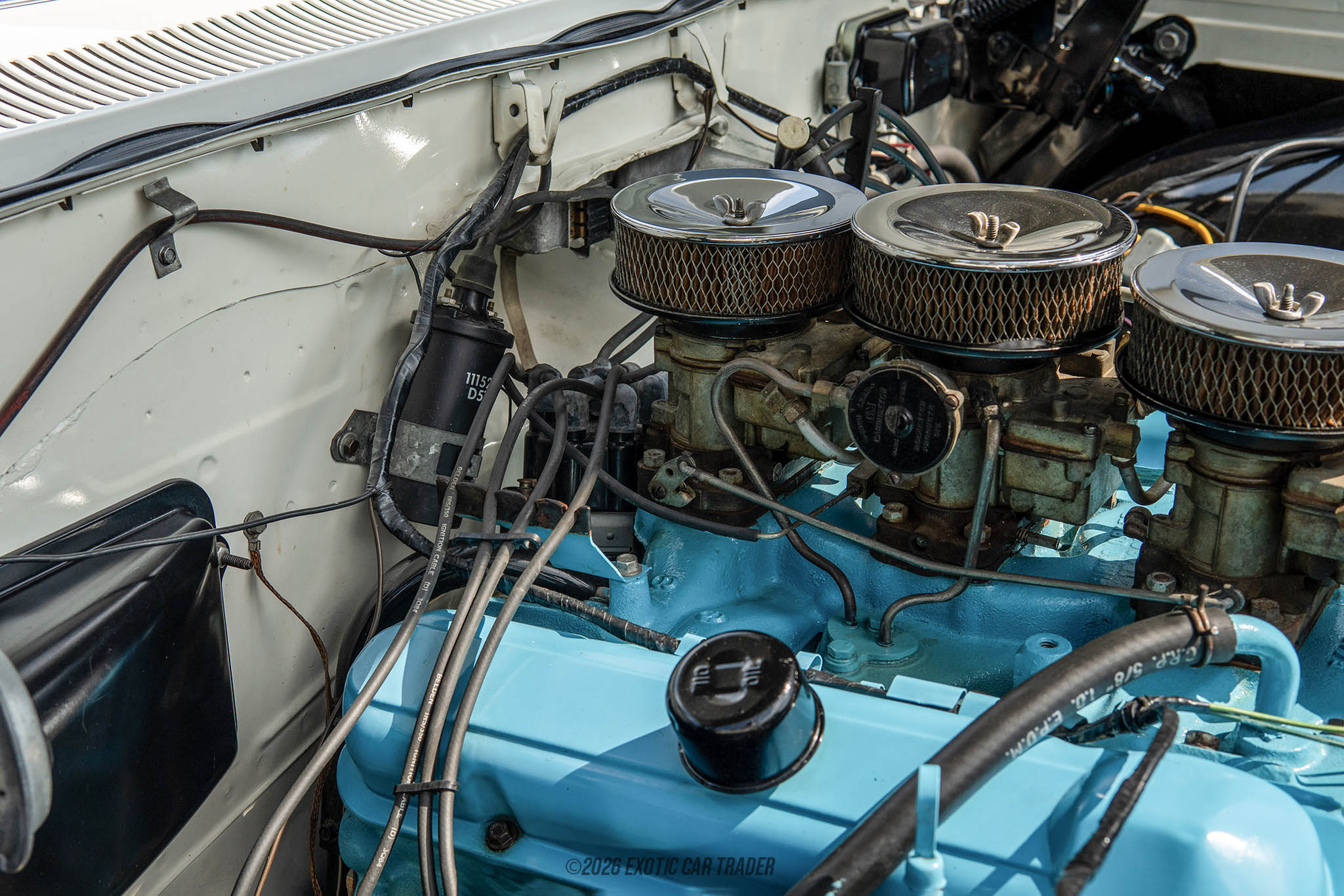
- Tri-Power Triple 2-Barrel Carburetors
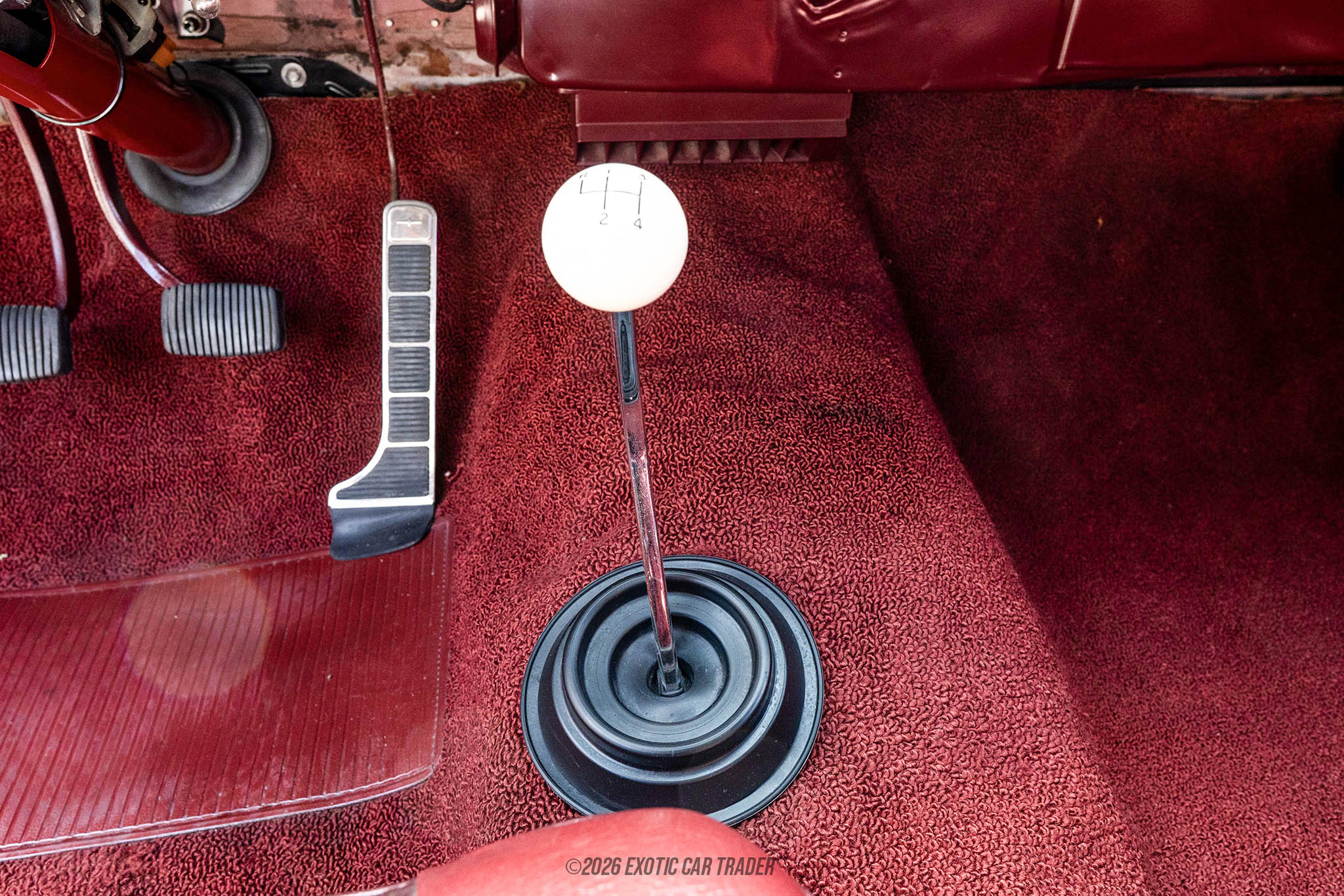
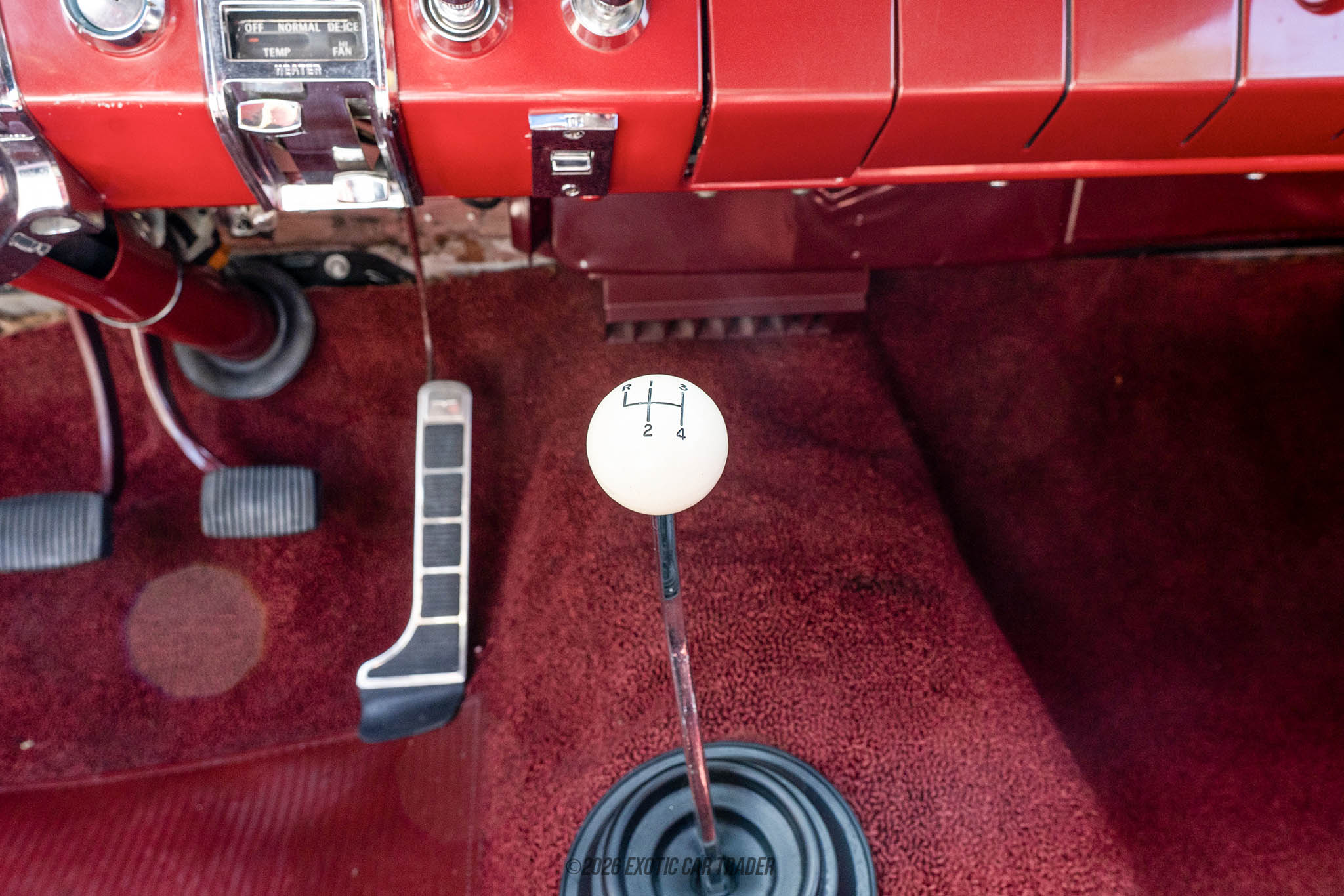
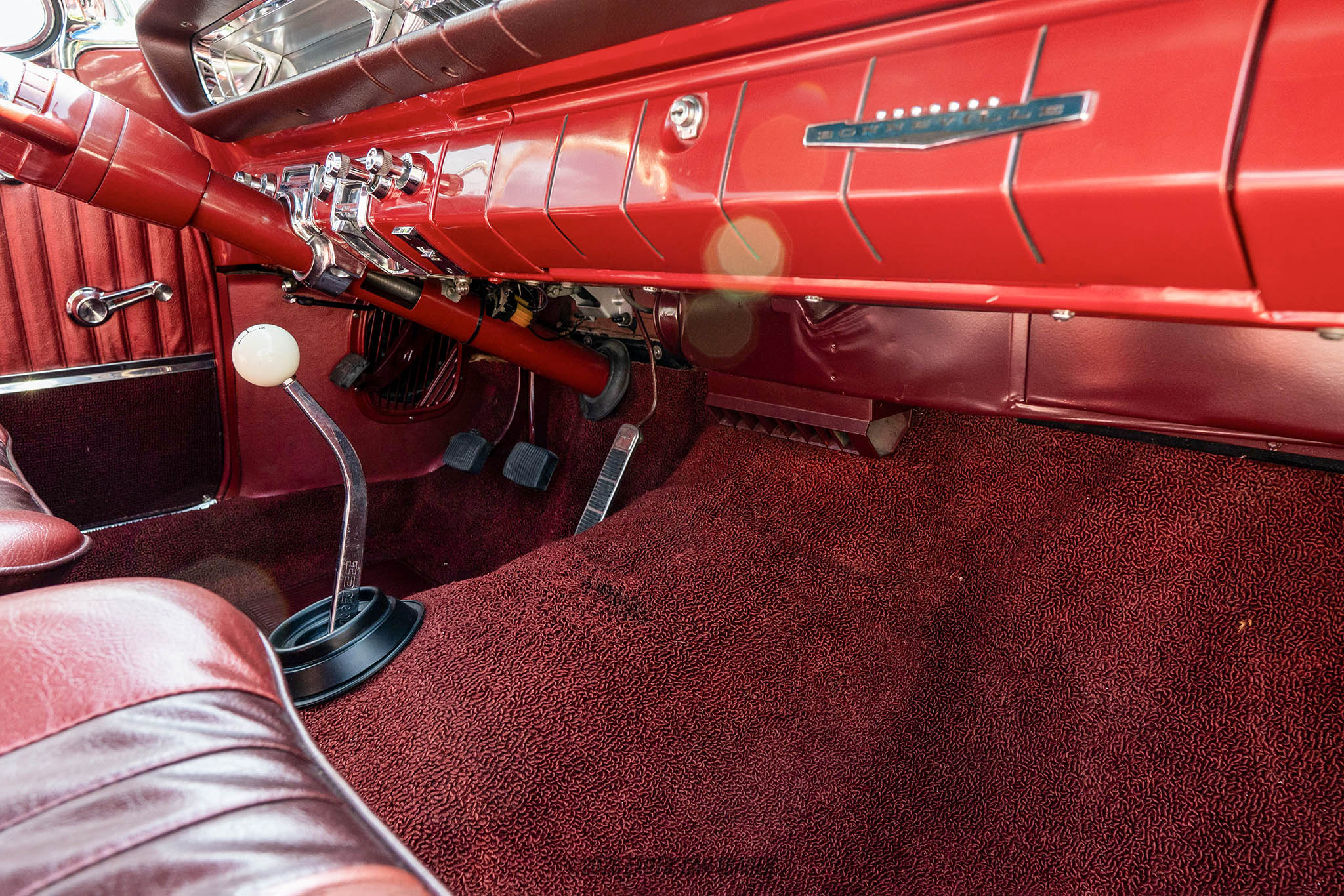
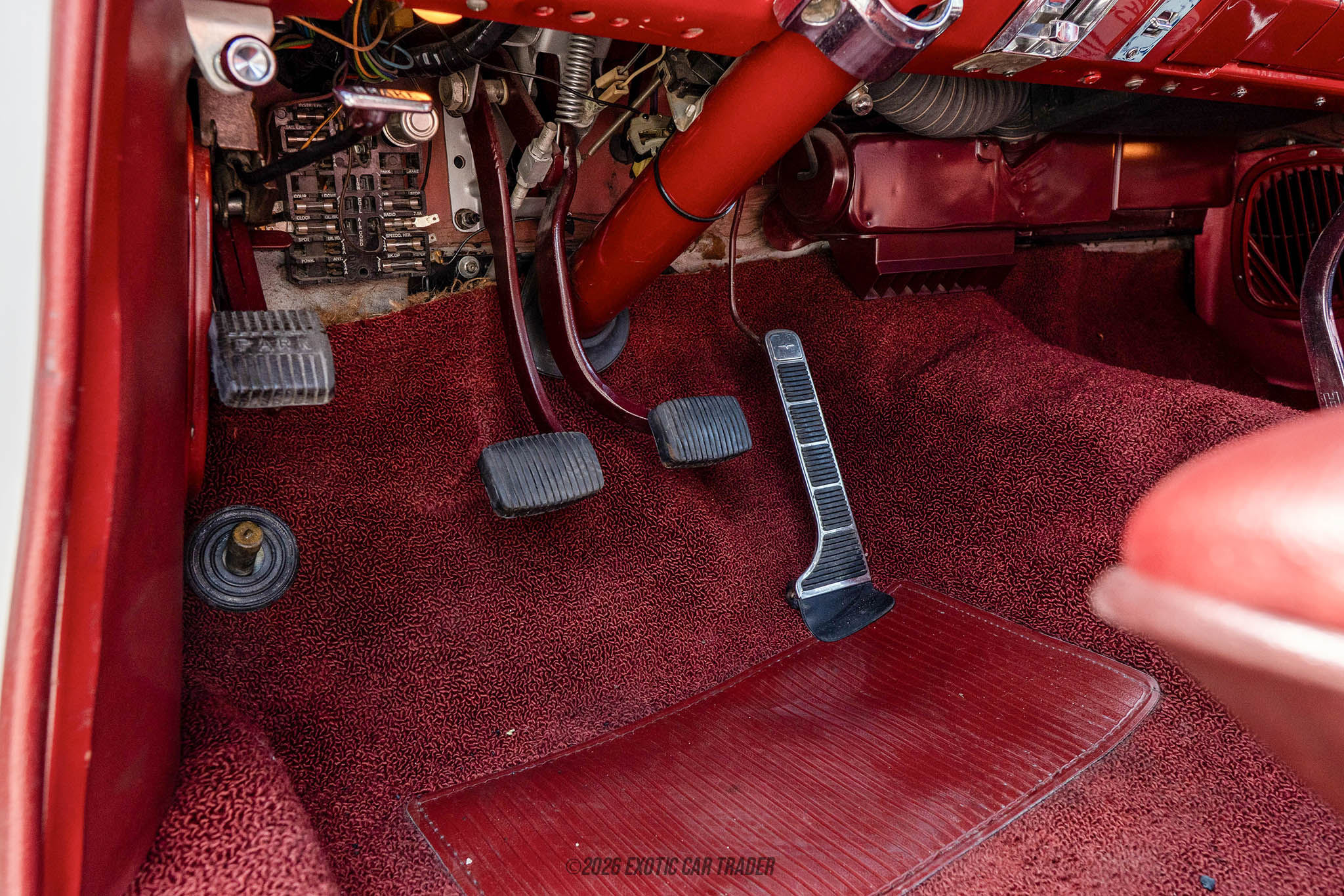
- 4-Speed Manual
- RWD
- White Exterior
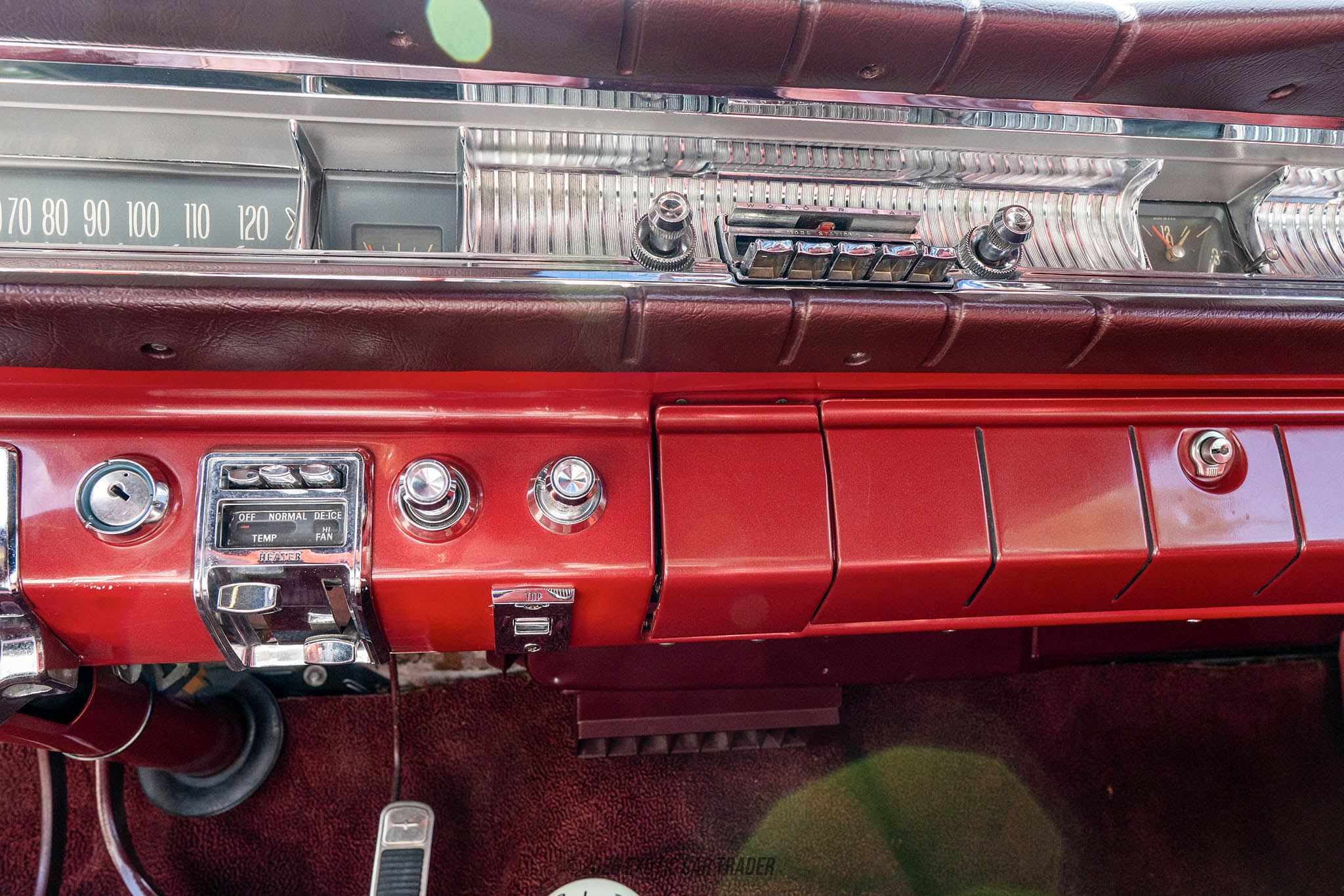
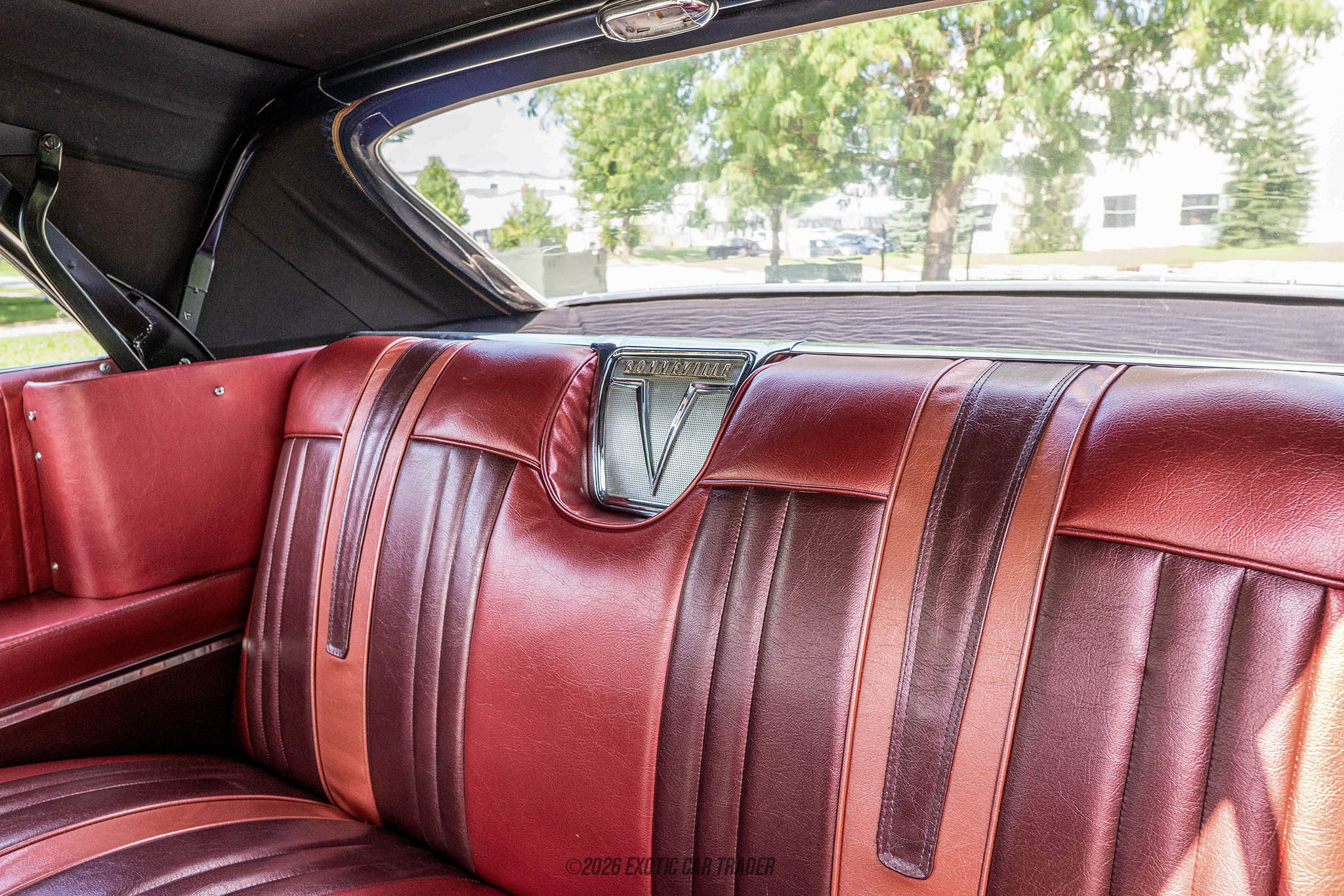
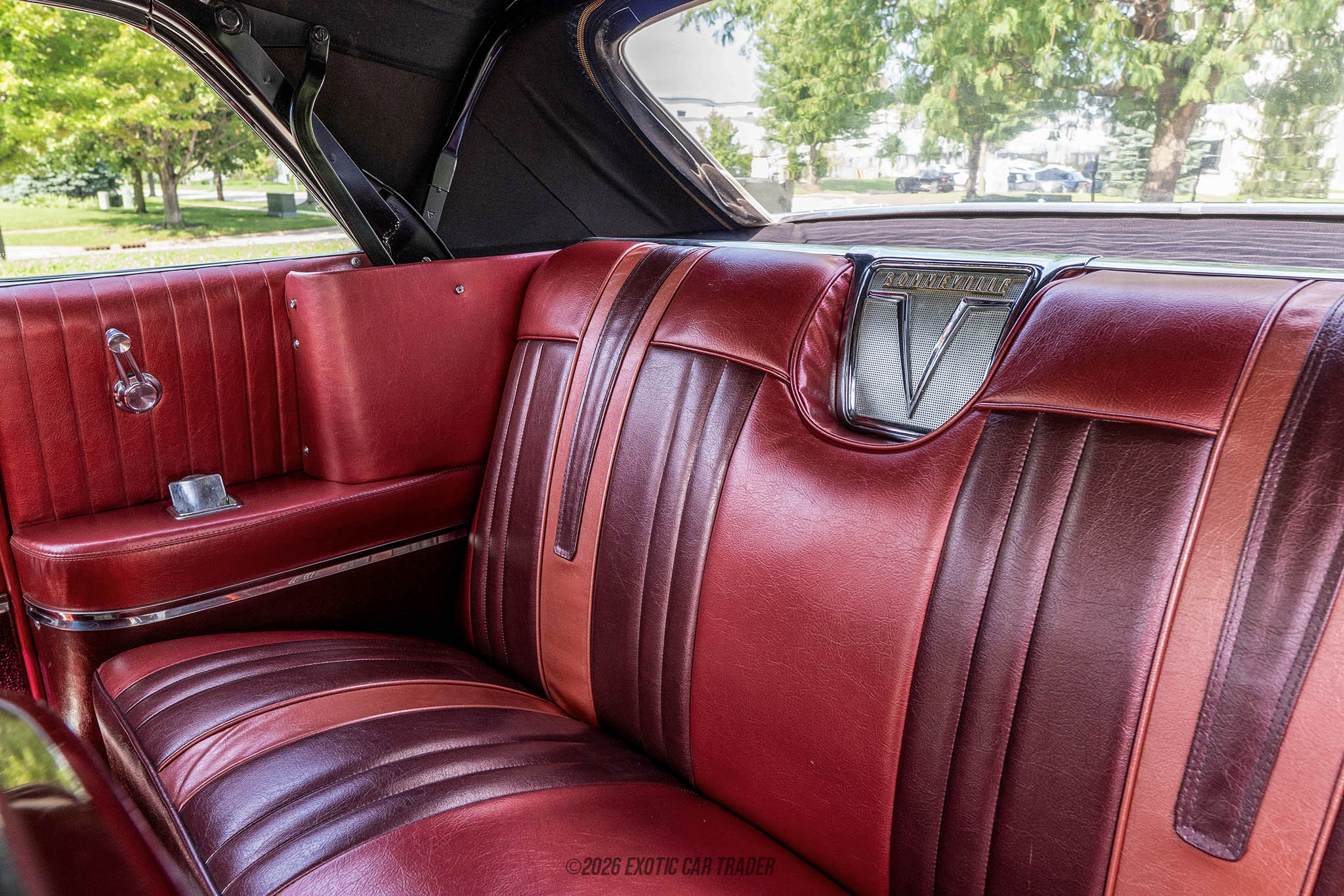
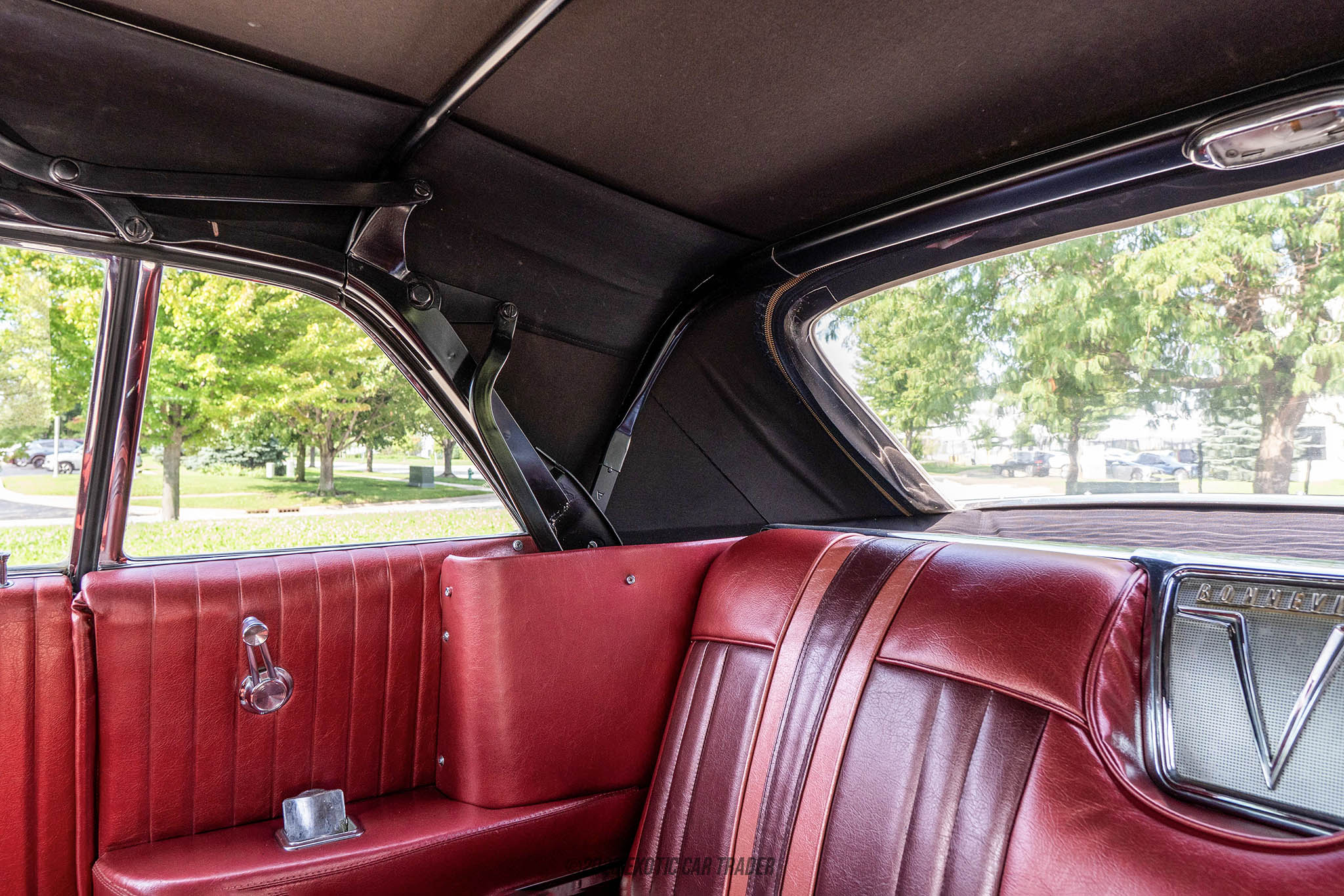
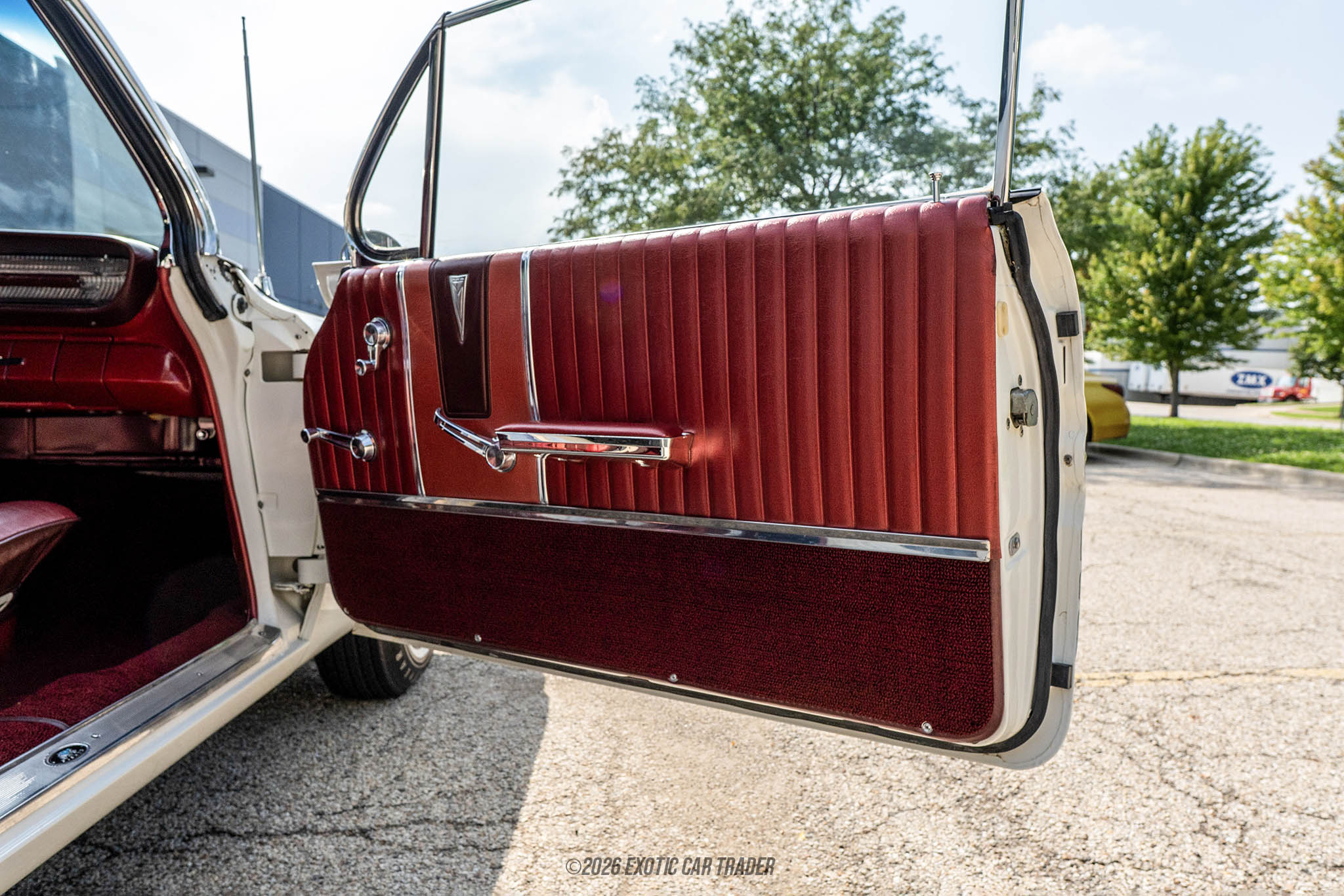
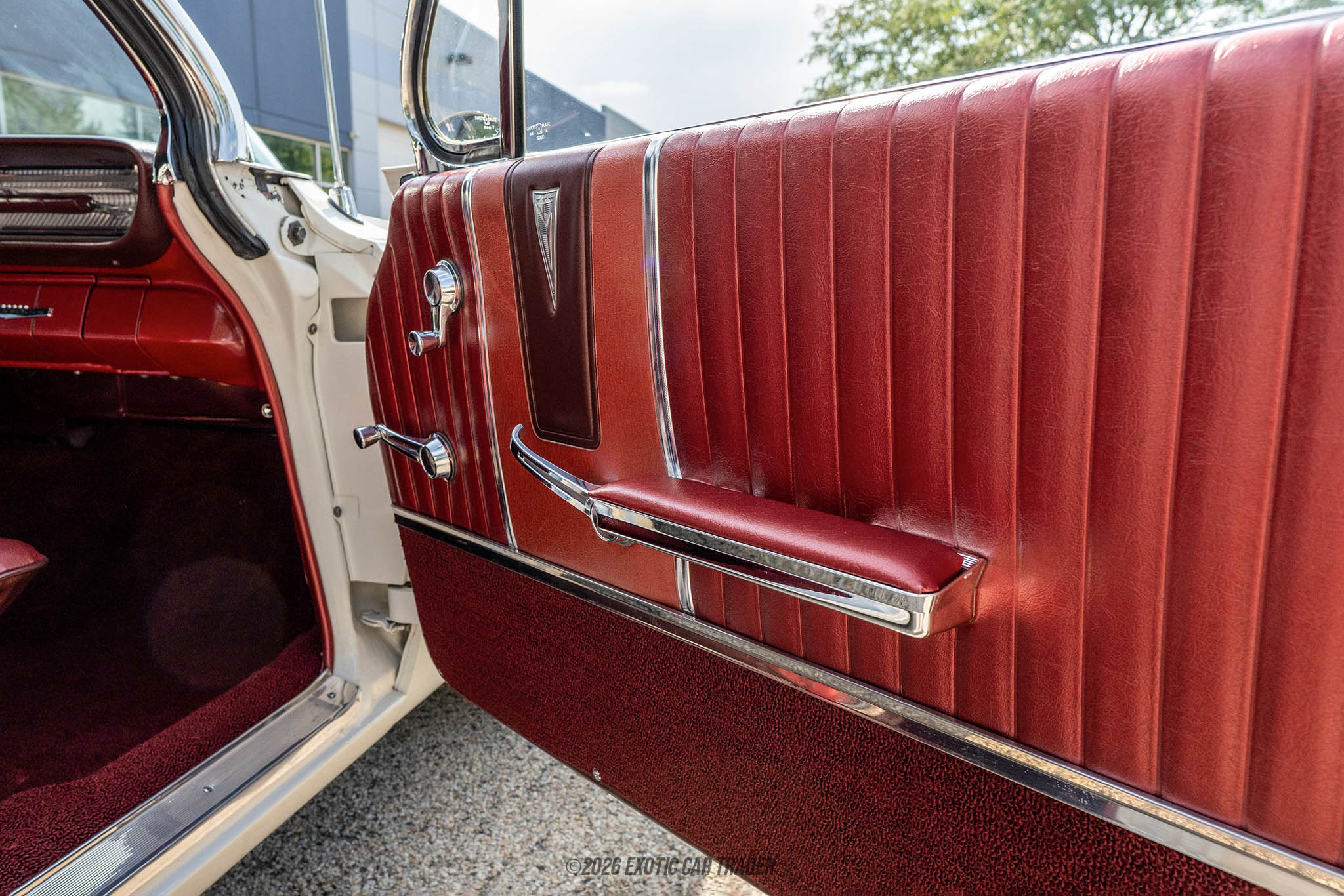
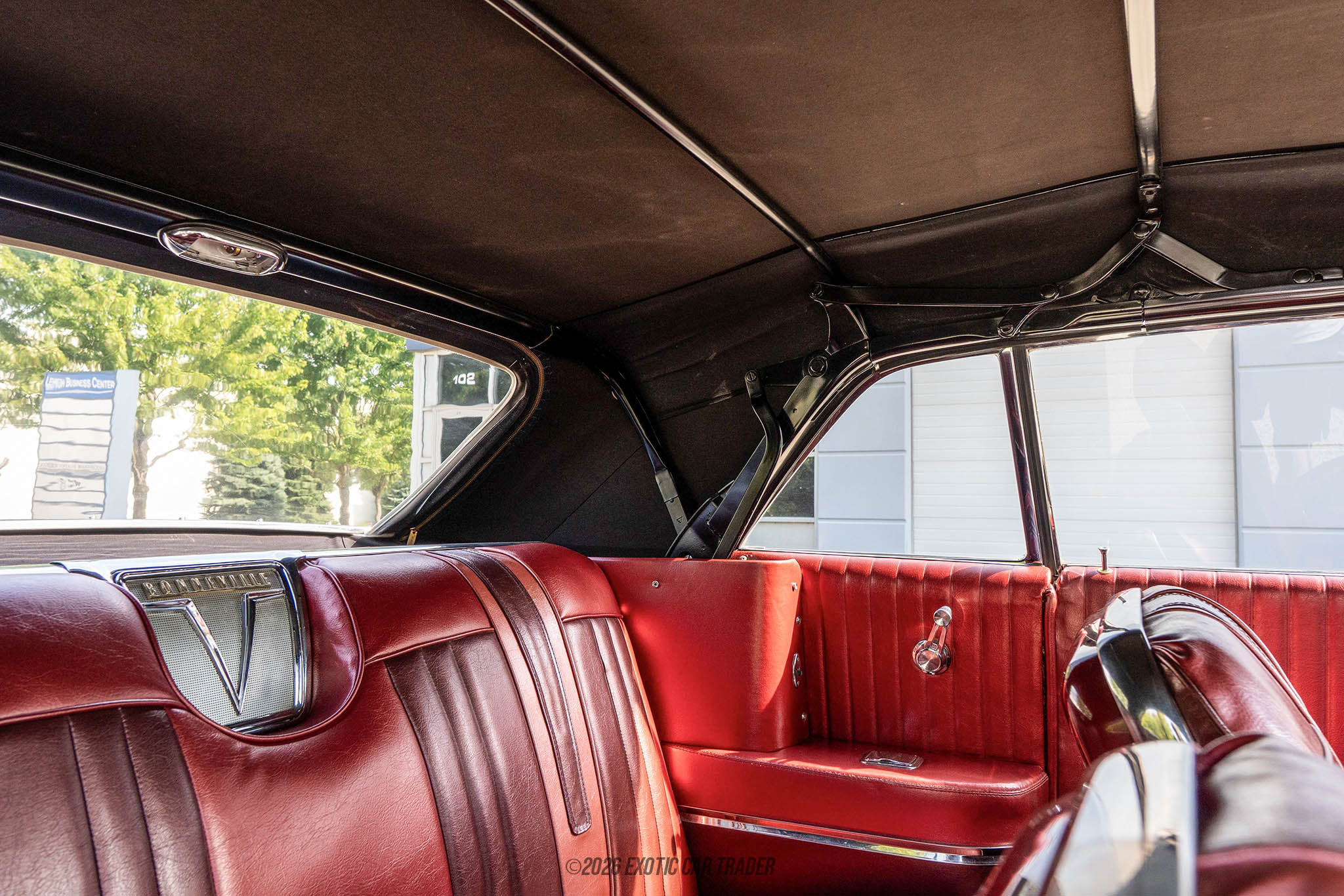
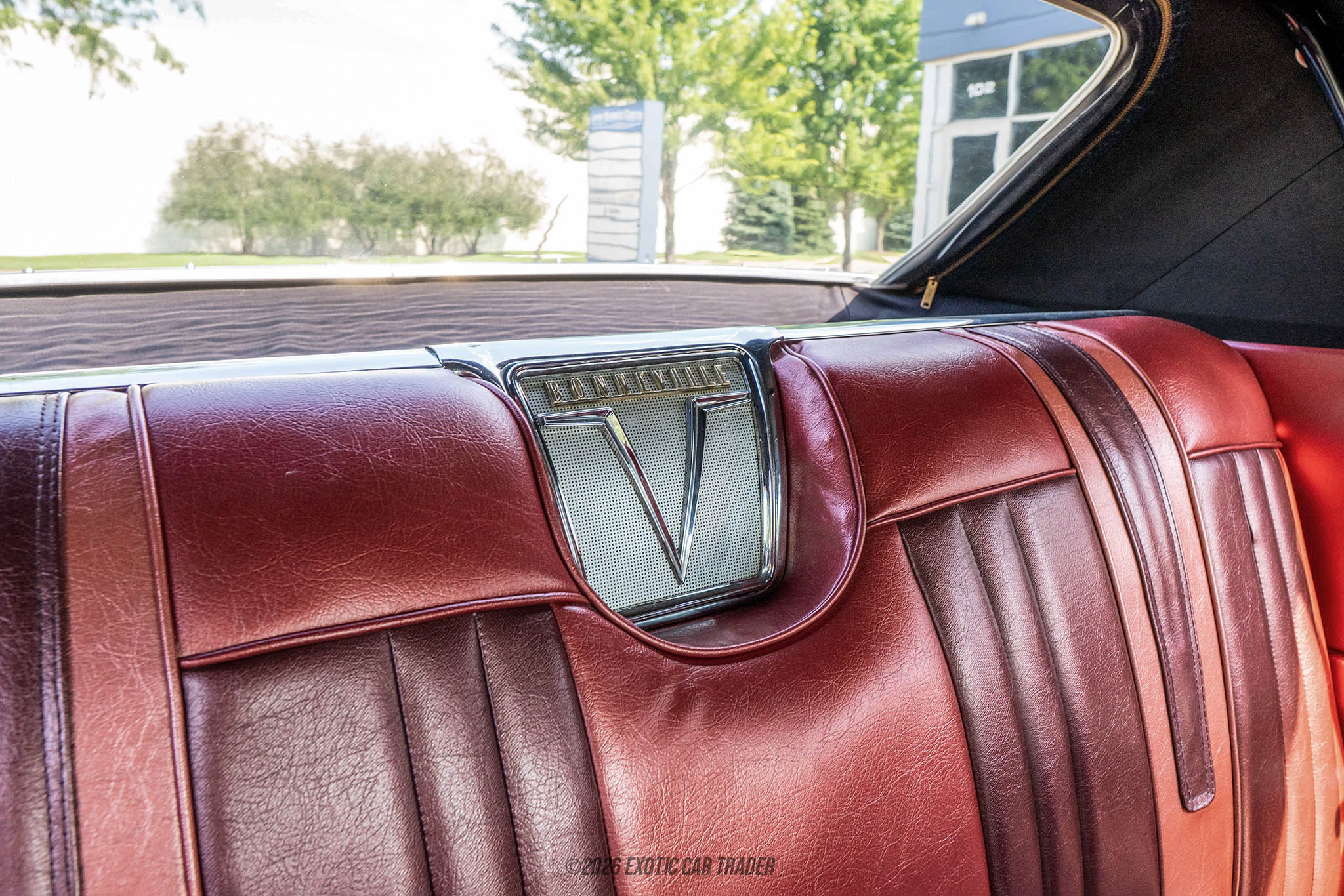
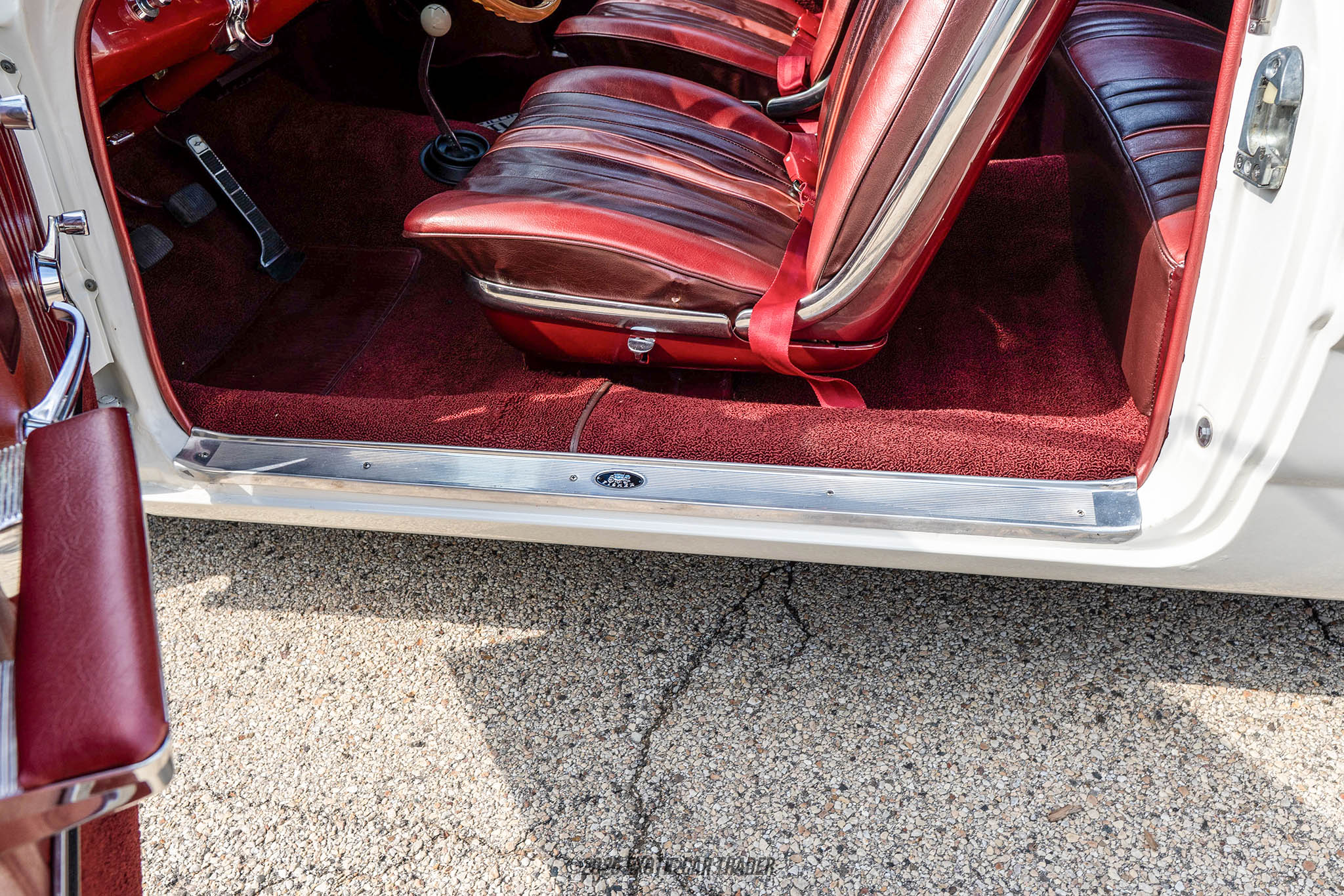
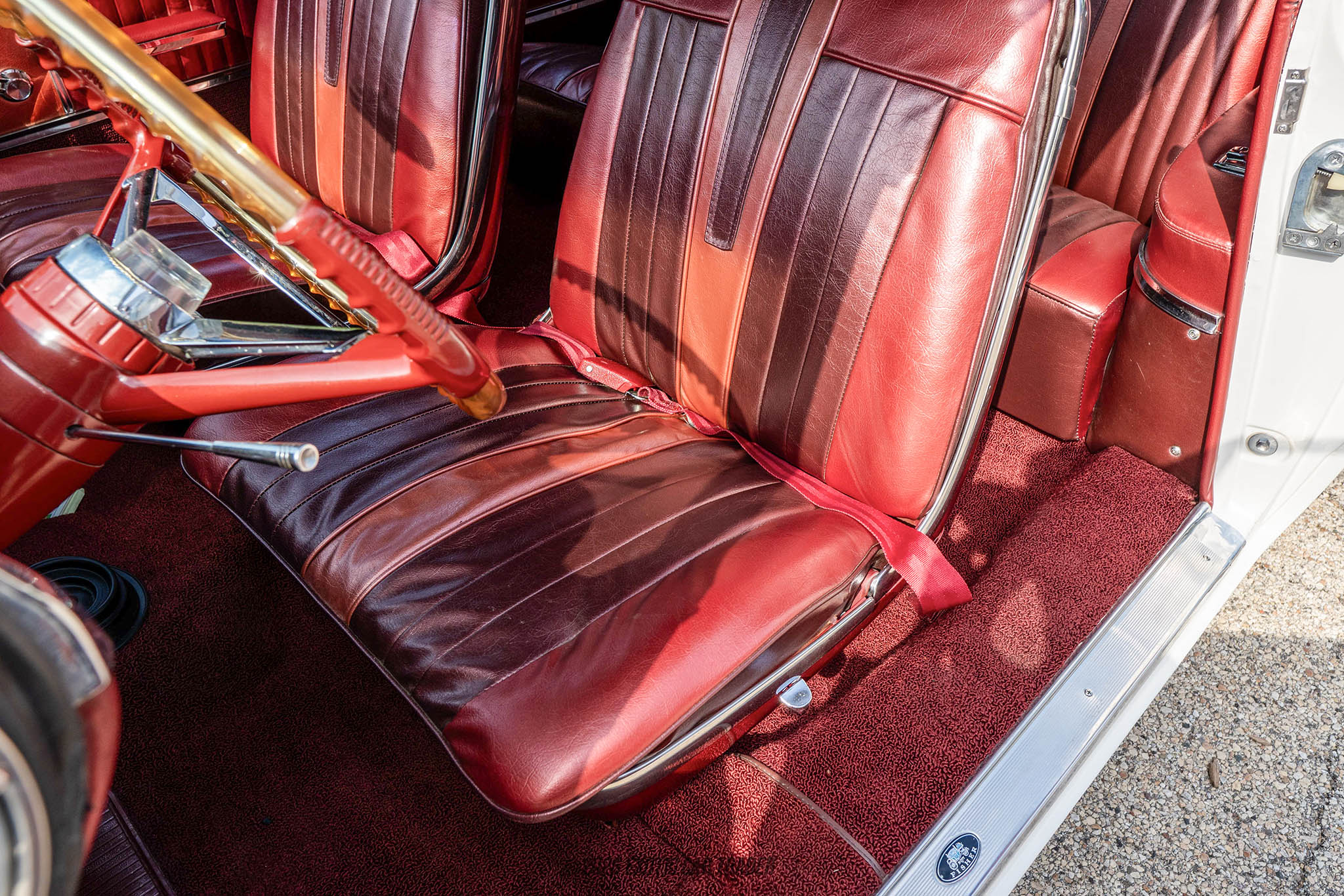
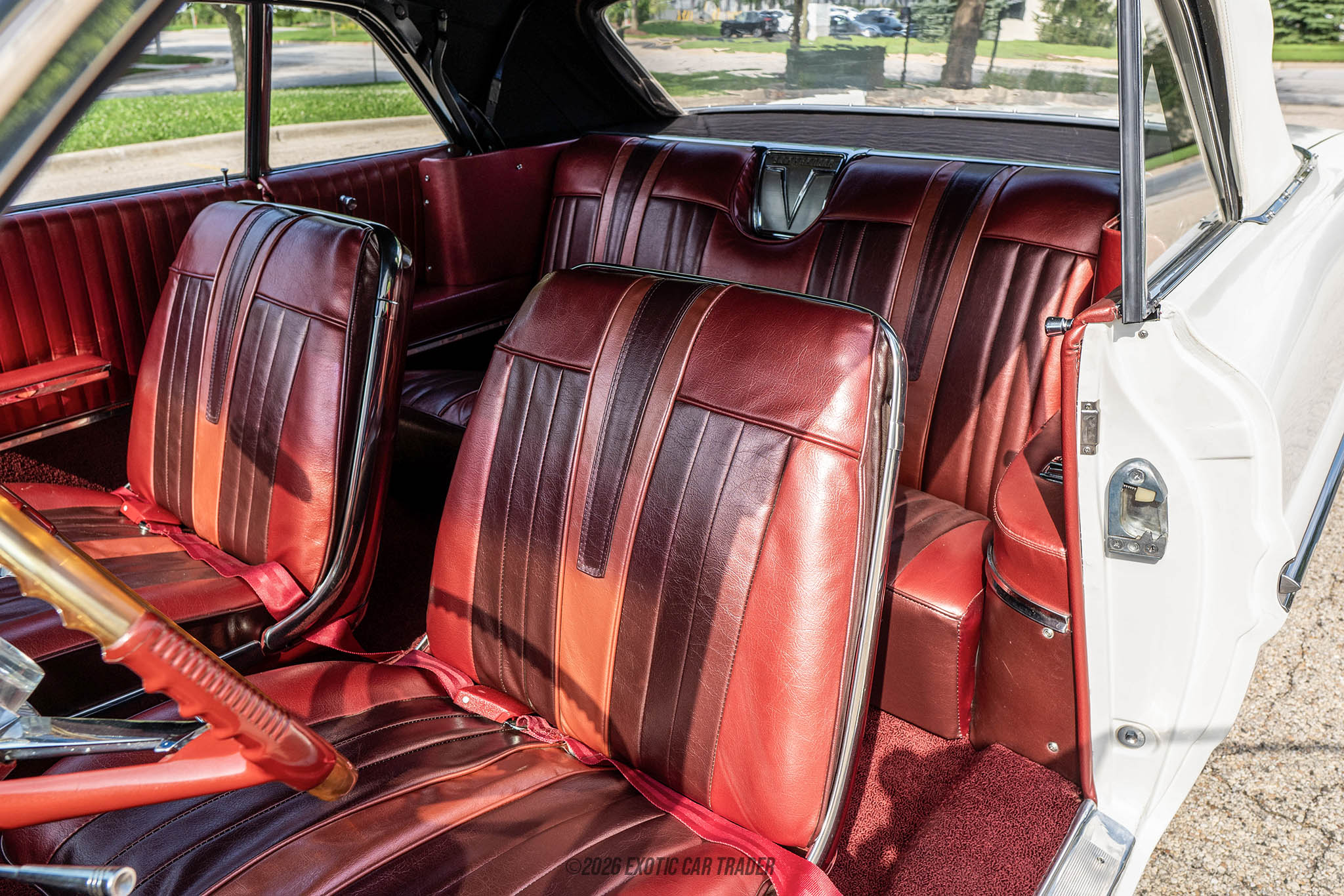
- Red Interior
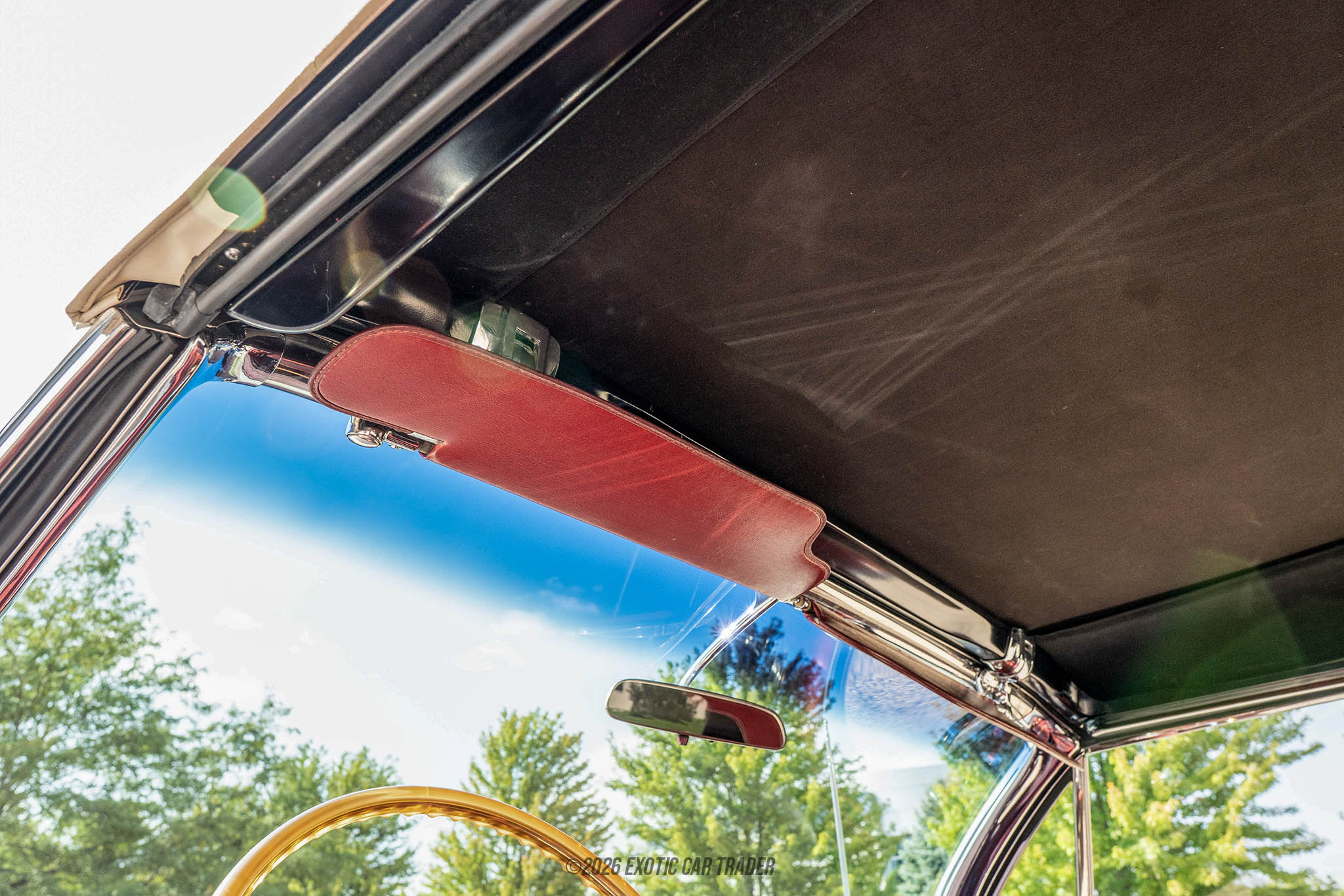
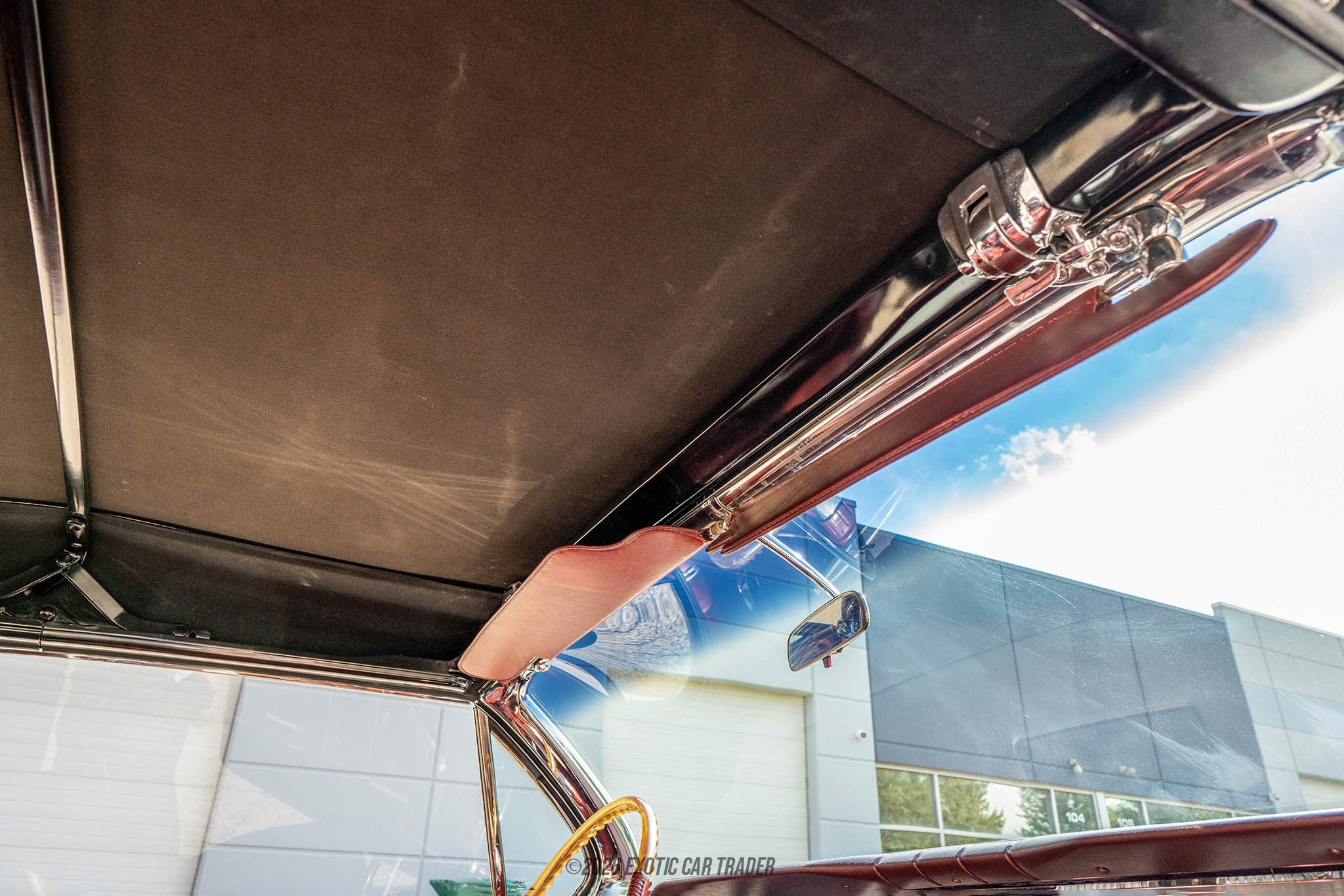
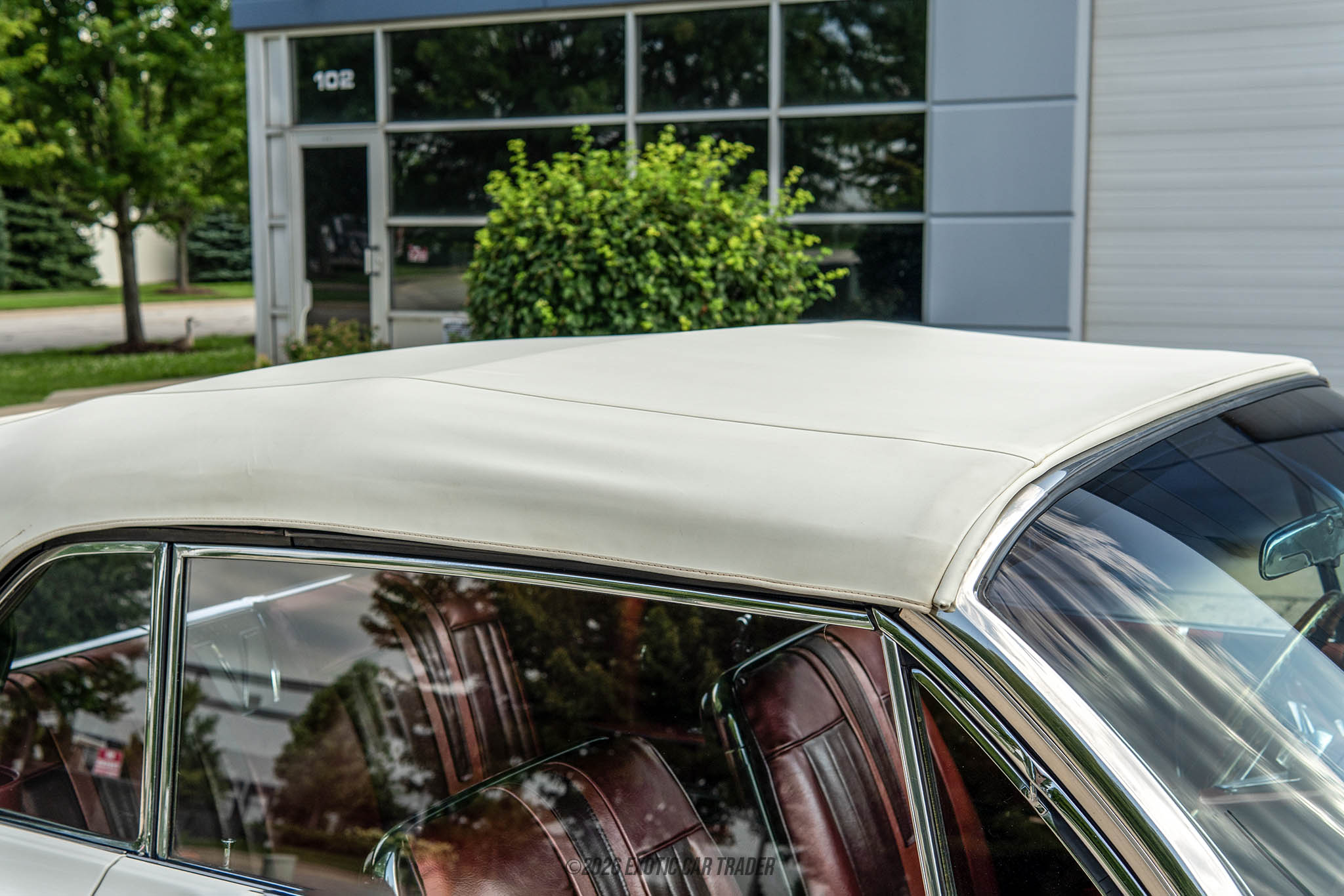
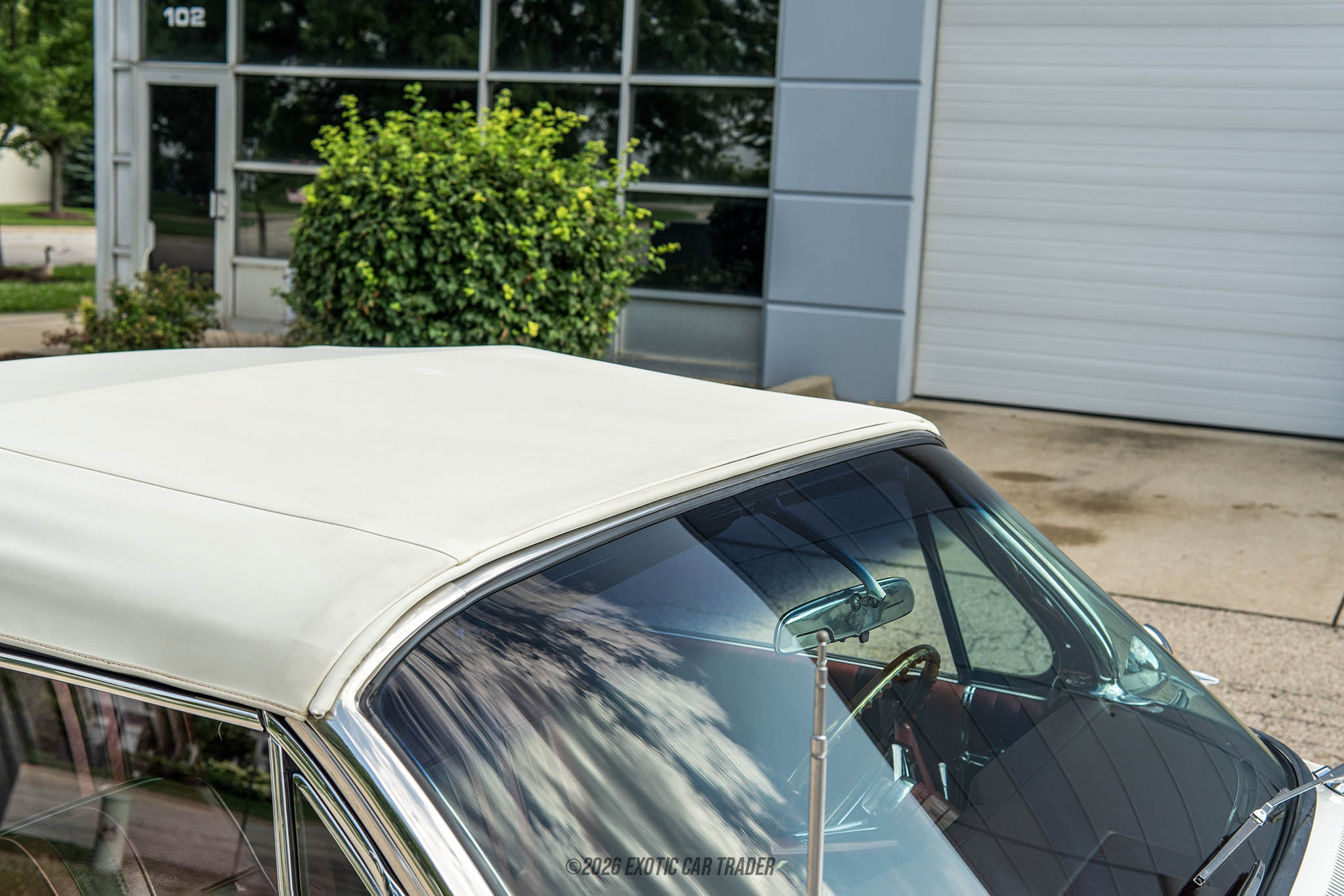
- White Convertible Soft Top
- Power Steering
- Power Brakes
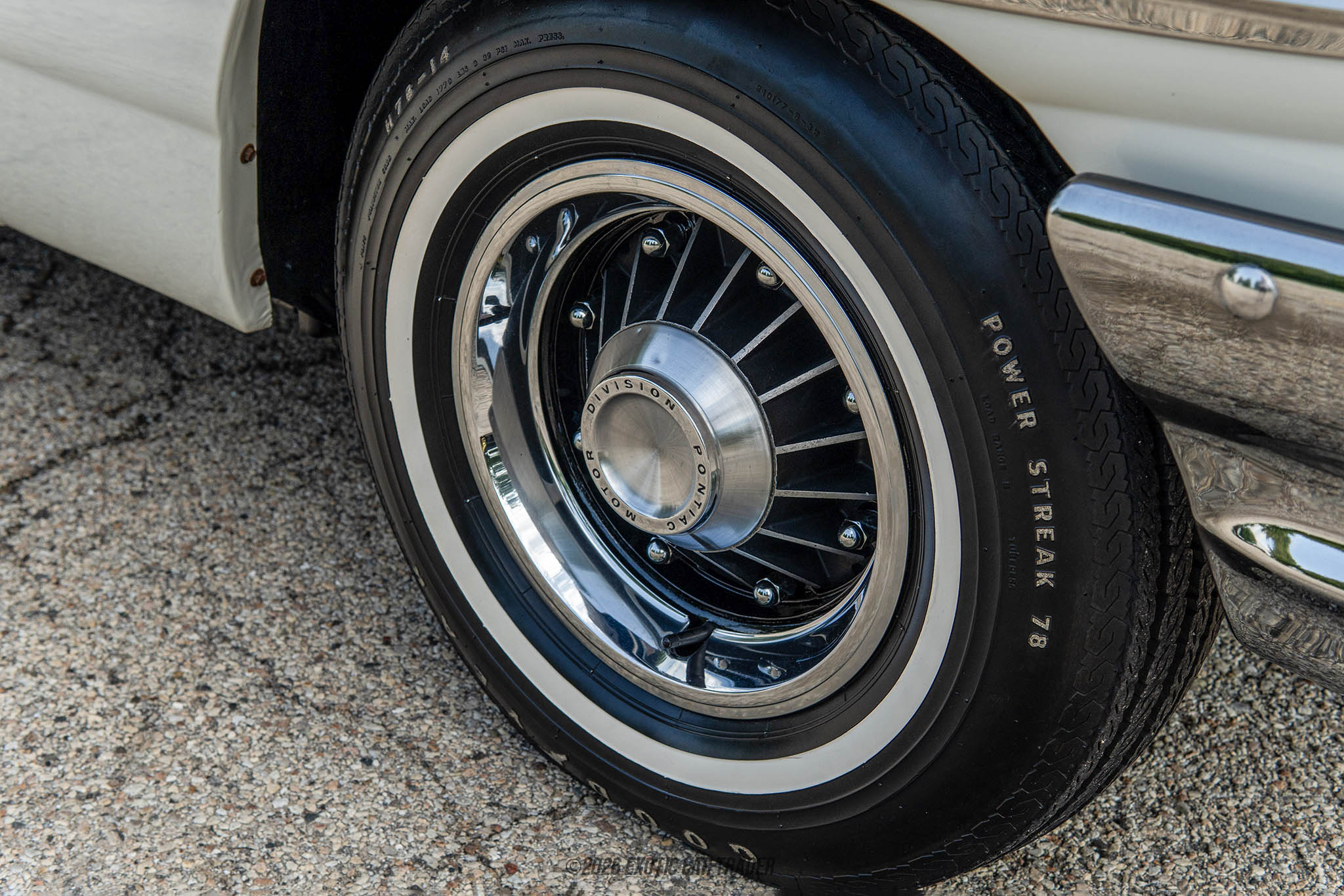
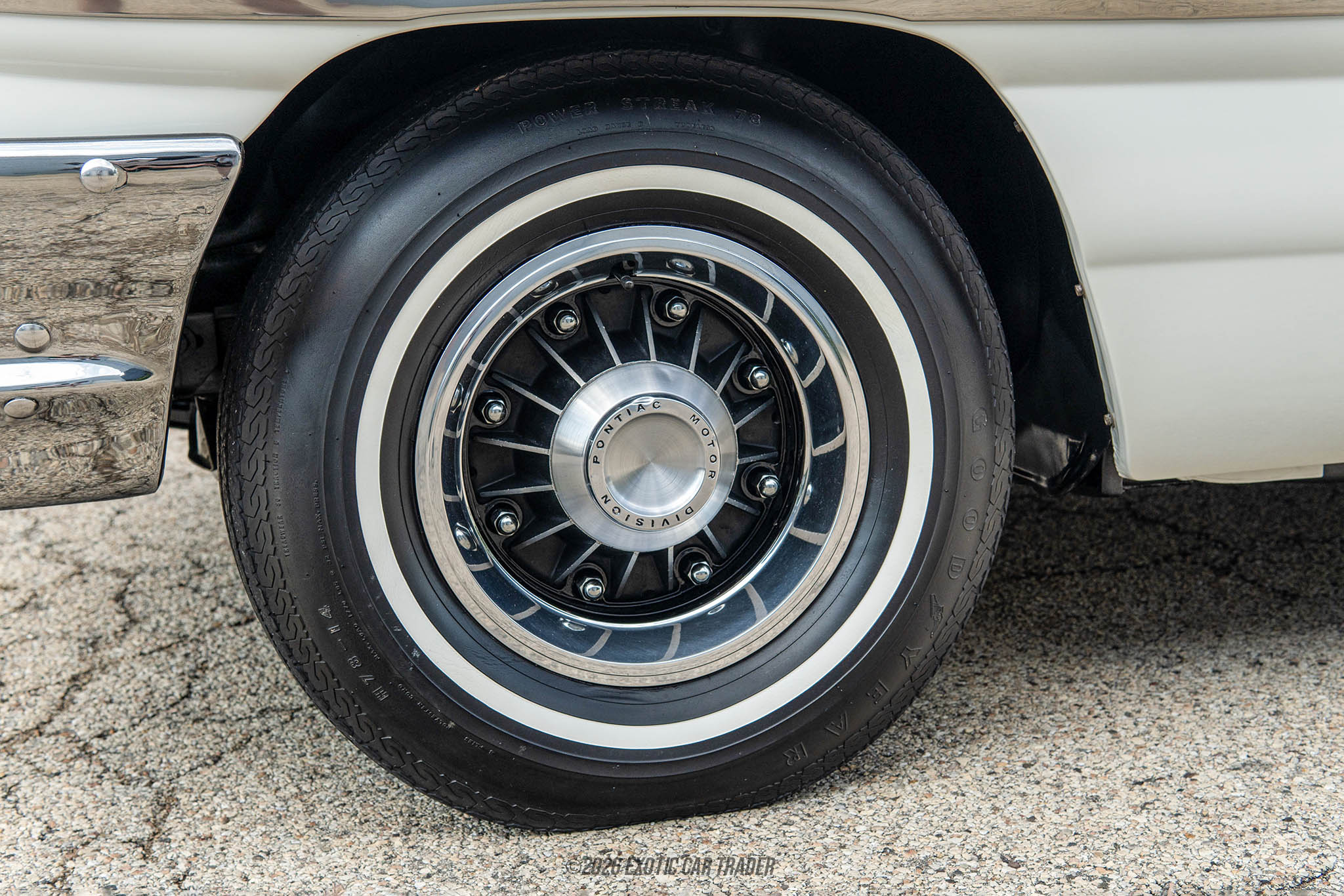
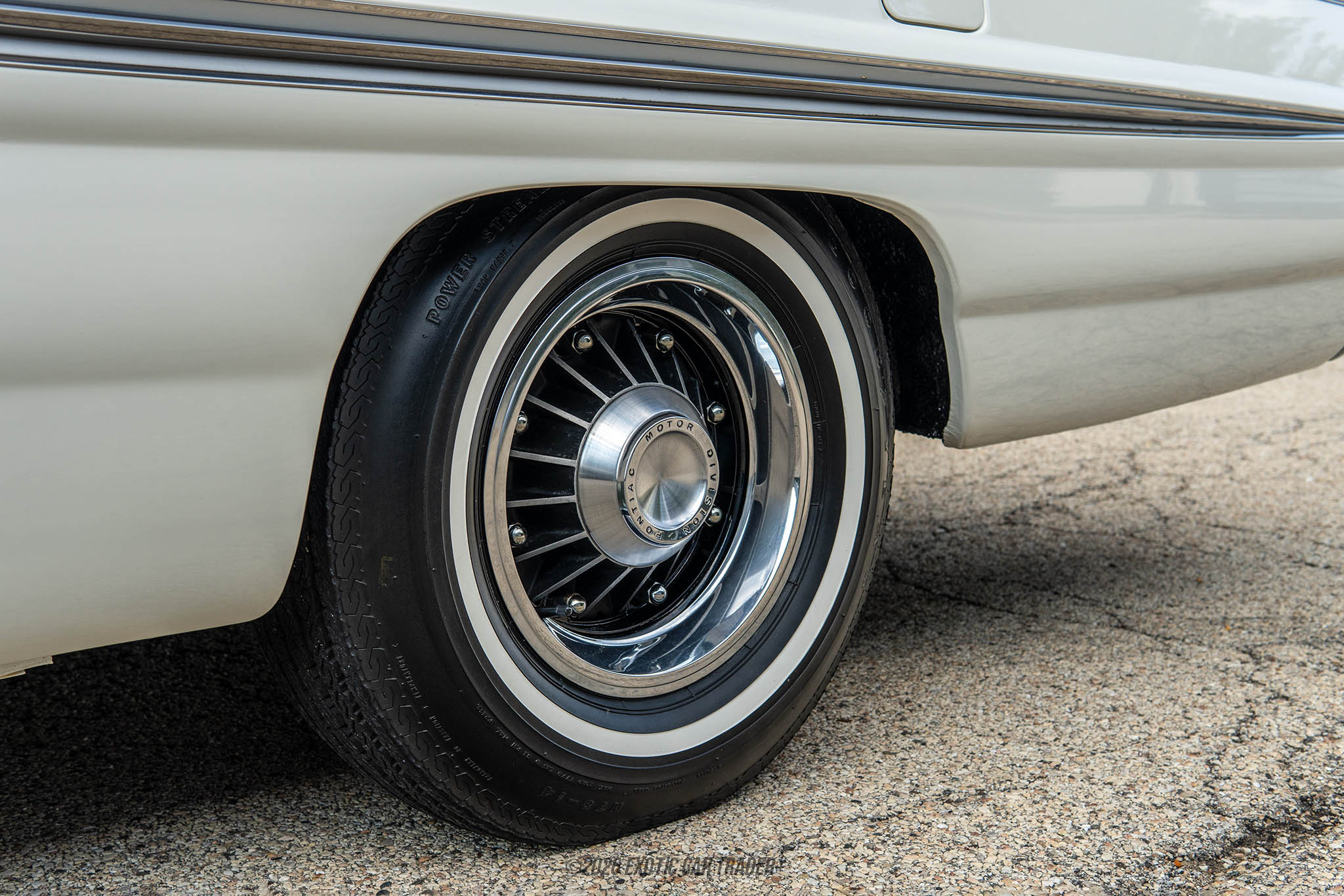
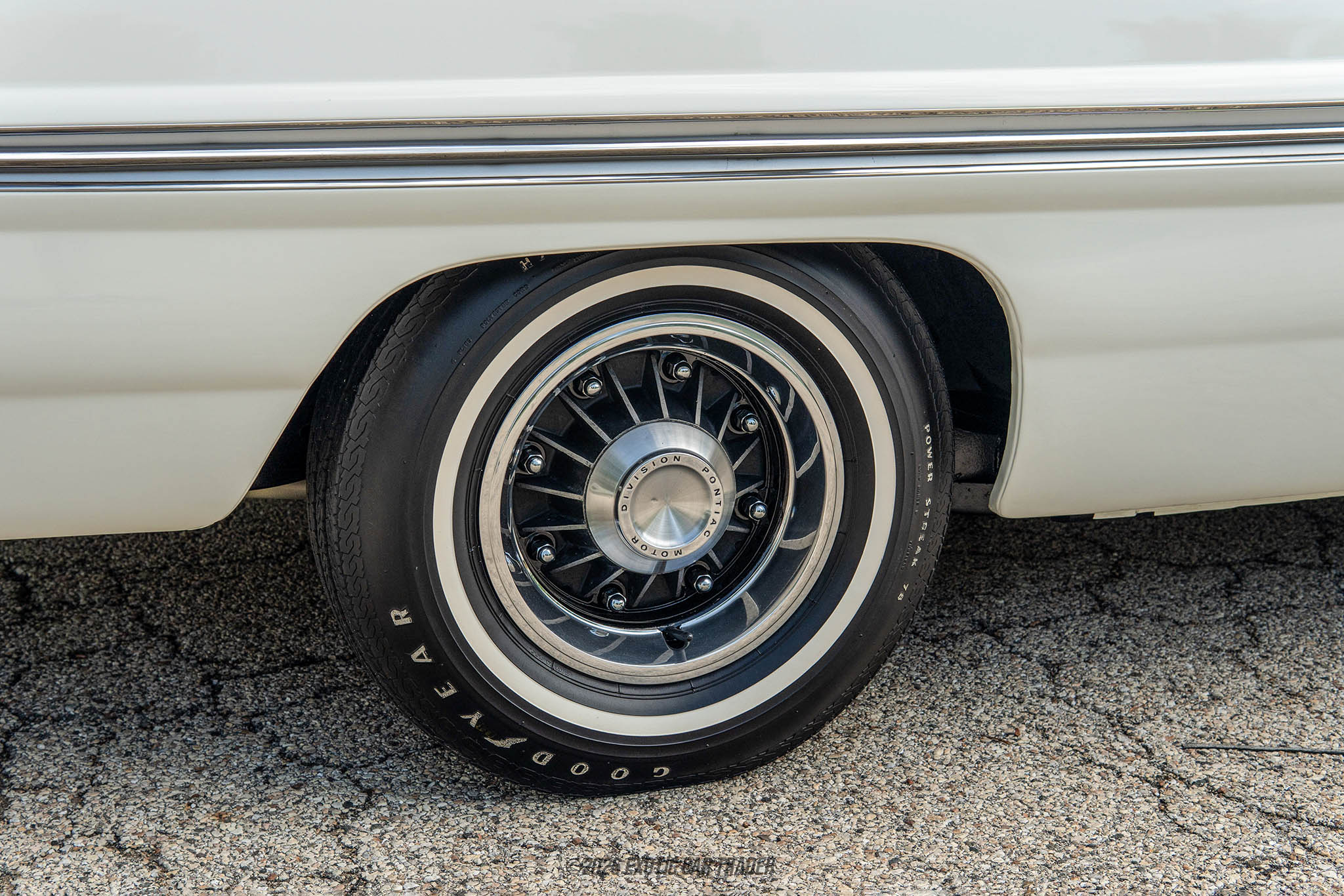
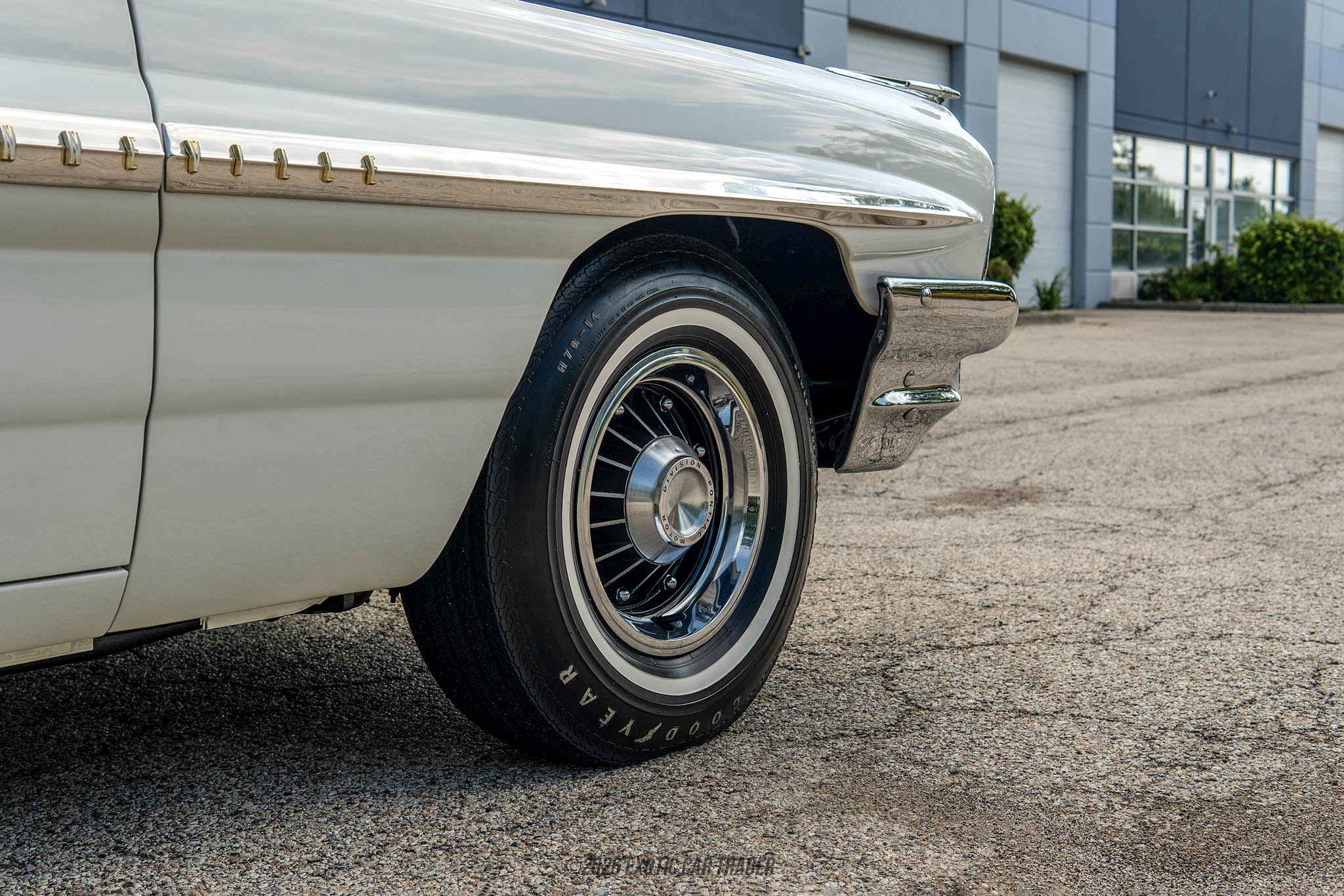
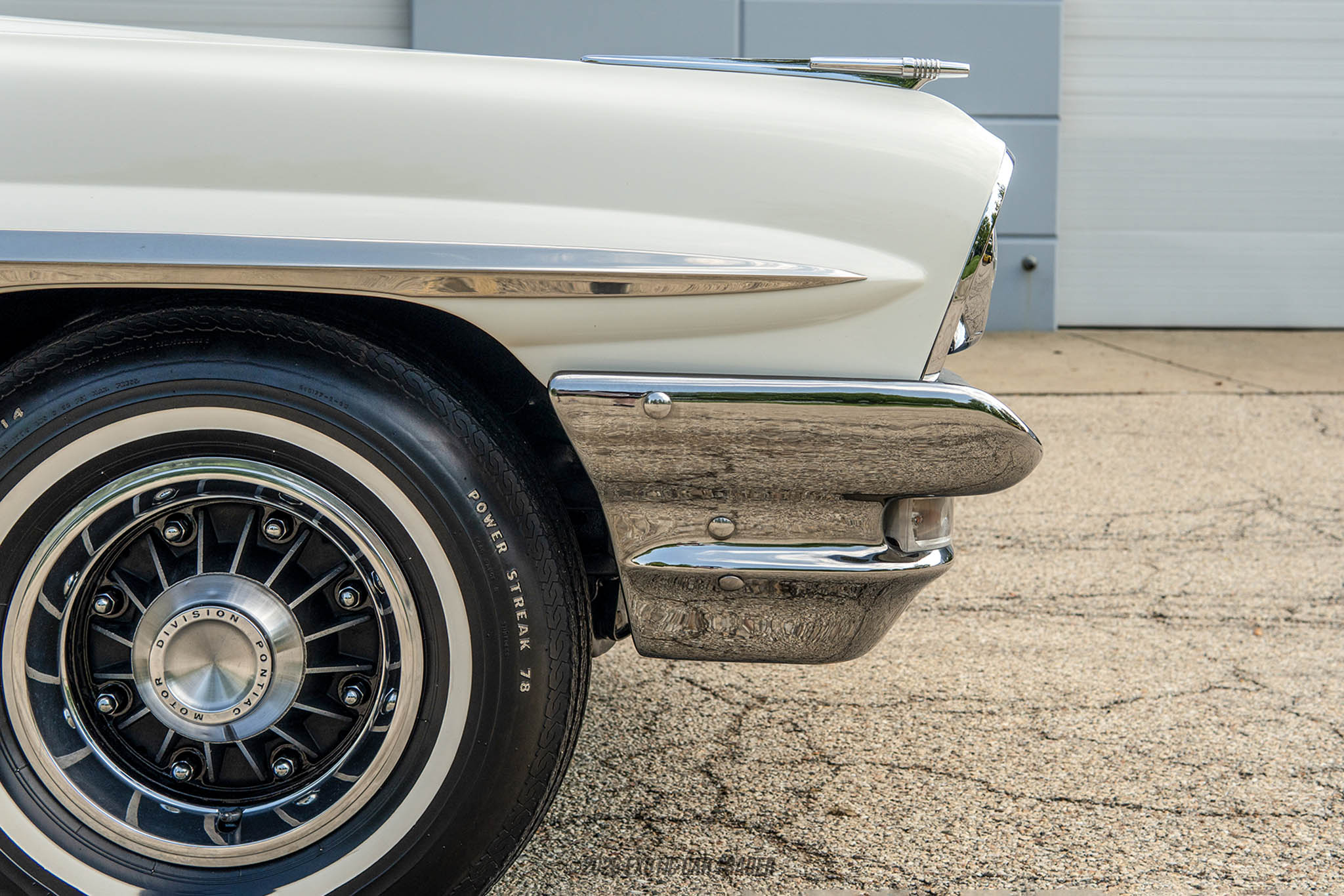
- Pontiac 8-Lug Wheels
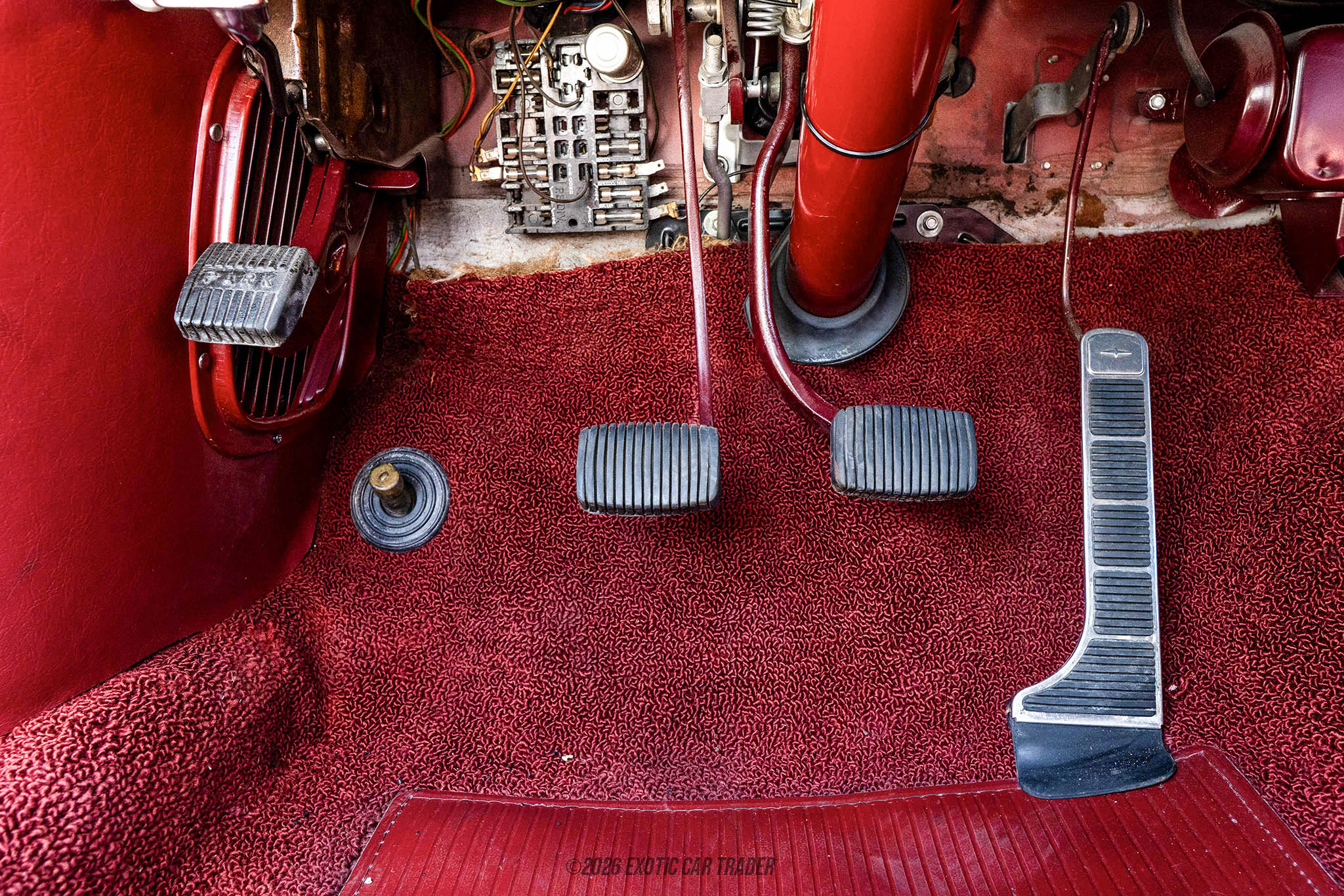
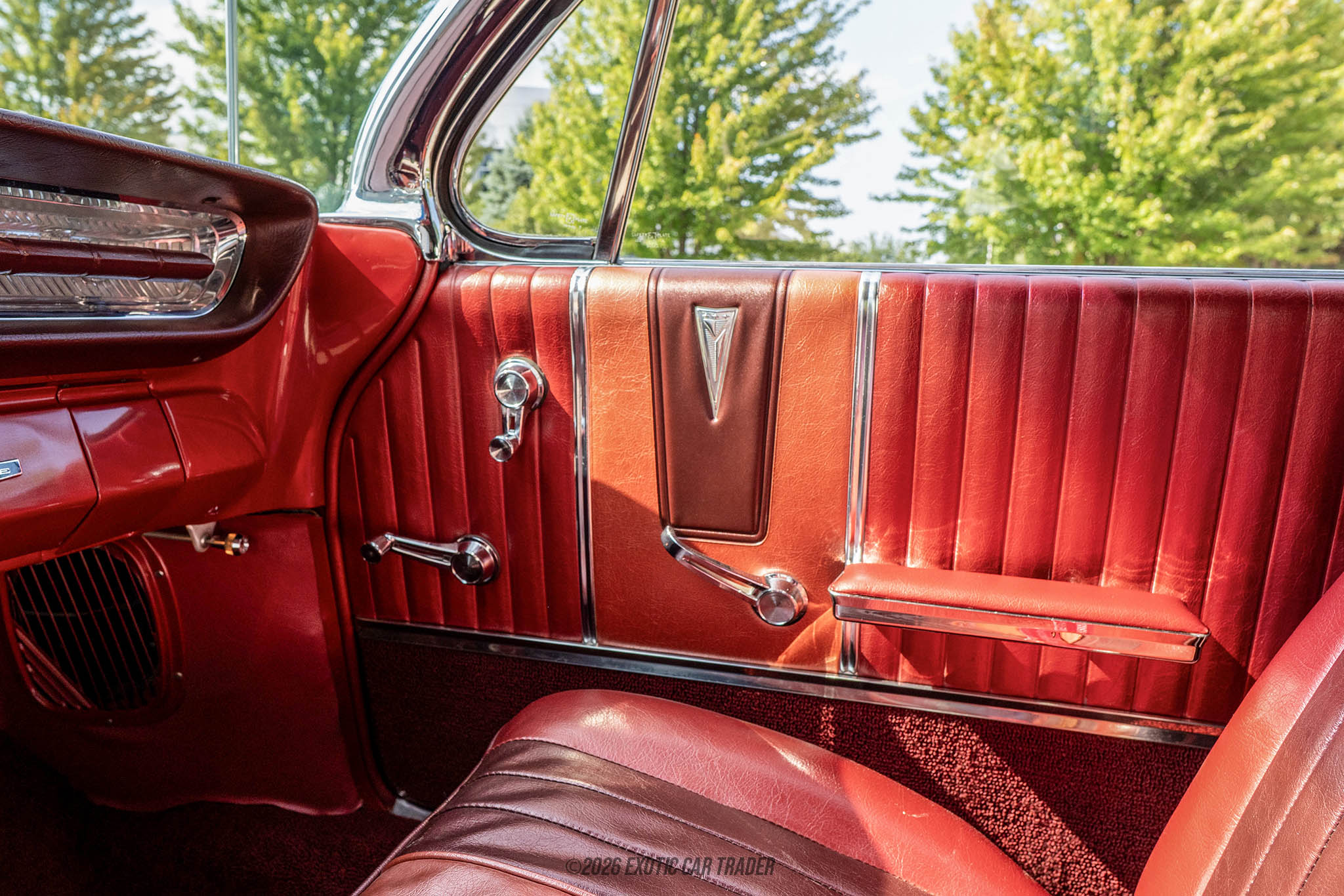
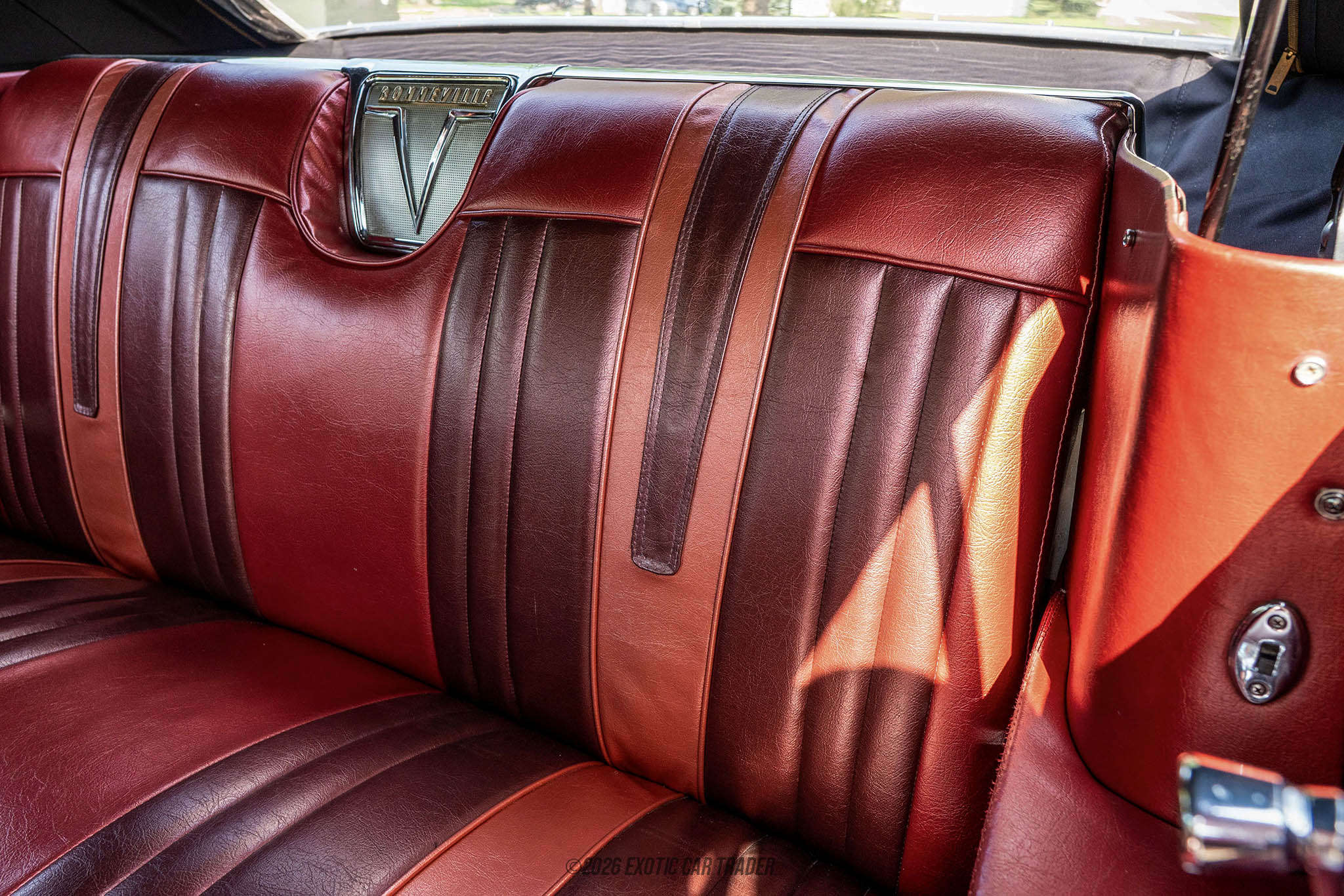
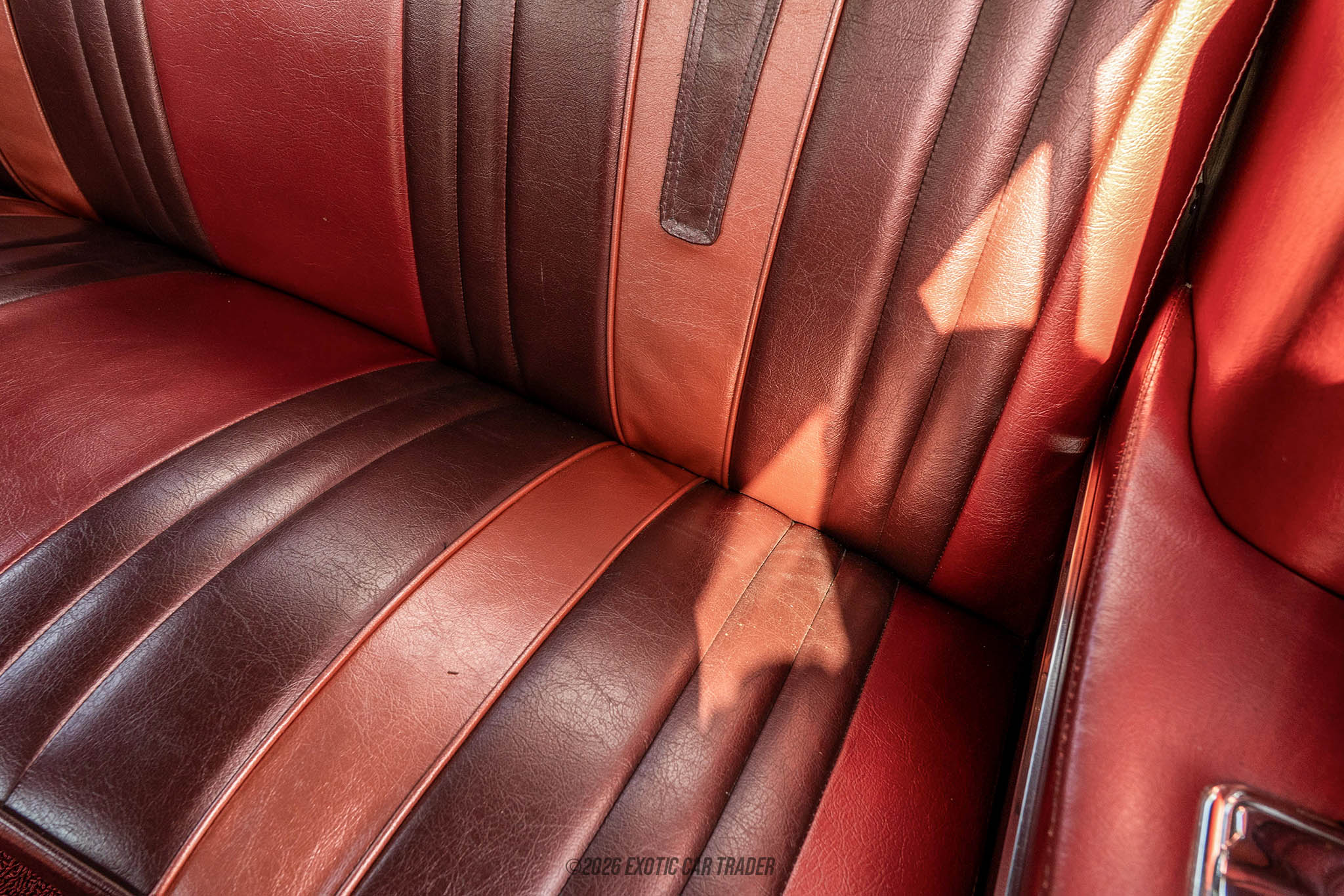
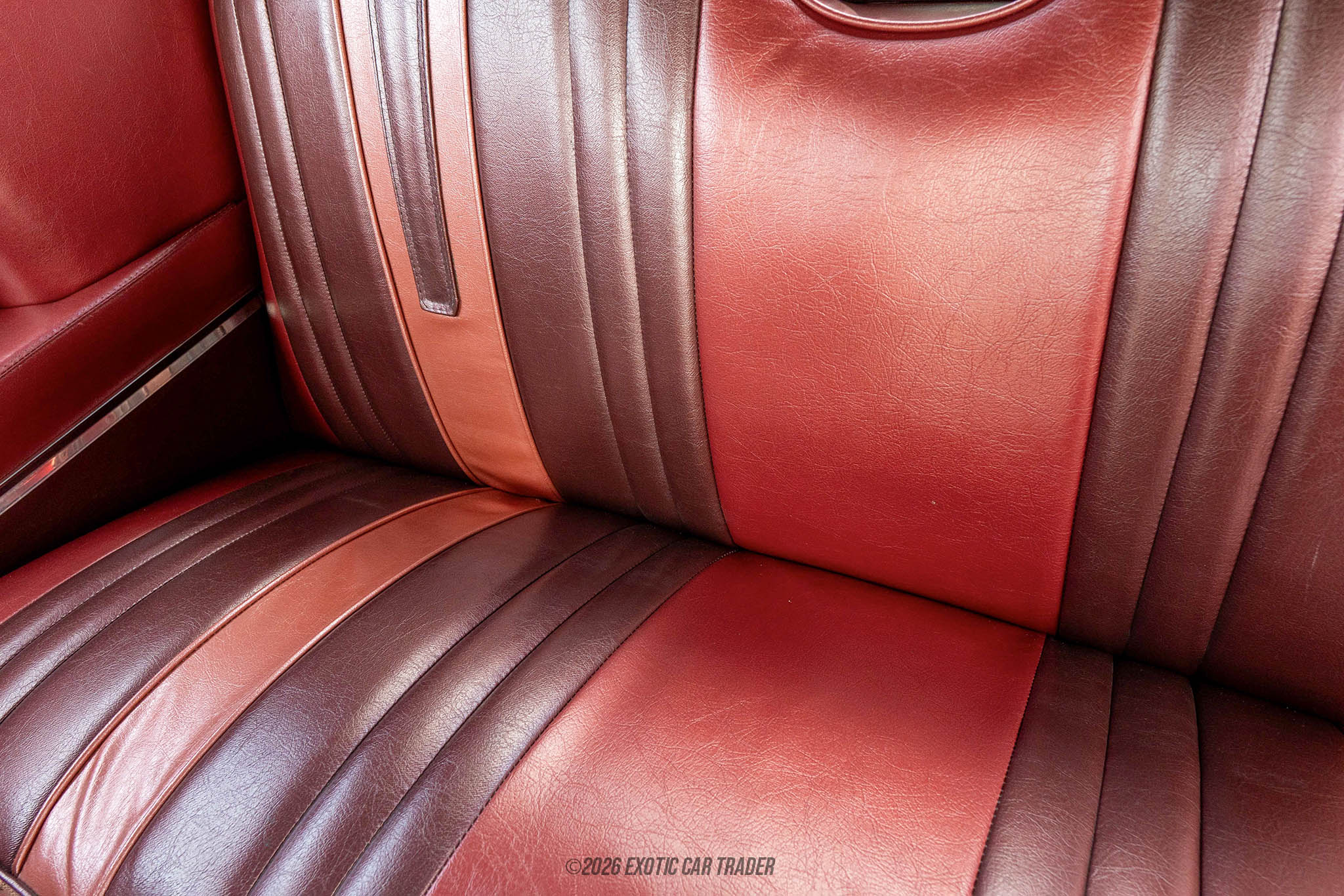
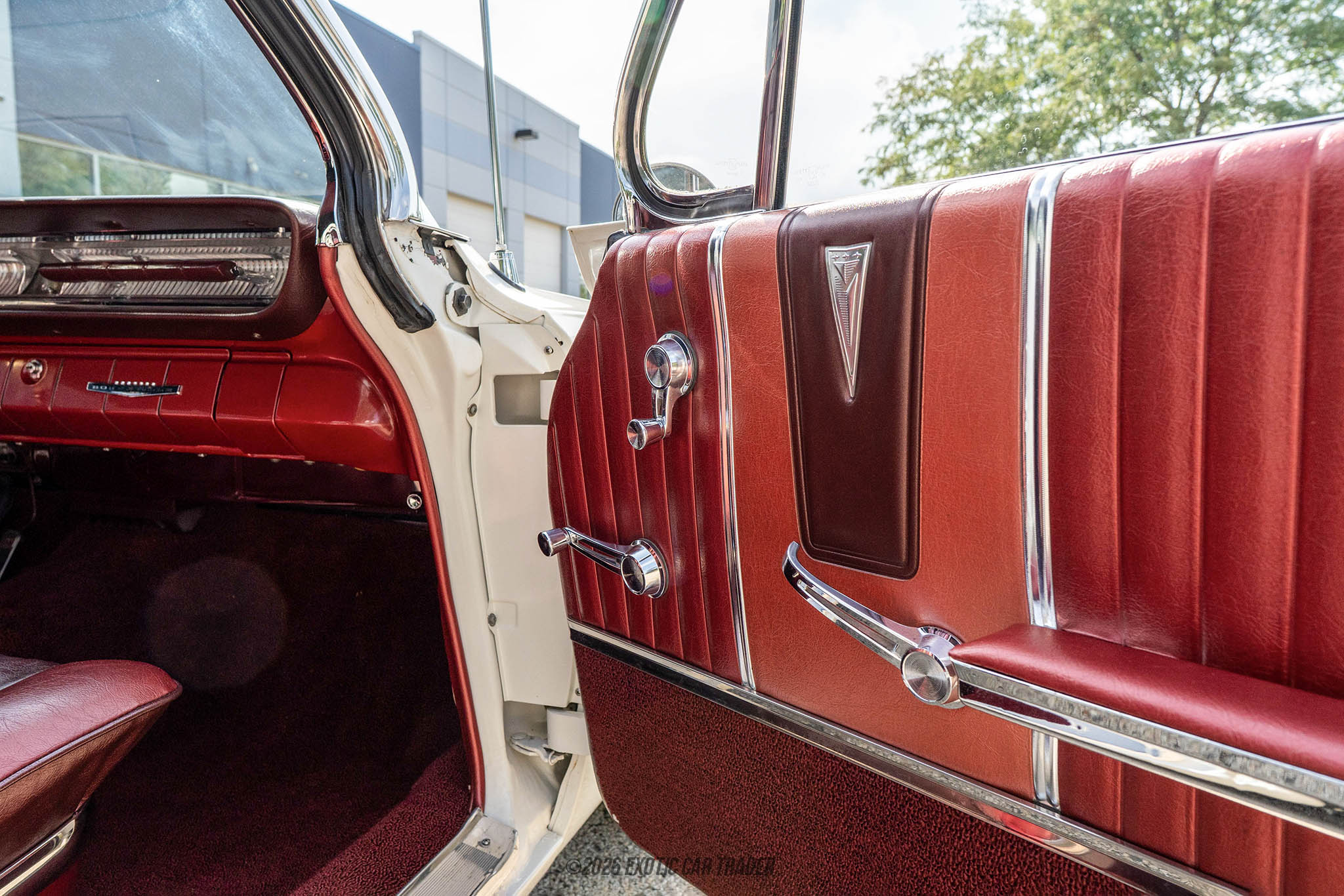
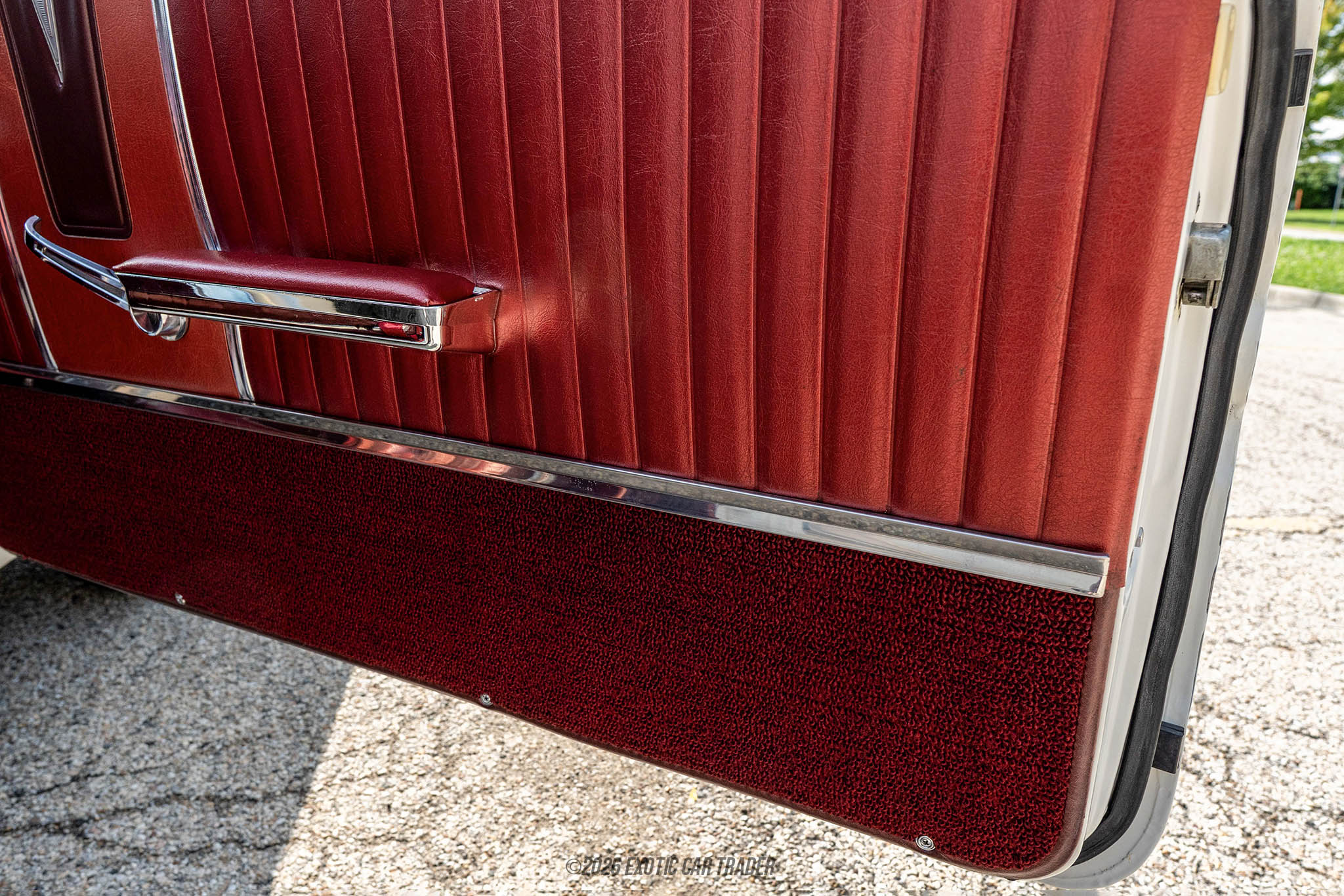
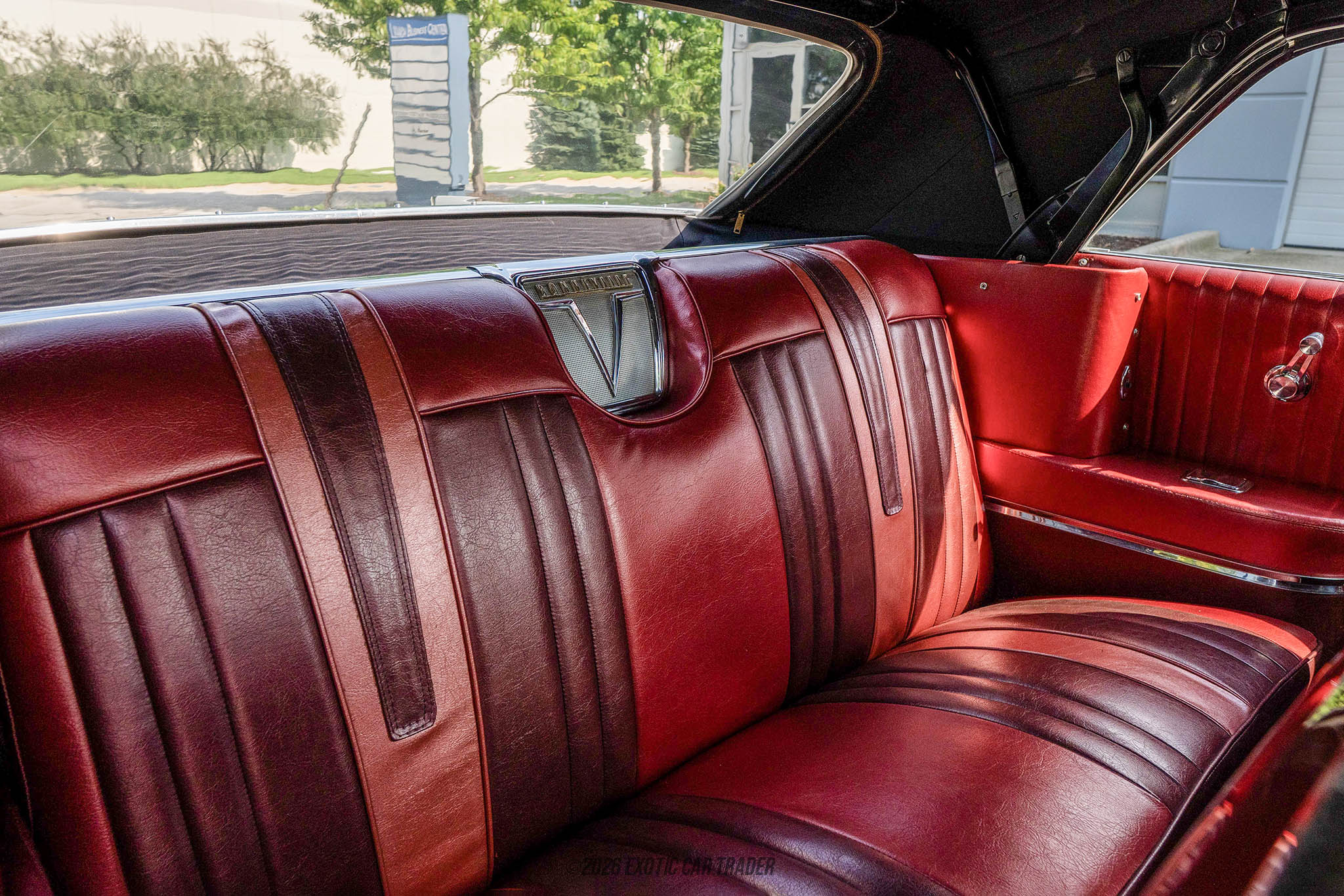
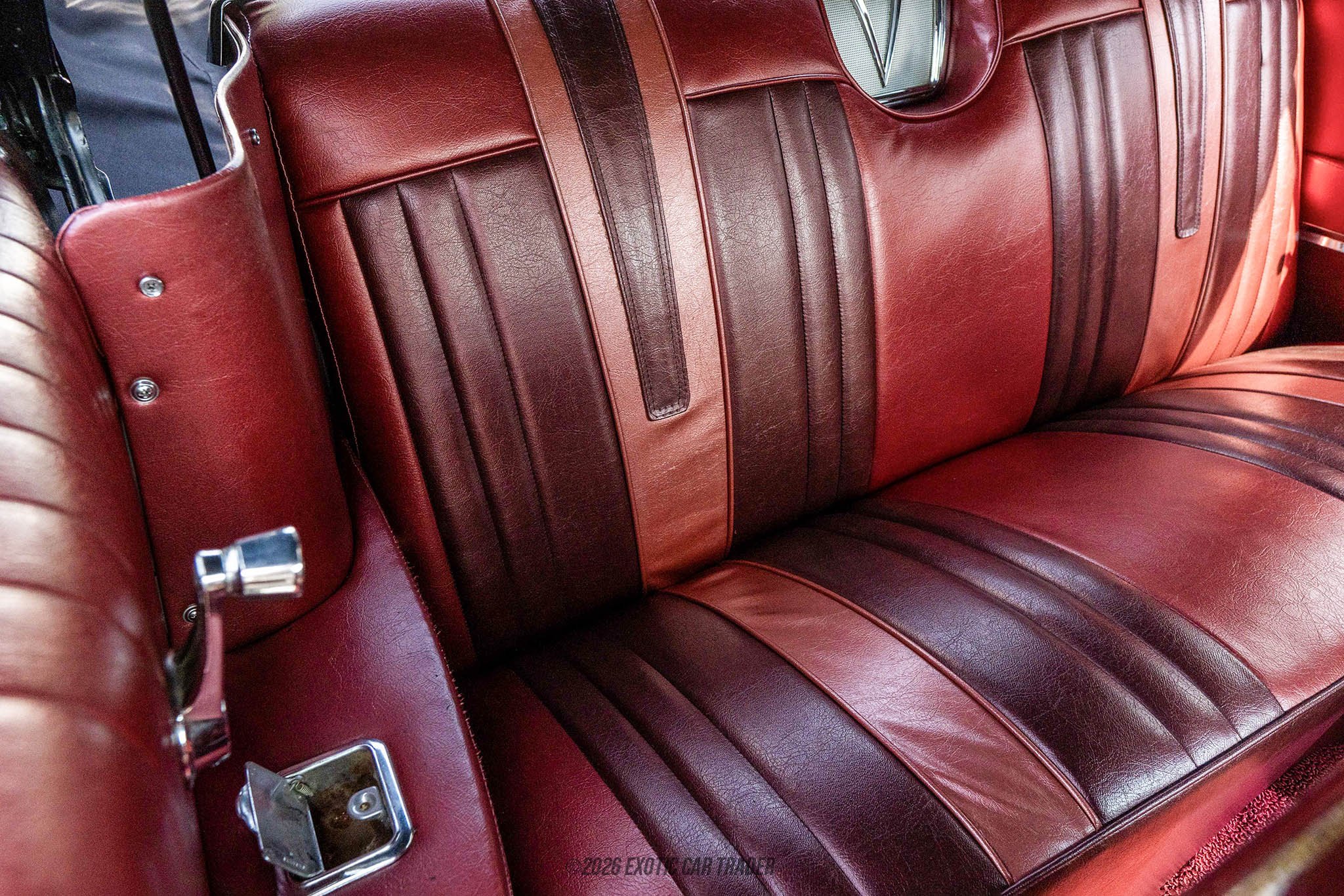
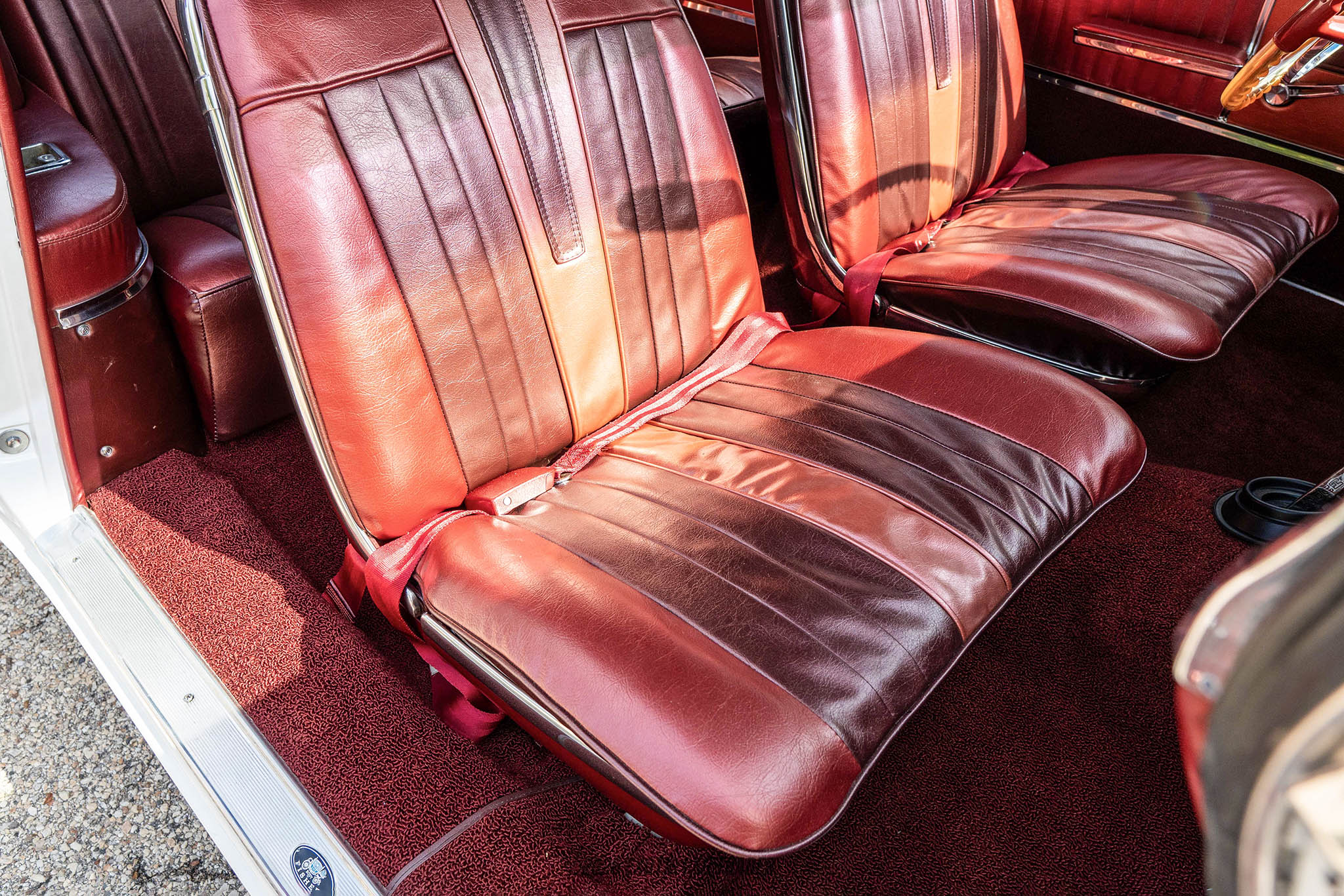
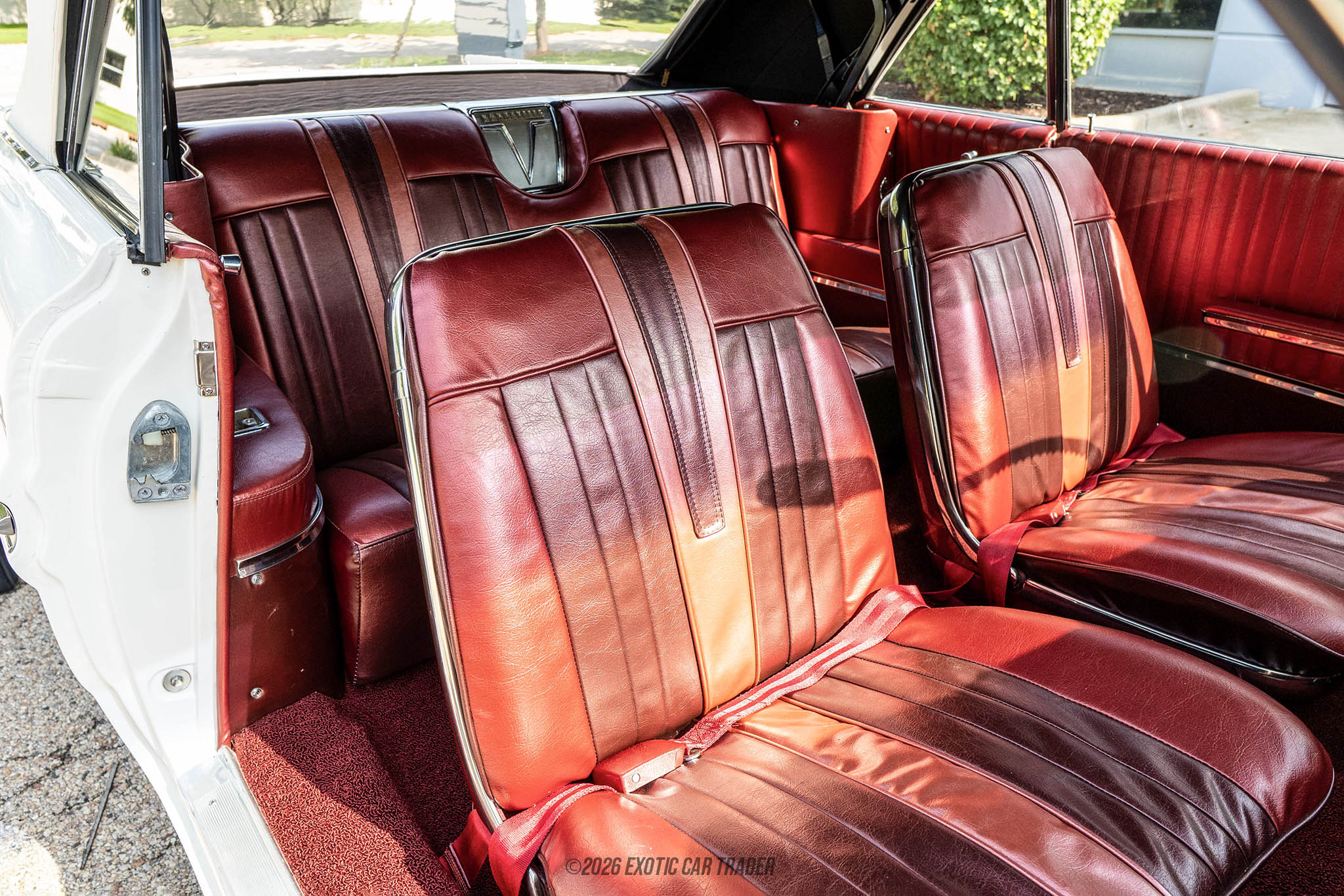
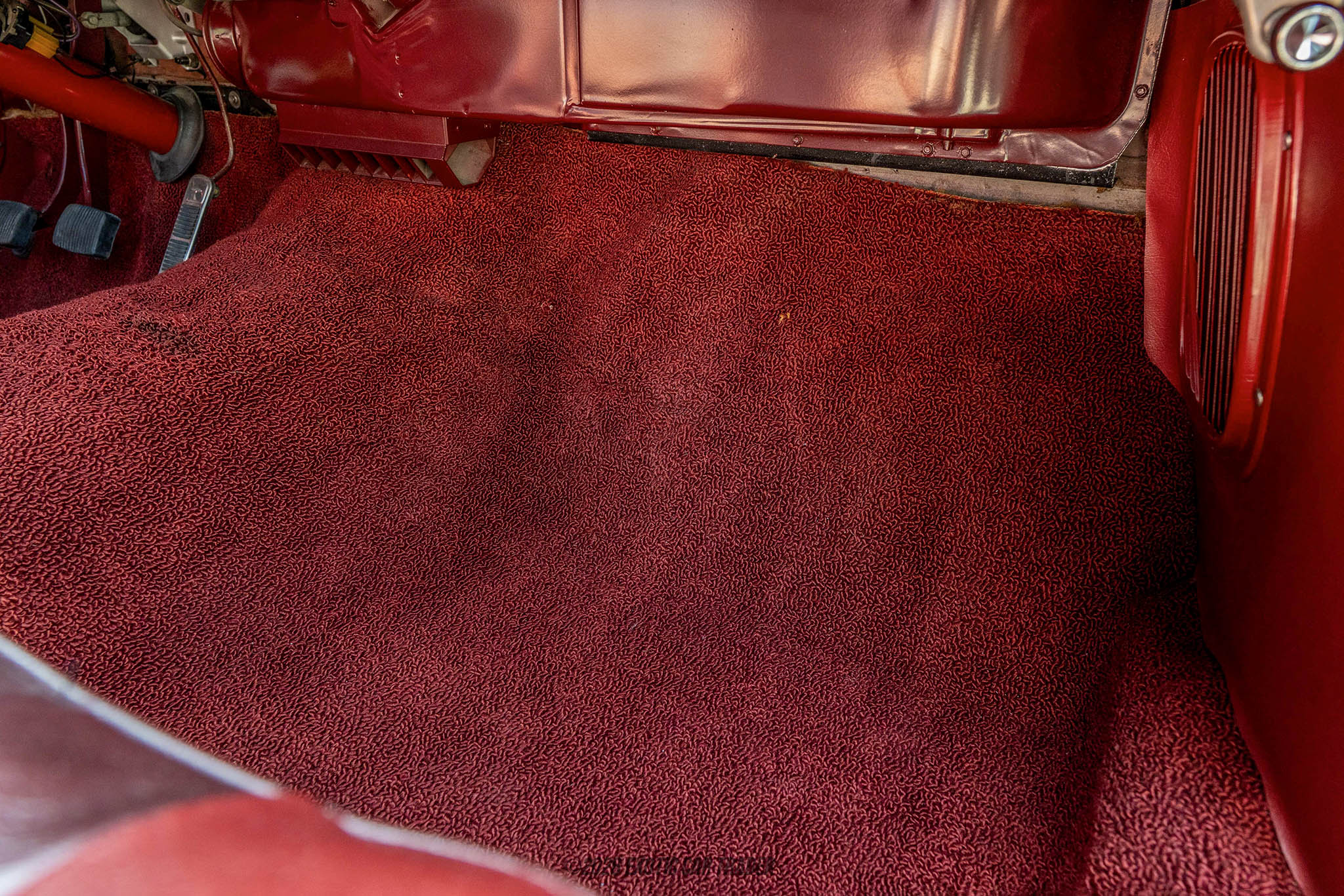
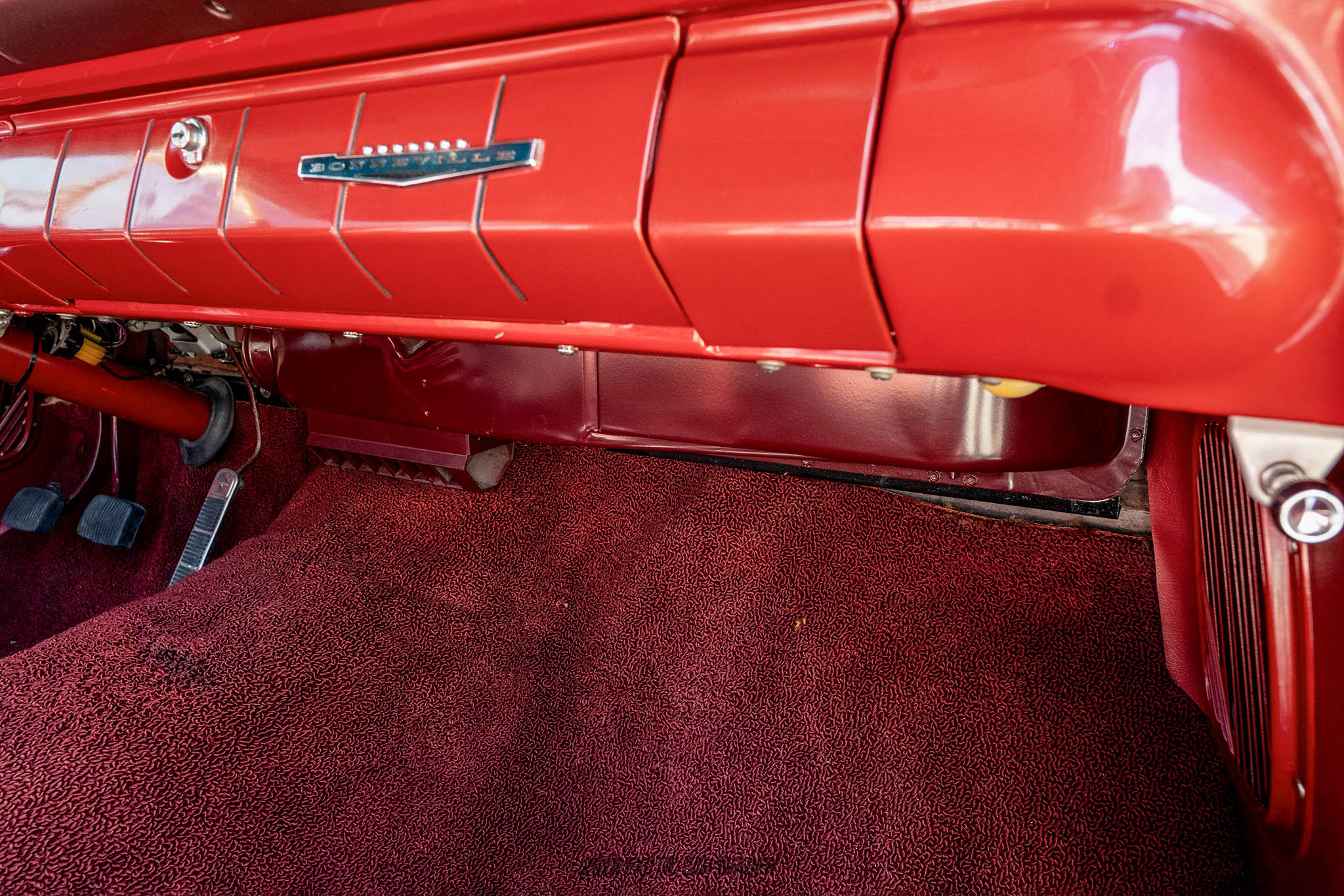
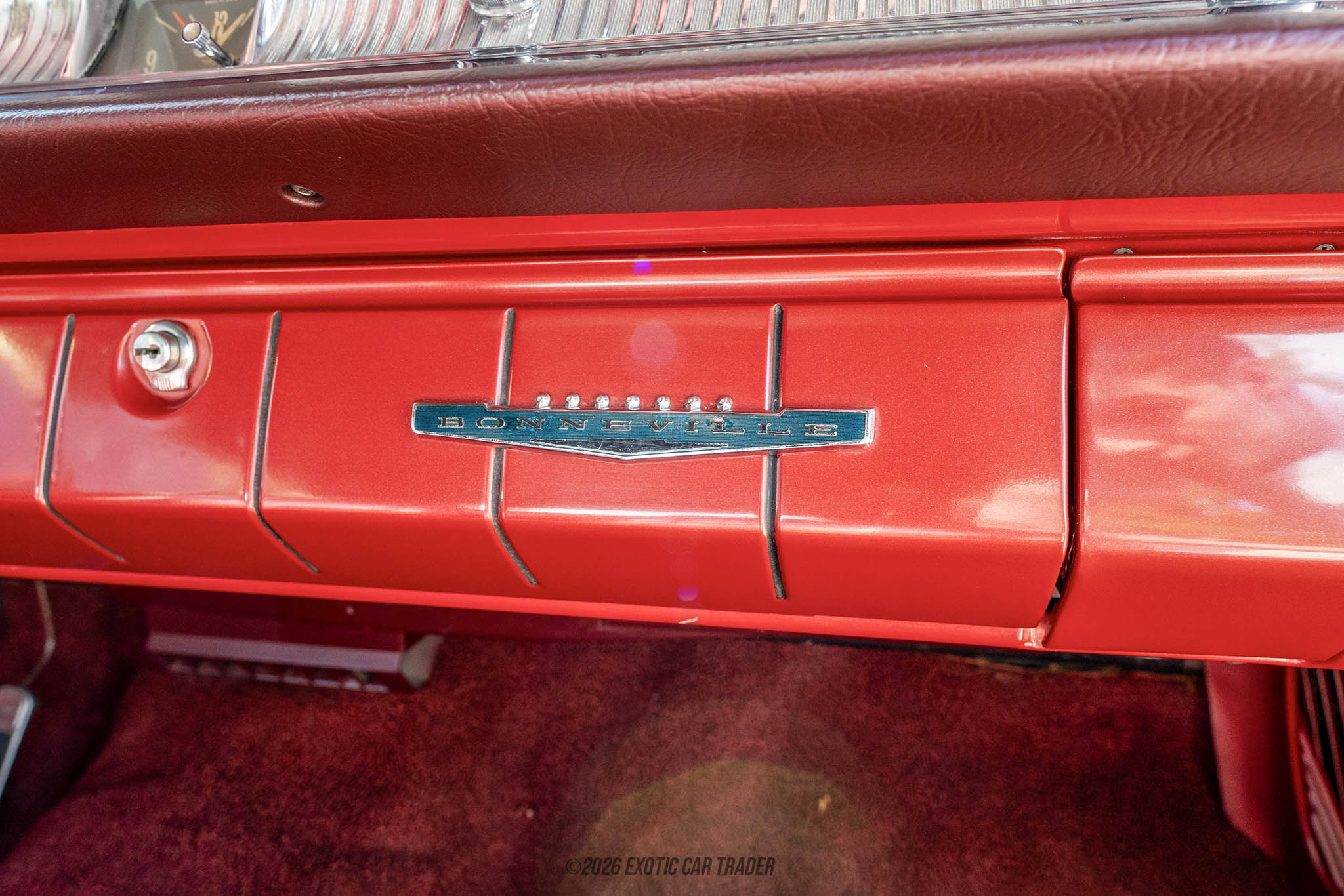
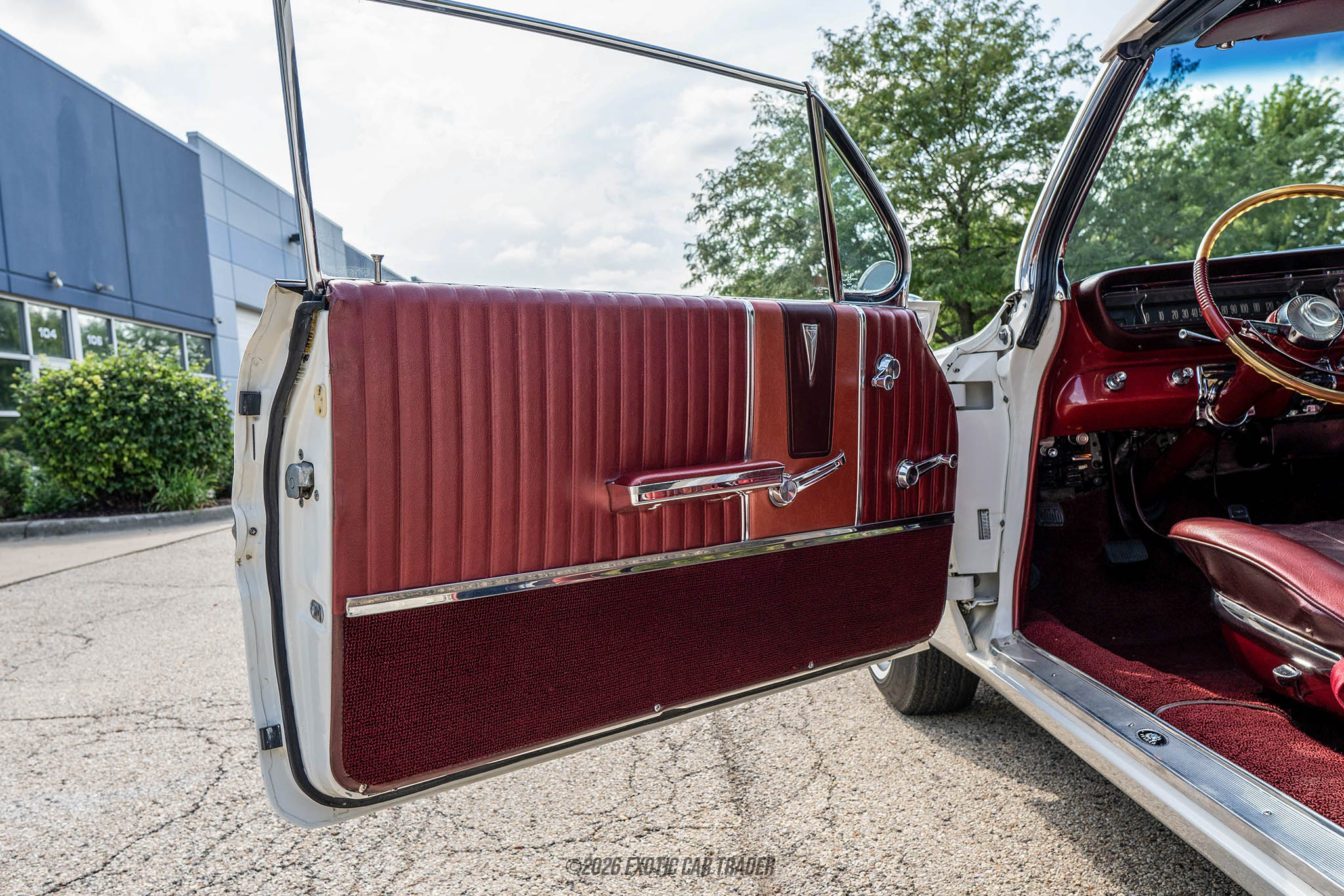
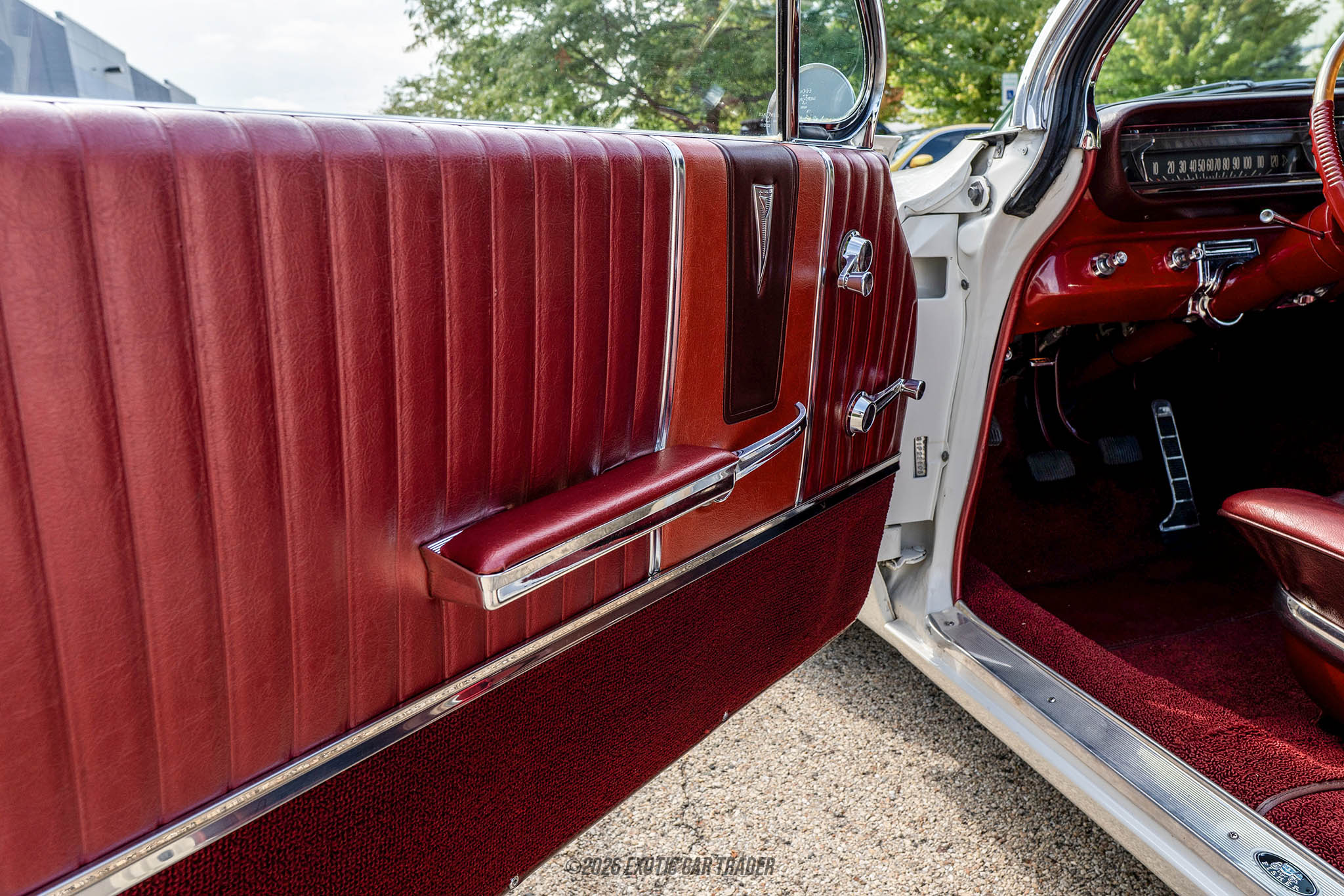
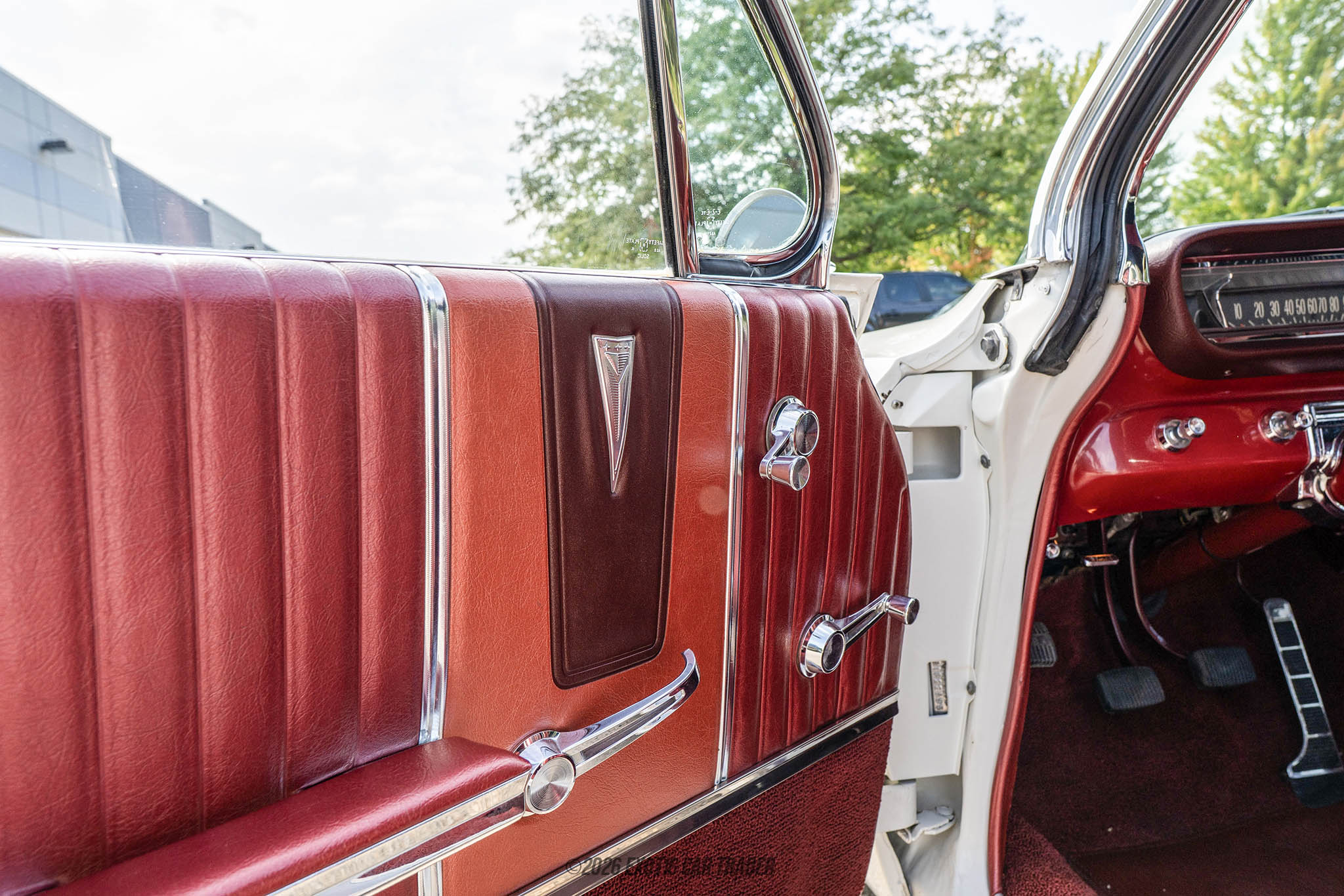
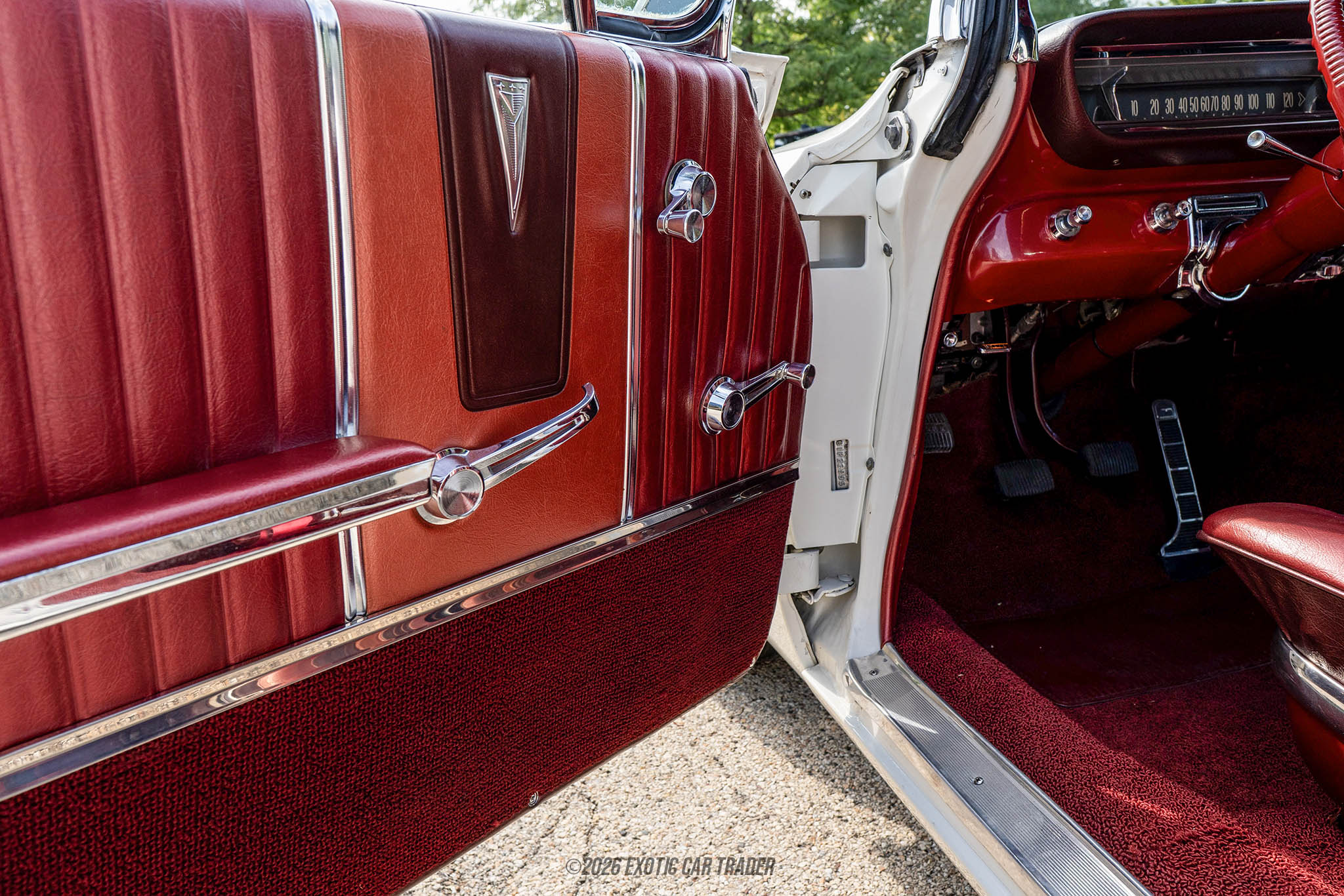
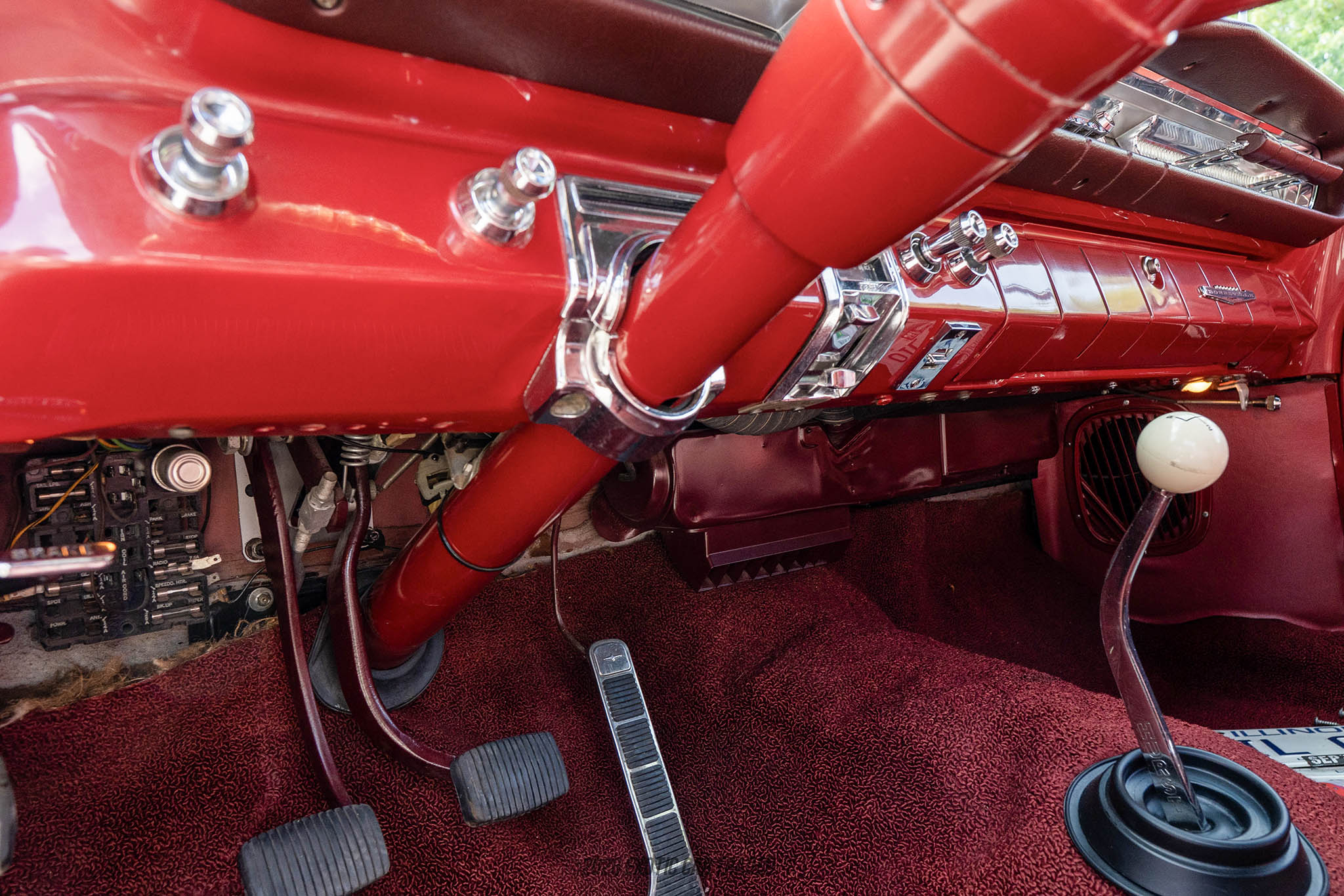
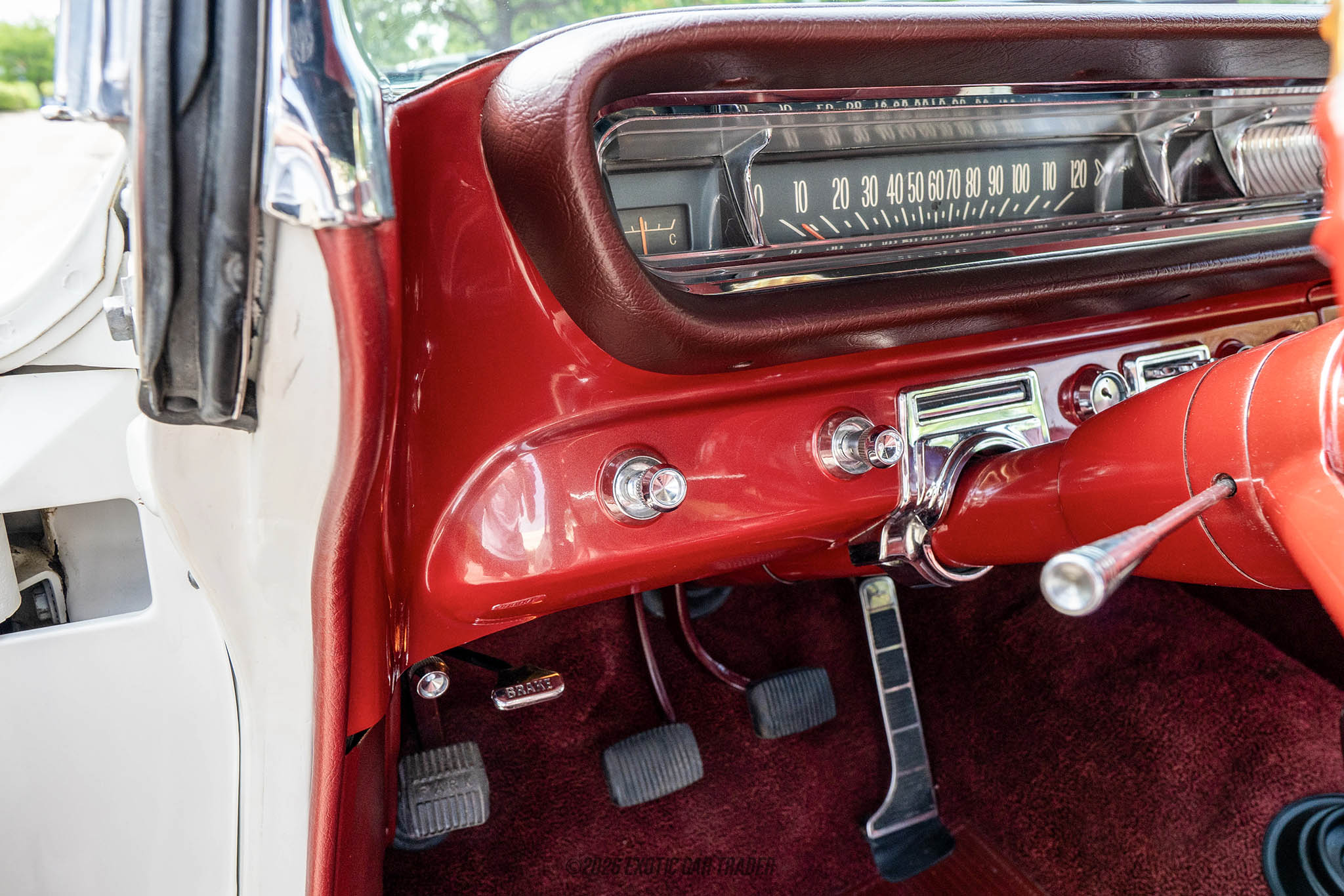
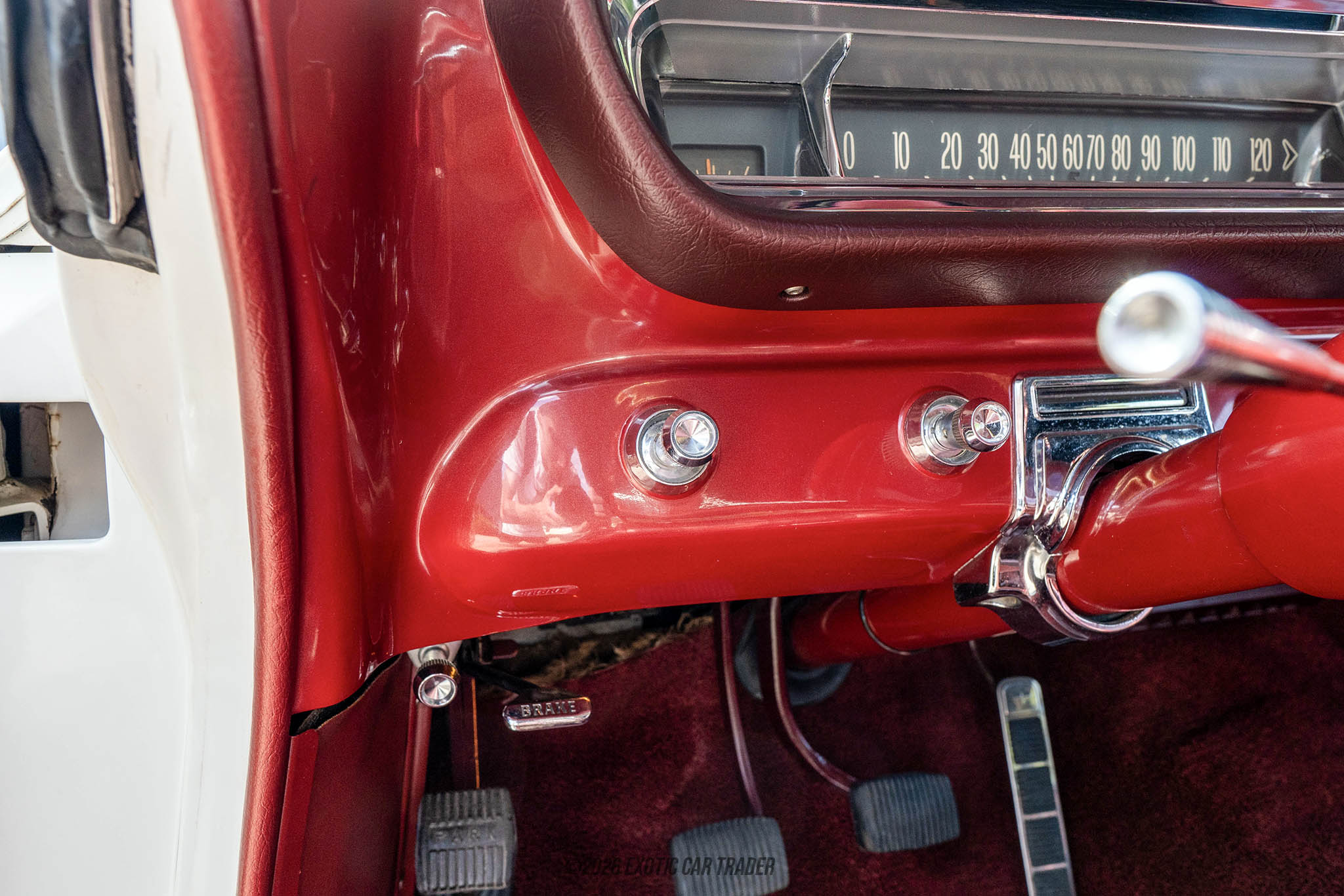
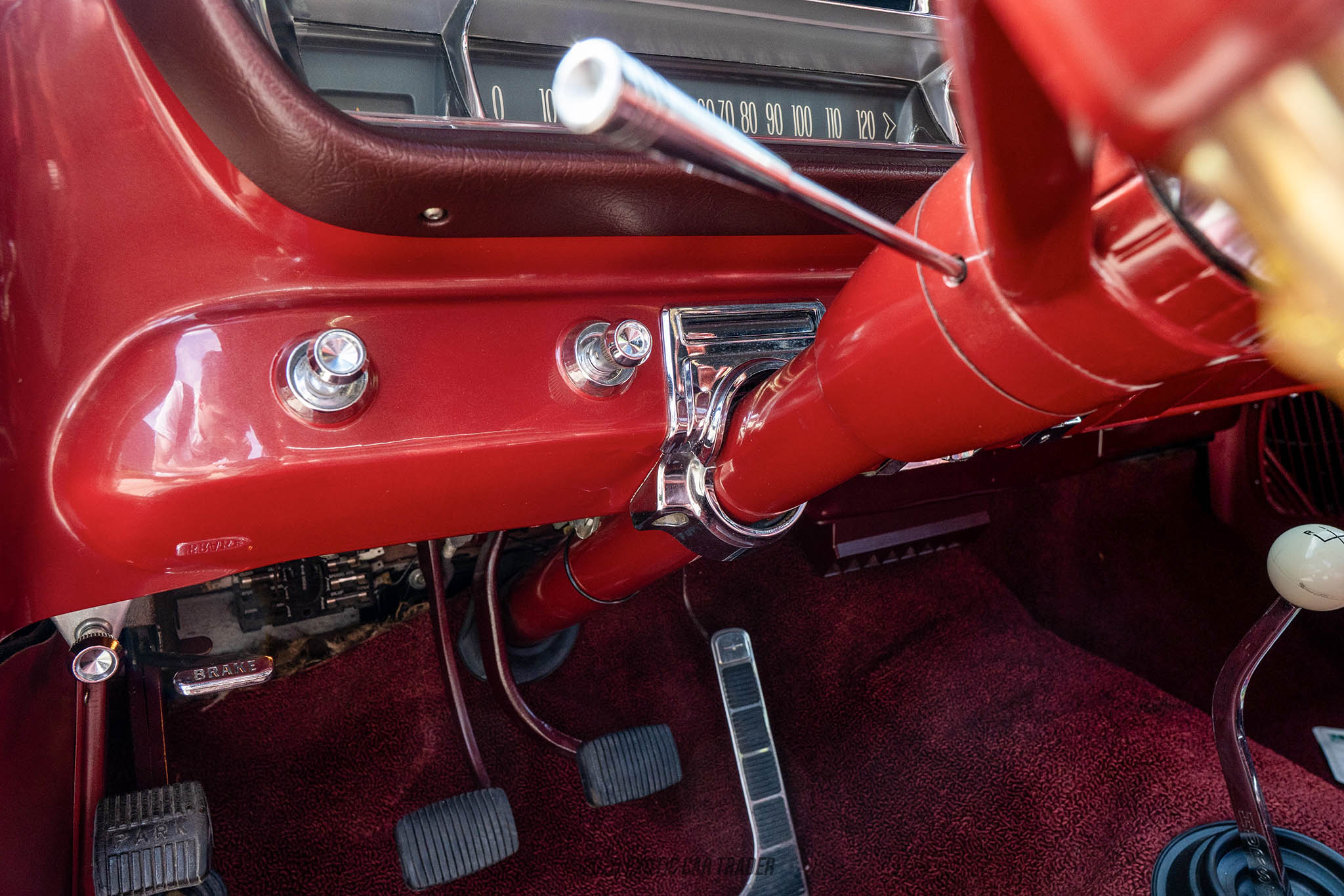
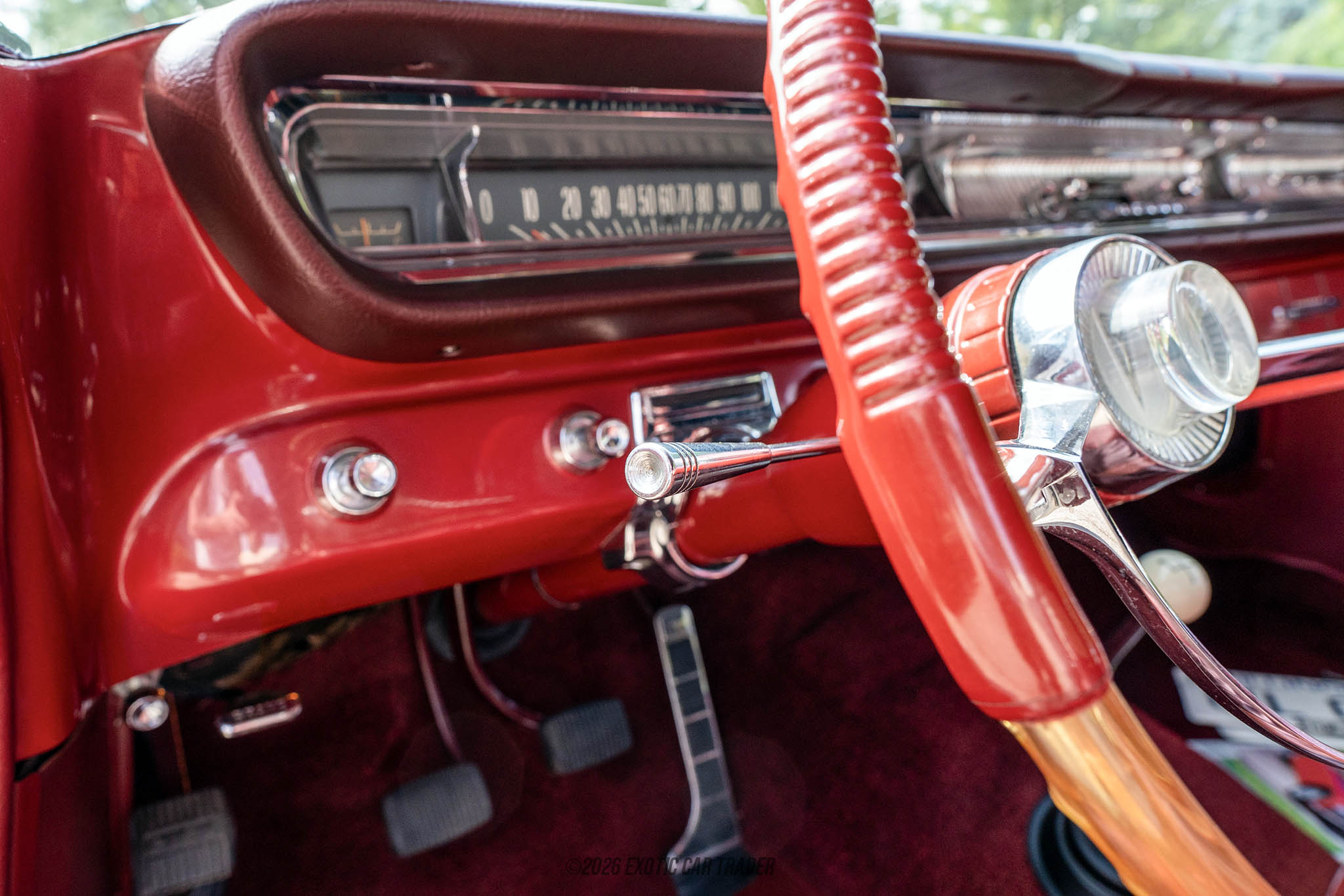
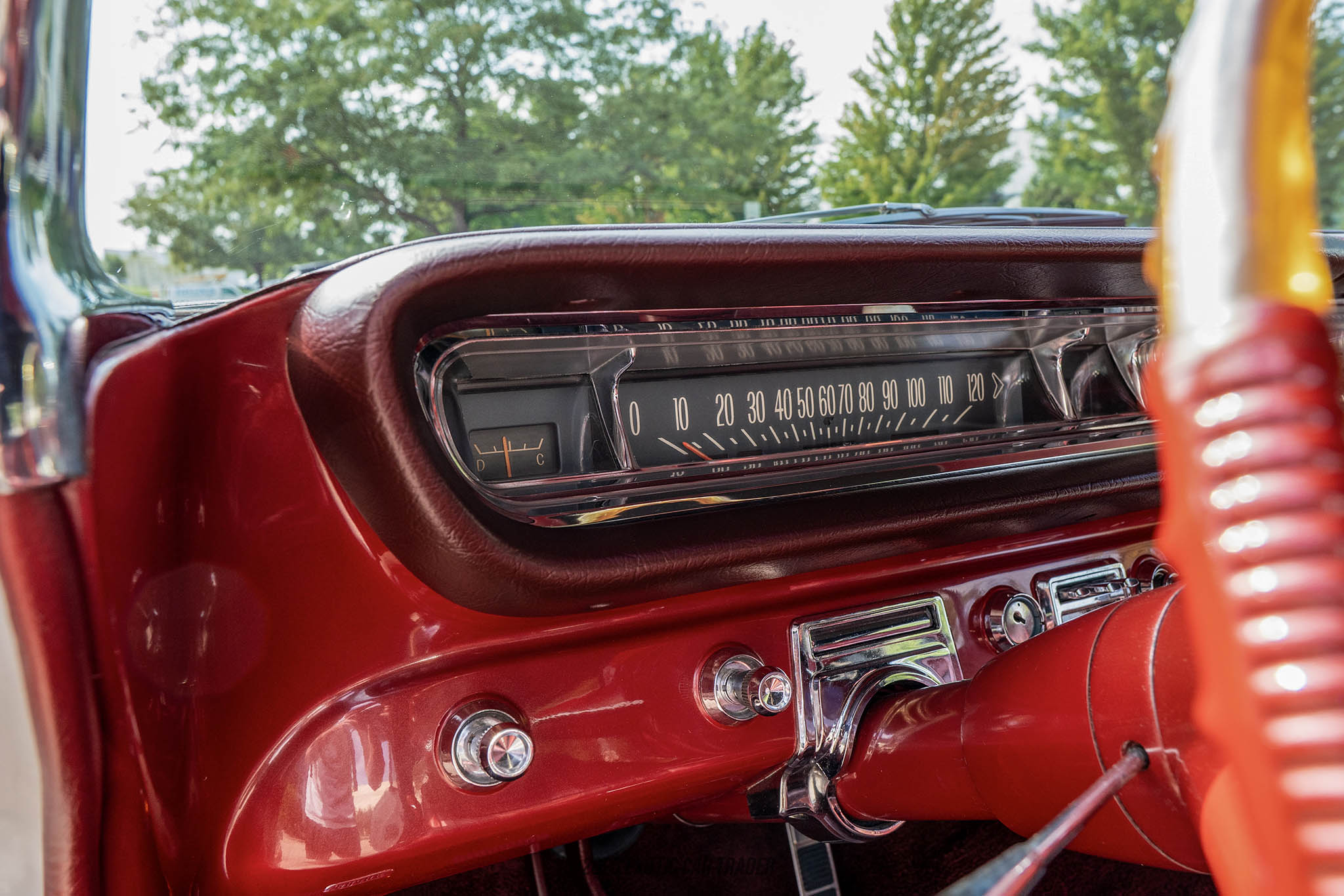
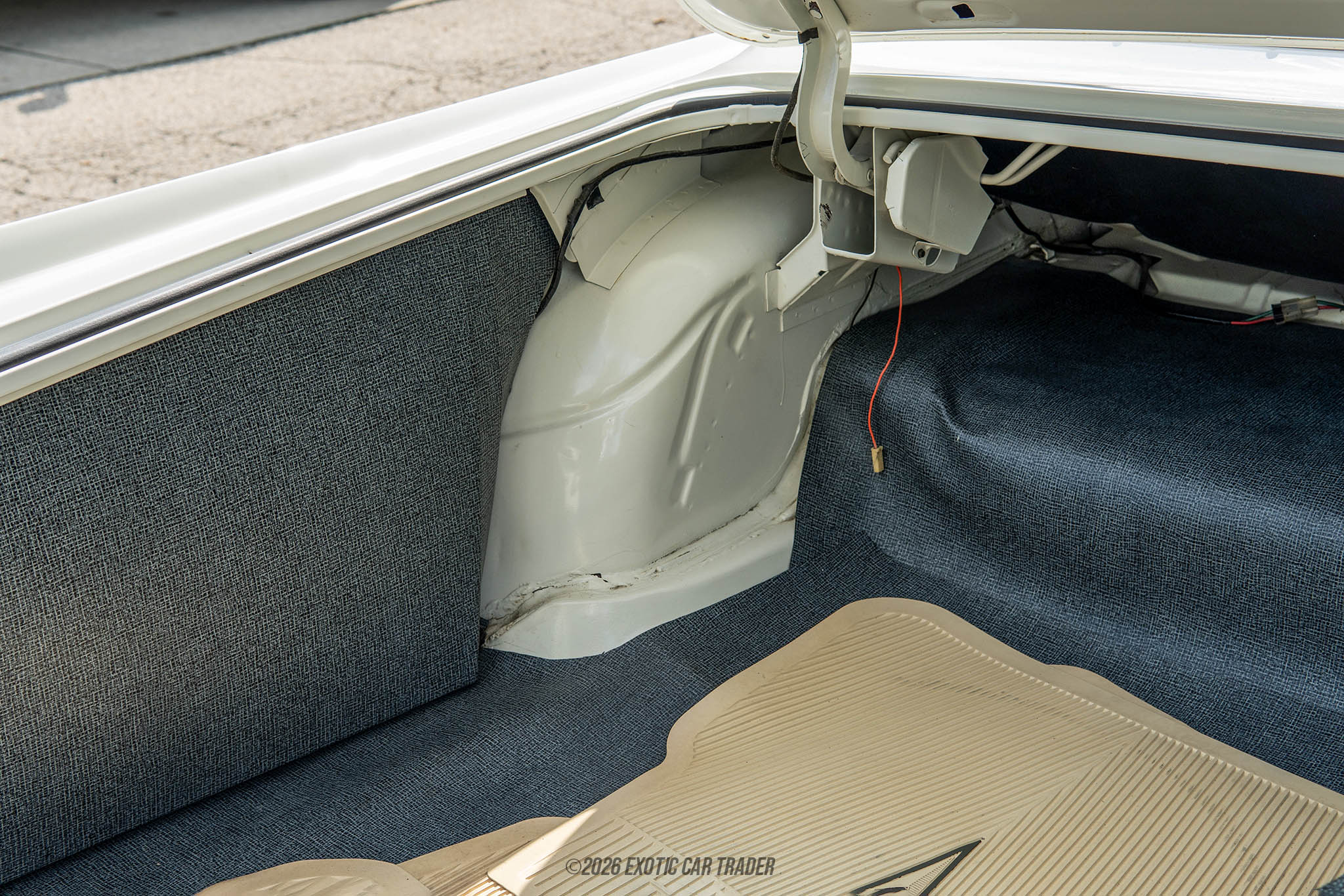
- Reupholstered Interior
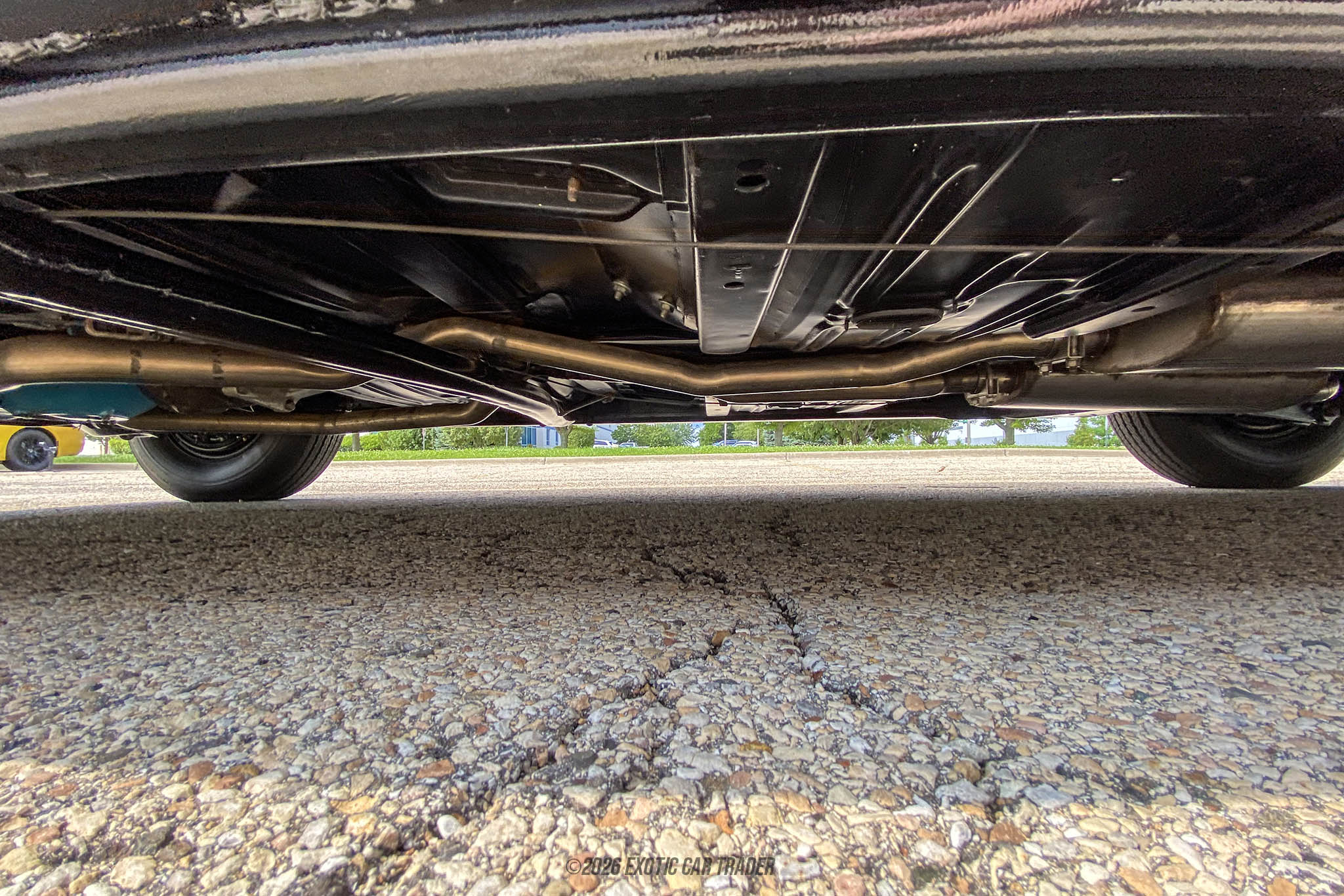
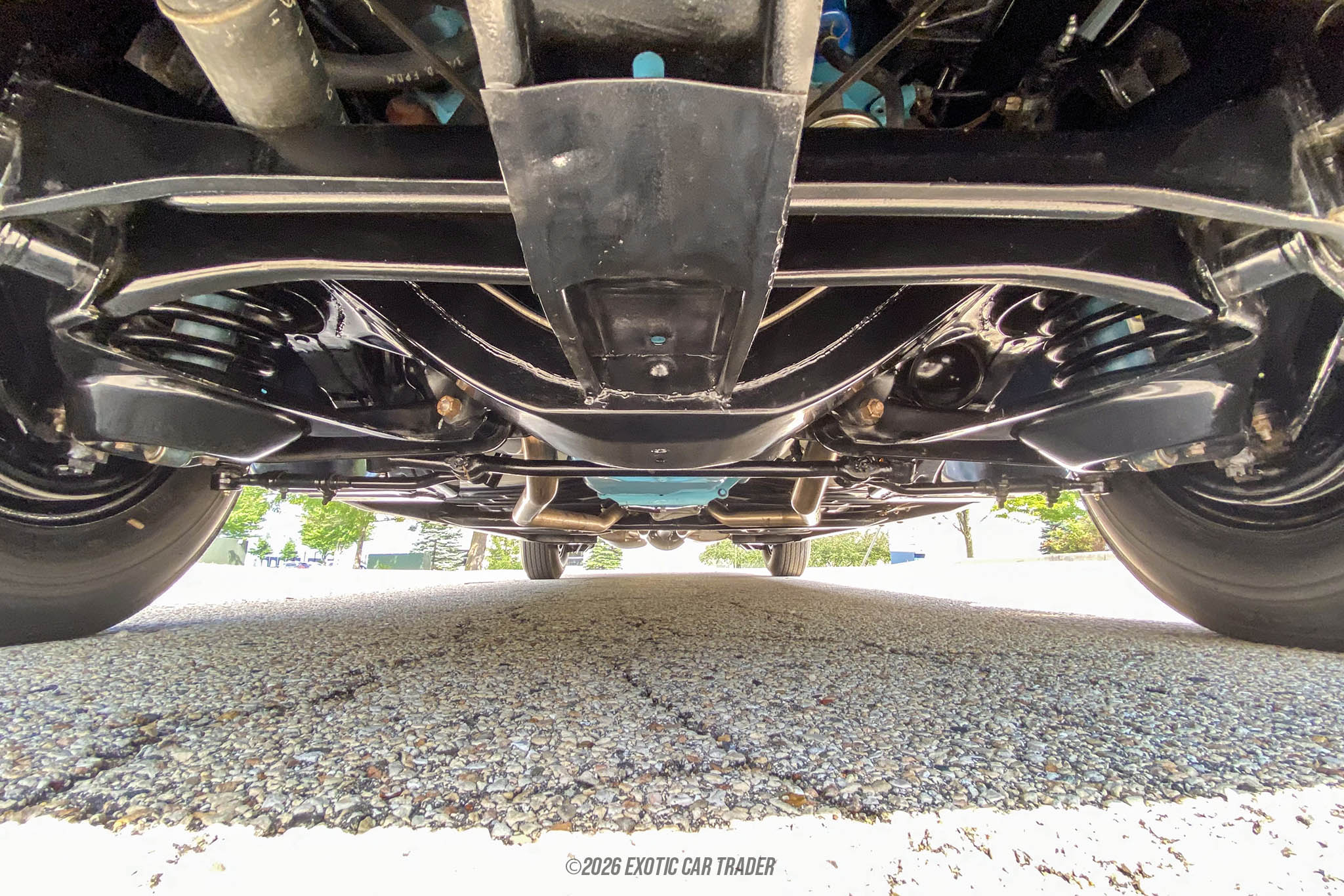
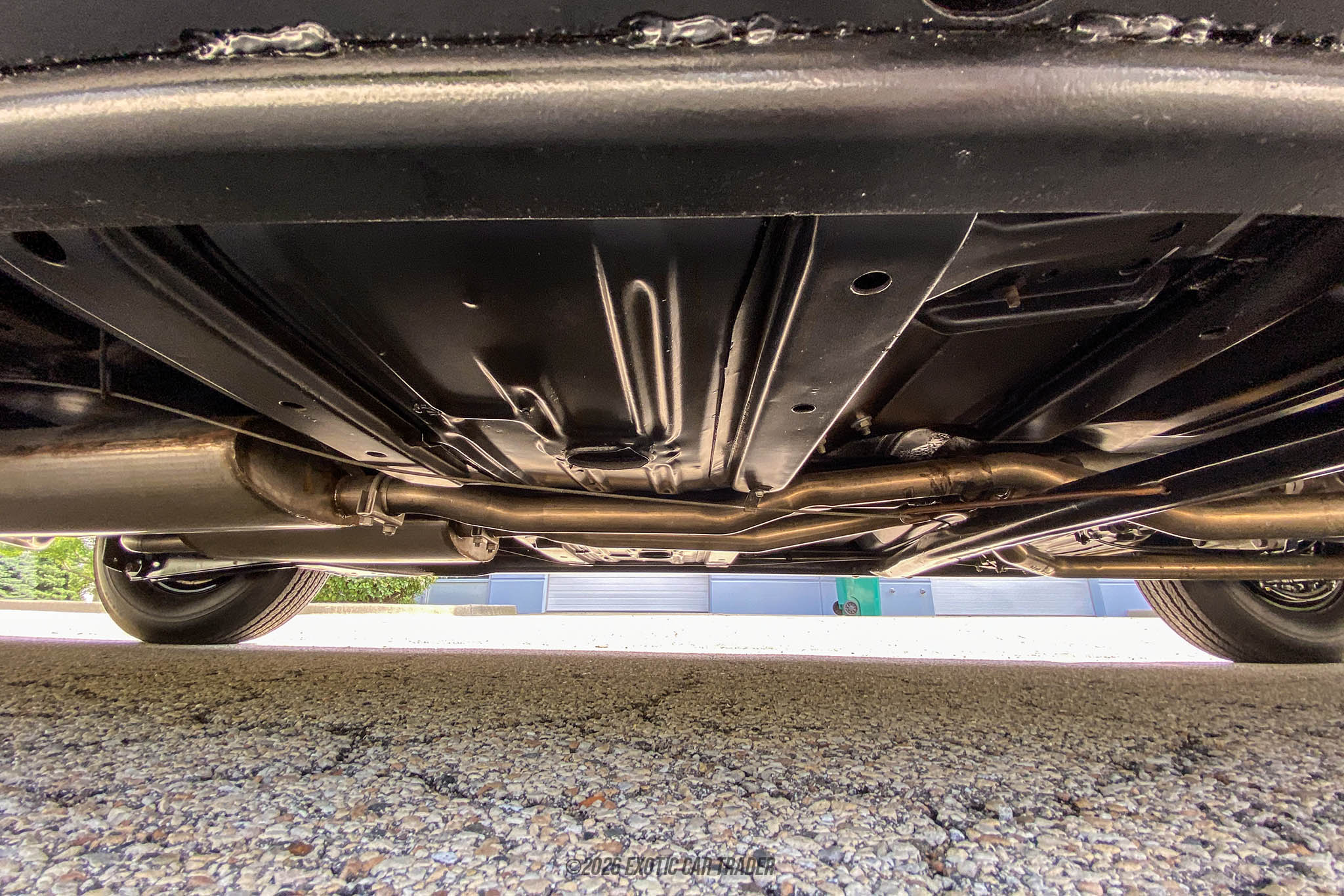
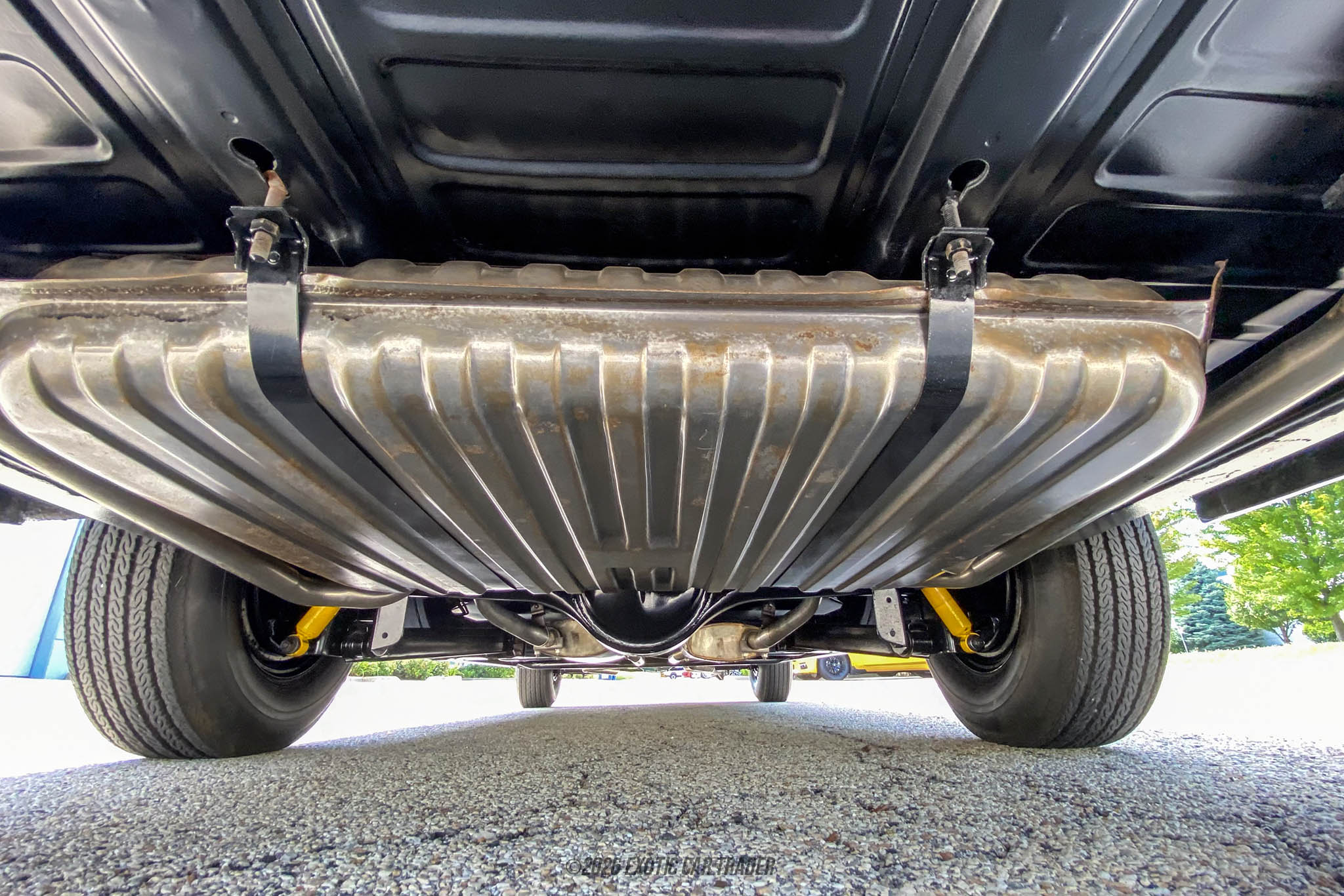
- Dual Exhaust System
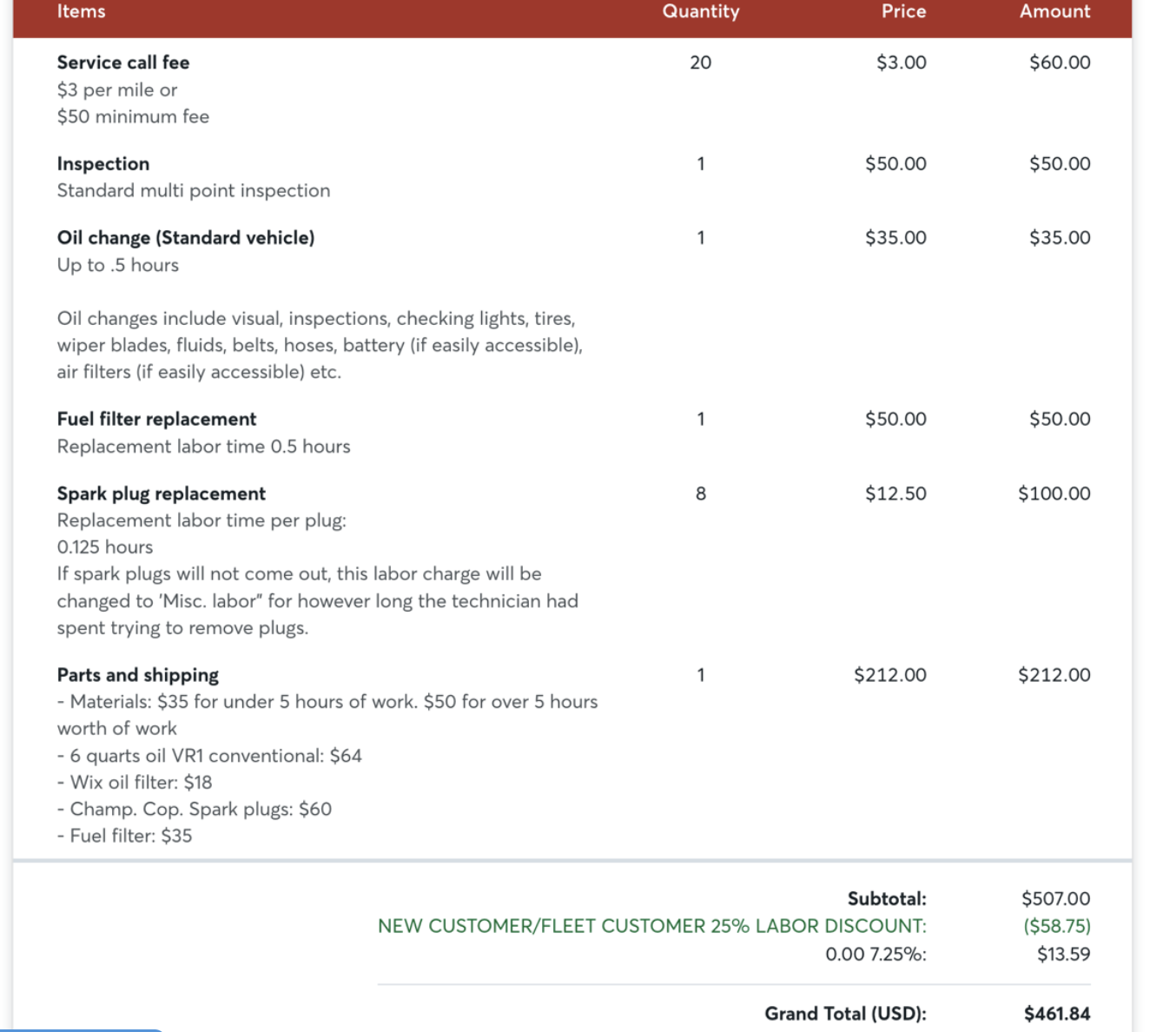
- Aftermarket Spark Plugs


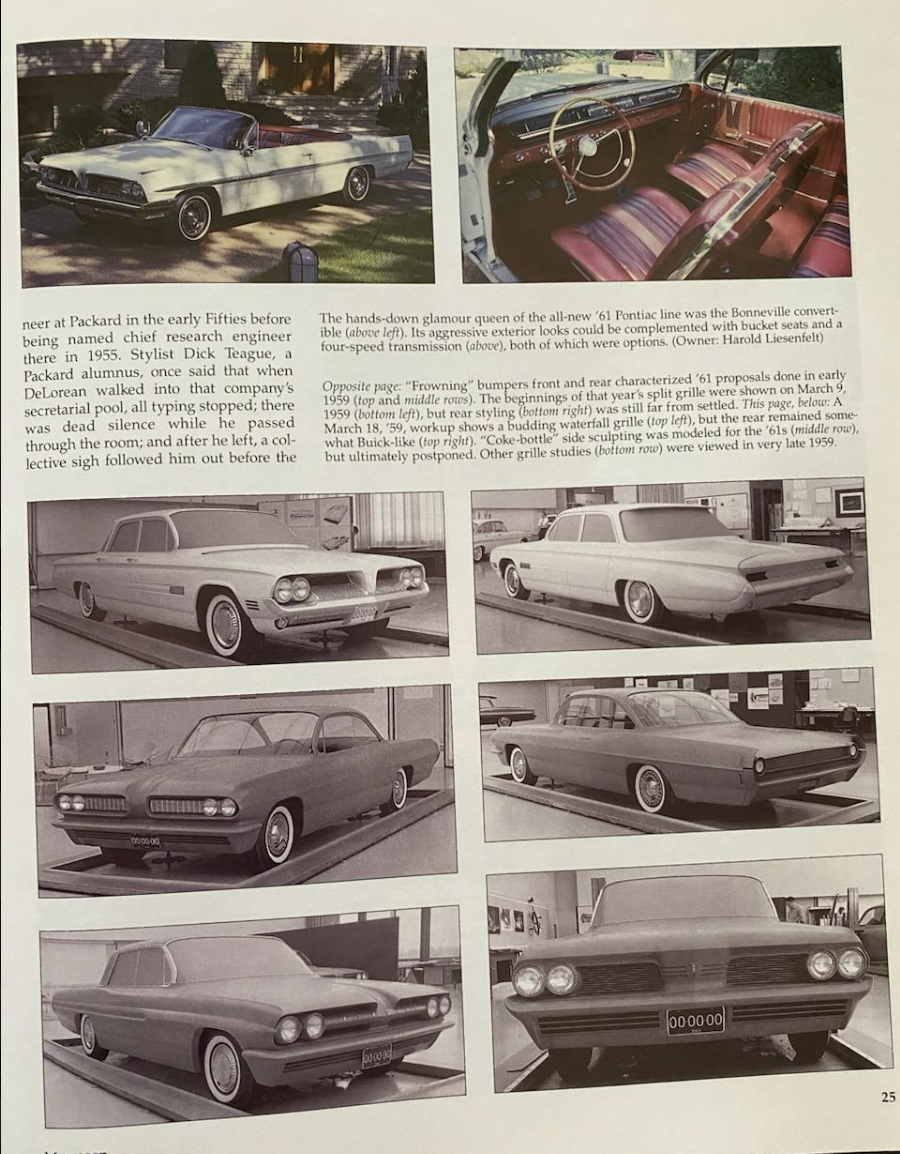
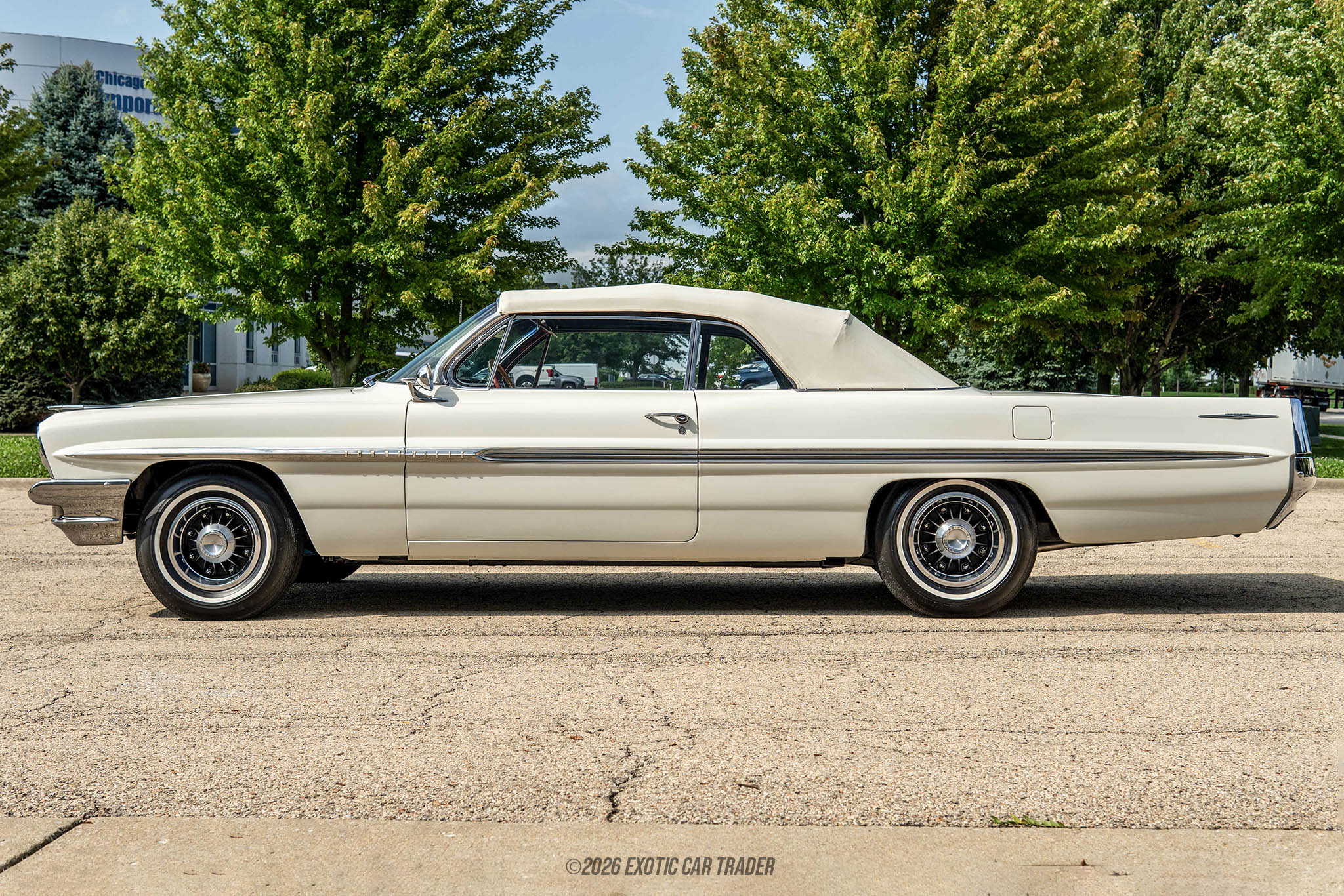
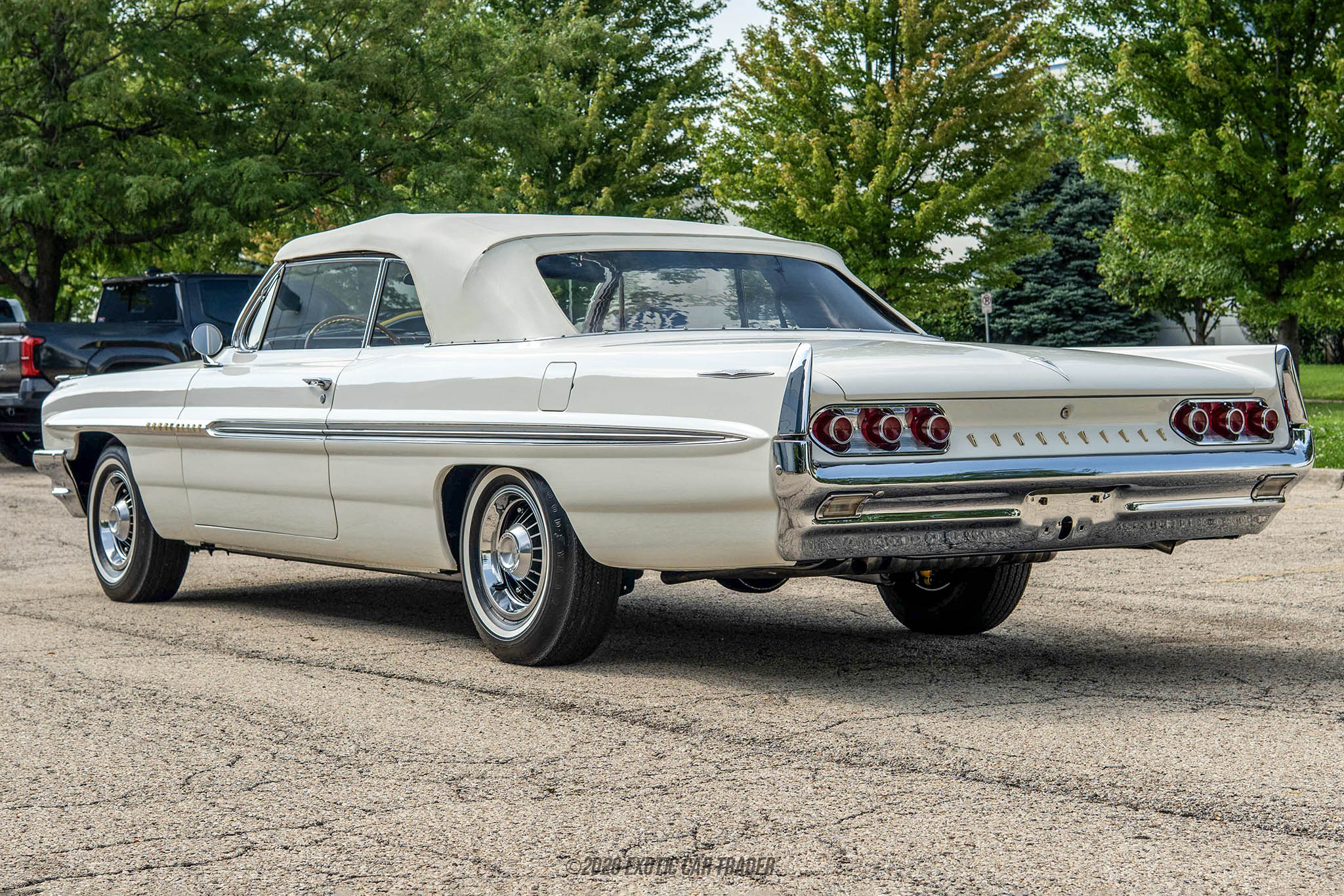
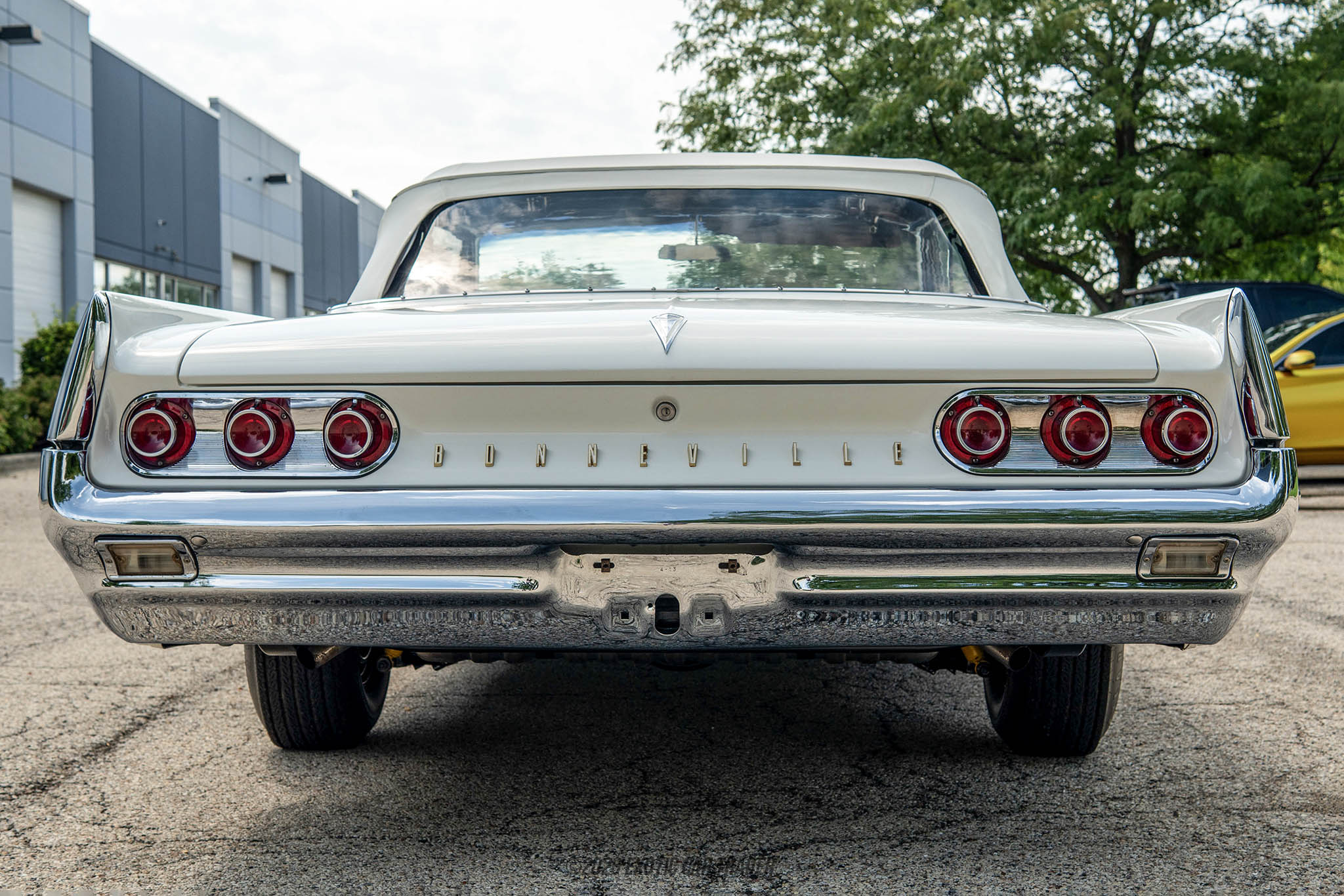
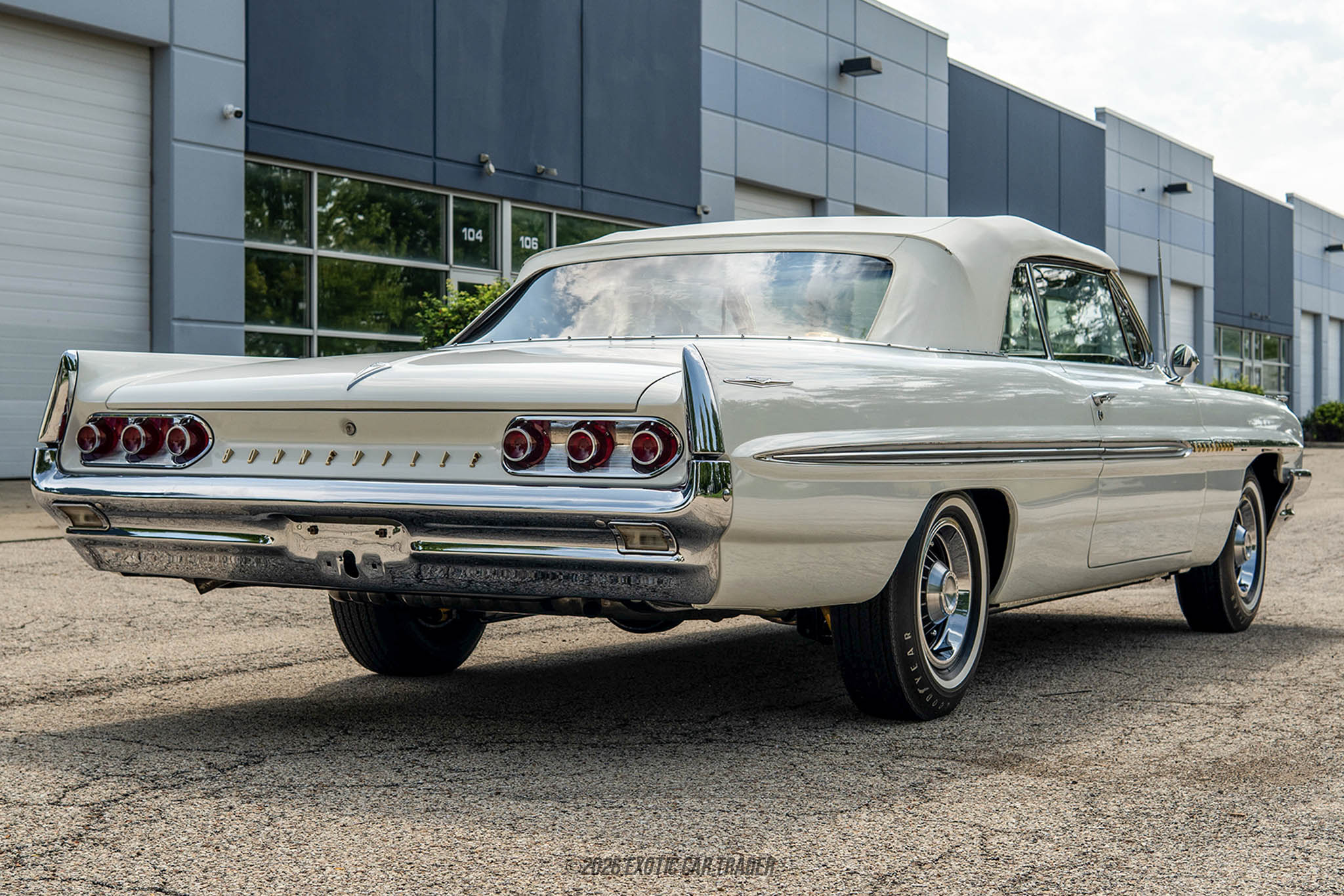
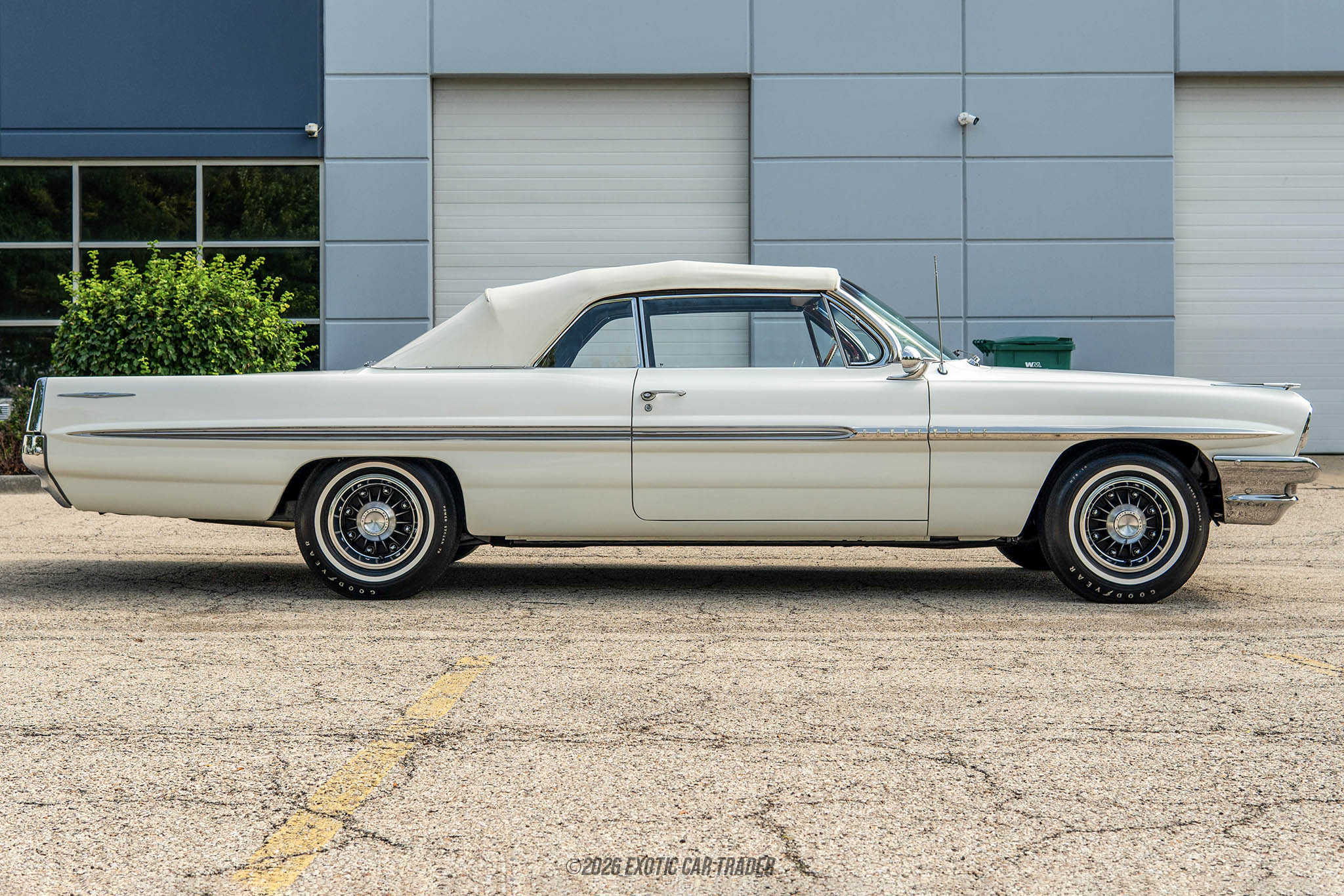
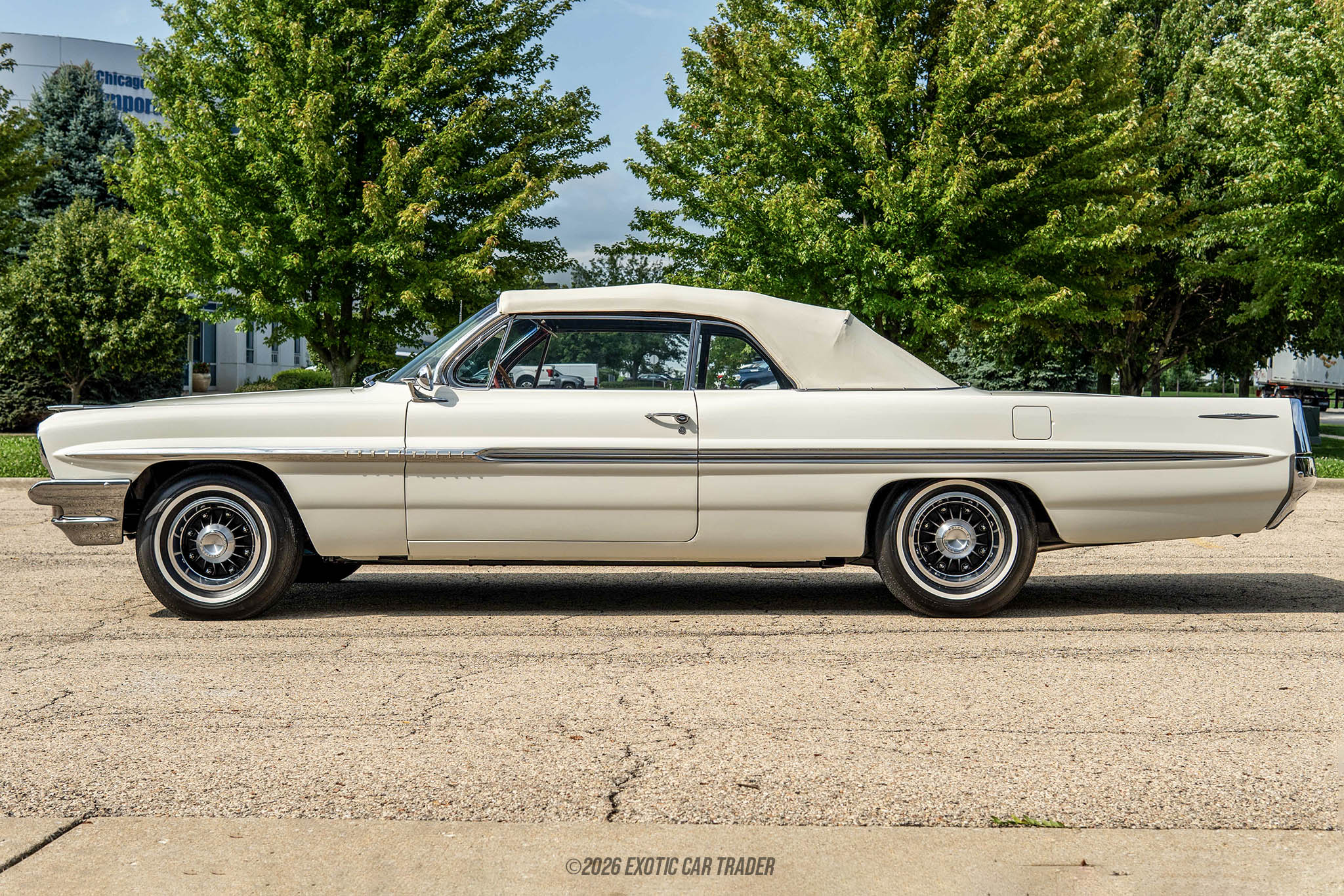
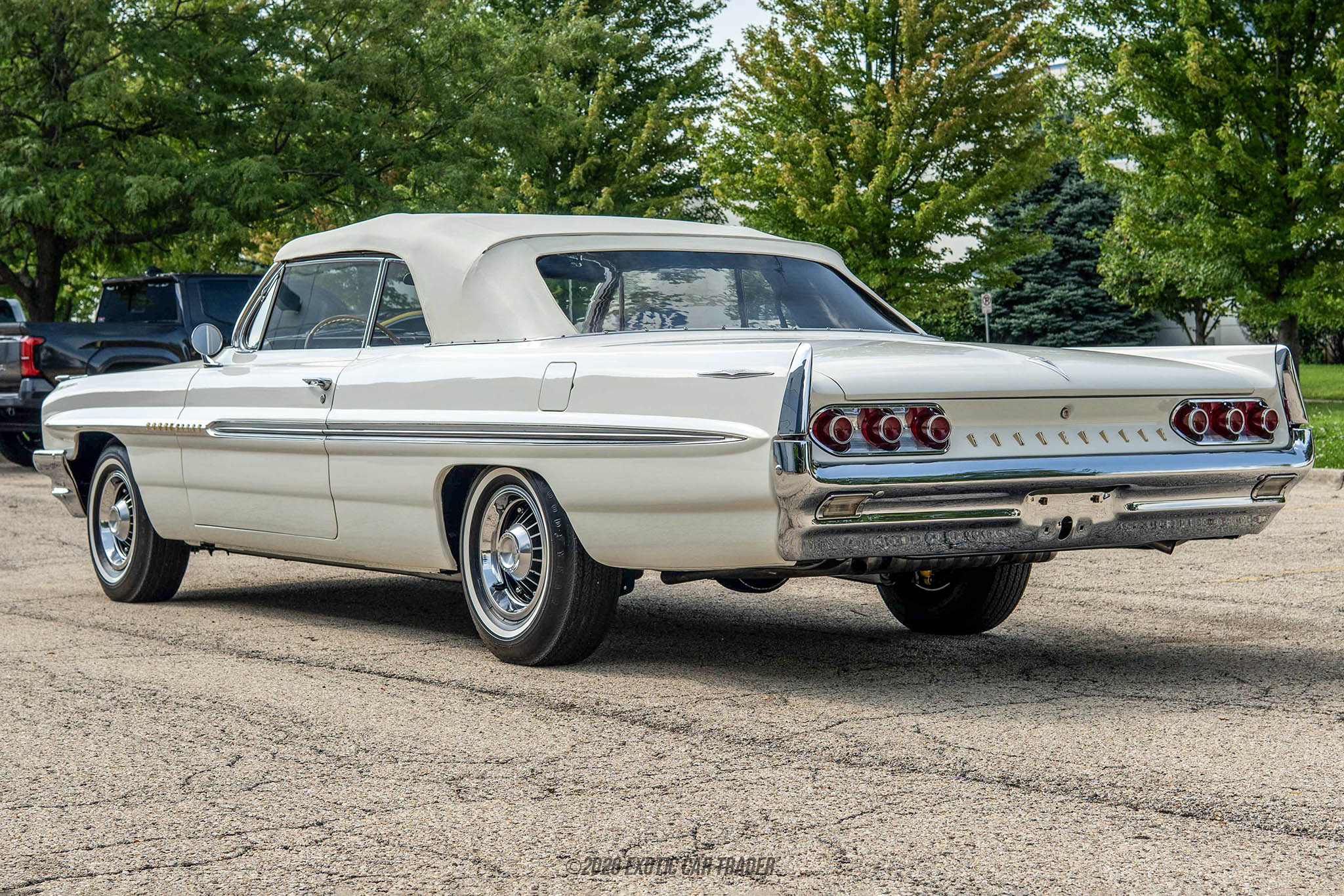
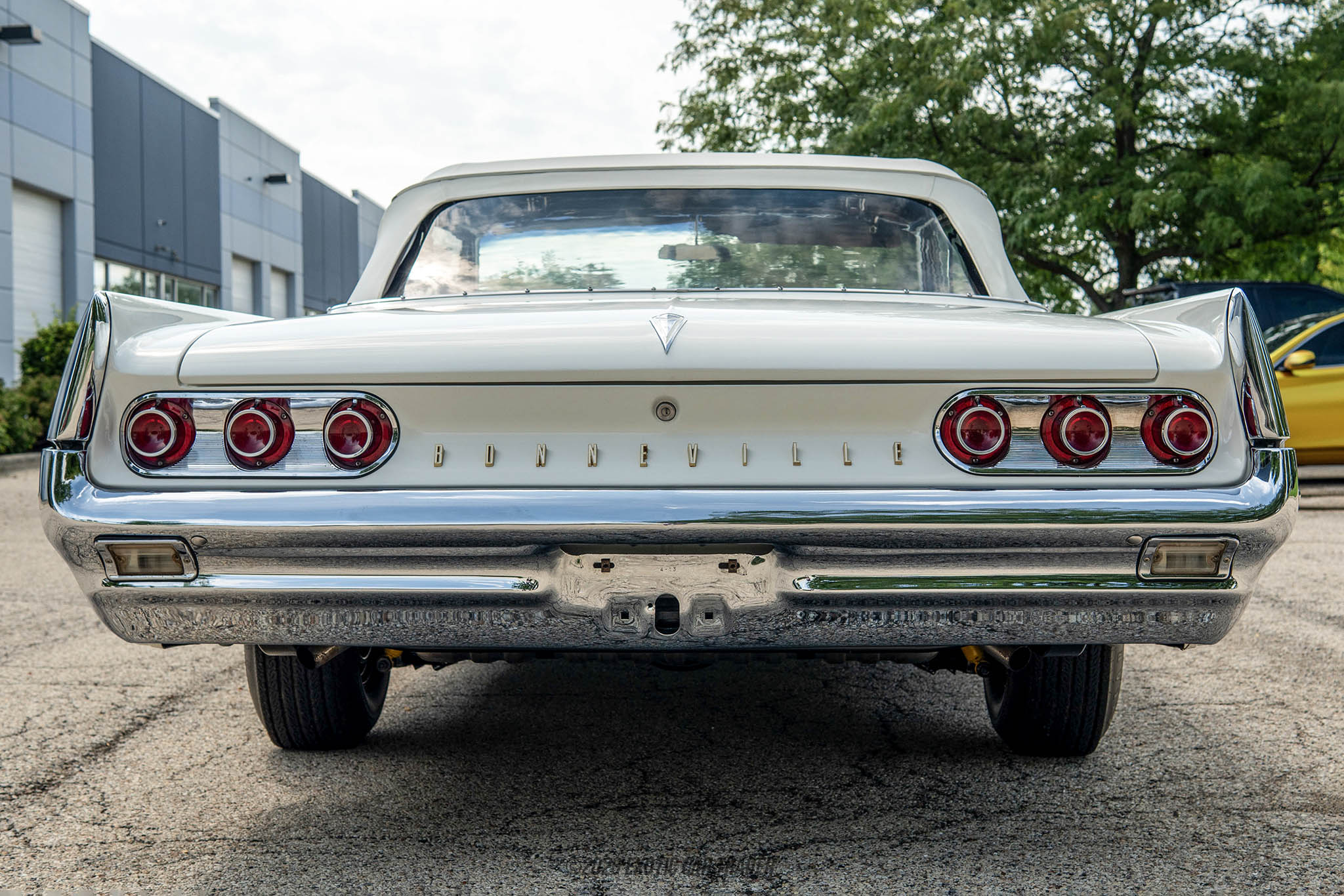
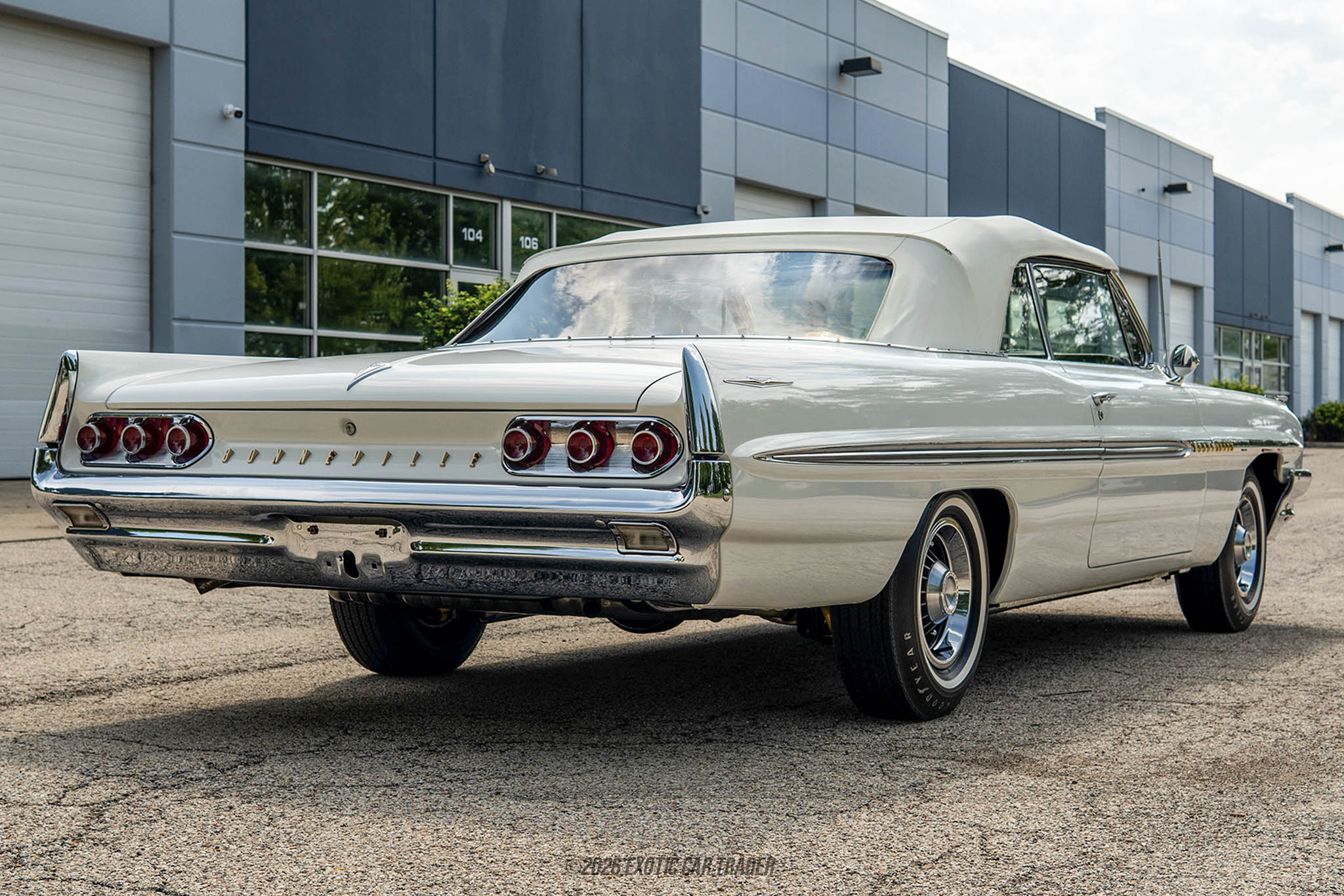
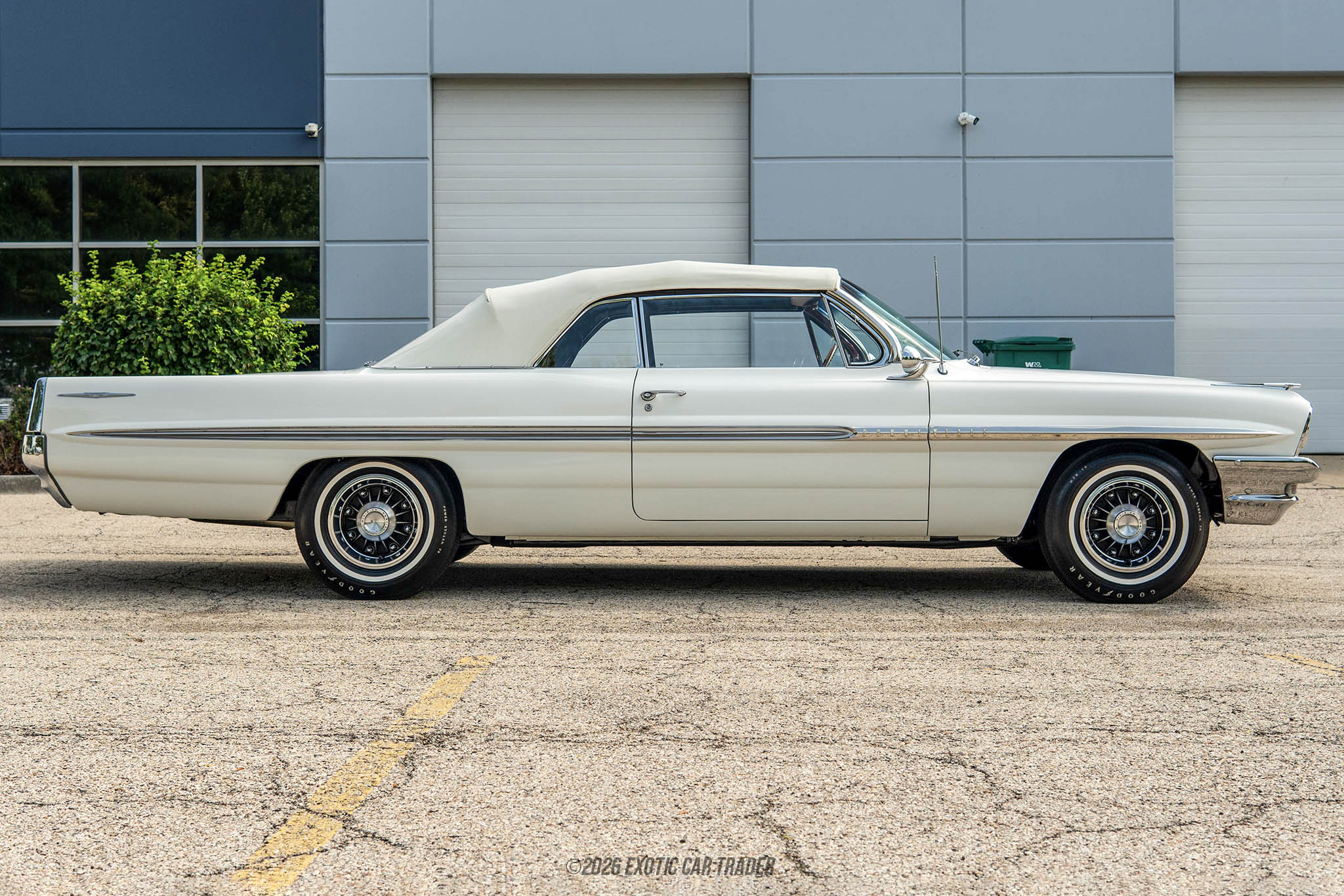
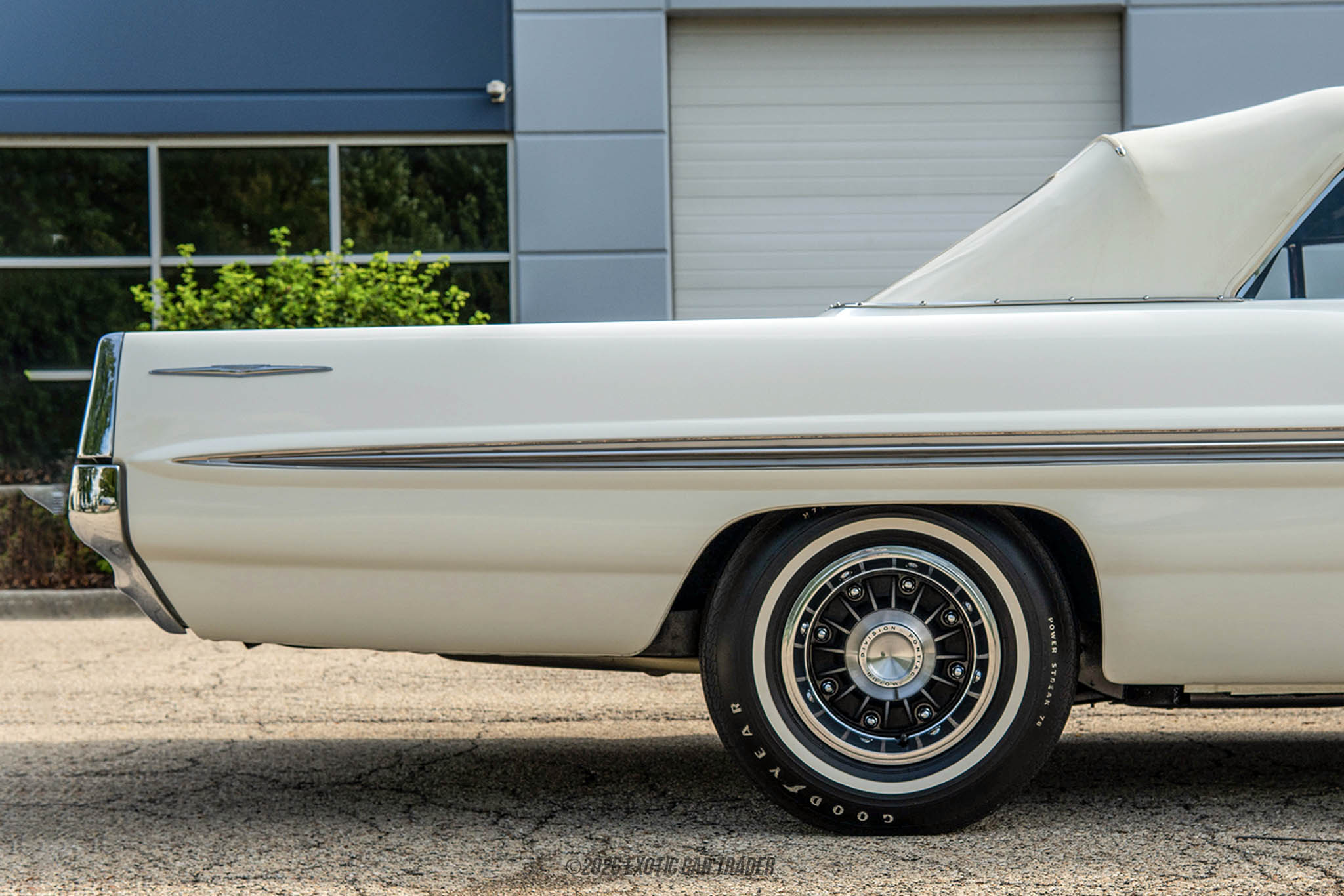
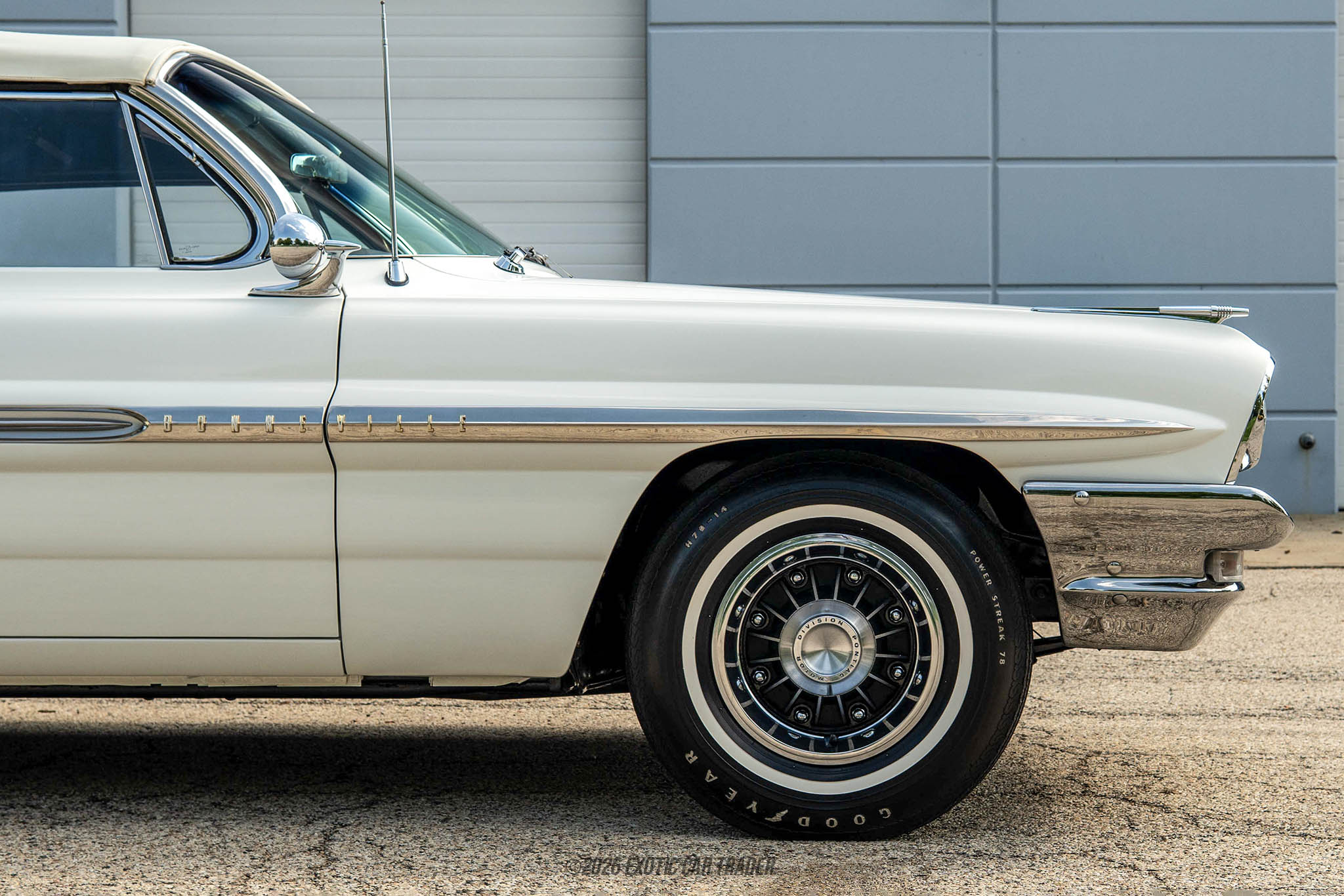
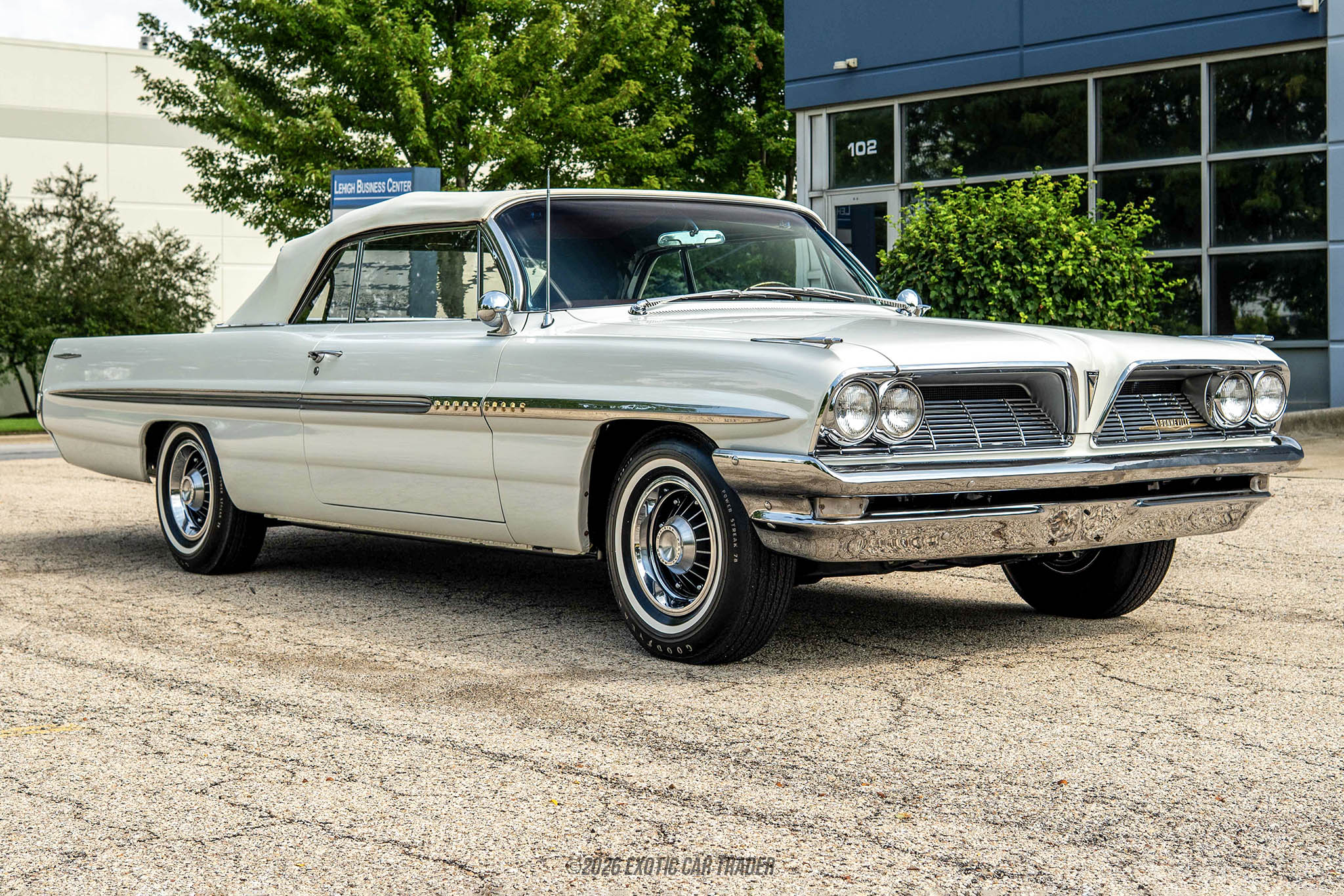
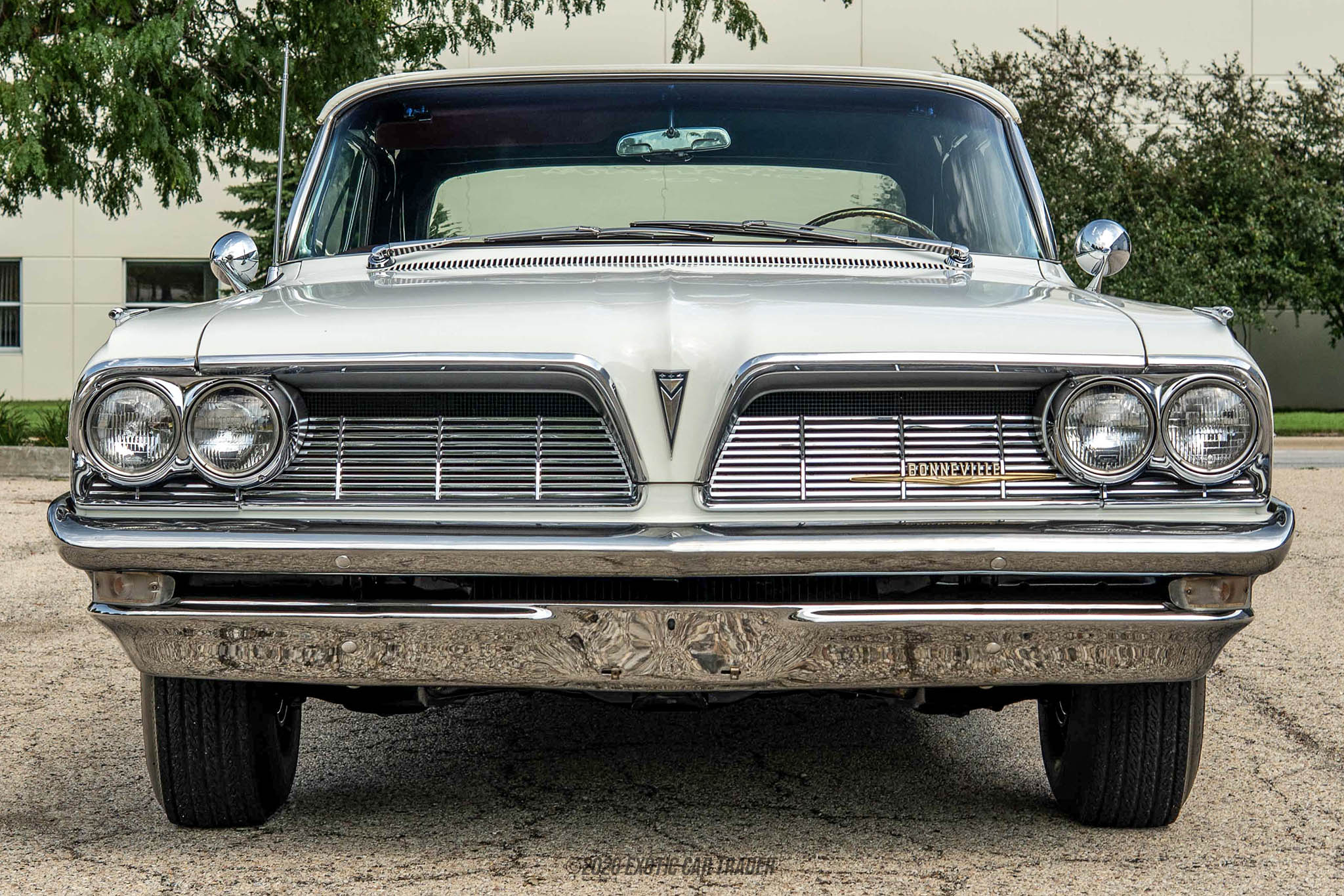
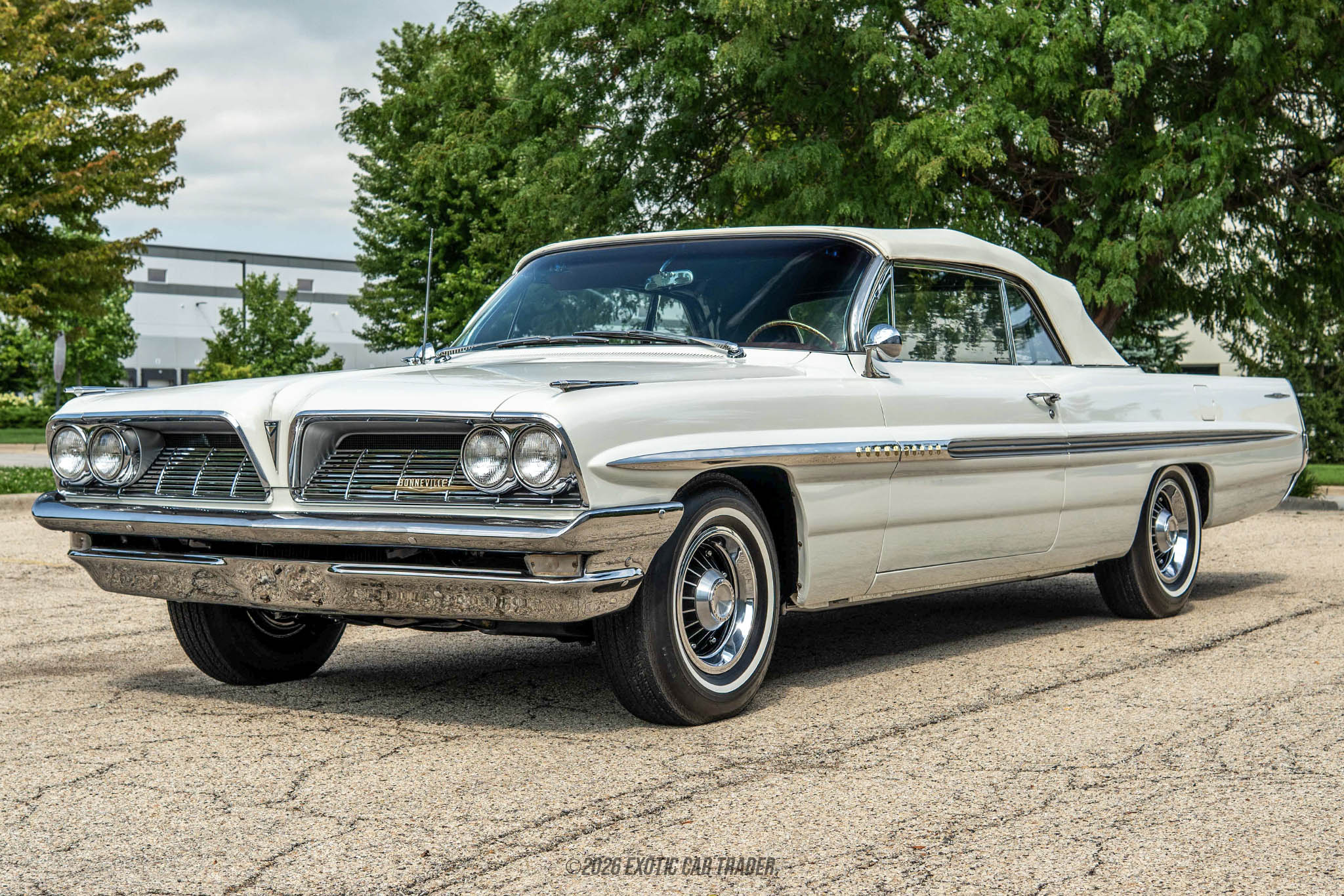
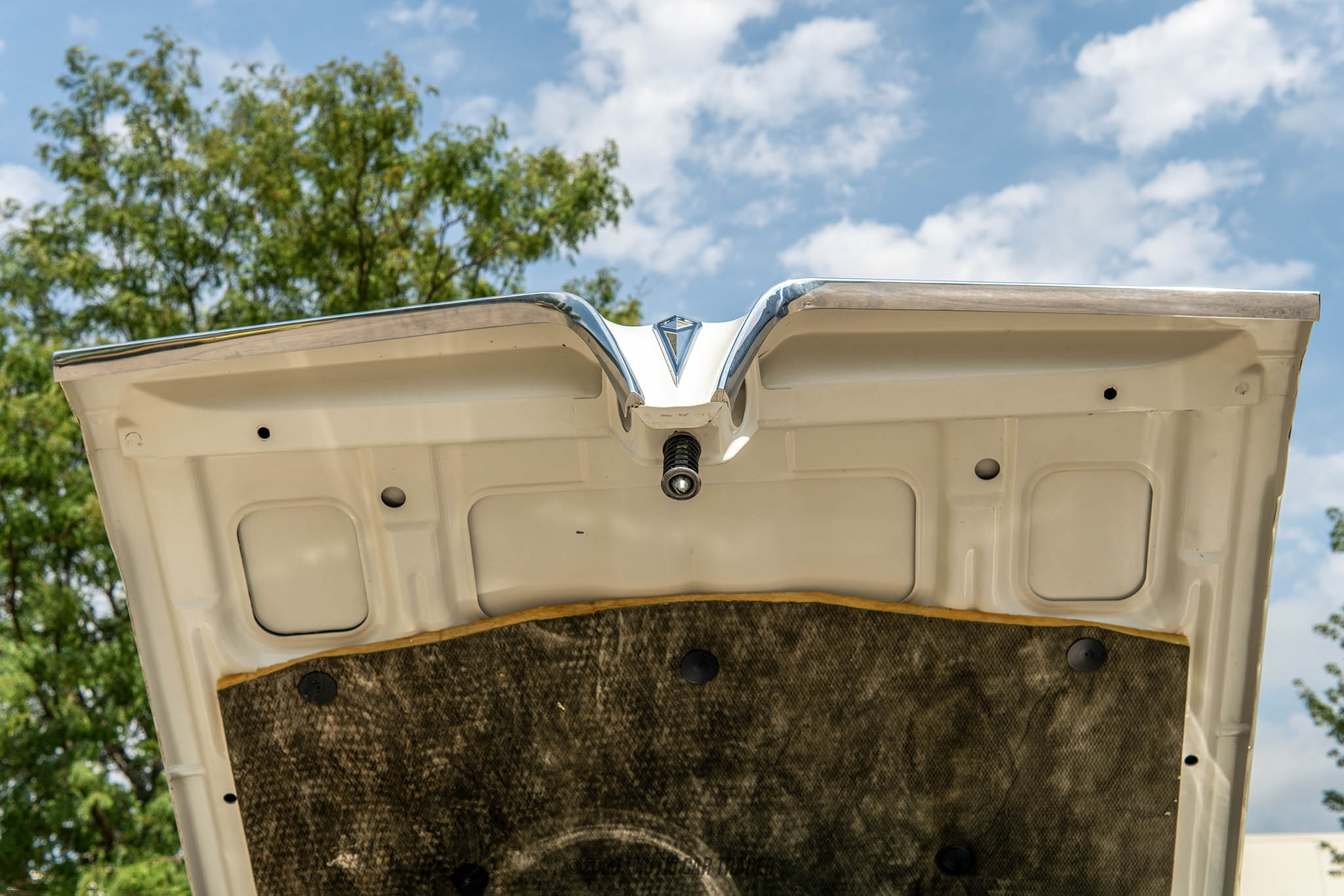
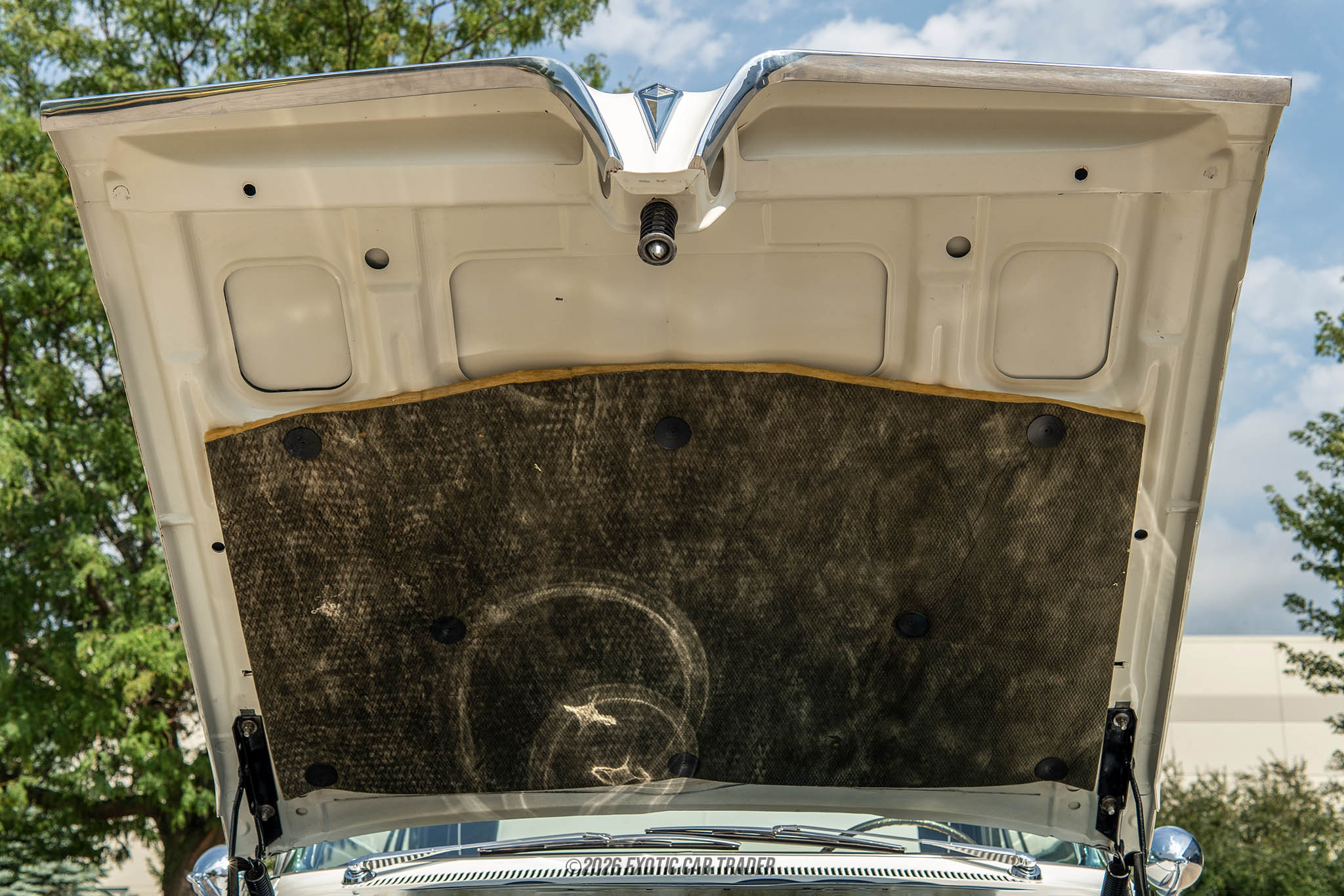
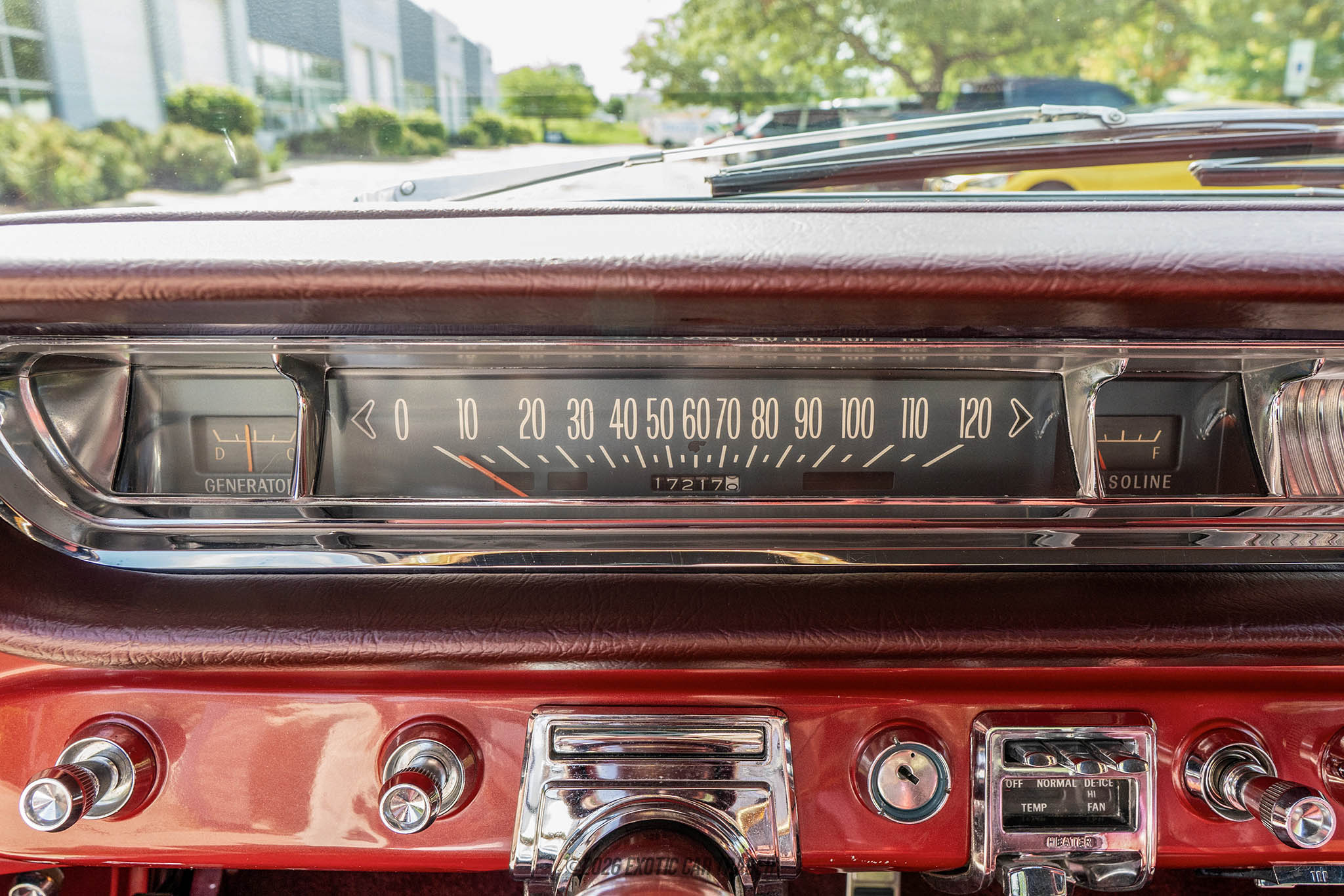
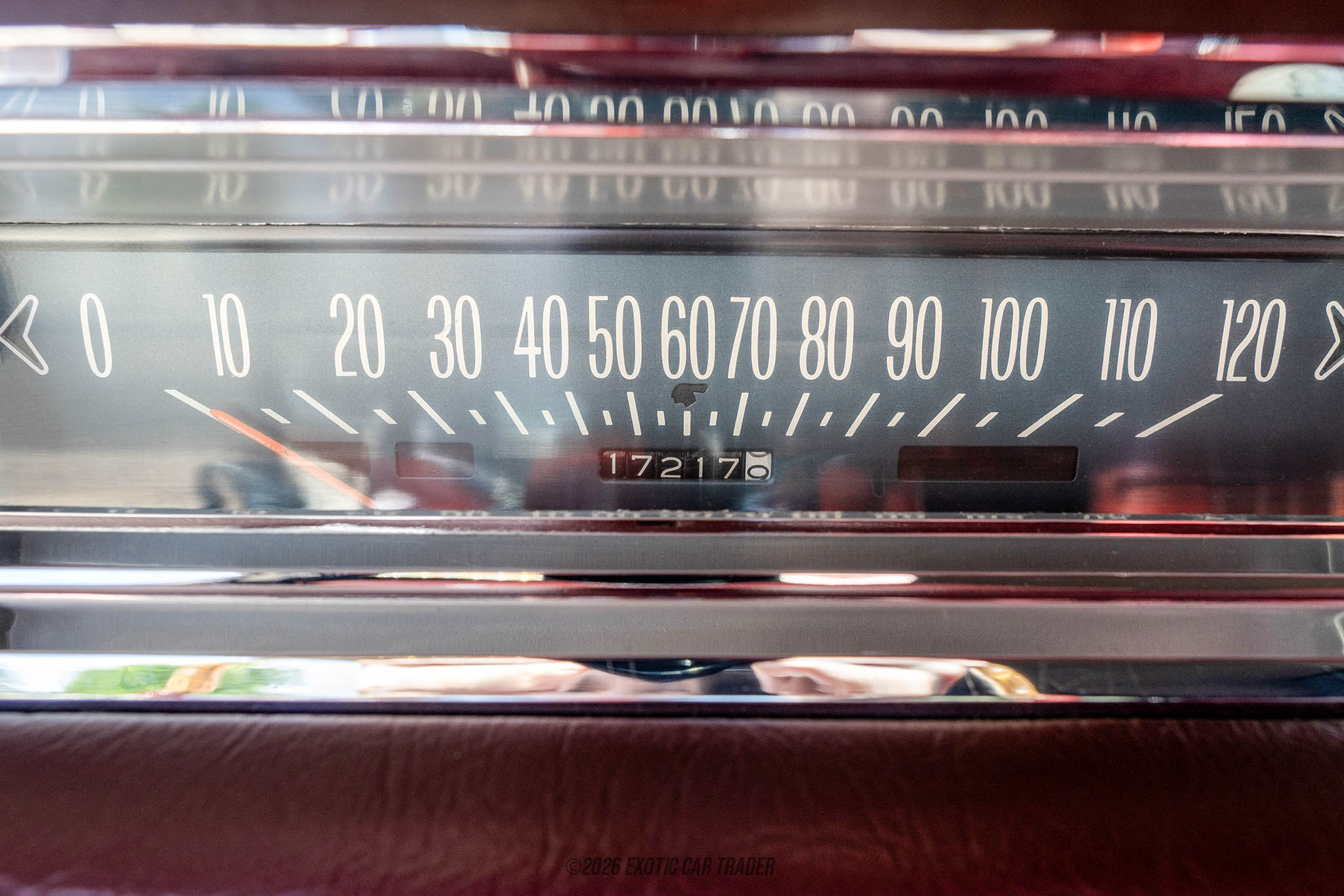
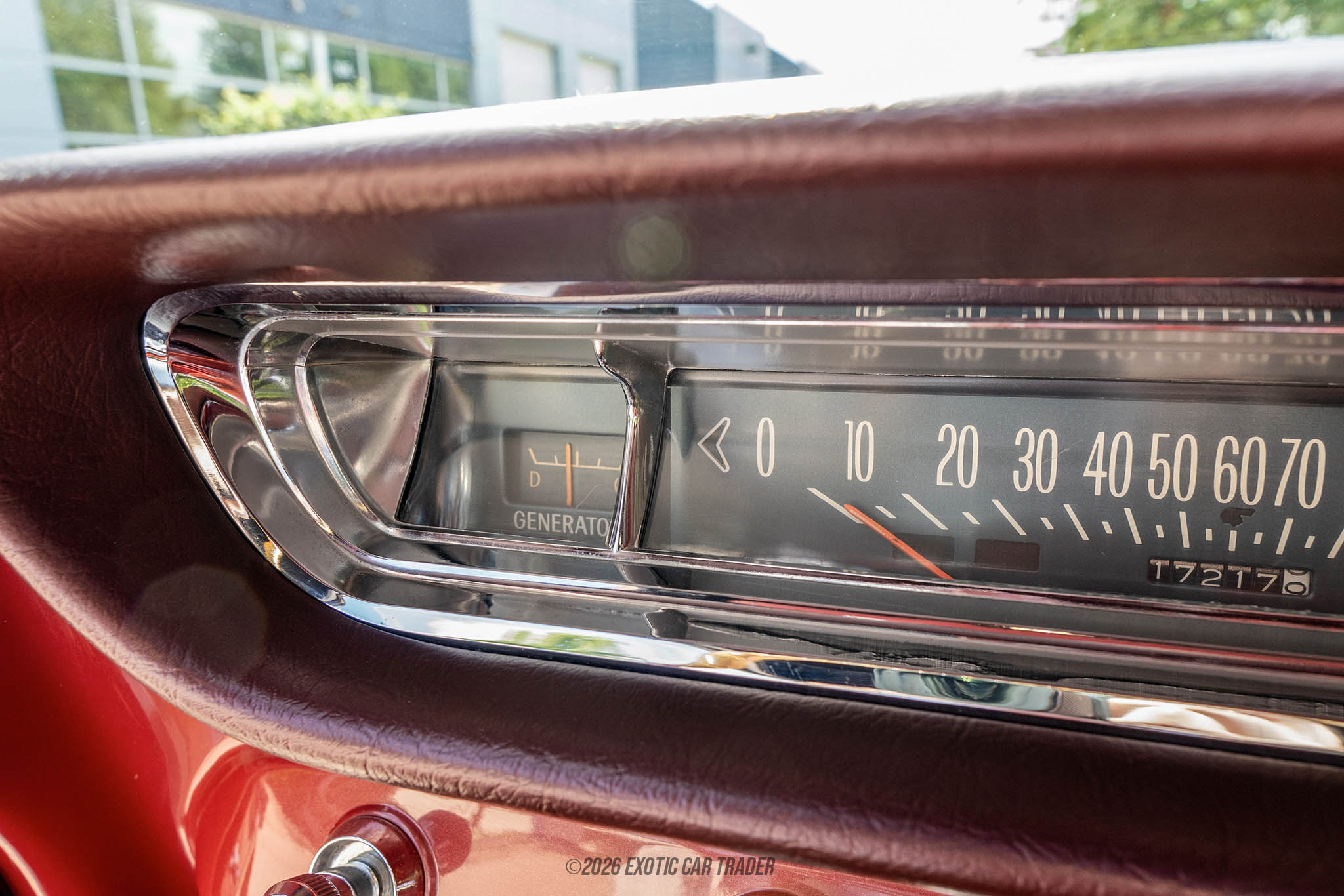
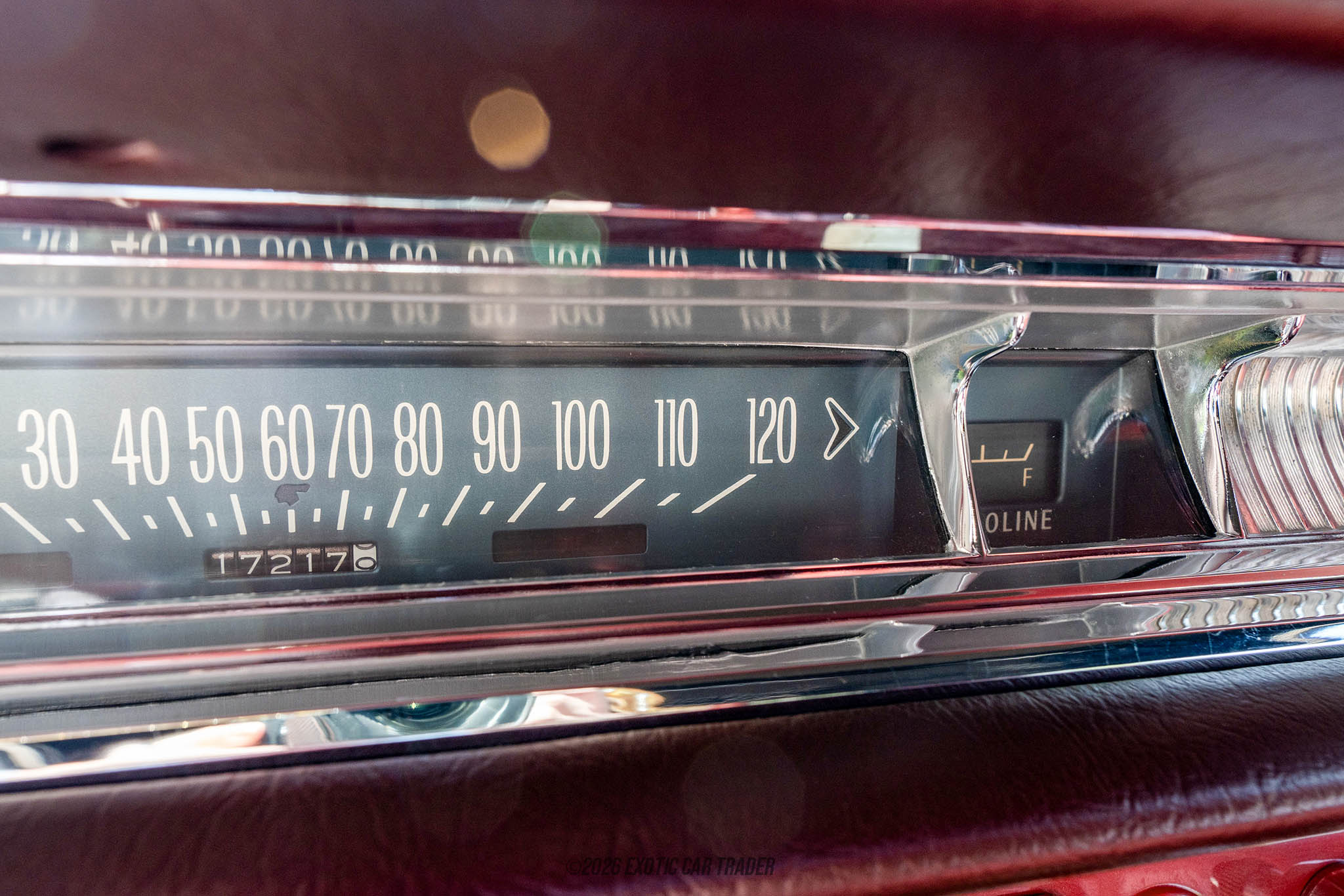
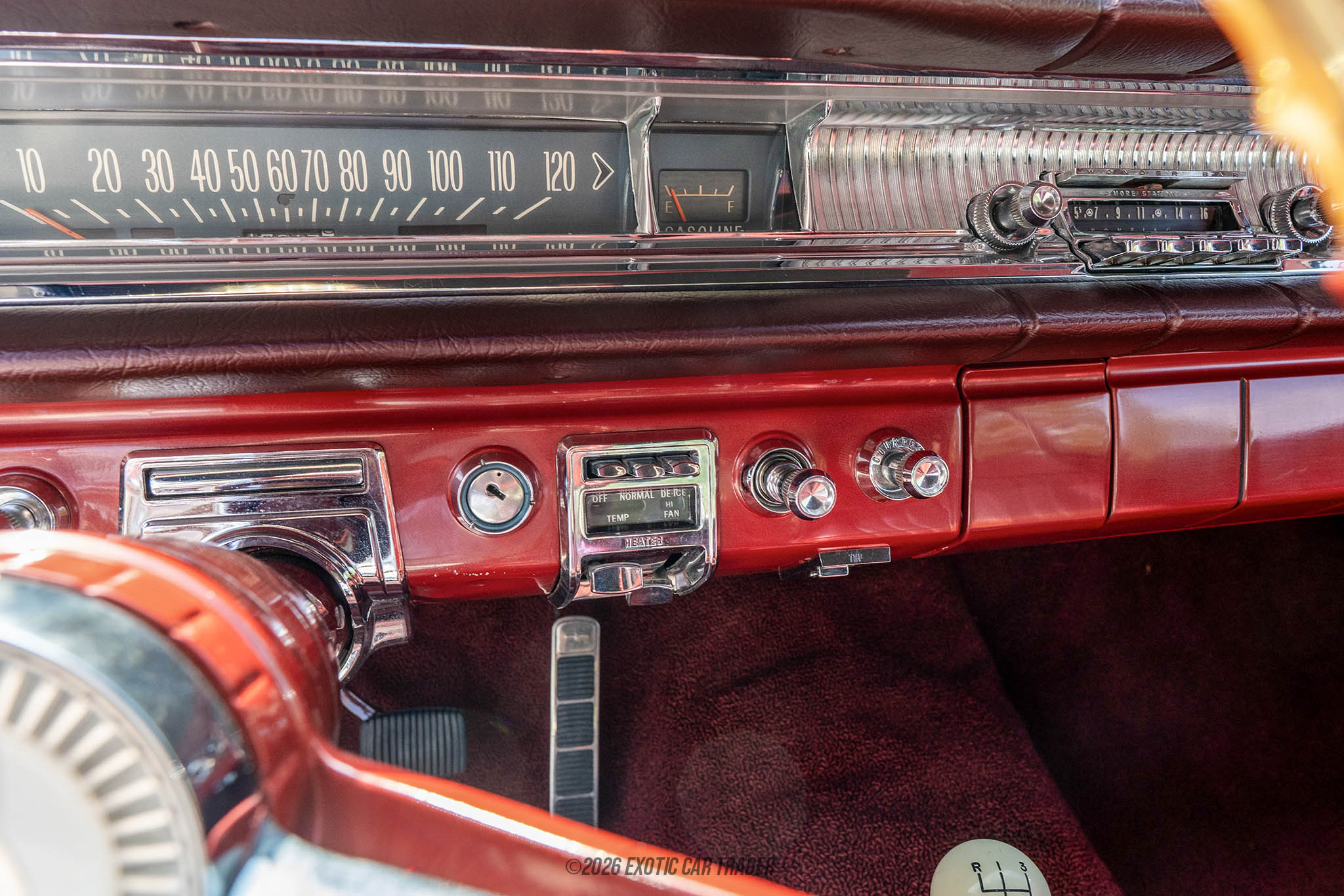
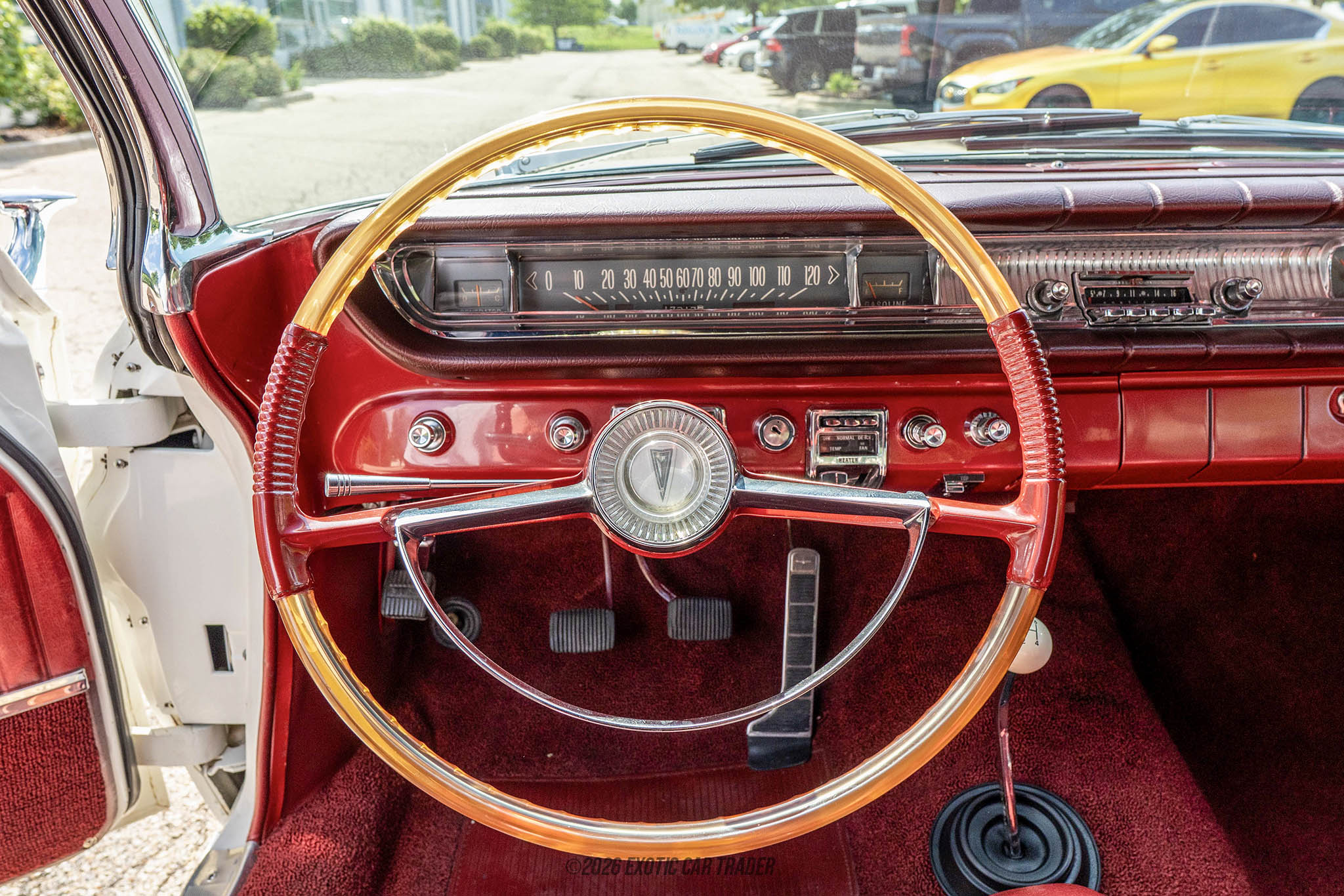
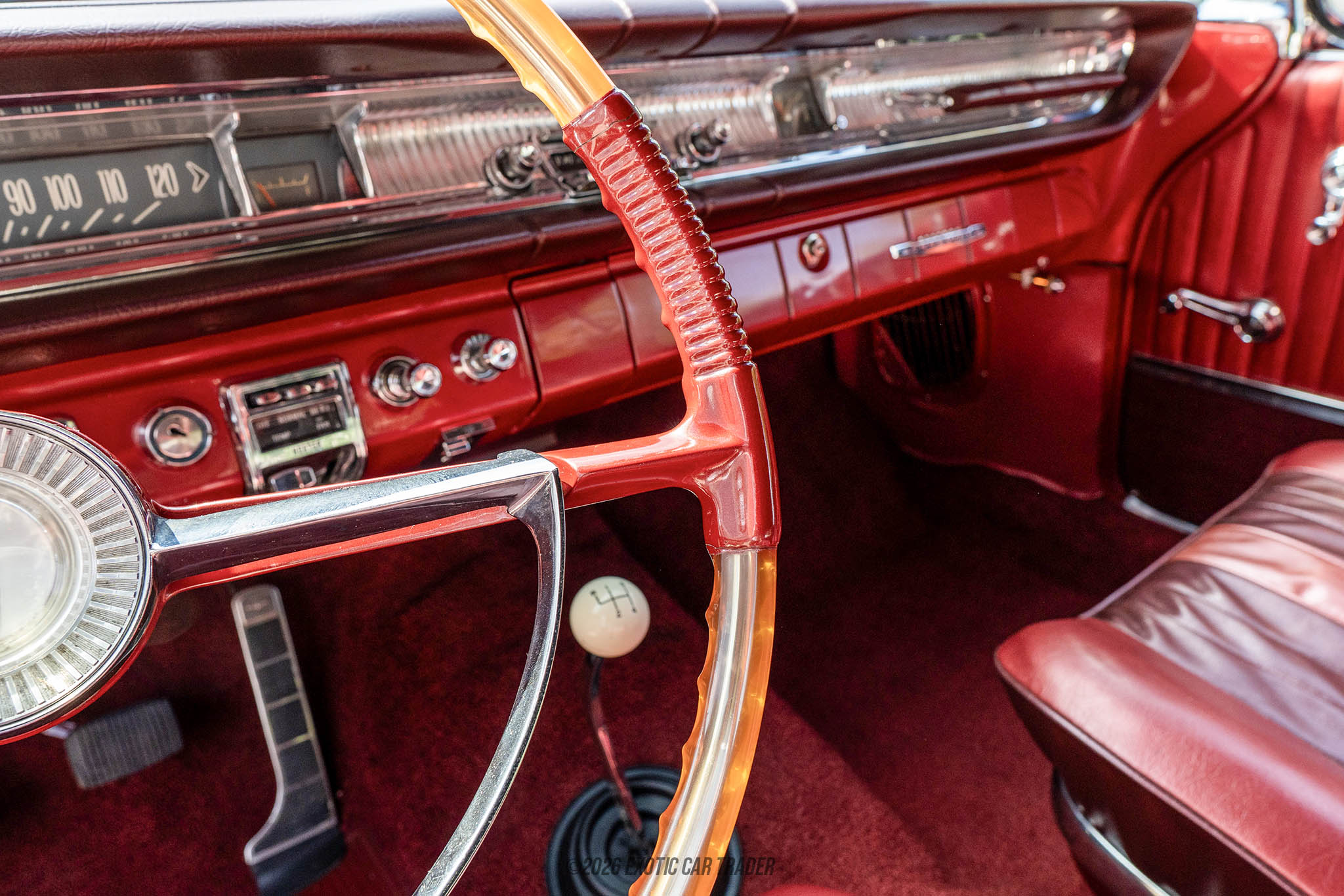
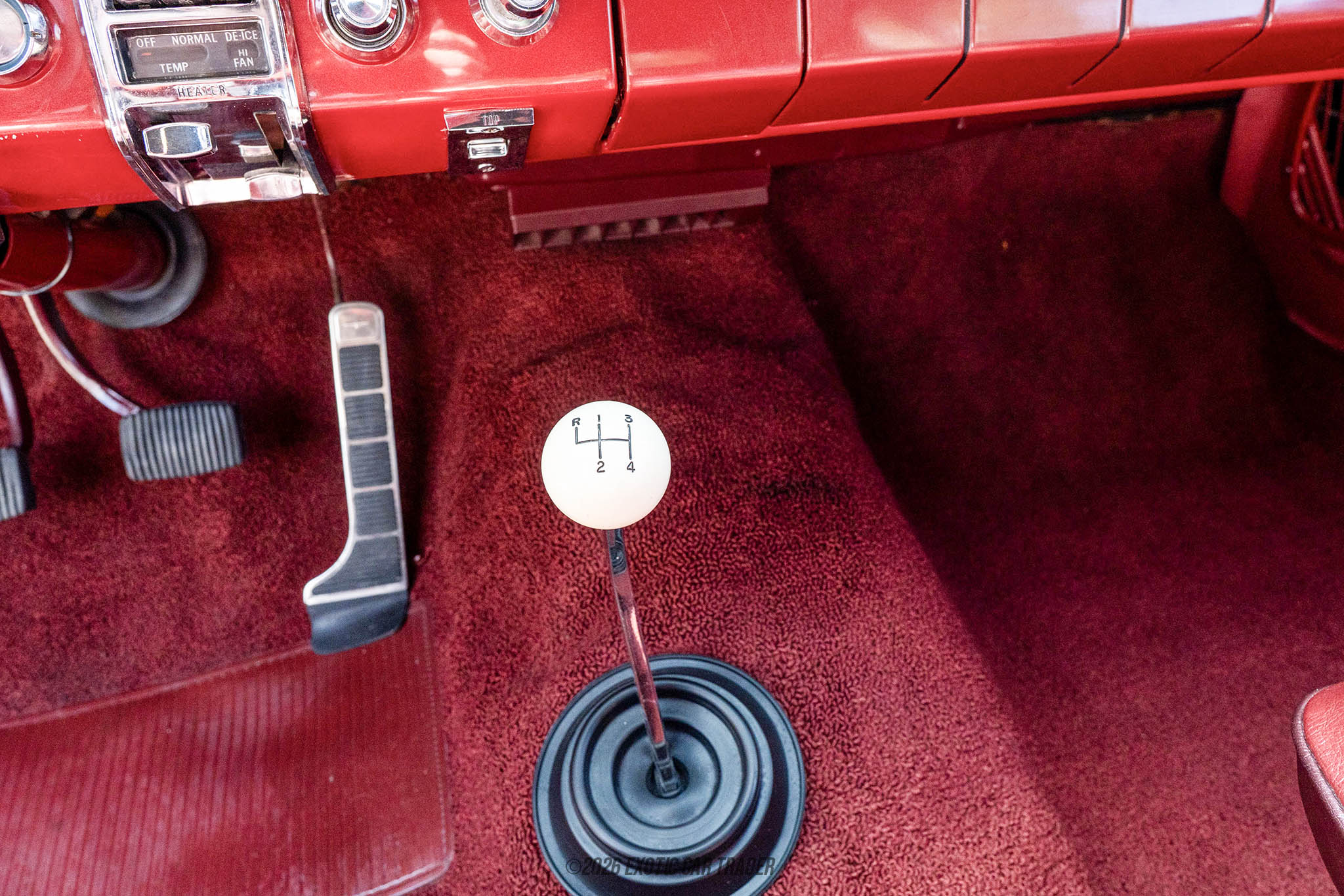
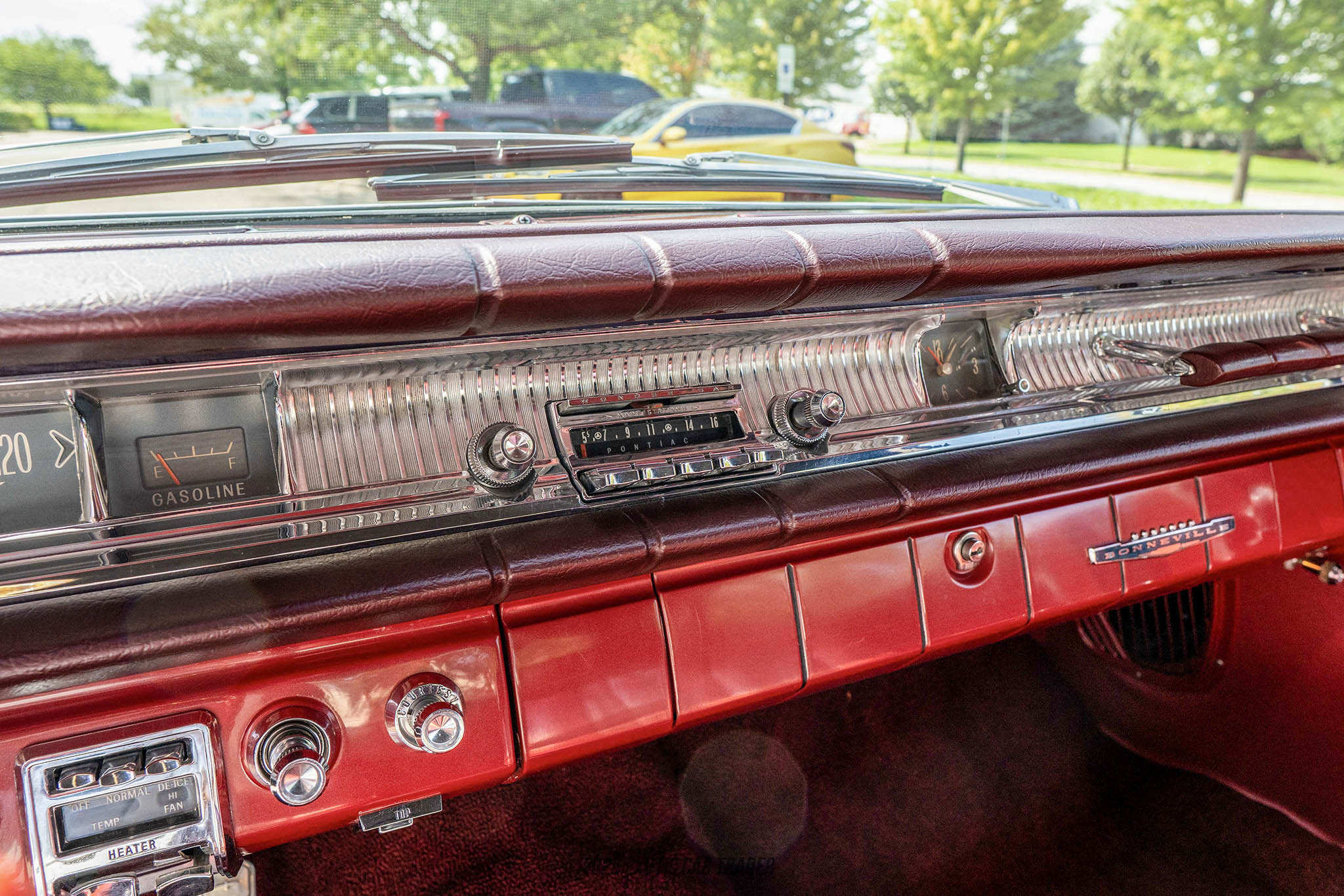
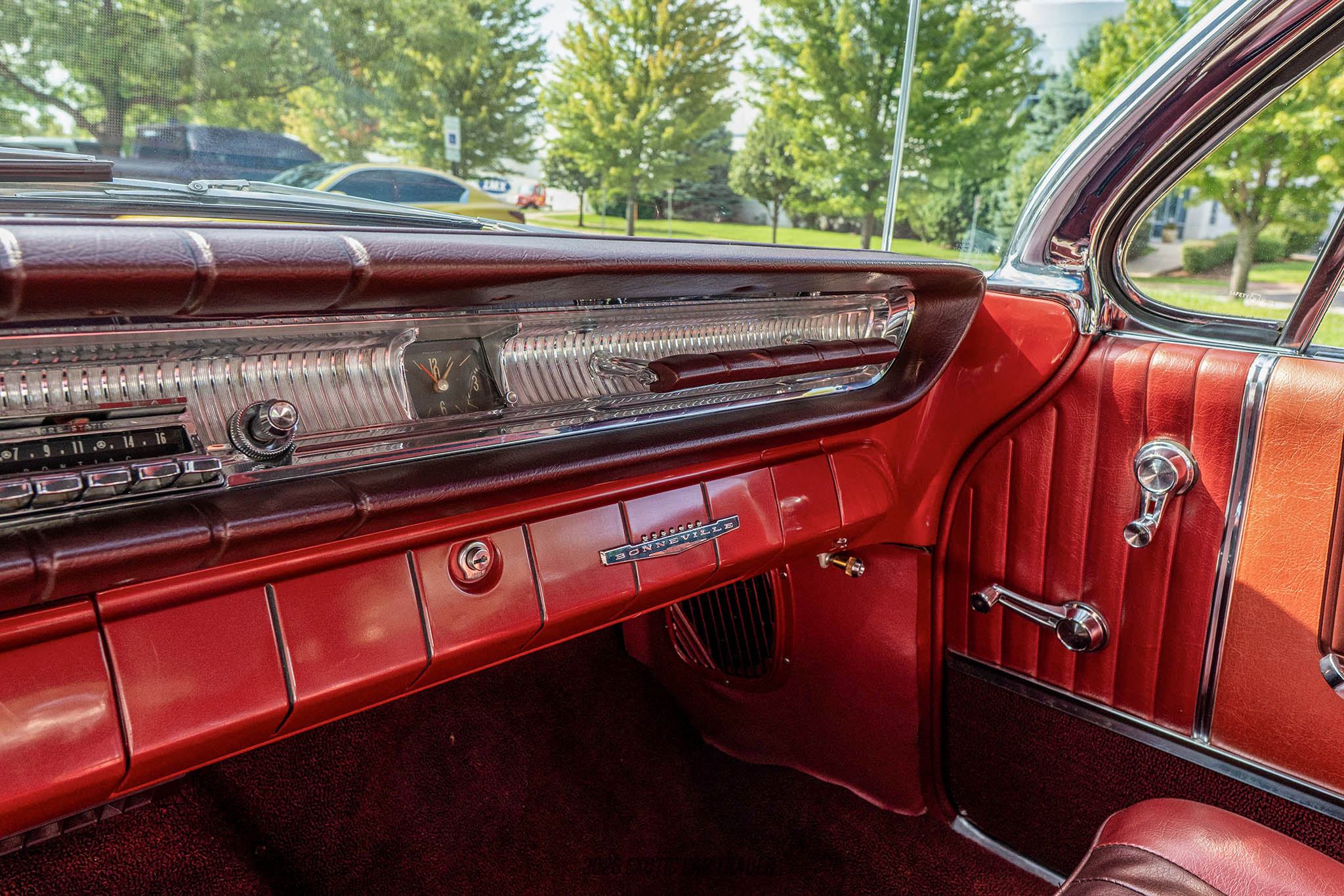
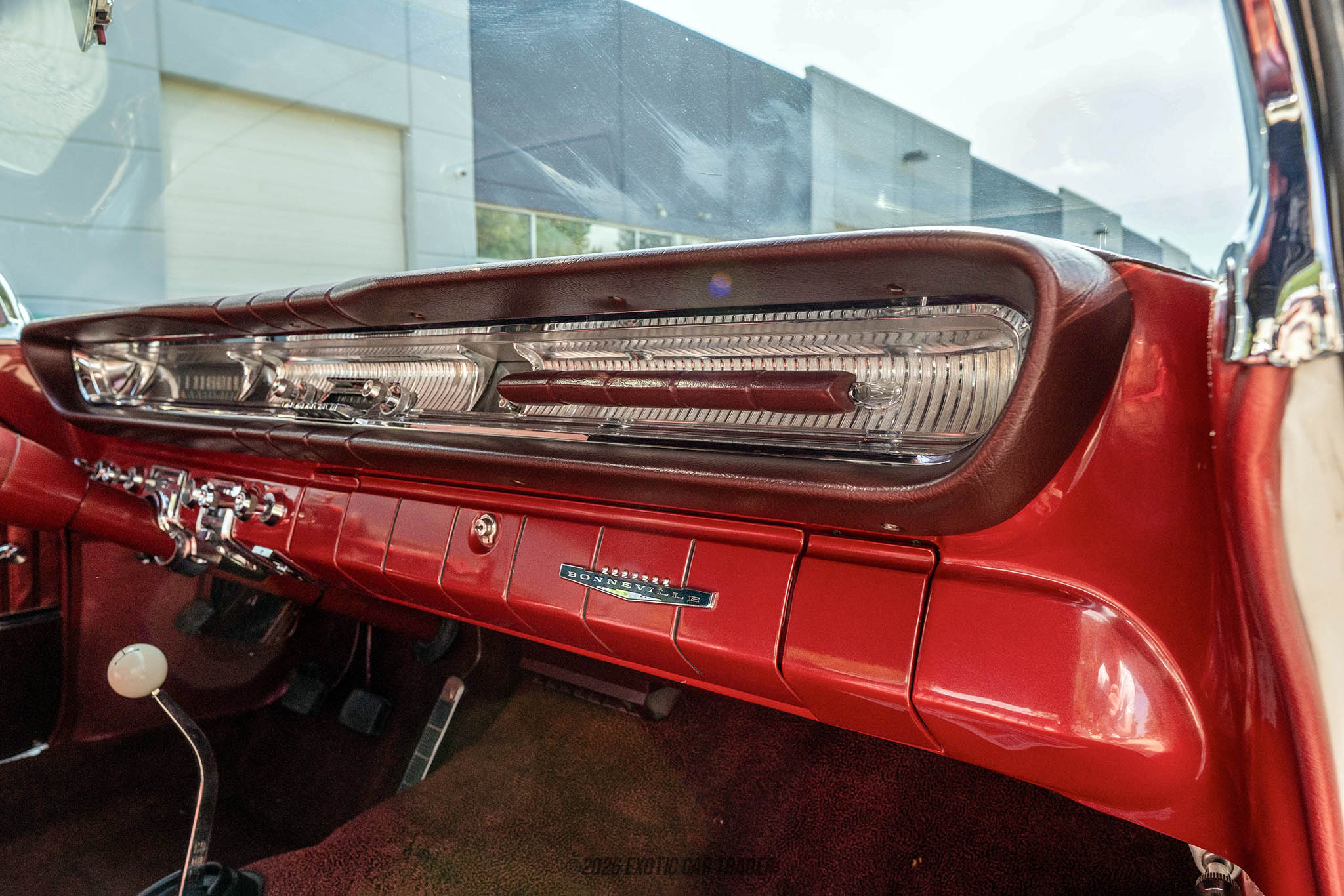
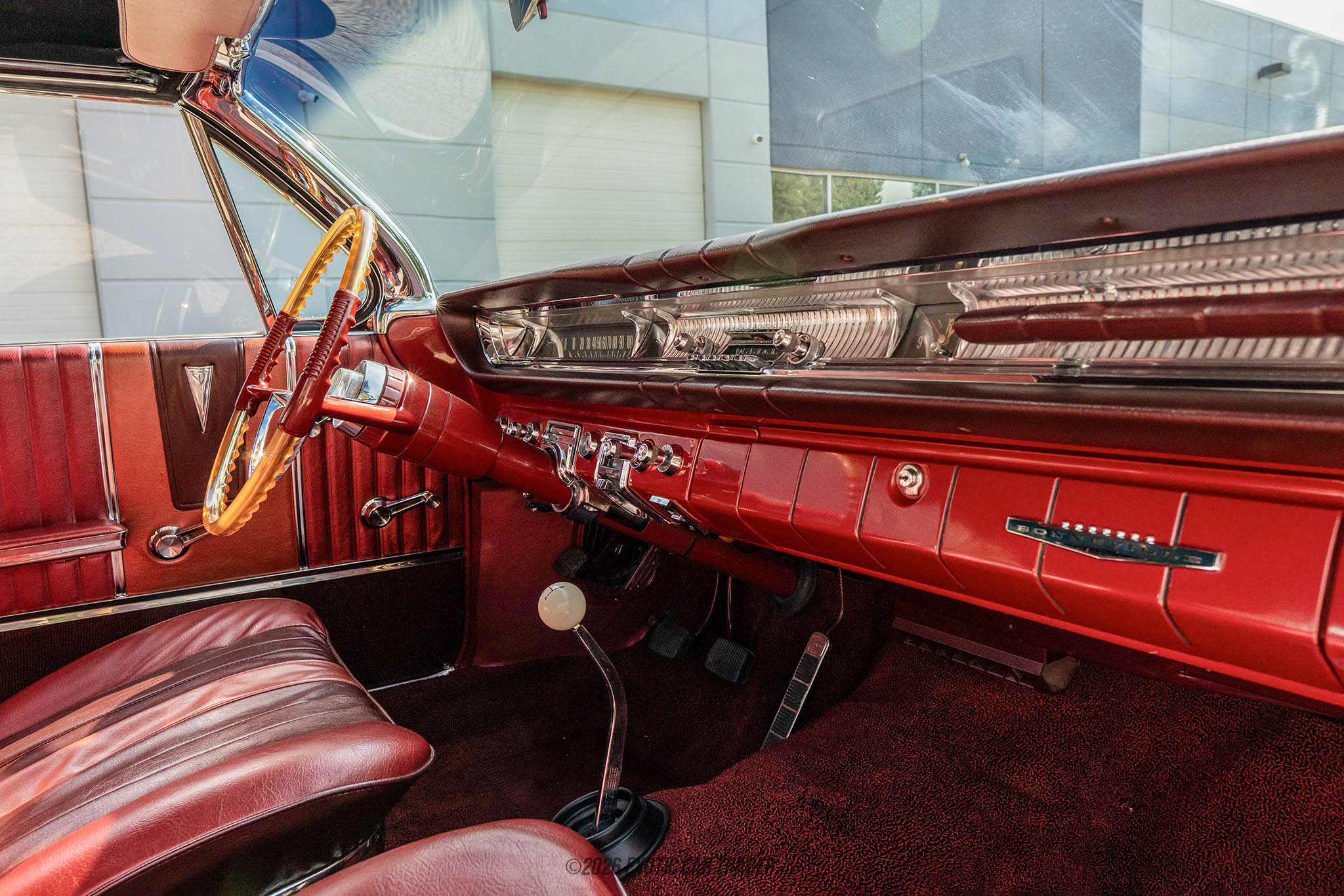
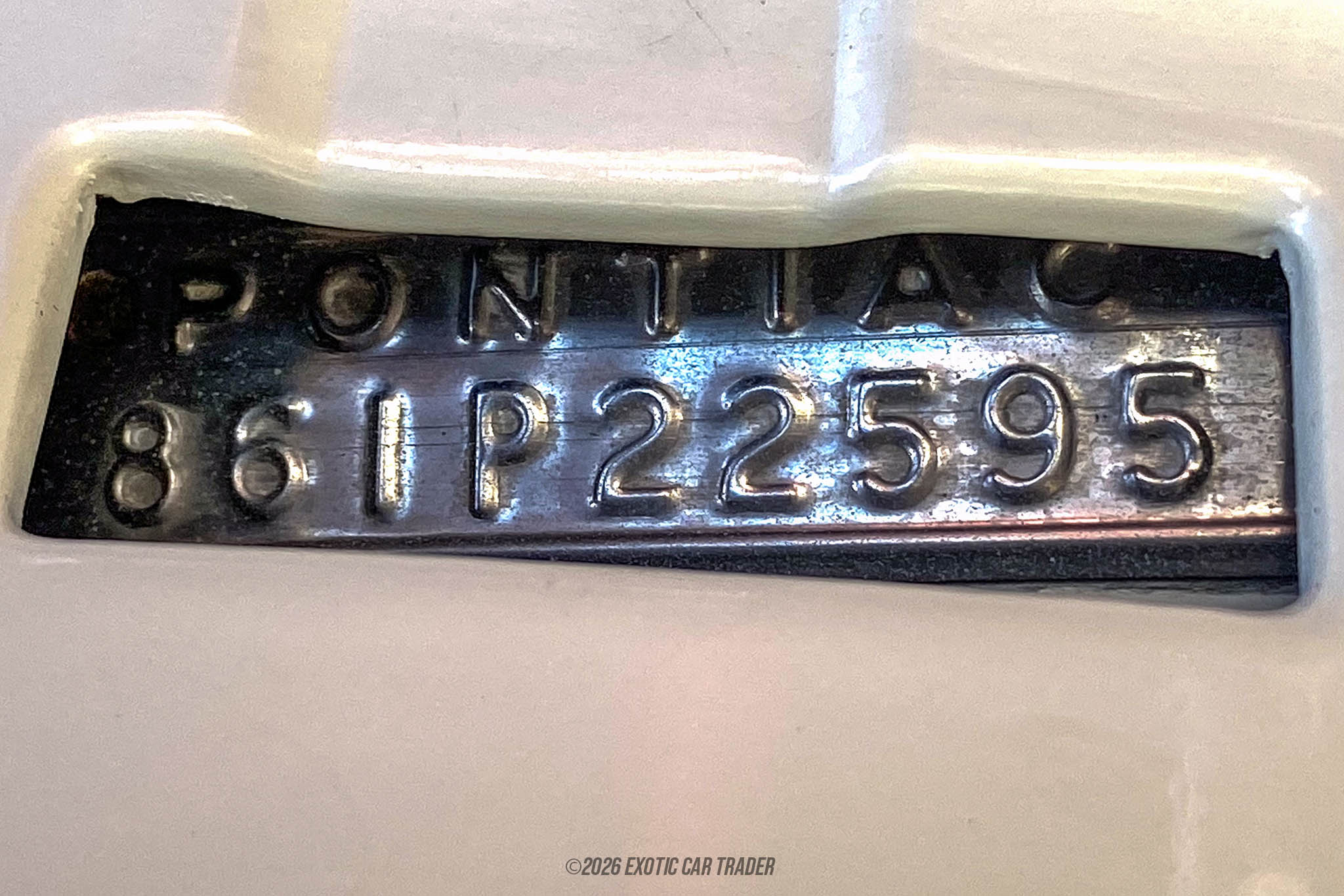
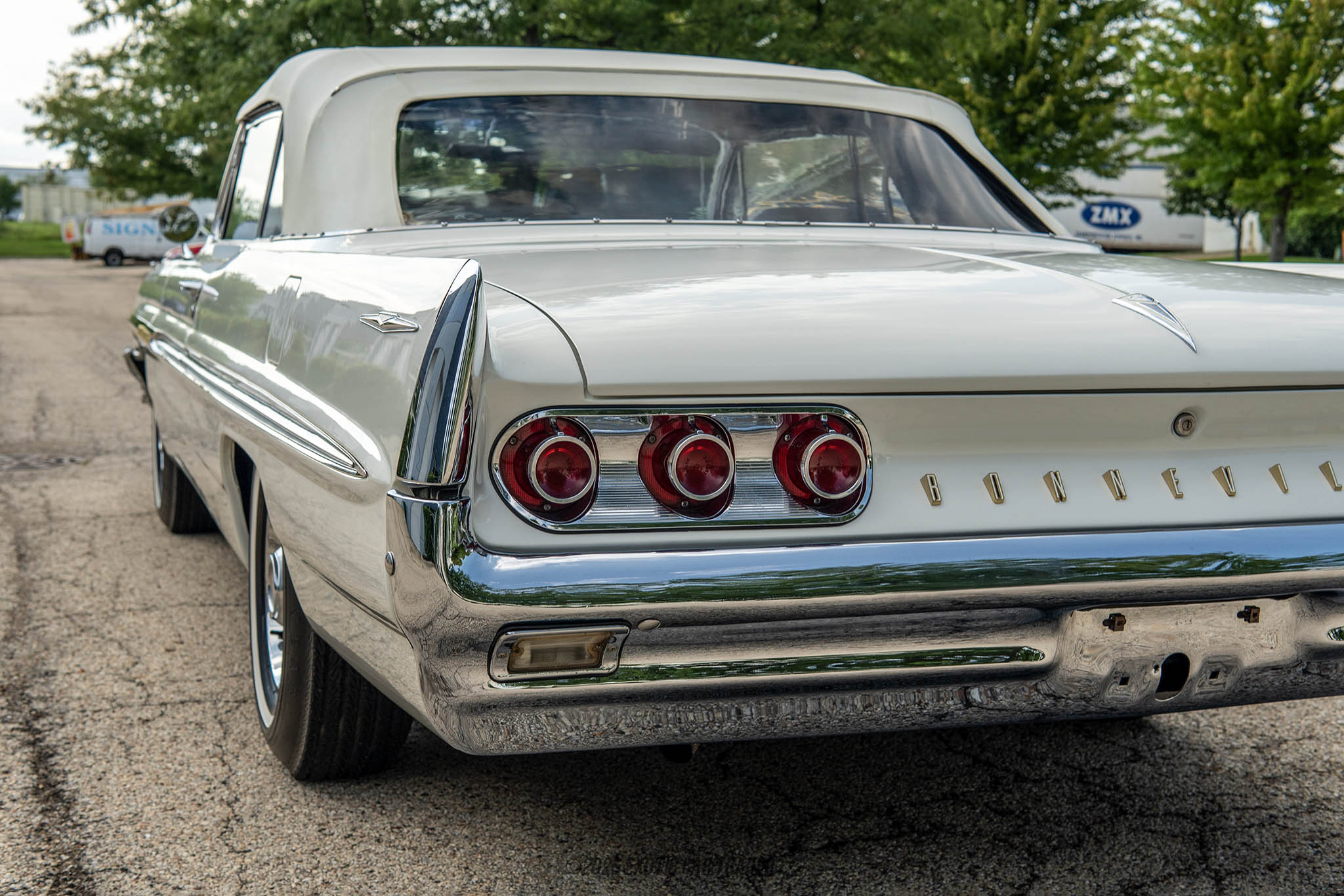
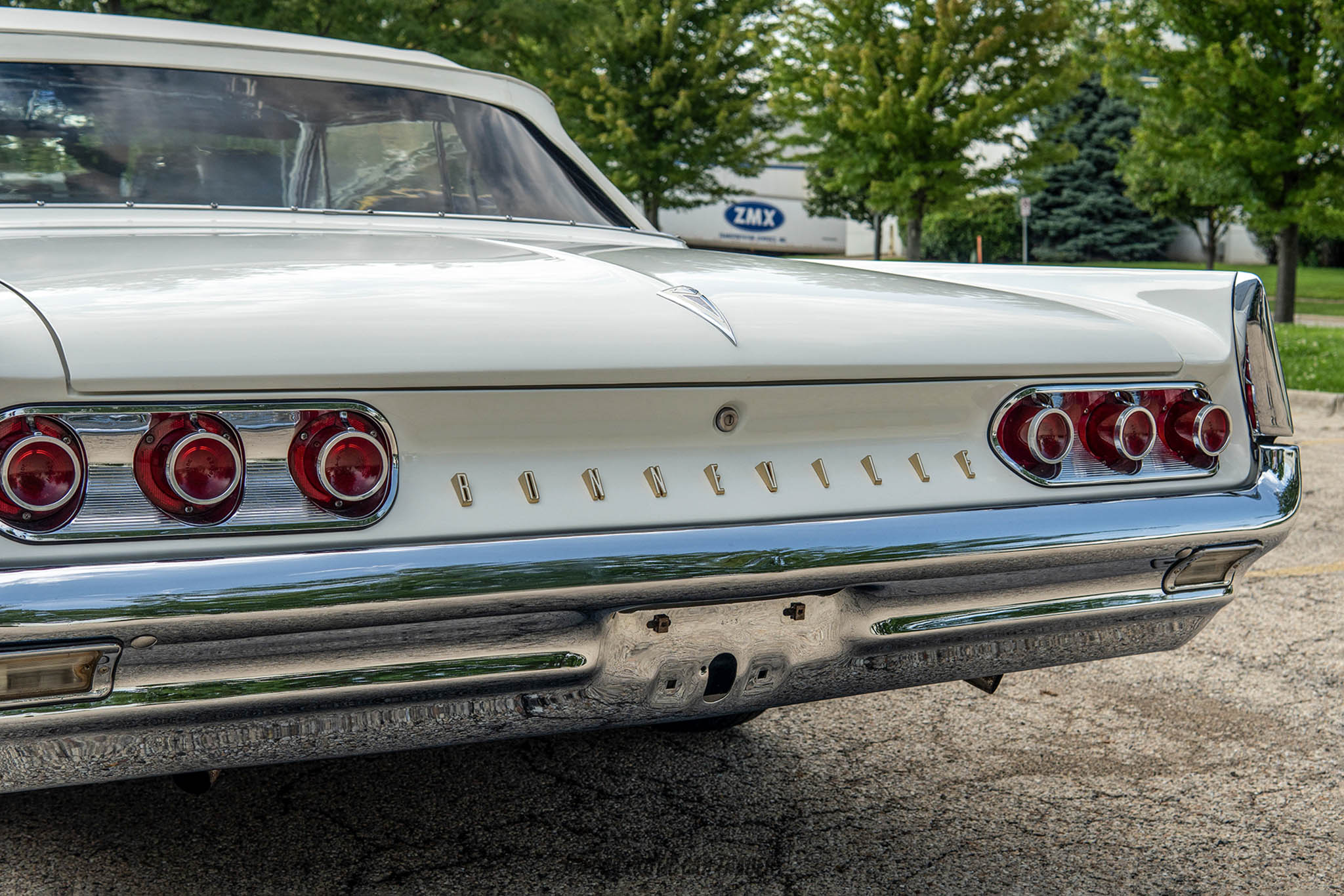
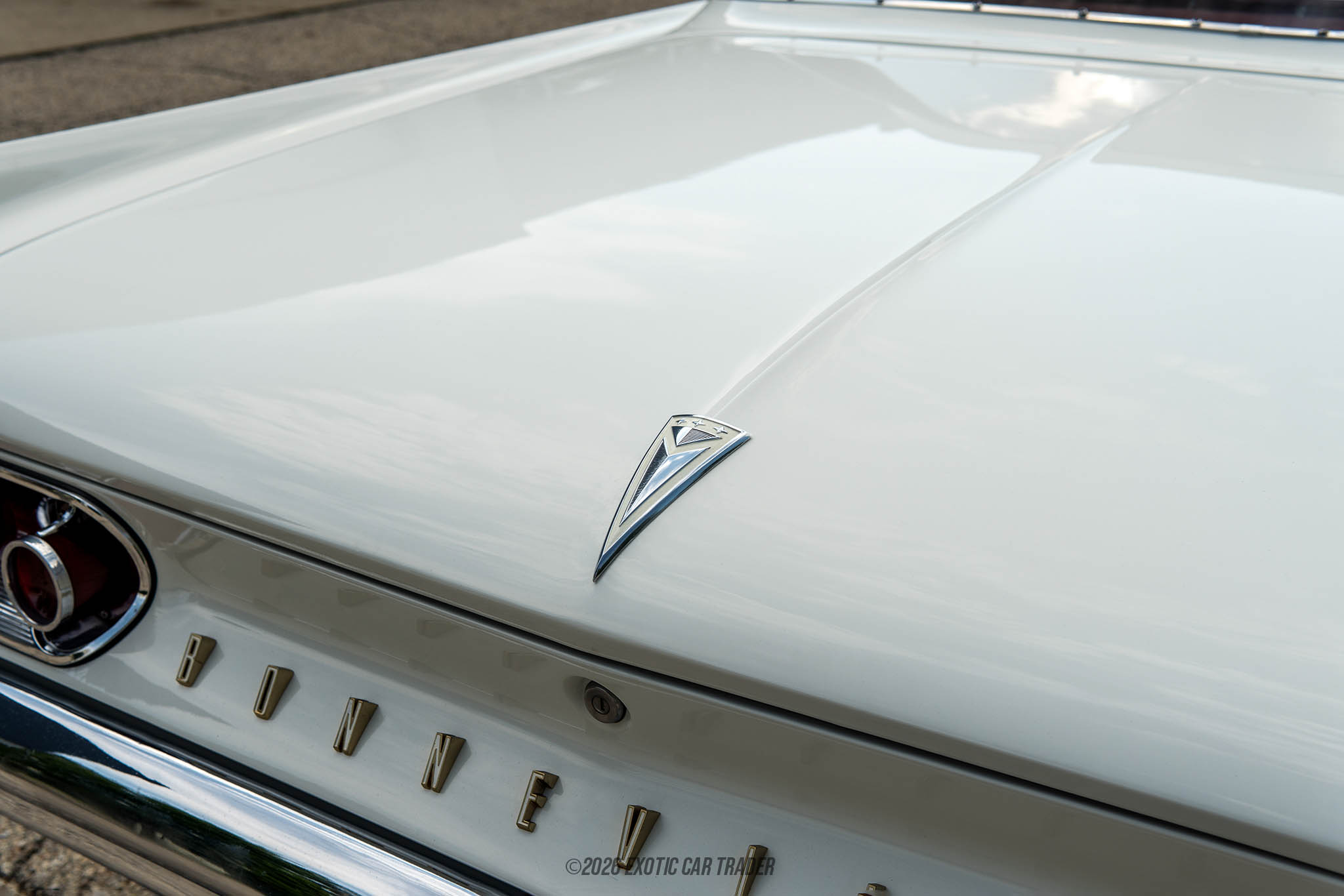
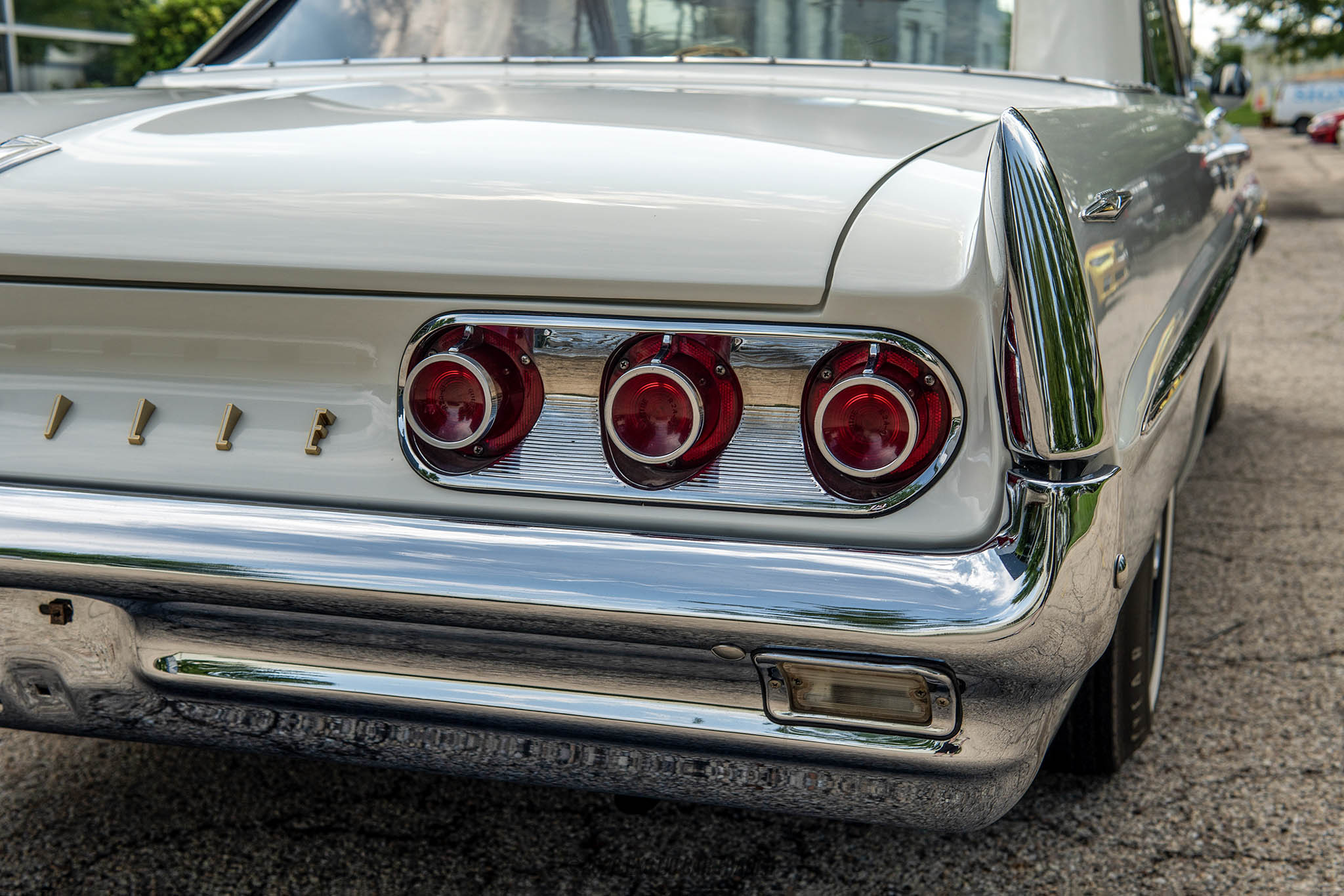
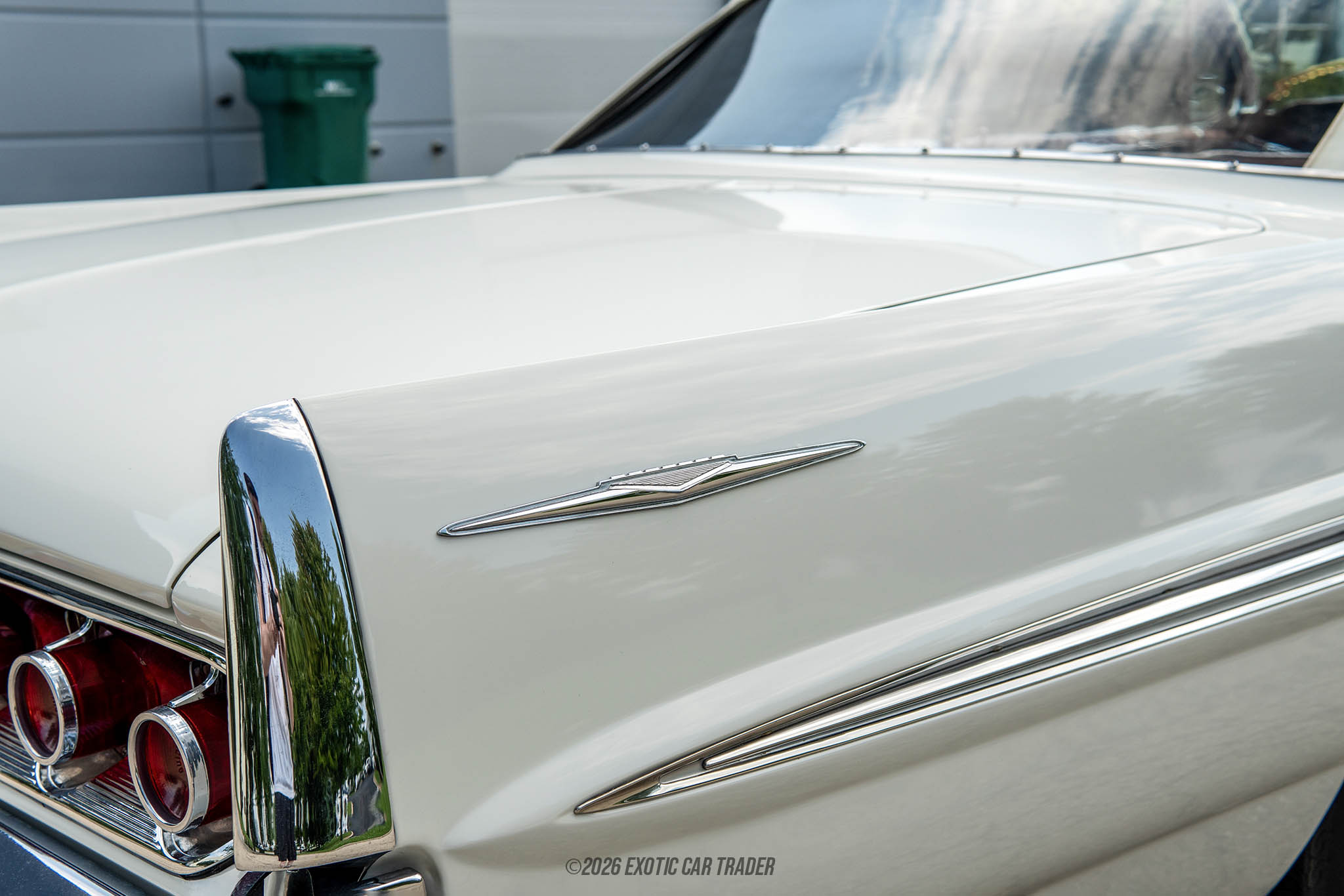
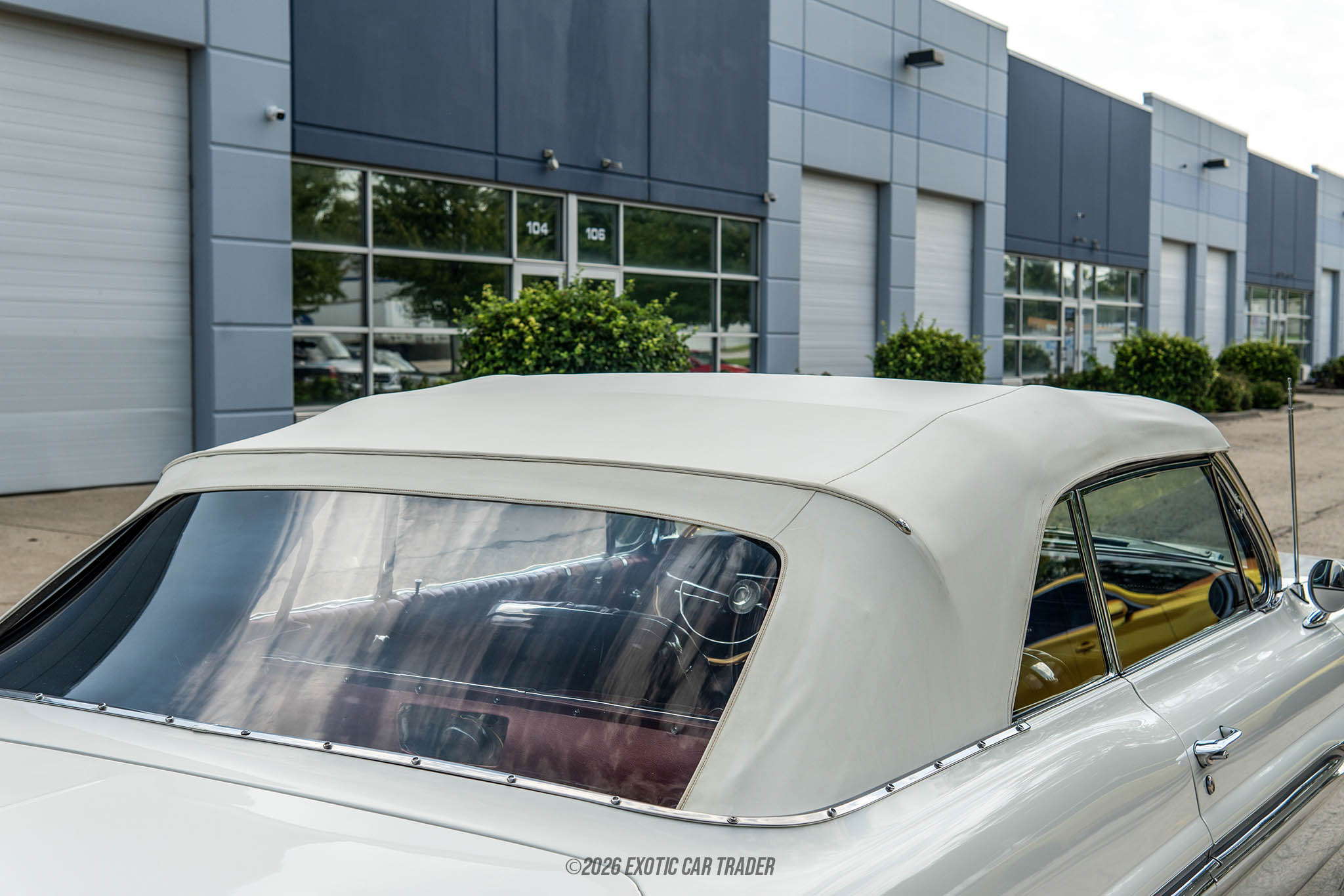
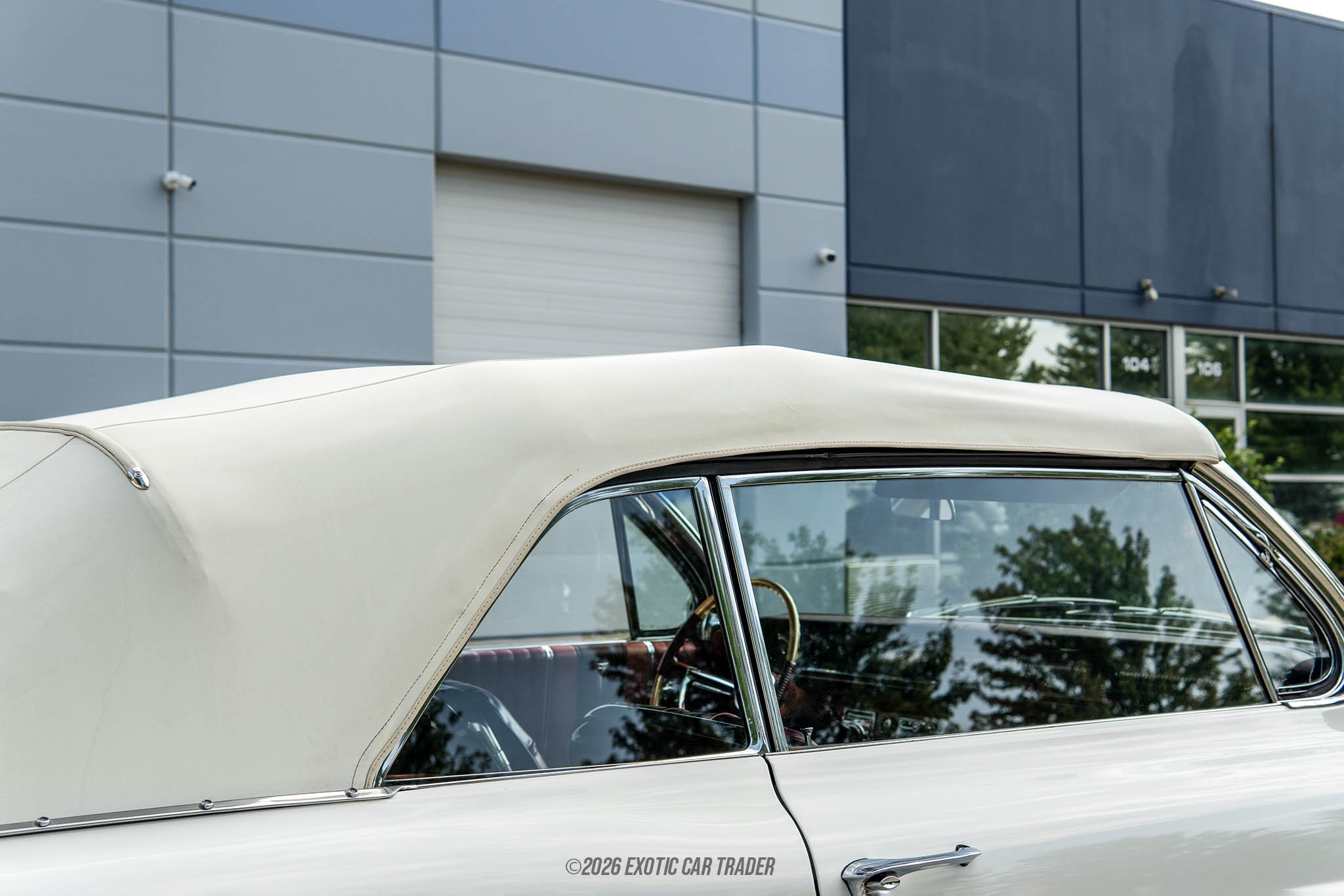
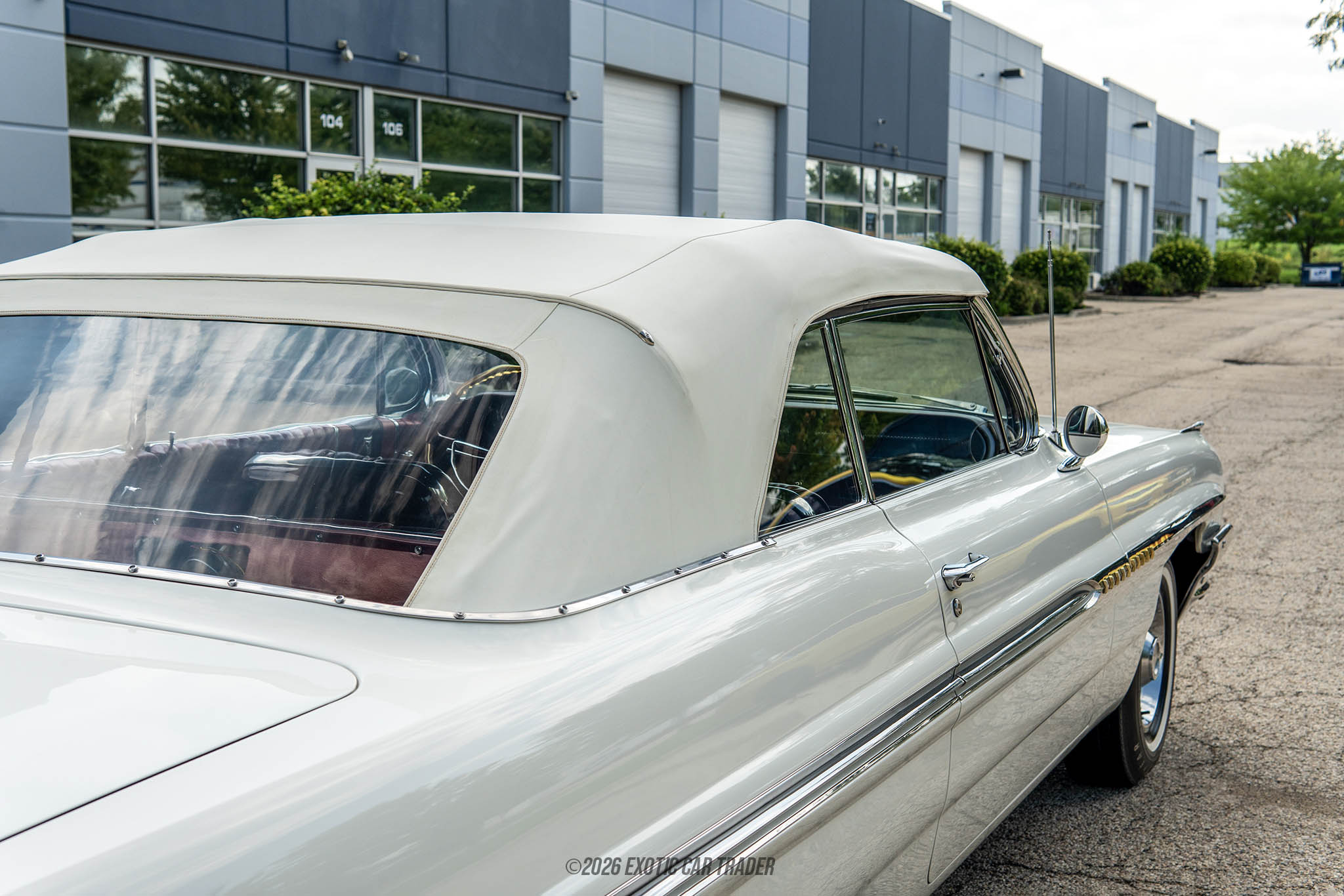
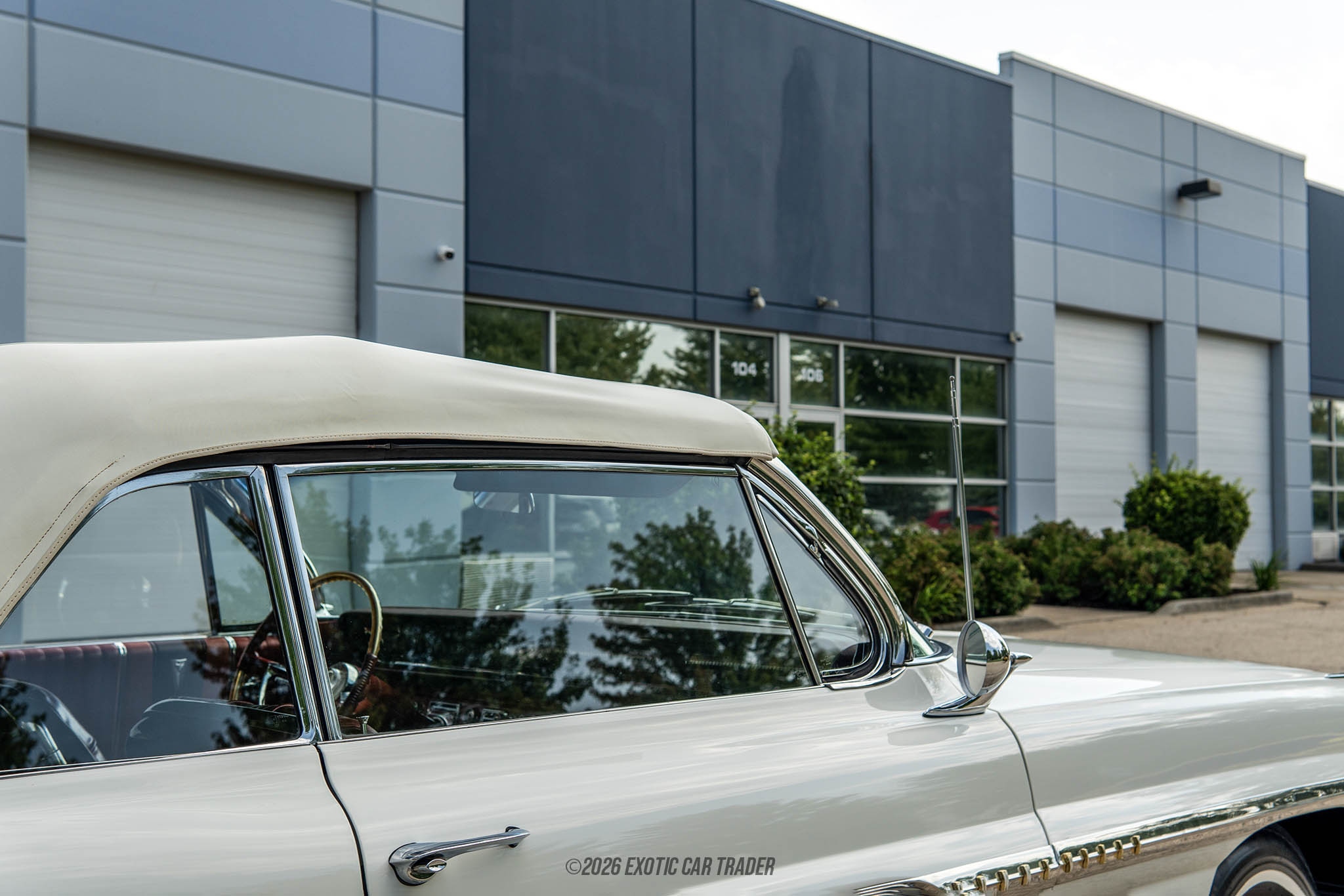
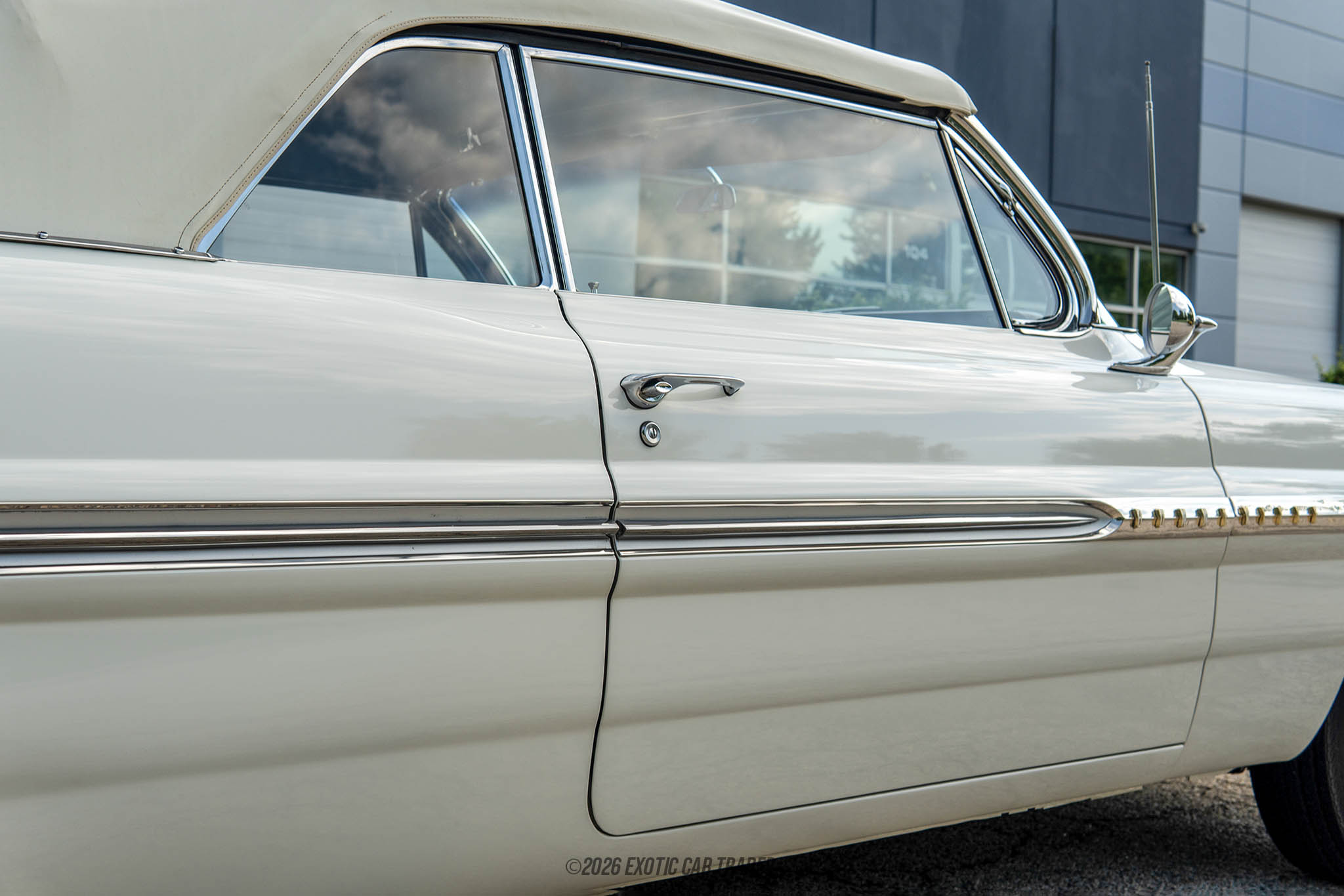
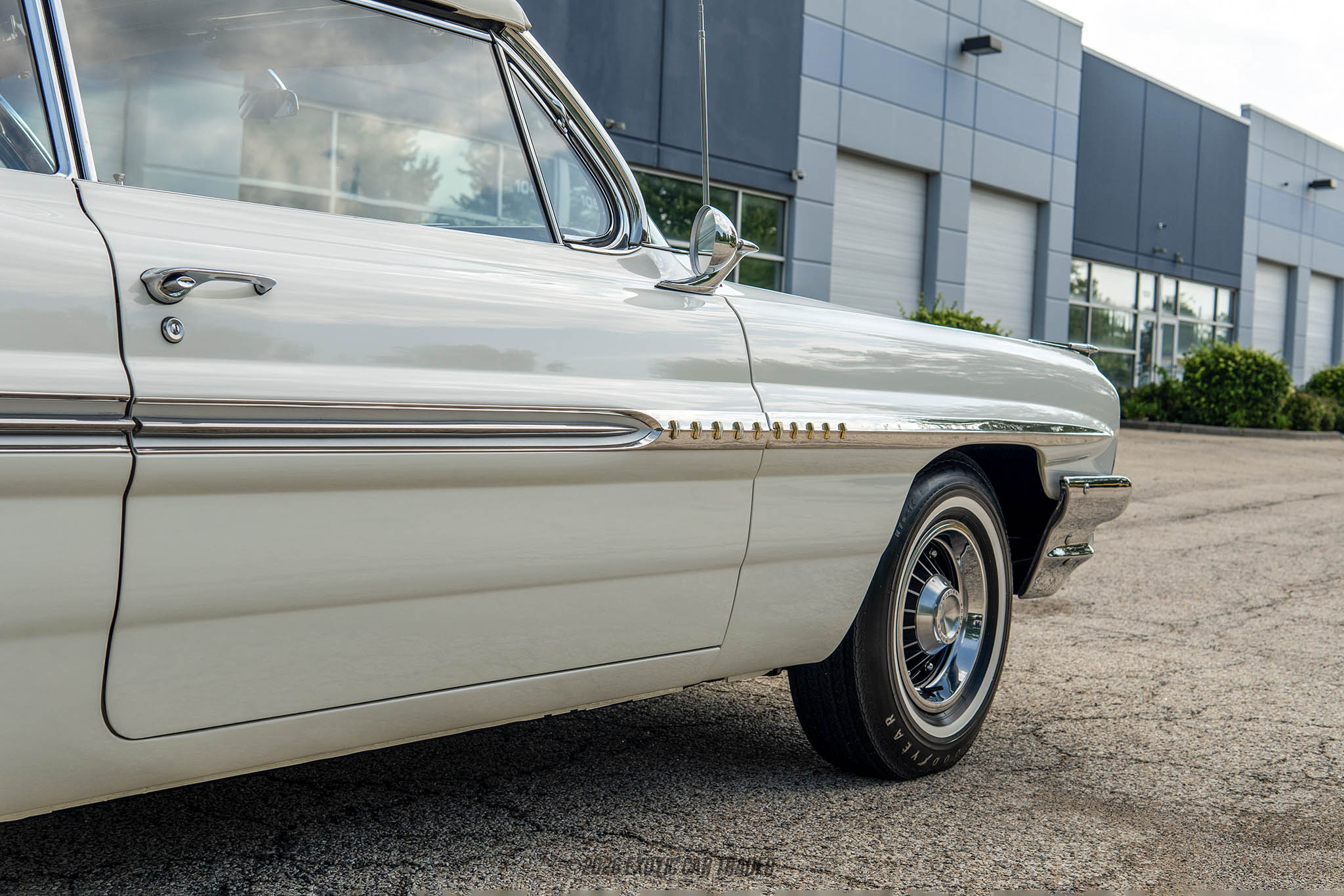
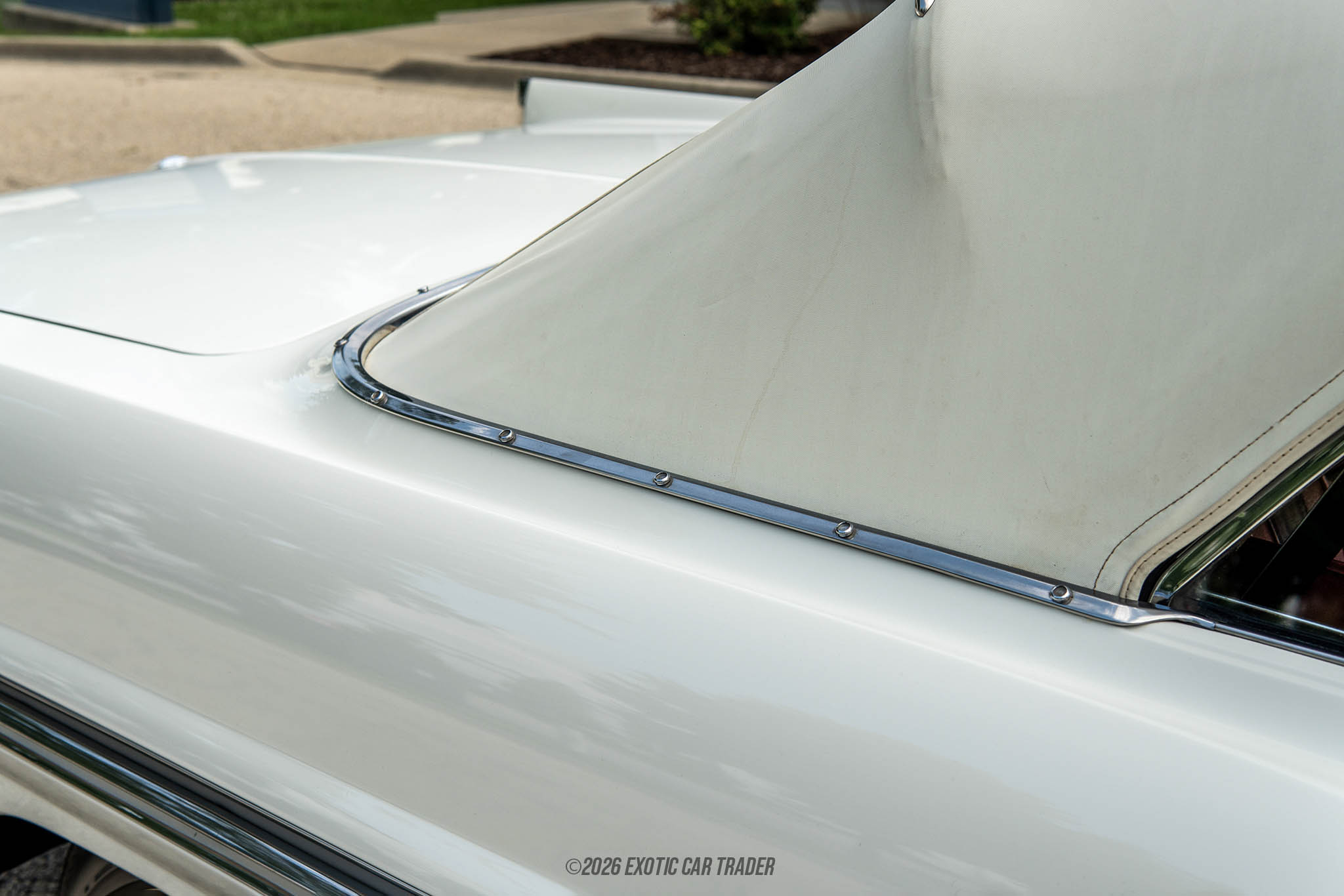
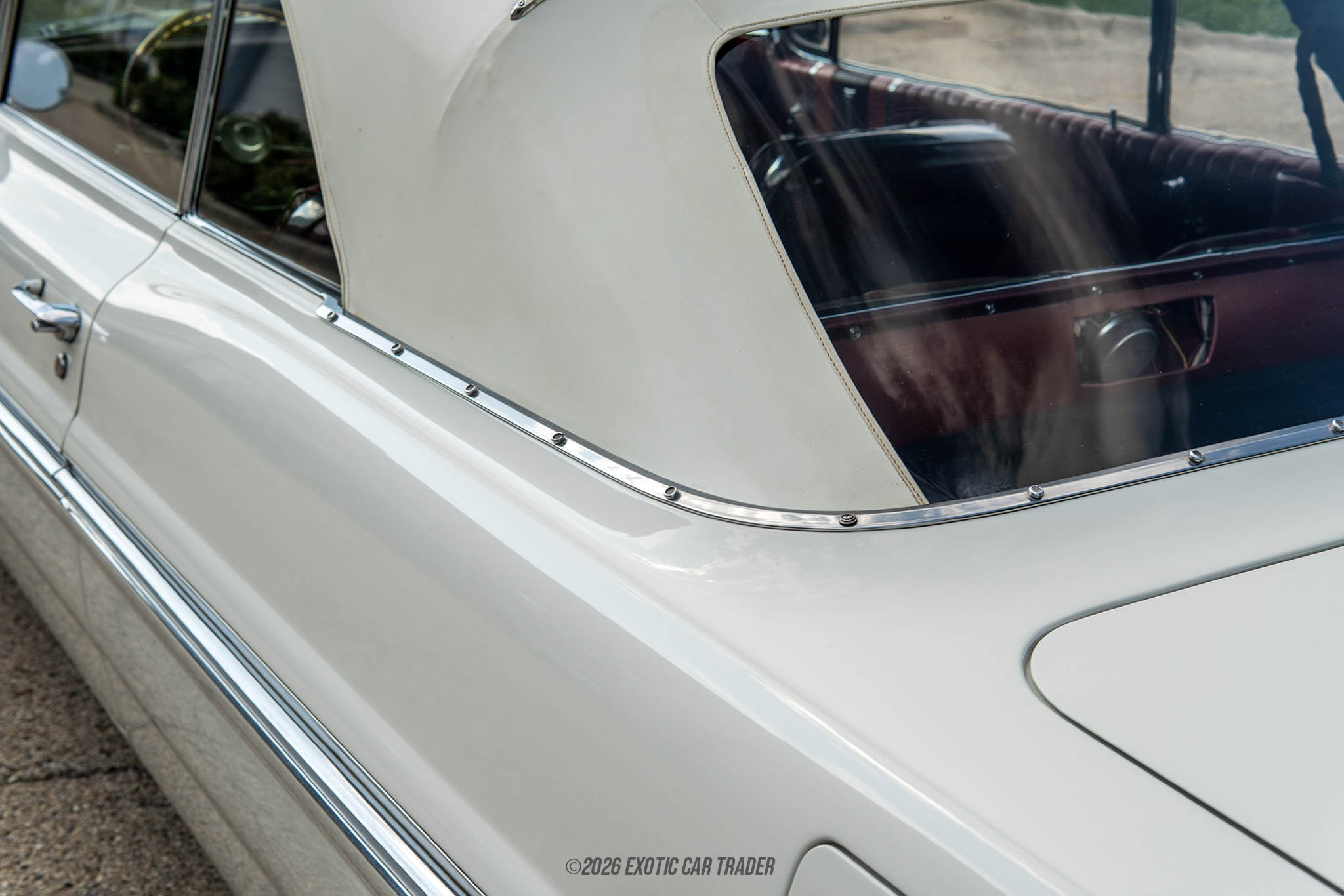
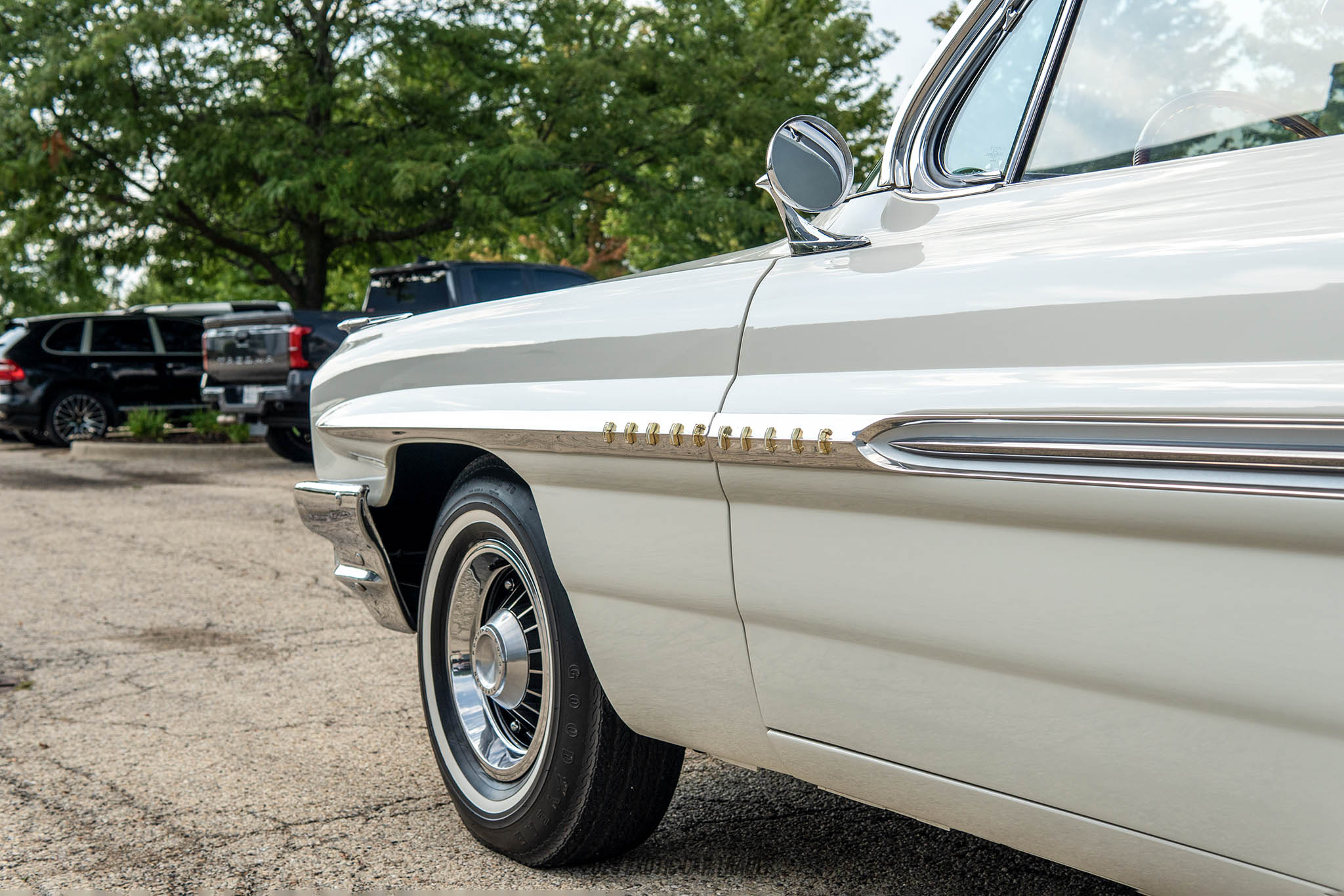
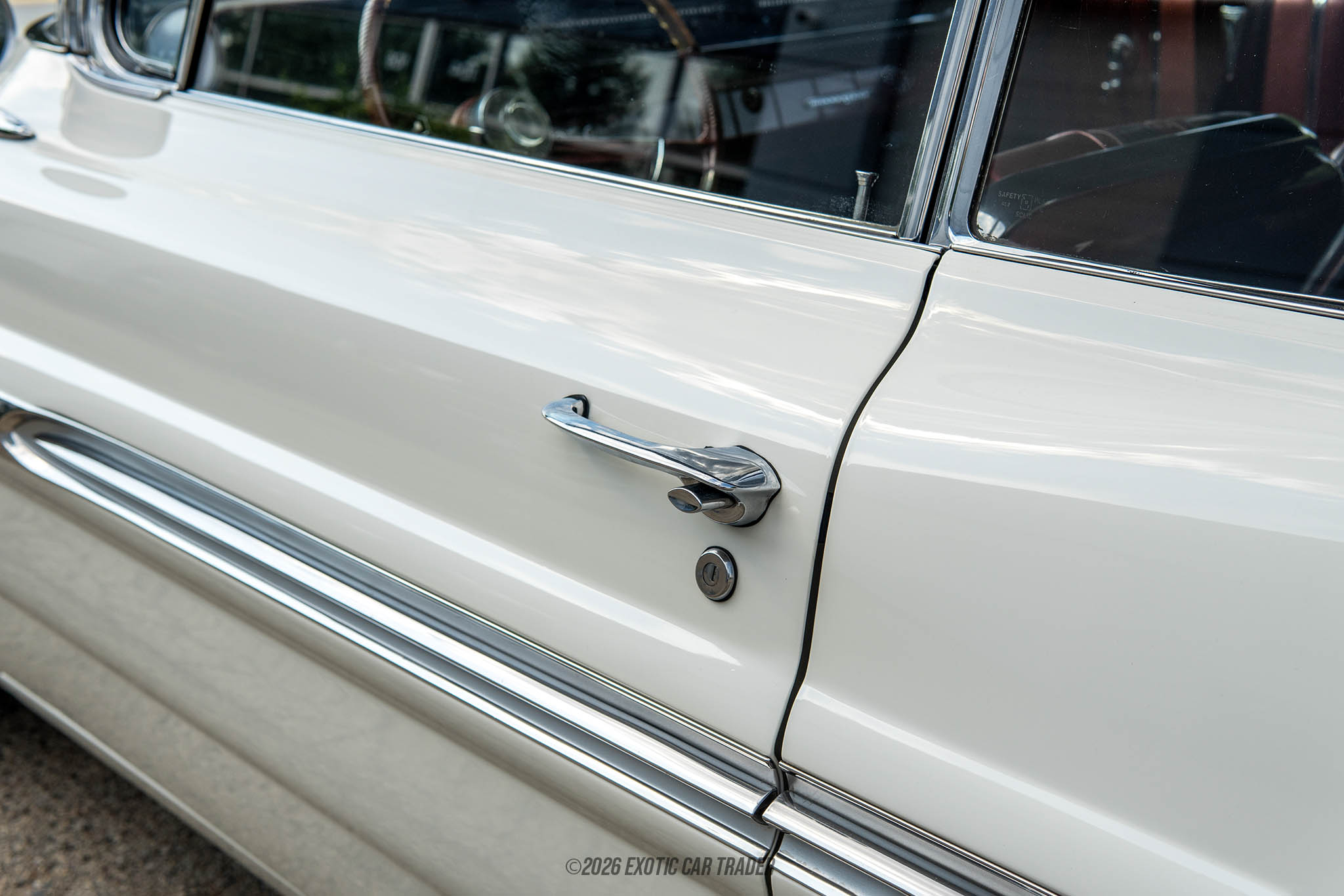
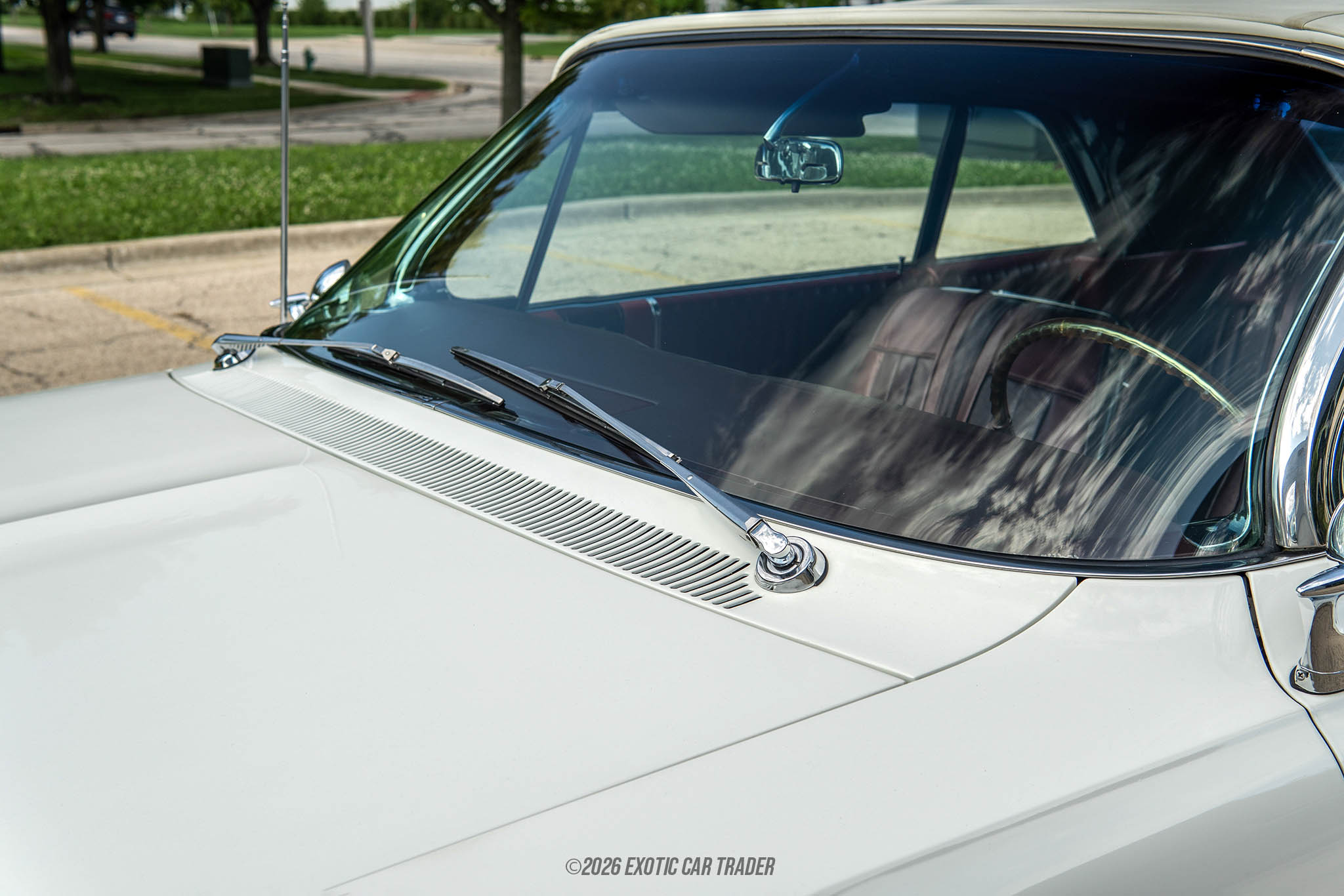
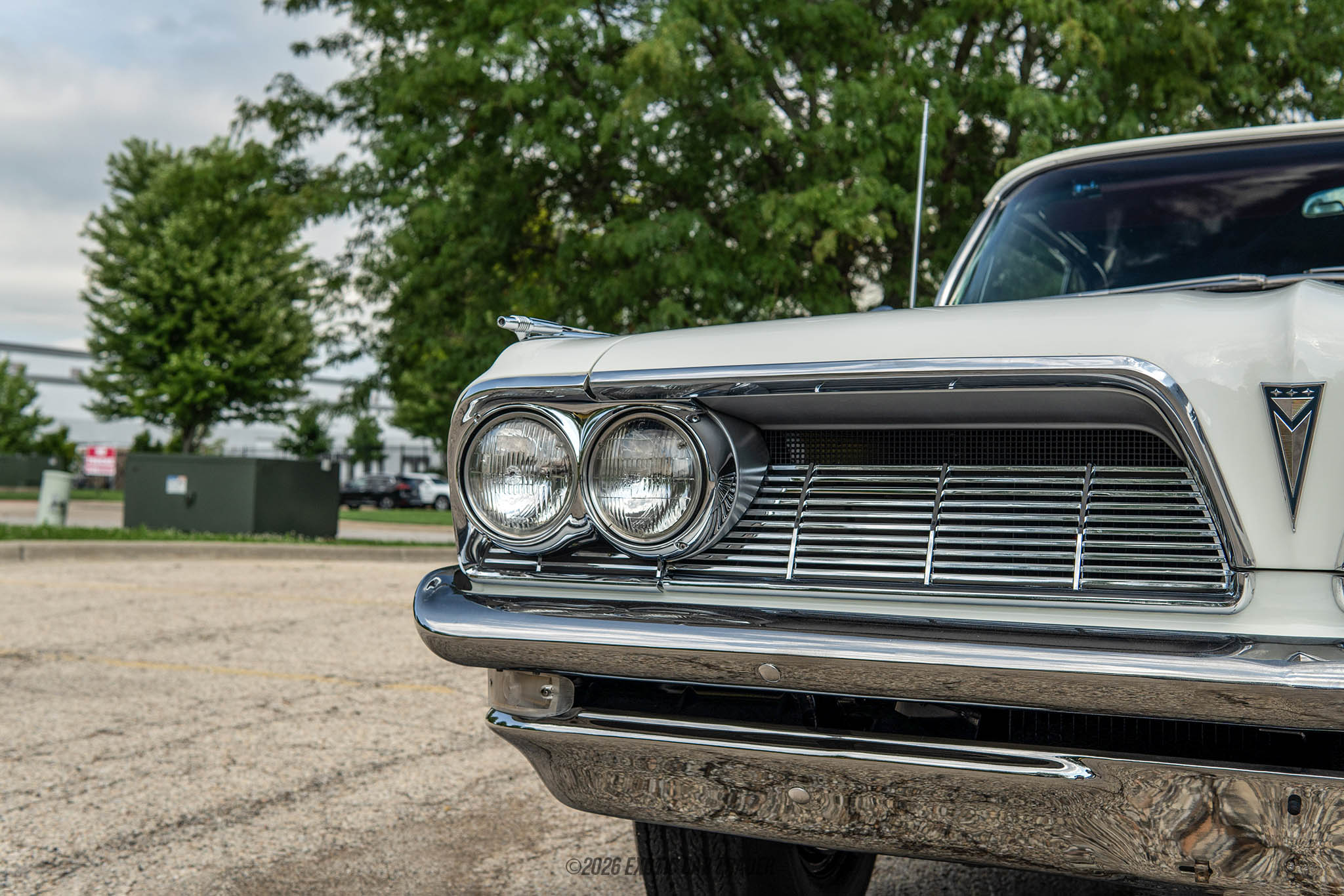
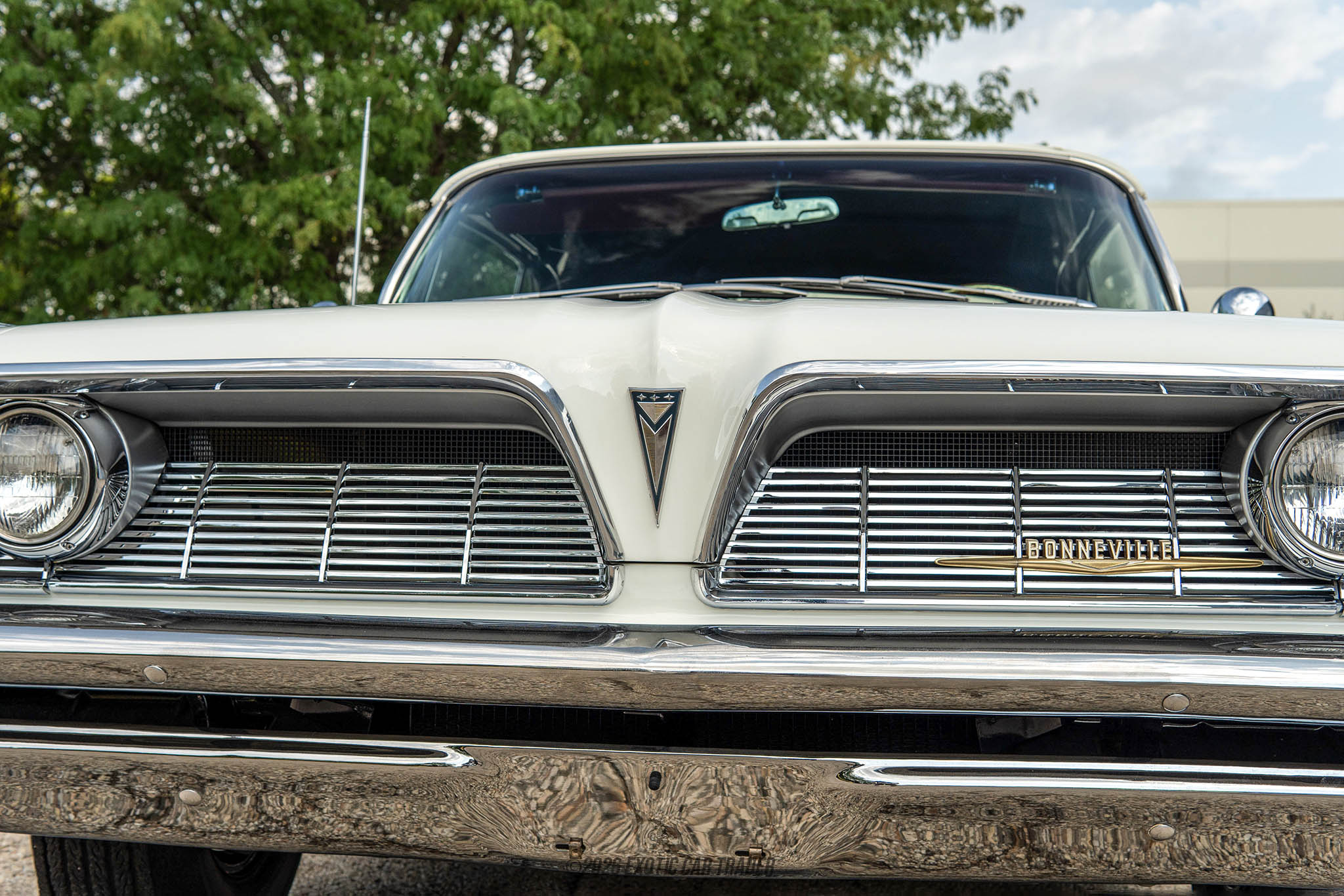
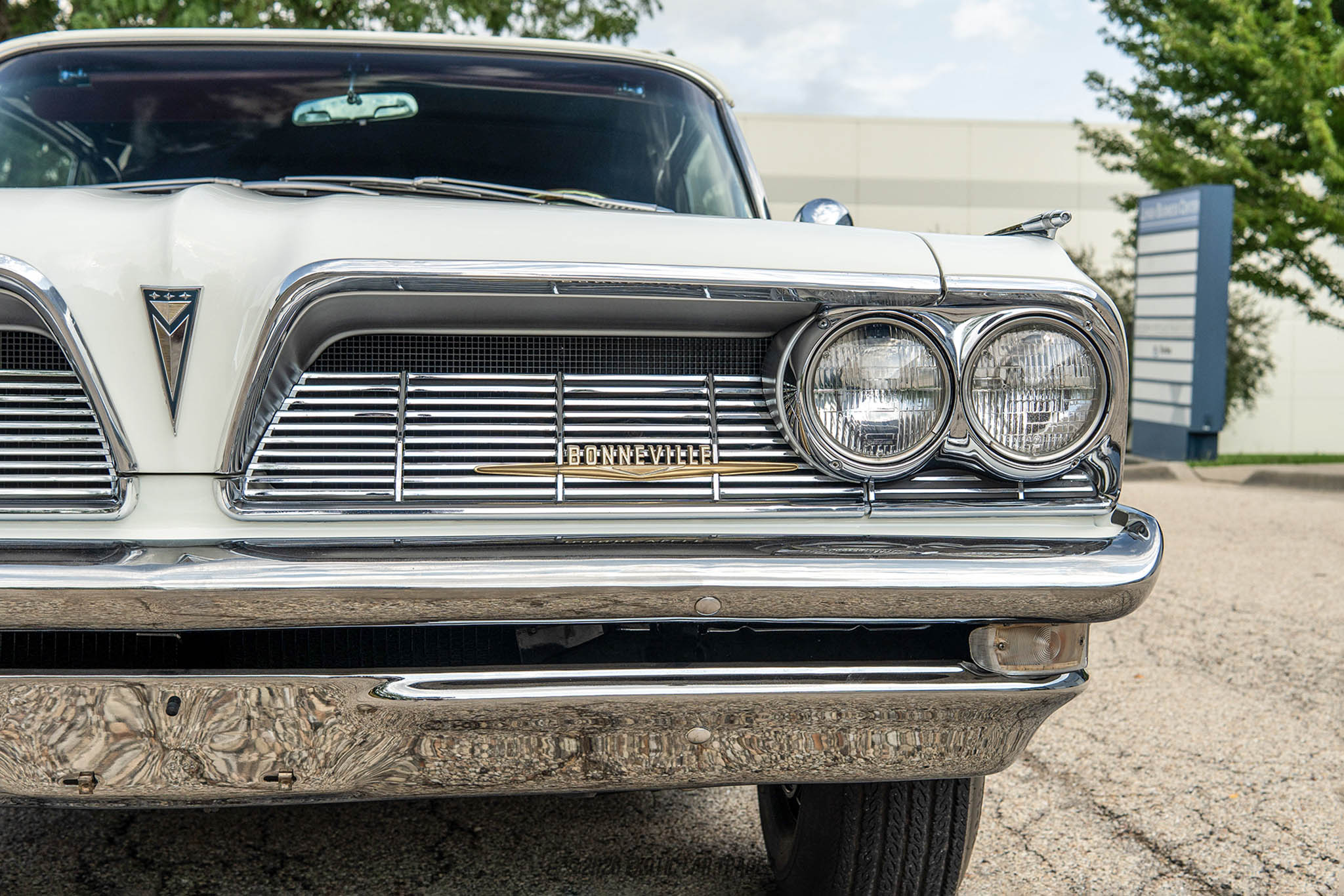
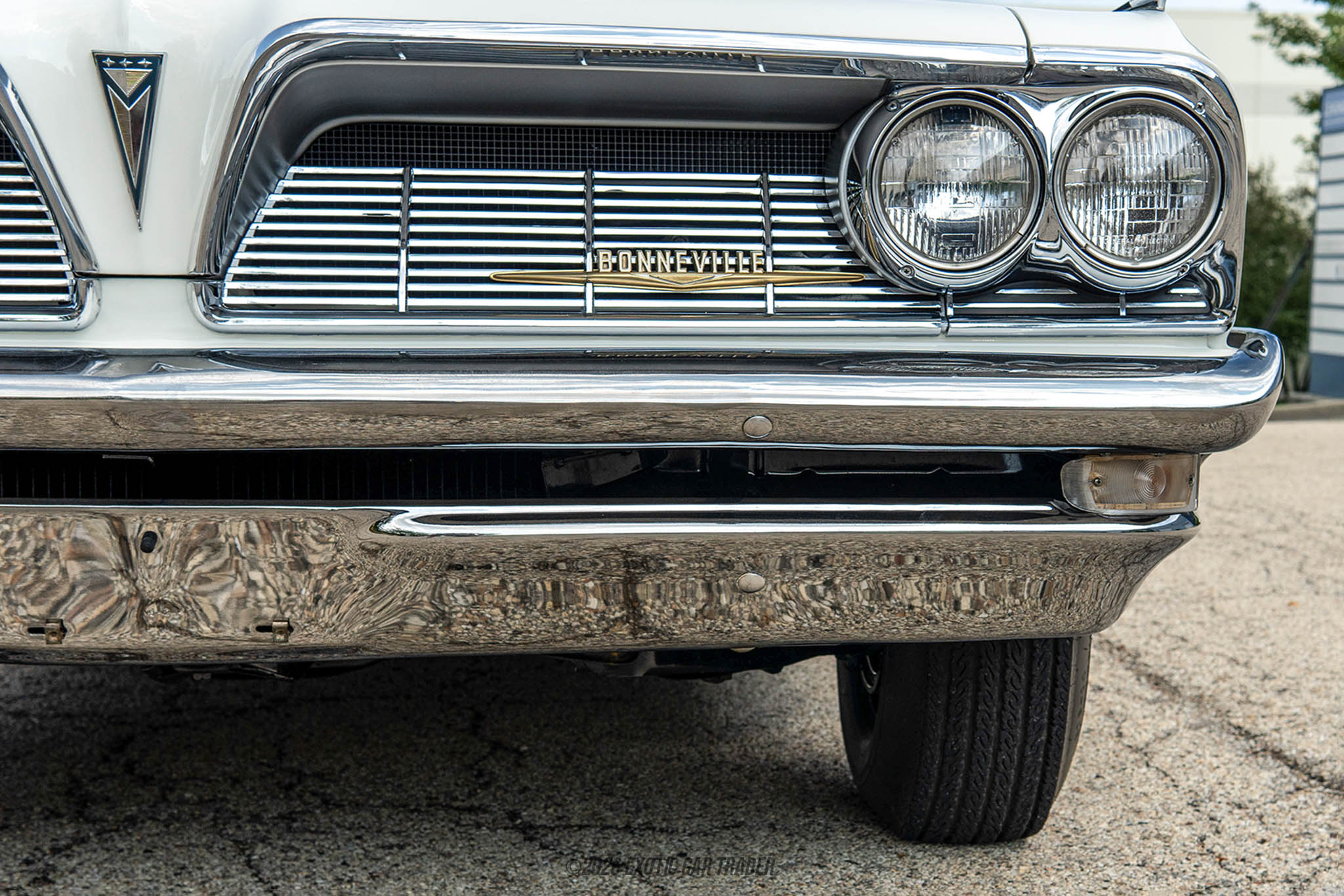
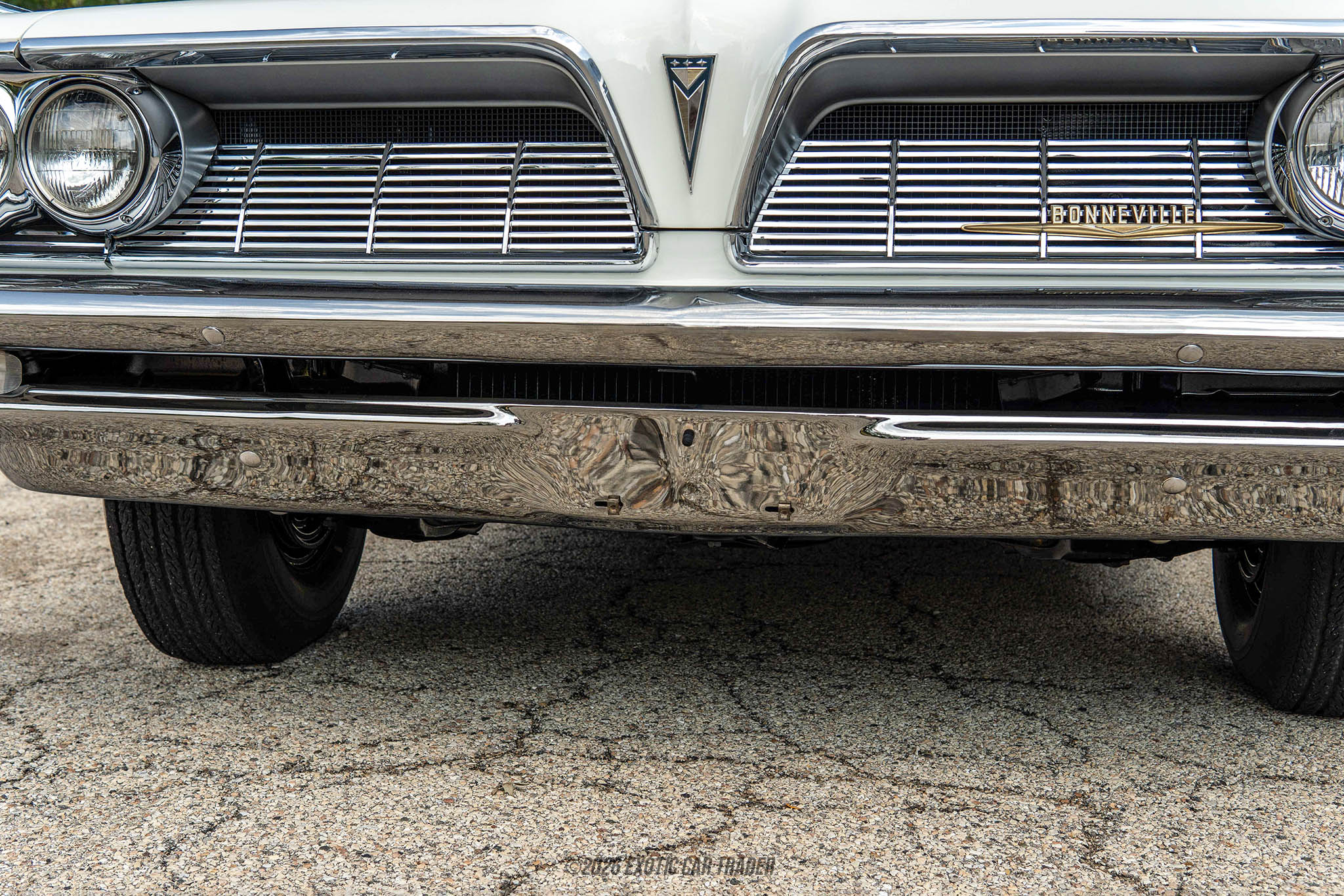
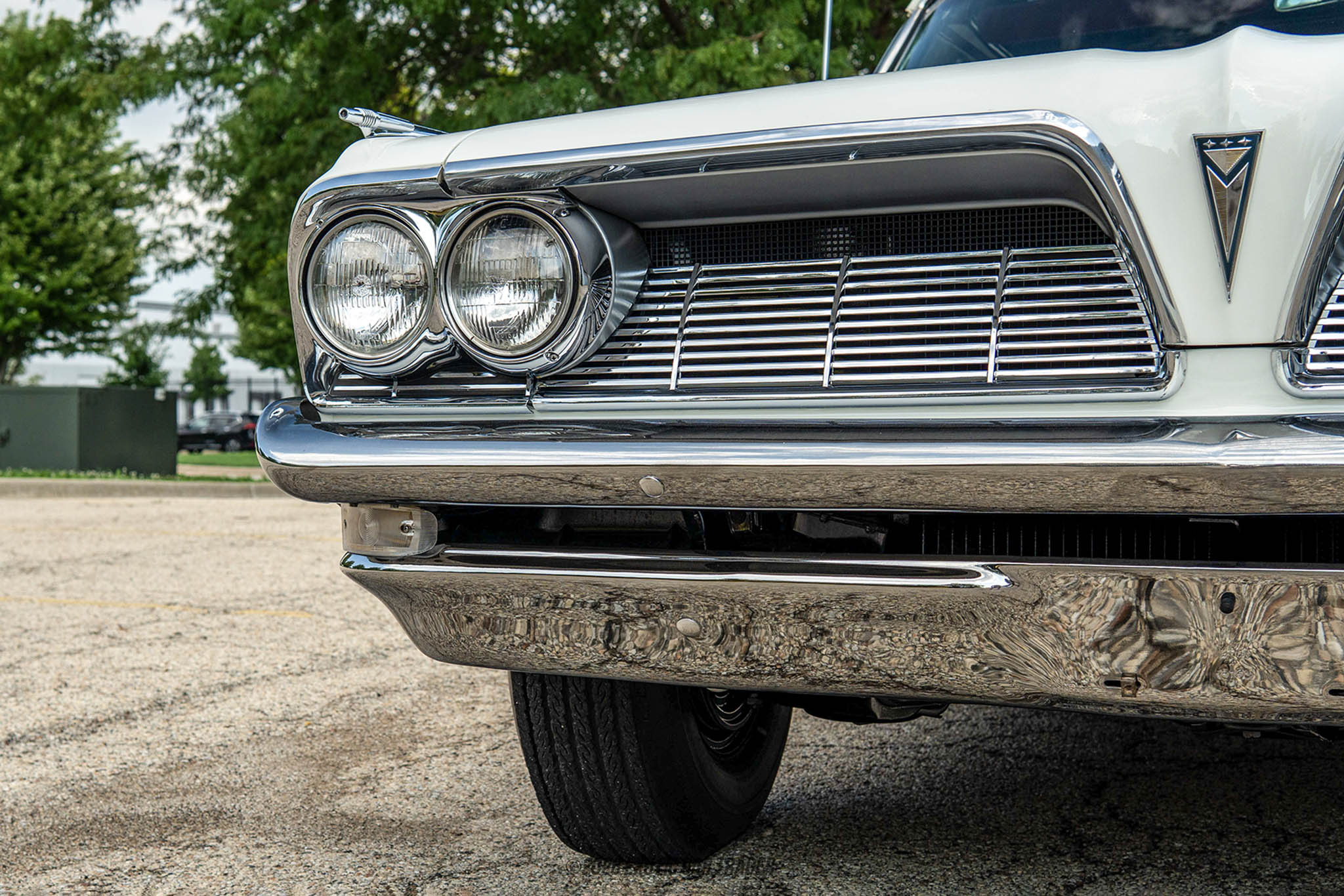
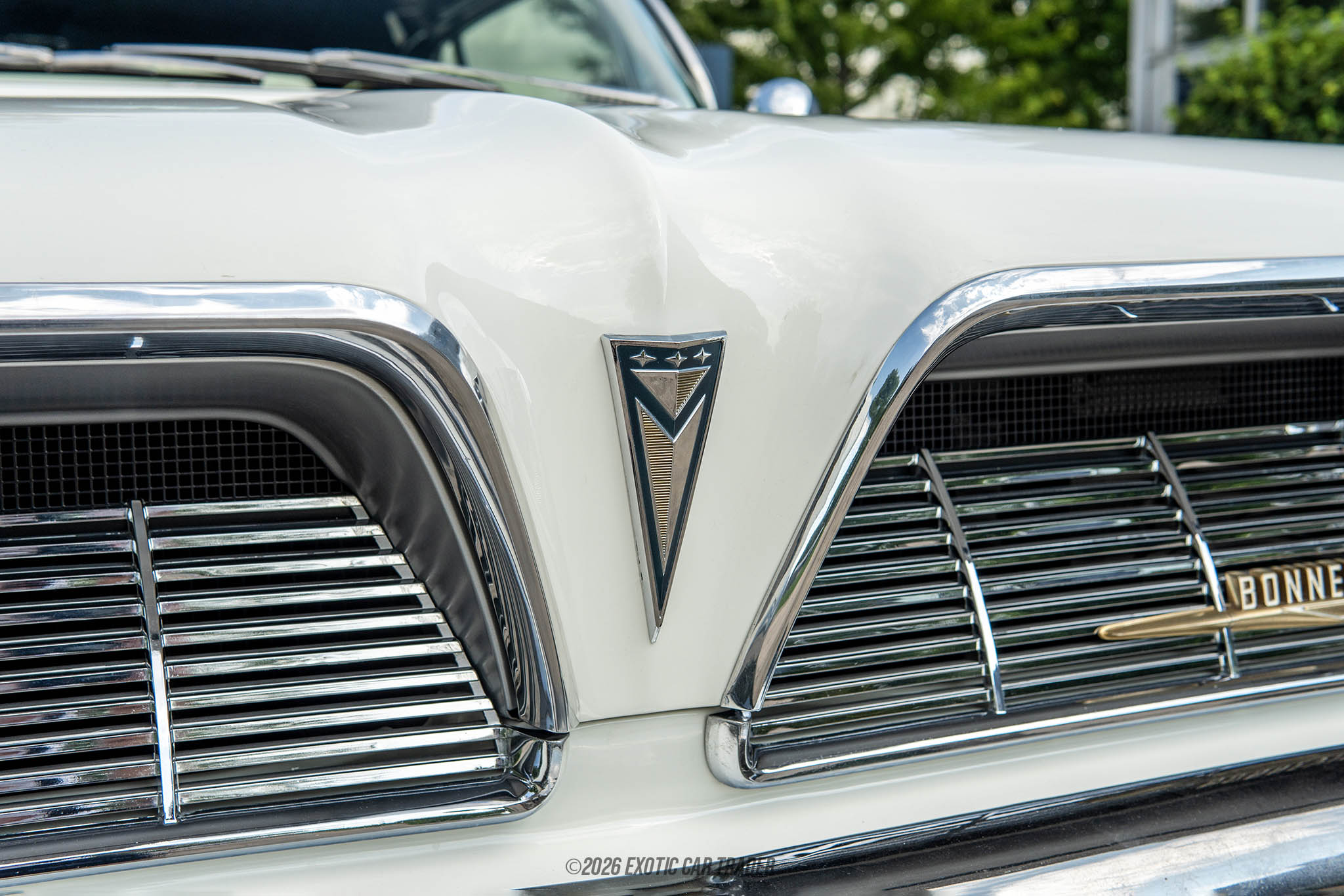
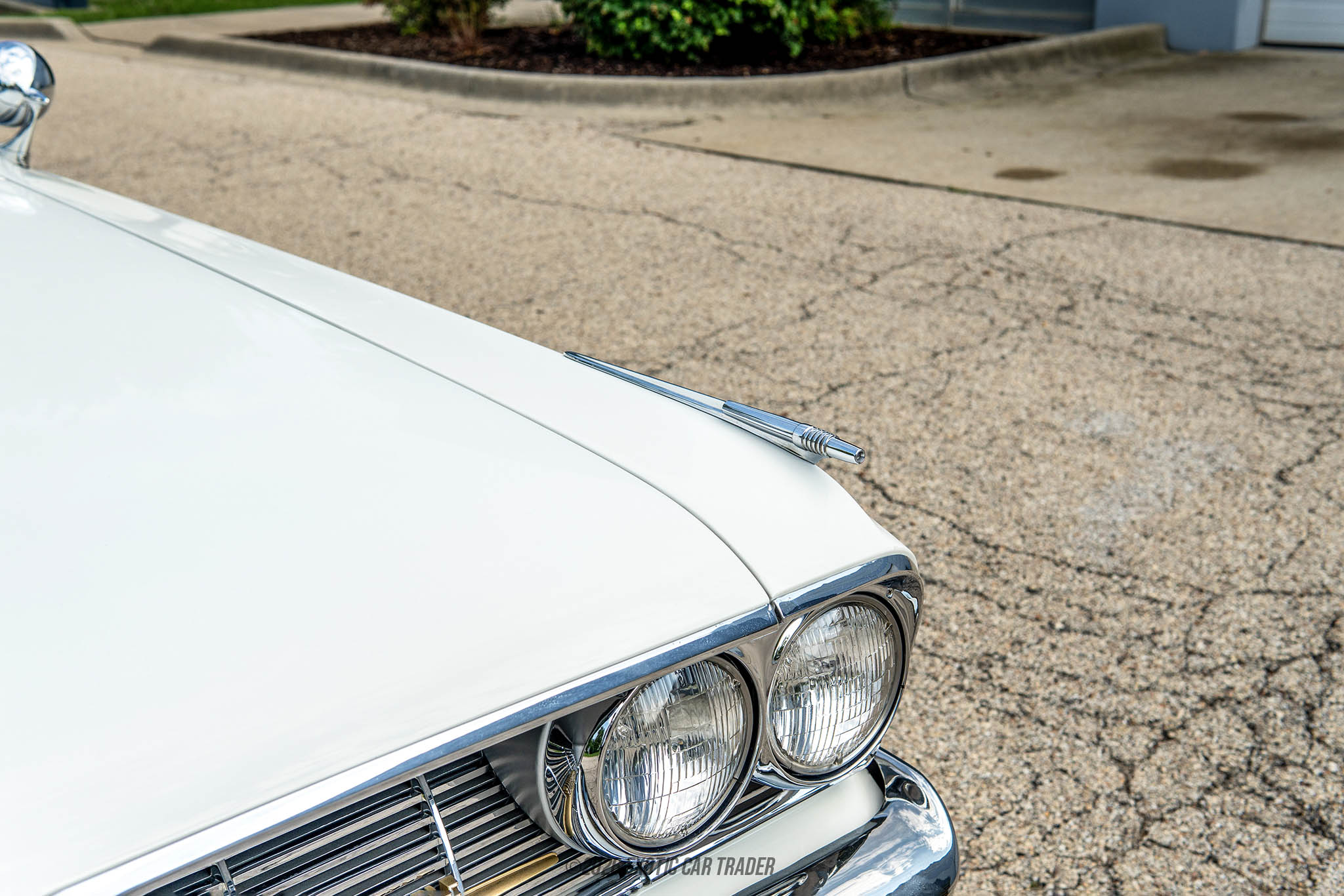
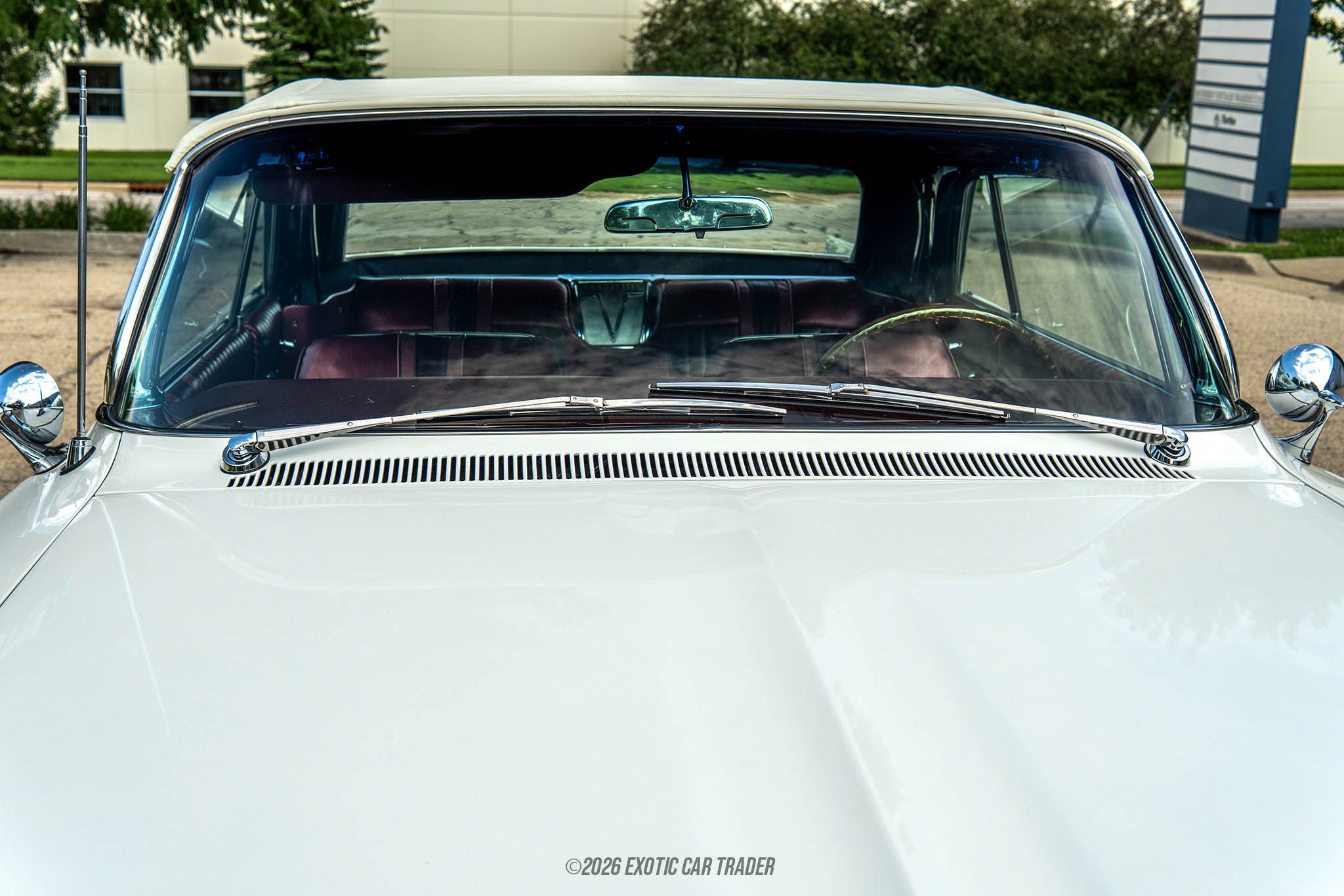
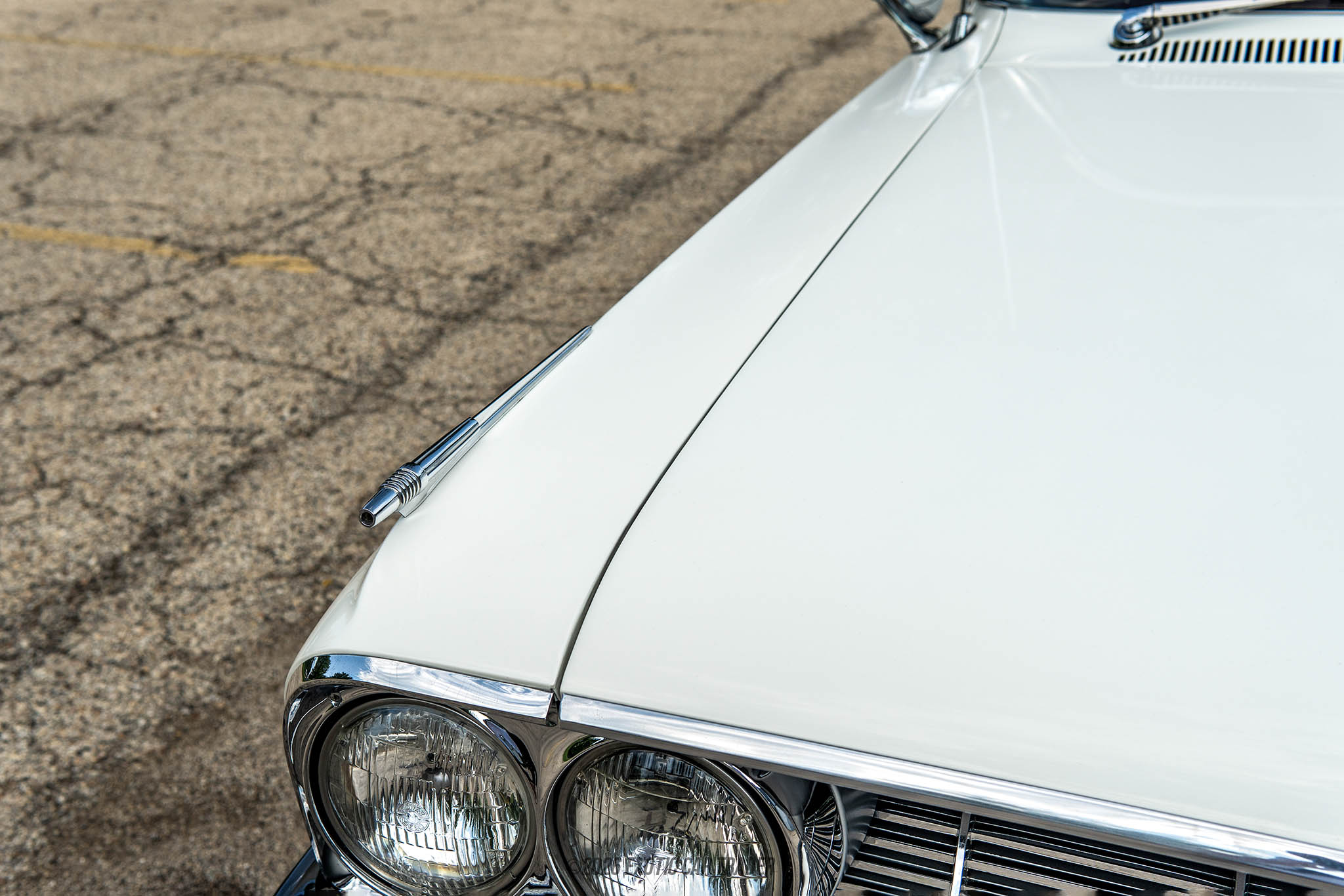
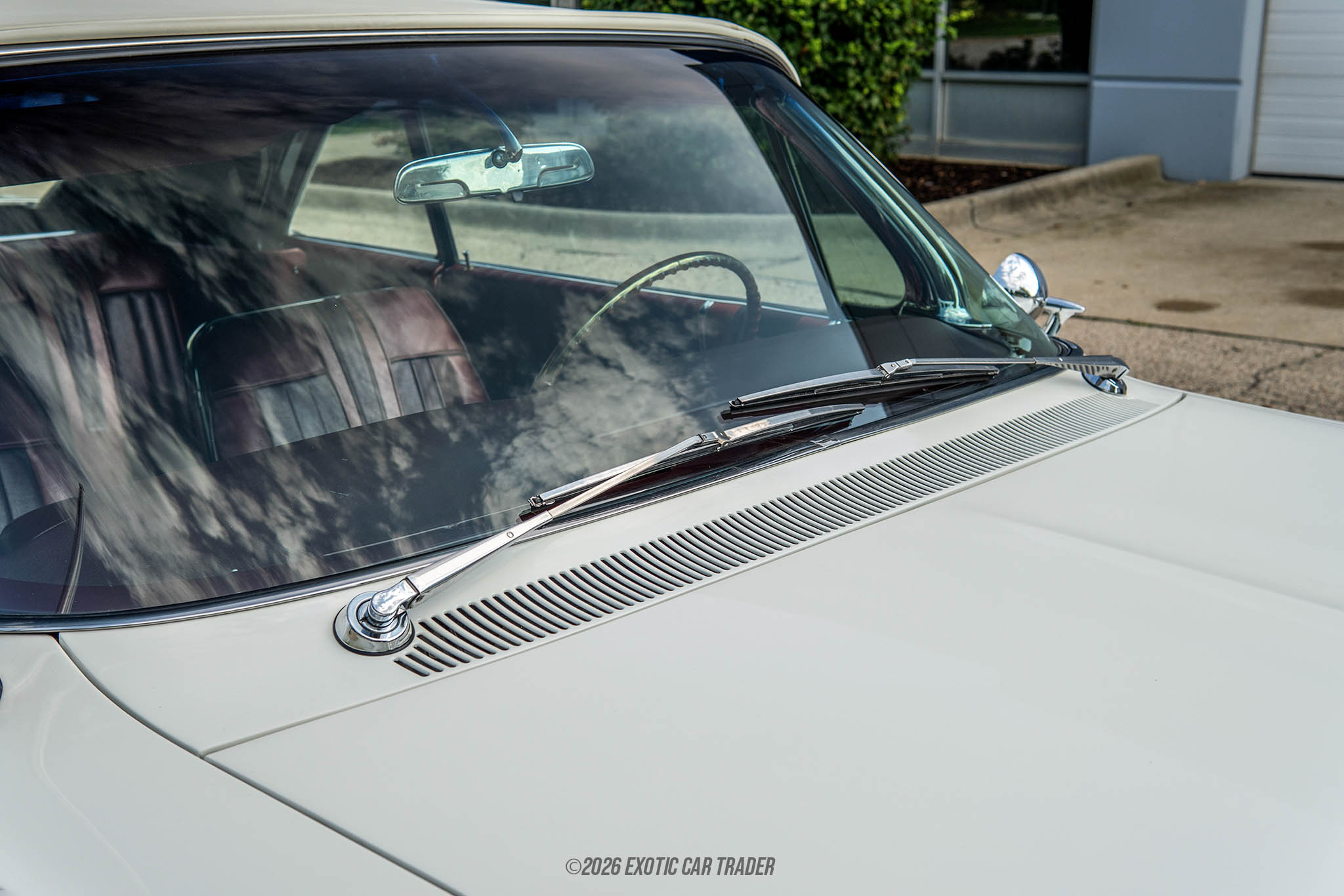
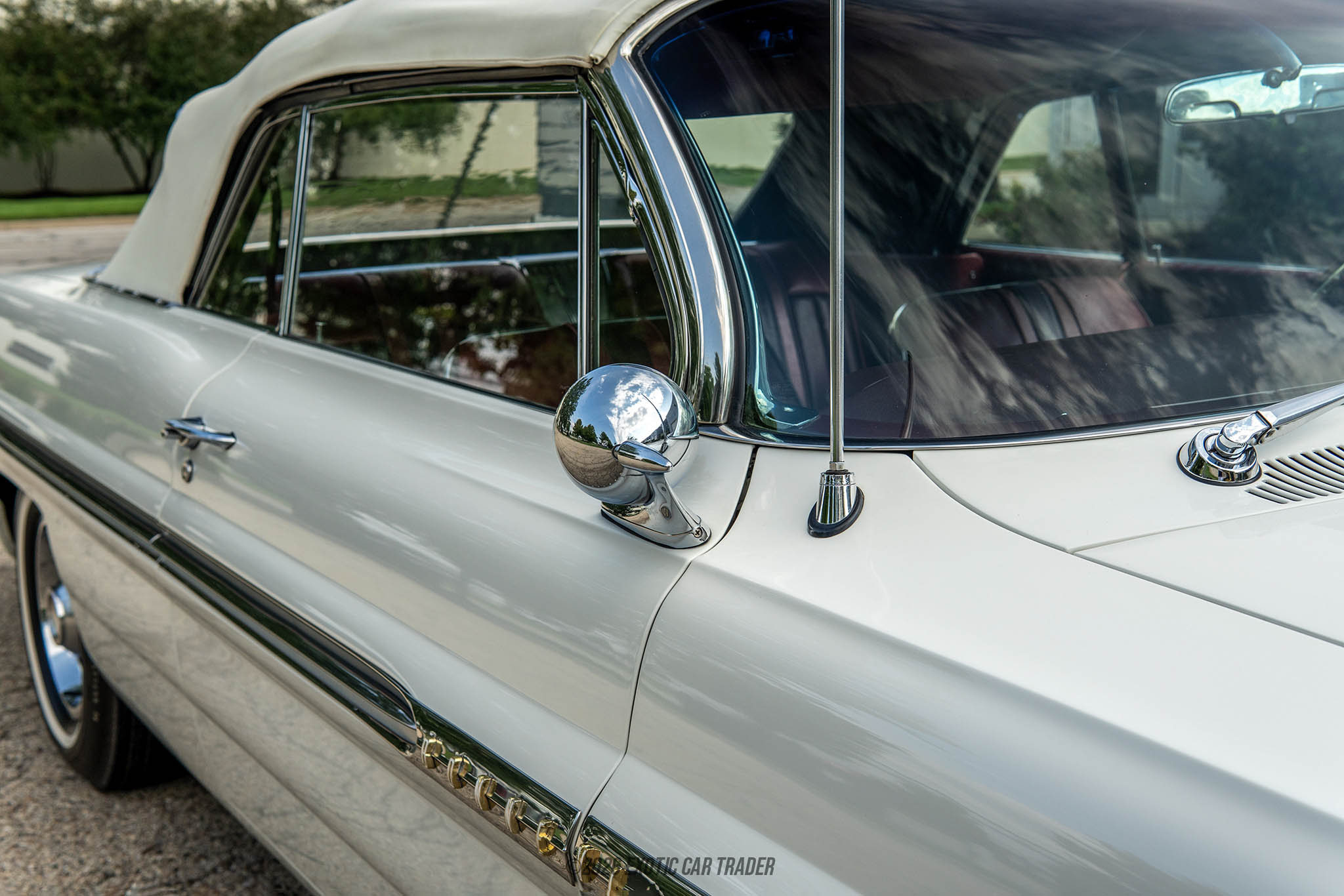
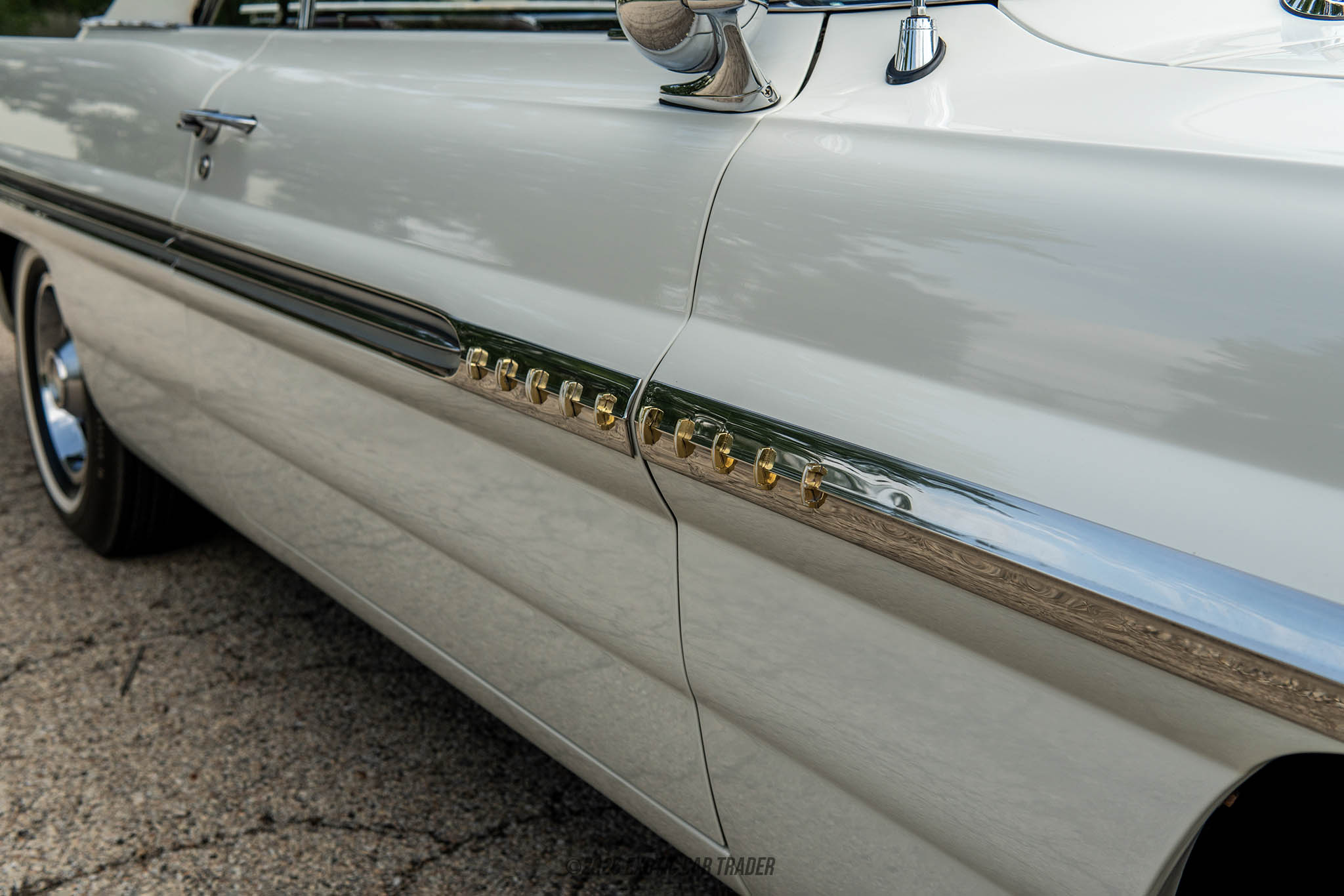
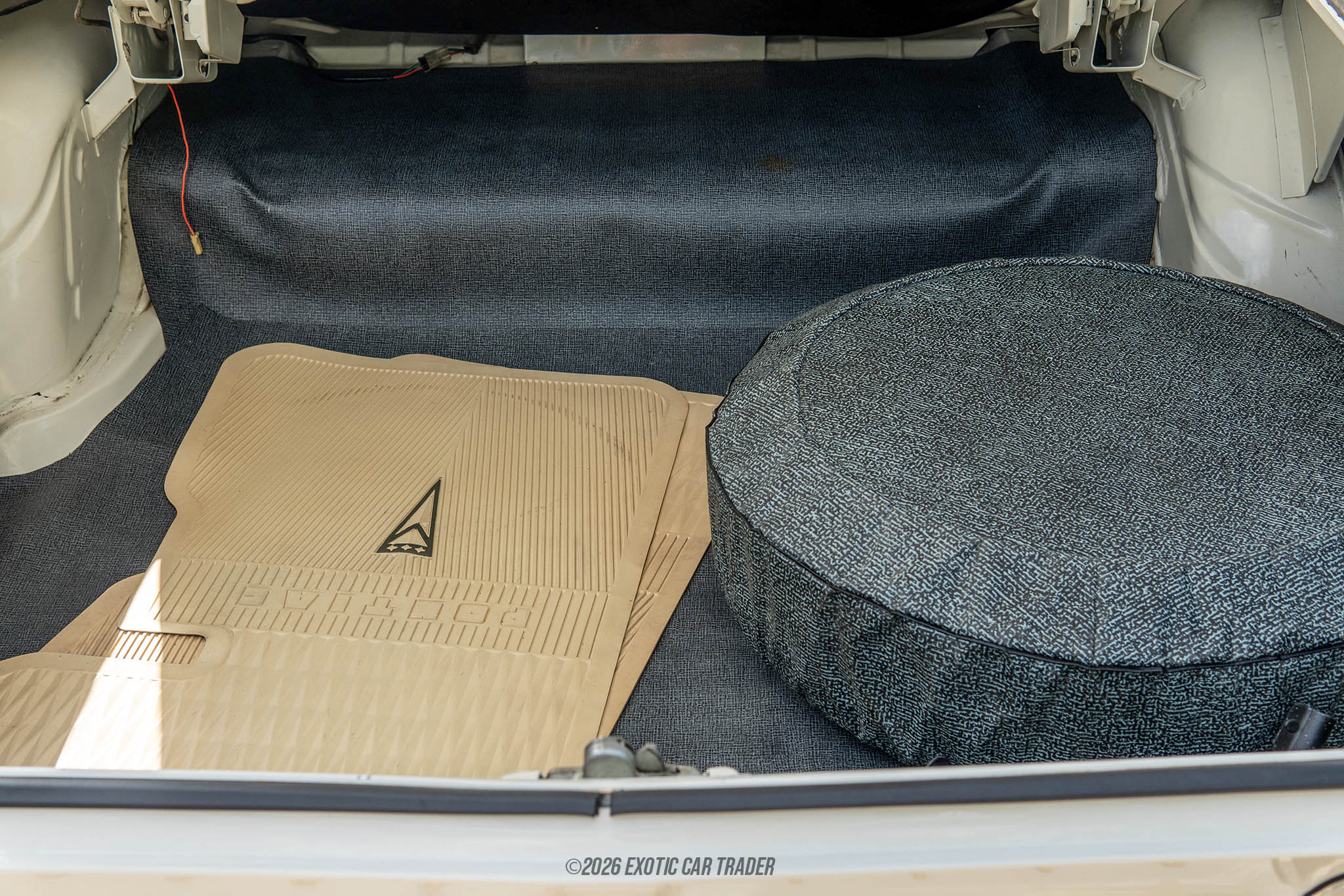
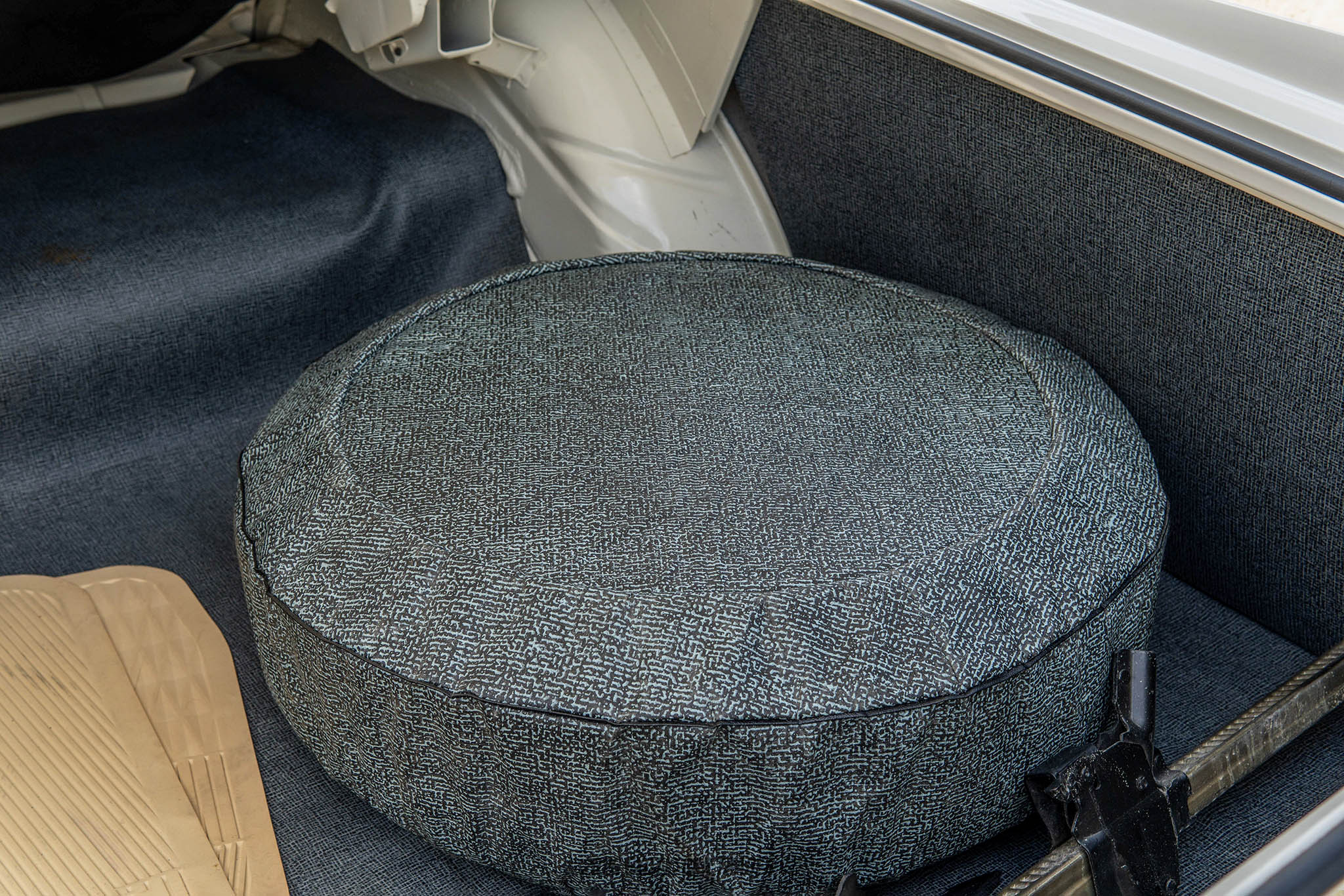
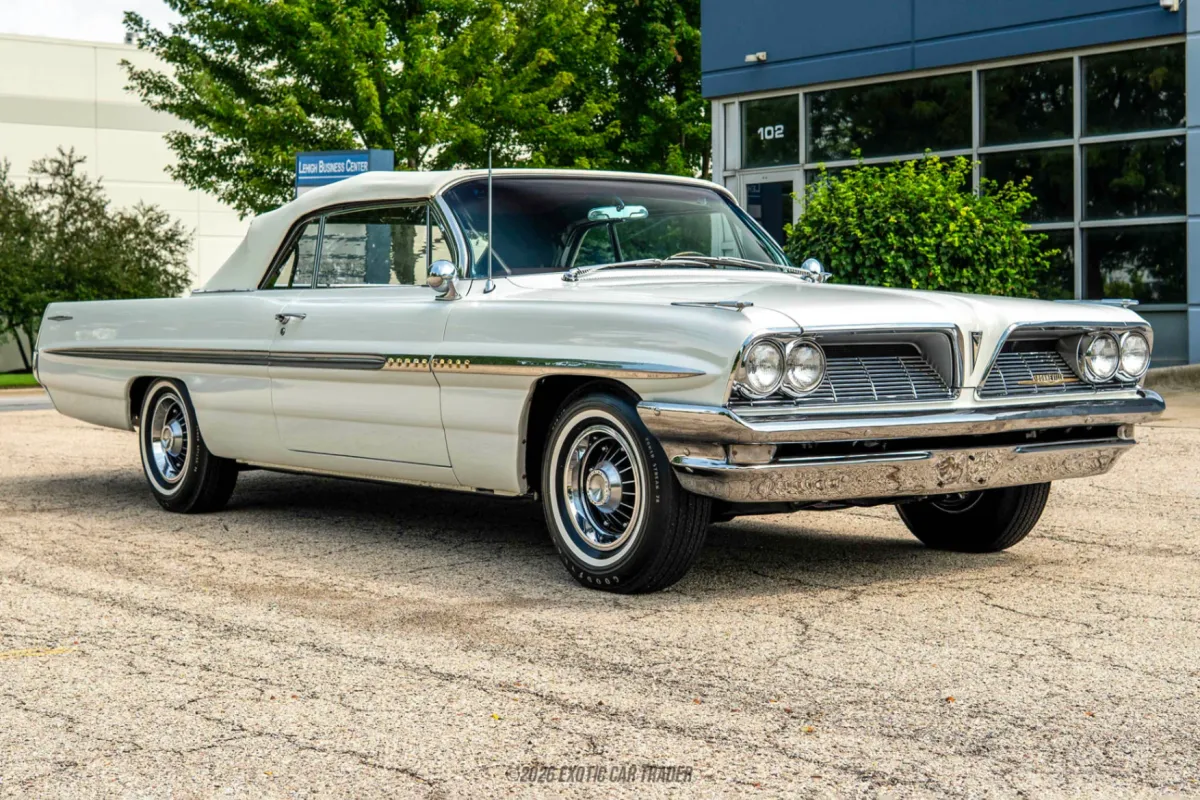
The 1961 Pontiac Bonneville Convertible represents the height of Pontiac’s full-size performance and luxury offerings during the early 1960s, combining dramatic styling with Pontiac’s legendary V8 power. As one of the marque’s most prestigious models, the Bonneville was positioned above the Catalina and showcased features such as premium appointments, powerful engine options, and distinctive design elements. This example is equipped with the desirable 389ci V8 paired with Pontiac’s iconic Tri-Power triple 2-barrel carburetor setup and a 4-speed manual transmission, creating a rare combination for an open-top cruiser. Finished in white with a red interior and matching white convertible soft top, this Bonneville Convertible also features Pontiac 8-lug wheels, power steering, power brakes, and a reupholstered interior. Showing approximately 17,217 miles, this 1961 Pontiac Bonneville Convertible captures the character of Pontiac’s performance-focused era while offering classic American luxury and open-air driving.
Exterior and Interior
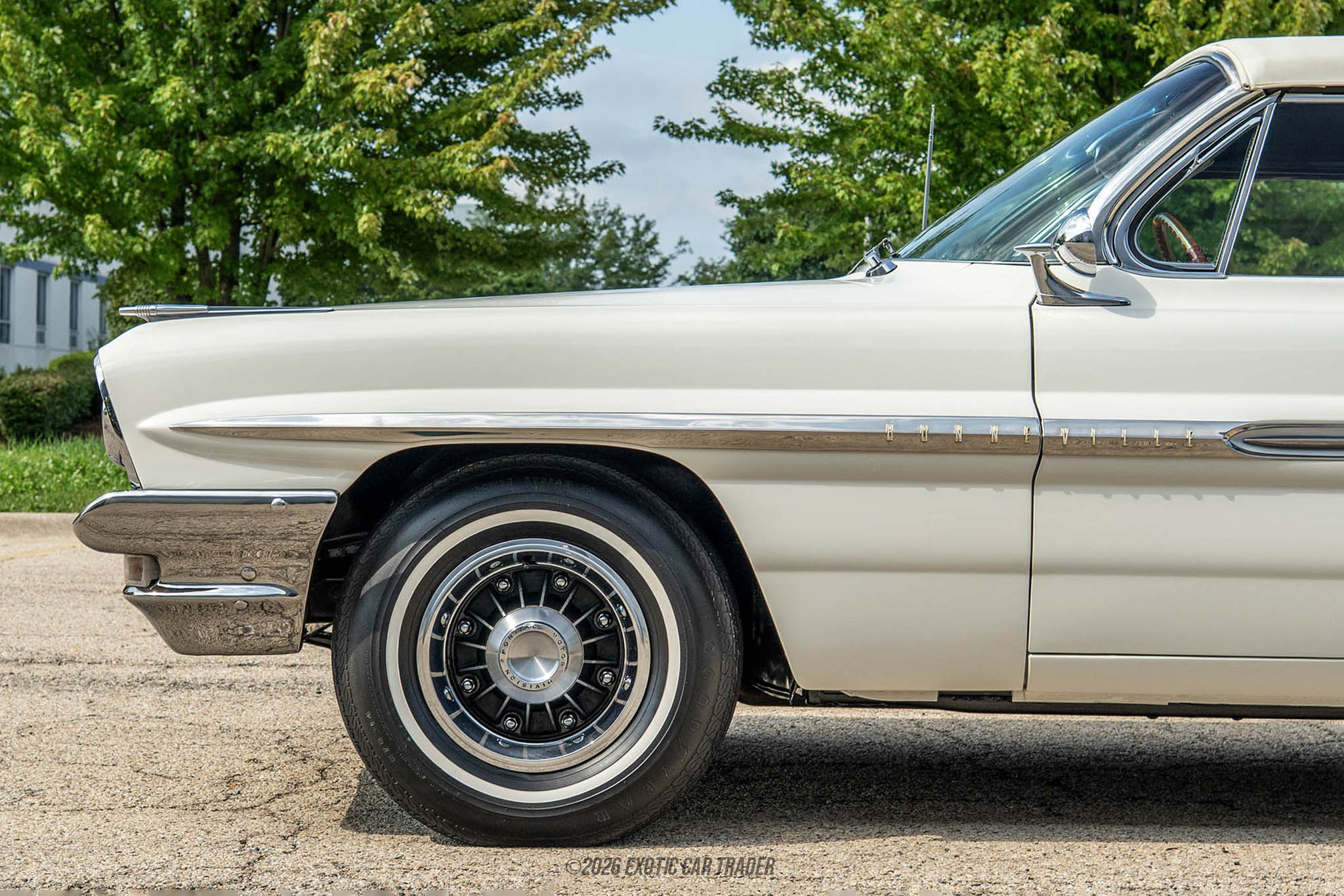
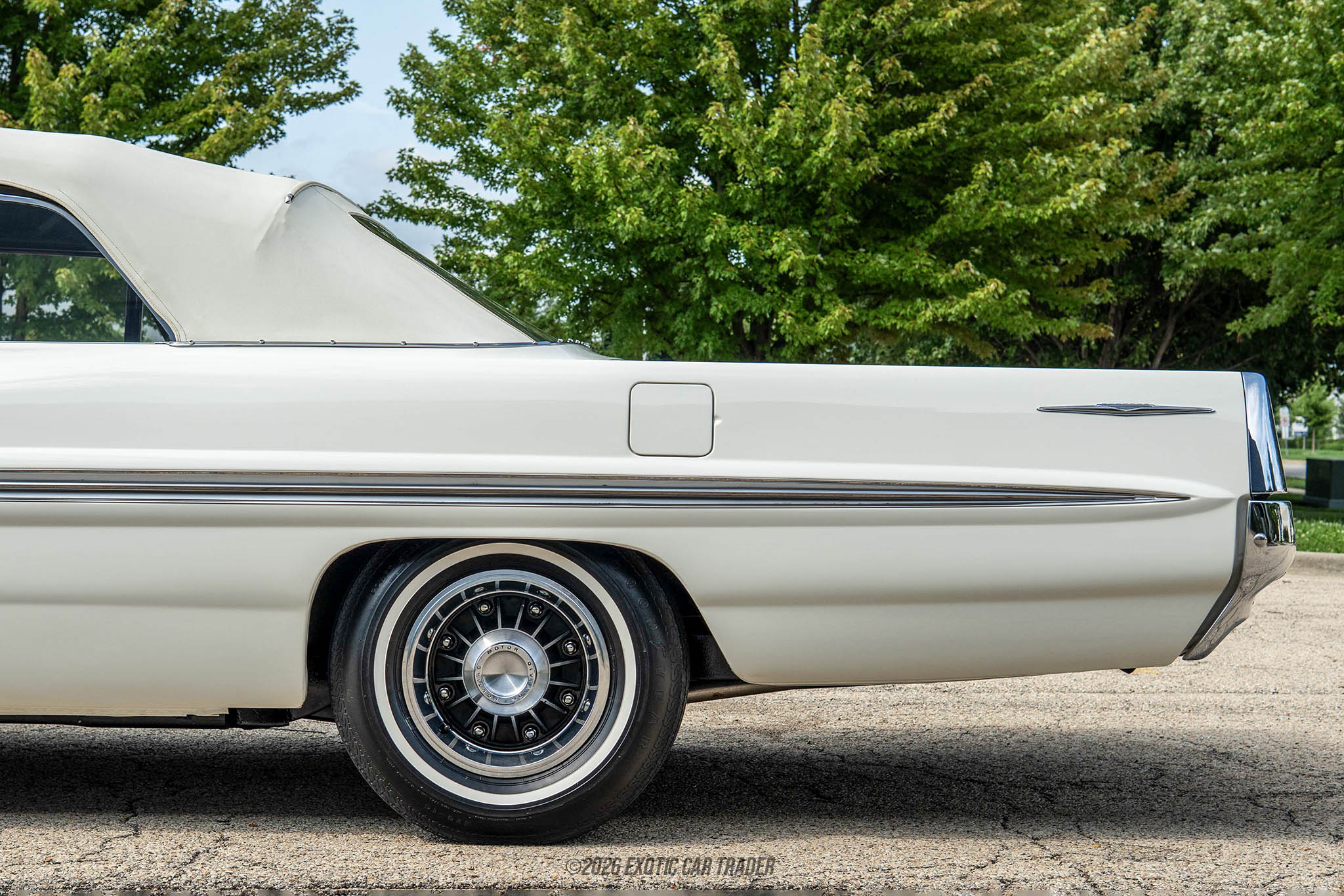
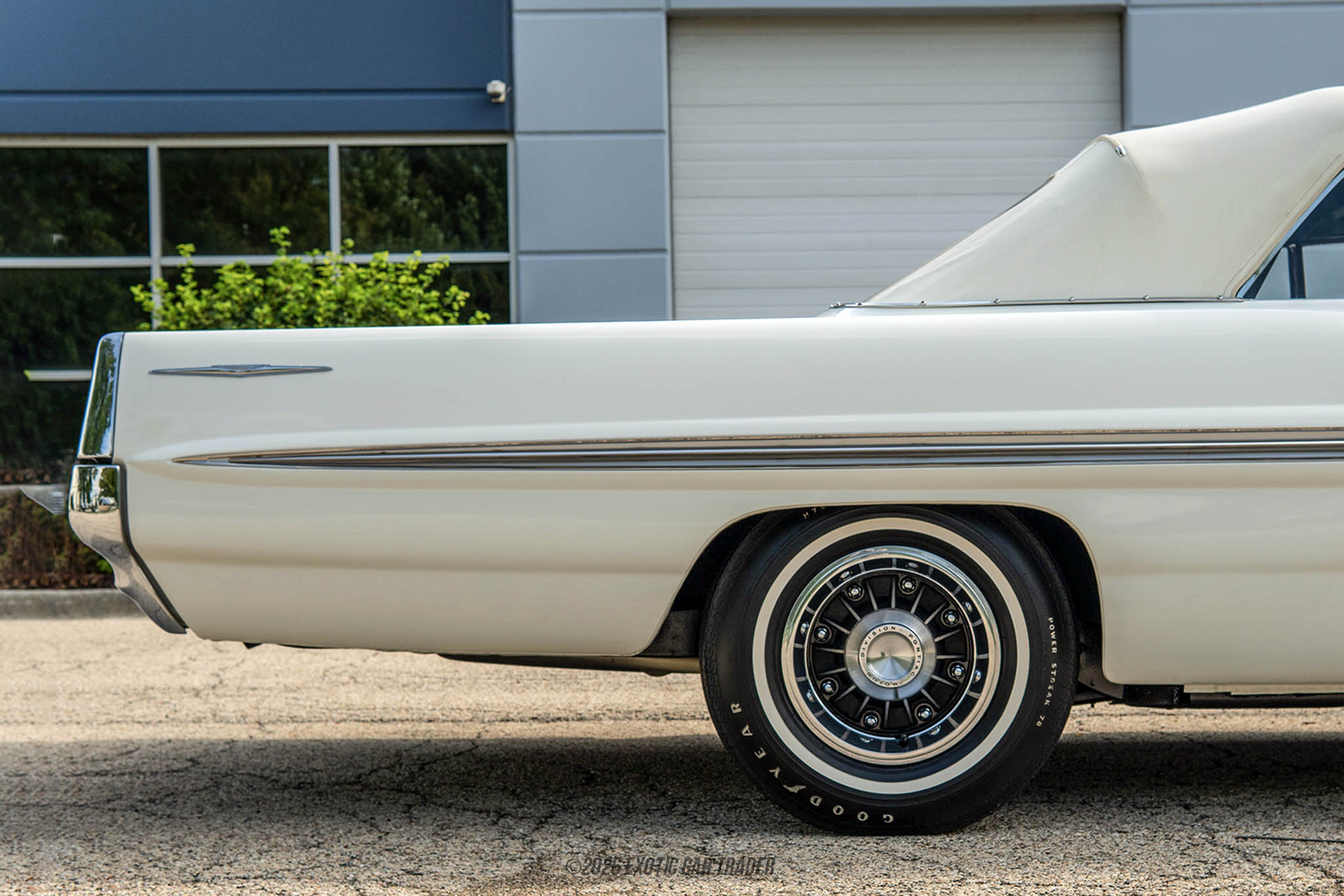
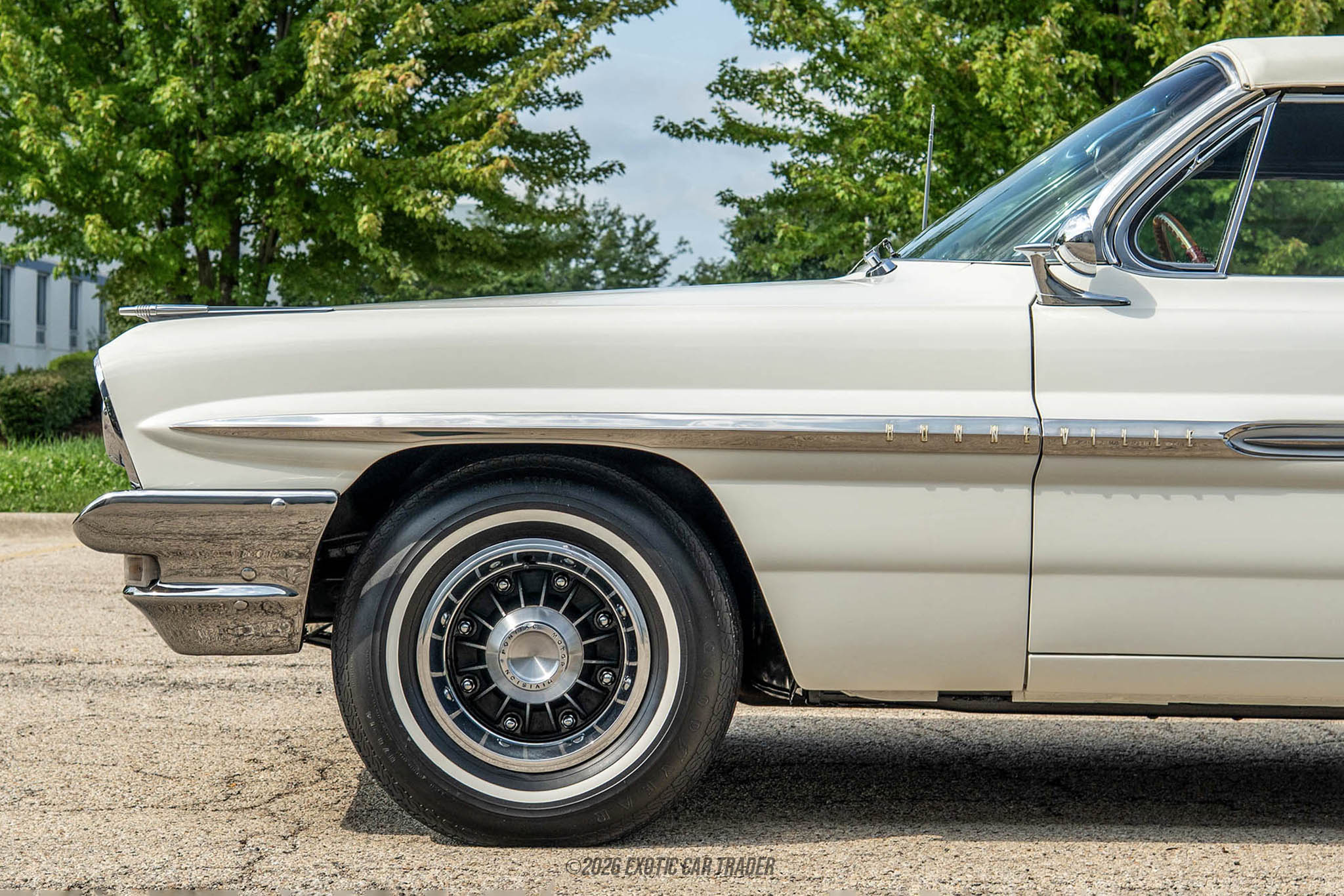
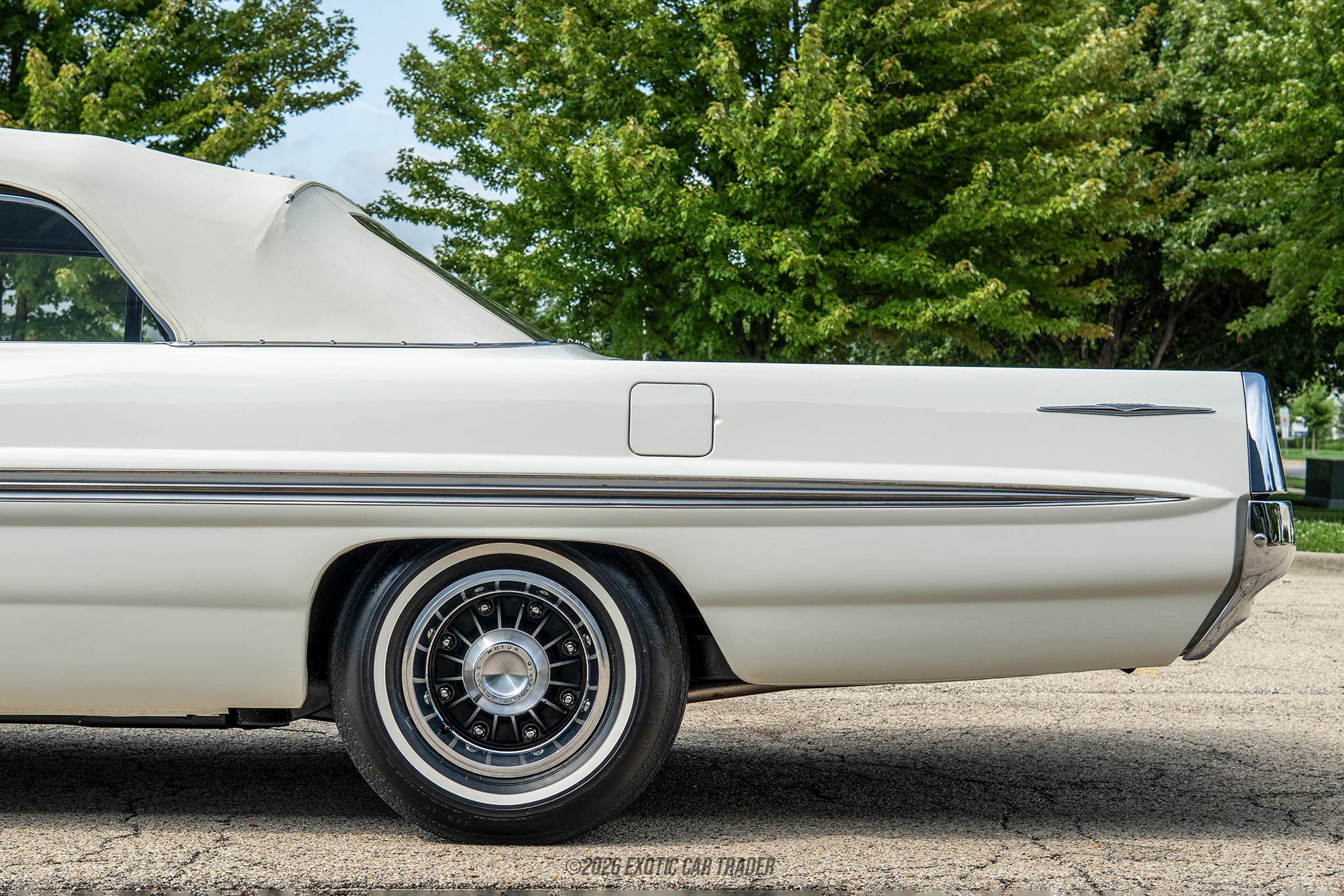
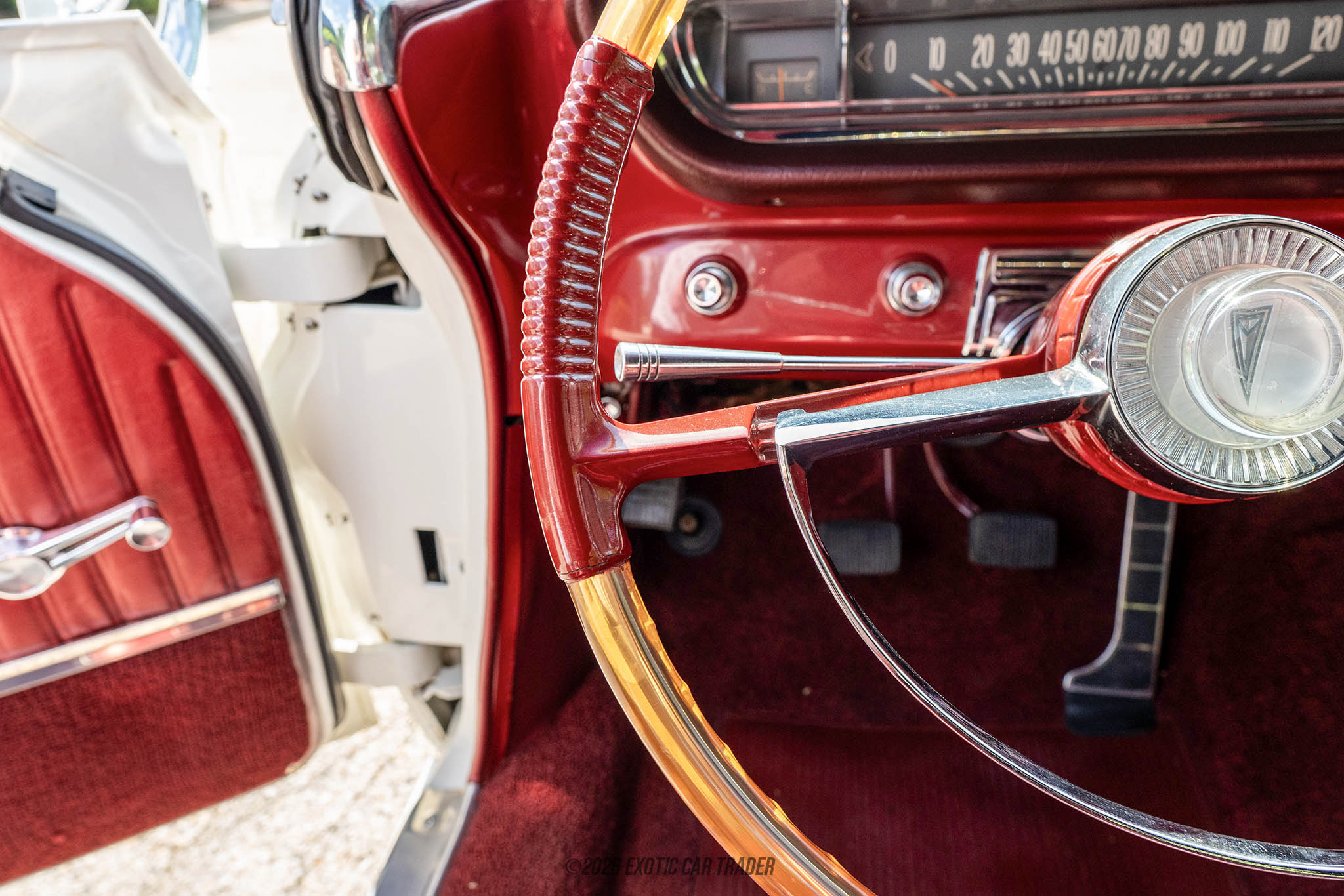
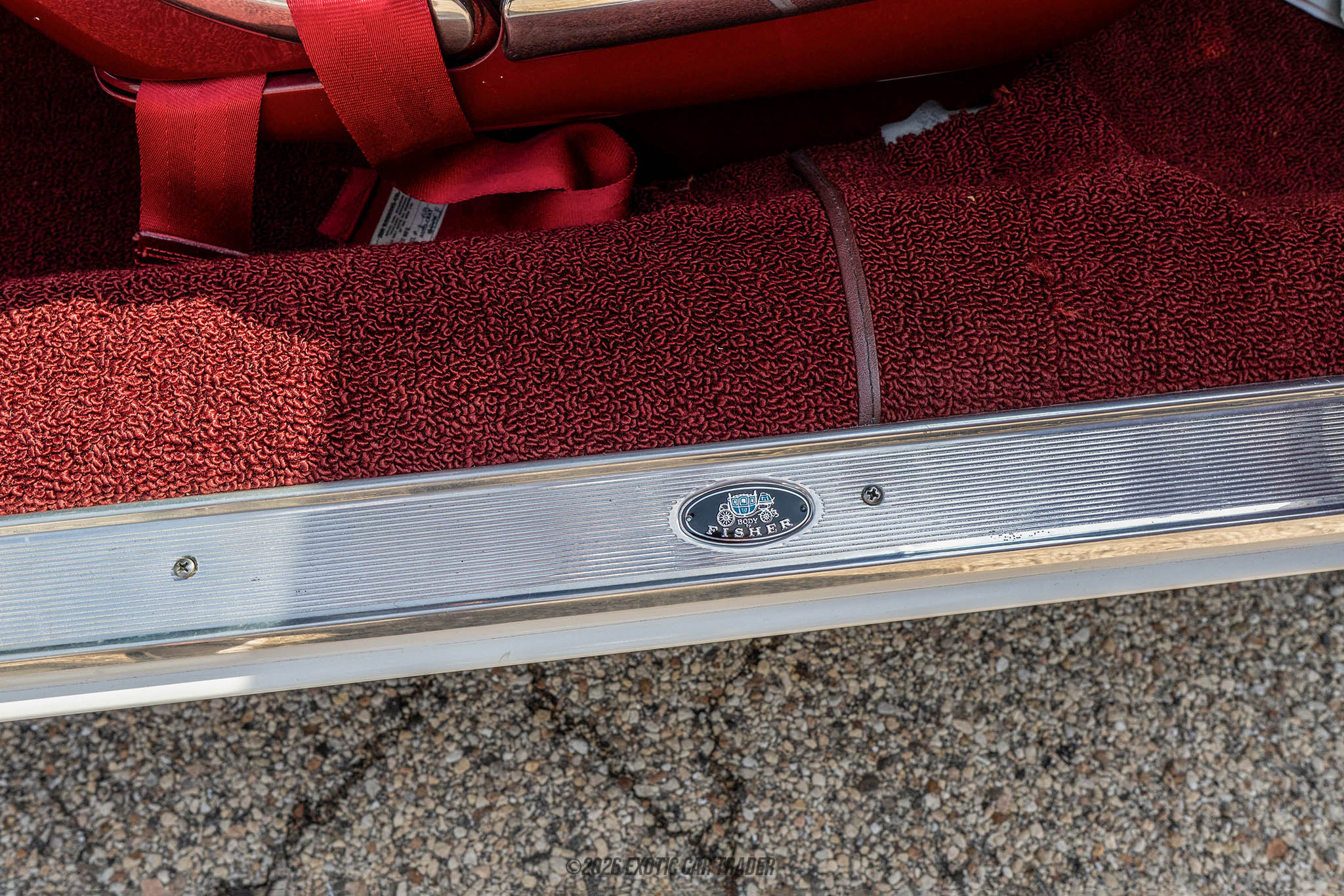
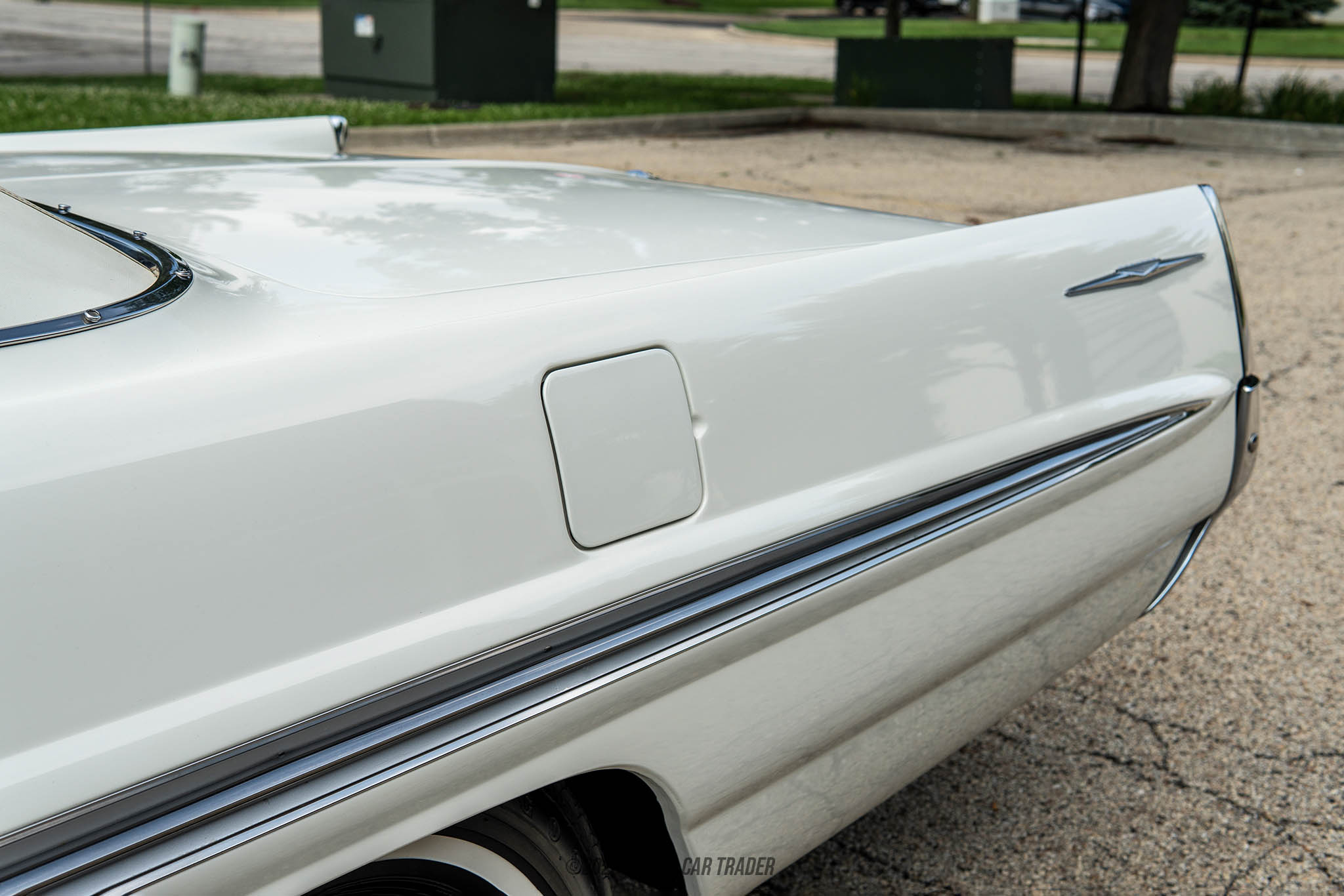
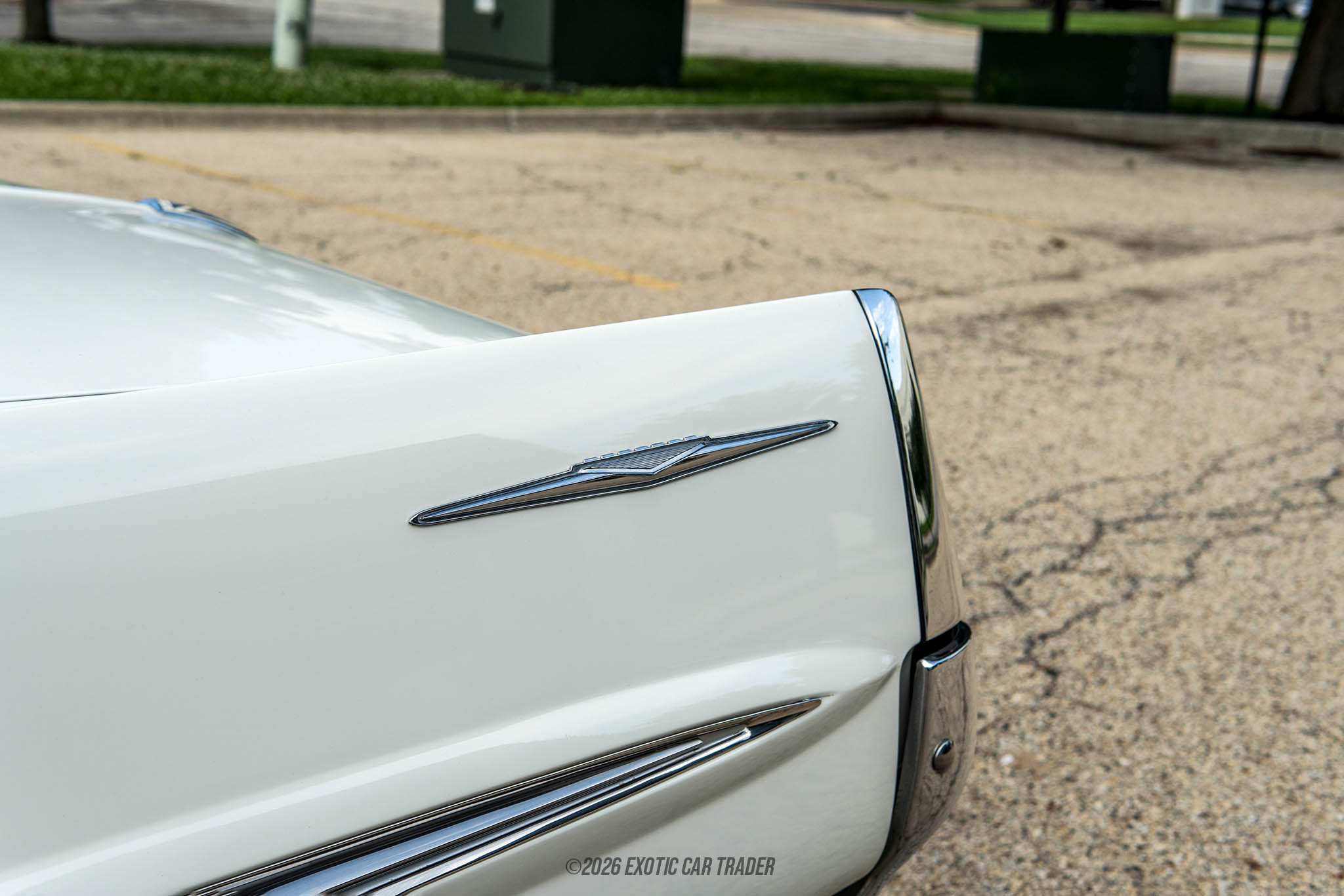
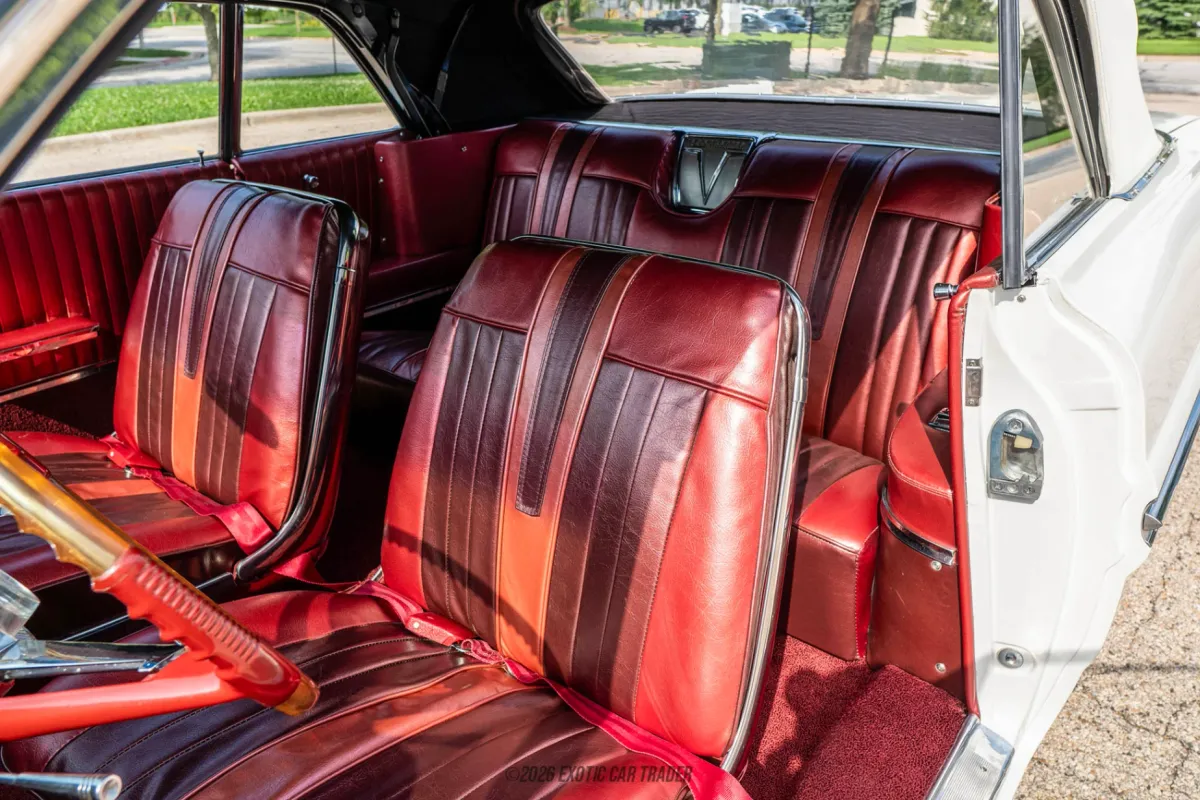
The exterior of this 1961 Pontiac Bonneville Convertible is finished in white and highlights the model’s distinctive early-1960s styling, including its long proportions, chrome detailing, and elegant convertible profile. The vehicle is equipped with a white convertible soft top and rides on Pontiac 8-lug wheels, a signature feature that combined unique styling with improved braking capability for the era. Additional exterior highlights include dual exhaust outlets that complement the vehicle’s performance-oriented presentation. The interior of this 1961 Pontiac Bonneville Convertible is finished in red and has been reupholstered, providing a refreshed cabin while retaining the classic Pontiac character. Designed as Pontiac’s premium full-size offering, the Bonneville features a spacious interior with a focus on comfort and style. Power steering and power brakes further enhance drivability, making this convertible more approachable for modern cruising while maintaining its original-era appeal.
Engine
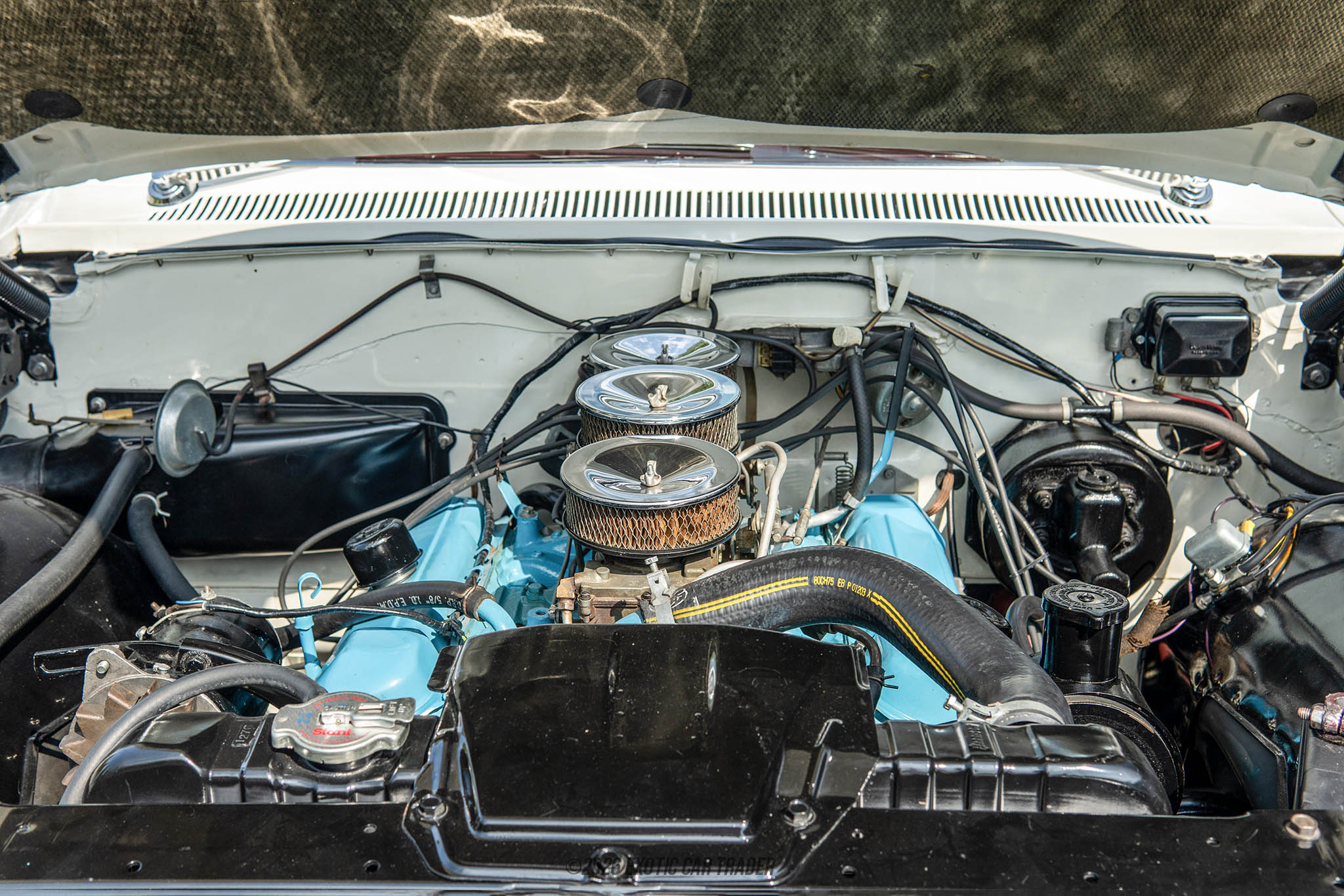
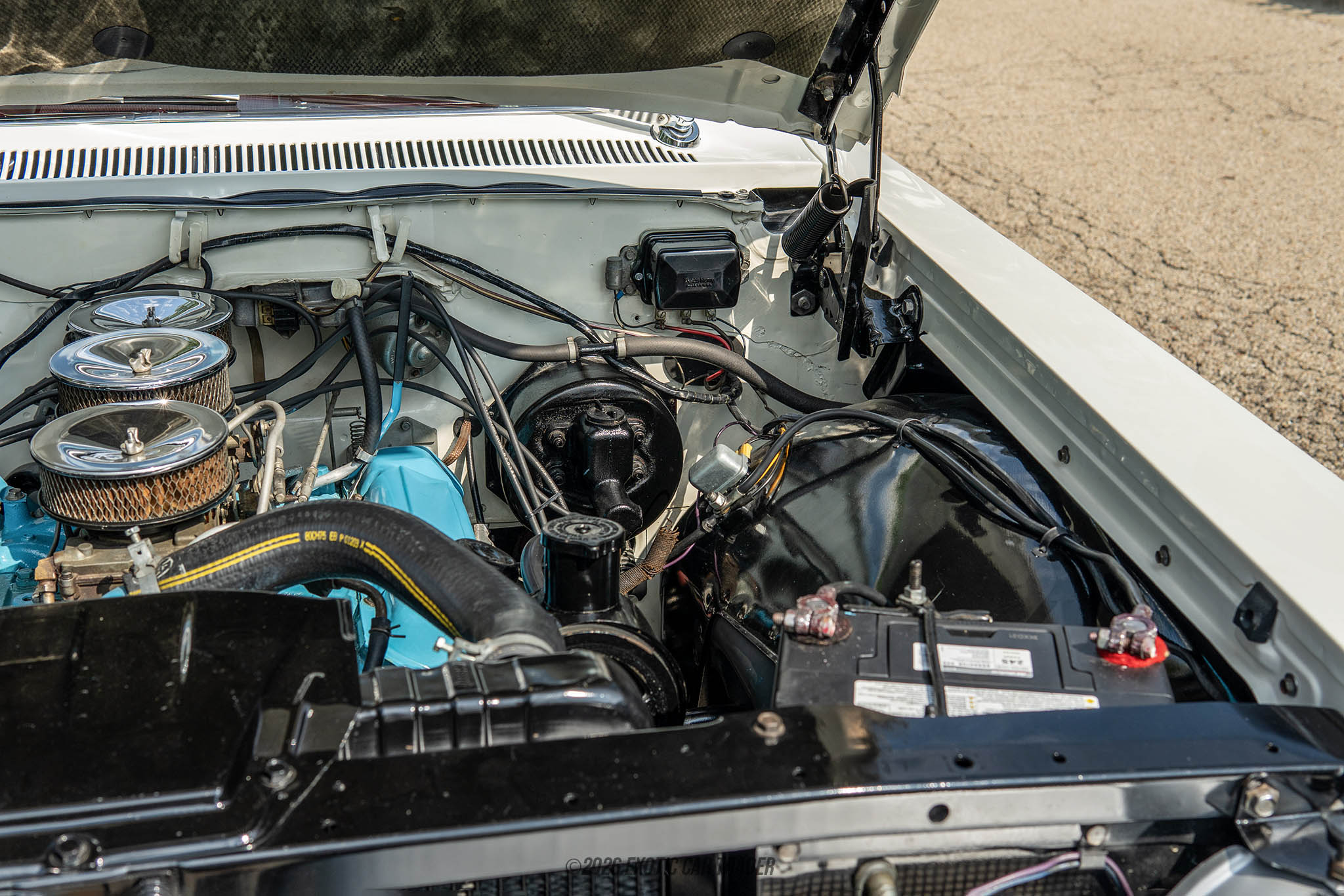
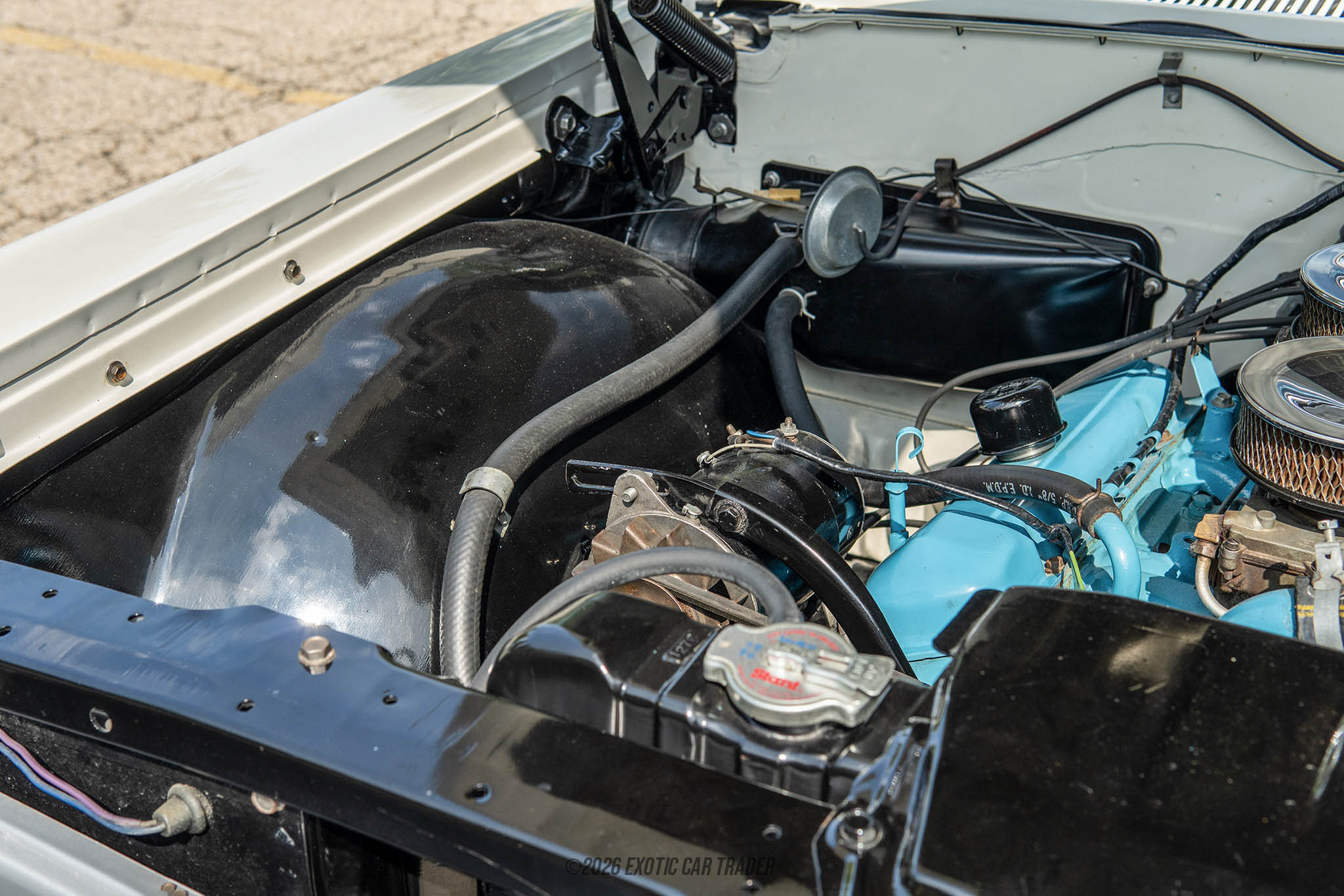
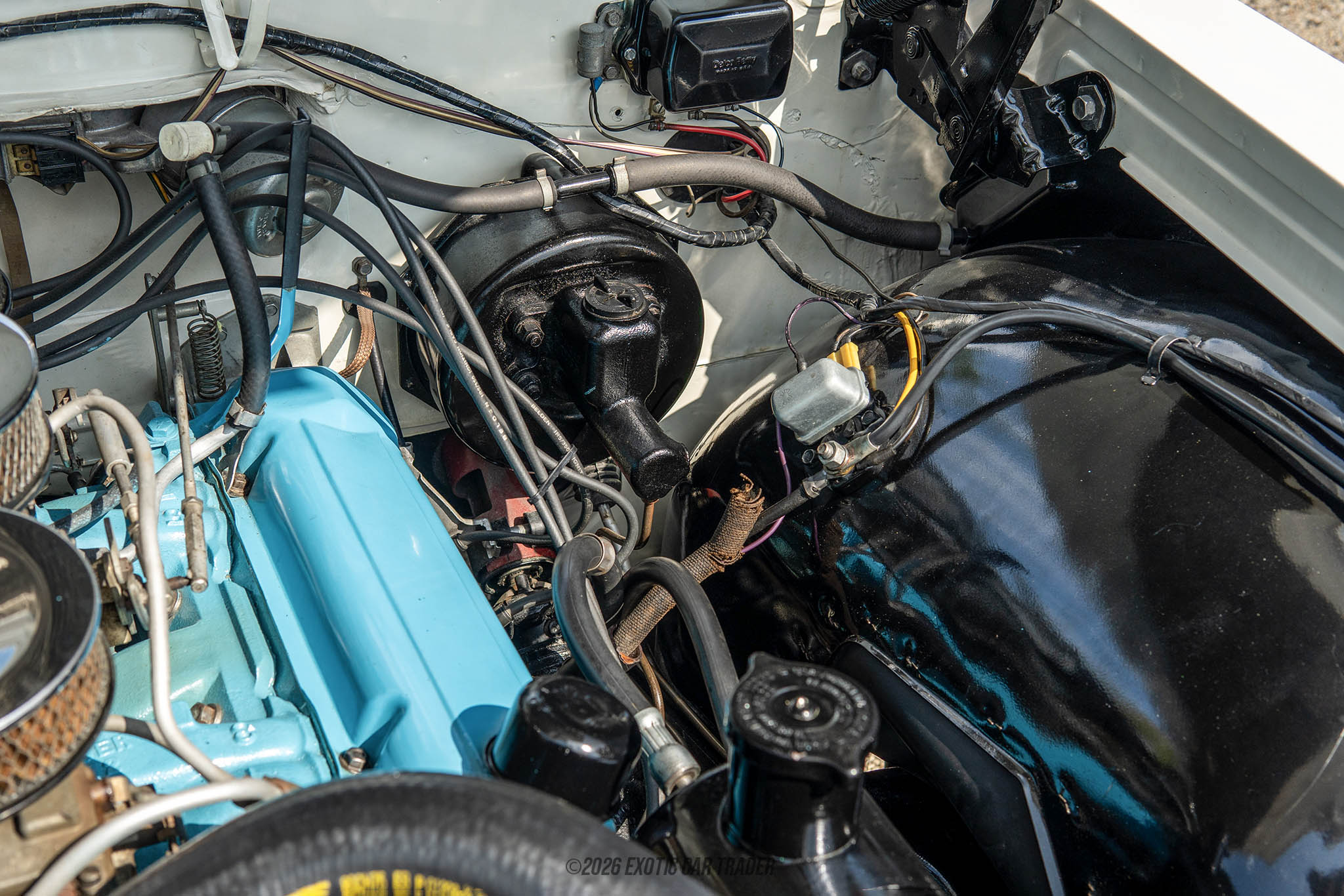
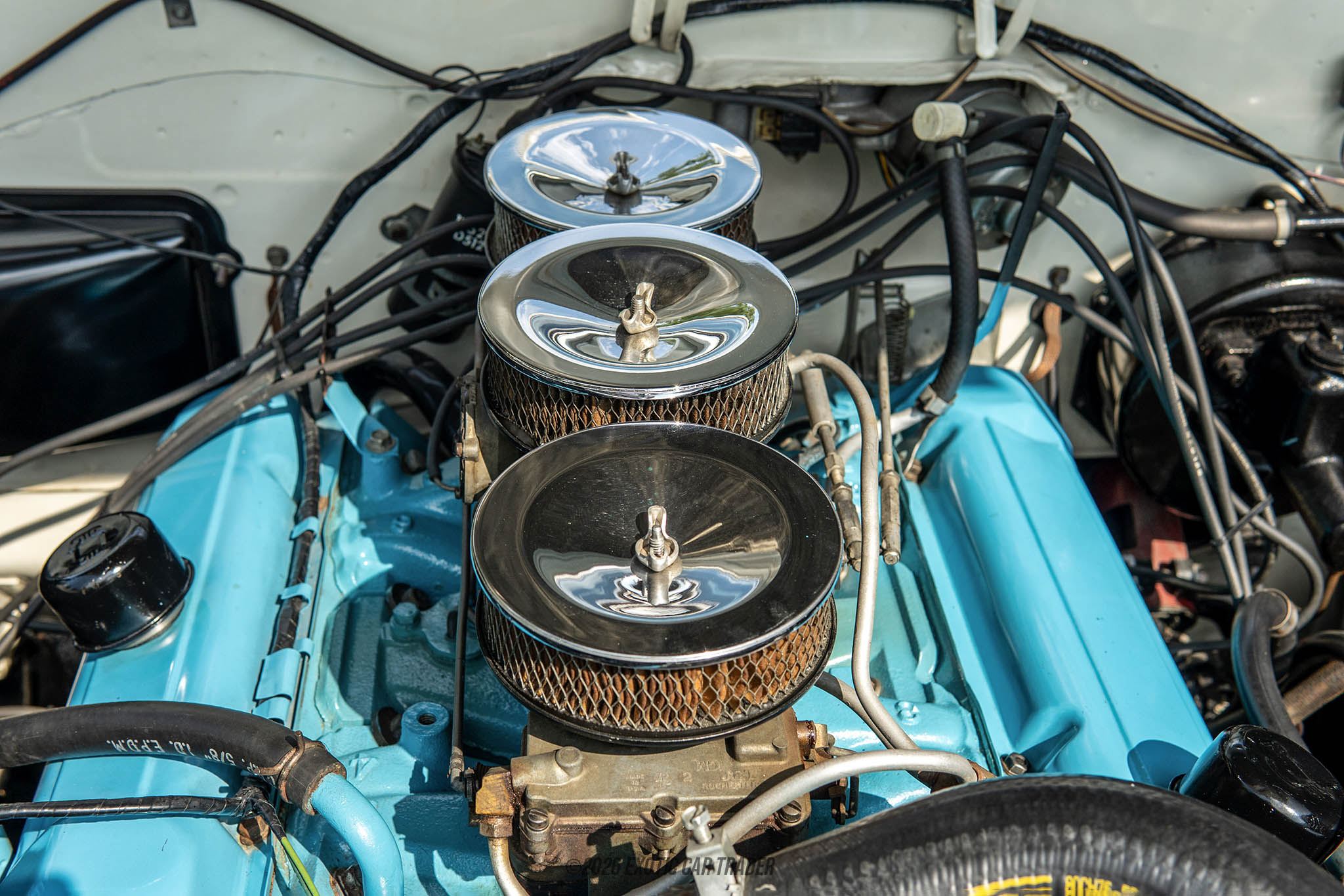
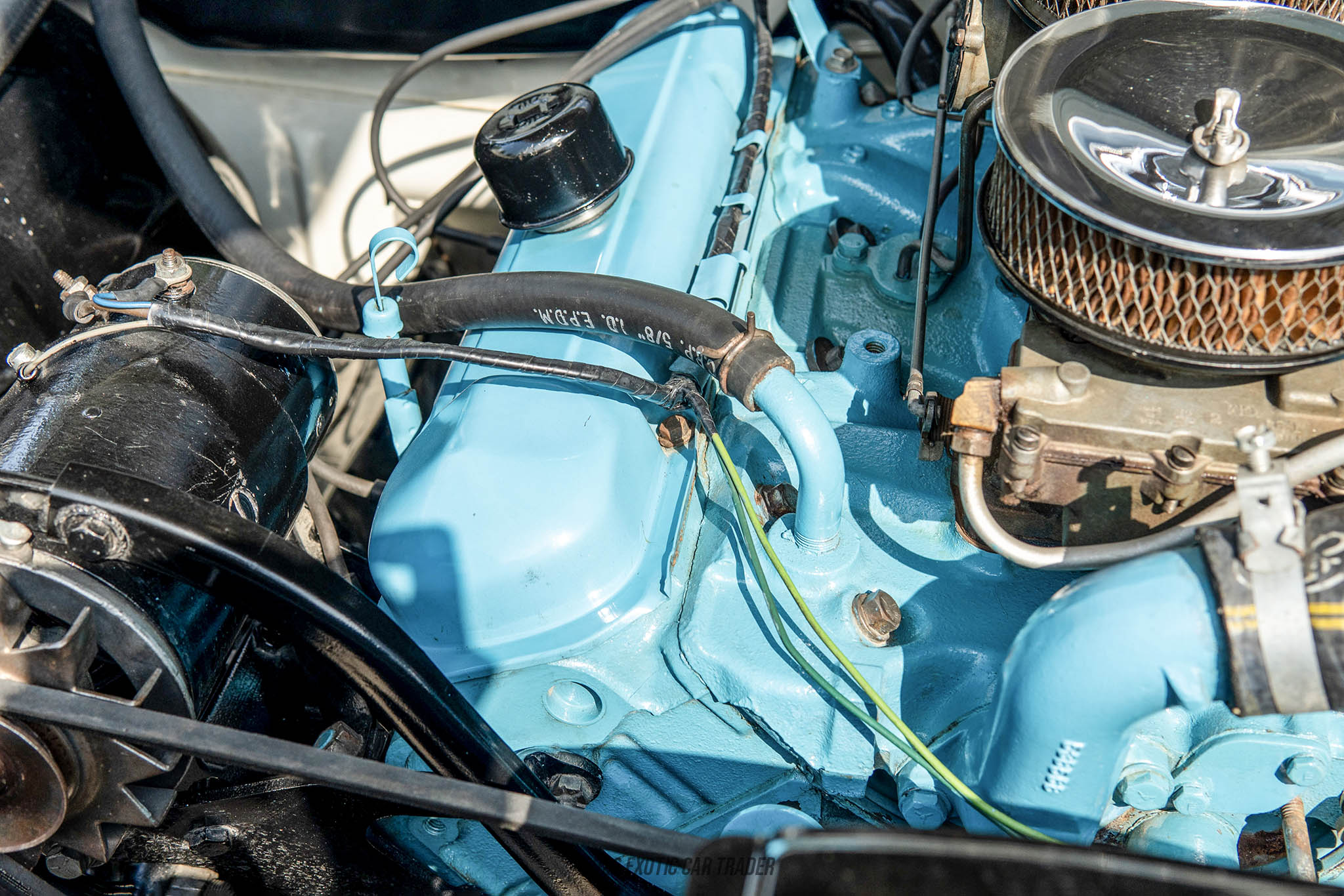
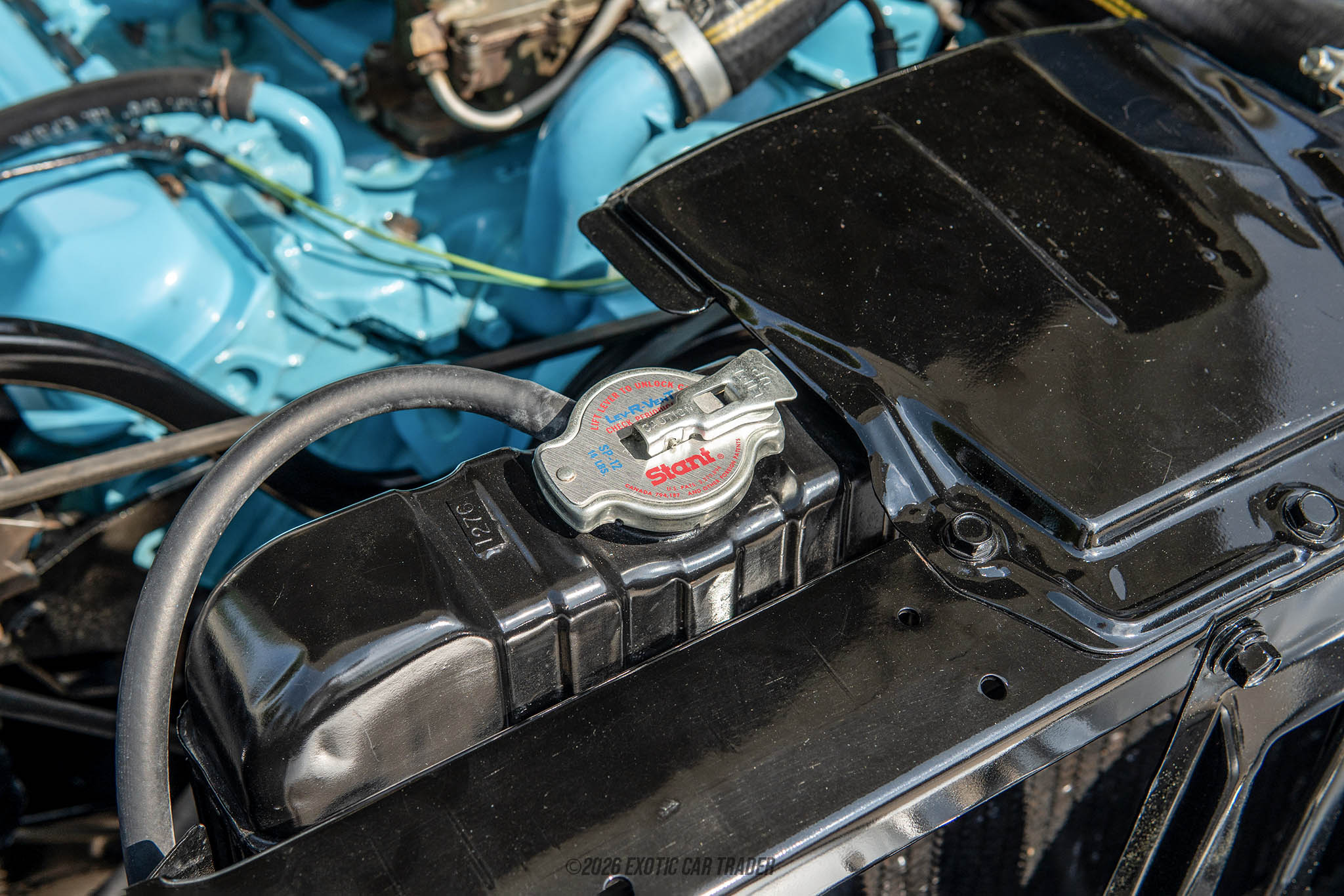
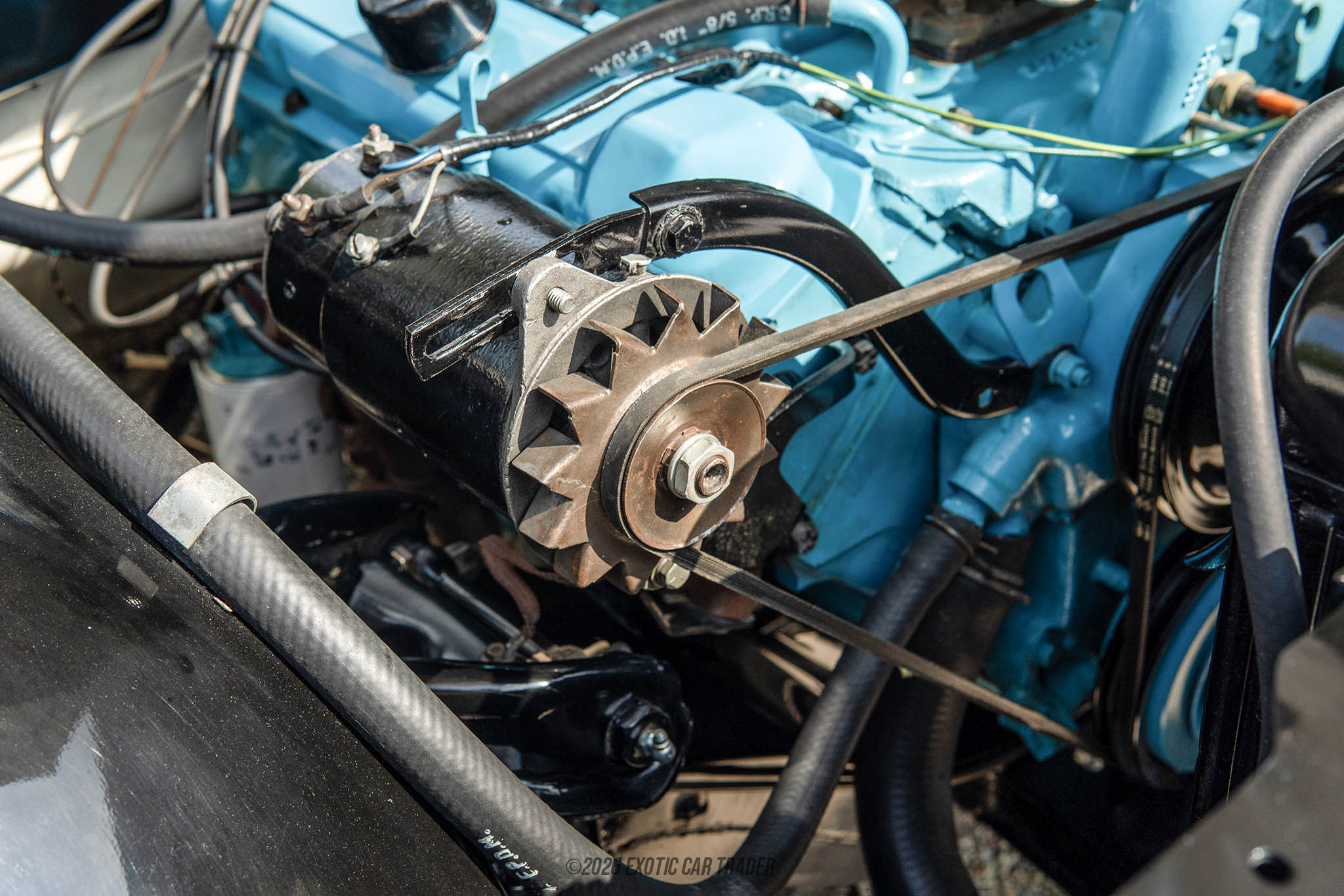
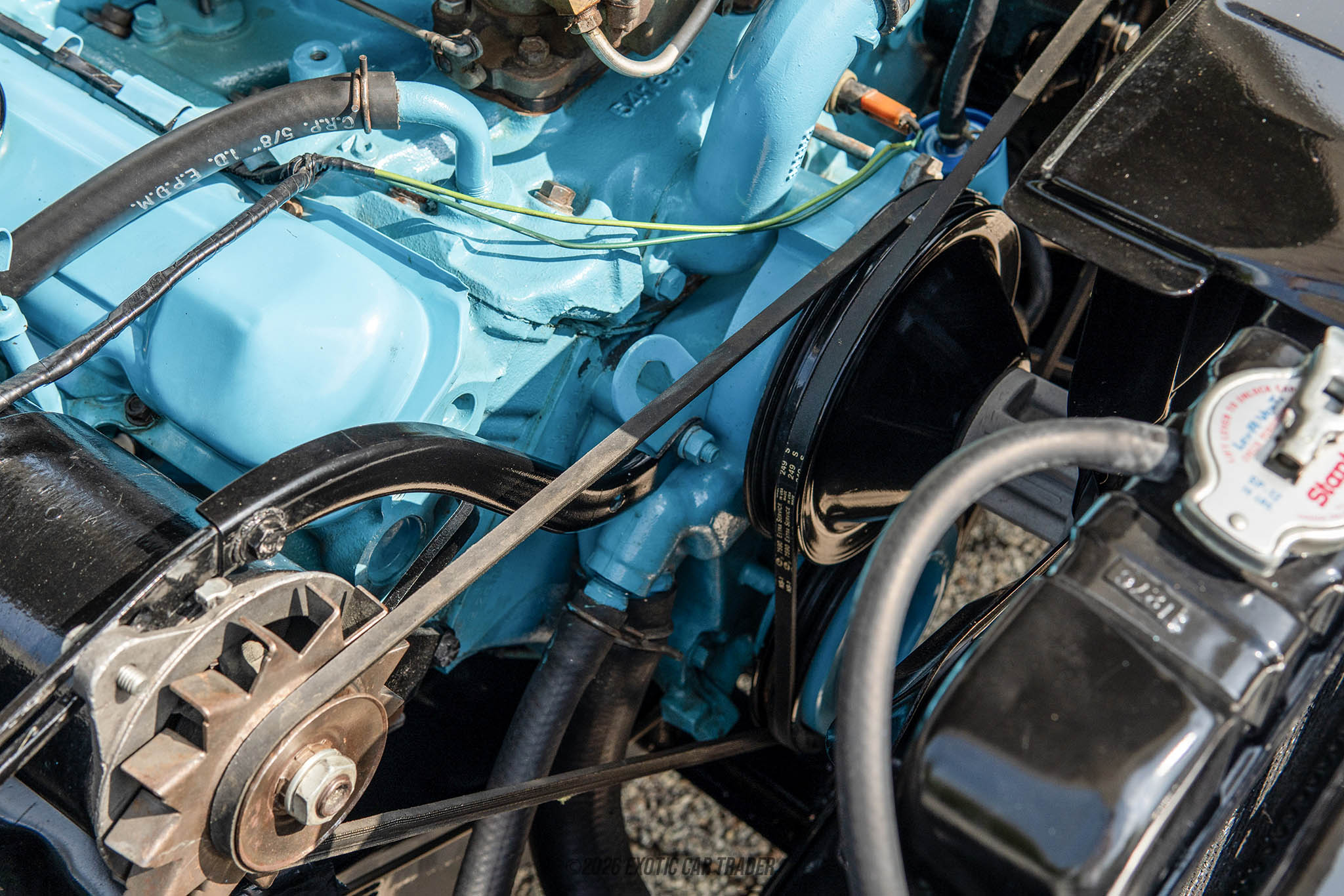
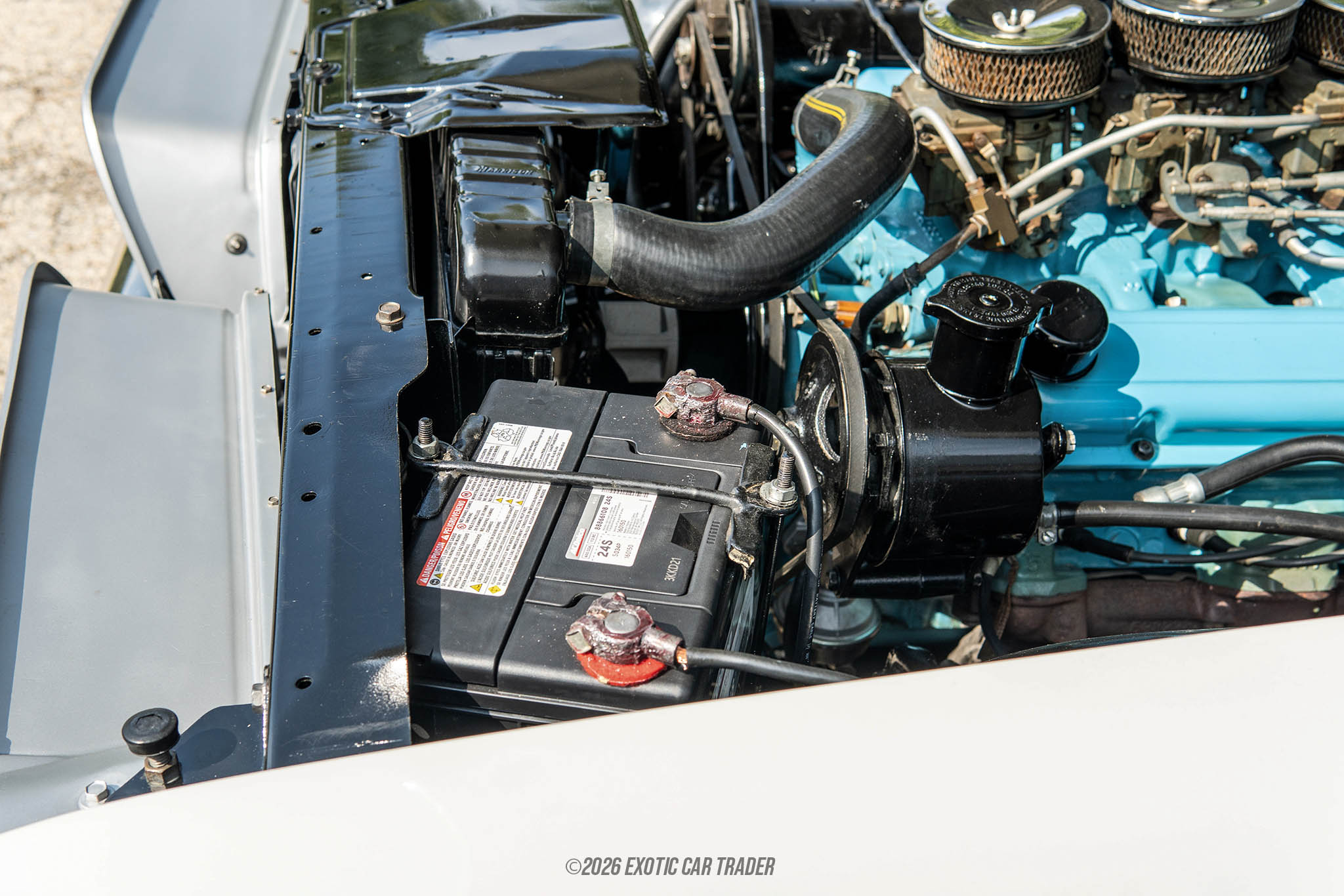
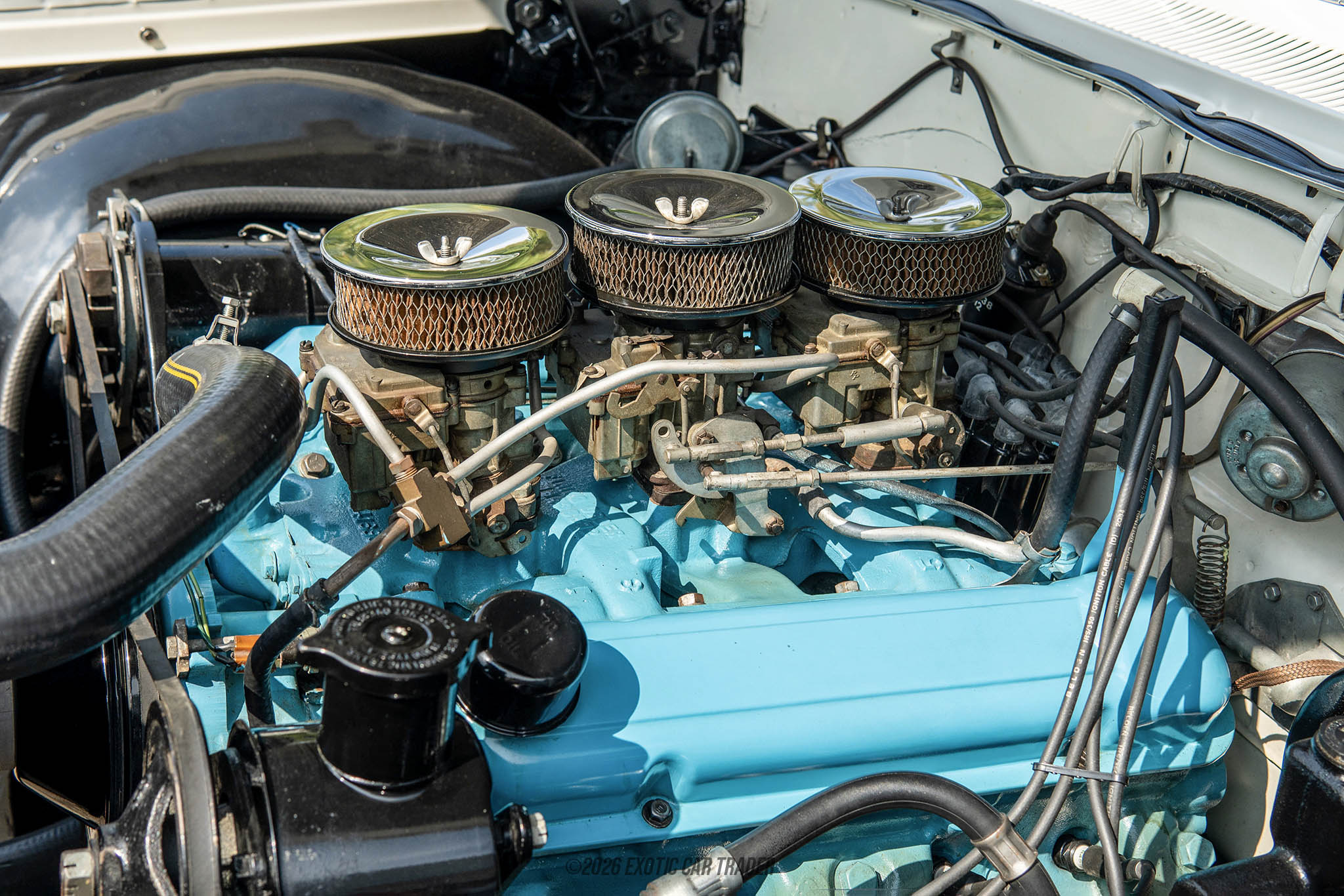
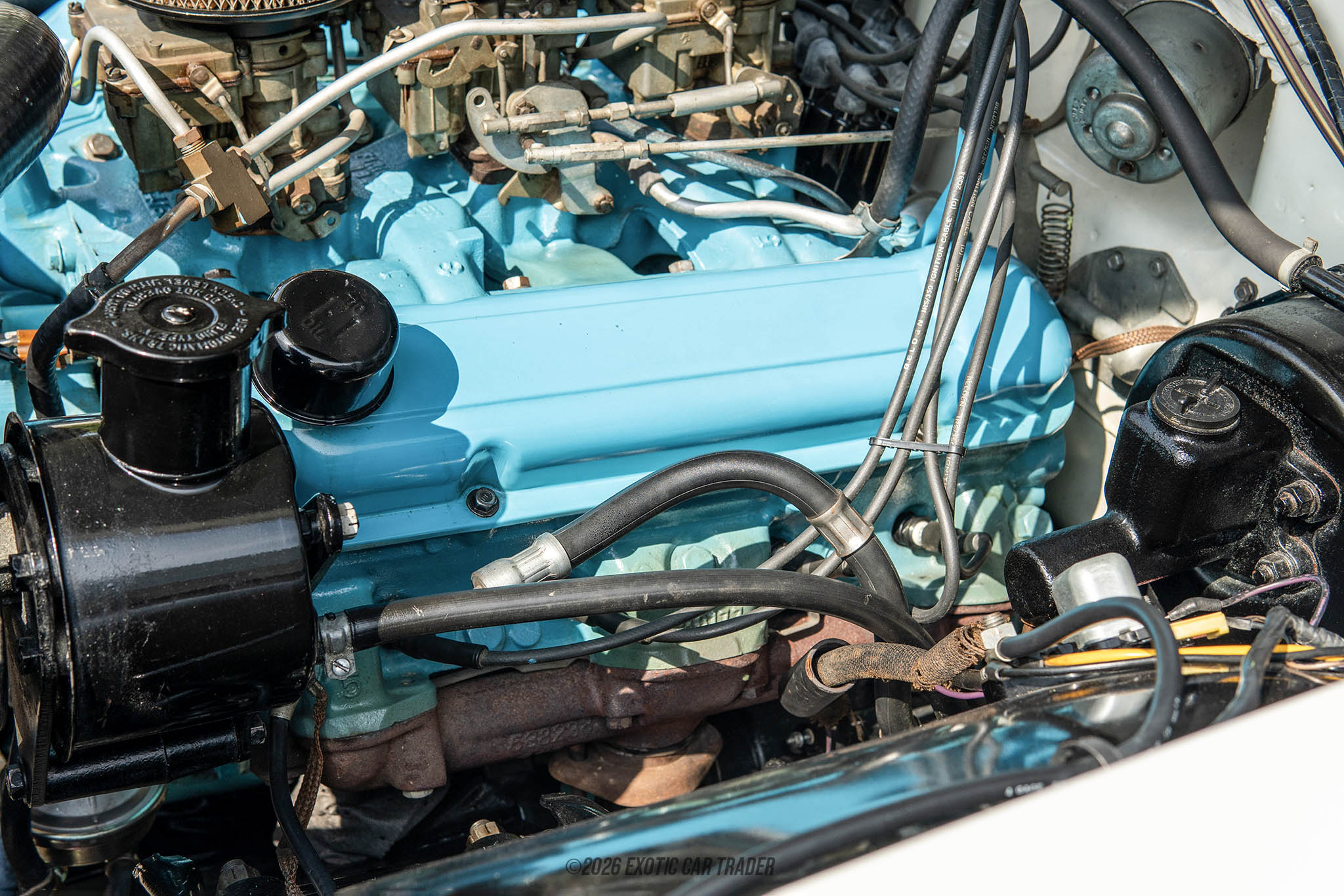
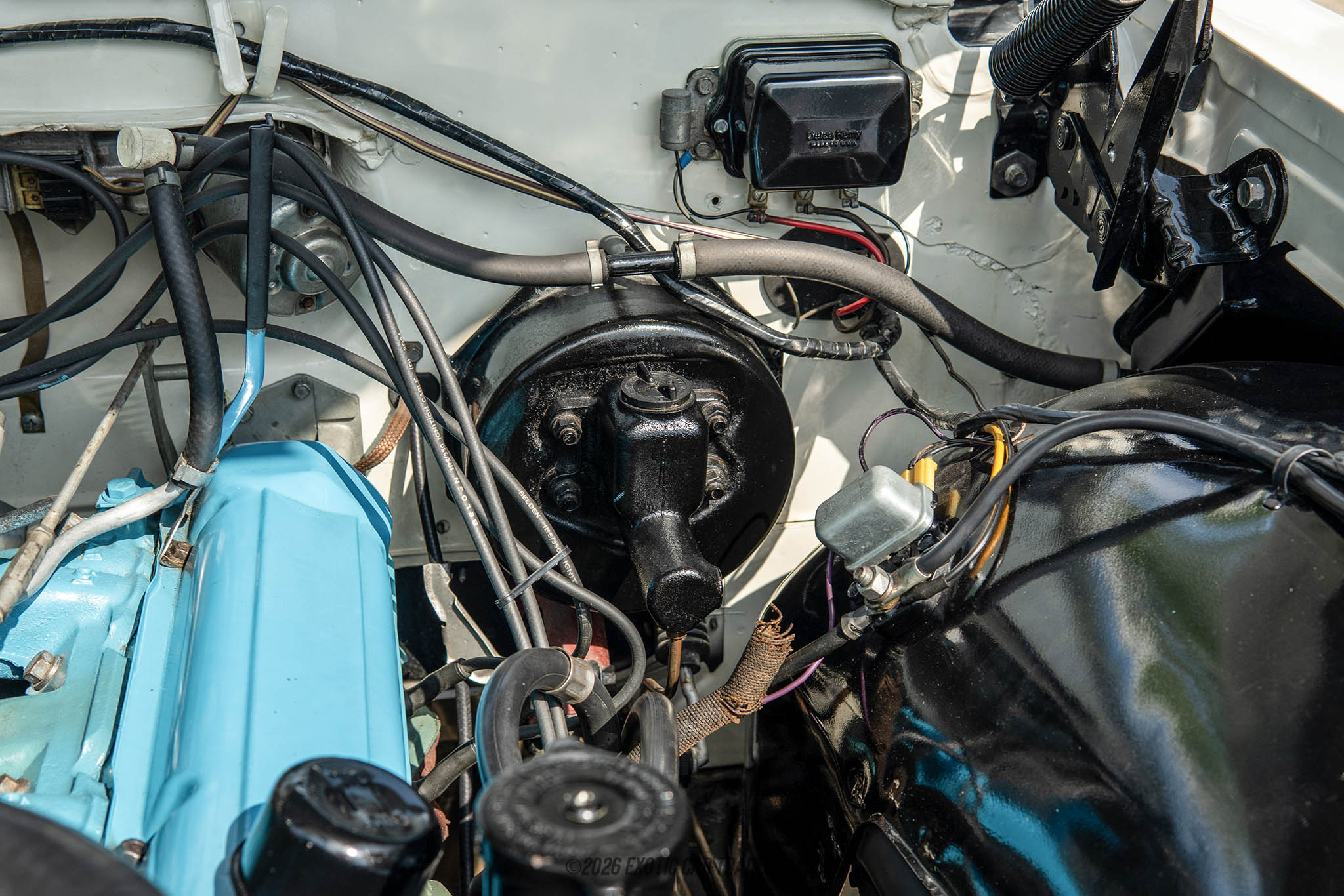
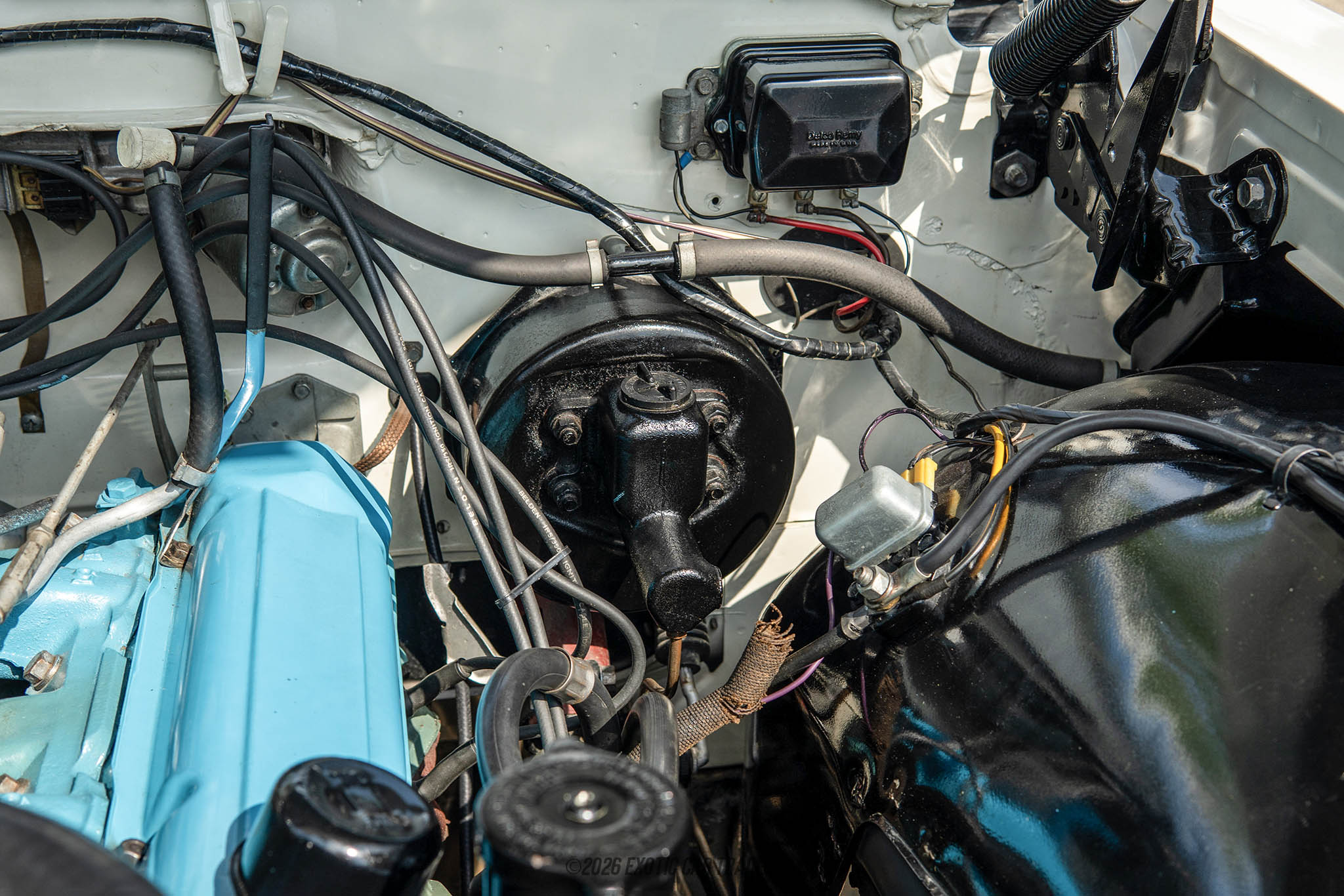
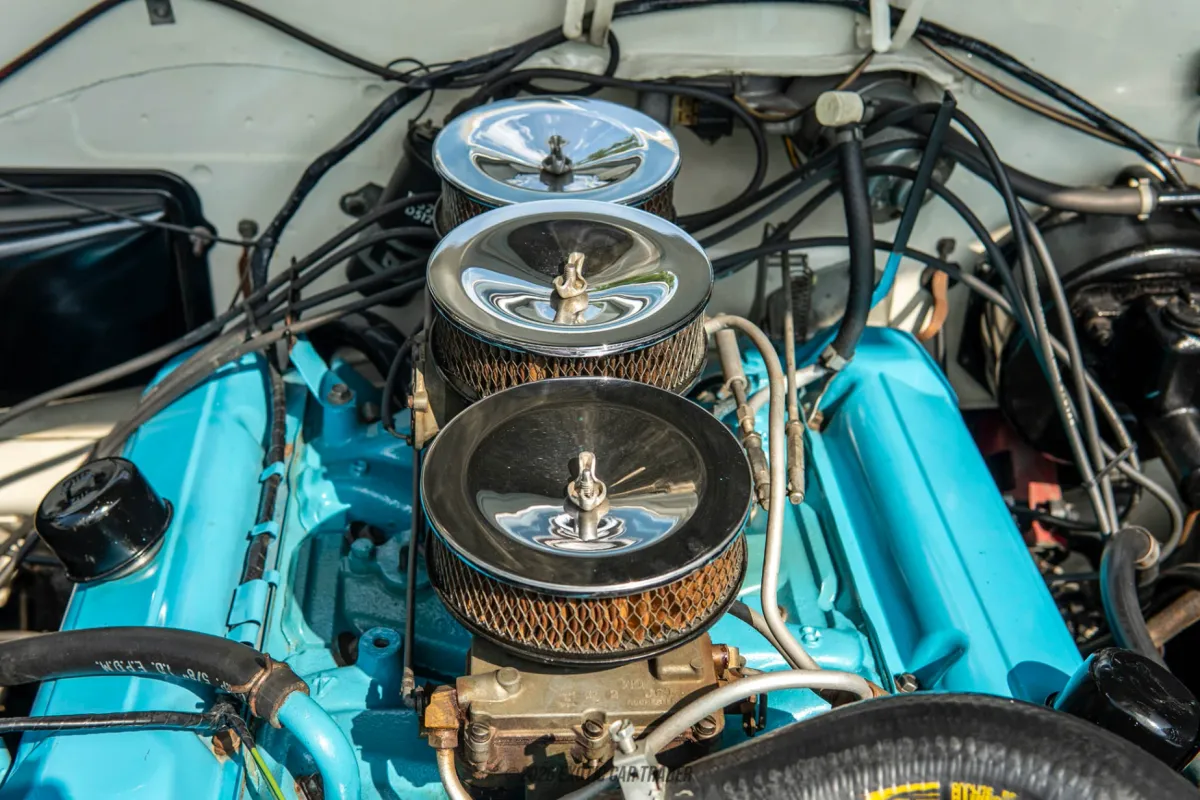
Powering this 1961 Pontiac Bonneville Convertible is a 389ci naturally aspirated V8 equipped with Pontiac’s highly desirable Tri-Power triple 2-barrel carburetor system. This setup was among Pontiac’s most recognizable performance configurations of the period, delivering increased airflow and stronger acceleration compared with standard single-carburetor arrangements. The V8 sends power through a 4-speed manual transmission, providing an engaging driving experience uncommon among large American luxury convertibles of the era. Additional mechanical features include a dual exhaust system and aftermarket spark plugs.


Perhaps one of the most impressive cars to come out of Pontiac, the 1964 Pontiac Bonneville stood at the pinnacle of the now mothballed brand's full-size lineup. It combined luxury, style, and performance in a way that helped cement the brand’s reputation during the muscle car era. This example, offered in Floral City, Florida, is the product of a meticulous preservation and retains the presence that made the Bonneville one of the most desirable Pontiacs of its time. This could be the perfect opportunity to snag one of these with all the hard work already done.
Many will know of Pontiac's Bonneville. Named after the famous Salt Flats, where countless records have been broken, Pontiac used the nameplate for midsize and full-size offerings between 1958 and 2005. This 1960 Pontiac Bonneville Convertible is actually a second-generation car and has traveled less than 83,000 miles so far. The current owner reports that it's been restored at some point but refers to it as an older restoration, meaning it's been some years at least. However, the car still looks good and is a great addition to a collection - or as your first classic car. Let us tell you more about it, and if you're keen to acquire it, get in touch with us.
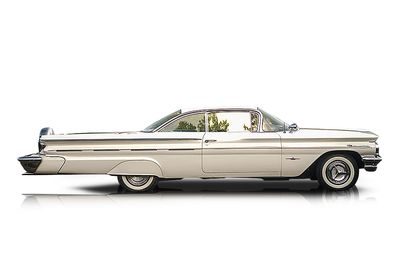
Said to be the Blue-Collar hero for affordable speed under the GM name, the Pontiac Bonneville was an iconic piece of American automotive heritage thanks to its iconic look, a result of its long, wide body, sleek grille and unique rear-end. Although a car that is more than sixty years old, it’s still an exciting ride to enjoy and take out and experience, especially during long drives on the weekend. When it was fresh out of the factory, it was said to be one of the most desirable vehicles of its class, providing excellent performance and power, all wrapped up in a sleek, space-age design that turns heads. Aged like fine wine, this particular 1960 Pontiac Bonneville Sport Coupe has stood the test of time and has reportedly seen some careful restoration, sporting a redone trunk underside and floors as well as fully restored automotive systems you’ll need to keep this vehicle alive. With 90,000 miles on the clock and still going strong, you now have the chance of preserving her for another generation.
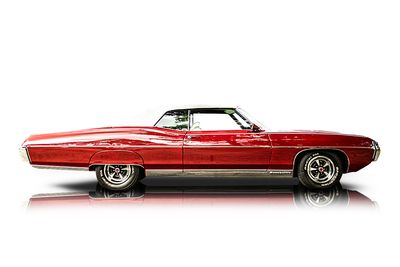
Named after the Bonneville salt flats, the Pontiac Bonneville marque was one that stood out and aimed to be different. With cars becoming smaller the Bonneville stuck to its guns and neat examples today showcase true American luxury and class in all its glory, take a look at this 1969 Pontiac Bonneville Convertible we have today for instance. With a reported 117,000 miles on the clock this is an original example that’s looking to cruise with its new owner, top down and all.
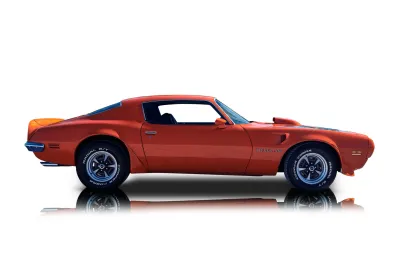
The 1973 Pontiac Firebird Formula 400 Trans Am Tribute is the kind of second-generation F-body that makes an immediate impression. Finished in Carousel Red over a Black interior and showing approximately 40,520 miles, it combines the desirable Formula 400 foundation with the unmistakable attitude of a Trans Am tribute. The giant hood bird, shaker-style “400” scoop, Trans Am-style graphics, Rally II-style wheels, and raised white-letter Cooper Cobras give it exactly the visual drama enthusiasts expect from early-1970s Pontiac muscle. It has the look, the stance, and most importantly, the 400ci V8 under the hood to back it up.
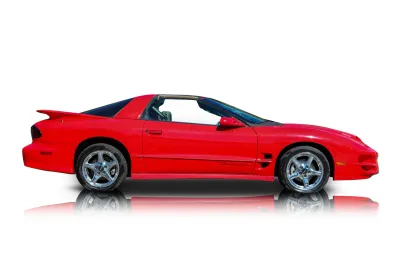
The 1999 Pontiac Firebird Trans Am WS6 is one of the most recognizable performance cars of the fourth-generation F-body era, combining aggressive styling with LS1 V8 power and the added hardware of Pontiac’s WS6 Performance Package. This example shows approximately 28,881 miles and is finished in Bright Red over a Taupe interior. It also features removable T-top roof panels, 17-inch aluminum wheels, a limited-slip differential, dual exhaust, and the signature rear spoiler. With low mileage for its age and the sought-after WS6 package, this Trans Am captures the raw, unmistakably American performance character that made these cars so memorable.
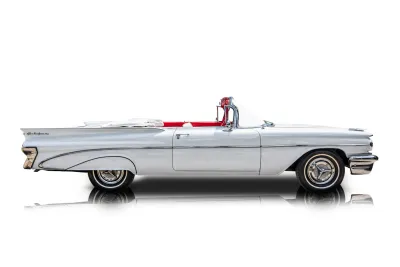
The 1959 Pontiac Catalina Convertible captures Pontiac at the dawn of its Wide-Track era, when the division was moving toward the bold styling and performance identity that would define the 1960s. Showing just 3,138 miles, this Catalina combines its sweeping open-top bodywork with a 389ci V8, 2-barrel carburetor, and 4-speed Super Hydra-Matic automatic transmission. Power steering, power brakes, factory air conditioning, and a power-operated convertible top add desirable cruising amenities to a car already defined by unmistakable late-1950s presence.
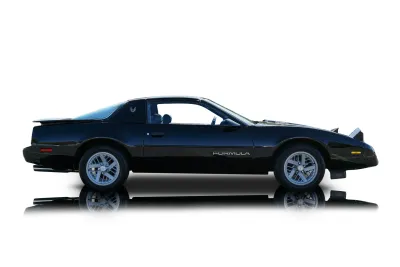
This 1992 Pontiac Firebird Formula takes the familiar third-generation F-body formula and adds a substantial list of performance-oriented upgrades beneath the surface. Showing approximately 178,966 miles, the current owner reports approximately 1,000 miles on the current engine build. Power comes from a 5.7L naturally aspirated small-block V8 paired with a 5-speed automatic transmission and rear-wheel drive. The build is highlighted by Holley Sniper electronic fuel injection, an aftermarket intake manifold and exhaust headers, upgraded fuel delivery, and a Mishimoto cooling system. Removable T-top roof panels add another layer of classic Firebird appeal, making this an enthusiast-focused example with unmistakable early-'90s styling and a substantially reworked V8 powertrain.
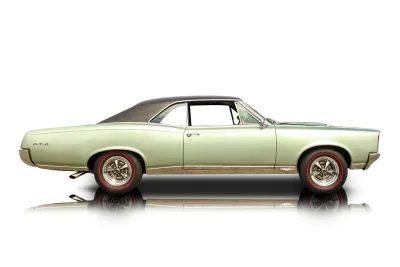
The 1967 Pontiac GTO is one of those cars that needs very little introduction. By the late 1960s, the GTO name had already become synonymous with big-displacement V8 power, bold styling, and the kind of straightforward performance that helped shape the muscle-car era. Showing approximately 62,464 miles, this example brings that formula together with a 400ci V8, three-speed automatic transmission, Linden Green Metallic paintwork, a Black Cordova vinyl top, and a black vinyl bench-seat interior. Its character is further sharpened by aftermarket wheels, redline radial tires, an aluminum radiator, and a number of chrome engine-bay accents that give the car a tasteful enthusiast-oriented presentation.
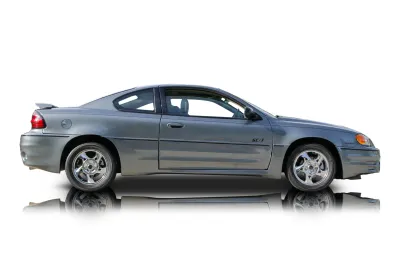
The 2005 Pontiac Grand Am GT Coupe represents the final year of a nameplate that spent decades as one of Pontiac’s more accessible performance-oriented offerings. This one-owner example shows approximately 85,167 miles and is powered by a 3.4L naturally aspirated V6 paired with a 4-speed automatic transmission. Finished in Graystone Metallic over a Dark Pewter interior, it is equipped with the GT Preferred Equipment Group along with the SC/T Appearance Package and GT Solid Value Appearance Package. The combination of the SC/T composite performance hood, rear aero wing spoiler, power sunroof, and chrome-tech aluminum wheels gives this Grand Am a more distinctive look than the standard GT.
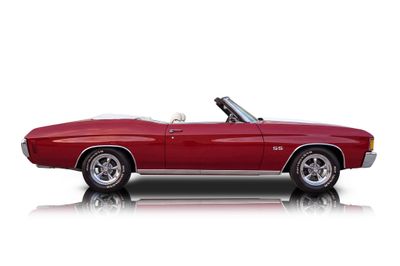
The 1972 Chevrolet Chevelle Malibu Convertible represents the final year of the second-generation Chevelle, a model that helped define Chevrolet's place in the golden age of American muscle cars. With its muscular proportions, timeless styling, and unmistakable V8 character, the Chevelle remains one of the most recognizable names in classic American motoring. This particular 1972 Chevrolet Chevelle Malibu Convertible, showing just 278 miles on the odometer, combines classic muscle car appeal with a selection of modern enhancements. Finished in Red with White rally stripes over a White leather interior, this example features a matching White power-operated convertible soft top and a potent 396ci big-block V8 paired with a four-speed manual transmission. The vehicle underwent a refresh, incorporating upgrades such as FiTech electronic fuel injection, Dakota Digital instrumentation, and a Kenwood sound system. Additional highlights include 15-inch American Racing Torq Thrust D wheels, air conditioning, and SS exterior badging. With its striking color combination, engaging manual transmission, and big-block performance, this Chevelle offers an appealing blend of vintage American muscle and modernized driving enjoyment.
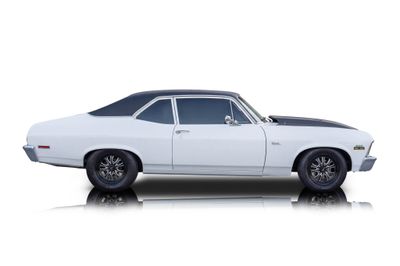
The 1972 Chevrolet Nova captures the spirit of American muscle from an era when compact dimensions, V8 power, and straightforward mechanical engineering made for some of the most entertaining cars on the road. Originally introduced as Chevrolet's economical compact, the Nova evolved into a legitimate performance contender, particularly when equipped with a small-block V8 and the desirable Super Sport appearance. This particular 1972 Chevrolet Nova Coupe, showing 59,366 miles, has been customized with an assortment of performance and cosmetic enhancements that give it a distinctive personality. Finished in White with a contrasting Black hood and vinyl roof, this example features a 355ci small-block V8 paired with a four-speed manual transmission and a 3.42:1 Positraction rear differential. The engine benefits from MSD ignition components, an aftermarket intake manifold, and exhaust headers, while power steering and front disc brakes enhance drivability. Inside, a reupholstered Black interior features custom diamond-stitched bucket seats, white contrast stitching, and aftermarket instrumentation. With its classic Nova proportions, distinctive two-tone styling, and performance-oriented upgrades, this example offers an appealing interpretation of Chevrolet's celebrated compact muscle car.
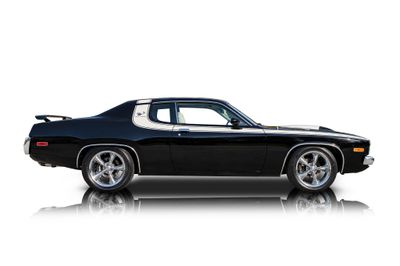
The 1974 Plymouth Road Runner represents the final chapter of an era when American muscle cars were celebrated for their big-displacement V8 engines, aggressive styling, and unmistakable personalities. Originally introduced in 1968 as Plymouth's no-nonsense performance machine, the Road Runner became one of the most recognizable names of the muscle car era, combining serious horsepower with an identity inspired by the famous Warner Bros. cartoon character. This particular 1974 Plymouth Road Runner Restomod, showing just 153 miles on the odometer, has been customized to deliver classic Mopar character with a selection of performance and cosmetic enhancements. Finished in Black with contrasting White exterior stripes, it features a reupholstered White vinyl interior, aftermarket chrome wheels, and a formidable 440ci big-block V8 paired with an automatic transmission. Additional highlights include power steering, power brakes, an upgraded aluminum radiator, and a selection of engine compartment enhancements. With its imposing appearance, refreshed interior, and unmistakable big-block personality, this Road Runner offers enthusiasts an appealing interpretation of one of Plymouth's most celebrated muscle cars.
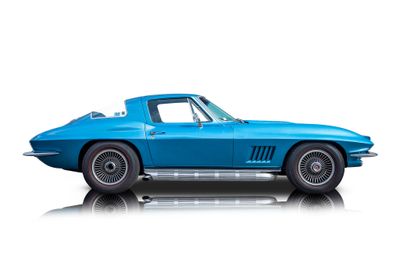
The 1967 Chevrolet Corvette Sting Ray represents the final and arguably most celebrated year of the second-generation Corvette, commonly known as the C2. With its unmistakable styling, powerful big-block engine options, and limited production run, the 1967 model has become one of the most desirable Corvettes among collectors and enthusiasts. This particular 1967 Chevrolet Corvette Sting Ray 427 Coupe, showing 57,276 miles, is finished in the iconic Marina Blue over a Black leather interior and features the legendary L68 427ci Tri-Power V8, factory-rated at 400 horsepower. The L68 was produced in relatively limited numbers, with just 2,101 examples equipped with this engine for the 1967 model year. Complementing its impressive powertrain is a four-speed manual transmission and an exceptional collection of desirable factory options, including air conditioning, power windows, power steering, J50 power brakes, N14 side-mounted exhaust, and the sought-after N89 bolt-on aluminum wheels with redline tires. Combining the final-year C2 design, big-block Tri-Power performance, and an impressive selection of factory equipment, this Sting Ray captures everything that made the 1967 Corvette a defining American sports car.
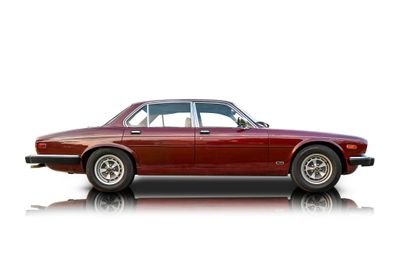
The Jaguar XJ6 Series III represents an era when British luxury sedans were defined by elegant proportions, handcrafted interiors, and a distinctly refined driving experience. Introduced in 1979 with styling revisions by Pininfarina, the Series III refined Jaguar's original XJ design while preserving the character that had made the model a favorite among luxury car enthusiasts. By 1987, the XJ6 had reached the final year of Series III six-cylinder production, making this example a particularly interesting representative of Jaguar's classic saloon heritage. This 1987 Jaguar XJ6 Series III, showing just 79,022 miles, is finished in Bordeaux Red Metallic over a Barley leather interior, a sophisticated color combination that complements its timeless British styling. Powered by Jaguar's celebrated 4.2L naturally aspirated inline-six paired with a three-speed automatic transmission, this XJ6 delivers the smooth, relaxed driving character for which the marque became renowned. Highlights include distinctive Jaguar Kent alloy wheels, an extensively wood-trimmed cabin, leather seating, automatic climate control, and a factory Jaguar audio system. With its elegant exterior, traditional British craftsmanship, and unmistakable Jaguar identity, this Series III offers enthusiasts an opportunity to experience the charm of a classic luxury sedan from one of Britain's most prestigious automotive manufacturers.
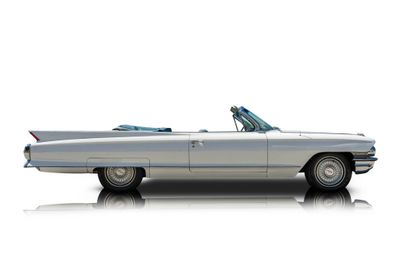
Cadillac was at the height of its influence in the American luxury car market during the early 1960s, producing automobiles celebrated for their unmistakable styling, powerful V8 engines, and exceptional passenger comfort. The 1962 model year marked a period of refinement for the brand, as Cadillac transitioned from the extravagant tailfins of the late 1950s toward a more sophisticated design while retaining its commanding road presence. This 1962 Cadillac Series 62 Convertible captures that era beautifully, finished in Olympic White over a blue interior with a matching white convertible soft top. Showing 72,224 miles, this American classic is powered by Cadillac's 390ci V8, factory-rated at 325 horsepower, paired with a 4-speed Hydra-Matic automatic transmission. Its elegant proportions, distinctive tailfins, extensive chrome brightwork, and spacious six-passenger cabin embody the luxury and craftsmanship that established Cadillac as the Standard of the World. With its open-air configuration and timeless styling, this Series 62 Convertible offers enthusiasts an opportunity to experience one of the most recognizable chapters in American automotive history.

Terms of Service
Be Kind and Courteous
We're here to create a platform to better the automotive industry through communication and transparency. Please treat everyone with respect. Healthy debates are natural, but kindness is required.
No Hate Speech
Make sure everyone feels safe. Hate speech of any kind is strictly prohibited. Degrading comments about things like race, religion, culture, sexual orientation, etc. will not be tolerated.
No Promotions or Spam
Give more than you take. Self-promotion, spam, or links of any kind are not allowed.